
An Indian wedding usually asks for several outfits over several days, and the hard part of dressing for it is rarely the color. It’s working out what you can move, sit and eat in for six hours. The twenty looks below are complete head-to-toe outfits for brides, bridesmaids, relatives and guests who want something past the default lehenga: heavy silk sarees and embroidered lehengas sit next to pre-draped sarees, jacket sets, Anarkalis and fusion separates. When I style someone for a wedding week, I start with the function, the venue and the hour, then the fabric, and only then the shade. Lighter weaves and brighter colors read well in daylight, while zari, velvet and mirror work earn their place after sunset, when there are lamps for them to catch.
Map the Wedding Week by Function Before You Shop
Most Indian weddings run across several events, and each one asks something different of your clothes. Before anyone shops, I write the functions down one per line with the time of day, whether it’s indoors, and what people will actually be doing there. The outfit usually picks itself once that list exists.
- Mehndi: you’ll sit on cushions or low seating for hours while the paste dries, so wear something you can sit cross-legged in, with sleeves that stay clear of wet henna. Cotton-silk, georgette and chikankari are kind here.
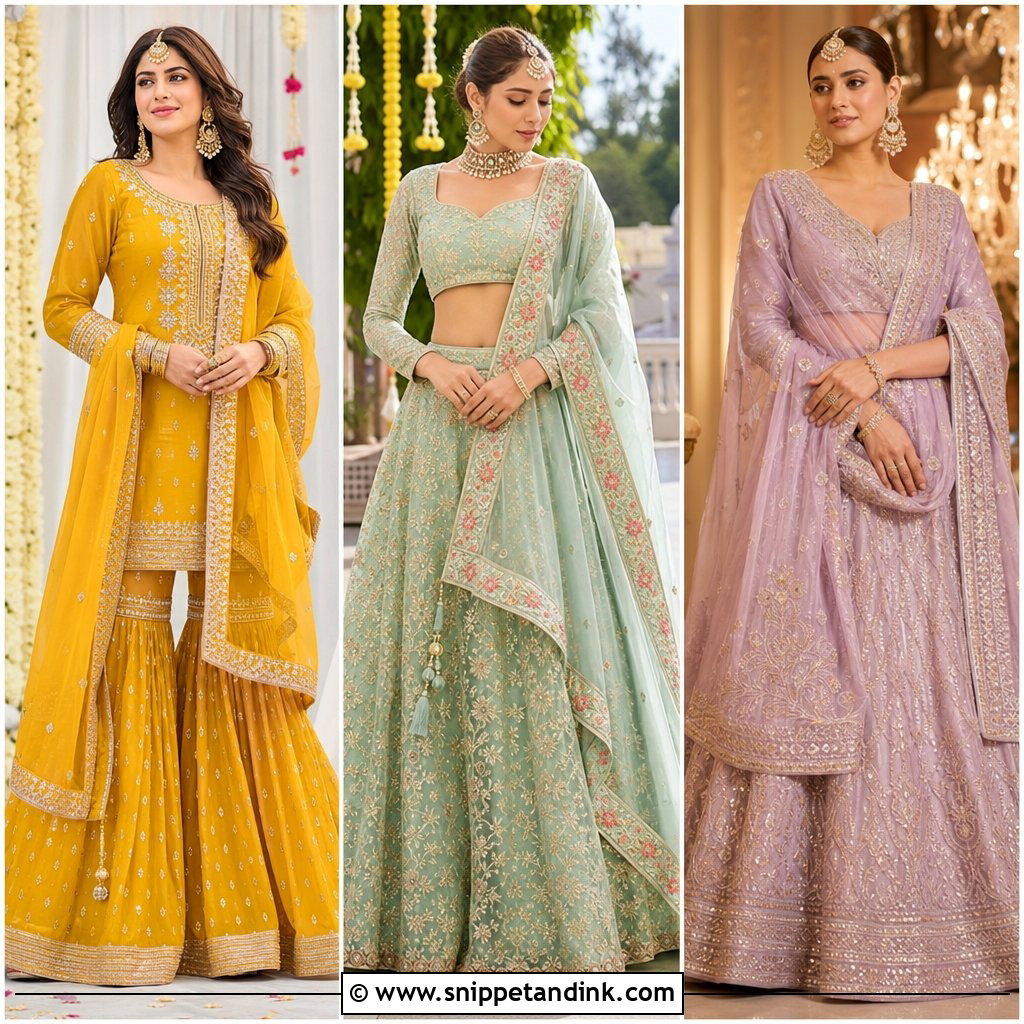
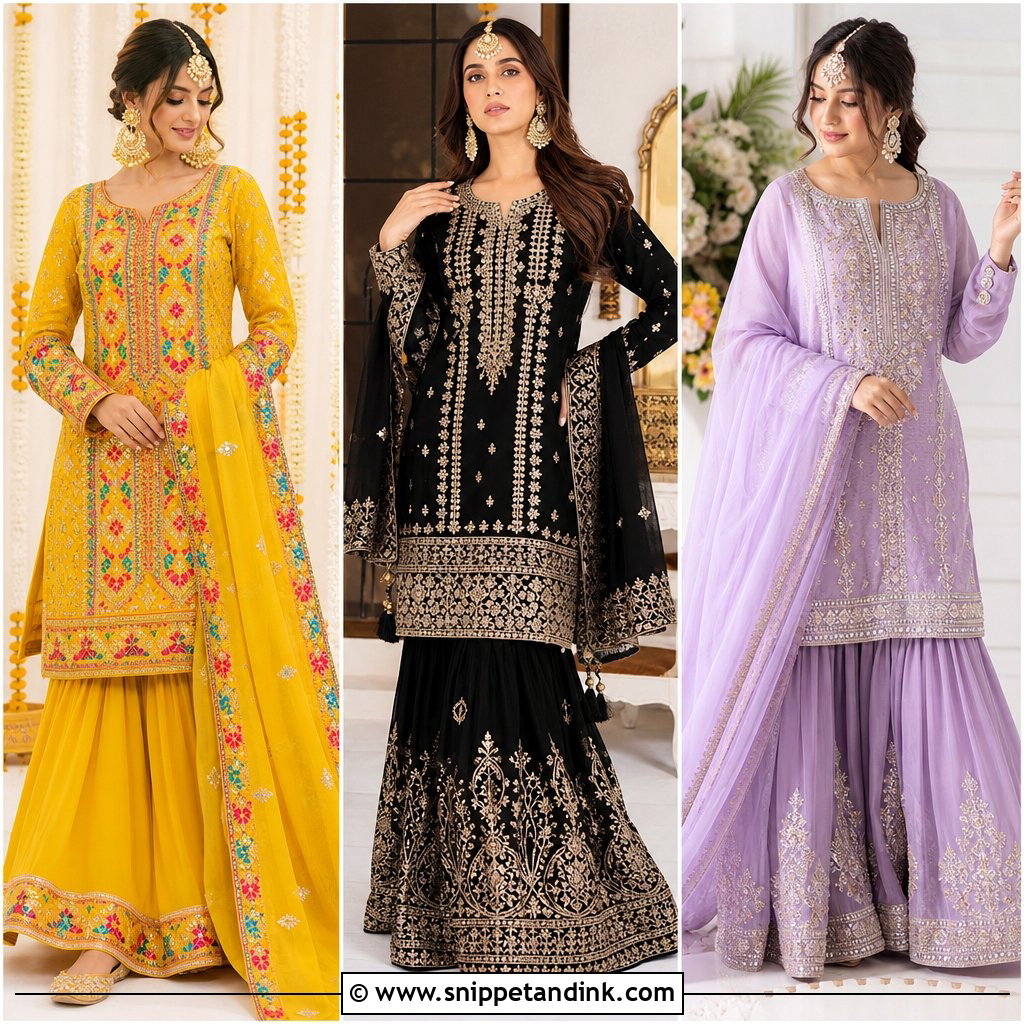
- Haldi: wear something you won’t miss. Turmeric marks on pale silk rarely wash out completely.
- Sangeet: the dancing night. Weight is the enemy, so choose a skirt or sharara you can lift with one hand and spin in.
- Ceremony: often long, partly seated on the floor, and sometimes beside the sacred fire. Silk sarees and Anarkalis suit it, and loose synthetic dupattas should stay well away from the flames.
- Reception: the most Western-leaning evening, where saree gowns, pre-draped sarees and capes come into their own.
The one-hour test at home
A heavily embroidered lehenga with a full can-can can feel fine in a fitting room and punishing by the fourth hour. I ask clients to wear the finished outfit at home for an hour before the wedding: sit on a low stool, climb stairs, raise both arms. Your shoulders and hips will tell you within that hour whether you’ll still be comfortable at the end of the night, and there’s still time to swap the can-can for a lighter one.
1. Banarasi Silk Saree Wedding Outfit
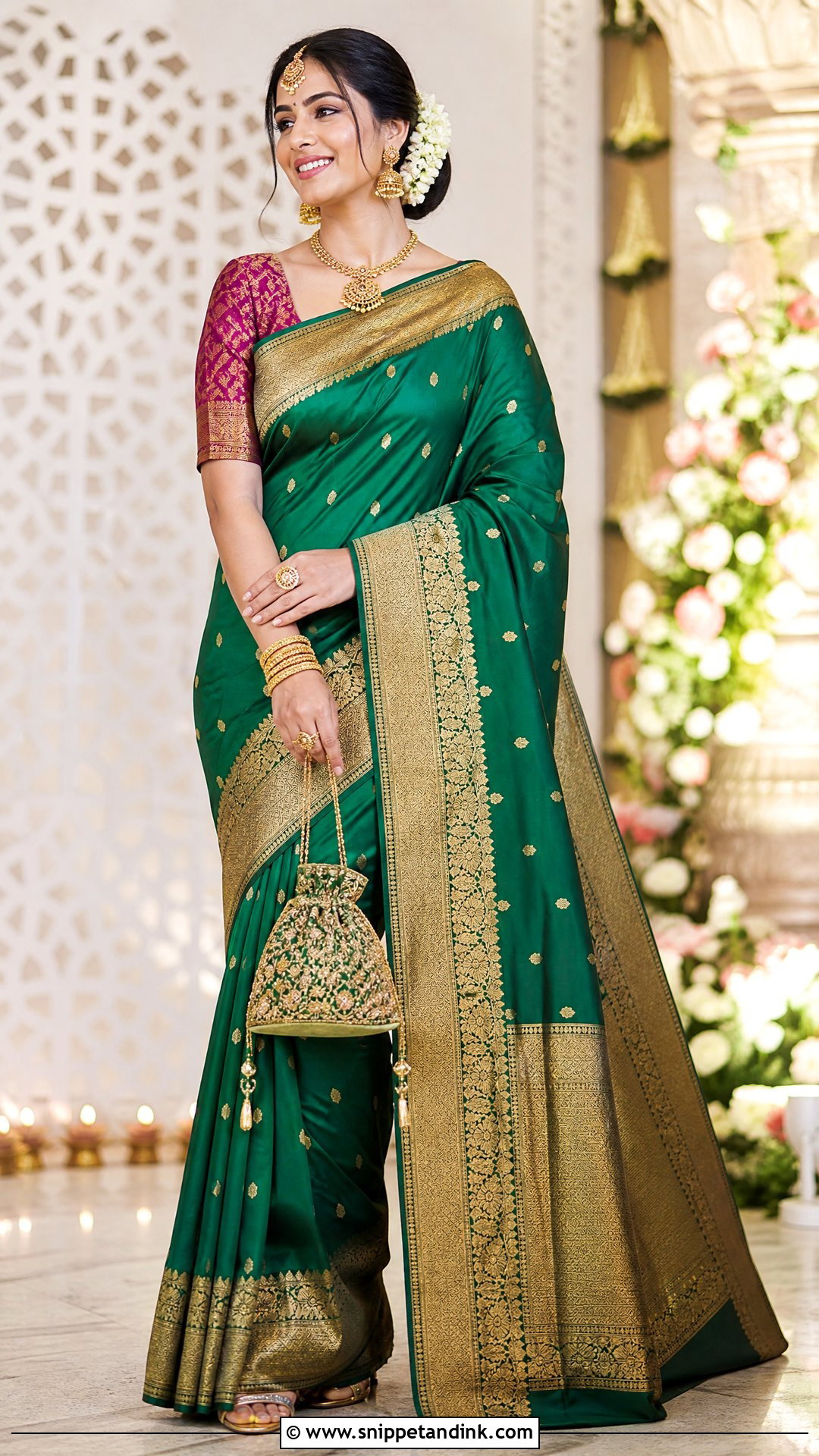
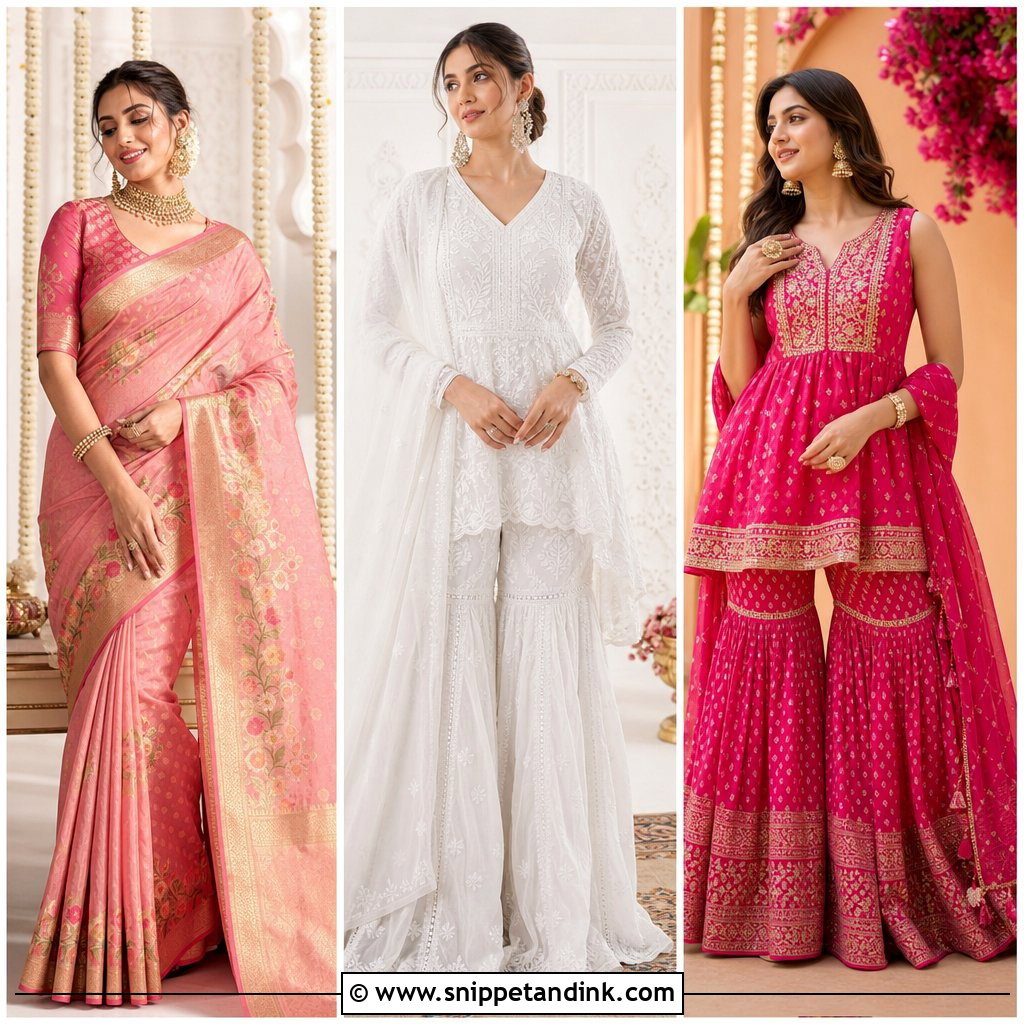
Banarasi silk has a woven weight that holds pleats well, which is why it suits the main ceremony in emerald, royal blue, magenta or maroon. The blouse is where most Banarasi looks go wrong. If it’s loose across the back, the pallu drags it sideways all evening, so I have it fitted with the saree actually draped, and elbow-length sleeves in a contrasting color give the zari border a clean edge to sit against. Finish with a gold potli, block-heel sandals and temple-style jewelry, plus a sleek bun with fresh flowers that keeps the pallu visible over the shoulder. Petite women usually look better in smaller woven motifs; a tall frame can carry a broad border. Brides can add a veil or waist belt, and guests are better off with statement earrings and a few slim bangles.
2. Mirror Work Lehenga Wedding Outfit
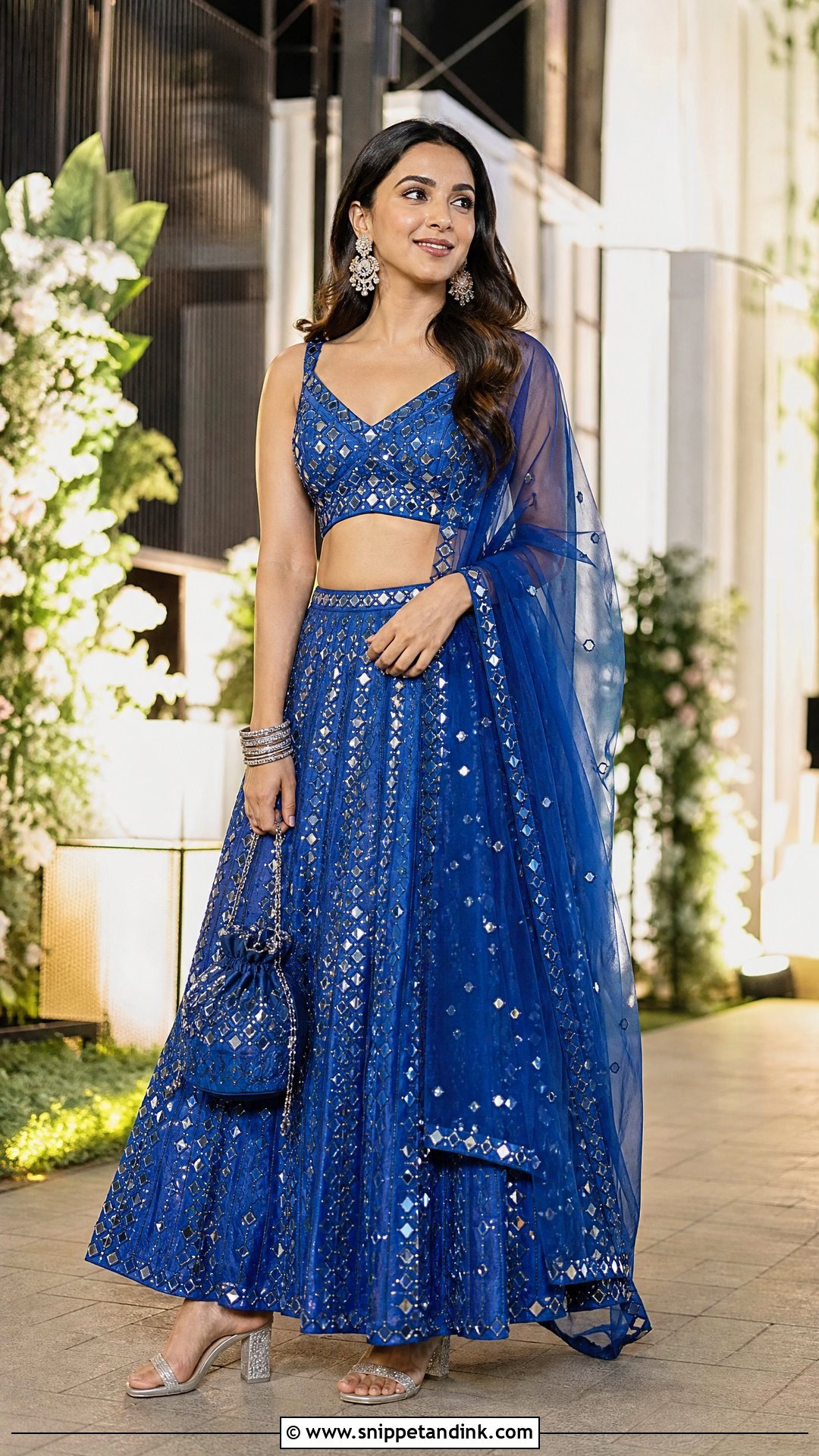
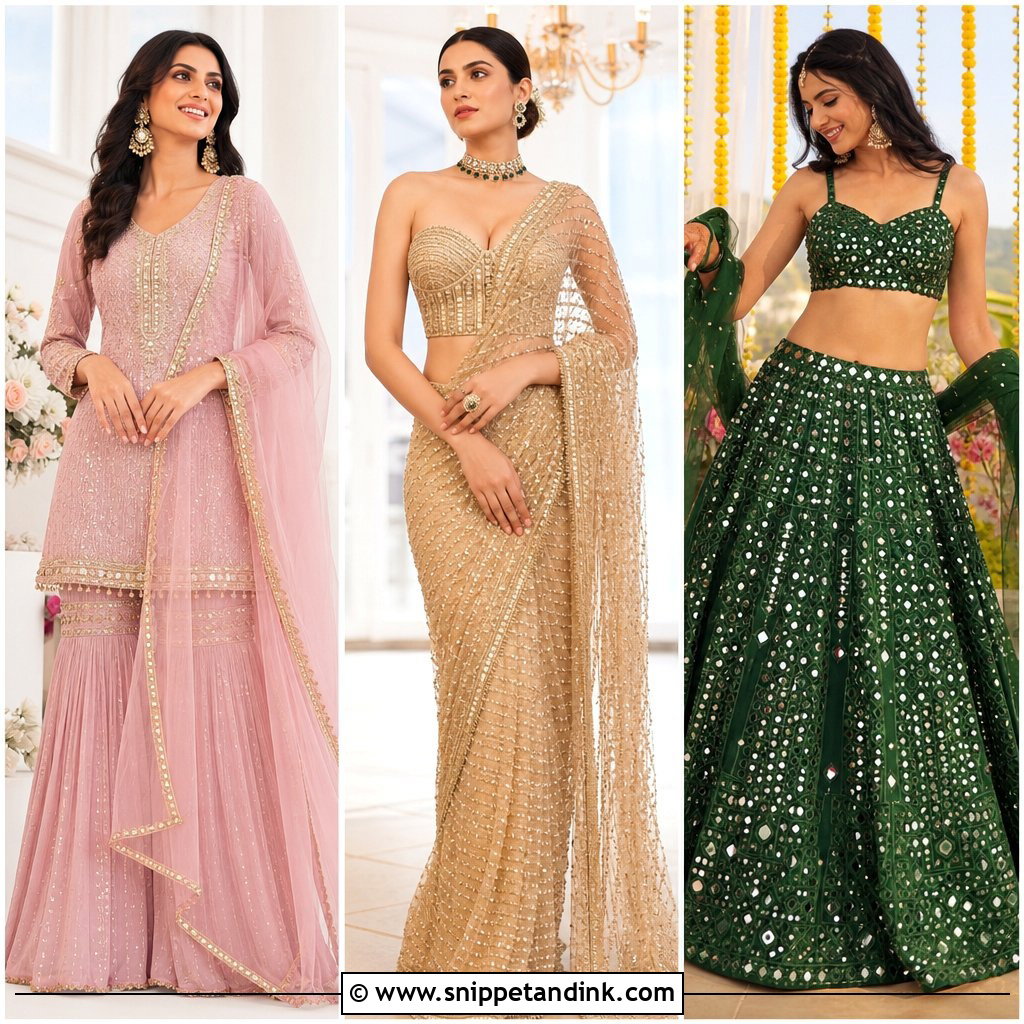
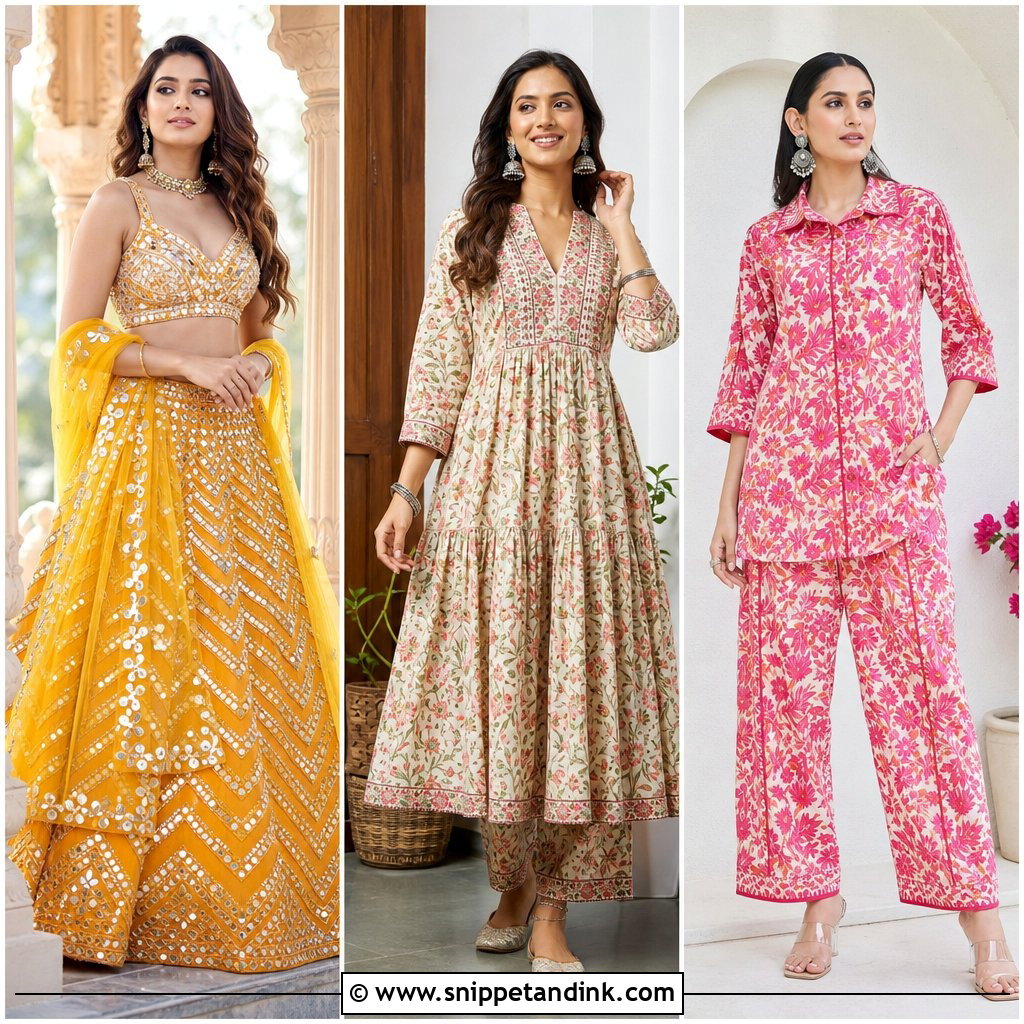
Nothing catches the sangeet lights quite like a mirror work lehenga, but those mirrors are glass, and a skirt covered edge to edge weighs more than you expect by the third dance. In the shop I pick the skirt up by its waistband: if it sags at the hips on the hanger, it will drag on you all night. Evenly spaced work is the safer buy. Pair it with a fitted blouse and a soft net dupatta over one shoulder, and keep the neckline plain if the blouse is already worked. Check the inside of the blouse as well, because mirror backings can scratch bare skin under the arms. Jewel colors carry the evening, while aqua or blush feel fresher by day. Block heels, a compact potli and oxidized silver or crystal jewelry finish it, and the sparkle sits comfortably on bridesmaids and close family without pulling focus from the bride.
3. Pre-Draped Saree With Corset Blouse
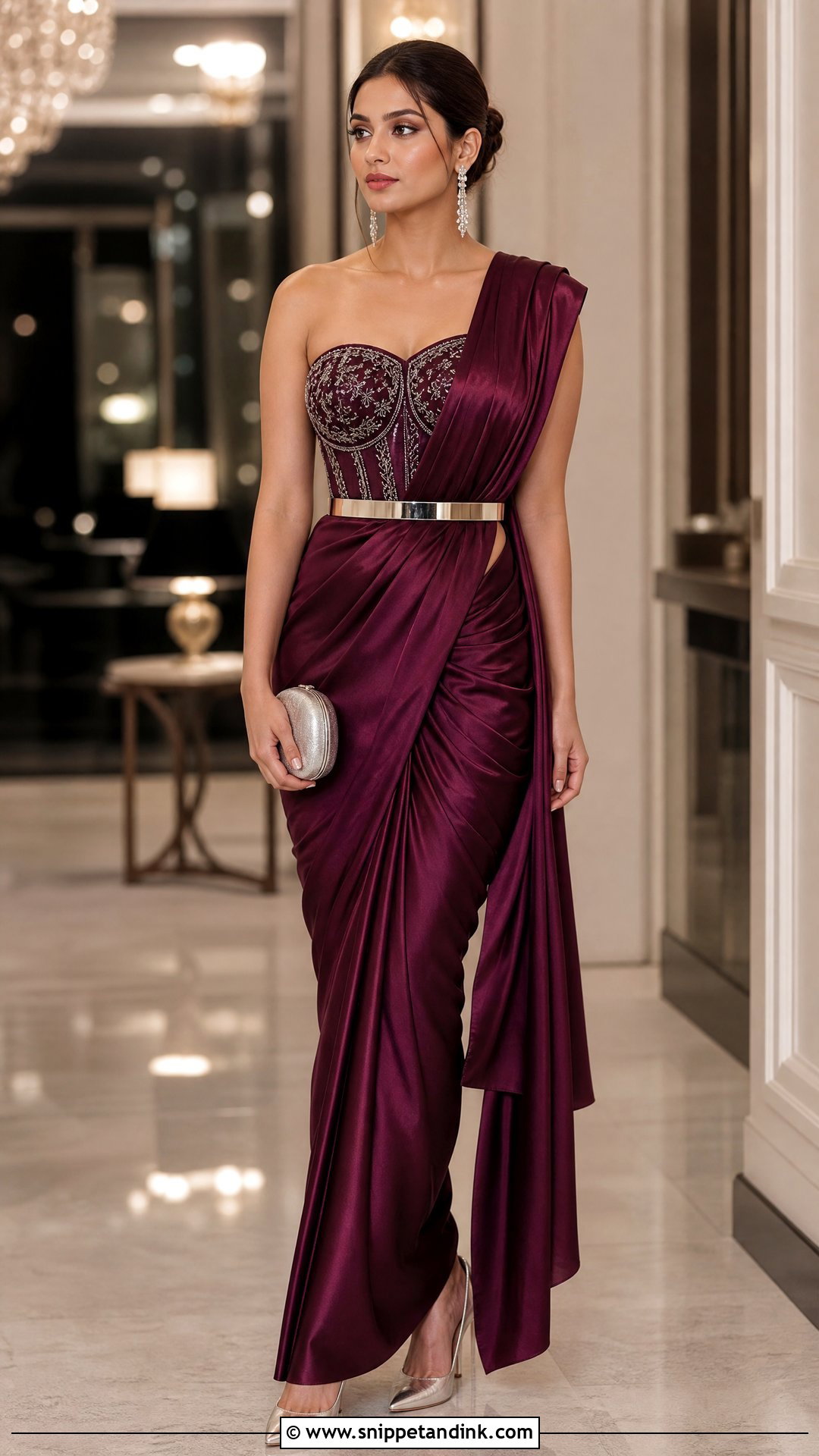
A pre-draped saree with a corset blouse gives you the line of a saree without anyone pleating you at six in the morning. The drape is stitched in, so it stays put while you walk, greet people and dance at the reception. Satin, crepe or lightweight georgette in a solid jewel tone suits it; stiff silk doesn’t settle well into a pre-stitched fall. With a corset blouse I always ask the client to sit down and lift her arms at the fitting, since boning that feels fine standing can dig into the ribs once you’re seated for dinner. Add pointed heels, a small metallic clutch and long earrings, and skip the waist belt if the saree already has a detailed waistband. The whole outfit packs flat, which matters for destination weddings.
4. Sharara Suit With Embroidered Jacket
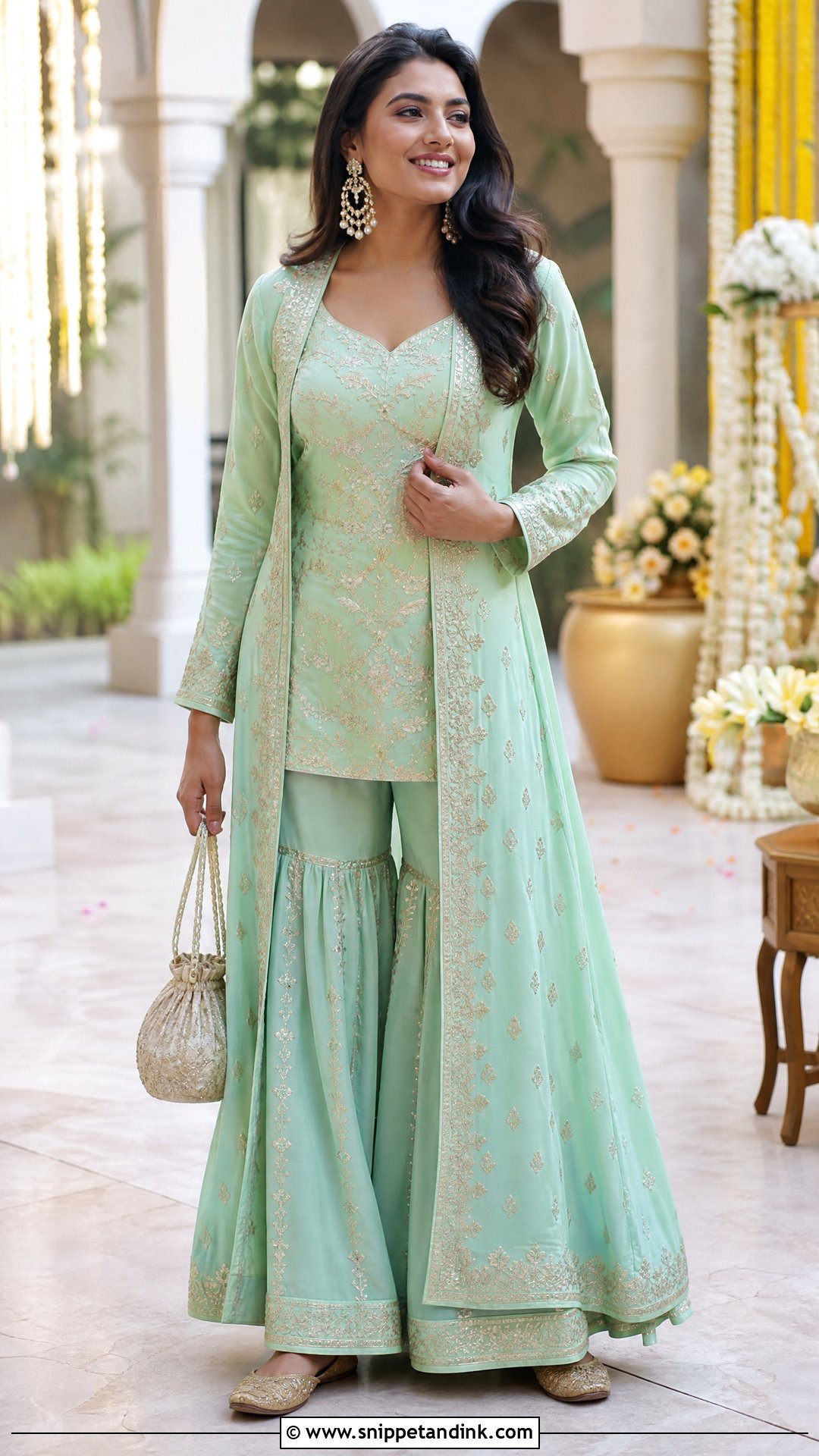
Layering an embroidered jacket over a sharara turns a familiar suit into something people remember. Keep the base simple: wide sharara pants and a short fitted kurti in one shade, then a knee-length or floor-length jacket worked in zari, mirror or fine thread. The detail I check first is the jacket lining. Unlined embroidery scratches through a thin kurti and traps heat, so a soft cotton or silk lining is worth asking for. Juttis, chandelier earrings and a small drawstring bag keep you free to move. For a daytime mehndi, mint, coral, yellow or powder blue look cheerful; deeper colors and metallic work belong to the evening. That long vertical jacket line also adds height, which helps petite frames most.
5. Floor-Length Anarkali Wedding Outfit
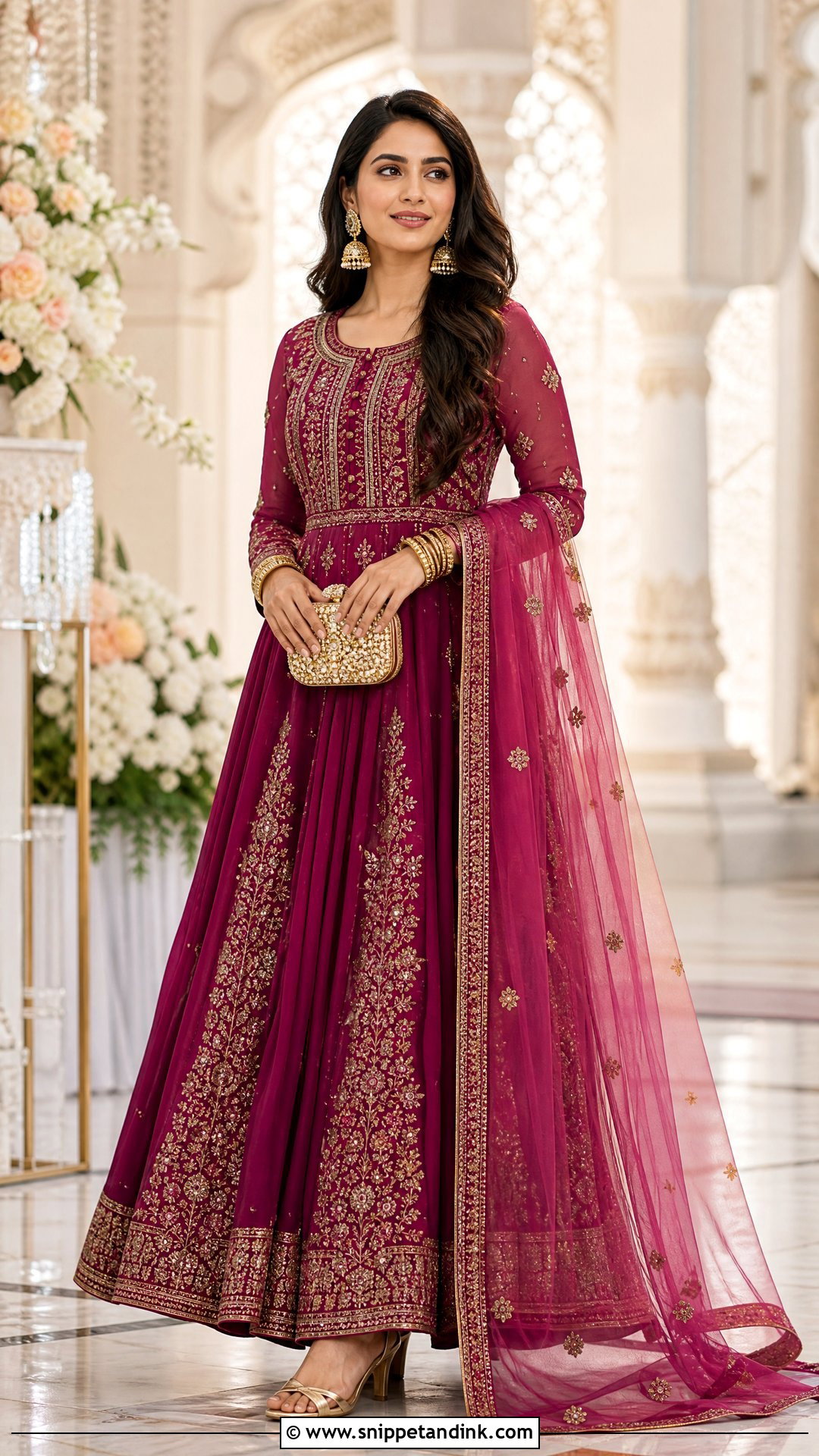
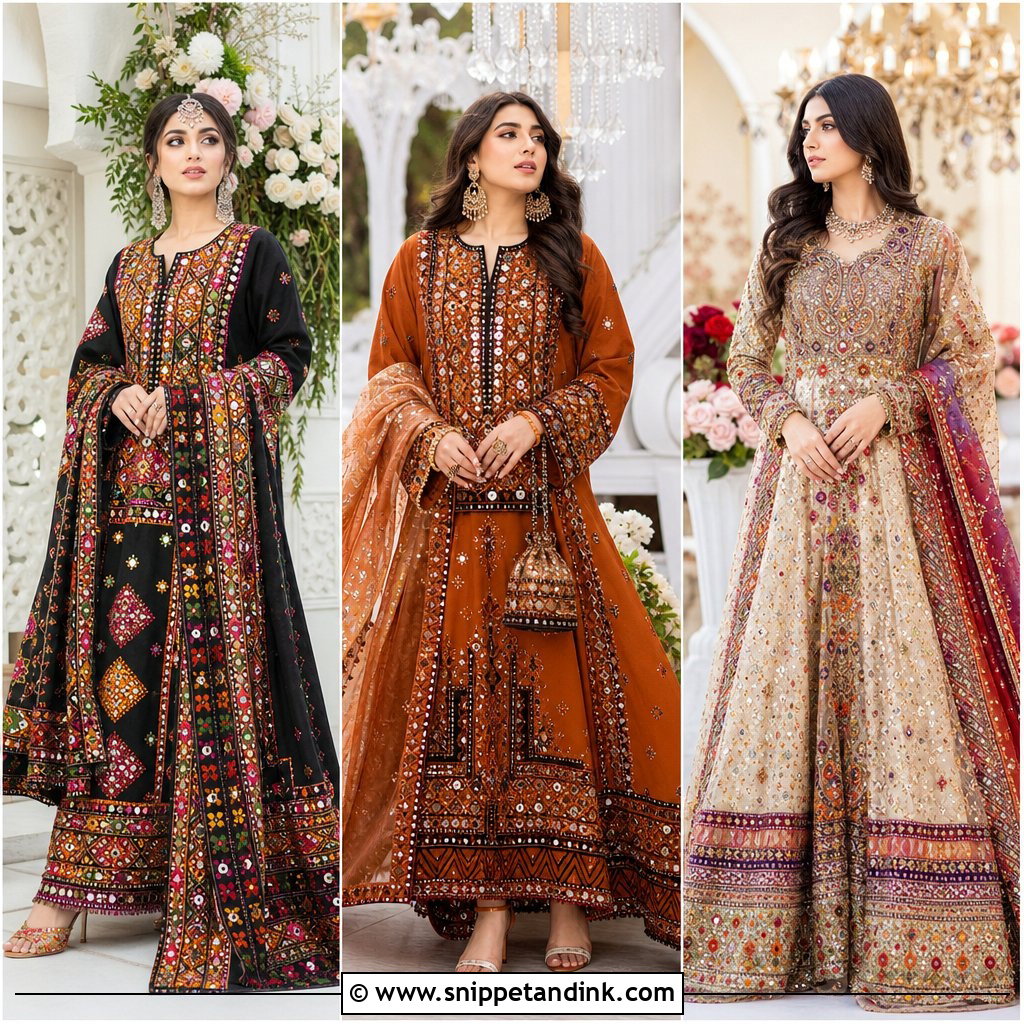
A floor-length Anarkali is what I reach for when someone needs to look formal through a long ceremony and still sit on the floor for part of it. Look for a fitted bodice, a waist seam that sits at your natural waist rather than under the bust, and enough flare to walk without kicking the hem. Silk blends, georgette and chiffon fall well. The hem must be measured with the exact shoes you’ll wear, low heels ideally, or you’ll be stepping on it by the pheras. Drape a contrasting dupatta over both arms for a traditional finish, or pin it on one shoulder if you’ll be carrying a plate. Jhumkas, stacked bangles and a beaded clutch complete it. A center-parted bun suits a high neckline, loose curls a wider one.
6. Cape Lehenga Wedding Outfit
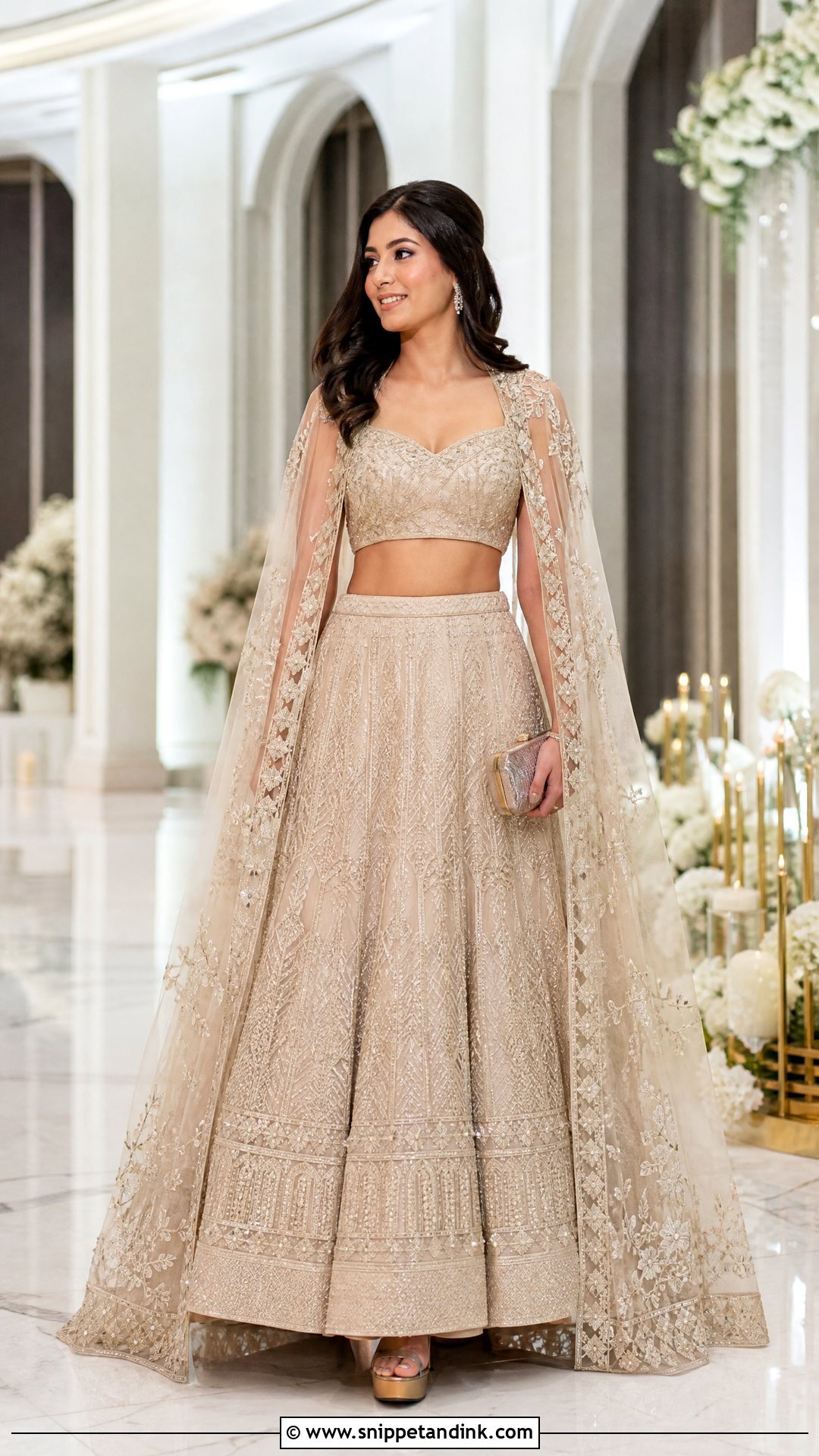
A cape lehenga solves the dupatta problem. Instead of a long length of fabric you keep re-pinning, a sheer embroidered cape sits on the shoulders and leaves both hands free for greeting, eating and dancing. Waist length feels lighter; floor length adds drama, but it will get stepped on at a crowded sangeet, so I’d save that version for a reception with room to move. A monochrome palette looks most polished, and a contrasting cape shows off its embroidery. Platform sandals and a structured clutch suit it. Choose earrings that won’t snag on a beaded cape edge, and keep necklaces minimal when the cape has a worked neckline. The cape swings whenever you turn, which gives a photographer something to work with.
7. Gharara Suit Wedding Outfit
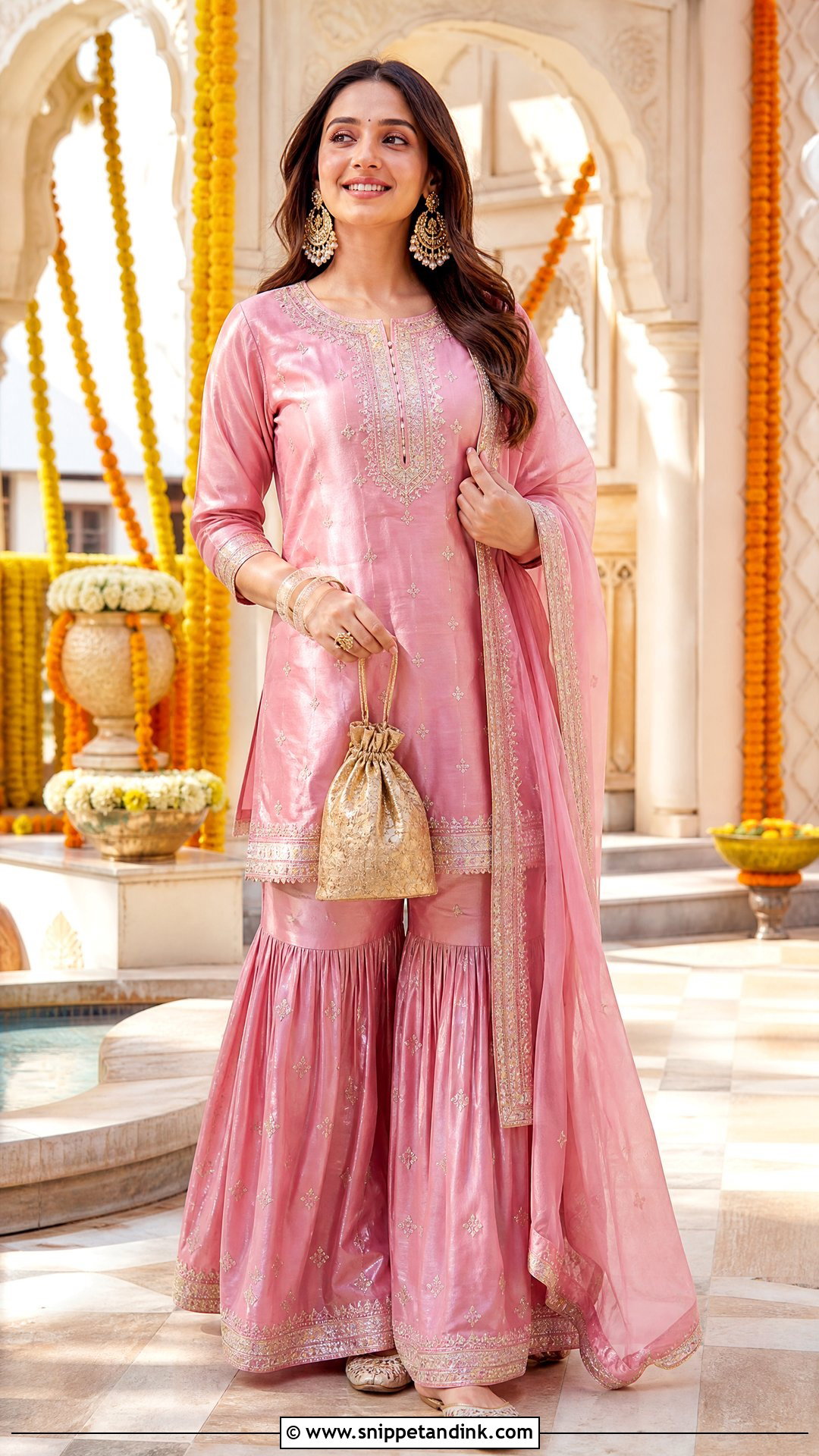
A traditional gharara suit gives you volume without piling on layers. Unlike a sharara, the pants fit close to the knee and then flare, and that joint, usually finished with a gota or lace band, has to sit exactly at your knee. I mark it at the fitting with the client standing in her wedding shoes, because when it lands too low the pants bunch with every step. A short kurti keeps the shape visible. Add a light dupatta with a decorative border, juttis, a potli and chandbalis. Rich silk or brocade suits formal ceremonies, while georgette and cotton-silk are kinder in daytime heat. Ivory with colorful embroidery, deep green with antique gold and rose pink with silver are combinations that rarely miss.
8. Dhoti Pants And Short Kurta Outfit
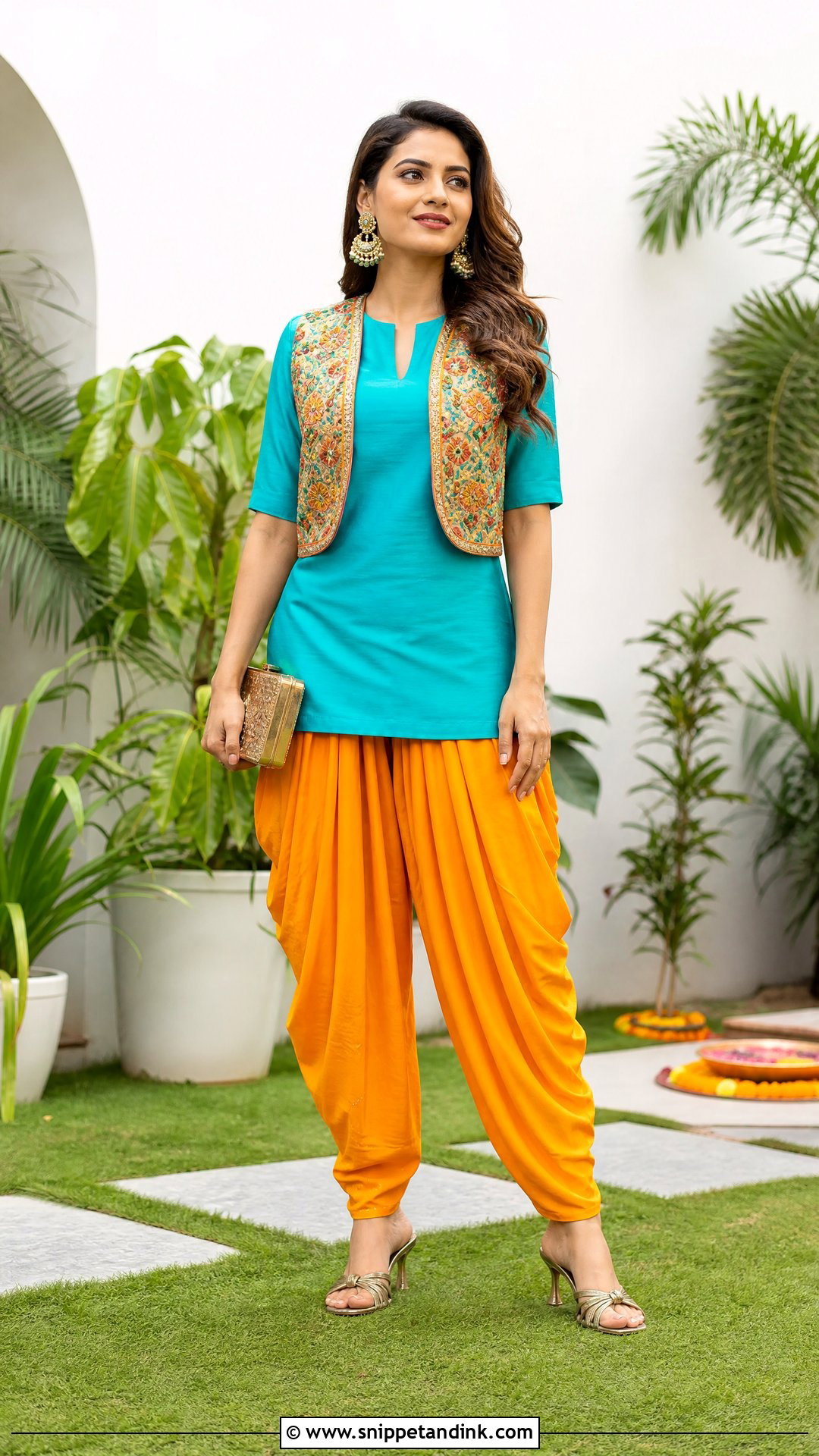
Dhoti pants with a short kurta are what I suggest to guests who’ll be on their feet for hours, walking between venues or dancing late. The draped pants give movement at the hem with nothing to trip on. Keep the kurta near the hip; longer, and it hides the drape that makes the outfit interesting. One practical note: satin dhoti pants crease hard at the front fold after a long sit, so crepe or soft silk is the better pick for an all-day event. An embroidered waistcoat or cropped jacket makes it formal enough for a ceremony. Heeled mules, statement earrings and a box clutch finish it, and long necklaces are best left at home since they tangle with a layered neckline. Bright green or saffron suits a mehndi; midnight blue or plum suits the evening.
9. Saree Gown Wedding Outfit
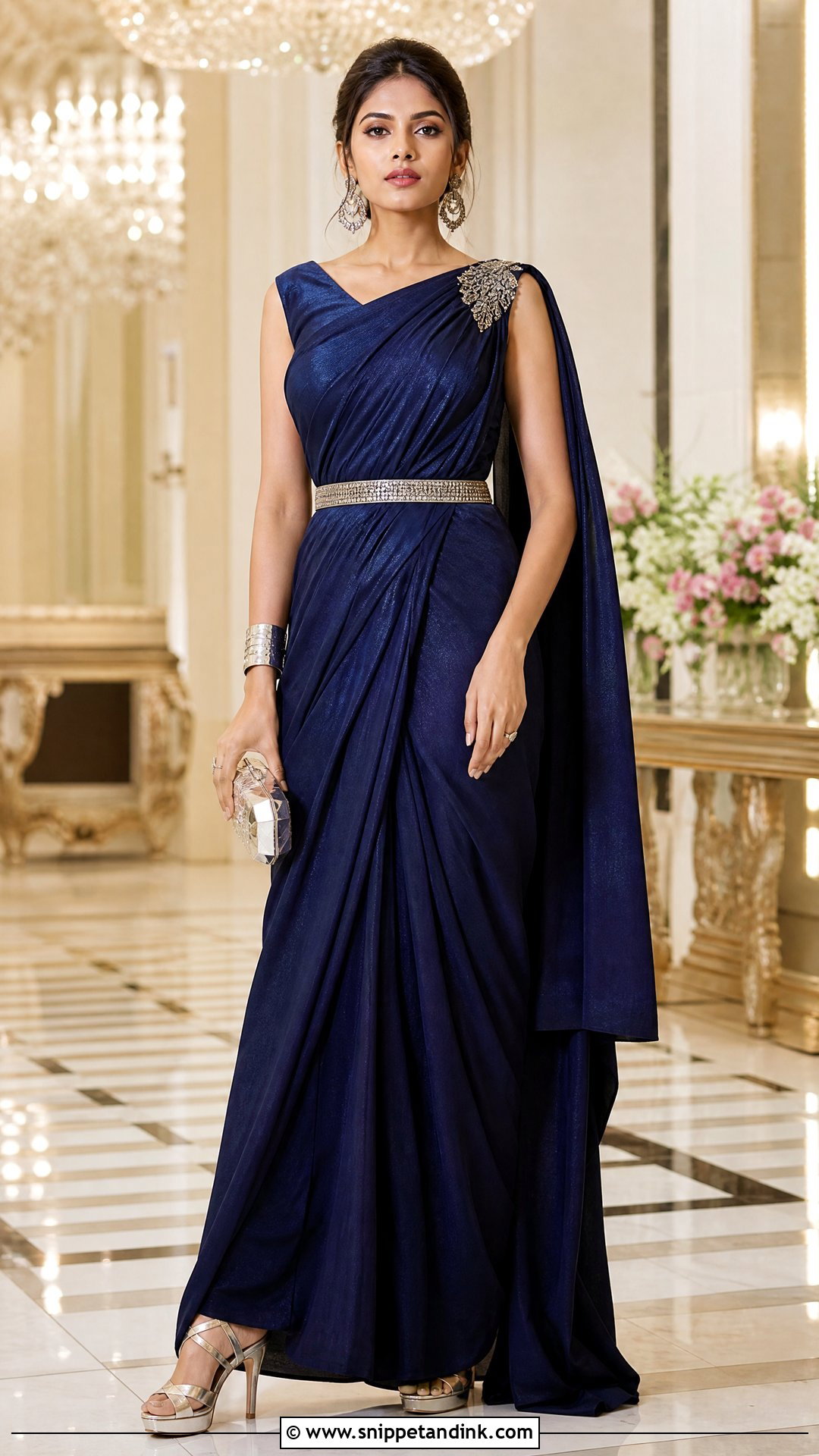
A saree gown is a dress that looks like a drape, and that’s its whole appeal: no pleats to fix halfway through dinner. Look for a defined waist, a soft drape at the shoulder and a skirt with room for a normal stride. Many saree gowns narrow at the knee, so I have clients walk a few steps and climb a stair at the trial before deciding. Metallic heels, a crystal clutch and one strong piece of jewelry, either sculptural earrings or a cuff, is all it needs. The draping already supplies the detail, and stacking more accessories crowds it. A sleek bun or side-parted waves suit a reception or a formal dinner in a hotel ballroom.
10. Peplum Sharara Wedding Outfit
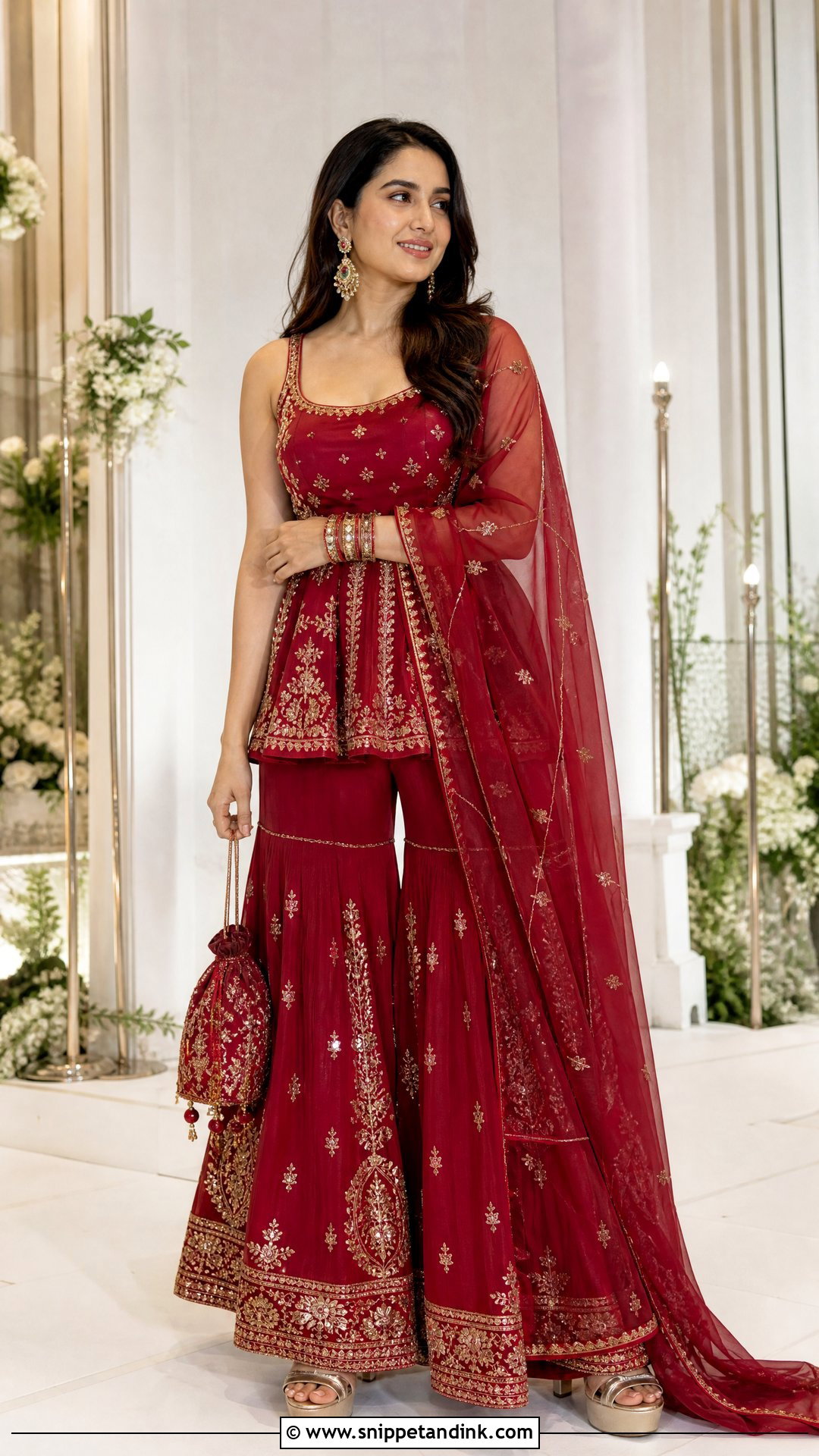
Peplum tops and sharara pants balance each other well: the fitted waist and flared hem define the upper body, and the wide pants carry the movement below. Length is the thing to get right. The peplum should end at the upper hip; any lower and it covers the top of the sharara and shortens your legs in photos. Keep the embroidery to the neckline, sleeves and peplum edge. Platform heels, a small potli, matching bangles and drop earrings finish it, and a narrow dupatta is optional. Pastels suit daytime, while ruby, navy and dark teal hold up under evening lights. It’s an easy outfit to dance in for hours.
11. Floral Organza Lehenga Wedding Outfit
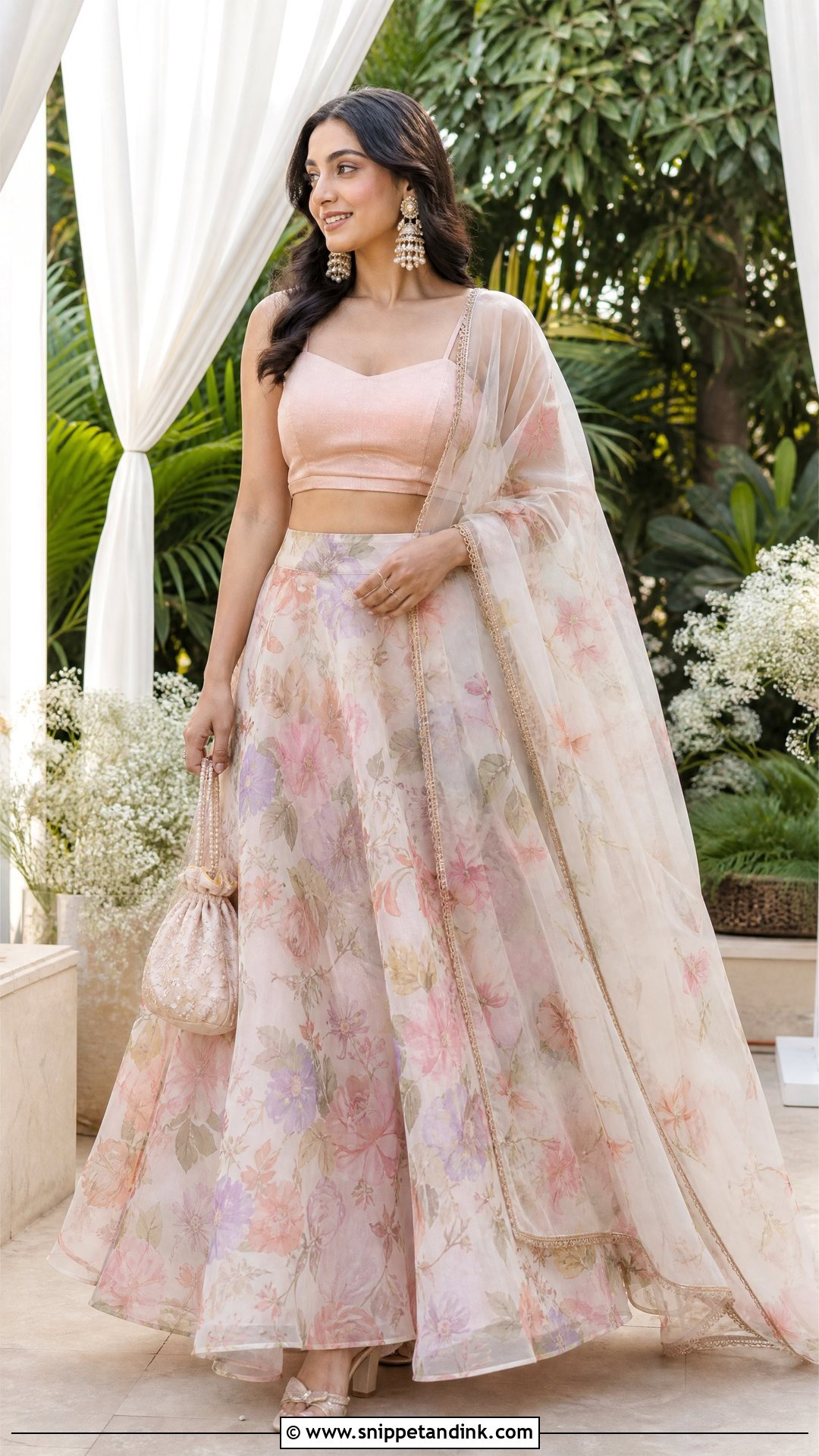
Organza is crisp, and that’s both its charm and its catch. A floral organza lehenga stands away from the body in an airy shape that suits garden ceremonies, but it creases sharply where you sit and can feel scratchy at the waist without a soft lining. Pick a skirt with printed or embroidered florals, a plain blouse that repeats one shade from the pattern, and a matching organza dupatta. Block-heel sandals matter on grass, since stilettos sink into a lawn. Pearl earrings, a small pastel potli, fresh makeup and a loose braid complete it. With a large print, keep the jewelry and blouse quiet; smaller prints can take a detailed neckline or decorative sleeves. Spring and summer suit it best, though deeper floral colors carry into cooler months.
12. Kanjeevaram Saree Wedding Outfit
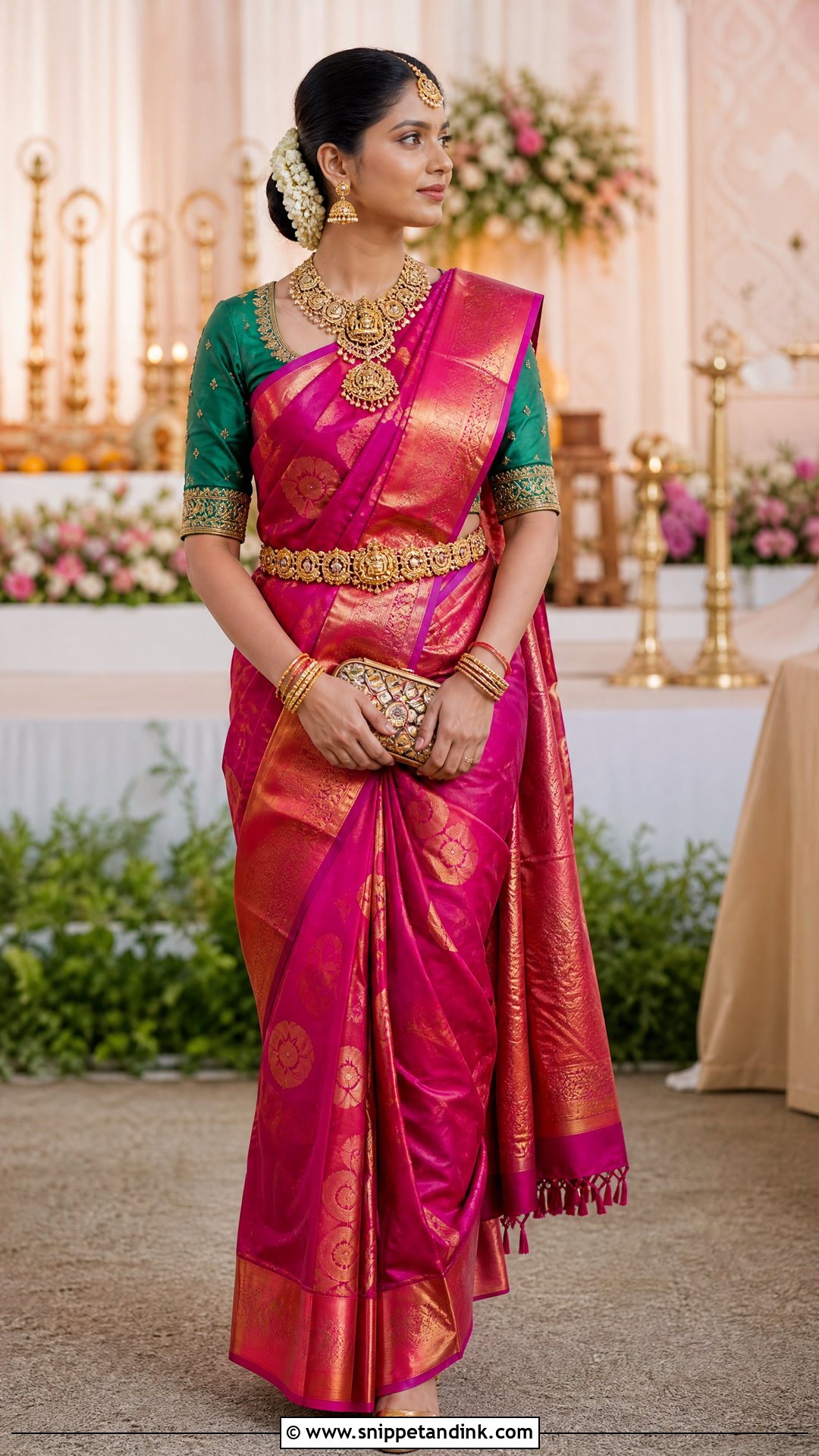
A Kanjeevaram saree is heavy silk with a woven border, and it behaves differently from softer sarees because it won’t fall into neat pleats on its own. I have the pleats pressed or pre-folded before the day and hold them with a waist belt; otherwise they fan open by lunchtime. Choose a contrasting border and a well-fitted blouse in a complementary color, with elbow-length sleeves and a modest back. Temple jewelry, gold-toned sandals, a decorated clutch and a low bun wrapped in jasmine are the classic finish. Brides can layer necklaces and bangles, while a guest looks more balanced with one necklace and statement earrings. The silk keeps its shape all day, which is why this saree looks so crisp in ceremony photographs.
13. Chikankari Palazzo Suit Wedding Outfit
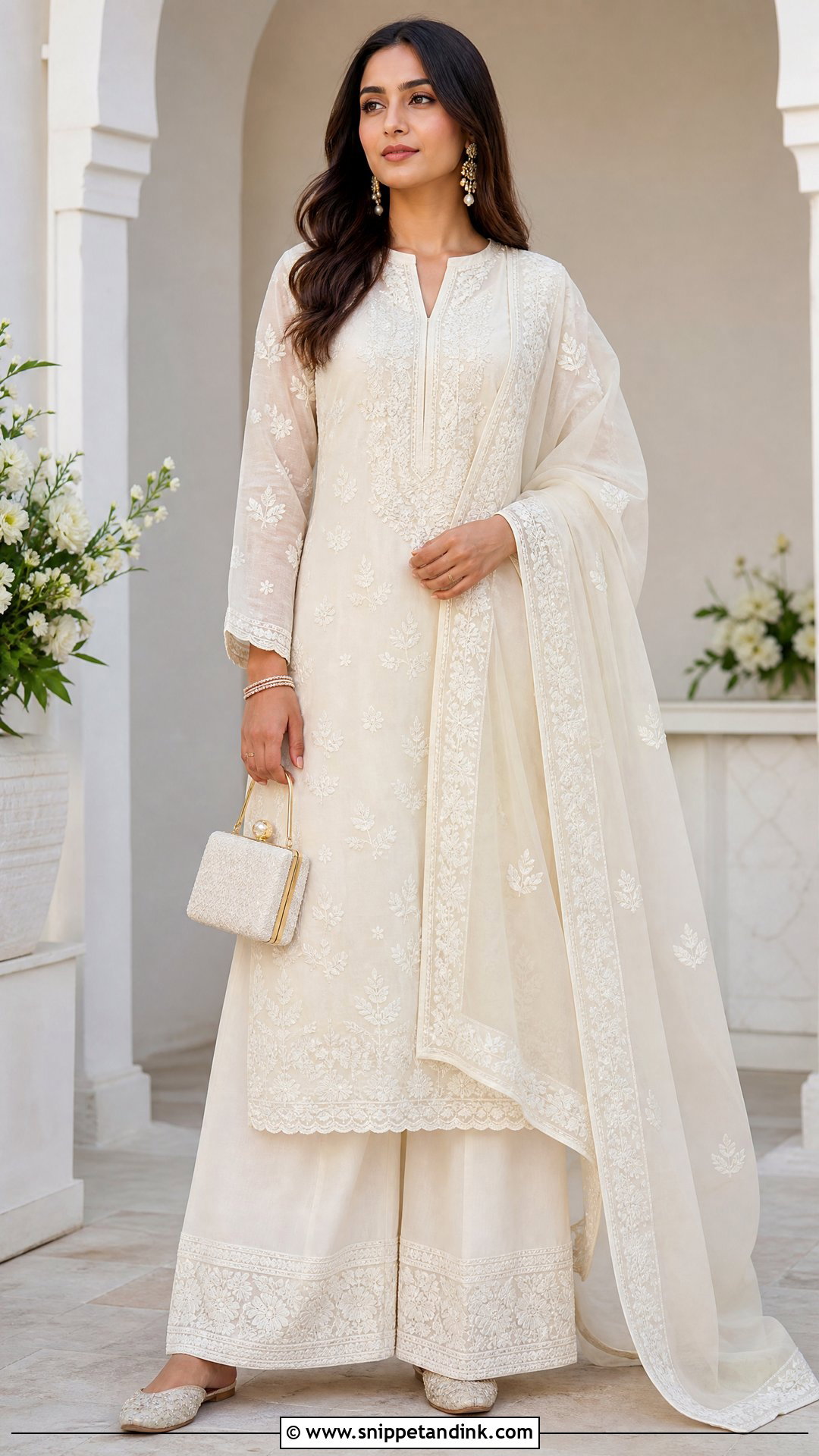
Chikankari is hand embroidery on fine cotton, georgette or muslin, so a chikankari palazzo suit gives texture without weight. That’s exactly why I suggest it for summer weddings and for older relatives who’d rather not carry a heavy lehenga through a long day. A straight or lightly flared kurta over matching palazzos lengthens the line, and an organza dupatta with a fine border dresses it up. Fine chikankari is sheer, so check the slip underneath: one dyed to match the kurta looks far better than stark white. Ivory, sage and powder blue read well in daylight; for evening, look for deeper tones with sequins worked into the embroidery. Embellished juttis, pearl drops and a structured mini bag finish it, with a soft bun or half-up hair.
14. Long Jacket Lehenga Wedding Outfit
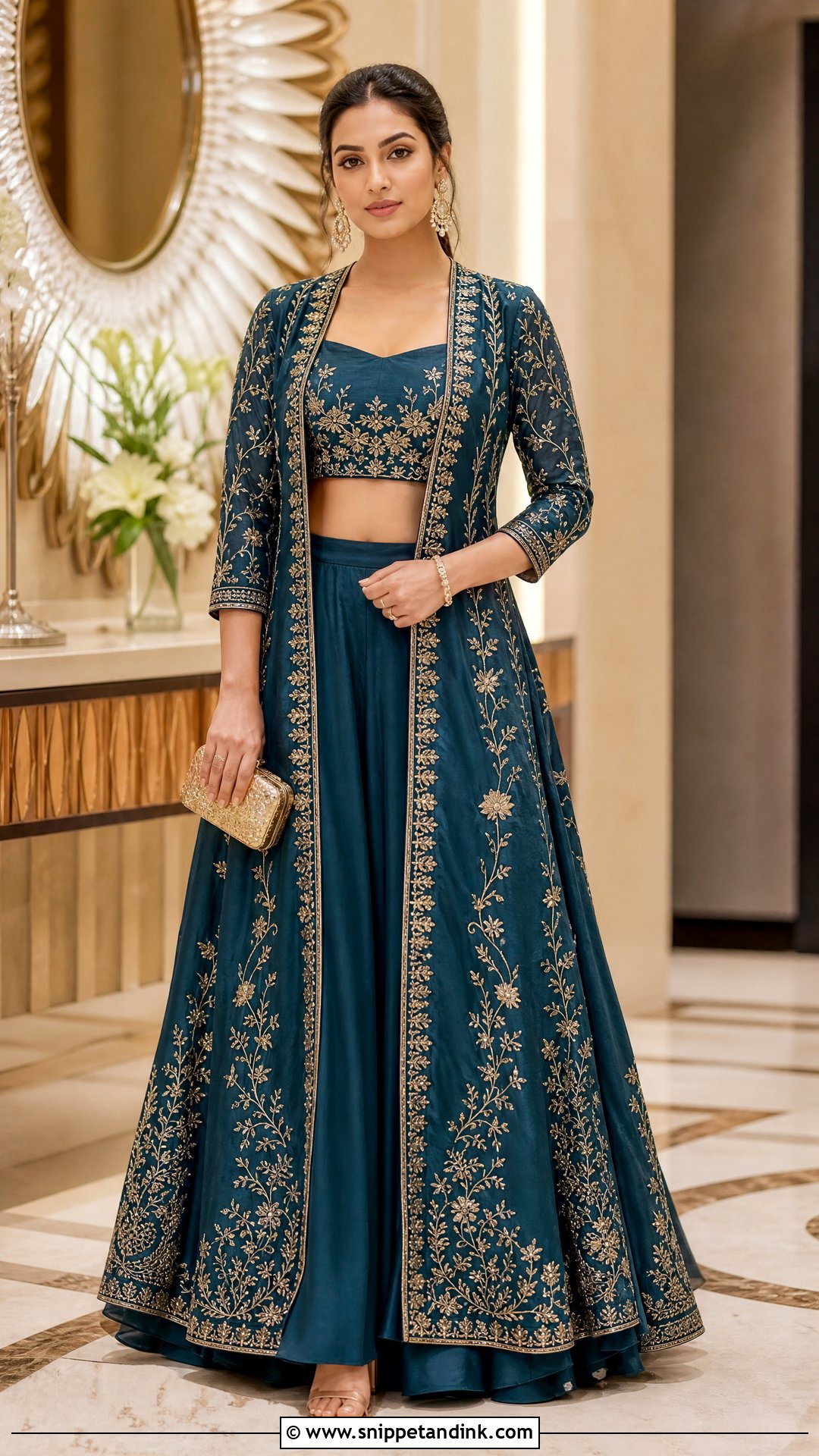
A long jacket gives a plain lehenga structure. Start with a solid or lightly worked skirt and a fitted blouse, then layer a sheer embroidered jacket over the top. Worn open, it shows the waist and draws long vertical lines; closed, it adds coverage. The fitting point I watch is the shoulder seam, because a jacket that’s even slightly wide there slides back all evening and you’ll spend the night tugging it forward. Keep the colors coordinated rather than mixing several competing shades. Heeled sandals, a compact clutch, earrings and one bracelet are enough, and a necklace is usually redundant when the jacket’s neckline is worked. The amount of embroidery decides who wears it, from bride to sister to guest, and in cooler weather the extra layer adds warmth without hiding the skirt’s movement.
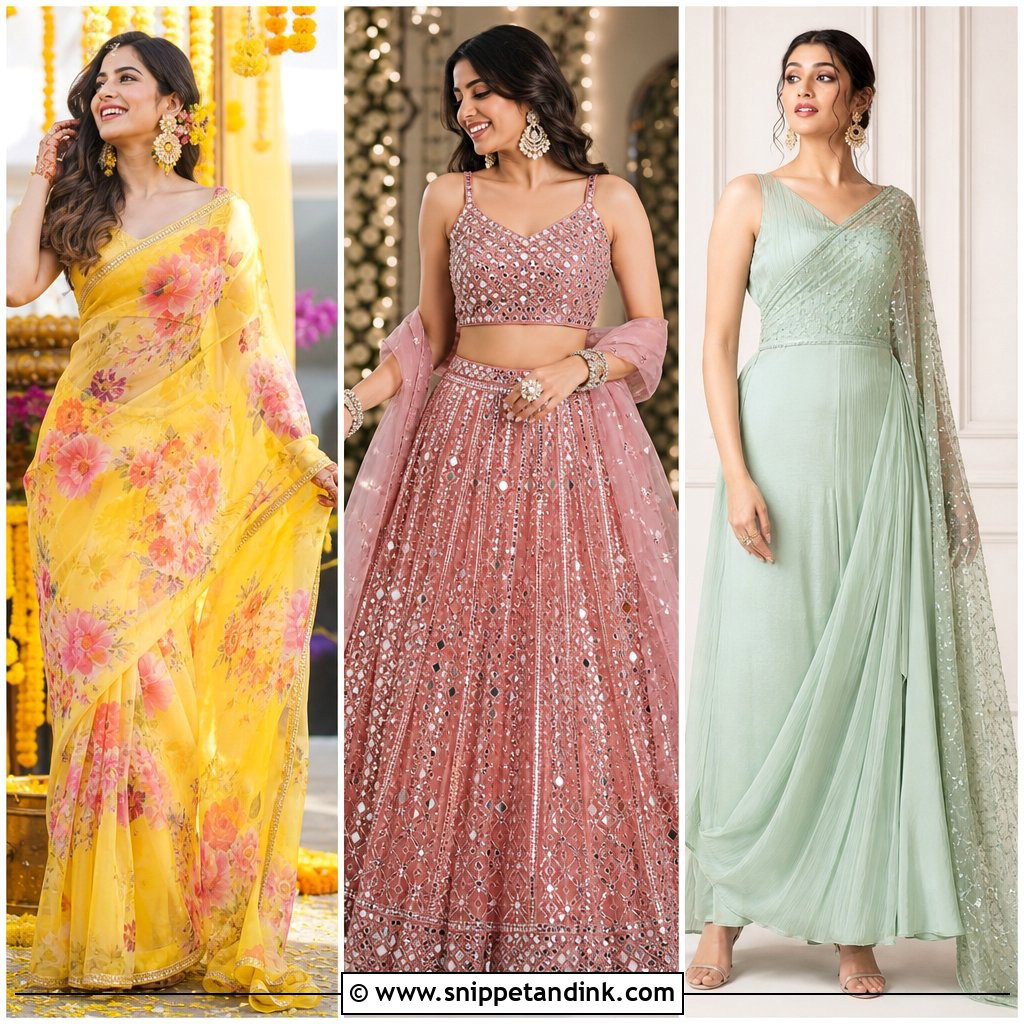
15. Velvet Lehenga Wedding Outfit
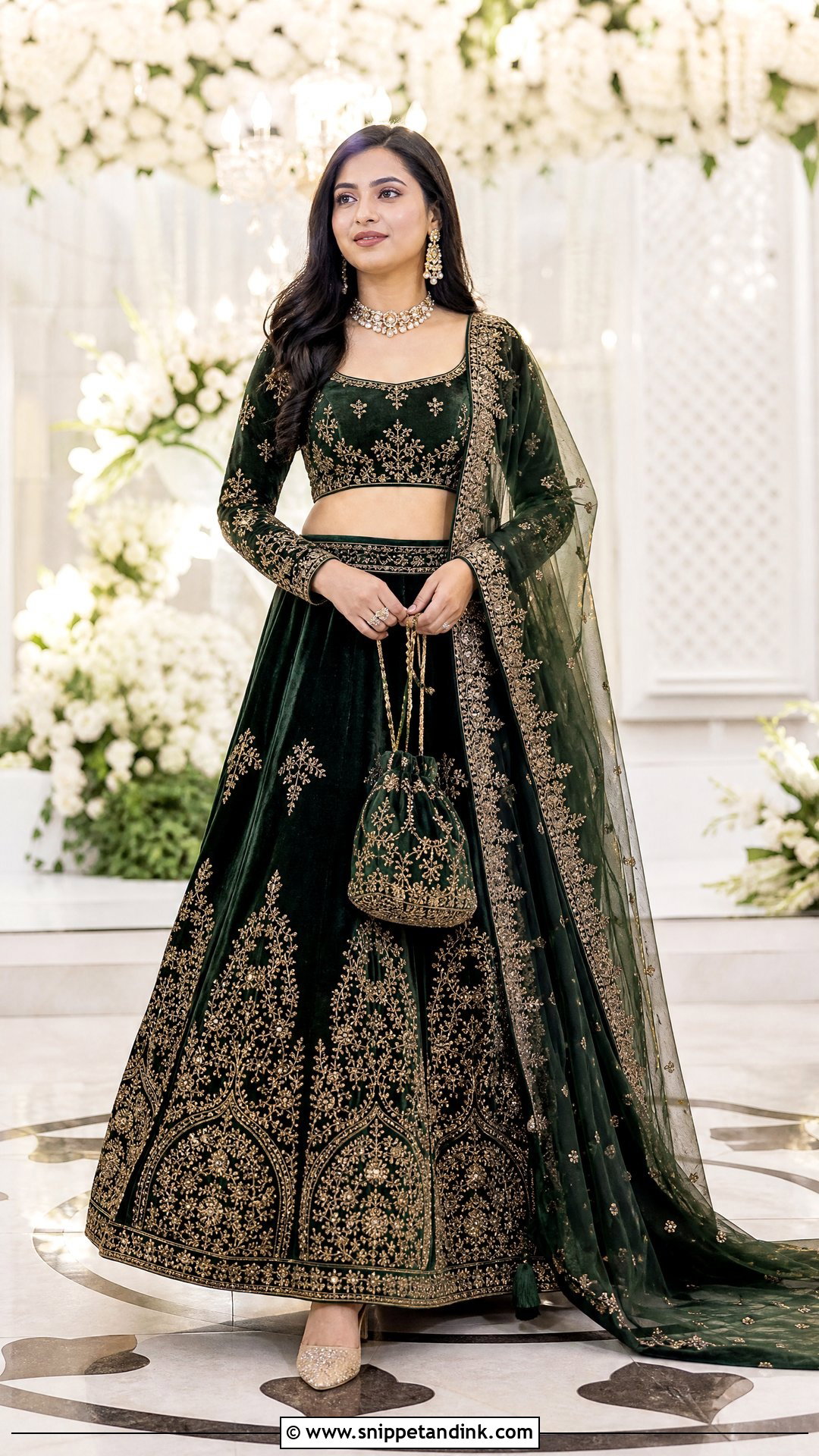
Velvet is the winter-wedding fabric, and it’s also the one I’m most careful with. It’s warm, it’s heavy and it shows every crush mark, so a velvet lehenga belongs at evening ceremonies in cool venues, not in a packed tent on a mild night. Burgundy, forest green, navy or deep plum work best, balanced with a fitted blouse and a lighter net or organza dupatta. Antique gold embroidery suits velvet better than bright gold, which can look brassy against the pile. Keep the flare moderate and the can-can underneath thin, since the fabric already carries weight. Closed-toe heels, a structured potli, traditional earrings and a single statement necklace finish it. Guests can keep the embroidery minimal; a bride can add a worked border, a veil and more jewelry.
16. Draped Skirt And Crop Top Outfit
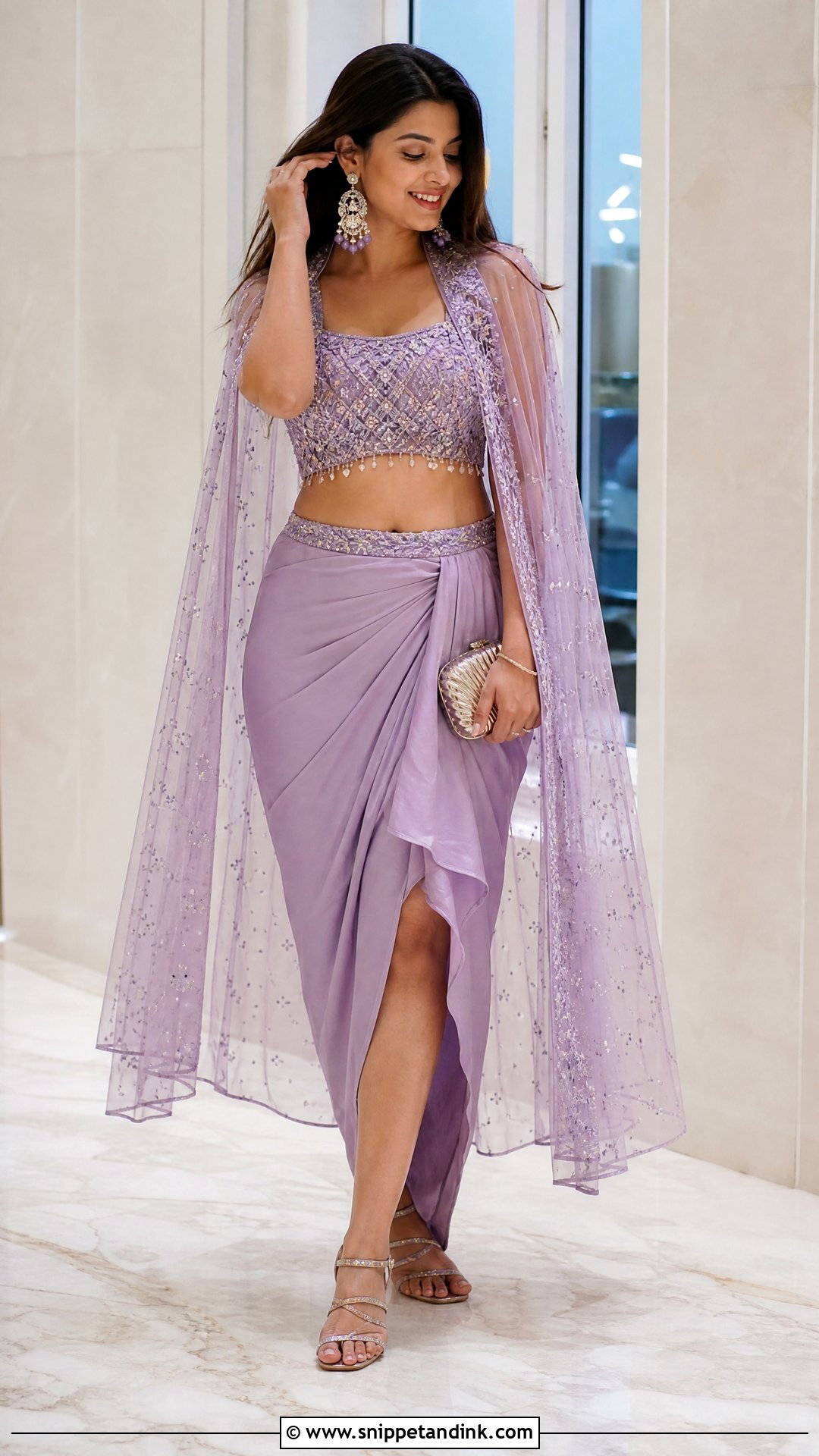
A draped skirt with a crop top brings a younger, fusion note to the wedding wardrobe. Look for controlled pleating, an asymmetric overlay or a soft side drape. The crop top needs real support and enough coverage that you aren’t adjusting it each time you raise your arms to dance, so test that at the fitting with your arms up. A coordinated cape or a light dupatta ties the look back to tradition. Strappy block heels, a metallic clutch and modern earrings suit it, with simple hair so the drape stays the focus. Monochrome looks sleek; contrasting pieces feel more playful at a mehndi or sangeet. Both pieces rewear easily on their own afterwards.
17. Patiala Suit With Phulkari Dupatta
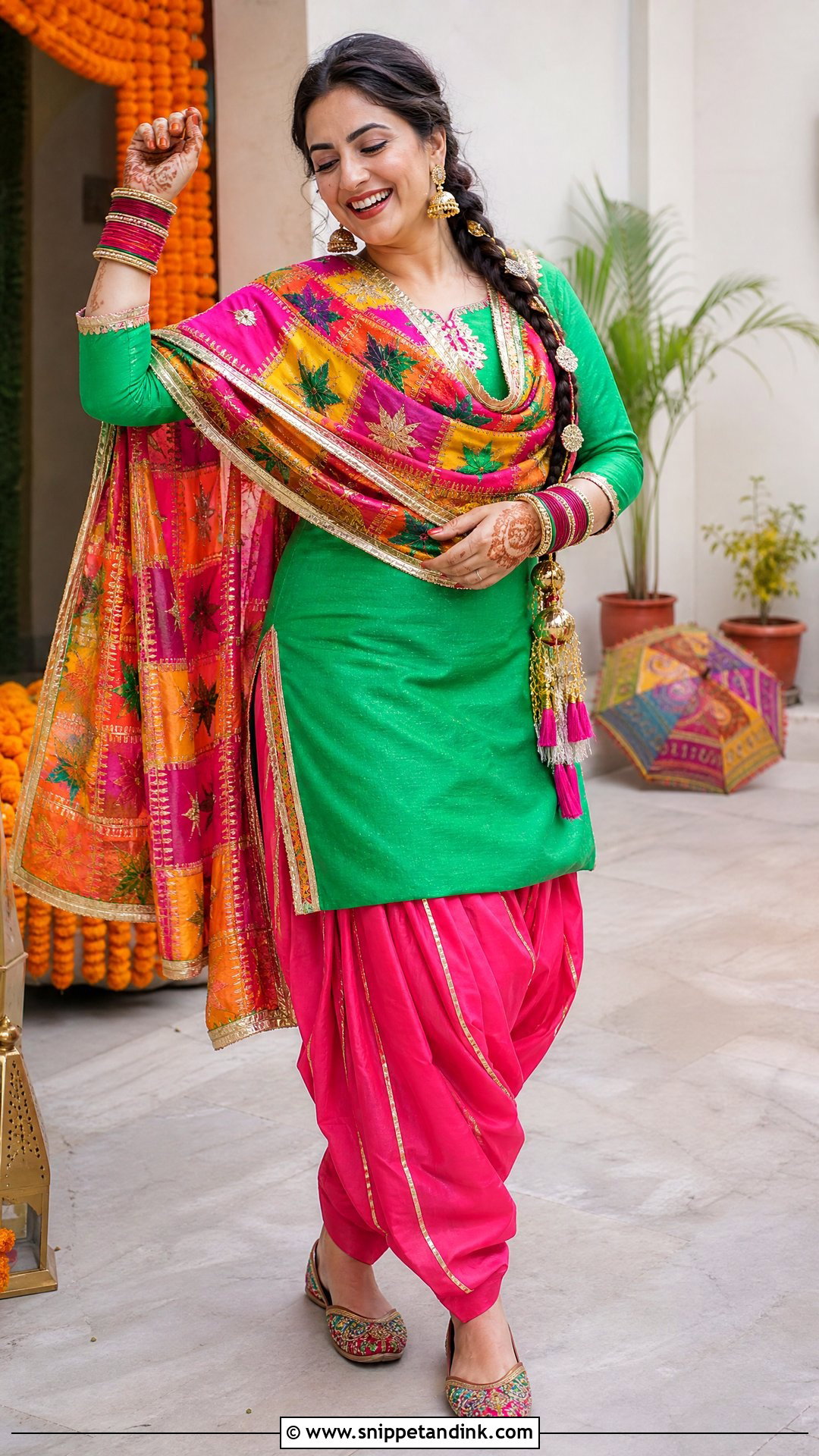
A Patiala suit with a Phulkari dupatta belongs at a lively pre-wedding function. The Phulkari is the star, its dense embroidery traditionally worked in silk floss, so I build everything else around it: a plain short kurta in one of the dupatta’s dominant colors, and generously pleated Patiala pants whose folds stay visible below. A heavy Phulkari slides off the shoulder easily, so I pin it to the shoulder seam from underneath, where the pin won’t show. Punjabi juttis, jhumkas, stacked bangles and a braid with small accessories complete it. Pink, orange, green and yellow combinations feel right at a mehndi or daytime sangeet. The roomy pants let you dance freely, and guests who want a culturally rooted look without a saree often find this the most comfortable option on the list.
18. Palazzo Saree Wedding Outfit
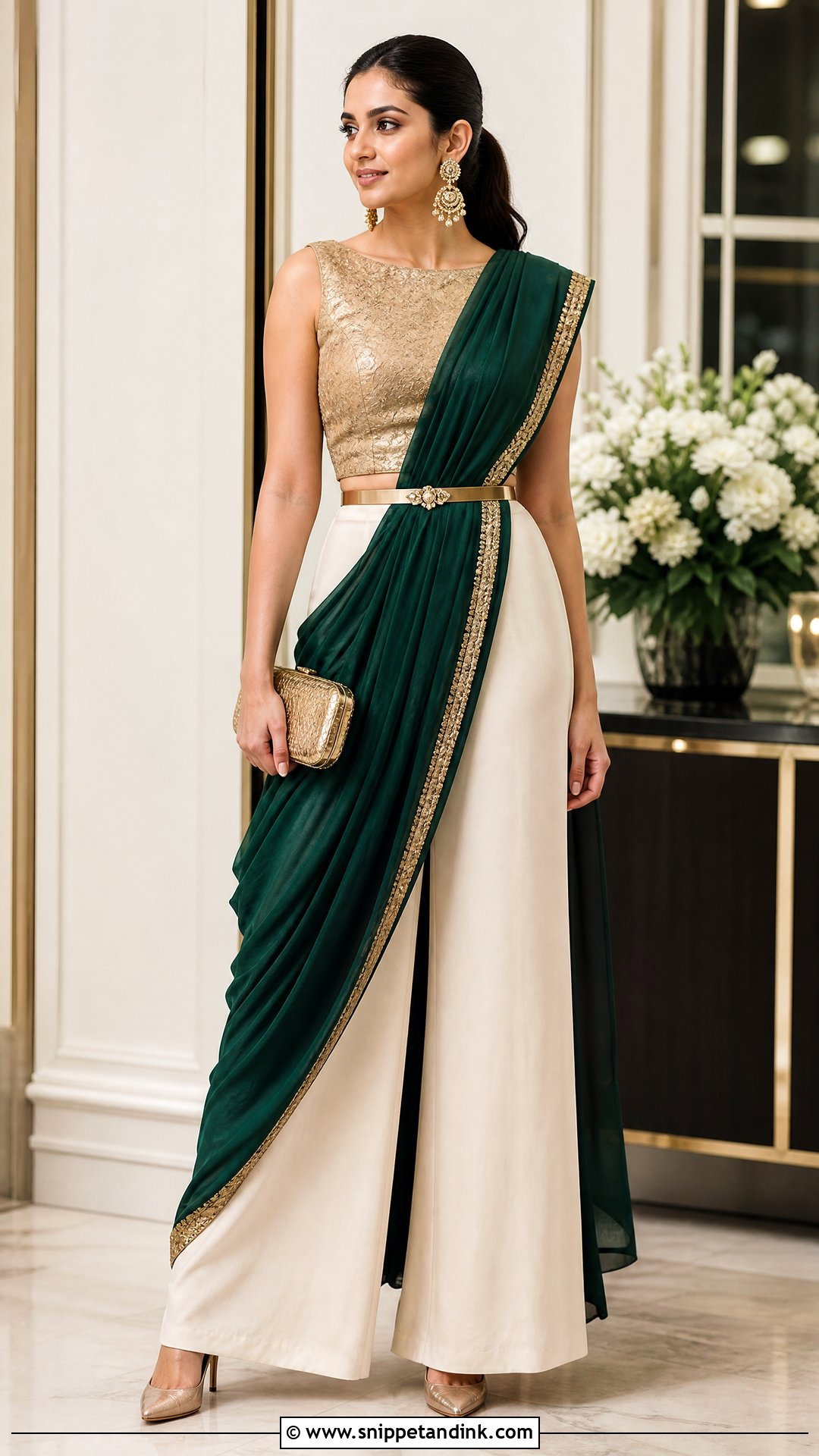
A palazzo saree looks like a draped saree and wears like wide-leg pants. Fluid palazzos and a fitted blouse form the base, with a long panel attached or arranged across the waist and shoulder, and a belt anchoring it. Fabric matters more here than anywhere else in this list: crepe, satin or georgette falls smoothly, while anything stiffer bunches at the waist where the panel joins. Pointed heels, a sleek clutch, statement earrings and a polished ponytail suit the modern line. Solid colors show off the silhouette; a decorative border brings back traditional detail. I’d keep this for receptions and cocktail-style wedding functions, where you’ll walk and dance a lot and still want the swing of a drape.
19. Angrakha Anarkali Wedding Outfit
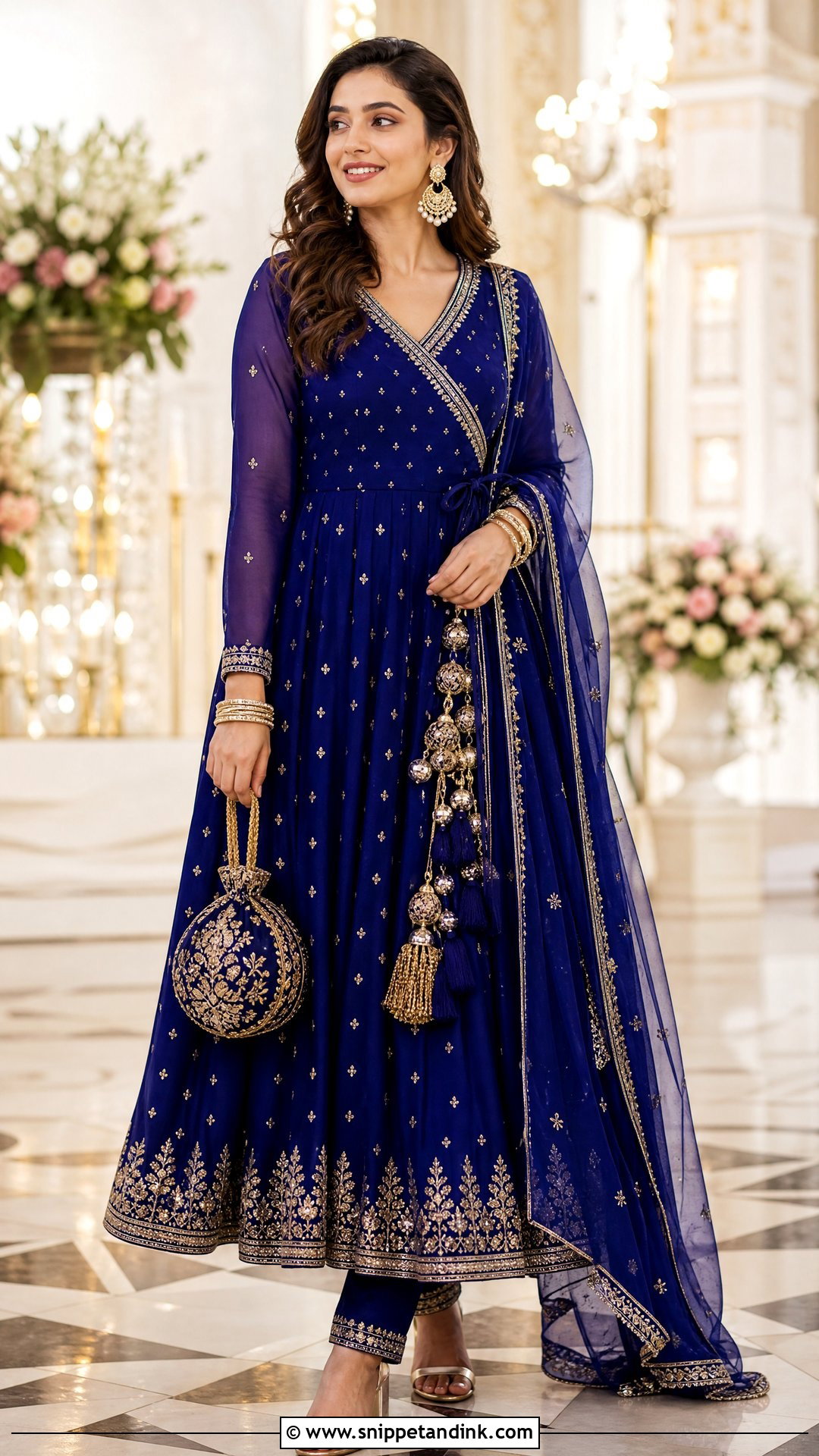
The overlapping wrap neckline is what sets an Angrakha Anarkali apart from a standard one, and it’s also its weak spot. A side tie alone tends to gape when you bend forward, so I like a hidden hook or snap at the inner fold as well. Look for a gentle flare from the waist. Tassels, contrasting piping or embroidered borders can trace the wrap without crowding it. Add narrow pants and a light dupatta over one shoulder, then block heels, a round potli, chandbalis and slim bangles. A side braid or low bun follows the diagonal neckline. Printed cotton-silk suits a daytime mehndi; velvet trims and zari work belong at formal evening ceremonies. Because the wrap adjusts, it stays comfortable through weight changes or pregnancy.
20. Brocade Pants And Long Kurta Outfit
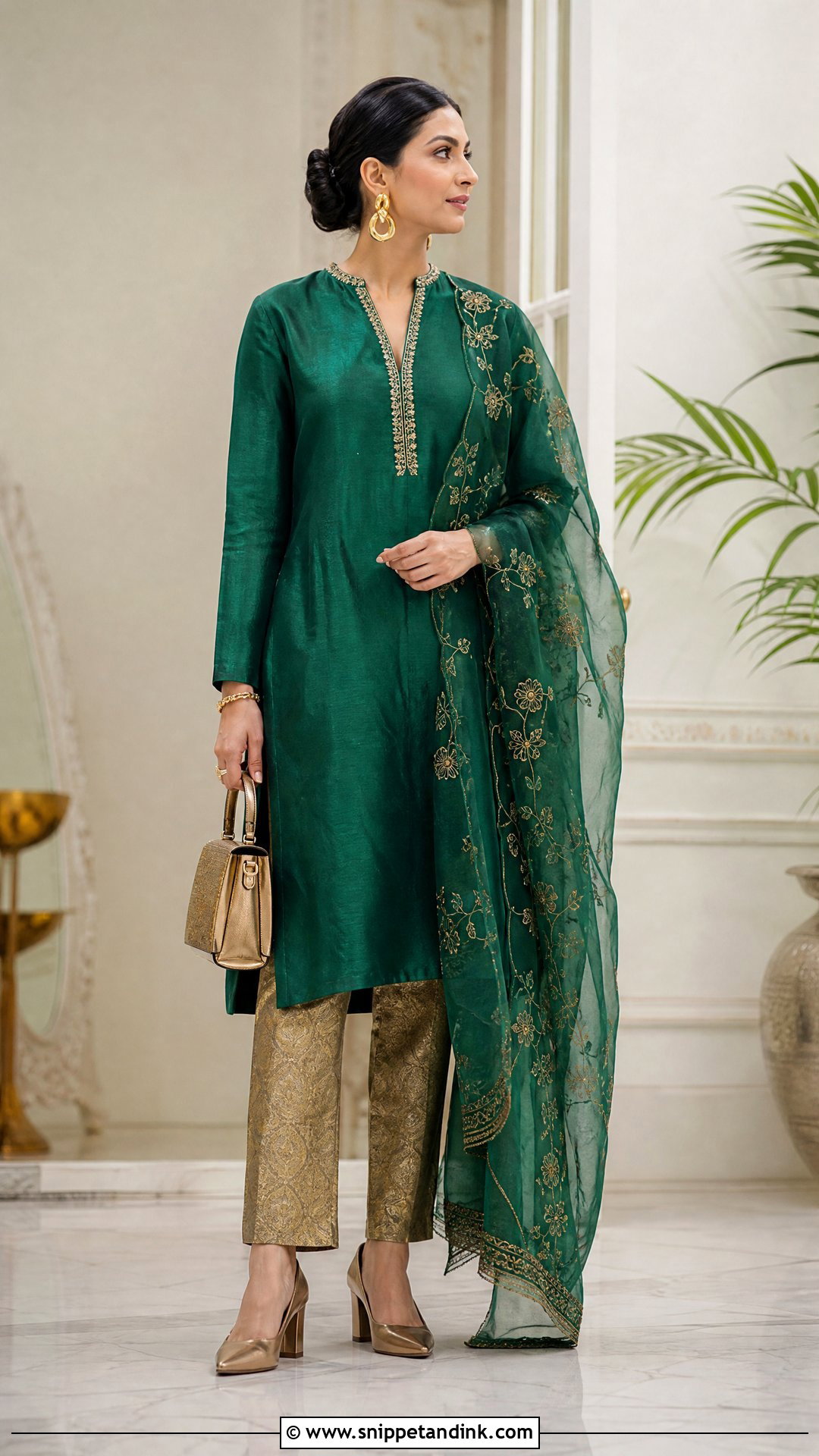
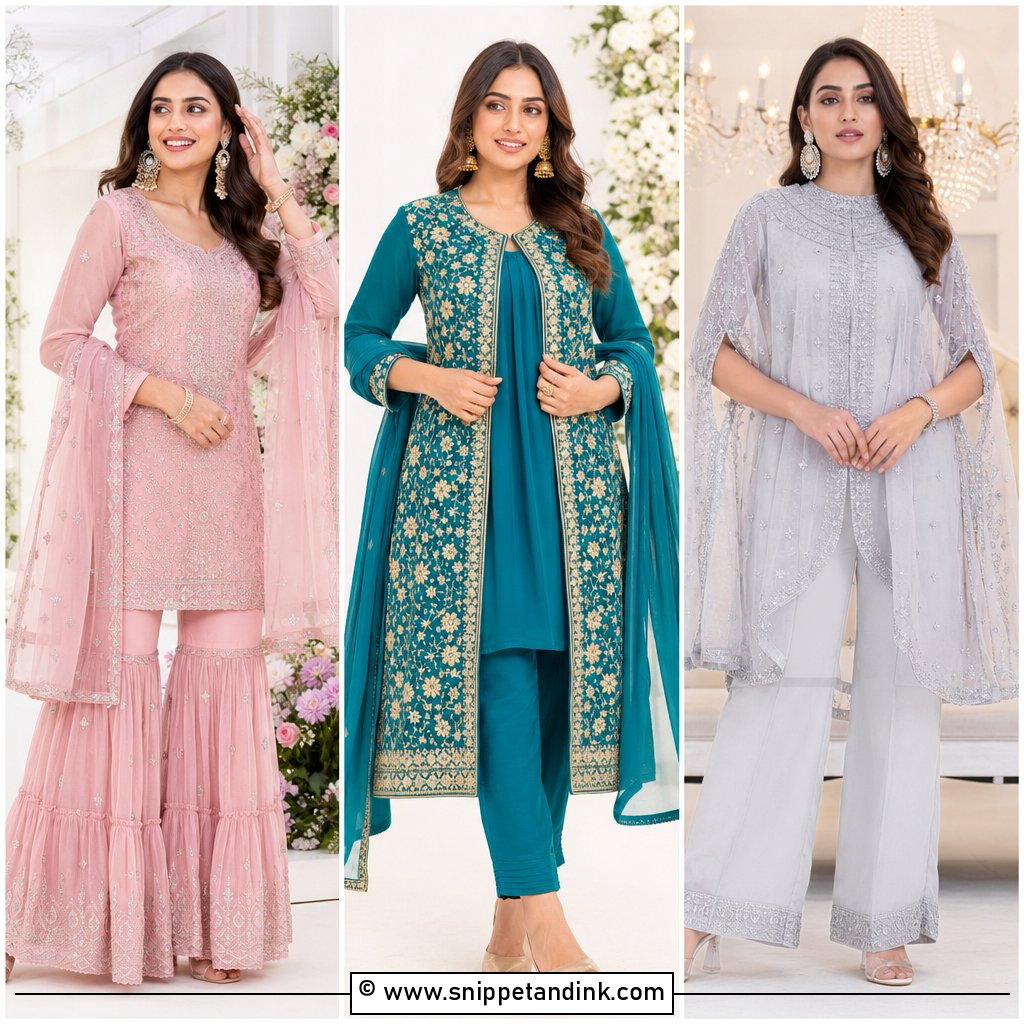
Brocade pants with a long kurta suit women who’d rather wear tailored separates than a skirt. Slim or straight brocade trousers need a solid knee-length kurta with side slits to calm the pattern. Brocade has almost no stretch, so I size the trousers for sitting, not standing, and ask the tailor to leave seam allowance at the waist for later. A sheer dupatta or a structured jacket adds a ceremonial layer. Pointed flats or block heels, a top-handle bag, sculptural earrings and a neat low bun finish it. Gold brocade sits well with emerald, black, maroon or ivory; silver brocade with blue, grey and cool pastels. Keep the kurta clean, and after the wedding each piece slips into everyday outfits.
The Blouse Takes Longer Than the Saree
You can buy a saree or lehenga in an afternoon. The blouse is the slow part, and tailors get booked up quickly before the wedding season, so I plan for several weeks and at least two fittings, more for a padded or corset blouse. Bring these to every fitting:
- The saree or dupatta itself, so the blouse is checked with the real drape pulling on it.
- The shoes you’ll wear, because blouse length and skirt hem are judged together.
- The bra or shapewear for the day, since a different one changes the bust fit completely.
- Your heaviest necklace, to see where it sits against the neckline.
Ask for generous seam allowance at the side seams. Weight shifts in the weeks before a wedding, and a blouse with extra fabric inside can be let out the night before. Have the fall and pico done on a saree before the first fitting too, or the hem won’t hang the way it will on the day.
What Lives in My Kit for a Slipping Pallu
Even a well-pinned drape loosens after hours of hugging relatives. A small pouch in a bridesmaid’s bag saves most problems: safety pins in two sizes, a few U-pins, double-sided fashion tape for a gaping neckline or a wandering dupatta, a needle threaded in a neutral color, and small scissors. When pleats come loose, don’t re-tuck them in a hurry. Unpin, gather all the pleats together again, then tuck and pin them as one block at the navel so they fall straight.
Dress for the Hour You’ll Still Be Dancing
Look past the single heavy lehenga and there’s plenty of room to honor regional craft, from Banarasi and Kanjeevaram weaving to Phulkari, brocade and chikankari, in a shape that suits how you move. Before you fall for a color, think through the ceremony, the weather and how much of the day you’ll spend sitting, walking or dancing. A secure drape and supportive shoes matter more by midnight than any embroidery does. Brides can build up jewelry and dupatta detail, and guests usually look better keeping accessories light. Pick the outfit you can forget about once it’s on, and you’ll enjoy the celebration far more.
You'll Like These Ideas:





Leave a Reply