
Heavy Anarkali wedding suits are what I suggest to women who want the drama of a lehenga without a separate skirt to manage. The fitted bodice and long flared kalidar panels give movement and full coverage, and the heavier fabrics, from silk and velvet to brocade, organza, georgette and net, make it feel ceremonial. Right now I’m seeing a lot of floor-length cuts, jewel tones, pastel embroidery, zardozi borders and mirror work, usually with a statement dupatta. The same silhouette can be bridal, modest or modern depending on fabric and styling. Here are the versions I’d consider for brides, sisters, bridesmaids and guests, with notes on weight, fit and where each one shines.
Lift It, Sit in It, Count the Panels
A heavy Anarkali looks the same on a hanger whether it’s well made or not. The difference shows when you put it on and move. These are the checks I run at every trial, in this order.
- Pick the suit up by the shoulders before trying it on. A heavily embroidered flare with a velvet or brocade base can be surprisingly heavy, and all of that hangs from your shoulders for hours.
- Find the waist seam. On an Anarkali it should sit just under the bust; if it lands on the bust or at the natural waist, the flare starts in the wrong place and the bodice looks long or squashed.
- Ask how many kalis (panels) make up the flare. More panels give a fuller swirl but add weight and bulk at the seam.
- Check the inside. A can-can layer or a stiff lining holds the flare out; without one, georgette and chiffon hang flat.
- Sit down in it. The flare should spread, not bunch under you, and the churidar gathers should sit at the ankle, not halfway up the calf.
- Raise both arms. Fitted sleeves and a tight bodice can pull the whole hem up when you lift your hands for bangles or a blessing.
1. Red Bridal Anarkali Wedding Suit
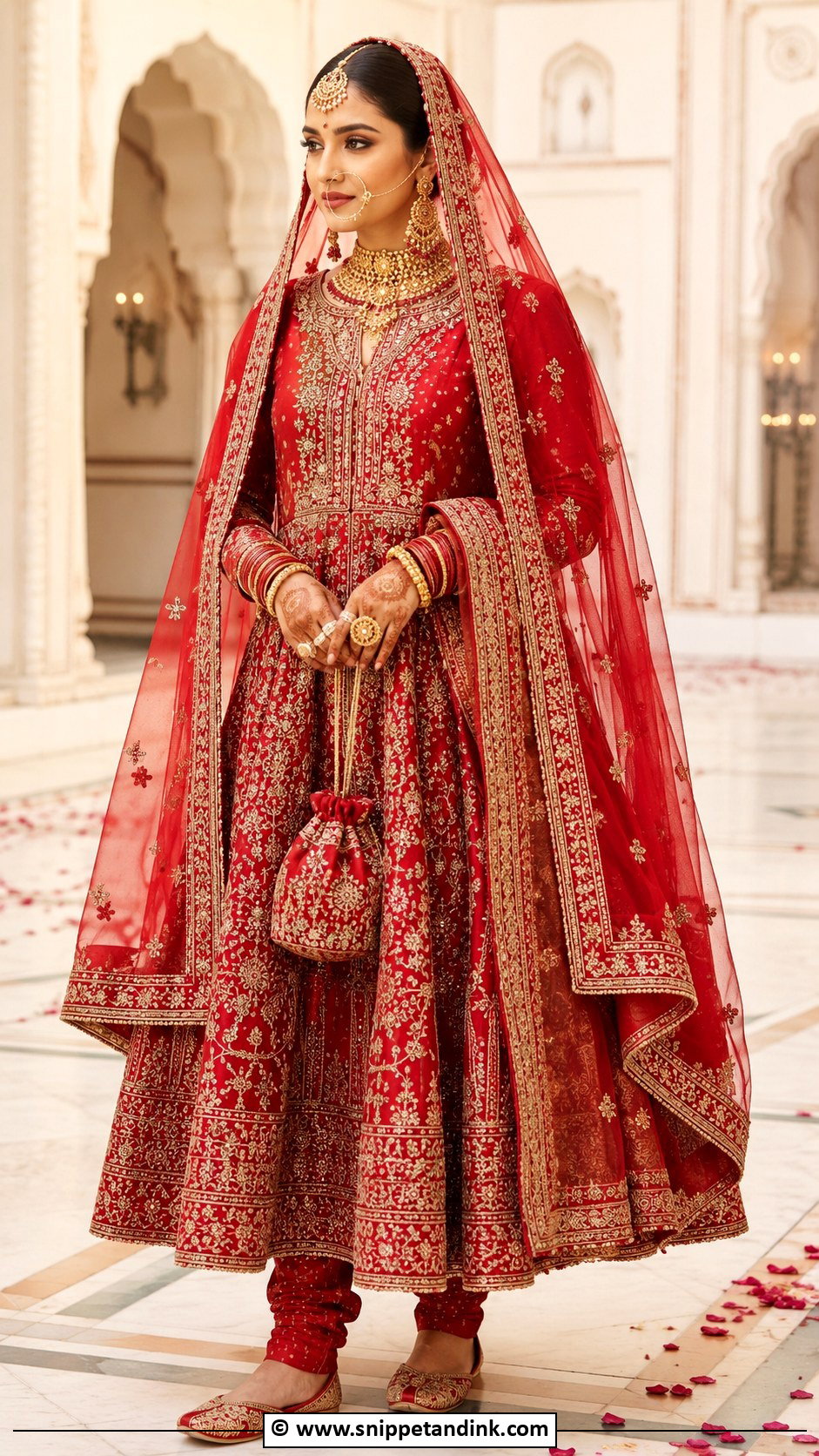
Red is the bridal Anarkali for women who want tradition but need to move freely through long ceremonies. I’d choose floor-length silk or raw silk with zardozi, dabka, sequins or threadwork across the bodice, sleeves and hem. A wide flare gives the grand outline people associate with lehengas, and churidar pants underneath stay neat when you sit at the mandap. Before ordering, I ask how many panels the flare has, since a heavily worked flare with dozens of kalis can weigh a lot by evening. A bordered dupatta over the head or one shoulder, a maang tikka, bangles and embroidered juttis complete it.
2. Maroon Velvet Anarkali Wedding Suit
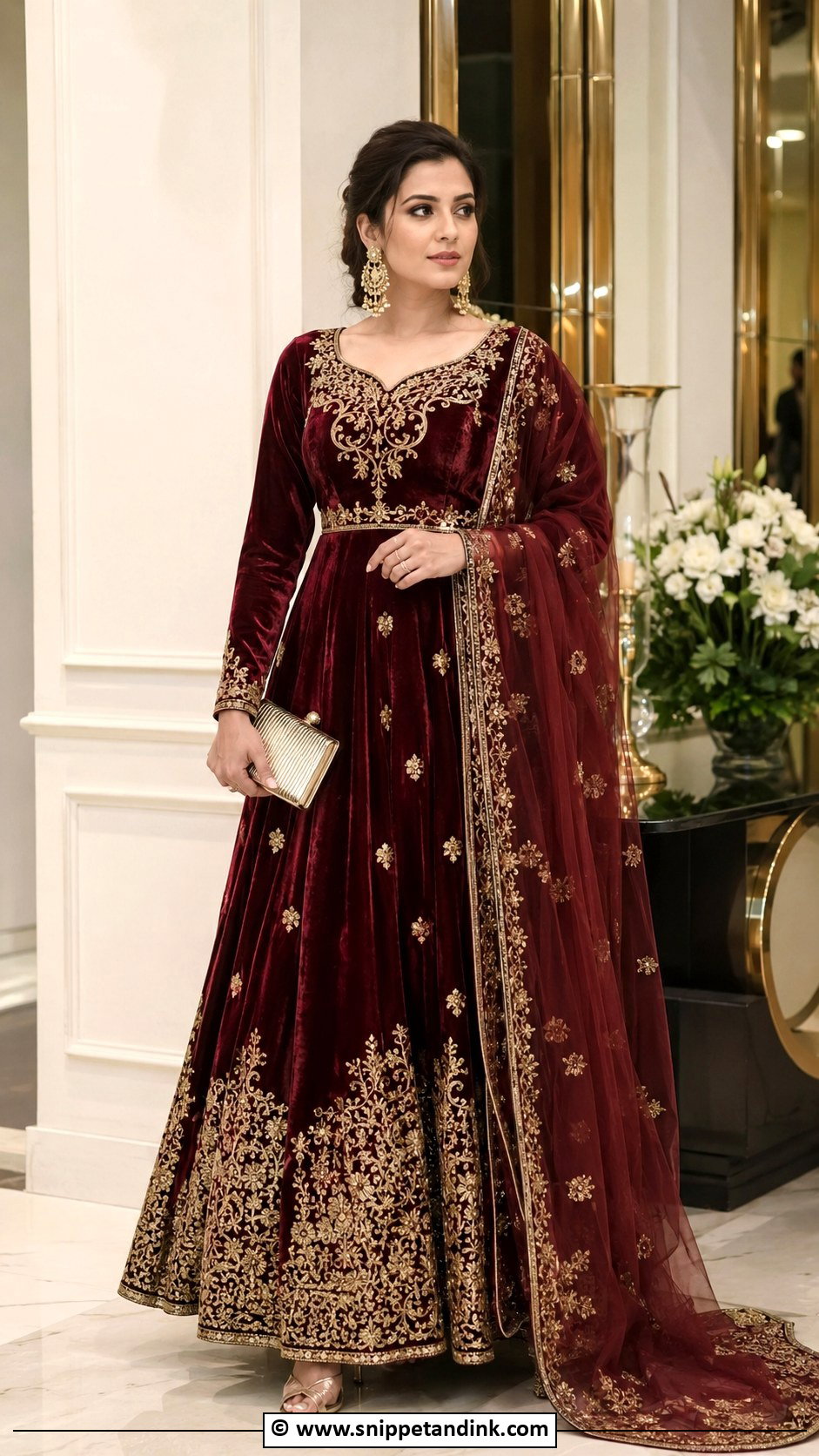
A maroon velvet Anarkali wedding suit belongs to winter evenings. Velvet already has depth, so the embroidery should be deliberate: gold zari or antique thread along the neckline, cuffs, waist seam and hem, rather than covering every inch. Velvet is heavy, which is why I pair it with a sheer net or organza dupatta and never a second velvet layer. It also holds heat; in a crowded, warm hall it gets uncomfortable within an hour, so I’d save it for cool venues or outdoor winter events. Kundan earrings and embellished heels finish it.
3. Ivory Anarkali Wedding Suit
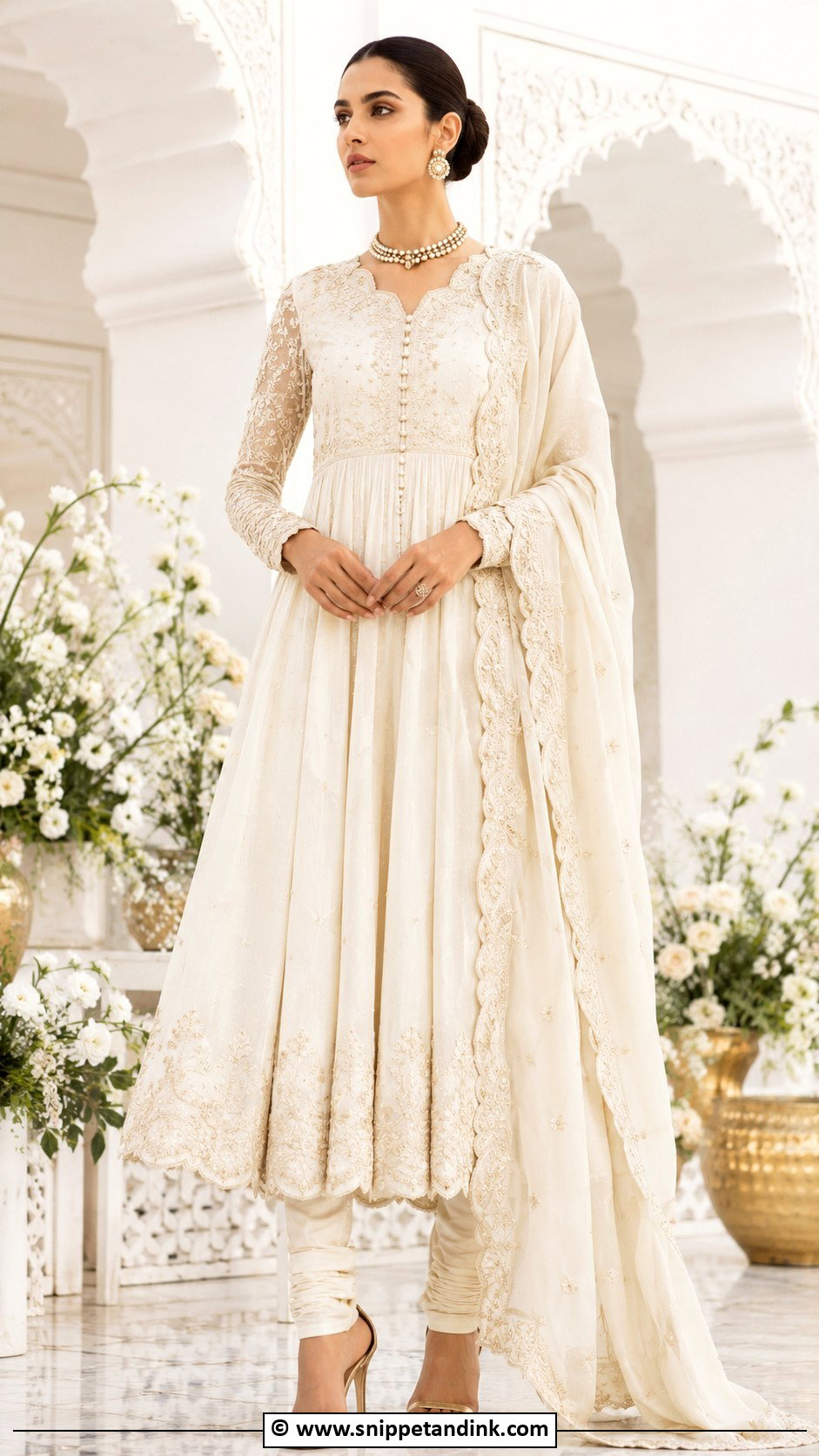
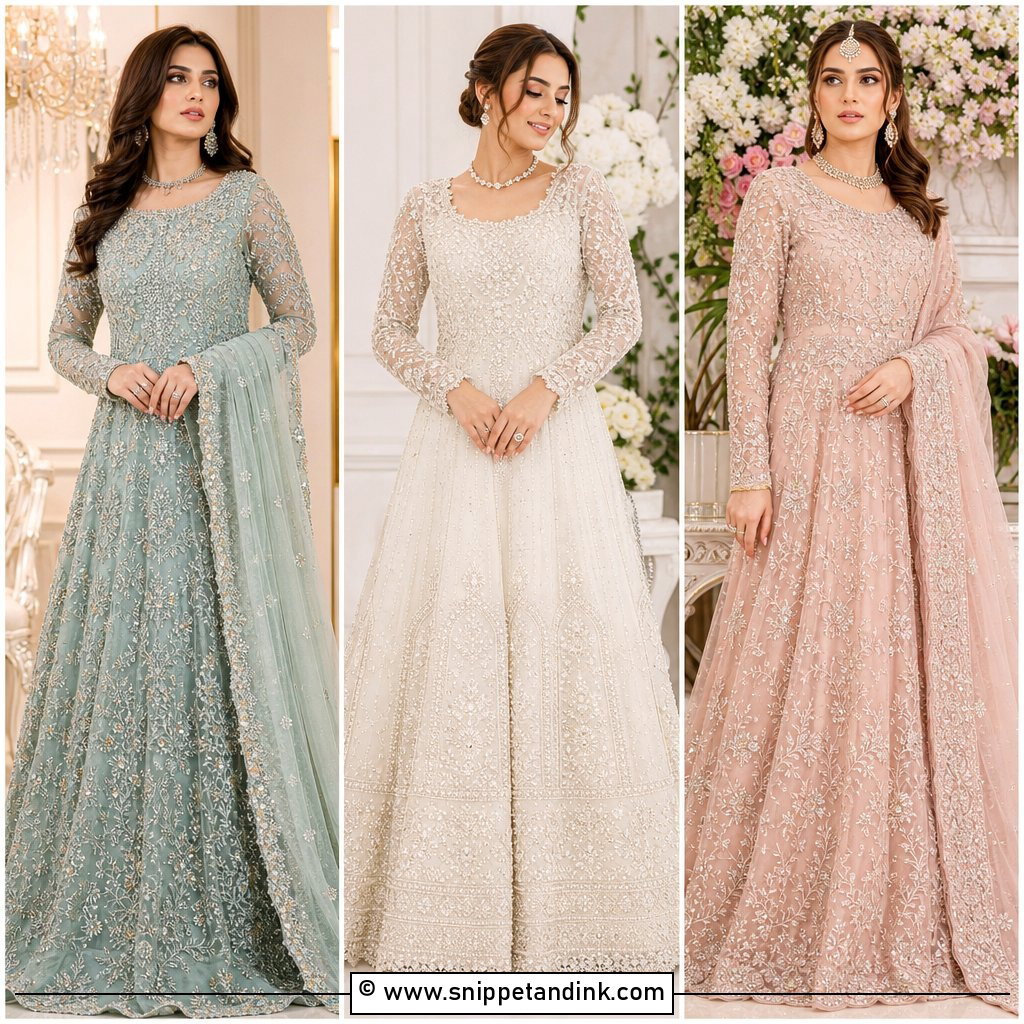
Ivory is a softer, modern choice for brides, or for close family at a formal wedding. The mistake I see is plain ivory, which looks washed out at a wedding. Heavy gold, pearl or champagne work on the yoke, sleeves and border gives it the festive weight it needs. Rich silk, organza or georgette all work. A scalloped or trimmed dupatta adds polish. Pearl jewellery and a neat bun suit daytime ceremonies and bright indoor venues, where ivory reads clean instead of grey.
4. Emerald Green Anarkali Wedding Suit
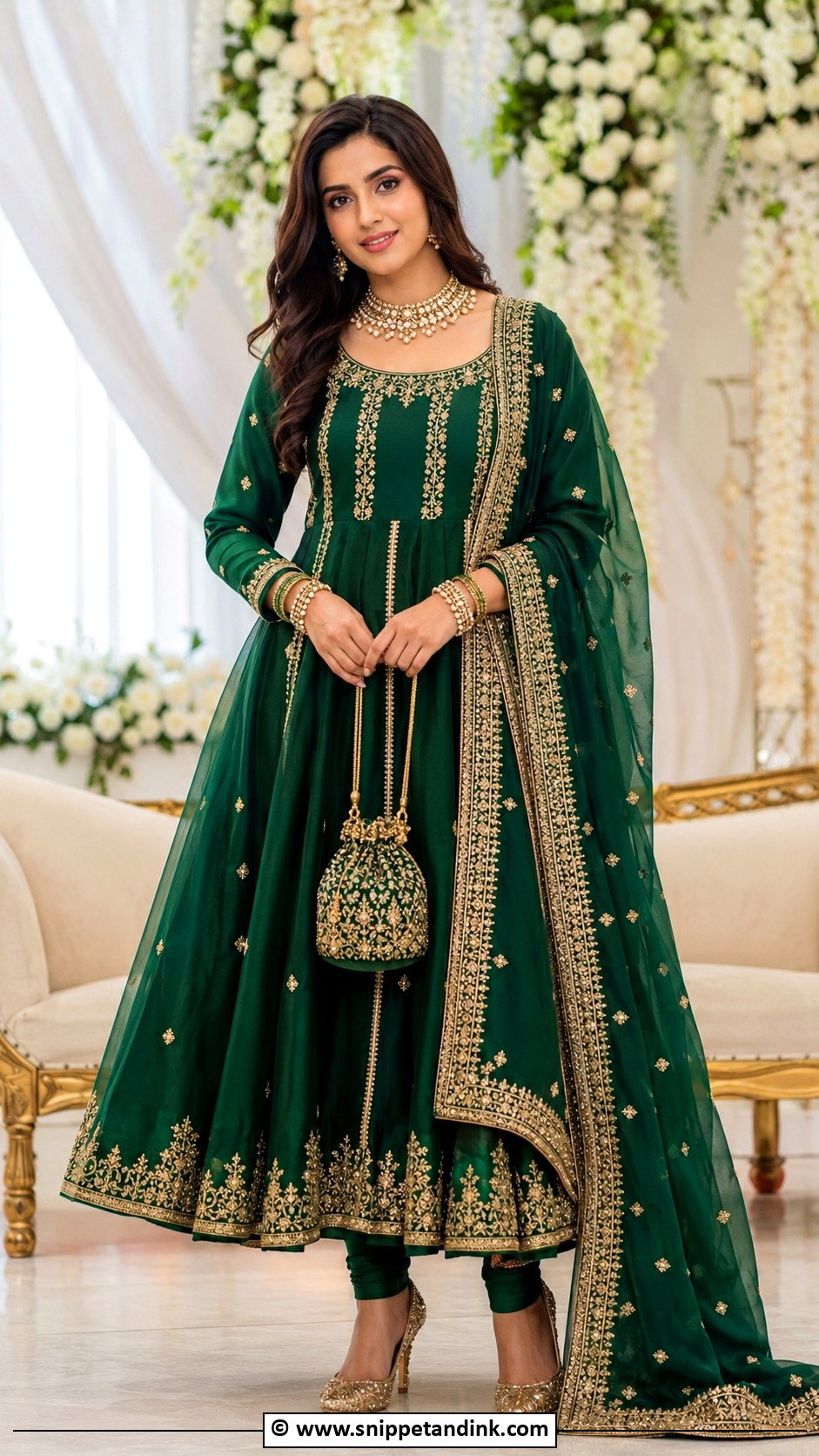
Emerald suits sisters, bridesmaids and guests who want to stand out without upstaging anyone. Silk, georgette or velvet with gold embroidery, sequins or delicate mirror accents all work. The bodice should fit closely so the flare reads as a deliberate shape rather than a tent. A matching or contrast dupatta, kundan jewellery and embroidered heels complete it. Emerald holds up particularly well under warm evening light, making it a good sangeet or reception colour.
5. Royal Blue Anarkali Wedding Suit
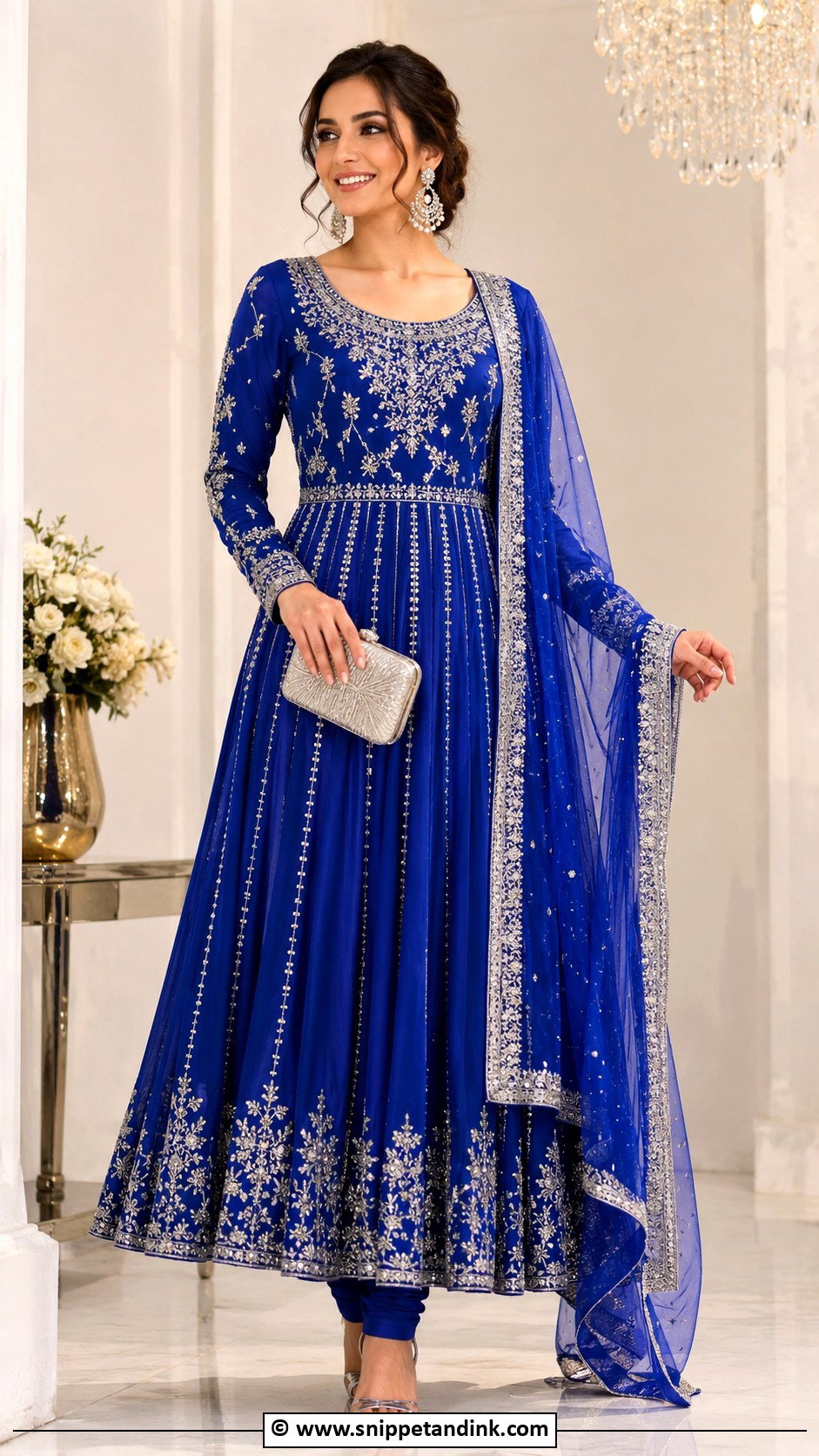
Royal blue takes silver, antique gold or tone-on-tone embroidery equally well. A floor-length georgette or silk Anarkali with a structured bodice, full sleeves and a worked hem looks polished. Royal blue can look slightly purple under some stage lights, so if the venue uses coloured uplighting, I suggest checking a photo of the fabric under similar light. A sheer dupatta with scattered sequins keeps the weight down. Silver jewellery, a crystal clutch and metallic heels suit receptions and formal evenings.
6. Pastel Pink Anarkali Wedding Suit
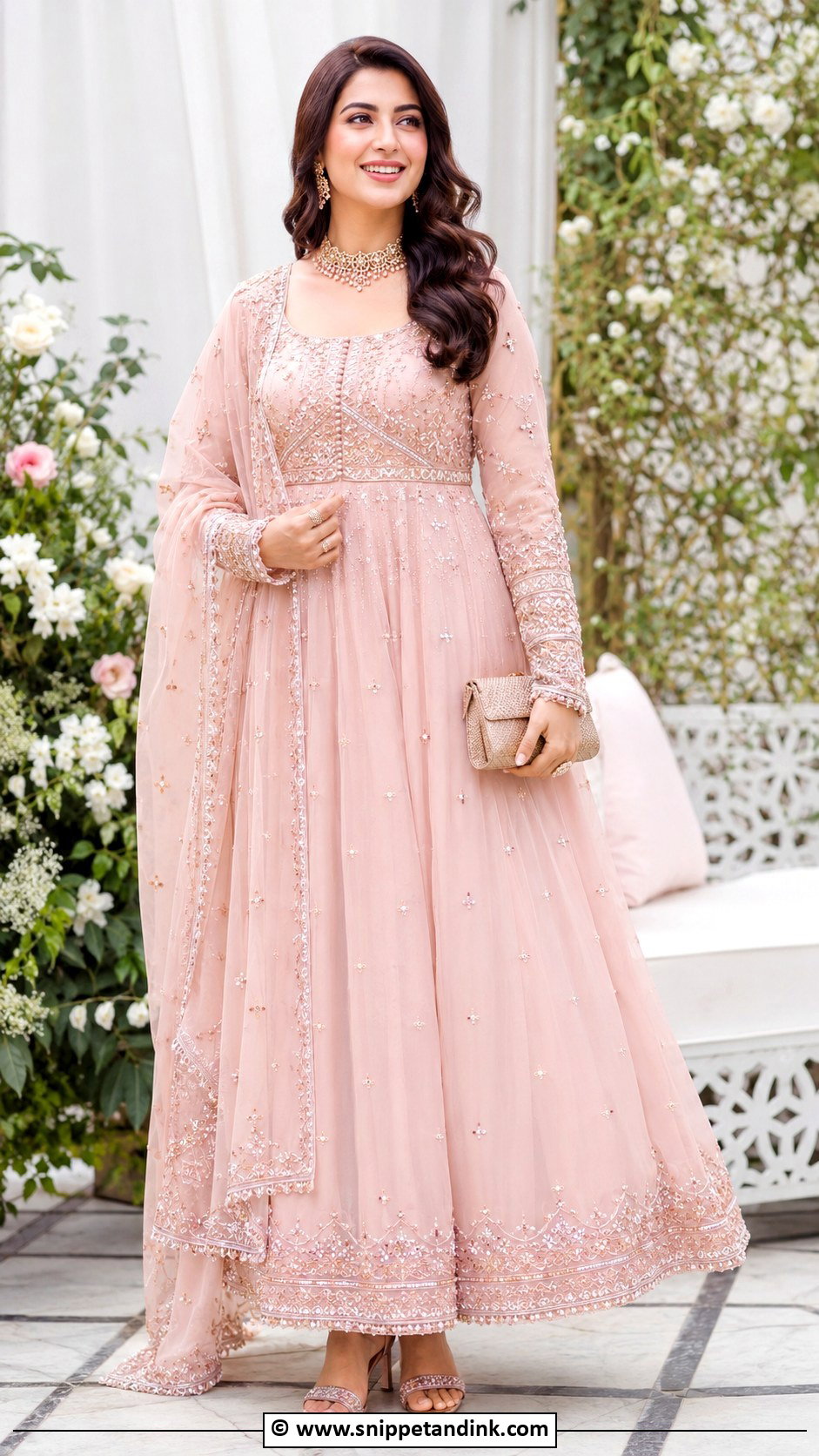
Pastel pink is for daytime events, engagements and bridesmaid groups. The challenge with pastels is that they can look underdressed at a wedding, so I keep the work concentrated: a decorated bodice, ornate sleeves and a finished dupatta in pearl, sequin, resham or delicate zardozi. Georgette, organza or silk all work. Rose gold jewellery and embellished sandals keep it soft. Pink photographs well outdoors in daylight.
7. Gold Anarkali Wedding Suit
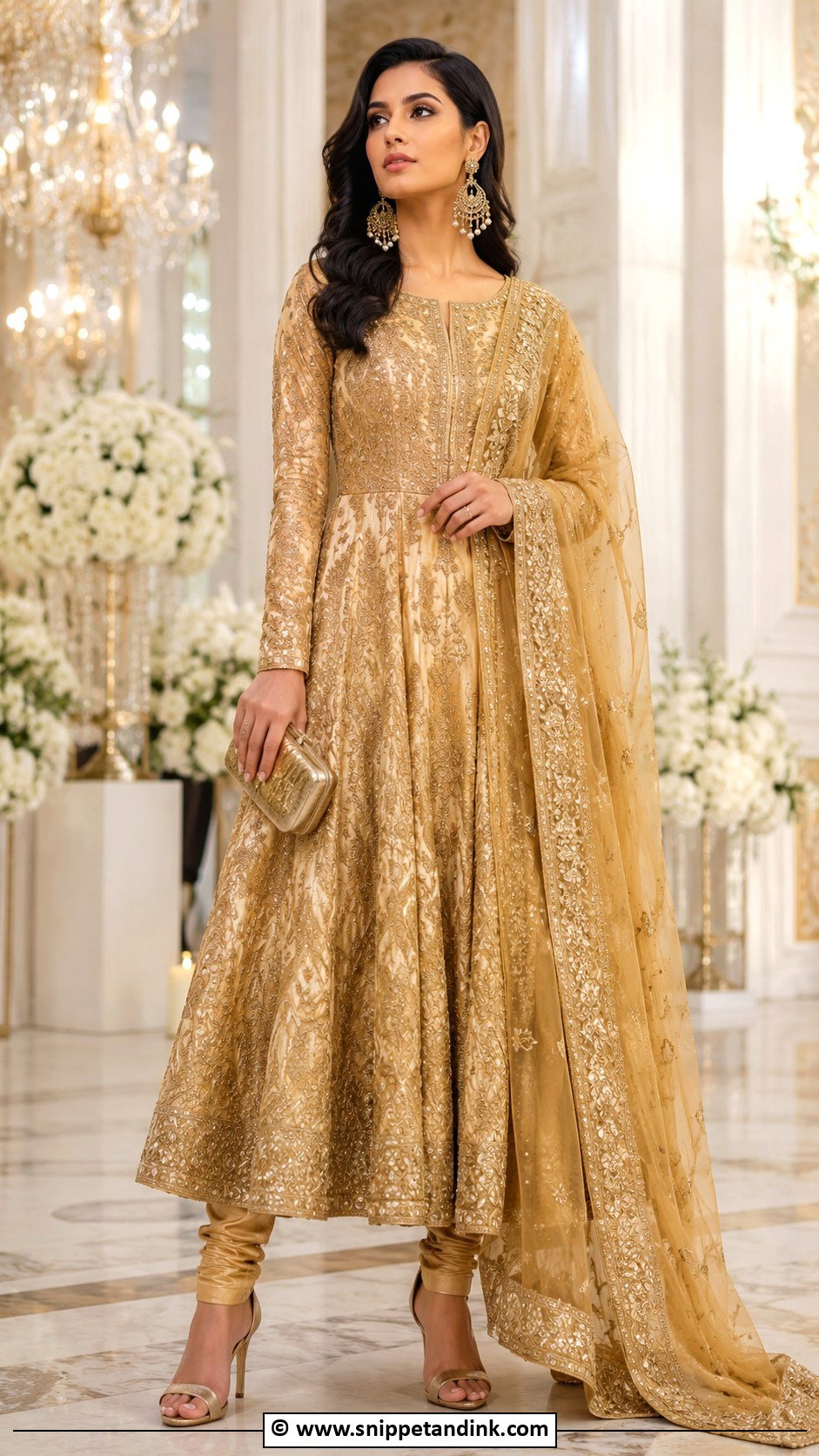
Gold is for big wedding moments, and the embroidery level decides who wears it: brides and close family go heavier, reception guests lighter. Antique, champagne or muted gold looks expensive; harsh shiny gold looks costume-like under flash. Brocade, silk, tissue or jacquard make a rich base, with sequins, zari and beadwork for dimension. I’d keep makeup neutral and pick one jewellery focus, either chandelier earrings or a statement necklace. A dupatta with a heavy border finishes it.
8. Black Anarkali Wedding Suit
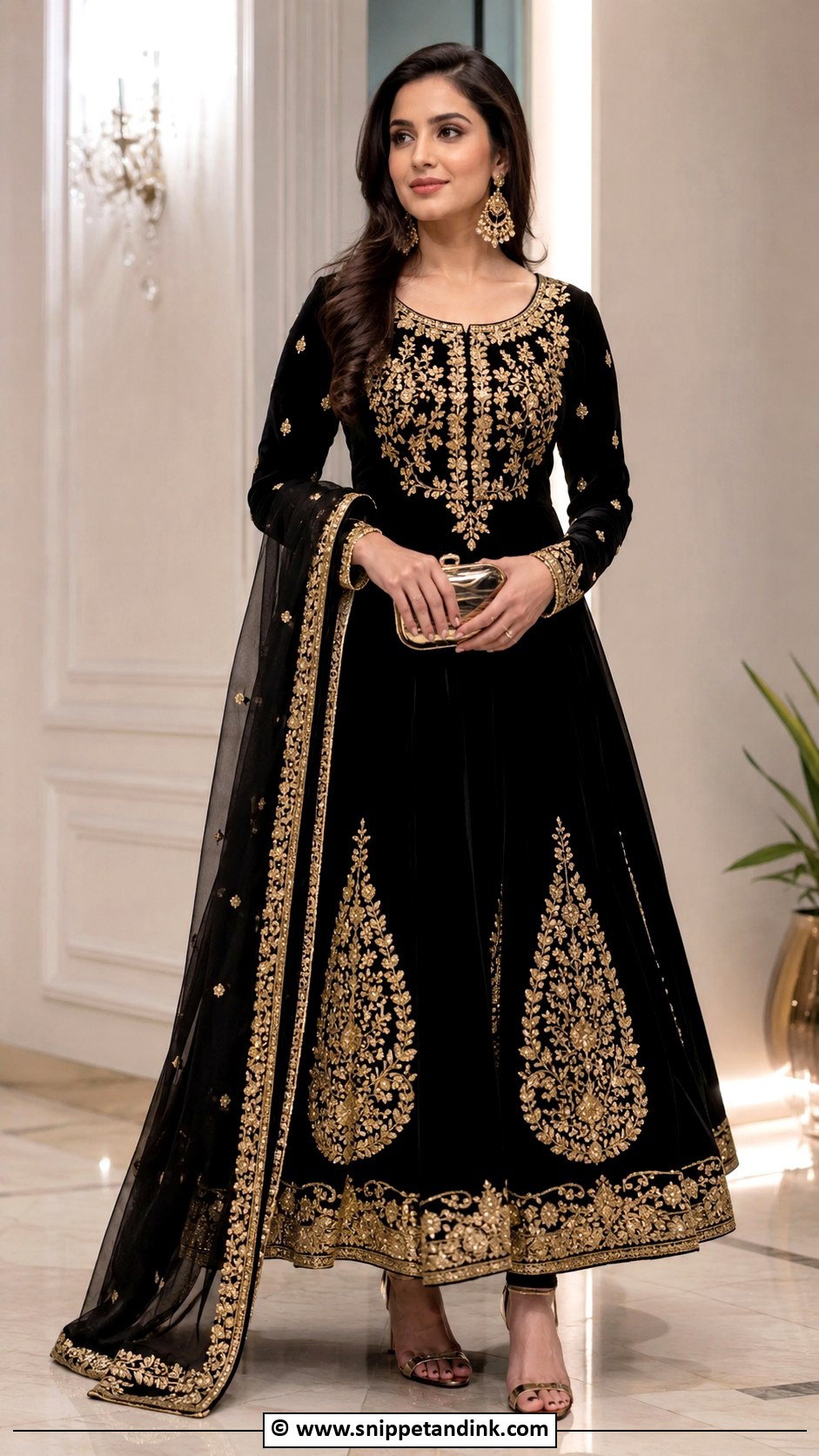
Black works at evening receptions and formal parties, provided the family is comfortable with it, which is worth asking. Heavy gold, silver, bronze or jewel-toned embroidery makes black festive. Velvet, georgette or silk give it movement and richness. A high neckline, long sleeves and floor-length flare keep it elegant. Statement earrings, metallic heels and a structured clutch are all it needs. For guests who prefer a modern ethnic look, it’s a strong choice.
9. Purple Anarkali Wedding Suit
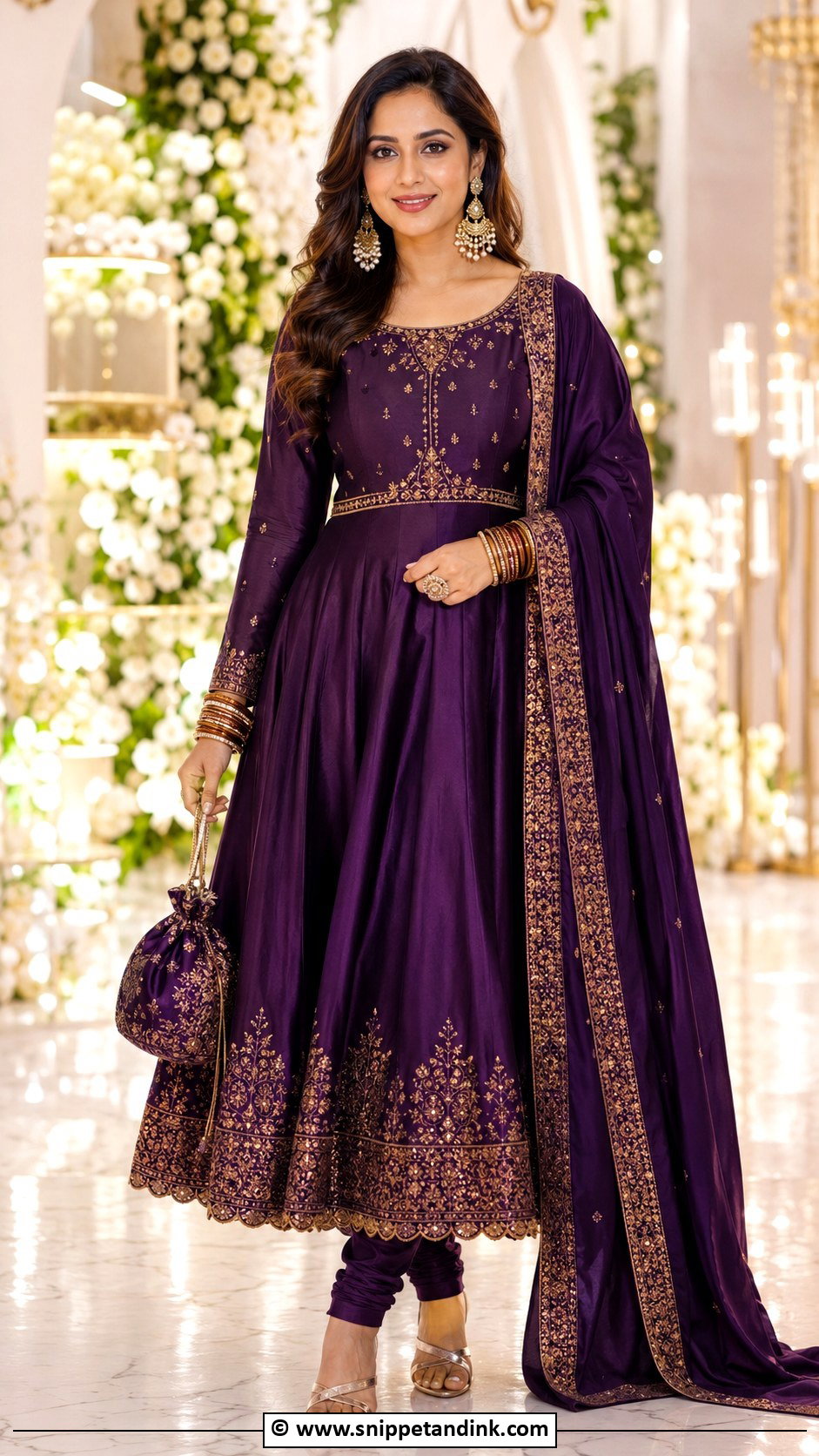
Purple feels regal without the heavy tradition of red. Deep purple, plum and amethyst glow with gold, silver or tonal embroidery. Heavy georgette, silk or velvet with a full flare and embroidered dupatta suit receptions, sangeets and evening family events. Purple flatters a wide range of skin tones, and I find plum in particular looks rich under warm event lighting. Kundan earrings, metallic bangles and a small potli bag are enough.
10. Peach Anarkali Wedding Suit
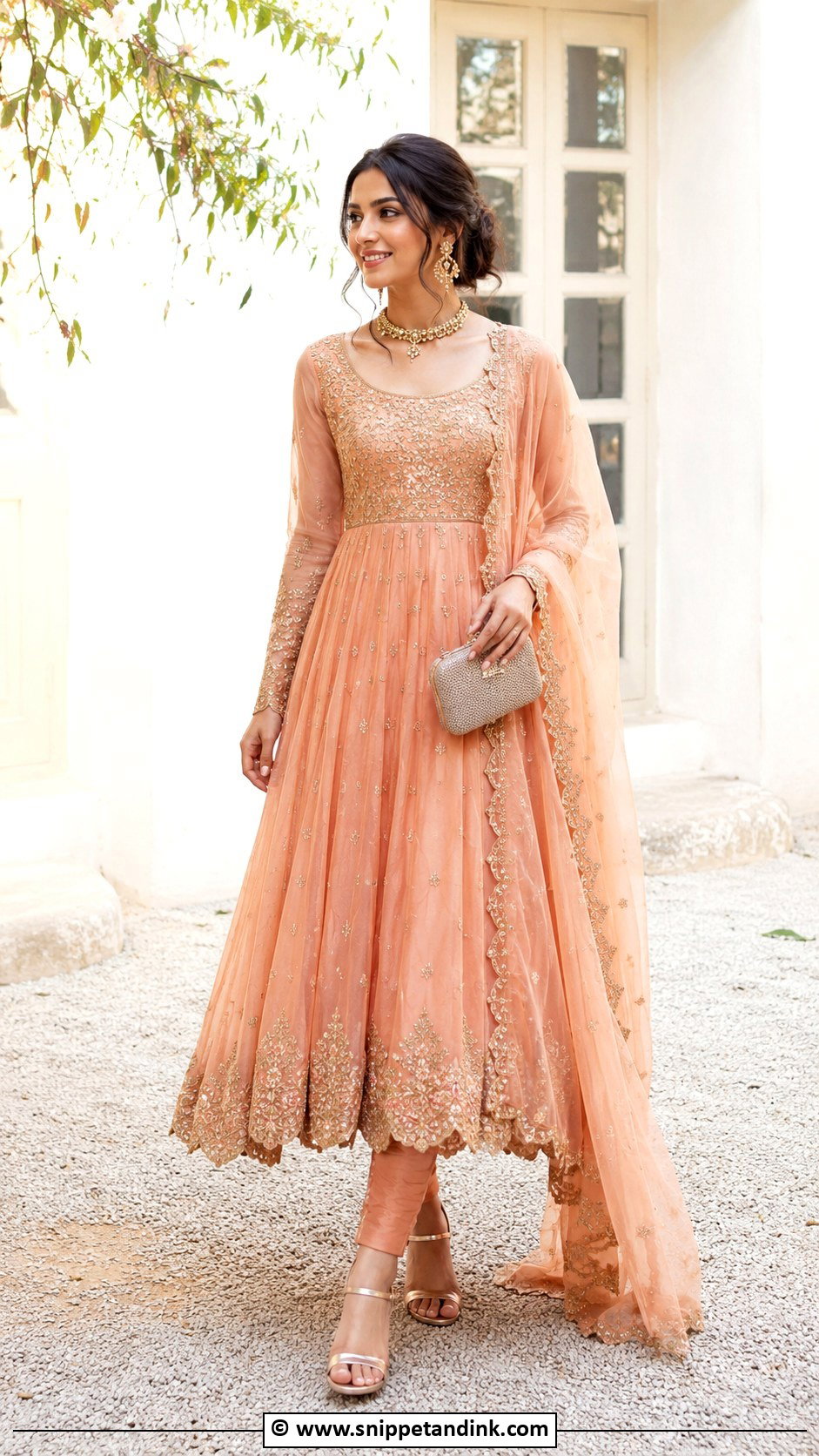
Peach is a gentle daytime colour that still reads festive. Organza, georgette, net or silk blends with gold, ivory or pearl embroidery suit it. To keep it formal, the neckline, sleeves and border need real work, otherwise peach can look like a day outfit. A peach dupatta with sequins or scalloped edges finishes it delicately. It’s a good choice for bridesmaids and cousins who want colour without looking bridal.
11. White And Gold Anarkali Wedding Suit
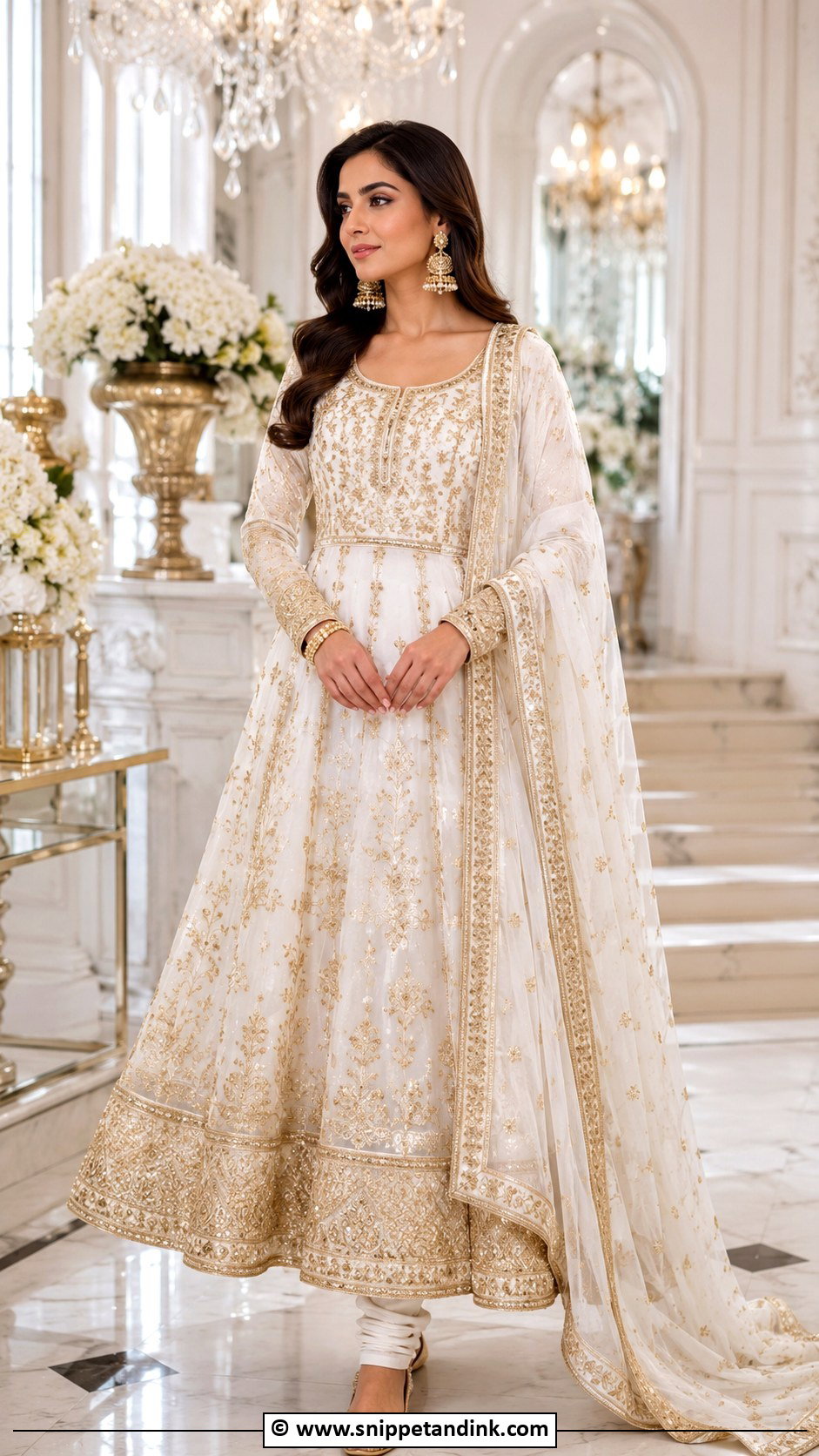
White and gold looks clean and luxurious at receptions, engagements and daytime ceremonies. Silk, net or organza with heavy zari, sequins or beadwork across the bodice and border gives it wedding weight. White shows every mark, so I tell clients to carry a stain pen and be careful at dinner. A gold-edged dupatta ties it together. Gold jhumkas and embroidered heels suit women who prefer minimal colour.
12. Navy Blue Anarkali Wedding Suit
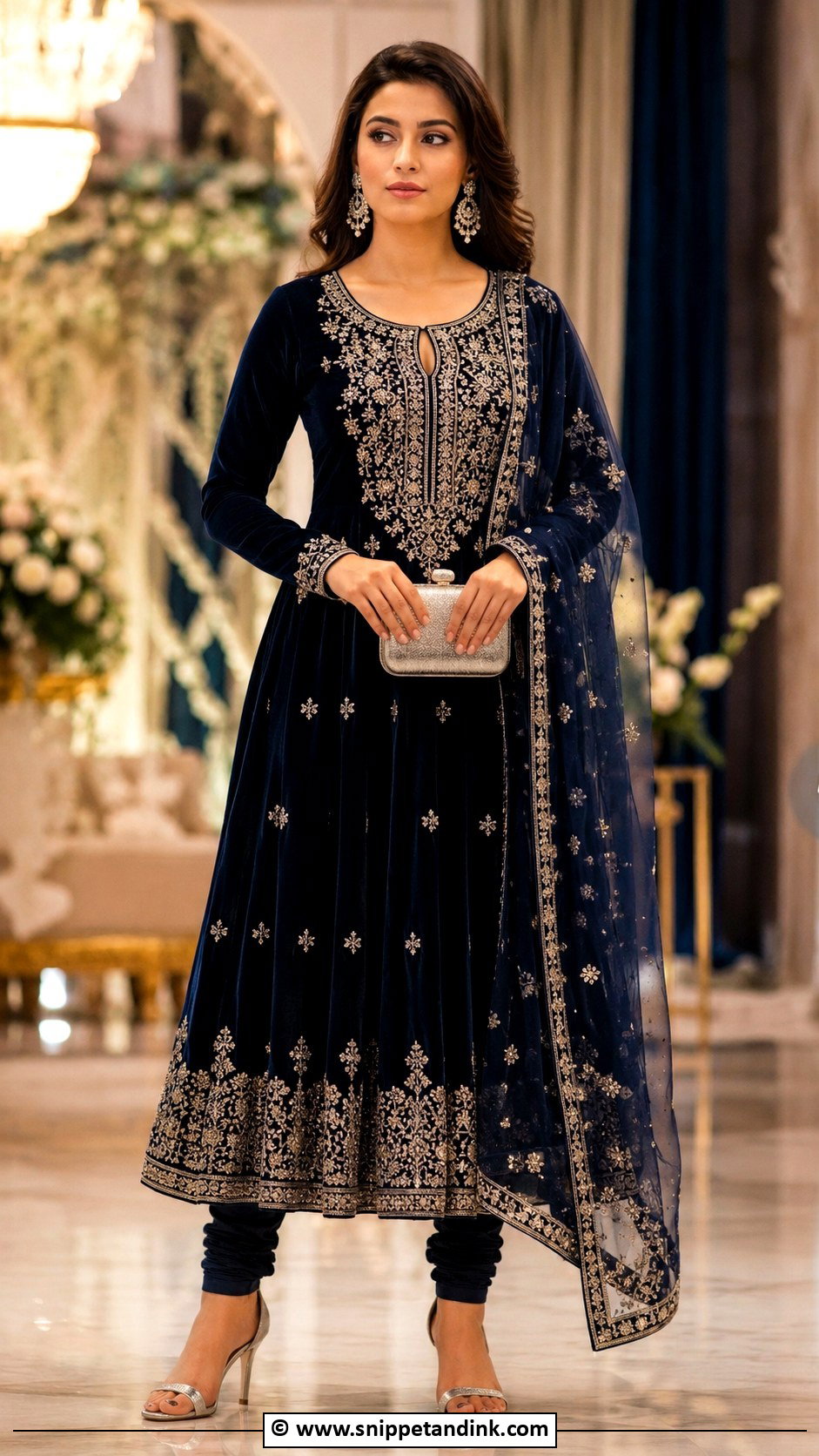
Navy is one of the easiest colours to wear for a formal evening. It has the depth of black but reads more festive. A floor-length Anarkali in velvet, georgette, silk or jacquard with silver, gold or crystal embroidery suits it. A worked hem and sleeve border make the outfit look grand. Navy is also easy to rewear for other events, and it never competes with bridal reds or pinks. Statement earrings and metallic heels finish it.
13. Mint Green Anarkali Wedding Suit
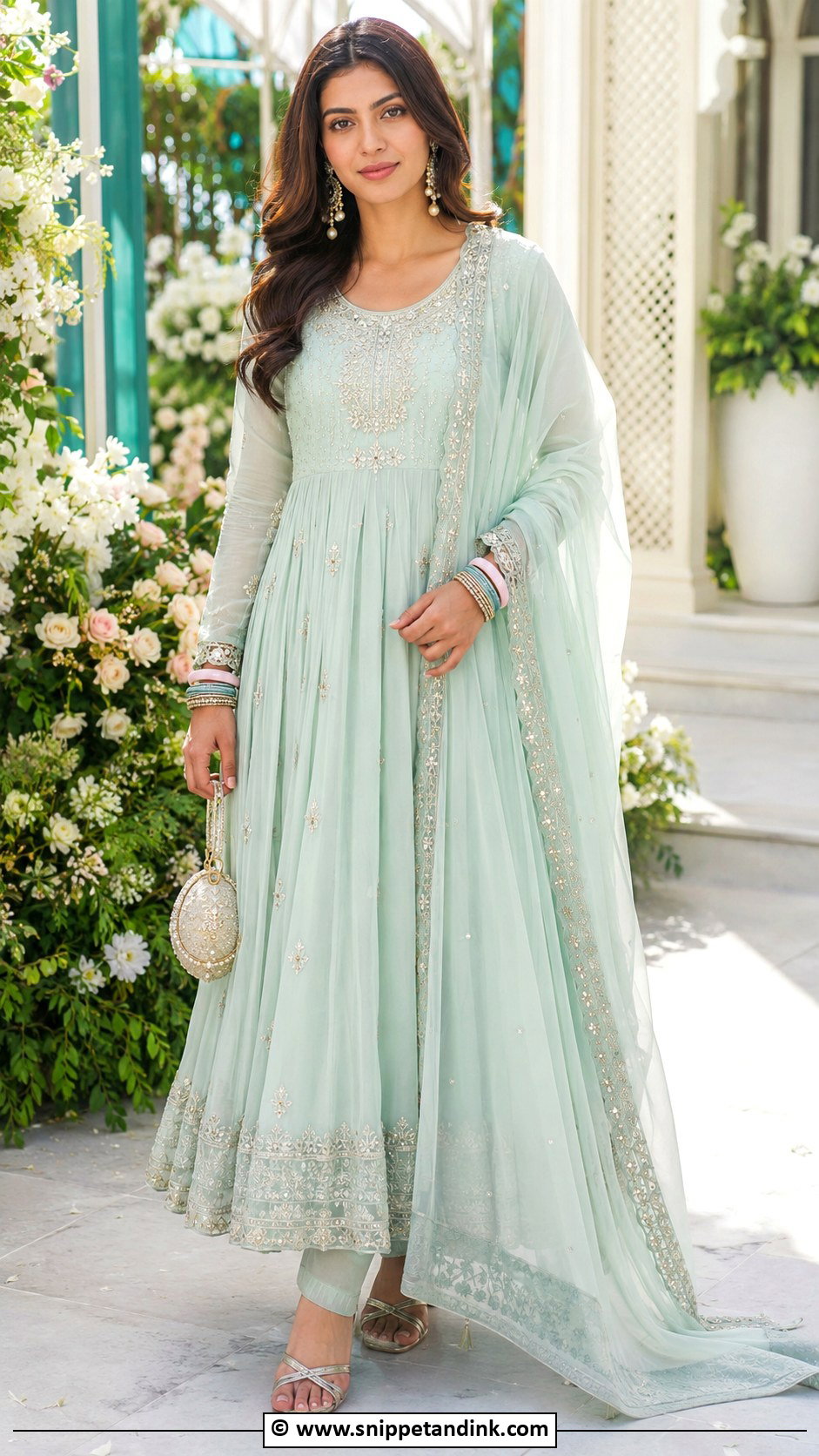
Mint is for spring and summer. Silver, pearl or light gold embroidery keeps it festive. Lightweight georgette, organza or chiffon need a structured lining underneath, otherwise the flare collapses and looks limp. A heavy border, embroidered yoke and embellished dupatta make it wedding-ready. Pearl earrings and metallic sandals suit daytime ceremonies and garden venues.
14. Yellow Anarkali Wedding Suit
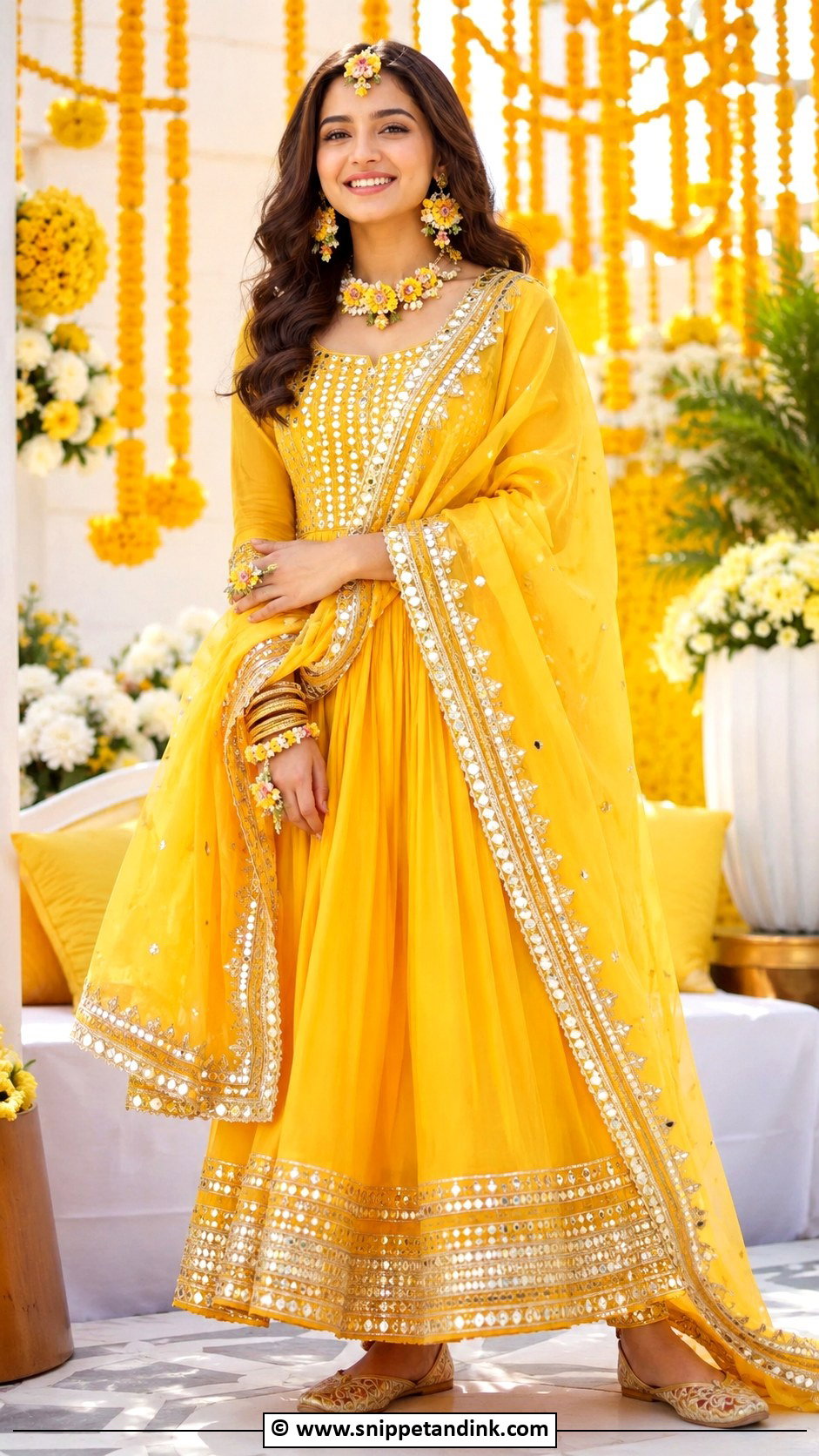
Yellow belongs to haldi, daytime events and festive family gatherings. Mustard, sunflower or soft golden yellow can follow the mood. Mirror work, gota patti, threadwork or small sequins add celebration. A flared georgette or silk Anarkali with a matching dupatta is easy to wear. At a haldi, turmeric will stain, so I’d keep the most expensive yellow piece for a different event. Floral jewellery and juttis suit joyful pre-wedding celebrations.

15. Orange Anarkali Wedding Suit
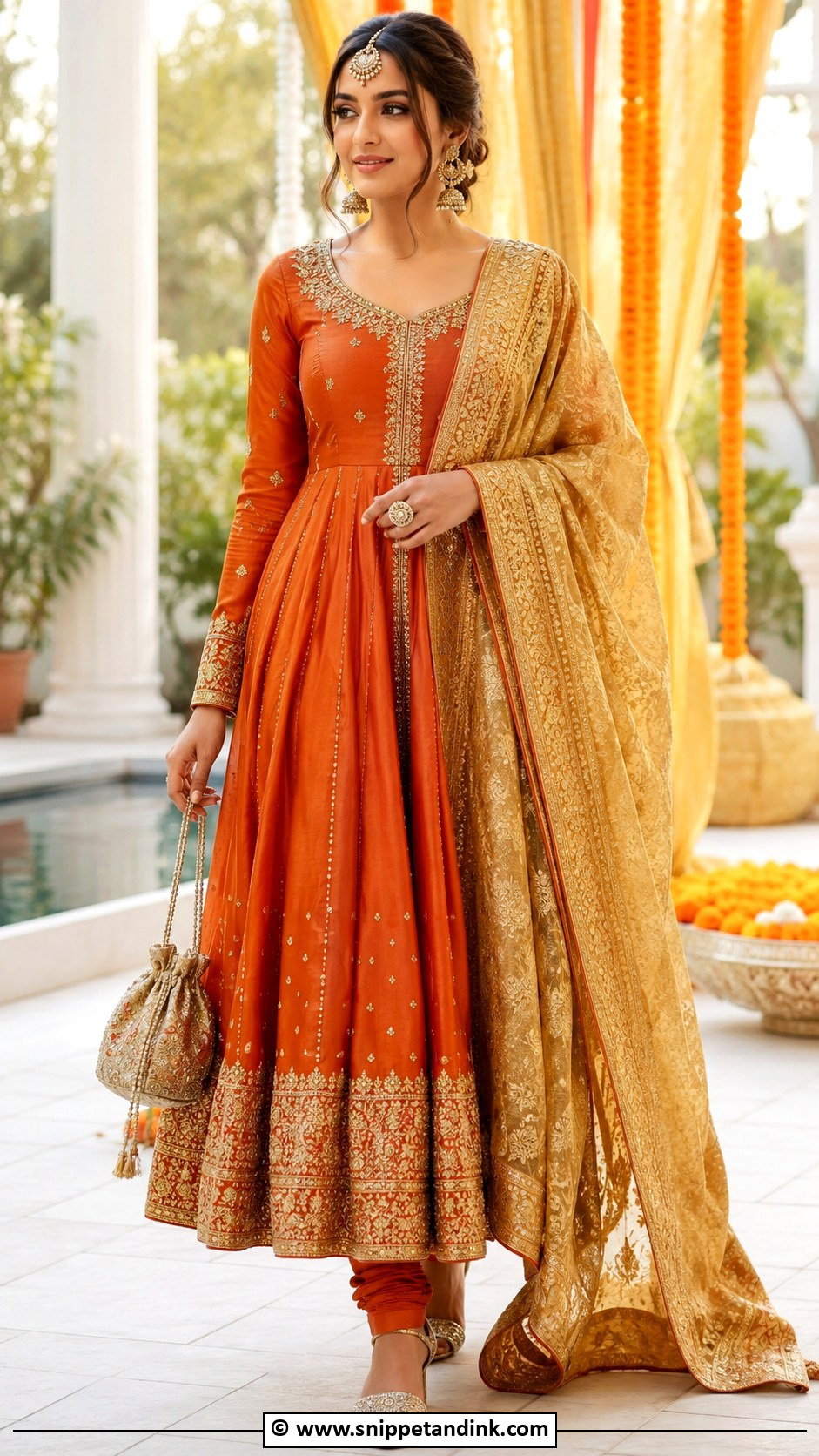
Orange is bold and lively, suited to mehndi, sangeet or daytime events. Burnt orange, coral or tangerine all work with gold gota, zari or mirror embroidery. Burnt orange is the shade I suggest to women who think they can’t wear orange, because it sits closer to rust and flatters warm skin. Silk or georgette with a flowing flare keeps it graceful. Antique gold jewellery and a peach or gold contrast dupatta finish it.
16. Teal Anarkali Wedding Suit
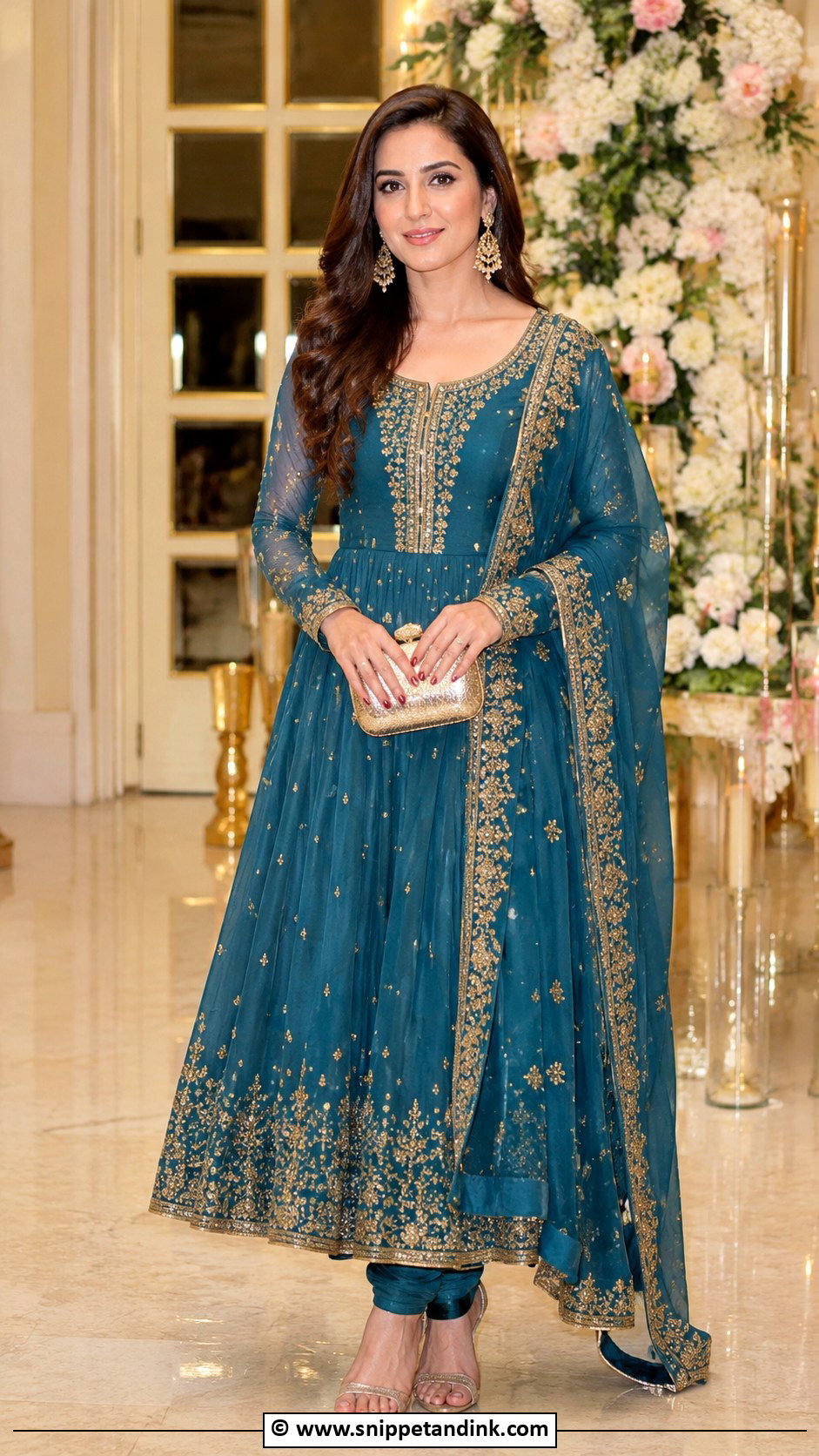
Teal sits between blue and green and flatters a wide range of skin tones. It’s rich enough for evenings and fresh enough for daytime. Heavy georgette, silk or velvet with gold, copper or silver embroidery all suit it; copper thread in particular looks warm and unusual on teal. A wide flare, fitted waist and embellished dupatta complete it. It’s a good option for anyone tired of red, pink or green.
17. Lavender Anarkali Wedding Suit
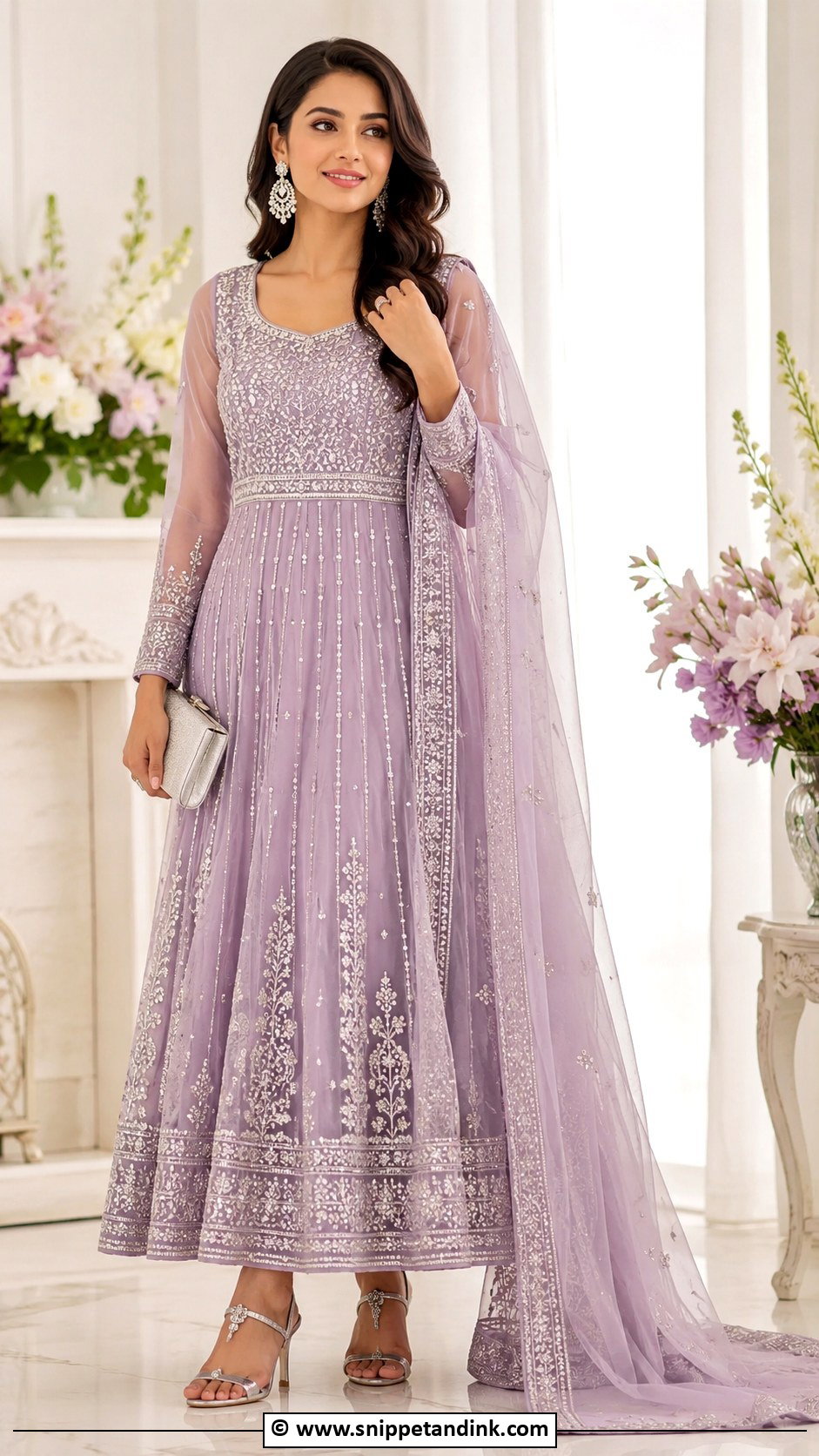
Lavender is a modern pastel that looks good with silver sequins, pearl embroidery or delicate threadwork. Organza, net or georgette give an airy finish, but the bodice and hem need enough work to feel wedding-ready. Lavender can look grey on deeper skin in dim light, so I’d test the exact shade in the event’s lighting. Diamond-look earrings and silver heels suit engagements, daytime receptions and destination weddings.
18. Beige Anarkali Wedding Suit
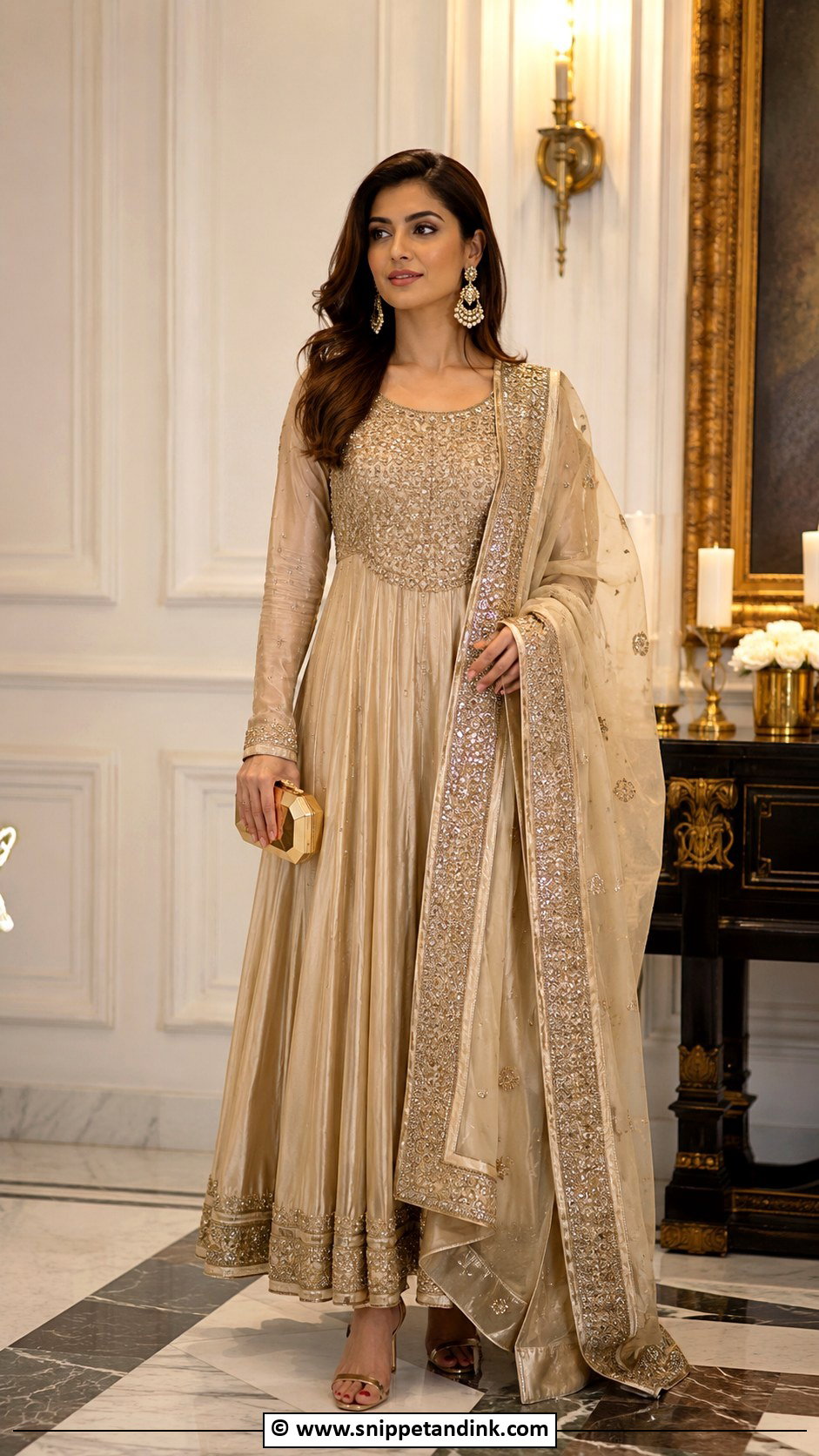
Beige looks luxurious when the fabric and embroidery carry it. Champagne beige, sand or taupe with gold, bronze or pearl embellishment in silk, brocade, organza or net adds texture. Neutral colours need strong styling, so this is where I’d use statement earrings, a polished hairstyle and a heavily bordered dupatta. Beige suits receptions and formal family events in refined indoor venues. On fair skin, check the shade isn’t too close to your skin tone, or it can look washed out in photos.
19. Fuchsia Anarkali Wedding Suit
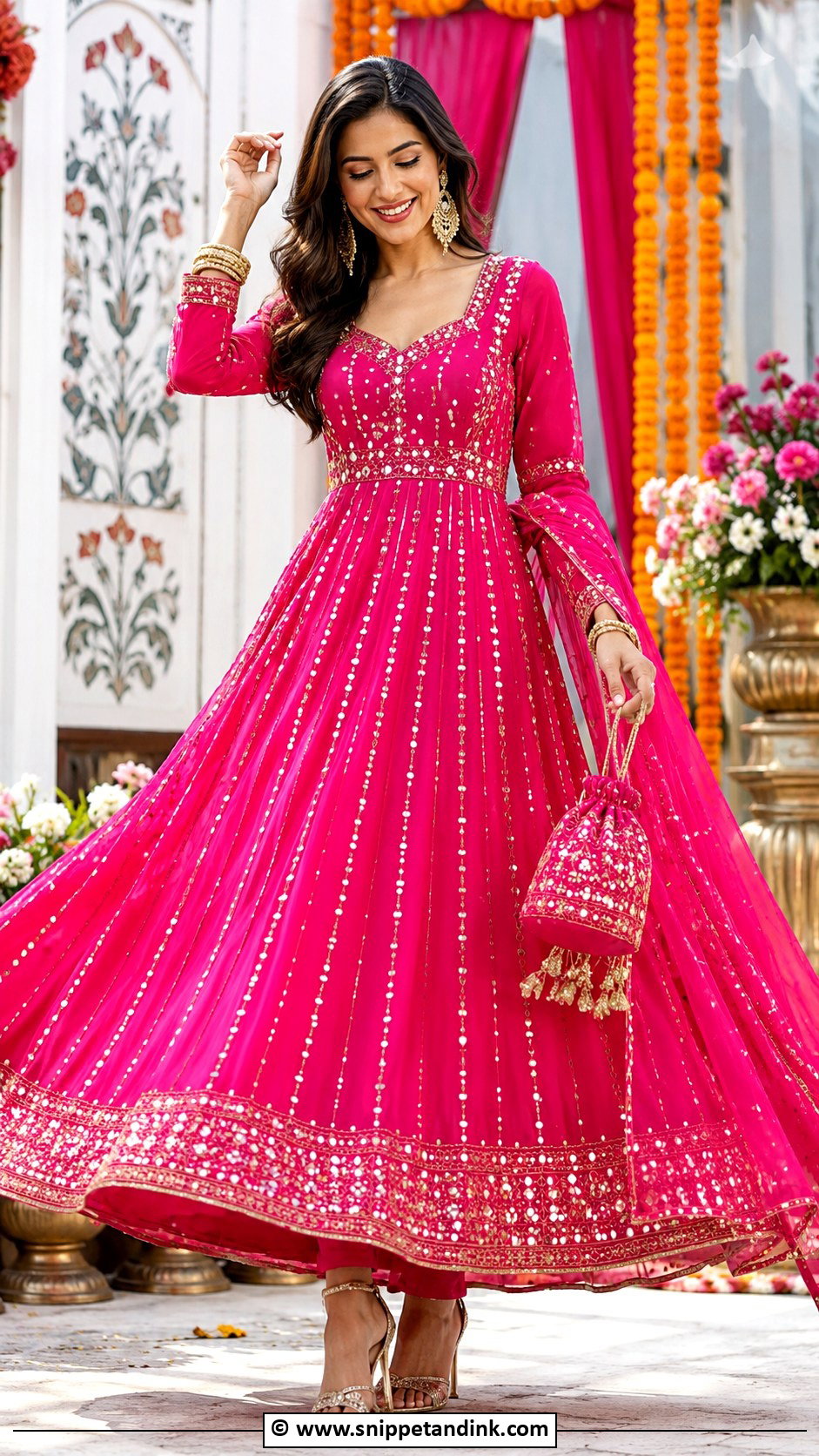
Fuchsia brings instant energy and looks festive with gold embroidery, mirror work or sequins. A fitted bodice and wide flare in silk, georgette or net balance the strong colour. A matching dupatta keeps it coordinated; an orange or gold one makes it playful. Gold jewellery, bangles and embellished heels finish it. It works for sangeet, mehndi and lively daytime events.

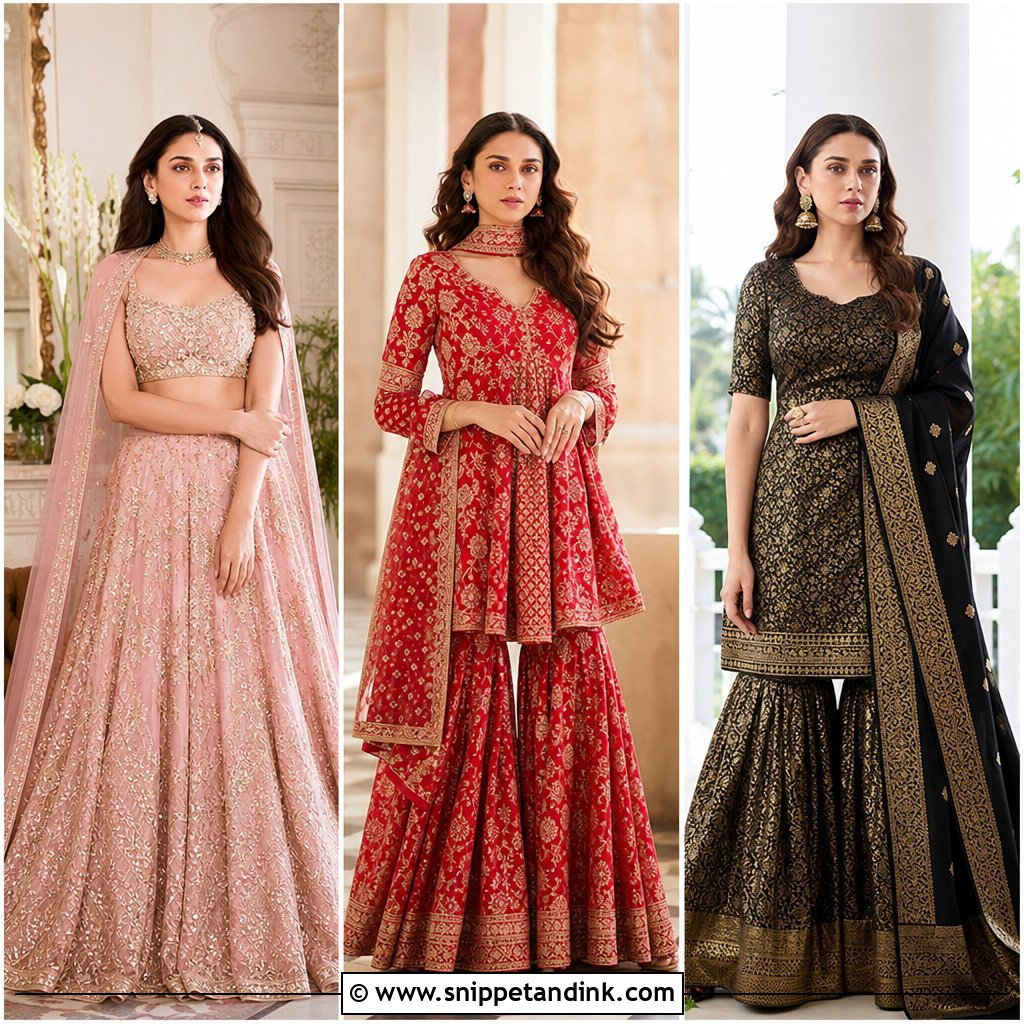
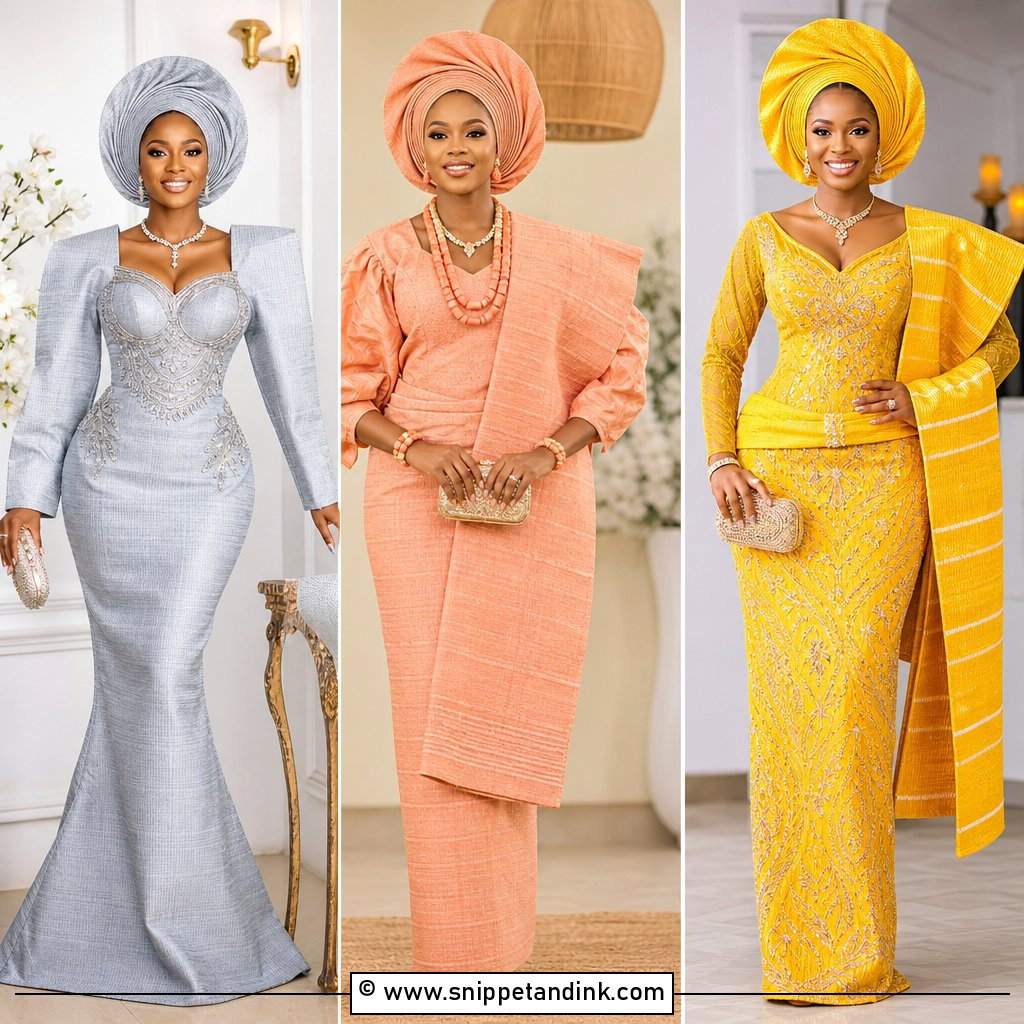
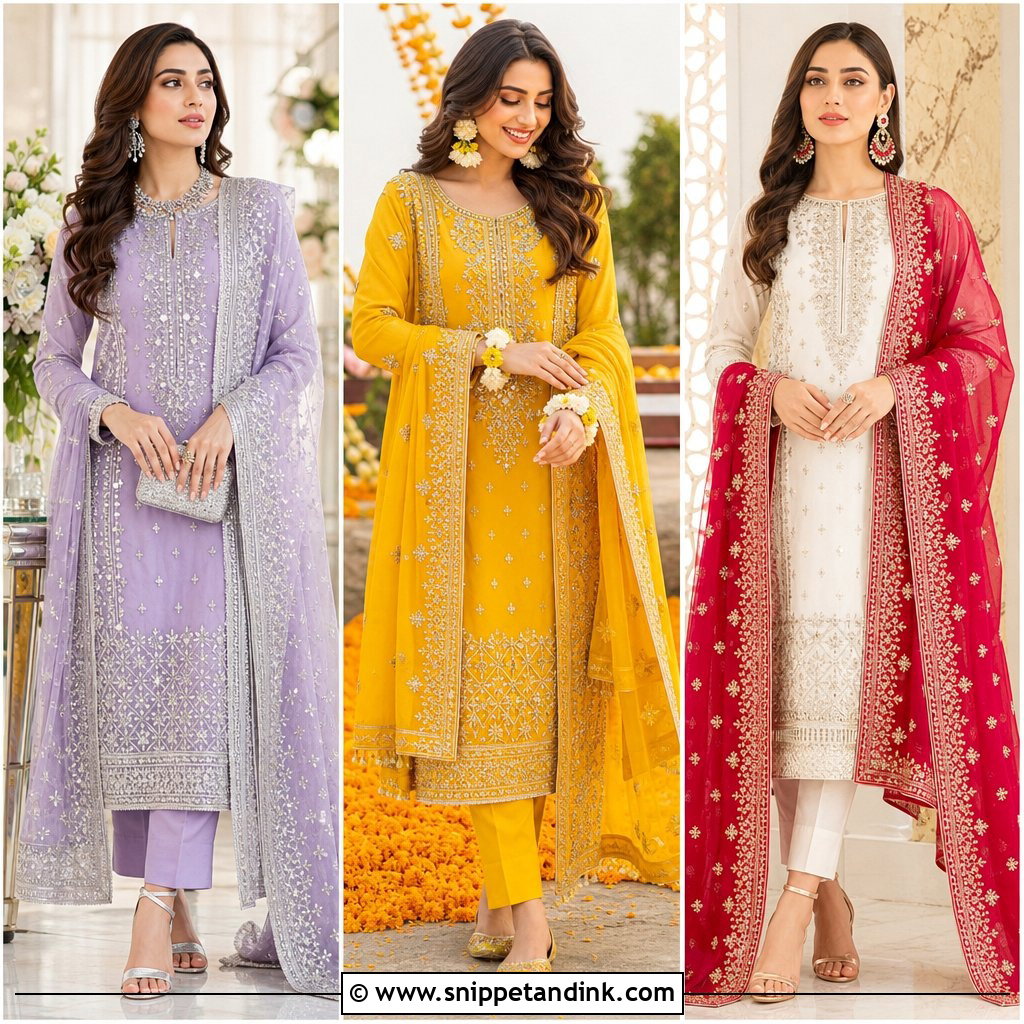
20. Grey Anarkali Wedding Suit
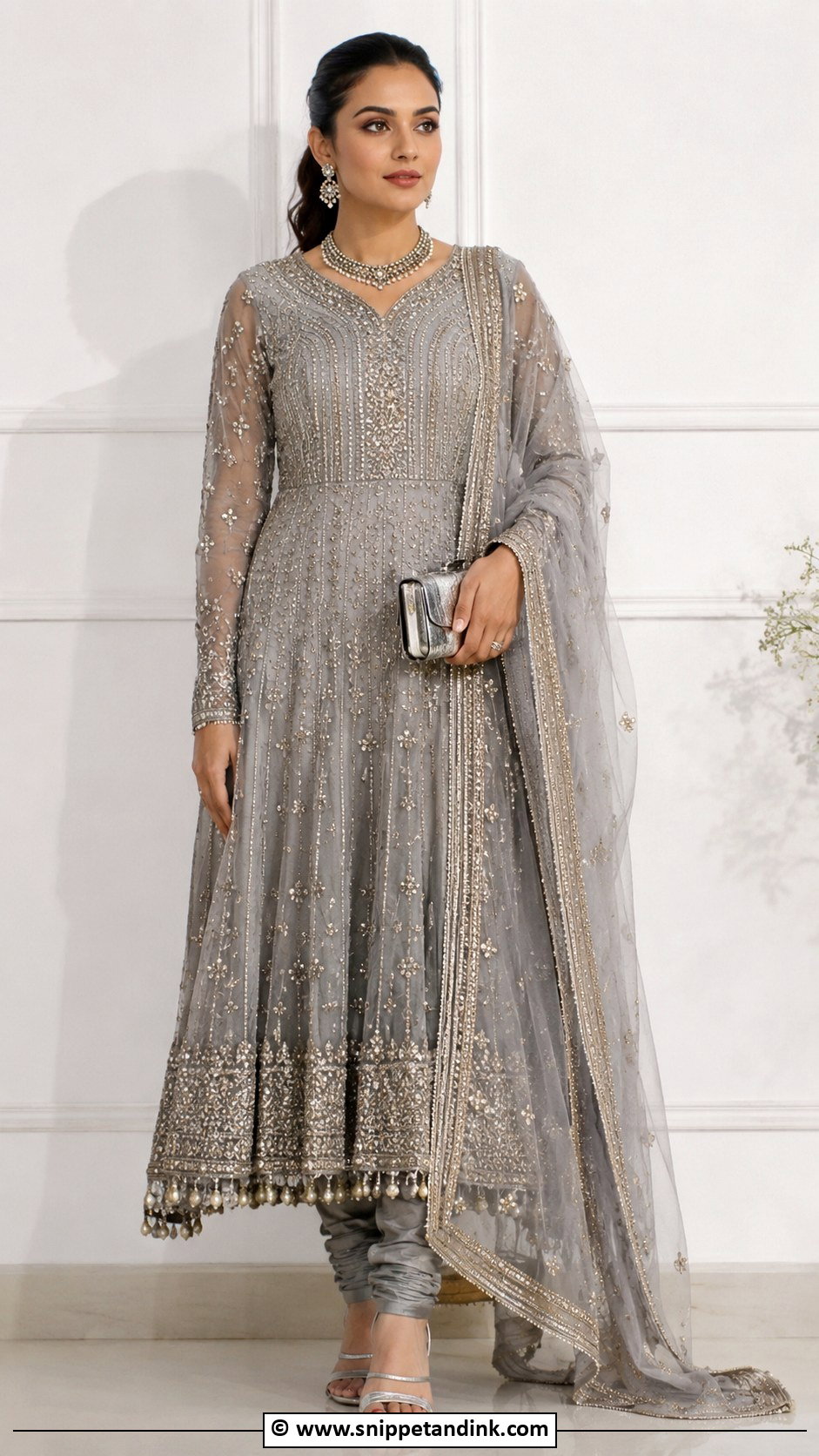
Grey is understated and modern when the embellishment is rich. Silver-grey, dove grey or charcoal with crystal work, sequins, zari or pearl embroidery suit it. A floor-length georgette, net or silk Anarkali gives movement, and a sheer dupatta softens it. Because grey is calm, cut and detailing must do more work. Silver jewellery and metallic heels suit receptions and engagement events.
21. Banarasi Anarkali Wedding Suit
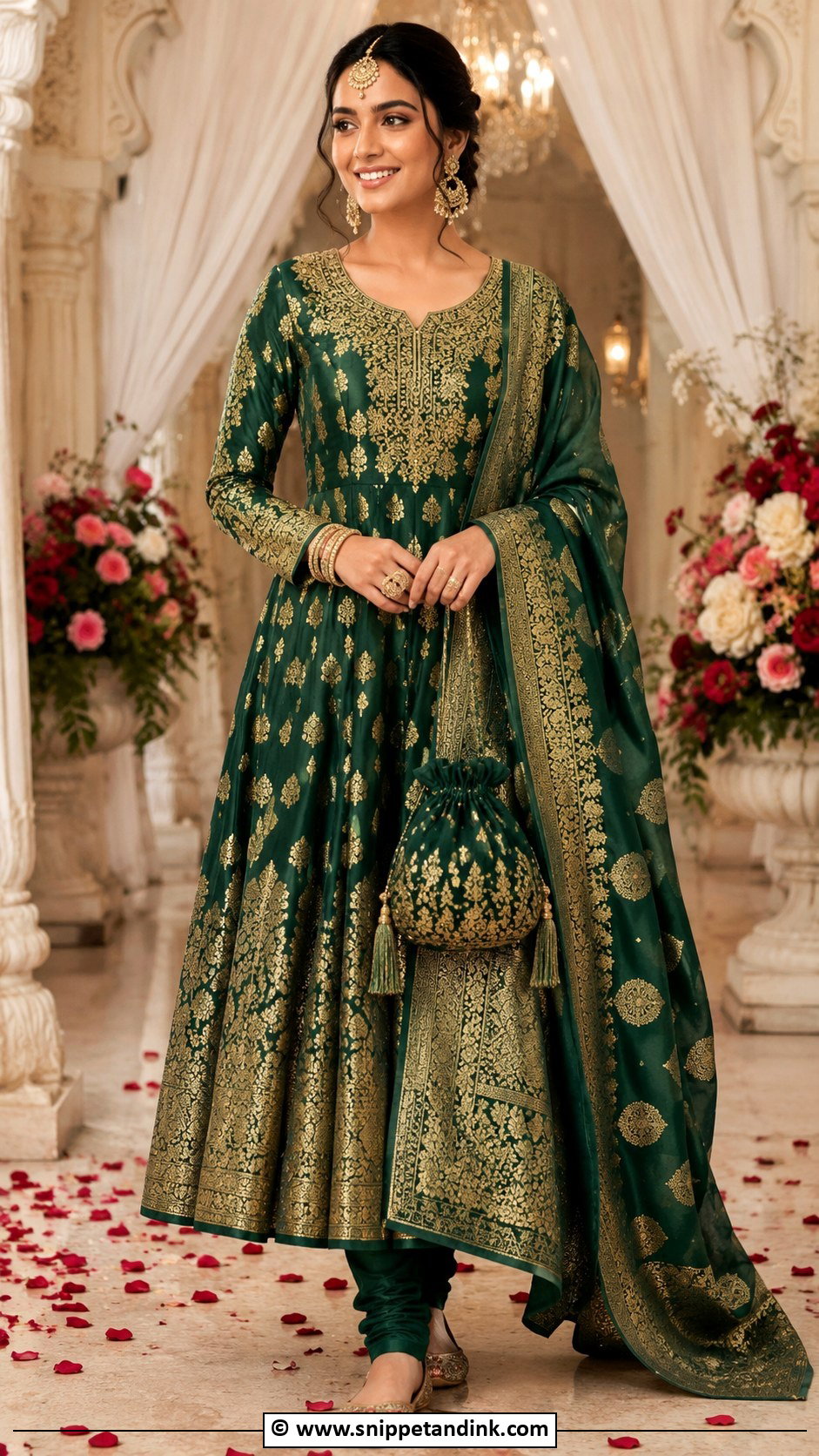
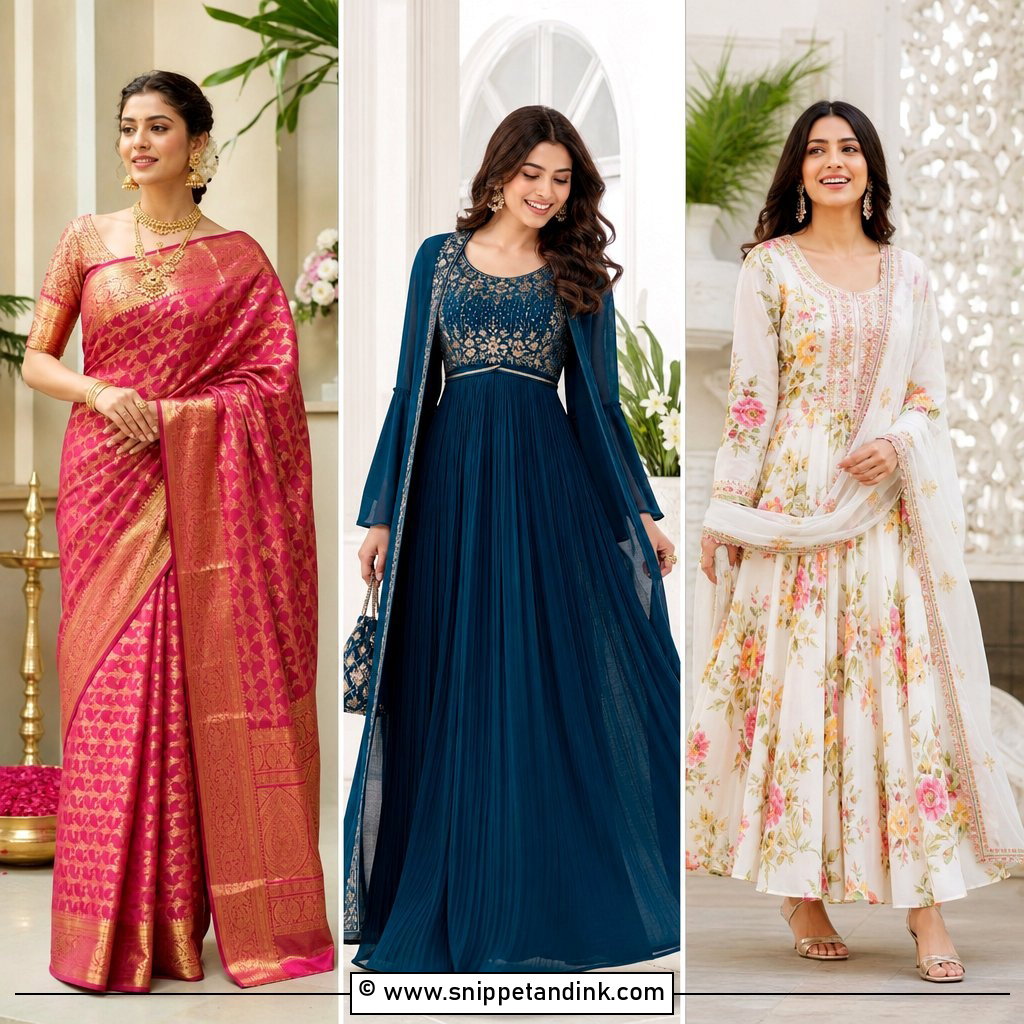
Banarasi is for women who prefer woven richness over surface embroidery. The brocade carries the festive weight, so the design can stay simple: a clean neckline, a graceful flare and an ornate dupatta. Red, green, navy, purple and gold look particularly rich in Banarasi weaves. Brocade is stiffer than georgette, so the flare stands away from the body rather than flowing; I’d choose fewer, wider panels to stop it looking boxy. Traditional jewellery, a neat bun and embroidered juttis suit it.
22. Mirror Work Anarkali Wedding Suit
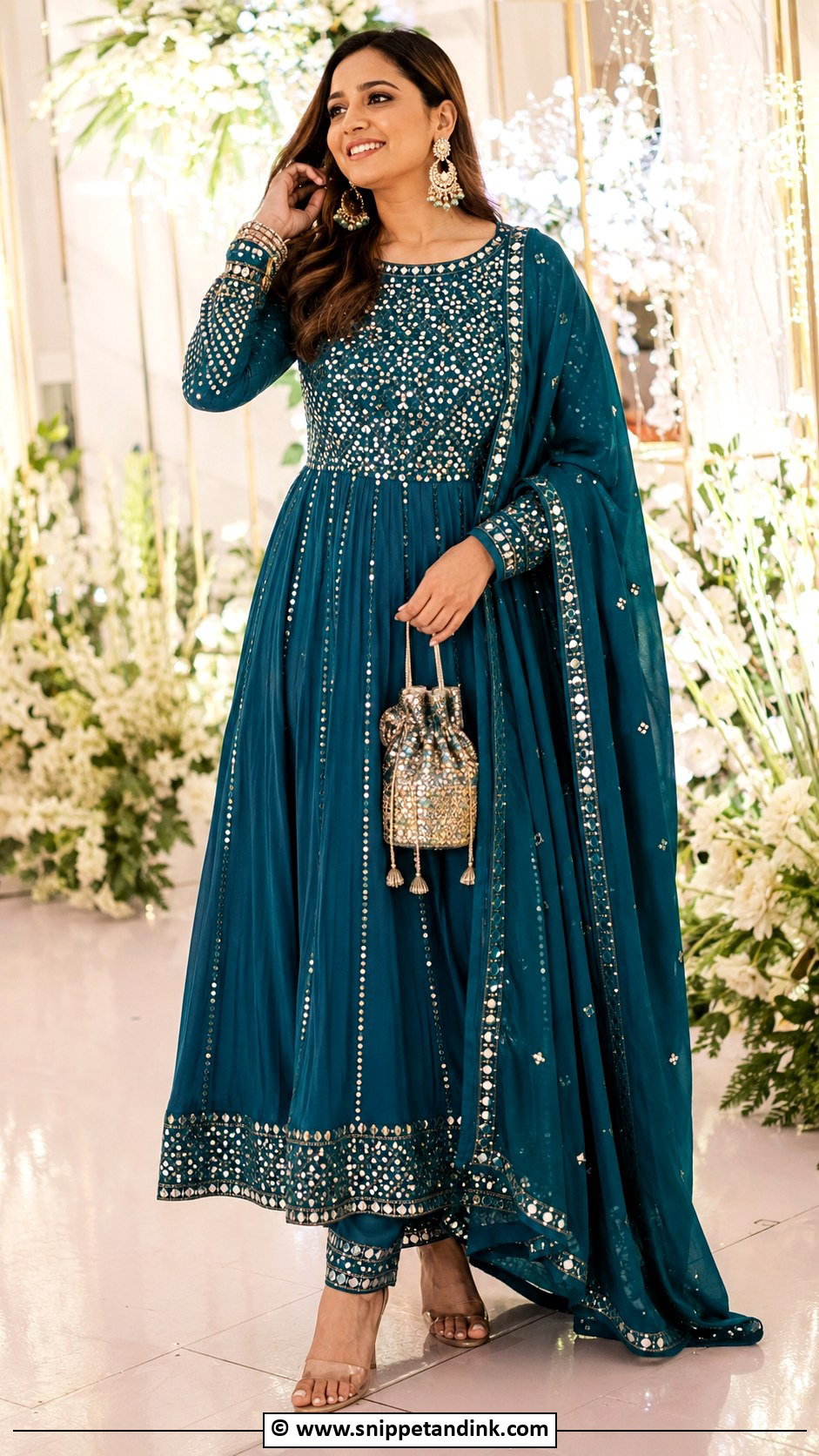
A mirror work Anarkali wedding suit suits sangeet, mehndi and festive nights. The mirrors catch light when you dance. Georgette, silk or cotton silk with mirror work on the bodice, sleeves and border all work, in yellow, teal, orange, fuchsia or green. Mirror work on the inner sleeve can scratch, so I’d keep it on the outer sleeve or ask for lining. Statement earrings and bangles are enough jewellery.
23. Jacket Style Anarkali Wedding Suit
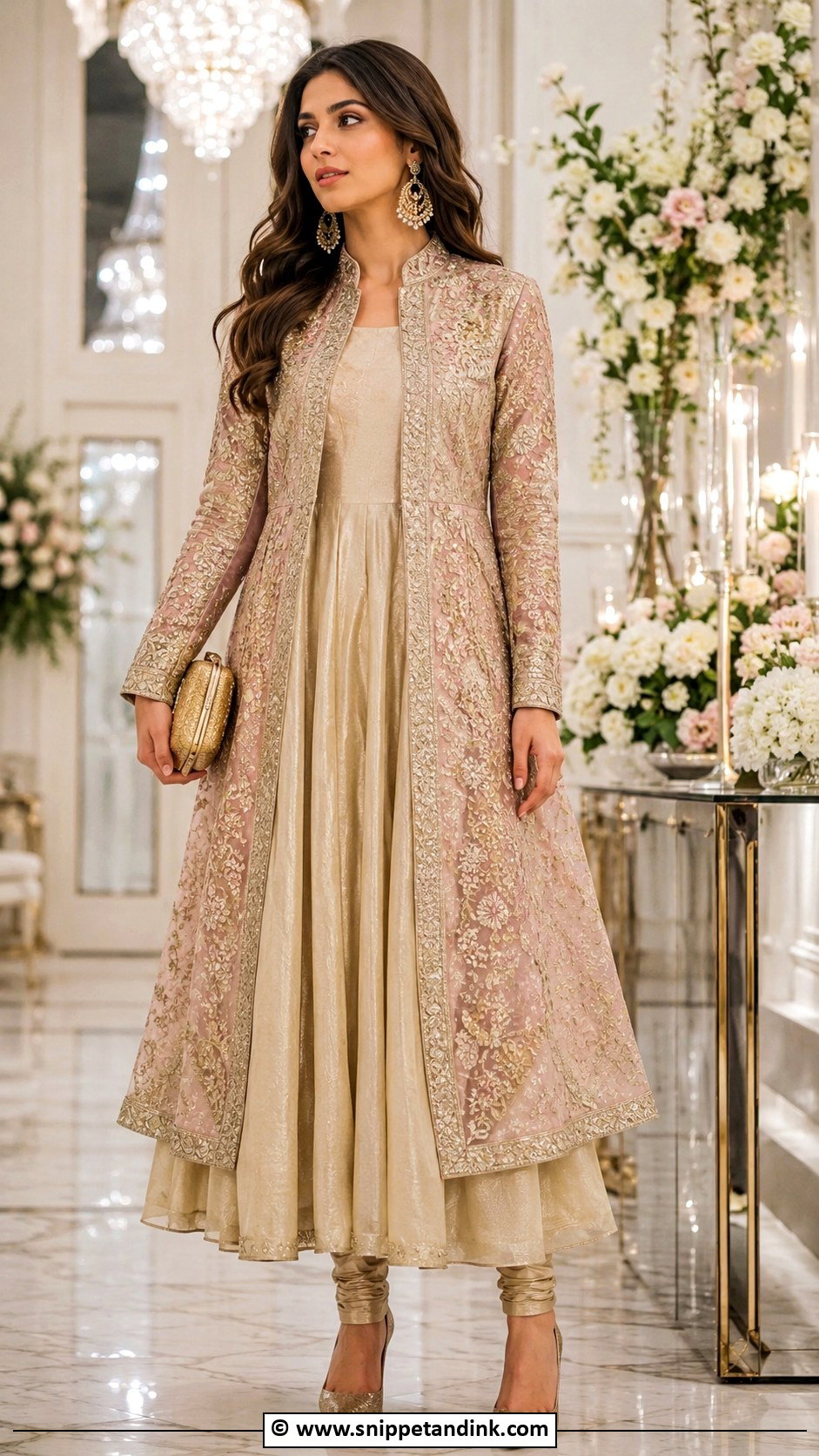
A jacket style Anarkali wedding suit layers a long embroidered jacket over a simpler Anarkali. Silk, brocade, velvet or net jackets with zari borders or sequins add structure and drama. The vertical line of the jacket opening lengthens the body, which flatters petite women in particular. Churidar pants, statement earrings and pointed heels or juttis suit receptions and formal dinners. You can also take the jacket off when the hall heats up.
24. Cape Anarkali Wedding Suit
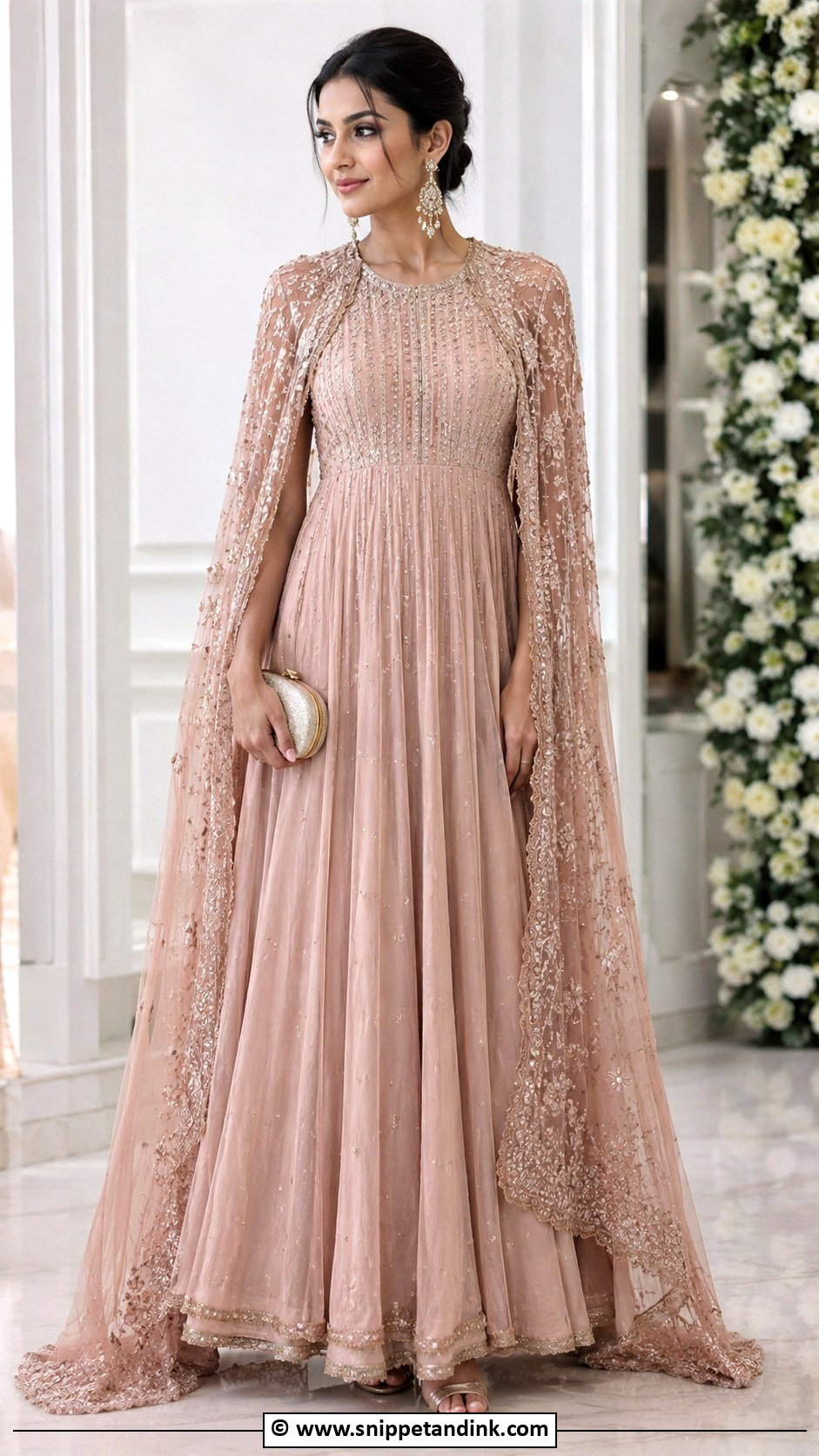
A cape Anarkali gives the effect of a dupatta without managing one all night. The cape can be sheer, embroidered, pearl-detailed or attached at the shoulders. A floor-length Anarkali in silk, georgette or net with a fitted bodice and flowing flare suits it. The cape should match the embroidery so it looks deliberate. I like it for women who dance a lot, since there is nothing to slip or drag. Statement earrings and heels finish it.

25. Sharara Anarkali Wedding Suit
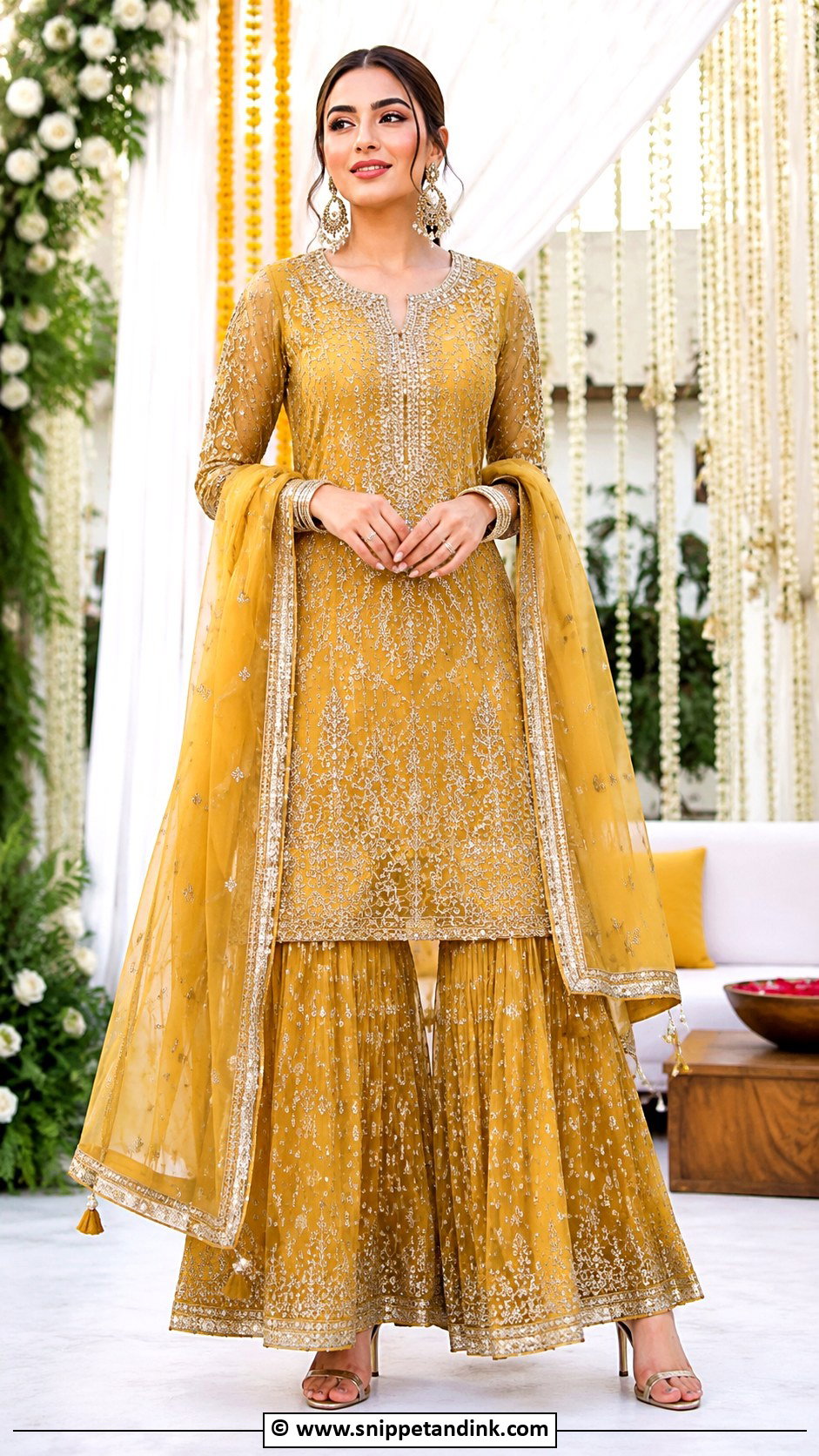
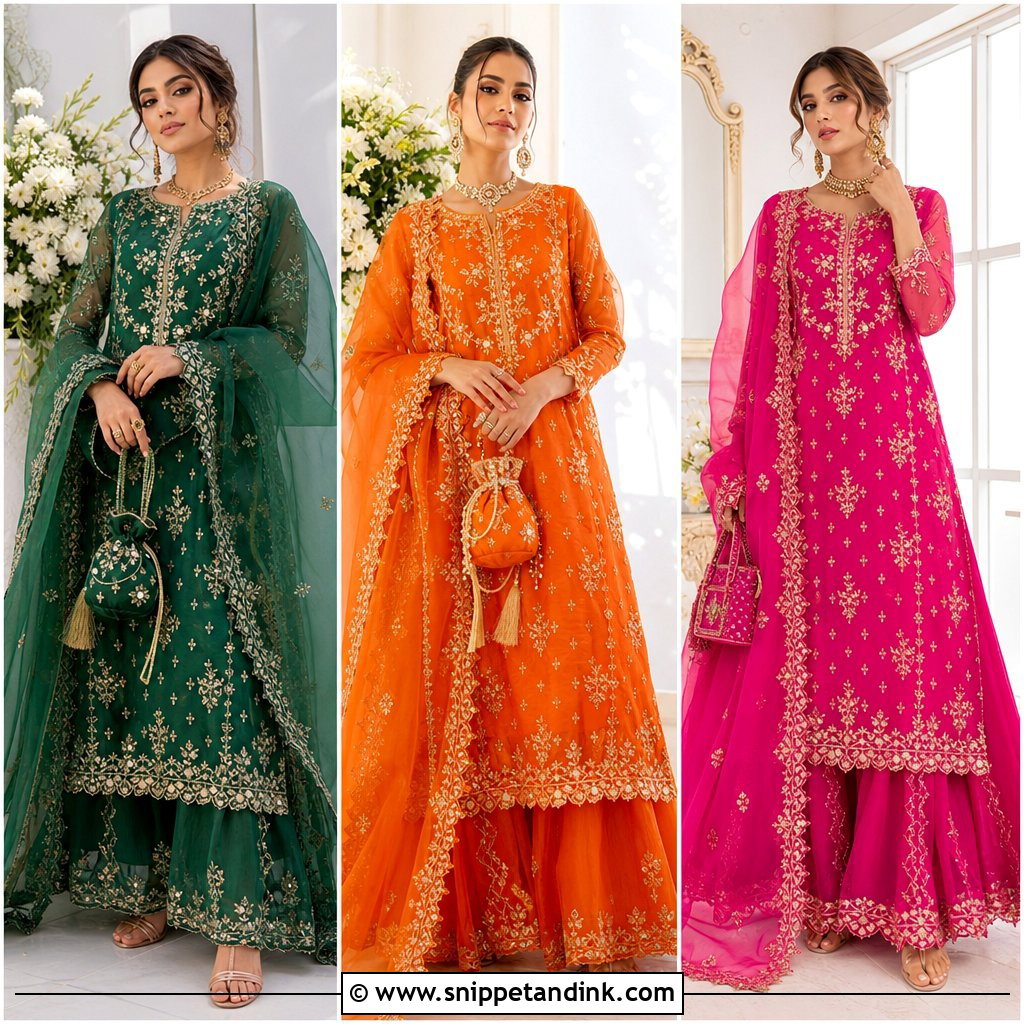
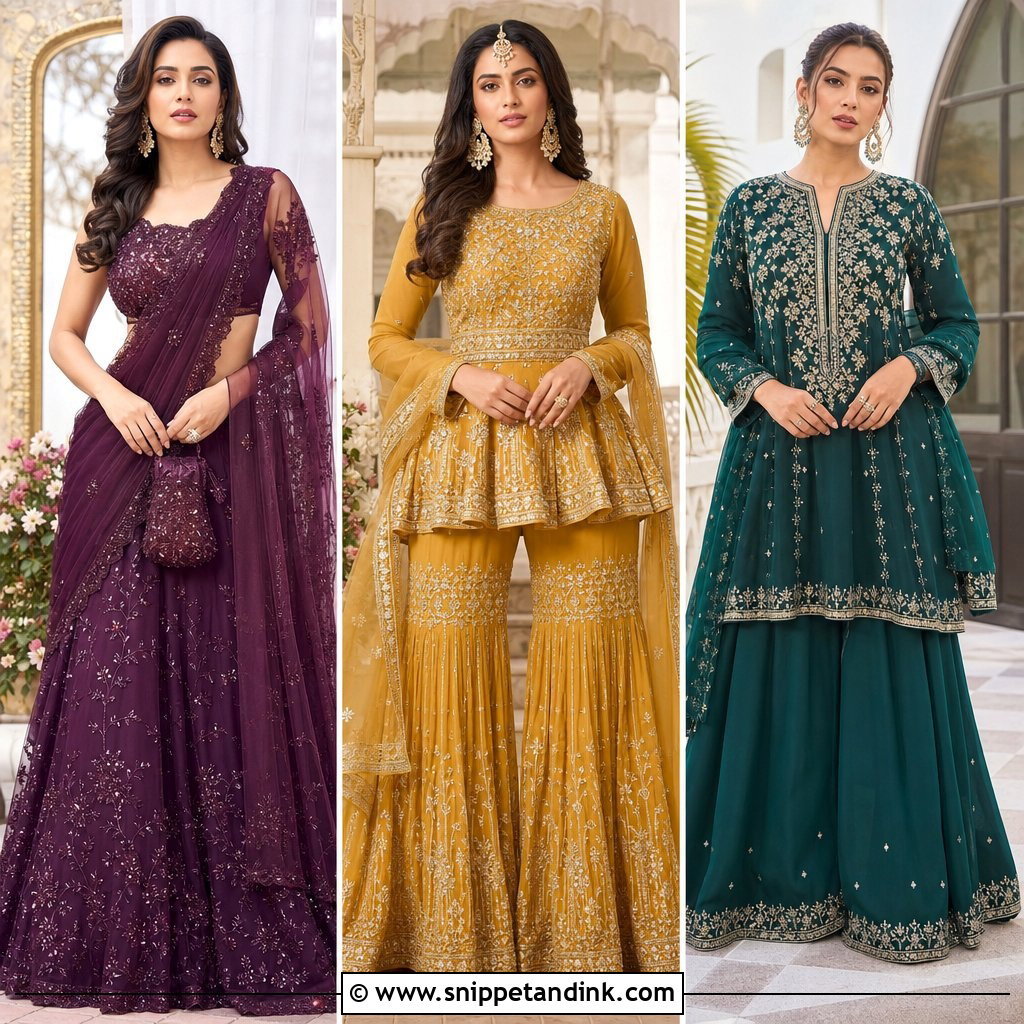
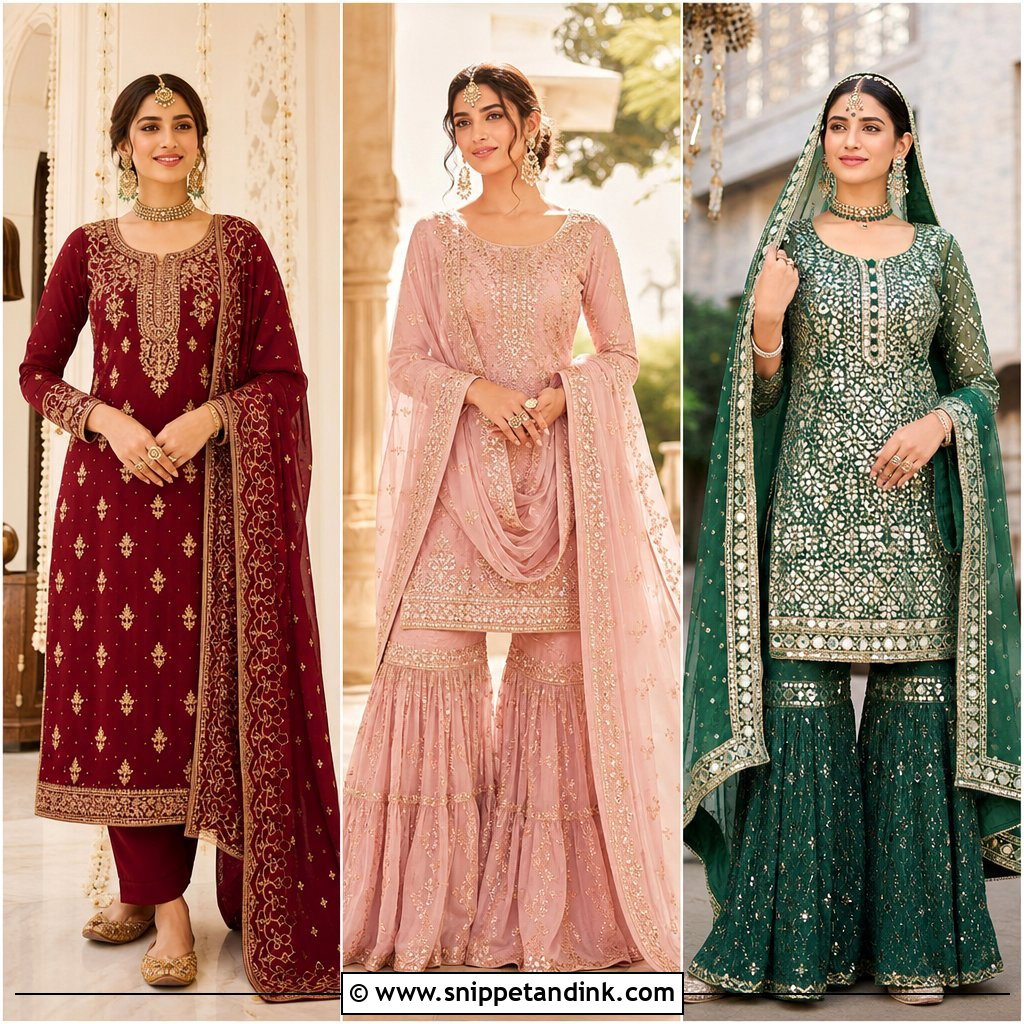
A sharara Anarkali wedding suit combines a short or mid-length Anarkali kurta with embroidered sharara pants and a dupatta. Georgette, silk, net or brocade hold their shape while still moving. It’s a heavier, layered look with a lot of volume, so I’d keep jewellery to heavy earrings and bangles. It suits mehndi, sangeet and family events. If you’re petite, keep the kurta at knee length so the sharara has room to show.
Wearing It Again Without Looking Like the Same Outfit
Heavy suits are an investment, and most women I dress want to wear theirs again. The good news is that an Anarkali splits into parts more easily than a lehenga.
Swap the heavy wedding dupatta for a plain chiffon or organza one and the suit drops a full level of formality. Replace churidar with straight pants or palazzos for a dinner. A jacket or cape style can be worn open over a plain kurta at a later function. If the flare is very full, a tailor can sometimes remove panels to make it lighter, though embroidery placed across the seams limits that.
Store it flat or folded in cotton, never on a thin hanger, since the weight of a worked flare stretches the shoulders over time. Pad the embroidery with muslin to stop sequins from snagging the layer above, and air it every few months so zari doesn’t tarnish in a damp cupboard.
Fabric Weight Tells You Which Function It Belongs To
An Anarkali gives you ceremony-ready detail in one complete outfit, from red bridal silk and velvet reception suits to pastel organza, Banarasi weaves, mirror work, capes, jackets and sharara sets. The one to choose depends on the event, the season, the venue and how long you’ll be wearing it. Pay attention to fabric weight, the flare, where the embroidery sits, how the dupatta drapes and what you’ll have on your feet. A suit you can comfortably wear from the first ritual to the last dance will always look better than one you’re fighting.
You'll Like These Ideas:




Leave a Reply