
Some brides want every tattoo on show. Others want one piece visible and the rest kept for later, or full coverage for the ceremony and bare arms at the party. All of those are reasonable, and the dress can do any of them. The real decision, before you look at a single gown, is whether the dress and the tattoos share attention or one of them leads. Strapless necklines, low backs, short hems and thigh slits put artwork forward; opaque sleeves and lined bodices hold it back. I’d add venue, season, comfort and the angles you’ll be photographed from, then look through the 20 complete outfits below, which cover a wide range of styles, bodies and celebrations.
Covered Shoulders for the Vows, Bare Arms for the Party
Plenty of tattooed brides marry in a church, temple or family home where covered shoulders are expected, or simply want to keep a piece private from a grandparent. That doesn’t mean choosing between your dress and your values. It means planning a change.
- Ask the venue or officiant early what they actually require. Some only ask for covered shoulders, not covered arms.
- A matching bolero, lace jacket or cape is the quickest switch and can be made from leftover fabric from your alterations.
- Plan where you’ll change and who will help, and give it ten minutes in the timeline, not two.
- Have the photographer get a few ceremony portraits in the covered version and save the bare-arm portraits for later.
When a family member feels strongly, I find a simple conversation helps: you’re covering for the ceremony out of respect, and the rest of the day is yours. Most relatives are glad to meet you there.
1. Strapless A-Line Tattoo Wedding Dress
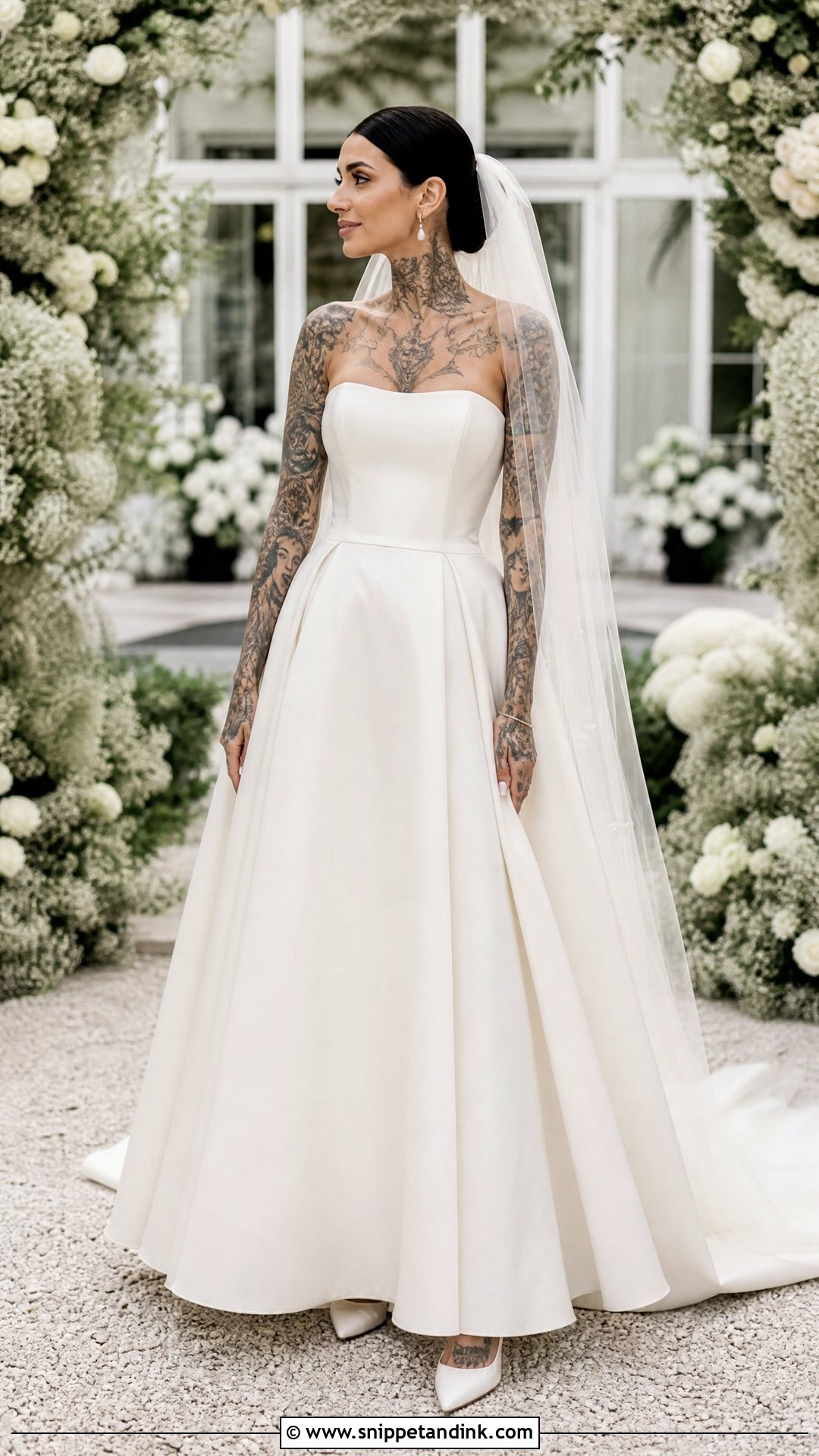
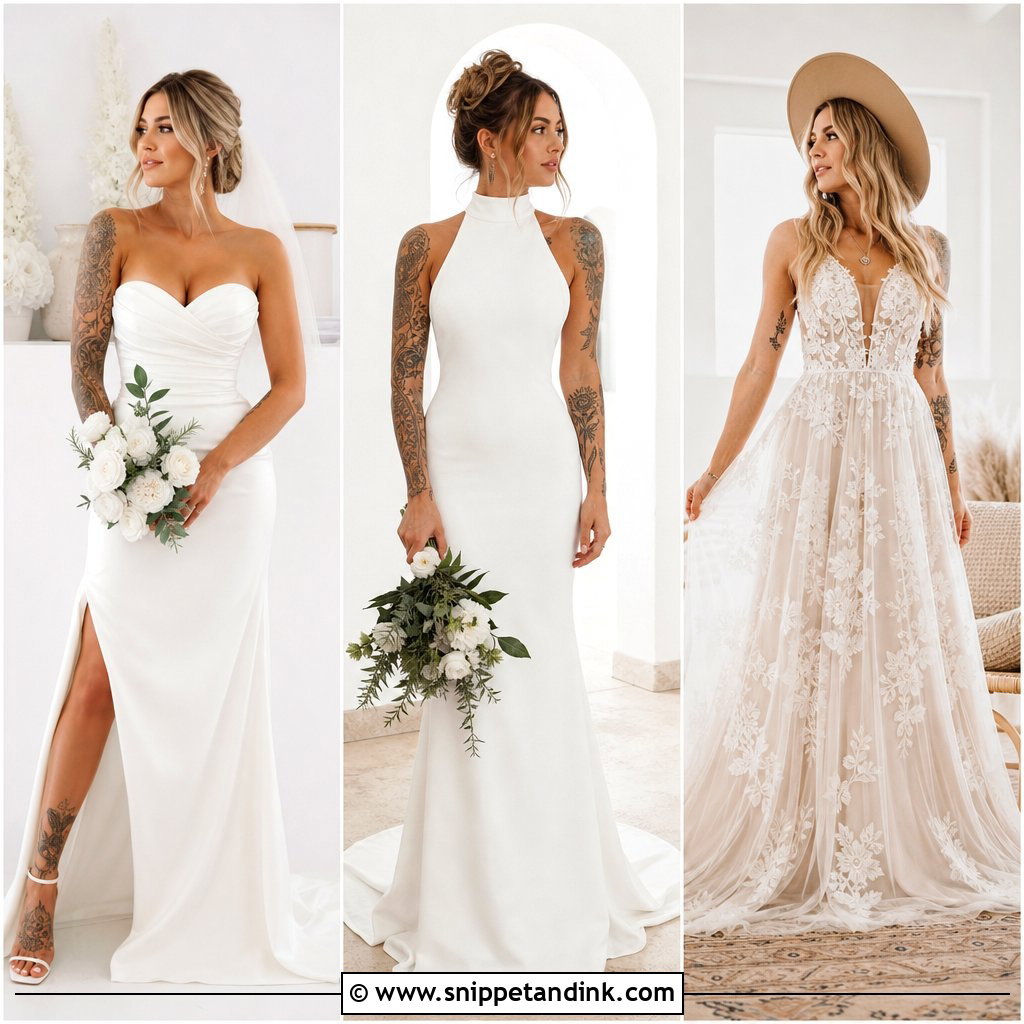
Start here if you want your tattoos clearly seen and the dress to stay classic. A structured ivory strapless bodice with a gently curved neckline over a flowing A-line skirt frames shoulder, collarbone, chest and arm work without competing. With colorful tattoo sleeves, keep the fabric plain; black-and-gray work sits nicely with a little lace or pearl detail. Pointed ivory heels, small drops and a sleek low bun suit it, and a fingertip veil moves without covering your shoulders for long. In the fitting room, I have brides reach overhead and sit down hard on a chair. If the bodice moves, it gets taken in.
2. Low-Back Satin Tattoo Wedding Dress
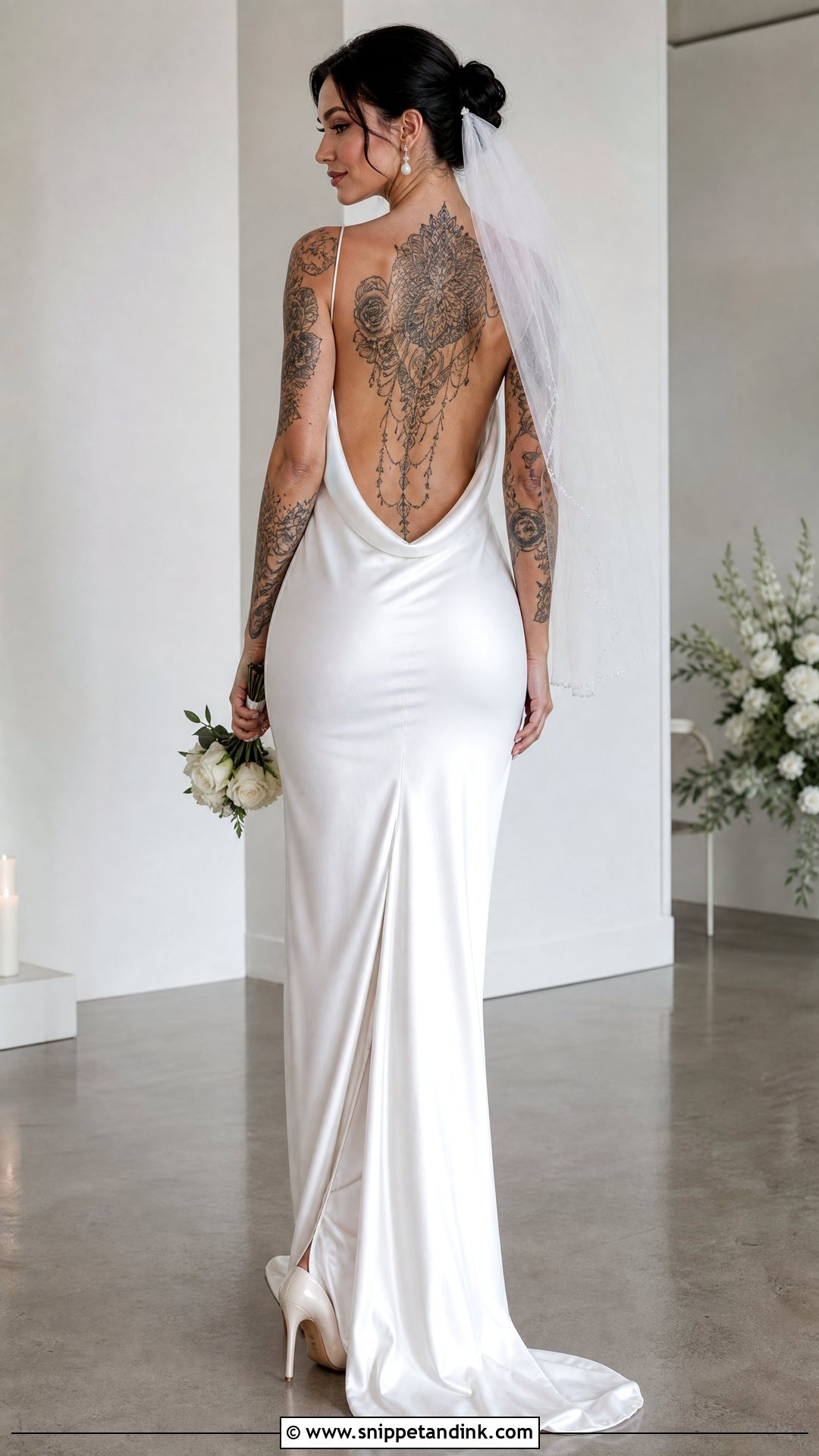
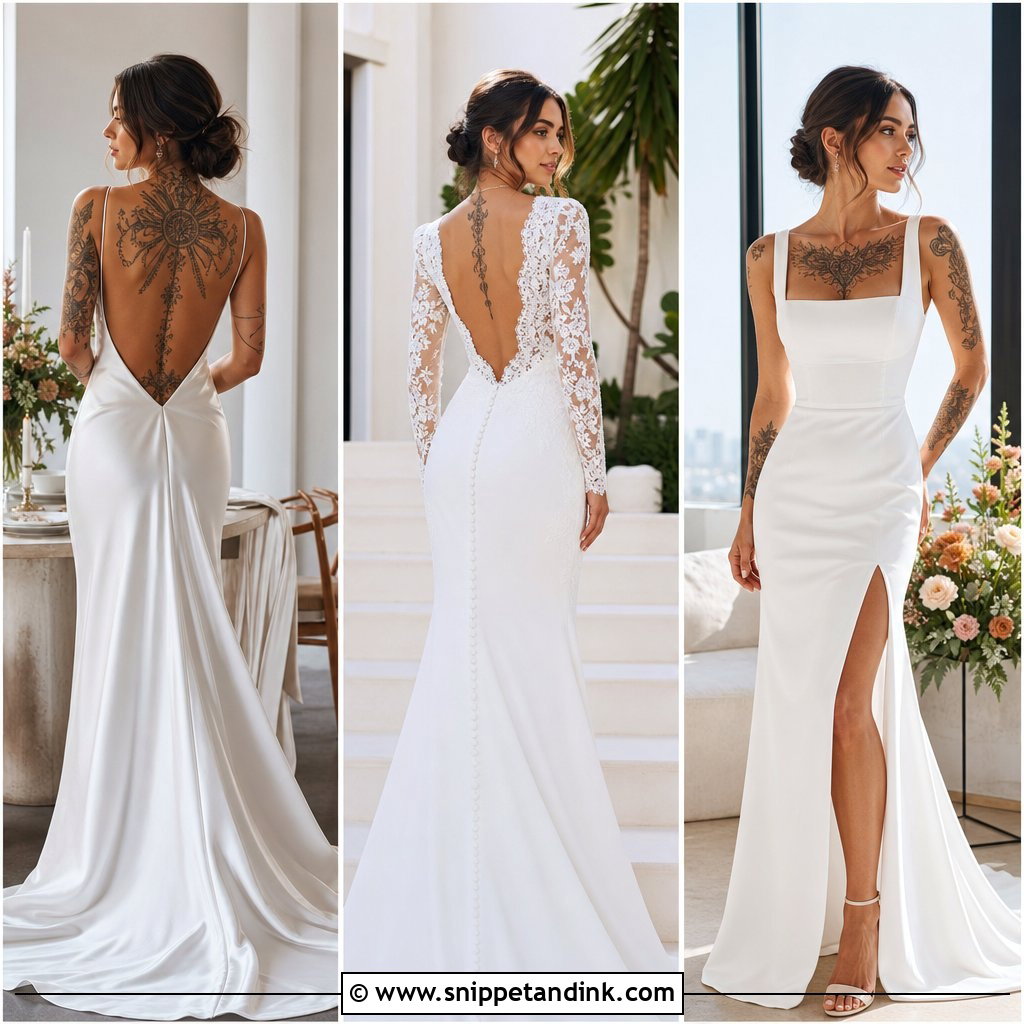
A low satin back can frame a large back tattoo like a mount around a print. The opening should follow the outline of the design, V-shaped, scooped or softly draped, instead of cutting across its busiest part. Keep the front quiet with a bateau or modest scoop so the reveal from behind lands. One thing to settle early is support: a very low back rules out most bras, so I sort out a backless or built-in option before the first fitting. Pearl earrings, a polished updo, ivory pumps and a small satin clutch suit it. Choose a sheer, plain veil you can take off after the ceremony, so the photographer has a clear view of the artwork.
3. Off-the-Shoulder Tattoo Wedding Dress
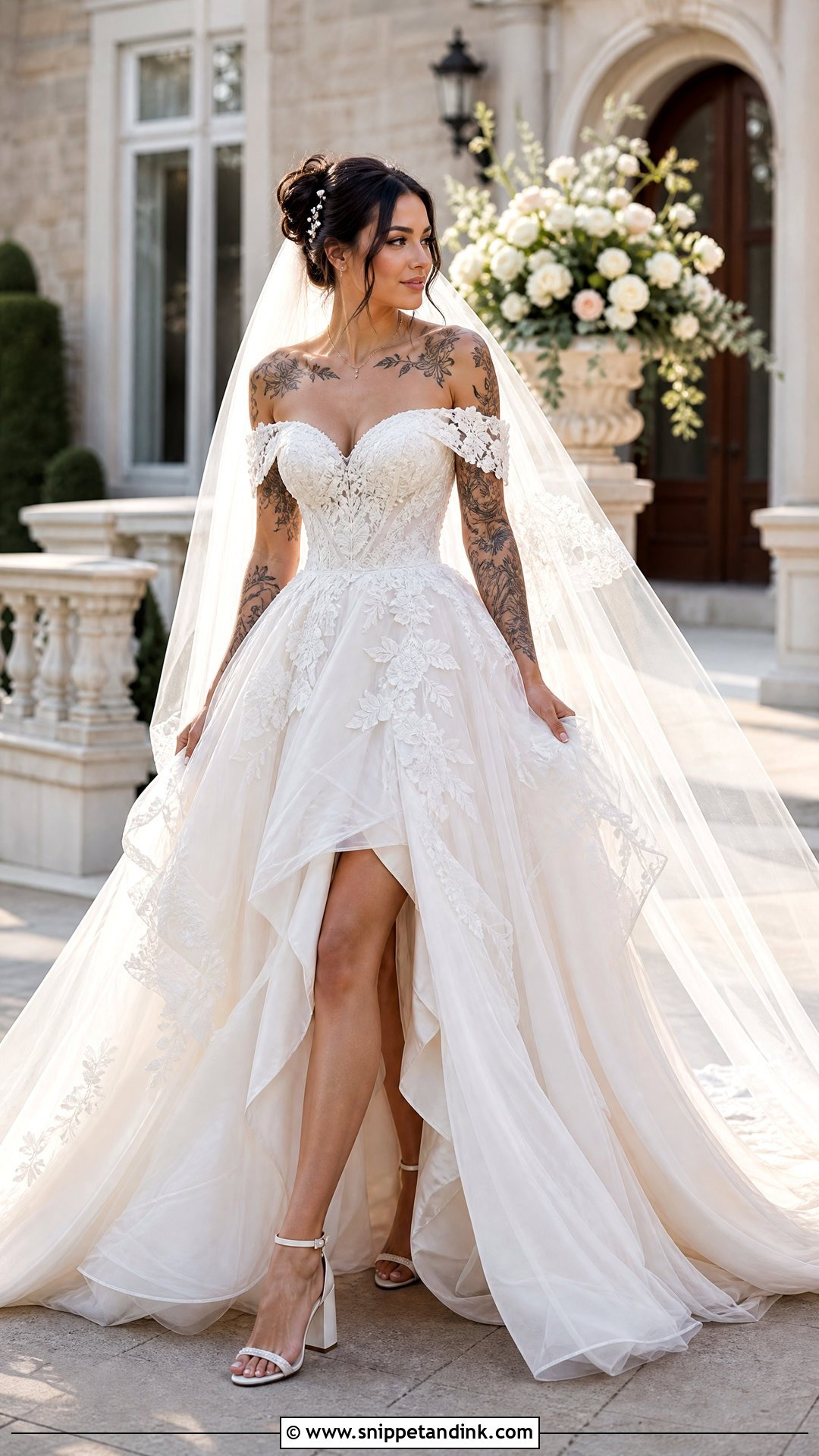
Off-the-shoulder sleeves sit exactly where collarbone, shoulder and upper-arm tattoos live, which is why they suit this look so well, especially on a romantic ball gown with a fitted bodice and layered skirt. Plain satin looks modern; floral lace looks traditional. If an arm tattoo runs under the sleeve edge, check where that edge falls. A band of fabric across a portrait’s face or the middle of a word is the thing I’d move first. Block-heel sandals, fine earrings, a low textured bun with pearl pins and a plain cathedral veil you can lift off for portraits complete a formal look that still shows the bride’s body art.
4. Square-Neck Column Tattoo Wedding Dress
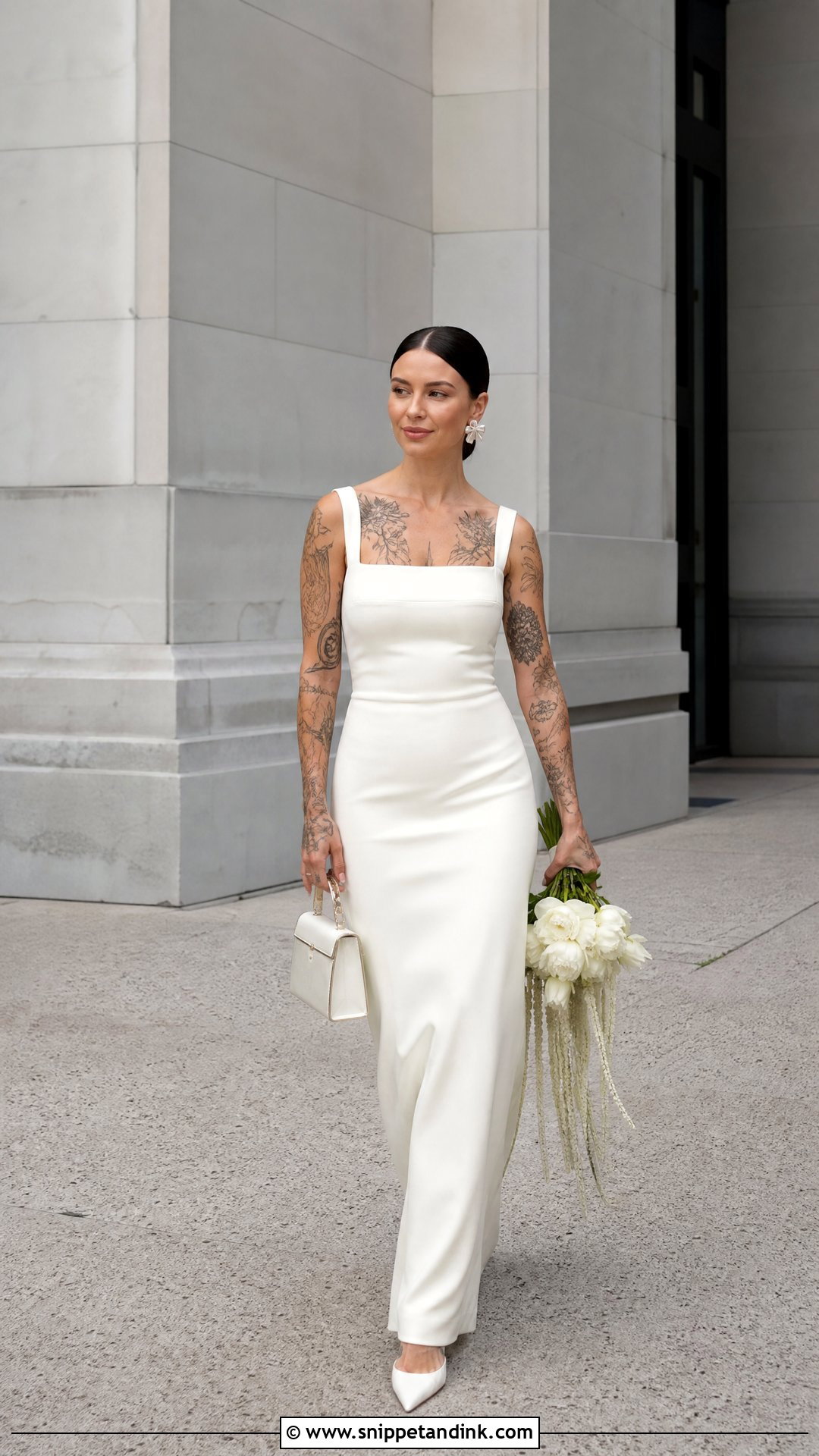
Square neck, column skirt, nothing else. The straight lines leave room around the upper body and keep detailed arm tattoos as the focus. Crepe falls smoothly with no decoration. Thin straps show more artwork, but on broader shoulders or a fuller bust I’d choose wider ones; they support better and look more balanced. Look at the gown from both sides during fittings, because a strap can split a shoulder or upper-back piece in two from behind. Pointed slingbacks, sculptural earrings, a mini bag and a center-parted bun or tucked-back hair suit city halls, galleries and rooftops.
5. Halter-Neck Tattoo Wedding Dress
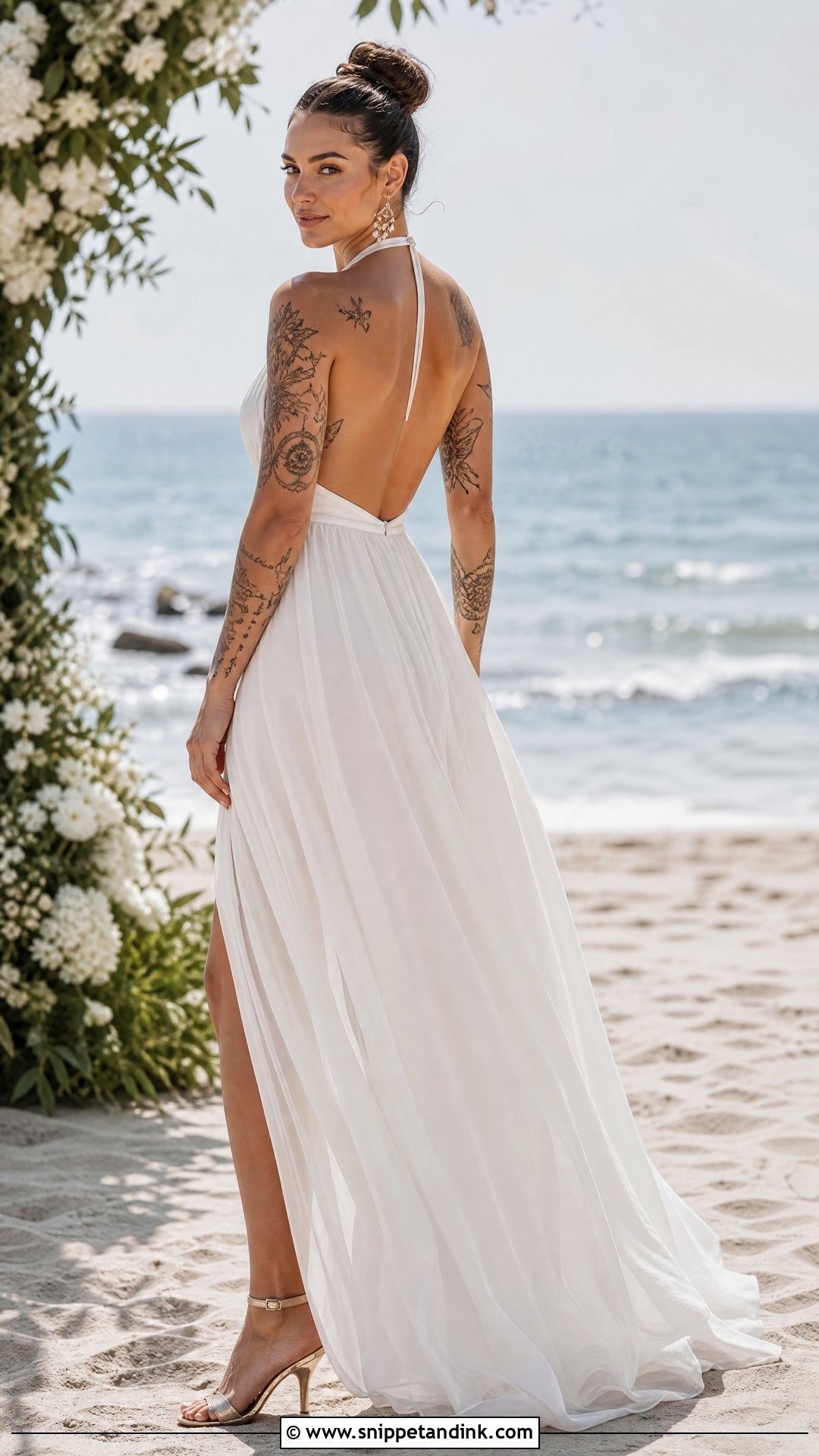
For arm, shoulder-blade and upper-back tattoos, a halter with narrow straps and an open back shows the most. Gathered chiffon reads relaxed and suits a destination wedding; fitted crepe looks sharper. Skip the necklace, since it crowds the neckline and any chest work. If you need support, ask for internal boning or a built-in foundation, because a halter that relies on the neck tie alone gets uncomfortable over a long day. Metallic sandals, statement earrings and a smooth ponytail or high bun finish it. Beaches, modern hotels and warm-weather weddings are where I’d use it.
6. One-Shoulder Tattoo Wedding Dress
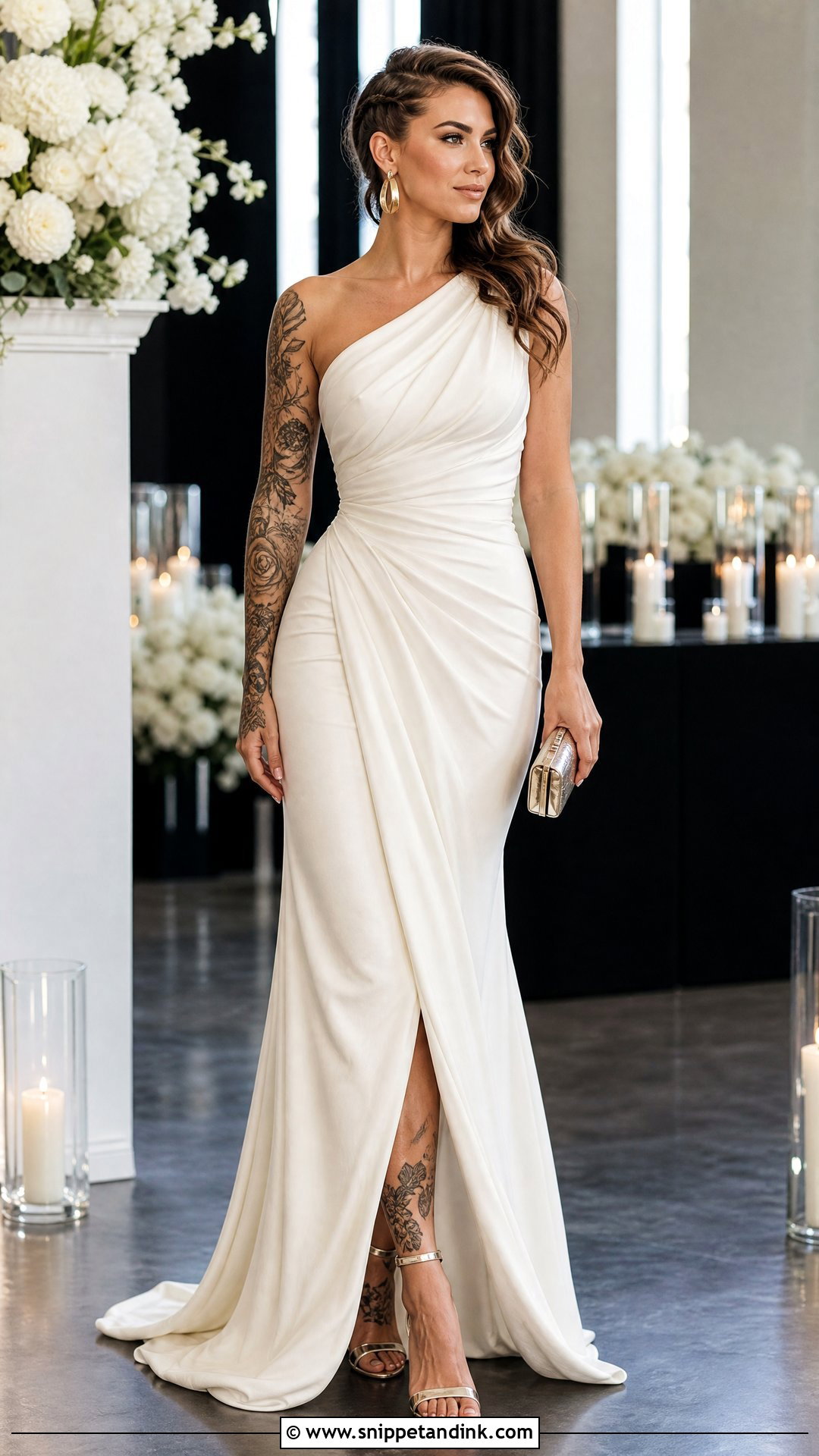
Uneven tattoos, one big arm piece and a small one opposite, are where a one-shoulder gown makes sense. It forms an artistic, asymmetrical frame and lets you decide which side shows more. A clean fitted bodice and softly draped skirt stop the neckline getting busy, and if the bare shoulder carries the main tattoo, keep the strap plain. Slim ankle-strap heels, a metallic clutch and earrings that follow the curve suit it. Sweep your hair to the covered side. Ask your photographer to shoot both profiles; each side gives a completely different portrait.
7. Spaghetti-Strap Slip Tattoo Wedding Dress
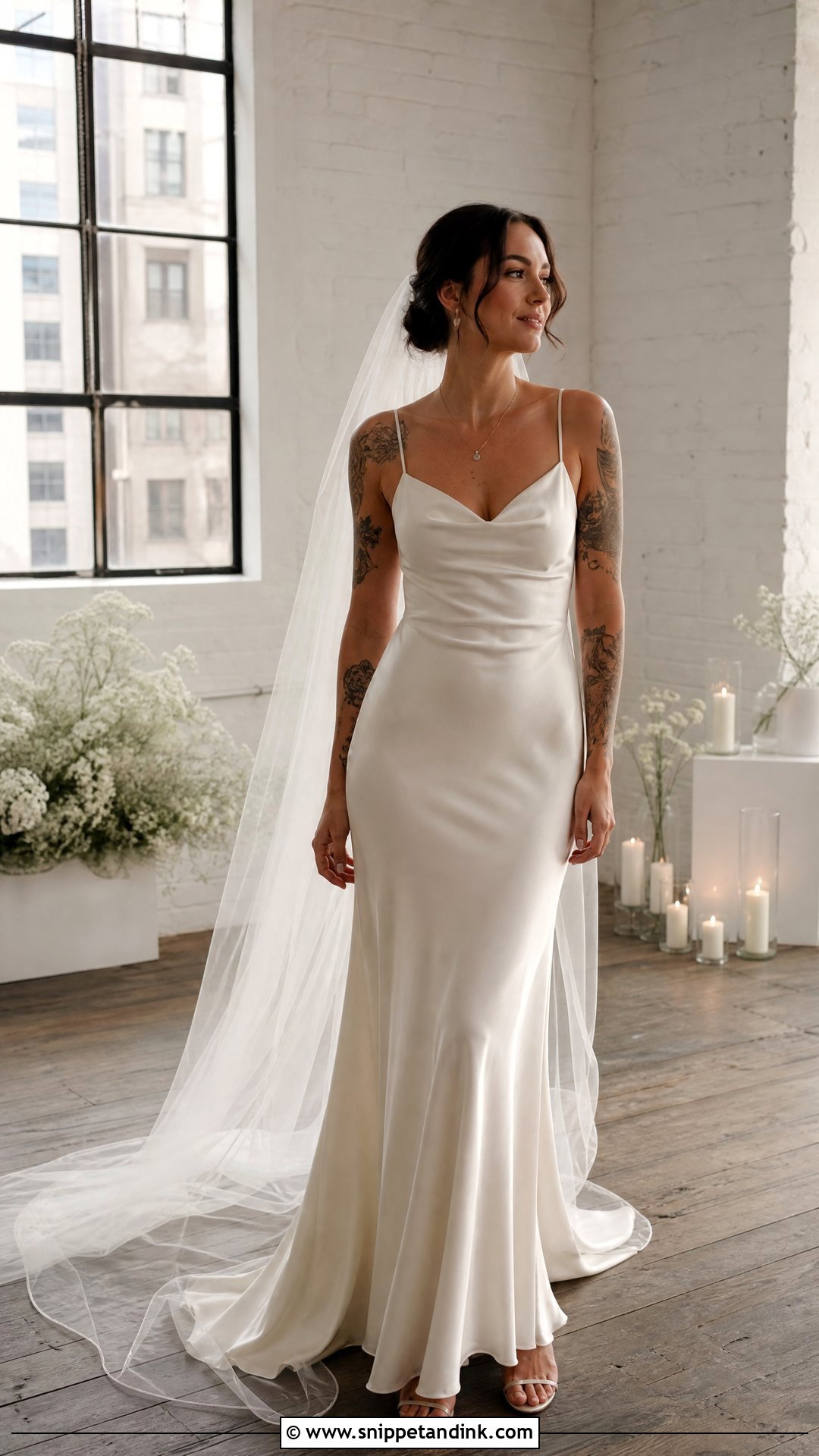
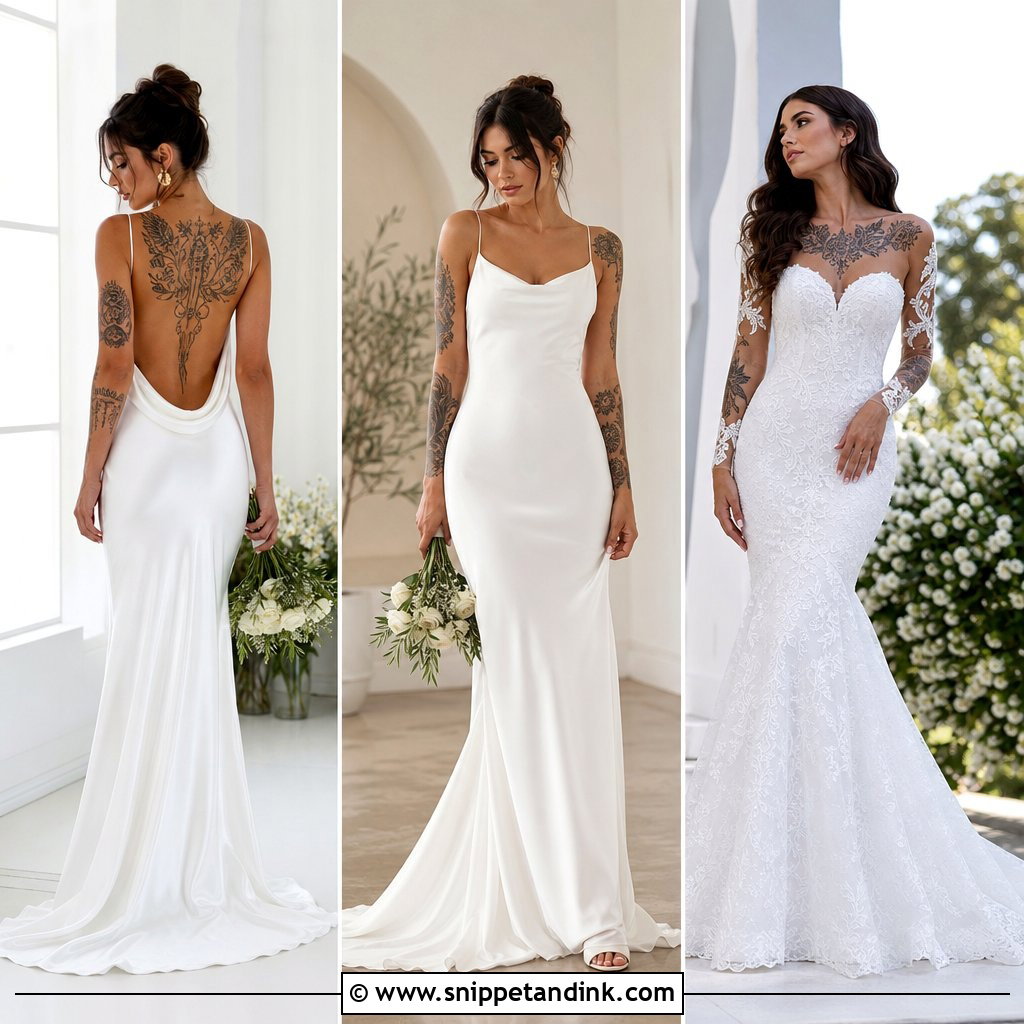
Extensive tattoos need a quiet background, and a spaghetti-strap slip is about as quiet as it gets. Narrow straps leave shoulders, arms and upper back mostly bare, and bias-cut satin follows the body without structure. Choose ivory, soft white or champagne by holding each one against your skin and your tattoo colors; champagne can warm up a cool palette nicely, or muddy it. Barely there sandals, a simple pendant, small earrings, a relaxed low bun and a sheer chapel veil keep it minimal. Bring a blazer or wrap for cooler moments. Smooth satin shows every pull and uneven hem, so tailoring isn’t optional.
8. Sweetheart Mermaid Tattoo Wedding Dress
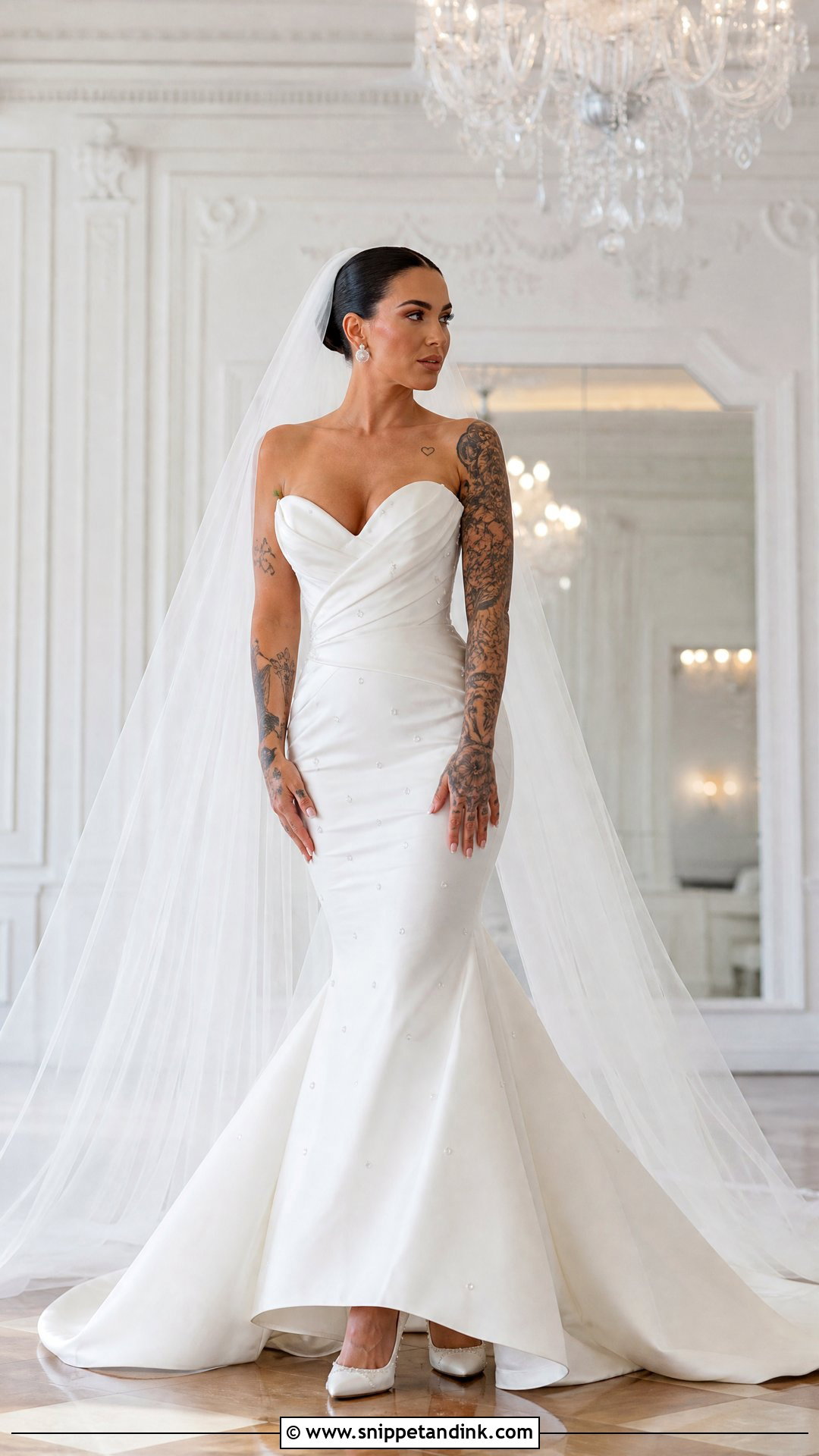
Sweetheart mermaids are glamorous and fitted, and they show chest, shoulder and arm tattoos with a flared skirt to balance the hips. Clean mikado looks bold; fitted lace looks softer. With very colorful, detailed tattoos, I keep embellishment on the dress to a minimum. Crystal studs, a narrow bracelet, pointed pumps and a long veil set under a smooth bun finish it. Practice walking and sitting well before the day, because a close mermaid skirt limits your stride, and pack a second, comfortable pair of shoes for dancing. Ballrooms and hotel receptions suit it best.
9. Thigh-Slit Tattoo Wedding Dress
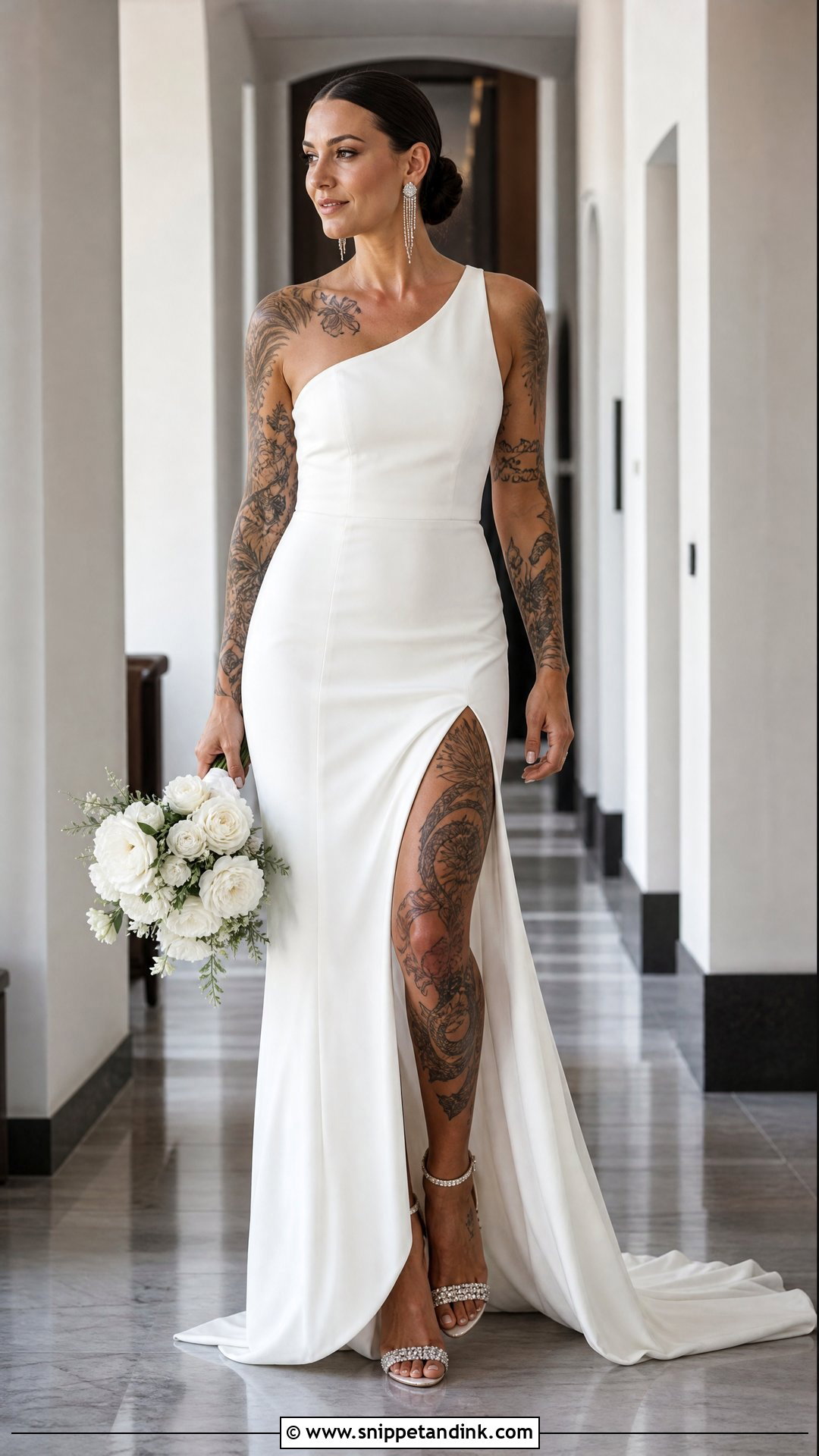
Put the slit on the same leg as the tattoo. That sounds obvious, but many off-the-rack dresses have the slit on one fixed side, so check before falling in love. A wrap-style skirt or structured slit reveals the artwork as you walk without gaping when you sit. A fitted crepe bodice, long skirt and clean neckline keep it polished; thin straps also show arm work, while an off-shoulder bodice feels softer. Embellished heels, statement earrings and a sleek bun or polished waves suit it. Avoid shoe straps across an ankle tattoo unless you want that layered effect, and test the slit height in several poses at alterations.
10. Tea-Length Tattoo Wedding Dress
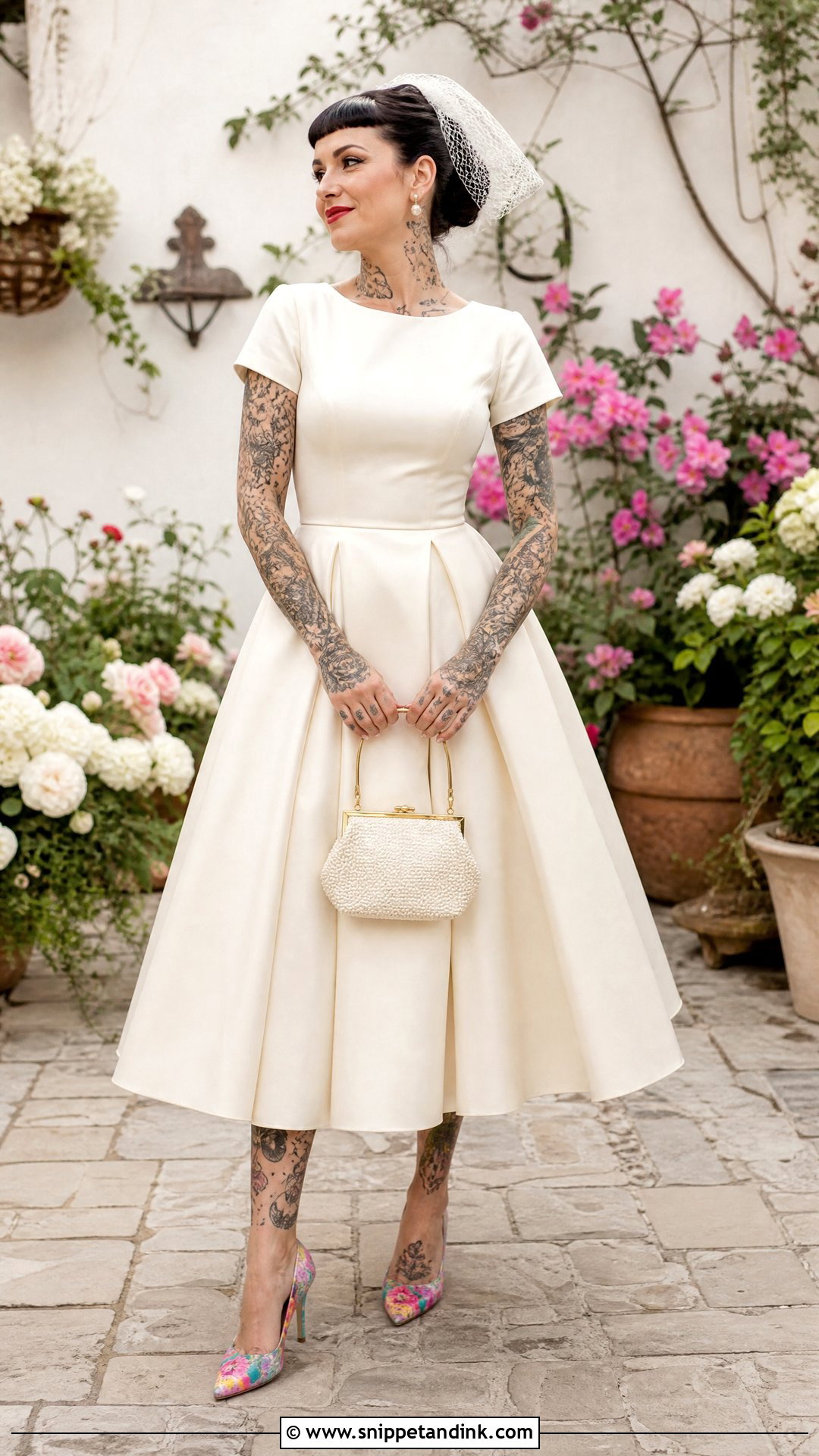
Ankle, calf, foot and lower-leg tattoos finally get seen in a tea-length dress. The hem falls between knee and ankle, so there’s room to walk and dance. Short sleeves or slim straps decide whether arm tattoos show too, which makes this the best option on the list for brides with pieces on both arms and legs. A pleated satin skirt feels retro; layered tulle feels softer. Your shoes are now a big part of the outfit, so pick ones that sit around the artwork rather than over it. Colorful pumps, a small top-handle bag, pearl earrings and a short veil or a small hair bow complete it.
11. High-Low Tattoo Wedding Dress
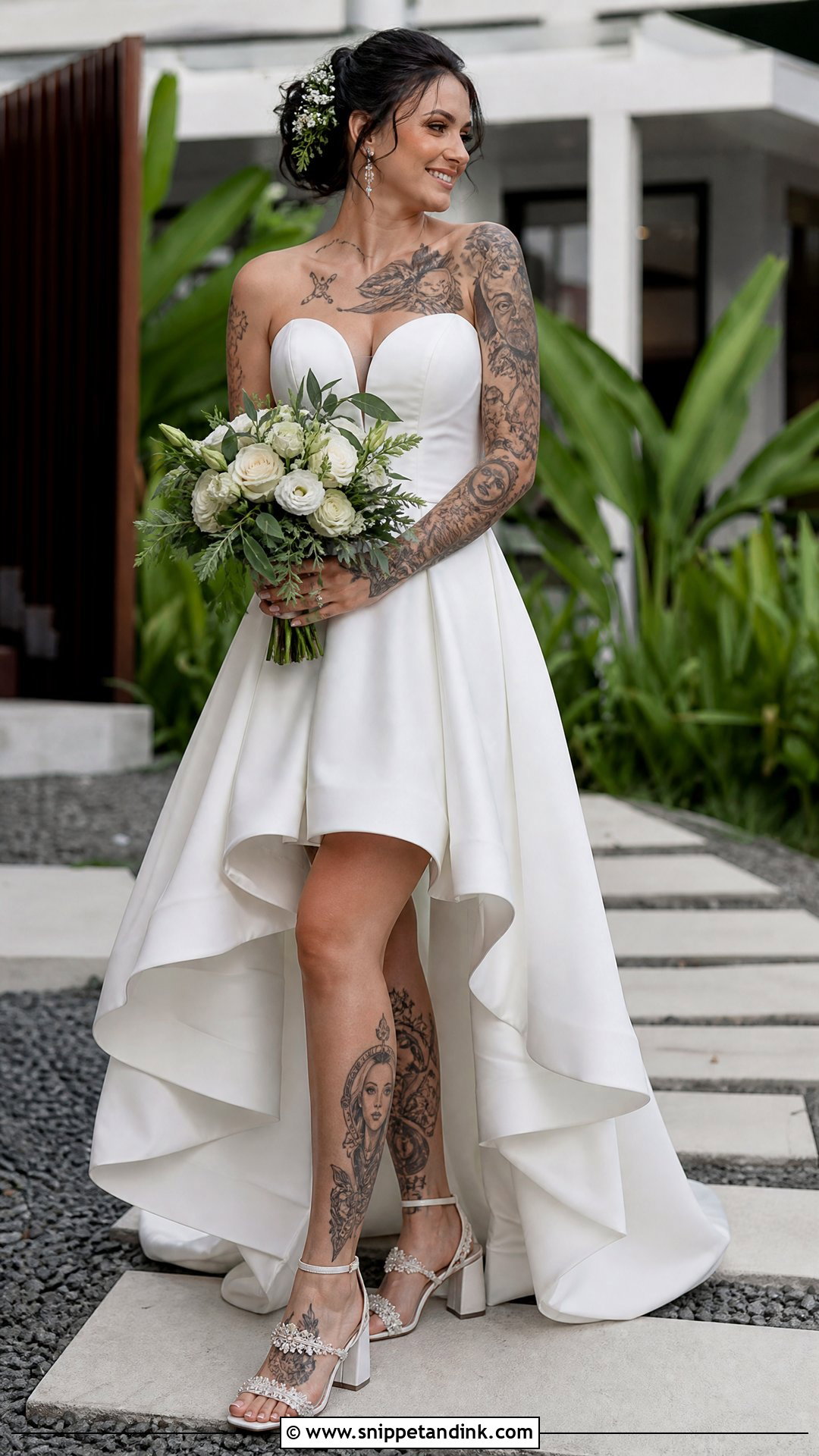
From the front you see legs and shoes; from behind, a bridal sweep. A high-low hem shows knee, calf and ankle tattoos while keeping the movement of a long gown. Choose a structured strapless bodice for a formal wedding or a softer chiffon neckline for a beach or garden. The front hem should end clearly above or below a tattoo, never across its center. Decorative block heels, drop earrings, a compact bouquet and a shoulder-length veil or floral accessory keep the proportions playful. The longer back catches on stairs and rough ground, so I’d have you walk both before the day.
12. Two-Piece Tattoo Wedding Dress
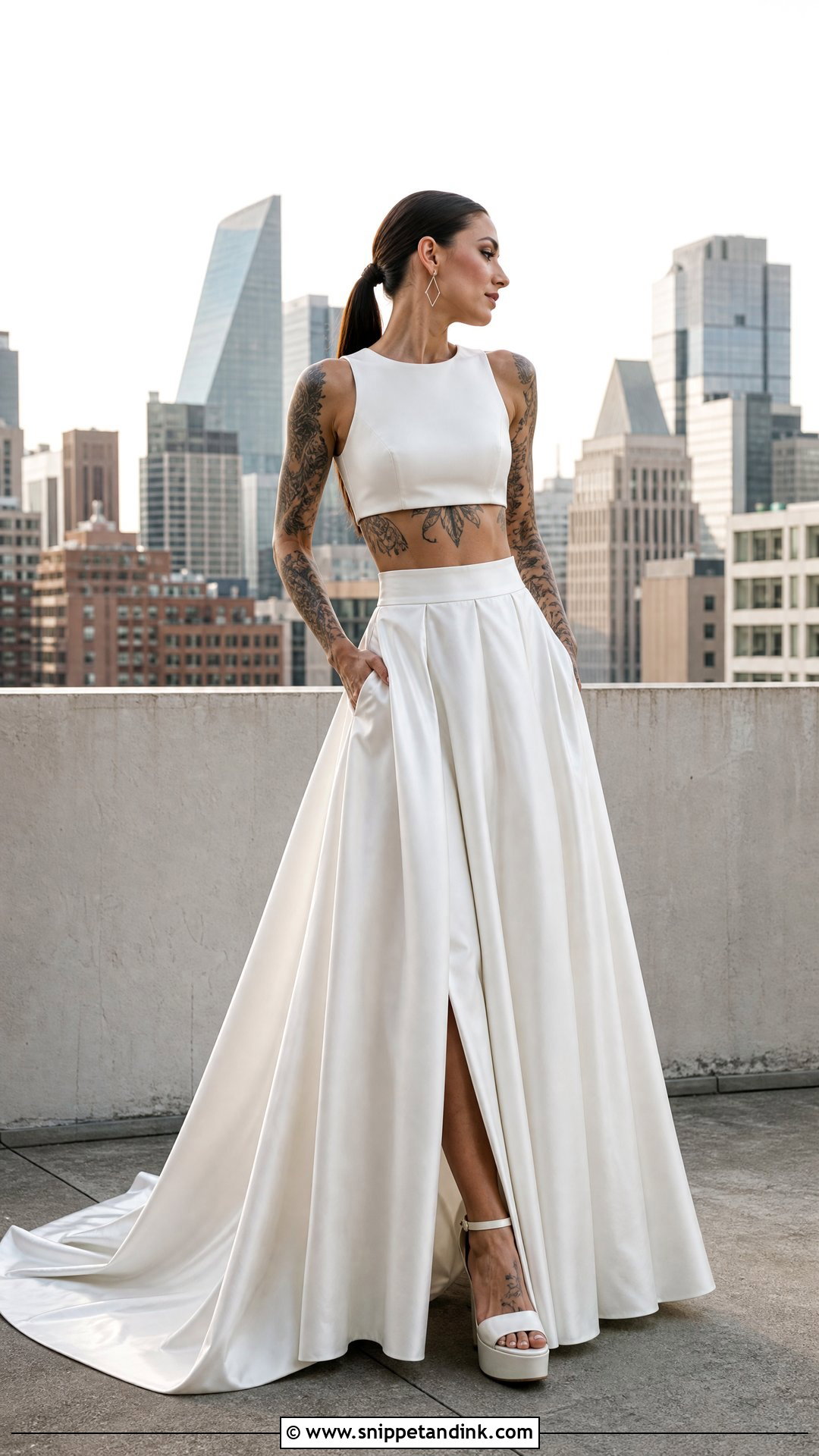
Rib, waist, back and stomach tattoos are the ones a normal gown hides, and a two-piece outfit can show them. A structured crop top over a high-waisted flowing skirt with a narrow strip of skin between them looks bridal; a wide gap starts to look like holiday wear. Sleeveless tops show arm work and a low back frames more. Matching fabric holds it together: lace for a boho setting, satin or crepe for something more modern. Platform sandals, geometric earrings and a sleek ponytail or textured bun suit it. Hug someone, raise your arms and dance at the fitting, and see whether the top stays put.
13. Illusion-Lace Tattoo Wedding Dress
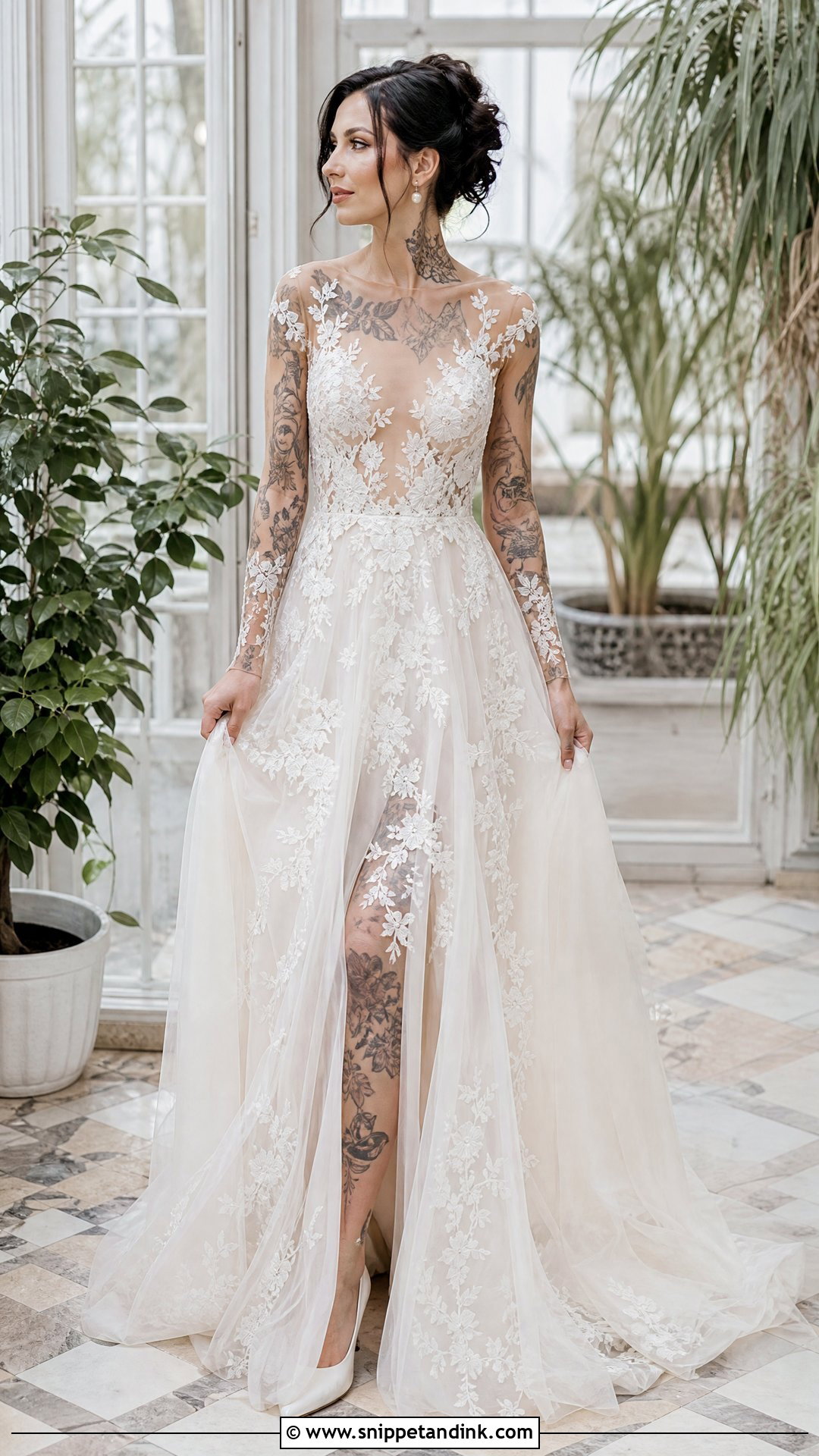
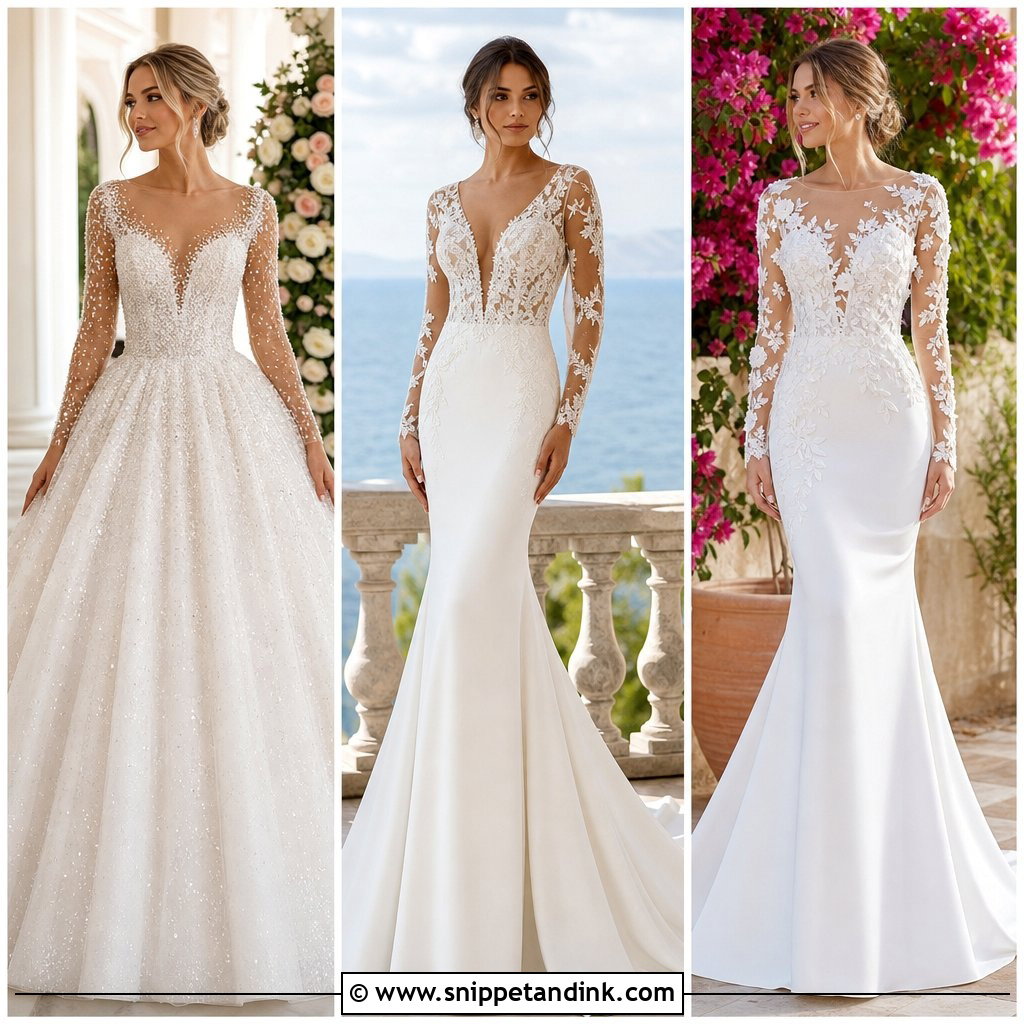
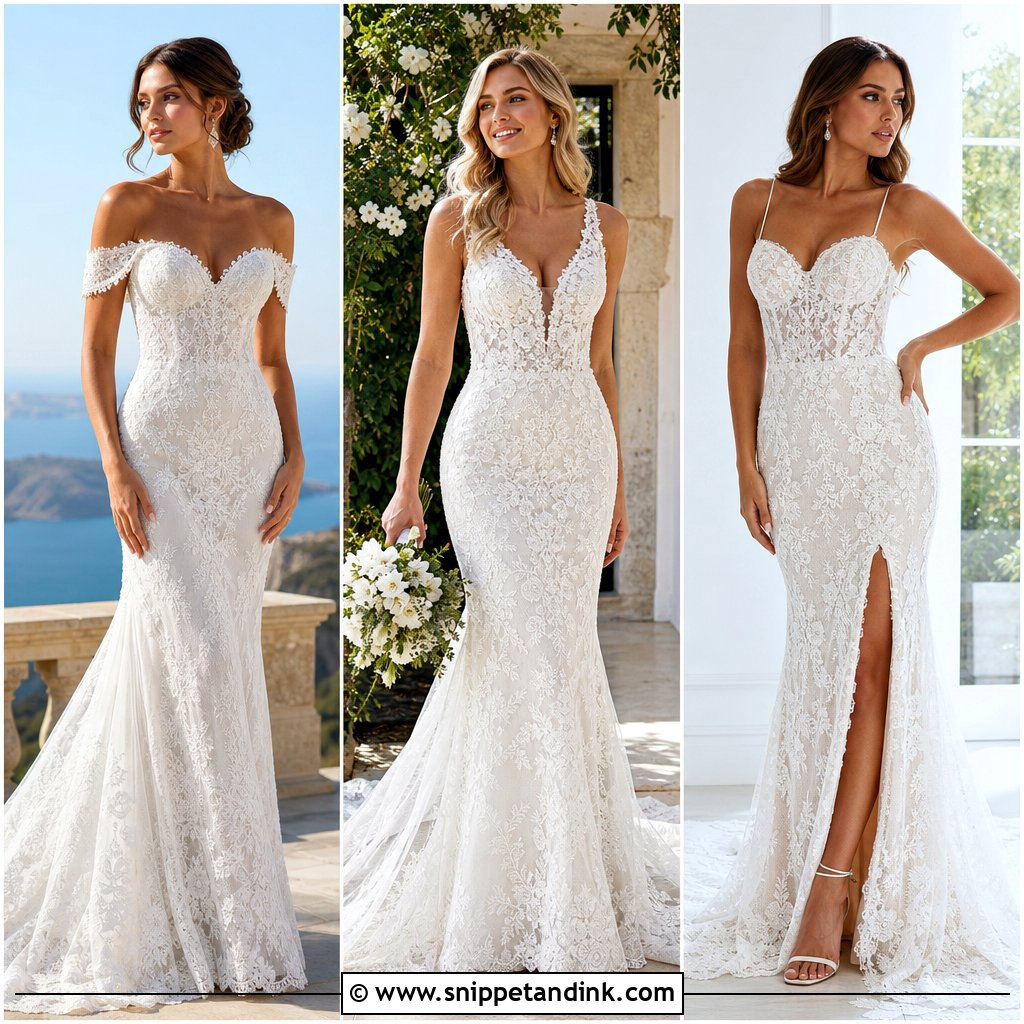
Illusion lace puts sheer mesh and appliqués directly over the skin, so the tattoos show through as a layer under the design. It’s used across necklines, sleeves and backs to give coverage that still looks light. Where the appliqués land matters more than anything else here: I check that no flower or bead cluster sits on a face, a word or the focal point of a tattoo, and ask for appliqués to be moved where needed. Mesh that closely matches your skin tone disappears best. Simple pumps, pearl drops and an updo that shows the illusion back finish it. Skip a necklace, which competes with the neckline and snags fine mesh.
14. Cap-Sleeve Tattoo Wedding Dress
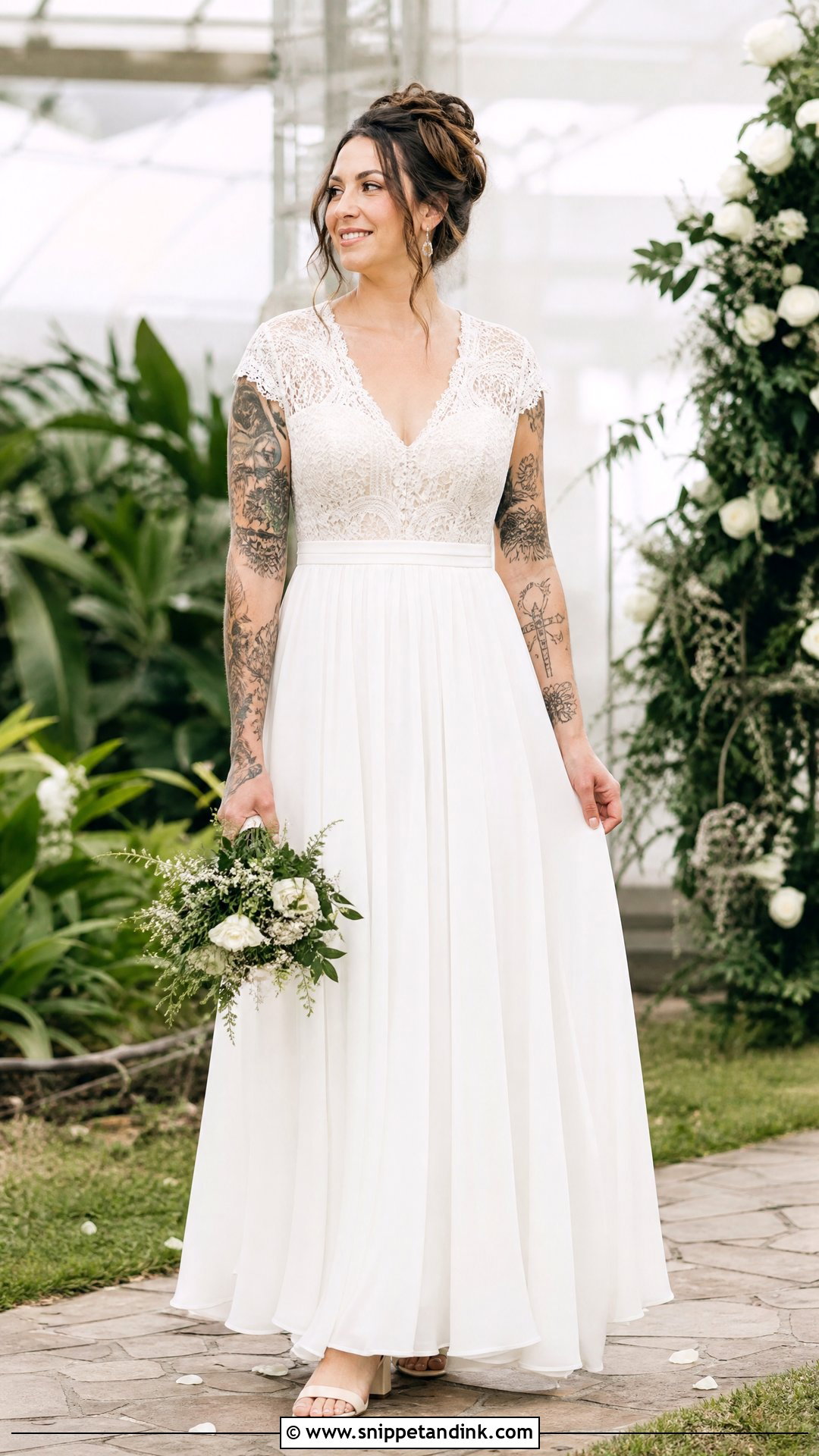
Cap sleeves give the shoulder a little cover and leave most arm tattoos visible, softening the line between a lace bodice and tattooed skin. A V-neck or scoop neck with a flowing chiffon or tulle skirt works well. If the tattoo starts at the shoulder, set the sleeve edge where it won’t cut across the most recognizable part. Low block heels, fine earrings and a softly pinned updo suit it, and a narrow belt is fine if kept plain. Cap sleeves also give more support than thin straps, which brides with a fuller bust often appreciate. Gardens, rustic venues and daytime receptions suit it.

15. Short-Sleeve Lace Tattoo Wedding Dress
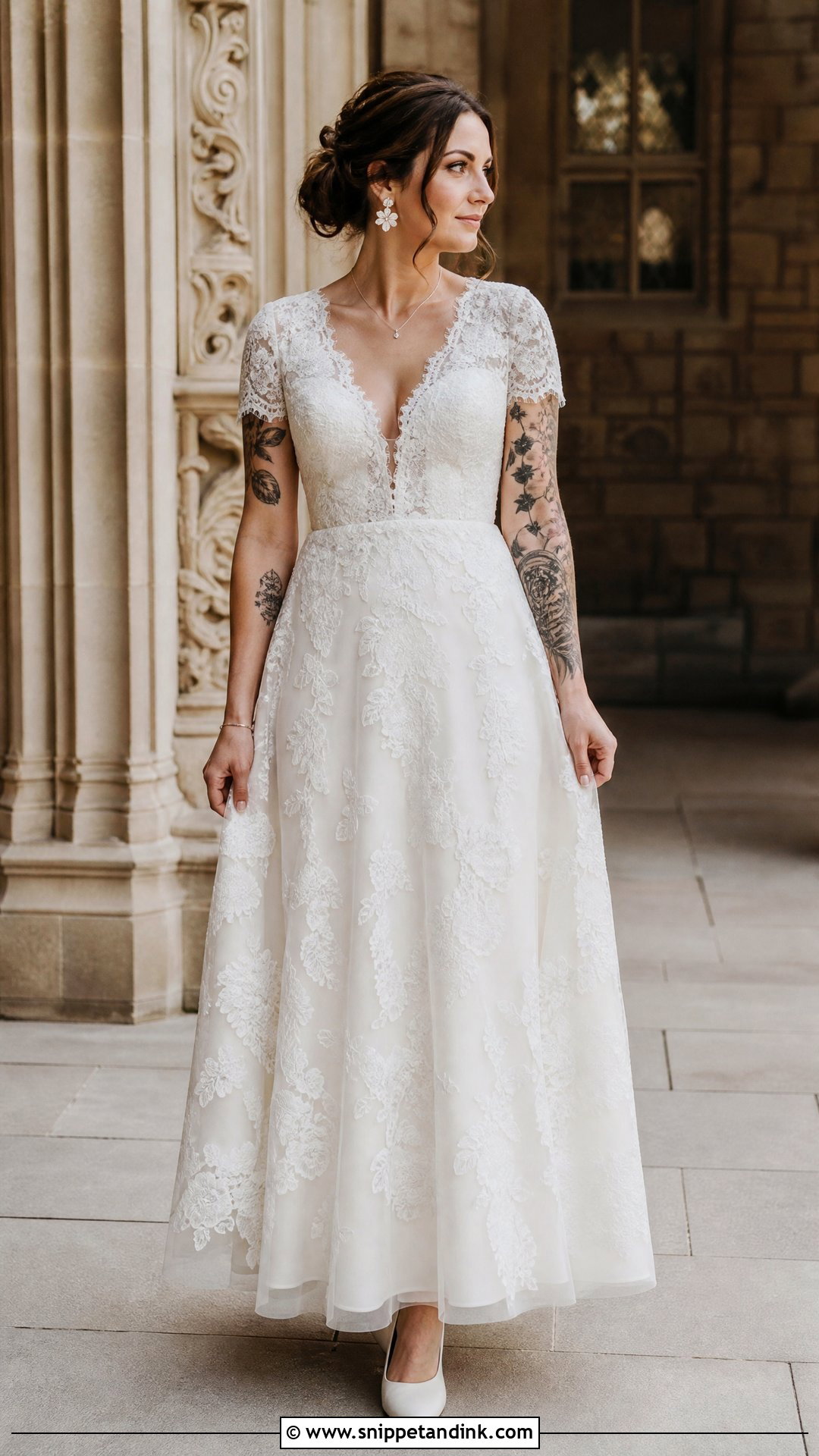
A short-sleeve lace dress makes a romantic frame for forearm and lower-arm tattoos. Fitted sleeves ending above the elbow keep the artwork visible from most angles, and an open V-neck or illusion back can show more. A soft A-line keeps it traditional. With colorful sleeves, I’d pick lace with a larger, simpler pattern so the textures don’t fight. Run your fingers along the sleeve edge at the fitting; scratchy lace trim rubs skin raw over a full day, and a soft binding fixes it. Closed-toe pumps, small floral earrings and a loose low bun complete a look that suits spring weddings and historic venues.
16. Detachable-Sleeve Tattoo Wedding Dress
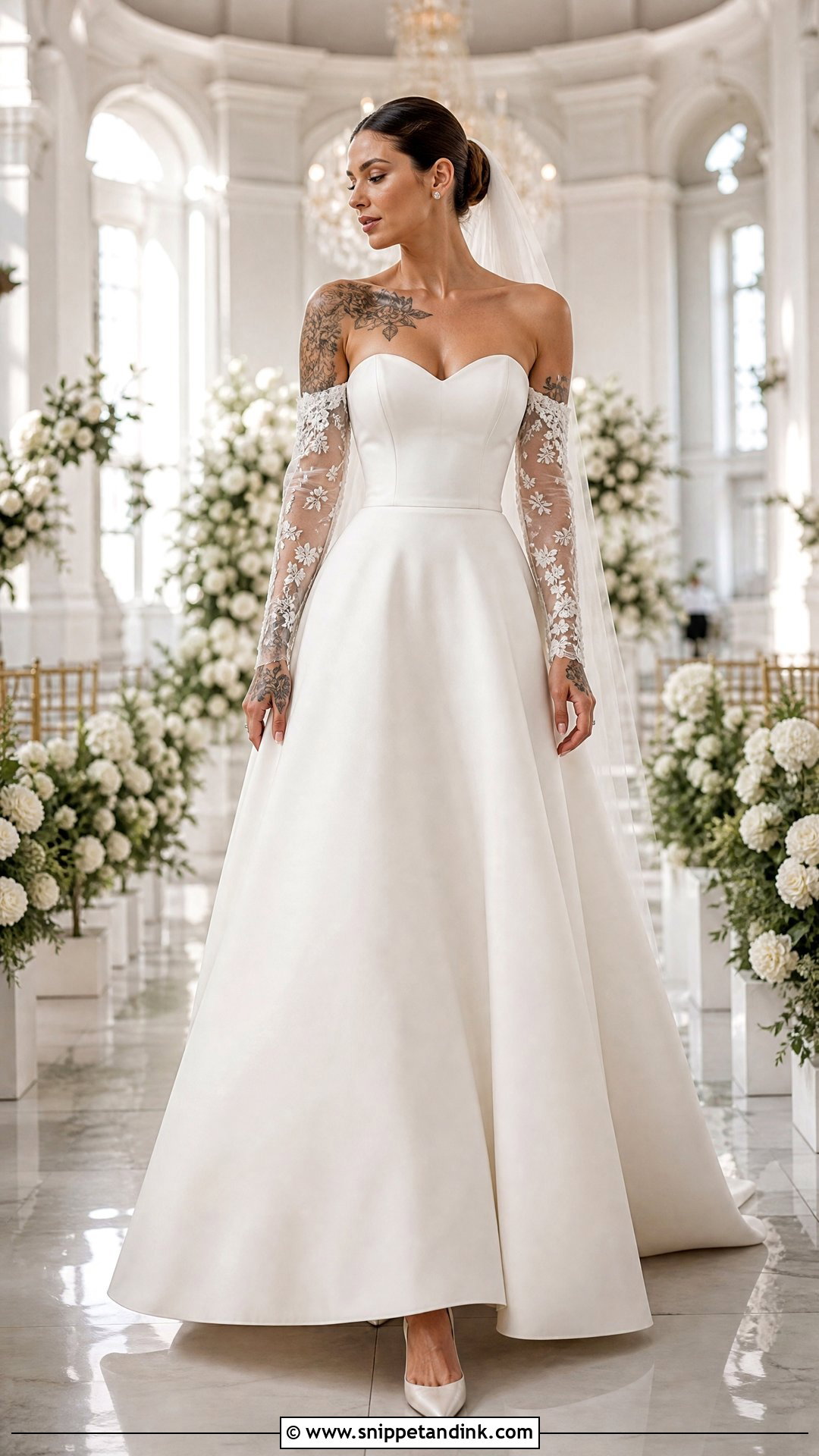
Fitted illusion sleeves, soft puff sleeves or off-shoulder drapes for the ceremony; nothing for portraits and dancing. Detachable sleeves let you choose how much shows at each stage. The base dress, strapless or sleeveless A-line, must look complete without them. Use matching lace or fabric so the sleeves look built in rather than borrowed. Most seamstresses can make illusion or lace sleeves to add coverage to a sleeveless gown, so you aren’t limited to dresses sold with them. Practice removing and reattaching them, especially if they use small buttons or hidden snaps. Pointed heels, studs, a polished bun and a light veil suit it.
17. Long-Sleeve Tattoo Wedding Dress
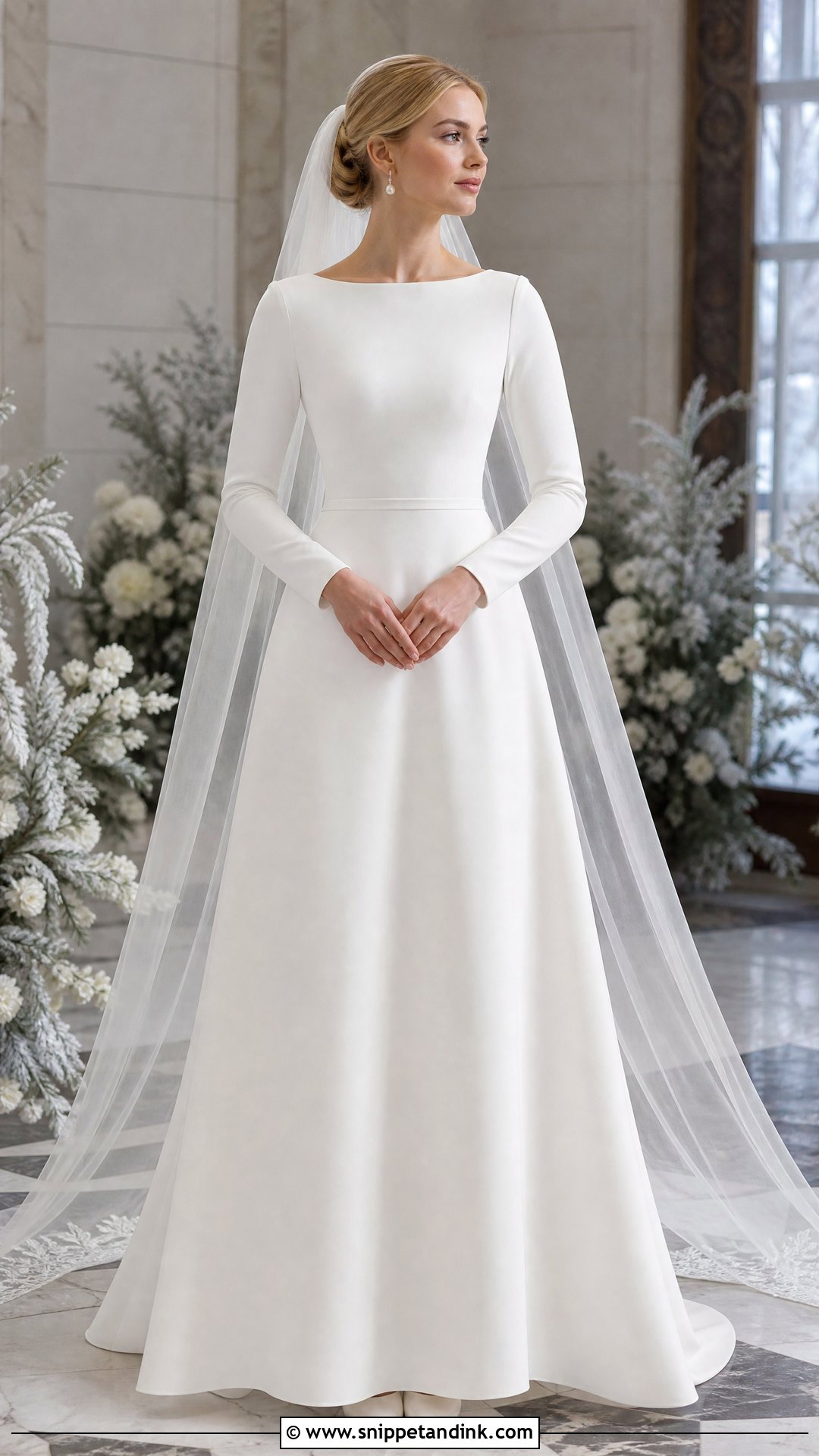
Some brides prefer a quieter look, and an opaque long-sleeve gown covers arm, shoulder and upper-back tattoos fully. Lined crepe, satin or dense lace are the fabrics to look at; sheer illusion won’t do it. A high bateau neckline and fitted sleeves feel refined, with an A-line or column skirt keeping it light. Check the gown in daylight and under camera flash, because pale fabric can turn see-through under strong light and show dark ink beneath. Bend your elbows and lift your arms to test the sleeves. Classic pumps, pearl earrings, a neat chignon and a dramatic veil complete it.
18. Full-Back Tattoo Wedding Dress
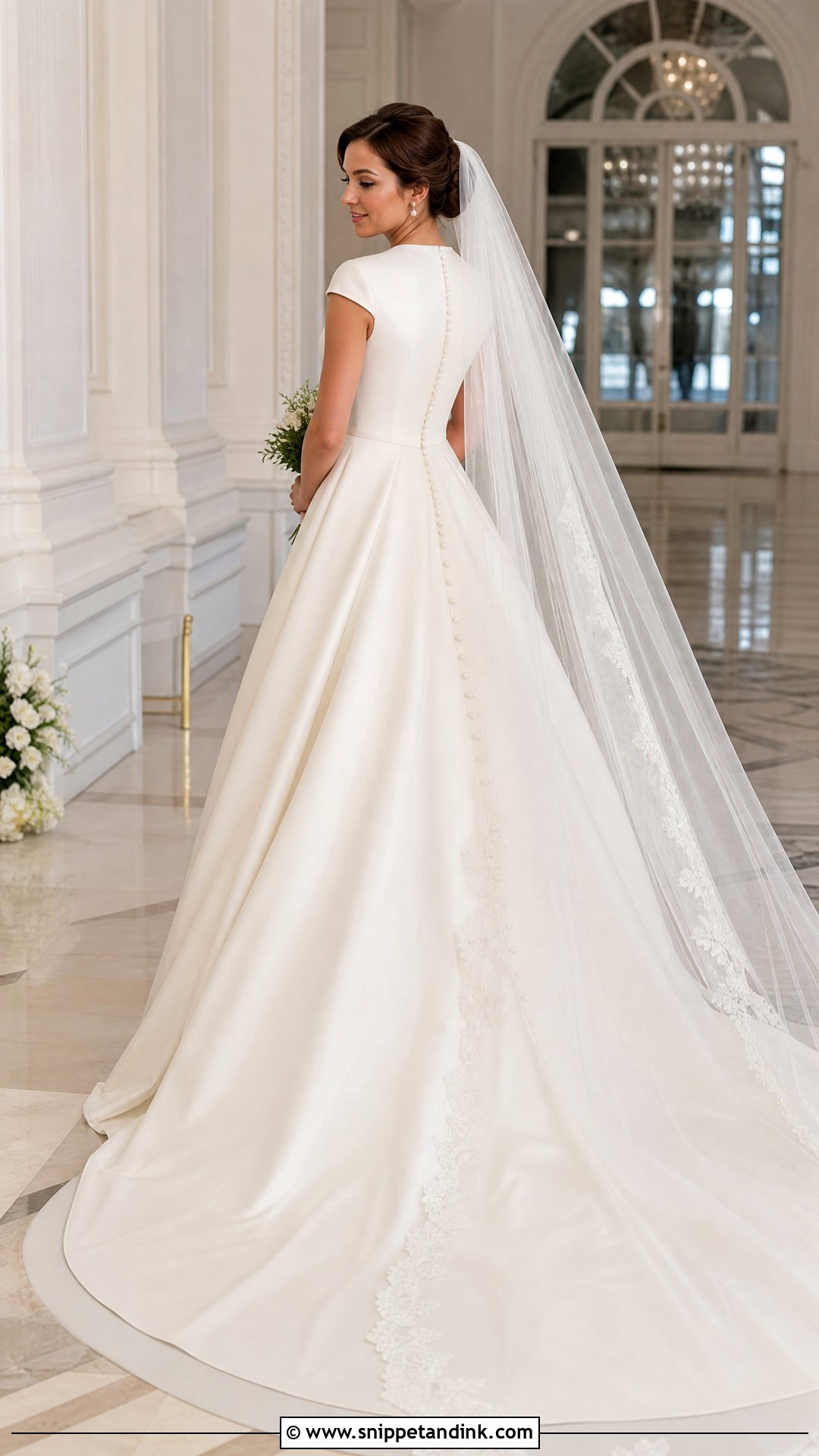
To keep back tattoos covered without looking buttoned up, choose an opaque back with real shape. Lined lace, satin panels, crepe or button detailing from neckline to waist all work. Unlined illusion mesh will not. A bateau neckline with cap sleeves feels classic; a fitted long-sleeve bodice is more formal. Ask the salon whether the back can be lined in the same fabric as the bodice, since that’s a common alteration and usually looks invisible when done well. An elegant updo, pearl studs, pointed heels and a cathedral veil suit it. Confirm the coverage in natural light before alterations are finished.
19. Bridal Cape Tattoo Wedding Dress
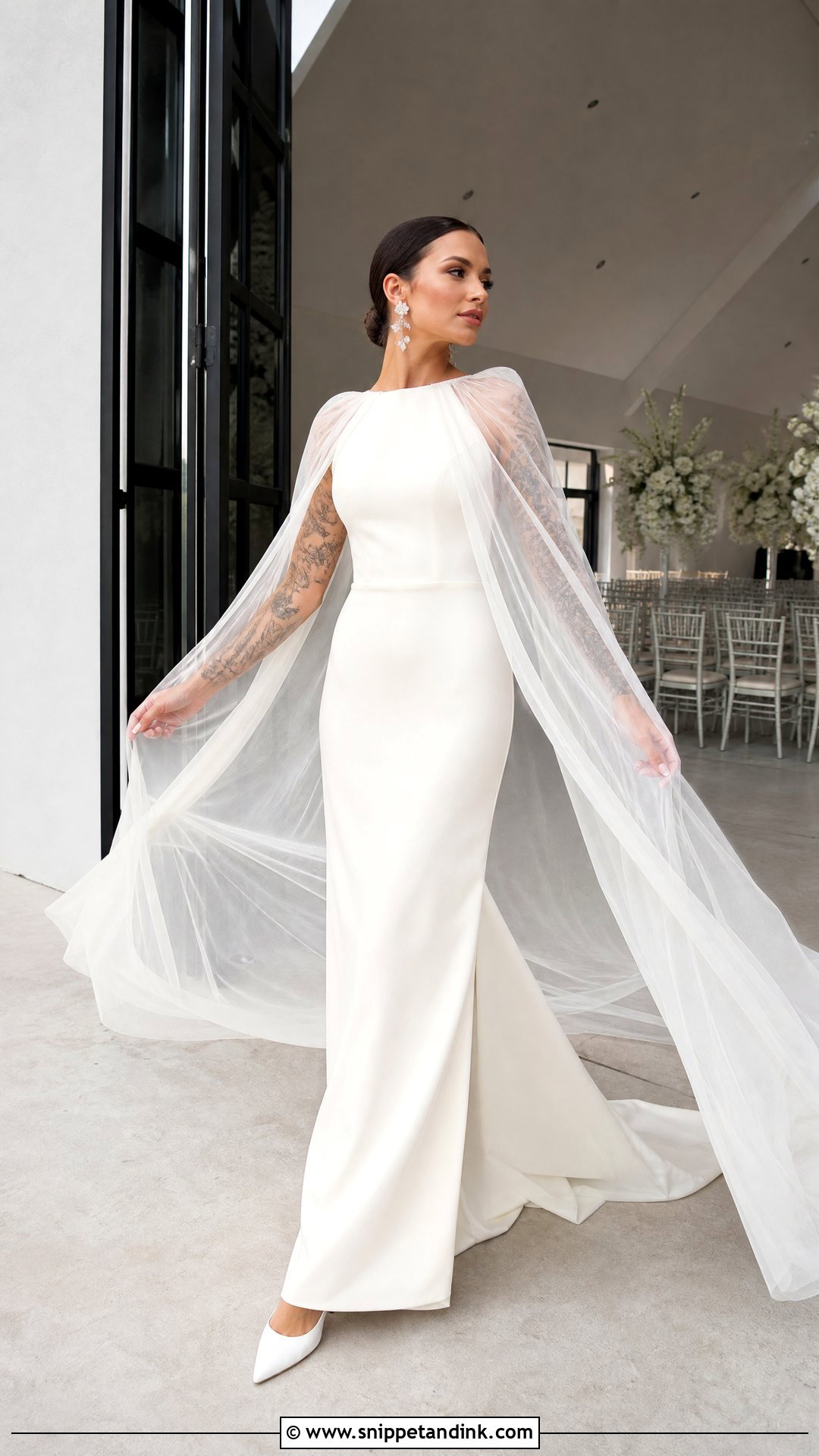
A bridal cape gives you coverage that comes off, so you never lose the tattooed dress look for good. Wear a light chiffon cape over a sleeveless column for the ceremony, then remove it for the reception to show arm, shoulder or back work. An opaque cape covers fully; sheer tulle lets the tattoos show softly underneath. Keep the gown streamlined so the extra layer doesn’t swamp you. Fasten the cape at the shoulders, not just the neck, so it hangs evenly as you walk, and test how it sits around the bouquet and on a chair. Pointed pumps, statement earrings and a clean low bun finish it.



20. Floral Embroidered Tattoo Wedding Dress
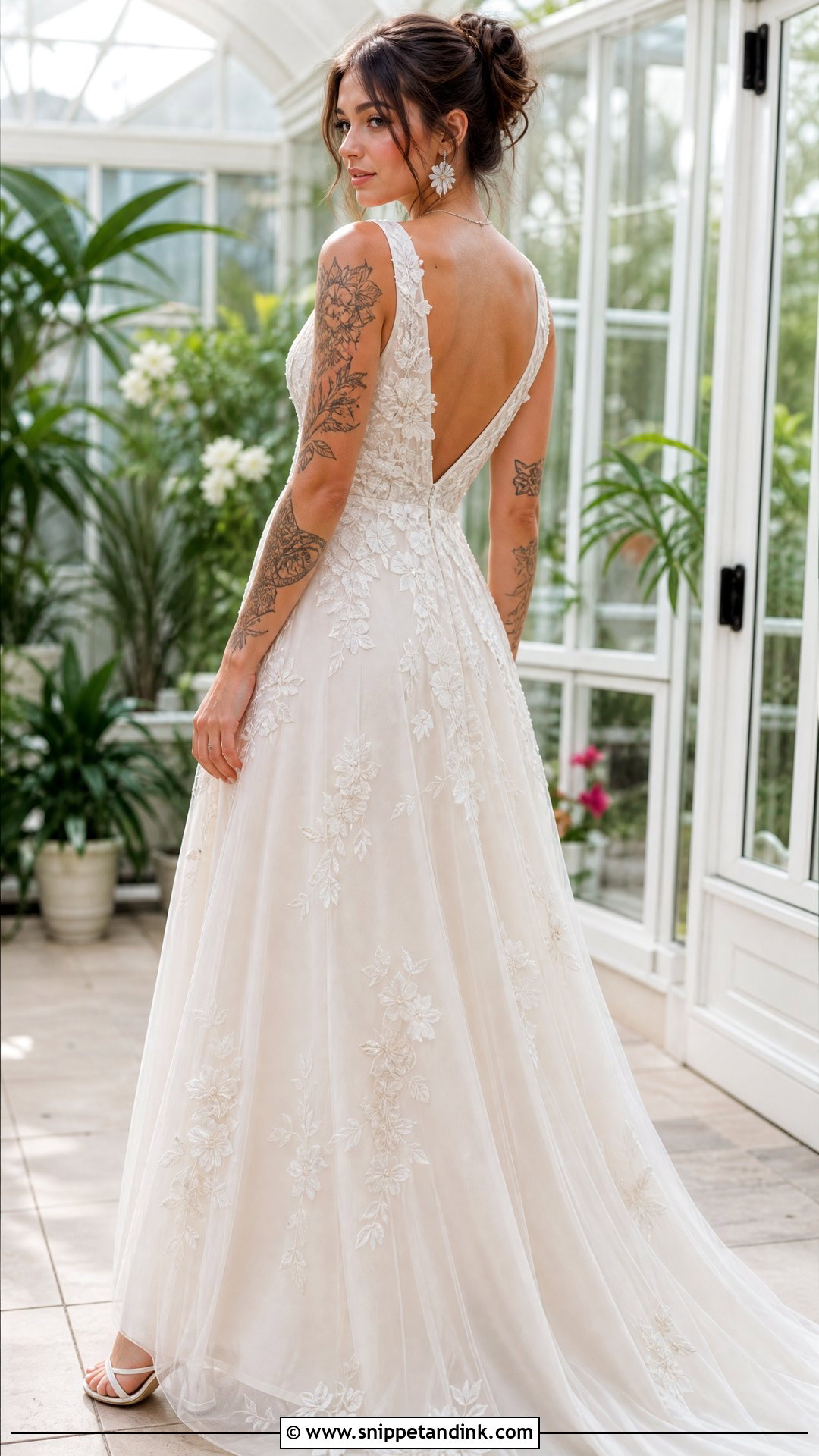
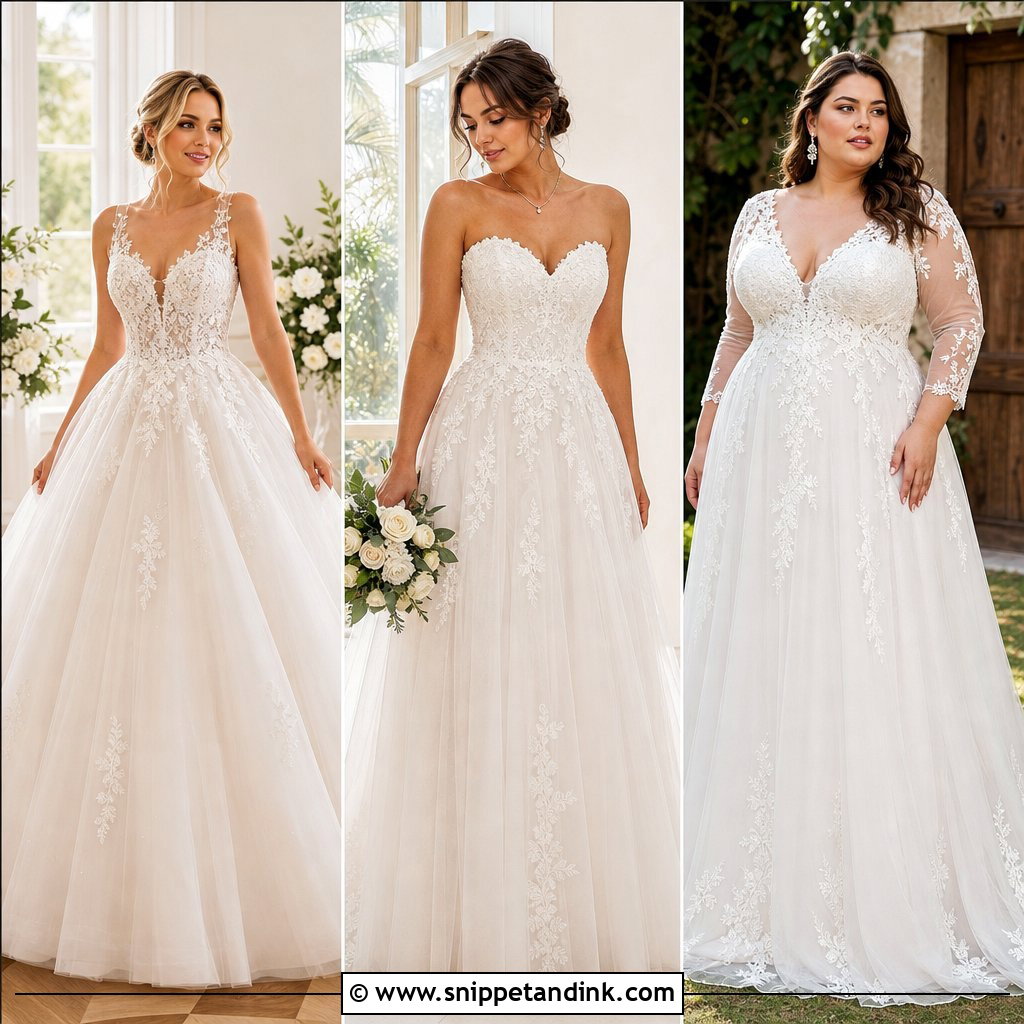
Botanical tattoos and floral embroidery can talk to each other, as long as the embroidery complements the tattoo’s scale rather than copying it. An A-line with scattered appliqués, a sleeveless V-neck and a low back shows arms, shoulders and larger back pieces. With colorful tattoos, ivory embroidery adds texture without new colors; with black-and-gray work, a few softly colored flowers add freshness. Simple sandals, small floral earrings, a loose updo and a restrained bouquet keep it easy to read. Stand back several meters from a mirror at the fitting to judge the balance; up close you’ll only see detail.
Lining, Lowering and Adding Sleeves at Alterations
If you love a dress that doesn’t quite suit your tattoos, alterations can often fix it. Some changes are simple; others are limited by how the gown is built.
Usually straightforward
Lining an illusion back or sleeve for more coverage, adding detachable sleeves or straps, shortening a hem to show ankle tattoos, and moving individual appliqués off a tattoo’s focal point. Bring the fabric questions to your first fitting so the seamstress can source matching material.
Harder than it looks
Lowering a back much further, opening a closed neckline or removing sleeves from a fitted bodice can affect the gown’s support and structure. A good seamstress will tell you honestly if it’s possible; listen if she says no.
Give it time
Start alterations a few months before the wedding and expect two or three fittings. Wear your actual shoes and undergarments every time, and show the seamstress your tattoos on the first visit so she can mark around them from the start.
At the last fitting, take photos from the front, side and back in daylight. If a strap edge or appliqué still lands on a piece you care about, there’s usually just enough time to move it.
Show It, Filter It or Cover It
A wedding gown should support how you want to feel, whether that means showing your tattoos proudly, layering them under lace or covering them completely. Necklines, sleeves, backs, hems and fabrics each set up a different relationship between your art and the dress. Bring clear photos of your tattoos to appointments, try every dress in natural light, and check it standing, sitting, walking and holding a bouquet. Then pick the one that feels like you, not the one someone else expects. Good alterations and accessories that agree with each other do the rest.
You'll Like These Ideas:



Leave a Reply