
A V-back changes the whole experience of a wedding dress, because guests spend most of the ceremony looking at you from behind. The gowns here cover lace, satin, crepe, chiffon and lightly beaded designs, and the open back turns up on almost every shape: fitted mermaids, A-lines, long sleeves, illusion panels and rows of covered buttons. In fittings, the depth of the V matters more than the fabric. A few centimeters lower changes what you can wear underneath, how the straps sit and how secure you feel when you hug someone. So think about coverage, support, train length and your veil early, then look through these with your venue and comfort in mind.
Bras, Tape and Built-In Cups for a Low V
The question I hear first from every bride who falls for an open back is what she can wear under it. The answer depends on how low the V goes and how much support she needs, and it’s much easier to solve before alterations than after.
Sewn-in cups
For most brides, cups stitched into the bodice are the best option. The dress becomes the bra, nothing shows, and there’s nothing to adjust all day. Bring a bra that fits you well to the first fitting so the seamstress can match the cup size and shape.
Low-back bras and adhesive options
- A V-back up to the mid-back can often take a low-back convertible bra with a strap extender that sits at the waist. Check it in the dress, in daylight.
- Adhesive and stick-on cups give little lift and loosen with heat and sweat. They’re fine on a smaller bust in a cool venue, much less reliable outdoors in summer.
- Double-sided fashion tape along the edges of the V keeps them flat against your skin. Apply it to clean skin with no lotion or oil, or it will peel within the hour.
Whatever you choose, wear it to every fitting from the second one onward. The dress is altered around what’s underneath, and swapping the bra the week before can change how the back sits.
1. Satin A-Line V Back Wedding Dress
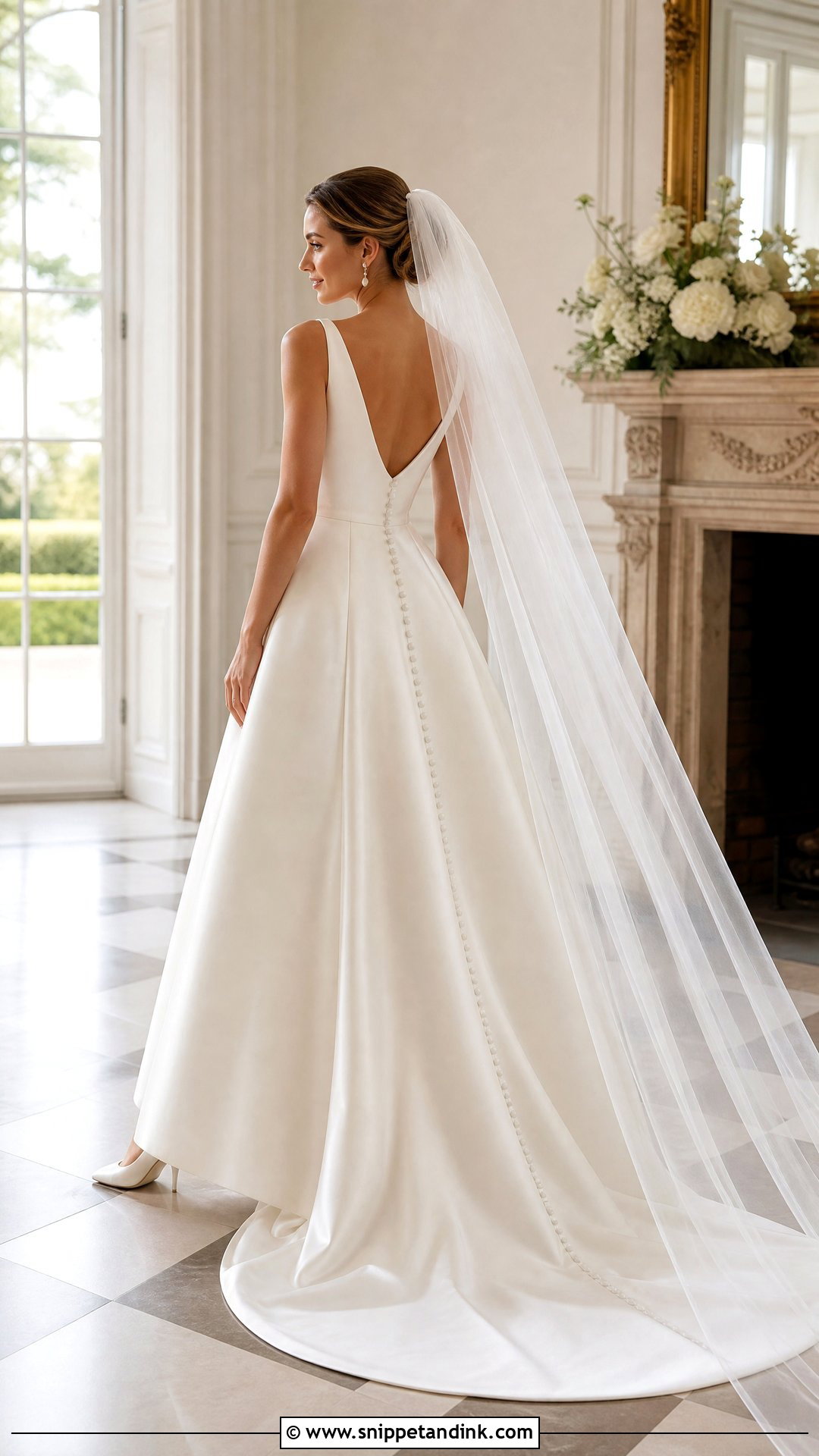
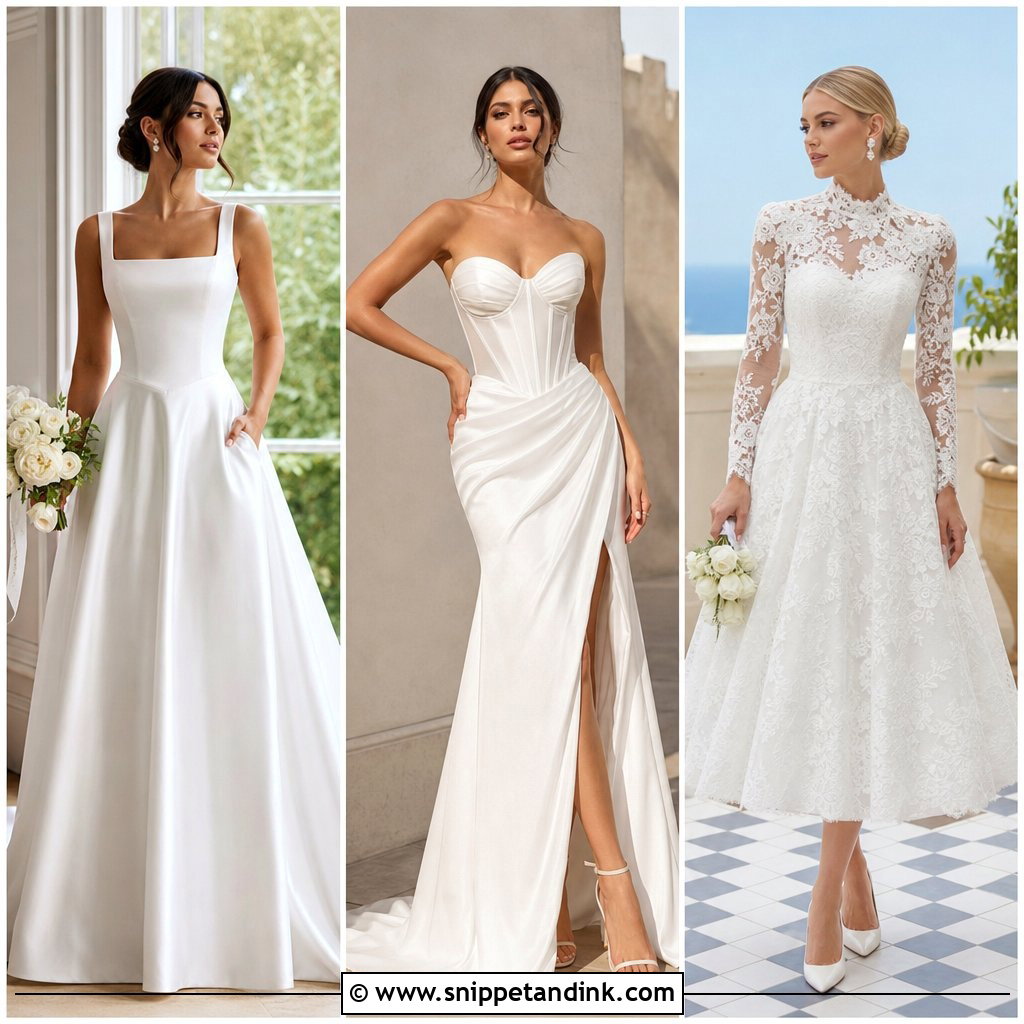
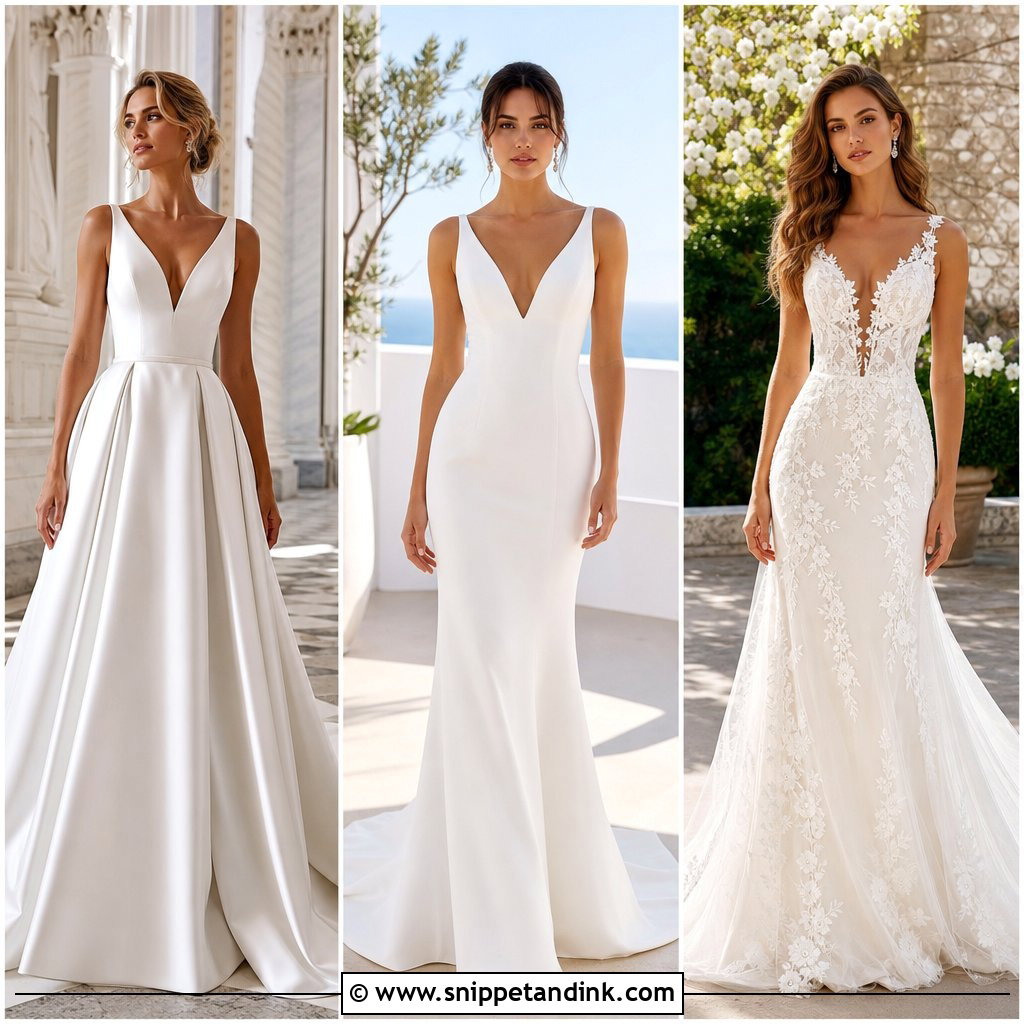
Satin A-line is the safest starting point for a deep V, and I mean that as praise. Structured satin or mikado holds the skirt’s shape all day, and a fitted bodice with a defined waist gives the open back something to balance against. A row of covered buttons running from the point of the V toward the train draw a clean line. Pearl drops, ivory pointed pumps and a cathedral veil with no heavy edging keep it classic, and a neat low bun leaves the back on show. The fitting detail I watch is the shoulder. If the straps sit even slightly too wide, the edges of the V slide outward every time you sit, so have the seamstress take them in and add a small anchor stitch where needed.
2. Long Sleeve Lace V Back Wedding Dress
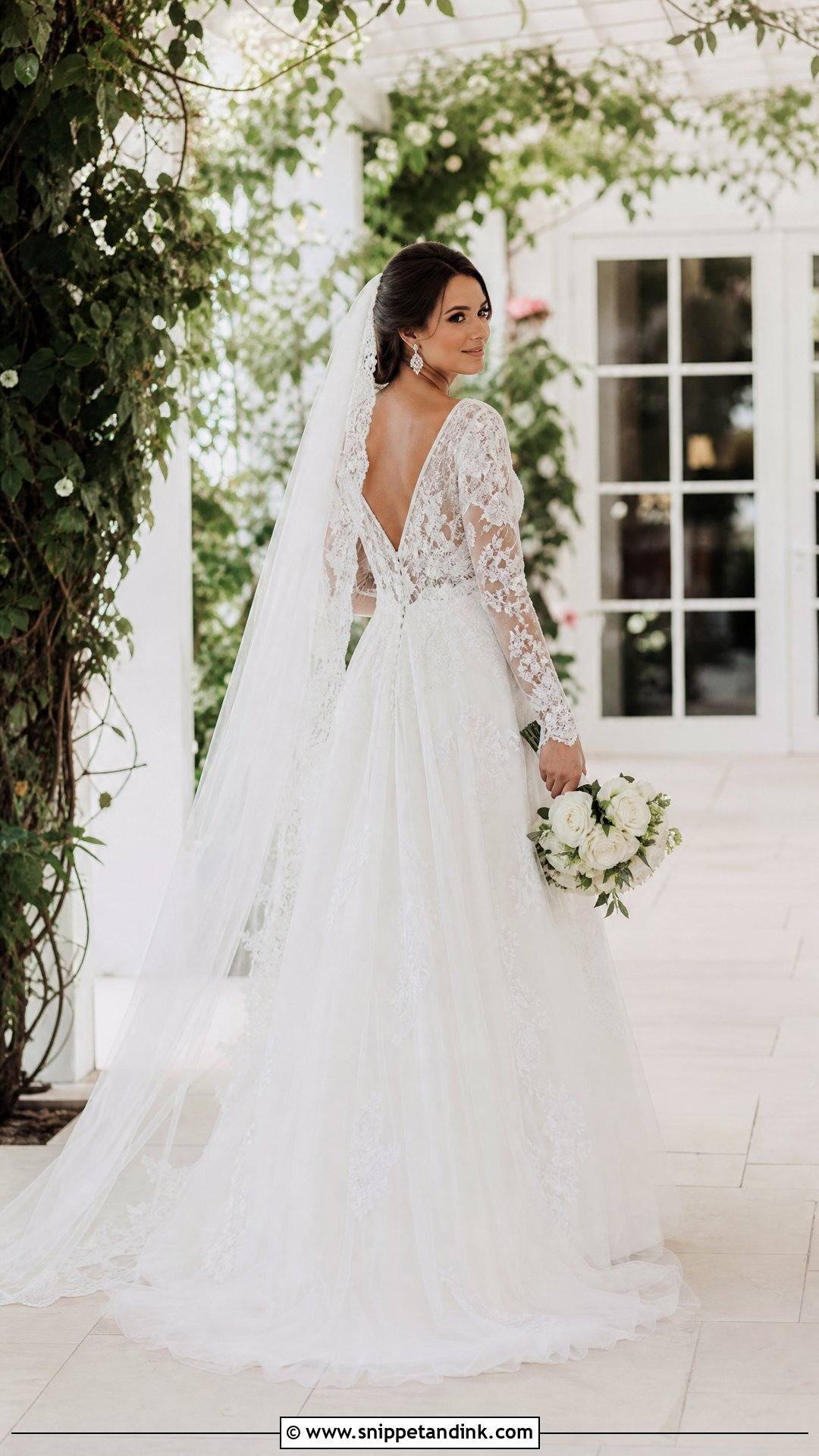
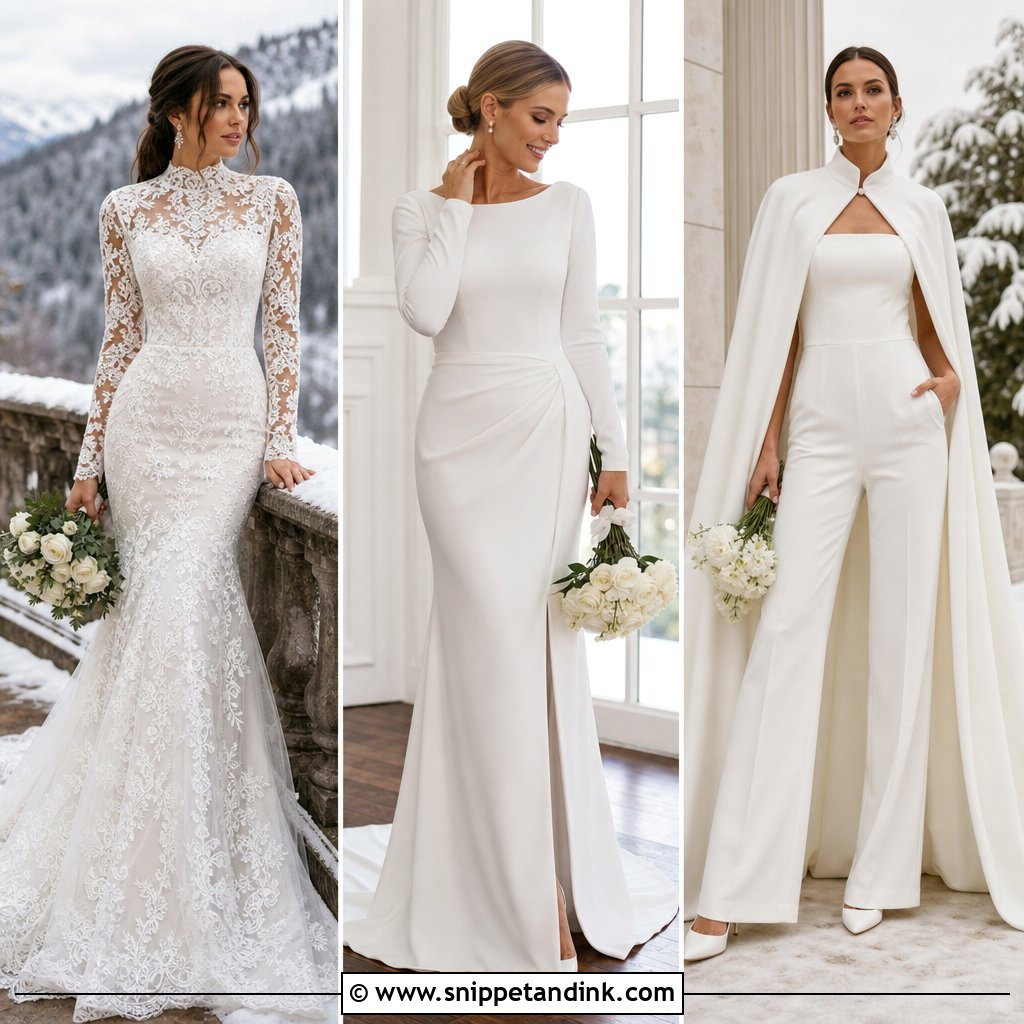
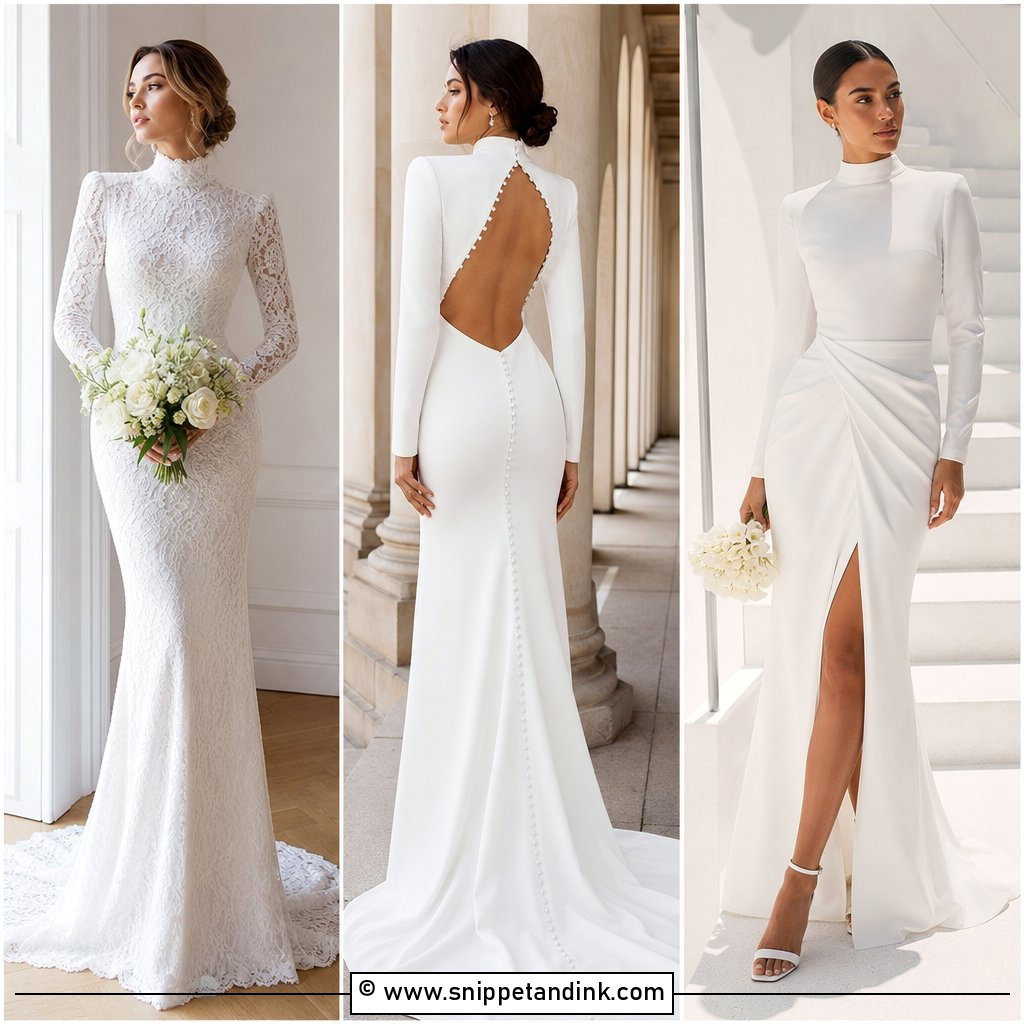
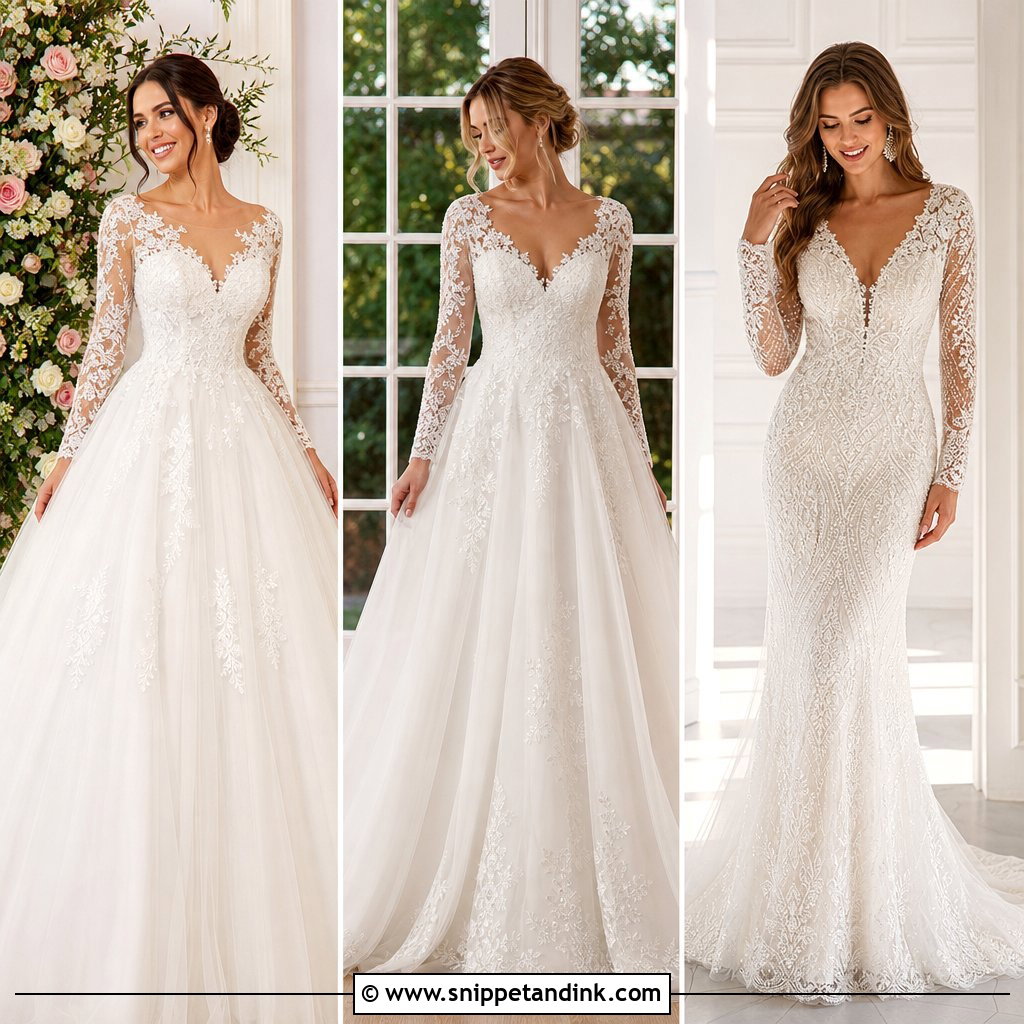
Lace sleeves add coverage and a little romance without weighing down the back. I look for floral lace over a supportive lining with sheer sleeves that end at the wrist, a fitted bodice and an A-line or soft fit-and-flare skirt. Small crystal earrings, closed satin heels and a fingertip veil with a narrow lace edge keep it delicate, and a low chignon leaves the back visible. It’s a natural match for autumn, historic venues and cool indoor ceremonies. Sleeves and a deep V pull against each other, though: lift your arms and the back gapes. If yours is cut very low, ask for an illusion tulle insert or a few appliqués across the opening to hold it steady.
3. Crepe Mermaid V Back Wedding Dress
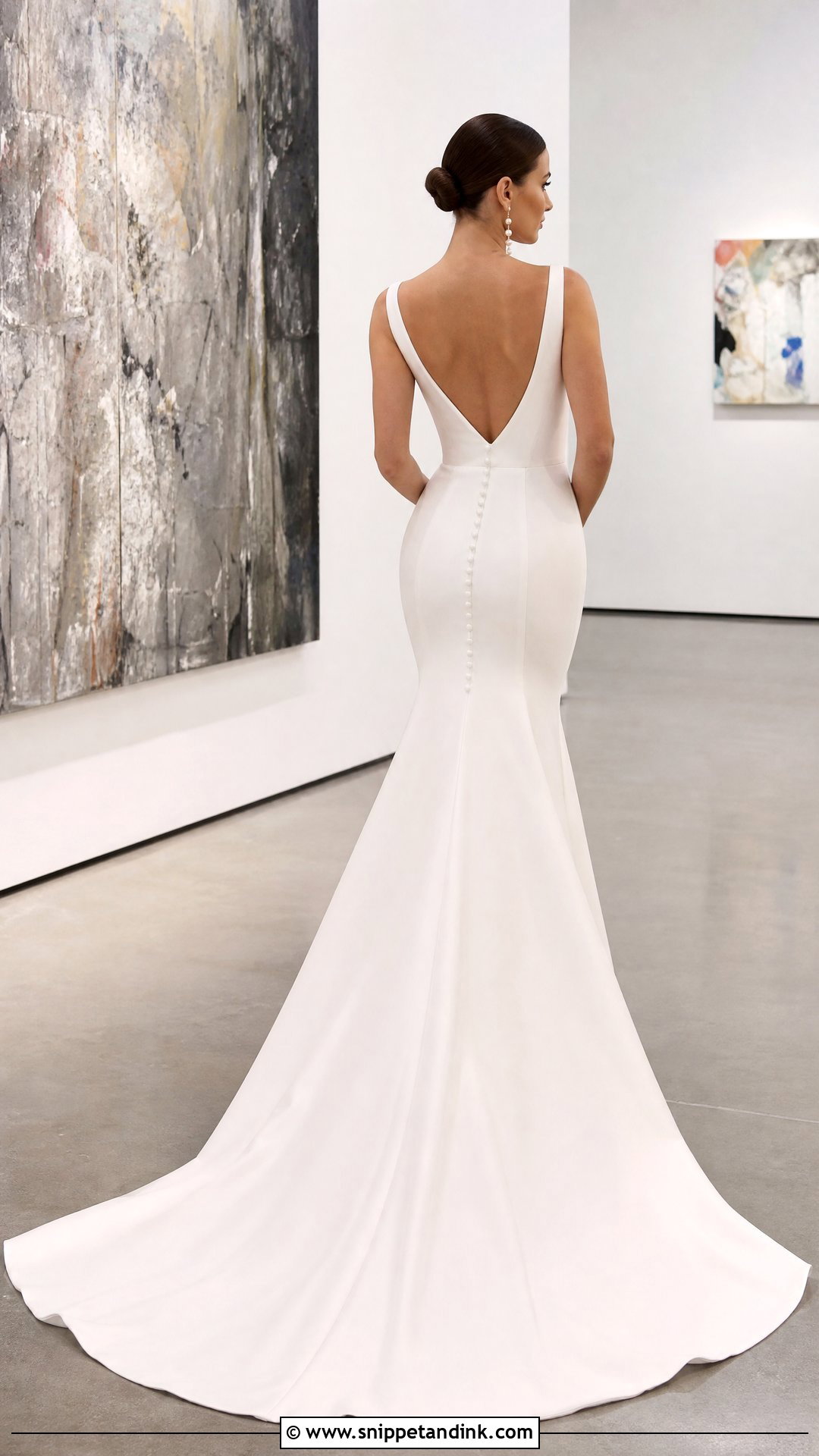
Crepe is honest fabric. It follows the body closely and hides nothing, which is why a crepe mermaid with an open back looks so sculpted without any beading at all. Choose wide straps, proper internal structure and a skirt that flares at the knee. Long pearl earrings, pointed pumps and a plain chapel veil continue the clean line, and a sleek center-parted bun finishes it. Galleries, lofts and city venues suit it best. The catch is that crepe shows every seam and every undergarment line, so the inner construction has to be good. At alterations, sit on a chair and climb a step or two. The bodice should stay put and the skirt should still let you take a normal stride.
4. Square Neck V Back Wedding Dress
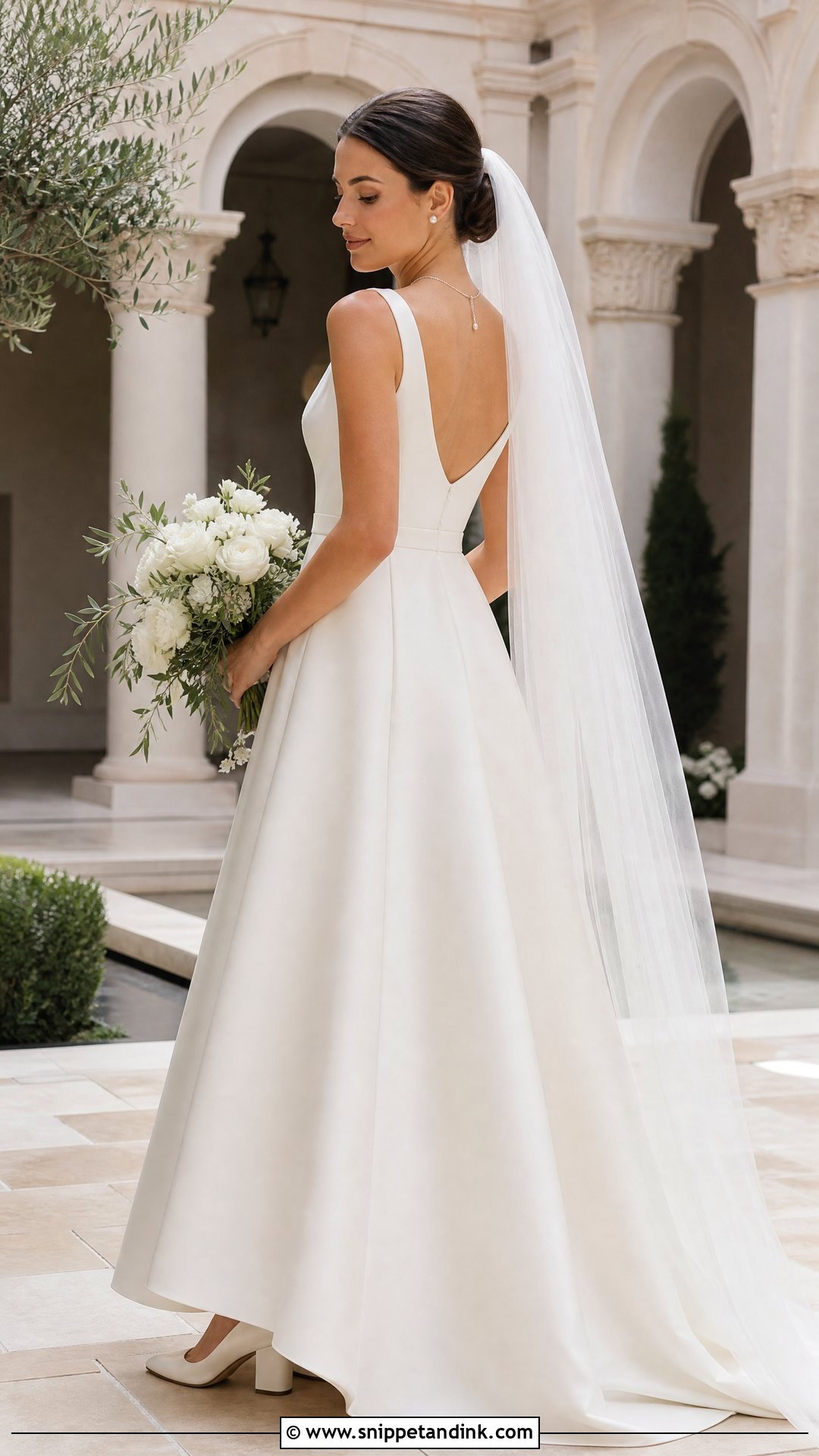
Square front, sharp V behind: the contrast is what makes this one work. In satin, crepe or structured silk it feels classic and modern at once. Medium-width straps give real support, and a softly fitted A-line skirt keeps it easy to move in. I’d add a small pendant, pearl studs, block-heel pumps and a plain floor-length veil, with a low twisted bun to show the back. Two strong angles in one dress don’t leave room for much else. Skip patterned veils and busy jewelry, or the outfit starts to look fussy instead of graphic.
5. Bateau Neck V Back Wedding Dress
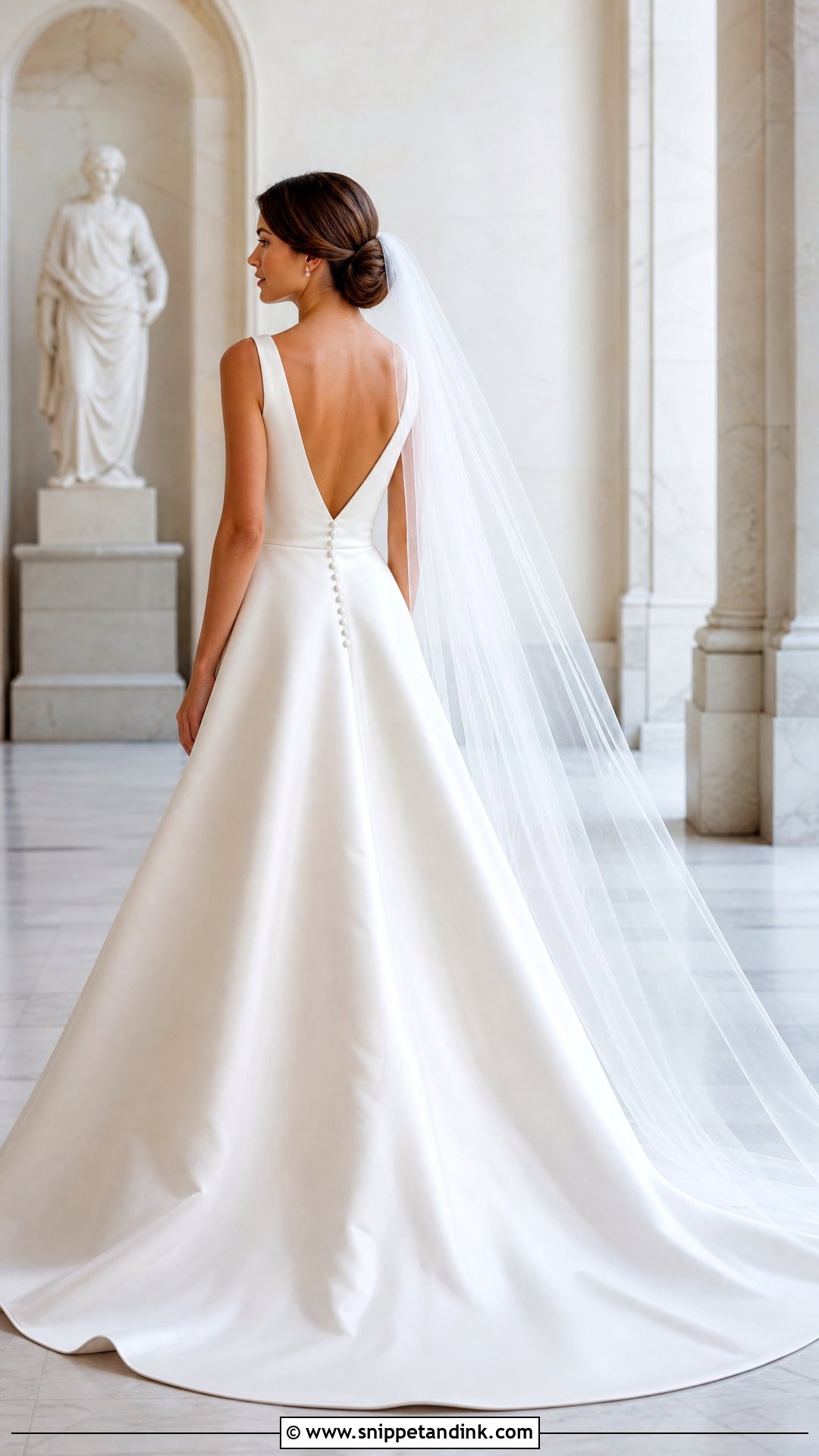
A bateau neck sits high across the collarbones, so you get a covered front and a surprise behind. A sleeveless satin A-line is the classic version, and slim long sleeves make it work in winter. Covered buttons from the V down to the train finish the back neatly. Crystal studs, one bracelet, pointed kitten heels and a sheer cathedral veil tucked under a polished bun keep the styling precise. Of all the necklines here, this one depends most on the shoulder fit. A bateau that’s slightly too wide slips off one shoulder, which drags the V sideways, so watch both at the same time when you stand in front of the mirror.
6. Off Shoulder V Back Wedding Dress
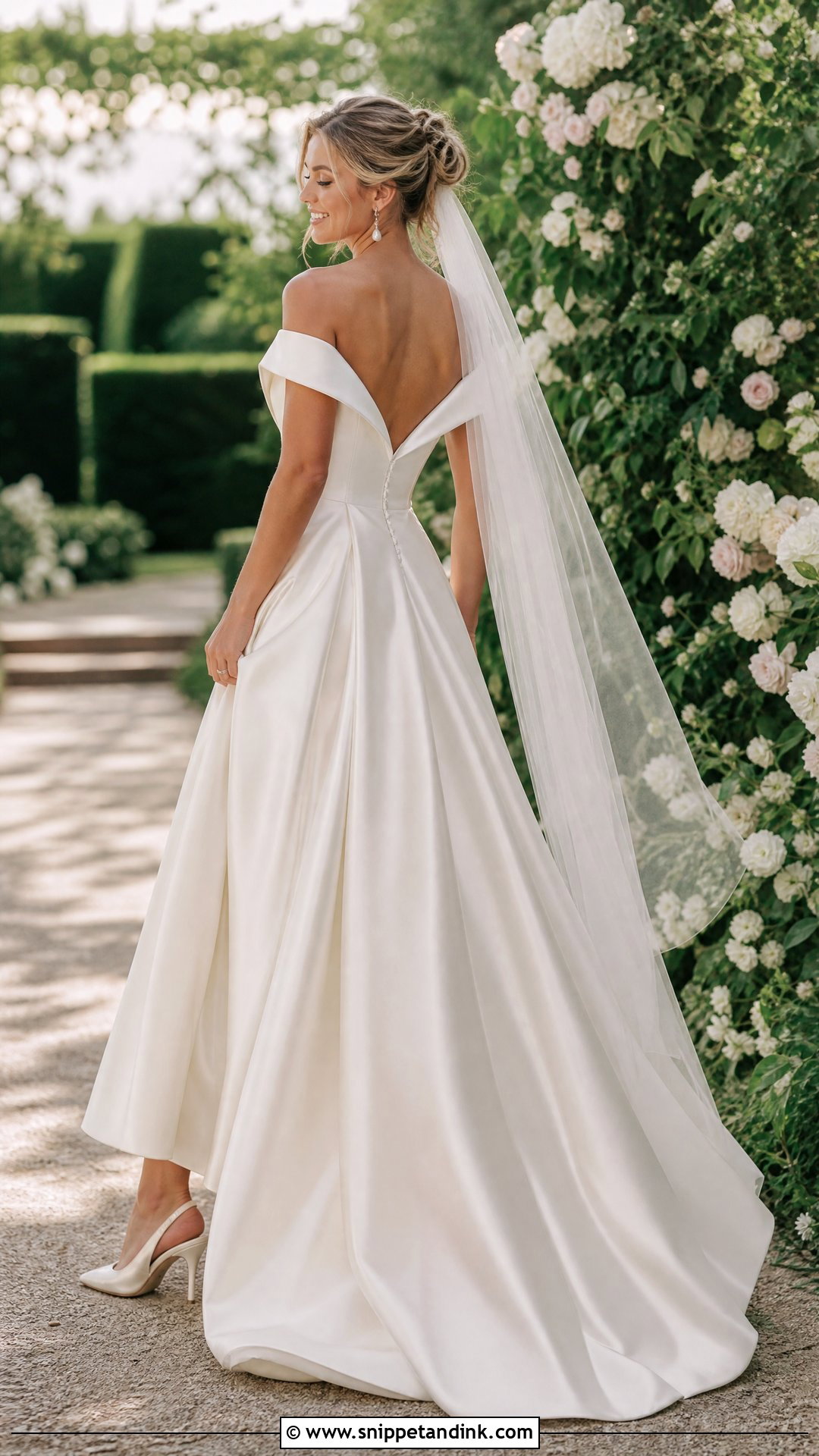
Off-the-shoulder bodices lead the eye from the collarbones straight round into the V. Structured satin makes it formal, while lace or soft tulle makes it gentler. An A-line skirt gives you the most freedom, and a fit-and-flare adds more definition. Pearl earrings, ivory slingbacks and a veil placed below a loose chignon are plenty. Leave the necklace off so the neckline stays open. This silhouette has one real limitation that brides discover at the reception: off-shoulder sleeves pin your upper arms, so raising them to dance or hug is restricted. Lift your arms at every fitting. If the bodice pulls up with them, the sleeves need more room.
7. Illusion Lace V Back Wedding Dress
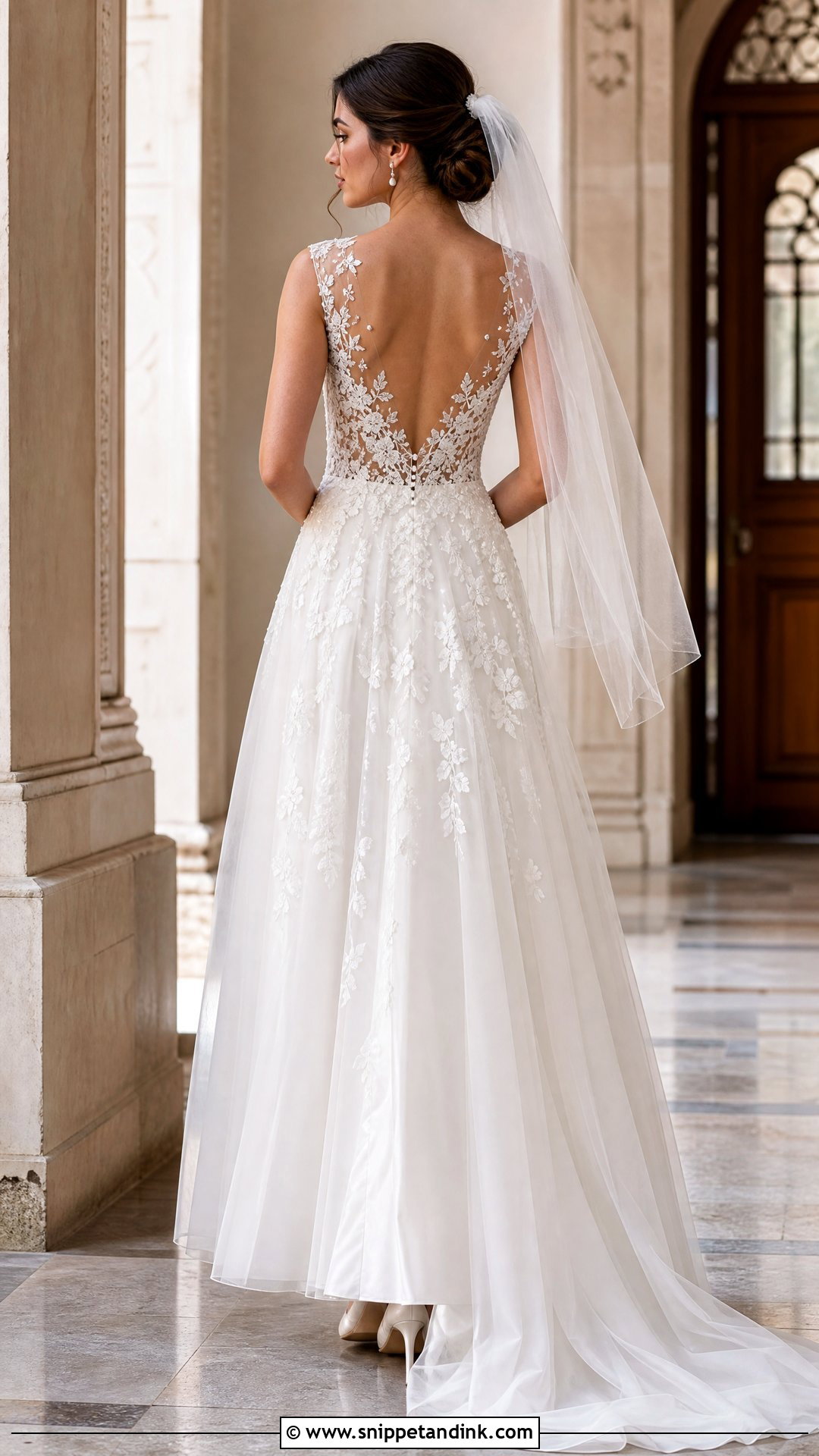
An illusion lace V-back gives you the look of an open back while the tulle quietly does the supporting. Sheer mesh can carry floral appliqués, small pearls or fine embroidery and still feel light. Pair it with an A-line or fit-and-flare skirt that doesn’t compete with the detail, and add small drop earrings, satin pumps and a plain veil that falls past the lace. A braided low bun or smooth chignon shows the appliqués off. The tulle color is the single most important choice here. Hold swatches against your actual back in daylight and pick the one that disappears, since a mismatched panel shows up as a grey or pink patch in photos.
8. Spaghetti Strap Satin V Back Wedding Dress
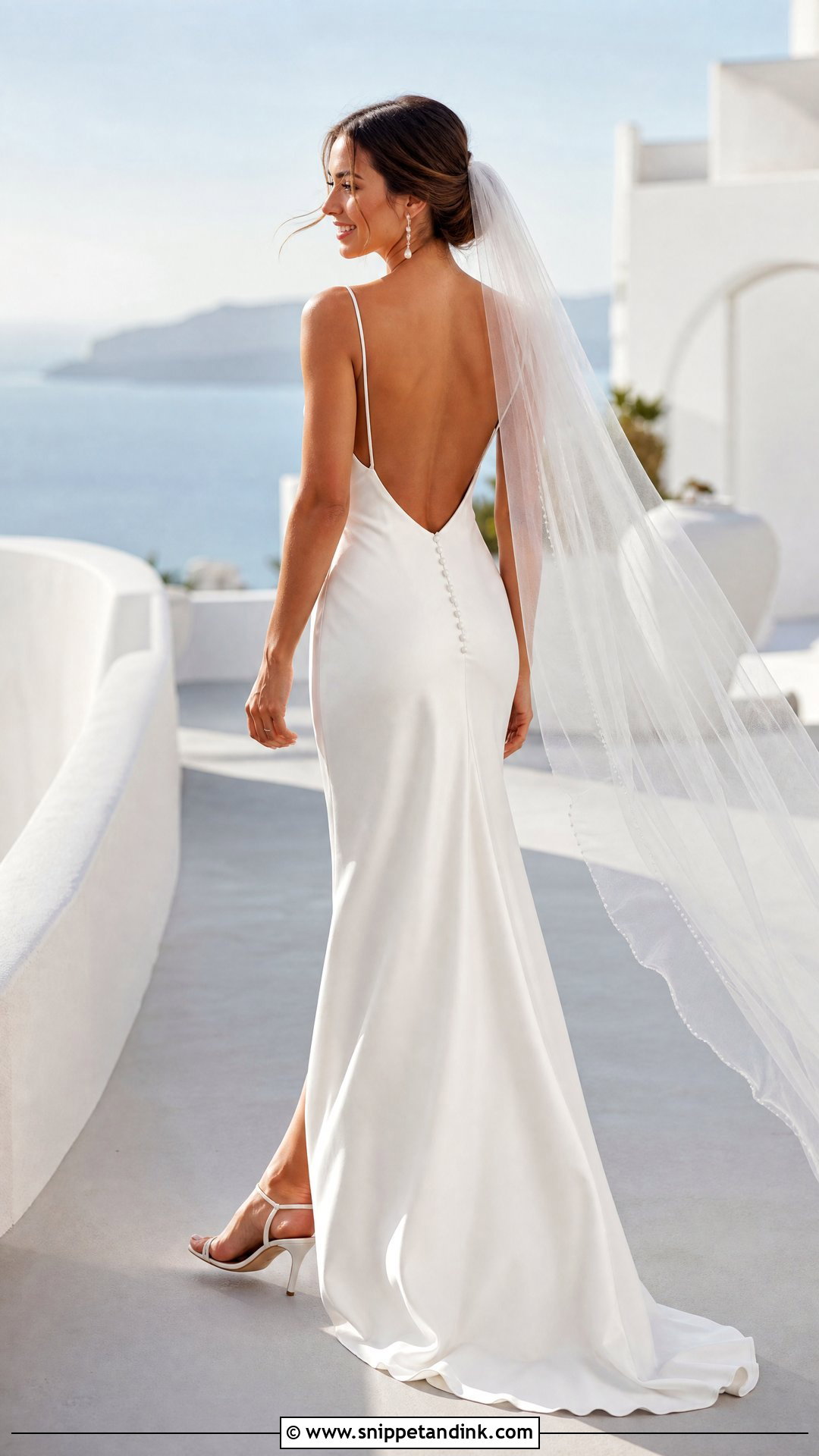
Spaghetti straps and fluid satin make a lighter, quietly glamorous dress. A bias-cut column or relaxed A-line falls cleanly and moves well, and the V can stop at the natural waist with a short row of covered buttons below. Pearl drops, strappy ivory sandals and a light chapel veil keep the mood easy, with a smooth bun or a side-swept style that leaves most of the back open. Summer, destination and small weddings suit it. Be realistic about support, though. Thin straps can’t carry a heavy skirt or a fuller bust on their own, so ask for hidden cups, a waist stay and reinforced strap joins during alterations.
9. Ball Gown V Back Wedding Dress
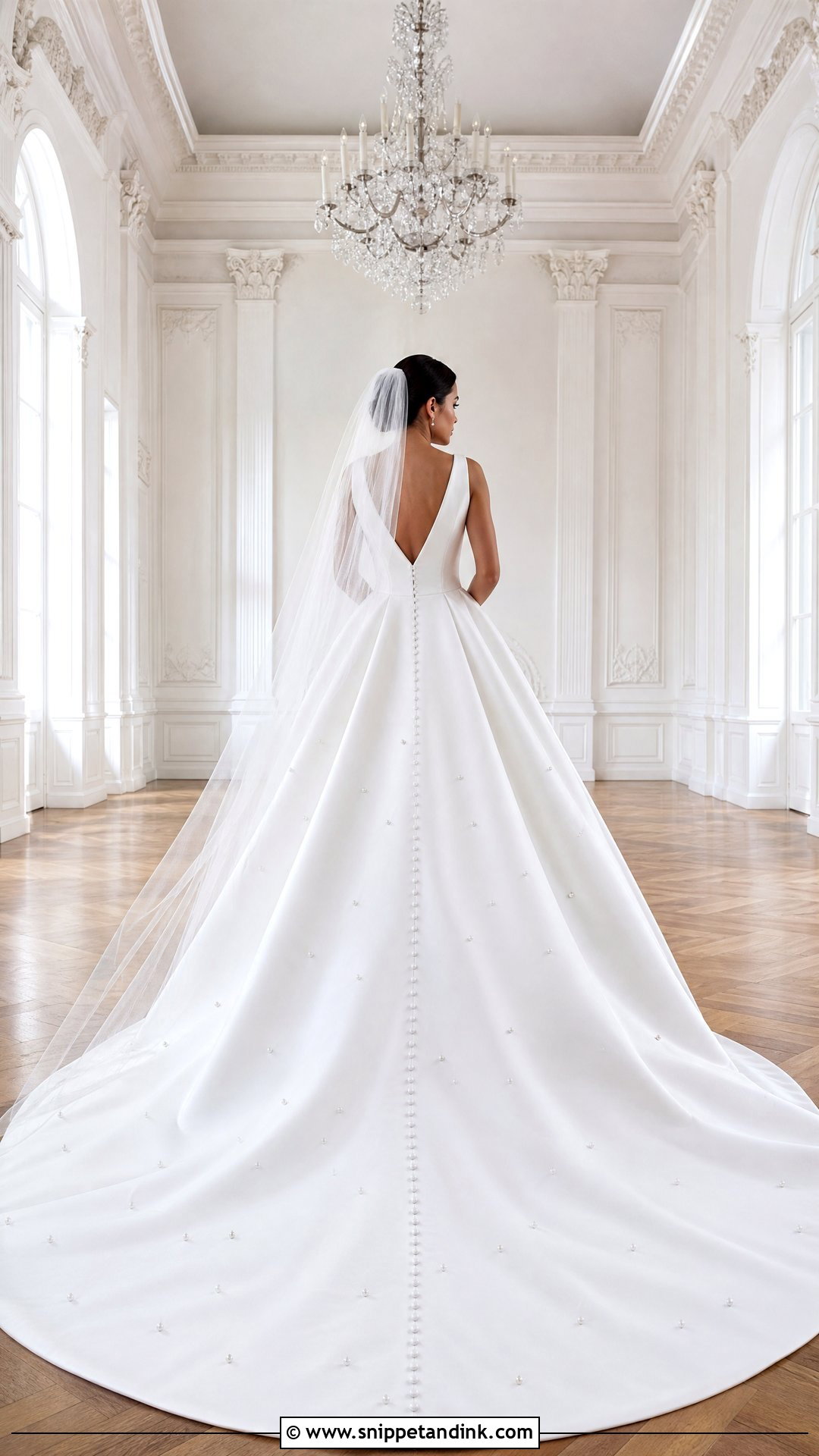
On a full ball gown, the V-back stops the big skirt from swallowing you. Satin or mikado gives dramatic volume, while lace softens it. Look for a fitted waist, wide straps and a back that narrows to a row of covered buttons. Pearl studs, classic pumps and a cathedral veil long enough to match the train keep it formal, and a neat bun tidies the upper half. Ballrooms, grand hotels and evening receptions are its natural setting. With this much skirt, restraint pays off: one bracelet or one pair of earrings provides enough shine. Also check the weight. A heavy skirt hangs from the waist and the straps, so a waist stay inside the bodice makes a big difference by the end of the night.
10. Boho Chiffon V Back Wedding Dress
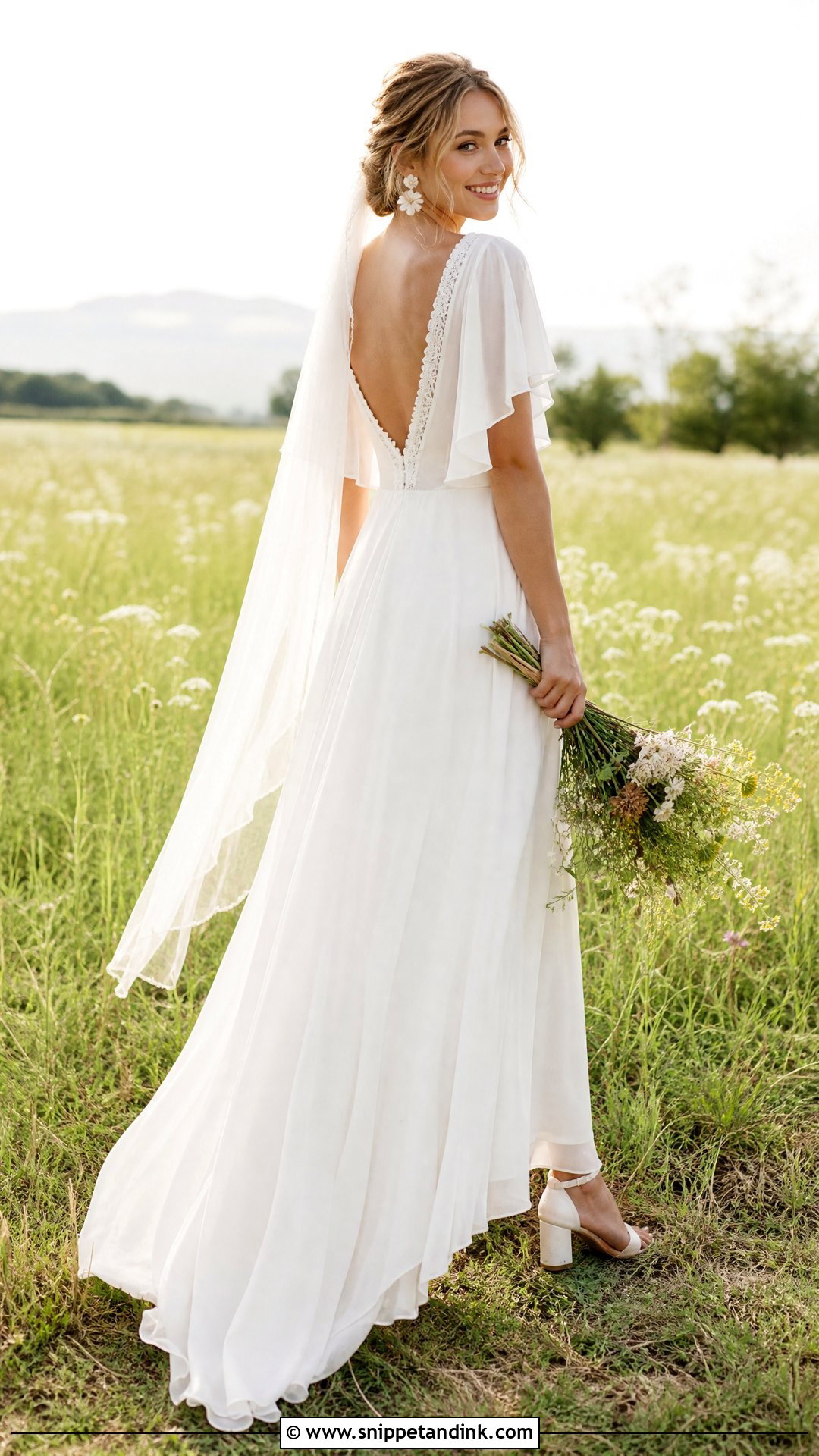
Chiffon moves with every breeze, and an outdoor ceremony shows that off better than anything. A gathered A-line skirt with a lace-trimmed bodice, flutter sleeves or narrow straps keeps it relaxed. I steer brides toward a medium-depth back in chiffon rather than a plunging one, because fluid fabric has no structure to hold a very low V in place. Floral drop earrings, low block-heel sandals and a simple veil or small comb complete it, with loose waves pinned to one side so the back stays visible. Meadows, woodland and desert venues all suit it. Keep the accessories light and the bouquet small, otherwise chiffon starts looking crumpled beside them.
11. Beaded V Back Wedding Dress
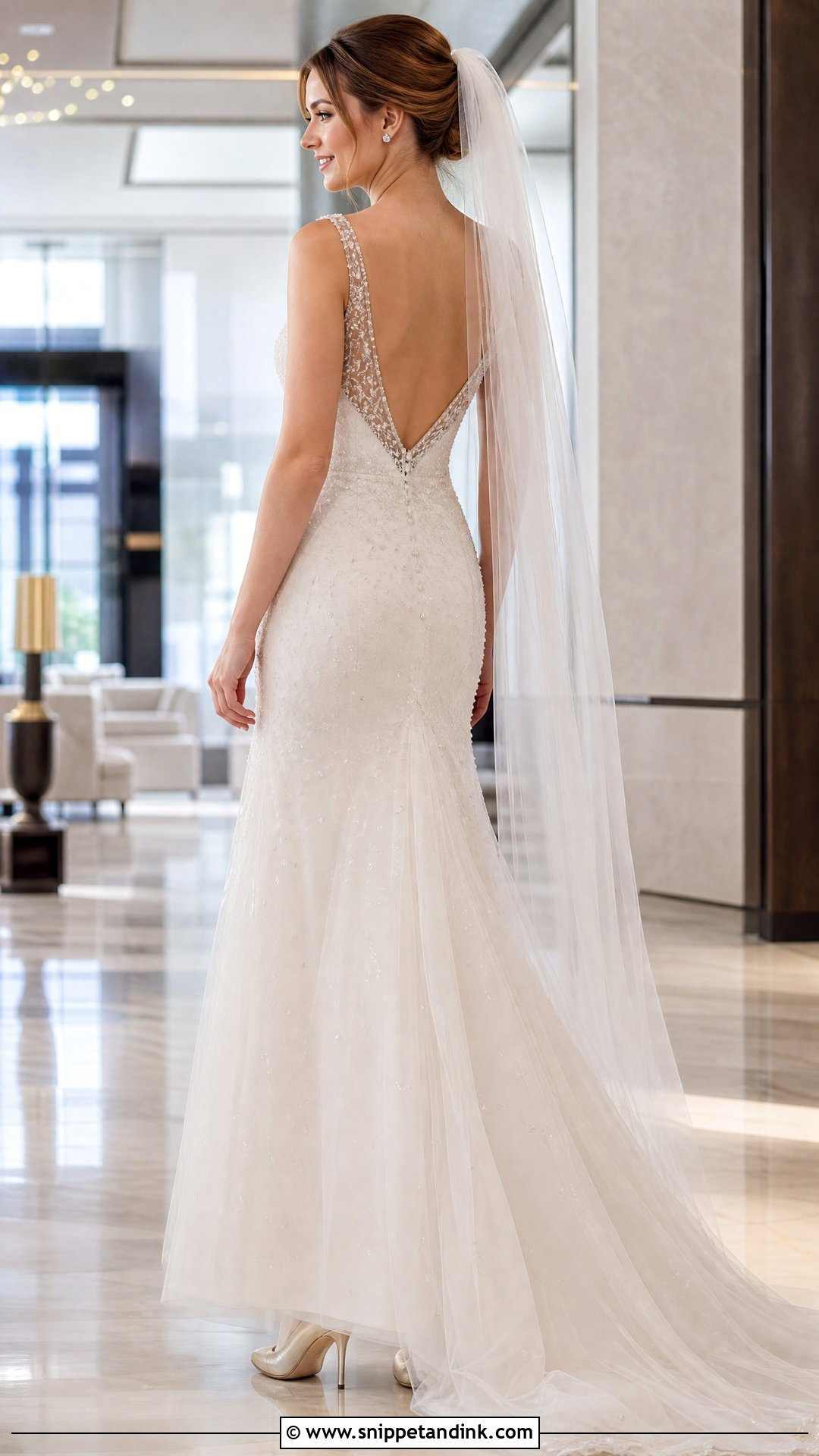
Tiny beads along the edge of the V outline its shape without turning the whole dress into sparkle. A tulle or crepe gown with beaded straps, crystal edging or scattered embellishment on the bodice, and a softly fitted skirt, stays sophisticated. Simple studs, metallic ivory pumps and a sheer veil with no beading of its own avoid competition. Wear your hair up in a low bun, since long loose hair snags on beadwork and pulls threads. Bright evening lighting brings this one to life. Run your hand along the inside edges at each fitting: beading that scratches now will rub your back raw by midnight, and a seamstress can line it with soft tulle.
12. Pearl Button V Back Wedding Dress
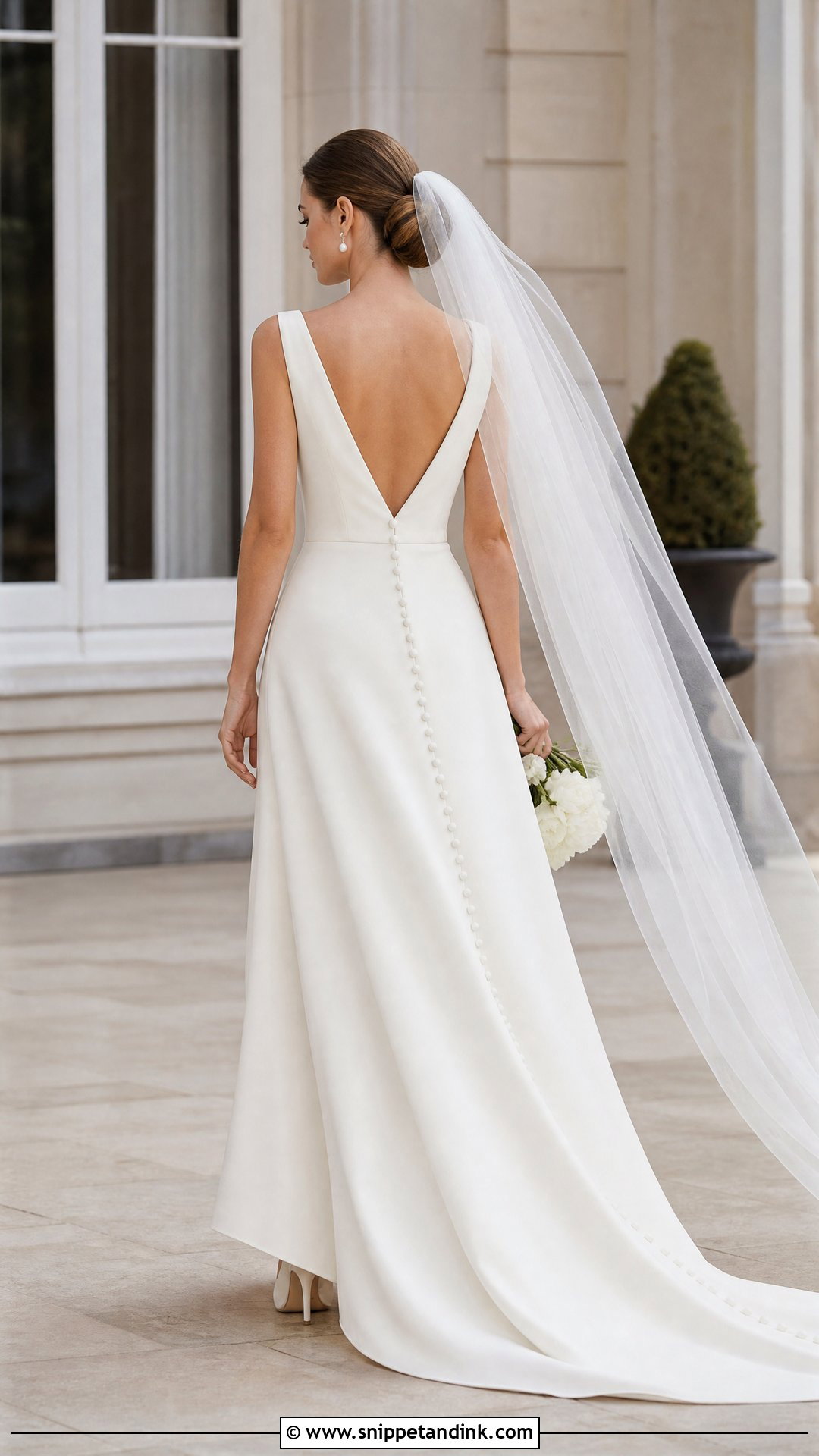
A line of pearl buttons below the V is a traditional detail on a modern gown. In matte crepe, silk or satin the buttons stand out just enough. A fitted bodice and A-line skirt make an adaptable shape for most venues and seasons, and pearl earrings, closed pumps and a plain veil above a low chignon keep everything else quiet so the buttons are what people see as you walk away. Ask how the gown actually closes. On most modern dresses the buttons are decorative and a zip hidden beside them does the work, which is good news on the morning, because doing up forty loops takes far longer than anyone expects.
13. Draped V Back Wedding Dress
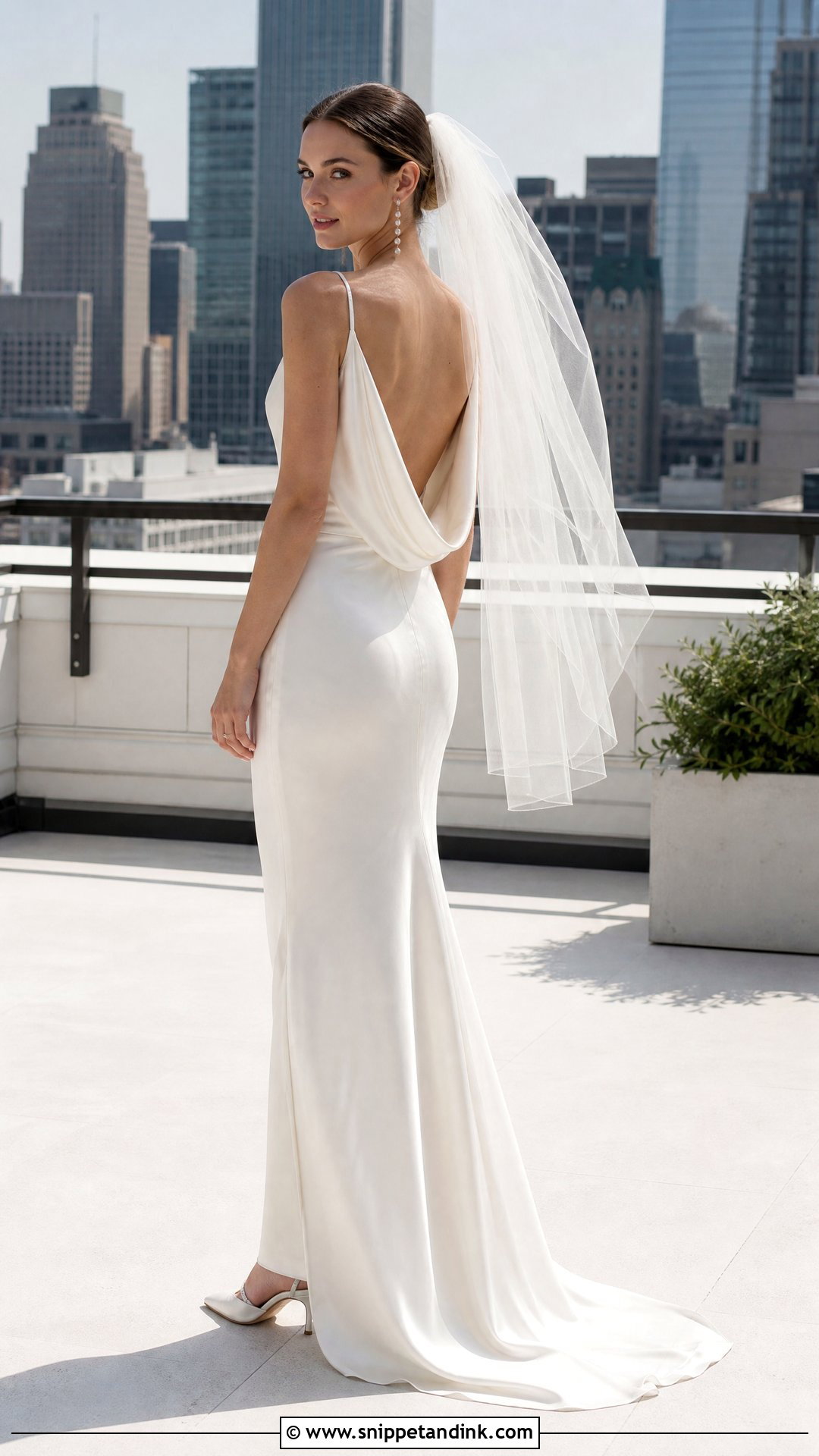
Draping softens the V into folds instead of a hard edge. Satin and silk-like fabrics suit it because they fall smoothly. A column or gentle fit-and-flare with narrow straps and a lightly defined waist is enough, finished with long earrings, pointed kitten heels and a veil you can remove before the reception. A sleek low bun lets the drape hang freely. Rooftops, modern hotels and coastal weddings are good settings. Draped backs fail in one predictable way: the fabric slips and sags unevenly after a few hours of movement. It needs to be tacked by hand at the shoulders and waist, so check this specifically rather than assuming it’s done.
14. Cap Sleeve Lace V Back Wedding Dress
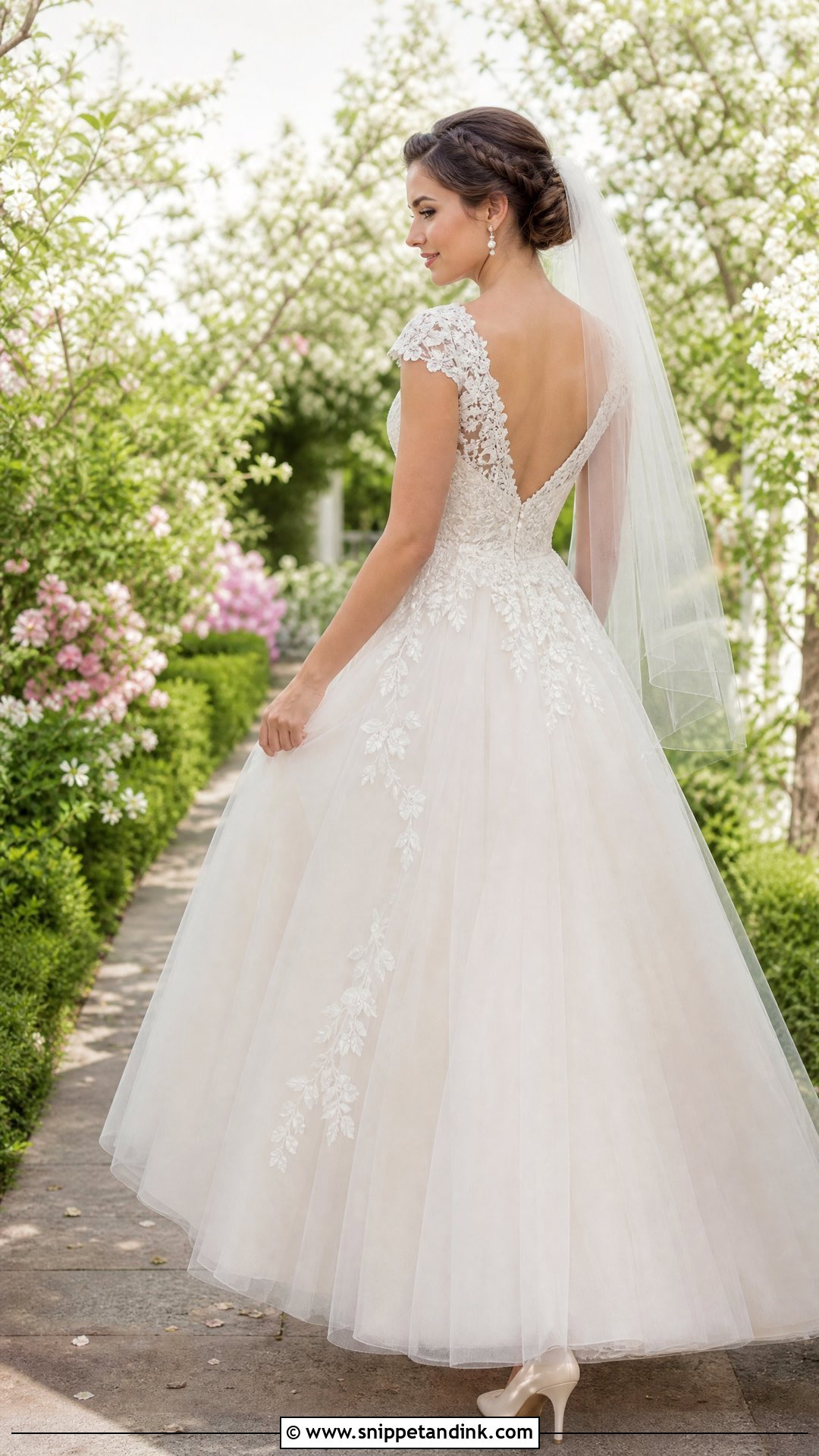
Cap sleeves ease the lace bodice gently into the V. The appliqués should continue around the shoulder and frame the opening, so there’s no harsh cut edge. A tulle A-line skirt is softer, and a fitted lace skirt is a little more formal. Small pearl earrings, ivory pumps and a fingertip veil with minimal trim suit it, and a low braided updo picks up the texture of the lace. Spring gardens, historic houses and early autumn weddings are where it feels most at home. Cap sleeves are short and tight, so watch where they land: if they sit too high on the shoulder, raising your arm lifts the whole back with it.
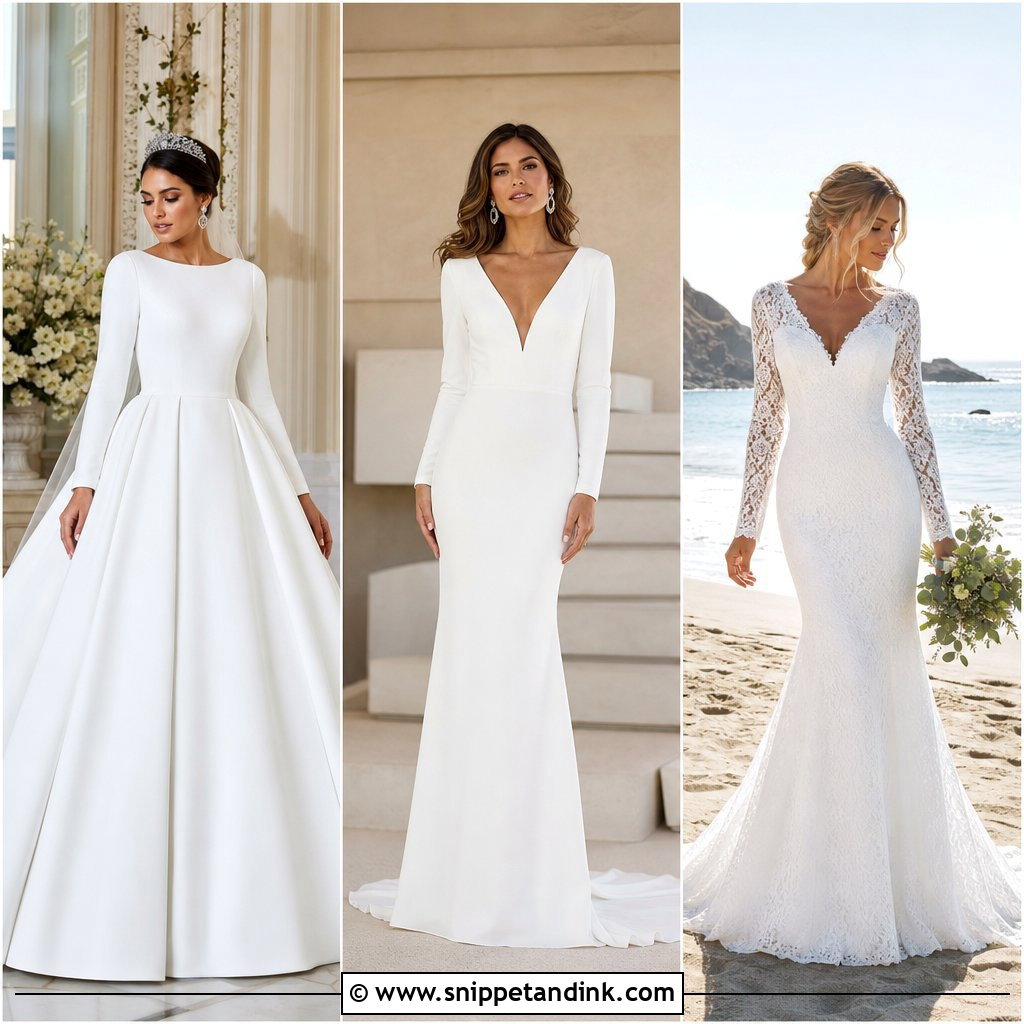
15. High Neck V Back Wedding Dress
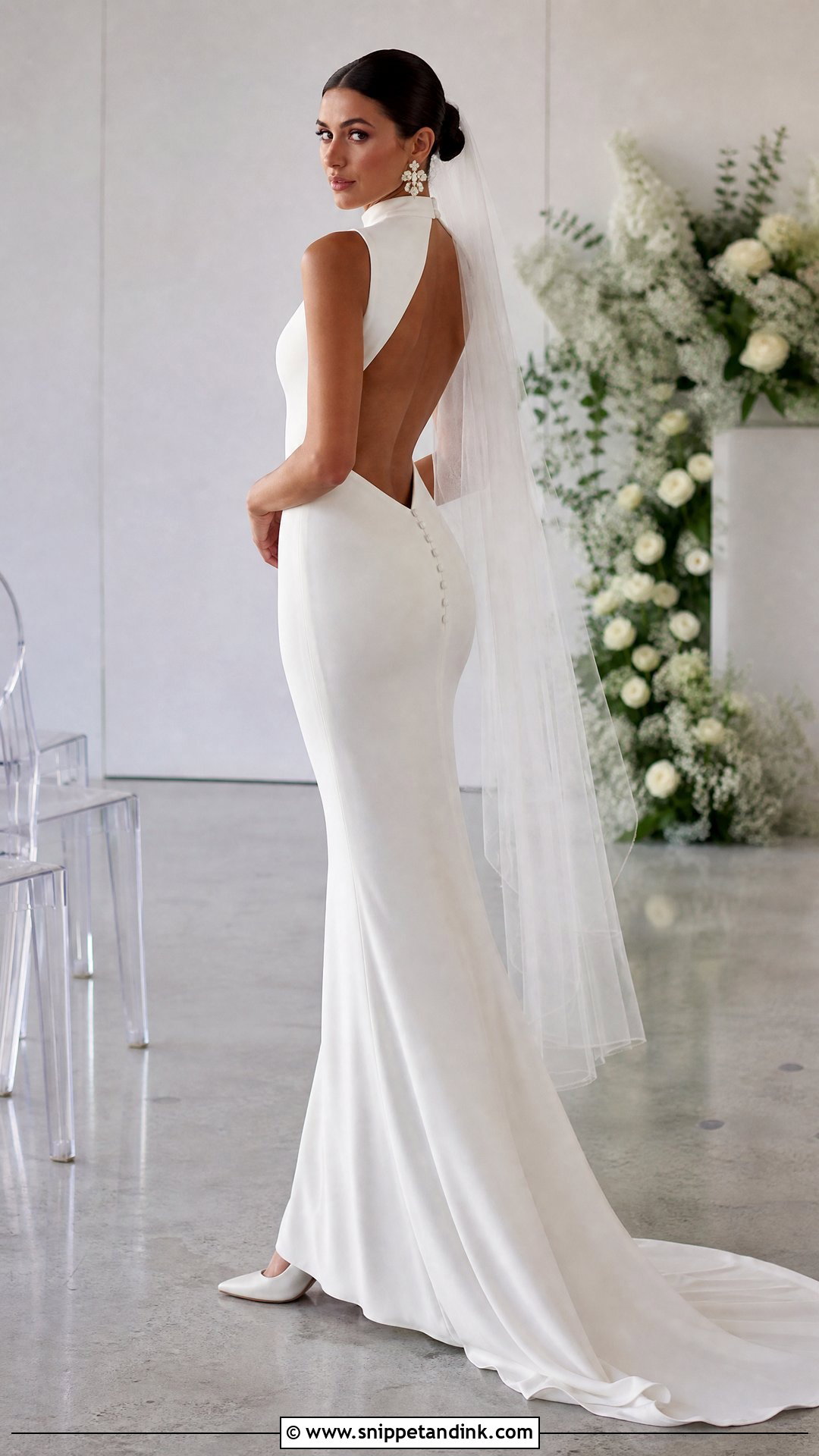
A covered high neck makes a deep V-back look even deeper by contrast. Crepe keeps it minimal, and lace gives it texture. A sleeveless column, trumpet skirt or understated A-line all work. Statement earrings, ivory pumps and a veil fixed beneath a neat bun finish it, and no necklace is needed. It suits contemporary spaces and formal halls. This is a fitting that needs patience, because the neckline and the back hang from the same points. Pinch the neck too tight and the V gapes behind; let the back out and the neck sags forward. A good seamstress adjusts them together and may add a hidden internal strap to keep the shape.
16. Plus Size A-Line V Back Wedding Dress
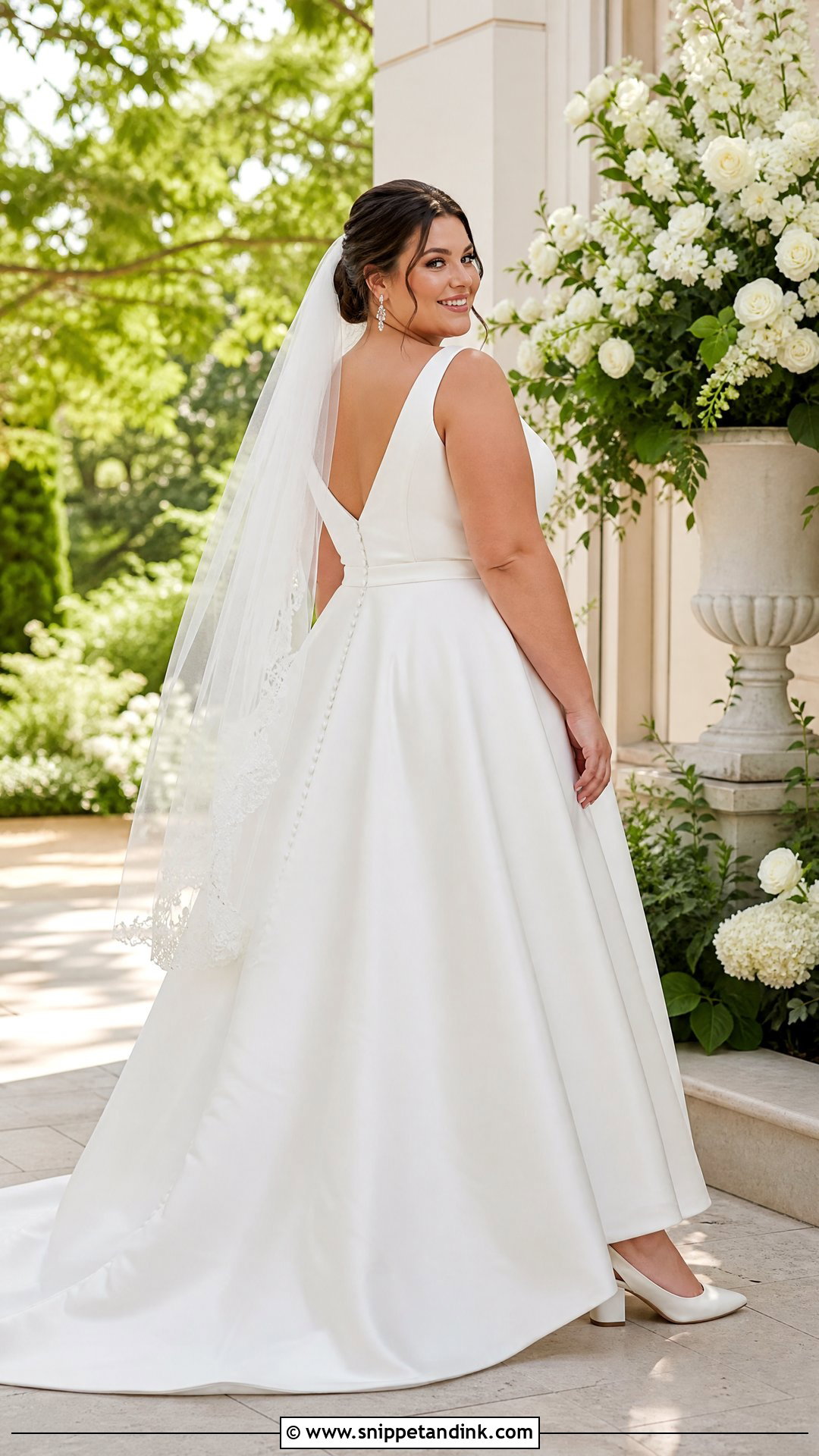
Support comes first in a plus-size V-back, and the right gown builds it in. I look for wide straps, boning, secure built-in cups and a defined waist, so the open back is a design choice and not the only thing holding the dress up. Satin gives smooth structure, and lace or crepe feels softer. Drop earrings, comfortable block-heel pumps and a chapel veil that follows the skirt suit the proportions, with a low side bun to show the back. At appointments, sit down, dance a little and lift your arms. The dress should feel stable with no pinching at the side seams. If the V feels too deep, it can be raised during alterations without changing the design.
17. Petite Column V Back Wedding Dress
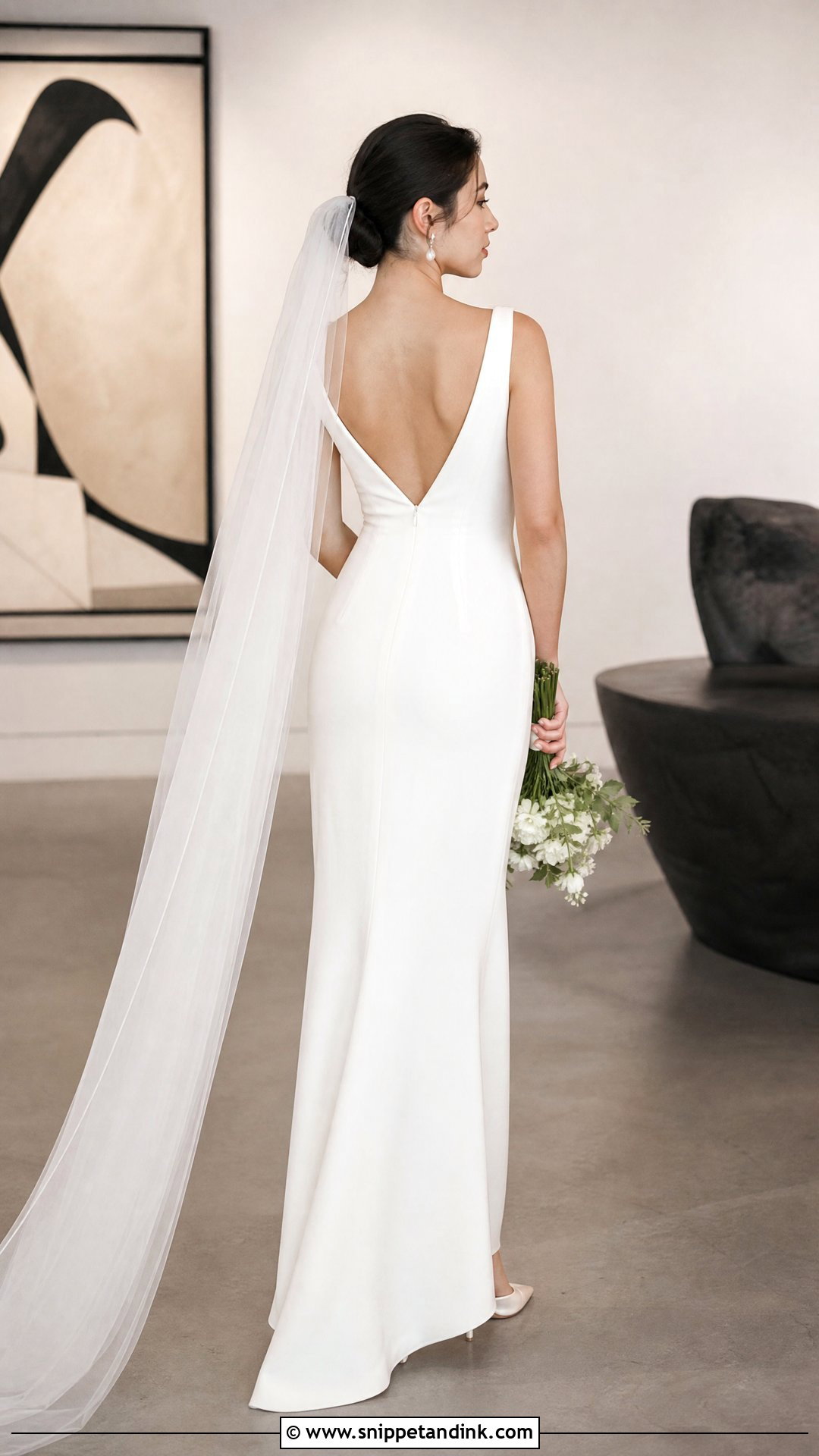
A petite bride gets the longest line from a column gown, shoulder to floor without interruption. Keep the V narrow and let it stop near the waist. A very low back on a short torso can make the proportions look off. Light crepe or satin avoids bulk. Pointed heels, small drop earrings, a narrow chapel veil and a compact low bun keep everything in scale. City halls, restaurants and small venues suit this look. Hemming matters more on a slim skirt than on any other shape. Bring the exact wedding shoes to every fitting so the length is right, because a column that’s two centimeters too long trips you on every step.
18. Vintage Satin V Back Wedding Dress
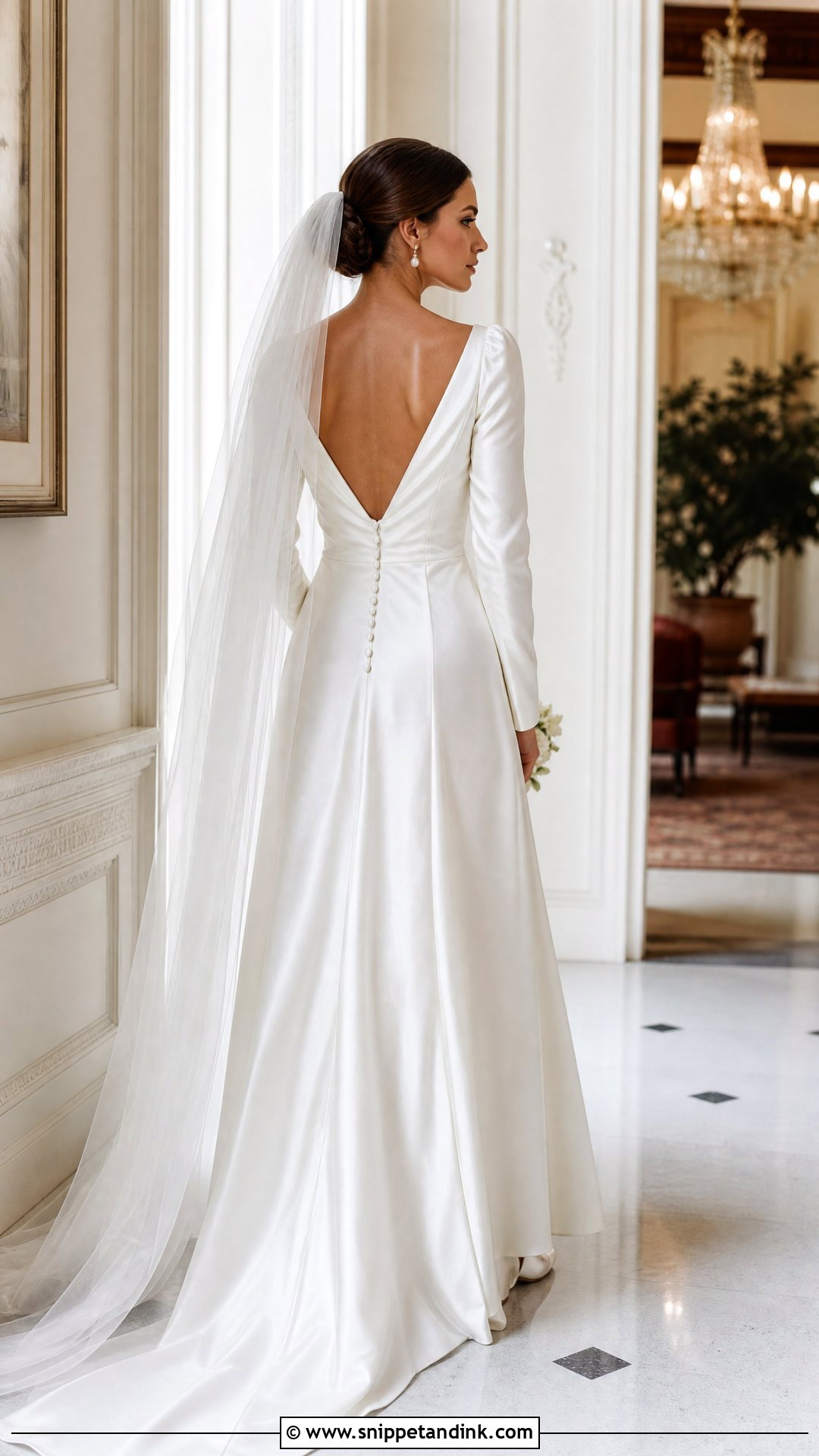
Bias-cut satin, long sleeves and soft gathers give a V-back a vintage feel without tipping into costume. Choose an A-line skirt cut on the bias, slim cuffs and a modest front neckline, then add pearl buttons or gentle pleats for period character. Teardrop earrings, satin pumps and a long plain veil suit it, with soft waves gathered into a low side bun. Historic hotels, old theaters and classic indoor venues are its natural backdrop. Keep accessories simple in shape. Bias satin is unforgiving in one way, though: it clings and shows every line, so the right undergarments matter more here than almost anywhere else on this list.
19. Beach V Back Wedding Dress
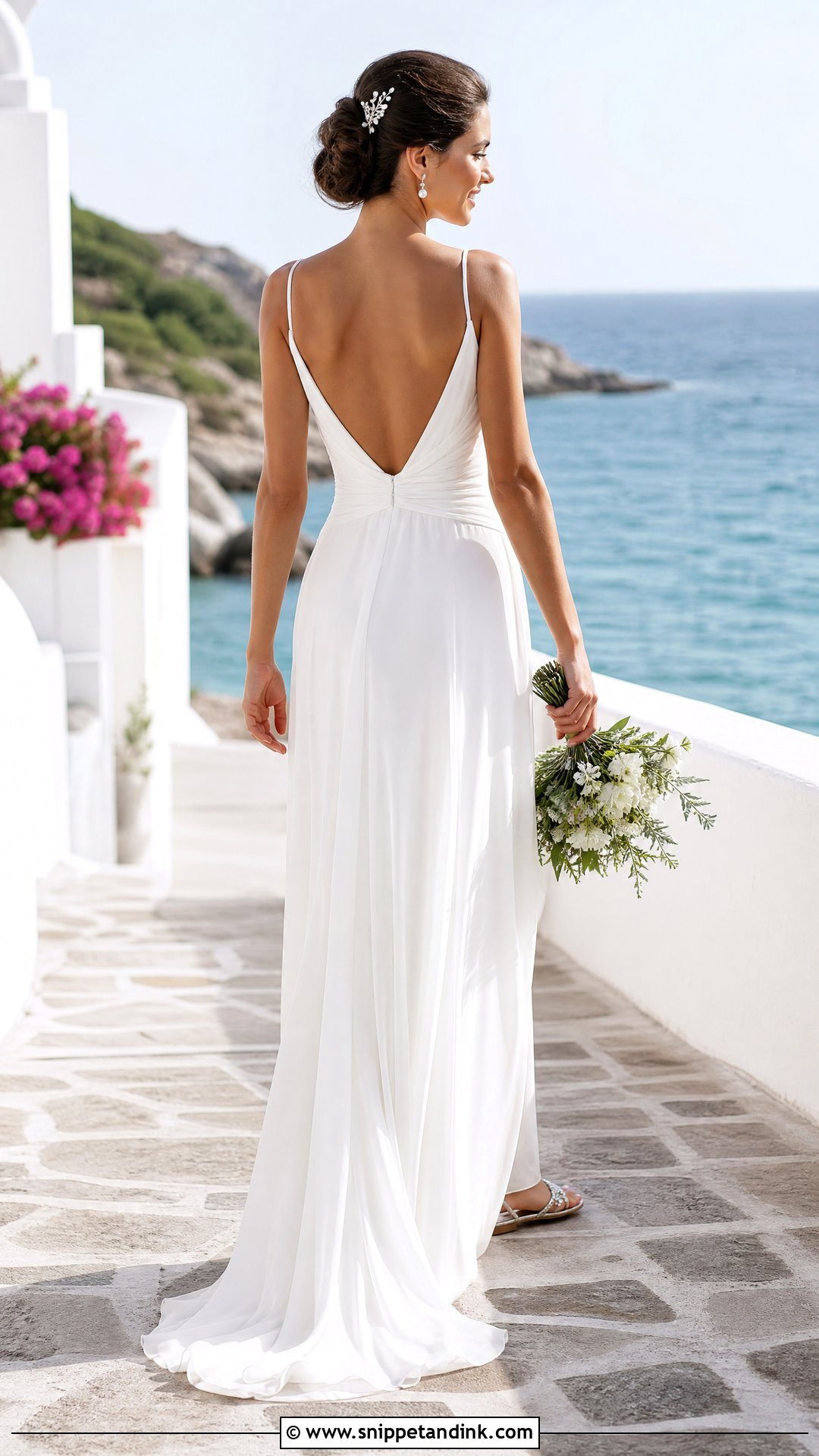
On a beach, the gown has to cope with wind, sand and heat. I’d choose chiffon, soft crepe or light satin with narrow straps, a fitted waist and a flowing skirt, and keep the train to a sweep, because cathedral trains drag wet sand. Pearl earrings, flat embellished sandals and a short veil or small comb finish it, with a textured low bun that holds up in the wind. Coastal resorts and waterfront venues suit it. Leave out heavy beading and stiff layers. And ask your seamstress for a wrist loop on the train so you can lift it off the sand after the ceremony.

20. V Back Wedding Dress With Bow
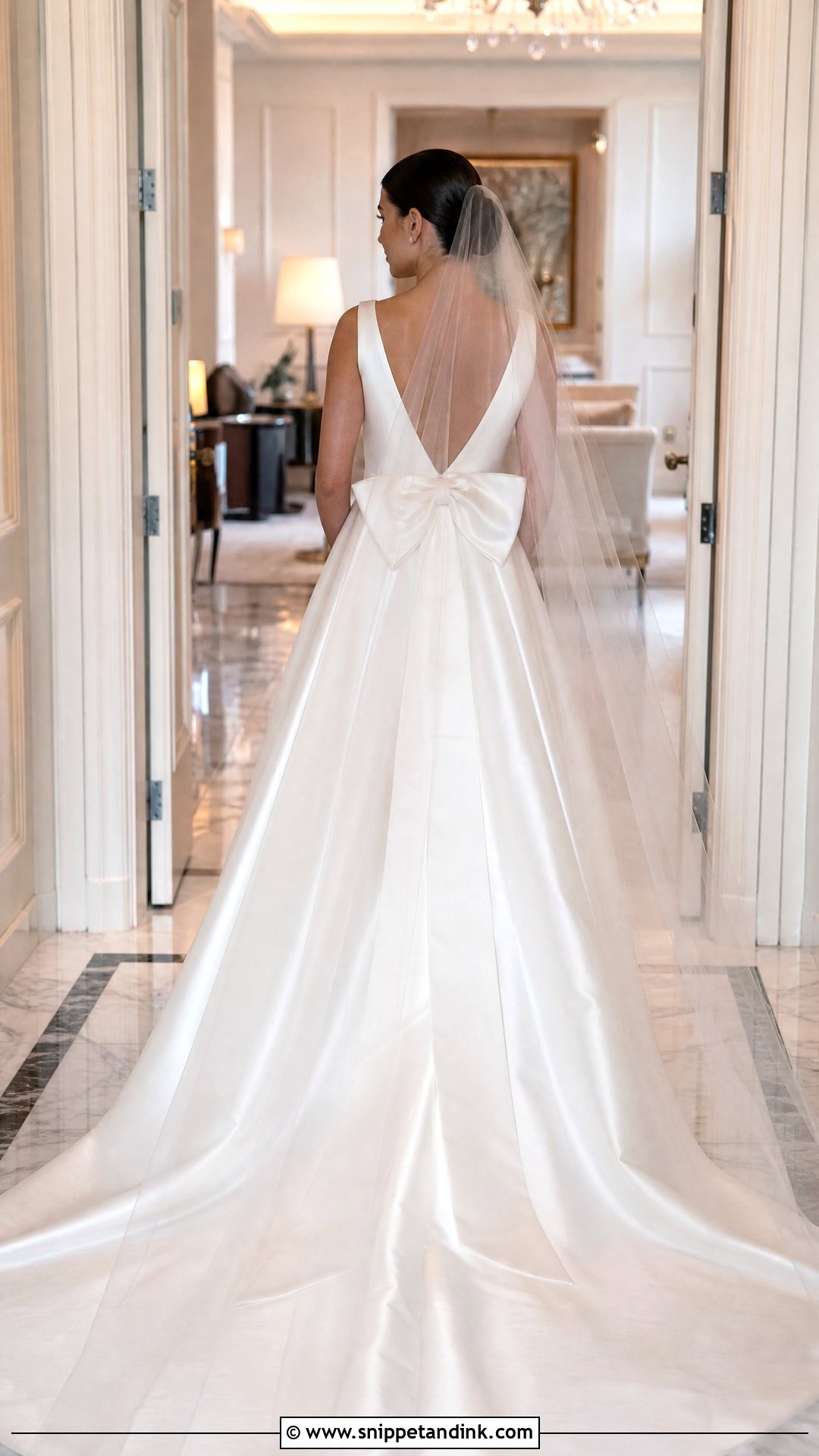
A detachable bow at the waist gives a V-back one bold focal point, and it can come off later. Start with a structured satin A-line or column with a clean back. Long tails can trail into the train, while a smaller bow is more understated. Pearl studs, pointed pumps and a plain cathedral veil removed before the reception keep the focus on the bow, with a polished bun so nothing hides it. Modern hotels and ballrooms suit it. Try taking the bow off and putting it back on during a fitting. It should attach securely with hooks or snaps that leave no marks, gaps or creases once it’s gone.
Guests Watch Your Back for the Entire Ceremony
At most ceremonies you stand facing your partner and the officiant, which means the people who love you are looking at your back for twenty minutes or more. That’s what makes a V-back so worth it, and it’s also why a few details deserve attention.
Veil placement changes everything. A comb set above the bun lets a sheer veil float over the back and soften it, and one set beneath the bun lets it fall behind the V without covering it. A heavily edged or patterned veil will hide most of what you chose the dress for, so pick tulle that’s almost invisible, or plan to remove the veil after the vows.
Skin matters more than usual too. Strap marks from sundresses or swimwear take weeks to fade, so switch to backless or strapless tops well before the wedding if you’re spending time outdoors. Gentle exfoliation in the weeks beforehand helps, and if you’re having a spray tan, test it first: a streak at the base of the V is very hard to hide. Ask your makeup artist to check your shoulders and upper back on the morning, too. A little powder takes away shine under the camera flash.
Finally, think about your hair. Long loose hair covers the back completely, so if you want to wear it down, sweep it over one shoulder for the processional.
An Open Back That Still Feels Secure at Midnight
A V-back gown should look striking and still feel stable when you move. Satin and crepe give structure, while lace, chiffon, beading and illusion panels bring texture. Work out how the back fits with your neckline, sleeves, skirt, veil, hairstyle and venue together rather than one at a time. Then test it properly at fittings: sit, walk, hug and lift your arms. Small tailoring changes usually solve support problems without changing the design at all. From slim columns to full ball gowns, there’s a version here for almost every body and season, and the right one will feel as good from behind as it does in the mirror.
You'll Like These Ideas:






Leave a Reply