
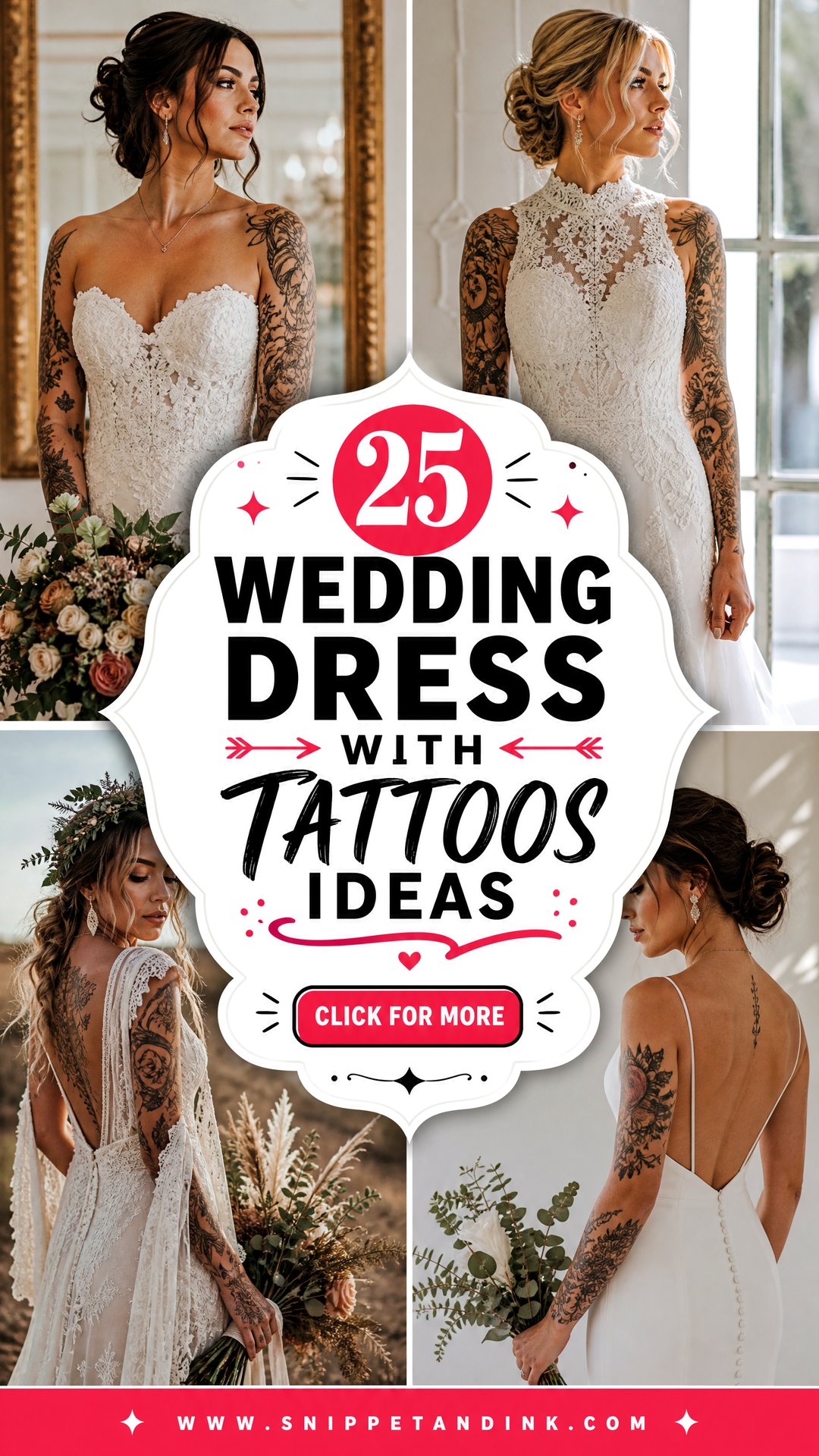
Tattooed brides often arrive at their first appointment expecting to be talked into sleeves. I’d rather do the opposite and start with the ink. Your art is part of how you look every day, so the question isn’t how to hide it but which pieces you want seen, which you’d like softened and which, if any, stay covered for a particular ceremony. Once that’s settled, the neckline, back shape, sleeve and fabric choices almost make themselves. The 25 pairings below run from bare satin gowns that let full sleeves speak to sheer lace that filters color, plus a few short dresses and jumpsuits for the reception.
Map Your Ink Before the First Appointment
Before you try anything on, I’d sit down with a phone and a mirror and photograph every tattoo you might want shown. Then label each one: show, soften or cover. Most brides end up with a mix, perhaps a sleeve they love on display, an old piece they’d rather filter through lace, and a hip tattoo nobody will see anyway. Bring those photos to the shop. A consultant who sees them can pull dresses whose openings match your placements instead of guessing.
- Arms and shoulders: strapless, off-shoulder, thin straps or sheer sleeves.
- Back: low scoop, cowl, keyhole or deep V, chosen by the shape of the piece.
- Chest and sternum: V-neck or plunge, measured against the tattoo’s depth.
- Legs and ankles: short, tea-length, high-low or a slit.
Booking new work before the wedding
If you’re planning a new tattoo, leave plenty of time. Fresh work scabs and peels for the first couple of weeks and can stay shiny and slightly raised for weeks after that, and a healing tattoo shouldn’t be pressed by tight lacing, rubbed by fabric or covered in makeup. I’d finish any new piece at least two or three months before the date. Keep healed tattoos out of strong sun in the run-up too, since sunburn on inked skin looks blotchy in photos.
1. Strapless Wedding Dress With Arm Tattoos
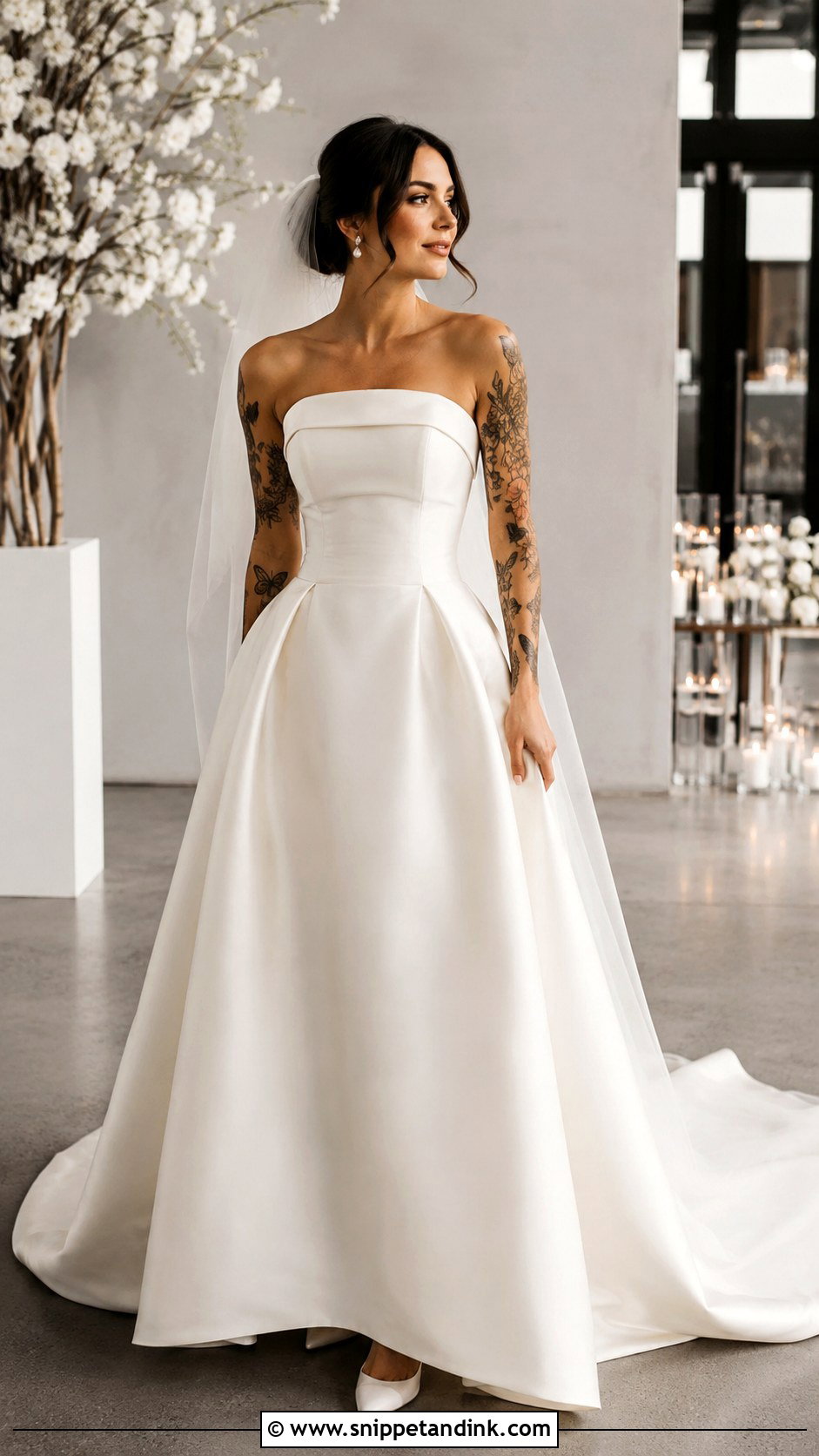
Strapless is the most generous frame for arm work: nothing crosses the shoulder, so a half sleeve or full sleeve reads from shoulder to wrist without interruption. With colorful pieces, I steer brides toward plain ivory satin, mikado or crepe rather than heavy beading, which competes with the ink at arm level. A structured bodice and soft A-line skirt keep the outline classic. Pearl studs and one slim bracelet are enough, worn on the less tattooed arm if one side is busier than the other.
2. Backless Wedding Dress With Back Tattoos
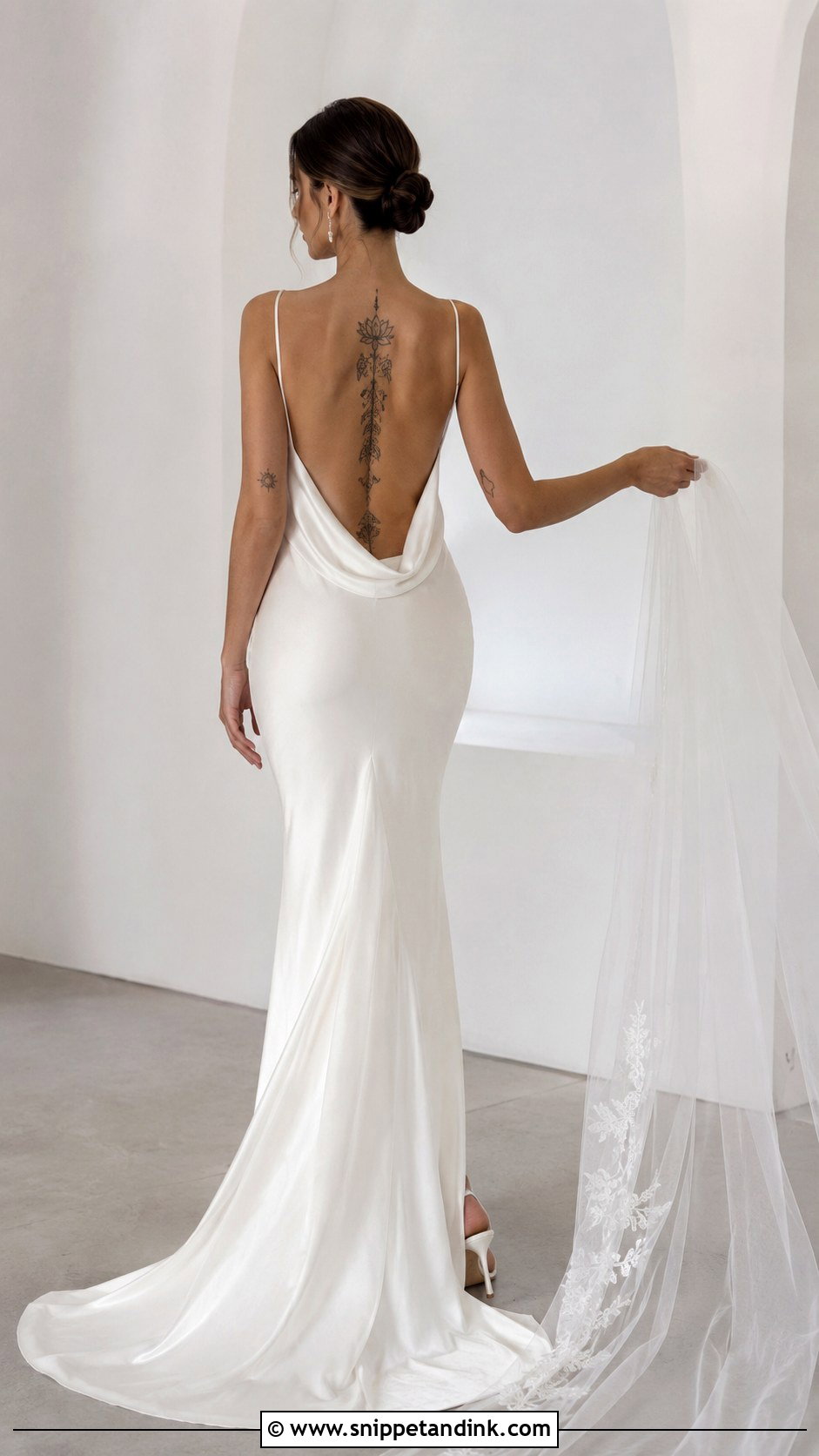
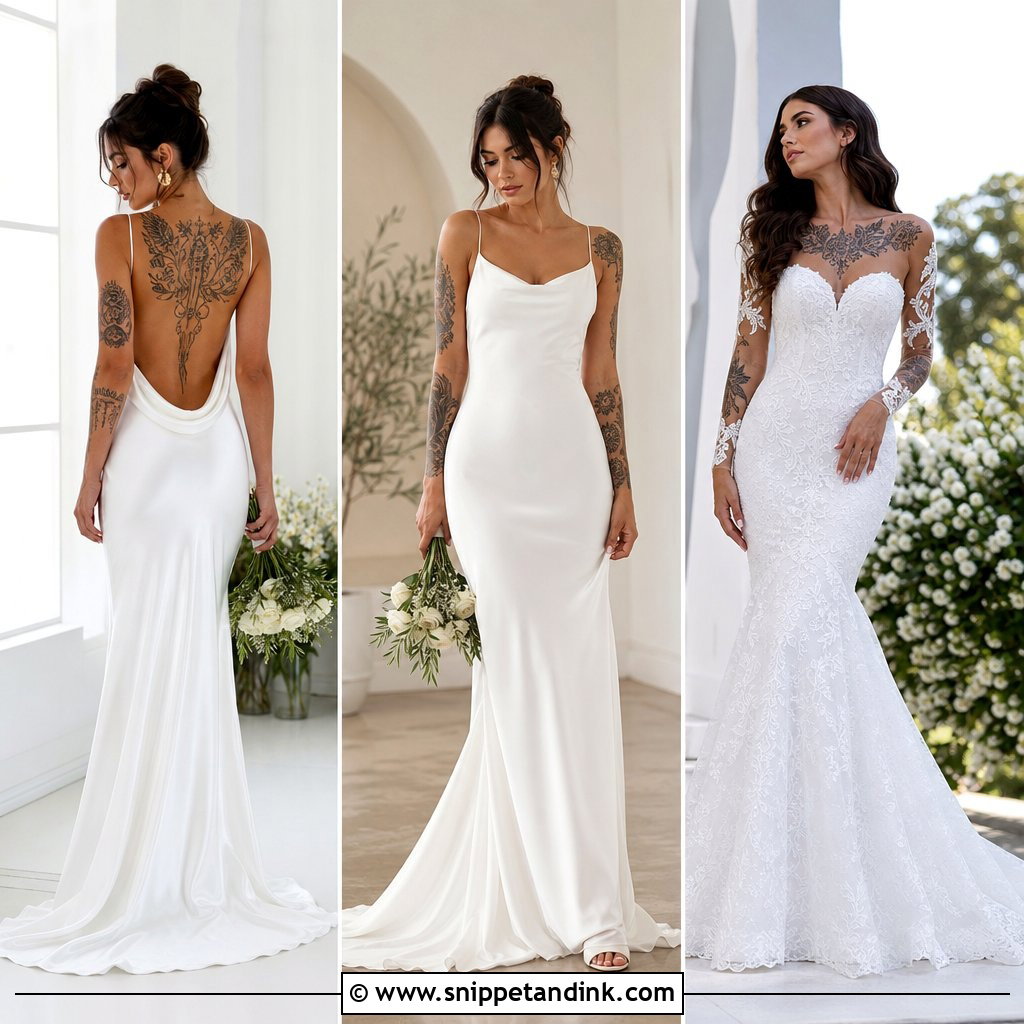
A backless wedding dress works with a back piece only if the opening frames the design rather than slicing across it. Before ordering, I hold the sample against the bride’s back and look at where the edge falls. A low scoop suits a wide piece across the shoulder blades, a cowl suits something centered, and a deep V suits a spine tattoo. Hair goes up so nothing covers it. Plan the veil for the ceremony only, because a long tulle veil blurs the art in every back-view photo.
3. Lace Wedding Dress With Sleeve Tattoos
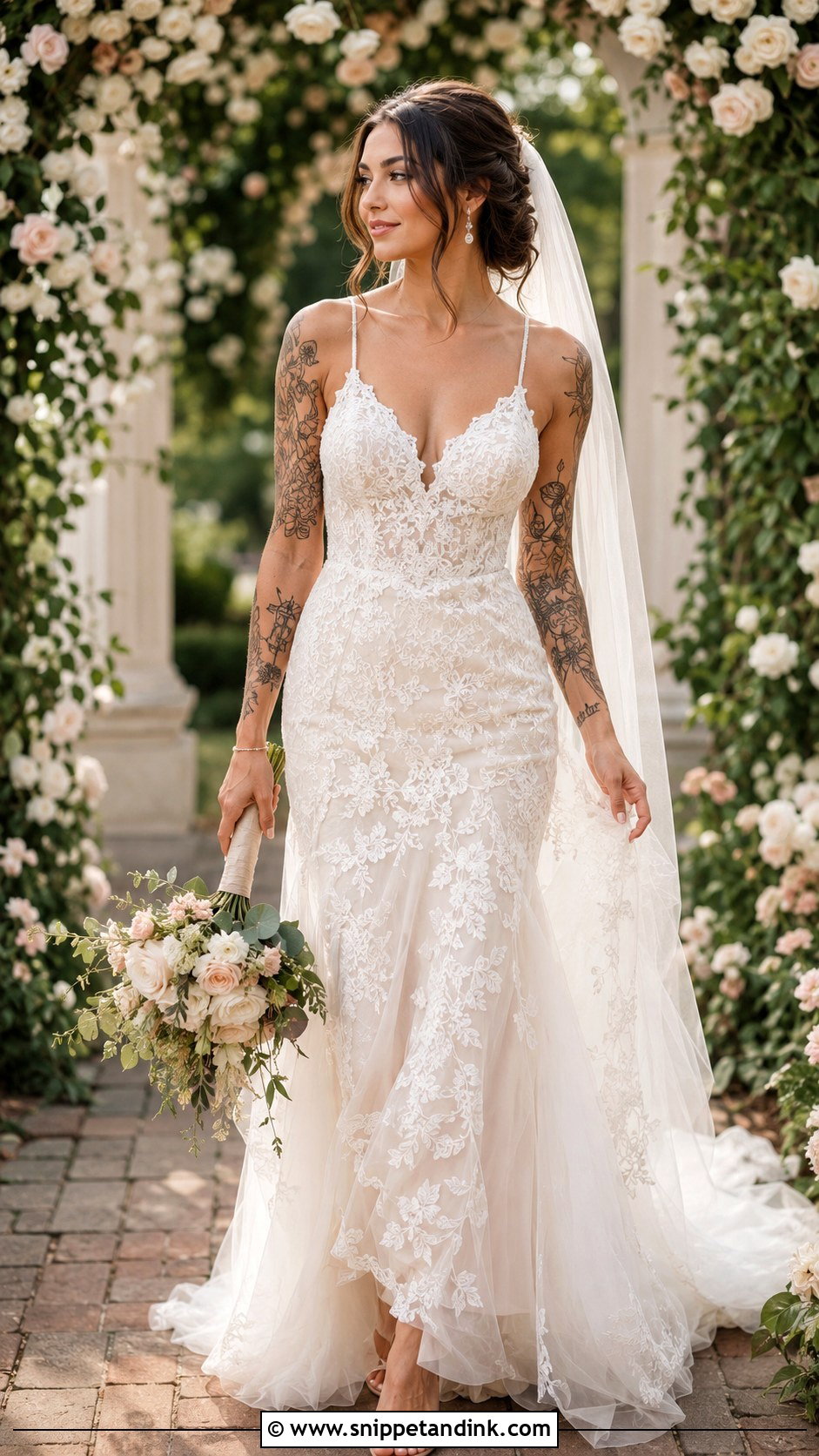
Lace and sleeve tattoos can fight, because both are pattern. If your arms carry strong linework or saturated color, look for open, airy lace rather than dense corded lace, and keep the lace away from the arms with thin straps or cap sleeves. Illusion lace sleeves work too, though they turn your tattoos into a layered pattern, which some brides love and others don’t. Small earrings and a plain veil keep it calm. It’s the softer route, romance sitting right next to the ink.
4. Simple Satin Wedding Dress With Tattoos
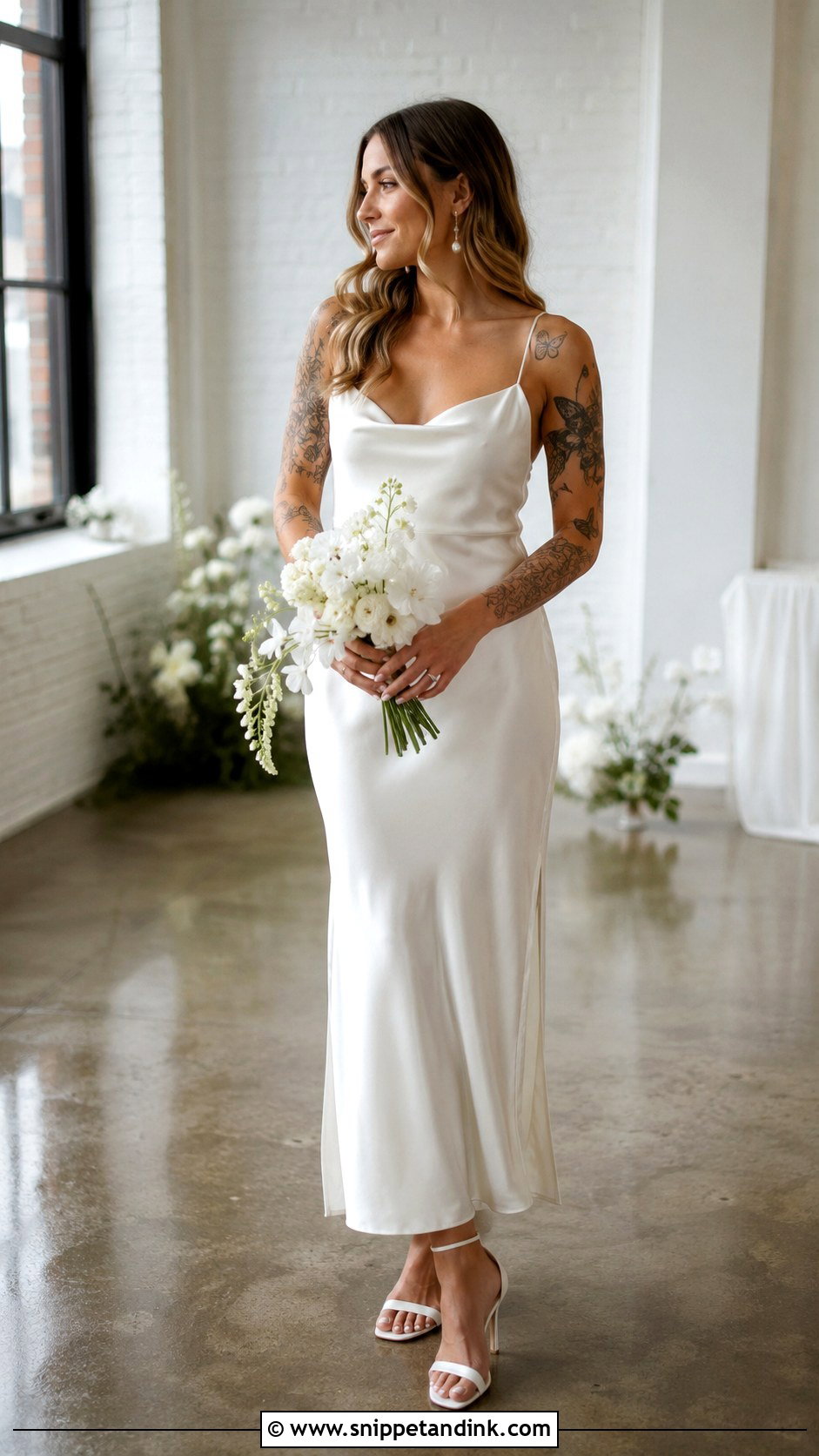
Plain satin is the gown I suggest most often for heavily tattooed brides, because it treats the ink as the outfit’s main accessory. The smooth surface gives a clean contrast to detailed artwork. A slip, a column or a fitted A-line all work. Keep jewelry minimal, such as small diamond studs or a slim chain. Satin does show bra lines and seams, so sort out undergarments early. A sleek bun or soft middle-part waves finish a look that feels modern and very personal.
5. Off Shoulder Wedding Dress With Collarbone Tattoos
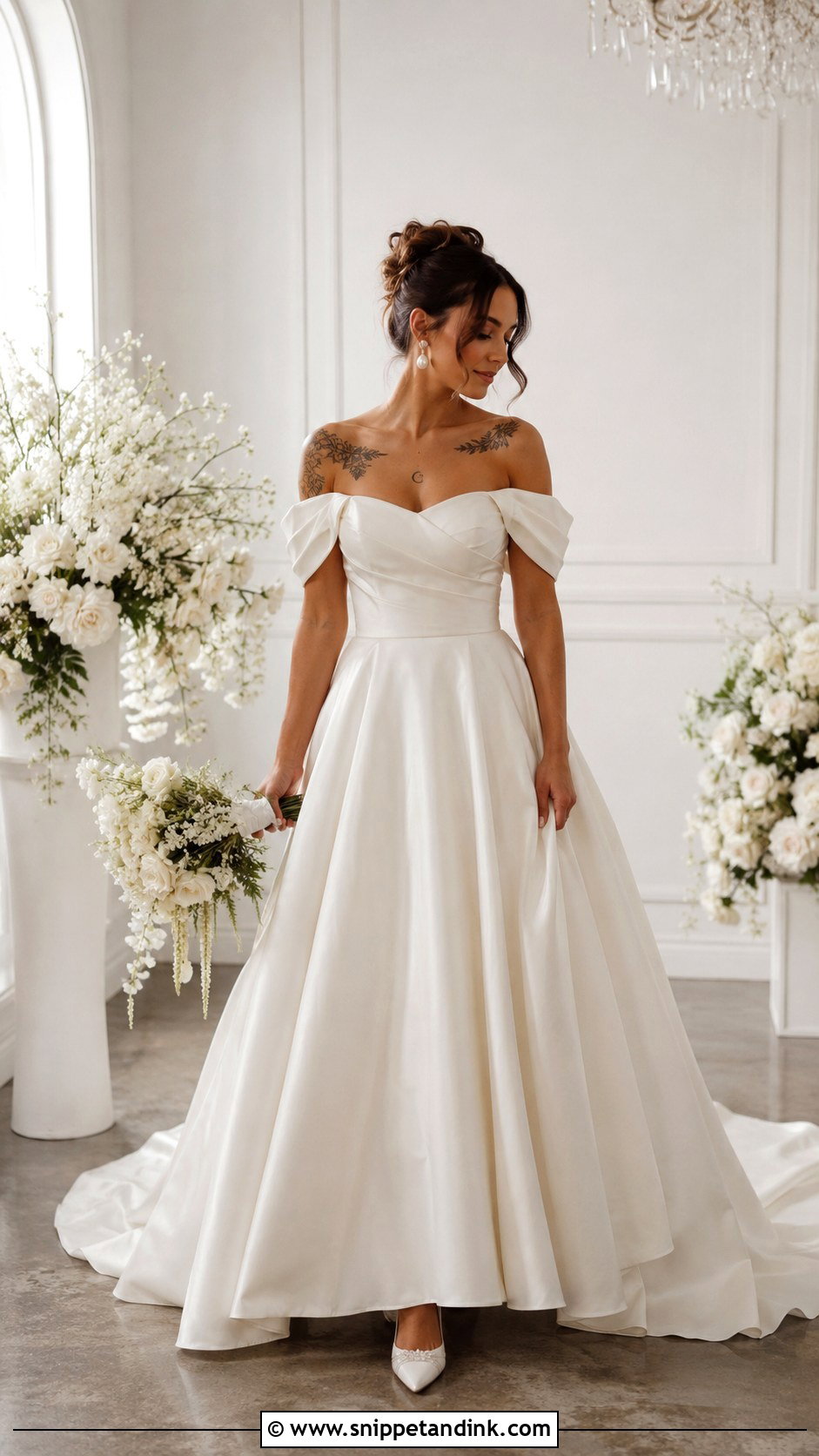
An off-shoulder neckline draws a horizontal line straight across collarbone, shoulder and upper arm tattoos, so check where that line crosses your work before buying. If the band sits right across the middle of a piece, it cuts it in half visually. Delicate tattoos sit well with lace or tulle; bold ones need plain satin or crepe. I’d skip a choker if the collarbone is tattooed, since it crowds the art. Soft curls and pearl earrings are all the extras it needs.
6. Long Sleeve Wedding Dress With Hand Tattoos
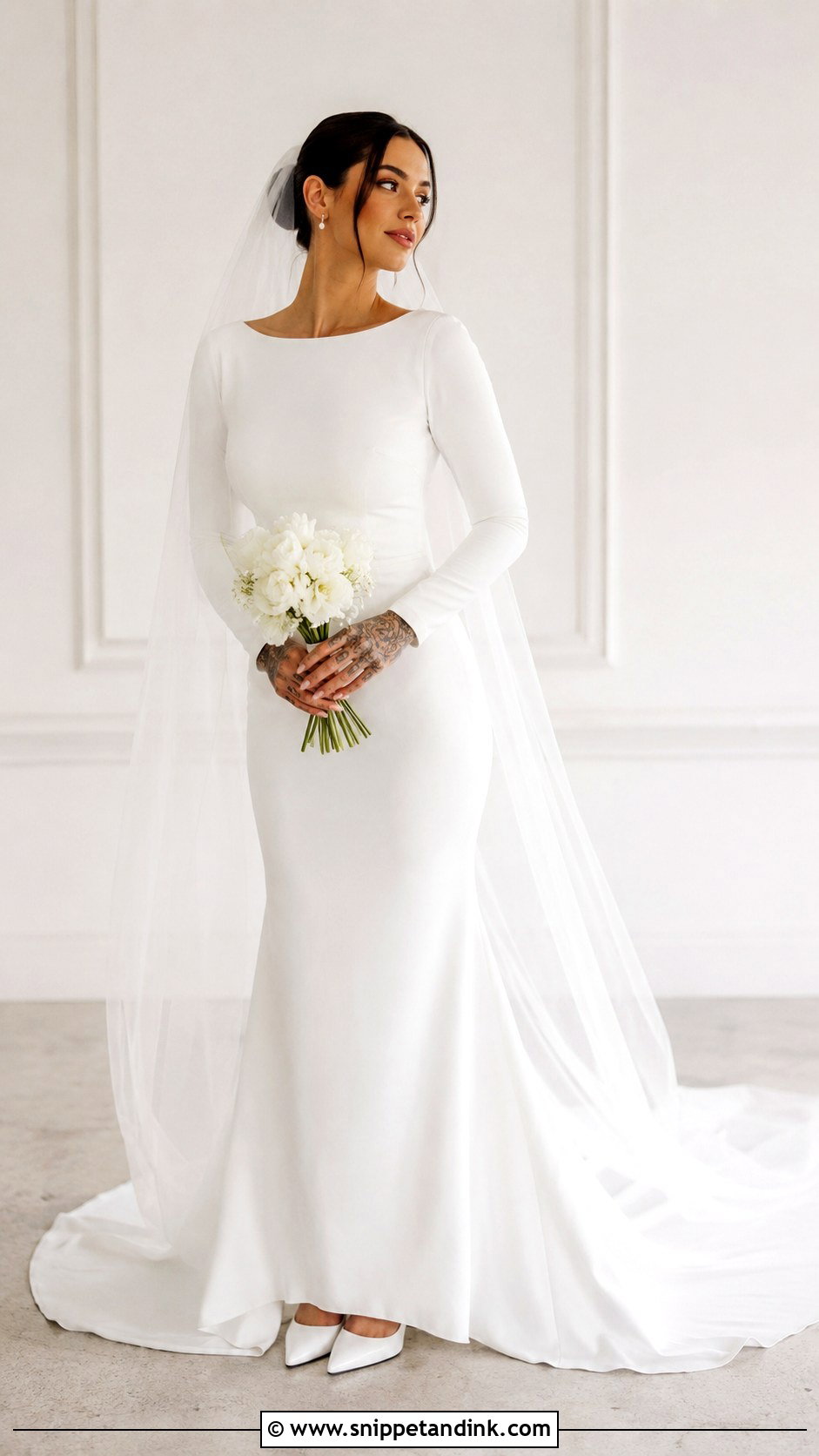
Sleeves that end exactly at the wrist bone put hand and finger tattoos on show as if framed. Crepe or satin sleeves look the sharpest; sheer illusion lace softens the edges of the art. With tattooed fingers, keep rings simple, because a stacked engagement and wedding set already adds a lot to a small canvas. Your photographer will take a ring close-up, so a fresh manicure in a neutral shade helps the ink read clearly. A sleek veil, low bun and classic pumps keep it refined.
7. V Neck Wedding Dress With Chest Tattoos
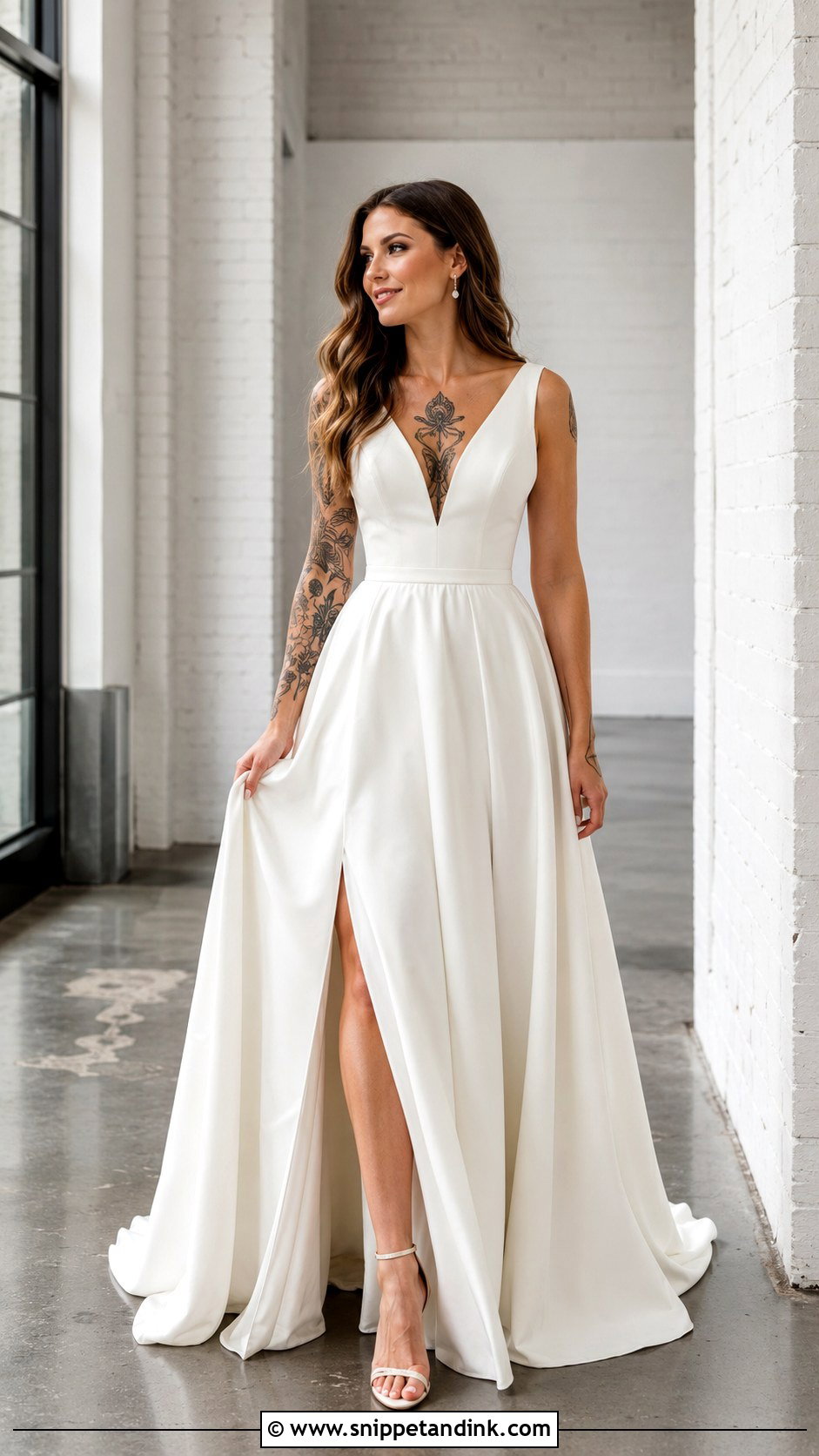
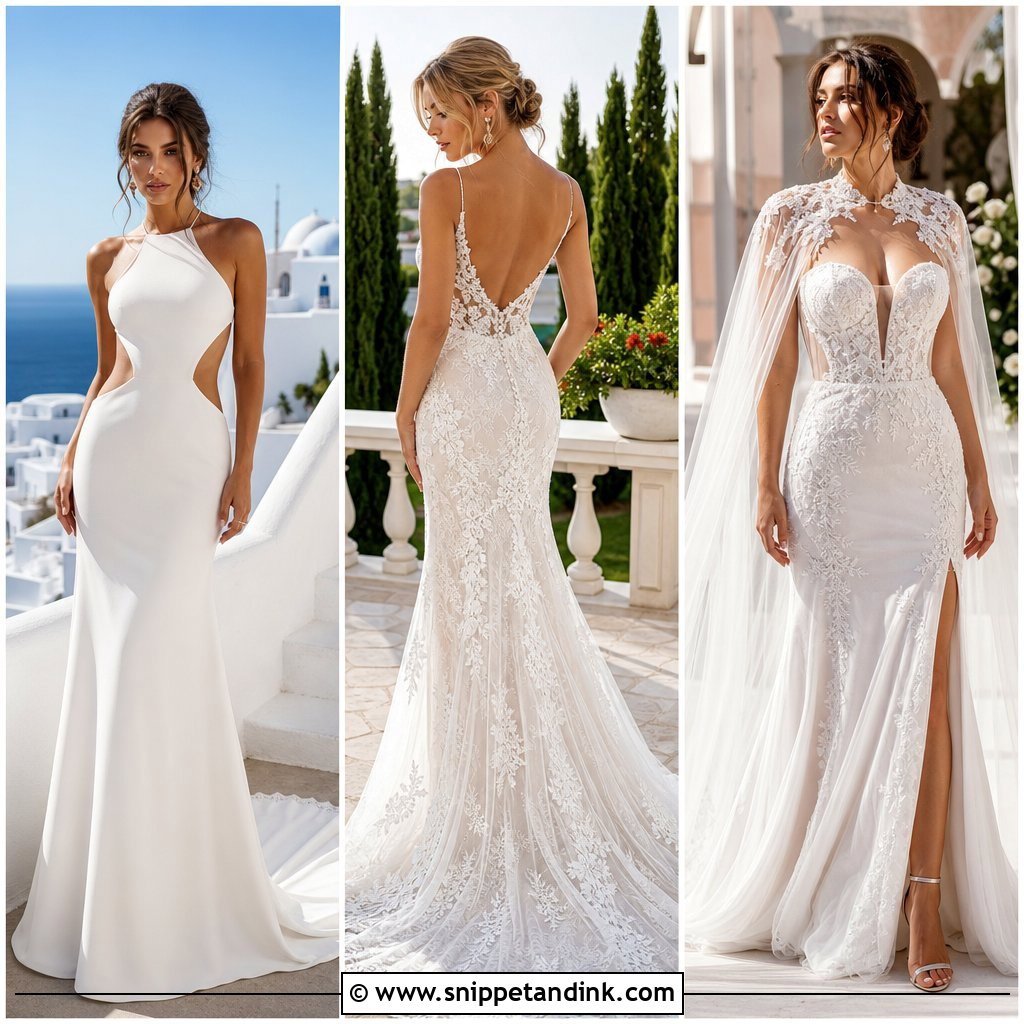
Chest and sternum tattoos need a neckline cut to their exact placement. A shallow V gives a hint, while a deep plunge makes the artwork central. I measure from the collarbone to the bottom of the piece and compare it with the gown’s neckline depth before ordering. Keep embellishment away from the neckline so it doesn’t compete. Fashion tape or built-in cups keep a deep V secure through hugs and dancing. Drop earrings and soft waves suit the open line.
8. High Neck Wedding Dress With Arm Tattoos
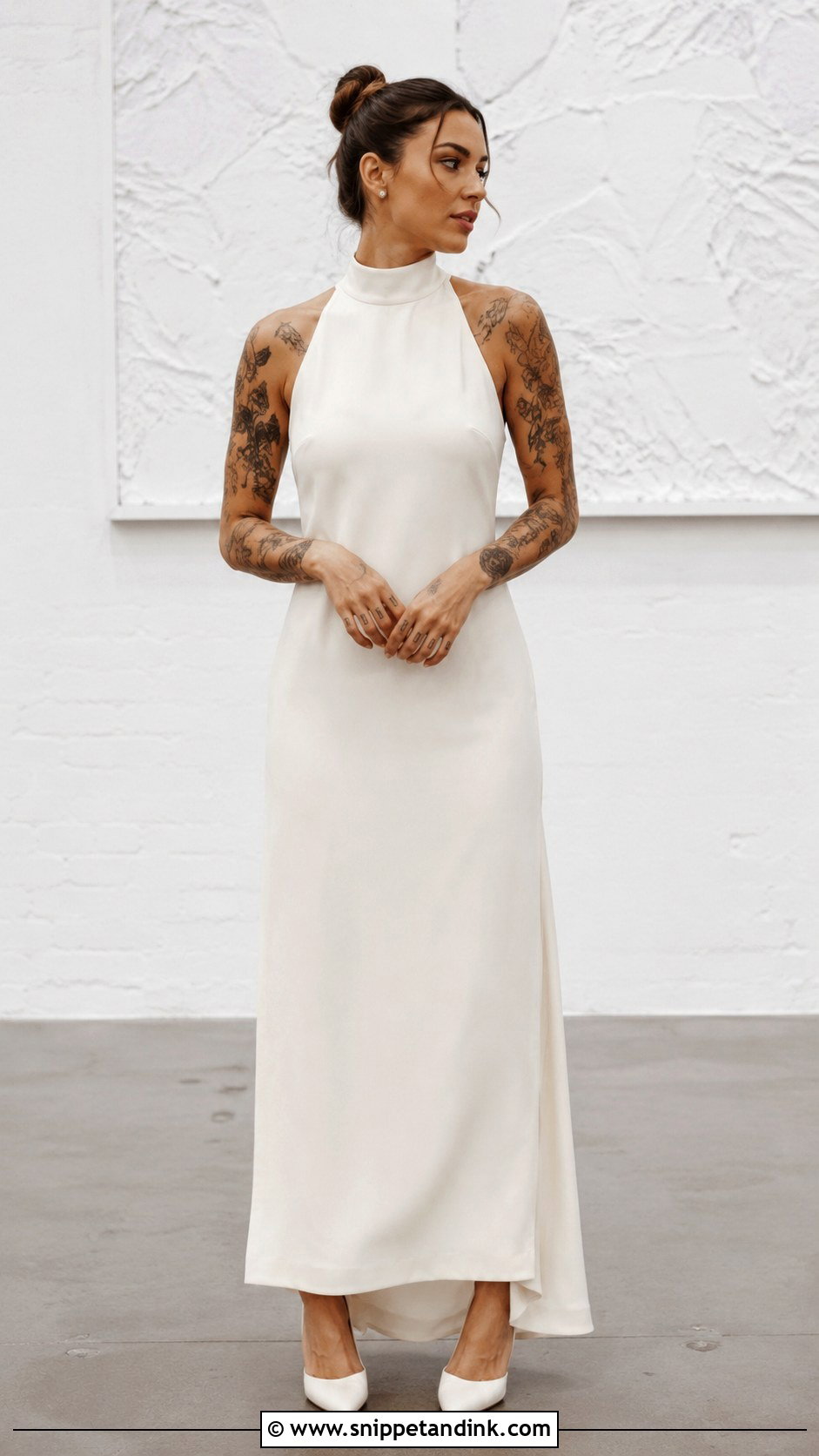
A high neck with bare arms is one of the most graphic options for sleeve tattoos. The covered neckline makes the art on the arms the only skin on show, so it reads clearly in photographs. Sleeveless high-necks, halters and fitted columns all do this. Bold tattoos want smooth fabric; subtle ones can take some lace or beading. Hair goes up to show the neckline. It’s a strong pick for gallery weddings and city portraits.
9. Boho Wedding Dress With Tattoos
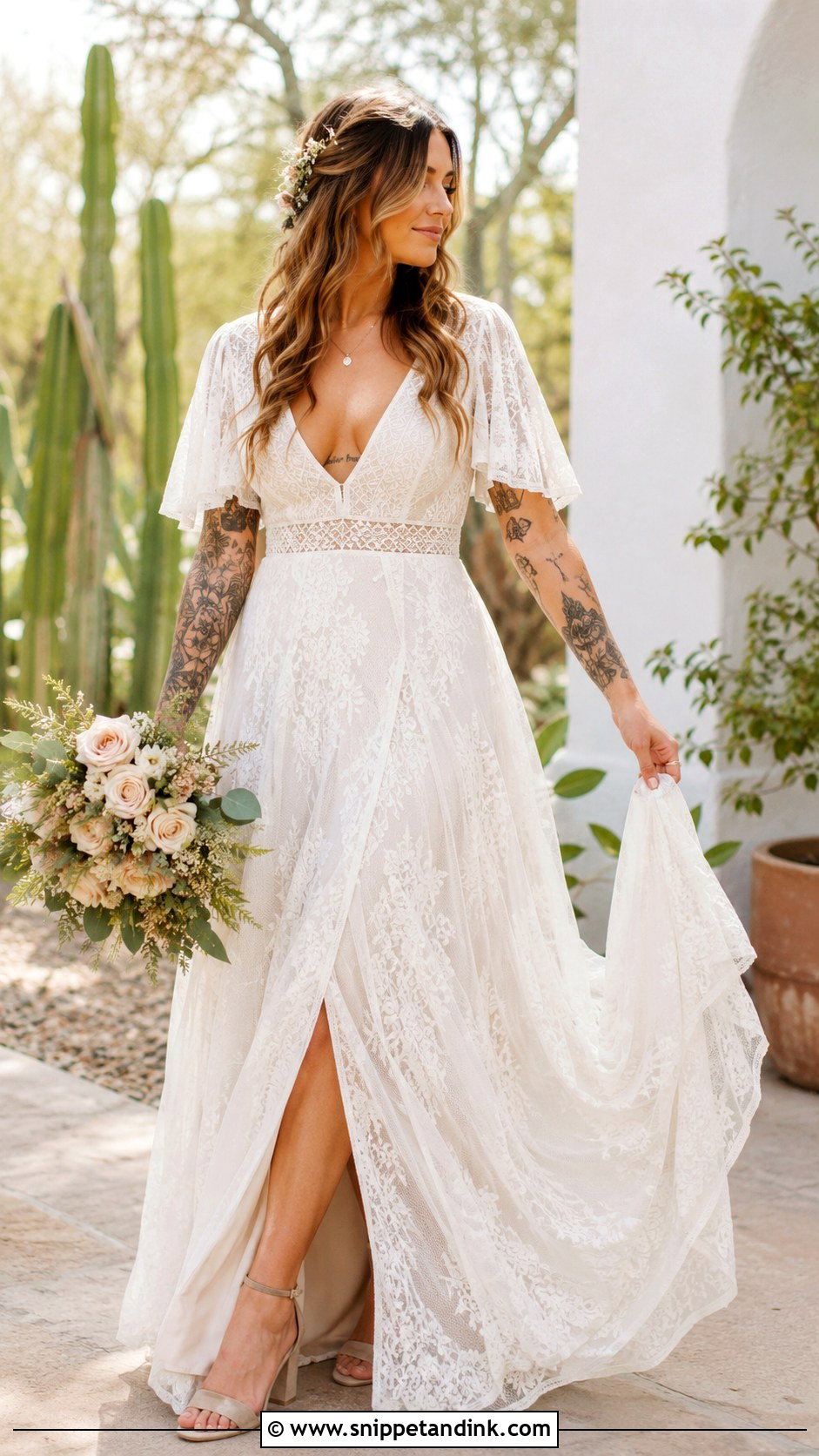
Boho and tattoos often share a mood, which makes this pairing easy. Flowing skirts, soft lace and flutter sleeves sit well next to both fine-line and traditional work. A deep V, an open back or one sheer sleeve can show chosen pieces. Bright, saturated ink can make a stark white gown look harsh, so a warm ivory usually sits better beside colorful tattoos. Loose waves, suede sandals and layered fine jewelry suit desert, garden and beach ceremonies.
10. Mermaid Wedding Dress With Tattoos
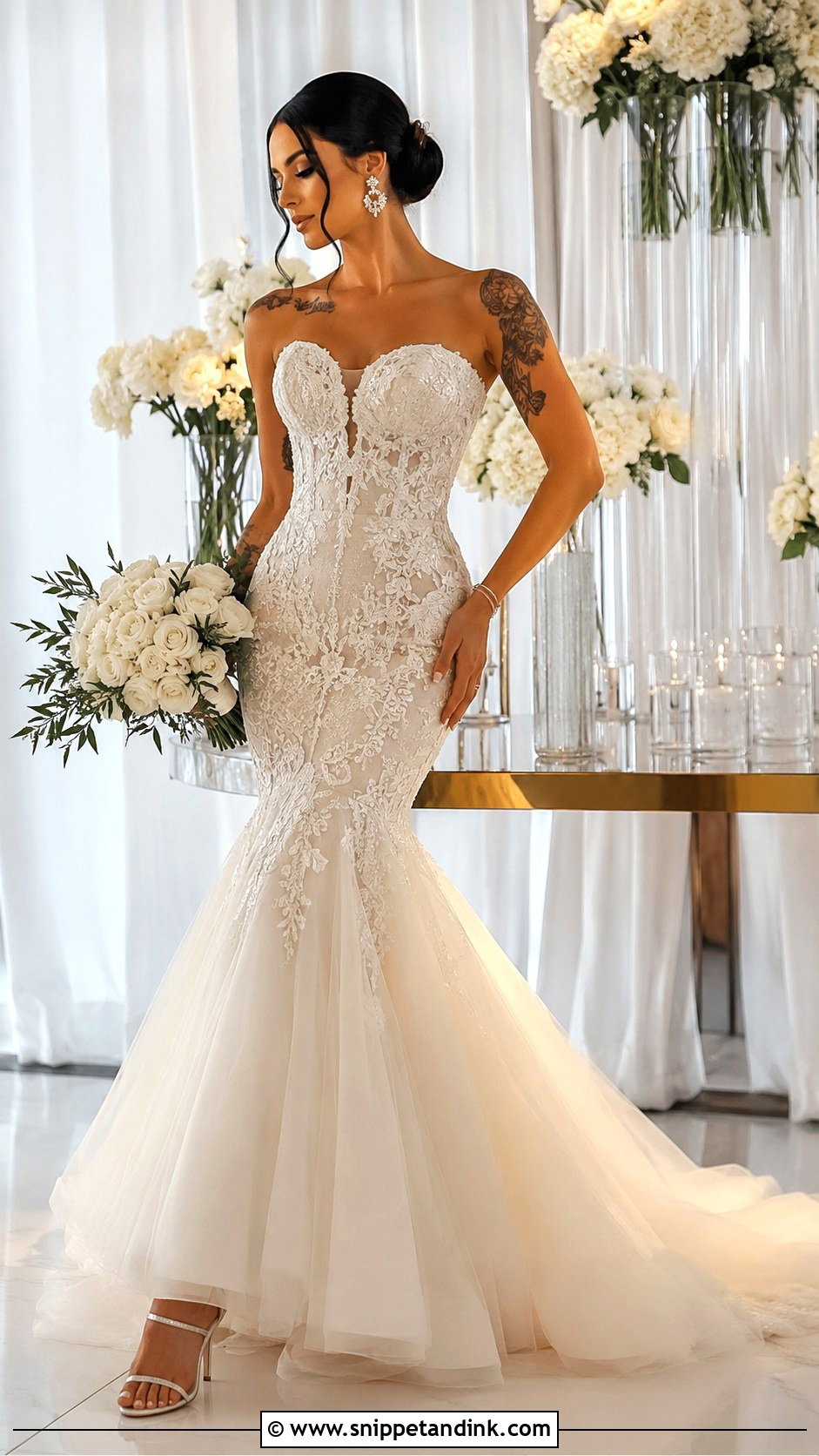
A mermaid follows the body closely, so it can show hip, rib, thigh or shoulder tattoos depending on cut. Strapless puts the upper body on show; a low back shows back work. Fitted fabric over a hip or rib tattoo won’t hide it but won’t show it either, and shapewear lines can sit right over it, so choose bonded-edge undergarments with no stitched seams. Smooth fabric suits detailed ink. A tulle flare at the hem adds drama, and statement earrings with a long veil suit a formal, glamorous venue.
11. Ball Gown Wedding Dress With Tattoos
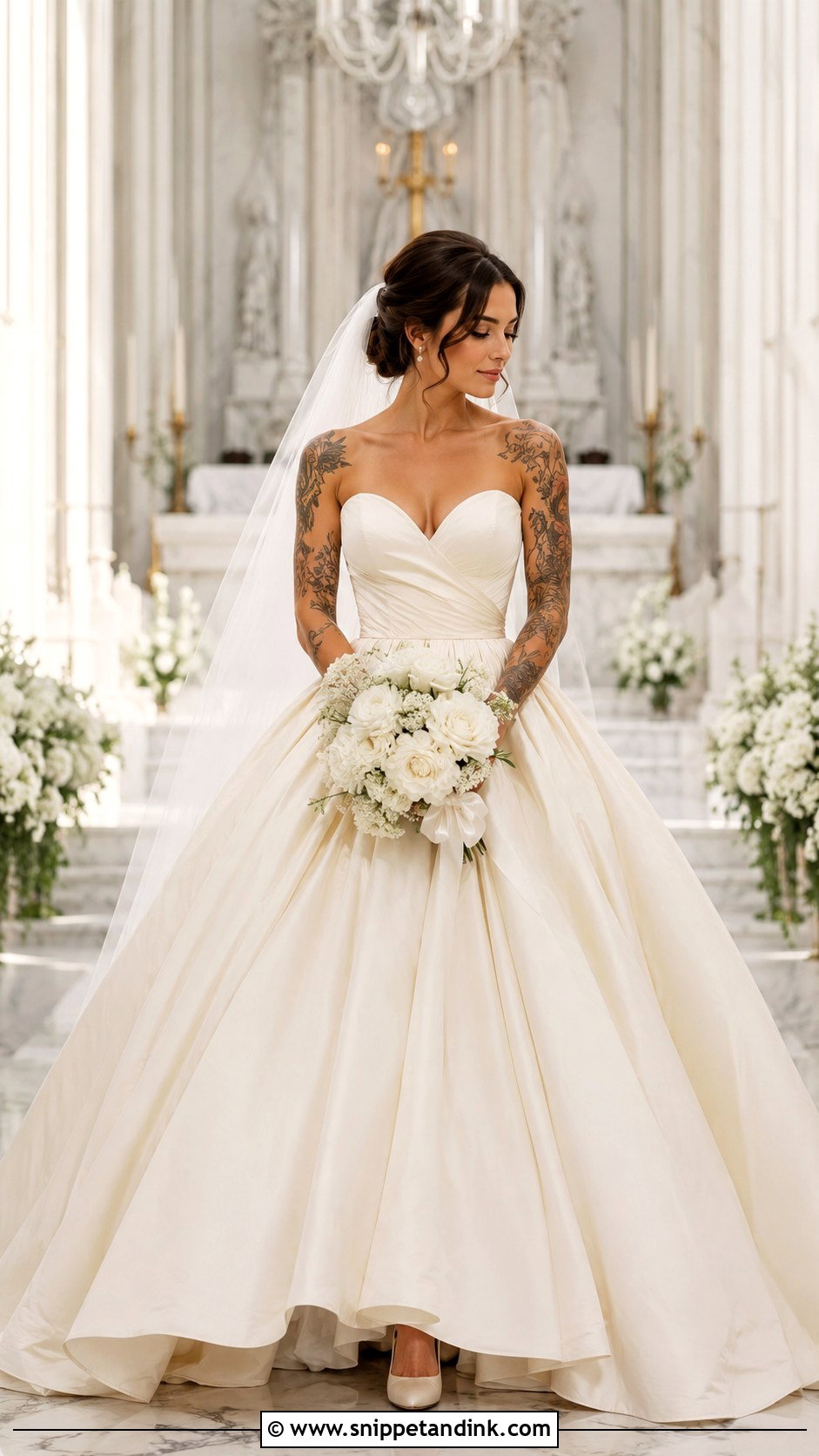
The ball gown is the most traditional shape here, and that’s its appeal with tattoos: a fairytale skirt next to inked arms, shoulders or back makes a contrast you won’t see often. Strapless or off-shoulder bodices keep the upper body open. I’d pick one strong dress feature, such as a corset bodice, a satin skirt or a lace overlay, rather than all three, so the overall picture doesn’t get crowded once your art is in the mix. Simple jewelry and a clean hairstyle keep it fresh.
12. A Line Wedding Dress With Tattoos
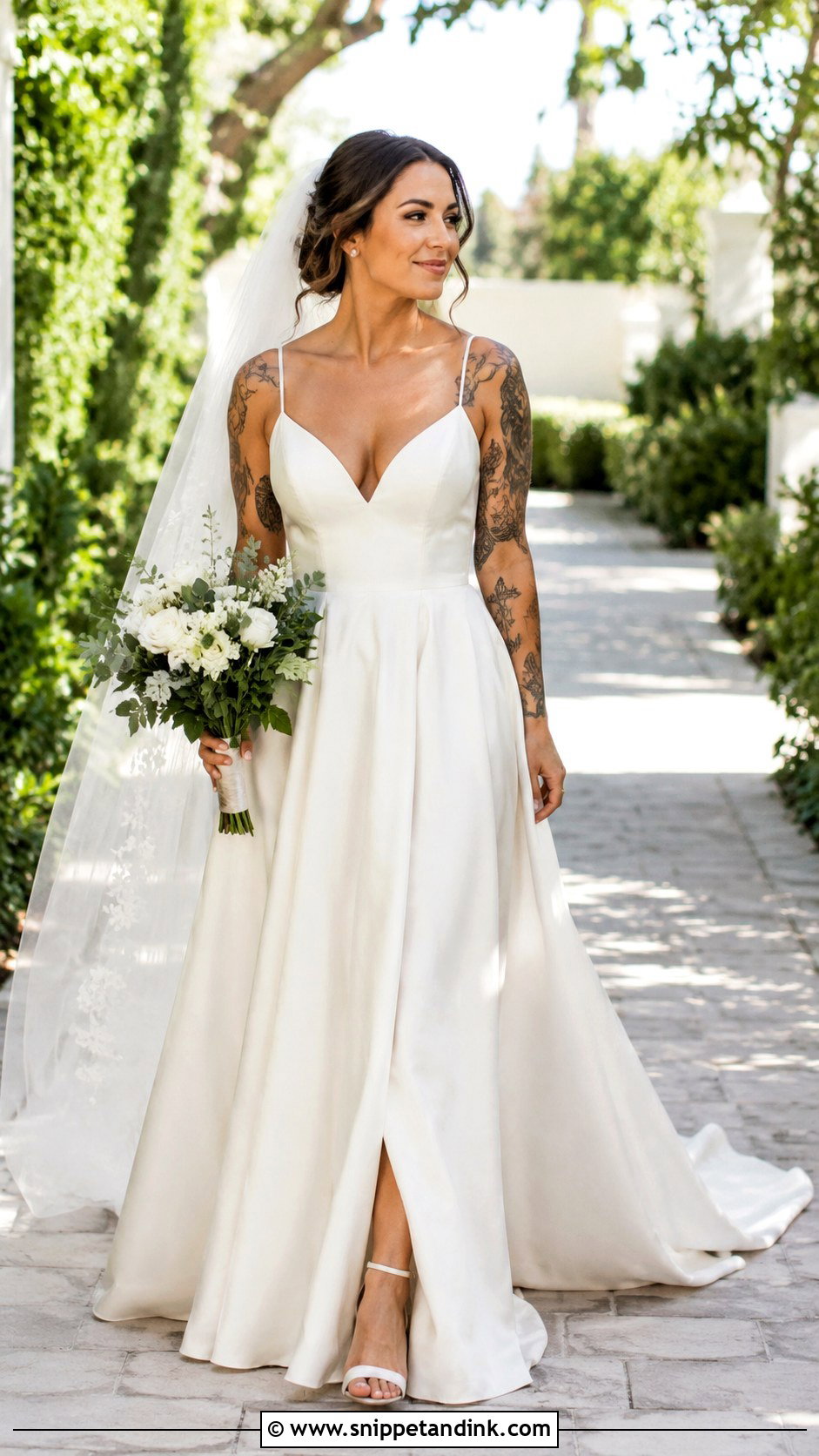
An A-line works with almost any tattoo placement, which is why I reach for it when a bride has pieces in several places. Thin straps show shoulders and arms, a deep back shows back work, and a V shows a chest piece, all in the same basic silhouette. It’s comfortable for a whole day and easy to dance in. A chapel veil, comfortable heels and simple earrings suit it, and you can lean the styling soft or modern without changing the dress.
13. Short Wedding Dress With Leg Tattoos
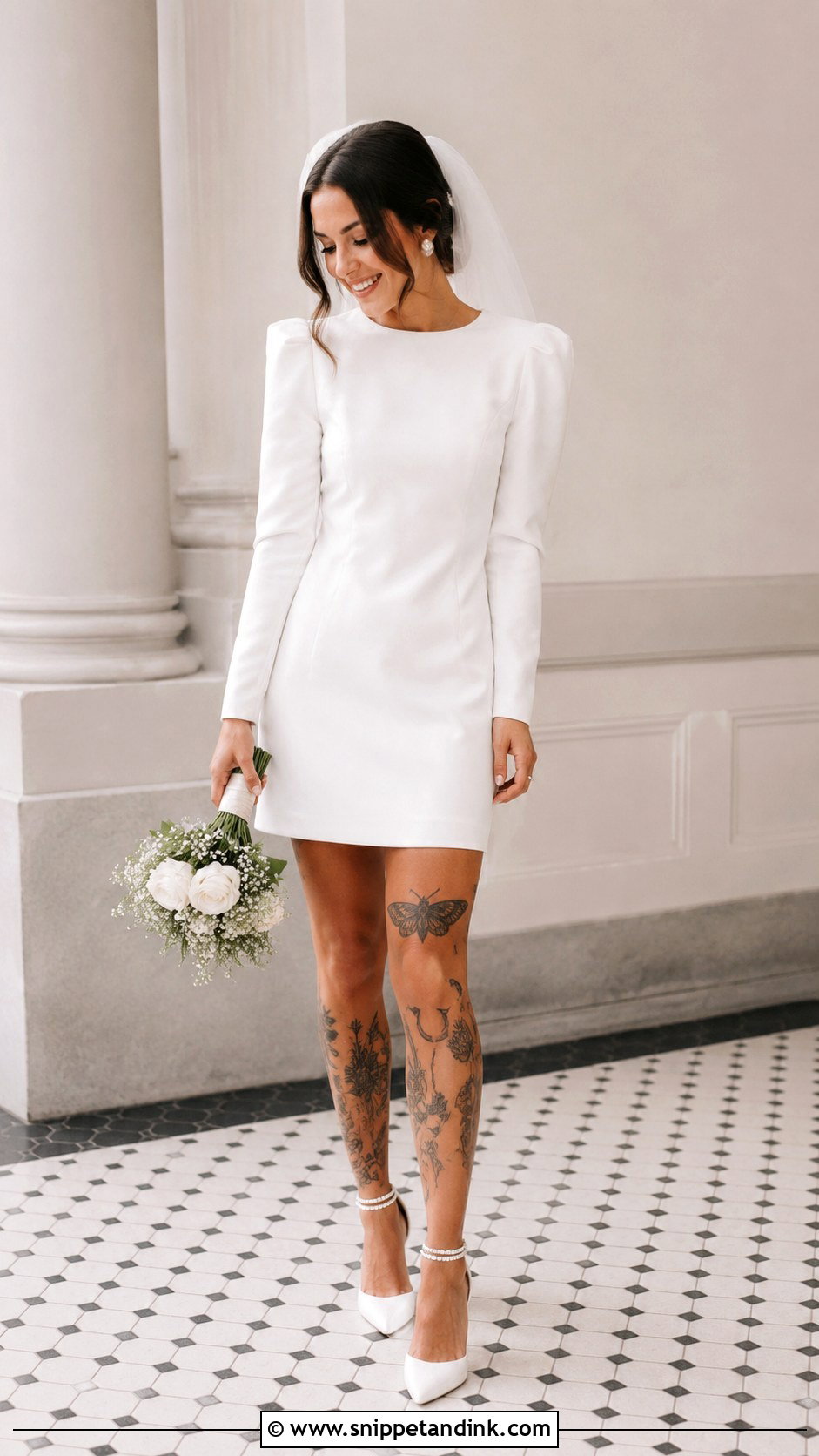
Short dresses put leg tattoos front and center, which suits courthouse weddings, elopements and after-parties. A long-sleeve mini looks modern; tea length feels more vintage. Thigh tattoos need a high hem or high-low skirt, while ankle pieces are framed nicely by strappy heels, though check the straps don’t cross the design. Pearl earrings, a short veil or a structured white bag keep it bridal, and it’s far easier to dance in than a train.
14. Tea Length Wedding Dress With Tattoos
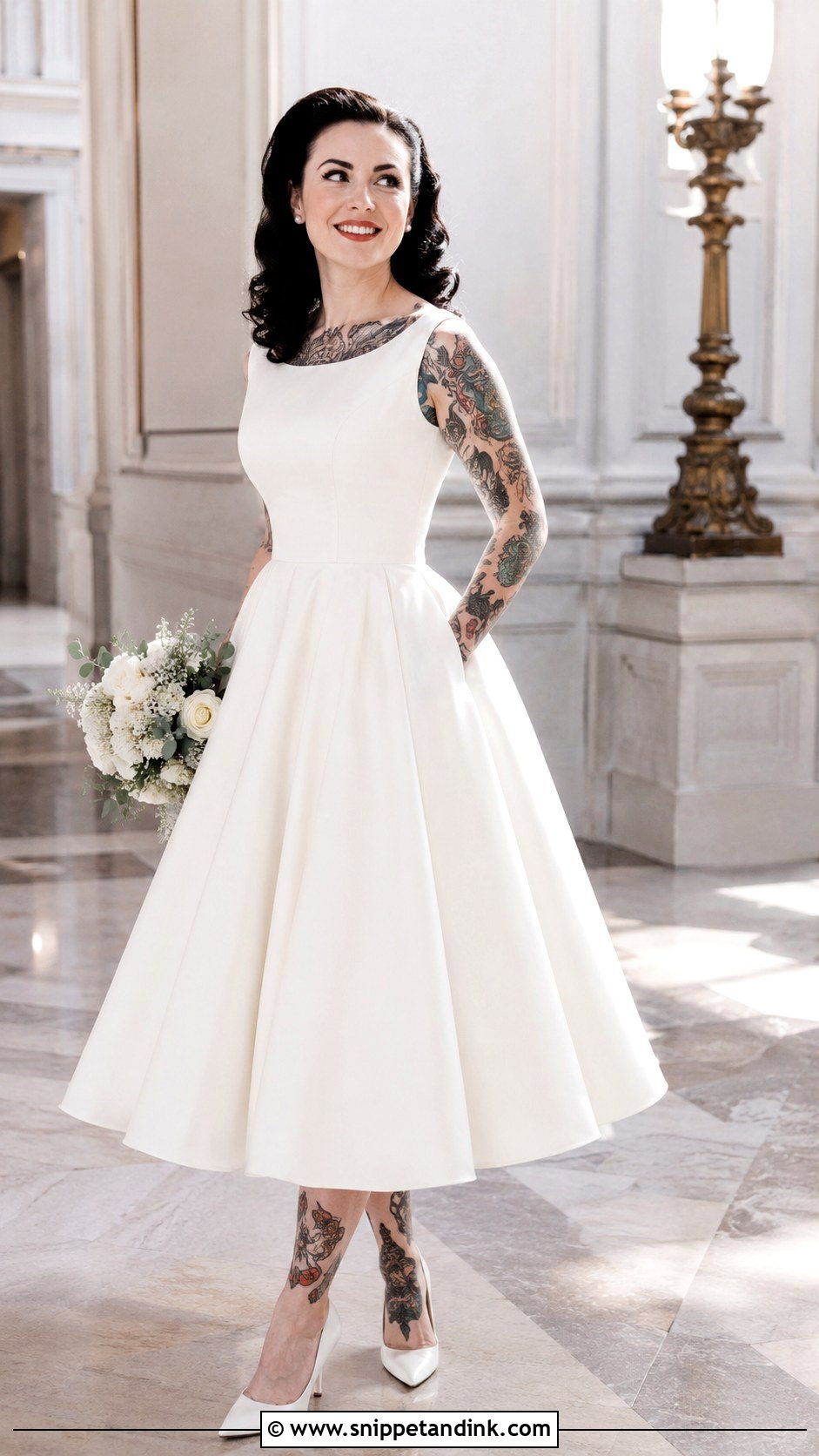
Tea length lands between knee and ankle, which is ideal for calf and ankle tattoos and gives them a vintage frame. A fitted bodice and full skirt create the classic retro outline; pointed pumps or ankle-strap heels finish it. With colorful pieces, plain satin or tulle keeps the picture clean. A birdcage veil, pearl studs and a red or rose lip lean into the old-Hollywood mood. This is a natural fit for daytime ceremonies and intimate receptions.
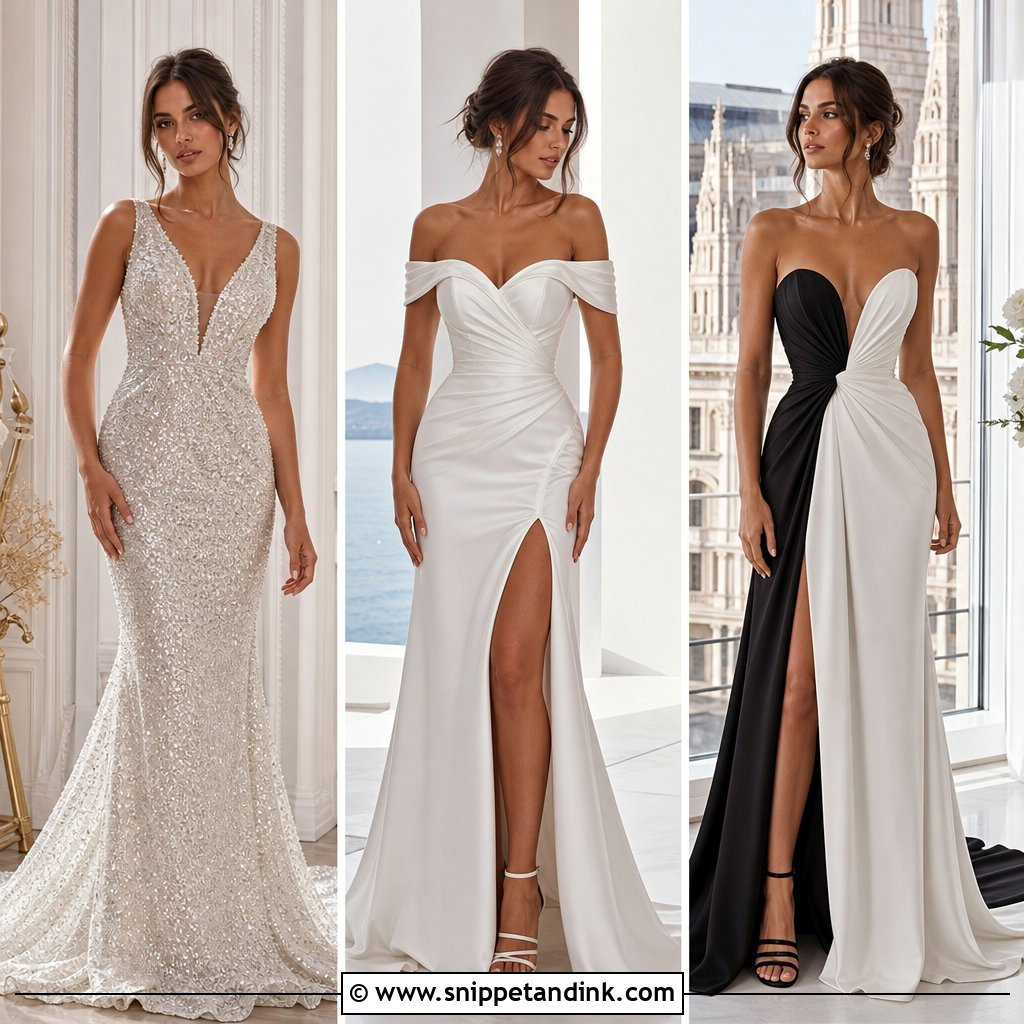
15. Illusion Wedding Dress With Tattoos
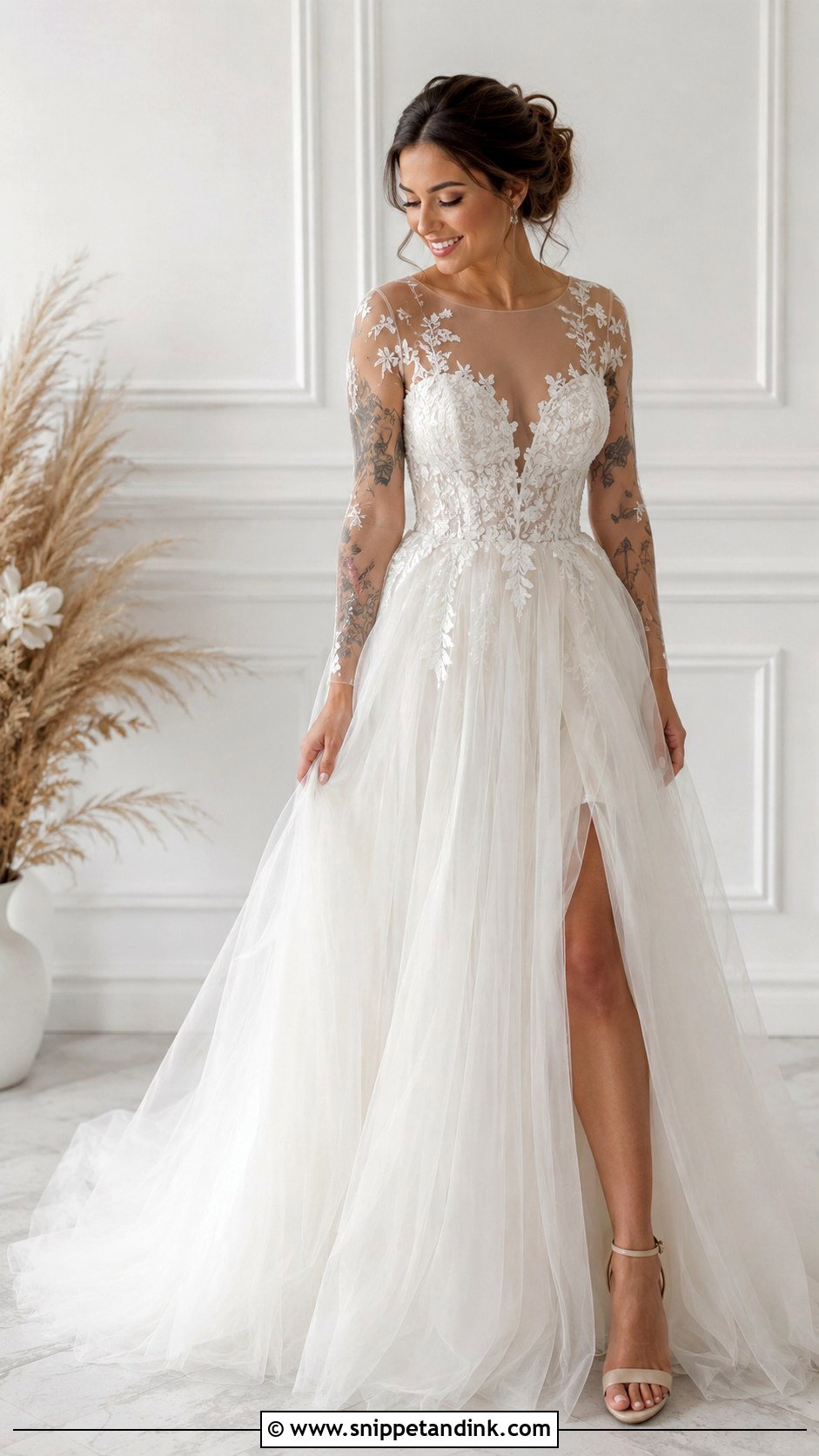
Illusion mesh softens tattoos without hiding them, giving a layered effect through transparent sleeves, sheer necklines or open backs. Mesh tone matters more than anything: it should match your skin as closely as possible, or the panels show as a pale or grey film over your art. Ask the shop to show you mesh shades against your arm in daylight. Pair it with understated earrings, a soft updo and neutral heels. The result is personal without feeling exposed.
16. Plunge Wedding Dress With Tattoos
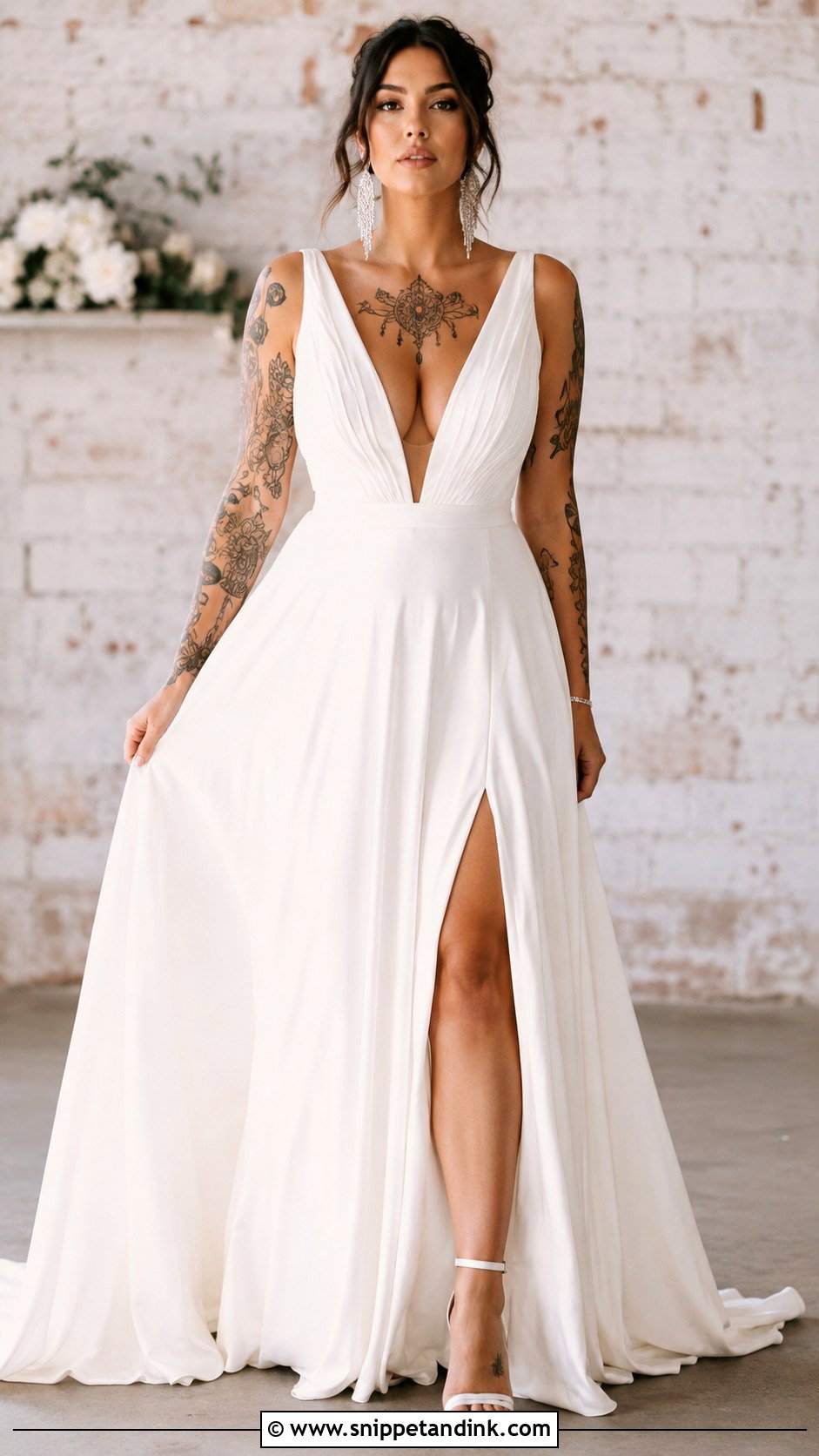
A plunge makes chest, sternum and upper rib tattoos part of the design, and because the neckline is dramatic, security comes first. Structured cups, side boning or a strip of skin-tone mesh in the plunge keep everything in place. A flowing skirt softens the look; a fitted one makes it sleeker. Skip the necklace so the tattoo has space. Statement earrings and smooth waves are plenty for a bride who wants a modern, confident wedding outfit.
17. Sheer Sleeve Wedding Dress With Tattoos
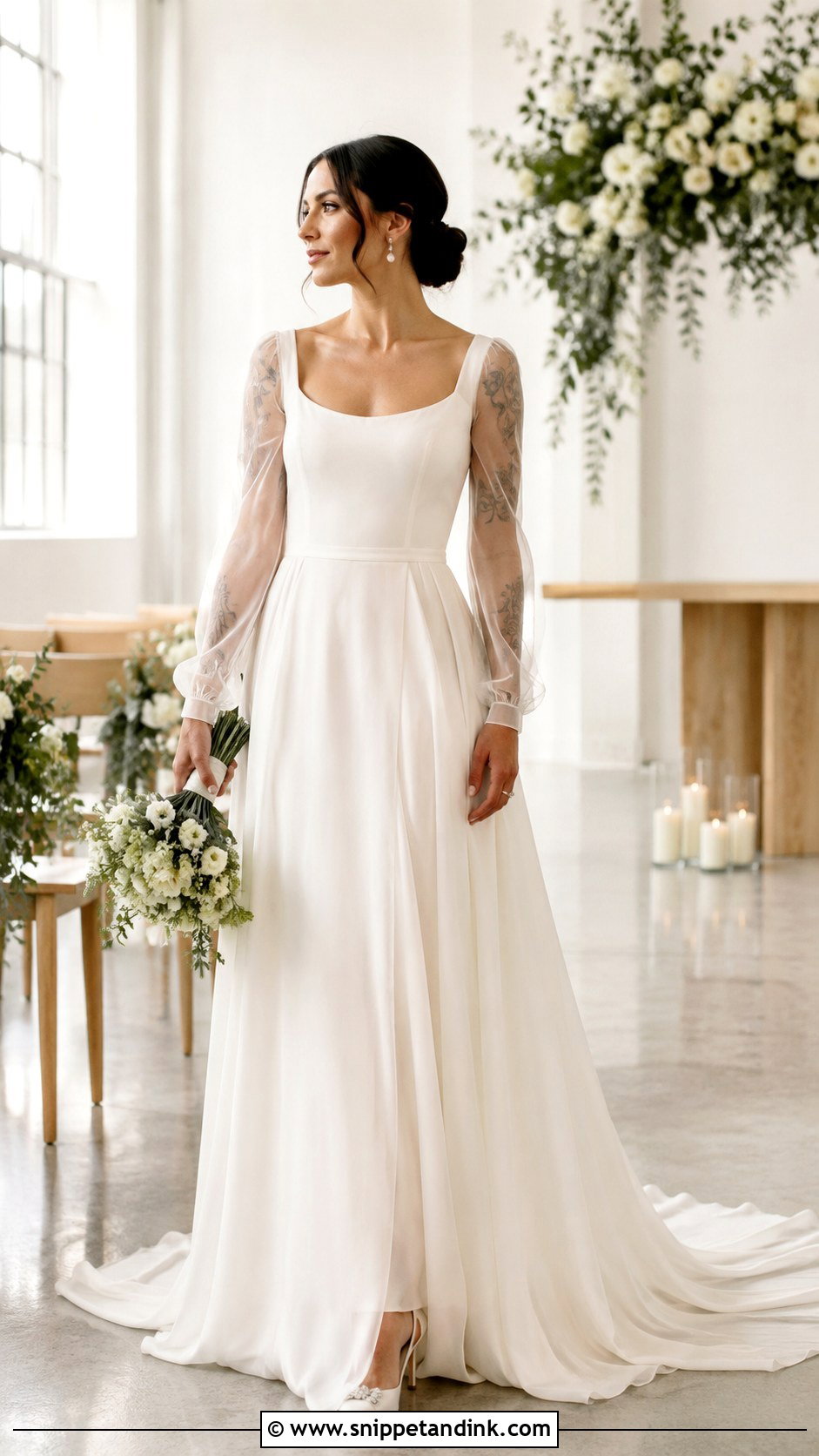
Sheer sleeves are a middle ground: arm tattoos show through, softened by a bridal layer. Tulle reads dreamy and lace reads romantic, but lace pattern over detailed or colorful tattoos can look muddled, so I’d keep lace sleeves to fine-line or blackwork pieces and use plain tulle over color. A simple bodice and flowing skirt keep it balanced. It’s also a practical choice for a cooler season or a formal church, with pearl earrings and a low bun.
18. Minimal Wedding Dress With Tattoos
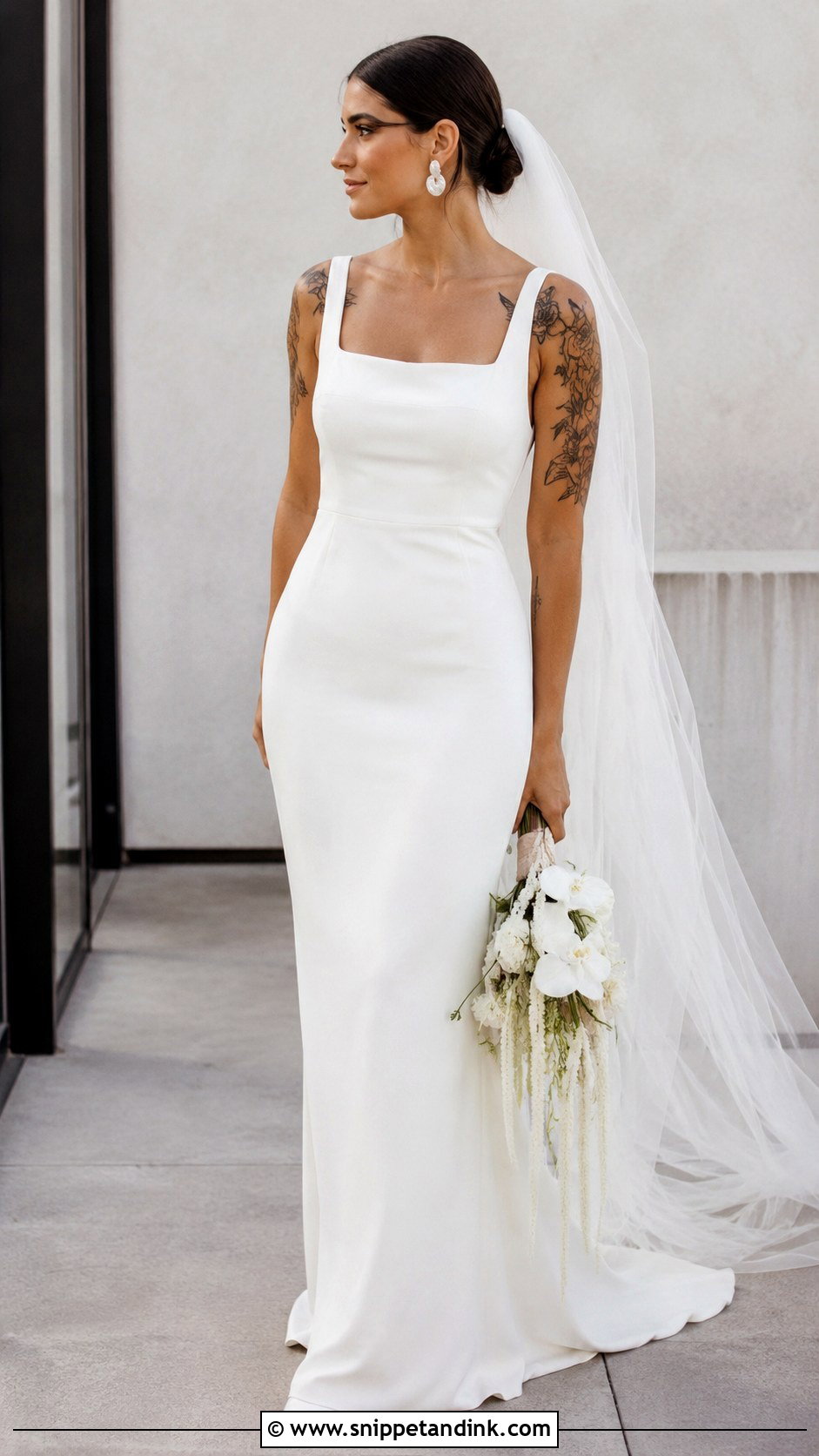
A minimal gown gives tattoos the clearest backdrop, and what matters most is the negative space around them. Smooth crepe, satin, silk or matte fabric with very little embellishment, cut as a slip, column, sheath or A-line, lets the ink lead. Thin straps, a square neckline or a low back show the art without clutter. Sculptural earrings, a sleek veil and white or nude heels suit rooftop ceremonies and courthouse weddings.
19. Black Wedding Dress With Tattoos
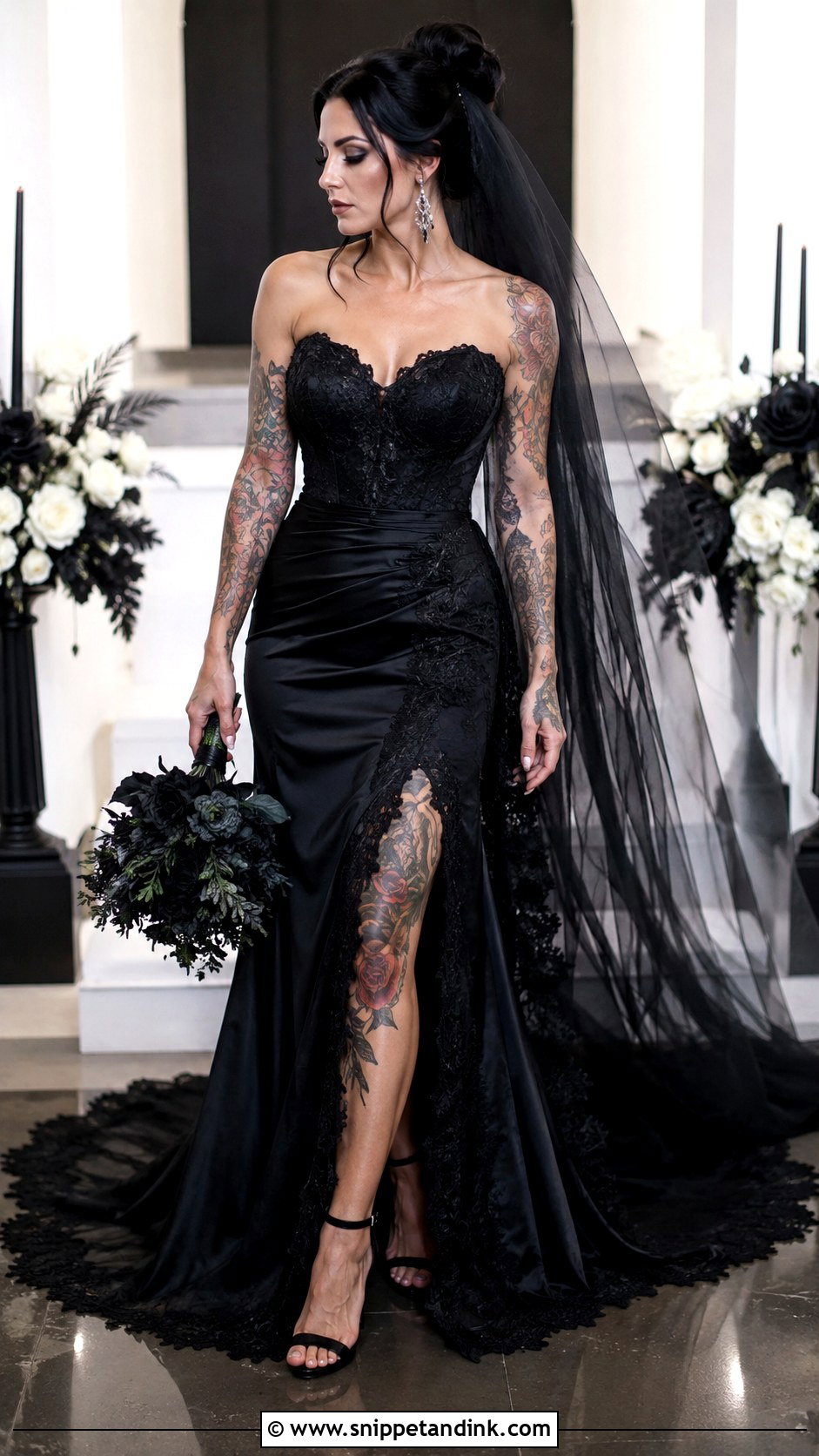
Black gowns make colorful tattoos look brighter, because saturated reds, greens and yellows read more intensely against a dark ground than against white. Black lace is romantic; black satin feels sleek and editorial. Choose the neckline for the pieces you want seen, strapless for arms and backless for back work. One honest note: blackwork tattoos can disappear against black fabric where they meet the neckline, so check that edge in the mirror. Silver jewelry and black heels suit an evening wedding.
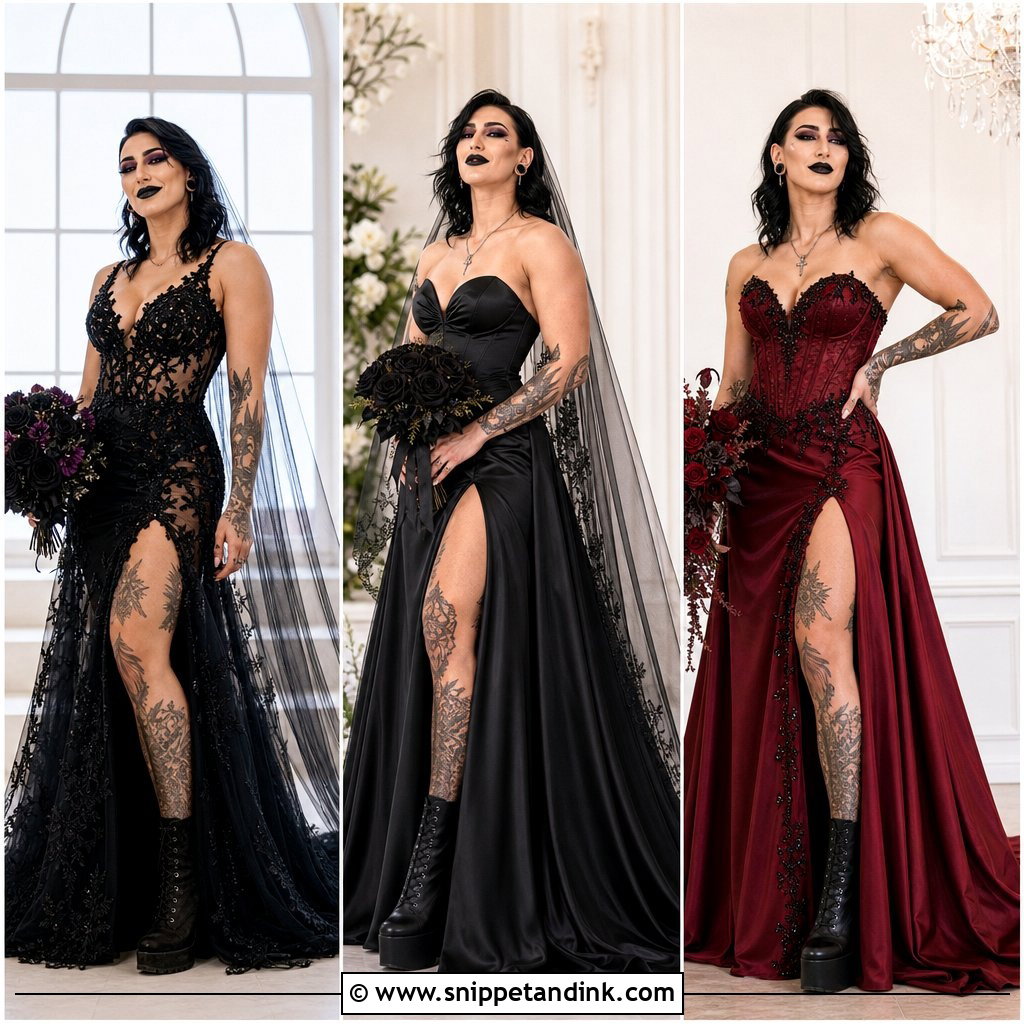
20. Colored Wedding Dress With Tattoos
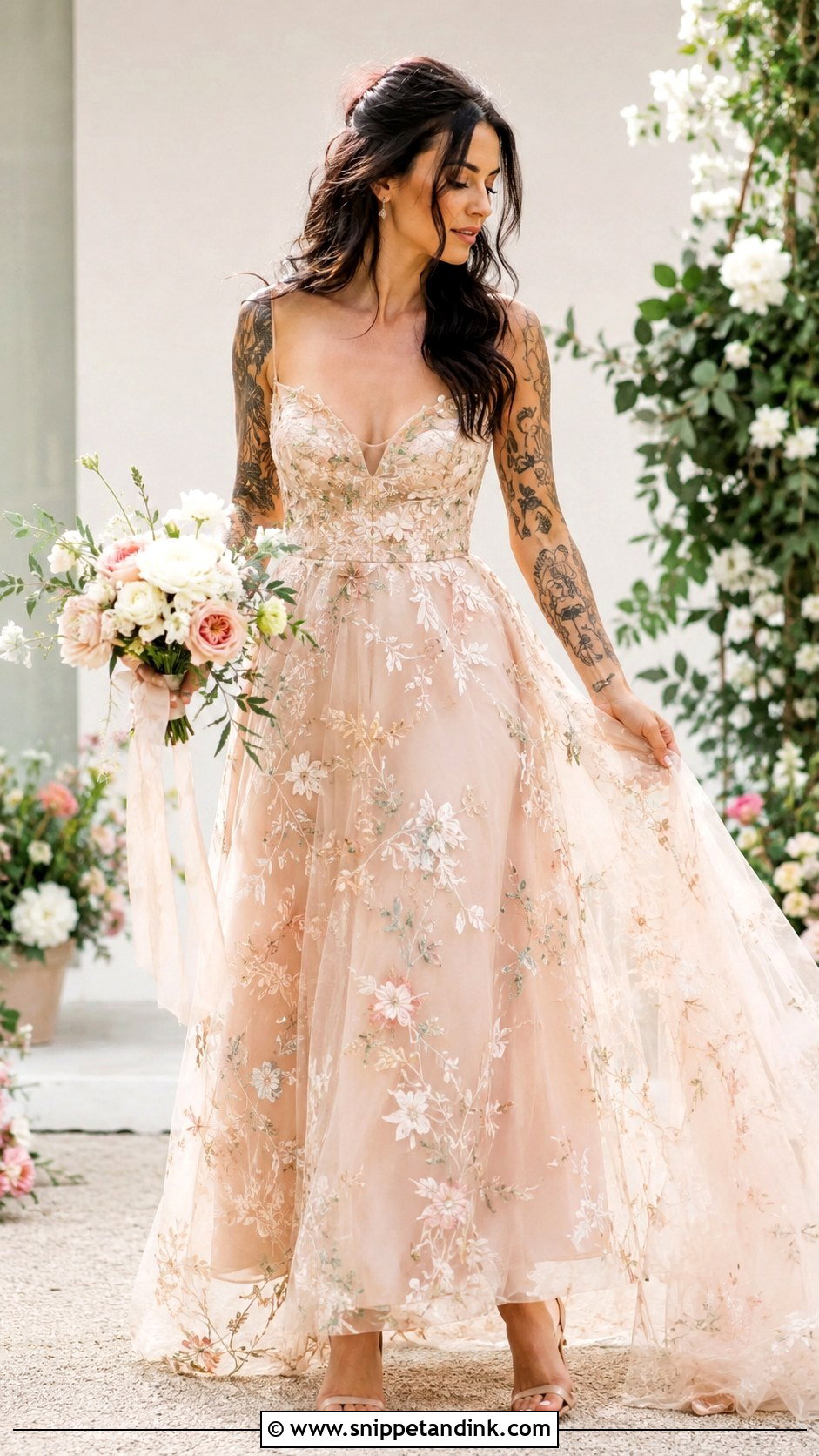
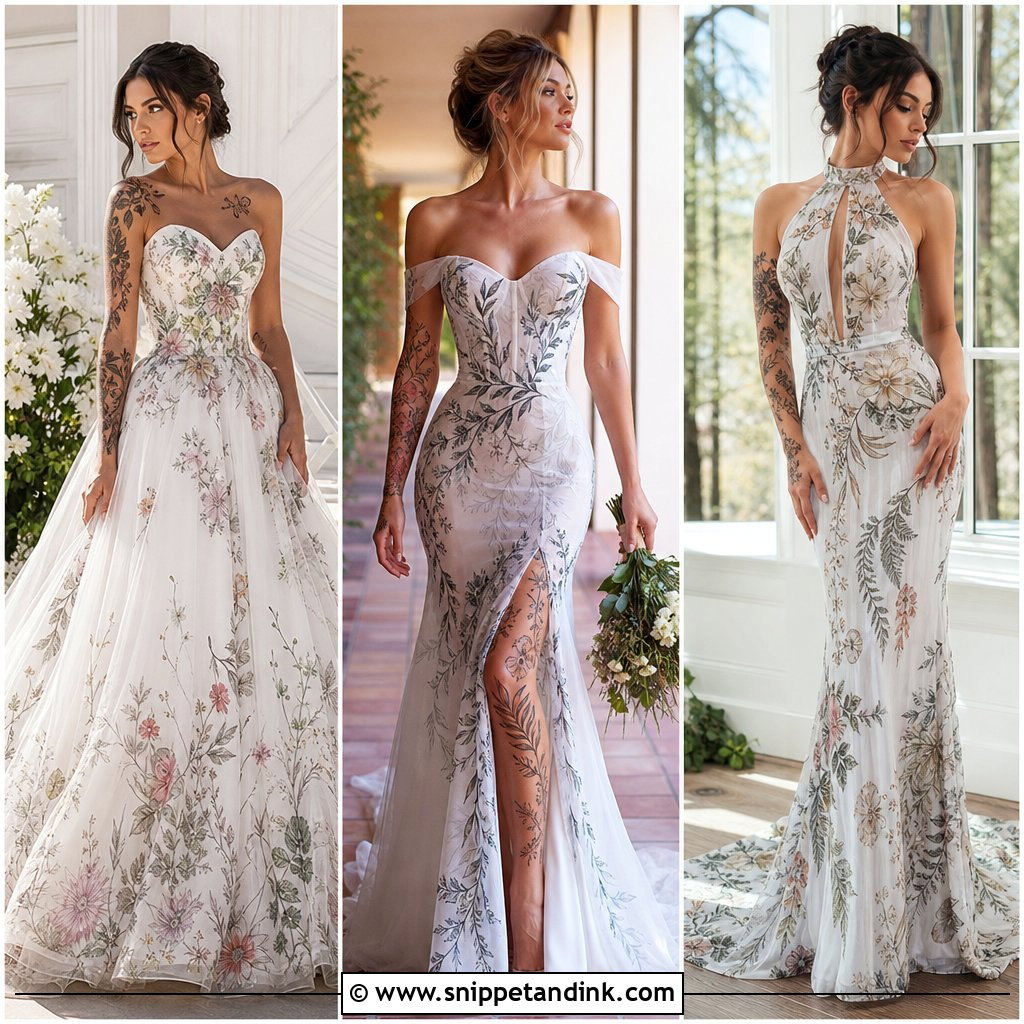
A colored gown can tie your tattoos into the wedding palette. Blush, champagne, lavender, pale blue or a floral print can each pick up a shade from your art. If your tattoos carry specific colors, echo one quietly in the dress rather than matching all of them. Botanical tattoos sit nicely beside a floral embroidered gown, but keep the shape simple if both dress and ink are detailed. Nude heels and natural makeup keep it balanced for spring or garden weddings.
21. Wedding Jumpsuit With Tattoos
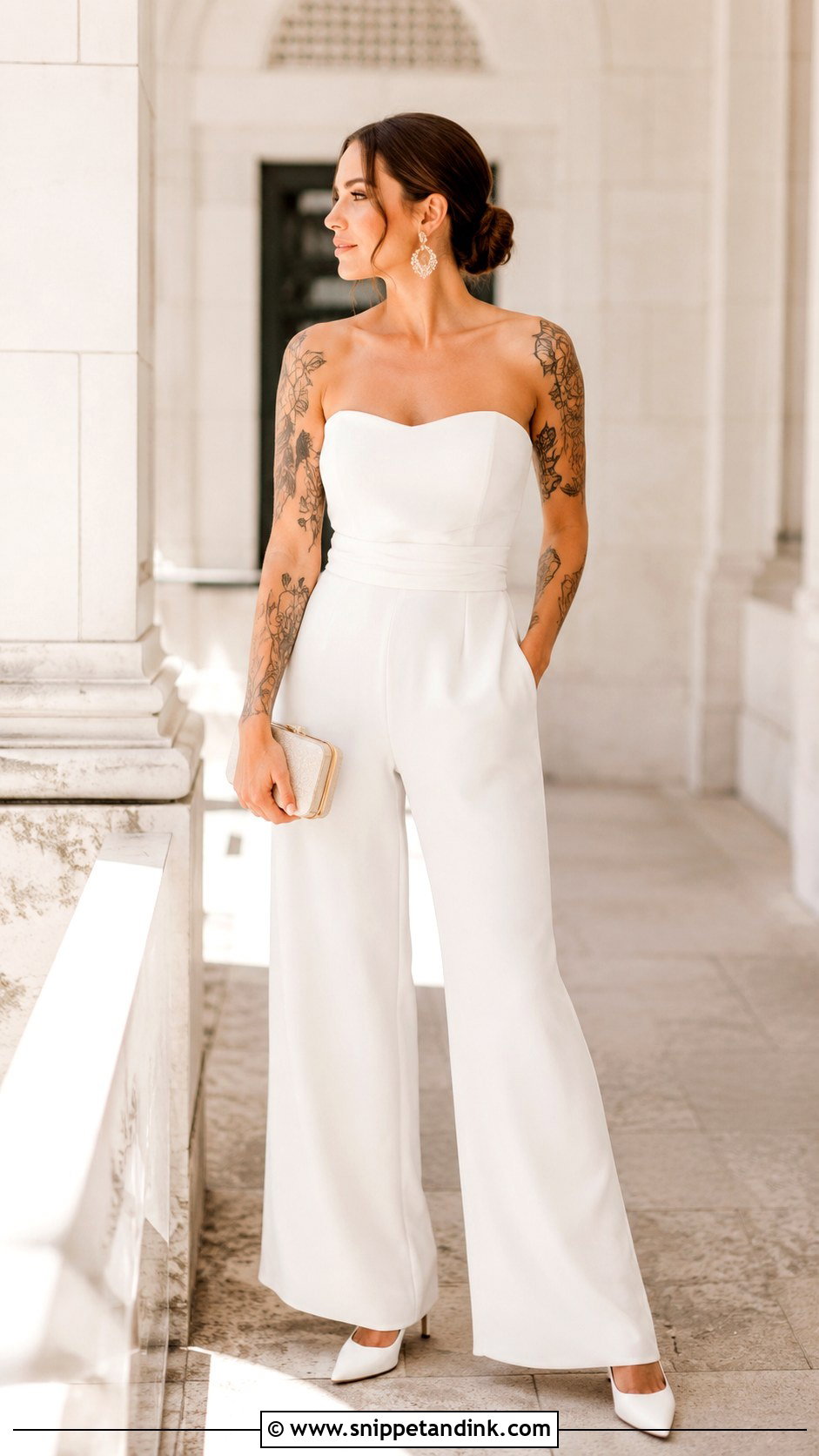
A wedding jumpsuit gives you the same neckline choices as a gown with more freedom of movement. Strapless shows arms and shoulders; backless shows back pieces. Wide legs move well and still look formal in crepe, satin or structured white tailoring. A detachable overskirt or cape gives a ceremony moment and comes off for the party. Pointed pumps and statement earrings suit city venues and courthouse weddings.
22. Two Piece Wedding Dress With Tattoos
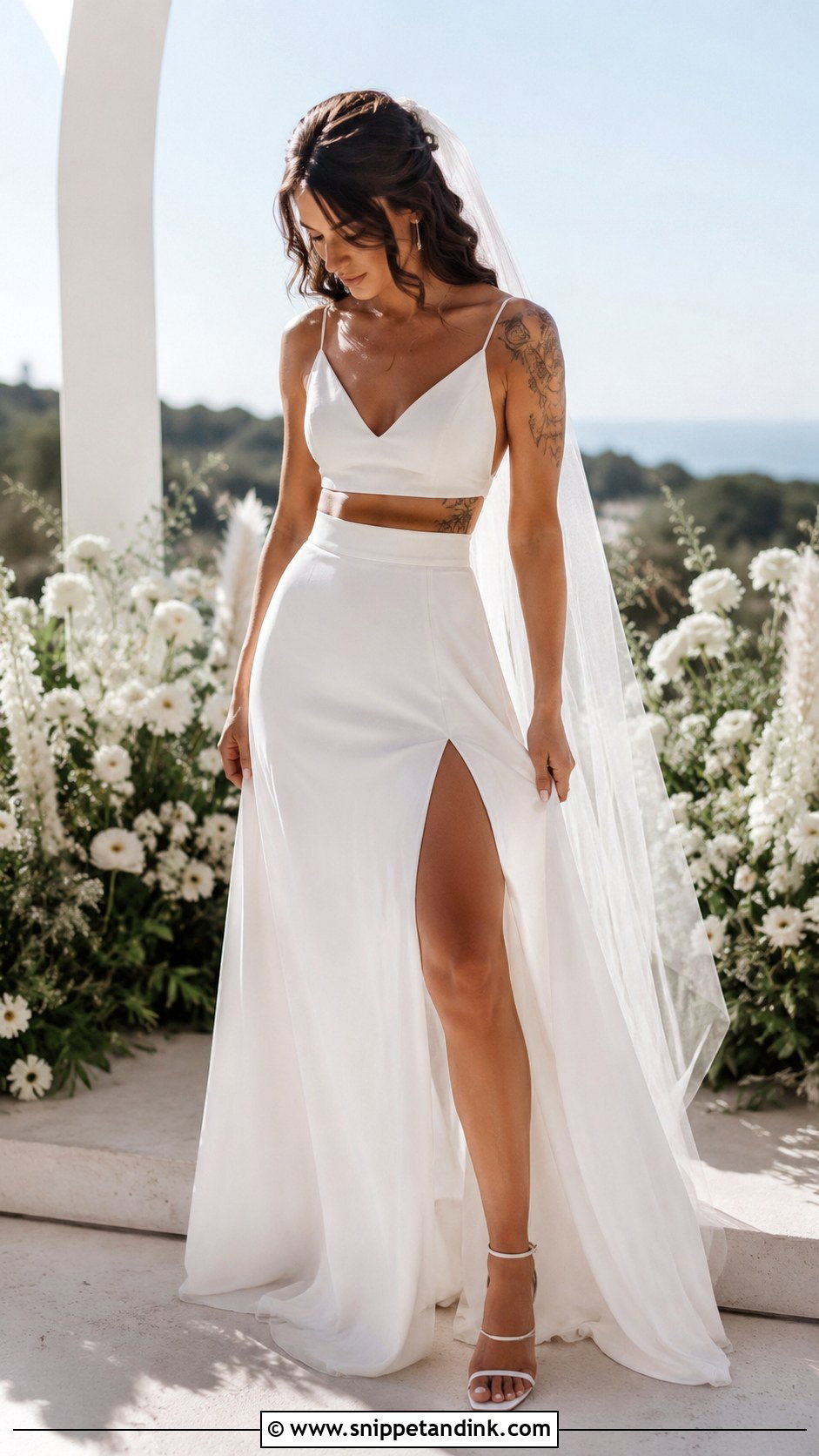
A two-piece frames rib, waist and back tattoos in a way a one-piece can’t. A crop top over a high-waist skirt shows a narrow band of skin, and I’d set the gap in the fitting room sitting down, because it widens when you sit. Long-sleeve lace tops soften arm pieces; strapless tops leave the shoulders clear. The skirt can be full or fitted, satin, tulle or crepe. Sleek heels, a simple veil and small earrings keep it easy to customize.
23. Open Back Wedding Dress With Shoulder Tattoos
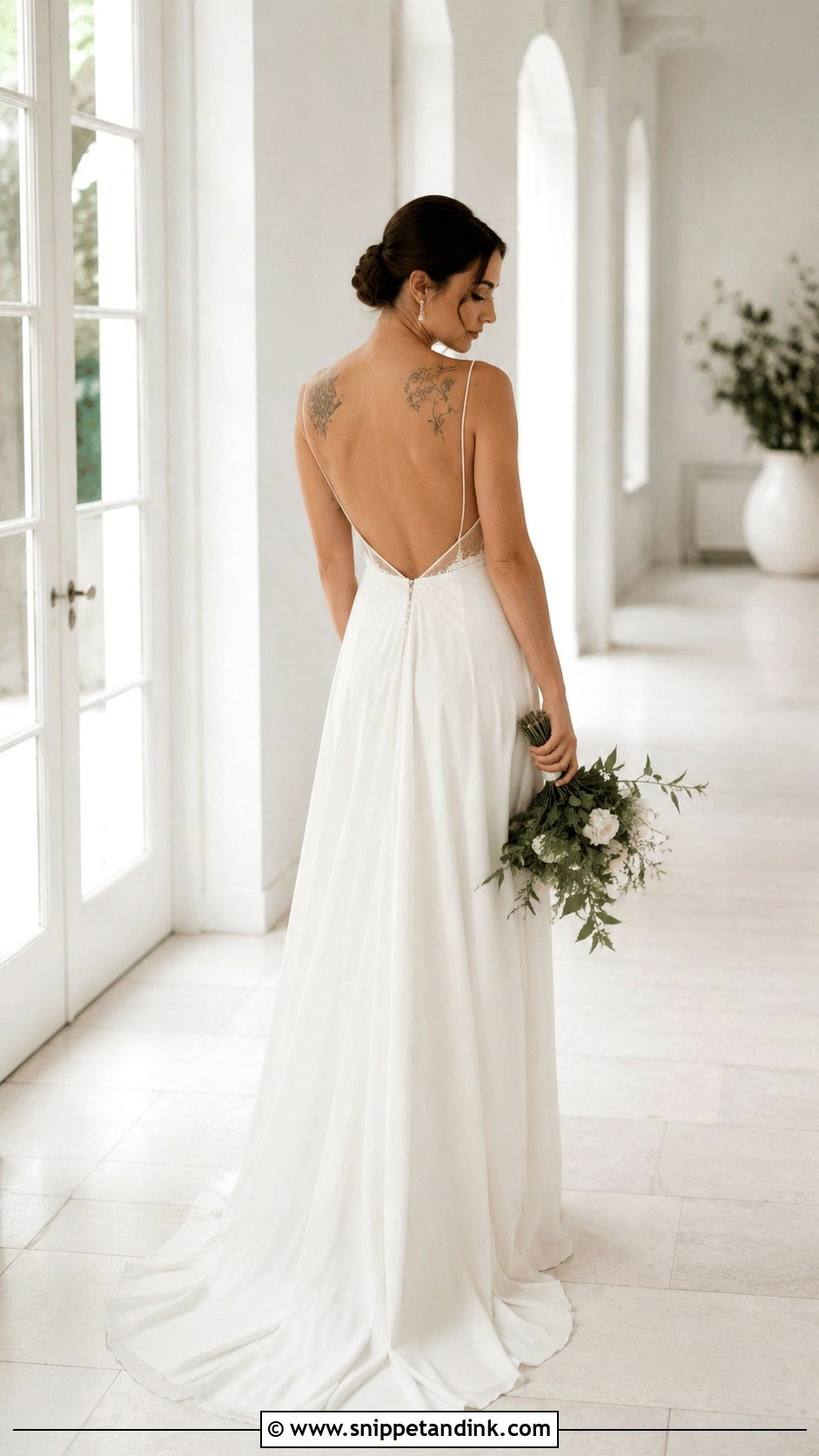
An open back with straps frames shoulder-blade and upper-back tattoos more softly than a fully backless gown. A square opening looks modern and a keyhole looks classic. Where the gown has lace edging, compare its pattern with your tattoo’s linework, since busy lace right beside fine lines makes both hard to read. If the piece sits high, wear your hair up or swept to one side. Small earrings and a fine bracelet are enough.
24. Corset Wedding Dress With Tattoos
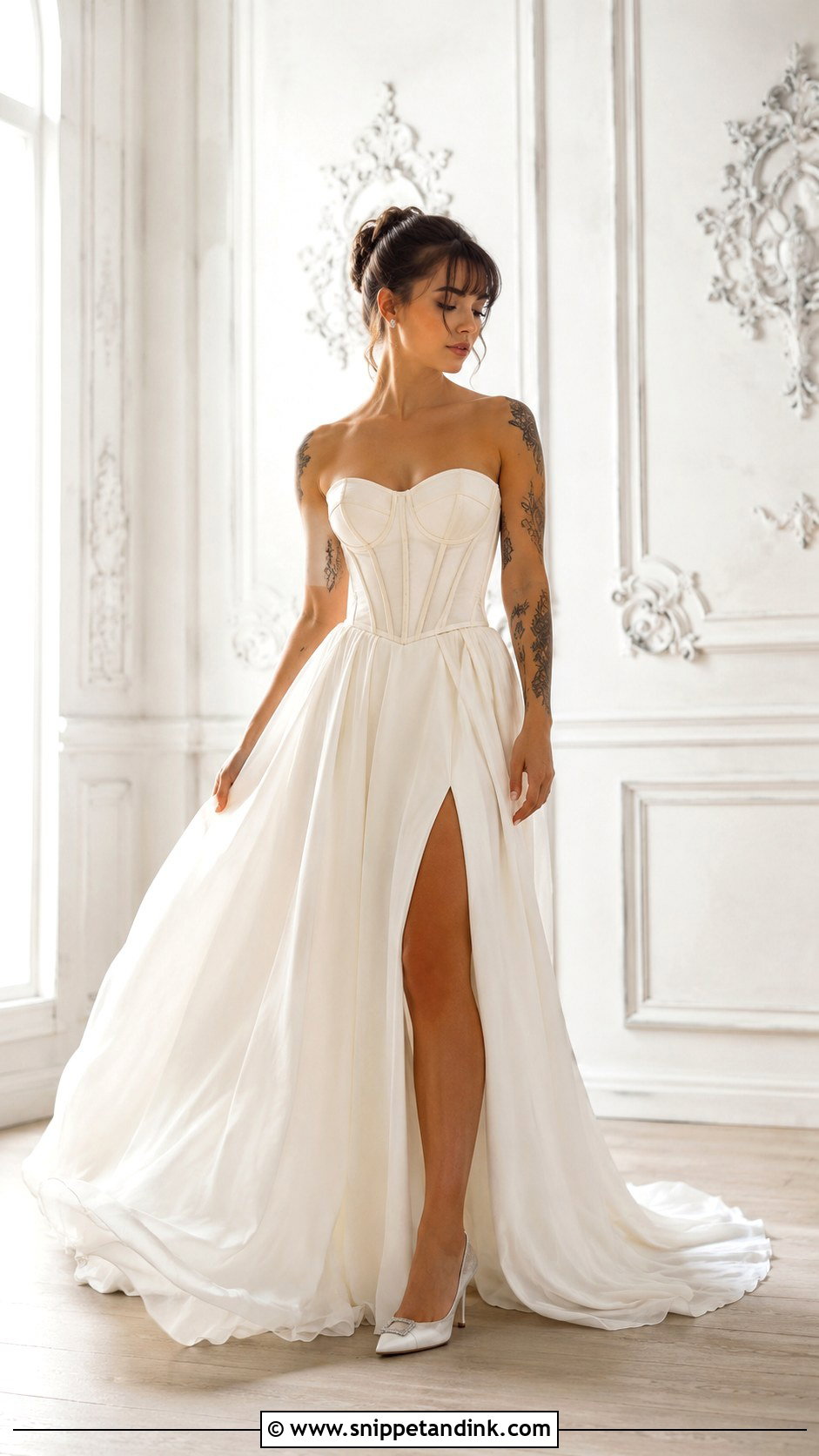
Corsets pair well with tattoos because both bring structure and a little edge. Exposed boning, a basque waist or a lace-up back can echo the graphic quality of body art without tipping into costume. A strapless corset shows arms and shoulders; one with sheer sleeves softens them. Lace-up backs press against the skin, so if you have fresh or raised work on your back, ask for a modesty panel under the lacing. Keep jewelry simple, since the bodice already has plenty going on.

25. Reception Wedding Dress With Tattoos
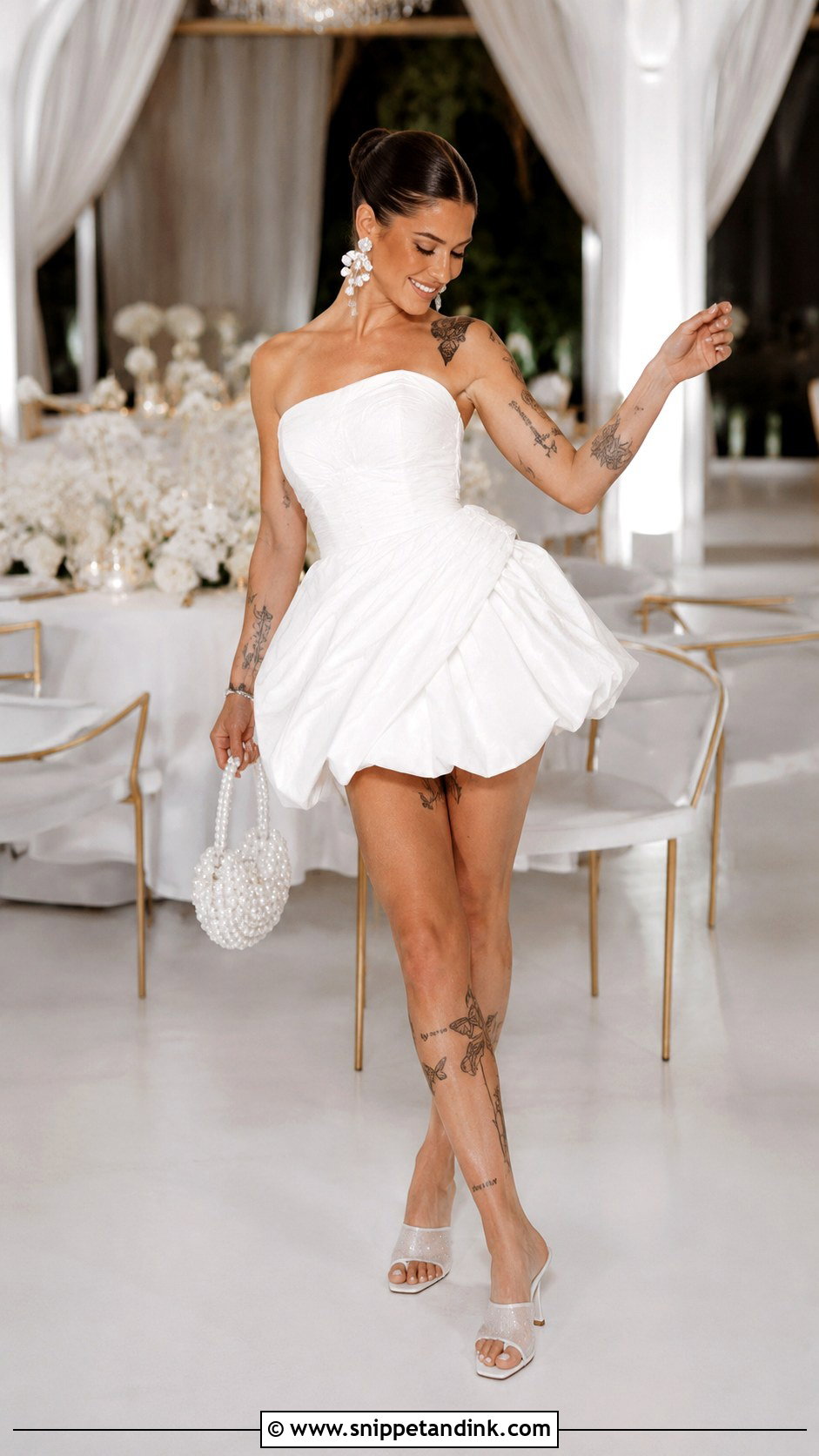
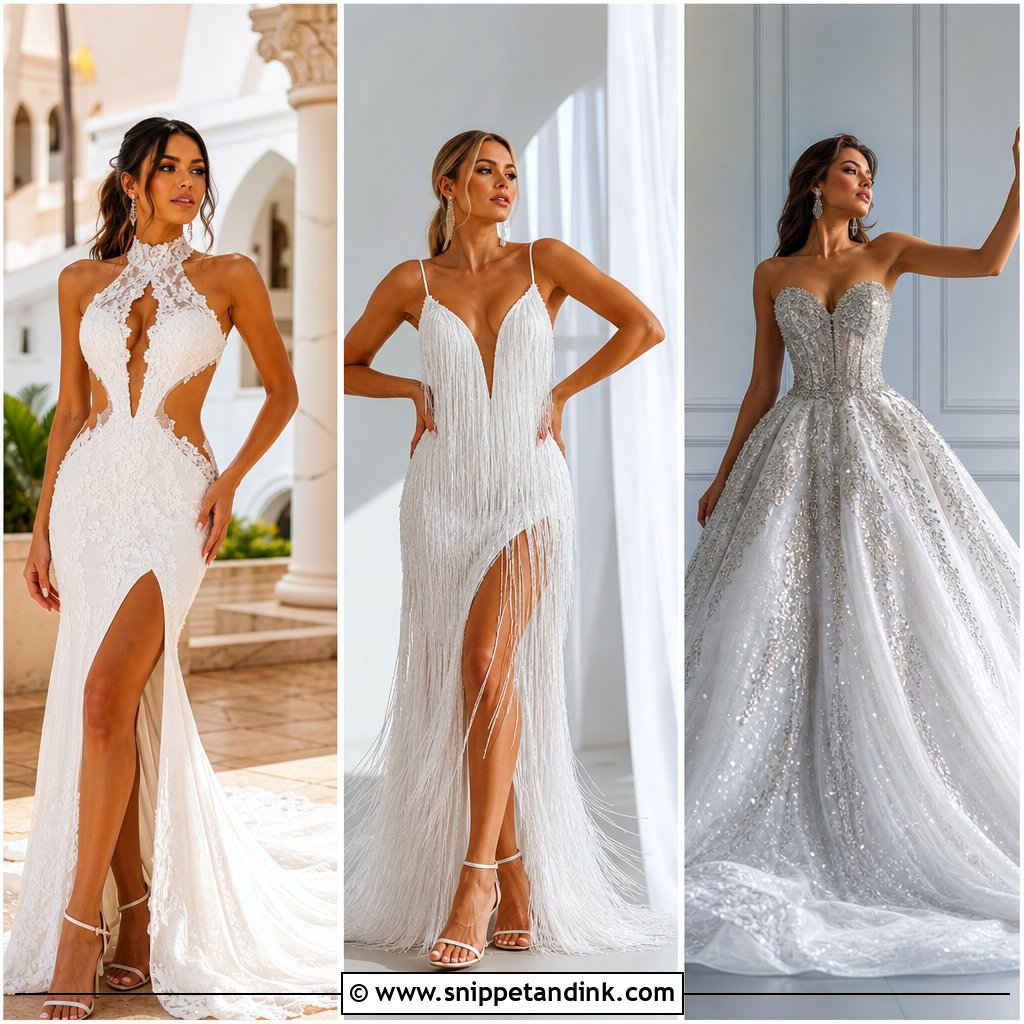
The reception dress is your chance to show the pieces the ceremony gown didn’t. A short dress, slip, feather-trim mini, jumpsuit or sleek second gown can reveal more skin and allow more movement. Plan it around what you want photographed during dancing: a mini shows legs, a halter shows arms, a low-back slip shows back work. Wear bolder earrings than you did for the ceremony and shoes you can dance in. This one should feel entirely like you.
Covering Ink for a Ceremony, Uncovering It for the Party
Some brides want a piece hidden for one part of the day, usually a religious service or a family elder’s comfort, and shown the rest of the time. Fabric is the easiest way to do that. A lace bolero, detachable sleeves, a sheer cape or a shawl can go on for the vows and come off before the first dance, leaving the gown you chose for your art underneath.
Makeup cover works but needs planning. Dark black or blue ink usually needs an orange or peach color corrector first, then a full-coverage body foundation, then setting powder and spray. Do a trial and rub a white cloth across the area afterwards. Body cover can transfer onto ivory fabric, especially at the neckline and inner arm, and a gown stained in the first hour is a worse outcome than a visible tattoo.
A word to the photographer
Tell your photographer which pieces matter to you. A tattoo that carries a story, a parent’s handwriting or a date, deserves a deliberate detail shot, and they can only plan for it if they know.
Your Tattoos Were There First
It all comes down to how you want each tattoo to appear. Some brides want their art front and center; others prefer it filtered through lace, tulle or illusion mesh. Both are good choices. Decide piece by piece, then pick the neckline, sleeves, back and fabric to match. Try dresses on from every angle, take phone photos in daylight, and look at the tattoos and gown together. A bridal look built that way feels personal from the first fitting to the last dance.
You'll Like These Ideas:







Leave a Reply