
Body art doesn’t narrow your choice of wedding dress. If anything, it gives the shopping a clear purpose, because every neckline, sleeve and back is now a decision about what to frame. The outfits below show tattoos on the arms, shoulders, chest, back and legs, using strapless and halter necklines, exposed corsetry, sheer lace, detachable sleeves and removable overskirts. When I style a tattooed bride, I start with one question: which pieces do you want seen, which do you want softened, and does that change between the ceremony and the dance floor? Venue and movement come next, then accessories, which should sit beside detailed artwork rather than pile on top of it.
Map Your Ink Before the First Appointment
The most useful thing a tattooed bride can bring to a bridal appointment is a quick map of her own skin. Consultants pull dresses by neckline and sleeve, and they can’t do that well if they only discover your back piece when you’re half into a sample.
- Take clear photos of every tattoo you might show: front, back and both arms, in plain light.
- Sort them into three groups: show, soften behind sheer fabric, and keep covered. Note if any group changes after the ceremony.
- Mark where each piece starts and stops relative to your collarbone, shoulder blade and waist. That tells you how deep a back or how low a V you need.
- Wear a strapless bra or no straps at all to appointments, so you can see the real neckline against your skin.
With that map in hand, I can usually rule out half the shop in a few minutes, and the dresses left on the rail are the ones that actually suit where your art sits.
1. Strapless Satin Wedding Dress
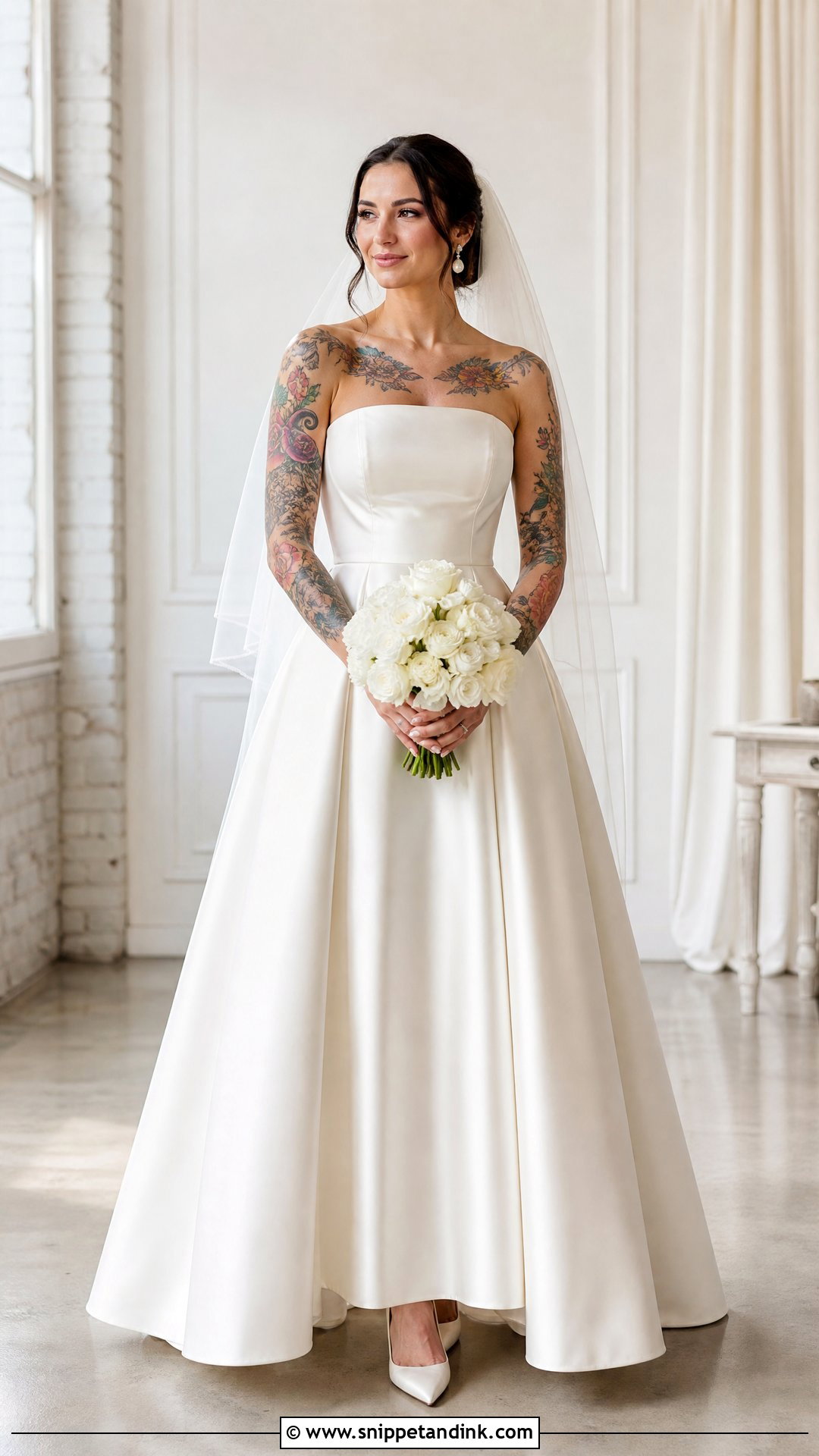
Strapless satin is the cleanest background you can give shoulder, collarbone, chest and arm tattoos. A structured bodice with internal support keeps the neckline where it belongs through hugging and dancing, and I always have a bride raise her arms at the fitting to prove it. An A-line or soft flare suits most figures. Colorful pieces usually look better against ivory or soft white than optic white, which can make reds and yellows look harsh by contrast. Pearl drops, pointed ivory pumps, a fingertip veil set below the crown and a compact bouquet of white flowers are all it needs. Skip the necklace.
2. Off-the-Shoulder Lace Wedding Dress
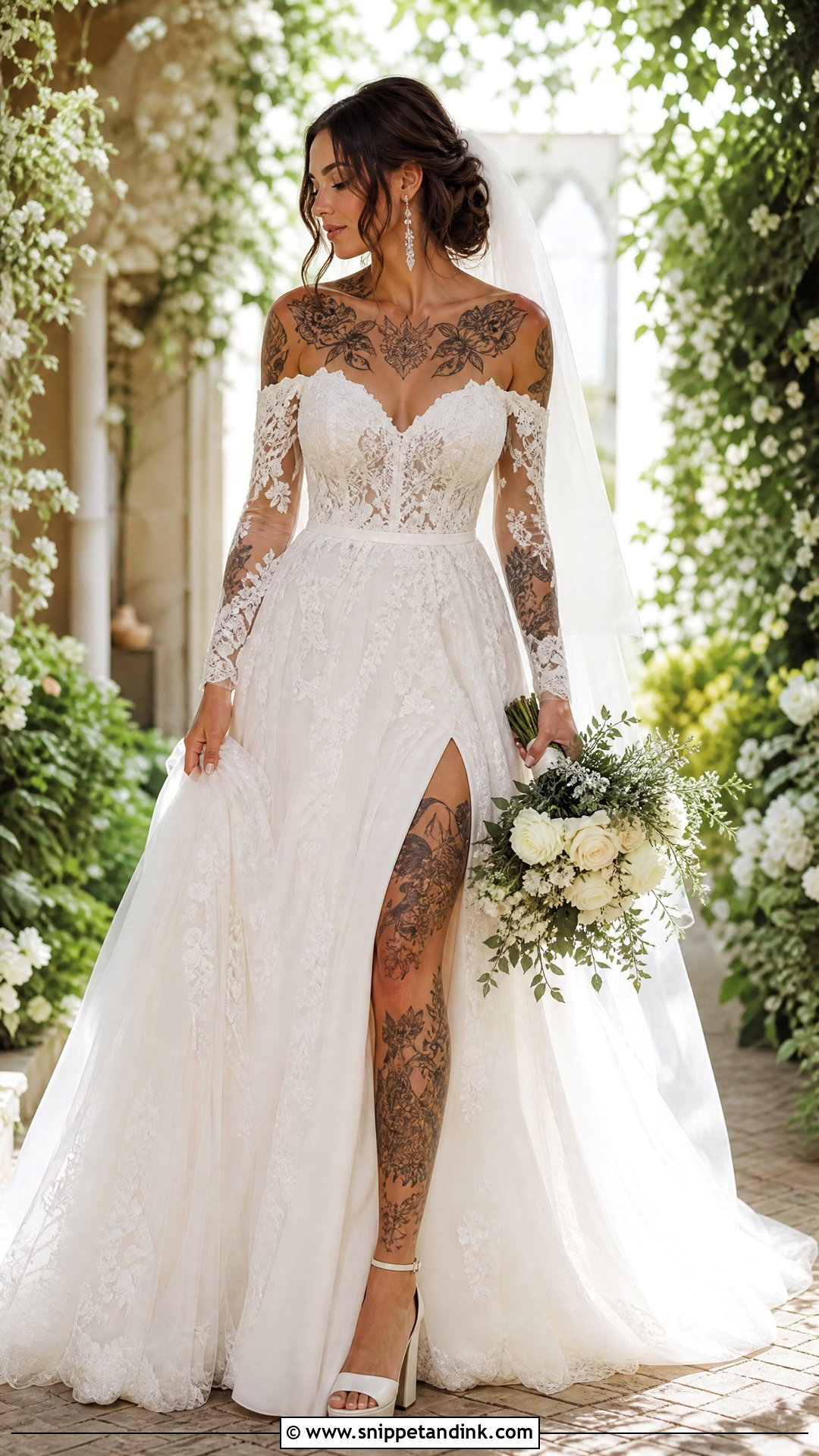
Lace sitting just below the shoulders frames upper-arm and collarbone work well. Look for fitted lace sleeves, a defined waist and an A-line skirt. Pick a lace motif that is different from the shapes in your tattoos; florals beside floral ink tend to blur together in photos. Sleeve fit is the thing I’m strict about here, because lace that is too tight squeezes the arm, distorts linework, and stops you lifting a glass. A low textured bun, small crystal earrings, ivory block heels, a plain tulle veil and a loose bouquet keep the rest simple.
3. Backless Crepe Wedding Dress
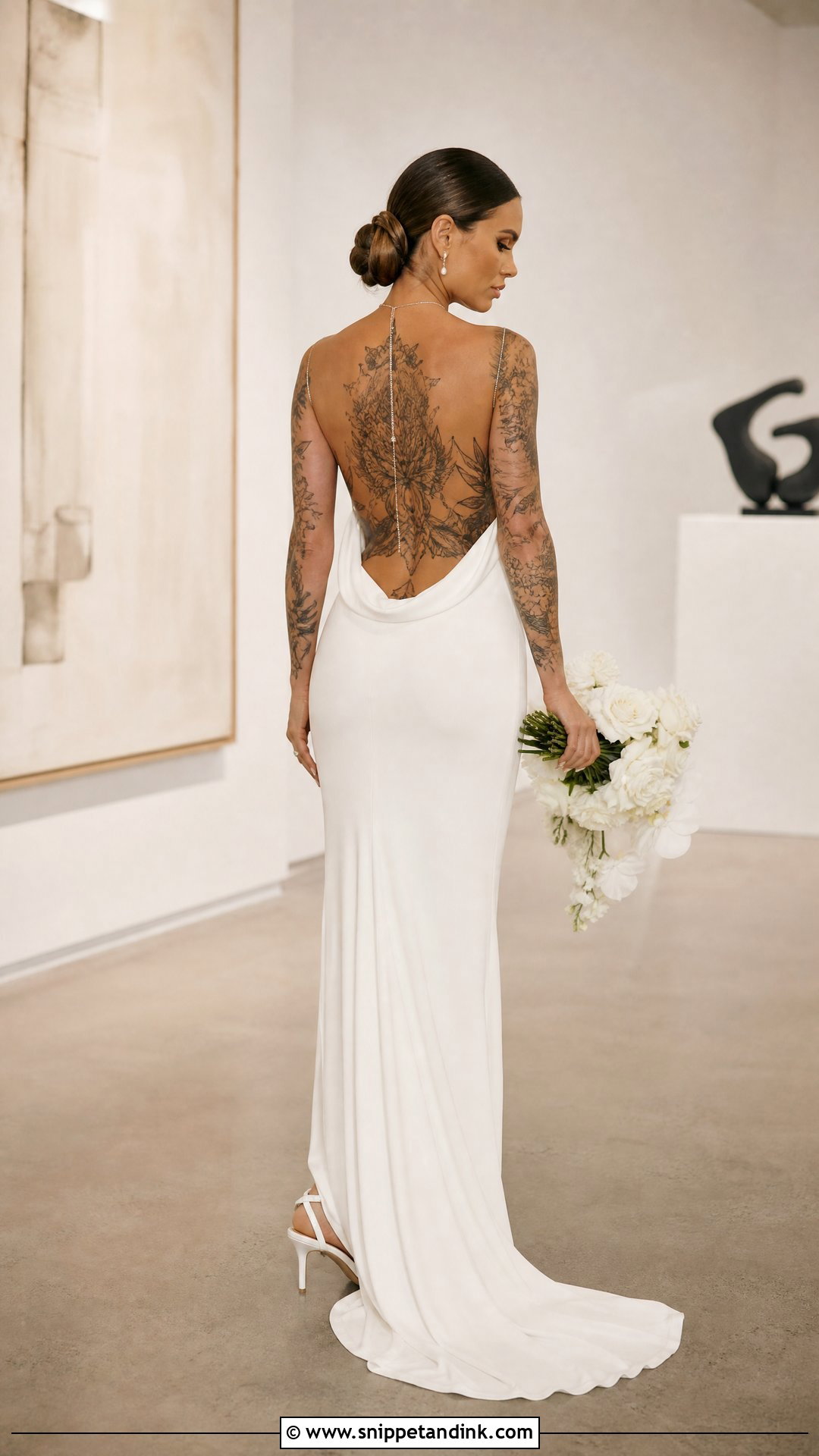
Picture walking away from the camera in smooth crepe that opens onto a back piece. A backless column does this with no competing texture. Choose a low V or a rounded opening based on the tattoo’s shape, and make sure the edge sits around the design instead of slicing through its center; I’ll often pin a fabric edge in two or three places at a fitting until it lands right. Sleek sandals, a low chignon and, if there’s room, a fine back necklace work. A long veil would hide the whole point, so wear a short blusher or take the veil off after the ceremony. Understated earrings and a structured bouquet finish it.
4. Halter Neck Wedding Dress
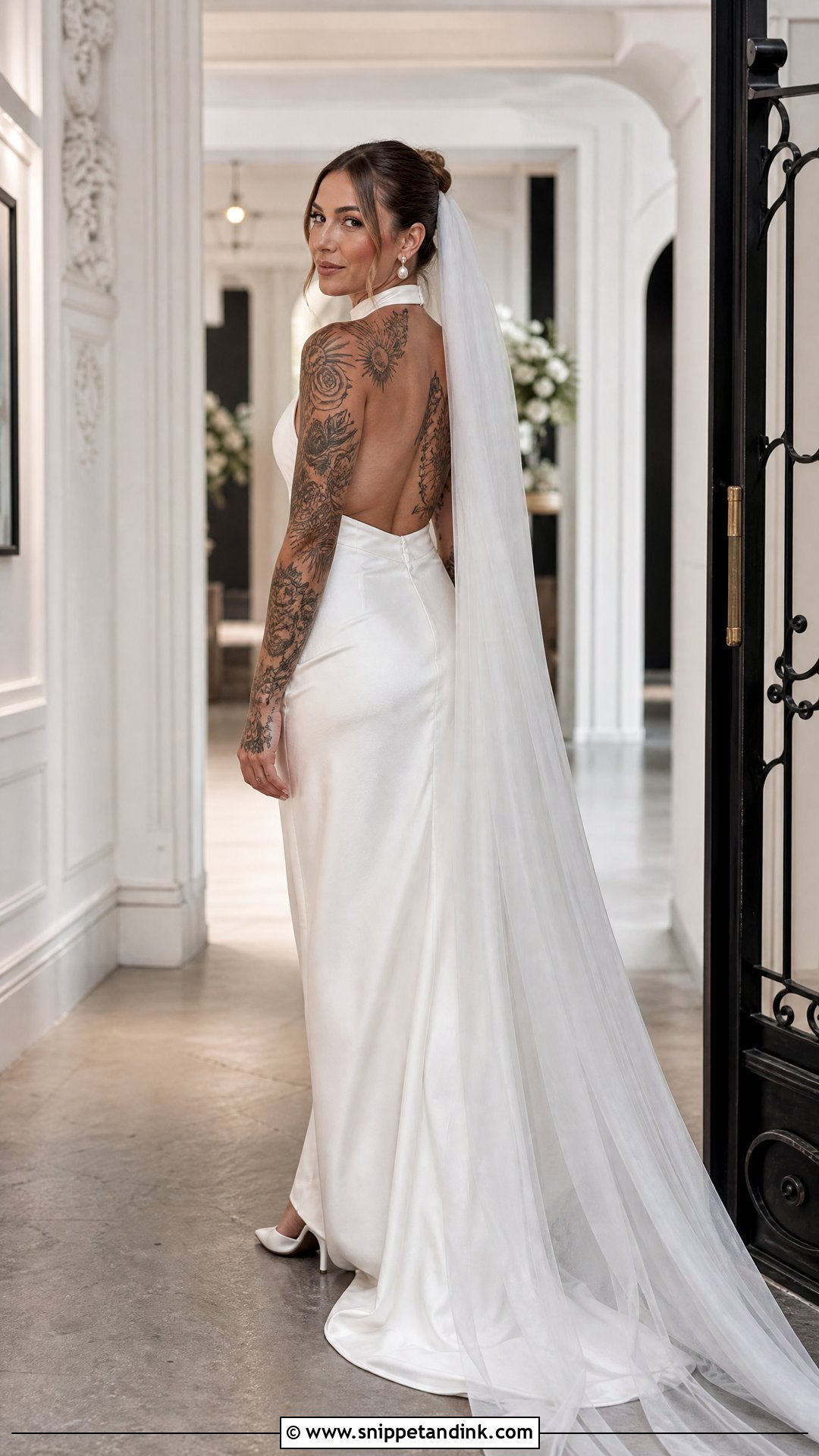
Halters pull the eye upward and leave the shoulders, upper back and arms open, which is why I reach for them with sleeve tattoos. Fluid satin or crepe with a fitted waist works over either a soft A-line or a narrow column. A higher front and an open back keep the outfit balanced while showing more artwork behind. Halter straps tie or fasten at the neck, so check the weight of the skirt; a heavy gown on a halter can leave you with a sore neck by evening. Swept-up hair, sculptural earrings, no necklace, pointed heels and a plain cathedral veil you remove later suit it, with a white and green bouquet.
5. Sweetheart Mermaid Wedding Dress
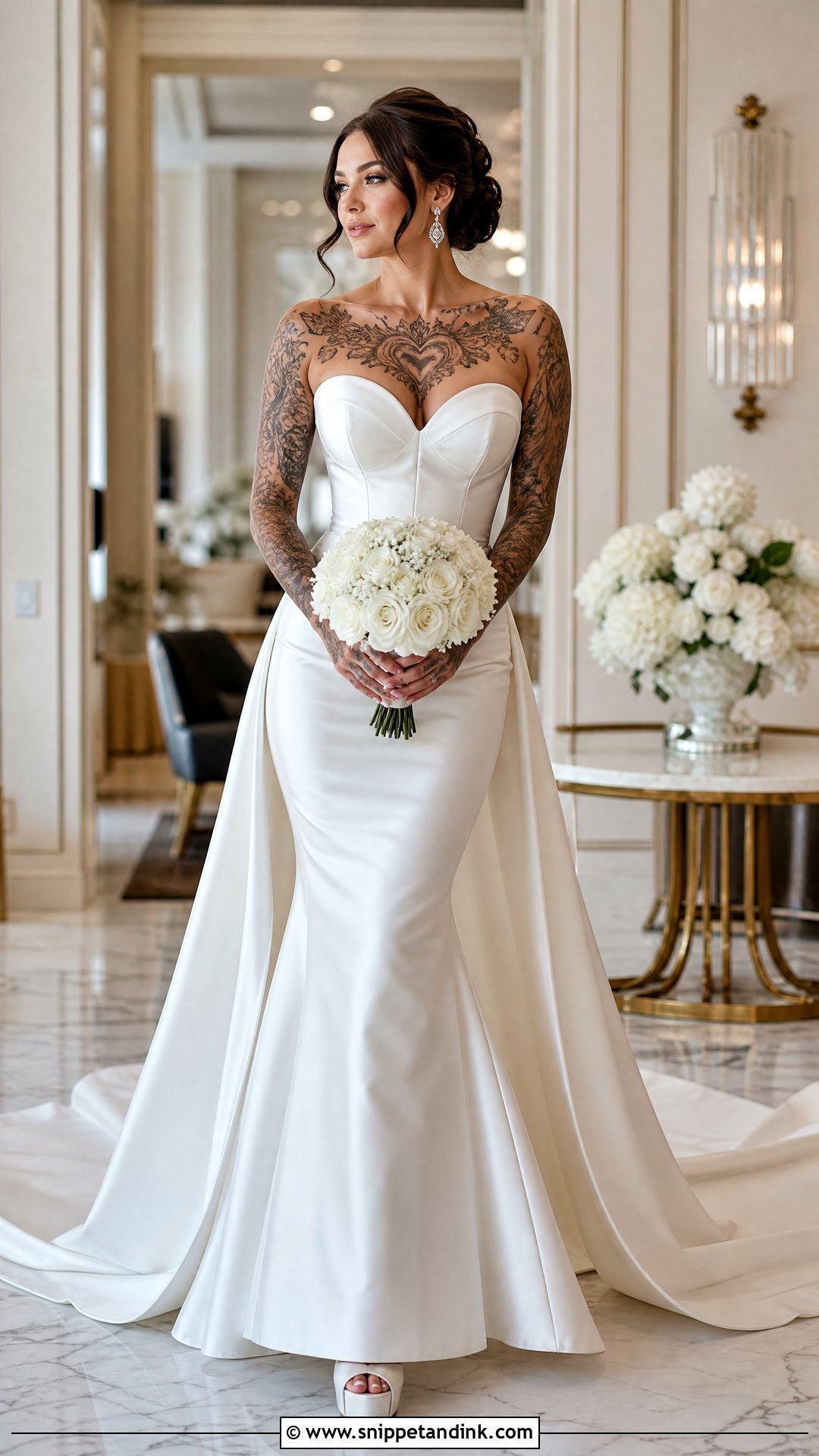
A sweetheart mermaid is fitted and confident, and the open neckline frames chest and shoulder tattoos. The bodice should be supportive and corseted, with the flare starting at or just above the knee depending on how much stride you want. Smooth mikado gives a crisp background; subtle lace gives a softer one. A long plain veil adds drama behind you without covering arm tattoos from the front. Mermaids are tight to walk in, so consider a detachable train and do a real staircase test. Sparkling studs, a slim bracelet, hidden platform sandals and a rounded one- or two-color bouquet keep the focus on the dress and your skin.
6. Square Neck A-Line Wedding Dress
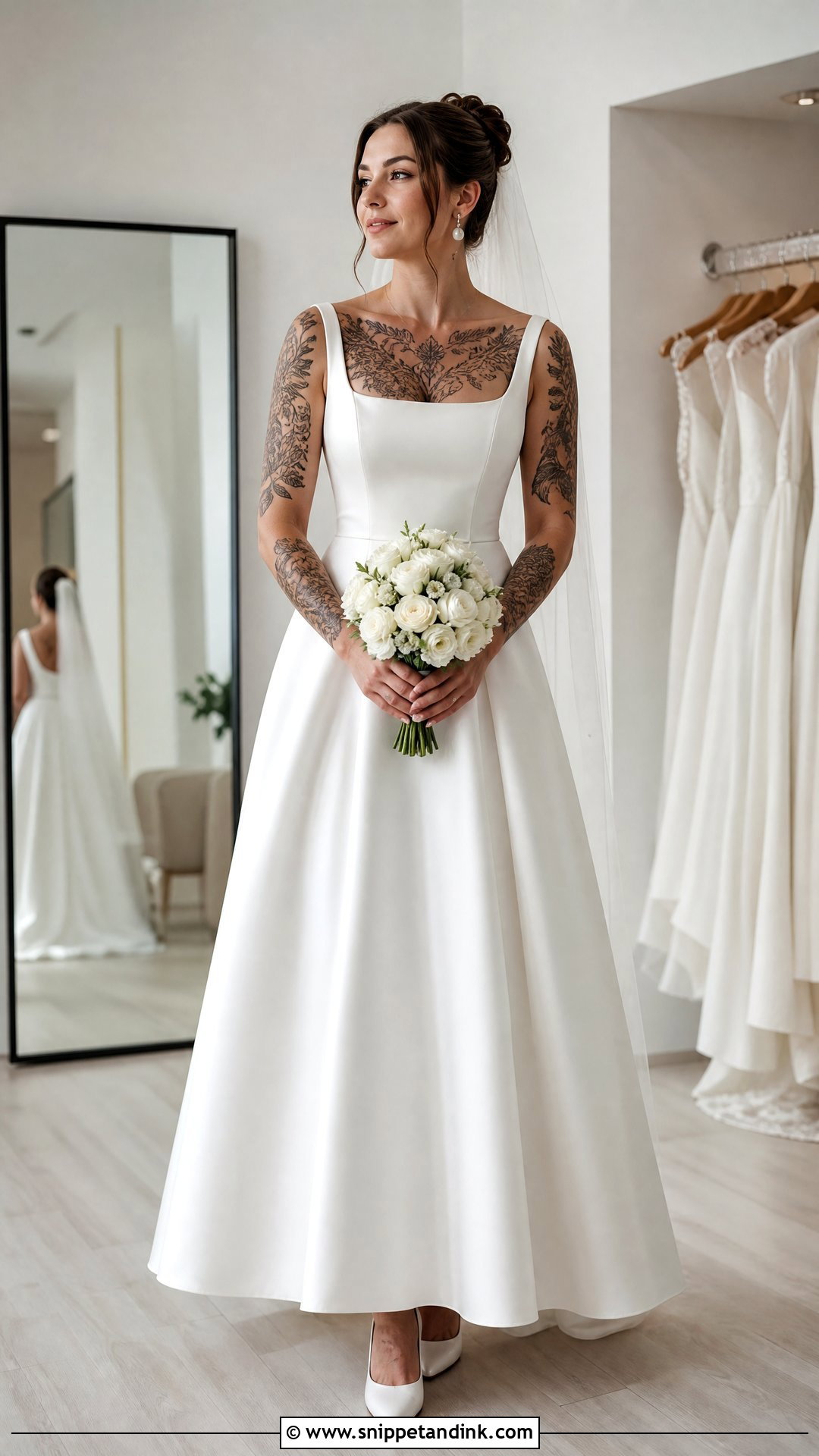
Square necklines suit detailed chest, shoulder and upper-arm artwork because the straight lines act like a picture frame. Look for an A-line with wide straps, a fitted waist and a light, full skirt. Satin, crepe and fine jacquard all work, though the plainer the fabric, the more clearly multicolor tattoos read. A polished bun, medium pearl earrings and a narrow veil at the back of the head suit it. If your tattoos are angular, I’d choose softly curved earrings and a rounded mini bouquet to ease the geometry. Comfortable block-heel pumps round it out.
7. Plunging V-Neck Wedding Dress
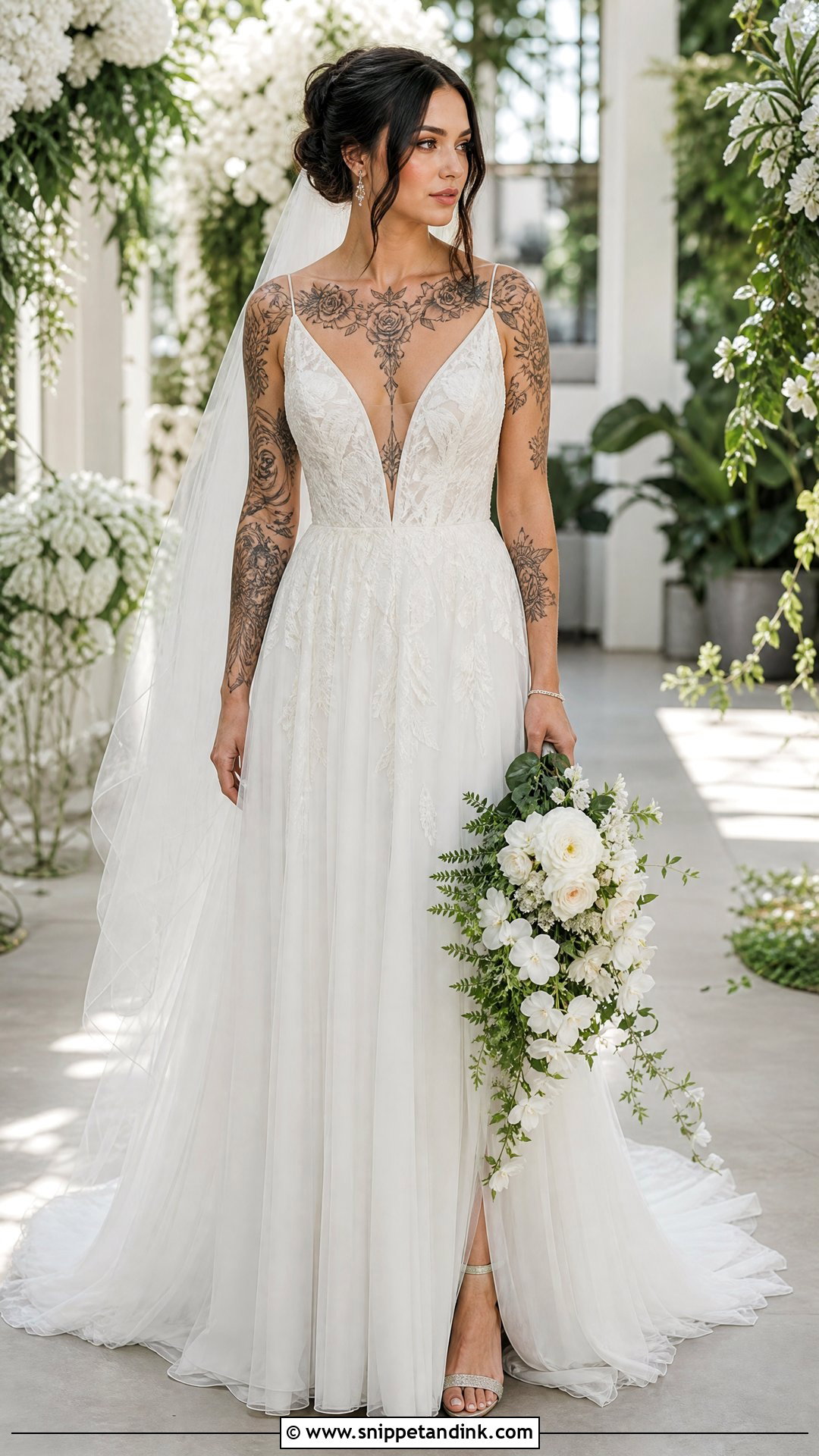
Sternum, rib and upper-chest pieces need a neckline that frames them, and a plunging V does exactly that if it doesn’t cut across the tattoo’s central detail. Look for a fitted bodice with discreet illusion mesh, supportive side panels and a skirt that balances the depth. Mesh dyed close to your skin tone disappears best on camera, so I take a swatch to the window and check it against the bride’s chest. A-line feels romantic; a sheath looks sharper. A loose updo, delicate earrings, metallic ivory sandals and a veil starting below the bun suit it. Leave out the statement necklace unless the tattoo sits low, and let a cascading bouquet echo the V.
8. One-Shoulder Wedding Dress
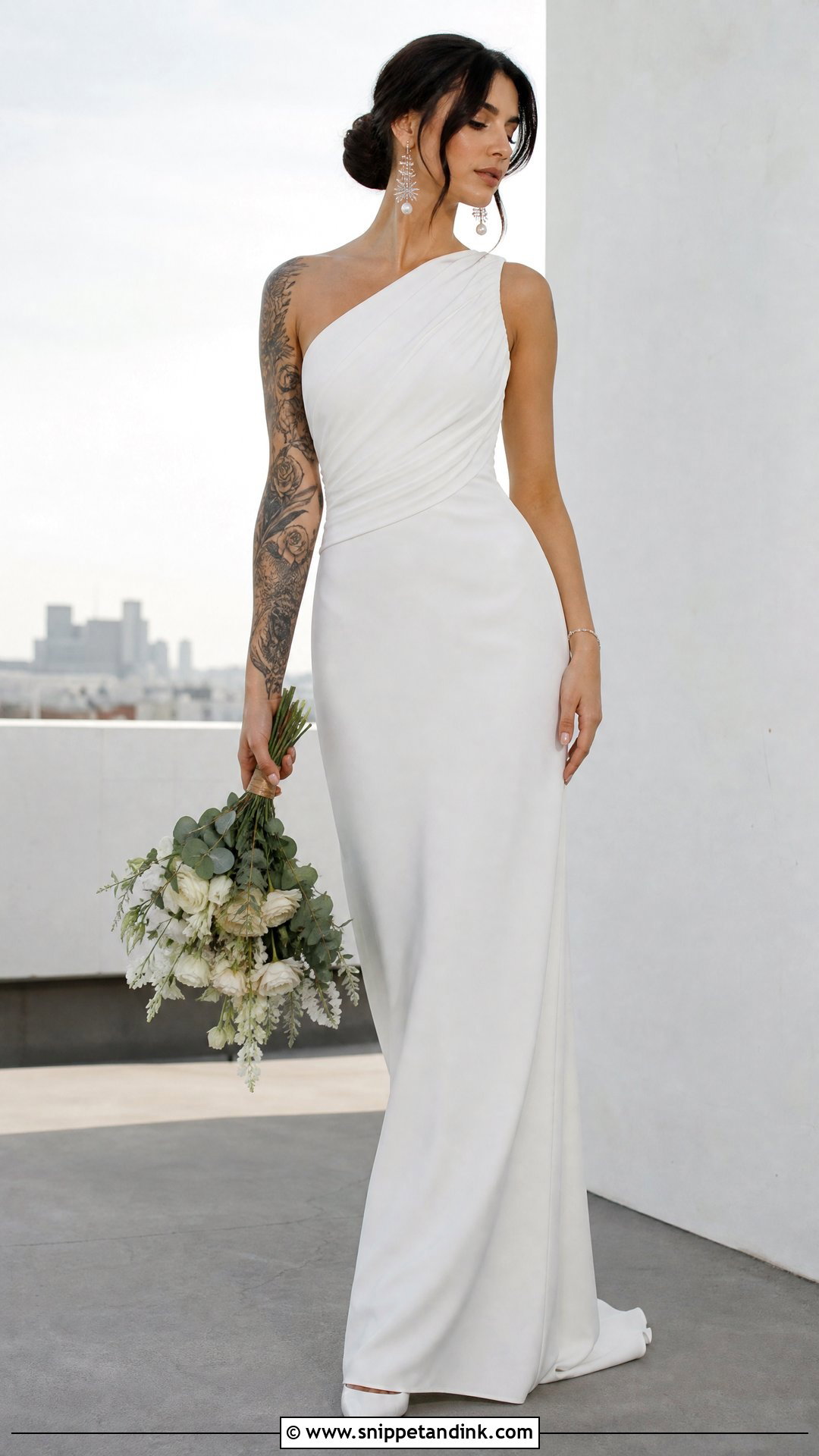
Ink on only one arm or shoulder? Asymmetry suits you. A one-shoulder dress lets you decide which side shows more, so turn the open side toward the tattoo you most want in portraits, and tell your photographer which side that is. Draped crepe or satin with a defined waist and a column or A-line skirt keeps it clean. I like a small earring on the covered side and a longer drop on the open side. A sleek low ponytail, pointed pumps, a slim bracelet and a hand-tied bouquet complete it, and a small comb works better than a veil that fights the strap.
9. Corset Bodice Ball Gown
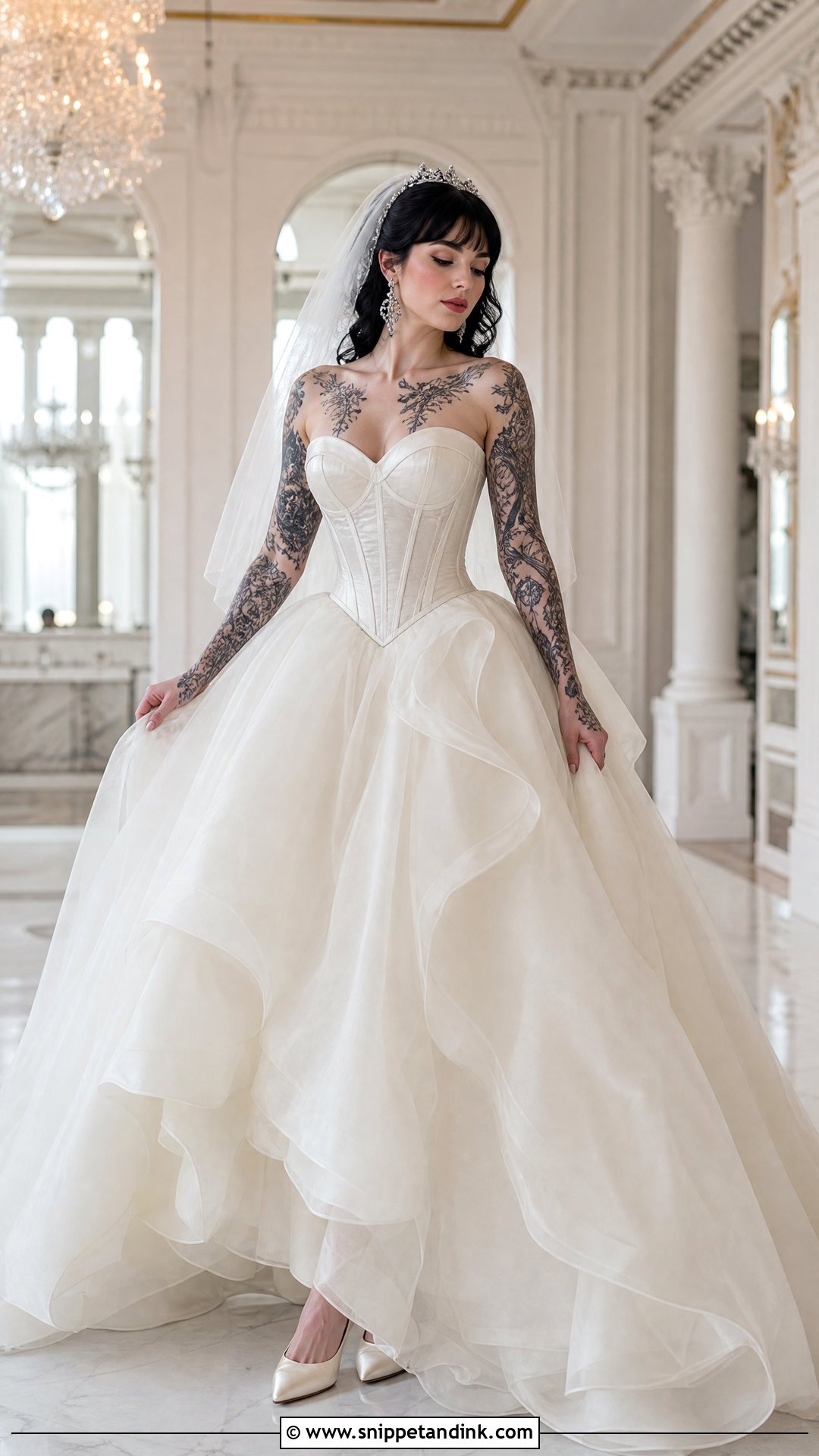
Full skirt, bare shoulders: a corset ball gown gives volume below and an open frame above for arm, chest and shoulder pieces. A strapless corset with a straight or gently curved neckline over satin, tulle or organza is the classic build. Visible boning looks current; tonal construction keeps it refined. Elbow-length gloves are worth bringing only if you want the option to cover arm tattoos for part of the day. Otherwise go bare-armed with crystal earrings, a small tiara and closed-toe satin pumps. A medium veil and compact bouquet keep the proportions clear in photos.
10. Sheer Long-Sleeve Wedding Dress
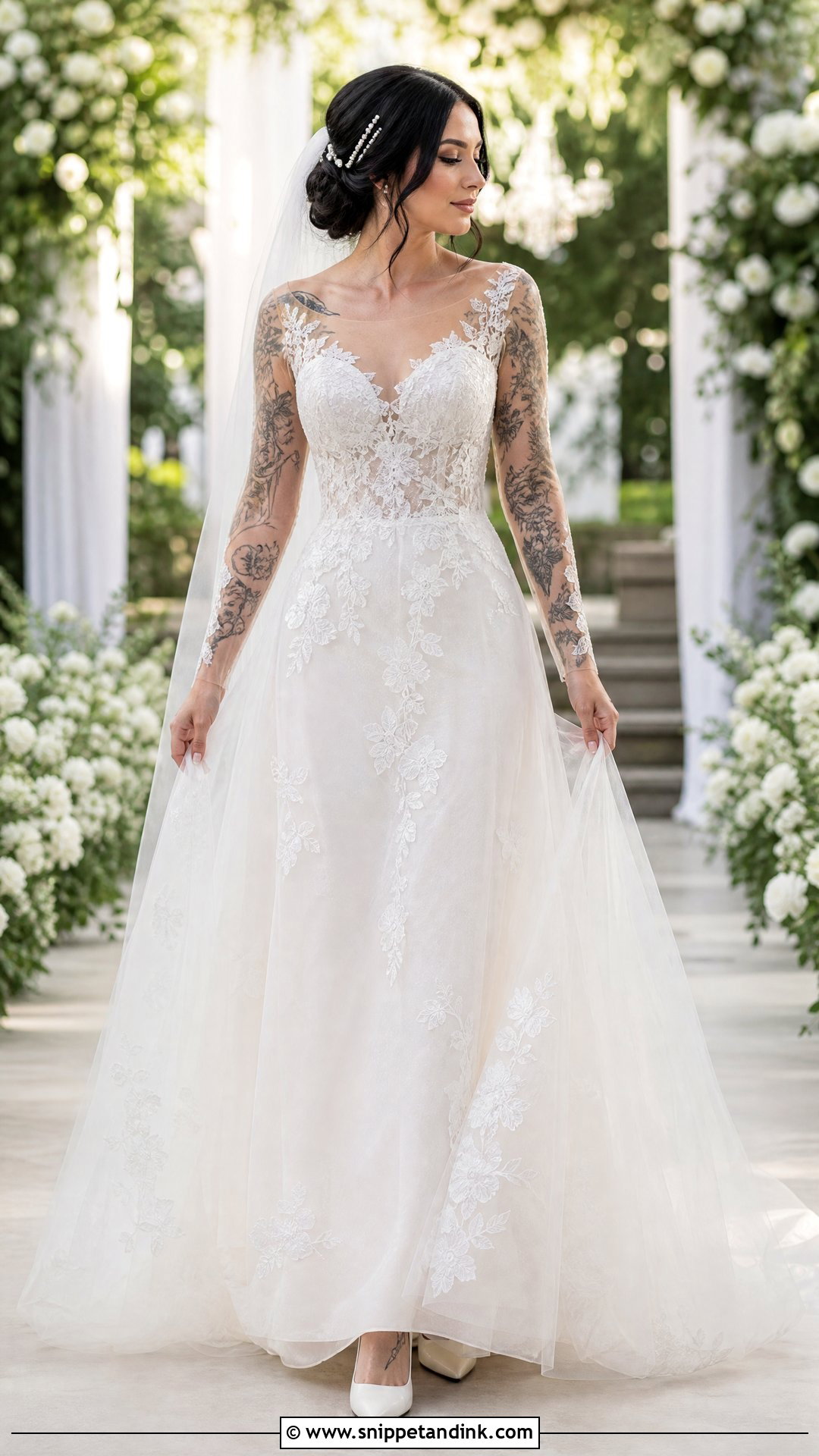
Not everyone wants every tattoo on display. A sheer long-sleeve gown lets arm work show through illusion tulle or fine lace like a soft filter. Placement of appliqués decides what shows, so I look at the sleeves in daylight at the shop door; dense lace hides more than it seems to under store lighting. Choose an A-line for a garden or a crepe sheath for a modern venue. Pearl pins, small earrings, ivory pumps and a plain chapel veil suit it. Keep bracelets off entirely, since they snag fine sleeves.
11. Cap-Sleeve Tea-Length Wedding Dress
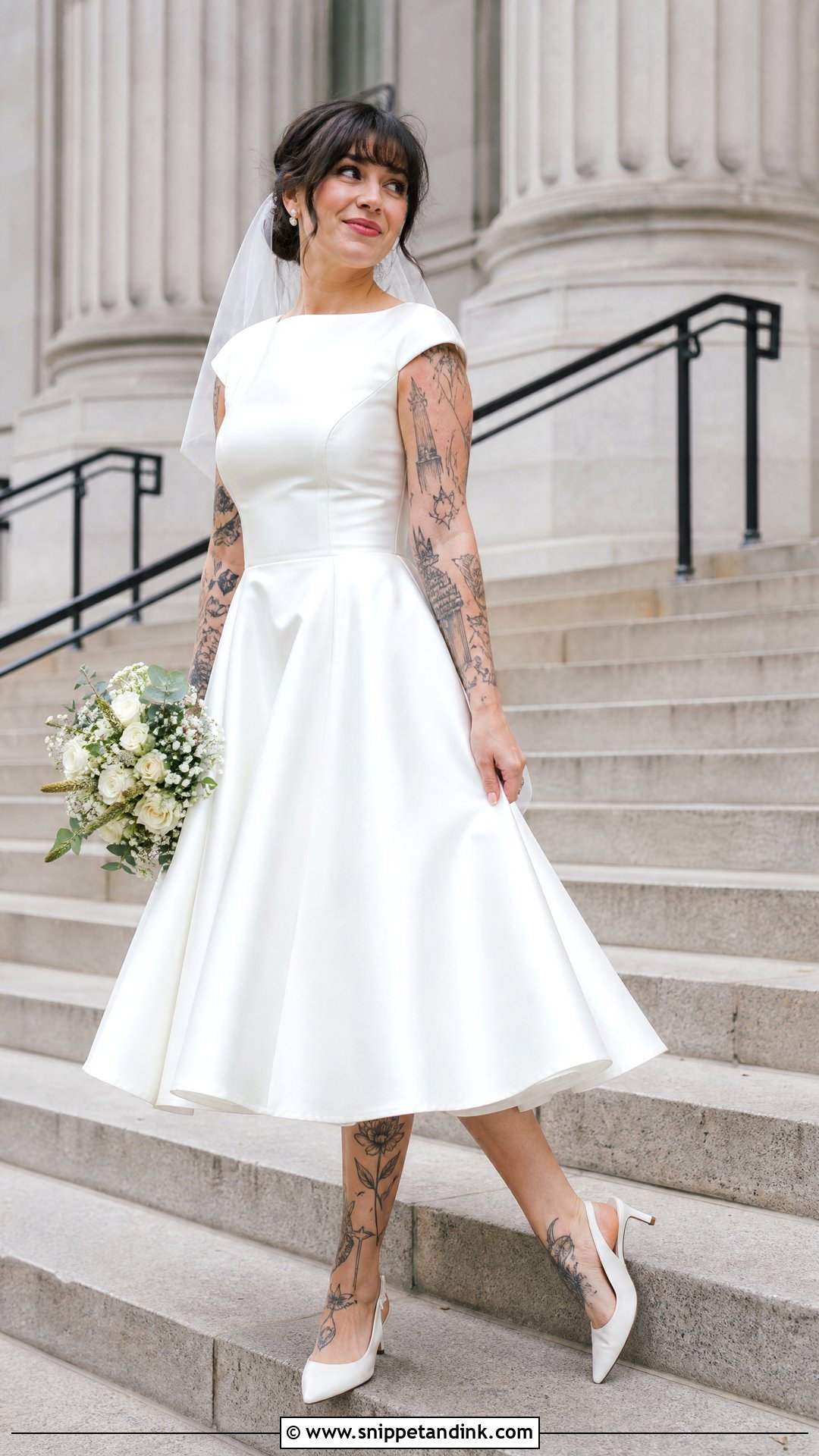
Lower-leg and ankle tattoos rarely get seen at a wedding, and a tea-length dress fixes that. A fitted bodice with cap sleeves and a skirt ending between knee and ankle also leaves forearms and neckline open. Structured satin reads retro; light lace feels relaxed. Your shoes are on show, so choose them carefully, and if the tattoo is on the ankle, pick an open shoe or a low-cut slingback rather than a closed pump. A birdcage or short tulle veil, pearl studs and a compact bouquet suit the proportions. Courthouse ceremonies and daytime parties are its natural home.
12. High-Neck Open-Back Wedding Dress
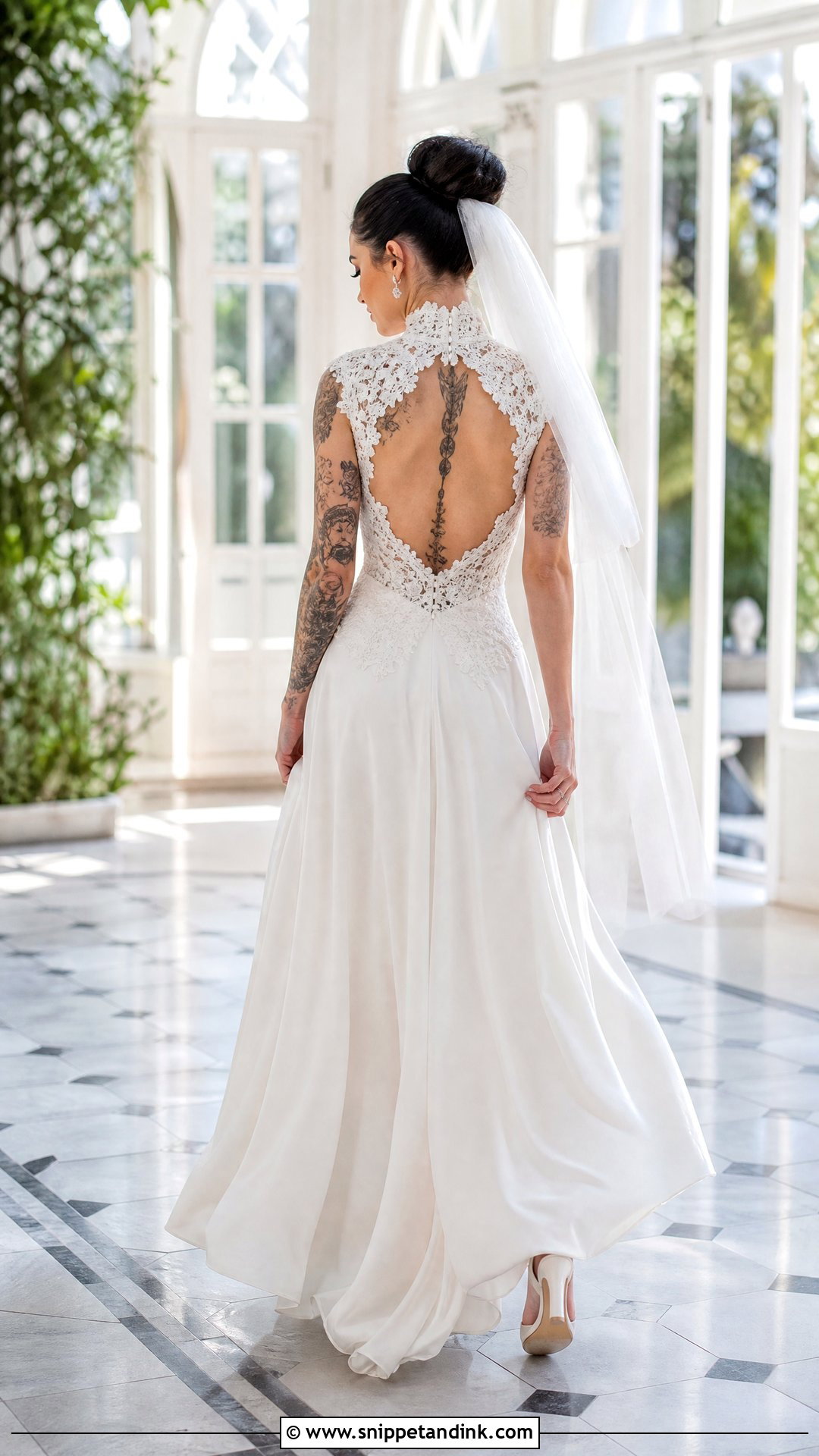
Covered at the front, open at the back. A high neck with a keyhole or deep back opening frames shoulder-blade and spine work deliberately, and the contrast is the whole effect. A fitted lace bodice or smooth crepe both work. Hair must go up, high bun or braided updo, so nothing covers the design. Ask your tailor where the closures will land: a row of buttons or a lace edge running across the middle of a tattoo is the most common mistake I see with this cut. A veil fixed beneath the hairstyle can be lifted aside for portraits. Understated earrings, satin pumps, a thin bracelet and a long, narrow bouquet complete it.
13. Silk Slip Wedding Dress
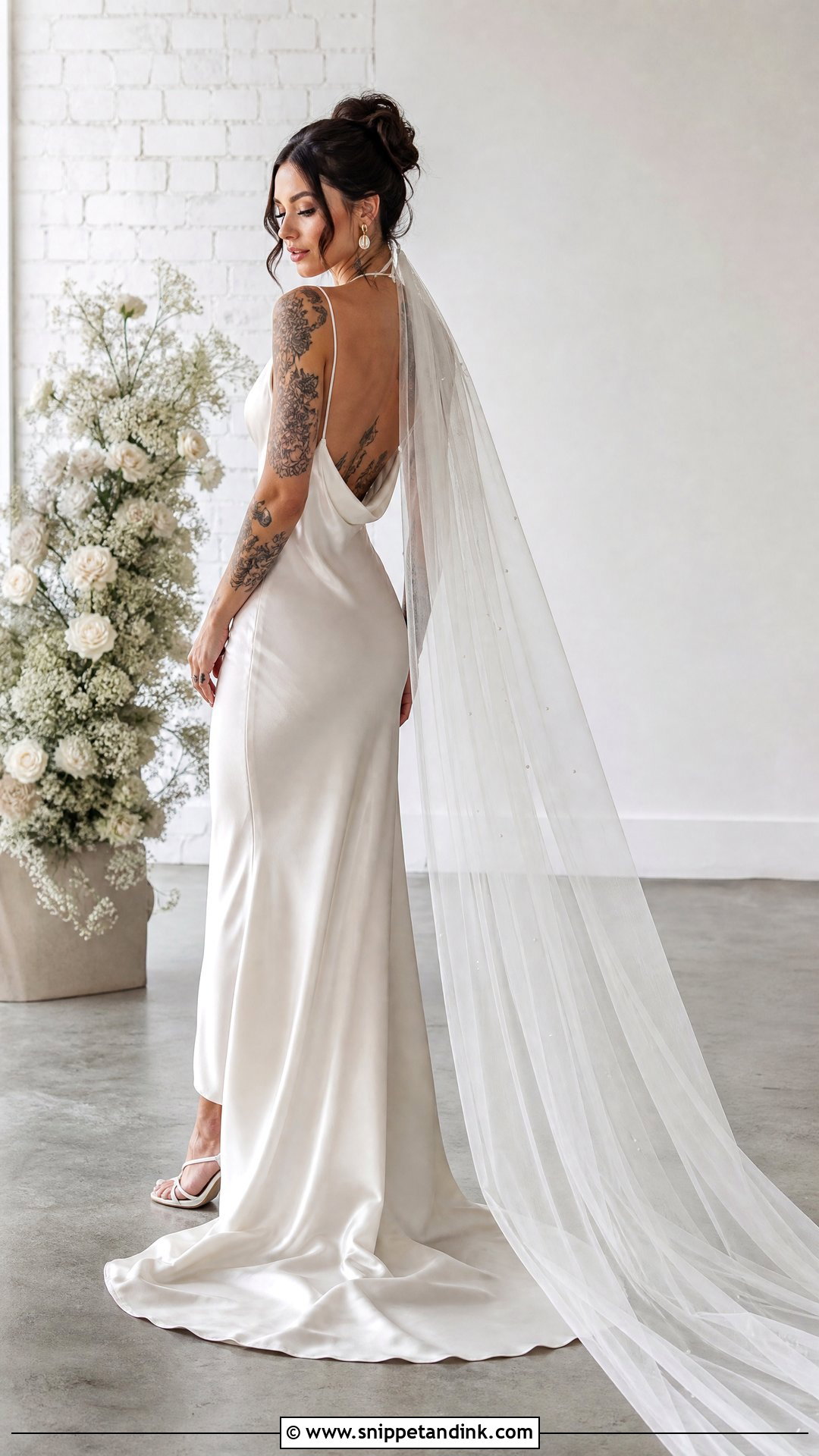
Intricate tattoos look sharper next to plain fabric, and a silk slip is about as plain as bridalwear gets. A bias-cut slip with slim straps, a draped neckline and a floor-length hem leaves arms bare and shows shoulder or spine work through a low back. Because there’s nothing to hide behind, fit and the right undergarments matter more than with any other dress here; I’d sort the bra or adhesive solution before the first fitting. Sleek hair, modern drops, strappy sandals, a sheer cape veil and a loose bouquet suit it. For a covered ceremony, add a light blazer or lace topper and take it off later.
14. Two-Piece Bridal Skirt Set
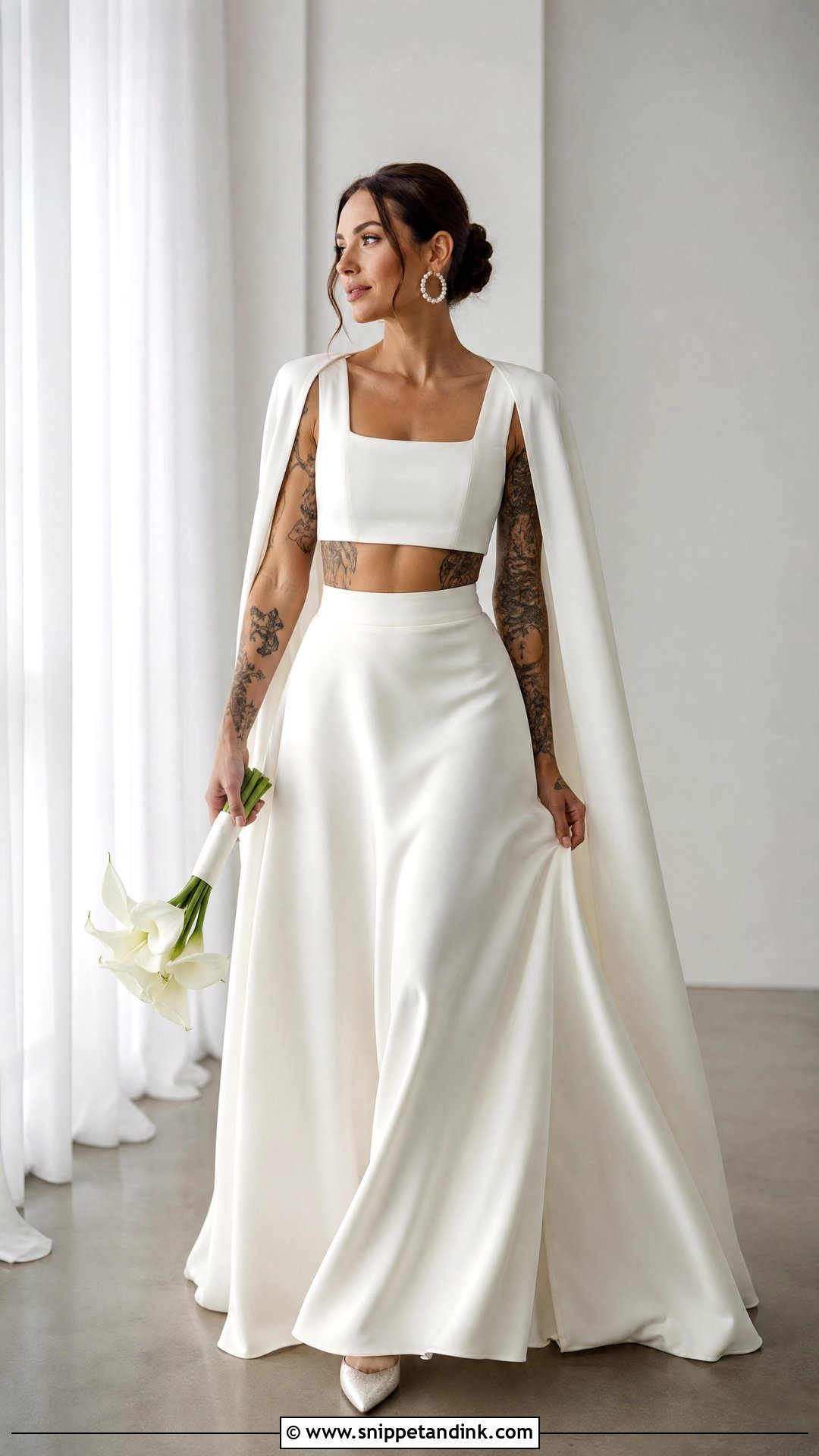
Rib, waist, back or sternum ink is hard to show in a one-piece gown, and a two-piece set solves it. A structured cropped top over a high-waisted satin or chiffon skirt lets you set exactly how much skin shows between them. A sleeveless square-neck top displays arms; an open-back top displays larger back pieces. Matching fabrics make it read as bridal rather than separates. At alterations, sit, bend and lift your arms; the top should stay put and the gap should stay where you placed it. A sleek bun, pearl hoops, pointed pumps, a narrow bouquet and an optional detachable cape finish it.
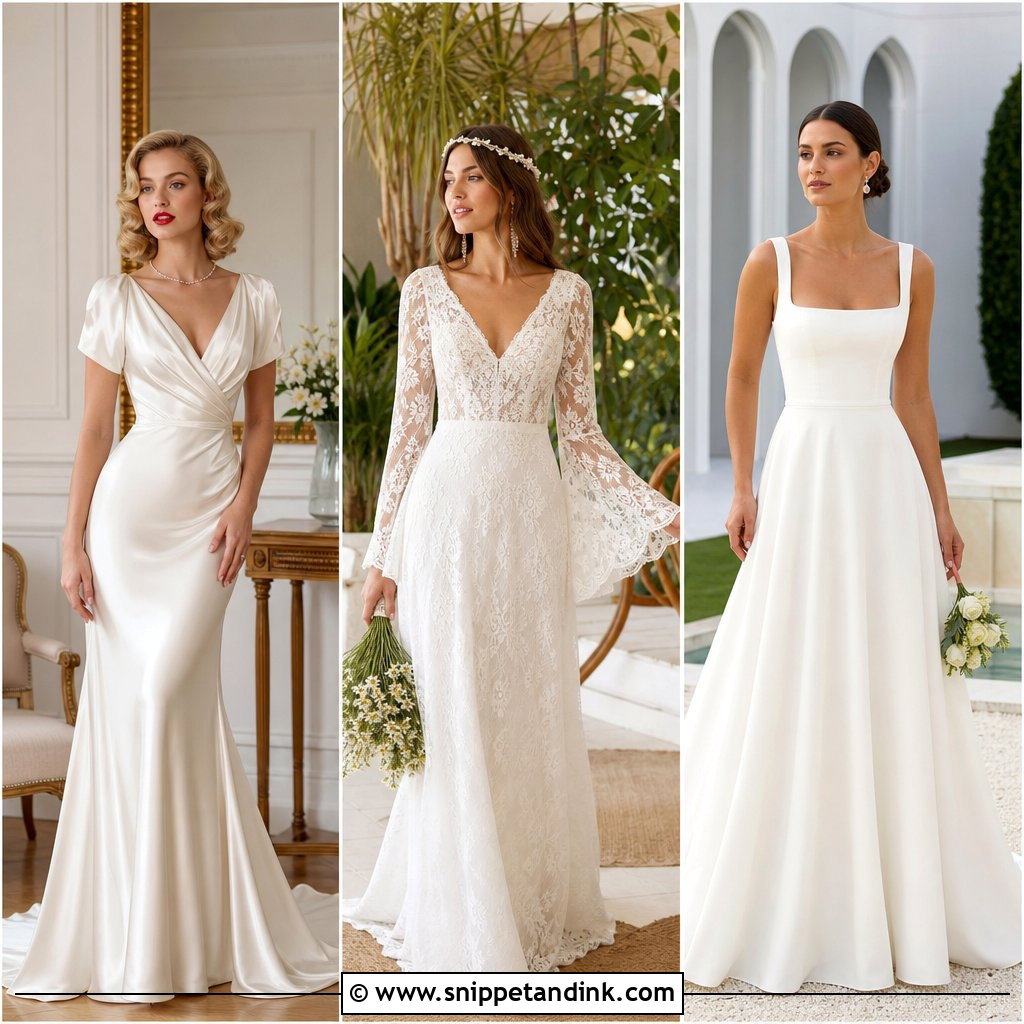

15. Bridal Jumpsuit With Cape
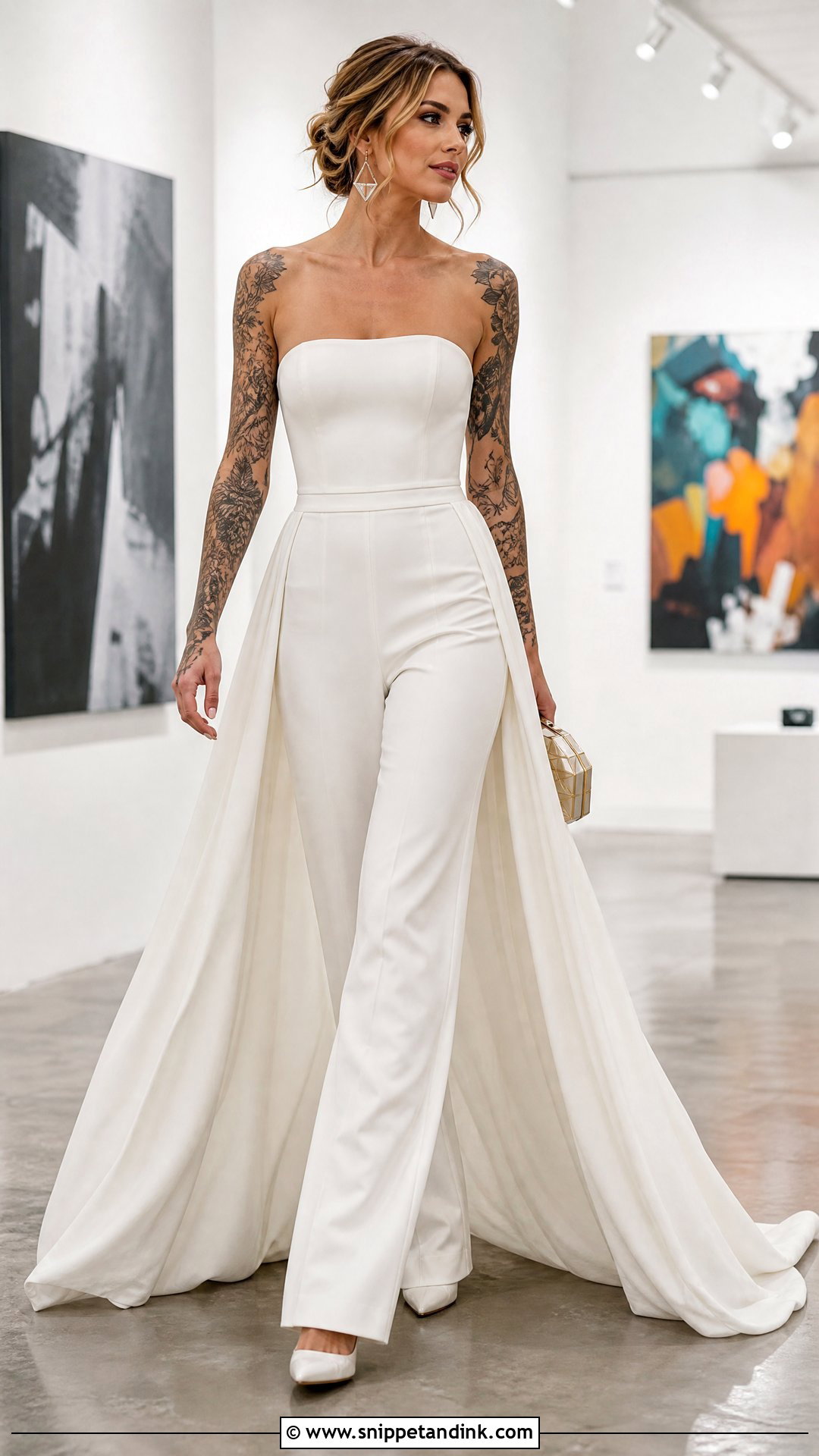
A tailored bridal jumpsuit with a detachable cape is the modern route. A sleeveless or strapless bodice shows arm and shoulder tattoos, and wide-leg trousers move well and lengthen the line. Substantial crepe with clean seams keeps it ceremonial rather than officewear. Get the trouser hem set with your wedding shoes on, because a jumpsuit is far less forgiving of length than a skirt. Wear the floor-length cape for the aisle and take it off to show your back. Pointed ivory heels, geometric earrings, a structured clutch, a sleek ponytail and a calla lily bouquet suit the sharp lines.
16. Floral Embroidered Wedding Dress
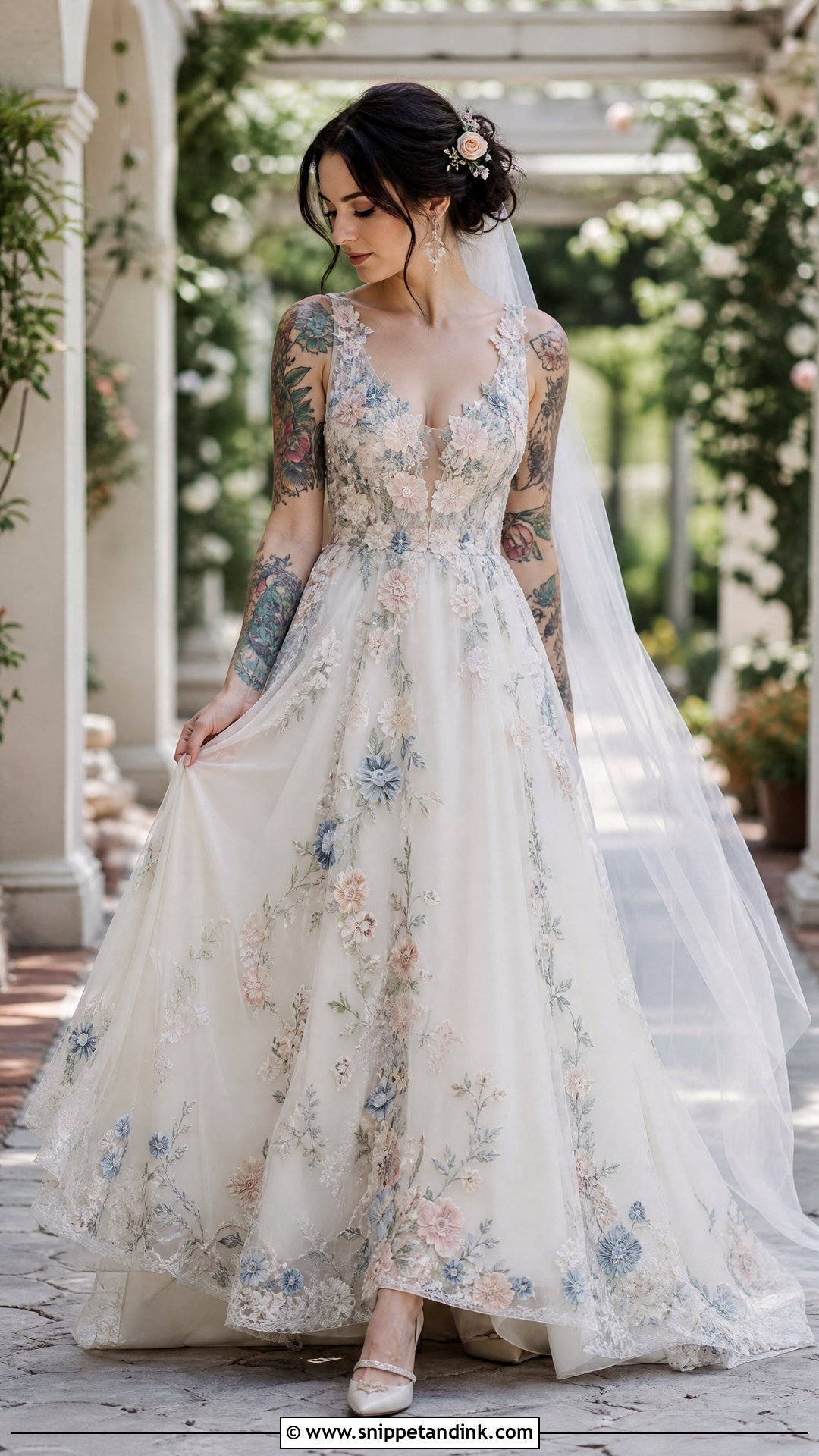
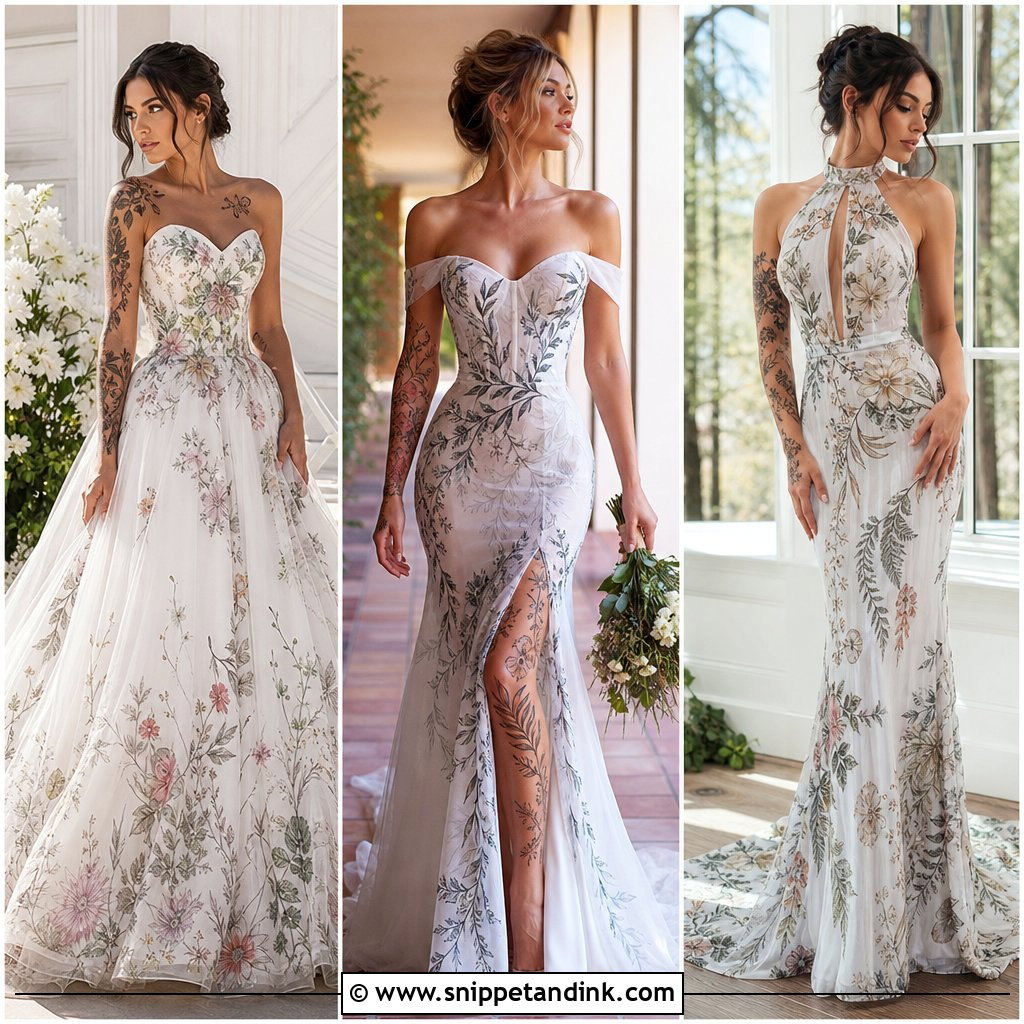
Colorful body art and floral embroidery can sit together well if they’re given space. Choose appliqués concentrated on the skirt, waist or hem, leaving the neckline and sleeves fairly open. Embroidery in muted blue, blush, green or lavender can pick up a color already in your tattoos, which ties the outfit together quietly. I’d avoid dense appliqué across the whole bodice if your work is very detailed; plain fabric between decorative areas lets each one read. A soft A-line, simple ivory heels, small gemstone earrings, a plain tulle veil and a bouquet repeating one or two embroidery shades complete it.
17. Detachable Sleeve Wedding Dress
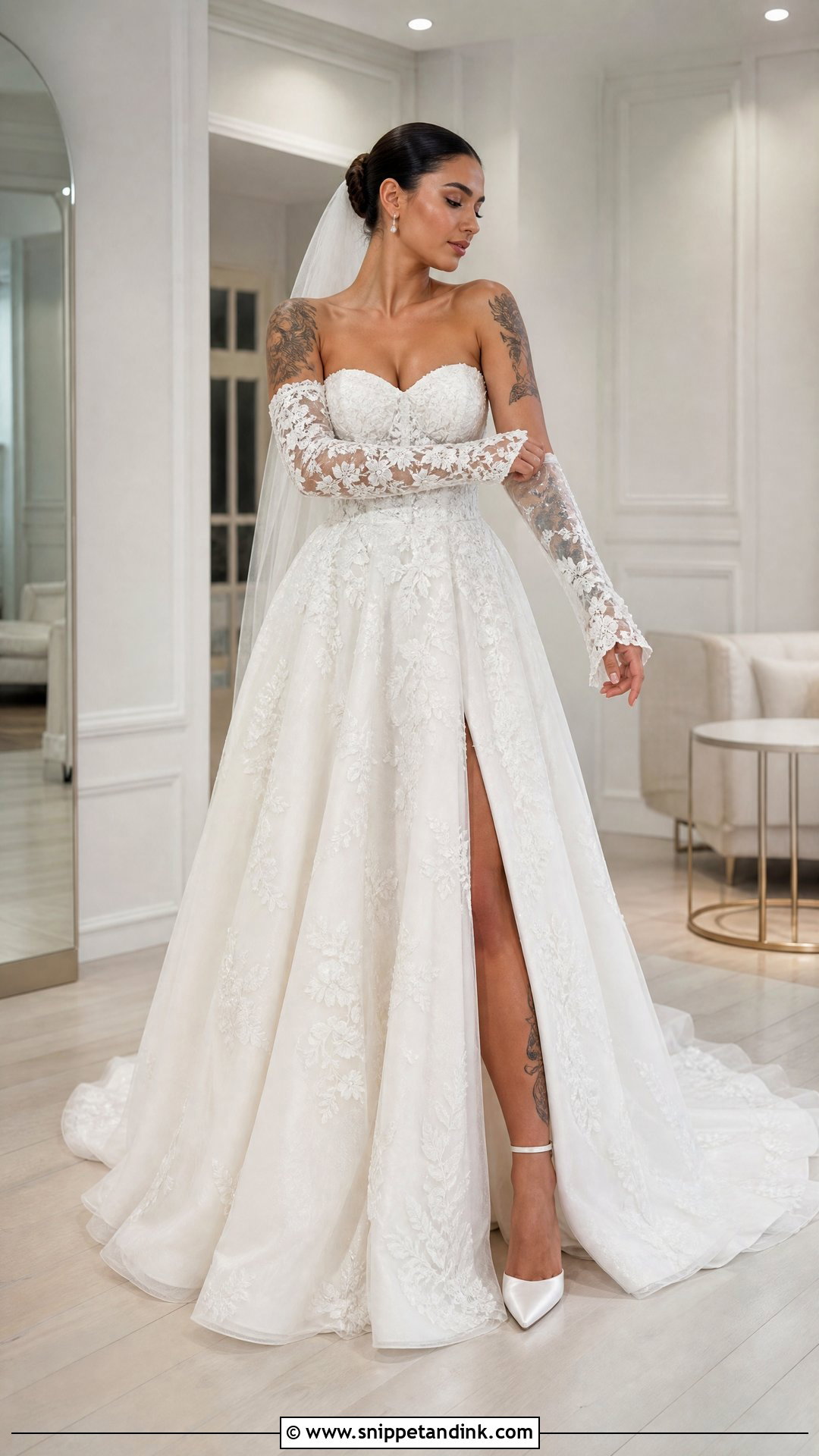
Want to cover your arms for the ceremony and show them for the party? Detachable sleeves do that without a second dress. Start with a strapless A-line or fitted gown, then add sheer fitted sleeves, off-the-shoulder drapes or lace gloves for the vows. Take them off for portraits or dancing. Transformable pieces like these are now easy to find, and many designers offer them to match their own gowns. The attachment should be hidden and secure, and the lace should match the dress, not look added later. Drop earrings, a clean bun, satin heels and a simple veil keep it calm.
18. Wedding Dress With Detachable Overskirt
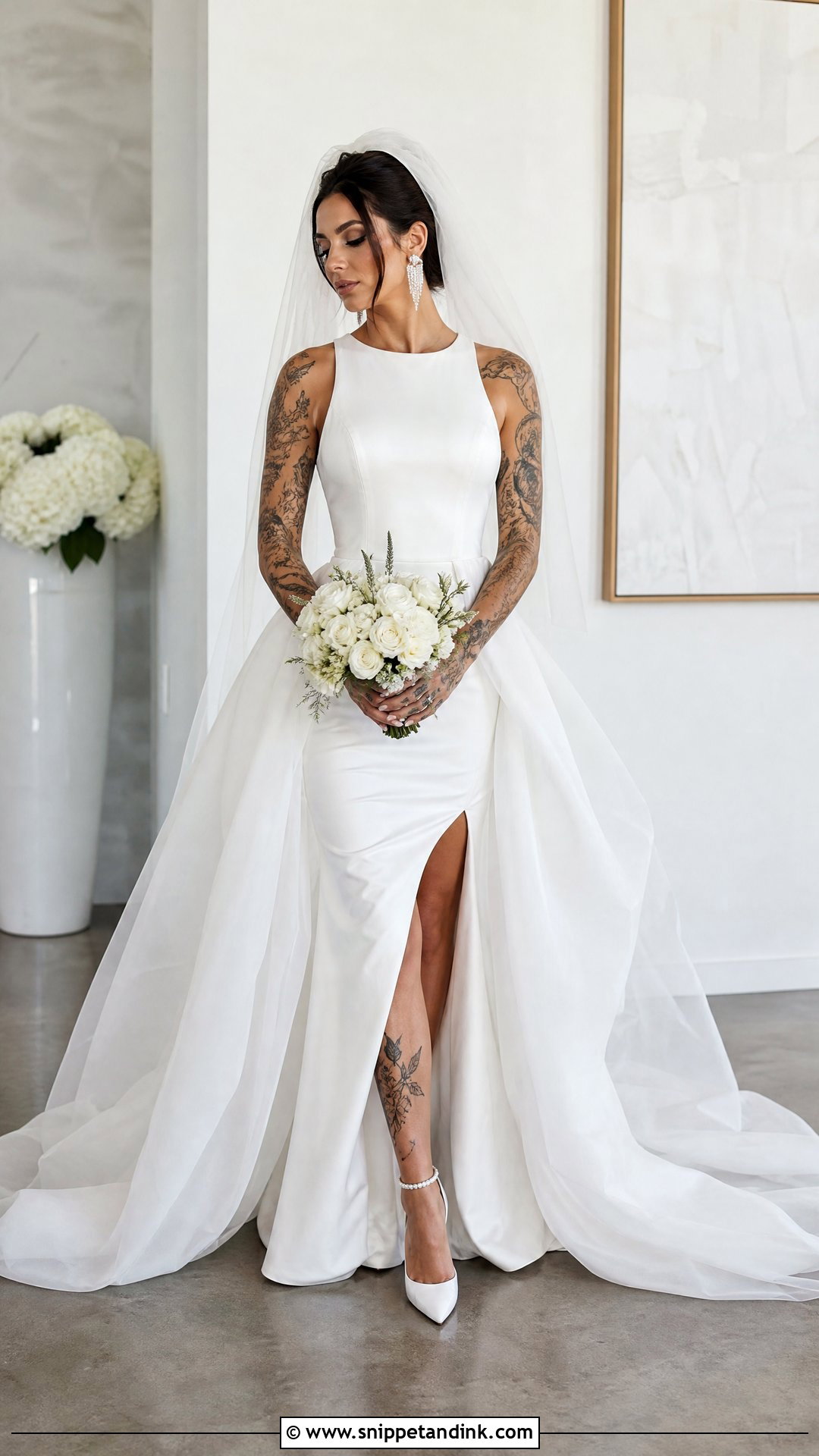
A fitted dress with a detachable overskirt gives you two silhouettes while keeping upper-body tattoos visible the whole time. Start in a strapless or sleeveless column under a full satin, tulle or organza overskirt, then remove it for a streamlined base that’s easier to move in. If you have leg tattoos, ask for a side slit in the base gown so they appear once the overskirt is off. Statement earrings, a sleek updo, pointed heels and a fingertip veil suit it. Rehearse taking the layer off with whoever will help you; the fastenings are always fiddlier than they look.
19. Boho Lace Wedding Dress
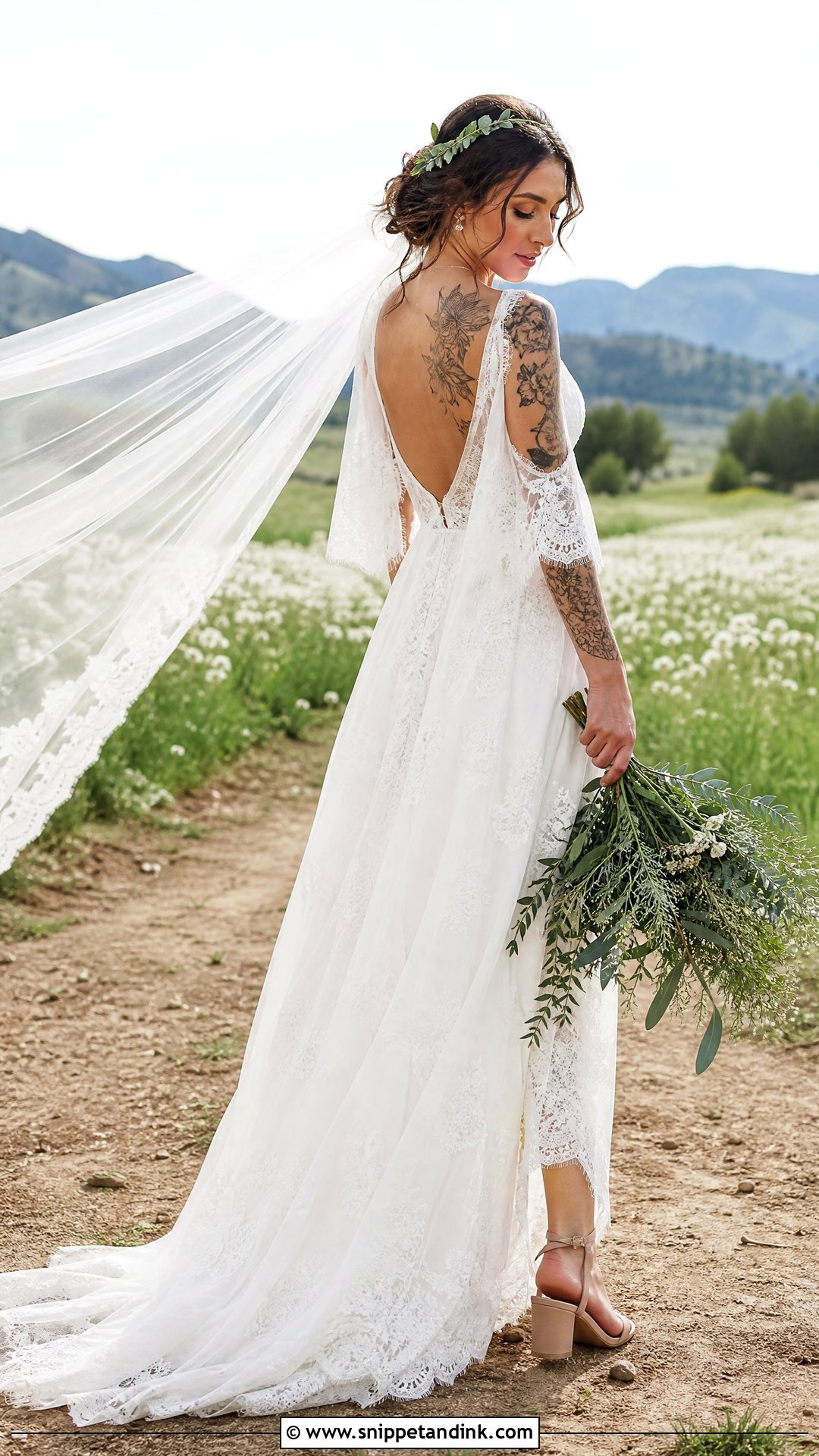
Botanical and fine-line tattoos sit naturally with boho lace at an outdoor wedding. A soft A-line or sheath with an open neckline, low back and light lace sleeves or wide straps works. Look for an airy lace with plenty of open space in the pattern; dense lace next to fine linework looks muddy from a few feet away. Loose waves, a simple hair vine, neutral block-heel sandals and a flowing veil keep it easy, with white flowers, greenery and grasses in the bouquet. Don’t stack bracelets over wrist tattoos. One ring or one pair of earrings is plenty.

20. Minimal Column Wedding Dress
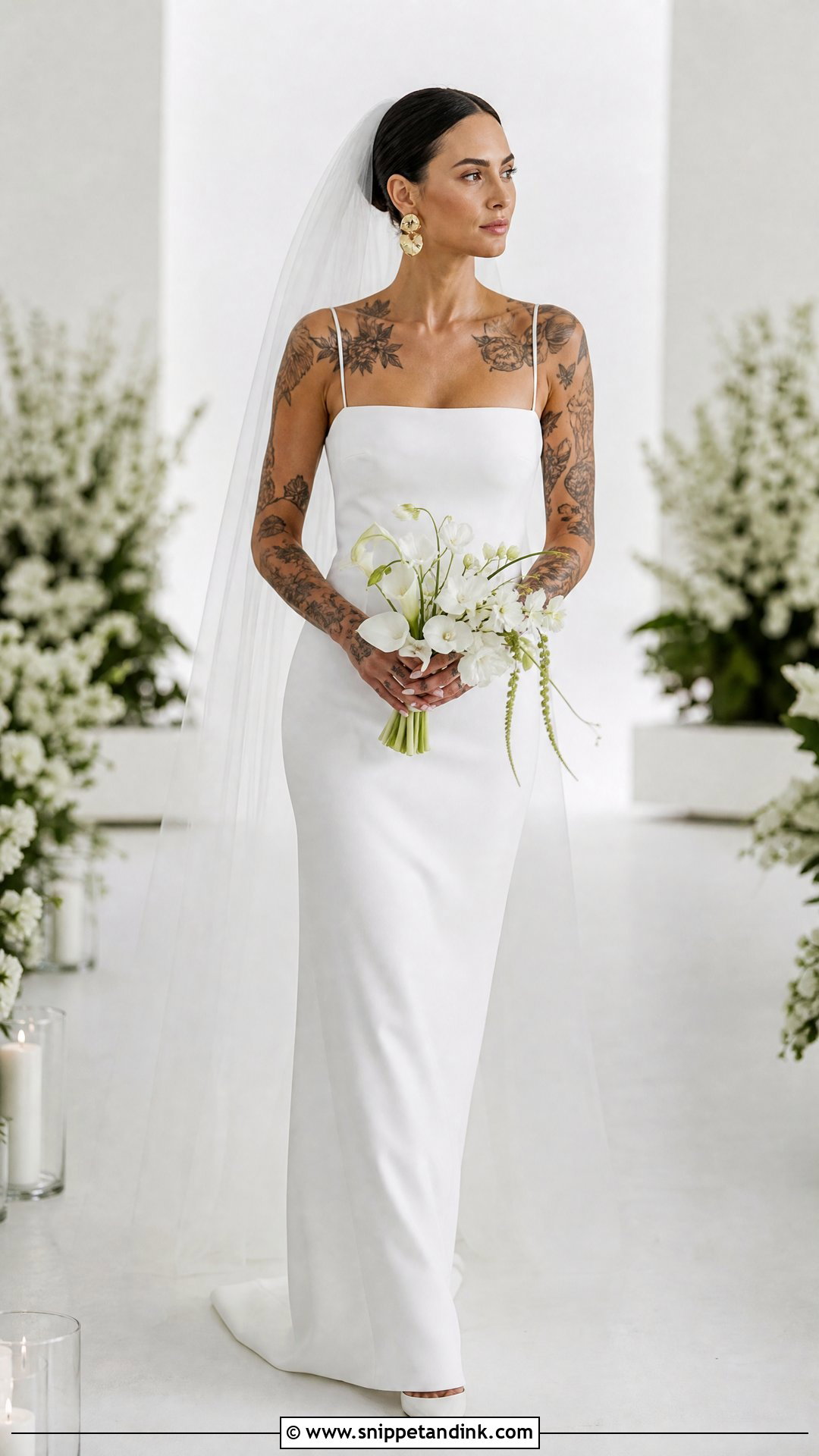
When the tattoos are the decoration, a minimal column is the right canvas. A clean crepe dress with a straight neckline, slim straps or a draped off-the-shoulder bodice keeps the narrow skirt modern and free of embellishment. Leave arms, shoulders or back open according to where your favorite pieces are. Simple dresses expose every fitting flaw, so I pay close attention to seam placement and how the side seams sit against your arm tattoos. Polished hair, sculptural earrings, pointed pumps, a small architectural bouquet and a cathedral veil you remove for portraits complete it.
New Ink, Cover-Up Makeup and an Ivory Dress Don’t Mix Easily
Timing a fresh tattoo
If you’re planning new work to show off at the wedding, get it done well ahead. A healing tattoo can peel, scab and look shiny for a few weeks, and a lace sleeve or tight strap rubbing it during fittings doesn’t help. Most tattoo artists will advise leaving at least a month, and more if the piece is large or needs a second session. Ask yours before you book.
Covering a tattoo for part of the day
Some brides cover one piece for a religious ceremony or for relatives, and makeup can do it. The catch is transfer. Heavy cover-up rubs onto ivory sleeves, straps and your partner’s jacket. If you go this way, have it applied by a makeup artist who sets it properly, and keep that area away from fabric where you can. A sheer sleeve or a light wrap is often the simpler answer.
Skin care in the weeks before
Moisturize regularly and wear sunscreen on visible tattoos. Faded or dry-looking ink is far more noticeable in close-up photos than people expect, and a few weeks of care makes the linework look crisper on the day.
Treat Your Tattoos as Part of the Outfit
The right gown should make you look like yourself and feel steady all day. Necklines, sleeves, open backs, fabrics and removable layers each frame body art in a different way. Decide first which tattoos you want to show, soften or cover at each stage of the day, then weigh support, movement, venue and how you’ll be photographed from behind as well as in front. Bring clear photos of your tattoos to every appointment and take full-length pictures at fittings. Above all, don’t treat your artwork as a problem to solve. It’s already part of how you look, and the dress is just the setting.
You'll Like These Ideas:




Leave a Reply