
A strapless ballgown asks more of its construction than almost any other bridal shape. With nothing over the shoulders, the bodice has to hold itself up through boning, a firm waist stay and a close fit at the ribcage, while a heavy skirt pulls the other way all day. When I dress a bride in one, I judge the inside of the gown before the outside. Below are twenty versions, from plain satin to lace, sculpted Basque waists, pearl corsets and detachable pieces, each styled head to toe with the veil, shoes and flowers I’d put with it.
Why Strapless Bodices Slip, and How a Good Fitting Stops It
Most brides assume a strapless gown stays up because it’s tight across the bust. It doesn’t. A well-built bodice is anchored at the ribcage and waist, where the body is firm, and the bust area simply rests in a shaped cup. When a dress slides, it’s almost always because the ribcage is too loose or the skirt is heavier than the waist stay can carry.
I plan two or three fittings, starting roughly two to three months out, and bring the same things to every one: your wedding shoes, the exact undergarments you’ll wear, and a willingness to move. Many strapless bodices have cups built in, so you may not need a bra at all, which removes one more thing to slip.
- Lift both arms as if hugging someone taller than you. The top edge shouldn’t drop more than a finger’s width.
- Sit fully back in a chair and lean forward to reach a glass. Watch for gaping at the center front.
- Breathe in deeply and laugh. If the boning digs under the arm, ask for it to be shortened.
- Turn around in the mirror. Puckering along the side seams means the bodice needs taking in at the ribs, not the bust.
If your weight tends to shift in the final weeks, keep the last fitting close to the date. A strapless bodice has less room for error than any gown with straps or sleeves.
1. Strapless Satin Ballgown Wedding Dress
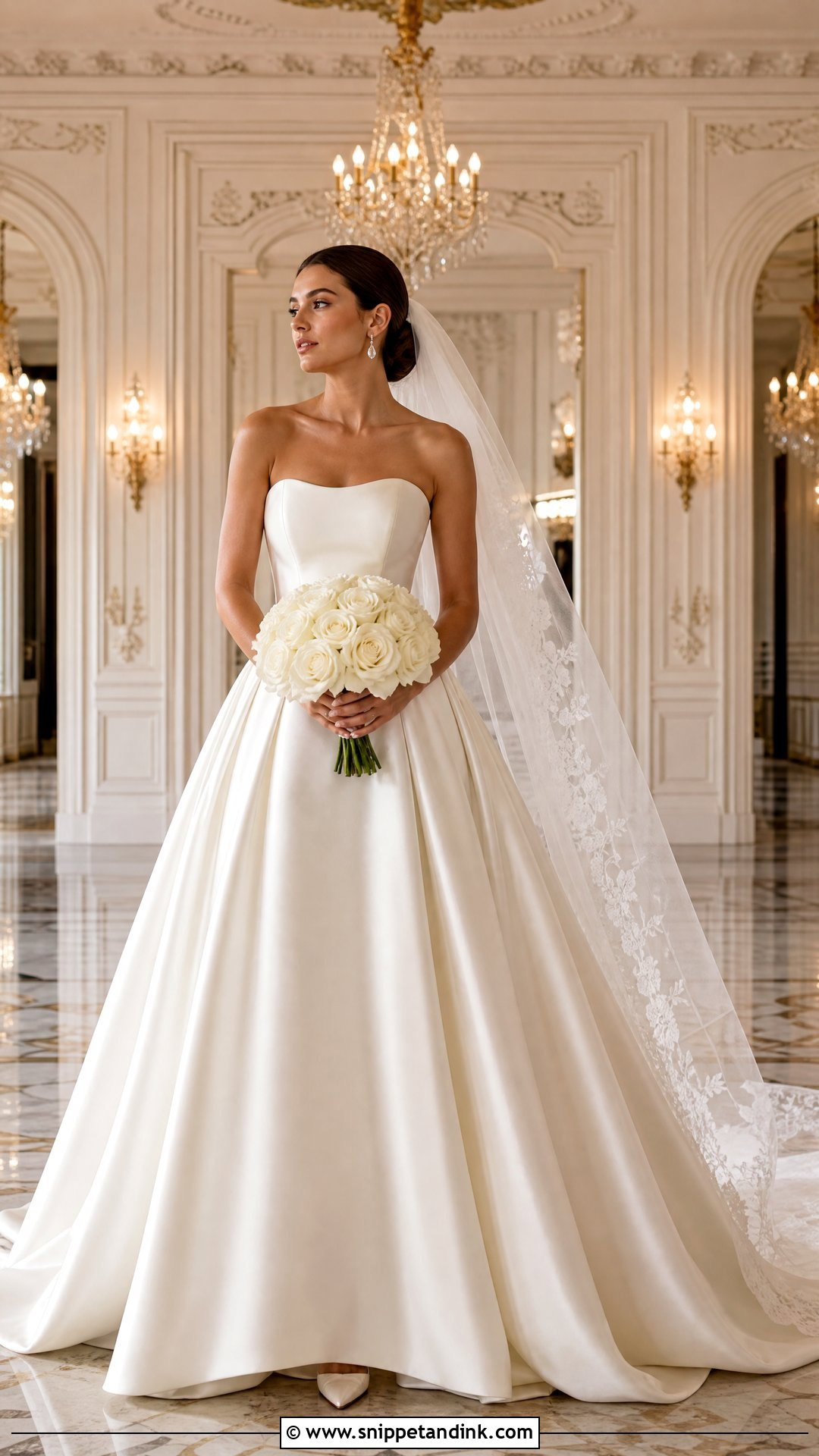
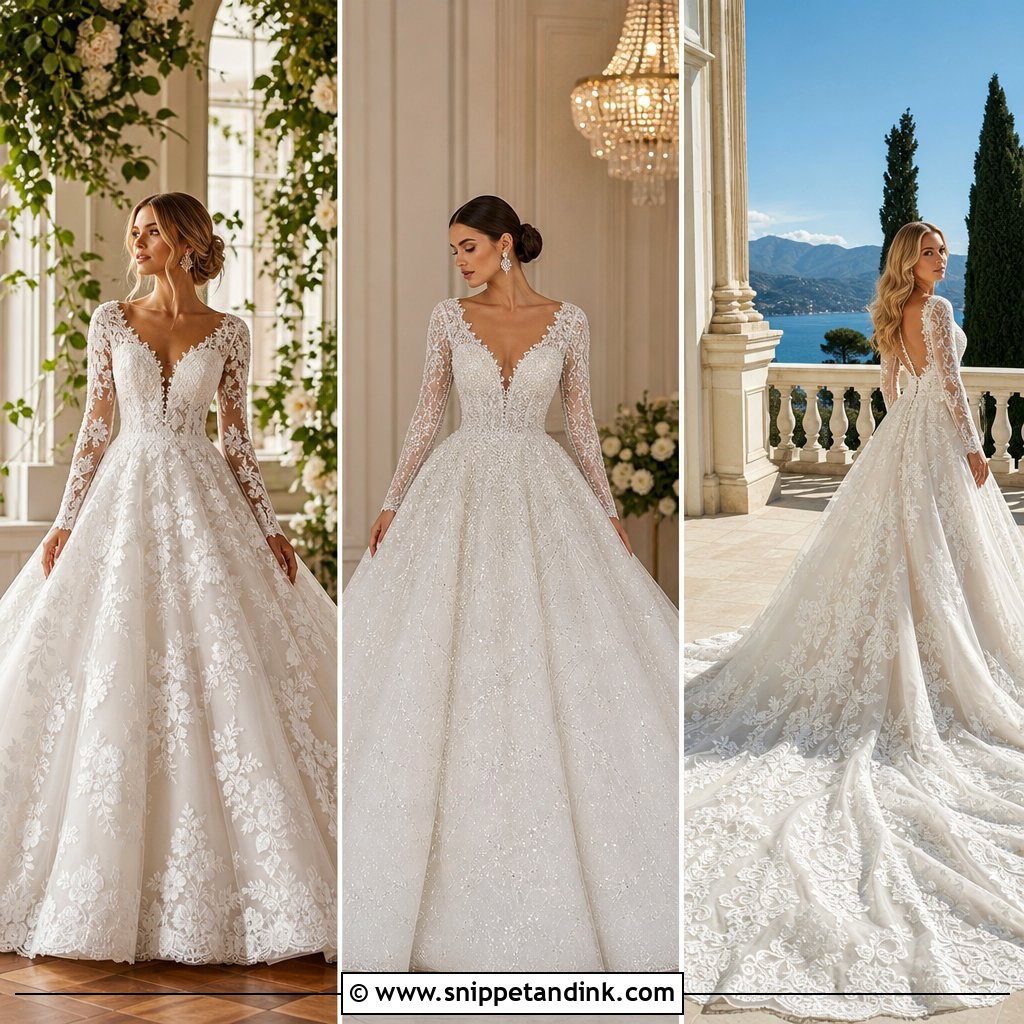
Satin is the least forgiving fabric here, and that’s exactly why I like it on a strapless ballgown. Its sheen shows every ripple, so a well-cut bodice reads crisp and a poorly fitted one shows pulling at the side seams straight away. I keep this version classic: gently curved neckline, natural waist, cathedral veil, pearl studs, a slim tennis bracelet and pointed ivory pumps, with a compact posy of white roses and ranunculus. It wants a ballroom or a hotel with some formality to it. Ask your seamstress for interior boning plus a grosgrain waist stay; the stay carries the skirt’s weight at the waist so your neckline isn’t doing that job.
2. Strapless Basque Waist Ballgown Wedding Dress
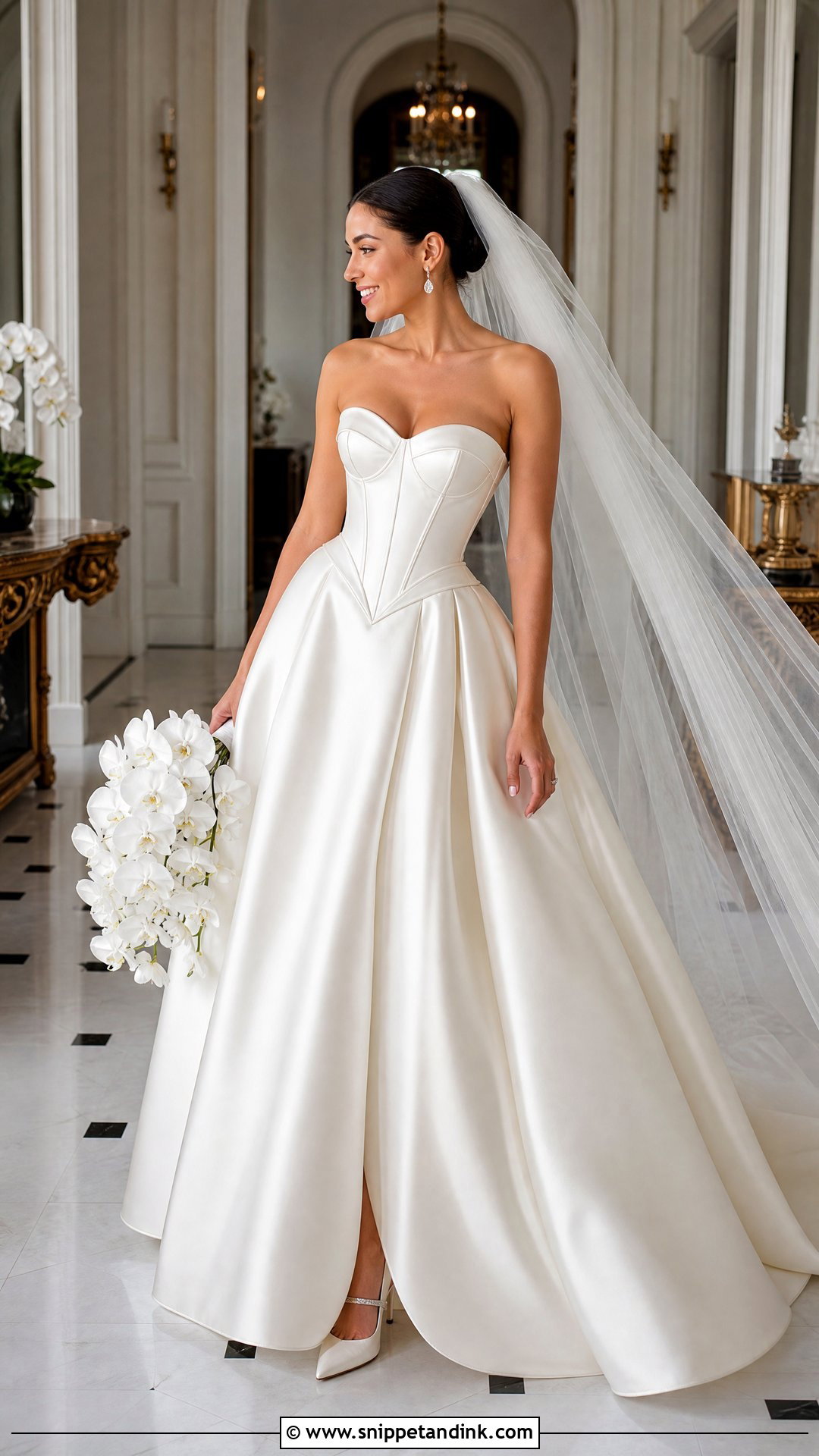
The dip at center front does the work here. A Basque point draws the eye down and makes the torso look longer, which is why I often suggest it to brides with a short waist. Crisp ivory satin keeps the point sharp; in a soft fabric it tends to collapse into a curve. I’d add a long sheer veil with a narrow satin edge, teardrop earrings, pointed slingbacks and a structured bouquet of orchids and roses, with hair in a smooth low bun. Skip the big necklace and the jeweled belt. A belt sits right on top of the one detail you paid for. Give this gown a wide aisle and a formal room.
3. Strapless Lace Corset Ballgown Wedding Dress
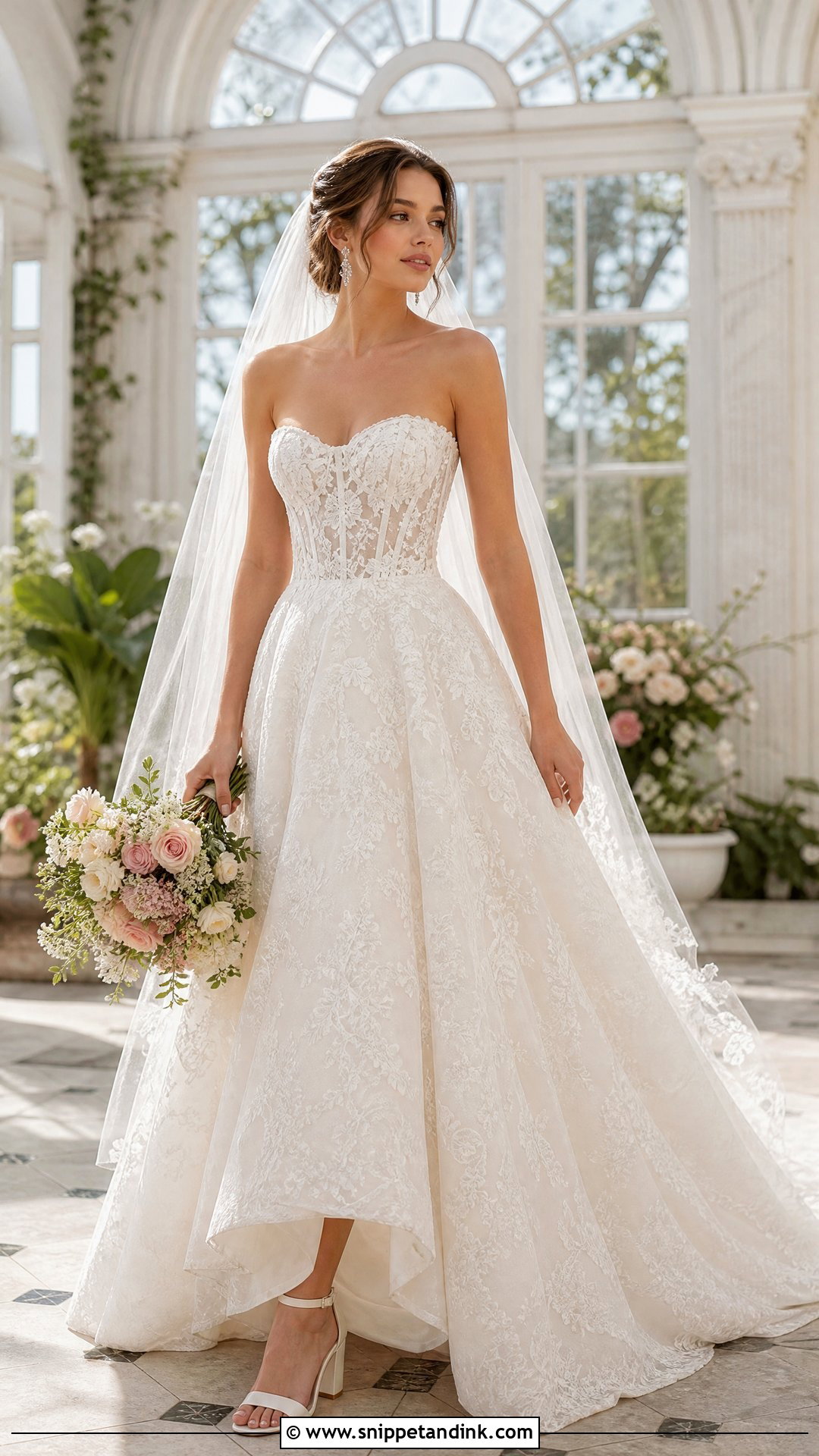
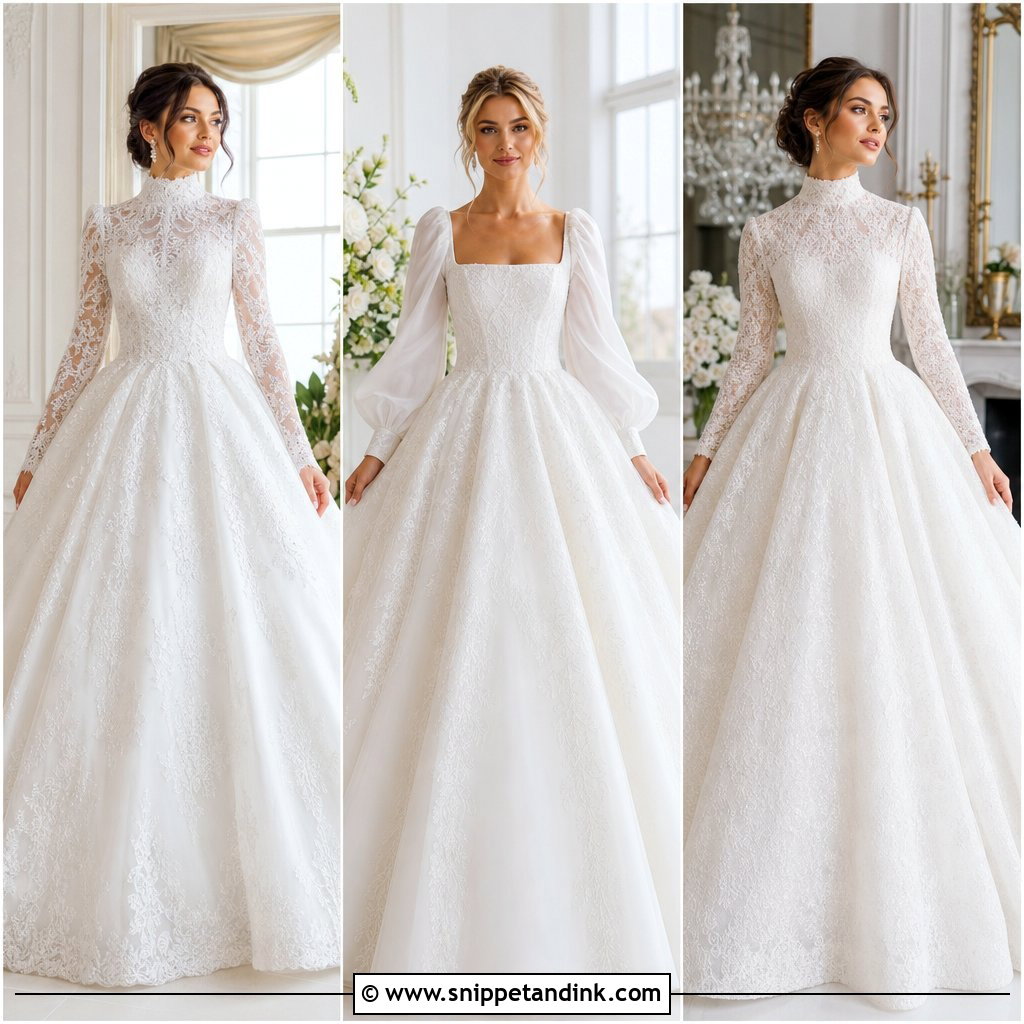
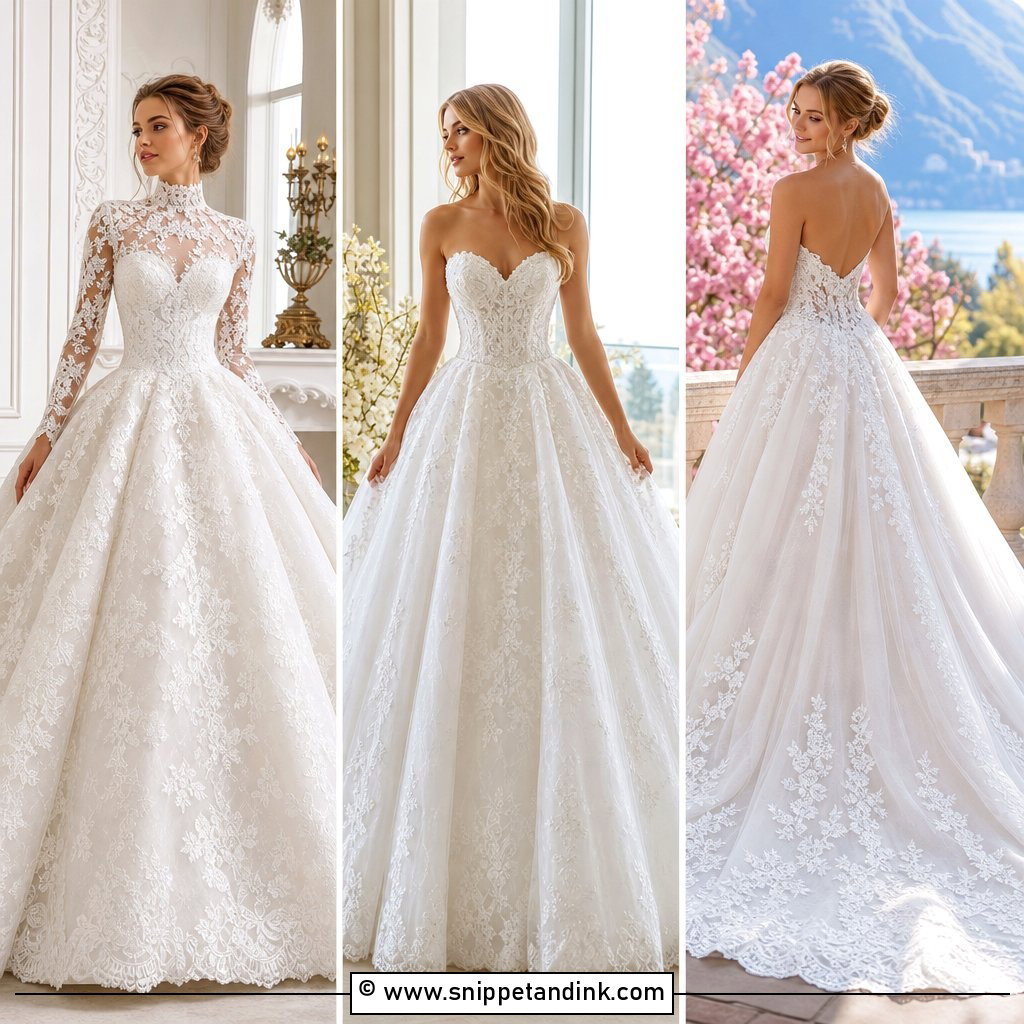
Lace takes the hard edge off a corset, but I always check how the motifs were placed before anything else. On a well-made bodice the flowers are cut out and laid over the seams so the pattern doesn’t break at the side panels; on a rushed one you’ll see it chopped straight through. Look for real boning underneath and a light lining, because a full lace skirt over heavy lining gets tiring by the reception. I style it with a fingertip veil, crystal drops, satin block heels and loose garden roses, plus soft waves or a textured low bun. If the boning shows through as a design feature, quieten everything else. Gardens, conservatories and spring weddings suit it.
4. Strapless Mikado Ballgown Wedding Dress
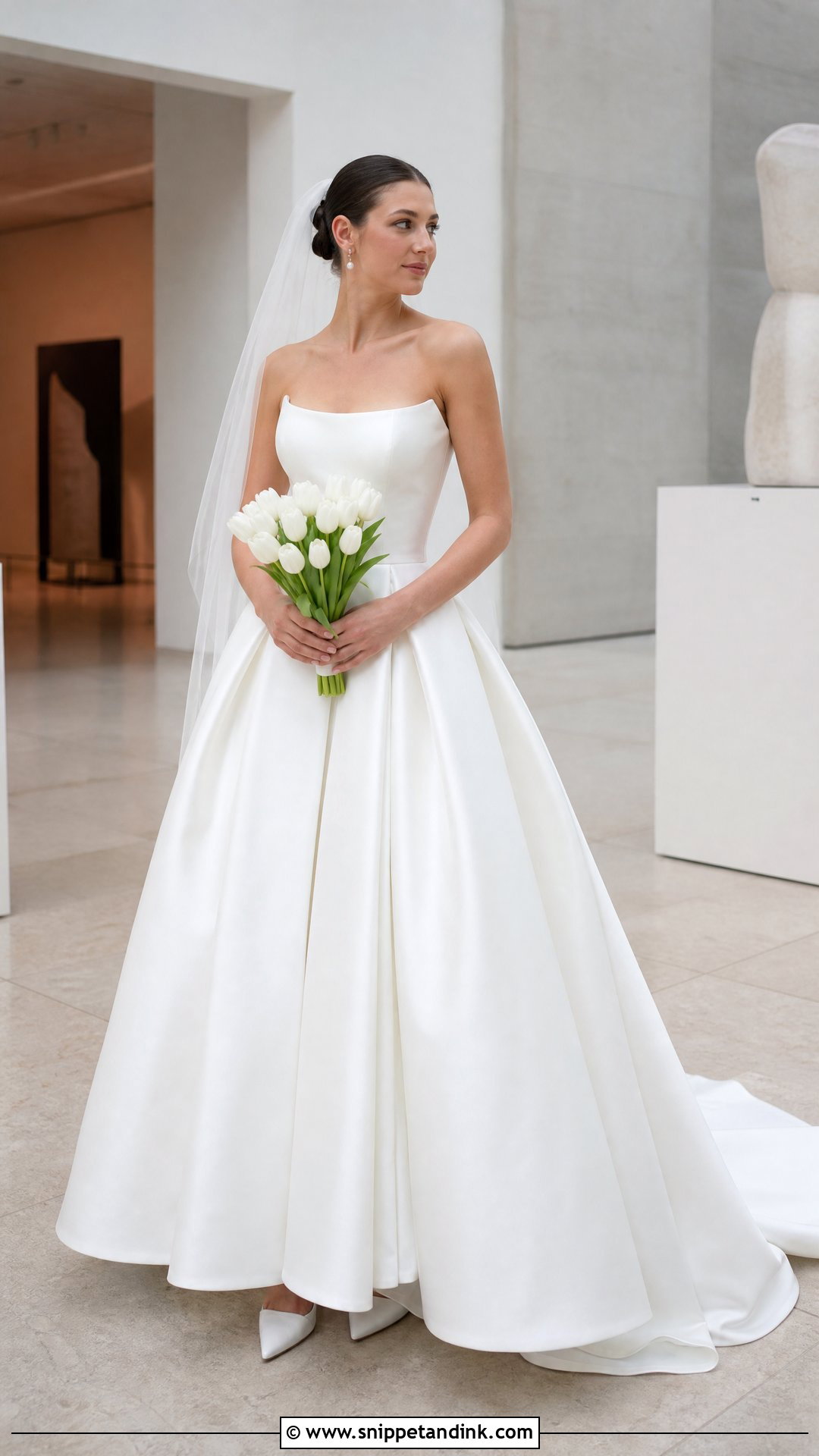
Mikado has real body, so the skirt holds its shape without layers of petticoat. That makes it what I reach for when a bride wants volume but hates the idea of a hoop. Box pleats at the waist and a straight or slightly scooped neckline give a modern take on the classic ballgown. Add a chapel-length veil, polished pearl earrings, ivory pointed pumps, a sleek bun and calla lilies or white tulips. Pockets only work in Mikado when they’re set into a pleat; otherwise they bulge. Bring your actual wedding shoes to the hem fitting, since a little extra heel changes how this stiff fabric swings. Galleries and city hotels are its natural setting.
5. Strapless Sweetheart Ballgown Wedding Dress
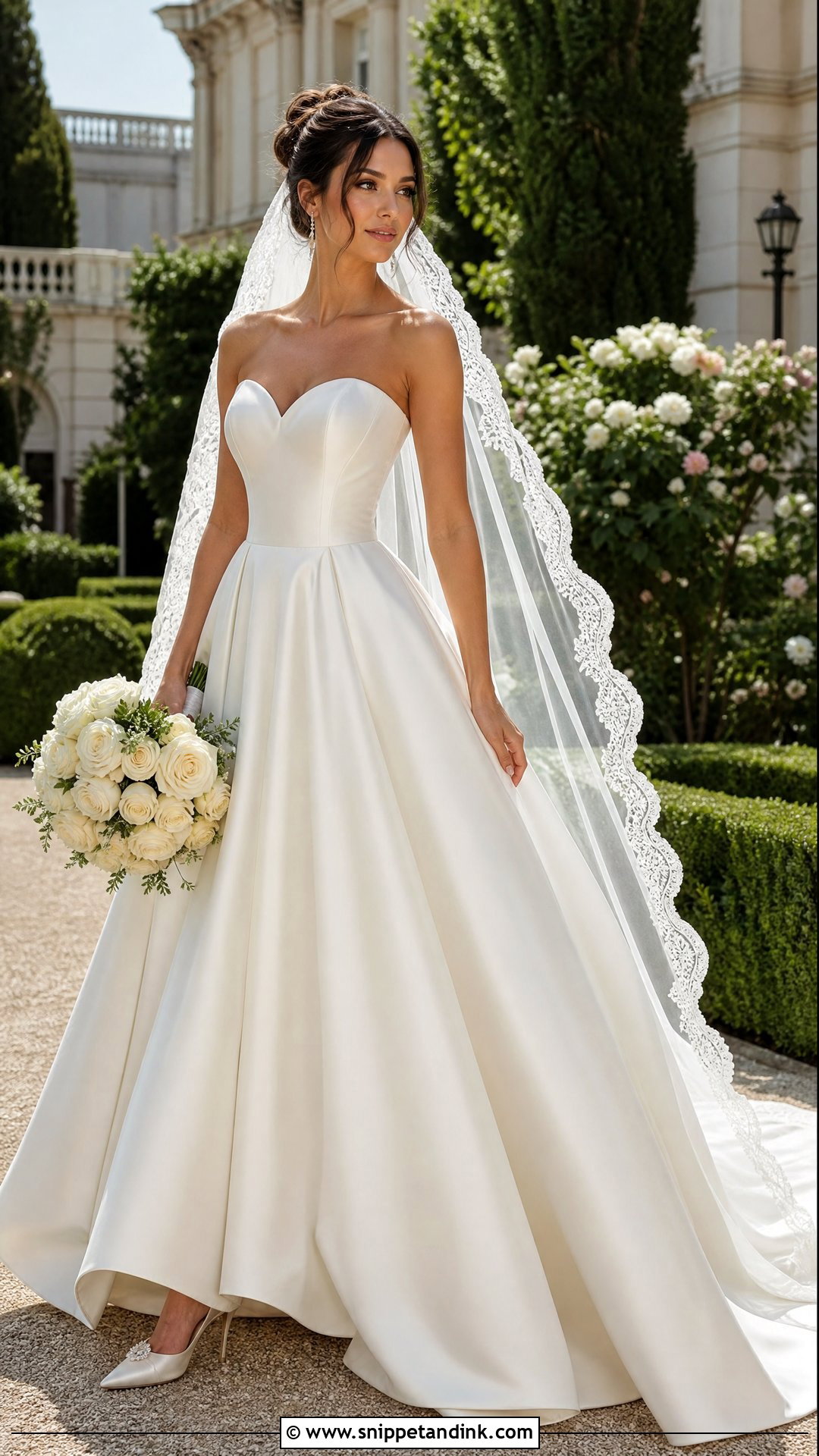
I fit a sweetheart neckline sitting down. Standing, almost every one looks right; seated, the center dip can gape or the cups push up, and that’s what shows in every reception photo. Choose a structured sweetheart bodice with a natural waist over satin or tulle. A small pendant can fill the open neckline, though drop earrings alone usually look cleaner. A lace-edged cathedral veil, almond-toe heels, a round bouquet of cream roses and half-up waves keep it traditional. The top edge should feel secure without leaving a red line after an hour.
6. Strapless Straight Neckline Ballgown Wedding Dress
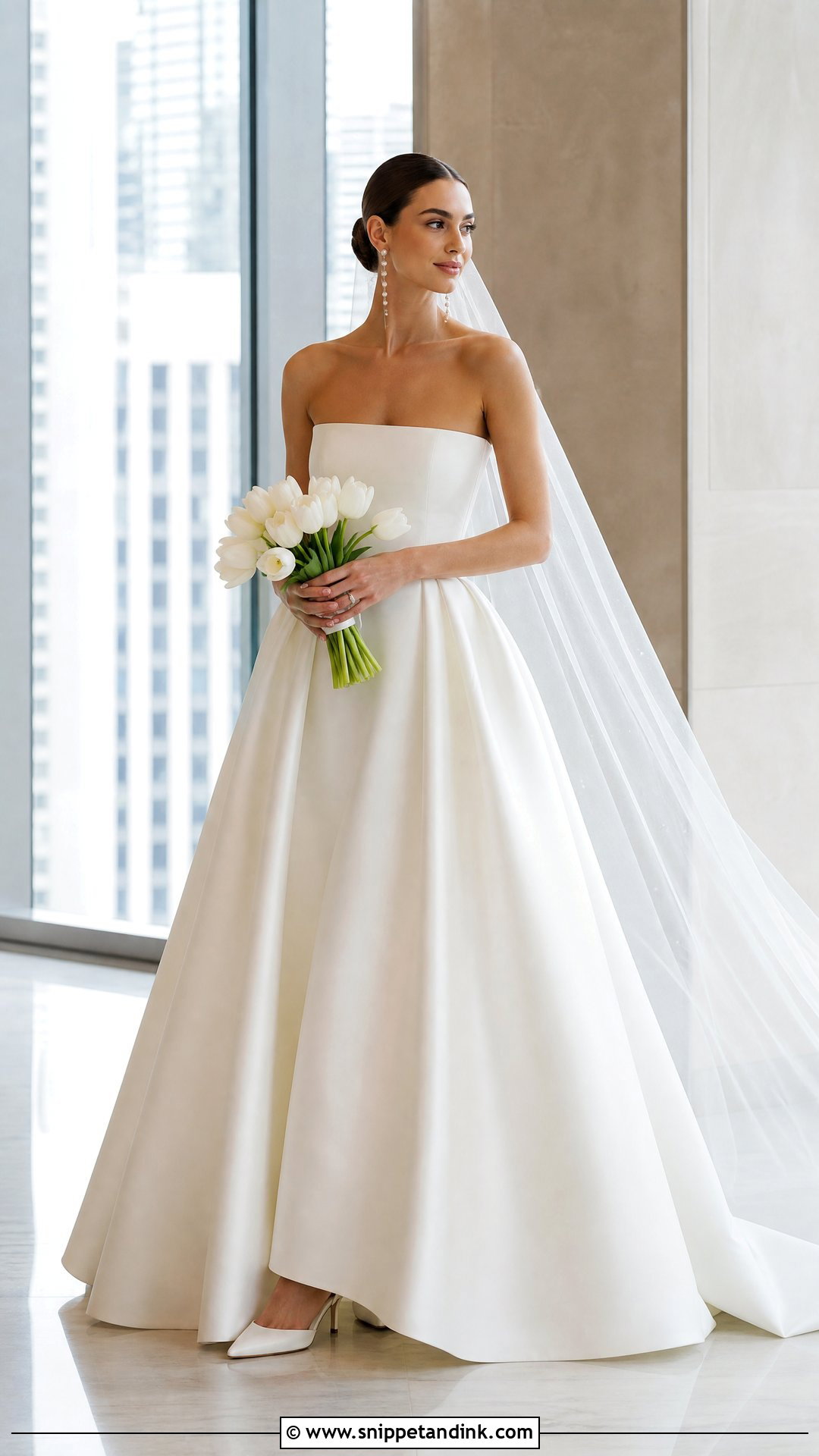
A straight neckline is the hardest strapless cut to fit, because there’s no curve to hide a gap. On a fuller bust it can flatten; on a smaller one it can stand away from the body. I usually pull three different heights before we decide. In plain satin or Mikado with a controlled skirt, it reads very current. Long pearl earrings, a sheer chapel veil, pointed slingbacks, a small white clutch and a slim bouquet of tulips keep it lean, with a chignon or sleek ponytail. Rooftops and modern art spaces are where I’d put it.
7. Strapless Floral Appliqué Ballgown Wedding Dress
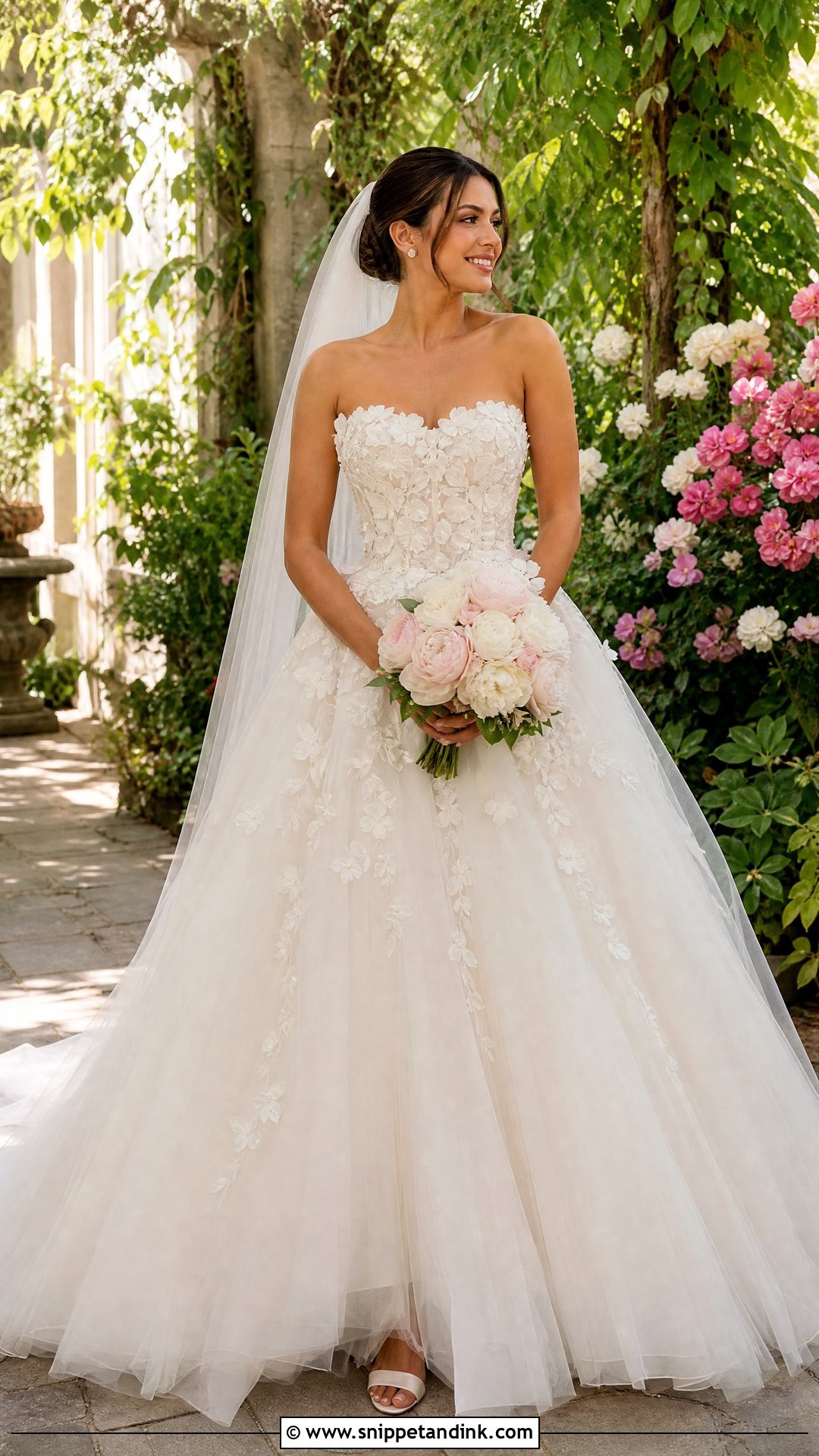
Raised floral appliqués give a strapless ballgown a garden feel without any sparkle. The ones I trust sit thickest around the neckline and waist and thin out as they scatter down the tulle, so the skirt still moves. Keep the veil plain and sheer or it hides the flowers you chose the dress for. Crystal studs, ivory satin sandals, peonies with sweet peas and a low textured bun with a few loose pieces finish it. No flowers in the hair here; it tips into costume. Raised petals also snag on veil tulle, so ask for a veil with a finished edge. Botanical gardens and early-summer estates suit it.
8. Strapless Beaded Ballgown Wedding Dress
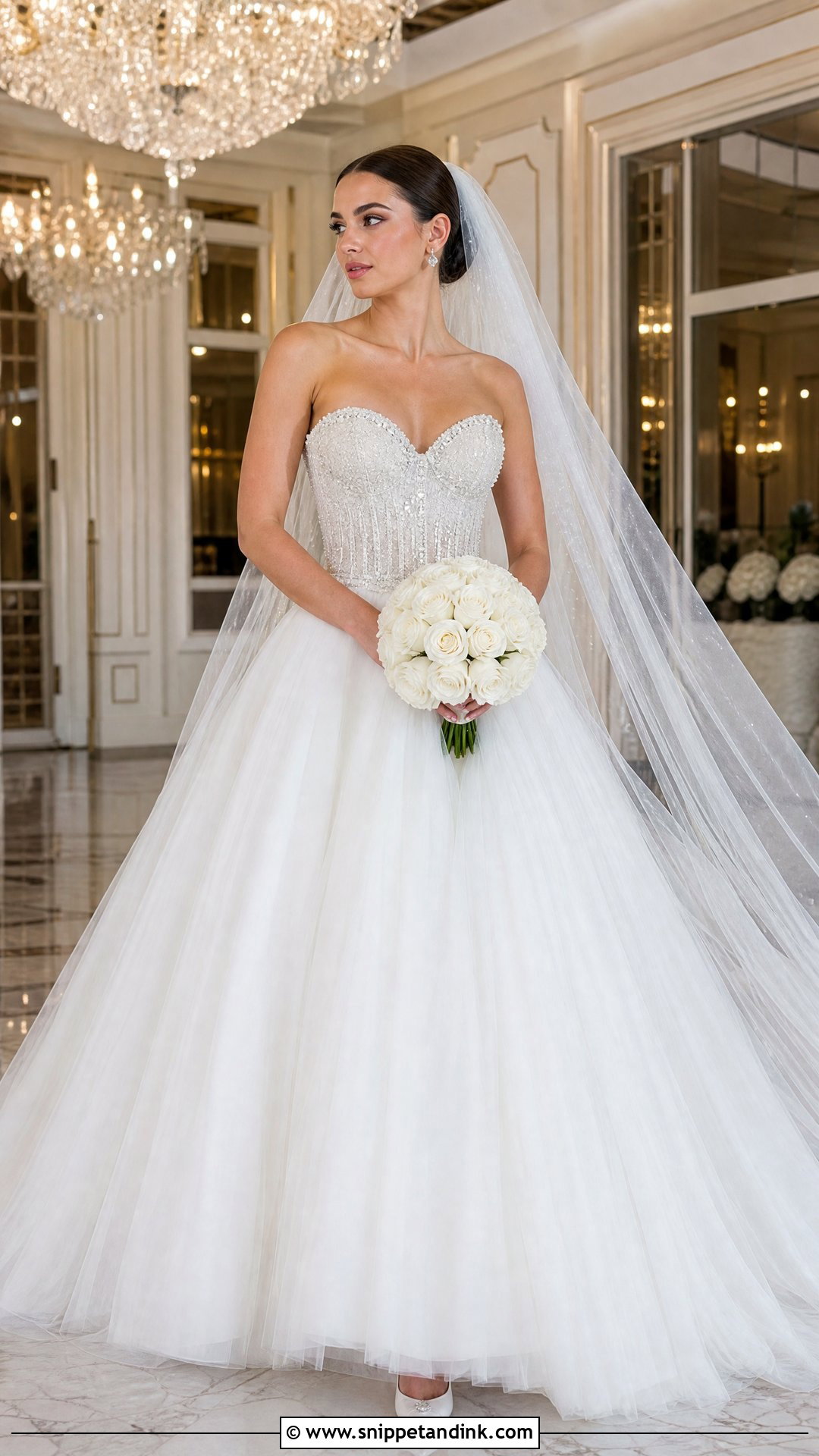
Beading comes alive under evening light, which is why I steer brides toward this one for winter and candlelit receptions. The balance I look for is a heavily beaded bodice over a mostly plain tulle skirt; beading all the way down gets heavy and drags the bodice lower as the night goes on. Pair it with a simple cathedral veil, small sparkling earrings, closed-toe satin pumps and structured white roses. Hair goes up and smooth, because loose strands catch in beads at the neckline and pull. At the fitting, swing your arms against your sides. Beads on the side seams can rub the inner arm raw over a long day.
9. Strapless Pearl Ballgown Wedding Dress
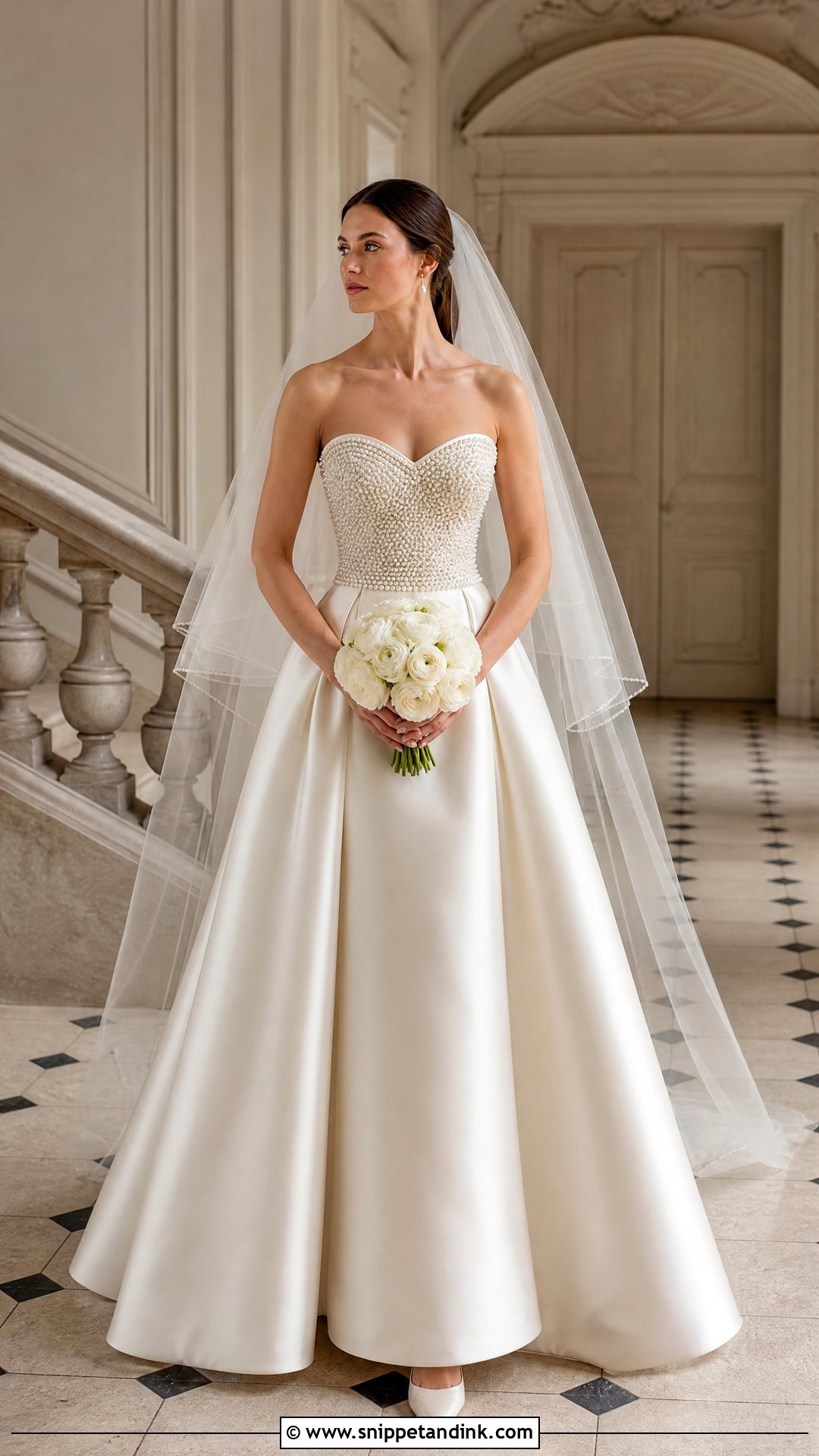
Pearls give a softer glow than crystal and read creamier on camera. A pearl-covered corset over plain satin or layered tulle is my favorite version, since the contrast stops the gown looking busy. Pearl drops, a sheer fingertip veil, ivory pumps, white ranunculus and a low bun or French twist complete it. Skip the necklace when pearls already frame the neckline. Before you commit, run your fingers over the bodice: hand-sewn pearls sit firm, while loosely attached ones tend to come away during hugs. Historic houses and formal gardens suit it.
10. Strapless Jacquard Ballgown Wedding Dress
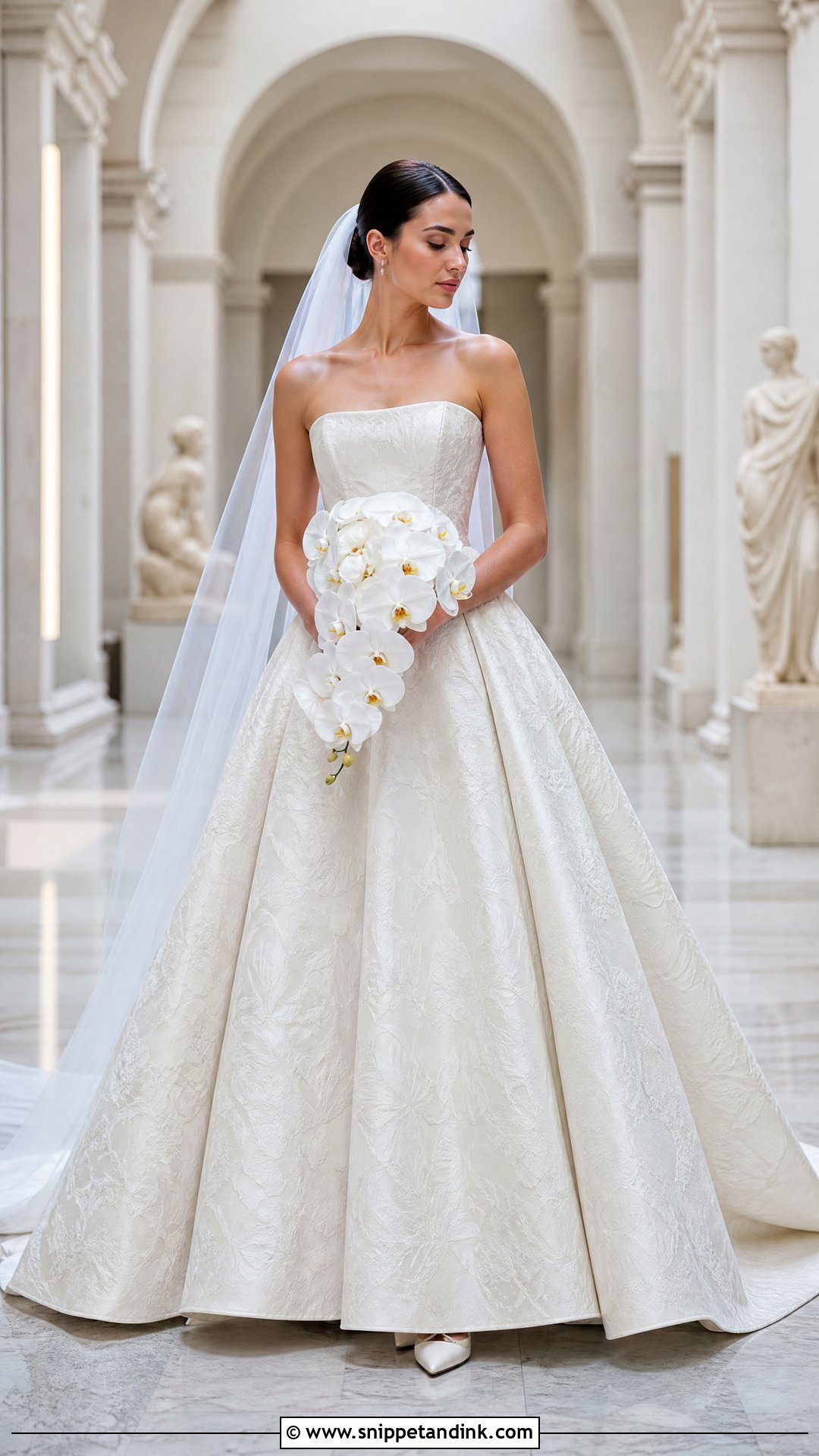
Jacquard has its pattern woven in, so you get texture without appliqué or beads. A floral woven design across a structured bodice and wide pleated skirt is plenty on its own. Keep the rest plain: cathedral veil, stud earrings, smooth ivory heels, a compact bouquet of orchids or roses and a sleek center-parted bun. What I inspect is pattern matching at center front and the side seams. A motif split in half across the bust tells you the cutting was rushed. Museums and grand halls in fall or winter show jacquard at its best.
11. Strapless Pleated Ballgown Wedding Dress
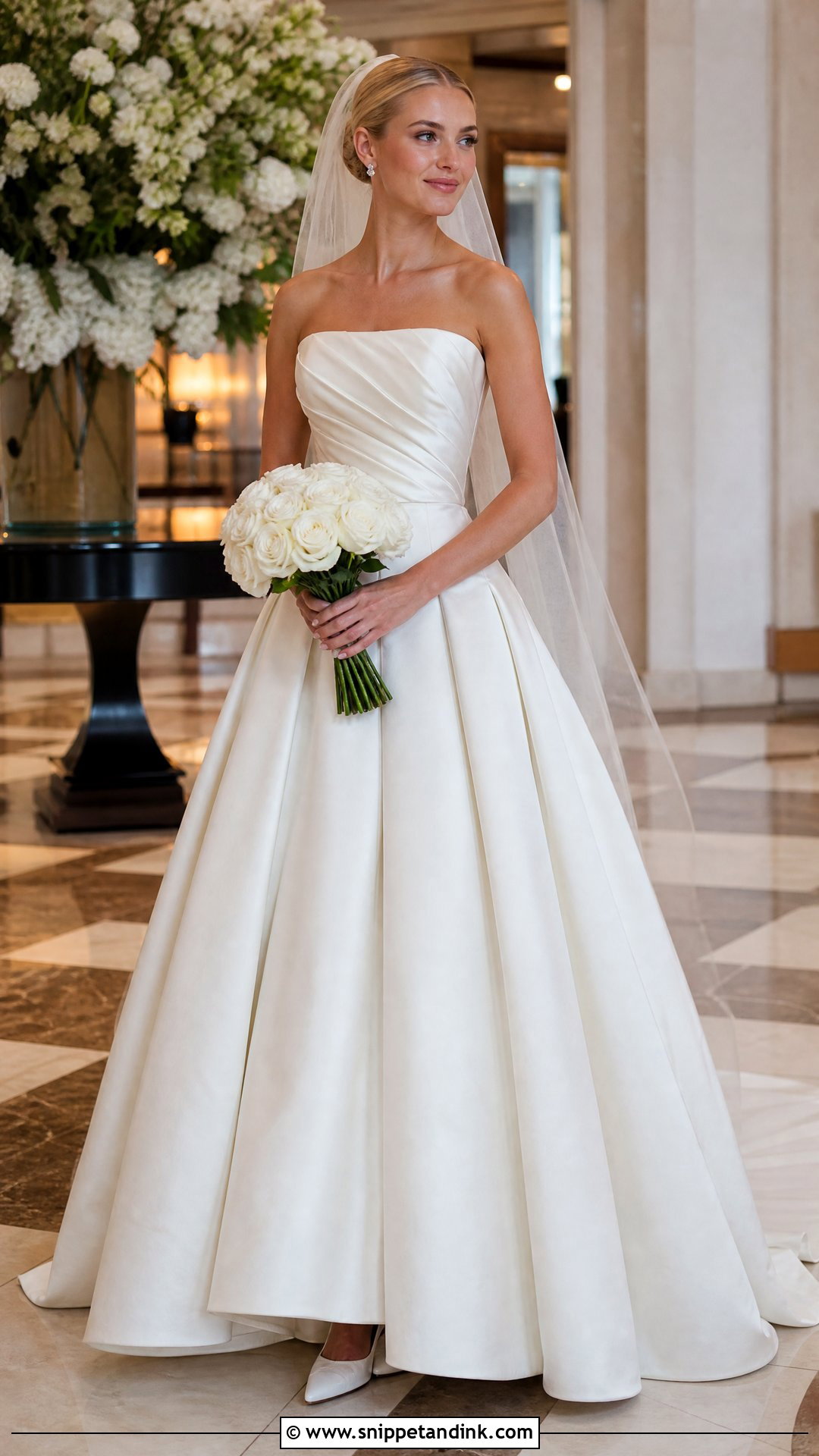
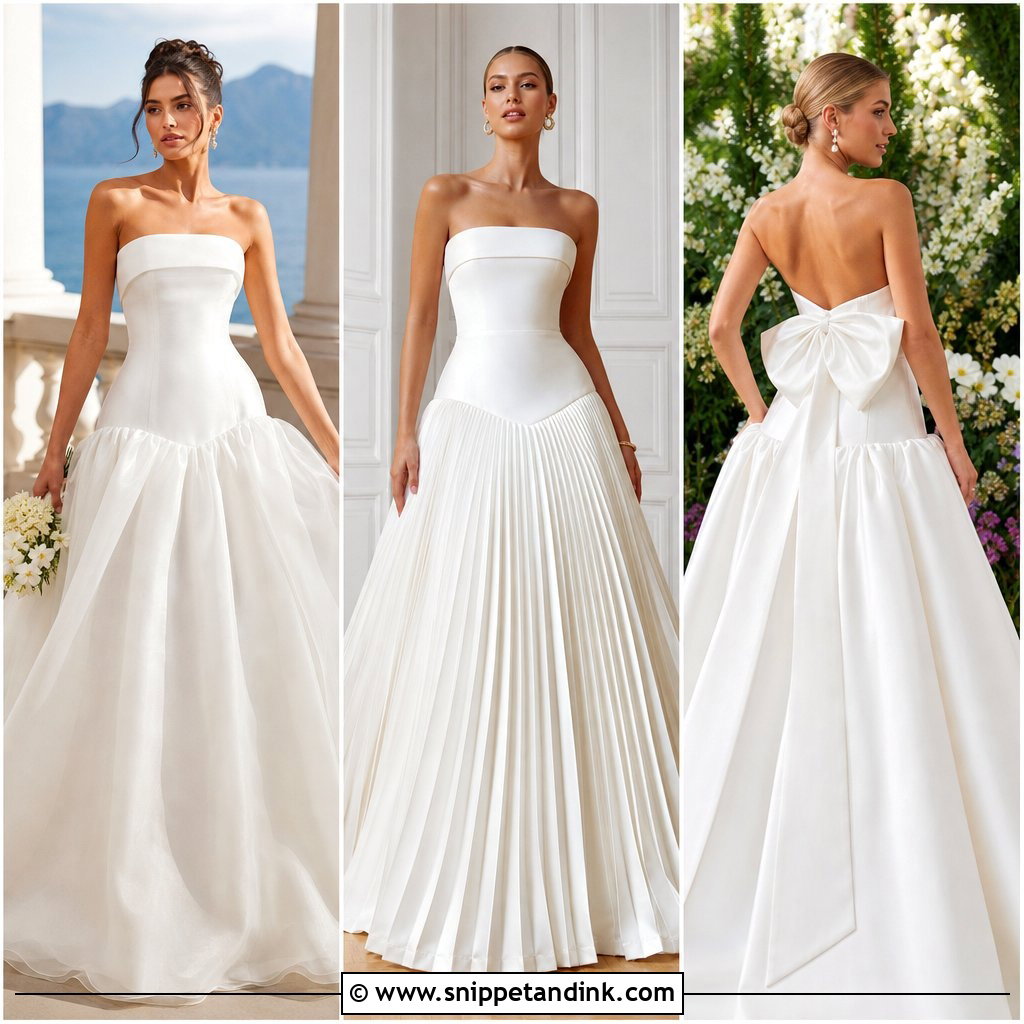
Diagonal pleats across the bodice pull the eye toward the waist, then wider pleats release into the satin skirt. Pressed and stitched properly, they lie flat. Done badly, they puff at the hip and add bulk you never asked for, so give this one to a seamstress who works with satin all the time. I’d style it with a narrow-edged veil, crystal studs, pointed ivory pumps, a low bun and long-stemmed white roses. If the skirt is very full, a light petticoat holds the volume without the stiffness of a hoop. City venues and hotel foyers suit the clean lines.
12. Strapless Draped Ballgown Wedding Dress
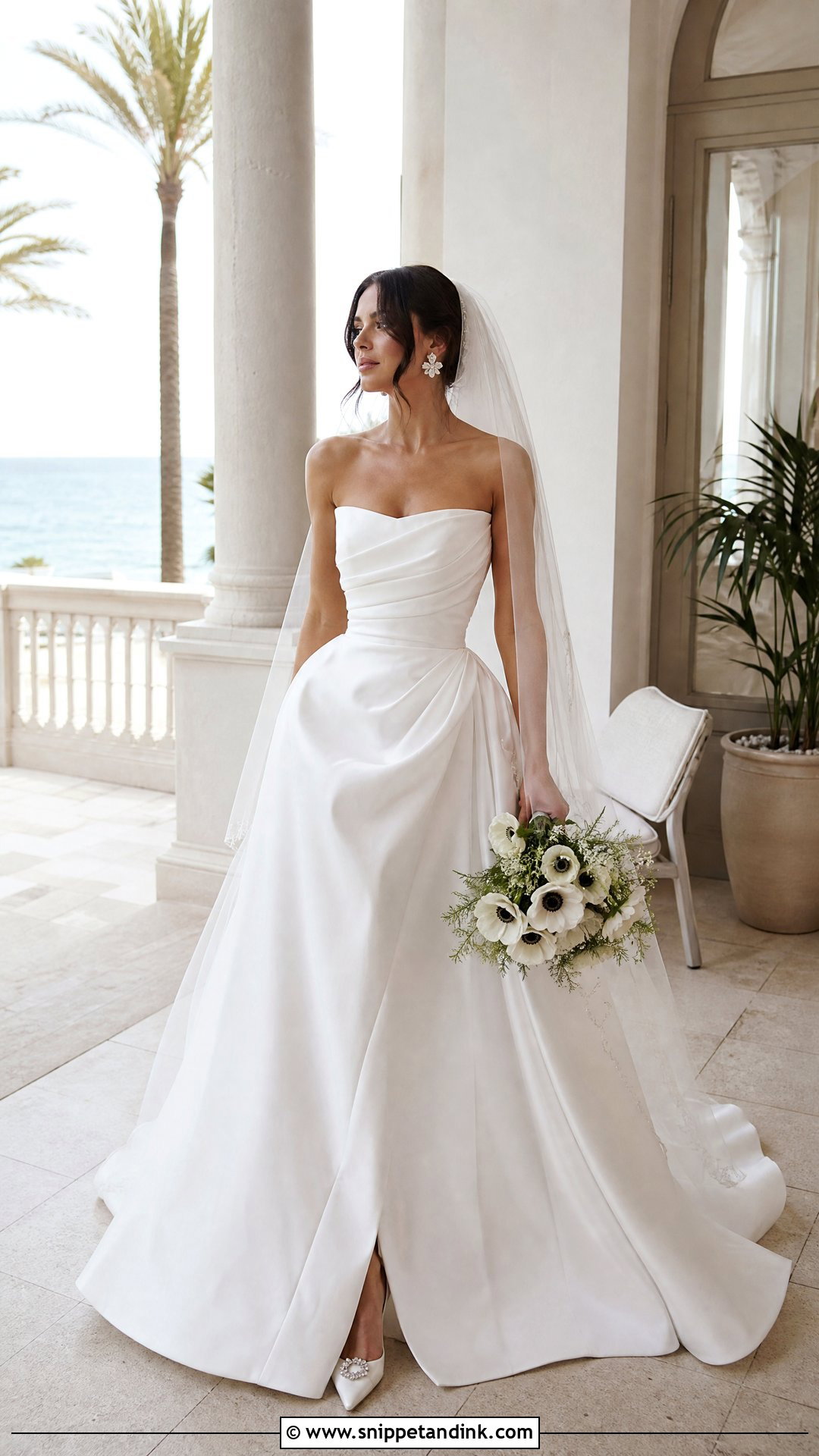
Draping softens structure, but in fitting terms it’s fragile. Folded satin across the bodice, or gathering swept toward one hip, has to lie against the body; if the bodice underneath is even slightly loose, the folds sag by mid-afternoon. Pair it with a skirt that falls clean and undecorated. A sheer chapel veil, sculptural drop earrings, pointed heels and a loose bouquet of anemones and roses work well, with soft waves tucked behind the ears. I like it for coastal hotels and destination ceremonies.
13. Strapless Tulle Ballgown Wedding Dress
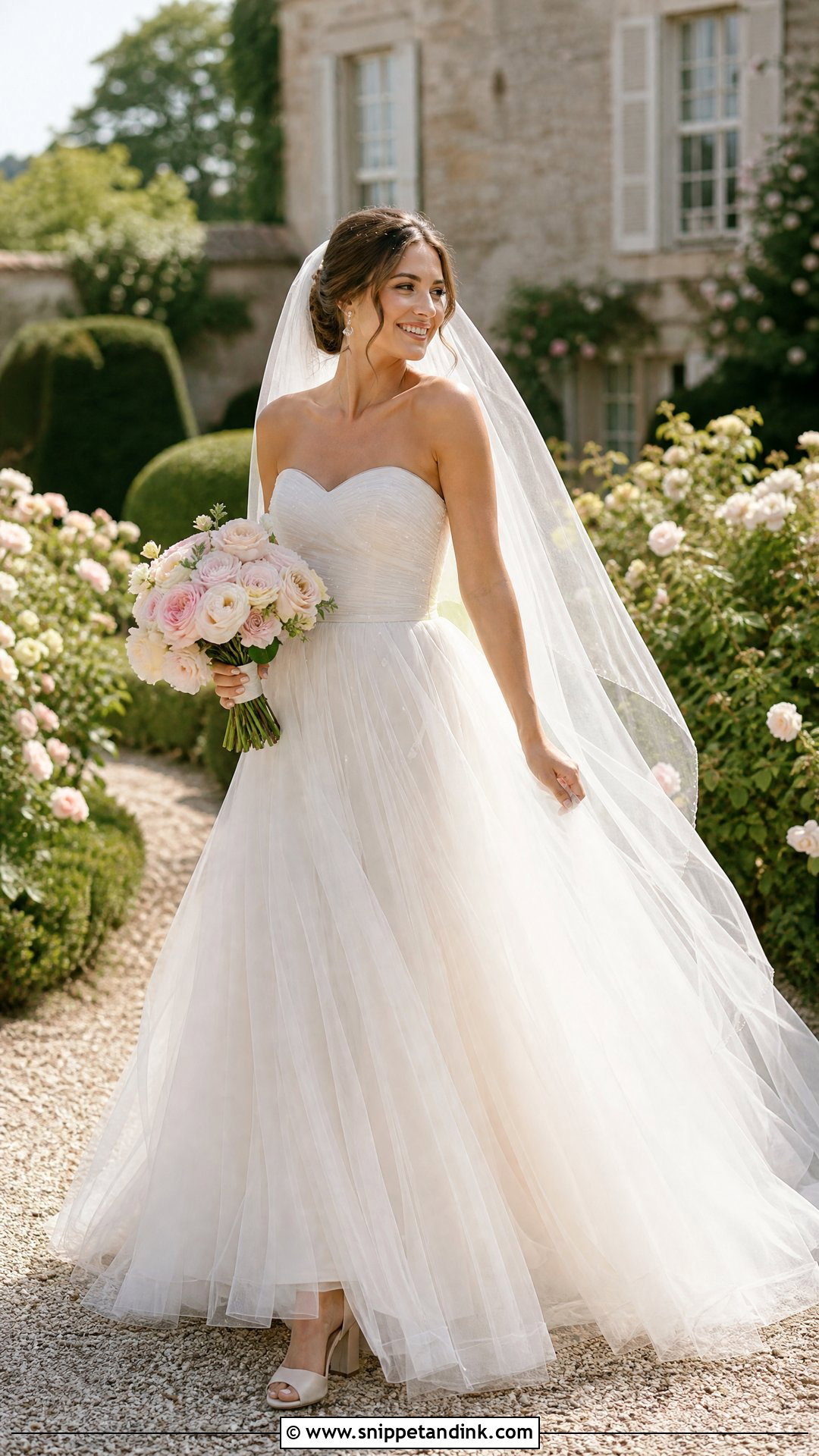
Tulle gives a ballgown its floating look, and the difference between versions is in the layers. Soft bridal tulle drapes; stiff netting stands out and scratches your legs. I check the hand of the fabric first, then the hem, because tulle cut to the floor in one pair of heels catches on every step if your shoes change. A fitted bodice with a curved neckline, a scatter of lace or pearl, a fingertip veil, fine drops, satin block heels, loose garden roses and a soft updo with face-framing pieces make the full look. On a lawn, block heels sink far less than stilettos. Gardens, country estates and conservatories suit it.
14. Strapless Blush Ballgown Wedding Dress
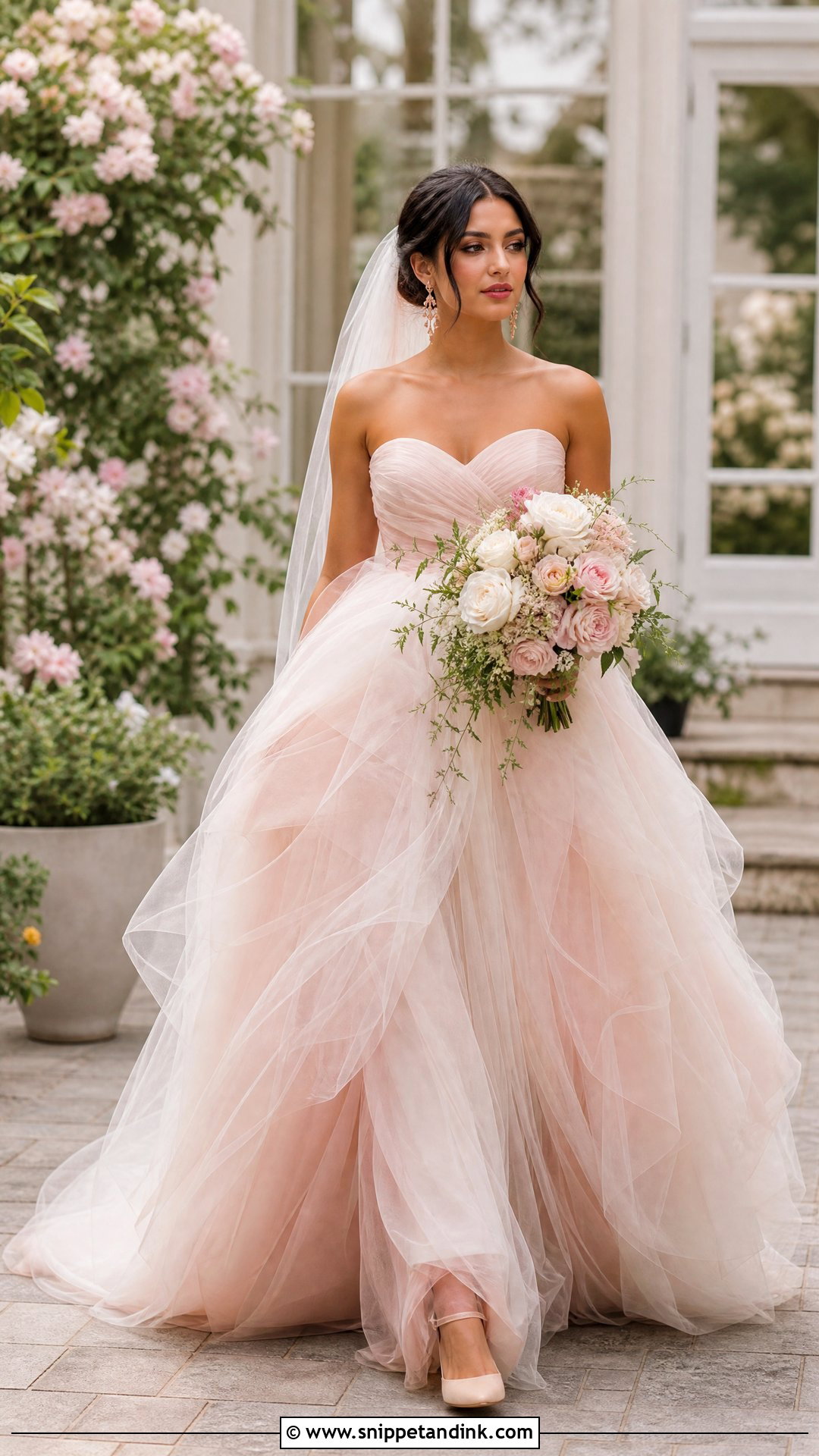
Blush is usually built from a pale pink lining under ivory tulle or lace, which is why it looks so different from one room to the next. Daylight brings the pink forward; warm indoor bulbs can turn it peachy or almost white. I always walk a blush gown to a window during a fitting. Keep the structure classic with a fitted bodice and full layered skirt, then add rose-gold earrings, ivory heels and a sheer veil with minimal edging. Flowers in cream, pale pink and muted green tie the palette together, with soft waves or a loose low bun. Spring estates and garden ceremonies are its home.
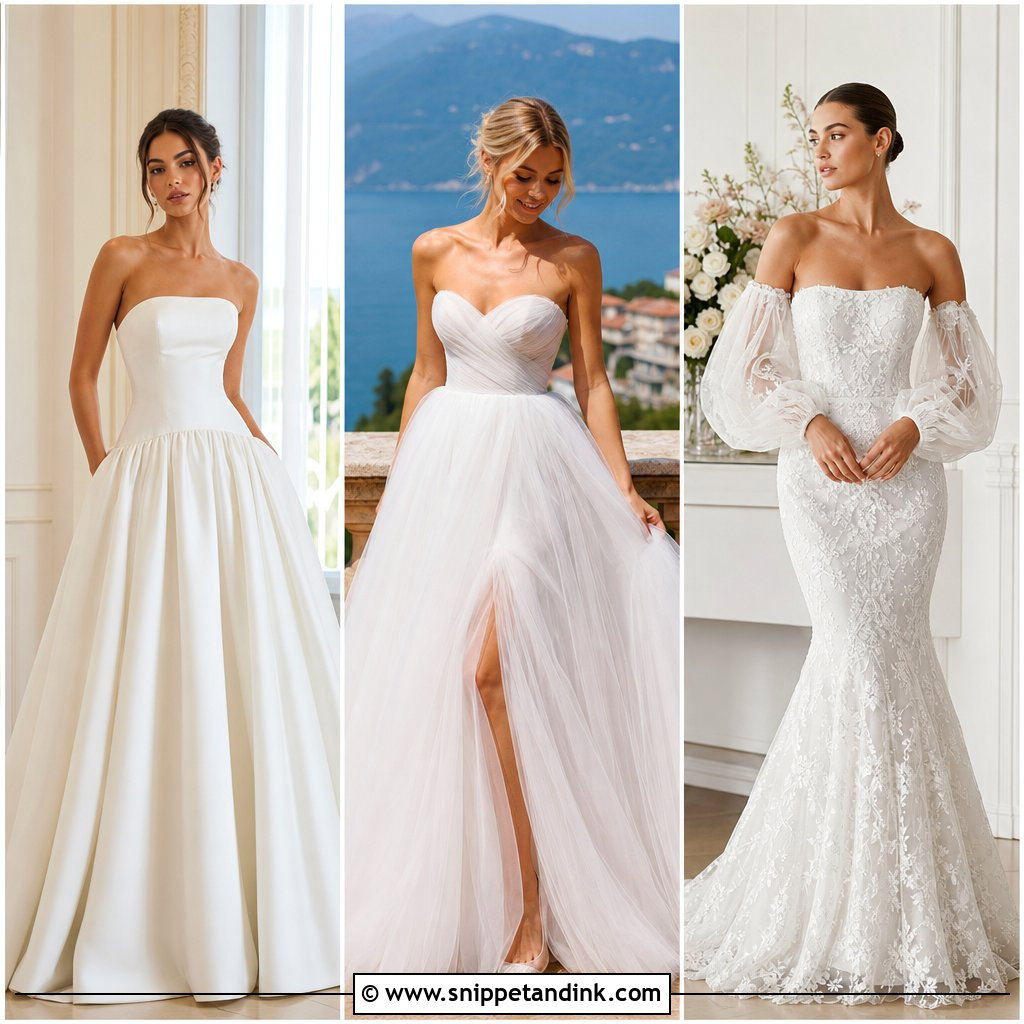

15. Strapless Champagne Ballgown Wedding Dress
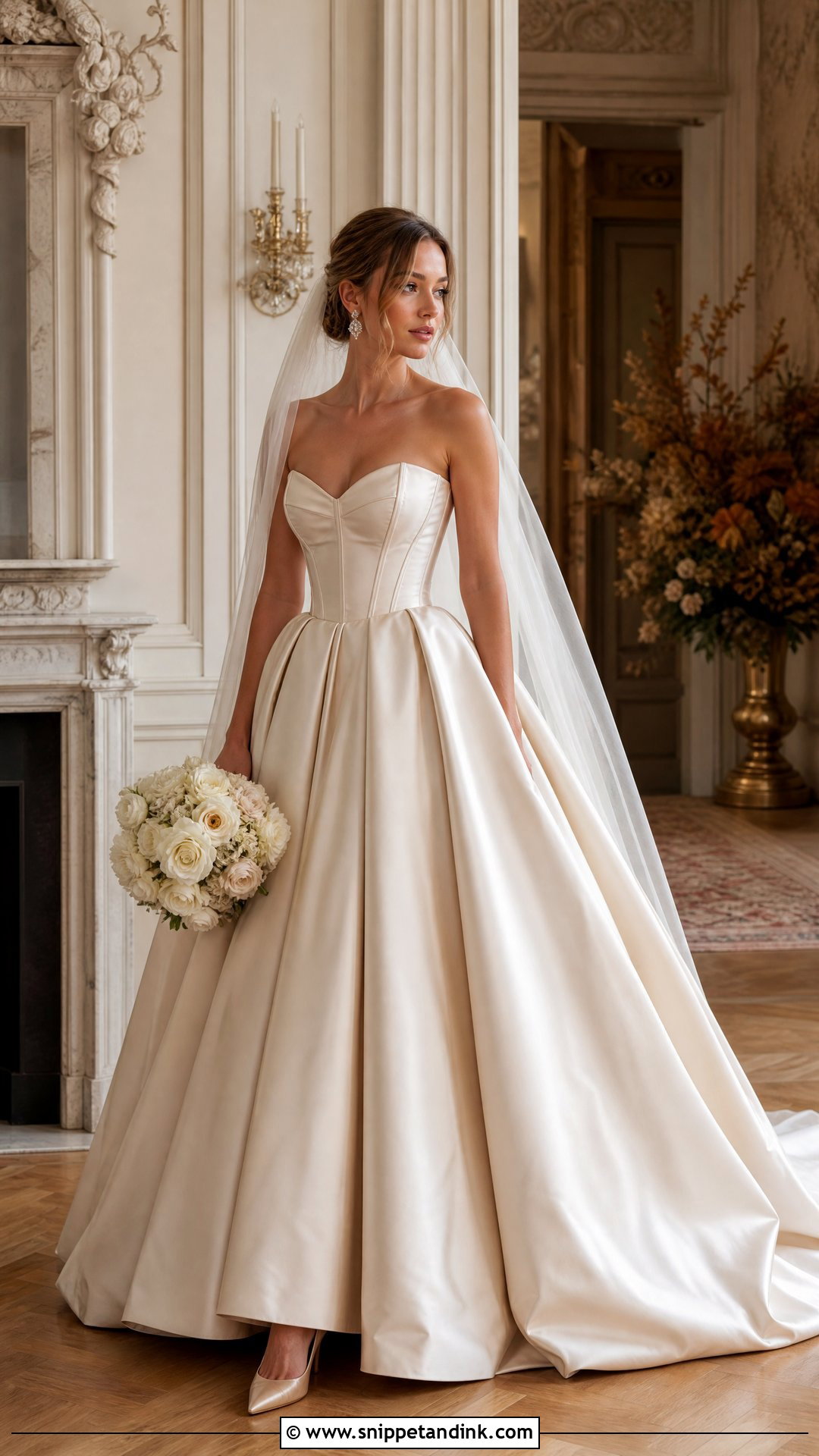
Champagne is warmer than white, and against that warmth lace and beading stand out more. It also flatters some skin tones far more than others, so hold the fabric at your face in natural light before you decide. I don’t try to match every accessory to it. Ivory accessories against champagne look intentional, whereas three slightly different champagnes side by side never quite agree. A plain cathedral veil, gold-toned earrings, neutral heels, cream roses and a smooth low bun are enough. Autumn weddings and rooms dressed in cream and gold show it best.
16. Strapless Bow Back Ballgown Wedding Dress
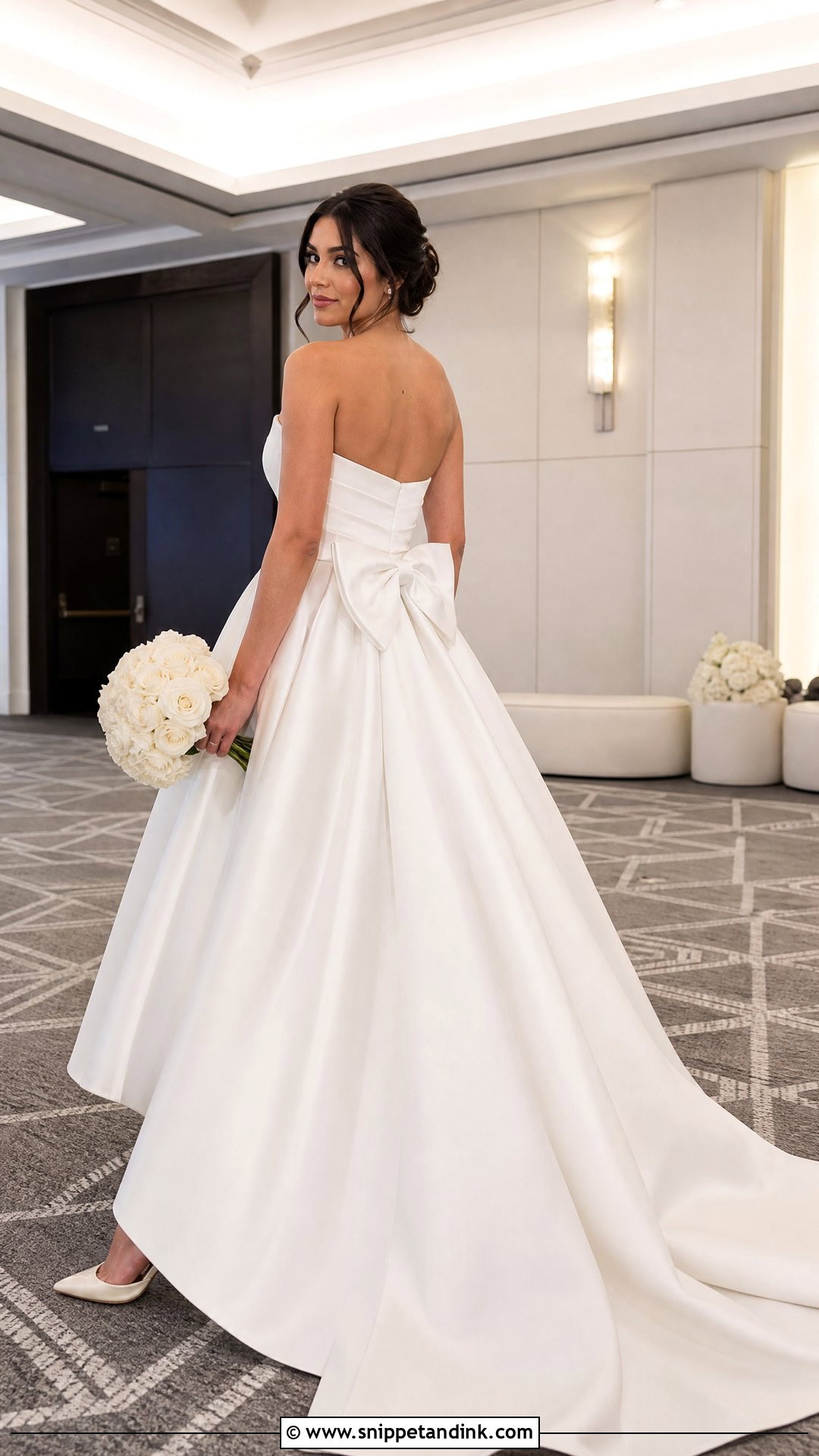
The bow is the reason to buy this dress, so I build the styling around the back view. Smooth satin, a fitted bodice and defined waist, and a detachable bow sitting just above the skirt. Wear a long plain veil for the ceremony and take it off for the reception so the bow finally gets seen. Add pearl studs, pointed ivory heels, structured white roses and a polished updo. Sit in a chair at your fitting: a large bow placed too low gets crushed against the chair back and comes up flat. Save it for a wedding with a proper entrance and exit.
17. Strapless Ballgown Wedding Dress With Detachable Sleeves
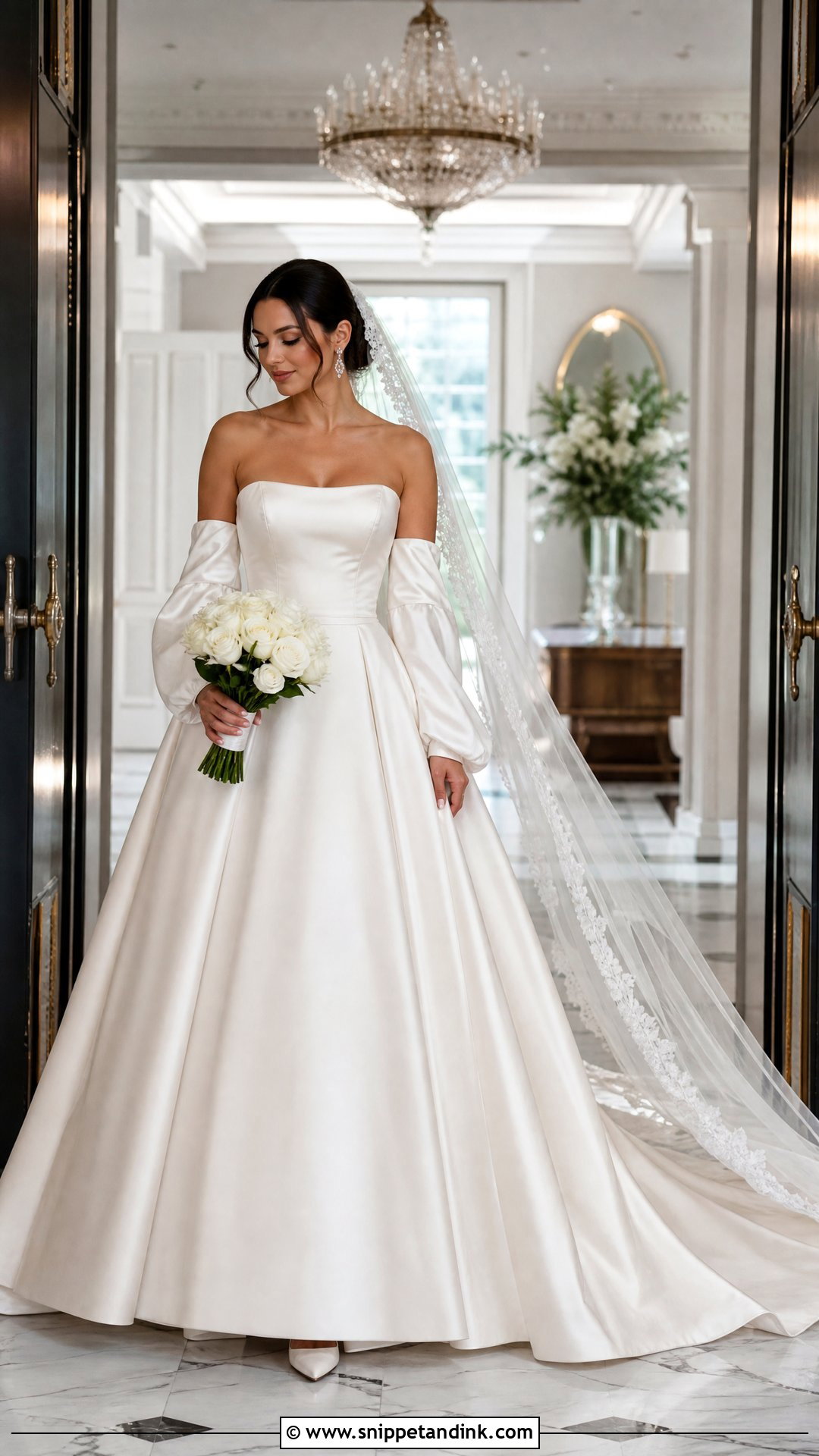
Removable off-the-shoulder sleeves give you two necklines from one gown: covered for a church ceremony or cooler season, strapless for dancing. They usually fasten to the bodice with snaps or hooks, and that attachment is my main check. Raise both arms over your head at the fitting; if the sleeves drag the bodice down, the attachment points need moving. Style it with a cathedral veil, small drops, closed-toe pumps, white roses with greenery and a low bun. Practice taking the sleeves off with whoever will help you on the day, not for the first time in a crowded bathroom.
18. Strapless Ballgown Wedding Dress With Overskirt
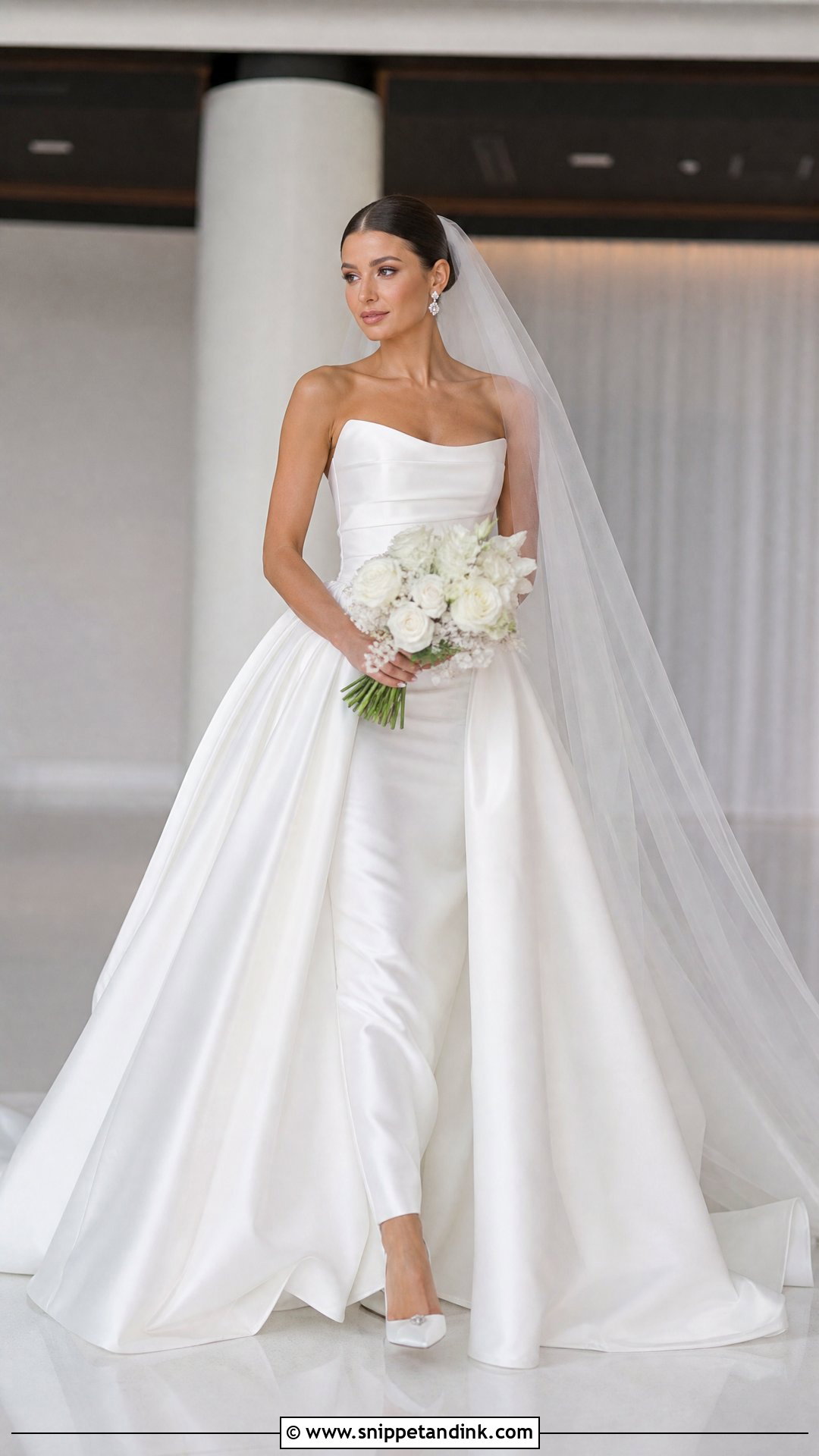
An overskirt gives you ceremony volume and a lighter reception dress without a full change. A slimmer strapless gown sits underneath, with a matching full overskirt fastened at the waist. For the ceremony I’d add a long veil, crystal earrings, pointed heels and a structured white bouquet, then remove the overskirt afterward and keep everything else the same. A sleek ponytail or low bun suits the switch. The test I run is the release: one helper should manage it in a couple of minutes. If it needs your whole bridal party, the closure needs rethinking. It earns its keep when ceremony and reception happen in different spaces.
19. Strapless Ruffled Ballgown Wedding Dress
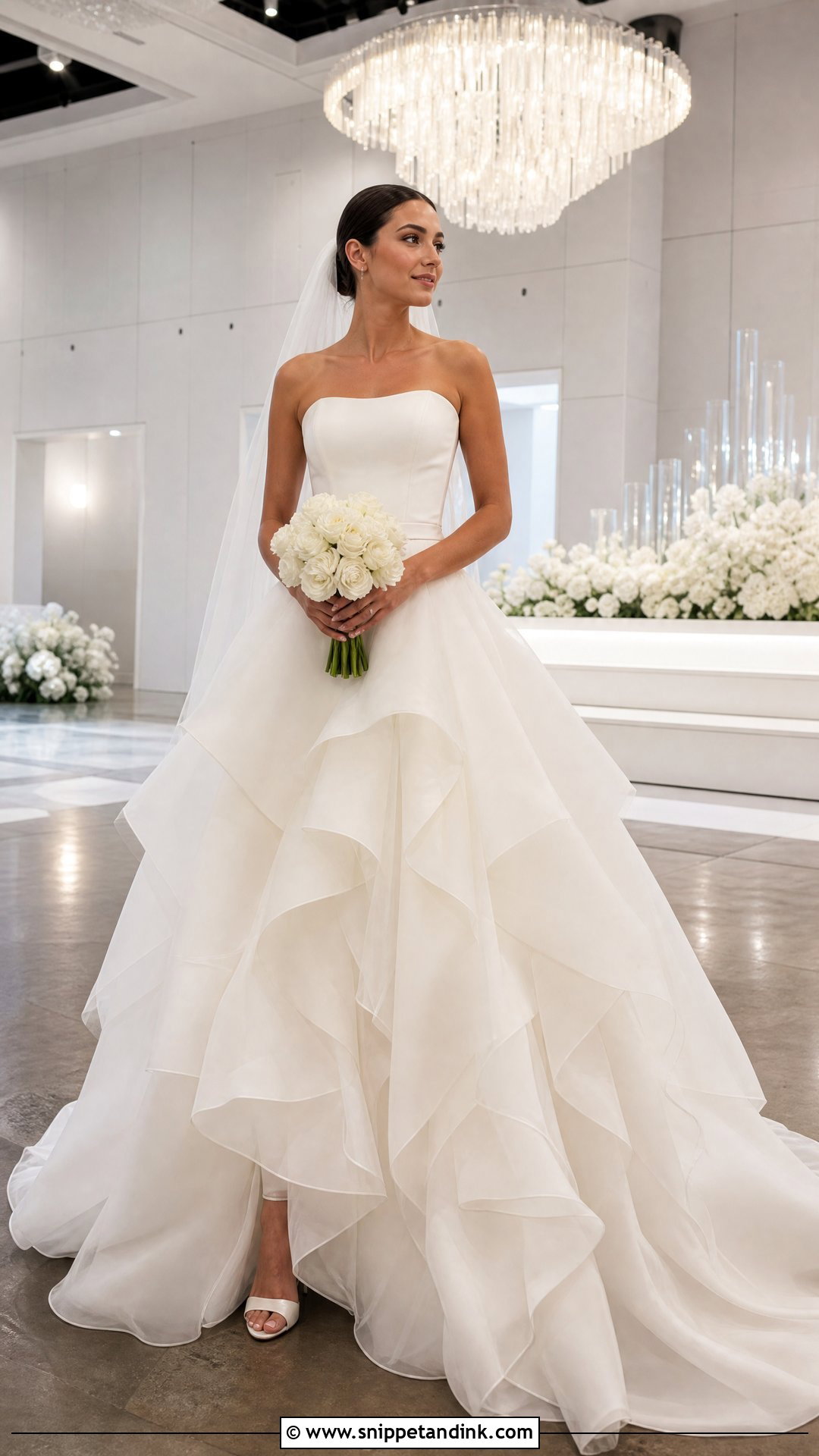
Ruffles carry a lot of visual weight, so the bodice has to stay plain and smooth to balance them. Organza tiers hold a crisp shape; tulle tiers are softer and lighter to walk in. Where the first ruffle starts matters more than brides expect. Start it too high and a petite frame disappears into the skirt. I keep everything else quiet with a plain fingertip veil, small studs, simple satin sandals, a compact bouquet and a clean updo. A spacious ballroom gives the skirt room to move.
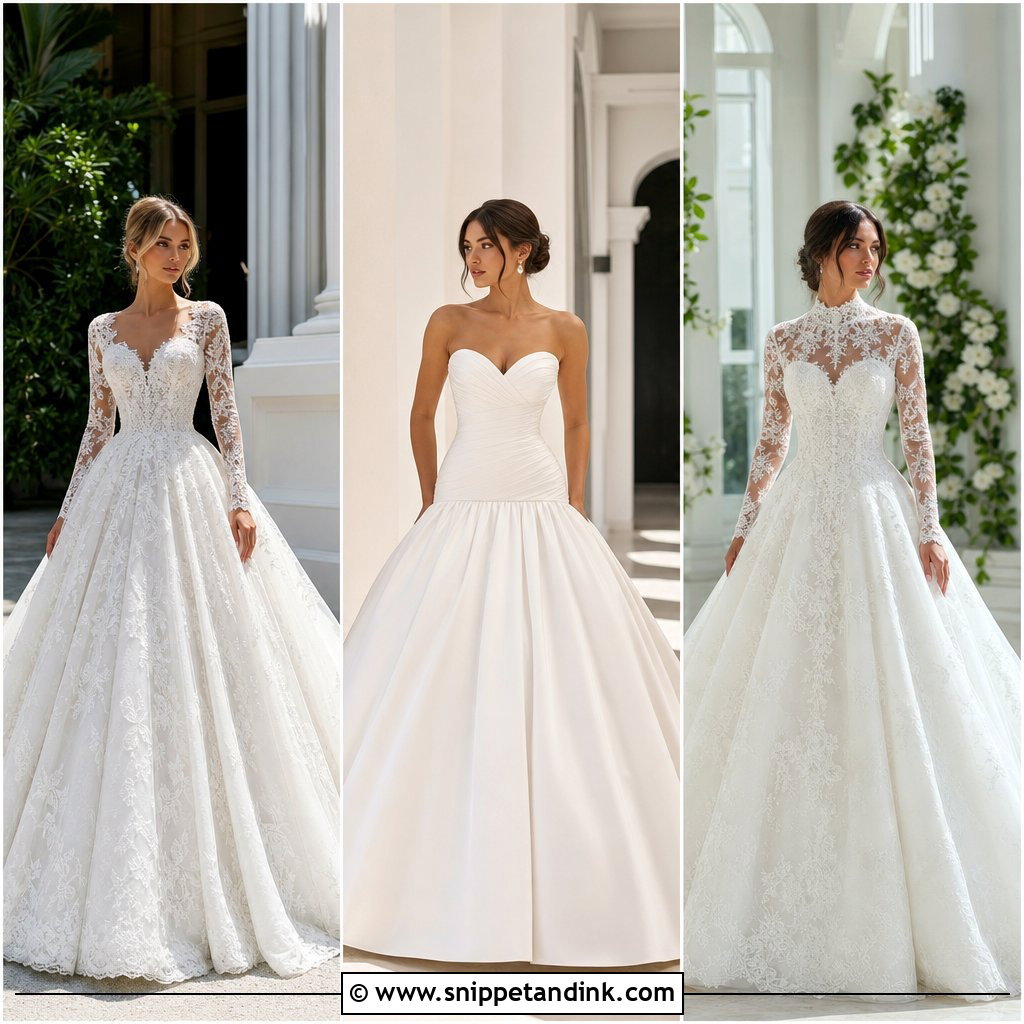
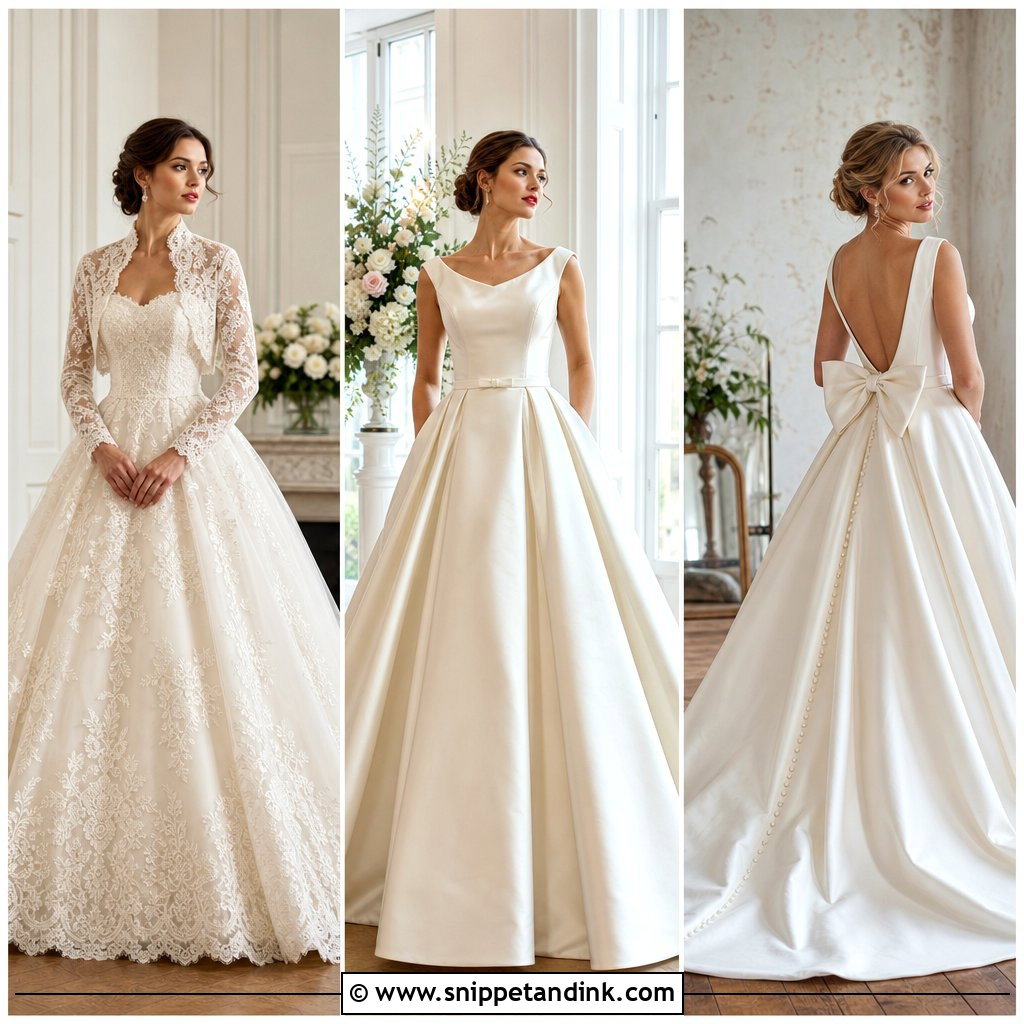

20. Strapless Minimalist Ballgown Wedding Dress
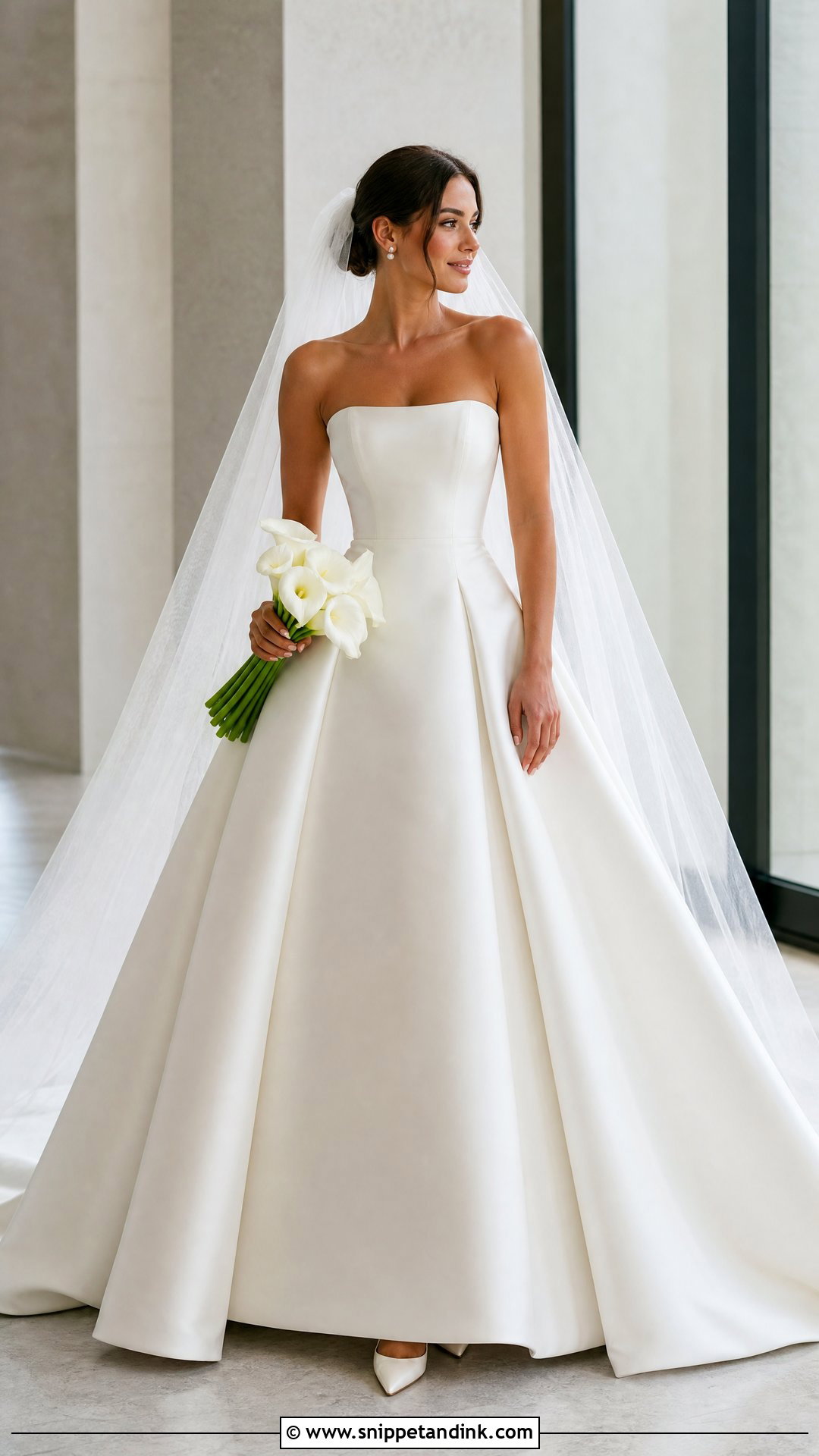
A minimalist strapless ballgown has nowhere to hide. Plain ivory satin shows every seam, so tailoring decides whether it looks expensive or flat. Look for a precise neckline, fitted bodice, defined waist and a skirt held out by clean internal construction rather than layers of netting. Add a sheer cathedral veil, pearl or diamond-style studs, pointed pumps, sculptural callas, a sleek low bun and polished natural makeup. At the first appointment I’d ask about pockets, a secure bustle and a breathable lining. Modern buildings and formal hotels suit it in any season.
Living in Twelve Yards of Skirt for a Whole Day
A full ballgown is wonderful for the aisle and a little awkward everywhere else. Planning for that before the day saves a lot of hovering in doorways.
The bustle
Any train needs bustling for dancing. An under bustle tucks fabric beneath the skirt and keeps the back smooth; an over bustle hooks it up on top and shows off a bit of drape. Satin and Mikado bustle neatly, while layered tulle may need several points to stop it sagging. Ask your seamstress to color-code the ties with thread or ribbon and show one bridesmaid how they work at your final fitting.
Cars, chairs and bathrooms
Get into the car seat first and gather the skirt in after you. Ask for a chair without arms at the top table so the skirt can spread instead of crushing. For the bathroom, the easiest method I know is to face the toilet, gather the skirt up in front of you, and let one trusted friend hold the back layers clear.
If the bodice starts to slip
Keep a small kit in your bag: a few safety pins, double-sided fashion tape and a needle with ivory thread. A strip of tape at the top edge holds a gaping neckline for hours, and a pin through the waist stay hidden inside the bodice can rescue a loose fit until the dancing ends.
The Inside of the Bodice Matters Most
Whatever the fabric, a strapless ballgown should feel secure enough that you forget about it after the first hour. Plain satin keeps the focus on shape, while lace, pearls, florals, jacquard, and ruffles add texture. Waist placement, neckline cut, fabric weight and the boning inside affect your comfort far more than any surface detail. Sit, walk and lift your arms in every gown on your shortlist, then add accessories that leave the silhouette in charge.
You'll Like These Ideas:




Leave a Reply