
Every ballgown shares the same bones, a fitted bodice and a full skirt, yet two of them can feel completely different to wear. One sits light on the hips and lets you dance; another feels like carrying a duvet down the aisle. The difference is in the fabric, the waistline and how the bodice is built, and those are the things I look at first when a bride steps onto the fitting platform. Below are satin classics, lace with sleeves, modern corsetry, long trains, convertible pieces and a few soft colors. Before you fall for a picture, think about your venue, the season, how much you want to move and how formal the day is. Then let the accessories follow the neckline and fabric of the gown you choose.
Reading the Inside of a Ballgown at the Salon
Brides judge a ballgown from the outside, but I turn it inside out first. The construction tells you how it will feel at hour eight, and a good consultant won’t mind you looking.
- Boning: flexible steel bones hold shape and bend with you, while thin plastic bones can kink and leave the bodice wavy.
- Waist stay: a firm inner band at the waist that hooks closed takes the skirt’s weight off your shoulders and bust.
- Lining: a full lining under the bodice feels smoother and lets the outer fabric hang cleanly.
- Weight: lift the hanger. A heavy satin skirt is wonderful in a cold ballroom and tiring at a summer garden party.
How the main fabrics behave on the day
Tulle is light and floats, but it snags on jewelry, bouquet wire and rough floors. Organza is crisp and holds volume, though it creases where you sit. Mikado keeps a sculpted shape and shows fold lines from storage. Satin is smooth and luxurious, and it marks where hands and wine touch it. None of these is a reason to avoid a fabric. Knowing them simply tells you what to plan for.
1. Strapless Satin Wedding Ballgown
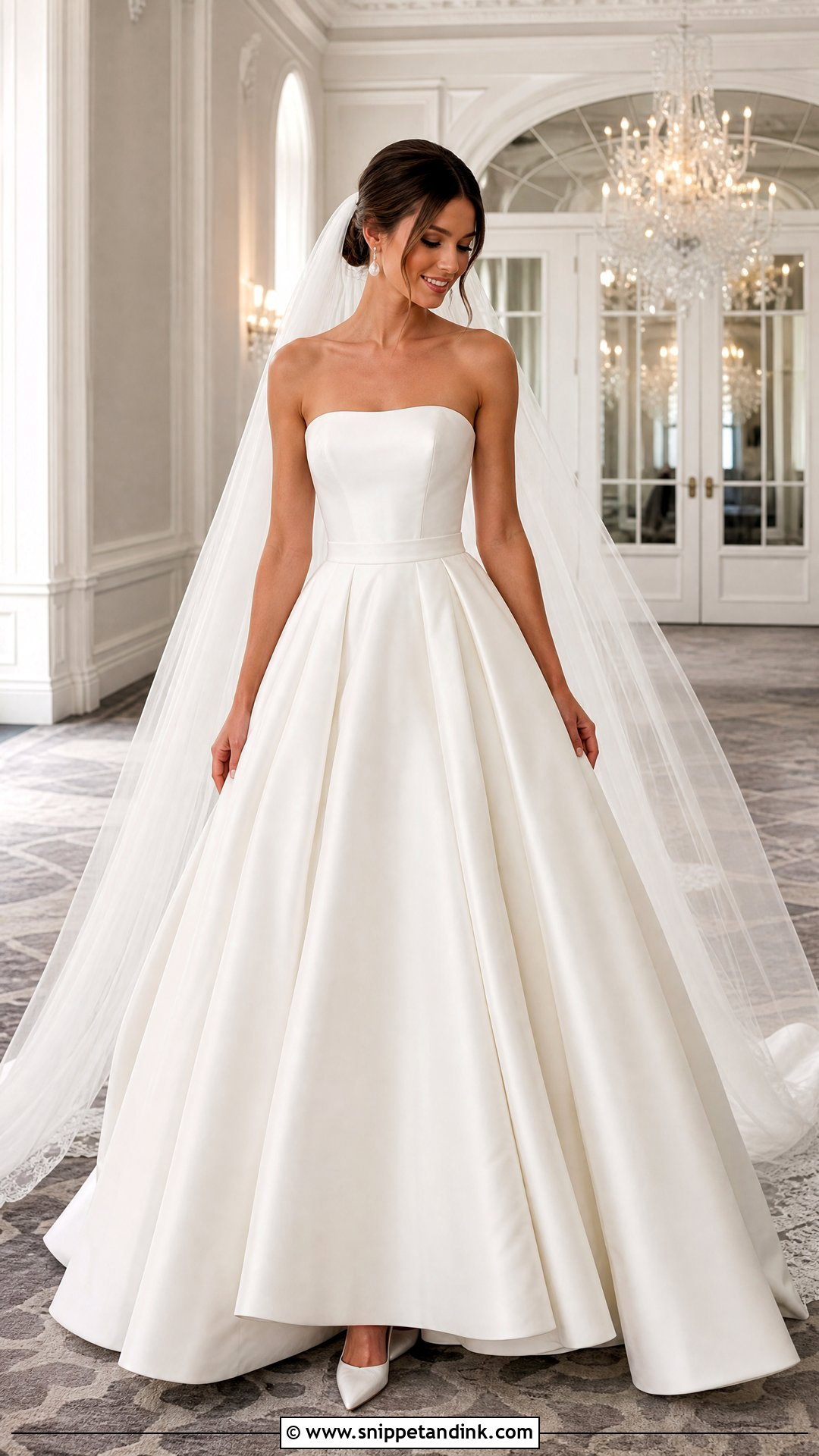
Clean satin is the purest version of the shape, and a strapless satin wedding ballgown has nowhere to hide a poor fit. The bodice has to grip on its own, which means proper internal boning and a waist stay, a firm band inside that anchors the dress to your waist so the top doesn’t slide. Ivory satin is softer on most skin than stark white; mikado gives sharper pleats if you want architecture. Style it with a fingertip or cathedral veil, pearl drops and pointed satin pumps, and a low bun to show the shoulders. Nervous about strapless? Ask about detachable straps. Ballrooms, museums and grand hotels suit it.
2. Basque Waist Wedding Ballgown
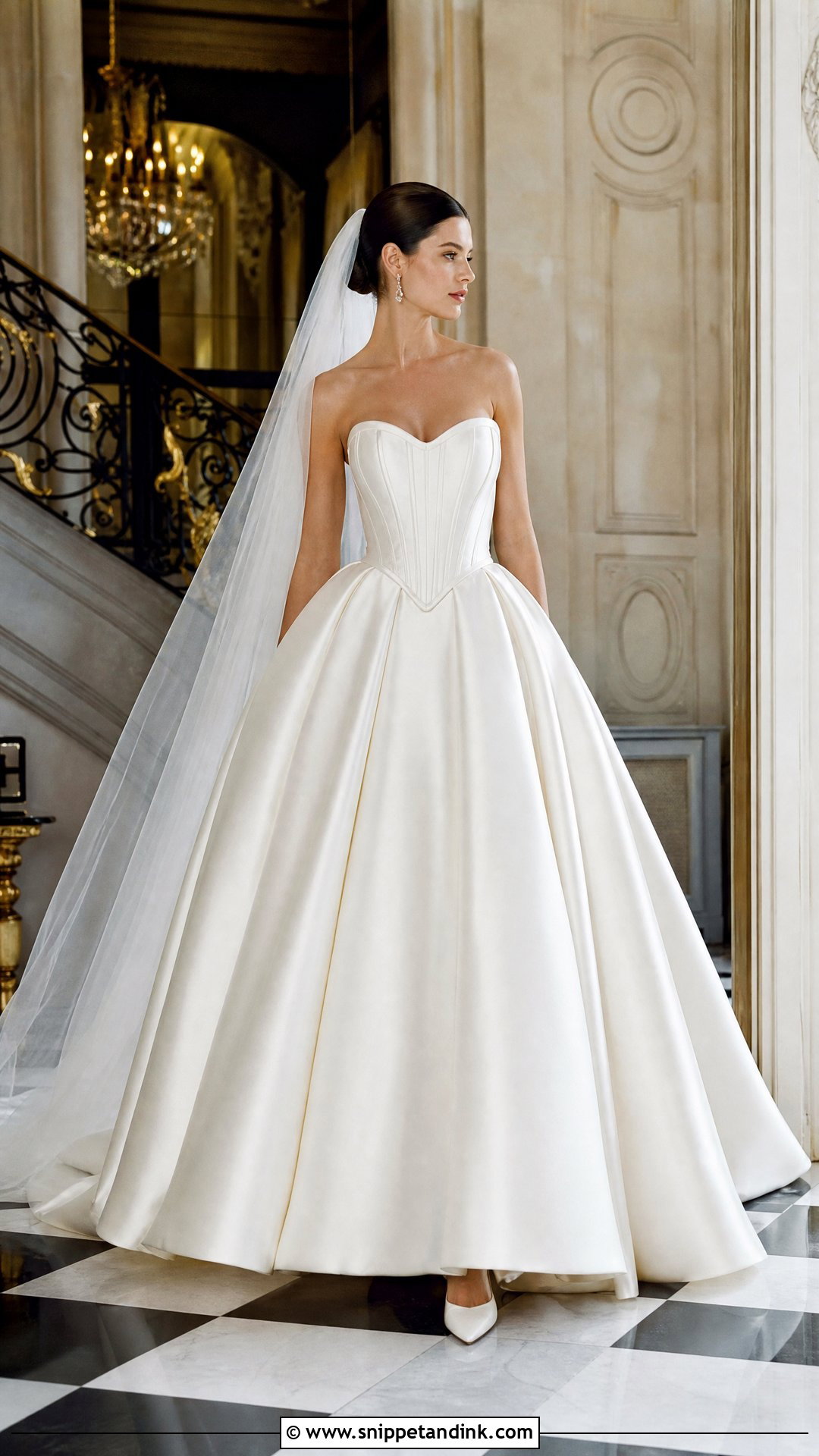
I recommend the basque waist more than any other on a full skirt, mostly because it’s kind to so many figures. The V lands below the natural waist, which lengthens the bodice and lets the skirt start lower, so the volume falls away rather than puffing out. A draped neckline makes it romantic; a straight strapless edge makes it modern. Wear a long sheer veil, fine crystal earrings and ivory heels with a stable block or flared heel. A sleek bun keeps the bodice visible. Leave belts off entirely, since they fight the V. Torso length is the measurement that matters most here, and getting it wrong puts the point in the wrong place.
3. Long Sleeve Lace Wedding Ballgown
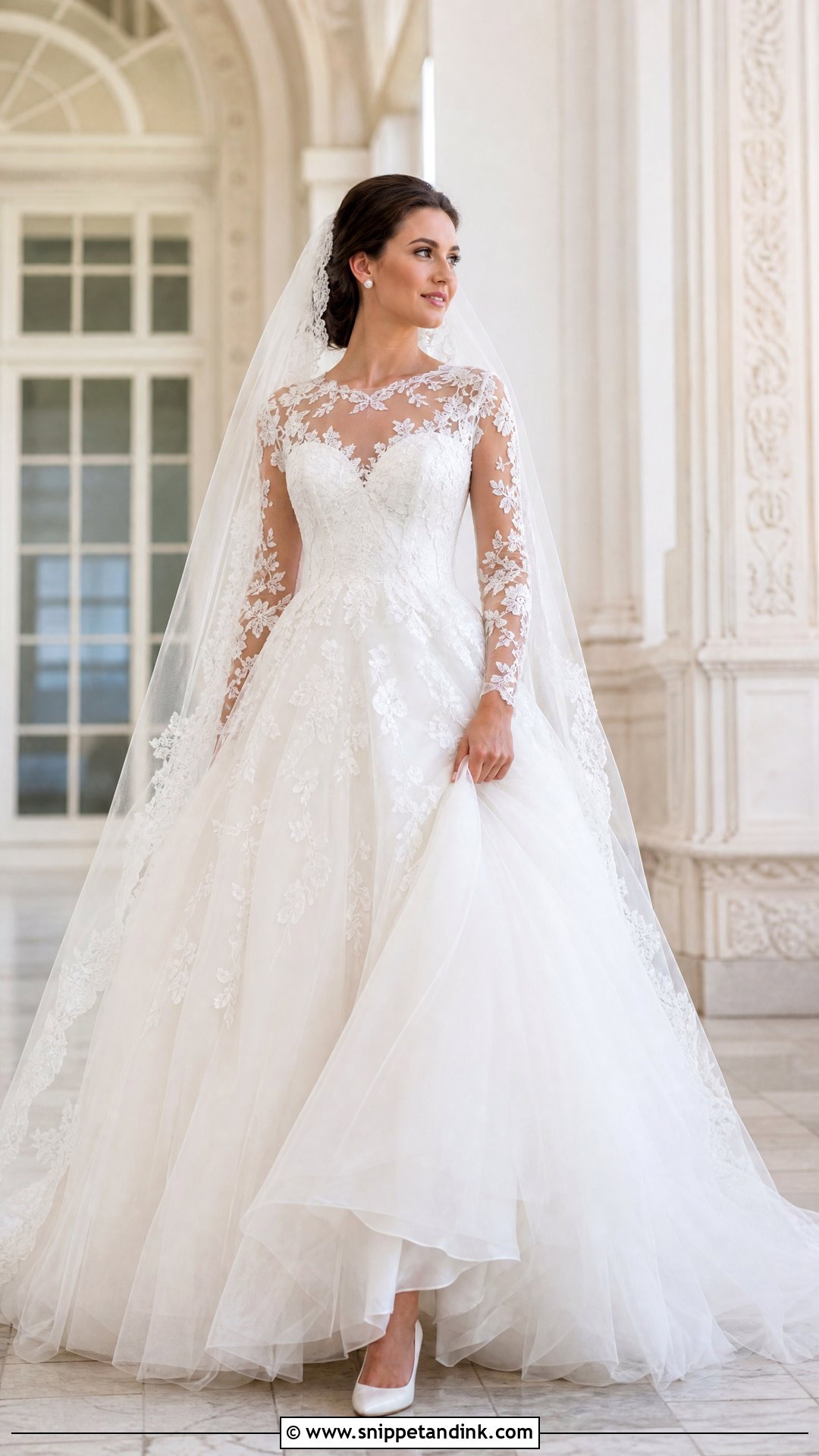
A long sleeve lace wedding ballgown feels timeless, and the sleeves are where the fitting time goes. Illusion sleeves have very little give, so I have brides lift their arms, reach forward and hug before we pin anything. Chantilly lace is fine and delicate; larger floral motifs carry from the back of a church. Layered tulle in the skirt keeps the whole dress lighter than it looks. Closed-toe ivory pumps, pearl studs and a lace-trimmed veil that complements the dress without copying its pattern finish it. A low chignon keeps hair away from the lace at the shoulders. It suits winter, formal ceremonies and old buildings.
4. Off Shoulder Tulle Wedding Ballgown
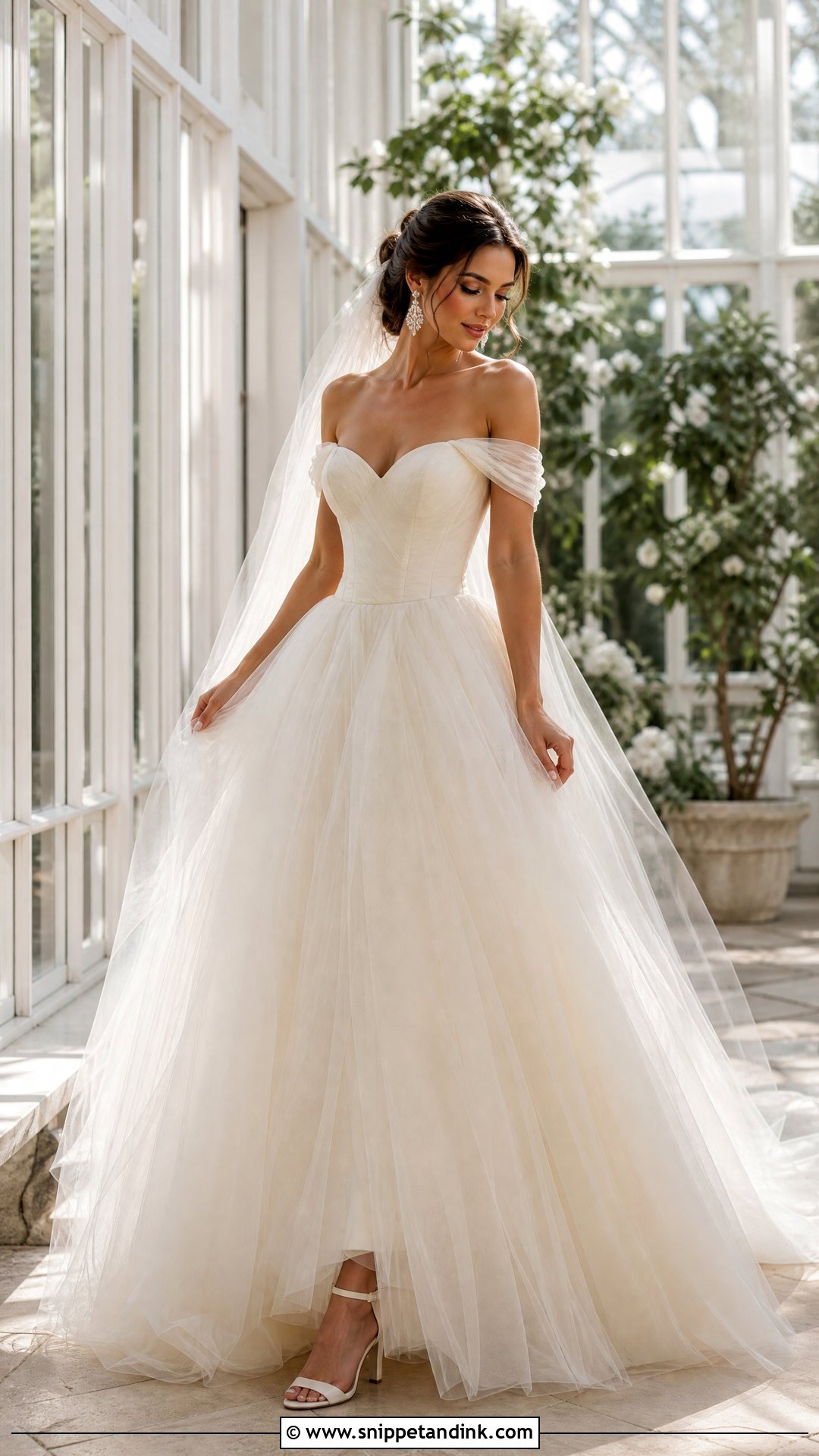
Off-shoulder tulle is the lightest-feeling ballgown here, provided the skirt is built from several airy layers rather than a few dense ones. The neckline is the trade-off. Off-shoulder sleeves sit across the upper arm, which limits how high you can lift it, so test hugging and dancing at the fitting and ask for an elastic grip band if it slides. A plain raw-edge veil, small crystal earrings and hidden ivory heels keep the attention on the shoulders. Loose waves or a textured low bun match the softness. No big necklace here. It’s at home in gardens, conservatories and bright estate rooms.
5. Square Neck Wedding Ballgown
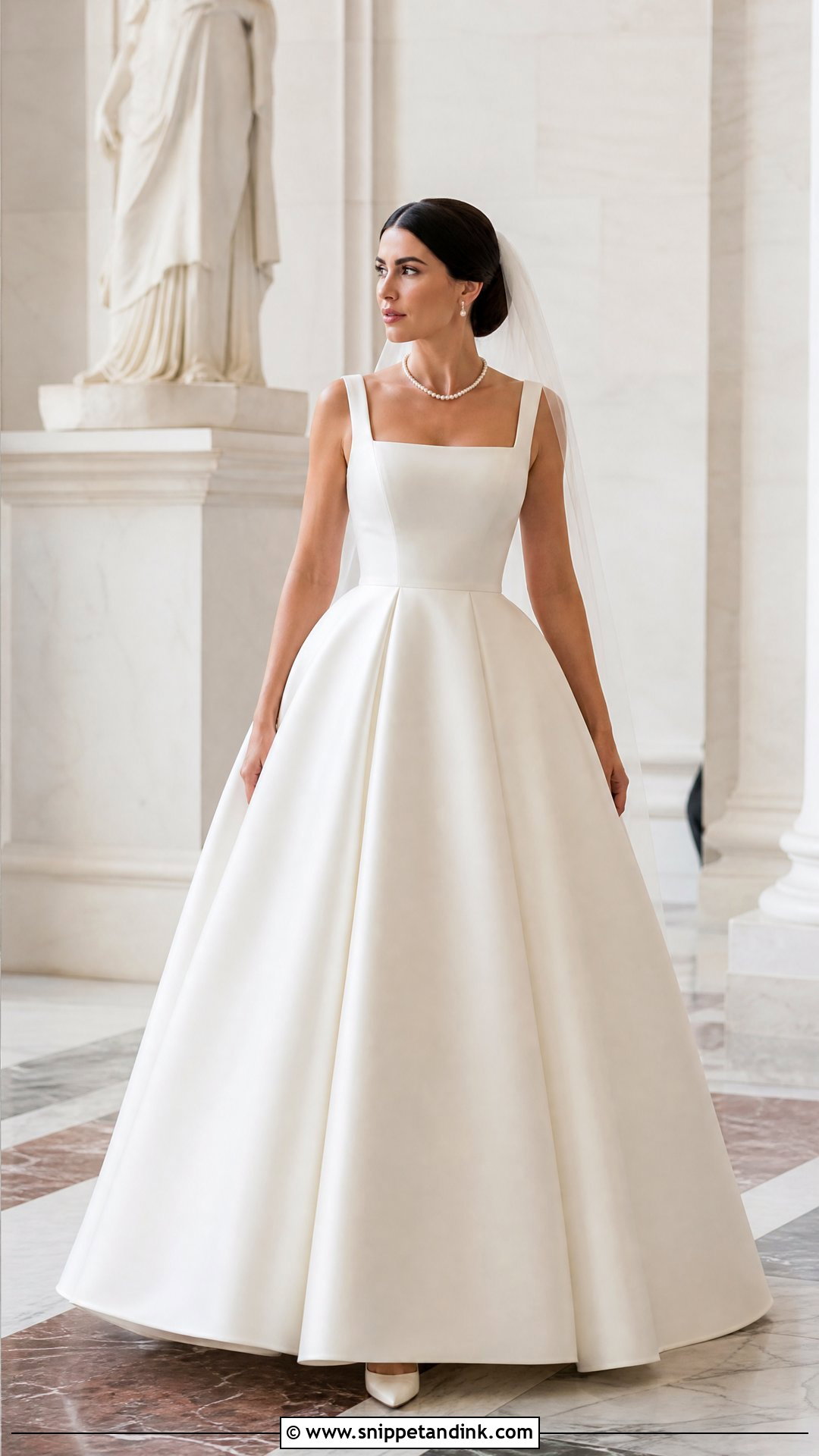
Square necklines give a ballgown a slightly vintage, very clean look. Wide straps carry the bodice well, and the straight line frames the collarbone. The fault to watch for is puckering at the corners. Any slack in the bodice shows instantly on a geometric neckline, so the tailoring has to be tight there. Smooth satin is the minimalist choice and floral jacquard adds quiet texture. Finish with a single strand of pearls, pearl earrings, pointed ivory shoes and a chapel veil. A center-parted low bun echoes the crisp lines; soft curls relax it. It gives coverage and support without needing lace or beading.
6. Sweetheart Corset Wedding Ballgown
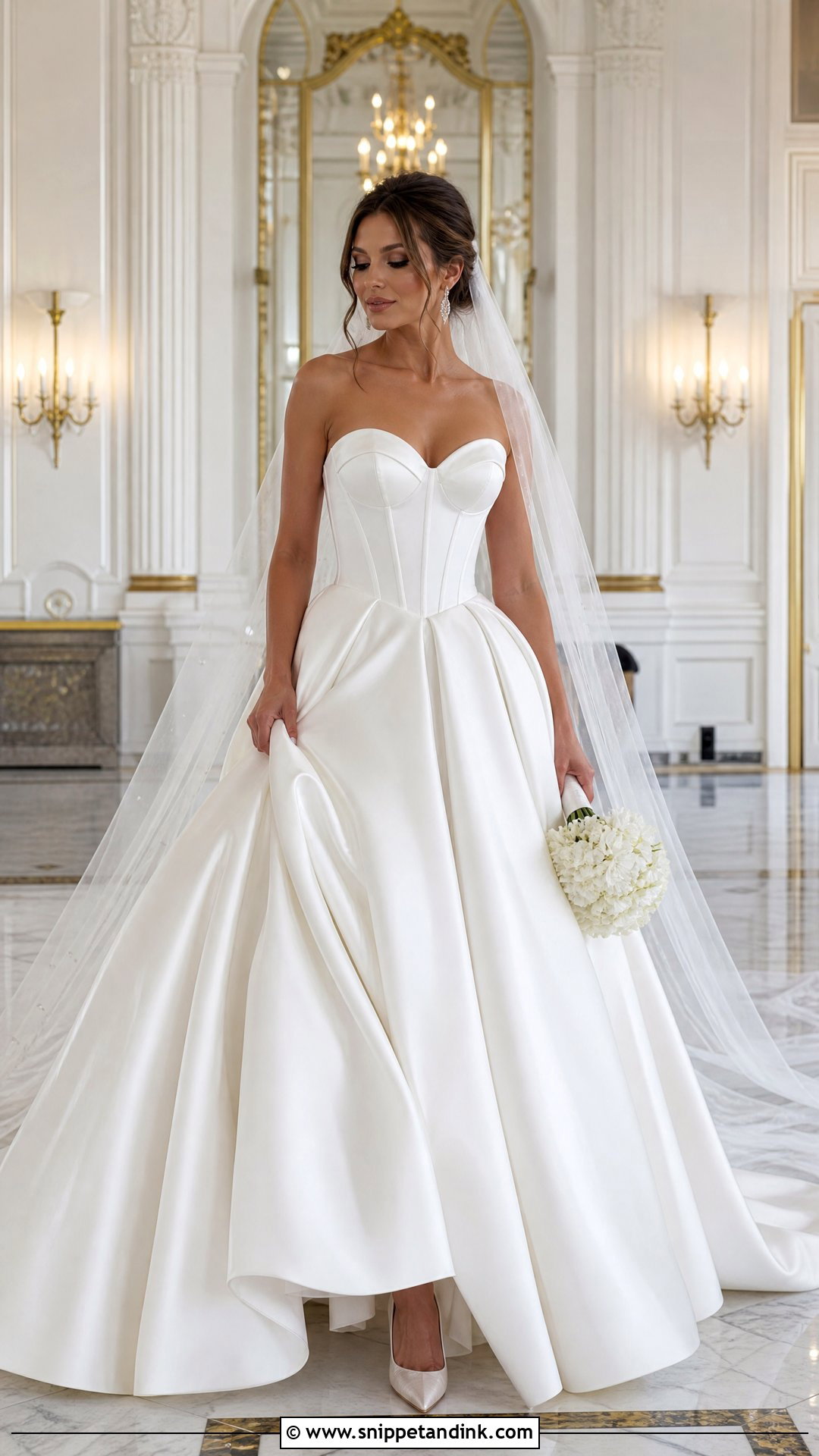
A sweetheart corset wedding ballgown is the princess shape with a modern edge. Exposed seams and boning look current, while lace-covered boning softens it. I’m strict about corset fit. At every fitting I ask the bride to sit, breathe deeply and raise her arms. If the boning digs at the ribs or underarm, it needs adjusting, because a corset should support you, not hold your breath for you. Add crystal drops, a sheer cathedral veil, pointed pumps and a small structured bouquet. An updo keeps the detailed bodice clear.
7. Pearl Beaded Wedding Ballgown
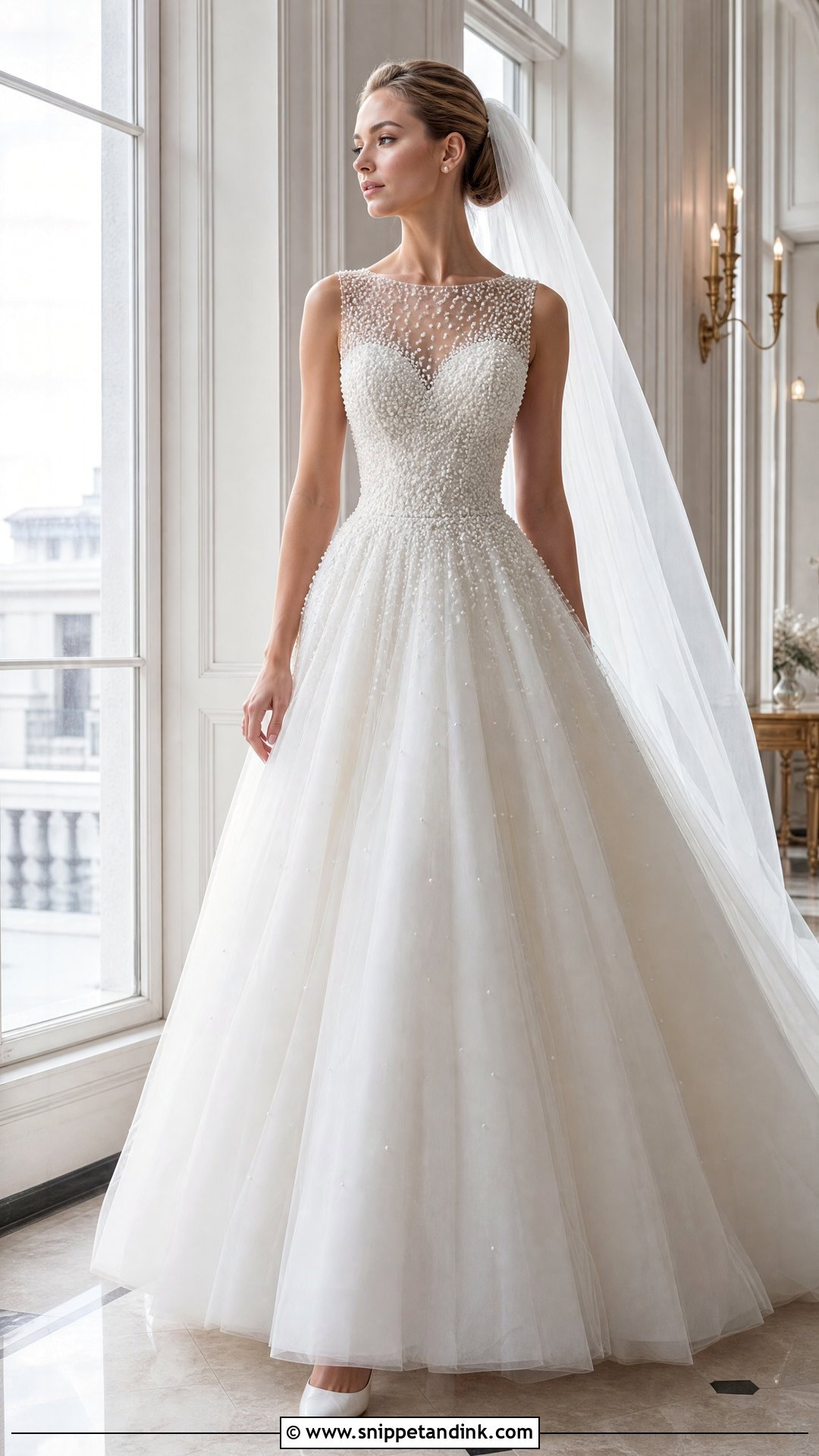
Pearls give a softer glow than crystals, which is why I like them for daylight ceremonies. The balance matters. Pearls concentrated on the bodice, straps or upper skirt look deliberate, and a plain satin waistband gives the eye somewhere to rest. A sheer pearl-scattered neckline adds gentle coverage. Pair it with pearl studs, an unembellished veil, satin pumps and a smooth bun with a few loose pieces at the face. Pearl shoes, a pearl veil and beaded jewelry all at once is too much; one or two accents look intentional. Ballrooms and bright hotel rooms show it off well.
8. Floral Applique Wedding Ballgown
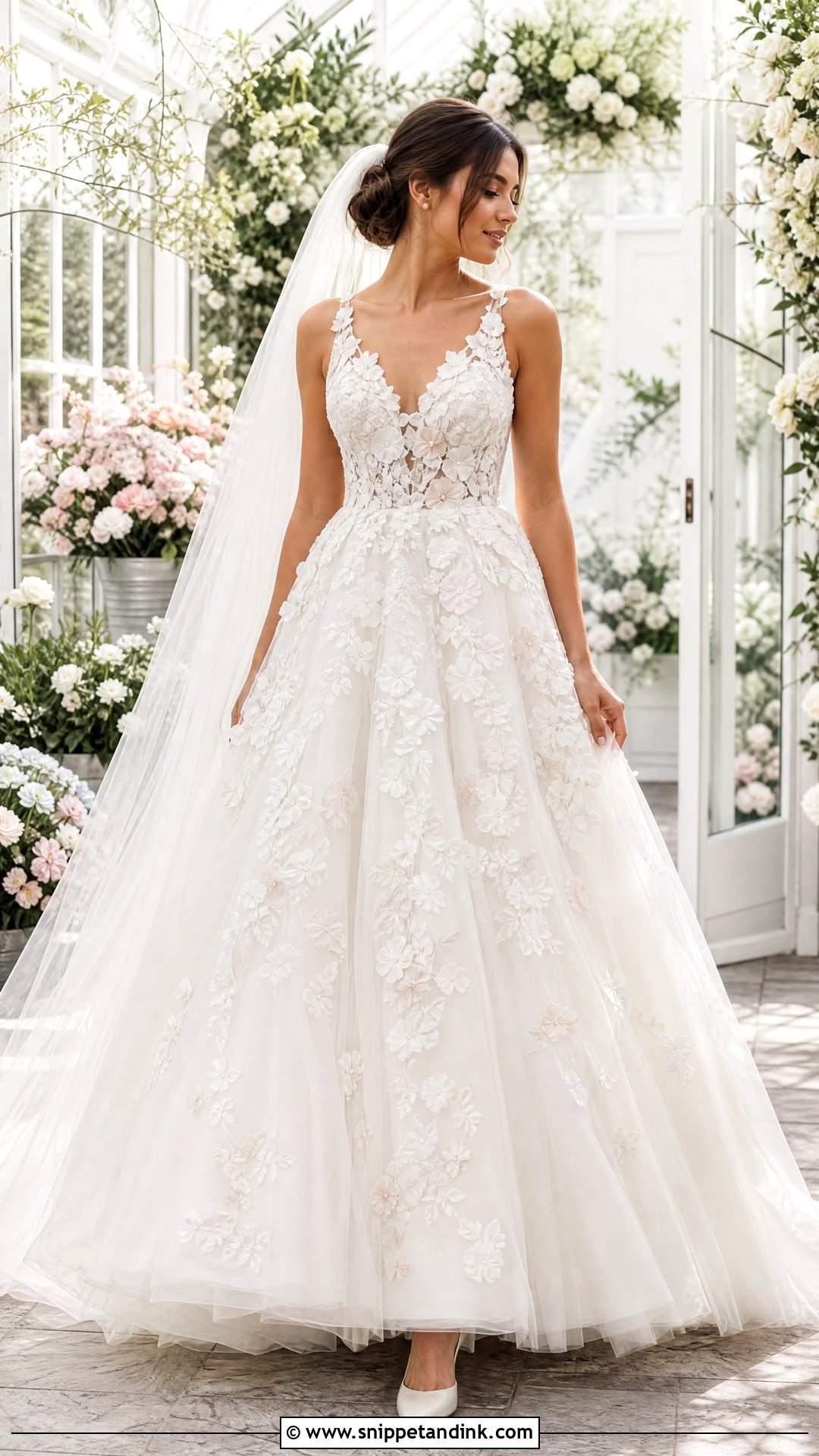
Floral appliqués connect a gown to its setting, especially outdoors. I like them starting on the bodice and drifting down the skirt, which draws the eye down and lengthens the body. Small appliqués read as texture; oversized blooms read as fashion. Pair them with stud earrings, a barely embellished veil, neutral heels and a loose low bun. A bouquet that repeats one or two flowers from the gown ties it together. Raised appliqués are the snag risk on a rough path, a wicker chair or a gravel aisle, so walk the venue and have your seamstress tack down the edges of any that lift. Spring gardens and greenhouses are where it belongs.
9. Minimalist Mikado Wedding Ballgown
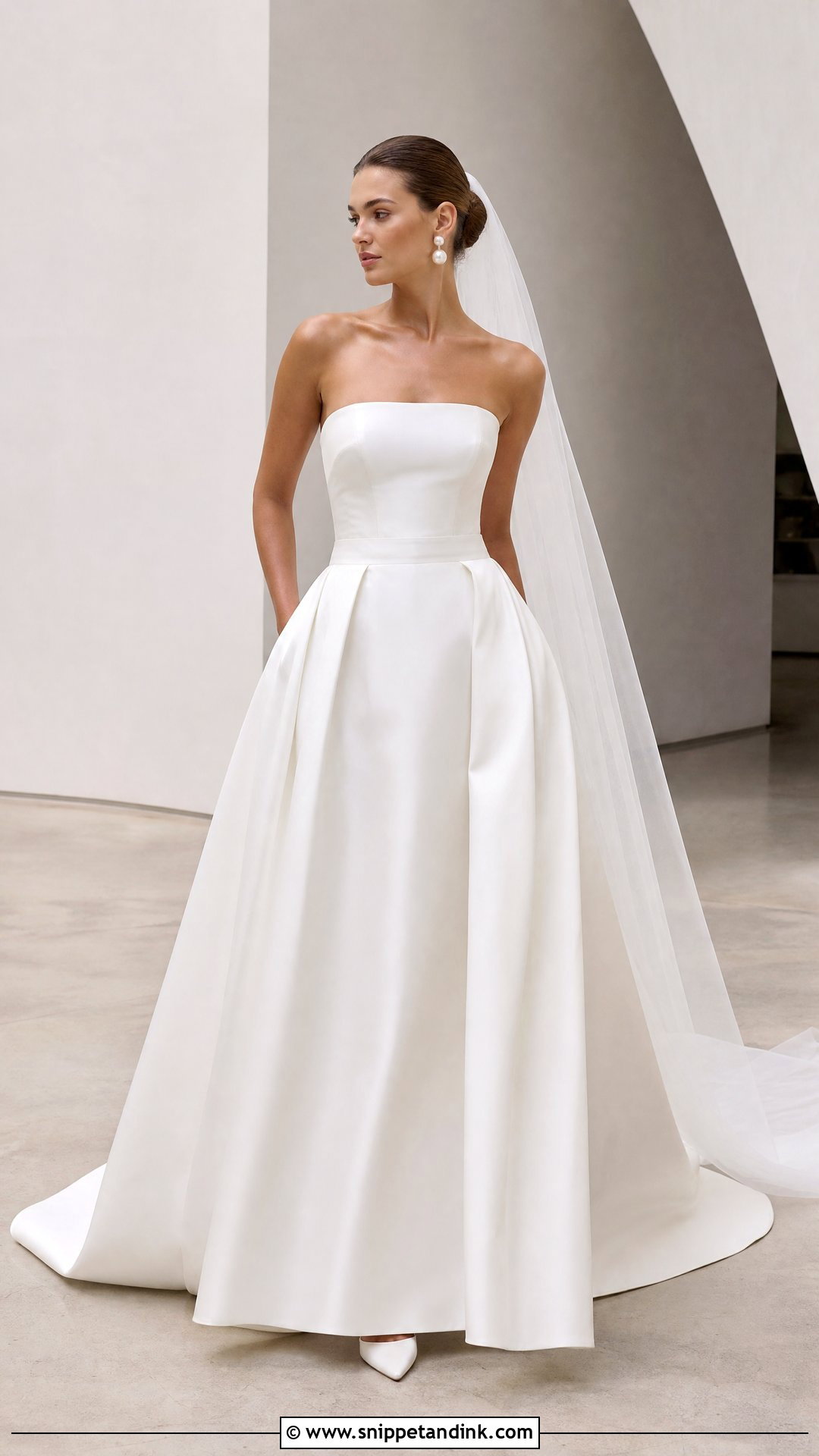
Mikado gives a minimalist wedding ballgown its volume and a smooth, slightly matte surface. Because there’s no beading or lace to distract, every seam and pleat is on display, so the tailoring is the whole design. A straight strapless, bateau or square neckline suits the clean look. Sculptural pearl earrings, pointed satin heels and a long plain veil complete it, with a sleek bun or polished ponytail. Have it professionally steamed on the morning; mikado creases where it’s folded in a garment bag. Ask for pockets only if they lie completely flat. Galleries, modern hotels and black-tie receptions suit it.
10. Cathedral Train Wedding Ballgown
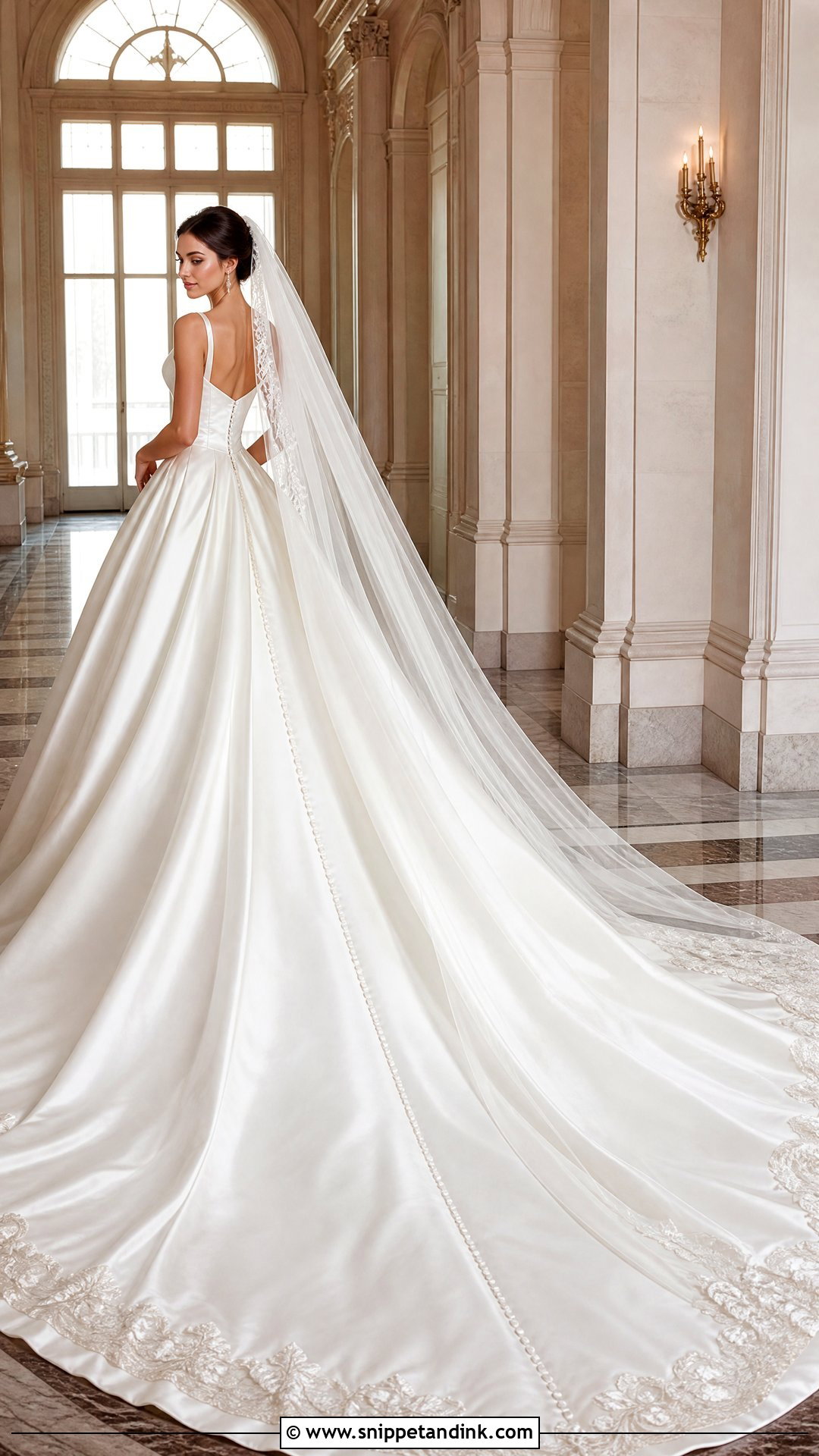
A cathedral train is pure ceremony, and with a long train the bodice can stay simple. Satin gives clean sweeping lines; lace or embroidered tulle shows its texture as the train spreads behind you. Pair it with a cathedral veil, understated earrings, supportive closed-toe heels and an updo. The bustle is where trains go wrong. A heavy train needs a bustle that spreads its weight across several points, or the hooks pull and the fabric sags by the second hour. Practice walking, turning and climbing steps in it. You’ll want a wide aisle and enough room for the train to lie flat.
11. Detachable Sleeve Wedding Ballgown
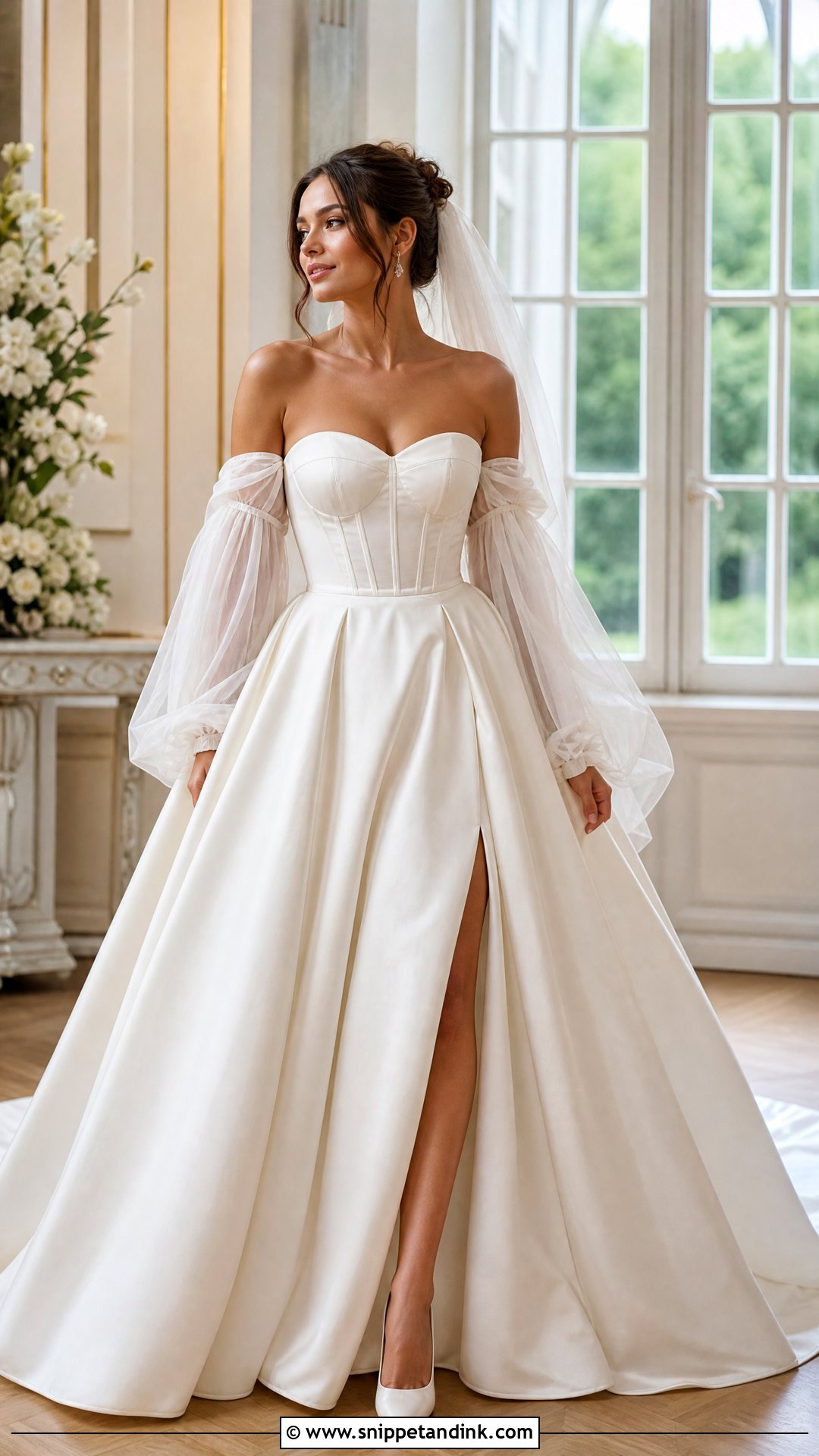
Detachable sleeves give you a covered ceremony look and a lighter dancing one. Fitted lace, draped tulle and puffed organza all work. The attachment points matter most: they should lie flat and disappear once the sleeves come off, which is something to check closely at the final fitting. A low bun is the most adaptable hairstyle, suiting both the sleeved and bare versions. Keep the veil simple and the earrings delicate. Hand the removed sleeves to someone with a labeled garment bag; I’ve seen too many end up on a chair beside the buffet. Brides who want coverage for family photos and freedom later get both.
12. Detachable Overskirt Wedding Ballgown
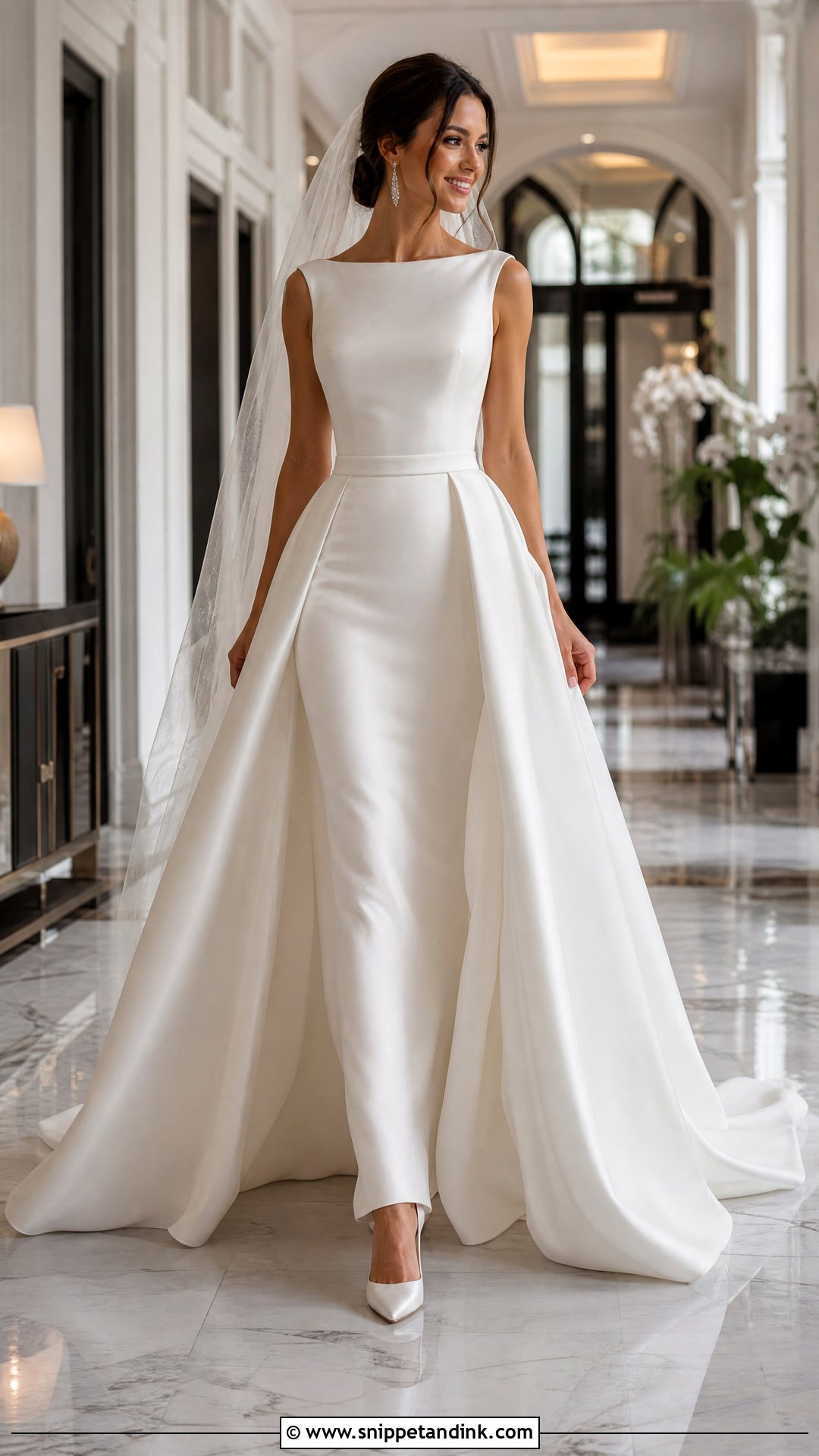
A detachable overskirt gives you full ballgown drama for the aisle and a sleeker dress underneath for the party. The base is usually a fitted column, trumpet or simple A-line, with a satin or tulle overskirt on top. The waistband join has to be invisible and secure, with no gap or ridge where the two pieces meet. Wear a long veil, drop earrings and ivory pumps. After the overskirt comes off, a shorter veil or a hair comb suits the new proportion. Teach a bridesmaid the fastening beforehand, because some overskirts close with several hooks that are hard to reach yourself.
13. High Neck Lace Wedding Ballgown
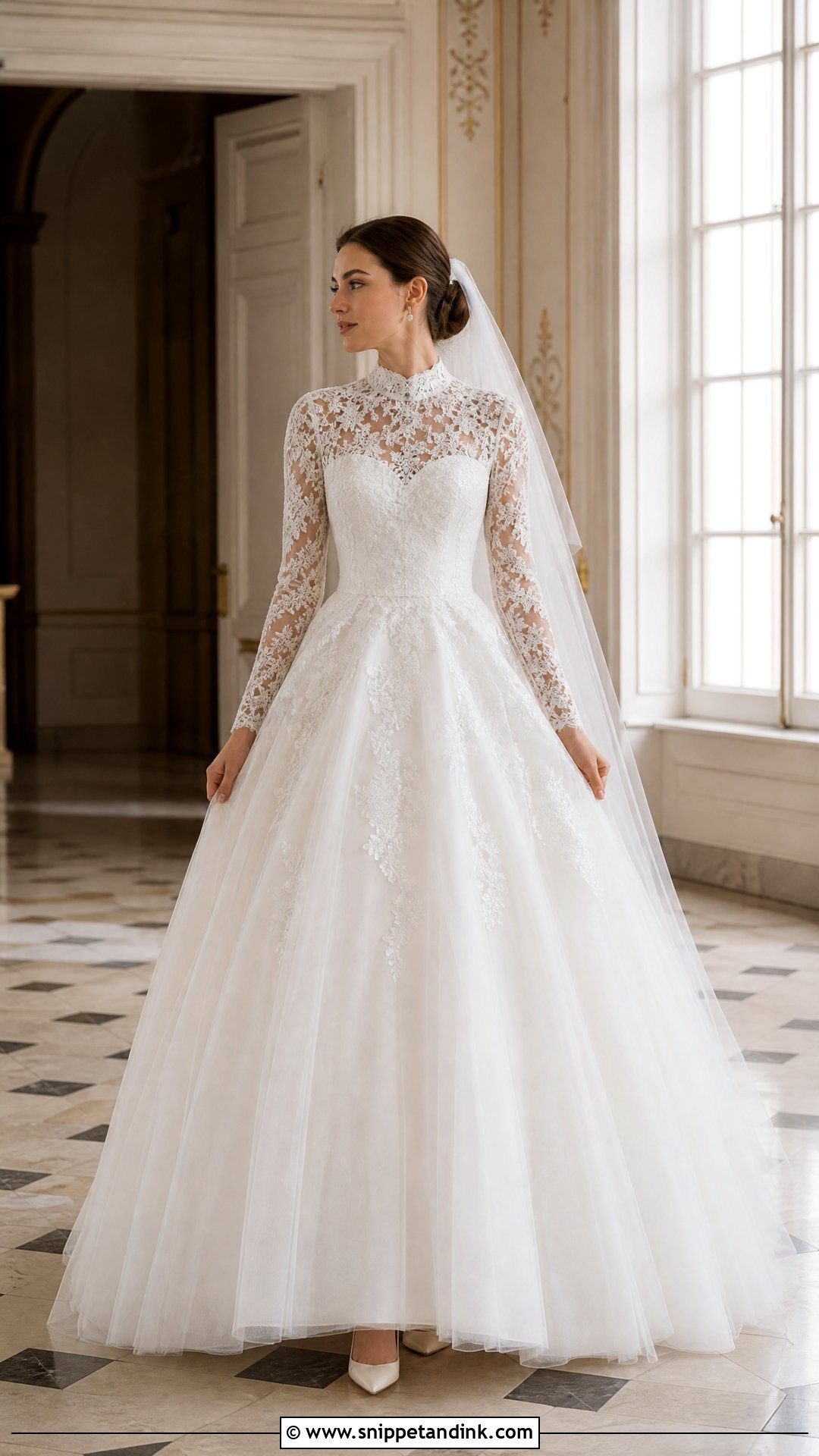
A high neck lace wedding ballgown draws attention up to the face, which is why photographers love it. An illusion neckline with appliqués over a fitted bodice keeps it light. Sleeveless versions suit warmer months, and long lace sleeves suit winter. Small earrings, closed-toe pumps and a veil set under a low bun are all it needs; a necklace would clash with the lace. When you try it on, turn your head side to side and lift your arms. A high neck that feels fine standing still can feel tight the moment you move.
14. Scoop Neck Wedding Ballgown
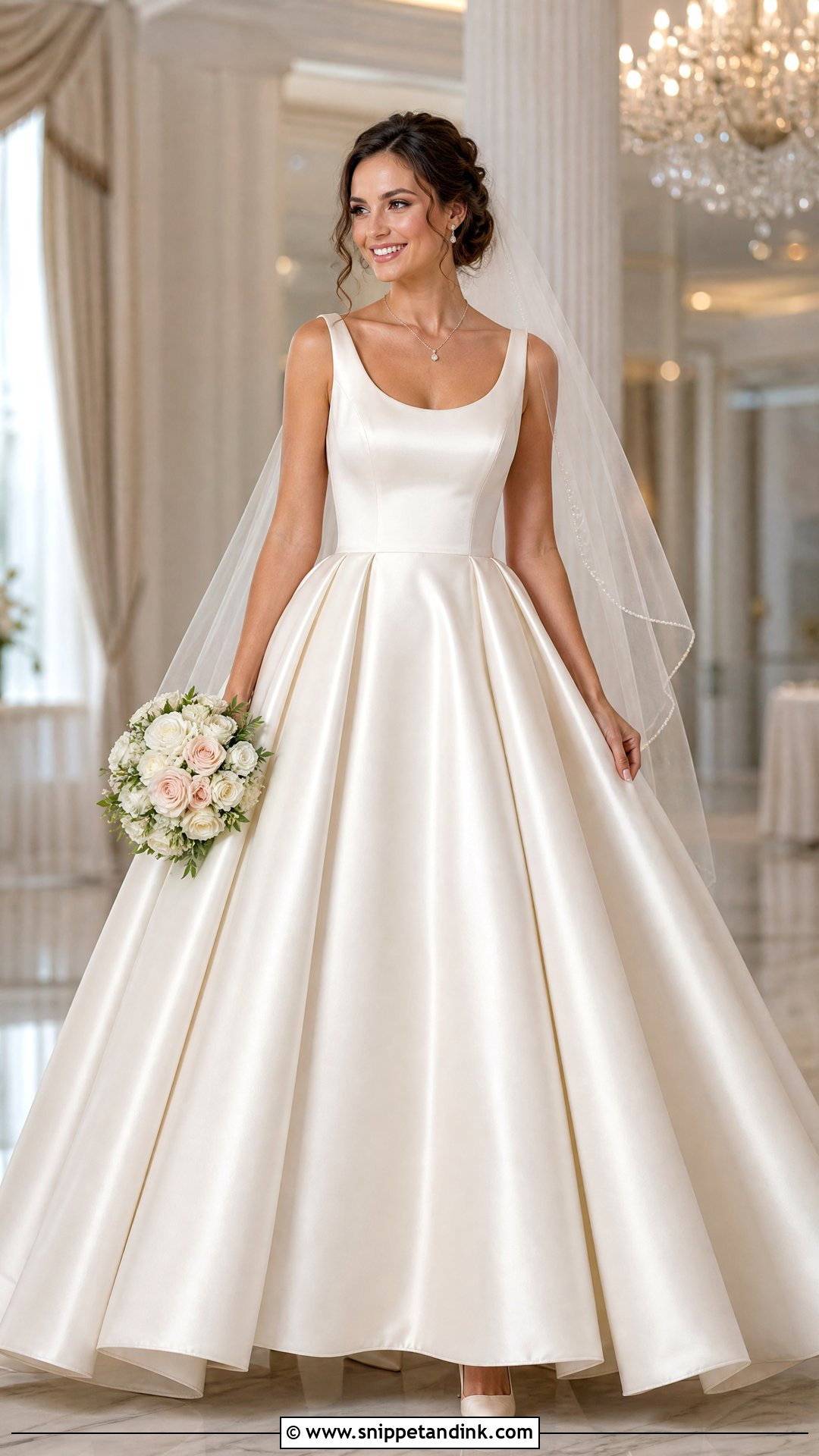
The scoop neck is softer than the square, a rounded opening that frames the collarbone without any corners. Wide straps carry support, so it’s one I suggest to brides who don’t want to think about their bodice all day. A smooth satin gown keeps it understated; a lace bodice over a plain skirt adds contrast. Add a delicate pendant, studs, a fingertip veil and low or mid-height pumps. Pinned curls relax it and a sleek bun formalizes it. Make sure the scoop lies flat when you bend and reach. A neckline that gapes when you lean forward needs taking in at the shoulder seams.


15. Blush Pink Wedding Ballgown
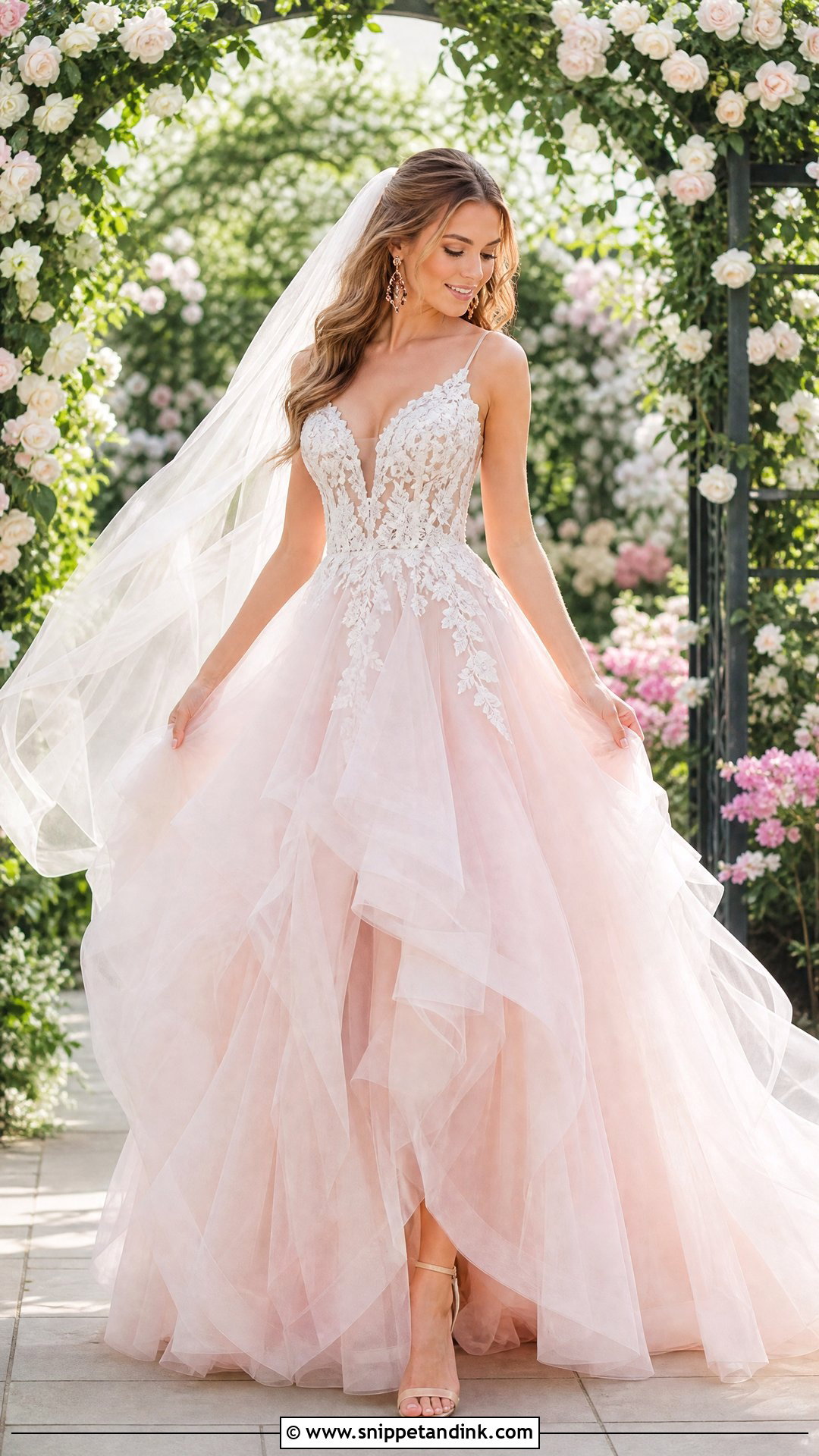
Blush gives a ballgown color while still looking bridal. Layers of pale blush tulle over a neutral lining read soft, while ivory lace over pink softens it further. Blush satin with no decoration is the most modern version. Champagne or neutral shoes, rose-gold earrings and an ivory veil keep it balanced, with soft waves and fresh makeup. Blush is the shade most affected by light. It can look peachy under warm bulbs and almost white outdoors, so view the fabric in daylight and under indoor light before buying. Spring gardens and flower-filled rooms suit it.
16. Black And White Wedding Ballgown
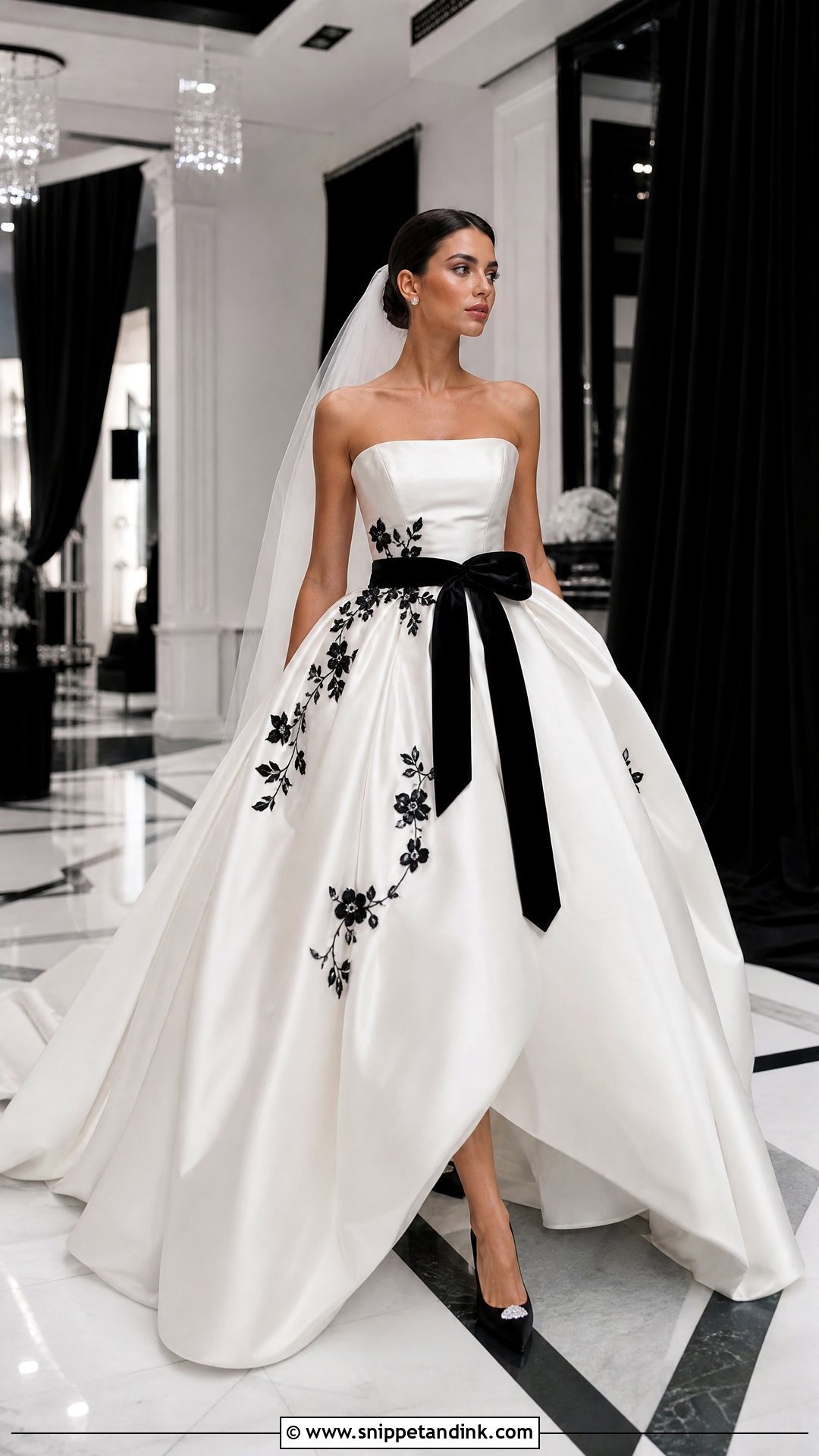
Black on a white ballgown makes a graphic statement while keeping the classic silhouette. Start with an ivory satin or tulle gown and bring in black through a velvet bow at the waist, appliqués or piping. Placement is everything, and too many black accents make it look busy. Black pointed pumps, diamond studs and a plain ivory veil keep it disciplined. A polished updo with defined eyeliner matches the contrast. For something gentler, charcoal or deep navy reads softer than true black. Check the black trim is colorfast, too. Ask whether the velvet or dyed trim has been tested against ivory, since cheap dye can bleed in humid weather or after a spill.
17. Vintage Wedding Ballgown
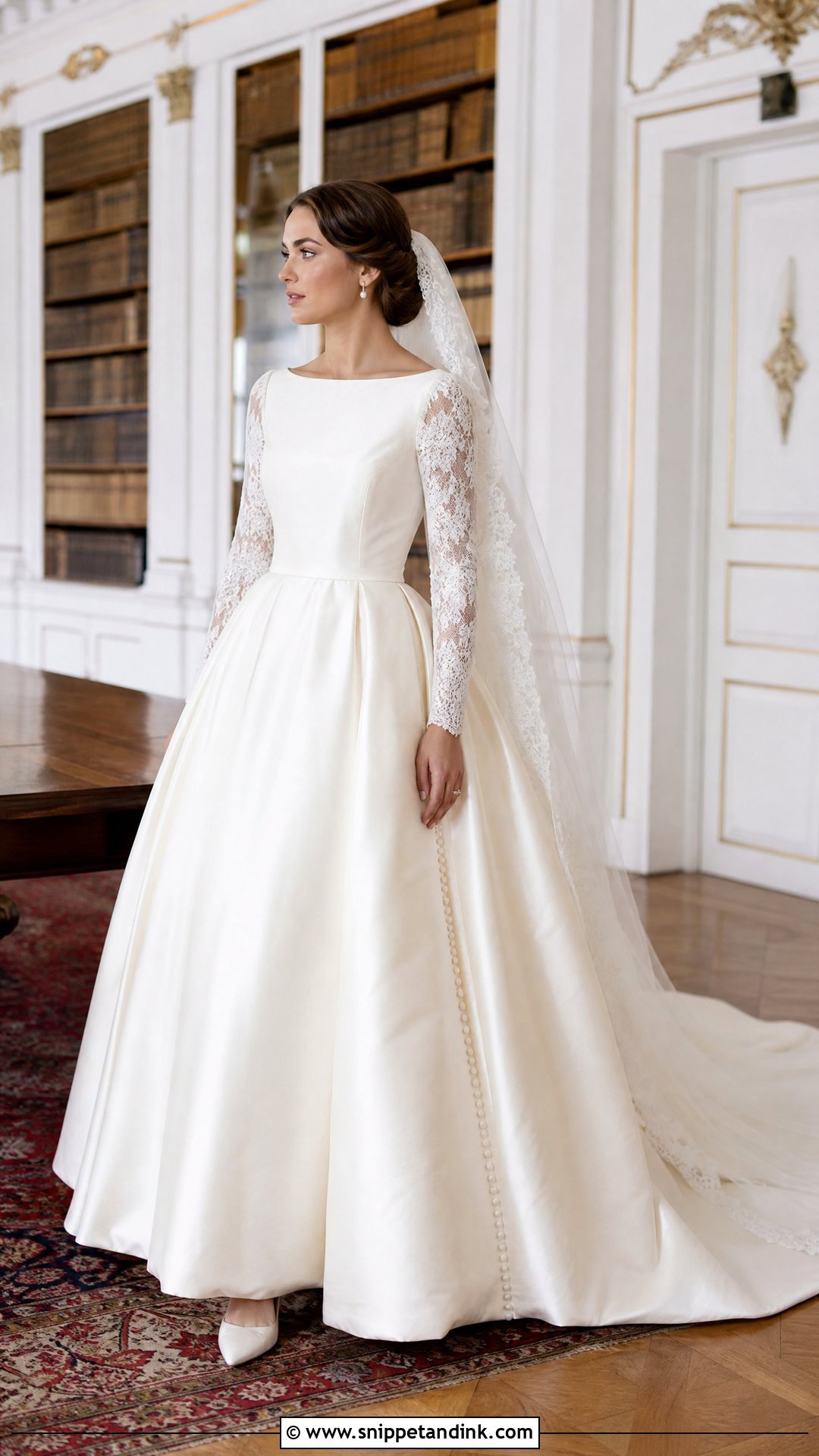
A vintage ballgown borrows from an earlier era without having to feel old. A structured satin bodice, covered buttons, lace sleeves or a bateau neckline each bring a period feel; pick one or two rather than all of them. Pearl earrings, a lace-edged veil, ivory pumps and a low chignon or softly waved bob suit it, with a small bouquet trailing a ribbon. If the gown is genuinely old, have the seams, closures and fabric strength checked by a specialist before alterations. Aged silk can split at stress points like the underarm and waistline. A new gown with vintage details gives the same character with modern support.
18. Modest Wedding Ballgown
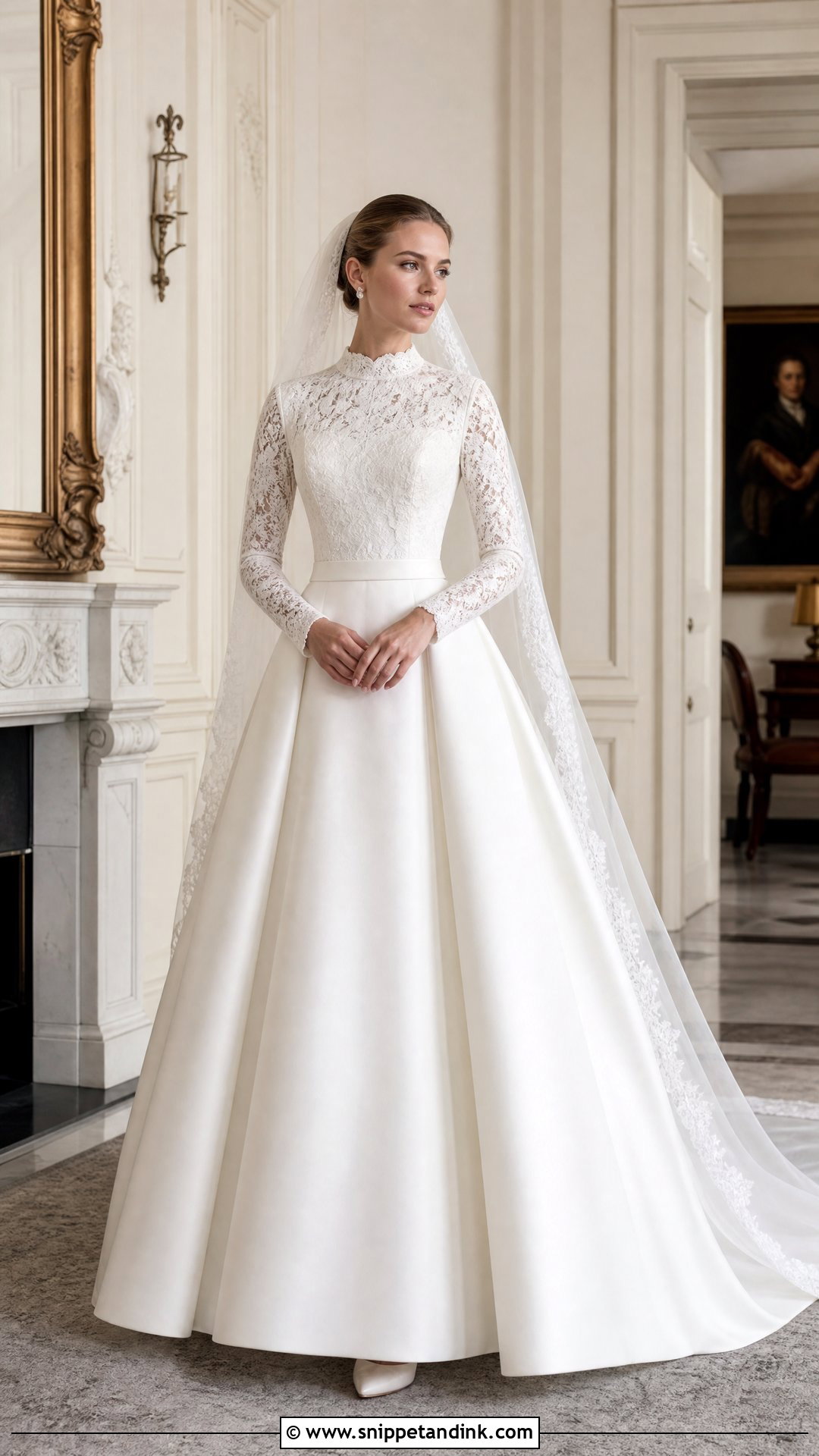
A modest ballgown gets its coverage from tailoring, not from piling on fabric. I look for a lined bodice, full or three-quarter sleeves, a higher neckline and a defined natural waist so the shape still reads clearly. Smooth satin looks regal; lightweight lace adds softness without bulk. Pair it with pearl drops, closed-toe heels and a chapel veil under a polished bun. If extra lining is added, match the color and stretch of the original fabric so the alteration doesn’t show. Check that the sleeves allow full arm movement and that the neckline stays comfortable when you sit. It works in any season.
19. Plus Size Wedding Ballgown
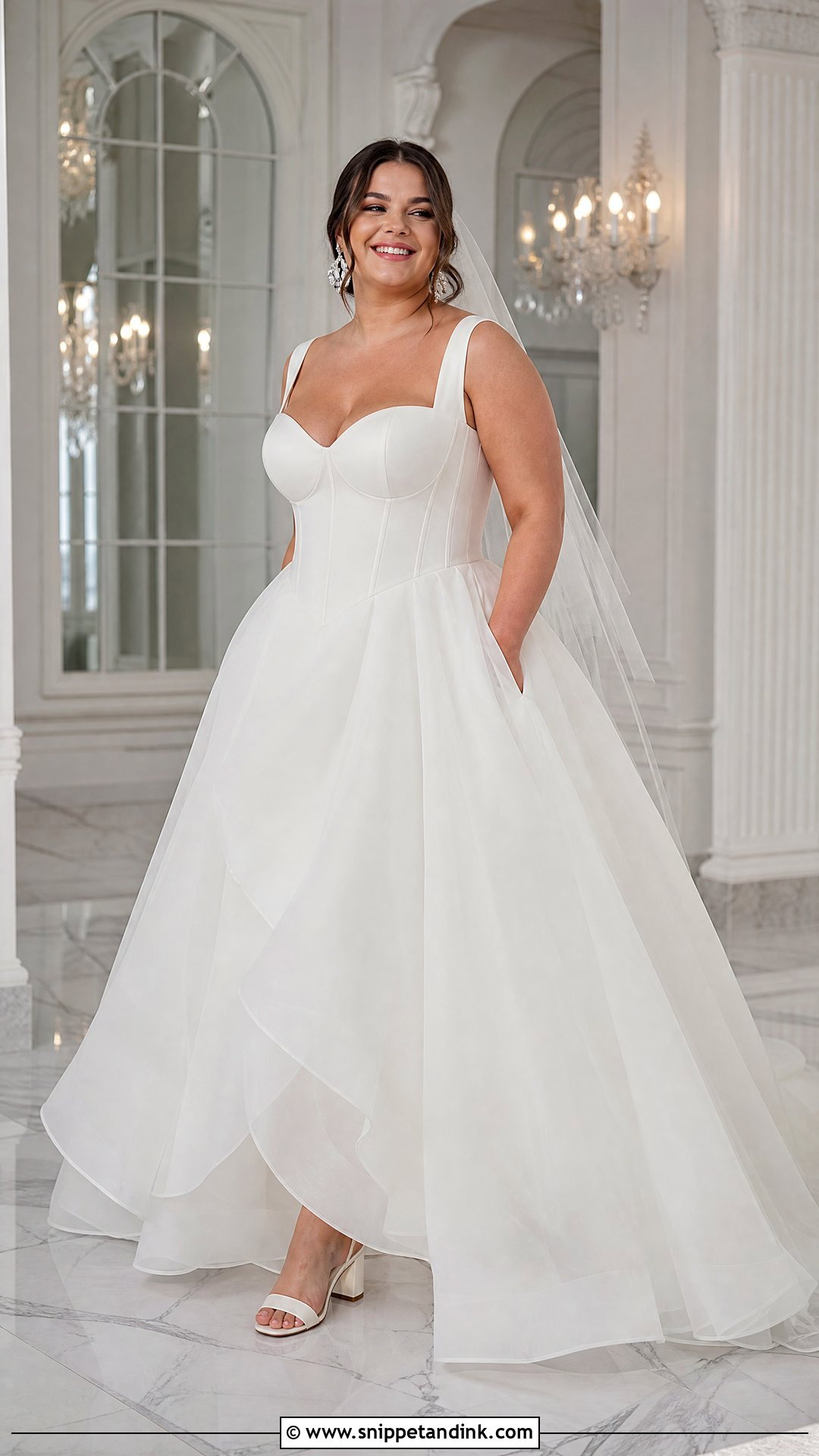
For plus-size brides, a ballgown’s construction matters far more than its size label. Structured boning, wider straps, an adjustable corset back and a waist seam placed at your real waist make the difference between support and squeezing. Try both a basque and a natural waist, walking and sitting in each, because they feel quite different. Satin, organza or layered tulle all give the skirt movement. Pair it with supportive block heels, statement earrings and a light veil, with hair kept off the neckline. Look for a salon that stocks samples near your size, so you’re judging a real fit rather than imagining one, and leave time for several fittings.




20. Winter Cape Wedding Ballgown
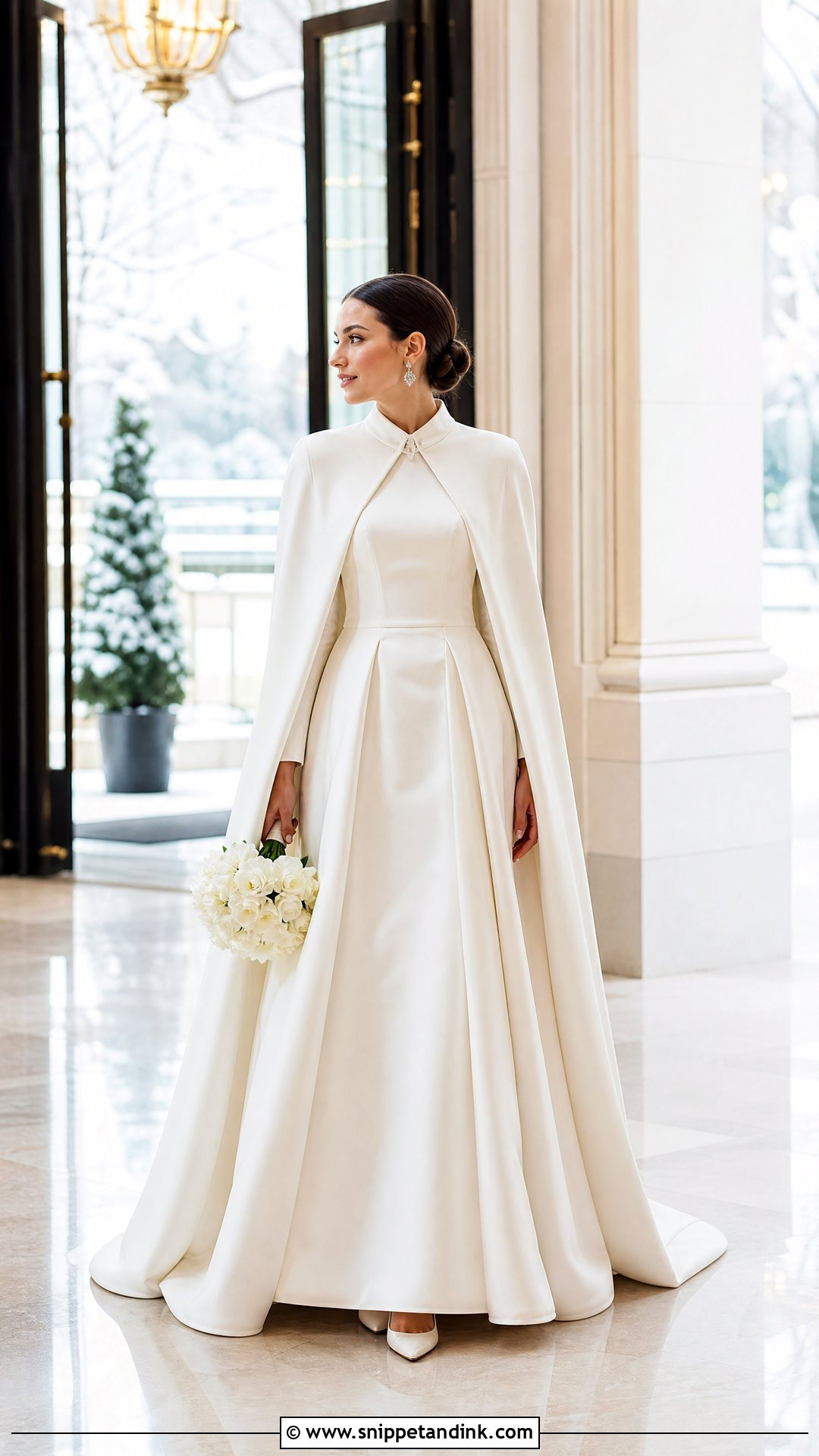
A cape turns a ballgown into a proper winter outfit. Start with a structured satin, brocade or long-sleeve lace gown and add a fitted cape in matching ivory. A floor-length cape feels ceremonial, and a cropped capelet keeps you warm without hiding the skirt. The closure is the detail I check: a hook or clasp that catches on the veil or bodice beading will annoy you all day, so choose a smooth one. Closed-toe pumps, pearl or crystal earrings and a low bun finish it. For outdoor photos in snow, wear thermal layers and boots, then switch shoes before the ceremony.
Where the Gown Goes After the Wedding
A full skirt collects more marks than any other shape: grass at the hem, makeup at the neckline and drink splashes you never noticed. Get it to a specialist wedding dress cleaner within a few weeks. Sugary spills such as champagne or cocktails can dry invisible and then turn brown over time, which is much harder to remove later.
- Don’t leave a heavy ballgown hanging by its shoulder straps for months. Use the inner hanging loops at the waist or store it flat.
- Fold it in acid-free tissue inside a breathable box or cotton bag, never a plastic dry-cleaning bag, which traps moisture.
- Keep it somewhere cool, dark and dry. Attics and basements swing in temperature and humidity.
- Check it once a year and refold it along different lines so creases don’t set permanently.
If you plan to sell the gown, clean it before listing and keep the original bag and any detachable pieces together. Buyers look closely at the hem and the underarms, so those are the areas to have treated.
Sit, Turn and Hug in It Before You Say Yes
The best ballgown isn’t the biggest or the most decorated. It supports your body, suits your venue and lets you move. Use the looks above to compare waistlines, necklines, fabrics, sleeves, colors and convertible pieces before you book appointments. Take proper underwear and shoes to every fitting, and test each gown sitting, walking, turning and raising your arms. Keep accessories in service of the silhouette. With good tailoring and a clear idea of what you want, the gown will carry you from the aisle to the last song without a fight.
You'll Like These Ideas:





Leave a Reply