
Plain doesn’t mean quiet when the skirt is this big. A ballgown is a fitted bodice over a wide skirt, and that shape is formal enough on its own that decoration often gets in the way. These simple ballgown wedding dress ideas lean on structure instead: sculpted bodices, full skirts and fabrics with real body, such as satin, mikado, organza and tulle. Details like a basque waist, a square neckline, a low back or a single architectural bow have come back into bridal collections, and each one changes how the dress fits rather than just how it looks. I’ve paired every gown with the accessories I’d choose and the fitting point I’d watch, so you can see the whole outfit, not only the dress.
Satin, Mikado, Organza or Tulle on an Actual Wedding Day
Brides usually pick a ballgown by its shape, but the fabric decides how that shape behaves after hours of wear. Here’s how I describe each one when a bride is deciding.
- Satin has a glossy, smooth face and photographs richly. It shows creases where you sit and any unevenness in the seams, so it needs precise tailoring and a steam on the morning.
- Mikado is heavier and stiffer, with a subtle texture. It holds a full skirt with fewer petticoats and resists creasing well, but it’s warm and has real weight on the waist.
- Organza is crisp and light, with a slight sheen and some transparency. It suits summer, though it wrinkles more easily than mikado and needs a good lining.
- Tulle builds volume through layers rather than stiffness. It’s the lightest to wear and moves softly, but it catches on rough surfaces and can flatten in humid weather.
If your venue is hot, I’d lean toward organza or tulle. For a winter ballroom, mikado and satin carry the formality better and the extra warmth is welcome.
1. Strapless Satin Ballgown Wedding Dress
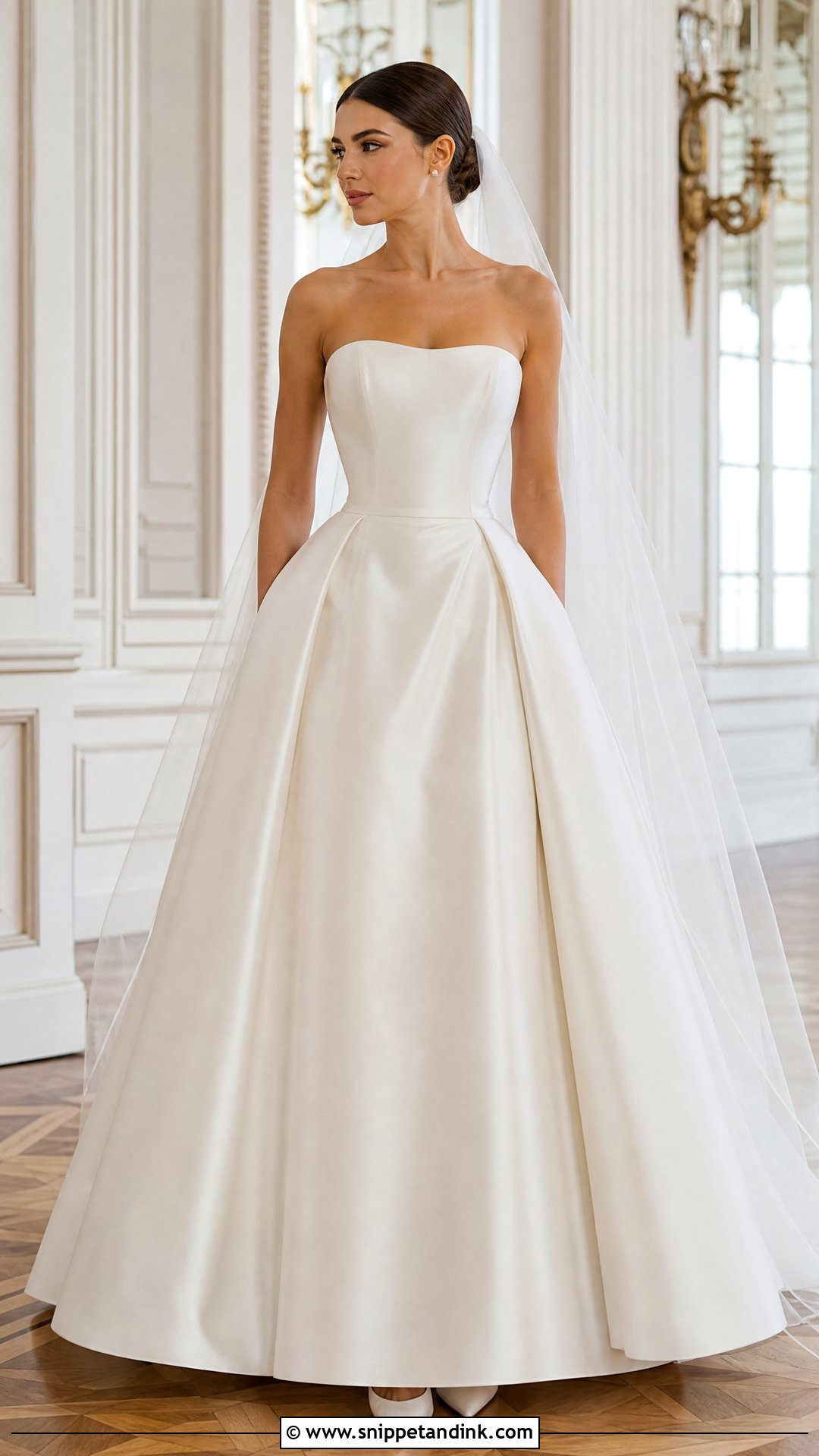
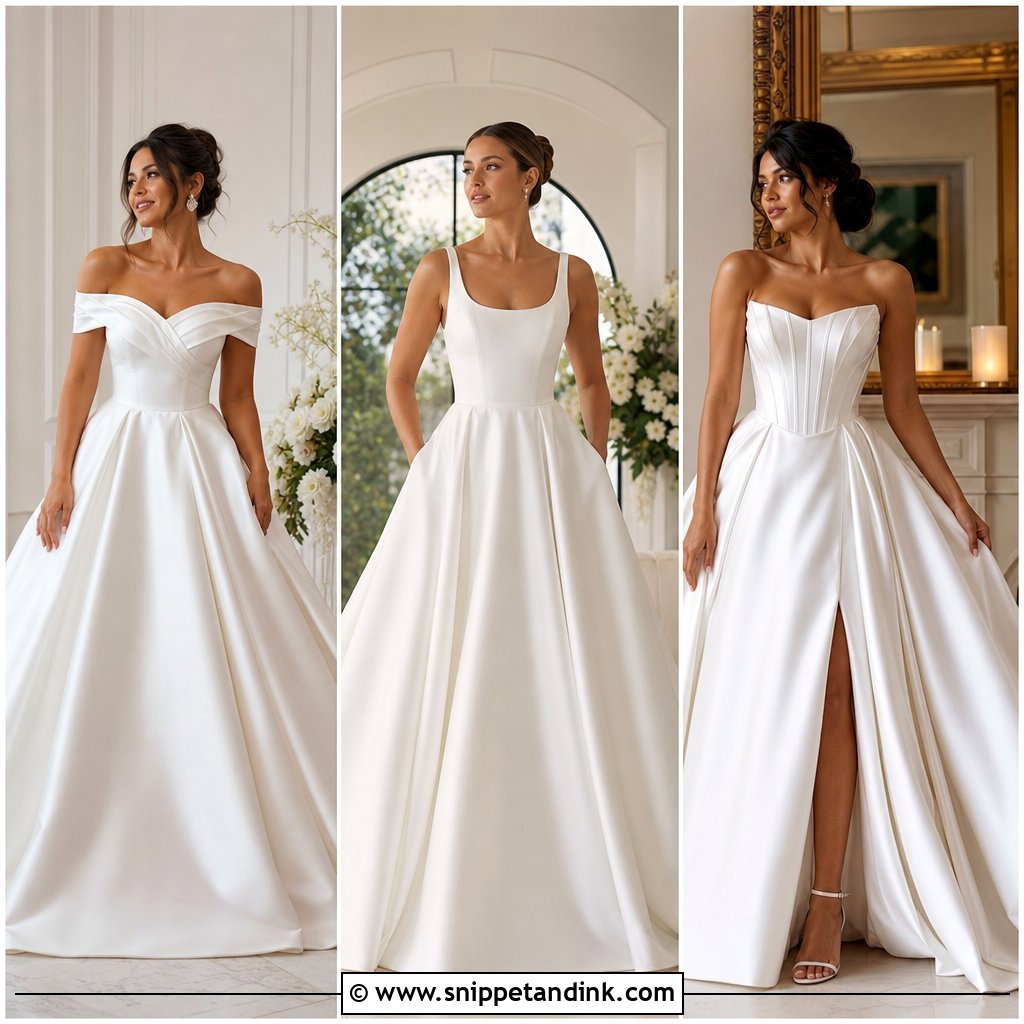
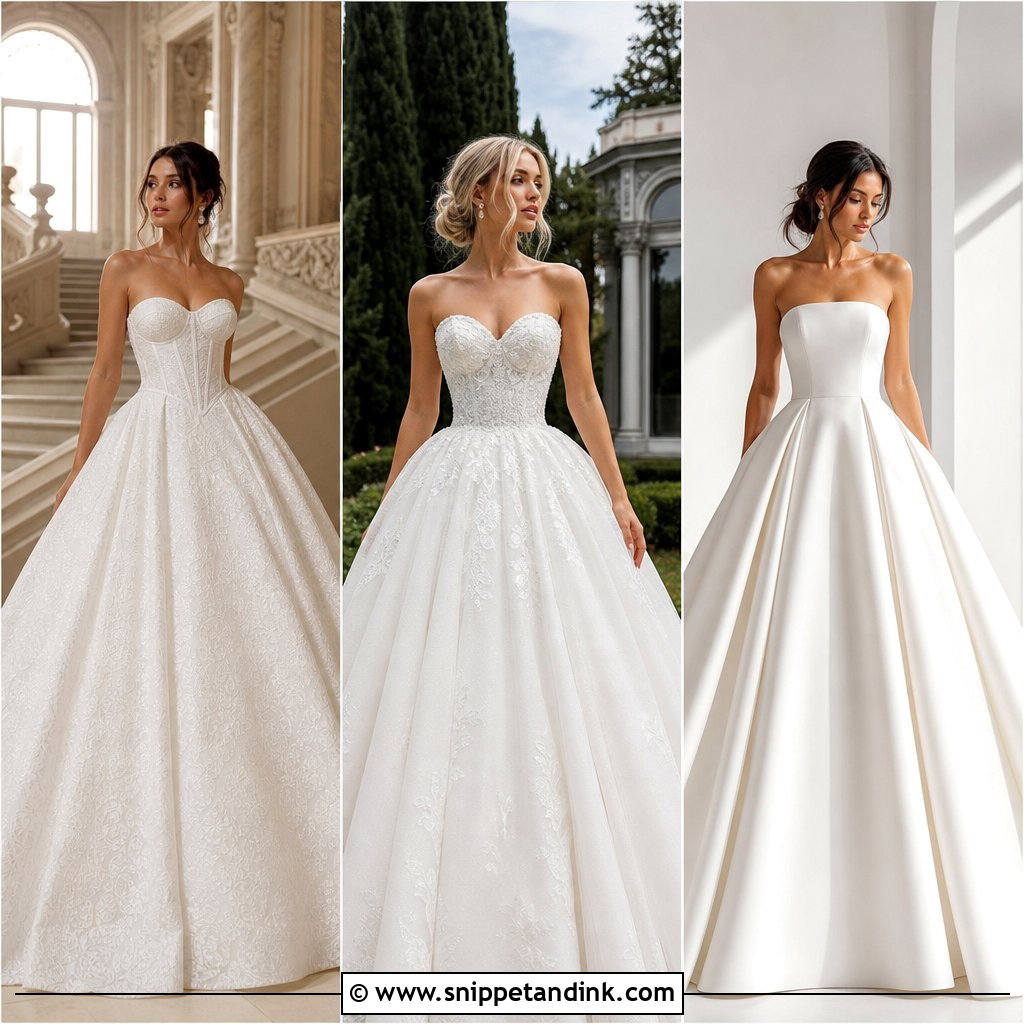
Strapless satin is the cleanest version of a ballgown, which also makes it the least forgiving. With nothing on the surface, every seam and every bit of boning shows, so the construction becomes the design. Choose a fitted bodice with real internal structure and a straight or softly curved neckline over a smooth full skirt. Pointed ivory pumps, small pearl earrings and a fingertip veil with a raw edge keep it modern, with a neat low bun to keep the shoulders clear. White roses or calla lilies in a compact bouquet finish it. I always check satin under daylight at the final fitting, because puckered seams that disappear under shop lights show up clearly outdoors.
2. Square Neck Ballgown Wedding Dress
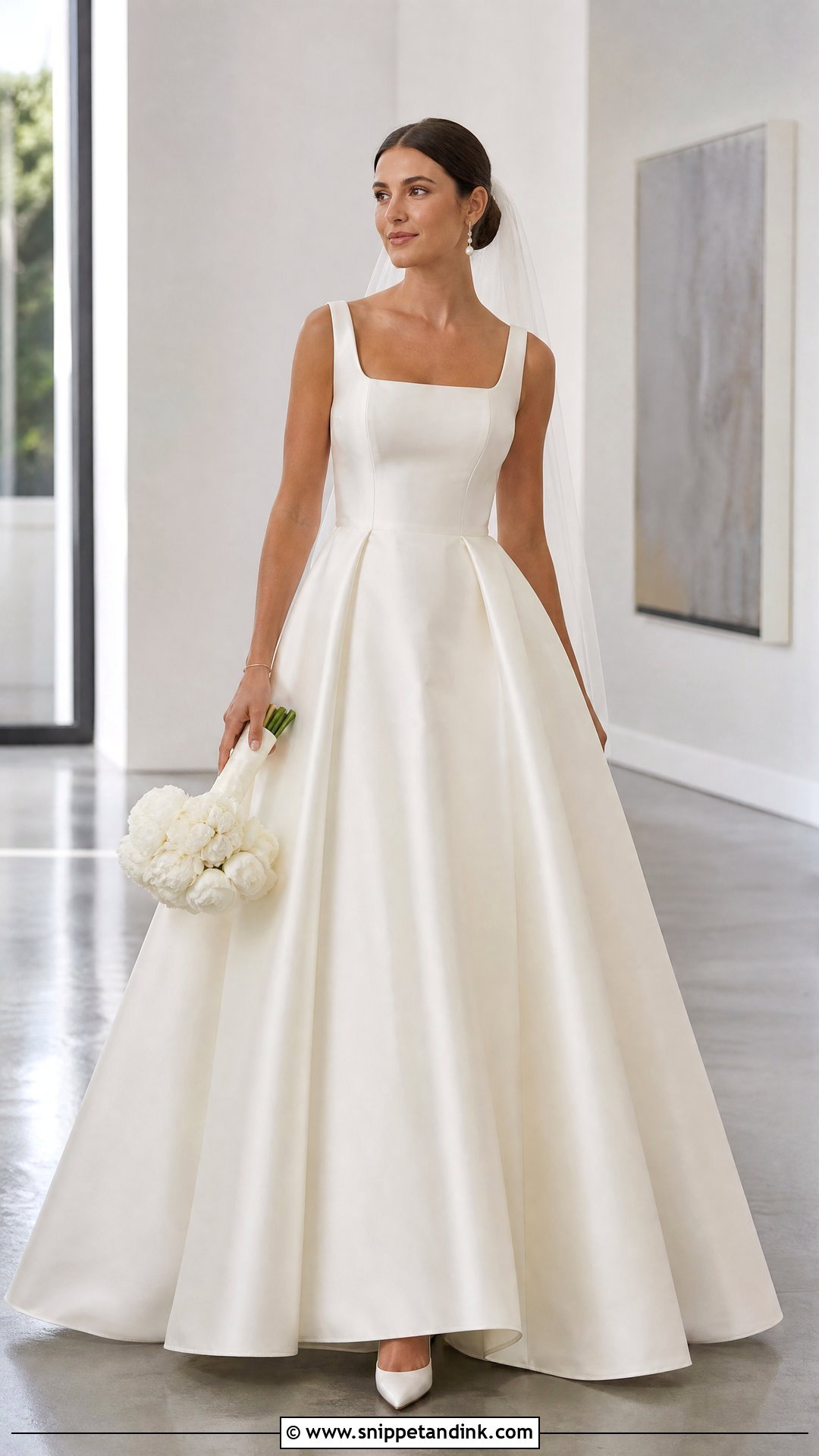
Square necklines suit a ballgown because the straight line across the collarbone balances the width of the skirt below it. Wider straps give more support than thin ones and still look minimal. Ivory mikado or matte satin keeps the bodice architectural. Add a plain chapel veil, pearl drop earrings and closed-toe satin heels, and wear a center-parted bun or brushed waves tucked behind the shoulders. Designers keep returning to this neckline because it works sleeveless, with straps or with long sleeves. The one thing I watch is the corners: on a square neck they should sit flat against the chest, not stand away from it when you breathe in.
3. Sweetheart Neck Ballgown Wedding Dress
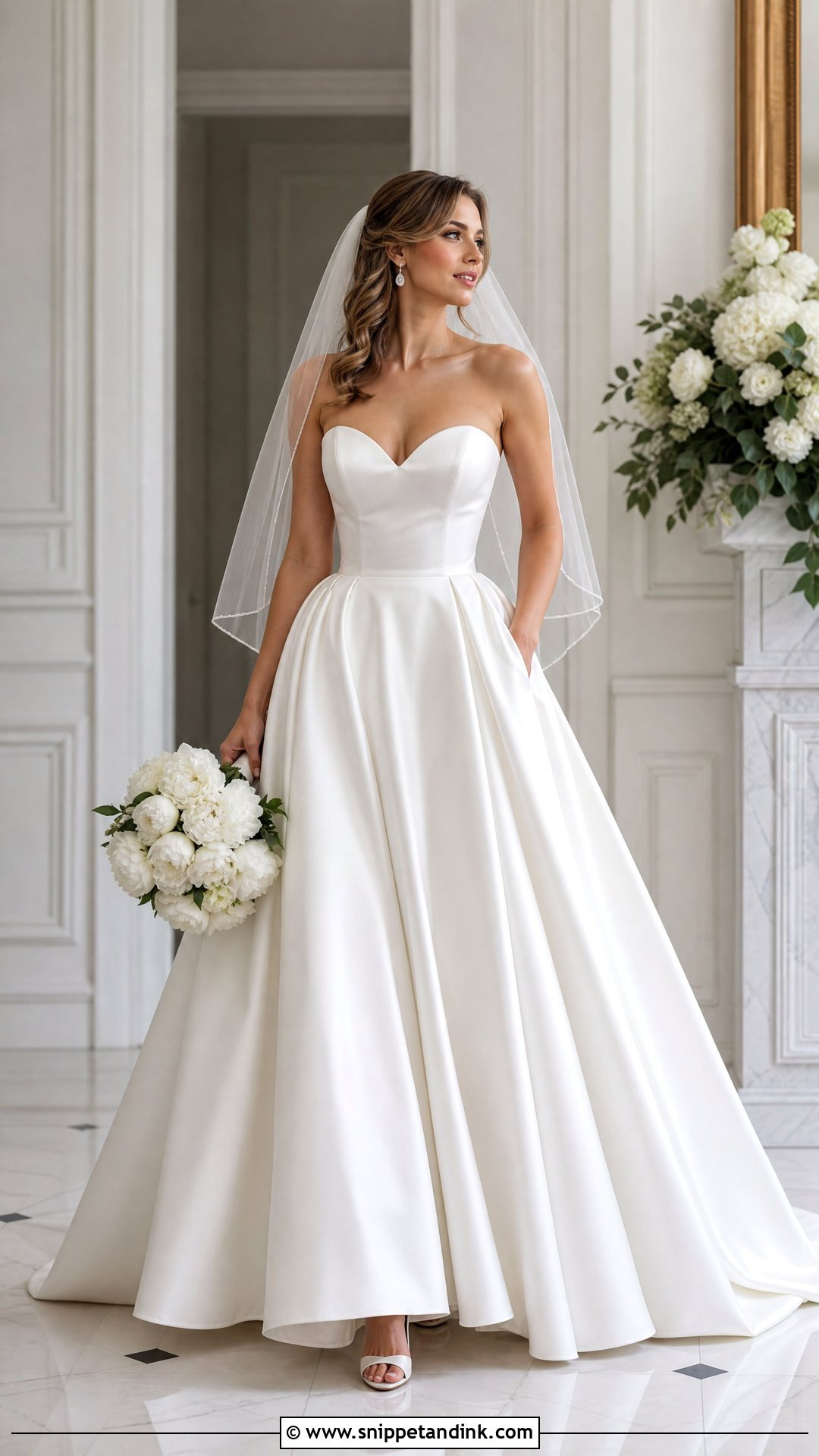
Soft curves make a sweetheart neck ballgown feel romantic without any lace at all. Look for gentle shaping in the bodice instead of crystals or embroidery; the curve itself is the detail. A full satin skirt with discreet side pockets is a practical touch. Teardrop earrings, an elbow-length veil and pointed slingbacks in ivory or pale champagne suit it, and loose waves or a soft updo echo the neckline. A small bouquet of peonies or ranunculus with very little greenery keeps it light. Sweethearts are cut for a particular cup shape, so have the dip at the center fitted to you; if it sits too low or too high, the neckline loses its point.
4. Off Shoulder Ballgown Wedding Dress
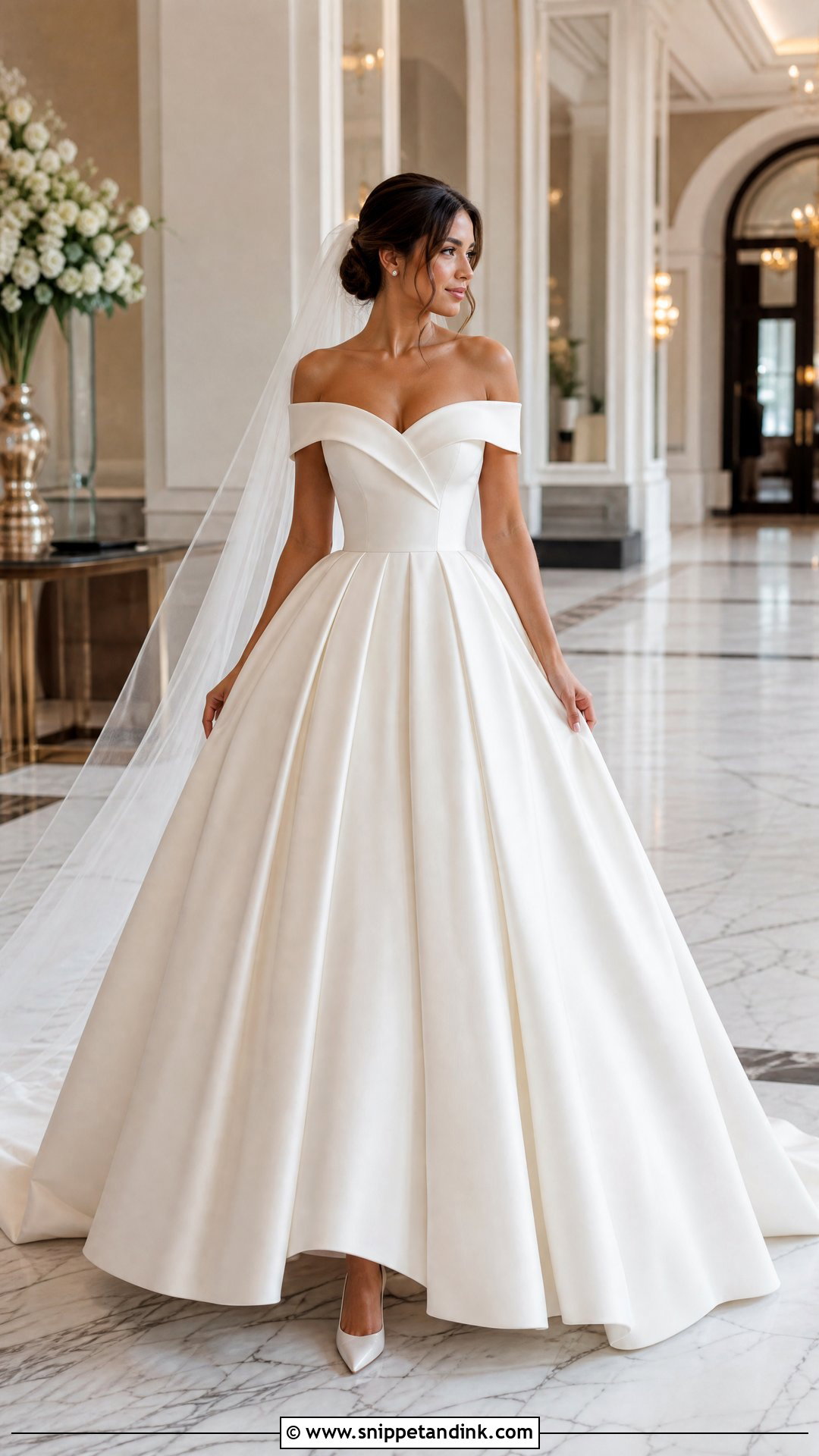
Off the shoulder works best on a ballgown when the band is plain folded satin, resting on the upper arms and tied into a supportive bodice. Wide pleats from a natural waist give volume while the lines stay clean. Pearl studs, a cathedral veil and simple ivory pumps are all you need; the neckline is already the jewelry, so skip a necklace. A low textured bun shows the shoulders, and a few face-framing pieces stop it feeling severe. It’s at home in a hotel ballroom or a traditional ceremony at any time of year. My caution with this one is arm movement. The band limits how high you can lift your arms, which matters if you plan to dance freely.
5. Long Sleeve Ballgown Wedding Dress
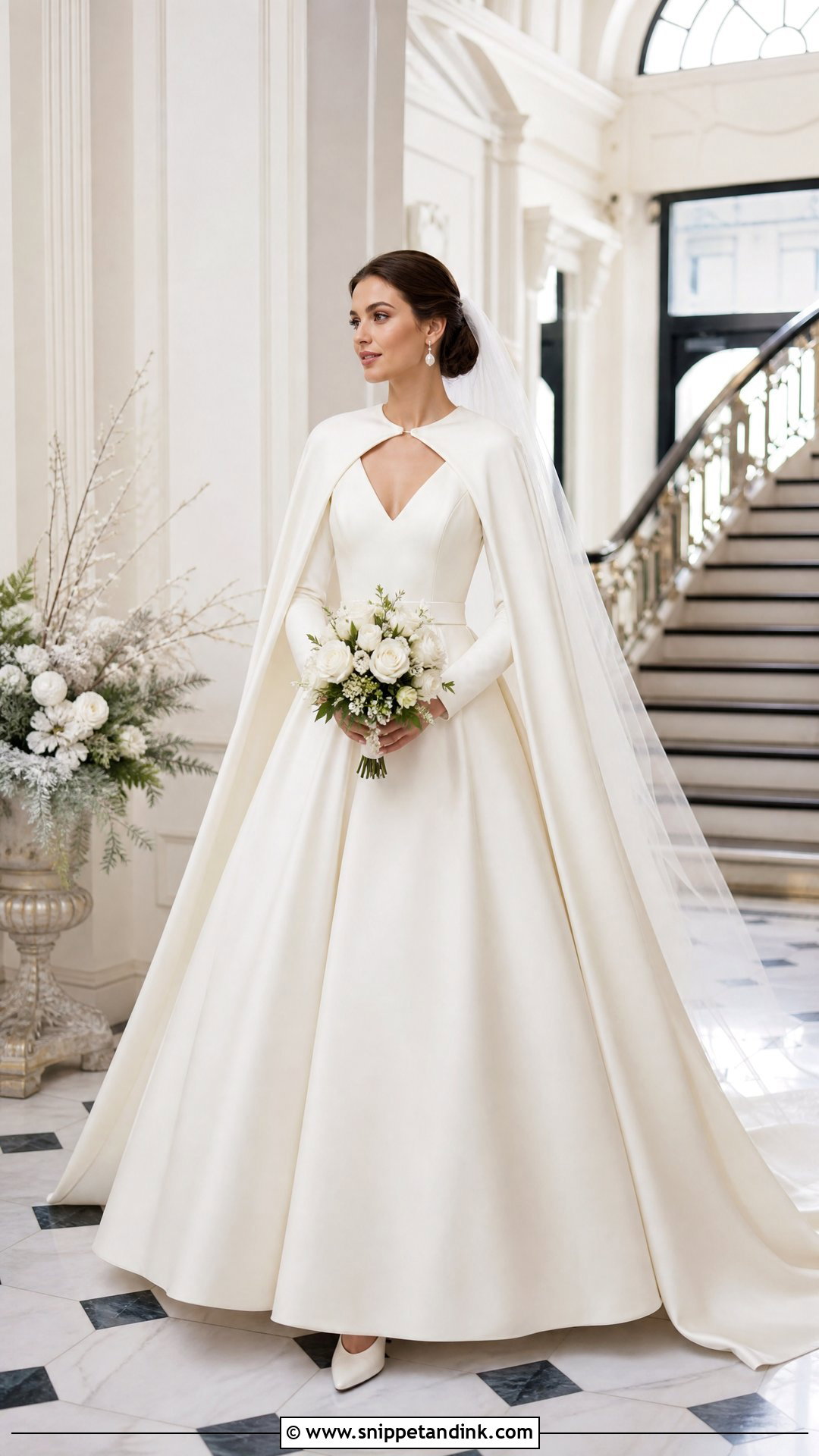
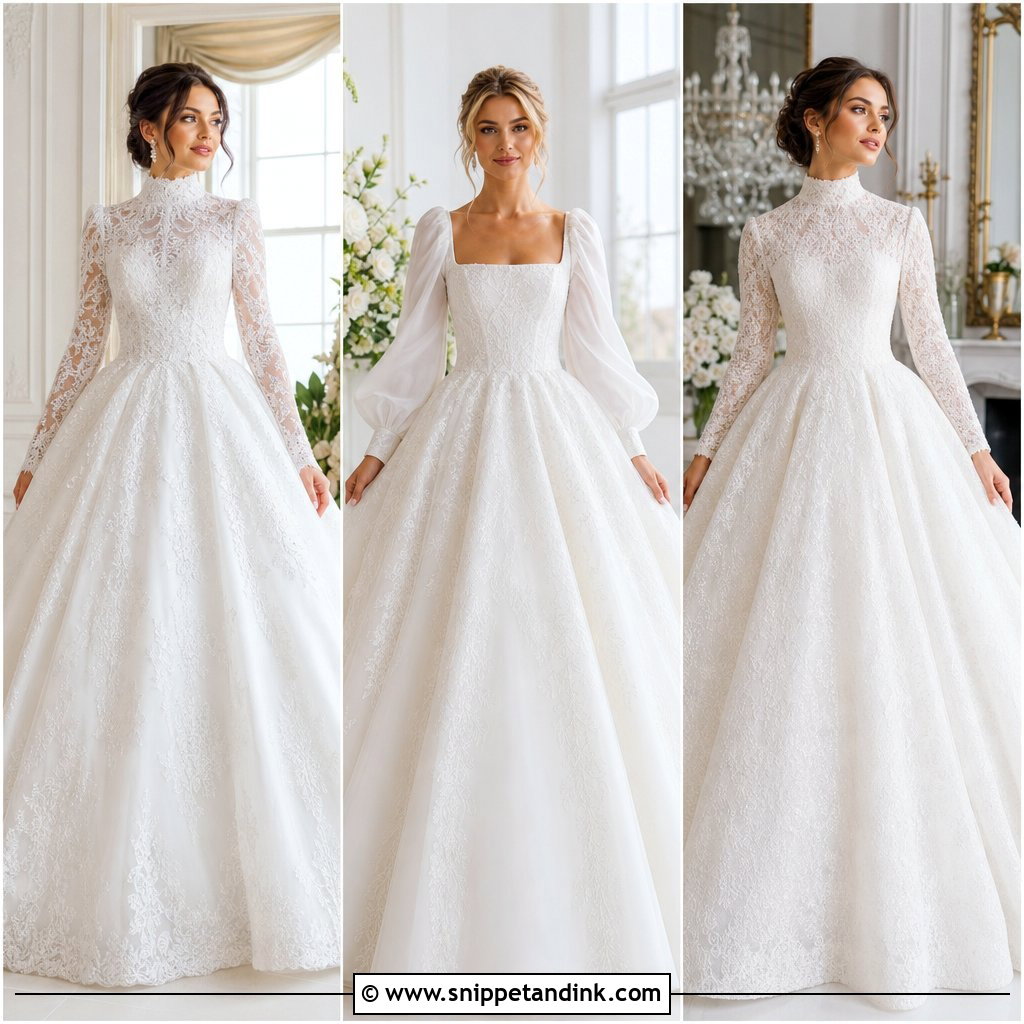
A long sleeve ballgown wedding dress comes into its own when the weather turns cold. A smooth crepe or satin bodice with fitted sleeves covers you without adding clutter, and a modest V, bateau or rounded neck sets the level of coverage. A full mikado skirt gives contrast against the slim sleeves. Closed-toe block heels, pearl earrings and a long veil under a neat bun finish it. If you want it softer, sheer tulle sleeves without appliques are an option. For an outdoor arrival, a removable ivory cape keeps you warm without hiding the shape. I’d keep the bouquet compact and mostly white, since the sleeves already frame the upper body.
6. Cap Sleeve Ballgown Wedding Dress
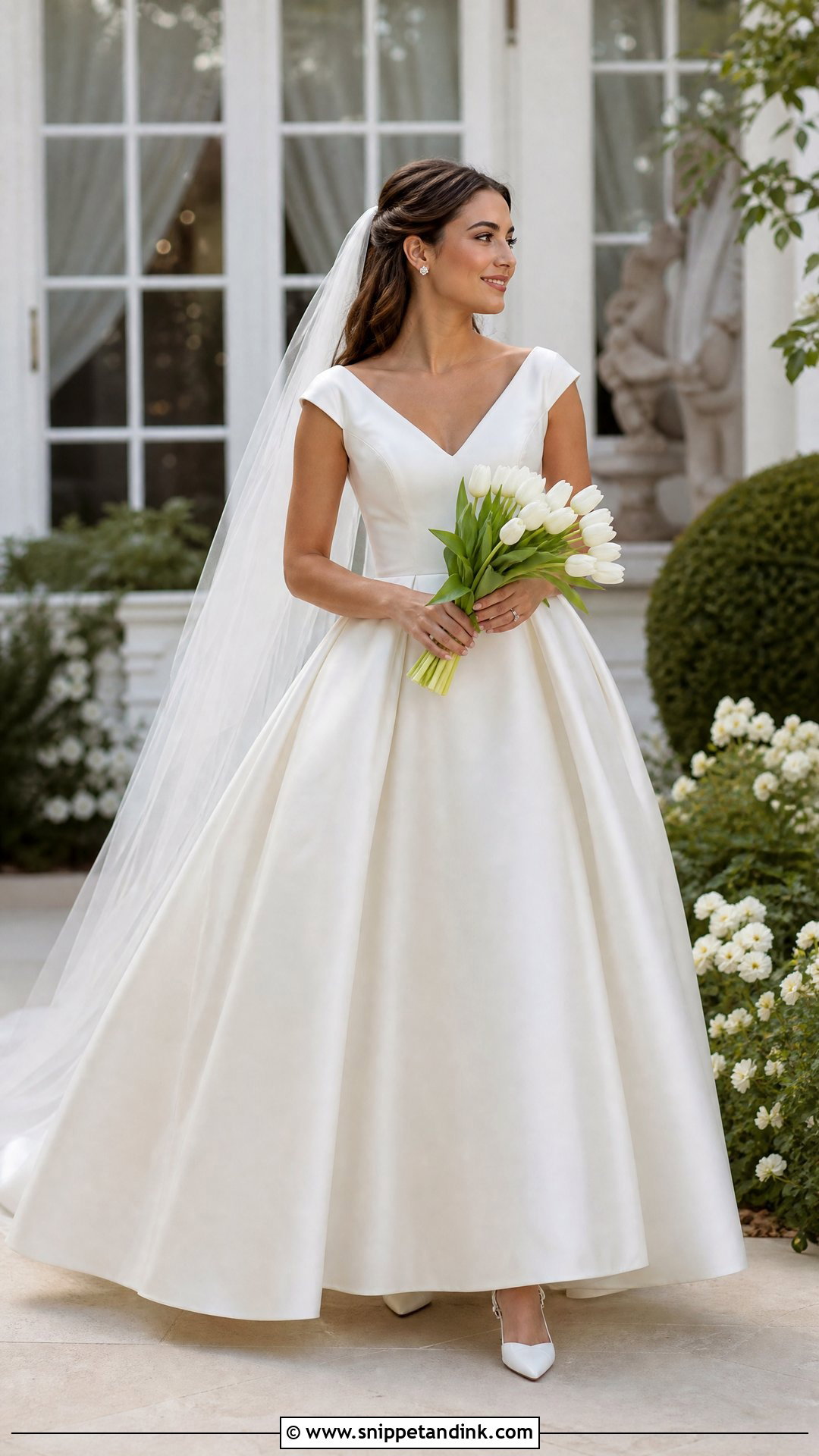
Delicate cap sleeves cover the very top of the shoulder and keep a ballgown looking light. I like them cut from the same satin or mikado as the bodice so the line runs unbroken. A shallow V or rounded neckline suits the shape. Style it with a chapel veil, small studs and ivory kitten heels for an easy walk, plus half-up hair that keeps the sleeves visible. A round bouquet of tulips or garden roses fits a daytime garden ceremony. It’s a sensible pick for brides who find strapless too exposed but don’t want full sleeves. Test the armholes by reaching forward; cap sleeves pull across the back when they’re cut too narrow.
7. High Neck Ballgown Wedding Dress
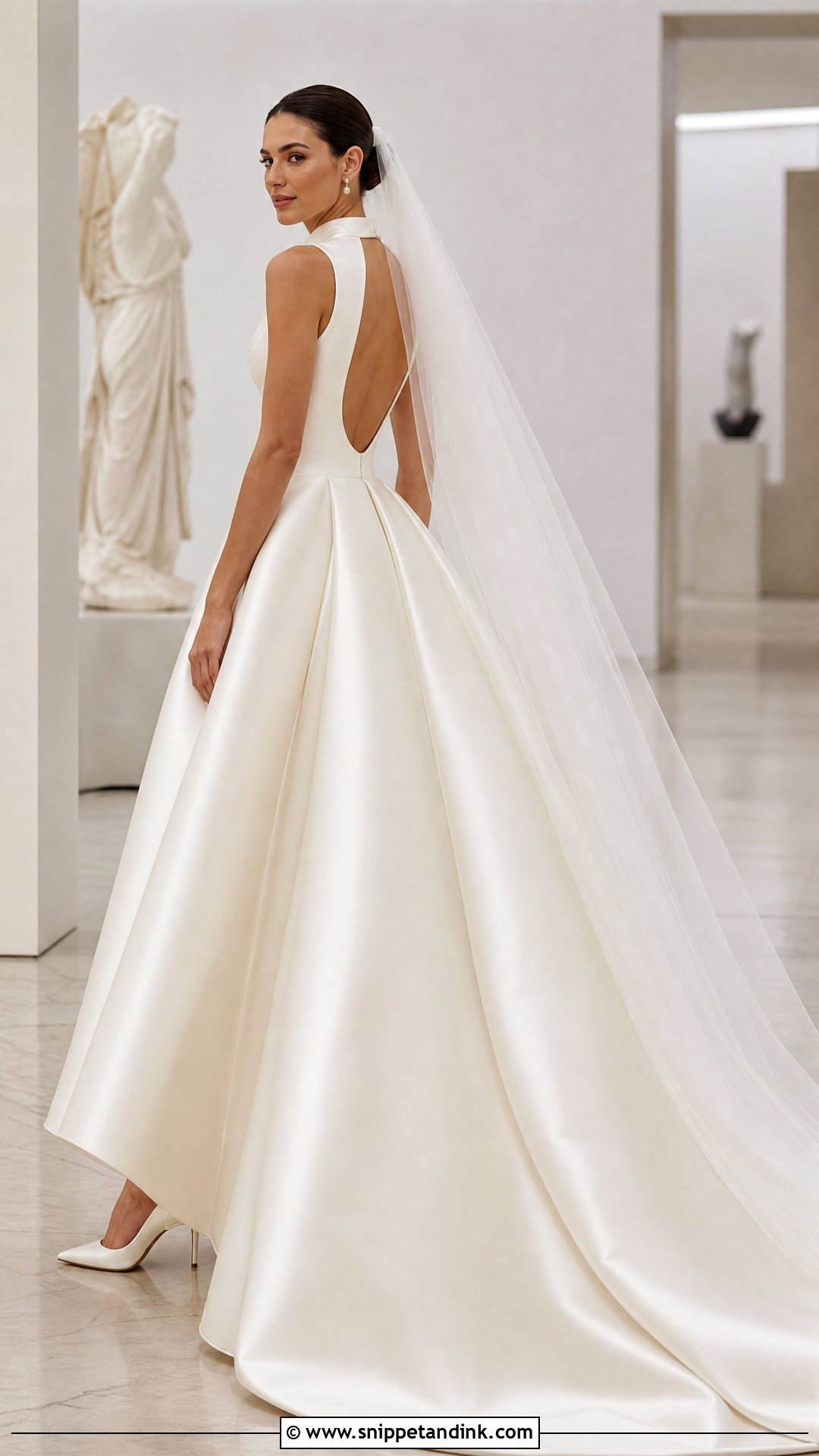
High necks on a ballgown surprise people. The upper half is almost severe, and then the skirt opens out. Choose a sleeveless bodice with a clean jewel neckline or slightly raised collar, not ornate lace at the throat. A low open back keeps the design from feeling heavy. Pearl drop earrings, sleek ivory pumps and a narrow cathedral veil beneath a polished bun are enough, with no necklace. Long-stemmed calla lilies suit the clean lines, and the look sits well in a museum, a modern venue or a city wedding. I’d only steer you away if you dislike anything near your neck; a high collar is noticeable all day if it isn’t cut generously.
8. Bateau Neck Ballgown Wedding Dress
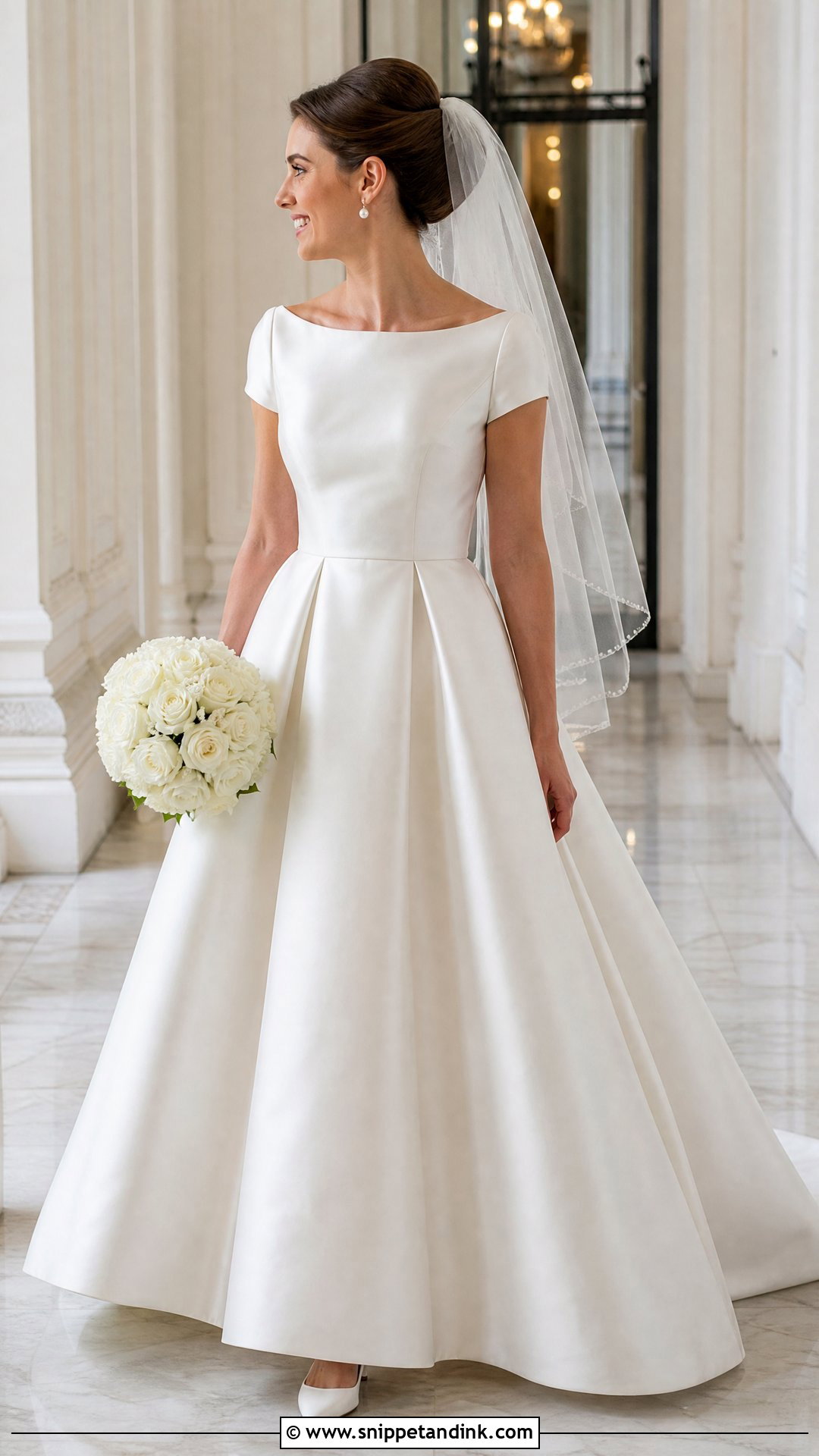
The bateau, also called a boat neck, runs straight across from shoulder to shoulder and gives coverage without weight. Pair a sleeveless or short-sleeved satin bodice with a gathered or box-pleated skirt, and keep the waist clearly defined so the volume doesn’t swamp you. A sheer fingertip veil, pearl button earrings and low satin pumps suit it, with a French twist or a smooth low ponytail. If the front is plain, a V back with covered buttons adds interest from behind. A simple white rose bouquet is all it needs. Bateau necks gape at the armhole when the shoulder seam sits too wide, so that’s where I’d look first at a fitting.
9. Spaghetti Strap Ballgown Wedding Dress
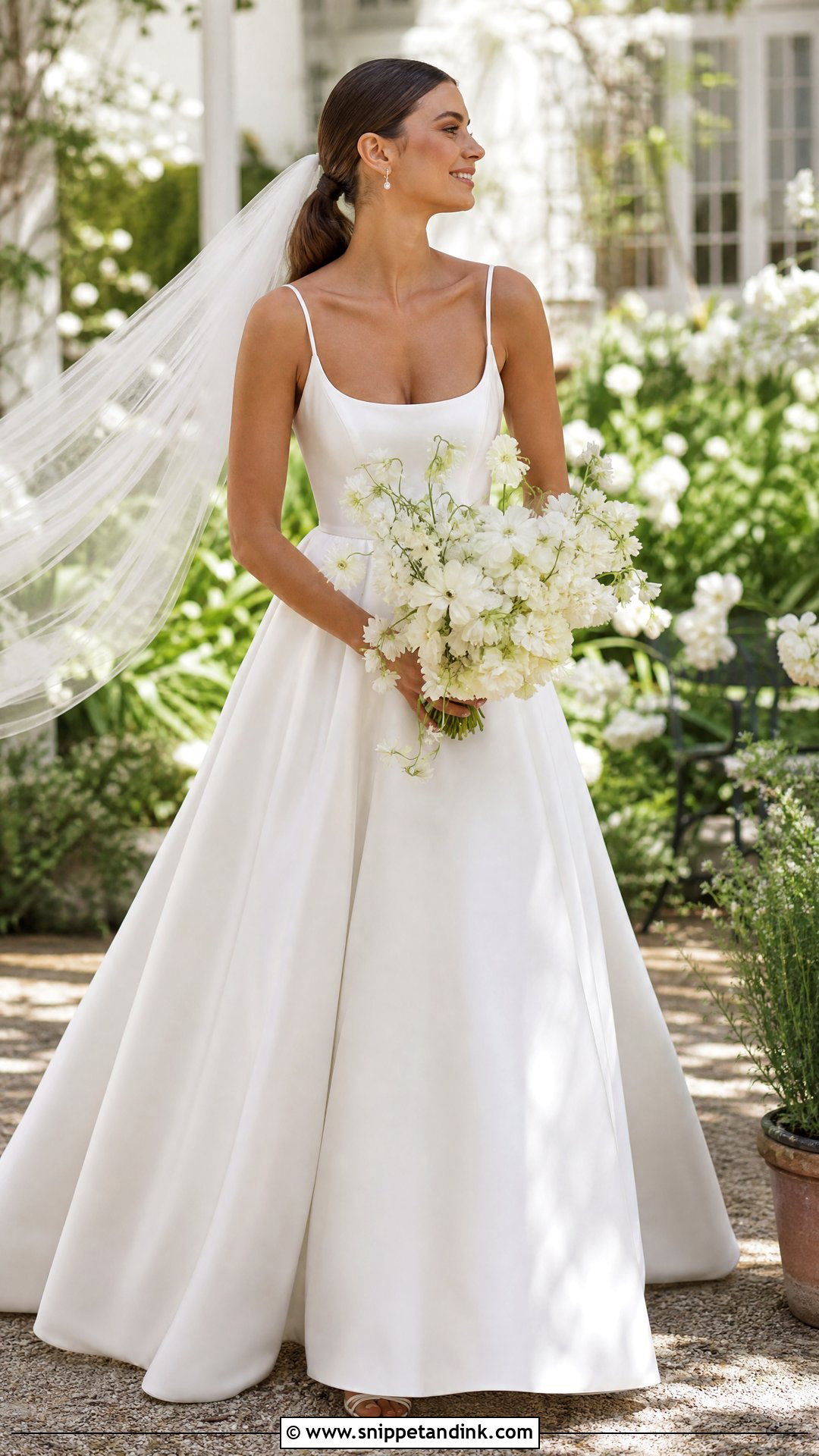
Thin straps lighten a full skirt and make the dress feel more relaxed. Choose a simple scoop-neck bodice with its support hidden beneath satin or faille, because thin straps should never carry the weight of a ballgown. Have them fitted by a seamstress so they stay in place through walking, sitting and dancing. Delicate drop earrings, strappy ivory heels and a fingertip veil keep it airy, and the hair can be loose waves or a soft low bun. Sweet peas or small garden roses suit the mood. I suggest this one for warm-weather ceremonies; the open bodice feels cooler while the skirt keeps the formality.
10. Corset Bodice Ballgown Wedding Dress
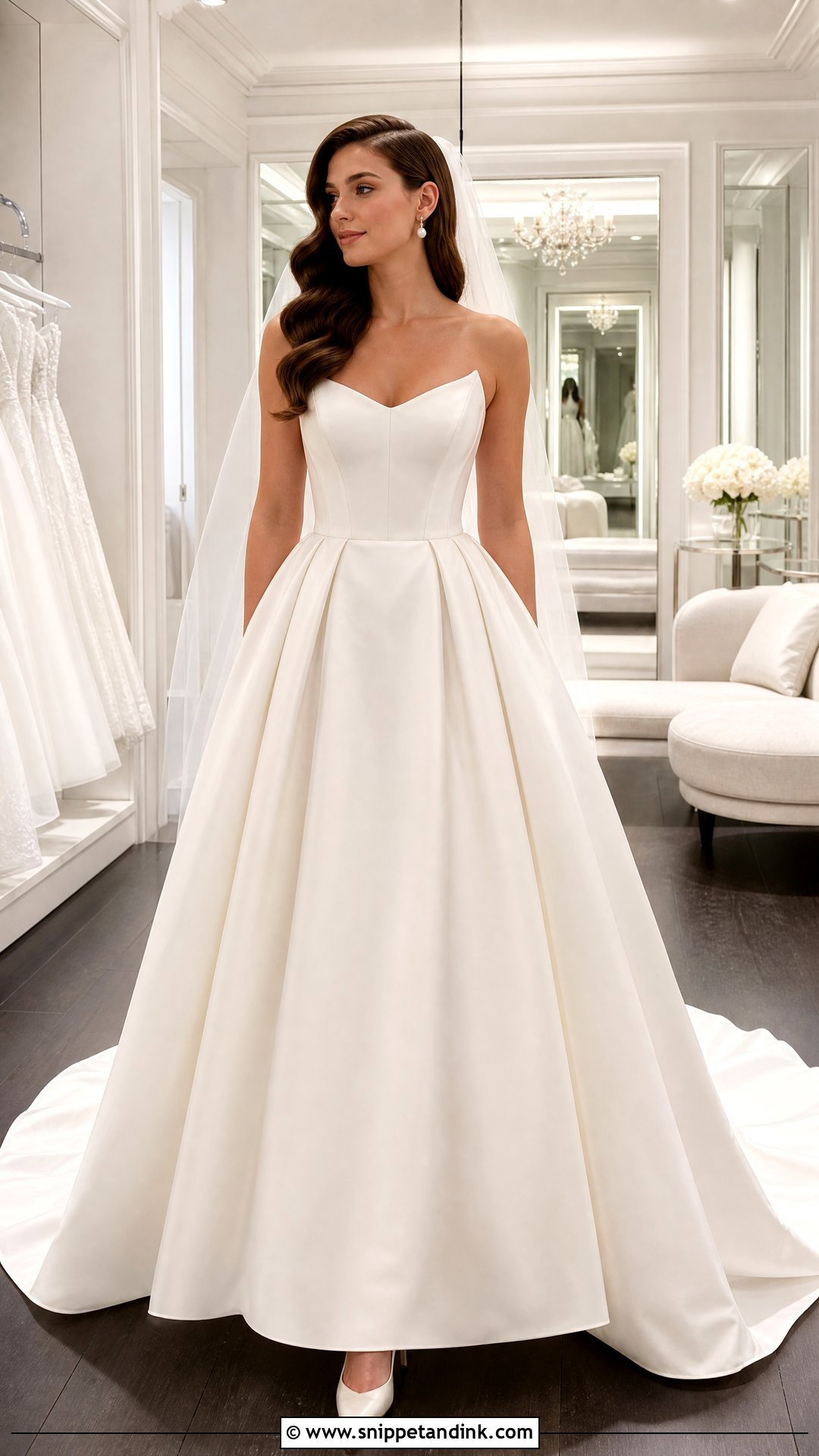
A corset bodice gives a ballgown its shape and holds it all day. For a clean result, cover the boning in plain satin instead of leaving it visible or adding crystals and dense lace. A softly pointed neckline and smooth panel seams are detail enough. The skirt should start at the natural waist and fall into controlled pleats. Pointed pumps, pearl earrings and a plain chapel veil finish it, with a neat bun or side-parted waves. I tell every bride the same thing about corsets: placement matters more than tightness. A corset laced as tight as possible pushes the bodice out of position, while one sitting at your true waist feels firm and lets you eat dinner.
11. Basque Waist Ballgown Wedding Dress
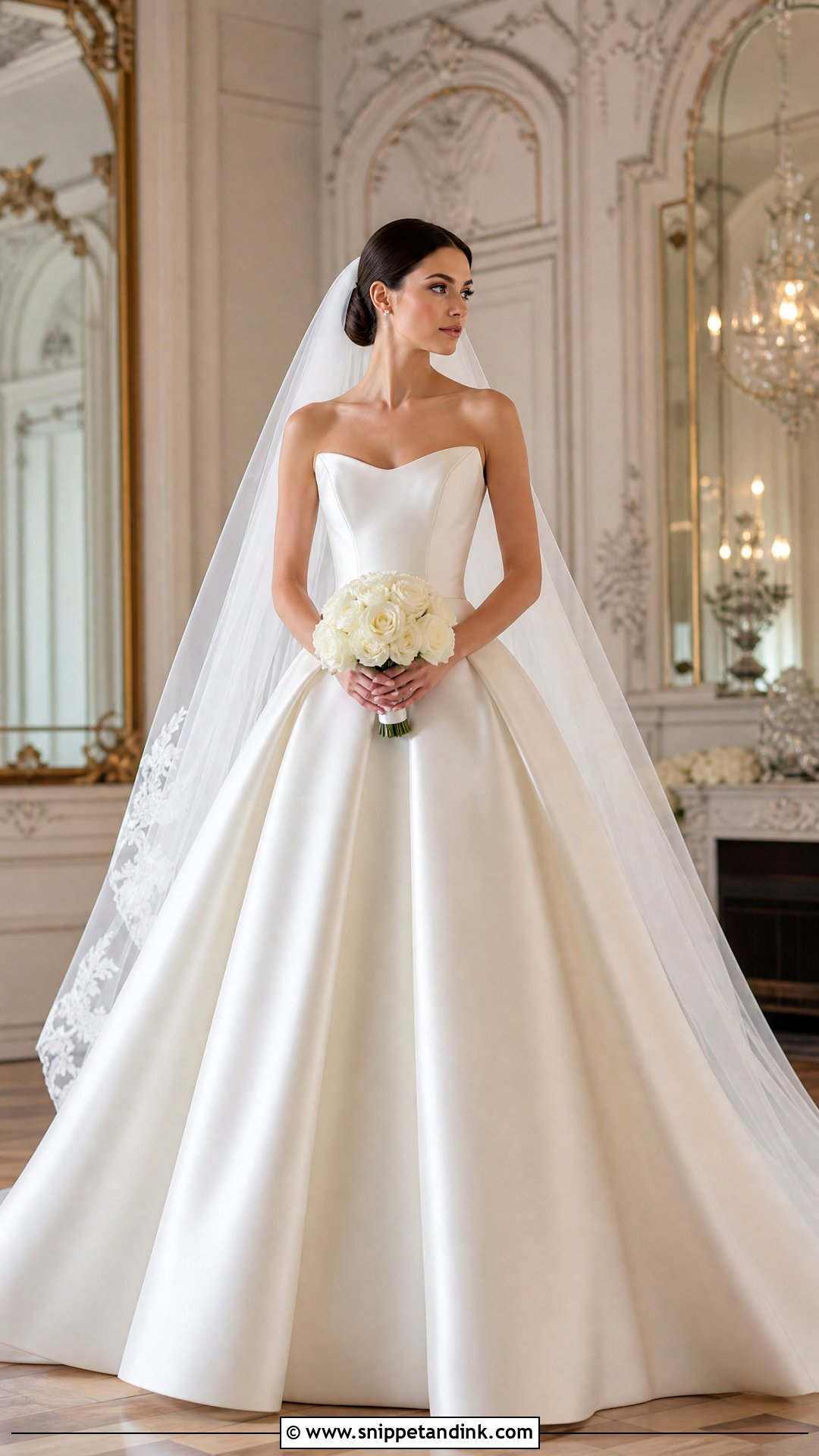
A basque waist dips into a V below the natural waistline, which lengthens the torso and makes a clean transition into the skirt. This historical detail has returned to bridal design in a big way, and it suits a simple gown because the shape does the work. Choose plain ivory satin with minimal seams and a strapless or square neckline. Add a long veil, small pearl studs and hidden platform pumps that help with the skirt length. A sleek updo keeps attention on the waist. Skip oversized jewelry and carry white roses tied with a narrow ivory ribbon. The point of the V must sit exactly at your center; if it drifts even slightly when you move, the seamstress should anchor it.
12. Drop Waist Ballgown Wedding Dress
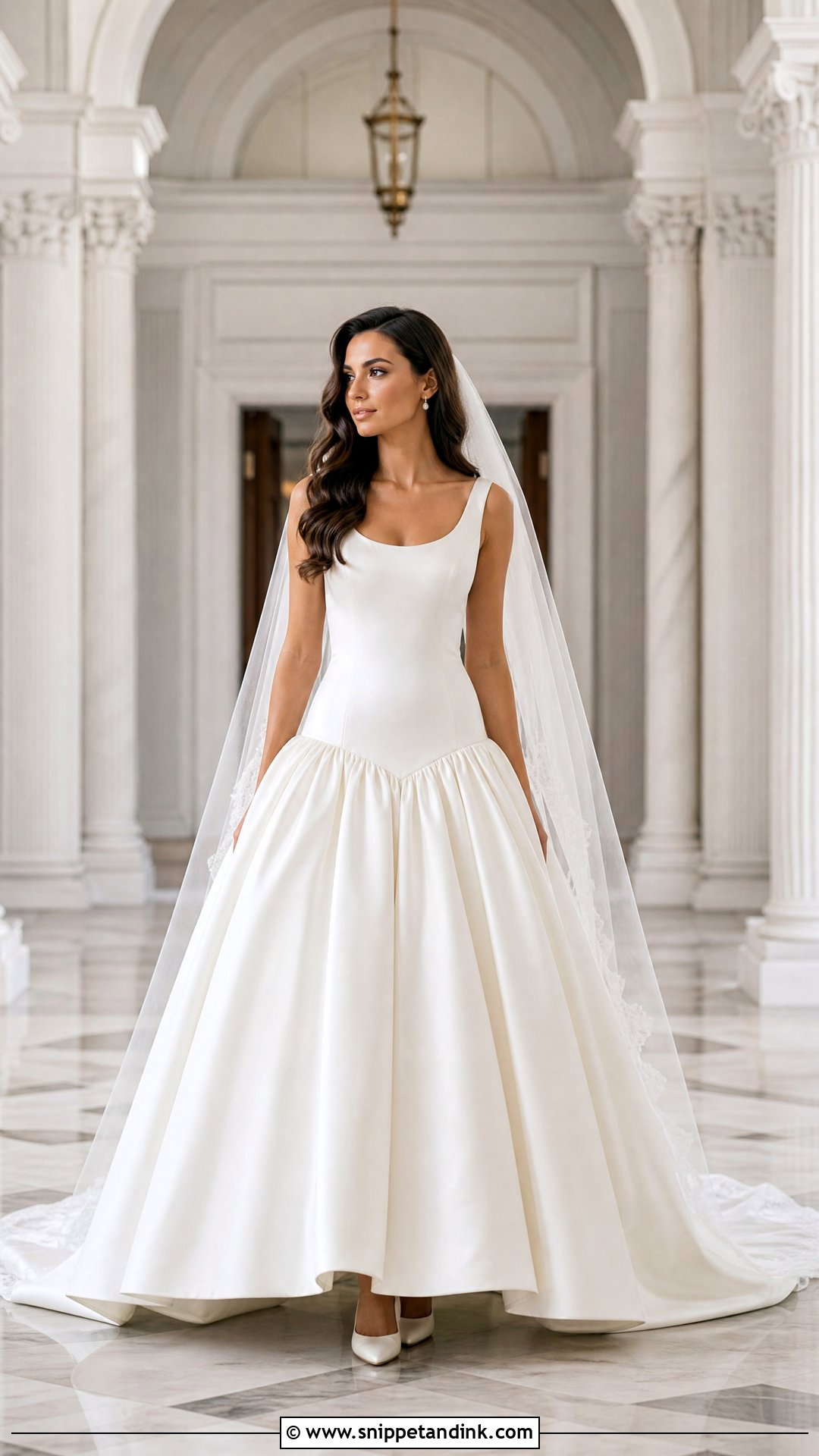
A drop waist ballgown wedding dress extends the fitted section toward the hips before the skirt opens, giving a long vertical line. It flatters a longer torso most; on a short-waisted bride it can shorten the legs, so try it before committing. Structured satin or mikado keeps the transition crisp instead of bulky. A scoop or straight strapless neckline suits the extended bodice. Style it with a cathedral veil, simple earrings and closed-toe heels under the skirt, plus a low bun or glossy waves. The hip area is where alterations matter most. You need to sit comfortably without the bodice folding at the hip crease.
13. Pleated Satin Ballgown Wedding Dress
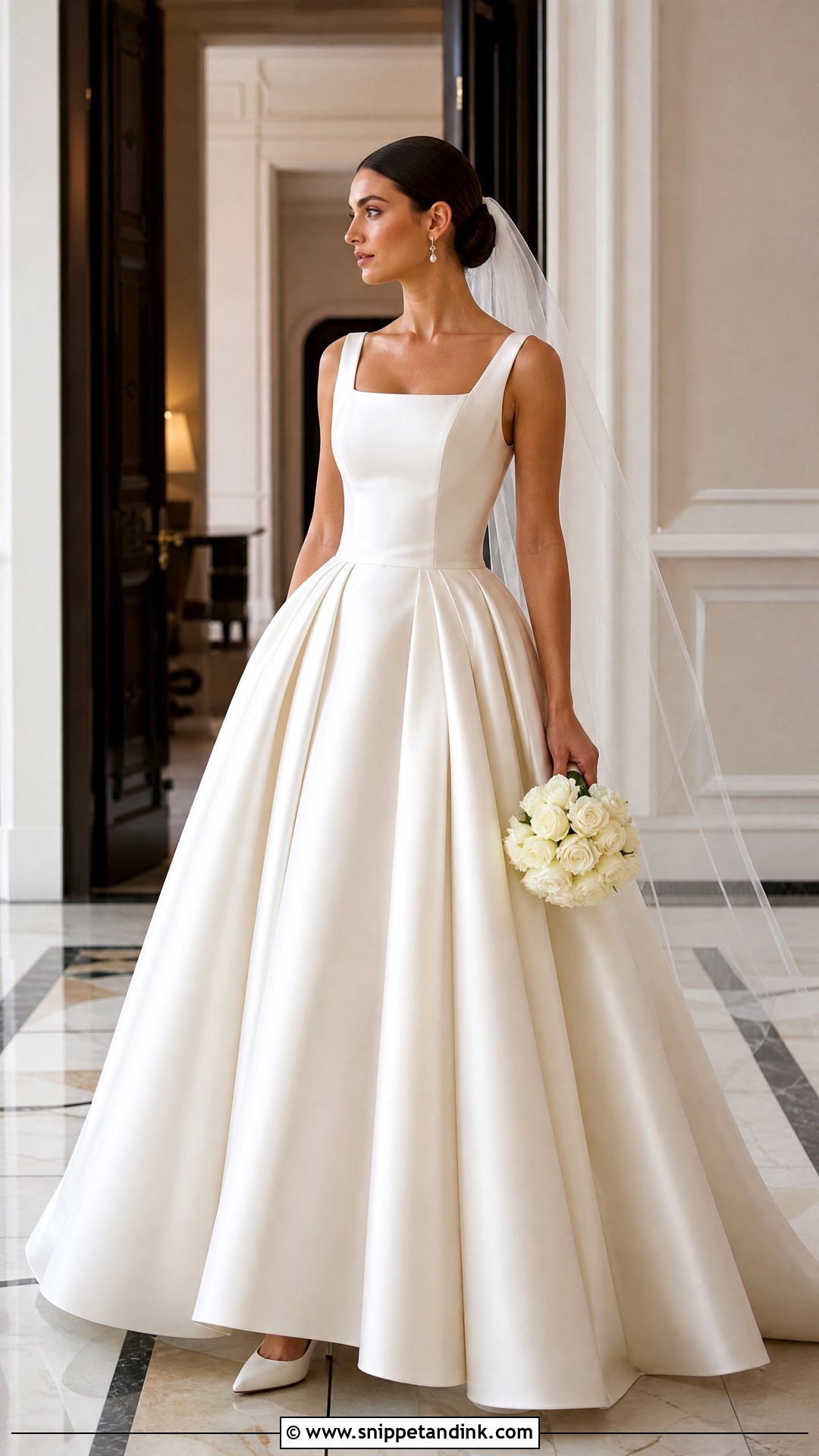
Box pleats turn plain satin into something sculptural. A fitted sleeveless bodice with wide pleats opening from the waist gives controlled volume and a smooth front for photos. The neckline can be a V, a square or straight strapless. Pearl drop earrings, pointed ivory pumps and a borderless sheer veil keep it crisp, and a structured bouquet of white roses repeats the order of the pleats. Keep hair smooth and away from the shoulders. Before you buy, sit down in the sample for a minute and stand up again. Good pleats fall back into place; poorly pressed ones stay crushed in the photos.
14. Tulle Skirt Ballgown Wedding Dress
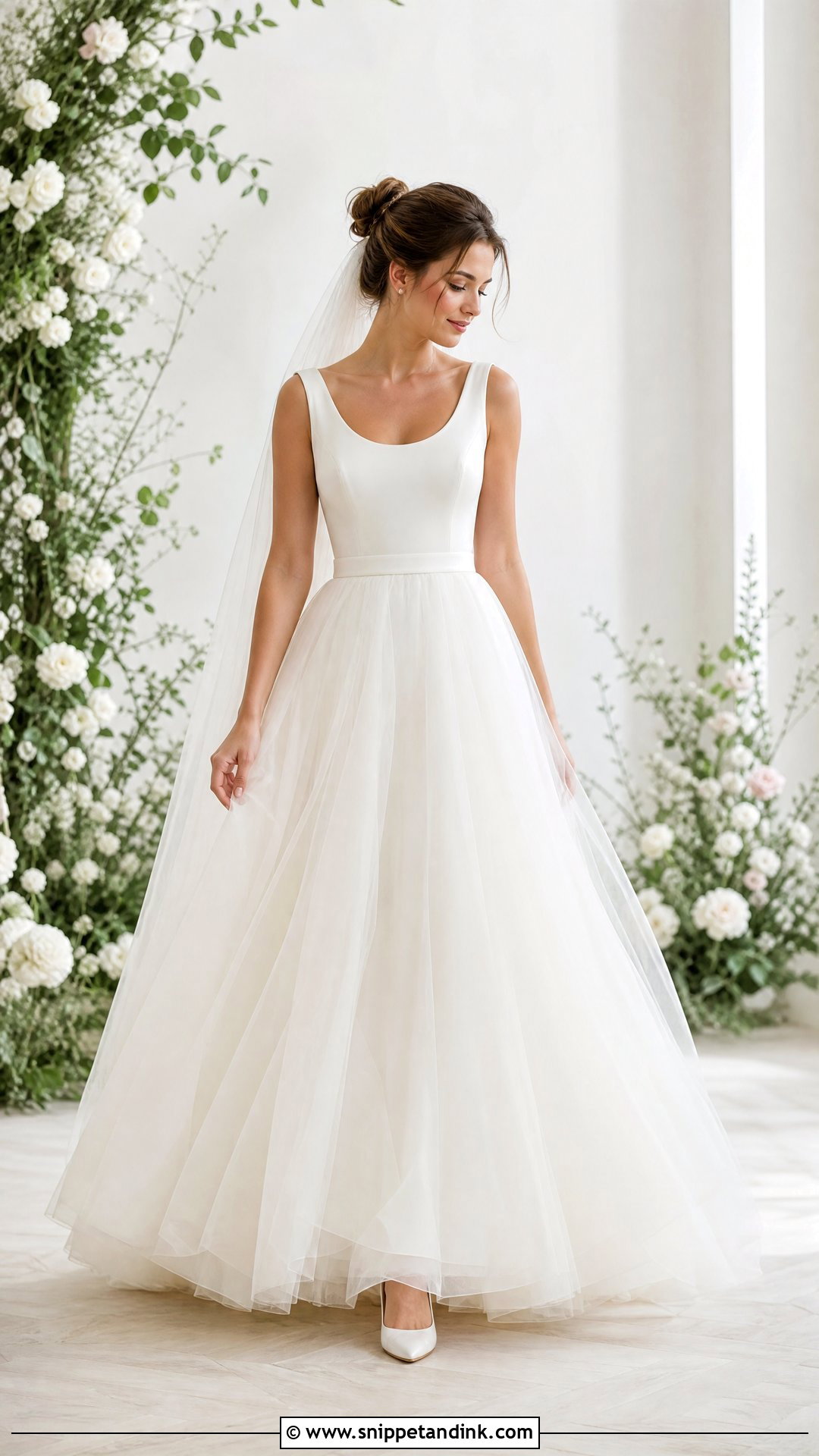
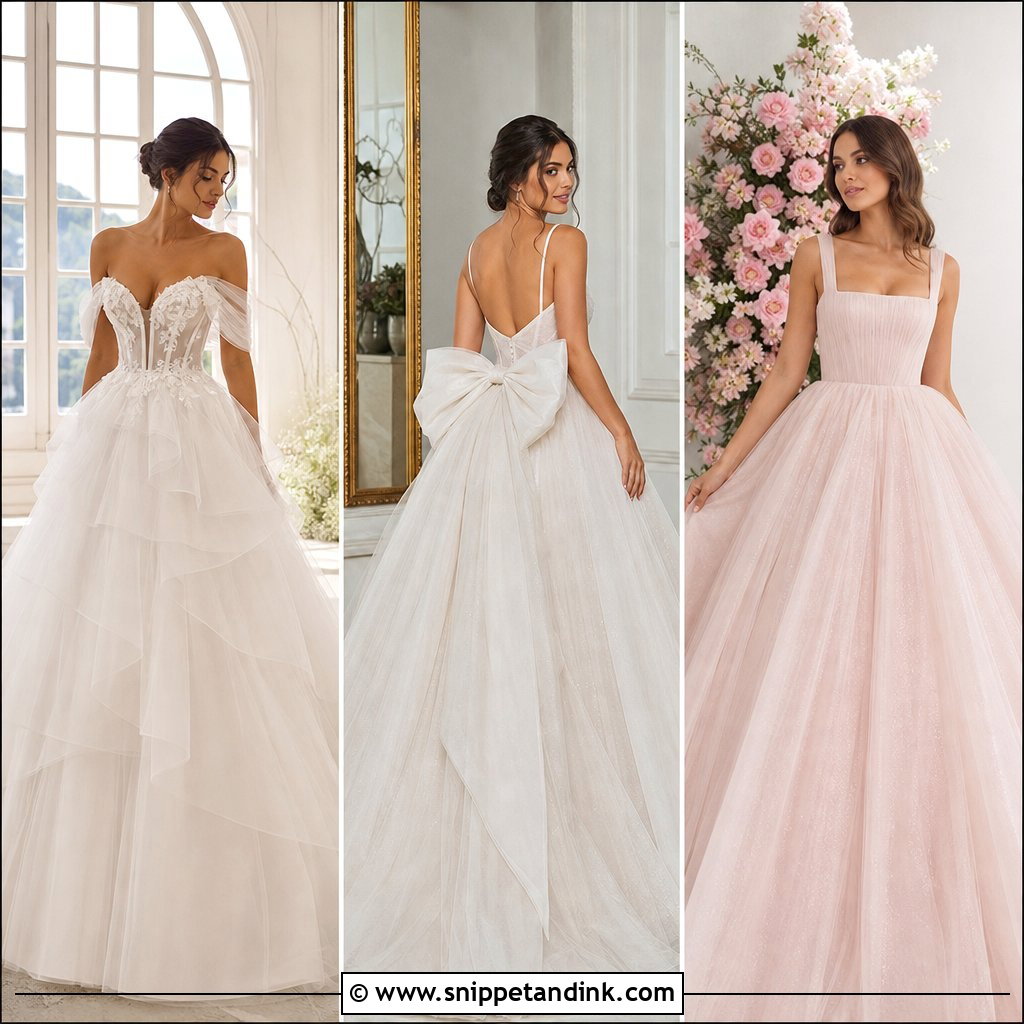
Tulle is the softest way to build a ballgown, and the lightest to wear. Pair a clean satin bodice with a scoop or straight neckline over several layers of plain tulle, and skip glitter or heavy appliques if you want it minimal. A narrow satin waistband tidies the join between bodice and skirt. Simple pumps, pearl studs and a lightweight chapel veil suit it, with soft waves or a loose bun. Ask how many layers the skirt has, because that sets both volume and weight. Tulle also snags on rough floors, bouquet wire and jewelry, so I tell brides to watch bracelets with prongs.
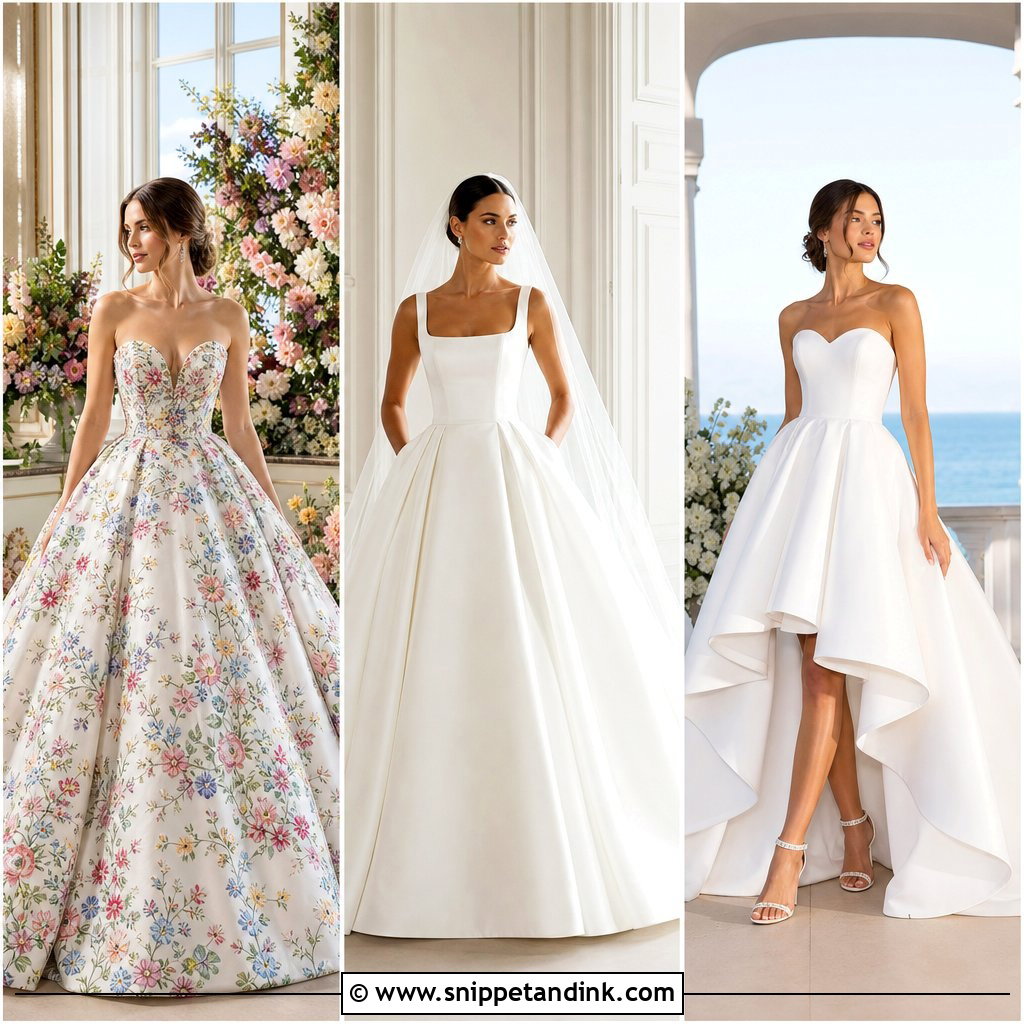
15. Organza Ballgown Wedding Dress
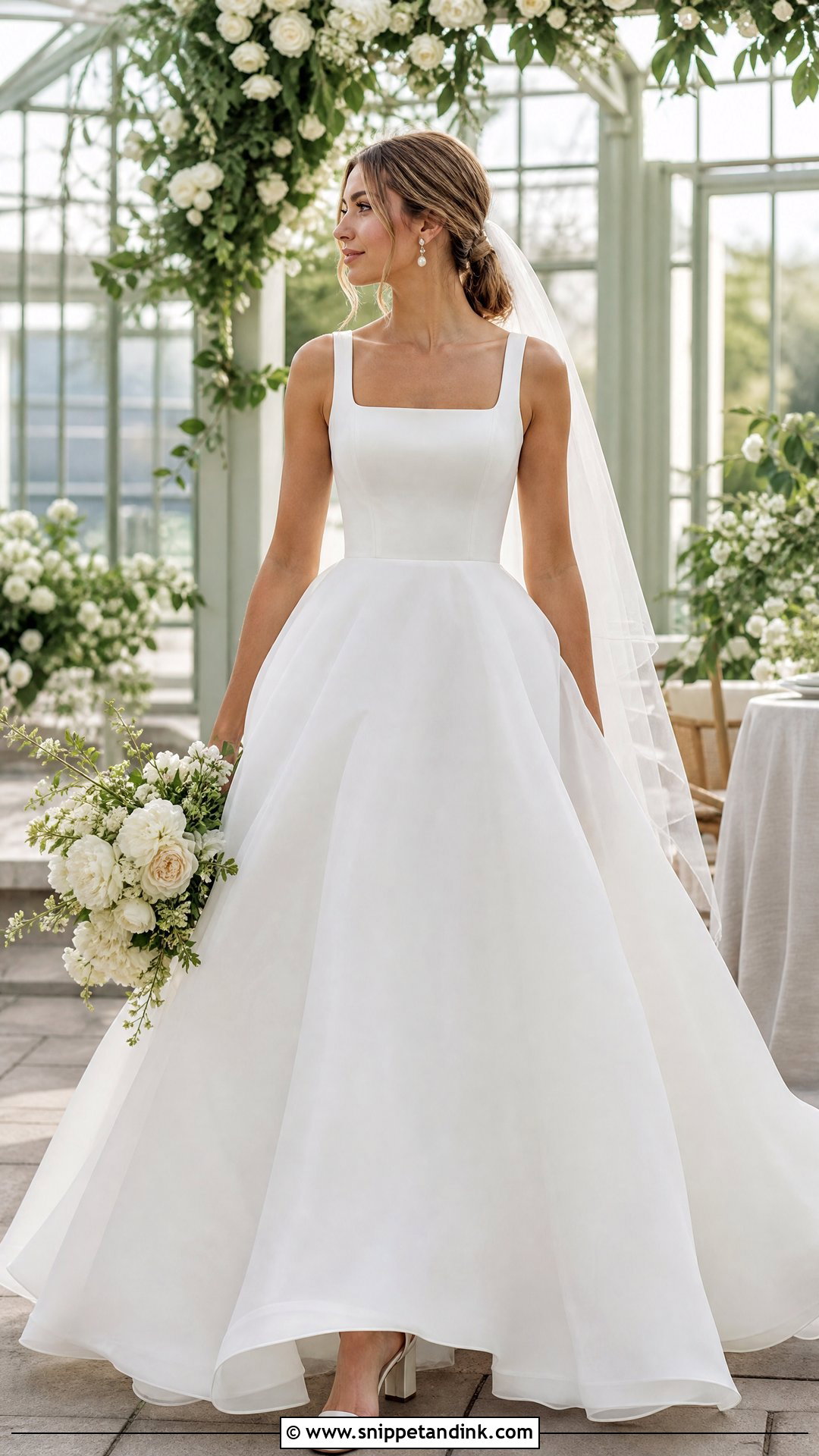
Organza gives volume with far less weight than thick satin, which is why I suggest it for warm-weather ballgowns. Choose a fitted bodice with wide straps and a square or shallow V neckline over a full organza skirt with gentle gathers or broad pleats. Block-heel sandals, small pearl earrings and a simple fingertip veil suit it, and a low ponytail or loosely pinned updo keeps it from feeling stiff. Organza is slightly sheer, so look at the gown in daylight and indoors to make sure the lining reads evenly beneath it. It’s elegant enough for a ballroom yet light enough for a garden or greenhouse ceremony. One trade-off: organza creases more readily than mikado, so plan for a steam before you dress.
16. Mikado Ballgown Wedding Dress
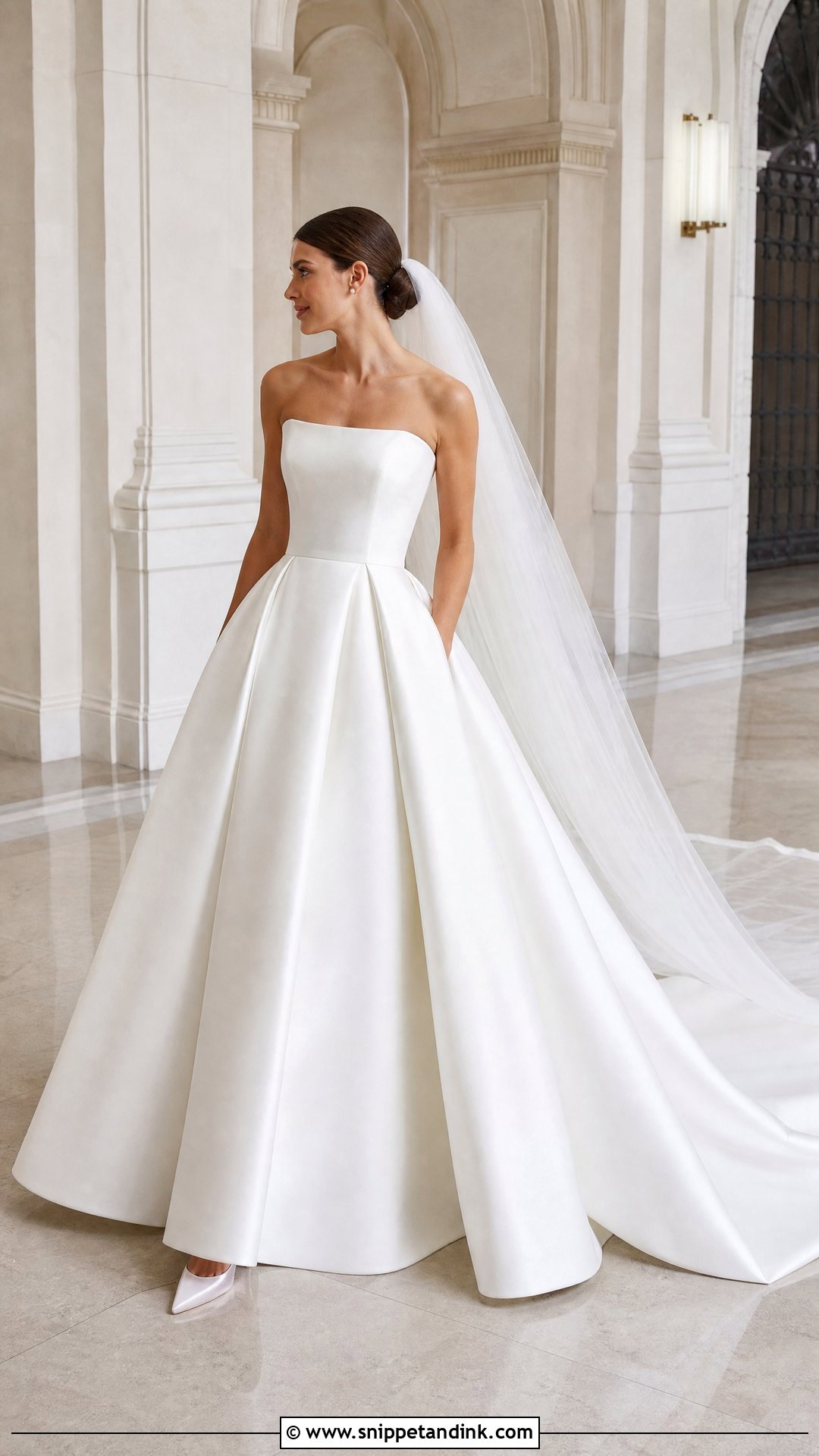
Mikado has body. It holds a skirt’s volume with minimal layers and gives a slightly matte, rich finish. A fitted sleeveless bodice, a defined waist and wide pleats into a formal train suit it. Straight strapless reads classic, and a square neckline feels more current. Pair it with pearl studs, pointed satin heels and a plain tulle cathedral veil, and wear a polished bun to match the crisp fabric. Structured fabric weighs more than tulle, so practice walking and turning at fittings. Plan the bustle at the same time, since a heavy mikado train needs more pickup points than a light one.
17. Bow Back Ballgown Wedding Dress
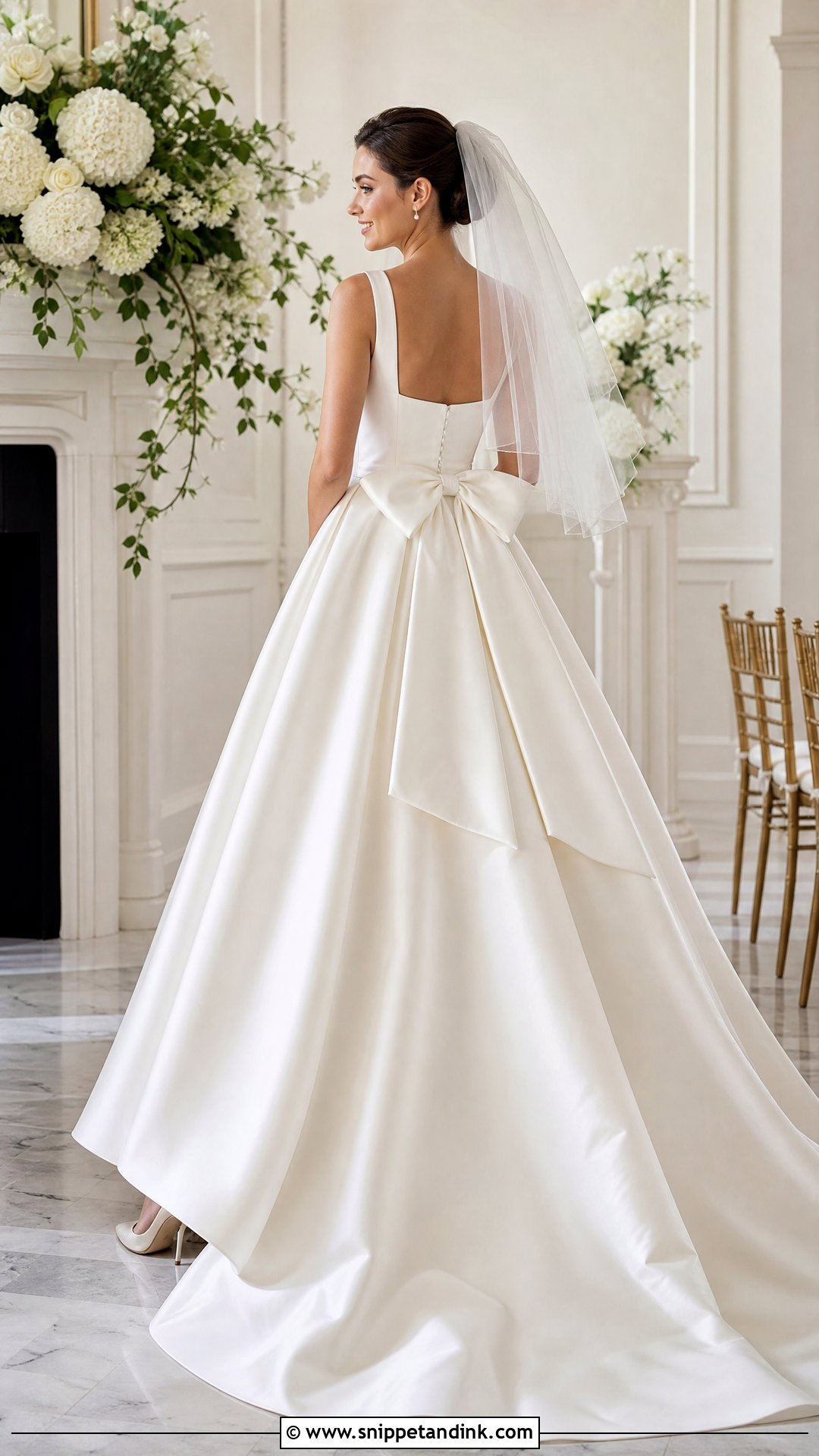
A single bow at the back is the one memorable detail on an otherwise plain ballgown. Choose clean satin with a fitted bodice, natural waist and full pleated skirt, and place the bow at the waist or just above the train, depending on how dramatic you want the back view. Keep the front restrained with a straight strapless or square neckline. Small earrings, ivory pumps, a veil that stops above or below the bow and a smooth updo complete it. If you can, ask for a removable bow. It gives you a second look for the reception and makes bustling easier, as a fixed bow often sits right where the bustle points need to go.
18. Pearl Button Ballgown Wedding Dress
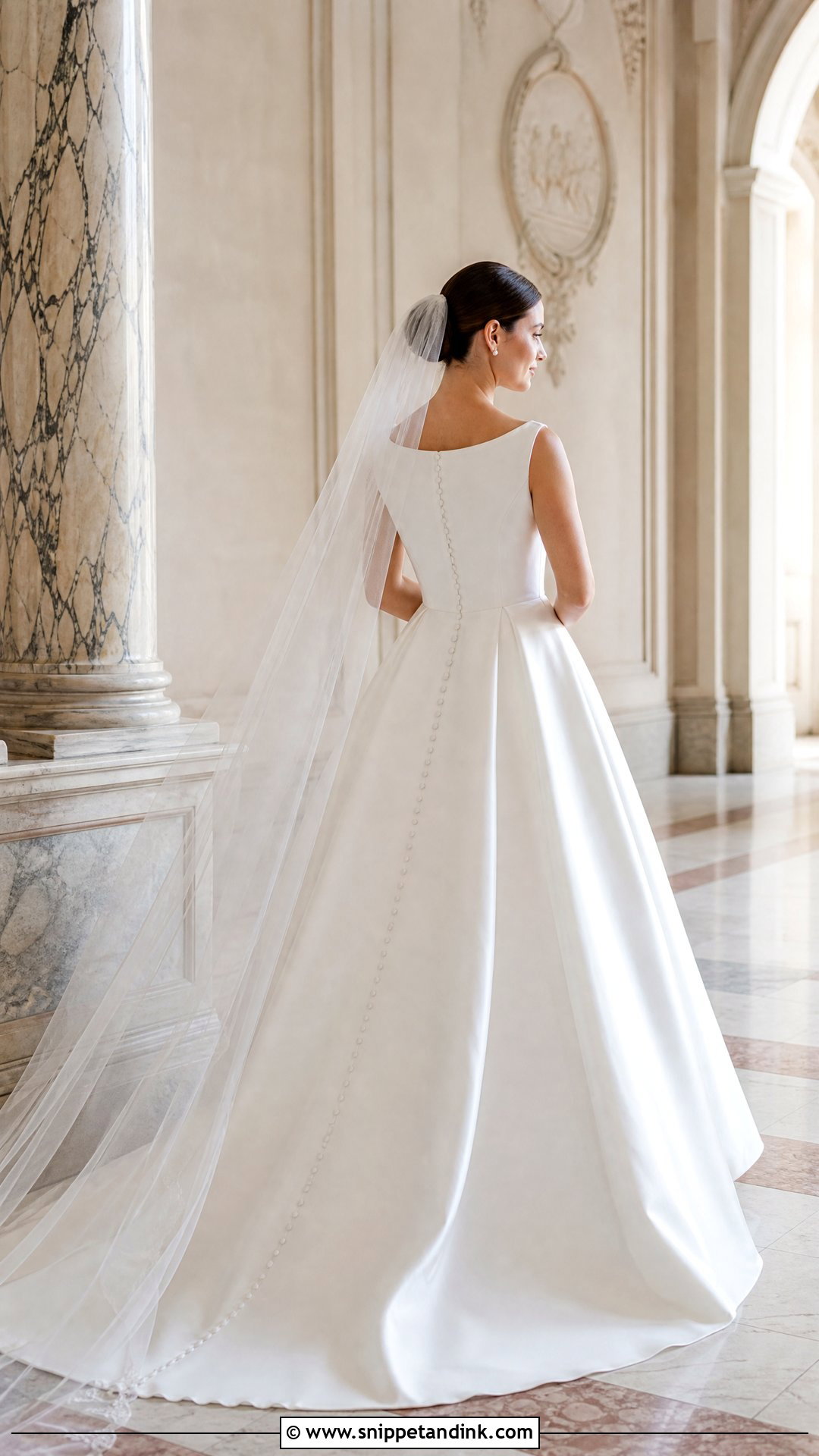
Pearl buttons down the back add classic detail without changing the minimal character of the gown. Look for a smooth satin bodice with buttons running from the upper back to the waist or down the train, and keep the front simple with a bateau, scoop or square neckline. Pearl studs repeat the detail; a large necklace would make it busy. A sheer cathedral veil lets the buttons show as you walk, with closed-toe satin pumps and a neat chignon. At fittings I check that the buttons lie flat and the loops are secure. Real pearl buttons are heavier than fabric-covered ones, so the closure underneath has to be strong enough to take the strain.
19. Cathedral Train Ballgown Wedding Dress
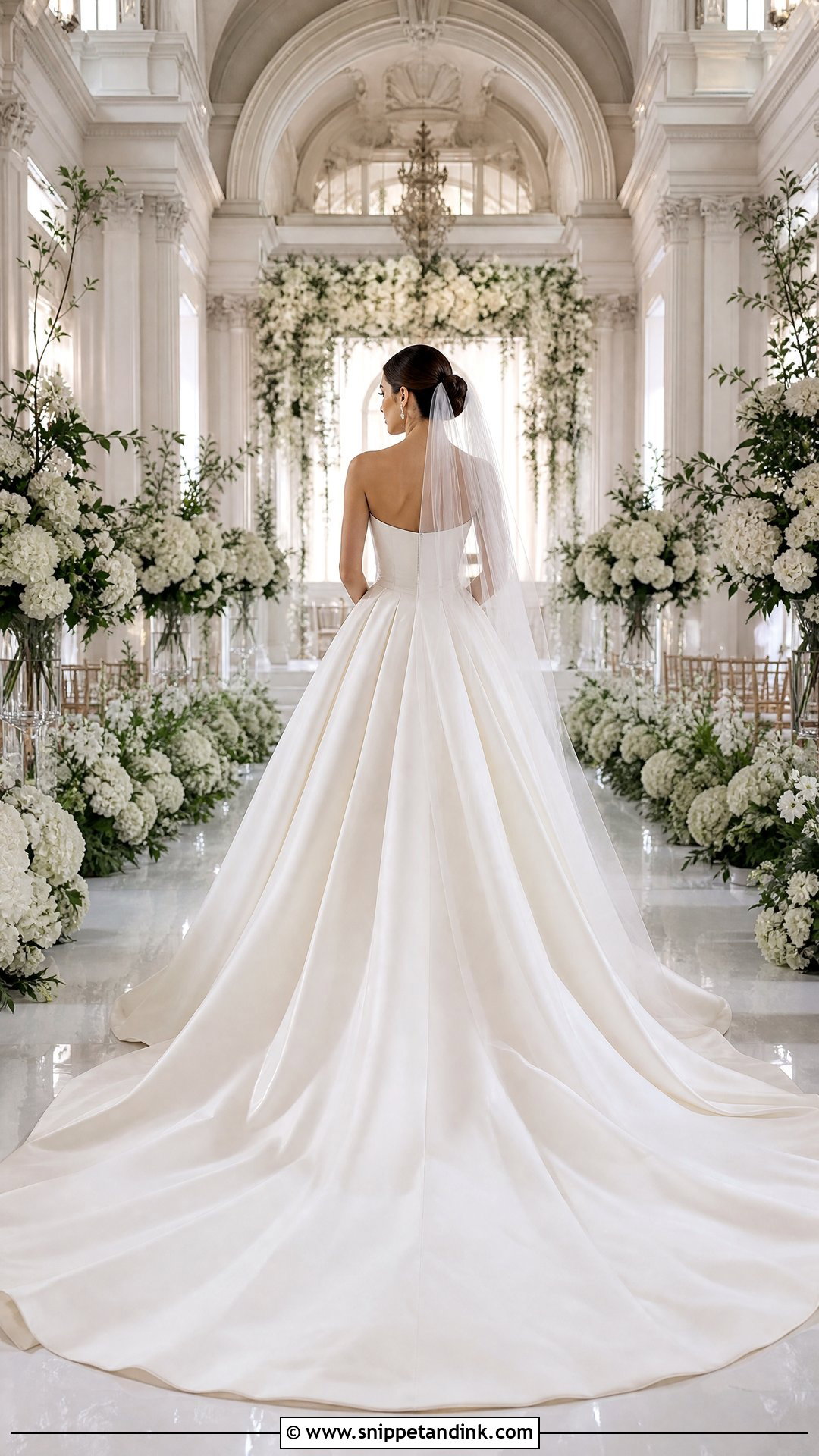
A cathedral train turns a simple ballgown into a ceremonial dress without a single bead. Choose smooth satin or mikado with a fitted bodice and a skirt that flows into one uninterrupted train. A clean strapless neckline or wide straps balance the length. Pair it with a plain cathedral veil, understated earrings and comfortable platform heels hidden under the hem, plus a medium bouquet and a sleek bun or waved low ponytail. Ask your seamstress for a secure multi-point bustle, especially in heavy fabric, then practice walking, turning and handling the train before the day. Someone in your party should learn the bustle too, because you can’t reach it yourself.



20. Ballgown Wedding Dress With Pockets
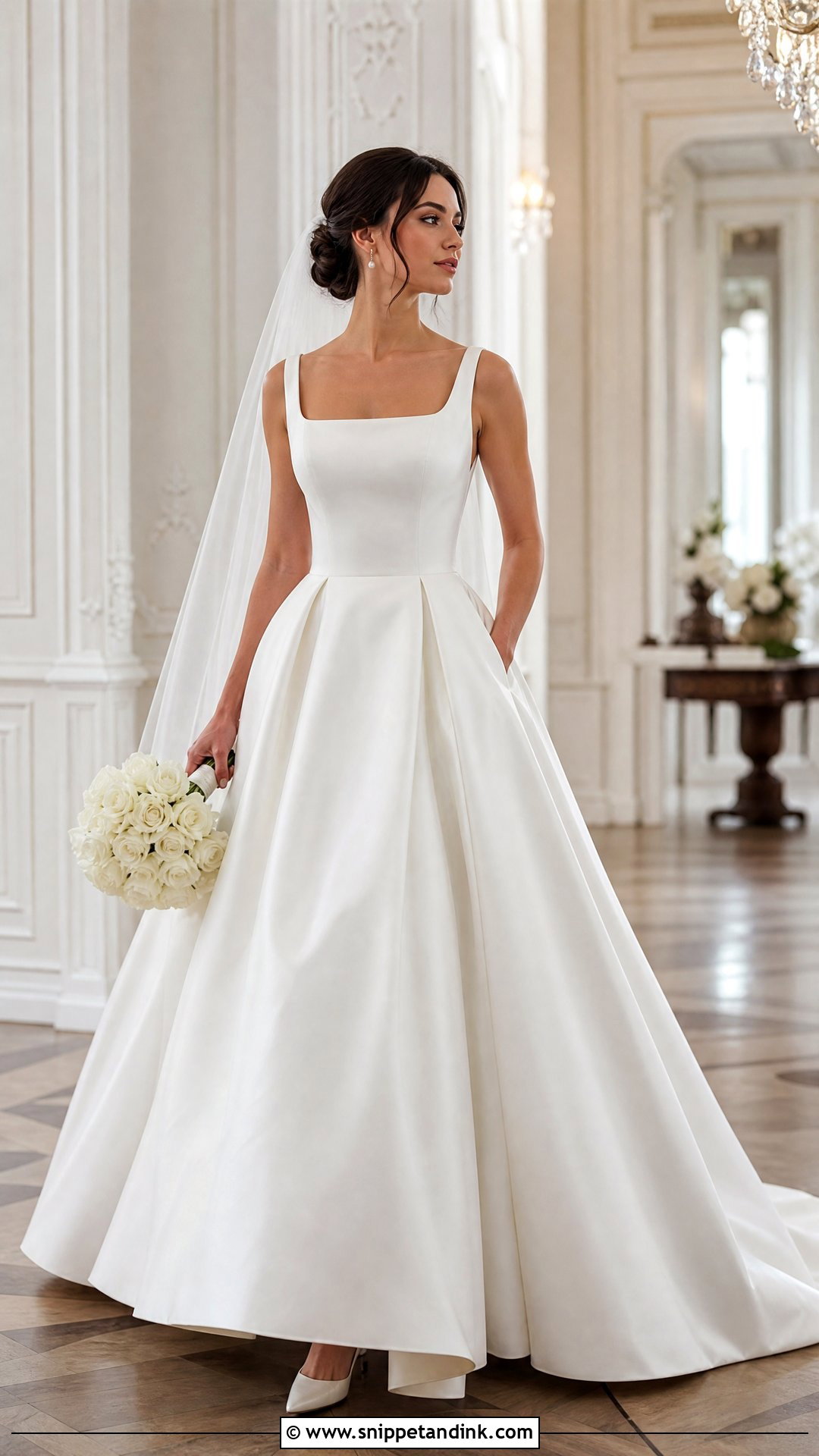
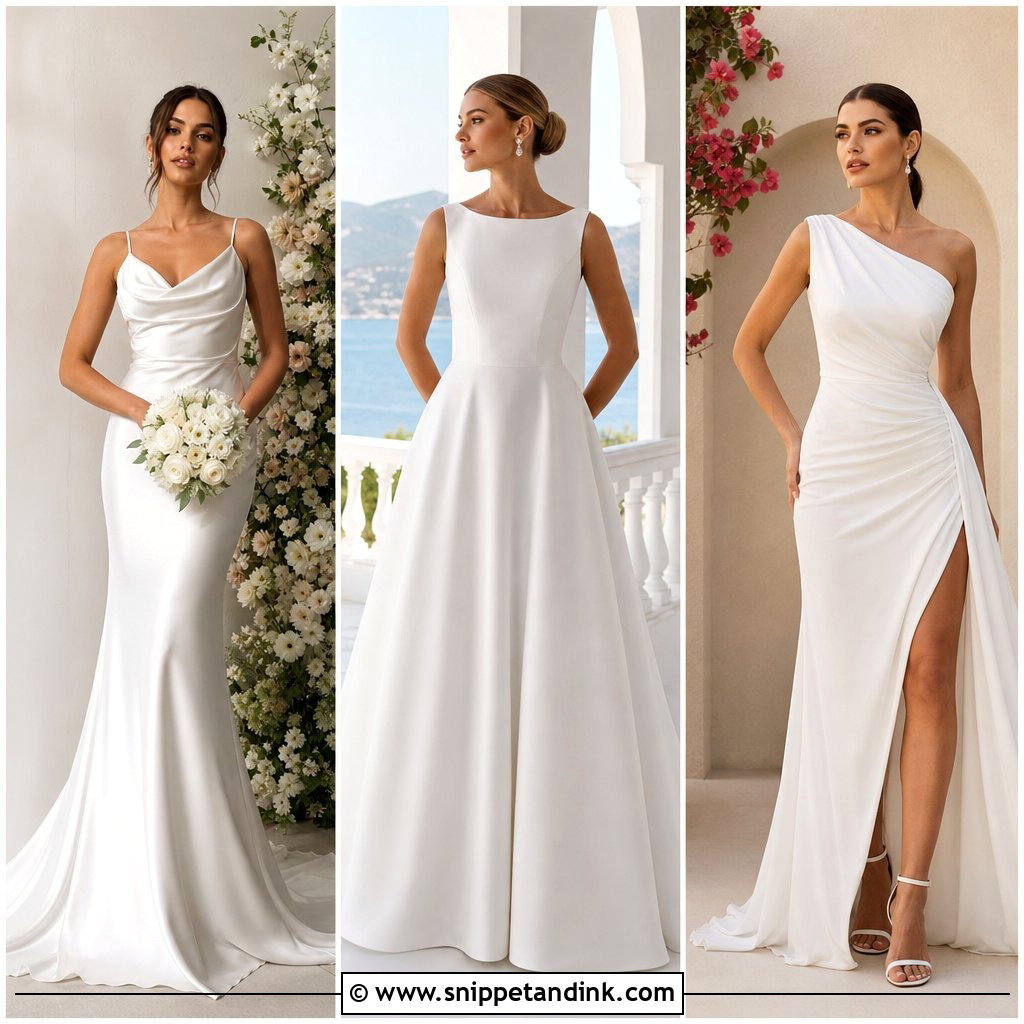
Pockets are the detail brides thank me for most often. They hide well in structured satin or Mikado skirts, where the side seams conceal them completely. Choose a simple fitted bodice with a square, sweetheart or straight neckline over a full pleated skirt. Pearl earrings, pointed ivory heels and a soft tulle veil suit it, with a low bun and a white rose bouquet. At alterations, check that the pockets don’t pull open or add width at the hips. Keep them for a handkerchief or lip balm; a phone drags the skirt to one side and shows in photos.
A Ballgown Takes Longer to Arrive Than Most Brides Expect
Many bridal gowns are made to order after you place the order, and production time varies by designer, so ask the shop for its realistic delivery date before you sign anything. As a working rule I suggest starting to shop eight to twelve months before the wedding, and earlier if the dress is coming from overseas or you want custom changes.
Why alterations take longer on a full skirt
A ballgown hem isn’t one hem. Each layer of lining, petticoat and outer fabric is usually adjusted separately, and the bustle is designed once the length is set. Most brides need two or three fittings, typically starting a couple of months before the wedding. Bring your wedding shoes and the undergarments you’ll actually wear to the first one.
Arrange collection a week or two before the day, not the day before. That leaves time for a final steam and a calm try-on at home, where you can practice sitting, bustling and getting into the car.
Fabric First, Then the Neckline, Then Everything Else
A minimal ballgown never feels plain when the fabric and cut are right. Satin, tulle, mikado and organza each build a different kind of volume, and the neckline, waist placement, pleats, train and back detail let you make it personal without decoration. When you compare dresses, judge support, movement and fabric weight, and look at the proportions from the back and side as well as the front. Then keep the shoes comfortable, the jewelry restrained and the bouquet in proportion. The right gown is the one you forget about while you walk, sit, turn and dance.
You'll Like These Ideas:




Leave a Reply