
A top and skirt worn together as a wedding dress, usually sold as bridal separates, solves a fitting problem I meet constantly: a bride whose bust and hips are two different sizes in every gown she tries. With separates, each half is chosen and altered on its own. You also get to mix necklines, fabrics and skirt shapes that no single dress offers, from plain silk pairings to corsets, beaded tops and full tulle skirts. The trick is making two pieces read as one outfit, and later in the day you can swap one of them for a second look. Here are twenty pairings and what I check on each.
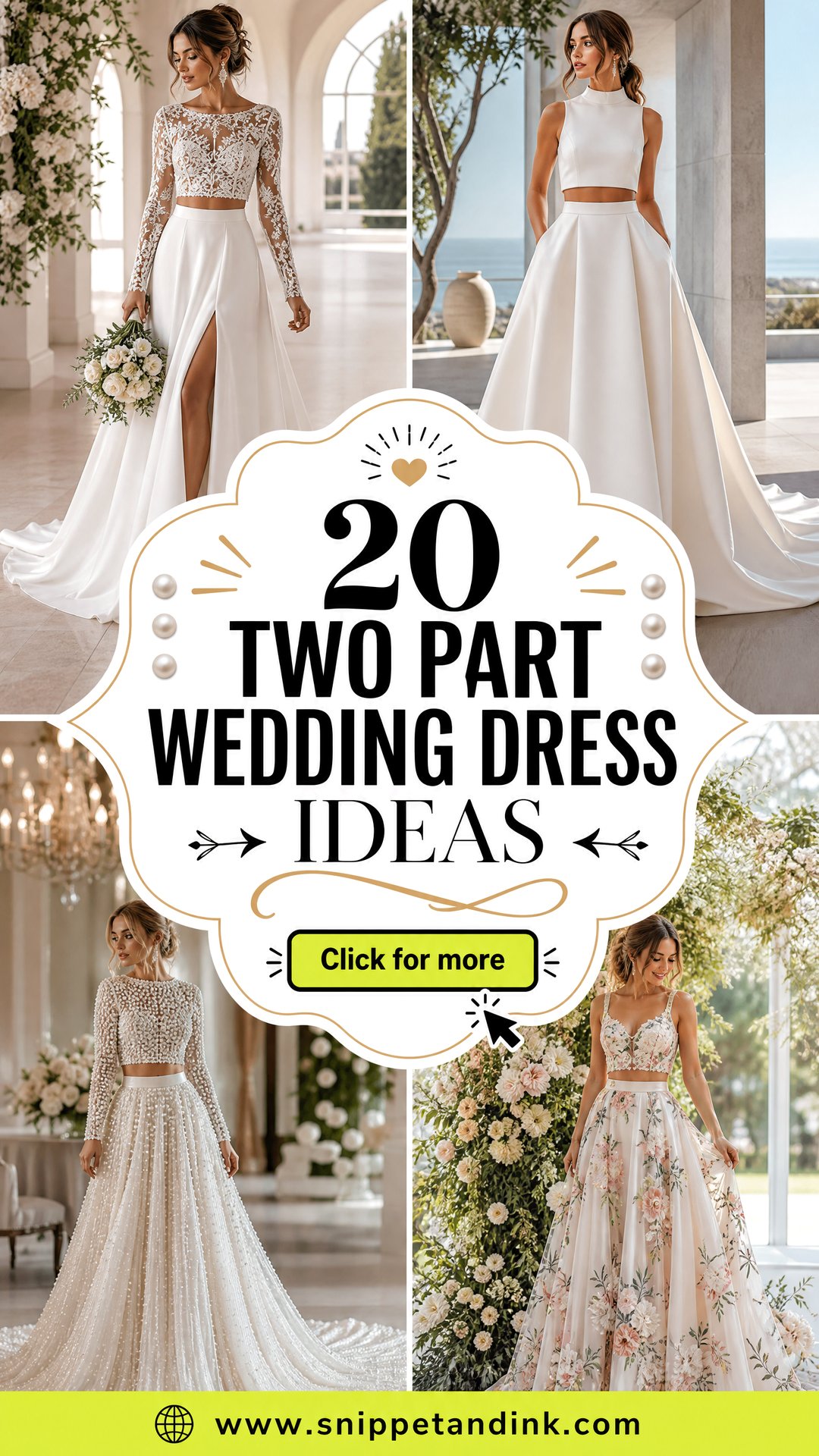
Ordering a Size 8 Top and a Size 12 Skirt Is the Point
The best reason to choose separates is fit, and most brides don’t use it fully. A one-piece gown is ordered in whichever size fits your largest measurement, then everything else is taken in, which can distort lace and seams. With two pieces, the top is ordered for your bust and the skirt for your waist and hips. Ask the shop to measure you for each piece separately.
Where the two pieces meet
Decide early whether you want a visible strip of skin or a closed join. A top that just meets the skirt waistband standing up will usually open a gap when you sit or lift your arms. If you prefer no skin, ask for the top to overlap the waistband by an inch or two, or have small hooks sewn inside to hold the pieces together. If you do want a little midriff showing, sit down in a fitting and look at the gap from the side; that’s how guests will see it during dinner.
Buying from two different makers
Mixing a top from one designer with a skirt from another is possible, but ivory is not a standard colour. Ask both for fabric swatches and compare them together by a window. Satin and crepe are the hardest to match; lace over a contrasting skirt is more forgiving.
1. Two Piece Lace Wedding Dress
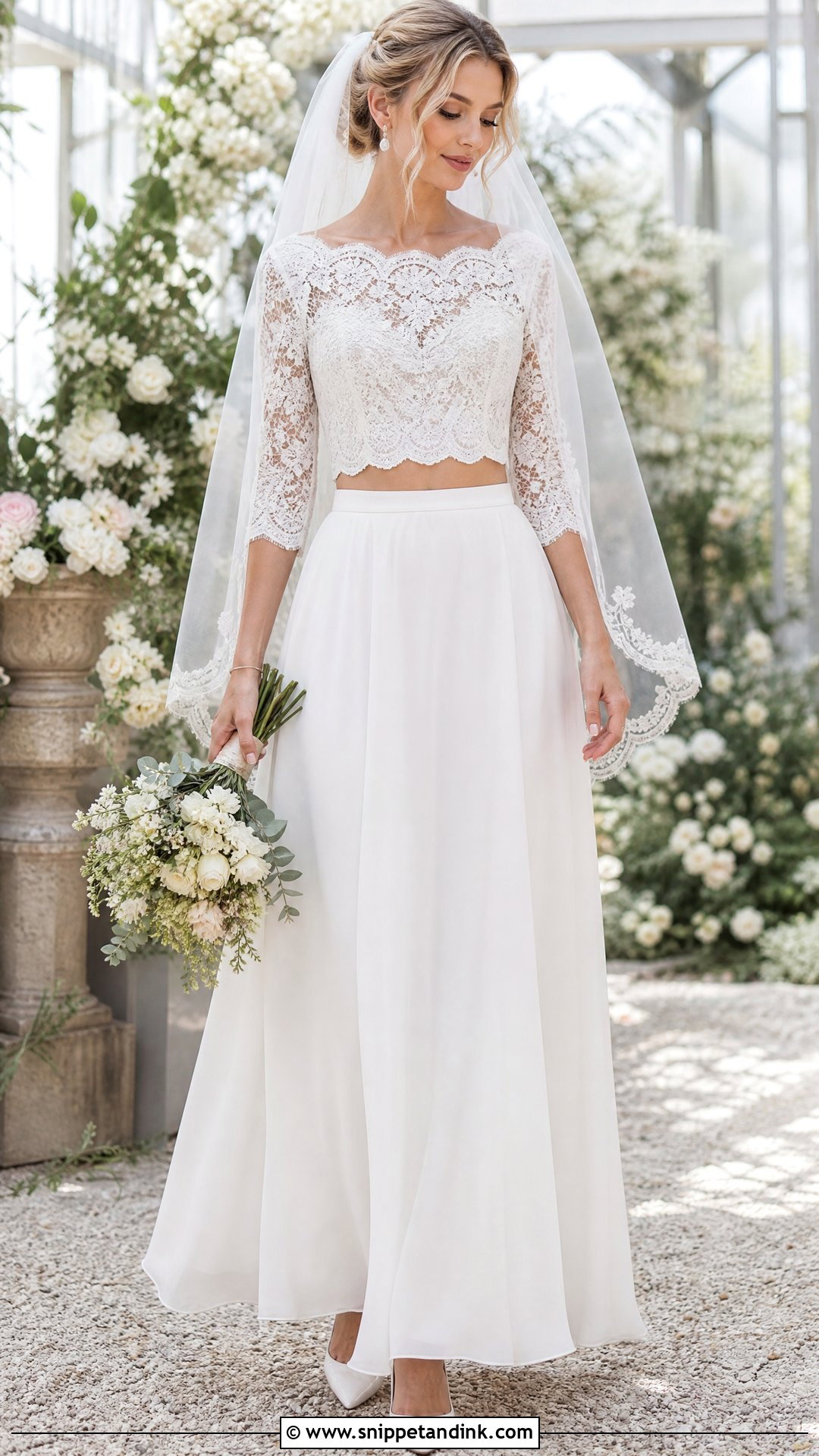
Lace on top, chiffon below, is the softest way into separates. I’d choose a lined lace crop with a scalloped hem and three-quarter sleeves over a high-waisted chiffon A-line, so only a sliver of skin shows. Match the ivories in daylight, not under the shop’s lights. Lace and chiffon dyed to the same name can come out a shade apart, and the difference is obvious in outdoor photos. A smooth waistband keeps the join tidy. Pointed pumps, pearl drops and a fingertip veil suit garden and historic venues, and a sweep train gives movement without a bustle.
2. Two Piece Satin Corset Wedding Dress
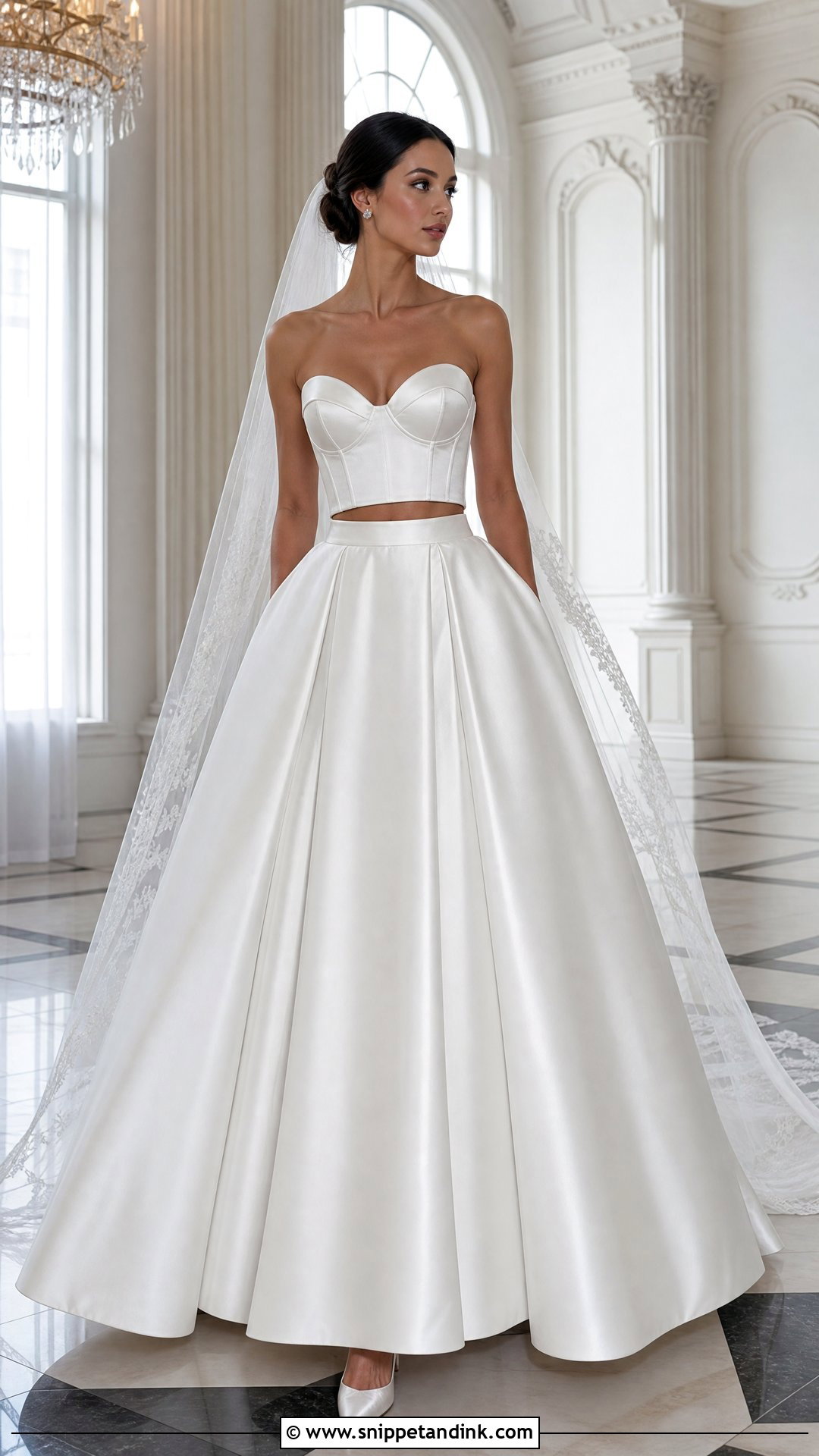
Structure first: a boned satin corset over a full ball gown skirt. When I fit this pairing, I place the skirt waistband directly under the corset’s lower edge, so the two lock together and the corset can’t ride up when you sit. Both pieces should come from the same satin, ideally the same bolt, because satin’s sheen changes from one dye lot to the next. A cathedral veil, crystal studs and pointed satin heels keep it formal. Ask for pockets in the skirt; it’s an easy add on separates, and you’ll use them all night.
3. Long Sleeve Two Piece Wedding Dress
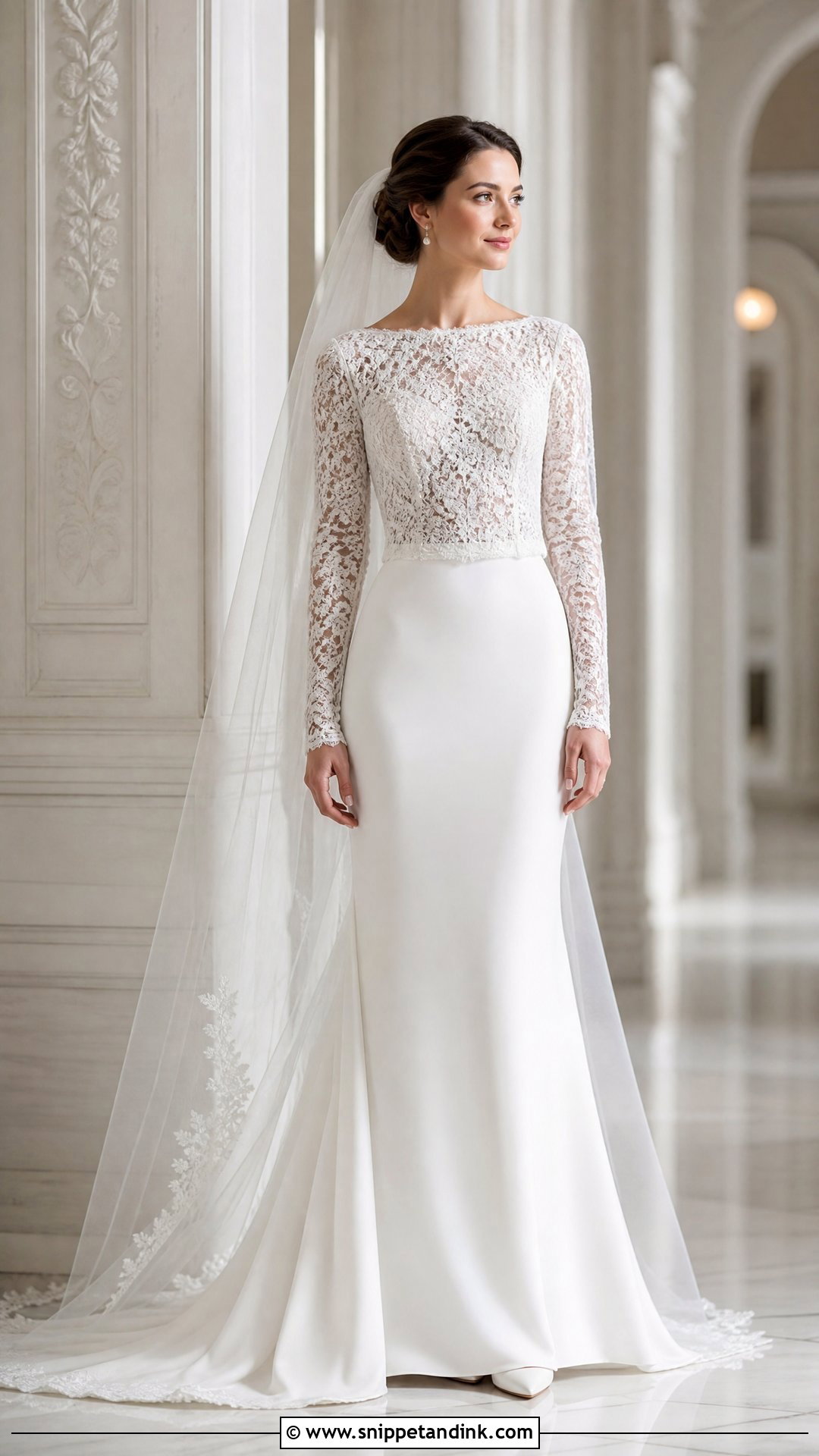
For autumn and winter, I’d pair a long-sleeve lace or embroidered tulle bodice, with a bateau neckline and covered buttons down the back, with a sleek high-waisted crepe trumpet skirt. The texture against smooth crepe gives depth without fuss. Sheer sleeves can be lined with a fine layer of mesh for warmth, which a seamstress can add without changing how they look. Check the sleeve length with your arms bent, since lace pulls up at the elbow. Closed pumps, small pearls and a chapel veil complete it for formal evening venues.
4. Minimalist Two Piece Wedding Dress
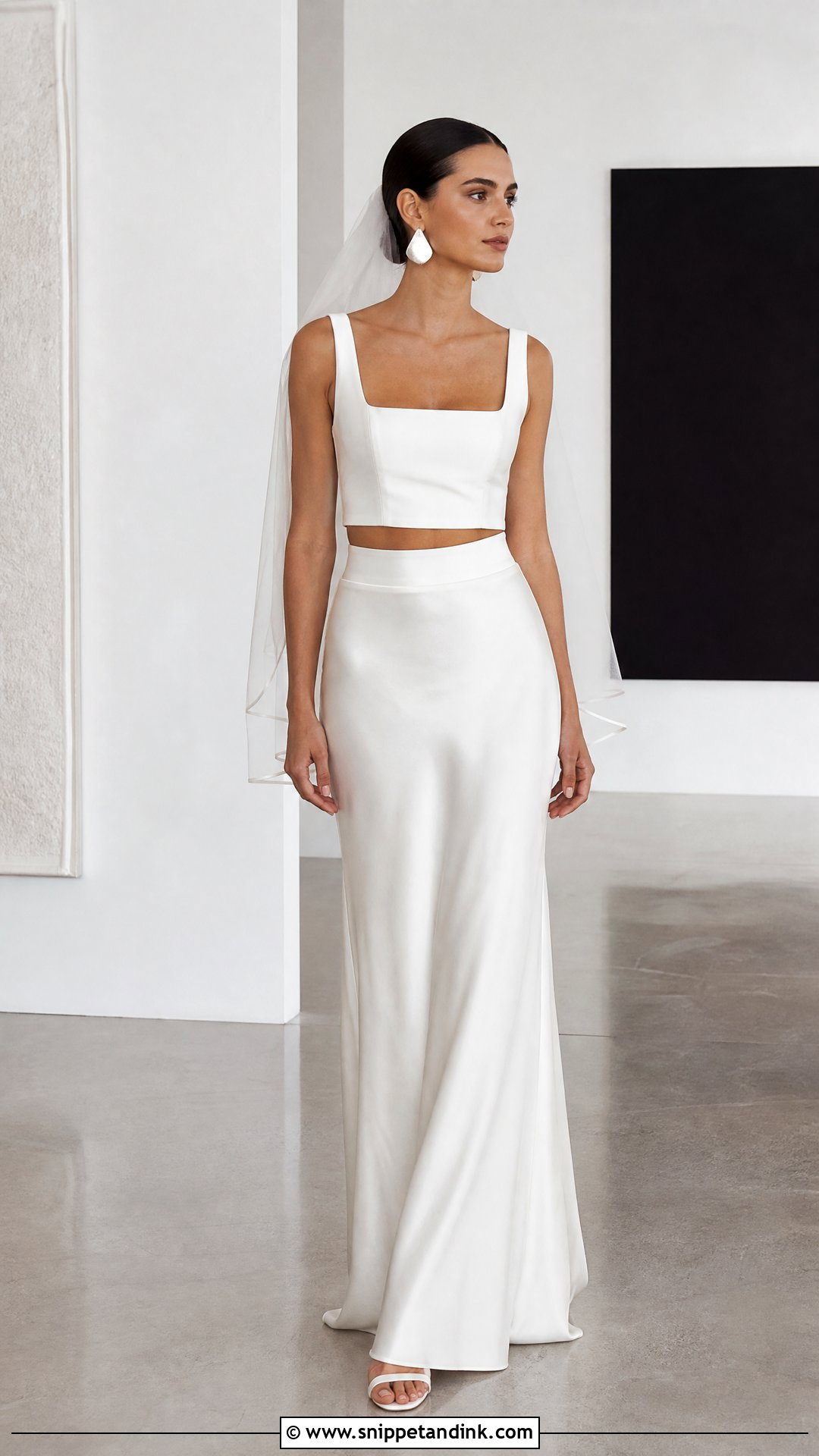
Minimalist separates look simple and are not simple to fit. A silk or satin square-neck top over a high-waisted bias-cut maxi in the same ivory relies entirely on cut. Bias skirts cling where they shouldn’t if the hip measurement is off by even a little, so I let them hang overnight before the final hem, as bias fabric drops. Steam both pieces together before your last fitting and look at them side by side. Slingbacks, sculptural earrings and a sleek bun, with a single-layer veil, suit galleries, city halls and small weddings.
5. Off Shoulder Two Piece Wedding Dress
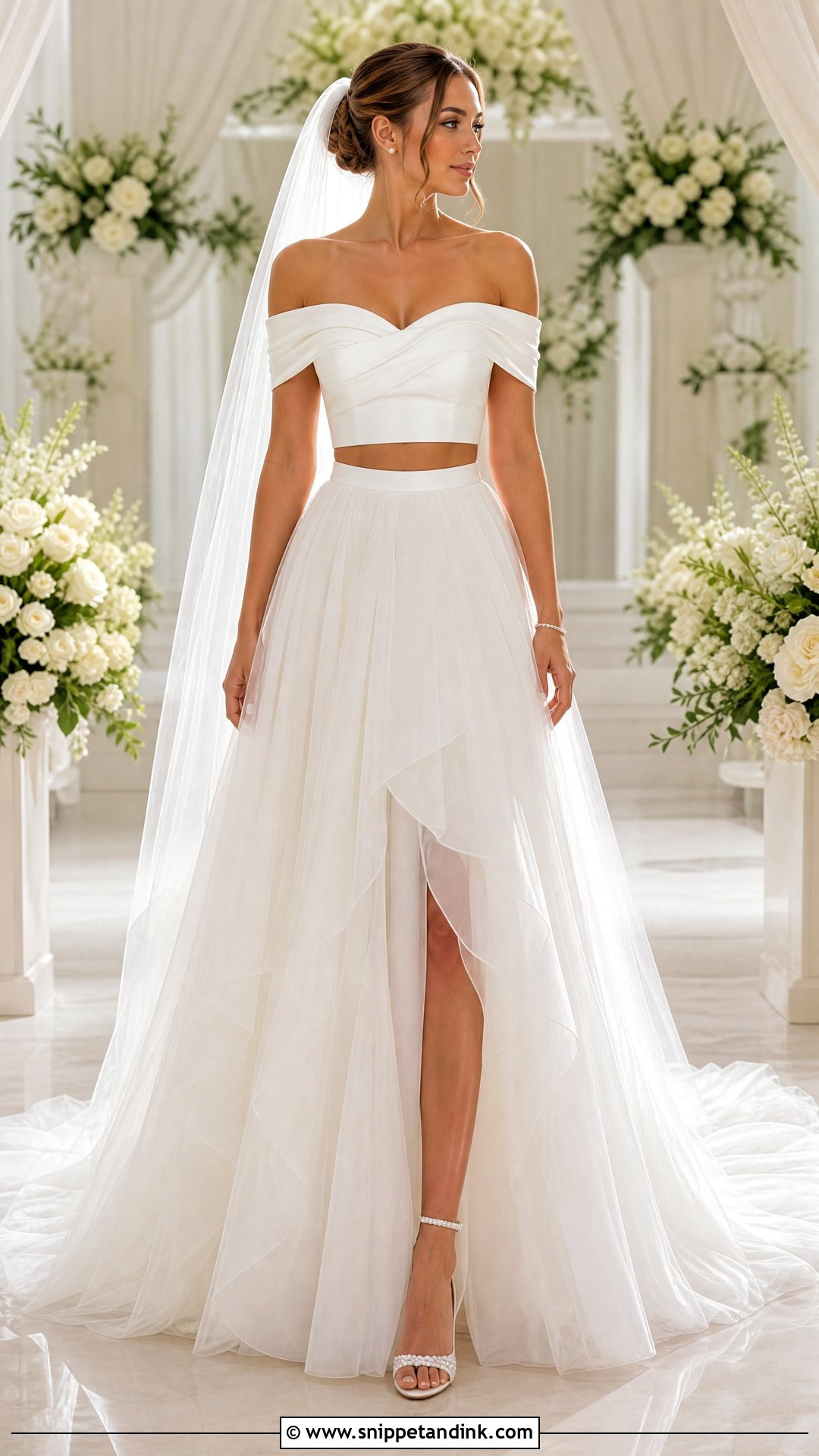
Off the shoulder is gentler in two pieces than in a full gown, because the top can be fitted precisely without fighting a skirt seam. I want a structured bodice with a folded neckline and inner support, and a slightly pointed waist that slides over a layered tulle A-line. Raise your arms, sit and walk at the fitting. The neckline should stay put; if it slides, it needs a silicone strip or a tighter band. Pearl heels, a fine bracelet and a cathedral veil are classic. Wear the hair up so the shoulders show.
6. Halter Two Piece Wedding Dress
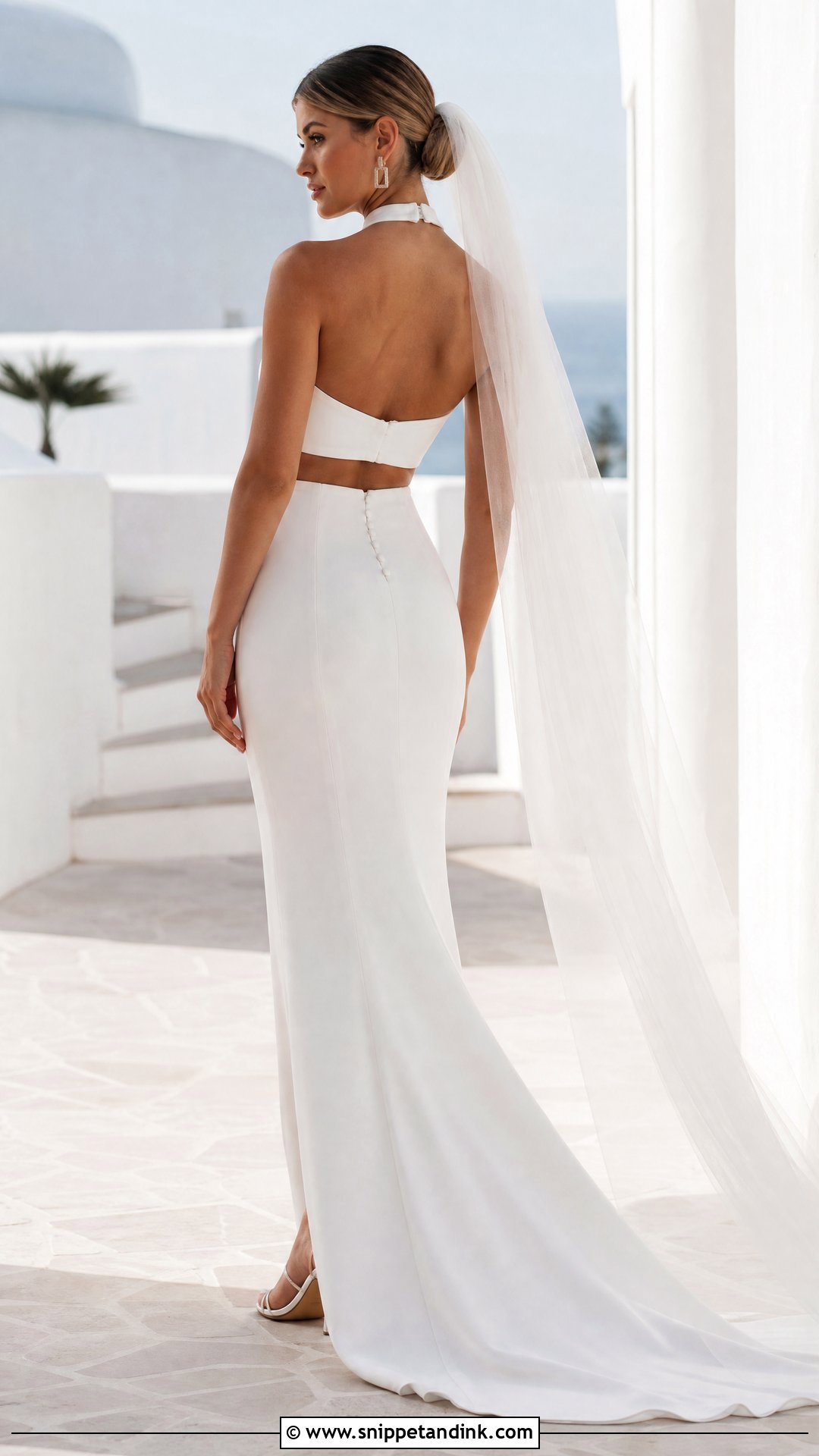
A halter top and column skirt feel modern and give more support than a thin camisole, since the halter carries some weight from the neck. That’s also its weak point. A halter cut too short pulls at the back of the neck after a few hours, so I always ask brides to wear it through a whole fitting before deciding. A high-neck crepe top with an open or buttoned back pairs with a straight high-waisted skirt with a slit or short train. Metallic sandals and geometric earrings suit rooftops and coastal ceremonies.
7. Square Neck Two Piece Wedding Dress
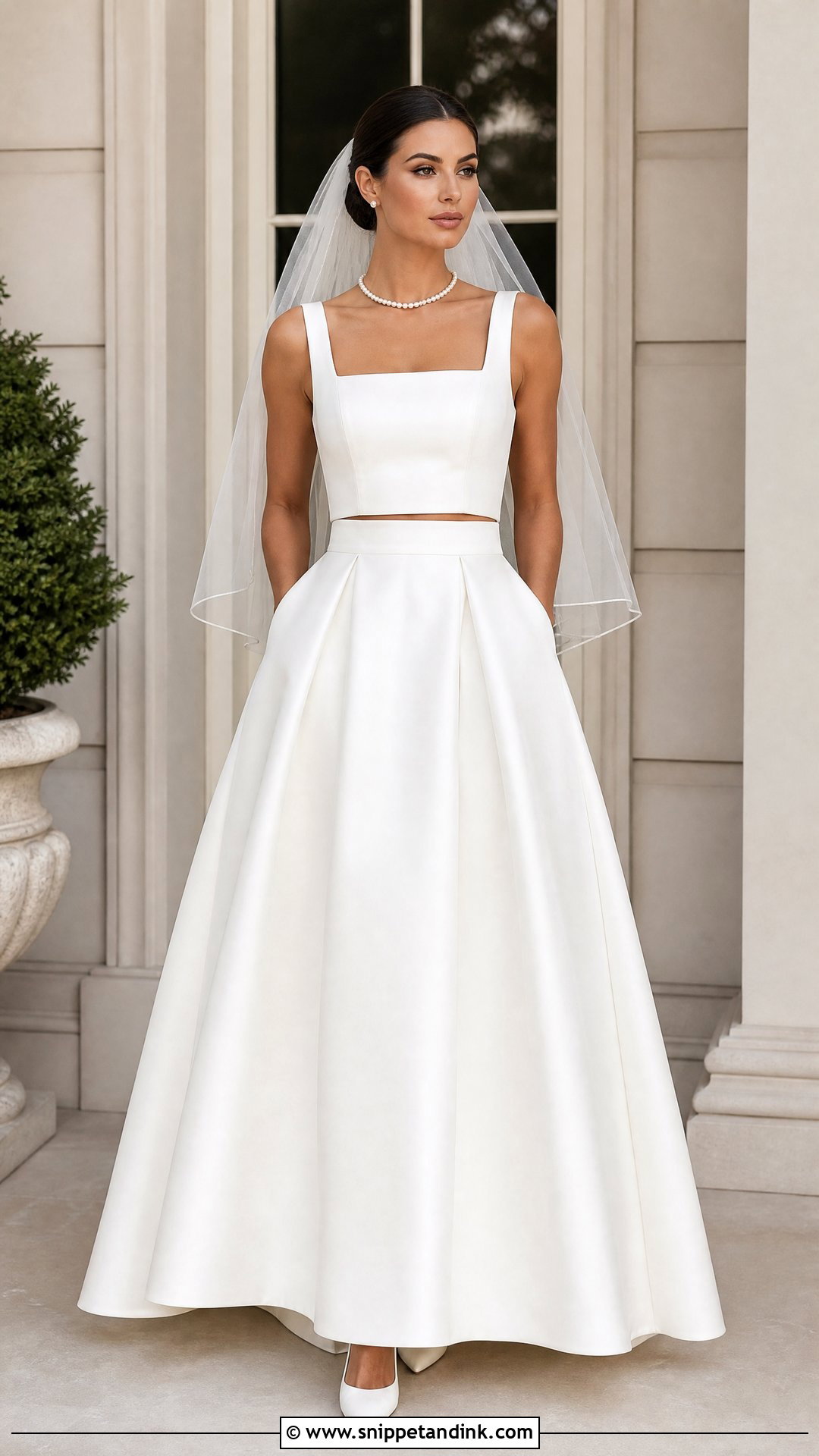
Square necks give separates a classic base. I like a fitted mikado top with wide straps over a full pleated skirt in the same mikado. Mikado is crisp, so it holds the pleats and the neckline sharply. A wide waistband smooths the join beneath the bodice. This is one of the few necklines on the list where a fine pendant or short pearl strand sits well. If you want more coverage, ask for a higher back and broader straps at the first fitting rather than the last. Pointed pumps and a mid-length veil suit estates and formal daytime weddings.
8. Pearl Two Piece Wedding Dress
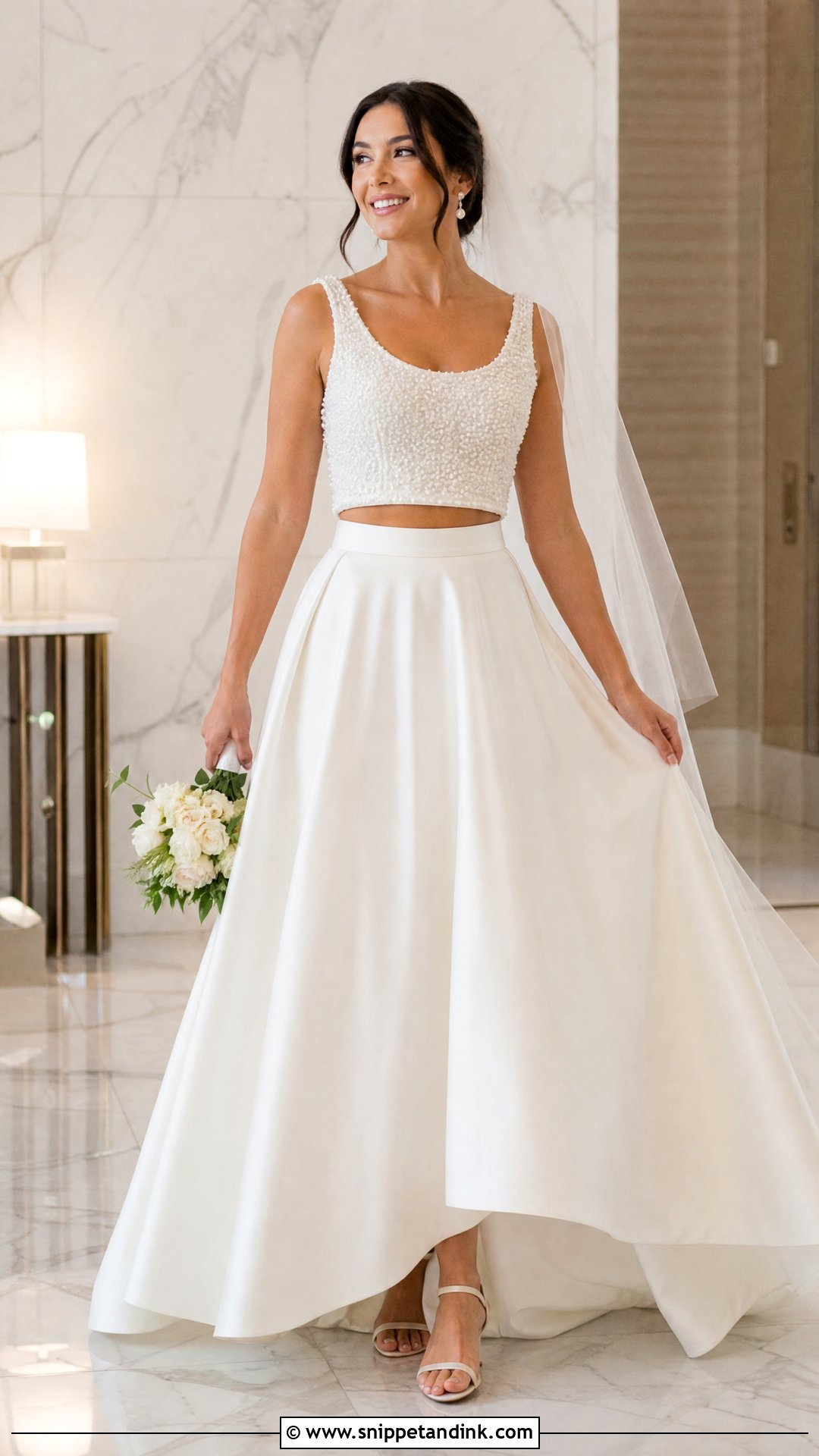
A pearl-beaded top over plain satin keeps the eye on the bodice. A lined round or scoop neck is comfortable, and a narrow waist meets the A-line skirt cleanly. Resist the urge to repeat pearls everywhere; a pearl top, pearl earrings, a pearl veil and pearl shoes look like a costume. One or two echoes are plenty. Run your inner arm across the beadwork at the fitting. If anything scratches, ask for a soft lining. Ankle-strap heels and an undecorated veil finish it, and the look suits hotel venues and candlelit receptions.
9. Boho Two Piece Wedding Dress
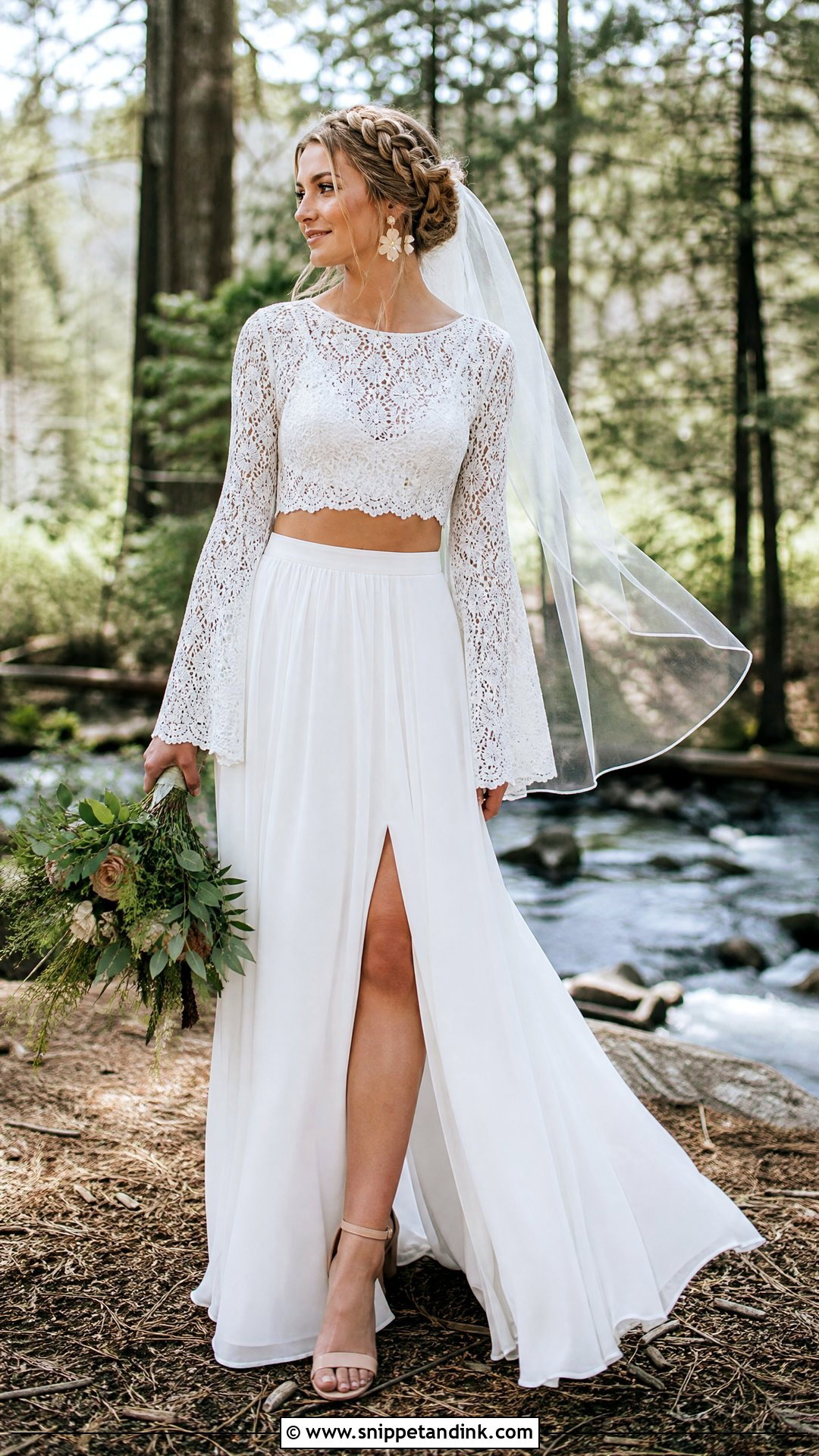
Boho separates are easy to get right and easy to get wrong. A lined crochet lace top with bell sleeves over a loose chiffon skirt looks relaxed and natural. Unlined crochet looks unfinished in photos and can show more than you intend in sunlight. The other issue is a skirt that twists as you walk, which happens with loose chiffon on a soft waistband; ask for a firmer band or small hooks to hold it in place on the top. Block heels, small floral earrings and a braided updo suit woods, beaches and barns.
10. Cape Sleeve Two Piece Wedding Dress
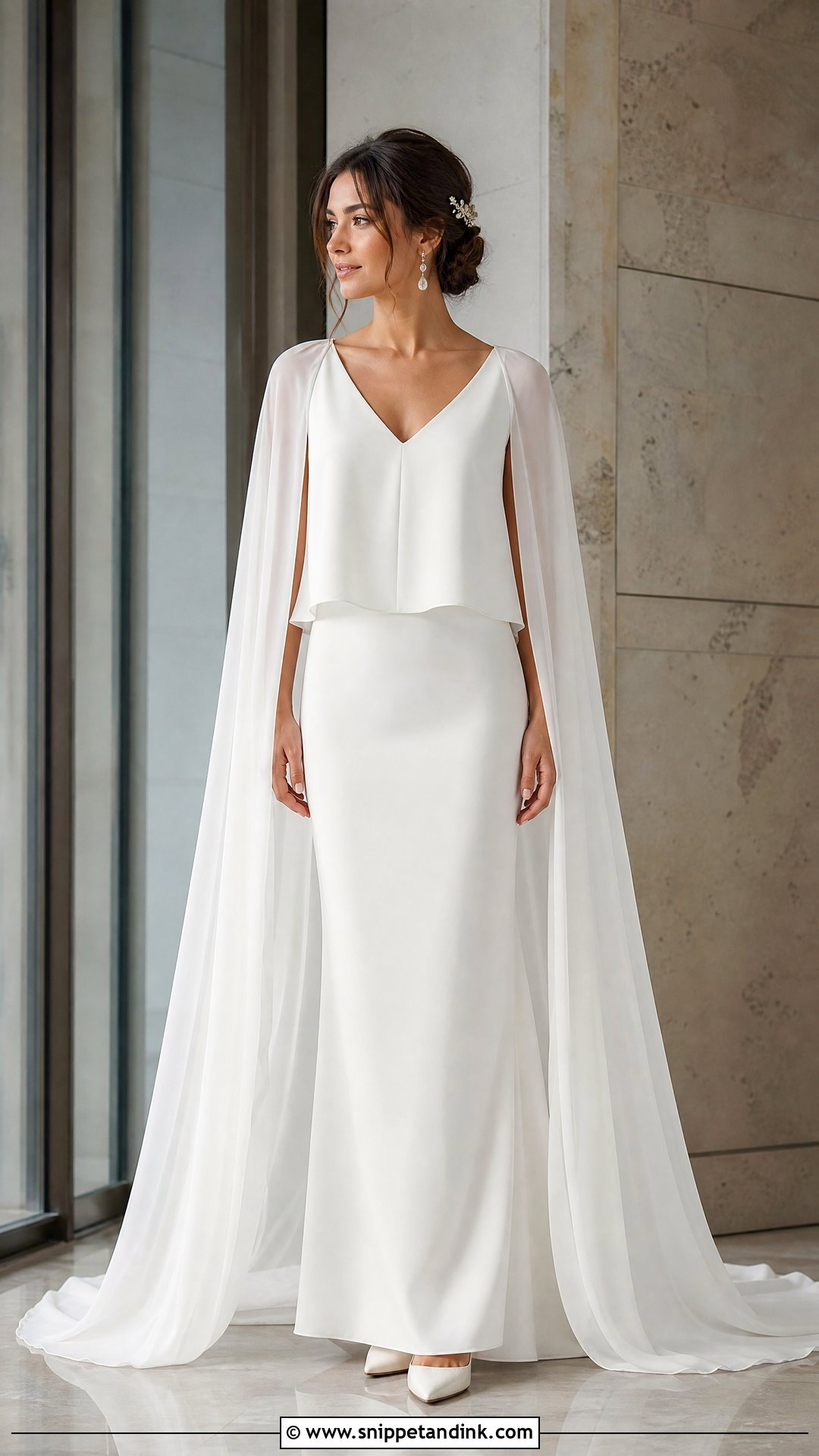
Cape sleeves give coverage with movement and very little weight. A crepe or chiffon V-neck top with cape panels ending at the elbow or wrist, over a slim crepe skirt with a short train, keeps the volume on top and the line clean below. I check the cape length against the bouquet: if the panels fall past your hands, they’ll tangle with the stems. Outdoors, shorter panels behave better in wind. Pointed heels, drop earrings and a small hair comb are enough, since the cape takes the place of a veil.
11. One Shoulder Two Piece Wedding Dress
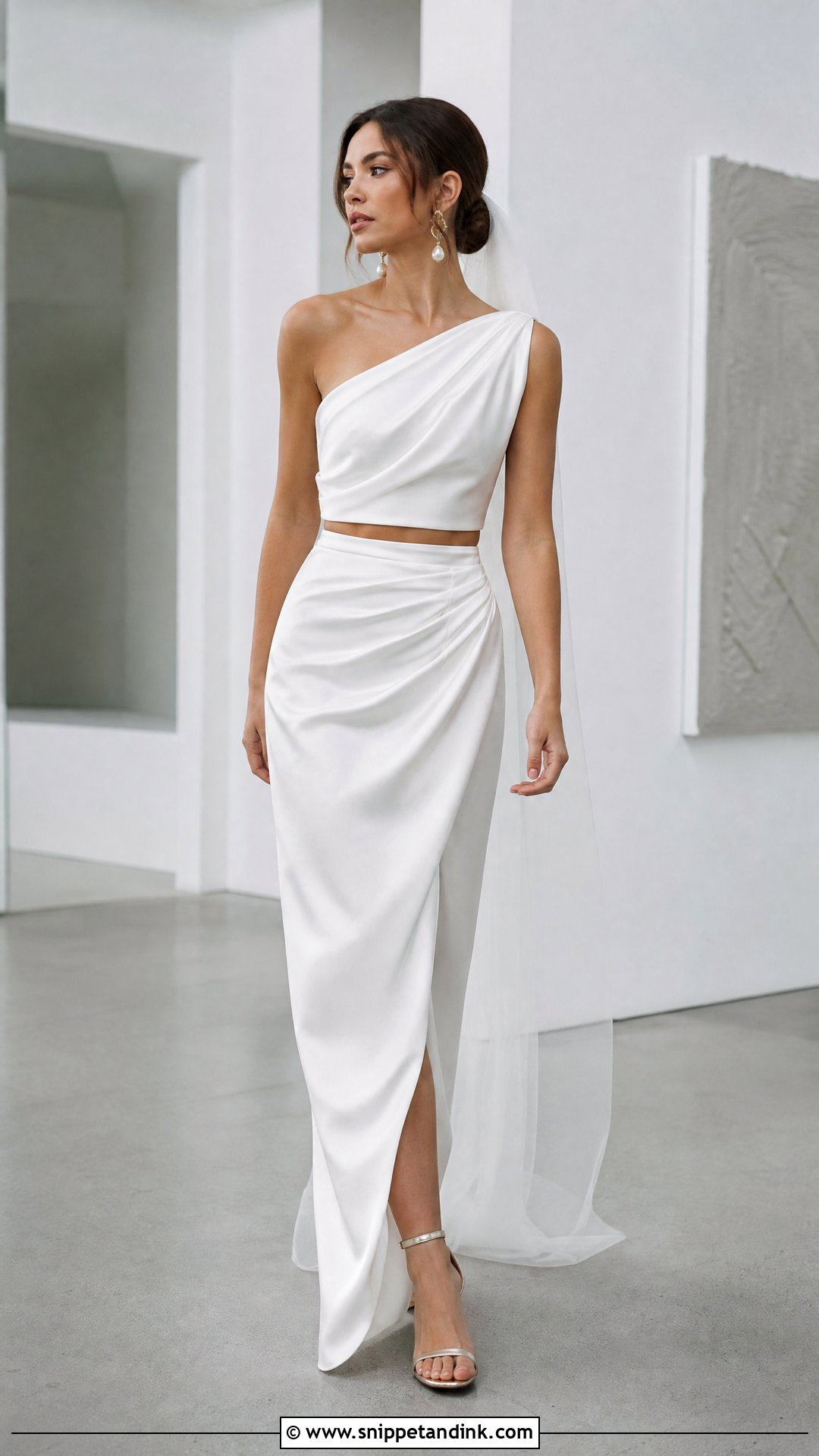
A one-shoulder top with a draped satin bodice, paired with a high-waisted skirt gathered across one hip, creates a sculptural line. Both pieces in the same satin and ivory make the drape read continuously from shoulder to hem. On asymmetric tops, I check that the single shoulder stays flat and doesn’t twist forward when you reach. Wear one statement earring on the bare side and set the bun low, with a veil below it. Slim metallic heels finish it for contemporary hotels and evening ceremonies.
12. High Neck Two Piece Wedding Dress
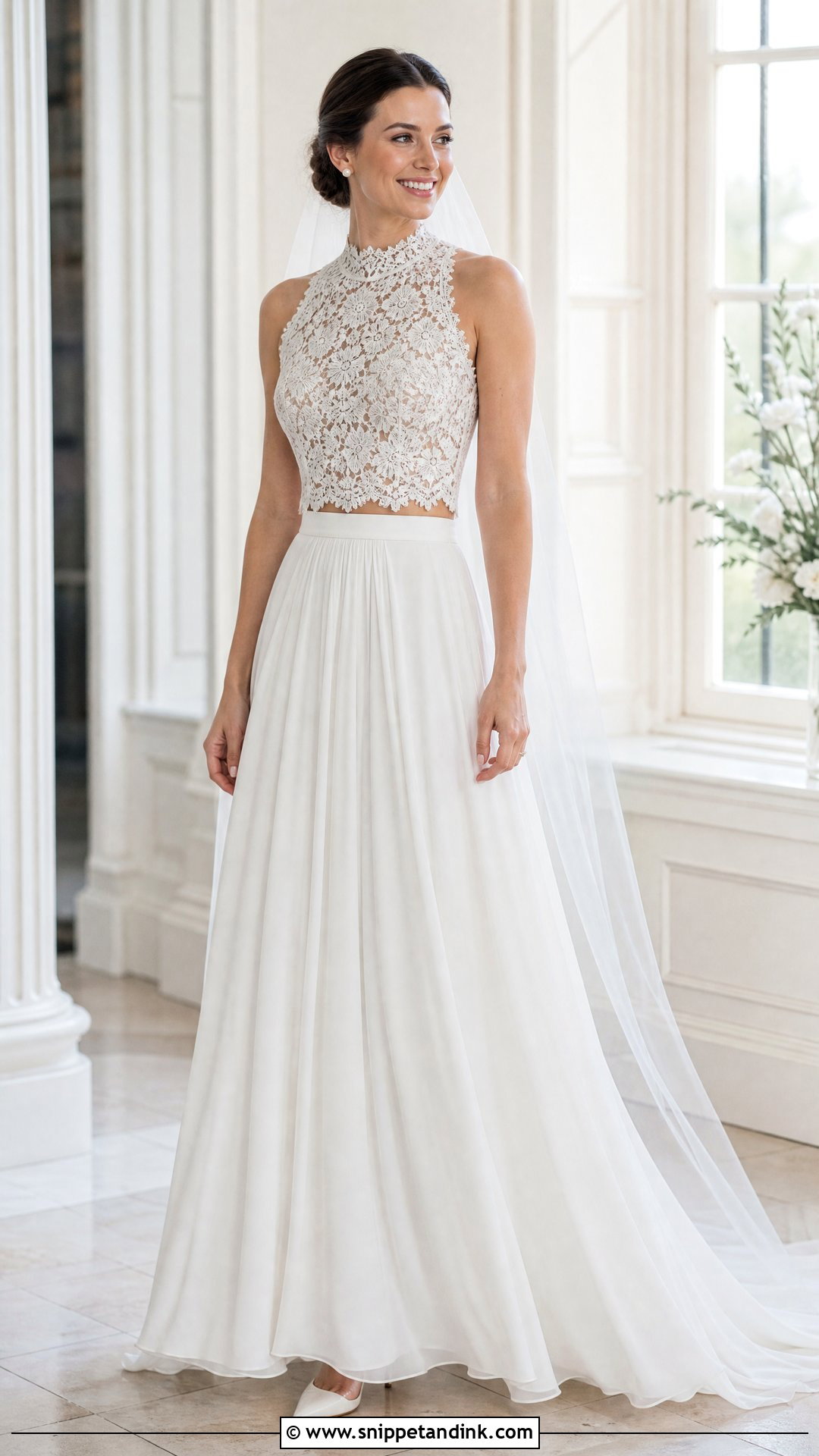
A high-neck guipure lace top, sleeveless and lined at the front with a keyhole or button back, puts the attention on texture and cut. Pair it with a softly pleated chiffon skirt at the natural waist. Guipure is a heavier lace without a mesh base, so it holds the high neck well but can feel warm; the sleeveless cut balances that. Skip necklaces entirely and use earrings or a bracelet. A neat waistband stops pleats and lace from adding bulk at the middle. Pointed pumps, pearl studs and a long plain veil suit spring and traditional venues.
13. Peplum Two Piece Wedding Dress
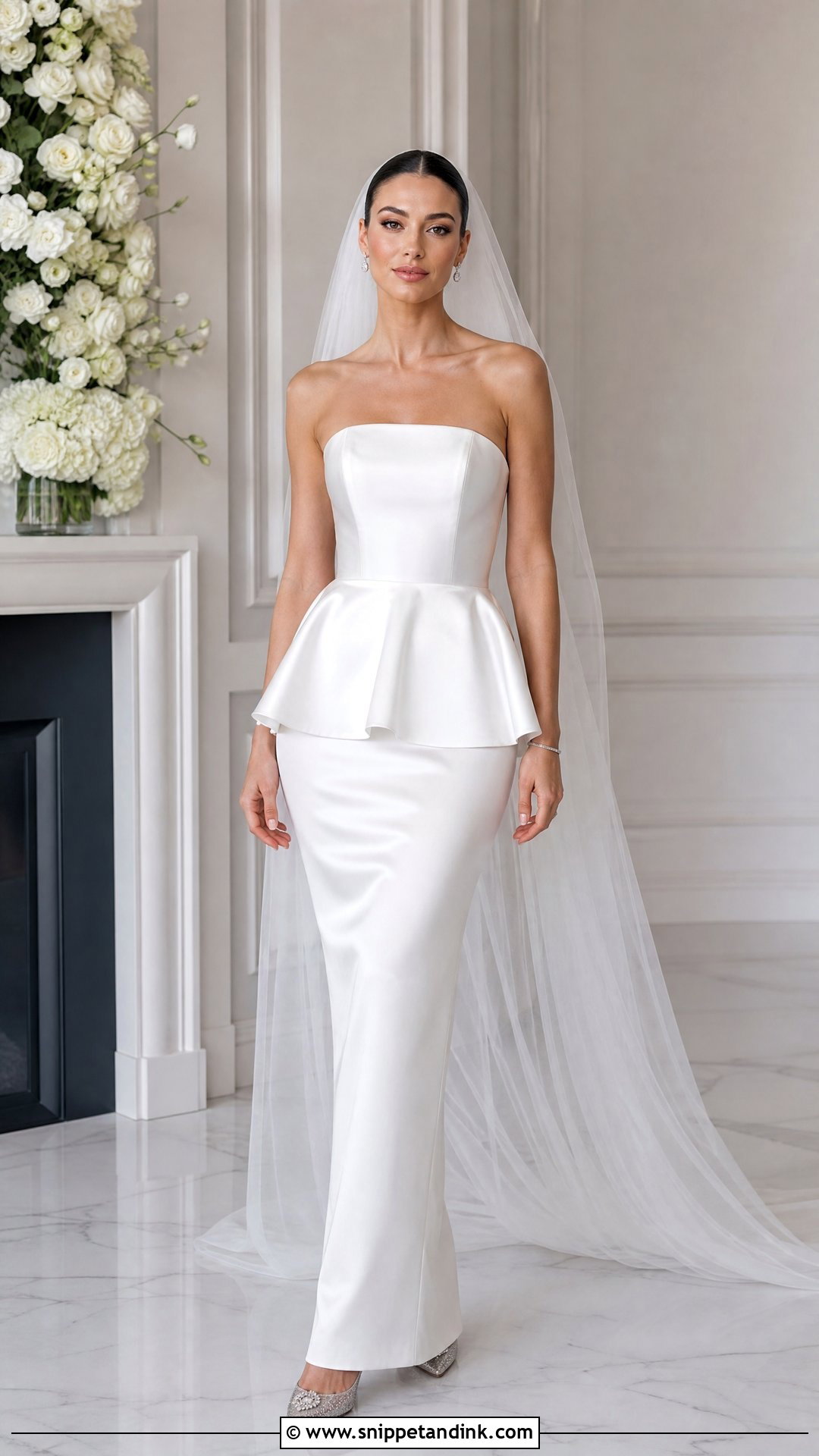
Peplum tops are the separates I recommend to brides who don’t love the line of a waistband. A strapless satin bodice with a short, controlled peplum falls over a slim column skirt and hides the join completely, so the outfit reads as a fitted gown. Keep the peplum simple; ruffled peplums fight the skirt. A strapless top needs firm internal boning to stay up on its own. Crystal pumps, a narrow bracelet and a chapel veil suit restaurants, city venues and ballrooms.
14. Floral Two Piece Wedding Dress
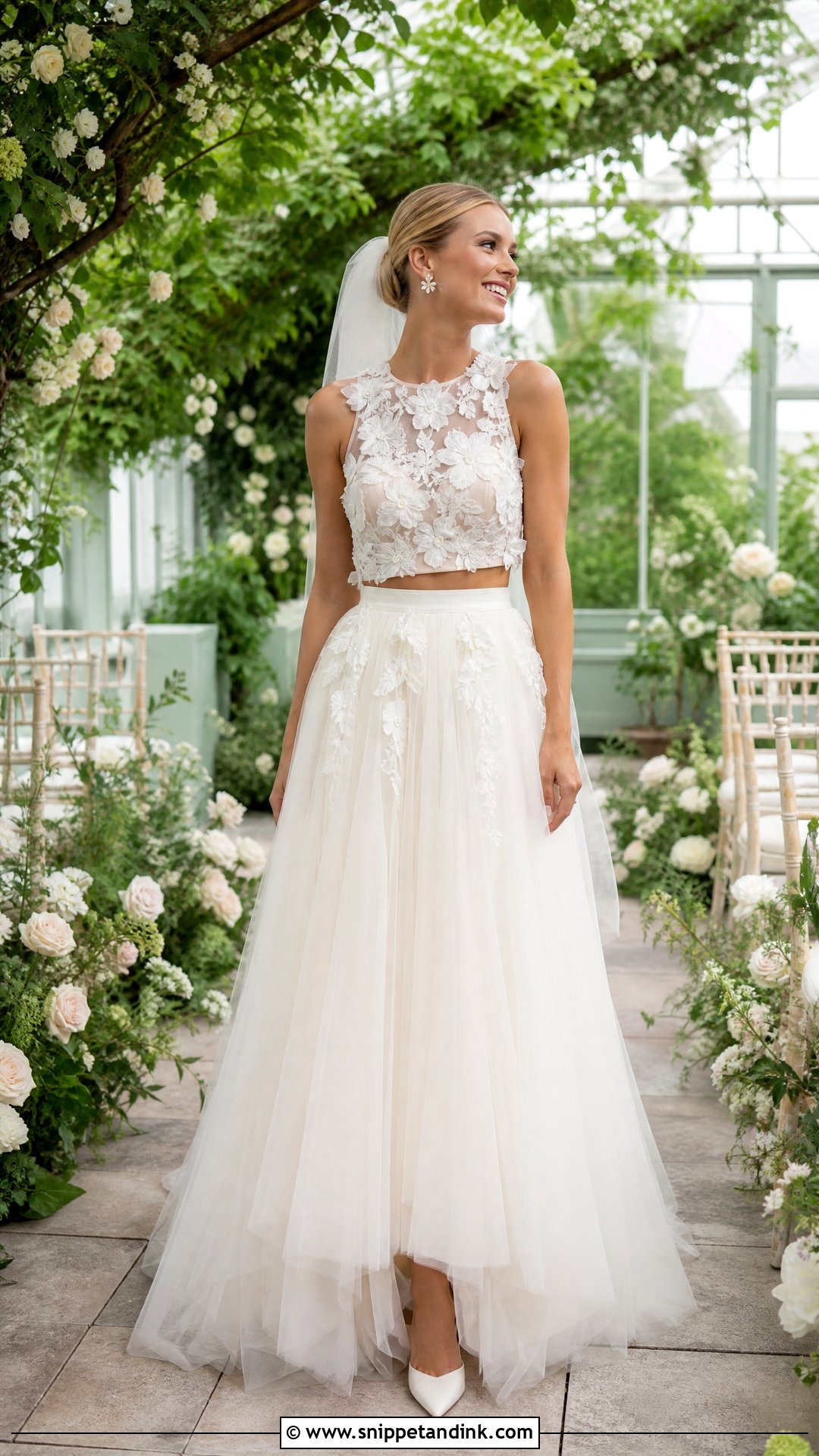
Floral appliqués across a fitted top bring dimension, especially paired with layered tulle in the same ivory. A few flowers carried down onto the waistband connect the two halves visually, which is the main job in any two-piece look. Lightweight appliqués keep the bodice from going stiff. If they include beads or sequins, photograph the top with and without flash; some embellishment glares under a flash. Satin pumps, floral studs and a plain veil leave the bodice details visible. Gardens, greenhouses and spring weddings suit it.
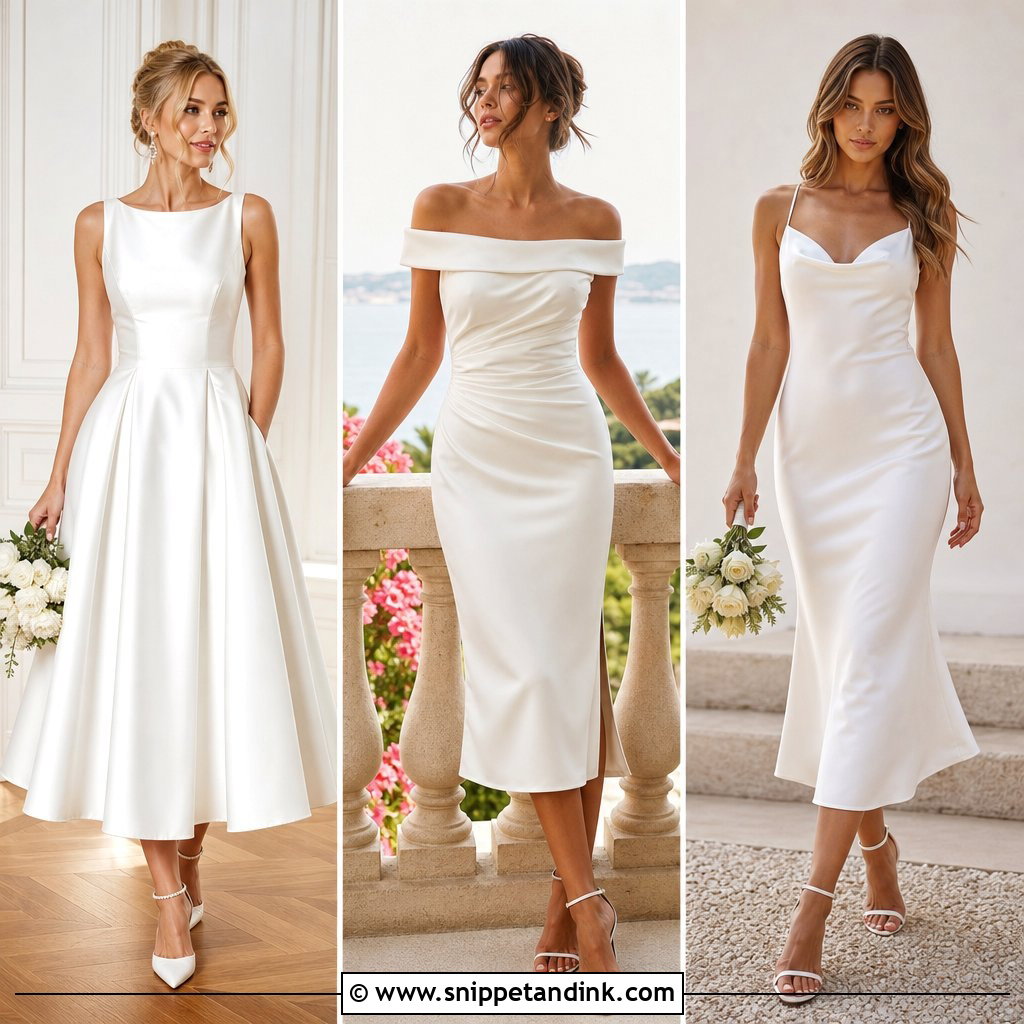
15. Beaded Two Piece Wedding Dress
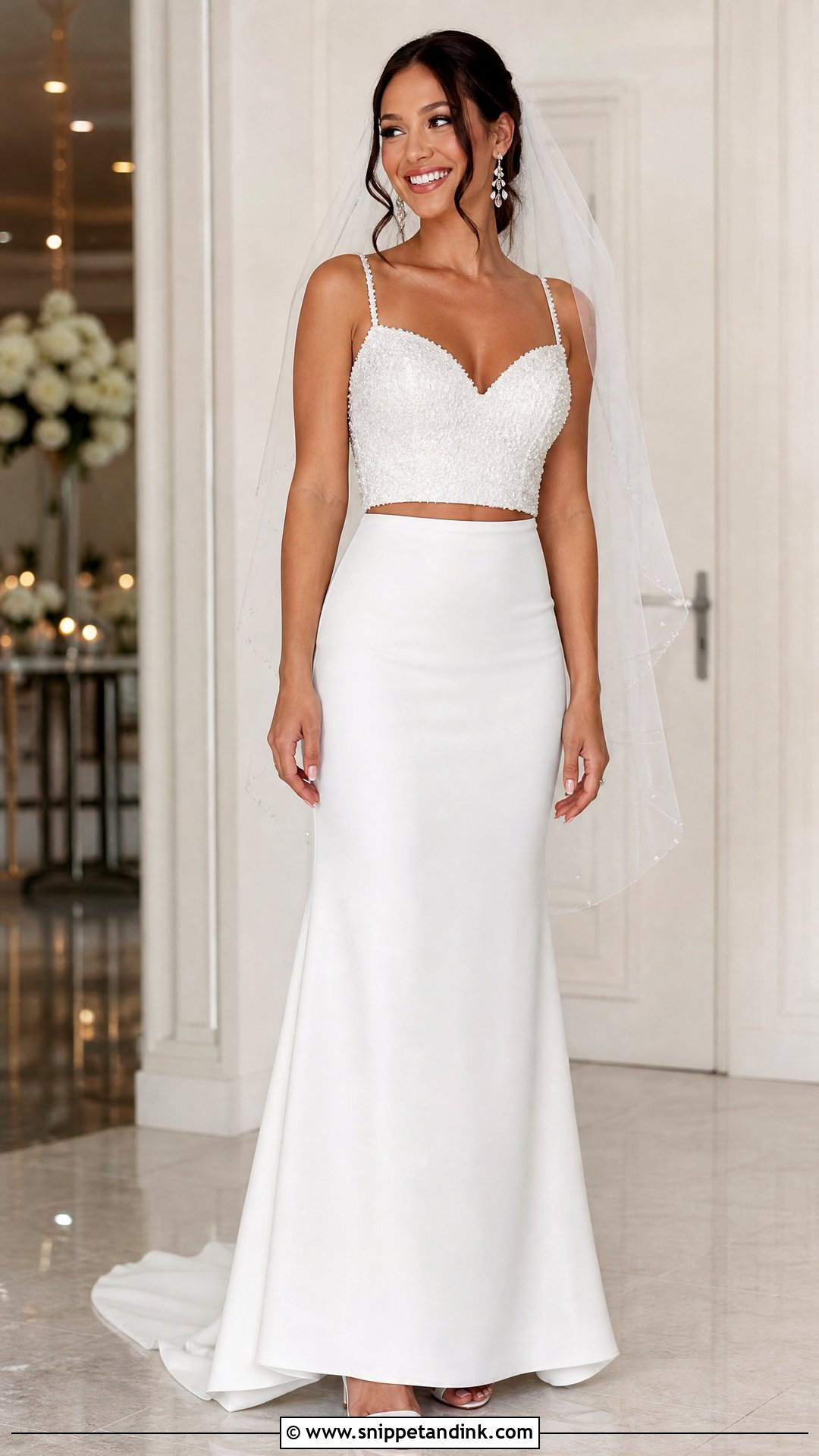
A beaded camisole over smooth crepe gives the glamour of an embellished gown at a fraction of the weight. Choose wider straps and beading concentrated on the bodice, with a high-waisted trumpet skirt below. Beaded fabric is heavier than it looks on the hanger, so I ask the tailor to reinforce the straps and the waistband, and to line the inside so rough thread ends don’t scratch. Keep the skirt plain. Crystal earrings, satin heels and a fingertip veil fit evening weddings with a formal dress code.
16. Tea Length Two Piece Wedding Dress
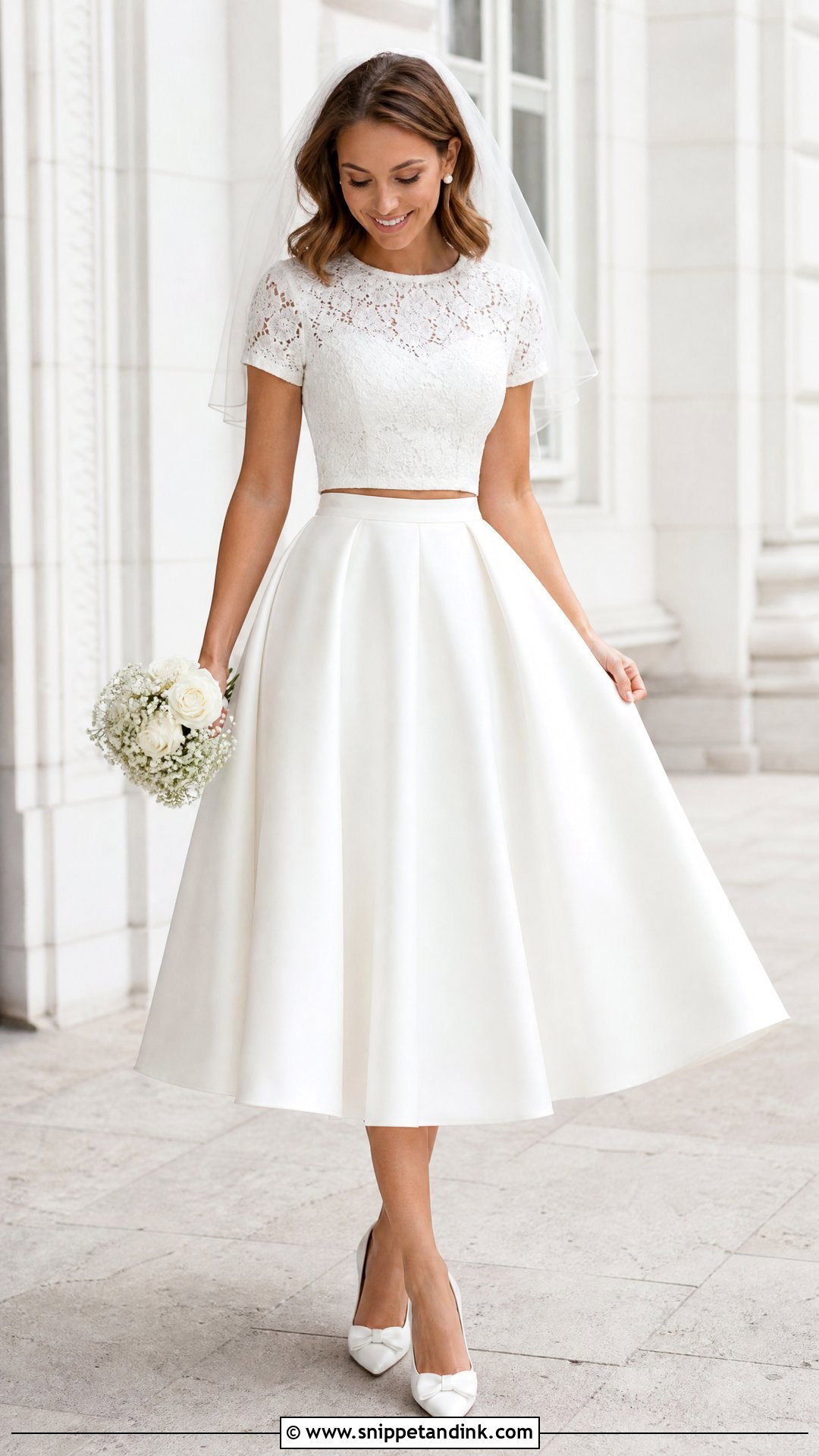
Tea length in two pieces feels playful without losing polish. A short-sleeve lace top with a jewel neckline over a high-waisted satin skirt landing between knee and ankle puts the shoes on show, so buy them before your hem fitting. A structured petticoat gives the skirt a full, retro shape; a soft lining keeps it relaxed. Pearl studs, short gloves and a shoulder-length veil suit courthouse ceremonies and daytime parties. Have the hem marked with you standing in those shoes, and look in a mirror from the side too.
17. Corset Mermaid Two Piece Wedding Dress
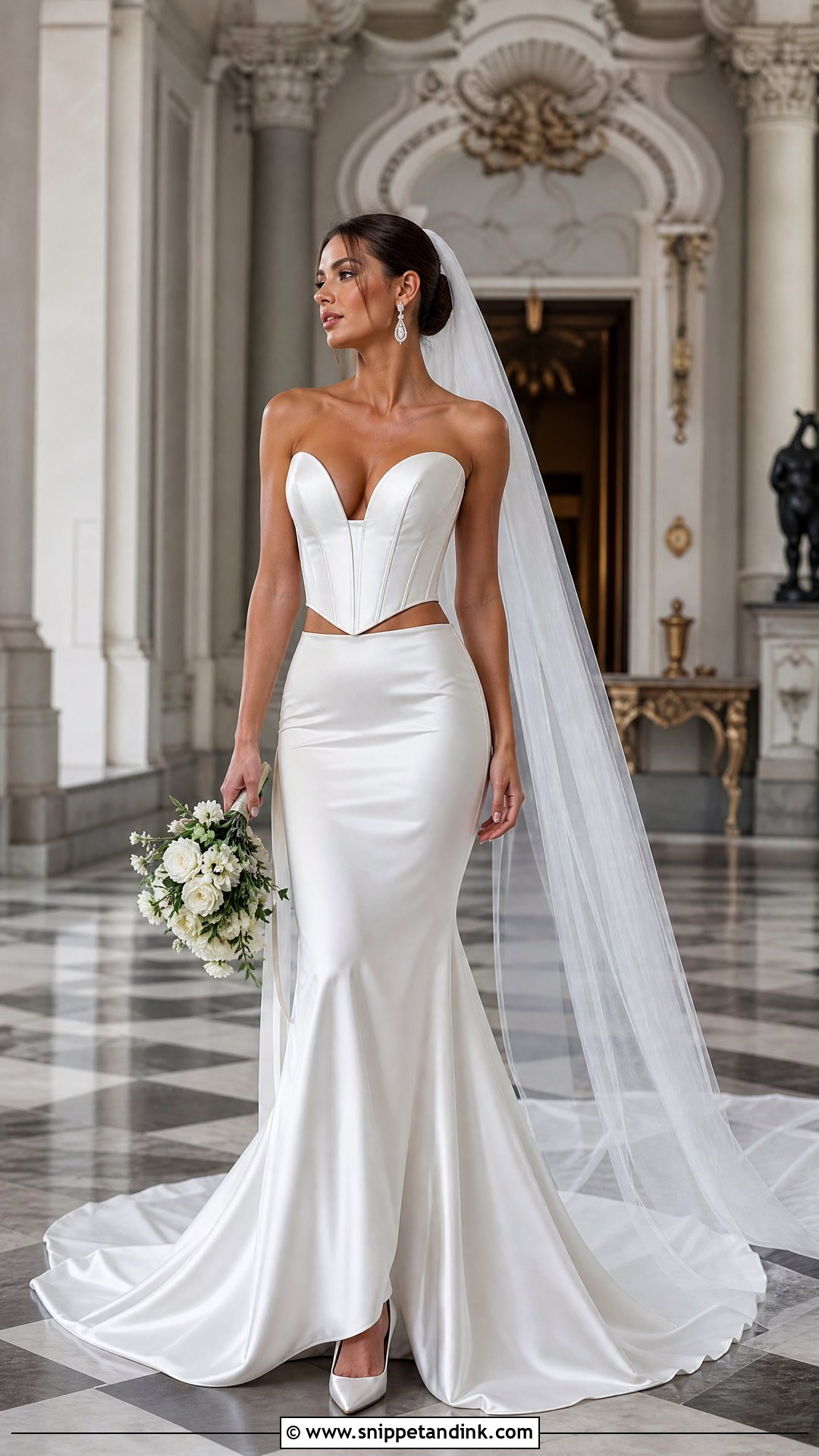
A longline corset over a mermaid skirt is the most dramatic pairing here and needs the most precise tailoring. The corset should extend past the skirt waistband so the two overlap, which stops gaps appearing when you move. Below, a fitted crepe or satin skirt flares under the knee into a chapel train. Mermaid skirts restrict your stride, so practise stairs and sitting before the day. A bustle is worth adding for the reception. Pointed pumps, drop earrings and a long clean-edged veil complete it.
18. Bateau Neck Two Piece Wedding Dress
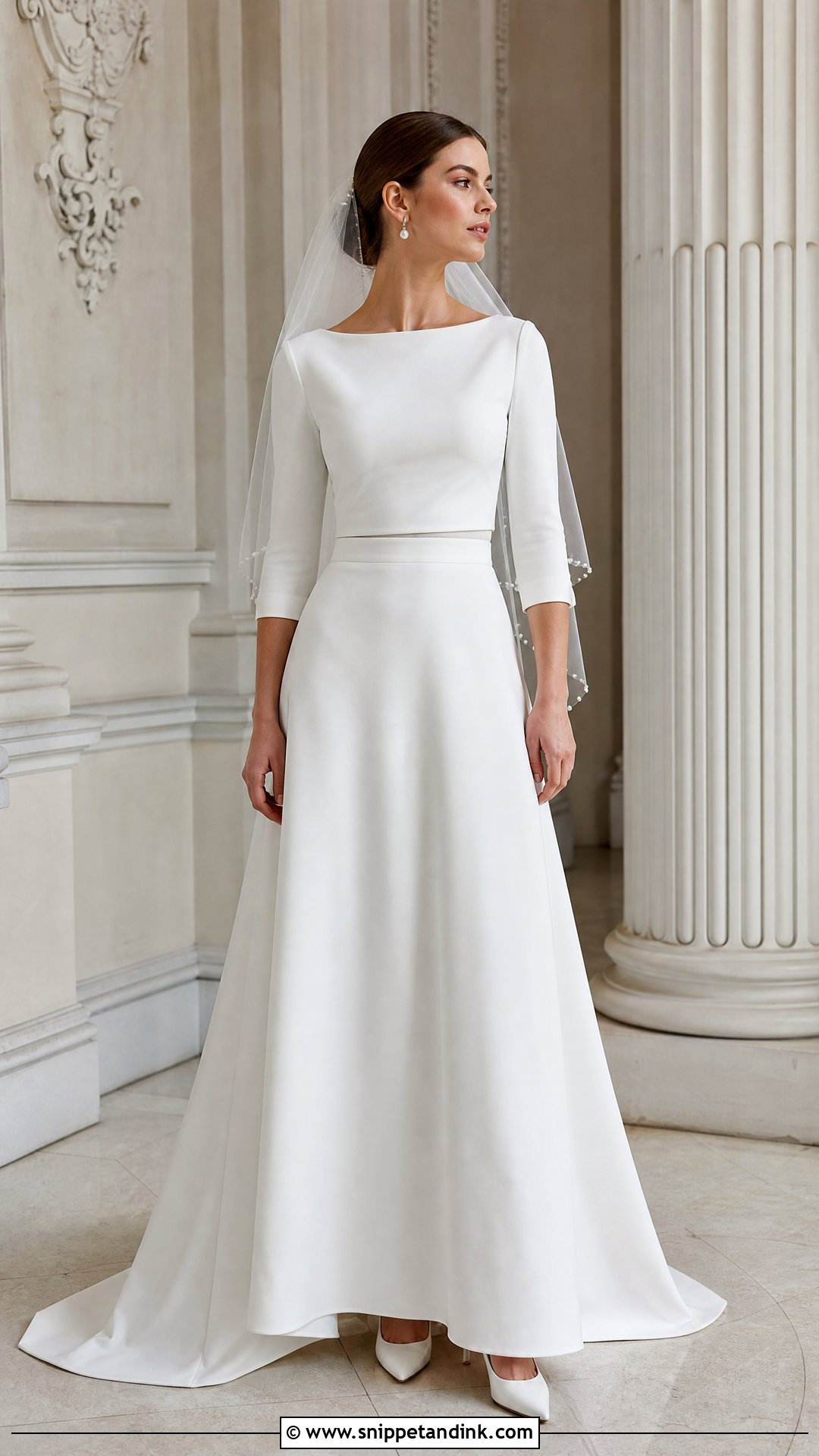
A bateau neck runs straight across the collarbones, giving coverage without the closed feel of a high collar. Pair a fitted satin or crepe top with three-quarter sleeves and a high-waisted A-line skirt in the same fabric. The neckline must sit flat; a bateau that’s a touch wide slips off the shoulder, so I fit it with the arms forward. Covered buttons running down the back of both top and skirt tie the pieces together. Low pointed heels, pearls and a fingertip veil suit daytime and historic venues.
19. Sequin Two Piece Wedding Dress
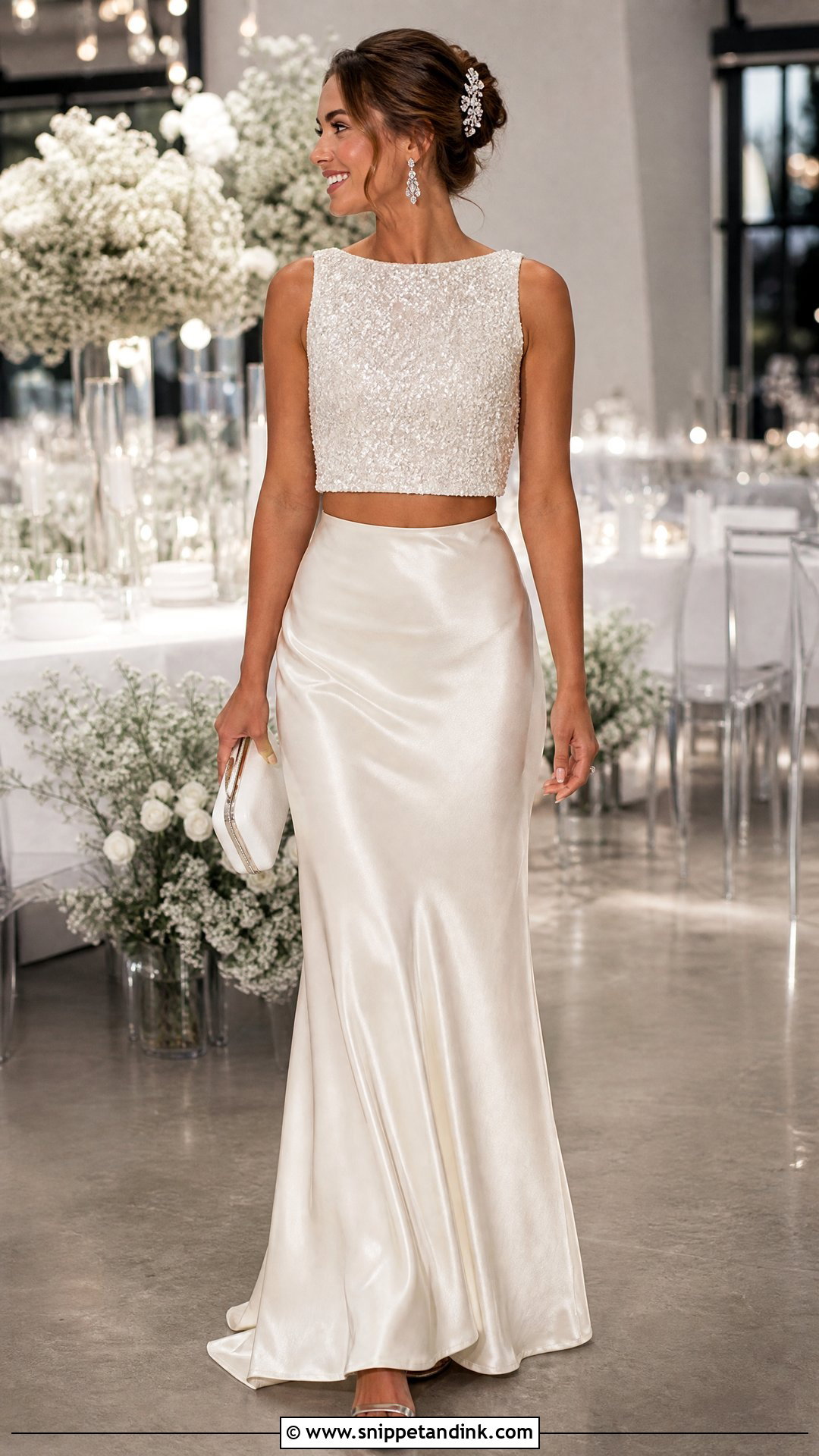
For a party-first bride, a sequin top over a smooth satin bias maxi is the most fun pairing on the list. It also makes a great reception swap if you wore a lace or satin top for the ceremony. Choose soft ivory or silver sequins; iridescent ones throw colour in photos. A fully lined bodice is non-negotiable, because sequin edges chafe the underarm during dancing. Instead of a long veil, wear a short one, a jewelled comb or a sleek ponytail, with metallic sandals and a small white clutch.

20. Blush Two Piece Wedding Dress
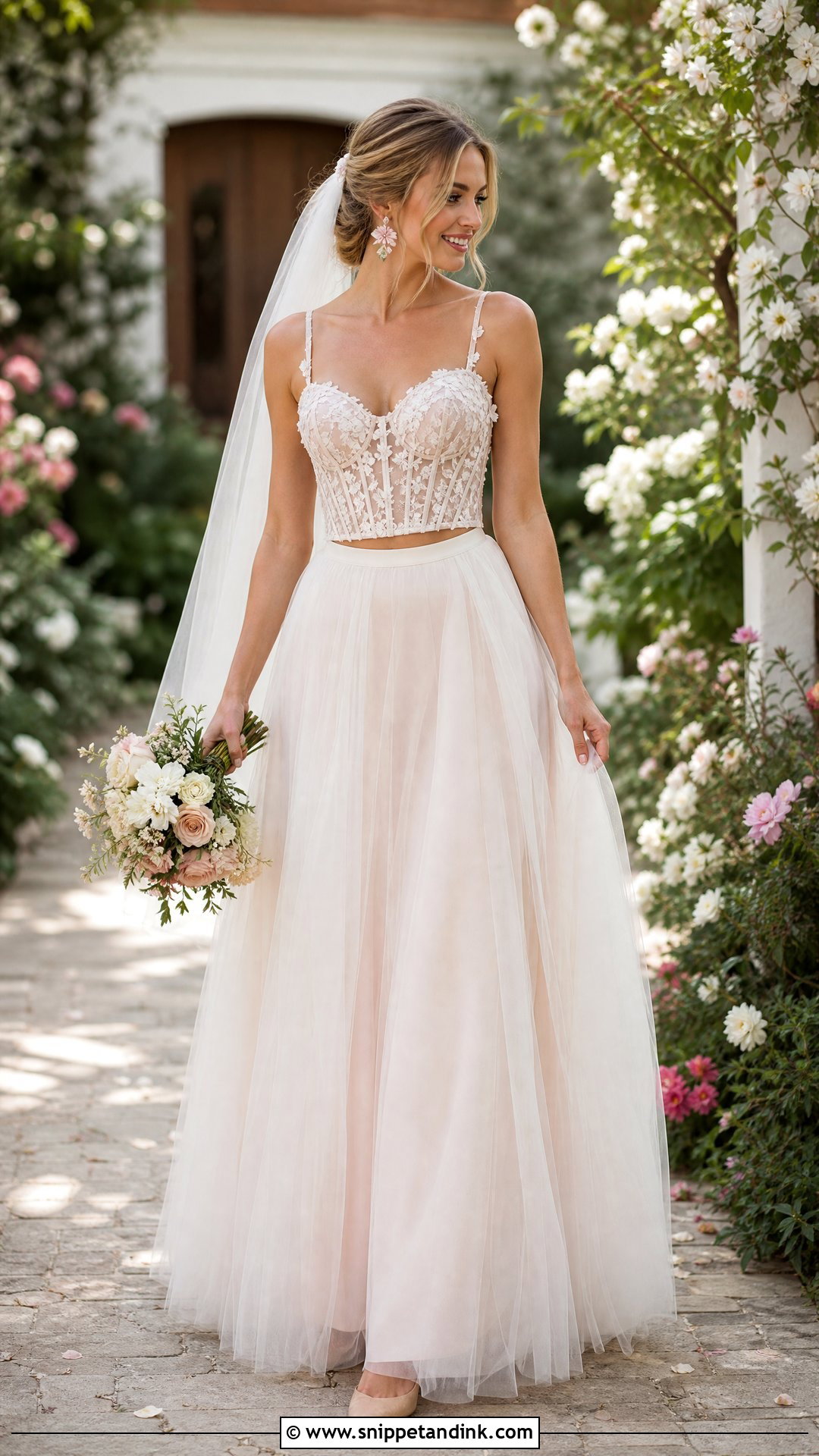
A blush top over an ivory skirt brings colour in quietly. A pale blush corset or embroidered bodice with ivory floral detail, paired with a soft ivory tulle or chiffon skirt, connects the two shades through the embroidery. Compare the fabrics in daylight before buying, since blush can lean pink, peach or beige, and peachy blush can look sallow on cooler skin tones. Hold it near your face in a window. Nude or ivory heels, rose-toned earrings and a plain ivory veil keep the colour the one point of difference.
Wearing the Pieces Again After the Wedding
Separates are the rare bridal outfit that can have a second life, and I encourage brides to plan for it when choosing. A simple top in silk, crepe or beaded fabric pairs easily with black trousers or a slip skirt for anniversaries and formal dinners. A satin or crepe skirt can go with a sweater or a fitted knit. Full tulle skirts are harder to rewear, though some brides have them shortened.
Have both pieces professionally cleaned soon after the wedding, even if they look clean, since sugary drinks and sweat marks can yellow over time. Store them separately, wrapped in acid-free tissue, in a cool dark cupboard rather than an attic. Keep any beaded or sequinned top folded flat; hung up, heavy embellishment slowly stretches the shoulders.
Make the Top and Skirt Agree on One Thing
Separates work when the two halves share at least one link: the same fabric, the same shade, a repeated embroidery or a waistband that hides the join. Beyond that, the freedom is yours, lace with satin, crepe with tulle, a corset with chiffon. Try the full outfit with shoes, veil, jewellery and the underwear you’ll actually wear before making any alteration decisions. Walk, sit, lift your arms and take photos in daylight and indoors, since those checks show gaps and pulling you’d miss standing still. Done carefully, a top and skirt look every bit as bridal as a one-piece gown.
You'll Like These Ideas:










Leave a Reply