
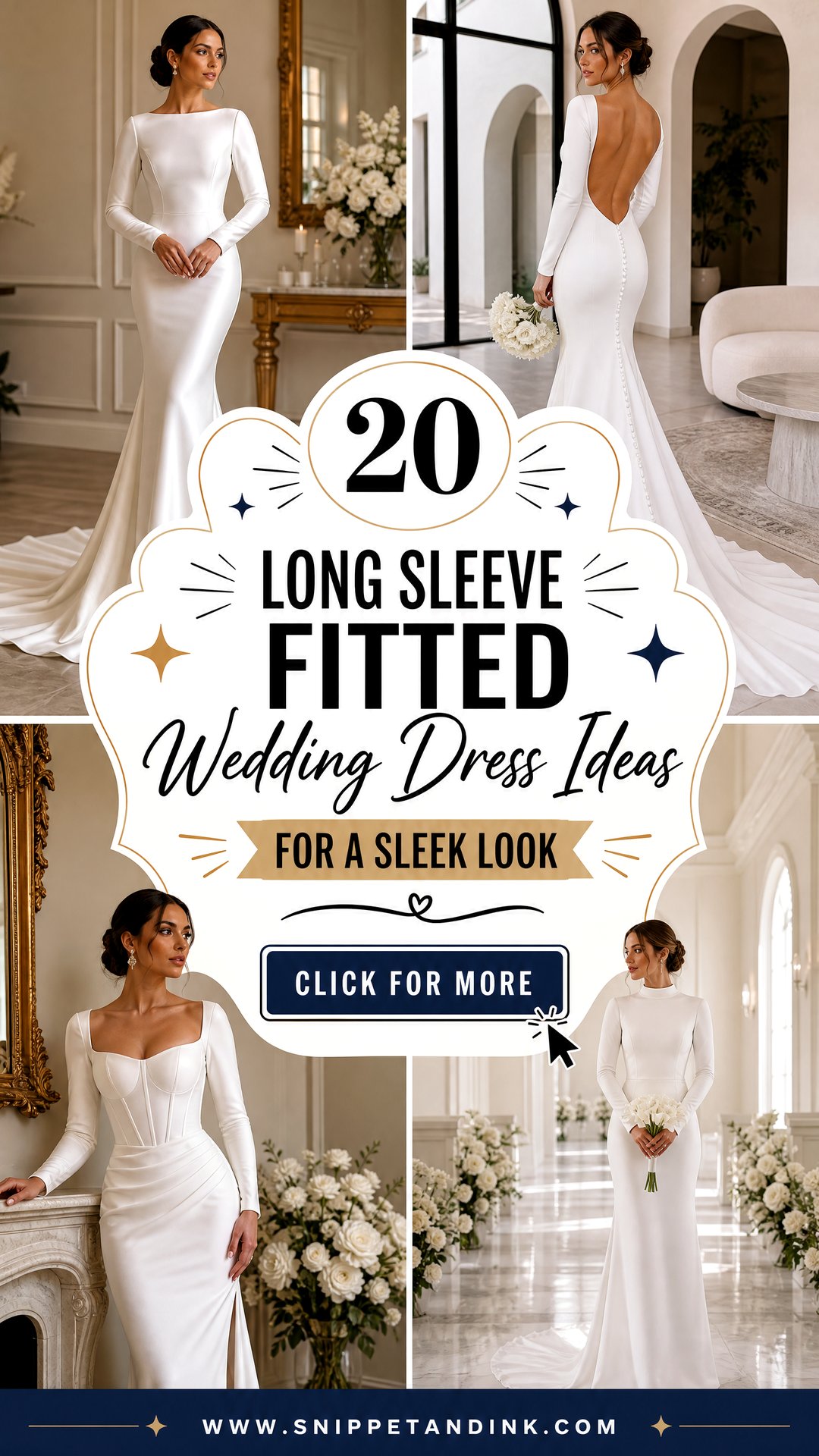
A fitted gown with long sleeves leaves very little room for error. The body of the dress follows you closely, the sleeves follow your arms, and every seam in between has to agree. Get it right and it’s one of the cleanest shapes in bridal: illusion lace, floral appliqués, smooth crepe, glowing satin or modern corsetry, all on a close line that can suit many figures once neckline, waist placement, fabric weight and skirt shape are adjusted. Sleeves on today’s gowns are lighter and less fussy than they used to be, so they can read modest, modern or dramatic. In fittings I care less about how a fitted gown looks standing still and more about what happens when you sit, step up and reach. Keep the heels comfortable, the jewelry quiet and the veil sheer enough to show the work underneath.
Why Bridal Sizing Trips Up Fitted Gowns
Bridal size charts usually run smaller than everyday clothing, so the number on the tag is often a size or two above what you buy on the high street. That surprises people, but it matters far more on a fitted gown than a ball gown, because a full skirt hides small sizing mistakes and a close one shows all of them.
When I order a fitted dress, I go by the largest of your bust, waist and hip measurements on that designer’s own chart, then plan to take the other areas in. Taking a gown in is routine. Letting one out depends on seam allowance, and many fitted gowns, especially lace and beaded ones, have very little.
- Have the salon measure you with a tape, over the bra you plan to wear.
- Ask how much seam allowance the gown has at the side seams and the sleeves.
- If you expect your body to change before the wedding, say so at ordering; the timing of fittings can be planned around it.
- Don’t order smaller as motivation. A fitted gown that’s too small can’t be fixed, only replaced.
1. Long Sleeve Lace Mermaid Wedding Dress
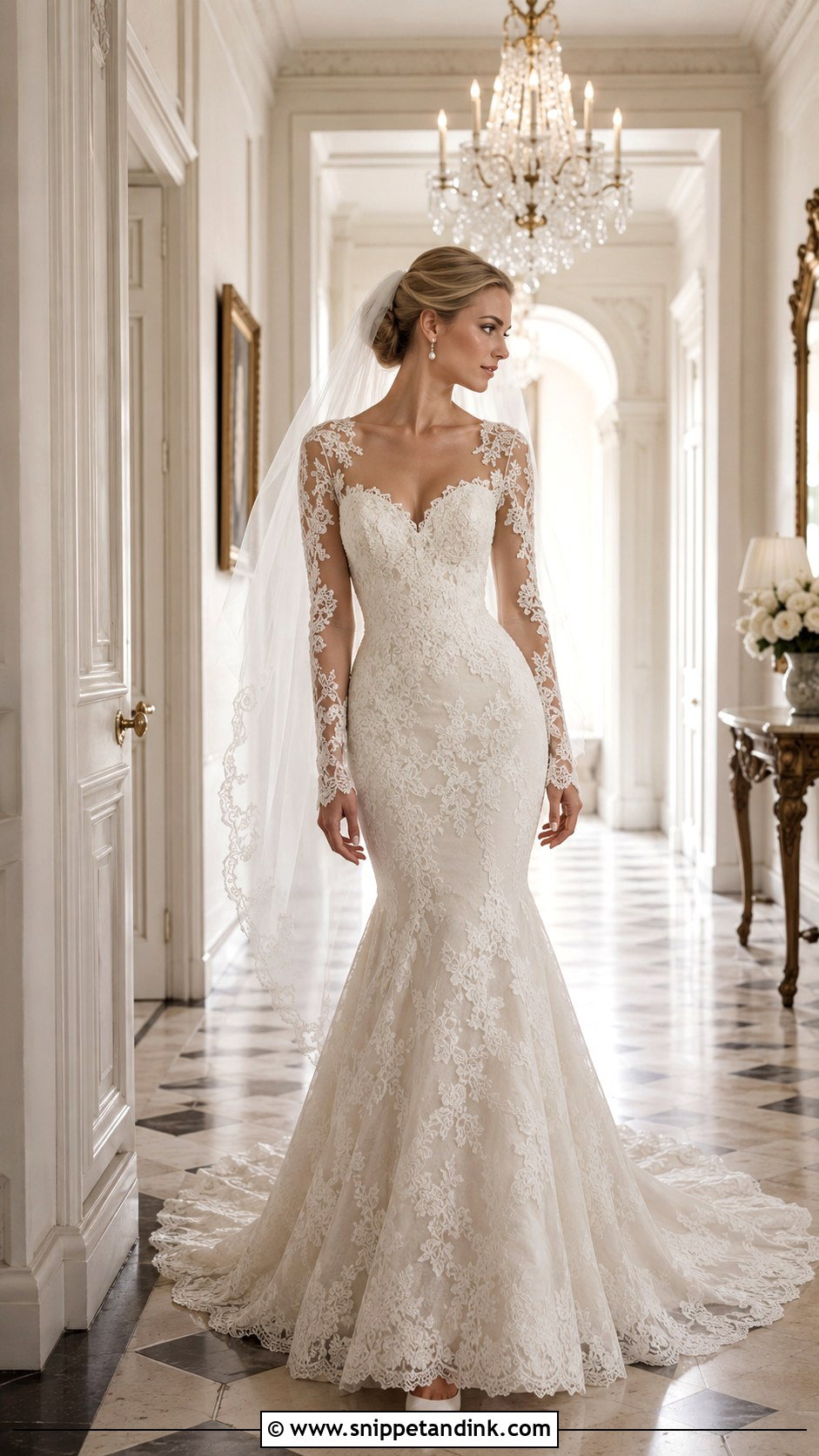
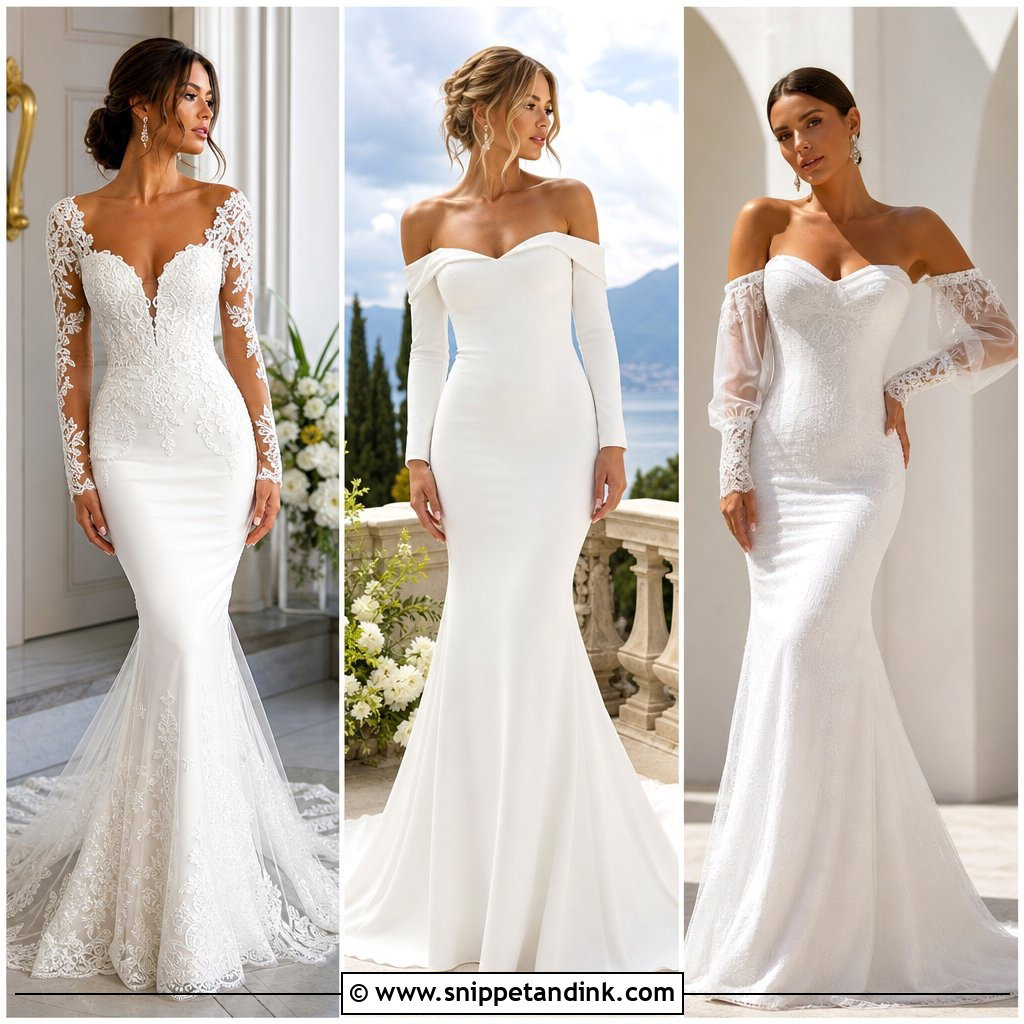
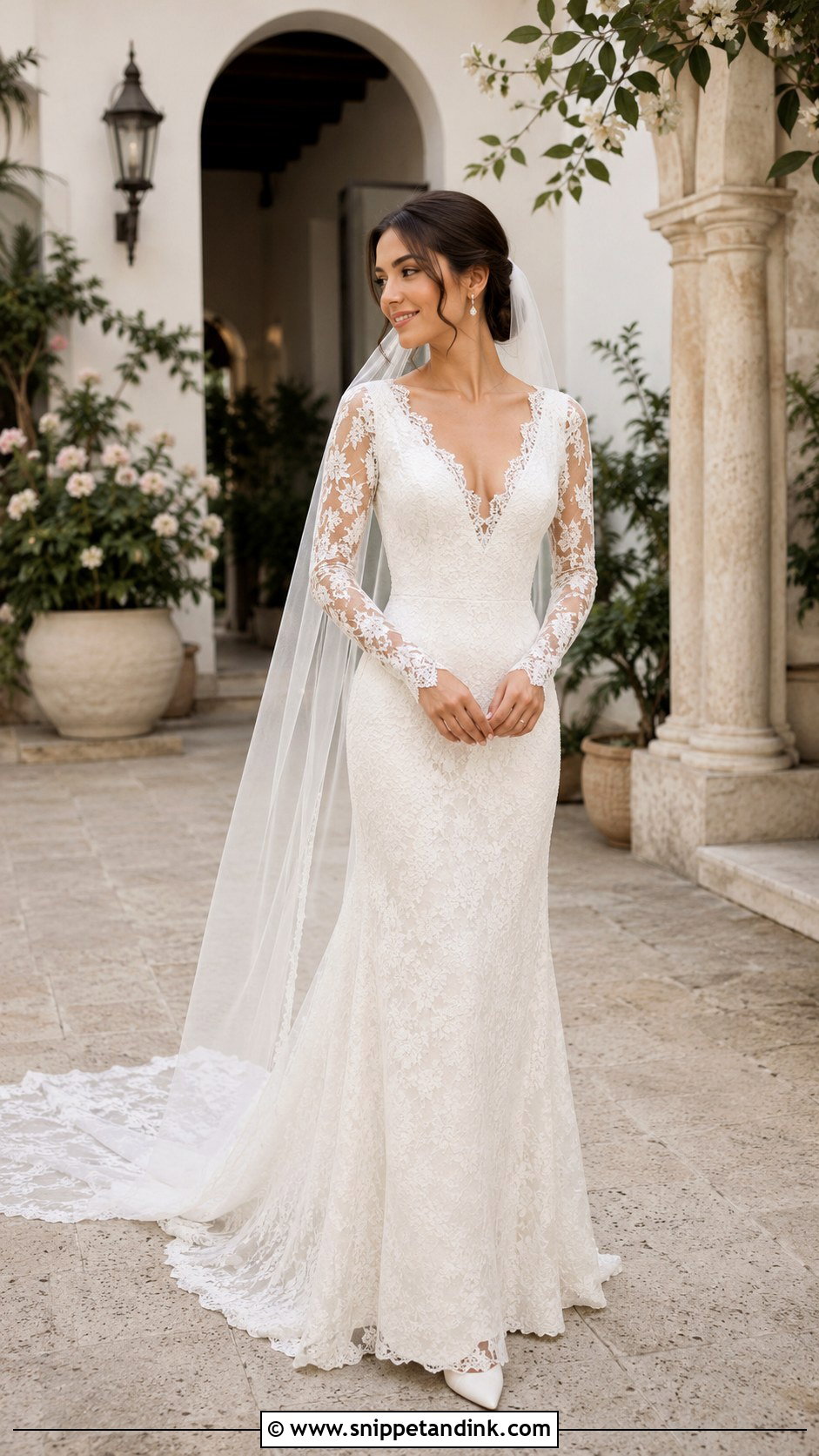
The mermaid flare sits near the knee, and that single seam controls how you walk all day. A lace mermaid with a bodice that follows the waist and hips gives plenty of shape, while sheer sleeves scattered with lace motifs keep the coverage light. A sweetheart lining under an illusion neckline softens it, and covered buttons finish the back. Pearl drops, a fingertip veil, pointed ivory heels and a neat low bun keep the neckline visible. In the fitting room, climb a few steps. If you have to turn sideways to manage them, the flare needs to come down an inch or two.
2. Long Sleeve Crepe Fit And Flare Wedding Dress
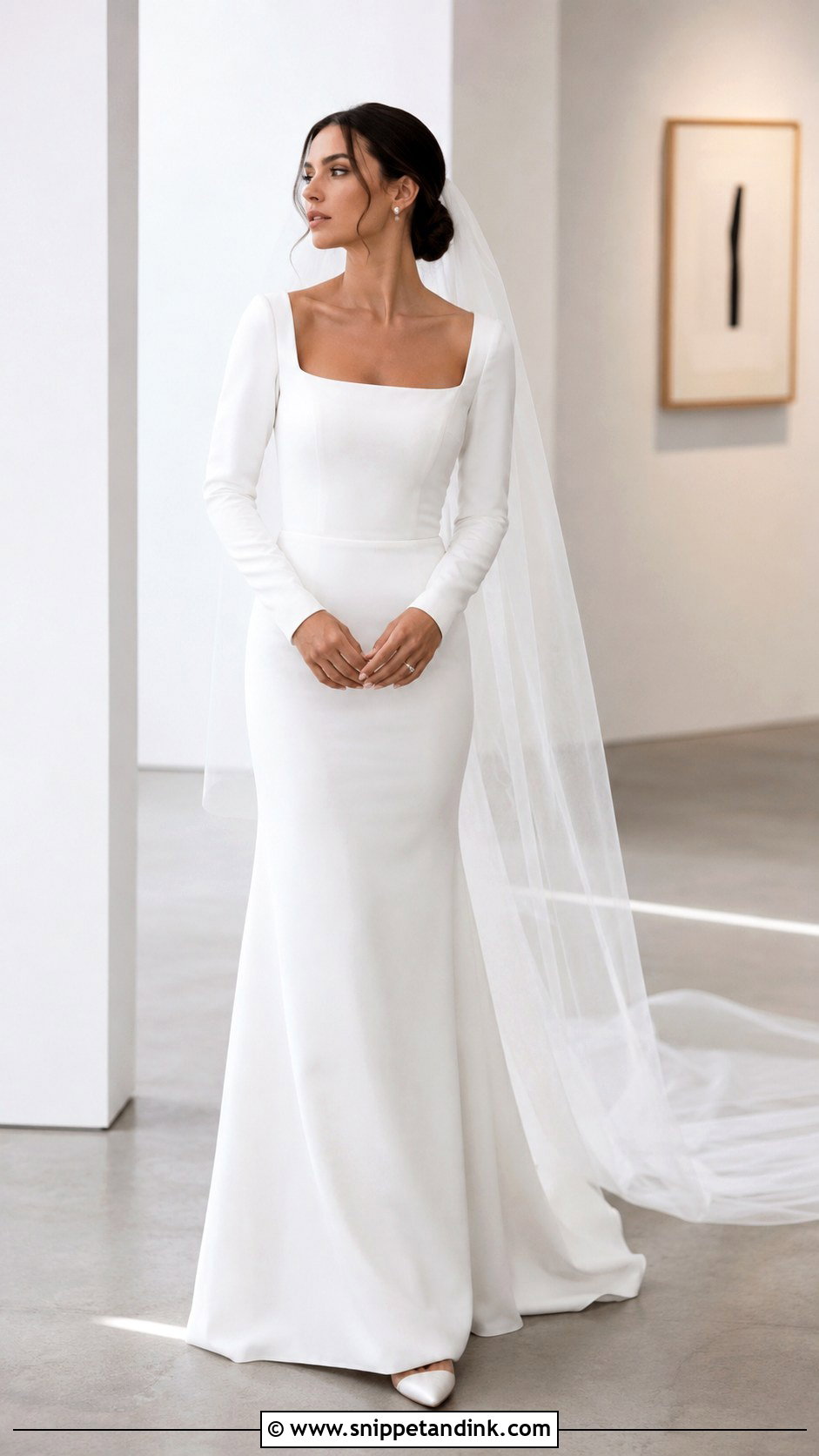
Crepe has a matte surface and a slight stretch that makes a fit-and-flare look clean and modern. Long tailored sleeves, a defined waist and a skirt that opens gradually below the hips are all it needs; a square, scoop or gentle V neck adds shape. Covered buttons down the back give the rear view some detail. Sculptural pearl earrings, a sleek bun, pointed pumps and a plain cathedral veil finish it. Crepe shows every edge underneath, so I’d try bridal shapewear and no-line underwear at the very first fitting, not the last. Hotels, galleries and rooftops suit it.
3. Long Sleeve Satin Trumpet Wedding Dress
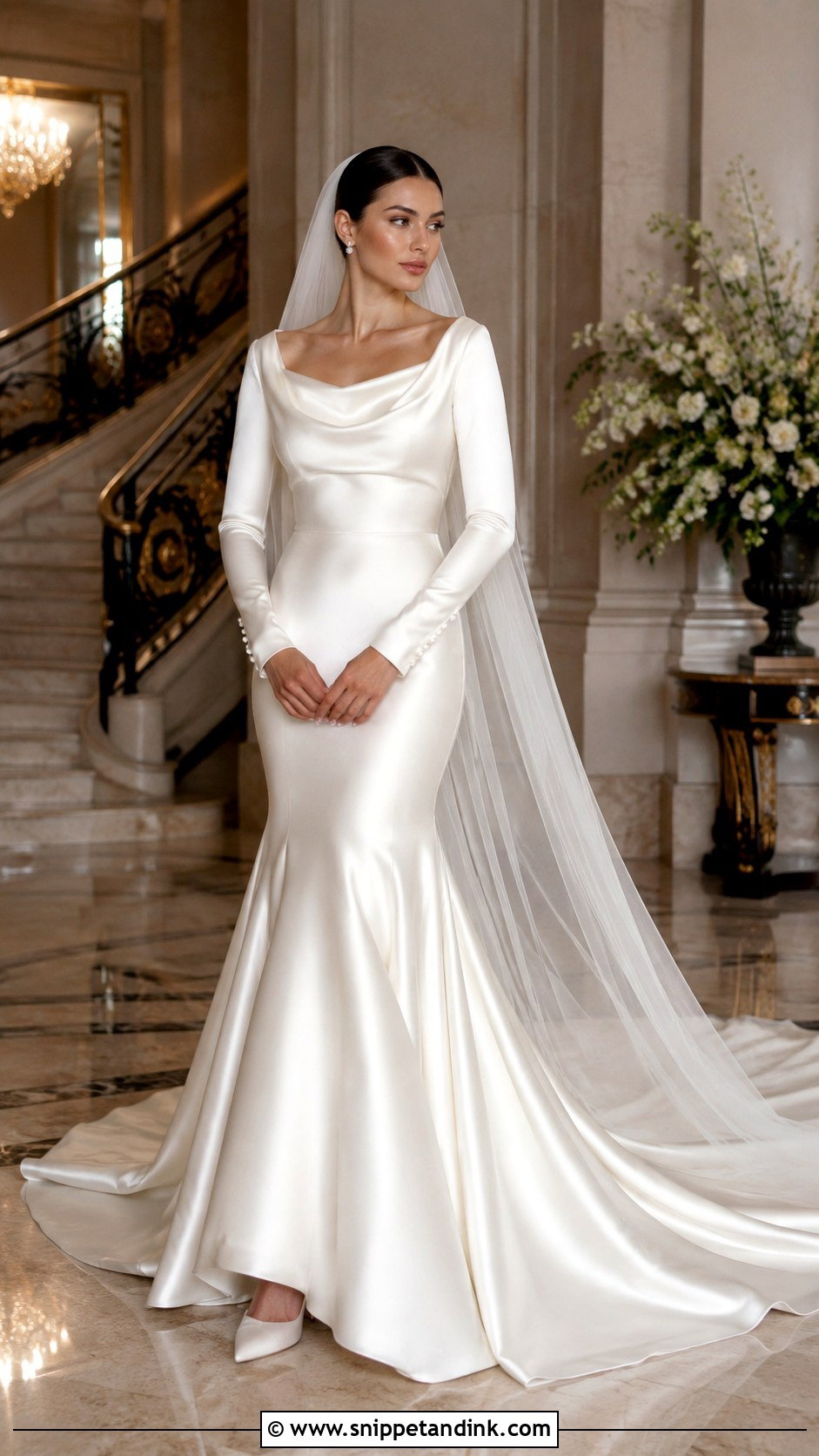
Satin reflects light along every curve, so a trumpet gown in it looks polished from any angle, provided the fit is exact. The skirt stays close through the bodice, waist and upper thighs, then releases lower down; it flares higher than a mermaid, which makes it easier to walk in. Long satin sleeves with small covered cuff buttons balance the shape. A draped neckline or structured bateau shows off the sheen. Crystal studs, a smooth-edged veil, satin pumps and a compact bouquet are plenty, because satin already sparkles. Wear your wedding shoes when the seamstress checks sleeve movement and length; satin sleeves that are a fraction too tight wrinkle at every bend.
4. Square Neck Long Sleeve Fitted Wedding Dress
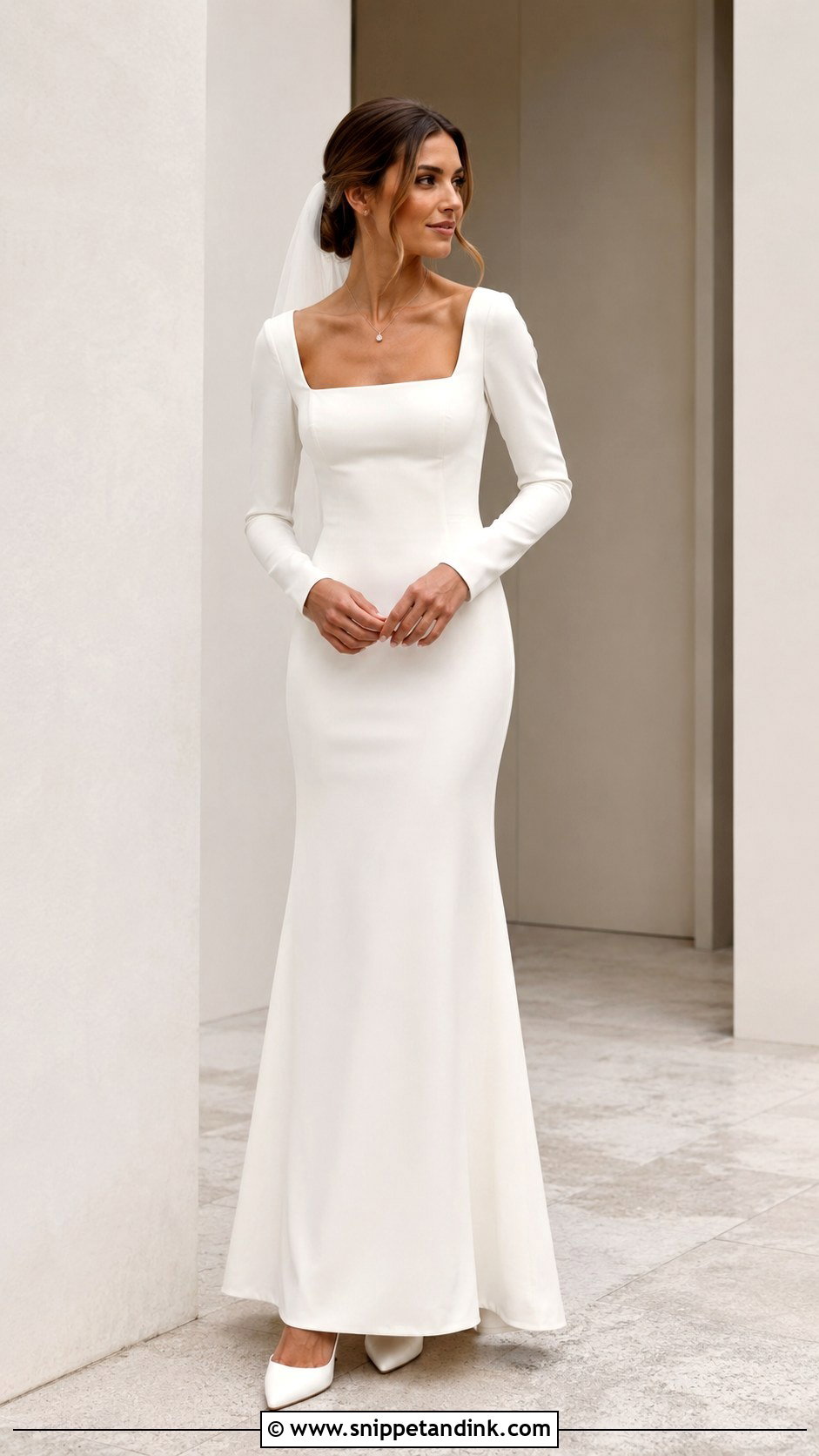
Square necklines frame the collarbones with more coverage than a plunge. With a structured bodice, a natural waist and a slim fit-and-flare skirt in crepe, satin or matte stretch fabric, the whole gown reads strong and tidy. Sleeves should sit flat at the shoulder and taper to the wrist. A small pendant and earrings, pointed heels and a simple veil under a low bun complete it, though the neckline is just as good bare. The weak point is the two corners: if they lift when you lean forward, the bodice needs a stay or a tuck at the side seams, and I always check that before anything else.
5. High Neck Long Sleeve Fitted Wedding Dress
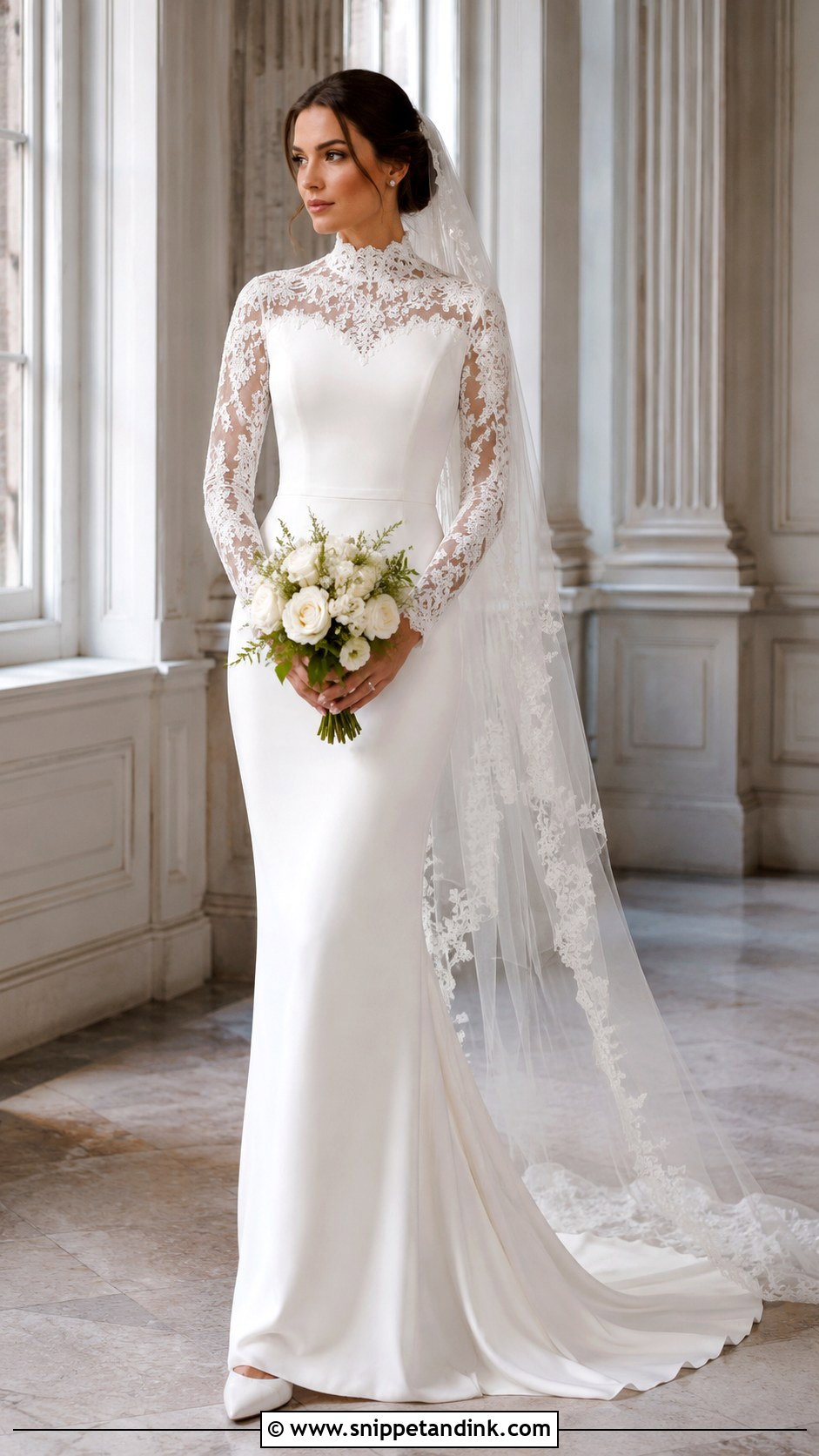
Comfort decides whether a high neck works, more than looks. Sit down, look at your lap and turn your head both ways; the collar should never press on the throat. For a lighter version, choose illusion tulle with lace running from the collar into the bodice and sleeves, over a fitted crepe or lace skirt, with a row of back buttons. A low chignon or polished ponytail keeps the neckline clear, and pearl studs, closed pumps and a lace-edged veil add just enough. The tulle should match your skin closely so the lace looks as if it sits on you. It suits cool-weather and formal ceremonies, especially in historic venues.
6. Off The Shoulder Long Sleeve Fitted Wedding Dress
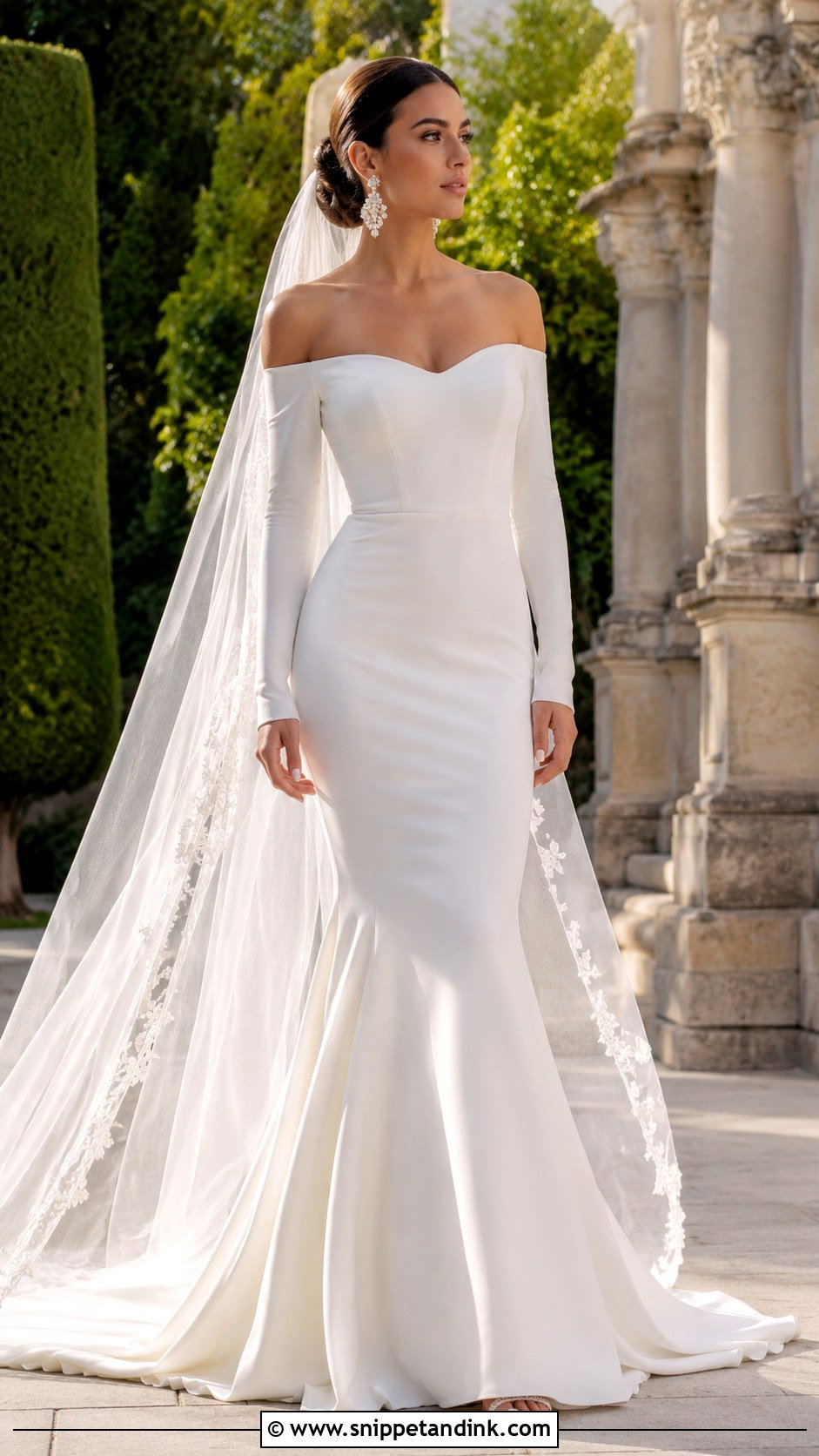
An off-shoulder neckline softens a close-fitting gown. Sleeves begin just below the shoulder and run to the wrist, making a horizontal line across the upper body. Stretch crepe looks modern; lace looks romantic. The bodice underneath must hold itself up, and this is the point I’m firm on: if the sleeves are what keep the dress in place, you won’t be able to raise your arms more than halfway. A short pendant or bare neck, statement earrings, ivory heels, a sheer cathedral veil and soft waves or a low textured bun finish it for gardens, estates and ballrooms.
7. Backless Long Sleeve Fitted Wedding Dress
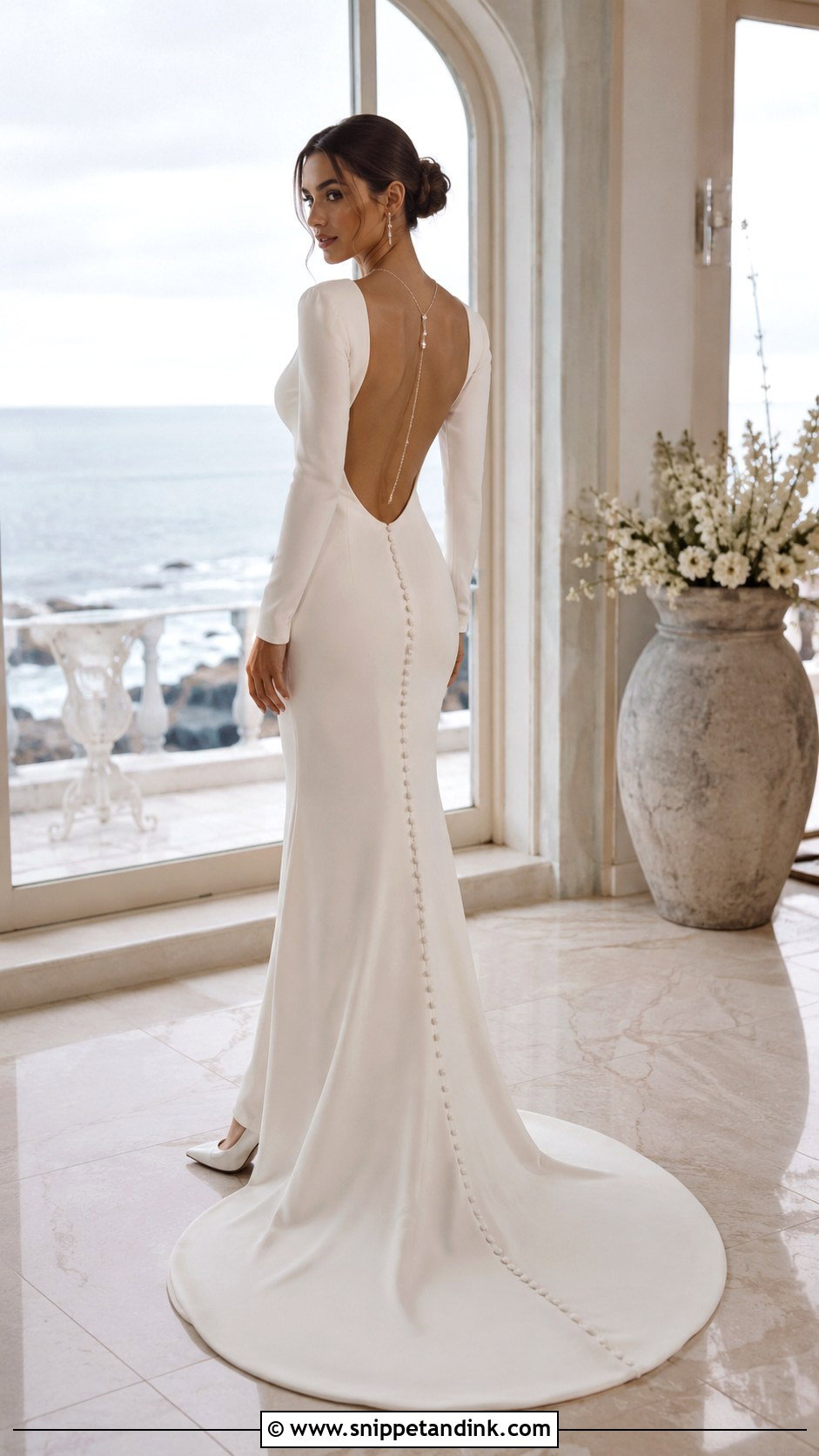
Covered arms in front, bare skin behind. Look for fitted crepe or lace with a low V-back, an illusion panel or a keyhole, with covered buttons below the opening leading down to a sculpted train. A normal bra won’t work here, so talk about built-in cups and inner support at the first alteration appointment, not the last. The open back also has to stay put when your arms reach forward, which depends on how high the sleeves are set. A delicate back necklace, drop earrings, pointed pumps and a veil that can come off after the vows let the design show, with the hair up.
8. Beaded Long Sleeve Fitted Wedding Dress
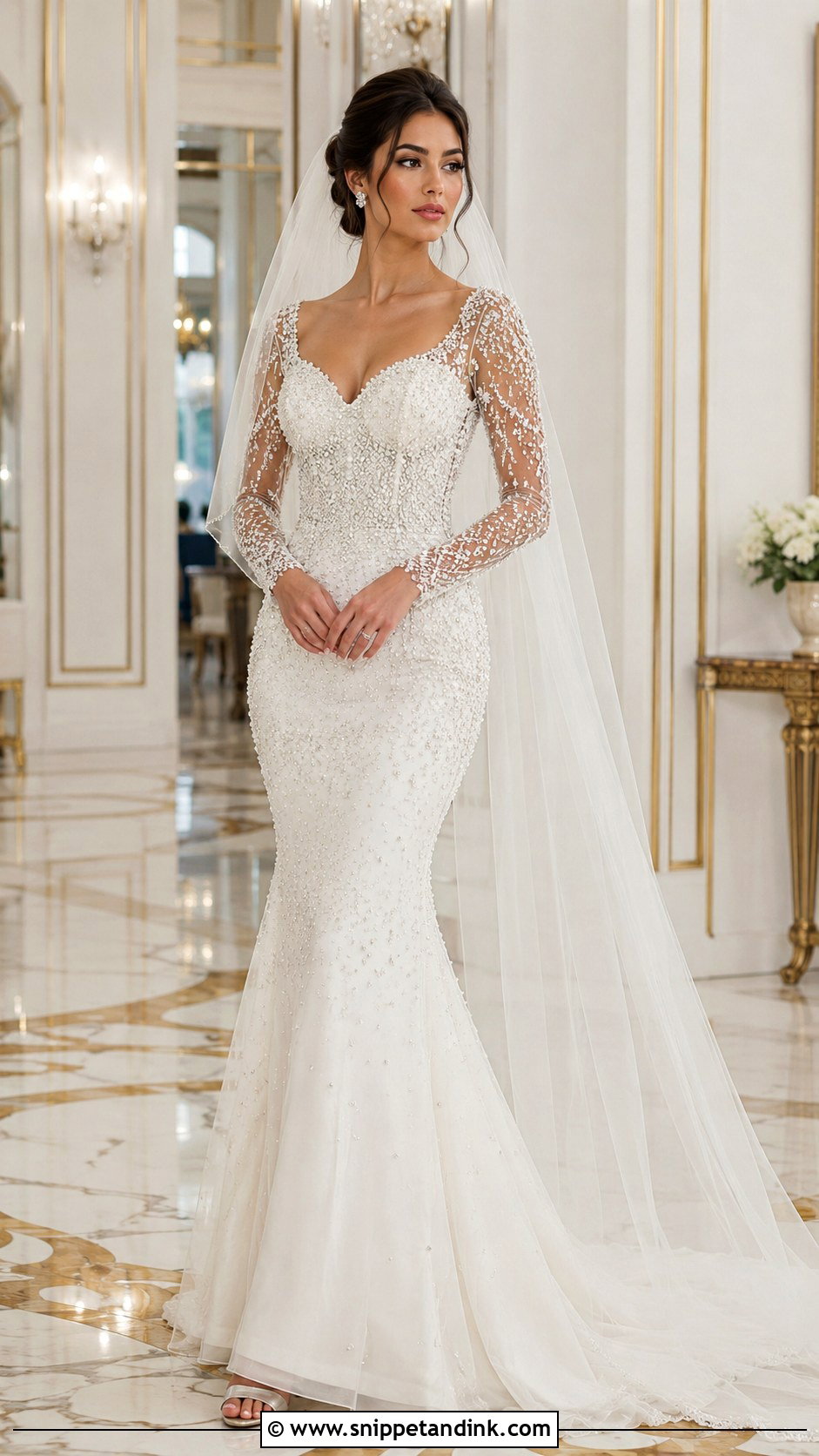
Beading on a fitted gown should be heaviest at the sleeves, neckline and bodice and lighter down the skirt. A sheath or trumpet keeps that refined, and sheer sleeves with beaded cuffs give sparkle at the wrist without weight. Crystal studs, metallic ivory heels, a plain tulle veil and a compact bouquet let the gown lead. Beads scratch. Run a hand along the inner sleeve and underarm at the fitting; rough beading there will rub raw over an evening, and a good seamstress can remove or flatten the worst of it. Glamorous hotels and evening receptions suit it.
9. Corset Long Sleeve Fitted Wedding Dress
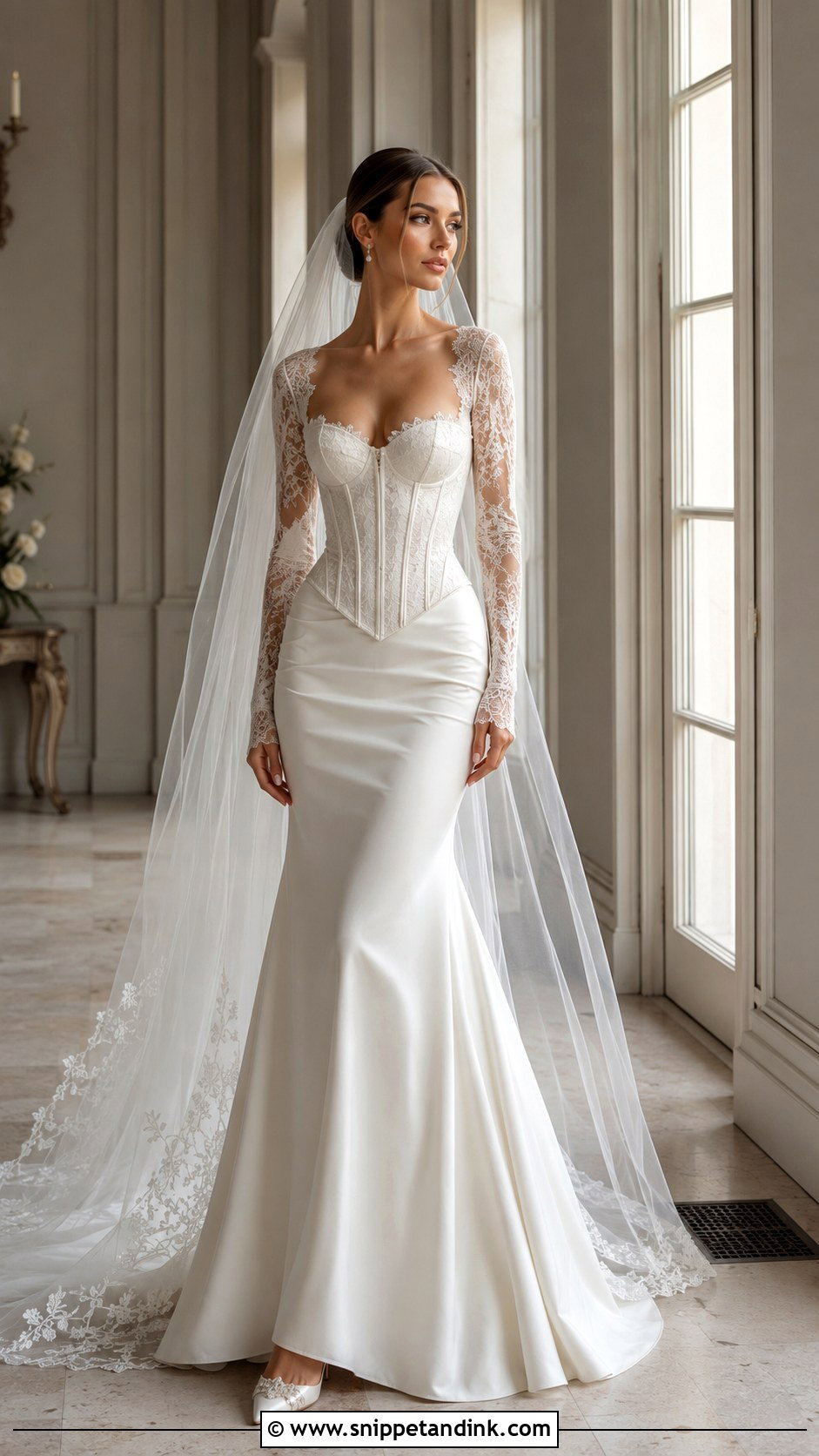
Waist definition is the reason to add a corset to a fitted gown. Visible boning looks contemporary; covered internal boning is more traditional. Sheer lace sleeves soften the structure, and a basque or gently pointed waist lengthens the torso. Keep the skirt smooth, a fit-and-flare with a controlled train. Pearl earrings, a fine-edged veil, pointed heels and neat hair complete it. Sit and breathe deeply during every fitting. Supportive and restrictive feel very different by the third hour. Ask whether it closes with a zip, buttons or lacing, and have whoever is dressing you practise. Estates, ballrooms and editorial-style weddings suit it.
10. Vintage Lace Long Sleeve Fitted Wedding Dress
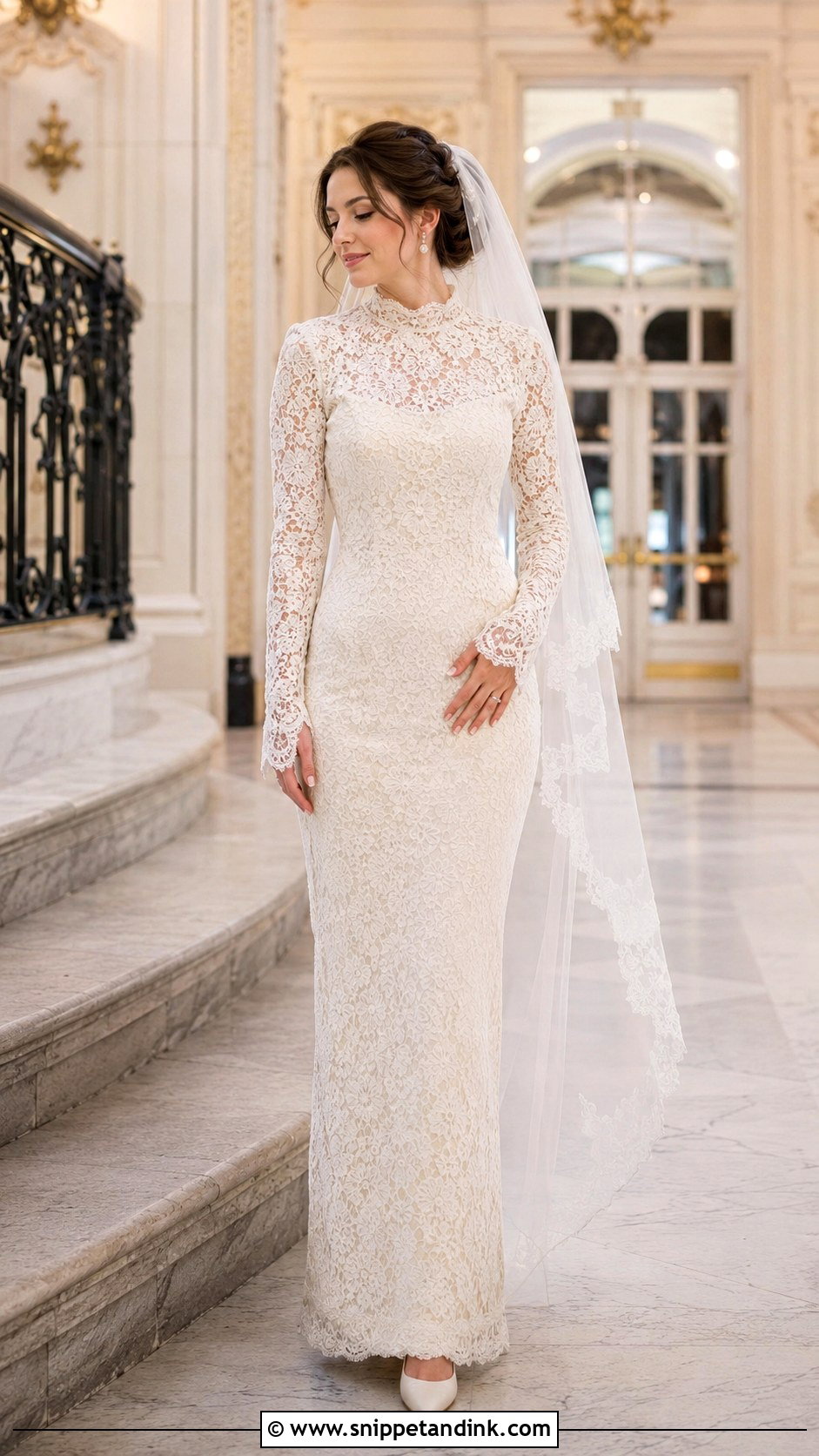
Fine lace like Chantilly lace, botanical motifs, scalloped cuffs or a softly raised collar give a fitted gown vintage character. A slim sheath or soft fit-and-flare keeps it graceful rather than costume. A satin or nude lining lets the lace pattern stand out. Pearl earrings, closed heels, a lace-trimmed veil, a loose low bun and a small bouquet with trailing greenery suit the mood. Look closely at the side seams: on a well-made gown, the lace motifs are cut and overlapped so the pattern continues across the seam instead of stopping in a straight line. Historic homes, old theatres and small hotels suit it.
11. Simple Long Sleeve Fitted Wedding Dress
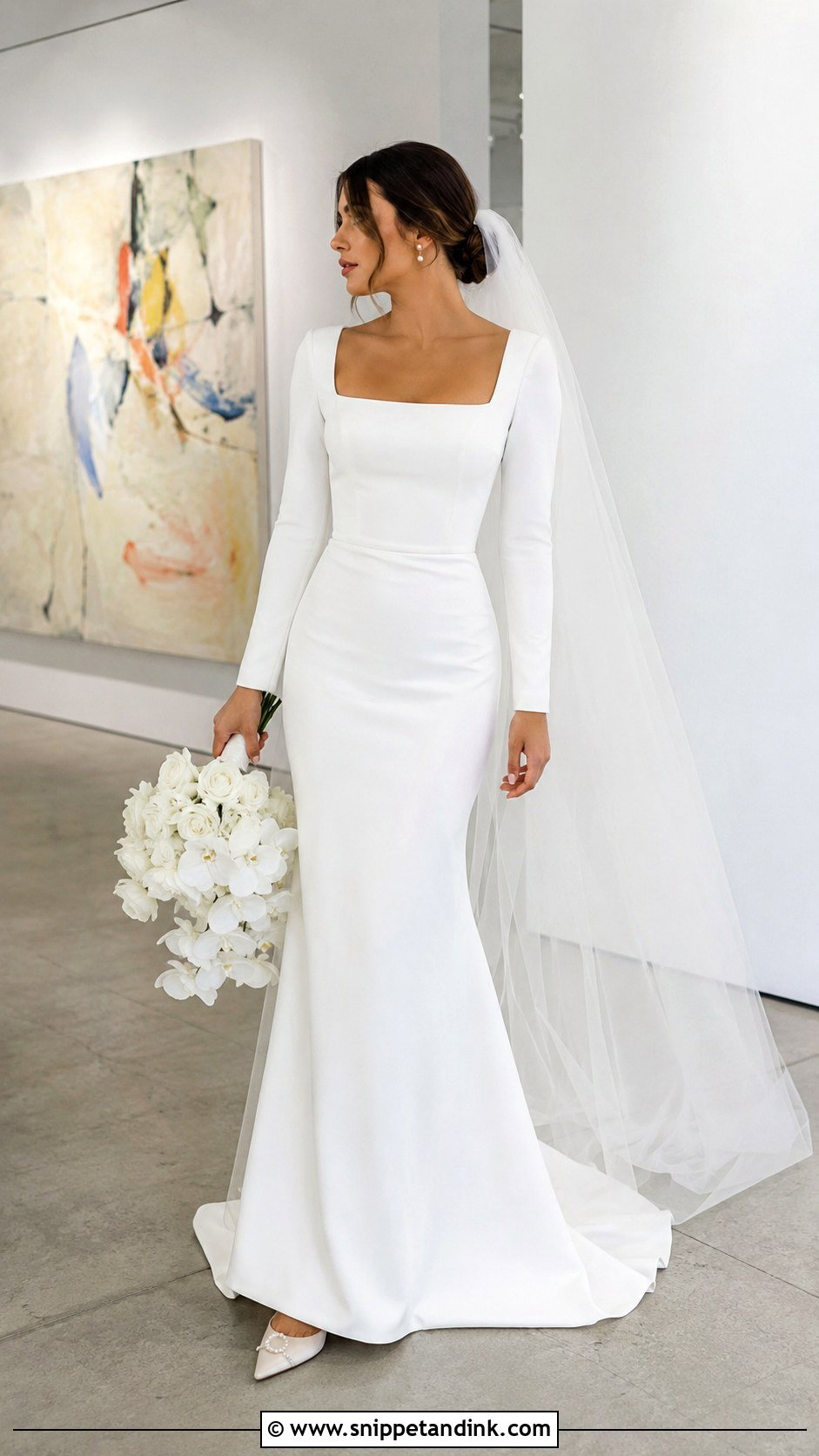
The plainest gowns are the hardest to make. A simple fitted dress in matte crepe or stretch satin, with a smooth bodice, long tailored sleeves and an understated train, depends entirely on cut. Pick one feature: a square neck, a low back, a row of buttons or a soft drape at the waist. Pearl studs, pointed pumps, a structured bouquet, a plain cathedral veil and a sleek bun or polished waves keep it calm. With nothing to distract the eye, pulling, bunching or a crooked seam is obvious, so I’d look at the gown both by a window and under warm indoor lights before signing off. City halls, galleries and coastal venues suit it.
12. Pearl Long Sleeve Fitted Wedding Dress
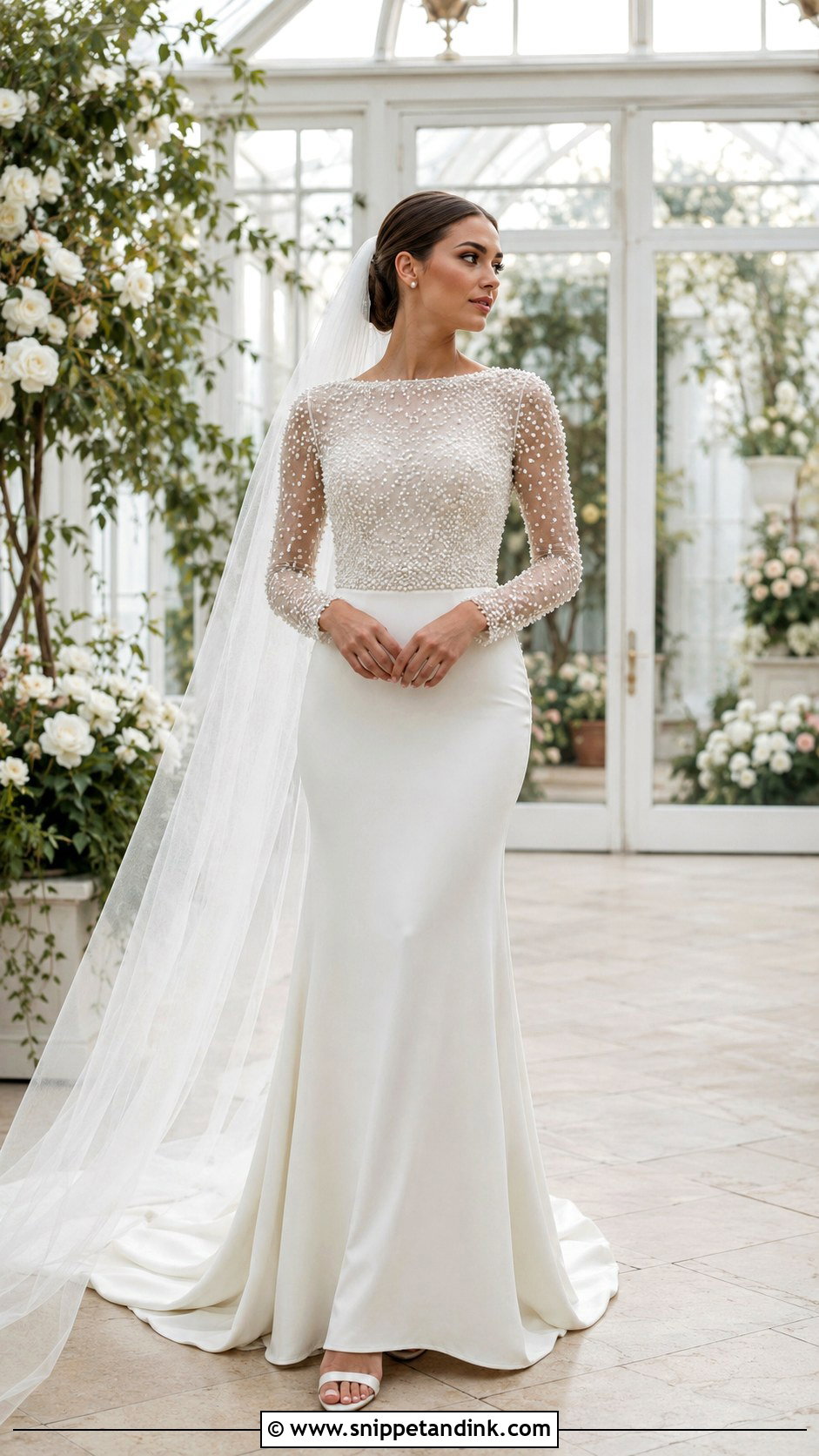
Small pearls in mixed sizes look delicate; large uniform ones look heavy on a fitted gown. They can be scattered over sheer sleeves, gathered at the neckline or massed on the bodice before fading into the skirt. Pearl studs, satin heels, a simple veil and a low bun or side-swept waves keep the look polished. Pearls snag tulle, so hold the veil and the bouquet ribbon against the sleeves and move your arms; if anything catches, move or remove those pearls before the day. They should also feel smooth at the elbow and underarm. Hotels, conservatories and ballrooms show them off.
13. Floral Applique Long Sleeve Fitted Wedding Dress
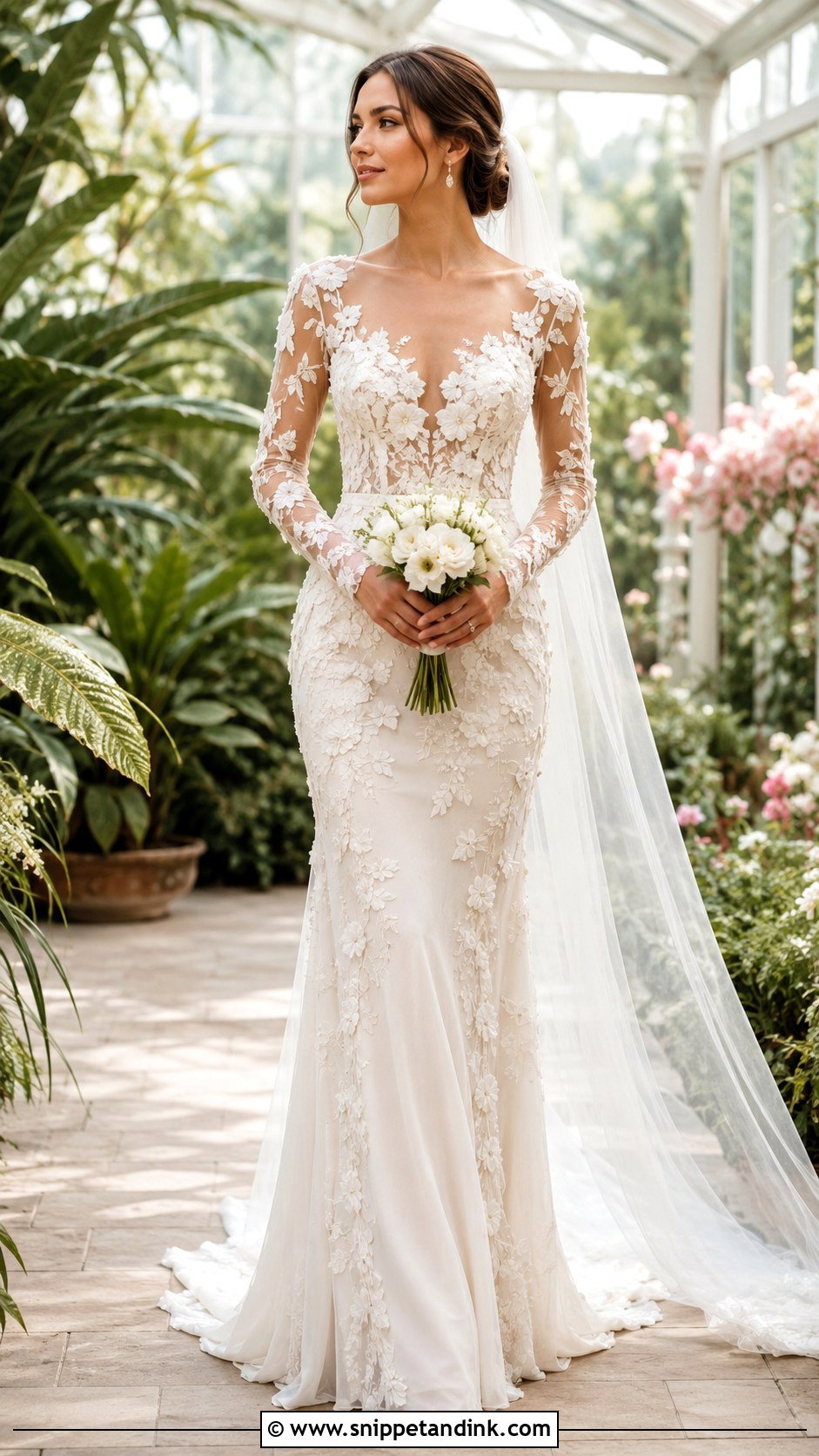
Three-dimensional flowers that start at the bodice and drift across illusion sleeves, hips and upper skirt make a fitted gown feel botanical. Leave the lower skirt quieter or the shape gets busy. A nude or ivory mesh base lets the flowers seem to float on skin. Small earrings, neutral heels, a sheer veil and a bouquet that doesn’t repeat every texture keep it balanced. Bend your arms and press them to your sides. Raised petals in the crook of the elbow fold flat and stay creased, which is why I sometimes ask for the inner arm to be left clear. Conservatories, gardens and estates suit it.
14. Bateau Neck Long Sleeve Fitted Wedding Dress
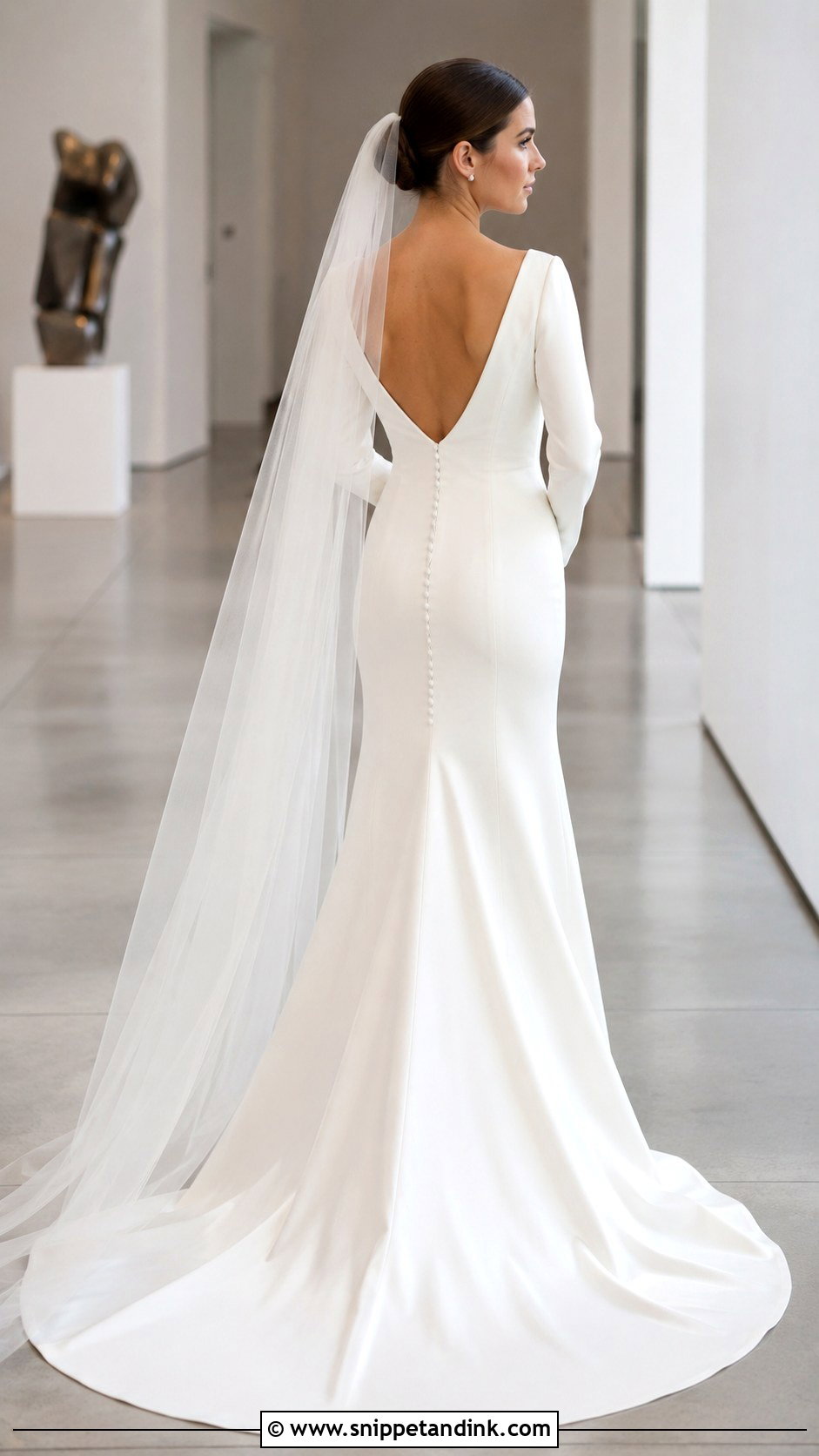
A bateau neck runs straight across from shoulder to shoulder, just above the collarbone, and gives a fitted gown a poised, classic front. Slim long sleeves and a clean sheath or fit-and-flare in crepe, satin or Mikado suit it, with a low V-back for interest. Small pearl earrings, pointed heels and a veil under a smooth chignon are enough; skip the necklace. The shoulder fit is everything on this neckline. Too tight and you can’t reach forward; too loose and the fabric wrinkles. So I have brides hug me and reach for an imaginary glass while the seamstress pins. Museums, hotels and estates suit it.
15. Plunging V Neck Long Sleeve Fitted Wedding Dress
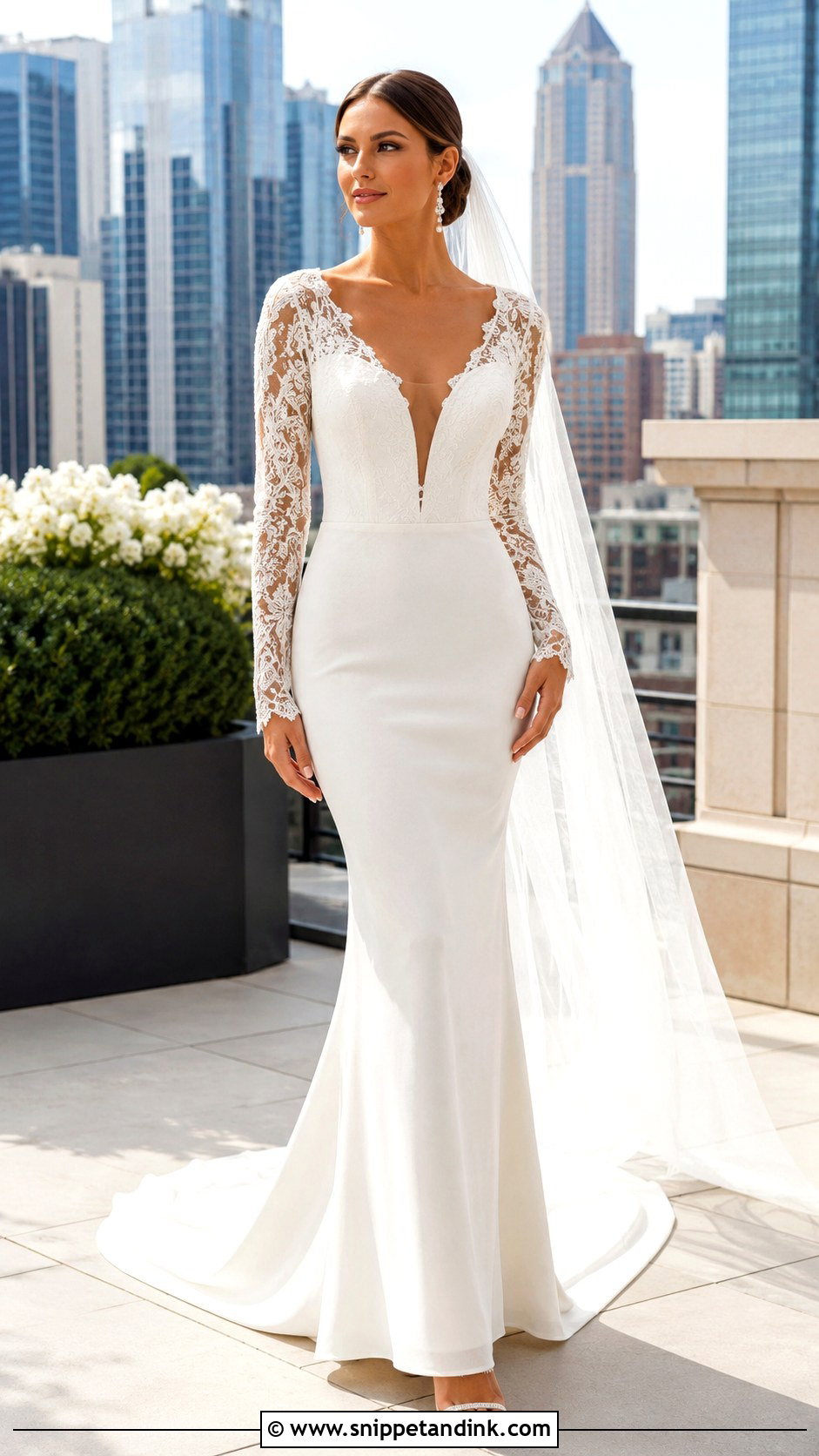
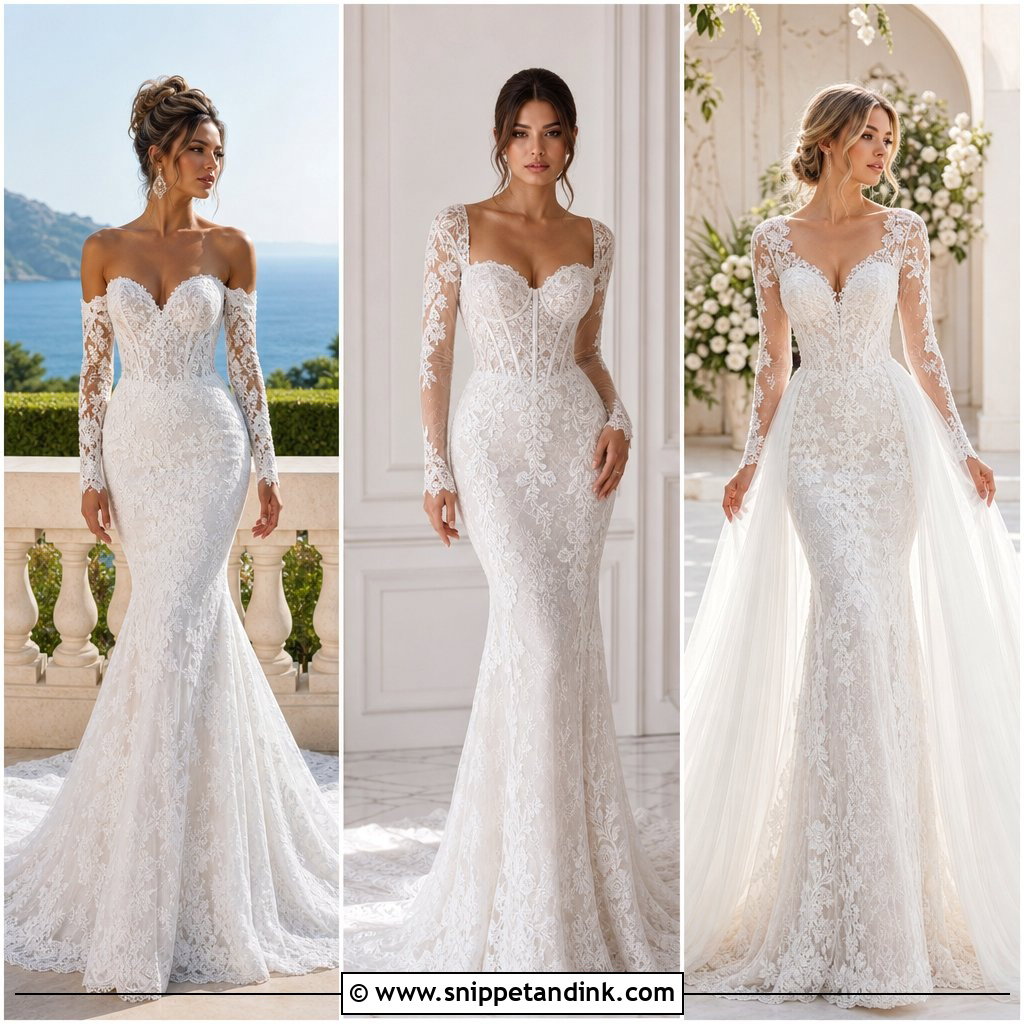
A plunging V-neck draws a long line down the body, and long sleeves keep it from feeling exposed. Internal cups and a fine illusion panel across the opening make it secure. Lace sleeves soften the cut; crepe or satin sharpens it. Keep the waist fitted and the skirt gently flared. Drop earrings, sleek heels, a plain veil and a low ponytail or bun work, and a necklace only if it is very fine. I’d ask you to bend forward, sit and hug during fittings, because a plunge that’s secure while standing can gape when you lean. Lofts, rooftops and modern hotels suit it.
16. Modest Long Sleeve Fitted Wedding Dress
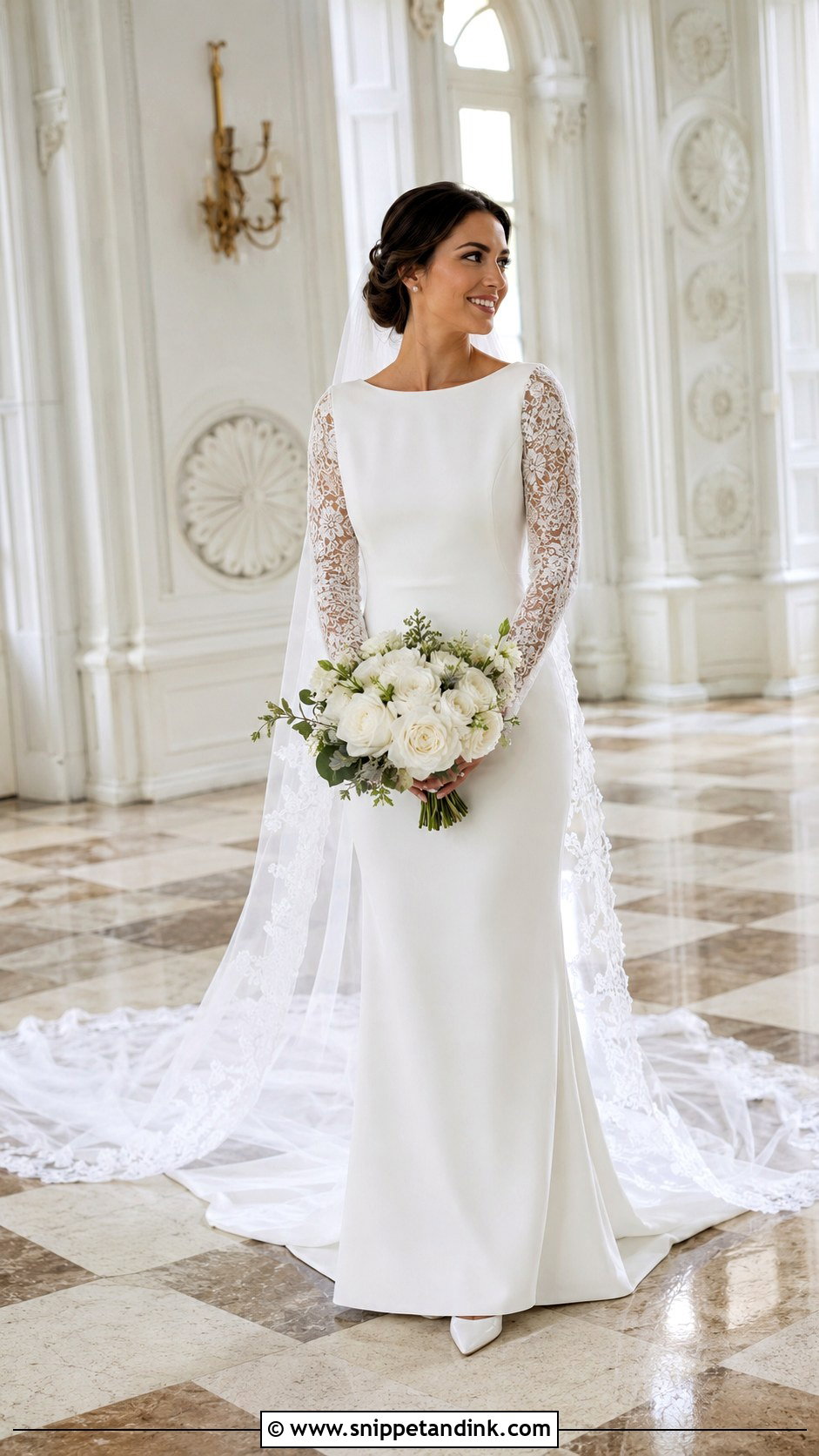
Coverage and a close fit can go together. Look for an opaque lined bodice, long sleeves, a high scoop or bateau neckline and a skirt that follows the figure without gripping. Crepe gives a smooth finish; lined lace adds texture. A chapel veil, closed heels, pearl studs and a structured bouquet finish it. If any part uses illusion mesh, hold it up to a bright window and decide whether it’s opaque enough for your ceremony or family. Sleeves designed into the gown from the start look far more natural than coverage added late in alterations, so I’d start from a gown that already has them. Family-centred and formal ceremonies suit it.
17. Long Sleeve Fitted Wedding Dress With Overskirt
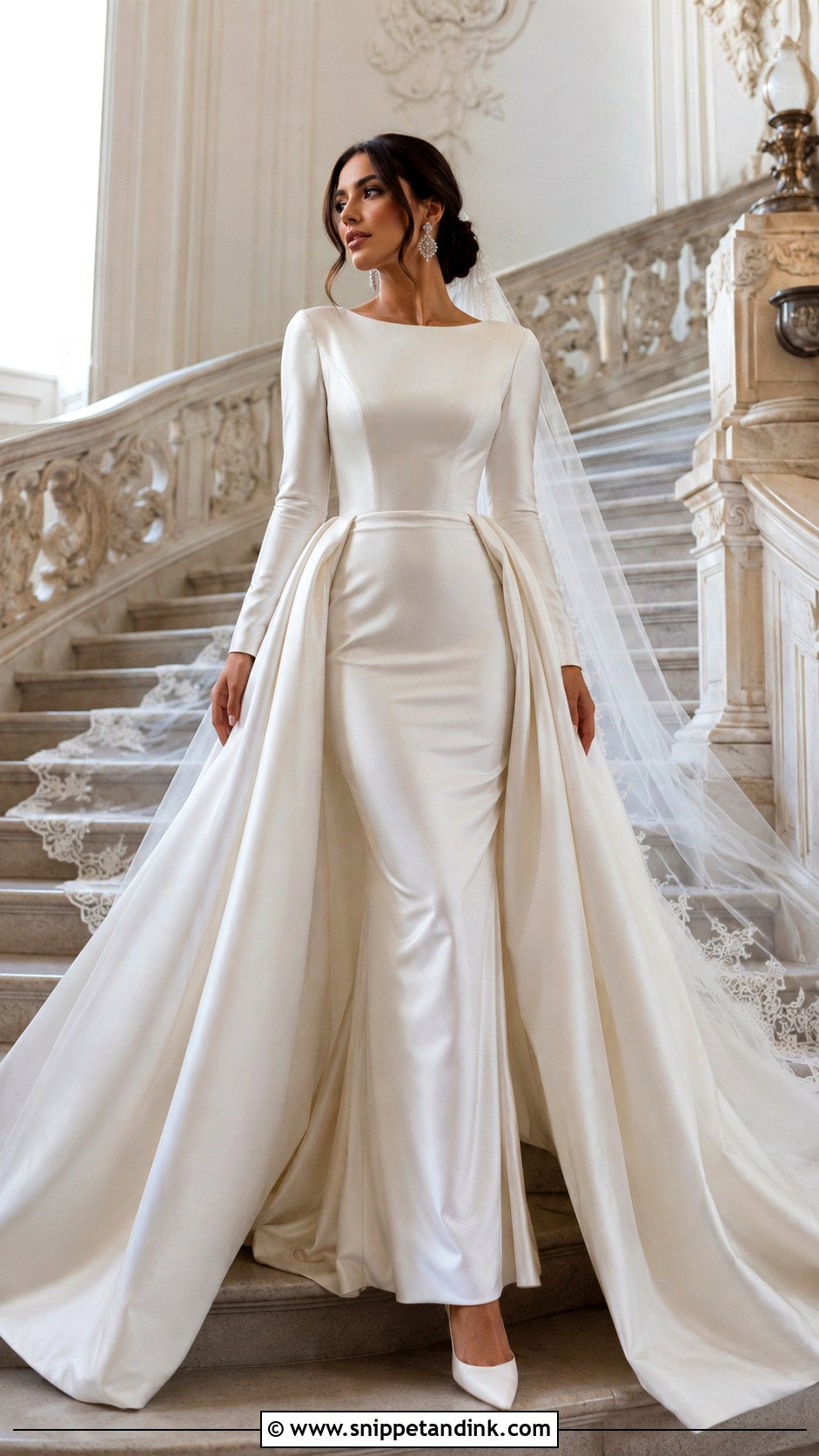
Two silhouettes from one gown. Start with a fitted long sleeve dress in crepe, satin or lace, then add a full overskirt for the ceremony; take it off for the reception and the slim shape underneath takes over. The overskirt should fasten flat at the natural waist, hidden under a belt or a seam. Statement earrings, comfortable heels and a cathedral veil suit the ceremony; after the skirt and veil come off, a hair accessory freshens the look. Overskirts are heavy, and the fastening takes all that weight, so test it by walking briskly and turning in the fitting room. Practise taking it off with whoever will help.
18. Long Sleeve Fitted Wedding Dress With Train
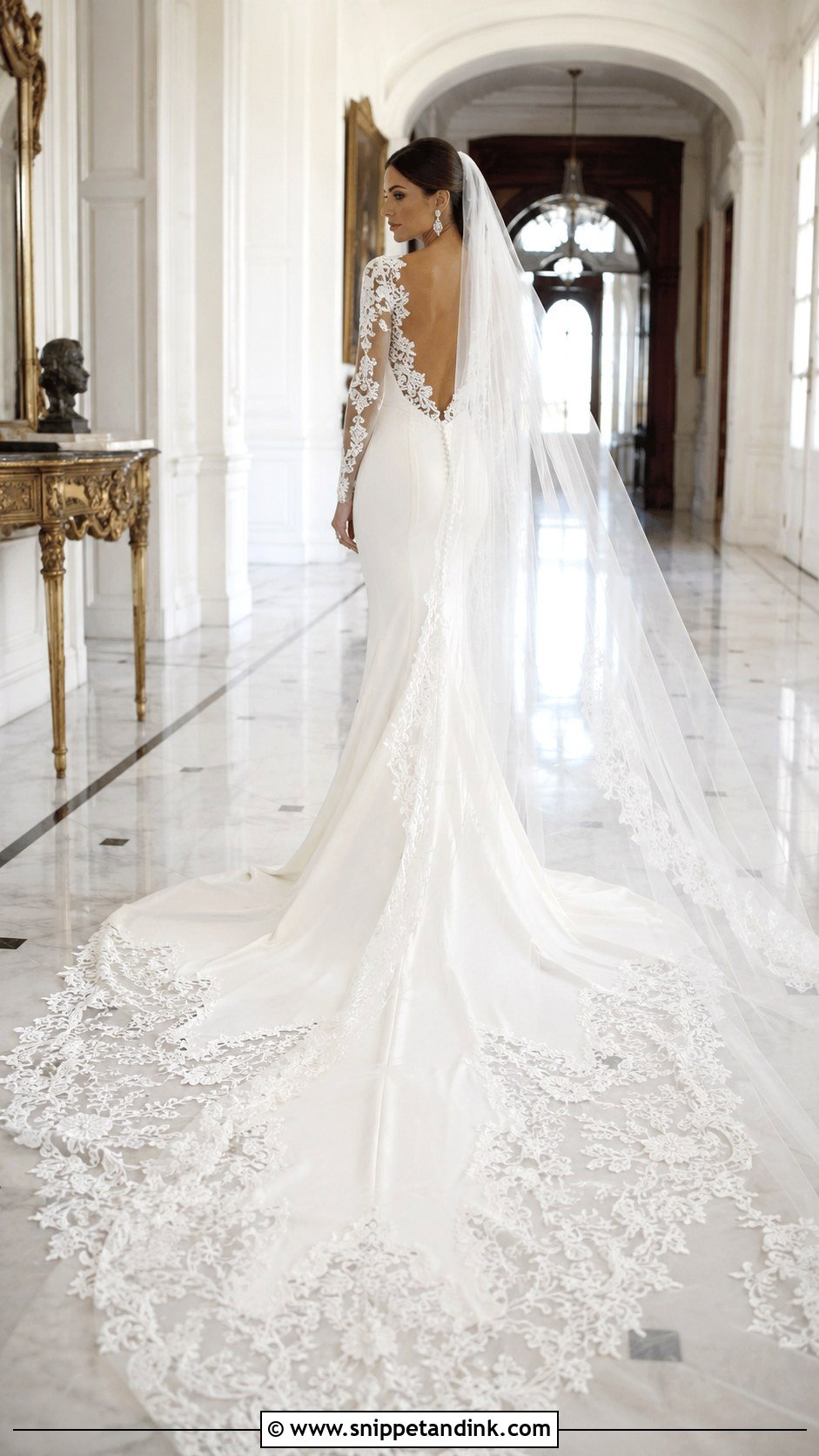
A long train gives a fitted gown its drama from behind. Cathedral or extended chapel trains suit slim crepe, lace mermaid and satin trumpet shapes. Look for buttons, appliqués or lace that continue down the train rather than stopping at the hip. Keep the rest simple: a plain veil, classic earrings and steady heels, with the veil matching or slightly beyond the train. Ask for a strong bustle with clear markings, because a long train on a narrow skirt pulls against your stride all evening if it isn’t lifted. Practise walking, turning and bustling with your helper. Long aisles and grand staircases suit it.
19. Plus Size Long Sleeve Fitted Wedding Dress
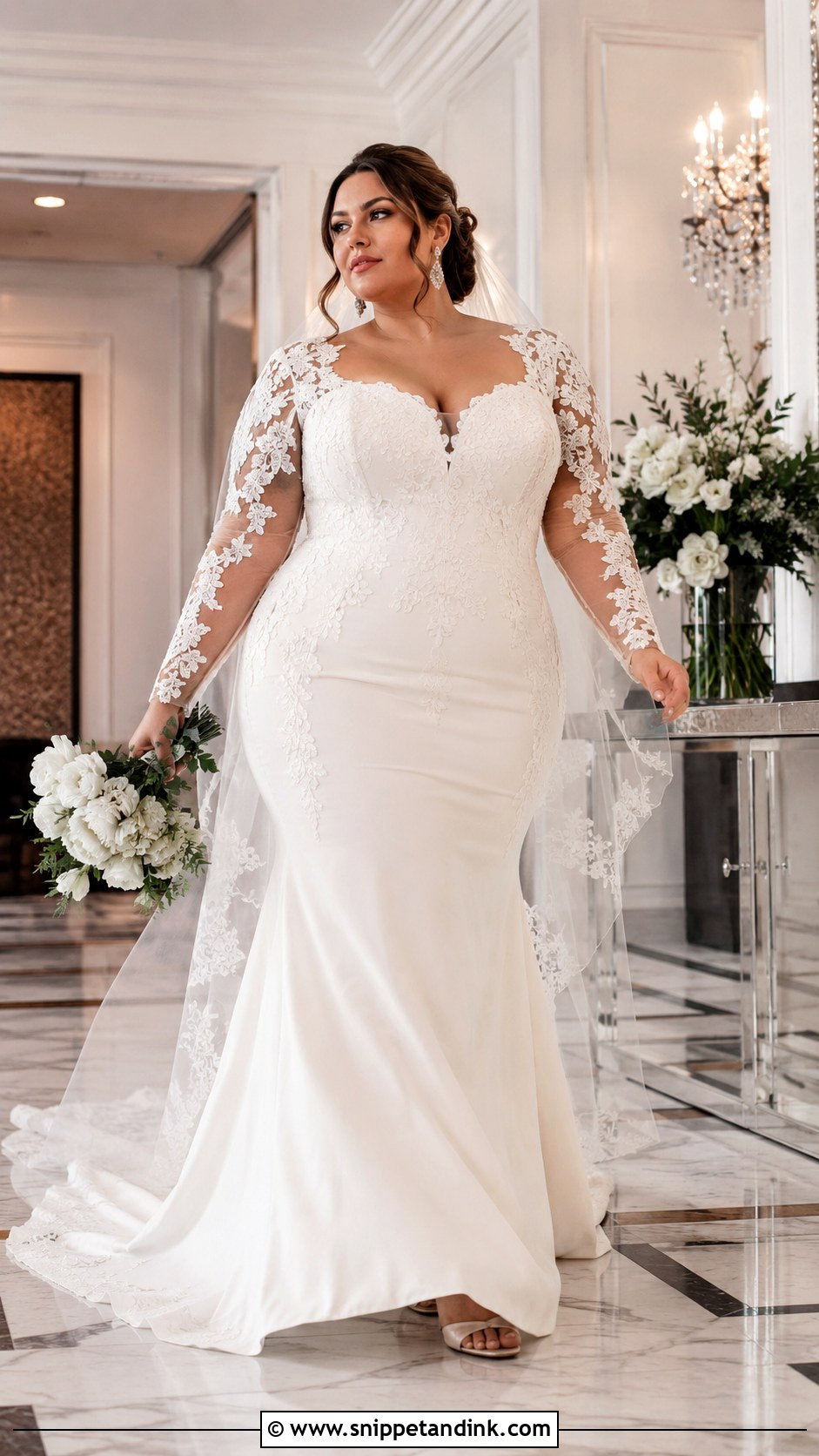
A fitted gown can suit any size when it’s built to support you. Look for a structured bodice, a secure neckline, a smooth waist seam and a stretch lining that moves. A fit-and-flare that follows the body and then opens gradually gives definition without shortening your stride. Long lace sleeves add texture; plain crepe sleeves look sleek. Supportive shoes, statement earrings, a soft veil and underwear you’ve tested at fittings complete it. Order to your largest measurement and tailor everything else down; ordering small and hoping is how fitted gowns end up pulling. Watch that the sleeves don’t twist when your arms hang, a sign the armhole needs adjusting.


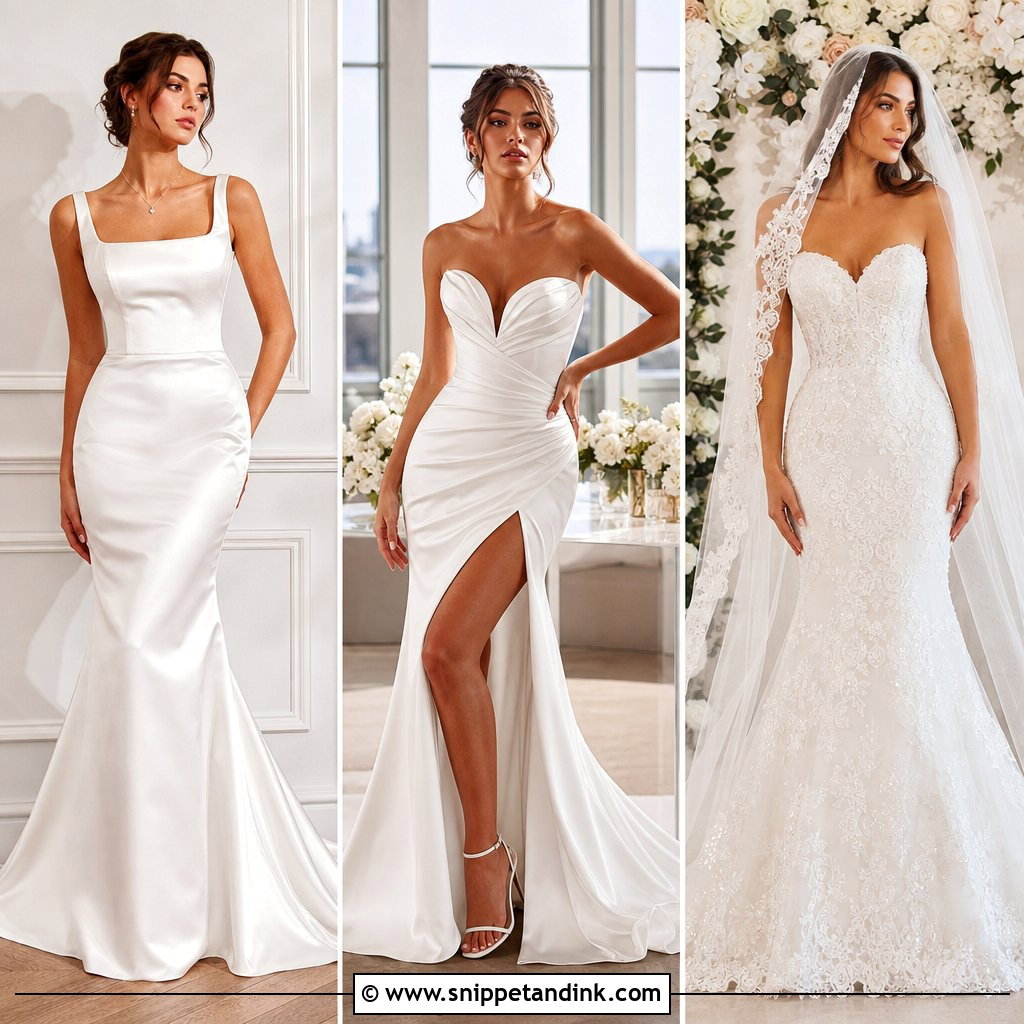
20. Petite Long Sleeve Fitted Wedding Dress
Proportion is what makes a fitted gown look made for a petite bride rather than taken up. A raised or natural waist, a narrow skirt, a moderate train and unbroken vertical seams create a clean line. Smaller lace motifs and slim sleeves stay in scale, and a square or V neck opens the top. Unless you want drama, avoid volume at the cuffs or shoulders. Pointed heels, delicate earrings, a narrow veil and a neat updo finish it. Bring your exact shoes to every fitting for the hem. I also check where the elbow sits in the sleeve, since sleeves made for a taller frame put the bend in the wrong place.
Can You Dance in It? Stride, Dinner and the Bustle
A fitted skirt limits how far your legs can open, and that’s the thing brides notice first on the dance floor. There are quiet fixes. A seamstress can add a hidden slit at the back, a godet (a small triangular panel of fabric) at the hem, or a kick pleat inside the train, each adding stride without changing the front view.
Dinner is the other test. A close bodice that felt fine at noon can feel tight after a meal, so I fit the waist with a finger’s width of ease rather than skin-tight. When you sit in a mermaid or trumpet, gather the flare forward over your knees instead of sitting on it; that stops it creasing along the seam.
Then the bustle. Long trains on slim skirts are usually lifted with an over bustle, hooked up onto the back, or a French bustle, tucked underneath. Ask your seamstress which suits your fabric, have the hook points marked with small ribbons, and walk your first dance in the bustled gown at the final fitting before you rely on it.
Close Fit, Free Movement
The same close silhouette can look romantic in lace, clean in crepe, glossy in satin and modest with a high neck, while an open back or overskirt changes it again. What matters most is the build: supportive structure, sleeves you can move in and proportions shaped for your body rather than a rule you read somewhere. Bring your shoes and underwear to every fitting and test the gown sitting, walking and with your arms up. Tailored well and kept simple in accessories, it should feel as good at the last dance as it did at the first look.
You'll Like These Ideas:







Leave a Reply