
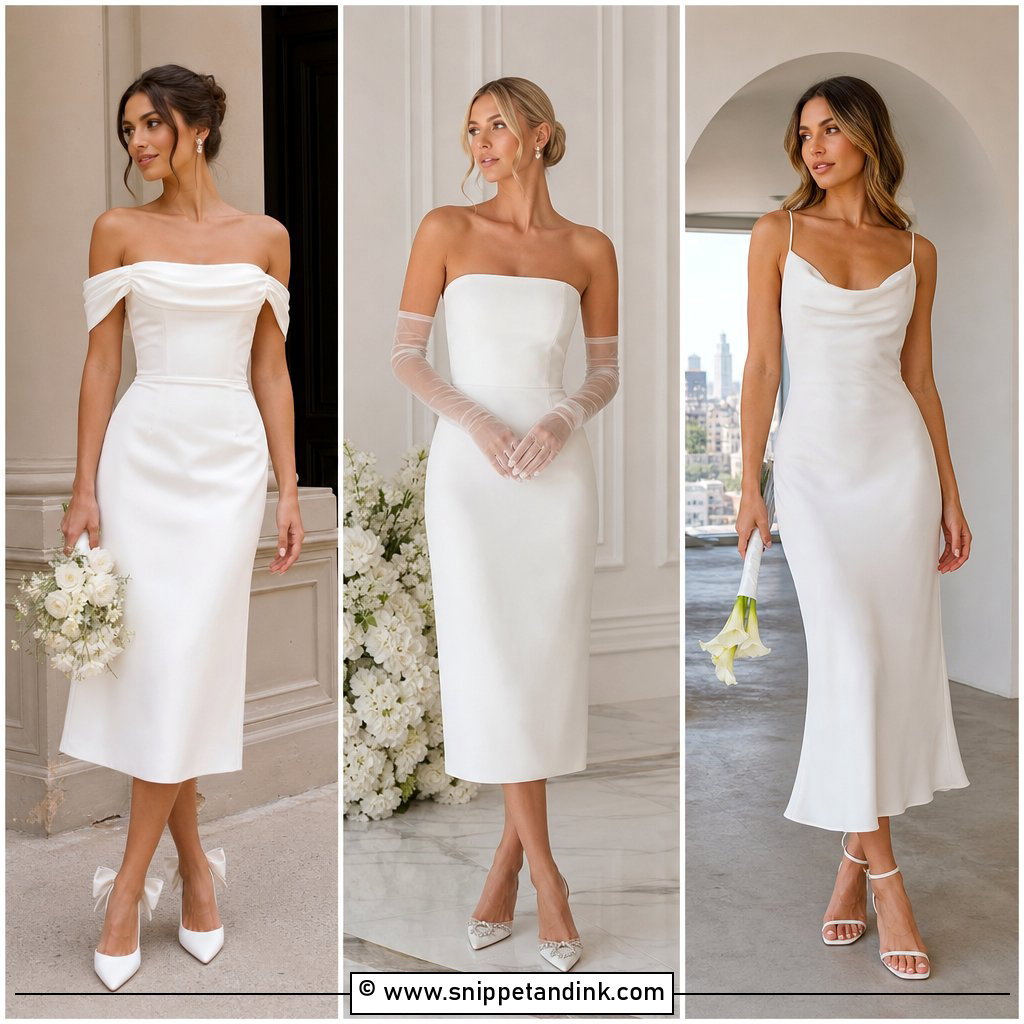
An elegant midi wedding dress sits anywhere between the knee and the ankle, and that small window is exactly where I spend most of a fitting. Get the hem right and the dress moves easily through a courthouse ceremony, a garden lunch or an evening reception as a second look. Get it wrong and the same dress cuts the leg at its widest point. Below are twenty shapes I reach for when a bride asks for something shorter: clean satin, corseted bodices, pearls, bows, appliqué flowers and soft draping. Because the hem shows your feet, the shoes become part of the outfit, and a veil, gloves or a tailored jacket can push the formality up or down.
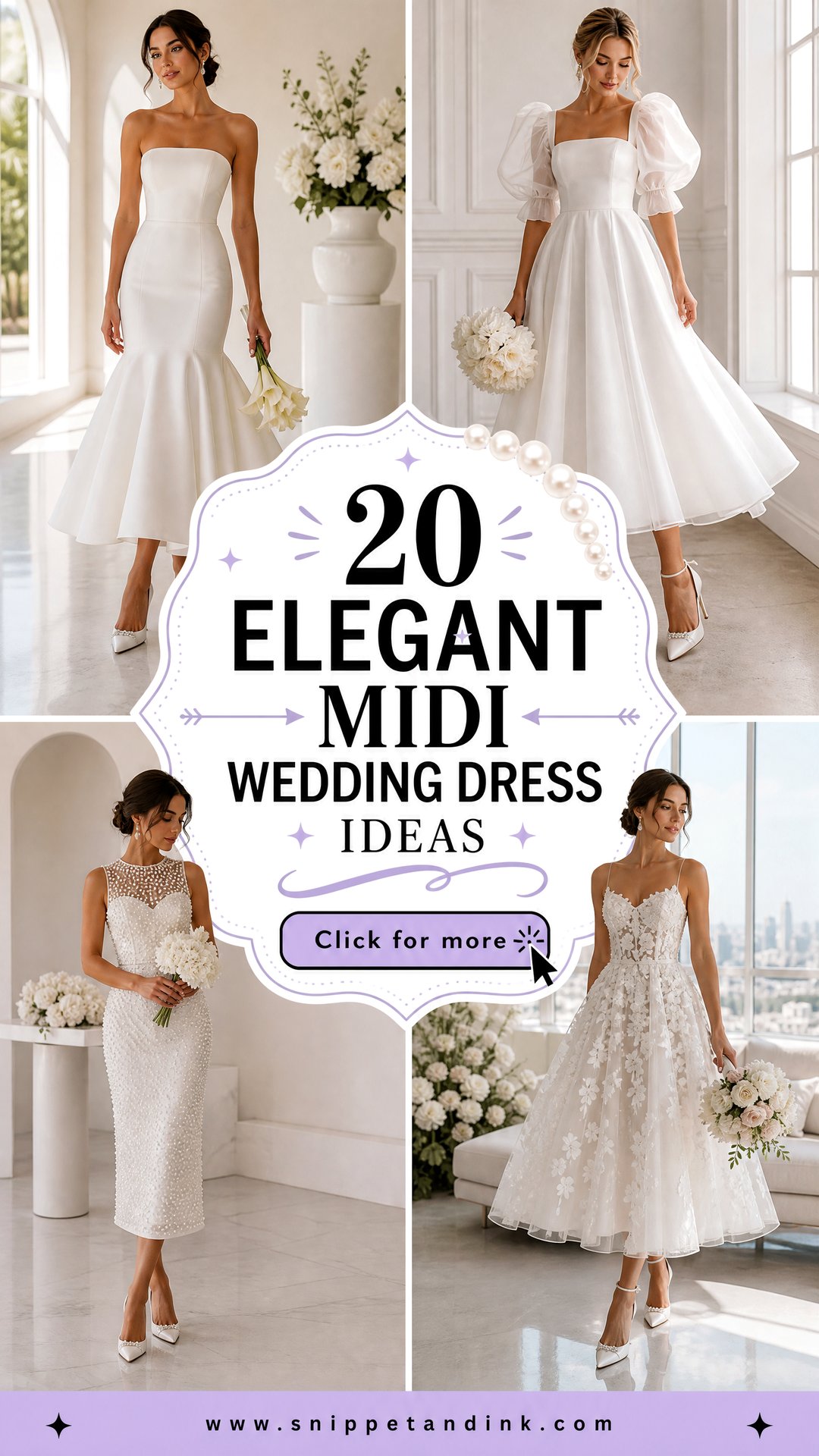
Where on Your Leg the Hem Should Stop
The word midi covers almost a foot of leg, and the hemline is the first thing I pin at every fitting. Most legs have three flattering stopping points: just below the knee, at the slimmest part of the calf below the muscle, and just above the ankle bone. A hem that lands across the widest part of the calf makes most legs look shorter and heavier, whatever the dress costs.
- Petite or short-legged: I aim for just below the knee, or for a hem that clears the ankle bone with a pointed shoe to extend the line.
- Tall: a longer tea length near the ankle looks proportioned; a hem right below the knee can read like a bridesmaid dress on a long frame.
- Full skirts sit higher than straight ones once the petticoat is in, so pin the hem with the final layers underneath.
Shoe height changes everything about a midi. Raise the heel by two inches and the hem effectively rises on your leg, so decide on shoes before the first alteration appointment and bring them every time. If you plan to swap into flats for dancing, try the dress with those too. A hem set for heels can brush the floor or look unfinished in flats, and a straight column can feel tight across the knee with a lower step.
Then do the walking test. I have brides climb a step, sit on a low chair and stand up again. A midi that rides above the knee when seated or catches between the legs on stairs needs either a slit, a kick pleat or more ease in the skirt, and those are far easier to add early than in the final week.
1. Satin A-Line Midi Wedding Dress
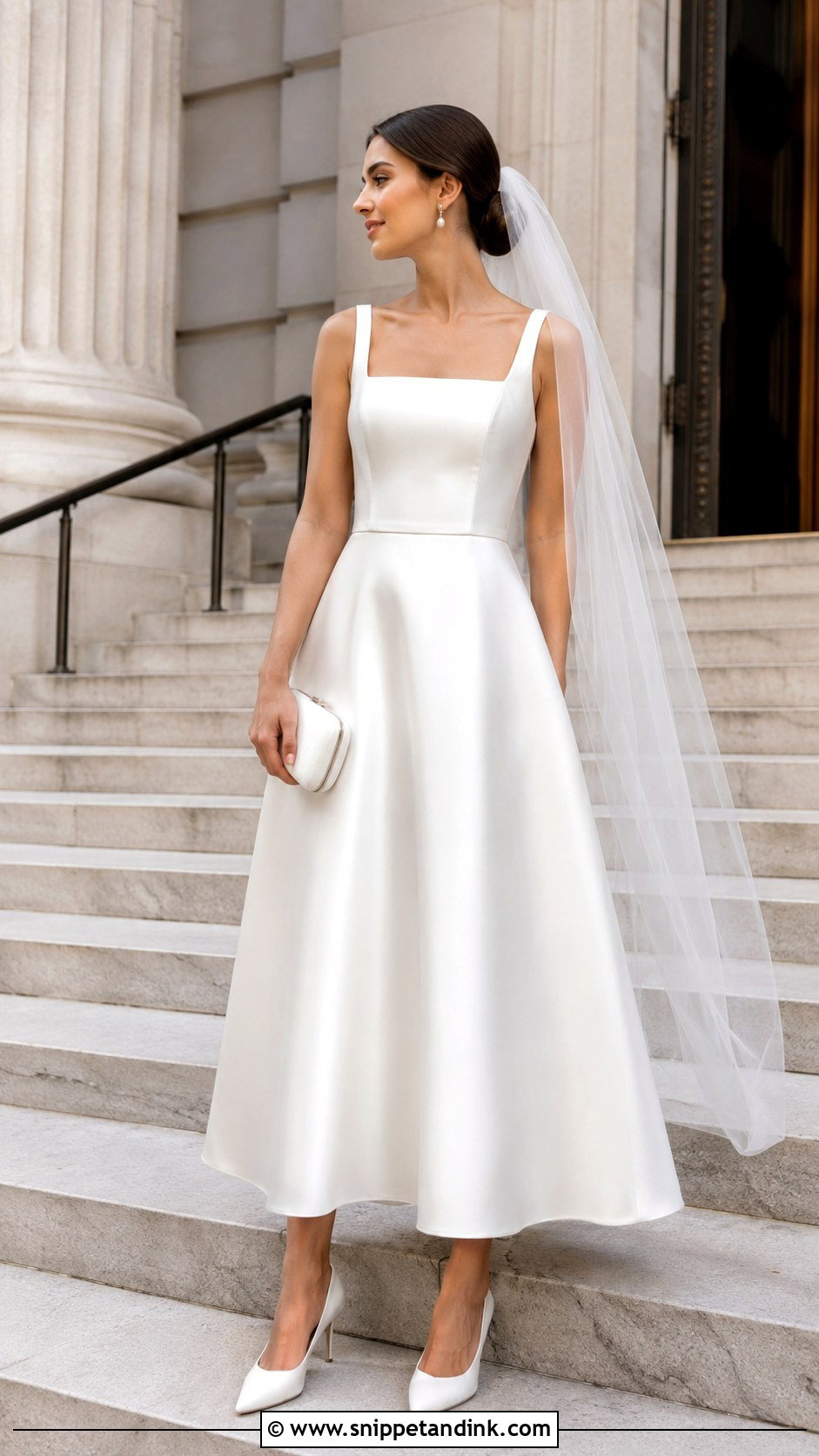
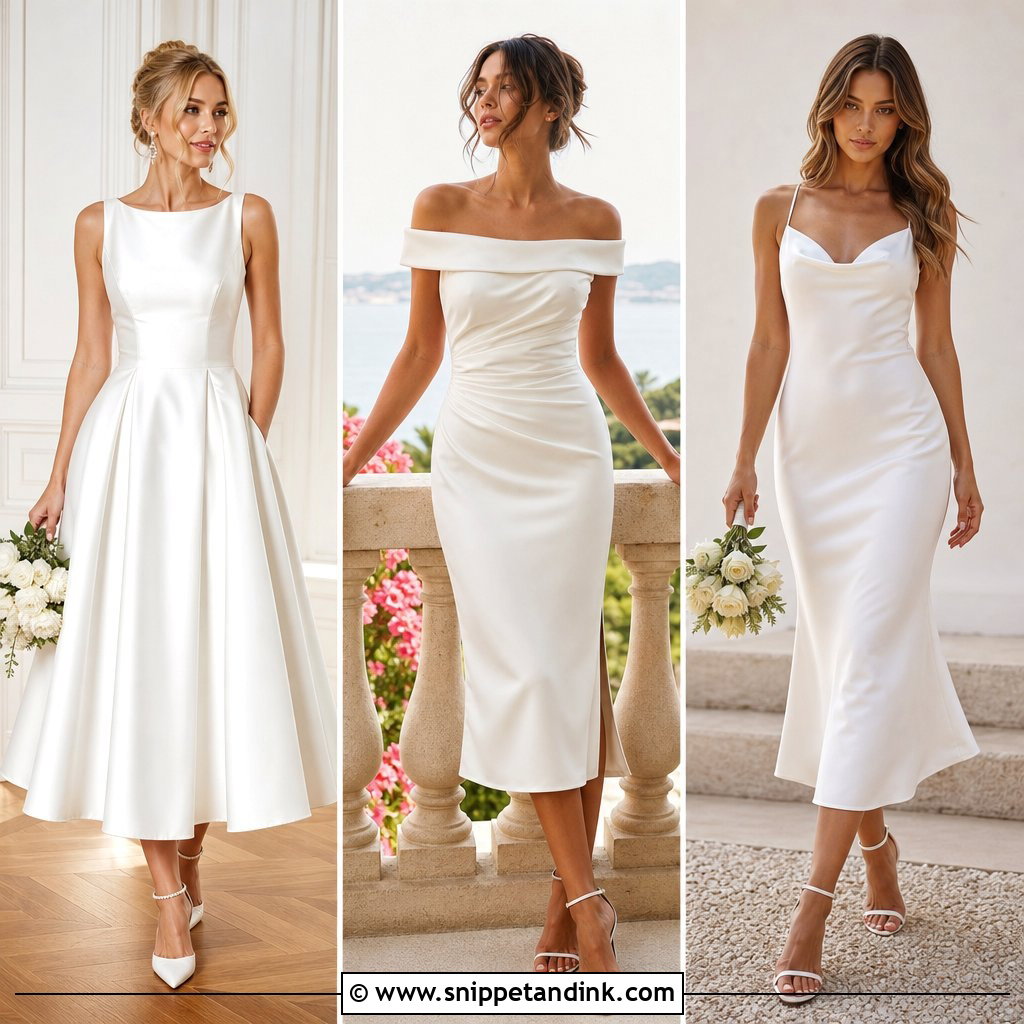
Satin on an A-line skirt does the work that beading does on other dresses: it catches light on its own. I look for a fitted bodice with wide straps or a soft curved neckline, and a skirt that clears the hips before falling to mid-calf. The cut forgives a lot because it marks the waist and then stands away from the body. Pointed ivory pumps, pearl drops, a small satin clutch and a fingertip veil finish it, and a low bun keeps the neckline open. For a restaurant or registry wedding I’d swap the veil for a structured headband. One warning from the fitting room: thin, cheap satin shows every seam and puckers at the zip, so ask to feel the weight before you fall for the photo.
2. Long Sleeve Lace Midi Wedding Dress
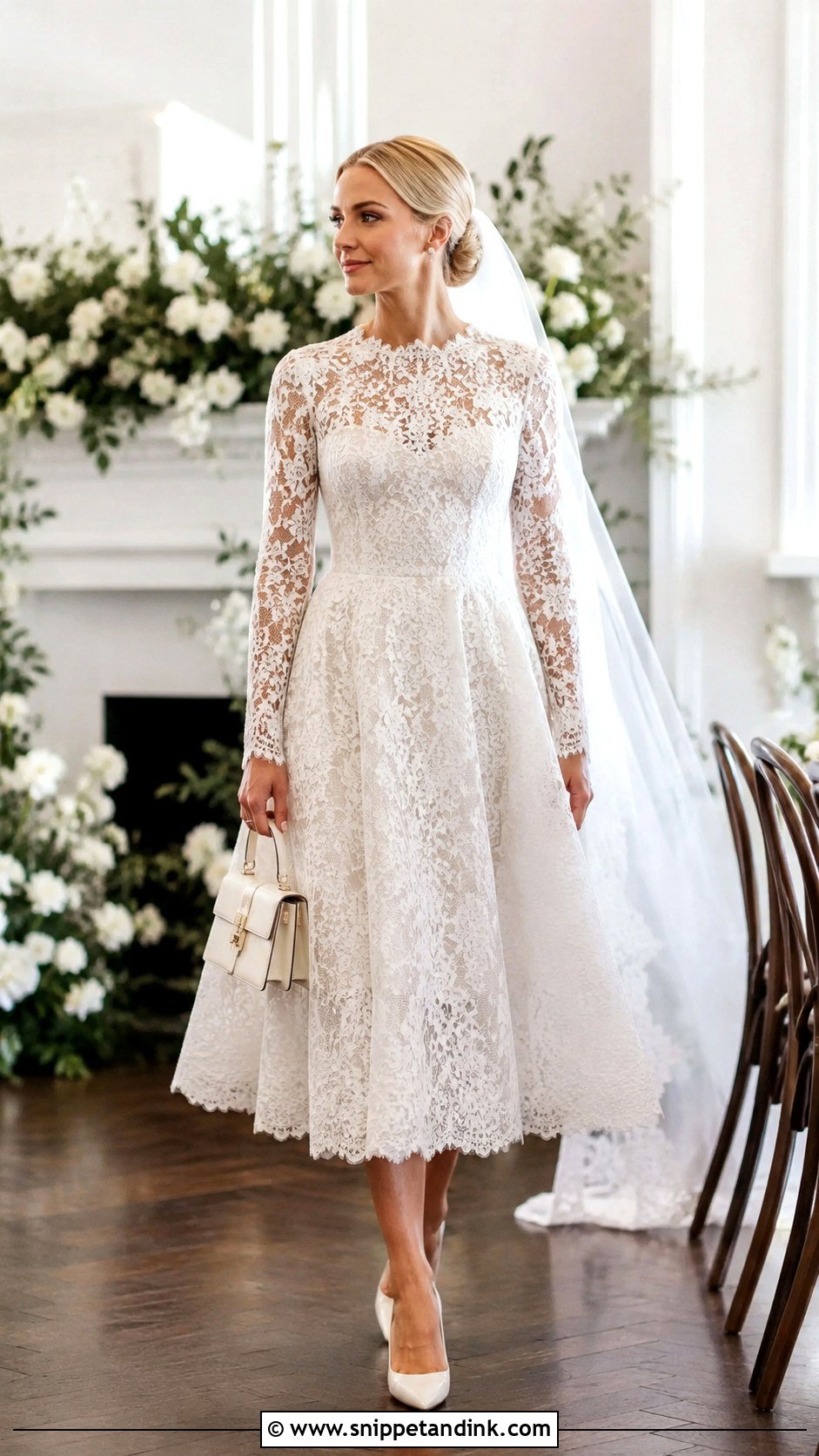
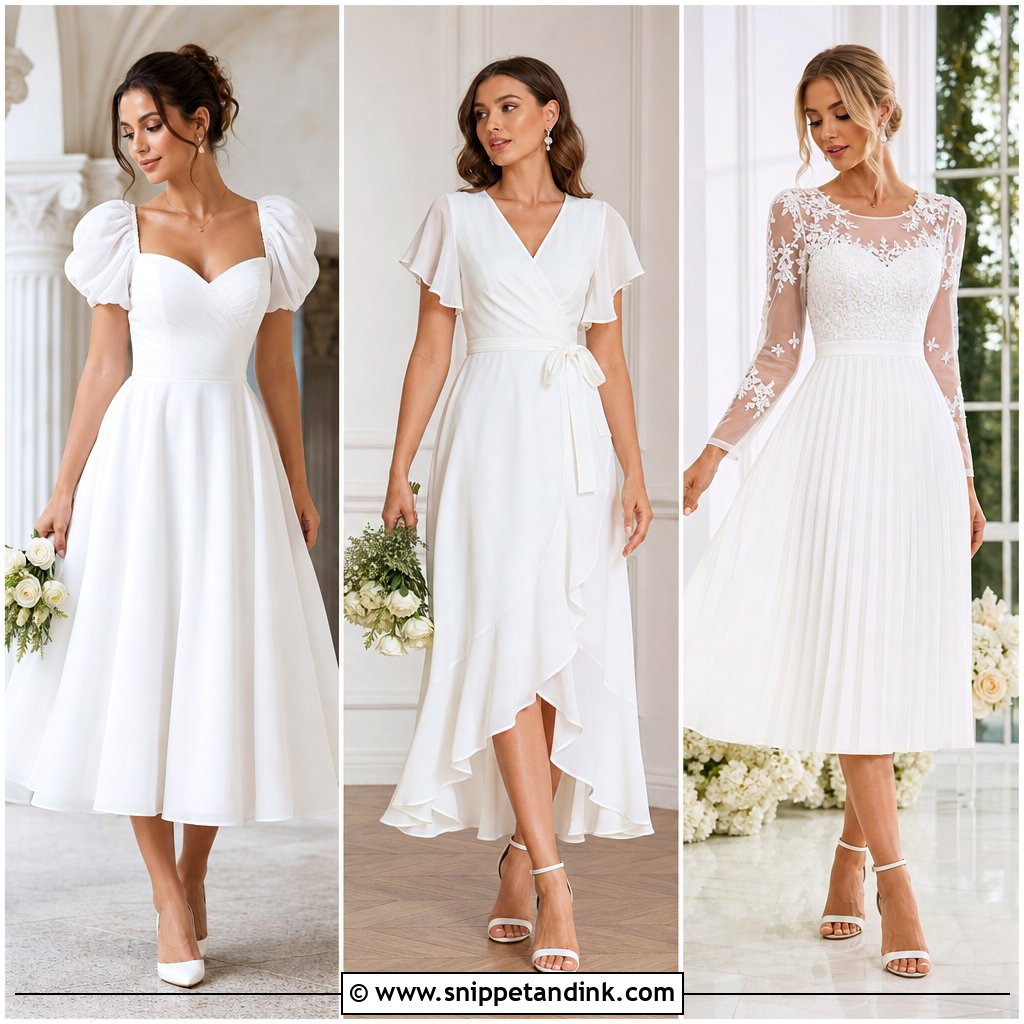
Long lace sleeves on a shorter hem give you the feel of a church dress without the weight of one. The balance comes from a softly fitted bodice, a defined waist and a skirt with only a little flare, because the lace already carries plenty of detail. I always ask what colour sits under the lace: a nude lining shows the motif clearly, while ivory reads softer and more traditional. Slingback heels, pearl studs and a plain tulle veil are enough. If you have a fuller bust, a lined V-neck sits better than lace pulled flat across the chest; a bateau neck gives more coverage. In winter, an ivory coat that stops just short of the hem looks deliberate rather than borrowed.
3. Square Neck Crepe Midi Wedding Dress
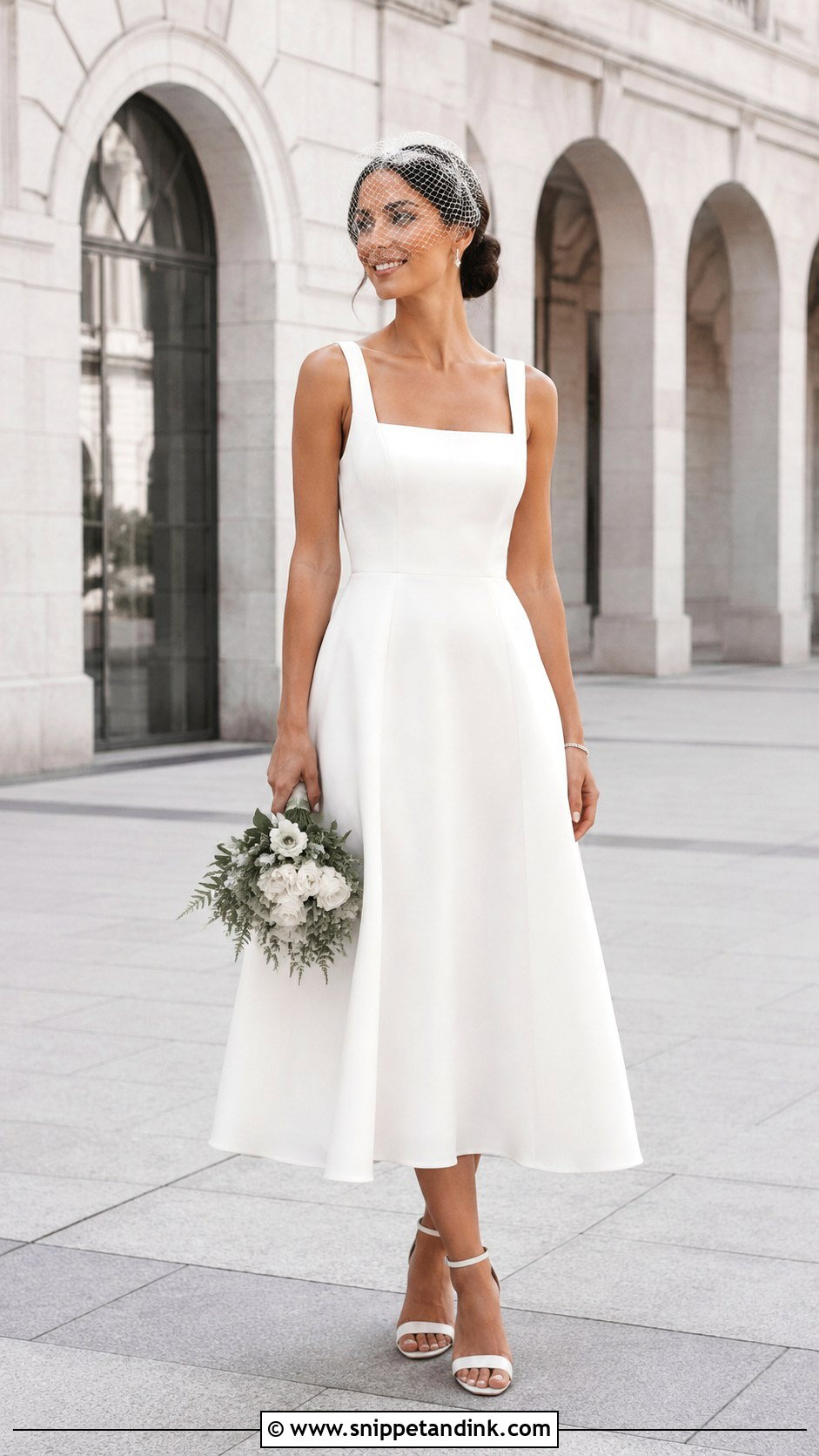
Crepe and a square neckline make a crisp pair. The neckline frames the collarbones and suits wide straps or a short sleeve, and princess seams let the bodice follow you without darts pulling. Crepe’s matte face is why I like it here: it shows the cut, not the shine. Block-heel sandals, a slim tennis bracelet, small crystal earrings and a short birdcage veil keep the shape clear. Here is the catch. A square neck that is even a few millimetres too wide will gape when you lean forward to sign the register, so have the straps and neckline pinned while you are wearing your actual wedding shoes and the bra you’ll wear on the day.
4. Strapless Fit And Flare Midi Wedding Dress
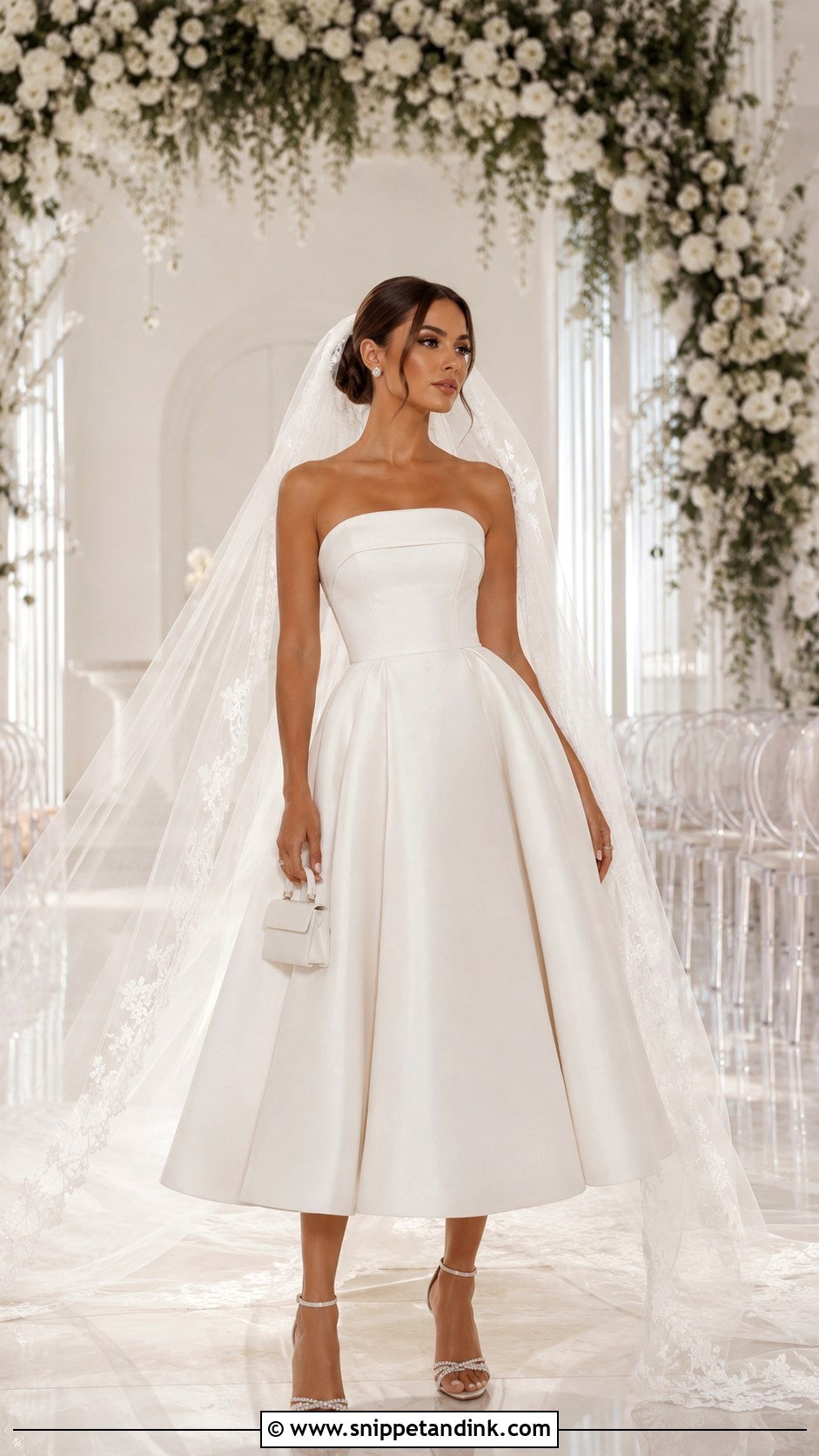
Strapless fit-and-flare only works if the bodice holds itself up. At a fitting I ask the bride to lift both arms and hug me; if she reaches for the top edge afterwards, the boning or the internal corset needs more work. The skirt should follow the hips and open below them, which keeps walking and dancing easy at this length. Pointed pumps or crystal-strap heels will show, so choose them early. A delicate pendant, bright studs and a structured mini bag are plenty, and a detachable tulle wrap or cropped satin jacket covers the shoulders in a cold church. A cathedral veil for the aisle, removed for the party, adds drama without committing to it all night.
5. Off Shoulder Tea Length Wedding Dress
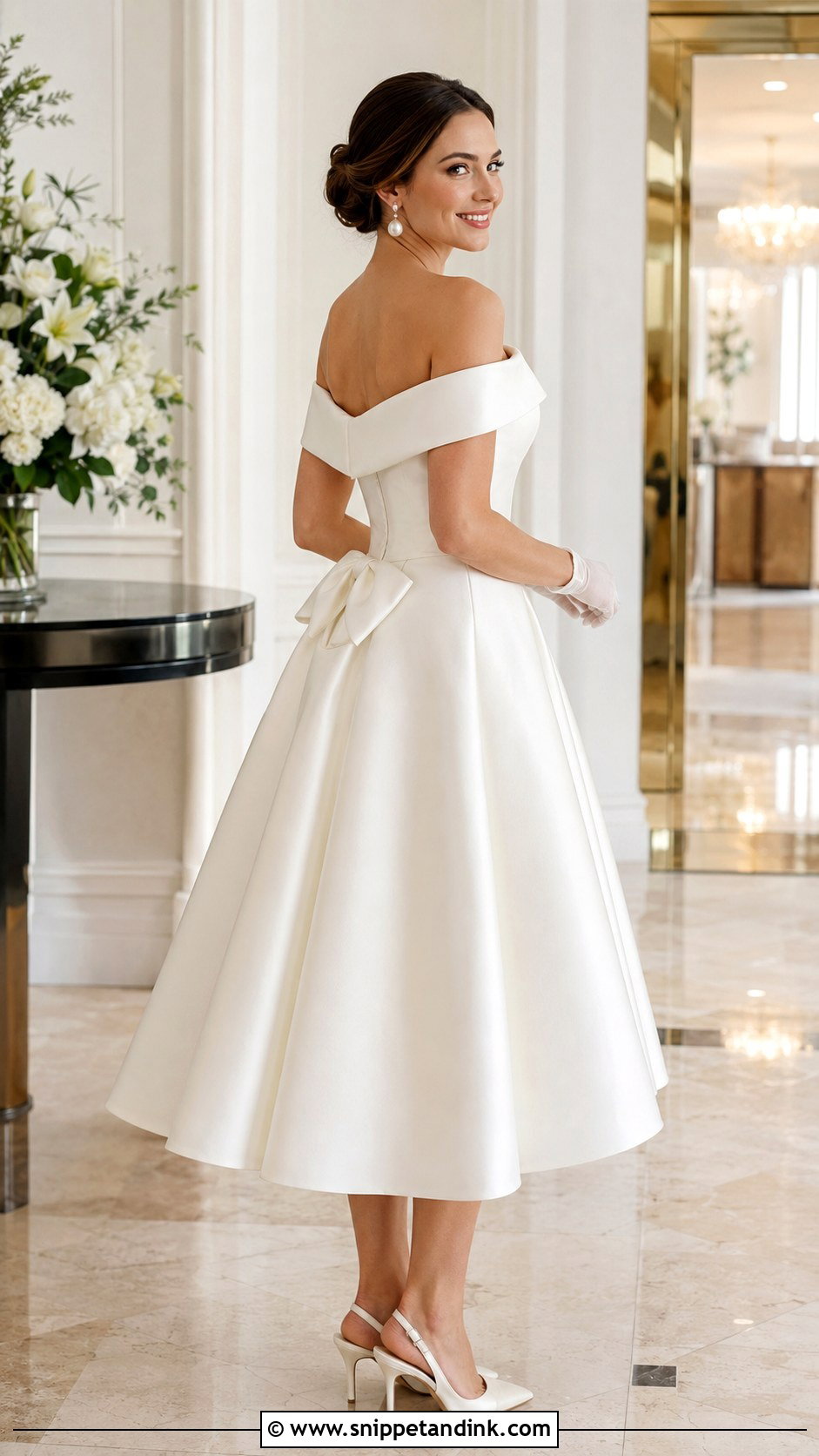
The off-shoulder tea-length shape borrows from the 1950s, and it needs a fabric with body to look right. Mikado, duchess satin or a heavier faille will hold the folded neckline band and the full mid-calf skirt, whereas a soft charmeuse collapses. Slingback pumps, pearl earrings and short gloves complete the period feel; a neat chignon or a side-parted wave keeps the shoulders clear. A small bow at the back helps a plain bodice. For petite brides I move the hem to just below the knee, because stopping at the fullest part of the calf shortens the leg. Bear in mind that off-shoulder bands limit how high you can lift your arms, which matters for a first dance with a lot of spins.
6. Halter Neck Satin Midi Wedding Dress
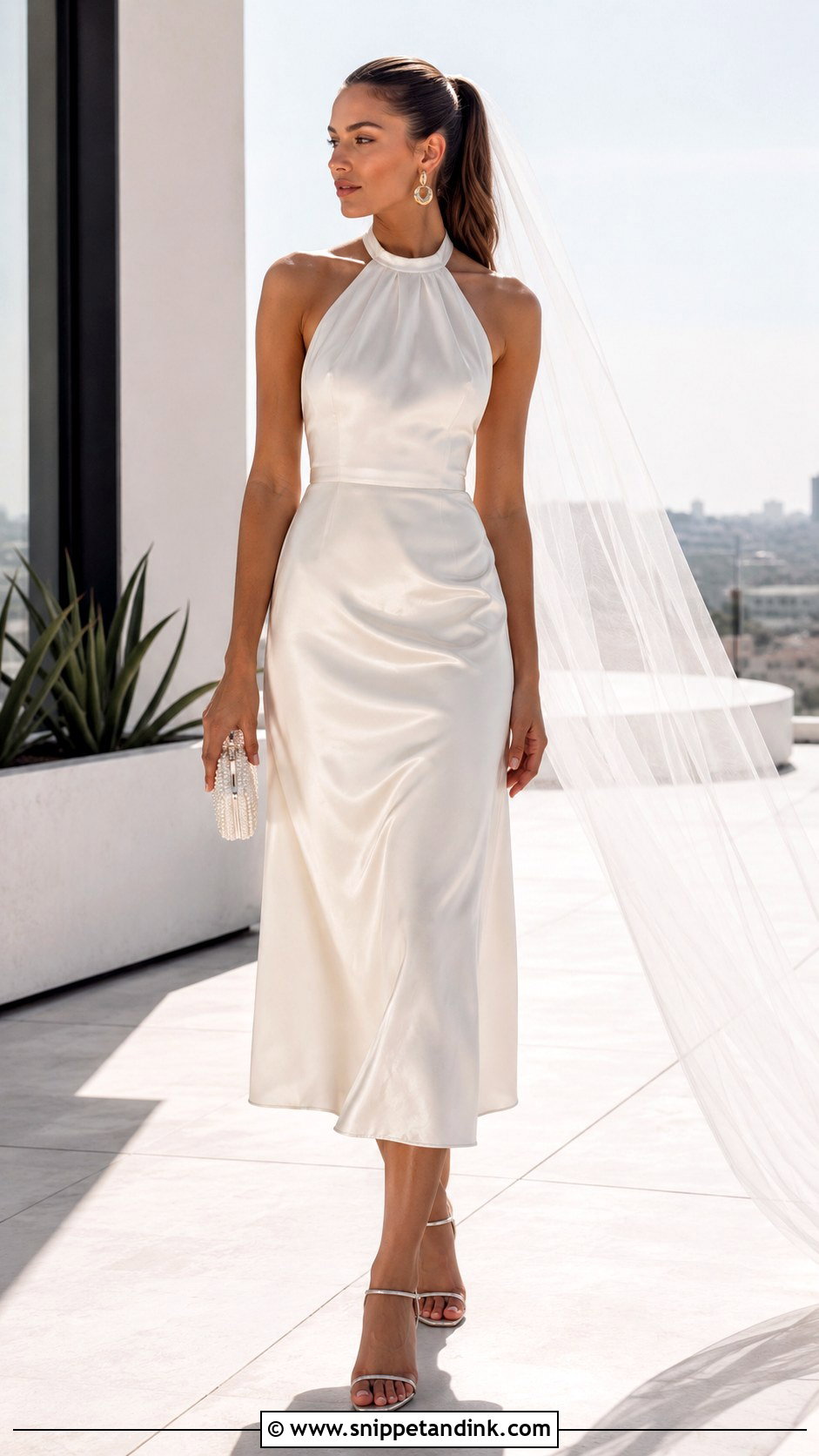
A satin halter pulls the eye up to the face and shoulders, so I usually tell brides to keep jewellery to the ears and nothing at the throat. Pair the fitted waist with either a bias-cut skirt or a clean A-line, then add metallic sandals and a small ivory clutch. A smooth bun or high ponytail lets the open back show, and a long narrow veil gives you ceremony length without hiding it. Halters put the whole weight of the bodice on the back of the neck, which can ache by the evening. A wider neckband and a structured lining spread that load, and heavier satin gives more coverage than the light version that suits a hot afternoon.
7. Puff Sleeve Organza Midi Wedding Dress
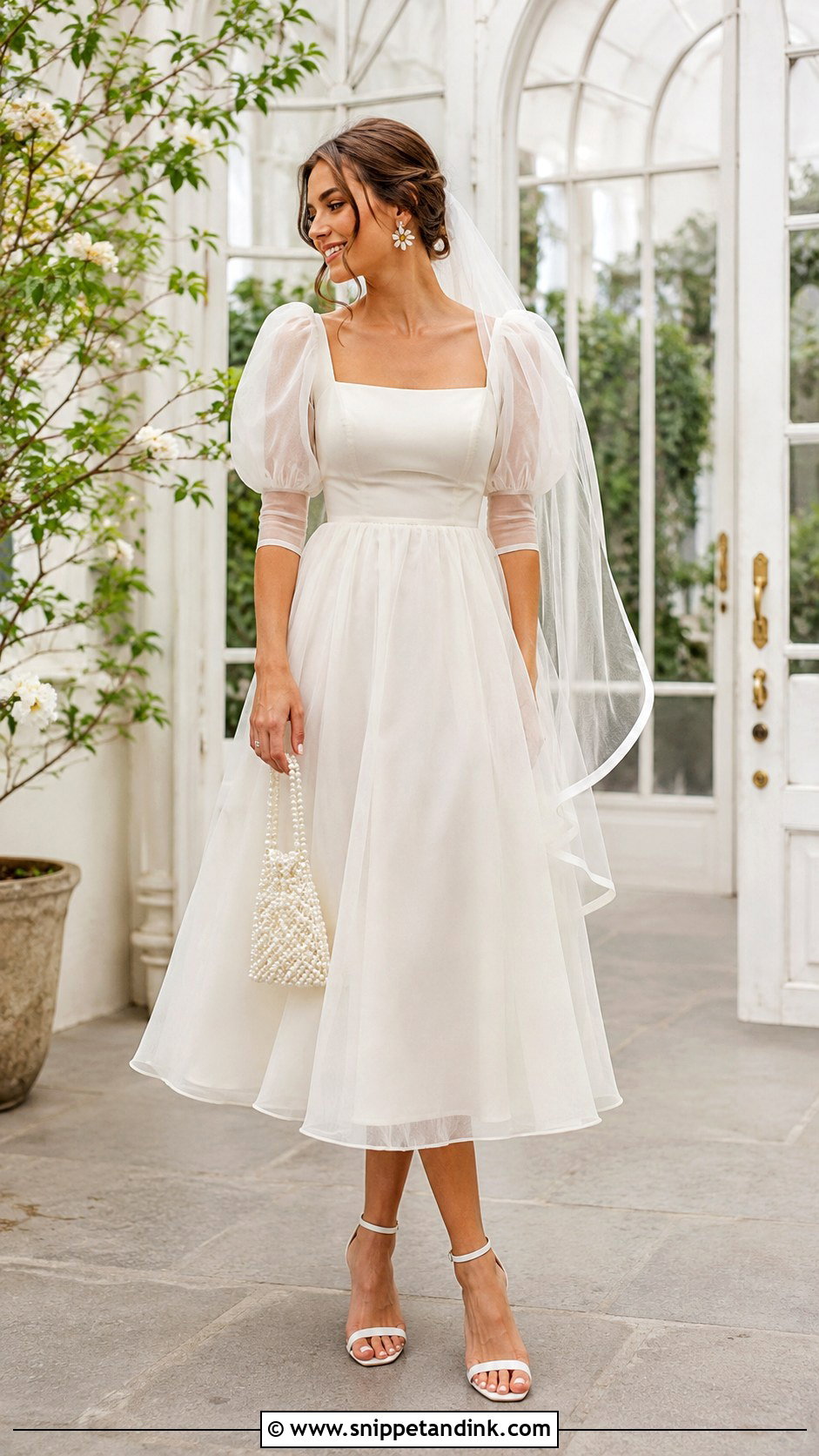
Organza is crisp, which is why it holds a puff sleeve so well and why it can also make you look wider if there is too much of it. My rule is volume in one place only. Pick a fitted bodice with sheer puff sleeves and a lightly gathered skirt, and avoid extra layers at the waist. Sleeves can stop above the elbow or run to the wrist. Delicate ankle-strap heels, floral earrings, a small beaded bag and a veil with a ribbon edge suit the light texture. Keep the hair controlled, a low bun or a tidy half-up, so the sleeves keep their outline. Organza also creases sharply when crushed in a car, so plan a few minutes with a steamer at the venue.
8. Bow Back Mikado Midi Wedding Dress
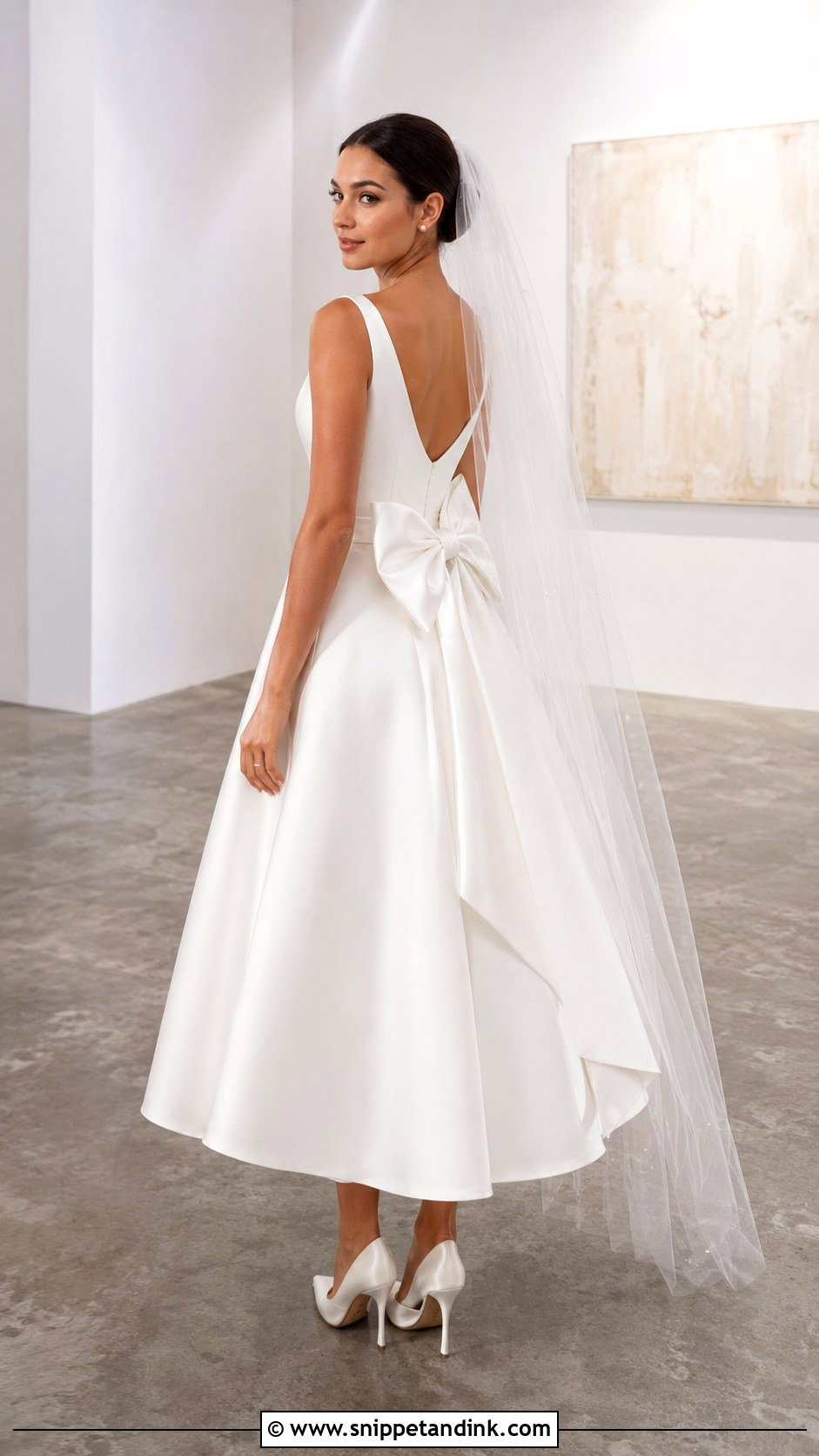
This is a dress people see from behind for most of the ceremony, so the bow earns its place. I start with a clean sleeveless or strapless bodice, a defined waist and a structured A-line skirt in mikado, which has enough body to keep both skirt and bow standing. A medium bow reads polished; an oversized detachable one gives you a big moment you can unhook for dancing. Pointed satin pumps, pearl studs and a small structured bag finish it. Place a fingertip veil above the bow, not over it, and wear a sleek updo so the back stays clear. Mikado has almost no stretch, so tailoring through bust, waist and zip has to be exact.
9. Pearl Embellished Midi Wedding Dress
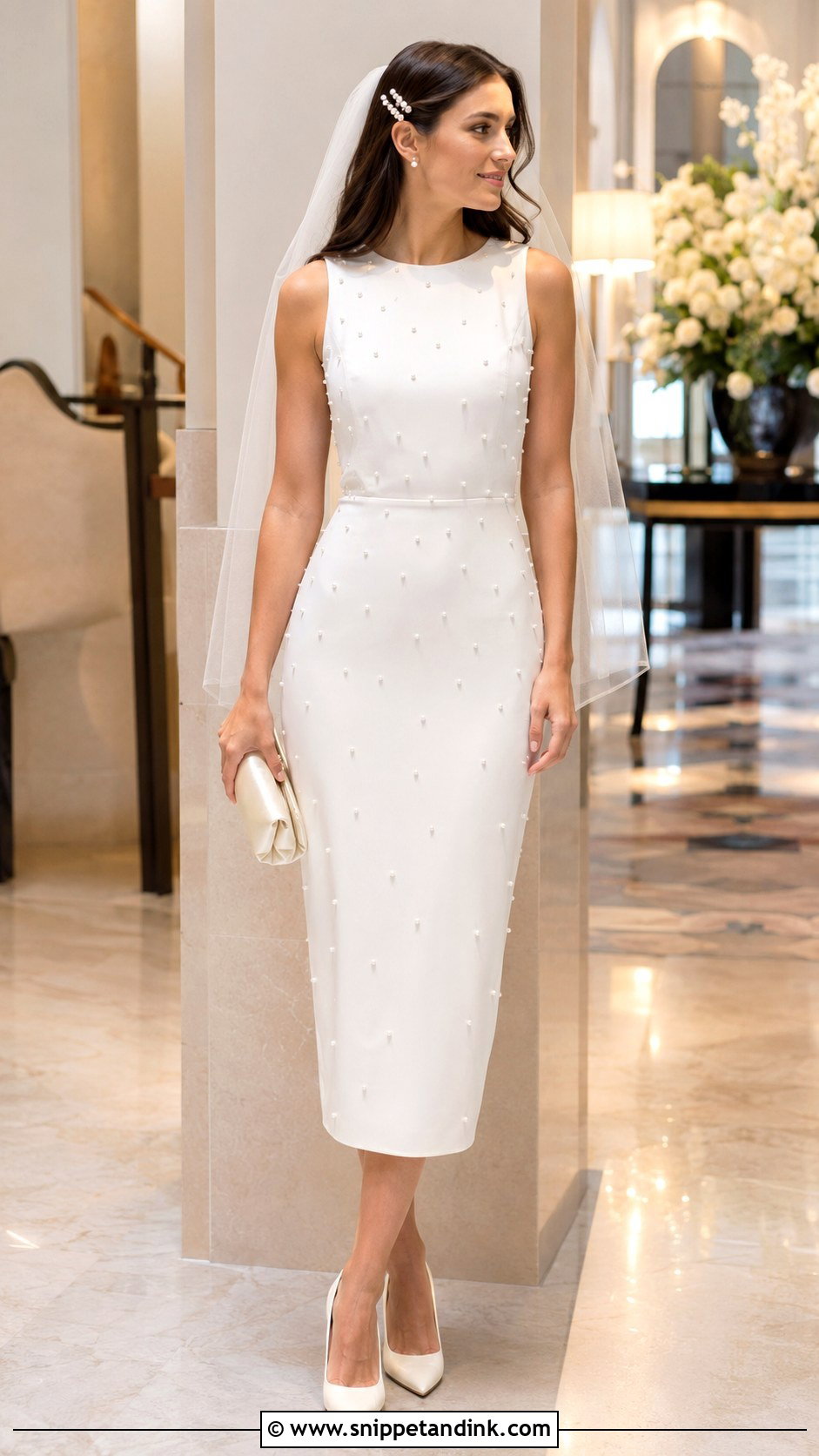
Pearls glow rather than sparkle, which suits brides who find crystals too loud. I like them concentrated at the neckline, bodice or sleeves of a crepe, tulle or satin base, with any scatter on the skirt kept generous and sparse. If the neckline is already decorated, drop the necklace; small earrings and a fine bracelet are enough. Ivory pumps, pearl hairpins and a plain satin clutch keep the palette quiet, and a single-layer veil lets the texture show. Before the day I run a hand over every cluster. Pearls are usually hand-stitched in small groups, and a loose thread catches on lace veils and bracelets, then one tug undoes a whole run.
10. Corset Tulle Midi Wedding Dress
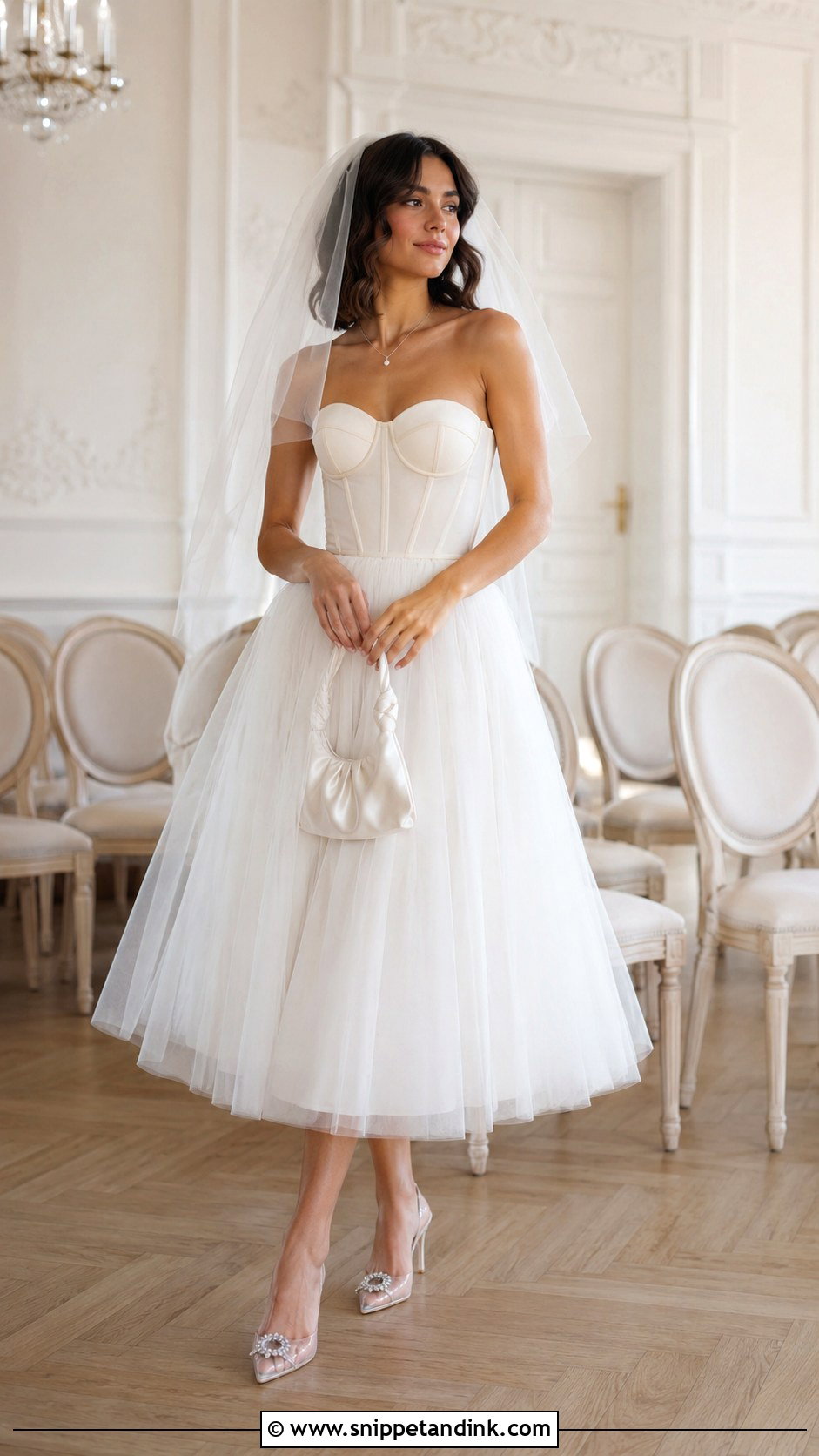
Corsetry and tulle balance each other: structure on top, air below. The bodice should have visible seaming, secure cups and boning that supports without biting, and you should be able to sit through dinner in it. I test this at fittings by having the bride sit for ten minutes, because a corset that feels fine standing can dig into the ribs once seated. A layered tulle skirt starting at the natural waist moves well for dancing. Crystal slingbacks, a delicate pendant and a small satin bag suit it, with a shoulder-length veil for a younger feel. Match any sheer panels to your skin tone, and skip bulky underskirts on a petite frame.
11. Boat Neck Column Midi Wedding Dress
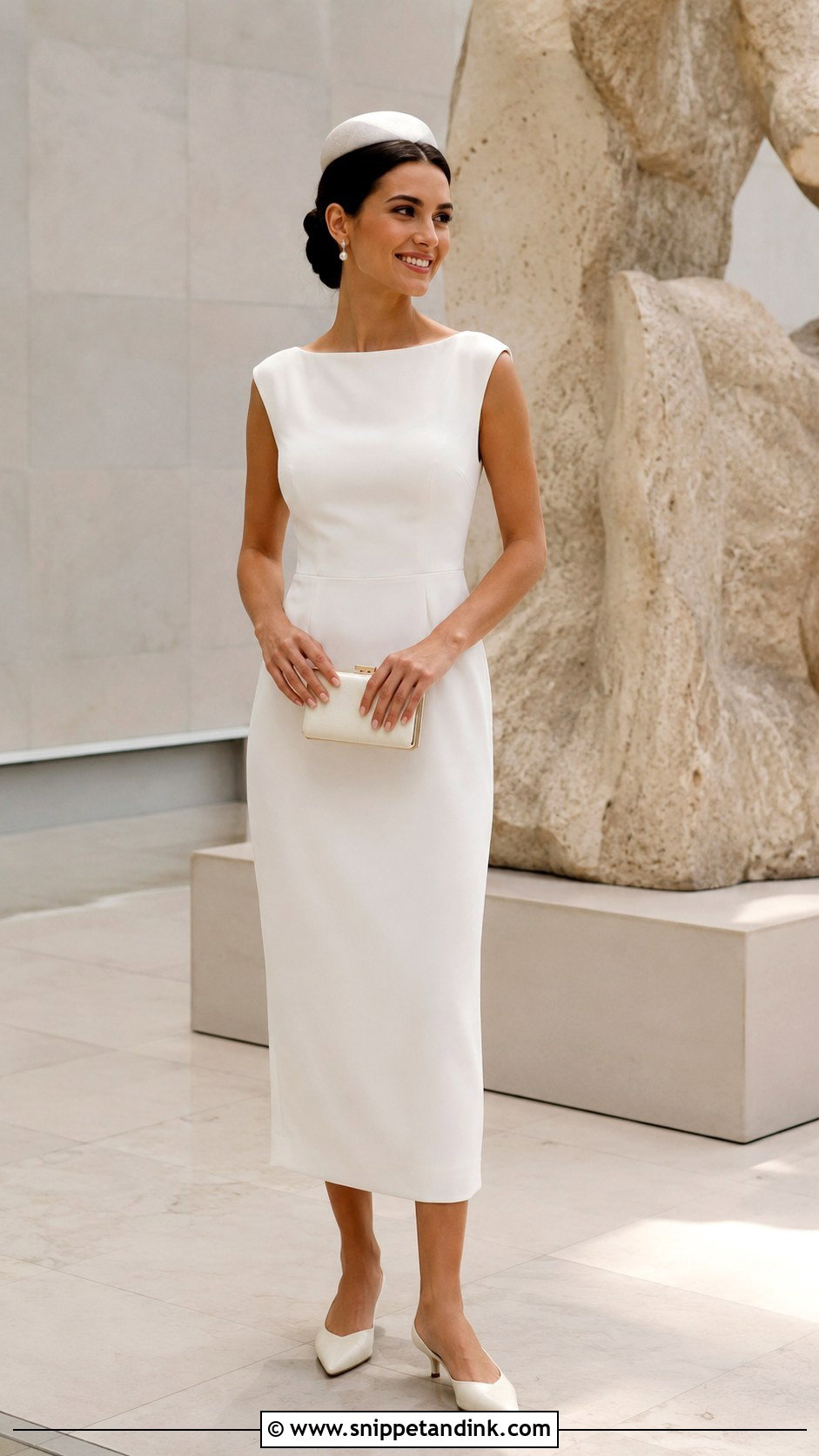
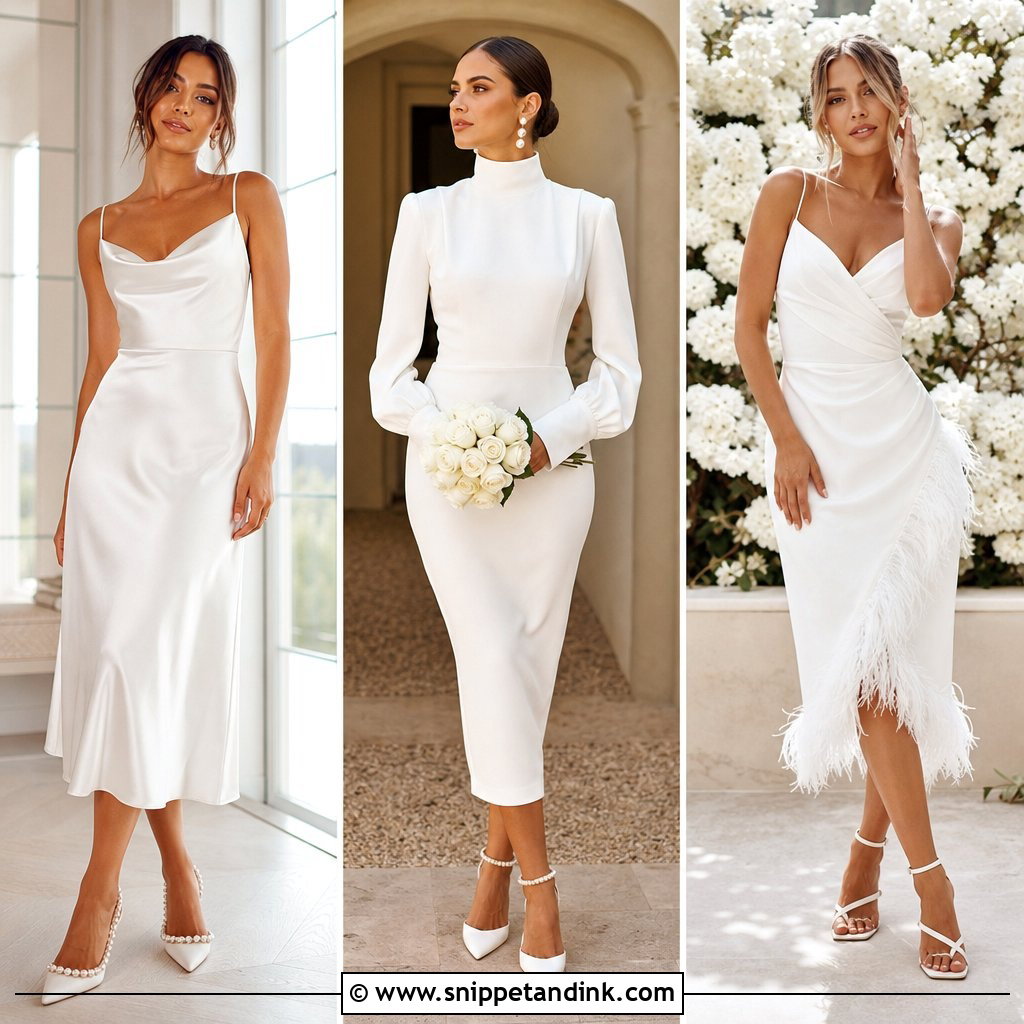
A boat neck runs along the collarbone and a column skirt drops straight down, so the whole dress is one long, clean line. It suits brides who like classic tailoring. I steer people toward stretch crepe or lined satin here, because a straight skirt with no give rides up and wrinkles across the lap the moment you sit. Pointed kitten heels, pearl earrings and a slim clutch keep it sharp, and a short veil or a pillbox-inspired bridal headpiece adds personality without crowding the neckline. For cold weather, a collarless ivory jacket that ends above the waist keeps the proportions. Darts or princess seams add shape if the column feels too plain on you.
12. One Shoulder Draped Midi Wedding Dress
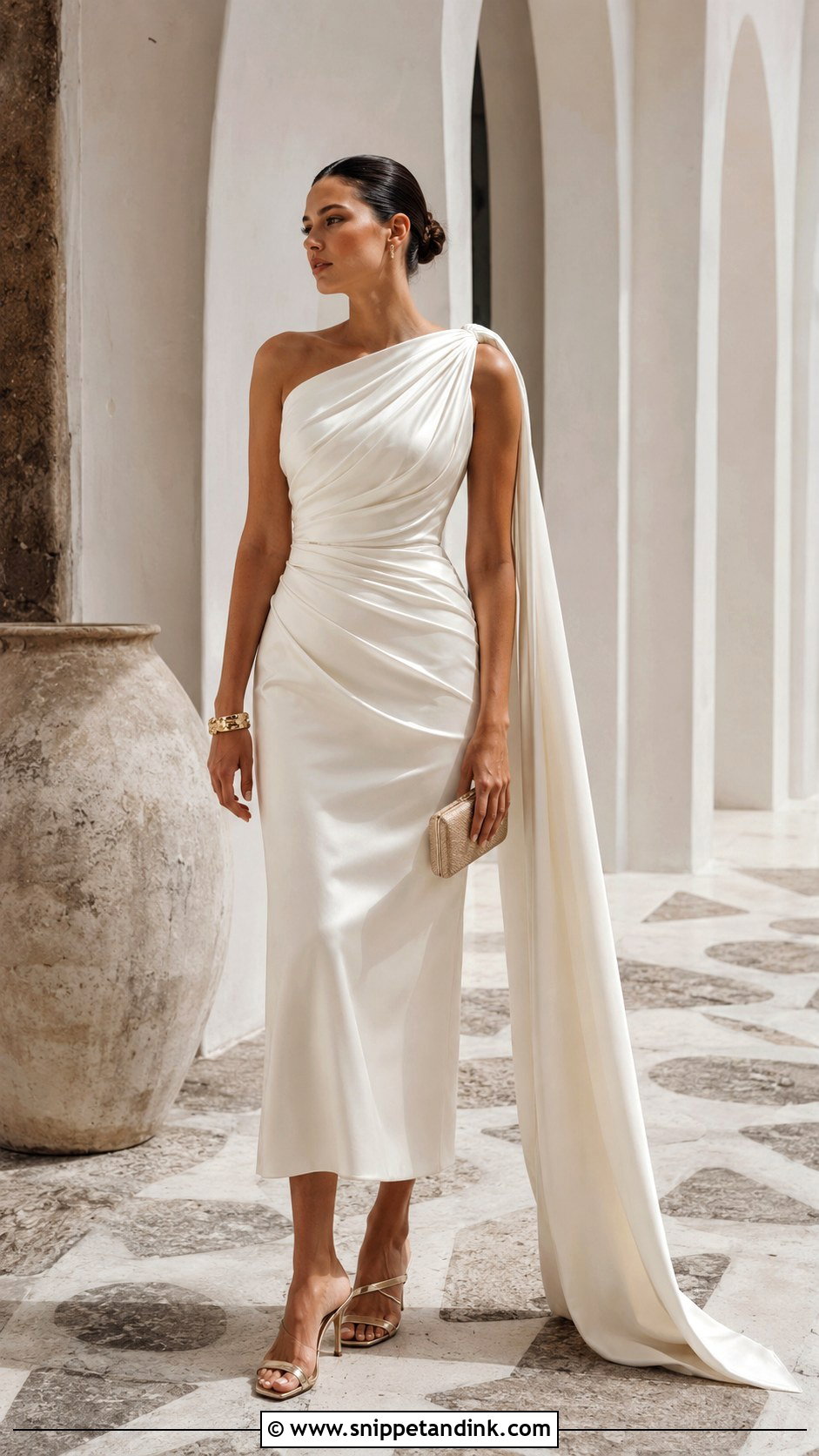
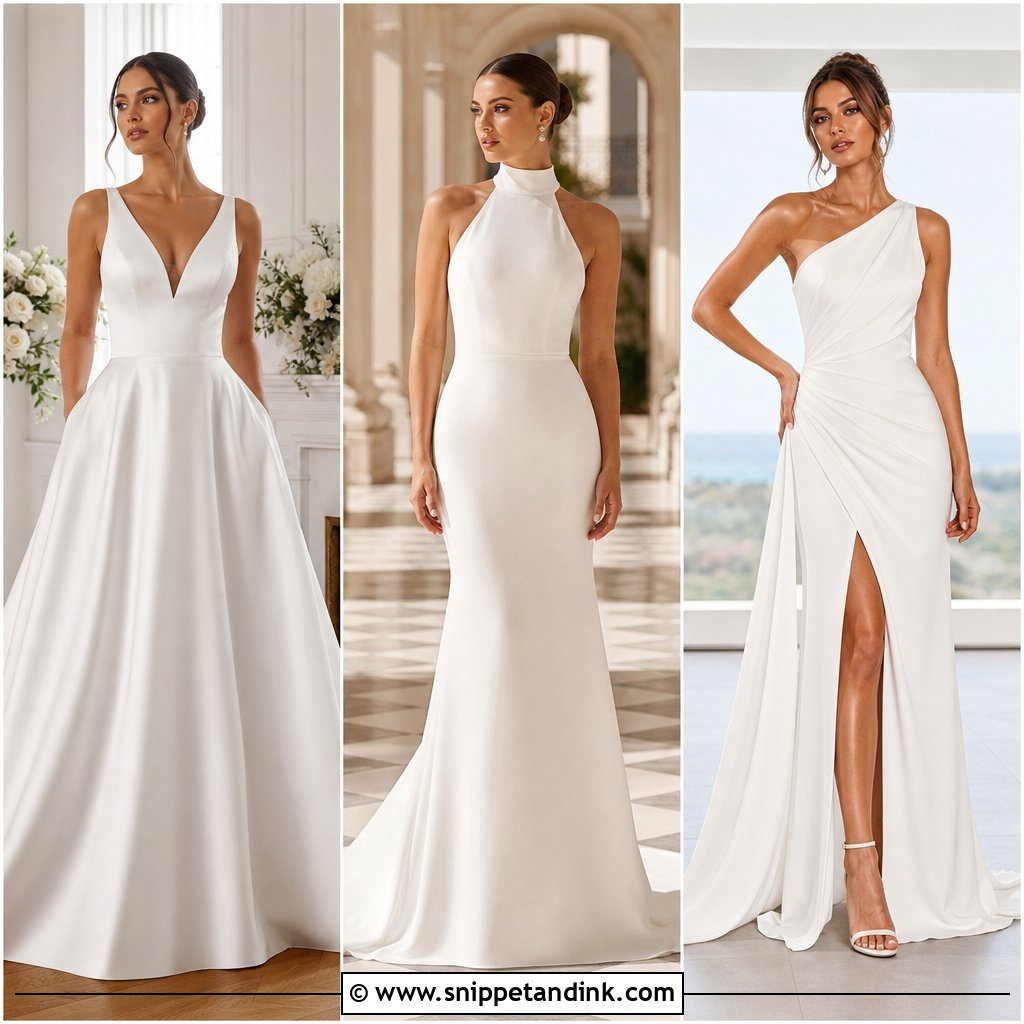
Draping is the detail here, so the fabric must hold a fold. Satin-backed crepe, silk or a firm jersey all work; thin jersey just sags into wrinkles. The diagonal from one shoulder to the opposite hip defines the waist on most figures. Low metallic heels, a sculptural bracelet and a minimal clutch are enough, with either a single statement earring on the bare side or matching studs. A sleek bun keeps the line clear, and a removable shoulder train can replace a veil. What I check most is the armhole on the strapped side. If the drape pulls there, it pulls everywhere, and the fix is the right strapless or stick-on bra plus a proper alteration.
13. High Neck Lace Midi Wedding Dress
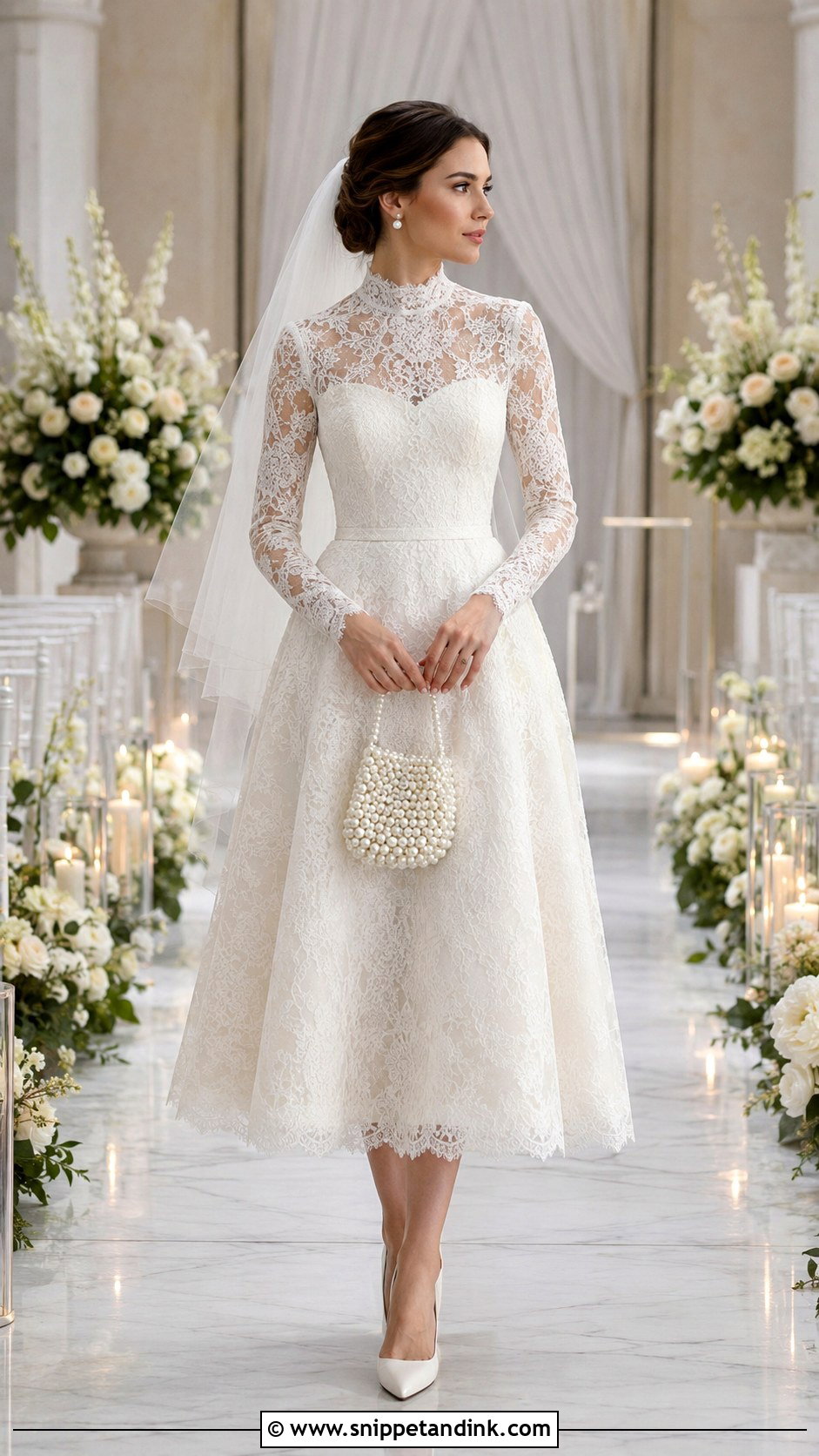
A high lace neck gives coverage that still feels light, provided the bodice is lined and the lace at the throat is sheer. Solid lace up to the chin can make the upper body look heavy. Balance long sleeves or busy motifs with a defined waist and a softly flared skirt. Almond-toe pumps, a small pearl bag, simple studs and a low twist in the hair keep attention on the neckline. I always ask brides to turn their head fully both ways at the fitting; stiff corded lace can scratch along the jaw, so a soft, pliable lace is the better choice. It is a good fit for cool-weather ceremonies and formal daytime weddings.
14. Bridal Blazer Midi Wedding Dress
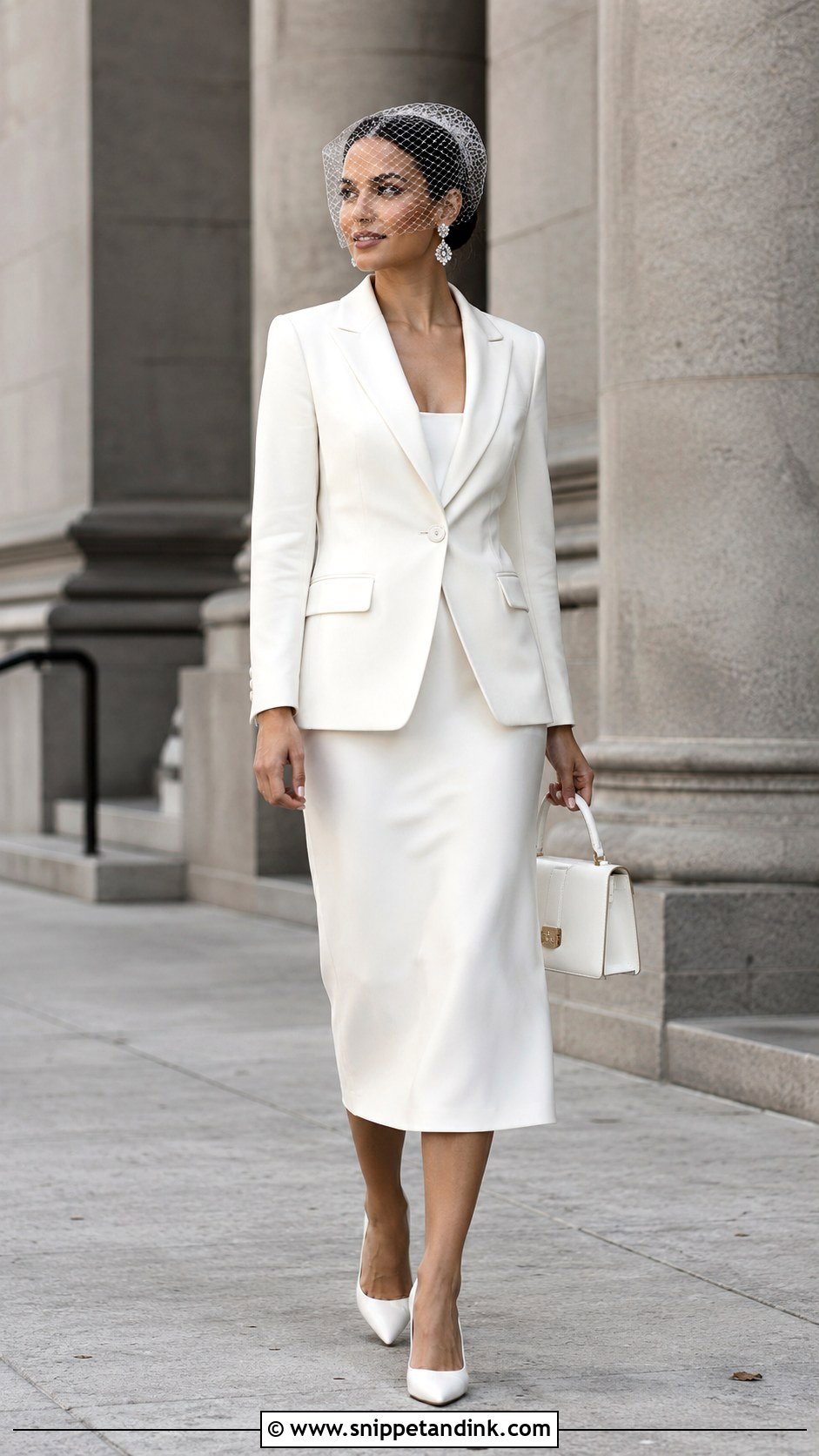
Layering a blazer over a streamlined midi is the most tailored option on this list, and it lets you change the look halfway through the day. Start with a slip, column or fitted crepe dress, then add a single-breasted ivory blazer with a defined shoulder; matching fabric looks sleek, a subtle texture contrast looks more fashion-led. Pointed pumps, pearl or crystal earrings and a structured top-handle bag suit it, and a birdcage veil keeps it clearly bridal. Wear it buttoned for the vows and take it off for the reception. Ivory is unforgiving, so I hold the jacket and dress side by side in daylight before buying; two different whites look like a mistake in photos. The hem should stop above the fullest part of the hips.
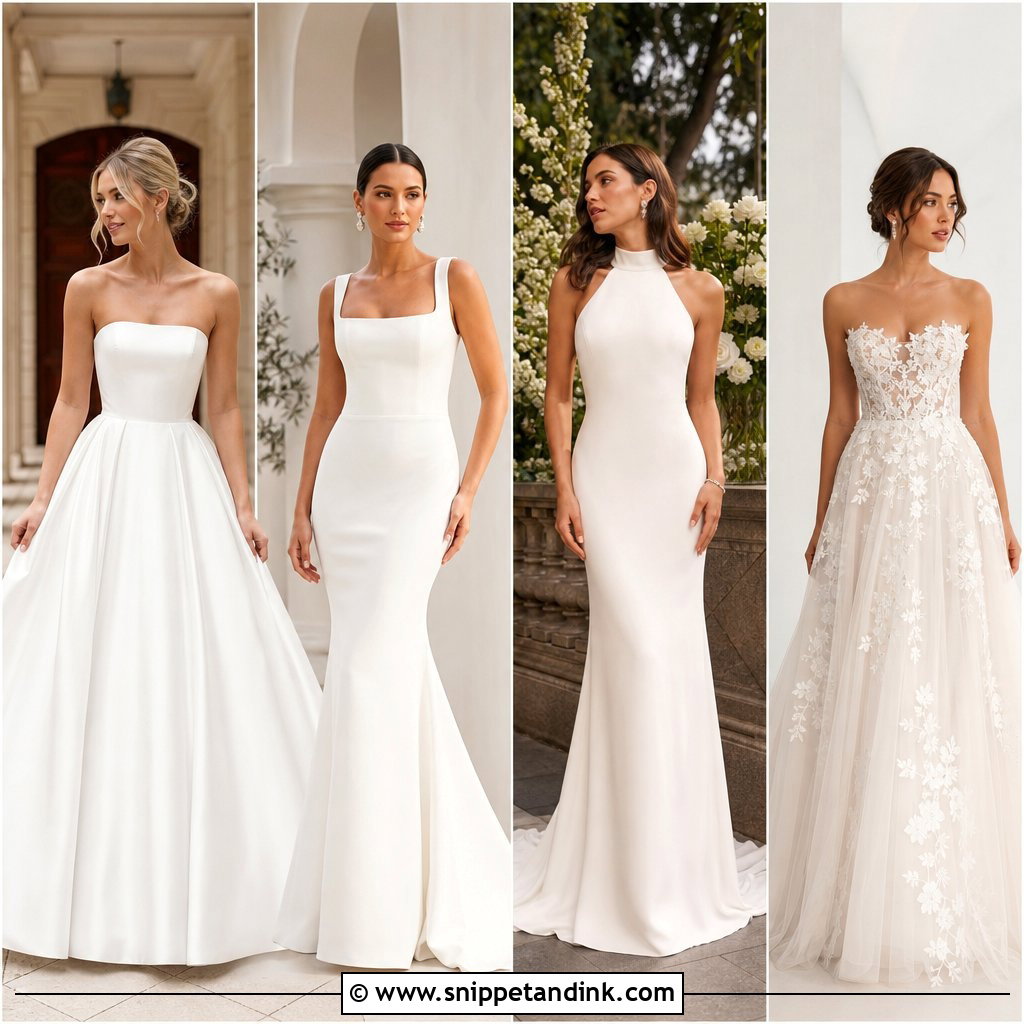
15. Pleated Chiffon Midi Wedding Dress
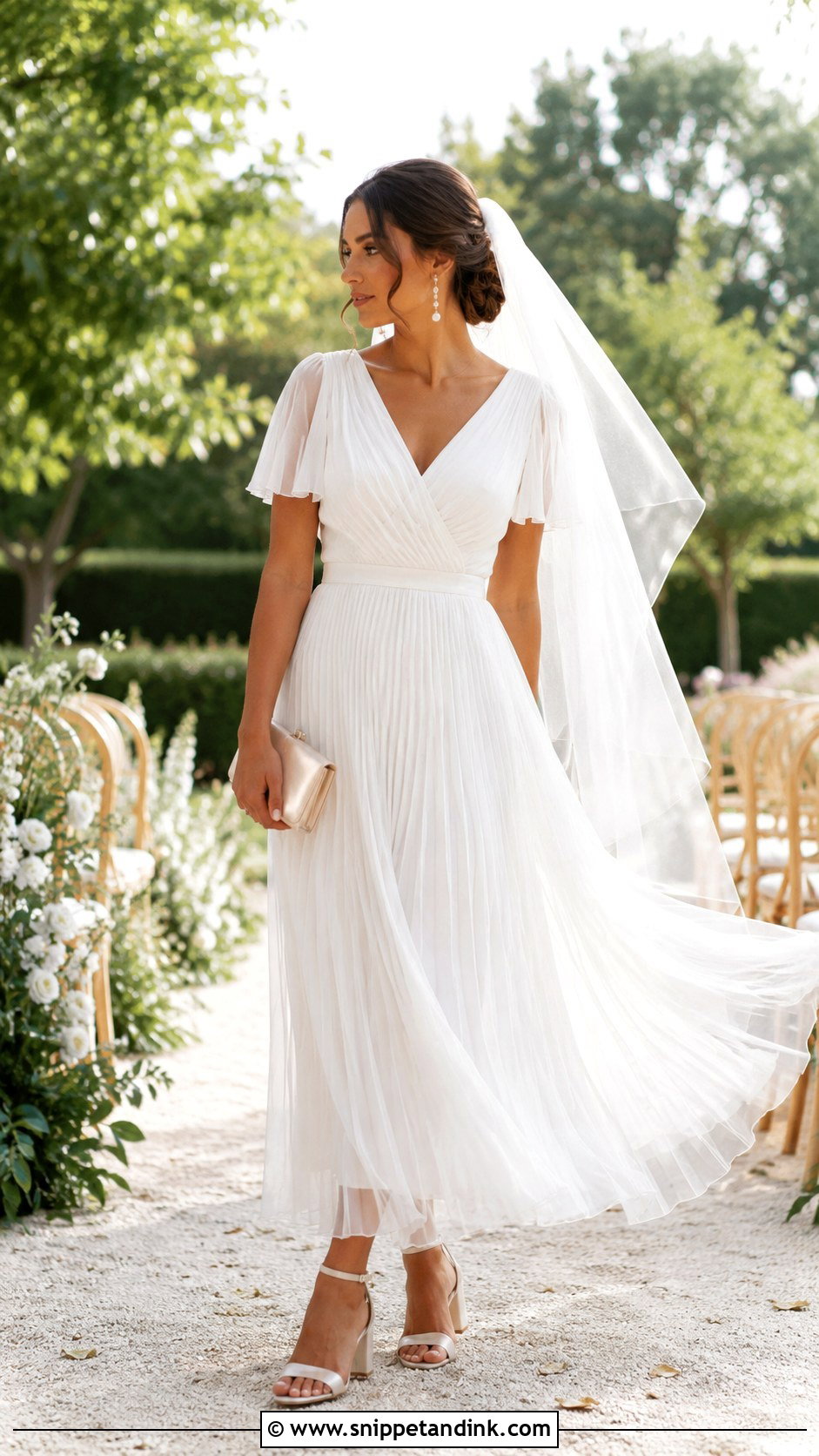
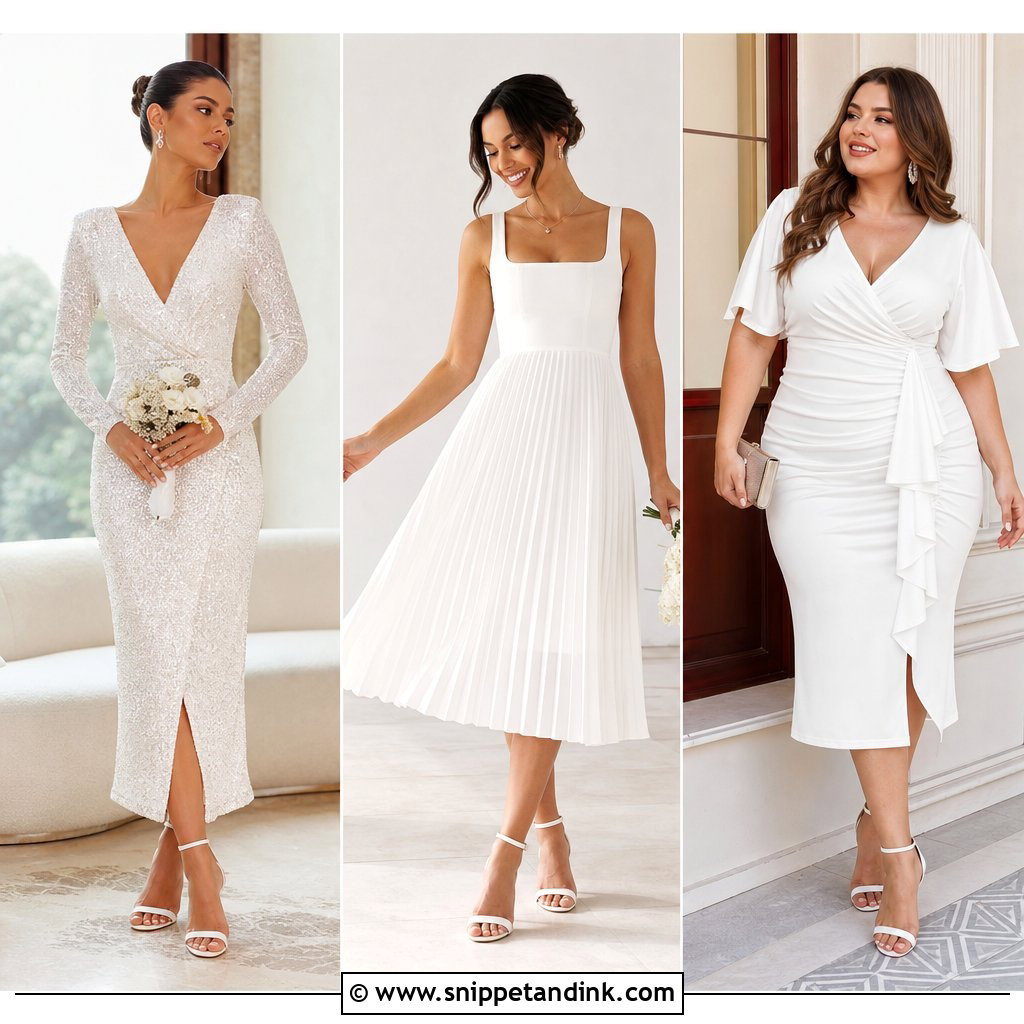
Fine pleats move with every step, which is the whole appeal of chiffon at this length. Without structure, though, chiffon can swamp a small frame, so I look for a fitted waistband and a shaped bodice to anchor it. Cap sleeves, flutter sleeves, or narrow straps all suit, depending on how much coverage the ceremony needs. Block-heel sandals, delicate drops, a small satin clutch and a soft tulle veil or floral comb finish it. Check the lining length in daylight: if it stops well above the outer hem, the skirt turns see-through against the sun. Petite brides look better in narrower pleats and fewer layers. It packs and travels well, which makes it a good destination choice.
16. Floral Applique Midi Wedding Dress
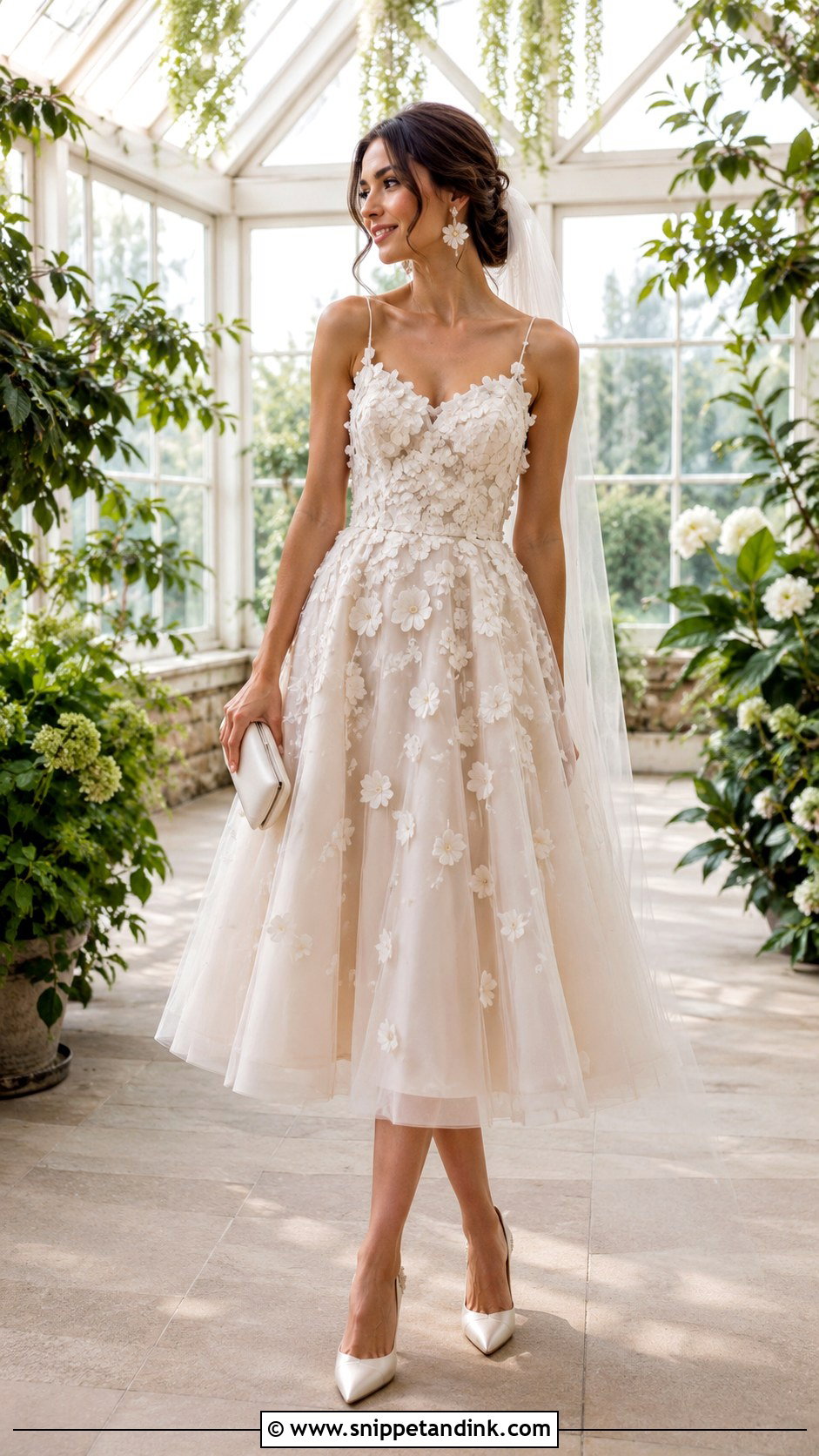
Appliqué flowers give a dress depth, and placement decides whether it looks considered or cluttered. I like the larger blooms at the neckline or waist, with smaller motifs drifting down a tulle or organza skirt so the silhouette stays readable. Simple satin heels, floral studs, a plain ivory clutch and an almost bare veil let the flowers lead. If the appliqués carry colour, repeat one soft shade in the shoes or bouquet rather than adding several accents. The most common complaint I hear is about the underarm: a stiff flower sewn right where the arm rests will rub raw by evening, so ask for those to be moved or softened during alterations.
17. Drop Waist Midi Wedding Dress
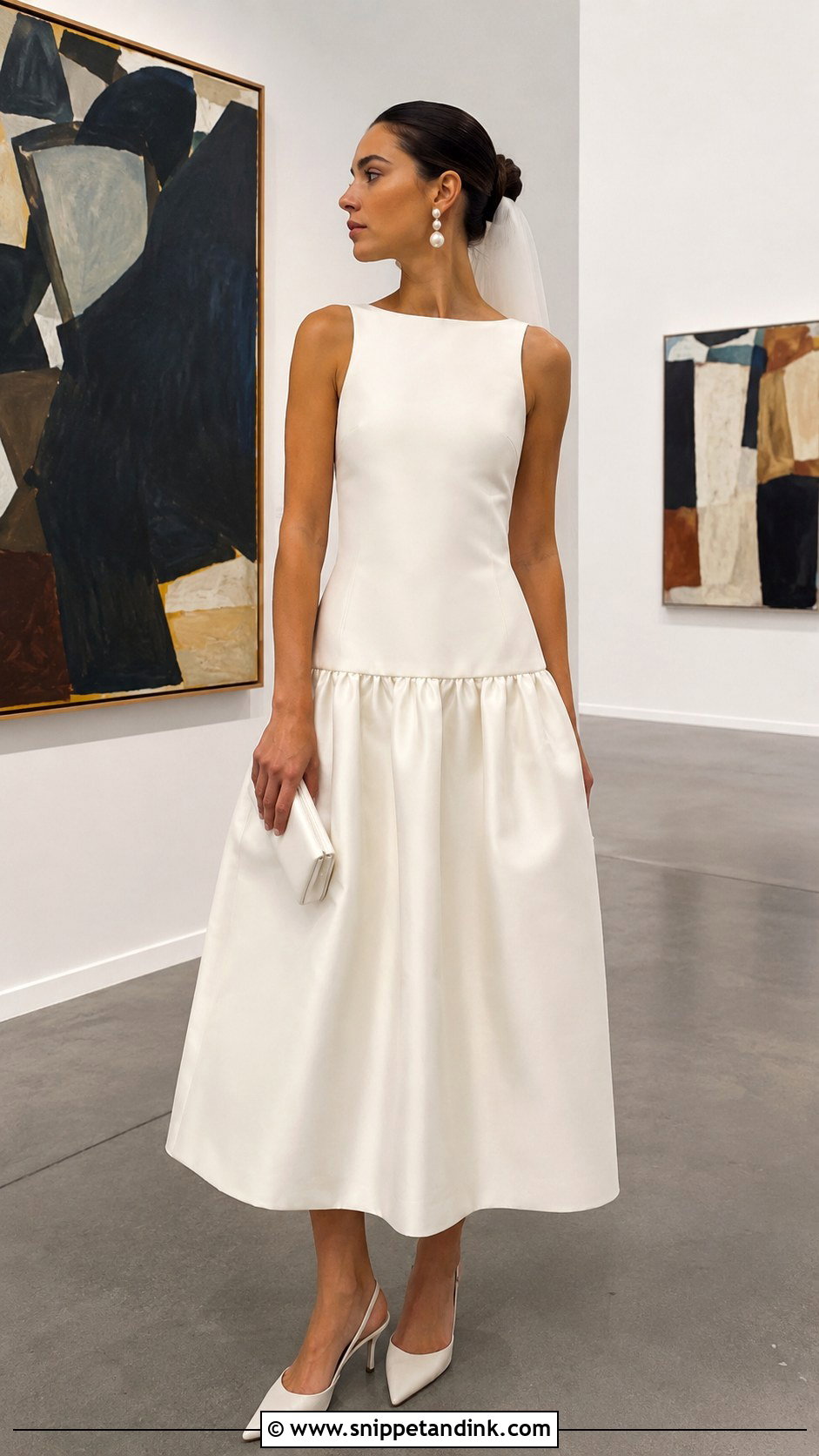
A dropped waist lengthens the torso, and it divides opinion. The fitted bodice runs past the natural waist before meeting a gathered, pleated or flared skirt, so the fabric needs body to keep that long line smooth. Long-torsoed brides can take a deep drop; petite brides usually look better with a shallow one that ends near the upper hip, since a low seam on a short torso shortens the legs. No belt, ever, because it cuts the line the dress is built around. Pointed slingbacks, bold pearl earrings, a compact clutch and a narrow veil under a sleek bun suit modern venues, galleries and formal civil ceremonies.
18. Cape Sleeve Midi Wedding Dress
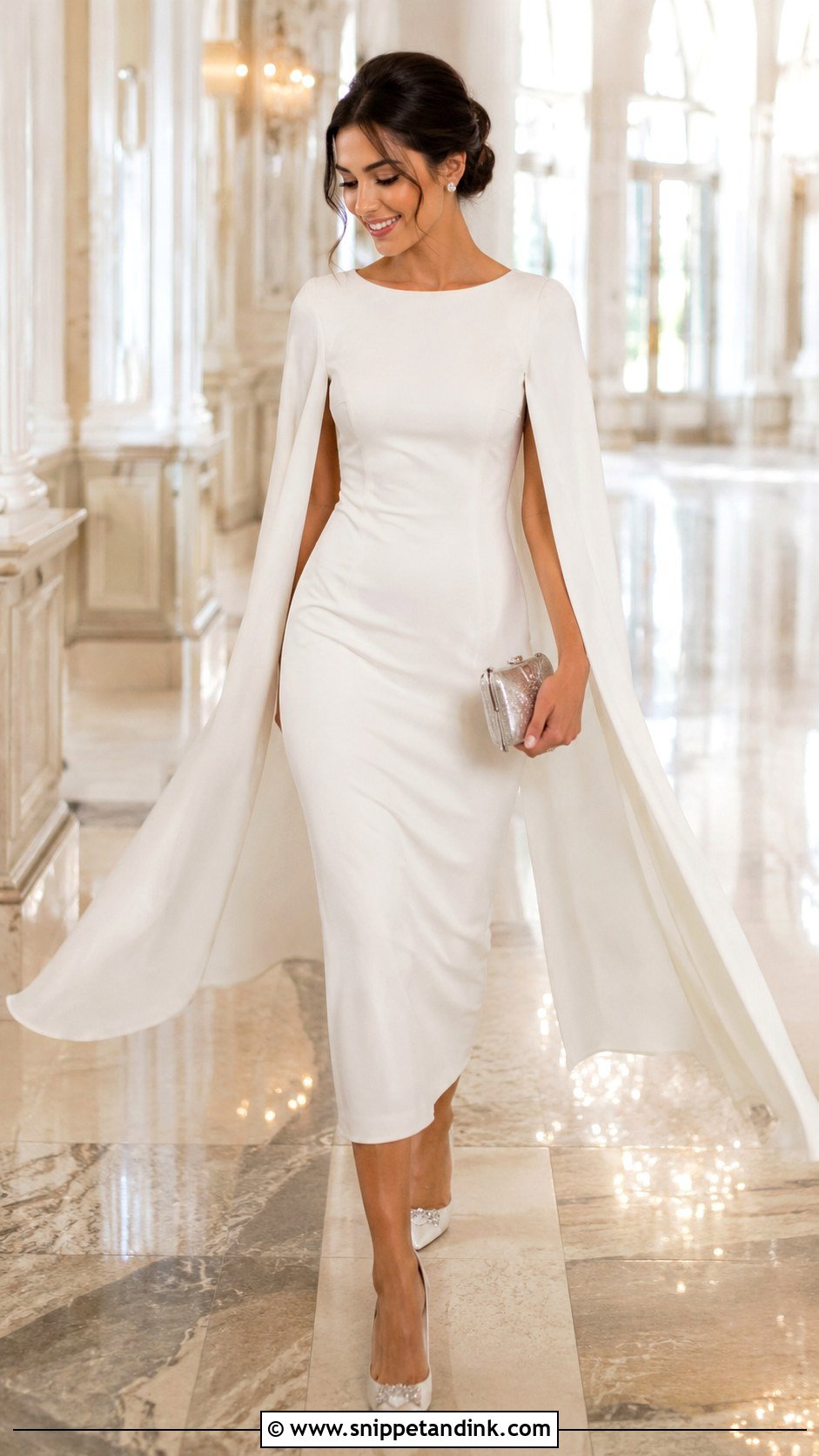
Cape sleeves give shoulder and upper-arm coverage while still moving when you walk. They hang from the neckline or the shoulder seam of a fitted crepe or satin dress. Length is the thing to watch: a cape that falls too far down the back gets sat on, trodden on and tangled with the veil. Slim pointed heels, crystal studs and a small metallic clutch are plenty, and a neat updo keeps the neckline visible. Since the cape already provides movement, the veil is optional; a waist-length one is the most I’d add. Skip the large necklace and busy bag. In photos, the cape looks best caught mid-step, so ask your photographer for a few walking shots.
19. Feather Trim Midi Wedding Dress
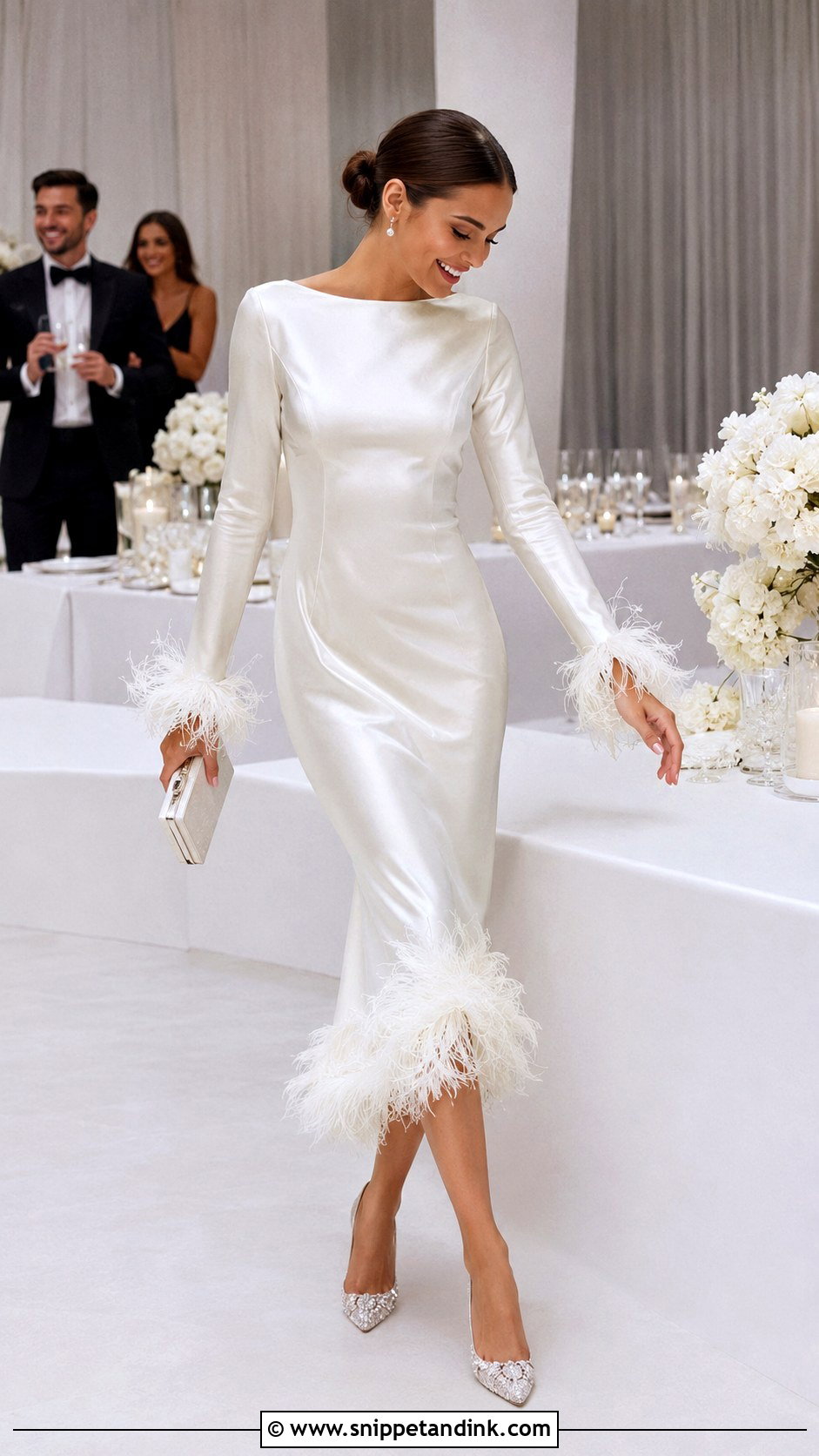
Feathers bring humour and movement, and they belong in small doses. Keep them to the cuffs, neckline or hem of a clean satin or crepe dress so the trim reads as a finish, not a costume. Crystal pumps, a smooth box clutch and simple earrings let the texture lead, and a sleek ponytail or low bun gives a sharp contrast. Add a plain fingertip veil for the ceremony and remove it afterwards. Ostrich and marabou both shed, especially when brushed against a jacket sleeve or a car seat, so walk and sit in the dress before the day and give the trim a gentle shake. It makes a fun second dress for a dinner or a dance-heavy reception.
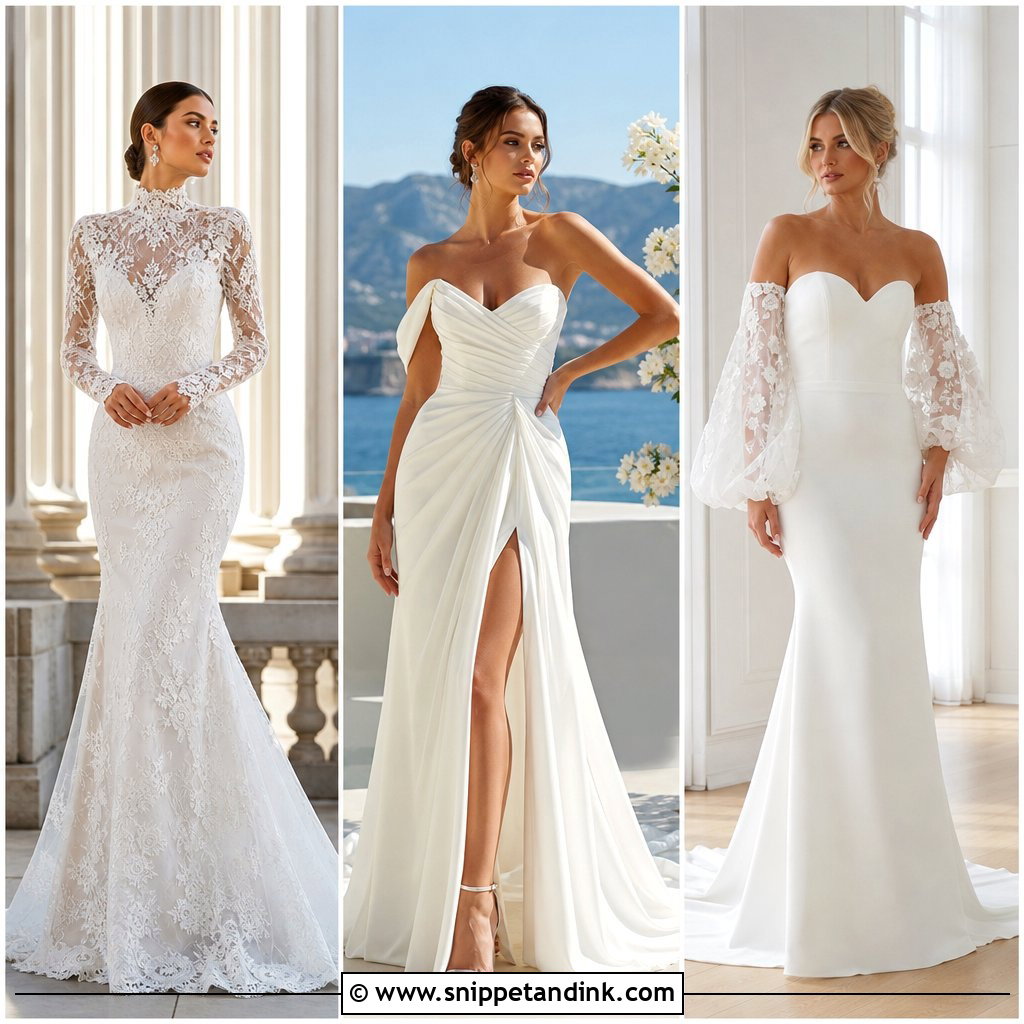
20. Minimal Slip Midi Wedding Dress
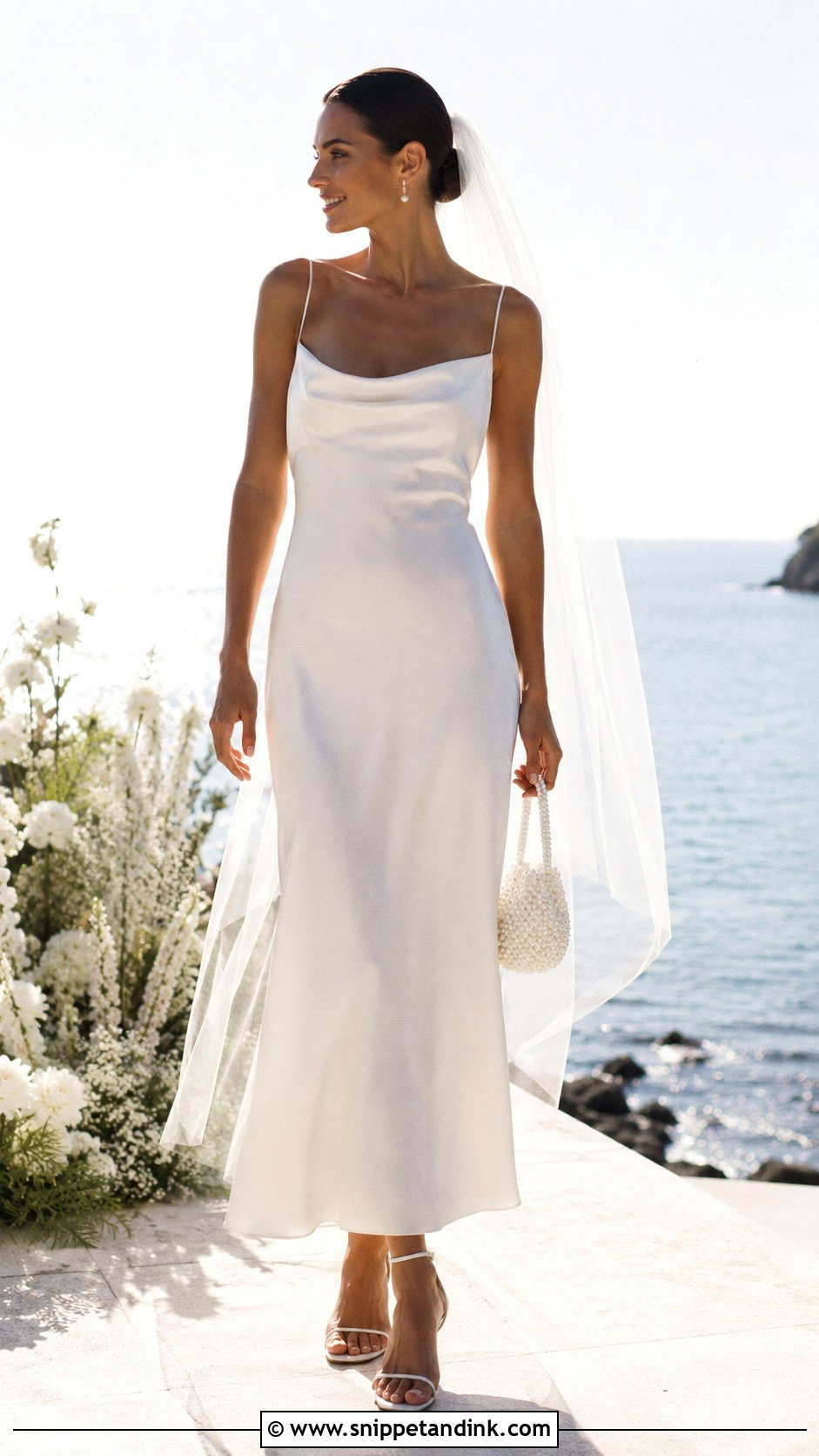
Simplicity is hard to hide behind. A bias-cut satin or silk slip shows everything underneath it, so the right underwear matters more here than with any other dress on the list: smooth, skin-toned and tried on with the dress, not just bought for it. Look for a soft draped neckline, narrow straps and a skirt that skims rather than clings. Strappy heels, pearl drops and a small beaded bag suit it, and a long sheer veil gives the ceremony look real presence. For colder months add an ivory blazer or a light wrap. Satin creases where you sit, so steam it at the venue and set the strap length while wearing your wedding shoes.
Creases, Car Rides and the Morning-After Bag
A shorter dress hides nothing. A floor-length skirt buries its creases in volume; a midi shows every fold from the car seat right at eye level for your guests. How much this matters depends on the fabric.
Which fabrics wrinkle and which forgive
Silk satin and charmeuse crease where you sit, and the marks show at once. Crepe and heavier mikado shrug off most of it. Organza and taffeta take sharp creases that only steam will relax. Lace and pleated chiffon are the most forgiving, since texture hides small wrinkles. If you are set on silk, I’d plan to stand during the drive or lay a clean sheet over the seat and sit on the back of the skirt only.
What goes in the emergency kit
- A small handheld steamer, tested on an inside seam first, since some satins water-mark if the steam spits.
- Clear nail varnish for a ladder in tights and a few safety pins for a loose strap.
- A white chalk stick for small marks on ivory, which covers better than a wet wipe that can leave a ring on silk.
- Fashion tape for a neckline that shifts after hours of hugging.
After the wedding, get the dress to a specialist cleaner within a few weeks; sugar and champagne marks are invisible at first and turn yellow later. Store it flat in acid-free tissue in a breathable box, not hanging, because the weight of a structured bodice stretches the shoulder seams over time. If you plan to wear it again for an anniversary dinner, which a midi makes easy, ask the cleaner to leave the alterations in place.
A Midi Lives or Dies at the Final Fitting
Most of the dresses above will look right in the shop. What makes one of them right on the day is fit, fabric weight and a hem that suits your leg and your shoes. Start with the setting and season, because a crepe column and a pleated chiffon belong at different weddings. Then add only the detail you love most, whether that is pearls, a bow, a cape or feathers, and let the accessories stay quiet around it. Bring your actual shoes to every fitting. A good seamstress can adjust straps, waist and hem in ways that change a dress more than any accessory can.
You'll Like These Ideas:



Leave a Reply