
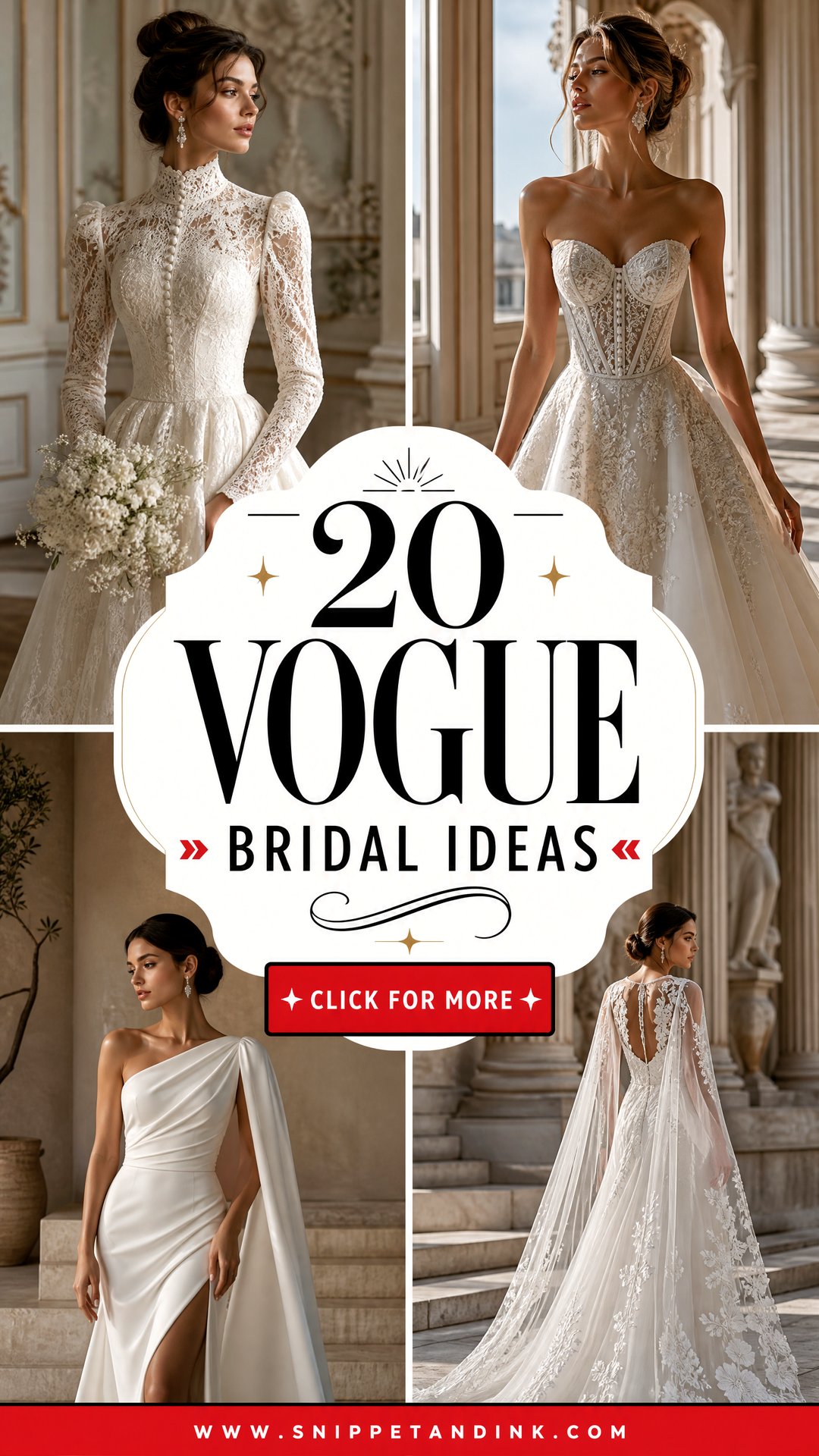
Hemlines Start With the Shoes You Will Actually Wear
Editorial looks depend on proportion, and proportion depends on the hem. That’s why I ask brides to buy their wedding shoes before the first alteration appointment, not the week before. Every gown, suit and jumpsuit below is hemmed to a specific heel height, and switching from a pump to a flat later can leave a floor-length dress dragging by a few centimetres.
- First fitting, roughly two to three months out: bring the shoes and the exact underwear or shapewear. Major changes to bodice, waist and hem are pinned here.
- Second fitting, a few weeks later: check the changes, sit, walk and raise your arms. Sleeves, straps and drapery are refined.
- Final fitting, one to two weeks before: a full dress rehearsal with veil, jewelry and hair accessories, plus a lesson in bustling or removing any detachable layer for whoever is helping you.
Heavily structured gowns, suits and anything made to measure may need an extra appointment. Ask the seamstress at the first visit how many fittings she expects, so the calendar works around her, not the other way round.
1. Lace Ball Gown Bridal Look
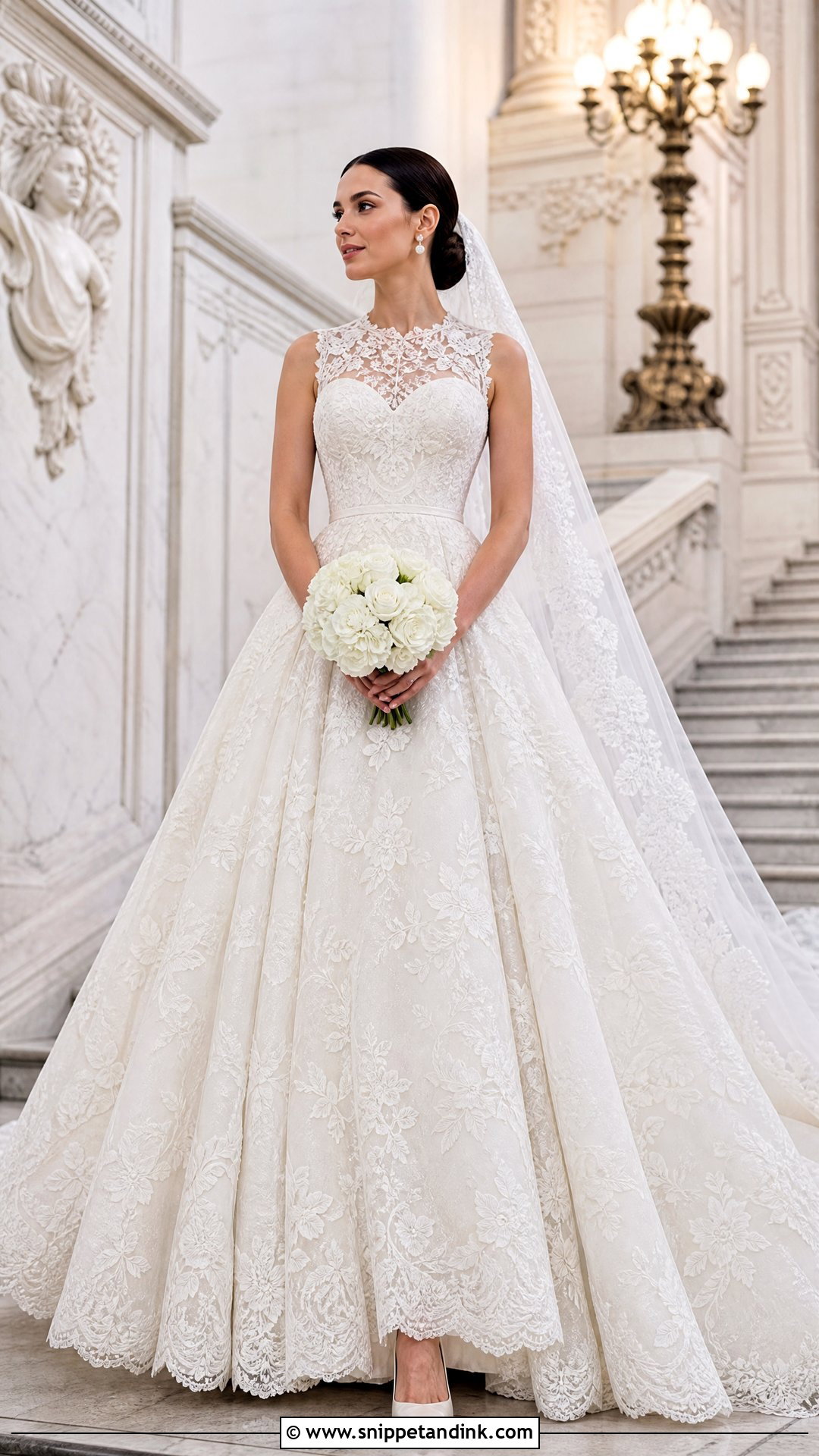
Lace ball gowns carry a lot of fabric, so I look at the bodice before anything else. Supportive seaming and a properly defined waist are what stop a full lace skirt from dragging the top half down by evening. Floral or geometric lace both work; an ivory lining keeps it classic, and a blush underlayer gives the lace more depth in photos because the pattern shows against a slightly darker ground. Pointed satin pumps, pearl drops and a cathedral veil edged in matching lace complete it. Wear a low bun or polished waves so the neckline isn’t crowded, and keep the flowers white and green. Big rooms, formal gardens and old estates match its scale.
2. Draped Satin Wedding Dress
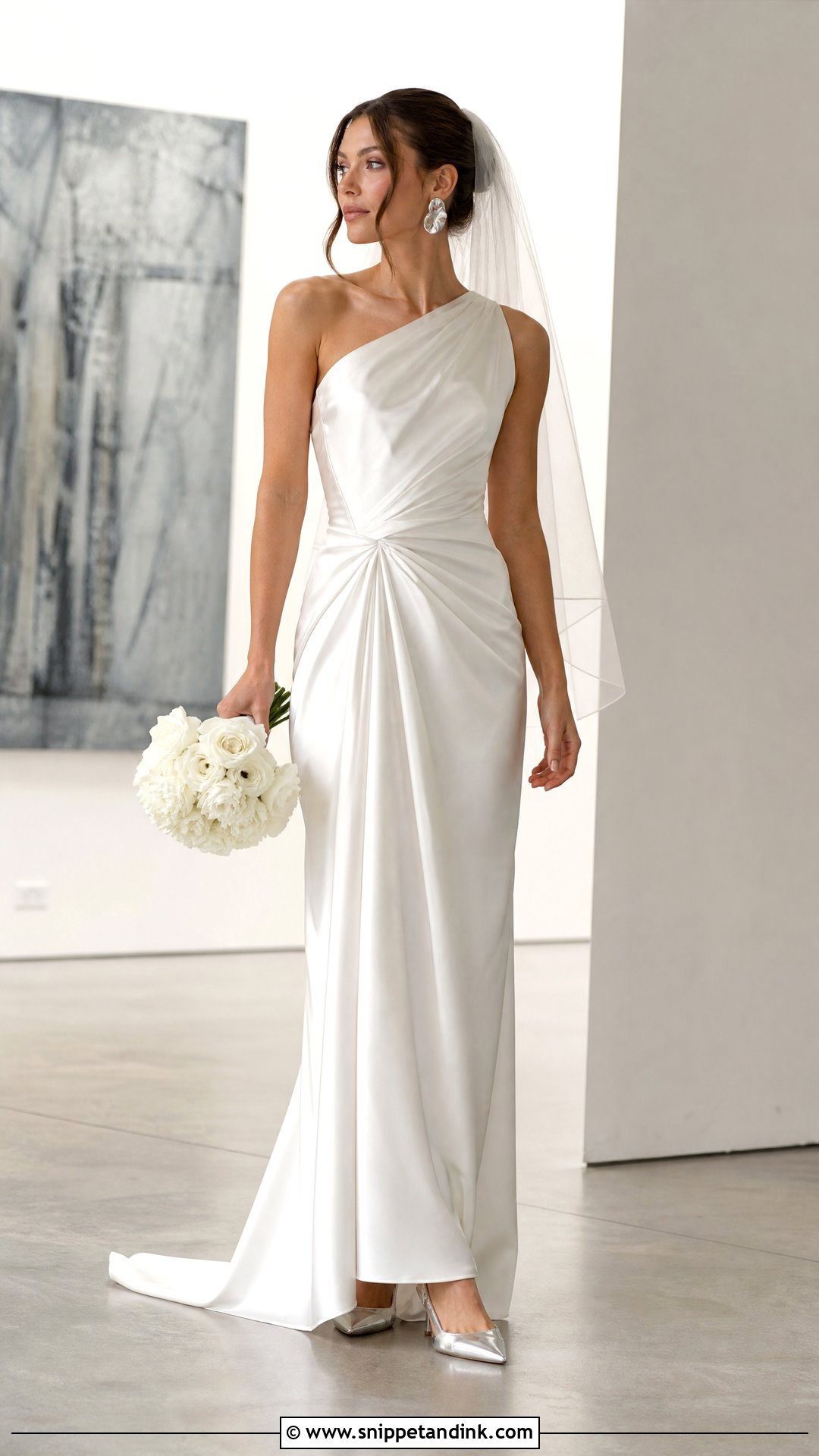
Satin shows every fold, which is the point of drapery and also its risk. A gathered waist, an asymmetric neckline and a skirt that follows the body without restricting it should look as though the folds fell there by chance; in fact each one is stitched. Sit down in it at the fitting and check the drape doesn’t pull flat across the lap. Metallic slingbacks, sculptural earrings and a compact bouquet keep it editorial, and a sheer fingertip veil softens without hiding the construction. A sleek chignon shows the neckline. This Vogue-inspired bridal outfit suits many figures because the drape defines the waist and moves over the hips.
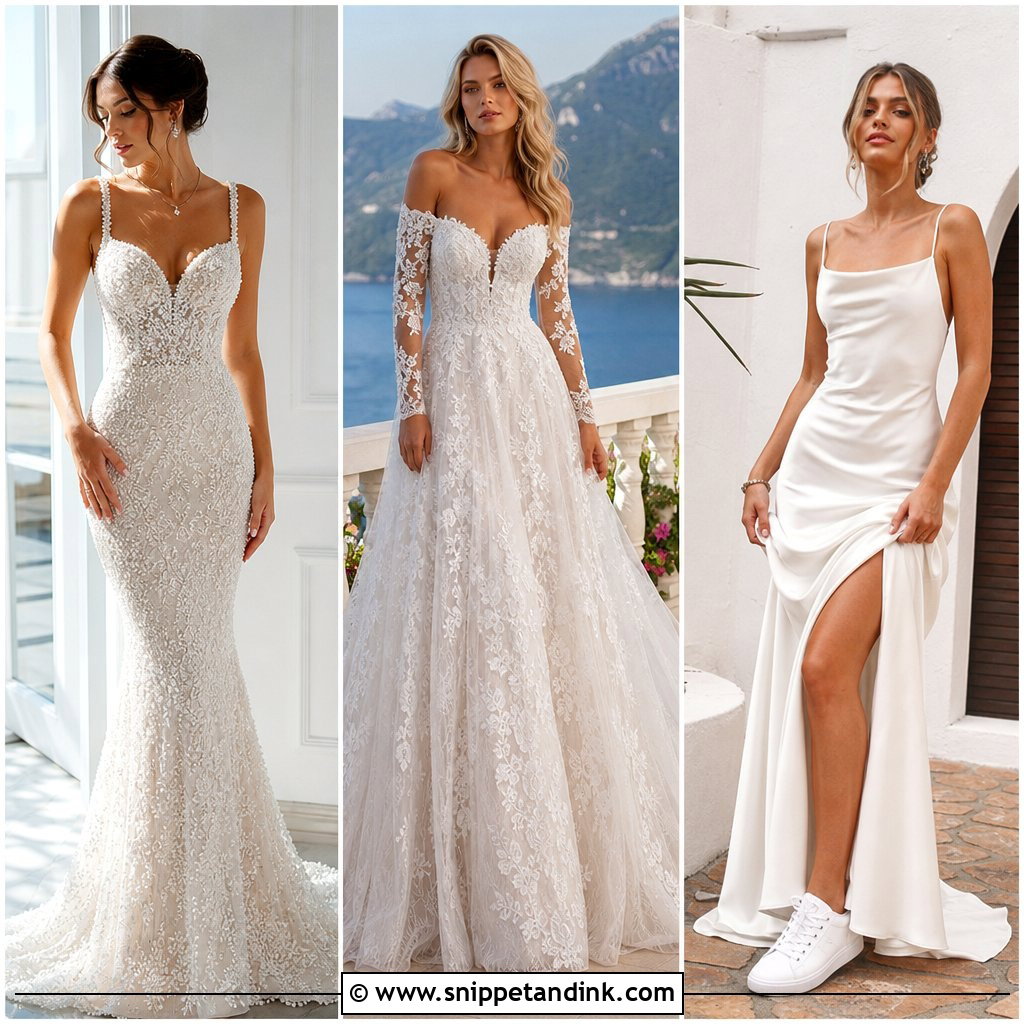
3. Long-Sleeve Lace Bridal Dress
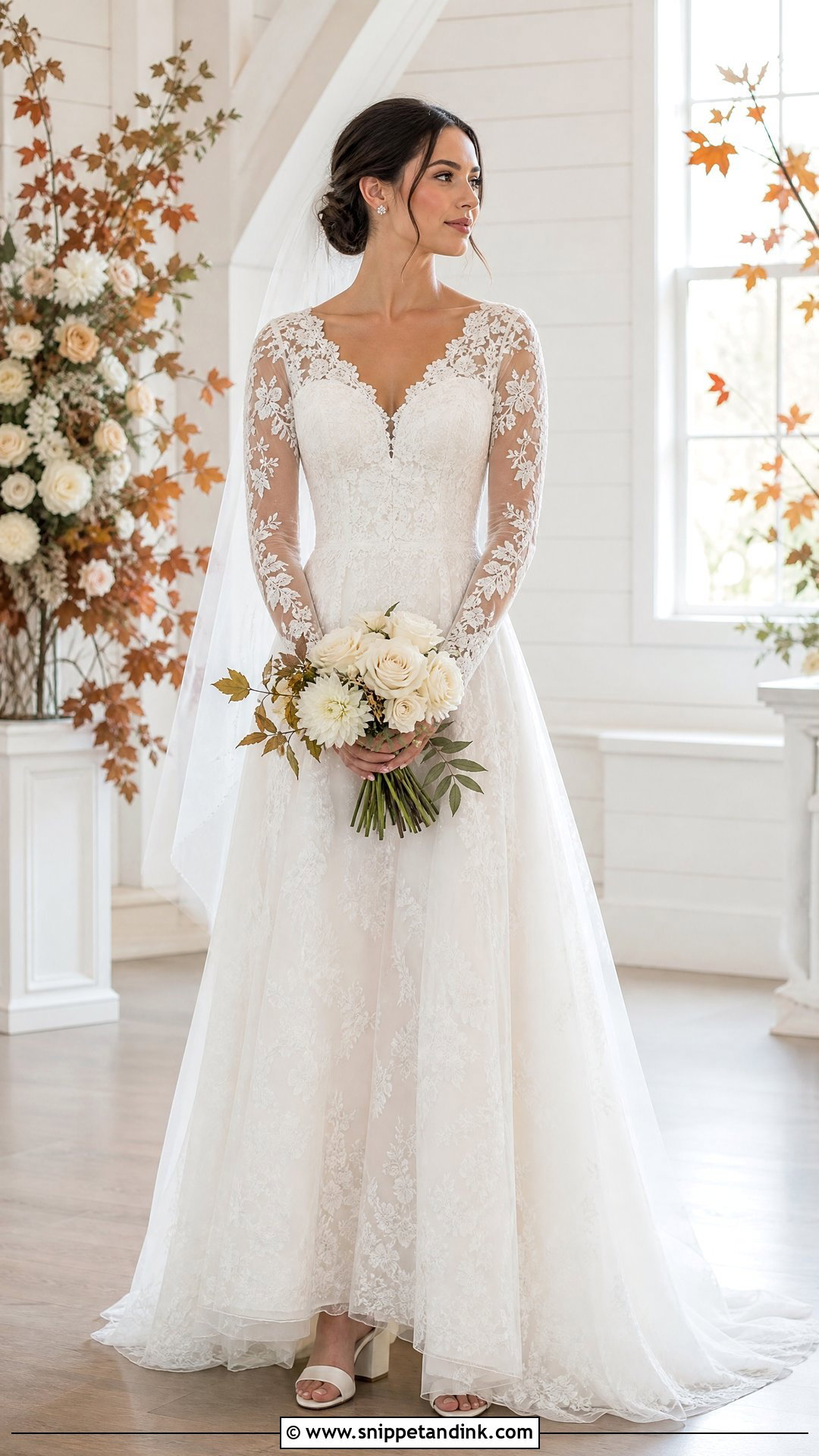
Sheer lace sleeves give coverage without weight. A fitted bodice, a softly shaped neckline and an A-line or column skirt let the pattern show. When I fit lace sleeves, I have the bride cross her arms and lift them; lace with no stretch will tear at the underarm seam if it’s cut tight. Ivory block heels are kind to your feet. Small diamond or crystal studs and, if you like a sharper waist, a narrow satin belt are enough. A simple chapel veil and a low twisted bun keep the lace in front. It’s a strong choice for autumn and winter, and a lighter alternative to a full ball gown.
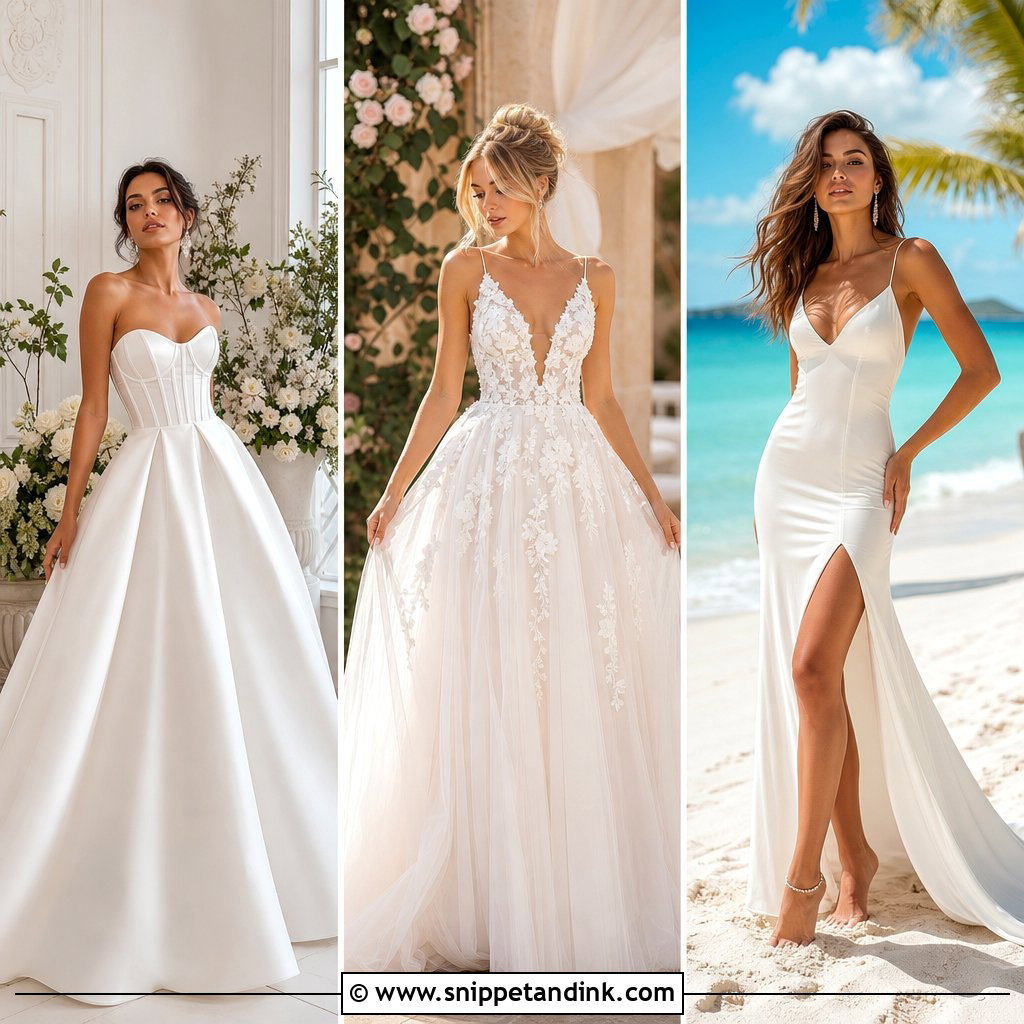
4. Minimalist Silk Column Gown
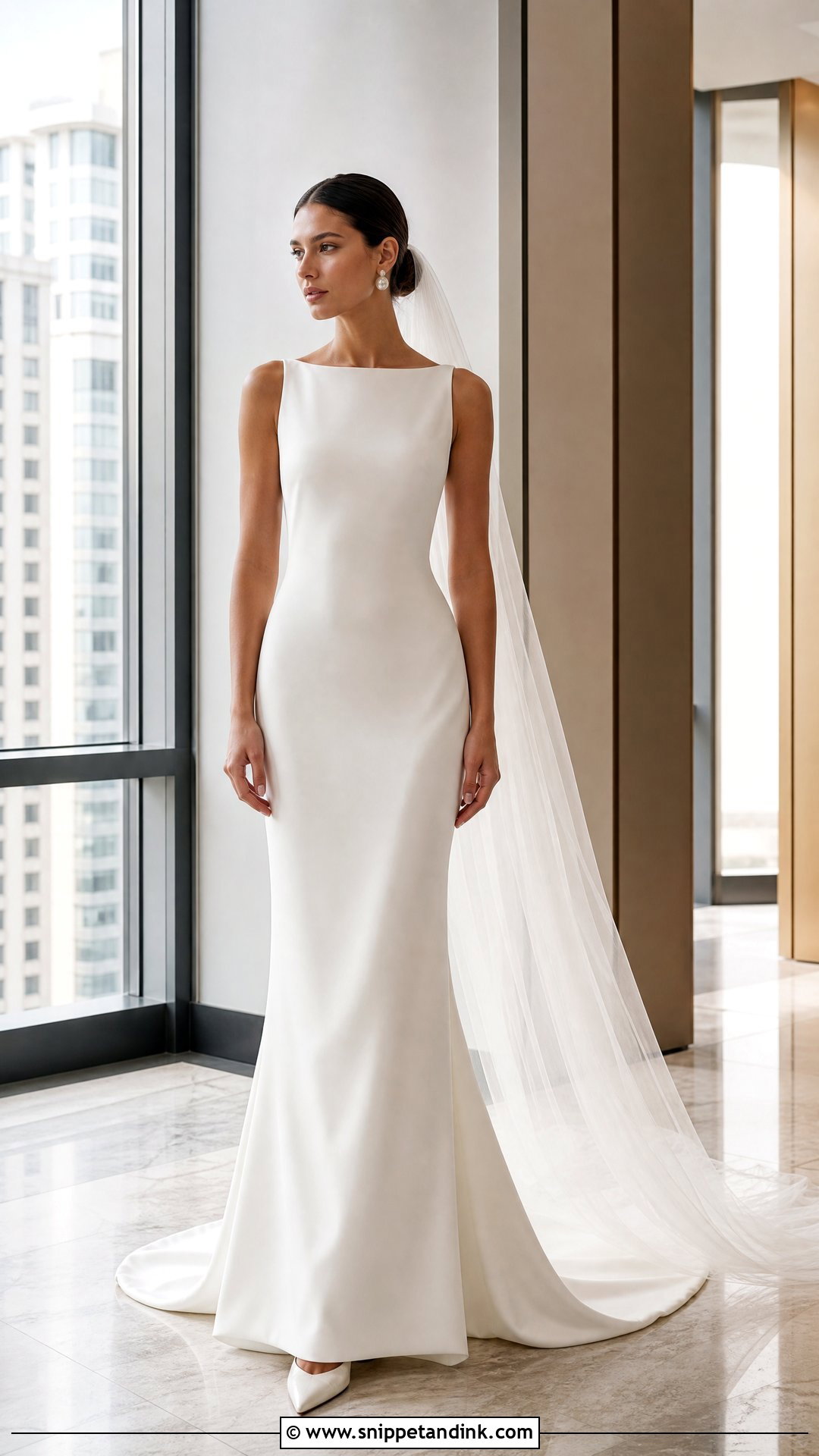
Plain silk is unforgiving. With no lace or beading, every seam, hem and dart is on show, so budget for an extra fitting before you commit to a column. A square, bateau or high neckline and a short train give the shape. Pointed white pumps, a structured mini bag and bold gold or pearl earrings are enough. A long, unembellished veil moves against the simple line. Center-parted bun or straight hair tucked behind the ears. It reads perfectly in a gallery, a city hotel or a registry office.
5. Off-the-Shoulder Bridal Ball Gown
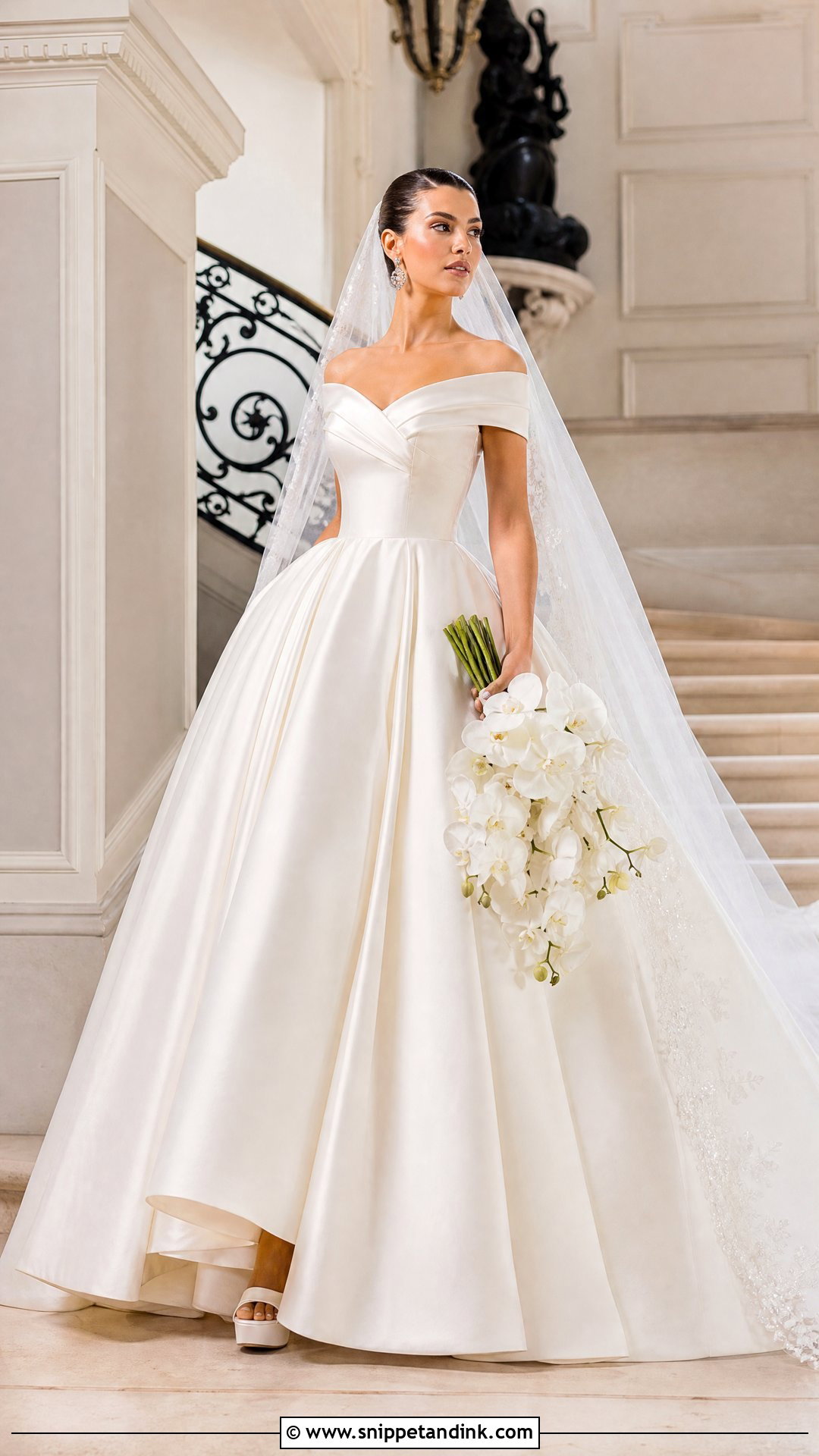
Off-the-shoulder ball gowns rely on an inner corset to hold the bodice up, since there are no straps doing the work. Mikado, satin or structured taffeta keep the skirt full. I often suggest removable shoulder straps for the reception, because wide necklines restrict how high you can lift your arms. Crystal drops, satin platform heels and a clean cathedral veil set under a soft updo finish it. Long-stemmed flowers echo the line without adding width. Staircases and large ceremony rooms suit the scale.
6. High-Neck Vintage Bridal Gown
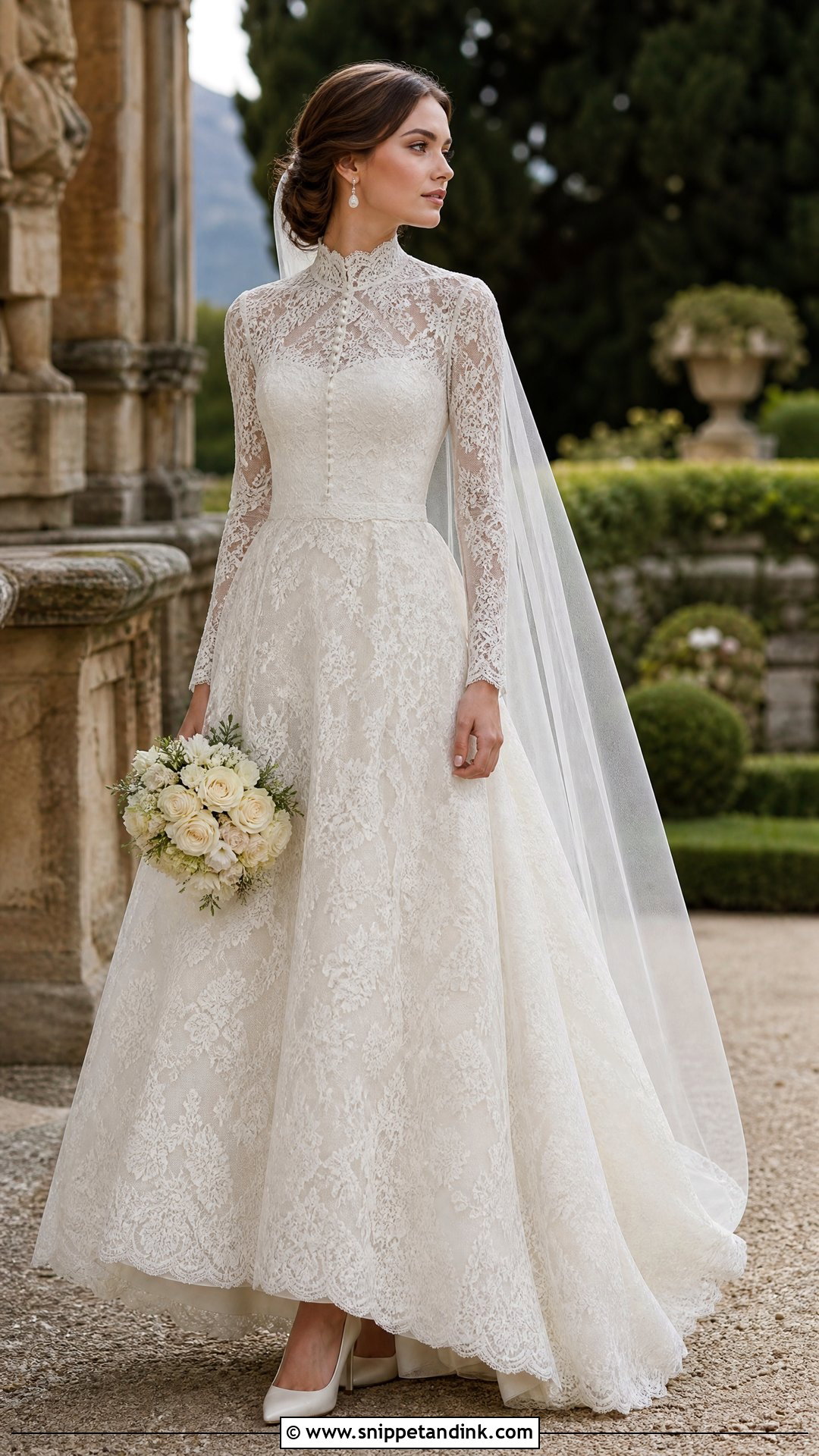
High necks feel vintage the moment you add covered buttons and long lace sleeves, so modern accessories keep it from looking like a costume: sleek ivory pumps, small pearl earrings, a clean-edged veil. A softly waved low bun suits the neckline. Carry a loose cream bouquet. Fit matters at the throat; a high collar should sit just above the collarbone hollow without touching the neck when you turn your head. With a fuller bust, I’d pick a high neck with a structured lining, and on a petite frame, lighter lace so the pattern doesn’t swamp you.
7. Strapless Corset Wedding Dress
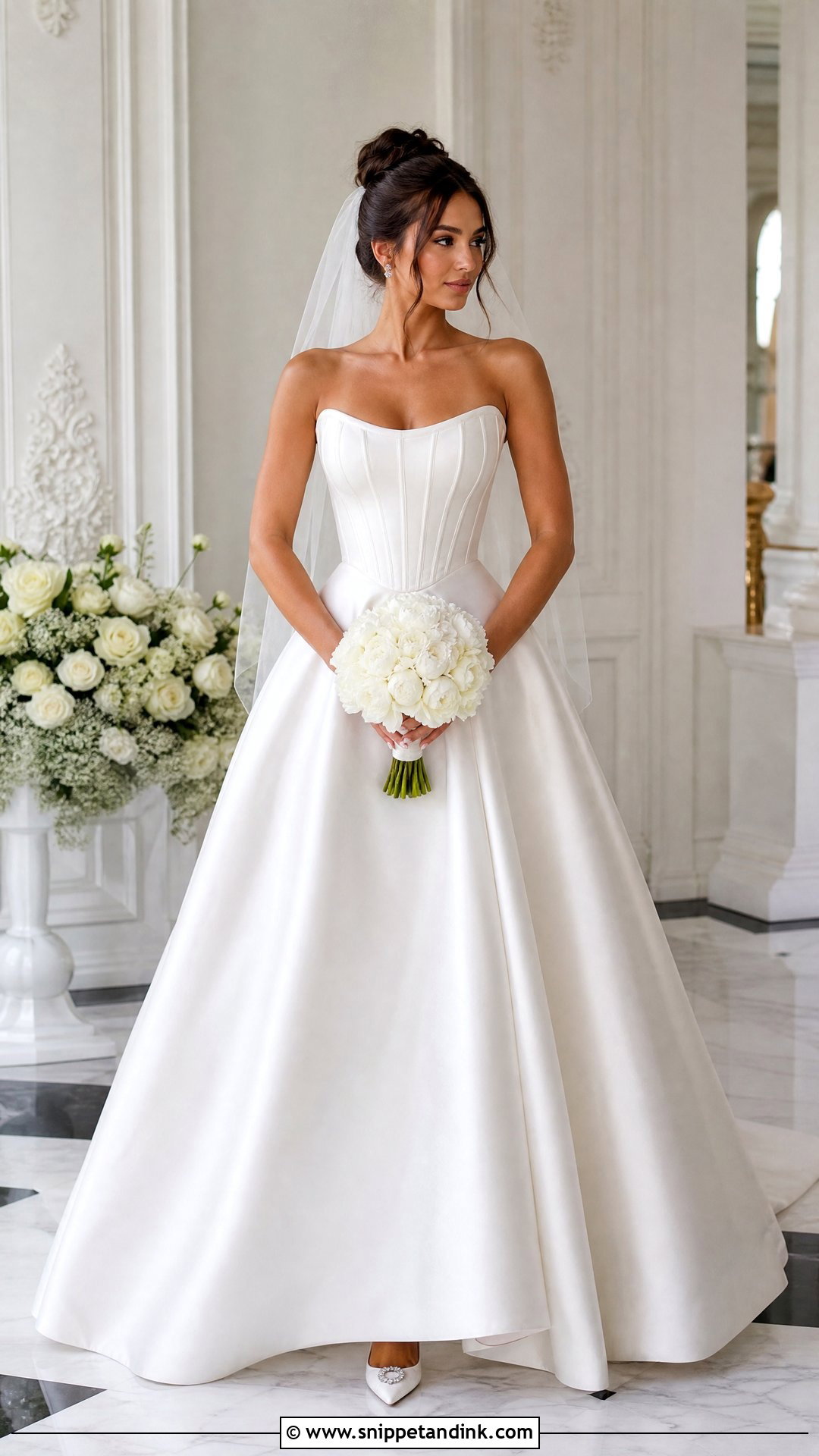
Corsets should feel firm, never tight. Carefully placed boning, a gently curved neckline and a skirt that balances the top are the basics; a full A-line reads romantic, a straight satin skirt looks closer to the runway. At every fitting I make the bride sit, walk and raise both arms, and the bodice must stay in place through all three. A sheer shoulder-length veil, sparkling studs and pointed pumps finish it. An updo shows the neckline. Keep the bouquet simple so the waist stays the focus.
8. Drop-Waist Bridal Gown
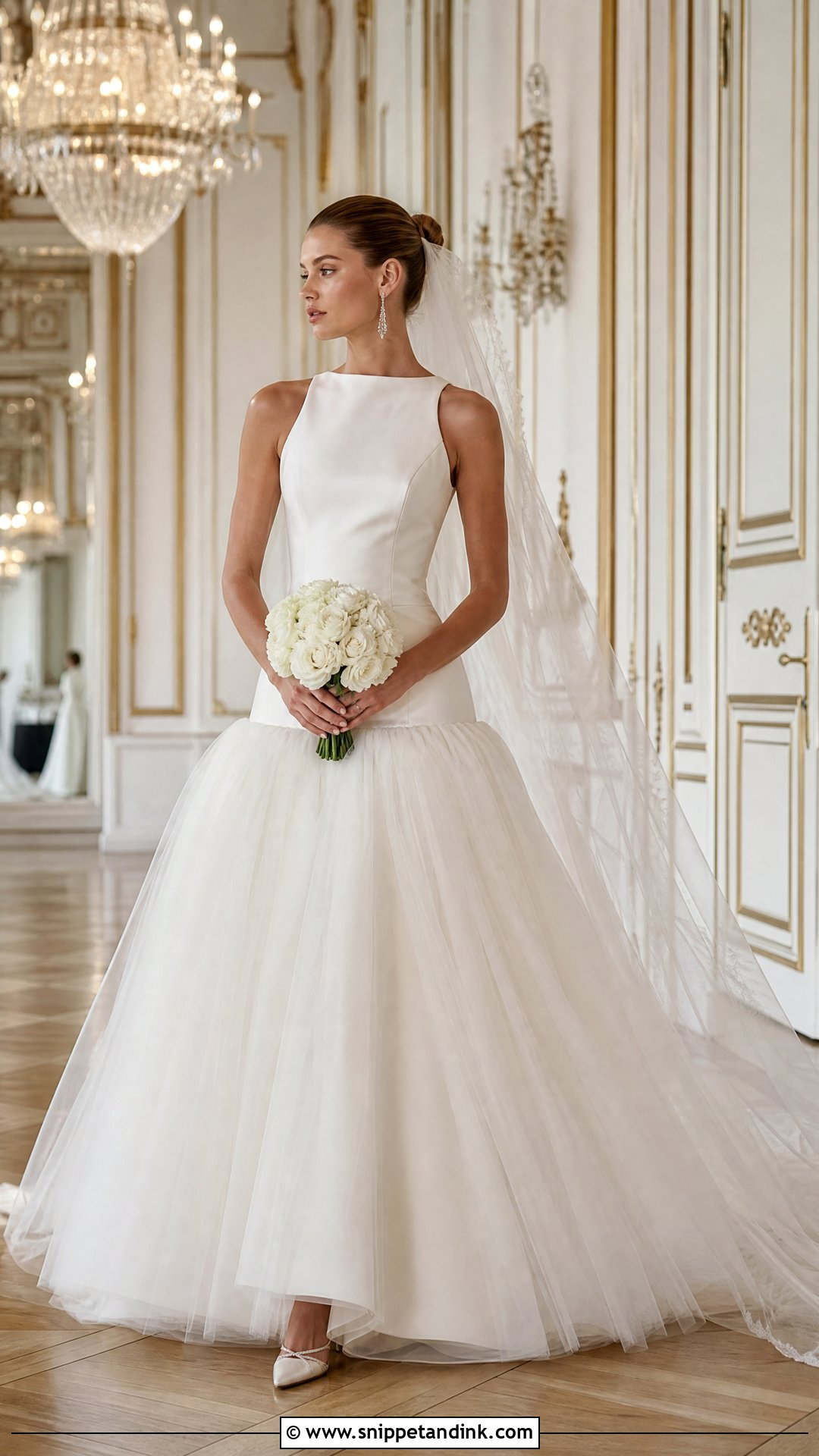
Drop waists live or die by seam placement. The bodice runs below the natural waist and opens into a full skirt, which lengthens a long torso and can shorten a short one unless the seam is moved to suit you. Structured satin looks formal; layered tulle is softer. Delicate heels, long earrings and a cathedral veil starting under a polished bun suit it. A small bouquet stops the low waistline from getting crowded. If you love the shape but are petite, ask your seamstress to raise the drop by a few centimetres rather than giving it up.
9. Tea-Length Bridal Dress
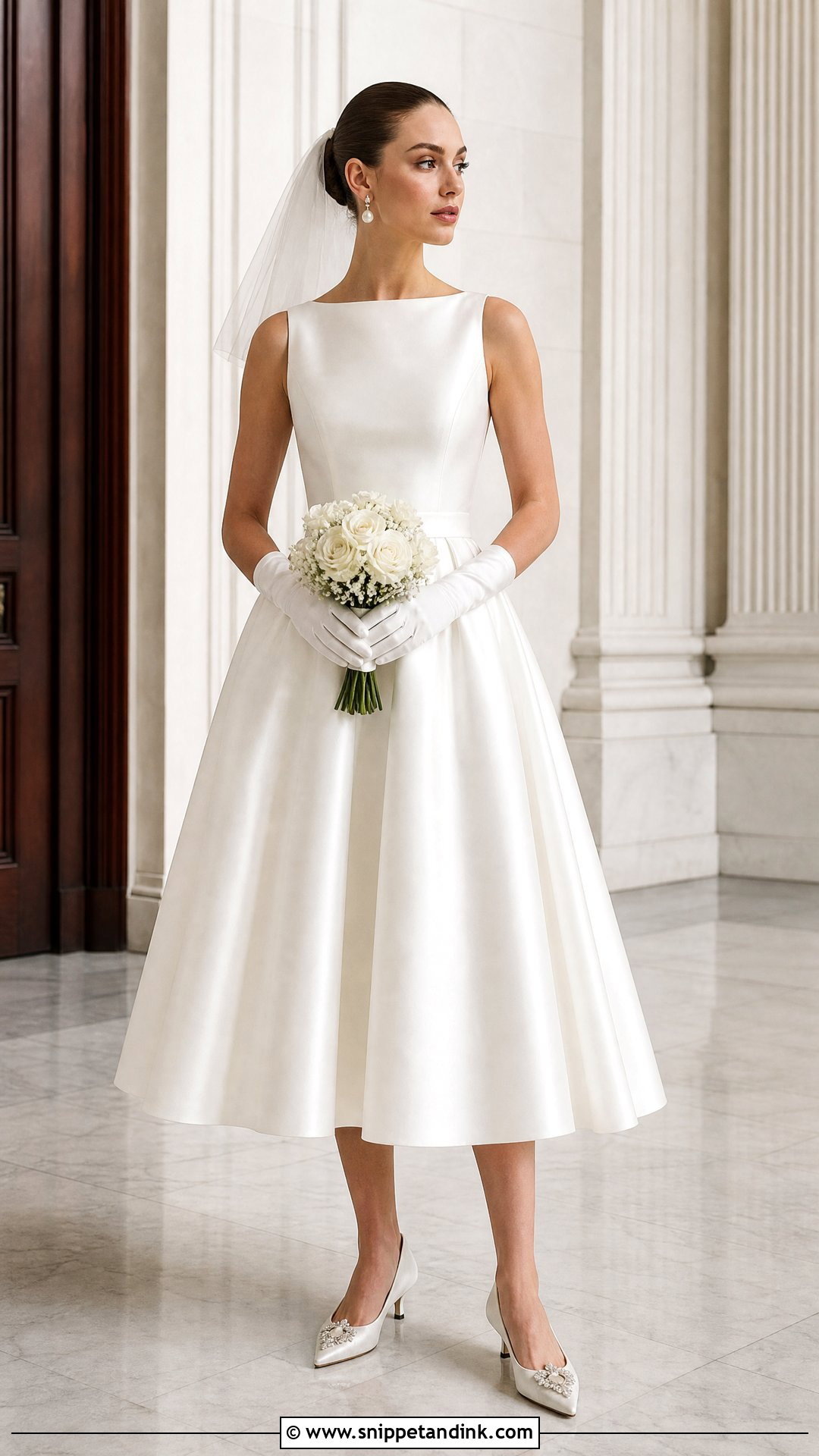
Tea length shows the shoes, so treat them as part of the dress. A fitted bodice and a full skirt ending between knee and ankle need some body; satin, organza and embroidered lace all give it. Pointed kitten heels or embellished pumps, pearl earrings and a short veil keep it bridal. A sleek bun is formal, soft waves relaxed, and wrist gloves add a vintage note. Hem it to the narrowest point of your calf rather than a standard length; that one decision changes the whole proportion. I reach for it most for courthouse ceremonies, daytime receptions and couples who plan to dance.
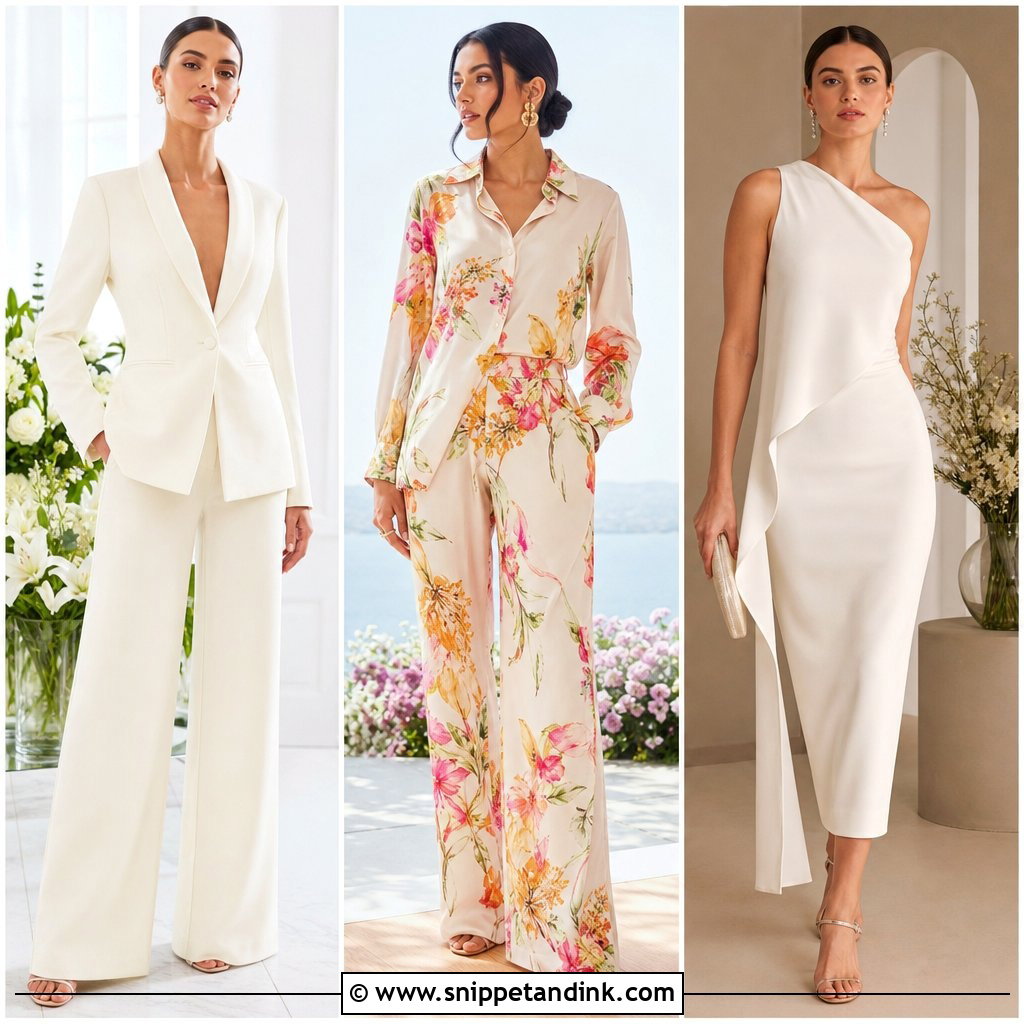
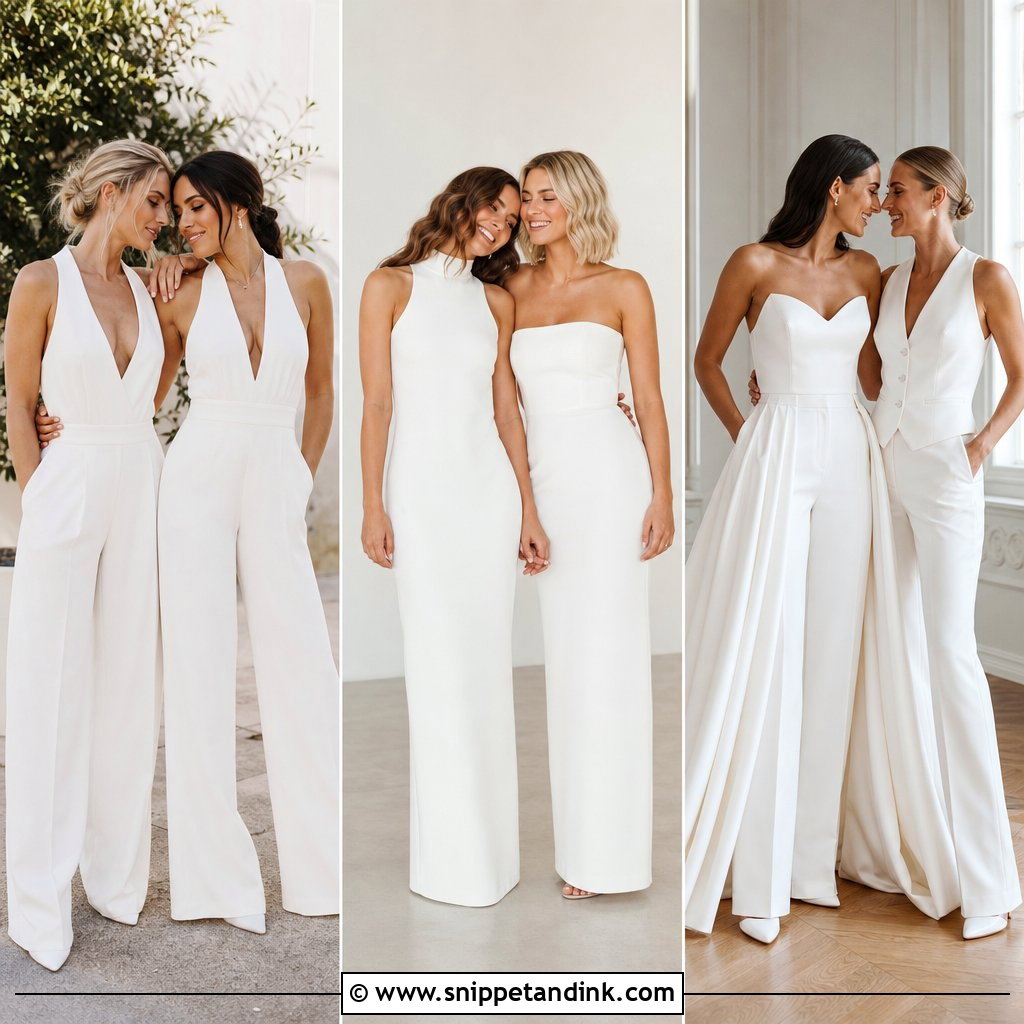
10. Bridal Suit With Veil
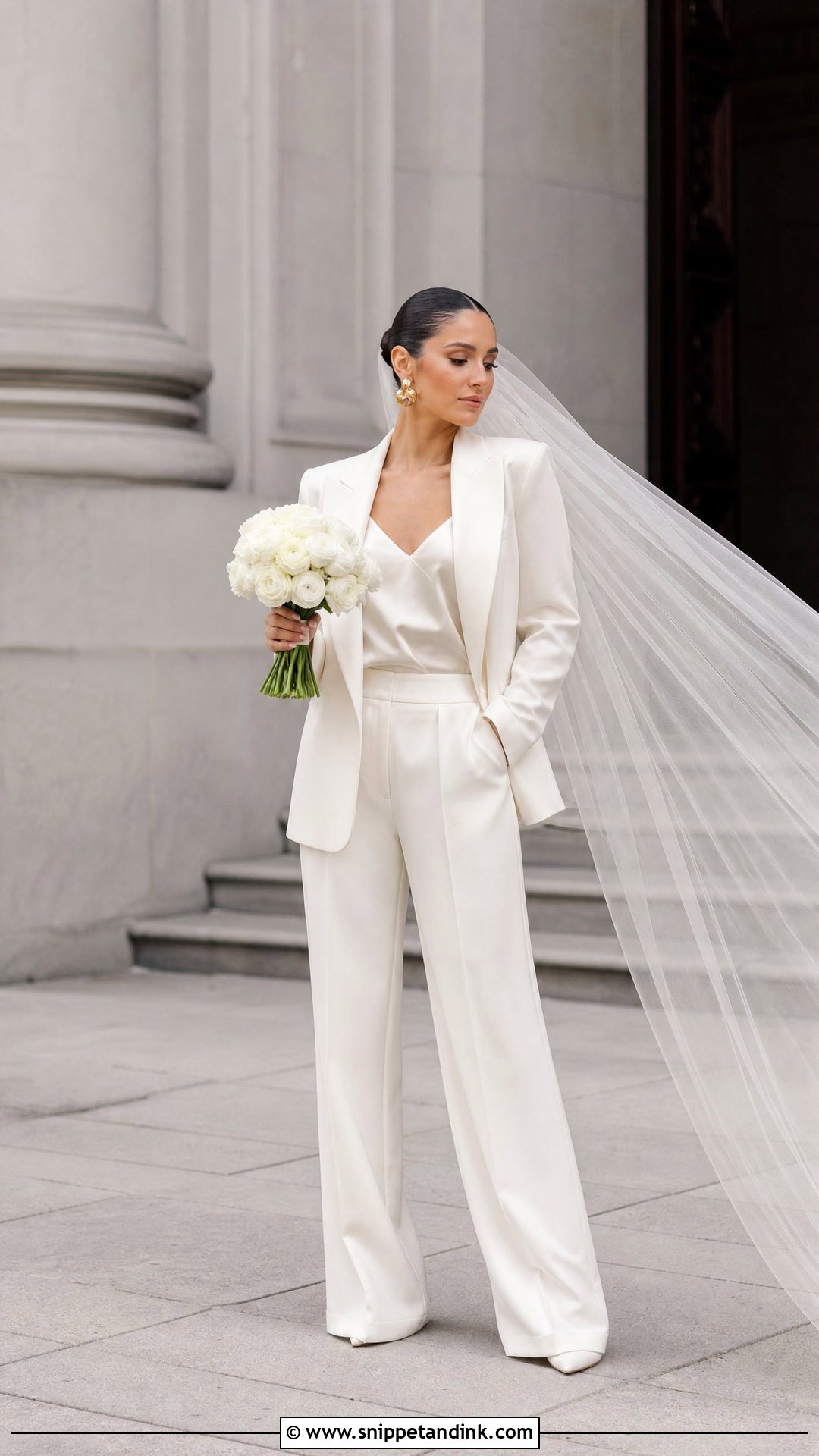
A suit needs tailoring more than any gown here. Choose an ivory blazer with clean shoulders and trousers cut straight, wide or slightly tapered, and have the shoulders fitted first, because they’re the hardest part to alter. A silk camisole or a structured corset top underneath changes the mood. Pointed pumps, bold earrings, a compact bouquet and a long sheer veil make it unmistakably bridal; without the veil it reads as smart eveningwear. A slick bun or smooth ponytail keeps it sharp for city hall or a modern venue.
11. One-Shoulder Bridal Gown
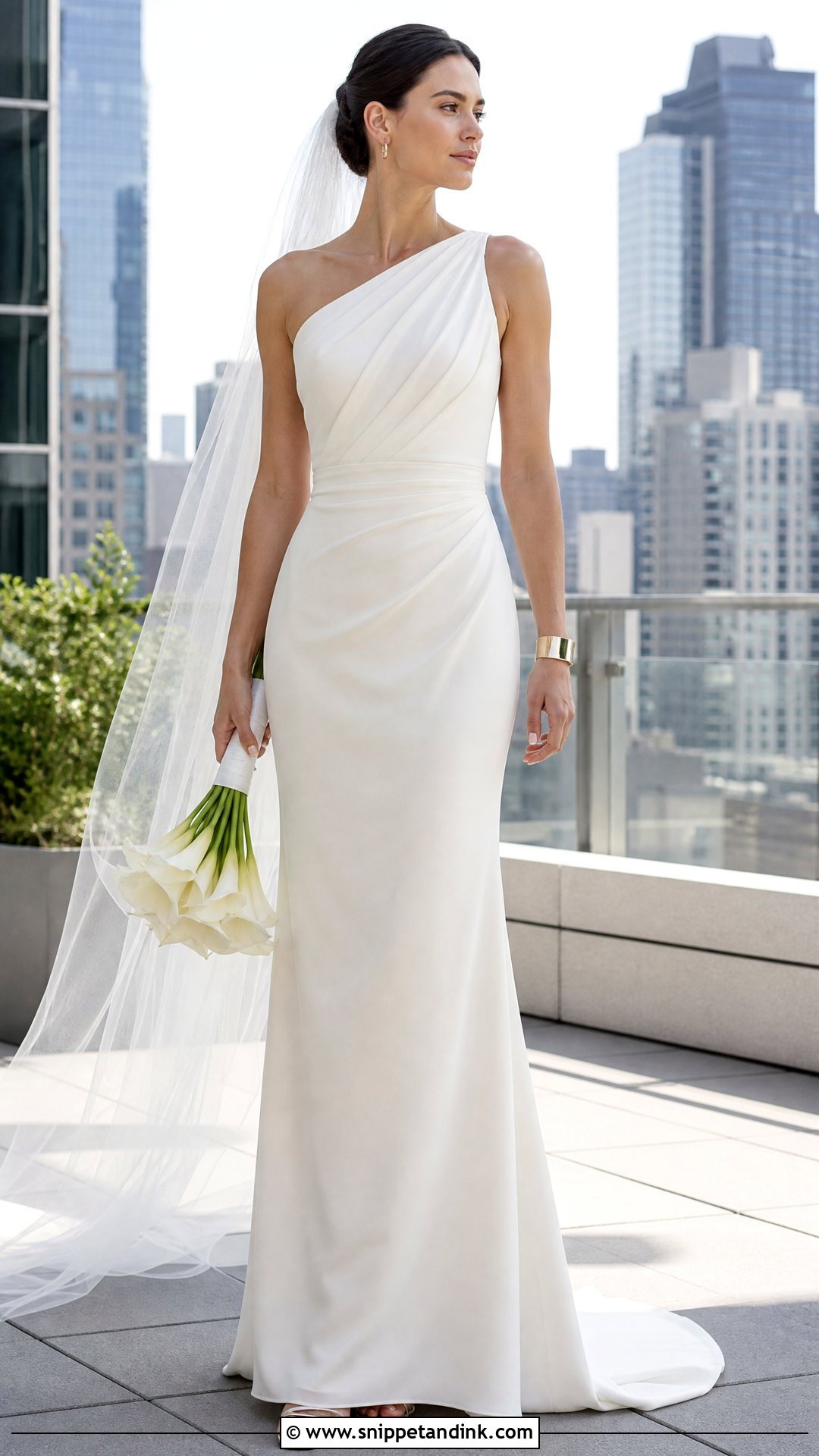
One shoulder creates a diagonal, and the fit at that shoulder is what keeps it smooth. If the strap is even slightly loose, the bodice twists as you greet guests. Sculptural drapery across the bodice and a skirt falling cleanly from the waist do the rest. Matte crepe reads modern and quiet; satin gives more shine. Slim heeled sandals, a metal cuff and small earrings suit it, with no necklace. A sheer veil set under a low side-parted bun and a streamlined bouquet follow the line. Rooftops and destination weddings suit it.
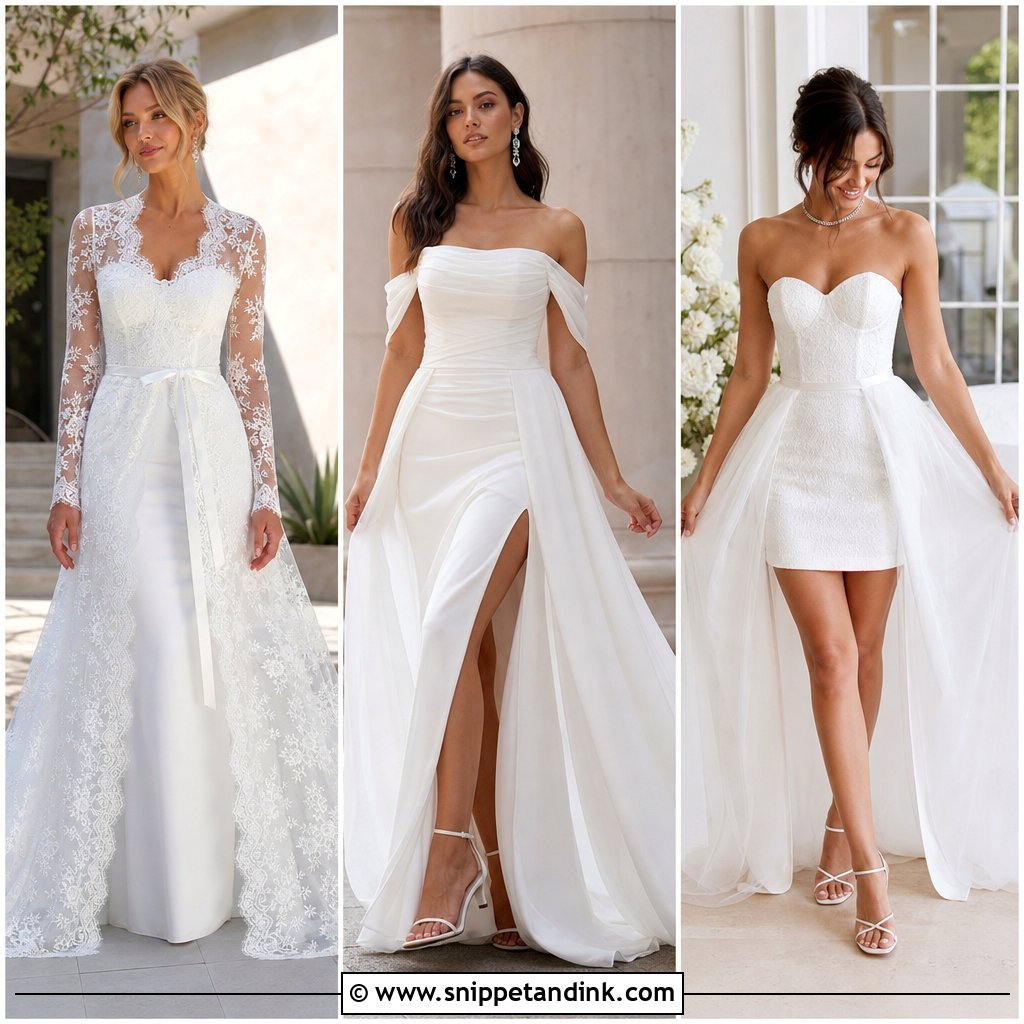
12. Cape Veil Bridal Dress
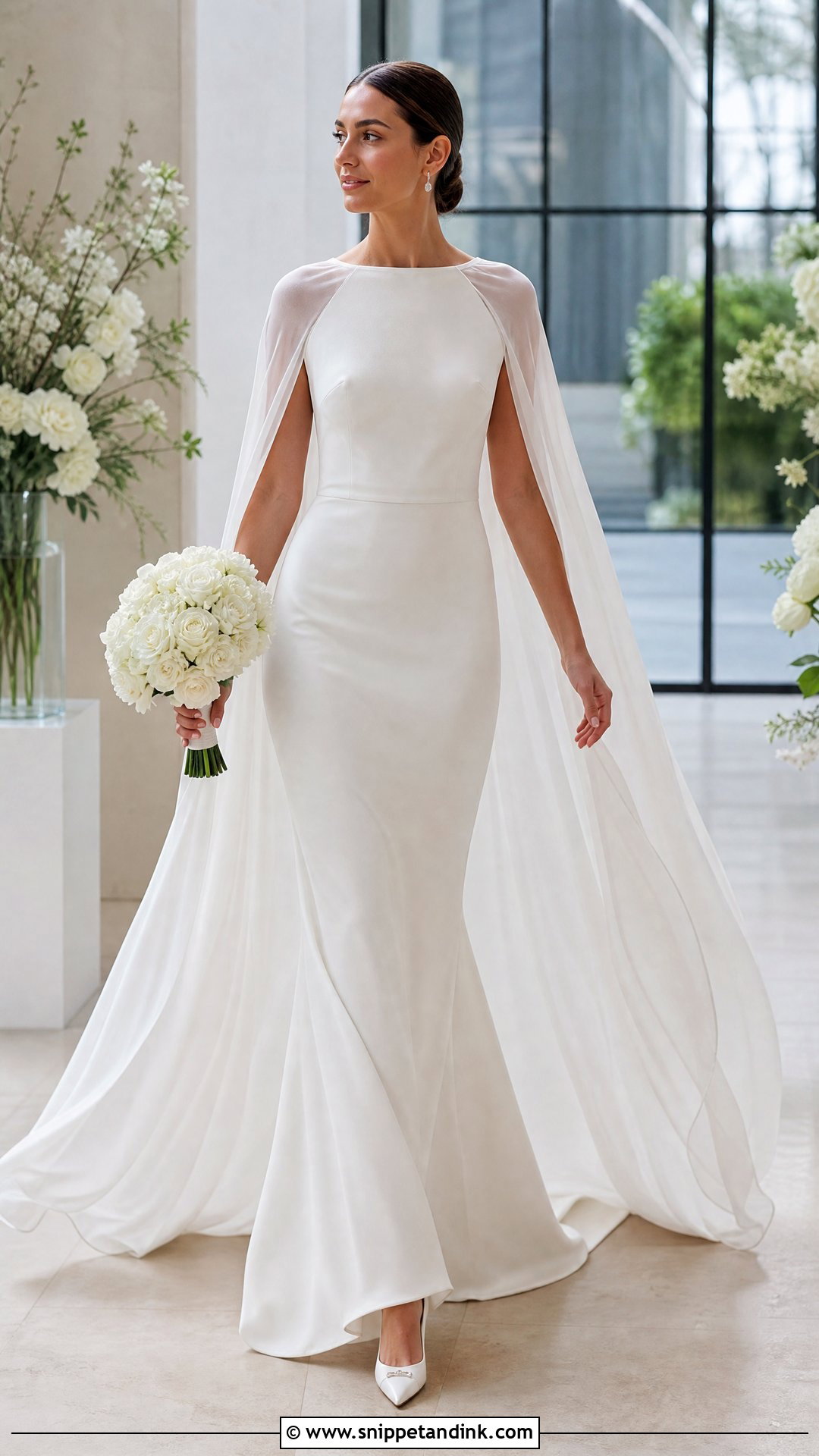
A cape gives you a veil’s movement with more structure. Start with a fitted crepe, satin or lace gown with a simple neckline and a clean skirt, then attach a sheer floor-length cape at the shoulders or neckline. A sleek updo keeps the attachment visible and stops hair catching in the fastening. Pointed heels, understated earrings and a structured white bouquet are enough. For coverage, choose a cape with light embroidery or shaped sleeves. Take it off for the reception and you have a simpler dress to dance in.
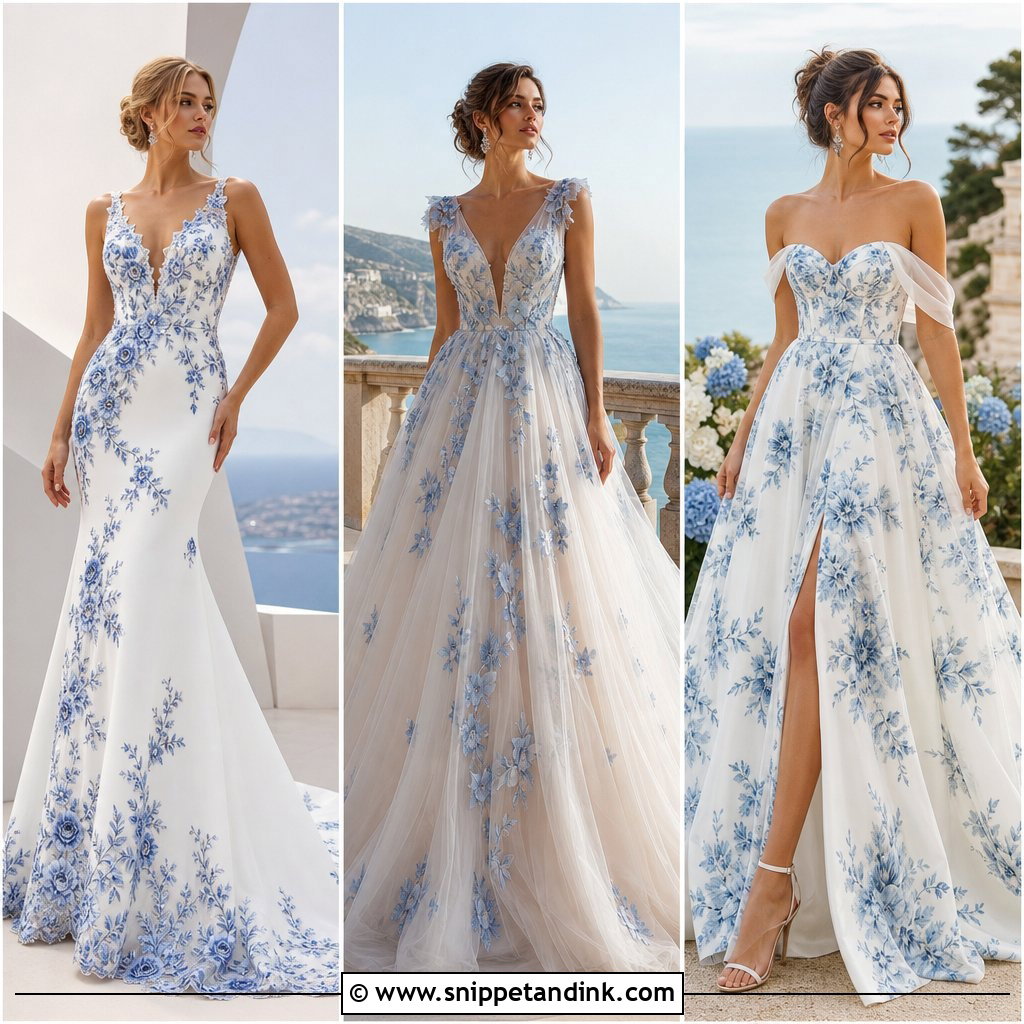
13. Floral Embroidered Bridal Gown
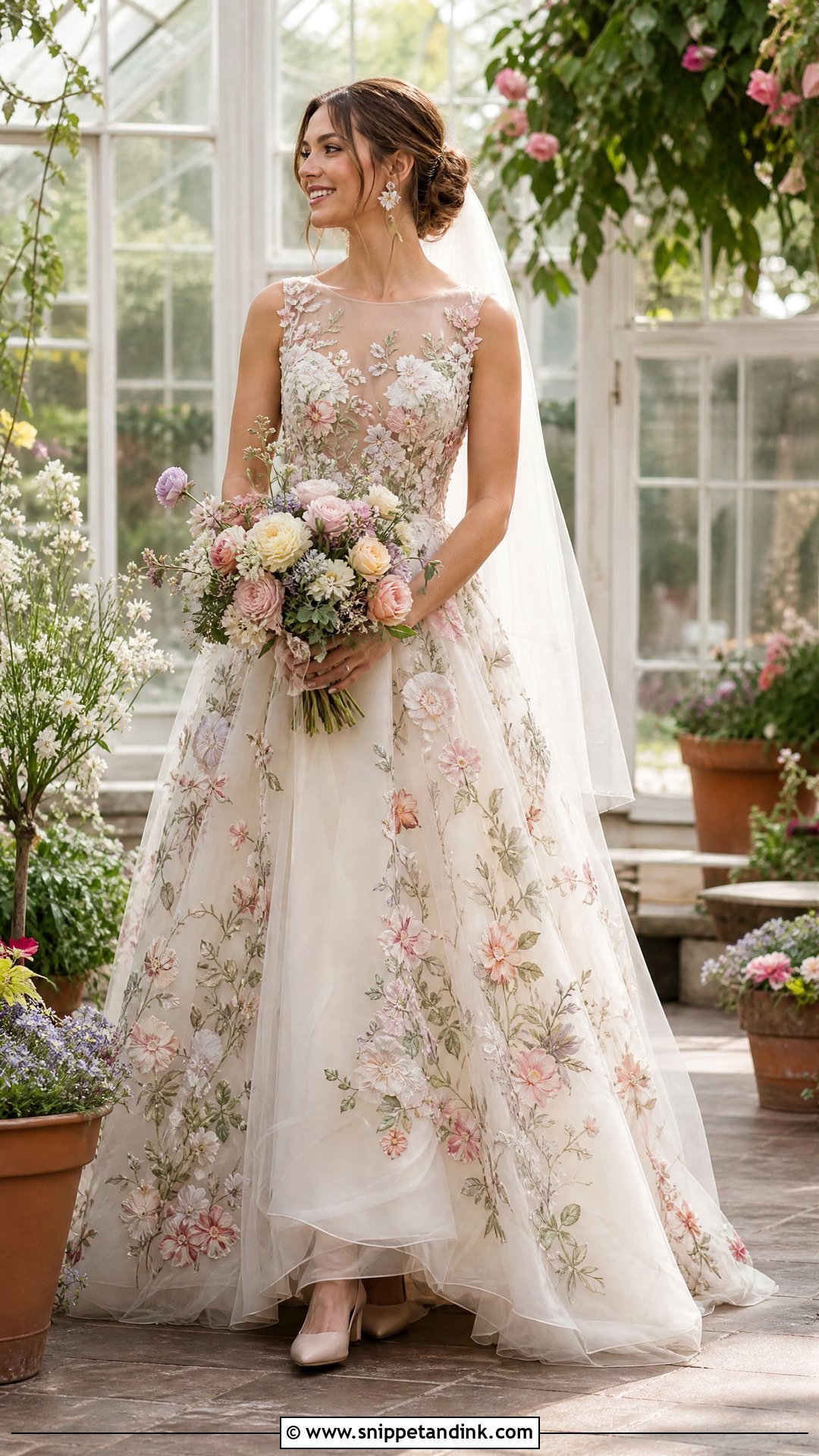
Embroidered flowers bring texture and a little color. An ivory gown with dimensional white flowers or soft pastel blooms on the bodice and skirt is balanced best by an A-line shape, and a sheer neckline lets the work look delicate. Dimensional flowers catch on veils, so I keep the veil plain and a little shorter at the back. Neutral satin pumps and small floral earrings, a loose low bun and a softly colored bouquet complete it. For subtle detail, keep the embroidery to the neckline or hem; for more, let it run onto the train. Spring gardens suit it well.
14. Boho Lace Bridal Outfit
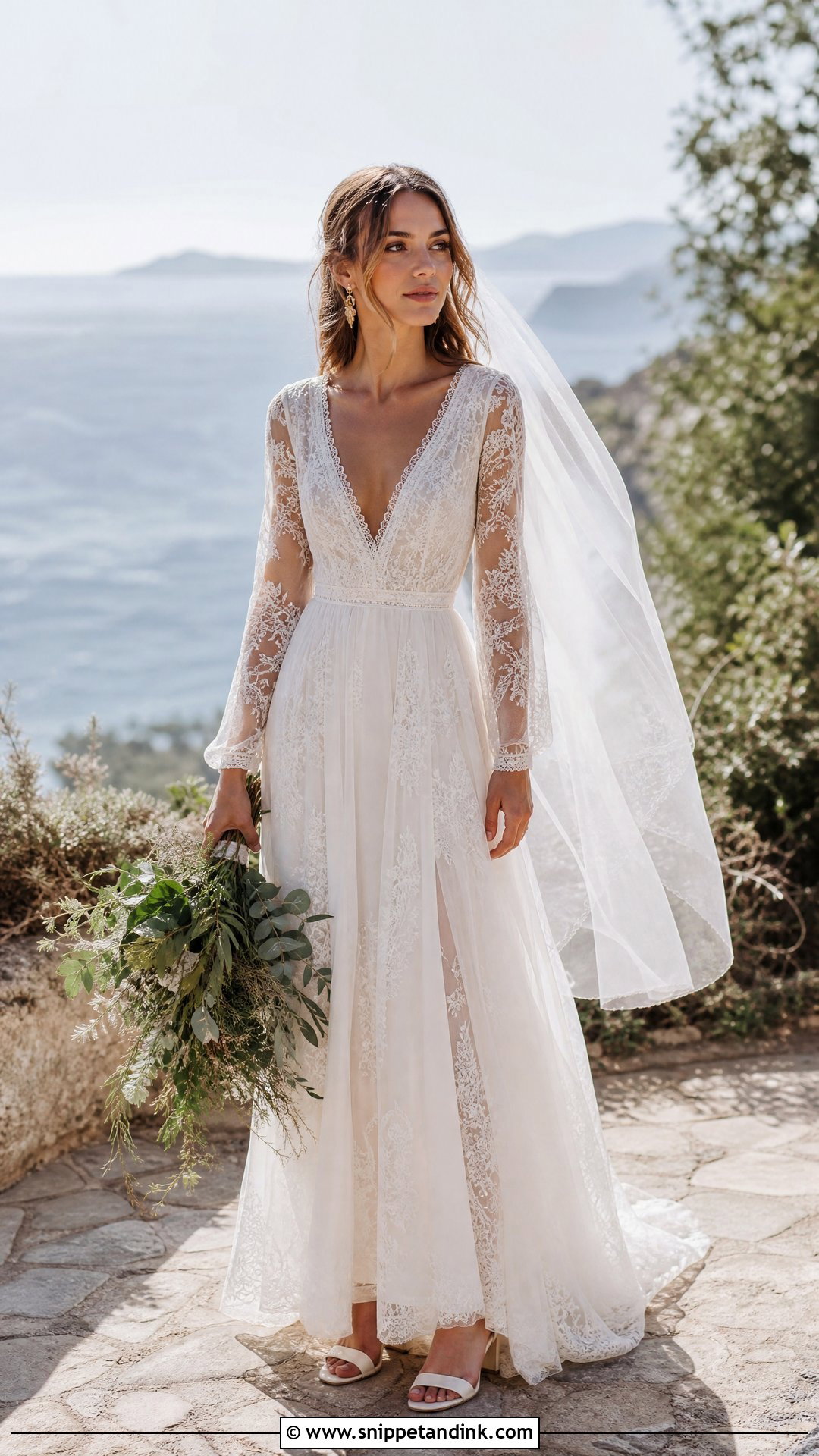
Relaxed has to be deliberate, or boho slides into shapeless. A fluid lace gown with soft sleeves, a defined waist and a skirt that moves is the base; crochet-style or botanical lace looks right, stiff heavily beaded lace doesn’t. Check the lining: unlined lace looks cheap in flash photos. Block-heel sandals sink less on grass than stilettos. Delicate gold earrings and a light veil or sheer scarf, plus loose waves, a textured bun or a braid, suit it. Carry an airy bouquet of white flowers and greenery for a beach or barn venue.
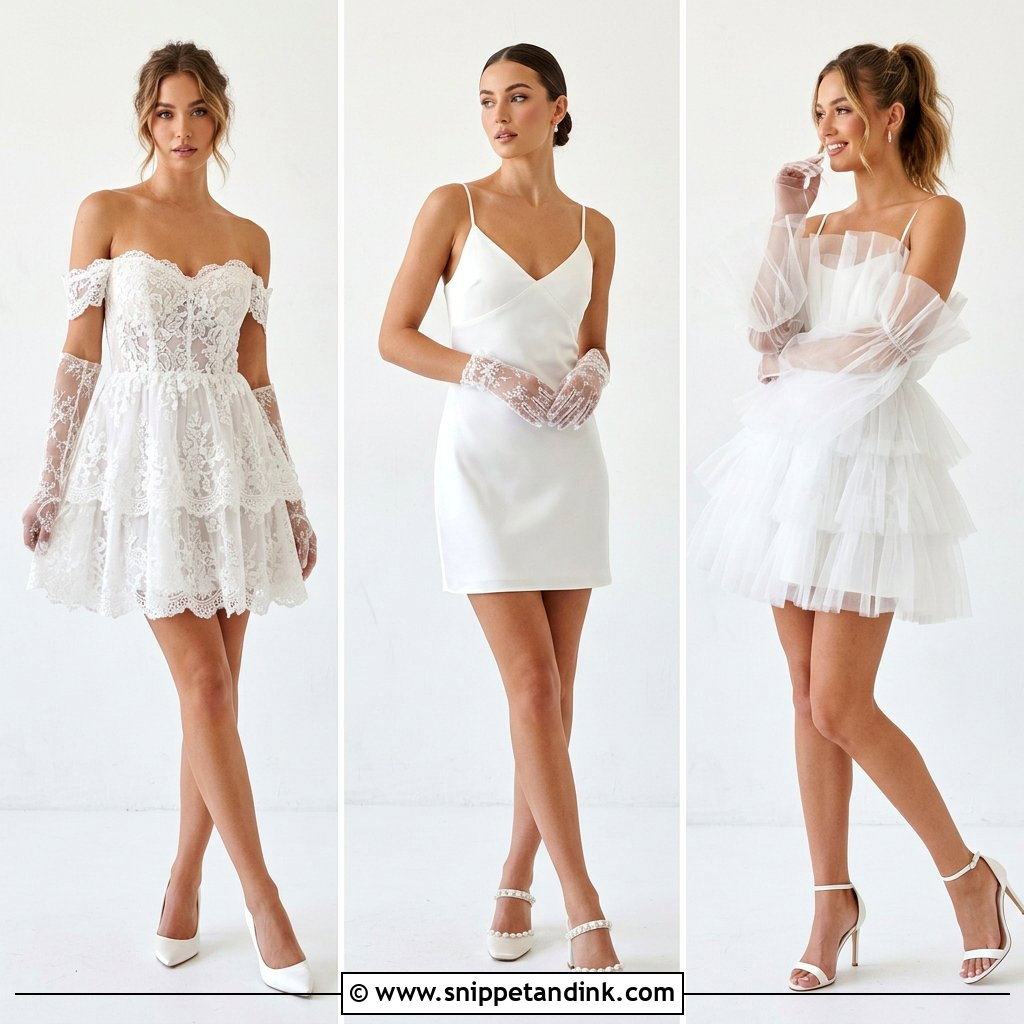
15. Bridal Mini Dress With Overskirt
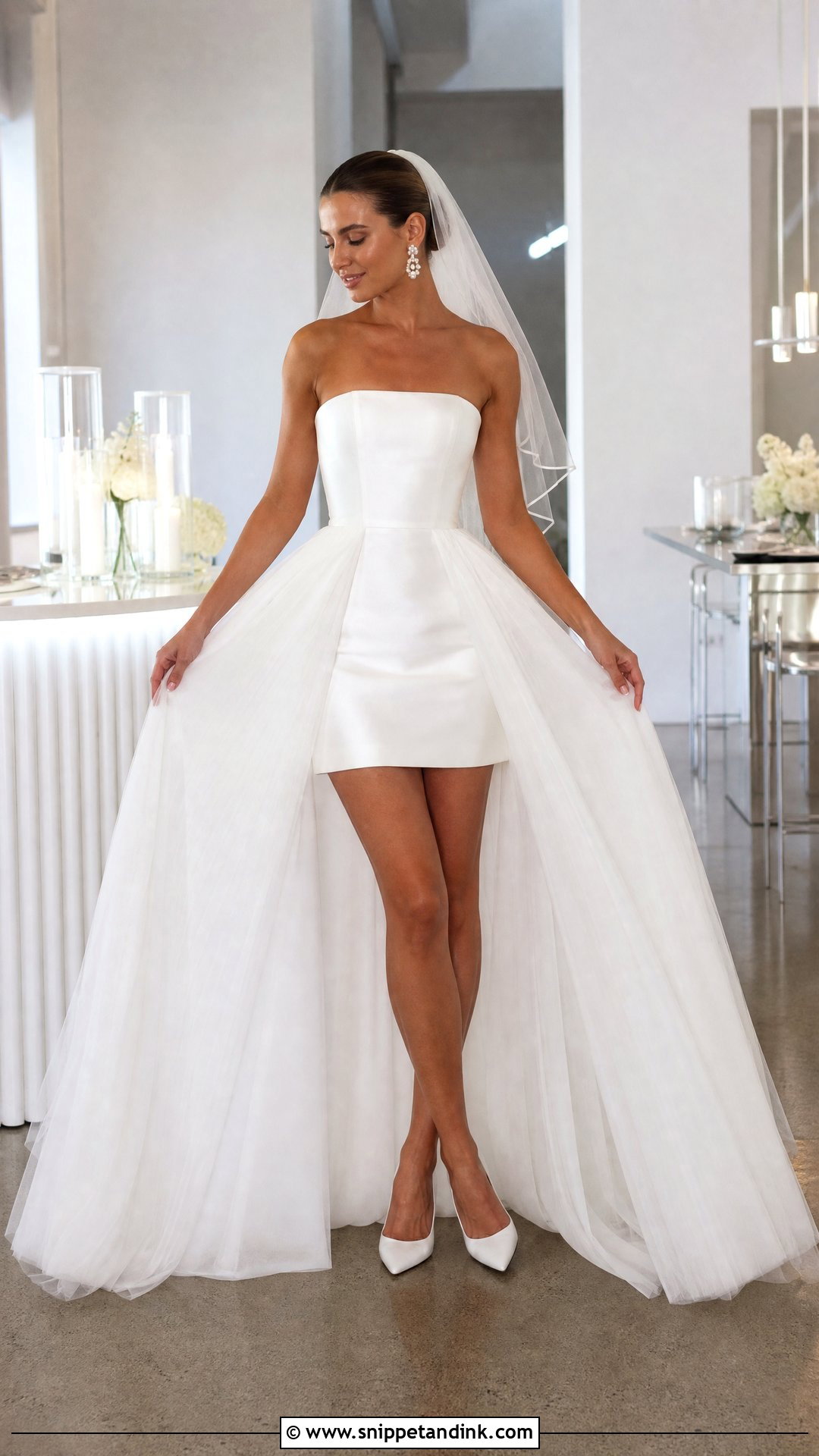
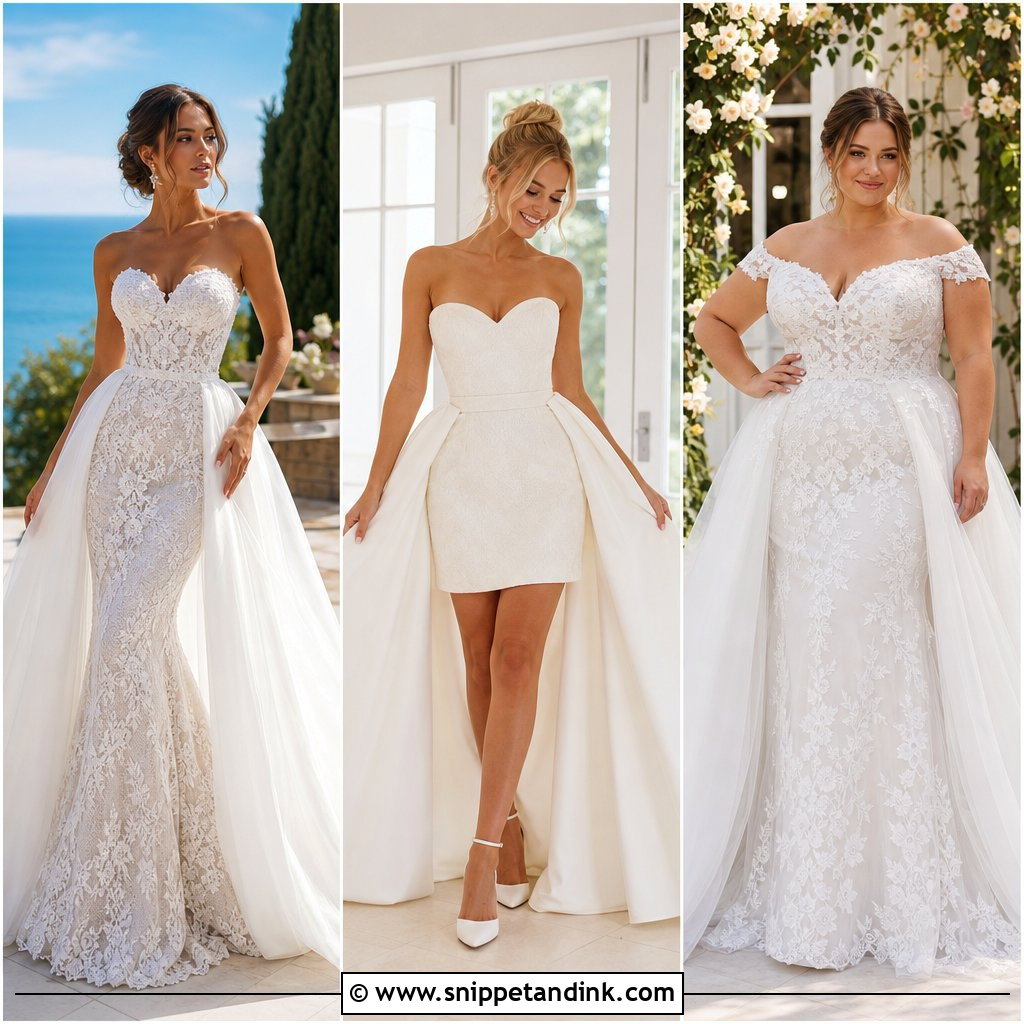
A mini with a removable overskirt gives you an aisle entrance and a party dress. Wear a structured strapless mini under a full-length tulle or satin overskirt for the ceremony with pointed pumps, statement earrings and a fingertip veil, then take the skirt off for dancing. The mini has to fit securely and cover you properly when you sit, so sit in it on a low chair at the fitting. Order both layers together; ivories from different fabrics rarely match. A polished ponytail or sculpted bun suits both looks.
16. Puff-Sleeve Bridal Dress
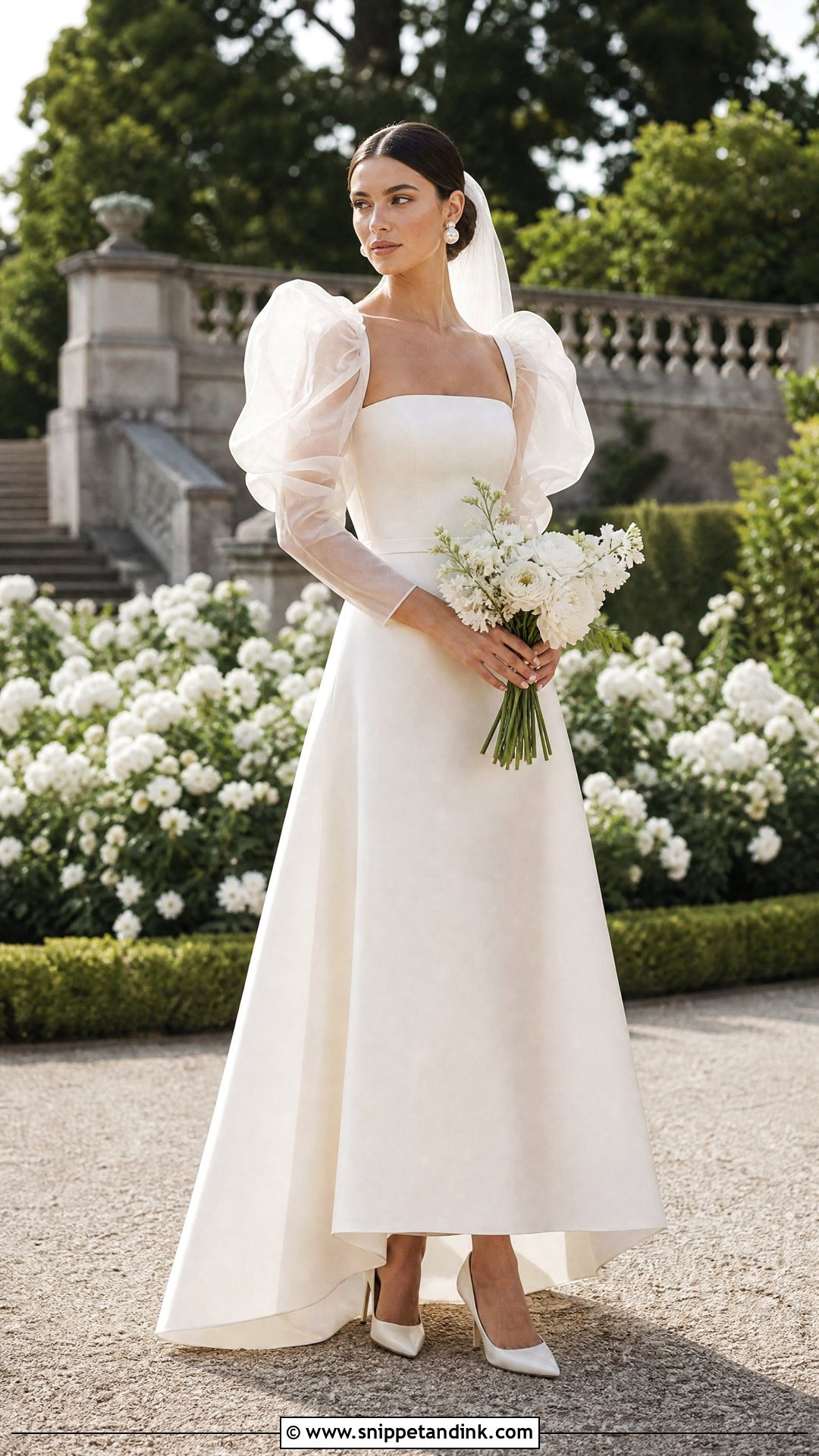
Puff sleeves add width at the shoulder, so everything else should be narrow. Sheer organza keeps them light; structured satin gives a bolder runway shape. A fitted bodice and a clean A-line, column or softly flared skirt balance the volume. Sleek pumps, pearl earrings, a narrow veil and a center-parted low bun avoid extra width. I’d check two things: where the sleeve ends, since mid-upper-arm is the most flattering point for most brides, and that you can lift your arms. Detachable sleeves come off for dinner.
17. Halter-Neck Bridal Gown
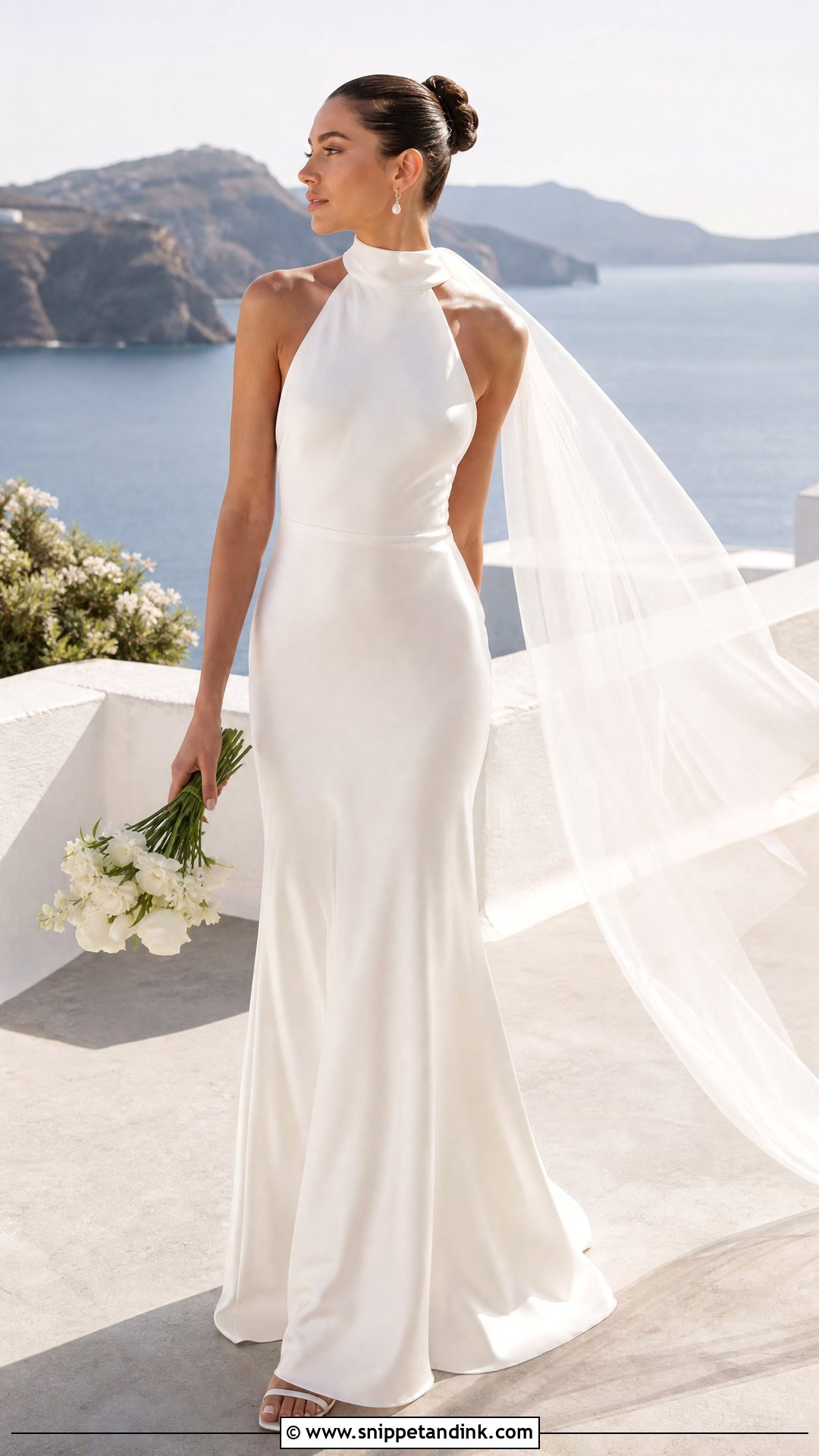
Halters lift the eye toward your face. Silk, crepe or satin with a fitted bodice and a flowing skirt works, and the back is your choice: open for drama, higher for support. With a full bust, I’d choose the higher back and a halter strap at least a couple of fingers wide so the weight isn’t hanging from a thin band at the neck. Drop earrings, a slim bracelet and metallic or ivory sandals suit it, without a necklace. A high bun or smooth ponytail shows the shoulders. A simple veil under the hair or a sheer scarf completes it.
18. Bridal Jumpsuit With Train
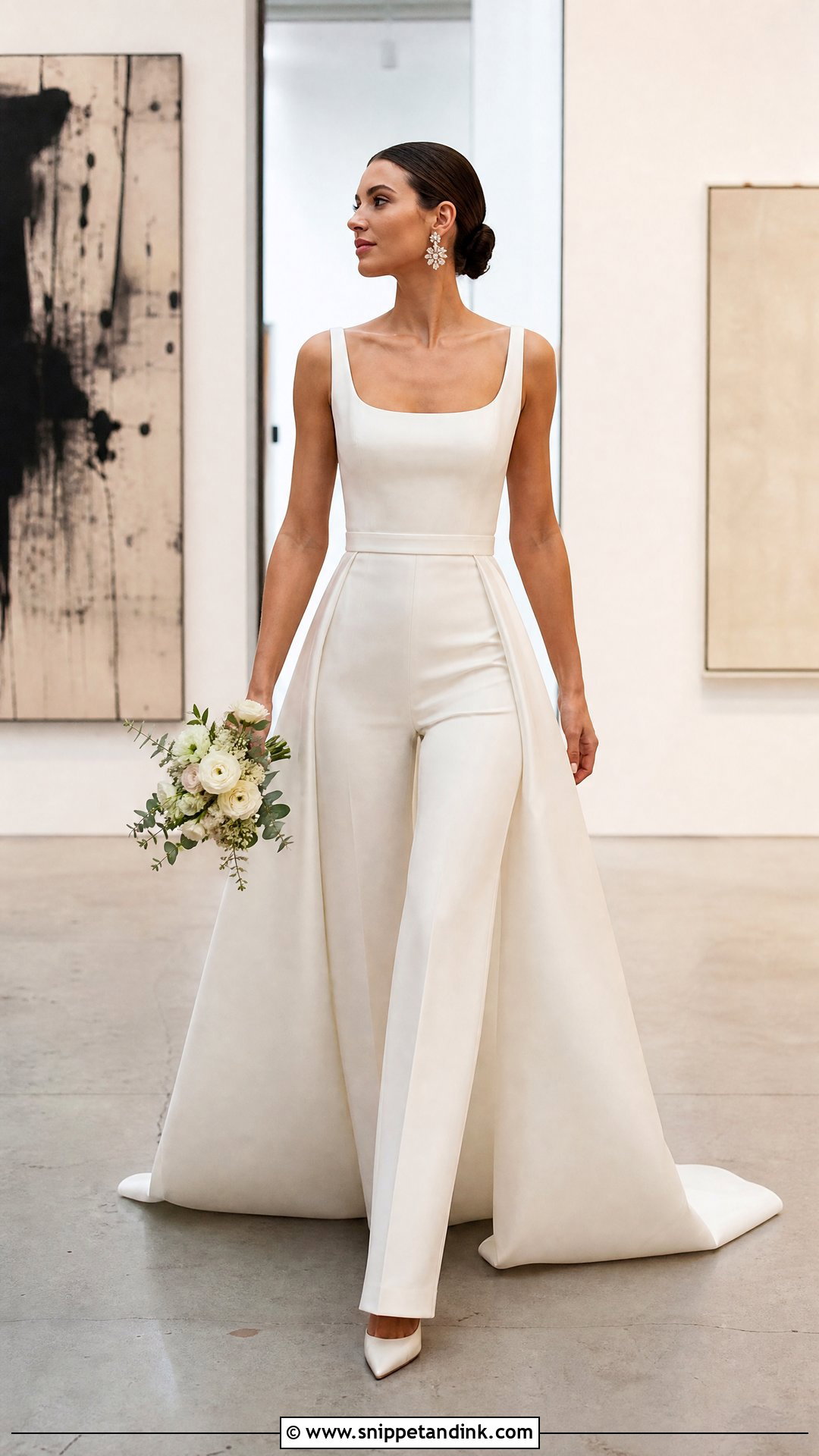
A bridal jumpsuit needs a train or cape to feel like a ceremony outfit. A fitted bodice, a defined waist and wide-leg trousers in ivory crepe or satin form the base; add a detachable overskirt, back train or floor-length cape for the aisle. Pointed heels under the trousers lengthen the leg. Hem the trousers with the heels on so they just skim the floor; a few millimetres too long and you’ll tread on them all night. Statement earrings, a sleek bun and a compact bouquet finish it for city venues and civil ceremonies.
19. Pearl Embellished Bridal Gown
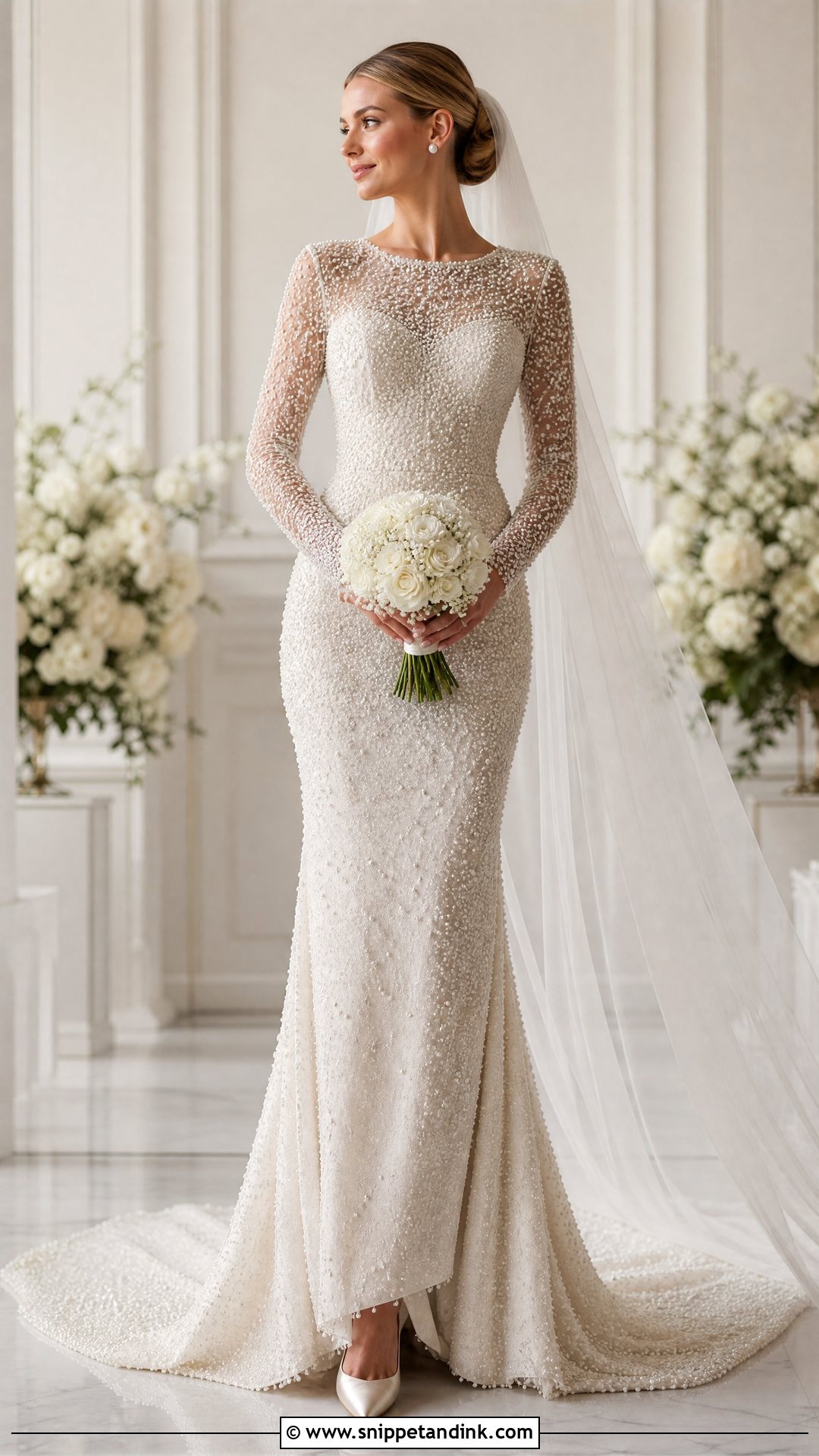
Pearls give a soft glow instead of sparkle. Scattered across sheer sleeves, a corseted bodice or the whole skirt, they show best over a lining close to your skin tone or the gown color. Run your hand over the inside of the bodice at a fitting; pearls sewn at the waist or underarm can press uncomfortably after a few hours. Satin pumps, pearl studs and a plain cathedral veil are plenty. Skip a decorated necklace. A smooth low bun and white flowers finish it for an evening ceremony.
20. Reception Dress With Feather Trim
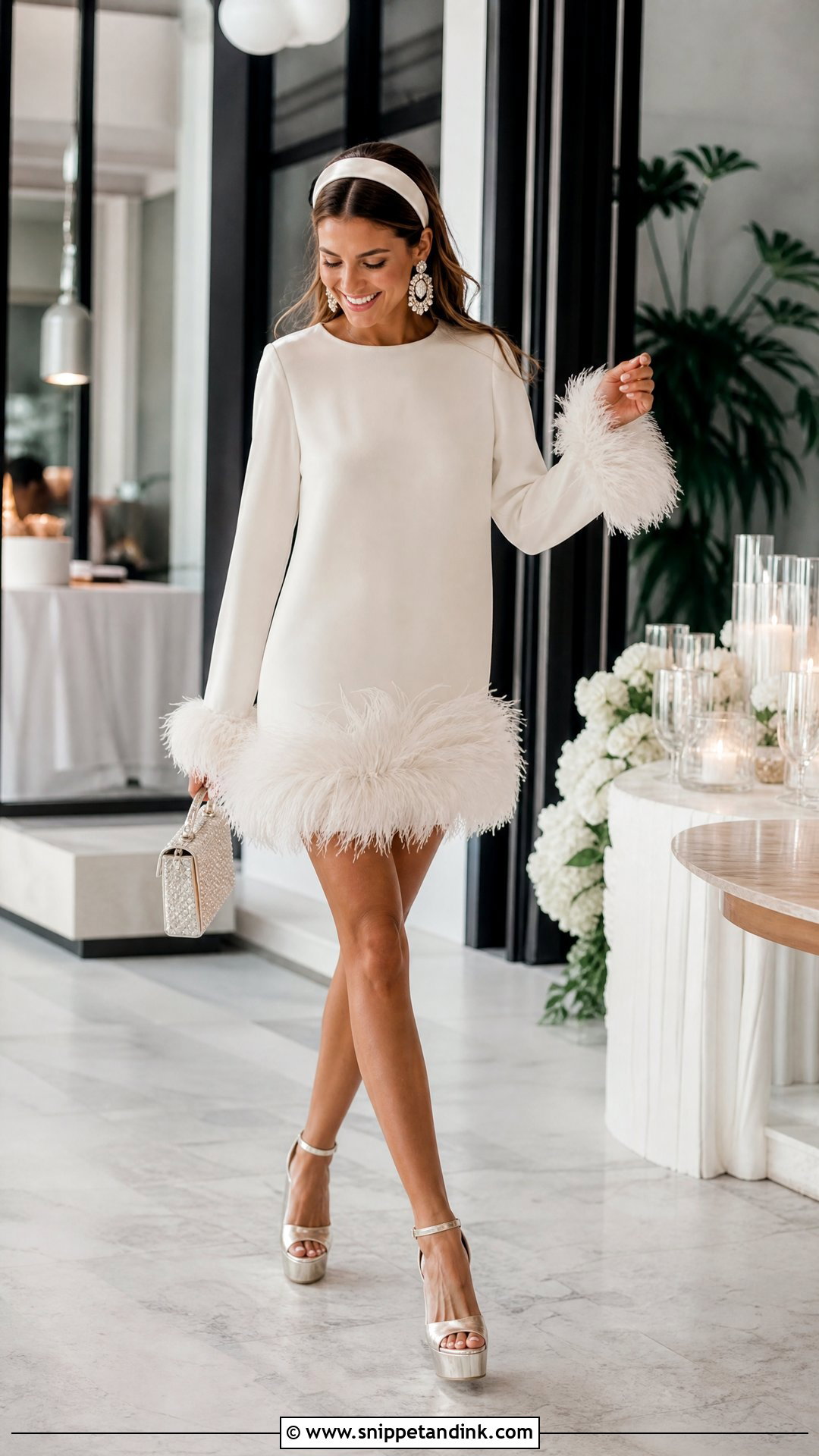
Feathers are fun and messy. On a short shift, a fitted midi or a tea-length dress, keep them to the neckline, cuffs or hem, and keep the base fabric plain. Shake the dress hard at the fitting; good ostrich trim is stitched on and sheds very little, cheap trim leaves a trail across the dance floor. Metallic platforms, statement earrings and a small structured bag suit it. Swap the veil for a satin headband or crystal clip. It marks a real change of mood while staying part of the wedding wardrobe, which is why I like it as a celebratory second look.
Suits, Jumpsuits and Minis Fit Differently From Gowns
Several looks above leave the gown behind, and they’re fitted by different rules. A full skirt hides a lot; trousers and short hems hide nothing.
- Shoulders first on a blazer. Sleeves, waist and length are easy to adjust; shoulders are not, so buy the size that fits there and tailor the rest.
- Jumpsuits need the right rise. Sit down and bend forward at the fitting. If the crotch pulls or the bodice drops, the torso length is wrong for you and no amount of hemming fixes it.
- Hem trousers with your heels on, and decide on a slight break or a clean floor-skim before you go in.
- Minis need a sitting test on a low chair and a dance test with arms up. Structured fabric can ride up more than soft fabric.
- Ivory matters more with separates. Bring the jacket, top and trousers to daylight together; two ivories that match indoors can look cream and grey in photos.
An Editorial Look Still Has to Get Through Dinner
Fashion-led bridal looks work when the drama sits on a well-fitted base. Settle on silhouette, fabric and how much drama you want first, then build out: shoes you can stand in, accessories in proportion, a veil that suits the neckline, hair that shows it. Venue and season matter, but they shouldn’t box you in; a suit, a jumpsuit, a plain column or a lace ball gown can all feel right. Book alterations early and test the full outfit sitting and walking. If it looks good, moves well and still feels like you, it’s the one.
You'll Like These Ideas:




Leave a Reply