
A traditional bridal outfit carries more than style. It often holds a family’s region, faith and memory, which is why I ask brides who in the family should see the design before anyone else does. The twenty looks here span embroidered lehengas, silk sarees, ceremonial hanbok, kaftans and a classic lace gown, each built out with jewelry, shoes and hair so you can picture the whole bride. Good modern tailoring can make almost any of them more comfortable without changing their character. Lean on relatives, artisans and people from the community for colors and details that matter.
Heirloom, Commissioned Abroad or Bought Ready-Made?
How you source a traditional dress changes the timeline more than the design does. Here’s how I’d think about each route.
Wearing a family piece
Have it assessed by a specialist cleaner or conservator first. Old silk can split at the folds and vintage embroidery may need repairs before any fitting. Alterations should be reversible, so ask for tucks and basting rather than cutting seams.
Ordering from artisans in another country
Have a local tailor take your measurements, not a friend with a tape. Ask the maker to leave extra seam allowance so a local seamstress can fine-tune the fit, and build in weeks of buffer for shipping and customs. I’d want the finished piece in hand at least two months before the wedding.
Buying ready-made
It’s the fastest route, but sizes run differently between countries and makers. Budget for alterations from day one, and check the lining and inner seams, which reveal construction quality faster than the outside does.
1. Red Bridal Lehenga
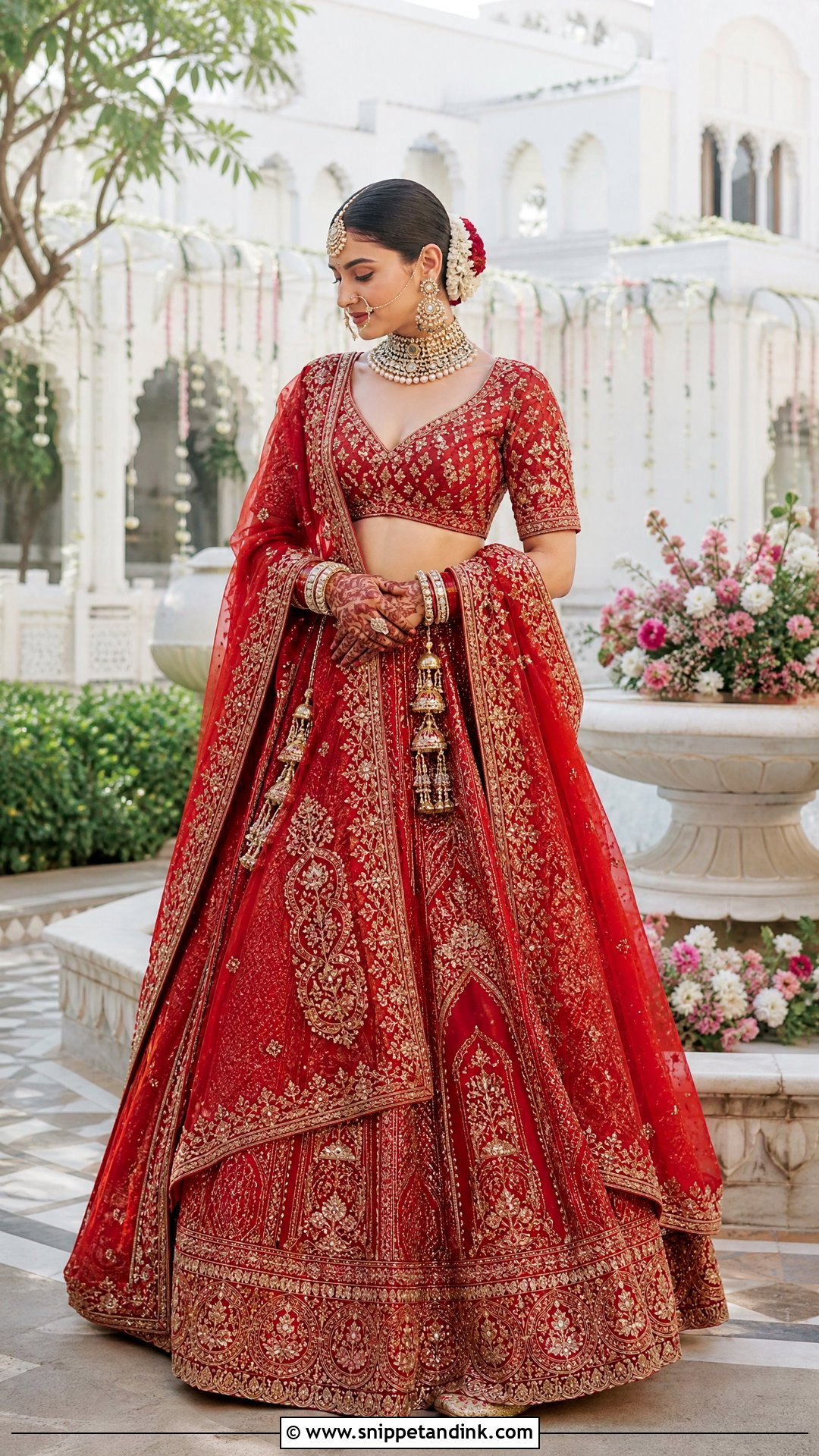
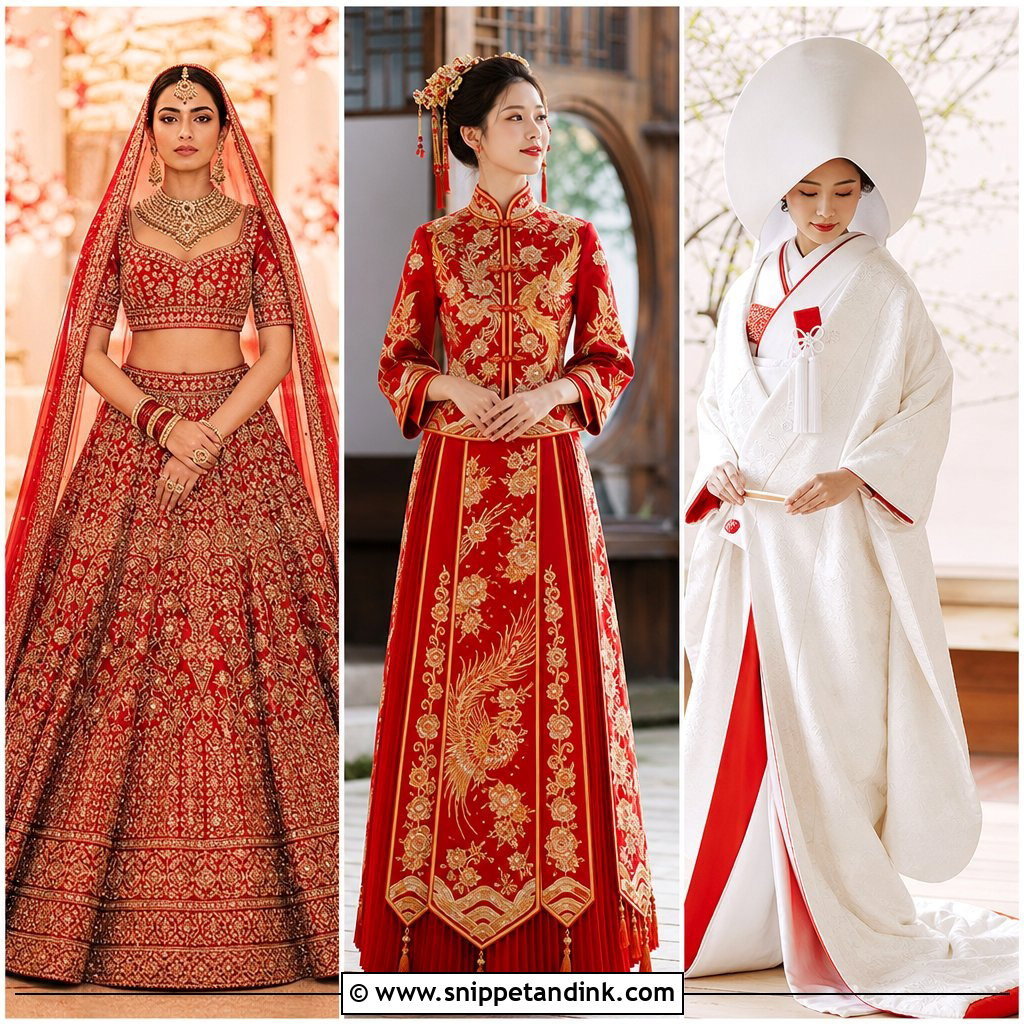
A red lehenga is still the heart of many Indian weddings, though the exact shade and styling shift by region, religion and family. Silk, velvet or brocade with gold embroidery, beads or traditional motifs forms the skirt; the blouse needs real support built in, with boning or padding, because you’ll be lifting your arms for rituals all day. A double dupatta, one over the head and one across the shoulder, looks layered and regal, but pin the head dupatta to the hair at three points or it slides back every time you turn. Finish with a necklace, earrings, bangles, bridal head jewelry, embroidered juttis and a sleek bun or long braid.
2. Banarasi Silk Bridal Saree
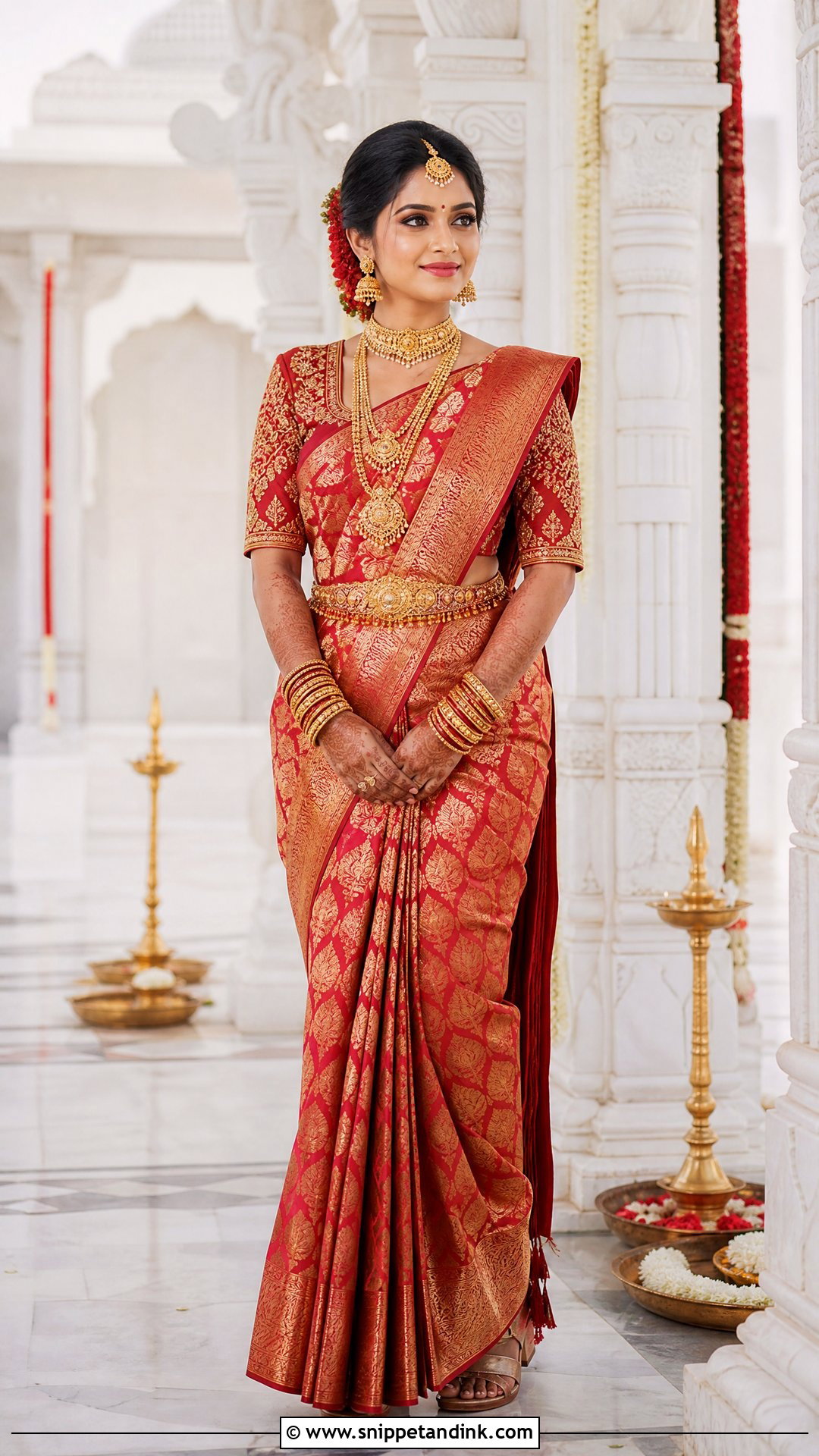
Banarasi silk catches light through its zari weave, which is why it looks so alive in person. For a bride, red, maroon, pink or deep green with gold floral or architectural motifs is traditional. Pair it with a structured blouse with elbow sleeves and a comfortable neck, and drape it in your regional style so the border shows. Banarasi is slippery at the pleats. A waist belt isn’t just jewelry here; it holds the pleats in place during rituals. Add gold earrings, layered necklaces, bangles and a hairpiece, low block heels or embellished flats underneath, and a light veil if you like, with the pallu kept visible across one shoulder.
3. Kanjeevaram Bridal Saree
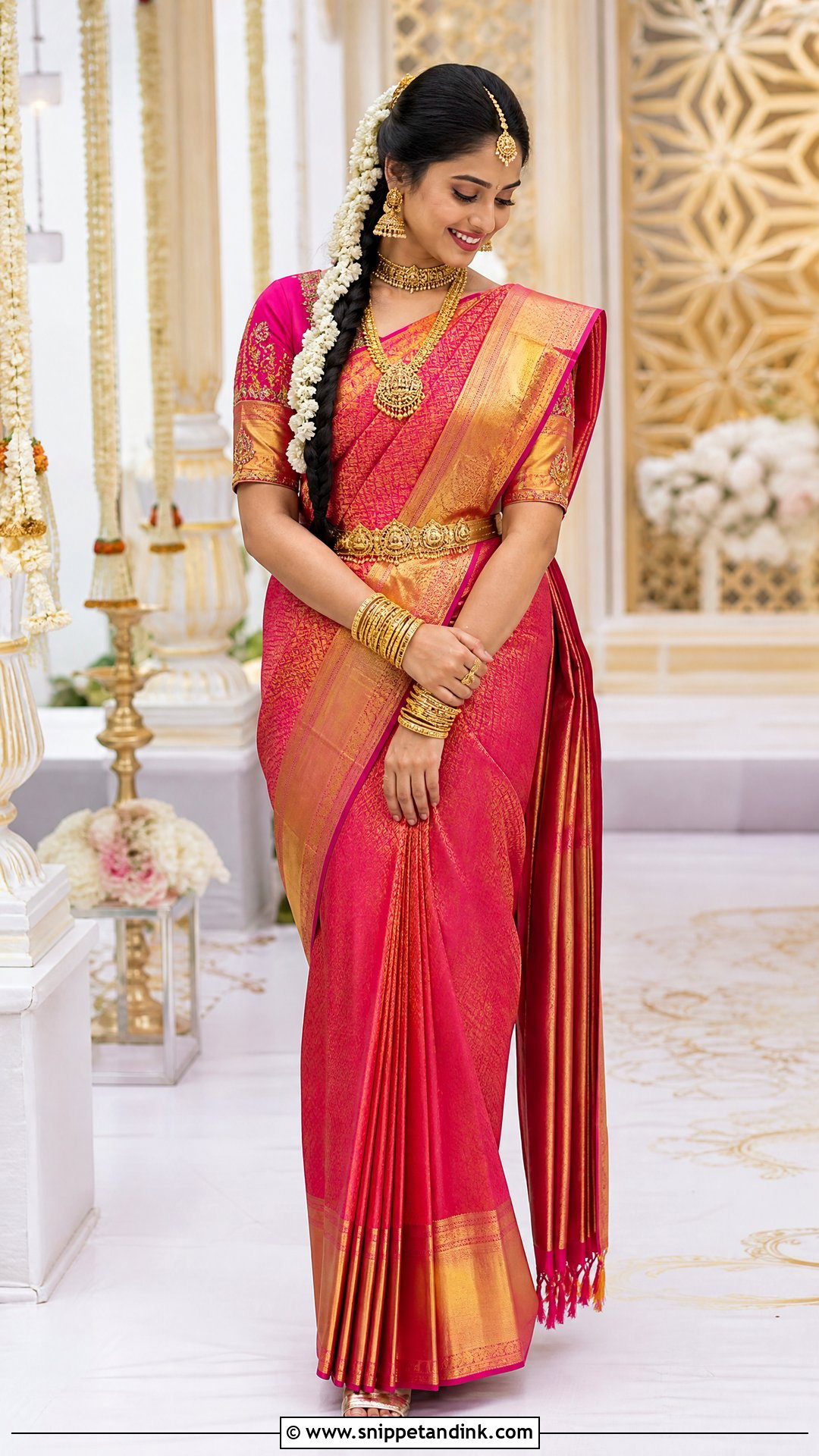
Kanjeevaram silk is dense and holds a sharp pleat, which makes it one of the easiest sarees to keep neat through a long South Indian ceremony. Contrast borders define it: red with gold, green with pink, mustard with maroon. I match the blouse to one border color so the eye reads the saree as a whole. Temple jewelry, stacked bangles, a waist belt and statement earrings suit its weight, and flowers in a long braid or low bun follow family custom. The silk is heavy enough that it pulls at the shoulder by evening; a pallu pinned to the blouse at two points stops that. Gold sandals or low heels and a small clutch complete it.
4. Pakistani Bridal Sharara
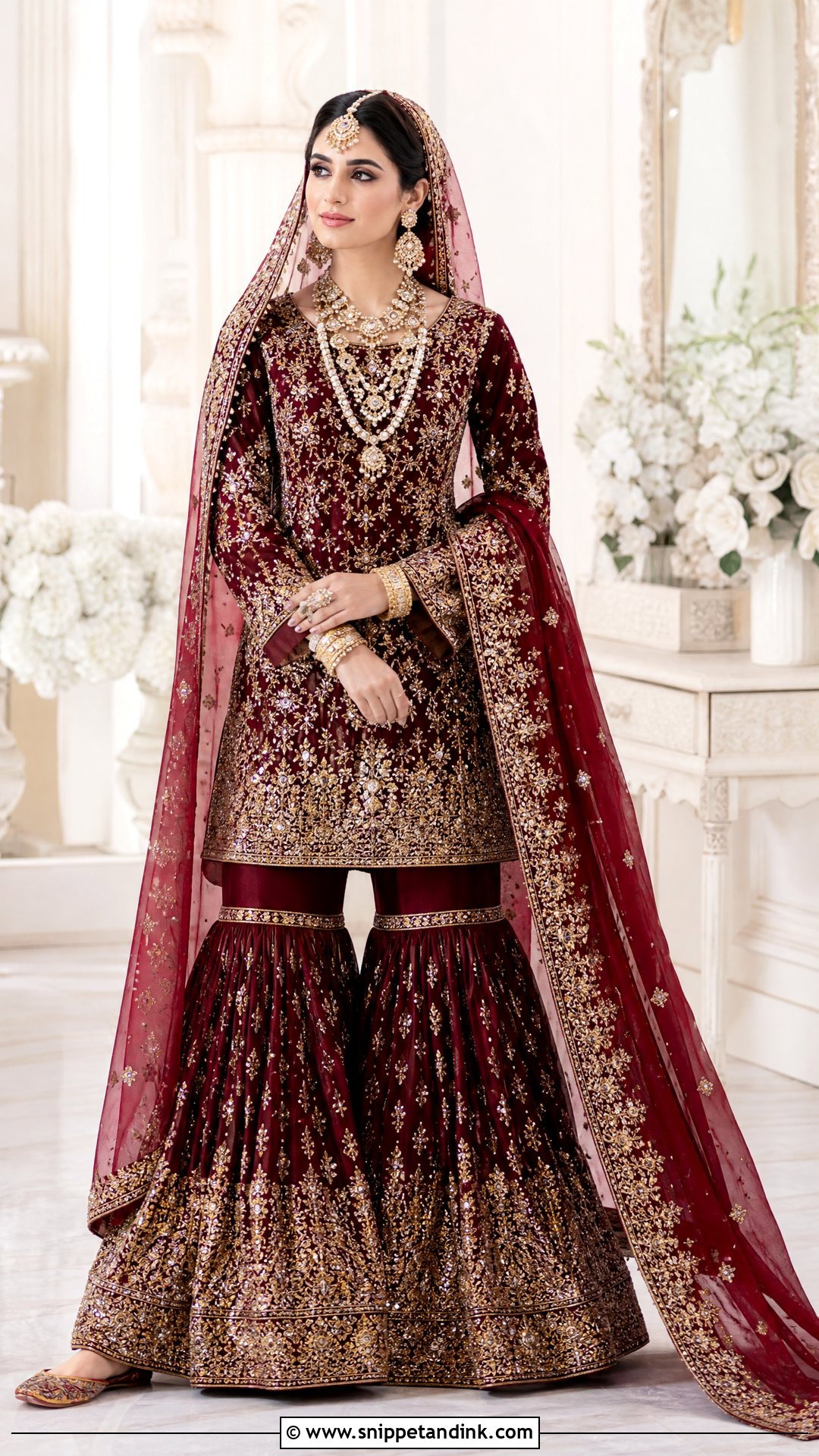
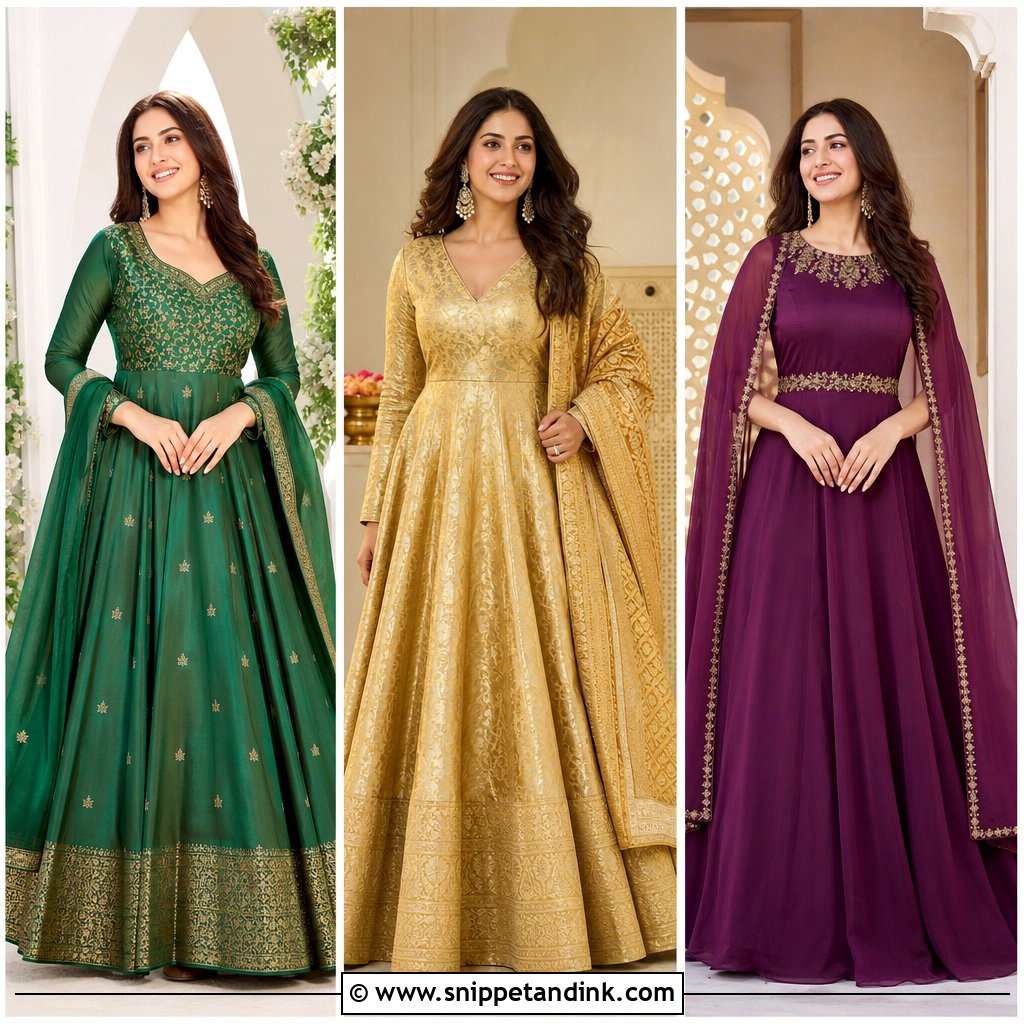
A bridal sharara moves beautifully, with a long embroidered shirt over pants that flare from below the knee. Deep red, burgundy, emerald, ivory and muted gold all look formal, depending on family and region. I keep the handwork concentrated at the neckline, cuffs and hem so the shirt doesn’t become stiff. The fit through the upper leg is the detail people miss. If the sharara is cut loose there, the flare starts too high and the outfit looks bulky. Drape the dupatta over the head with one side falling along the arm, and wear a choker, long necklace, earrings, bangles, a tikka and embellished khussas.
5. Red Chinese Qipao
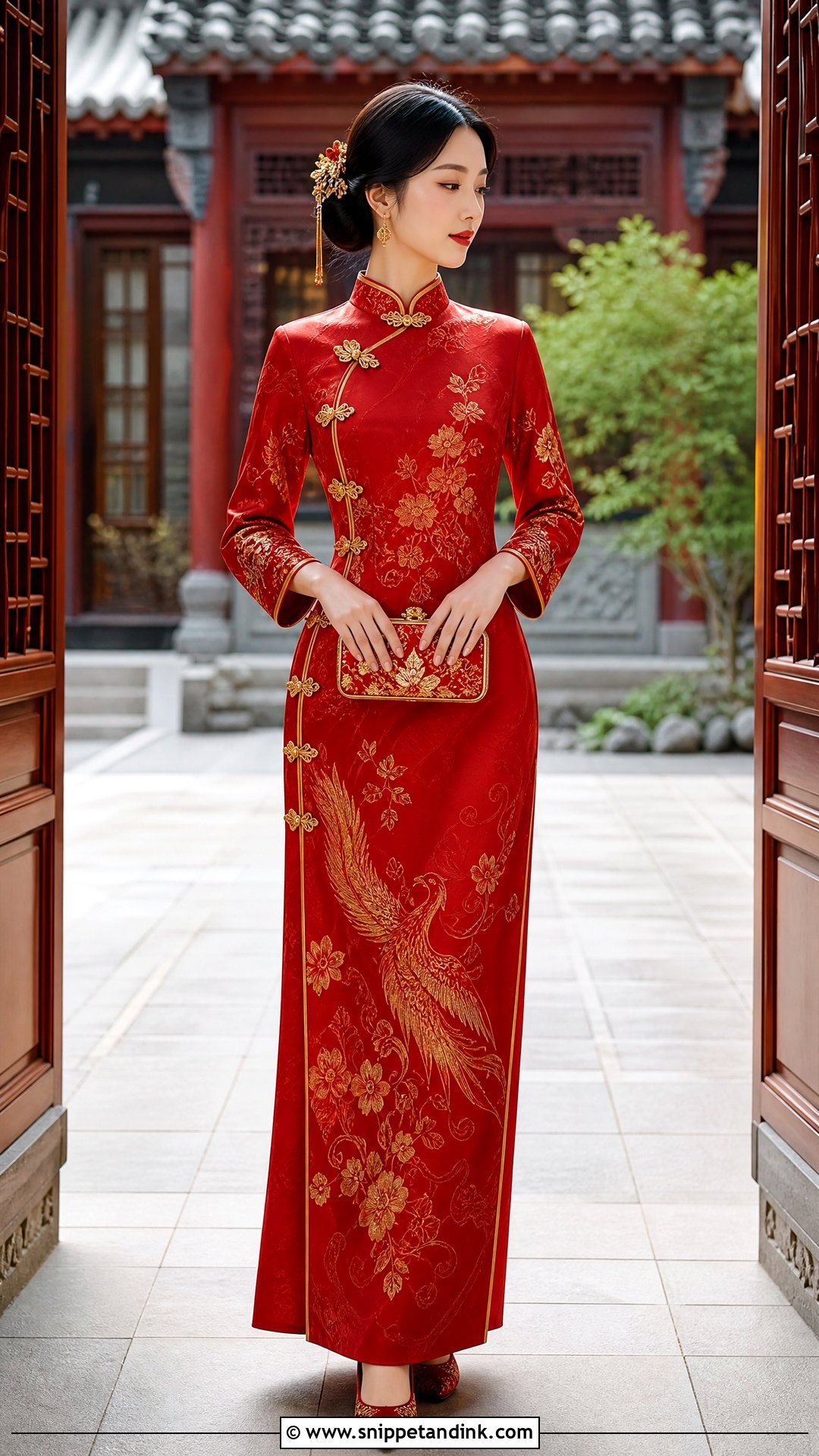
A red Chinese qipao is the sleekest silhouette on this list. Look for silk or brocade with a high Mandarin collar, knotted closures and carefully placed gold motifs, cut floor length for formality. Side slits need adjusting so you can walk and kneel during a tea ceremony without them gaping; I set slit height with the bride kneeling. Many families choose dragon-and-phoenix or floral embroidery, and customs vary by region, so ask before you commission. Red or gold low heels, delicate earrings, an embroidered clutch and a smooth bun with gold ornaments leave the collar clear.
6. Chinese Qun Kwa
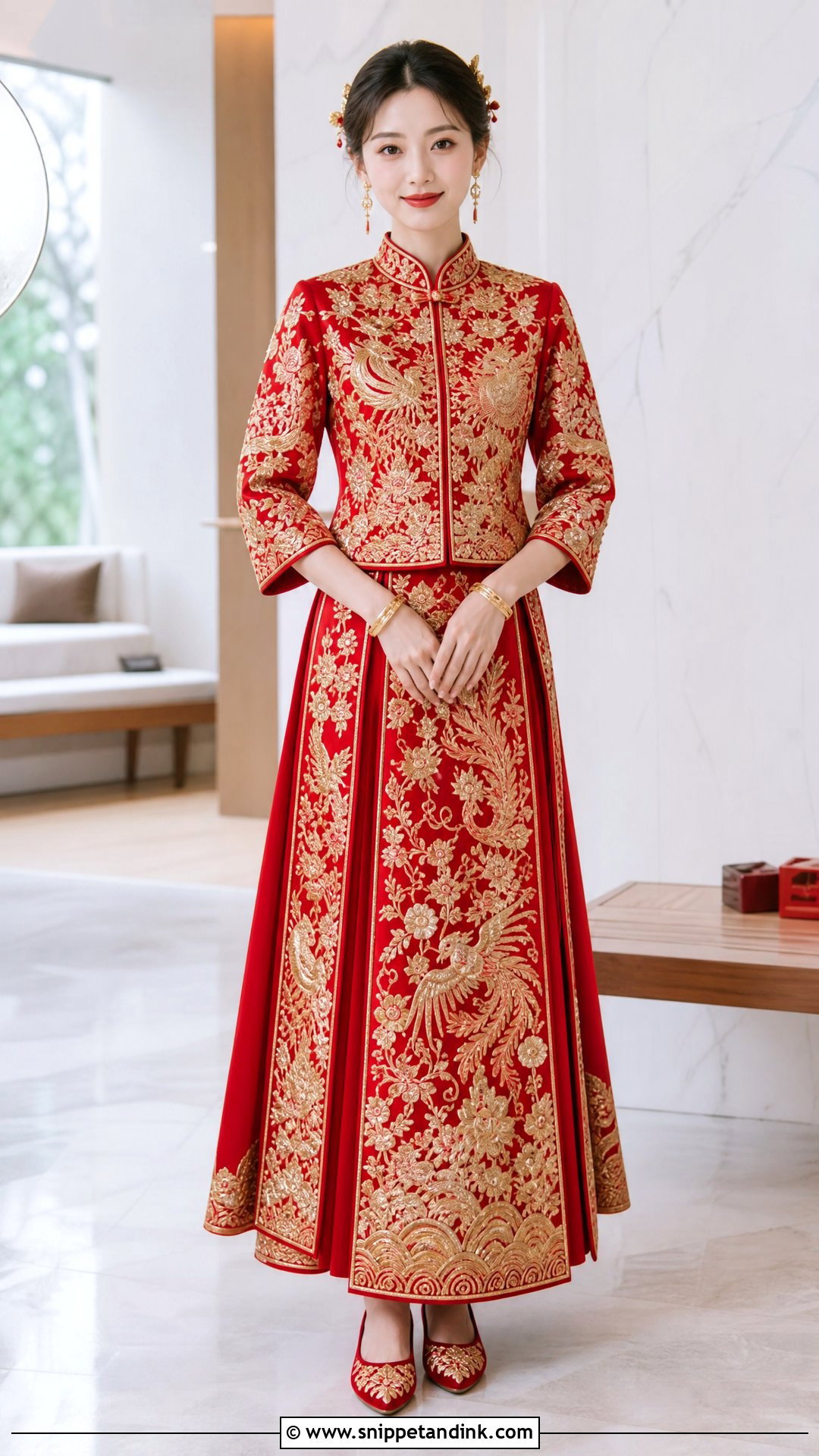
The qun kwa pairs an embroidered jacket with a skirt, and the more gold thread, the heavier and stiffer it becomes. Choose motifs with family traditions in mind. The jacket has to close neatly without binding across the shoulders, since a tight back seam pulls the front open when you reach forward to serve tea. Skip a large necklace that would fight the embroidered neckline; gold bracelets, earrings and hair ornaments are enough. Red embroidered flats or low heels and a smooth updo complete it for the tea ceremony or an entrance.
7. Korean Bridal Hanbok
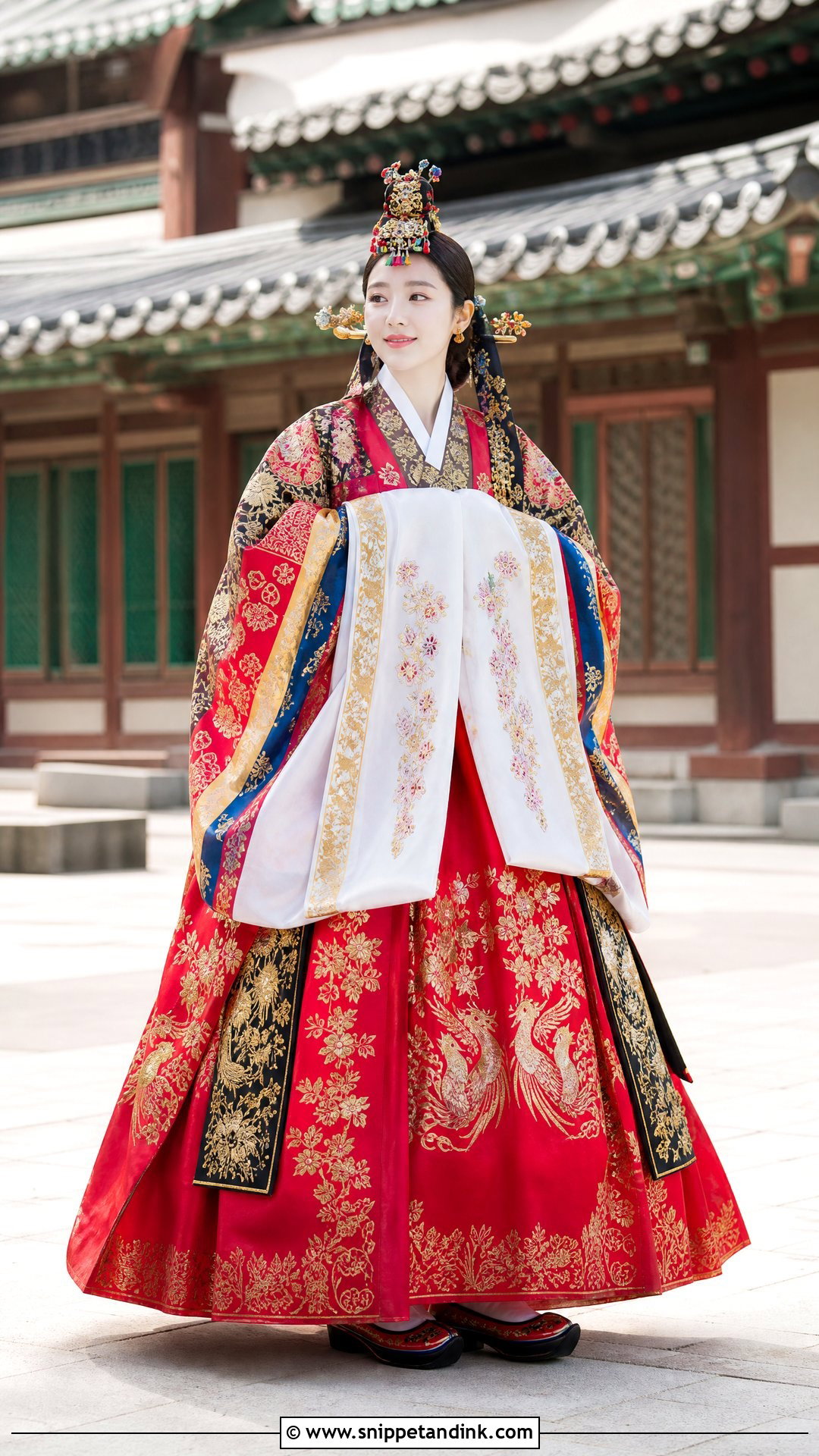
A Korean bridal hanbok is recognizable at a glance, with a full skirt and fitted upper layers. For the ceremony itself, the bride traditionally wears an elaborate robe such as a hwarot or wonsam over the hanbok, with ceremonial headwear. Red, blue, green and yellow details follow the ceremony and family wishes. Because the long skirt hides your feet, traditional shoes must fit snugly; a loose shoe is easy to lose on steps. Keep jewelry minimal and let the embroidery lead. The robe and headpiece are worn in a set way, so family or cultural guidance matters.
8. Japanese White Bridal Kimono
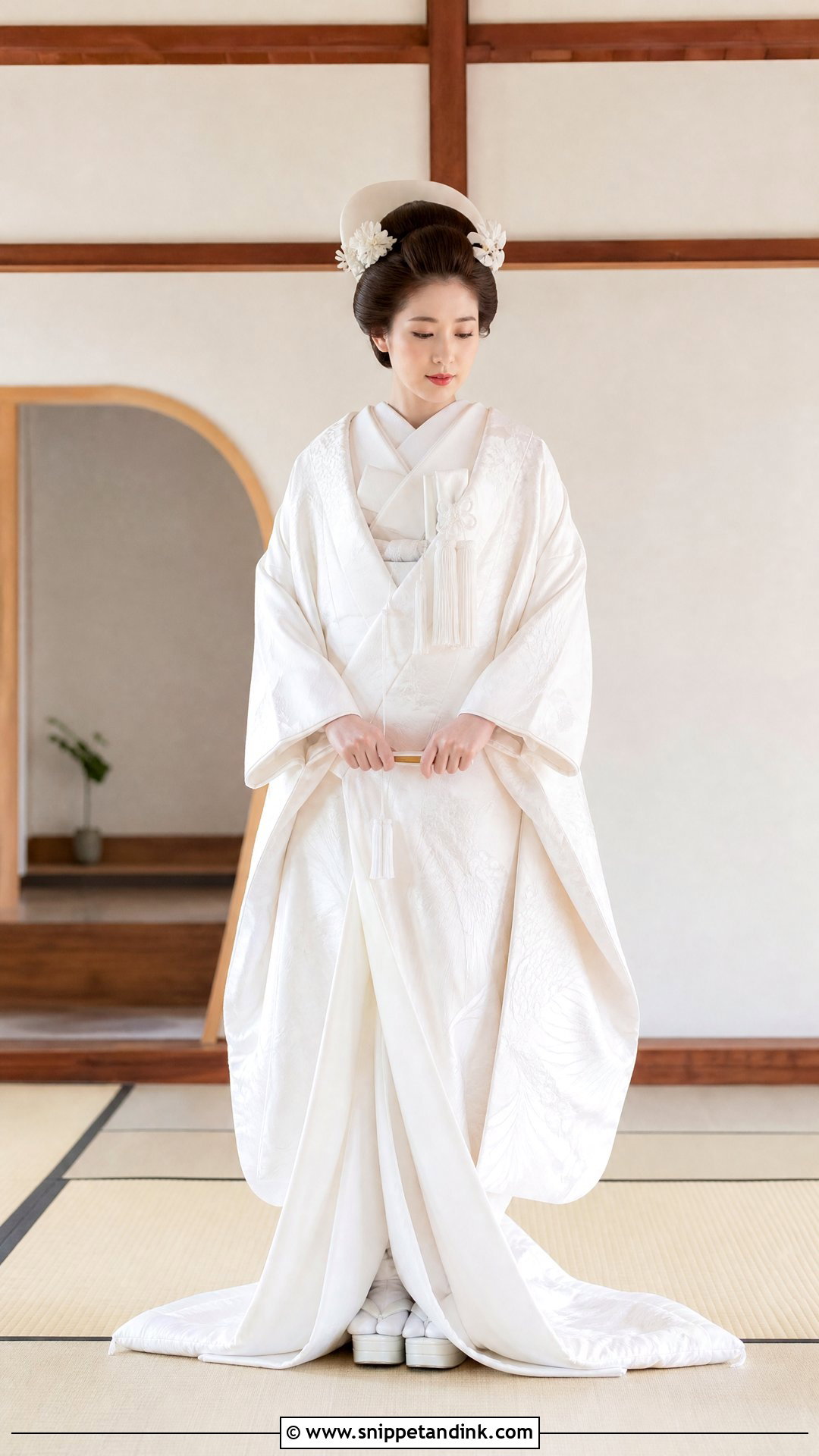
A white bridal kimono is serene and formal. The shiromuku look is white throughout, with a wide obi, formal footwear and ceremonial head styling, and woven patterns add texture without breaking the white. Dressing is precise work for a trained kimono dresser who sets the collar, sleeves, obi and hem. White tabi and traditional sandals complete it. White silk shows foundation at the collar, so I’d ask the makeup artist to finish the neck and nape with care and dress after makeup is set. Keep modern accessories almost nonexistent.
9. Japanese Colorful Uchikake
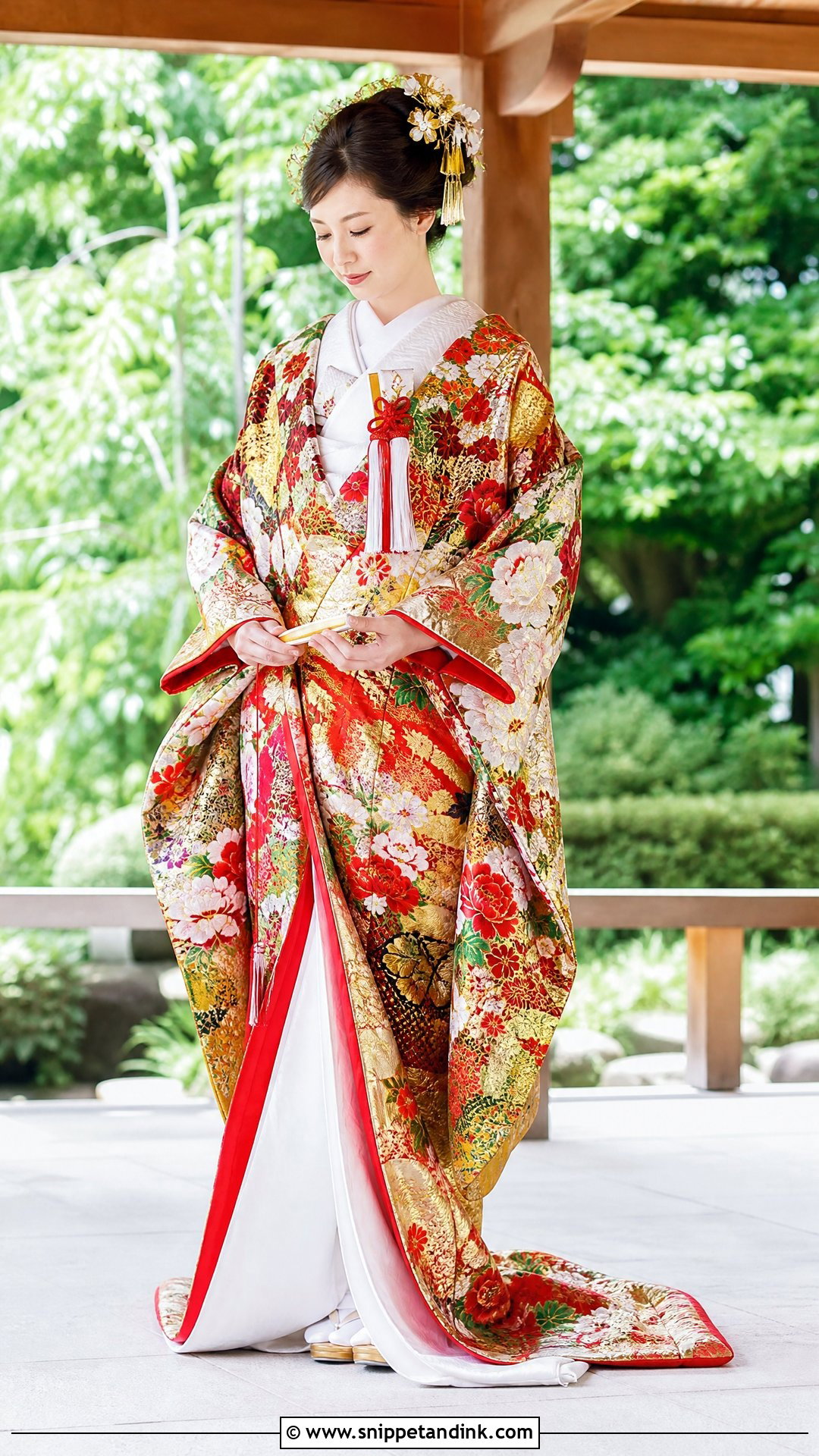
An uchikake is the colorful outer robe worn over a formal kimono, embroidered with flowers, birds or other natural motifs in red, gold, ivory, green and blue. It trails on the floor and is meant to be held or managed as you walk, so expect help from your dresser at every move. Pull the obi and collar from one of the quieter colors in the embroidery so the underlayers support the robe. White tabi, sandals and a neat formal hairstyle with selected ornaments finish it.
10. Nigerian Aso Oke Bridal Outfit
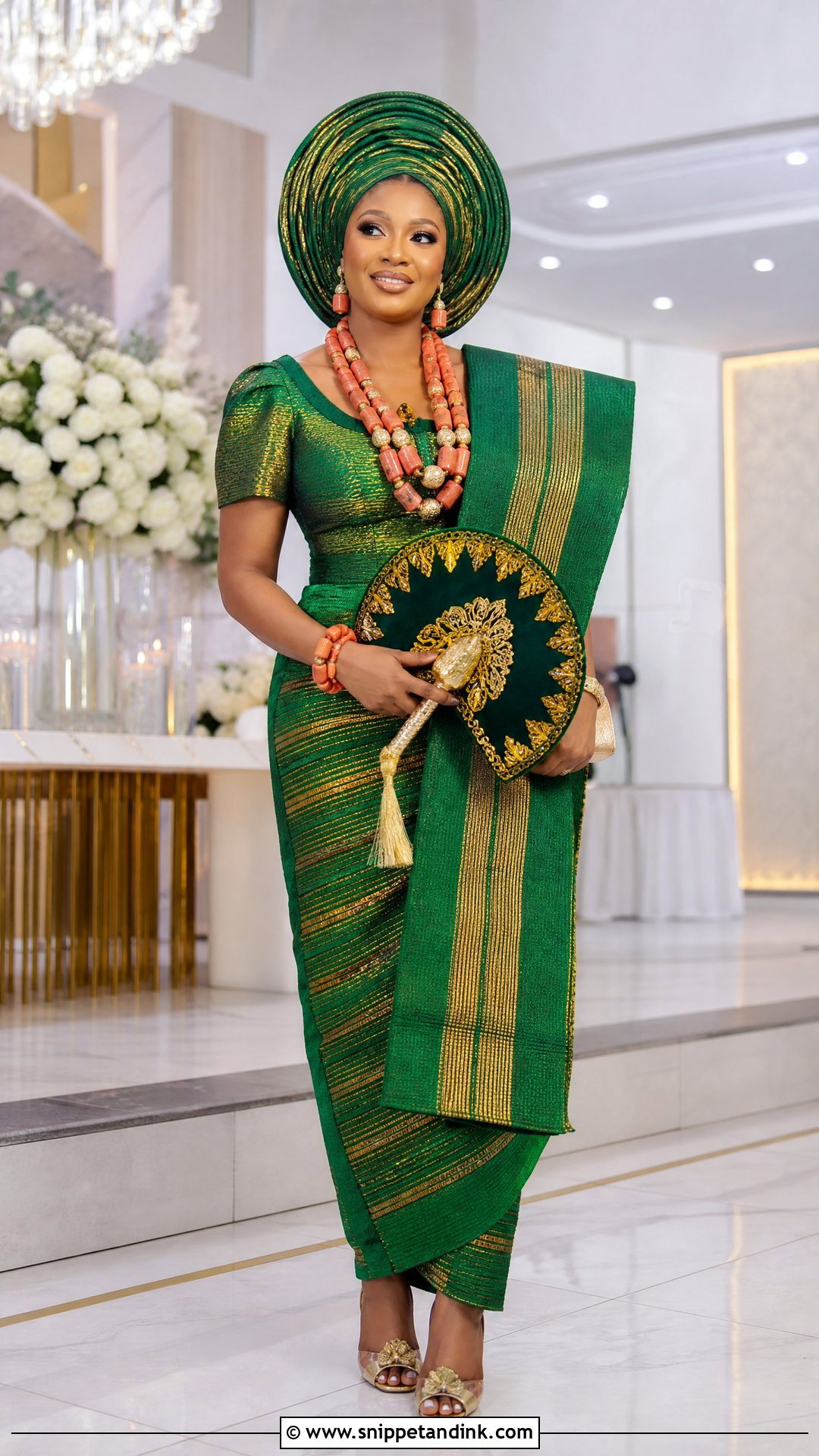
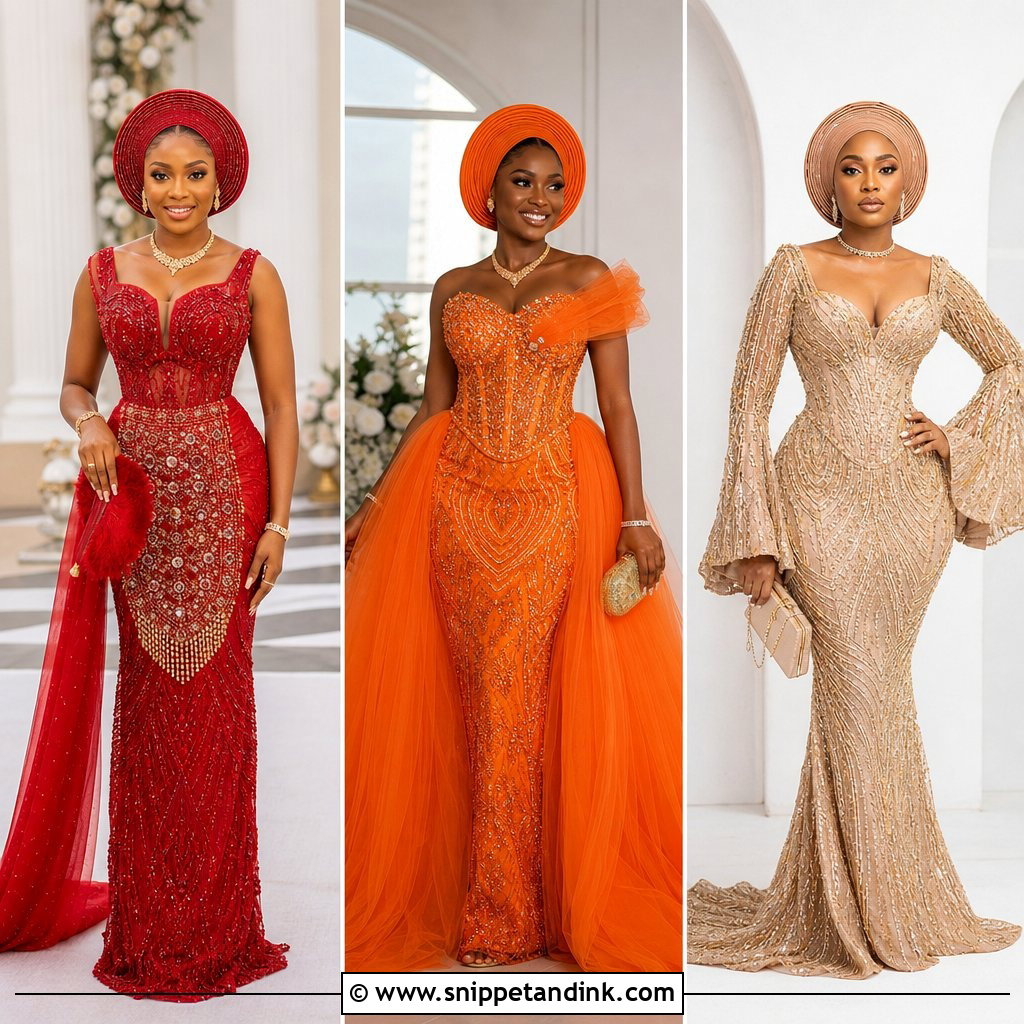
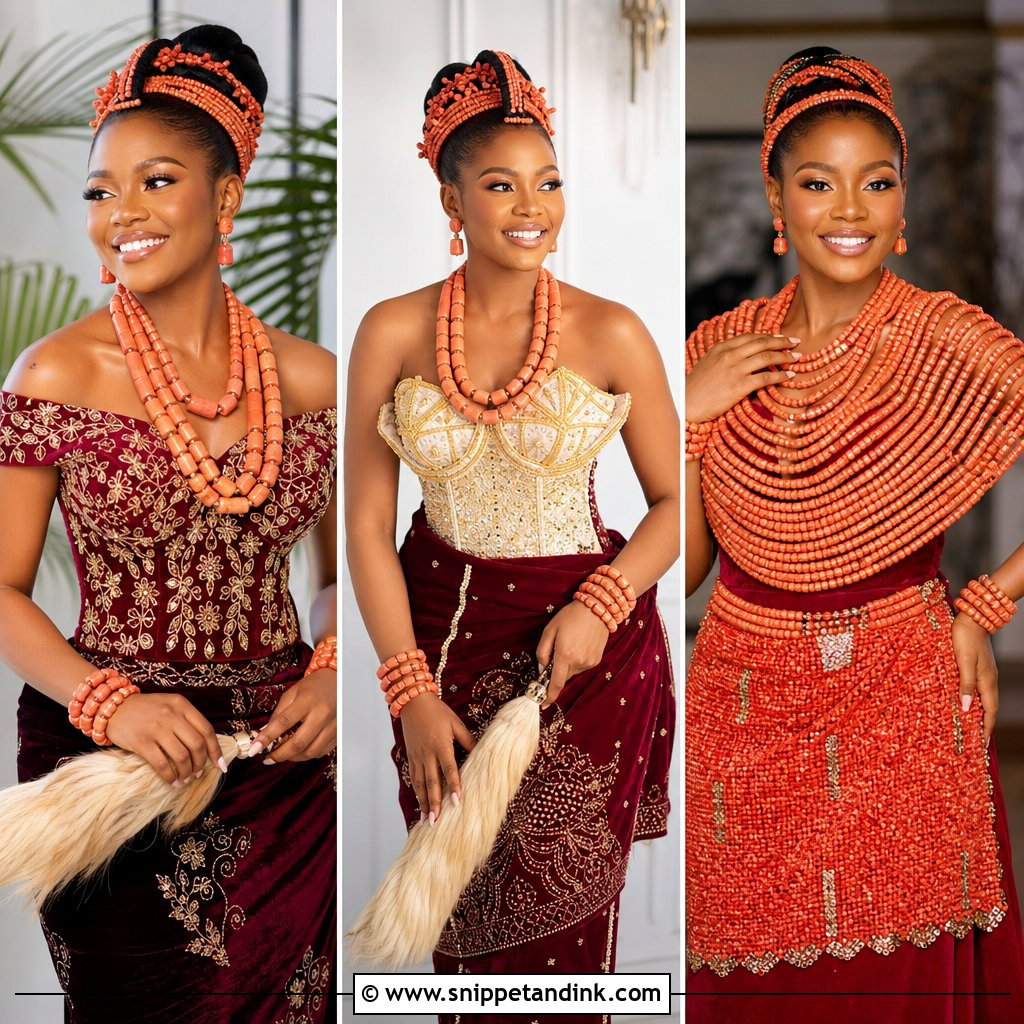
A Nigerian aso oke bridal outfit is about shaping: a fitted blouse, wrapped skirt, shoulder cloth and a sculptural gele. Coral, emerald, royal blue, magenta and metallic gold are popular, chosen to reflect the family, event or cultural group. Aso oke is stiff, so the wrapper must be cut and secured to let you sit and dance; I like a fitted under-skirt with the wrapper tied over it. Add coral beads, statement earrings, bracelets, matching heels and a hand fan, and keep the bag small.
11. Ghanaian Kente Bridal Dress
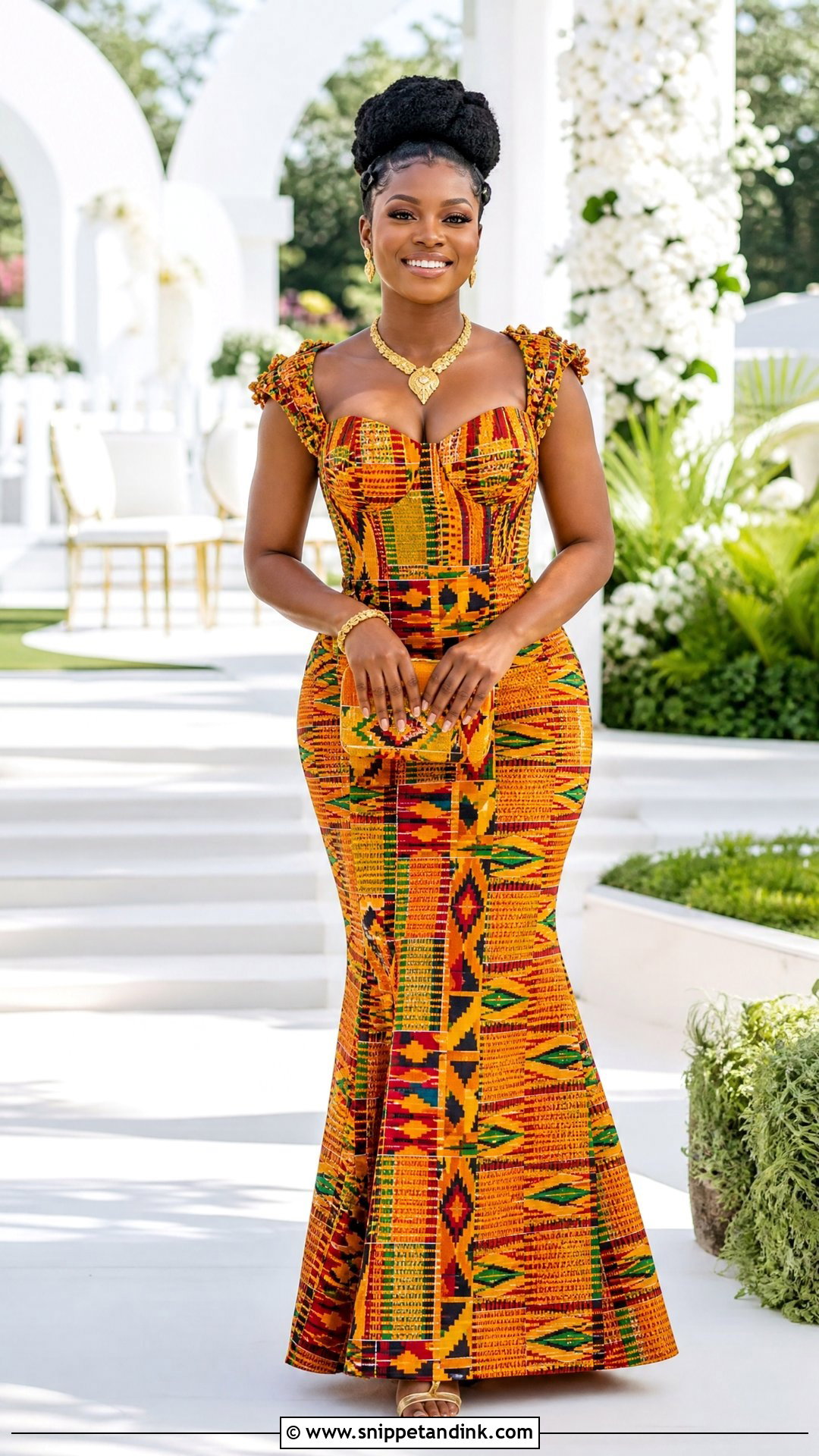
Kente brings strong color and a pattern with its own meaning, so choose one connected to your family or community, not only one that matches the flowers. A fitted gown, a wrapped ensemble or a structured top with a long skirt all work. Kente comes in narrow woven strips, and a seamstress has to plan where those strips fall across the bodice and skirt, which is why I bring extra cloth to the first fitting. Gold jewelry, matching heels and a clutch in coordinating cloth finish it, with curls, braids or an updo chosen for the neckline.
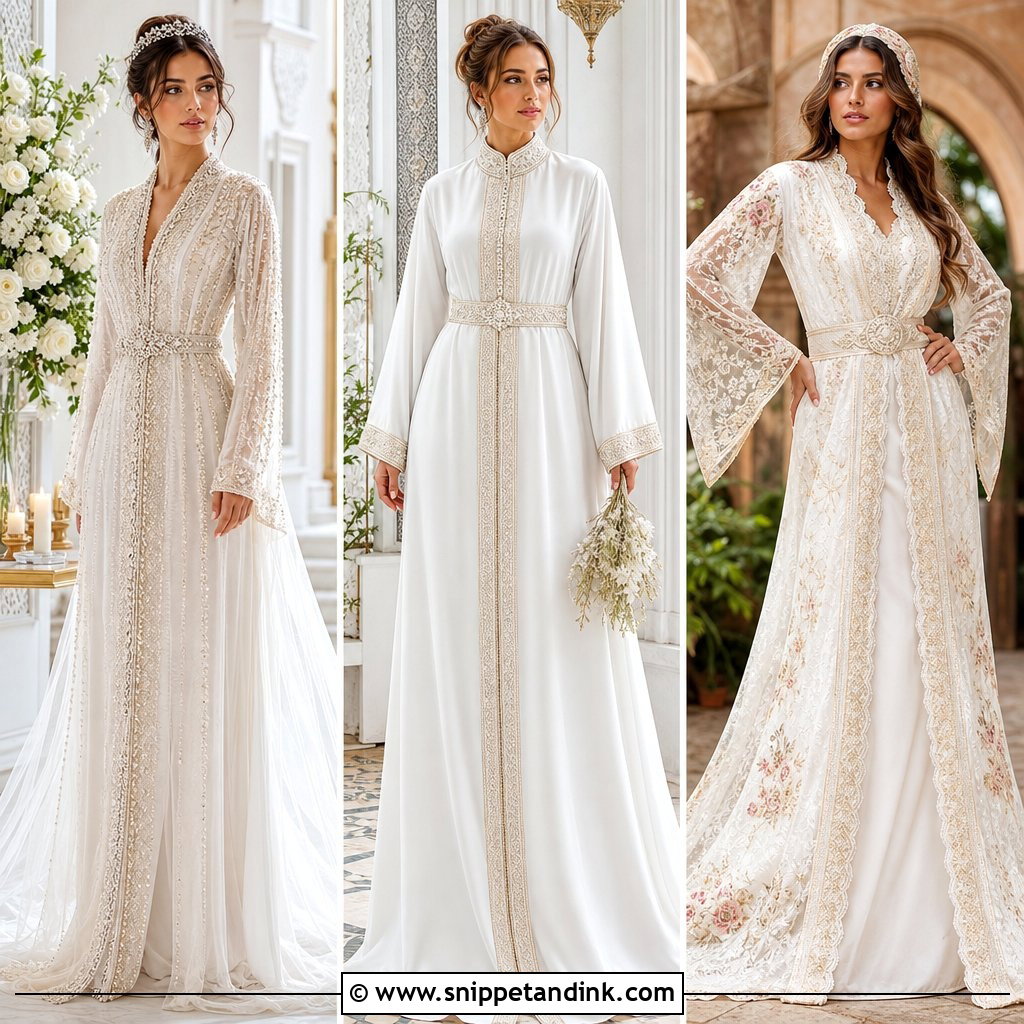
12. Moroccan Bridal Kaftan
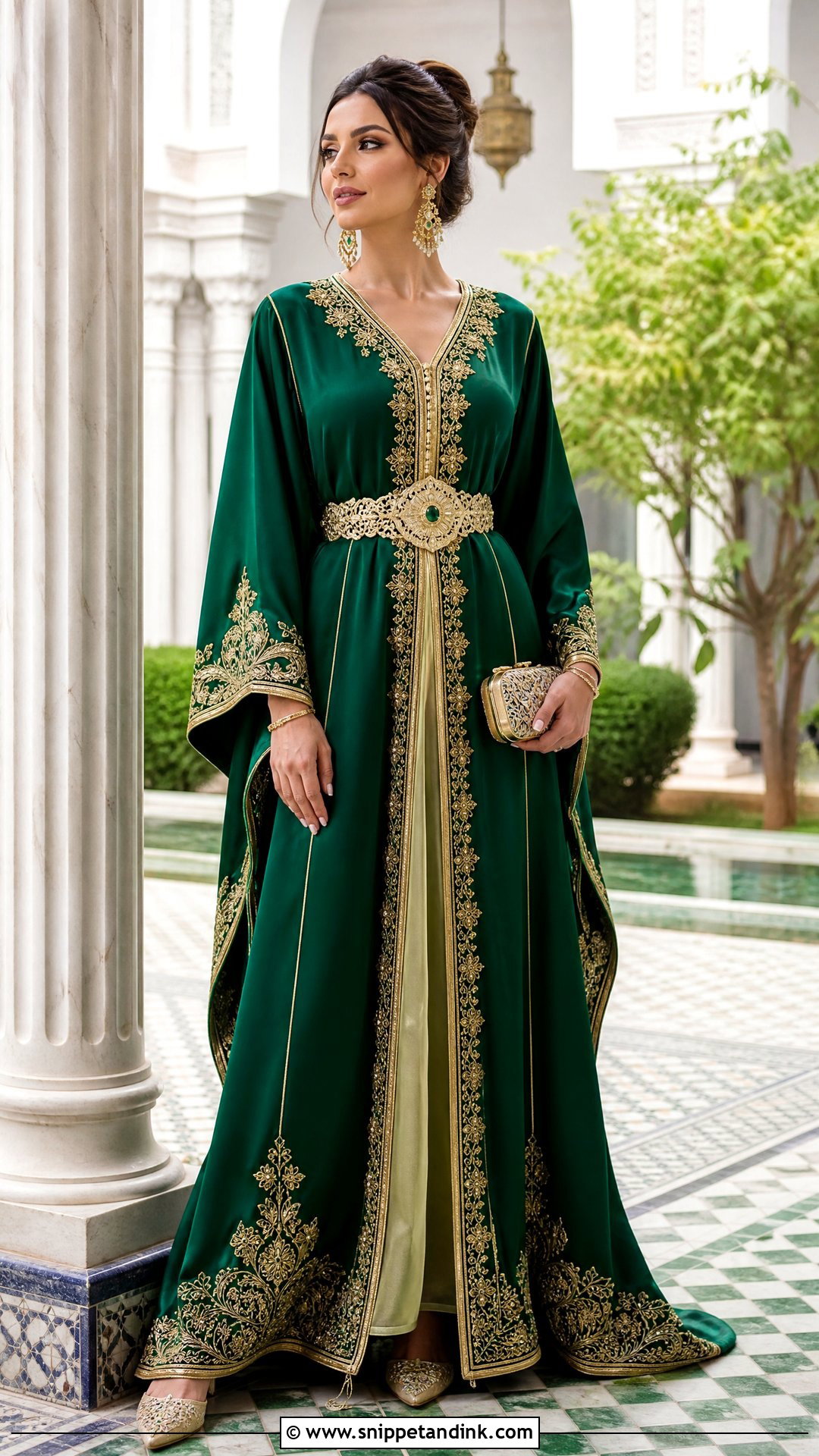
A Moroccan bridal kaftan flows from shoulder to floor, with ornate trim at the neckline, sleeves, front opening and hem, and a belt to shape the waist. Velvet, silk, satin and brocade in ivory, green, red, blue or gold all appear, depending on the ceremony and family. Velvet kaftans are warm, and with several changes over one night, I’d choose lighter silk for the dancing portion. Drop earrings, bracelets, pointed slippers or low heels and a smooth updo complete it. An experienced artisan or family member helps with colors and accessories.
13. Vietnamese Red Ao Dai
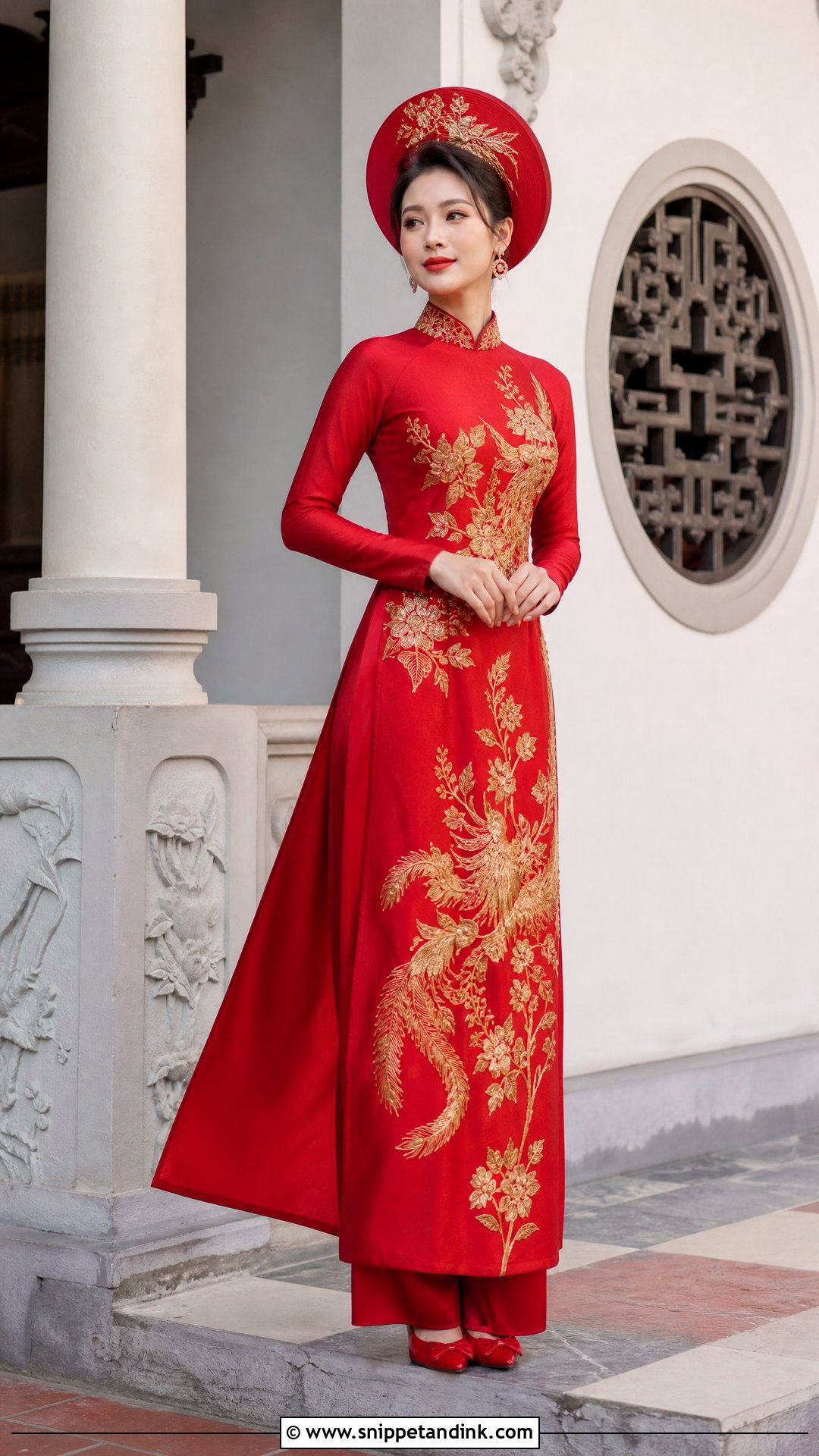
A red Vietnamese bridal ao dai draws a long line: a fitted tunic with a high neck, wrist-length sleeves and panels falling from the waist over flowing pants. Silk, brocade or embroidered fabric adds formality, and gold embroidery against red looks refined, though families may choose other meaningful colors. The panels are long, so pick low heels that won’t catch them on stairs. Fit through the bodice has to be close but not tight; the side seam strains first when you raise your arms. Delicate earrings, a khan dong headdress where it suits and a sleek low bun finish it.
14. Filipiniana Bridal Gown
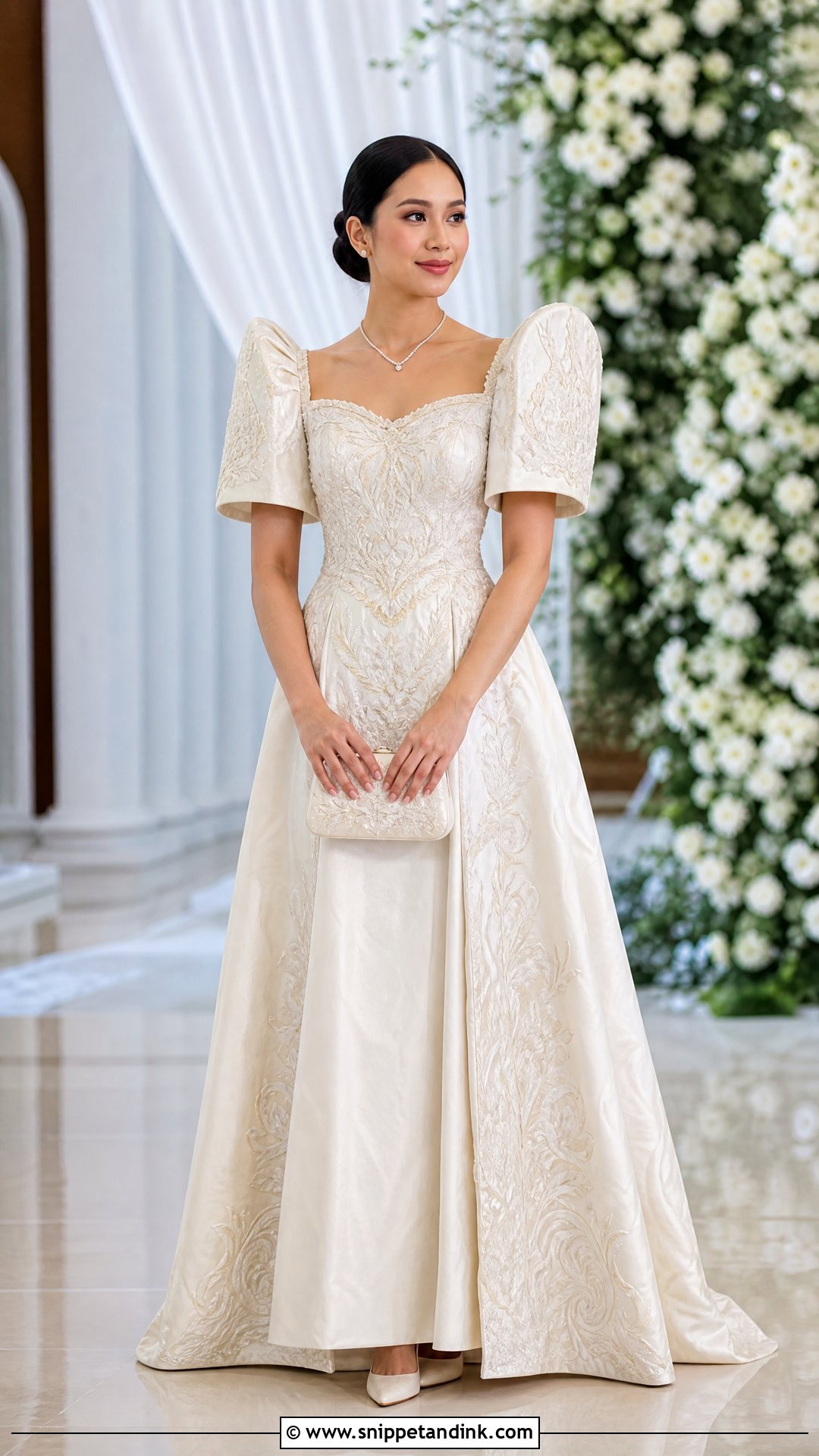
The butterfly sleeves of a Filipiniana gown are its signature, and they need to hold shape without stiffening your arms. Choose ivory, pearl or soft white with embroidery inspired by Filipino craft, a fitted bodice and an A-line, column or softly flared skirt. Sheer woven fabrics like piña need an opaque lining. I’d also have the sleeves interfaced lightly so they stand without wilting in humidity. Pearl earrings, a delicate necklace, closed-toe heels and a low bun or polished waves complete it, and heirloom embroidery makes it personal.
15. Mexican Embroidered Wedding Dress
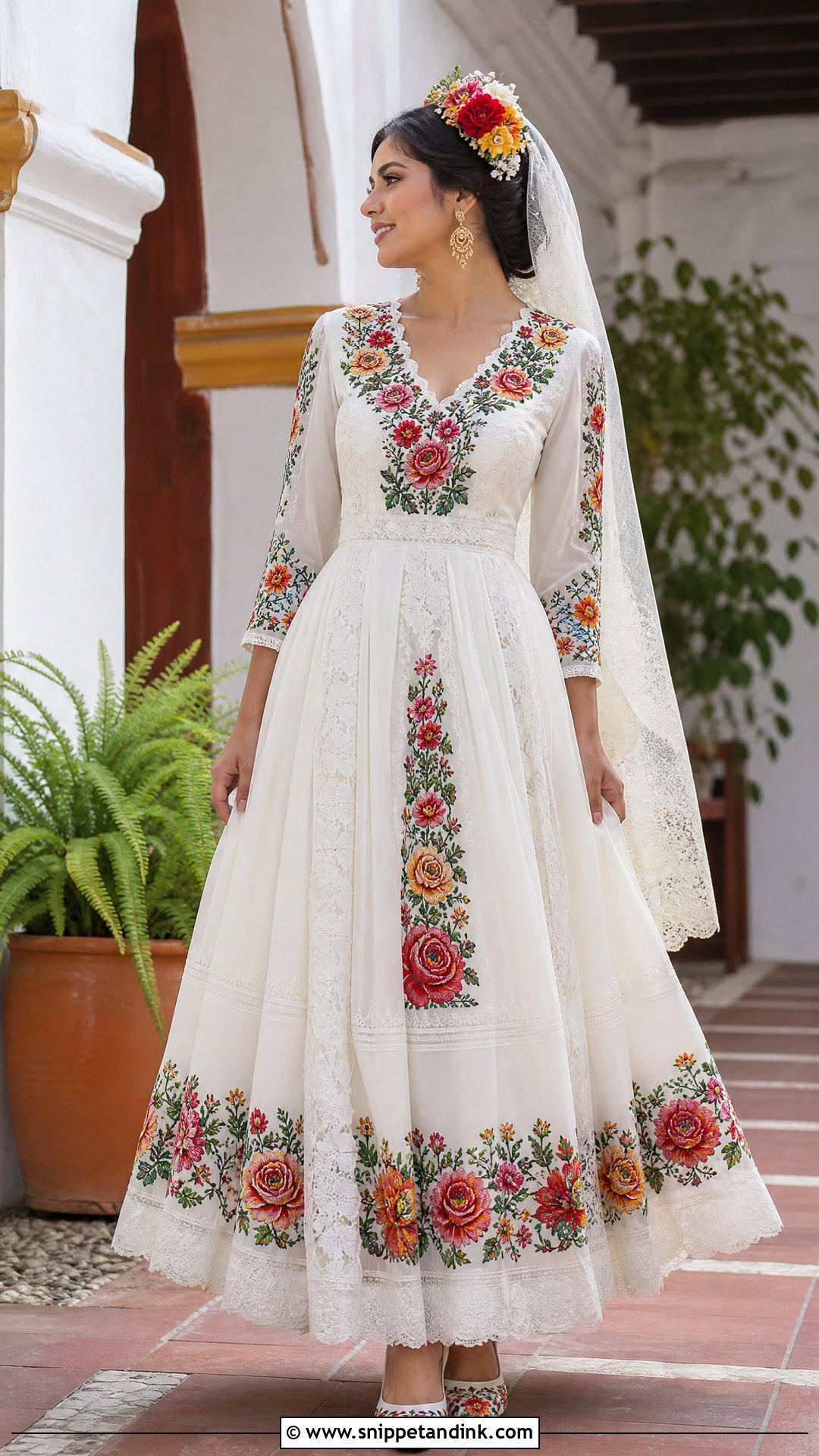
White cotton or linen with colorful floral needlework is the base of a Mexican-inspired bridal dress, with embroidery at the neckline, bodice, sleeves or hem. A full skirt gives room for dancing, but keep layers down in heat. Embroidery techniques belong to particular places and Indigenous communities, so I’d commission from an artisan who works in that tradition and credit the technique. Pair it with leather heels, embroidered shoes or flats, gold earrings and a floral comb, and a lace veil or embroidered shawl if it suits family custom.
16. Scottish Tartan Wedding Dress
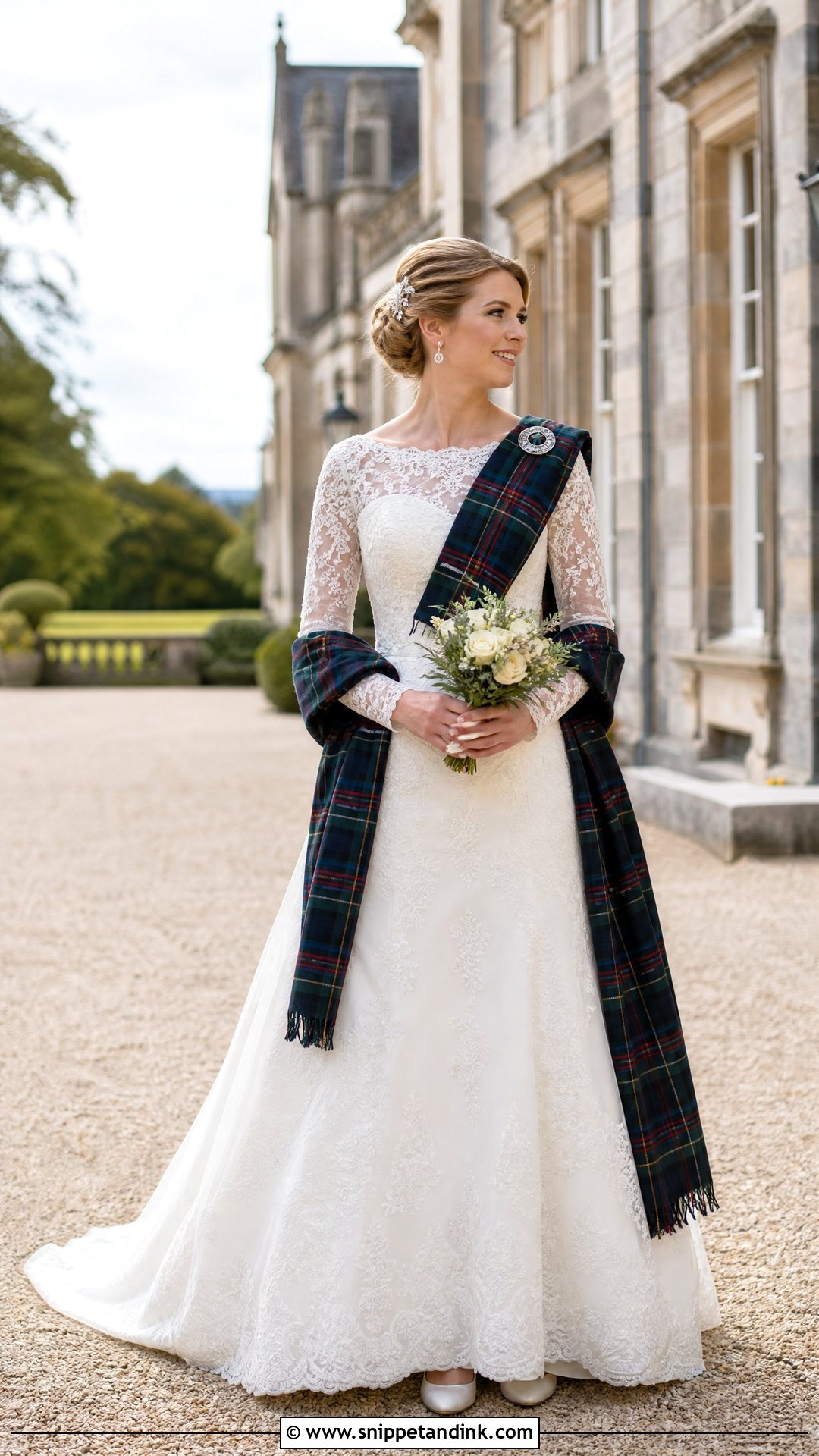
Tartan lets a bride carry family heritage into a familiar bridal shape. Start with an ivory A-line or fitted lace gown, then add a tartan sash across the shoulder or at the waist; a bolder bride might choose a full tartan skirt under a simple ivory bodice. Confirm the family or regional tartan before ordering, since some have dress and hunting versions in different colors. Closed-toe heels, a small bouquet, pearl earrings and an understated comb keep it calm, and a tartan-trimmed cape or shawl handles a cool day.
17. Norwegian Bridal Bunad
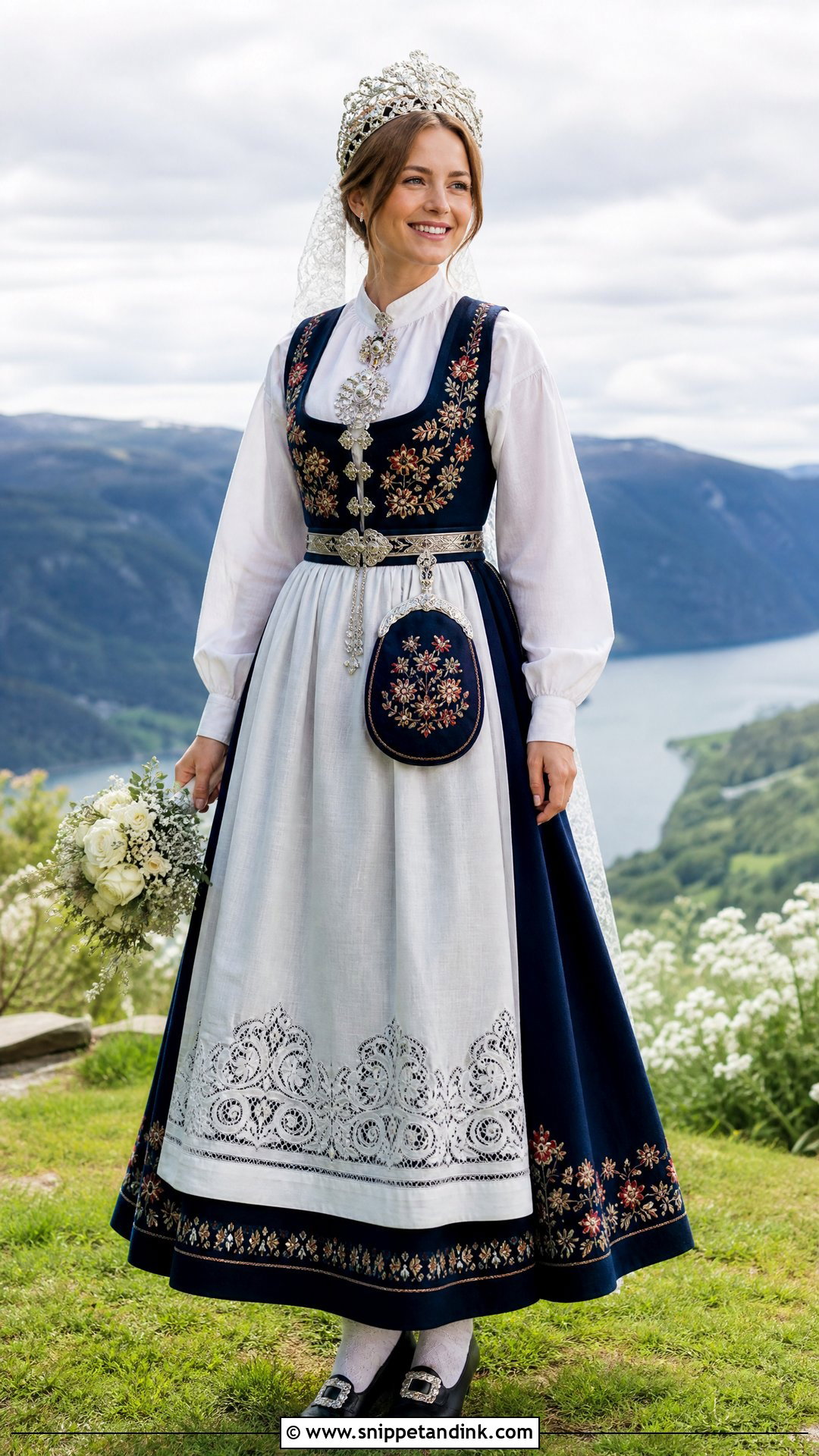
A Norwegian bridal bunad layers embroidered wool, a structured bodice, an apron and regional silver. Designs belong to specific places, so choose one tied to family heritage and follow local guidance. A crisp blouse contrasts with the darker bodice. Traditional silver jewelry, suitable shoes, stockings and the right bridal headpiece complete it. Wool bodices are warm indoors; I’d keep the reception room cool and the blouse in fine linen. Skip trendy necklaces or belts that fight the metalwork, and let an experienced maker fit each layer.
18. Ukrainian Embroidered Bridal Dress
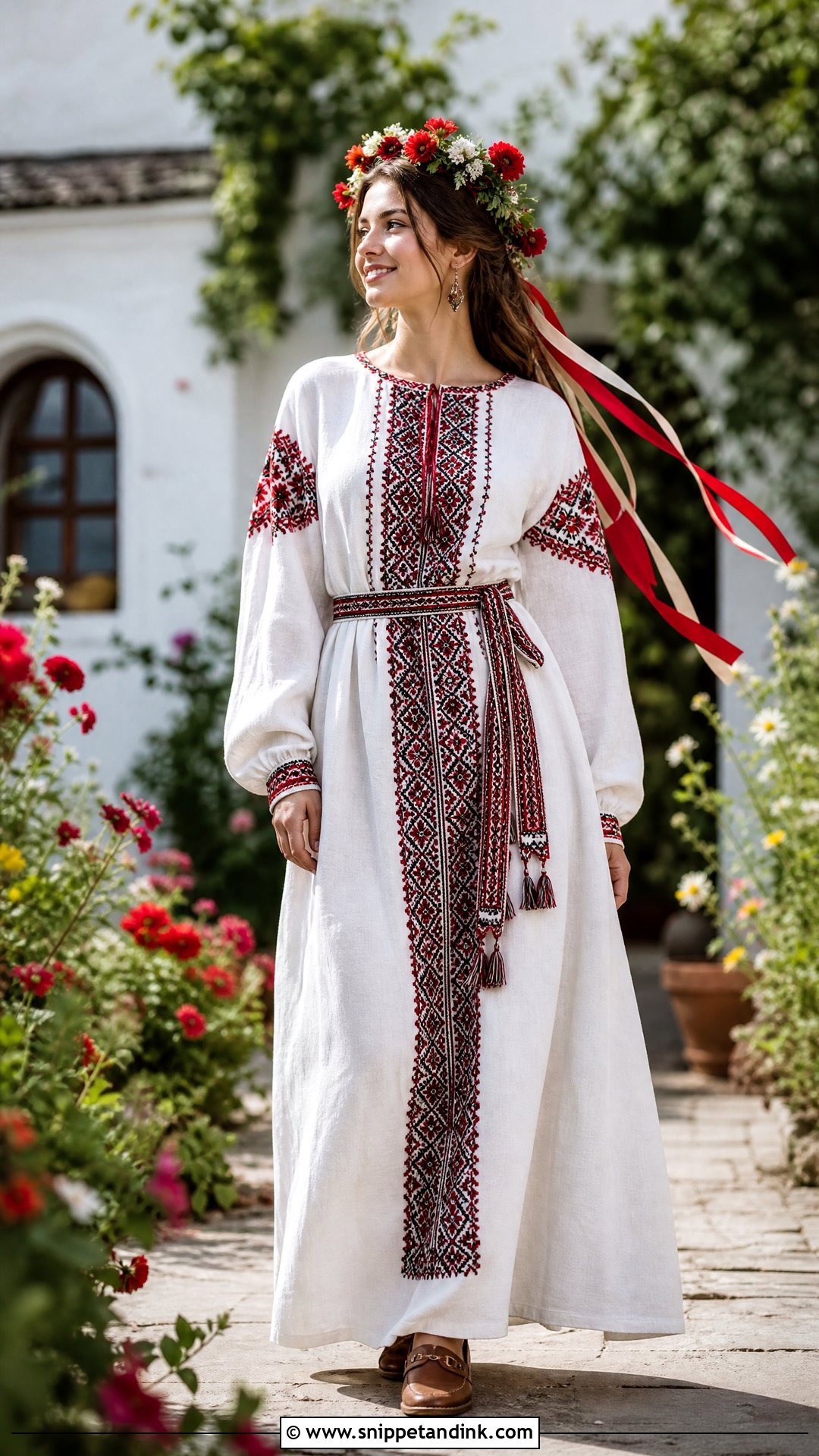
A Ukrainian embroidered bridal dress sets red, black, blue or multicolored needlework against white linen. Choose full length with long sleeves and a defined waist, with embroidery at the neckline, cuffs and front panel, and a woven belt for shape. Linen creases as soon as you sit; I tell brides to accept some of that as part of the fabric’s character rather than fight it with heavy starch. Leather shoes or low heels, simple earrings and a floral wreath or regional headpiece complete it, with ribbons down the back where tradition includes them.
19. Palestinian Embroidered Bridal Thobe
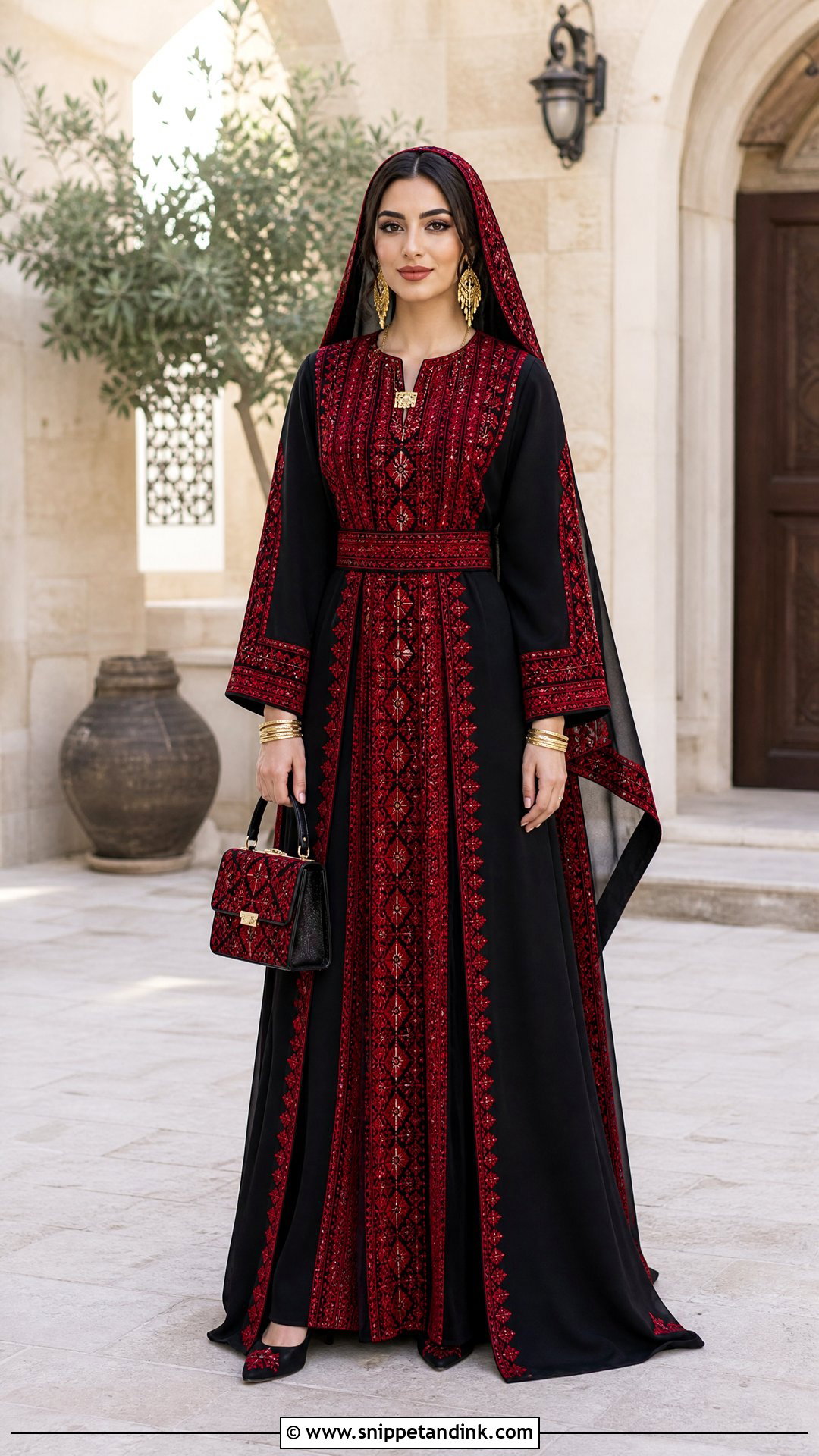
A Palestinian thobe is covered in handwork whose placement, colors and motifs can identify a region, so I’d look for one connected to the bride’s family where possible. Red stitching stands out against black, ivory or deep colors. A coordinating head covering or veil follows personal and family practice. If it’s an heirloom, alter it reversibly with basting and tucks rather than cutting the cloth. Gold earrings, bracelets, closed-toe shoes and a structured bag finish it, and buying from Palestinian embroiderers keeps the craft alive.
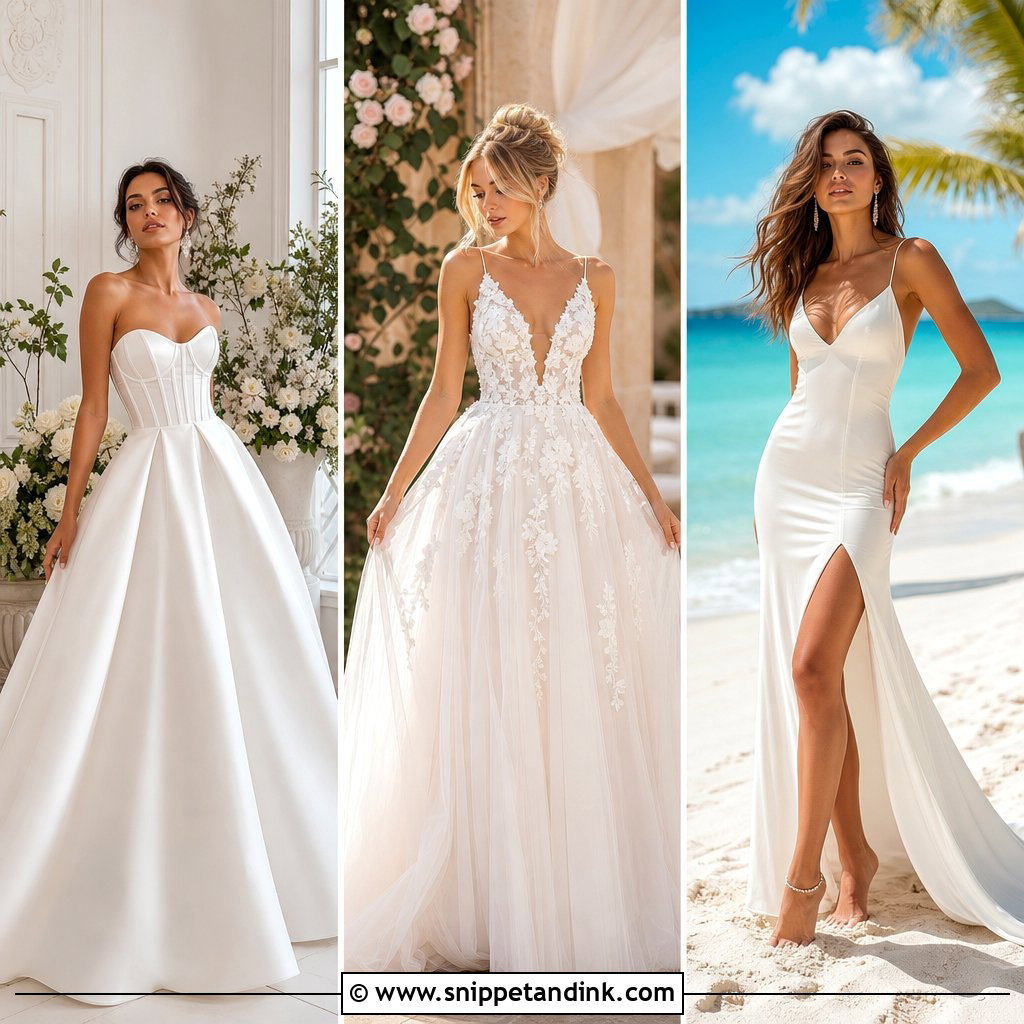
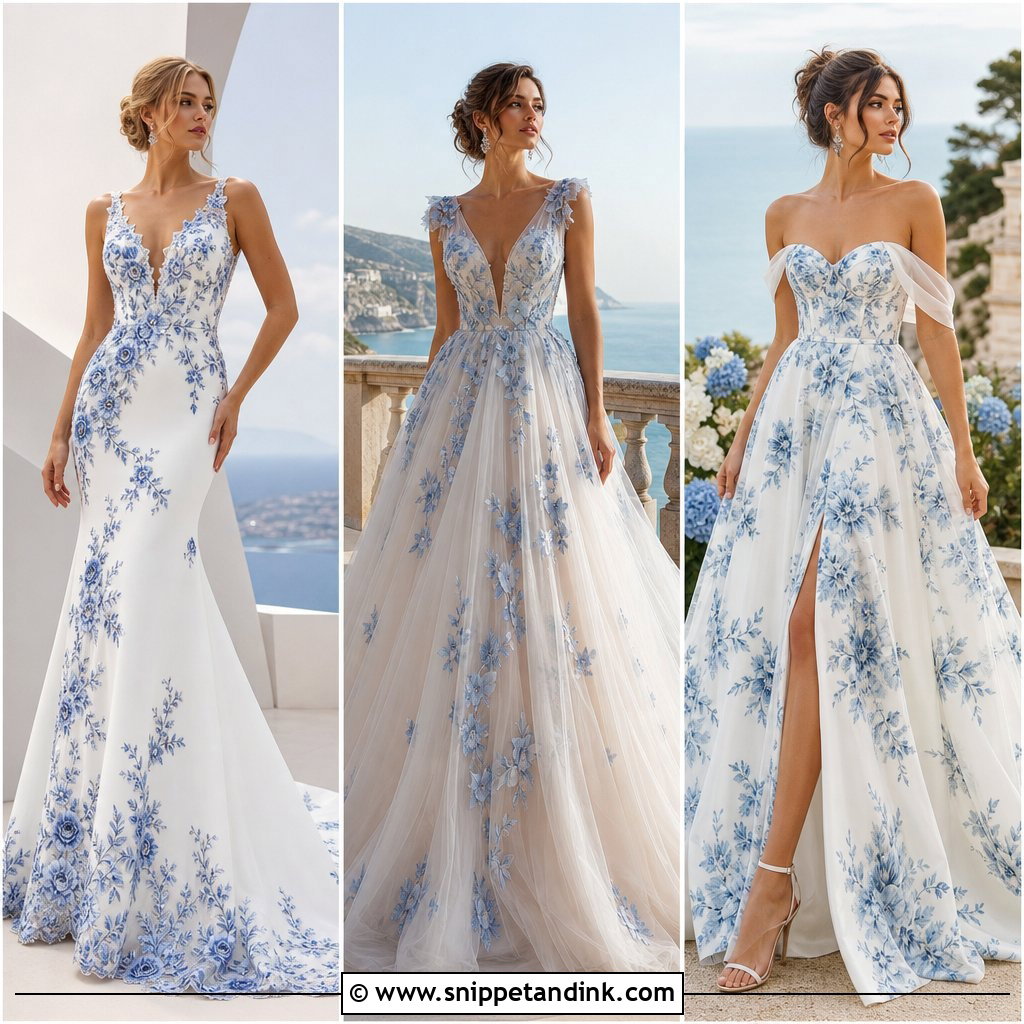
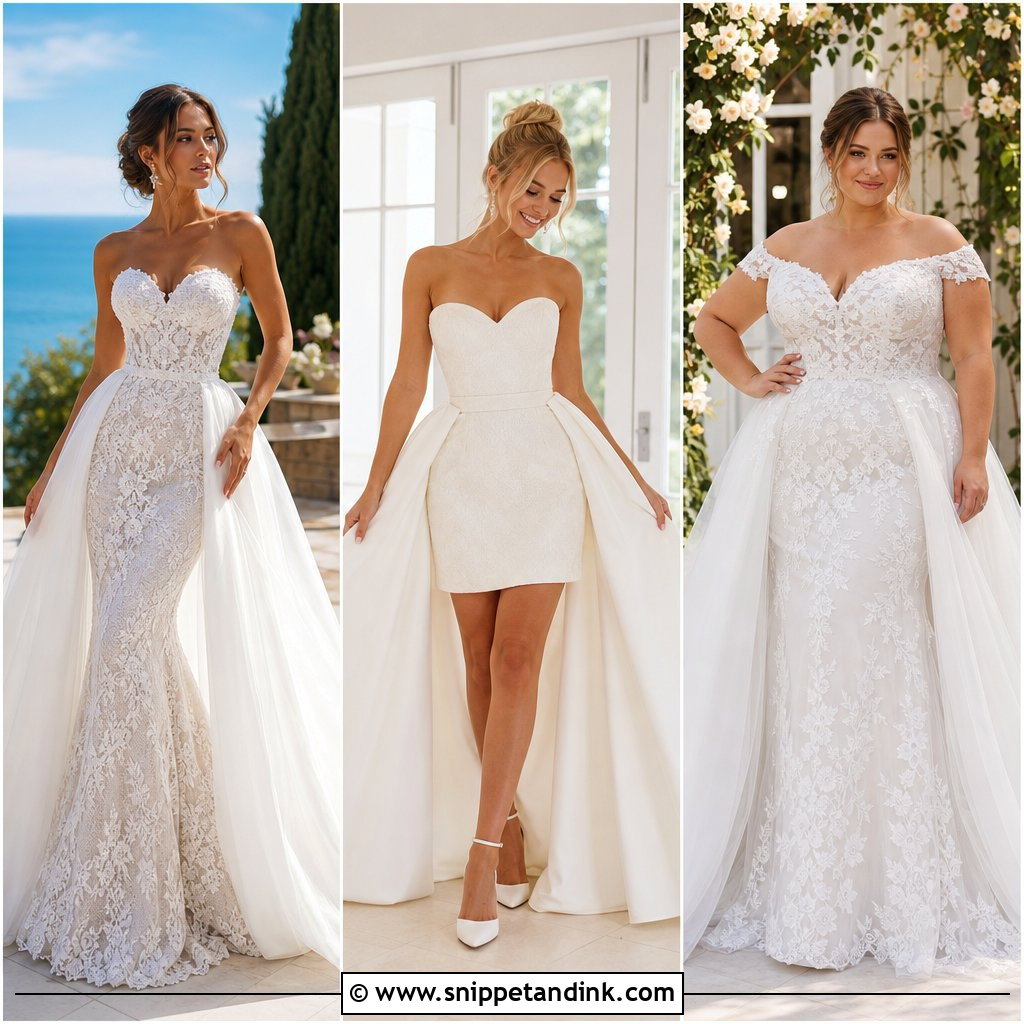
20. Traditional Lace Ball Gown
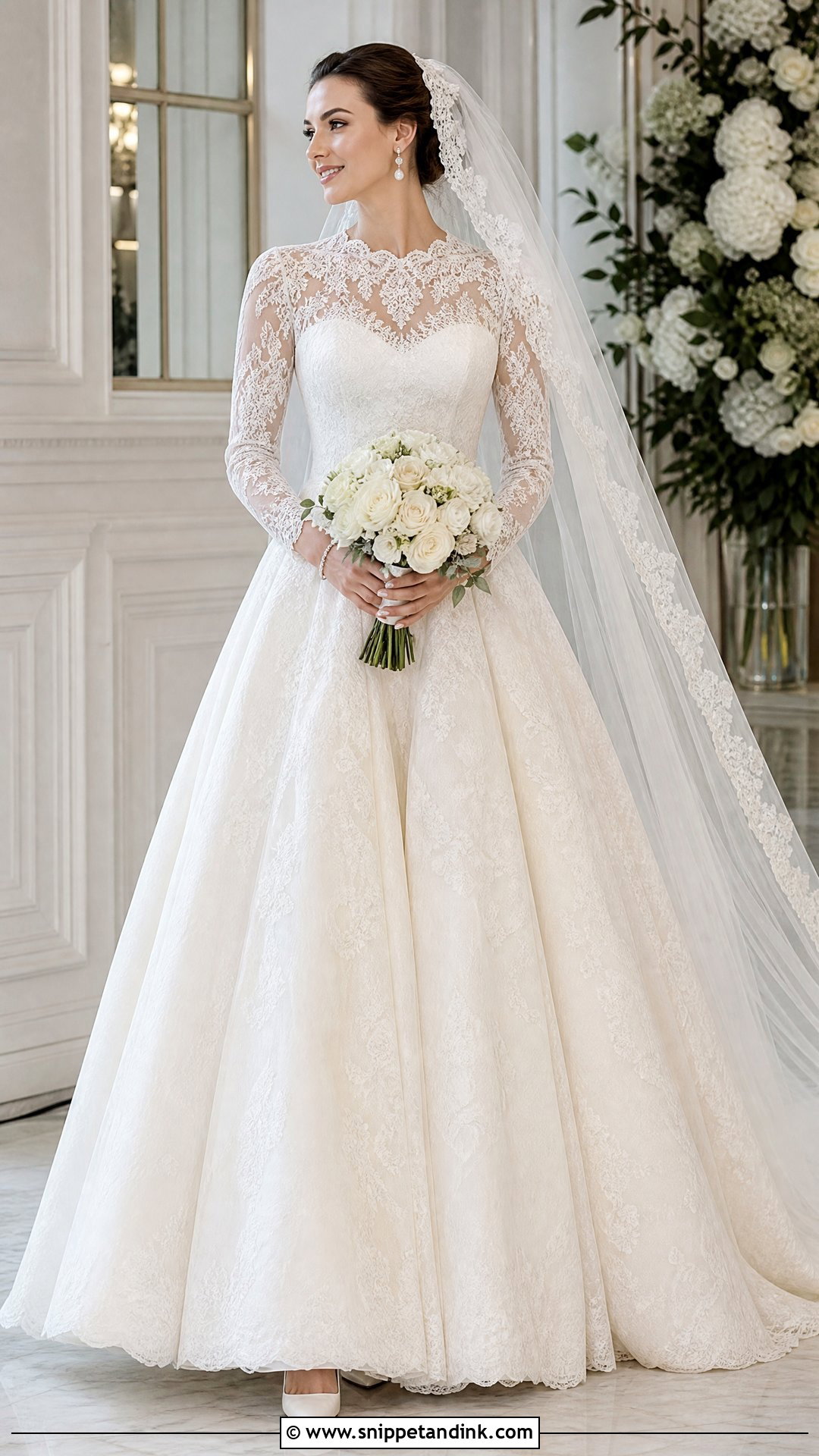
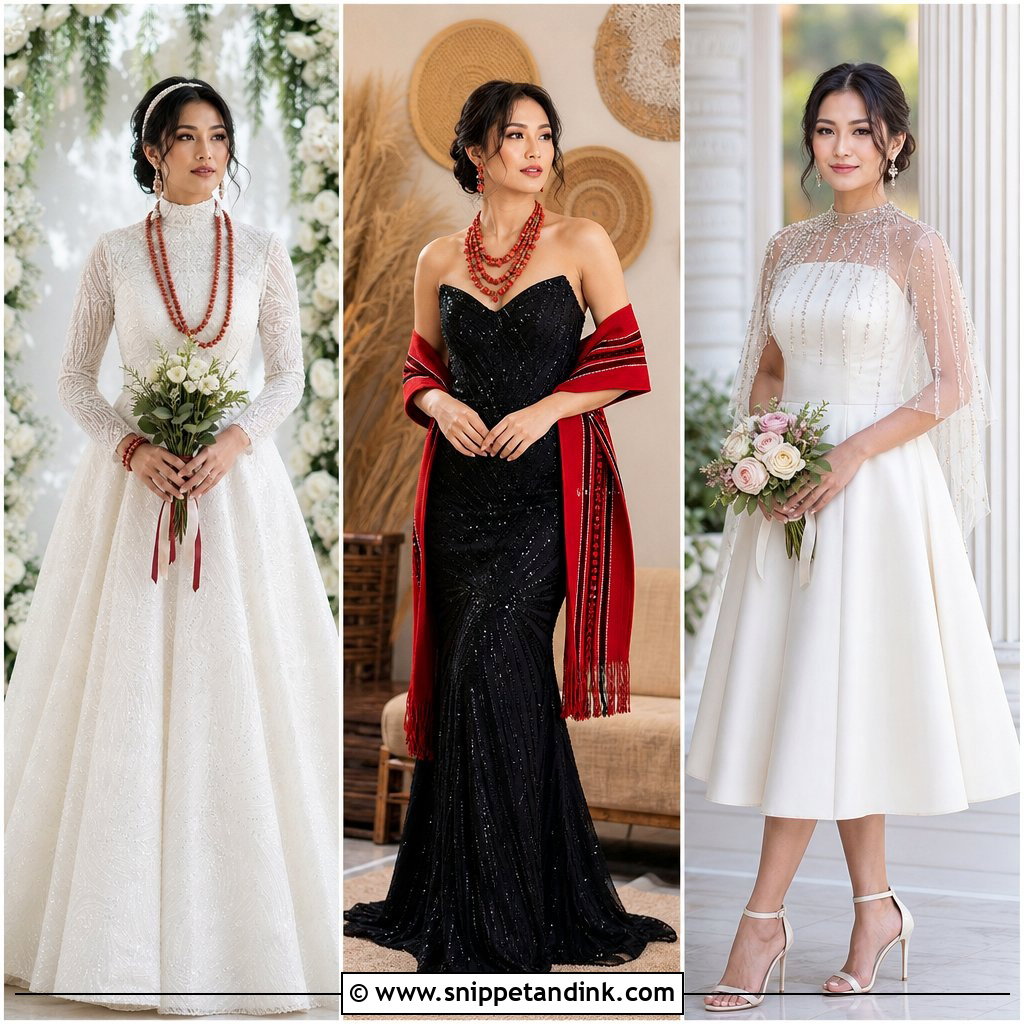
Could anything feel more classically bridal than a lace ball gown with a long veil? The engineering is inside: a fitted bodice with real boning, so the gown supports itself without relying on straps. Lace sleeves add coverage; a lined sweetheart or bateau neck finishes it cleanly. A cathedral veil suits a formal church, while a fingertip veil is easier in a small venue. Full skirts need a bustle for the reception, so ask your seamstress to show your attendant how it works. Closed-toe pumps, pearl earrings, a simple bracelet and a smooth bun, waves or half-up hair are plenty.
Kilos of Embroidery and a Long Day on Your Feet
Heavily worked bridal outfits can weigh several kilograms, and the weight sits on your waist and shoulders for hours. A few things make a real difference.
- Ask where the weight hangs. A wide, structured waistband spreads a heavy skirt better than a narrow drawstring.
- Try the full outfit, jewelry included, for at least an hour before the wedding. Discomfort shows up late.
- Plan a seated break with water between rituals and photos, and have someone hold the dupatta, train or robe while you sit.
- Wear shoes you have already walked in. New embellished shoes and a heavy skirt together are how ankles get turned.
Preserving a Dress You Hope to Pass Down
Clean it soon after the wedding, before stains set, with a cleaner who handles beadwork and metallic thread. Store it folded in acid-free tissue in a breathable cotton box or bag, never sealed plastic and never on a wire hanger. Wool pieces like bunad need moth protection, and silks should be refolded along new lines once or twice a year. Tuck a note inside recording who made it, where and when; that’s the part future brides in your family will treasure most.
Heritage You Can Kneel, Bow and Dance In
A traditional bridal outfit should feel like you, your family and the ceremony at once. Color, craft, fabric, jewelry, shoes and hair all build the look together. Before ordering, learn what the garment means in its region and talk with relatives or artisans. Book fittings early, walk in every layer and break in your shoes. Tailoring can make a red lehenga, an embroidered thobe, a ceremonial hanbok, a silk saree or a lace ball gown comfortable without erasing what makes it traditional. Wear it knowing its story.
You'll Like These Ideas:


Leave a Reply