
A Vogue-worthy bridal look is less about one dramatic piece and more about everything being exactly right: couture structure, lace or liquid satin, sometimes a hemline nobody expects. What I tell brides is that the statement has to suit the person wearing it, or it photographs like a costume. The twenty dresses below range from ball gowns and lean columns to capes, minis and vintage shapes, each styled with veil, jewelry, shoes and flowers. Before you fall for one, think about venue, season and how much you want to move. Tailoring matters as much as fabric; a precise fit is what makes even a plain gown look editorial.
Using a Bridal Appointment to Test Shape, Not Just Looks
Most brides spend their first appointment hunting for a dress that looks right in the mirror. I’d use it differently: as a chance to learn which shapes your body and your day actually need. Sample dresses rarely fit, so judge the line rather than the size.
- Bring a strapless bra or the shapewear you’re likely to wear, plus shoes at roughly your wedding heel height.
- Pull one dress from each silhouette family, ball gown, A-line, column, fit-and-flare and something short, even ones you think you won’t like. Very often the surprise is the one.
- Move in every dress. Sit on a chair, walk across the room, raise your arms as if hugging someone. Note which waist position and neckline you forget you’re wearing.
- Photograph front, side and back, then look at the photos the next day. The back view is what guests see for the whole ceremony.
- Ask the consultant about the order lead time, the fabric of the real dress versus the sample, and what alterations are realistic on that cut.
Keep the group small. Two people whose taste you trust give clearer feedback than six opinions at once.
1. Basque Waist Wedding Dress
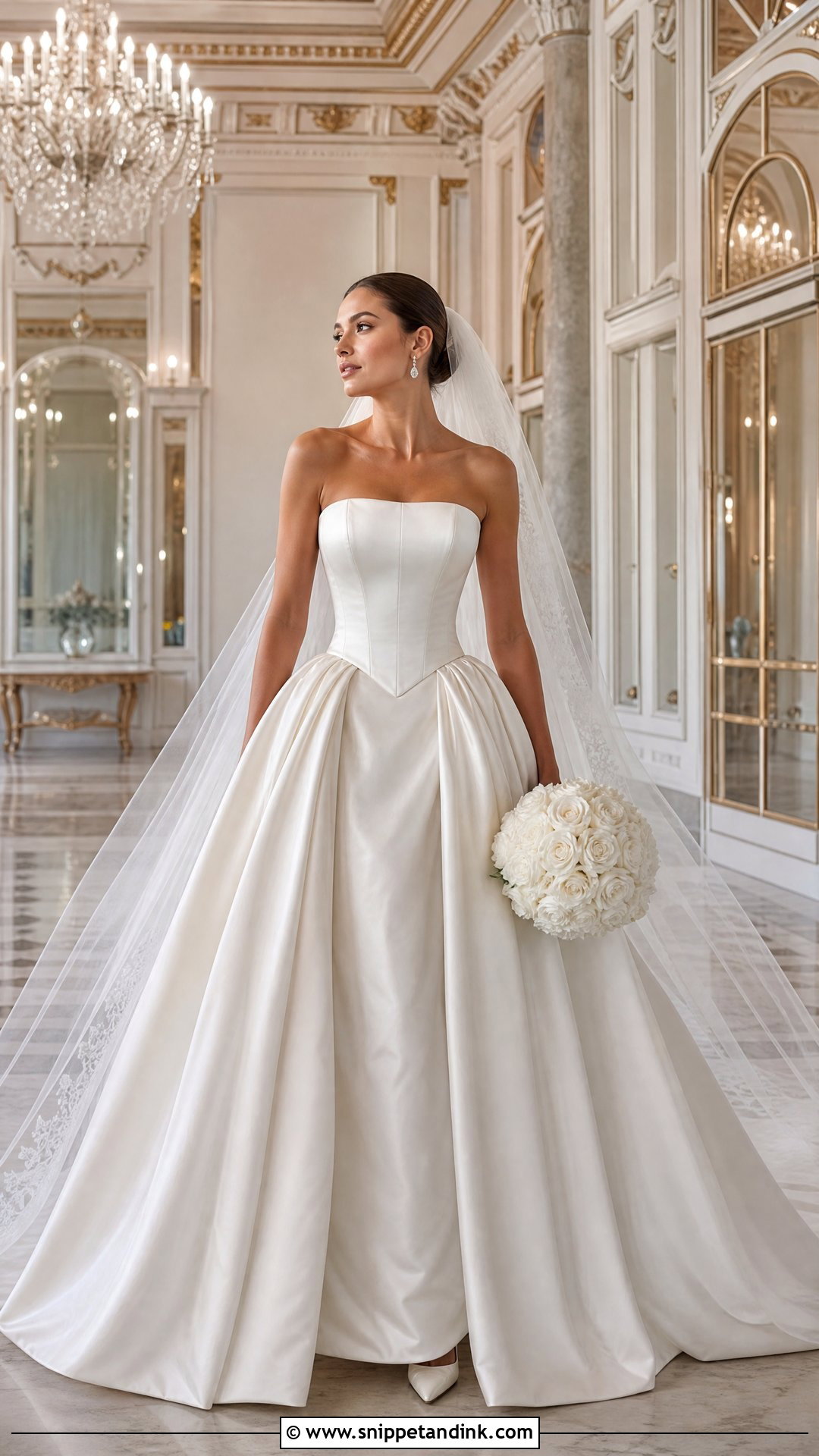
The point of a basque waist wedding dress is that V below the natural waist, and I always check it with the bride seated. If the point presses into the top of the thighs, it needs shortening by a centimetre or two. Silk satin or structured mikado keeps the full skirt clean. A strapless neckline balances it, and a little drapery softens the corseted bodice. Pair with a cathedral veil, pearl drops and pointed ivory pumps, and keep the roses compact so they don’t hide the waist. Smooth hair, low bun or waves behind the ears. Ballrooms and grand estates suit it.
2. Drop Waist Wedding Dress
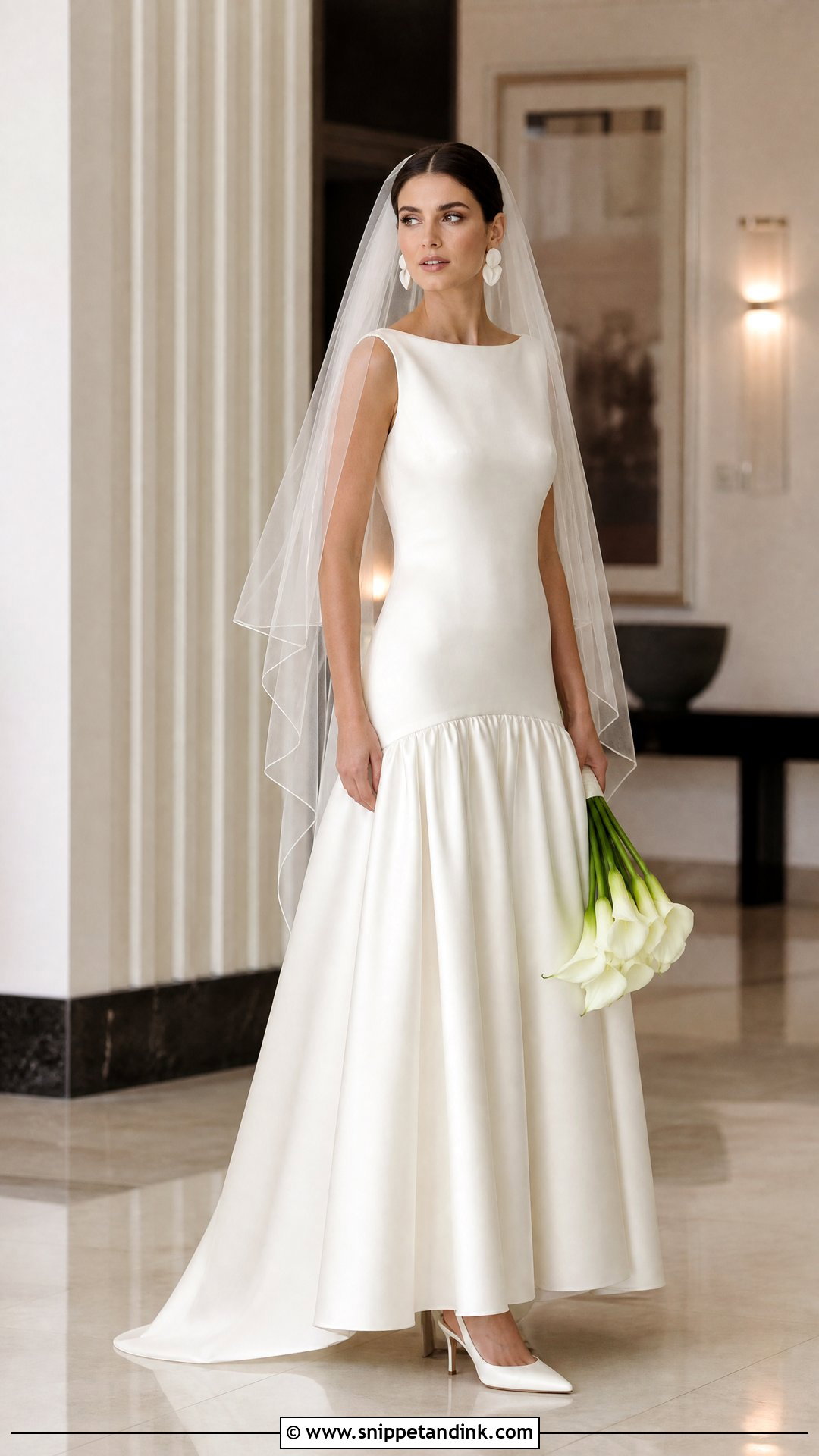
Drop waists draw a long line down the body, so they suit brides with a short or average torso who want a longer look, as long as the seam lands on the high hip and not the widest point. Scoop-neck or strapless versions in satin, faille or crisp silk work well. A sheer fingertip veil, sculptural earrings and slim slingbacks suit the clean shape, with a few callas. Center-parted bun, glowing skin, softly defined eyes. Galleries and city hotels are its natural setting. Sit and step up a stair at the fitting; a low seam that’s too tight restricts your stride more than you’d expect.
3. Sculptural Satin Wedding Dress
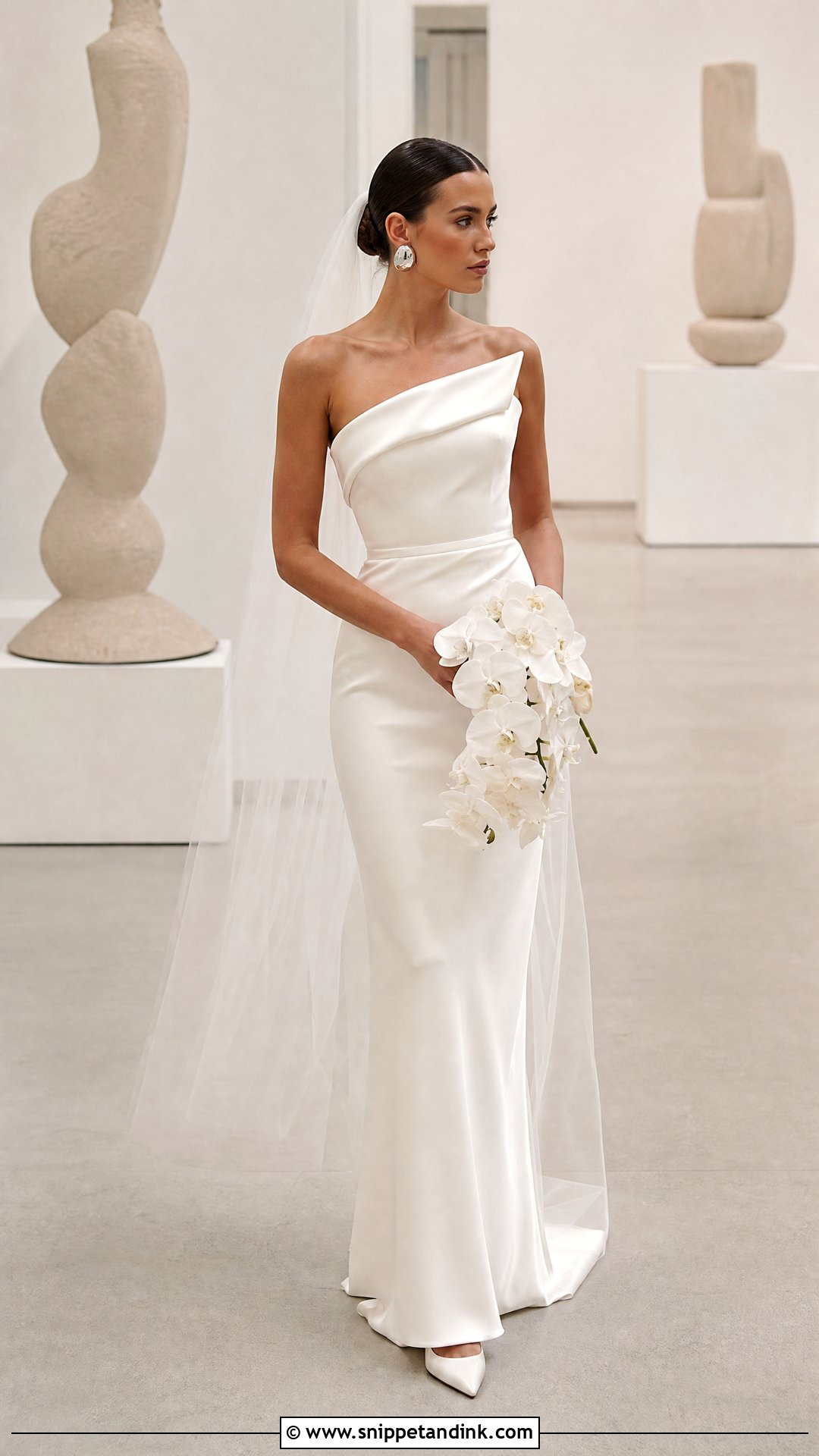
Folded necklines, curved hips and architectural drapery need firm satin to hold their shape; soft satin collapses into wrinkles. A fitted column or soft flare with an asymmetric neckline needs almost nothing added. Polished metal earrings, a clean updo and matching ivory pumps, no necklace. A simple tulle veil adds softness. Orchids or long-stemmed tulips echo the deliberate lines. Turn on the spot at the fitting as well as sitting and walking; structured folds can dig in at the hip on a turn. Museums and minimalist rooms suit it.
4. Lace Column Wedding Dress
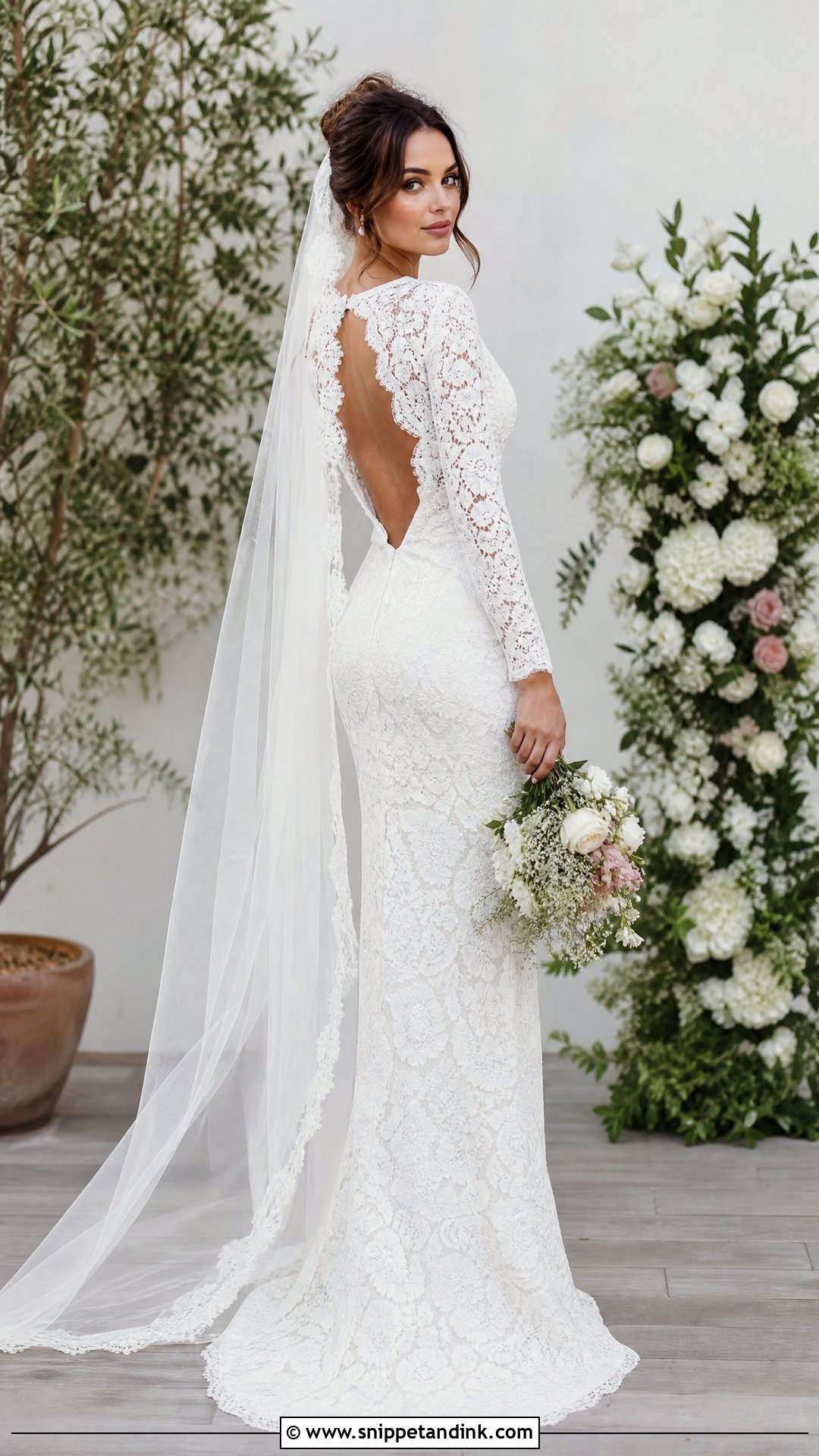
What could be more classic than lace cut into a lean, body-skimming column? Floral, corded or delicate Chantilly lace over a supportive ivory lining keeps it modern. Long sleeves and a high bateau neckline with an open back give quiet contrast. The common problem with lace columns is the knee: cut too narrow, you shuffle. I ask for enough ease through the knee to take a full stride. A lace-edged veil, pearl studs and low satin heels suit it, with a loose chignon, natural makeup and sweet peas or roses. Gardens, coastal houses and restaurant weddings fit it well.
5. Strapless Ball Gown Wedding Dress
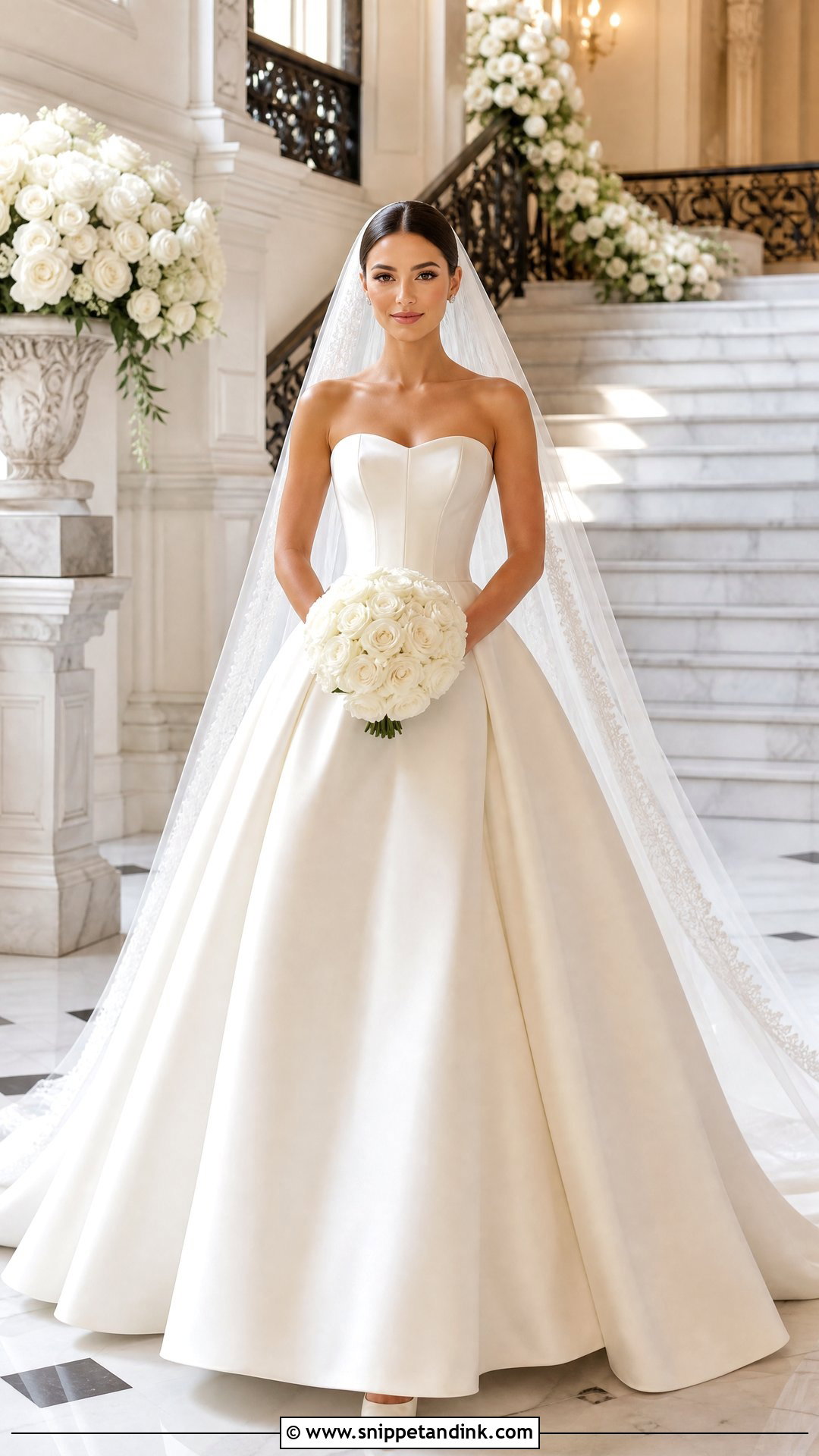
Strapless ball gowns are the picture most people have of a bride, and the corset inside is what makes them wearable. Silk faille, mikado or layered organza give a generous skirt; a straight or softly curved neckline keeps it classic, with seaming that shows the waist. A long raw-edge veil, diamond-style studs and closed-toe satin pumps finish it, plus a polished bun and a round bouquet of white roses. Before approving the final fit, I have brides raise their arms, hug someone and sit. If the bodice slips in any of those, it needs taking in or a grip tape at the top edge.
6. Off Shoulder Wedding Dress
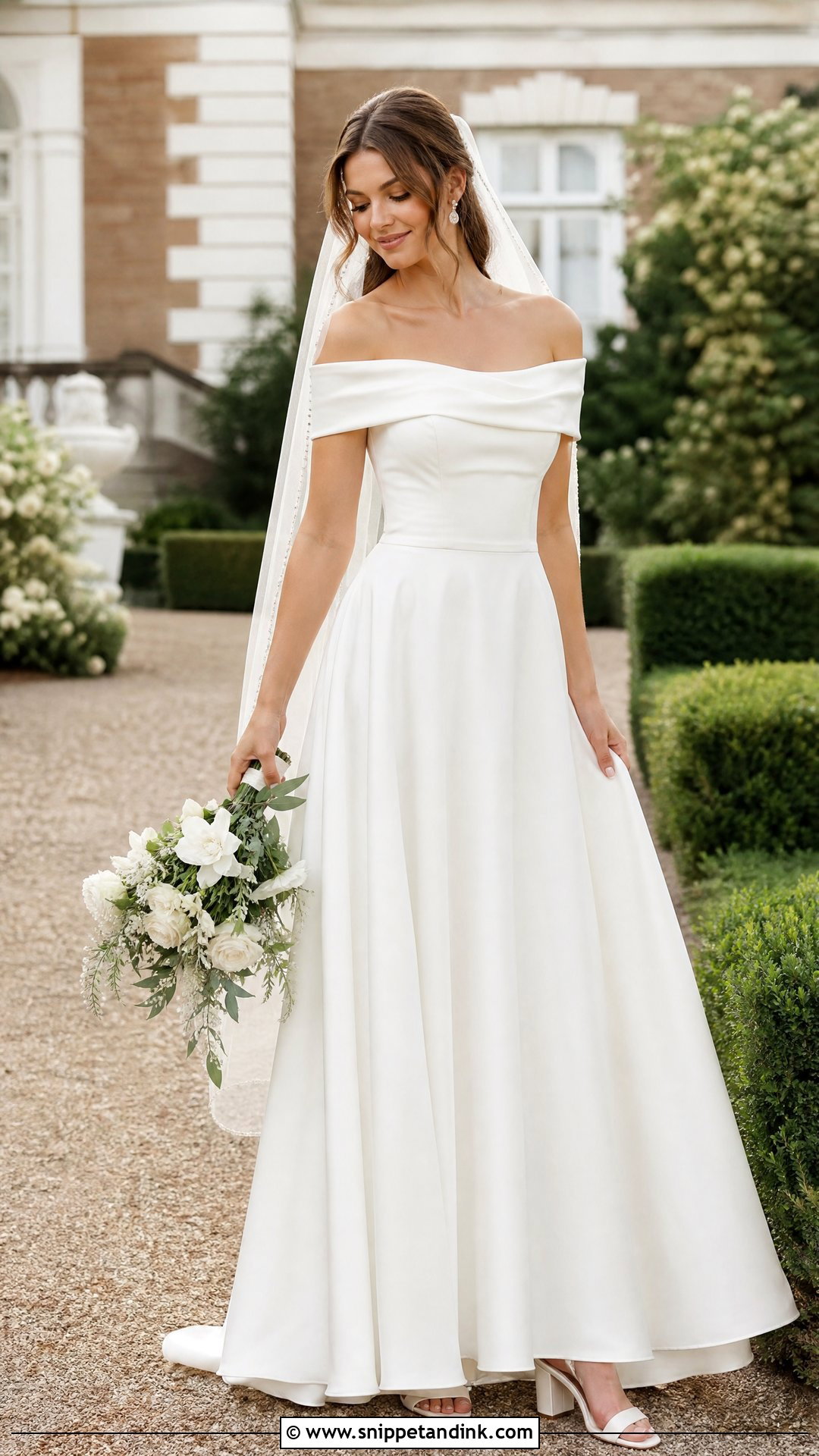
Off-shoulder sleeves in draped satin look polished; lace or tulle versions are softer. With a fitted bodice and an A-line skirt, it’s an easy shape to wear all day, as long as the sleeves are anchored to the bodice so they don’t creep up. A medium-length veil, delicate drop earrings and ivory block heels suit it. Leave the necklace off and wear a slim bracelet or a ring that means something. A low twisted bun keeps the shoulders visible. Carry loose white and pale green flowers for a garden estate, a barn or a traditional ballroom.
7. Long Sleeve Wedding Dress
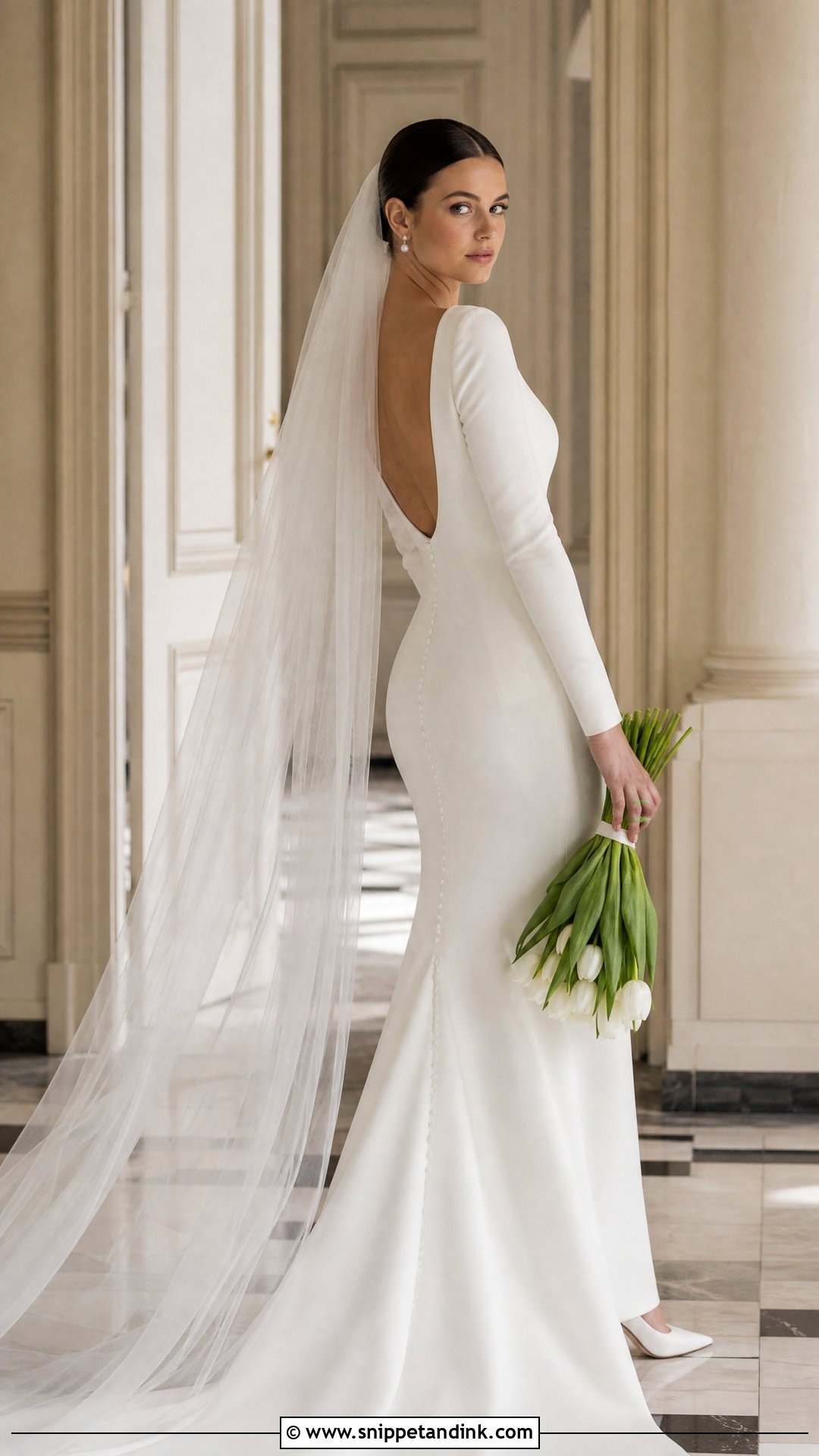
Lace sleeves feel delicate; smooth crepe sleeves feel contemporary. A bateau or high neckline adds polish, and a low back keeps the dress from feeling covered up. The thing I test is the ring exchange: hold your left hand out and up. Tight sleeves pull the bodice and make the moment awkward. A chapel veil, pearl earrings and pointed pumps go with it, and a sleek bun or waved ponytail shows the back. Slim tulips or callas keep the long line. Cooler seasons, evening ceremonies and freezing air-conditioned rooms are where sleeves earn their place.
8. Corset Tulle Wedding Dress
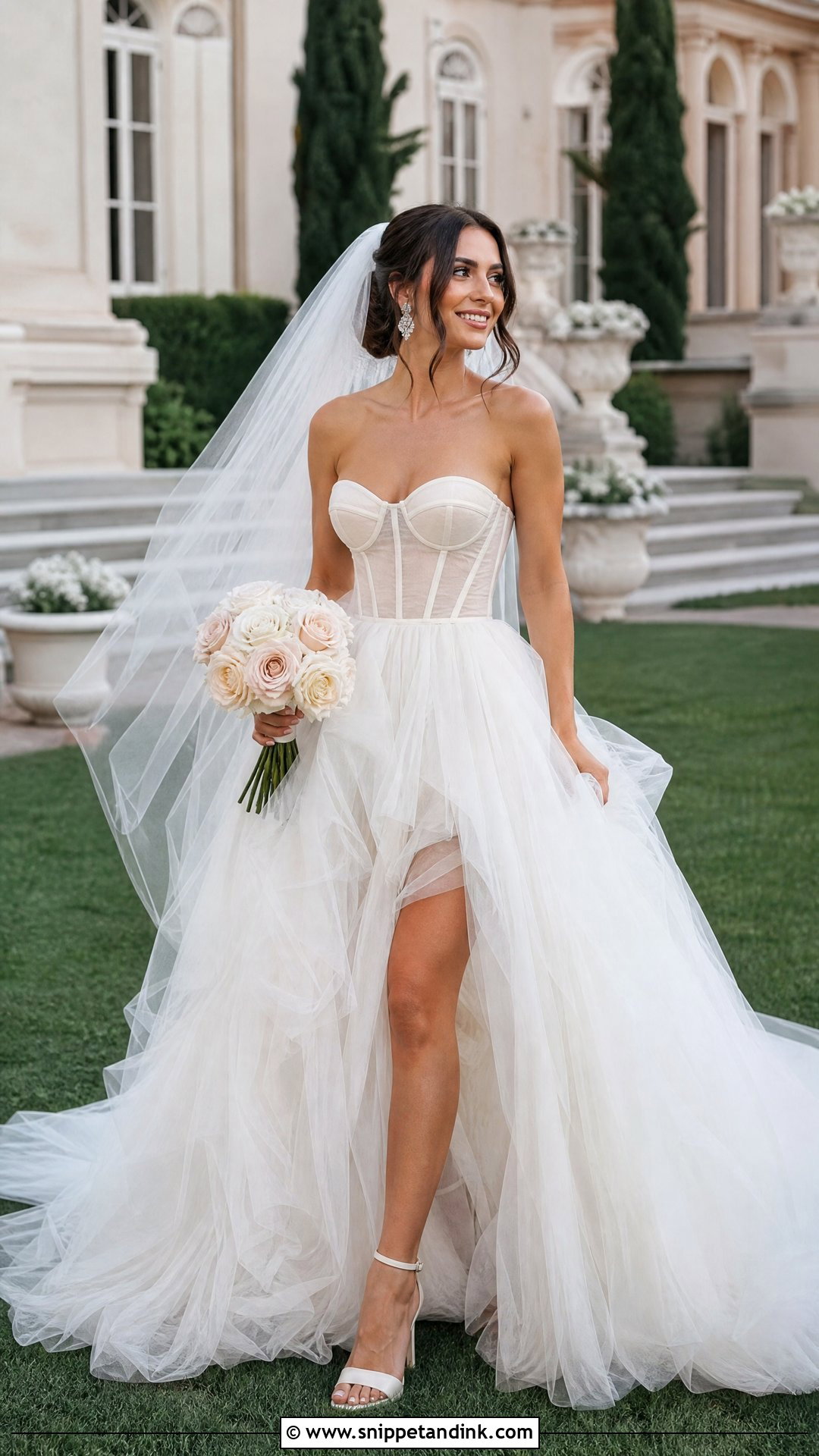
Tulle and a corset are opposites, which is why they work together. Visible boning, a curved neckline and a softly gathered skirt keep structure on top and air below. A lined bodice gives coverage; a sheer overlay is more runway. Tulle trains are light but catch on everything, so ask for a sturdy bustle with several points rather than one hook. A light cathedral veil, crystal studs and satin ankle straps suit it, with brushed waves or a loose bun and garden roses. Lawns, gardens and bright ballrooms suit it.
9. One Shoulder Wedding Dress
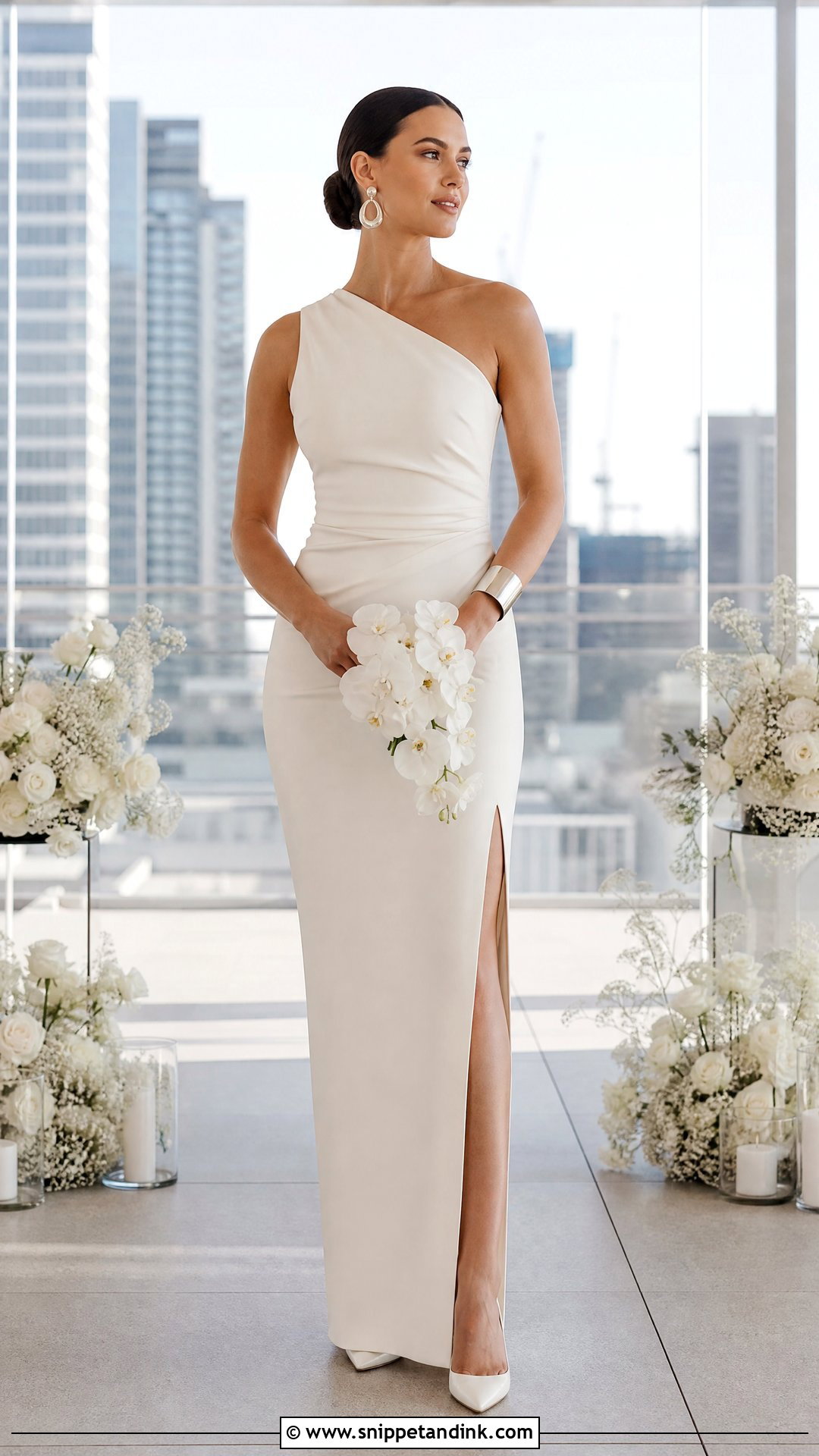
One shoulder makes the neckline the whole story. The cut can be fluid and Grecian in draped silk or sharp and graphic in structured crepe. A slim column skirt with a side slit gives you room to walk. Statement earrings, a smooth cuff and minimalist pointed heels suit it. A full veil fights the diagonal, so I’d go with a short blusher, a sheer shoulder cape or nothing. A sleek bun set toward the bare shoulder and a compact orchid bouquet suit a rooftop, gallery or city ceremony.
10. High Neck Wedding Dress
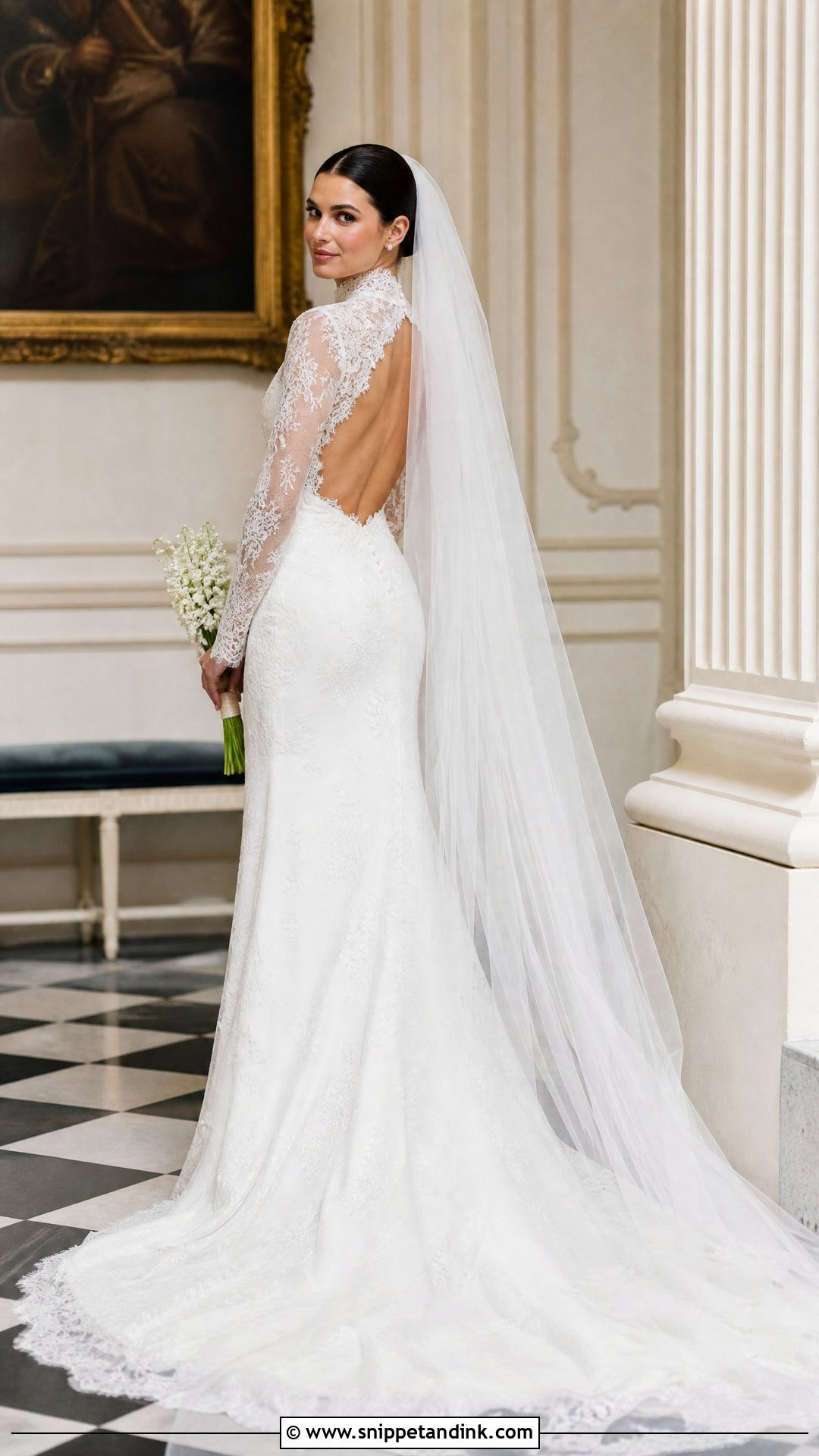
High necks give coverage with confidence. Lace reads vintage; clean satin or crepe looks sharp. A fitted bodice and a slim A-line or column skirt keep it from feeling heavy, and an open back, keyhole or sheer upper panel adds balance. Small earrings, a low bun and simple ivory heels, no necklace. A long plain veil adds ceremony. Fit the collar so it clears your neck when you turn your head, otherwise it rubs all day. It suits formal interiors, historic houses and cold-weather weddings.
11. Square Neck Wedding Dress
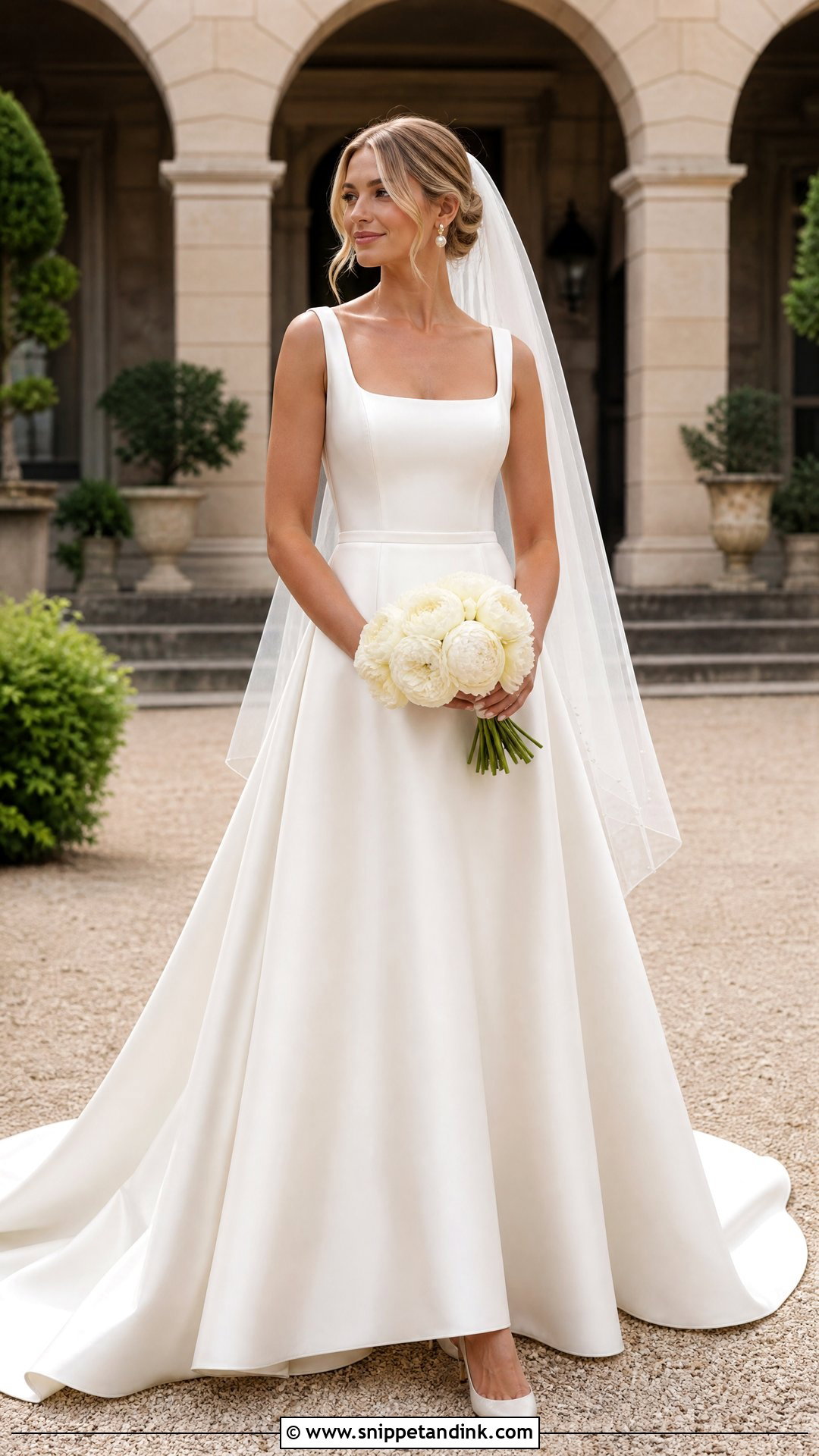
Square necks frame the collarbone and work with wide straps, fitted sleeves or a sleeveless bodice. A structured A-line in satin or mikado gives classic shape. On a smaller bust, a square neck can gape when you lean forward, so I check it from the side with the bride bending to sign the register. A slim belt adds definition; keep embellishment minimal. A fingertip veil, pearl-and-gold earrings, closed-toe slingbacks and a polished low knot complete it. Rounded peonies, roses or tulips. It moves easily between a country estate, a hotel ballroom and an outdoor ceremony.
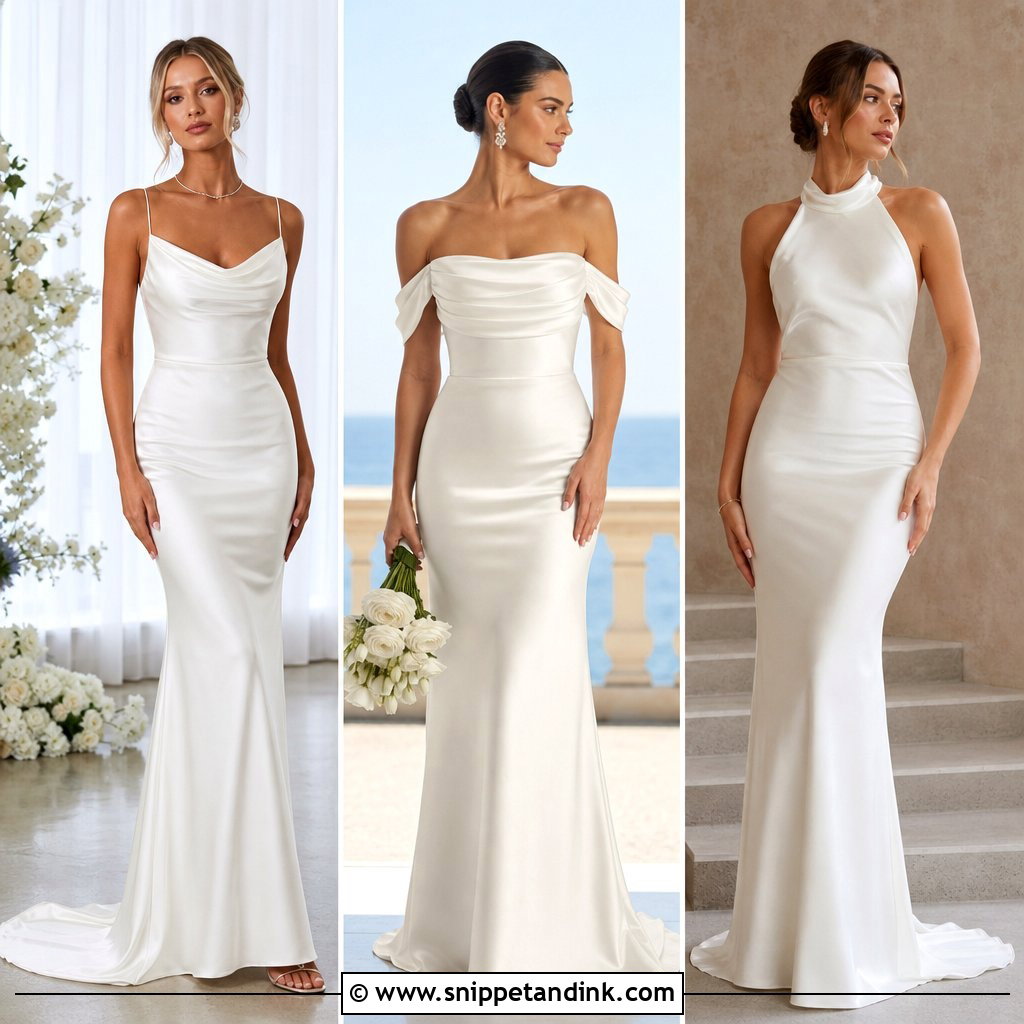
12. Halter Neck Wedding Dress
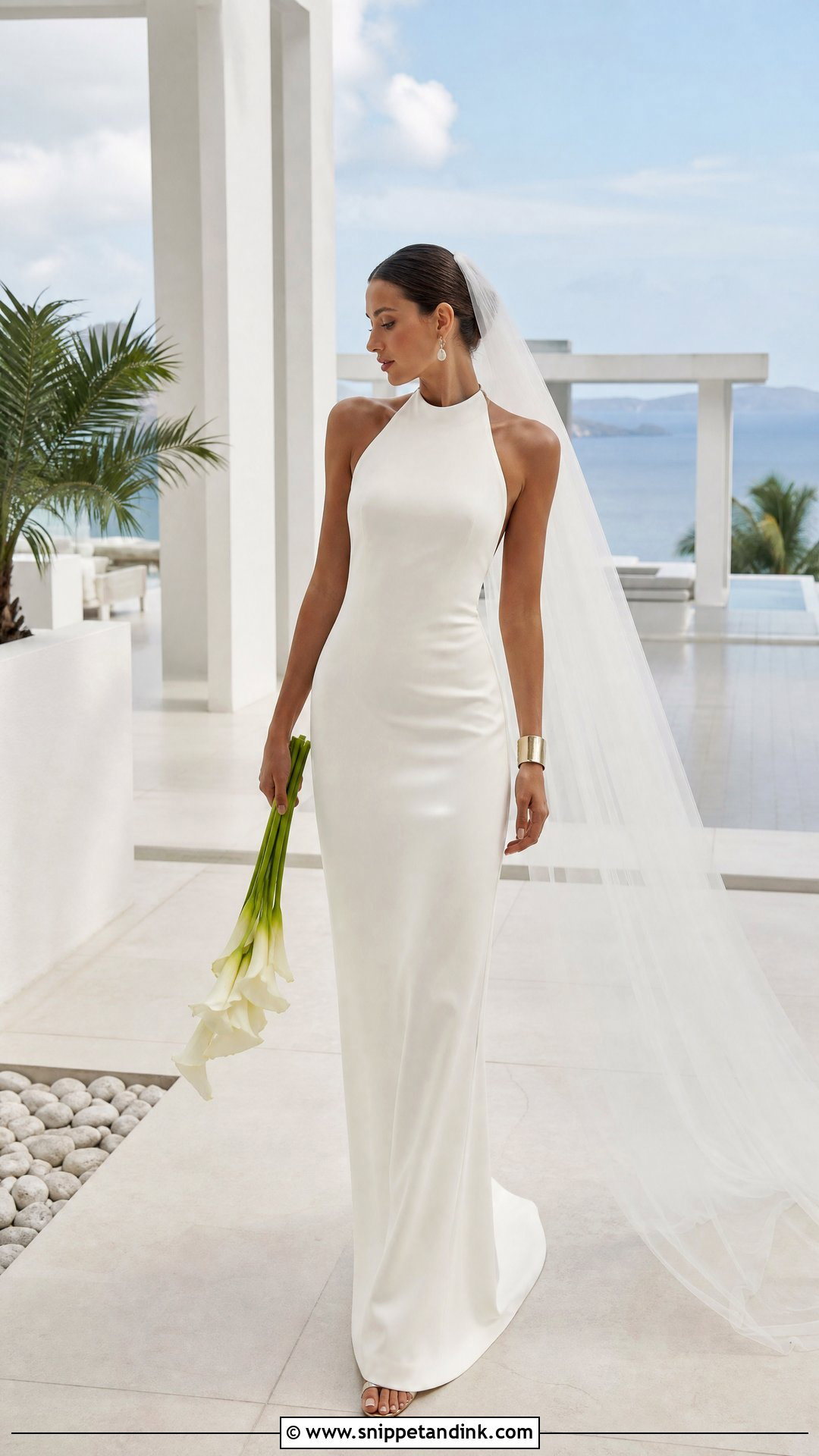
A halter with a fluid column skirt draws one long line from neck to floor. Silk crepe, satin or draped jersey move well with it; jersey is the most comfortable for a long day but shows every line underneath, so plan the undergarments. An open or low back adds contrast. Sleek earrings, a metallic cuff and minimalist sandals or pumps suit it, with hair up. A narrow cathedral veil or a sheer cape from the shoulders replaces a layered veil. Long-stemmed callas complete it for resorts, rooftops and coastal venues.
13. Wedding Dress With Cape
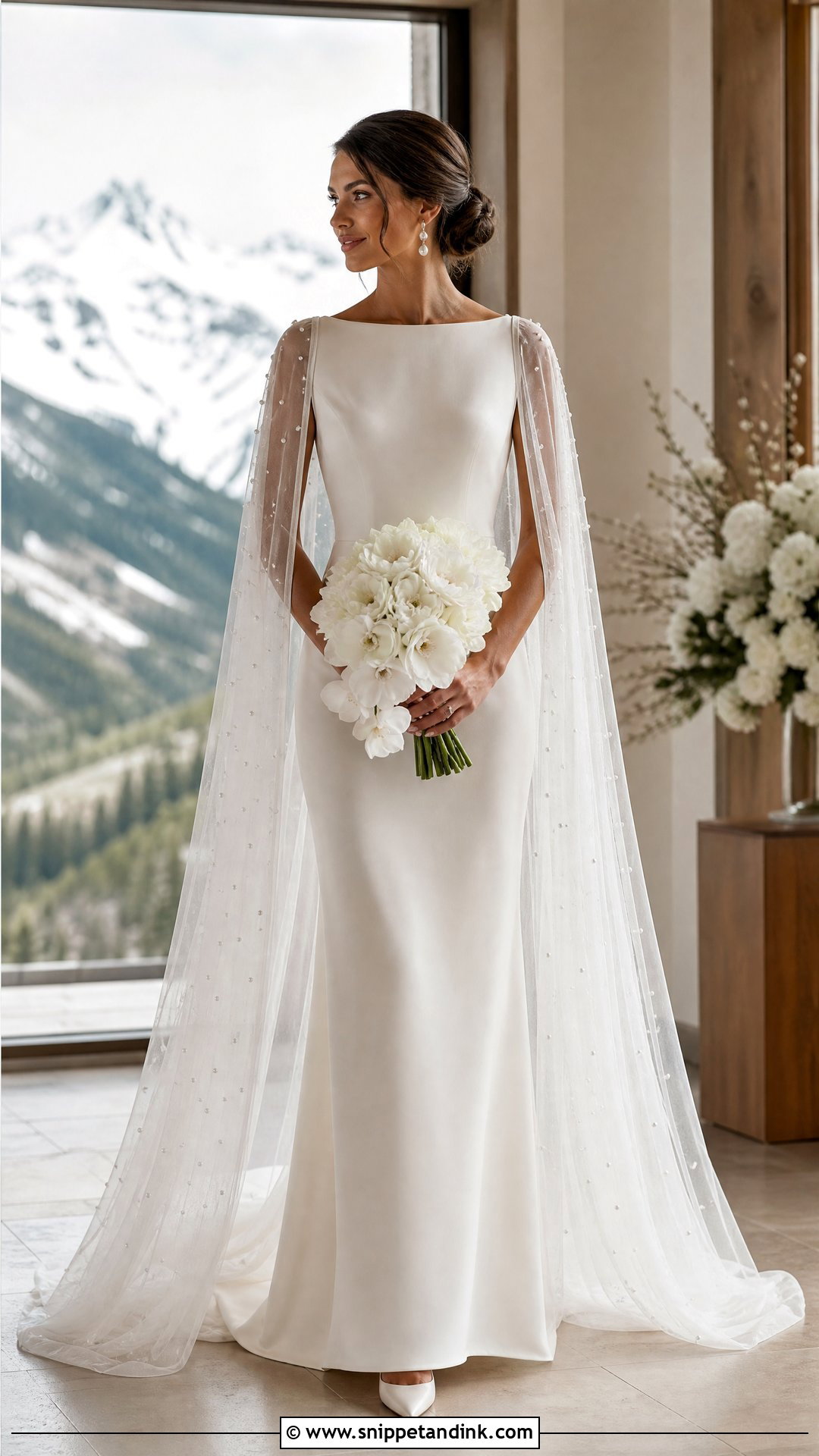
A cape is the simplest way to turn a quiet dress into a ceremony dress. A fitted crepe column, a clean satin A-line or a minimalist slip all take a sheer floor-length cape fixed at the shoulders or neckline. Fine embroidery, scattered pearls or a lace edge add detail. Wind is a real issue outdoors; a cape fastened only at the neck can wrap around you, so on mountain or open-air venues I ask for a second attachment point at the shoulder blades. Drop earrings, pointed heels, a structured white bouquet and a sleek low bun suit it. Remove it for the reception.
14. Wedding Dress With Oversized Bow
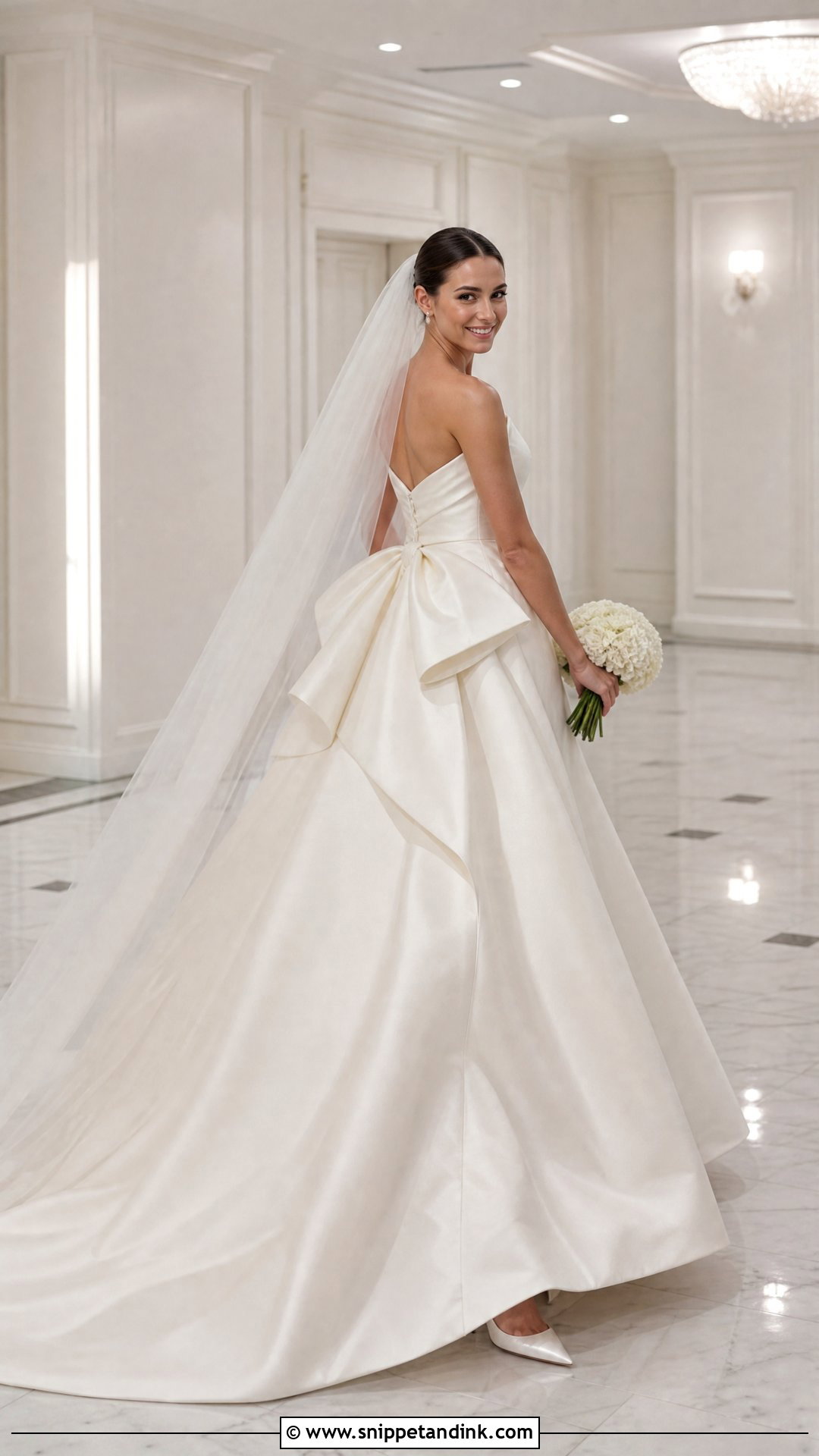
Oversized bows need stiff fabric: satin, mikado and faille hold the shape and photograph crisply. At the back waist it makes an exit; on one shoulder it creates asymmetry; across the bodice it’s the boldest option. Keep the rest of the gown plain. A simple veil, small studs and pointed satin pumps suit it, with a smooth ponytail or sculpted bun and a single-variety bouquet. A big back bow is awkward in a chair, so I’d ask for it to be detachable or set slightly higher than you think.

15. Tiered Organza Wedding Dress
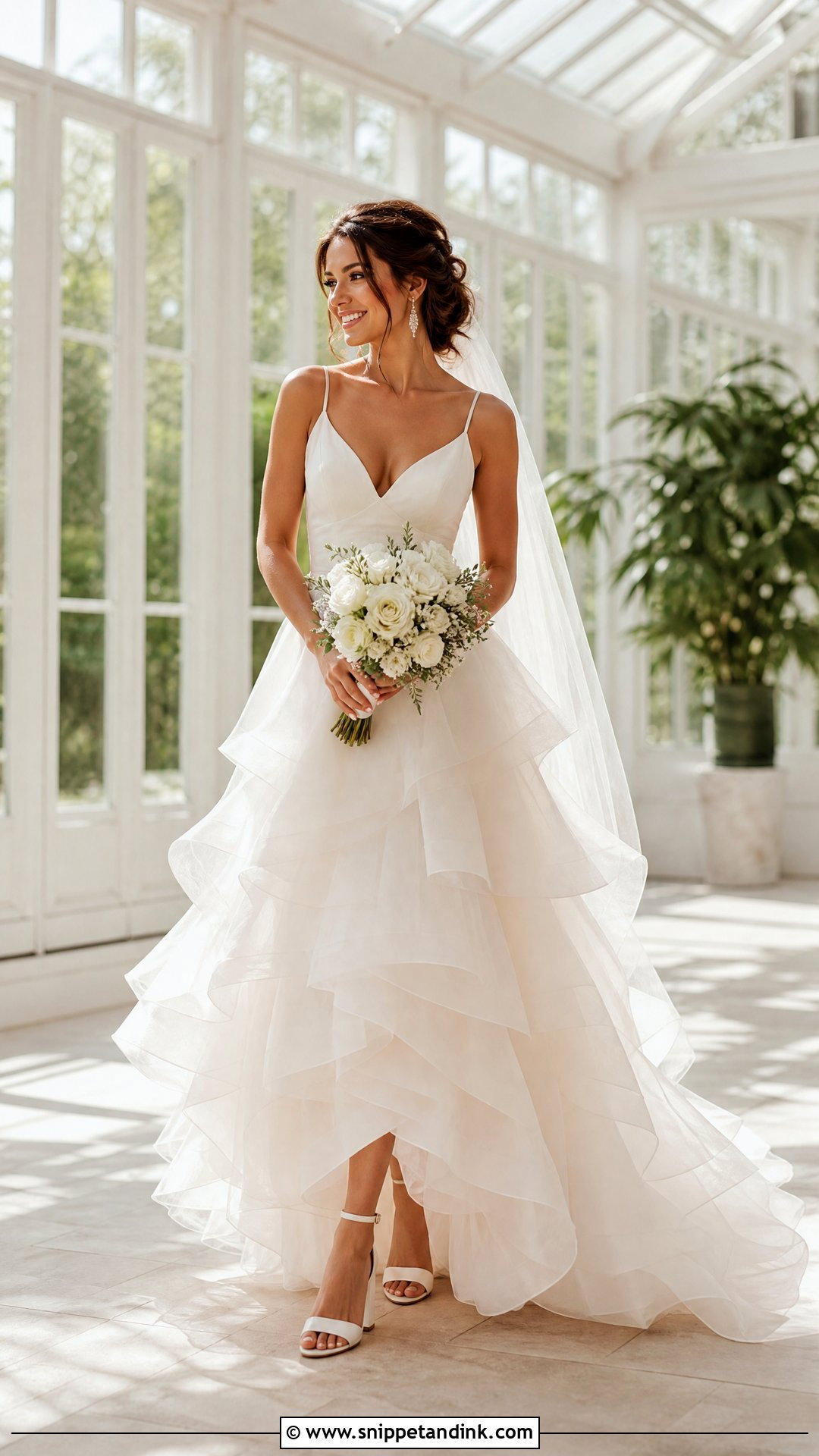
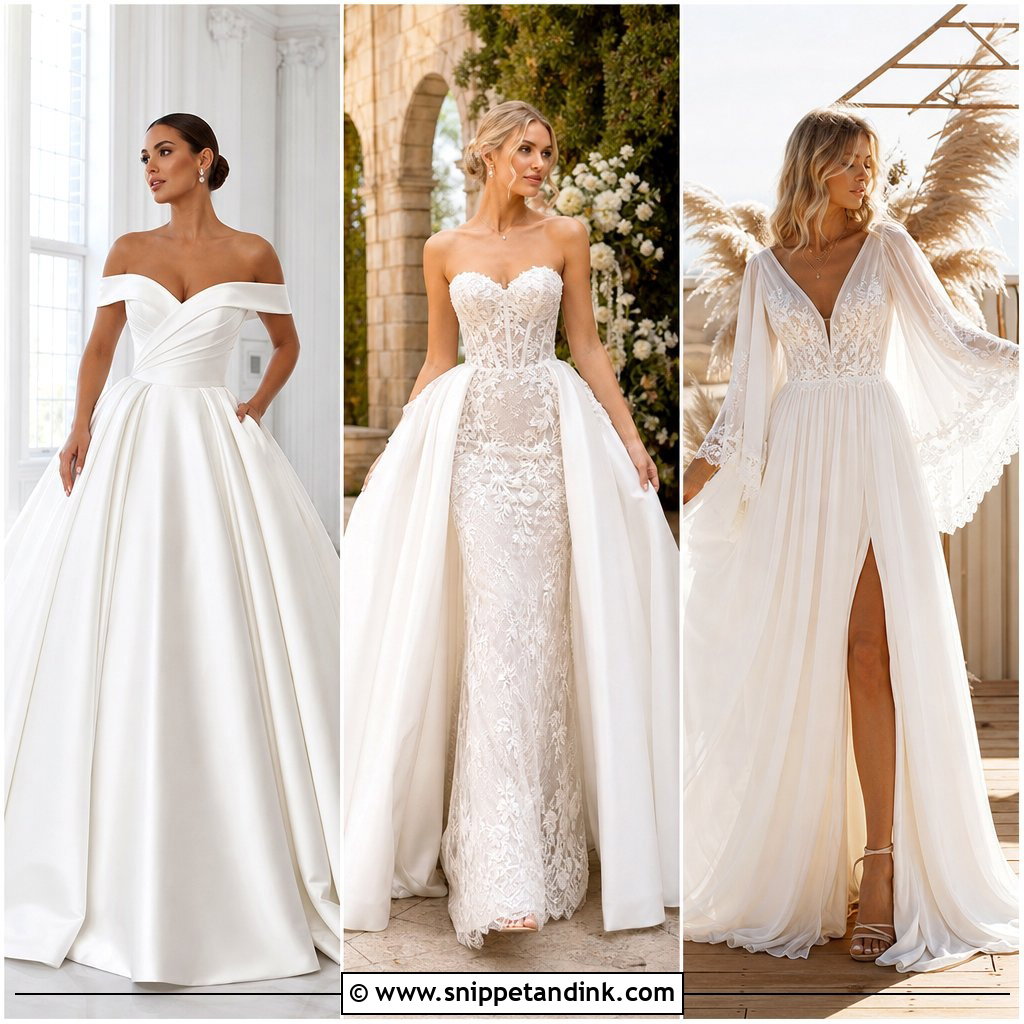
Organza tiers move a lot for very little weight. Soft horizontal tiers look romantic; irregular cascading layers look editorial. A fitted, simple bodice keeps the volume below the waist. Lightweight layers catch underfoot, so have the front hem checked in your actual shoes. A barely-there veil, crystal earrings and secure block-heel sandals under the skirt suit it, with a textured updo and a loose bouquet of delicate white flowers. Gardens and conservatories show it at its best.
16. Floral Appliqué Wedding Dress
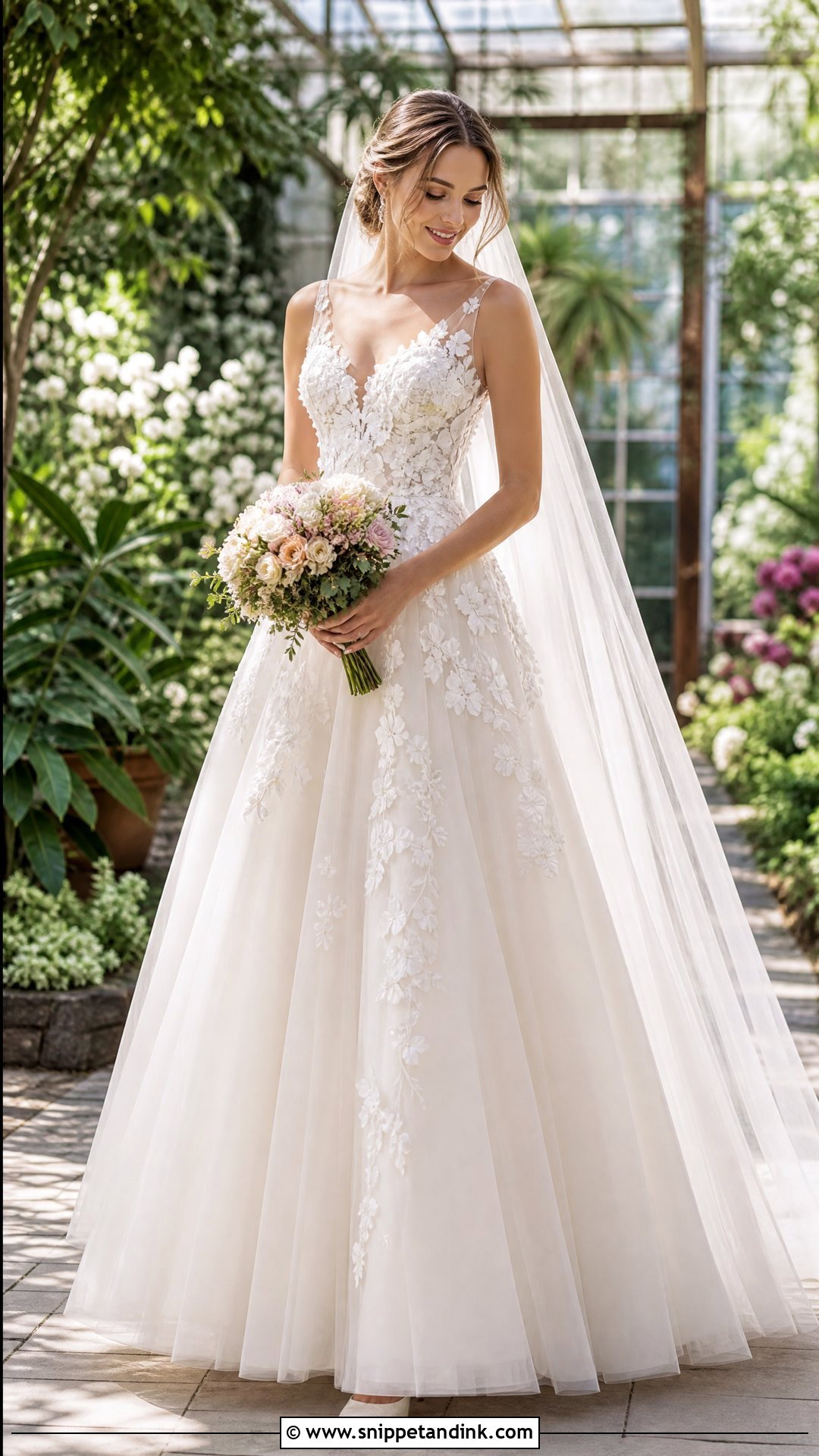
Three-dimensional flowers scattered from the bodice down an A-line or ball gown skirt give a garden feel. Tone-on-tone ivory looks refined; a hint of pale color looks more artistic. Run your hands over the appliqué at the fitting: flowers stitched only at the center can lift and snag a veil. A plain tulle veil, delicate earrings and simple satin pumps, with loose waves or a relaxed updo and no flower crown. A bouquet repeating a couple of the flower shapes links them without matching too closely. Spring ceremonies and glasshouses suit it.
17. Minimalist Slip Wedding Dress
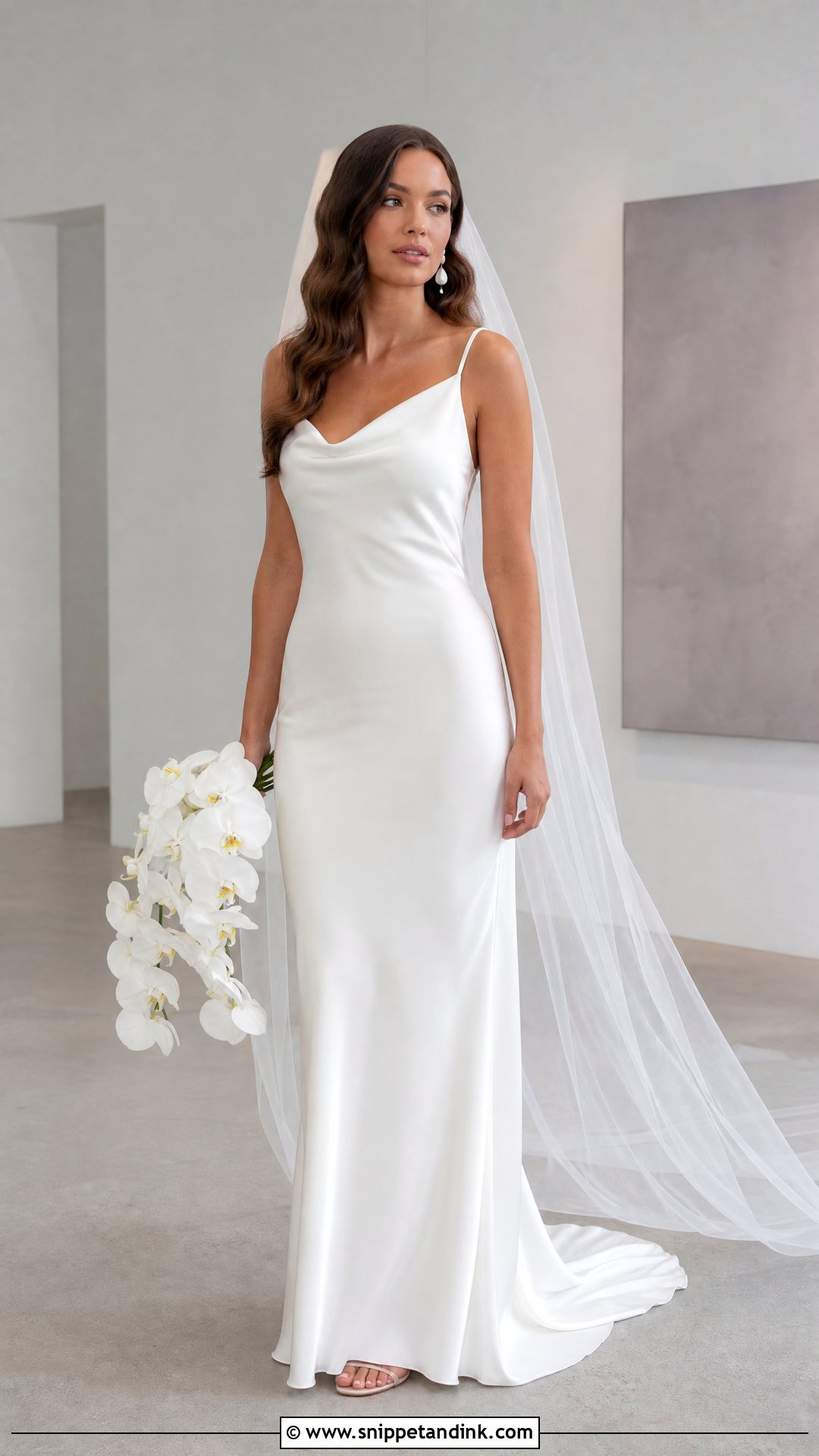
Slip dresses are the quietest option and the most demanding to wear. A bias-cut silk satin or crepe slip with fine straps follows the body closely, so undergarments and hemming have to be perfect; I’d budget for bonded-edge underwear tried with the dress, not before. A sheer cathedral veil, refined drop earrings and barely-there sandals suit it. A tailored blazer or detachable cape gives ceremony cover. Glossy waves, a neat bun or a ponytail with fresh makeup. One flower, orchids or callas, for a city hall, beach or gallery.
18. Tea Length Wedding Dress
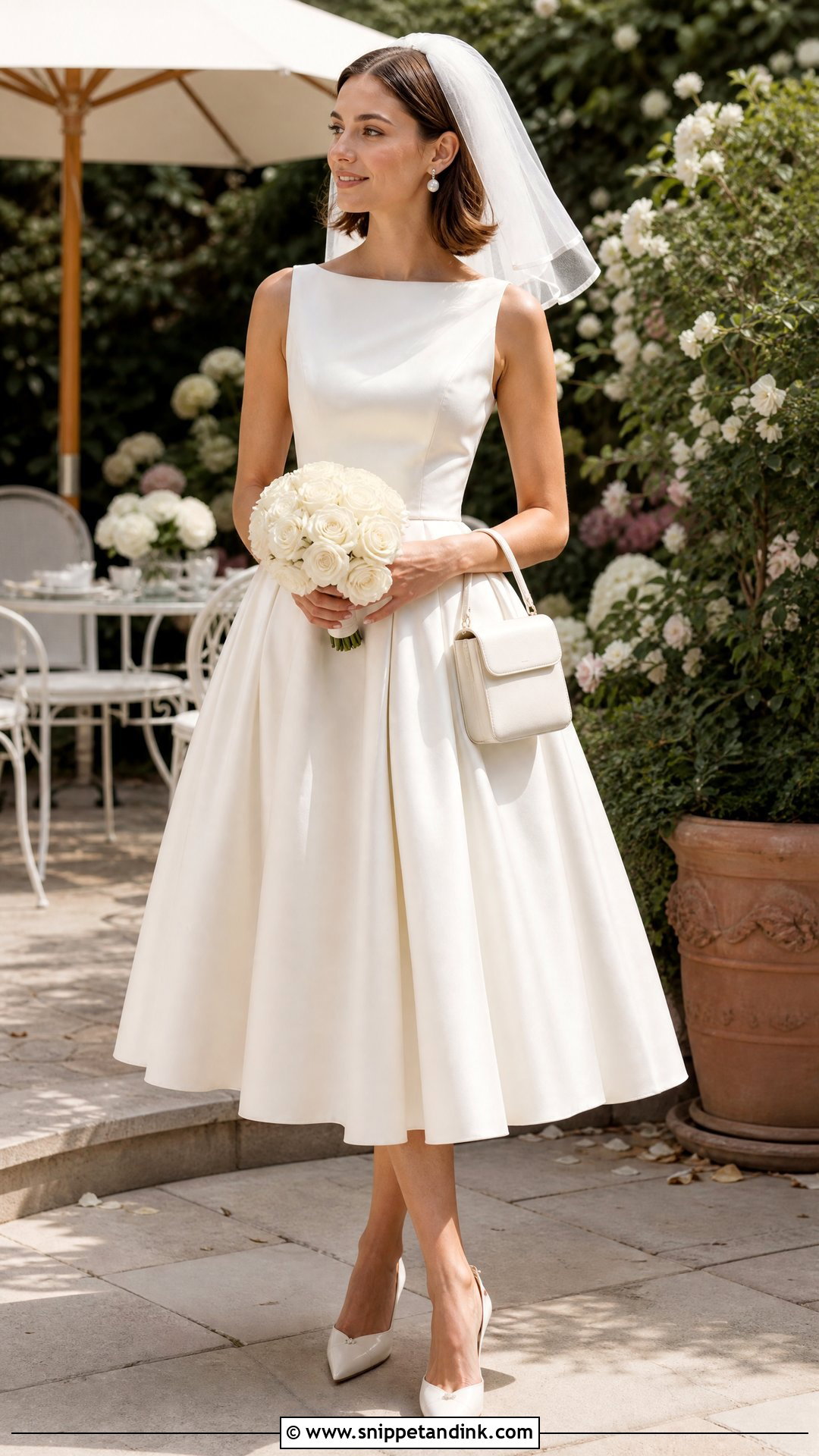
Tea length lands between knee and ankle and makes shoes part of the outfit. A fitted bodice with a full skirt in satin, organza or lace gives a retro shape. Pointed slingbacks, elegant pumps or embellished low heels all show clearly. A birdcage veil, short blusher or bow headband suits the shorter proportions. Pearl earrings, a structured mini bag and a compact bouquet finish it, with polished waves or a soft bun. A full skirt can pop up awkwardly when you sit; a soft crinoline or a slightly flatter underskirt fixes that. Daytime weddings at city halls or restaurants suit it.
19. Bridal Mini Wedding Dress
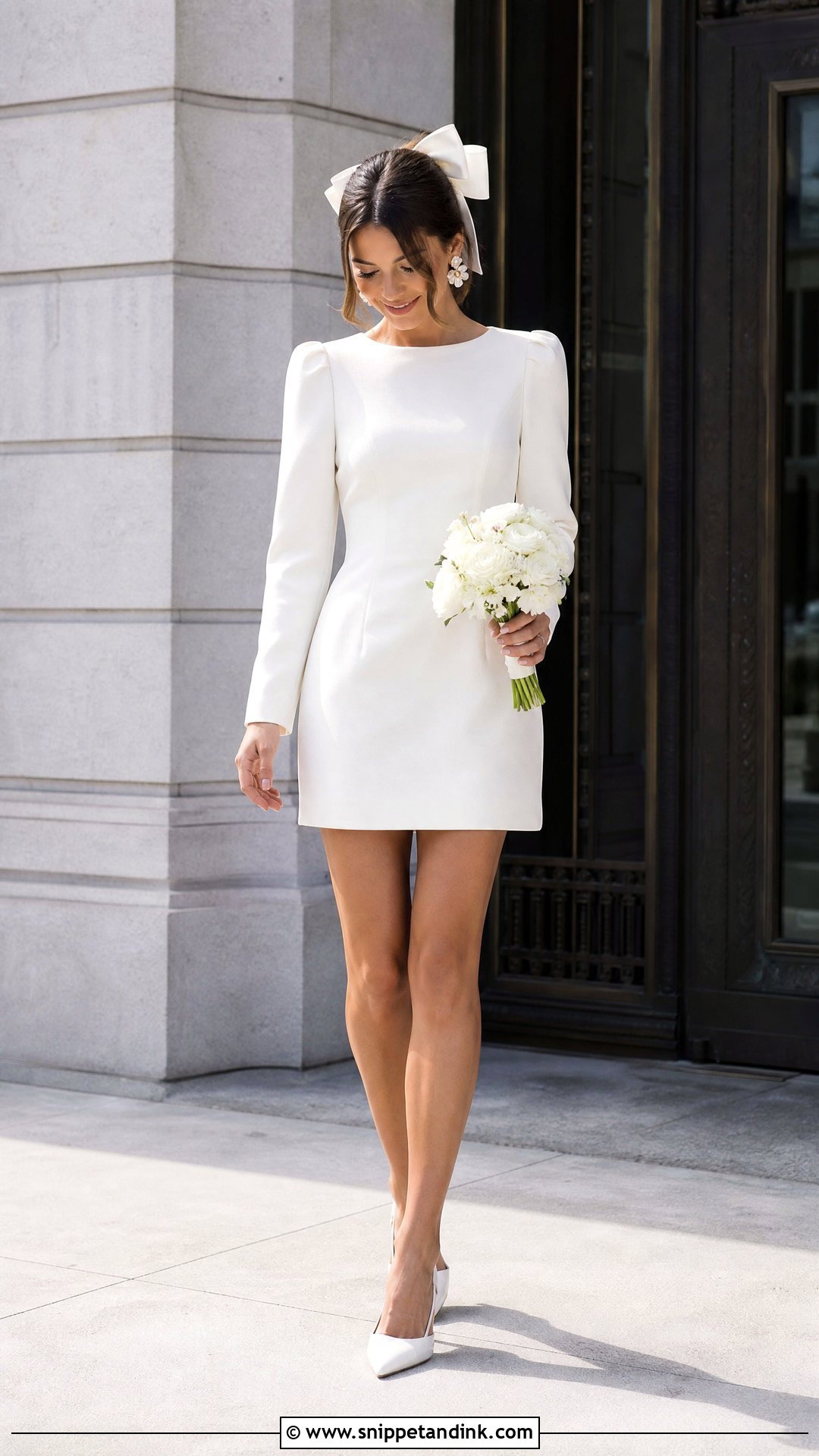
Minis work for a civil ceremony, a reception or a second look. A tailored shift, a structured A-line or a fitted long-sleeve design in satin, crepe or embellished fabric keeps the short hem sophisticated. Pointed pumps, slingbacks or low block heels, depending on the floor. Statement earrings and a short veil, oversized bow or simple headband. Keep the bouquet small. In cold weather, a tailored white coat or cropped jacket. Sit, walk and dance in it at the fitting; minis ride up more than you’d think.
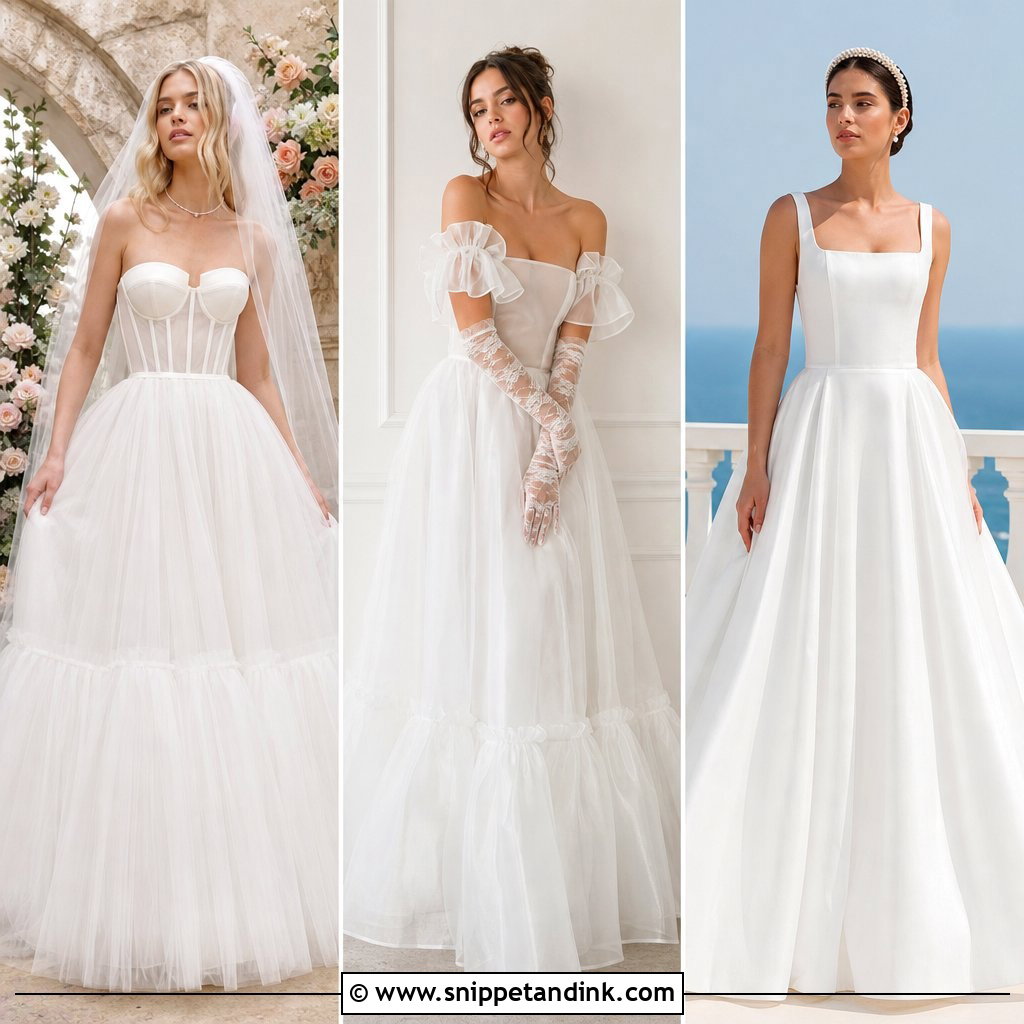
20. Black And White Wedding Dress
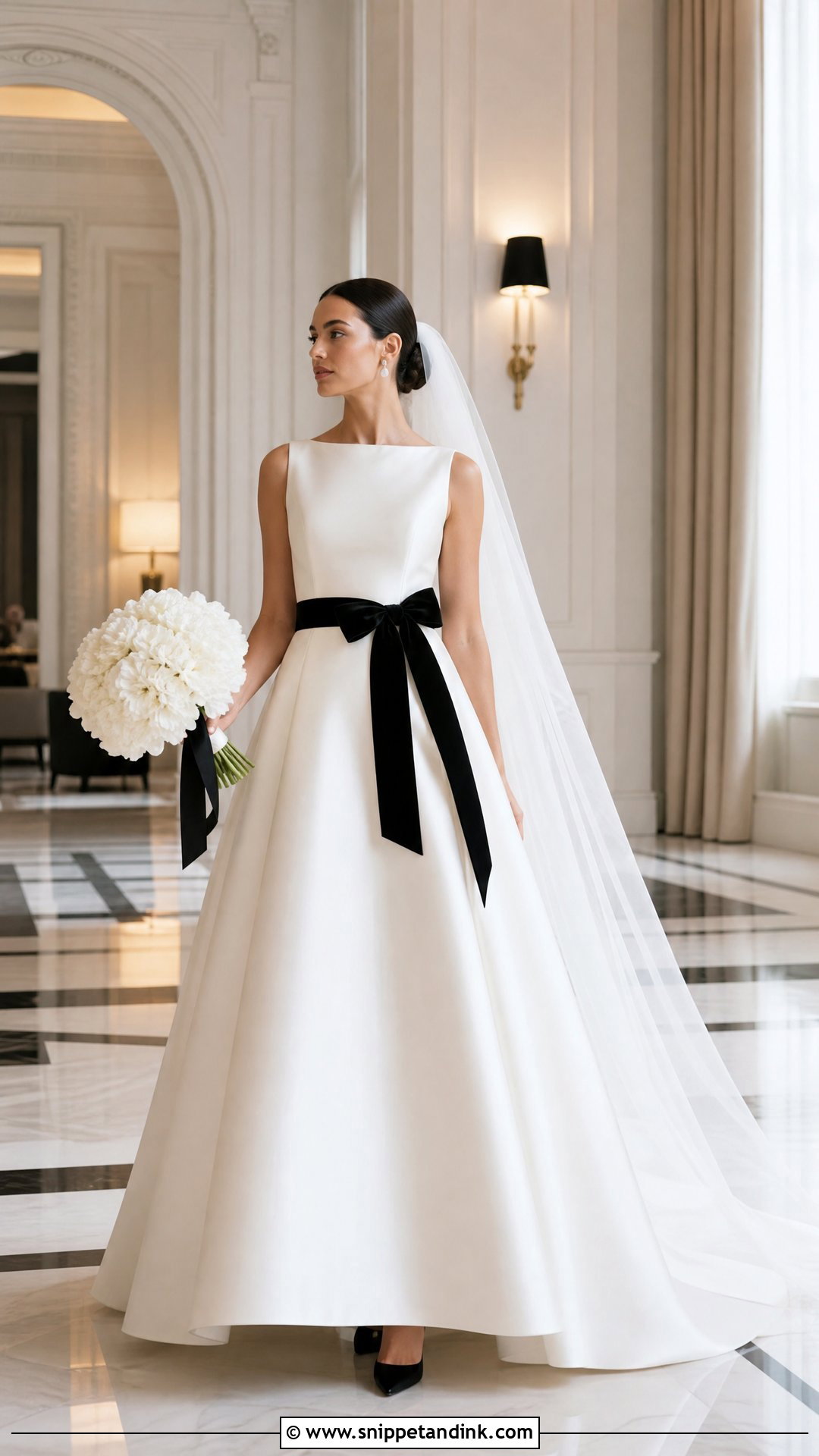
Black on a white gown is a graphic choice, and precision is what keeps it polished. An ivory ball gown, column or A-line can carry black as a velvet waist ribbon, a bow, embroidered edging, detachable gloves or a narrow neckline trim. Choose one or two of those, not all. Black pointed pumps, pearl earrings and a clean ivory veil, with a sleek bun and defined eyes. Tie an all-white bouquet with black ribbon. Lay every black piece side by side in daylight before the day; velvet, satin and leather blacks have different undertones and can look brown or blue next to each other.
Which Fabrics Hold Up in Heat, Rain and a Long Reception
Fabric decides how a dress will look at the end of the night, not just at the start. A quick rundown from what I see at fittings and on wedding days:
- Mikado and faille: firm, slightly ribbed, hold structure brilliantly and wrinkle less than satin. Warm in summer heat.
- Silk satin: luminous but marks with water droplets and creases where you sit. Keep it away from rain and cold drinks.
- Crepe: matte and fluid, forgiving of creases, but heavier fabrics show undergarment lines.
- Organza and tulle: light and airy for warm weather; tulle snags on jewelry, rough floors and velcro, so watch beaded bracelets.
- Lace: hides small marks well and breathes; corded lace is sturdier than fine Chantilly-type lace on a long train.
For outdoor summer weddings, I’d lean toward organza, crepe or lace. For autumn and winter, mikado, faille and heavier satin keep their shape in cold rooms and look rich under warm lighting.
Proportion Matters More Than the Photograph You Saved
Strong design only works with comfort and good styling around it. A dramatic ball gown looks modern with clean accessories, and a simple slip gains presence from a long veil or a cape. Judge proportion, movement, fabric and fit in person rather than from photos alone. Try each dress with shoes, underwear and accessories close to what you’ll wear. Let venue and season guide the practical choices without overriding your taste. Lace, satin, drapery, a short hem or a big bow: build one consistent outfit you can move in and still recognize as yourself.
You'll Like These Ideas:












Leave a Reply