
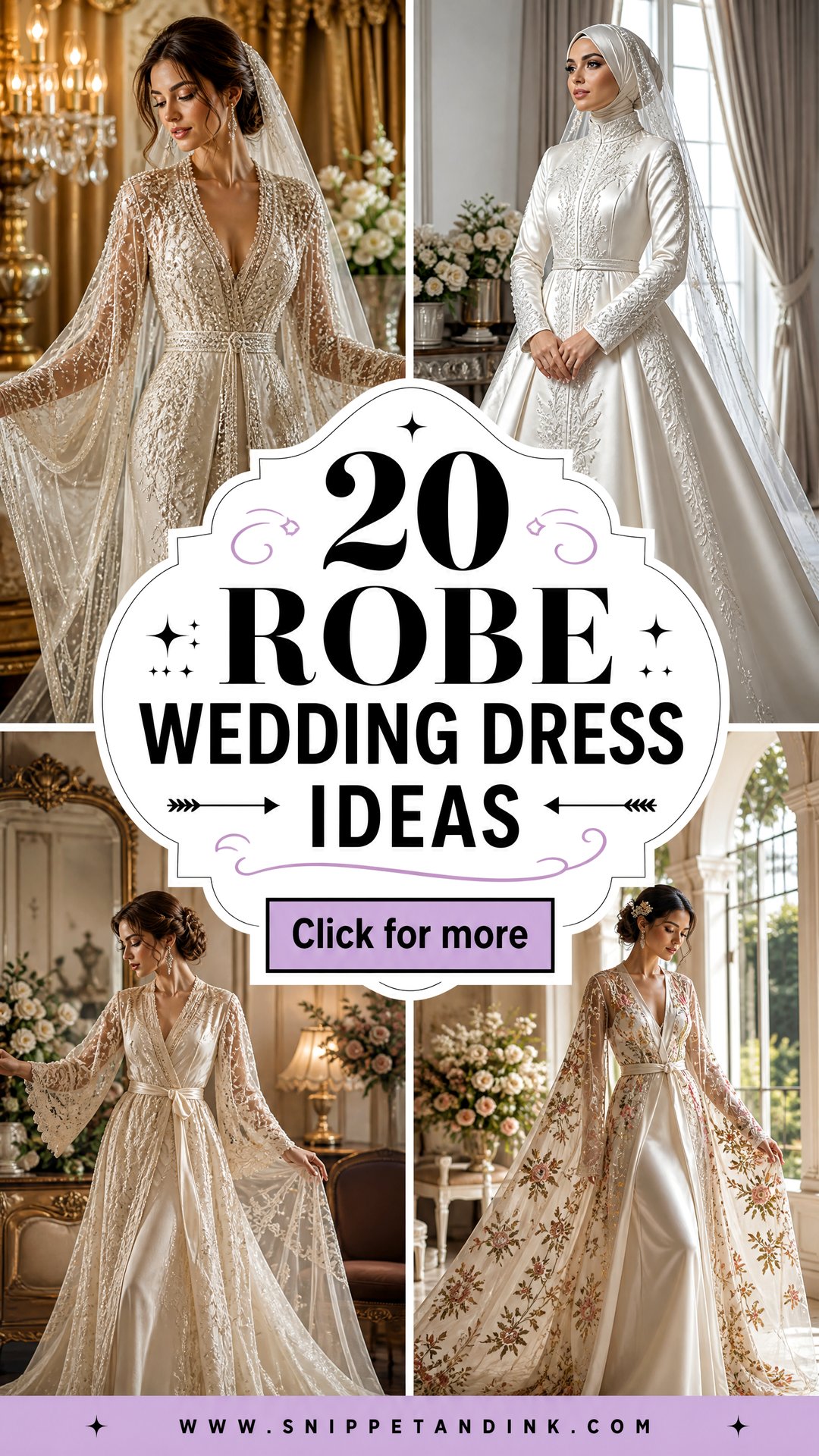
A robe-inspired bridal gown borrows the wrap and the open sleeve from loungewear and gives them proper bridal construction. On the hanger these dresses look relaxed; on a bride, the good ones are carefully engineered, with inner ties, hidden snaps and a lining that keeps the crossover in place. They suit a beach, a garden, a courthouse or a formal room, and they make a natural reception change. The fabric decides most of the mood: silk and satin read as glamour, while lace, chiffon, crepe and embroidered tulle add texture. Below are twenty complete looks, each with the accessories I’d pair and the fitting point I’d check first.
How a Wrap Gown Is Built to Stay Closed
Brides often worry that a robe dress will fall open. A well-made one won’t, because the sash you see is decoration; the real work happens inside.
- An inner tie or hook fixes the under-layer of the crossover at the opposite side seam, so the outer flap has something to rest on.
- Two or three small snaps along the neckline stop the V from widening as you move. Ask for them at your first fitting; they take minutes to sew in.
- A modesty panel, a strip of matching fabric stitched into the V, lets you keep a deep neckline without a plunge.
- A waist stay, a grosgrain ribbon hooked inside the waistline, takes the weight of the skirt off the sash and stops the gown from twisting.
When you try a robe gown on, sit down, lean forward as if signing the register and raise both arms. If the neckline gapes or the skirt opens above the knee, that isn’t a reason to give up on the dress, but the fixes should be written on your alteration list before you leave.
1. Satin Wrap Robe Wedding Dress
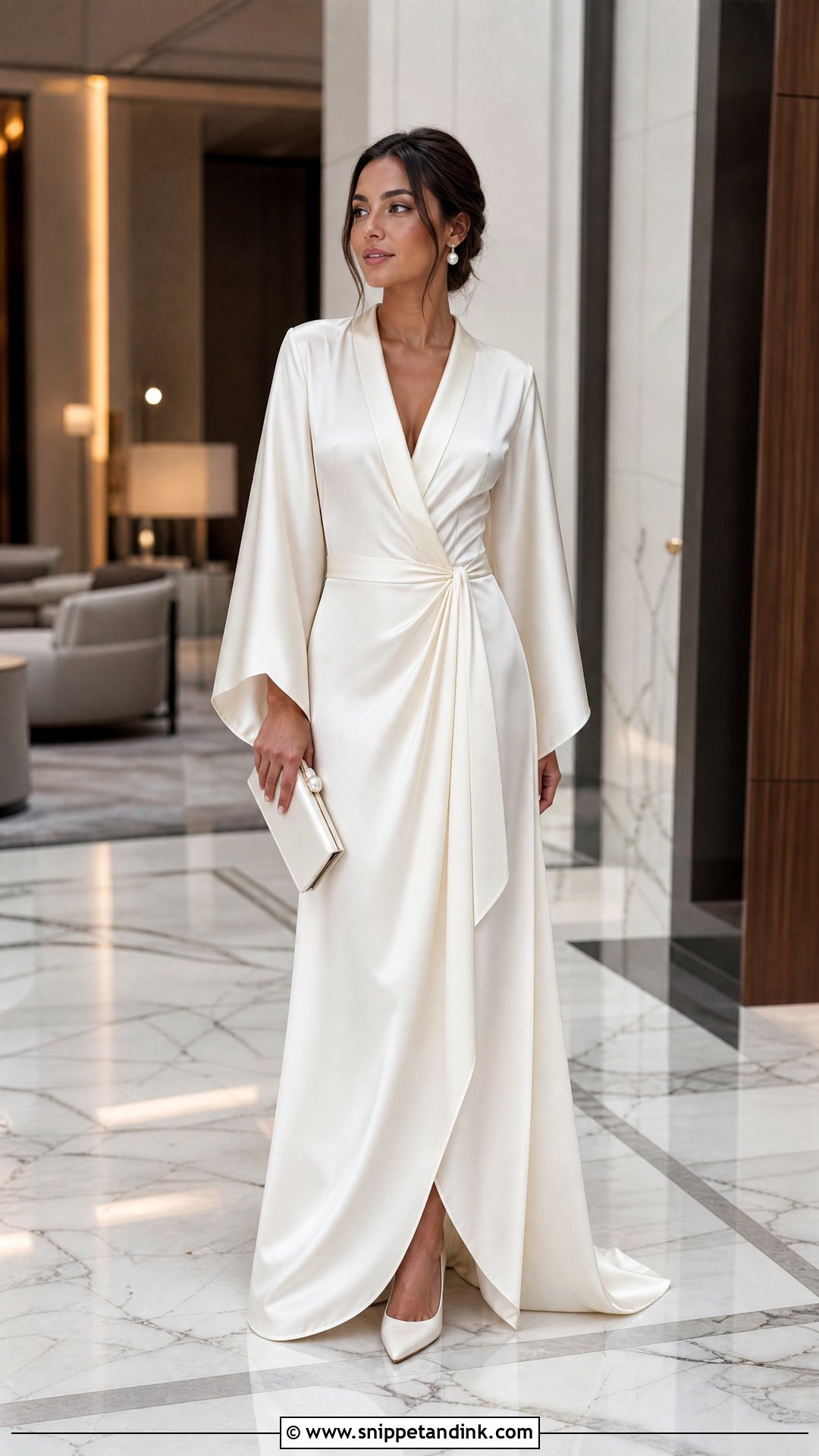
Satin is the purest version of the robe, and it shows everything, so the fit has to be right. Look for a floor-length gown with an internal closure, a crossover V, a defined waist and a gently flared skirt. Bracelet-length sleeves leave your hands and bouquet clear. Pointed ivory pumps, pearl drops and a small satin clutch are plenty. A smooth low bun keeps the neckline clean. If the wrap front is deep, I always ask the seamstress to add a couple of hidden snaps or a modesty panel; satin is slippery and a crossover will drift open when you lean forward to hug someone. Hotel ceremonies, lofts and small evening weddings suit it best.
2. Lace Sleeve Robe Wedding Dress
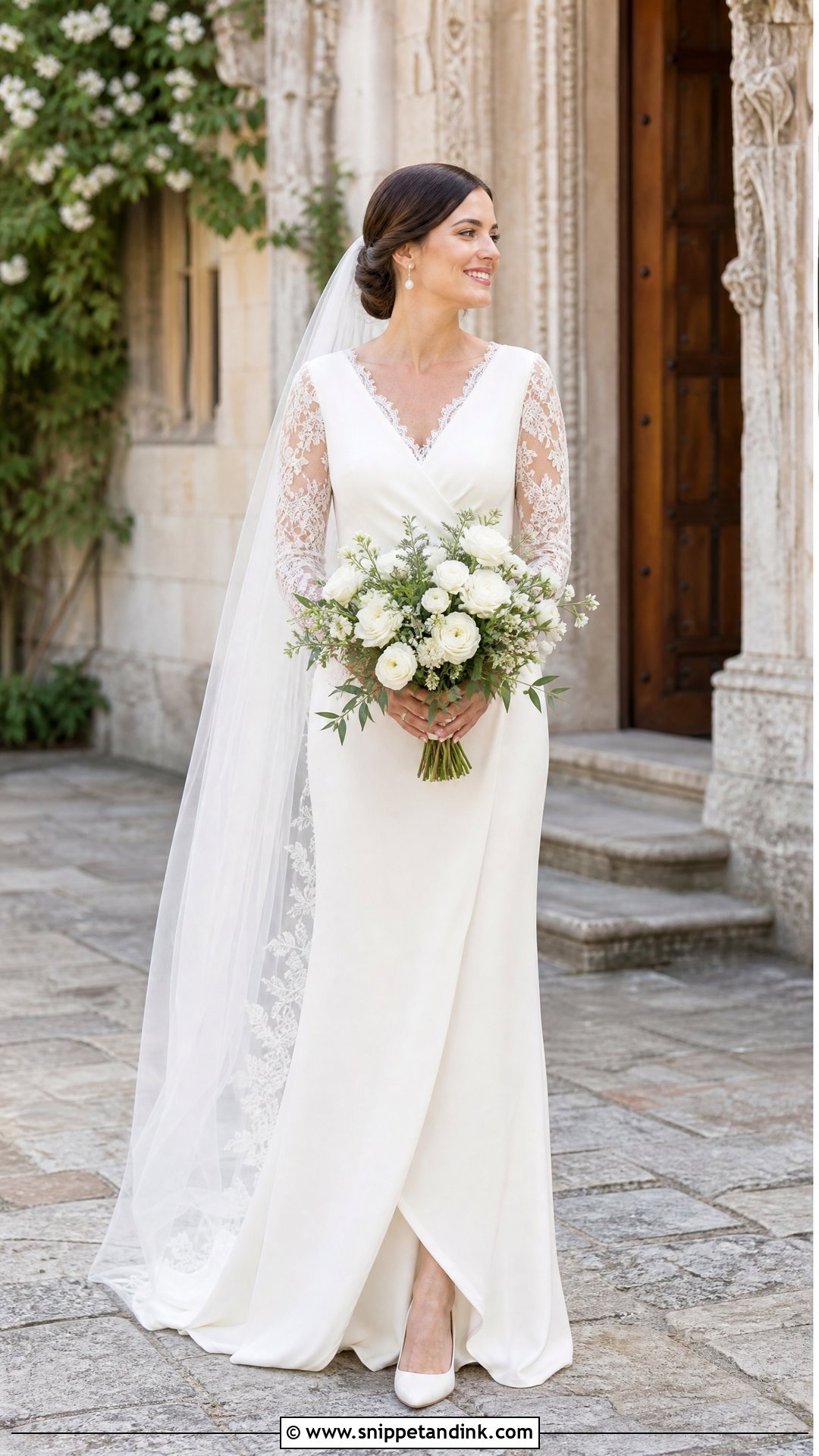
Lace sleeves turn a simple wrap into something more traditional. The version I like has a solid crepe or satin body with sheer lace sleeves to the wrist, a scalloped neckline and a softly tied waist. Closed-toe ivory heels, a fingertip veil, pearl studs and a compact white bouquet finish it. Tie the belt flat and keep it in one place; an oversized bow at the waist breaks up the line in photos and creeps round to the side by the end of the night. A lined bodice gives coverage while leaving the sleeve pattern visible. It belongs in gardens and historic venues in spring or autumn.
3. Silk Kimono Robe Wedding Dress
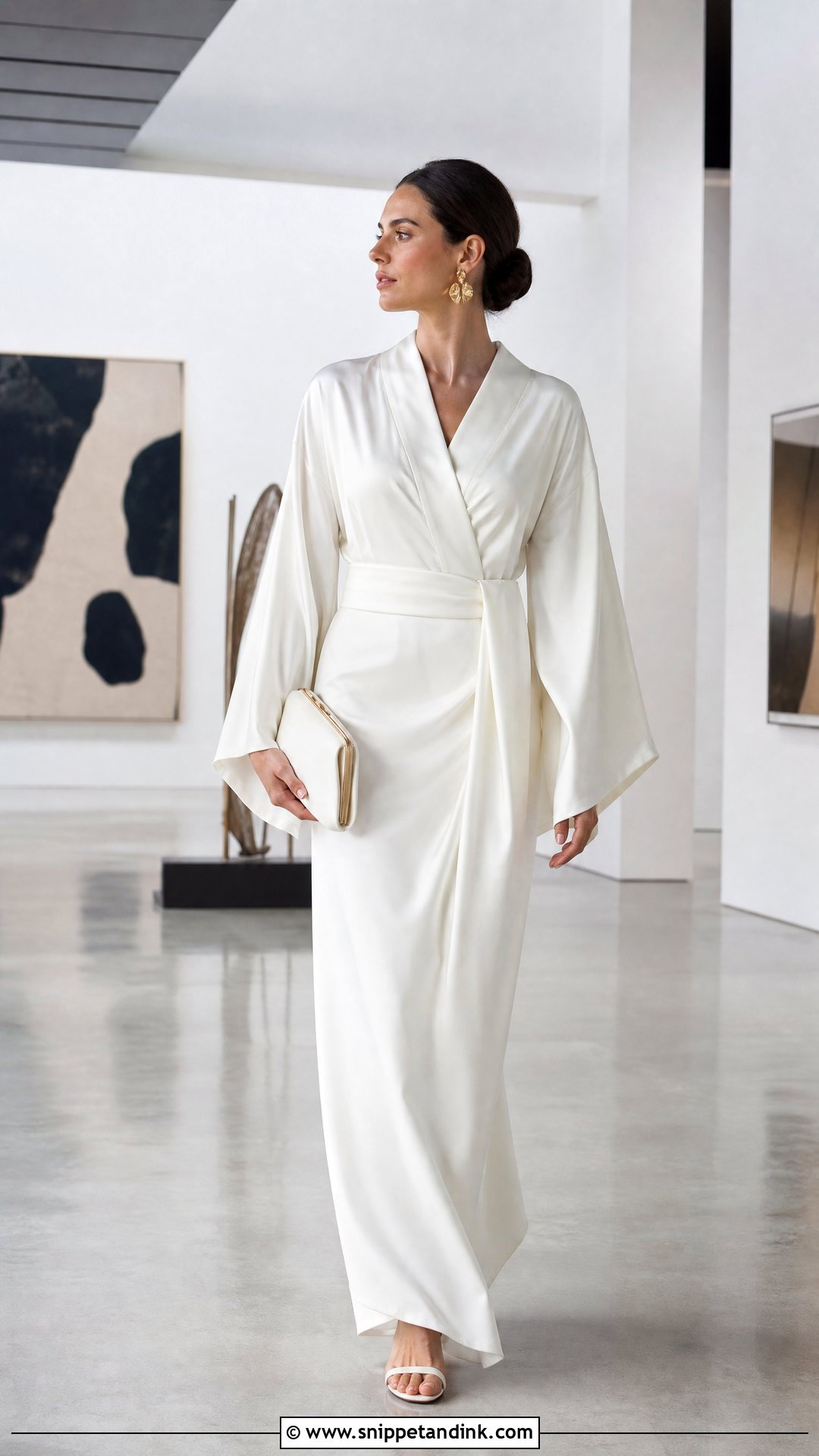
Long kimono sleeves give a silk robe gown its movement. Look for charmeuse with a crossover bodice, a wide sash and a straight or lightly flared skirt. The one thing I measure is sleeve length with your arm bent, as if holding a bouquet: the opening should stop before the fingertips, or it’ll catch on the stems all day. Minimal strappy sandals, sculptural gold earrings and an ivory or champagne clutch complete it. A low twist balances the sleeve volume so the look doesn’t slide toward casual. If the back is open, a delicate back necklace is worth adding. It suits destination weddings and modern galleries.
4. Chiffon Robe Wedding Dress
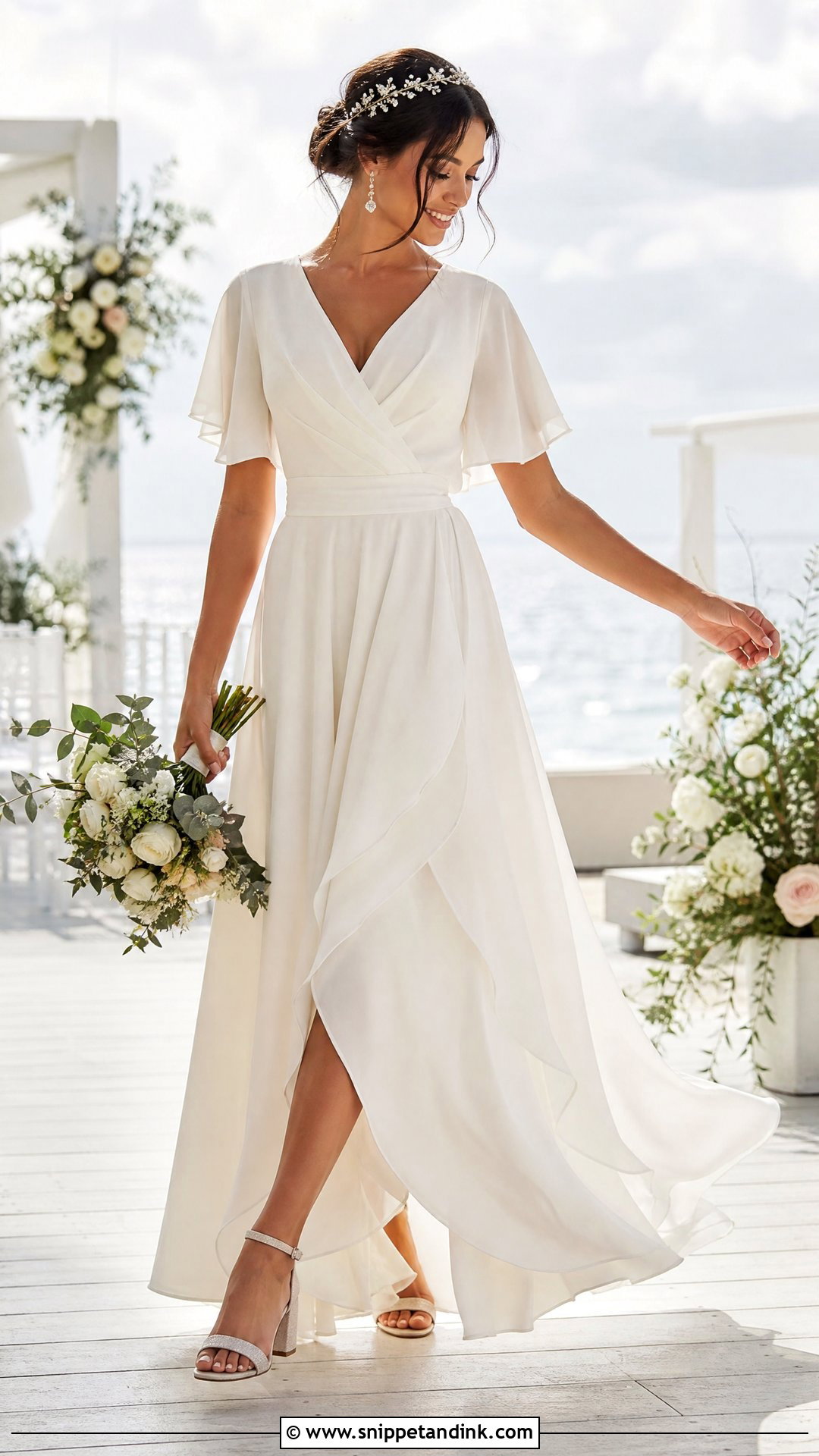
Chiffon makes the lightest robe in this list. Choose a fully lined gown with a wrap bodice, fluttering sleeves, a defined waistband and a layered skirt. Movement is the whole point, so keep the extras small: low block-heel sandals, crystal earrings and a narrow hair vine, plus a loosely gathered bouquet. Get the hem set with your actual wedding shoes on. Several layers of chiffon that are a centimeter too long will catch under your heel on every step, and the top layer snags easily. Outdoor ceremonies and waterfront venues in warm weather show it off best.
5. Beaded Robe Wedding Dress
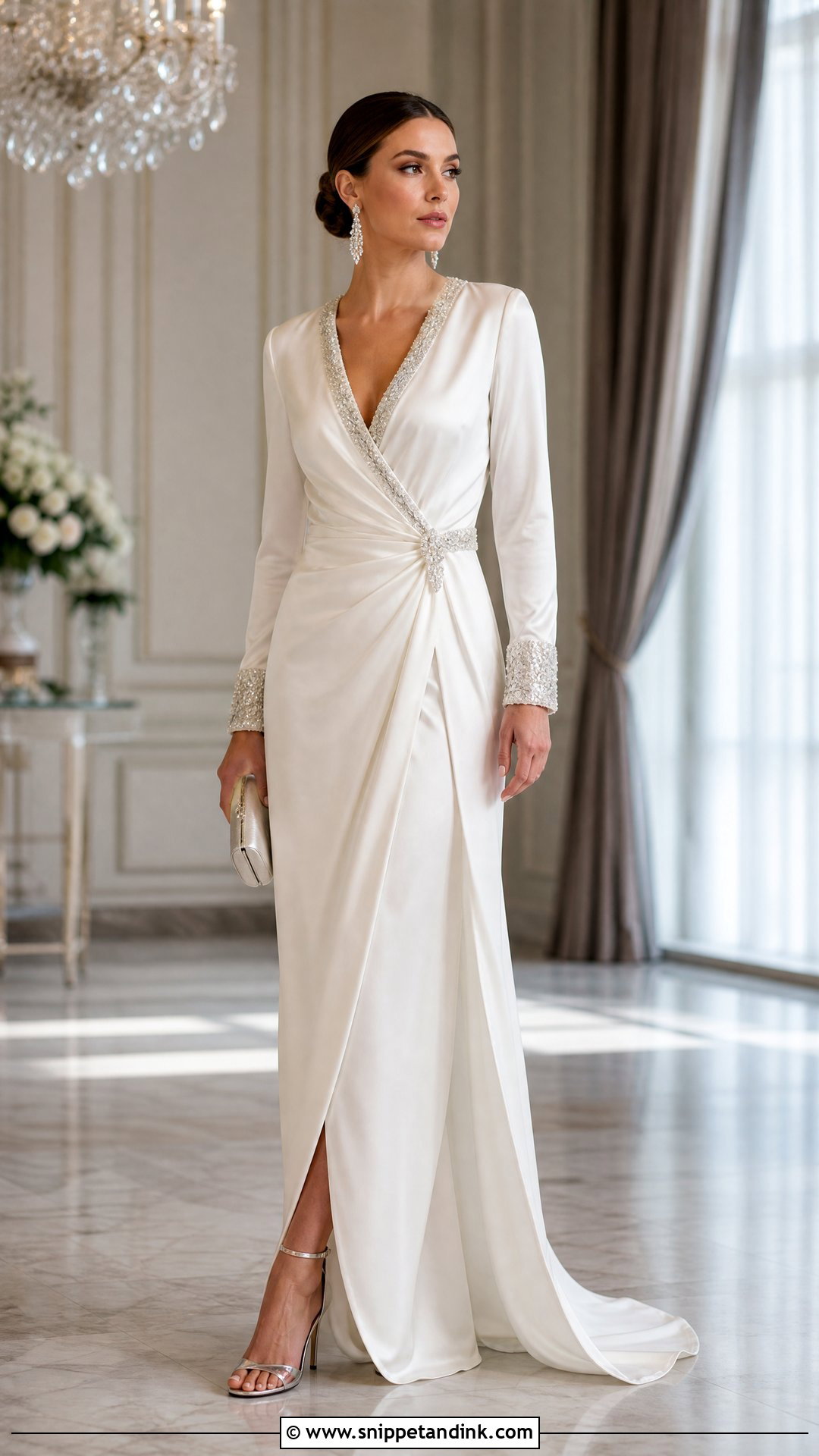
Beading changes the robe from relaxed to evening. I’d look for a wrap gown with fine beadwork placed at the neckline, cuffs, waist or shoulders, not spread over the whole dress, because dense beading stiffens the fabric and kills the drape that makes a robe a robe. Silver heels, crystal drops and a small satin bag are enough; with beads at the neck, leave the necklace off. A sleek chignon suits it. At the fitting, swing your arms and tie the sash a few times: beads on a cuff often catch on a beaded bodice or a chiffon sash. Ballrooms and evening ceremonies under chandeliers are its natural home.
6. Long Sleeve Robe Wedding Dress
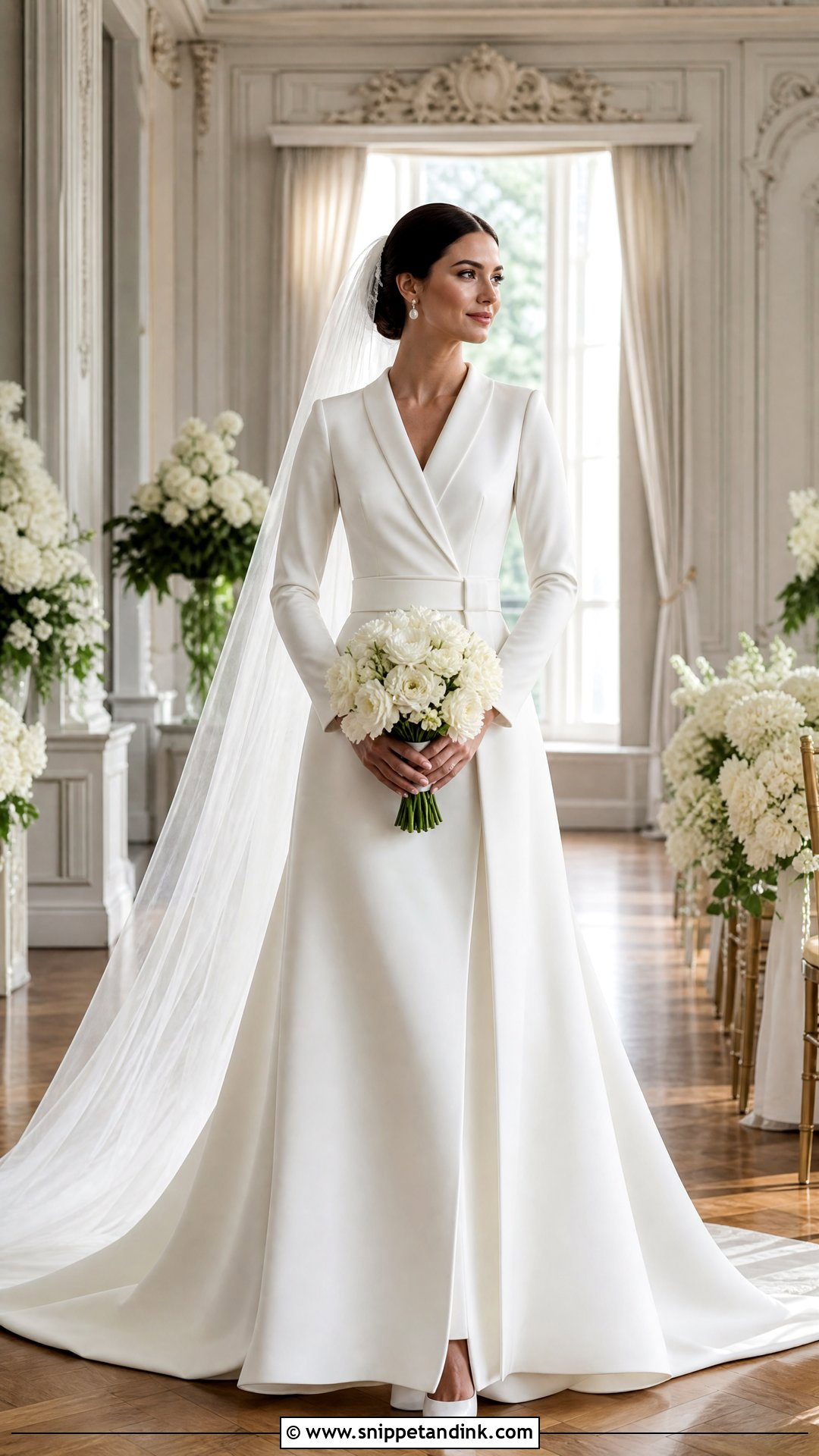
Long sleeves give coverage without the stiffness of a structured gown. Soft crepe, silk or matte satin with tapered sleeves, a secure wrap neckline and a structured waistband over a gentle A-line skirt keeps everything balanced and easy to walk in. Pointed pumps, a cathedral veil, pearl earrings and a classic white bouquet complete it. If the sleeves are loose at the wrist, have the cuffs narrowed; a wide cuff ends up in the cake, the soup and the ring exchange. I also have the sash anchored inside with a hook so it can’t rotate. It works through most seasons, in formal and traditional venues.
7. Minimalist Crepe Robe Wedding Dress
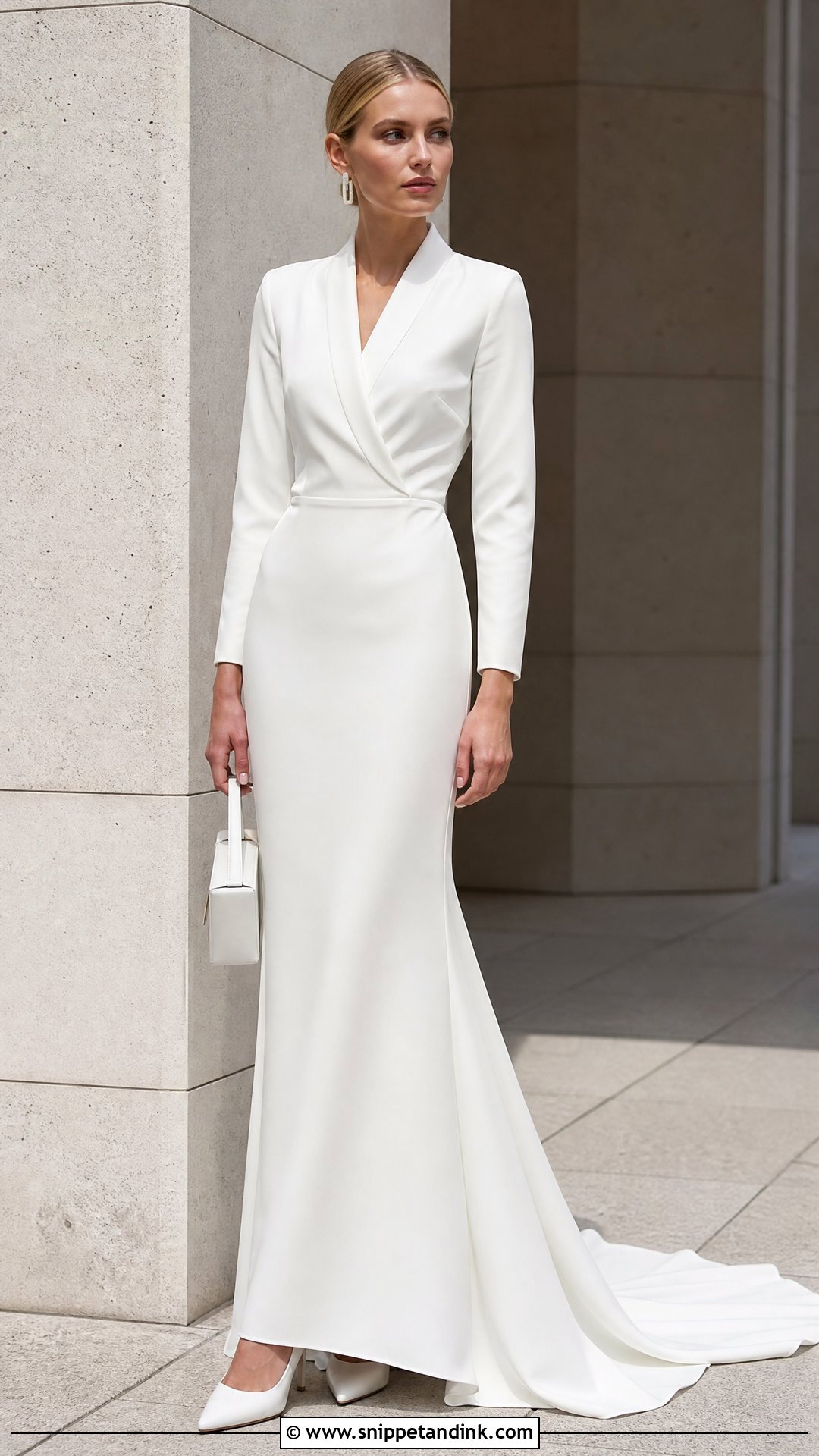
Crepe is the modern, minimal robe. Look for a clean crossover bodice, a fitted waist, narrow sleeves and an unembellished column or A-line skirt, in a crepe heavy enough to skim rather than cling. White leather pumps, geometric earrings and a structured mini bag suit it, along with a simple bun or a glossy shoulder-length style. A plain chapel veil with a raw edge looks better here than lace. A simple gown has nowhere to hide a poor alteration; every pulled seam and uneven hem shows. Spend the alteration budget on this dress if you choose it. Courthouses, museums and city venues match its clean lines.
8. Boho Floral Lace Robe Wedding Dress
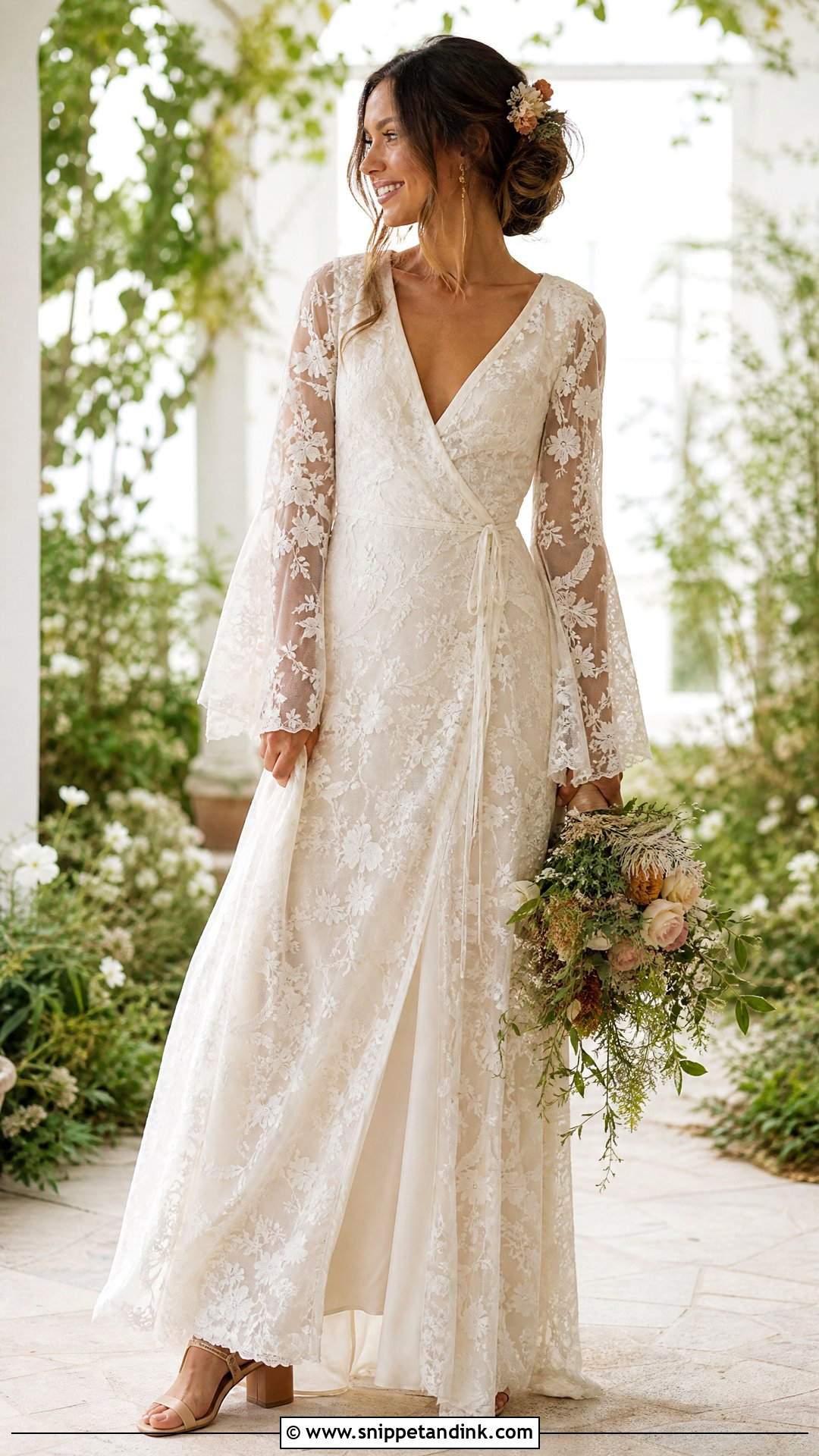
Floral lace brings softness to a relaxed robe. An ivory gown with a wrap bodice, semi-sheer bell sleeves, a comfortable lining and a flowing skirt suits outdoor settings, and botanical motifs make sense among real plants. Low suede or leather block heels, a small flower comb and a loose seasonal bouquet complete it, with small gold hoops or fine drops. Soft waves keep the mood relaxed without tipping into costume. Check how the lace motifs fall at the neckline and the wrap: a good maker matches them across the crossover, and a poorly placed flower right at the bust is hard to unsee. Gardens, woodland and rustic estates suit it.
9. Pearl Robe Wedding Dress
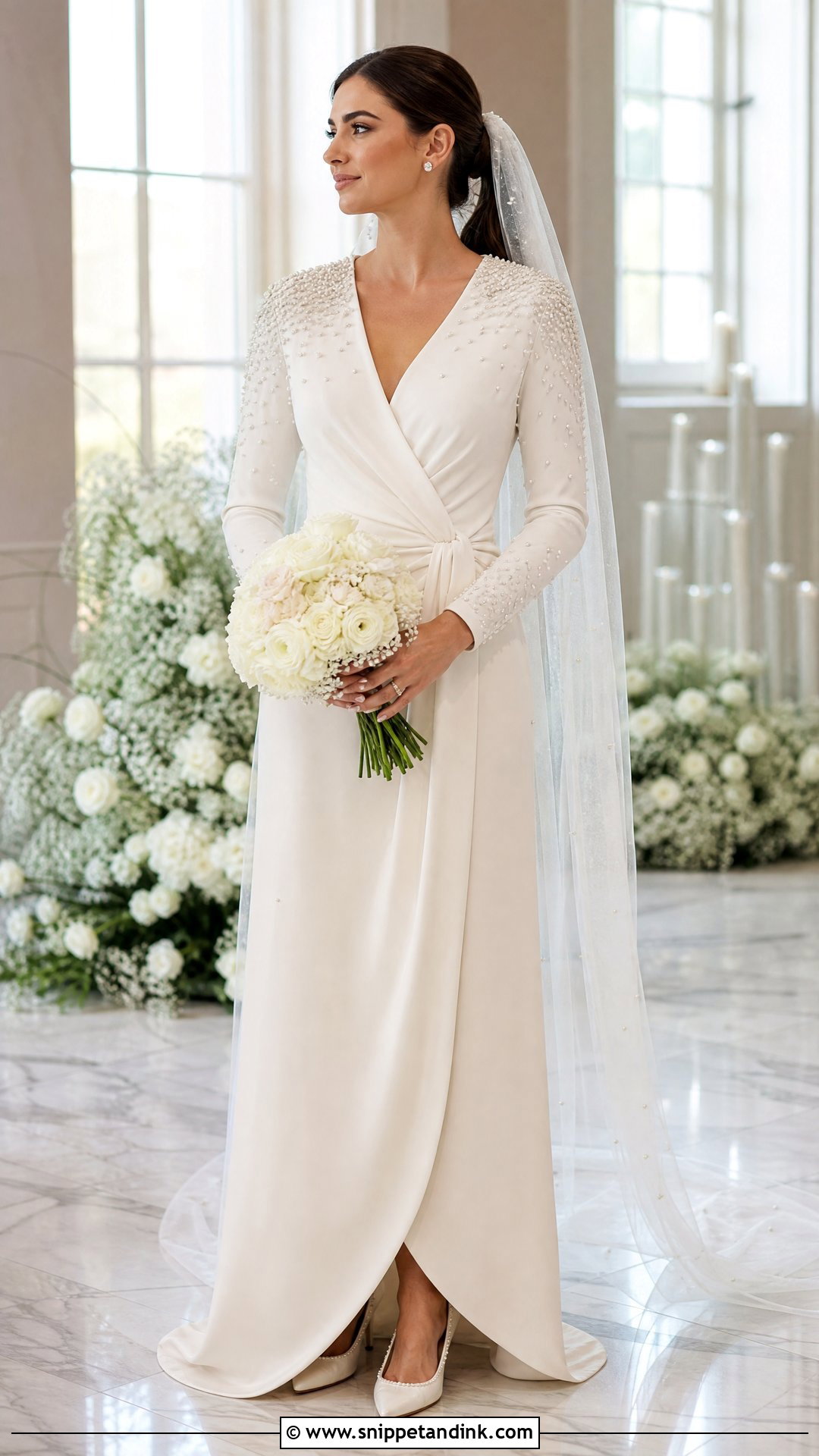
Pearls add dimension and keep things classic. Choose pearls scattered across the shoulders, sleeves or upper bodice, over a satin or crepe base, and leave the skirt fairly plain. Pearl-edged pumps, small studs and a clean fingertip veil finish it; skip the multi-strand necklace, as the gown already carries the pearls. A low ponytail or polished bun shows off the shoulders. Before the wedding, run a hand over every pearl. They’re often attached with a single thread, and I’ve learned to check and re-stitch loose ones at the last fitting rather than find them on the dance floor. Upscale indoor venues and restaurant receptions suit it.
10. Cape Robe Wedding Dress
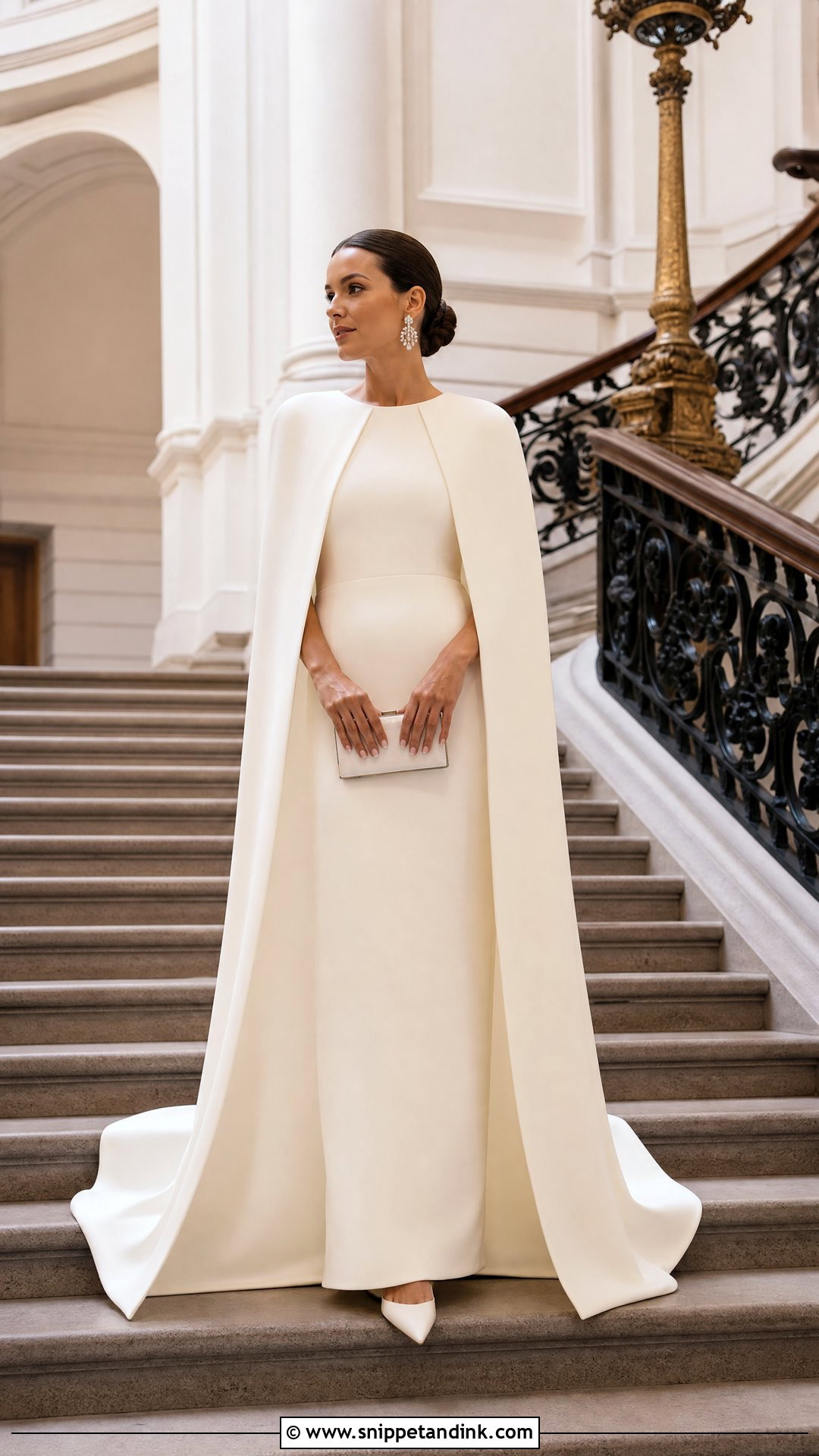
A cape gives the robe its most dramatic version. Start with a simple column or A-line gown, then add a floor-length wrap cape that closes at the waist or neck, in matching crepe, chiffon or silk so the two layers look planned. Pointed heels, statement earrings and a small structured clutch go with it; keep the hair smooth and off the shoulders so the cape’s shape reads. A long overlay needs a hidden wrist loop or a detachable fastening, or you’ll spend the reception holding it up. From the back and side it’s at its best, which makes it a strong choice for a grand entrance or a cool-weather ceremony.
11. Detachable Robe Wedding Dress
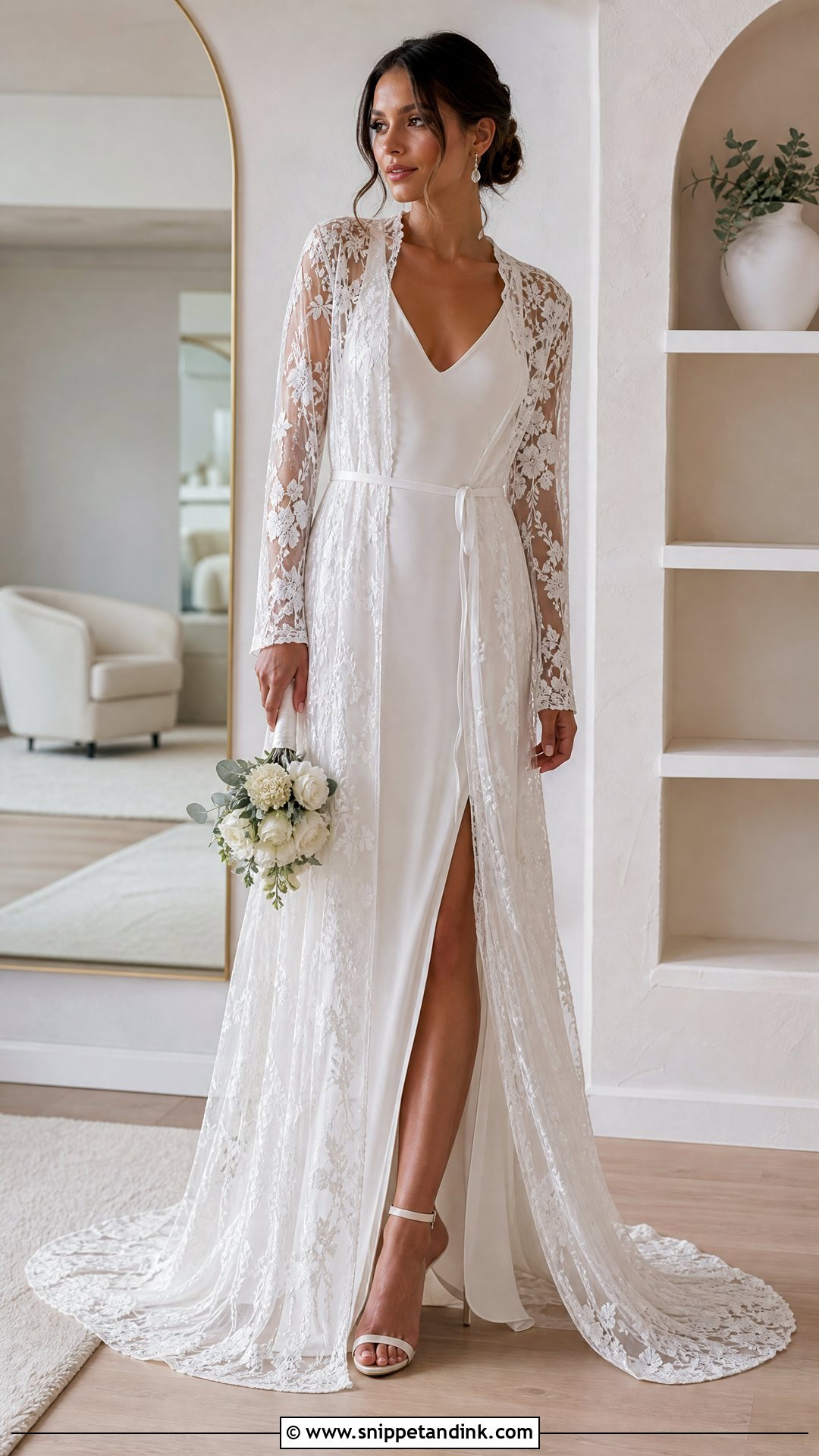
A detachable robe gives you two looks from one outfit. Wear a fitted slip, sheath or simple A-line under a light lace or chiffon robe for the ceremony, with long sleeves, a train and a narrow waist tie on the outer layer, then take it off for the reception. Comfortable heeled sandals, drop earrings and a compact bag suit both versions. The dress underneath has to stand on its own; if it looks like a lining, the reception look falls flat. Ask for small fasteners at the shoulders and waist so the robe stays centered while you walk. It’s the most practical way I know to get ceremony drama and dancing freedom without buying a second dress.
12. Plus Size Robe Wedding Dress
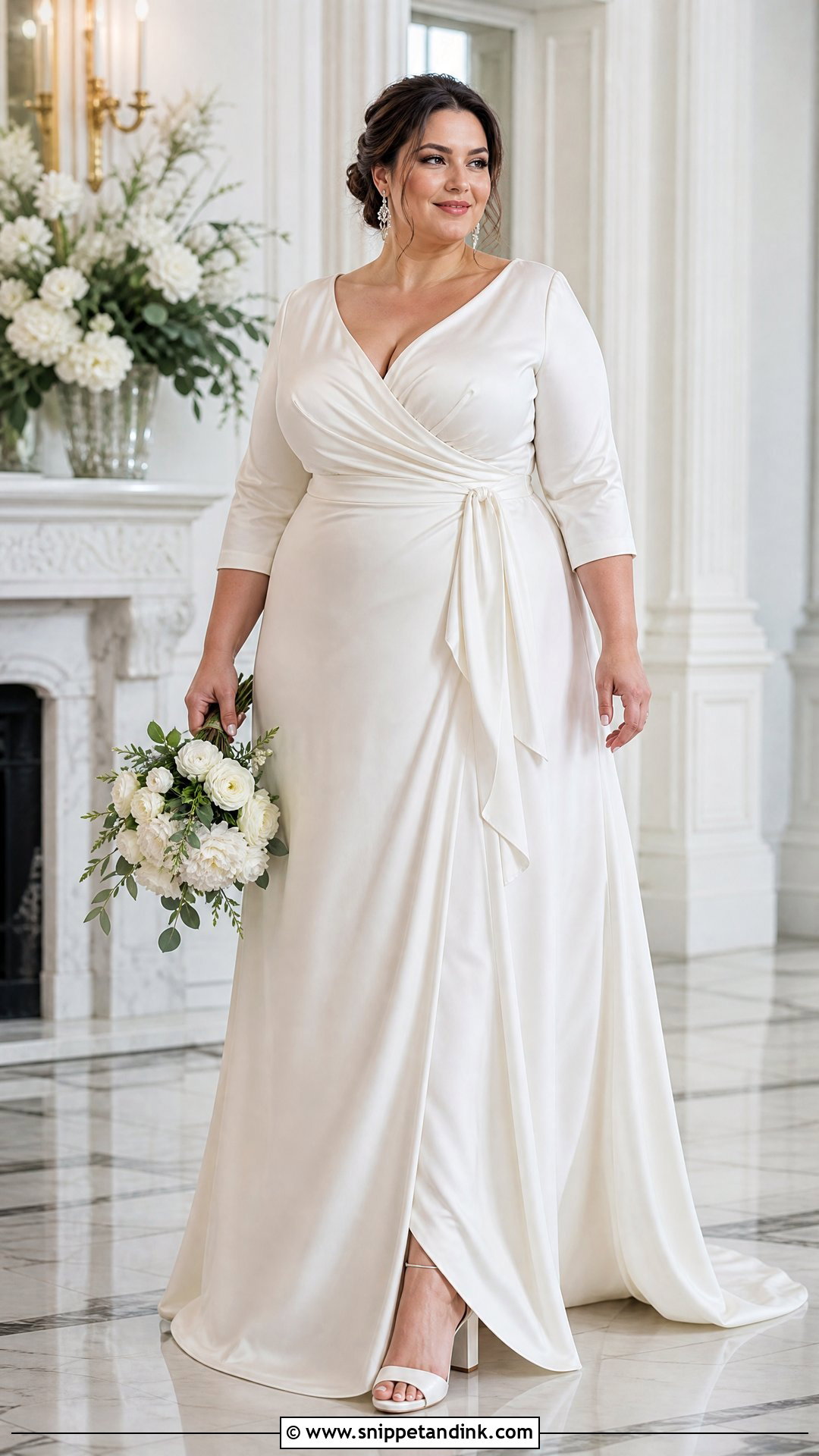
A well-made wrap is one of the most adjustable silhouettes for a plus-size bride. What I look for is a reinforced waistband, secure inner ties, a supportive lining and generous overlap through both bodice and skirt, so nothing gapes when you sit. A soft V lengthens the upper body and an A-line skirt moves easily. Stable block heels, statement earrings and a medium bouquet keep things in proportion. Structured crepe, satin and lined chiffon drape without clinging. Never rely on the outer sash alone to hold the dress closed. Good alterations at the shoulders, bust and waist make the biggest difference to how secure it feels across a long day.
13. Modest High Neck Robe Wedding Dress
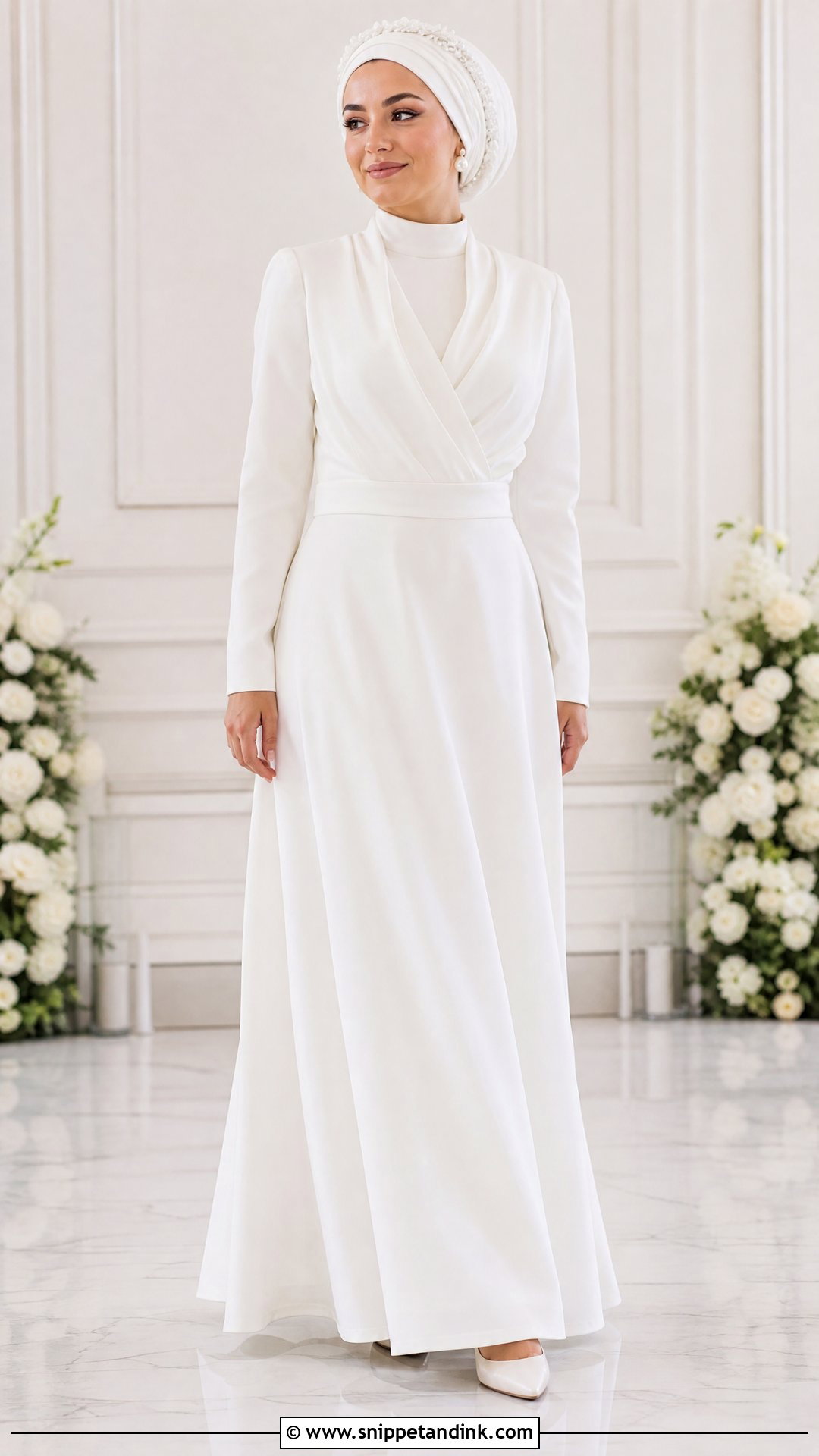
A high neck makes the robe modest without making it heavy. Look for a wrapped outer layer over a fitted high-neck underbodice, with long sleeves and a softly defined waist, in matte crepe, lined chiffon or a silk blend. Closed-toe pumps, a delicate headpiece and small pearl or crystal earrings finish it, with a neat low bun so nothing bunches at the collar. Tie the sash in a flat knot or replace it with a hidden fastening. The detail to check is the neck opening: if the underbodice closes with a zip or loops at the back, practice getting in and out before the day. It suits formal daytime ceremonies and cooler seasons.
14. Off Shoulder Robe Wedding Dress
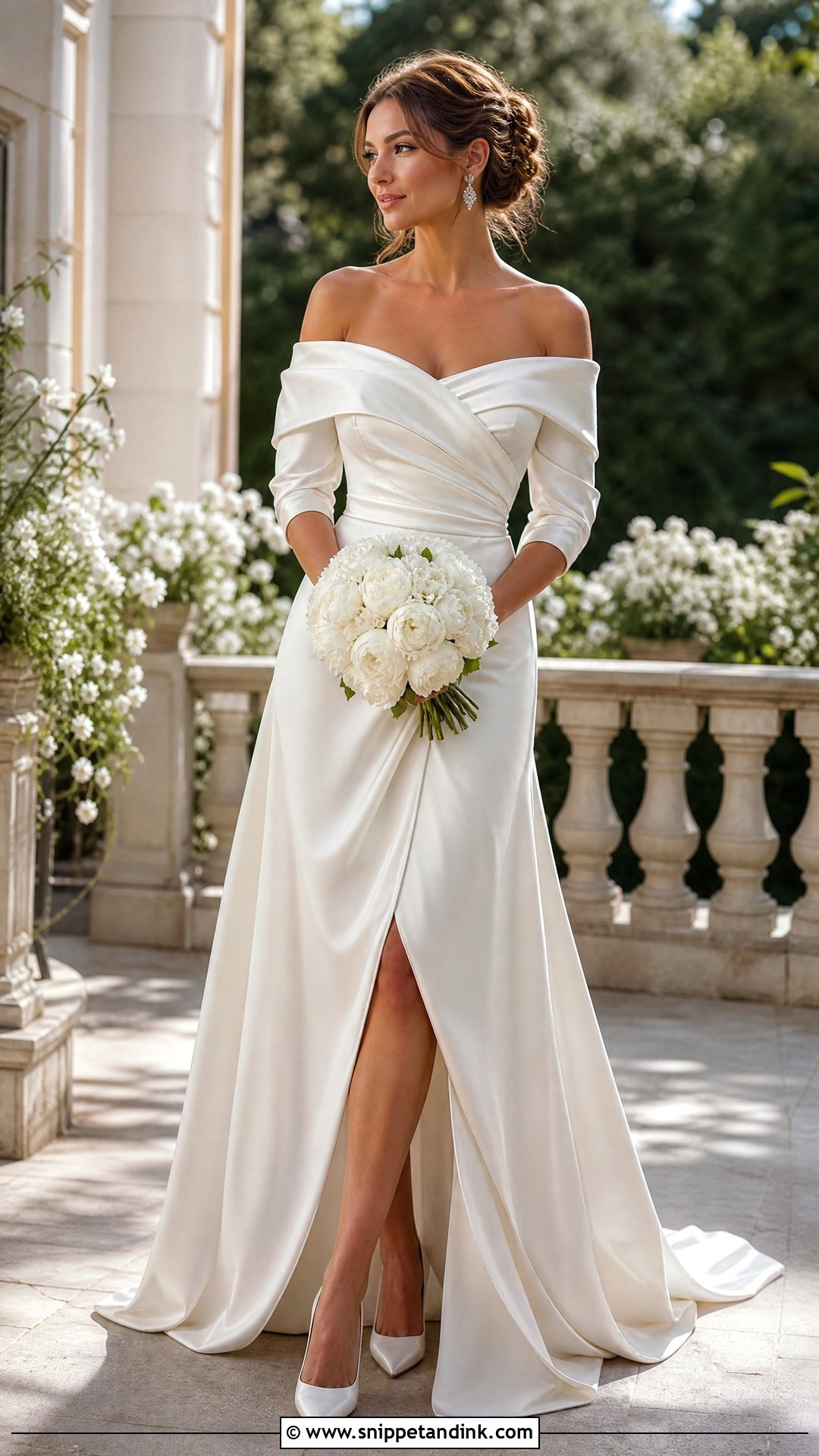
An off-shoulder wrap frames the collarbones and softens the robe’s loose structure. Choose a folded satin neckline, a fitted wrap bodice with internal support, three-quarter or draped sleeves and a fluid floor-length skirt. A short necklace or crystal drops, pointed satin pumps and a smooth white bouquet complete it; wear your hair up or swept to one side. At the fitting, sit, raise your arms and dance a few steps. Off-shoulder bands slide when there isn’t enough grip, and a silicone strip or elastic inside the band is the usual fix. Gardens, hotels and formal spring or early autumn celebrations suit it.
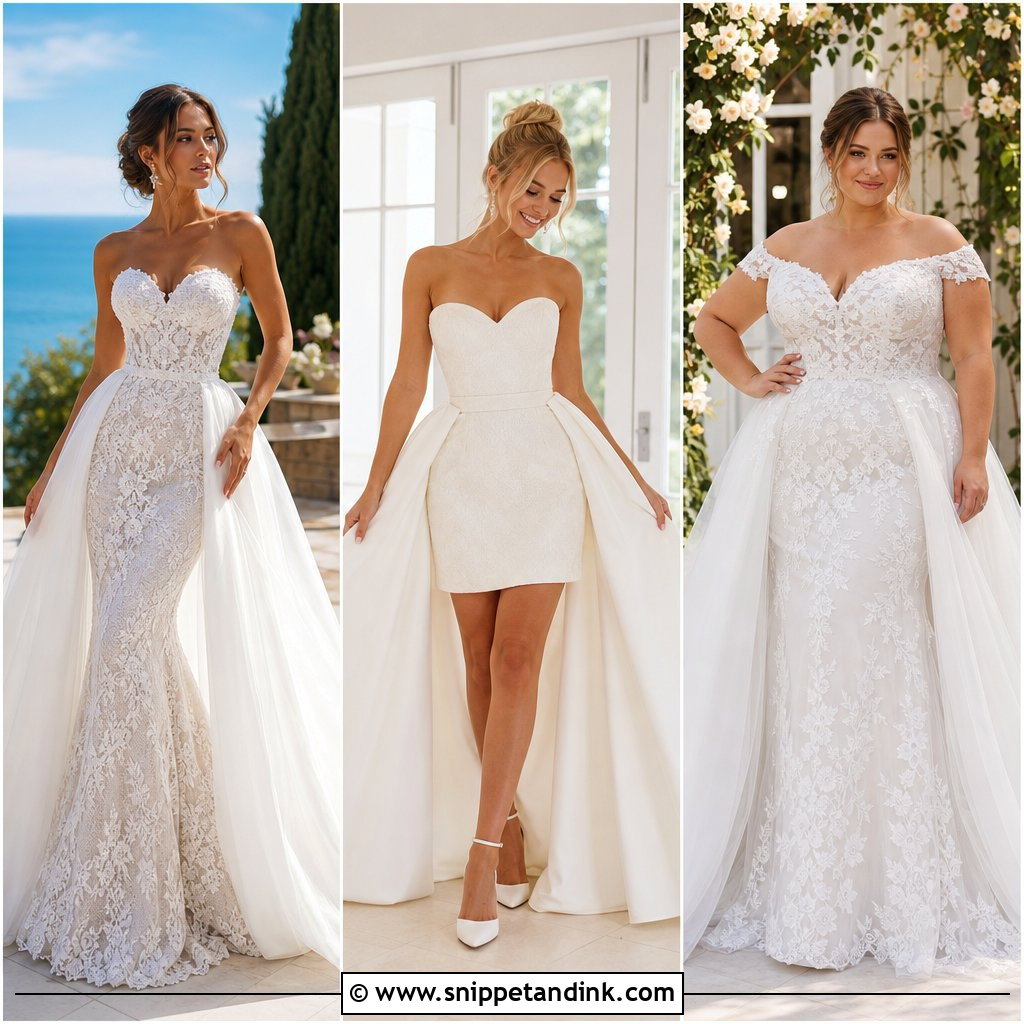
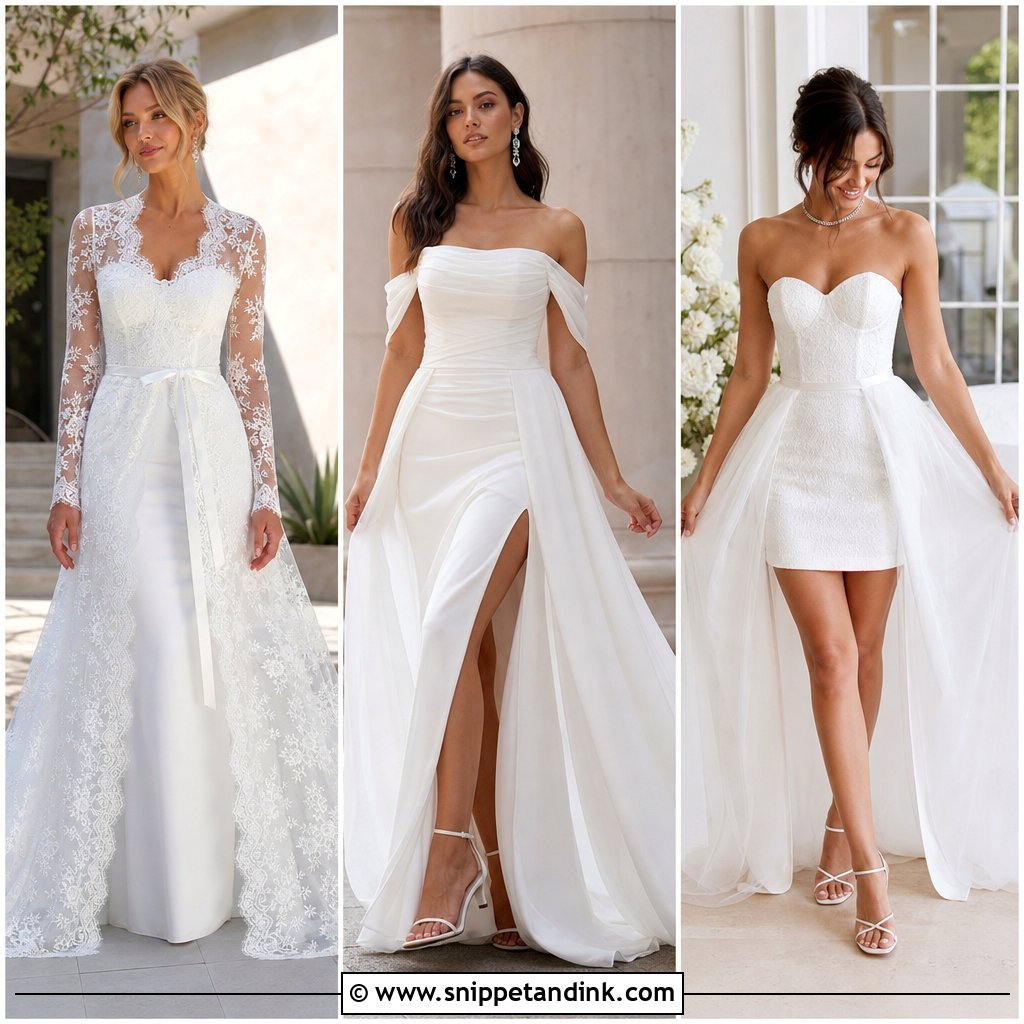
15. Short Robe Wedding Dress
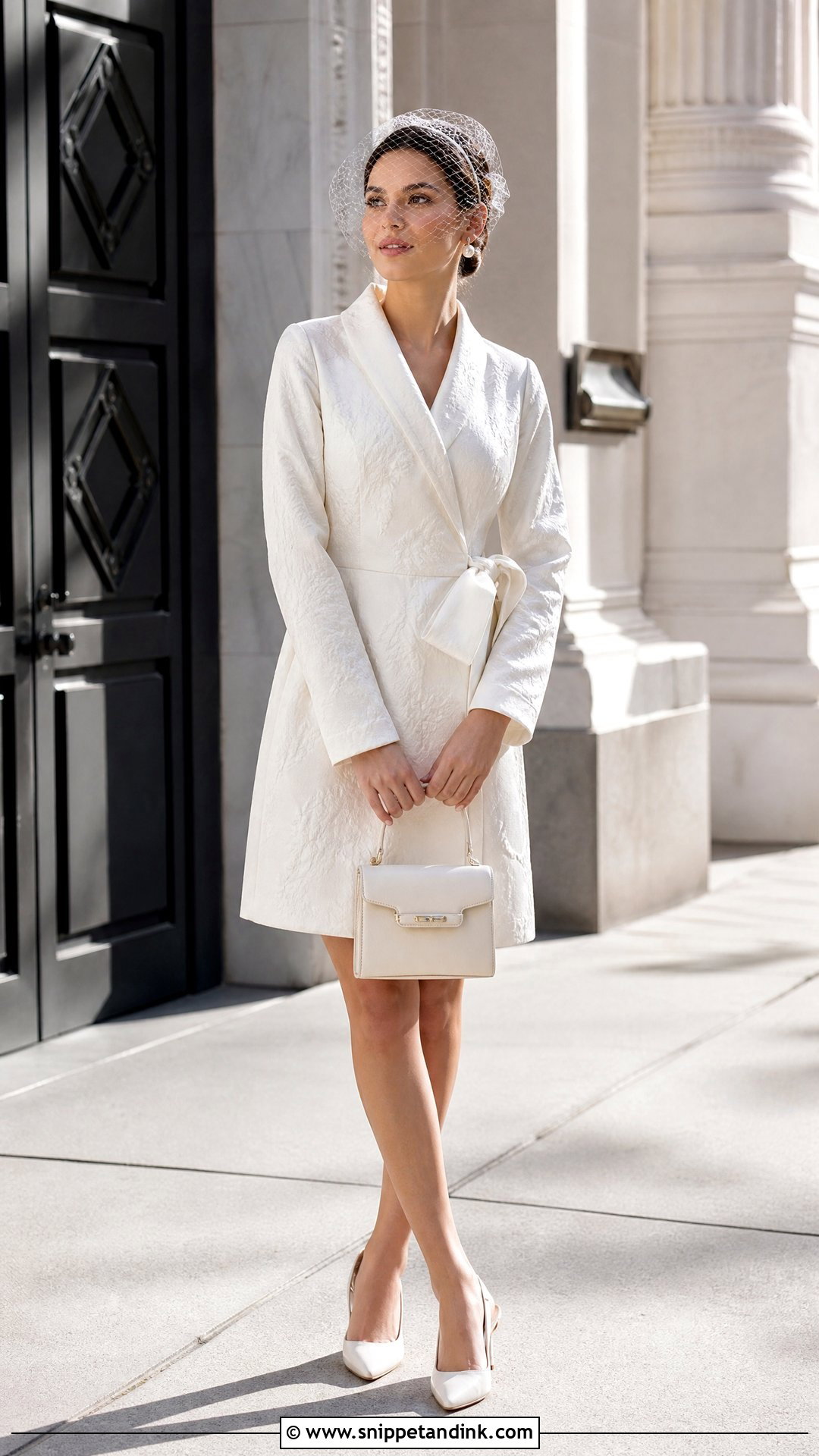
A short robe dress is the easy choice for a courthouse, a reception change or a daytime party. Choose knee or midi length, with a tailored wrap bodice, a defined waist and sleeves that balance the shorter hem. Satin, crepe or textured jacquard keeps it bridal rather than casual. Slingbacks, pearl earrings and a small top-handle bag go with it, plus a birdcage veil or a simple bow headband. Sit down in it in the fitting room: a wrap skirt can open well above the knee when you’re seated, and a couple of hidden snaps keep the front aligned. You can wear it again afterward with different accessories.
16. Beach Robe Wedding Dress
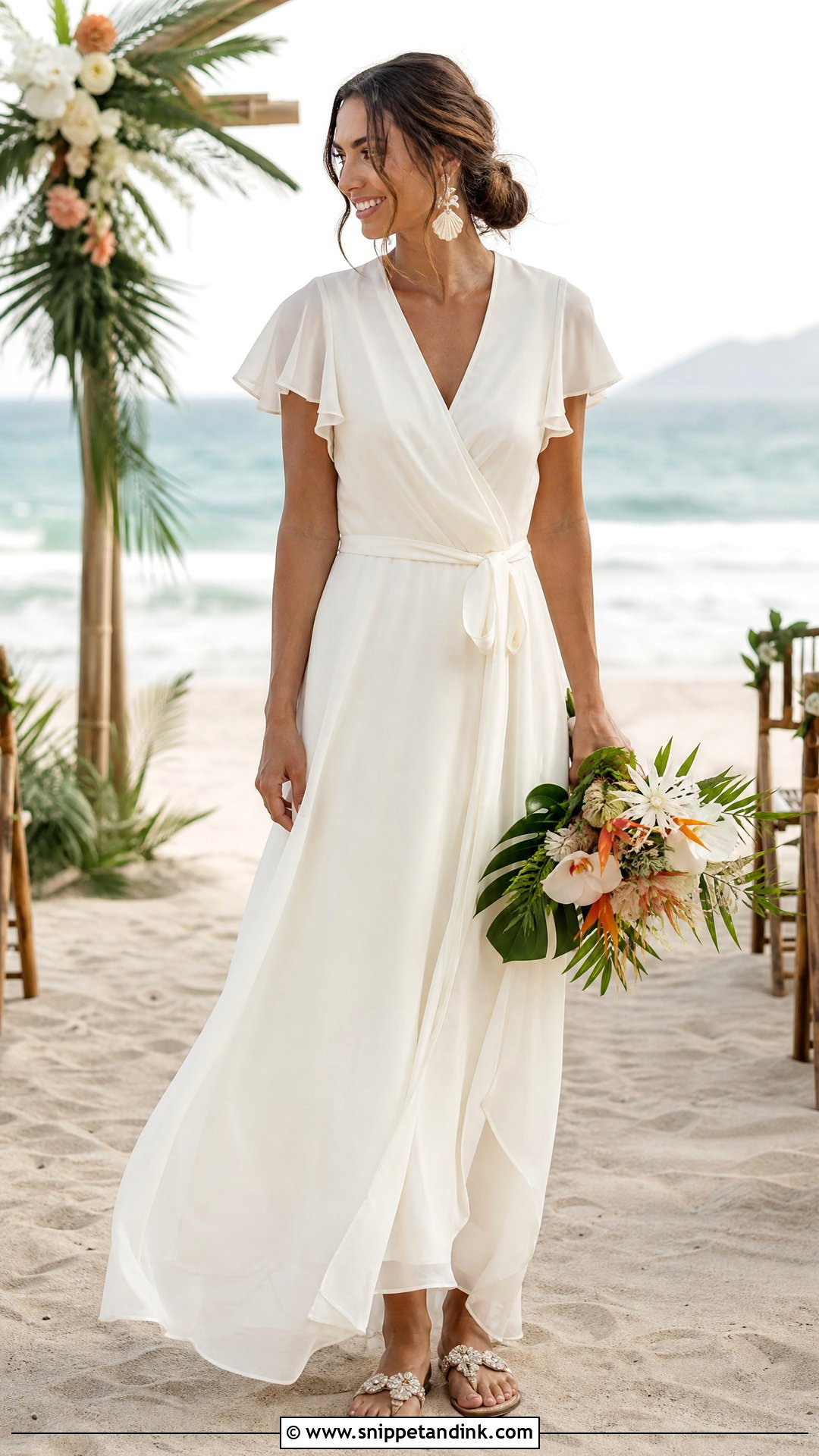
On a beach, wind is the real problem. Choose lightweight chiffon, silk or soft crepe with a wrapped bodice, a simple sash, flutter sleeves and no long train, then go for flat embellished sandals or low wedges instead of narrow heels that sink into sand. Shell-inspired earrings, a loose updo and a compact bouquet that doesn’t hide the waist finish it. Keep extra fabric at the cuffs and hem to a minimum. I’d add hidden closures and a lined bodice; a sea breeze lifts a light wrap skirt and bright sunlight makes unlined chiffon see-through. It suits beachfront vows, resorts and small destination weddings.
17. Winter Robe Wedding Dress
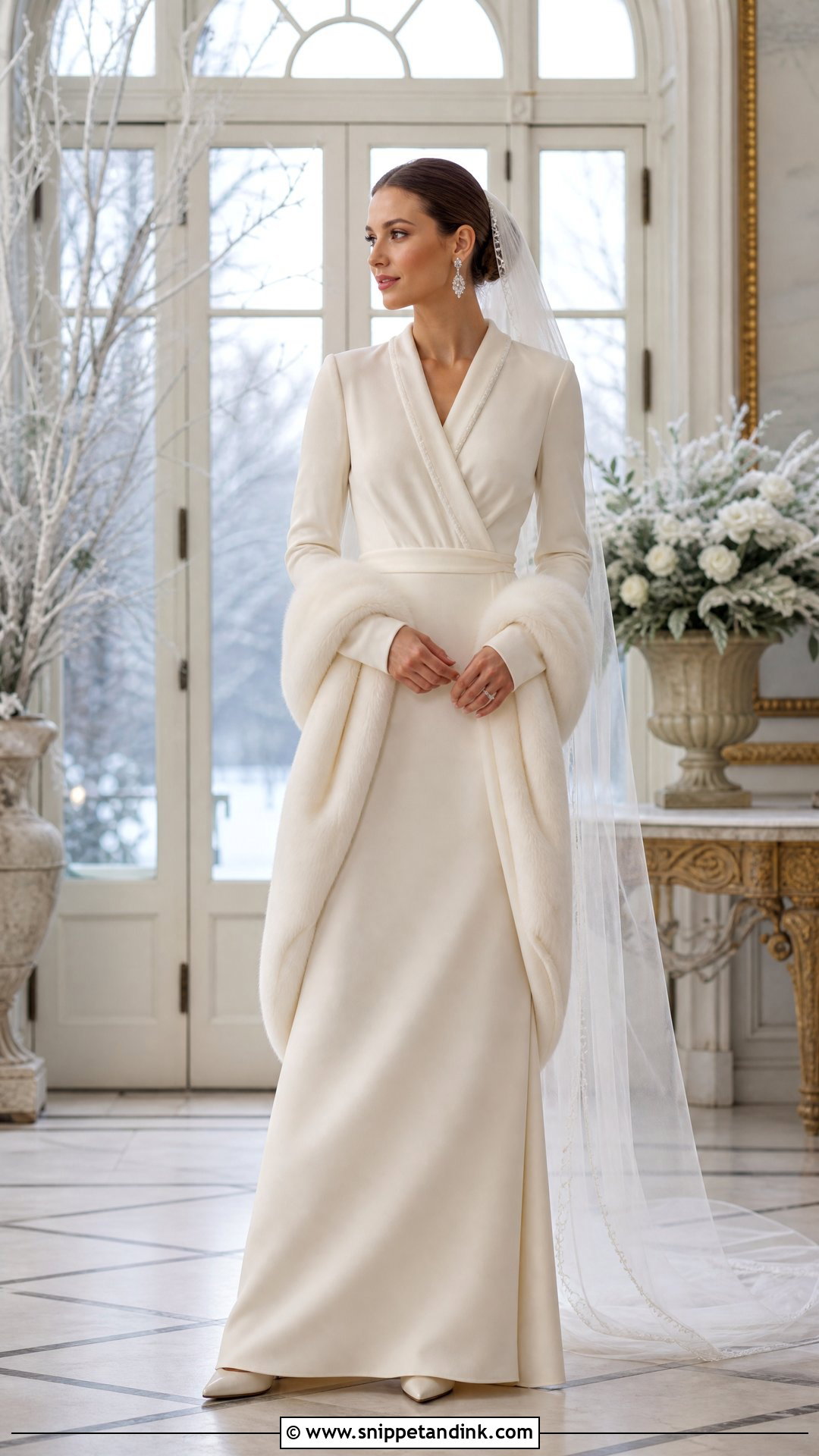
Winter lets you choose richer texture and more coverage. Start with a long-sleeve ivory crepe or satin gown with a crossover bodice and a full-length skirt, then add a little velvet trim in an ivory tone at the neckline, cuffs or sash. Closed-toe heels, crystal earrings and a faux-fur stole to take off indoors complete it, with a polished updo and a chapel-length veil. Pick a lined fabric that drapes smoothly over your shapewear and keeps you warm between the car and the door. Winter hotels and historic estates suit this softer, warmer version.
18. Vintage Robe De Style Wedding Dress
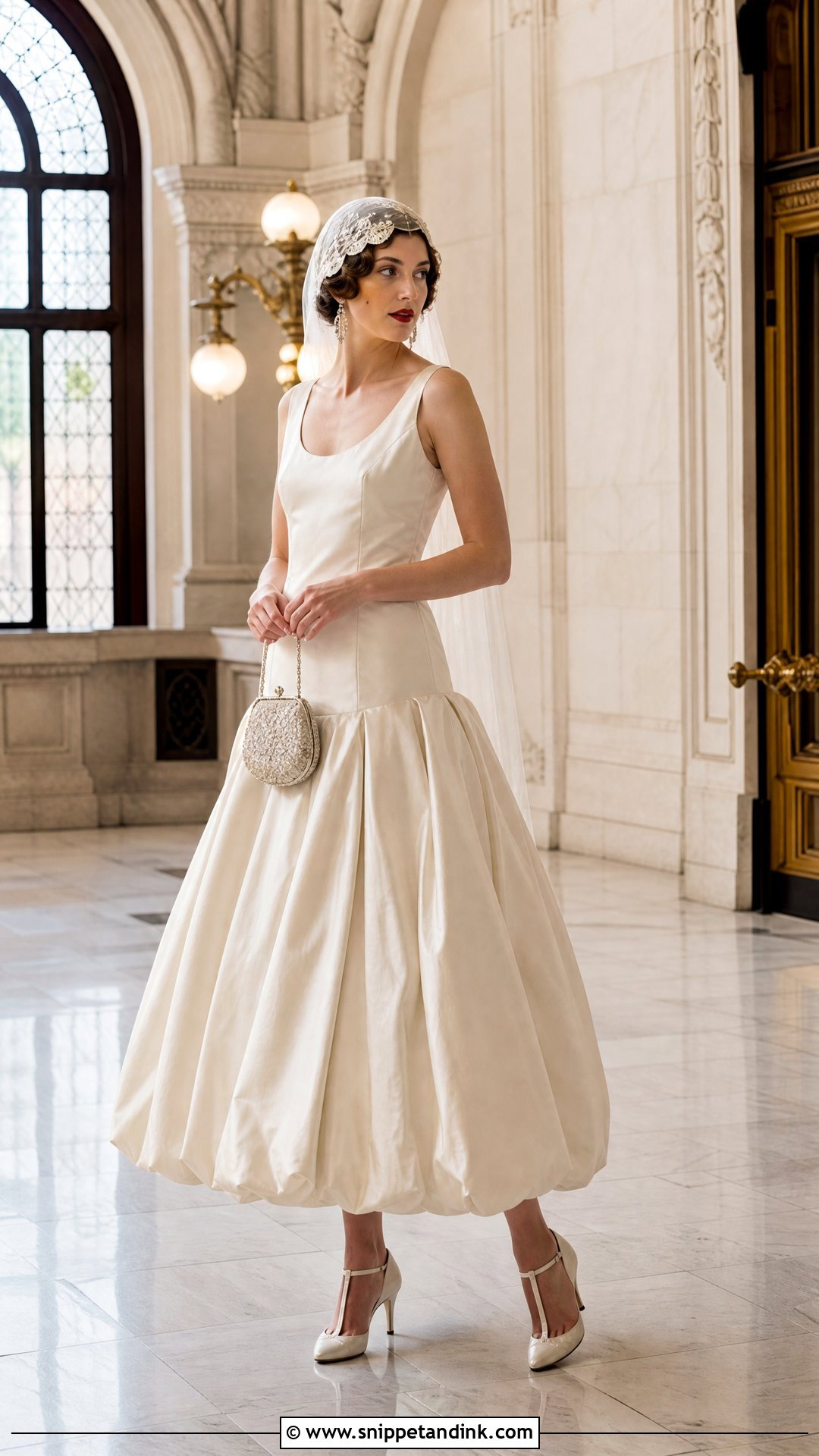
The robe de style is a different silhouette altogether: a fitted bodice, a dropped waist and a full skirt held out at the sides. In ivory silk, satin or taffeta, it nods to 1920s fashion without looking like dress-up. Low T-strap heels, Art Deco earrings and a compact beaded bag fit the period, and a Juliet cap veil or simple headband finishes it. If the skirt has strong structure, keep the embellishment light. The hem should show a little of the shoe so the proportions stay balanced. Dropped waists suit straighter figures most readily, so try it on before you fall for a picture. It works in historic buildings and elegant city weddings.
19. Reception Robe Wedding Dress
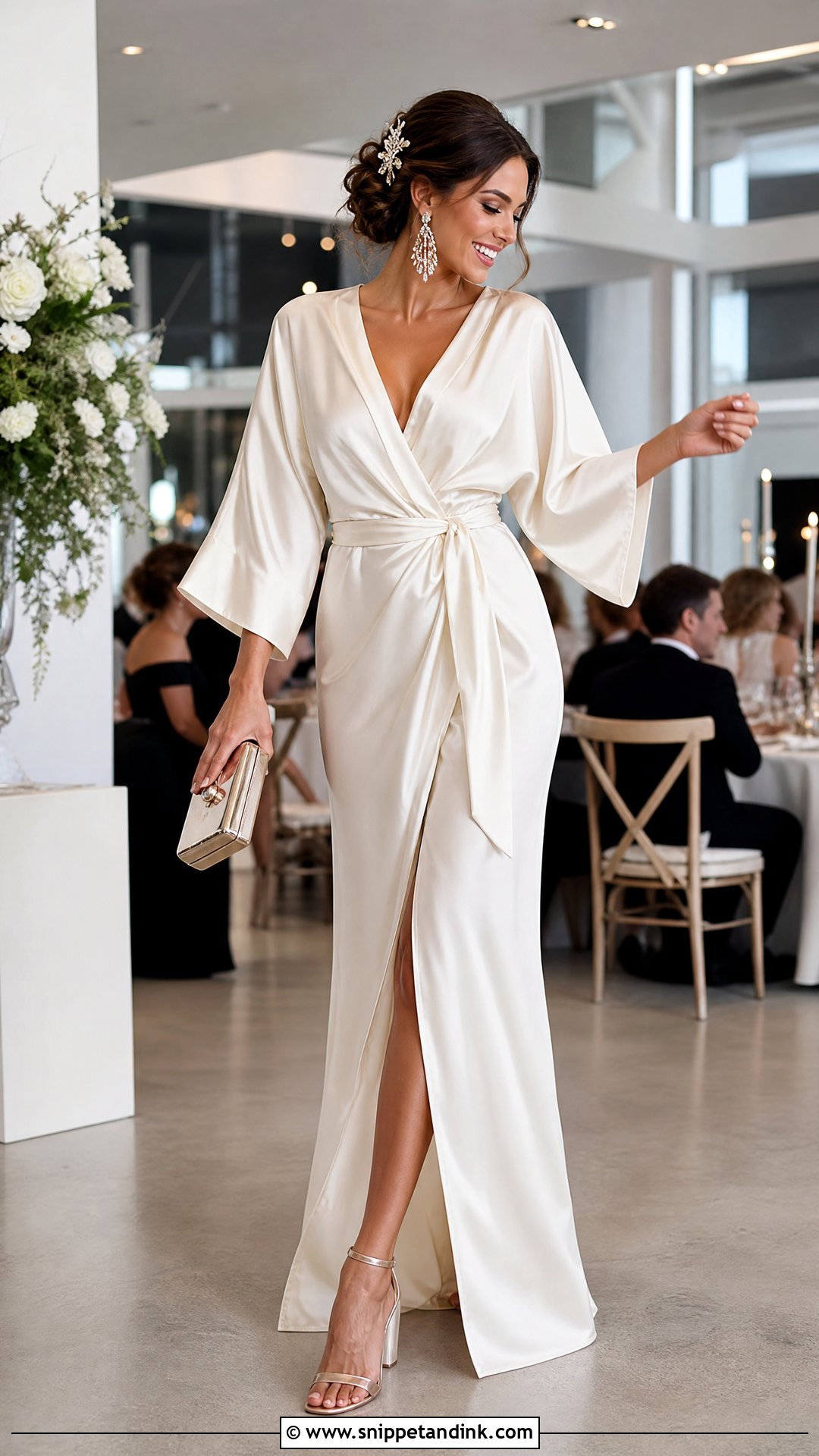
A reception robe should be lighter and easier to dance in than the ceremony gown. A midi or ankle-length wrap in silk, satin or fluid crepe, with wide sleeves, a defined waist and a subtle side slit, gives you movement without risk. Comfortable block heels, statement earrings and a small metallic clutch suit it; swap the veil for a polished ponytail, a bow or a sparkling comb. Reinforce the waist closure more than you think you need to, because dancing pulls on a wrap far harder than posing does. Pockets are welcome if they don’t spoil the drape.
20. Embroidered Robe Wedding Dress
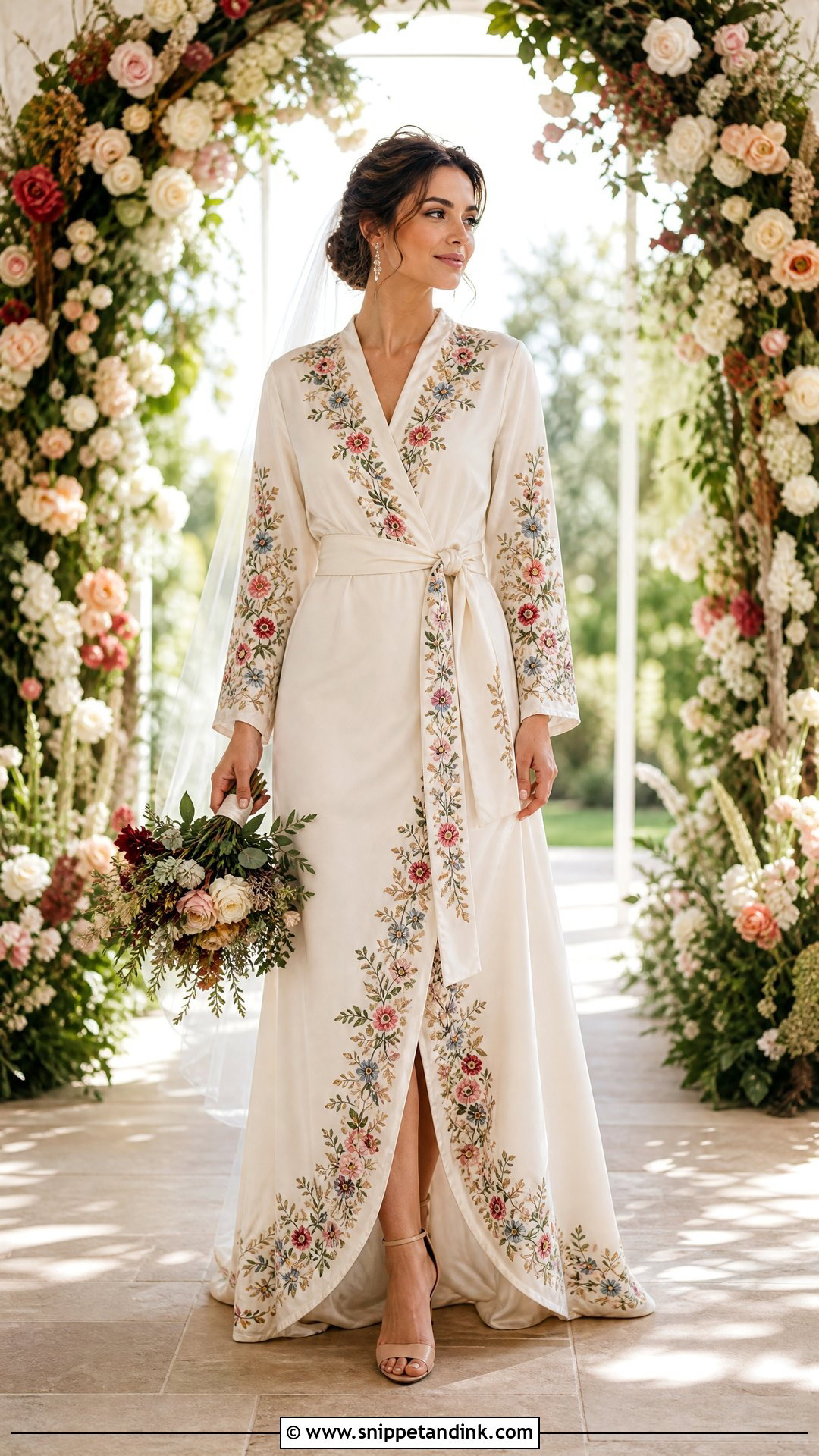
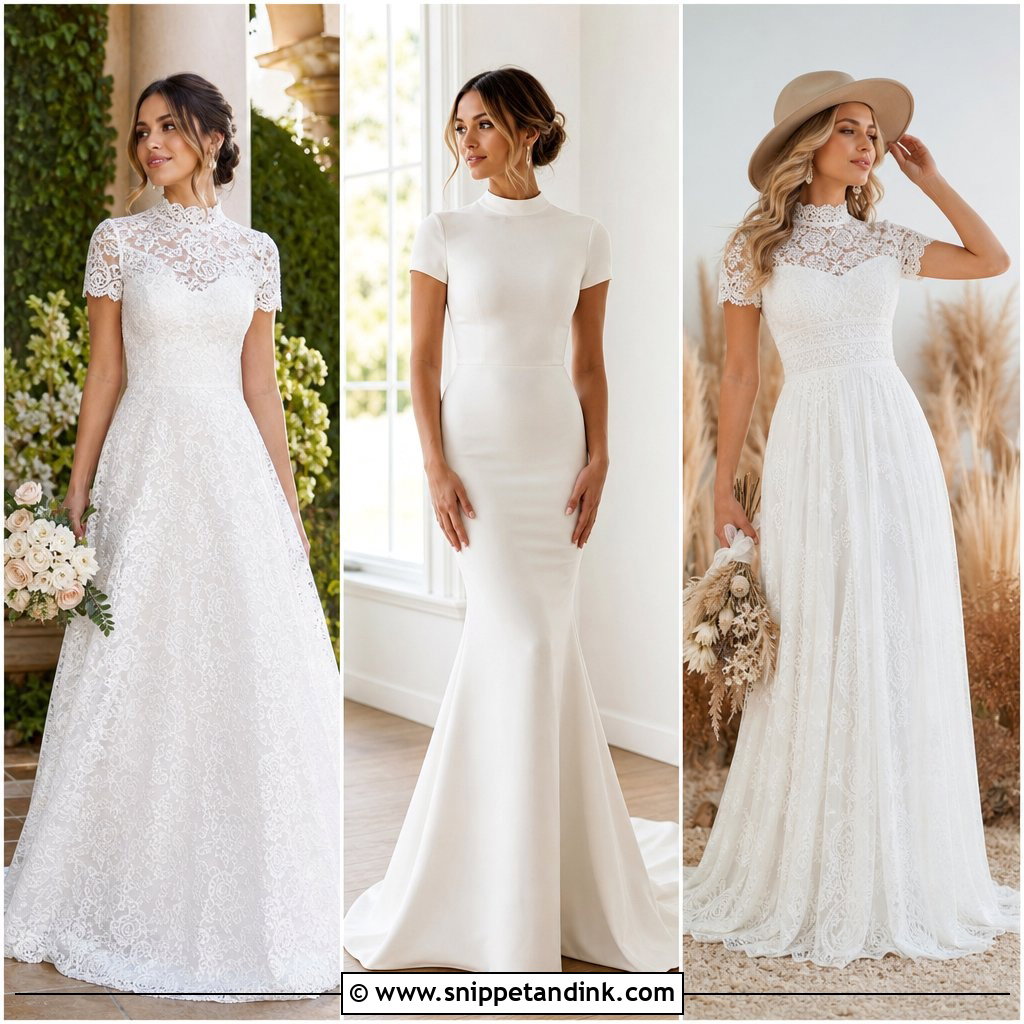
Colored embroidery personalizes a robe while keeping it bridal. Start with an ivory wrap gown stitched along the sleeves, back, hem or waist, and limit the threads to two or three coordinated shades; more than that looks crowded. Neutral heels, understated earrings and a bouquet that repeats one thread color complete it. A simple veil and a low textured bun keep the stitching visible. Motifs with personal meaning, such as the flowers from your home garden, make it truly yours. Embroidery adds weight, so check that the sleeves still hang straight. It suits gardens, destination ceremonies and brides who want a little color with their ivory.
What Works Underneath a Deep Crossover
The crossover neckline rules out most ordinary bras, and this is where robe dresses catch brides out at the final fitting. A plunge bra cut low at the center front works for a moderate V. For a deeper one, I’d have cups sewn directly into the lining; a seamstress can do this with the cups you choose, and it gives support with nothing to show. Adhesive bras suit small busts but can lose grip in heat. Bring the actual underwear to every fitting, because a change of bra changes where the wrap sits.
Silk and Satin Crease in the Car
Fluid fabrics are the whole appeal of a robe, and they also crease the moment you sit. Steam the gown on its hanger the morning of the wedding, from inside the skirt where possible, holding the steamer a hand’s width away so water doesn’t spot the silk. Never iron charmeuse directly. In the car, sit on the lining and lift the outer skirt over your lap rather than sitting on it. A few soft creases across the lap will drop out within half an hour of standing; sharp folds won’t, so have someone carry the train in and keep a travel steamer at the venue.
A Wrap Is Only as Good as Its Inside
A robe gown should move well, stay closed and suit your taste. Satin wraps give classic glamour; chiffon, lace, embroidery and detachable overlays add texture and versatility. The construction you can’t see matters most: inner ties, snaps and good alterations are what keep a wrap comfortable through walking, sitting, photos and dancing. Let shoes and accessories support the dress rather than compete with its drape. From a modest long-sleeve gown to a short reception dress or a beach wrap, choose by fit, fabric, venue and how much you plan to move.
You'll Like These Ideas:




Leave a Reply