
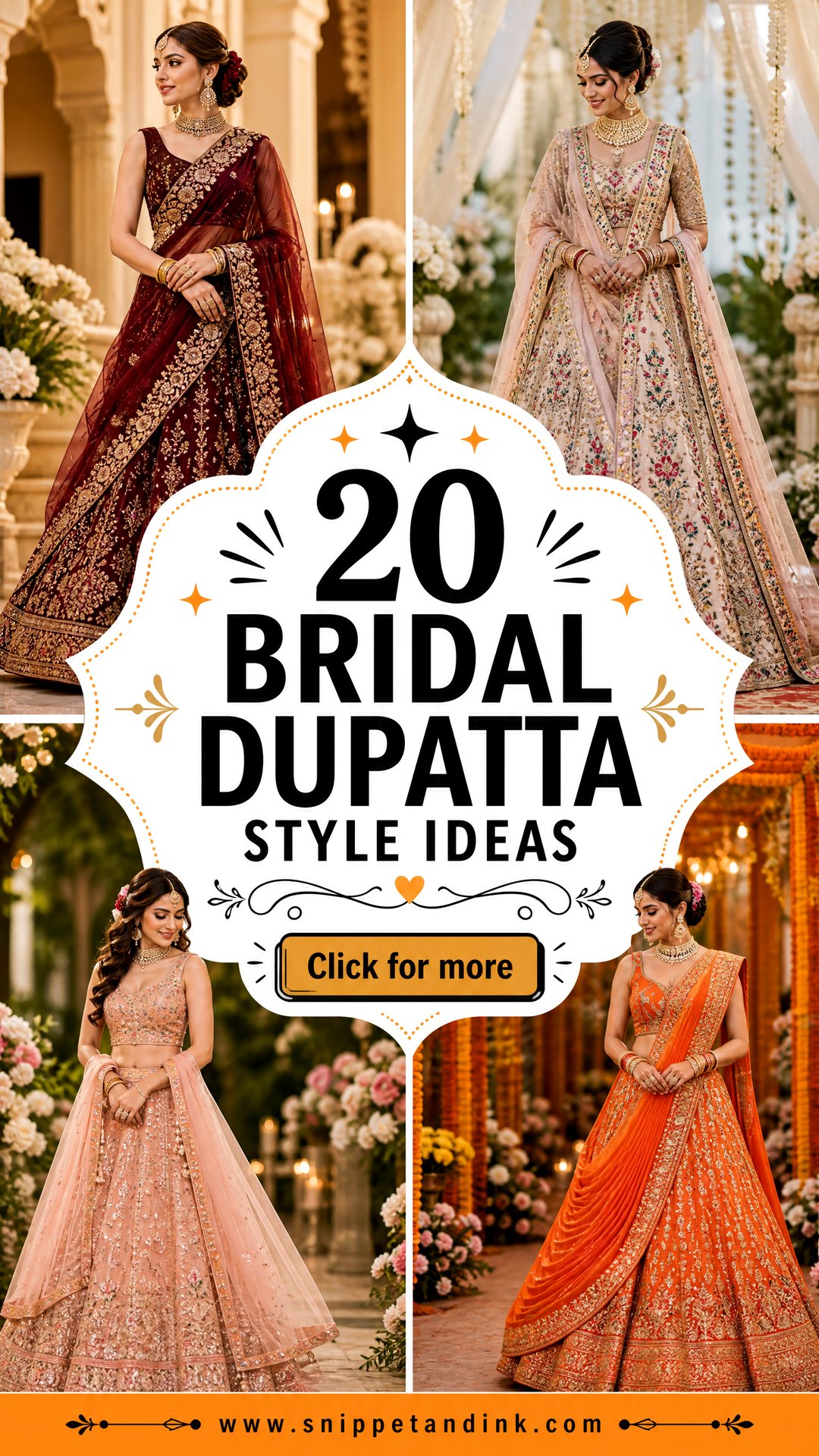
The dupatta is the piece I spend the longest on at a bridal fitting, because it decides how the whole lehenga moves, how much of the blouse you see and whether the jewelry gets framed or buried. A drape that looked fine in the mirror can pull the hair backward by the second hour, so I always judge it on a bride who is moving, not standing still. Fabric weight sets most of the rules. Soft net behaves like a veil and forgives a loose pin, while silk, velvet and heavy organza hold a shape but need more anchoring. Below are 20 drapes I’d consider, from head coverings and double dupattas to belted, cape and saree-style arrangements, each with the pinning and fabric notes that make it wearable.
Measure the Dupatta Before You Fall for a Drape
Most of the drapes below fail for one boring reason: the dupatta is the wrong size for them. A standard bridal dupatta is usually somewhere around two and a quarter to two and a half metres long, and that covers a head drape, a one-shoulder pleat or a cape comfortably. It is often not enough for a saree-style wrap, a Gujarati pallu or a trailing veil, which eat length at the waist tuck or need extra behind you. When I’m fitting a bride, I ask for the dupatta first and choose the drape second, not the other way round.
Weight matters as much as length. Hold the dupatta at arm’s length by one corner. If it hangs in soft folds, it will sit on the head without dragging. If it holds a stiff shape or feels heavy in the wrist after a minute, keep it on the body and use a lighter net for the head.
- Head drapes and long veils: lightest fabric you have, with the weight concentrated in the border.
- Saree, Gujarati and khada styles: extra length, so check with your designer before the dupatta is cut.
- Cape and open-front drapes: medium body, so the fabric falls straight instead of collapsing.
- Double dupattas: one sheer, one worked; two heavy pieces will feel like a coat by the evening.
1. Red Lehenga With Classic Bridal Dupatta Drape
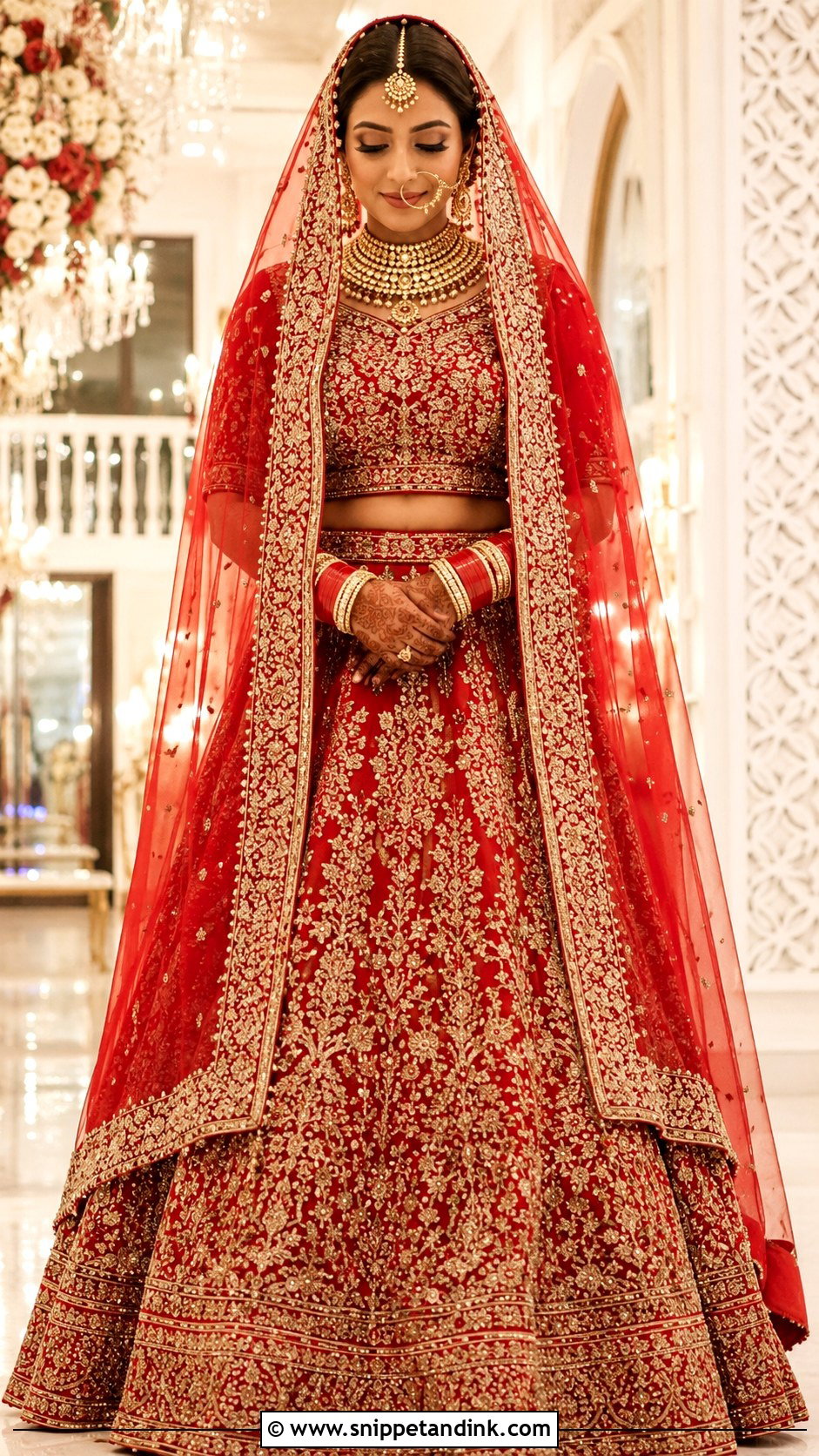
The classic head drape is still the one most of my brides wear for the pheras. I set the dupatta just behind the hairline, never on it, so the maang tikka, forehead, and makeup stay clear and the tikka chain isn’t pressed flat. One side crosses the front and the other falls behind the shoulder. Net or soft organza with a heavy border is the right choice here, because a dense fabric sitting on the crown will drag the bun down within an hour. The two pins that matter most go at the crown and at the shoulder; they stop the border from sliding backward every time you turn your head. Pair it with a fitted embroidered blouse, a full red skirt, gold jewelry and juttis you have already walked in.
2. Maroon Lehenga With One-Shoulder Bridal Dupatta
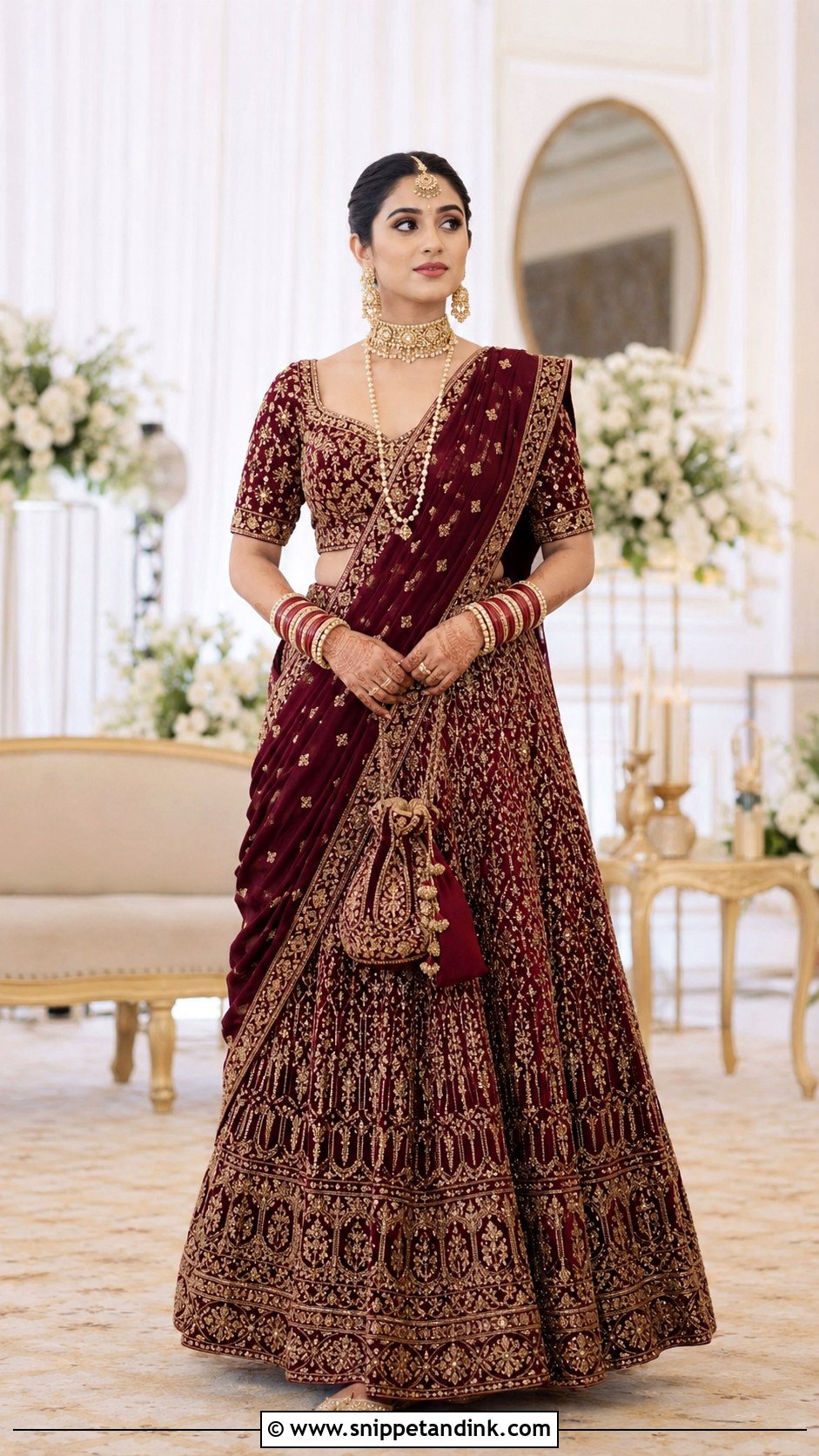
If your blouse and skirt carry the most handwork, a one-shoulder pleat keeps the front open so that work actually shows. I gather the dupatta into medium pleats, roughly two fingers wide, and pin them on the left shoulder from underneath so no metal catches the light. The tail can fall behind you or come forward over one arm. A structured blouse holds this best; a soft, unlined choli lets the shoulder pin drag the neckline sideways. With a choker and a longer necklace layered under it, add a second pin near the wrist only if the border keeps flipping.
3. Pink Lehenga With Double Bridal Dupatta
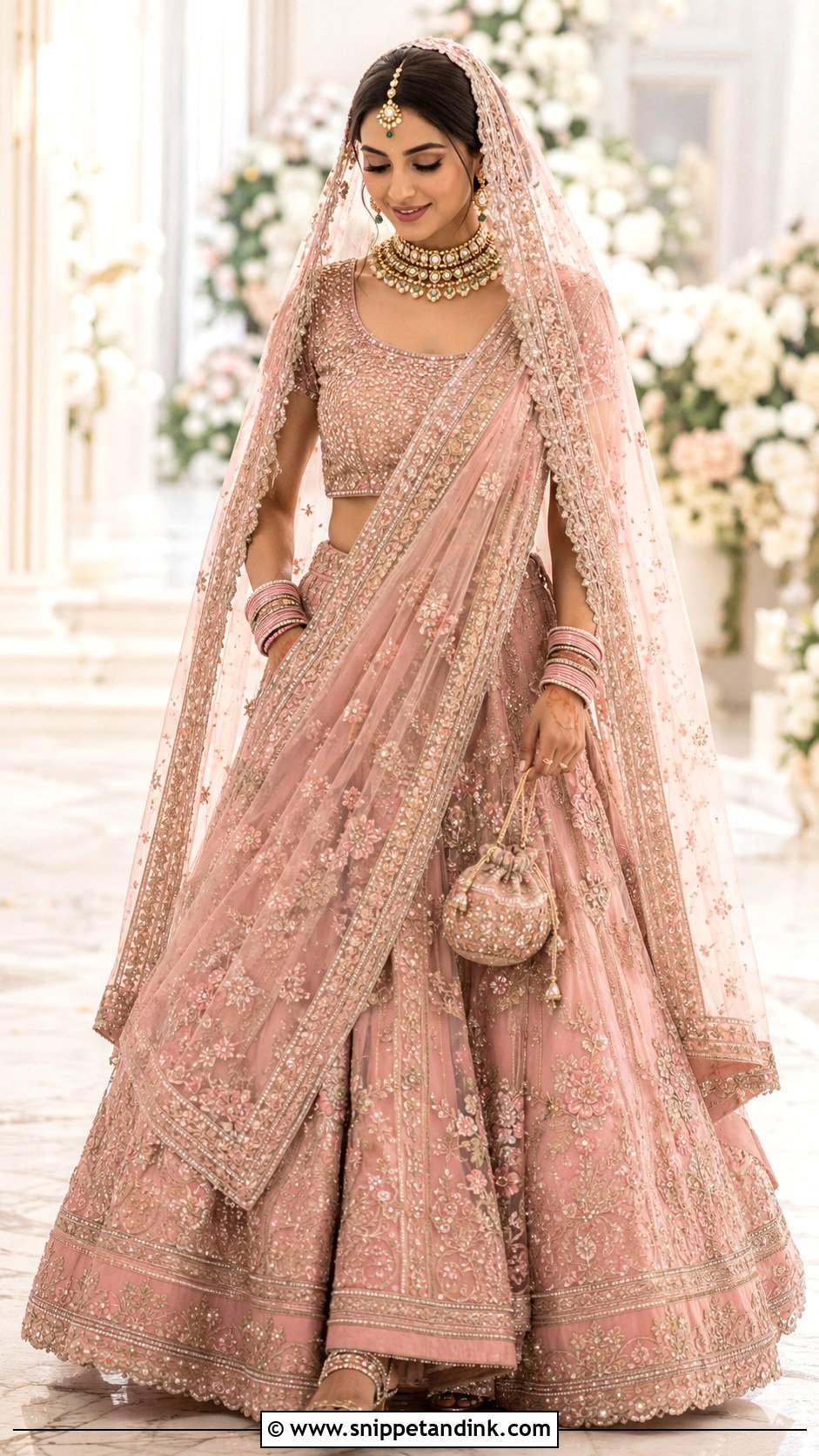
Two dupattas sound heavy, but done properly they are lighter on the head than one big embroidered piece. The trick is splitting the jobs: a sheer net dupatta goes over the head, and the heavier embroidered one stays on the body, running diagonally from one shoulder to the opposite hip. I gather the head layer softly rather than folding it, because folded net stacks up into a bump at the crown. Pin the body dupatta so the skirt embroidery stays visible. On blush or rose pink, pearls and kundan sit well against both layers without the colors fighting.
4. Gold Lehenga With Saree-Style Bridal Dupatta
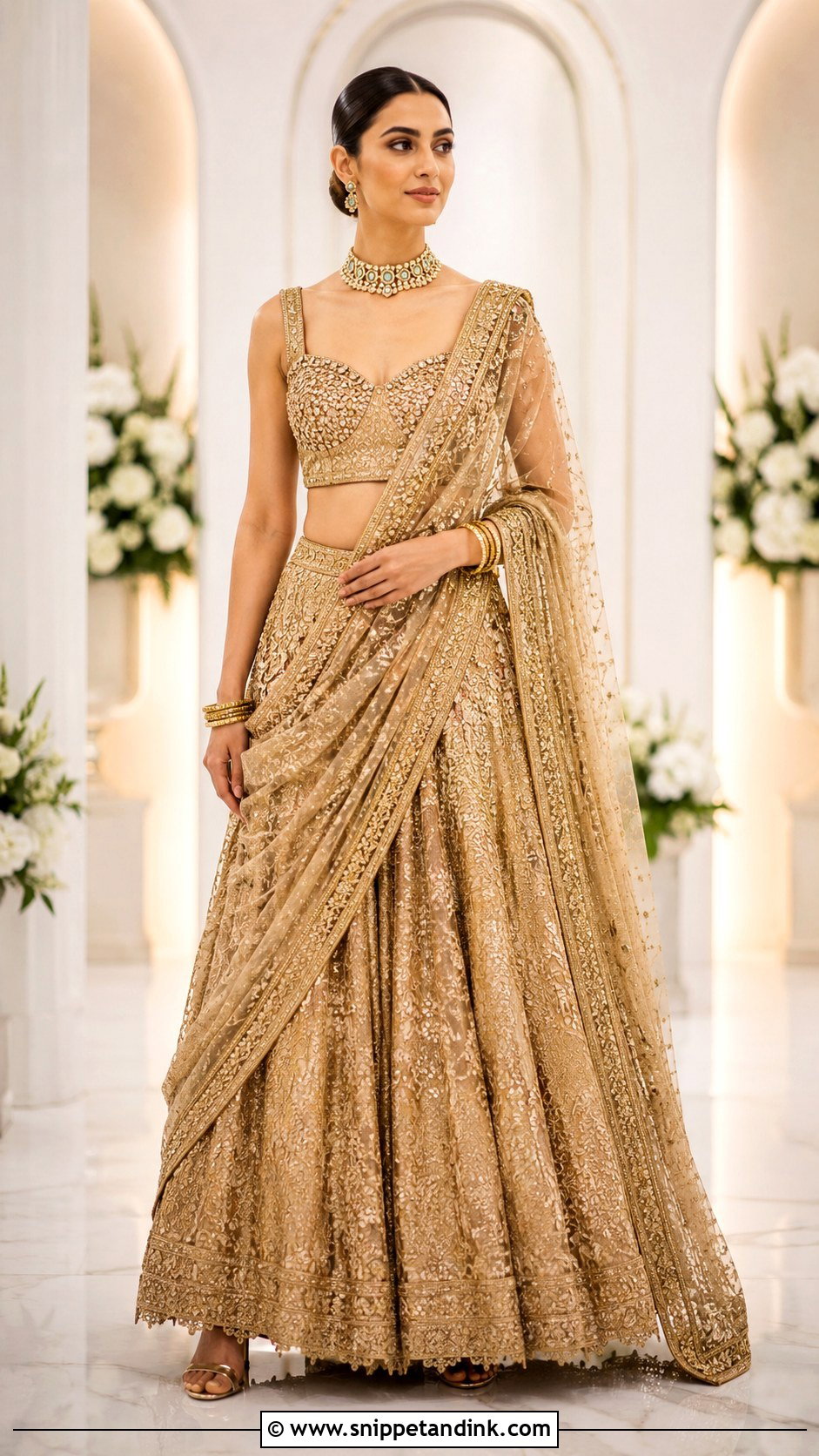
A saree-style dupatta drape gives a gold lehenga a defined waist, which is why I suggest it for brides who feel lost in a very full skirt. Tuck one corner firmly into the side of the skirt, wrap the fabric round the waist, then pleat the top section and pin it over the shoulder like a pallu. Stiff fabric is the usual mistake: a rigid tissue or heavily embroidered net bunches at the tuck and adds width exactly where you wanted shape. Softer tissue or georgette lies flatter. That tucked corner is the first thing to escape when you sit, so it gets a hidden pin through the skirt waistband, not just the fabric.
5. Green Lehenga With Gujarati Bridal Dupatta
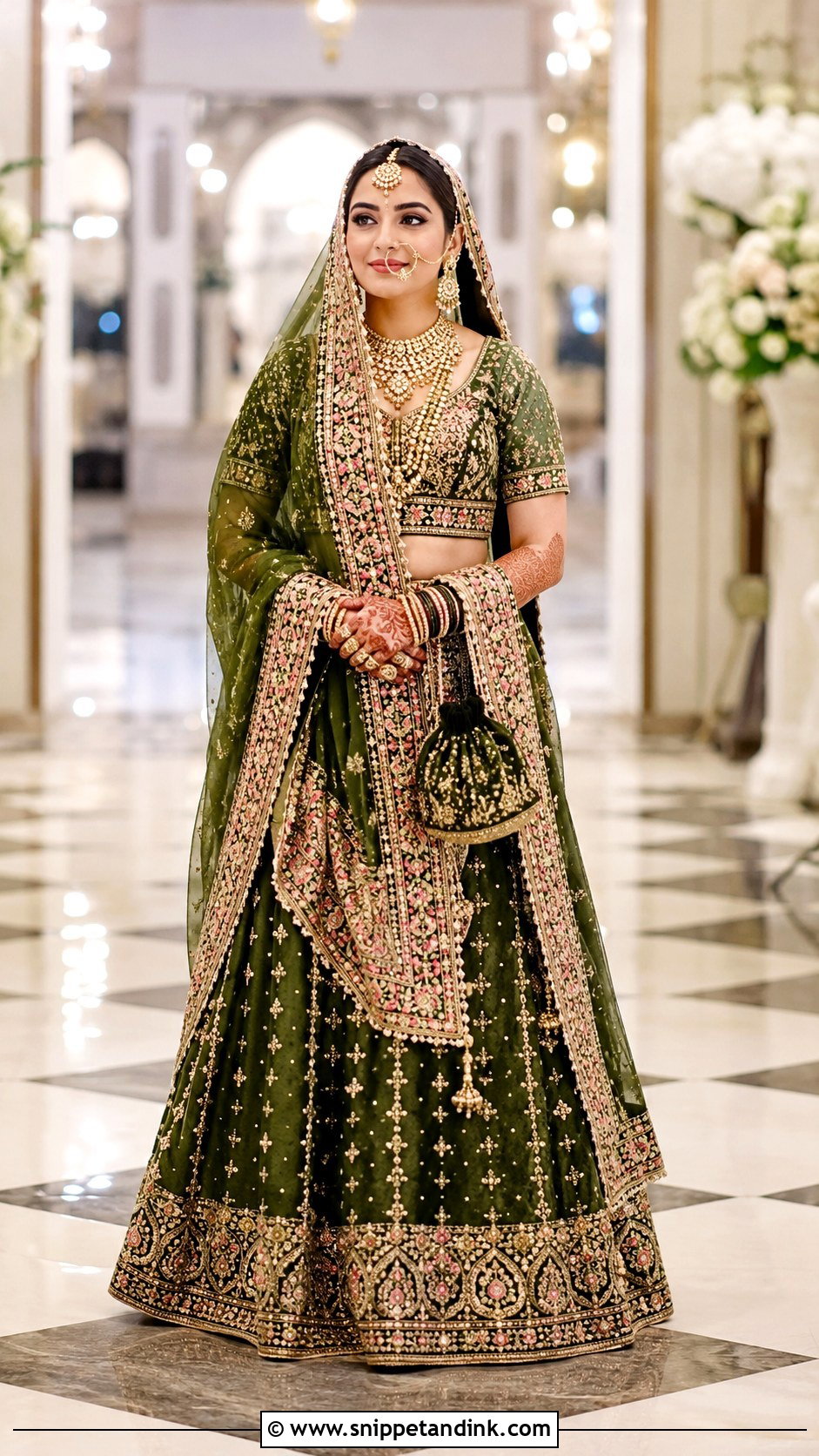
The Gujarati front pallu exists to show off a dupatta, so I only recommend it when the dupatta has motifs worth looking at. One end tucks into the back or side of the lehenga, the fabric comes round the body, the pleats rest on the right shoulder and the decorated end spreads across the front. On emerald or bottle green with layered gold necklaces, it reads very regal. Watch the front length. Let it drop too low and you lose the skirt entirely, and you’ll be stepping on it on the stairs. Pin at shoulder and waist, and leave the arms enough room to lift a plate or a garland.
6. Ivory Lehenga With Belted Bridal Dupatta
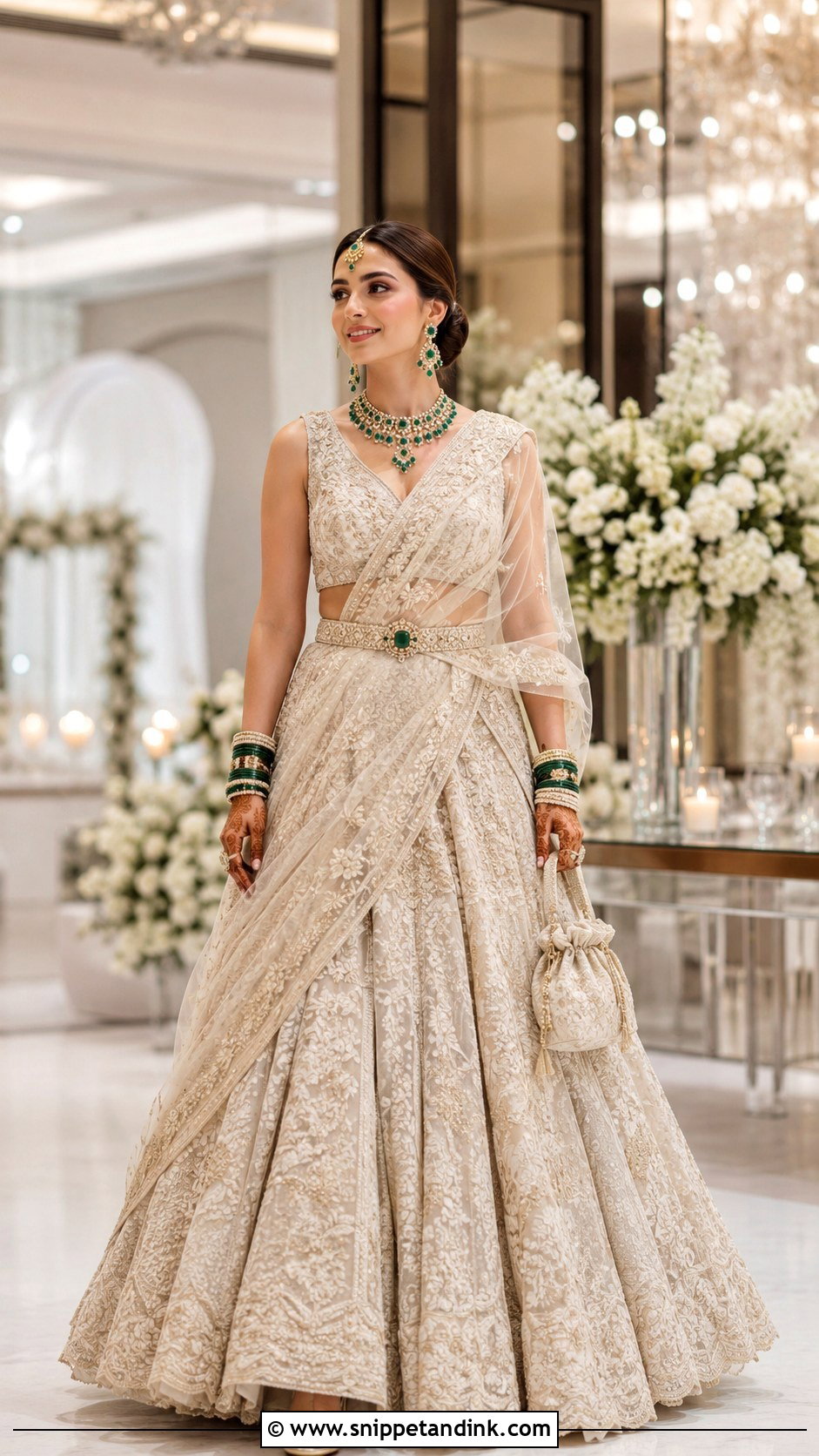
A belt solves the most common complaint I hear about dupattas: that they wander. Drape the fabric over one shoulder or across the torso, then fasten an embroidered belt or kamarbandh at the natural waist, and the extra fabric has nowhere to go. On an ivory lehenga, use a sheer dupatta with a defined border so the blouse shows through. I match the belt to the embroidery thread, not to the jewelry, because a mismatched metal at the waist breaks the line. Ivory pairs well with emerald or polki jewelry. Sit down in the full outfit before the day; a belt that’s comfortable standing can dig in once you’re seated and drag the shoulder drape tight.
7. Pastel Lehenga With Cape Bridal Dupatta
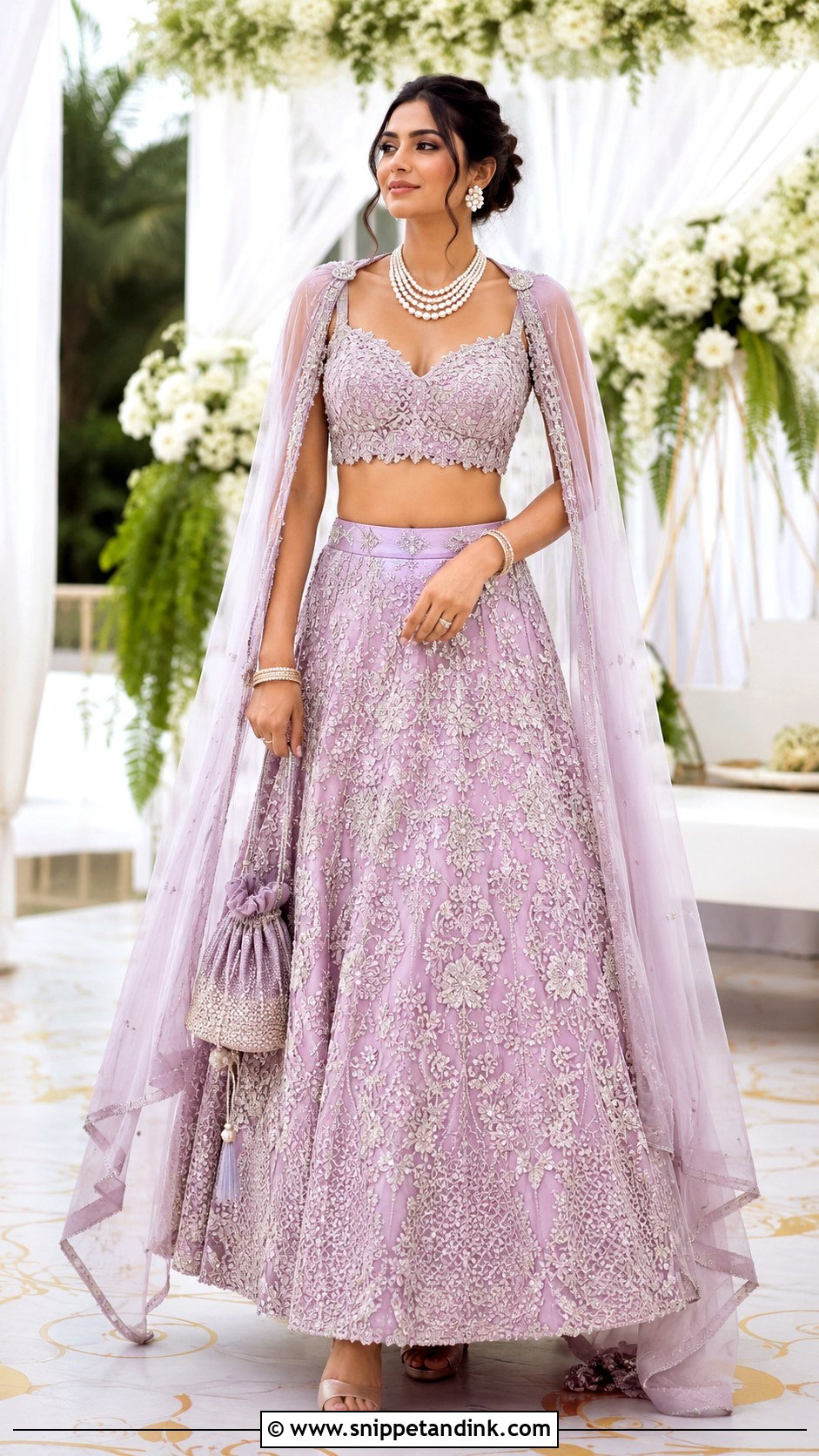
Cape drapes are the easiest to move in, because nothing sits across the arms. Centre the dupatta behind the neck, pin it at both shoulders and let it fall evenly down the back. The whole front stays open for the blouse and necklace. Pastels like powder blue, lavender and mint suit a sheer organza or net cape with a scalloped edge. Keep the shoulder pleats narrow. Wide pleats on both shoulders make the frame look broader than it is, which most brides notice the moment they see their back-view photos, and those back-view shots are where a cape earns its place.
8. Velvet Lehenga With Shawl Bridal Dupatta
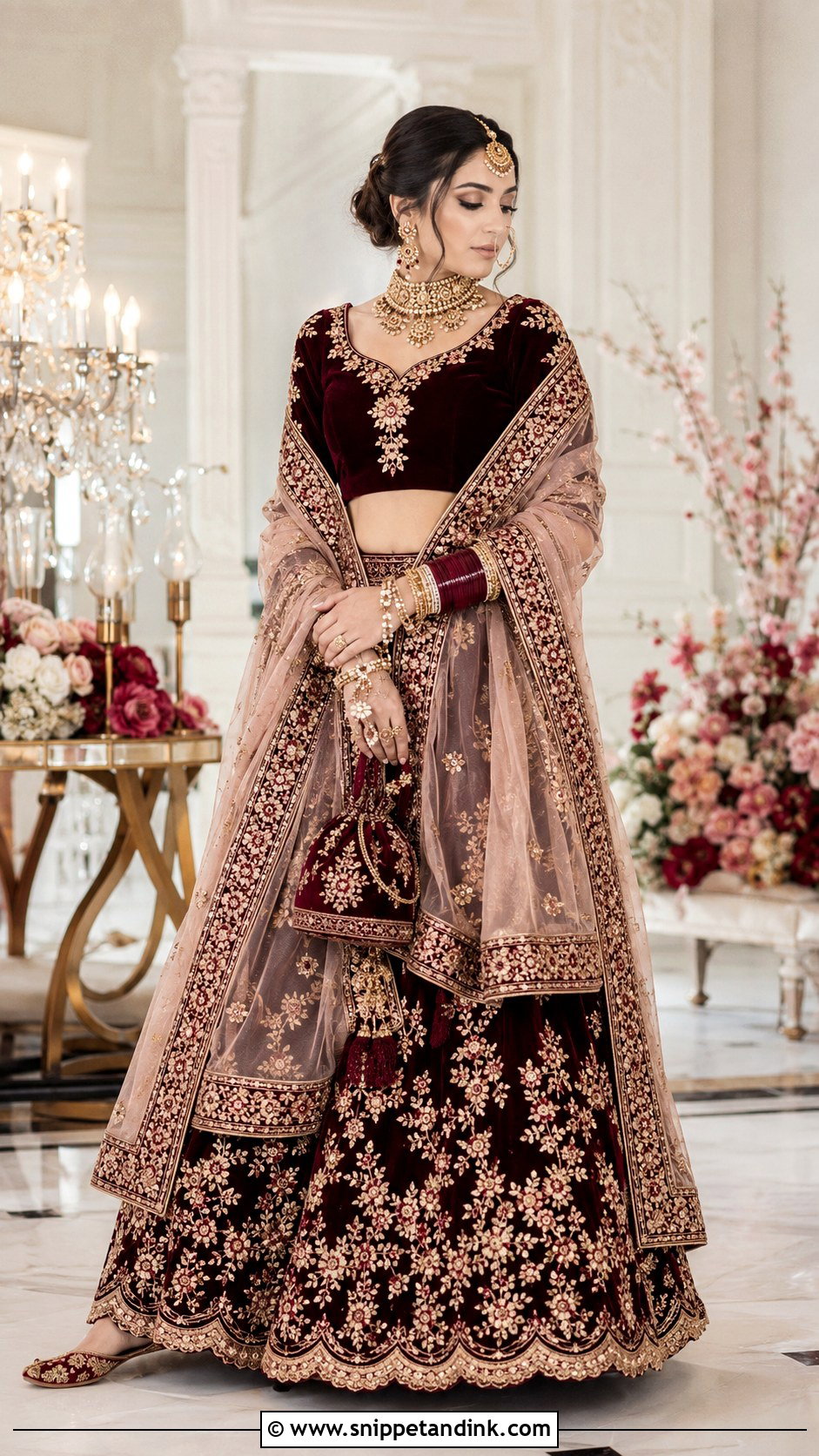
Velvet is heavy, and that is the whole issue with this look. I pair a velvet lehenga with a noticeably lighter dupatta, worn like a formal shawl: centre behind the shoulders, both ends forward, one hanging free and the other over the opposite forearm. A second velvet layer would leave you hot and weighed down by the reception. Winter shades such as burgundy, navy and deep plum work, with antique gold jewelry and a sleek bun. Let the drape frame the neckline instead of covering it, and pin discreetly at the back of the shoulders so it keeps its relaxed fall.
9. Embroidered Lehenga With V-Front Bridal Dupatta
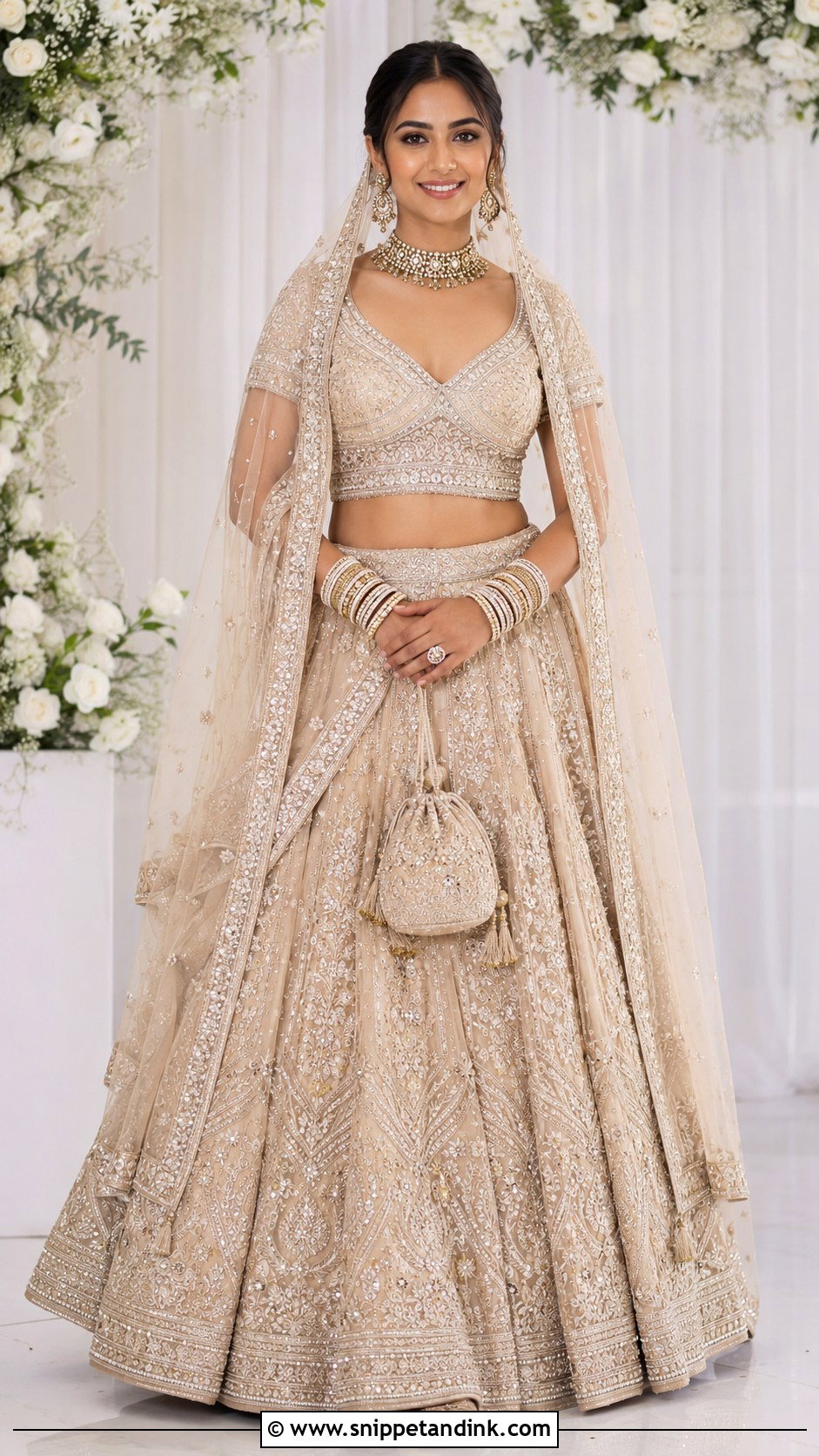
When the neckline is the hero, the V-front drape points straight at it. Place the centre of the dupatta behind the neck, bring both ends over the shoulders and cross them gently at the waist, pinning each corner on the opposite side. Measure both sides before pinning. Even a hand’s width of difference makes the V lopsided, and it’s obvious in a front-facing portrait. Use light fabric, because two crossed layers of anything heavy start to look like a jacket. A short choker and statement earrings suit it better than a long necklace, which would disappear behind the cross.
10. Floral Lehenga With Diagonal Bridal Dupatta
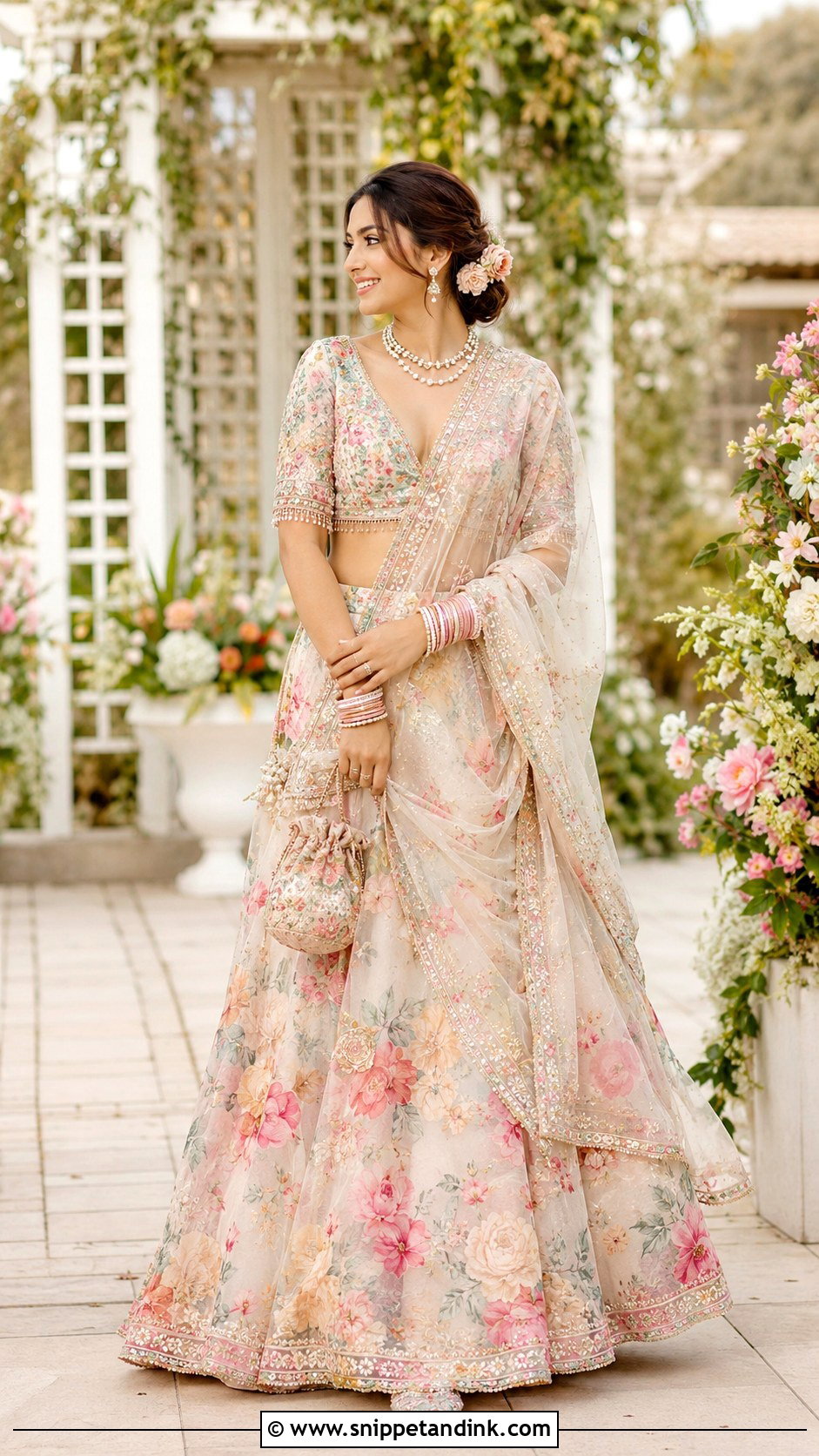
A floral bridal lehenga already has a lot going on, so I keep its dupatta simple: one end pinned at the shoulder, the fabric guided across the torso, the other corner secured at the waist. Leave a little slack at the upper arm. Pulled tight, the diagonal flattens the skirt movement, which is the reason to wear florals in the first place. Choose a sheer dupatta with scattered work or a light border rather than another print. My one placement rule: the diagonal line should run between the necklace and the waist embellishment, so neither gets covered.
11. Peach Lehenga With Wrist Bridal Dupatta
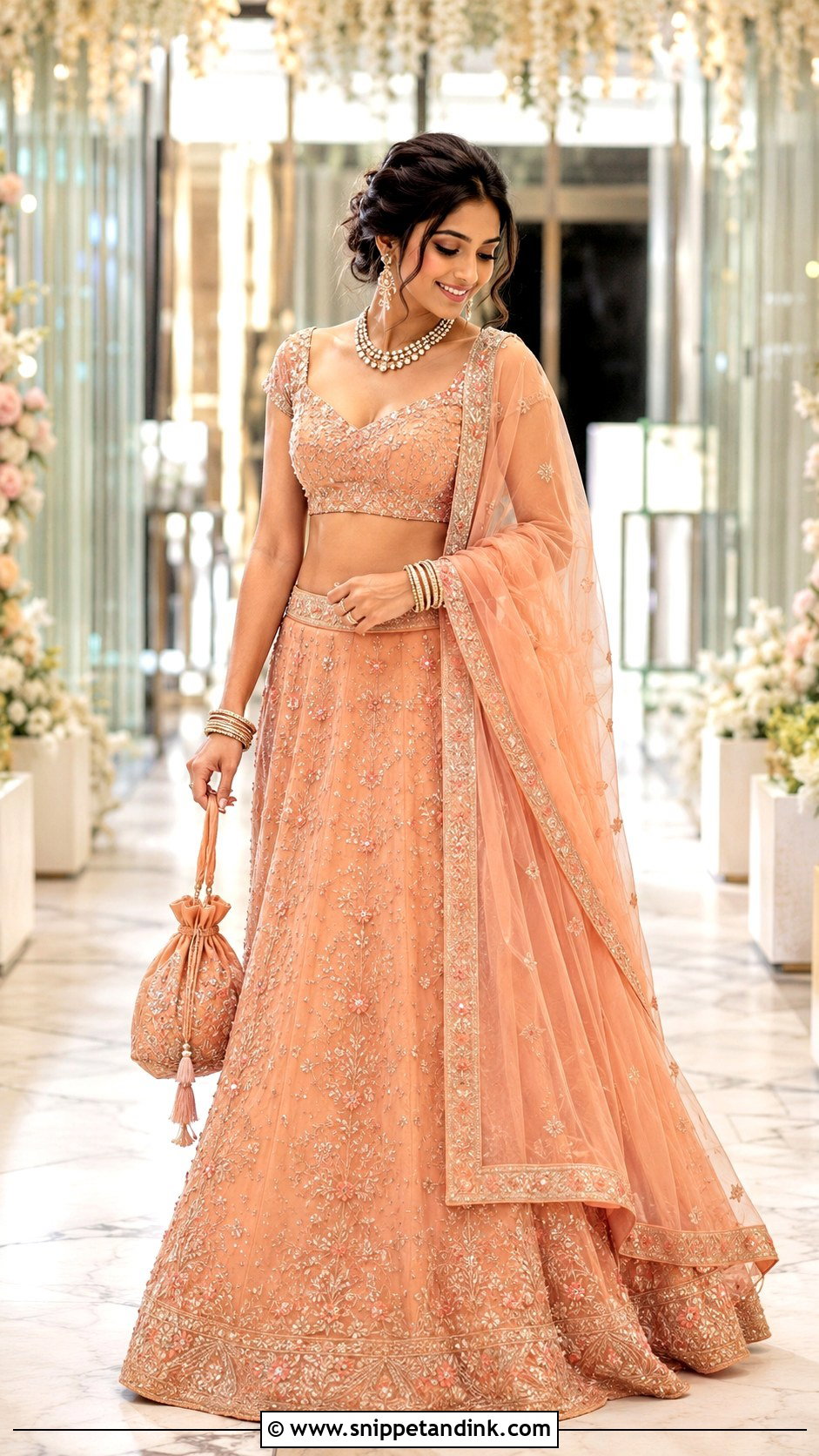
The wrist drape is mostly a portrait technique, and it works. Start with a secure shoulder drape, bring the opposite corner across the body and pin it loosely at the wrist so the fabric curves rather than stretches. With a peach lehenga and pearl or kundan jewelry, that curve gives standing poses and bridal portraits a sense of movement. The downside is real: a wrist anchor restricts the arm, so I’d skip it for brides doing a lot of rituals with their hands, or switch it to the shoulder after photos. Use net, chiffon or georgette, and leave enough slack to bend the elbow fully.
12. Purple Lehenga With Elbow Bridal Dupatta
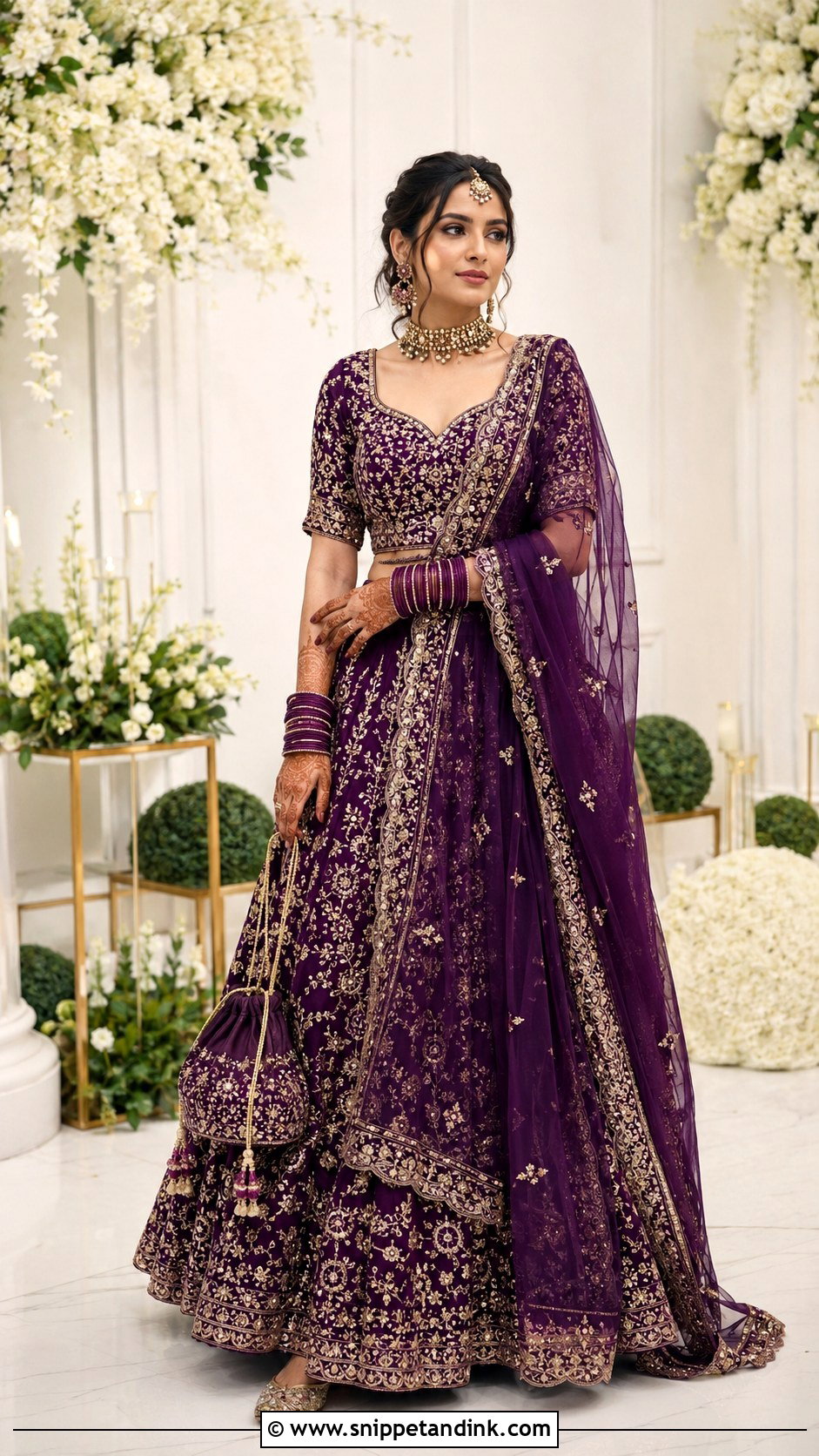
This is the drape I suggest to brides who want the traditional look but need their hands free. Pin the dupatta at one shoulder, let it run diagonally across the body and rest the loose end over the opposite forearm, border facing outward. A medium-weight dupatta holds a cleaner curve here than soft chiffon, which just slides off. Deep purple or plum suits antique gold and gemstones. Don’t overload the elbow fold; too much fabric there gets uncomfortable fast. A tiny pin hidden among the bangles keeps the border facing forward for the camera.
13. Red Lehenga With Long Bridal Dupatta Veil
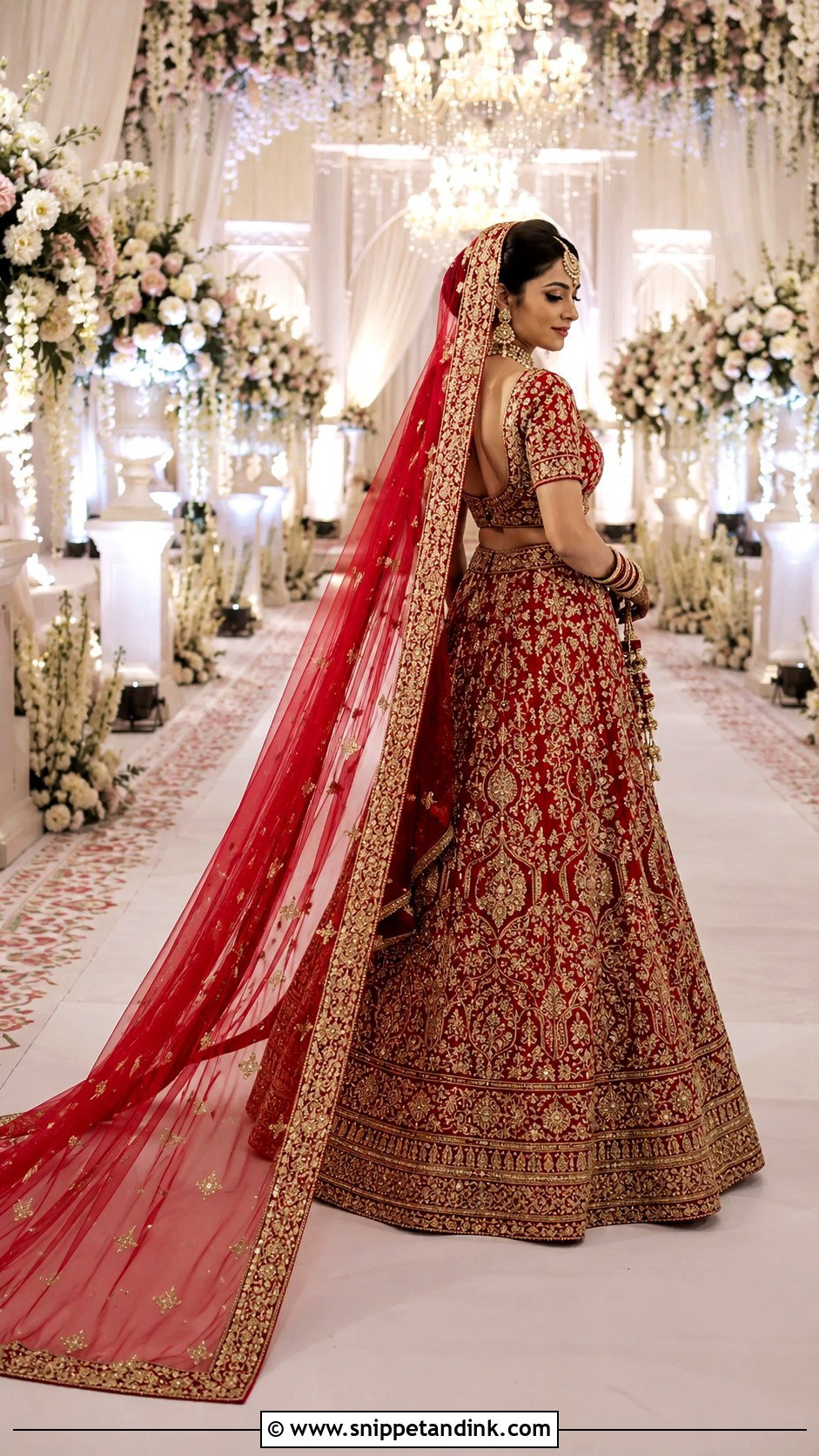
Nothing makes an entrance like a red lehenga with a long, flowing dupatta veil, but length changes everything about how it behaves. I set the veil at the crown, never on the forehead, so the jewelry and makeup stay clear. The fabric should run well past the hem at the back. At that length, lightweight net is far easier to manage than a heavily worked fabric, which pulls on the hair with every step; keep the ornate work on the border instead. The hairstylist needs to anchor it into the bun itself, and I add hidden pins at both shoulders so the weight is shared and the veil doesn’t creep backward.
14. White Lehenga With Side Bridal Dupatta Veil
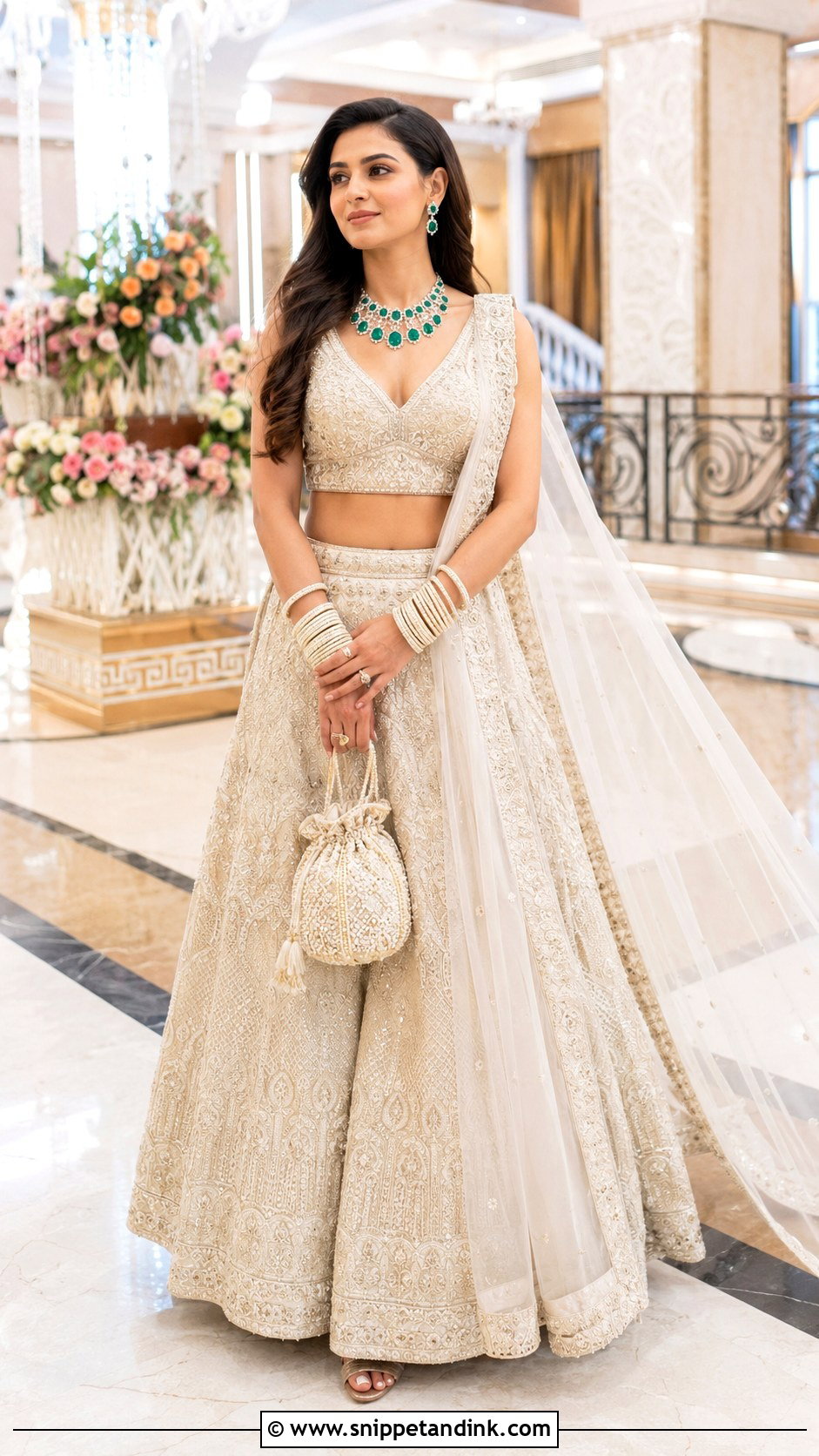
An off-centre veil softens a white or off-white lehenga without making it look plain. Place the dupatta over the head slightly to one side so one length falls longer, bring the shorter edge to the shoulder and let the longer side flow down the back. On light fabric, a scalloped or finely beaded border gives the edge some definition, otherwise it can disappear against the skirt. Keep the embellishment near the crown light. Outdoors, I always pin the longer side at the shoulder, because the asymmetric length catches wind first and ends up across your face.
15. Champagne Lehenga With Open-Front Bridal Dupatta
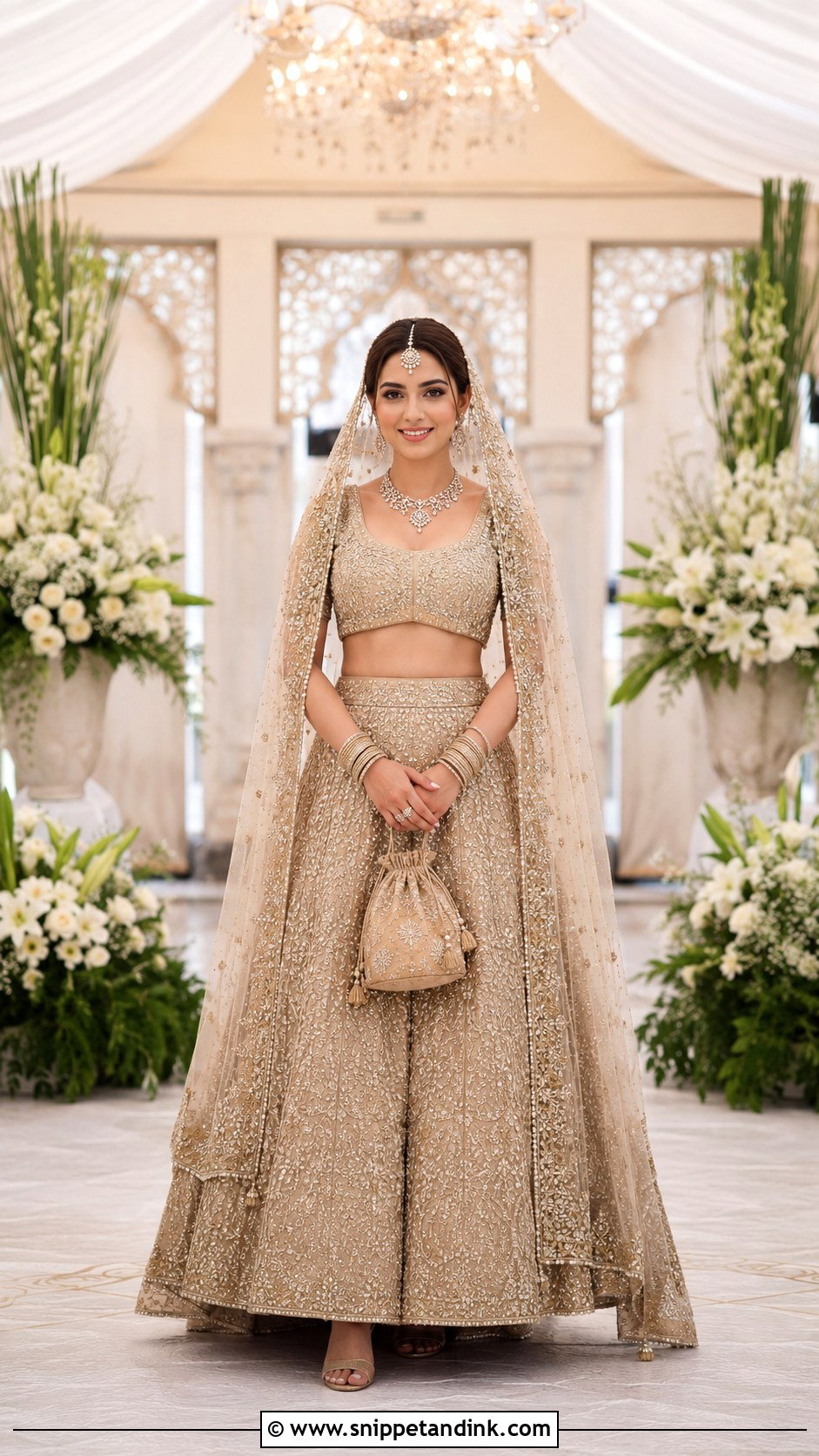
Use an open-front drape when a champagne lehenga has embroidery on both the blouse and skirt that you don’t want to cover. The middle of the dupatta sits behind the neck and both ends hang straight down the front, which makes two long vertical lines and lengthens the figure. Organza, net or soft tissue gives enough body without weight. Pin at the back of each shoulder, or the ends slide forward and bunch. I’d also keep the necklace modest here; an oversized piece competes with the two borders sitting right beside it.
16. Orange Lehenga With Pleated Bridal Dupatta
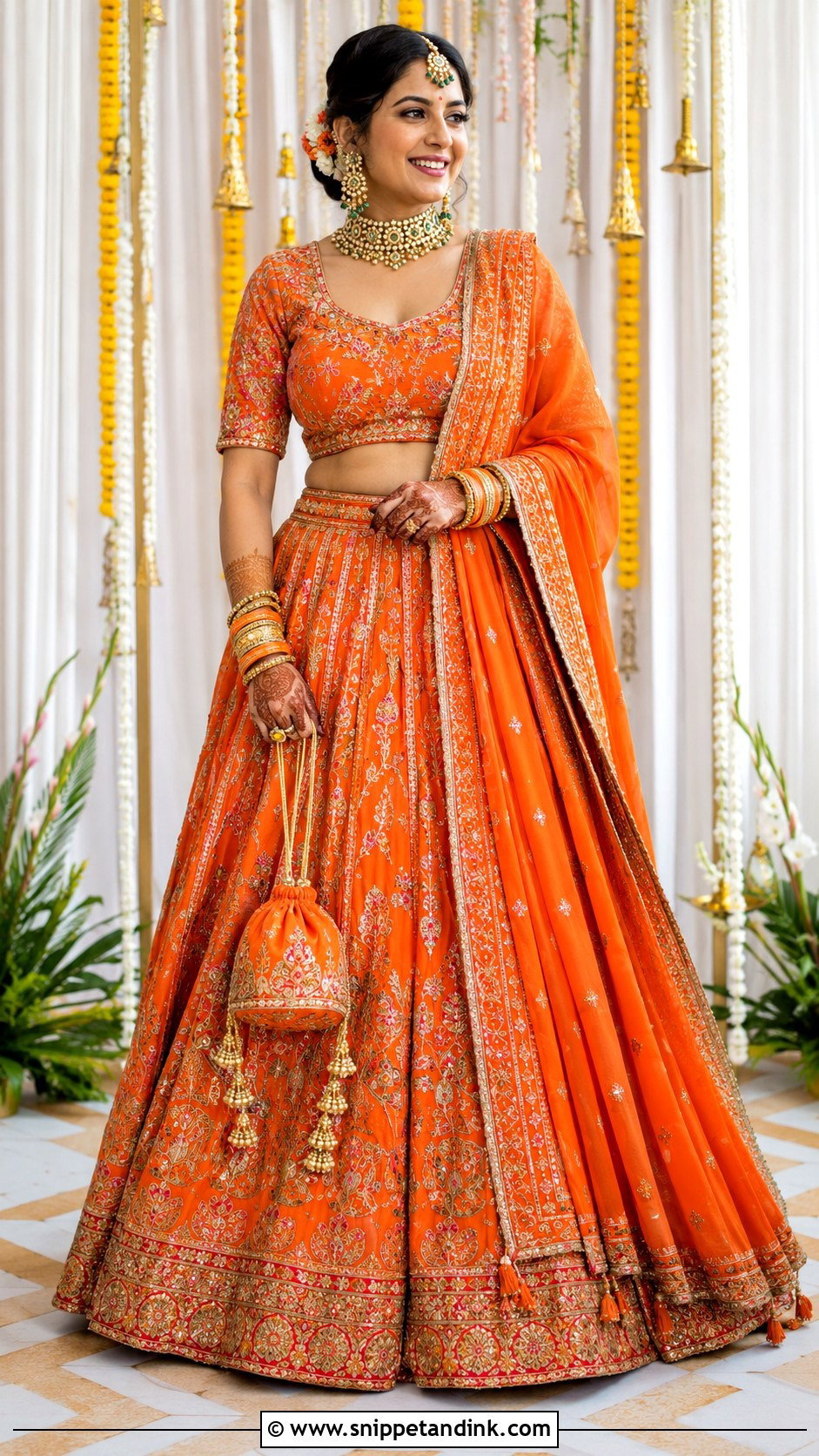
Crisp pleats calm down a bright orange lehenga. Gather the dupatta into even folds and pin them over one shoulder so the border drops in a straight vertical stripe, then take the remaining end across the waist or let it fall behind, depending on how much embroidery you want visible. Pleat width is what I check most carefully. If they vary, the border zigzags and the drape looks rushed. A broad border shows this style off best. Heavier fabric needs two pins at the shoulder, one through the pleats and one into the blouse strap.
17. Blush Lehenga With Scalloped Bridal Dupatta
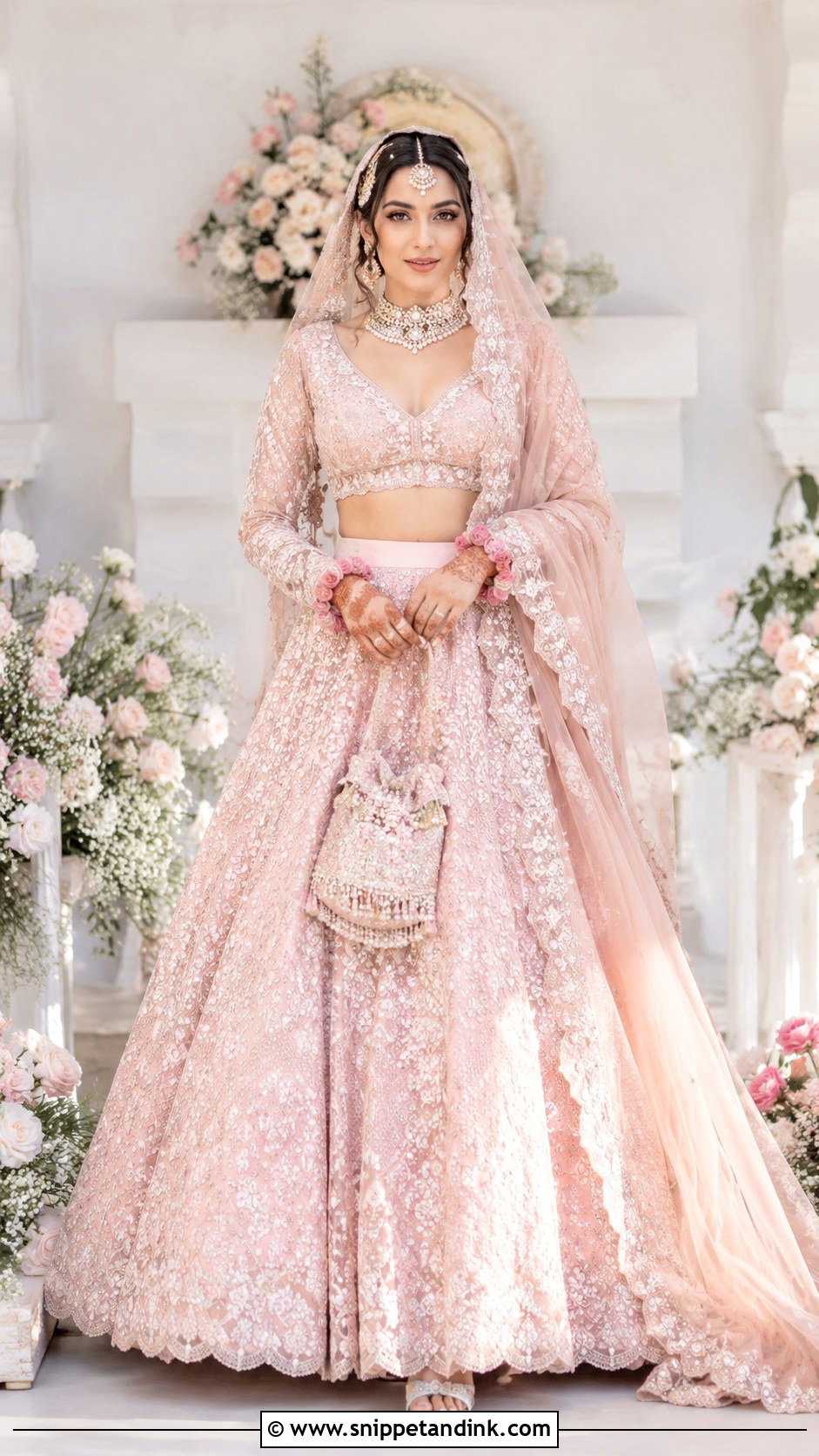
A scalloped edge around the face acts like a soft frame, and on a blush lehenga it is one of the prettiest head drapes I know. Lay the fabric over the head and arrange the scallops around the hairline without letting them slip onto the forehead, then bring one side across the shoulder and let the other fall behind. Centre the maang tikka between two scallops so the points don’t sit on top of it. Use clear or matching pins around the crown. Never stretch the edge to make it sit flatter; scallops lose their curve once pulled, and they won’t recover on the day.
18. Beige Lehenga With Contrasting Bridal Dupatta
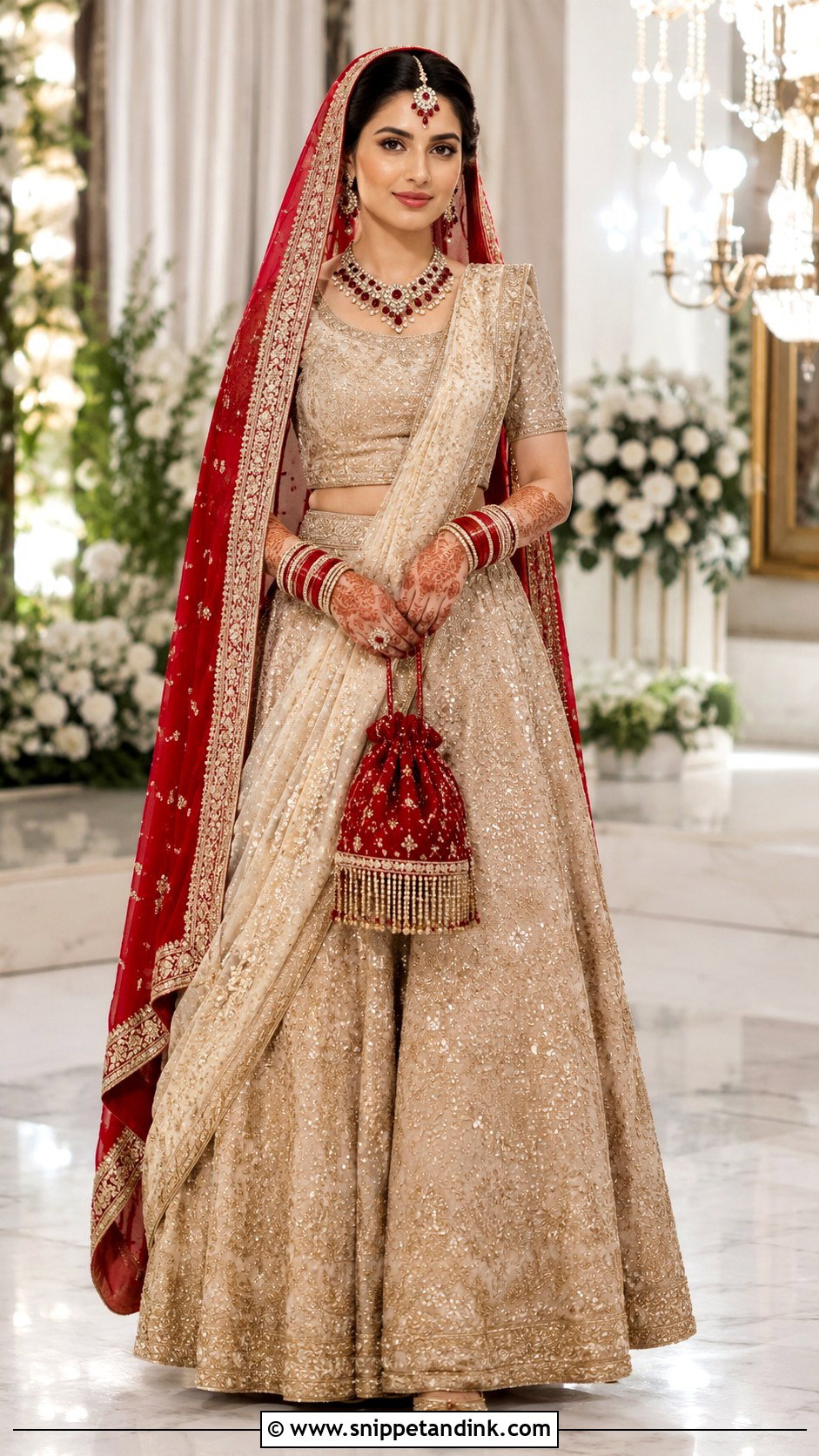
A neutral beige lehenga can carry a strong contrasting dupatta, and it’s my usual answer when a bride wants color without committing to a red outfit. Put the ruby, emerald or burnt orange dupatta over the head and a lighter beige or gold one across the body, or wear just the colored one as a diagonal shoulder drape. Repeat the accent in one or two pieces at most, say the jewelry stones and the potli. Any more and the beige stops being the base. If you use two dupattas, check their borders side by side in daylight; gold zari from two different makers can look surprisingly mismatched.
19. Khada Dupatta Bridal Outfit
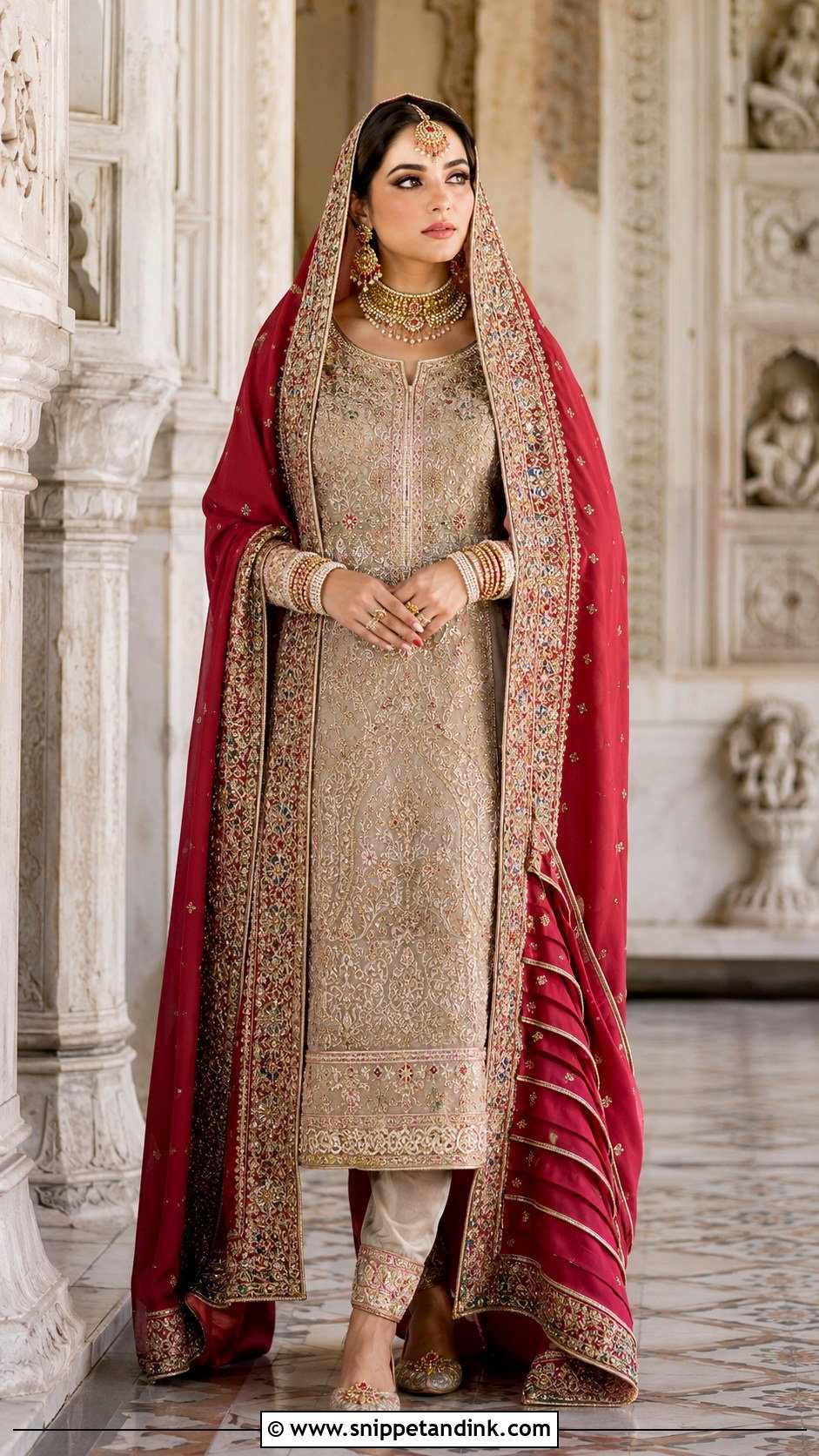
The khada dupatta is a different garment from everything above it. It is traditionally worn with a kurta and fitted bottoms, not a lehenga, and the dupatta is tucked and pleated around the lower body before the ends come up over the shoulders. It takes real precision, so I’d only attempt it with a stylist or family member who has done it before; it isn’t something to learn from photos on the morning. Choose a long dupatta with a defined border that stays visible through the folds. Practise sitting and walking in it, and pin at the waist, shoulders and lower pleats.
20. Lightweight Lehenga With Pinned Bridal Dupatta
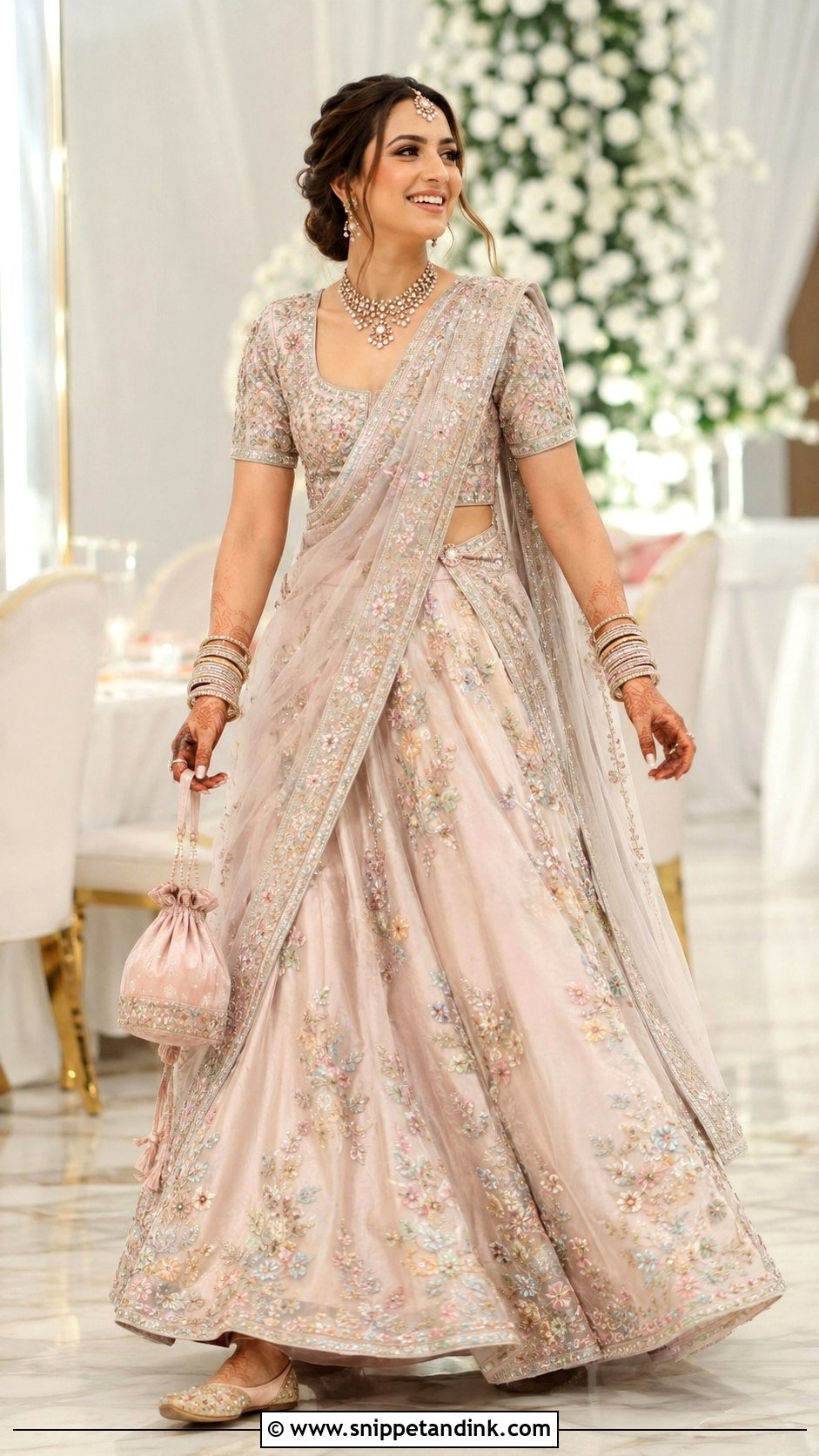
For the events with dancing and long greeting lines, comfort decides the drape. A lightweight lehenga with the dupatta pleated over one shoulder, taken diagonally across the torso and fastened at the waist will stay put through most of a sangeet. Add a hidden pin near the upper arm if it creeps. Georgette, chiffon and net are much easier to control than dense velvet. Before the day, I have brides raise both arms, turn quickly, sit and stand. Whatever shifts during that test will shift on the dance floor too, so pin it then.
The Pin Kit and Who Holds It on the Day
A dupatta is only as secure as the person pinning it, and on the day that’s rarely the bride. I always suggest naming one person, a cousin, a friend or your stylist, who has watched the drape done at the final fitting and knows where every pin goes. Ask them to take photos of the drape from the front, side and back at that fitting so they can rebuild it if something comes loose.
- U-pins and bobby pins in your hair color, for the crown.
- Small safety pins in gold and silver, so a visible one never clashes with the zari.
- Clear double-sided fabric tape for borders that flip.
- A few extra U-pins for the hairstylist, because heavy veils always use more than planned.
- A small mirror, so whoever re-pins can check the back.
Changing the Drape Between the Pheras and the Reception
Plenty of brides wear one drape for the ceremony and want something lighter afterwards, and that’s a sensible plan. A head drape is lovely through the rituals but tiring to wear for hours of photos and greetings. The cleanest switch I know is moving the head dupatta down to a cape or one-shoulder pleat, which uses the same fabric and needs only a few minutes.
Plan it, though. Take the hair pins out slowly and in reverse order, or you’ll pull the bun apart. Have the second set of pins ready, and give yourself ten quiet minutes away from guests to do it.
A Drape You Can Sit, Walk and Dance In
The right dupatta drape suits the outfit, lets you move and still feels like you. Head drapes and long veils give the ceremony its grandeur, while cape, belted and one-shoulder styles keep the silhouette cleaner. Before you settle on one, weigh the fabric, check the border and measure the length against the drape you want. Then test it with the real blouse, skirt, jewelry, hair and shoes, because a drape tried over a T-shirt tells you very little. Pins, fabric tape or a matching belt can do the holding. If you can sit, walk and greet people without reaching for your dupatta every few minutes, you’ve found yours.
You'll Like These Ideas:


Leave a Reply