
Hair worn down is the style brides ask me for most, and the one I worry about most. An updo is held by pins; a down style is held only by the curl you set into it, and that curl has to fight gravity, a veil, humidity and a lot of hugging for the whole day. Done well, it shows off your length, colour and texture in a way pinned hair never can. Below are 20 down and mostly-down looks, from sculpted Hollywood waves to natural curls, with my notes on what each one asks of your hair and who it suits.
Why an Unpinned Wave Drops by Dinner, and How I Stop It
A curl only holds once it has cooled in its new shape. Most of the falling I see happens because the curl was released hot and brushed out straight away, or because conditioner and heavy serum made the hair too slippery to keep anything. My fix is simple and boring: set, pin, cool, then style.
- Wash the day before, not the morning of. Second-day hair grips a curl better, and fine hair especially.
- Skip a deep conditioning mask that week. It feels lovely, but it leaves the hair too soft to hold a bend.
- I curl a size tighter than the finished look, because the curl will relax as the day goes on.
- Each curl gets pinned in a loop while it cools, usually for fifteen minutes or more.
- Hairspray goes on before curling, as a light heat-set mist, then again lightly at the end.
Humidity is the other enemy. On a hot, damp day I’d suggest a half-up style over a fully down one, or a looser look planned from the start, so the drop doesn’t feel like a failure.
1. Hollywood Glam Waves for Brides
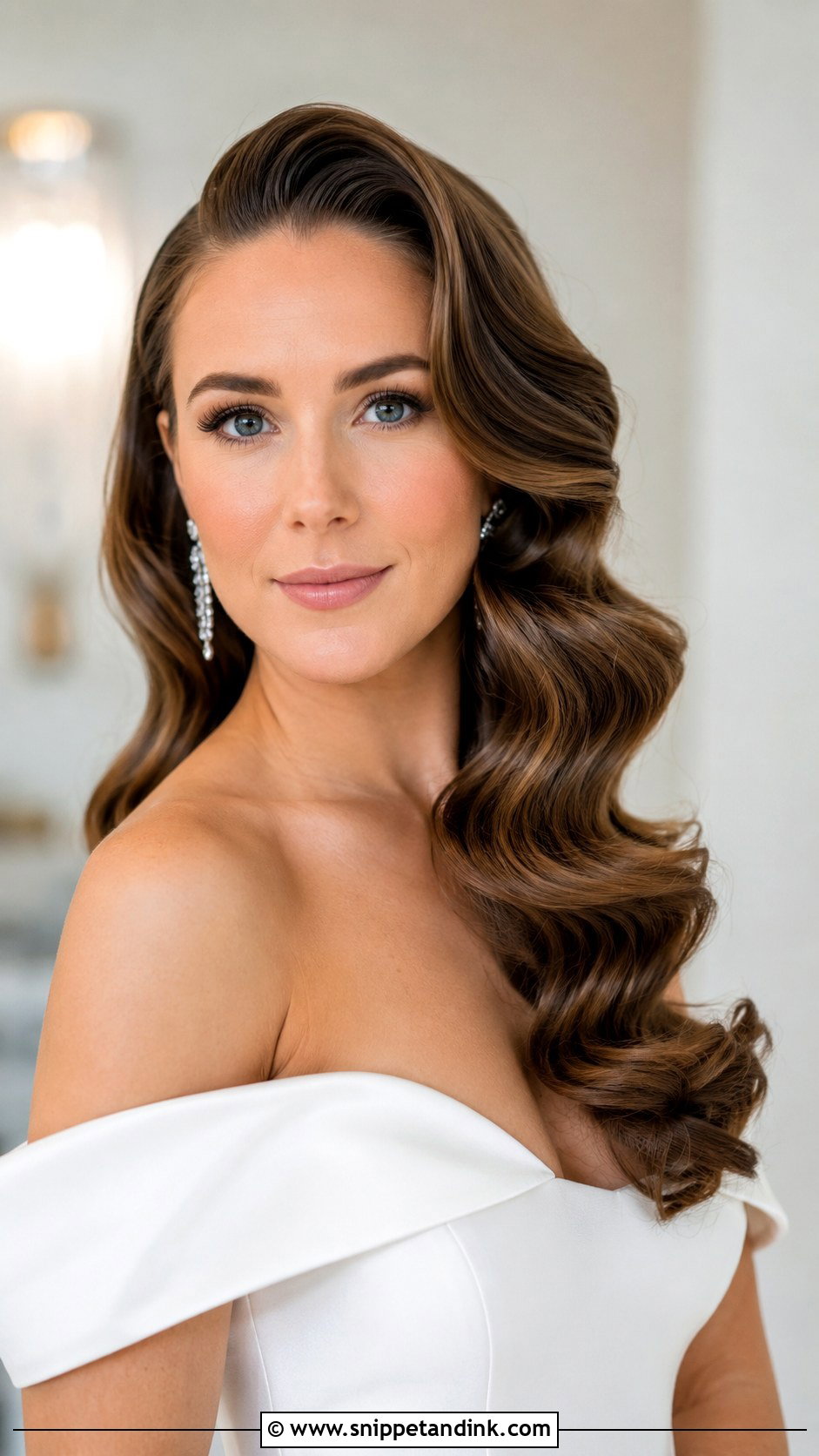
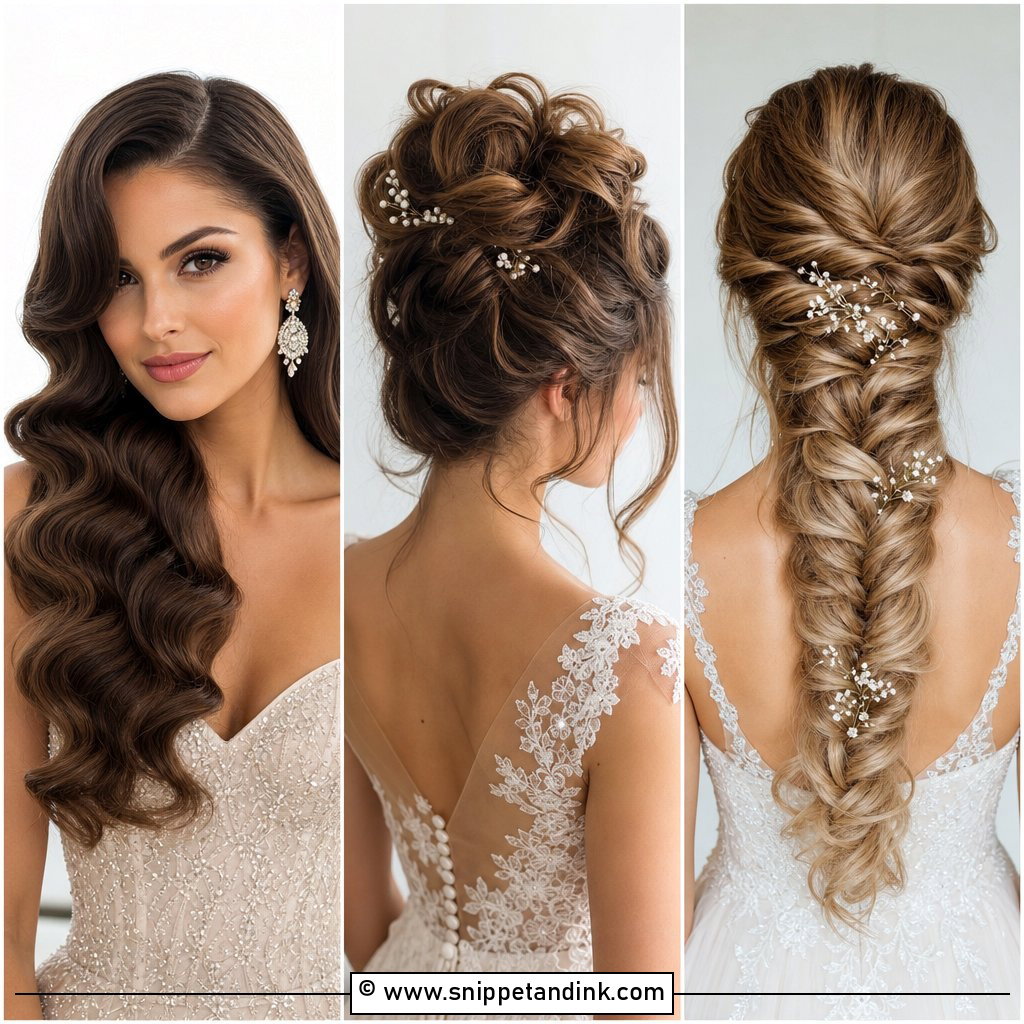
This is the most structured look here, and the one that rewards patience. I curl every section in the same direction, let it cool completely, then brush it out with a boar bristle brush until the curls merge into one continuous S-shaped ripple. If the waves start separating into ringlets, the brush-out stopped too early. A deep side part gives the crown its lift. It needs medium to long hair of one length; heavy layering breaks the ripple up. A crystal comb on the low side catches the light without interrupting the pattern, and the polished finish suits a formal ballroom or evening venue.
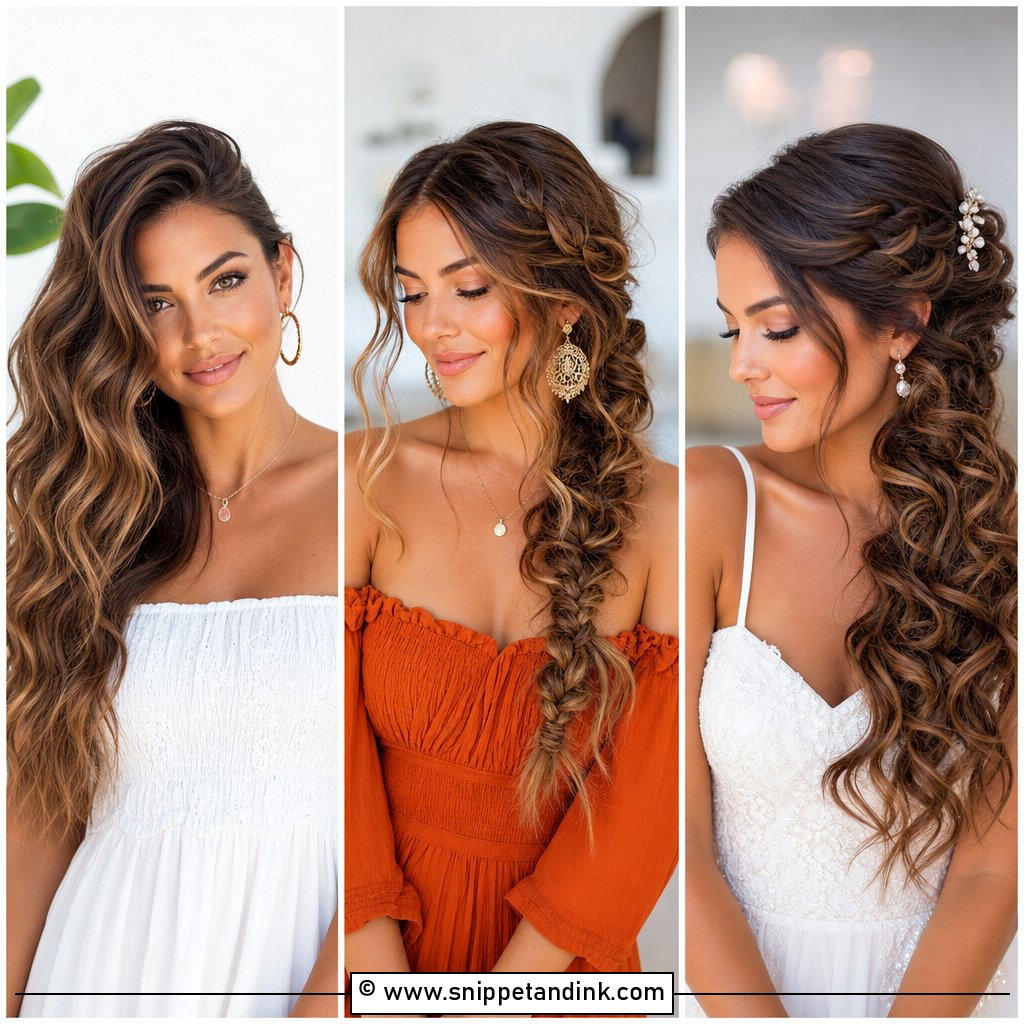
2. Loose Boho Beach Waves
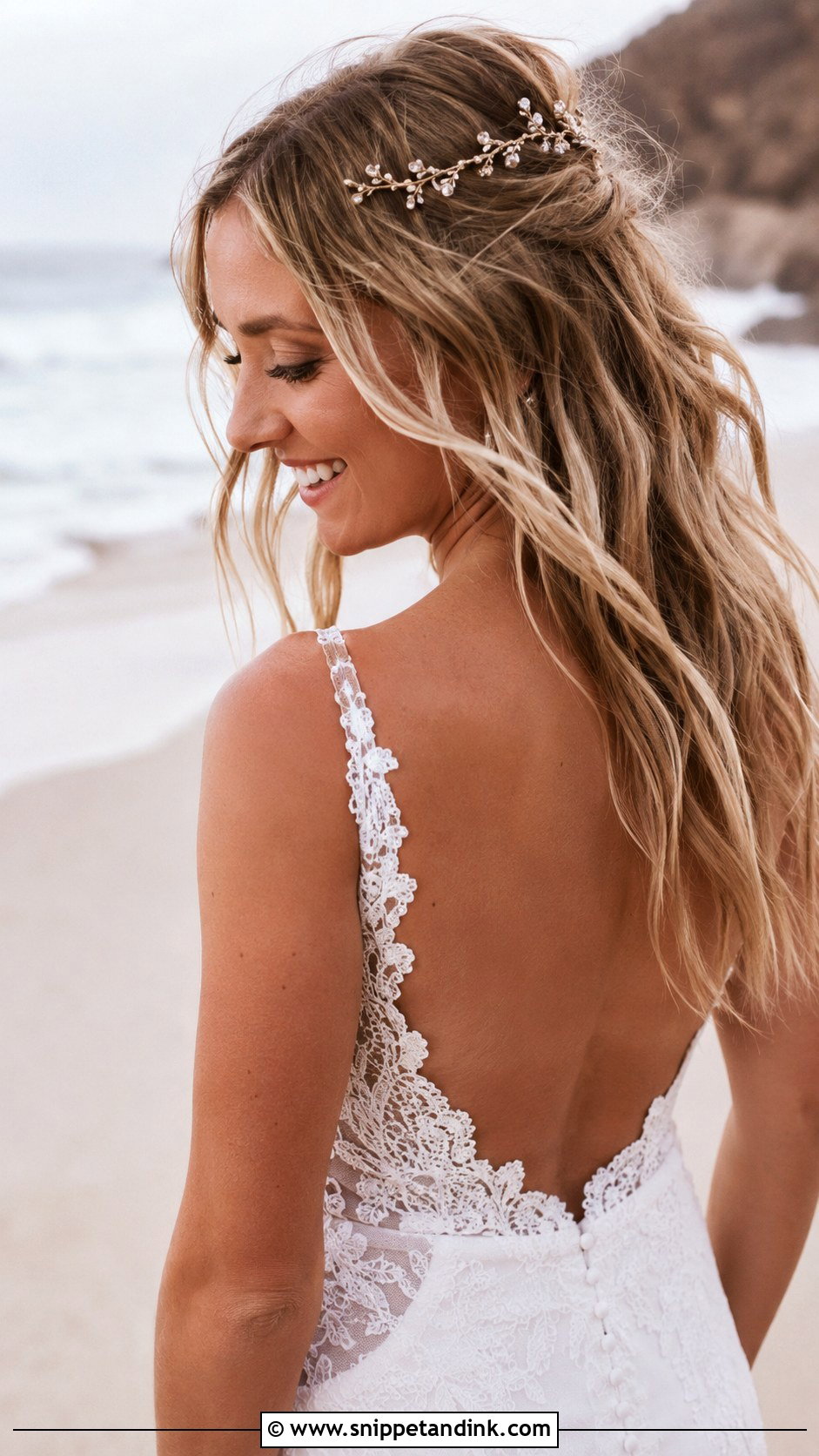
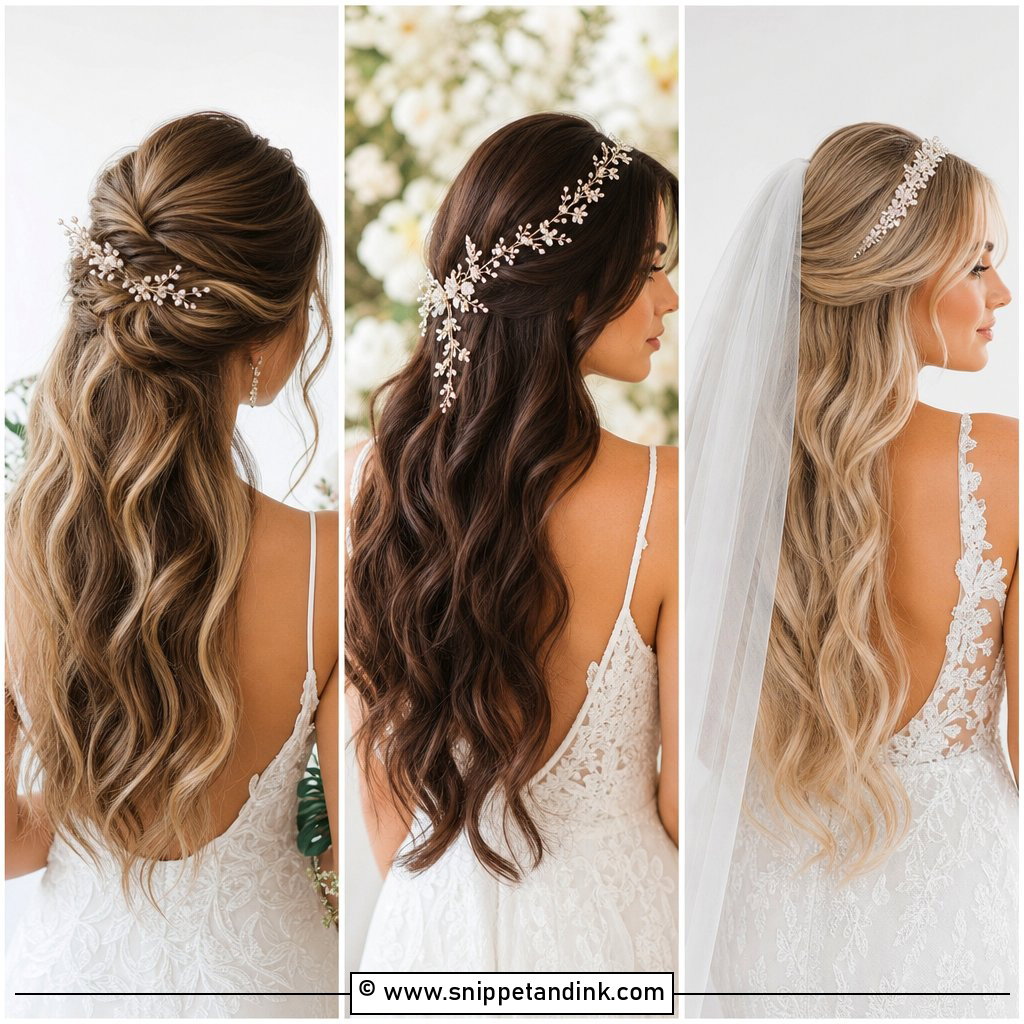
Beach waves look casual, but they collapse faster than almost anything else on this list, because salt spray dries hair out and the curl is intentionally loose. I work a little texture spray through, wrap only the mid-lengths and ends, and leave the last inch or so straight so it reads as tousled, undone texture rather than a curling-iron curl. A gold vine or a few stems tucked on one side keeps it bridal. Save this one for long or medium hair with some natural bend; on very straight, silky hair I set it tighter than the brief so there is something left by the speeches.
3. Half-Up Half-Down Wedding Style
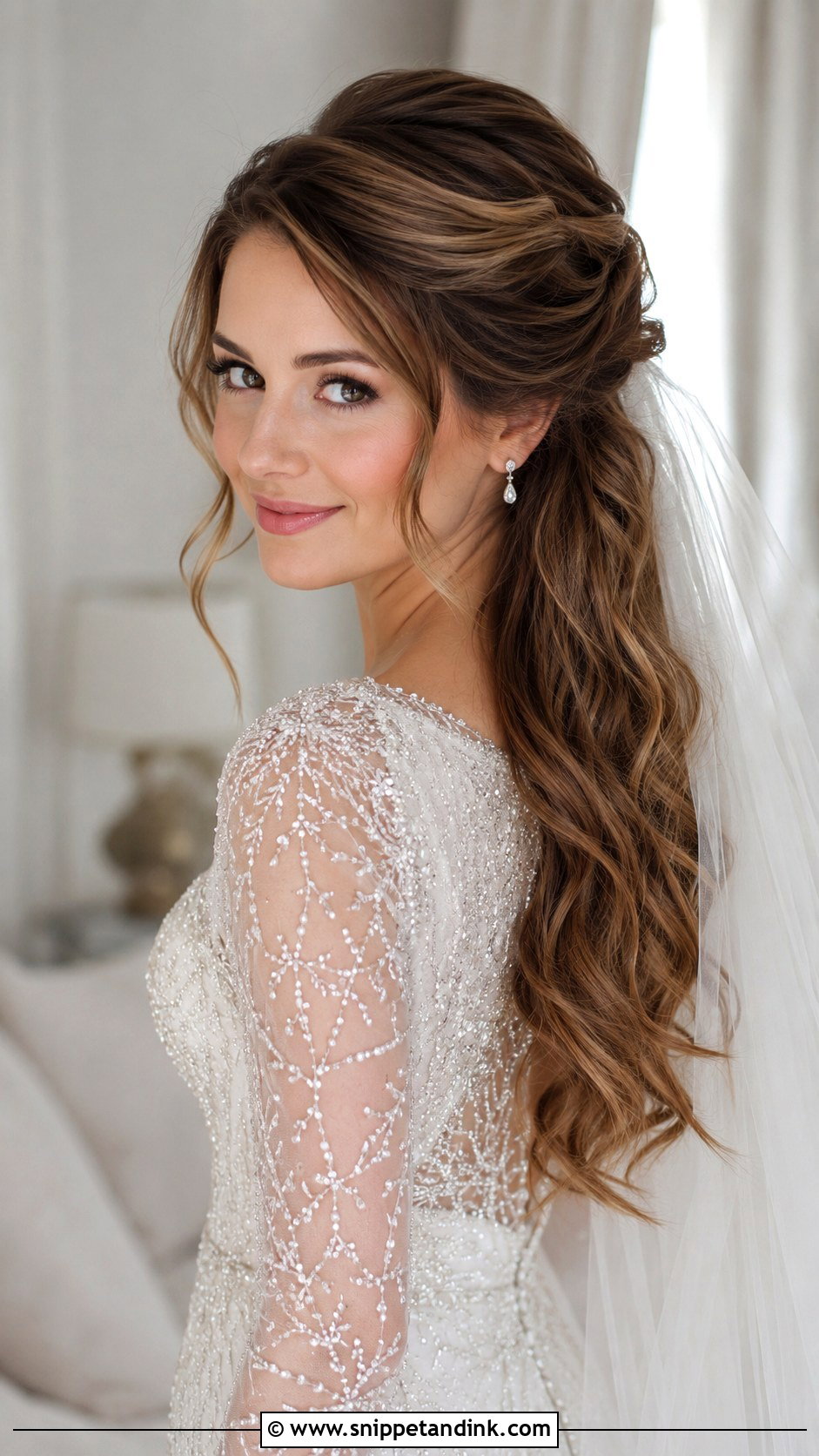
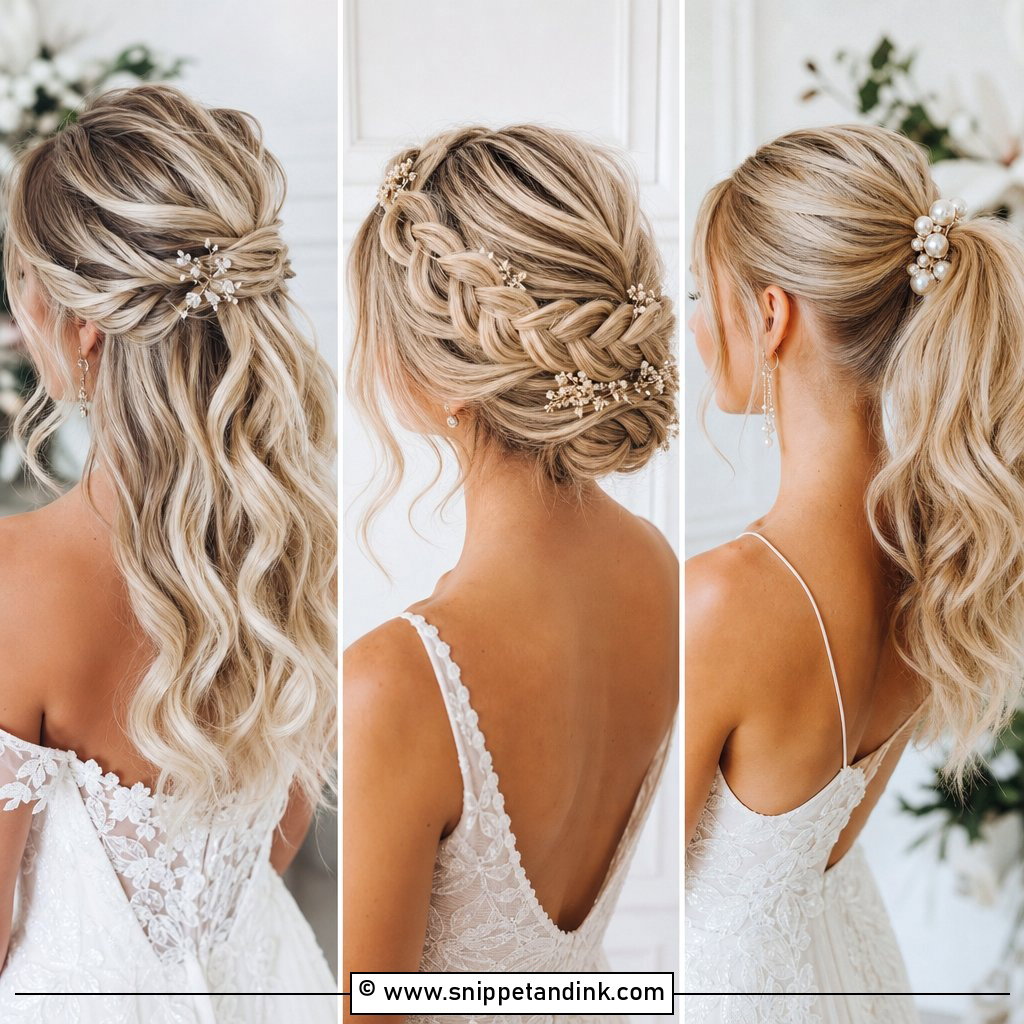
The half-up keeps your face clear for the vows and the kiss photos while your length still shows down your back. I curl everything first, then take small sections from the crown and pin them with crossed bobby pins under a little backcombing so the weight sits on a base instead of sliding. That base also gives a veil comb something solid to grip, which is why I recommend this shape to most brides wearing a veil down. It works on almost any length past the collarbone and suits most venues, from a church to a barn.
4. Sleek Straight Bridal Hair
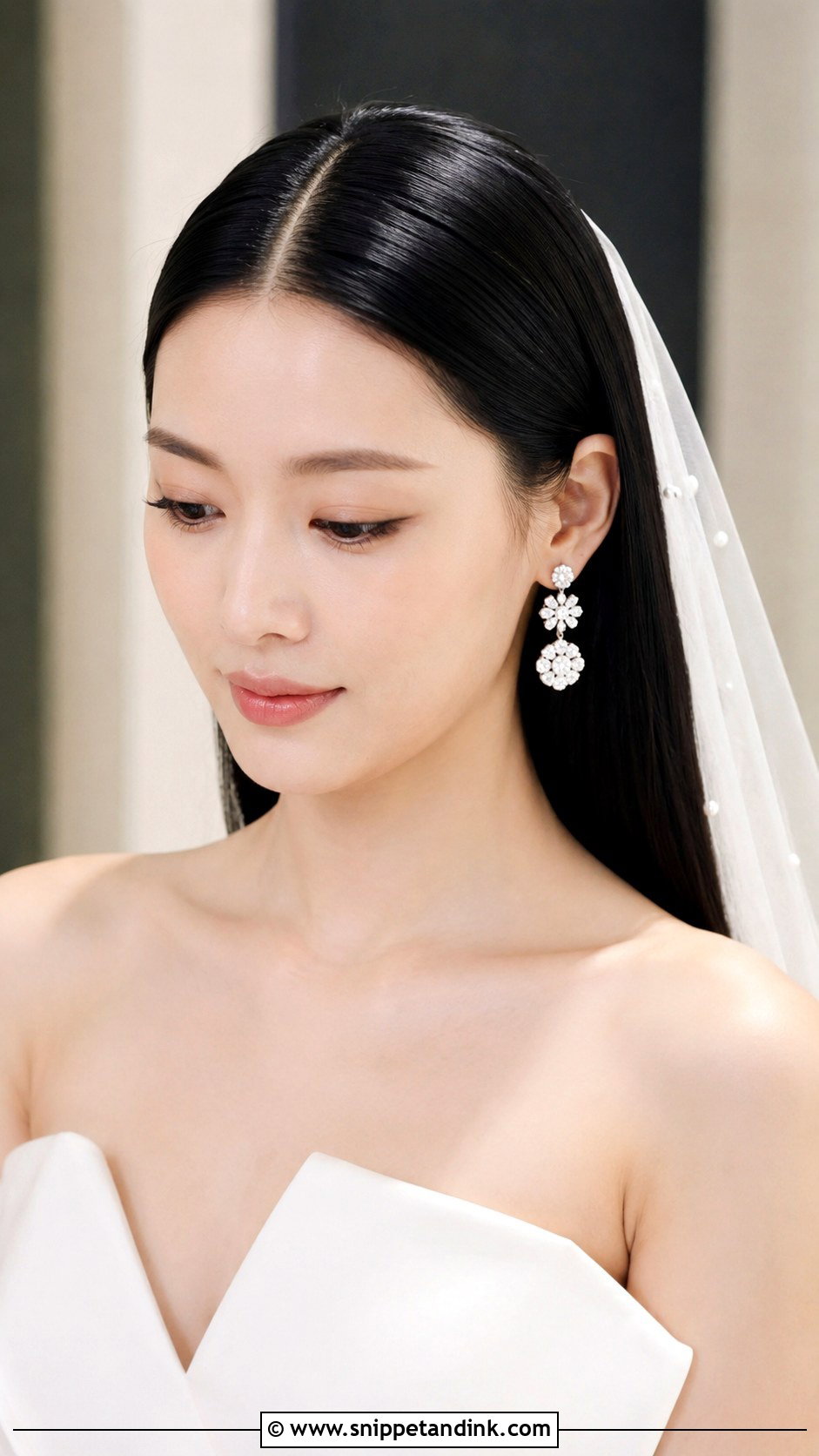
Sleek straight hair hides nothing, so it depends on the condition of the hair more than any other style. I blow-dry it smooth with a paddle brush, flat-iron in thin sections at a moderate heat, and finish with the smallest amount of shine serum on the lengths, never the roots. Too much serum and it looks greasy by the first dance. A sharp centre part and statement earrings carry it. I’d steer you away from this one if your hair frizzes in humidity or the venue is outdoors in summer; there is no curl to hide the puff.
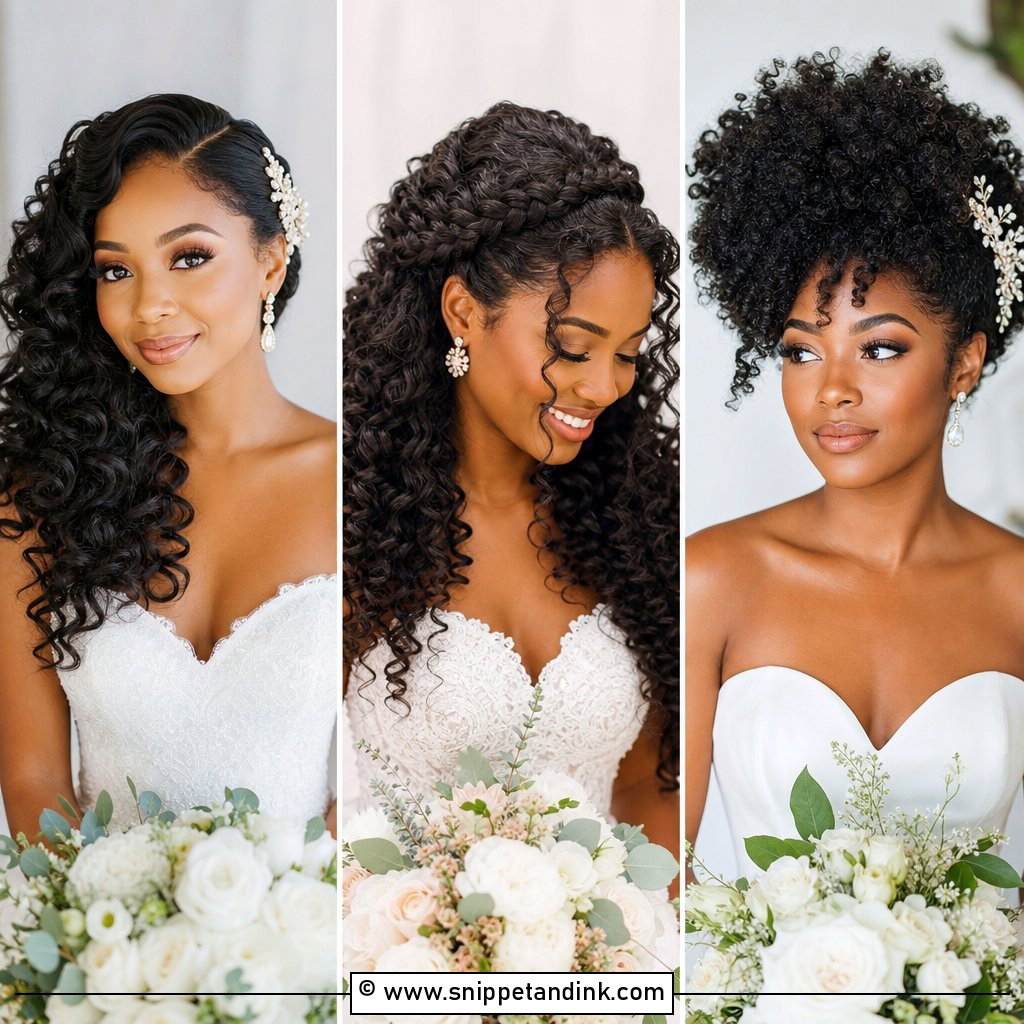
5. Soft Romantic Curls for the Aisle
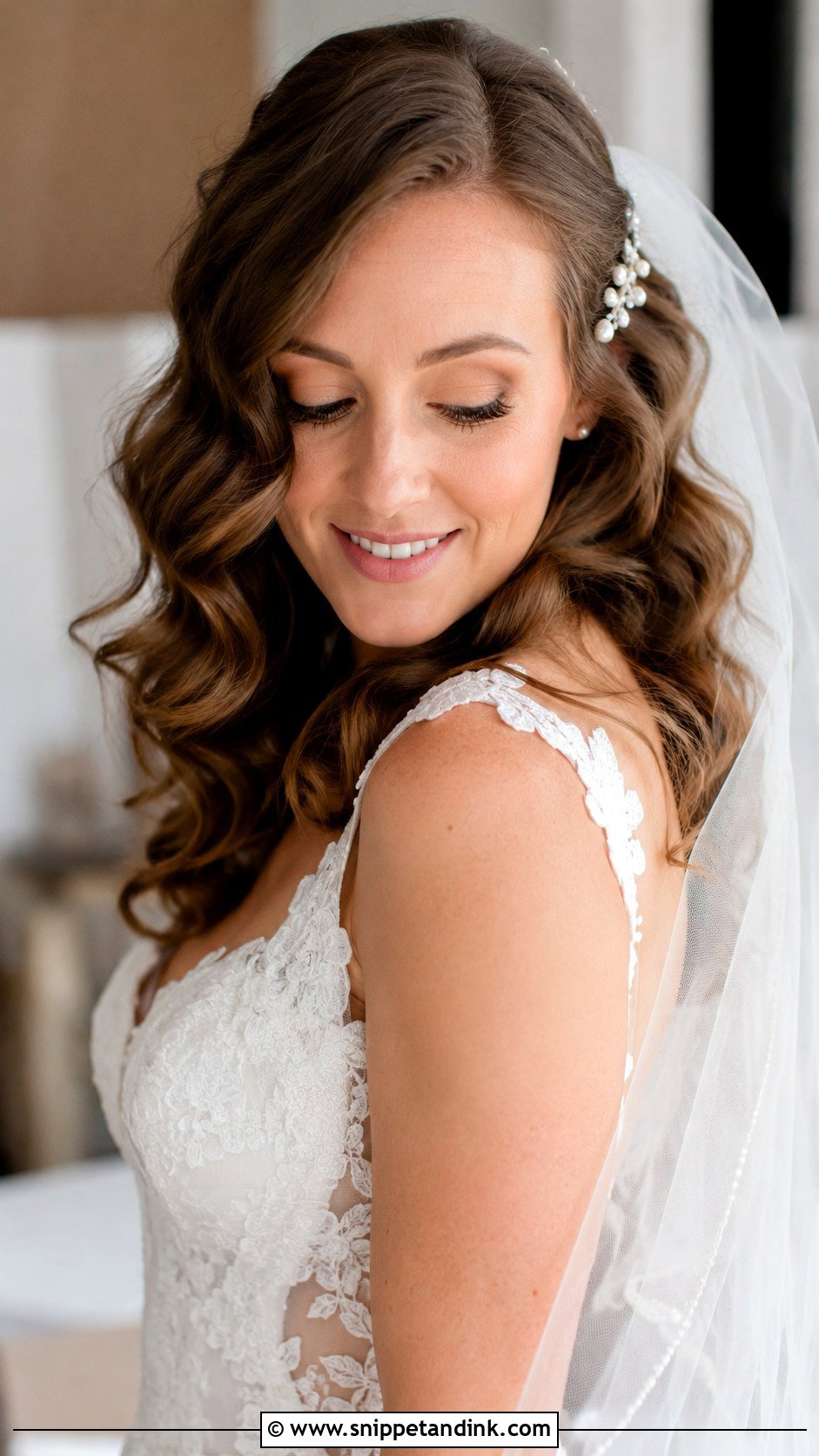
Soft curls sit in the middle ground: looser than ringlets, more defined than waves. I set them with a large-barrel iron, pin each curl in a loop while it cools, and only release and finger-comb them once the whole head is done, which is what keeps them bouncing at the reception. They suit lace gowns and fine veils, and they read well in church light or outdoors. If you’re tempted to brush them out at home, don’t; brushing turns them into waves within minutes. A single pearl pin near one ear is all the decoration they need.
6. Wedding Hair Down with Braided Crown
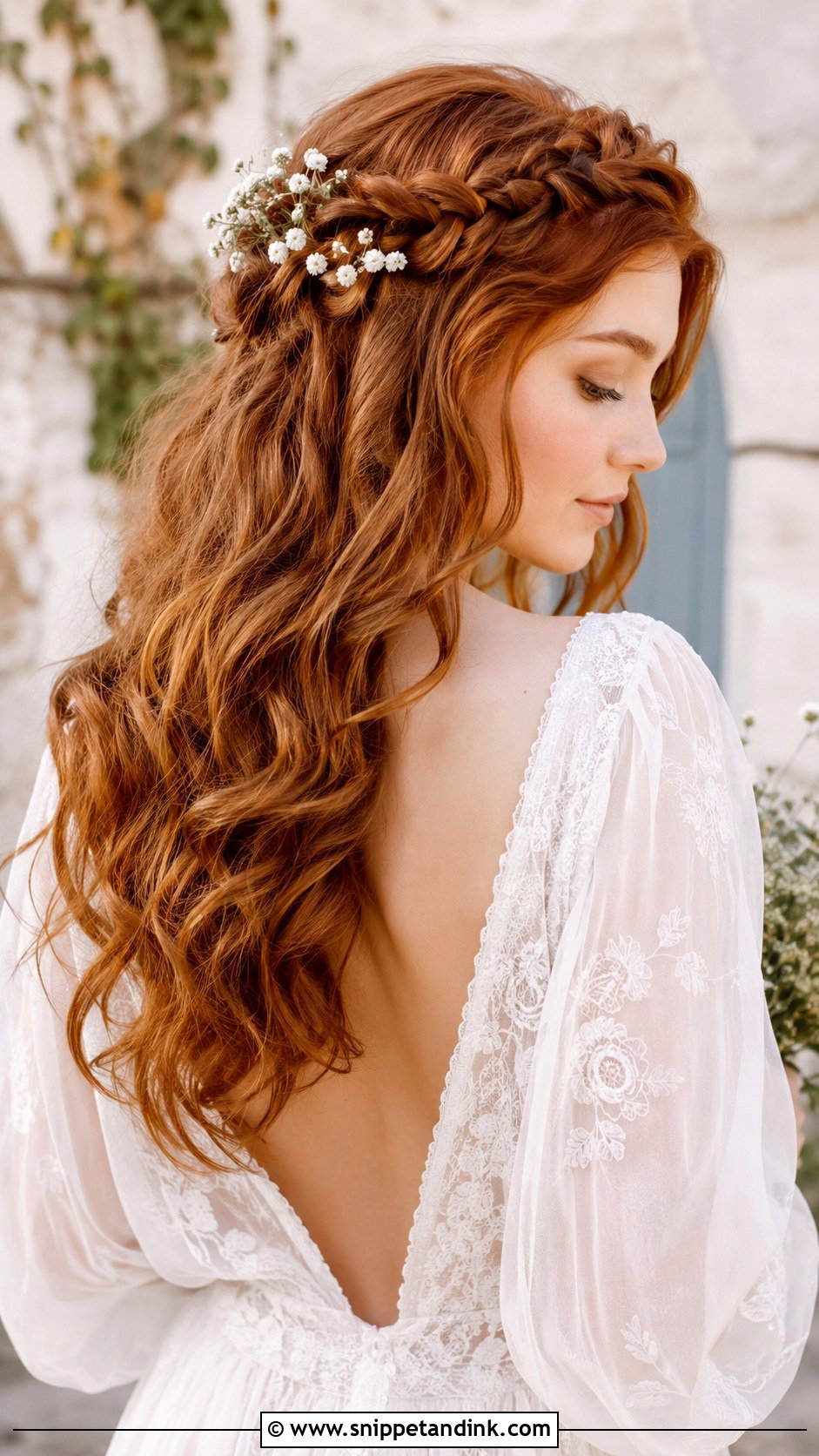
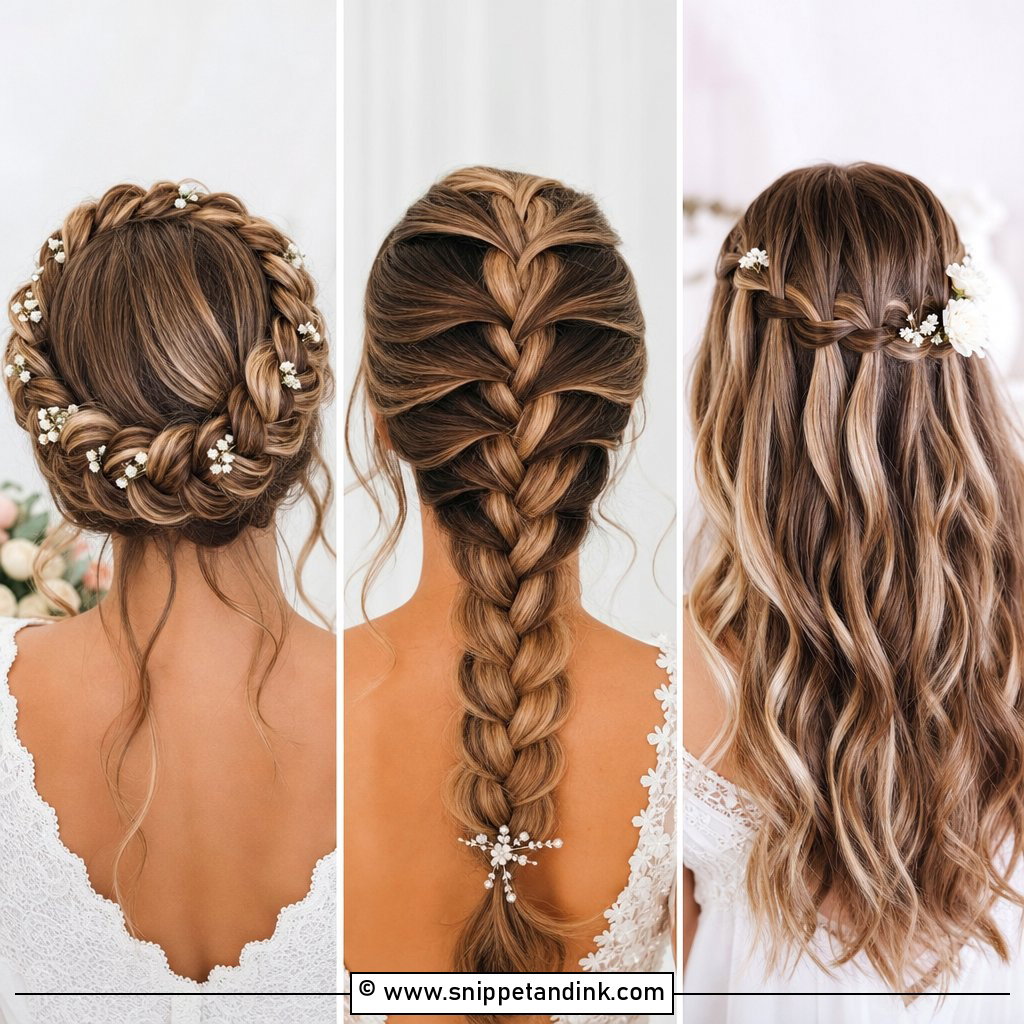
A braid around the crown does the job of a headband: it holds your front pieces back without any hardware showing. I plait it first, while the hair still has some grip, then curl the lengths below and pancake the braid gently so it looks fuller in photos. It reads as bohemian romance, and works nicely in a garden or woodland setting. Very silky hair lets the braid slip, so I prep it with a dry texture spray. Long, thick hair is ideal; for a sparse crown I braid tighter and add baby’s breath to fill any gaps.
7. Side-Swept Waves for Brides
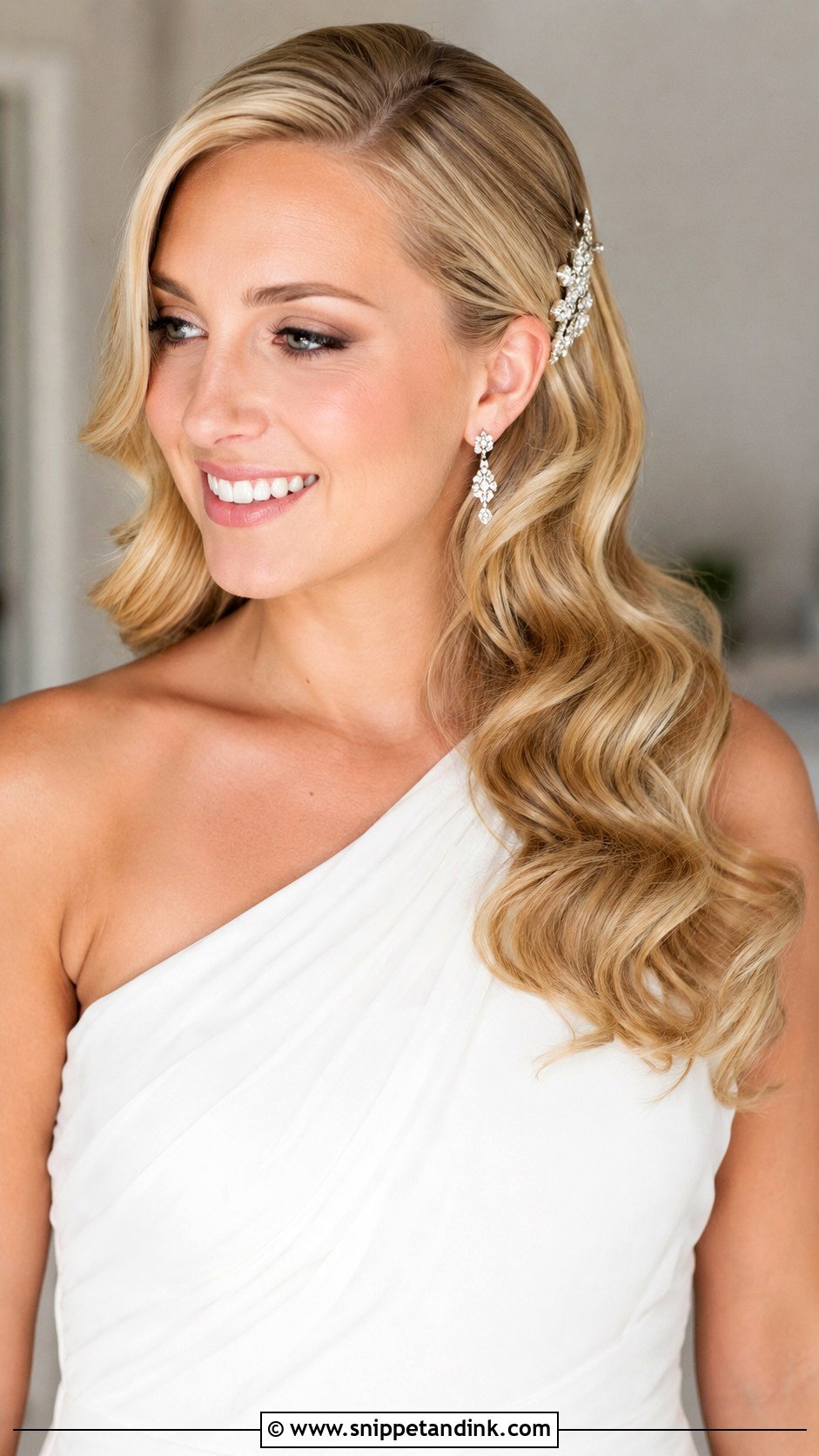
Gathering everything over one shoulder shows off one earring, one side of the neck and one strap, which makes it the obvious match for an off-shoulder or one-shoulder gown. The weight is the challenge. I anchor the sweep behind the ear with two crossed pins hidden under a top layer; without that, the hair drifts back to the centre by the cocktail hour. A jewelled pin can cover the anchor point. It suits medium to long hair and anyone who wants a vintage feel without a full set.
8. Boho Waves with Flower Crown
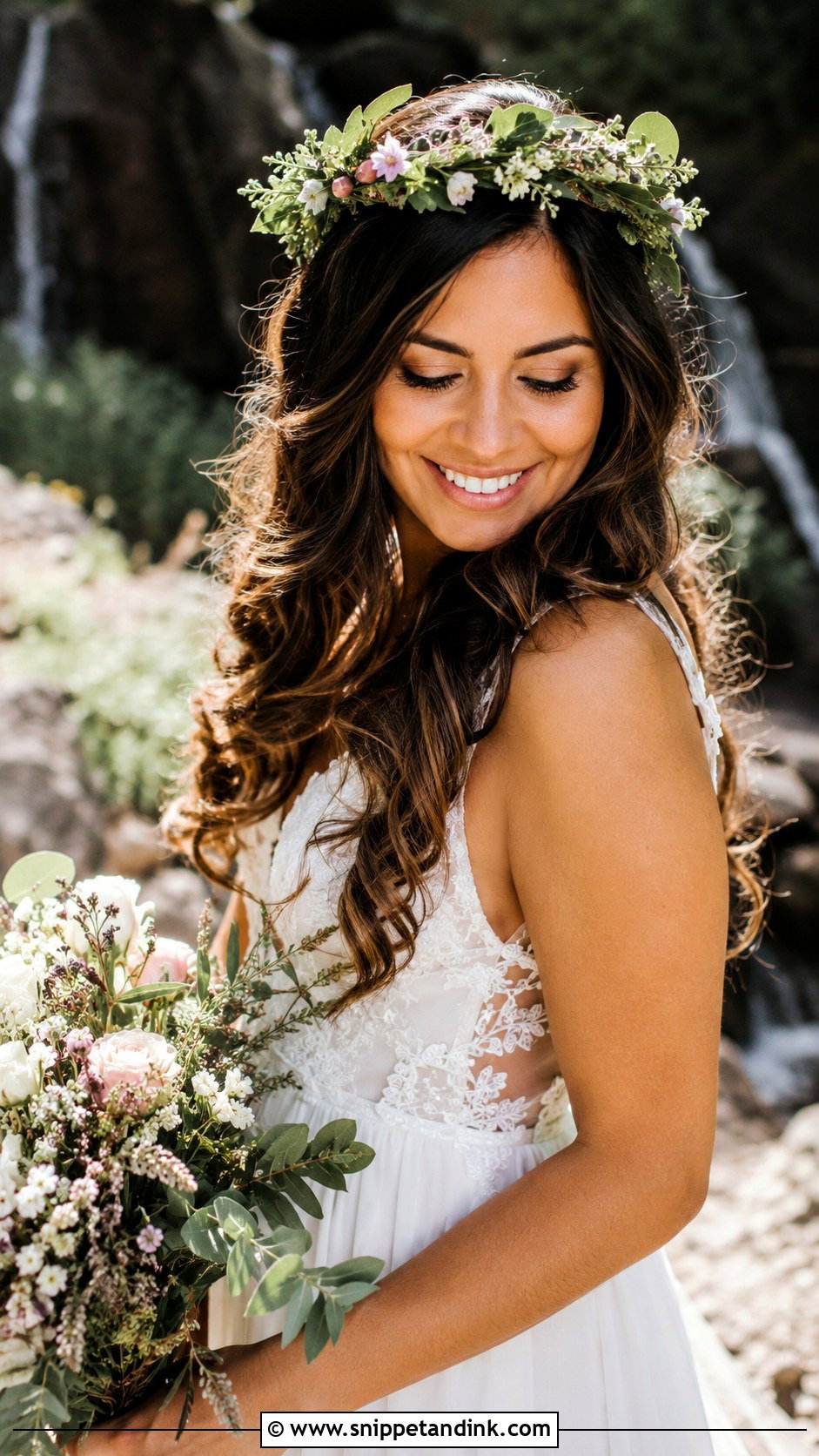
With a flower crown, the flowers decide how the day goes. Fresh stems wilt in heat and they are heavy, so I secure the crown with bobby pins woven through it and hidden in the hair, rather than resting it on top and hoping. Ask your florist for sturdy blooms that cope well out of water, and match a few to your bouquet so the two read as a set. The waves underneath should stay loose. It suits long hair at an outdoor or festival-style wedding; at a formal venue it can look like a costume.
9. Long Layered Waves for Wedding
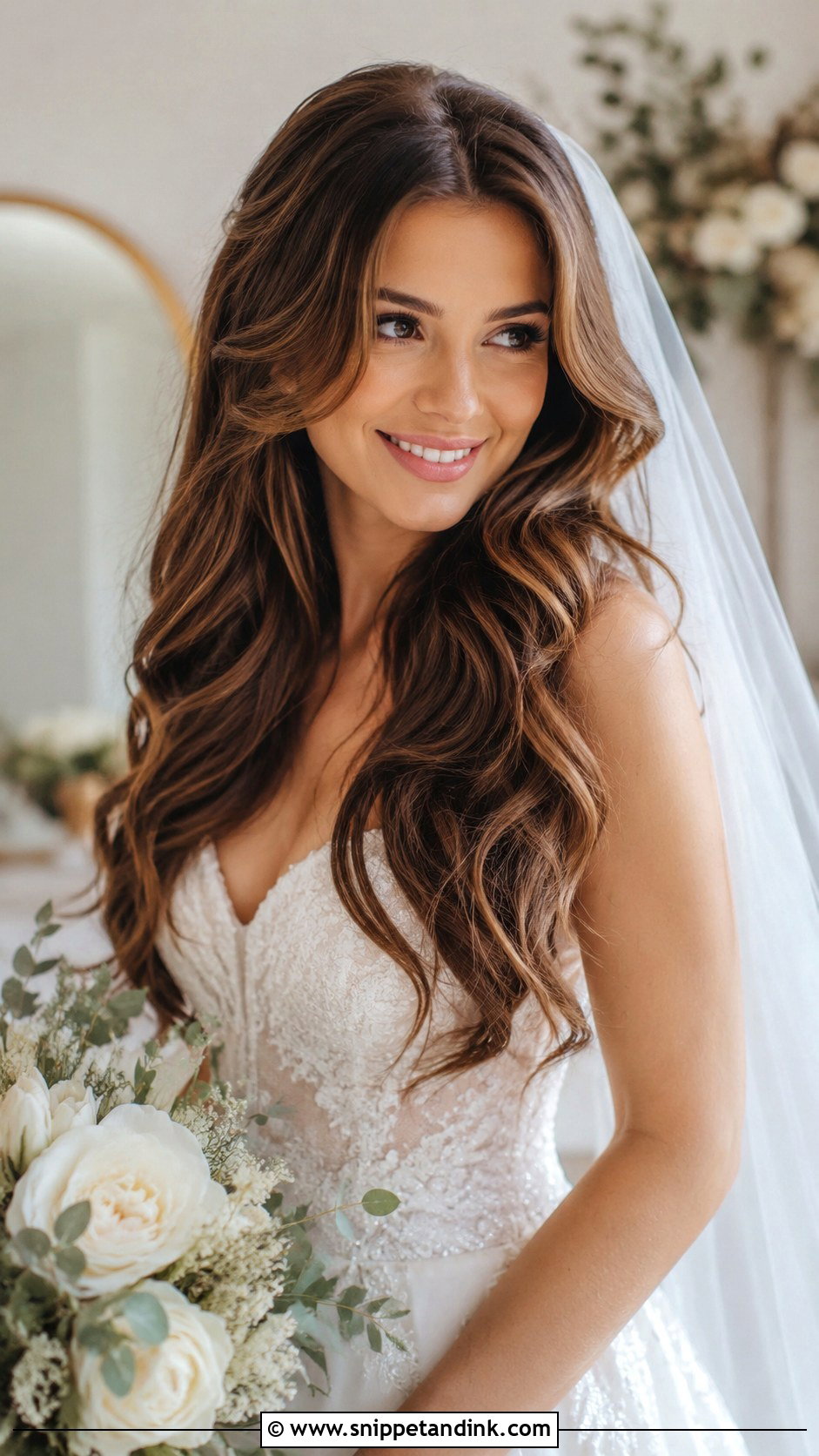
Layers are a gift for a down style, because each layer sits at a different length and the waves stack instead of all landing in one line. I curl them loosely and away from the face around the front so the shortest layers don’t fall into the eyes during the vows. If your last trim was more than a couple of months ago, book a dusting a week or two before the wedding; dry ends won’t hold a curl. It works across rustic and formal settings, and under a long veil the layered movement still shows through.
10. Sleek Deep Side Part Waves
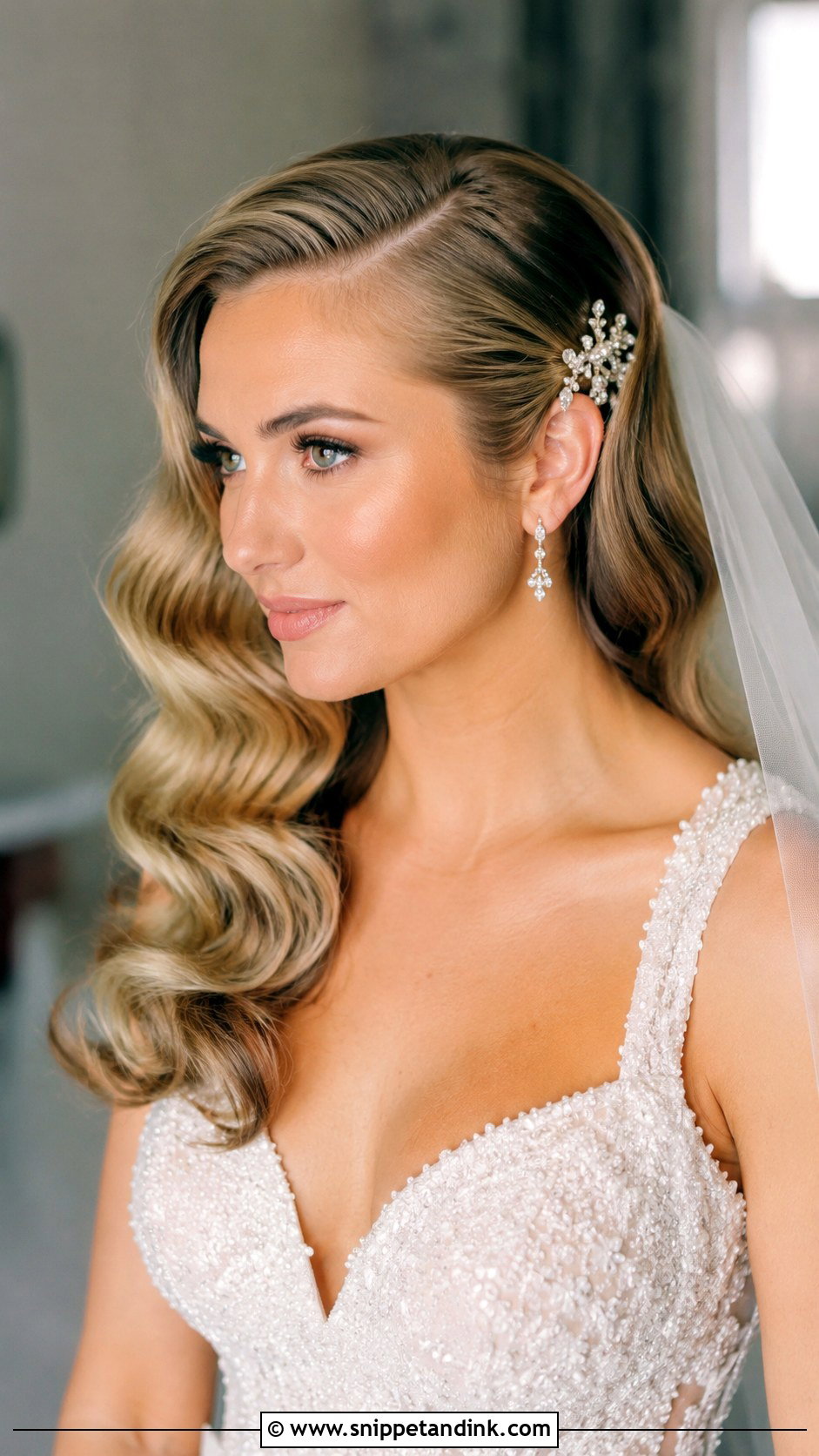
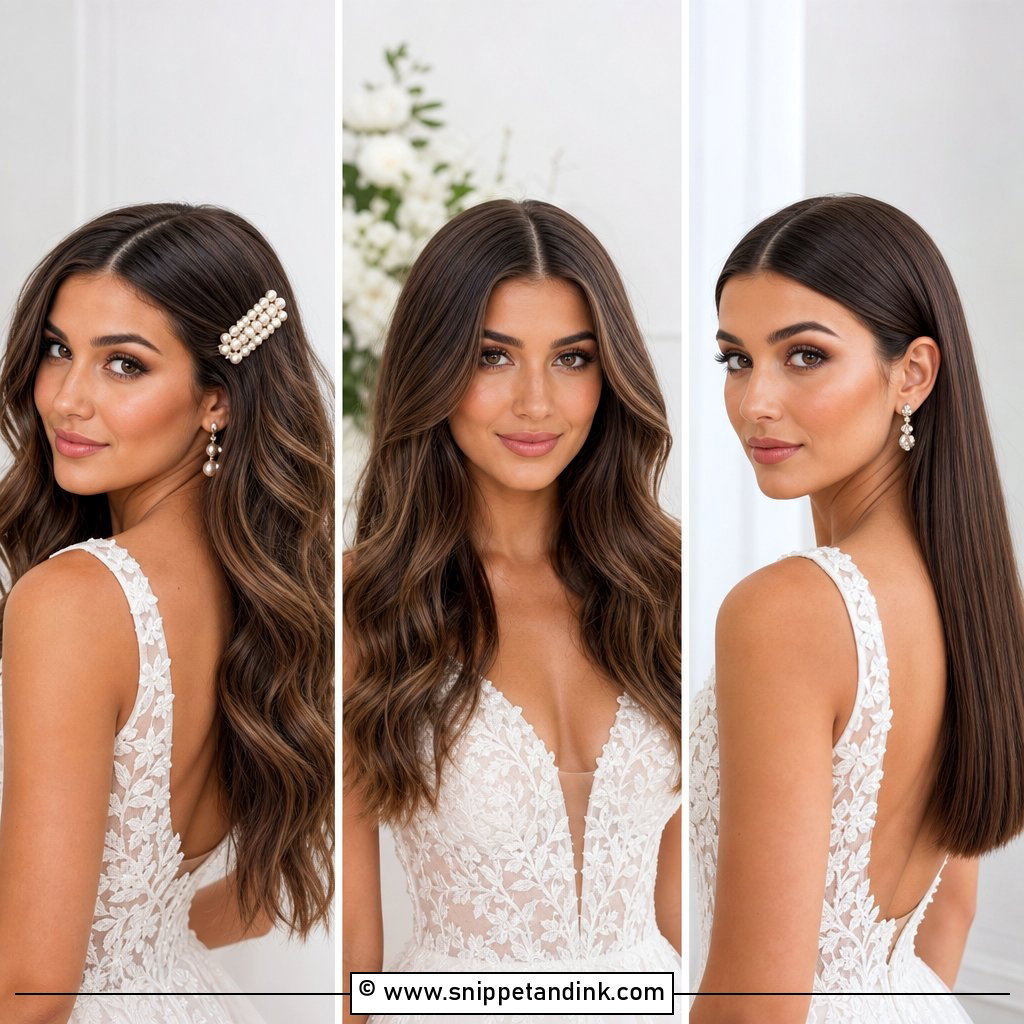
Sleek at the root, soft at the ends: the contrast is what makes this one look expensive. I flat-iron the first few inches smooth, then curl only from the ears down, so the part stays sharp and the volume sits low. A deep part flatters round and oval faces, though on a very high forehead I move it in a little. Expect it to need a smoothing brush and a touch of serum between ceremony and reception. Medium to long hair with shine suits it best, and a single crystal pin by the part is plenty.
11. Tousled Waves with Hair Vine
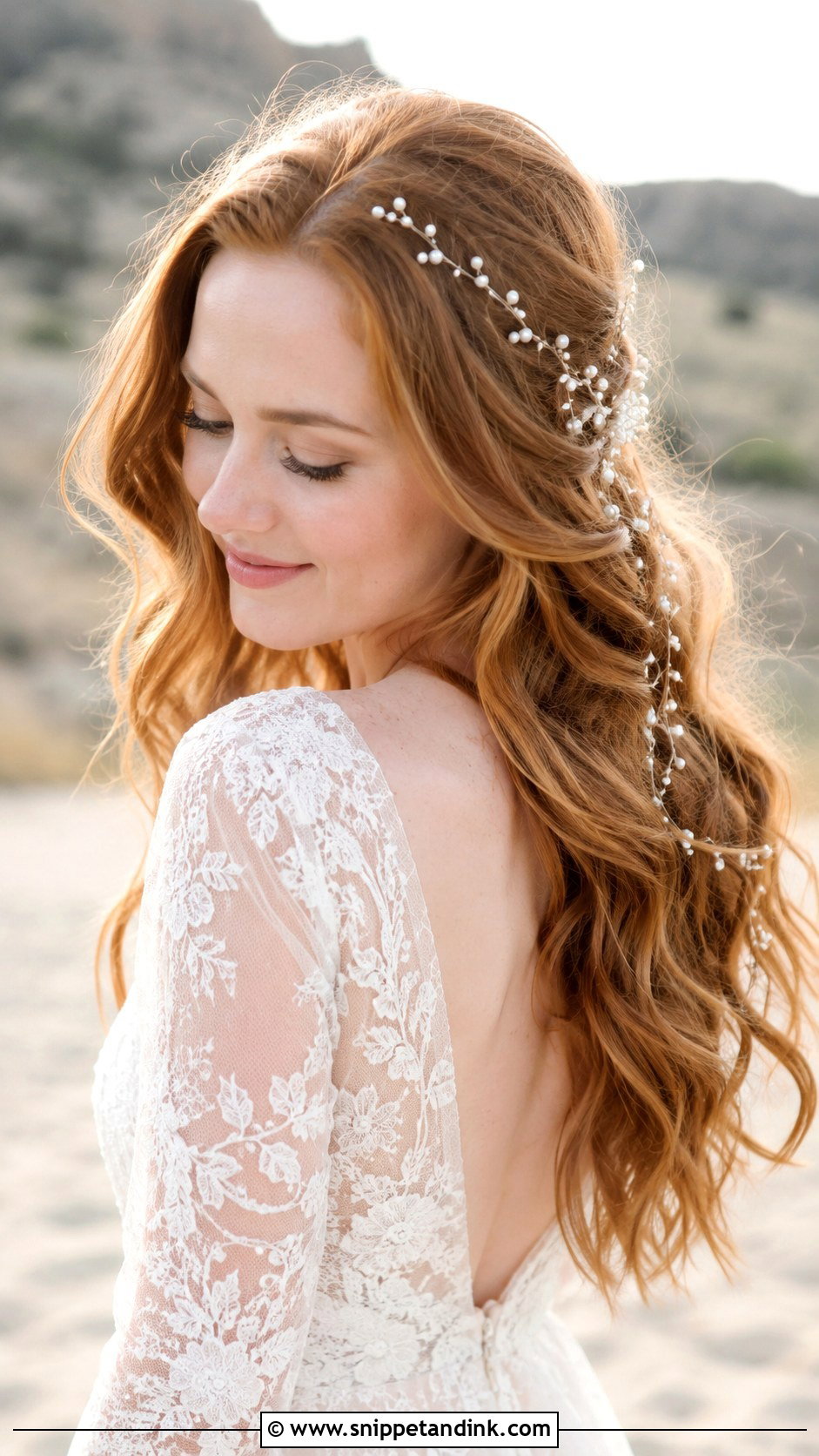
A hair vine works best over texture, because the waves give its wire somewhere to grip. I weave the vine through after curling and pin it at every bend, not just the ends, so it doesn’t creep forward as you move. This delicate hair vine look is pretty along one side or across the back of the crown. Gold and pearl both work; pick the one that matches your earrings. It suits medium to long hair with natural movement and a relaxed garden ceremony.
12. Curly Hair Down for Natural Brides
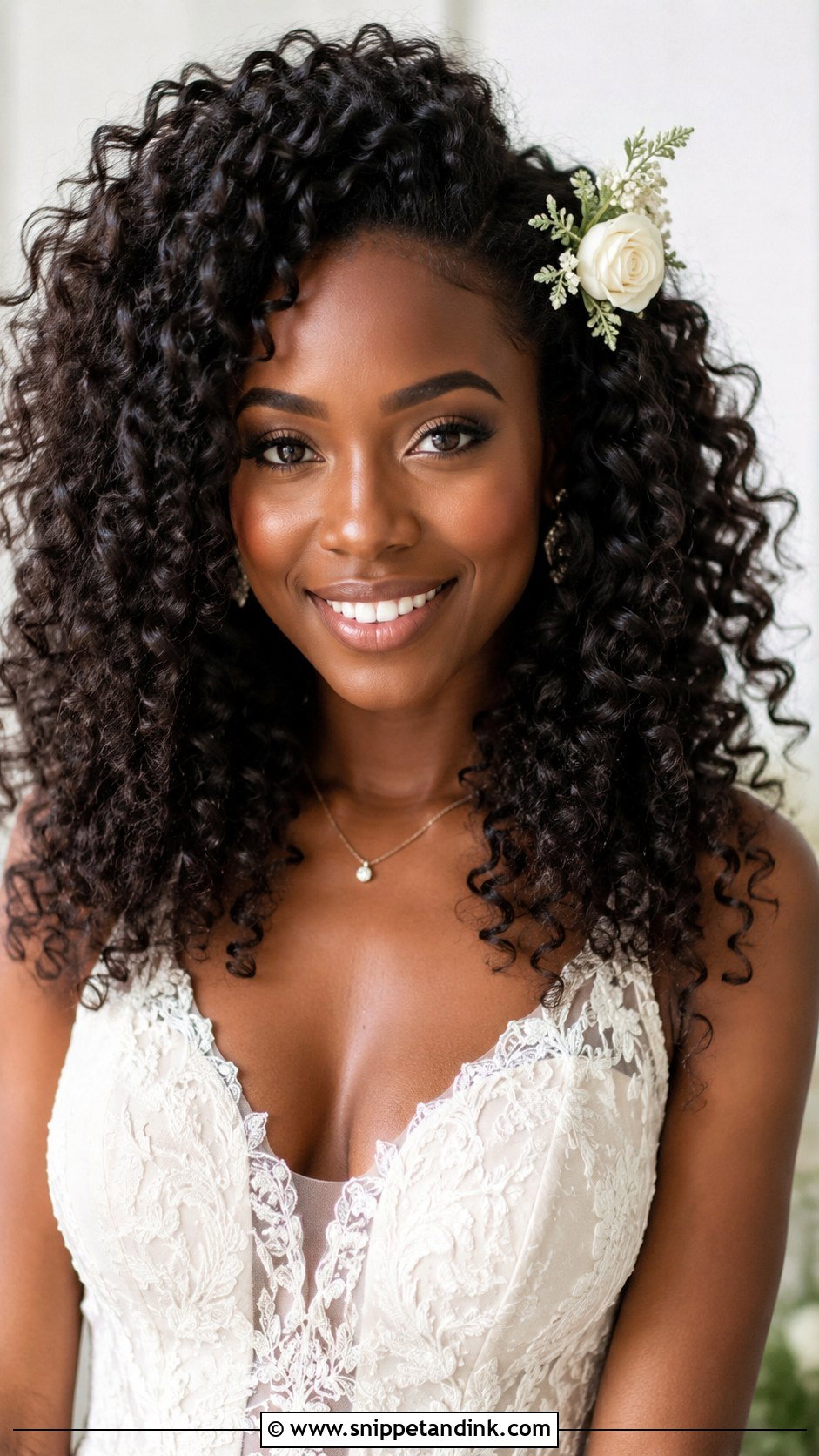
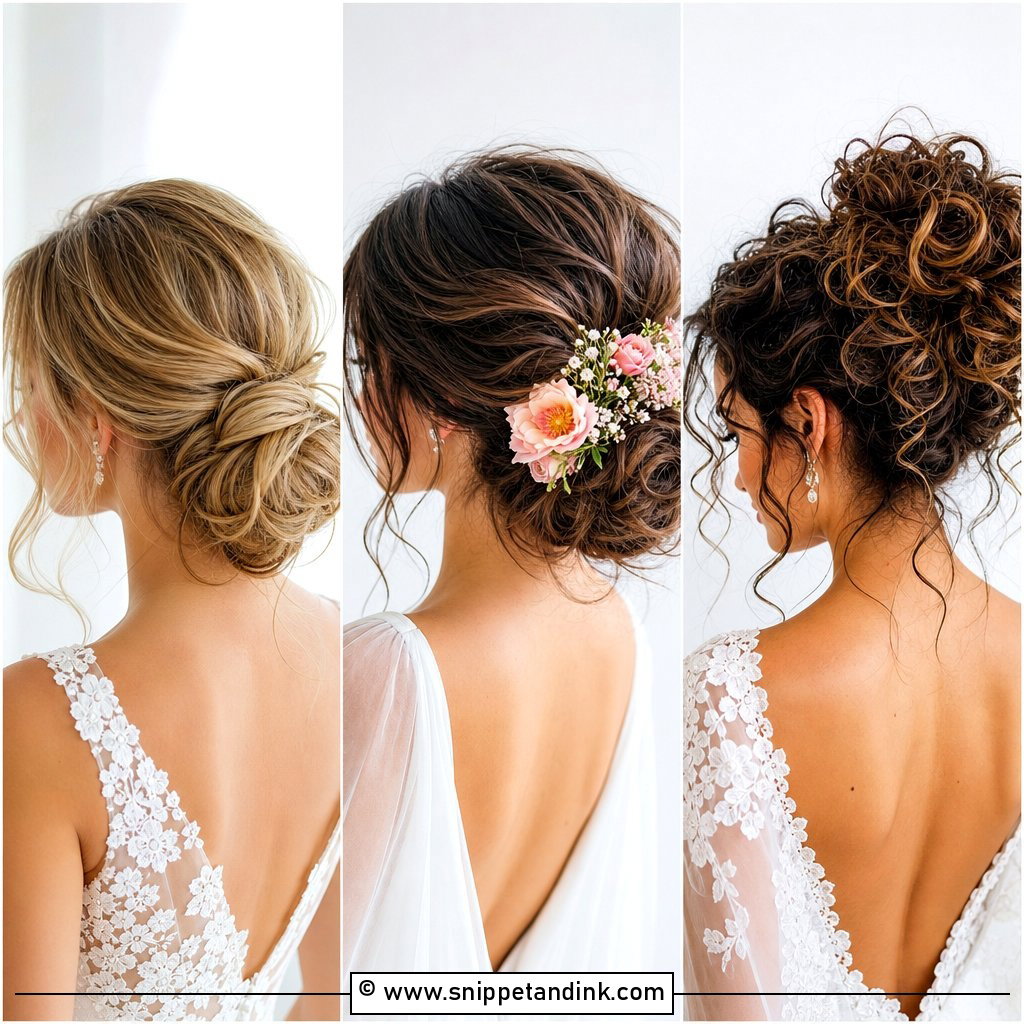
If your hair is naturally curly, the job is to enhance your curl pattern, not replace it. I prefer you arrive with curls washed and styled the way you normally do them, because a heavy rework on the morning often leads to frizz. I refine with curl cream, clip a few roots for lift and diffuse any areas that need it. Fluffing happens at the very end, and gently. Jewelled pins and fresh flowers sit well in curls since there is more to hold them. It suits curly and coily hair of every length, and it’s the look I’d recommend for anyone who doesn’t want to feel like someone else in her photos.
13. Vintage Finger Waves for Brides
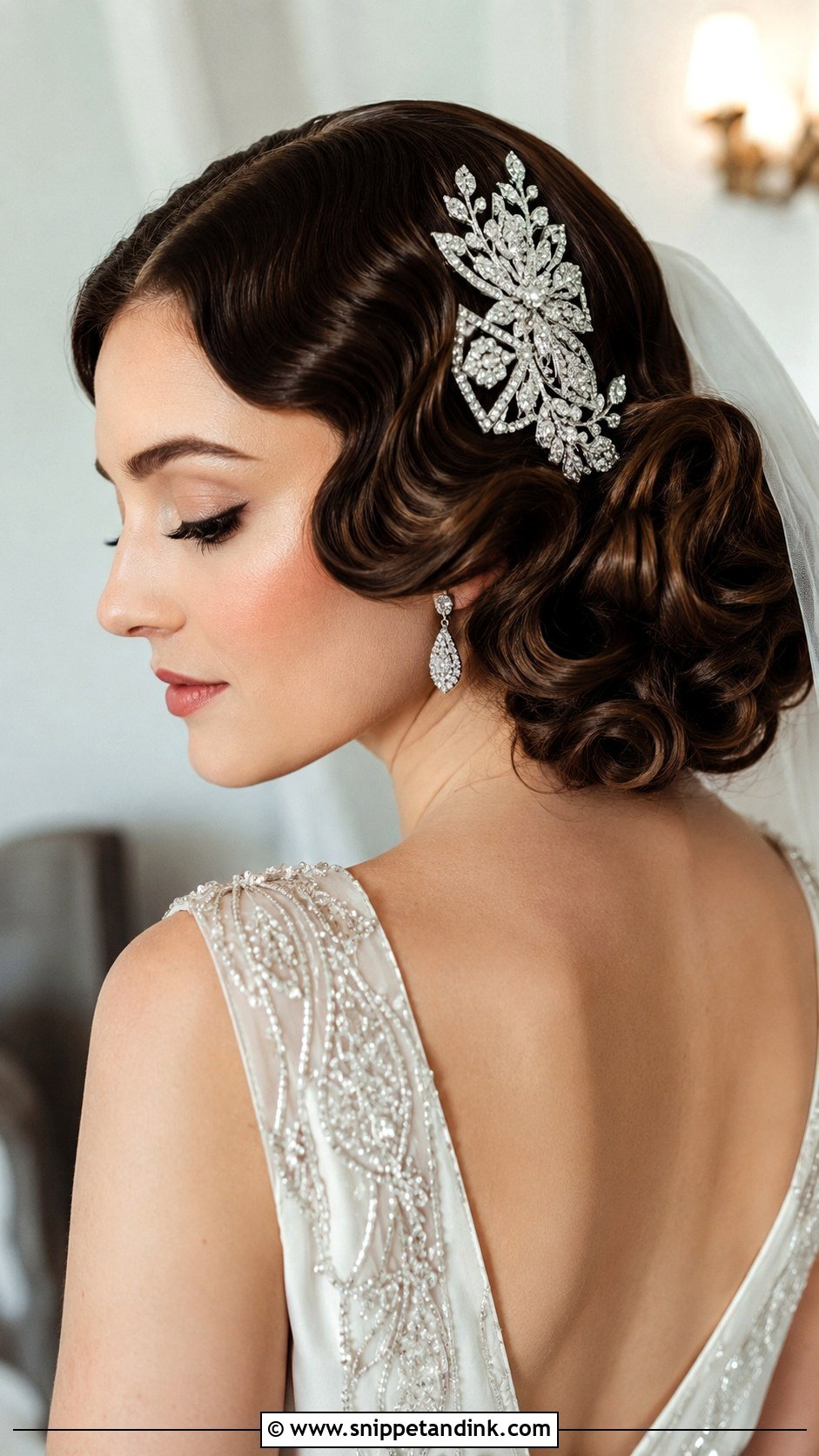
Finger waves are the most technical item on this list. The flat, sculpted ridges near the head are set wet with gel and clips and left to dry, which takes time, so this is not a look to squeeze in at the end of a morning schedule. Below the waves the lengths can soften into curls. It belongs at a vintage or Art Deco wedding, with a jewelled headpiece and maybe a 1920s glamour gown to match. Short to medium hair suits it best. Please book a trial for this one; it’s hard to judge from a photo how it will sit on your head.
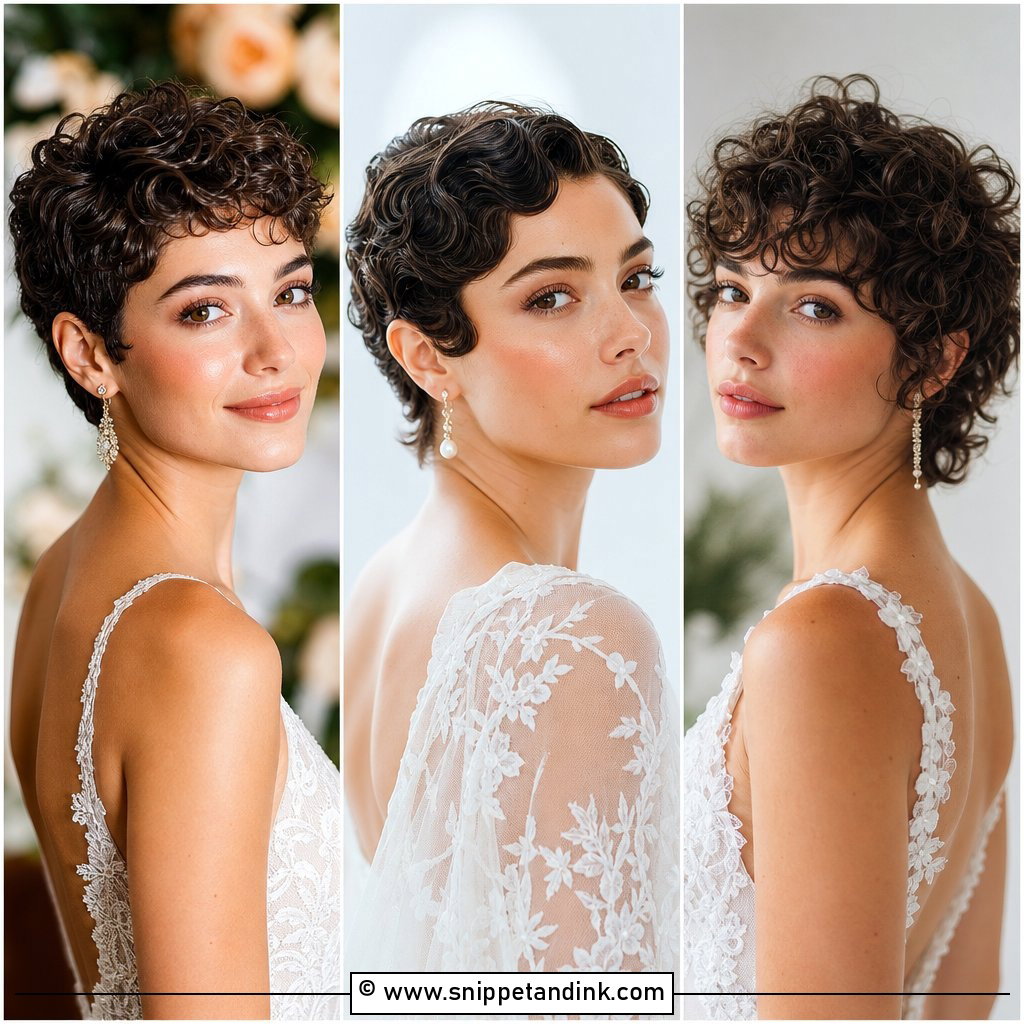
14. Short Hair Down Wedding Look
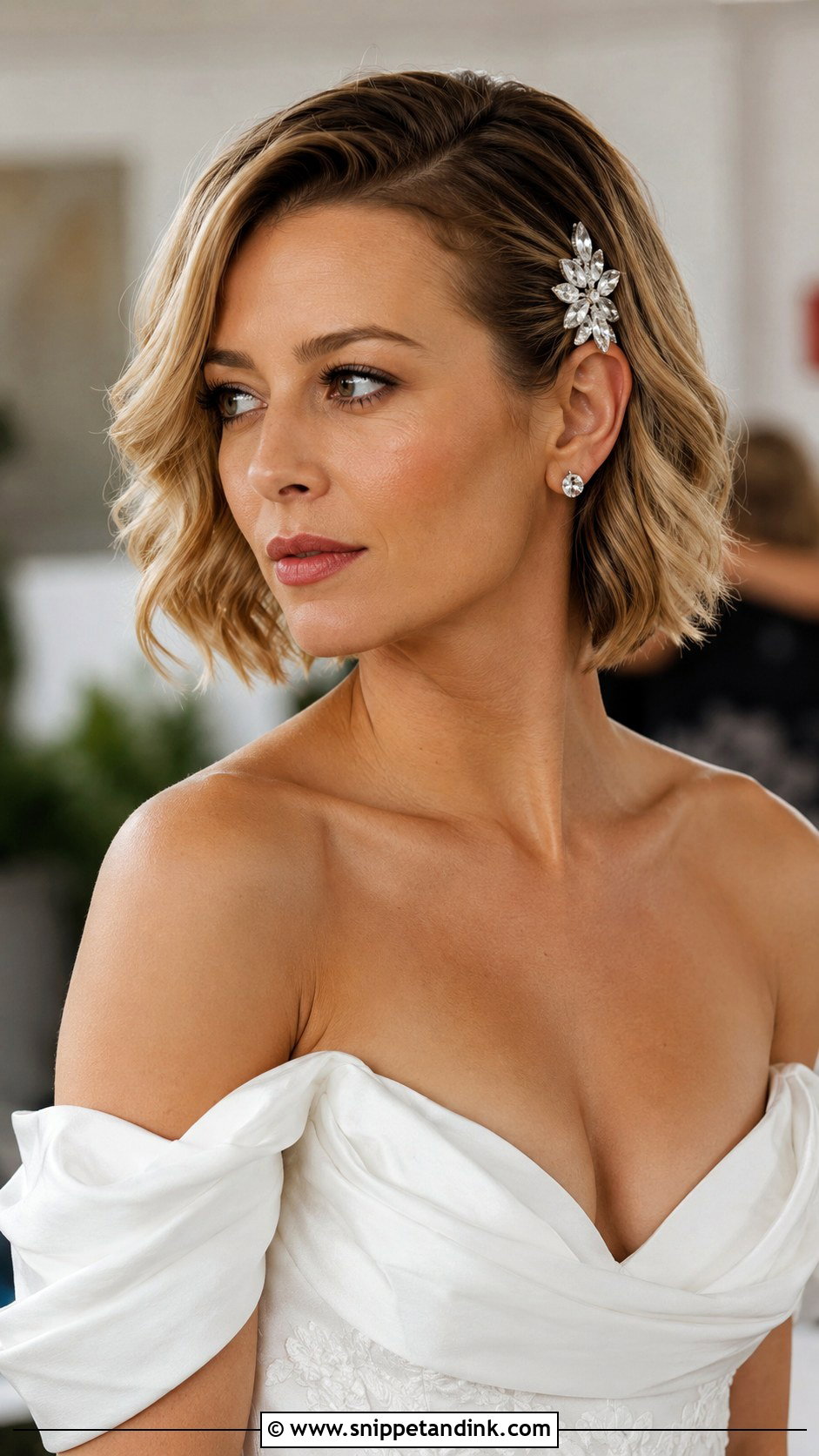
A bob or lob worn down needs fewer tricks than long hair, and it lasts longer too, because there is less weight pulling the curl out. I add loose bends with a smaller iron, leave the ends slightly straight so it doesn’t look poodle-ish, and tuck one side behind the ear with a sparkly pin. A thin headband or a small floral clip is enough adornment. Short hair photographs crisply, and there is no worry about it tangling under a veil.
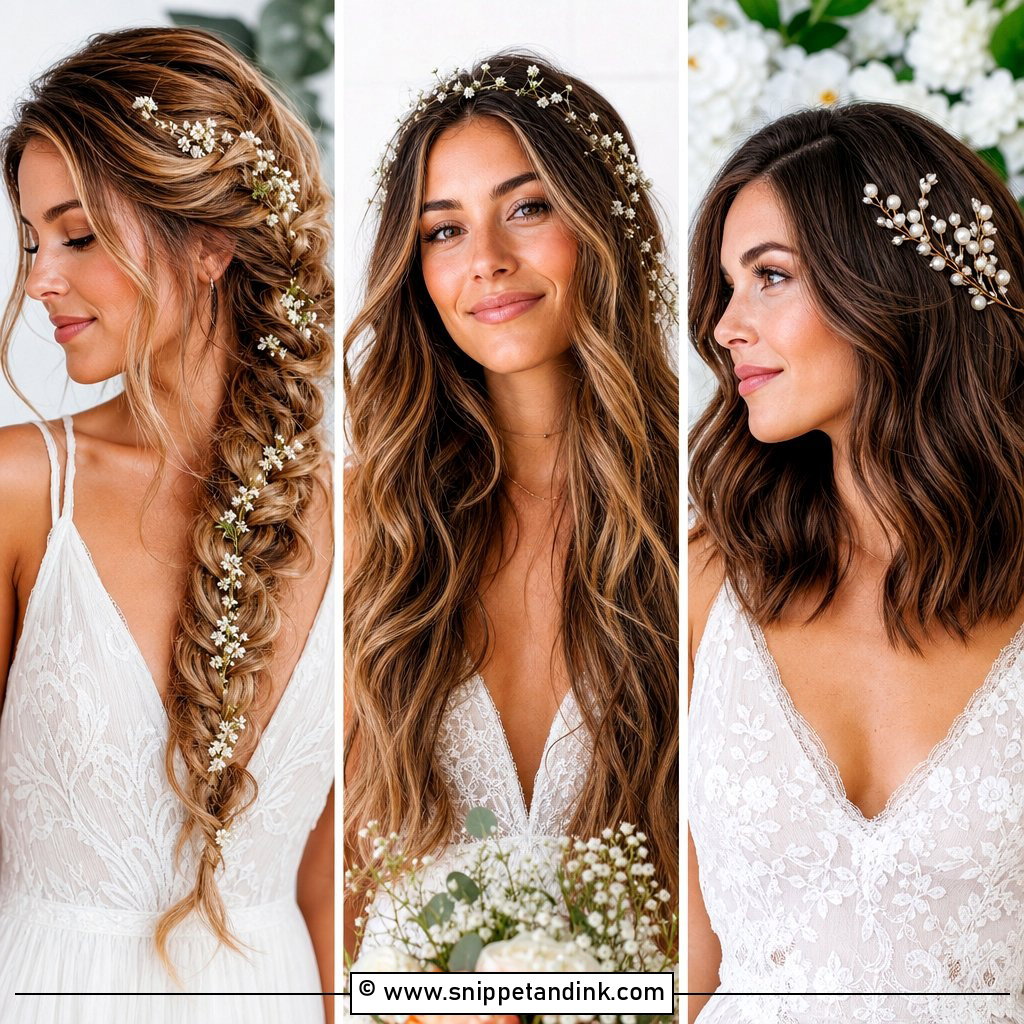
15. Glossy Blowout Bridal Hair
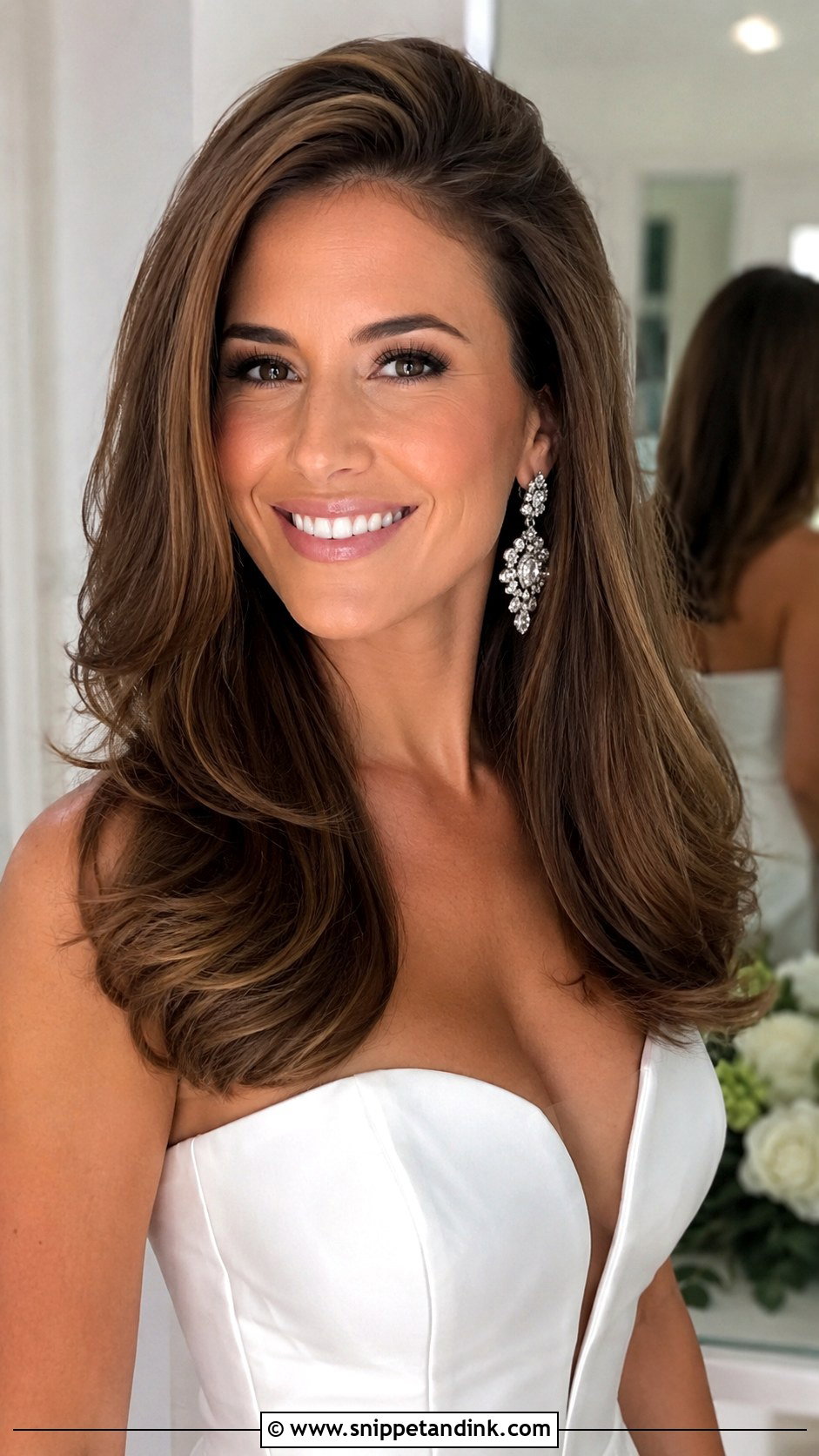
A blowout gives body and swing without visible curls, and it’s the least fussy option for the hours after the ceremony. I blow-dry the hair in sections with a large round brush, roll each section in a Velcro roller while it cools, and take the rollers out just before you get dressed. The cooling step is what keeps the volume past the first hour. It suits every length and almost every theme, and it pairs naturally with statement earrings and a sleek gown.
16. Wavy Hair with Pearl Pins
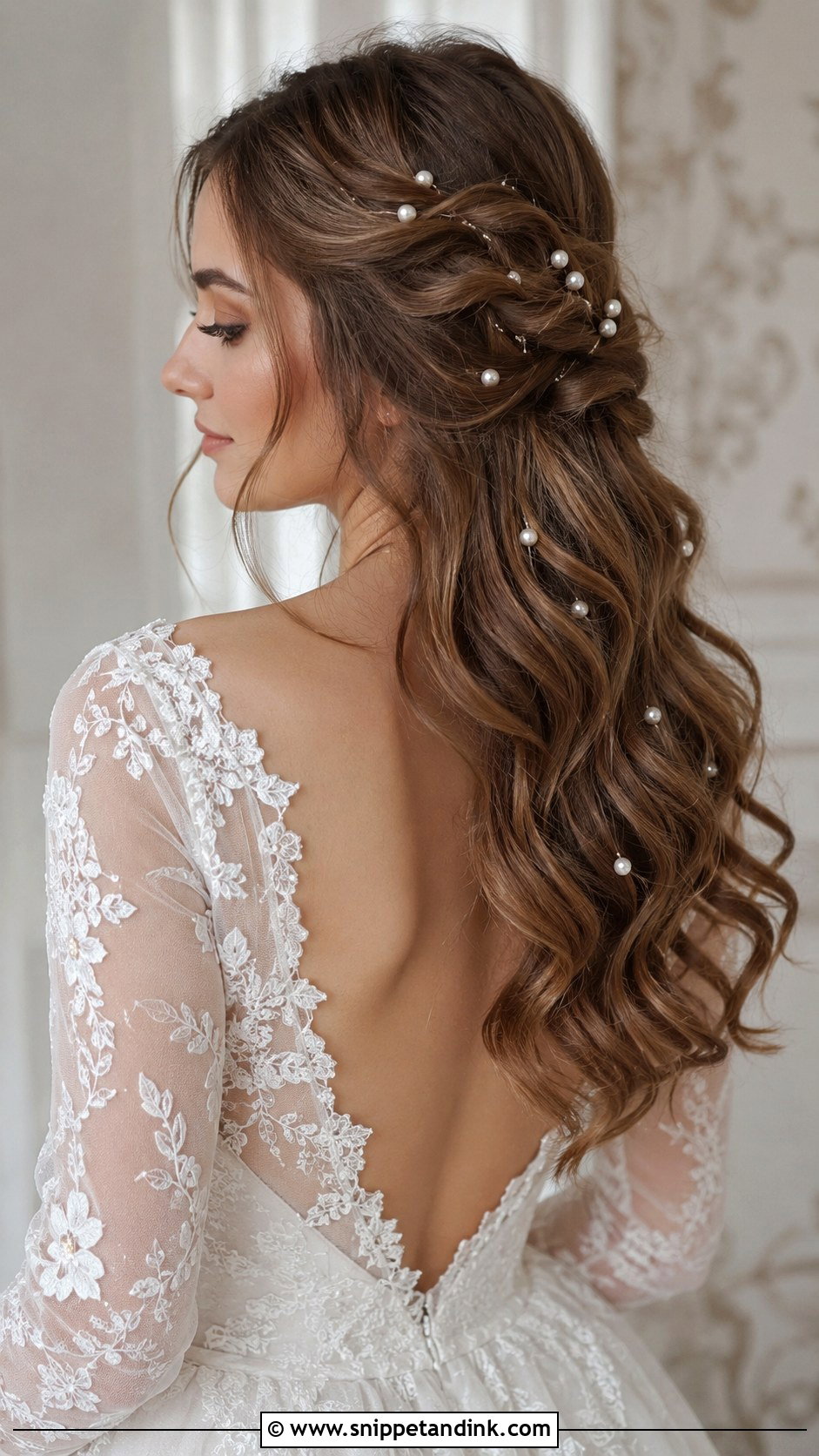
Pearl pins are the simplest way to add detail to waves, and they’re forgiving: if one slides, nobody notices. I scatter five to nine of them, more on one side than the other, and push each one into a section that has been lightly backcombed so it locks in place. They sit well against almost any gown fabric and skin tone. Medium to long wavy hair shows them off best; on very fine hair I use smaller pearls so they don’t drag the hair down.
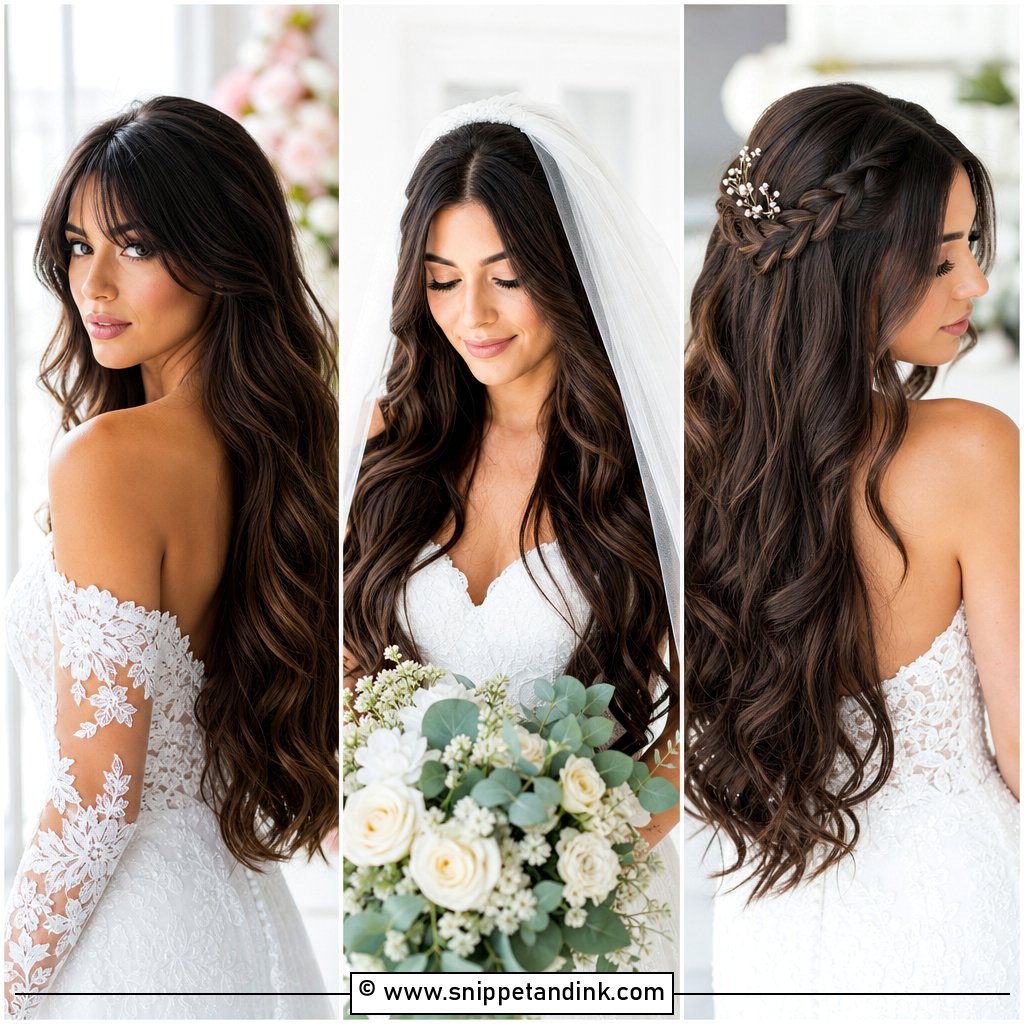
17. Center Part Waves for Brides
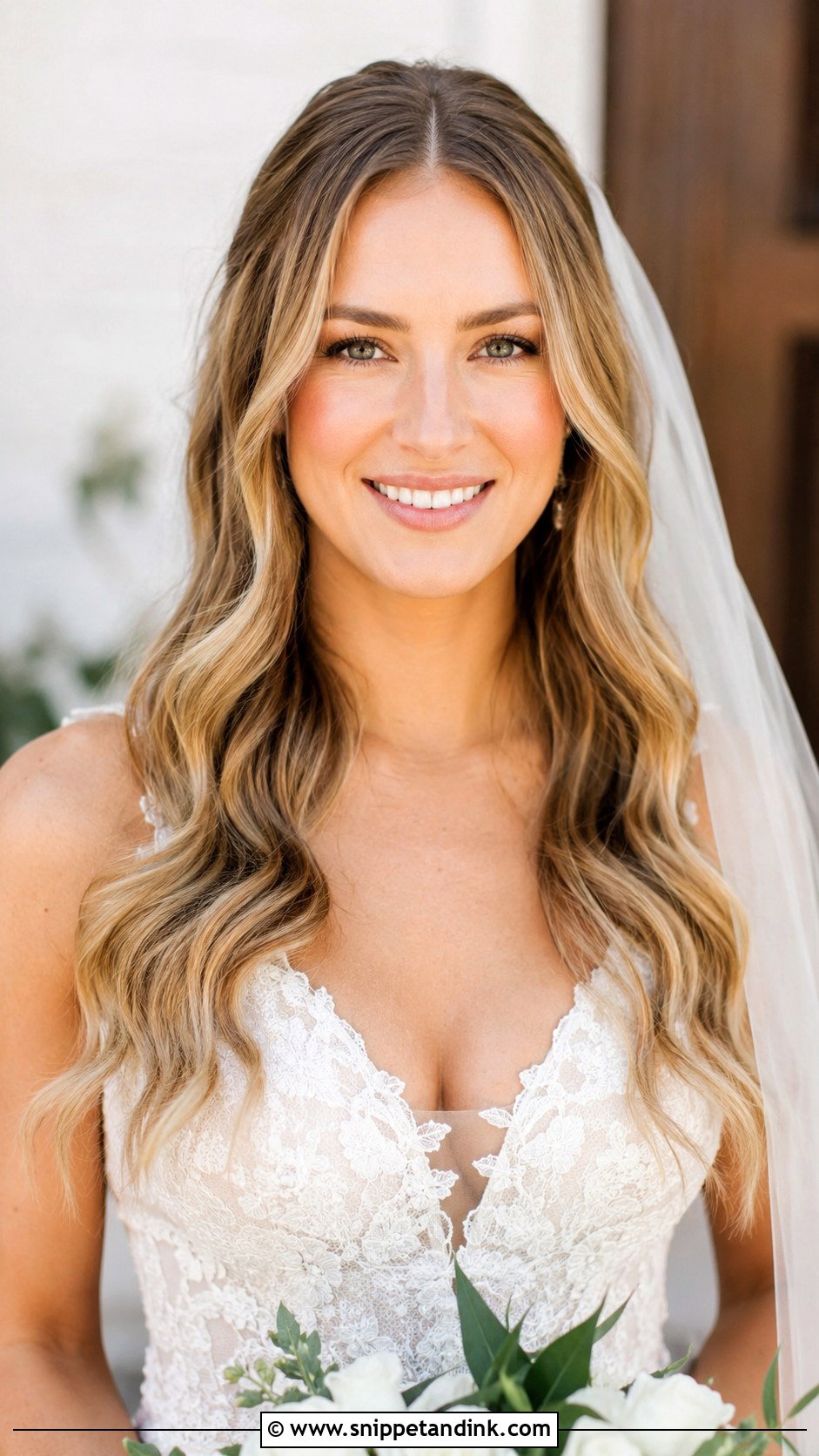
A centre part is the least forgiving parting in photos, because any asymmetry in your face or your hairline shows. I check it at the trial straight on and at three-quarters. When it works, it’s very clean and modern, with loose waves framing both sides. I curl the front sections away from the face on both sides so they mirror each other. It suits long and medium hair with some natural texture, and a thin vine or no accessory at all keeps it simple.
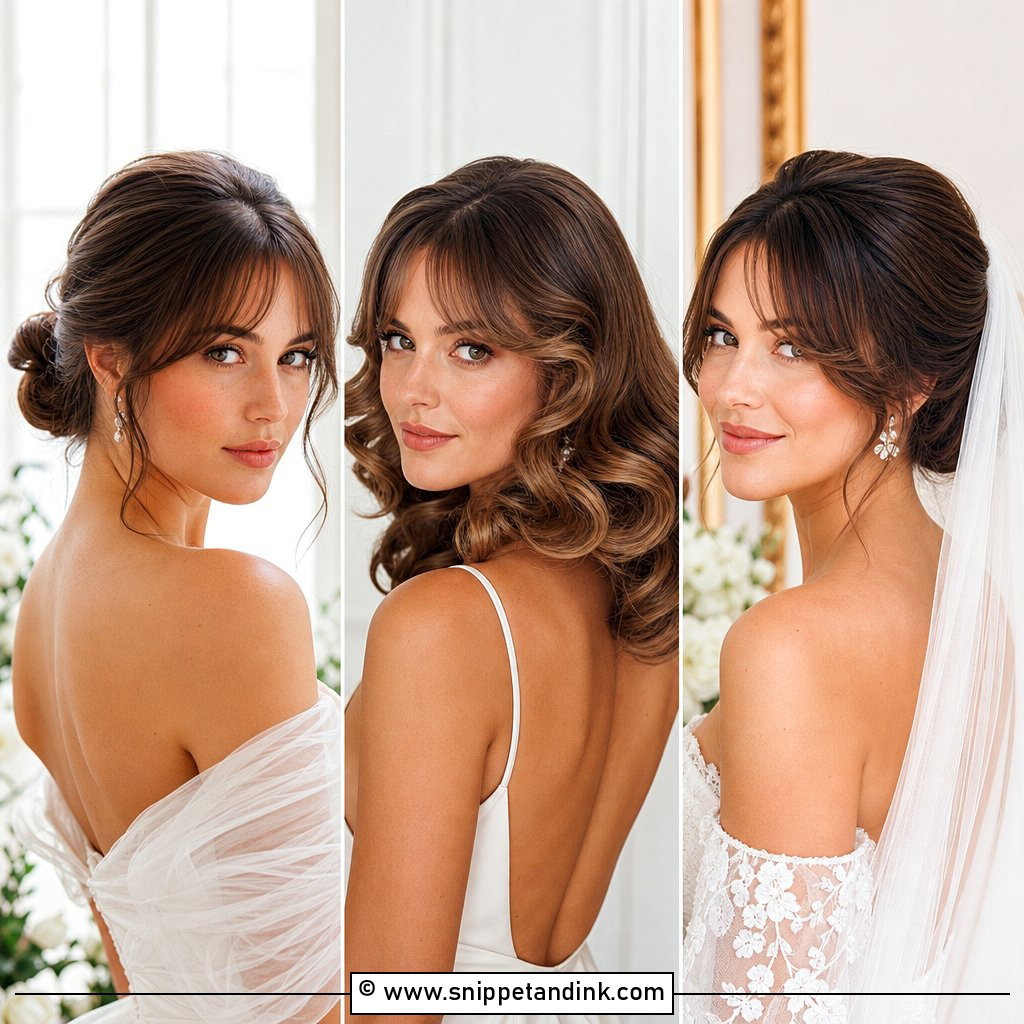
18. Voluminous Curls with Veil
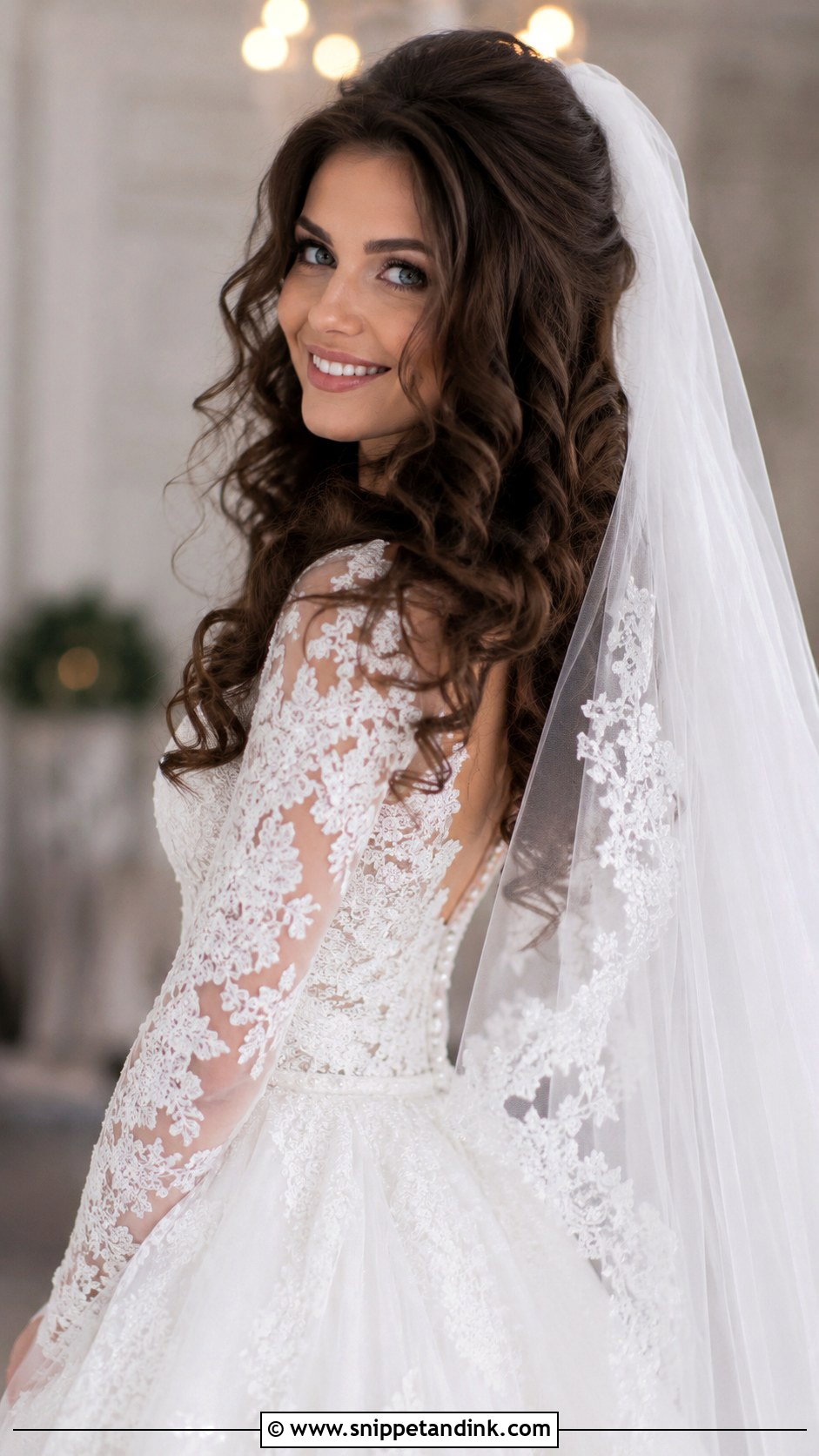
Big curls and a veil can work together, but the veil comb flattens whatever is underneath it. I build dramatic volume at the crown with backcombing and anchor the comb into a small hidden pin base just behind it, so the curls rise above and fall below the veil instead of being squashed. Cathedral and fingertip veils both suit it. Medium to long hair with natural body is ideal, and it fits a formal church or ballroom wedding.
19. Twisted Half-Up Boho Style
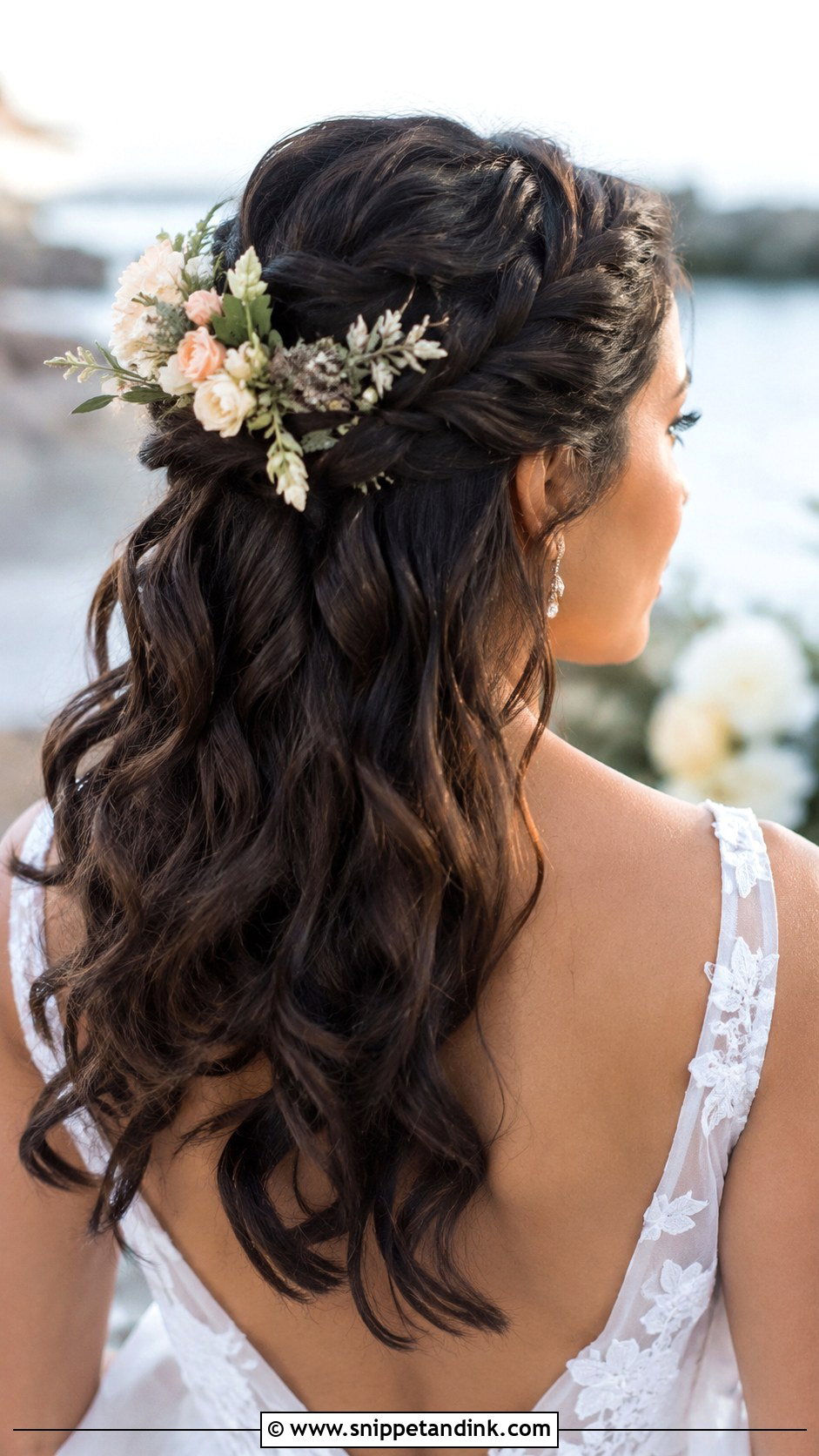
Twisted sections are softer than a braid and much faster, which makes this my fallback when a schedule is running late. I twist a section on each side back toward the crown, pin them where they meet, then loosen each twist a little with my fingers. Flowers, vines or pearl pins can sit right in the join. It suits long and medium hair with some movement, and it holds up well through an outdoor or garden ceremony.

20. Auburn Waves Down for Brides
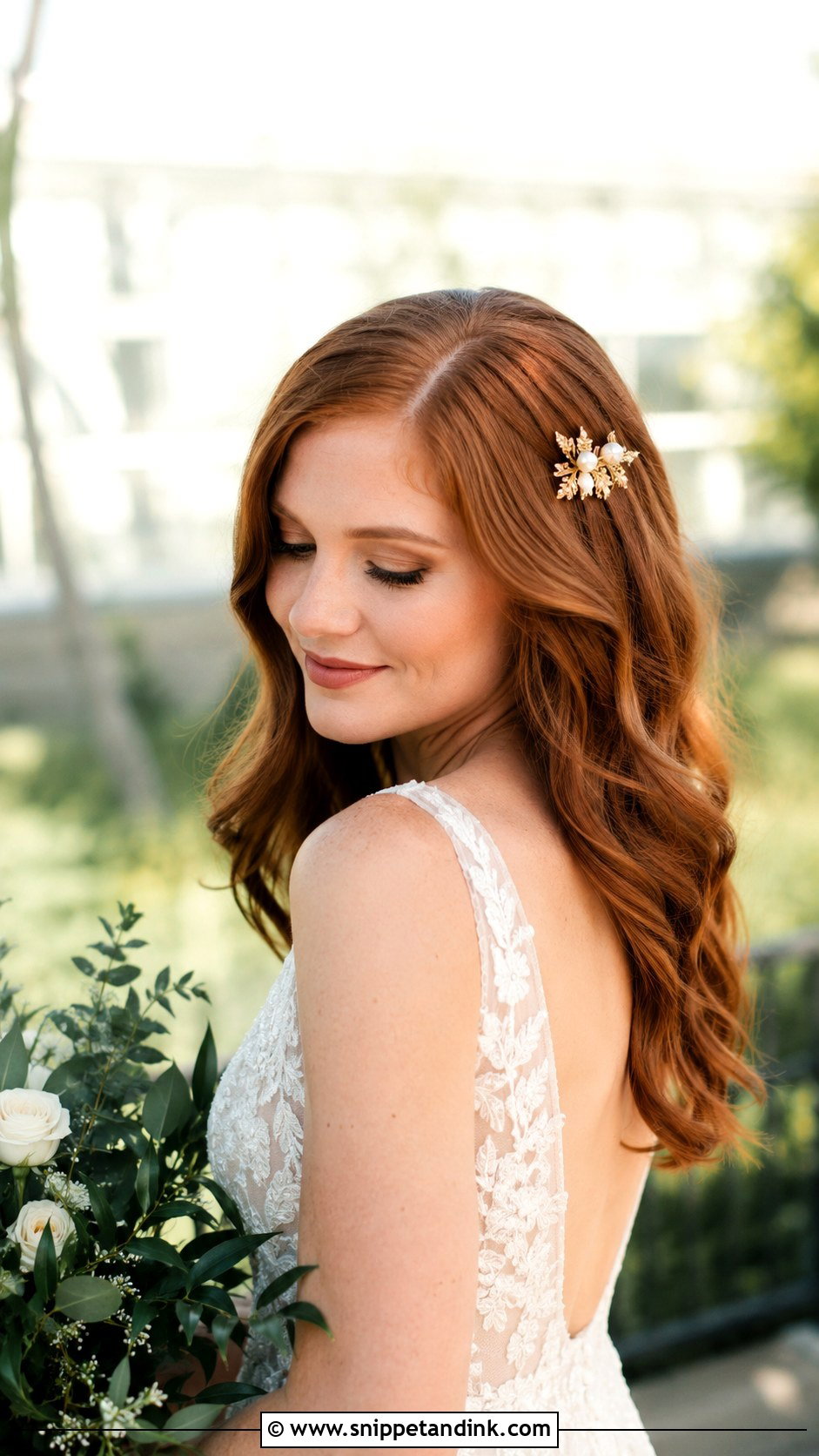
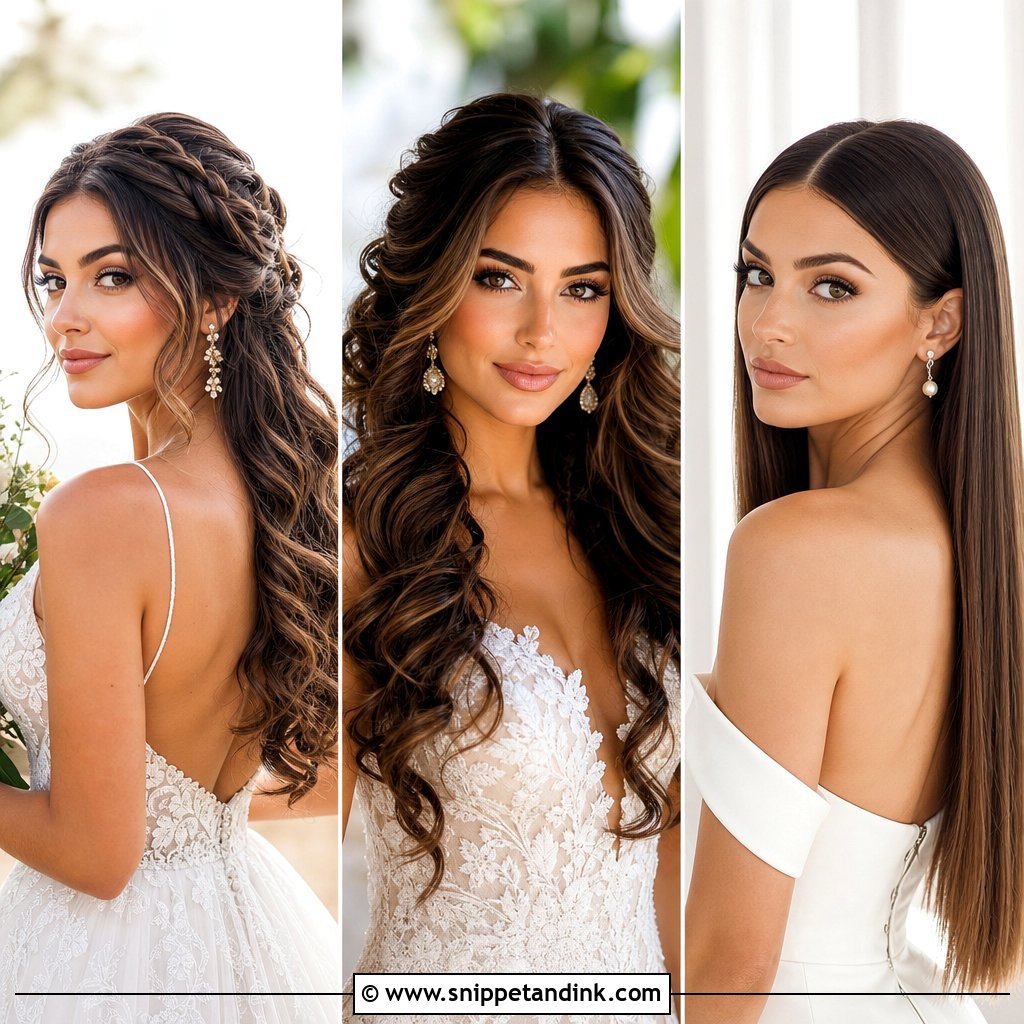
Red and auburn shades show more depth when curled, because each wave catches light differently on its crest and in its dip. I curl loosely and use a shine spray rather than a heavy serum, which can make red hair look darker in photos. If you colour your hair, do it two to three weeks before the wedding so the tone settles. Gold accessories and greenery suit warm hair best, and the style works on medium to long lengths.
Matching the Style to Fine, Thick or Textured Hair
Photos show hair that has suited the style. Yours may need a different route to the same result, and that is fine.
Fine or Thin Hair
Fine hair holds a curl for a shorter time, so I use smaller sections, a smaller barrel and a root lift spray. Clip-in extensions can add weight and fullness, but they have to be colour matched at the trial, not on the morning.
Thick or Coarse Hair
Thick hair keeps a curl well, but it takes time and can feel hot and heavy on the shoulders. I thin out the underneath layer with clips and pin it slightly back, so the volume sits where you want it.
Curly and Coily Hair
If you plan to wear it straightened, do a trial in similar weather, because silk-pressed hair can revert in humidity. If you’re wearing your natural pattern, I build the look around your usual wash routine rather than replacing it.
A Small Hair Kit for the Hours After the Ceremony
Down hair takes a beating from hugs, a veil and the photographer’s breeze. Give your maid of honour a little pouch so you don’t need me back for the evening.
- Six to eight bobby pins in your hair colour and two clear elastics.
- A travel hairspray and a small smoothing brush for flyaways.
- A wide-tooth comb for lifting flattened curls, never a fine brush.
- A hair tie, in case you want to take it up for the dancing.
If a curl drops, twist it around a finger, pin it for ten minutes while you have a drink, then release. It’s the quickest repair I know.
The Curl Has to Last Until the Last Dance
Every one of these styles starts with your hair type, your gown and how long you need the curl to last. Book a trial, wear the curl through the afternoon, and see what has changed by the evening before you commit. Then add pearls, a vine, fresh flowers or a veil to finish it. Down styles reward the bride who plans them carefully, and your hair, worn the way you already love it, is a fine thing to walk down the aisle with.
You'll Like These Ideas:



Leave a Reply