
After the wedding, most gowns end up in the wrong place: a plastic garment bag at the back of a wardrobe, hanging by the straps from a wire hanger. I’d rather see it laid flat in a proper box. The ideas below cover plain archival chests, decorative boxes, display cases and travel cartons, and the same rules run through all of them. The box has to fit the dress without crushing it. Anything touching the fabric should be acid-free and undyed. And the box belongs somewhere cool, dark and dry, because heat, light and damp are what cause yellowing, set creases and mildew. Heavy gowns are better stored flat and padded than hung for years, since the skirt’s weight slowly stretches the shoulder seams. From personalized keepsake trunks to slim chests for small flats, there’s an option for most dresses, homes and budgets.

Get It Cleaned While the Stains Are Still Visible
No box can rescue a dirty dress. The marks you can see, like mud on the hem or a lipstick smudge, are actually the easy ones. The damage I worry about is invisible on the night: spilled champagne, sugary cocktails, cake icing and perspiration. They dry clear, then oxidise in storage and turn into brown spots a year or two later, often too set to remove.
So I tell brides to get the gown to a cleaner who handles bridal wear within a few weeks of the wedding, not a few months. When you drop it off:
- Point out every spot you know about, including the clear ones. Tell them what spilled if you remember.
- Ask whether the beading, sequins or appliqué are glued or stitched. Glued trims can loosen in some cleaning solvents.
- Ask to see the gown after cleaning before it’s packed, and check the hem, underarms and bustle points yourself.
- Keep the written receipt describing the cleaning and packing. It matters if you ever need to raise a problem.
Some services seal the box and say it must never be opened. You’re allowed to open your own box. A gown that is never checked can’t be refolded or caught early if something goes wrong.
1. Acid-Free Wedding Dress Box
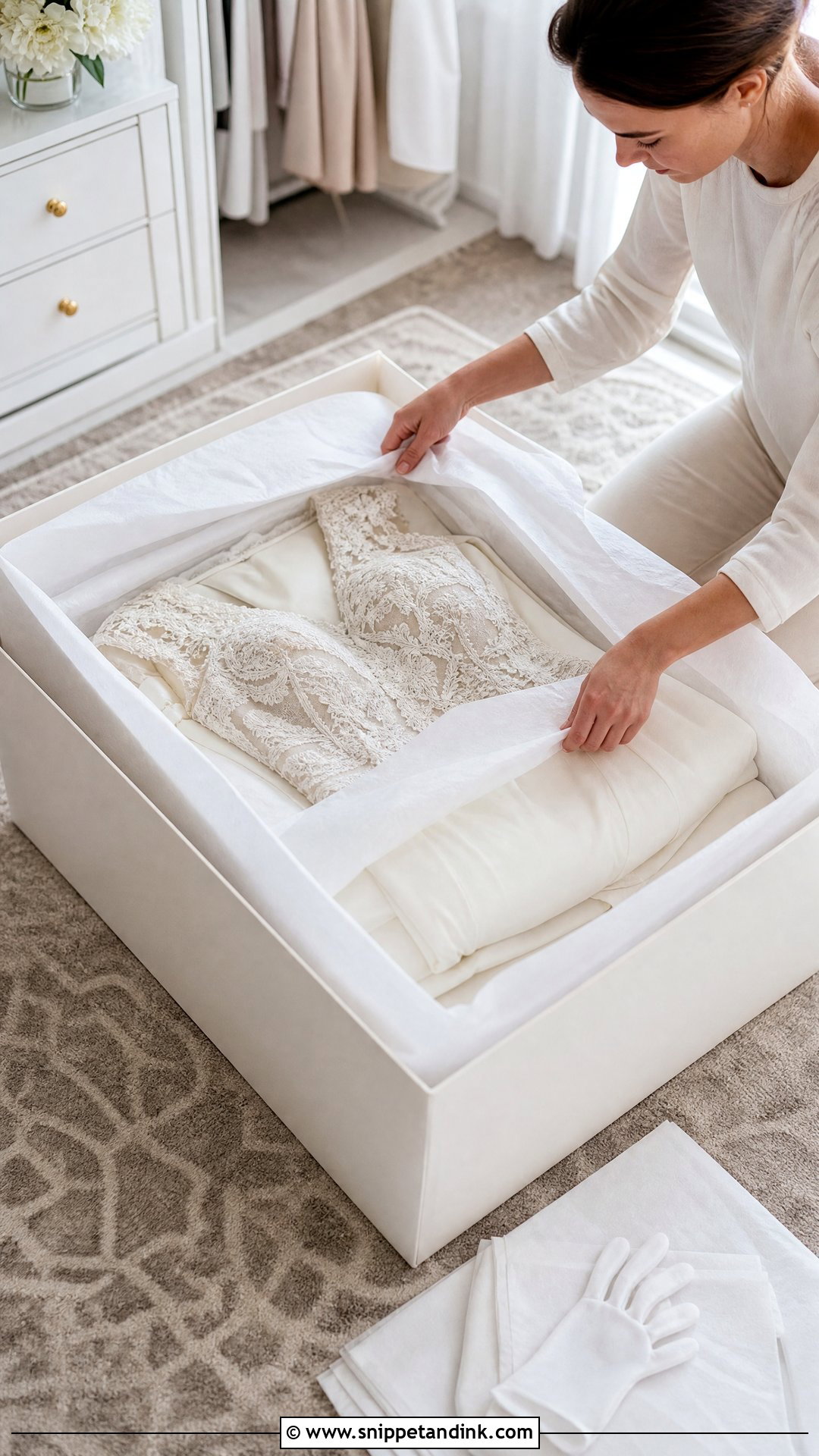
Start here if you only buy one thing. Ordinary cardboard is acidic and slowly yellows any fabric pressed against it, so an archival box made without acidic board, dyes or coated finishes is the safe base. I lay white acid-free tissue on the bottom, then put more between every fold and inside the bodice and sleeves so the gown keeps its shape. Fold along existing seams where you can, rather than pressing new hard lines across the skirt. Lace, satin, organza and beaded gowns all store well this way. Put the box on a steady shelf in a cool, dark room, never in a garage, loft or basement, where temperature and damp swing all year.
2. Wedding Dress Preservation Box With Window
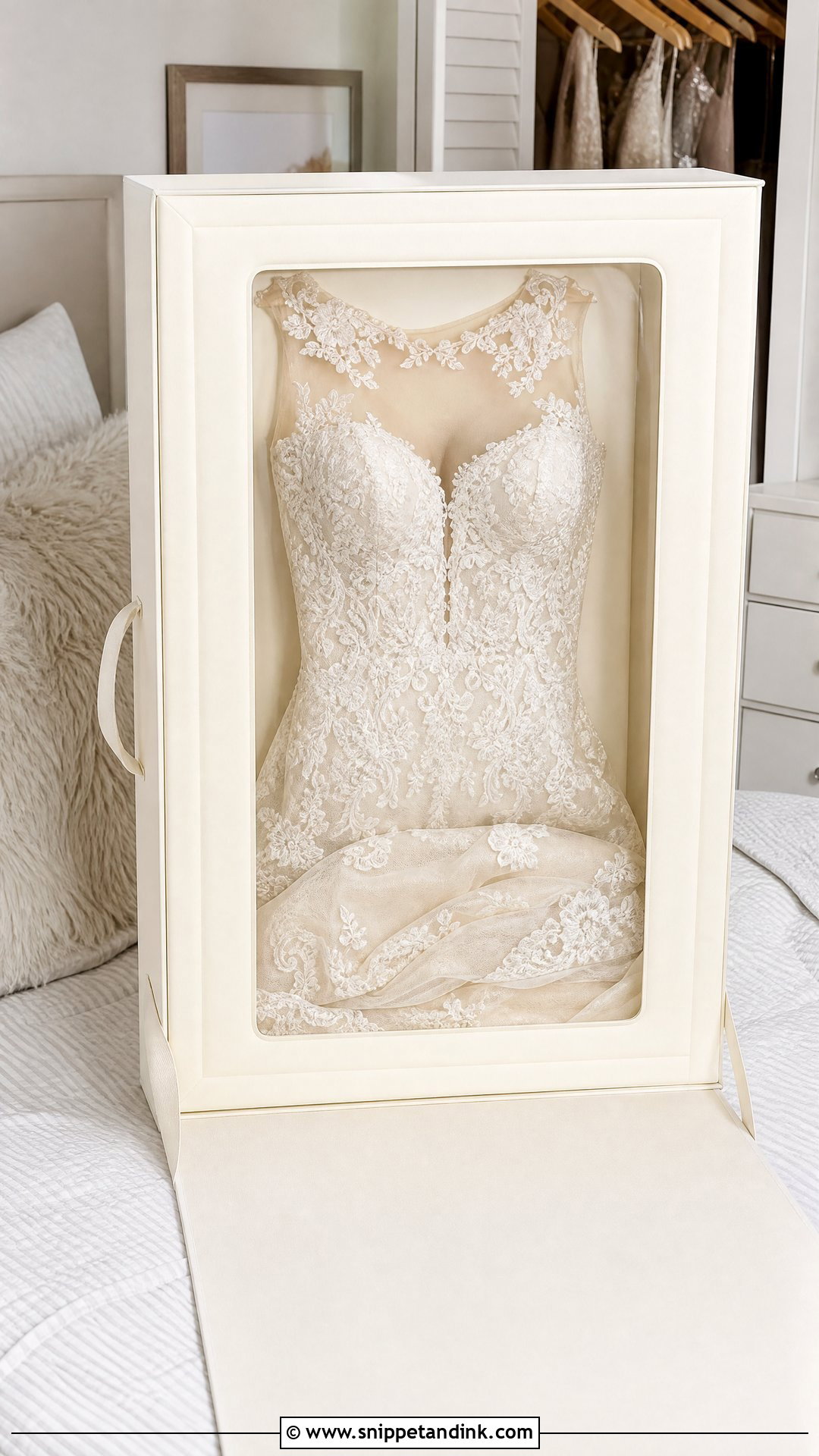
A window lets you see the gown without lifting the lid, which means fewer hands on the fabric. The dress is usually arranged so the bodice, lace or beadwork faces the panel. I’d check two things before buying: that the interior is archival, and that the clear panel doesn’t press plastic straight onto the fabric, since trapped moisture collects there. Light is the trade-off. Even with a lid, a window lets light reach the dress, so keep the box out of sunny rooms. It suits gowns with embroidery or a sculpted corset bodice. A small label with the wedding date and designer saves guessing later.
3. Personalized Wedding Dress Box
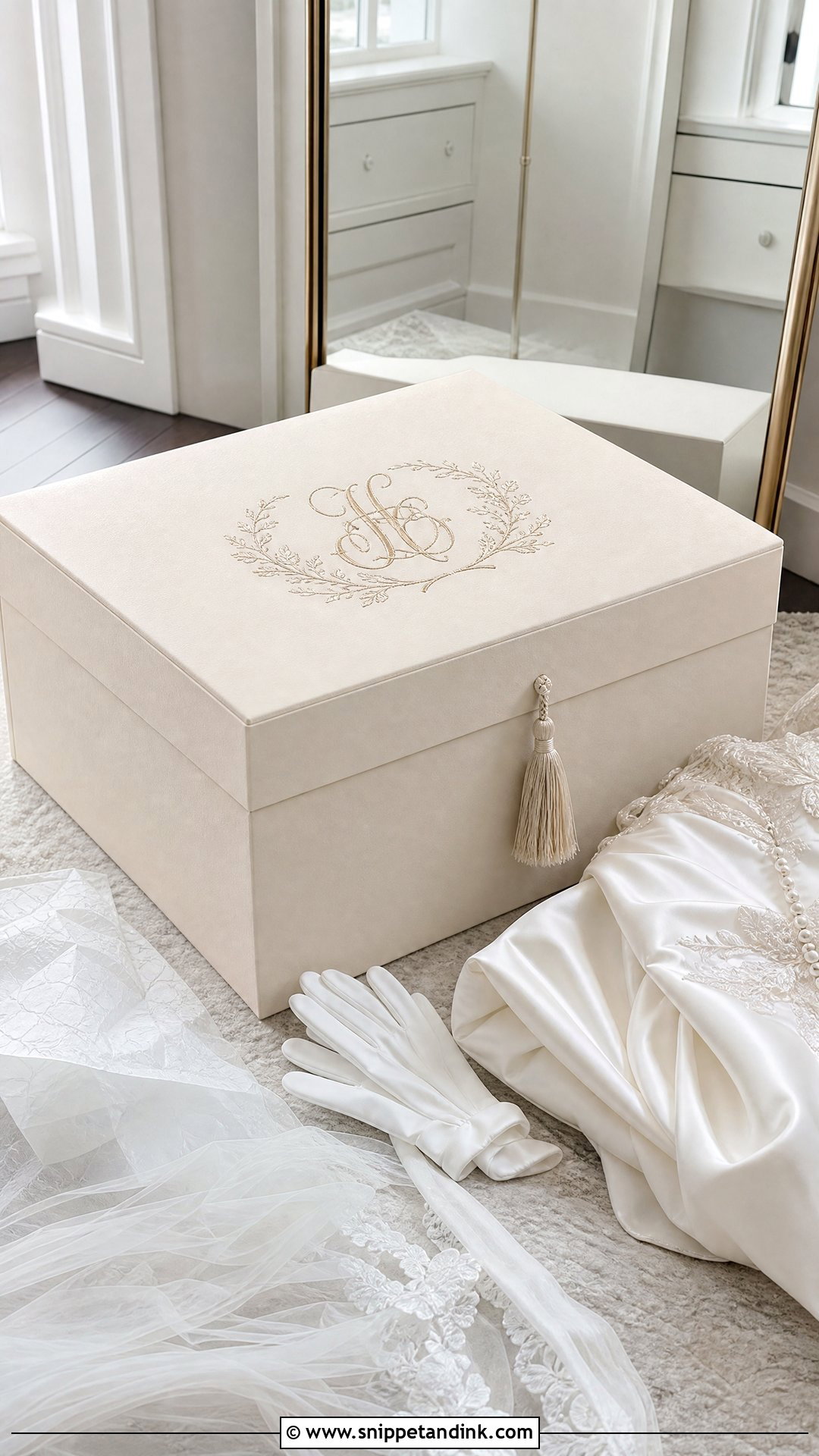
A name, a date or a short line on the lid turns a storage box into something a family keeps. Embroidery, engraving, vinyl lettering or a printed plate can all work, depending on what the box is made of. Ivory, soft grey, champagne and pale blue age gracefully. What matters is that glue, thread and paint stay outside: the gown sits in an archival inner lining that no decoration touches. I always suggest tucking a note inside describing the dress, its alterations and a few memories from the day, sealed in its own sleeve. It also lets you identify the box without opening it.
4. Floral Wedding Dress Box
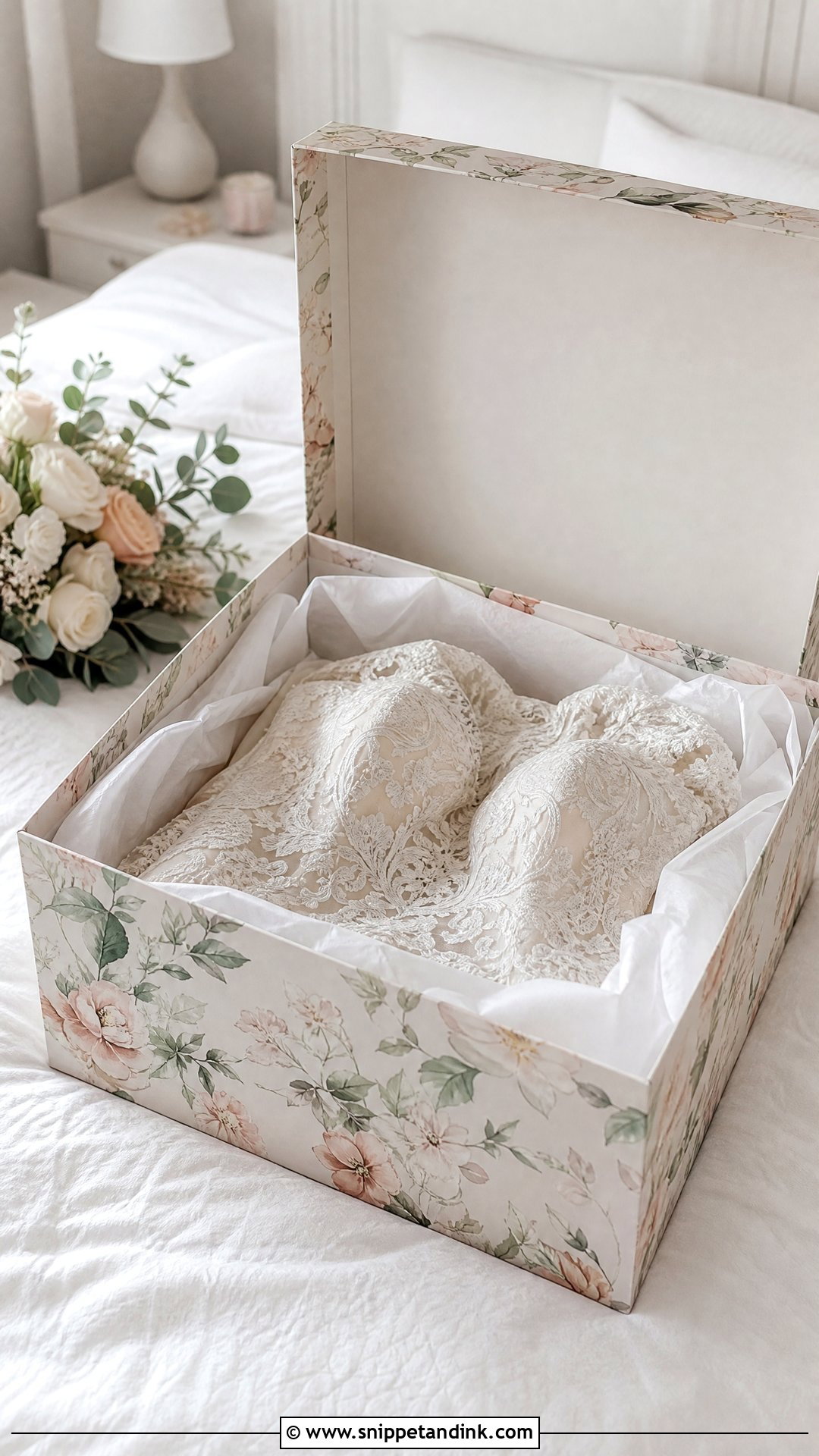
Botanical prints suit a box meant to sit somewhere visible. Watercolour flowers, fine vines, pressed-flower designs or light embroidery can echo your bouquet: roses for a traditional wedding, wildflowers for a garden one. The catch is that inks, dried petals and craft glue release substances over time, so keep all of it on the outside, with the gown in an acid-free inner box or a muslin wrap. Invitation copies, fabric swatches and bouquet notes can go in too if they’re kept apart from the dress. Keep the closed box on a high closet shelf or in a glass cabinet away from sun and damp. I’d never put dried flowers from the bouquet in with the dress; they carry moisture and insects.
5. Minimalist White Wedding Dress Box
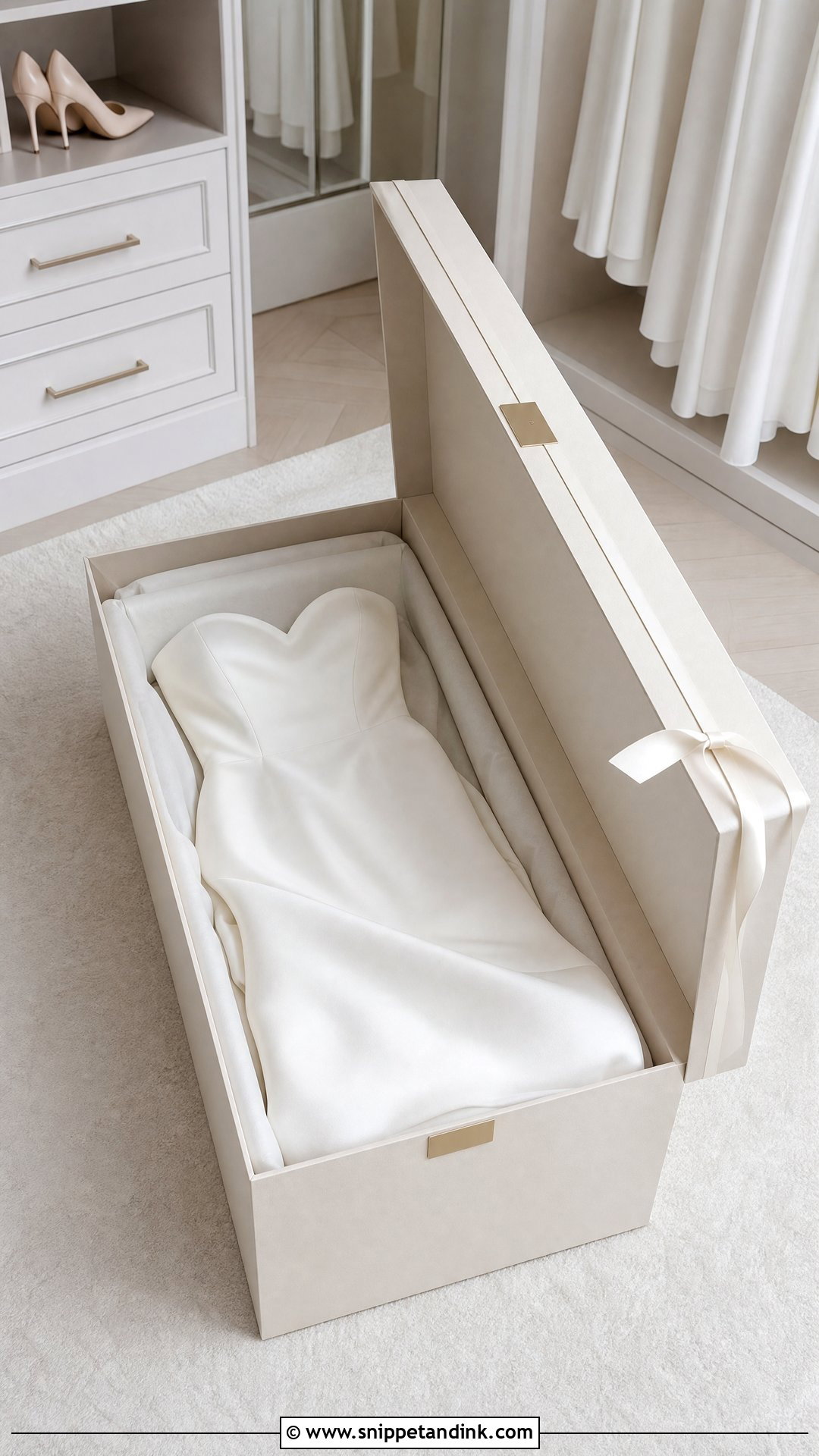
Plain matte white or ivory fits any room and lets the dress carry the meaning. A fitted lid and discreet handles are all it needs; a small monogram, a narrow ribbon or a metal label is plenty of decoration. Inside, layer the cleaned gown with white acid-free tissue and pad any structured areas. Sleek crepe, column and plain satin gowns suit this simple treatment. Store it flat so the dress is supported evenly. It looks nice enough to leave out, but a dark closet with a steady temperature protects the fabric far better than a bedroom shelf in daylight.
6. Vintage Wedding Dress Box
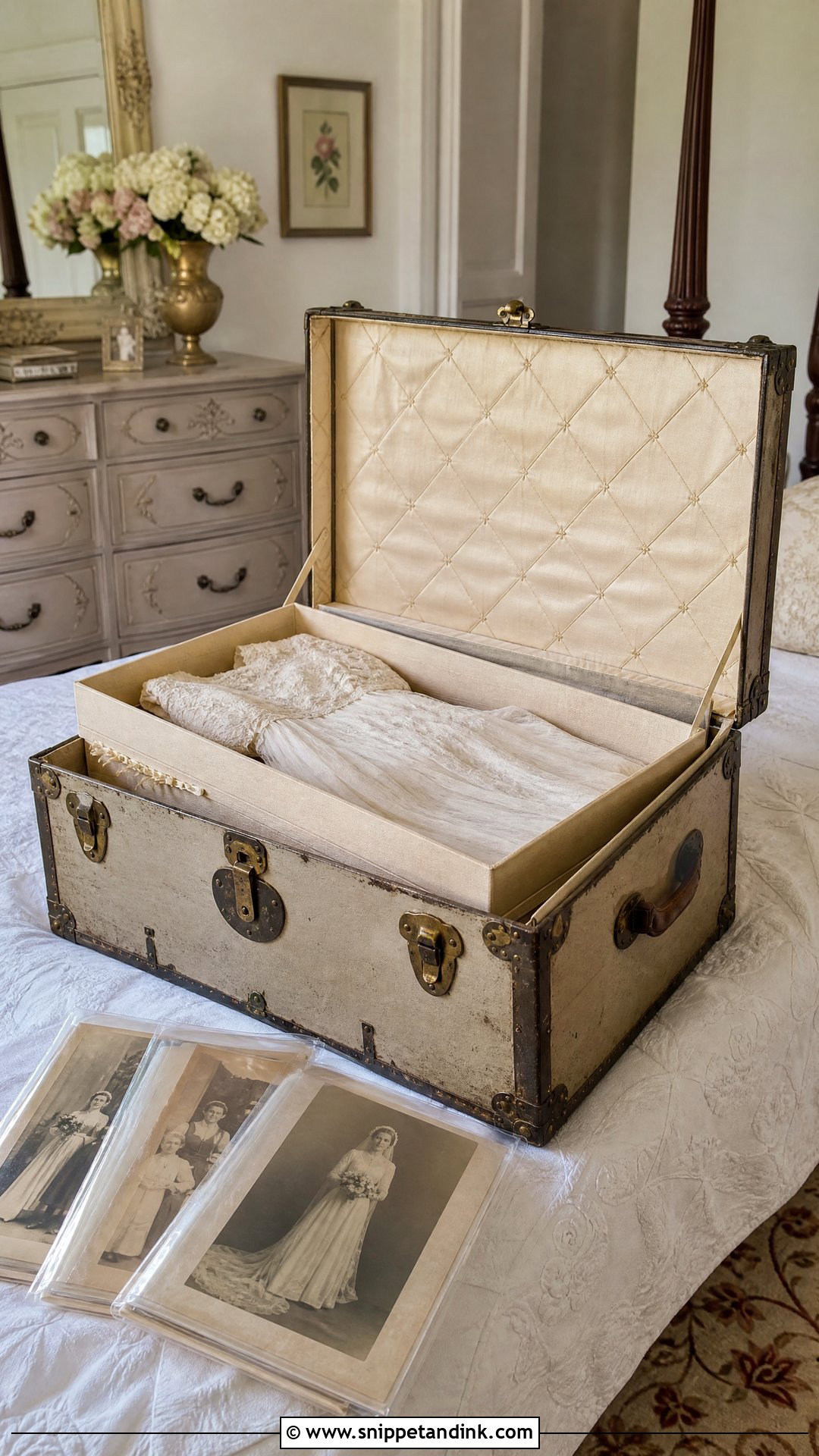
An older family gown often looks right in an antique-style trunk with brass corners or a softly worn finish. The danger is the trunk itself. Old wood, old paper linings and metal fittings can stain or yellow fabric, and you rarely know what the lining was treated with. Put a removable archival box or an acid-free barrier inside, and let the trunk be the costume. This approach suits restored family dresses, tea-length gowns and traditional lace. I like adding a written record of everyone who has worn the dress, plus copies of their wedding photographs, each in its own archival sleeve.
7. Luxury Velvet Wedding Dress Box
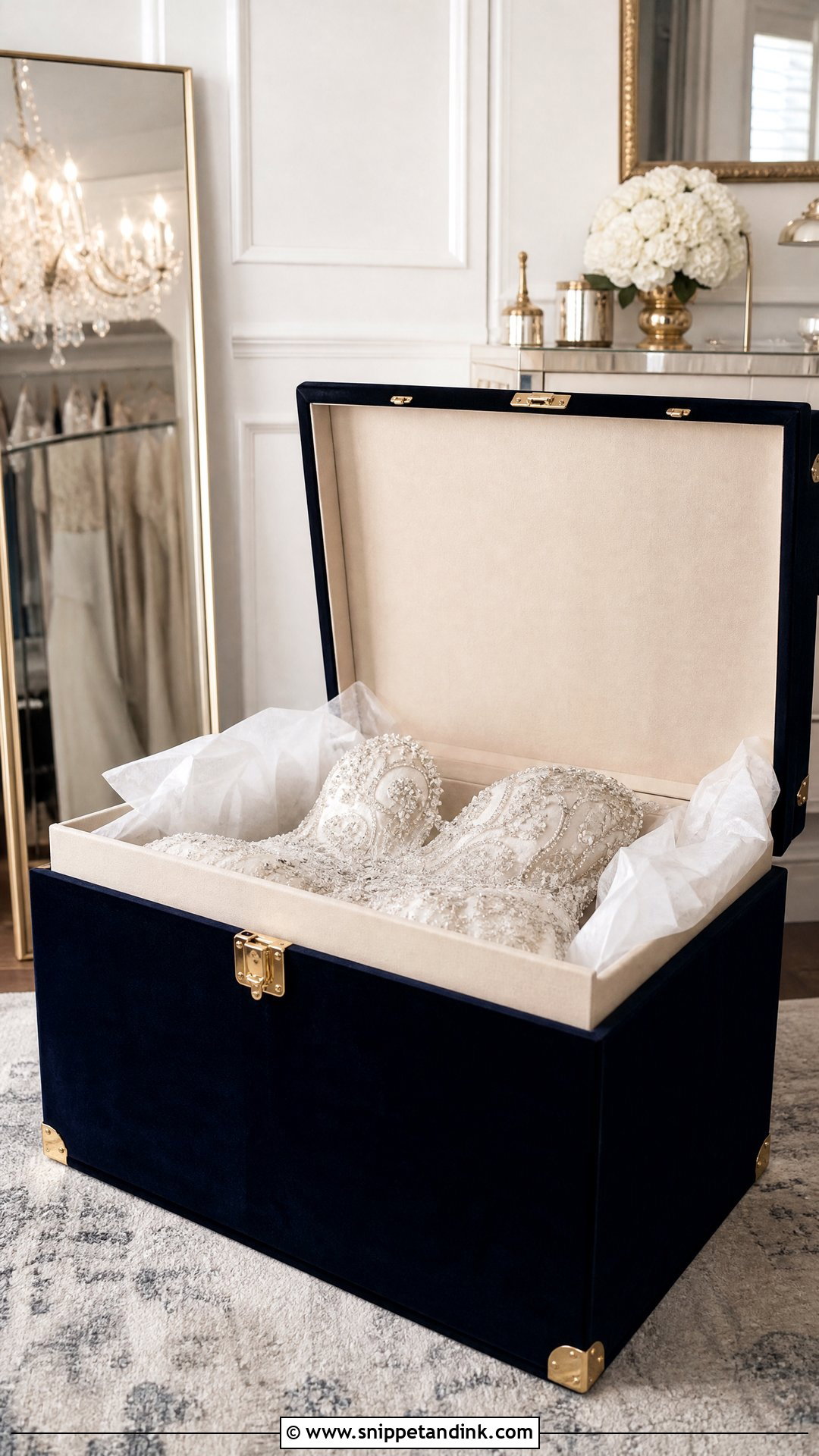
Velvet makes a box look like a presentation case, and ivory, blush, navy or sage all look rich. But velvet is dyed and often treated, so it must never touch the gown. An acid-free inner container solves that. Beaded gowns, heavy satin and full ball gowns suit the formality. An engraved plaque or tonal monogram adds just enough. Velvet attracts dust, so I’d cover the box with a breathable cotton dust sheet rather than plastic. Sealing the whole thing in airtight plastic traps moisture and invites mildew.
8. Under-Bed Wedding Dress Storage Box
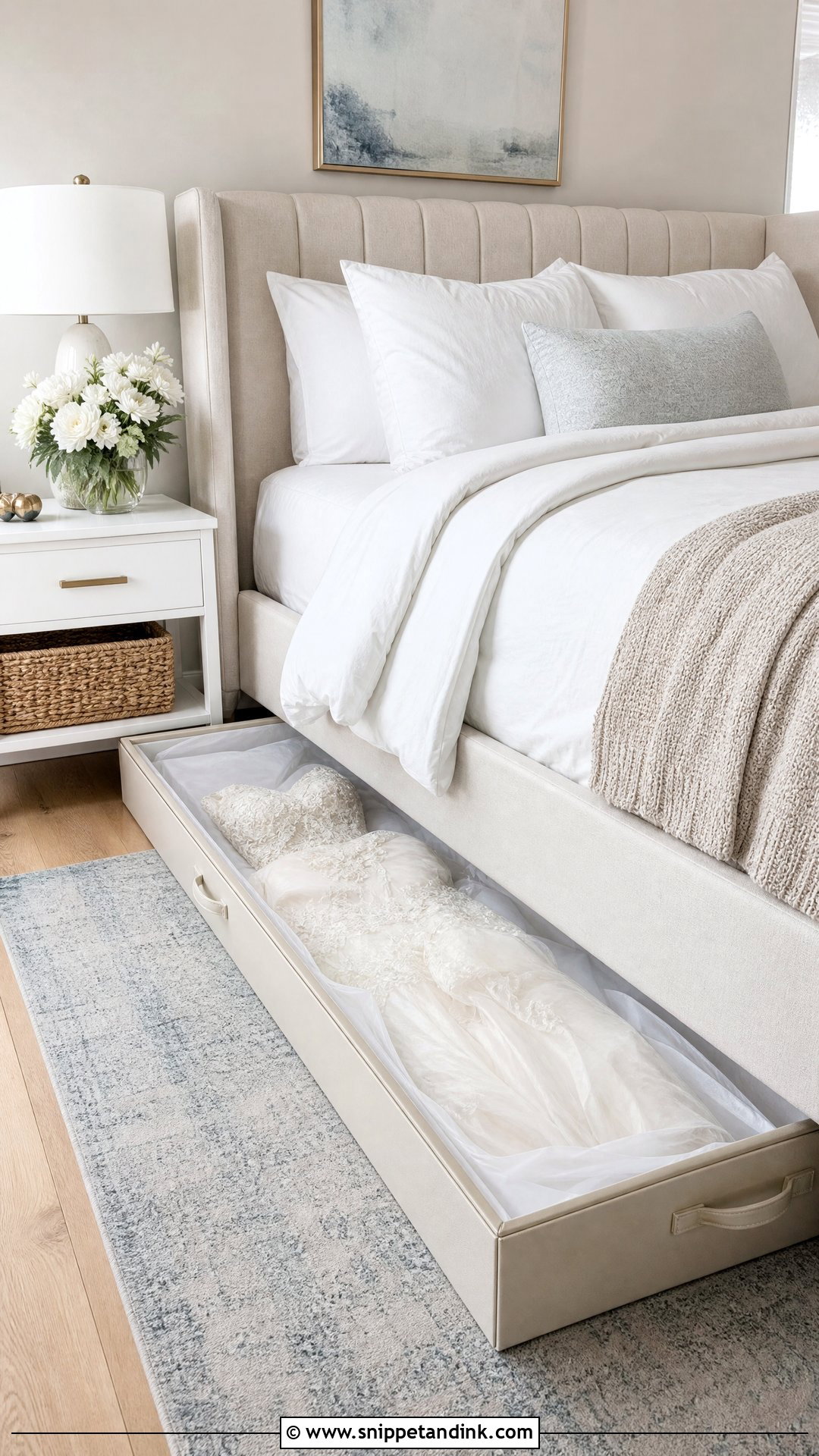
No closet space? An under-bed box keeps the dress flat, low and out of sight. Measure the gap under the frame before you order, including any slats or castors. Choose a rigid archival box with a secure lid and fabric pull handles; soft fabric storage bags sag and crush the skirt. Fuller gowns may need a wider, deeper model, since the dress should fit without being squashed. Pad the folds and any appliqué with tissue. The spot under a bed against an outside wall or near a radiator runs warmer or damper, so pick the side in the middle of the room. Nothing heavy goes on top.
9. Large Wedding Dress Box for Ball Gown
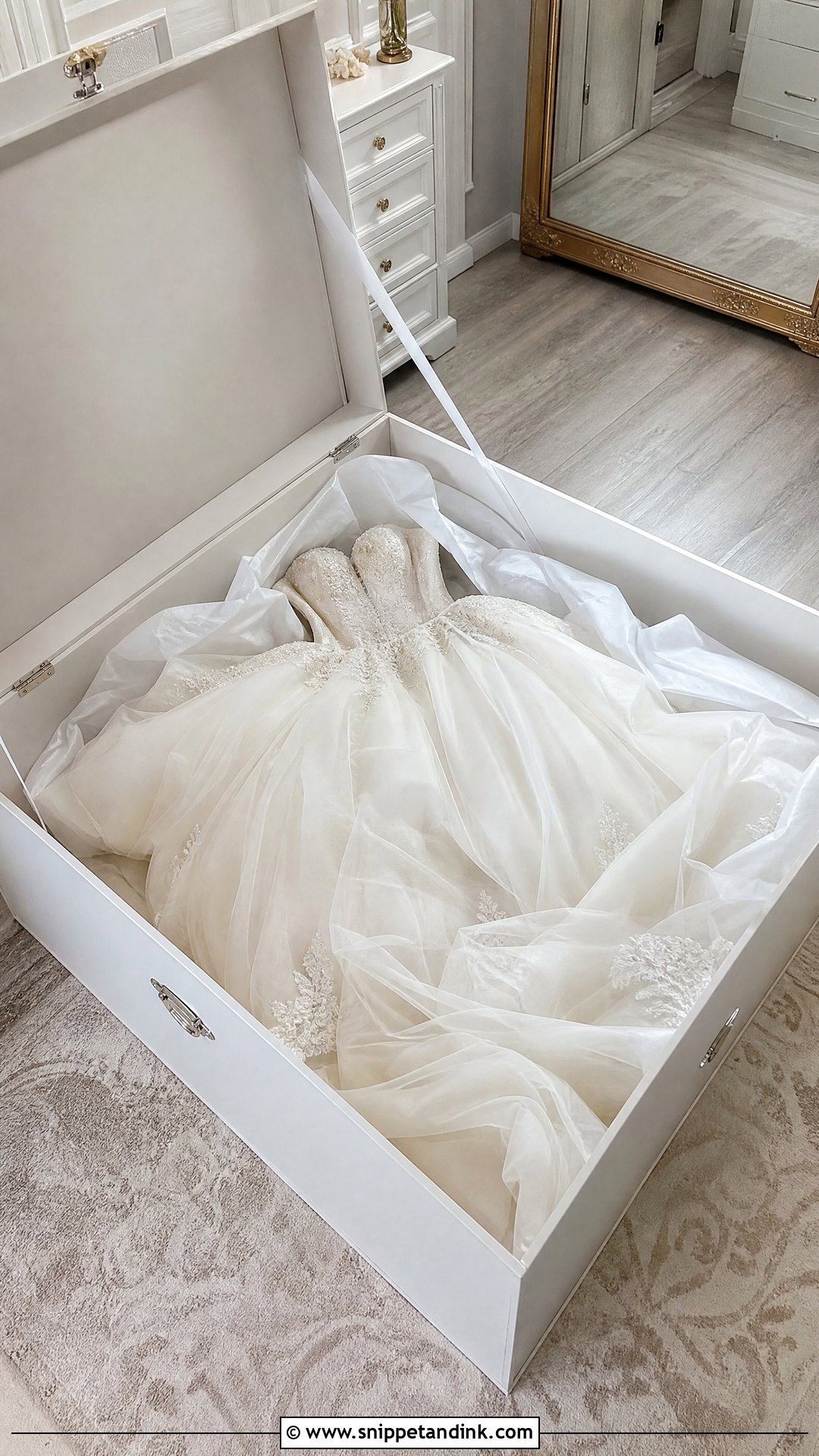
A full ball gown with layers of tulle, a boned bodice and a long train simply won’t go into a standard box without being crushed. Pick an oversized box deep enough that the skirt lies in soft layers. I pack these on a clean bedsheet over a large table or bed, so the train isn’t dragged across the floor. Roll tissue into every fold, fill the bodice and sleeves, and slide tissue between beaded areas and plain lace so the beads don’t abrade it. A strong lid that won’t bow is important. Decide where the box will live before you pack it, because a full ball-gown box is heavy and awkward to move.
10. Wedding Dress Travel Box
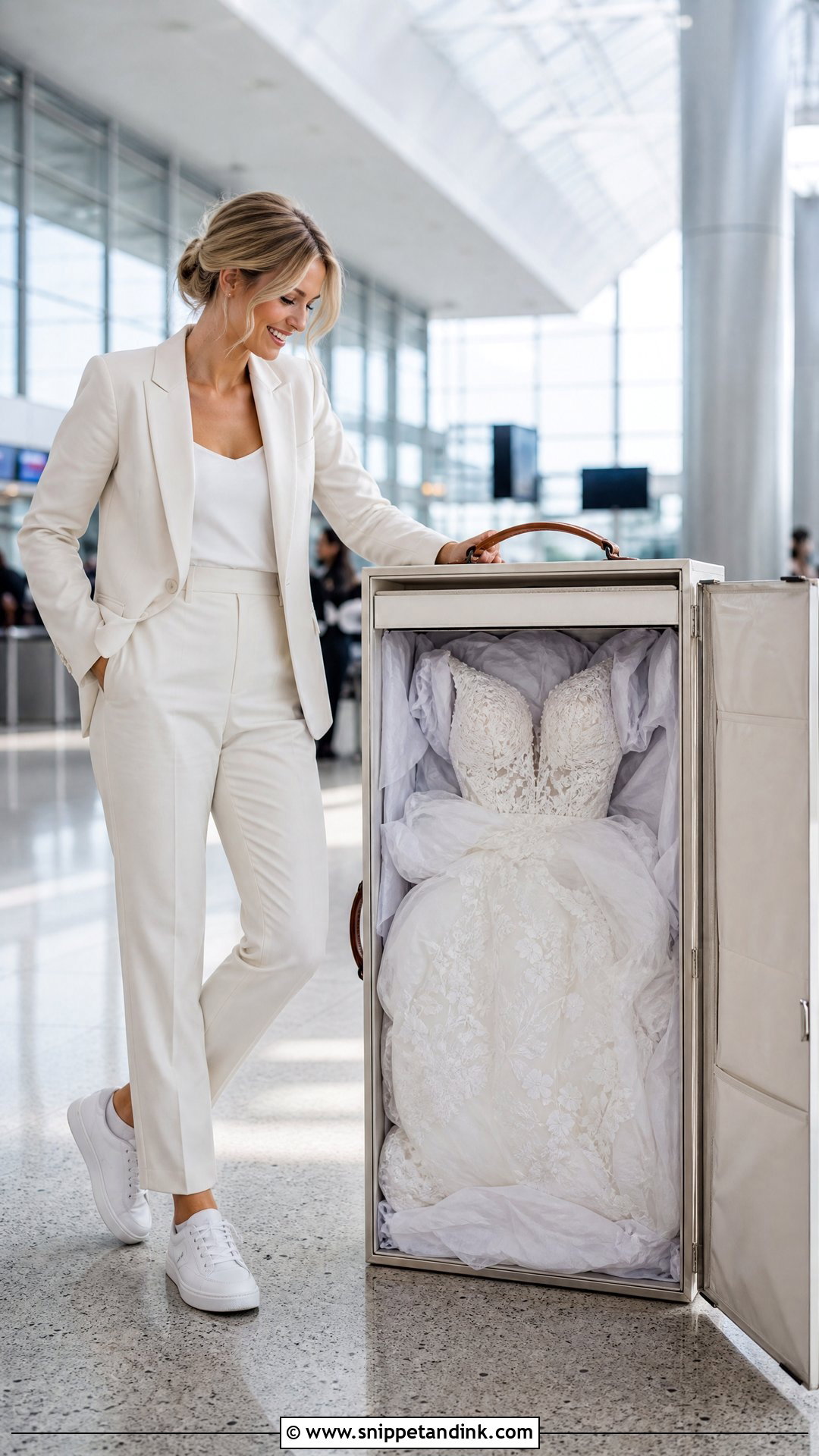
Travel boxes are for destination weddings and for getting a gown safely to a cleaner. A compact acid-free carton with tissue, a breathable wrap and a handle is the usual kit. Some are sized to typical cabin-bag limits, but airline rules differ, so check the exact measurements and policy with your airline before you fly. Pack loosely enough that folds stay soft, with tissue between them and in the bodice. Detachable straps, belts and overskirts travel in separate cotton pouches. I’d always carry it on rather than check it in. Unpack it as soon as you arrive and hang it in a steamy bathroom or book a steam.
11. Wedding Dress Box With Acid-Free Tissue
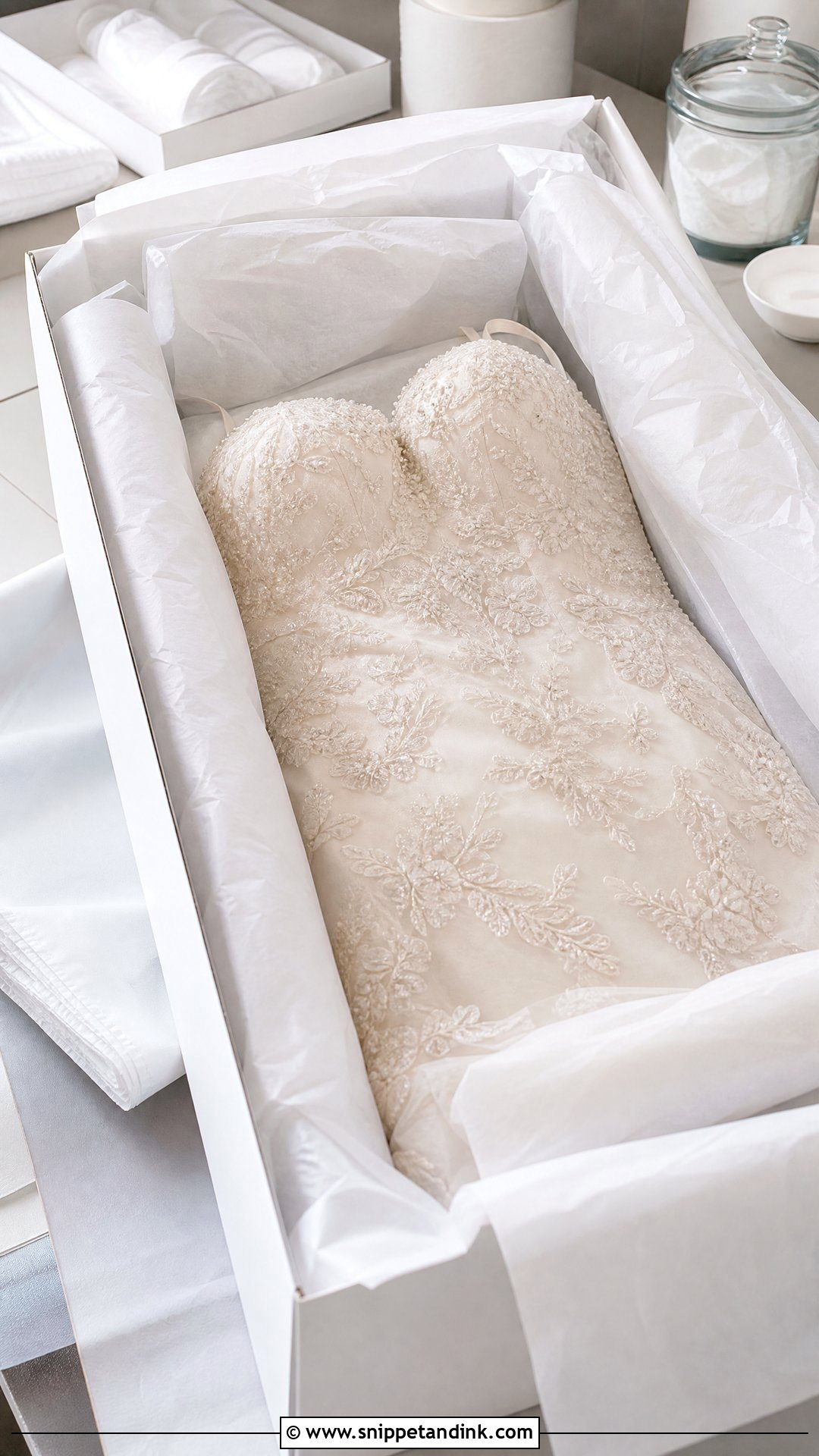
Tissue is what stops folds becoming permanent creases, and it’s how you protect fragile fabric during storage. Use plain white archival tissue with no print or dye. Lay a thick layer first, then roll more loosely into the bodice, sleeves, bows and any raised details. Each skirt fold should curve around a tissue roll instead of lying flat. Lace, beads and sequins need tissue between them and the next layer so nothing catches. There’s one subtlety: silk and wool are usually stored with unbuffered tissue, while cotton and synthetics tolerate buffered, so ask a preservation specialist if you’re unsure of the fibre. Replace tissue that has gone yellow or brittle, and handle the cleaned gown with clean cotton gloves.
12. Muslin-Lined Wedding Dress Box
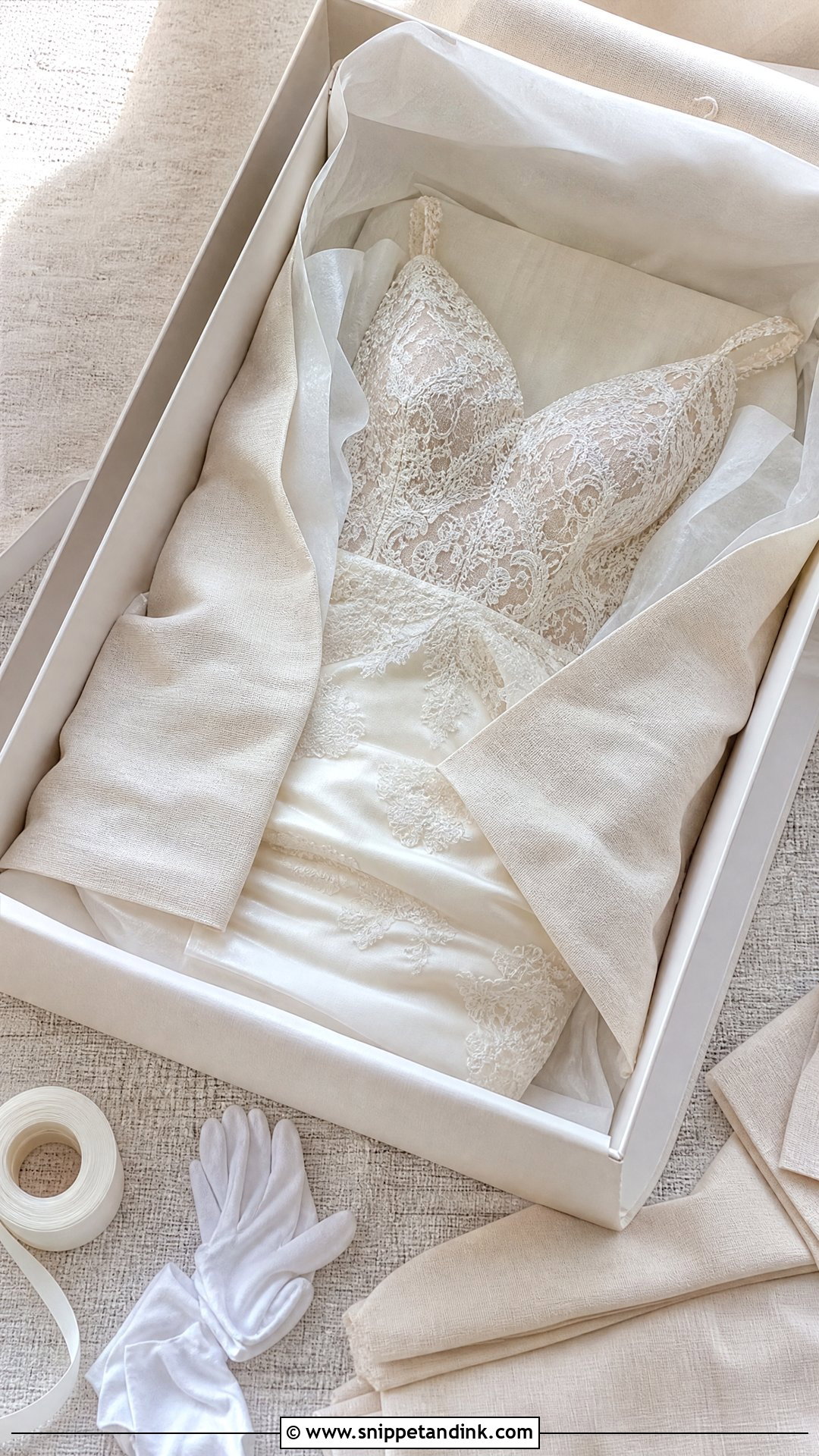
Muslin gives the gown a soft second skin. Use undyed, washed cotton muslin with no print or fragrance, since sizing in new muslin and leftover detergent can both mark fabric. It can line the box or wrap the folded gown completely. Tissue still goes between the folds. I like muslin for heirloom lace, silk and hand embroidery, because you lift the wrap rather than gripping the dress. Tie it with white cotton tape, not coloured ribbon, which can bleed. Make sure everything is fully dry before the lid goes on, then store the box flat in a dark room with a steady temperature.
13. Wedding Dress Box With Compartments
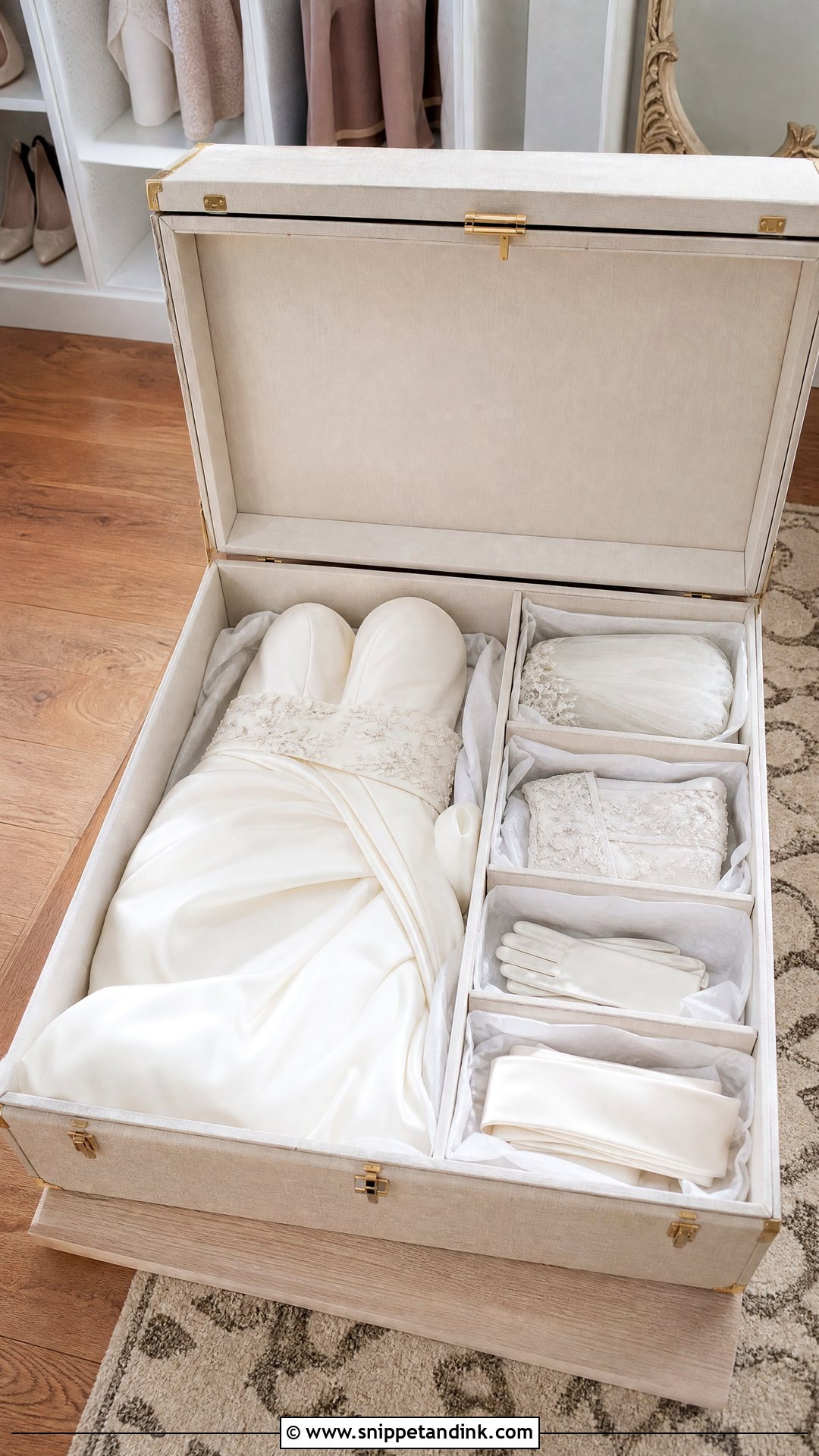
Dividers keep the veil, gloves, sleeves and belt from pressing into the gown. Look for a large archival box with removable dividers or fabric-covered trays. The dress takes the main space; each textile accessory gets its own spot, wrapped in tissue. Shoes, jewellery, metal hair pins and perfume stay out entirely, because metal rusts and perfume oils stain. Label each section so whoever opens it later knows what goes with what. Convertible gowns with several pieces are where this pays off. Don’t let the trays push down on the dress when the lid shuts; if it closes tight, it’s too full.
14. Wedding Dress Box for Veil and Accessories
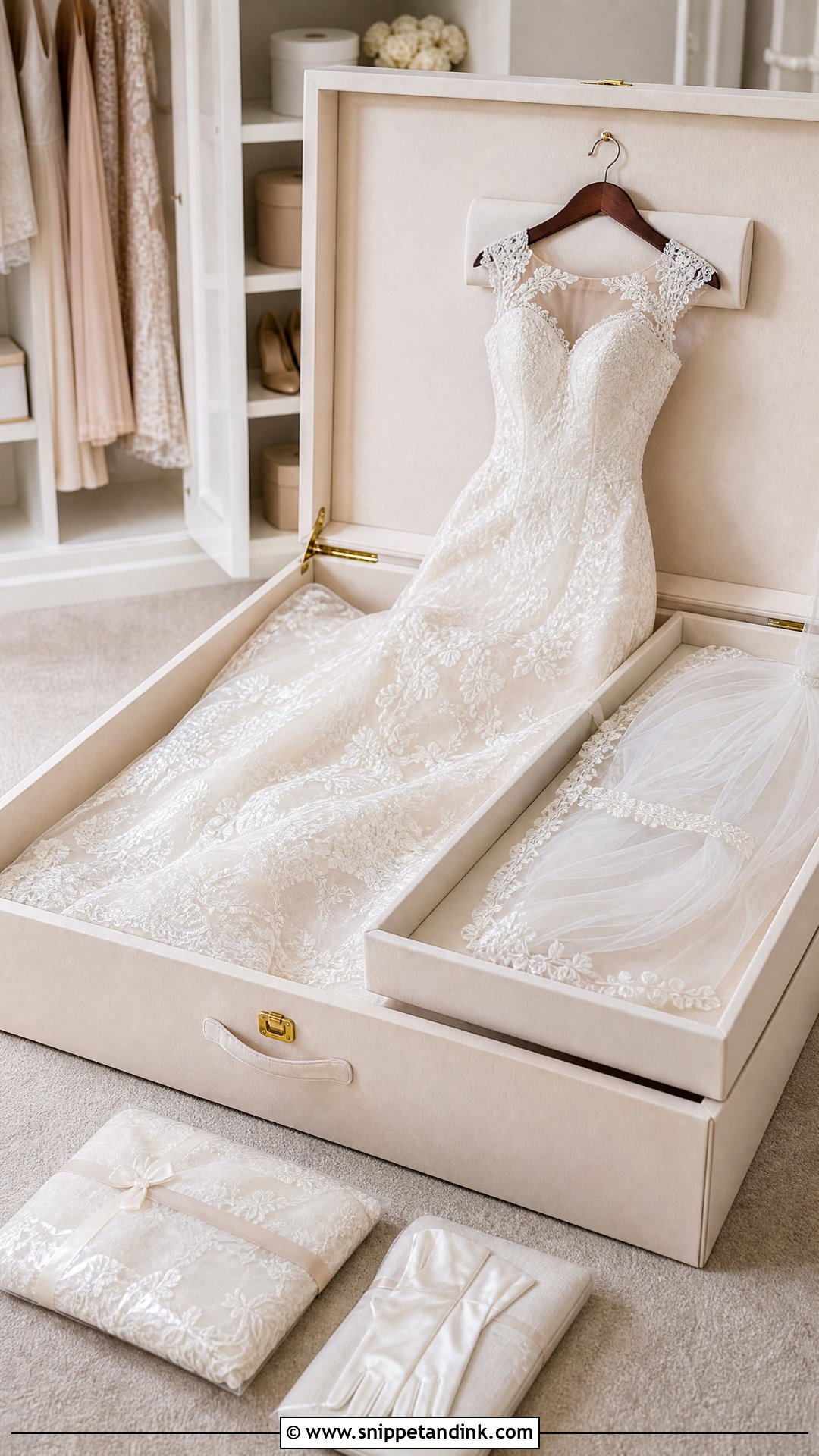
A matching box set keeps the gown and its fabric accessories together without piling them on top of each other. The dress goes in the largest section, and the cleaned veil lies loosely on top or in its own shallow tray. I wrap tissue around comb teeth so they can’t catch tulle. A detachable train, cape, bolero, gloves, handkerchief and sash can join it if there’s room. Don’t overpack just to keep everything in one place. If you use a preservation service, ask which accessories their package includes before you hand them over. Shoes, bouquets, makeup and metal jewellery live elsewhere. Tape a written inventory inside the lid.
15. Wedding Dress Shadow Box
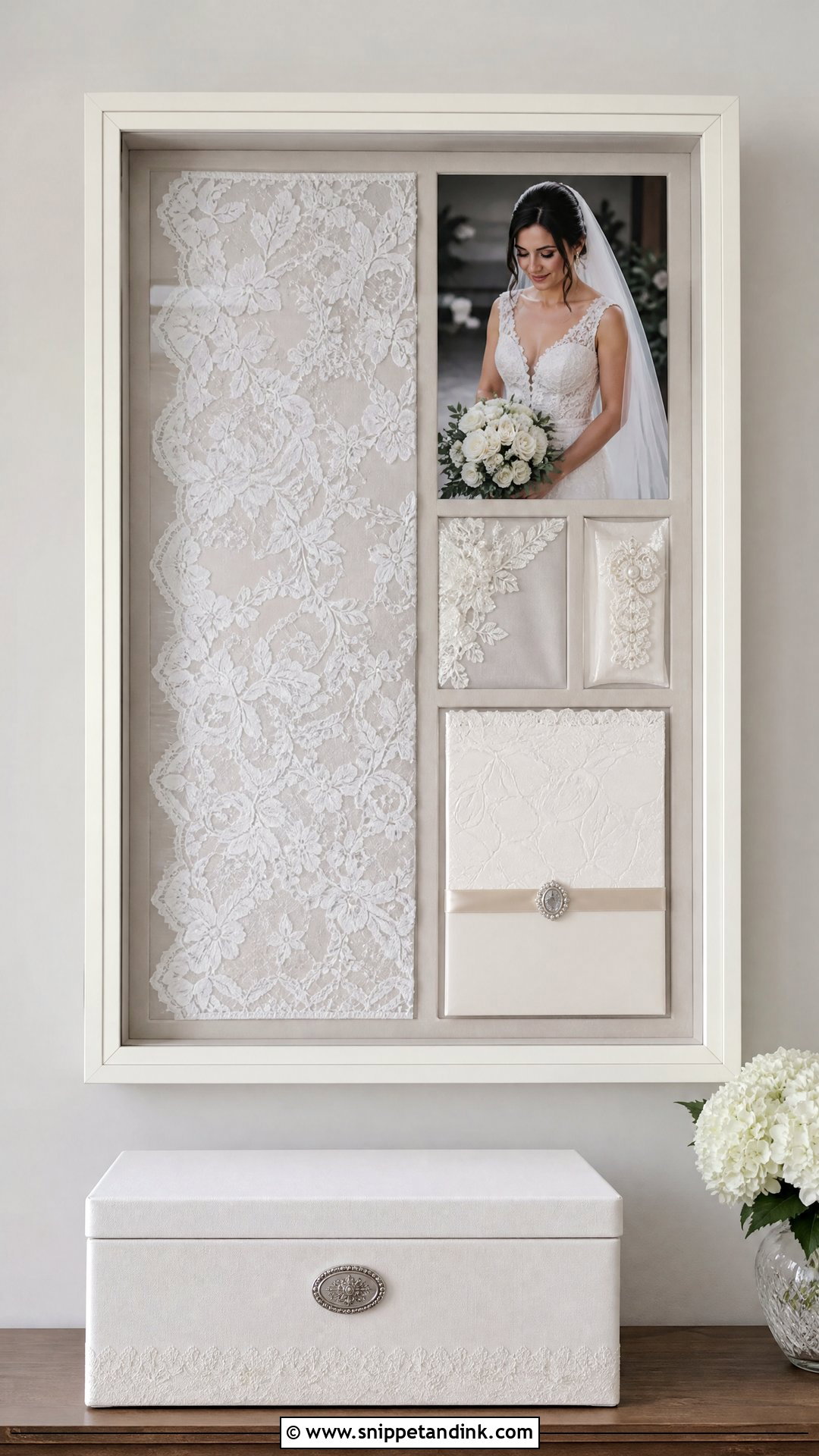
A wedding dress shadow box puts a small piece of the bridal look on the wall. Don’t try to force the whole gown into a shallow frame. Choose one feature, such as a detachable lace panel, a bow or a fabric offcut, and pair it with a photo, a section of veil or a copy of the invitation. Archival backing and UV-filtering glazing protect it, and the frame should hang away from sun and heating vents. I’d never cut into the gown itself for this; use leftover alteration fabric, which your seamstress will often hand back if you ask. The full dress can stay boxed while the frame keeps the memory on show.
16. Clear Acrylic Wedding Dress Display Box
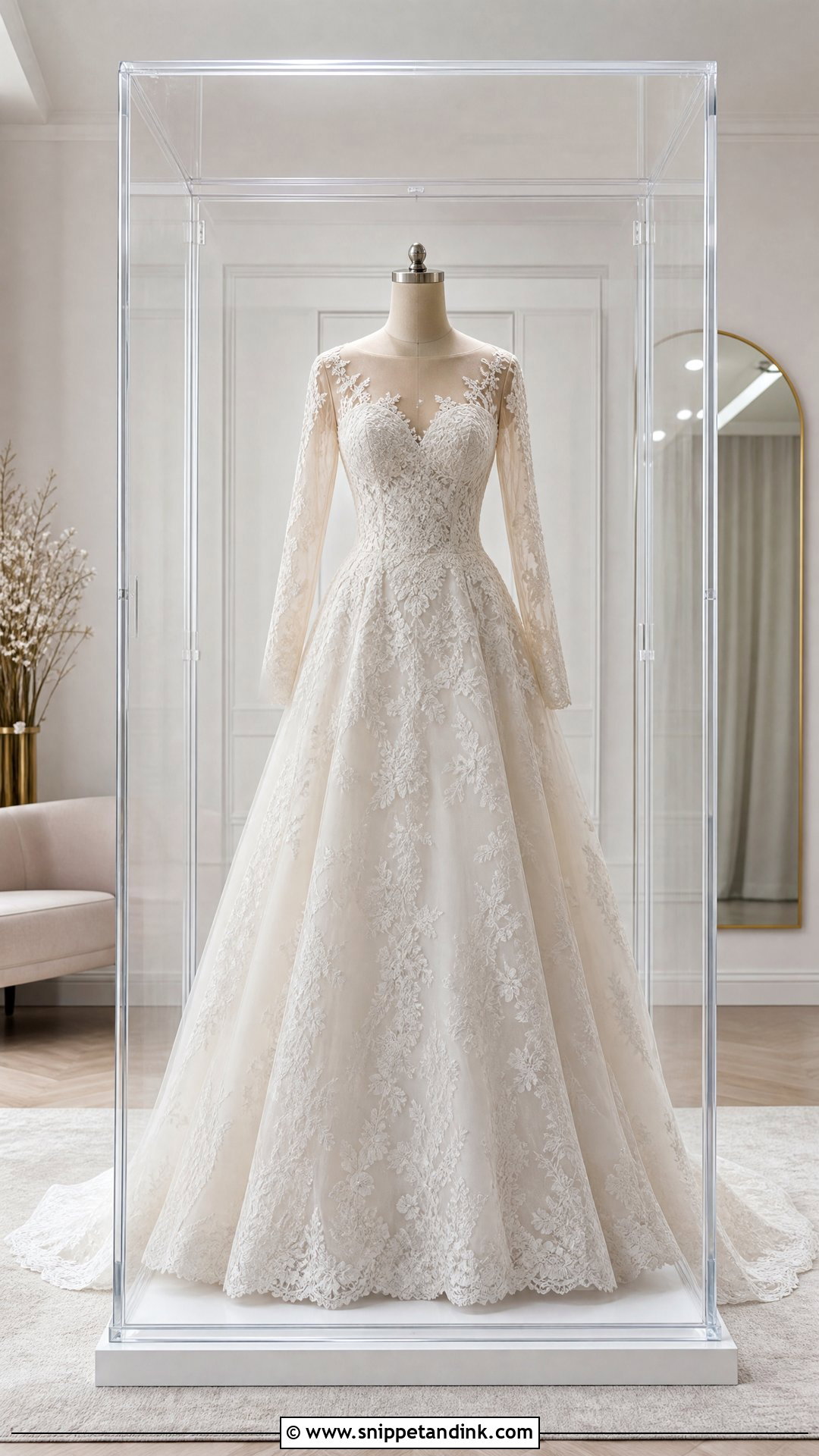
A clear acrylic wedding dress display box shows the whole gown like a museum piece, and it asks for museum-level care. The case must be deep enough that nothing is squashed, and the form inside has to support the dress without stretching seams or loading the straps. I’d only consider one with UV-filtering acrylic, a dust-tight seal and some way to control humidity. Keep it away from sun, fireplaces, vents and damp walls. It needs a lot of floor space, so measure first. For a valuable or fragile gown, ask a textile conservator about mounting before you commit to long-term display.
17. Wooden Wedding Dress Keepsake Box
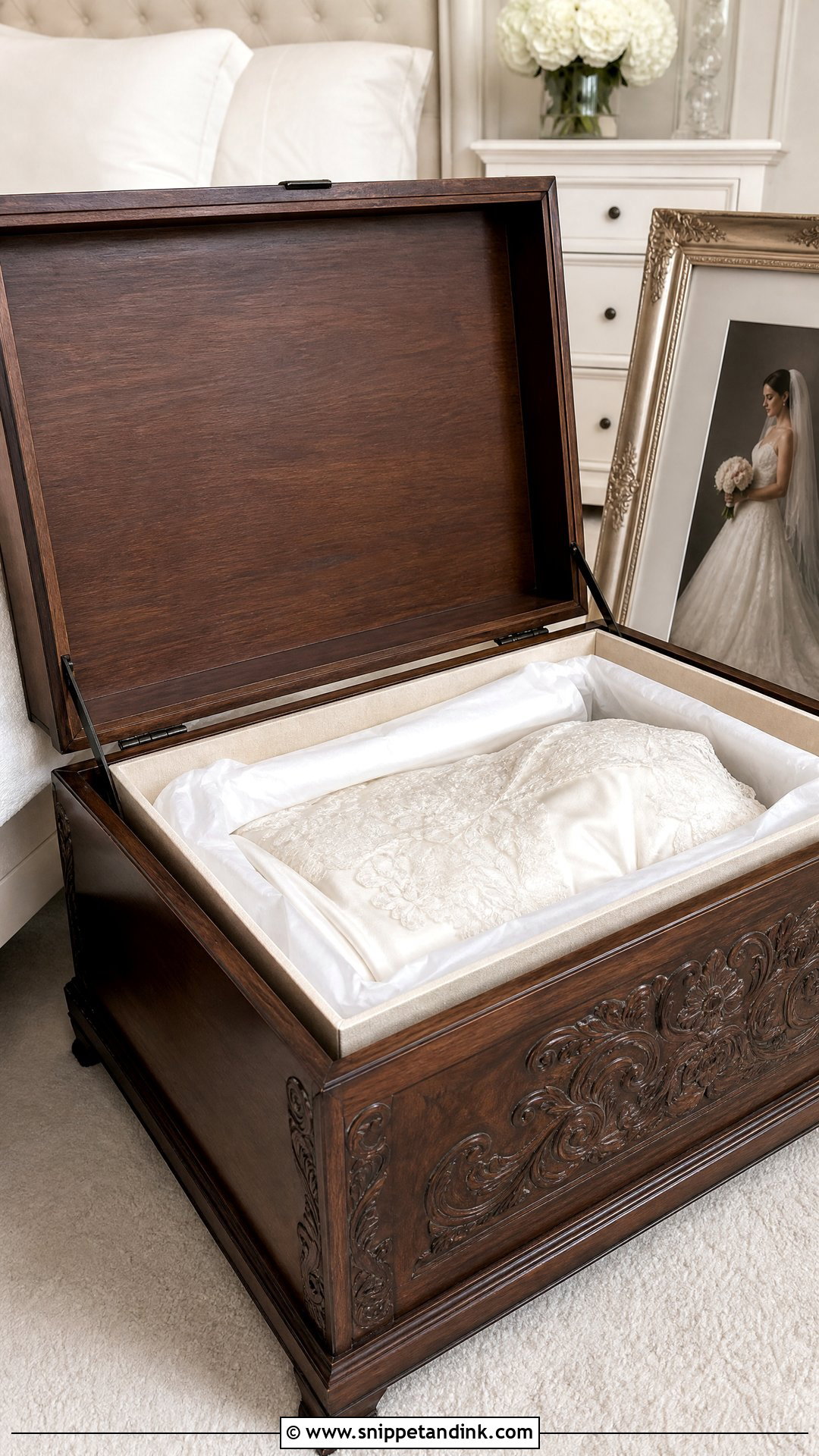
A wooden chest looks like a family trunk, and that’s its appeal. But raw wood, and some stains and finishes, give off acids that yellow and spot fabric over time, so the dress must never lie straight in the wood. A fully enclosed archival inner box solves it. Engrave the lid with a name, date, place or botanical motif. Classic lace and inherited gowns look right in one. A separate tray for photos and letters can sit in the trunk, kept apart from the dress. Felt pads underneath protect the floor, and the chest belongs in a dry room out of the sun.
18. Monogram Wedding Dress Box
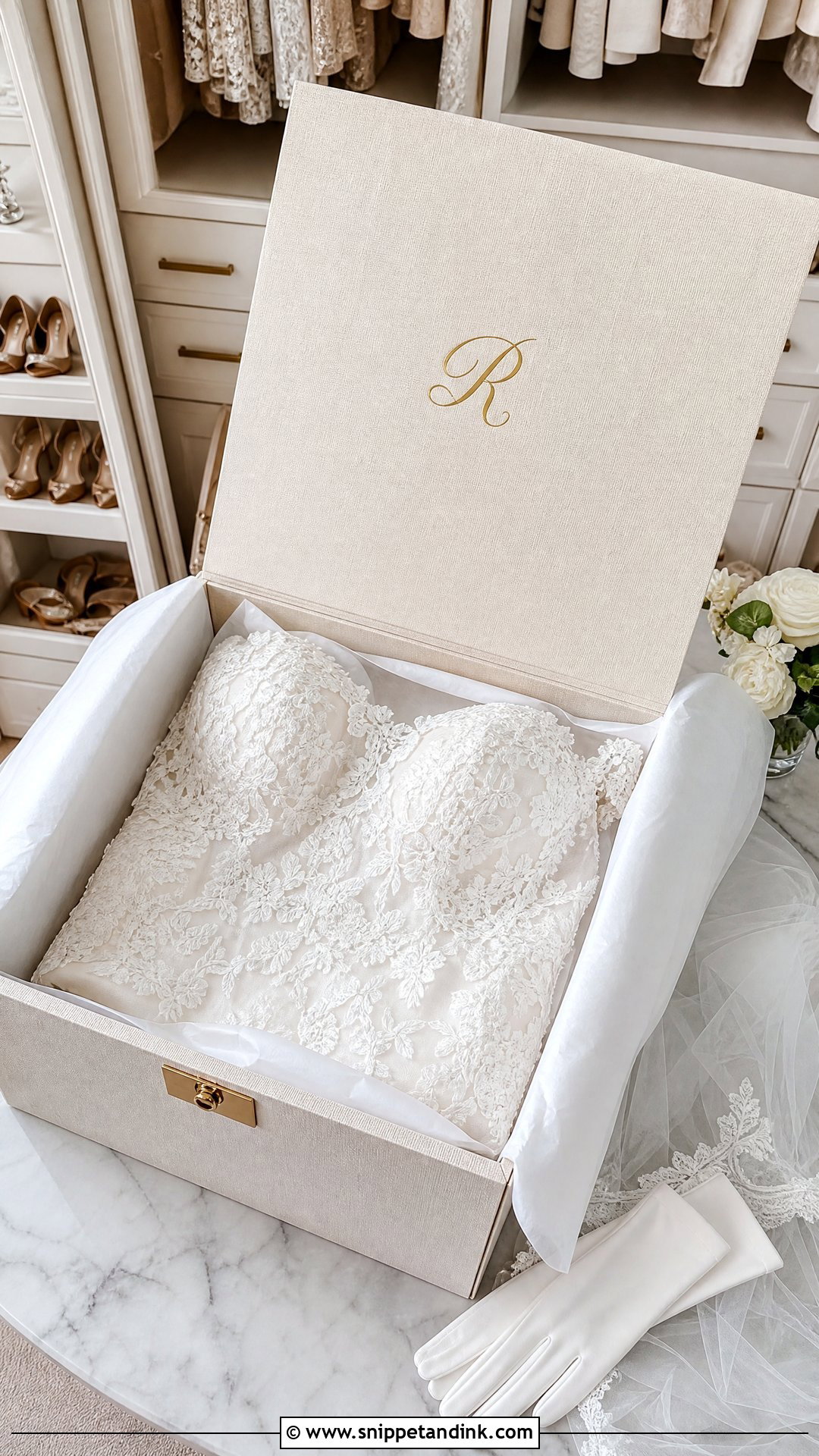
A single initial or a combined monogram in the centre of the lid looks polished and suits almost any décor. Embroidery works on fabric boxes; engraving suits wood or a small metal plate. Ivory and gold, white and silver, or pale blue and cream keep it restrained. Thread, glue, foil and metal stay on the outside. Inside, use archival tissue and a breathable wrap. Paired with tissue and cotton gloves, it makes a thoughtful shower gift. Measure the gown first, though; a monogrammed box that’s too small for the dress is just an expensive lid.
19. Wedding Dress Box With Photo Lid
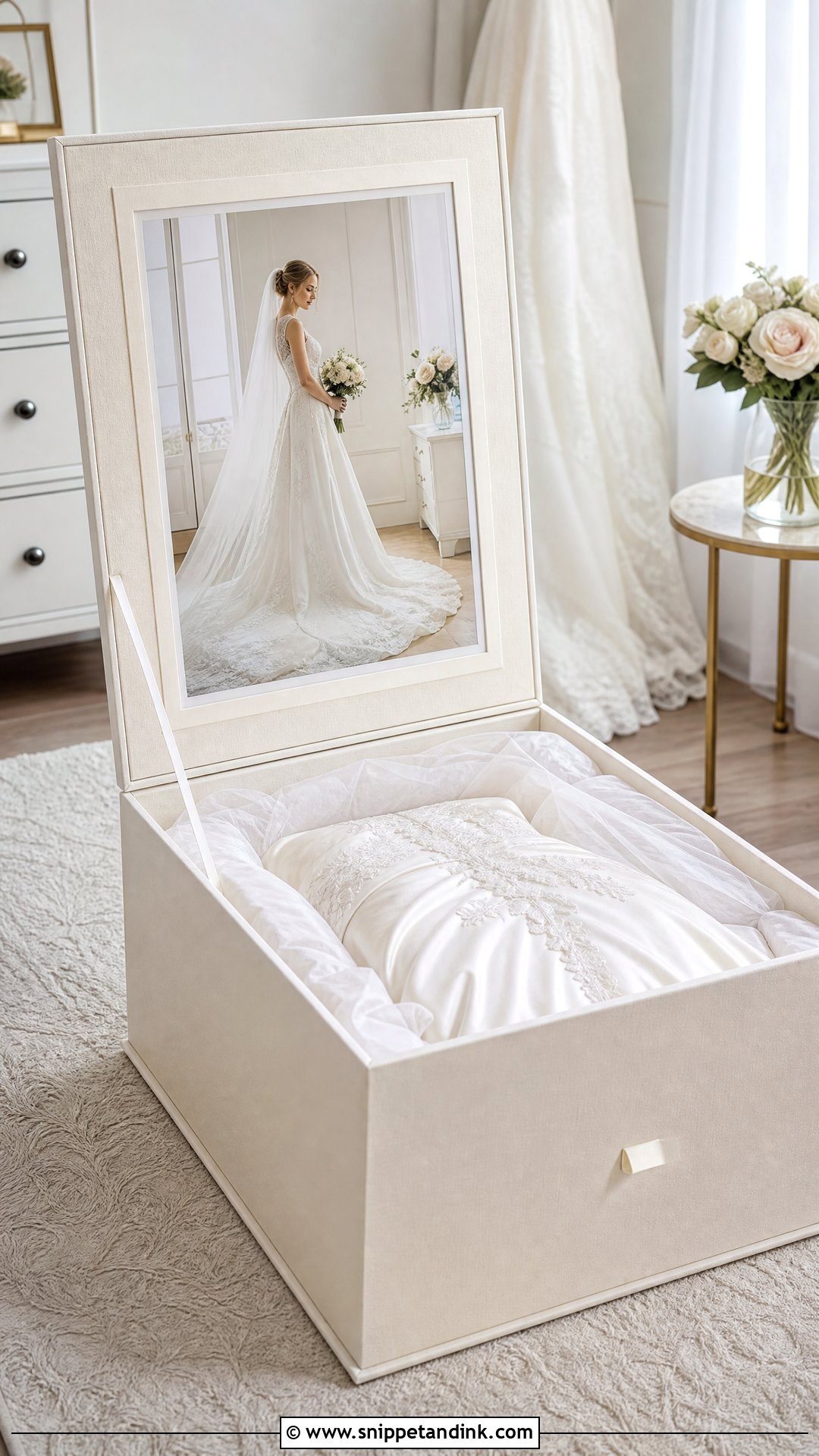
A portrait on the lid lets anyone recognise the box at a glance, which helps when several family gowns share one closet. Put a favourite full-length photo in an outside frame or sleeve so it can be swapped without opening the dress compartment. Black and white suits an older gown; colour shows the bouquet and details. A small engraved plate with the date finishes it. Photo paper and ink must stay well away from the fabric, and the inside should be plain and archival. Store it flat and out of direct sun, or the photo fades long before the dress does.
20. Heirloom Wedding Dress Box
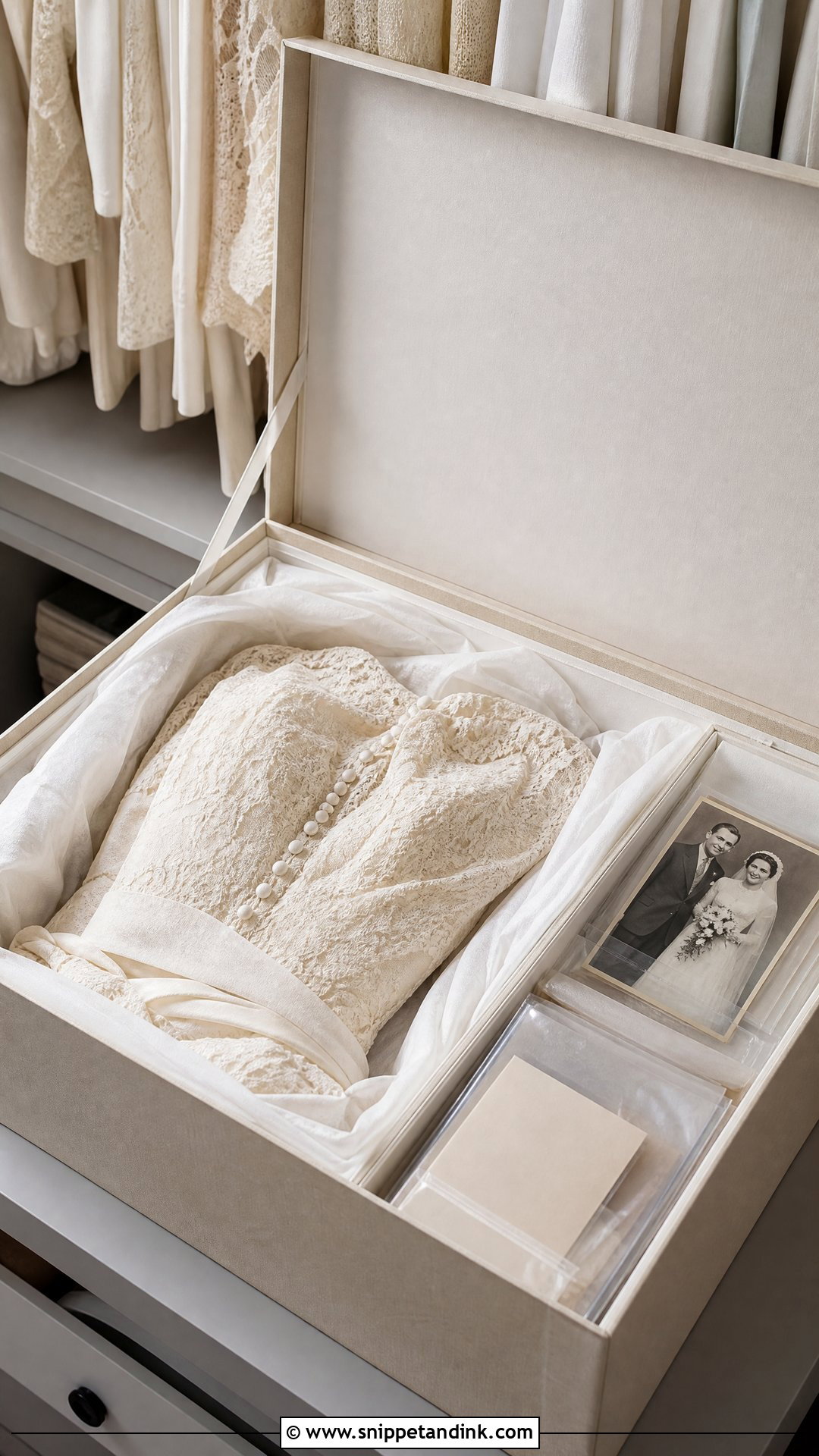
An heirloom box has two jobs: protect the gown and record its story. Choose a roomy acid-free chest suited to the silhouette and train. Wrap the cleaned gown in archival tissue or undyed muslin, padding every fold and the structured areas. Then write an inventory card: designer, fabric, alterations, date and who wore it. I’d add notes for a future bride on sizing and which parts could be altered safely, such as a seam with extra allowance. Letters, photos and invitations go in separate archival sleeves. Keep the box in an interior closet, and check it every so often for damp, pests or discoloration without unpacking the dress each time.
What a Stored Dress Needs From You Over the Years
A boxed gown isn’t something you can forget completely. It needs a little attention now and then, and the work is small.
A quick look every year or so
Lift the lid with clean, dry hands or cotton gloves and look without unpacking. You’re checking for a musty smell, damp tissue, yellowing at the fold lines, tiny holes or droppings. If everything looks and smells clean, close it again.
Refold every few years
Folds held in the same place for decades can weaken the fibres along the crease, especially in silk. Every few years, lay the gown out on a clean sheet, let it rest flat for a while, then refold it along slightly different lines with fresh tissue rolls. Replace any tissue that has turned brittle.
If you find a stain or yellowing
Close the box and leave the fabric alone. Bleach, stain pens and home soaking can weaken old fibres or leave a ring worse than the mark. A textile conservator or a specialist bridal cleaner can tell you what is safe to treat and what is better left as it is.
Measure the Gown, Then Measure the Shelf
The right box comes down to the gown’s size, its fabric, how much it means to you and what you want it for later. An acid-free chest is the dependable choice for long-term storage, while a windowed case or a shadow box lets you enjoy part of the dress. Velvet, floral, wooden and personalised boxes are fine as long as the gown never touches dyes, glue, raw wood or ordinary card. Measure both the dress and the space you have, and leave room for soft, padded folds. Have the gown professionally cleaned first. With the right materials and a steady spot, the box protects the fabric and the memories that go with it.
You'll Like These Ideas:






Leave a Reply