
I spend most of a wedding day watching how a dress moves, catches light and behaves when the bride sits, turns and hugs people, and that has taught me a lot about which gowns hold up on camera and why. Comparing silhouettes, fabrics and necklines side by side is the quickest way to find yours. The gowns below include satin ball gowns, lace A-lines, crepe columns, floral appliqué, short reception dresses and size-inclusive shapes, along with details that bridal designers keep returning to: basque waists, corsetry, dimensional flowers, bows and detachable layers. For each one I’ve noted the shoes, jewelry, veil and hair that finish it, and what I see happen to it in front of a lens.
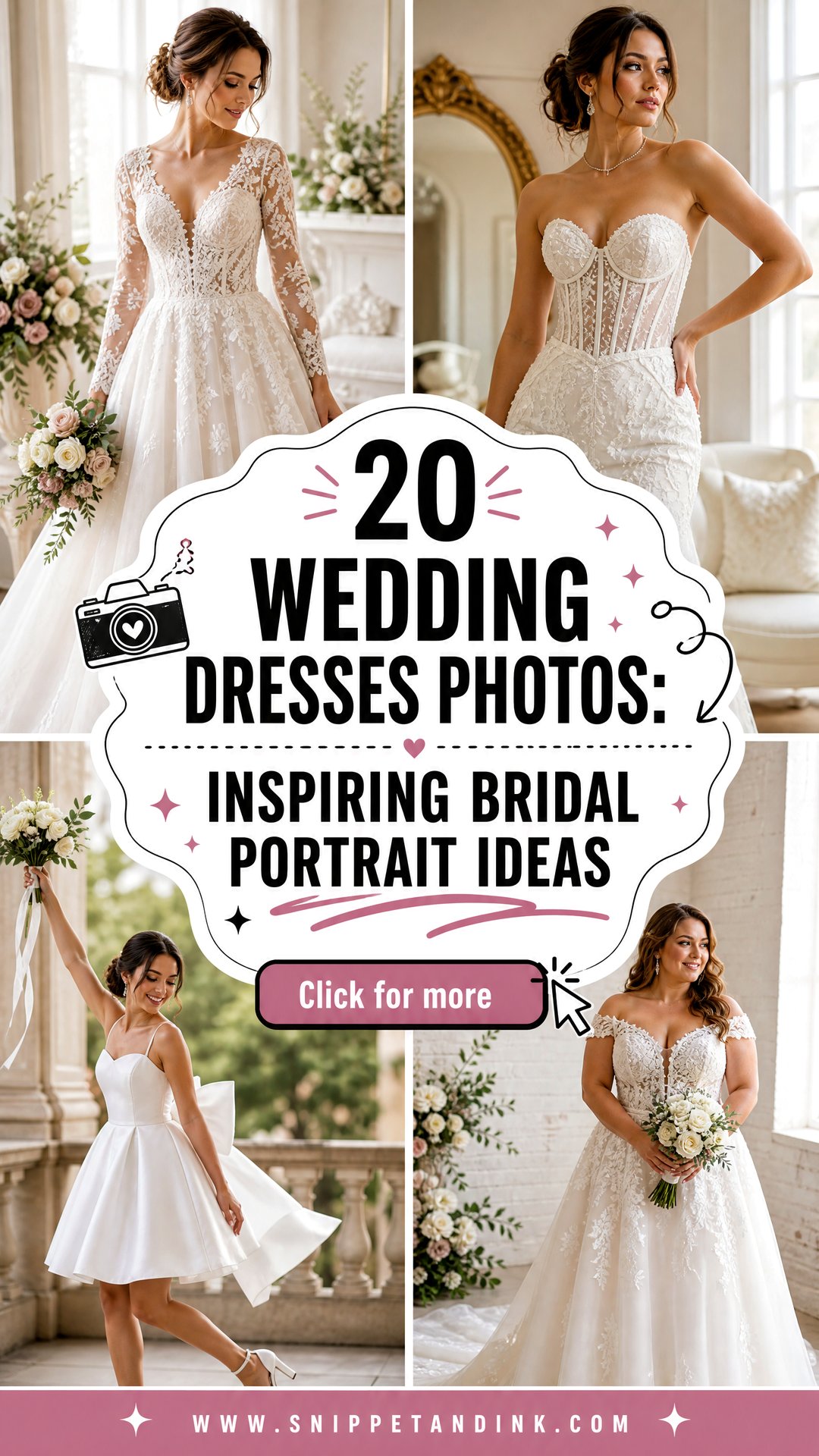
Taking Try-On Photos You Can Actually Compare
Boutique mirrors and lighting are designed to flatter, and phone snapshots taken from different angles make every dress look different for the wrong reasons. If the boutique allows photos, ask whoever is with you to follow a few simple rules so you can compare gowns fairly later:
- Stand in the same spot for every dress and shoot from chest height, not from above.
- Take three frames per gown: front, side and back. The side view shows waist placement and flare more honestly than the mirror.
- Add one short video of you walking a few steps and sitting down. Movement shows how a skirt really behaves.
- Turn off beauty filters and portrait mode, which smooth out fabric texture and fit problems.
When I look back at these with brides, the side shots are almost always where the decision gets made.
1. Satin Ball Gown Wedding Dress
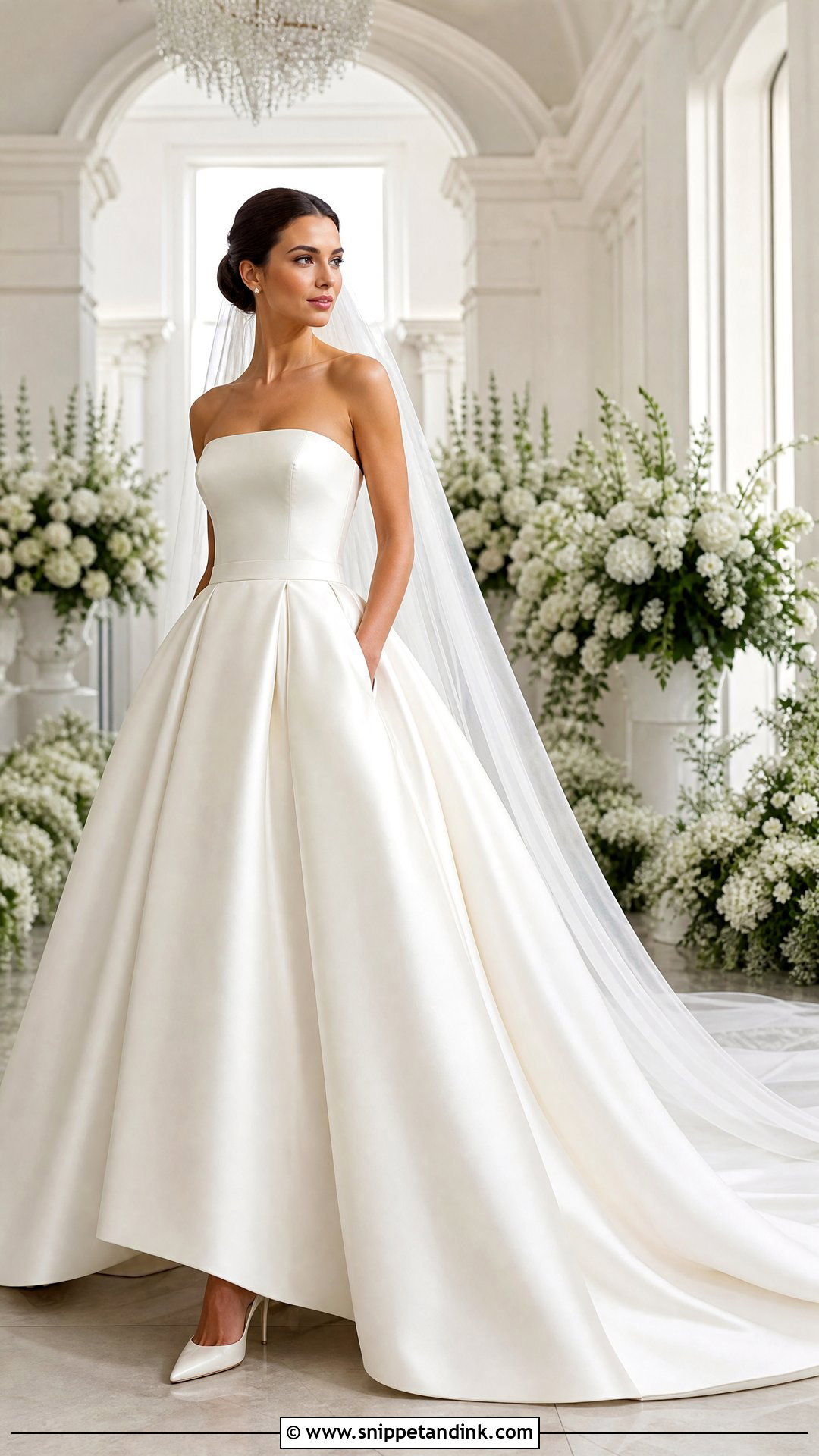
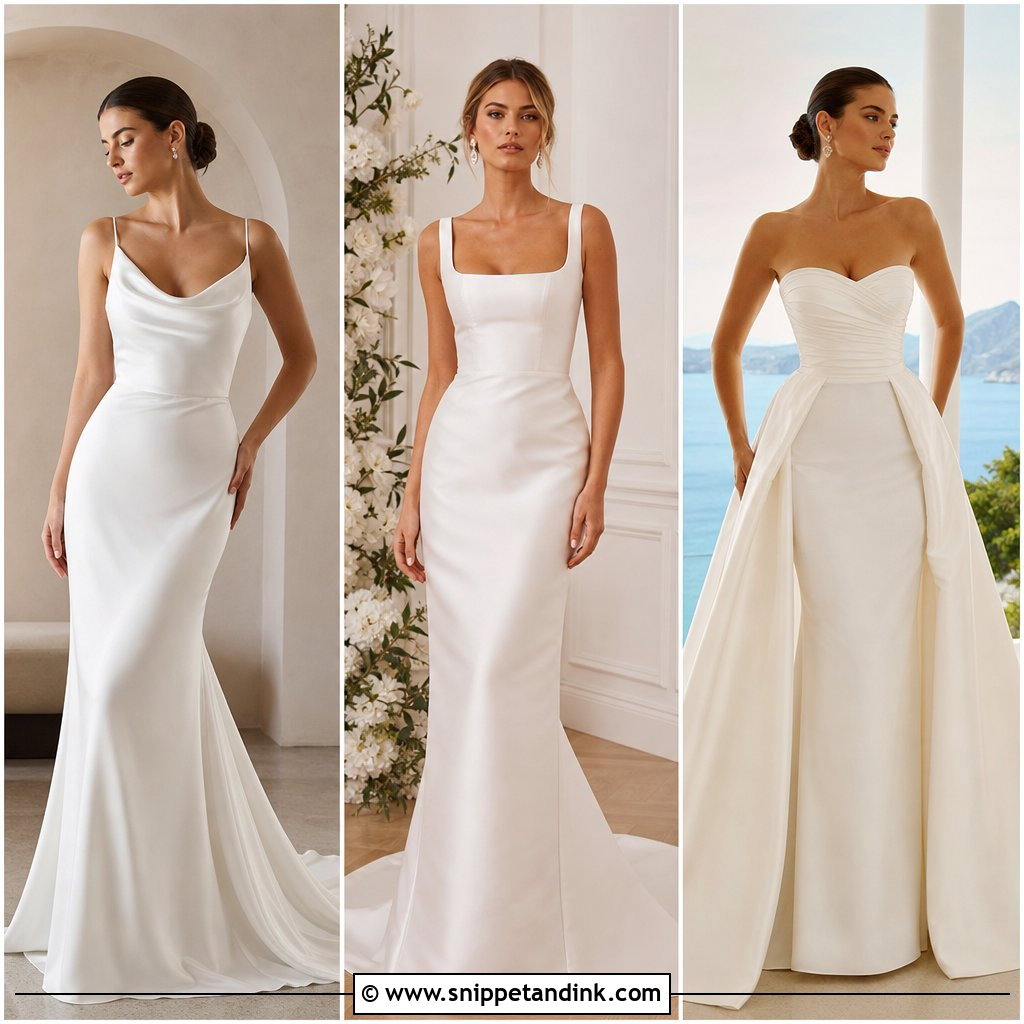
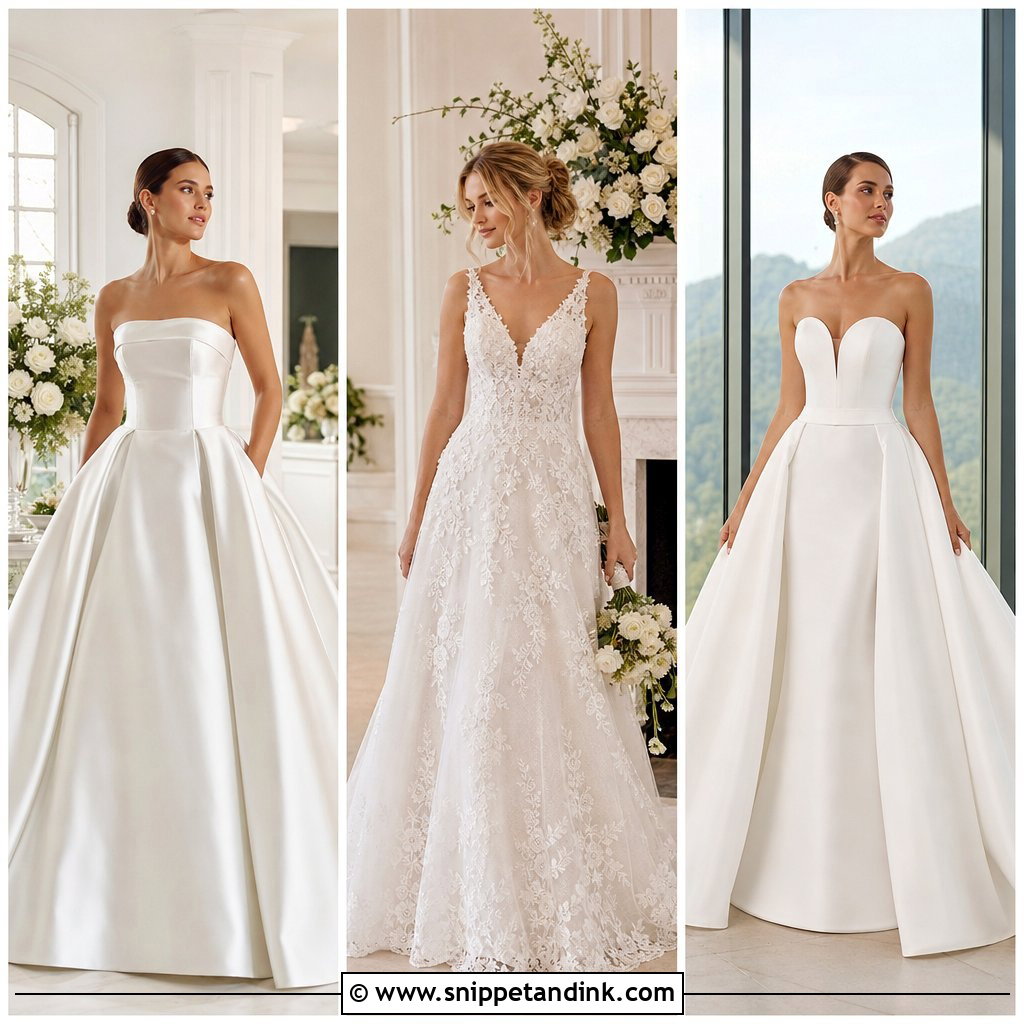
Satin is the fabric I have to watch most closely, because it reflects everything. On a ball gown that’s an asset: the full, structured skirt picks up window light in long, smooth highlights that show its shape. Under direct on-camera flash, though, satin can go bright and flat, so I bounce or diffuse the light. A strapless or softly scooped neckline keeps the top clean, a cathedral veil extends the shape and pearl studs add detail without competing. Pointed ivory pumps, a neat chignon or low bun. Check the bustle at your final fitting; a bustle that drops mid-reception shows up in every dance-floor frame.
2. Lace A-Line Wedding Dress
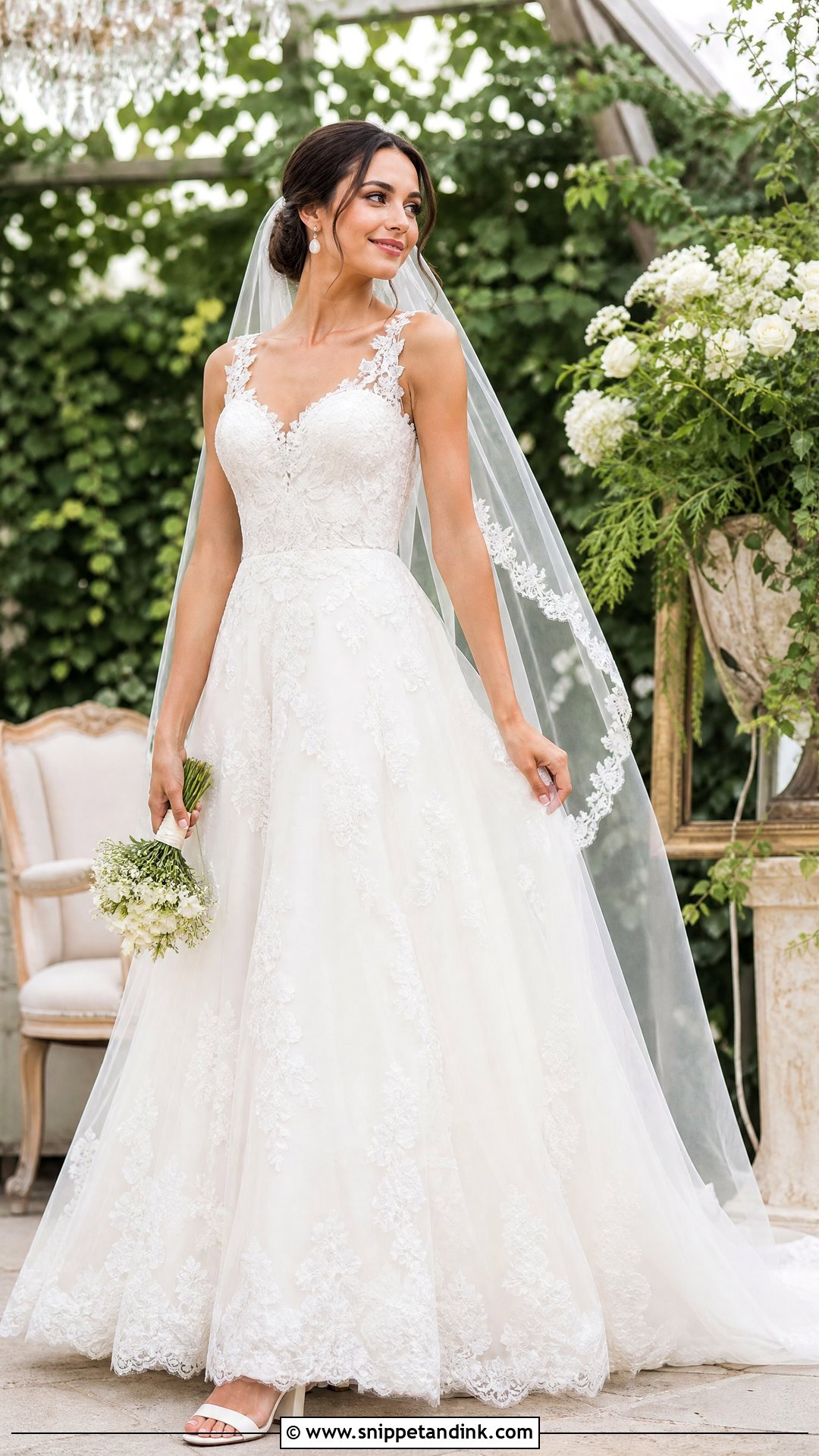
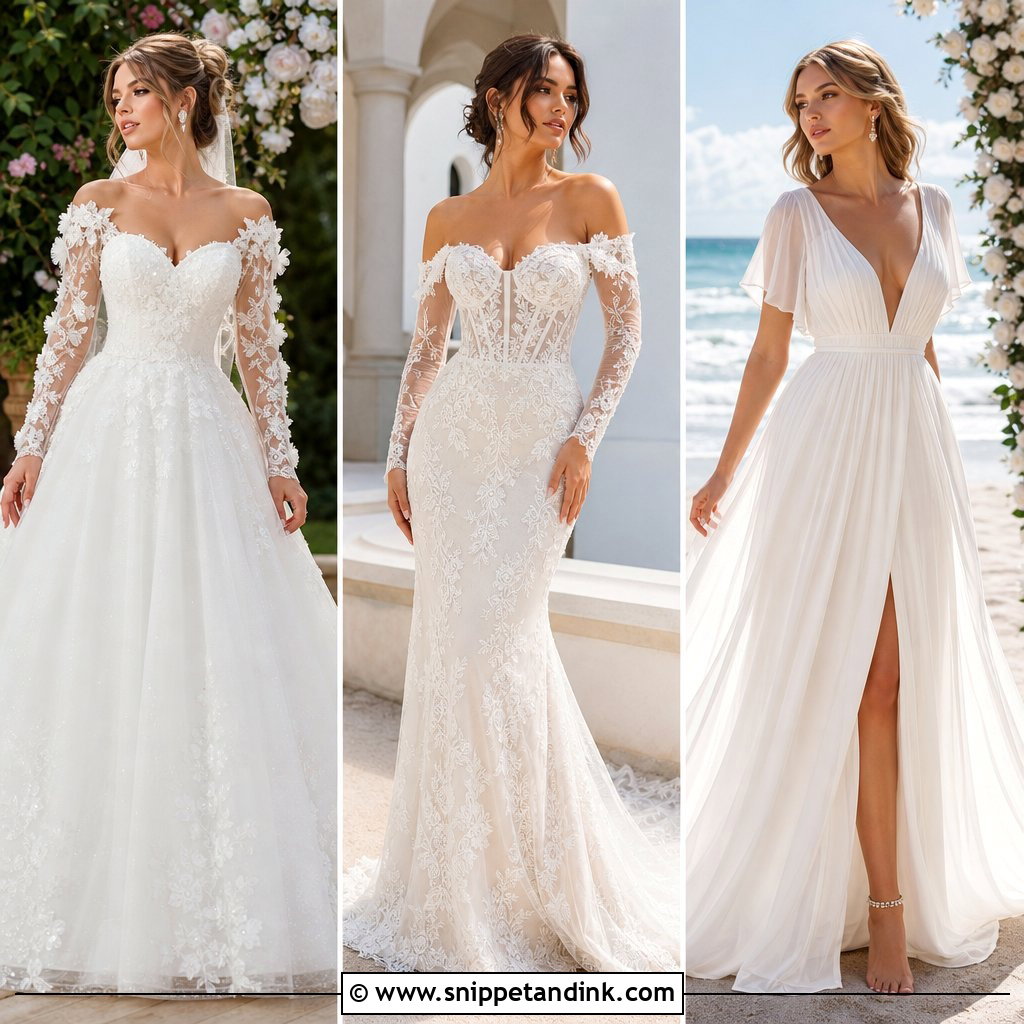
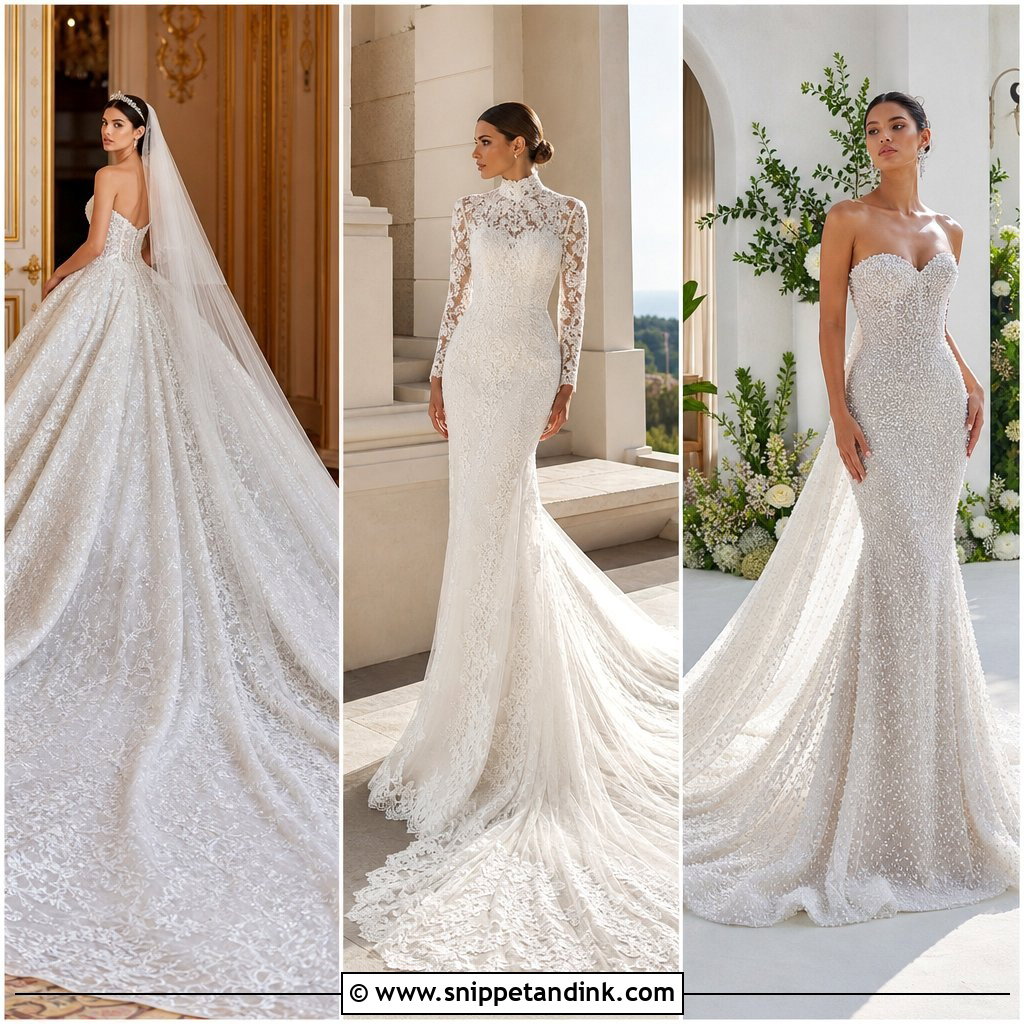
Lace on an A-line is one of the most forgiving combinations I photograph. The texture holds detail even in mixed or dim light, where plain fabric can turn into a white blank. I look for motifs that flow from bodice onto skirt rather than stopping at a hard seam, because that line shows clearly in full-length portraits. A fingertip veil with a narrow lace edge, pearl drops, a delicate bracelet and ivory block heels, with loose waves or a relaxed low bun. Garden venues, country houses and traditional ceremonies all suit it, in any season.
3. Basque Waist Wedding Dress
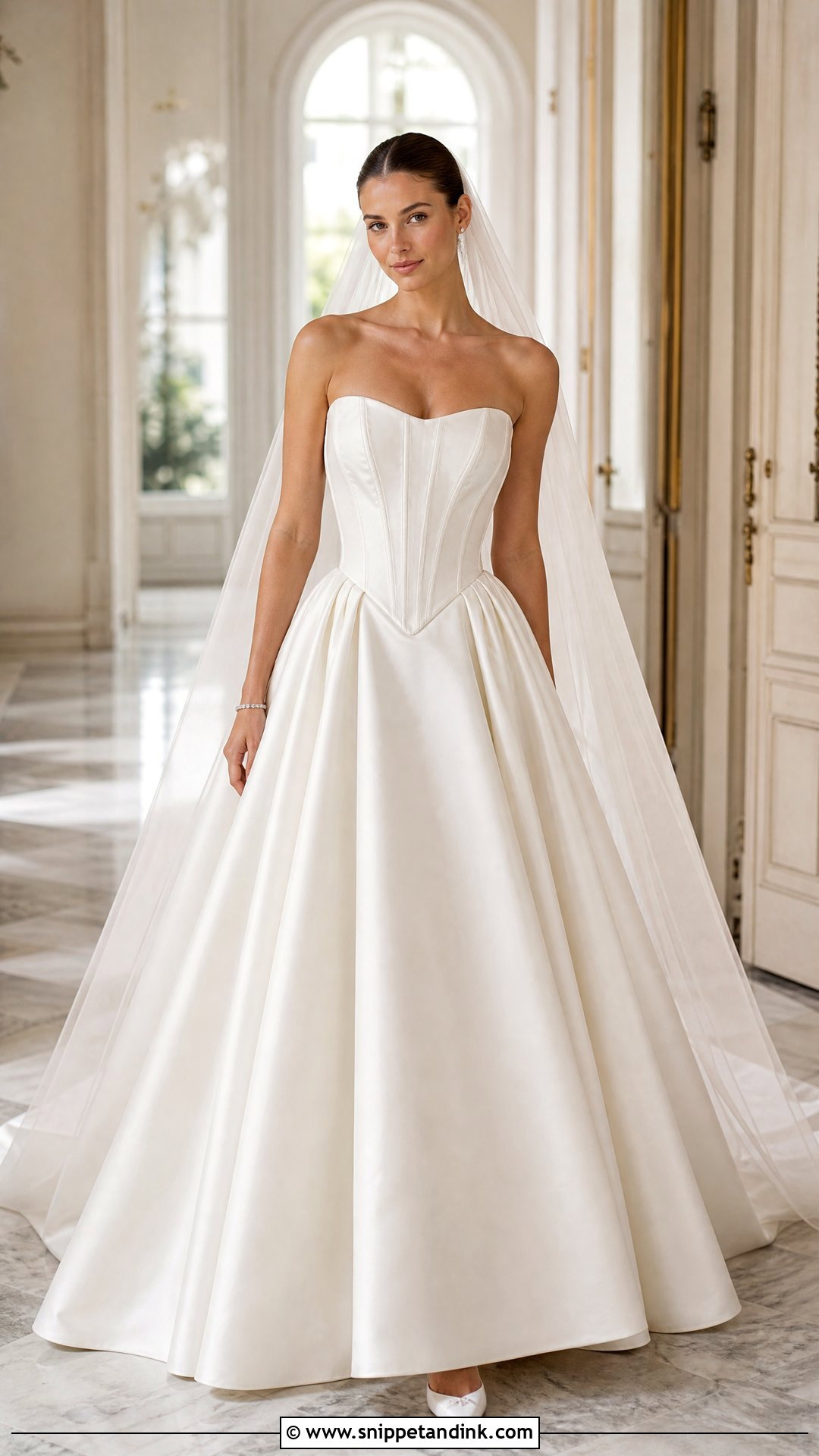
The point of a Basque waist draws a sharp line down the center of the body, and it reads best when I shoot straight on or from a slightly raised angle. Paired with a strapless corset bodice and satin or mikado, it looks structured and a little vintage. Keep the veil long and plain so the waist stays visible. Crystal studs, a tennis bracelet and pointed satin heels add controlled sparkle; a sleek bun or half-up waves open the neckline. The point must sit level and centered. If it twists even slightly when you sit or move, I’ll see it in every seated photo, so have it checked carefully at alterations.
4. Long Sleeve Lace Wedding Dress
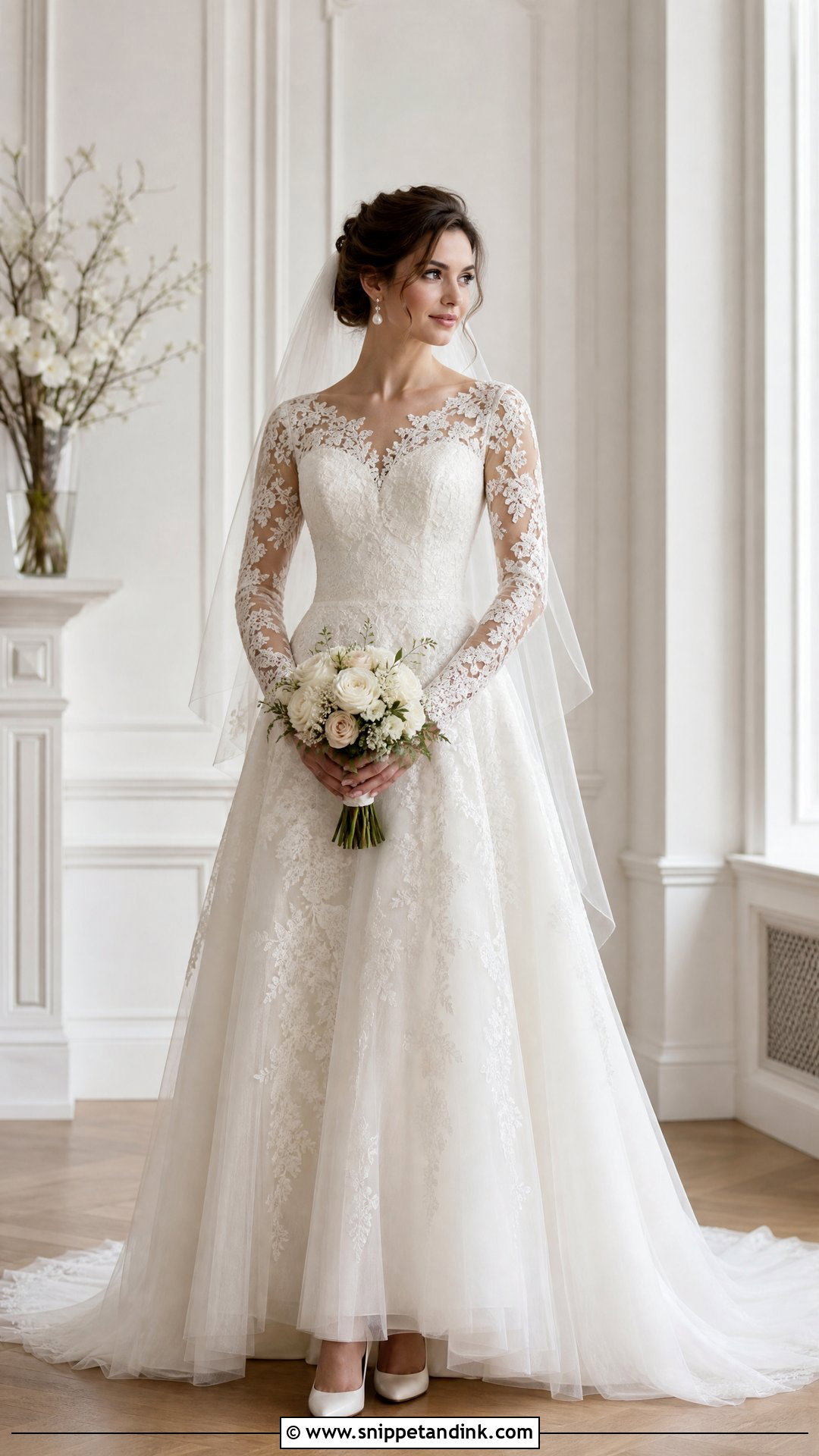
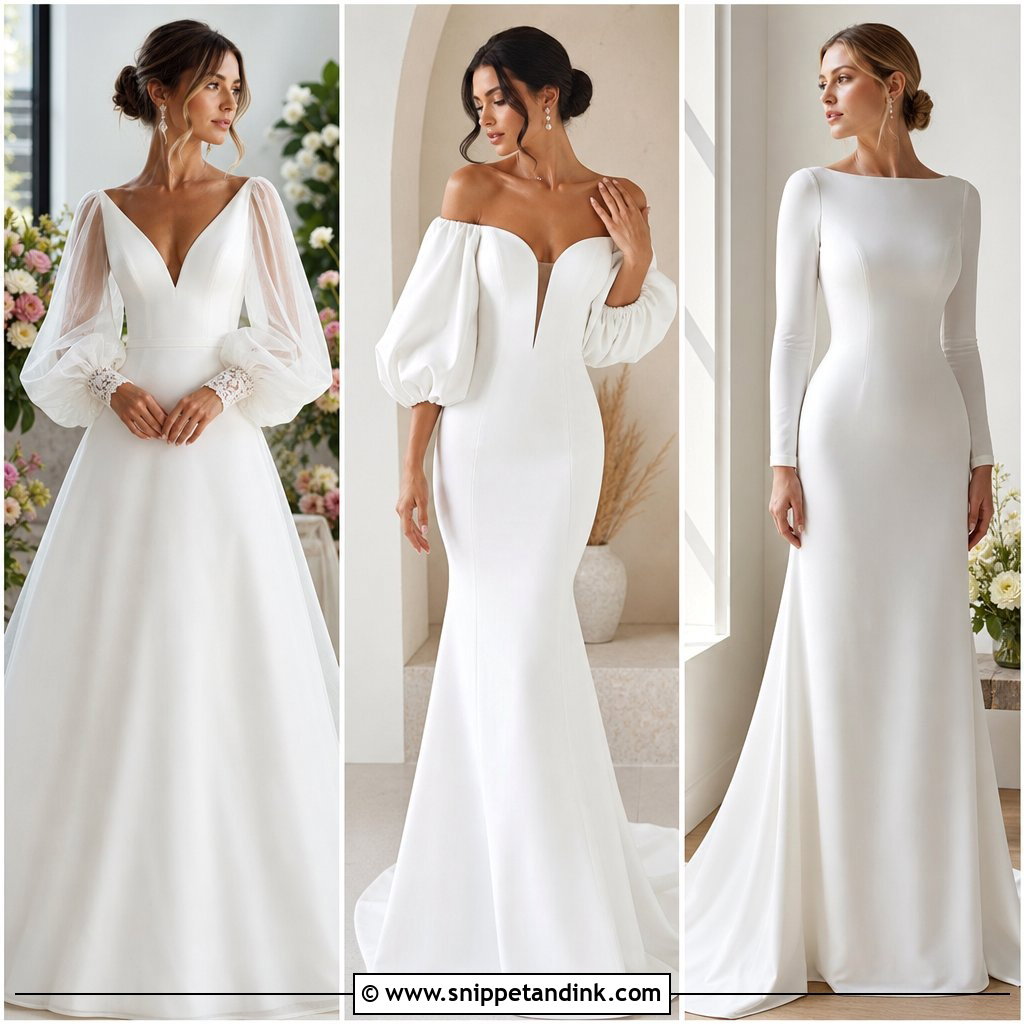
Sheer lace sleeves let the pattern show against the skin and are one of my favorite details to backlight, since the motifs glow at the edges. Lined sleeves look heavier and lose that effect. A fitted bodice over a flowing A-line skirt balances the coverage, and a simple tulle veil stops the whole look getting busy. Small pearl earrings, closed-toe ivory pumps for cool weather and a low twisted bun. At the try-on, bend your elbows and raise your arms: tight lace sleeves pull the bodice up, and that tension shows as creases across the chest in close-ups.
5. Off Shoulder Wedding Dress
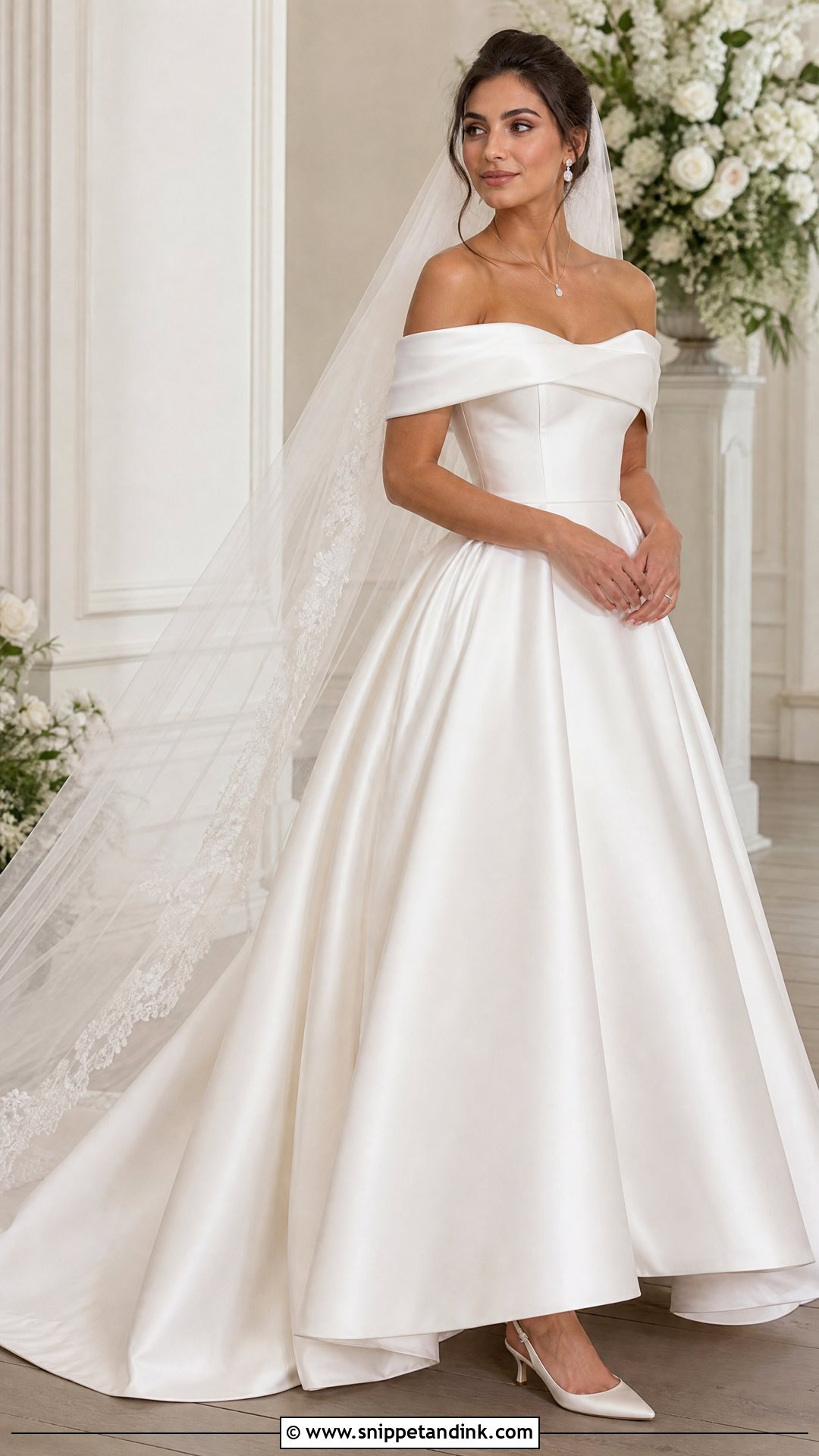
Off-shoulder necklines frame the collarbones and give a graceful line in close portraits. Tulle makes it romantic, satin polished and mikado sculptural. What I see go wrong is the neckline sliding during the day, which leaves a bride constantly tugging at it in candid shots, so secure internal support is essential. A full skirt is dramatic, a slim A-line lighter. A delicate pendant, drop earrings, a smooth cathedral veil set under a low bun and ivory slingbacks. Hug someone, sit down and lift your arms before alterations are finished.
6. Mermaid Wedding Dress
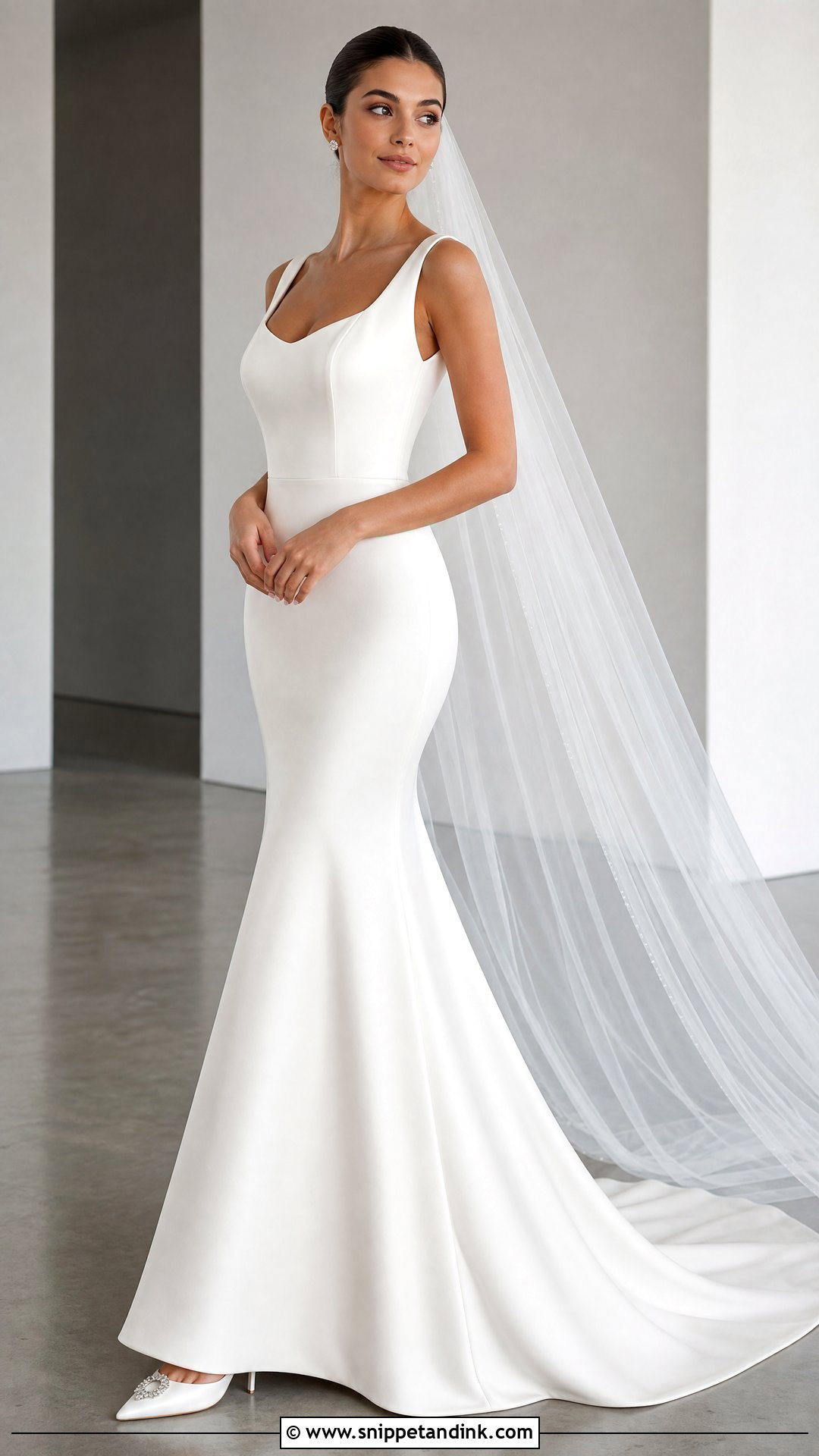
A mermaid follows the body through the bodice, waist and hips before widening near the knee, and it photographs best from an angle or in profile, where that curve is clearest. Head-on, it can look like a straight column. Structured crepe gives clean lines, while lace softens it. Pair it with a simple chapel veil, sparkling studs and pointed heels to continue the vertical line, plus a smooth ponytail, polished waves or low bun. Take several full steps at your appointment. A flare set too low makes a bride shuffle, and shuffling looks stiff in walking shots.
7. Square Neck Wedding Dress
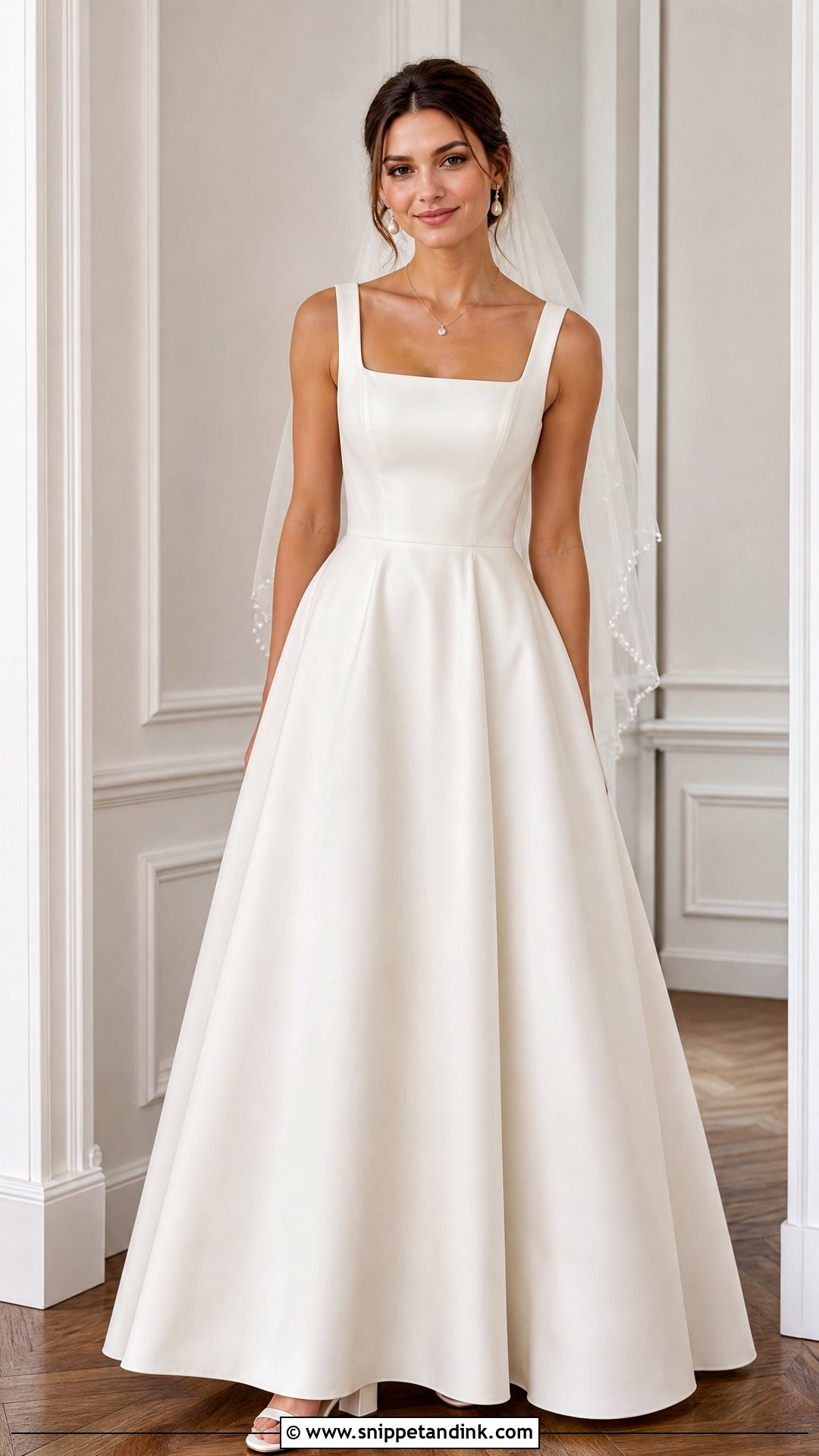
The square neck’s crisp corners frame the collarbones and pair well with wide straps, short sleeves or a sleeveless bodice. Matte satin or structured crepe looks minimal; patterned lace looks softer. Over an A-line skirt it’s easy to wear. Those corners are unforgiving in close-ups, though: if one gapes or a strap twists, the asymmetry is obvious. Inspect both at every fitting. A fine chain, pearl earrings, a fingertip veil set under a softly textured bun and low block heels.
8. Halter Neck Wedding Dress
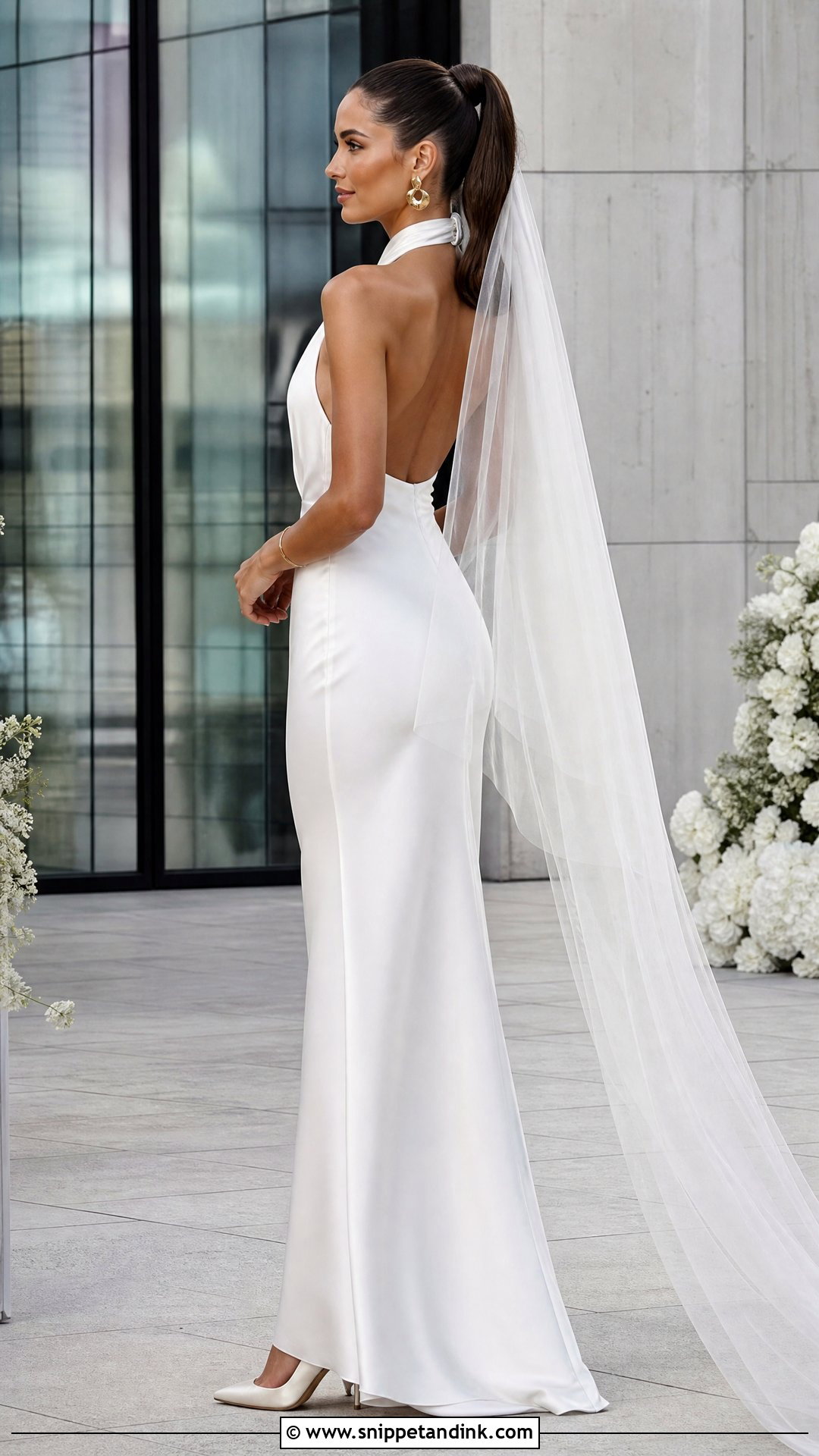
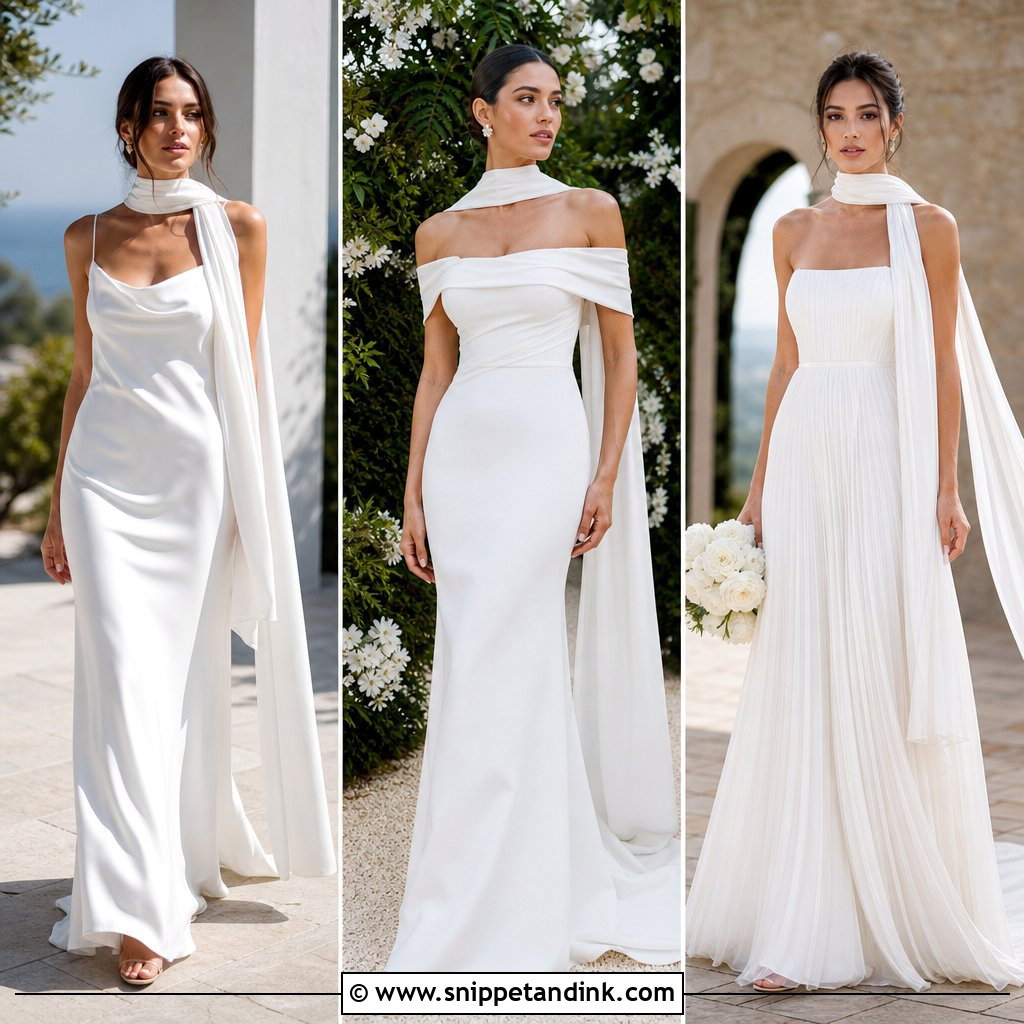
A halter neck pulls the eye up to the face and shoulders, which makes it a strong neckline for portraits. Satin, crepe or soft drape with a column or gentle A-line keeps it refined. Skip the necklace and choose sculptural earrings, then wear the hair up in a smooth bun or high ponytail so the collar shows. Pointed pumps, a narrow bracelet and a sheer veil anchored low at the back of the head. During your fitting, notice whether the neckline pulls forward; that tension shows as a bowed head in photographs. Armholes should lie smooth so no inner construction peeks out in side shots.
9. Minimalist Crepe Wedding Dress
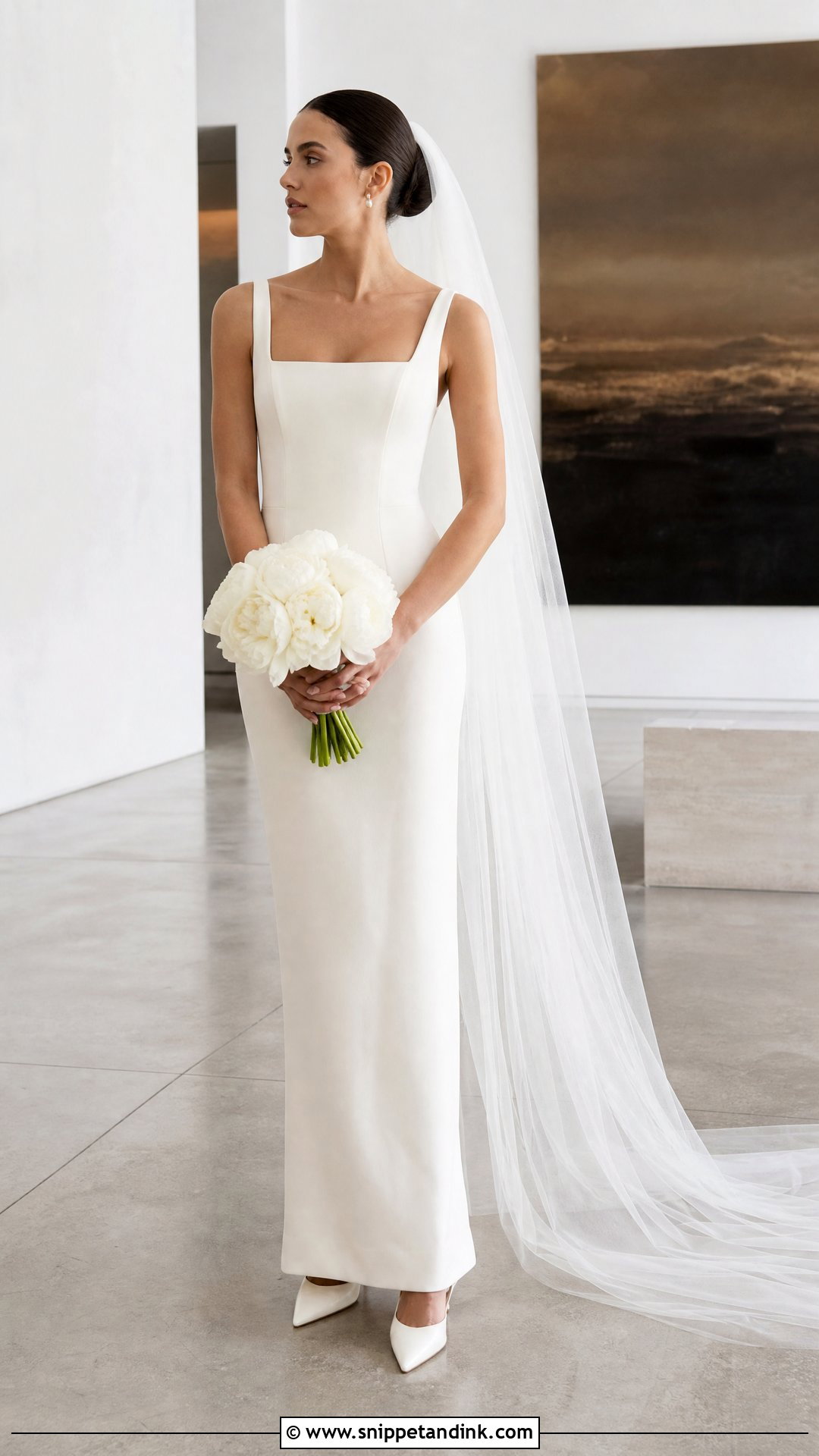
Minimal gowns put the work on fabric and tailoring. A fitted crepe dress with a bateau, scoop or square neck is the base, and a low back or a line of covered buttons gives quiet interest. The honest catch with crepe on camera: it shows every ripple from underwear or a loose seam, especially in raking side light. Look at the dress by a window during the fitting, because that’s the light I’ll often use for portraits. A plain cathedral veil, pearl or diamond studs, pointed slingbacks, a structured bouquet and sleek waves or a center-parted low bun.
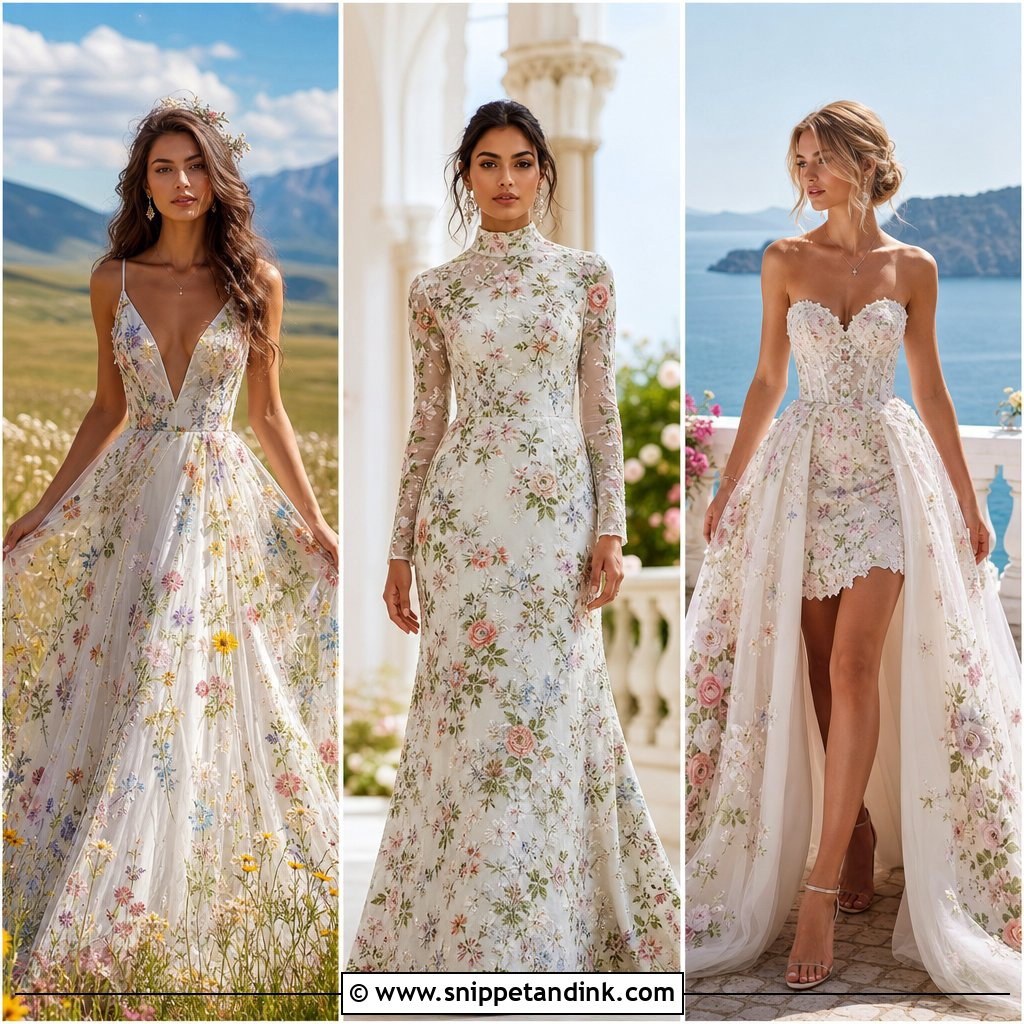
10. Floral Applique Wedding Dress
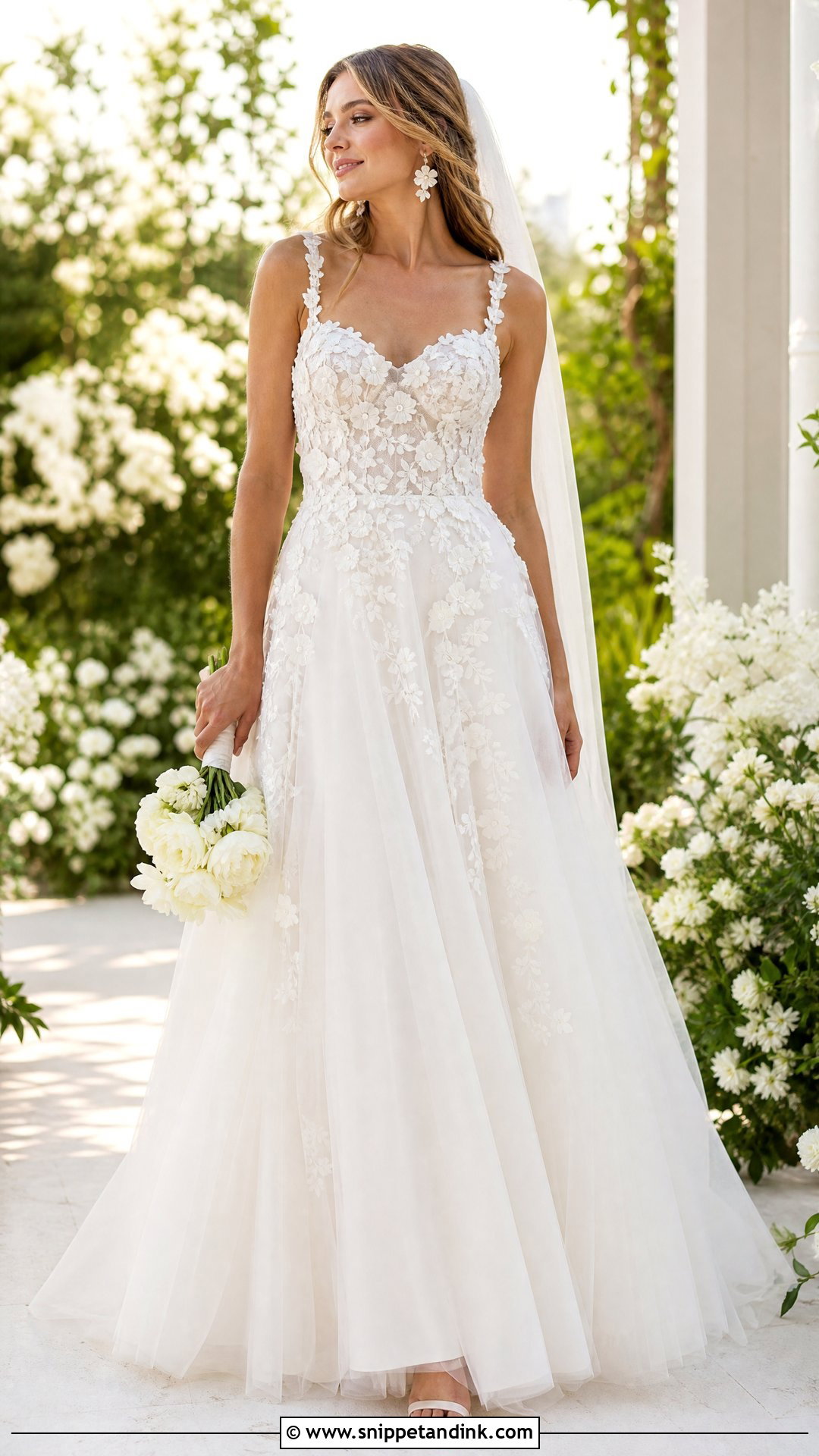
Raised floral appliqués create small shadows, which gives texture to a white dress that would otherwise read flat in bright sun. They can cluster at the bodice, scatter across a tulle skirt or trail along the train. An A-line or soft ball gown gives them room to show in full-length photos. Keep the veil plain and the bouquet coordinated rather than copying every flower. Small floral earrings, ivory sandals and a loose low bun. At fittings, check the appliqués at the waist and under the arms; they catch on bracelets and rub during a long day.
11. Pearl Embellished Wedding Dress
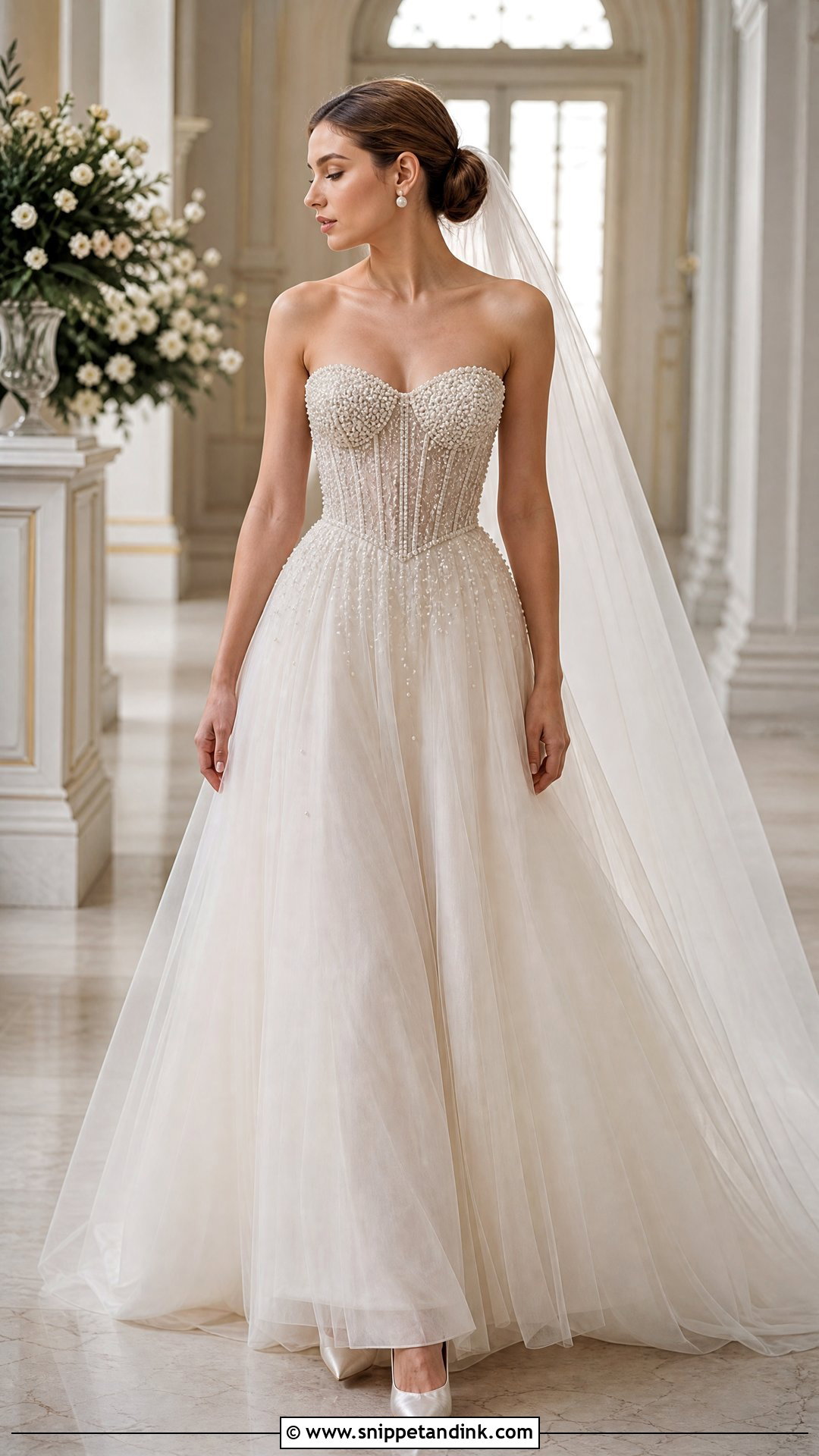
Pearls give a softer shine than crystals, and on camera they read as gentle points of light rather than hard flashes. They can outline a neckline, cover a corset bodice or spread across a tulle skirt. Let the beadwork be the statement: pearl studs, a clean tulle veil and smooth ivory pumps, with a sleek bun or soft waves. An A-line moves gently; a column feels sharper. Look closely at how the pearls are attached, especially at the waist, seat and underarms, where loose ones pop off. Ask how to store and transport the dress, since beaded surfaces crush under weight.
12. Corset Wedding Dress
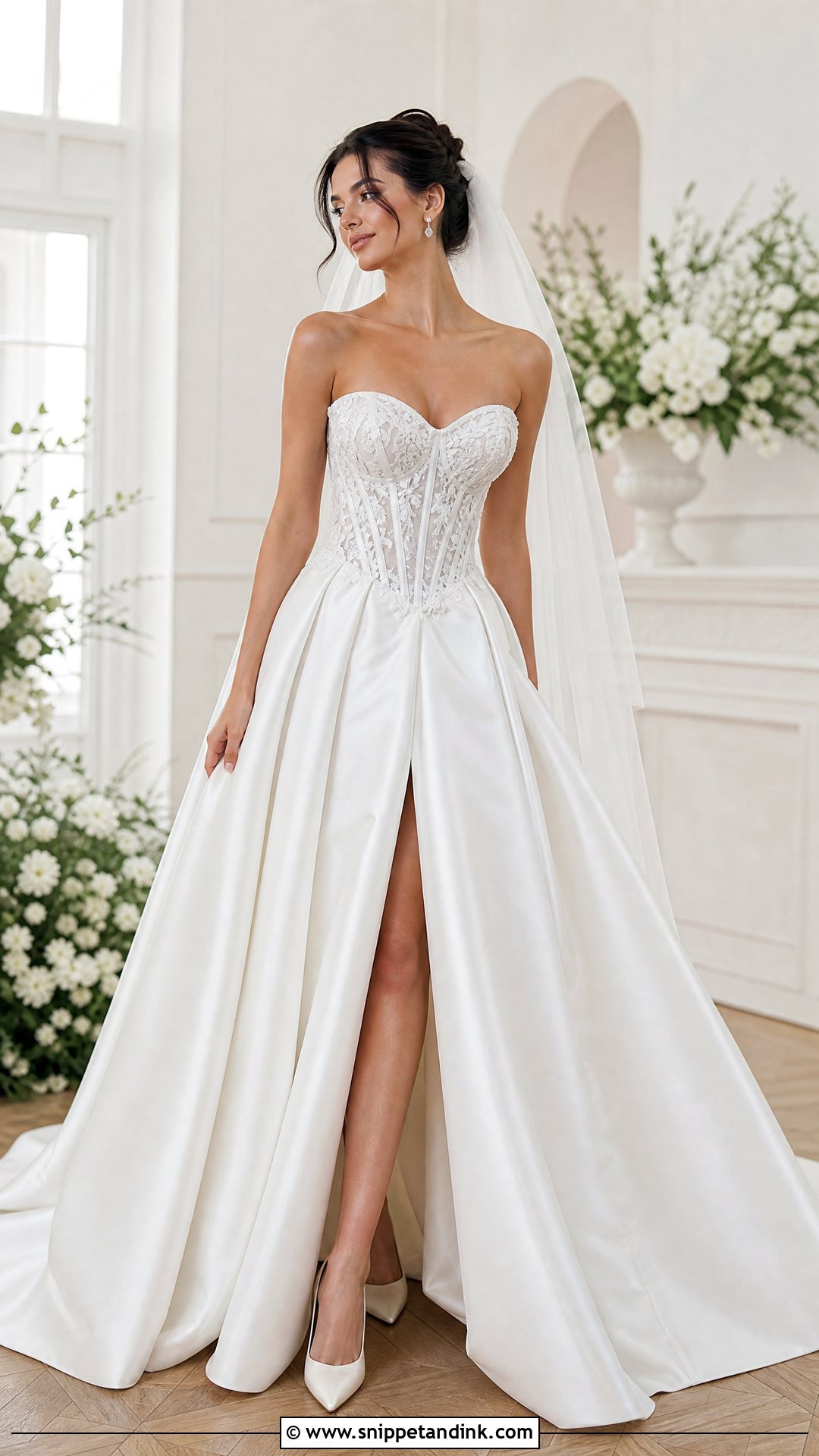
Visible corsetry defines the waist and supports the bust, and the seam lines photograph clearly, especially in side light. Under floral lace it looks romantic; with plain satin and exposed seams it looks modern. A curved or strapless neckline balances the fitted bodice, and a full or A-line skirt finishes the shape. A plain veil, delicate drops, pointed ivory heels and a soft updo so hair doesn’t cover the boning. You should still be able to breathe deeply and sit comfortably. Boning that digs into the ribs shows as a ridge in tight portraits.
13. Drop Waist Wedding Dress
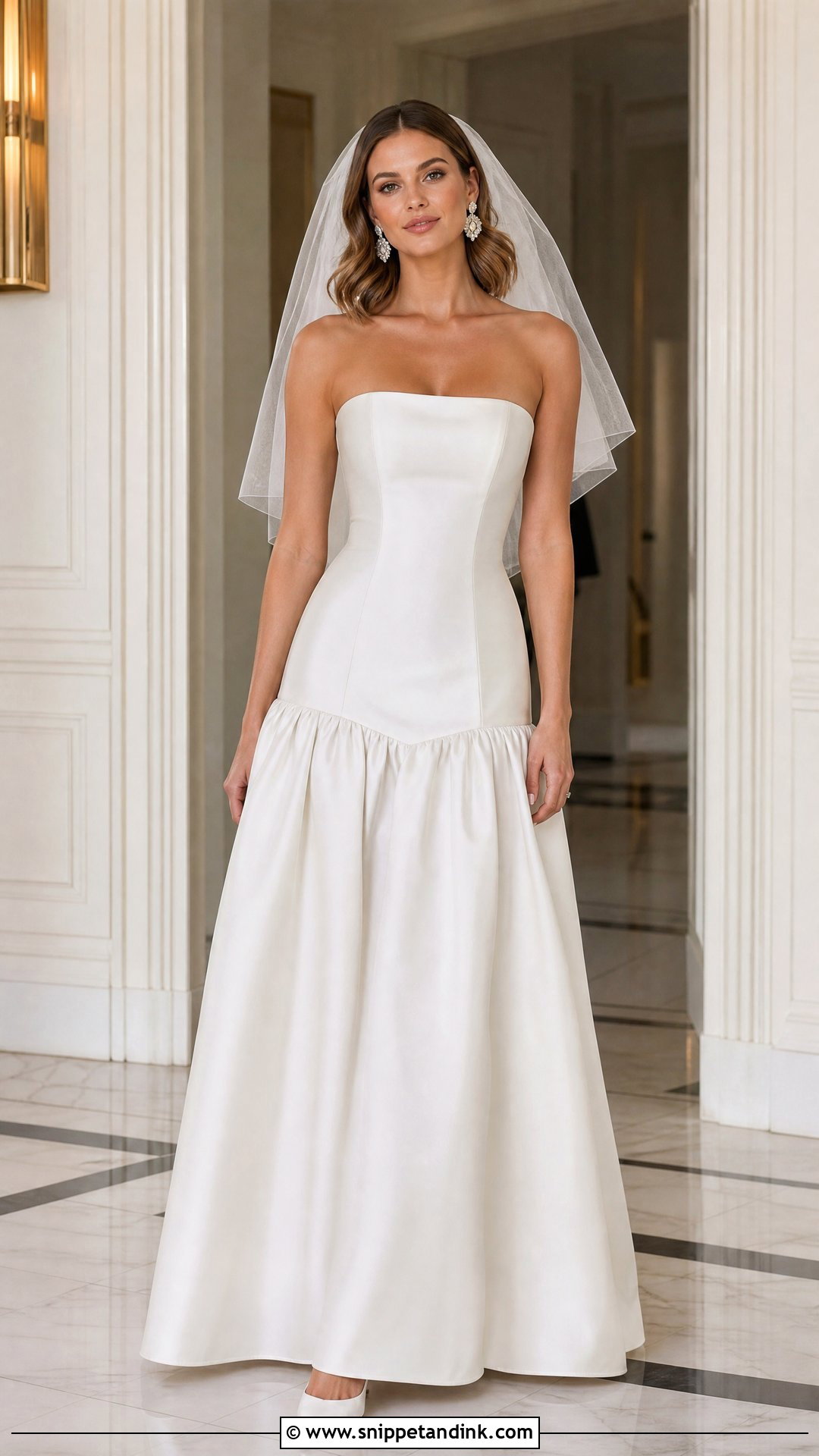
A drop waist extends the bodice past the natural waist before the skirt releases, giving a long torso line that can feel vintage or modern. Structured satin keeps it crisp, while tulle or lace softens the lower skirt. A shoulder-length veil, crystal earrings, slim pointed pumps and a polished low bun or sculpted waves. Placement is the whole game here: the skirt should open at a comfortable, flattering point, not across the widest part of the hips. Sit, walk and climb a few steps at the fitting, as a long bodice that wrinkles when you sit will do the same in every seated photo.
14. Draped Chiffon Wedding Dress
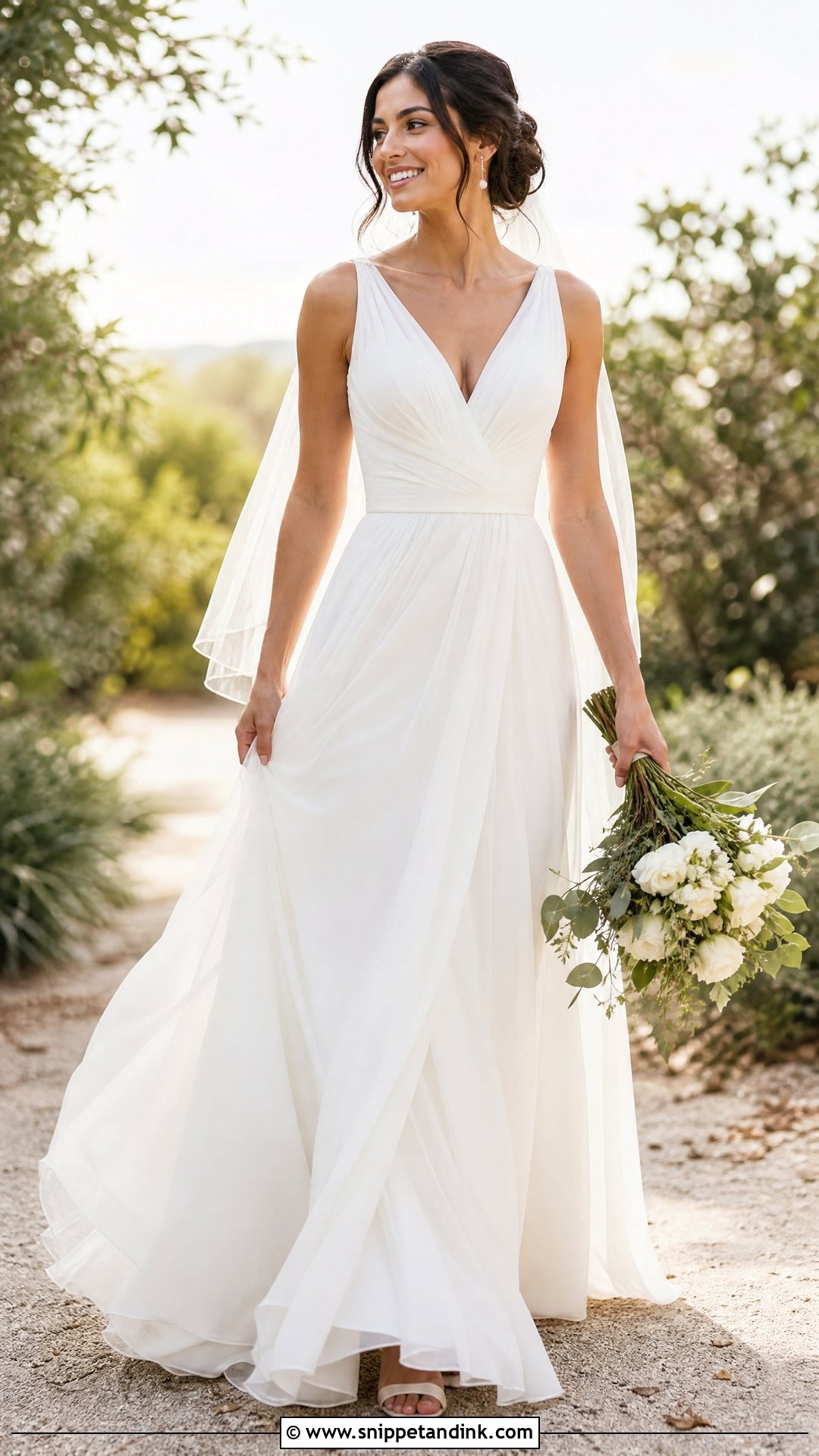
Chiffon is the fabric I love most outdoors because it moves with the faintest breeze, which gives life to portraits that would otherwise feel posed. Draping across the bodice defines the waist, and a layered A-line keeps the skirt from falling flat. A V-neck, one-shoulder or softly gathered neckline suits it. Delicate sandals, small drops, a light fingertip veil and loose waves or a relaxed braided bun. Because I often shoot outdoors into the sun, the lining matters: check the dress against a bright window, since backlight shows straight through thin chiffon.



15. Tea Length Wedding Dress
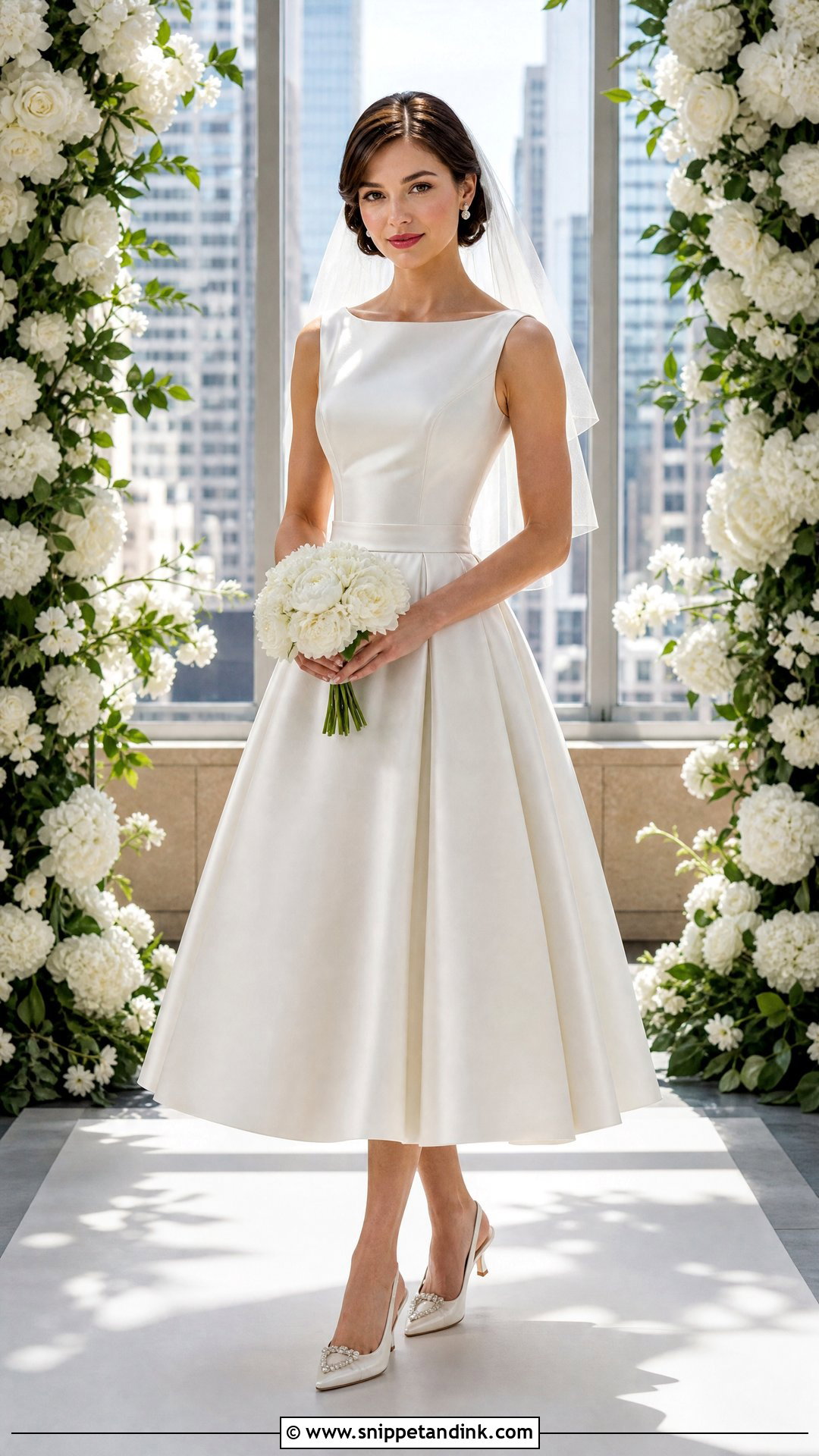
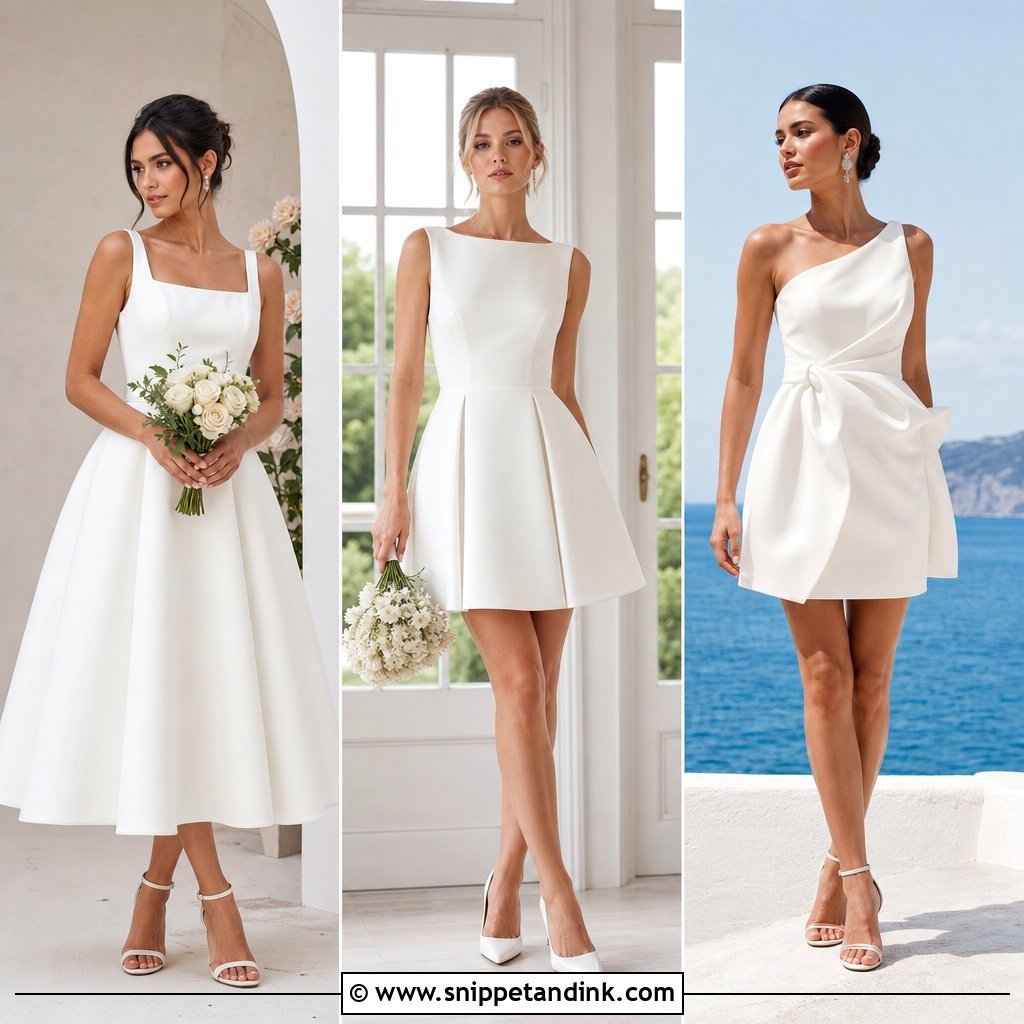
Tea length falls between knee and ankle and makes the shoes part of the outfit, so they’ll appear in a lot of my frames. A fitted bodice with a full skirt is the classic mid-century shape; a slimmer cut is more modern. Choose pointed pumps, embellished slingbacks or block heels you can comfortably stand in. A short veil, pearl earrings and a defined waist balance the proportions, with soft curls or a neat bun. The hem should hit a slim point on the lower leg, so petite and tall brides may need it adjusted. It’s practical for city halls, daytime weddings and receptions with lots of dancing.
16. Short Wedding Dress
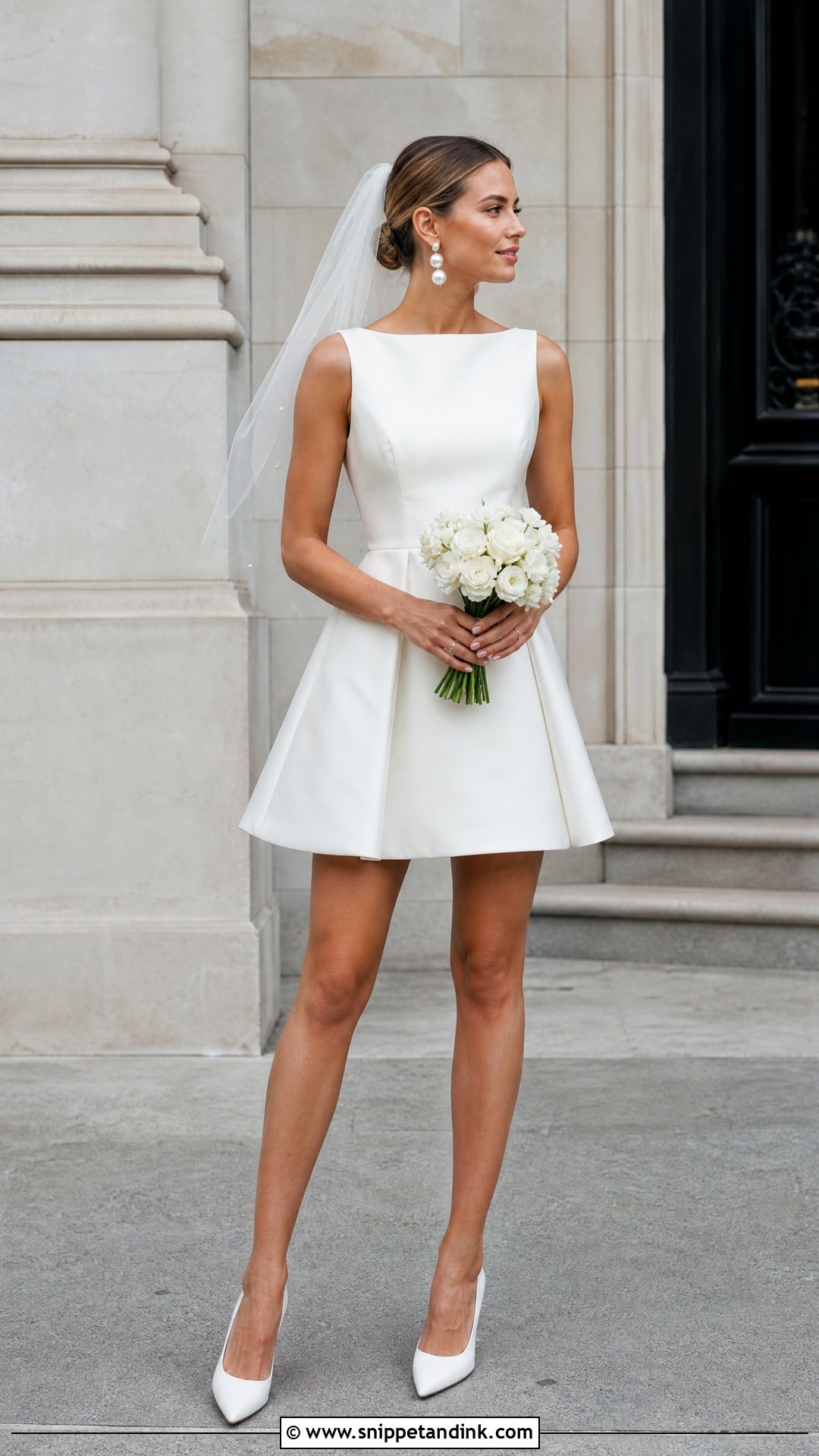
A short dress is a confident pick for a civil ceremony, destination wedding or reception change. A mini A-line with a fitted bodice feels playful; a tailored shift or column looks cleaner. Because legs and shoes are in every full-length shot, footwear matters: pointed pumps lengthen the line, ankle straps add definition. Statement earrings, a short veil or hair bow, a compact bouquet and a smooth ponytail or softly waved bob. Check the hem from the front, back and seated, and remember I’ll often shoot from slightly below on steps.
17. Detachable Overskirt Wedding Dress
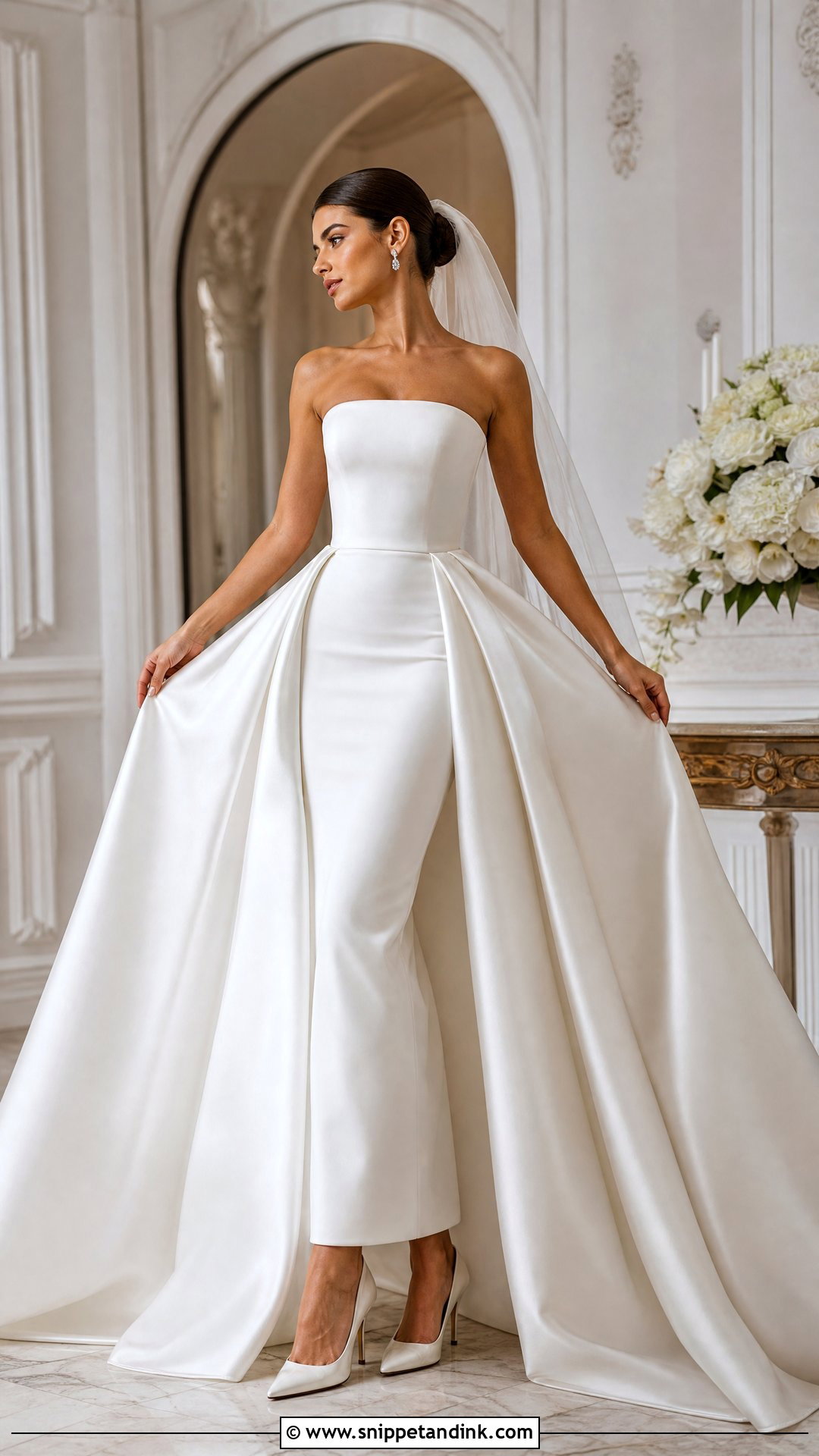
A detachable overskirt gives you two looks, and I plan portraits around both. The overskirt brings volume for the ceremony, then comes off to reveal a fitted column, mermaid or mini for the reception. Satin and mikado overskirts add structure; tulle adds movement. Keep accessories that suit both versions: sleek earrings, comfortable pointed heels, a removable veil and a low bun that stays tidy through the change. Hooks, snaps or ties must stay hidden, and the base gown should look finished on its own. I’d suggest doing your main portraits in the ceremony look before the overskirt comes off.
18. Bow Back Wedding Dress
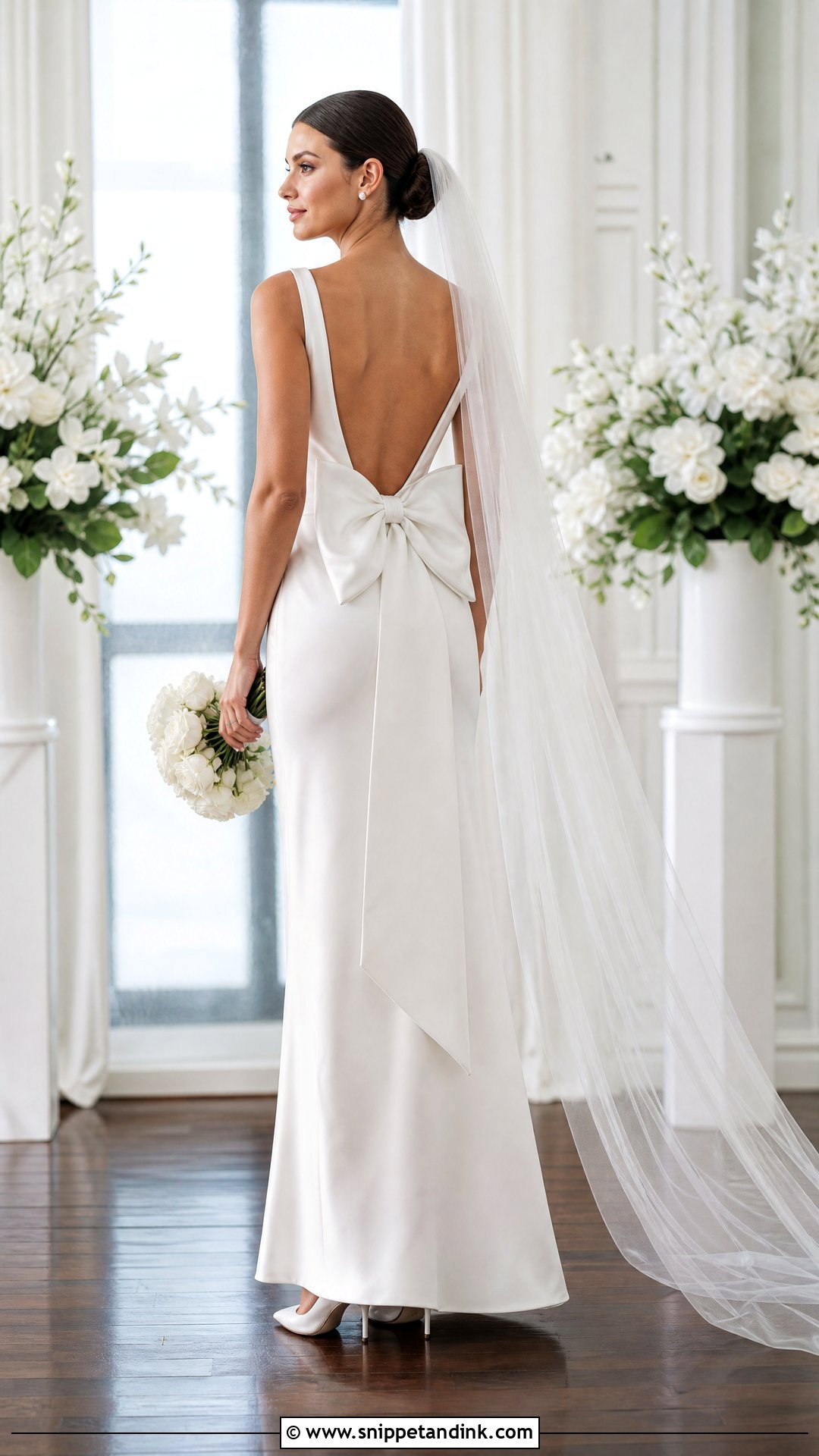
A bow at the back is designed for the aisle walk and rear shots, which are some of the most emotional frames of the day. A large structured bow looks striking on a plain satin column or ball gown; a softer one suits tulle and organza. Keep other details restrained. Choose a sheer veil that shows the bow, or wear the veil above it and remove it after the ceremony. Pearl studs, pointed pumps and a sleek bun. Sit down in it before you commit: big bows crush against a chair back and droop, and a detachable bow saves the problem at the reception.
19. Plus Size A-Line Wedding Dress
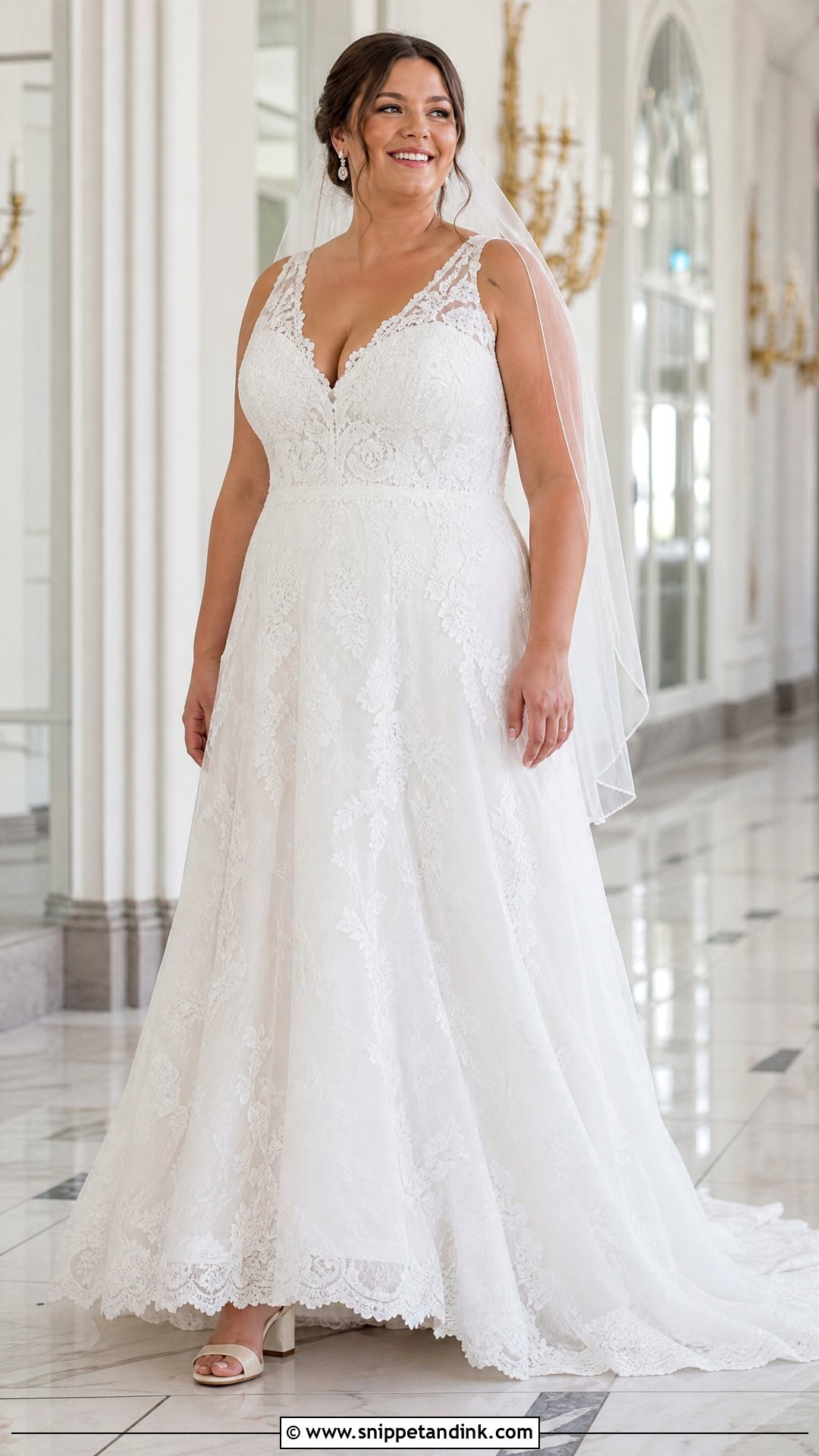
A well-built A-line gives support, definition and easy movement across a wide range of sizes. I look for secure boning, balanced straps and cups placed for your body rather than the sample’s. A V-neck or square neckline frames the face, and the skirt should fall from the waist without bulk; lace adds texture, smooth satin more structure. Block heels, drop earrings, a fingertip veil and a low bun or half-up style. Shopping at boutiques that carry representative samples means you see the real fit instead of a clipped sample. From behind the camera, a well-fitted bodice is what makes a bride relax, and relaxed brides look their best in photos.

20. Modest High Neck Wedding Dress
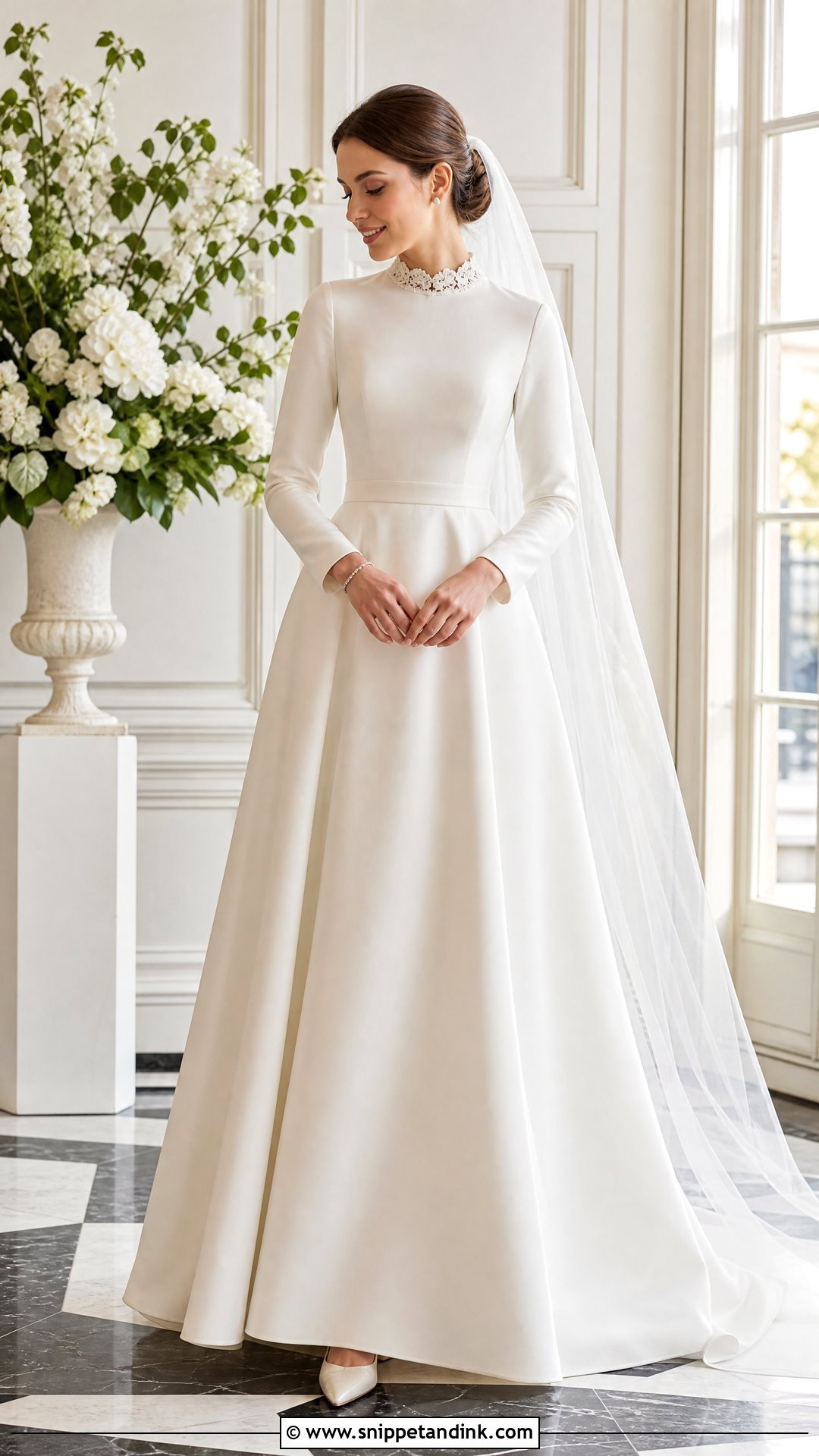
A high neck frames the face like a portrait collar. Sheer lace keeps it light; opaque crepe or satin looks cleaner and more architectural. Pair it with long sleeves and an A-line for a traditional shape, or go sleeveless in a column for something modern. A necklace would crowd it, so finish with pearl studs, a slim bracelet and ivory closed-toe heels, with a low bun that keeps the collar and back visible. Choose a plain, light tulle veil to avoid layers bunching at the shoulders. Turn your head and sit at fittings; a collar that rubs leaves a red line I can’t always hide in close-ups.
How White, Ivory and Champagne Read on Camera
Bright white can lose detail in strong sun; lace and appliqué help, plain satin less so. Ivory is the easiest shade for me to expose well, since it keeps texture in highlights and sits naturally against most skin tones. Champagne and blush can look almost white in shade and warmer in golden-hour light, so don’t be surprised if they shift from photo to photo.
Mixed lighting is the bigger challenge. A reception hall with warm bulbs and blue window light can make an ivory gown look yellow on one side and grey on the other. I correct for it, but it helps if the getting-ready room has one good window and no strong colored walls nearby.
Hanging the Dress for Detail Shots
Many brides want a photo of the gown hanging before they put it on. A few things make that shot possible:
- Have the gown steamed and out of its bag before I arrive, ideally hanging high so the train can spread.
- Bring a plain wooden or padded hanger. The boutique’s plastic hanger and its loops are usually what ruin the frame.
- Heavy gowns should hang from their inner hanger loops, never from the straps or shoulders, which stretch under the weight.
Look at Your Dress From the Side and Back Too
Fabric, fit, accessories and venue all shape how a gown looks in the end. Start with the silhouettes that make you feel comfortable, supported and like yourself, then compare practical details: skirt weight, sleeve movement, neckline security, train length and shoe height. Bring your underwear and similar shoes to every fitting so alterations stay accurate. Trends are useful for ideas, but comfort is what shows in your face, and that’s what I’m photographing all day.
You'll Like These Ideas:





Leave a Reply