
Shopping for a bridal gown at 50 comes with a lot of unasked-for rules about sleeves, hemlines and color. I’d ignore nearly all of them. What does change with age is what you know about yourself: which fabrics you’re comfortable in, how long you want to stand in heels, and what you’d never wear even if it were in fashion. The twenty looks below lean on structure and fabric quality, with A-lines, refined lace, modern crepe, midi lengths, capes, blazers and convertible pieces, plus champagne and blush for anyone who’d rather skip bright white. Each one is styled head to toe. Read them with your own venue and your own comfort in mind, not someone else’s idea of what suits your age.
Foundation Garments Come Before the Gown
The single biggest difference I see between a bride who loves her fittings and one who dreads them is what she’s wearing under the dress. Bodies change, and a bra bought years ago will make even a well-made bodice sit wrong. So my order of work is different from what most brides expect.
- Get a professional bra fitting before your first salon appointment, and buy the strapless or low-back style your favorite necklines need.
- Bring that bra and any shapewear to every appointment, along with shoes close to the heel height you’ll wear.
- Tell the consultant how long you’re happy standing. If the answer is not long, ask for lighter fabrics and built-in support from the start.
- Try at least one silhouette you’d never have picked. Brides often surprise themselves with a column or a cape.
- Order with enough lead time. Many bridal gowns are made to order over several months, so ask the salon for its timeline before falling in love with a sample.
Sheer fabrics deserve their own check. Mesh and illusion panels look different against every skin, so hold a sleeve against your arm in daylight rather than judging from a hanger.
1. Long Sleeve Lace Wedding Dress
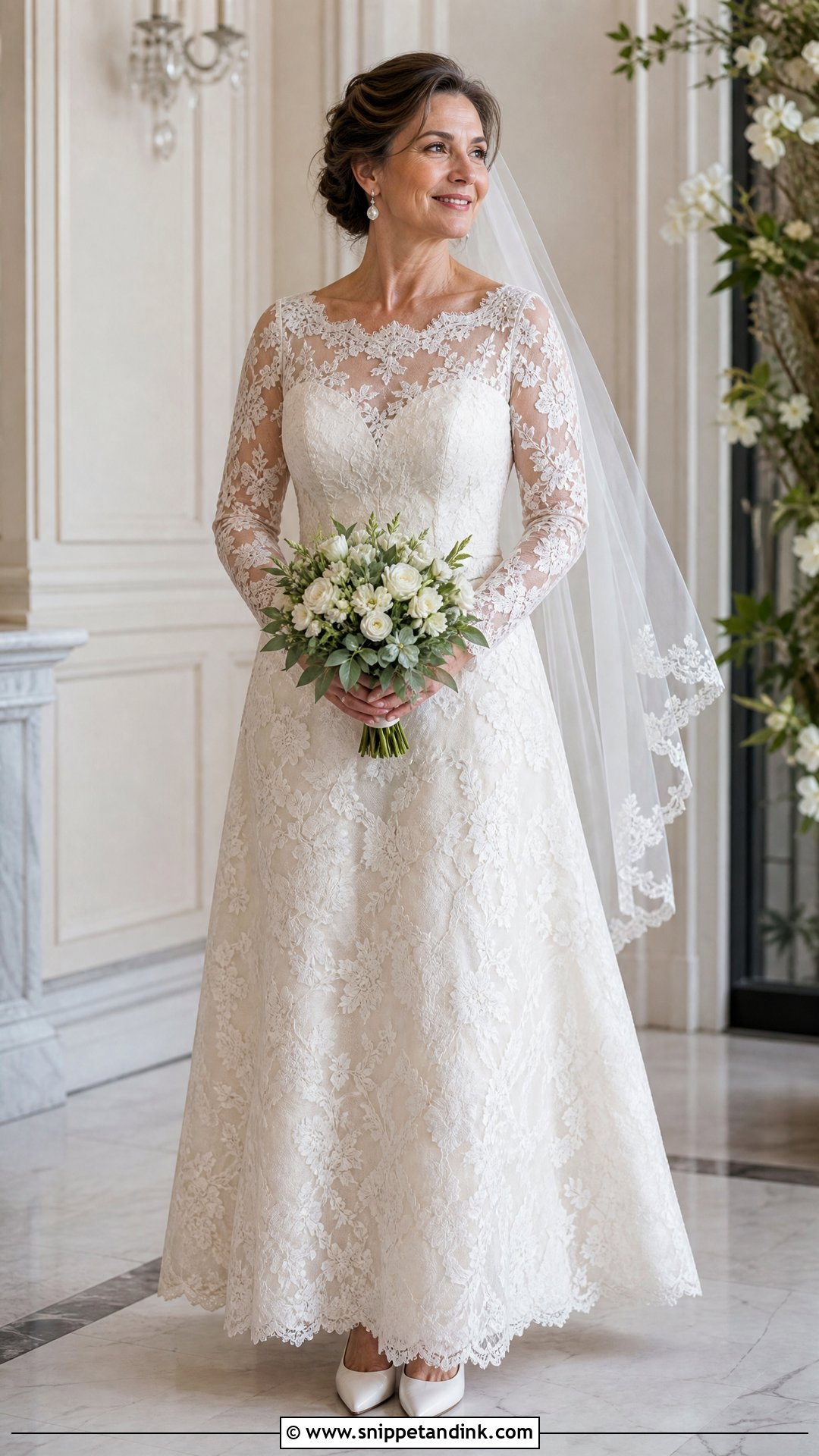
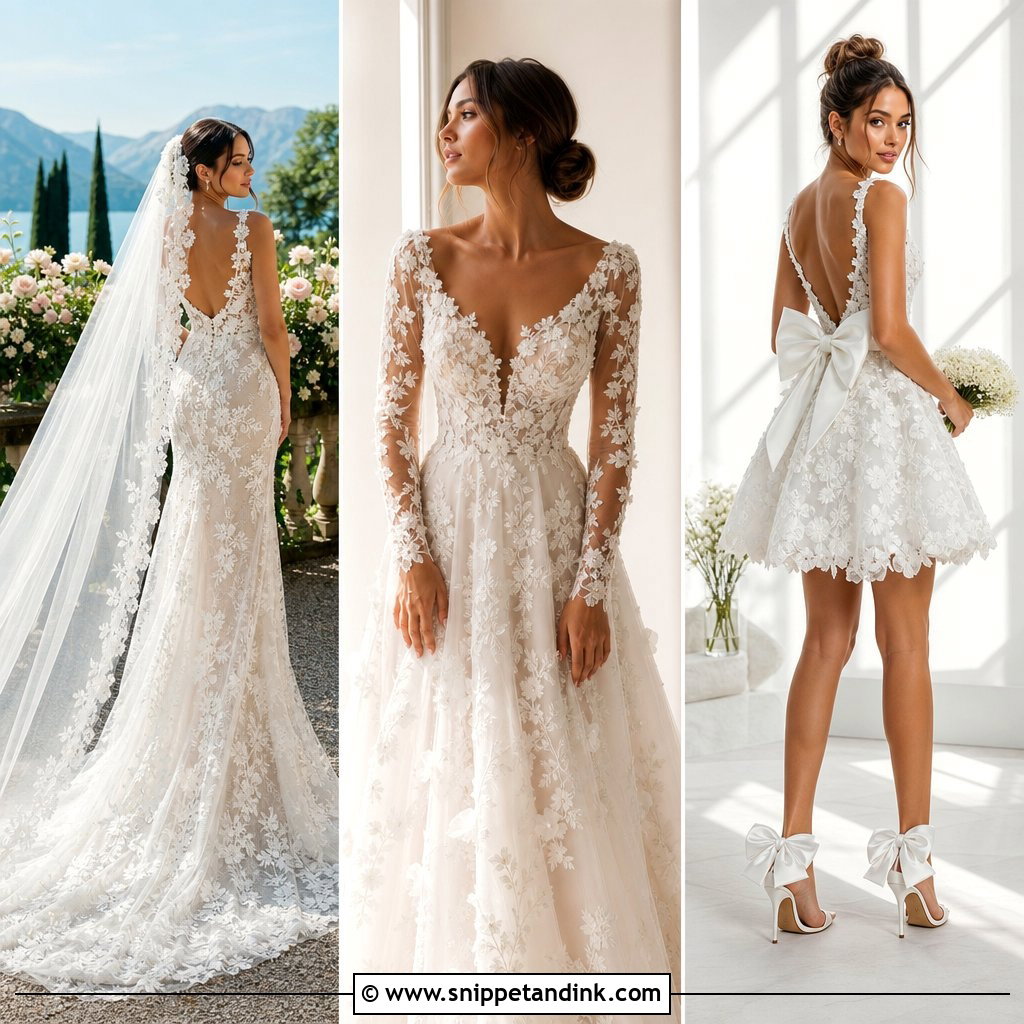
Sheer lace sleeves give coverage without the weight of a solid sleeve, and the skin showing through keeps the look from feeling buttoned-up. An A-line with a lightly structured bodice and natural waist, lined in ivory beneath the floral lace, catches window light well. The detail I check first is the elbow. Lace sleeves are cut slim, and if there’s no ease at the elbow you’ll feel it every time you lift a glass, so bend your arm and reach forward at the fitting. Pointed satin pumps, pearl drops and a small structured clutch finish it, with a low chignon and a fingertip veil. Fall, winter and formal indoor weddings suit it best.
2. Satin V-Neck Wedding Dress
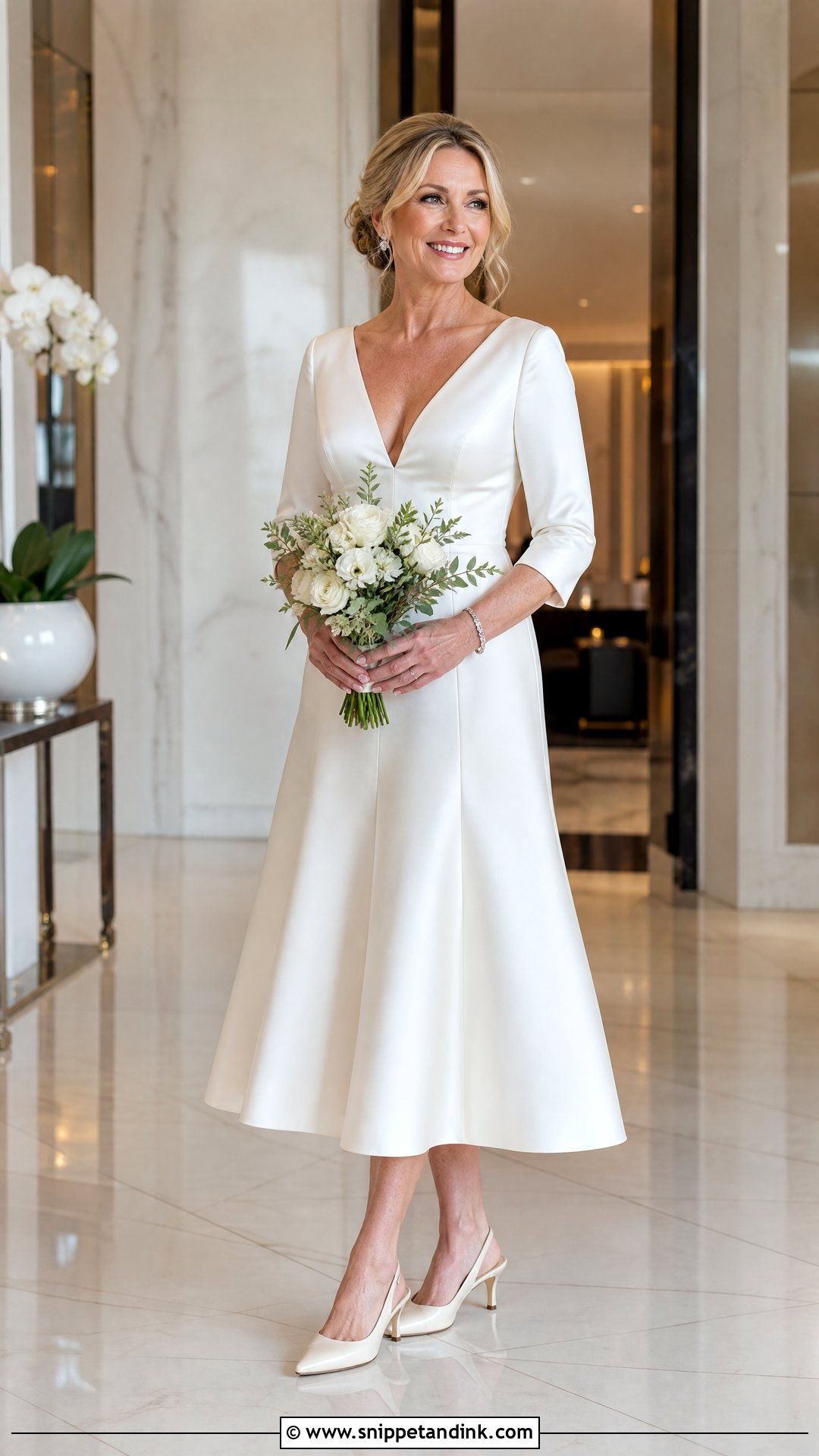
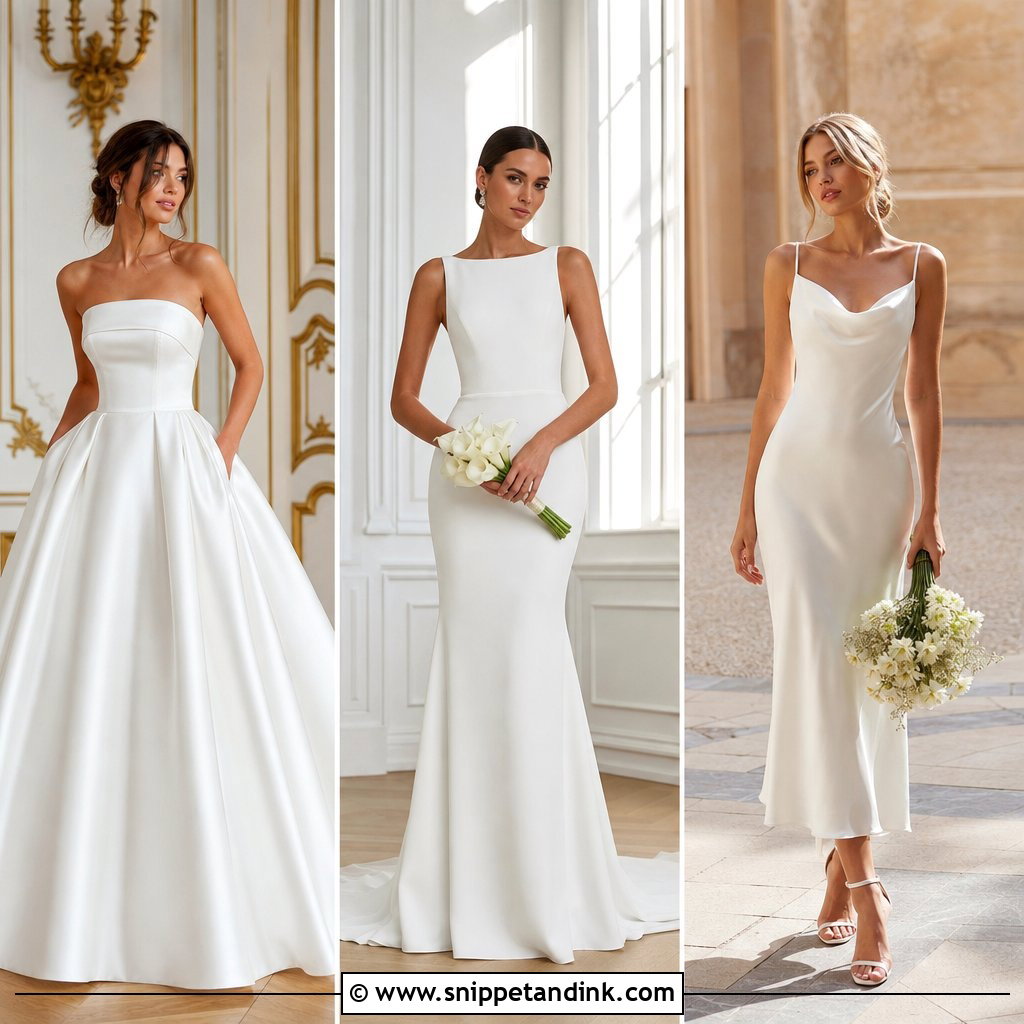
Good satin speaks for itself, which is why this is the gown I suggest to brides who dislike fuss. A V-neck with three-quarter sleeves and a softly flared skirt marks the waist and draws one long line down the body. Weight is everything here. Thin satin clings and shows every seam underneath, while a medium-weight satin skims, so ask the consultant what the fabric is and feel the hem between your fingers. Crystal studs, a fine tennis bracelet and ivory slingbacks are enough, with a sleek bun and a compact bouquet. If the V feels too open, a seamstress can add an illusion insert without changing the line. Hotel ceremonies and evening receptions suit it.
3. Tea Length Wedding Dress With Jacket
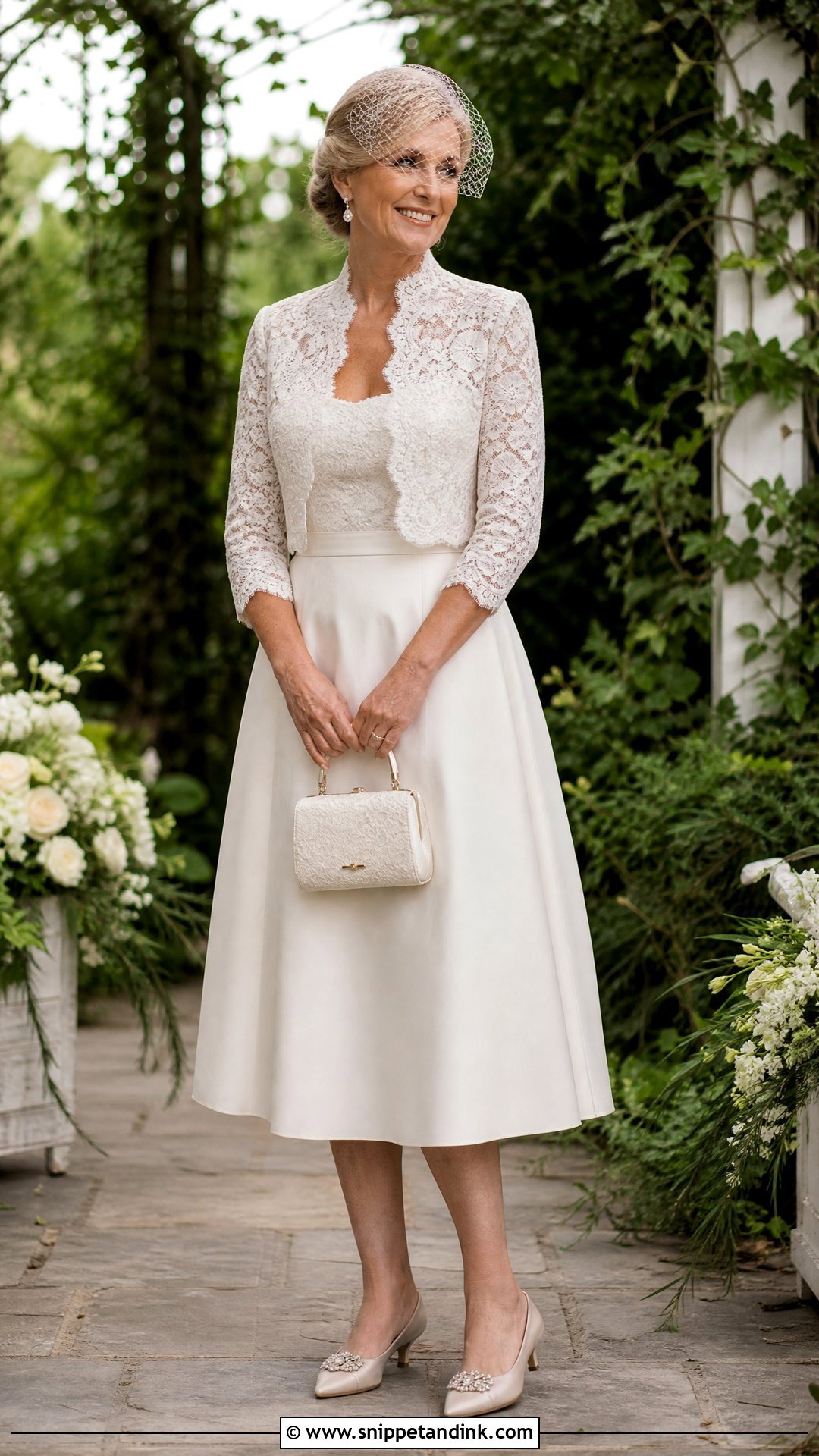
For a courthouse, garden or small daytime ceremony, a tea-length dress with a matching jacket gives you coverage now and a lighter outfit later. Look for a fit-and-flare that ends between calf and ankle, with a cropped lace or satin jacket that stops at the natural waist so it doesn’t cut you in half. Hem placement matters more than any accessory. If the skirt ends at the fullest part of the calf, it shortens the leg, especially on petite brides, so I have the hem pinned while the bride wears her actual shoes. Embellished low heels or ankle straps show off at this length. Pearl earrings, a top-handle bag and a birdcage veil or comb complete it, and the jacket comes off for the reception.
4. Chiffon Empire Waist Wedding Dress
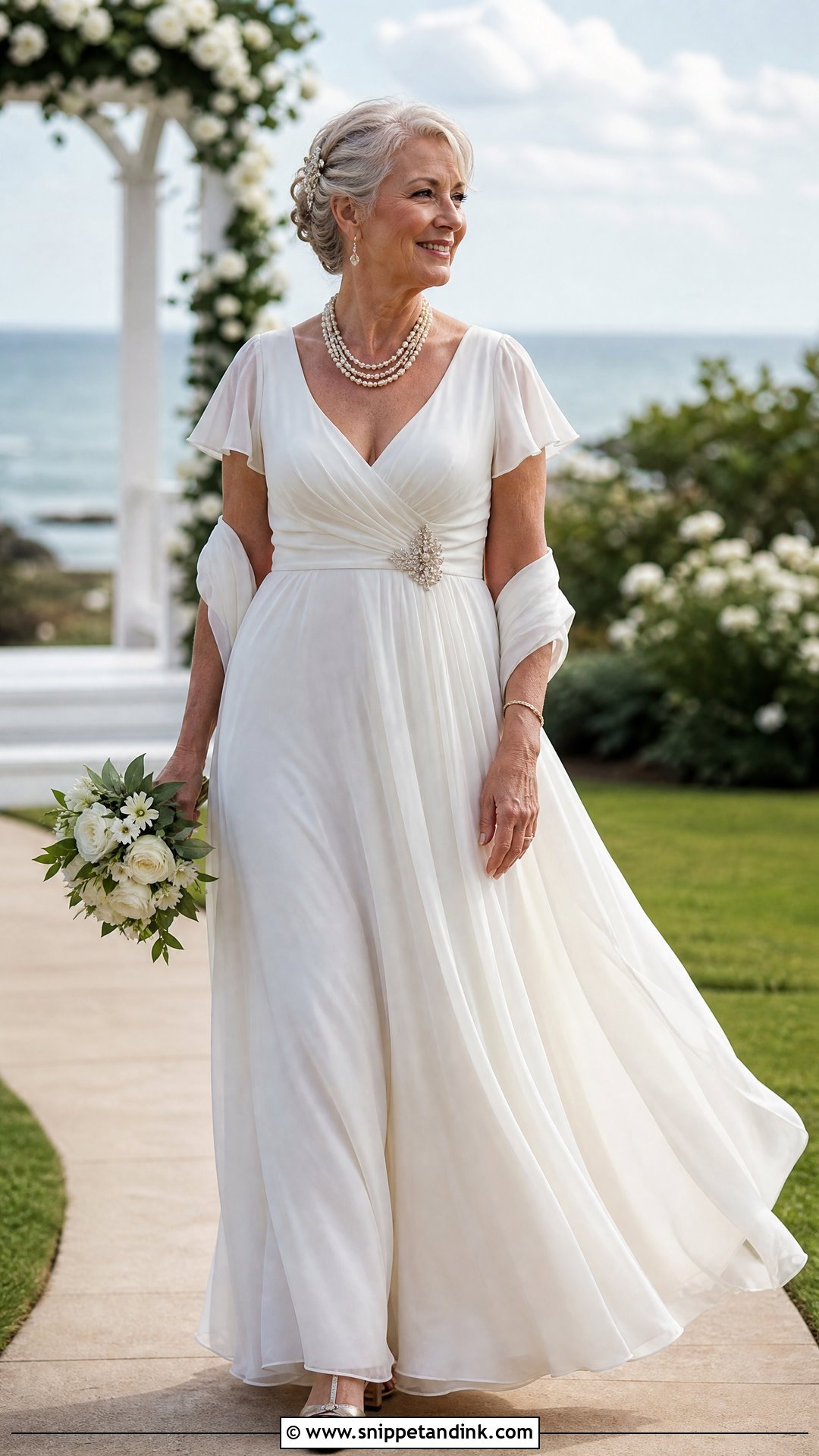
Chiffon on an empire waist is the most forgiving combination in this list. The seam sits just under the bust and the skirt falls loose from there, so there’s no pressure at the natural waist after a long dinner. Add flutter sleeves or sheer three-quarter sleeves for coverage. Insist on an opaque lining. Pale chiffon over a thin lining turns see-through in strong sun and flash, and that’s not something you want to discover in the photos. Metallic low-heeled sandals, a layered pearl necklace and a light wrap for the evening suit it, with loose waves or a soft updo. Beach, garden and destination weddings are where it shines.
5. Crepe Column Wedding Dress With Cape
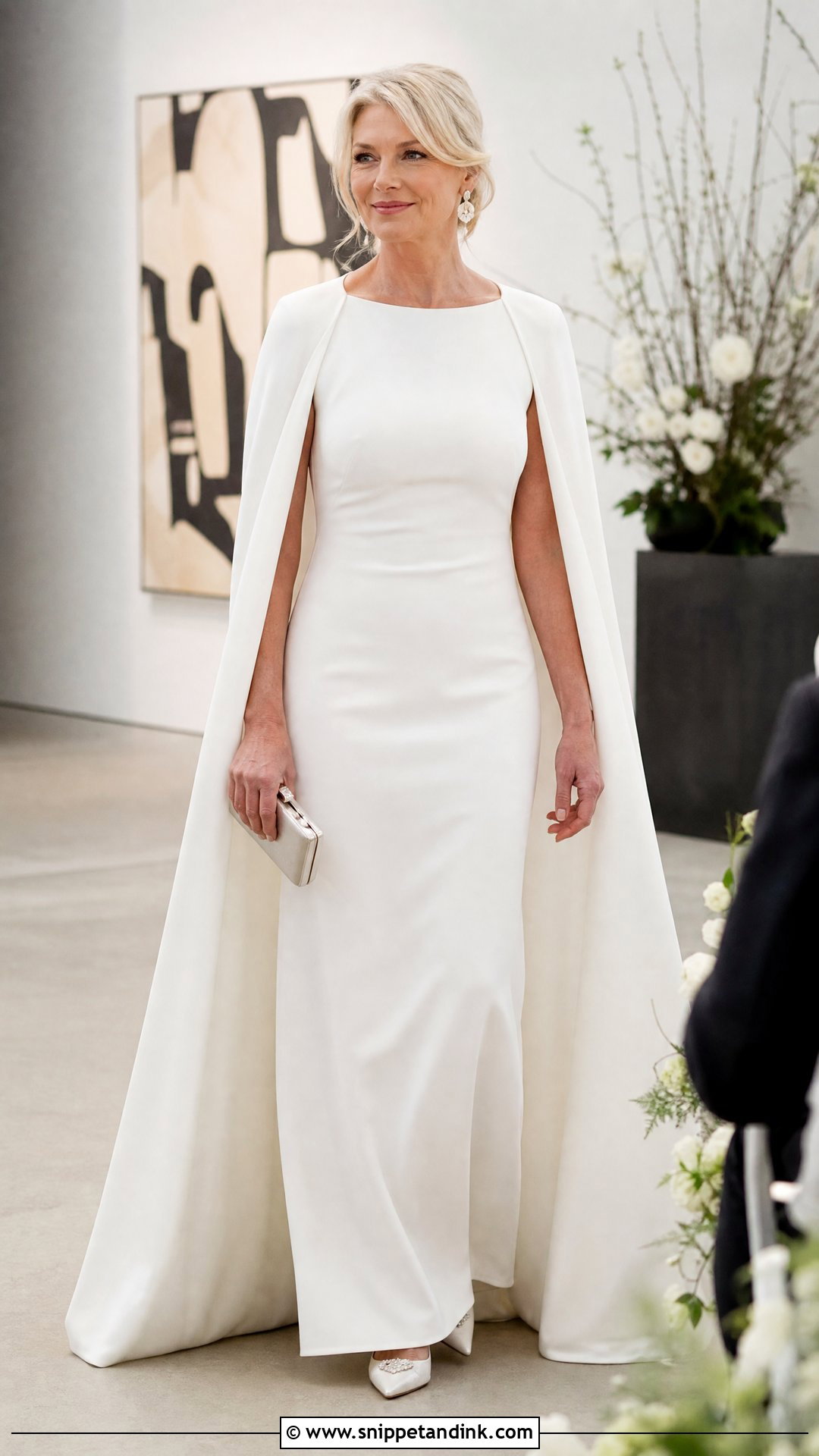
Crepe with a cape is my answer for a bride who wants drama without lace or beading. Start with a column dress with a bateau neckline, a shaped waist and a back slit so you can actually walk, then add a detachable cape that ends at the elbow or sweeps to the floor depending on formality. The cape provides coverage and movement while the dress stays sleek. Crepe is honest, so it shows what’s underneath; I’d bring smooth, no-line shapewear to the first fitting rather than the last. Pointed kitten heels, sculptural earrings, a slim metallic clutch and a smooth low bun finish it. Unhook the cape after the ceremony and you have a streamlined reception look.
6. Off Shoulder Fit And Flare Wedding Dress
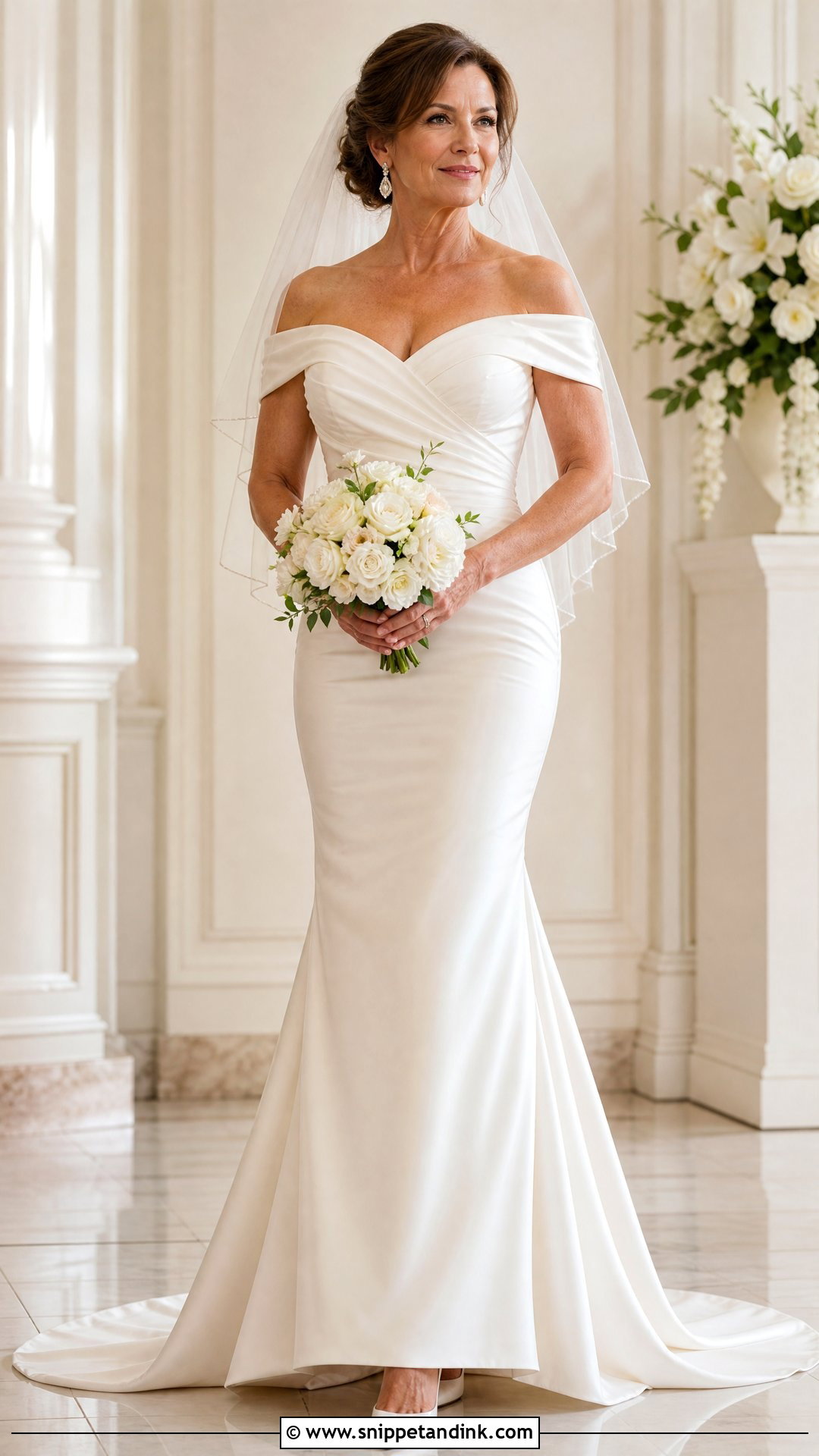
Off-the-shoulder necklines look confident on any bride who likes her collarbones, and age has nothing to do with it. Choose a fit-and-flare with internal boning, softly draped sleeves and a skirt that starts widening at or above the knee, which shapes the body without needing to be skin-tight. A low side bun clears the shoulders. Drop earrings and a delicate bracelet are plenty, with closed-toe pumps and a cathedral or fingertip veil. The boning is what I check most closely. If the bodice relies on the sleeves to stay up, it’ll slide, so sit, hug and raise your arms at every fitting until it stays in place without you touching it.
7. Boat Neck A-Line Wedding Dress
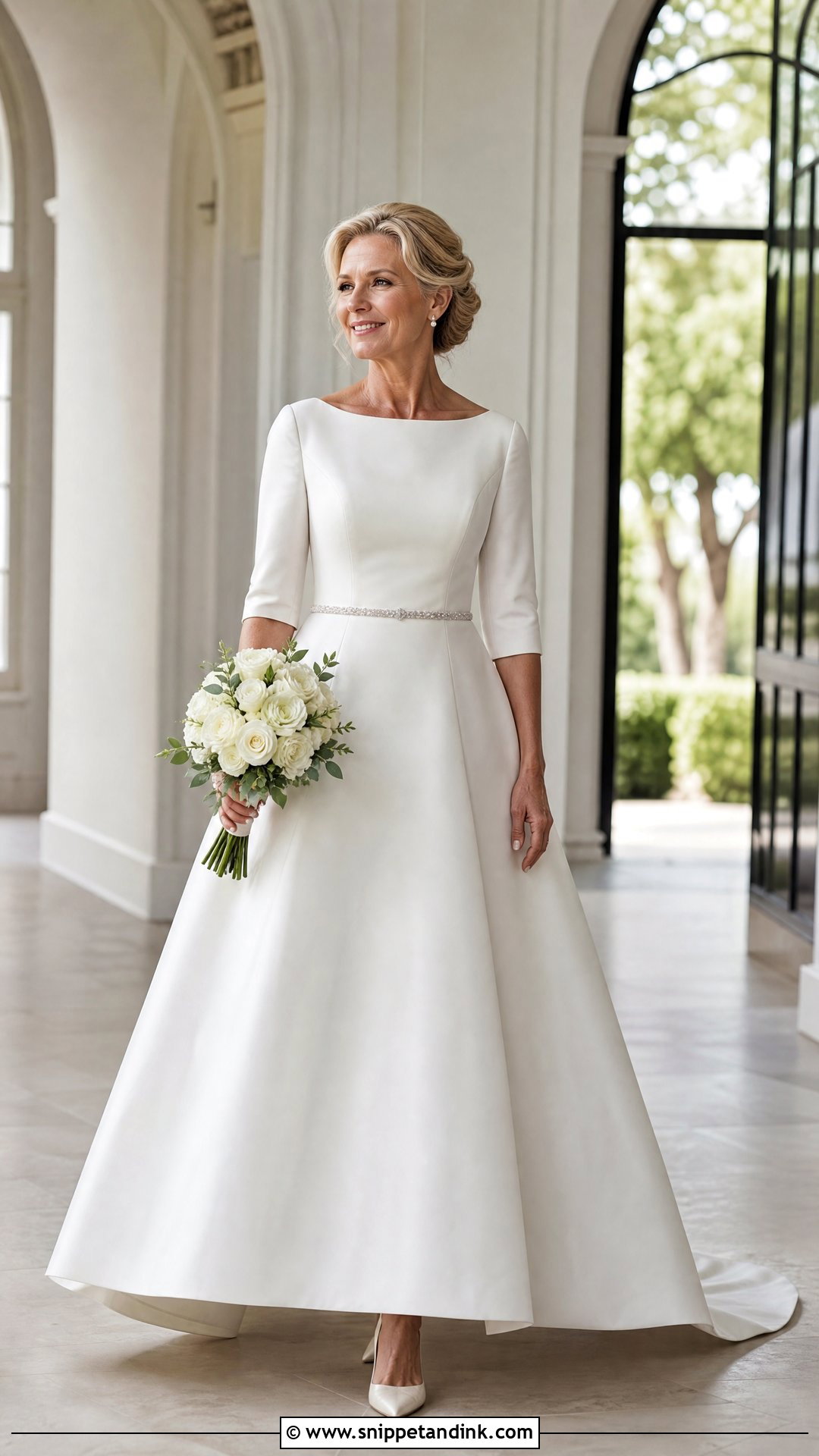
A boat neck A-line wedding dress relies on fabric to hold its shape, so it needs very little decoration. Mikado and faille are the ones to look for: firm enough to keep a crisp skirt without layers of petticoat. A defined waist, gently widening skirt and elbow-length sleeves give polished coverage. Pearl studs, a narrow crystal belt and pointed ivory heels finish it, with a French twist or smooth bun that leaves the neckline clear. A structured bouquet matches the architecture of the gown. One thing I always ask for in a dress this firm is hidden side-seam pockets, which a seamstress can usually add without changing the line. Formal daytime ceremonies suit it.
8. Wrap Midi Wedding Dress
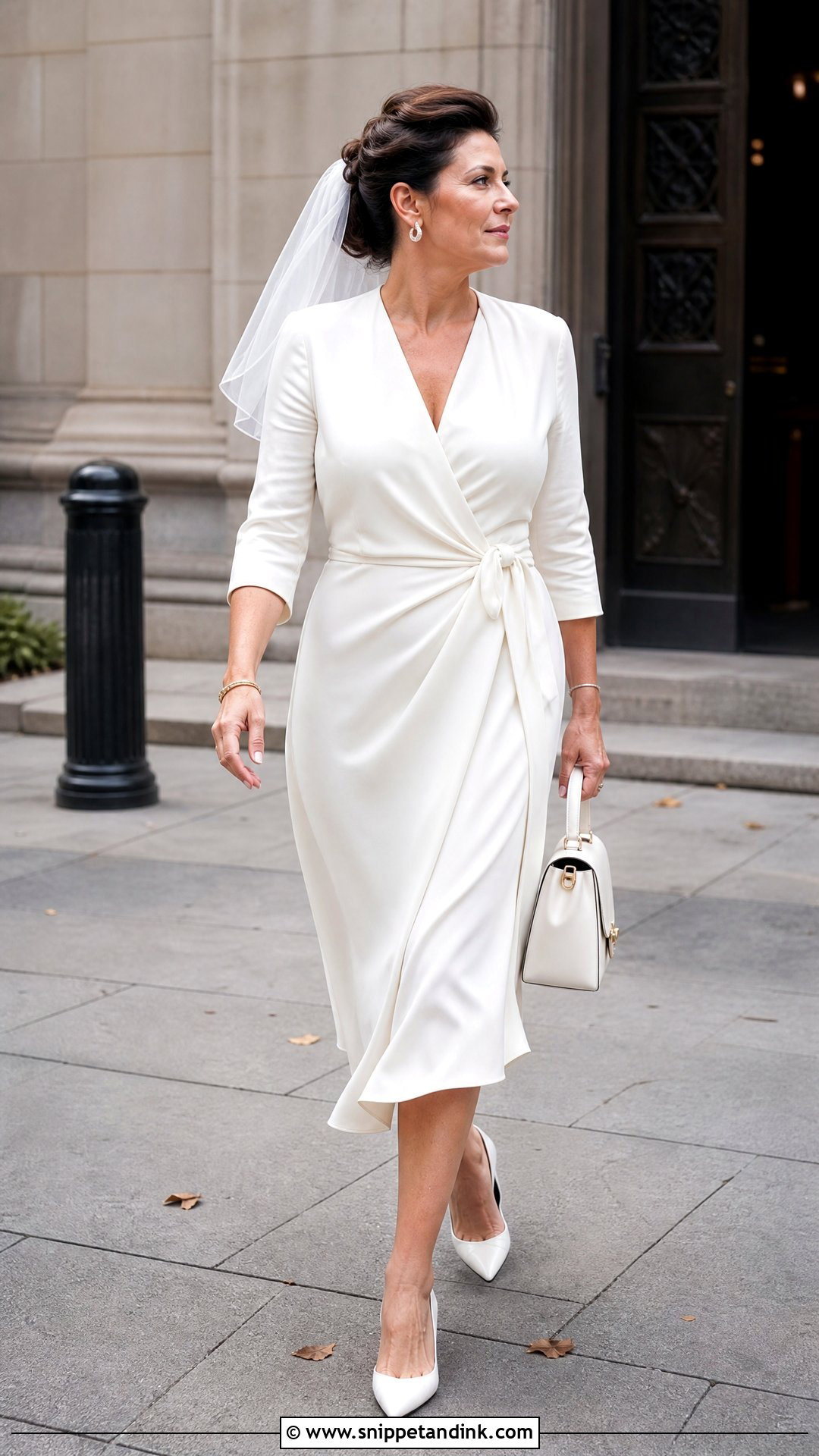
A wrap midi wedding dress is relaxed enough for brunch and polished enough for a civil ceremony. Choose fluid crepe or a silk blend with a crossover bodice, three-quarter sleeves and a gently flared skirt. The tie waist adjusts as you eat and dance, but wrap necklines drift open as you move, so have a small hidden snap sewn at the cross point. It costs very little and saves you checking the mirror all day. Pointed slingbacks, pearl hoops, a structured bag and a short veil or headband give it a bridal finish. Hem it just below the knee or at the narrowest part of the lower calf, never across the widest point.
9. Beaded Sheath Wedding Dress
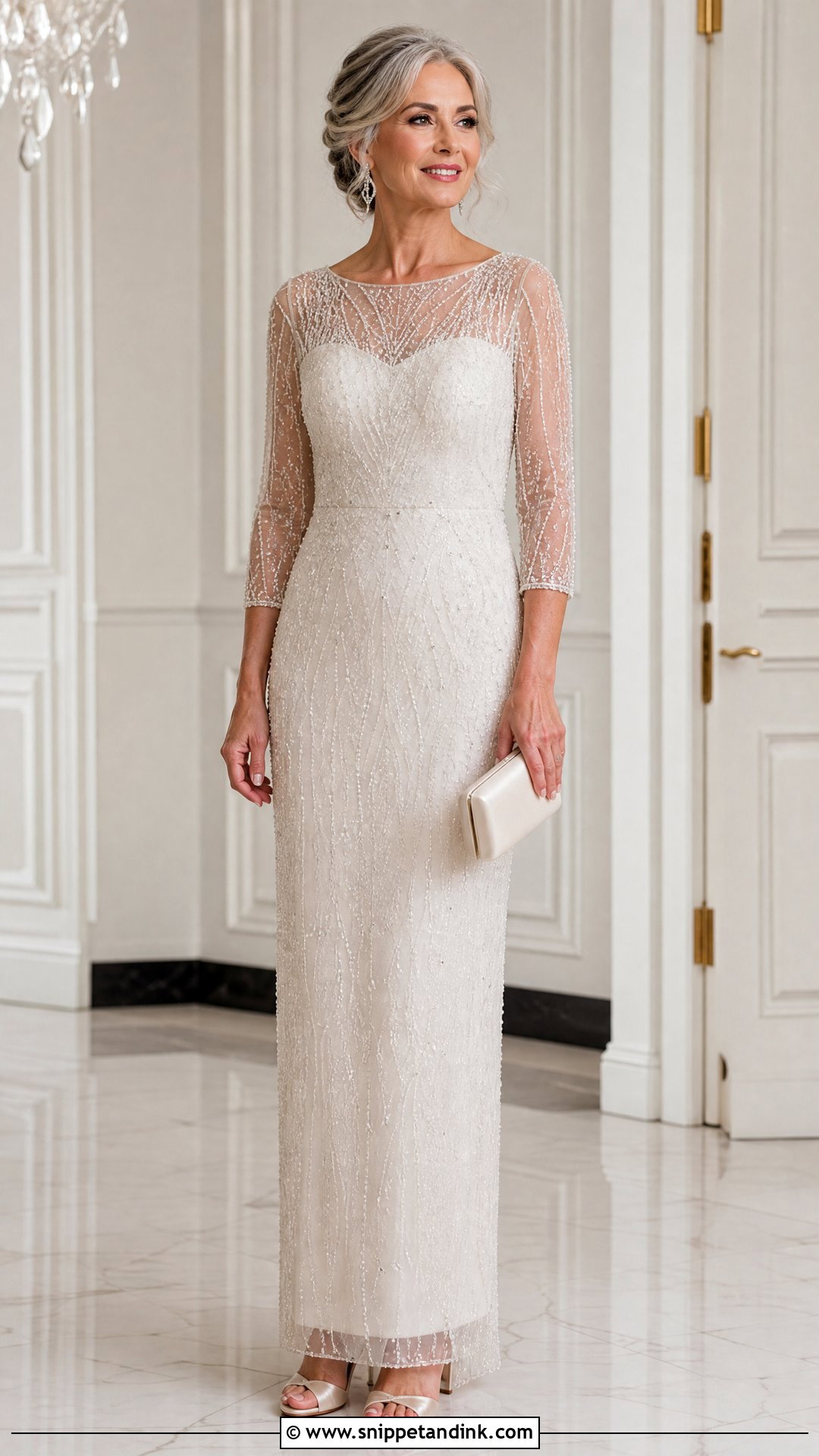
Beadwork on a sheath catches light without needing a big skirt or train. Choose a softly lined gown with vertical beaded patterns, a modest V-neck and sheer cap or three-quarter sleeves; vertical lines lengthen the body, and a small back vent lets you walk normally. Lift the dress off the hanger before you fall for it. Heavily beaded sheaths can weigh far more than you’d expect, and that weight hangs from your shoulders for eight or ten hours. Simple satin heels, crystal drops and a plain clutch let the beading lead, with a shoulder-length style or a low updo. Evening ceremonies and formal dinners suit it.
10. Floral Applique A-Line Wedding Dress
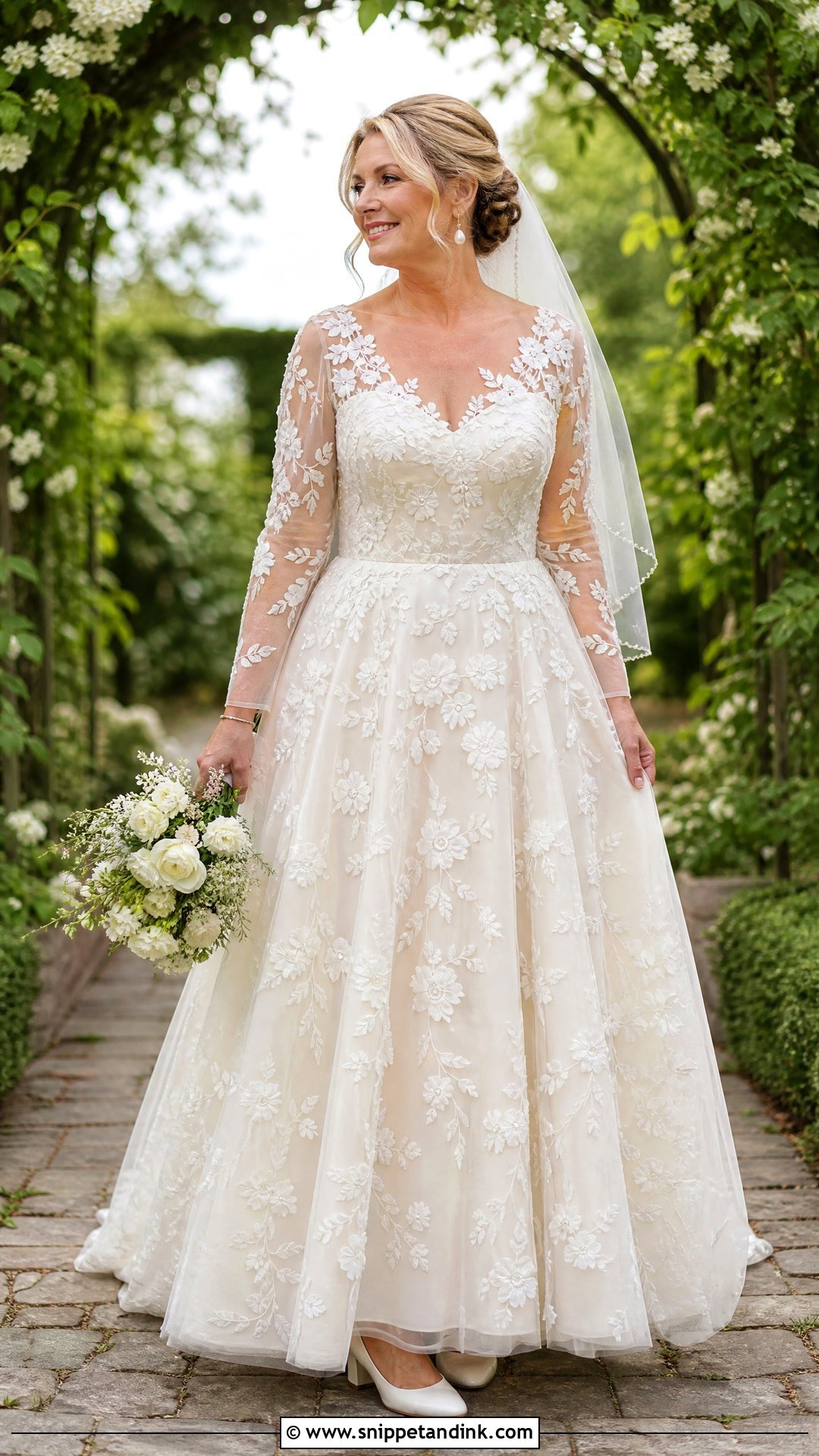
Floral appliqués feel fresh when the silhouette underneath is clean. Look for an A-line with appliqués concentrated on the bodice and thinning across the skirt, plus a soft V-neck, covered back and illusion sleeves for support and coverage. If raised petals feel like too much, tonal ivory flowers or flat scattered embroidery give quieter texture. Pearl earrings, block-heel pumps and a sheer fingertip veil with a plain edge keep it from tipping into frills, with a loose chignon and a natural bouquet. I’d check the inside of the sleeves for appliqué edges that rub. A spring garden wedding or an elegant indoor ceremony suits it.
11. Illusion Sleeve Wedding Dress
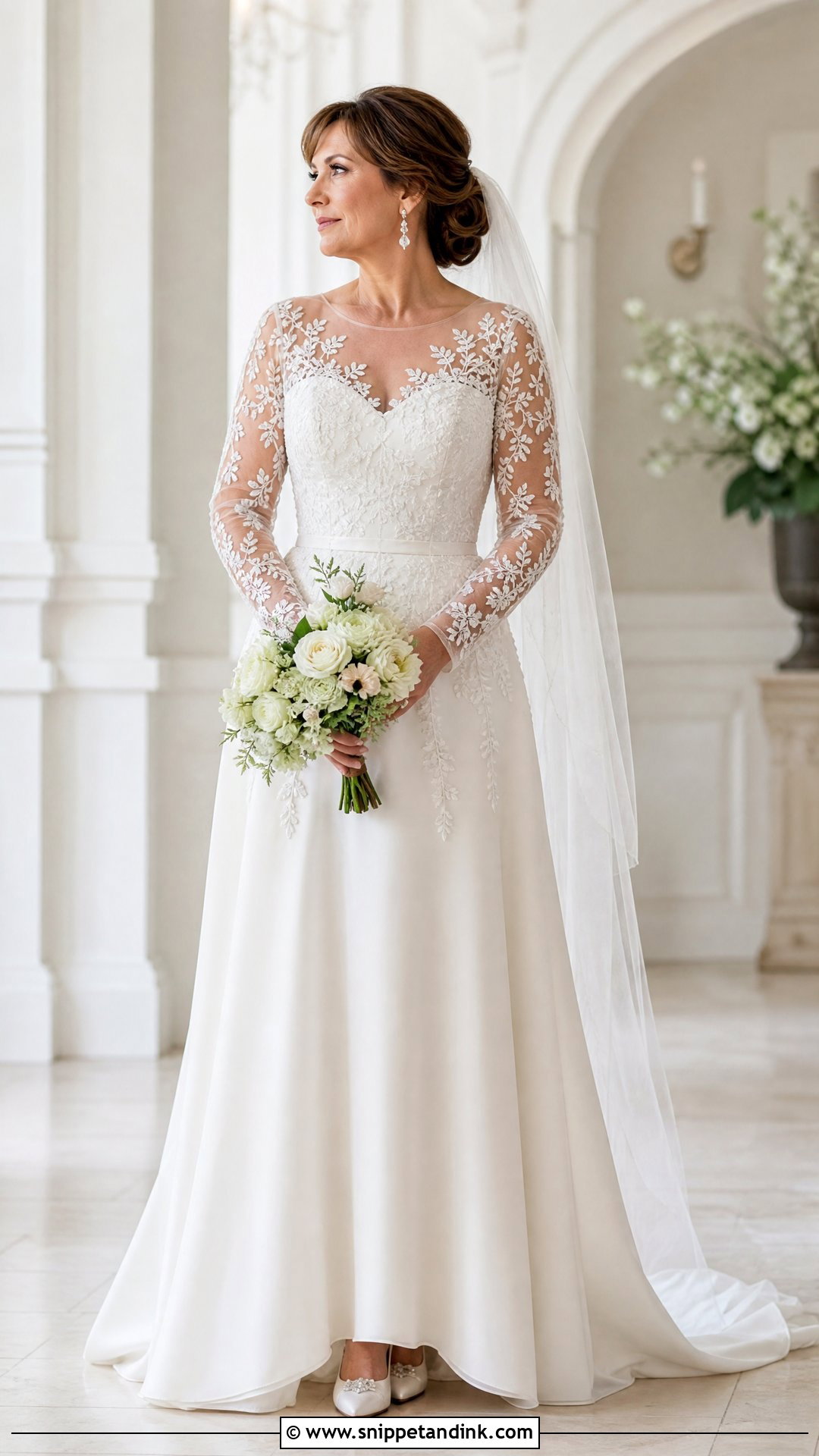
Illusion sleeves give the look of floating embroidery with more coverage than a sleeveless gown. Look for a lined sweetheart or bateau bodice under sheer mesh sleeves, with an A-line or softly fitted skirt. The mesh color is the thing to get right. Stand under the brightest light in the salon and ask someone to take a flash photo, since a mesh that’s slightly too pink or too grey for your skin shows clearly in pictures, even when the mirror says it’s fine. Pearl-and-crystal earrings, closed-toe heels and a light veil under a low bun complete it; skip the necklace if the bodice is embroidered. The cuffs and armholes should lie flat without pinching. It works year-round.
12. Champagne Satin Wedding Dress
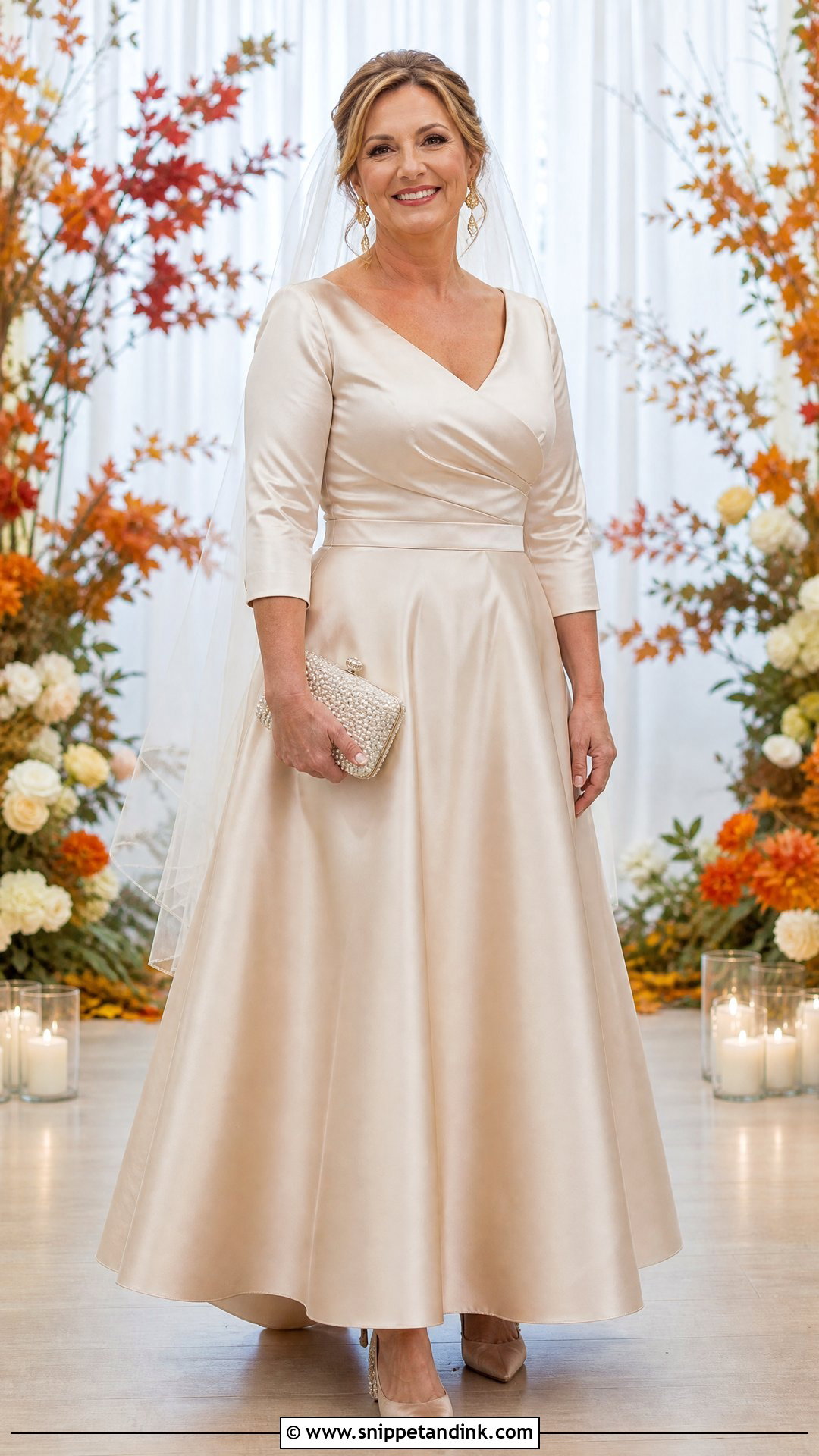
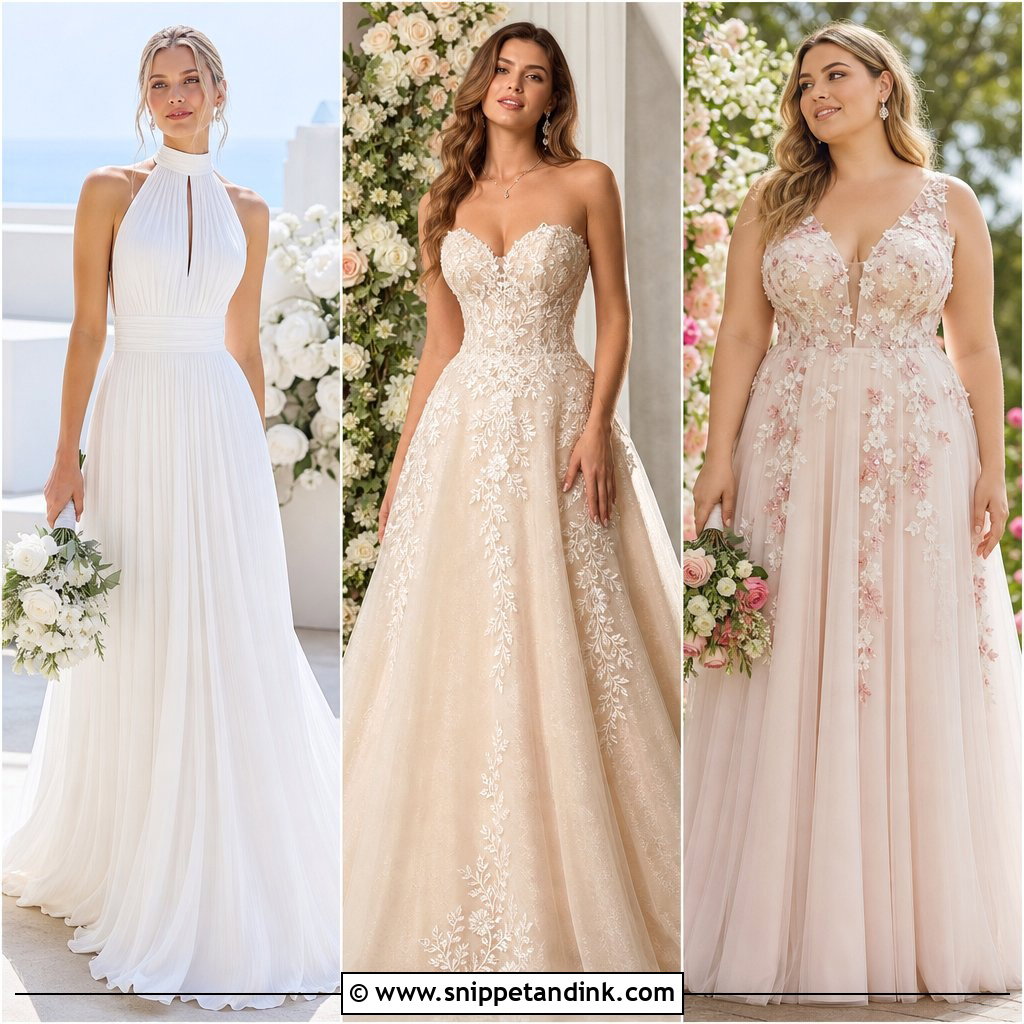
Champagne satin is warmer than white and kinder to many complexions, especially if bright white has always made you look tired. Choose an A-line or gently draped dress with a defined waist, a V-neck and short or three-quarter sleeves. Gold-toned earrings, nude or champagne pumps and a pearl-accented clutch sit naturally with it. I’d pair a sheer ivory veil for contrast and stop trying to match everything to the dress; slight differences look richer. A polished blowout or loose low bun suits it. Look at the fabric in daylight and indoor light before you order, because champagne can read gold in one and almost pink in the other. Autumn and evening weddings suit it.
13. Blush Tulle Wedding Dress
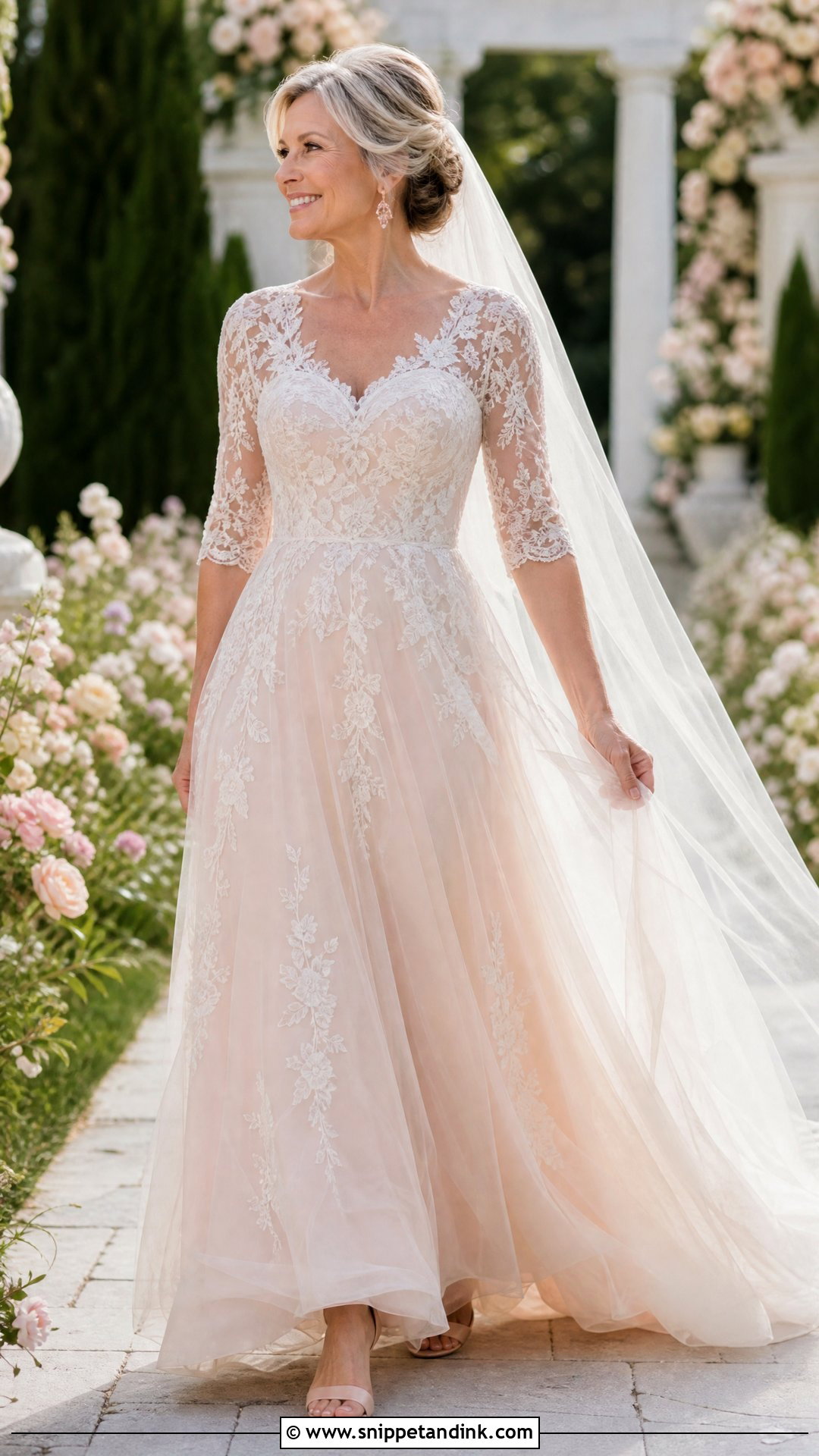
Blush is easier to wear than brides expect, as long as the color comes from underneath. A muted blush or soft rose lining under layers of ivory tulle gives a wash of color without reading as pink. A fitted bodice, elbow-length sleeves and a flowing A-line skirt keep it balanced. Rose-gold earrings, neutral pointed heels and an ivory clutch suit the tone, with softly pinned curls and a sheer ivory veil that melts into the tulle. Keep the bouquet pale so the dress color stays visible. Ask your photographer to take a test frame in the venue’s light before portraits, because warm indoor bulbs can push blush toward peach.
14. High Neck Lace Wedding Dress
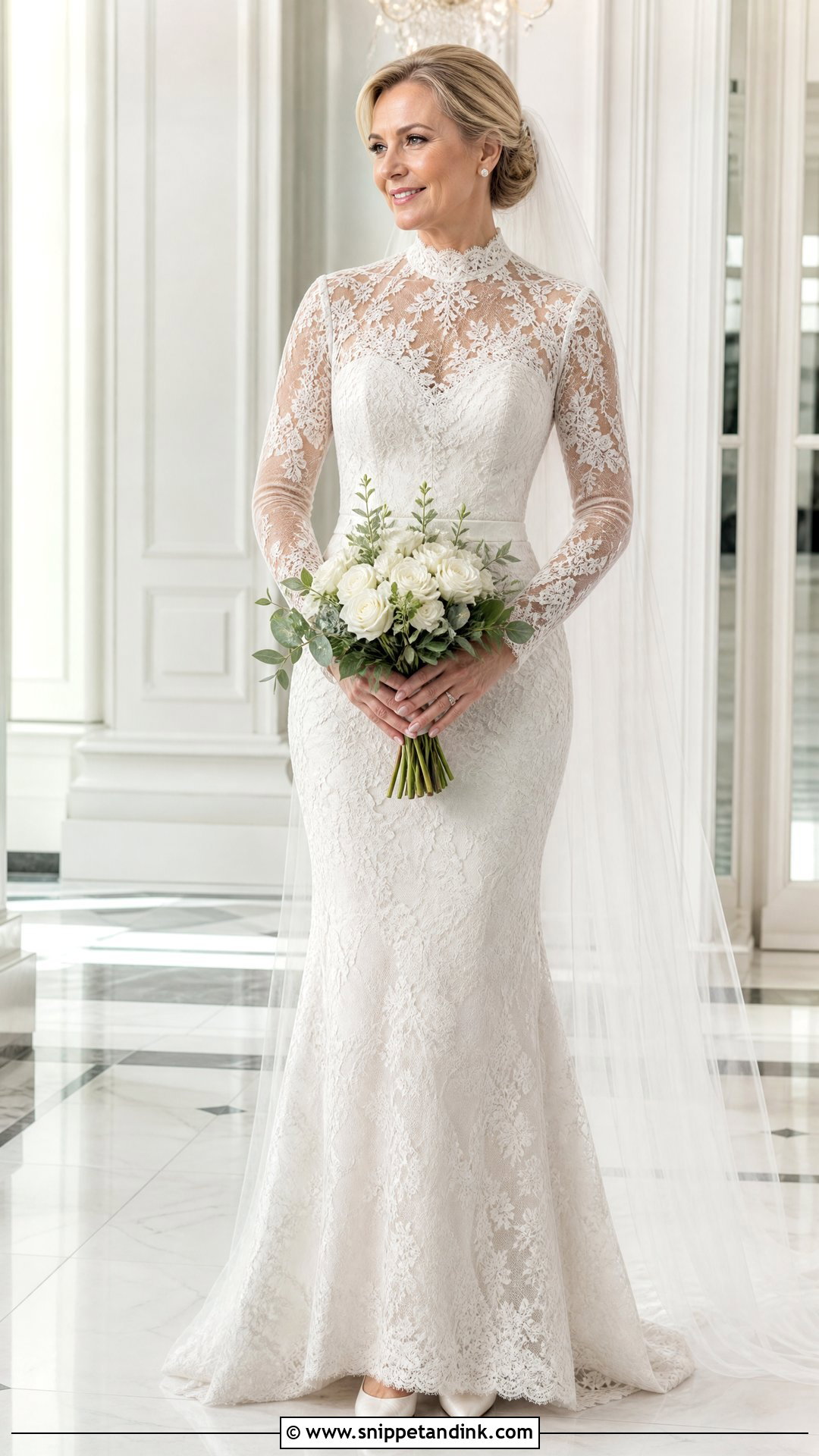
High neck lace frames the face and covers the décolletage, which some brides at 50 genuinely prefer. Keep it from feeling stiff by choosing light lace with a narrow stand collar, a sheer upper bodice and lining that starts below the collarbone. A fitted waist and gently flared skirt keep the shape defined. If your neck is on the shorter side, a lower mock neck or open lace collar sits more comfortably and won’t press into your chin when you look down at your vows. Stud earrings, a sleek bun, pointed pumps and a veil set under the hair complete it, and leave the necklace in its box. Cool-weather and formal ceremonies suit it.
15. Minimalist Slip Wedding Dress With Blazer
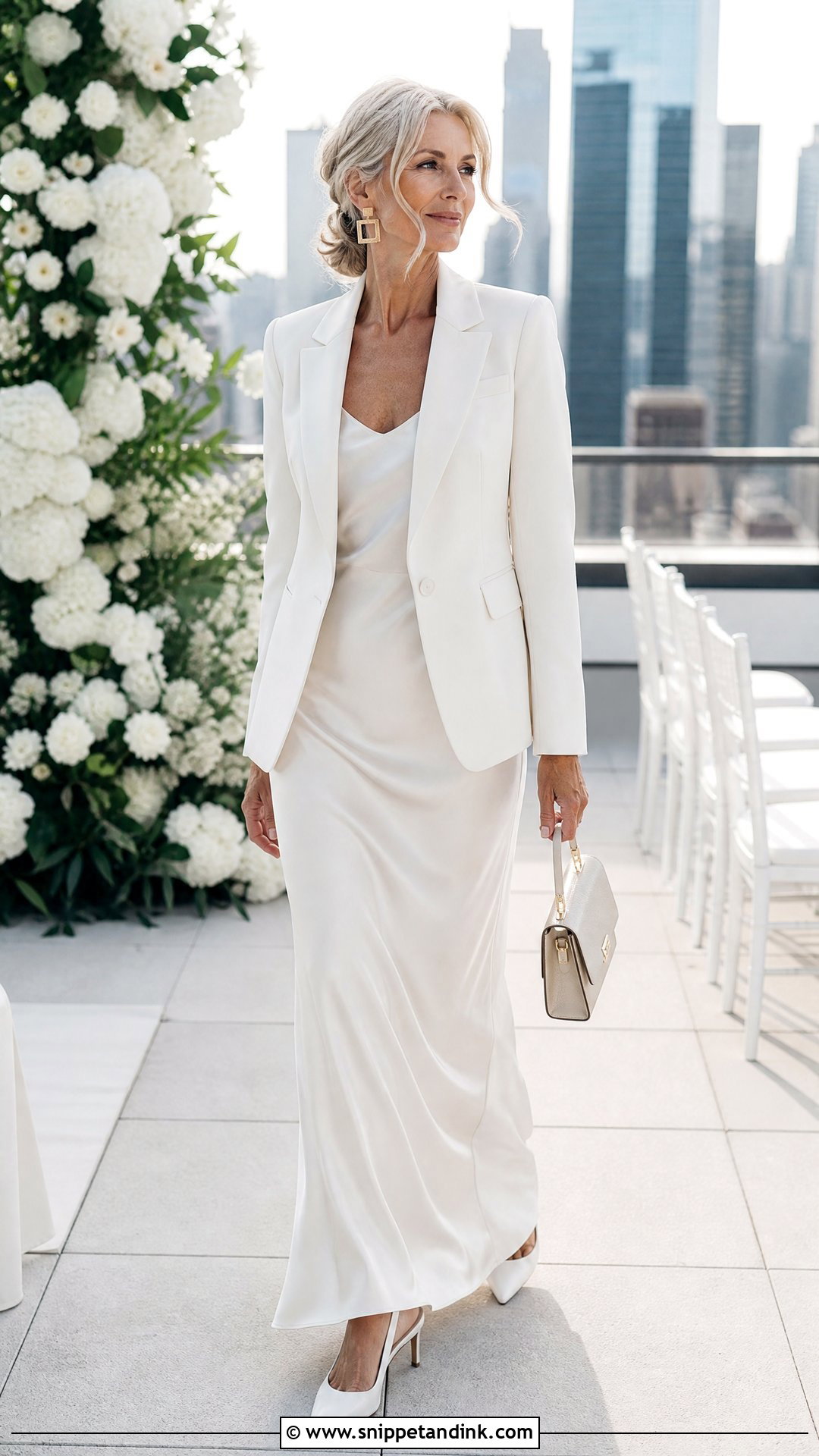
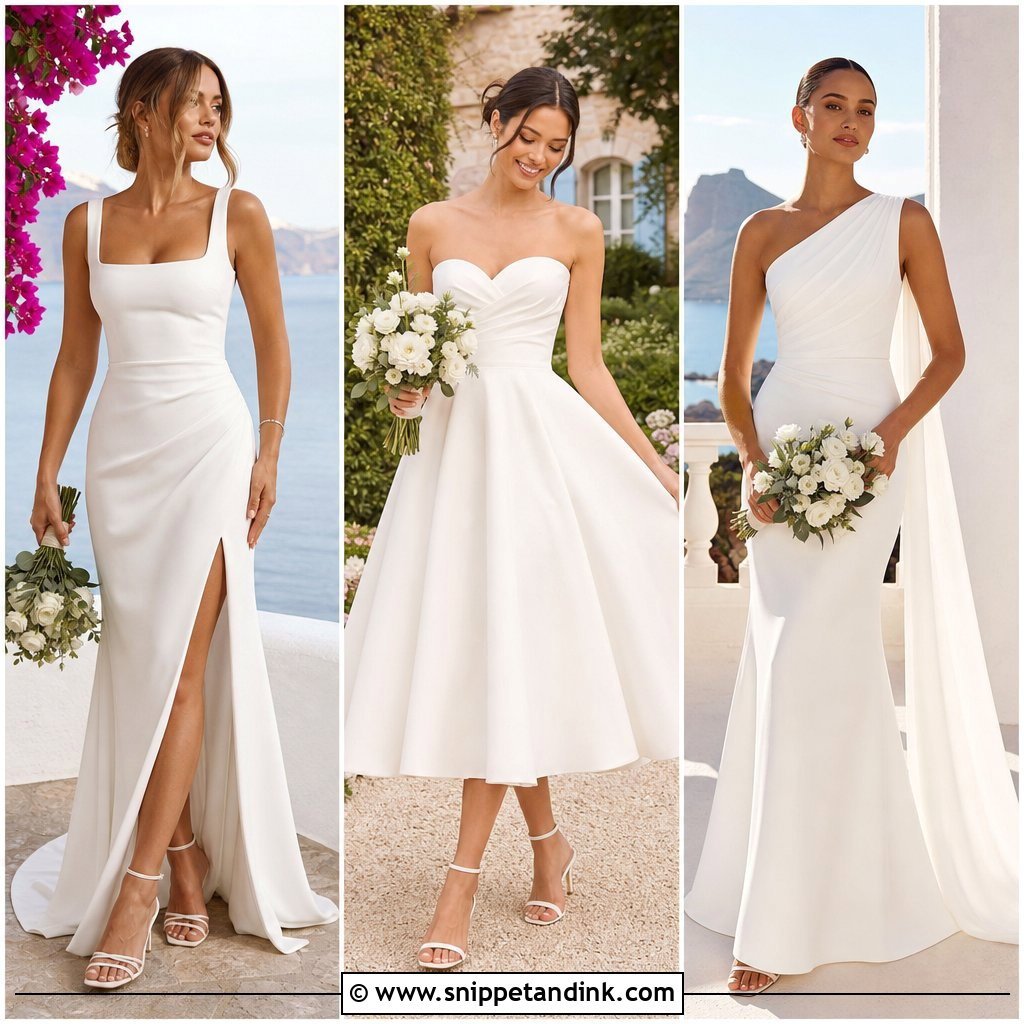
A satin slip under a sharp ivory blazer is the most rewearable outfit in this list. Choose a bias-cut midi or floor-length slip in heavy satin with wider straps and a softly draped neck, then a single-button blazer that follows the waist without pulling at the button. Bias cut shows everything, so plan undergarments with the dress on, and ask whether a light lining can be added. Slingbacks, geometric earrings and a small structured bag suit it, with a smooth bob or a low ponytail. Wear the blazer for the ceremony and take it off for dinner. Courthouse weddings, rooftops and galleries suit it, as do brides who want something they’ll wear again.
16. Draped One Shoulder Wedding Dress
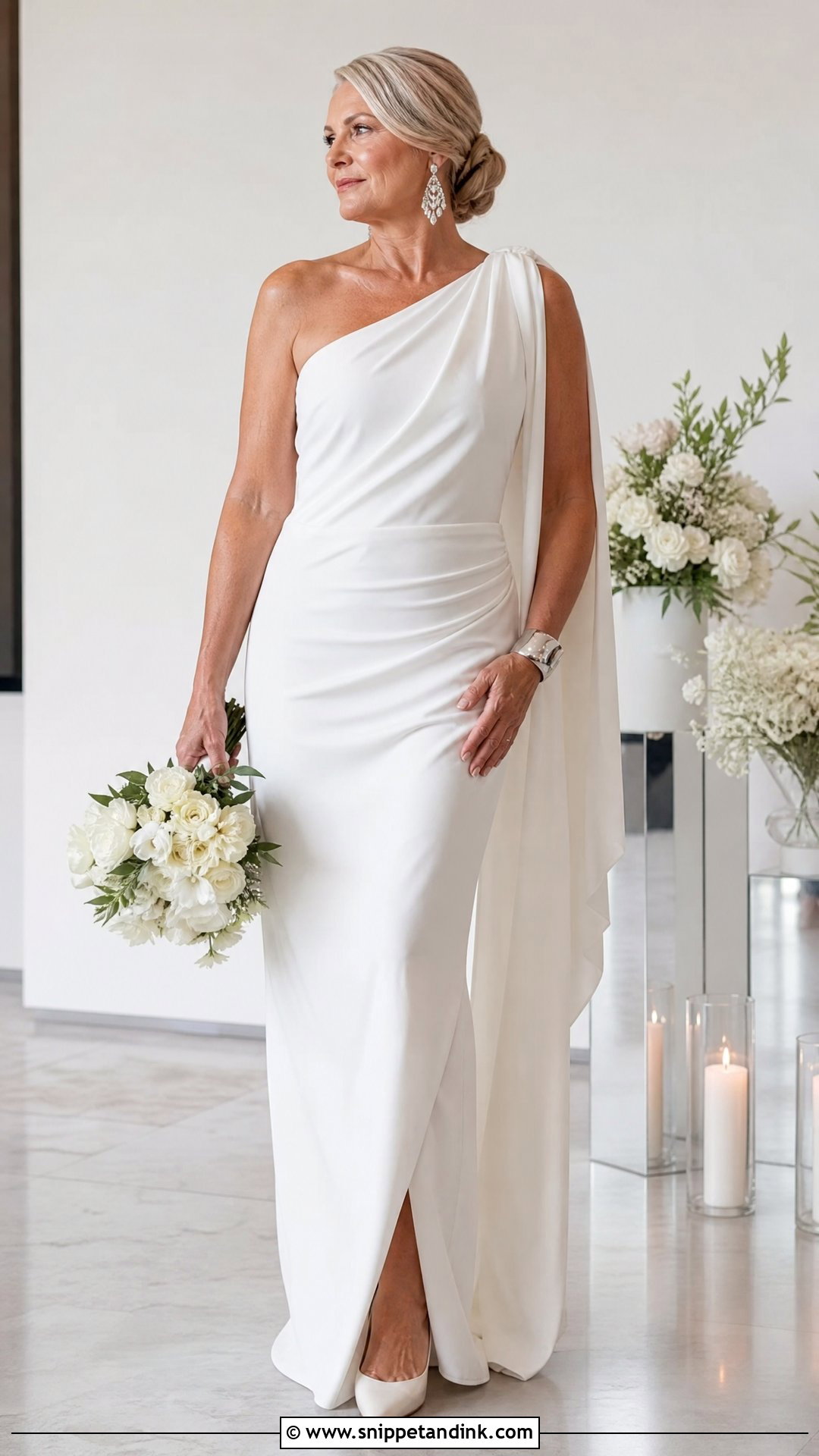
One-shoulder draping looks modern and strong, and it hides very little, so construction matters. Look for matte crepe or soft satin with diagonal pleats across the bodice and a column or gently flared skirt. Choose a wide shoulder strap. It supports better than a thin one and leaves room for a strapless bra or built-in cups. Balance the asymmetry with statement earrings, a cuff on the bare arm and sleek pointed heels, and set a low bun on the side opposite the covered shoulder. A compact bouquet won’t hide the pleats. At fittings, sit down and watch the bodice in the mirror; asymmetric gowns tend to tilt toward the open side.
17. Convertible Wedding Dress With Overskirt
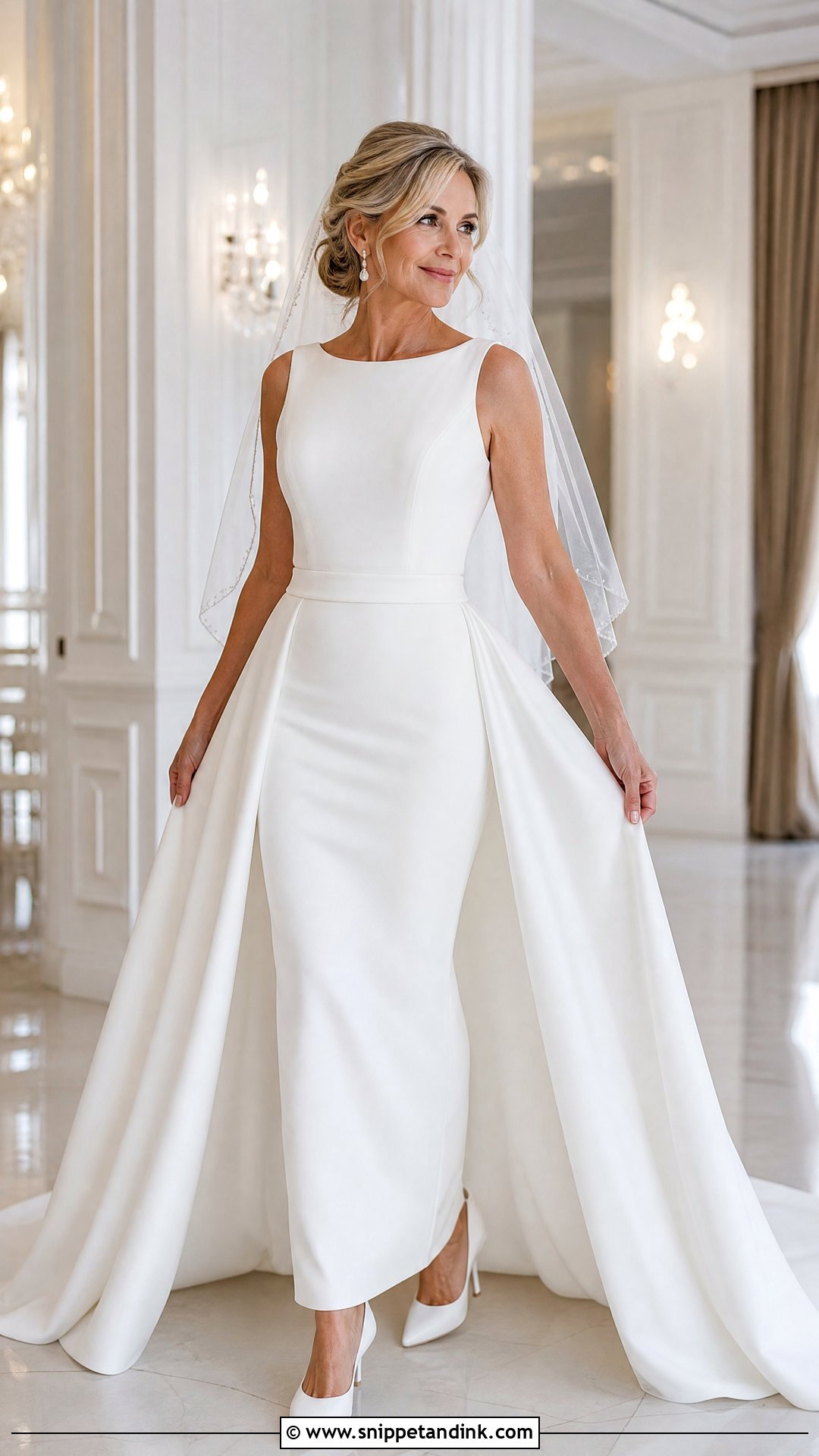
Convertible dresses solve a real problem: you want an entrance, and you also want to dance without a skirt the size of a tablecloth. Start with a fitted crepe or lace sheath and add a detachable A-line overskirt for the ceremony. After photographs, the overskirt comes off and the veil swaps for a comb or statement earrings. Pearl earrings and pointed pumps carry through both looks. The attachment is the part I’d inspect closely. Hooks or snaps along the waist should vanish once the overskirt is gone, with no visible bumps on the sheath. Practice the change with one trusted person before the wedding, and time it.
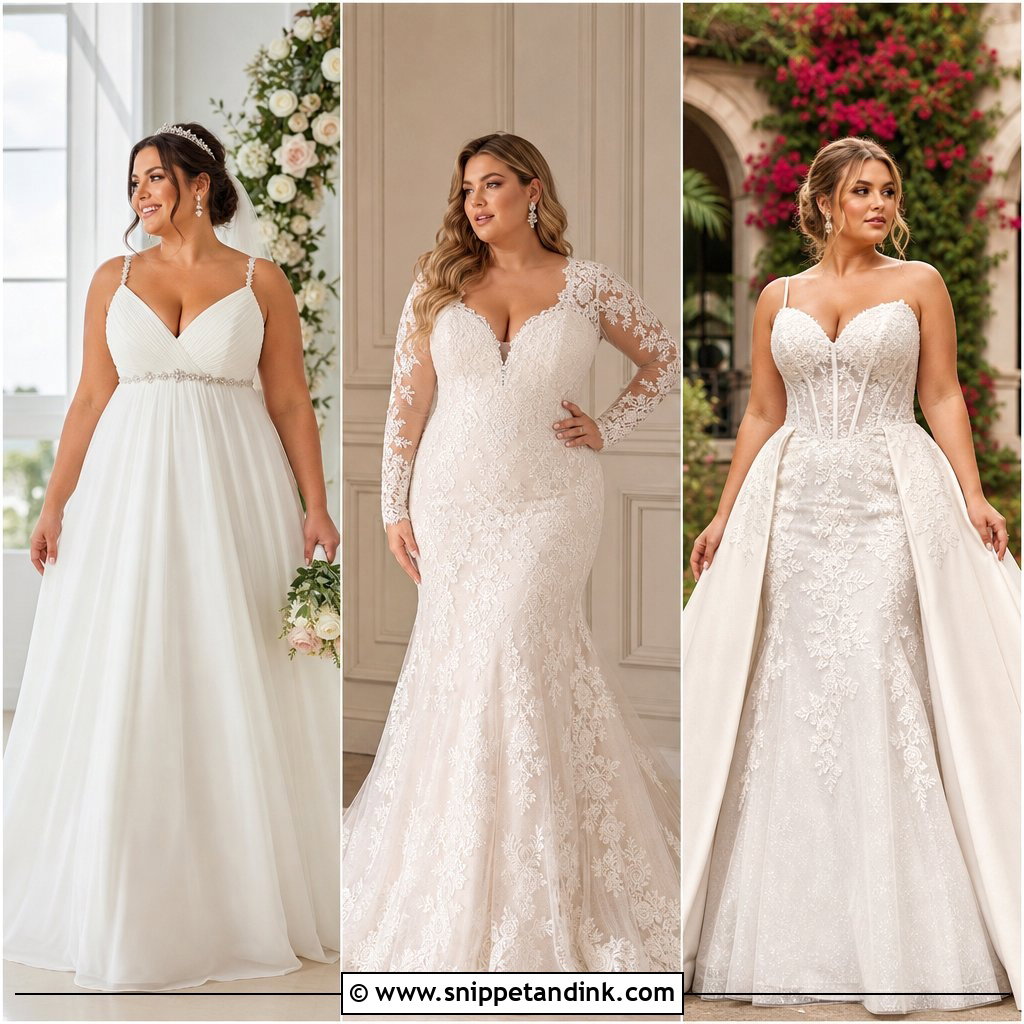
18. Plus Size Corset A-Line Wedding Dress
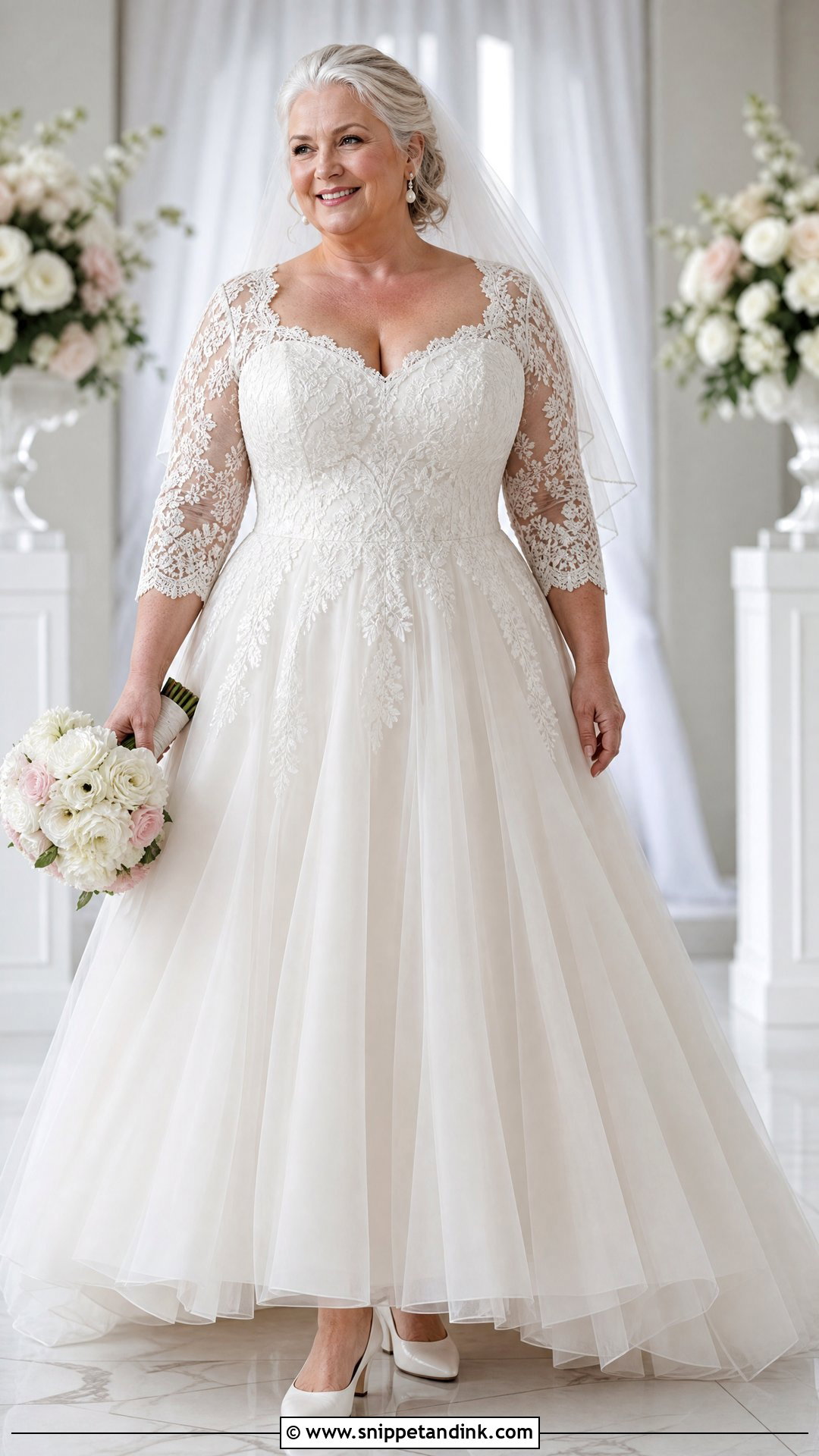
A real corset bodice, with internal boning and supportive straps or sleeves, can feel more comfortable than a loose gown because it carries the weight of the skirt for you. Choose a softly curved neckline and a skirt falling smoothly from the natural waist. Don’t assume heavier fabric is more flattering. Layered tulle, chiffon and lighter satin give shape without the bulk. Block-heel pumps, pearl drops and a fingertip veil keep proportions balanced, and hold the bouquet at waist level so it doesn’t cover the waistline. Ask the salon for a sample close to your size, since judging a bodice in a sample several sizes off tells you very little. Alterations should improve support without restricting breathing or eating.
19. Petite Midi Wedding Dress
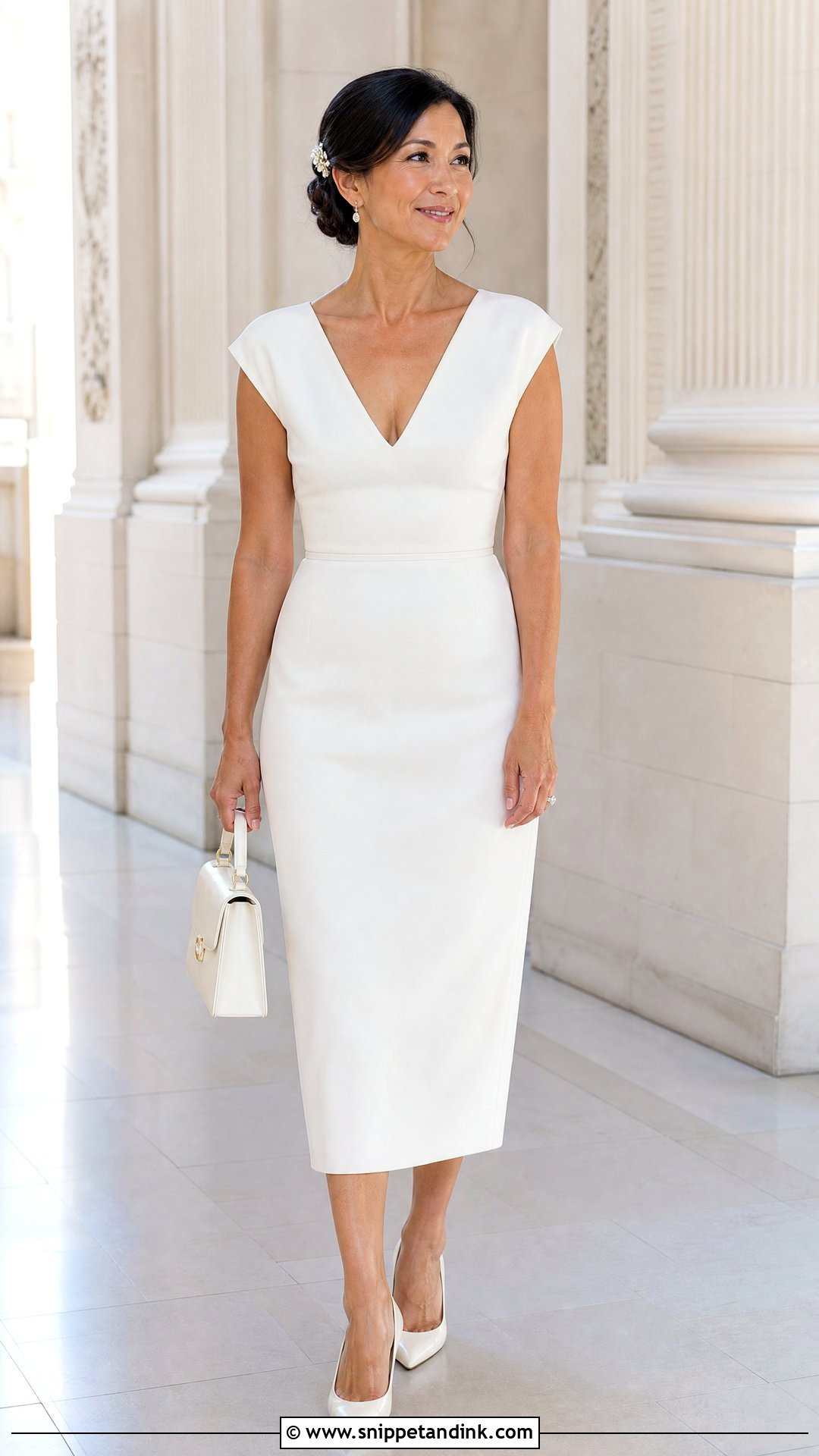
Petite brides lose length to wide skirts and horizontal seams, so a streamlined midi does more than heels alone. Choose a higher defined waist, an open V-neck and a hem just below the knee or above the ankle, with clean seams and little horizontal detail. Pair it with pointed-toe heels in ivory or a skin-toned neutral, which extend the leg line, then small drop earrings and a compact bag. A short veil, a pillbox-style headpiece or a simple comb adds bridal character without crowding a small frame. My advice is to spend on tailoring the sleeves, waist and hem rather than relying on a higher heel. Courthouse and daytime weddings suit it.
20. Beach Chiffon Wedding Dress
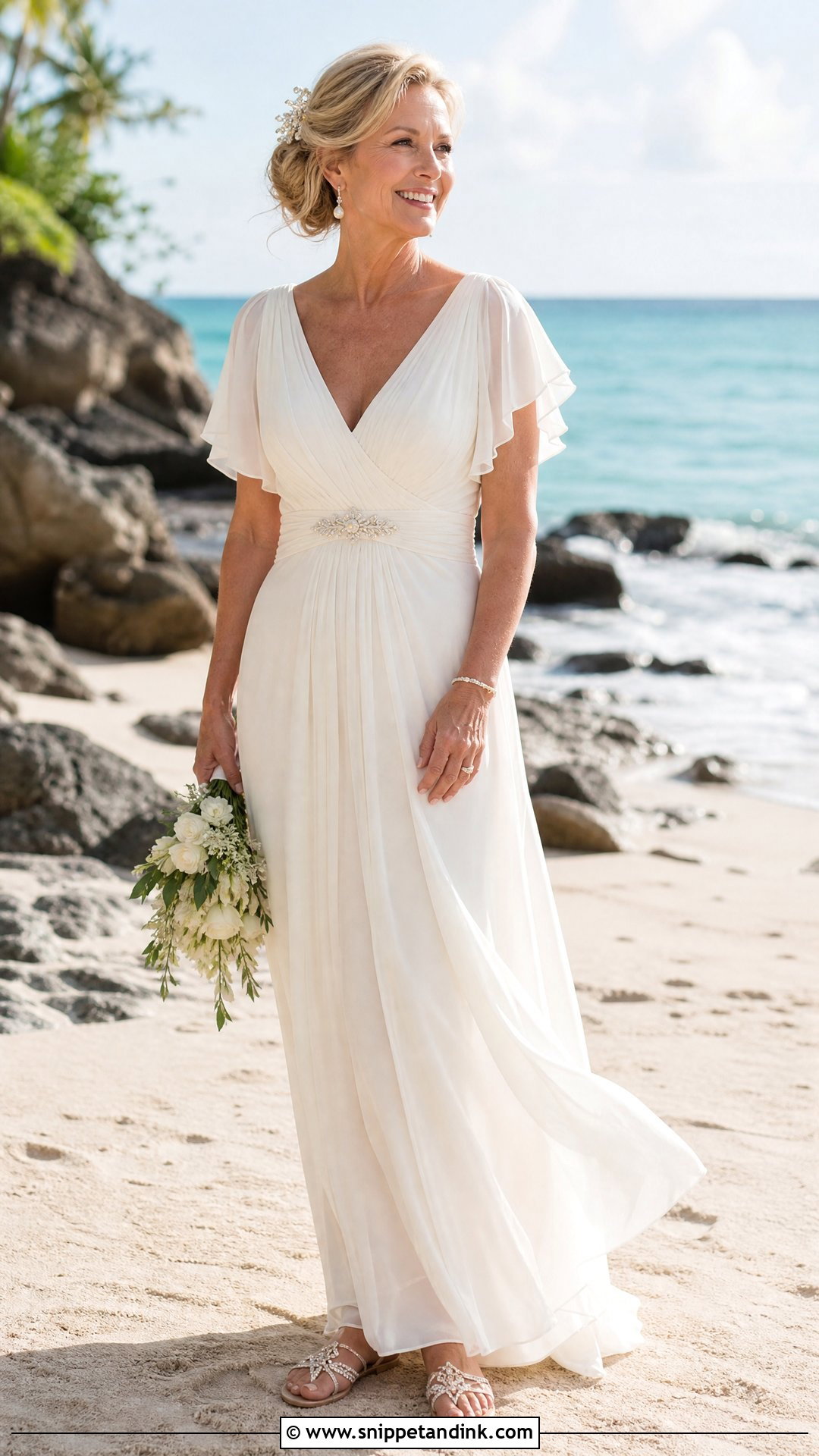
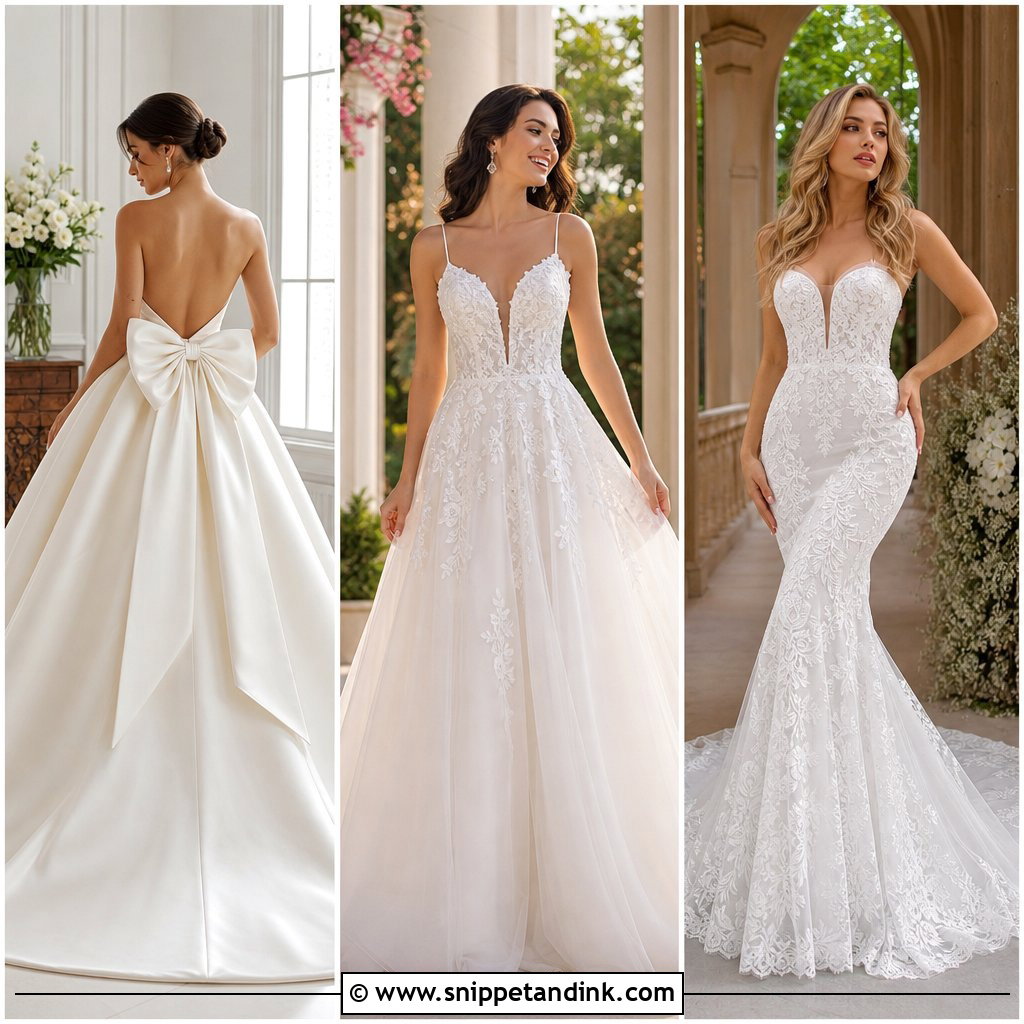
Sand, wind and sun are hard on wedding dresses, so the beach gown needs to be light and practical. A chiffon dress with an empire or natural waist, a V-neck and flutter sleeves gives coverage without heat. Keep the train short or removable, and choose an opaque lining; strong coastal sun shines straight through thin chiffon. Embellished flat sandals, pearl earrings and a hair comb beat a long veil, which wraps around you in the first gust. A loose updo keeps hair under control. Bring a light wrap for the evening. If you can, have the hem set while you stand on a similar surface, because a hem pinned on a salon floor drags once your feet sink into sand.
White, Ivory or Neither at a Second Wedding
Many brides in their fifties are marrying for the second time, and the white question still comes up at almost every appointment. The old rule that a second-time bride shouldn’t wear white is long gone. Wear white, ivory, champagne, blush or a colored suit if that’s what you want, and a veil is equally your call.
Shopping with grown children
Bringing an adult daughter or son to an appointment can be lovely, but I’d keep the group small. One or two people whose taste you trust give clearer feedback than a crowd, and you’ll hear your own opinion more easily.
Looking beyond bridal salons
Eveningwear and ready-to-wear departments carry ivory, cream and pale gowns that often ship within weeks rather than months, and many need fewer alterations because they’re cut for regular wear. For a small ceremony or a tight timeline, they’re worth an afternoon. The trade-off is less built-in structure, so plan your foundation garments with extra care.
Fifty, Fitted and Entirely Your Own
No birthday decides your sleeve length, hemline or color. What makes a wedding dress work at any age is careful tailoring, honest support and fabric you enjoy touching. Try several silhouettes, including the ones you think you’ll hate, move around in each, and look at them in more than one kind of light. Then choose shoes you can stand in for hours and accessories that stay in the background. From lace A-lines to midi wraps and convertible sheaths, the right dress is the one that makes you look like yourself on a very good day.
You'll Like These Ideas:



Leave a Reply