
Most bridal photos show gowns on sample-size models, which makes it hard to picture a dress on a fuller body. In fittings, what decides whether a gown works for a curvy bride is rarely the silhouette alone. It is the inner construction: boning, cups, strap width, a lining that doesn’t cling and a waist seam in the right place. Shapes like basque waists, corset bodices, clean crepe, overskirts and separates now come in fuller sizes. Below are twenty-five gowns, each with what I check for at the fitting, followed by notes on shopping when sample sizes run small and on the comfort problems a good fitting should catch.
Sample Sizes, Clips and What a Good Shop Will Offer You
Many bridal shops still carry most of their samples in smaller sizes, which means a curvy bride may be clipped into a gown or shown a dress that doesn’t close at the back. That is not a reflection of you; it is a stock problem. When you call to book, ask directly which sizes their samples come in and whether they have a dedicated range for fuller figures.
- Wear or bring a strapless bra and smooth underwear in a skin tone close to yours, plus shoes of roughly the height you plan to wear.
- Ask the consultant to note your measurements and compare them to each designer’s size chart. Bridal sizes often run smaller than everyday clothing, so don’t be thrown by the number.
- If a gown is too small to try, ask whether a larger sample can be ordered in, or whether the designer offers a try-on in another store.
- Ask how much each gown can be let out. Some have generous seam allowances, others very little.
Order with enough time for alterations. I suggest ordering eight to ten months out and planning at least two or three fittings, since fuller-figure alterations often involve the bodice and straps as well as the hem.
1. Full Figure A Line Wedding Dress
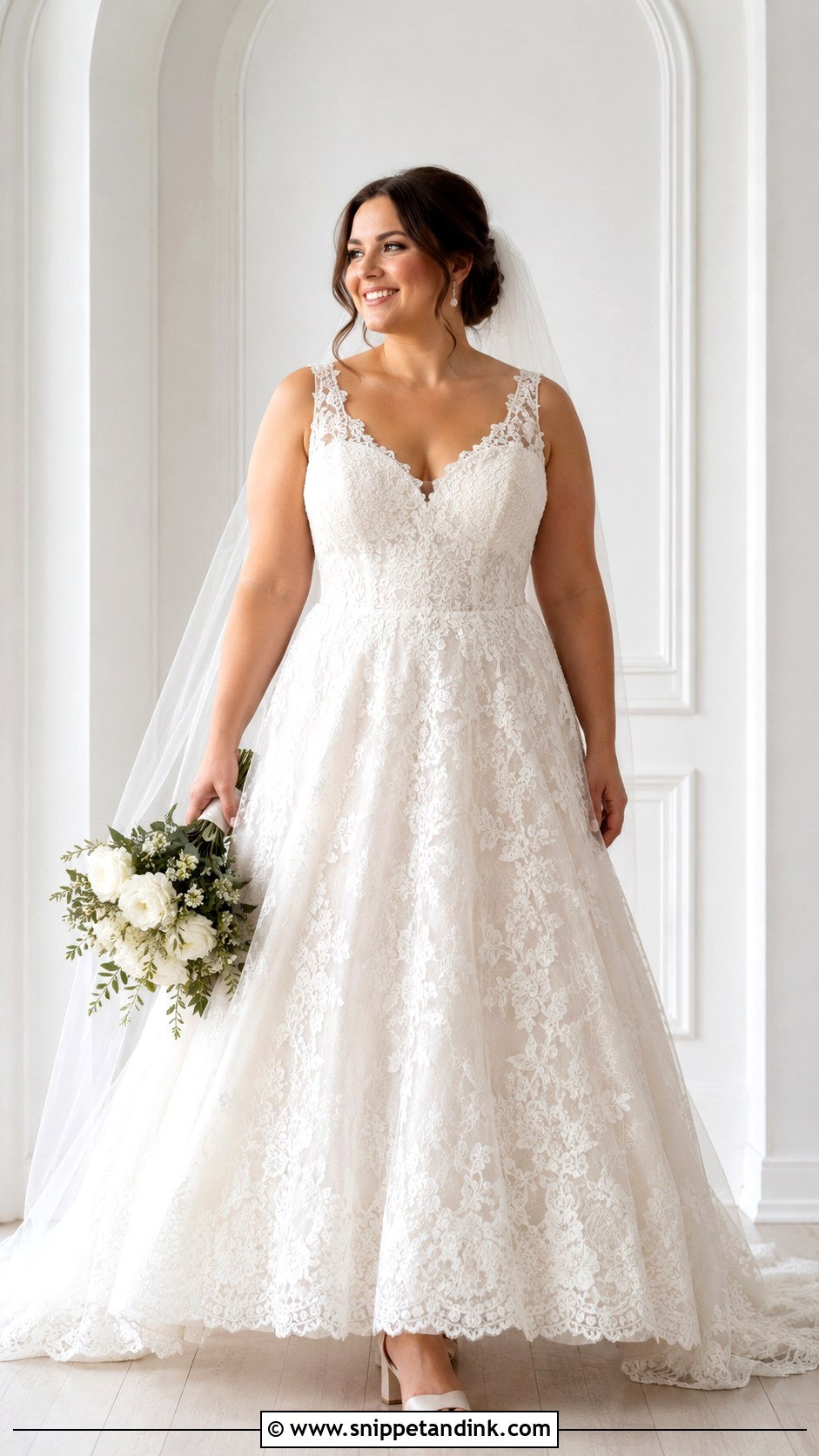
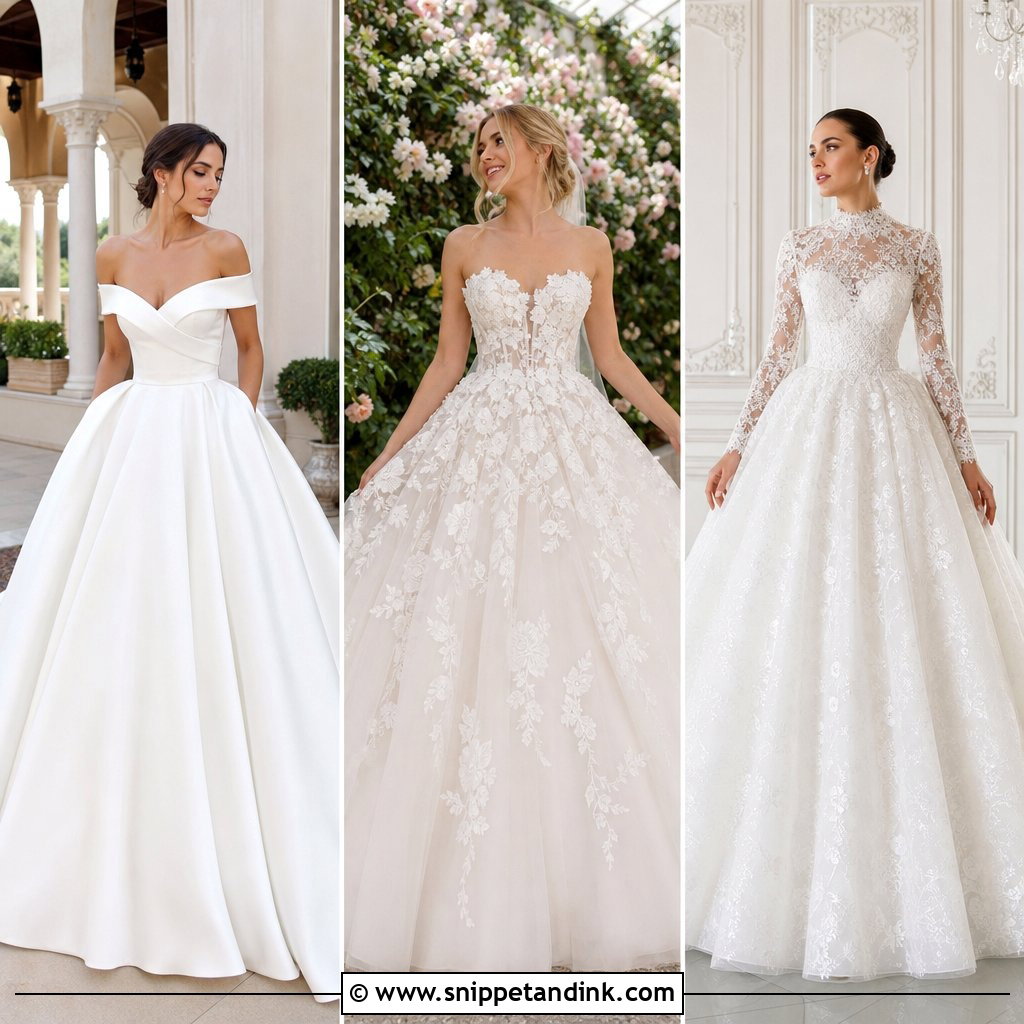
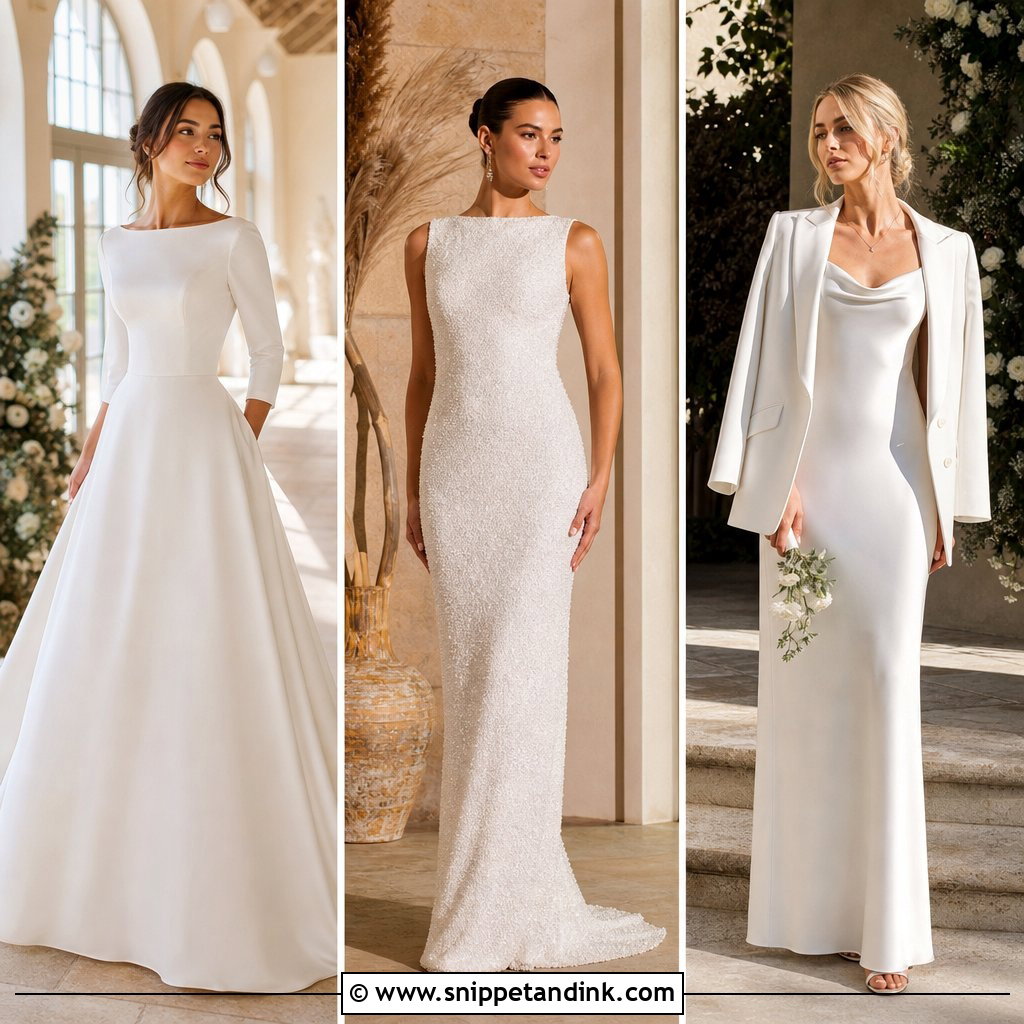
There is a reason A-lines are the first gown I pull for so many brides. The bodice gives shape, the skirt skims the hips and nothing grips the thighs. The detail that makes or breaks it is the waist seam: it should sit at your natural waist, not an inch above or below, or the proportions look off. Supportive straps and a structured lining help. Ivory lace with a soft train is the classic version; plain satin with pearl earrings and a simple veil feels cleaner.
2. Full Figure Ball Gown Wedding Dress
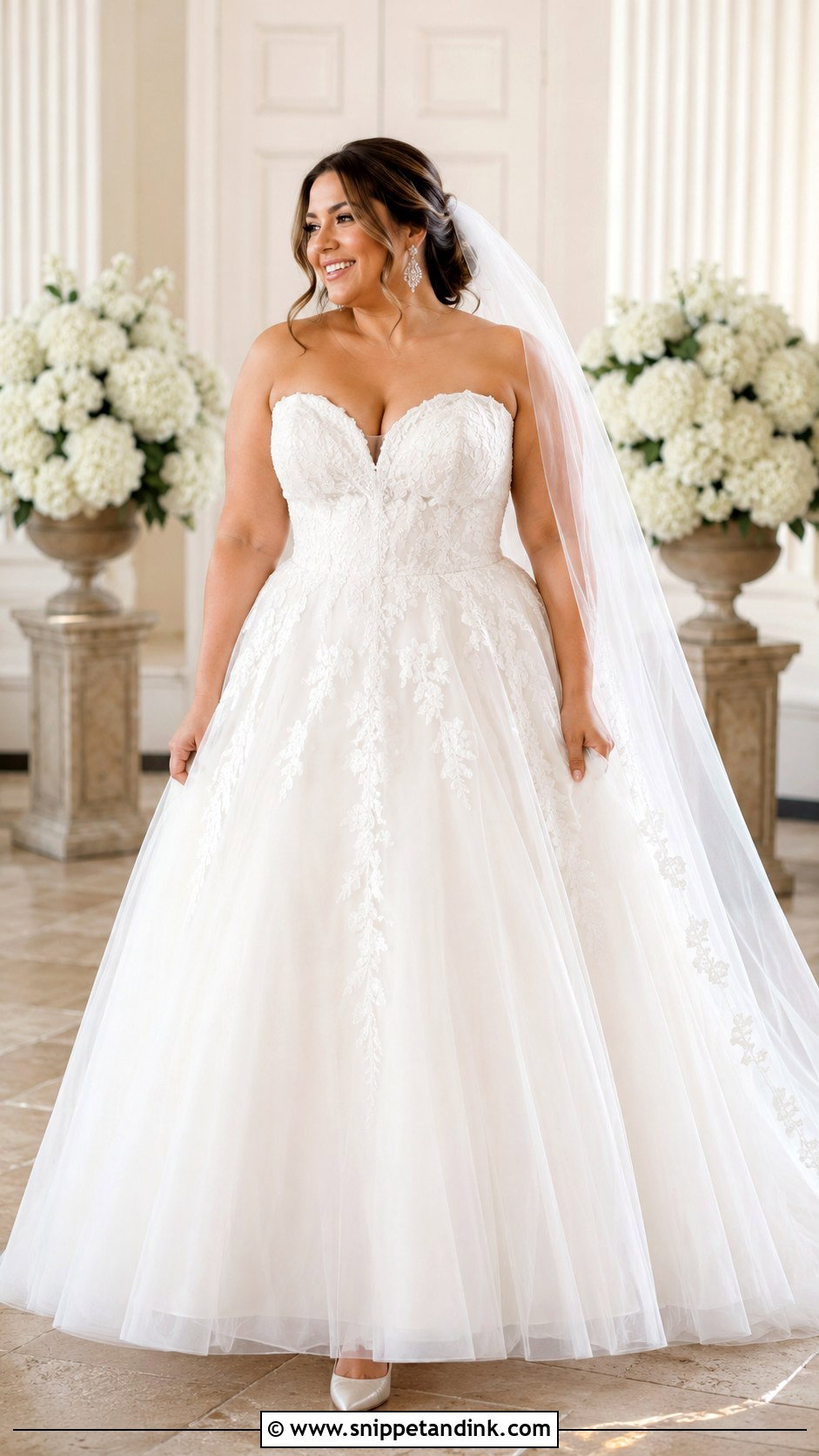
A ball gown makes an entrance, and on a fuller figure the full skirt balances the bust nicely. Weight is the thing to watch. Several layers of heavy satin can pull on the shoulders and waist by evening, so I steer brides toward lighter tulle layers or a satin skirt with a tulle underlay. A sweetheart, off-shoulder straps or illusion sleeves change the mood. Block heels and a cathedral veil finish it, with simple jewelry so the skirt stays the focus.
3. Full Figure Empire Waist Wedding Dress
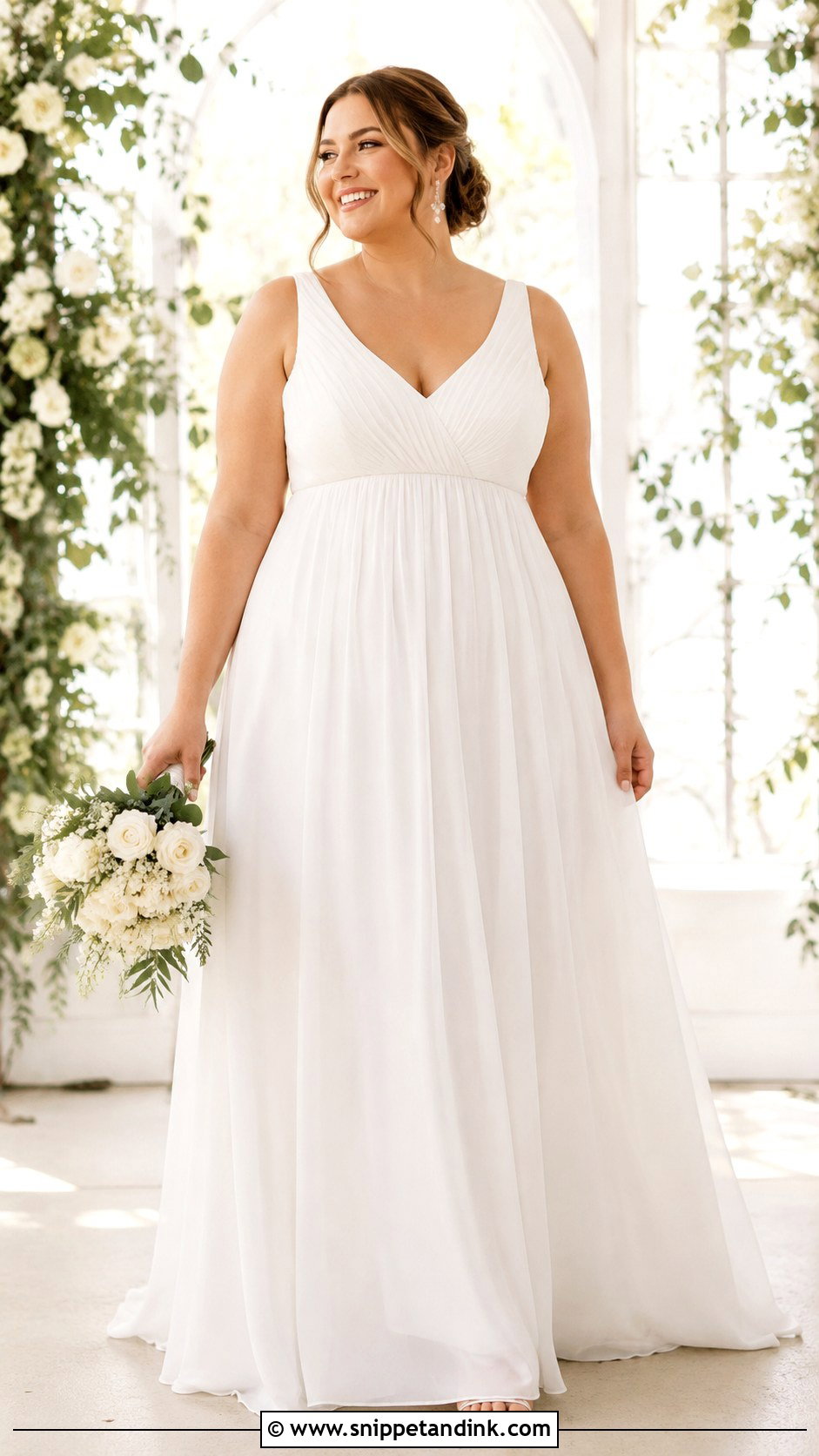
An empire waist wedding dress starts its skirt just under the bust and floats from there, so nothing presses on the waist or hips. Brides who dislike a tight midsection usually feel at ease in it. Chiffon, soft tulle and light crepe move best. A V or scoop neck opens up the top and adds length. One caution: on a fuller bust, the empire seam must sit under the bust, not across it, so take the bra you will wear to every fitting. Drop earrings and soft curls suit its relaxed mood.
4. Full Figure Fit And Flare Wedding Dress
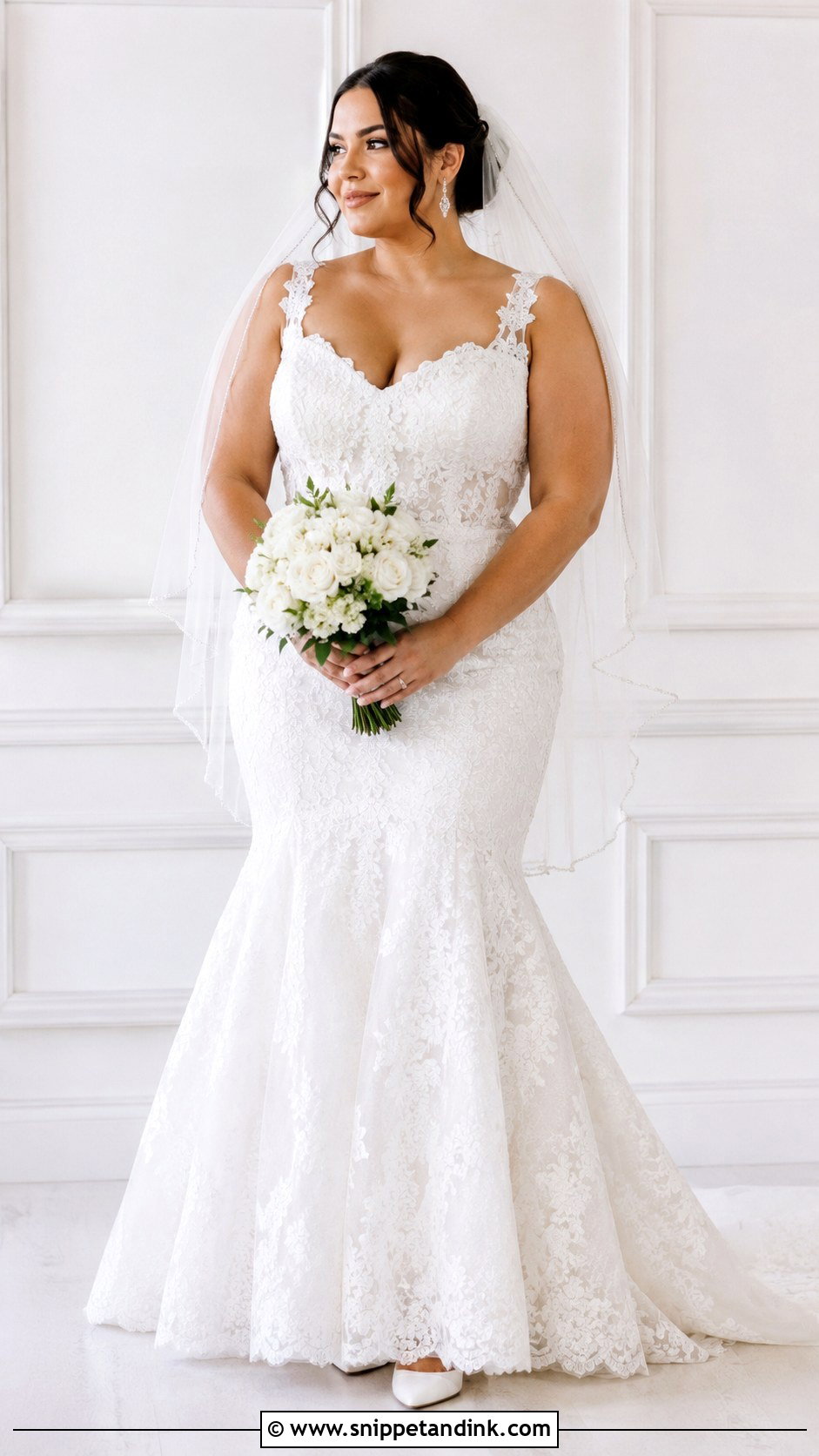
Fit-and-flare shows curves without the full commitment of a mermaid; the flare starts higher, around the thigh. That makes it easier to walk and sit in. A fit and flare wedding dress needs a stretch lining and boning, and I always ask brides to sit on a chair during the fitting to check it doesn’t pull across the hips. Crepe looks smooth and modern; lace adds texture. A fingertip veil and pointed heels complete it.
5. Full Figure Mermaid Wedding Dress
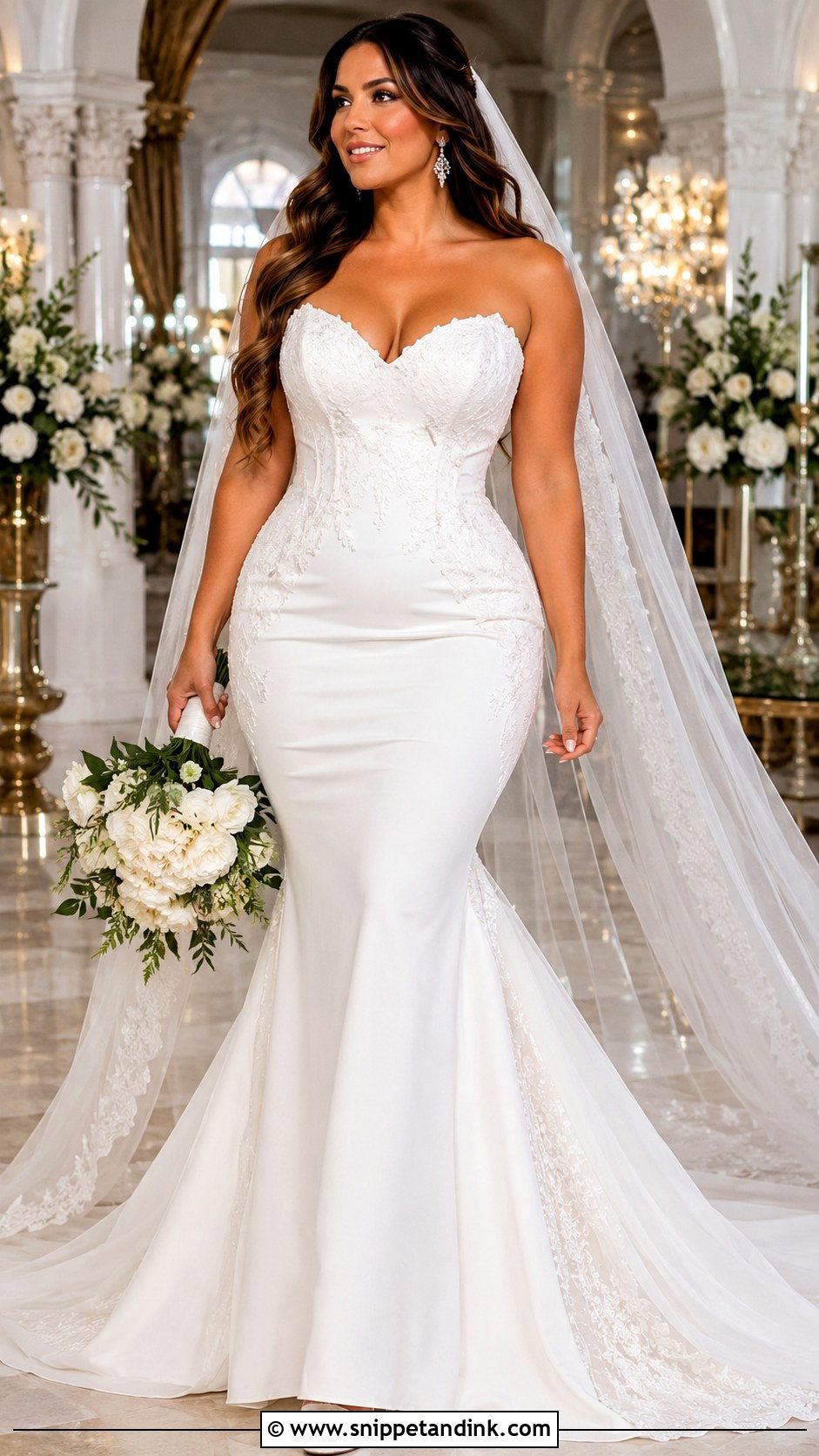
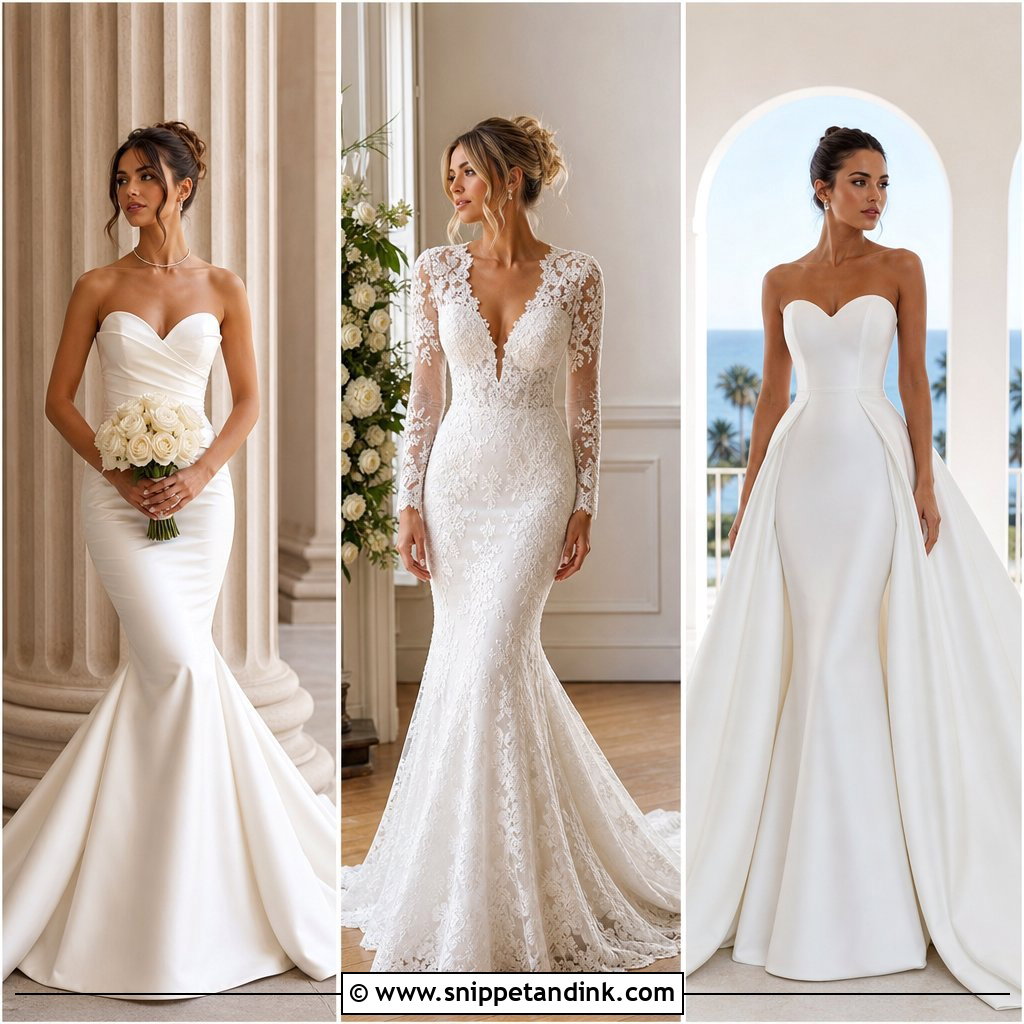
Mermaids are the boldest silhouette here, fitted through the bust, waist, hips and thighs before flaring at the knee. They can look sensational on curves, but only with strong internal support, a fabric with some give and a seamstress who knows how to follow your shape. A crepe mermaid with seams that trace your curves looks sculpted; lace over a lined base looks softer. Strapless is possible, but many brides feel steadier with wider straps or off-shoulder sleeves. Plan for some trouble on stairs and keep shoes you can actually walk in.
6. Full Figure Strapless Wedding Dress
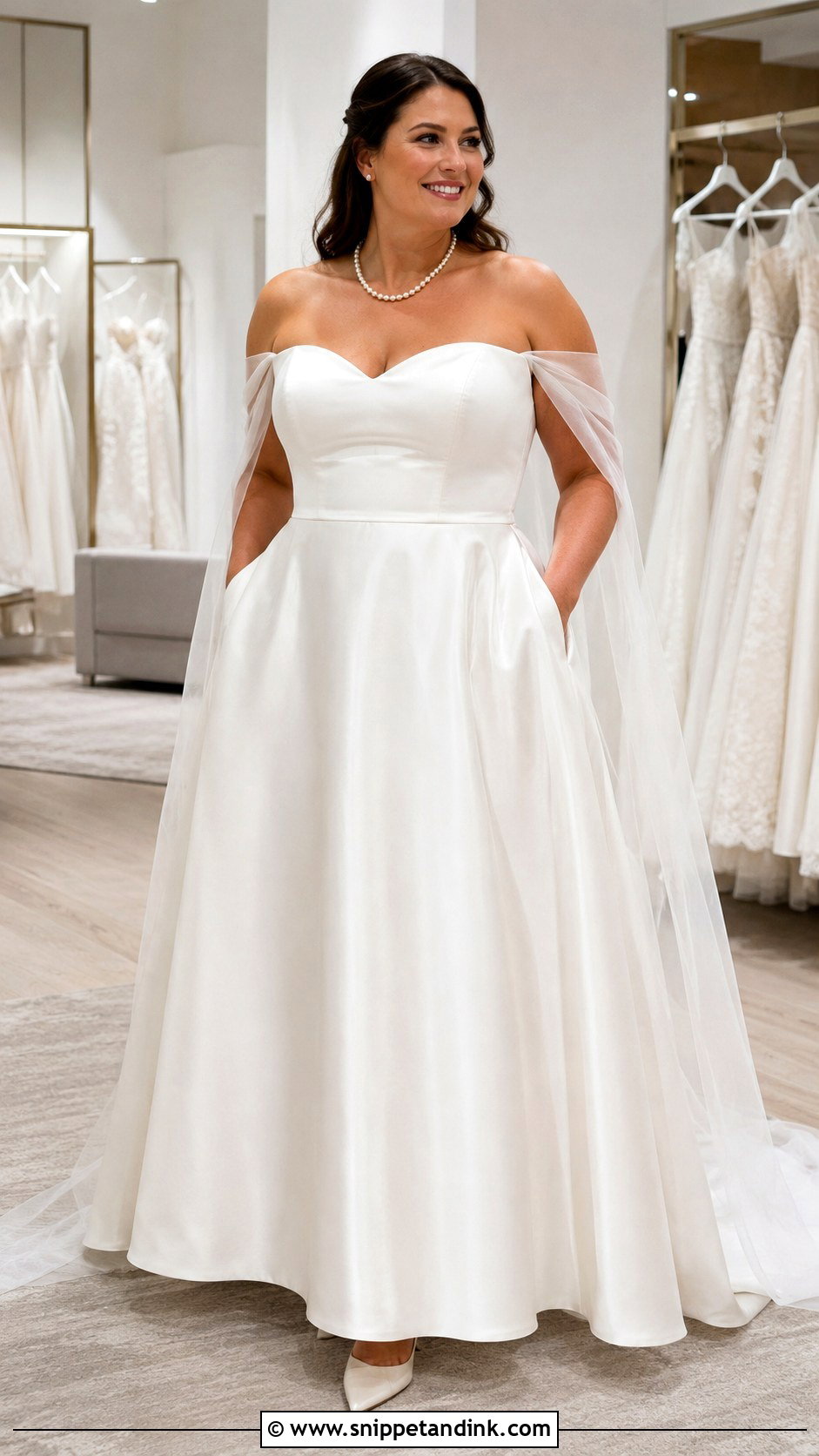
Strapless gowns on fuller busts work when the support comes from structure, not tightness. I look for boning along the sides and back, built-in cups and a firm waist stay, then I have the bride raise her arms and twist. If the bodice slides, it needs adjusting before the day. Sweetheart necklines soften the bust; straight ones look modern. A detachable lace bolero or sheer topper adds coverage for the ceremony. Choose a necklace that follows the neckline’s curve.
7. Full Figure Long Sleeve Wedding Dress
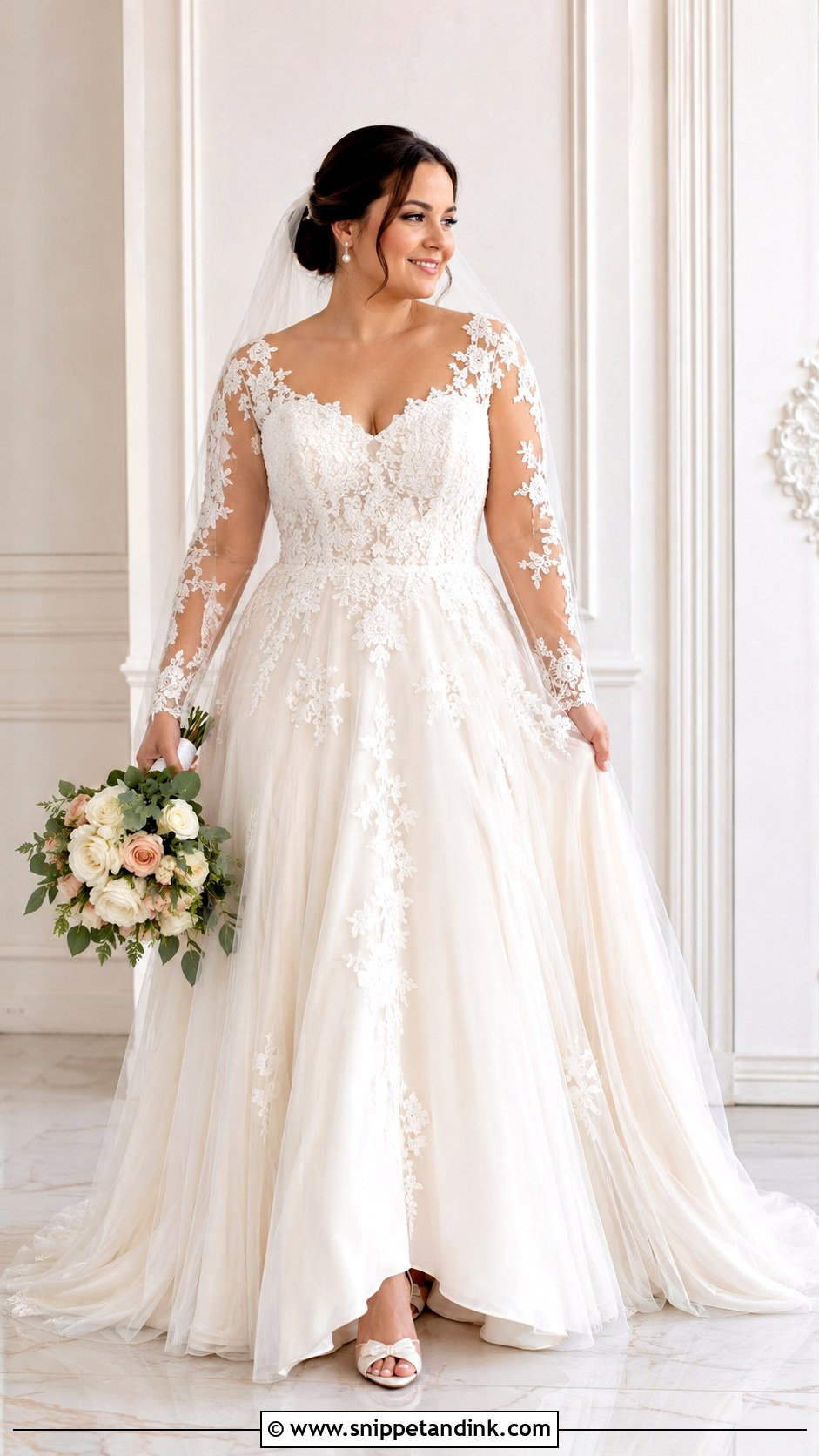
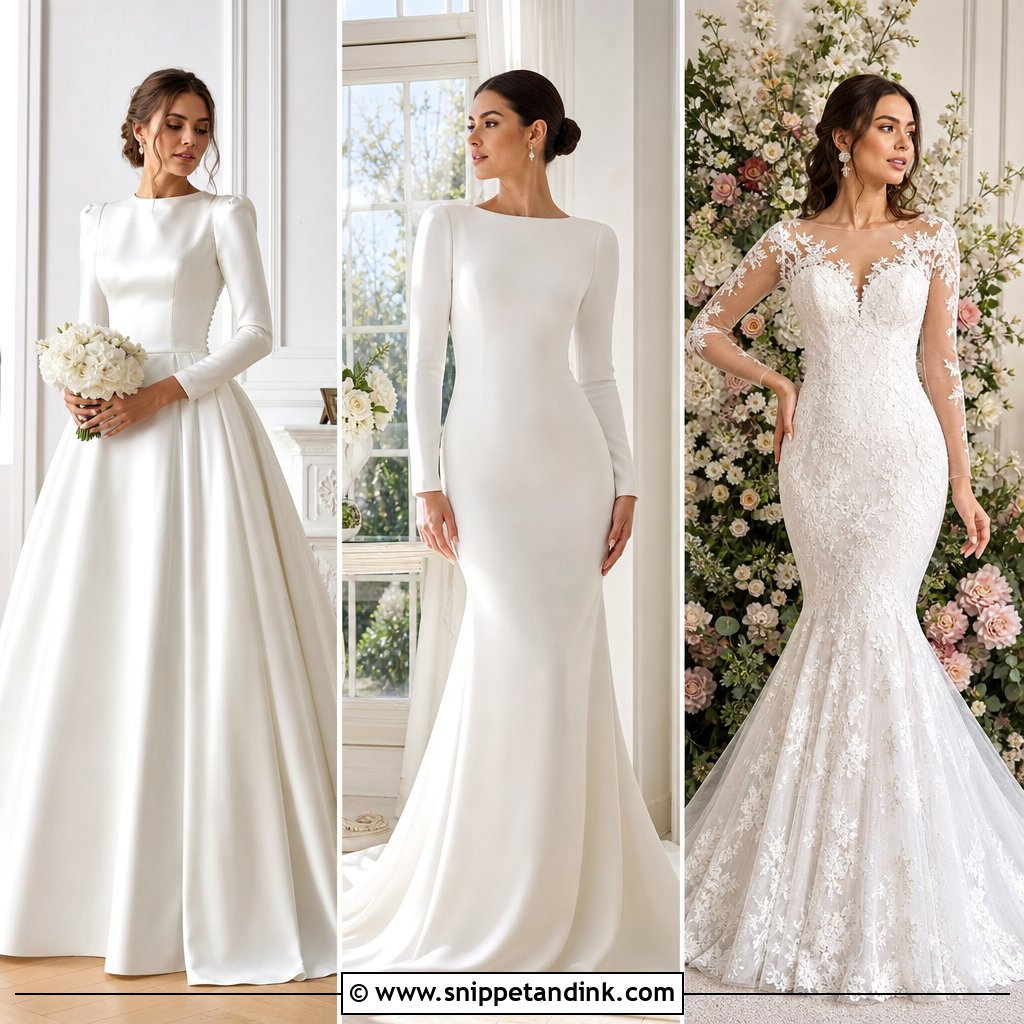
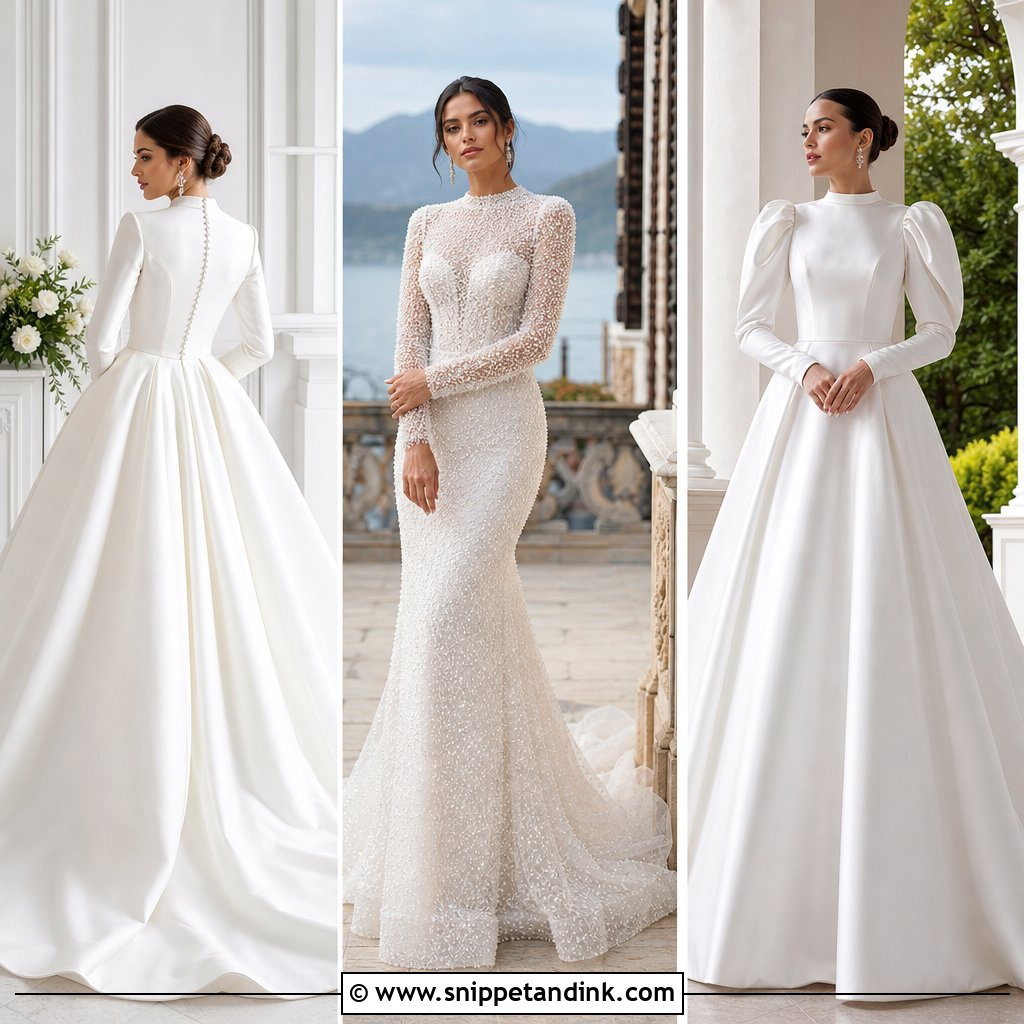
Long sleeves are where I see the most fit trouble on curvy brides, because sleeves cut for sample sizes can be tight around the upper arm. Make sure you can lift your arms, hug and dance before agreeing to them. Illusion lace gives coverage without bulk; crepe looks modern. Sleeves suit an A-line, a ball gown or a sleek sheath shape. A low bun and earrings keep the neckline clear of a heavy necklace.
8. Full Figure Off Shoulder Wedding Dress
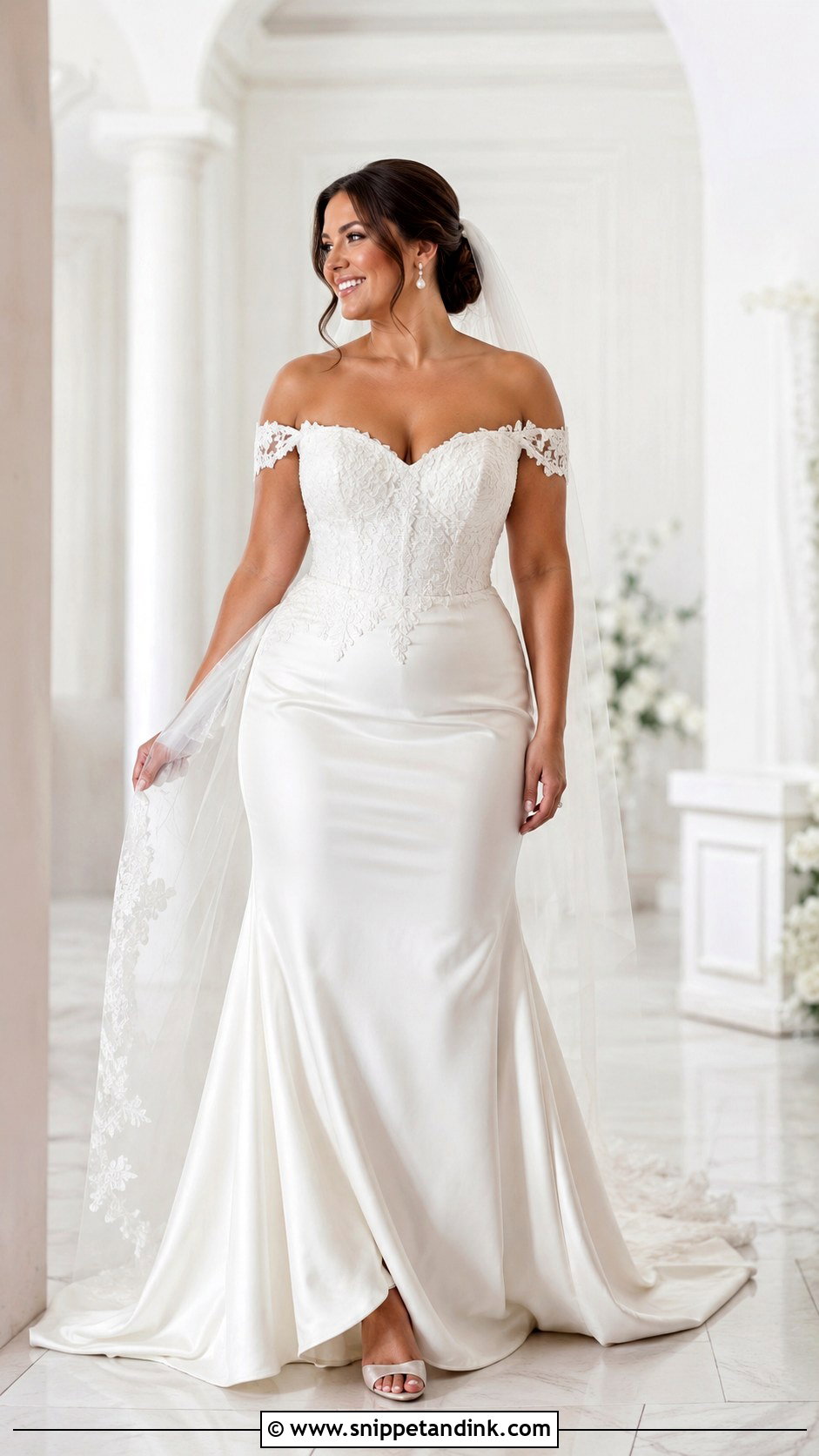
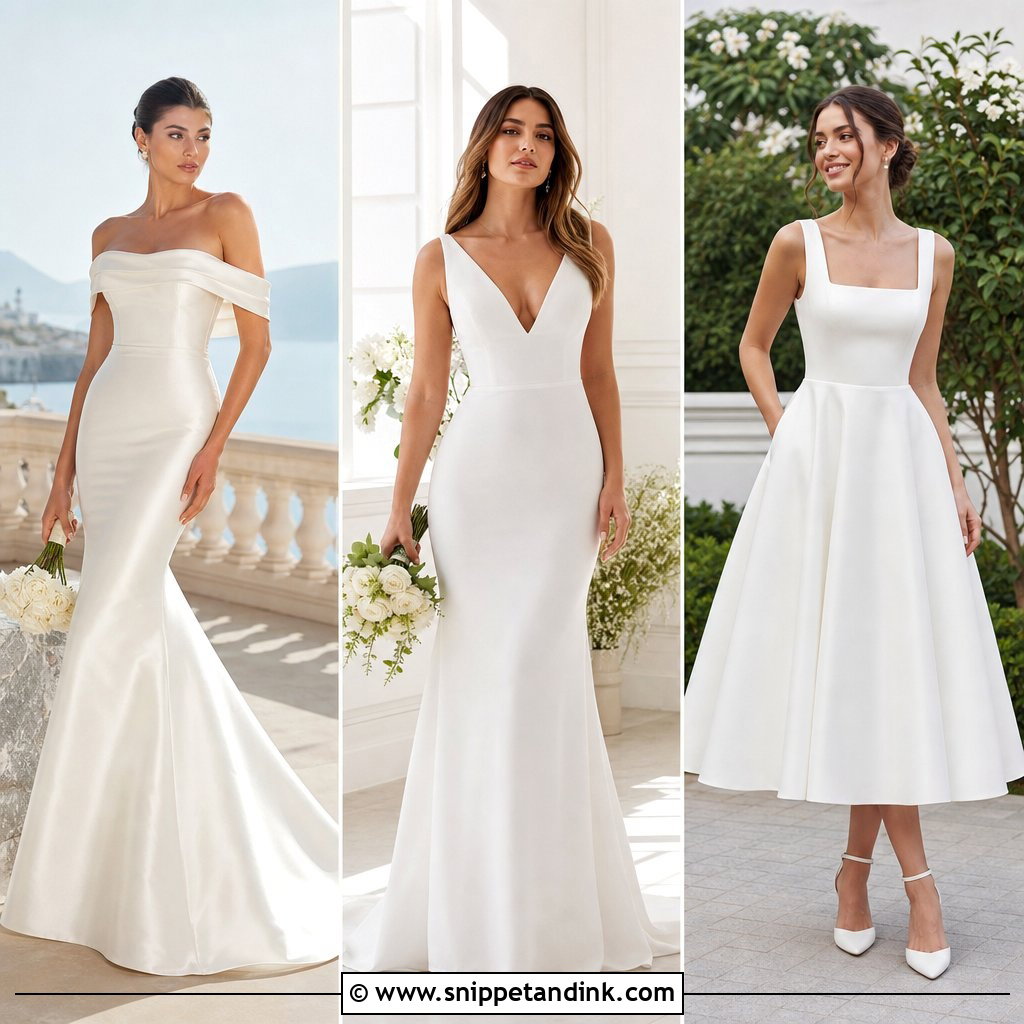
Off-shoulder necklines frame the collarbones while still covering the upper arm, which many brides like. The bands can sit softly on the arm or be structured for support; on a fuller bust, structured bands keep everything in place better. Pair with an A-line skirt for a classic gown, a ball skirt for drama or a fit-and-flare for curves. Arm movement is limited, so test it. A smooth updo, pearl earrings and a veil tucked low at the back complete it.
9. Full Figure V Neck Wedding Dress
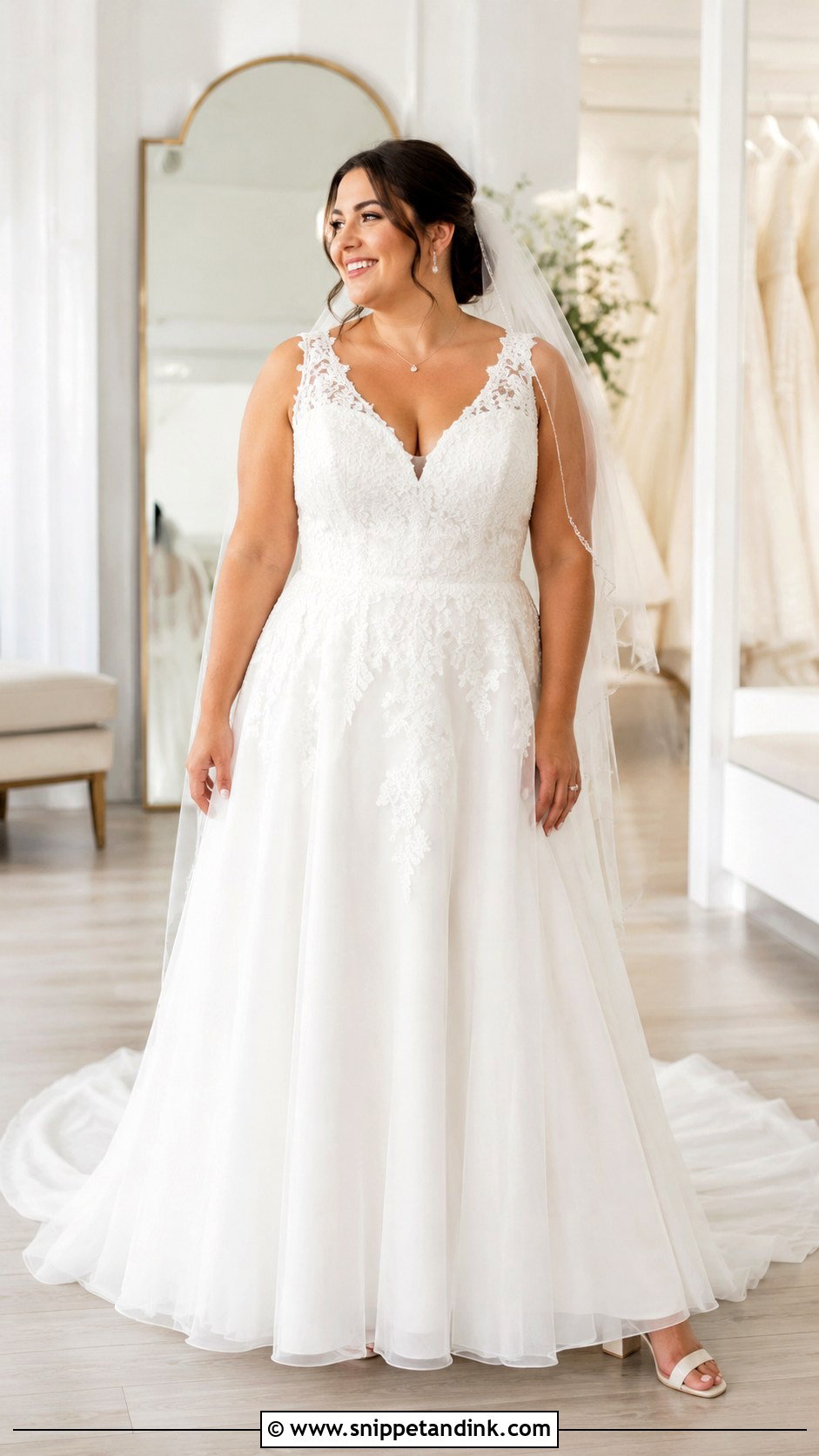
A V neck lengthens the neckline and draws the eye up. Depth is adjustable: modest, deep or filled with illusion mesh. On a fuller bust, wide straps, lace straps or cap sleeves give real support, and built-in cups usually beat a separate bra. Almost every silhouette takes a V. A fine pendant, soft waves and strappy heels make it look graceful rather than revealing.
10. Full Figure Square Neck Wedding Dress
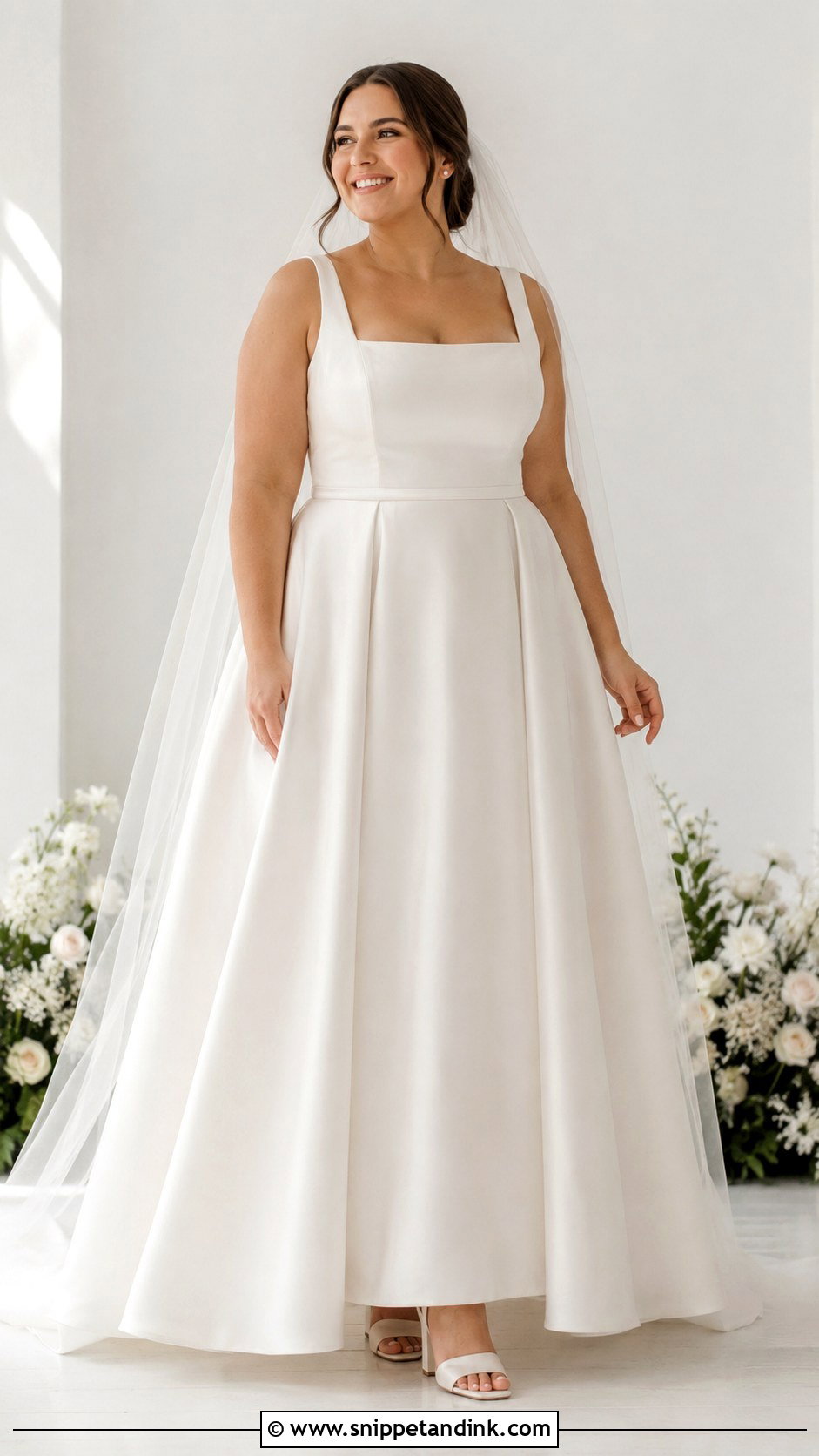
Square necklines are modern and structured across the bust, and they frame the collarbone cleanly. They look fresher than a sweetheart while staying classic. Pair with wide straps, puff sleeves or long fitted sleeves. A satin A-line skirt keeps it simple; lace adds texture. A defined waist helps. Check that the top edge lies flat on the chest when you sit; on a fuller bust it can gape at the corners. Pearl studs and block heels finish it.
11. Full Figure Sweetheart Wedding Dress
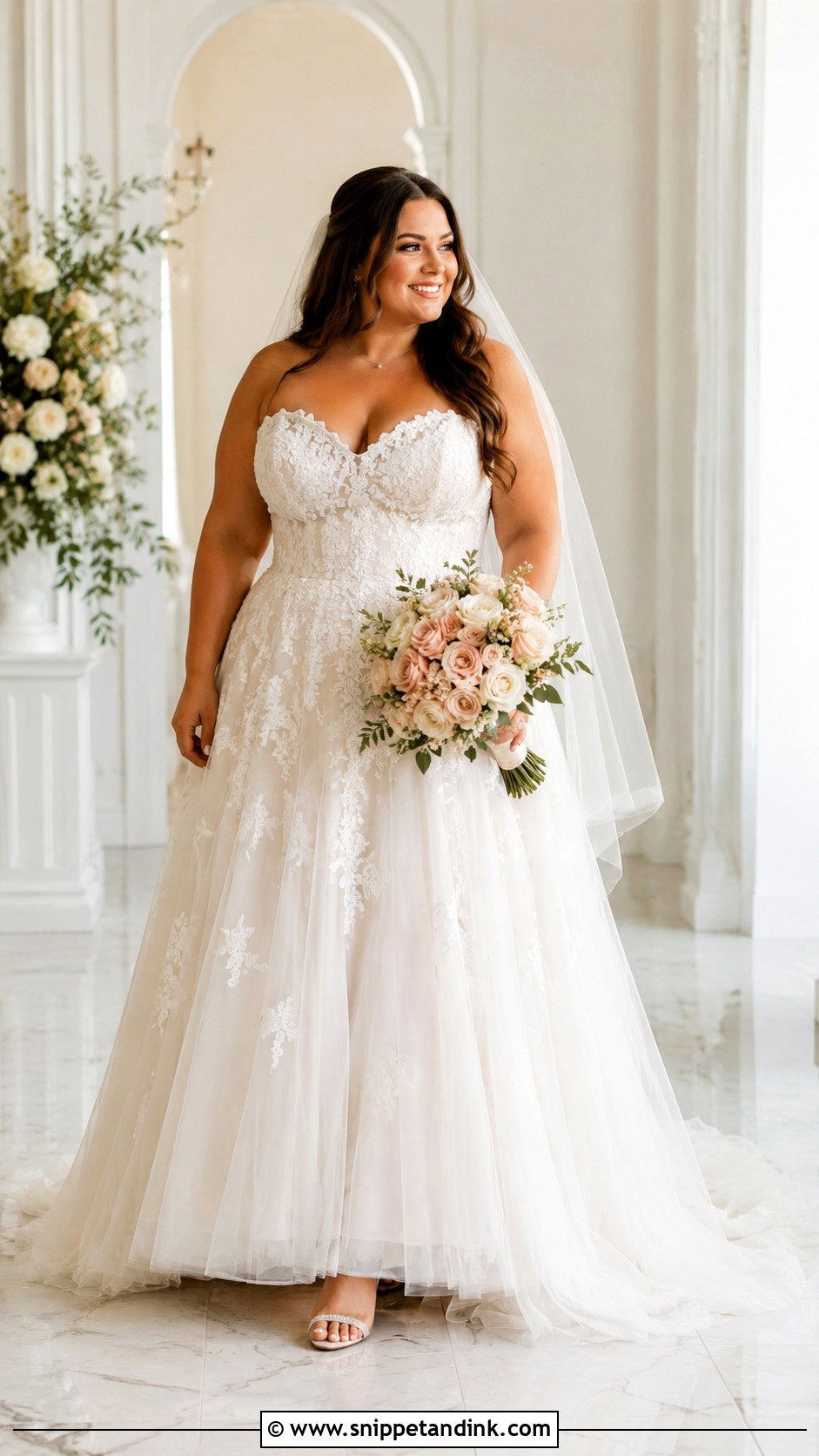
Sweetheart necklines follow the curve of the bust, so they suit fuller chests naturally. For support, choose a bodice with boning, cups and a secure back, ideally a corset lacing or a zip with hook guard. It works strapless, off-shoulder or with detachable straps. Lace, tulle, satin and crepe all suit it. An A-line skirt keeps it classic; a mermaid makes it dramatic. A simple necklace and a veil matching the gown’s detail level complete it.
12. Full Figure Lace Wedding Dress
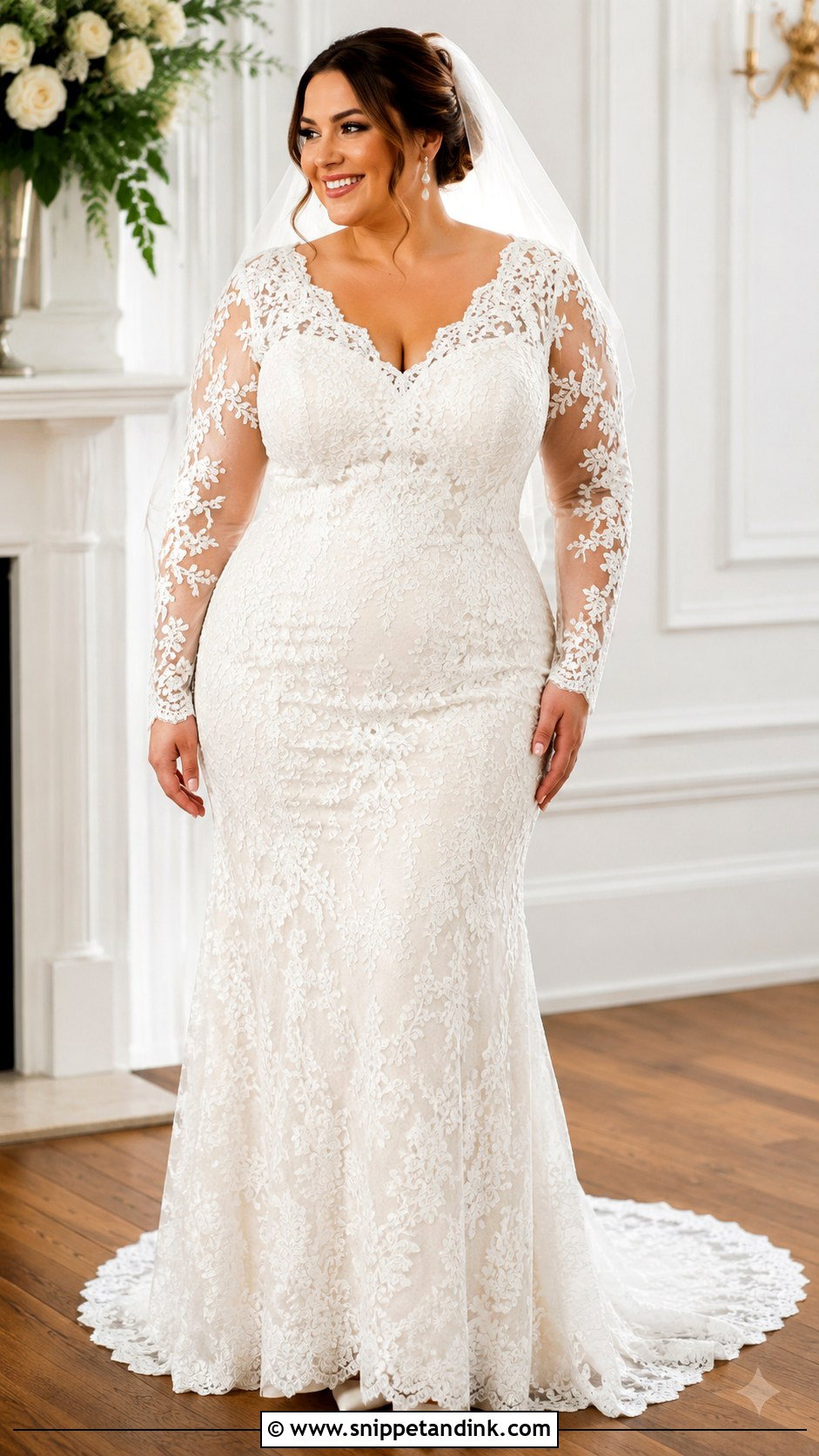
Lace can be fine and floral or bold and graphic, and on a curvy figure the base underneath matters more than the lace itself. A thin, clingy base shows every line; a structured lining gives shape. A lace A-line looks classic, a lace fit-and-flare more defined. Illusion sleeves, scalloped hems or a lace train add a custom feel. I like large-scale lace patterns on fuller figures because small, busy patterns can look crowded across a wide skirt. Pearl earrings and ivory shoes keep it simple.
13. Full Figure Satin Wedding Dress
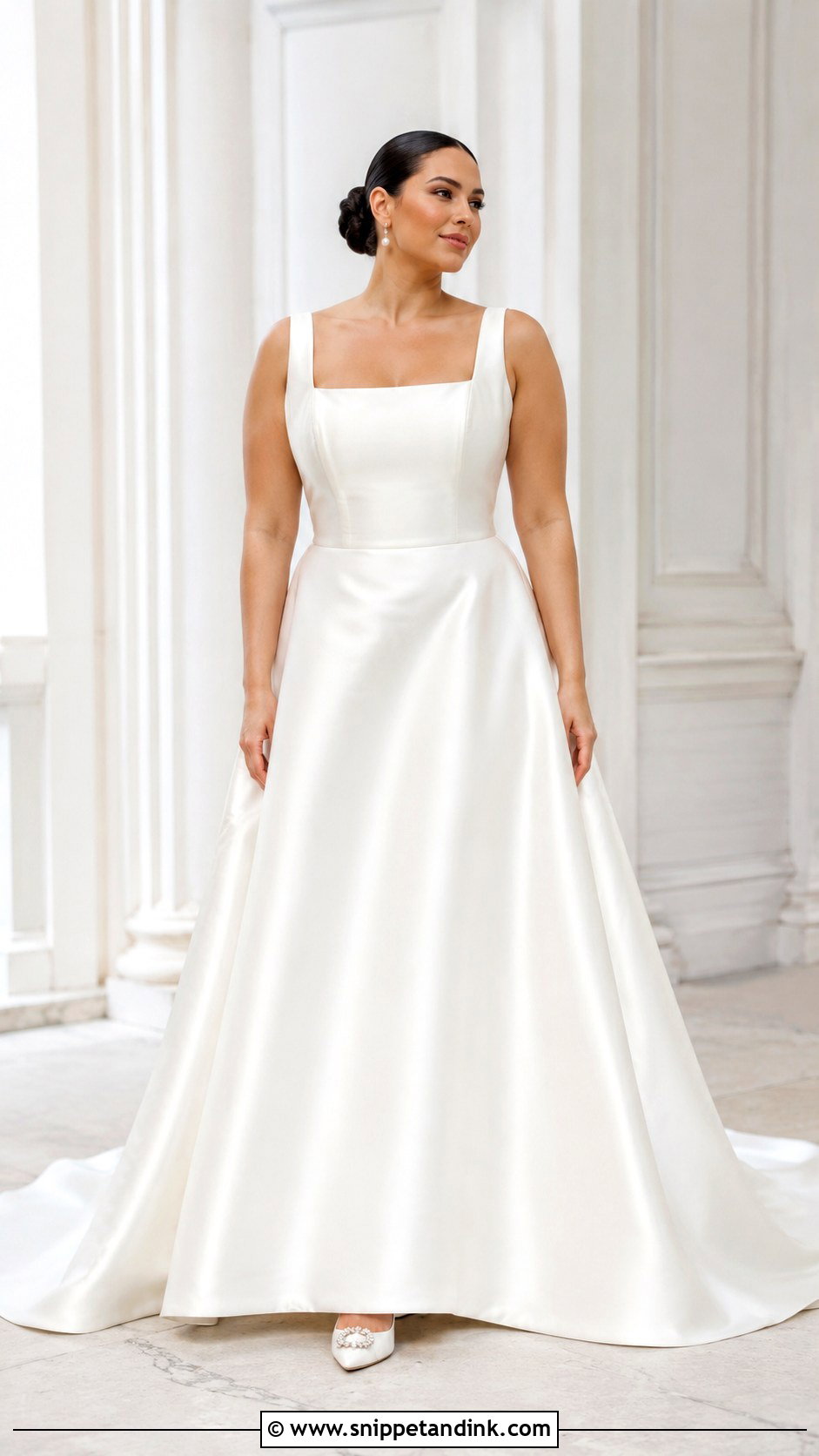
Satin reflects light, so any ripple from a poor fit shows. That is why fabric weight matters so much: heavy satin lies smoothly over curves while thin satin clings and creases. Look for good lining and supportive seams. A satin ball gown looks regal, an A-line classic, and a square-neck satin gown with wide straps and a clean train looks modern. Accessorize lightly with pearl drops, a sleek bun and closed-toe heels.
14. Full Figure Crepe Wedding Dress
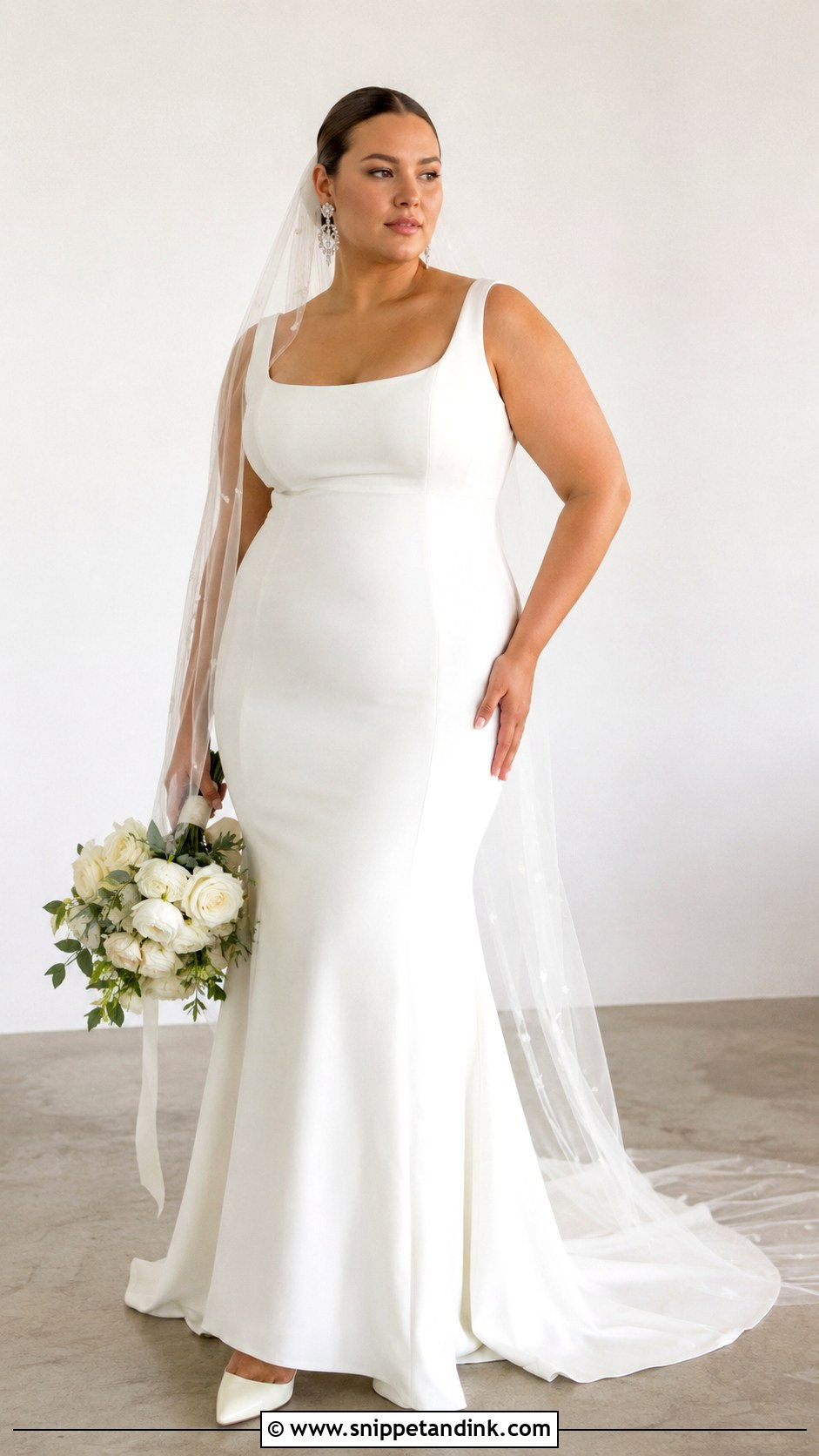
Crepe looks sculpted and clean, and it suits sheath, fit-and-flare and minimalist A-line gowns. It also shows every seam, so construction is critical. I check that the lining supports the shape and that no undergarment line shows through when the bride moves. Square necks, long sleeves or an open back keep it modern without embellishment. Statement earrings, a sleek veil and comfortable heels finish it.
15. Full Figure Chiffon Wedding Dress
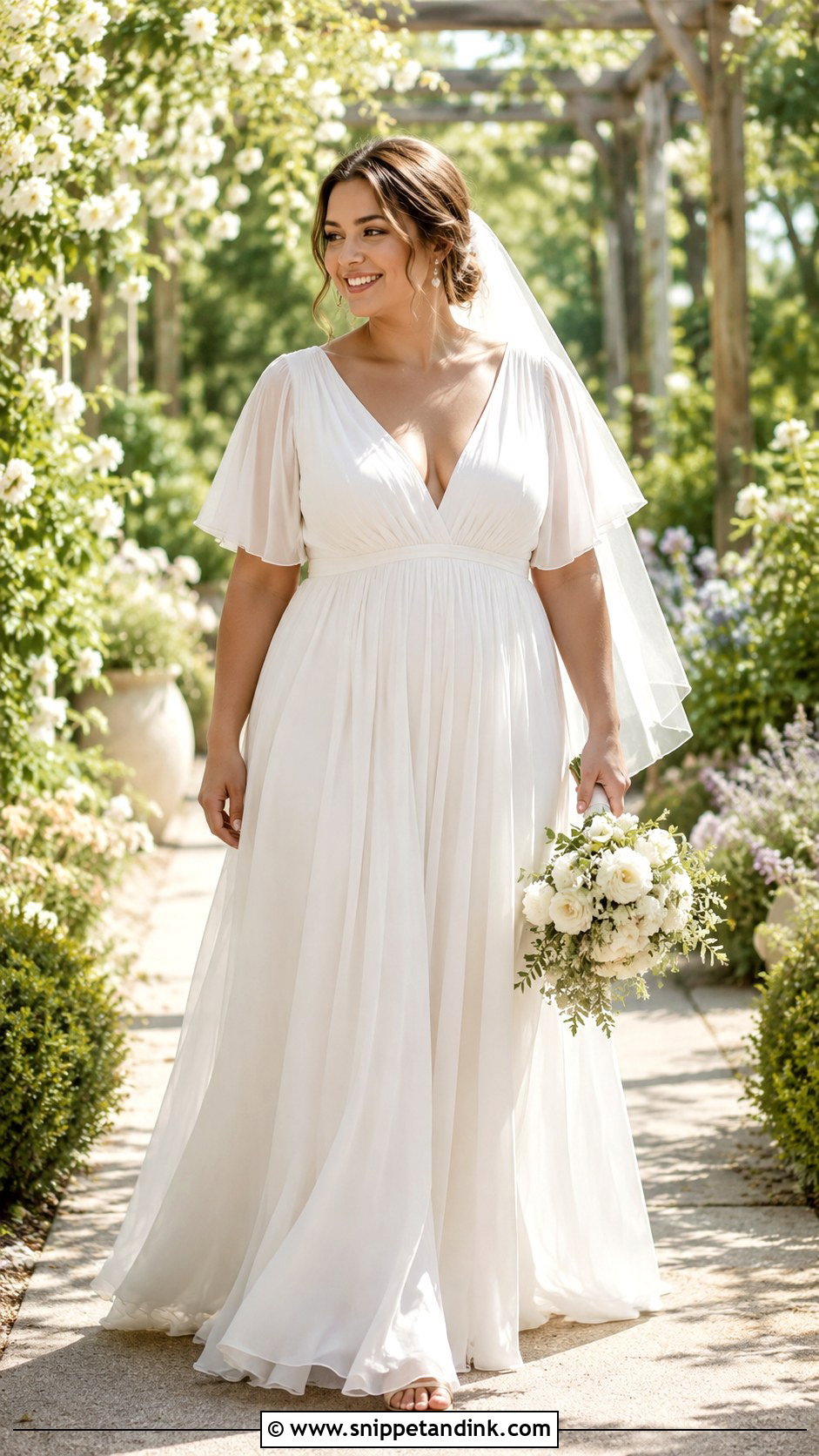
Chiffon floats over the body and breathes, which makes it a good summer and outdoor fabric. Without structure, though, it can look shapeless on curves. I look for a defined waist, a supportive bodice or subtle pleating. Empire, A-line and flowing sheath shapes work well. Flutter sleeves, soft straps and V necks suit it. Loose waves, delicate earrings and light heels keep it airy.
16. Full Figure Tulle Wedding Dress
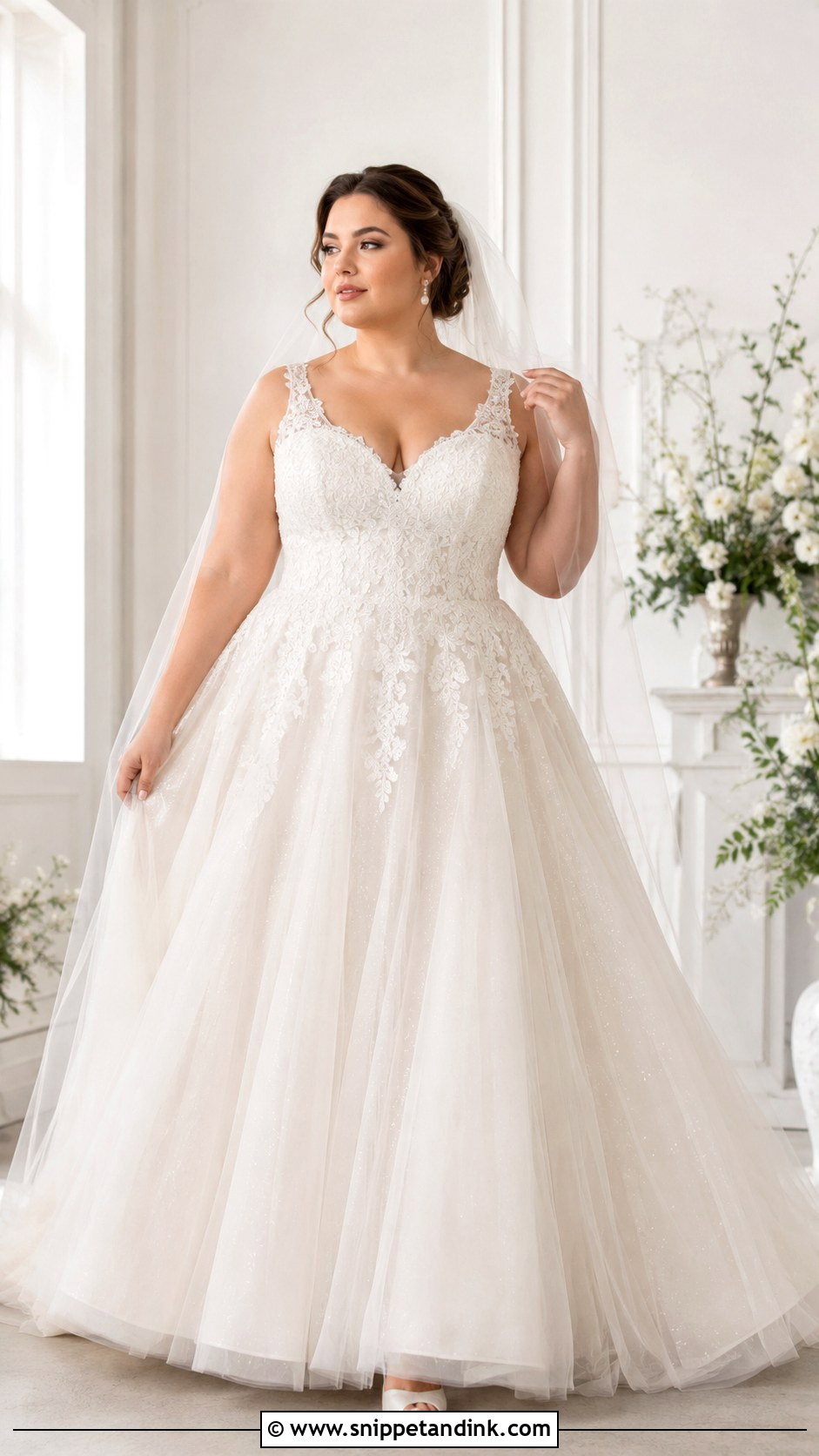
Tulle gives volume without the weight of satin or brocade, which matters over a long day. A fitted bodice with a defined waist, then a tulle skirt for movement, is the most reliable version. A tulle ball gown looks fairytale; a tulle A-line feels lighter. Lace appliques, sparkle layers or a plain bodice all work. Tulle can snag on jewelry and shoe buckles, so choose smooth accessories and a veil as light as the skirt.
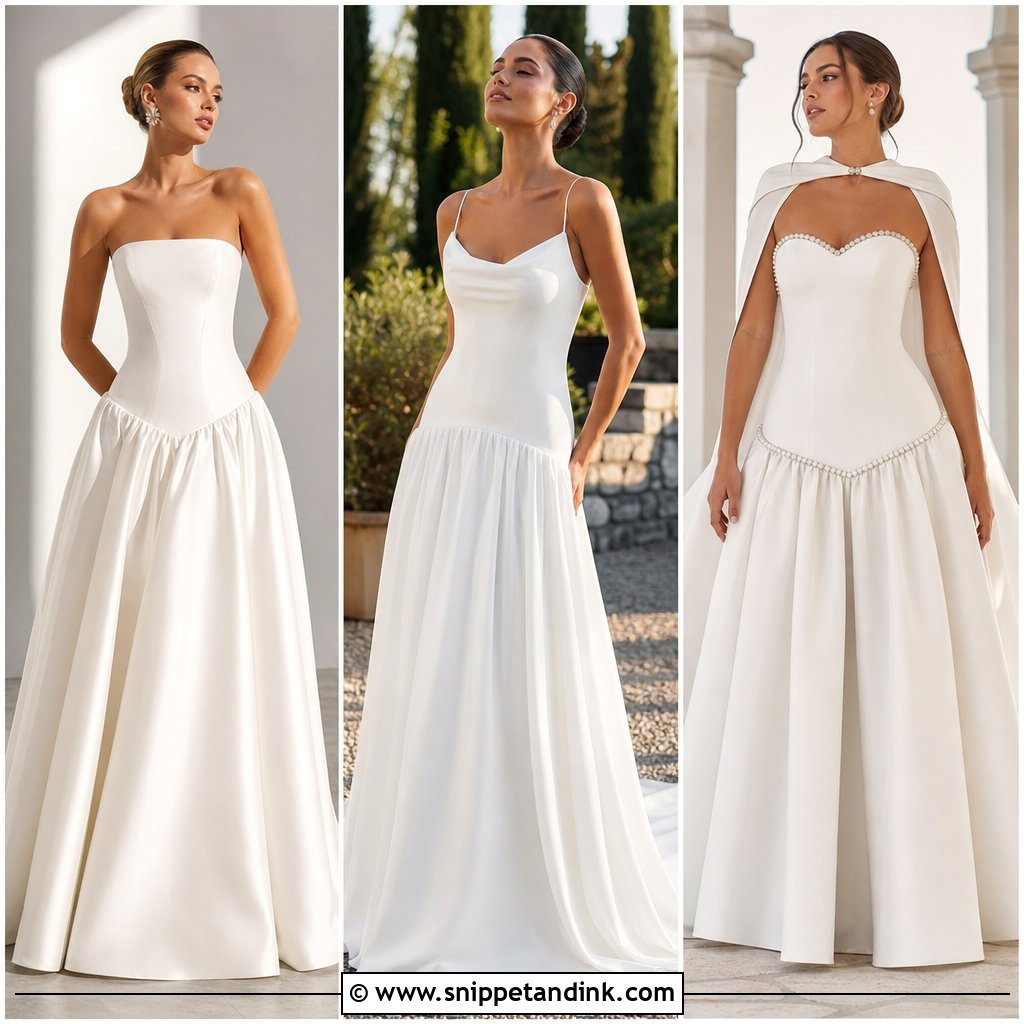
17. Full Figure Basque Waist Wedding Dress
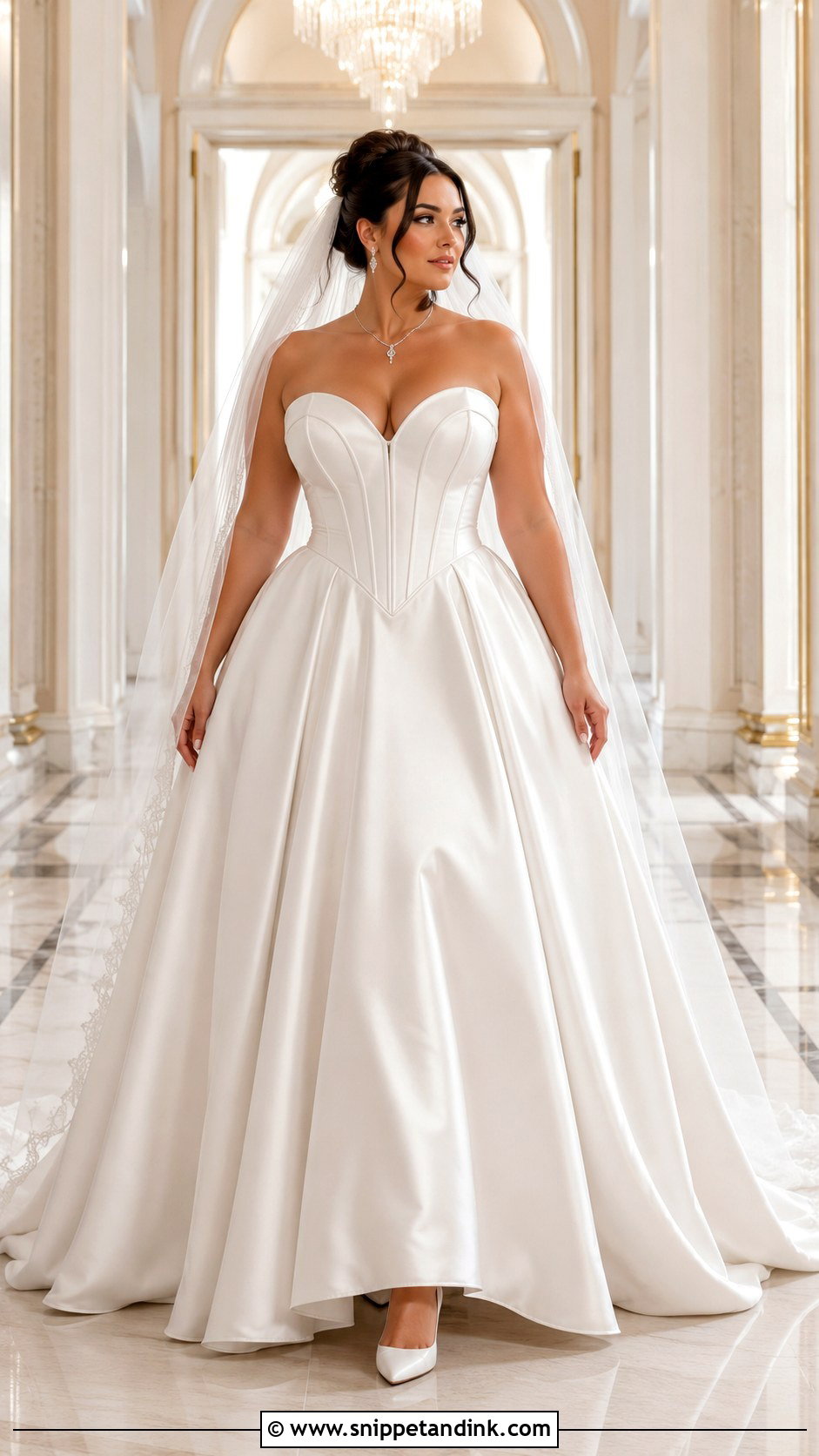
A basque waist dips into a V below the natural waist, which lengthens the torso and creates a defined hourglass effect. It suits a full skirt, A-line or ball gown. The point of the V has to sit in the right place on your body; too low and it shortens the legs, too high and it loses the effect. The bodice should feel secure but let you breathe. Satin, lace and taffeta suit it, with classic pumps and a long veil.
18. Full Figure Drop Waist Wedding Dress
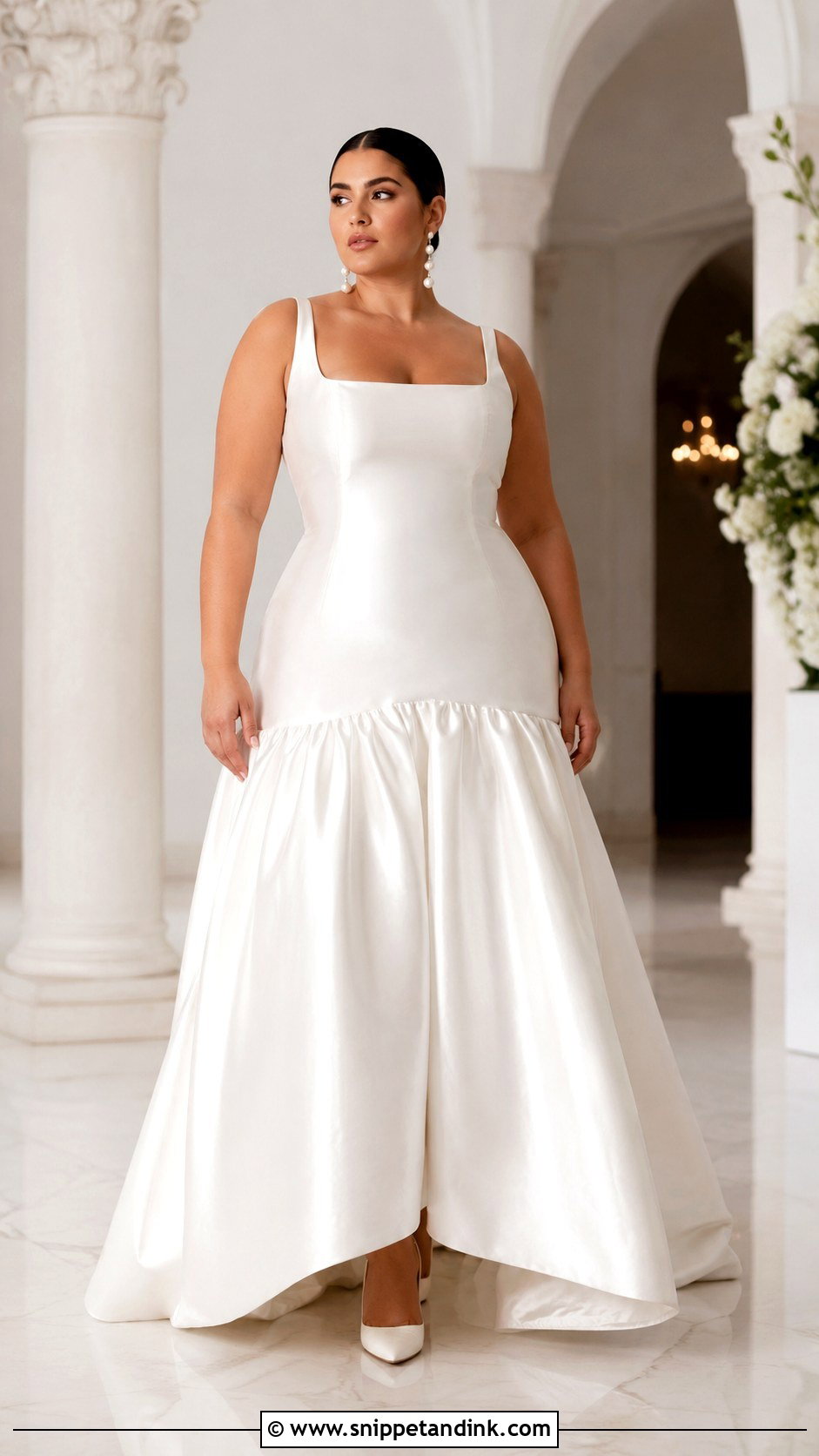
Drop waists put the seam near the upper hip, so the torso looks longer before the skirt flares. This is the silhouette I always ask brides to try on in person, because proportions vary so much between bodies; on some it looks very chic, on others it shortens the leg. Satin or crepe makes it modern, lace or tulle more romantic. Simple jewelry, sleek hair and pointed heels keep it clean.
19. Full Figure Corset Wedding Dress
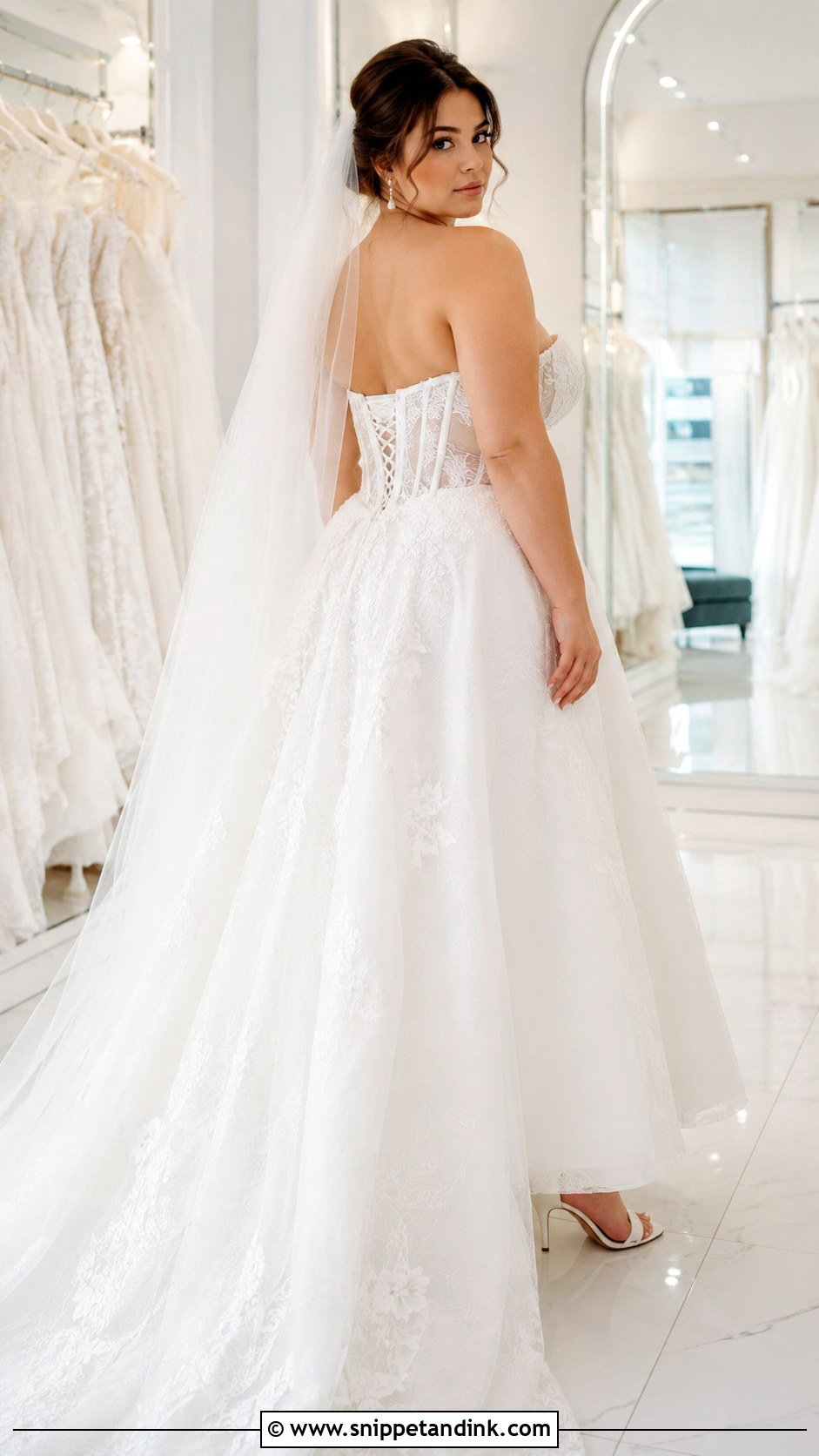
Corset bodices support the bust and shape the waist, often without the need for extra shapewear. The boning can be visible with lace-up backs or hidden for a smoother look. A laced back also adjusts on the day, which helps if your weight shifts between final fitting and wedding. It should feel secure, not restrictive; if you can’t breathe deeply, it is too tight. Pair it with an A-line skirt, a ball skirt or a fitted one, plus supportive shoes.
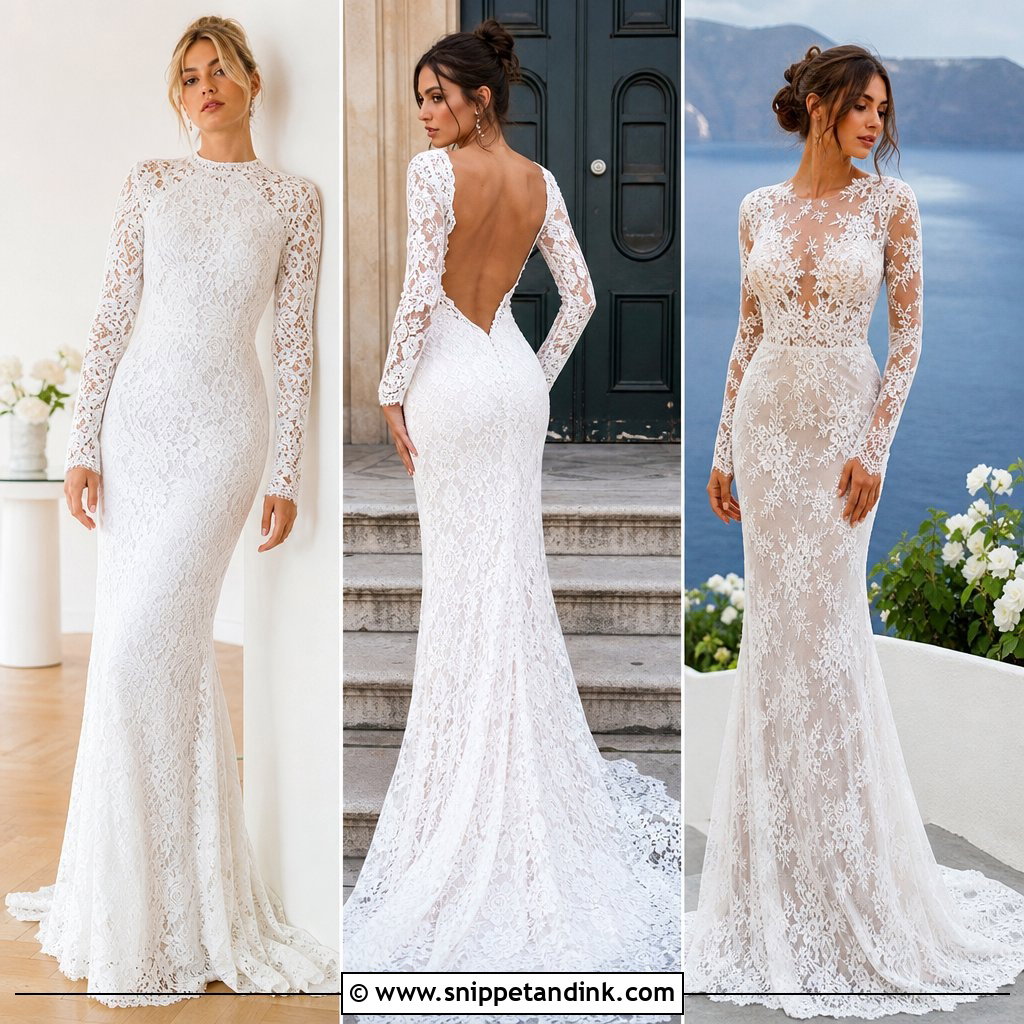
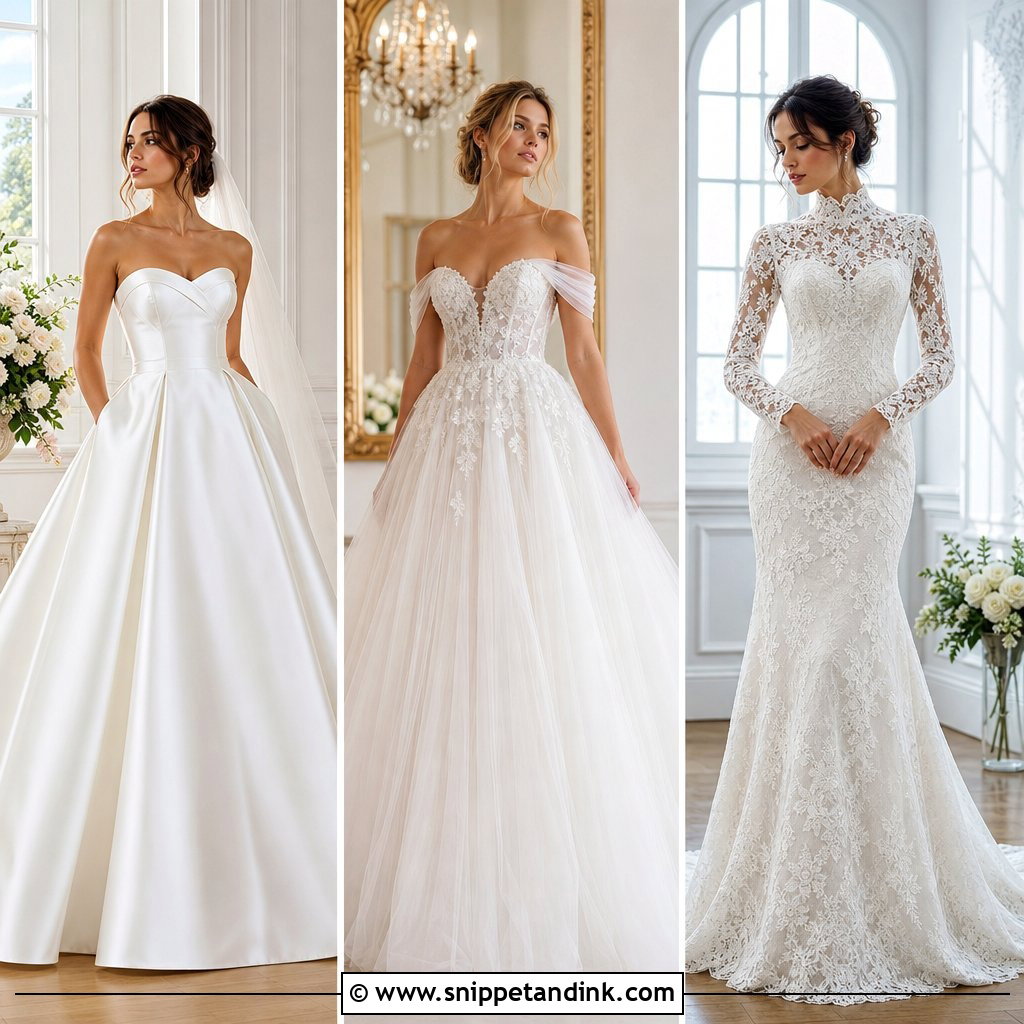

20. Full Figure Sheath Wedding Dress
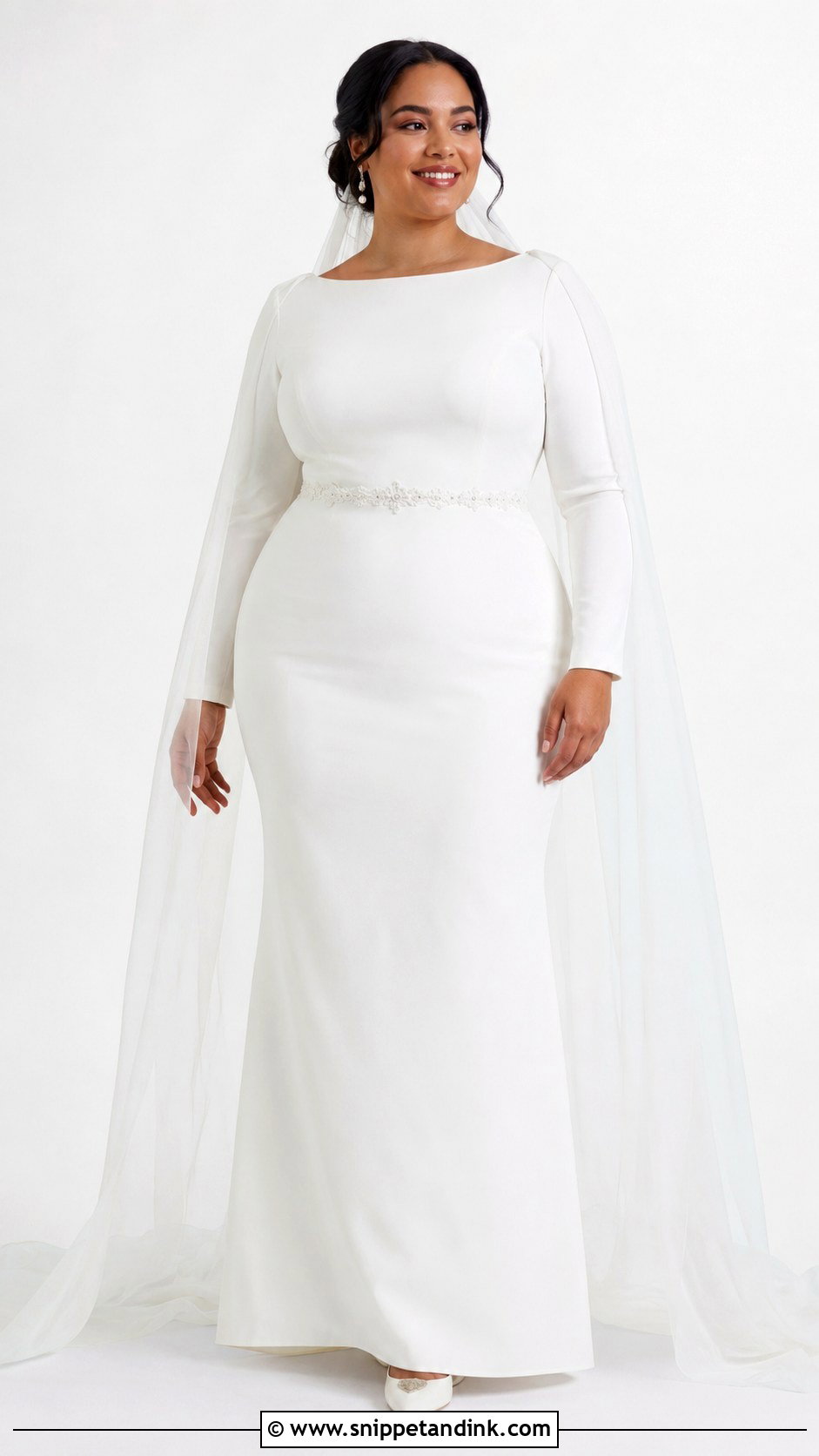
A sheath falls close to the body without a flare, which looks sleek but hides nothing. It needs weighty fabric and good lining. Crepe, satin and lace work. Vertical seams, soft ruching or a defined waist add shape. Long sleeves, a square neck or a cape veil keep it modern. Block heels or low pumps help you move comfortably. I recommend trying a sheath in a heavier crepe first; thin fabrics show every line.
21. Full Figure High Low Wedding Dress
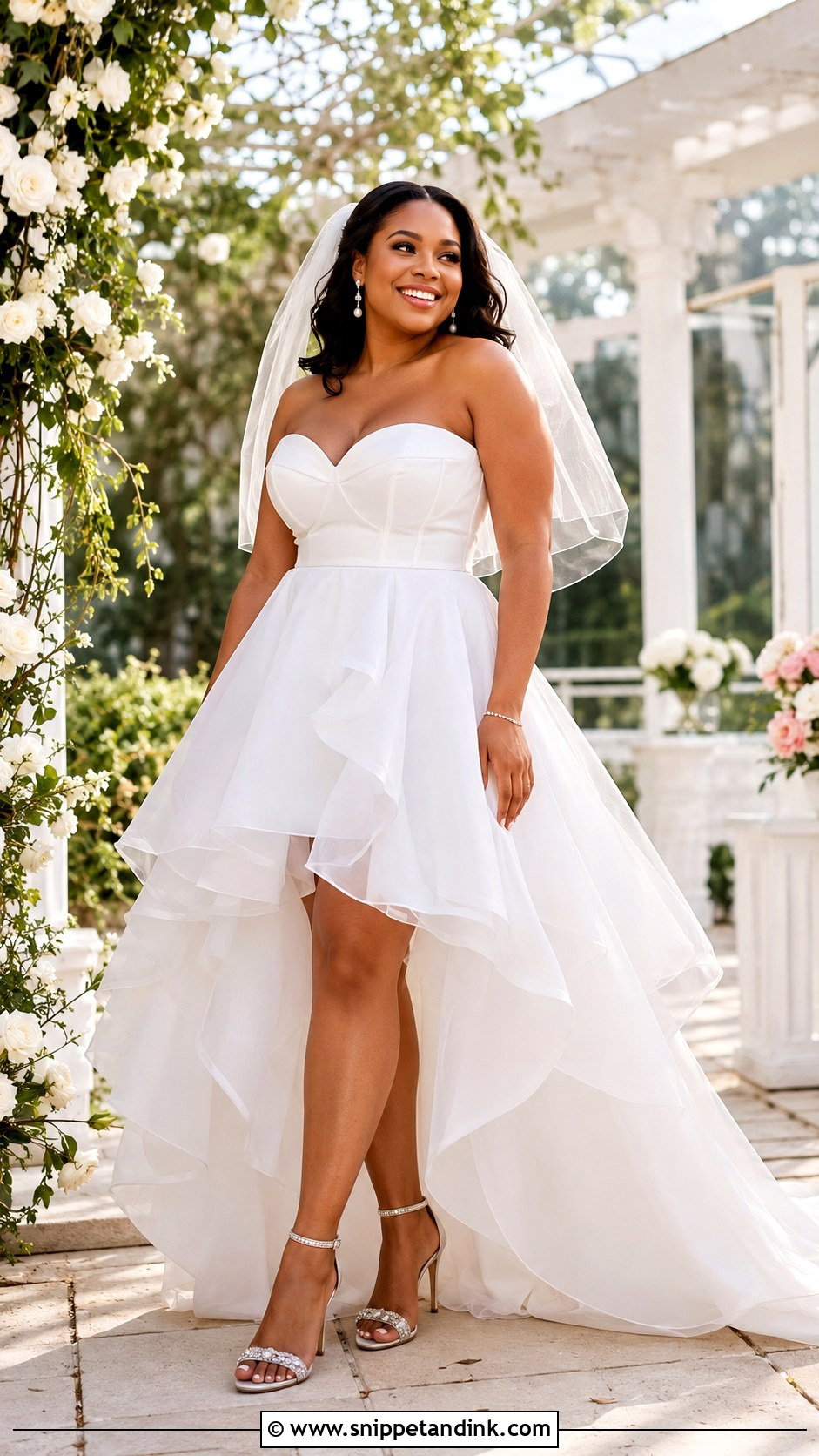
High-low hems show off your shoes and make walking easier, with a shorter front and a longer back. Tulle, satin, organza or structured mikado all work. A high-low A-line defines the waist while keeping the skirt easy to move in. Check the front hem height in your shoes; too short can look like a party dress rather than a wedding gown. Embellished heels, pearl earrings and a simple veil complete it.
22. Full Figure Tea Length Wedding Dress
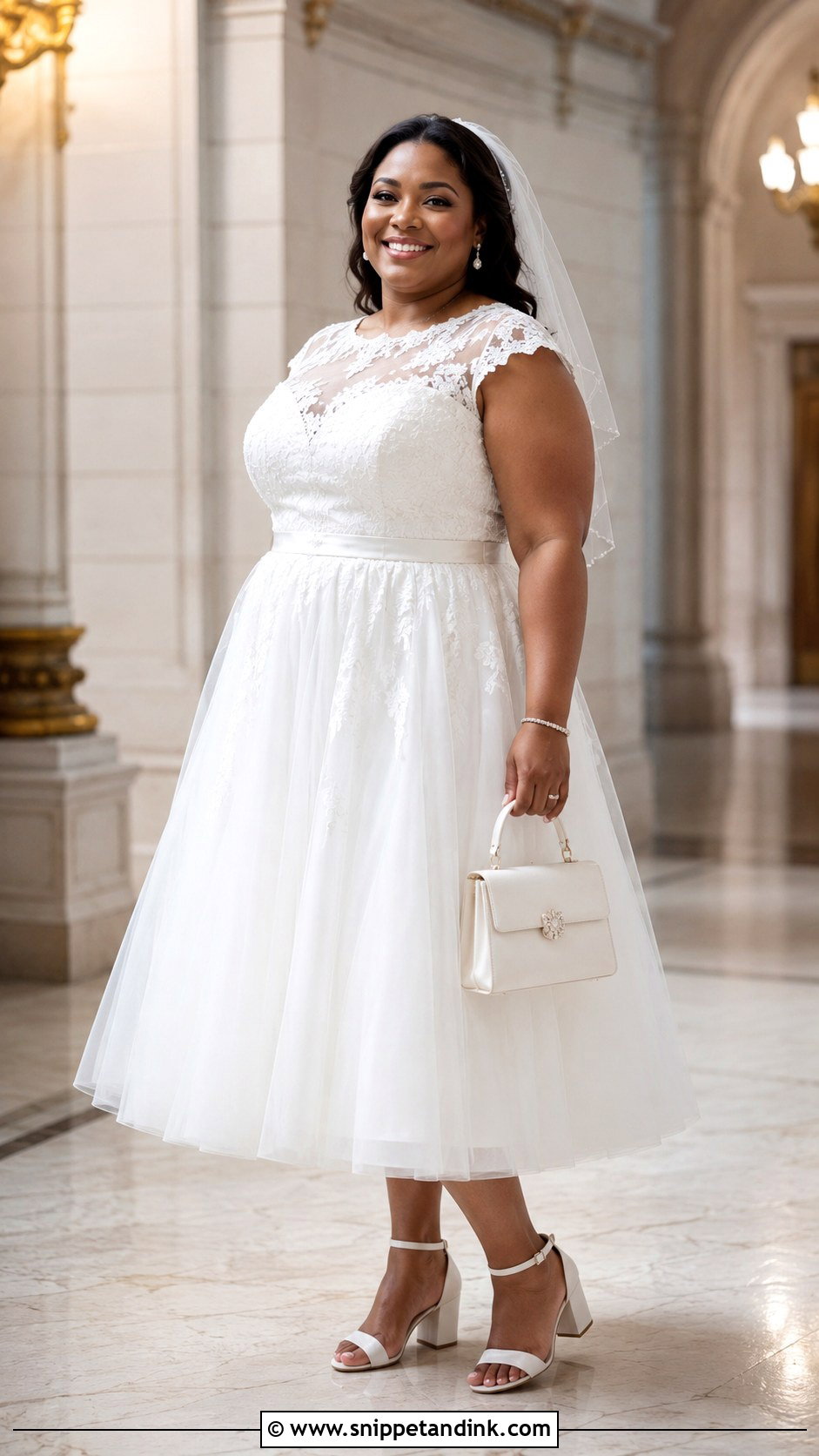
Tea length ends between knee and ankle, so walking, dancing and showing shoes are all easy. A fitted bodice and fuller skirt give it a balanced vintage shape. Satin, tulle, lace and organza suit it. Choose a sweetheart, square or bateau neck. Block heels, a short veil, pearls and a small bag finish it. It suits courthouse and garden weddings. For calf-length hems, I check the exact break point on the leg in a mirror, as an inch higher or lower changes the look.
23. Full Figure Bridal Jumpsuit
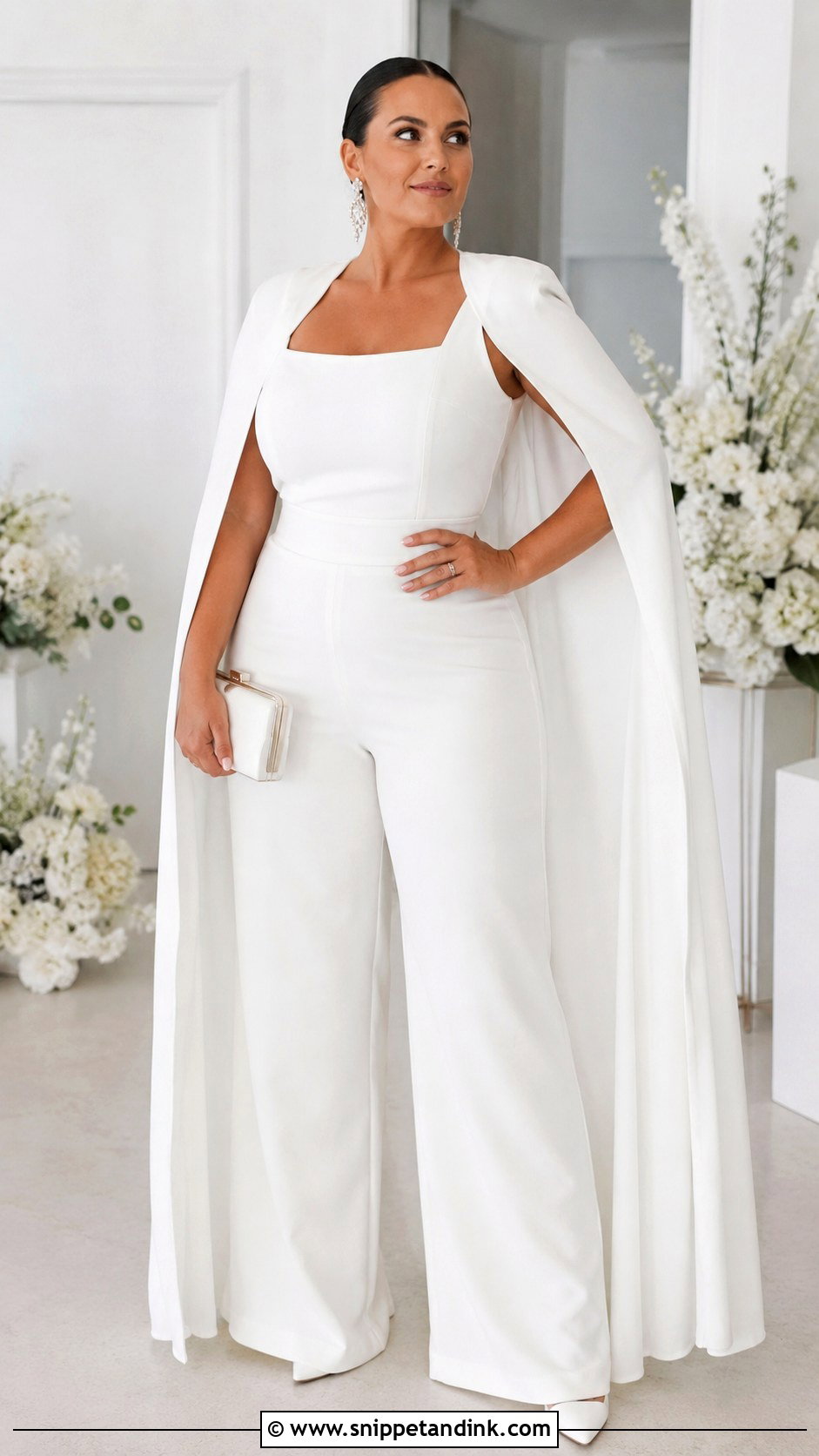
A full figure bridal jumpsuit is a modern alternative that still feels like an occasion. Wide legs, a defined waist and a supportive bodice work best. Crepe hangs smoothly. A wrap, square neck or off-shoulder top adds interest; a detachable overskirt or cape gives drama for the ceremony. Get the crotch length and rise checked carefully at fittings; jumpsuits that are too short in the body pull uncomfortably when you sit. Pointed heels and statement earrings finish it.
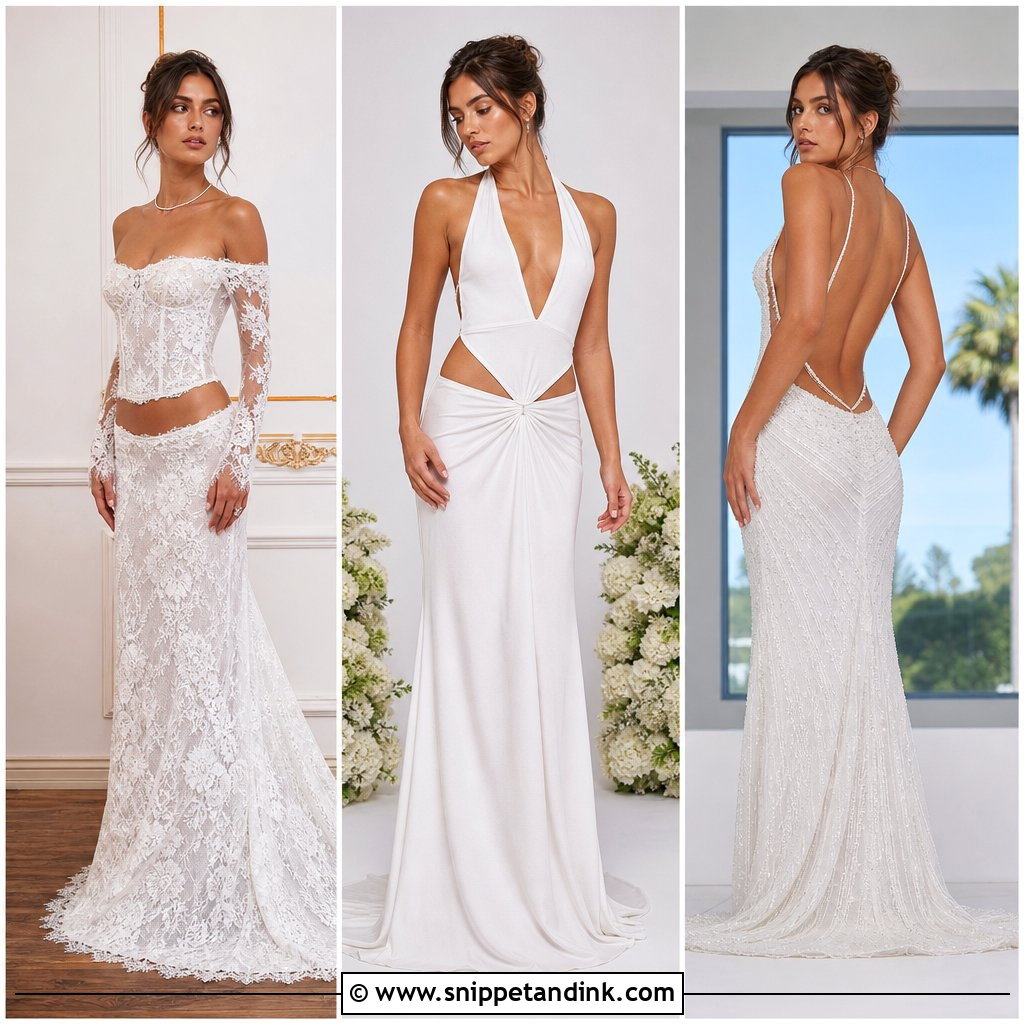
24. Full Figure Two Piece Wedding Dress
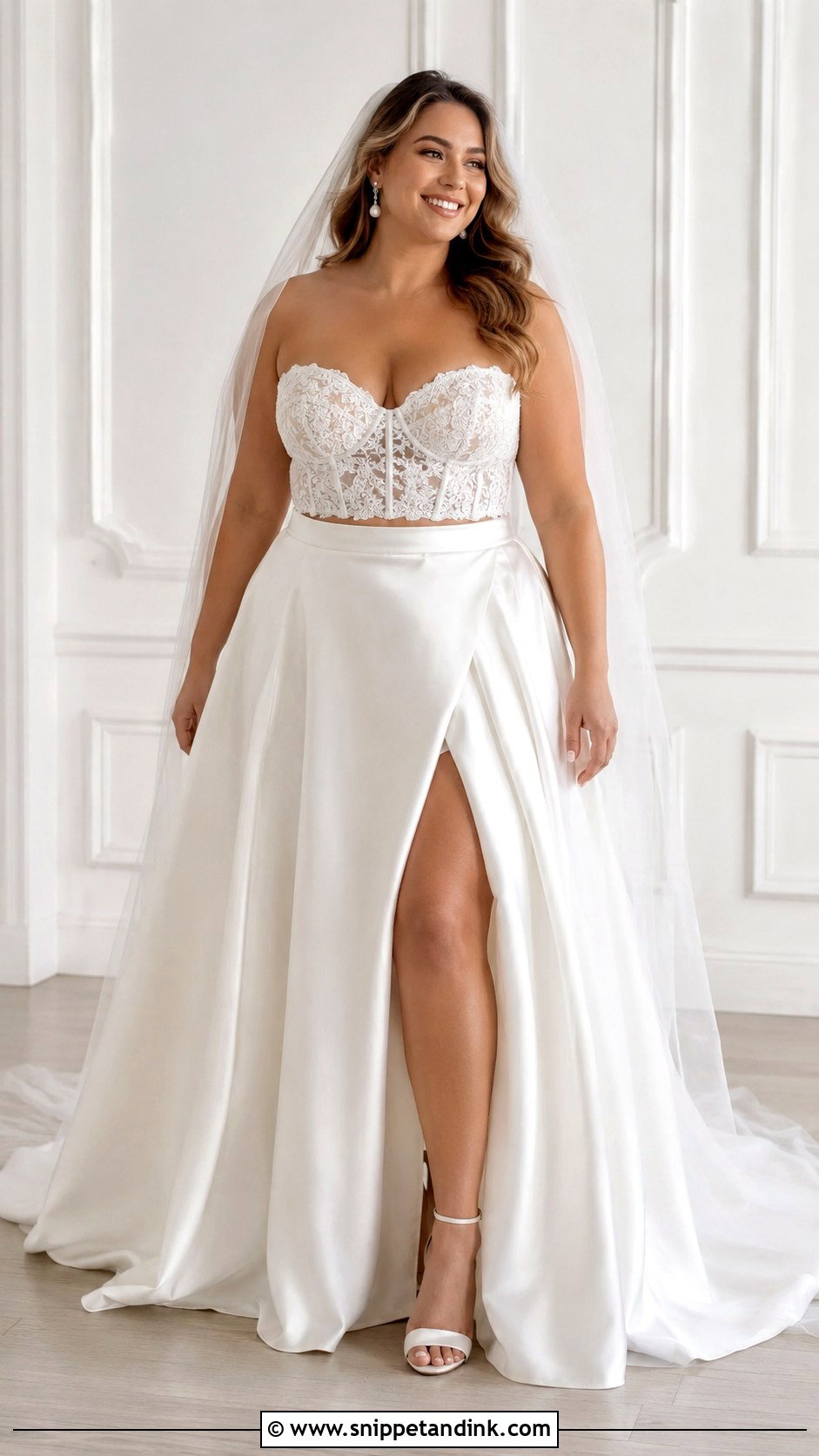
Two-piece gowns are easier to fit when your top and bottom are different sizes, which is common. A corset top with a full skirt, a lace top with a satin skirt or a modest crop with a high-waisted A-line all work. Proportion is key; a high waist usually feels most bridal and supportive. Make sure the top overlaps the skirt or meets it cleanly when you raise your arms. A veil, bridal heels and refined jewelry keep the separates looking intentional.
25. Full Figure Wedding Dress With Overskirt
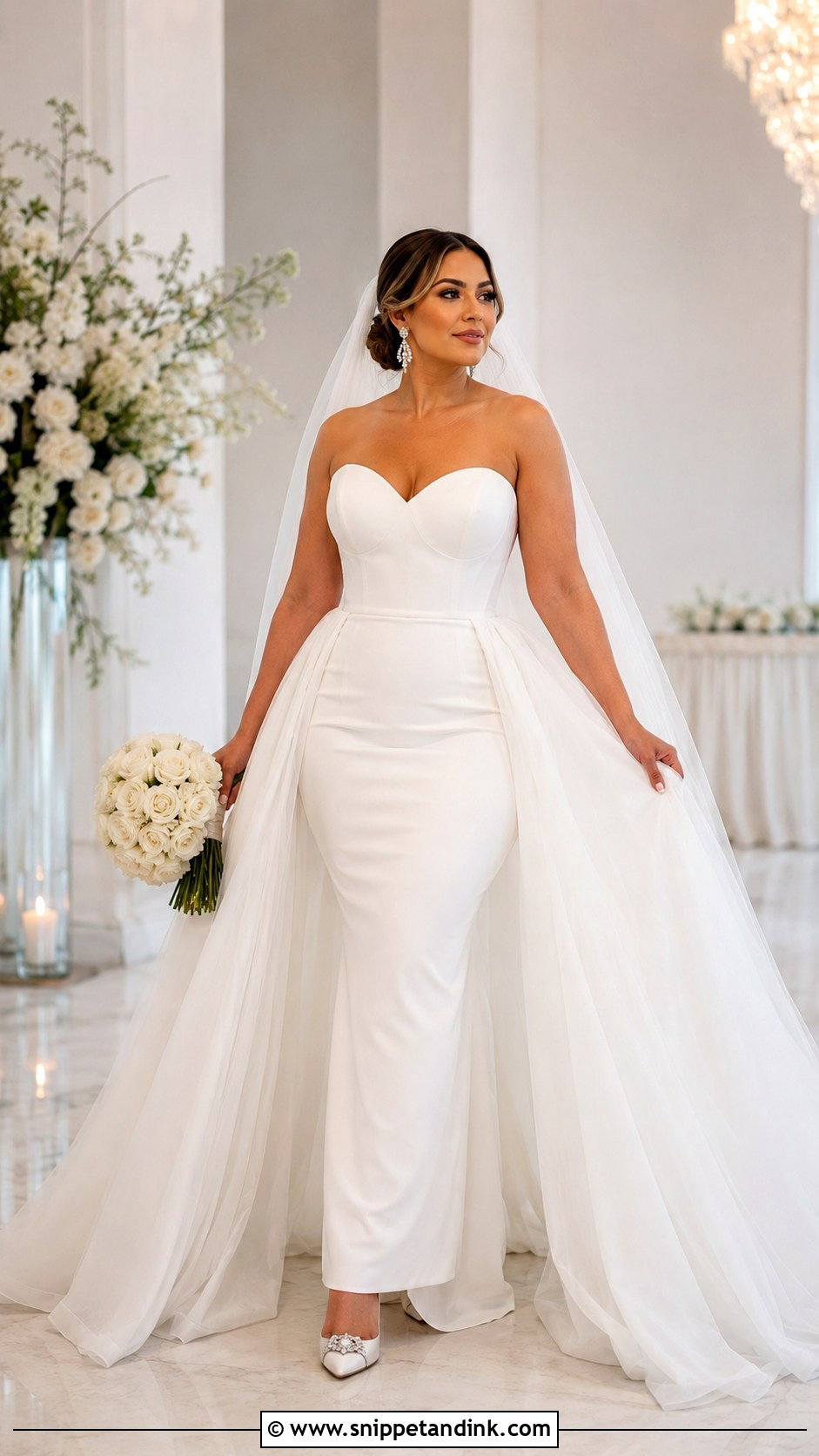
An overskirt gives you two looks: a fuller shape for the ceremony and a slimmer base gown for the reception. Choose one that fastens securely at the waist and matches the gown’s fabric or detail. Tulle feels airy, satin grand and lace romantic. Practice removing it with your helper before the day; most attach with hooks or buttons that need a second pair of hands. A long veil suits the aisle, statement earrings the reception.
Thigh Rub, Strap Slip and Other Things Fittings Should Catch
Comfort problems tend to show up hours into the day, not in the fitting room. I build a few checks into the final fitting so they don’t surprise you on the dance floor.
Chafing
Long gowns trap heat, and inner-thigh chafing is one of the most common complaints. Thin anti-chafe shorts in a slip fabric or an anti-chafe balm solve it. Wear them to the final fitting to check they don’t show through the skirt.
Support that lasts past dinner
Built-in cups sewn into the bodice are more reliable than a separate strapless bra, which can slide down by evening. If you need extra lift, ask your seamstress to sew a bra into the gown rather than relying on adhesive pieces.
Sitting and eating
Sit for several minutes at the final fitting. Check whether the bodice digs in at the ribs or the boning pokes at the hips. Small adjustments now save hours of discomfort later.
Support First, Then the Details That Make It Yours
There is no single rule for dressing a full figure. A-lines, ball gowns, corset bodices, chiffon, crepe, lace sleeves, jumpsuits and overskirts can all work. What matters is the support system inside the dress and how it feels when you move. Focus on fit first, then pick the details that match your venue, season and personality. Try several shapes, move around in each and notice which one you forget you’re wearing. That is usually the right dress.
You'll Like These Ideas:




Leave a Reply