
A plunging neckline is the one detail where construction matters more than the design sketch. Two gowns with the same V can feel completely different on: one stays put through hugs and dancing, the other needs adjusting every time you lean forward. What makes the difference is inside the dress, in the illusion mesh, the boning, the cups and how the lace is placed along the edge. The 25 gowns below cover lace, satin, crepe, tulle, beading, sleeves and slips, for beach ceremonies through to ballrooms, and I’ve noted what each one needs to feel secure.
How Deep Is Too Deep for a Wedding Ceremony?
I measure a plunge by where its point lands. At or above the underbust line, most brides feel secure and can wear it in a house of worship with a veil or light cover. Below that, toward the waist, the bodice needs real engineering and almost always illusion mesh. The point should sit on the center line; if it drifts to one side when you turn, the bodice isn’t balanced.
If your ceremony has dress expectations, ask about a modesty panel. A seamstress can add a removable piece of lace or mesh that snaps in for the service and comes out for the reception, and it’s a small job compared with changing the whole neckline.
The bend test
Lean forward as if signing the register, then bend to pick something up. Look in the mirror from above, the way a photographer standing on a step would see you. That’s the view I check before anything gets hemmed.
1. Deep V Lace Wedding Dress
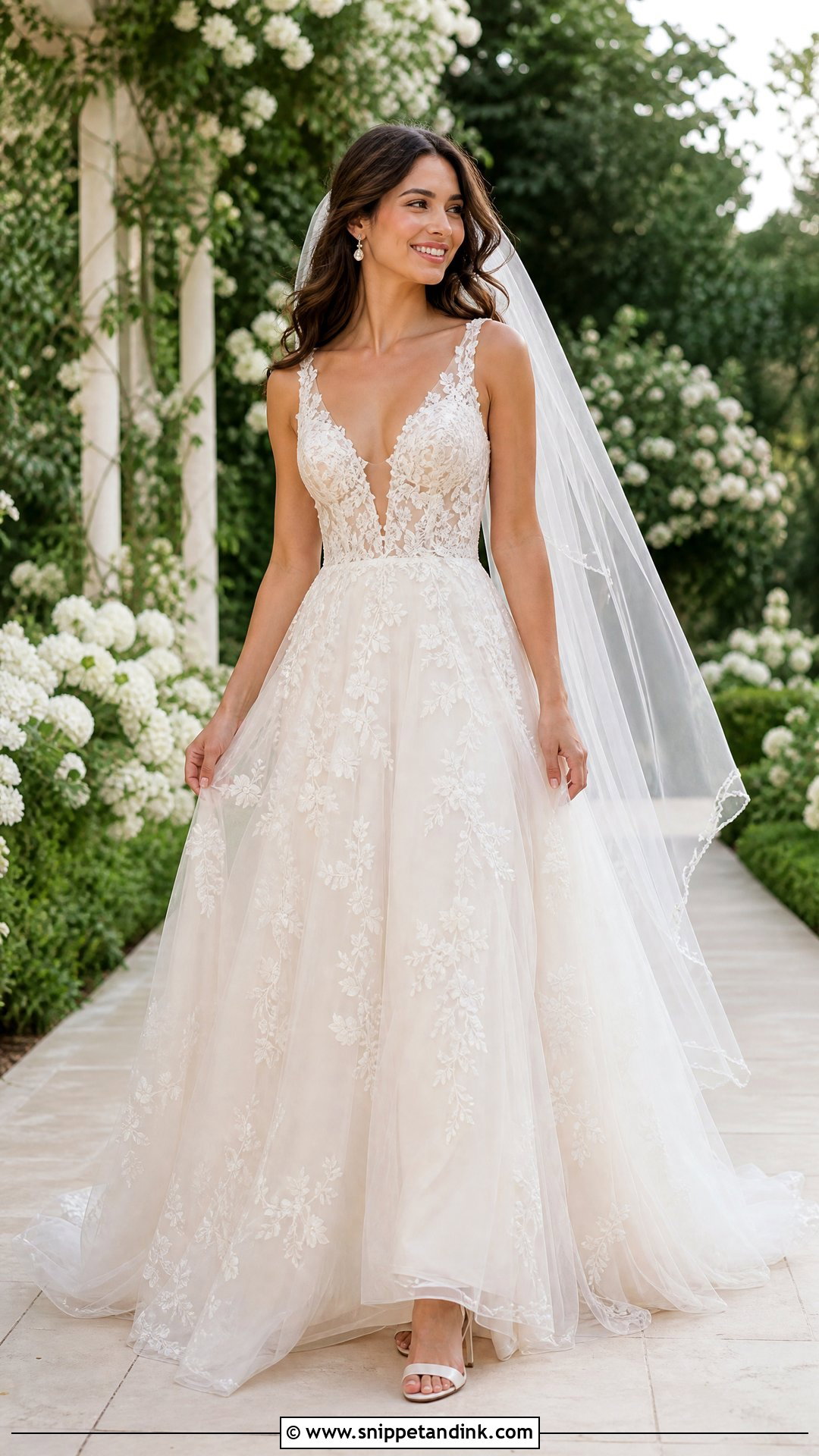
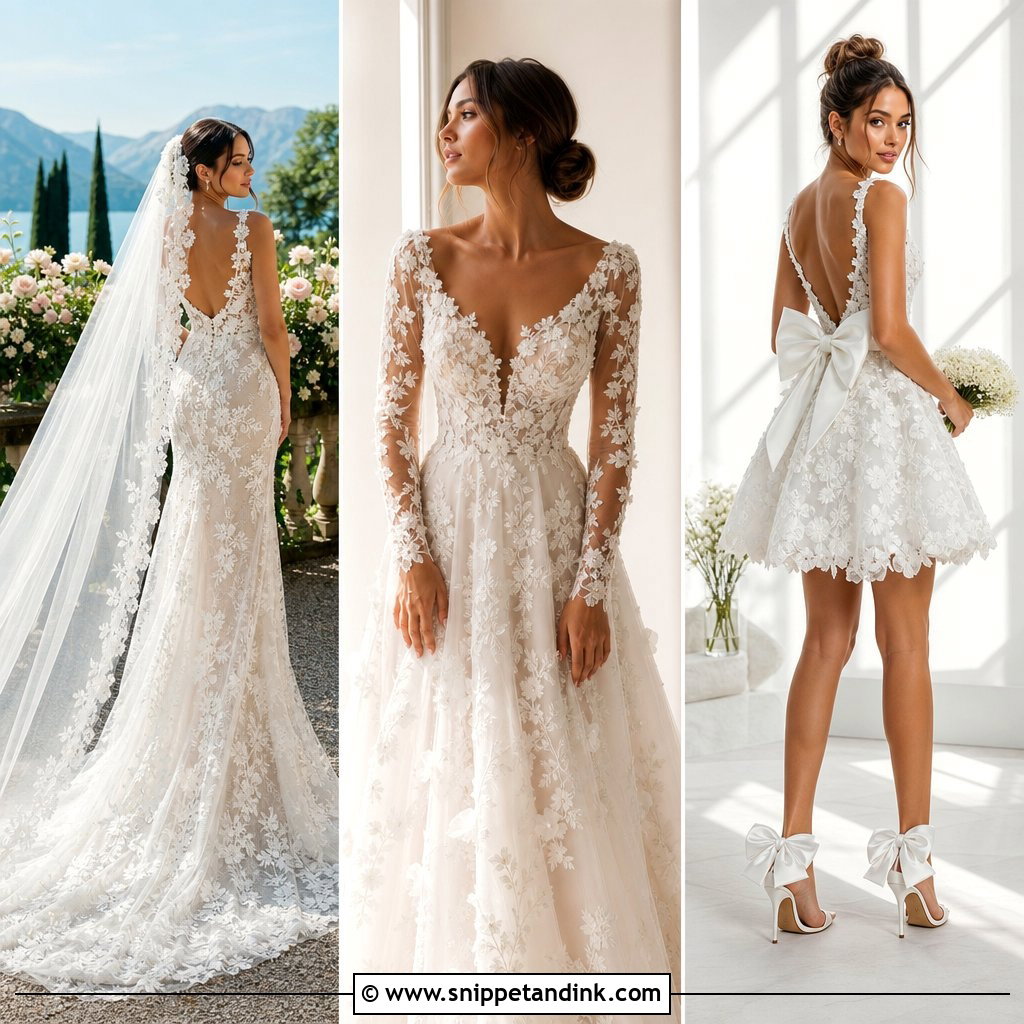
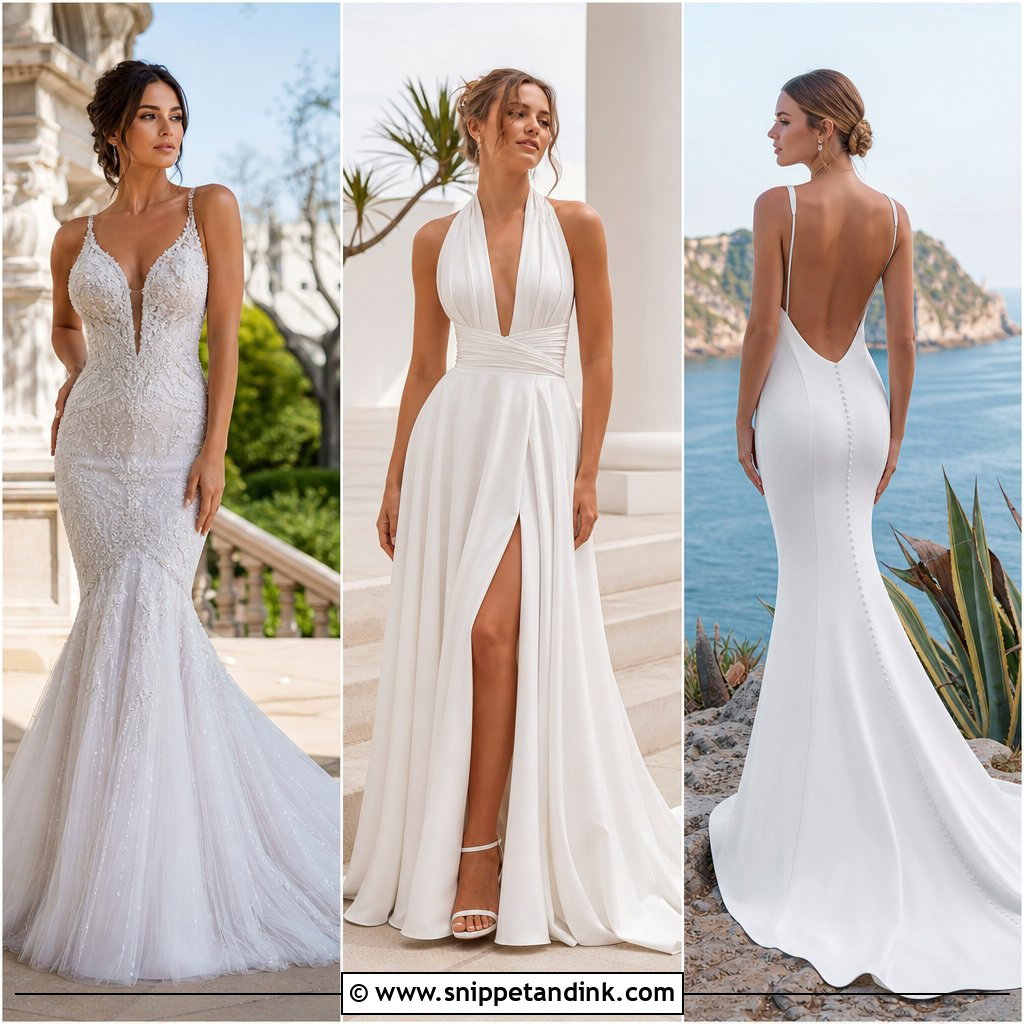
Lace is the gentlest way into a plunge. Appliqué running along the edge of the V softens the bare skin and gives the seamstress something to anchor the neckline to. If you’d like more coverage, ask for illusion mesh in the center with lace motifs placed over it. An A line or fit and flare carries lace without weight. Pearl drops, a soft veil and barely there heels suit a garden or spring ceremony.
2. Deep V Satin Wedding Dress
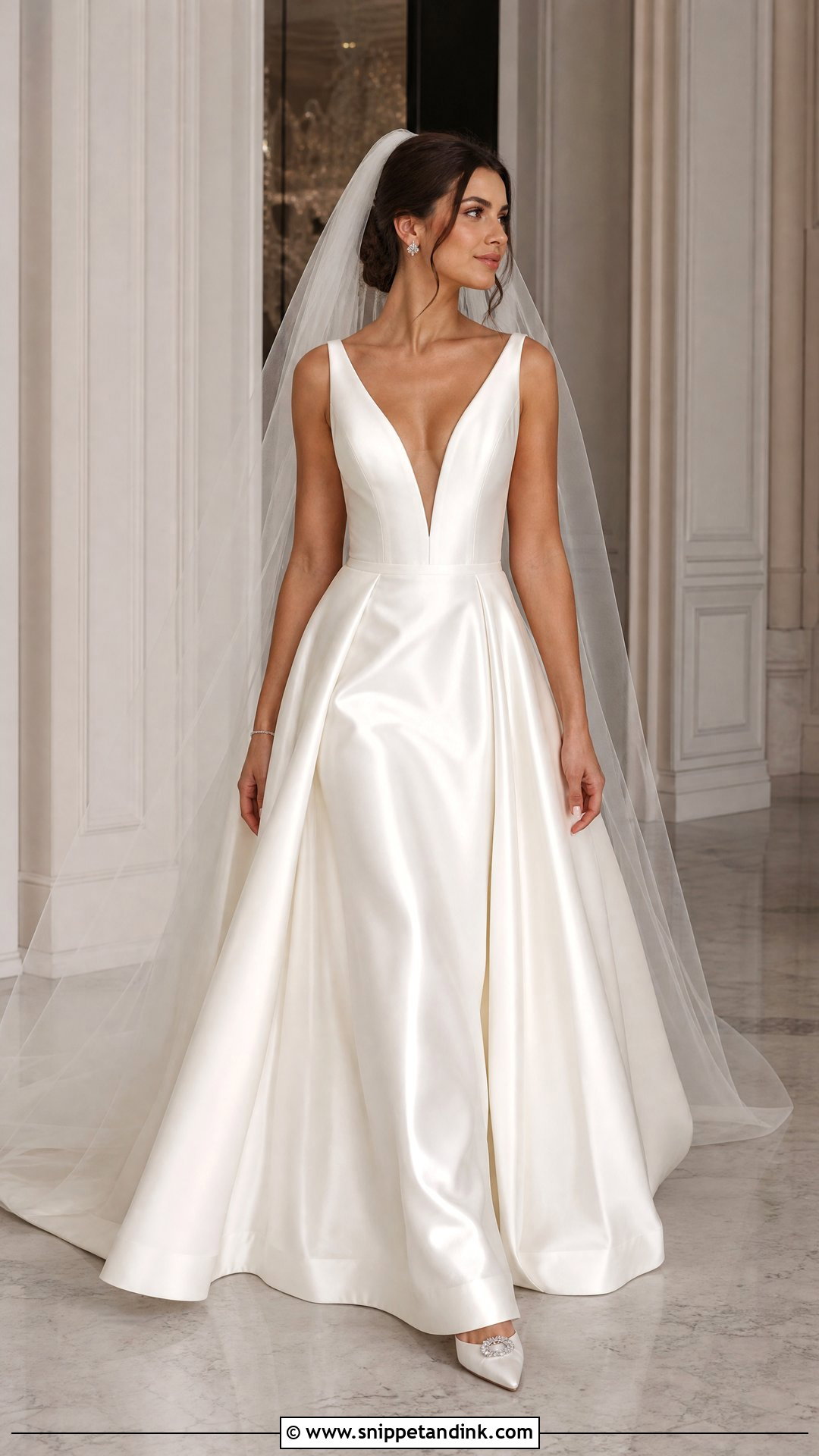
Satin shows the neckline as a single clean line, so the edge has to lie perfectly flat against the skin. I check this with the bride turning side to side; if the satin lifts away from the chest at any angle, the bodice needs taking in or a hidden stay sewn along the edge. A structured bodice and flowing skirt keep it bridal. Low bun, crystal studs, pointed satin pumps and a cathedral veil for a hotel or city venue.
3. Deep V A Line Wedding Dress
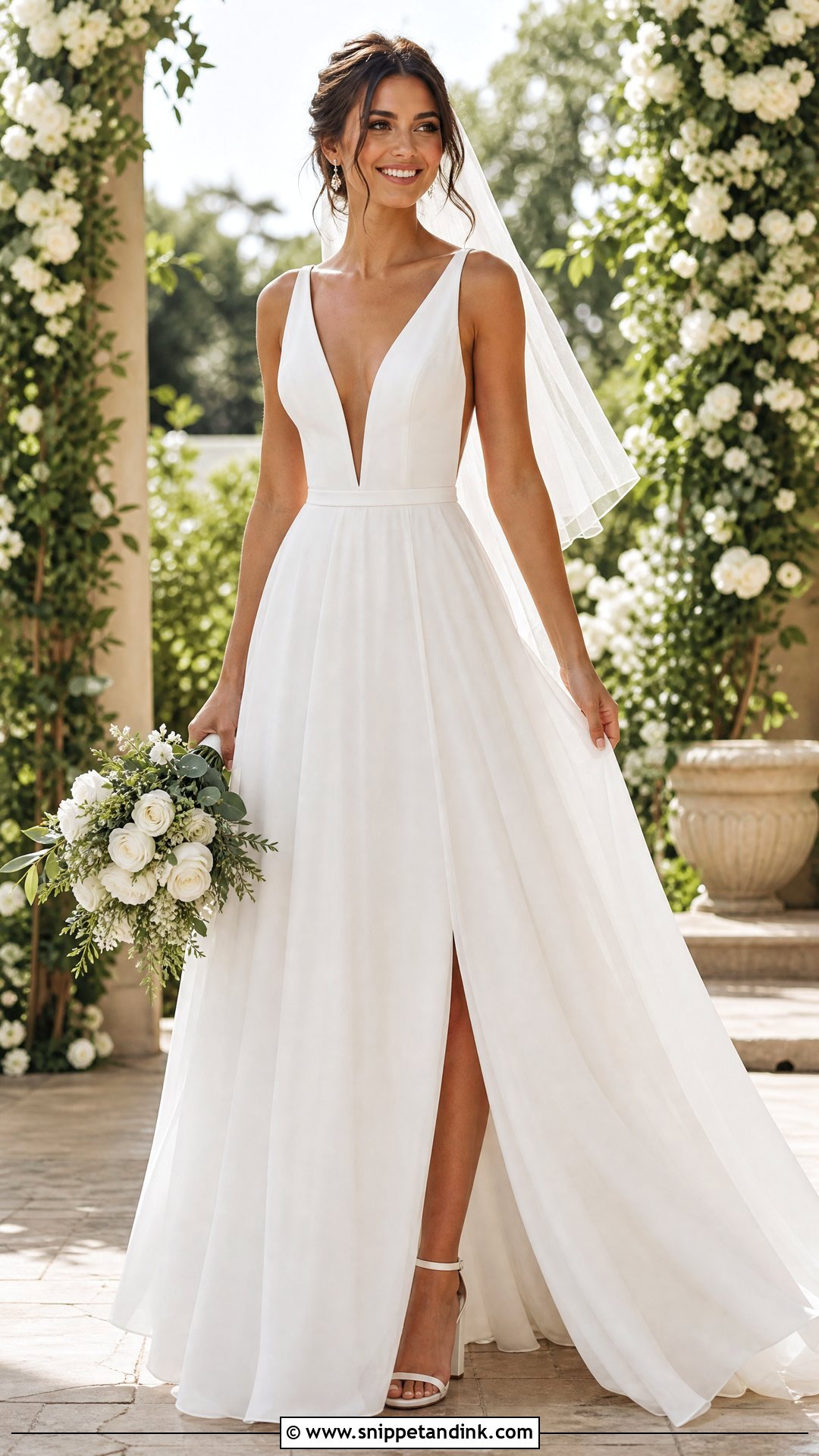
Most brides find the plunge easiest to wear in an A line. The skirt balances the open neckline, and nothing else about the dress is fighting for attention. Tulle, chiffon, organza and lace give movement. A narrow belt marks the waist. Soft waves, delicate earrings and block heels if you’ll be standing for hours. It works indoors or out and suits most figures.
4. Deep V Mermaid Wedding Dress
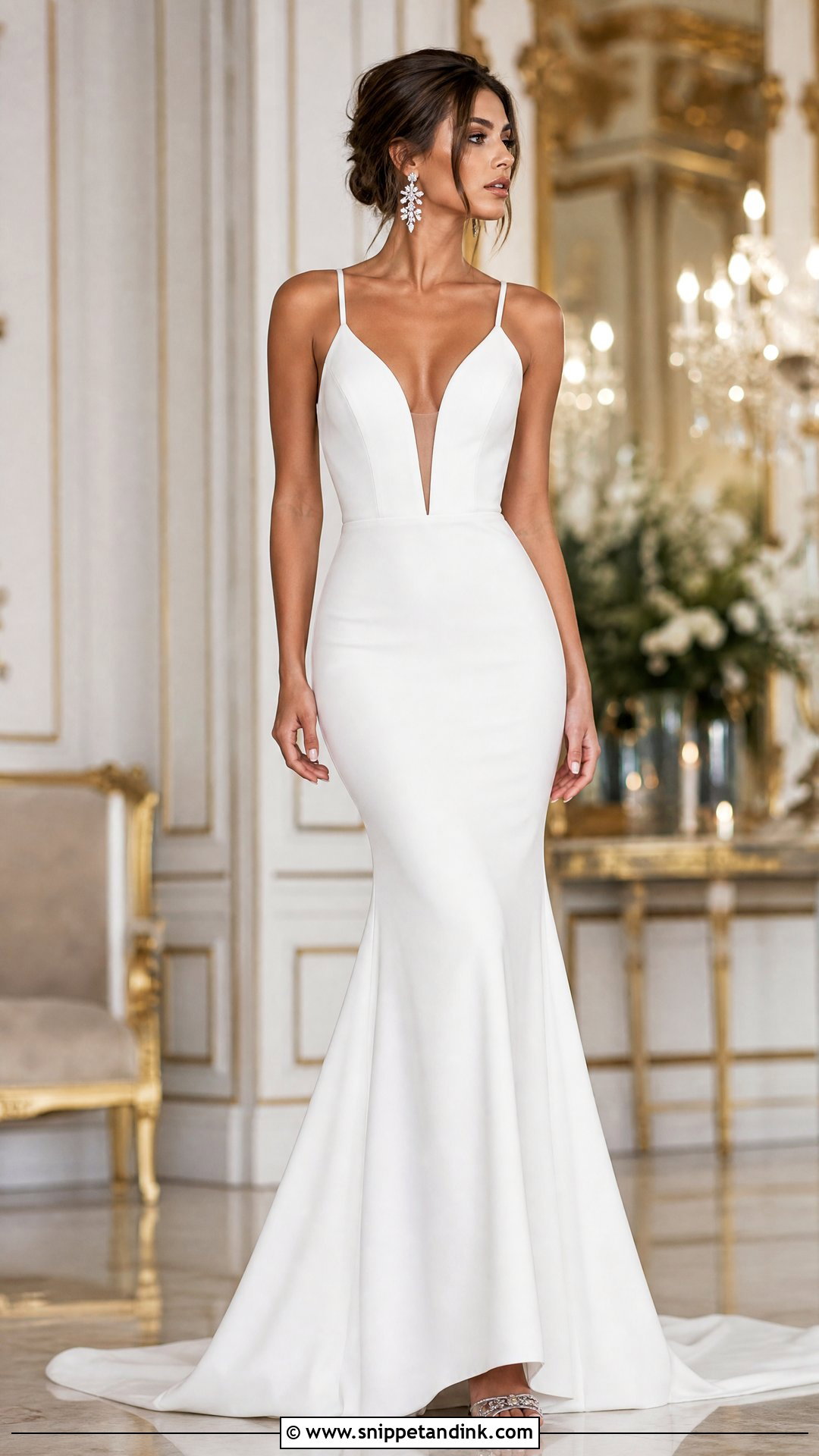
Mermaid and plunge together is the red-carpet combination, and it’s the least forgiving on this list. Because the whole dress is fitted, any slip at the neckline shows. Supportive cups, boning and a smooth lining are essential. Crepe is modern, lace romantic, beading glamorous. I’d book at least three fittings. Statement earrings, sleek hair and heels for a formal evening.
5. Deep V Ball Gown Wedding Dress
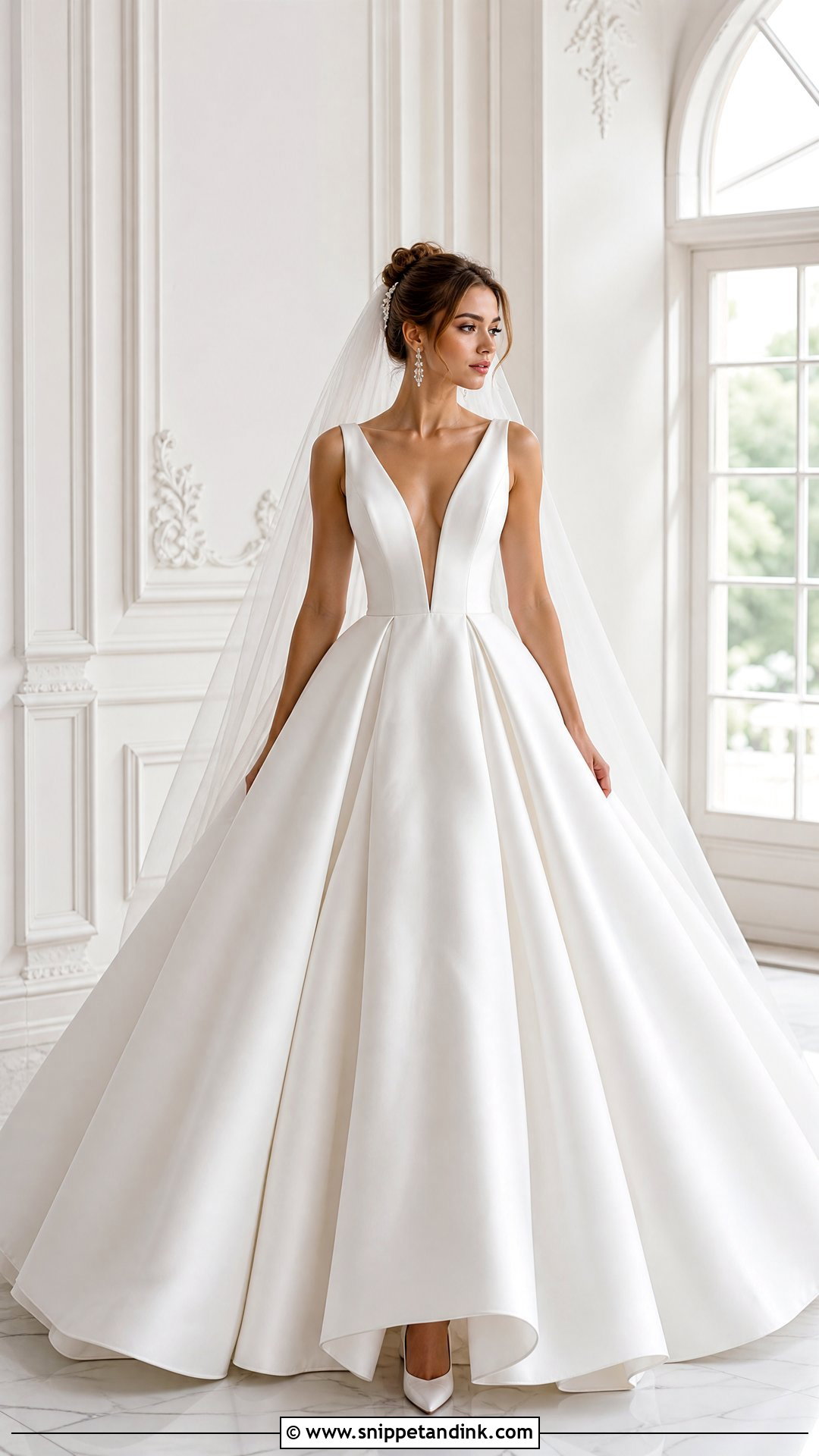
Volume in the skirt balances a deep neckline, which is why the plunge works so well on a ball gown. It keeps the full skirt from feeling old-fashioned. Tulle, mikado, satin and organza all hold the shape. Lace appliqué on the bodice softens it; clean fabric with few seams looks modern. The weight of a big skirt pulls the bodice down over the day, so the waist stay needs to be firm. Long veil, polished updo, sparkling earrings.
6. Deep V Long Sleeve Wedding Dress
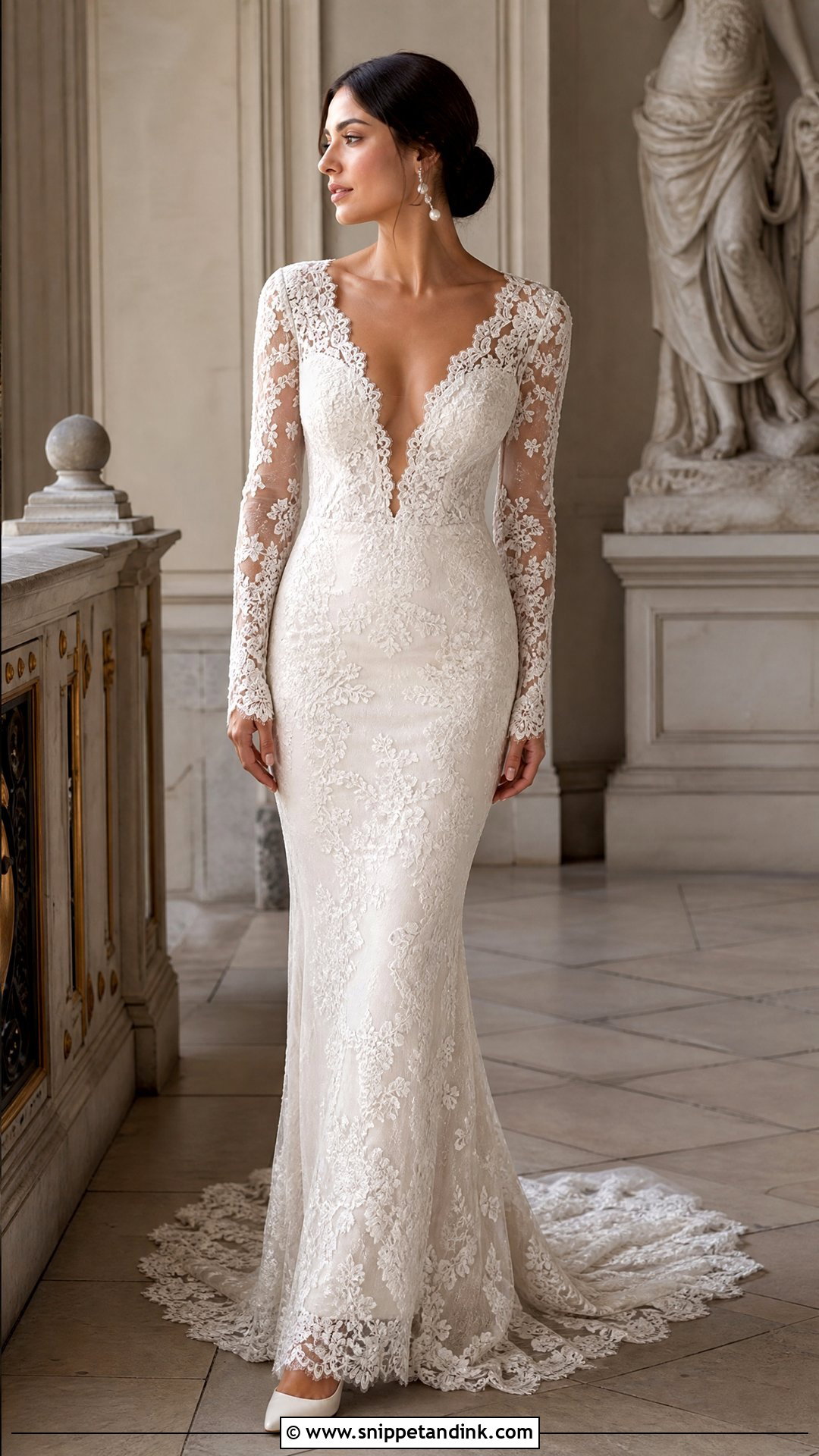
Sleeves anchor a deep V. With fabric holding the shoulders and arms, the neckline is far less likely to shift, and the overall look reads covered even with an open front. Lace, crepe and sheer tulle all work; appliqué on sheer sleeves feels romantic, fitted crepe sleeves look clean. Raise your arms at the fitting, because tight sleeves will pull the V wider when you lift them. A low chignon, pearl earrings and pointed heels. It suits a cooler season or an evening ceremony.
7. Deep V Boho Wedding Dress
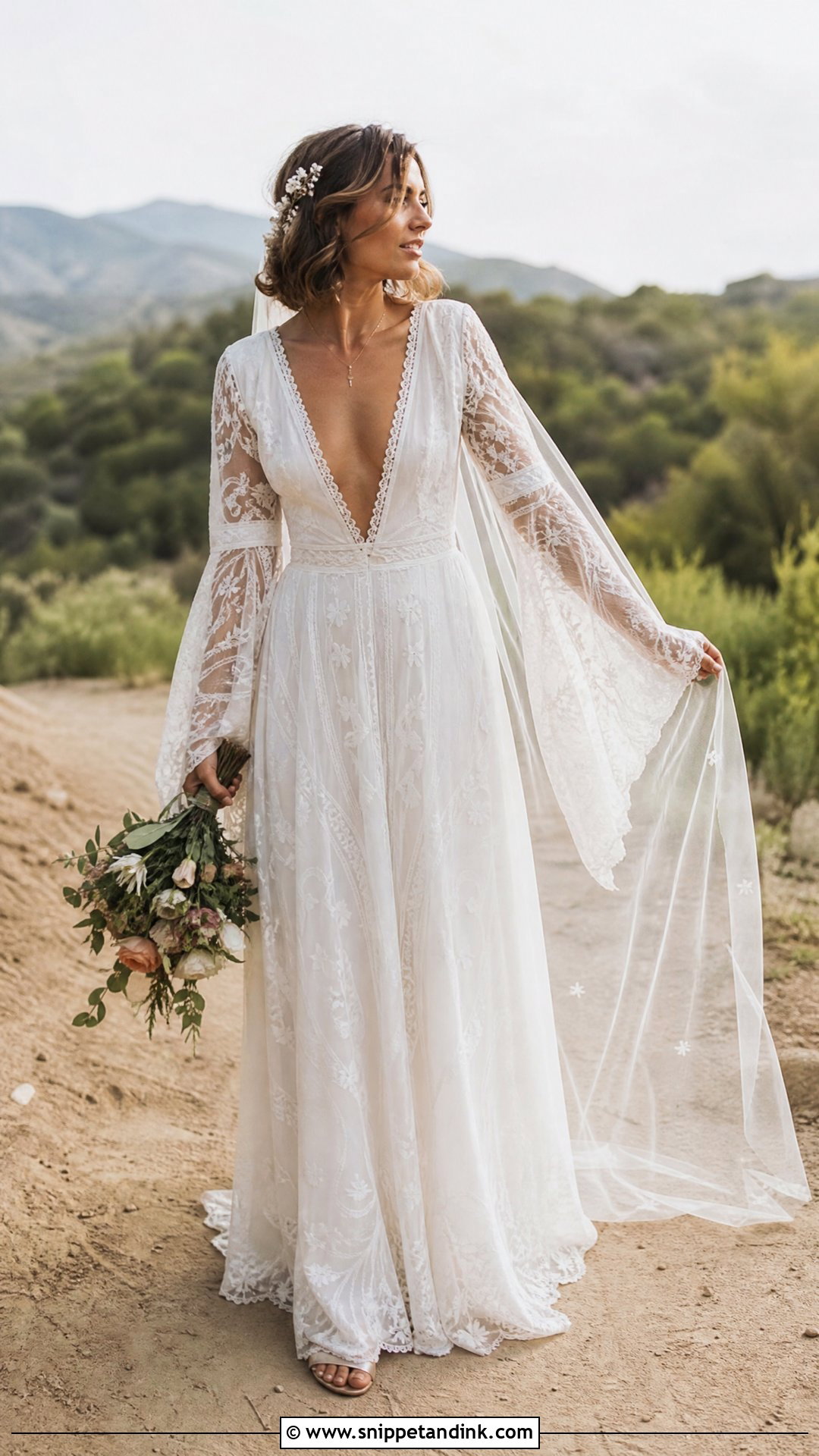
Boho dresses usually have a looser bodice, which is exactly why a deep V boho wedding dress needs attention at the neckline. Soft lace, bell sleeves, crochet textures and chiffon don’t hold their shape the way satin does. I’d ask for a thin clear strap or a button tab across the back to keep the V centered. Loose waves, floral pins and flat sandals. A fingertip veil or sheer cape for outdoor, desert or rustic venues.
8. Deep V Beach Wedding Dress
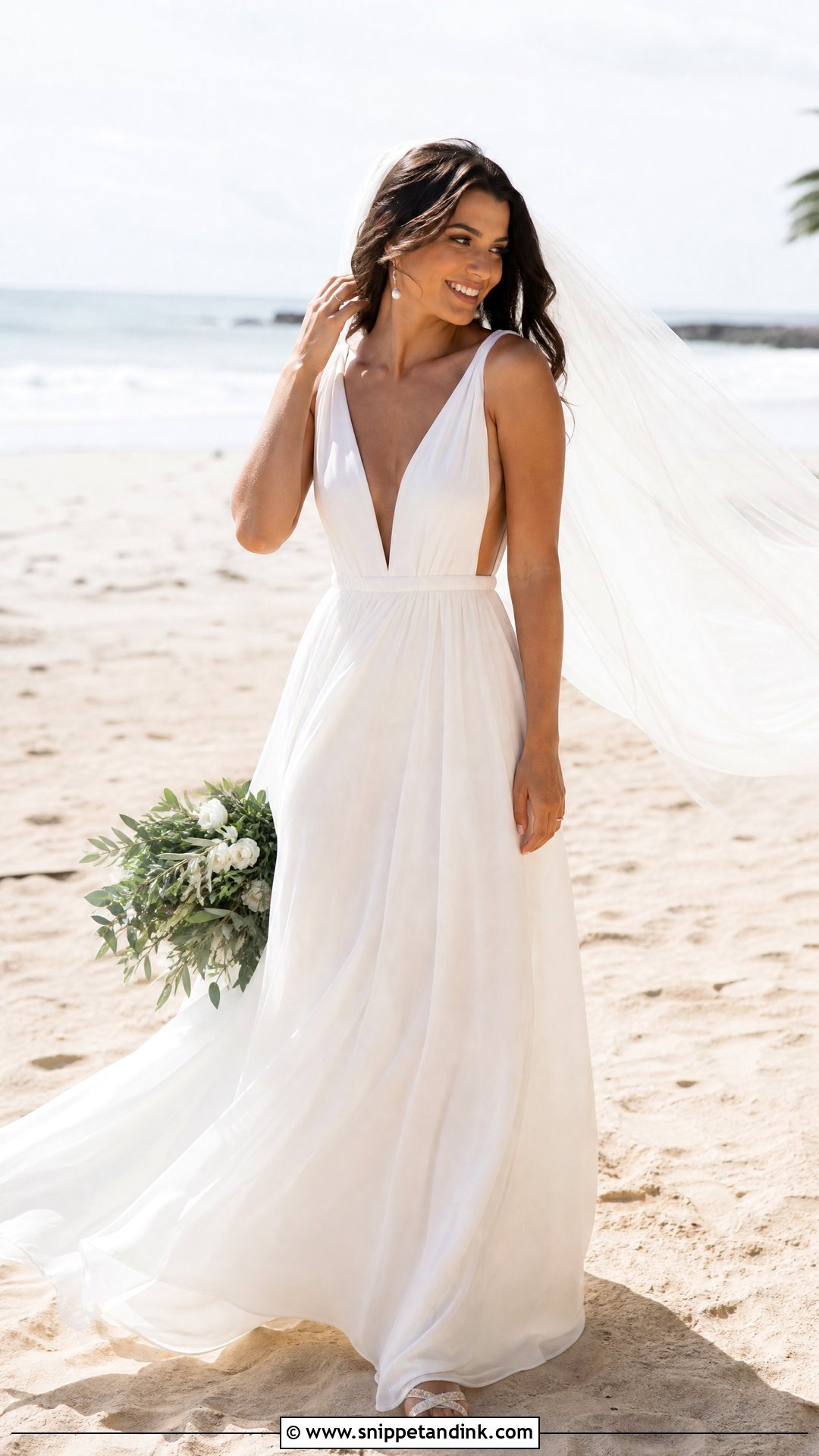
Heat and wind are the two things that test a deep V beach wedding dress. Chiffon, silk, crepe and soft tulle breathe and move. Wind can lift a light neckline, so a bit of fashion tape at the edge is worth it. A short train, open back or side slit makes sand easier. Flat sandals, pearl earrings, loose waves and a light veil, and no heavy beading in the heat.
9. Deep V Crepe Wedding Dress
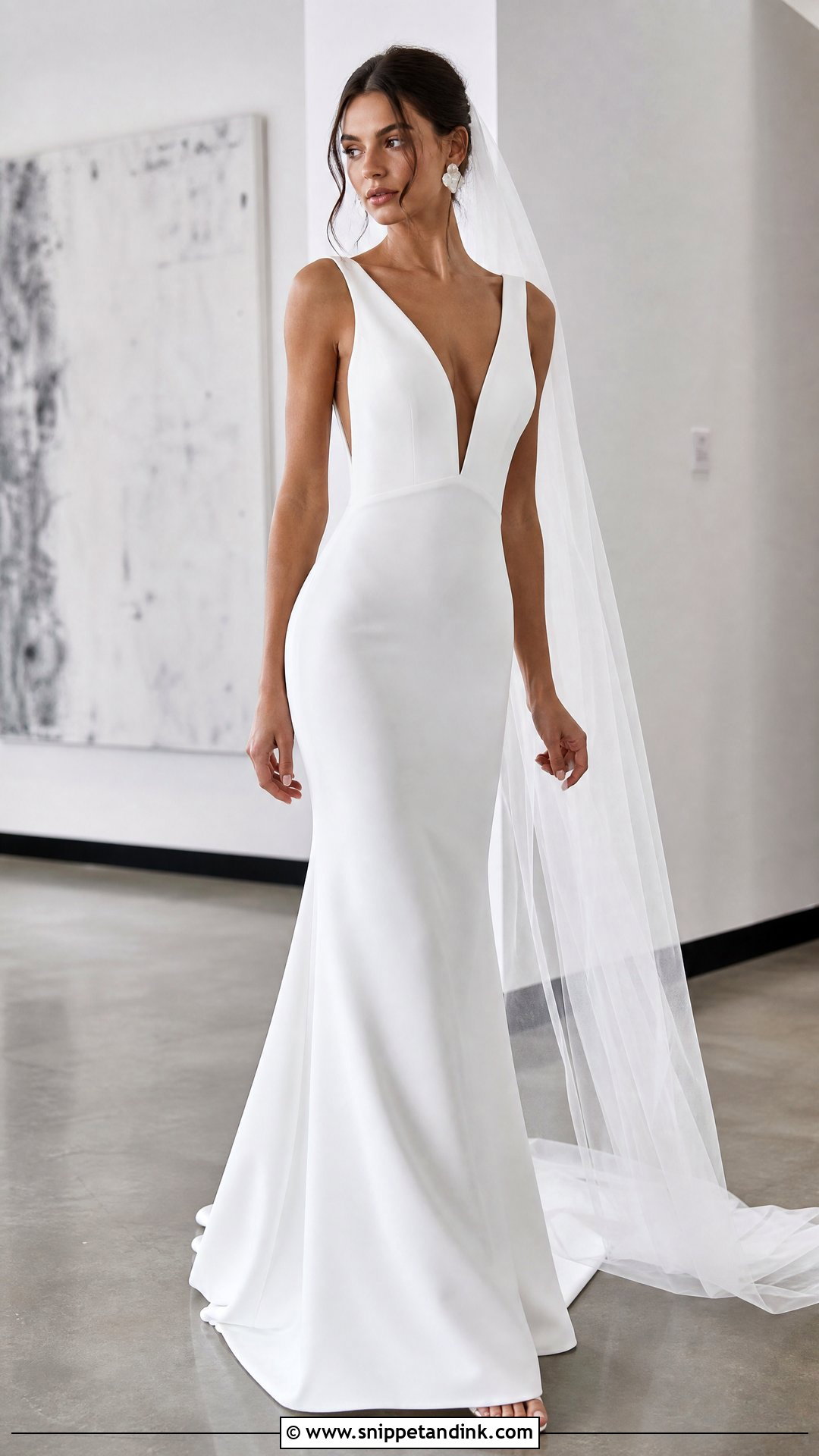
Crepe has enough weight to lie flat against the body, which makes a deep V crepe wedding dress one of the more secure plunges. It’s also unforgiving of bulky underwear, so plan your undergarments before the first fitting. Sheath, fit and flare and minimalist mermaid shapes suit it. A long veil, sleek earrings and simple heels. A low back or detachable train if you want drama, for a city or gallery venue.
10. Deep V Tulle Wedding Dress
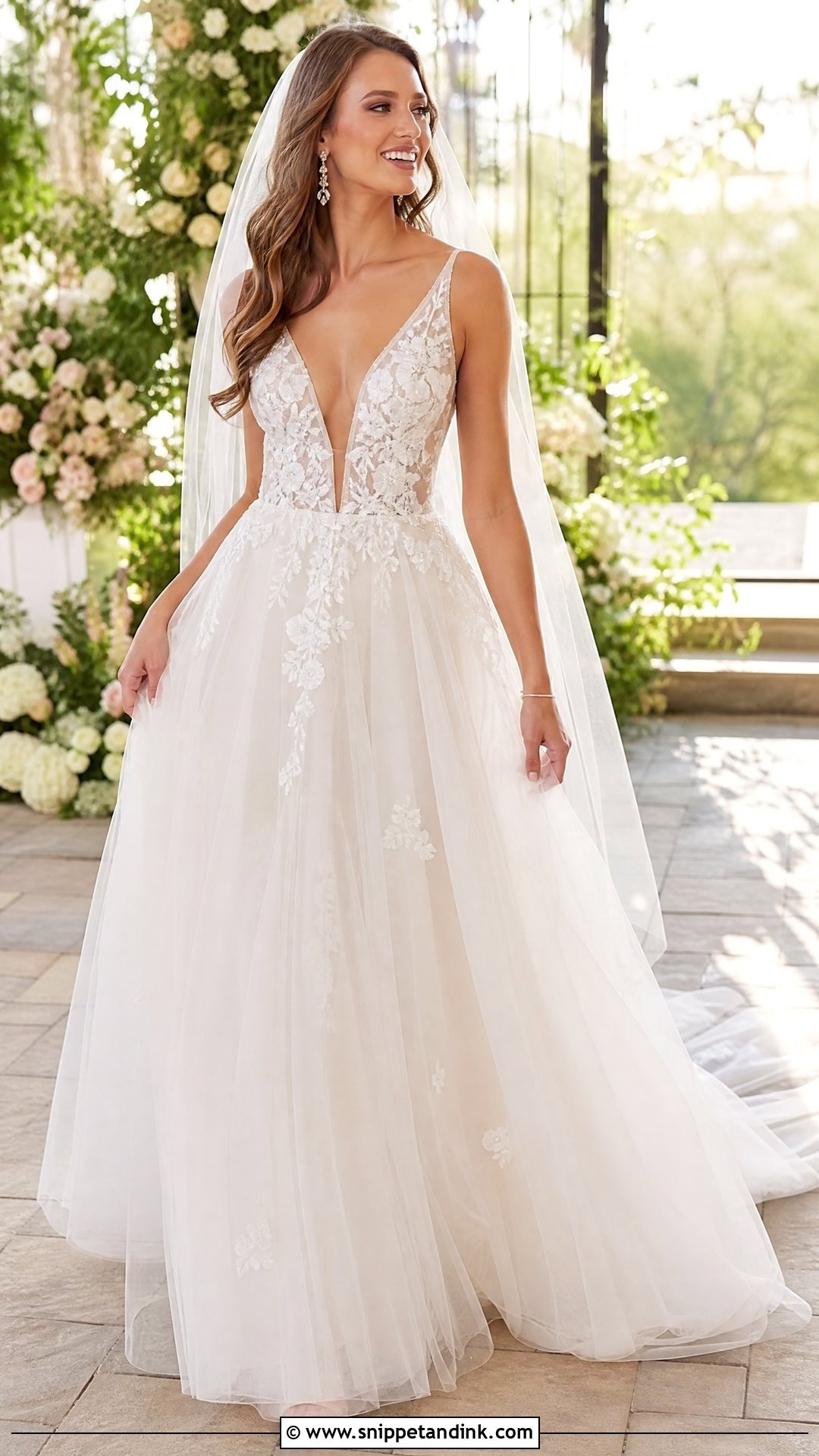
Tulle skirts float, but the plunging bodice above still needs structure, and I always check that the tulle is attached to a firm base rather than draped. Floral appliqué, subtle sparkle or a sheer illusion panel add detail. Soft curls, delicate earrings and barely there heels. A chapel veil adds romance without hiding the bodice. It suits spring garden weddings.
11. Deep V Beaded Wedding Dress
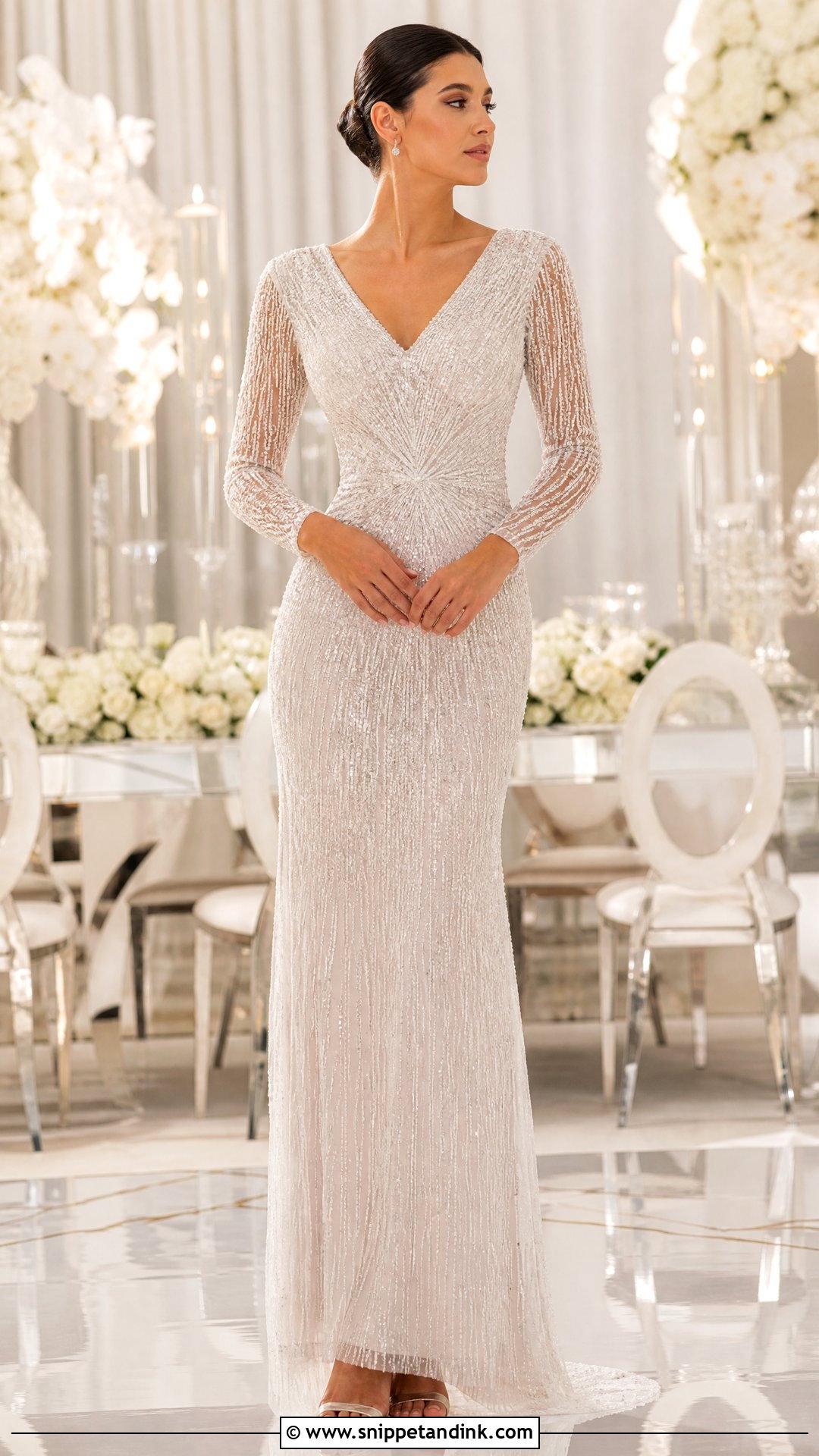
Beading on the neckline itself adds weight right where you least want it, pulling the edge of the V outward. I prefer beads that outline the V on a firm band or cover the bodice evenly. If the gown is heavily beaded, keep jewelry simple. Fitted shapes look like evening wear; an A line softens it. Metallic heels, a sleek bun and small crystal earrings under reception lights.
12. Deep V Illusion Wedding Dress
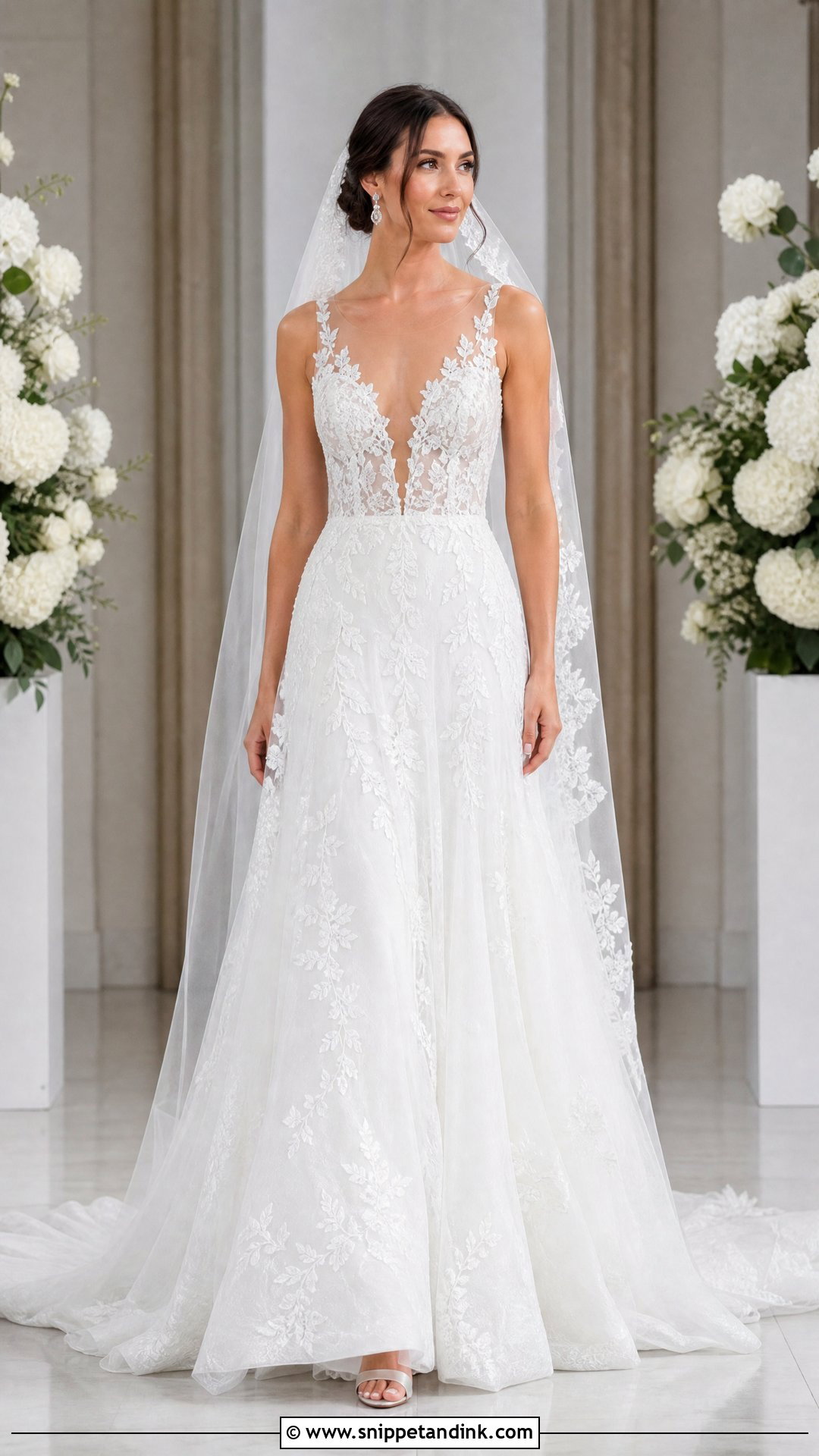
Quick verdict: illusion mesh is the most reliable way to wear a deep plunge all day. The sheer panel holds both sides of the bodice together so the V can’t spread when you hug or dance. Lace, beading or appliqué over the mesh adds coverage. Ask for mesh in your skin tone, since standard nude mesh shows as a band on deeper or very fair skin. Simple earrings and a soft veil.
13. Deep V Backless Wedding Dress
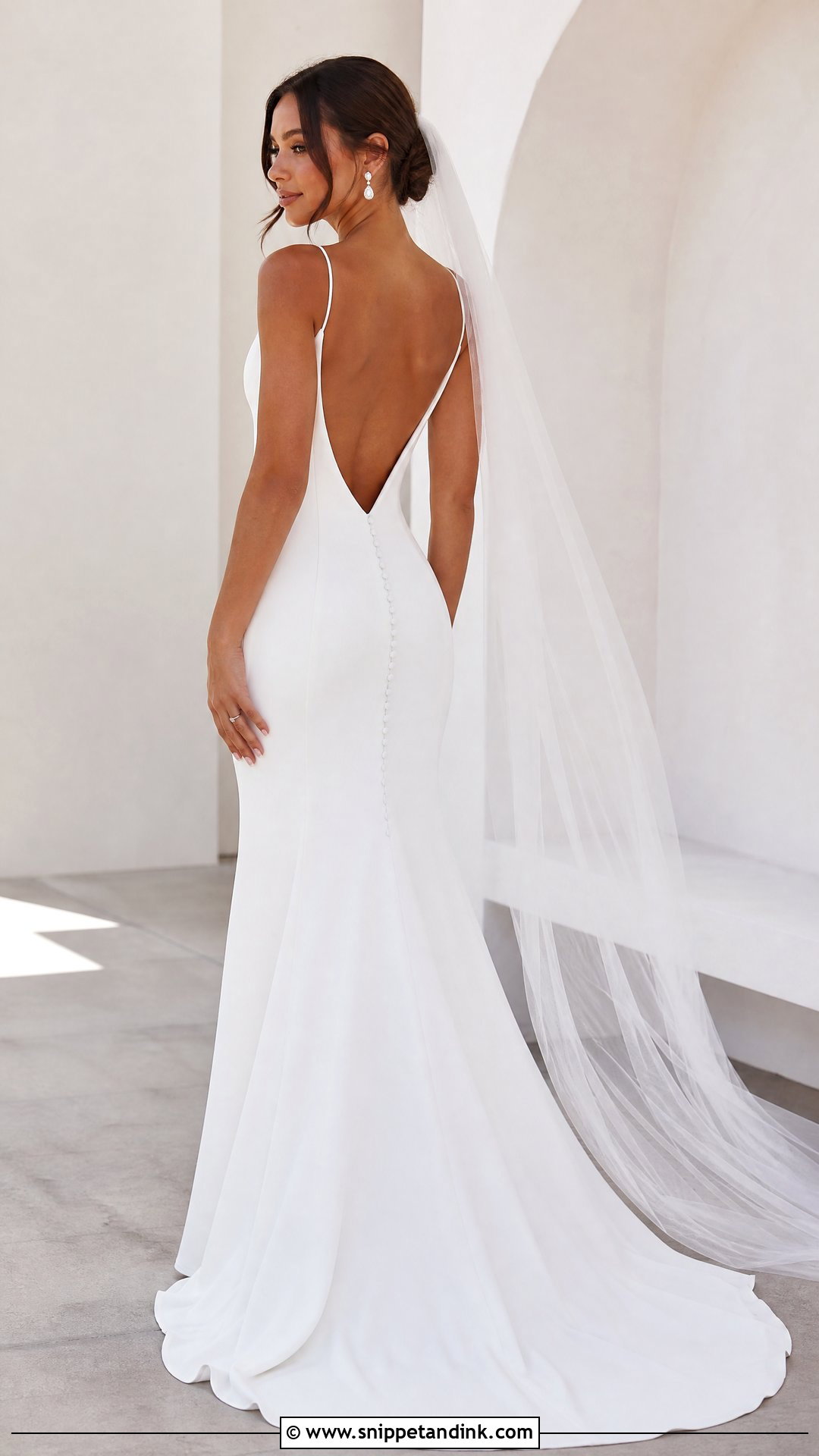
Open at the front and the back, a plunging backless gown has very little holding it on. Internal structure is everything: a firm waist stay, boning at the sides and sometimes a clear strap across the back. Clean fabric or delicate lace keeps it tasteful. Wear the hair up to show the back. Drop earrings, simple heels and a sheer veil for a modern venue or beach.
14. Deep V Simple Wedding Dress
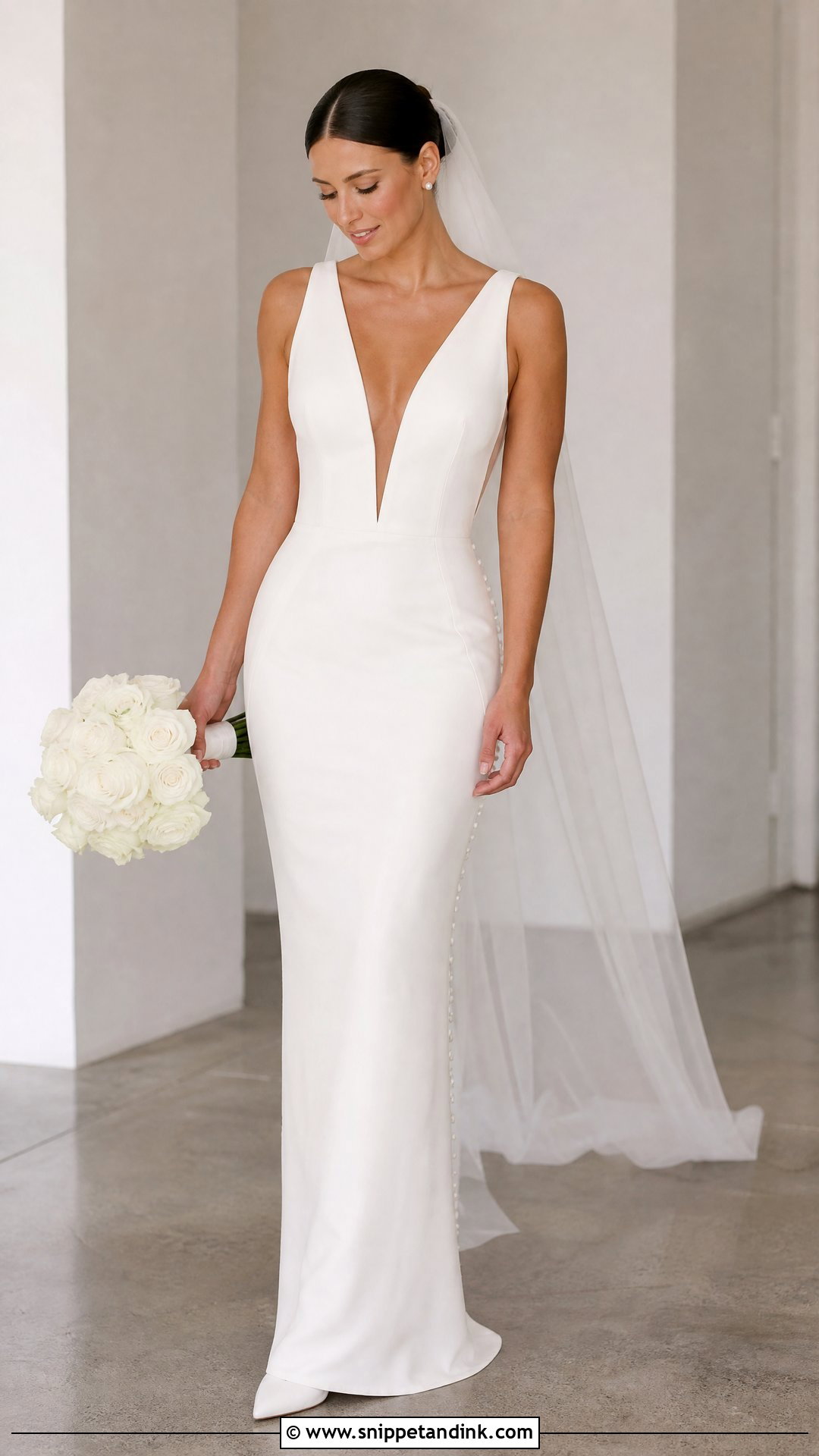
With no decoration, the neckline, fabric and fit carry the whole dress. Crepe, satin, silk and mikado give a clean finish. Straight, sheath or A line shapes keep it smooth. Pearl studs, a smooth bun, pointed heels and a plain veil. Covered buttons, a subtle train or a narrow waistband add interest. I’d spend the money saved on decoration on a really good tailor.
15. Deep V Plus Size Wedding Dress
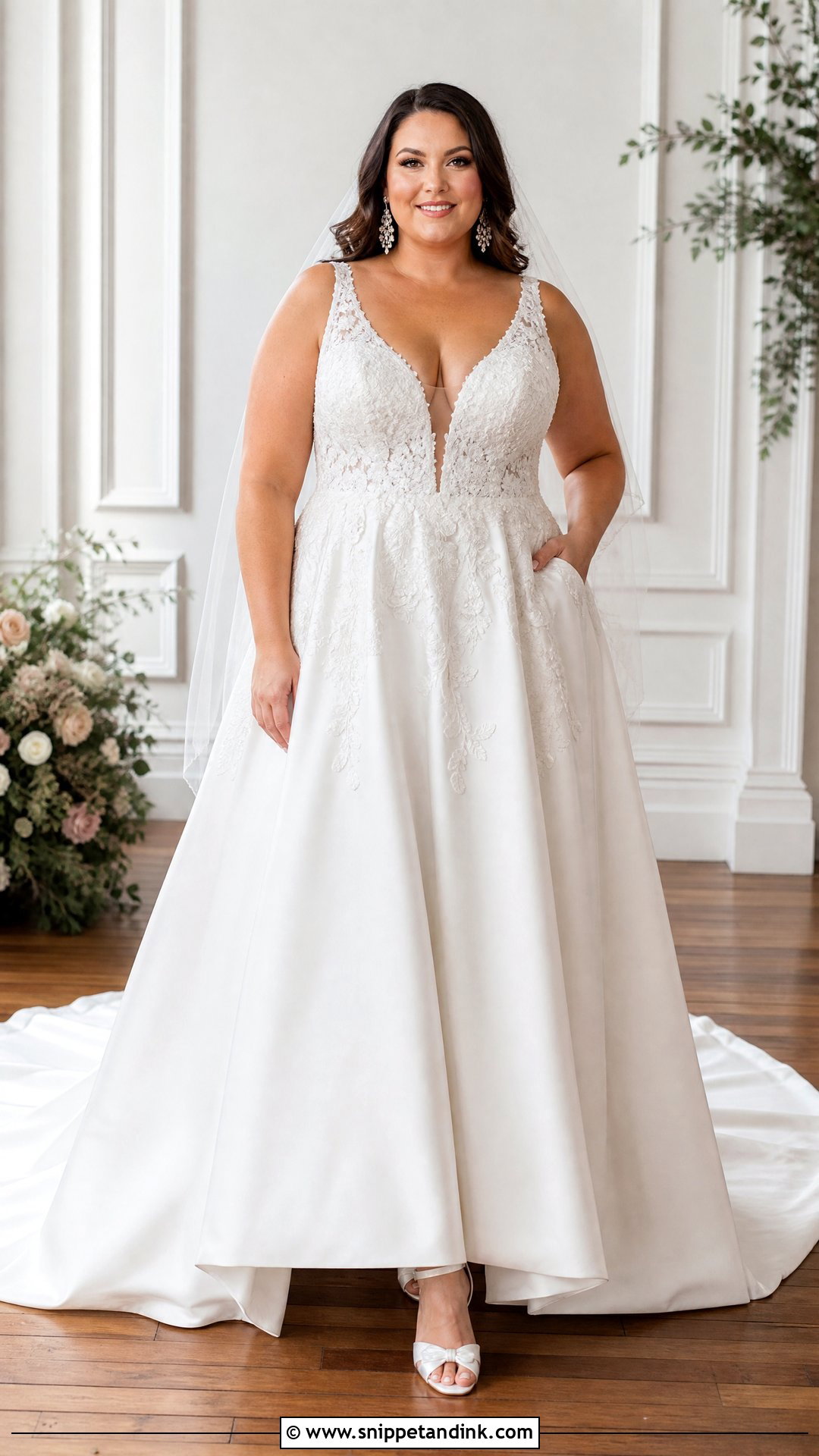
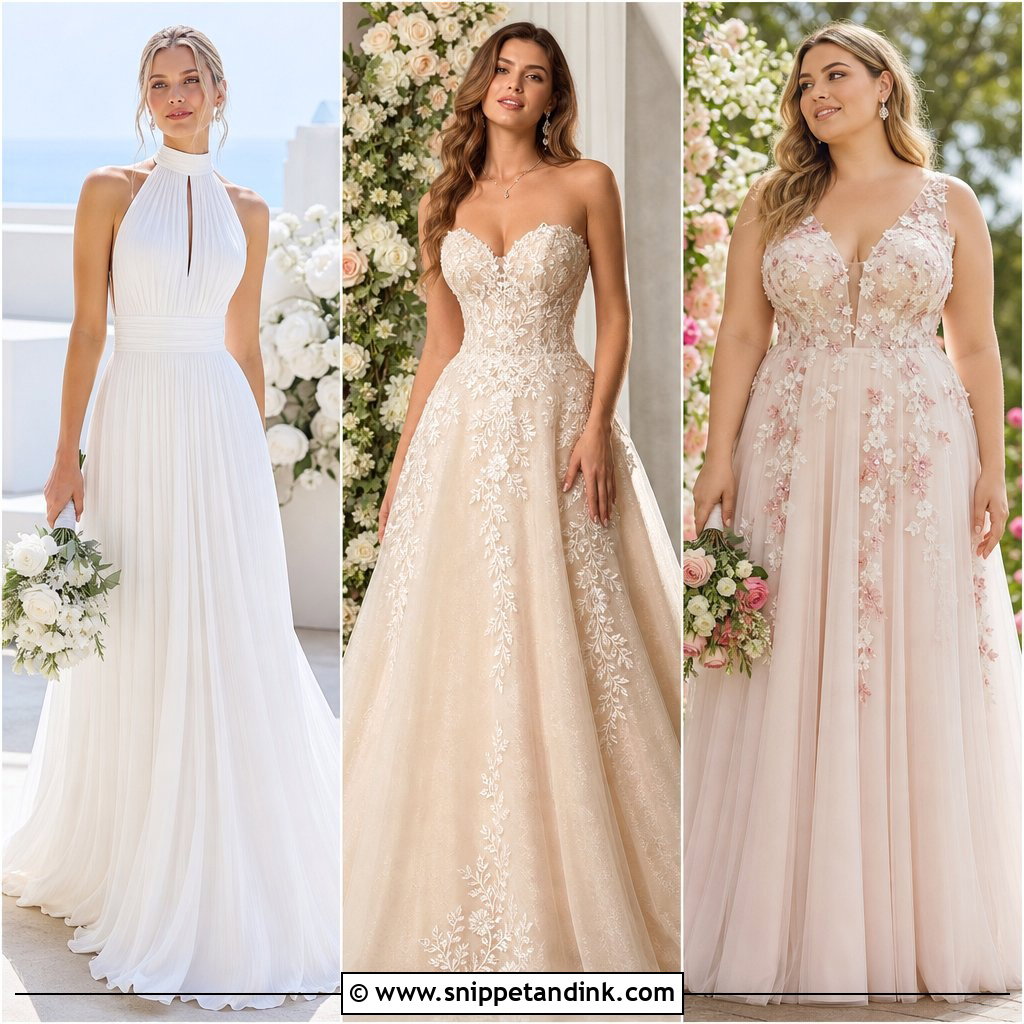
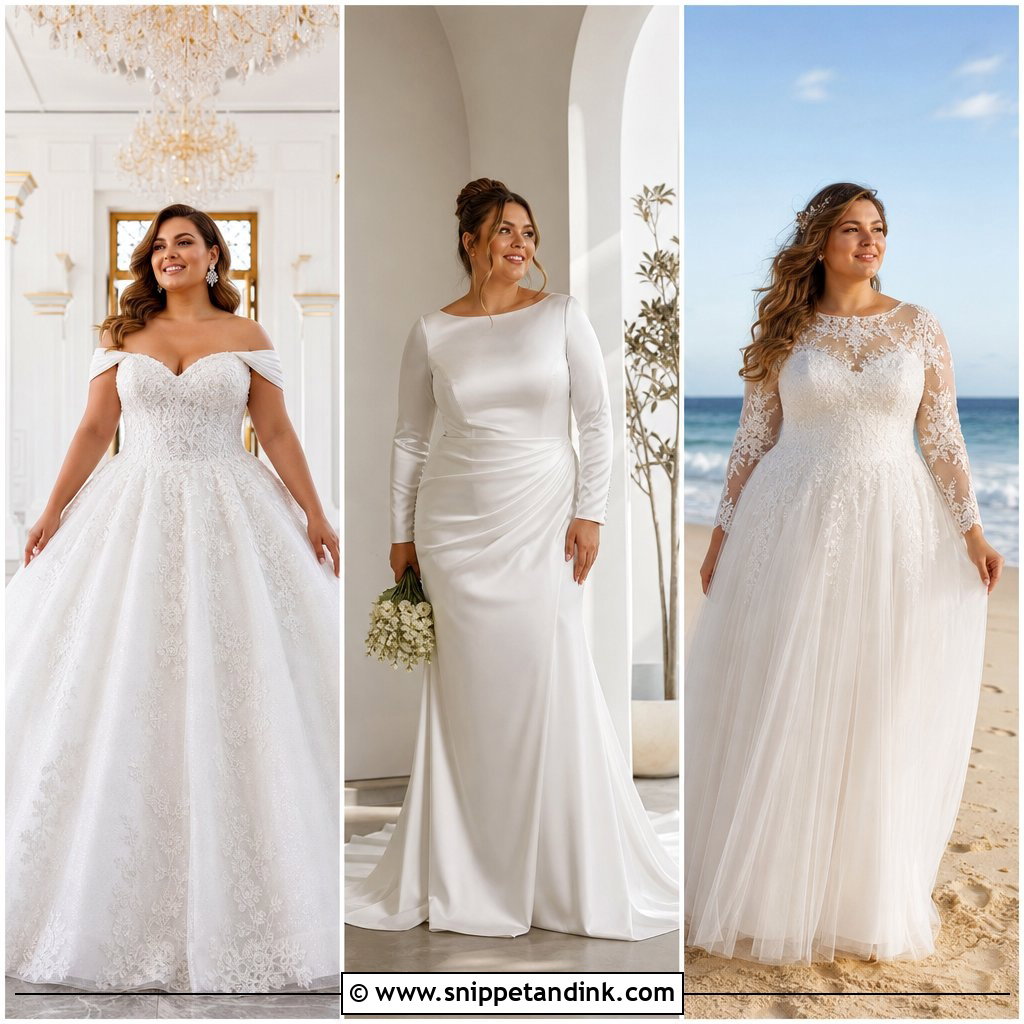
Support decides everything on a deep V plus size wedding dress. Look for built-in cups, firm lining, wider straps, side panels and boning. A line, fit and flare or ball gown shapes define the waist comfortably. Illusion mesh adds security without changing the design, and lace placement can shape the bodice. Comfortable heels, statement earrings and a veil matched to the dress length.
16. Deep V Petite Wedding Dress
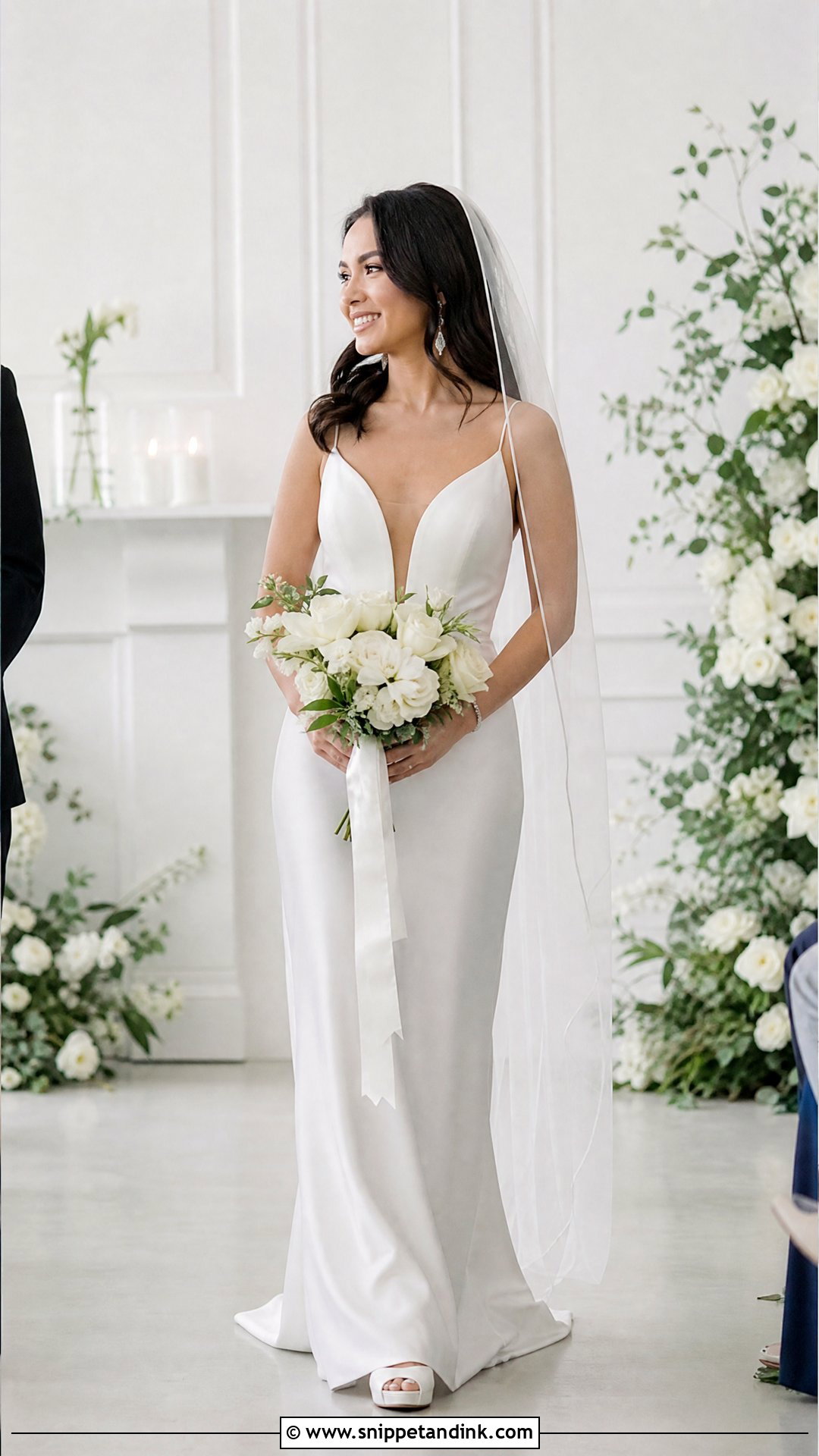
Petite frames get the most from a plunge, because the vertical line adds length. The risk is fabric overwhelming you. Light A line, sheath, slim crepe and soft tulle shapes work; wide skirts and heavy trains don’t. A slightly higher waist lengthens the legs. Scale the accessories down with fine earrings, slim heels and a narrow veil. Have the V depth adjusted too, since a plunge cut for a taller bride can land too low on a shorter torso.
17. Deep V Off Shoulder Wedding Dress
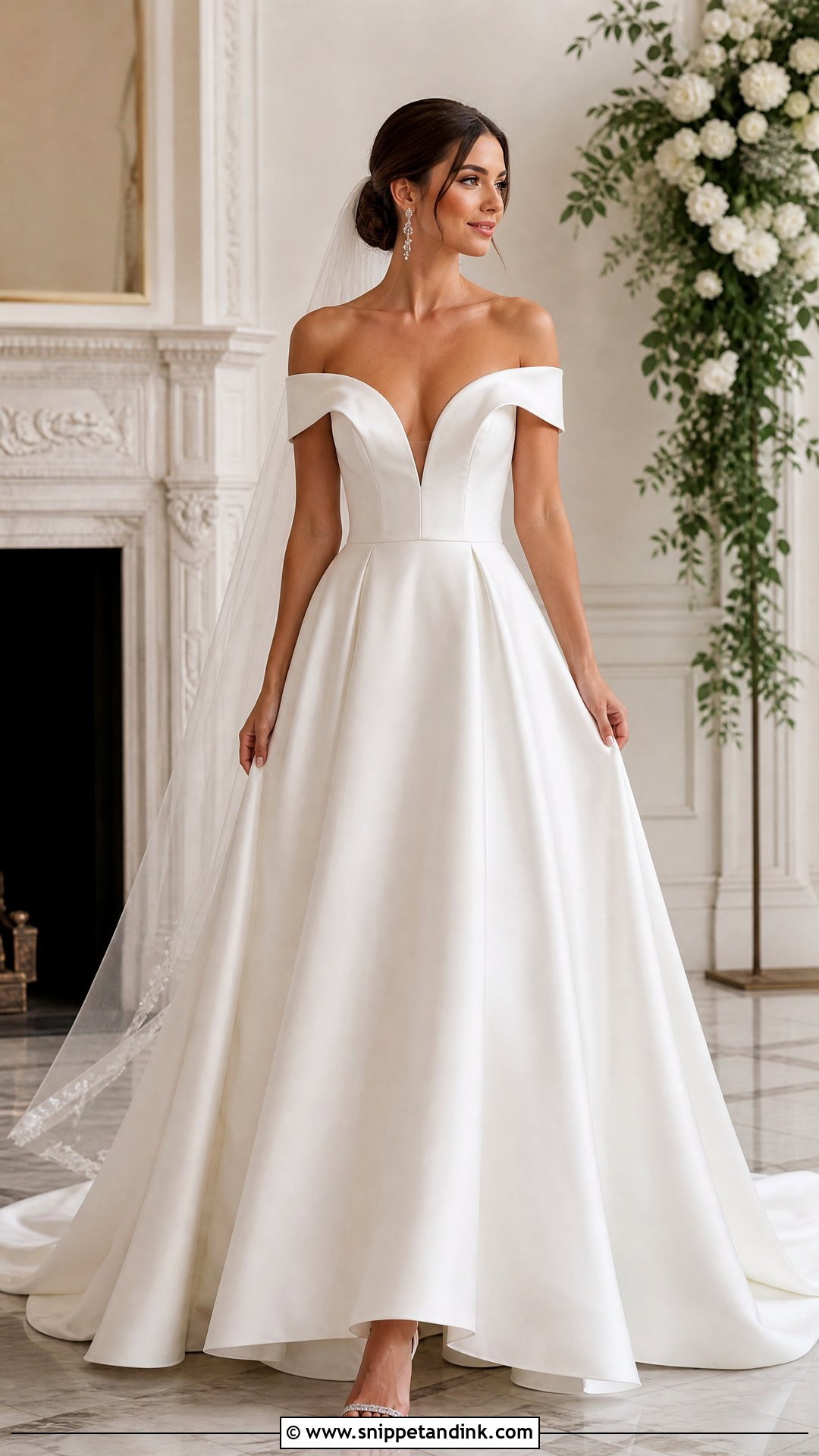
Combining a V with an off shoulder neckline gives two focal points, so keep jewelry to drop earrings and a clean hairstyle. Lace, satin and structured crepe hold this shape. Fitted, A line or soft ball gown skirts all work. The off shoulder band has to grip the arm firmly or the V spreads. Tuck the veil low at the back so the shoulders stay visible.
18. Deep V Spaghetti Strap Wedding Dress
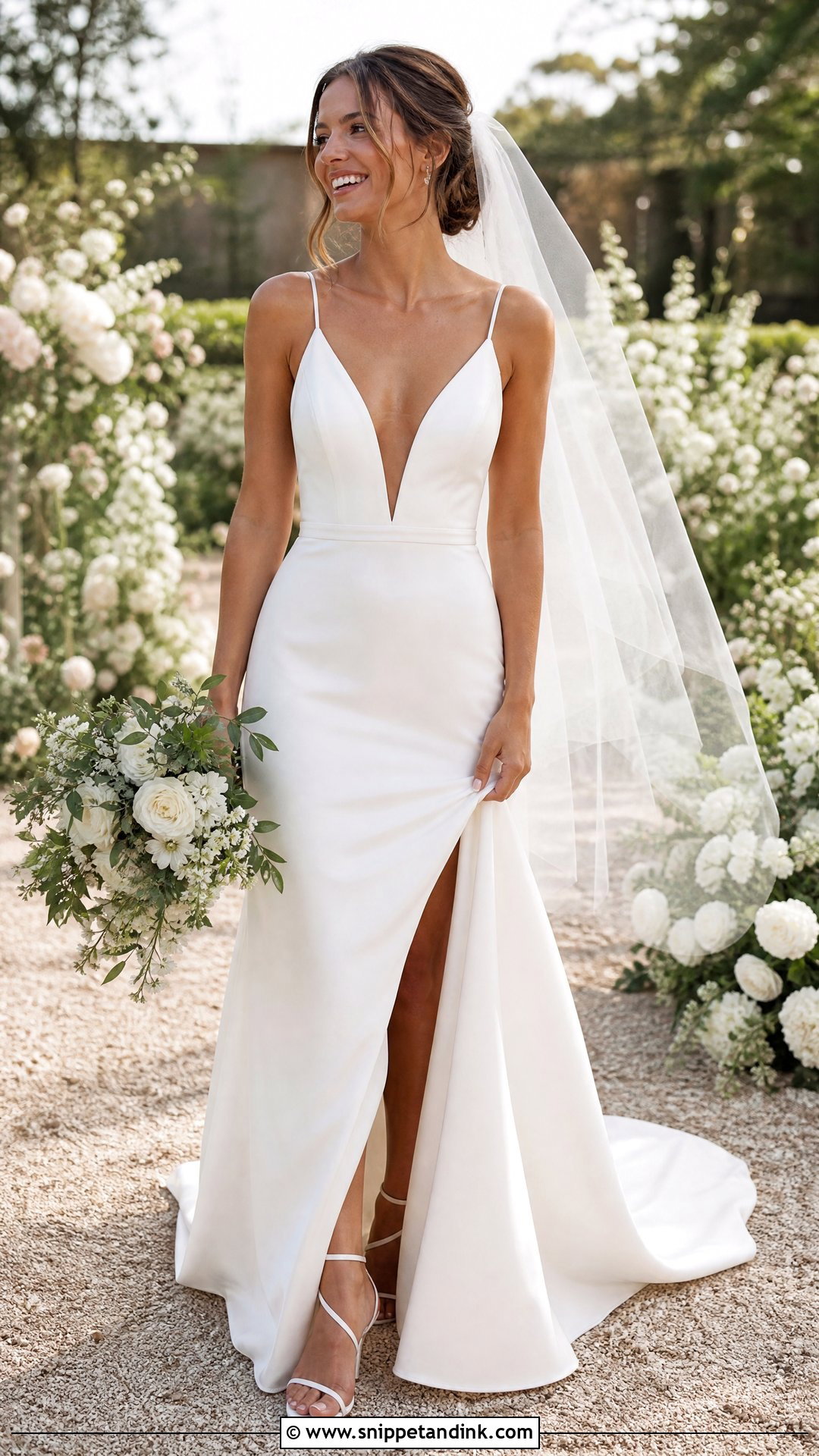
Spaghetti straps hold almost no weight, so the bodice has to support itself. Look for hidden cups and a secure waist seam. Satin, crepe, lace and soft tulle all suit it, and it’s a good warm-weather option. A soft updo, small earrings and strappy heels for a beach, garden or modern venue. If the straps dig in at the fitting, ask for them to be widened slightly.
19. Deep V Halter Wedding Dress
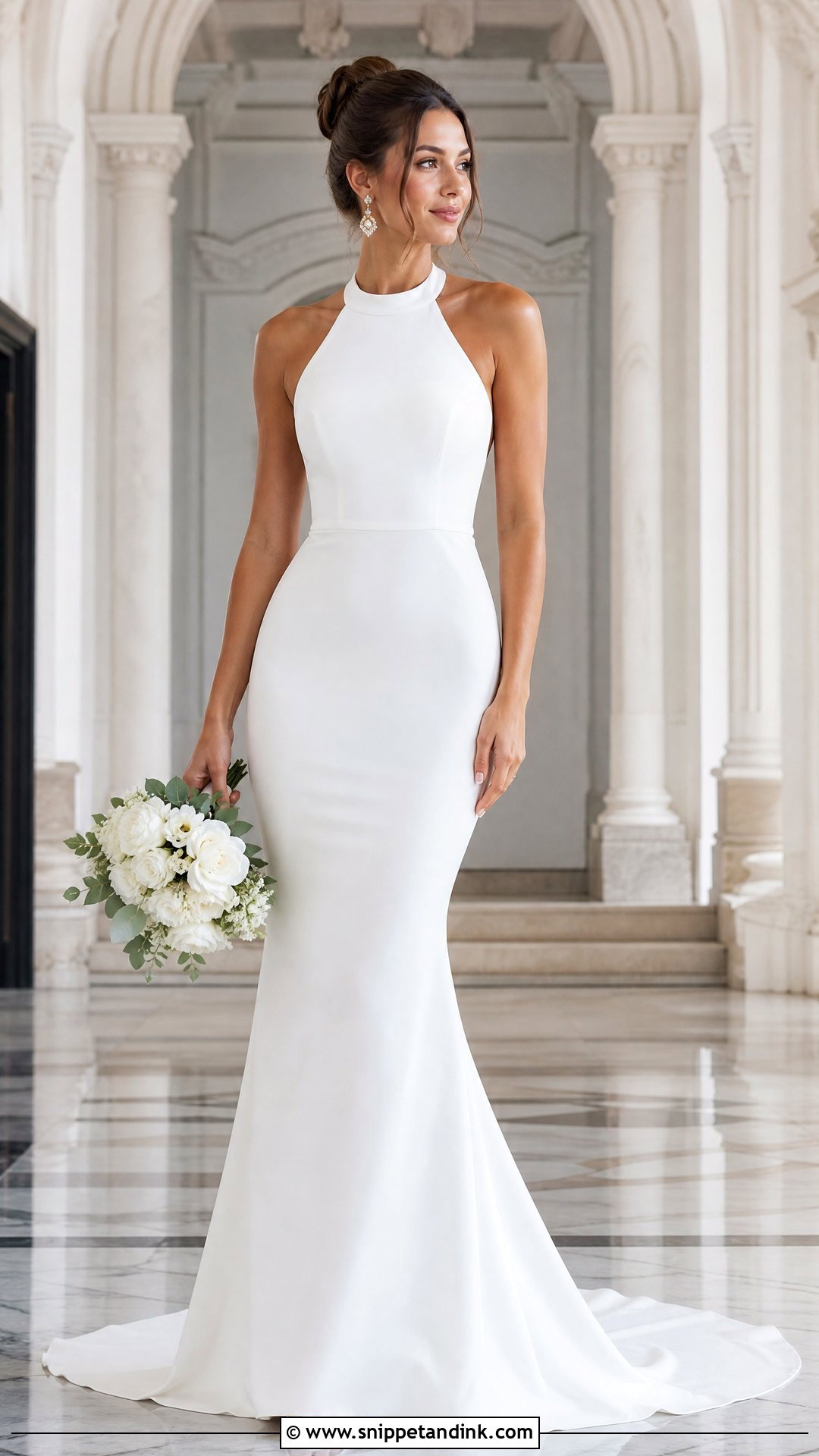
The halter does what spaghetti straps can’t: it carries weight from the neck, which keeps a plunge steady. That makes a deep V halter wedding dress one of the most secure shapes here. Crepe, satin and beaded fabrics suit it. Fitted skirt for fashion, A line for softness. No necklace; earrings instead. A high bun or ponytail shows the neckline. Check that the halter strap doesn’t rub at the back of the neck.
20. Deep V Corset Wedding Dress
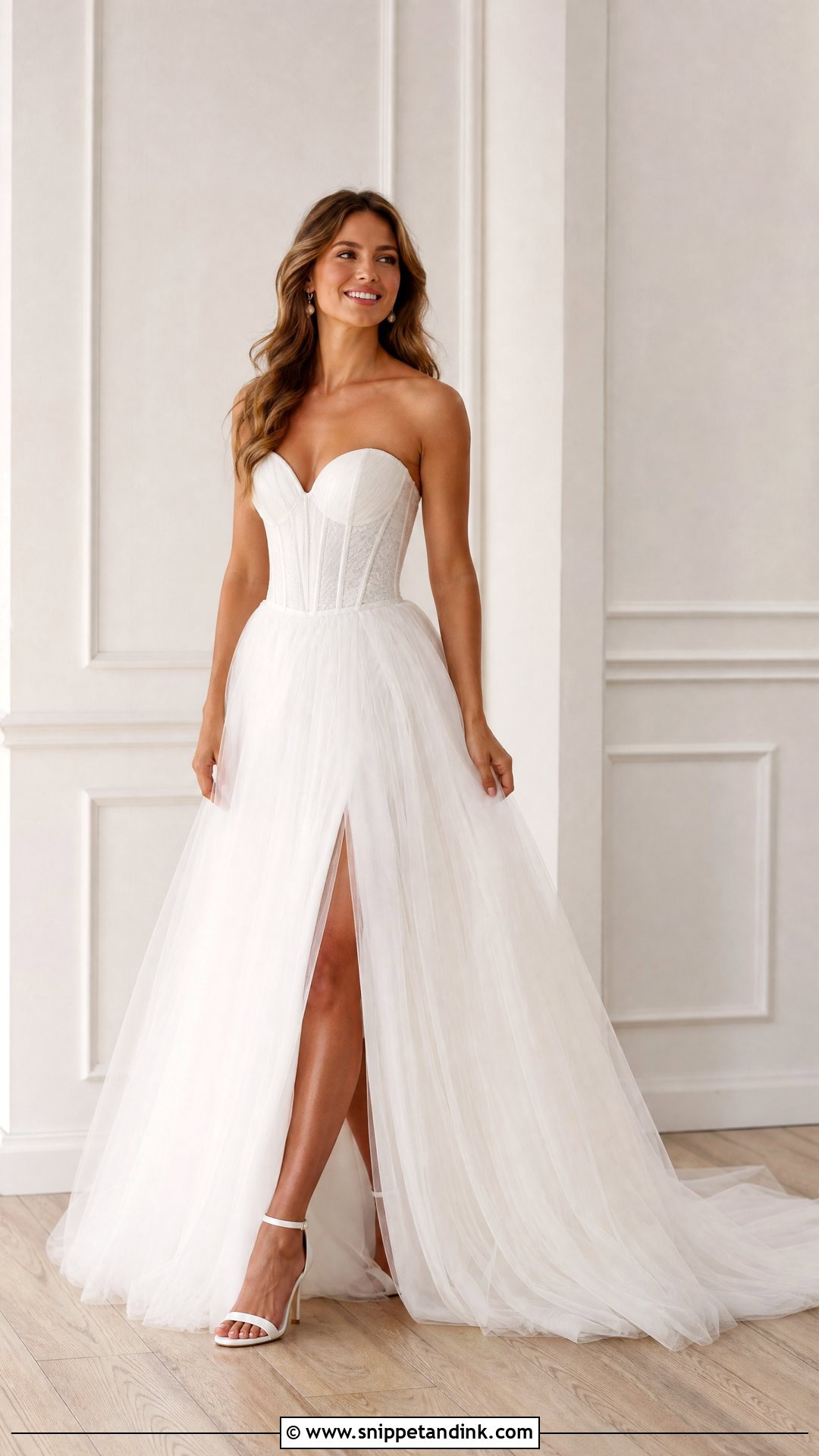
Corsets hold a plunge securely because the boning keeps the edges in place. Exposed boning feels modern; lace-covered boning more traditional. Tulle skirt for drama, satin for elegance, fitted crepe for sleek. The bodice already has strong detail, so keep it simple with pearl earrings, soft waves and classic heels. Sit down at the fitting to check the top of the corset doesn’t bite.
21. Deep V Slip Wedding Dress
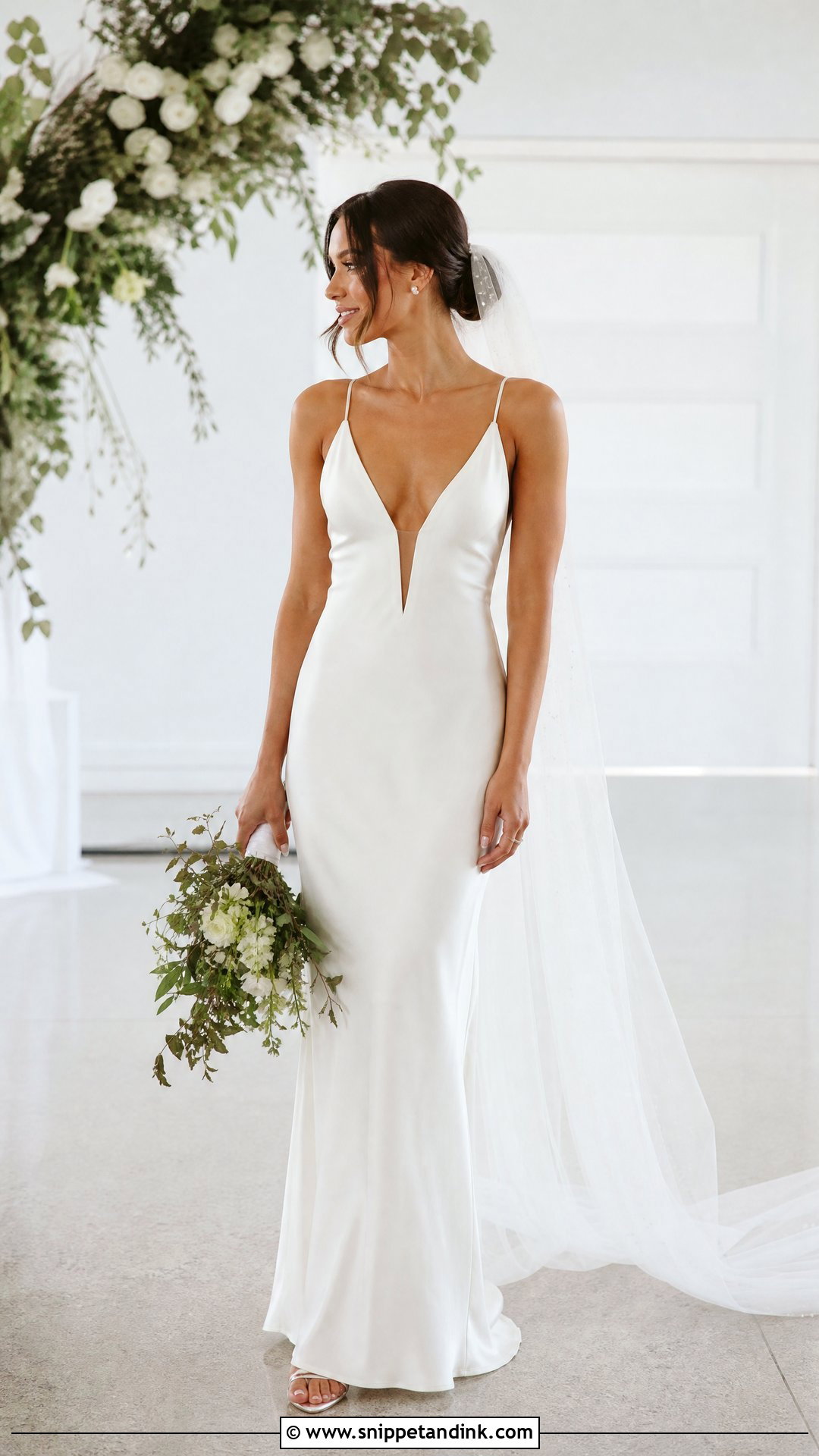
Slip dresses are cut on the bias, skimming the body instead of holding it, and that’s both their appeal and their difficulty. Silk, satin and charmeuse show every line underneath. A deep V on a slip has very little structure, so fashion tape is usually needed. Delicate sandals, a low bun, pearl studs and a sheer veil. A light cape or tailored jacket for a more covered ceremony. It suits a courthouse or beach wedding.
22. Deep V Short Wedding Dress
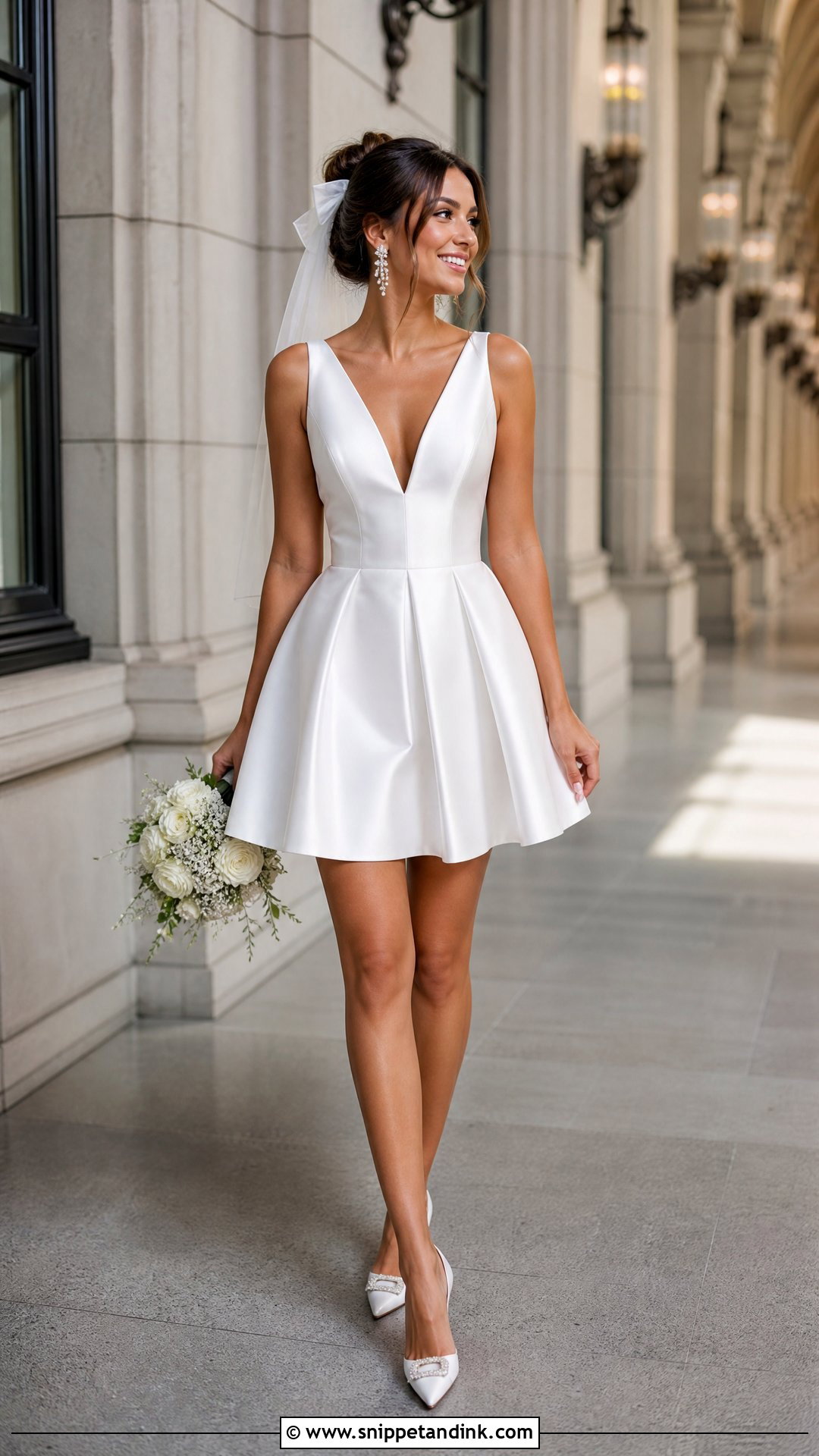
Short hems make a plunge feel playful rather than formal. Lace, satin and crepe; mini, tea length or midi. It’s easy to dance in, which makes it ideal for a reception change or civil ceremony. Statement earrings, pointed heels and a short veil or hair bow. I’d check the proportions: a deep V with a very short hem can feel like a lot of skin, and a midi often balances it better.
23. Deep V Floral Wedding Dress
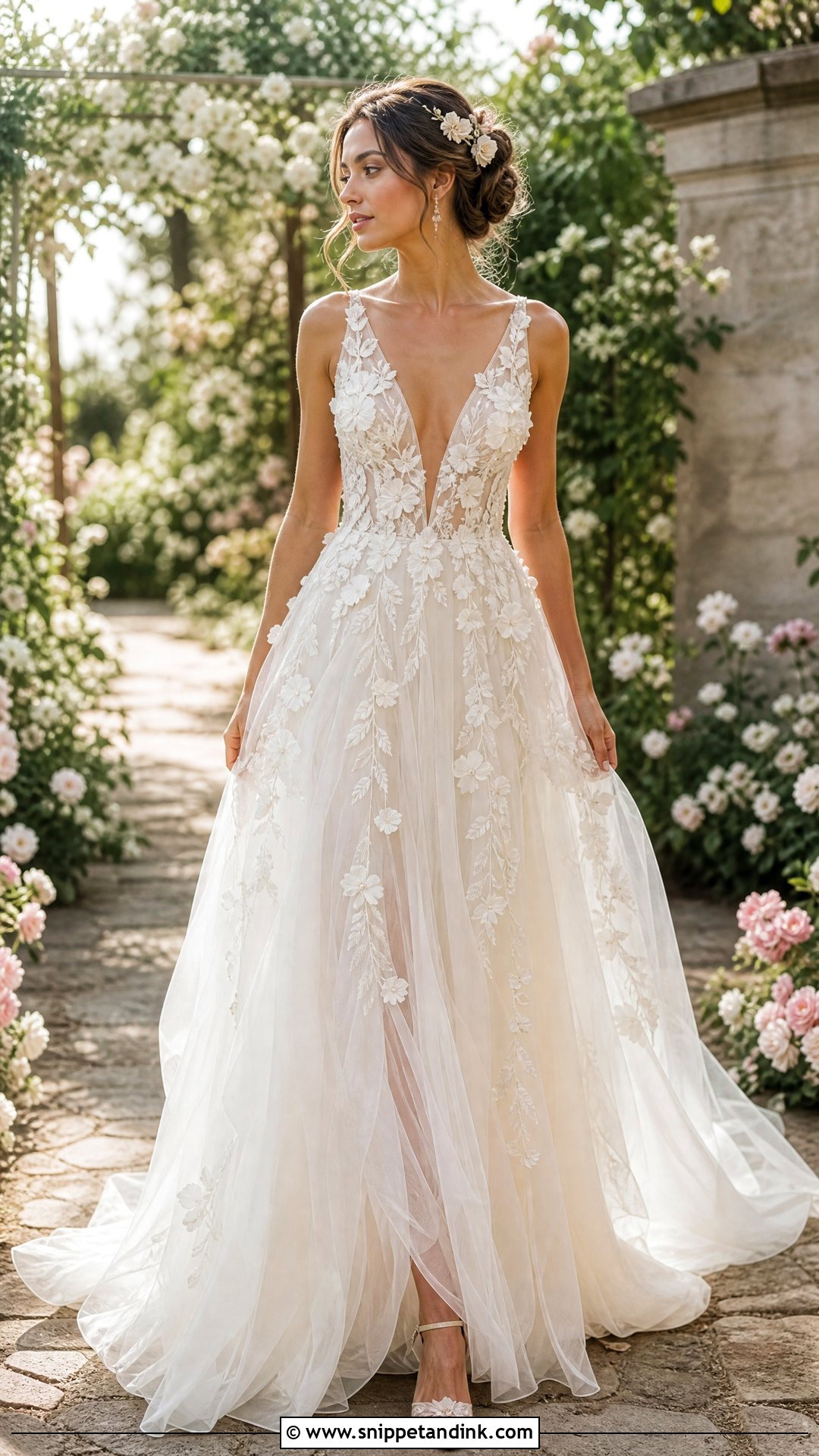
Florals at the neckline soften the plunge and make it look less bare. Floral lace, embroidered vines or 3D appliqué can frame the V and run into the skirt. Raised 3D flowers catch on veils, so I’d pick a soft tulle veil without a heavy edge. A blush, ivory, champagne or soft white base adds depth. Loose waves, floral pins and soft heels for a vineyard or spring ceremony.
24. Deep V High Slit Wedding Dress
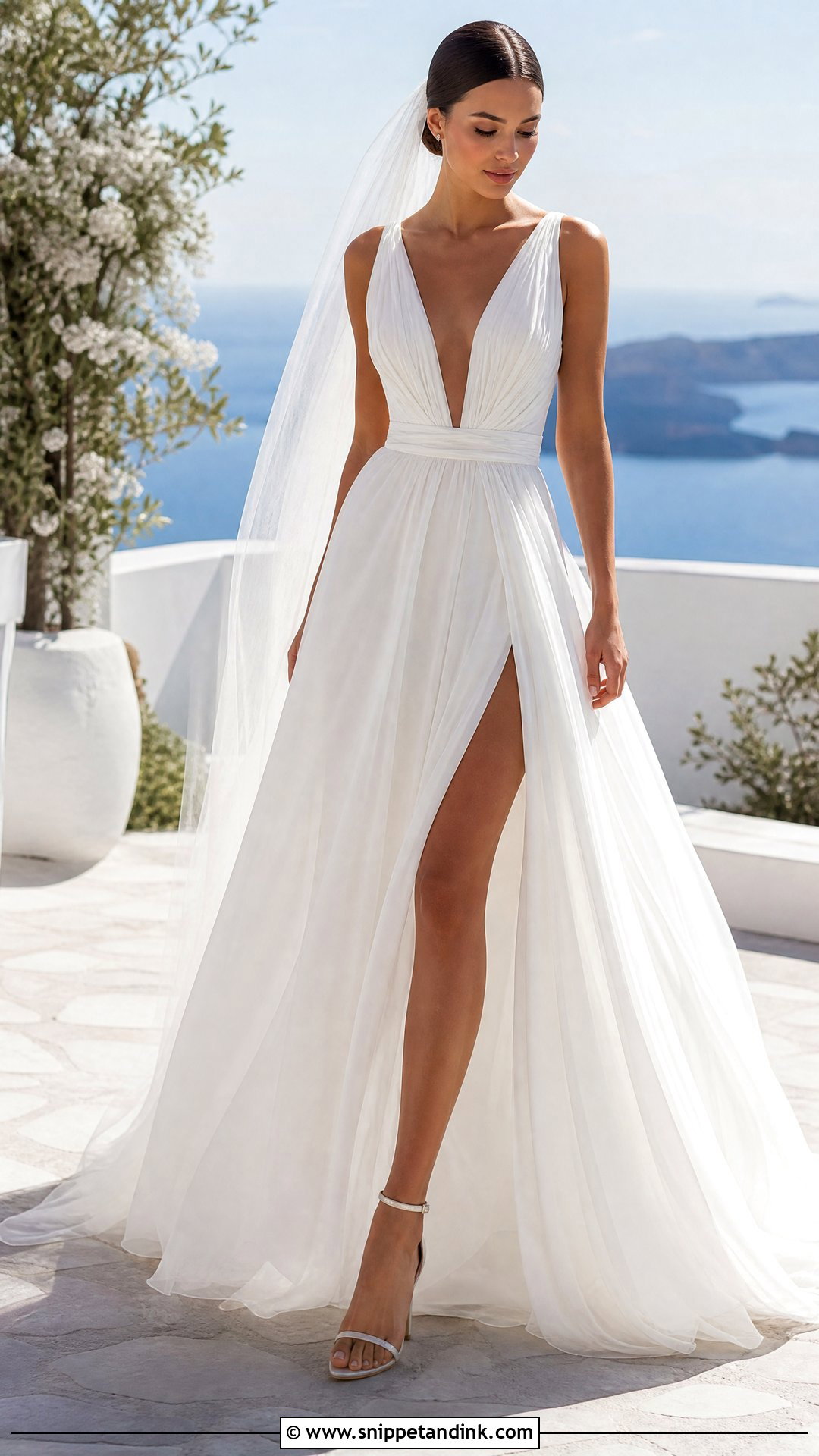
A plunge and a high slit together show a lot, so I’d keep the fabric clean: crepe, satin or chiffon. A flowing A line softens the slit; a fitted shape makes it bolder. Test the slit height by walking, sitting and climbing a step, since slits look different in motion. Elegant heels, smooth hair and minimal jewelry for a beach or destination reception.
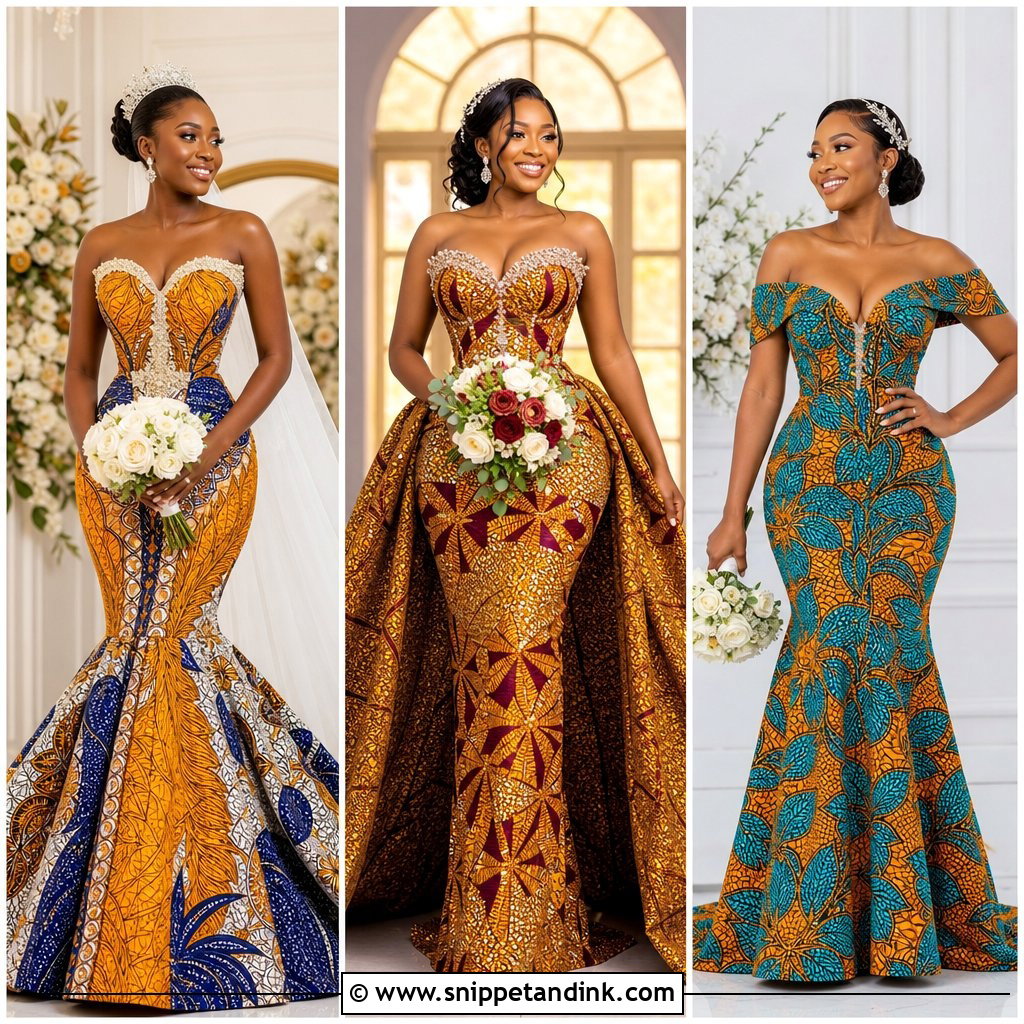

25. Deep V Detachable Skirt Wedding Dress
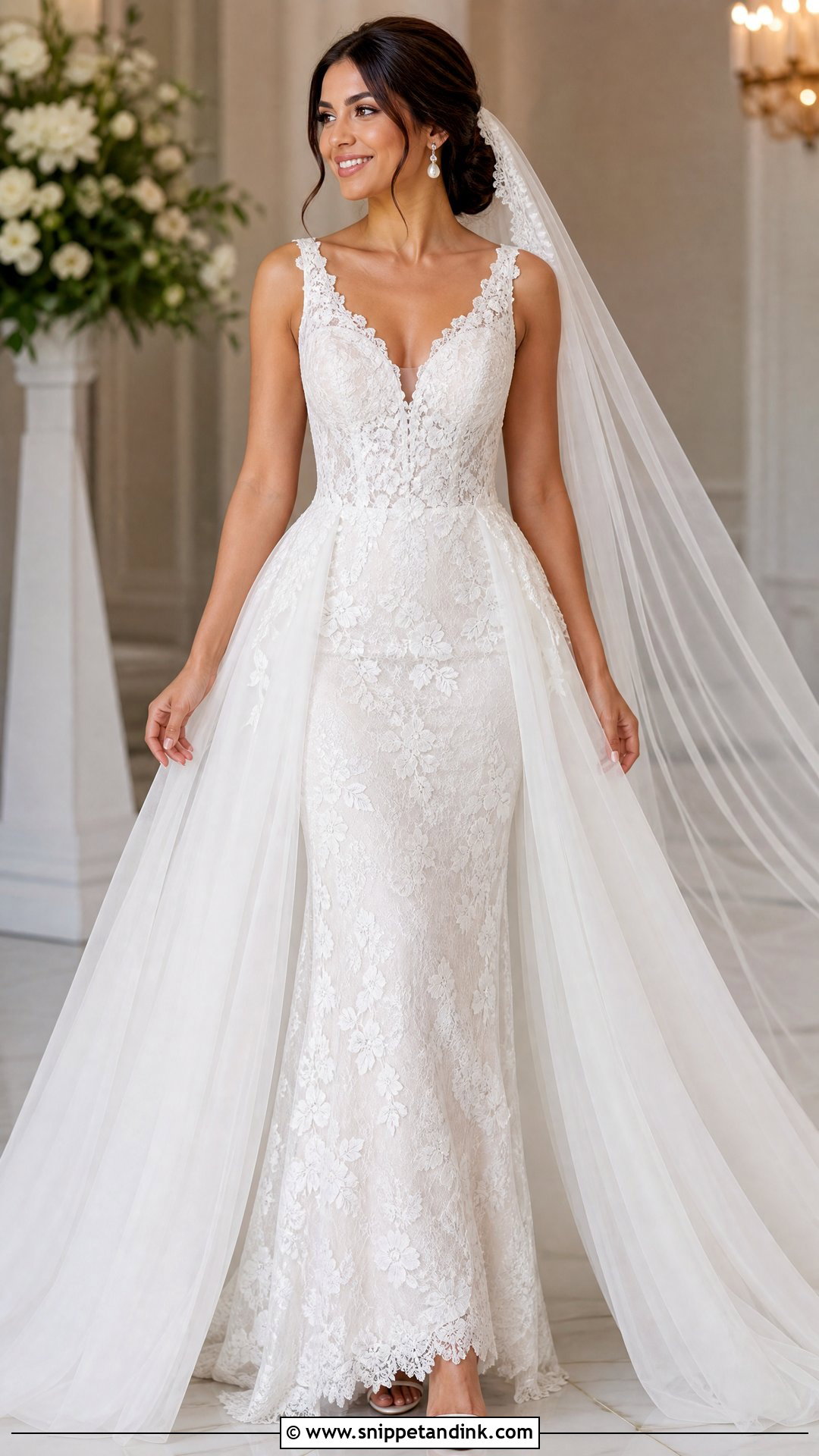
With a deep V detachable skirt wedding dress, the base gown has to hold the plunge on its own once the overskirt comes off, so judge the fit without the skirt attached. Fitted crepe, lace, satin or beaded bases all work. Choose a tulle, organza or satin overskirt depending on how grand you want the entrance. Classic heels, earrings and a veil that suits the ceremony layer.
Tape, Cups and Clear Straps Hold the Neckline
Most brides in a plunge use some combination of these, and the right mix depends on the dress and the bust. I’d decide at the second fitting, wearing the actual products, rather than on the wedding morning.
- Sewn-in cups: the most secure option. Your seamstress shapes them to the bodice so nothing shows at the edge.
- Double-sided fashion tape: holds the fabric edge to the skin. Apply to clean, lotion-free skin and test it on your skin first, since some people react to the adhesive.
- Adhesive or stick-on cups: work for smaller busts and light fabrics; less reliable in heat.
- A clear strap across the back between the shoulder blades: keeps the two sides of the V from spreading.
Skip body lotion and oil on the chest that morning. Tape won’t stick to it, and satin marks where oil touches the fabric.
Give a bridesmaid a spare strip of tape and a few safety pins in a matching color. Sweat during a long dance set loosens adhesive, and a fresh strip in the restroom takes a minute. Blot the skin dry first, or the new piece won’t hold either.
A Plunge That Stays Where You Put It
Plunging necklines suit minimalist, romantic, boho and glamorous brides alike. Whichever version you choose, judge it by support, proportion, fabric and comfort. Illusion panels, lace along the edge, wider straps, a halter, corsetry and good tailoring all keep a deep V secure. Think about the venue, the season and how much you’ll move, then style it simply. A deep V can be bold, but on the right gown it’s also one of the most comfortable necklines to wear all day.
You'll Like These Ideas:




Leave a Reply