
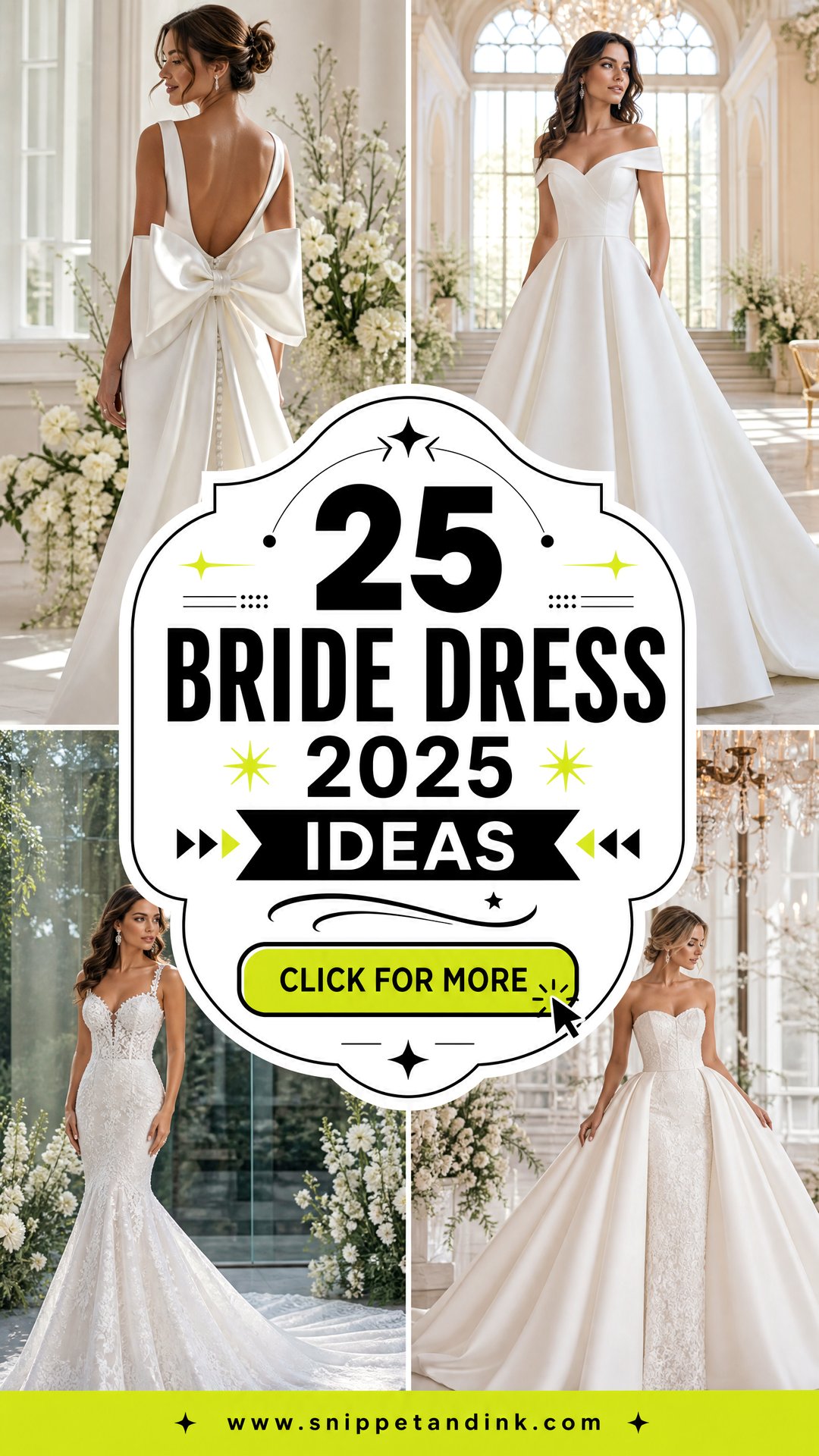
Every bridal season has its shapes, and 2025 brought back a lot of construction: drop waists, basque waists, corset bodices, pearls, bows, 3D florals, sheer layers, detachable pieces, clean satin, vintage-style lace and mini reception dresses. Trends are useful because they tell you what the shops will actually have on the rails. They are less useful if you buy one without knowing how it wears. Below are 25 head-to-toe looks for ceremonies, courthouses and second dresses, and for each one I have added what I check in the fitting room, who it suits and where it tends to let a bride down.
Will a 2025 Trend Date Your Wedding Photos?
Brides ask me this at nearly every appointment, and the honest answer is: only if the trend is doing all the work. Wedding photos get looked at for decades, and the gowns that hold up are the ones where the trend is one detail on a well-fitted, well-made dress.
My working rule is one trend per look. A drop waist with plain satin and pearl studs will still feel right in twenty years. A drop waist with a giant bow, sheer sleeves, black ribbon and 3D flowers is a snapshot of one season. If you love several trends, split them across the day: the structured gown for the ceremony, the bow or feathers on the reception dress.
Fit dates far less than style does. A gown that sits correctly at the shoulder, waist and hem looks considered in any era, while a fashionable dress that pulls across the bust will look wrong forever. Spend your alteration budget accordingly.
1. Drop Waist Bride Dress
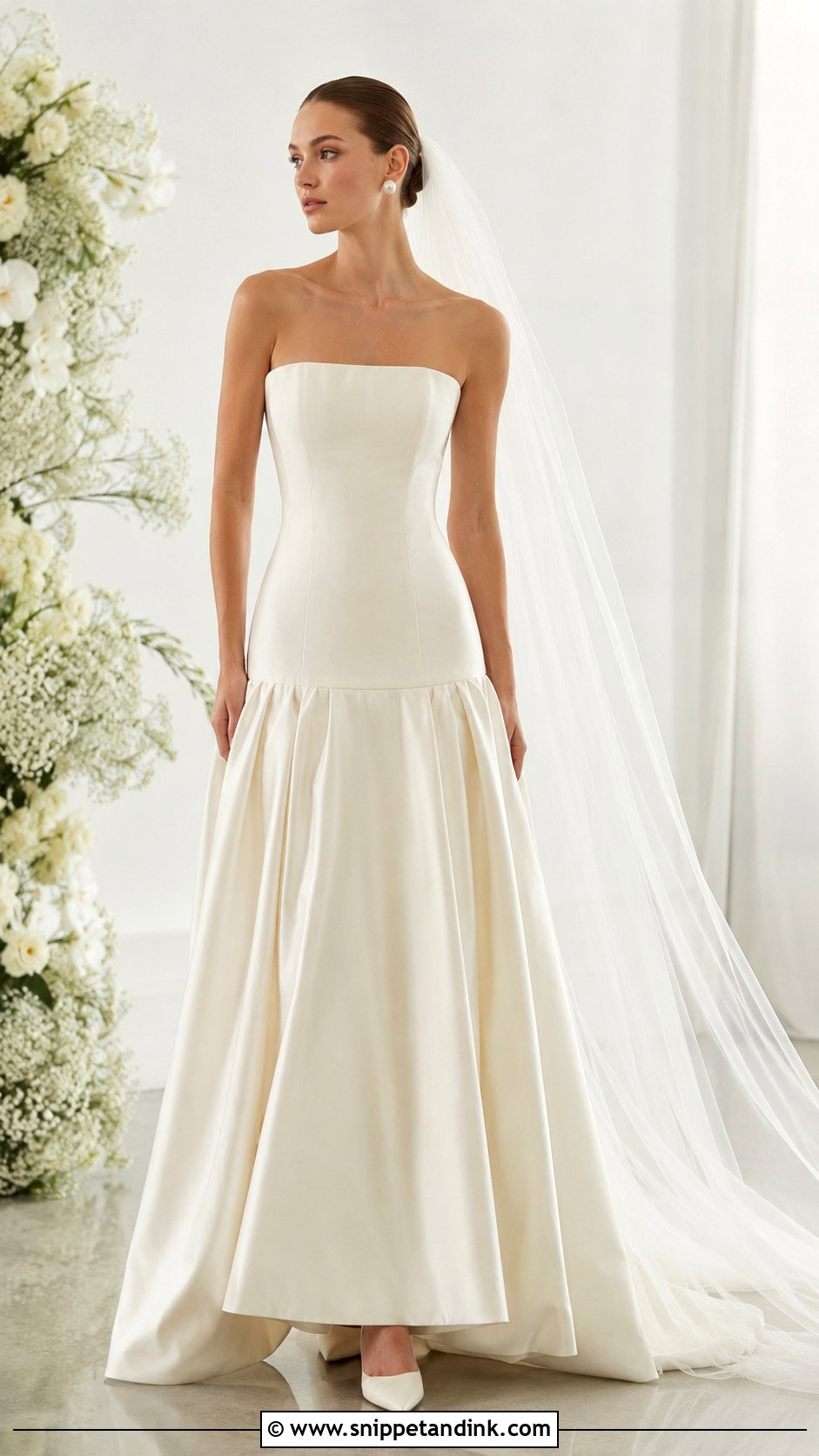
The drop waist runs the bodice past your natural waist and opens into the skirt lower down, which is why it lengthens the torso so well. It is less kind to a very short torso with long legs, where it can make the legs look shorter. In satin, mikado or structured crepe it holds a clean line. Pointed ivory heels, a simple cathedral veil and pearl studs keep it quiet, and a bouquet of white roses, orchids or callas lets the silhouette lead. I always check the seam where bodice meets skirt when the bride sits; on a poorly fitted drop waist that seam rides up and buckles.
2. Basque Waist Bride Dress
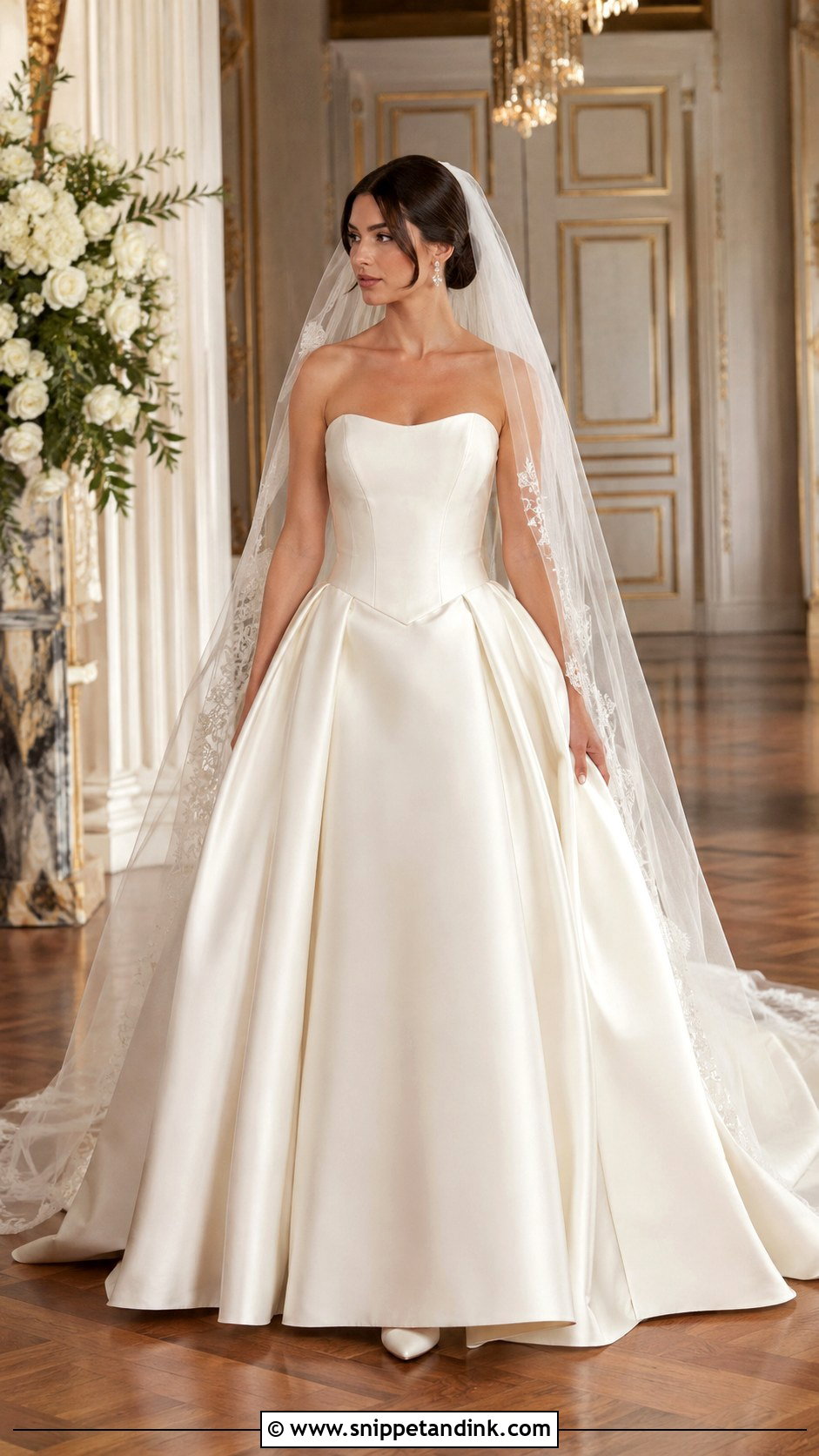
Where a drop waist is horizontal, the basque points down into a V, and that point does the sculpting. A basque waist bride dress looks most regal strapless, with a full skirt in soft satin. A long veil, drop earrings and closed-toe heels suit a formal ceremony. The point should land centered and sit flat; if it lifts away from the body when you breathe out, the bodice needs taking in at the side seams. Keep accessories small and let the waist and skirt carry the drama.
3. Corset Bride Dress
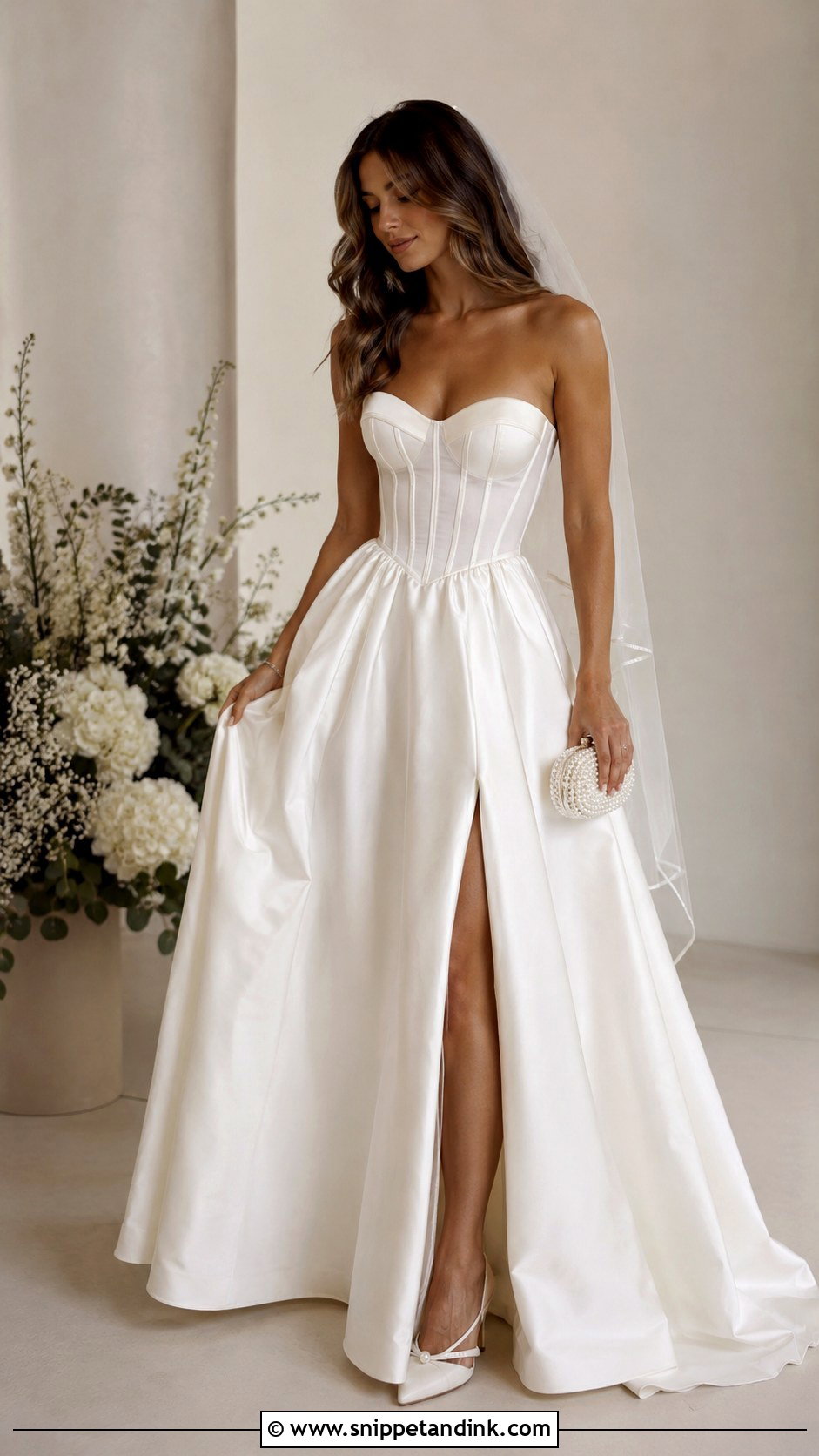
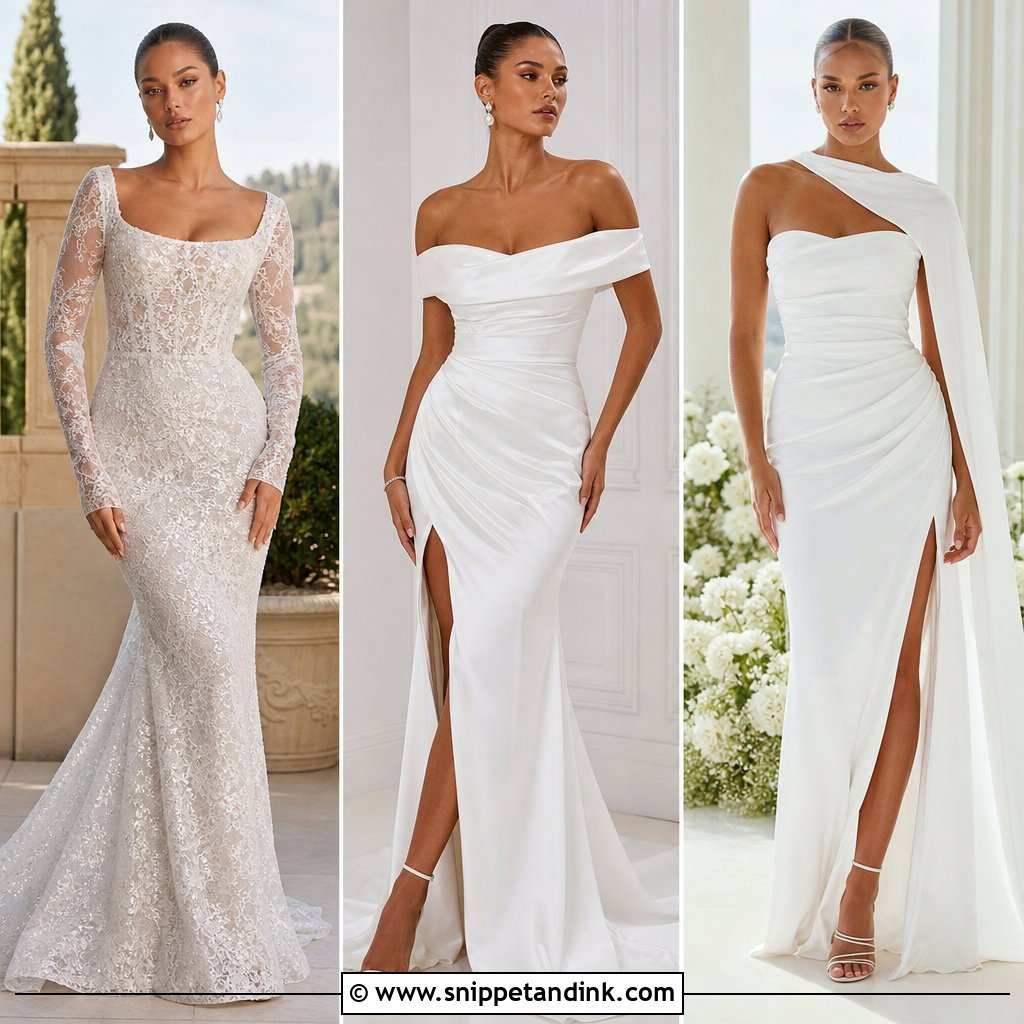
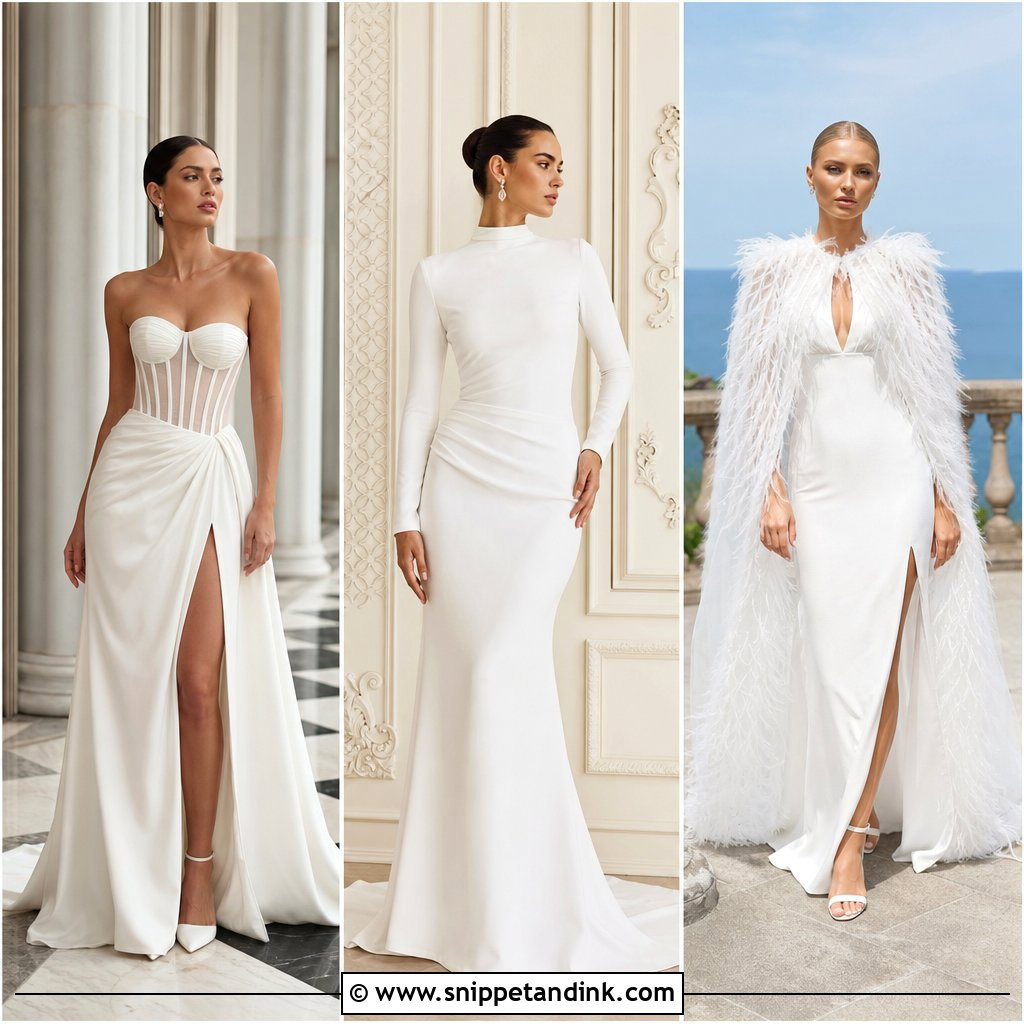
A corset bodice gives the most support of any construction on this list, which is why brides with a fuller bust often feel best in one. Lace keeps it soft; satin or crepe makes it sleek. Visible boning, a curved neckline and a skirt that falls naturally from the waist are the current details. Slingback heels, a sheer veil and a small pearl clutch finish it. Lace-up backs are worth asking for, because they let the seamstress adjust a little on the morning if your body has changed in the final weeks. A heavily worked corset wants plain jewelry; a minimal one can take pearl earrings or a bracelet.
4. Simple Satin Bride Dress
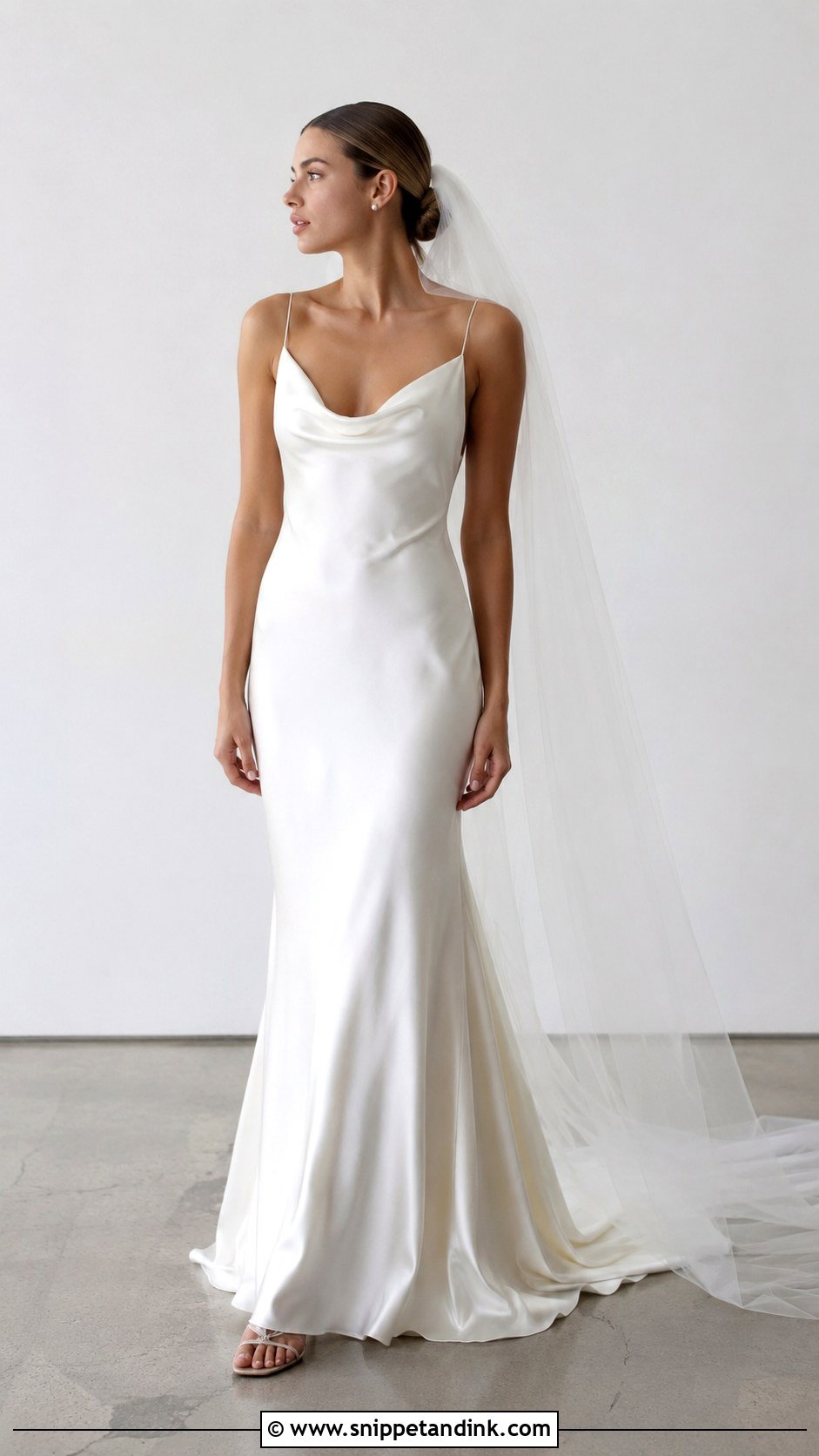
Plain satin looks simple and is anything but simple to fit. Bias-cut and column gowns skim the body and show every line beneath, so I fit them over the exact undergarments the bride will wear. A structured satin A-line is more forgiving. Barely-there ivory sandals, a smooth low bun and a long veil. Satin marks easily, too: water drops, makeup on the neckline and creases from the car all show, so keep a white cloth over your lap until you arrive. Its appeal is entirely fabric, fit and restraint.
5. Lace Long Sleeve Bride Dress
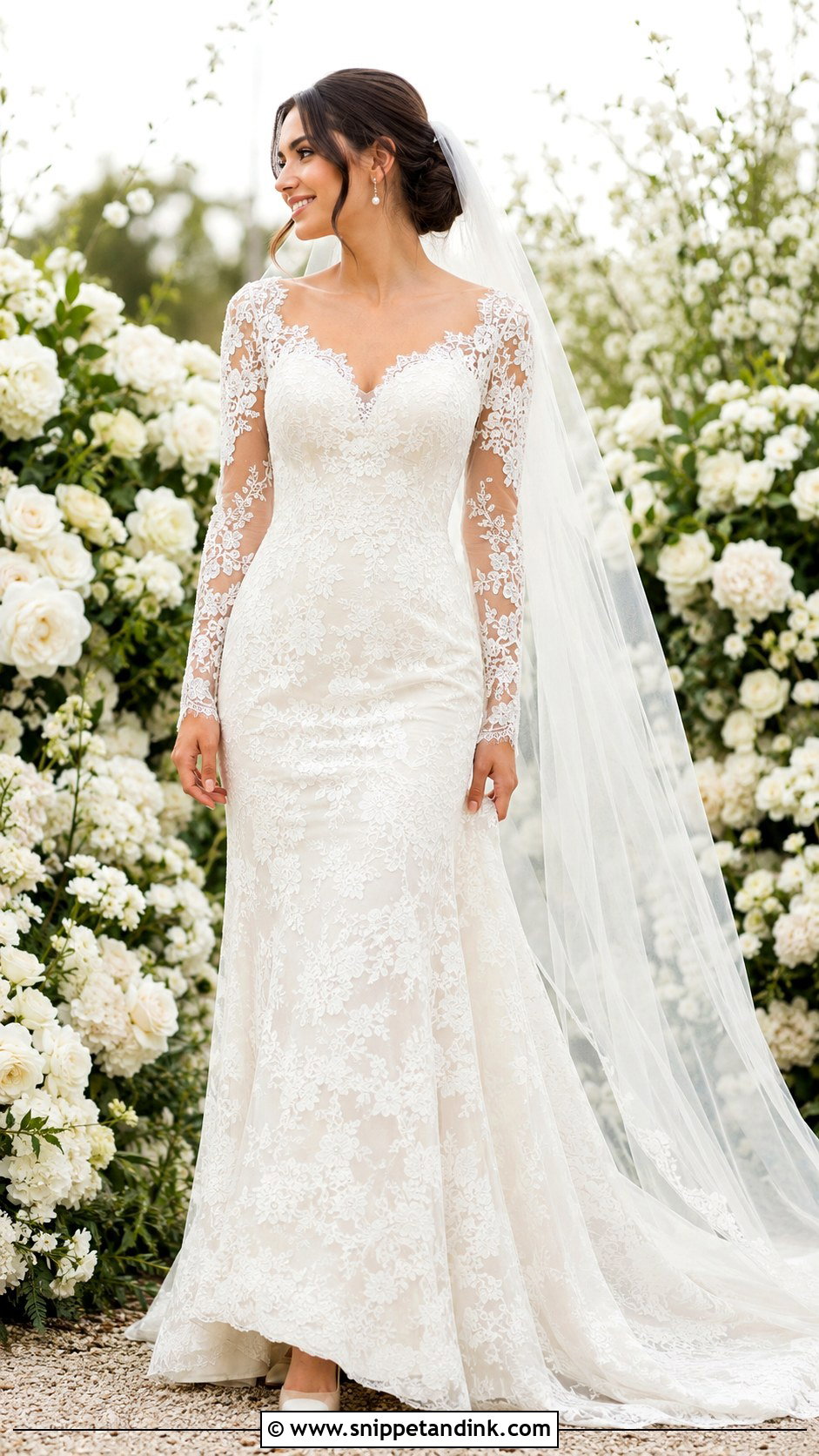
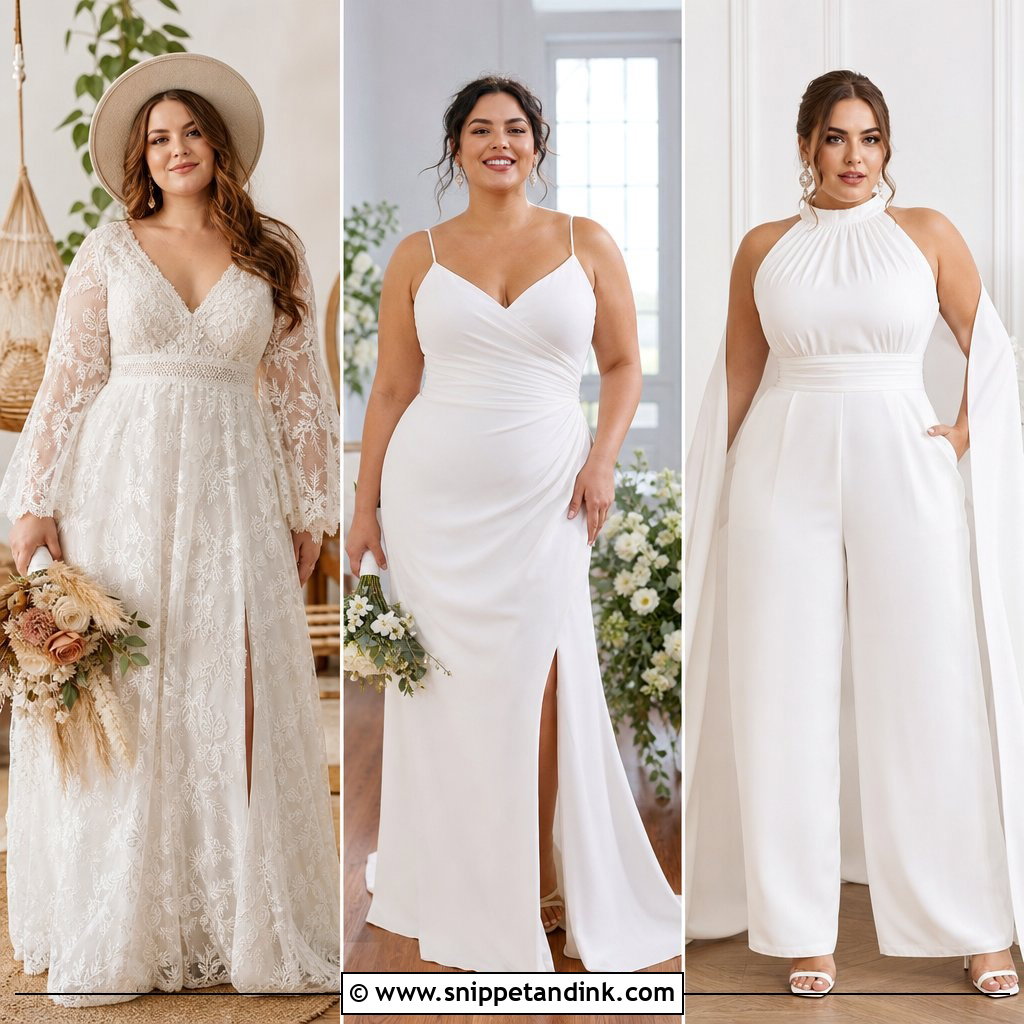
Lace sleeves feel freshest now in clean shapes, with illusion sleeves or fine floral patterns rather than dense lace from shoulder to wrist. Pearl earrings, ivory pumps and a sheer veil that lets the lace show through. Fresh, natural makeup keeps it from looking traditional. My usual fitting fix is the sleeve length: lace sleeves should stop at the wrist bone or just past it. Any longer and they bunch when you hold the bouquet. Cool seasons and formal venues suit it.
6. 3D Floral Bride Dress
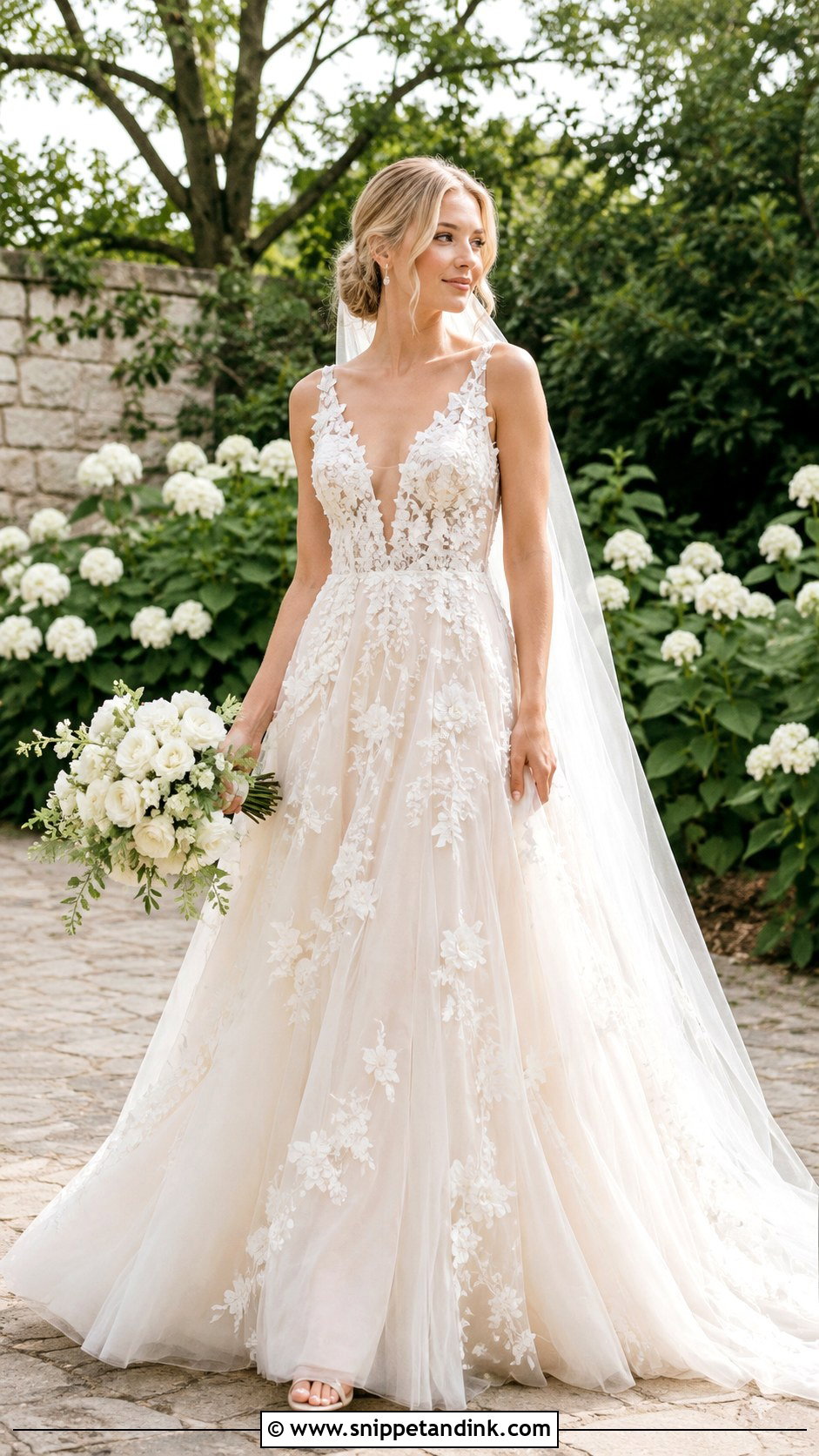
Raised floral appliqués bring texture that reads from the back of the room. They can sit on the bodice, skirt, sleeves or train, and I prefer one strong zone of flowers to an allover covering, which can look busy. Simple heels, small diamond or pearl earrings and a soft tulle veil. One thing to know: dimensional petals catch on a veil’s edge, so ask for a veil with an unfinished or very fine edge rather than a lace trim. A loose bouquet of white blooms and greenery suits a garden or spring wedding.
7. Pearl Bride Dress
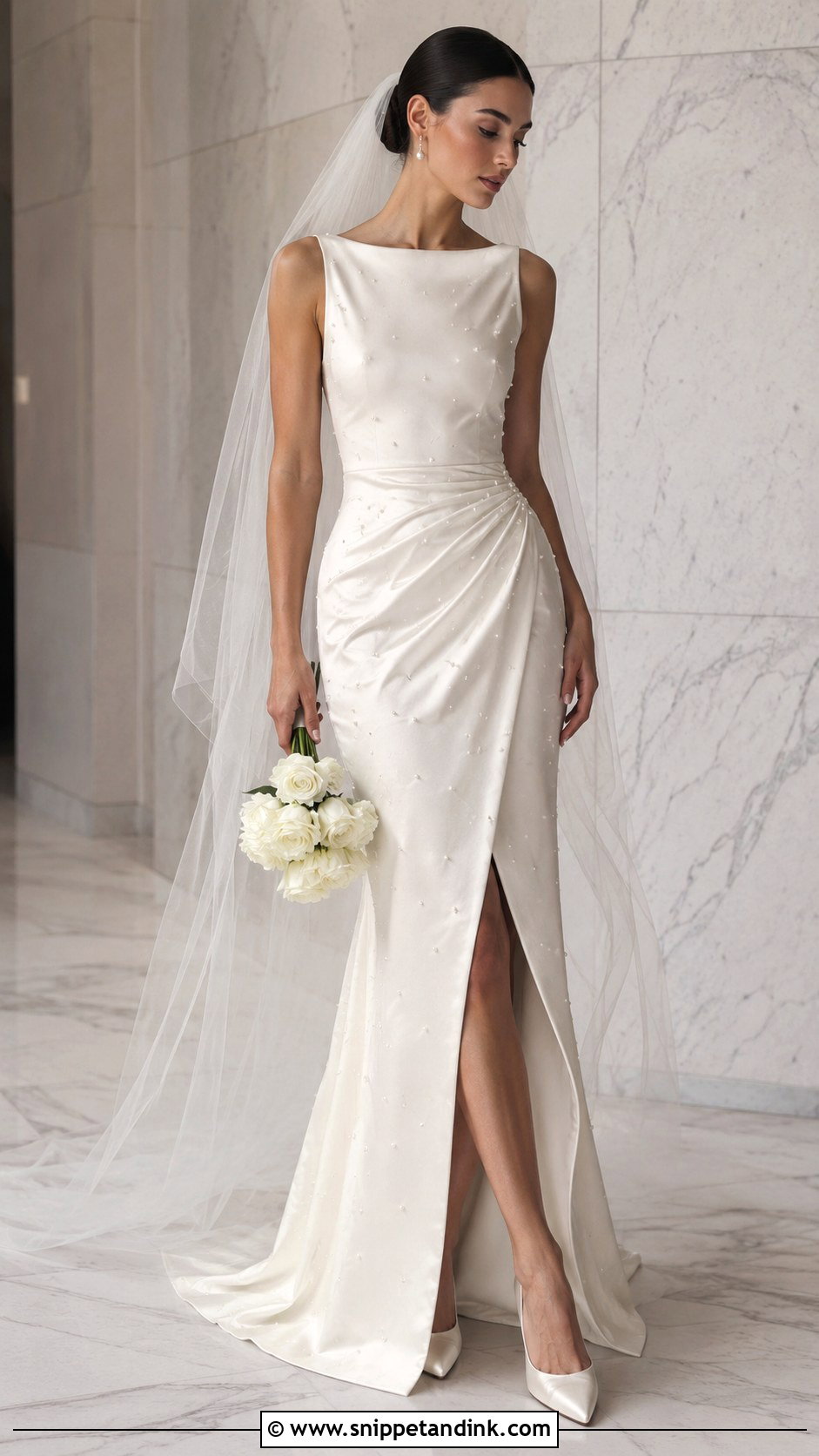
Pearls look most modern when they are used sparingly: tiny scattered accents, neckline trim or sleeve detail rather than full coverage. Pearl drop earrings, satin heels and a sleek veil, and nothing else, since the dress already wears its jewelry. Choose an ivory base so the pearls blend in instead of looking stuck on a stark white. Before your final fitting, have the shop check the stitching on each pearl; loose ones are much easier to secure in the studio than on the morning. Ballroom and city venues suit it.
8. Bow Back Bride Dress
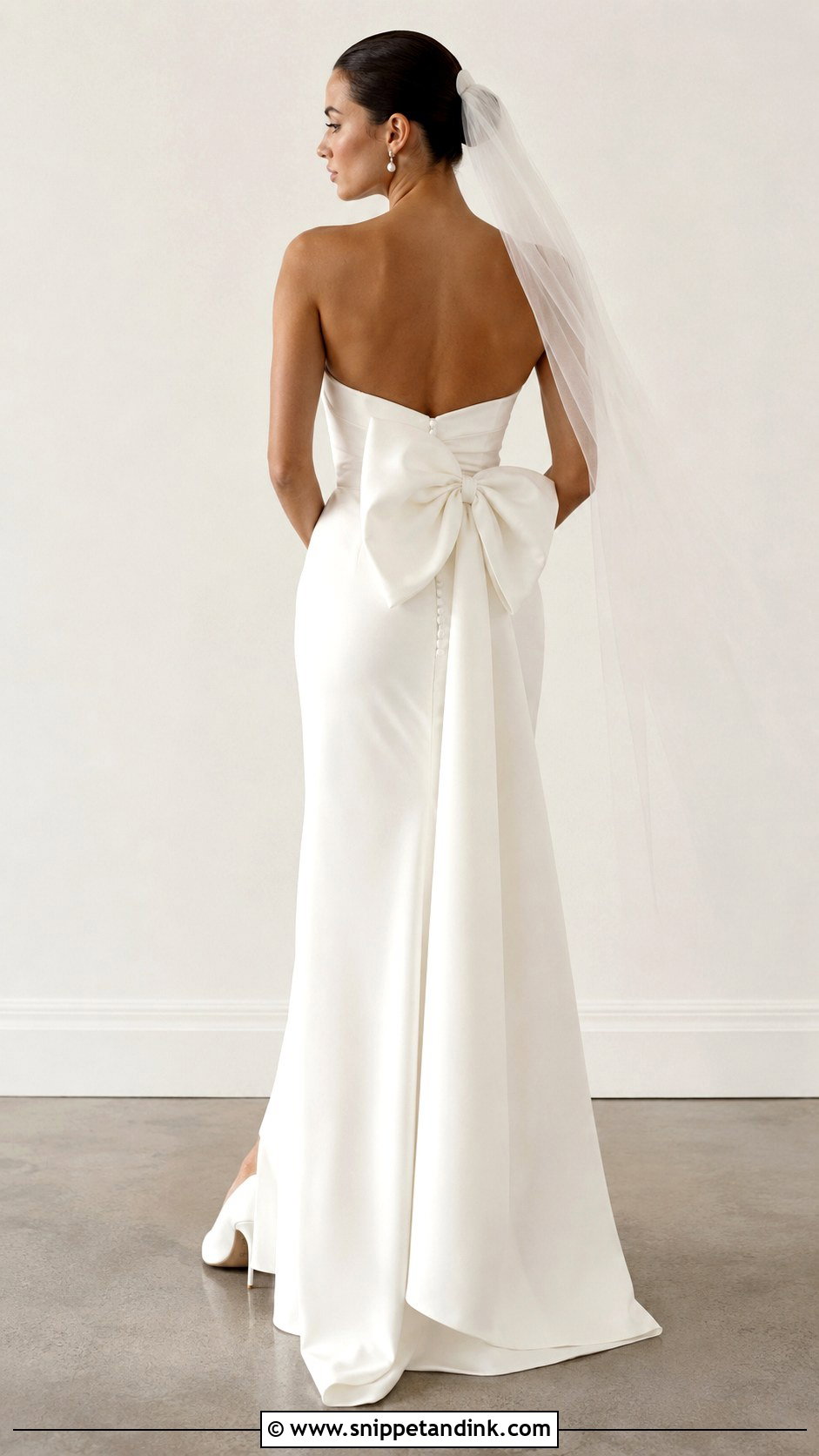
A big back bow gives the ceremony a second moment, since your guests spend most of it looking at your back. The bow can be oversized or soft. Pair a clean strapless or square-neck gown with pointed heels and a simple veil placed low in the hair so it does not hide the bow. I check how the bow is fixed, because a heavy satin bow sewn only at the waist seam droops by evening; a few internal tacks keep it standing. Keep the front clean so the bow reads chic rather than sweet.
9. Black Bow Bride Dress
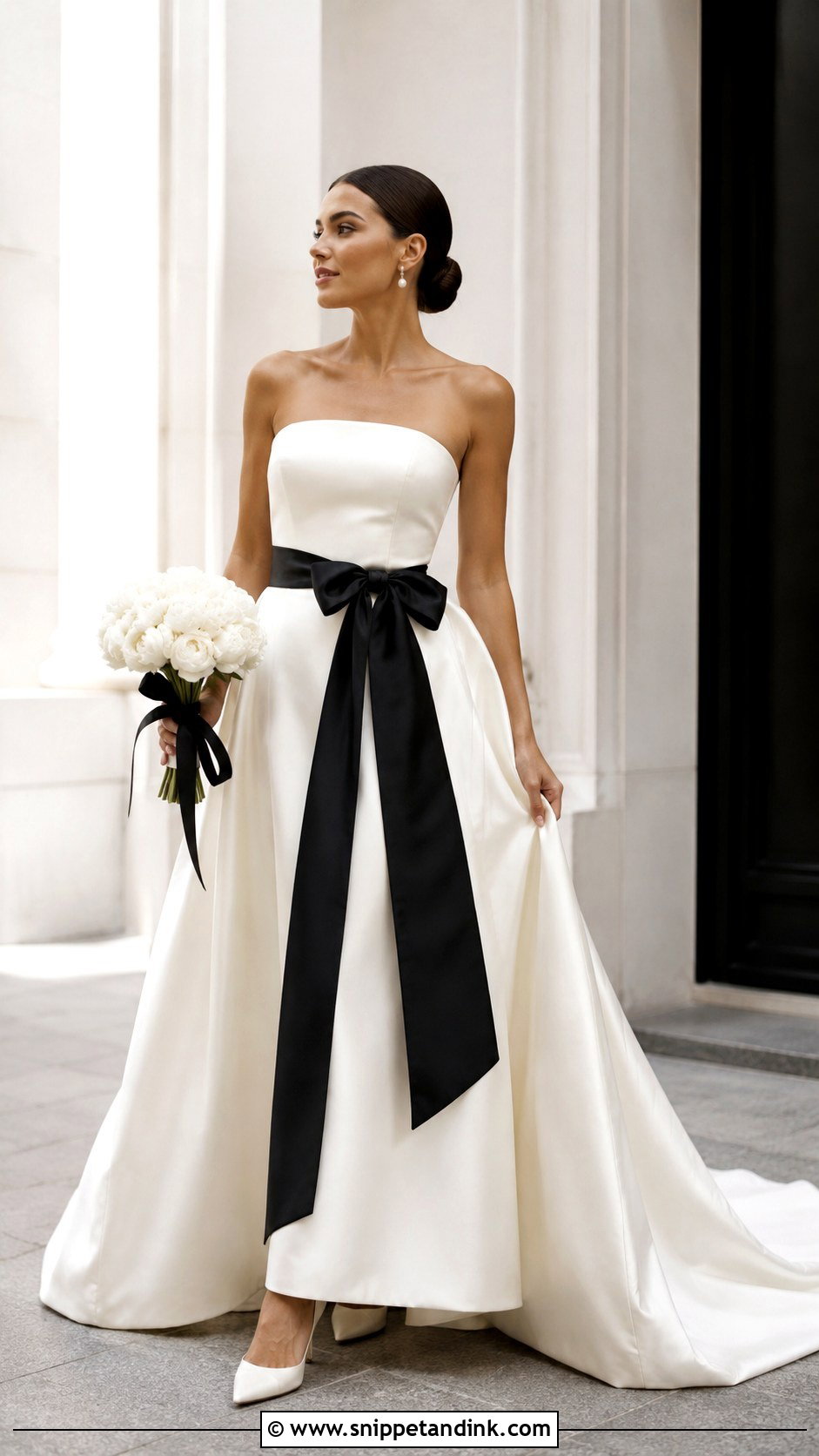
Black on a white gown is the contrast detail brides ask me about most this year. It can be a waist bow, shoulder tie, back bow or a hair ribbon. Ask about the dye before buying: some black ribbons bleed onto ivory if they get damp, so I test a corner with a wet white cloth. Black or ivory heels, pearl earrings and a sleek bun, plus a white bouquet wrapped in black ribbon. City weddings, museums and formal evening celebrations suit the contrast.
10. Off Shoulder Bride Dress
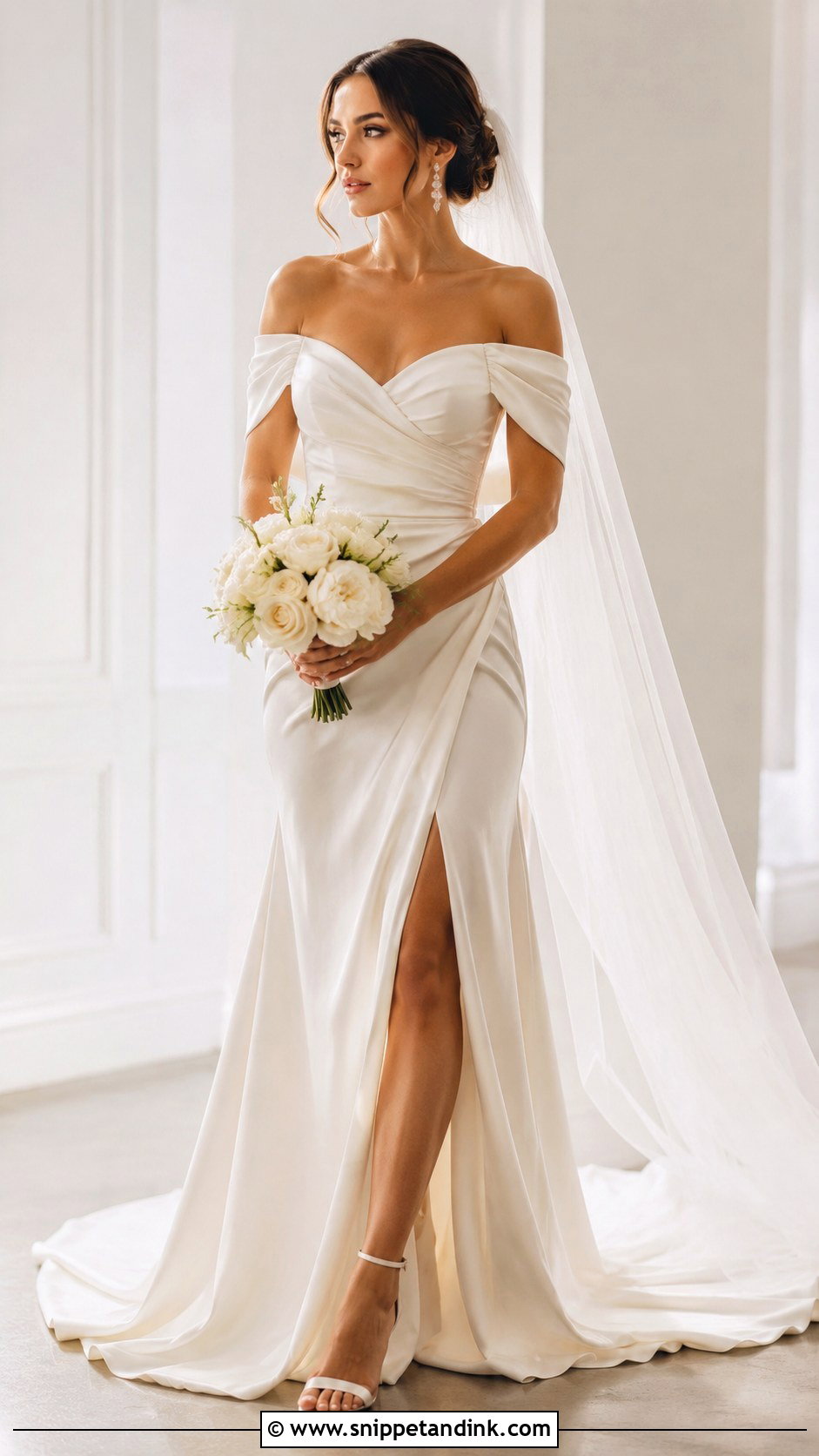
The off-shoulder neckline frames the collarbone softly and needs very little sparkle. Satin, lace or structured crepe with a fitted bodice and flowing skirt all work. Drop earrings, a simple bracelet and ivory heels, with a soft updo to keep the neckline open. With draped or puffed sleeves, choose a light veil so the upper body does not look crowded. I always do the hug test at fittings: if the sleeve band pins your arms, you will feel it in every embrace and see it in every candid.
11. Square Neck Bride Dress
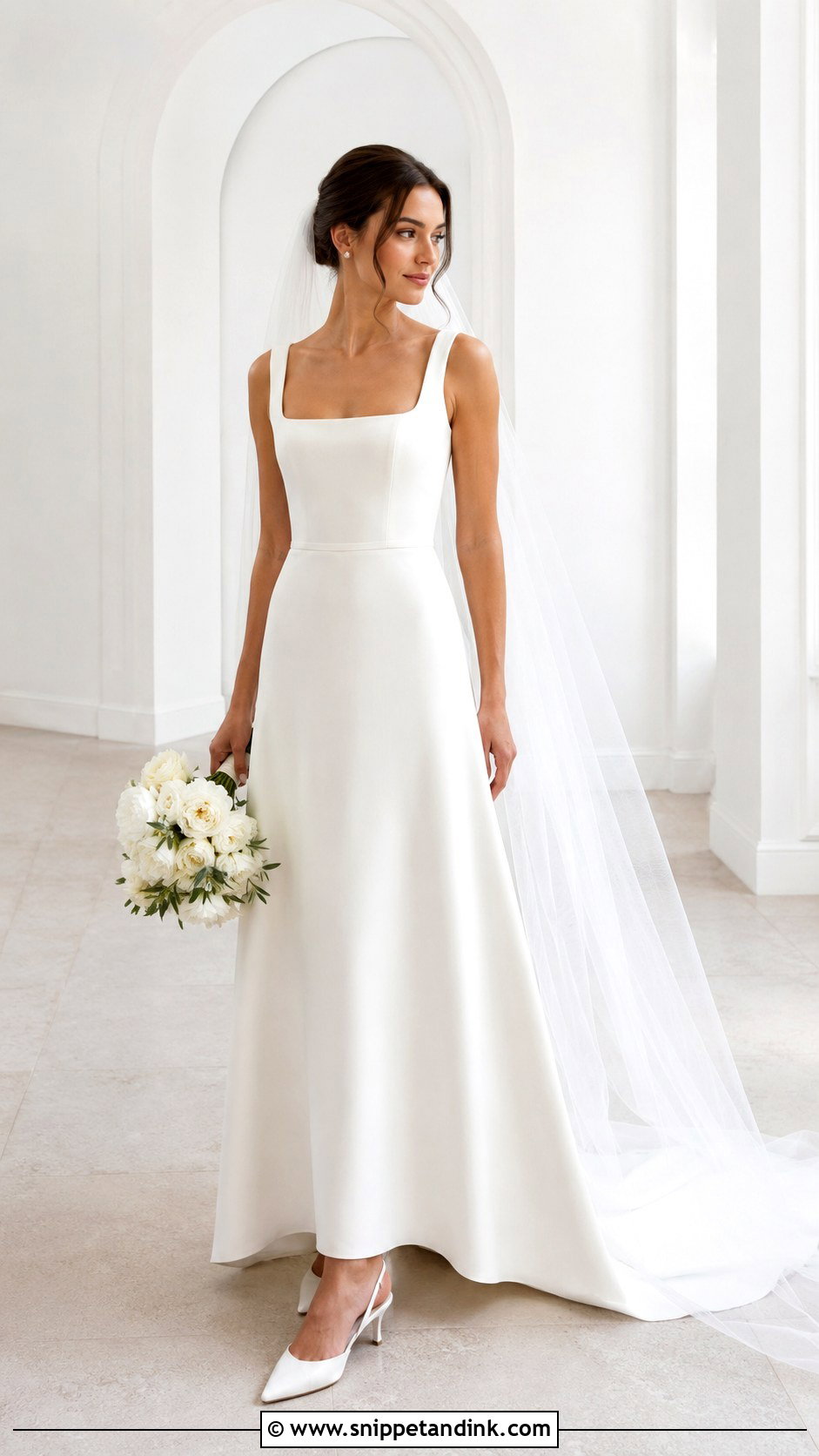
I suggest the square neck to brides who want a strapless look without the worry of pulling it up all night, since the straps take the load. A fitted bodice over an A-line or column skirt keeps it clean. Smooth crepe or satin, pearl studs, a chapel veil and slingback heels. It holds a necklace well, though a bare neckline often looks sharper. The corners should sit flat and level; if they gape when you lean forward, the bodice needs reshaping, not just tightening.
12. High Neck Bride Dress
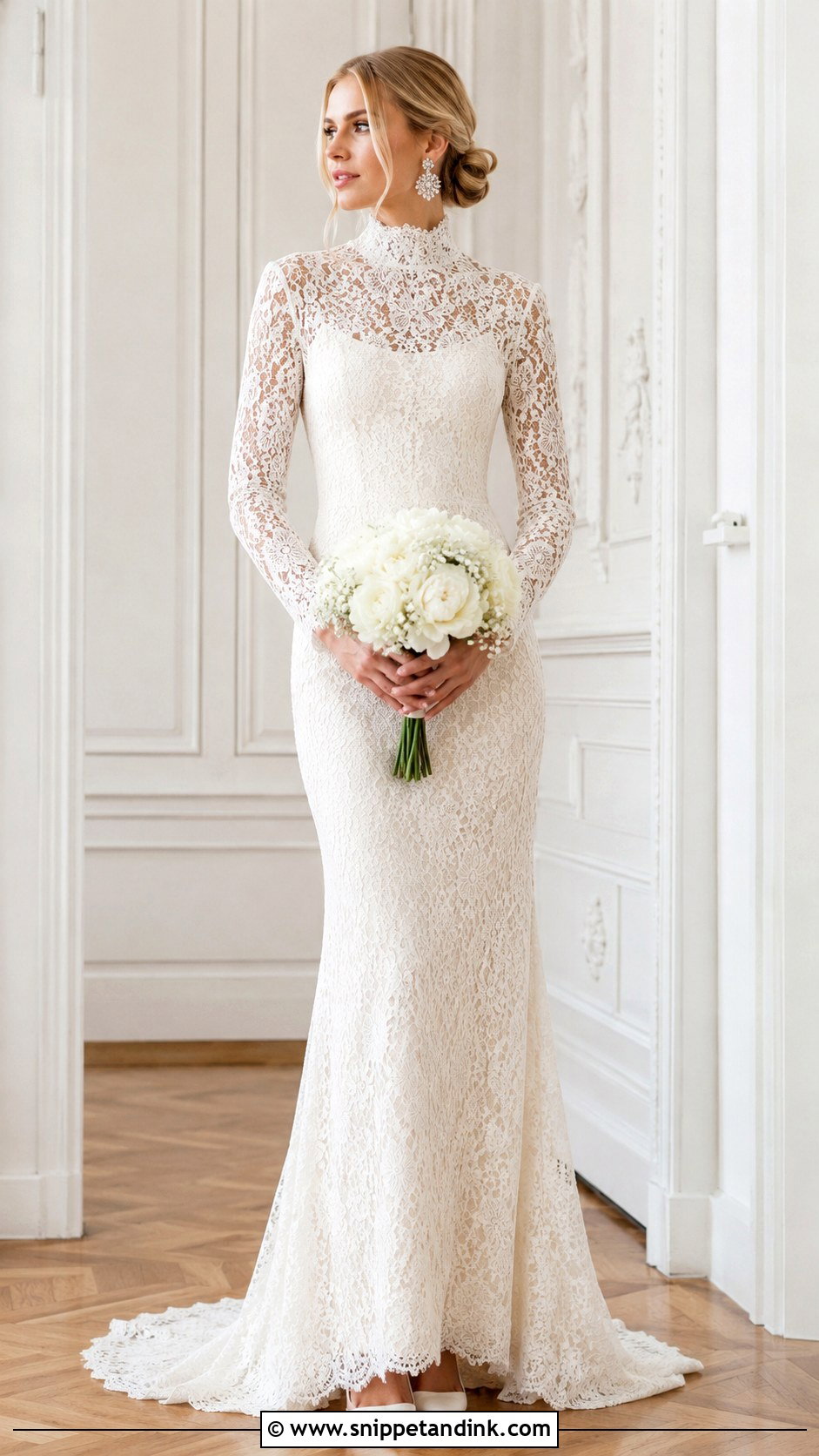
High necks give presence without revealing much. Sheer lace, crepe or soft satin with clean lines looks right now. Statement earrings, a low bun and pointed heels; skip the necklace. If the gown has long sleeves, choose a lighter veil; sleeveless, a long veil adds softness. The collar needs a finger’s width of space at the throat. Tighter than that and you will feel it every time you swallow, and swallowing is something you do constantly when you are nervous. Formal and winter weddings suit it.
13. Halter Bride Dress
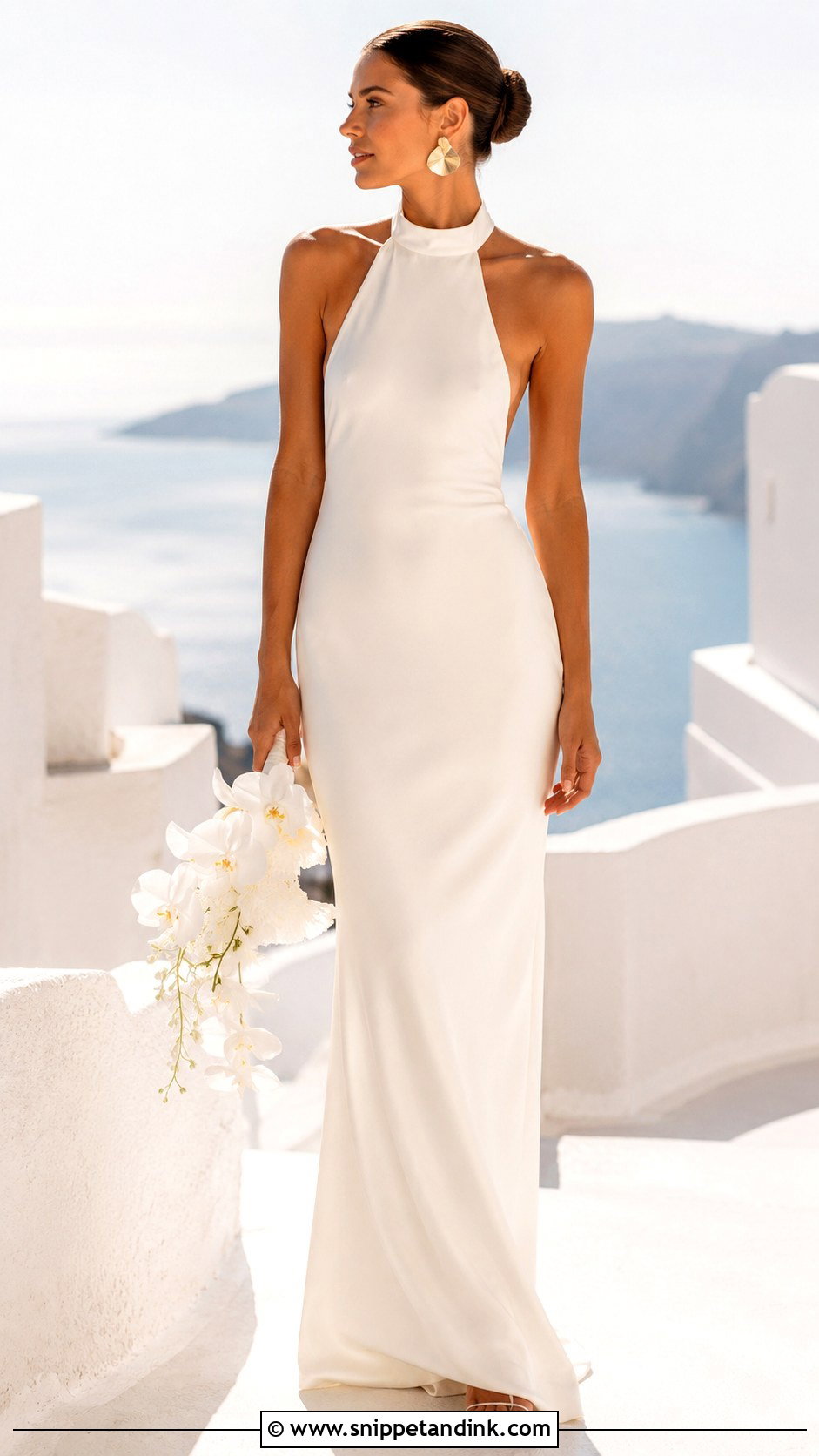
Halters show off the shoulders and the back, so they suit brides with strong shoulders and good posture. Satin, crepe or beaded fabric works, and a column skirt with an open back and clean train is the current version. Strappy heels, sculptural earrings and a smooth updo. Skip necklaces. The neck tie carries weight, so for heavier fabrics I ask for a hidden band under the bust that takes the strain off the neck. Destination and modern venues suit its clean line.
14. Strapless Ball Gown Bride Dress
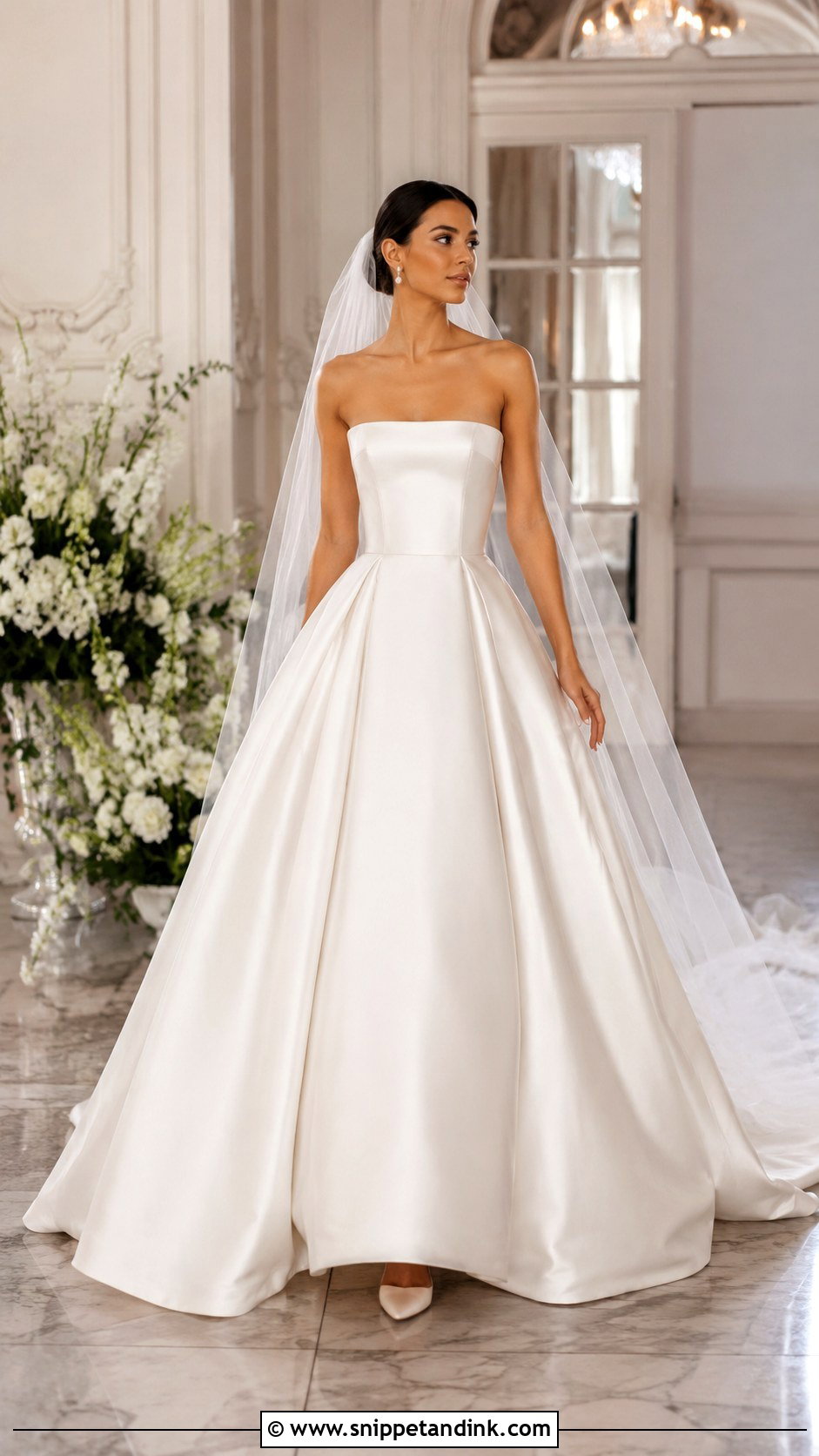
The strapless ball gown is the grand-entrance classic. Structured satin, organza or mikado holds the shape of the skirt, and a cathedral veil, pearl earrings and pumps under the hem complete it. The bodice has to grip without squeezing. I check it by having the bride bend to pick something up, because a strapless bodice that slips at that moment will slip all evening. Internal boning and a waist stay usually solve it. A simple bouquet lets the skirt and neckline lead.
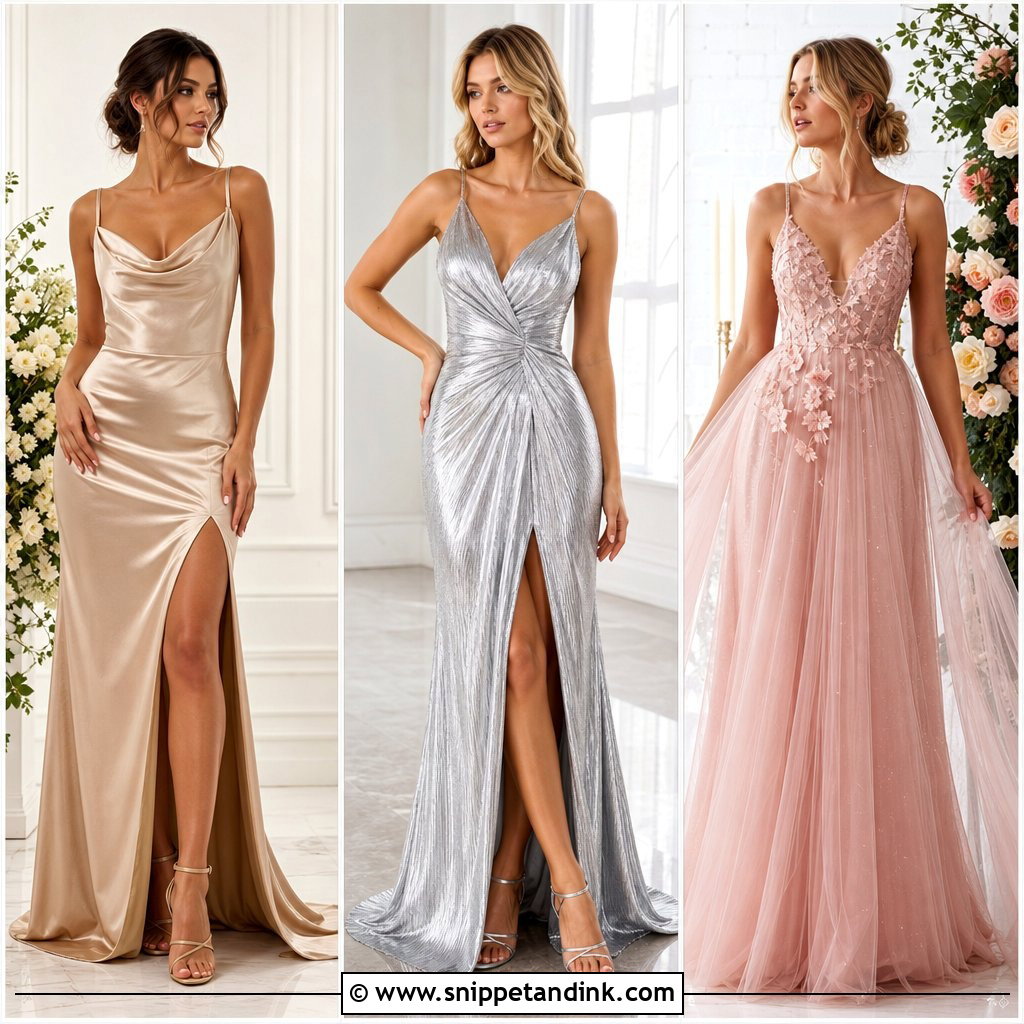
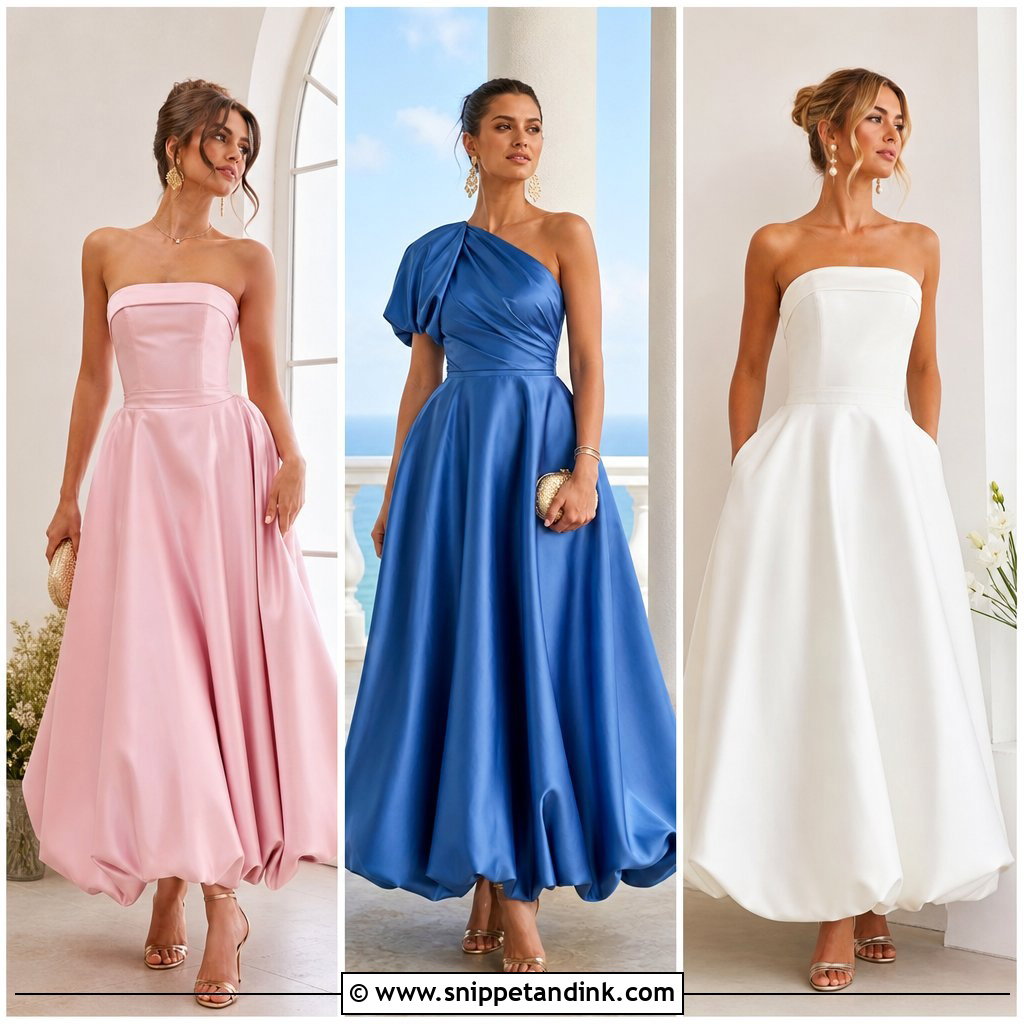
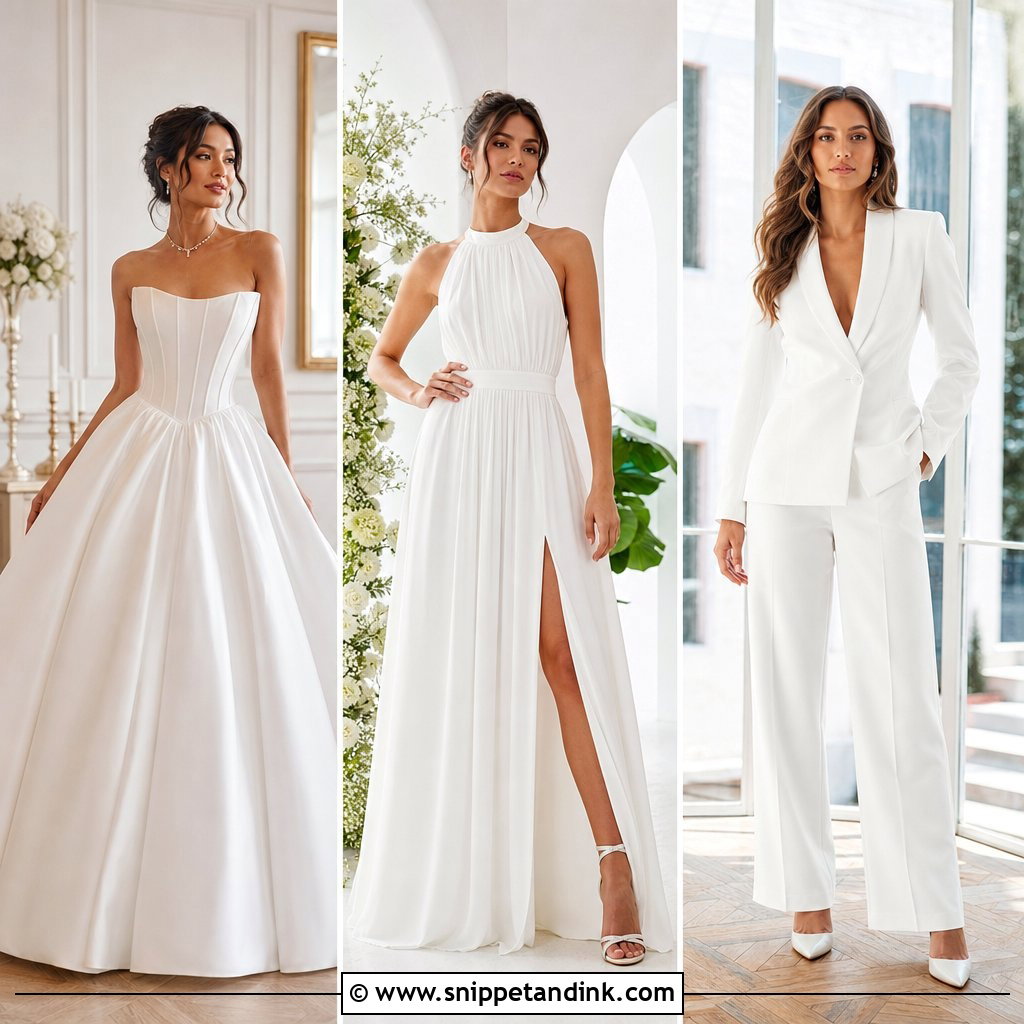
15. A Line Bride Dress
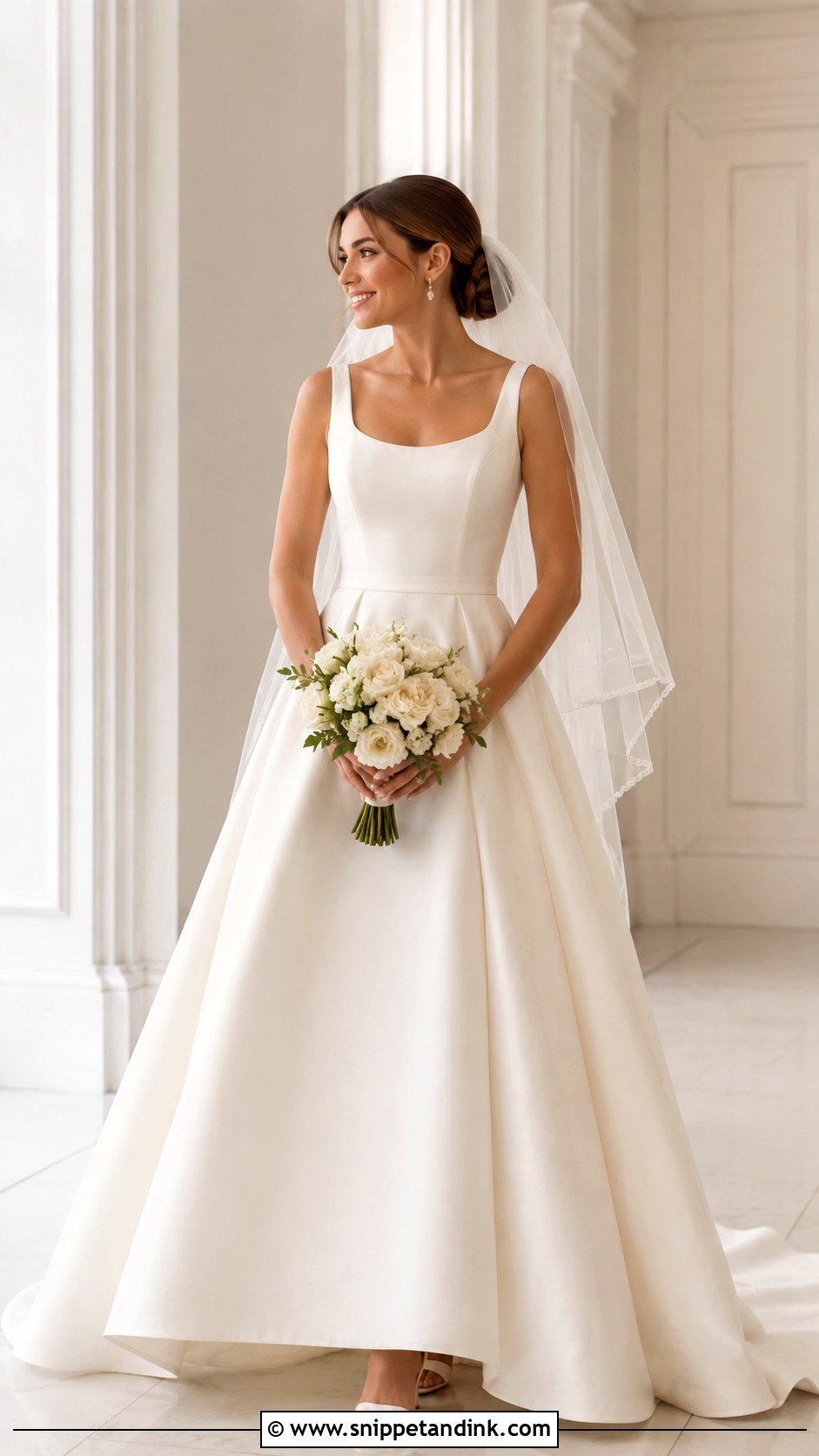
The A-line suits the widest range of brides I dress, which is why I start most appointments with one. It fits through the bodice and widens gently from the waist, shaping without clinging. Square necks, corset details, lace appliqués or plain satin all sit on it well. Classic heels, a fingertip veil and delicate earrings. It walks, sits and dances easily and works from beach to ballroom. If you have no idea what you want, an A-line in a fabric you love is the safest place to begin.
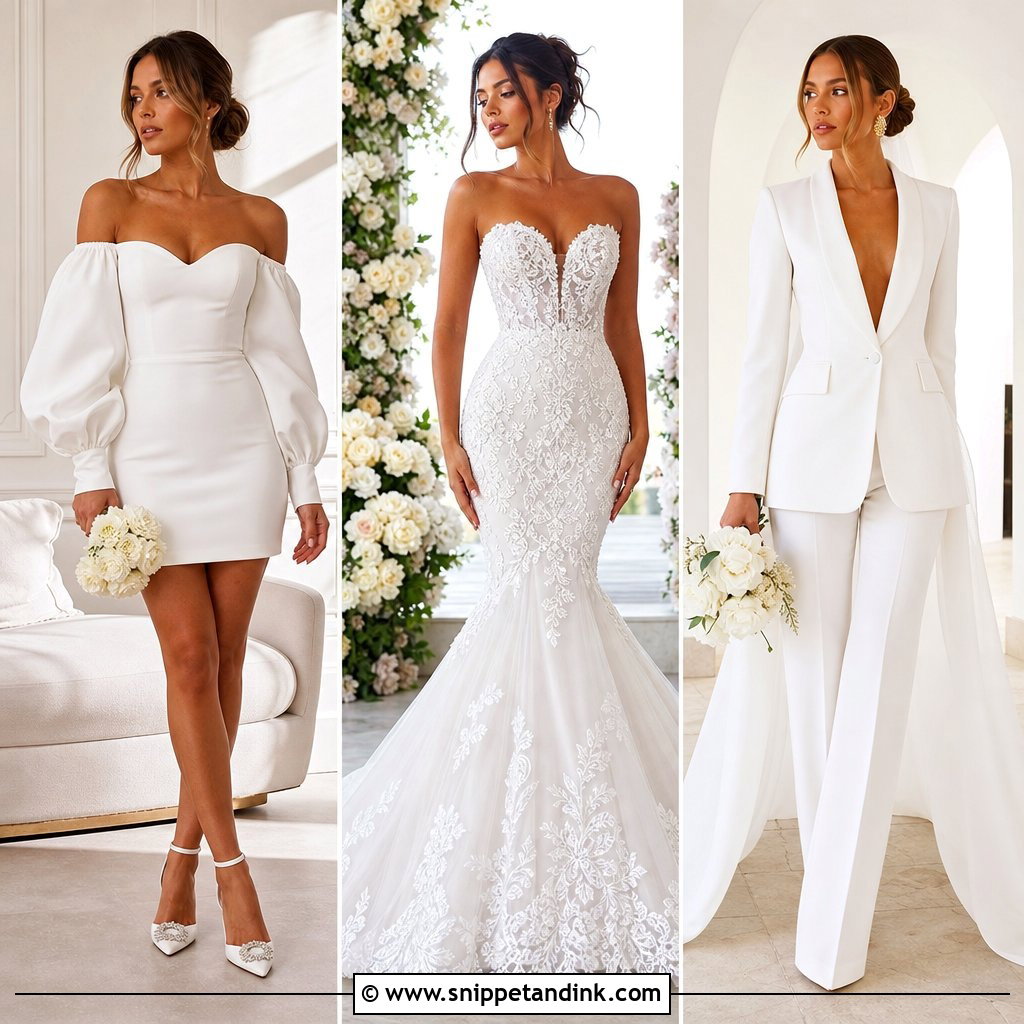
16. Mermaid Bride Dress
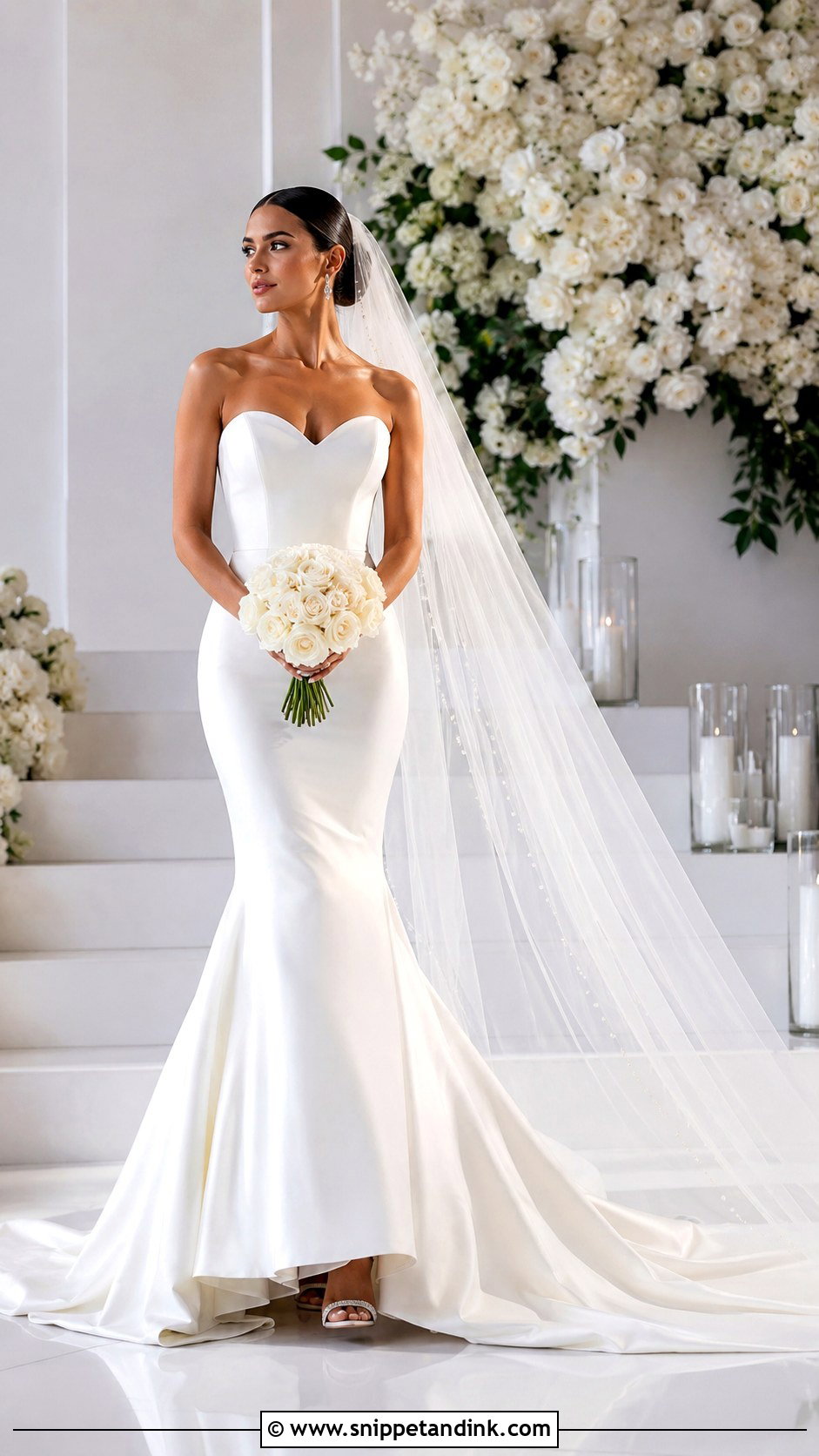
The mermaid hugs the bodice, waist and hips, then flares near the knee or lower thigh. Where the flare starts changes everything: a knee flare is dramatic but restricts stride, while a lower-thigh or trumpet flare lets you walk and climb steps more easily. Crepe, lace or satin with clean seams and a strong train. High heels, drop earrings and a long veil balance the fitted line. Do a stair test at the fitting if your venue has steps.
17. Sheer Sleeve Bride Dress
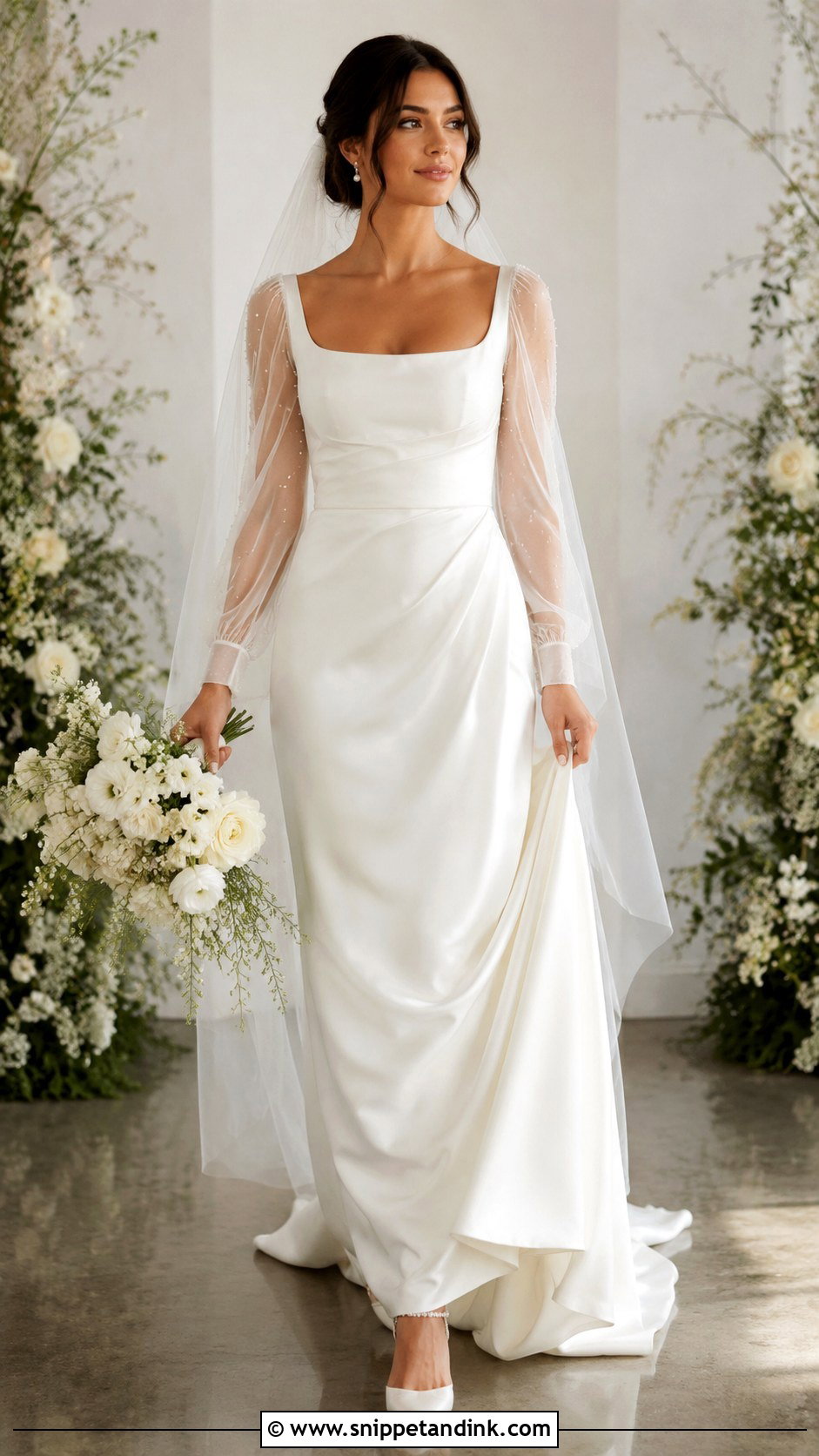
Sheer sleeves give coverage without weight, dotted with pearls, lace appliqués, small beads or fine embroidery. A clean bodice keeps them as the detail. Satin heels, pearl earrings and a soft veil, with bracelets kept minimal so the sleeve stays visible. Sheer tulle shows makeup and fake tan transfer more than any other fabric, so I ask brides to apply body products the night before rather than the morning. Spring and autumn ceremonies suit it best.
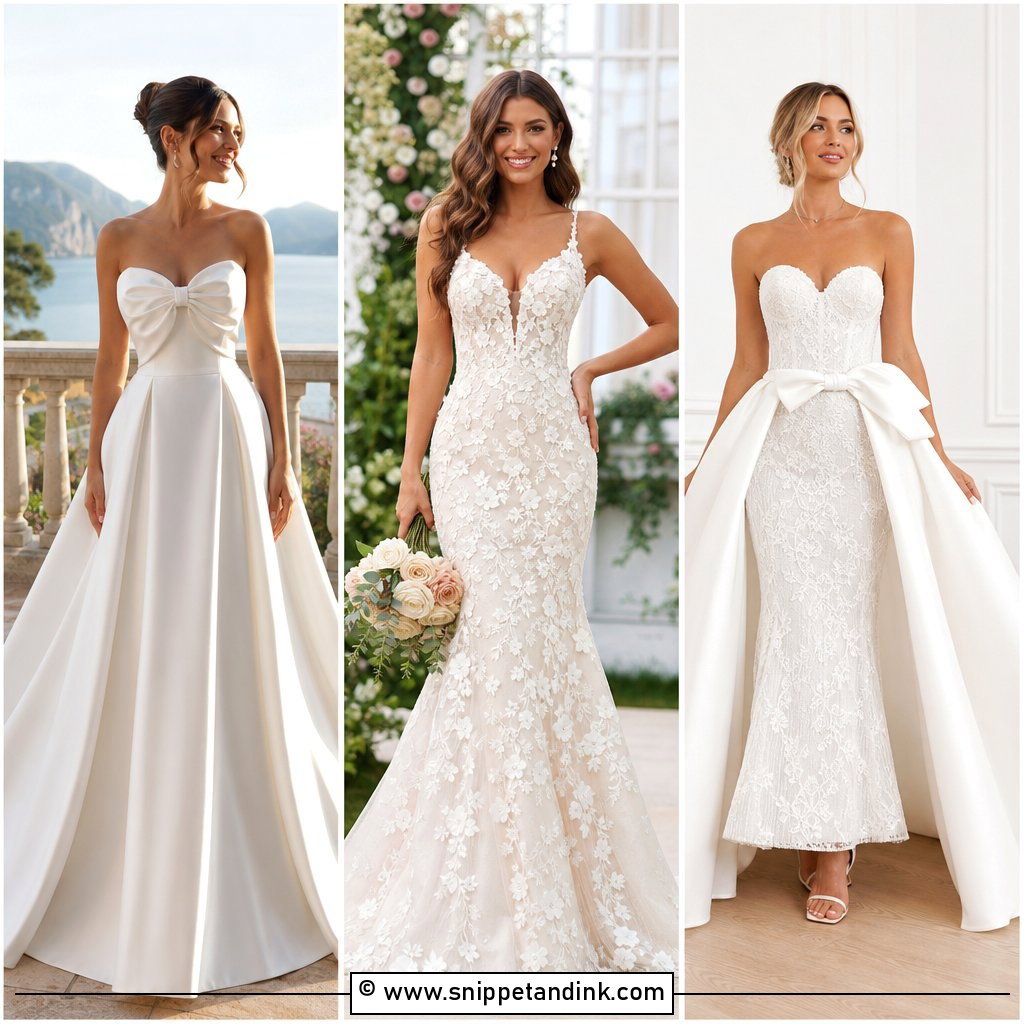
18. Detachable Overskirt Bride Dress
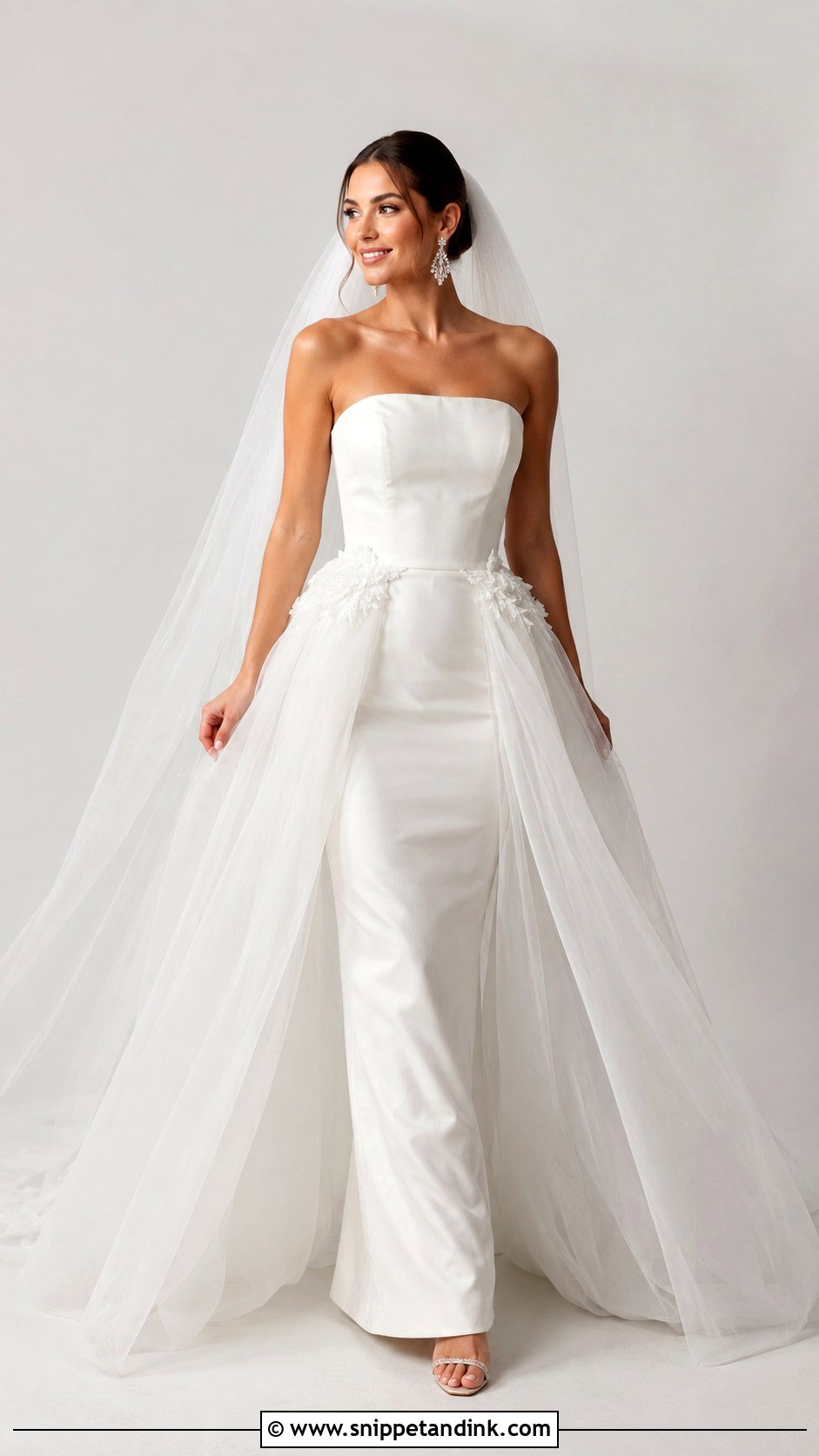
A detachable overskirt bride dress gives you two looks without paying for two gowns. With the skirt on, the ceremony feels grand; remove it and the reception look is lighter. Choose a fitted column, sheath or mini base with a satin or tulle overskirt. Heels, a long veil for the ceremony, statement earrings later. The base dress must look finished on its own, so check its hem and seams as carefully as the overskirt. Practice the removal with whoever is helping you.
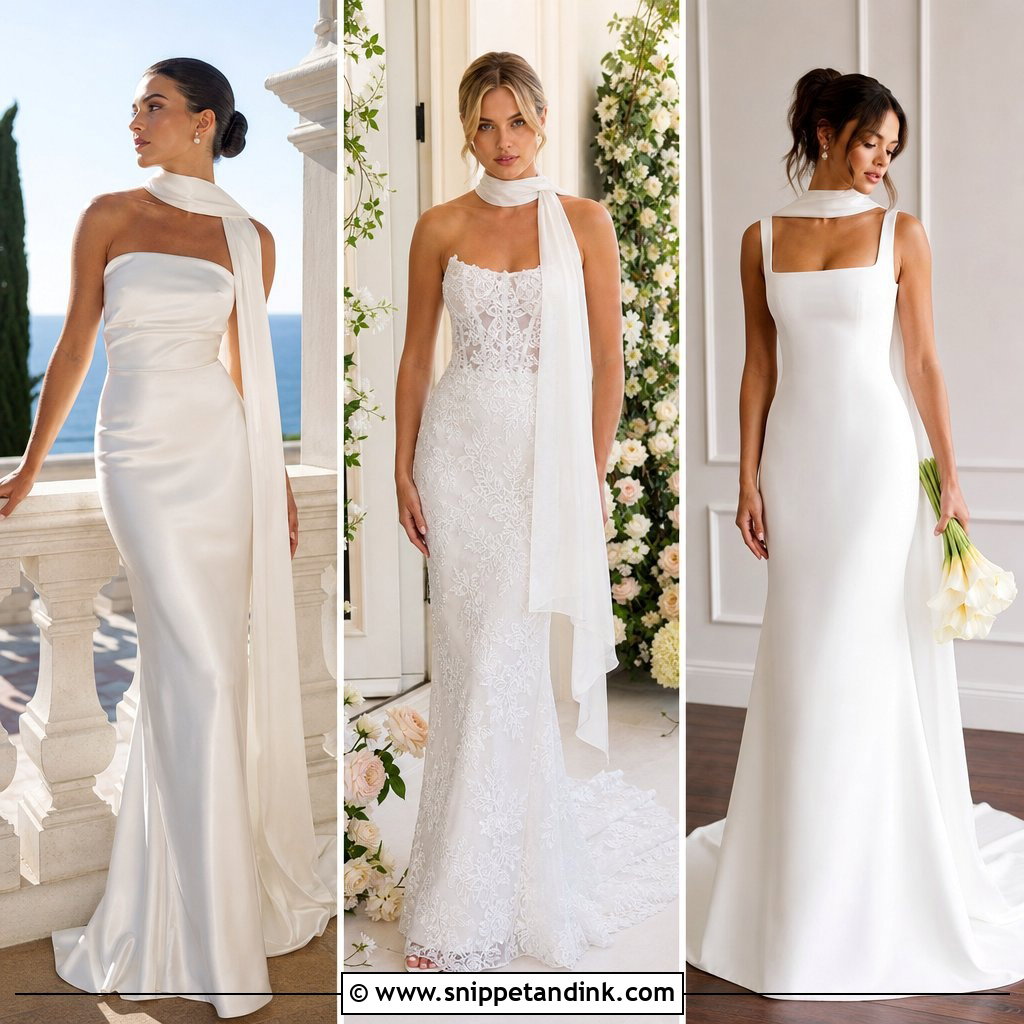
19. Cape Bride Dress
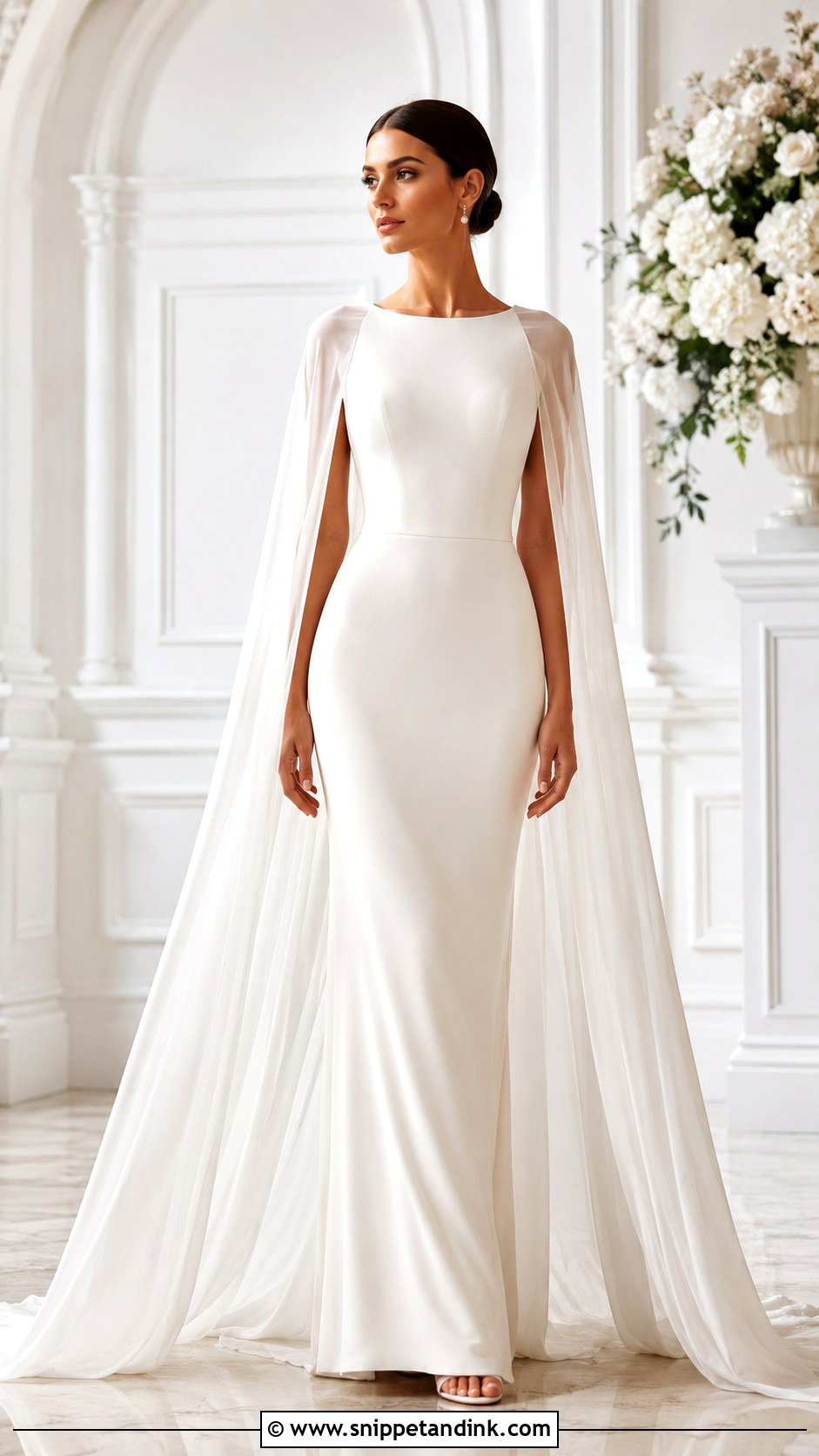
A cape can replace the veil entirely and adds coverage on a cool evening. It can attach at the shoulders, neckline or back; shoulder attachments move most naturally when you walk. A sleek crepe or satin gown with a sheer, pearl or lace cape suits most venues. Simple heels and minimal jewelry let the cape move. Watch its length when you sit, as long capes get trapped under you and pull at the neckline. Ask for a wrist loop if it trails.
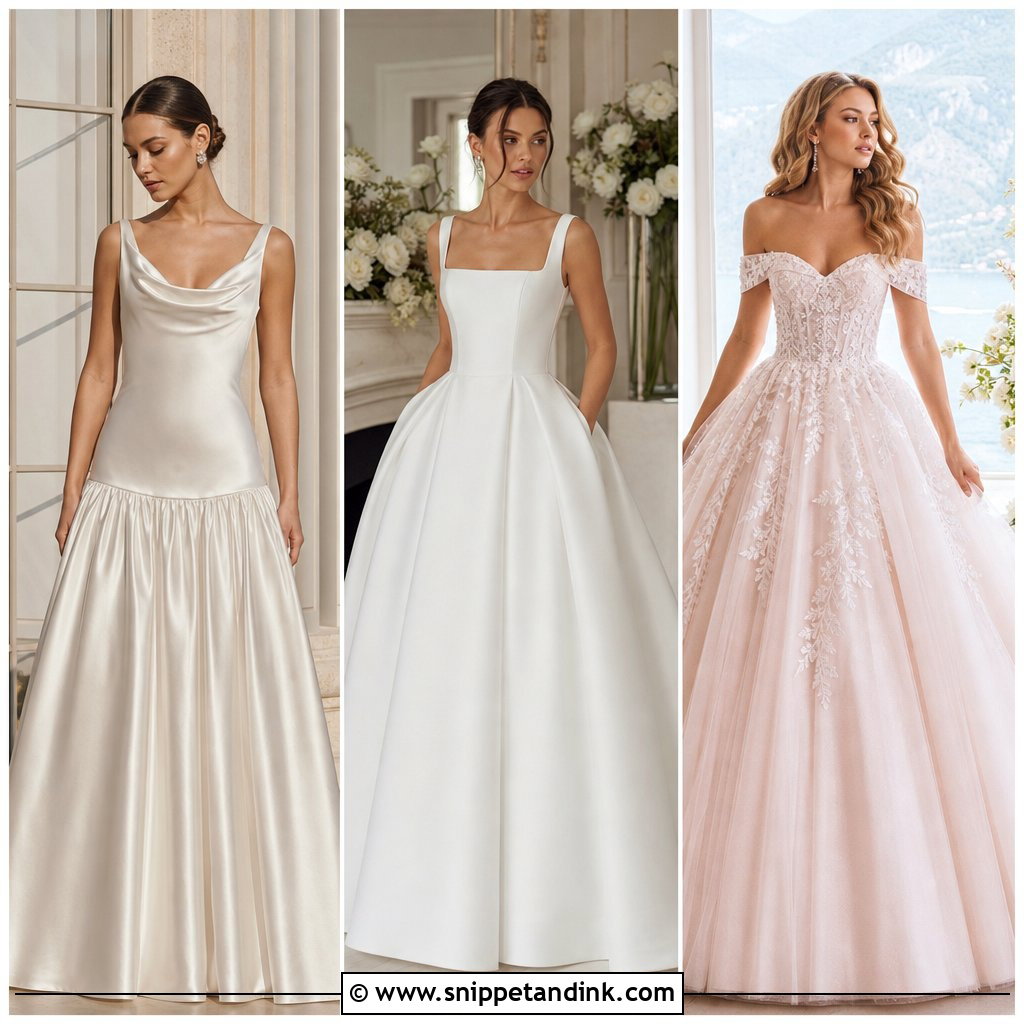

20. Mini Bride Dress
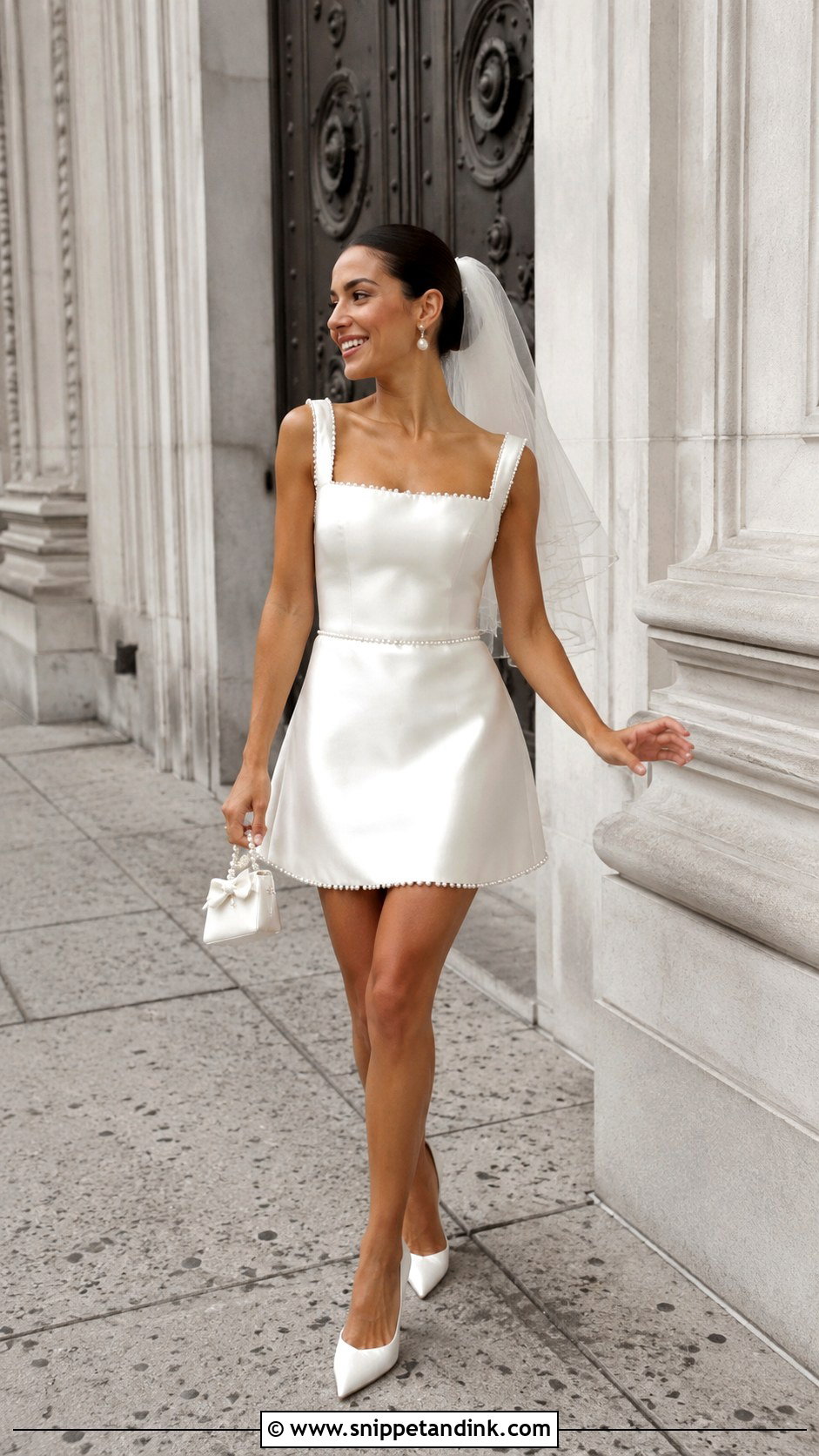
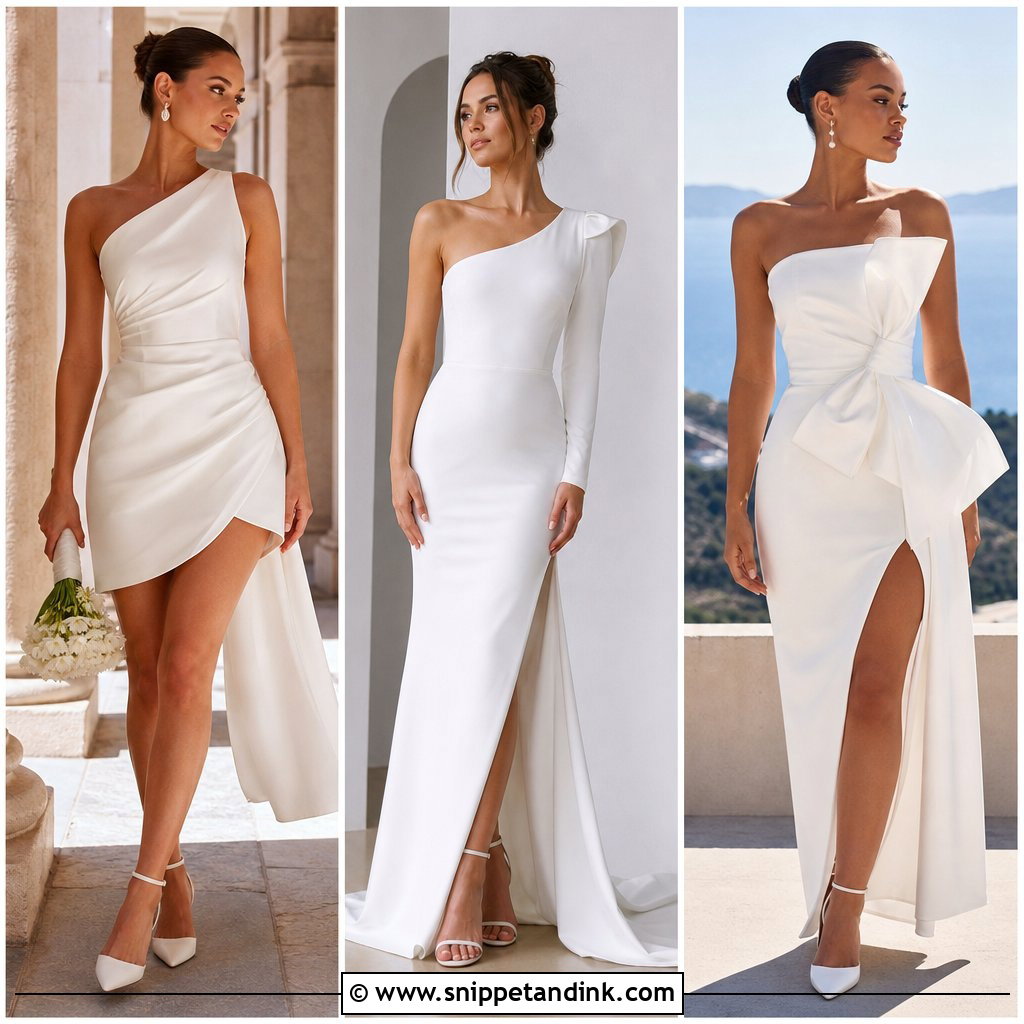
A mini works for a courthouse, elopement, rehearsal look, or reception change, and it reads bridal through structure and fabric. Satin, lace, pearl trim, bows or sharp tailoring. Pointed pumps, sheer tights if the weather calls for them, pearl earrings and a small bag. Add a short veil or hair bow. I hem minis while the bride sits, so the length stays comfortable for photos on a bench or steps.
21. Tea Length Bride Dress
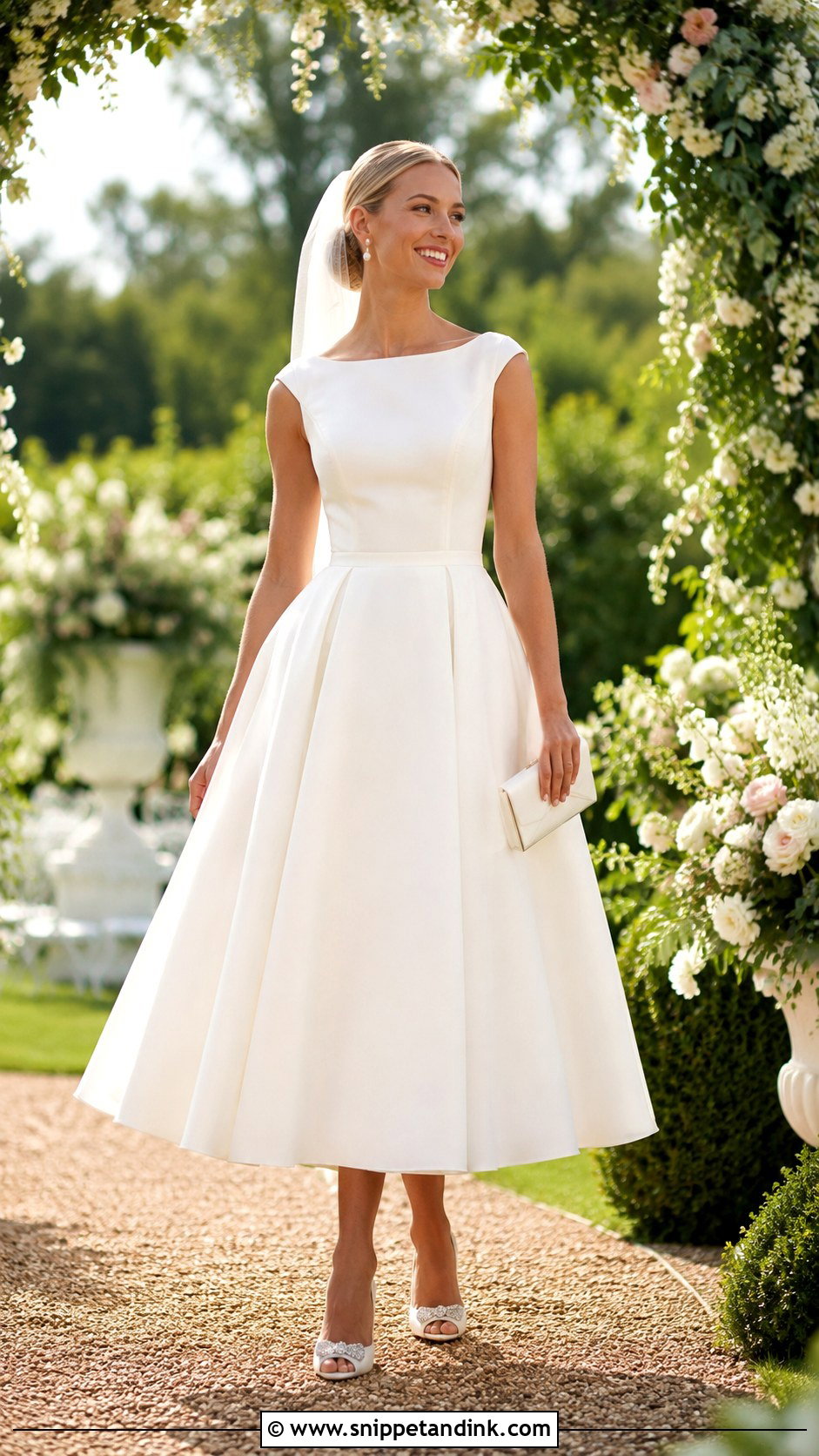
Tea length falls between knee and ankle and has a lovely movement to it. A fitted bodice, full skirt or square neck keeps it current. Because your shoes are visible, they can be the statement. Pearl earrings, a short veil and a structured clutch. Tea length needs a crinoline or soft net layer to keep the skirt from collapsing; ask whether one is included. It suits courthouses and garden ceremonies and is very easy to dance in.
22. Floral Embroidered Bride Dress
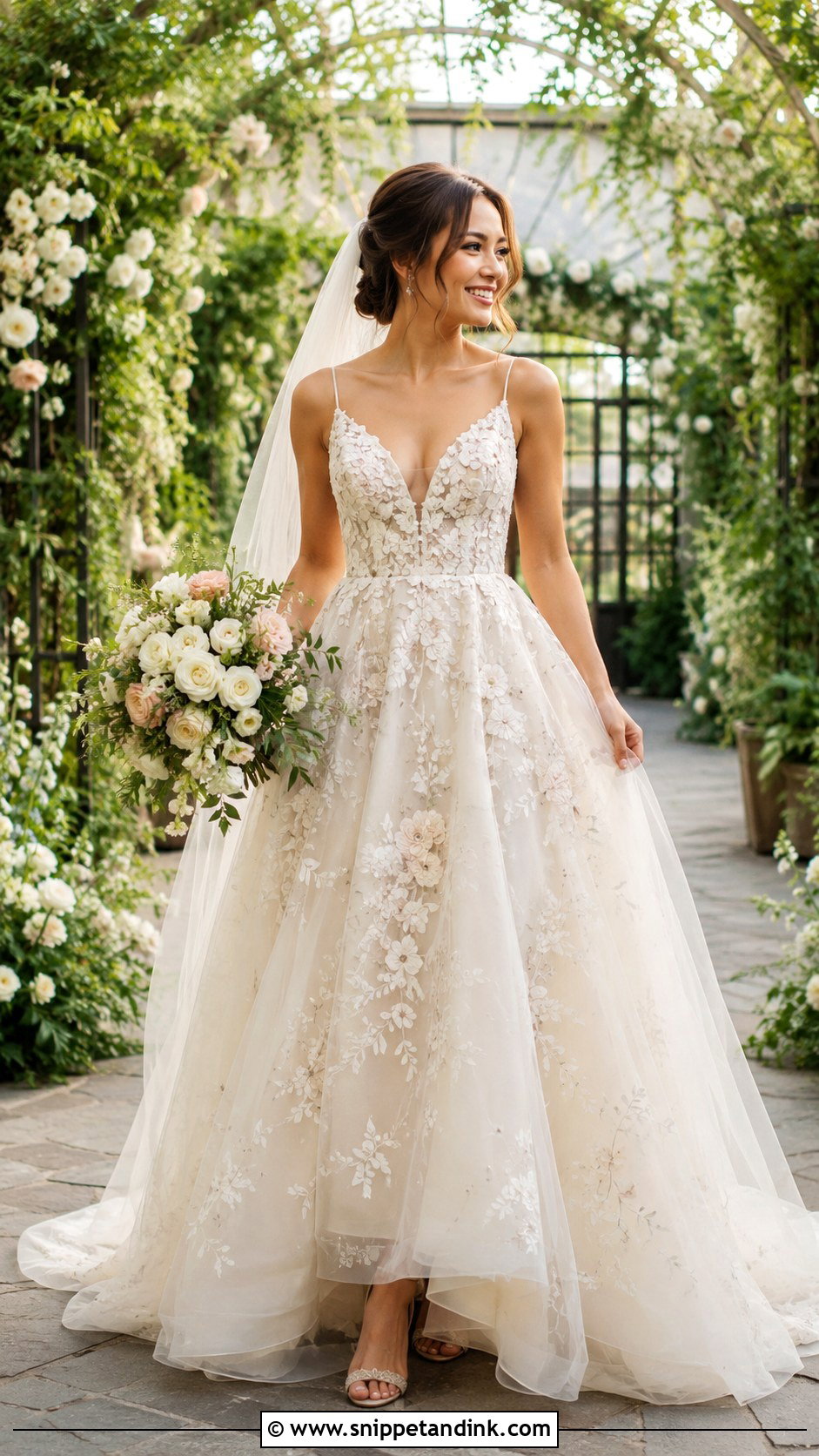
Embroidery gives florals depth that a print never can, which is what draws brides to it. Look for white, ivory, blush or pale blue thread on tulle, organza or lace; it adds texture and handmade beauty to the gown. Simple heels, delicate earrings and a loose bouquet that echoes the motifs. Colored thread on white tulle can look stronger under flash than in daylight, so ask to see the gown photographed both ways. Keep makeup fresh and accessories light.
23. Blush Bride Dress
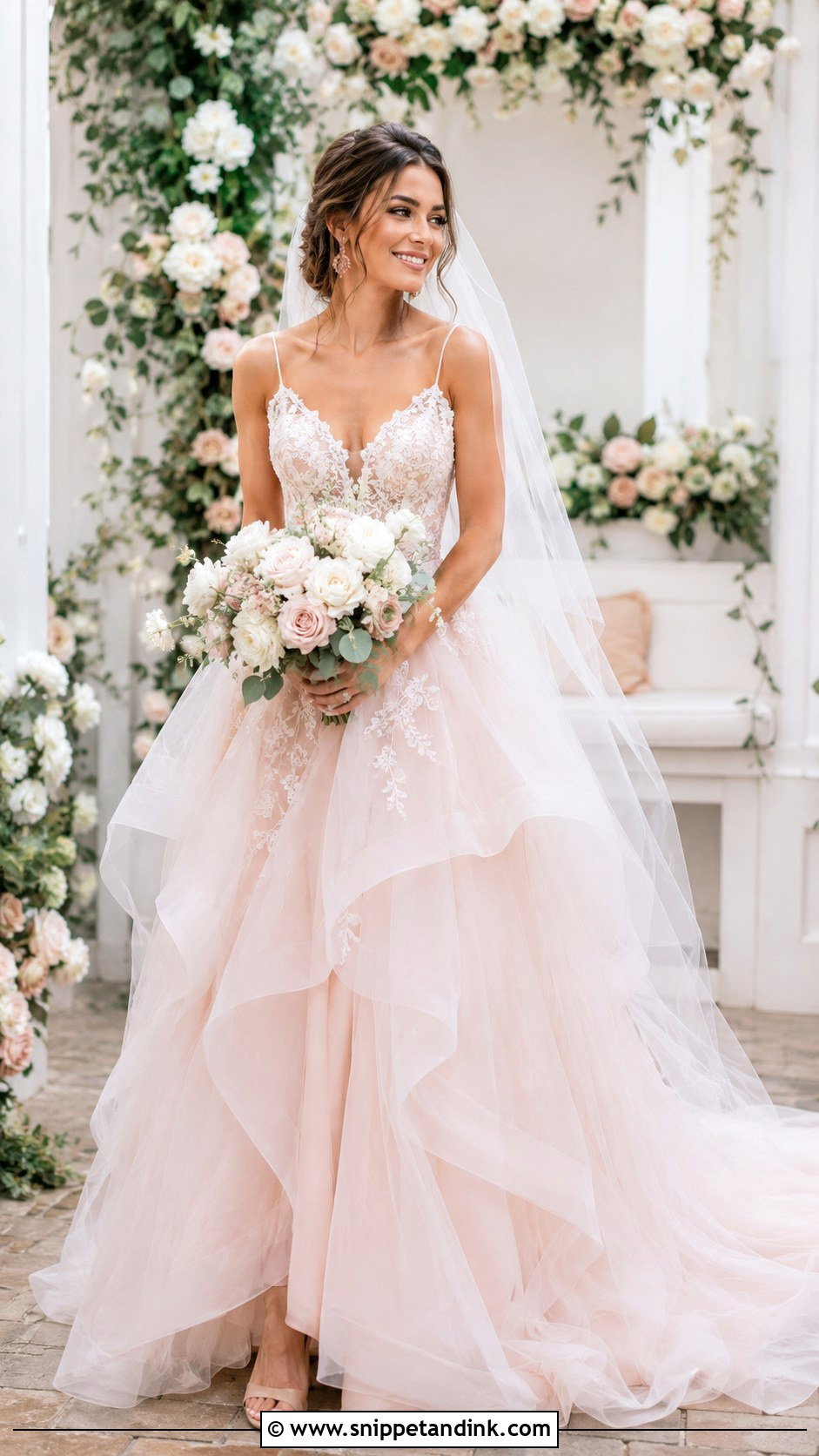
Blush gives color while staying close to tradition, and it is often the answer for brides who feel washed out in stark white. Tulle, satin, floral appliqué or layered organza all suit it. Nude or ivory heels, rose-gold jewelry and a sheer veil, with white, blush and soft green in the bouquet. Blush varies hugely between designers, from barely-there to clearly pink, so look at it next to your skin in daylight. The right blush warms your face; the wrong one makes skin look sallow.
24. Vintage Inspired Bride Dress
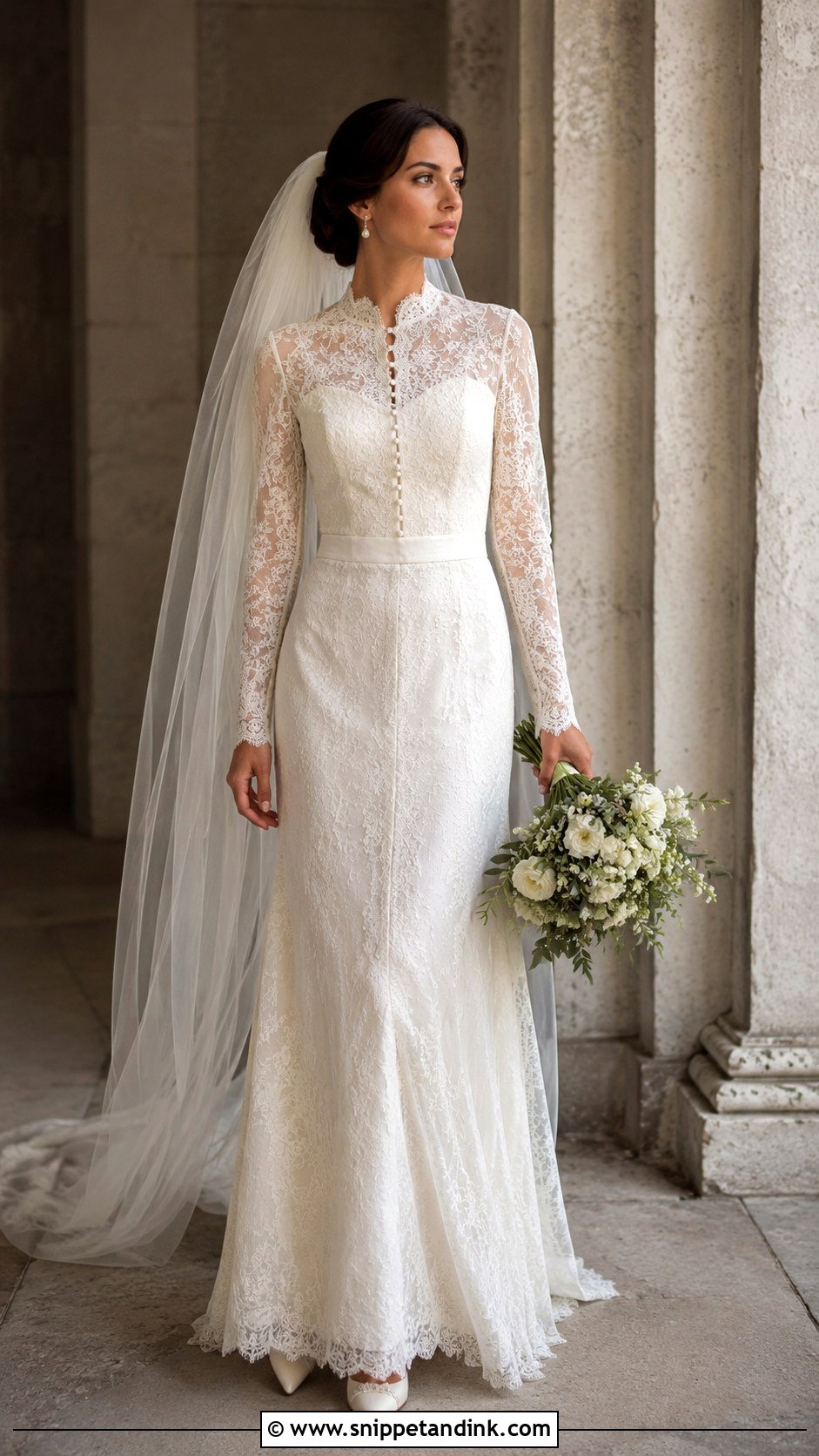
Mix one nostalgic element with otherwise modern styling and vintage-inspired looks right instead of dressed up. Lace sleeves, a basque waist, a high neck, satin buttons or a soft tulle skirt are all options; choose one or two. Clean heels, simple pearl earrings and a softly gathered veil. Avoid costume accessories. If you are altering a family gown, have a specialist assess the fabric first, because older satin and lace can be weakened at the seams and need reinforcing before they are let out or taken in.


25. Reception Bride Dress
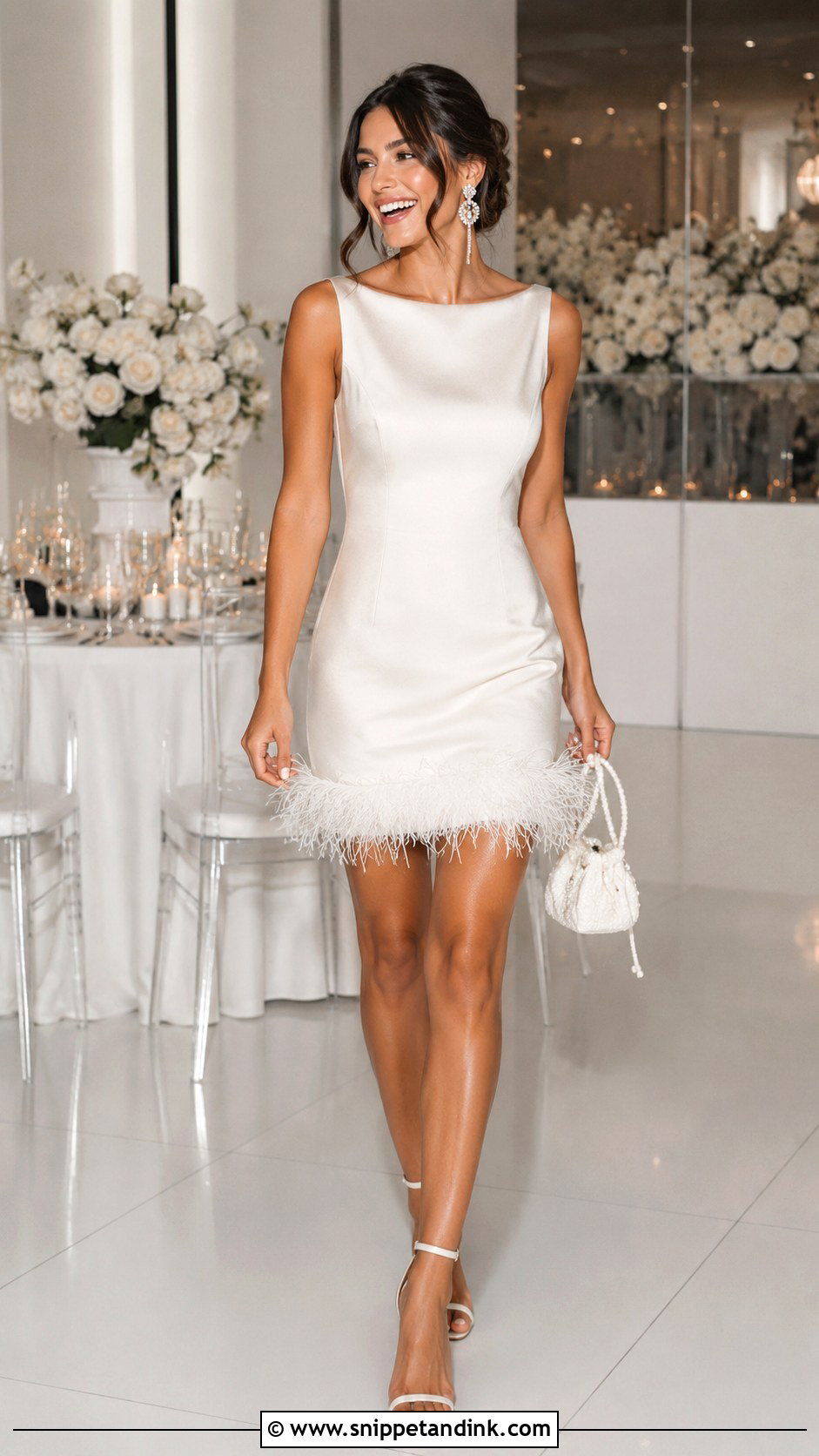
The reception dress is no longer an afterthought. Brides now plan it as the second chapter of the wedding look. A mini, slip, feather-trim dress, pearl dress or sleek column all work, ideally linked to the ceremony gown by fabric, color or detail. Comfortable heels, statement earrings and a small bag. If the ceremony gown is dramatic, go simpler; if it is minimal, this is the moment for sparkle. Have your hairstylist plan how the veil comes out, so the change does not leave pin marks in the style.
Bustles, Bathroom Breaks and Other Things Nobody Rehearses
Brides rehearse the walk down the aisle and almost nothing else. These are the practical moments I make every bride run through at her last fitting.
The bustle
An over bustle lifts the train with hooks or buttons onto the back of the skirt; an under or French bustle tucks it beneath with ribbon ties. Over bustles are quicker; French bustles hide better on satin. Whoever will do it on the night should practice at the fitting, with the seamstress watching, and take a short video on their phone.
Bathroom trips
Full skirts are easiest worn backward on the toilet, facing the cistern, with a friend gathering the skirt in front. Jumpsuits and corsets need a plan for the fastening. It sounds silly until you need it.
A small repair kit
- Safety pins and a needle threaded in ivory or white
- Double-sided fashion tape for necklines and straps
- A white chalk stick to hide small marks on white or ivory fabric
- Clear nail polish to stop a run in tights or a loose bead thread
- A clean white cloth for spills
Wear the Trend Once, Wear the Fit All Night
A trend is a starting point, not a requirement. Whether you love a dramatic basque waist, plain satin, a pearl-covered gown or a playful mini for the reception, the right dress suits both your setting and the way you dress every other day. Think about movement, photos, accessories, weather and how the gown feels after hours of wear. If any part of a dress feels like costume when you try it on, trust that feeling, and keep looking until it feels like you.
You'll Like These Ideas:





Leave a Reply