
This year’s bridal rails are split between two moods. On one side, sculpted structure: drop waists, basque points, mikado and organza. On the other, quiet ease, with bias-cut satin, sheer sleeves and convertible pieces that come off for the party. I spend most appointments helping brides work out which side they actually belong to, because the dress you admire online and the dress you’re comfortable in for twelve hours are often different. Each idea below covers the gown, the shoes and accessories that suit it, and the honest catch I’d mention before you buy.
Mikado, Organza or Crepe? How Each Fabric Behaves Over a Long Day
Half of this year’s dresses are defined as much by their fabric as by their cut, so it’s worth knowing how each one wears before you fall for a sample.
- Mikado: holds structure all day and resists creasing, but it’s heavy and warm. Better for cool months and indoor venues.
- Organza: crisp, light and voluminous. It wrinkles sharply if crushed in a car, so plan a steam at the venue.
- Crepe: matte, fluid and forgiving on the body. It doesn’t wrinkle much, though thin crepe shows lines underneath.
- Satin: shines in photos and drapes well, especially cut on the bias. Shows creases from sitting and every visible seam.
- Tulle: light and floaty, comfortable in heat. Snags on stone, jewelry and rough fabrics.
I ask brides to pinch the fabric of a sample hard for a few seconds and let go. If the crease stays, imagine that across your lap after the dinner.
1. Minimal Satin Wedding Dress
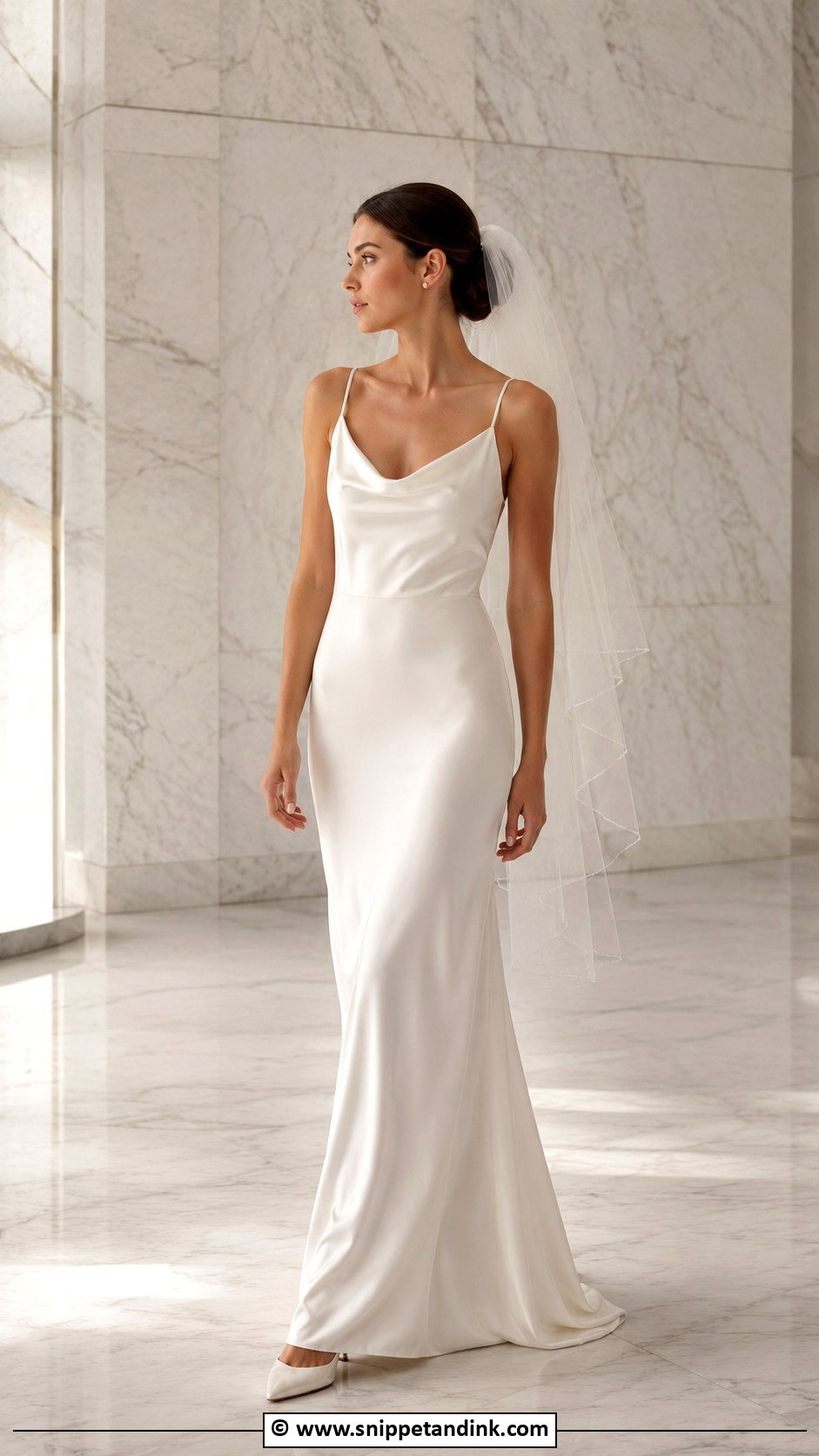
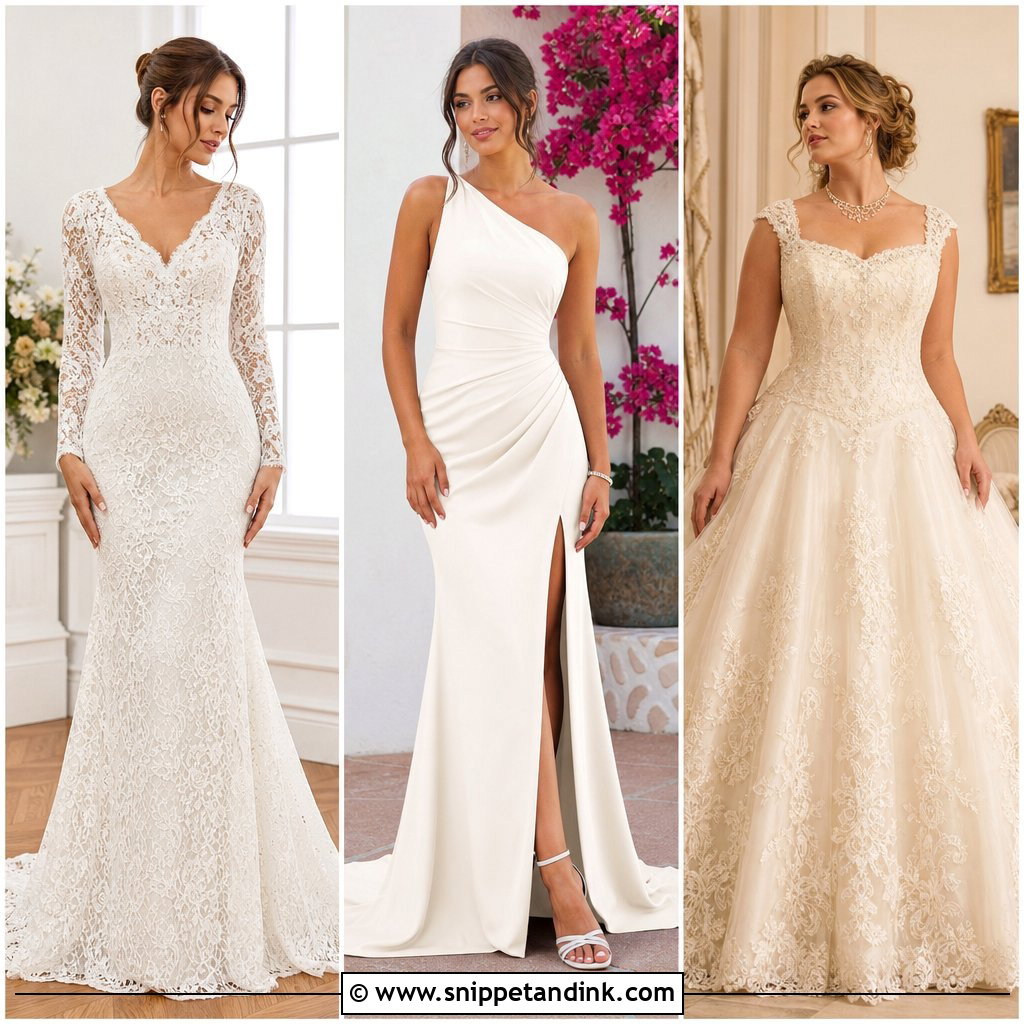
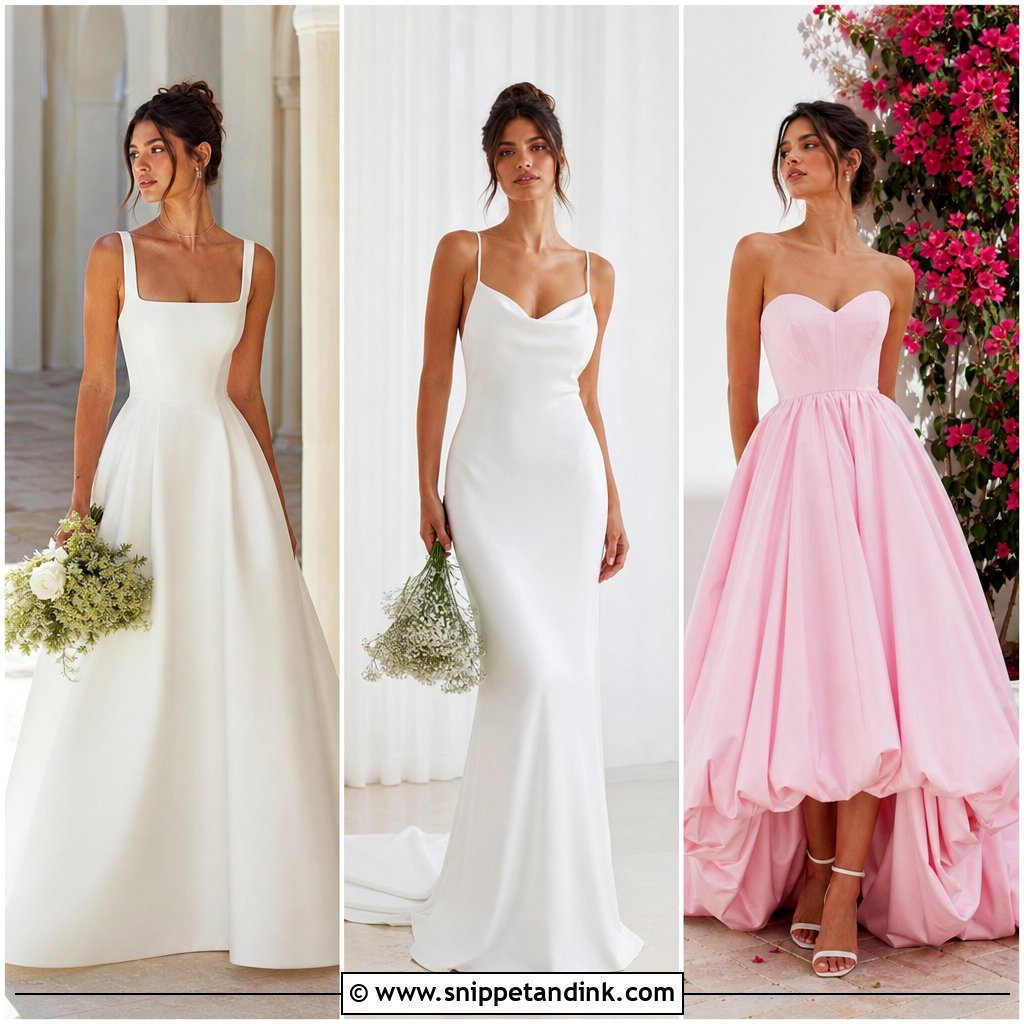
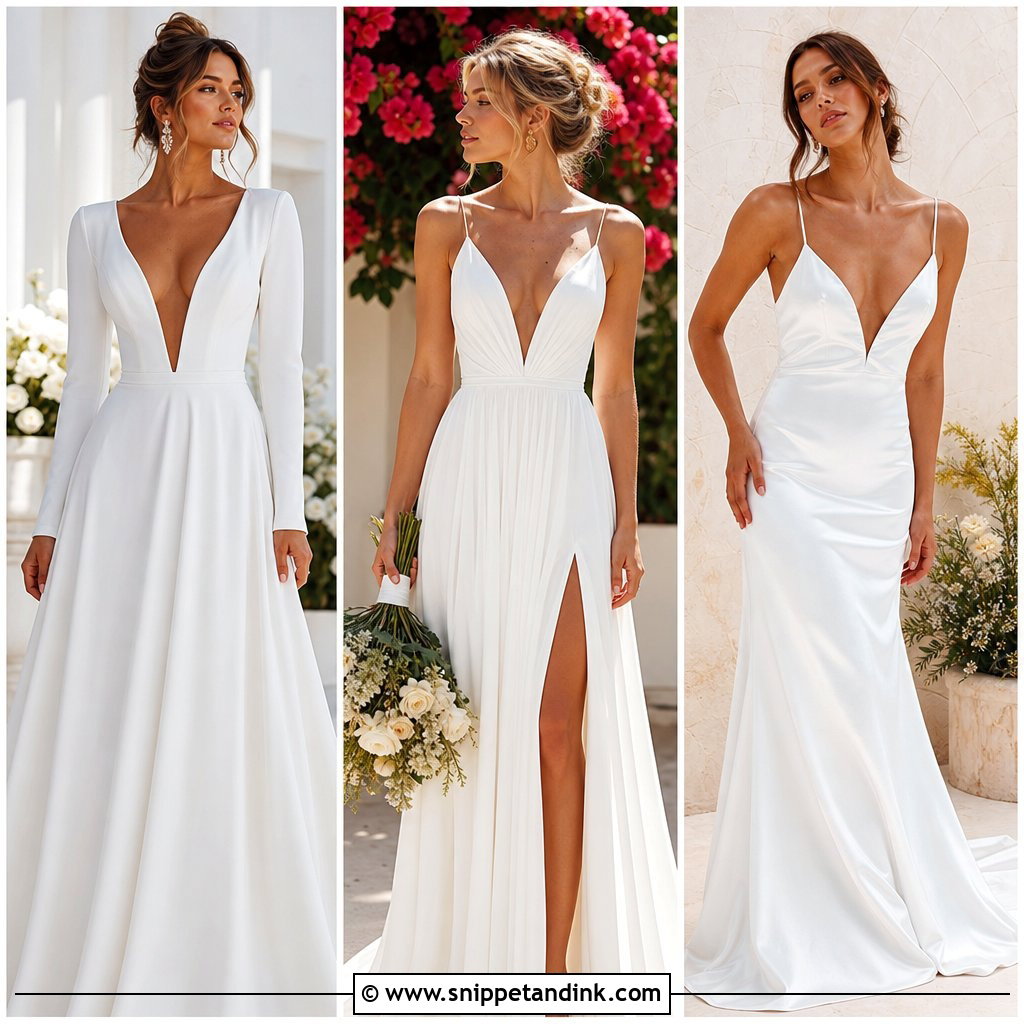
Plain satin hides nothing, which is both its appeal and its risk. A bias-cut or column silhouette in ivory or pearl white skims the body; the bias grain lets it drape, but it also shows every seam of your underwear, so smooth, edge-free pieces are non-negotiable. A low bun, pearl studs, a sheer veil and pointed slingbacks are all it needs. If you’d like more shape, a little ruching at the waist or a soft cowl neck gives it without losing the line. City venues and rooftops suit it best.
2. Lace Long Sleeve Wedding Dress
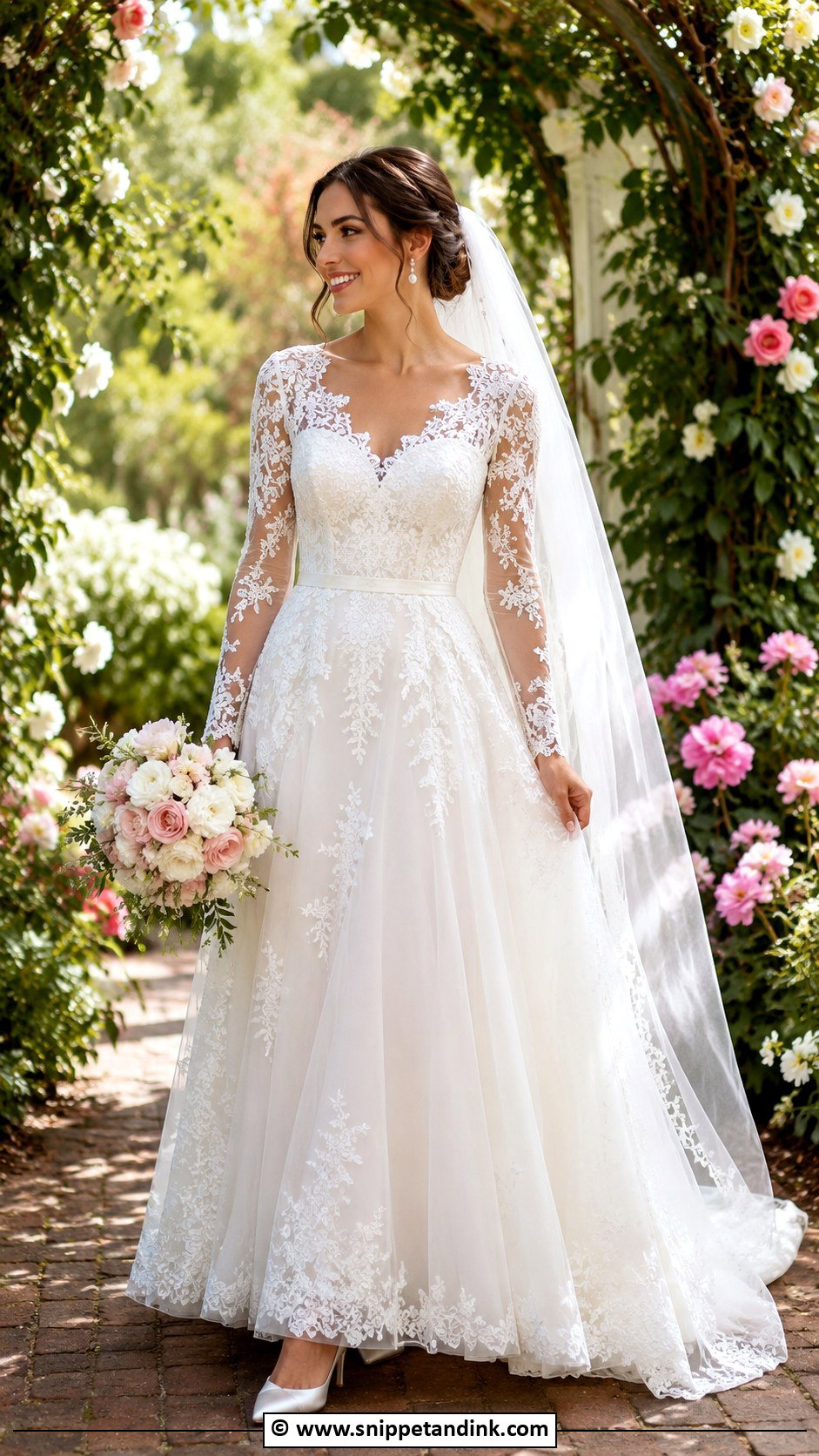
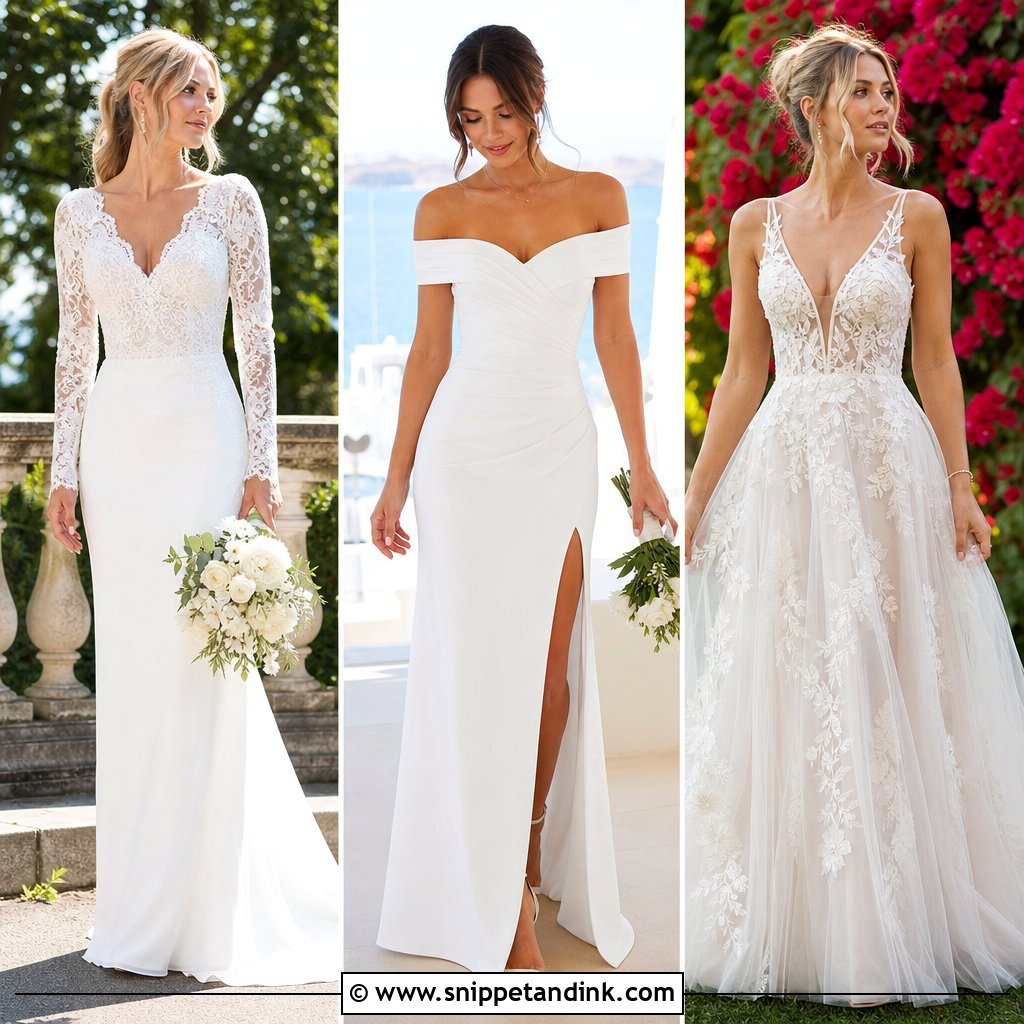
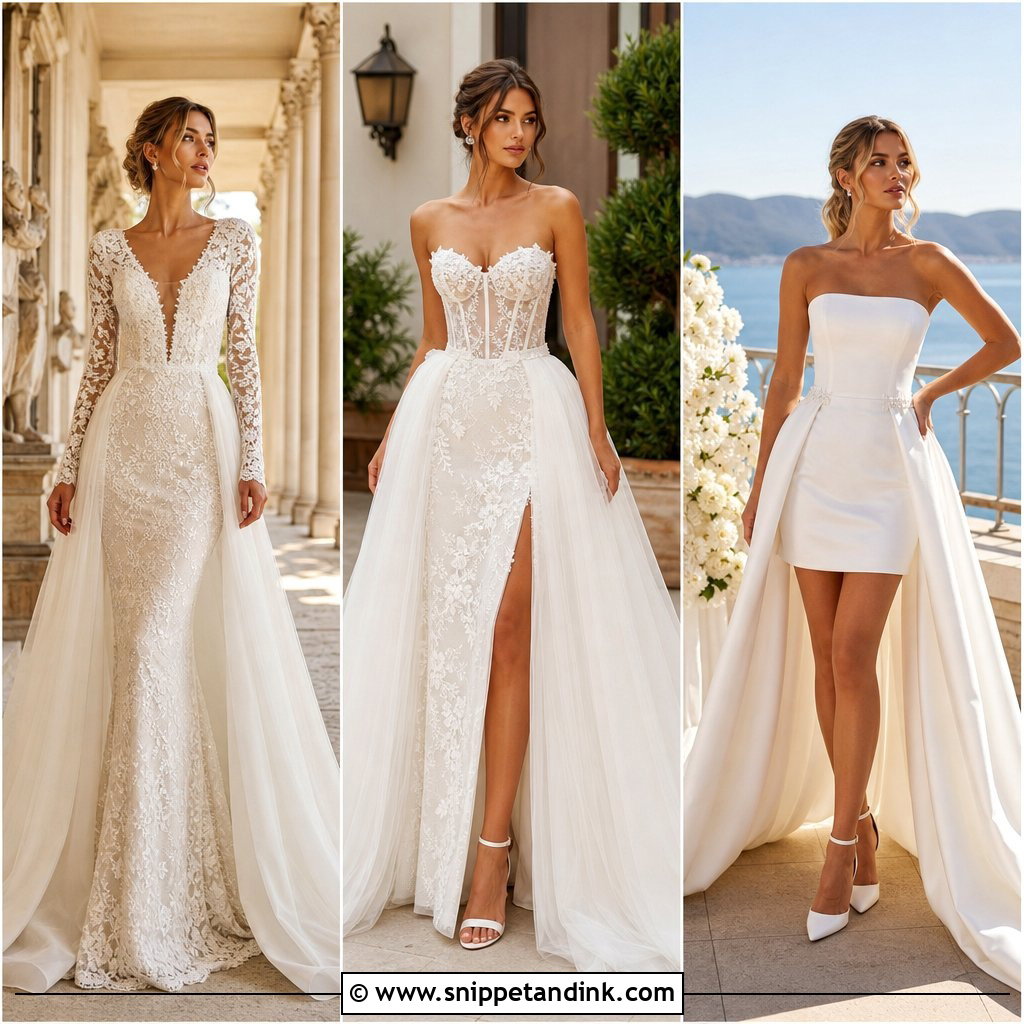
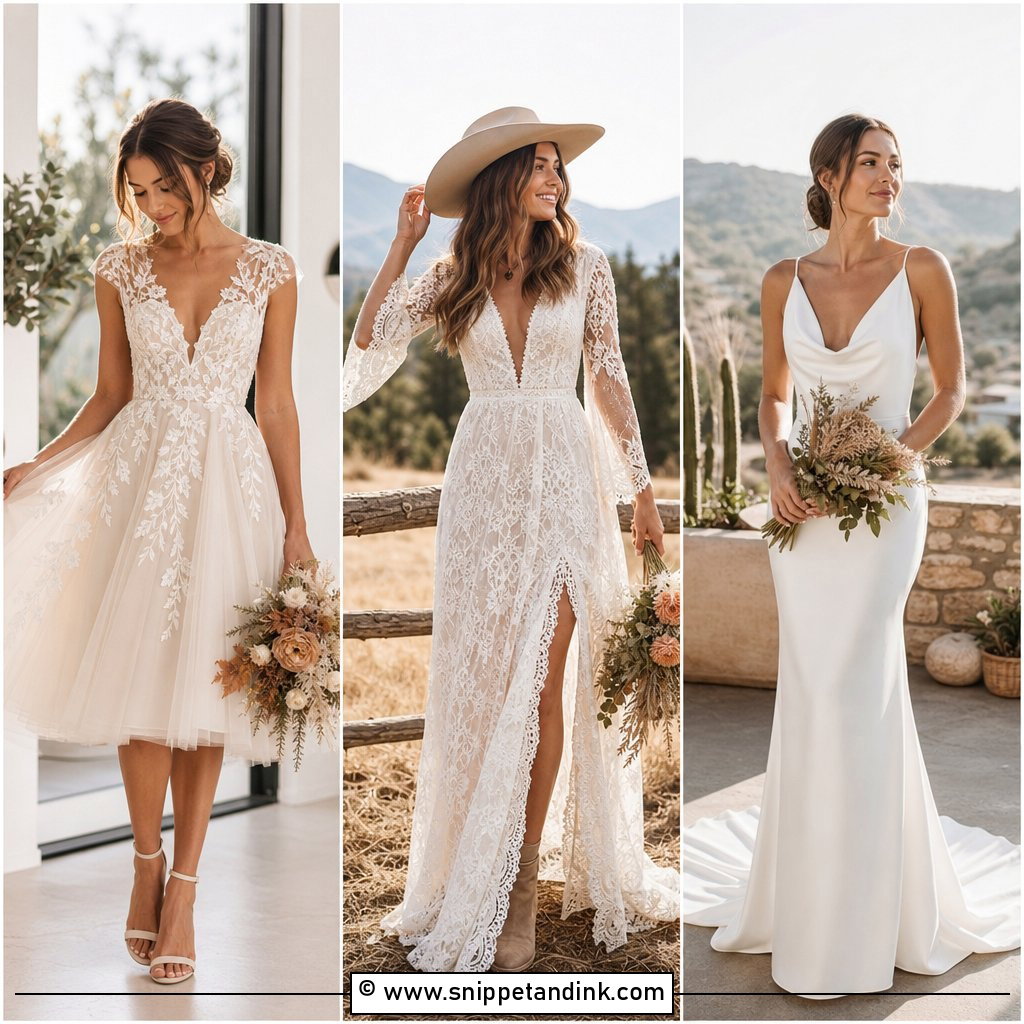
Lace sleeves give romance without weight, provided the lace is fine. Delicate floral lace with scalloped cuffs and a clean lining looks current; heavy corded lace on the arms can feel warm by the afternoon. Pearl drops, a smooth updo and a fingertip veil finish it. Petite brides tend to look best in a narrow A-line, while curvy brides often prefer a structured waist with a soft skirt. Lift your arms in the fitting room: tight lace sleeves restrict movement more than people expect.
3. Drop Waist Wedding Dress
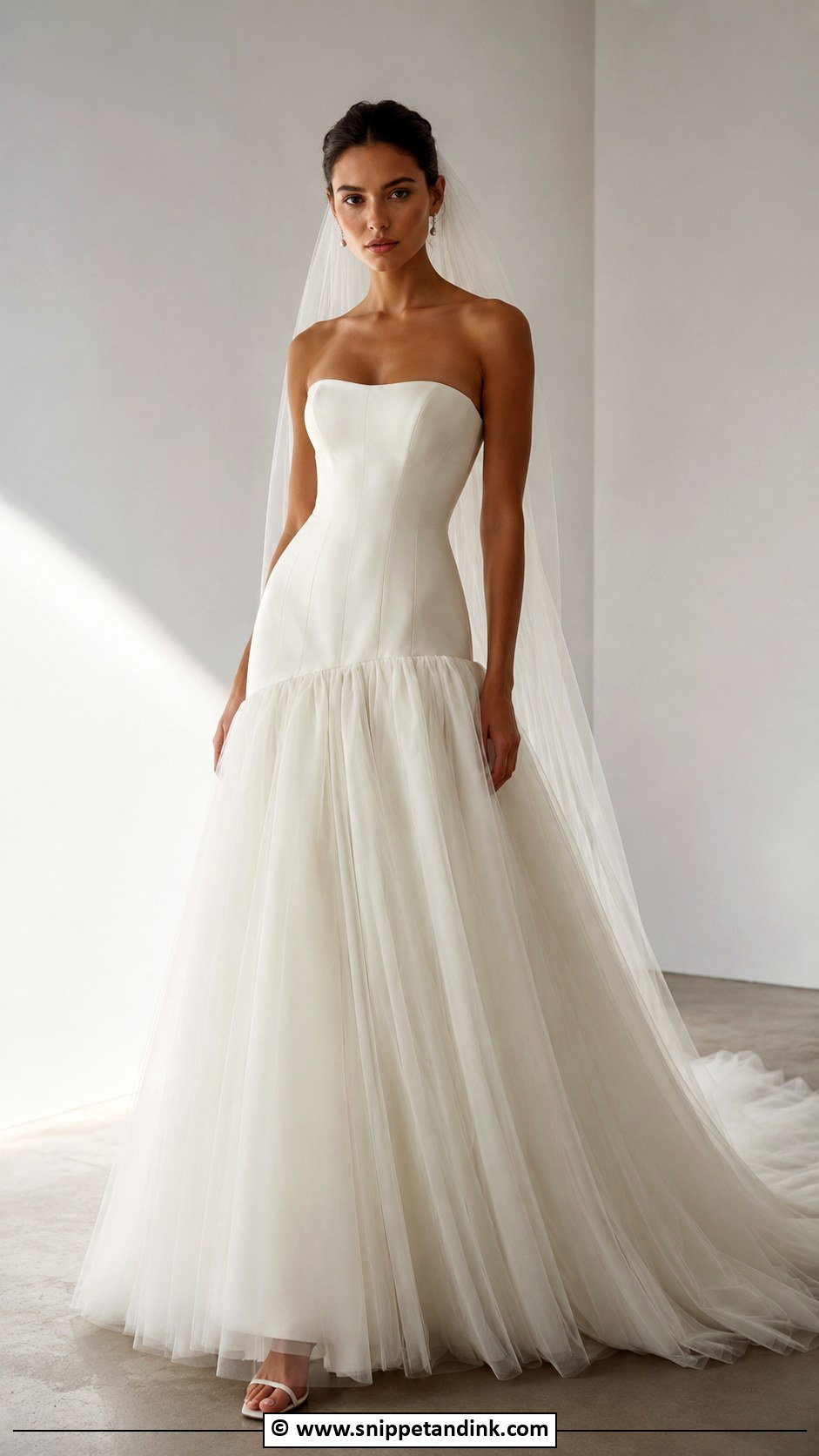
Drop waists are the shape I’ve been pulling most this year. The bodice extends below the natural waist, then the skirt opens, which lengthens the torso and looks very fashion-forward. It’s less kind to short-waisted figures, since the seam can make legs look shorter, so I usually show those brides a softer drop rather than a deep one. Tulle or organza skirts feel romantic; satin or mikado look minimal. Keep the jewelry simple and let the line do the work.
4. Basque Waist Wedding Dress
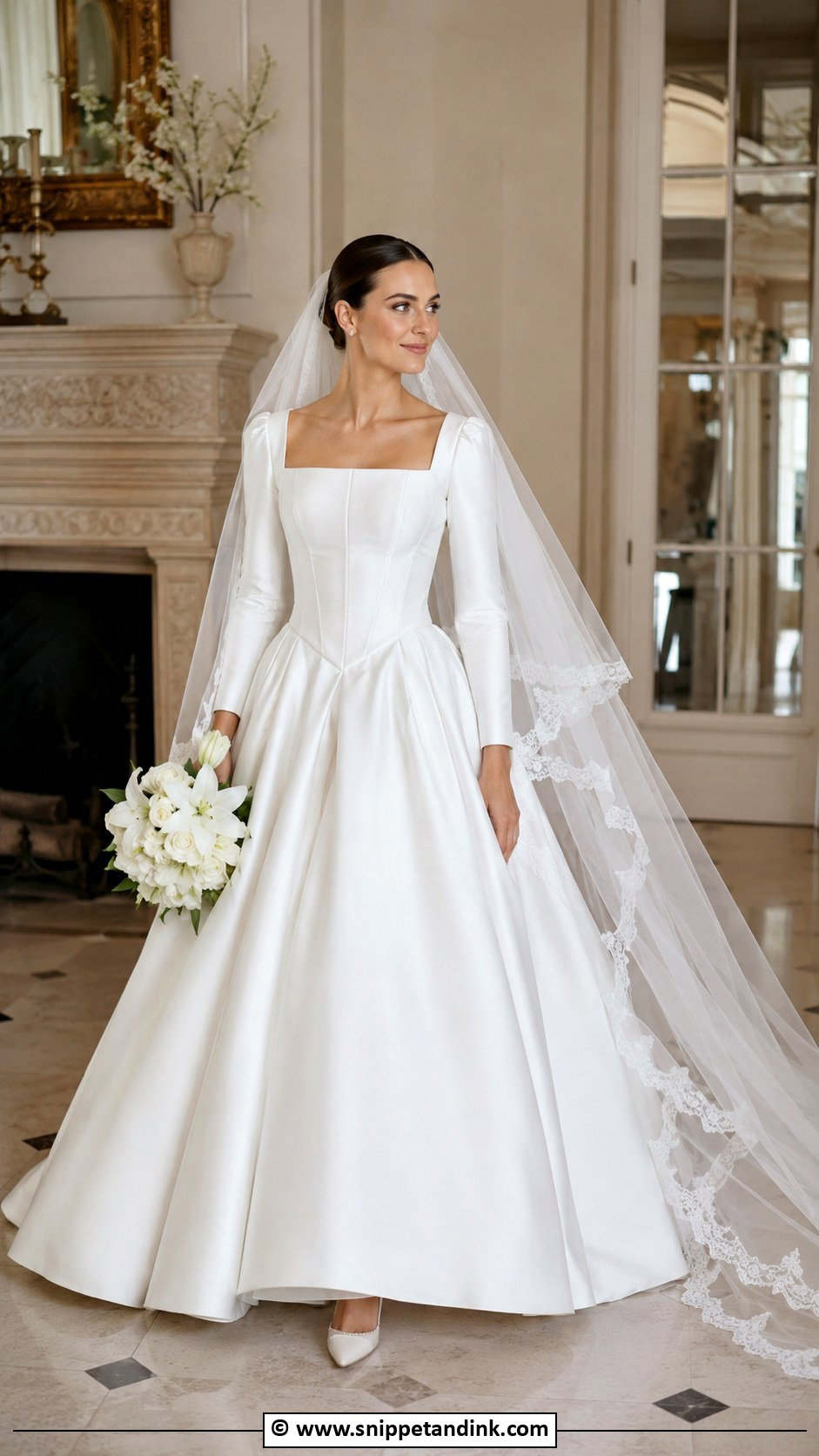
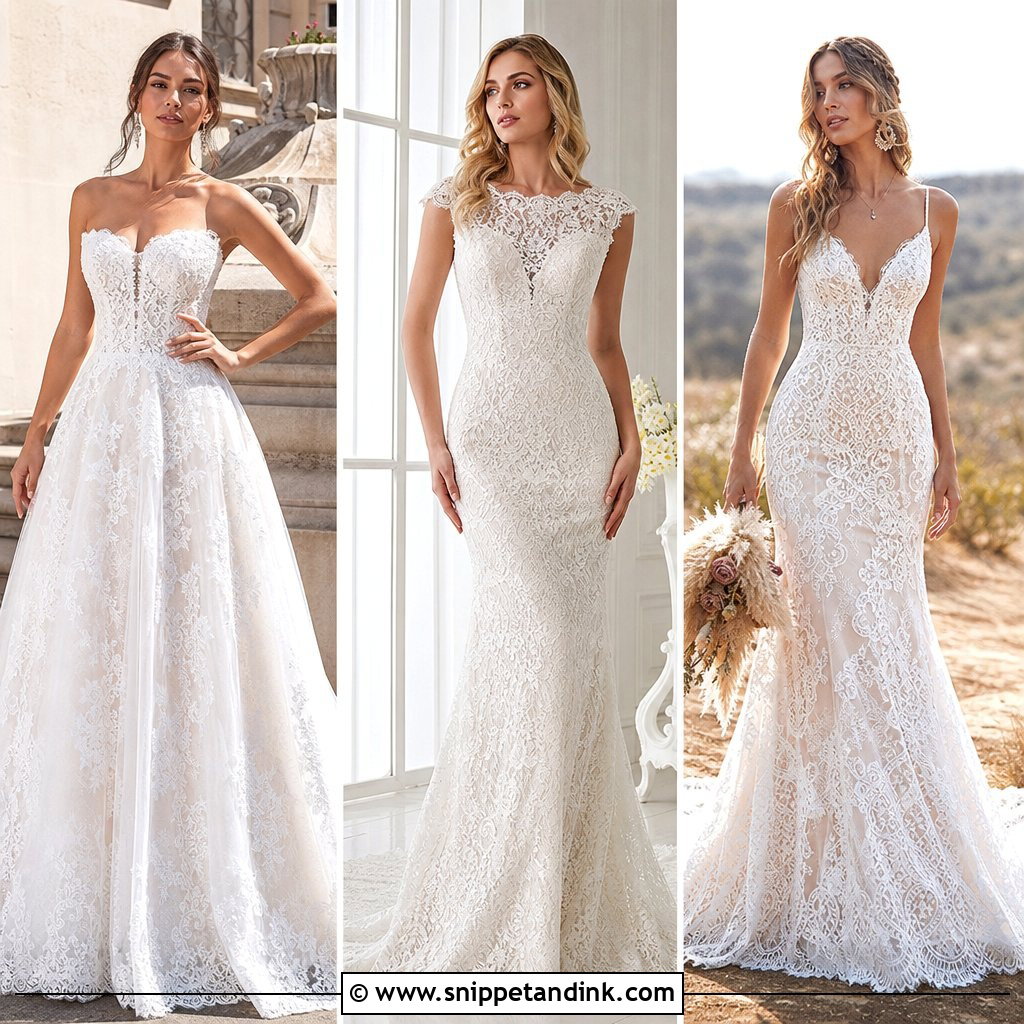
A basque waist wedding dress dips into a point at the front, drawing the eye down the center of the body. It pairs well with full skirts, lace bodices and corset construction. The point must sit exactly on your center line; if it twists even slightly when you walk, it looks off in every photo, so the waist needs firm boning. A cathedral veil and ivory pumps suit it. Layered tulle softens it, and mikado sharpens it.
5. Strapless Ball Gown Wedding Dress
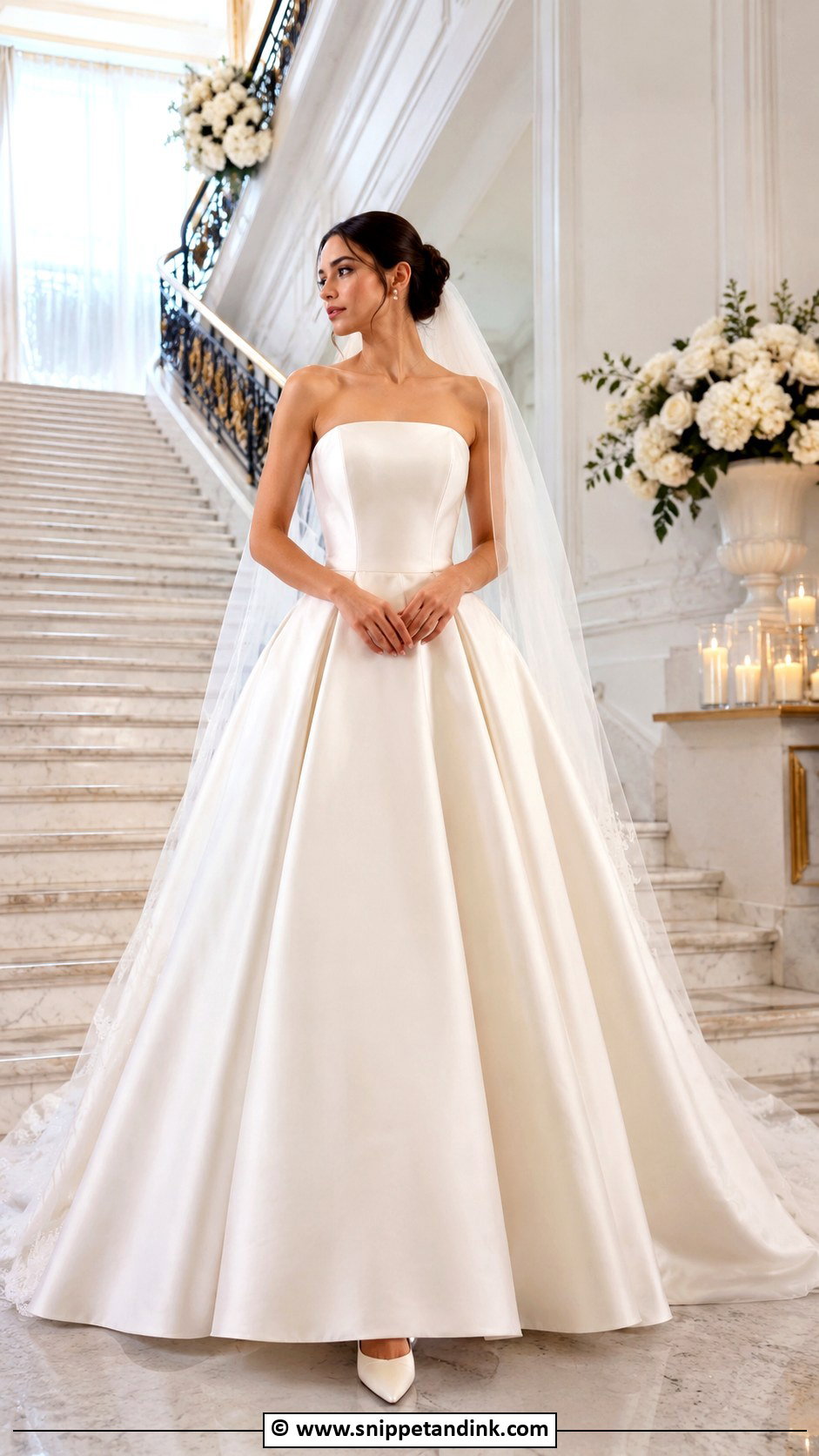
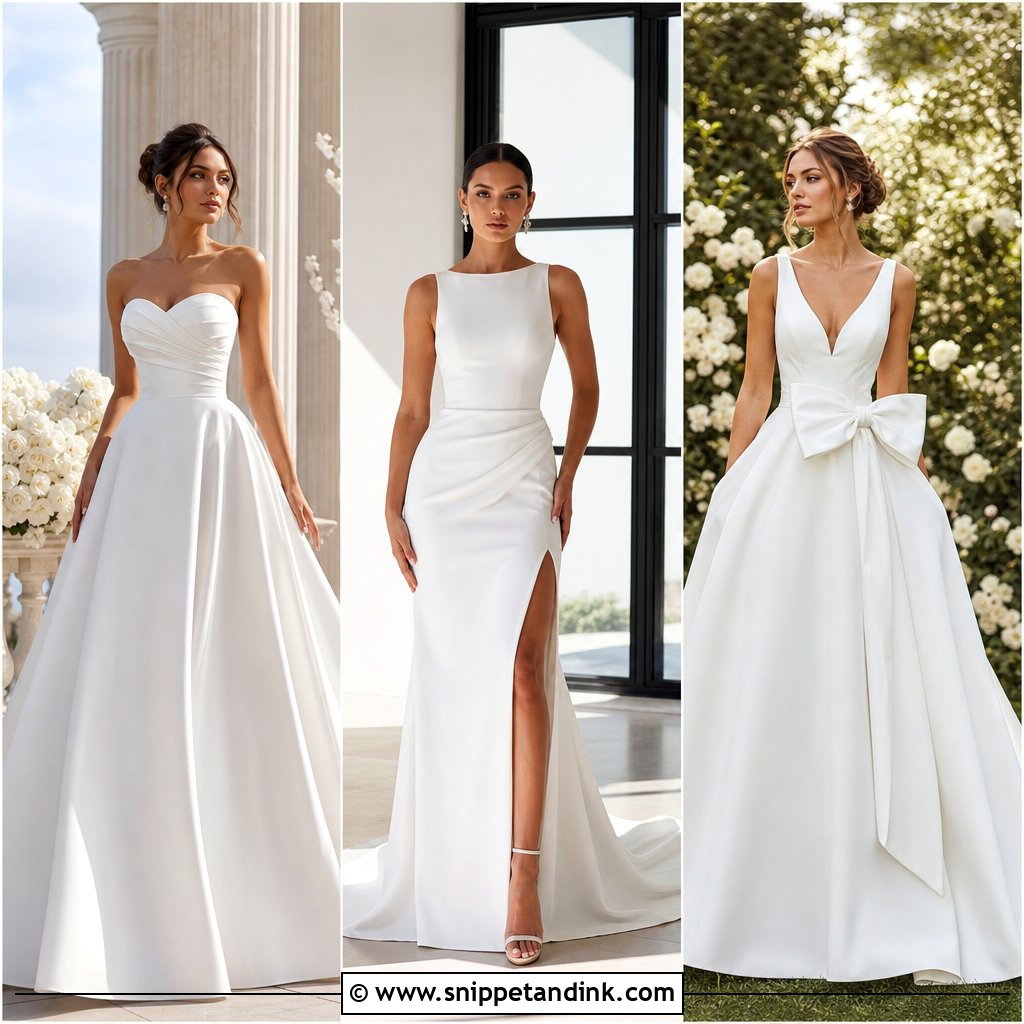
The strapless ball gown still owns the grand entrance. What’s changed is the finish. Fewer seams, soft draping and a subtle cat-eye neckline make it look new. The bit I care about most is inside: a firm inner corset that holds the dress up so you’re not tugging at it. A smooth chignon, a long veil and closed-toe heels complete it, and a removable scarf or gloves can cover the shoulders during a religious ceremony. It needs a big room to make sense.
6. Off Shoulder Wedding Dress
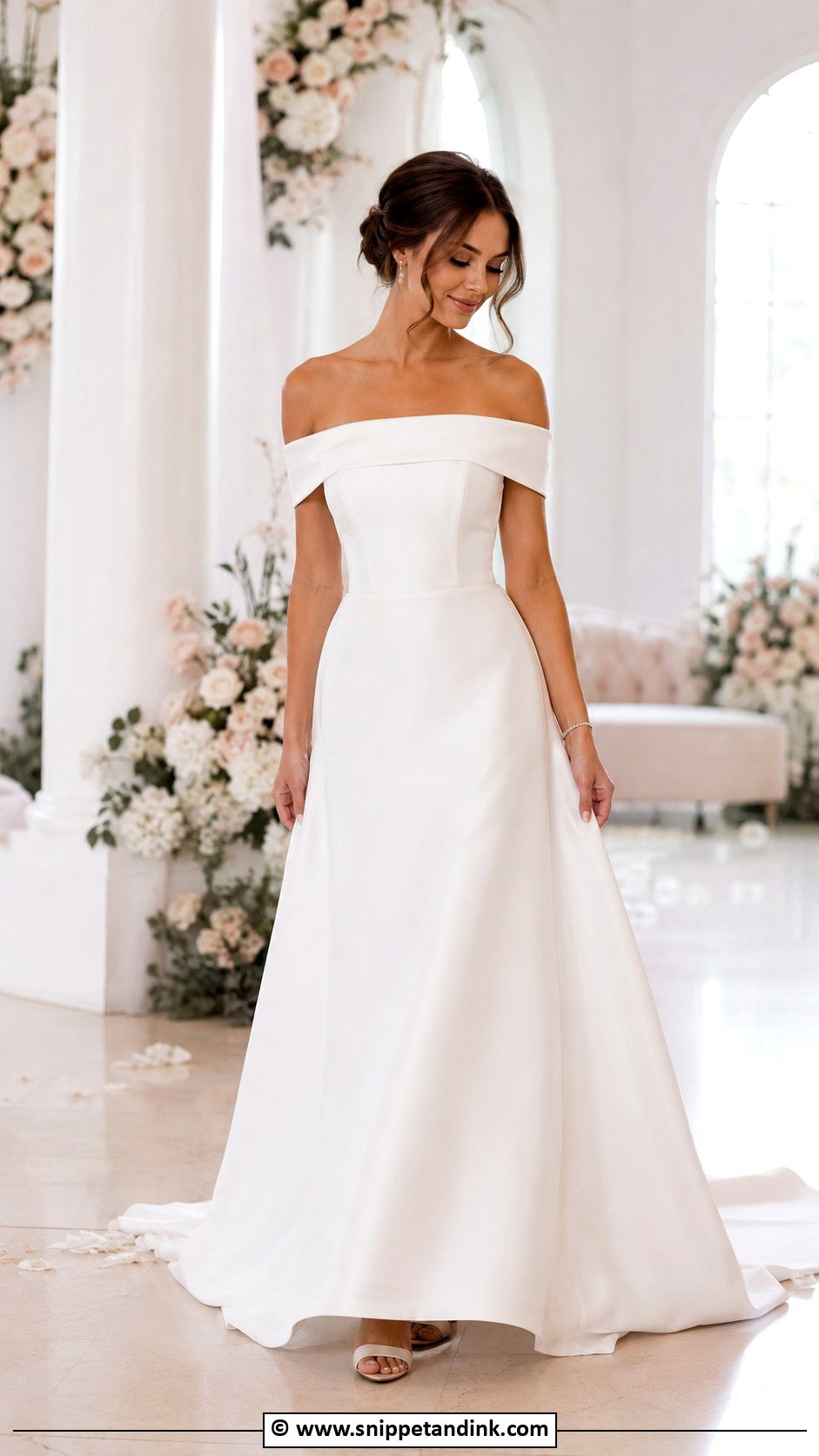
An off-shoulder neckline frames the collarbone and shoulders, with a mermaid skirt for glamour or an A-line for softness. Keep jewelry light. Soft waves or a low bun leave the shoulders visible. Detachable sleeves and sculpted folds are this year’s versions. My practical concern is movement: the band across the arms pins them down, so if you’re a big hugger, a detachable sleeve might suit you better than a fixed one.
7. Square Neck Wedding Dress
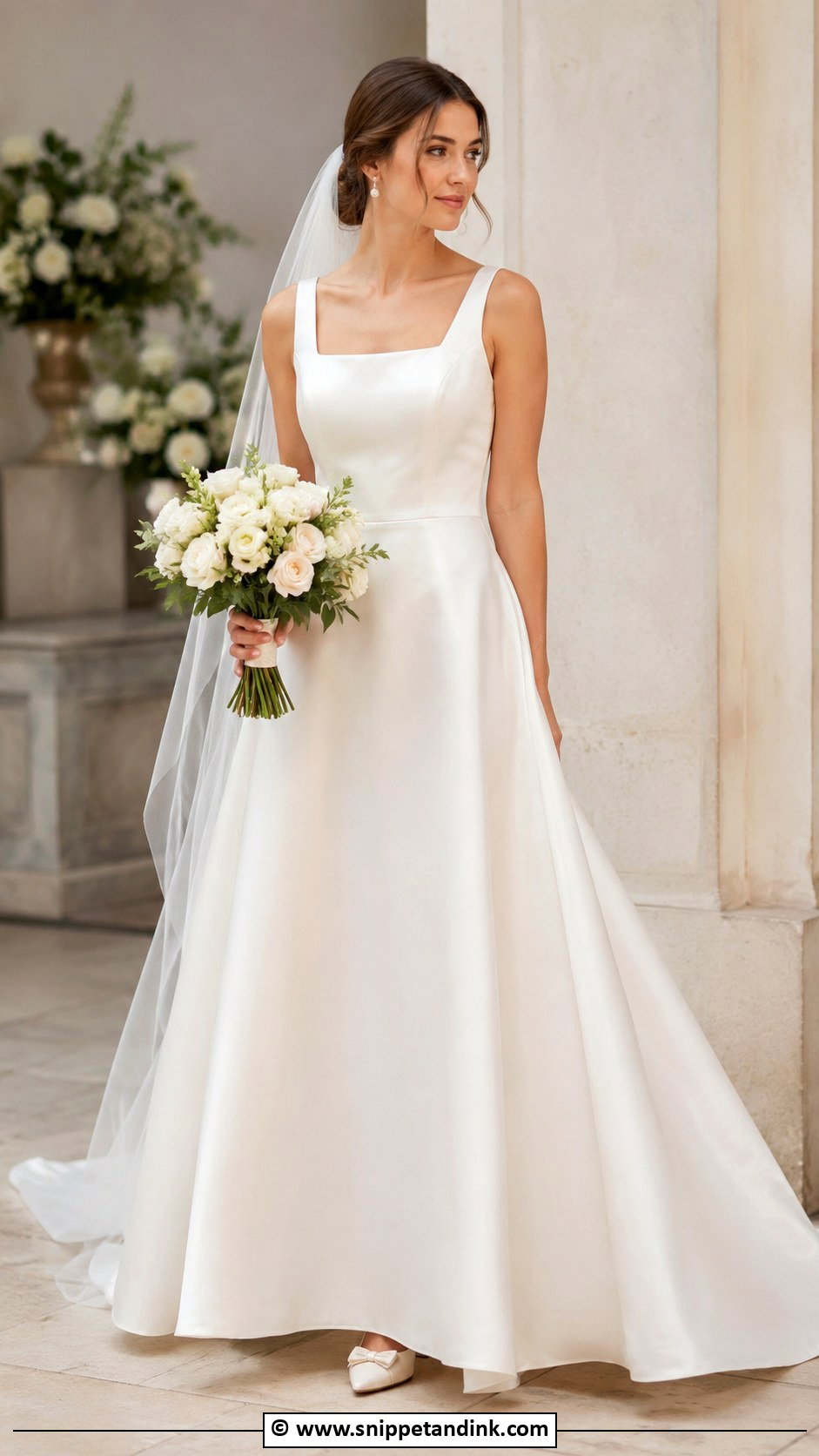
Square necks give the top half structure without stiffness. They suit fitted gowns, A-lines and simple satin. Fuller busts usually need wider straps, while smaller frames can carry narrow ones. A fine pendant, pearl earrings and block heels are enough. Hair can go either way, sleek bun or soft curls. I’d test it bending forward, because a square neck that gapes is one of the most common fixes I see in alterations.
8. Halter Neck Wedding Dress
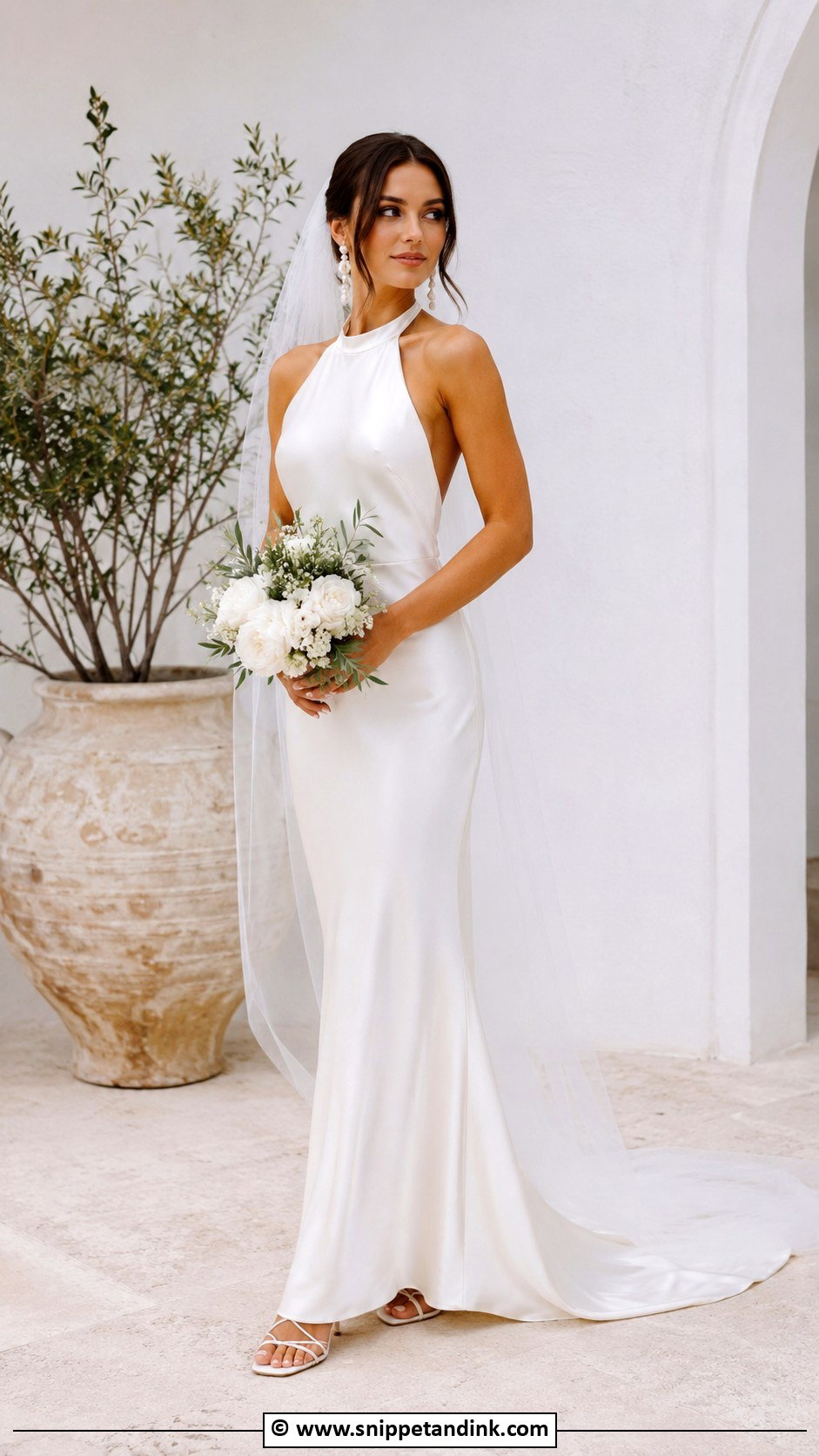
Halters draw attention to the face, shoulders and back. Fluid satin reads minimalist; lace reads softer. Skip the necklace and let statement earrings carry the look. They’re practical in summer, giving coverage at the front while keeping the back open. An open back means your bra options are limited, so bring a backless solution to the first fitting rather than discovering the problem later. A column skirt and strappy heels suit it.
9. Corset Bodice Wedding Dress
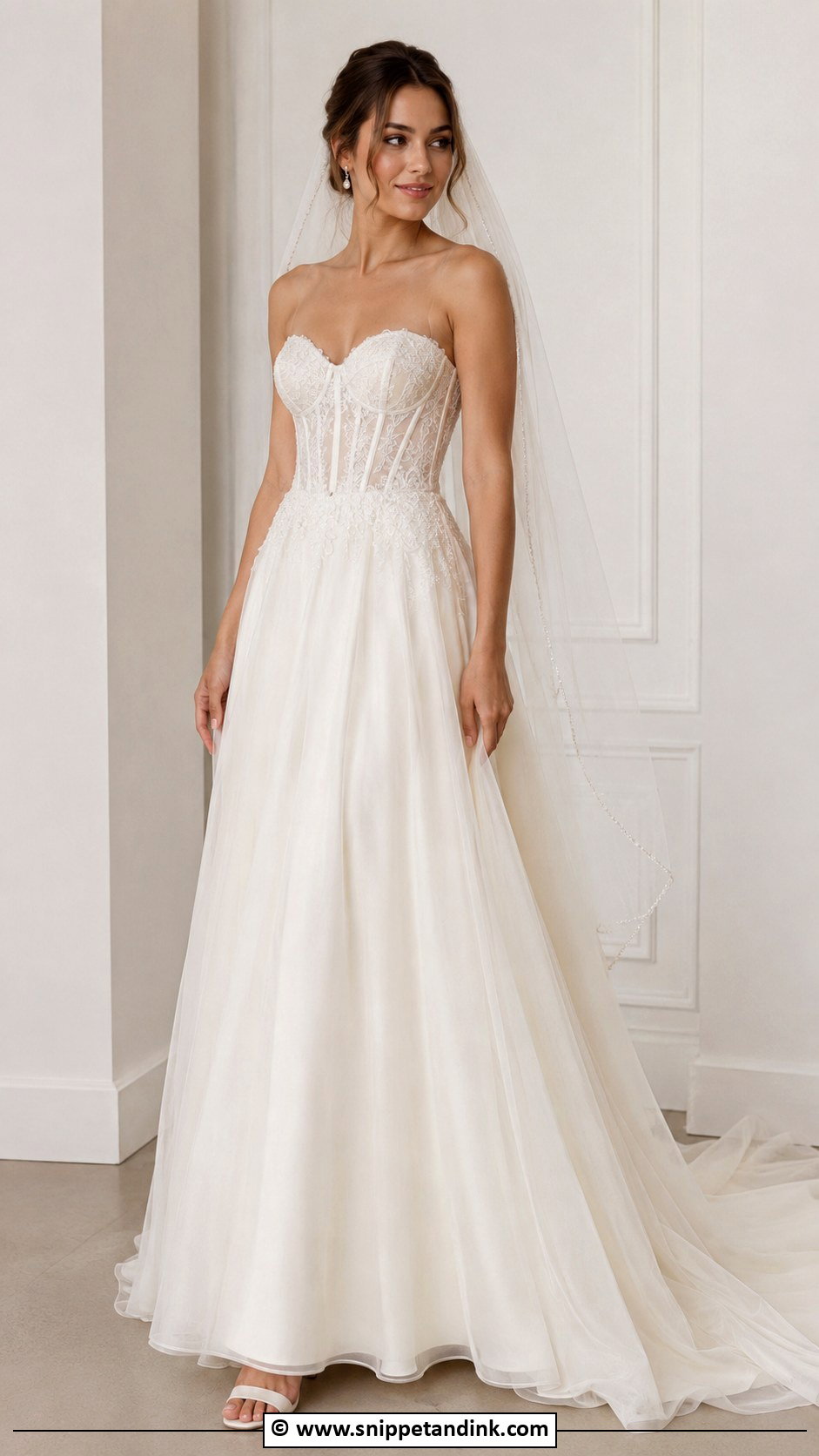
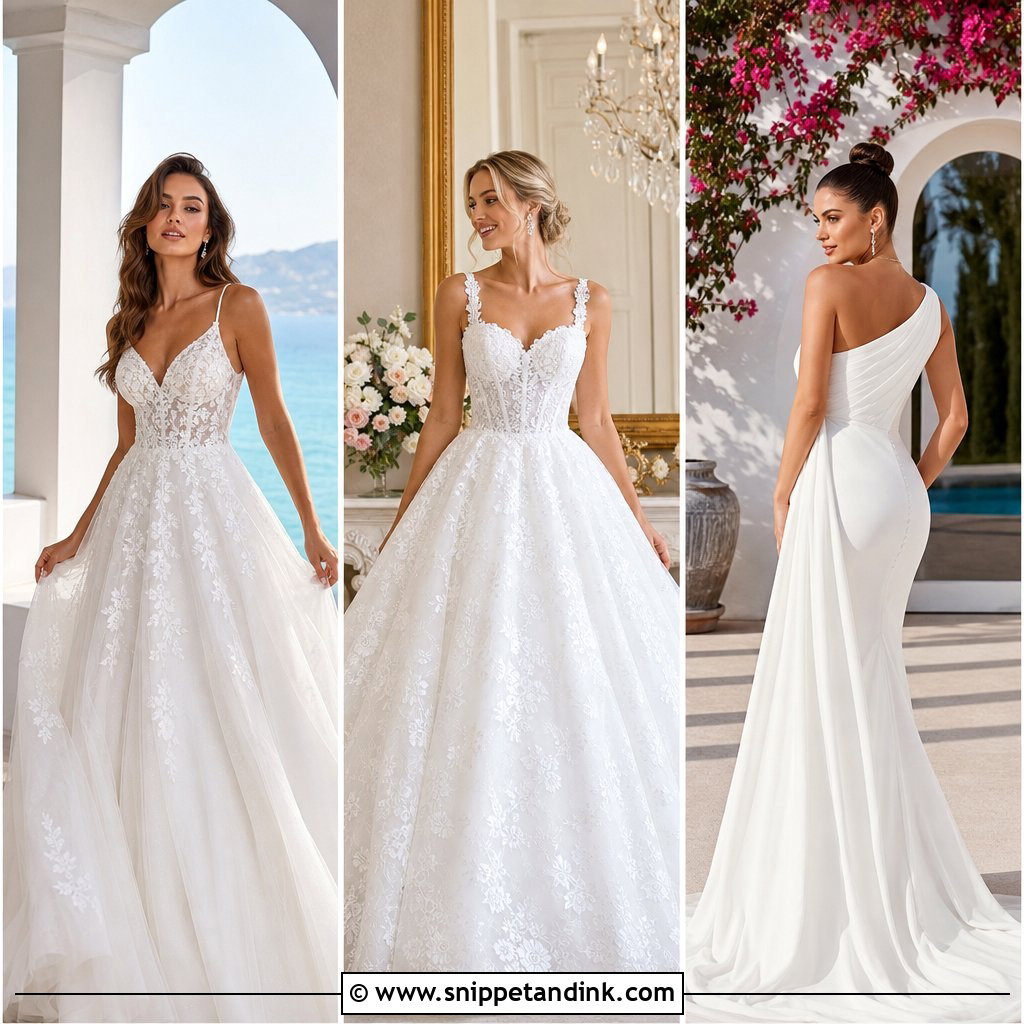
Corset bodices give real support, and they’re the reason many women feel held all day. What keeps them from looking like a costume is clean boning, smooth fabric and proportion. A soft A-line balances one; a fitted skirt sculpts. Comfort depends on fit at the ribcage. If you can’t breathe deeply sitting down, it’s too tight there, whatever the mirror says. Delicate earrings, a fingertip veil and heels in the same shade as the gown complete it.
10. Pearl Embellished Wedding Dress
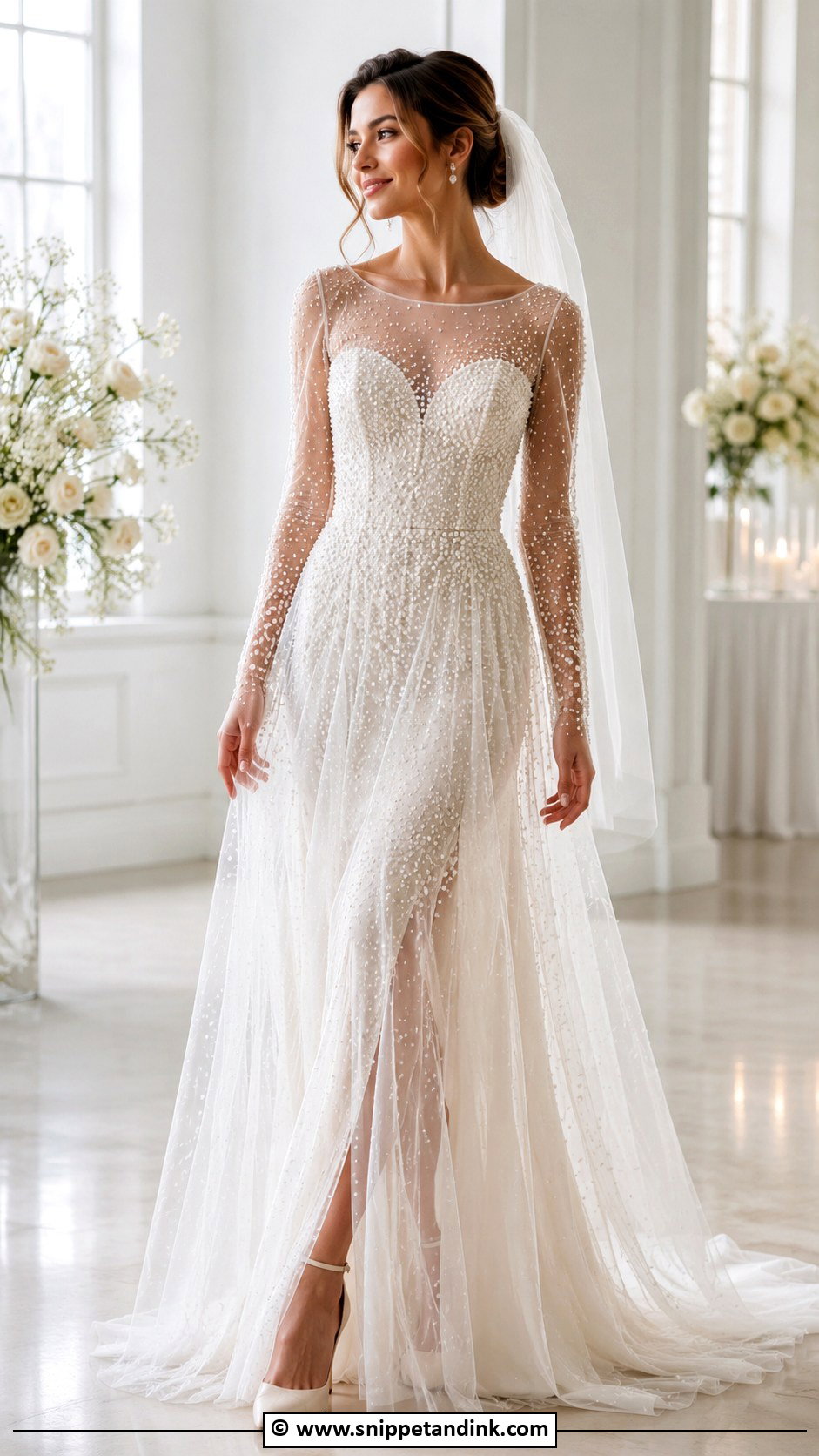
Tiny pearls across tulle, sleeves or a bodice give texture that reads beautifully close up without heavy sparkle. Pearl studs, ivory heels and a simple veil keep the rest soft. If the gown is densely embellished, skip hair accessories. Pearls on a sheer sleeve add surprising weight, so I’d check the shoulders don’t drag forward after twenty minutes of wear. Clean silhouettes and sheer overlays make the pearls look modern rather than ornate.
11. Floral Applique Wedding Dress
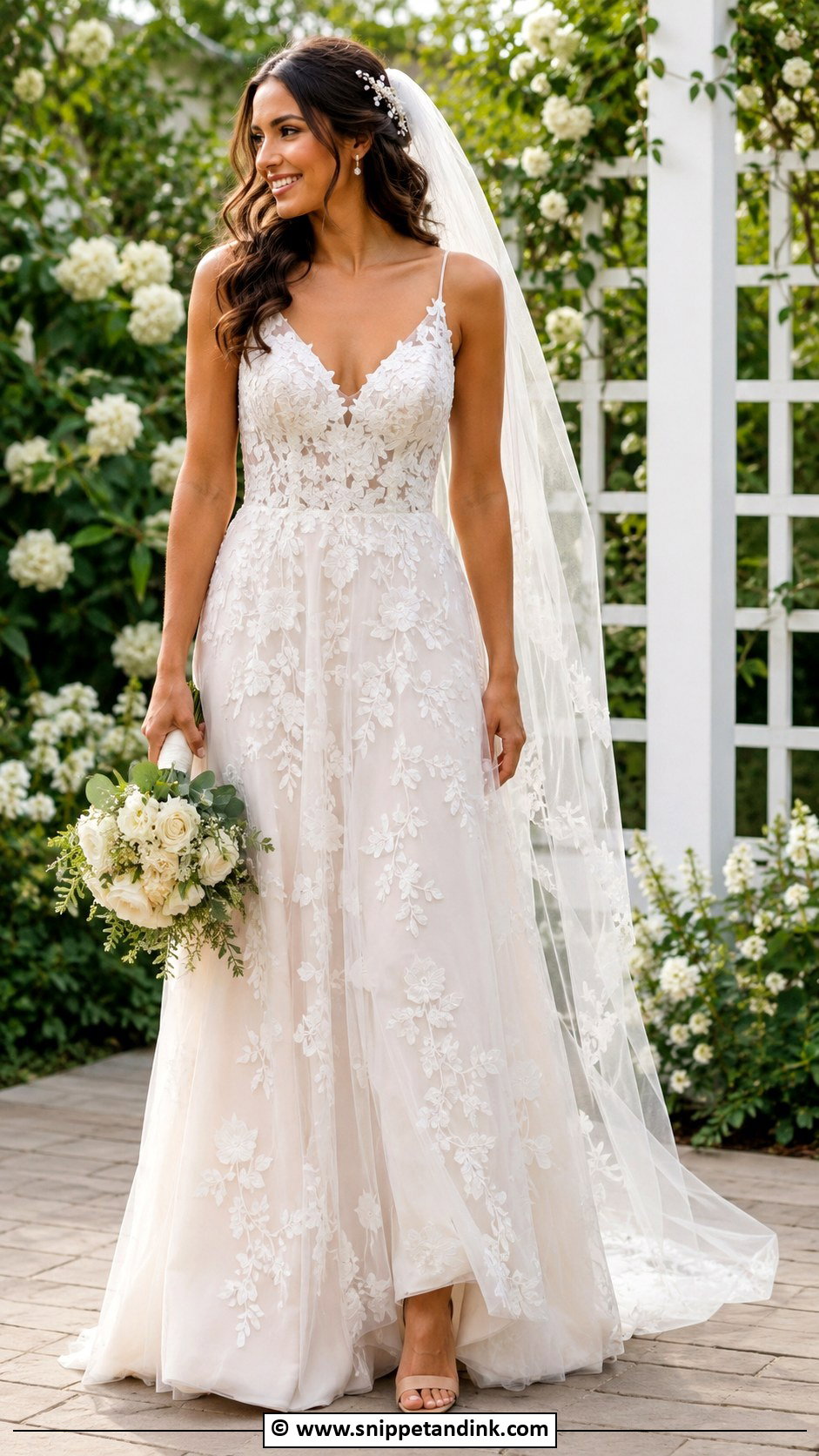
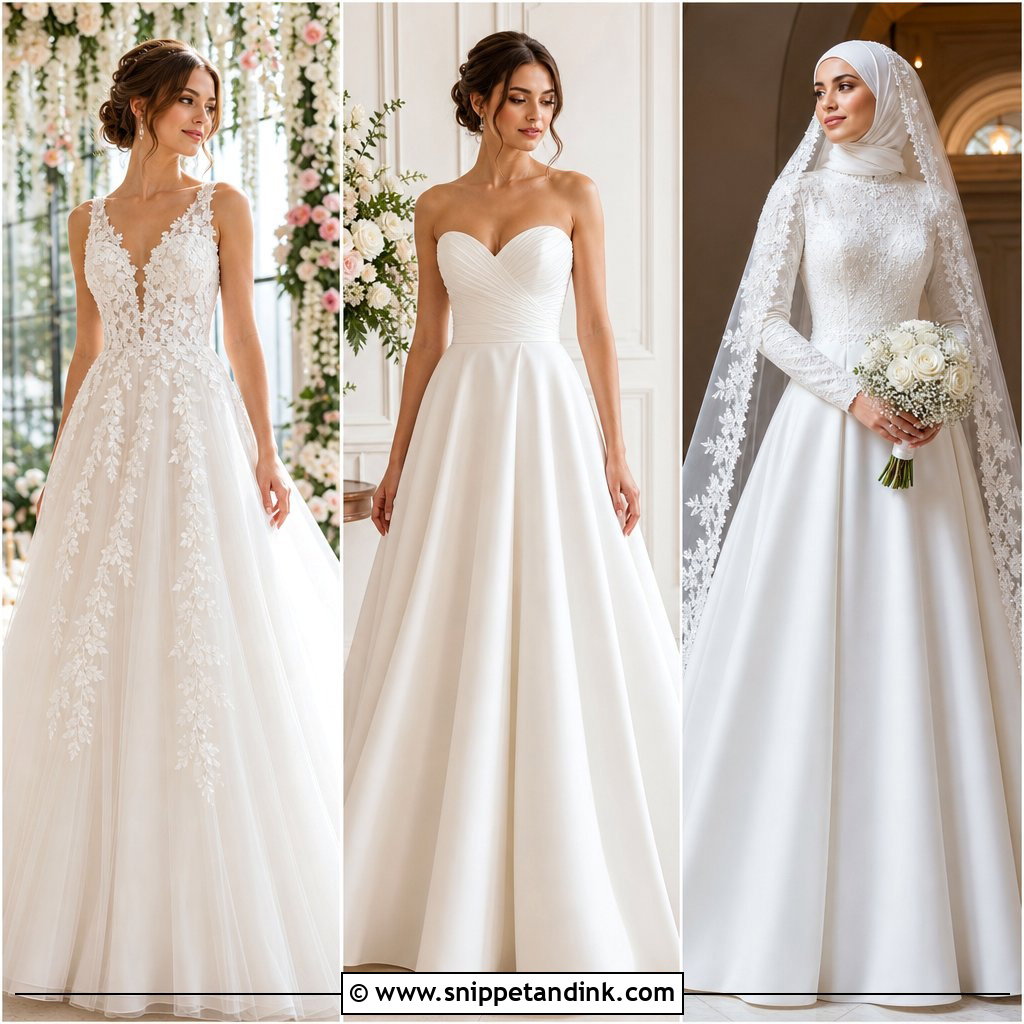
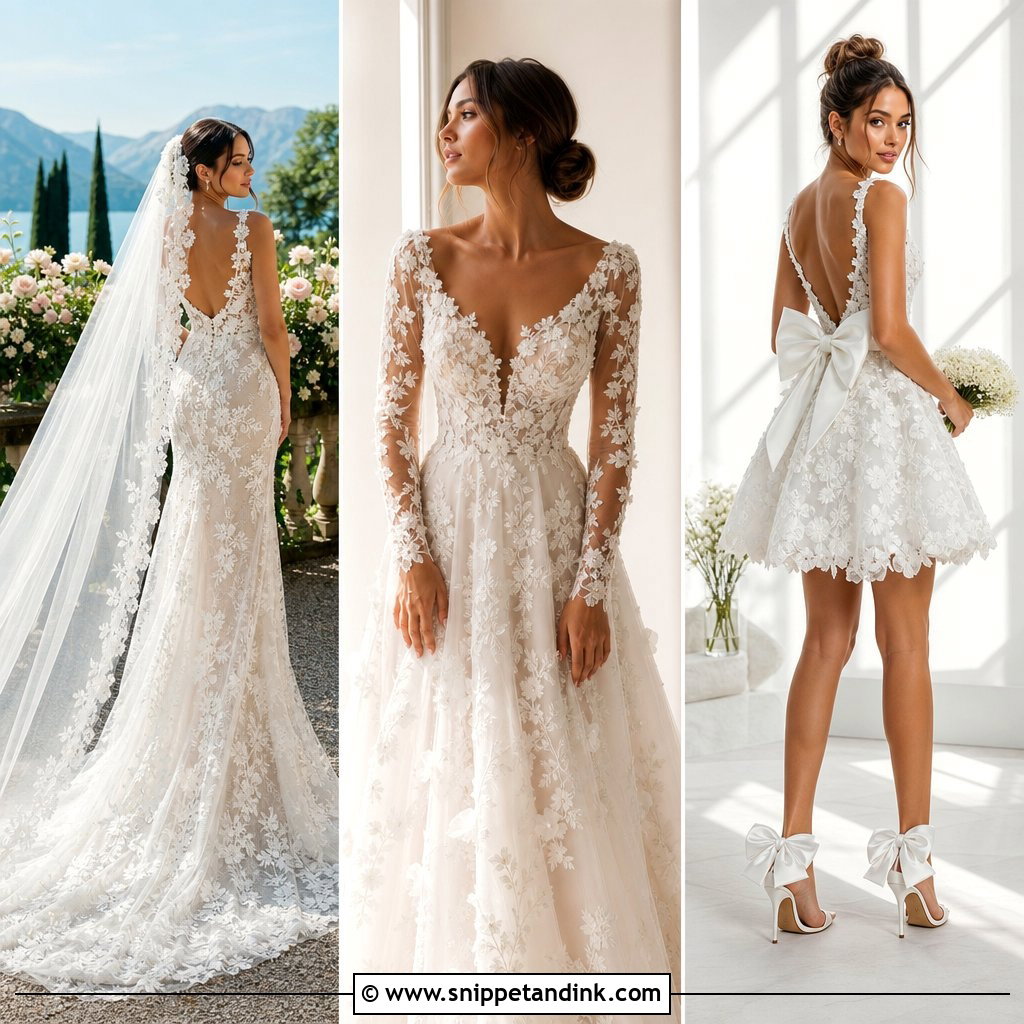
A floral applique wedding dress adds texture and depth, whether the flowers sit on the bodice, trail down the skirt or climb a sheer sleeve. Choose one standout area rather than covering the whole gown. Tone-on-tone appliqué is subtle; oversized petals on a clean base are bold. Soft curls, small floral pins and a sheer veil keep it garden-ready. Hand-stitched appliqués survive hugs and dancing better than glued ones, so ask how they’re attached.
12. Sheer Sleeve Wedding Dress
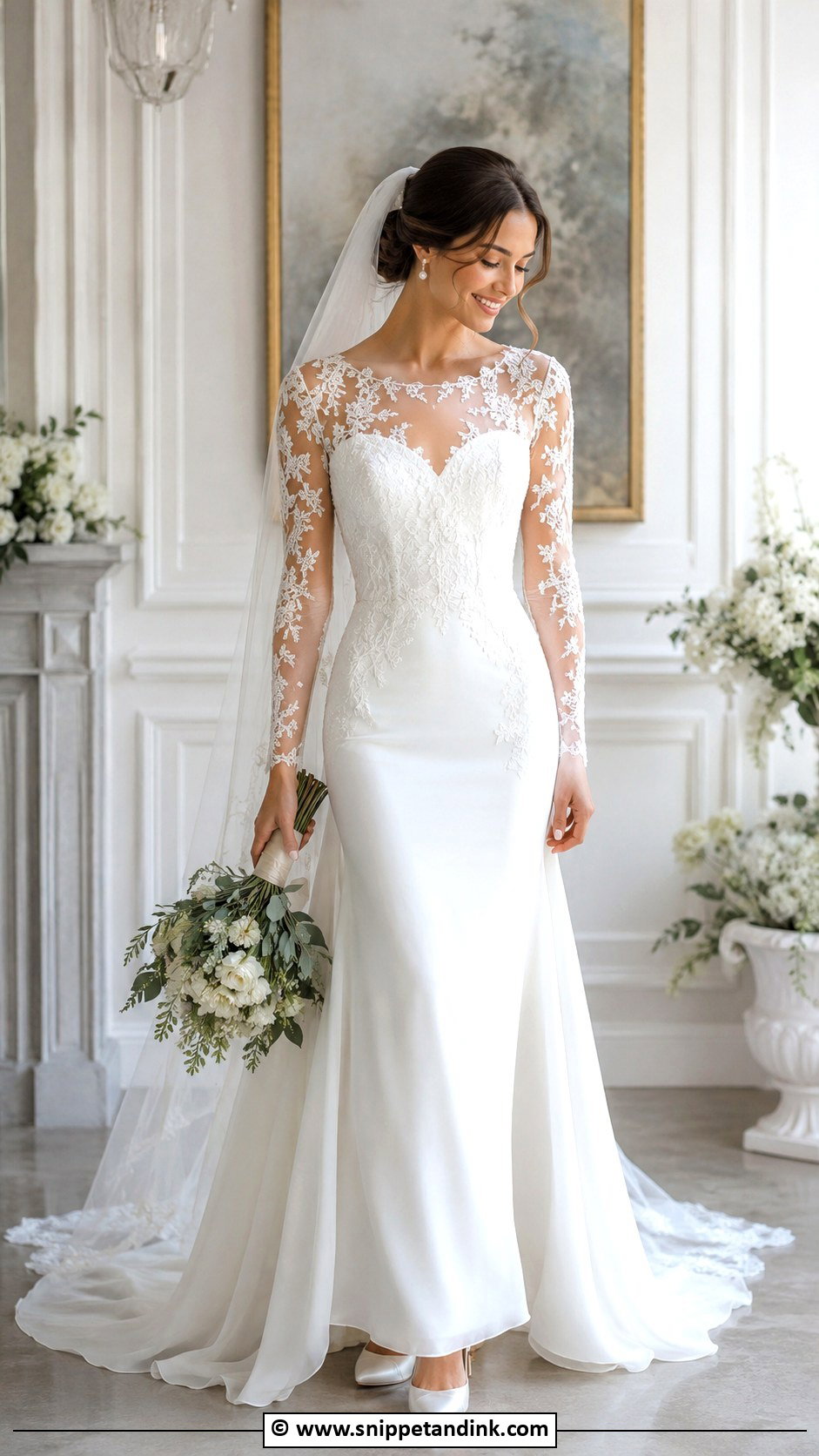
Sheer sleeves give coverage and still feel light. Illusion sleeves with lace, pearls, tiny buttons or embroidery look graceful; keep the rest of the outfit simple so the veil doesn’t fight them. They work across seasons, warm enough for a cool church and breathable in summer. Removable sleeves are worth asking about. You get the ceremony look, then bare arms when the dance floor heats up.
13. Tulle A Line Wedding Dress
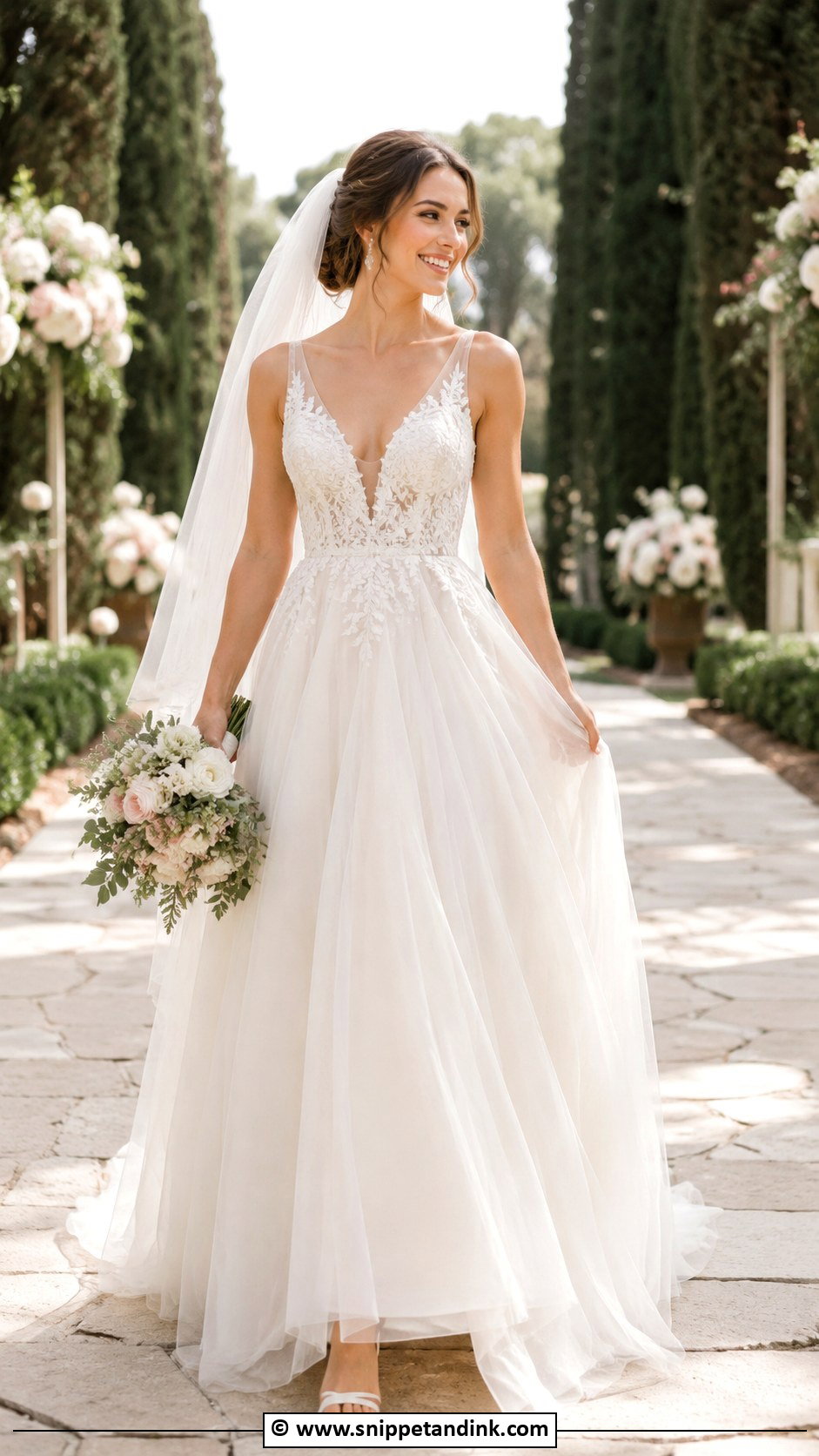
Tulle A-lines are the reliable all-rounder: a fitted top and a skirt that widens gently and doesn’t restrict you. Airy layers float when you walk; stiff volume just feels heavy. Delicate earrings and comfortable heels or bridal flats suit it. Tulle snags on rough surfaces like stone steps and Velcro, so be careful with bags and outdoor benches. Subtle sparkle, appliqué or a corset bodice give it personality.
14. Organza Wedding Dress
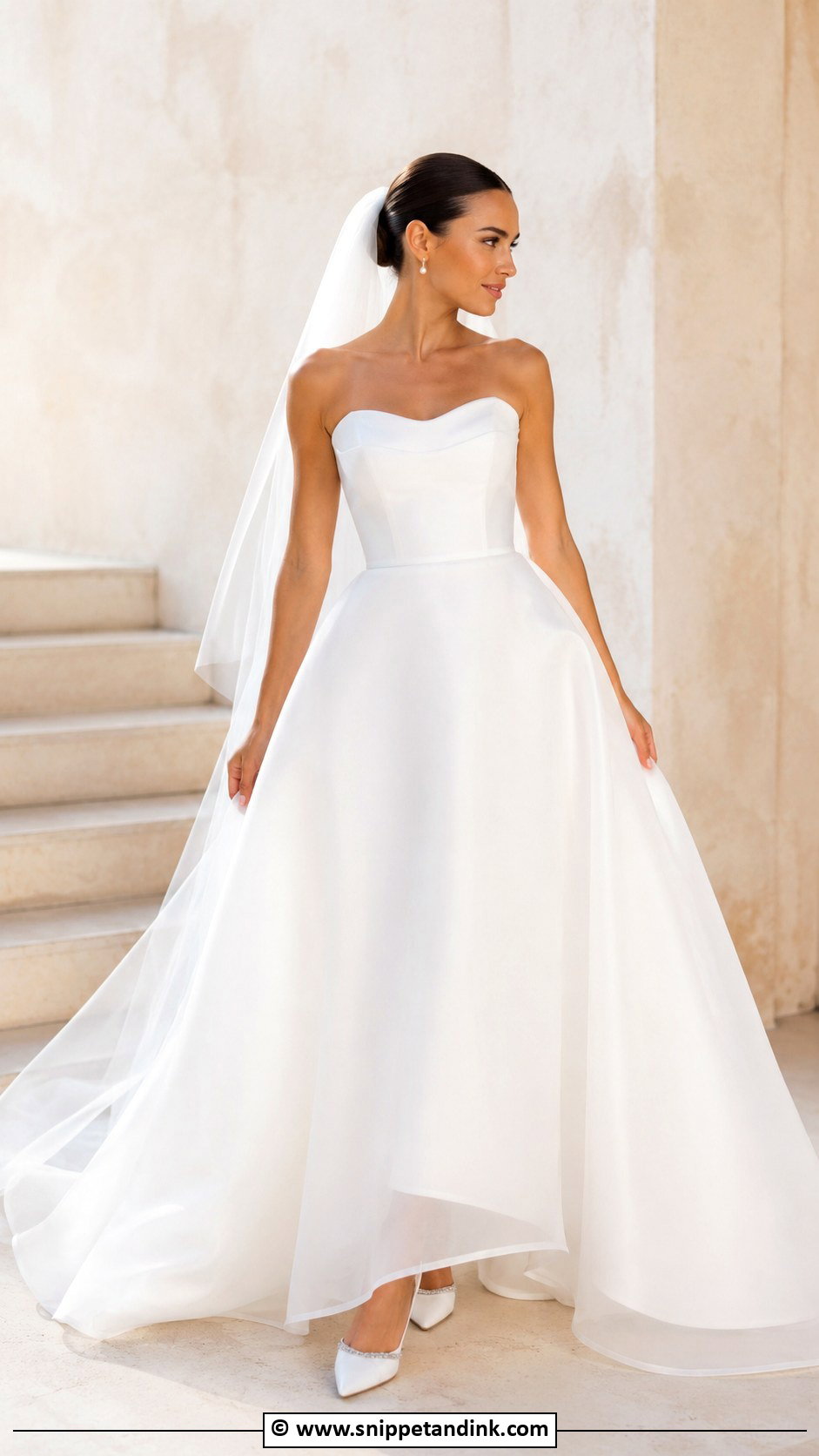
Organza gives volume with a crisp, light finish. A full skirt in it feels airy rather than heavy. It holds layered skirts, oversized bows and sculpted sleeves well. The trade-off is creasing. Organza wrinkles sharply when crushed in a car and needs a steam at the venue. Daylight shows its texture best. Pair it with a smooth updo, simple earrings and a sheer veil that won’t hide the fabric.
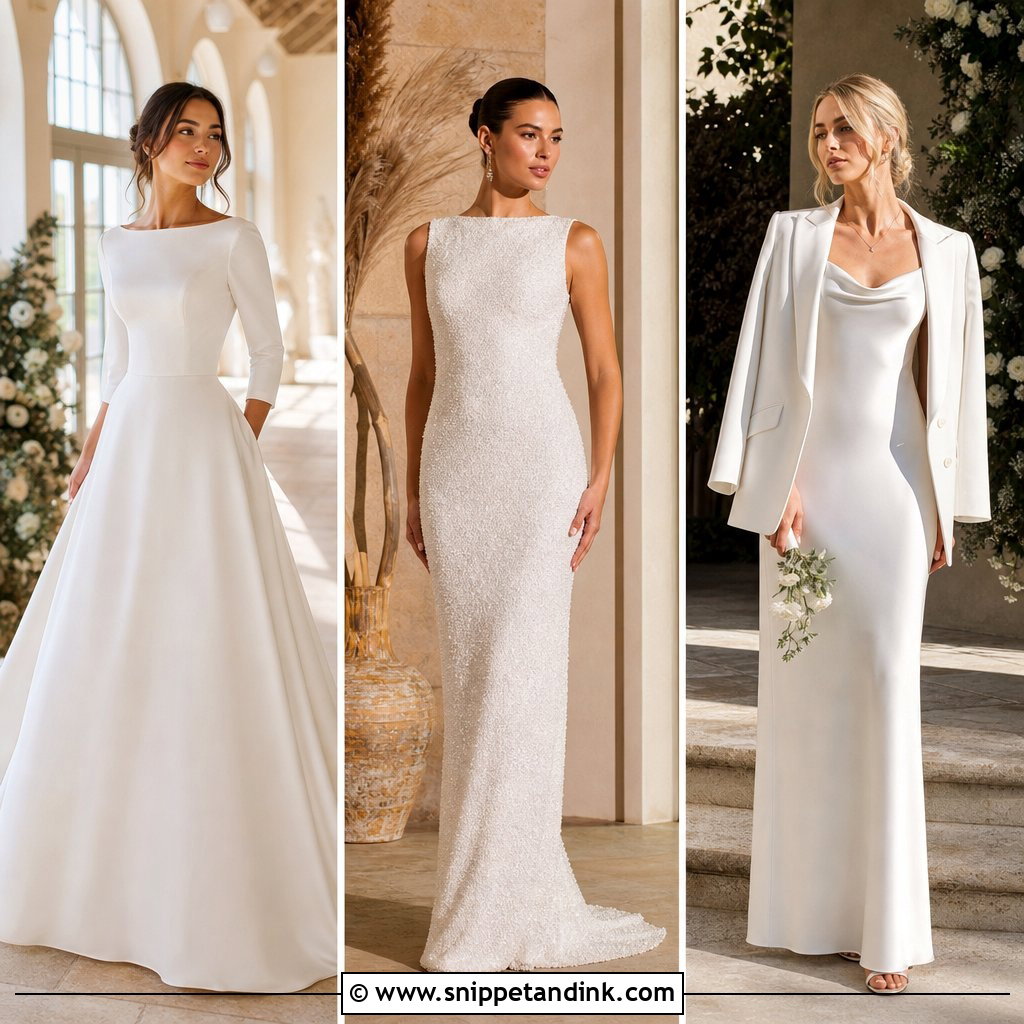
15. Mikado Wedding Dress
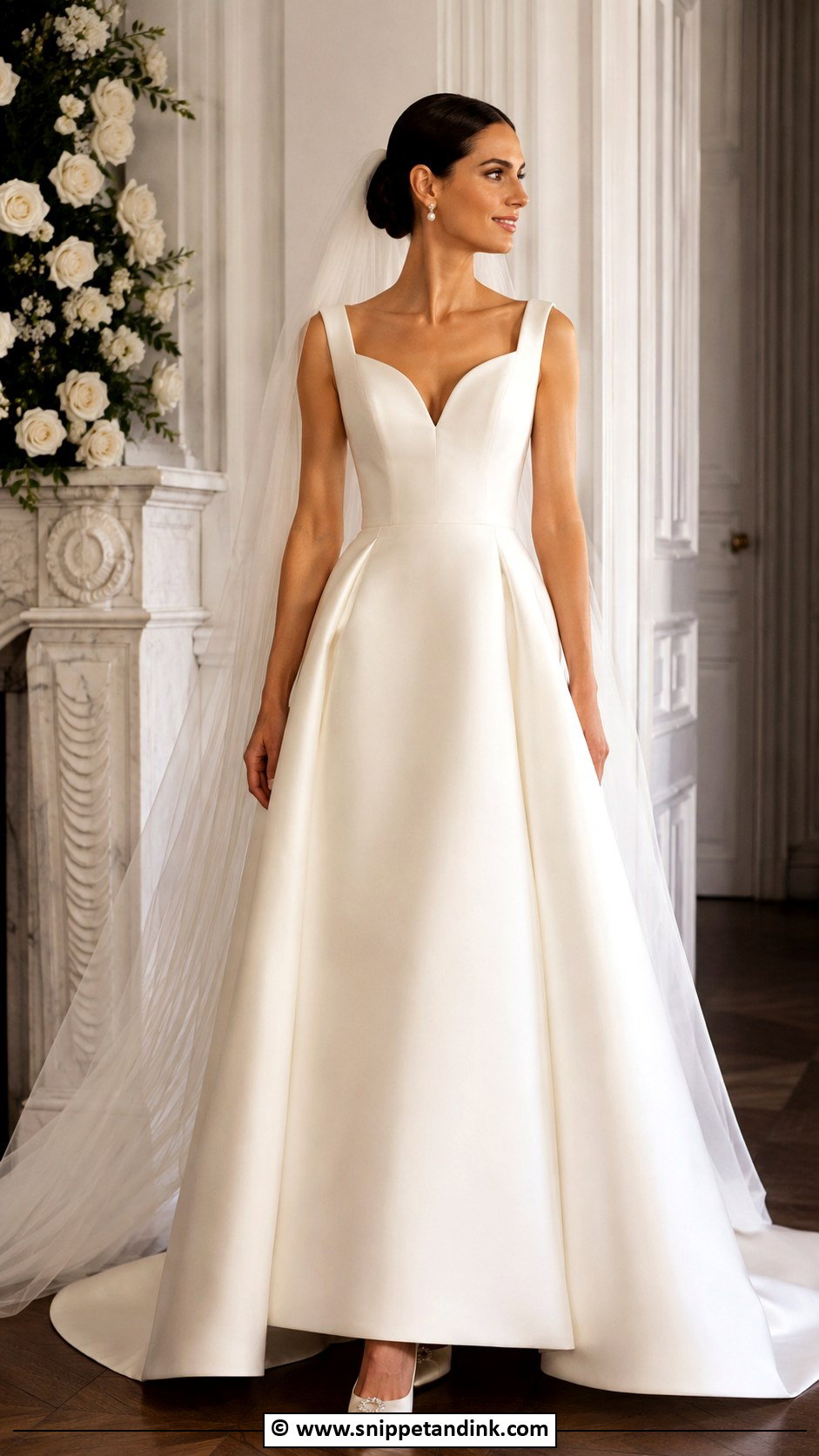
Mikado is the fabric I recommend when a bride wants structure without beading. It’s a heavy, slightly lustrous silk or silk-blend weave with enough body to hold a ball gown or a fit and flare. It keeps its shape through a long day and photographs crisply. It’s also warm, so I’d think twice for a July outdoor ceremony. Pearl earrings, a long veil and ivory pumps suit it, and sculpted necklines show it off.
16. Tea Length Wedding Dress
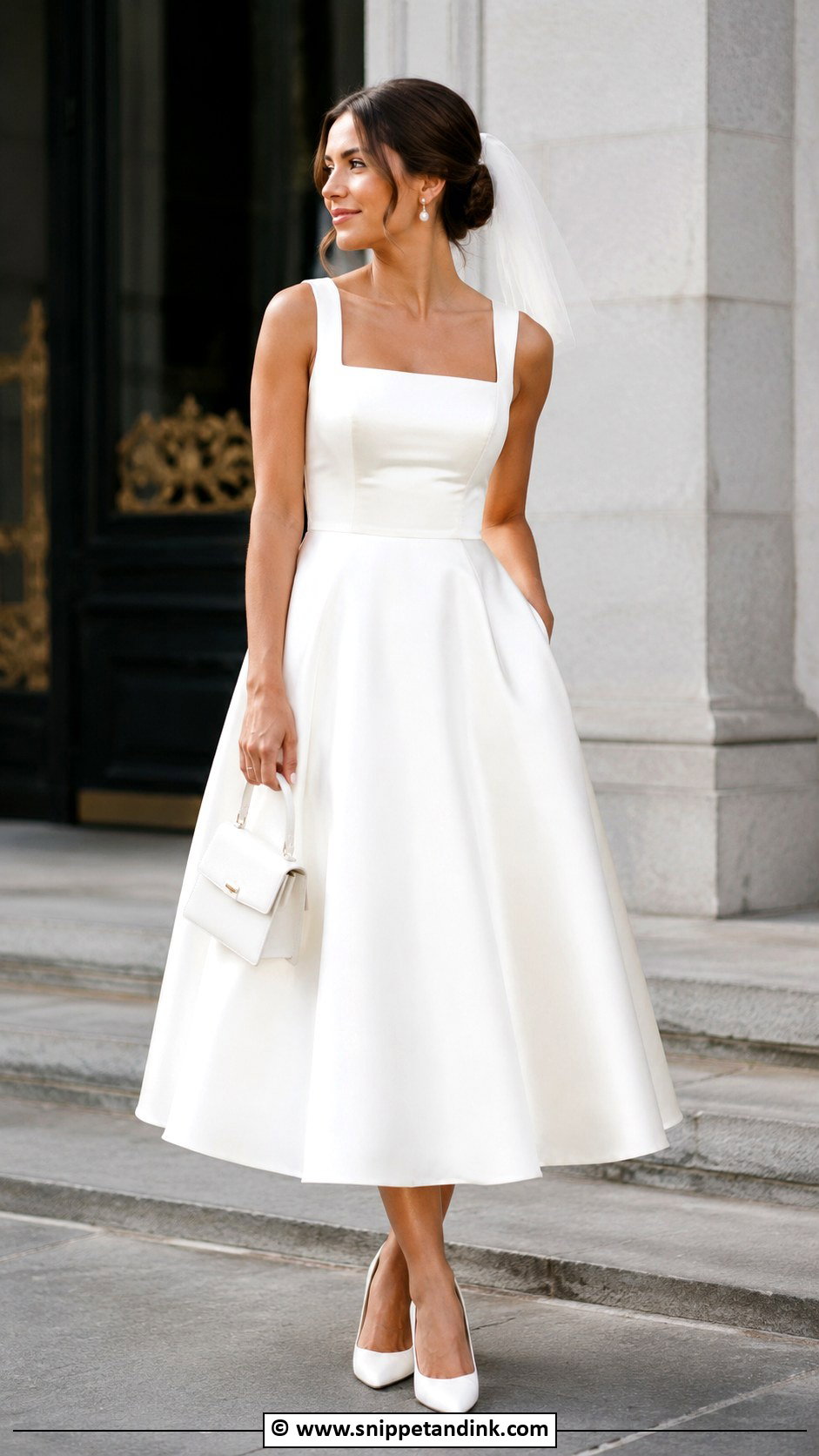
A tea length wedding dress sits between knee and ankle, so you can move freely while still looking bridal. Courthouse ceremonies, brunch receptions and second looks all suit it. Lace or tulle feels vintage; satin or crepe feels modern. Your shoes are fully visible, so this is where I’d spend the shoe budget. A square neck or corset bodice makes it look current.
17. Bridal Mini Dress
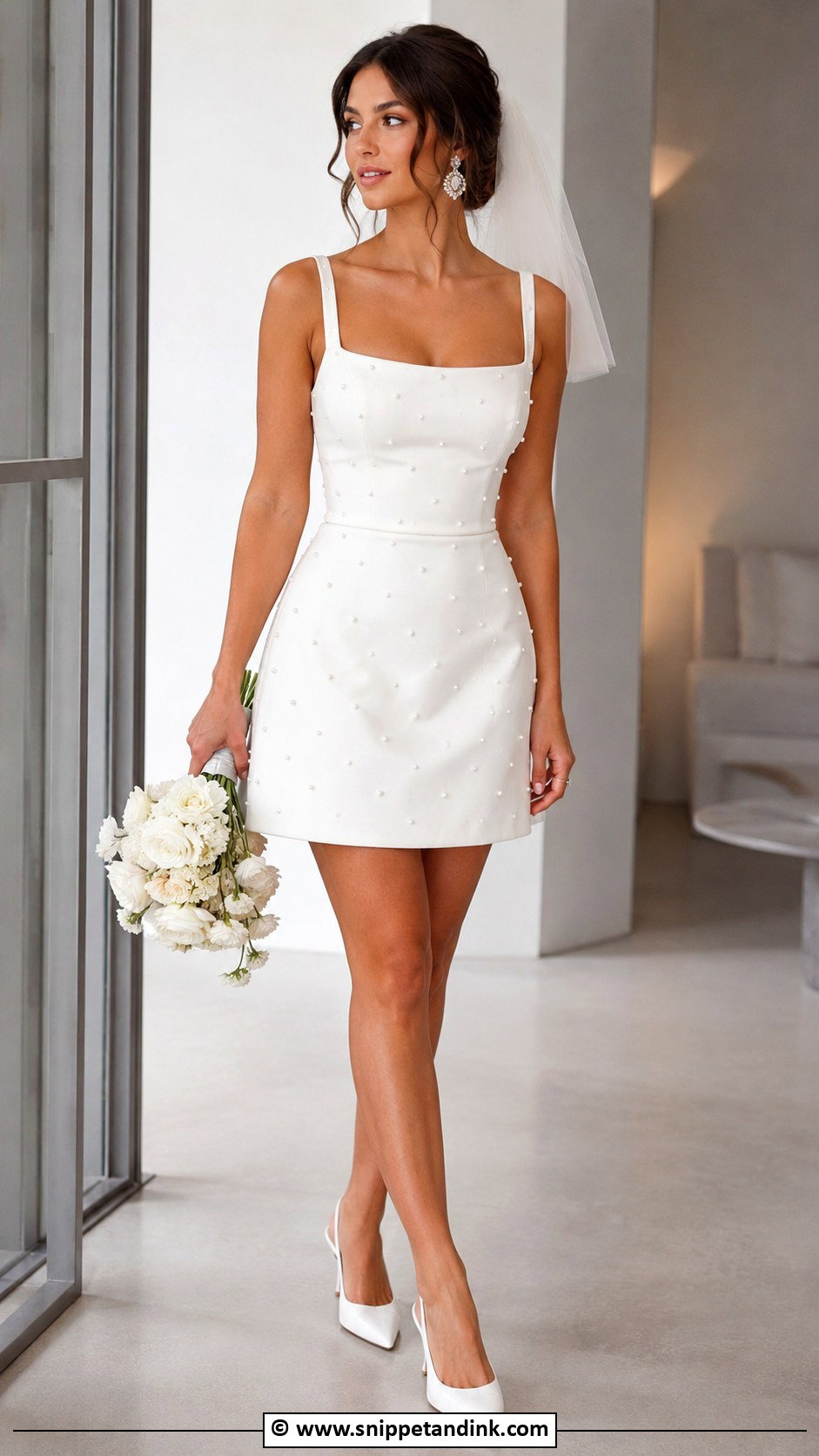
A bridal mini needs clear wedding cues, like bows, pearls, feathers, lace or sculpted satin, or it reads as a white party dress. It suits after-parties, city celebrations and relaxed ceremonies. Block heels or slingbacks and a short veil work. For more coverage, try sheer tights, a blazer or a detachable overskirt. Do a sitting test: a short hem behaves differently in a chair than in a fitting-room mirror.
18. Wedding Dress With Overskirt
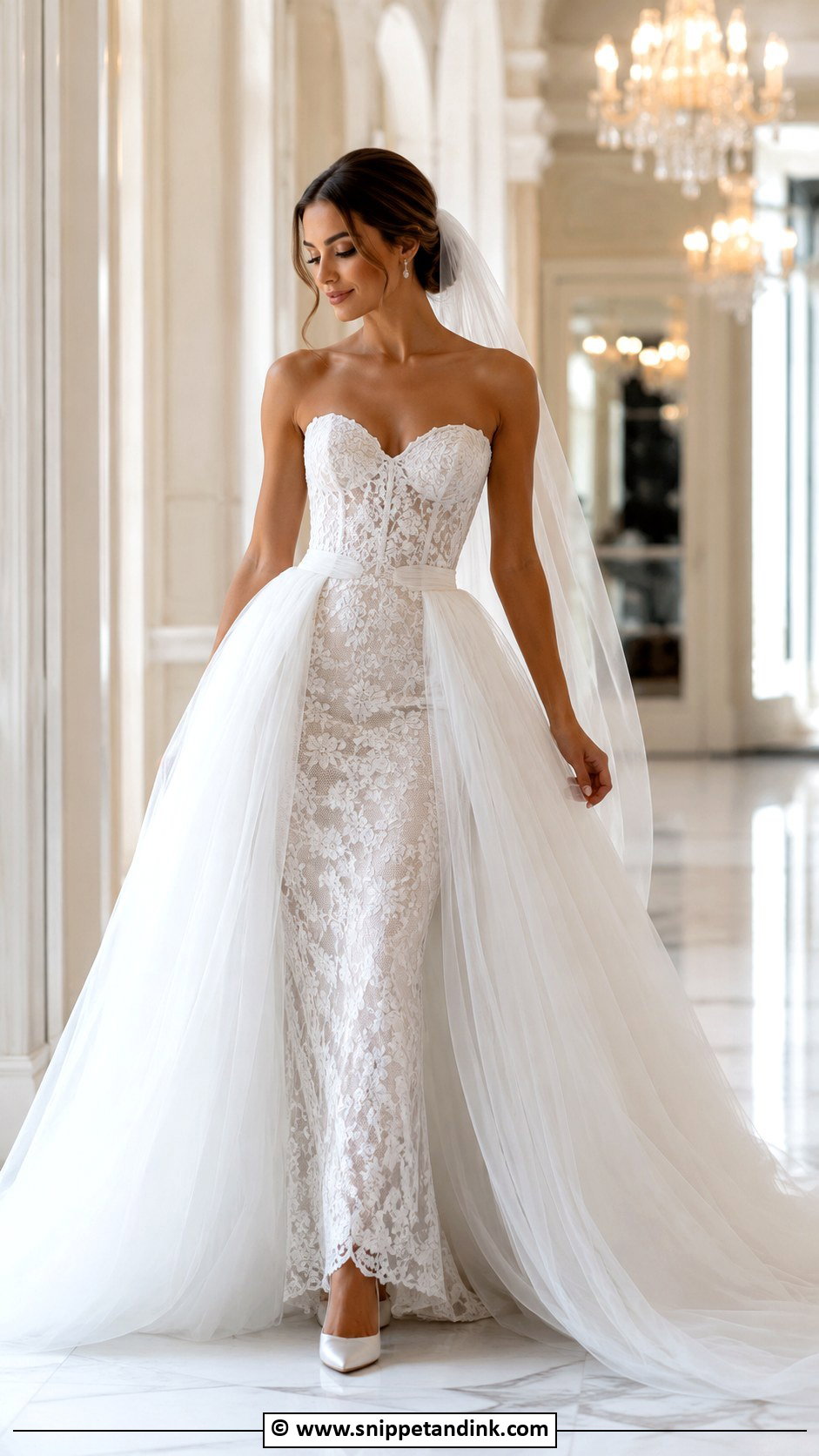
A wedding dress with overskirt gives you two looks: drama for the ceremony, then a lighter gown for the reception. A fitted satin or lace dress underneath pairs well with a detachable tulle, organza or mikado overskirt. The attachment matters. Hidden hooks or snaps along the waistband come off quickly; a long row of buttons won’t. Choose heels that suit both versions. Ask the shop to show you the removal before you buy.
19. Two Piece Wedding Dress
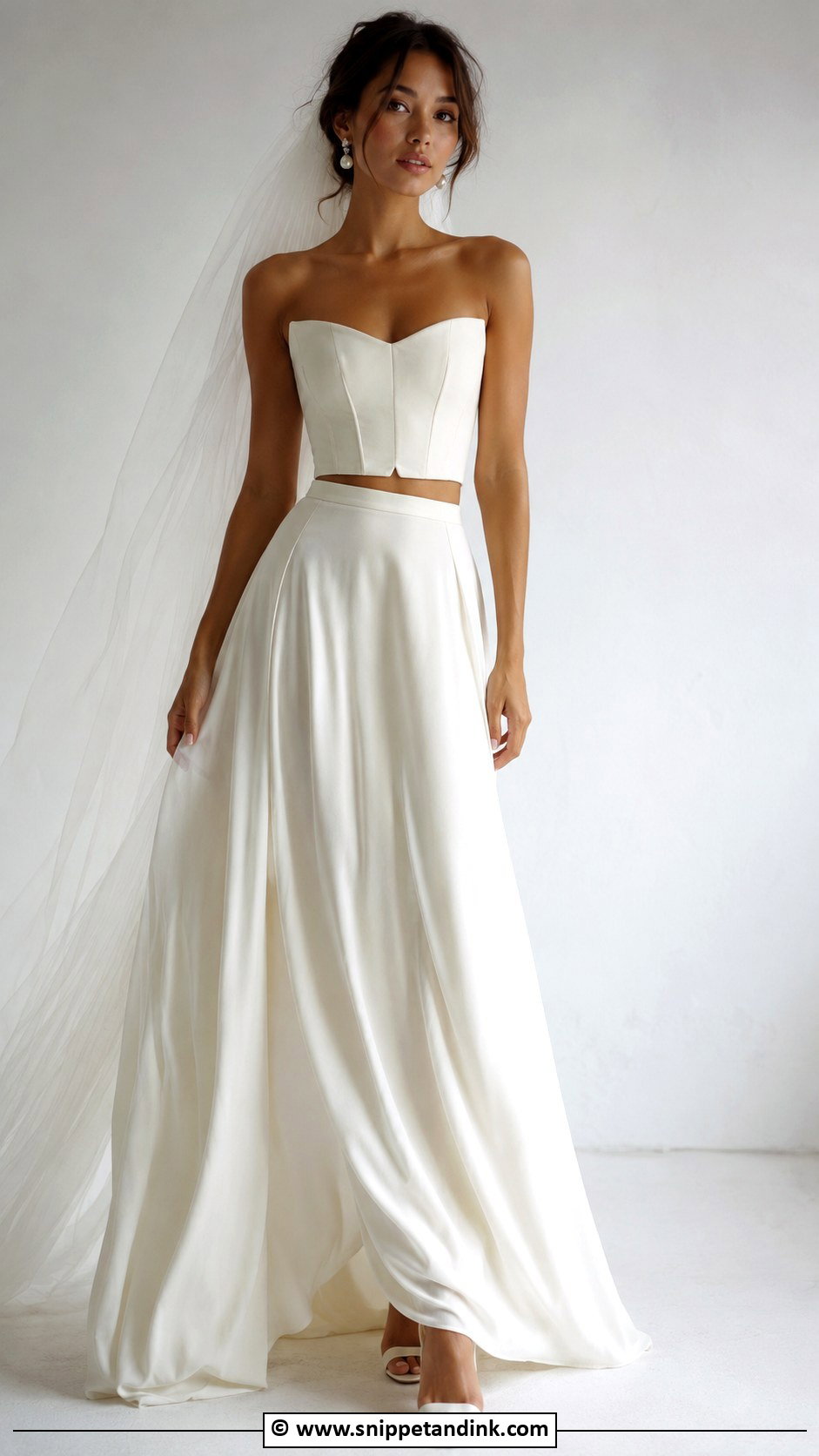
Two-piece gowns let each half fit separately, which is a real advantage if your top and bottom aren’t the same size. A bridal crop top with a high-waist skirt, a corset with a full skirt, or a tailored top with a column skirt all work. Match fabrics and tones so it reads as one outfit. I’d make sure the gap between the pieces stays where you intend it when you raise your arms. Good tailoring and quality fabric are what make separates look considered.
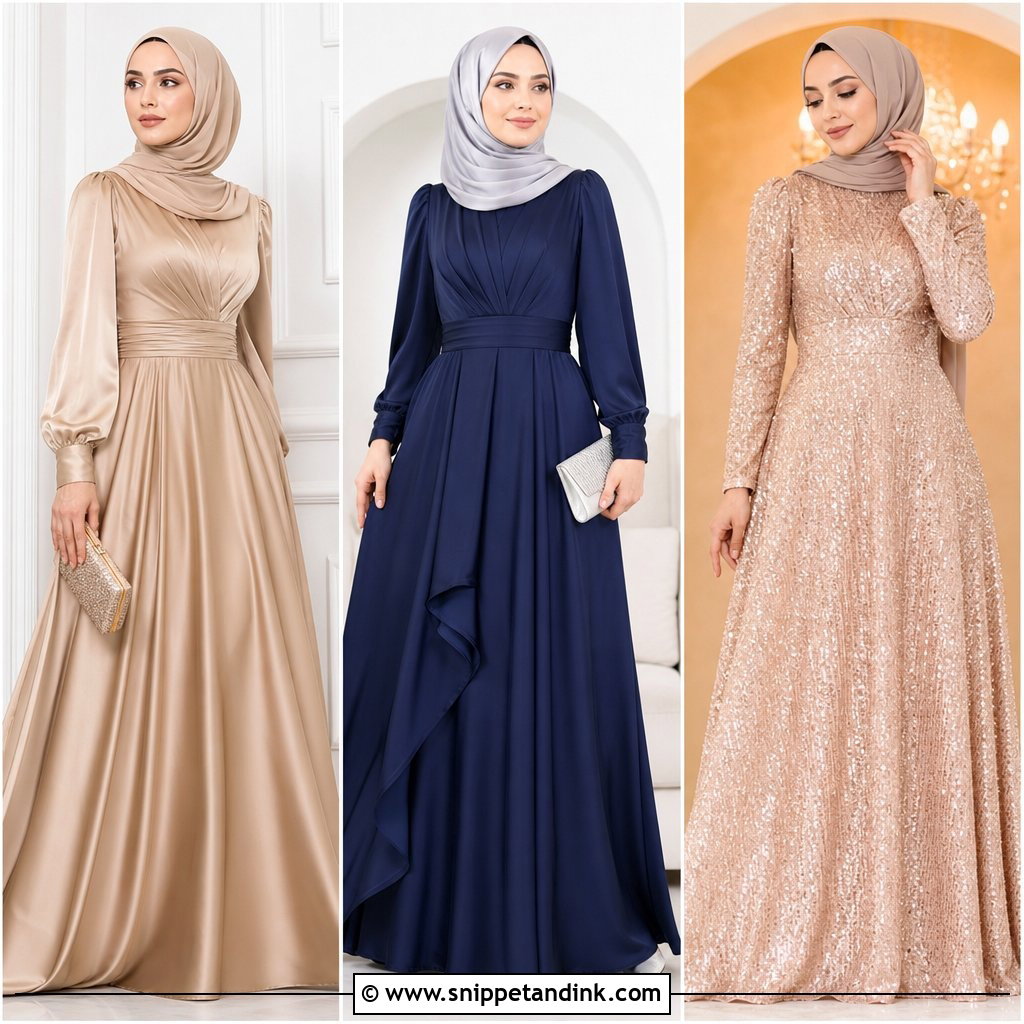

20. Bridal Suit Wedding Dress Alternative
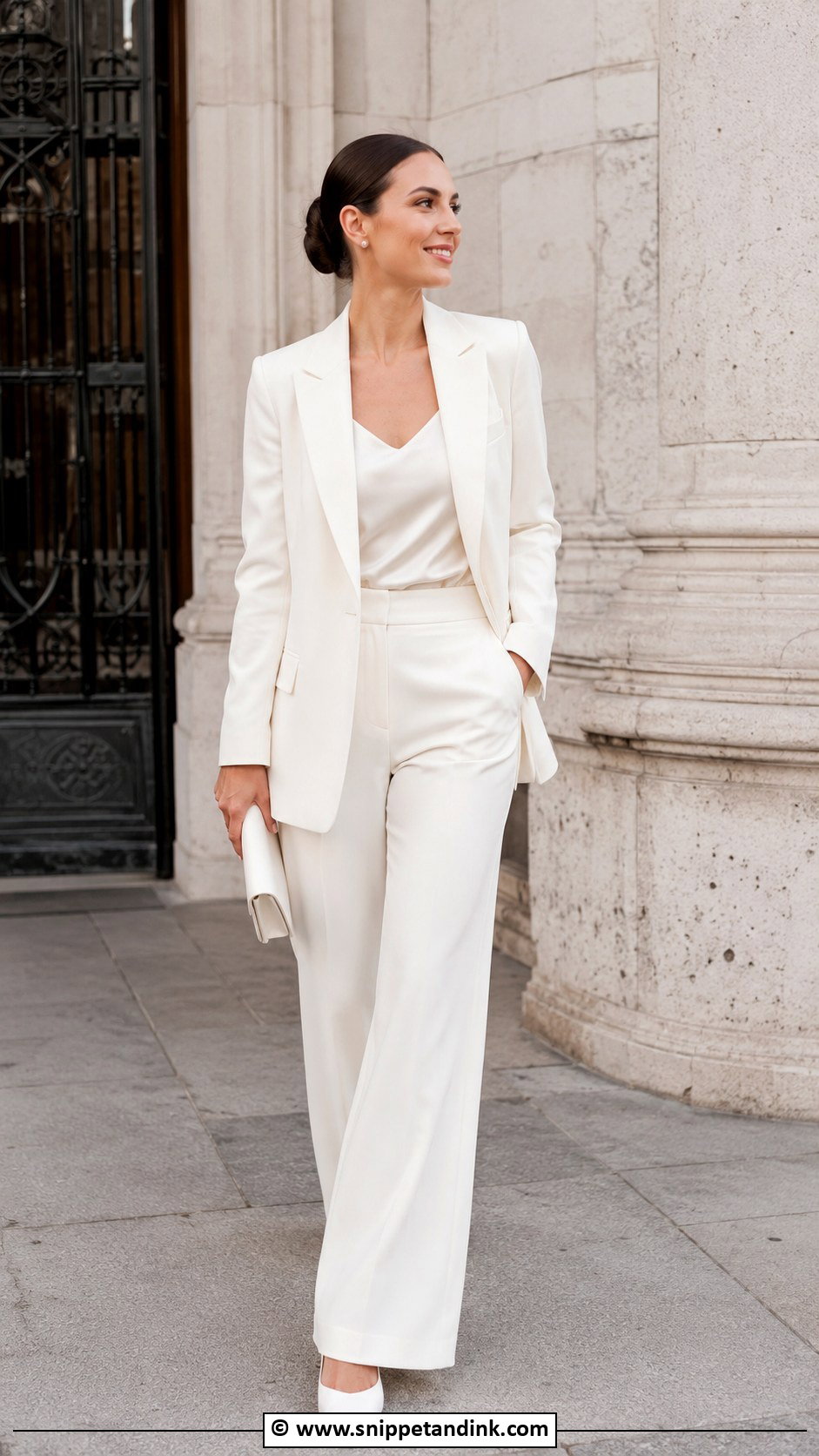
A bridal suit suits women who love tailoring. A white or ivory suit with sharp trousers, a fitted blazer and a silk camisole or corset underneath looks polished, especially with pointed heels and pearl studs. A veil or a structured headband adds the bridal cue. Shoulders are the hardest fix in tailoring, so buy a jacket that fits there and alter everything else. It works for courthouses, modern venues and second looks.
21. Bridal Jumpsuit Wedding Dress Alternative
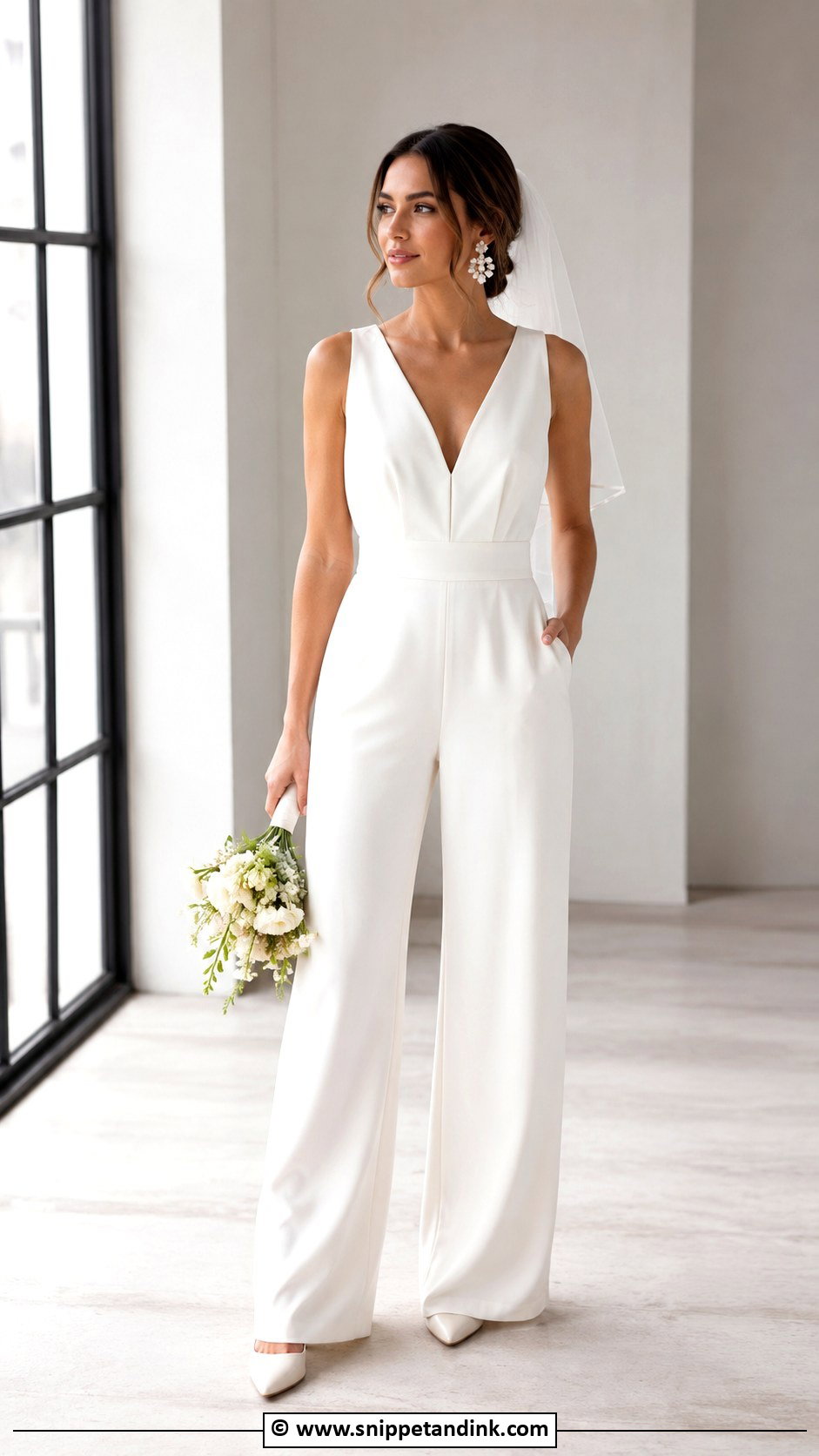
Jumpsuits give ease and movement. Look for wide legs, a defined waist and a neckline with presence, halter, square, strapless or one-shoulder. A cape, an overskirt or a detachable train brings ceremony drama. Crepe, satin and mikado make them look properly bridal rather than casual. Check the rise sitting down and plan for bathroom trips, since many fasten at the back. They suit city weddings and travel well.
22. One Shoulder Wedding Dress
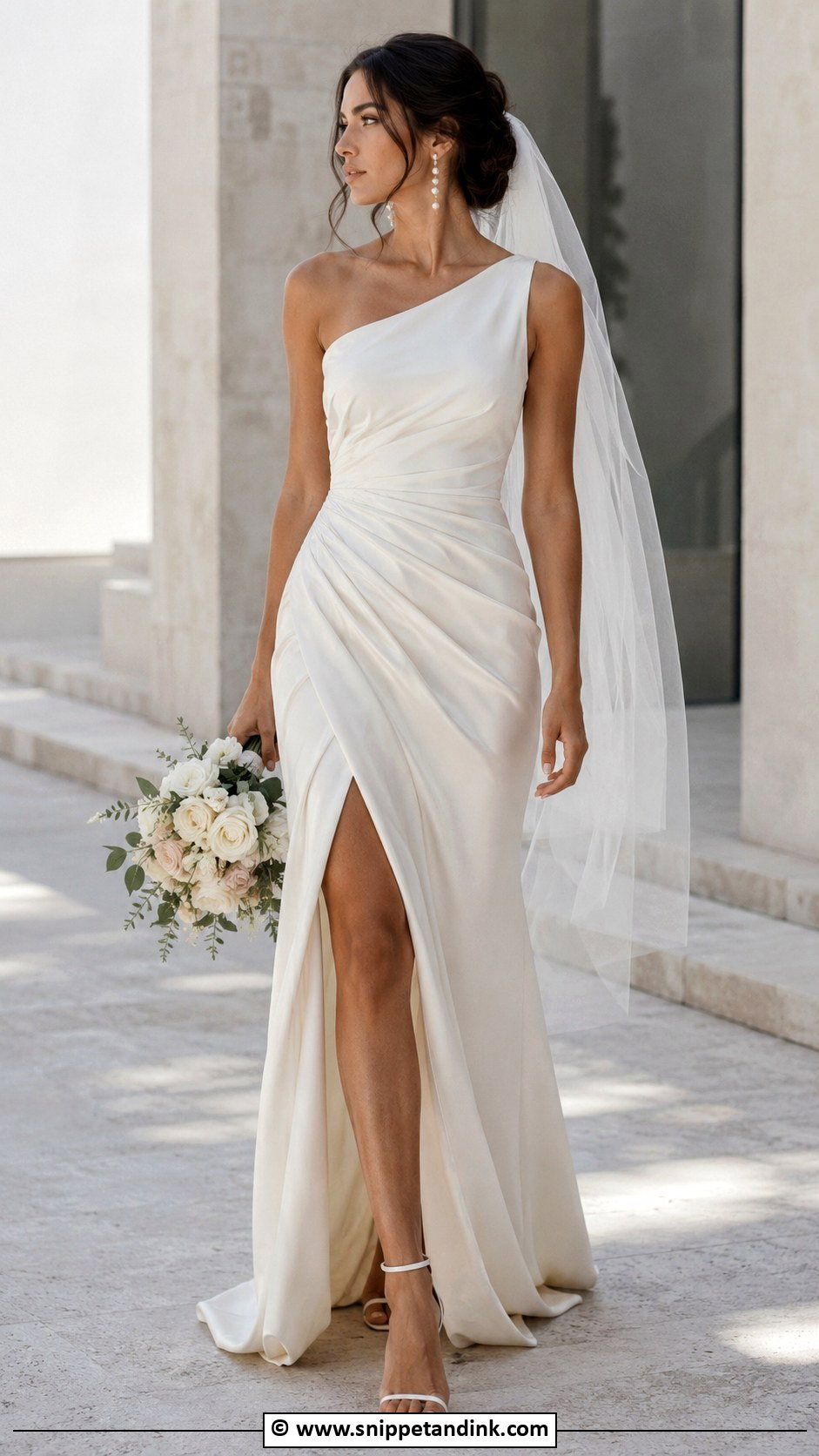
One shoulder gives a diagonal line that’s interesting without any embellishment. A column gown is minimalist; a draped skirt adds movement. Skip the necklace and choose earrings that echo the shape. Satin, crepe and soft drapes all work. Single straps need firm internal anchoring, or the bodice twists toward the bare side over the evening, so I’d ask how the strap is supported before buying.
23. High Neck Wedding Dress
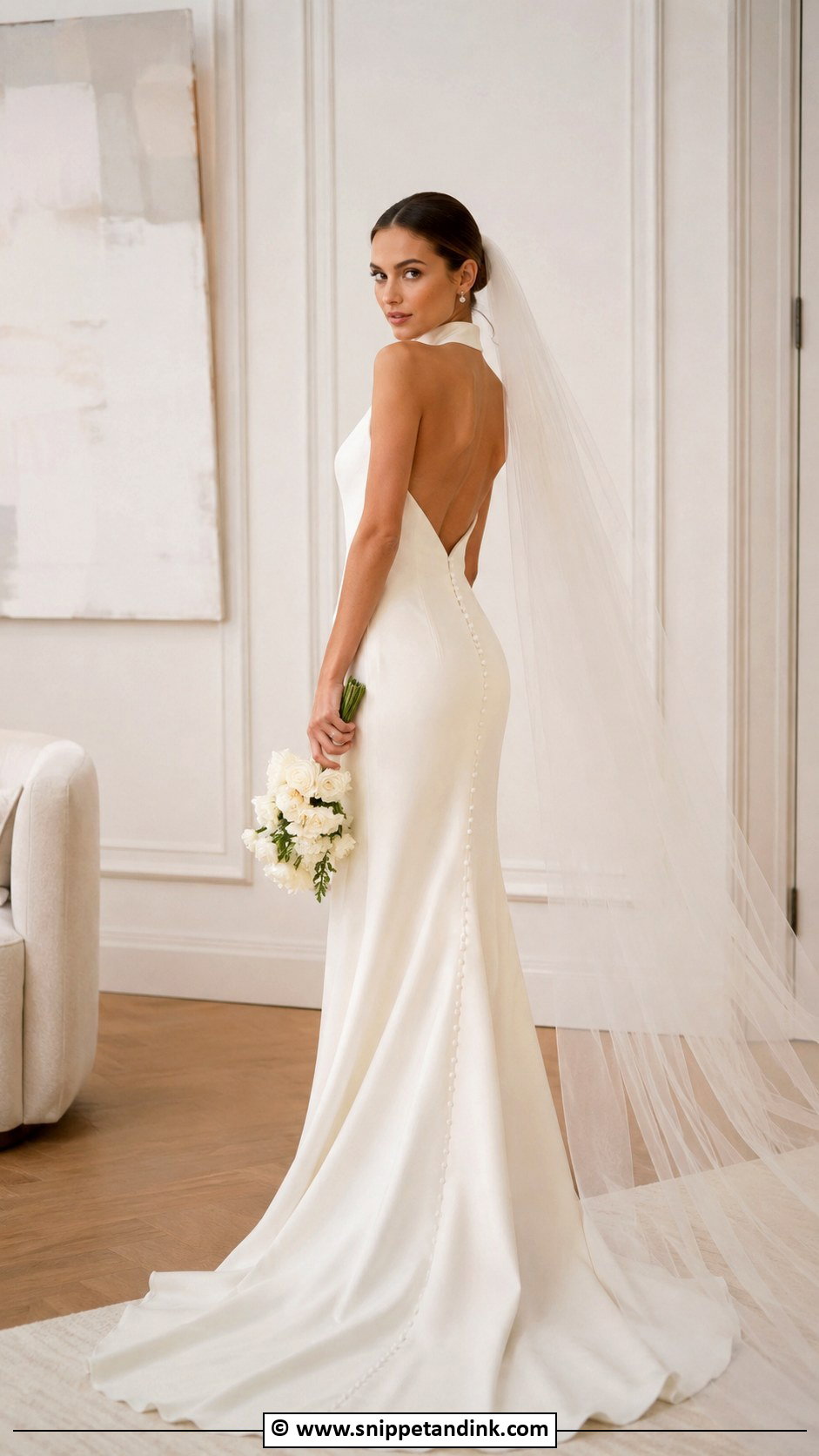
A high neck focuses attention on your face and posture. Crepe is modern, lace is romantic, and satin with a full skirt is dramatic. An open back, a sheer neckline or a sleeveless cut keeps it from feeling over-covered. An updo is almost essential so the neckline isn’t lost under hair. A long veil softens it; a short one keeps it crisp. Check the collar for chafing at the neck when you turn your head.
24. Bow Back Wedding Dress
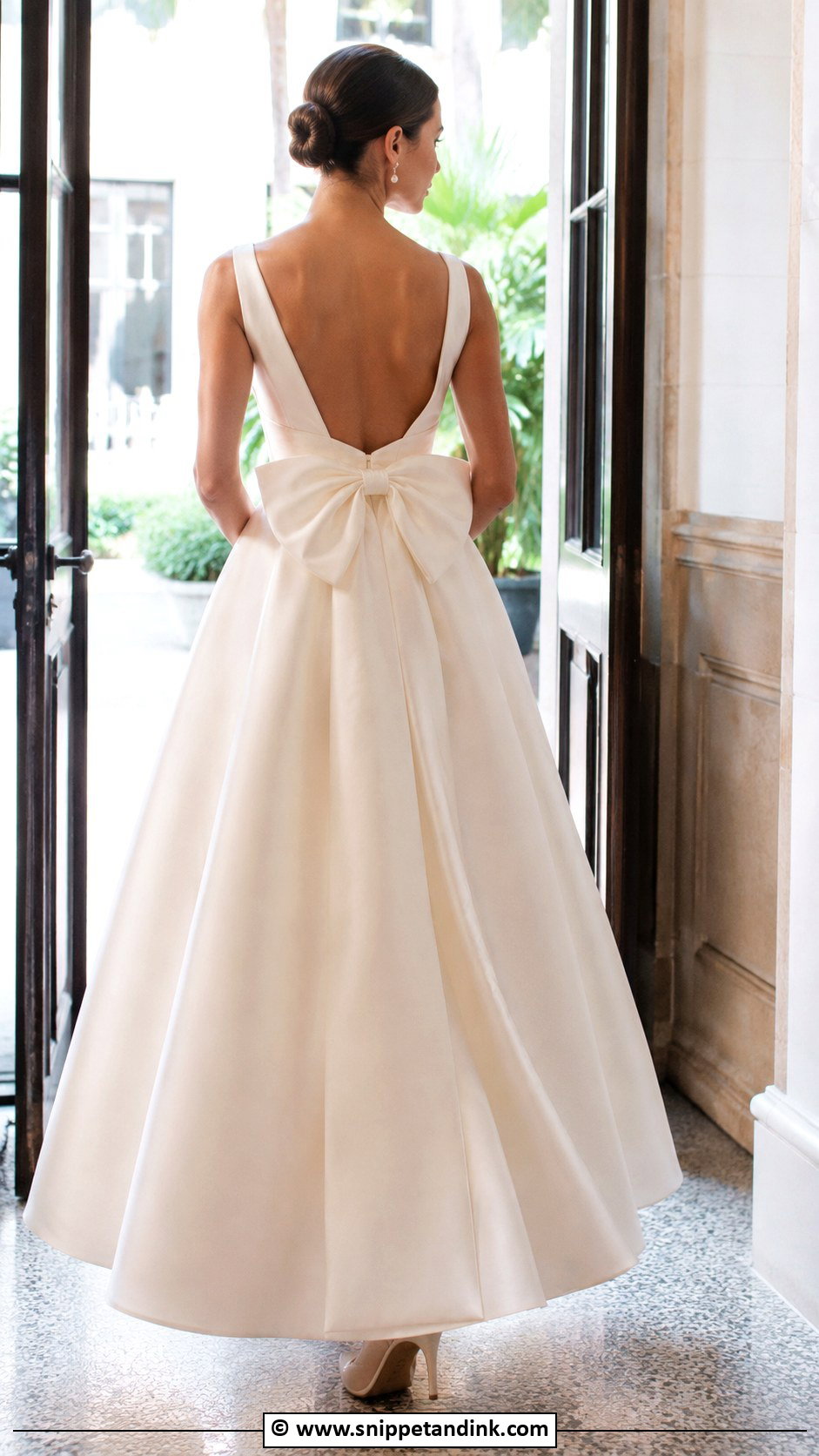
A bow at the back gives the gown a focal point for aisle photos and entrances. It can be small at the waist, oversized across the back or attached to a removable train. Keep the front plain so the back reads as deliberate. Large bows in soft fabric can flatten when you sit against a chair back, so a little interfacing inside helps them keep their shape. Satin, mikado and crepe hold a bow best.
25. Sculptural Wedding Dress
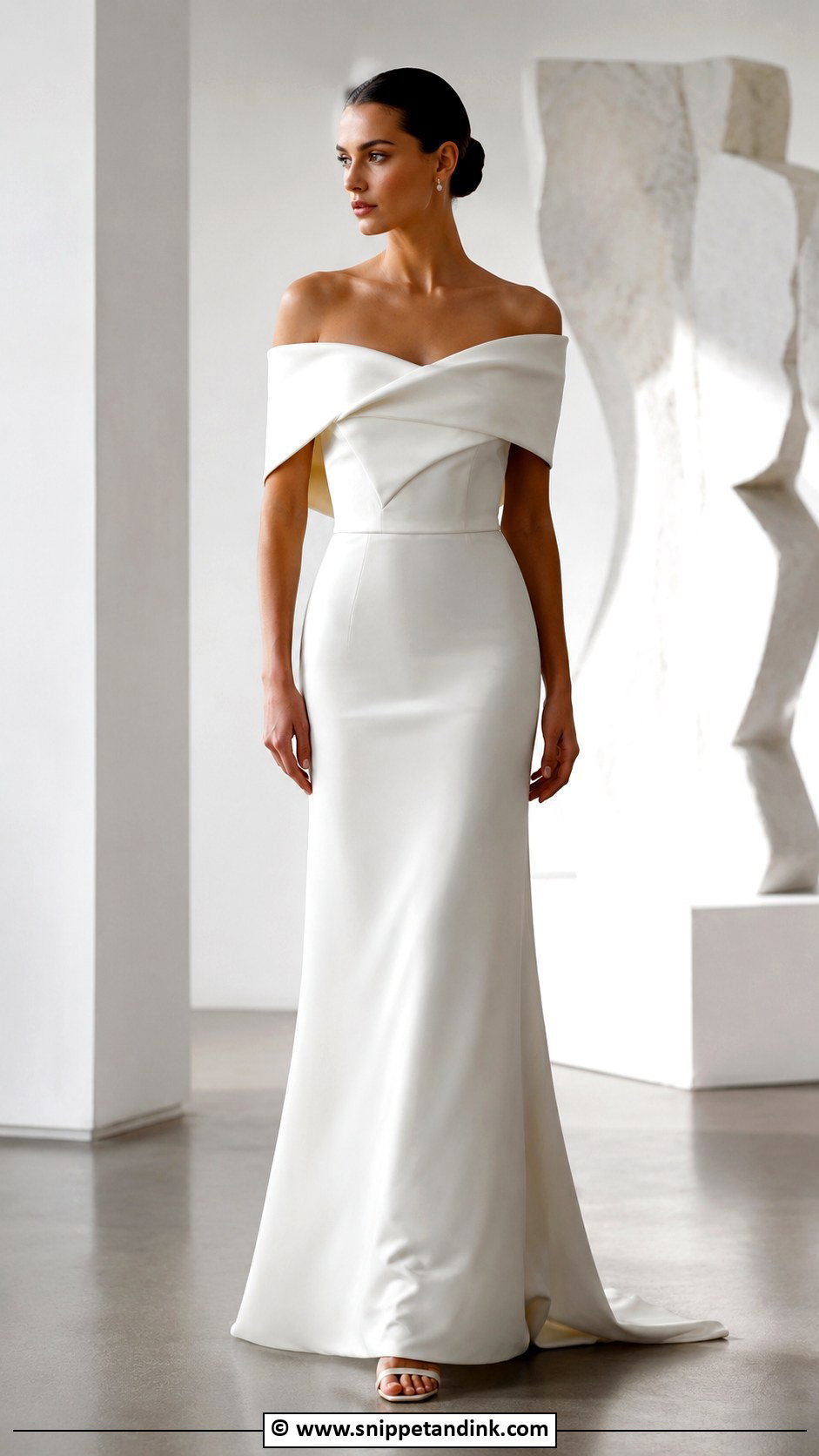
Sculptural dresses use folded necklines, architectural bodices or structured skirts to make an impression through shape rather than decoration. Choose one sculptural element, not several. Minimal earrings, sleek hair and simple heels let the shape stand out, and sometimes the best veil is no veil. These gowns can be stiff to sit in, so try a chair and a car seat in the sample. They suit modern venues and galleries.
26. Ruffle Wedding Dress
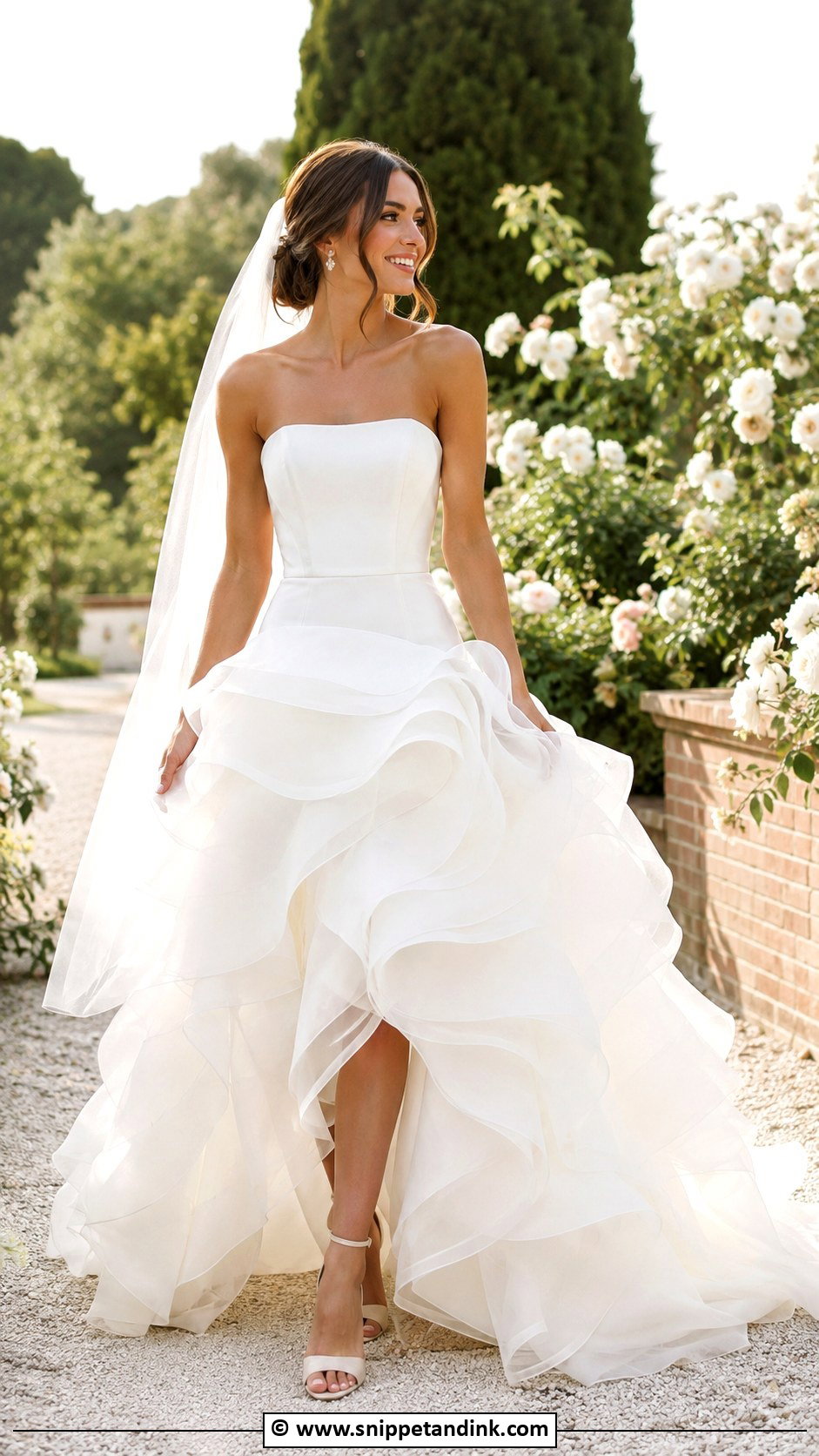
Ruffles add movement and personality. Cascading organza or tulle ruffles give drama; delicate layered ruffles on an A-line give softness. Use them in one place, along the skirt, neckline, sleeve or train. Small earrings and a plain veil keep it balanced. Outdoors, they move naturally in the wind, which helps photos. Ruffle hems near the floor can catch heels, so get the length right.
27. Feathery Wedding Dress
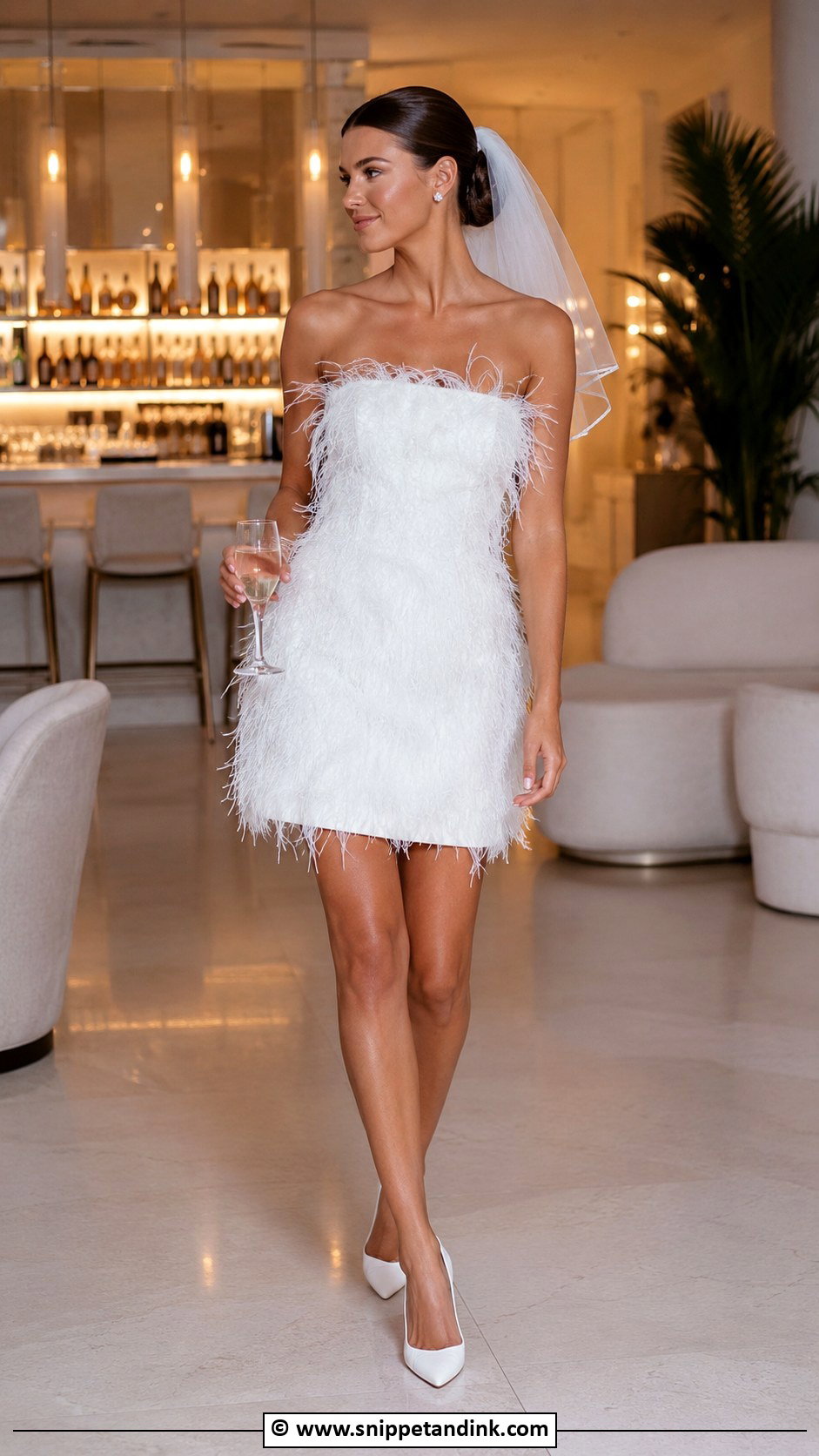
Feathers add texture and a little drama to cuffs, hems, straps or an after-party mini. Choose soft trim rather than overwhelming volume. Feathers shed, especially ostrich, so I’d warn your partner about a dark suit and keep a lint roller in the emergency kit. They also don’t like rain or humidity, which flattens them. Sleek heels and polished hair keep the rest simple so the feathers are the one statement.
28. Champagne Wedding Dress
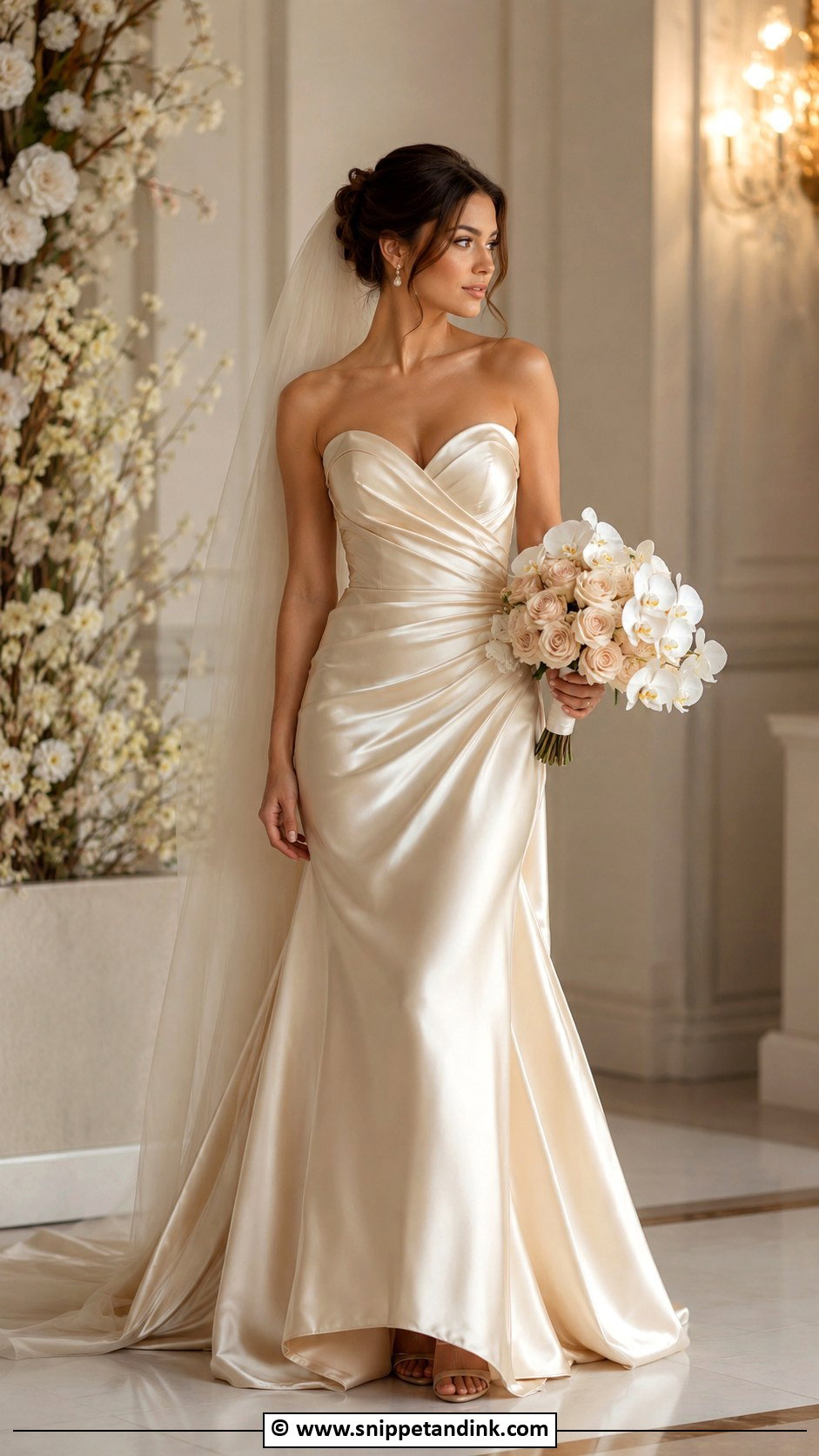
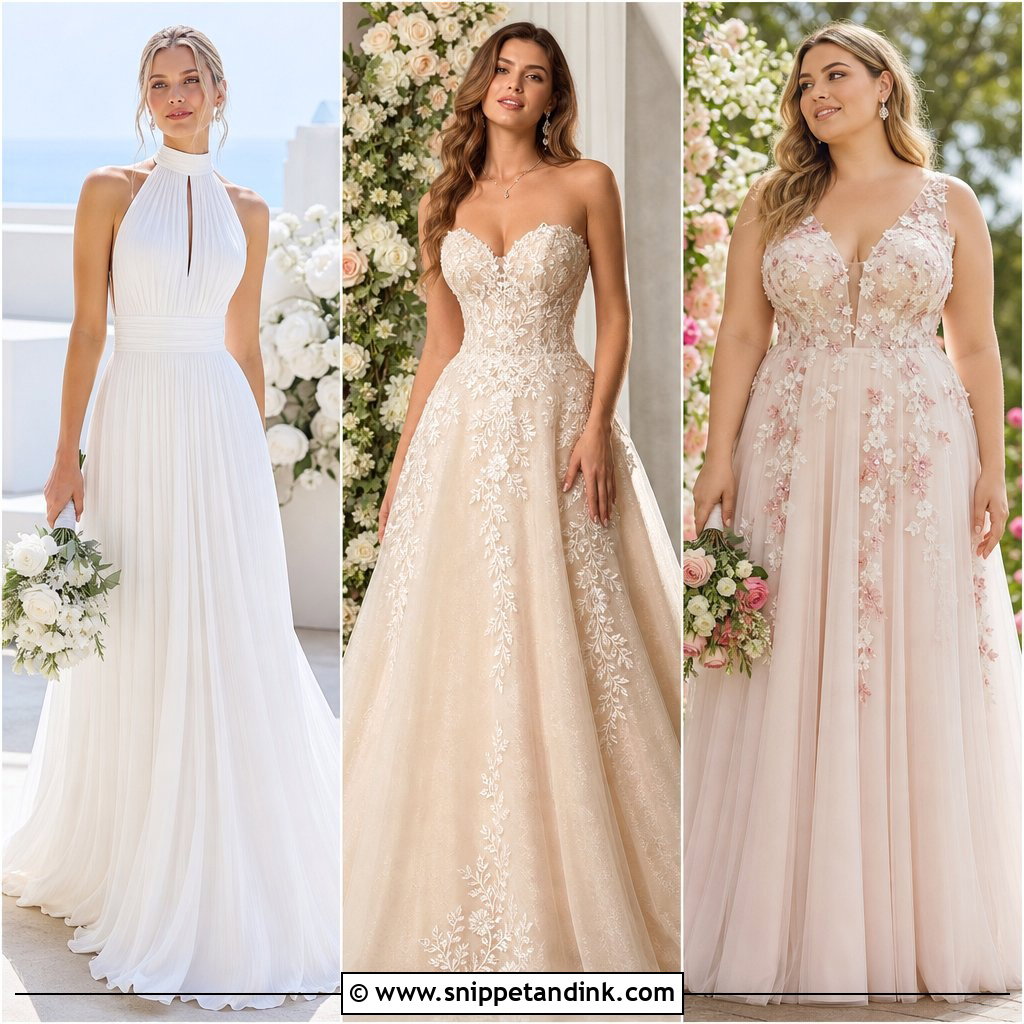
Champagne warms things up when pure white feels harsh against your skin. Satin, tulle, lace and embellished fabrics all take it. Match the veil to the gown’s undertone, as a stark white veil over champagne makes the dress look dingy. Nude or champagne heels and gold-tone earrings complete it. Slip shapes, ball gowns and lace designs are all good options in this color this year.
29. Blush Wedding Dress
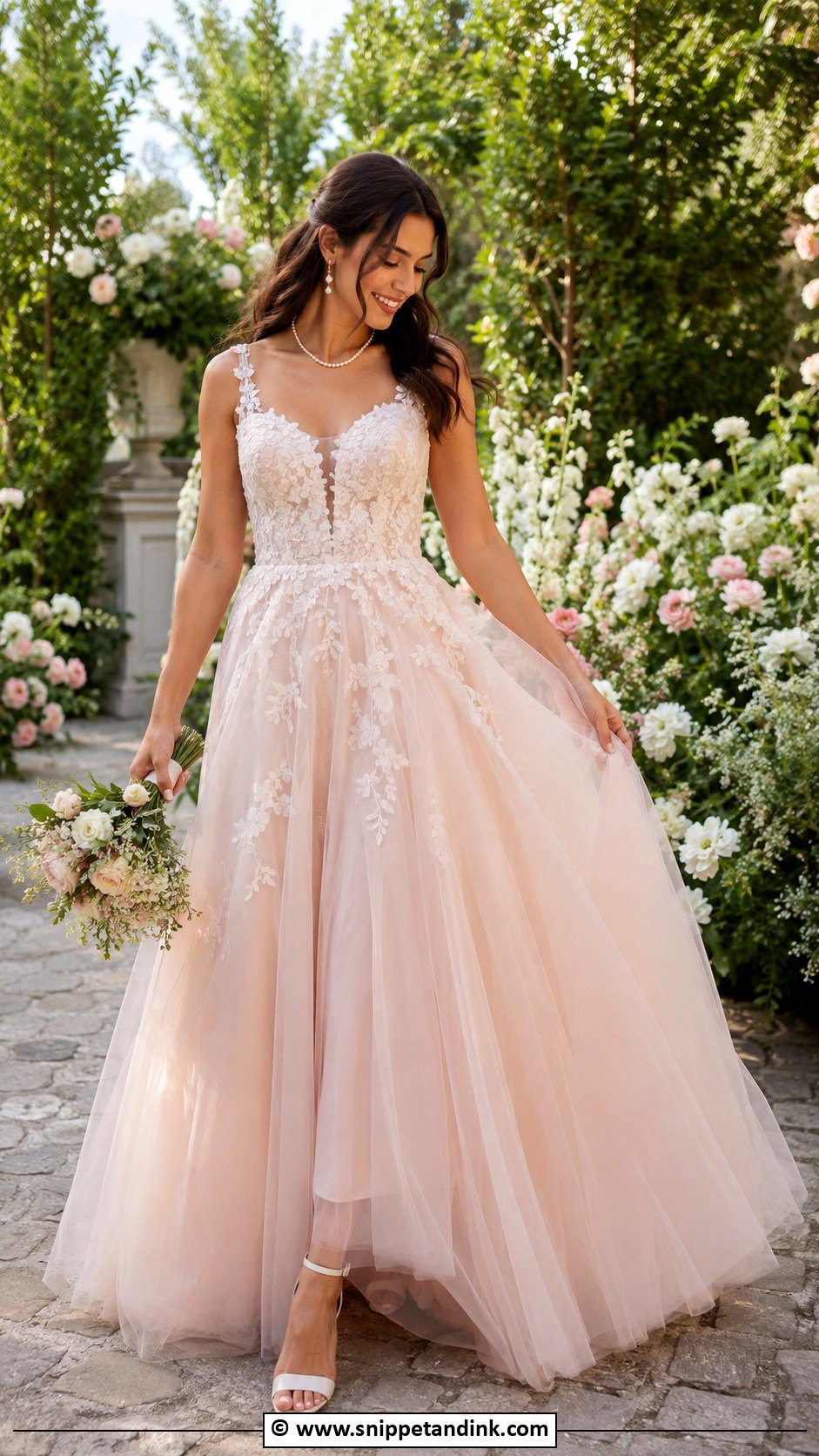
Blush ranges from barely-there pink to soft rose, so choose the shade by holding it against your face in daylight rather than by the swatch name. Ivory heels, pearls and natural makeup keep it bridal. Blush tulle, lace and floral appliqué suit gardens; a blush satin column or a pink corset dress looks more modern. The softer the shade, the more it will read as bridal in photos.
30. Reception Wedding Dress
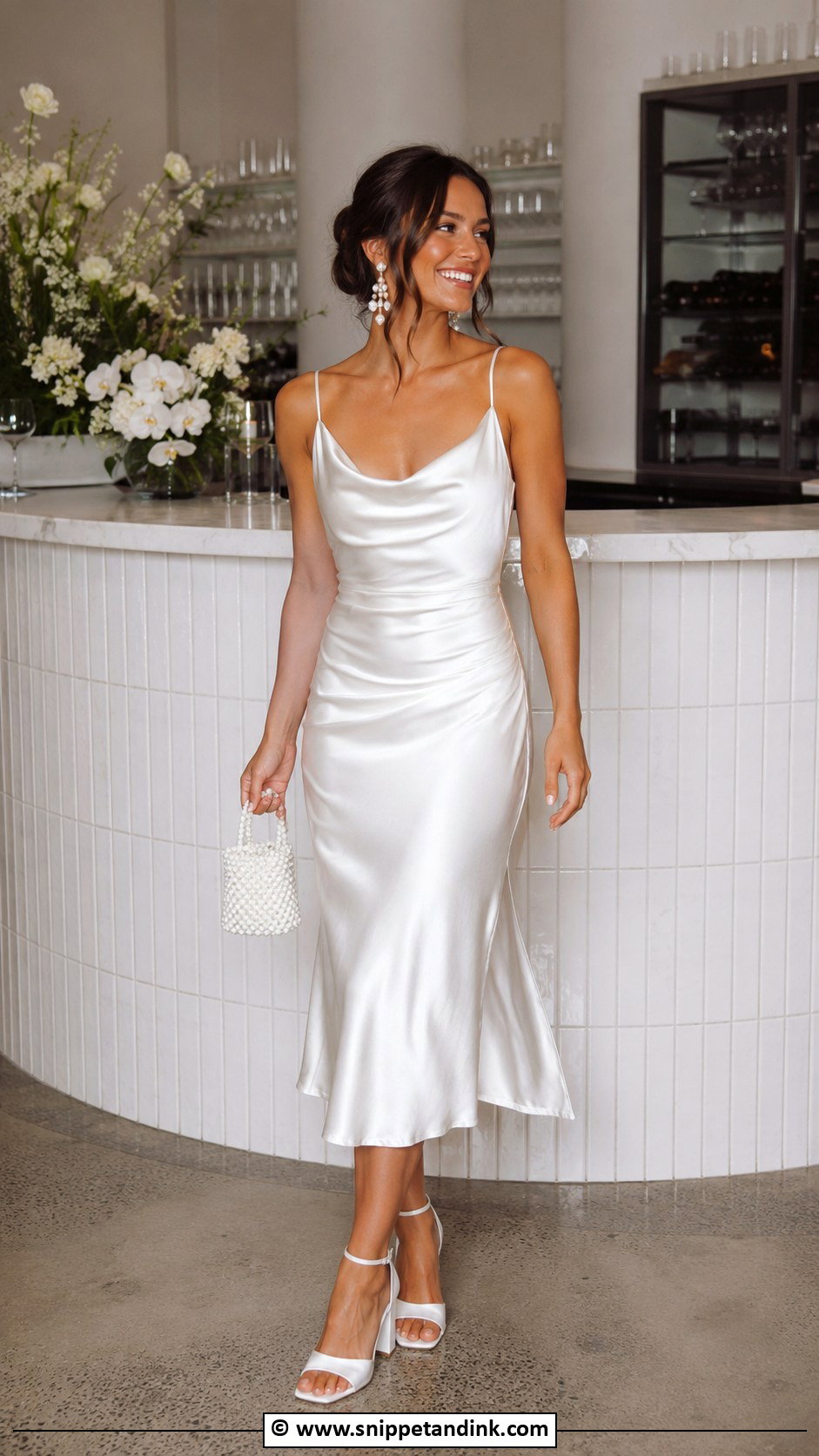
Second looks have become standard, and they make sense: a shorter hem, lighter fabric and no train let you dance properly. A satin midi, a pearl mini, a feather-trimmed dress or a sleek slip all work. Secure heels and a small bag finish it. Link it to the ceremony gown through one shared element. Schedule the change, as it takes longer than you’d think with a bustle, a veil and a corset to undo.
Will This Year’s Shape Look Dated in Ten Years?
Some will, honestly. Every era has its tell, and drop waists, oversized bows and feathers are the ones most likely to date a photo to this exact moment. That’s not a reason to avoid them. It’s a reason to know which part of the outfit you’re happy to time-stamp.
In my experience, the gowns that age best have a simple underlying shape with the trend carried by something removable or small. A clean satin A-line with a detachable bow, a column gown with removable sleeves, a plain bodice with one area of pearls. You’ll still see the year in the photos, but the dress underneath reads as yours.
If you love a trend detail but worry about it, wear it for part of the day. A feathered mini for the party or a bow that unhooks after the photos lets you enjoy it without making it the only record of how you looked.
Movements to Try in Every Sample
- Sit on a hard chair for a full minute, then stand and check the creasing.
- Raise both arms as if hugging someone taller than you.
- Walk briskly and climb a step or the fitting platform.
- Bend forward as if signing a register.
- Turn quickly to see how the skirt and train follow you.
The Gown That Still Feels Right at Hour Ten
This year’s gowns ask more of you than ever in choice, which is exactly why I tell brides to judge the whole outfit together: neckline, fabric, shoes, veil, jewelry and how comfortable you’ll be at hour ten. Some will love minimal satin; others will feel most themselves in lace sleeves, a sculptural shape, champagne or a suit. Try different shapes, walk, sit and raise your arms in each. Let trends start the conversation, then let the mirror and your comfort finish it.
You'll Like These Ideas:




Leave a Reply