
A dress appointment should feel like dressing up, not like a lesson in hiding. Most of the gowns I pull for midsize brides have one thing in common: the structure is doing the work, so the fabric can relax. A-line, ball gown, mermaid, trumpet, sheath, and empire waist shapes all sit differently on the body, and none of them belongs to one size. What I watch at every appointment is how the bodice holds the bust, where the waist seam lands and how the skirt moves when you take a step. A good seamstress will change the result more than the number on the label ever could. Below are the twenty styles I reach for, from lace to plain satin, with what I check on each one.
Sample Sizes, Size Charts and the Number That Doesn’t Matter
Many boutiques keep most of their samples in smaller sizes, so a midsize bride often ends up holding a dress against herself or wearing it clipped open at the back. That is not a reflection on you; it’s how stock works. Before you book, call and ask which sizes the samples come in and whether they carry any in your range. If they don’t, ask whether you can see gowns in a fabric or cut you’re already curious about, so the appointment isn’t wasted.
Bridal sizing also tends to run smaller than everyday clothing, and designers order to measurements, not to the size you usually buy. The consultant should measure bust, waist and hips with you in a good bra, then order to the largest of the three. Taking a dress in is routine work; letting one out depends on how much seam allowance the maker left, which is often very little.
What I look at when the sample doesn’t close
- Where the waist seam lands on you compared with your natural waist, because that line stays the same in your size.
- How the neckline sits at the front and sides, even if the back is open.
- Whether the strap width and placement cover your bra, or whether you’ll need built-in cups.
- How the skirt hangs from the hip. Volume and drape translate to your size; tightness doesn’t.
1. A-Line Wedding Dress With V-Neckline
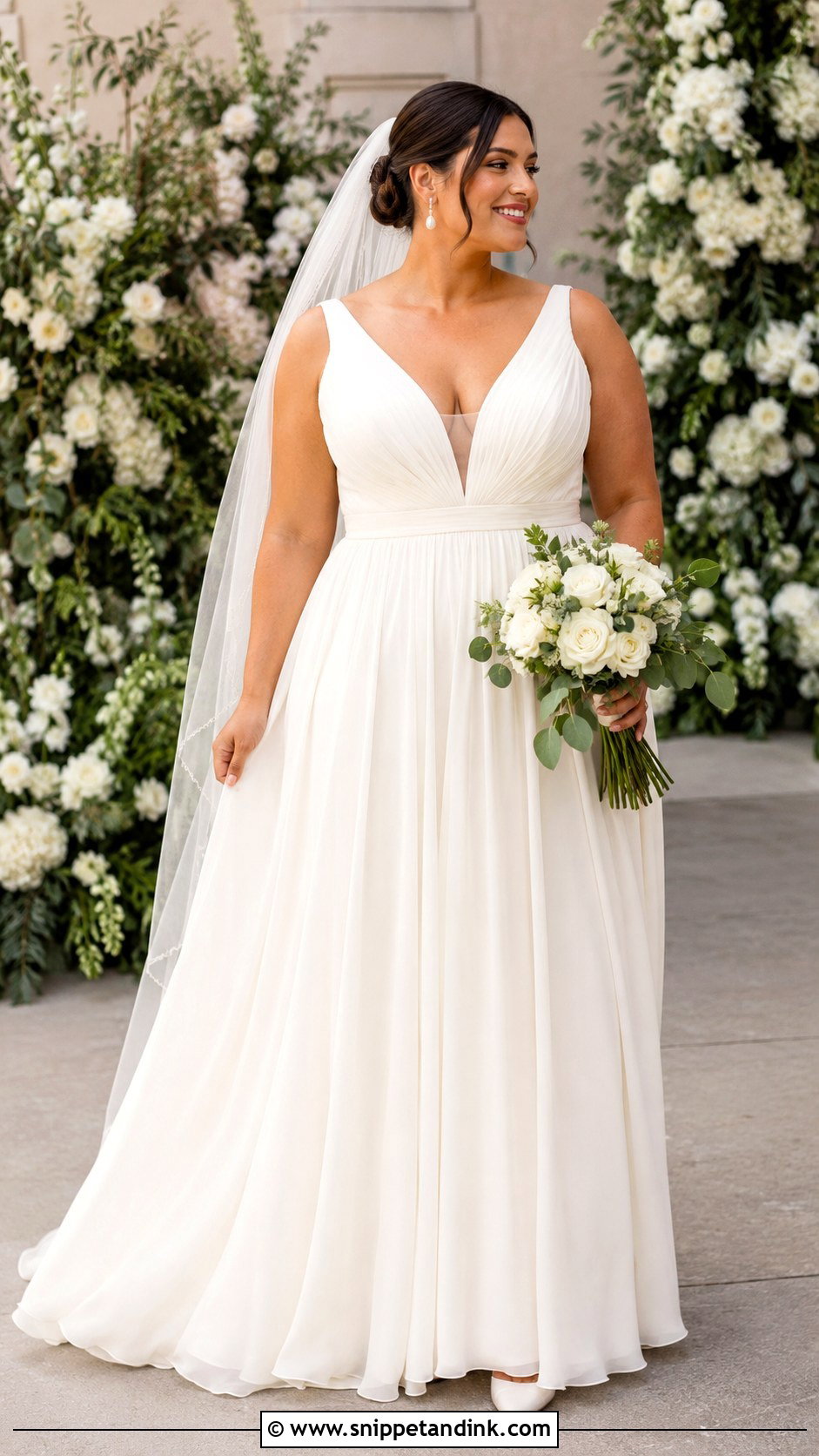
I start most midsize appointments here, because an A-line gives shape at the waist without asking anything of the hips. Look for straps wide enough to carry the bodice and a V that stops at a medium depth; that open line lengthens the upper body more than any amount of beading. A structured waistband marks the natural waist, and chiffon, tulle or satin all fall cleanly from it. Pointed ivory heels, pearl drops, a fingertip veil and a low bun finish it without crowding the neckline. The one thing I check before anything else: the side of the bodice should lie flat at the underarm. If it cuts in there in the fitting room, it will feel worse by the speeches.
2. Satin Ball Gown Wedding Dress
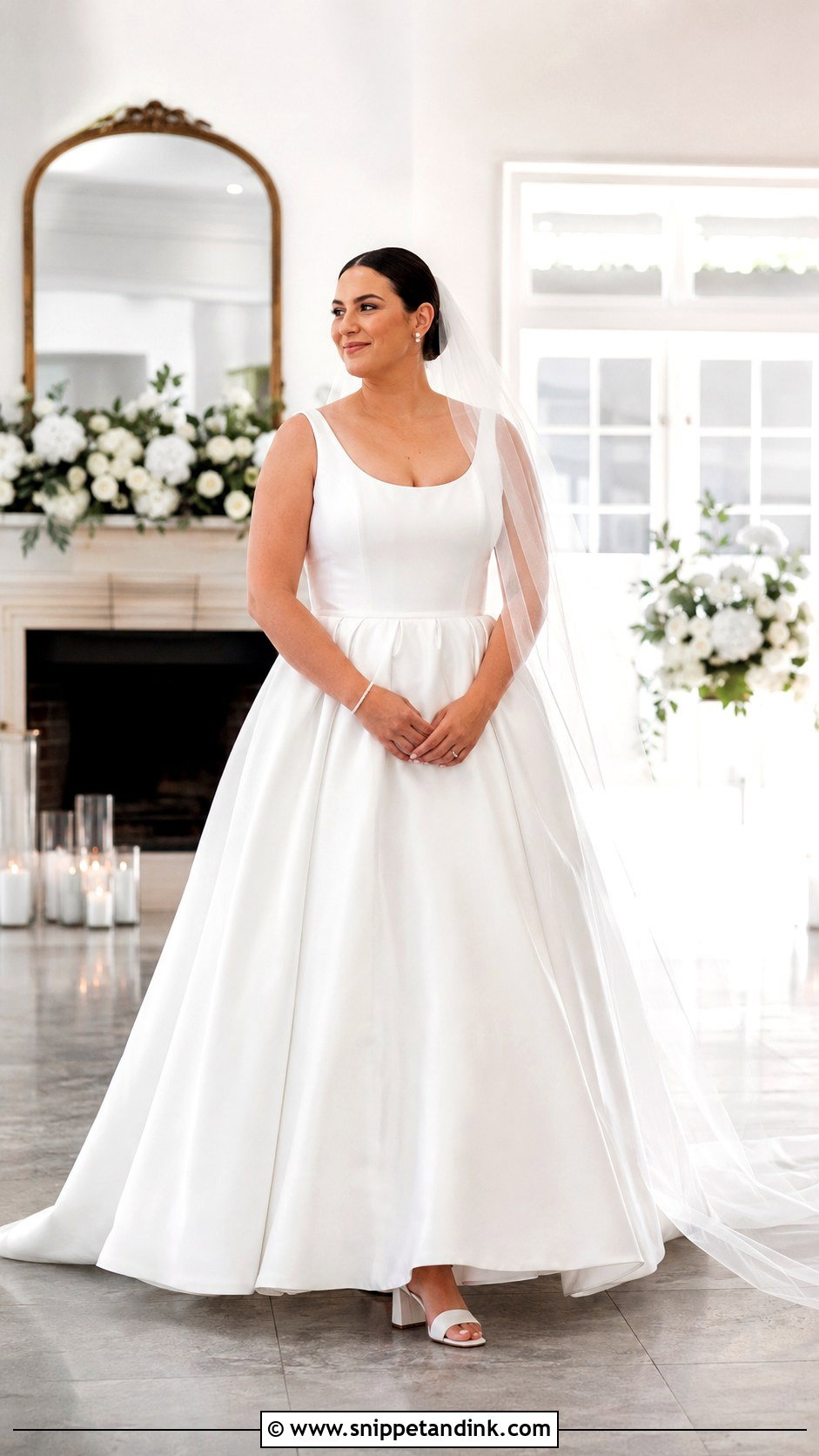
Satin carries its own light, so a ball gown in it barely needs embellishment. I like a structured bodice, wide straps and a skirt that starts at the natural waist, with a scoop or square neckline for coverage. Box pleats are the detail I’d ask for: they add volume to the skirt without stacking extra layers around your middle. Satin block heels, a slim tennis bracelet, pearl studs and a cathedral veil keep it classic. Heavy satin is the fabric that most needs a proper bustle plan, so ask how it lifts before you buy. A well-fitted bodice holds the whole gown up on its own; you shouldn’t be hitching it every time you stand.
3. Basque Waist Wedding Dress With Full Skirt
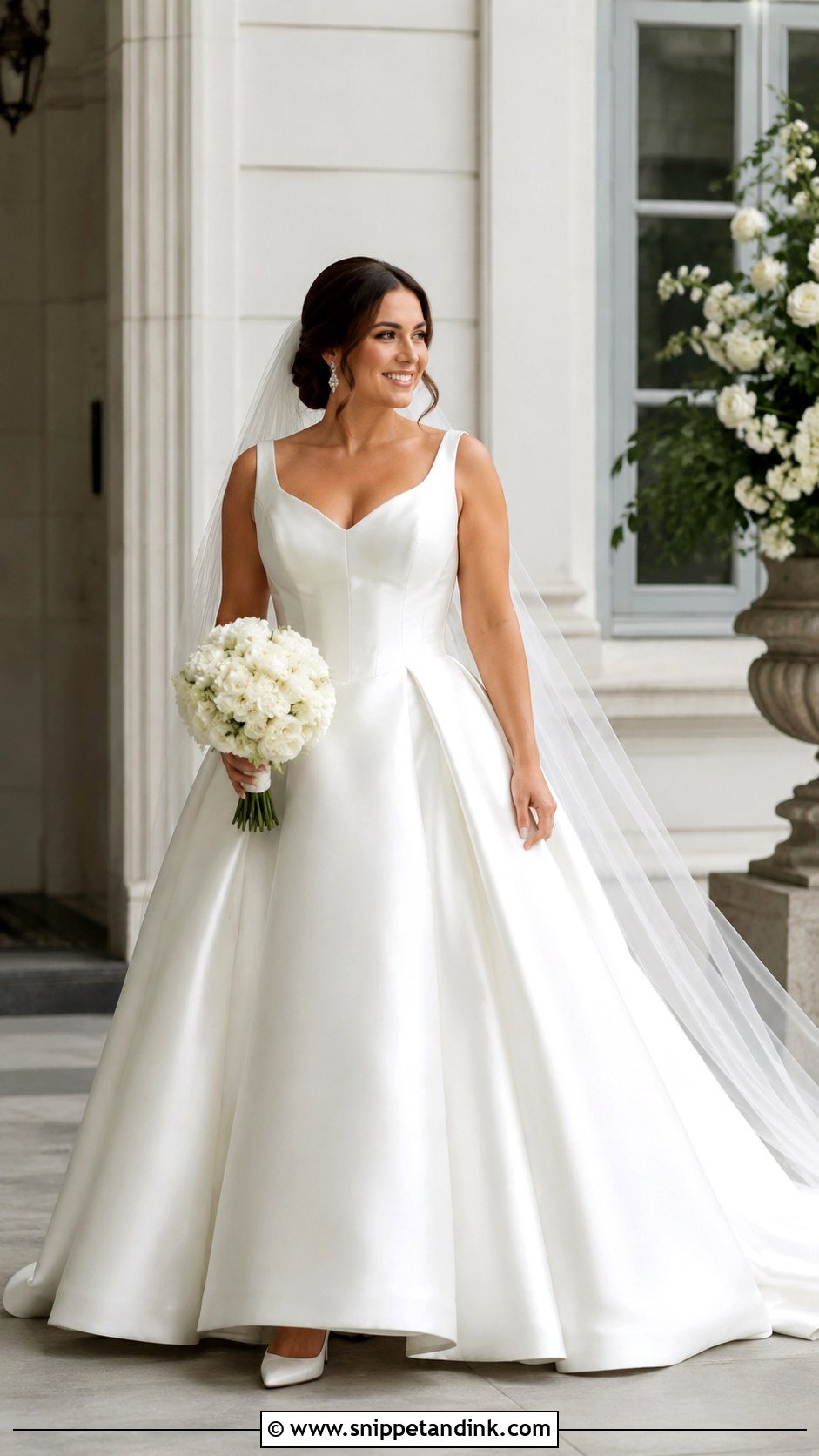
A basque waist wedding dress works because the pointed seam pulls the eye down the center of the body before the skirt opens out. That seam is only as good as the fabric under it. Firm satin, mikado or layered tulle keep the point crisp; anything soft lets it ripple. Pair it with a curved neckline and straps that actually support. Classic pumps, a structured veil, crystal earrings and a small bouquet are plenty here, since the waist is already the focal point. When I fit one of these, I stand behind and beside the bride as well as in front, because the point tends to fold sideways when she turns.
4. Off-Shoulder Wedding Dress With A-Line Skirt
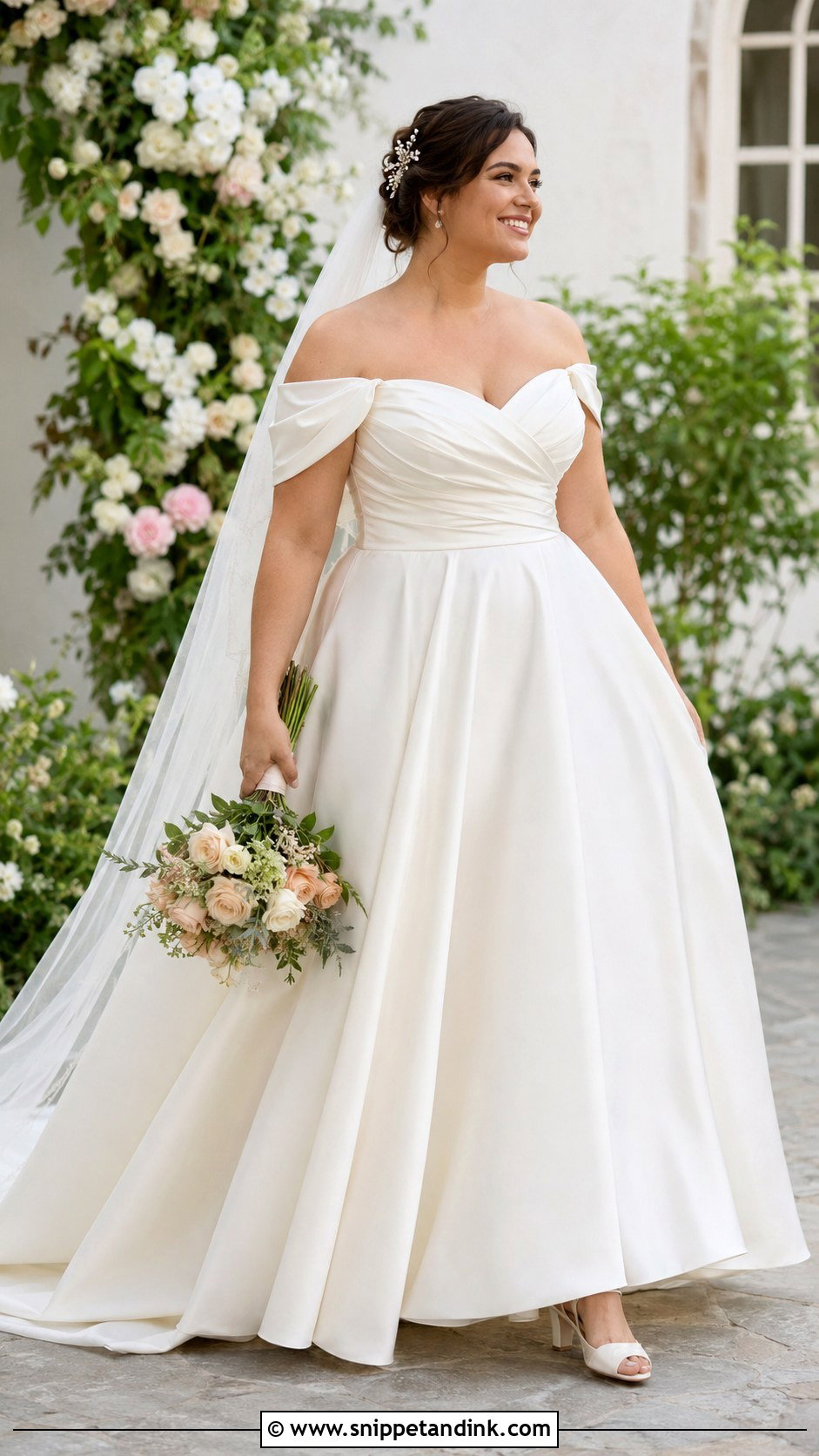
Off-shoulder sleeves look delicate, but on a midsize bridal fit they should never be the thing holding the dress up. Ask whether they’re stitched to an internal bodice with its own support; if the sleeves are carrying the weight, they’ll creep down your arms all evening. Draped satin or gathered tulle gives texture without bulk. Low ivory heels, a pearl comb, small drops, a chapel veil and a half-up style keep the open neckline relaxed. Raise both arms in the sample as if you’re hugging someone. Removable sleeves are worth asking about, because they give you a strapless option for the dance floor.
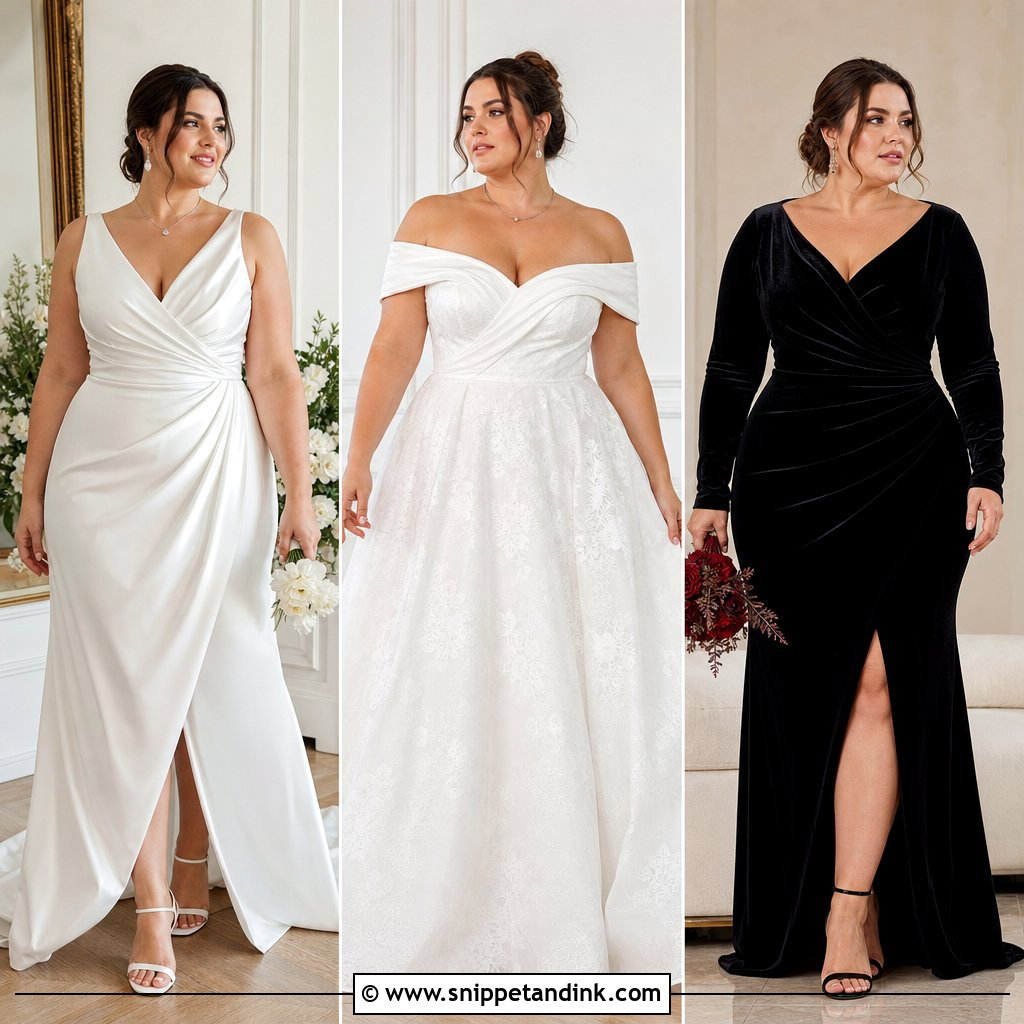
5. Corset Wedding Dress With Draped Skirt
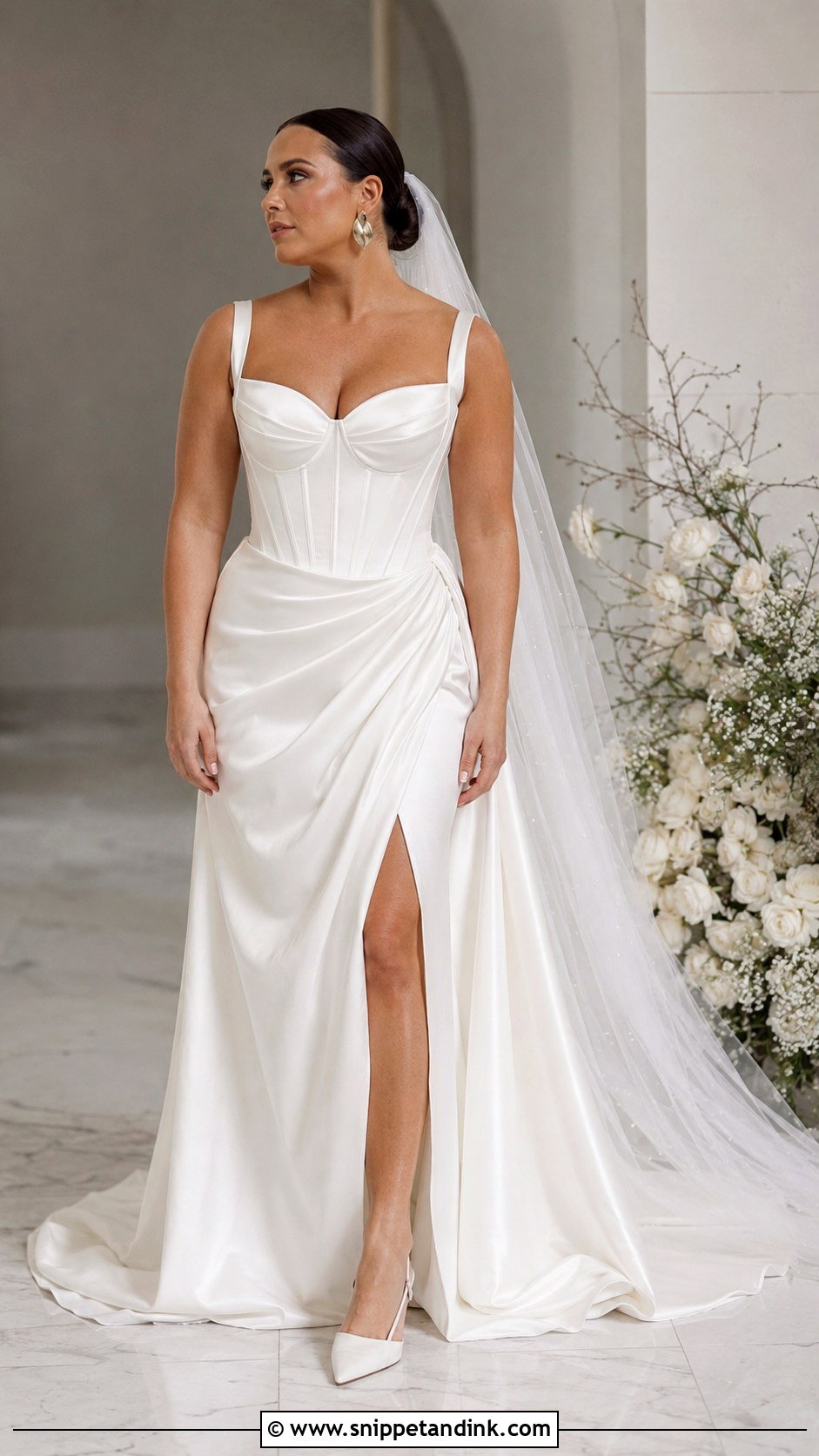
A corset should shape you, not squeeze you. The good ones have lined cups, flexible boning and a back closure that sits snug across both bust and waist without the lacing gap opening up. With a draped satin skirt gathered to one side, you get waist definition while the hips stay free to move. Slingback heels, a sheer veil, sculptural earrings and a smooth low bun keep it modern, and I keep jewelry minimal so the bodice seams read as design. In the fitting I ask brides to sit, take three deep breaths and lift their arms overhead. If the boning digs at the ribs or the top edge gapes when you inhale, it needs work before the day.
6. Square Neck Wedding Dress With Long Sleeves
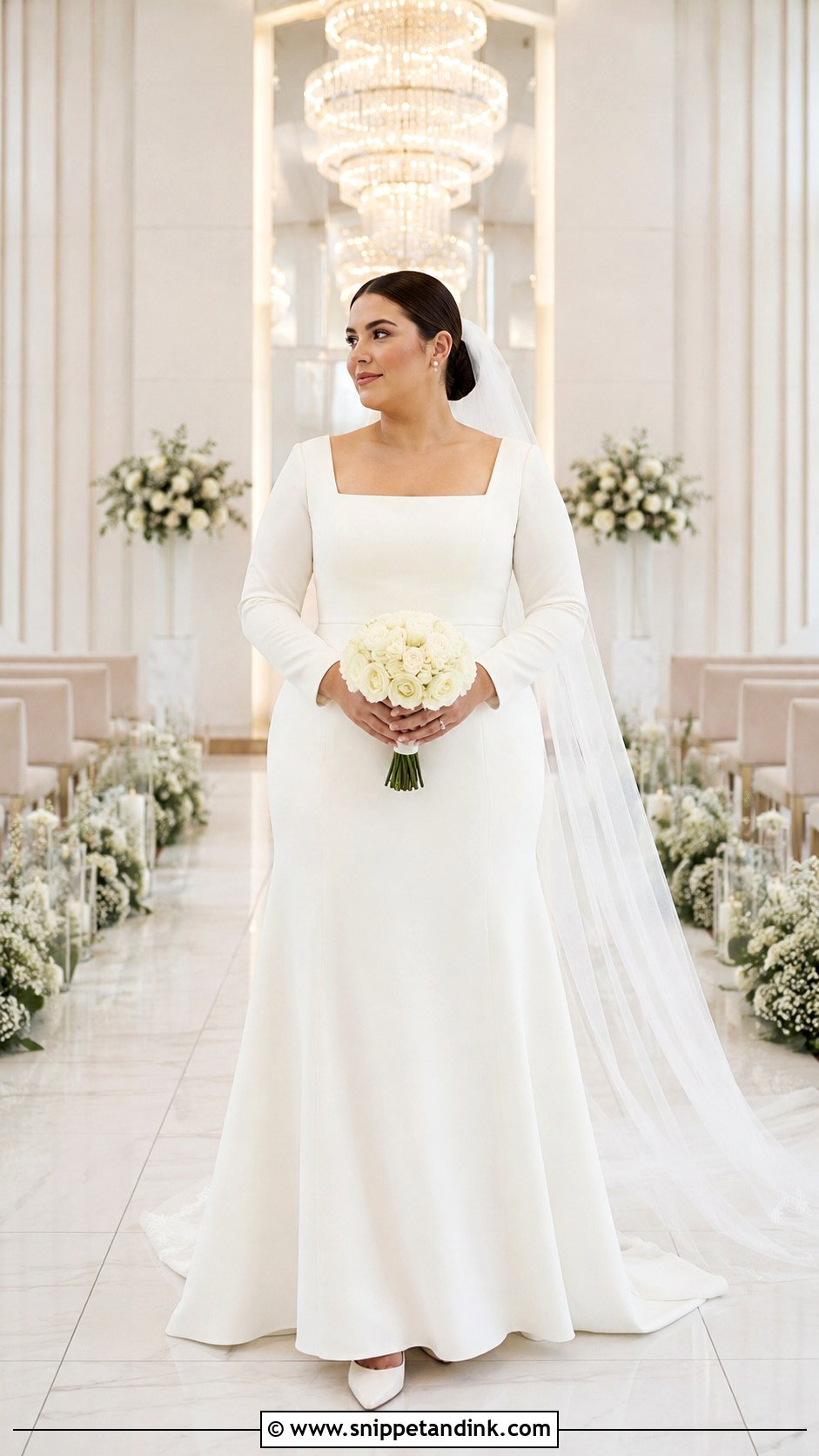
Long sleeves plus a square neck is one of my favorite pairings for cooler months. The neckline frames the collarbone, and the sleeves balance it. Fabric choice matters more than people expect: stretch crepe, soft lace or lined illusion all bend at the elbow, while stiff sleeves bunch and pull at the shoulder every time you lift a glass. A defined waistband and gently flared skirt hold the shape. Pearl earrings, closed-toe heels, a sleek bun and a long veil set under the hair finish it. Watch the corners of the neckline as you move. If they lift, a small adjustment at the shoulder seam usually fixes it.
7. Lace Wedding Dress With V-Neck And Sleeves
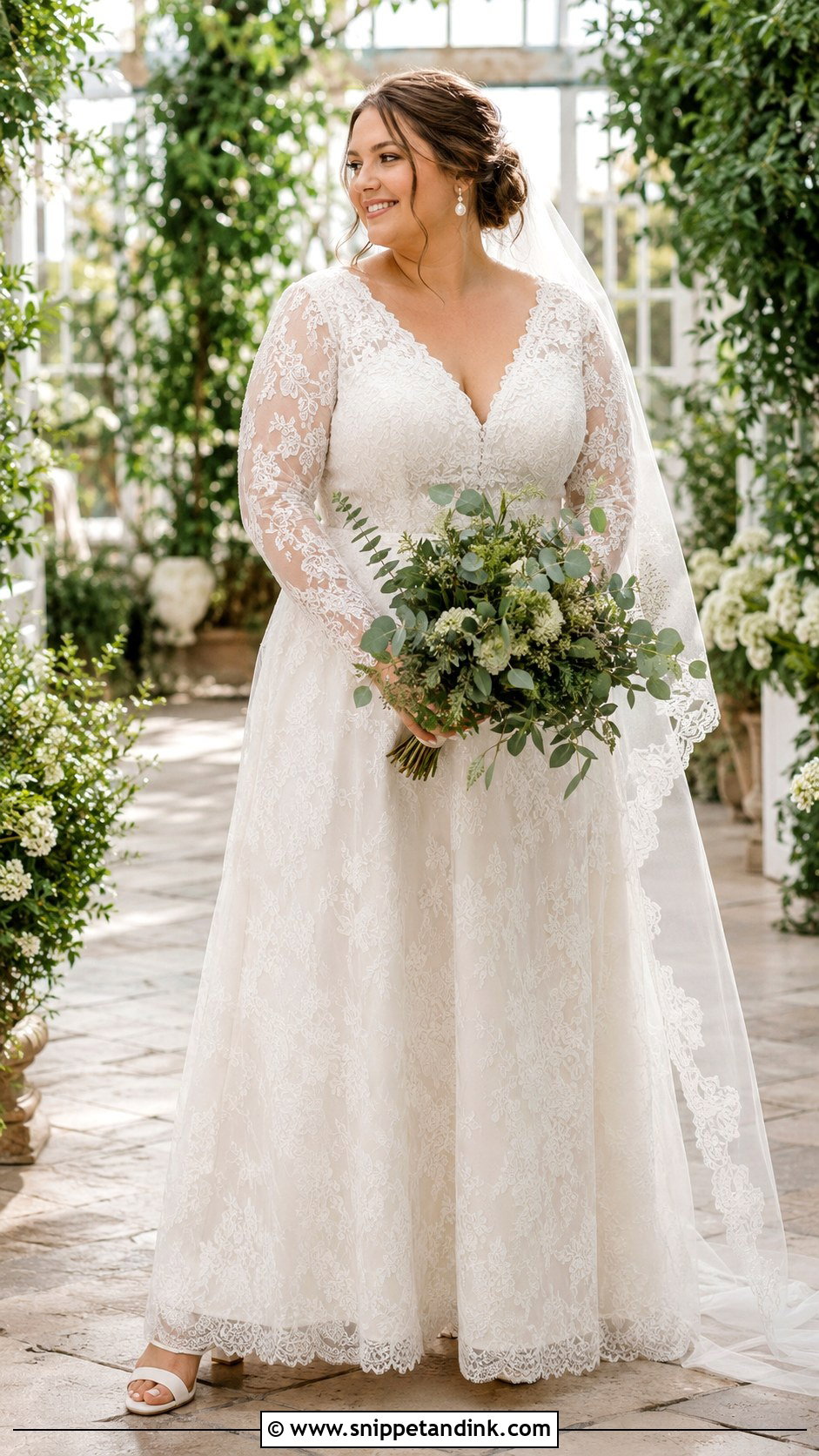
Lace adds depth on its own, so you rarely need bold accessories with it. A V-neck bodice with elbow or full-length sleeves feels supportive and easy to personalize. I look at where the motifs sit; well-placed lace skims curves, while motifs cut off at a seam draw attention to that spot. Choose a lining tone that matches the coverage you want. An A-line or soft fit-and-flare skirt, block heels, a scalloped veil, small pearls, a loose bun and greenery in the bouquet round it out. Run your hand along the inside of each sleeve seam. Scratchy appliqué edges are common, and a seamstress can back them with soft tulle in an afternoon.
8. Fit-And-Flare Wedding Dress With Straps
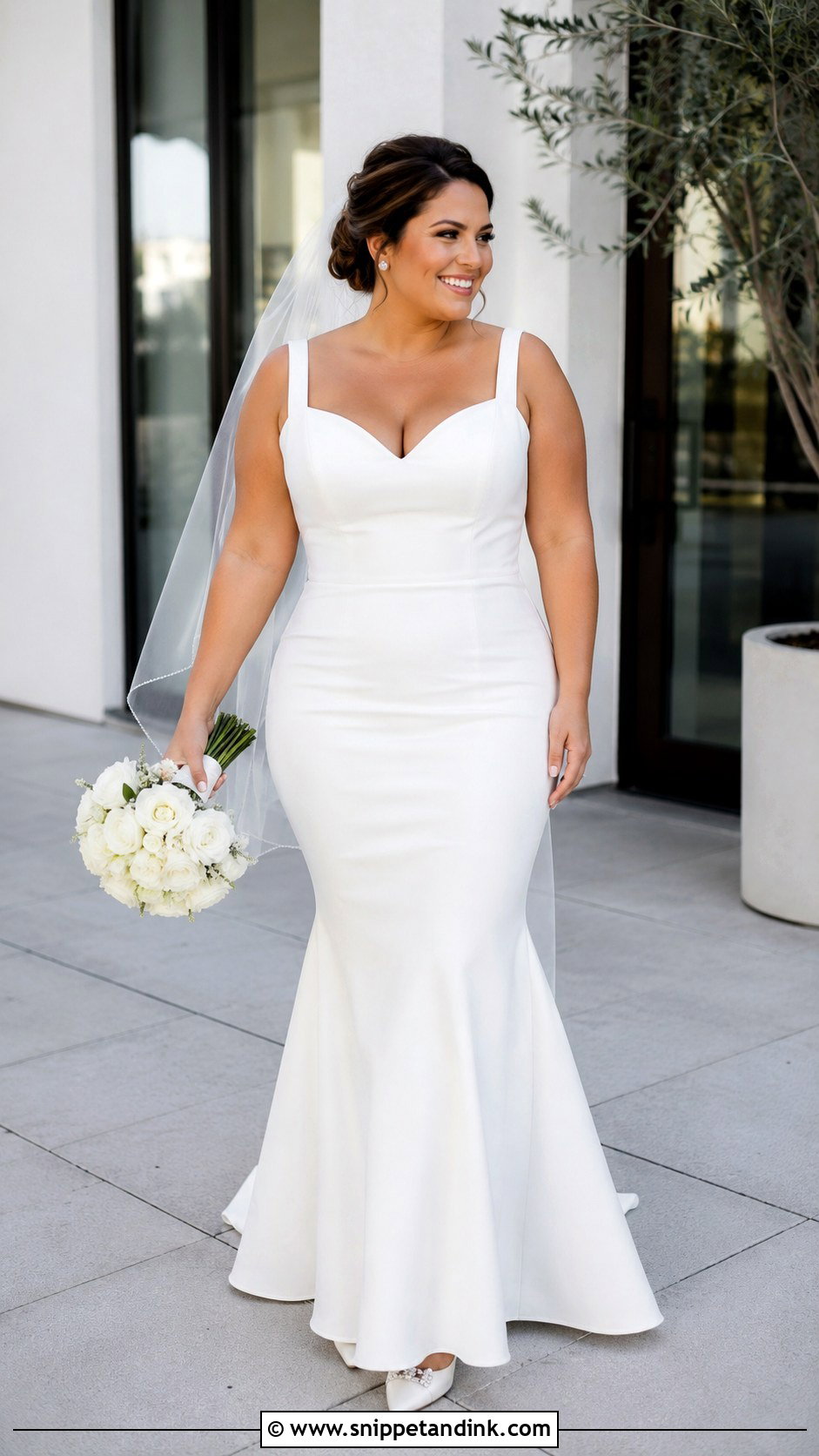
A fit-and-flare follows your curves through the bodice and hips, then widens gradually, so it’s a gentler option than a mermaid. Wide straps and a sweetheart or scoop neckline make it far easier to wear for ten hours. Stretch crepe or softly structured lace gives you some give when you sit. Pointed heels, a fingertip veil, crystal studs and a neat ponytail or bun suit it. Here the side seams tell me everything: they should hang straight down from the underarm. If they swing toward the front, the dress needs taking in or letting out in the wrong places. Walk, sit and climb a step in the sample; the skirt shouldn’t ride up or twist.
9. Mermaid Wedding Dress With Sweetheart Neckline
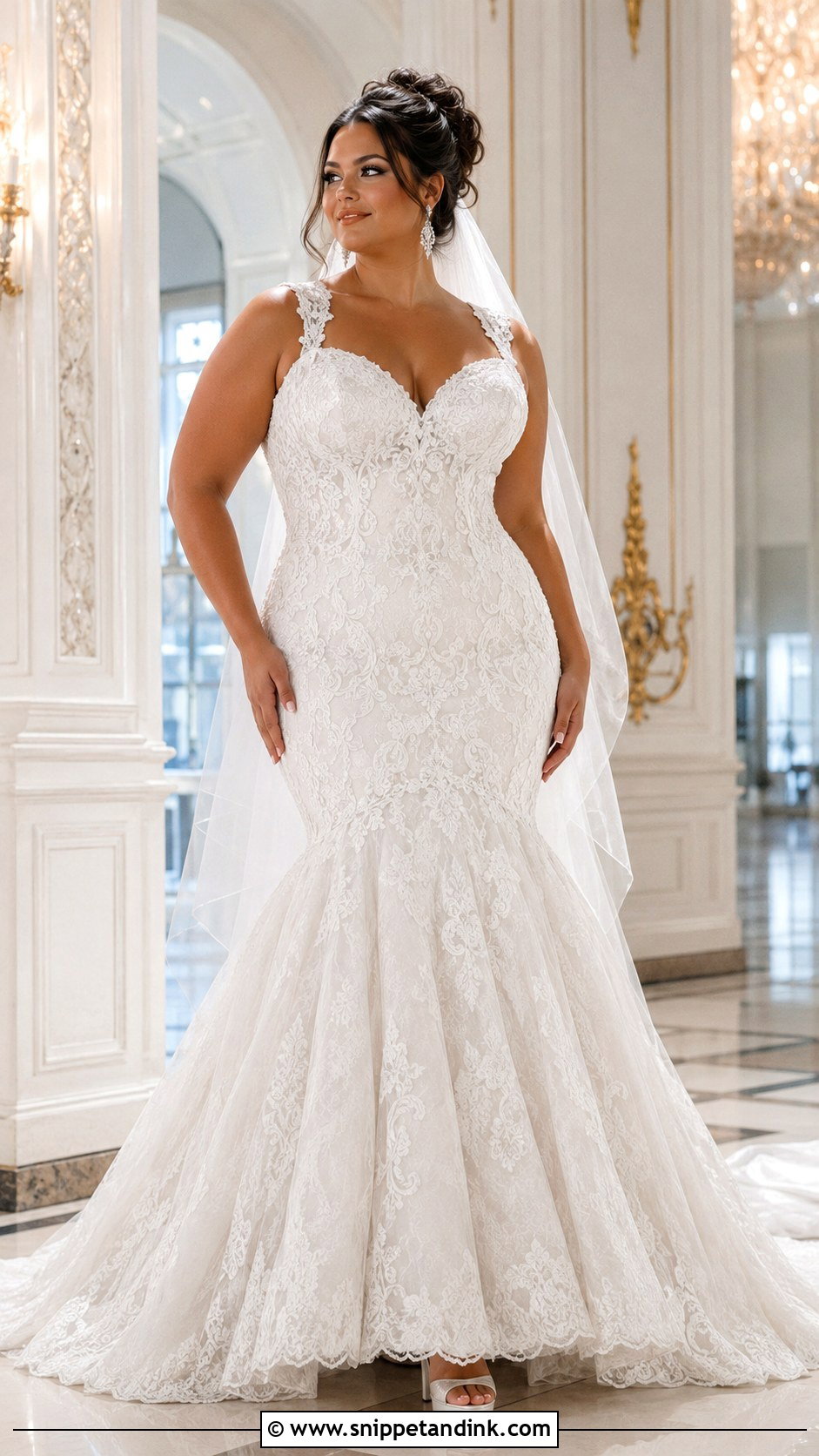
Midsize brides are often told to skip mermaid gowns. I don’t agree. The shape traces the torso and hips before flaring near the knee, and what makes it wearable is the inner structure: a sweetheart neckline, supportive straps and boning that hold everything in place. Stretch lining under lace or crepe lets the dress move with you. Platform heels, drop earrings, a simple veil and a polished updo finish it. If you want a longer stride, ask for the flare to start just above the knee. During fittings I look for horizontal pull lines across the hips and thighs. Those mean the gown is too tight there, and good alterations smooth them without shrinking the whole dress.
10. Trumpet Wedding Dress With Lace Train
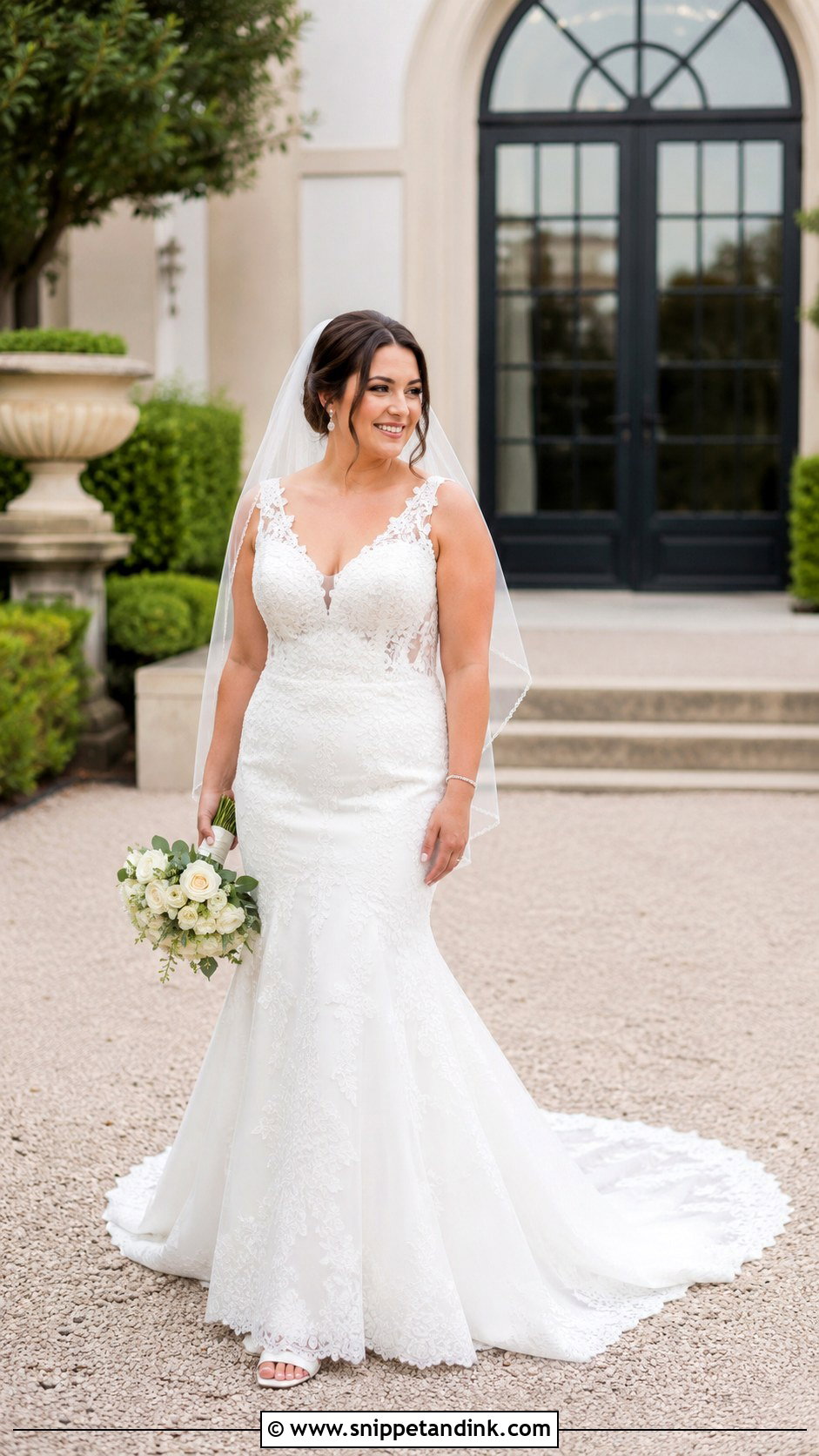
A trumpet wedding dress gives you most of the curve of a mermaid, but the flare starts at the lower hip or mid-thigh, so you can actually walk. A lace bodice with a V-neck and substantial straps keeps the top secure, and a chapel train gives the aisle some drama. Ivory heels, pearl drops, a narrow bracelet and a sheer fingertip veil are enough. Keep the bouquet compact so it doesn’t hide the fitted waist. Lace trains are the hardest to bustle neatly, because the scalloped edge can catch on the hooks. Ask your seamstress to show you two or three bustle styles and pick the one that keeps the back smooth.
11. Empire Waist Wedding Dress With Chiffon Skirt
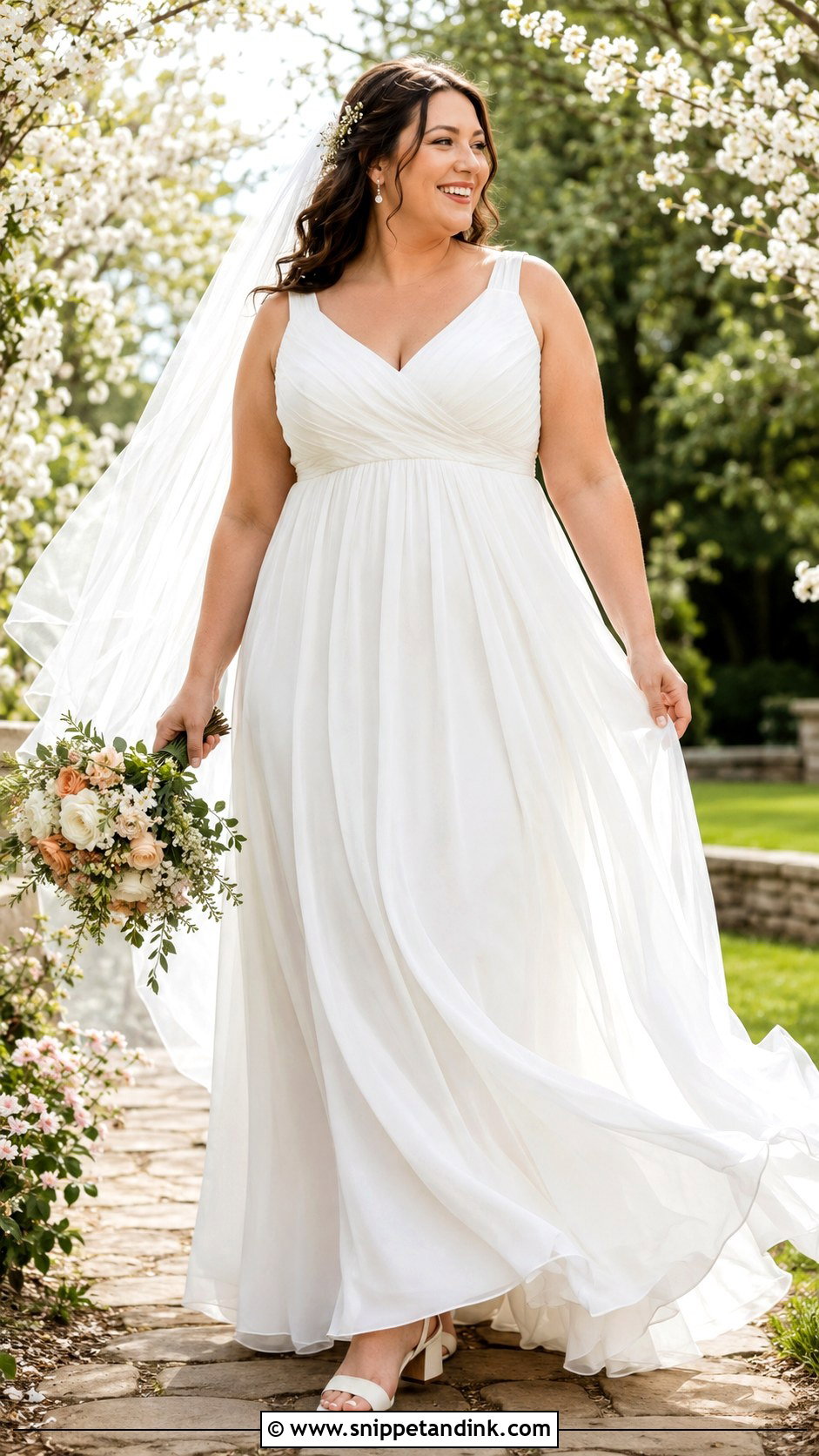
An empire waist puts the seam just under the bust, and the chiffon drifts down from there. It’s the most forgiving cut in this list for an outdoor or summer wedding, because nothing presses on the stomach. A crossover bodice, wider straps and two or three lined layers keep the chiffon smooth and opaque in sunlight. Low block heels, a floral hairpiece, small earrings and a light veil keep it airy. Check that the seam sits under the bust rather than across it; that one alteration changes the whole look. Have the layers hemmed while you wear your wedding shoes, because chiffon catches under the toe if it’s even slightly long.
12. Minimalist Crepe Wedding Dress
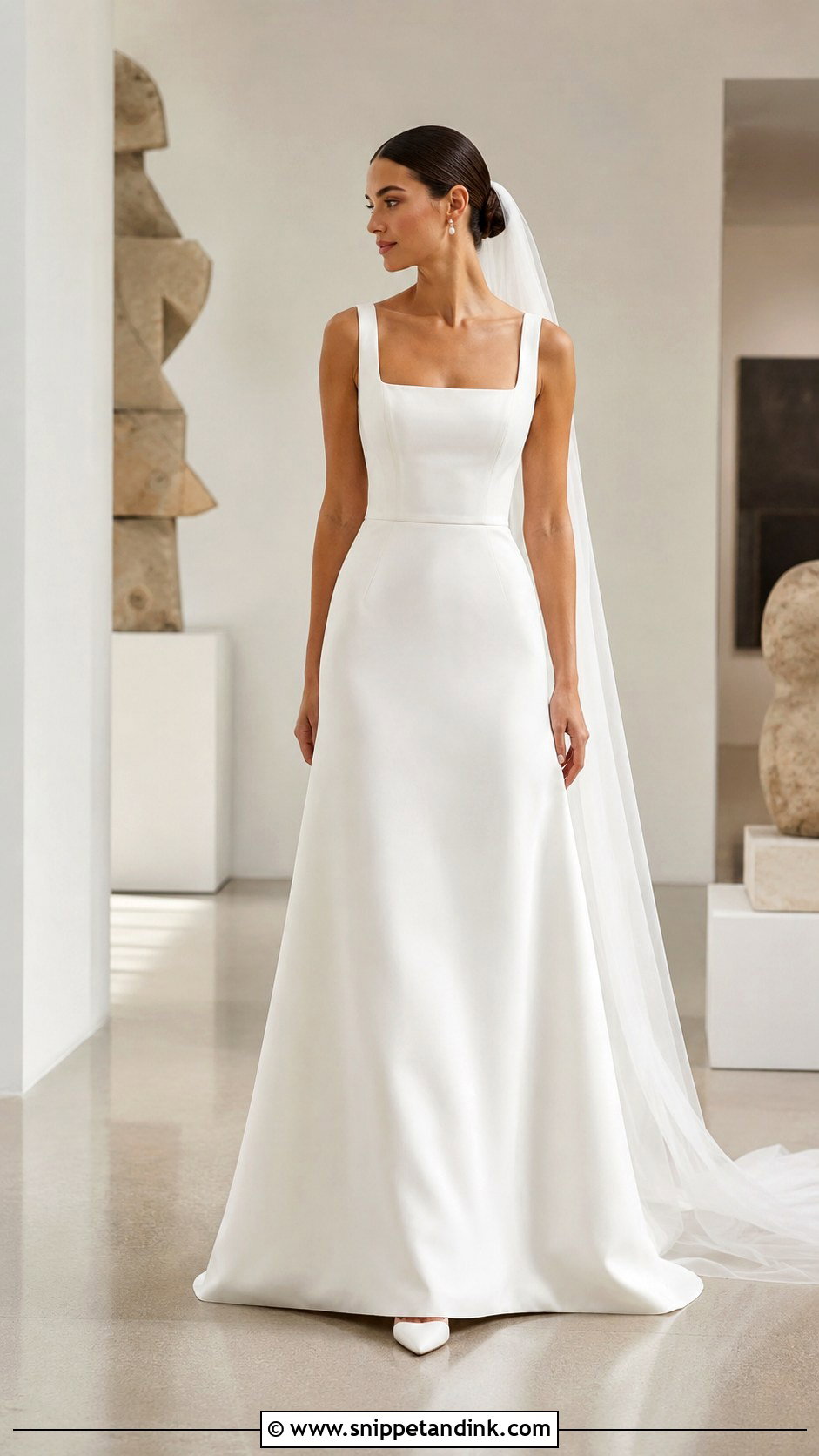
Plain crepe is the least forgiving fabric I fit, and the most rewarding when it’s right. With no lace or beading, every dart and seam shows. Choose a heavier crepe with full lining so it drapes rather than clings, and a softly structured bodice with a defined waist and a straight or gently flared skirt. A square, bateau or moderate V-neck gives the dress its character. Modern pearl earrings, pointed pumps, a structured clutch and a long plain veil keep it clean, with a sleek bun or soft waves. Wear the exact underwear you’ll be married in at every appointment. With crepe, a different bra changes the fit.
13. Mikado Wedding Dress With Pockets
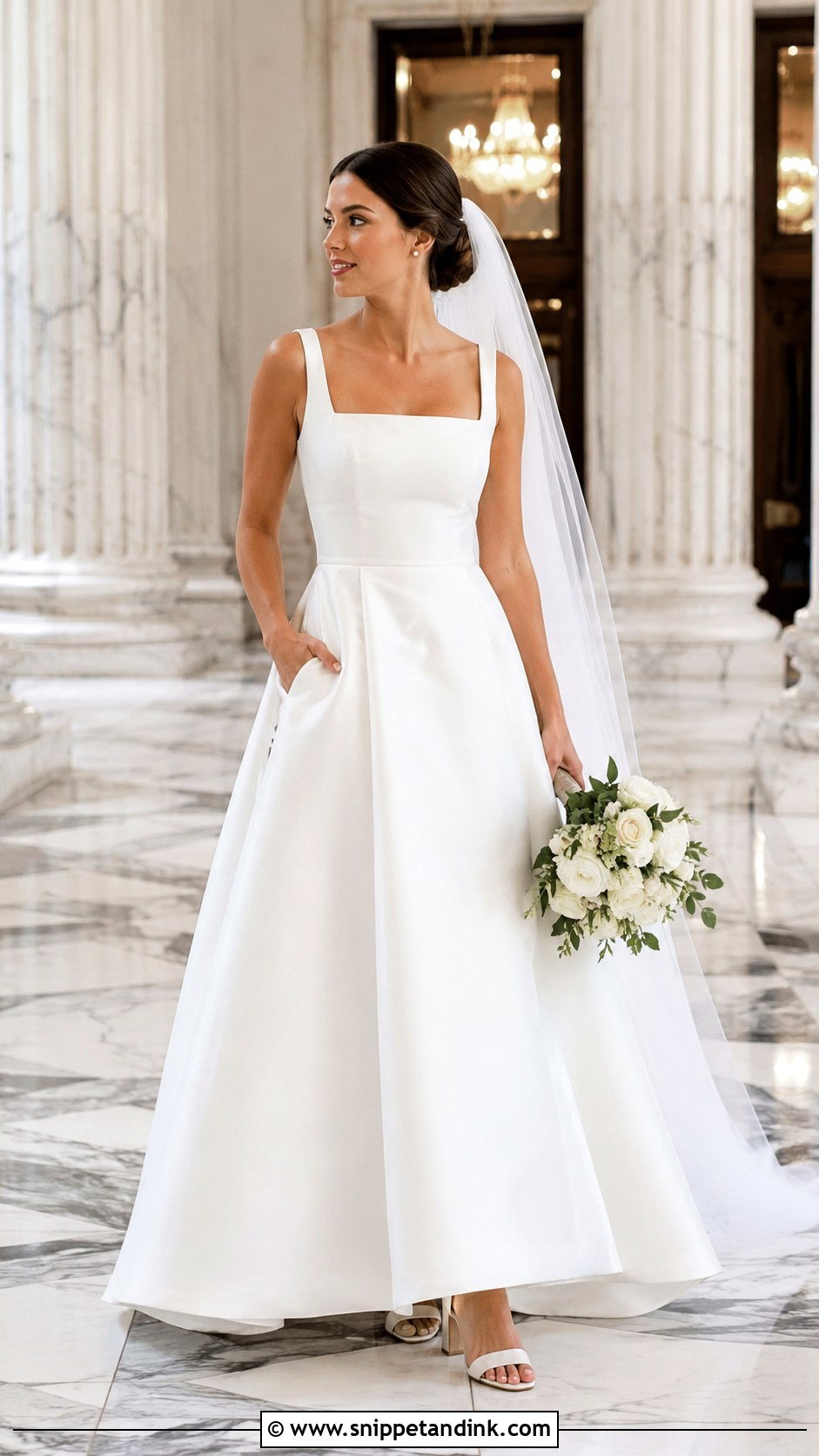
Mikado is a crisp silk blend with a soft sheen, and it holds whatever shape it’s cut into. That makes an A-line in mikado reliable: a supportive bodice, a natural waist and deep pockets hidden in the skirt seams. A square or scoop neckline stops the stiff fabric from looking severe. Block heels, pearl studs, a smooth veil and a chignon suit it. Pockets are great for relaxed portraits, but keep them empty; a phone or tissues will distort the skirt line. It’s at its best at formal venues and in cooler seasons, because it’s warm to wear. If the gown feels heavy, ask whether an inner layer can come out, and choose a bustle sturdy enough for the weight.
14. Floral Appliqué Wedding Dress With Tulle Skirt
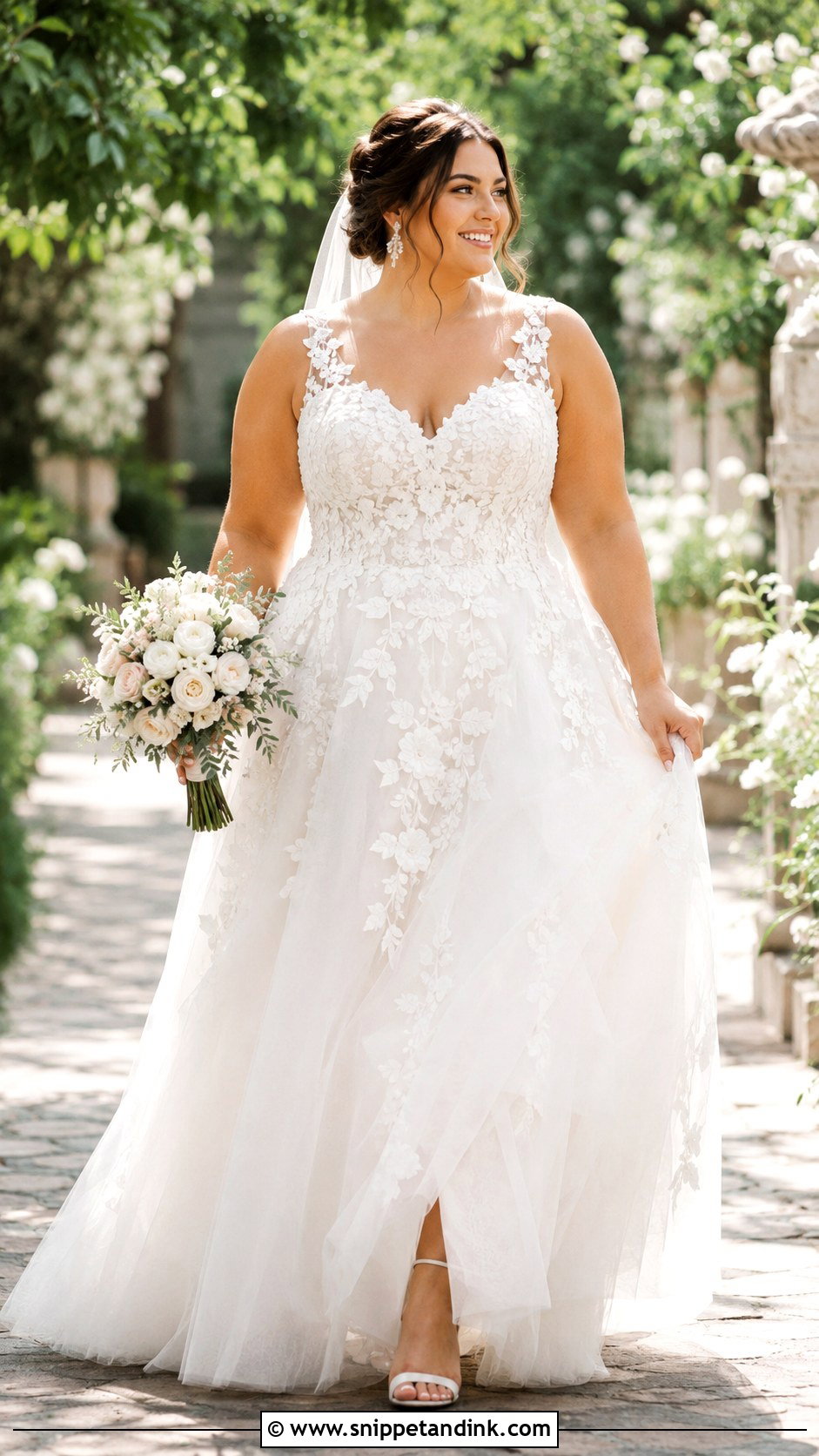
Raised floral appliqués turn a tulle gown into something you want to look at up close. I prefer flowers that start on a fitted, lined bodice and trail gradually onto an A-line skirt, so the detail is spread out instead of clustered at the waist. Supportive straps or detachable sleeves add comfort. Simple heels, tiny crystal earrings, a sheer veil and a softly pinned style let the flowers lead, and a streamlined bouquet keeps them visible. Before the final fitting, check the petals under the arms and at the waist. Those are the ones that rub, and loose ones should be stitched down before the day, not pinned.
15. Boho Wedding Dress With Bell Sleeves
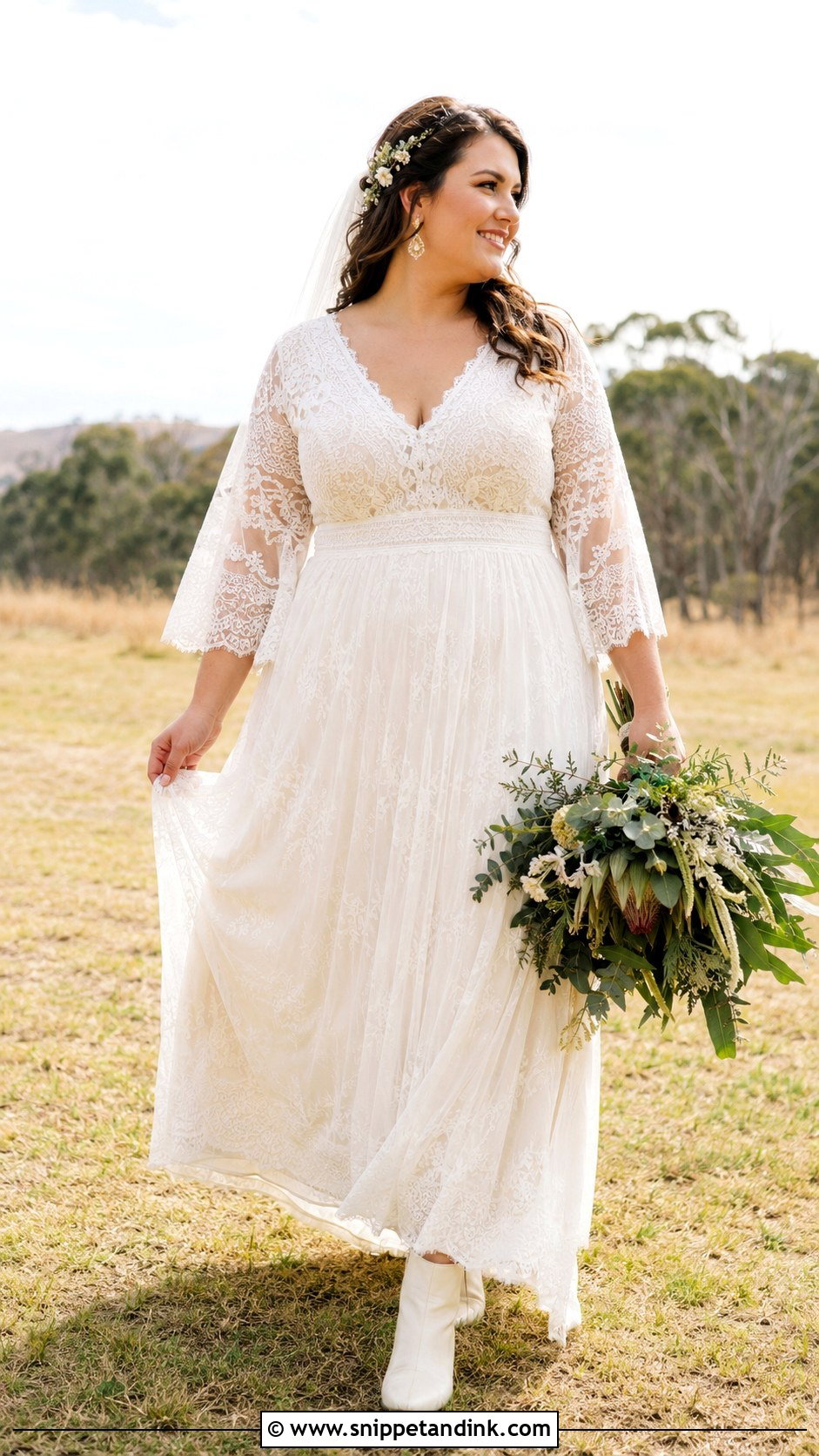
A boho wedding dress only looks relaxed if every piece agrees with it. I go for a lined lace gown with a defined waist, a gently flared skirt and bell sleeves that swing when you move. A modest V or scoop neckline keeps the bodice open and supported. Ivory ankle boots or low block heels, small gold earrings, a flower comb, a plain veil and loose waves suit it, with textured greenery in the bouquet. Bell cuffs are the detail I check first: if they hang past your fingertips, they’ll drag through cake and catch on chair backs. For an outdoor ceremony, choose sturdy lace and a train that bustles quickly, because grass and gravel are hard on delicate edges.
16. Slip Wedding Dress With Cowl Neckline
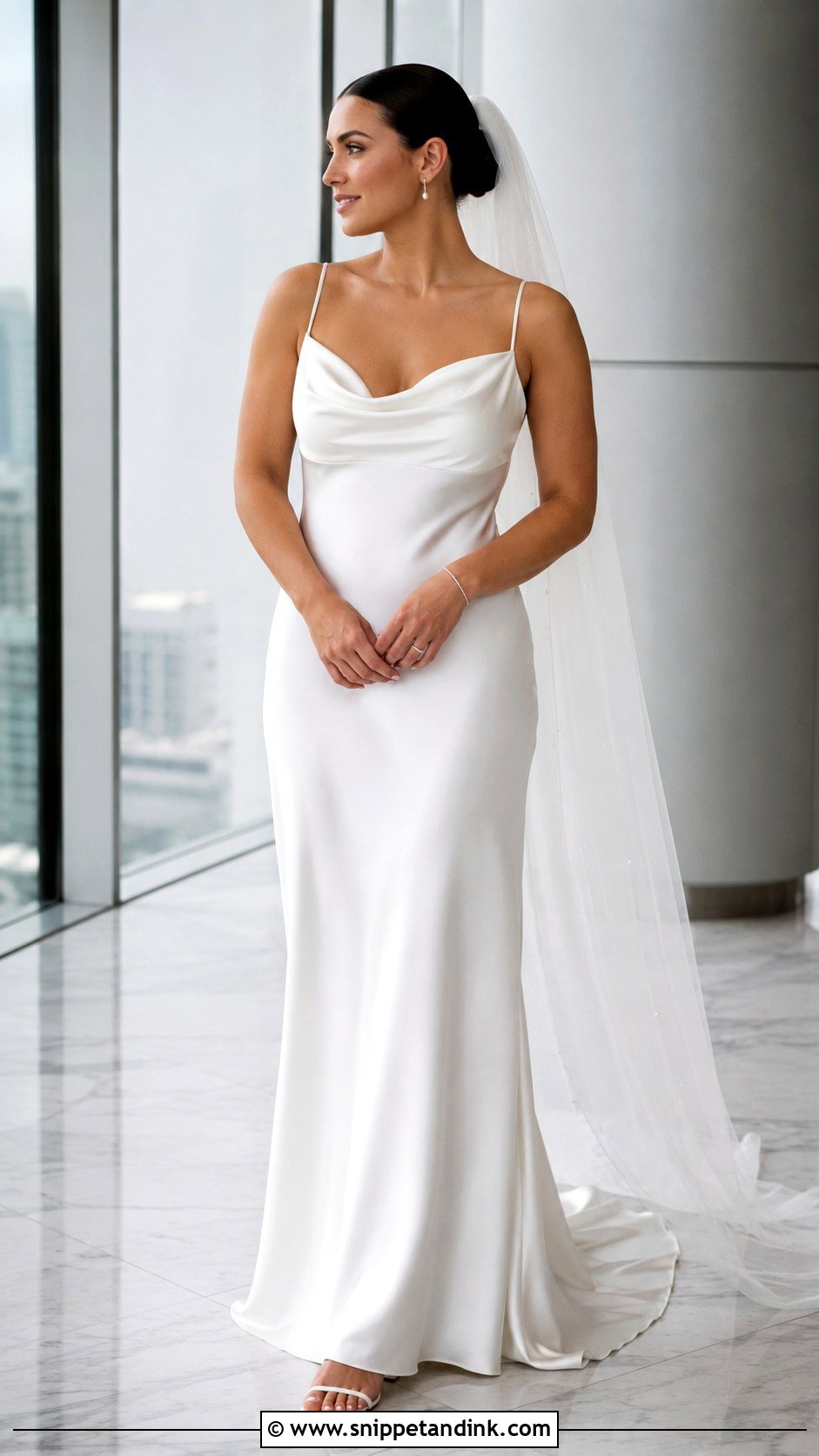
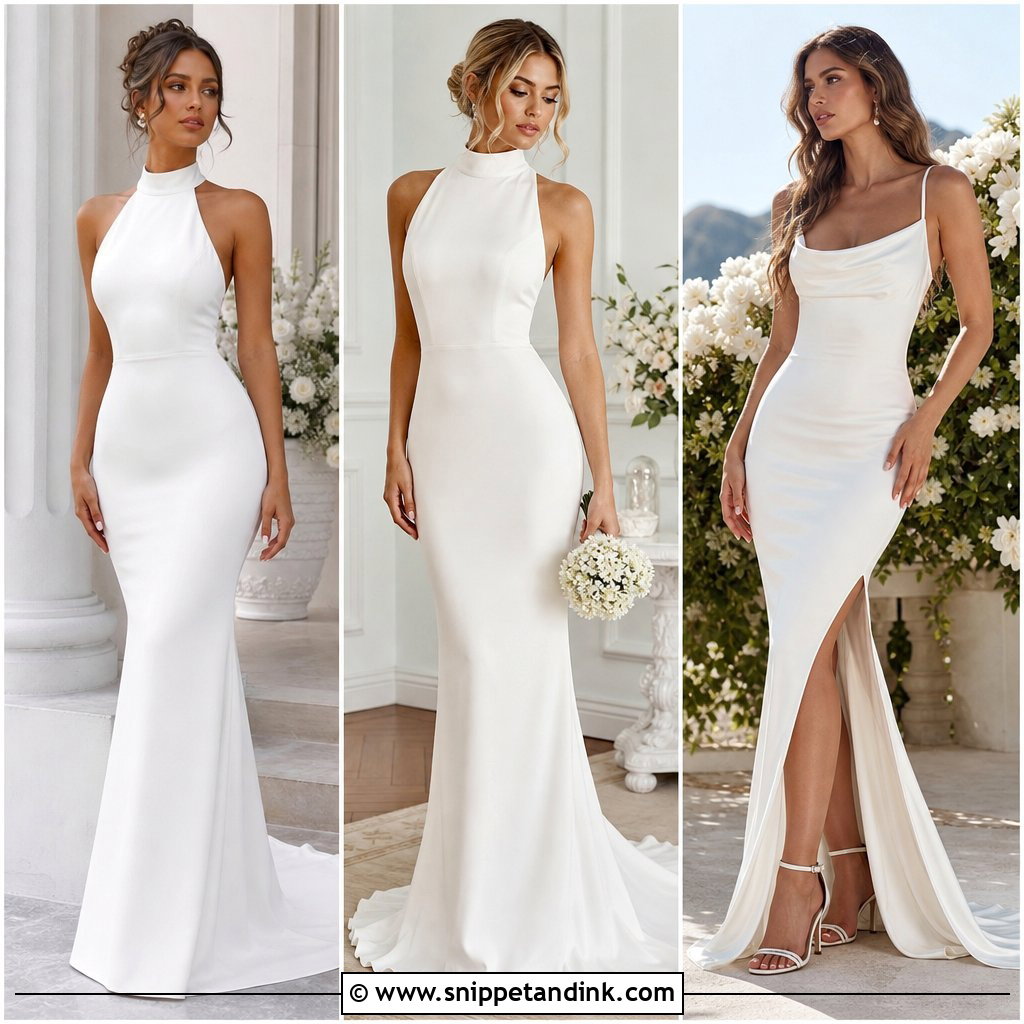
A bias-cut slip is the most honest dress in this list; it shows exactly what’s underneath it. That’s why the fit matters so much. Choose a cowl neckline with adjustable or properly shortened straps, a supportive lining and enough ease through the hips that the skirt drops straight. Silk, satin or satin-backed crepe all move well, but if the fabric ripples at the waist, it’s too tight there. Strappy block heels, a fine bracelet, drop earrings, a long sheer veil and a sleek bun keep it modern. Bring your exact underwear to each fitting. A seamstress can add discreet cups and adjust the back without changing the simple look.
17. Tea-Length Wedding Dress With Short Sleeves
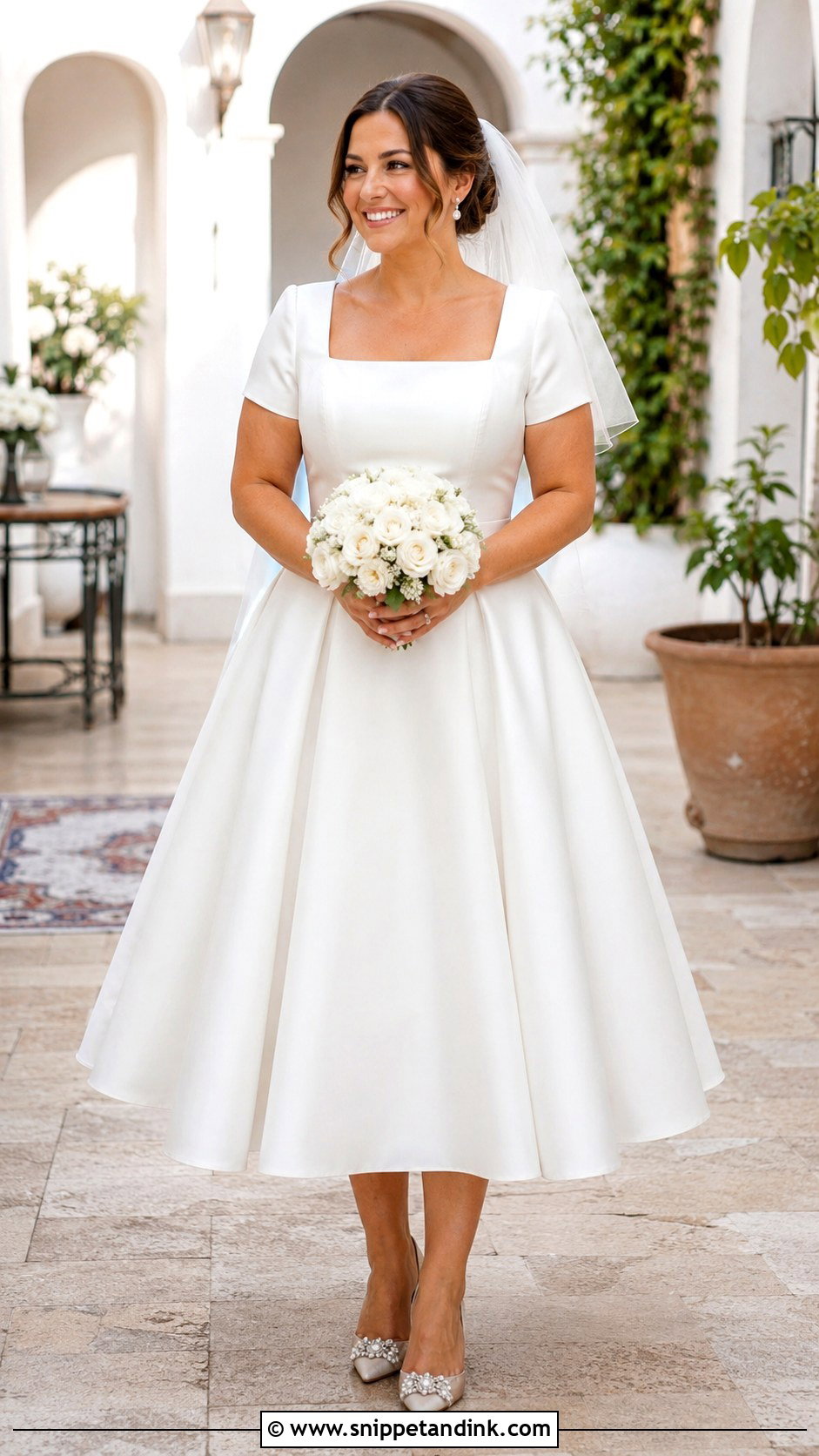
Tea-length puts your shoes on show, so I treat them as part of the dress. The skirt ends between knee and ankle, with a fitted bodice and a defined waist; short sleeves, a square neckline or a soft V balance the volume below. Embellished pumps, pearl earrings, a short veil and a compact bouquet finish it. It’s a natural fit for courthouse ceremonies, daytime weddings and reception changes. If you add a petticoat, pick a soft one, since stiff crinoline adds bulk right at the waist. Sit in it and check that the hem still covers your knees. And have it leveled with your wedding shoes on; on a short hem, a small dip is obvious.
18. Cape Sleeve Wedding Dress With A-Line Skirt
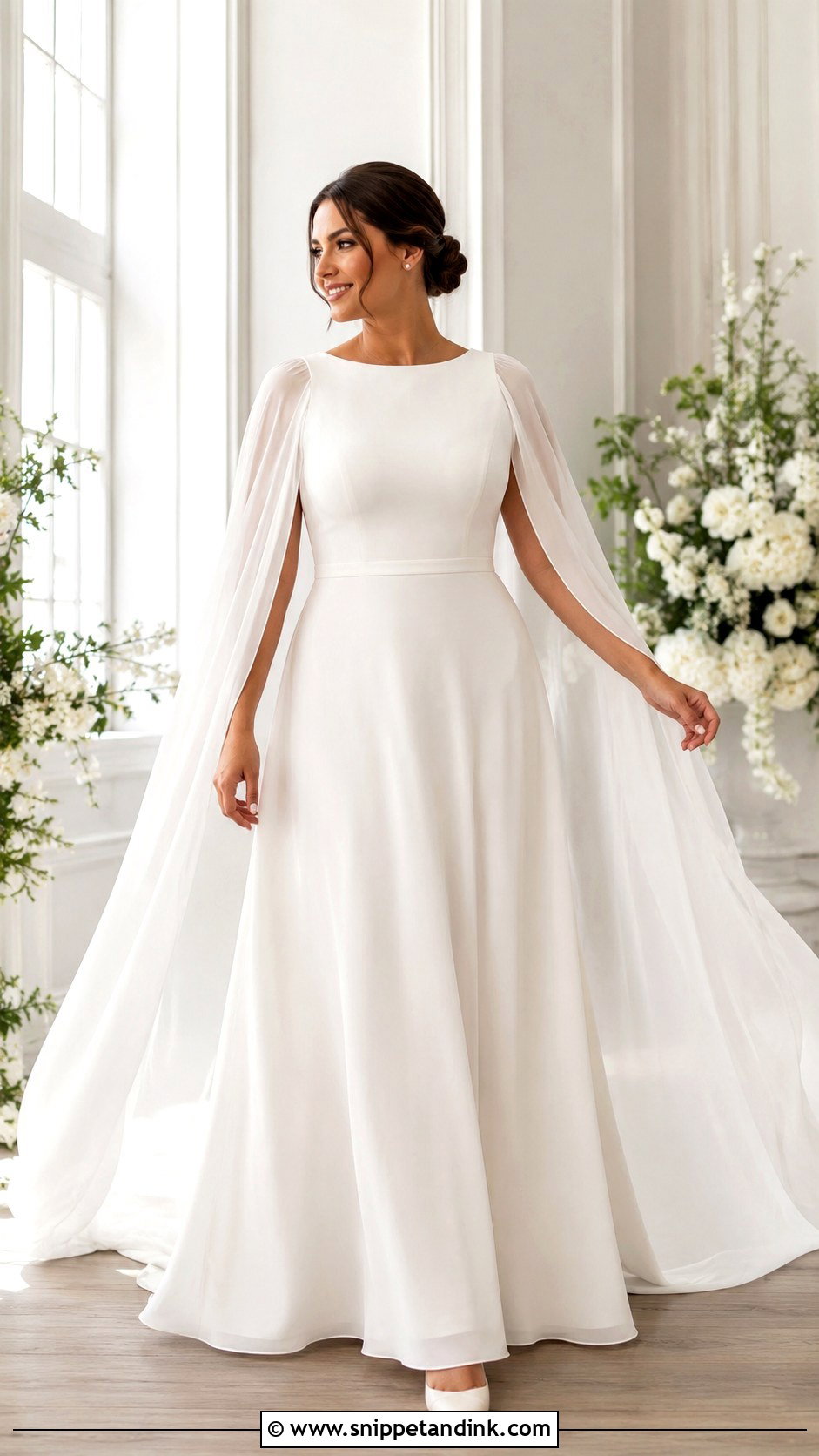
A cape gives you coverage over the arms without the snug fit of a sleeve, which many brides find more comfortable. The cape usually floats over a sleeveless bodice in chiffon or tulle. A defined waist and soft A-line skirt keep the outfit balanced, and a simple V or bateau neckline lets the cape lead. Pointed heels, studs, a low bun and a short veil, or no veil, are my choice here. A long cape plus a long veil piles too much fabric around the shoulders. Turn and lift your arms in the fitting room to check the cape doesn’t pull at the neck. If it’s removable, take it off for the reception and you get a lighter second look.
19. Wedding Dress With Detachable Overskirt
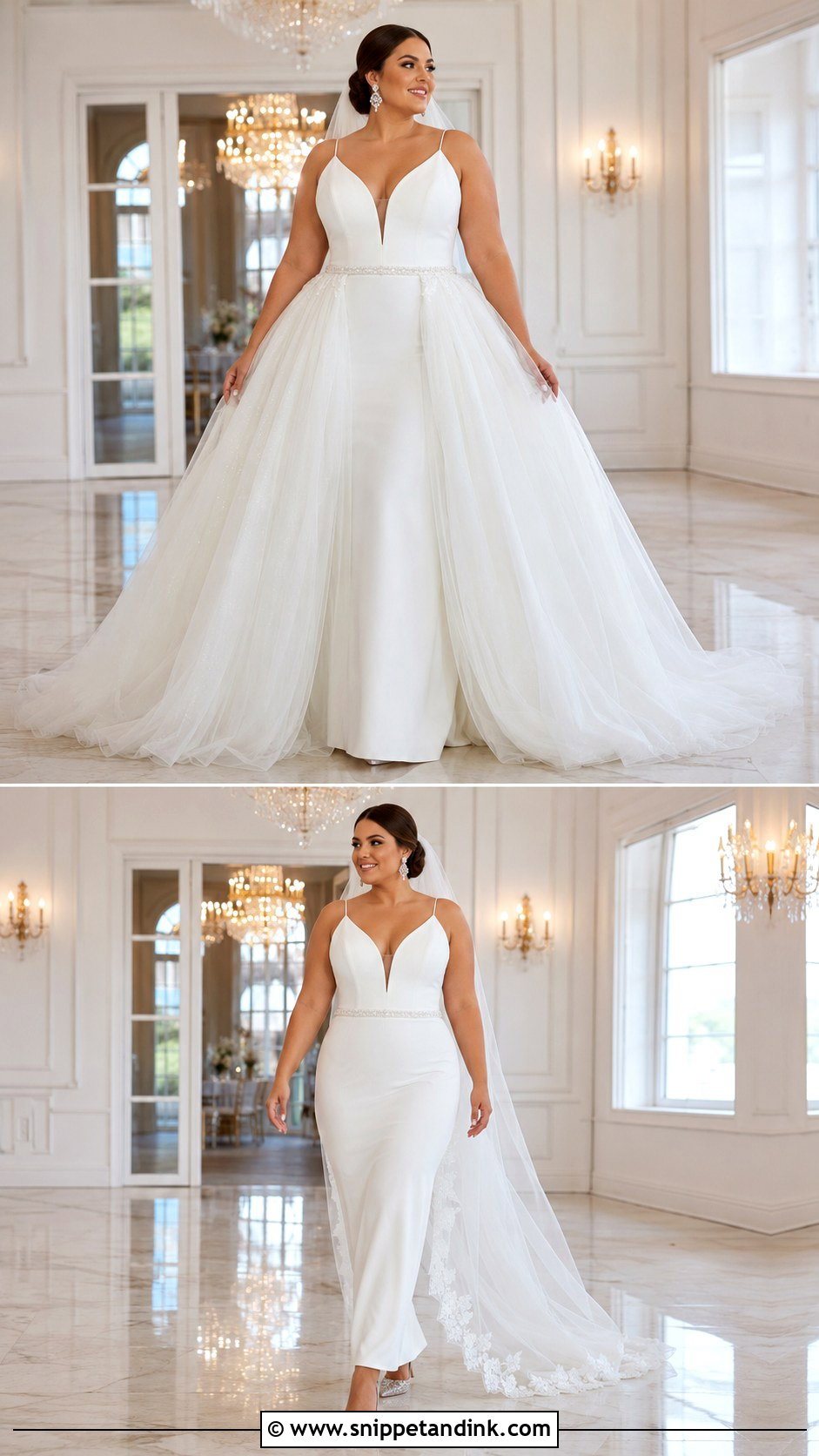
A detachable overskirt gives you two dresses for the price of one fitting schedule. Start with a fitted crepe, lace or satin base gown that you’d happily wear on its own. Add a full tulle or mikado overskirt at the natural waist for the ceremony, then remove it for the dancing. Heels, statement earrings, a smooth updo and a fingertip veil work for both versions. The overskirt waistband has to lie flat and fasten firmly without squeezing; ask for hooks rather than snaps if it’s heavy. Have a bridesmaid practice taking it off and putting it back on before the wedding. Then check the base gown from every side for loops or fasteners left showing.

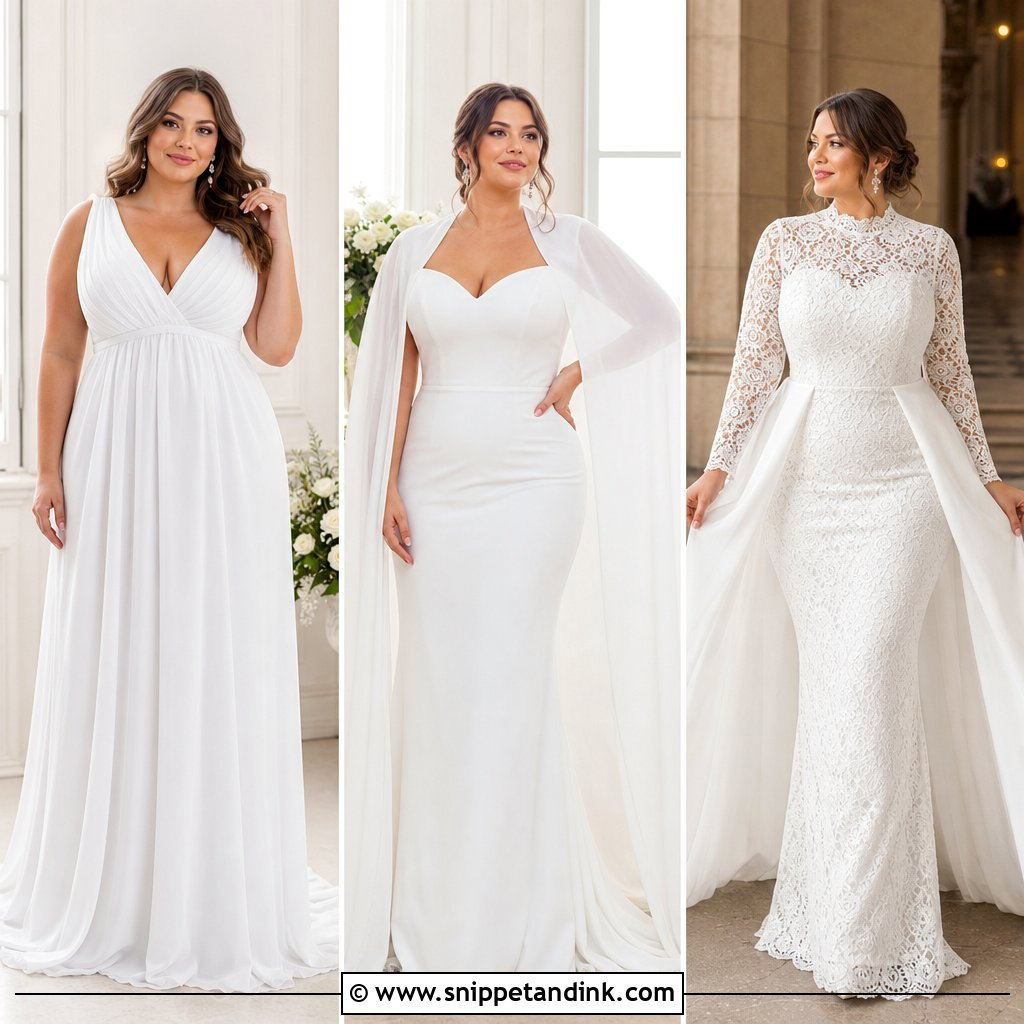
20. High-Low Wedding Dress With Statement Heels
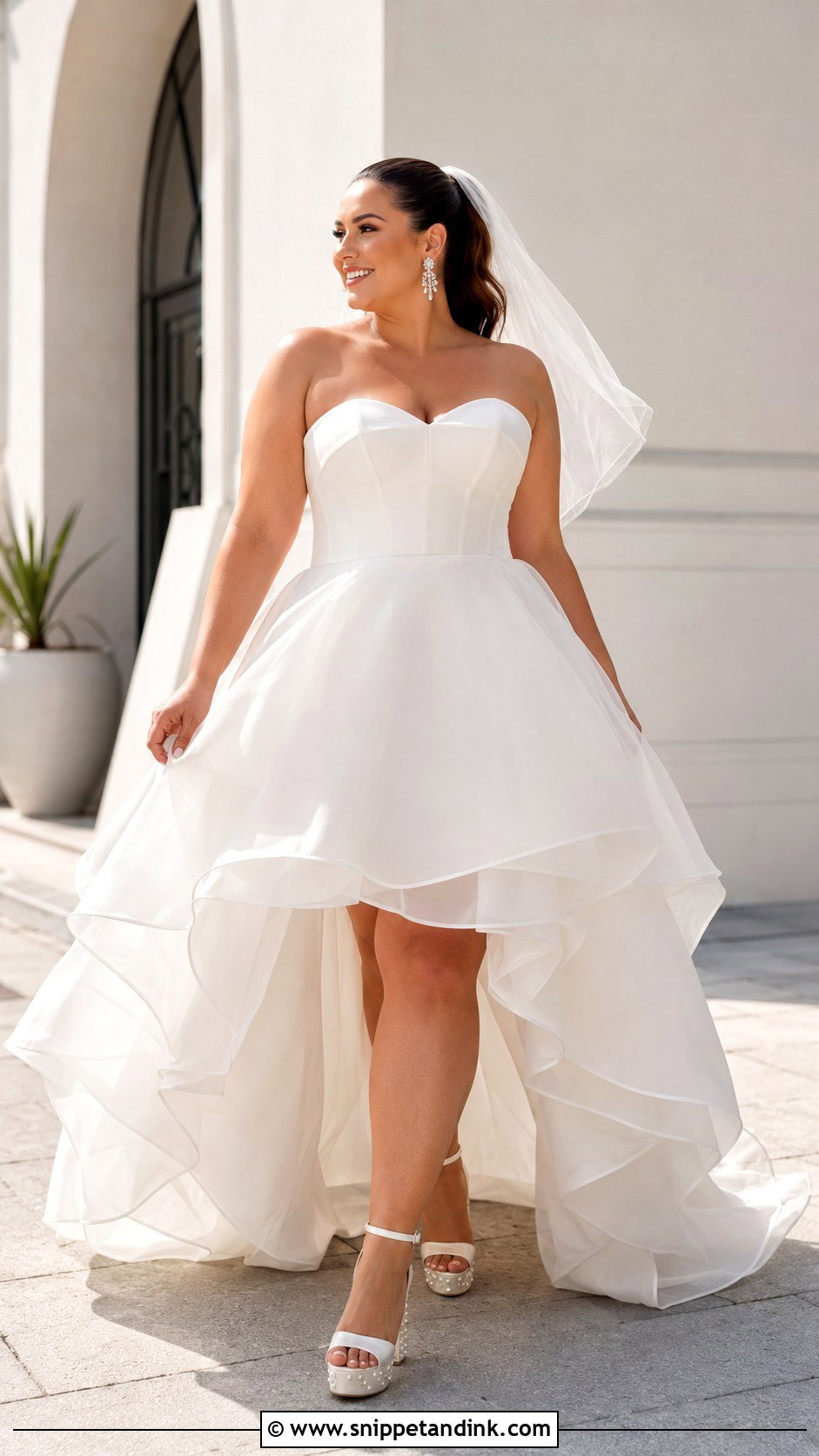
A high-low hem gives you the presence of a full gown in back and freedom in front. A structured bodice works best, with a skirt that rises modestly in front and falls longer behind. Soft pleats or layered organza add volume without weight. Statement ivory heels, crystal earrings, a short veil and a polished ponytail or bun suit it. Since your shoes are on view all day, pick a pair you can stand in for hours. Sit down in the sample to see how high the front rides. If the back forms a train, ask for a wrist loop or bustle. The curve of the hem needs careful leveling so it looks deliberate rather than uneven.
Underwear, Cups and a Fitting Calendar That Leaves Room to Fix Things
Most of the comfort problems I see on wedding days trace back to the layer under the dress. Decide early whether you’ll wear a bra or have cups sewn in. Sewn-in cups suit V-necks, low backs and slip dresses, and a seamstress can place them exactly where your bust sits. A longline strapless bra works under structured bodices, but only if it’s fitted by someone who knows what it’s going under. Shapewear is optional. If you do wear it, choose one piece and wear it to every appointment, because swapping to a different brand at the last fitting changes the measurements.
Timing matters as much as fit. Made-to-order gowns can take several months to arrive, so many brides order eight to ten months out, though lead times vary by designer. Alterations usually start six to eight weeks before the wedding and take two or three fittings.
- First fitting: bring your shoes and underwear; the seamstress pins the main shape and hem.
- Second fitting: check the bodice while sitting and dancing, and look at the bustle.
- Final fitting: a few weeks before the date, with whoever will bustle the dress on the day there to learn it.
- Pickup: try it on one last time before you leave the shop, so nothing is a surprise at home.
If your weight tends to shift with stress, tell your seamstress. She can leave a little extra in the side seams and do the final take-in closer to the date.
The Gown That Holds You Up Is the Right One
No size label or body-shape rule picks your dress. The right gown supports you properly, moves when you do and feels like you on the day. Treat this list as a starting point and compare necklines, waist placement, fabric and construction in person. Ask a friend to photograph you from the front, side and back, and spend a few minutes sitting, walking and raising your arms in each one. Set money aside for alterations from the start. A well-adjusted dress will support you better and look cleaner than a pricier one worn straight off the rack.
You'll Like These Ideas:



Leave a Reply