
Lobola is a family occasion before it is a fashion moment, and the outfit has to work in a room full of elders as well as in the photos afterwards. When I style a bride for it, I start with what her family and her in-laws expect: how much coverage, whether a doek is required, which colours carry meaning on either side. Only then do we talk about silhouettes. The thirty ideas below run from Zulu beadwork and Xhosa black-and-white to Shweshwe, satin and modern capes, and I’ve added notes on how each one behaves once you’re actually sitting, greeting and eating for hours.
Ask the Elders First, Then Talk Fabric
Every lobola I’ve dressed a bride for has had its own unwritten rules, and they differ from family to family even within the same culture. Before anything is cut, I ask the bride to find out a few things from an aunt or elder she trusts, because changing a finished dress costs far more than asking early.
- Is a head covering expected in front of the in-laws, and does the family prefer a doek, a scarf or a specific headpiece?
- How covered should the shoulders, arms and knees be? Some families are relaxed; others expect long sleeves or a shawl.
- Is there a colour the groom’s family is using, or fabric they plan to give you? Sometimes the in-laws bring the cloth.
- Will you sit on chairs, on a mat or on the floor? This decides whether a fitted mermaid is even possible.
- Are there separate parts of the day where a change of outfit is normal?
Then I do the kneel test. At the fitting, the bride kneels, sits on a low stool and stands up again without using her hands. If the skirt rides up, the zip strains or the neckline gapes forward when she bends, we fix it there and then. It sounds fussy, but greeting elders involves a lot of bending, and that’s where a beautiful dress either holds up or fails.
1. Zulu Lobola Dress With Beaded Accessories
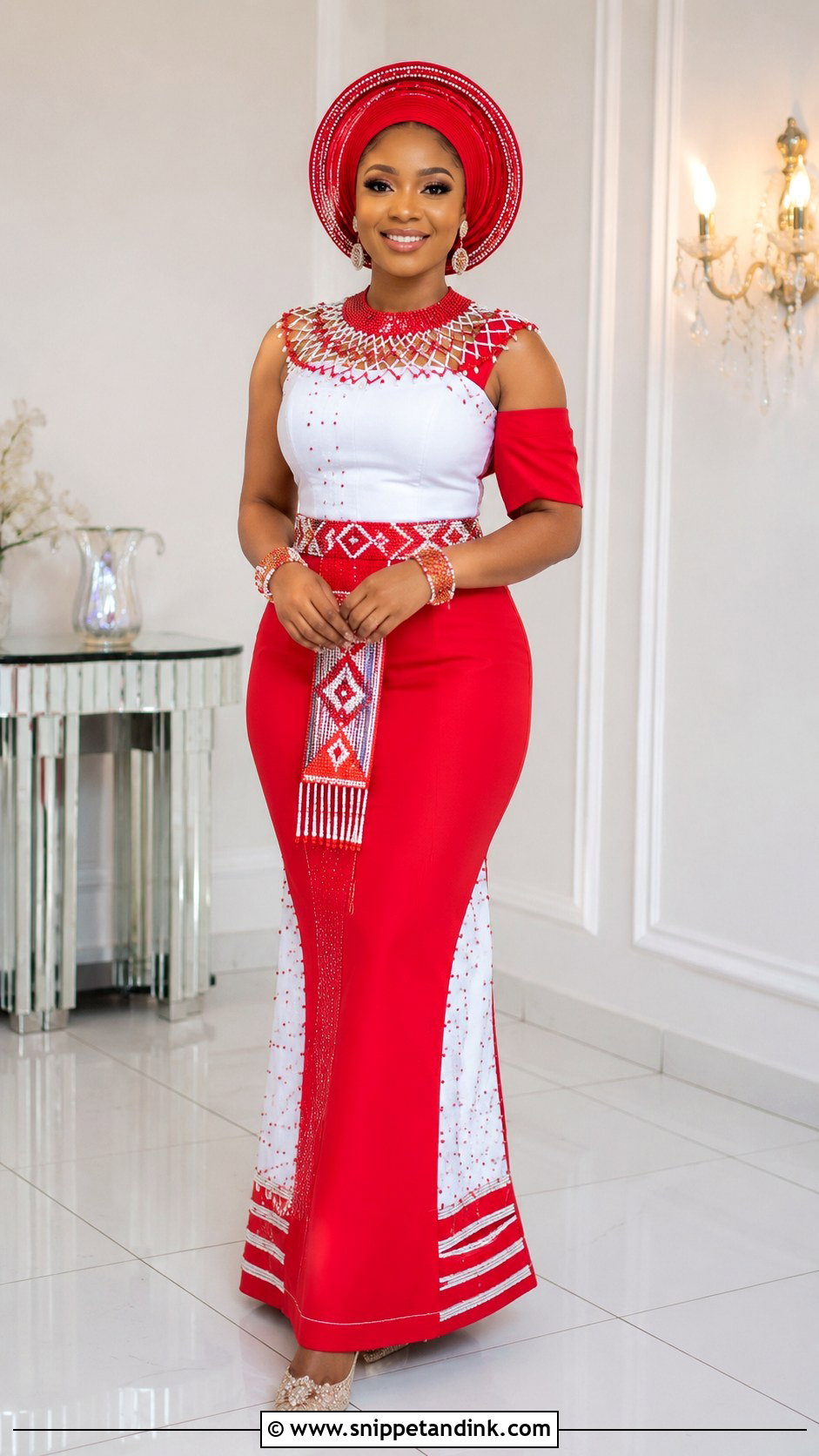
The beadwork carries this outfit, so I keep the dress itself plain: a fitted or gently flared shape in white, red, black or an earthy tone. A heavy beaded collar pulls a soft neckline forward, which is why I prefer a dress with a firmer neckline or a lining underneath. Add the beaded belt and bracelets, plus a structured headwrap if the family likes that finish. Stick to low or block heels. You’ll be bending to greet elders far more often than you expect.
2. Xhosa Lobola Dress With Doek
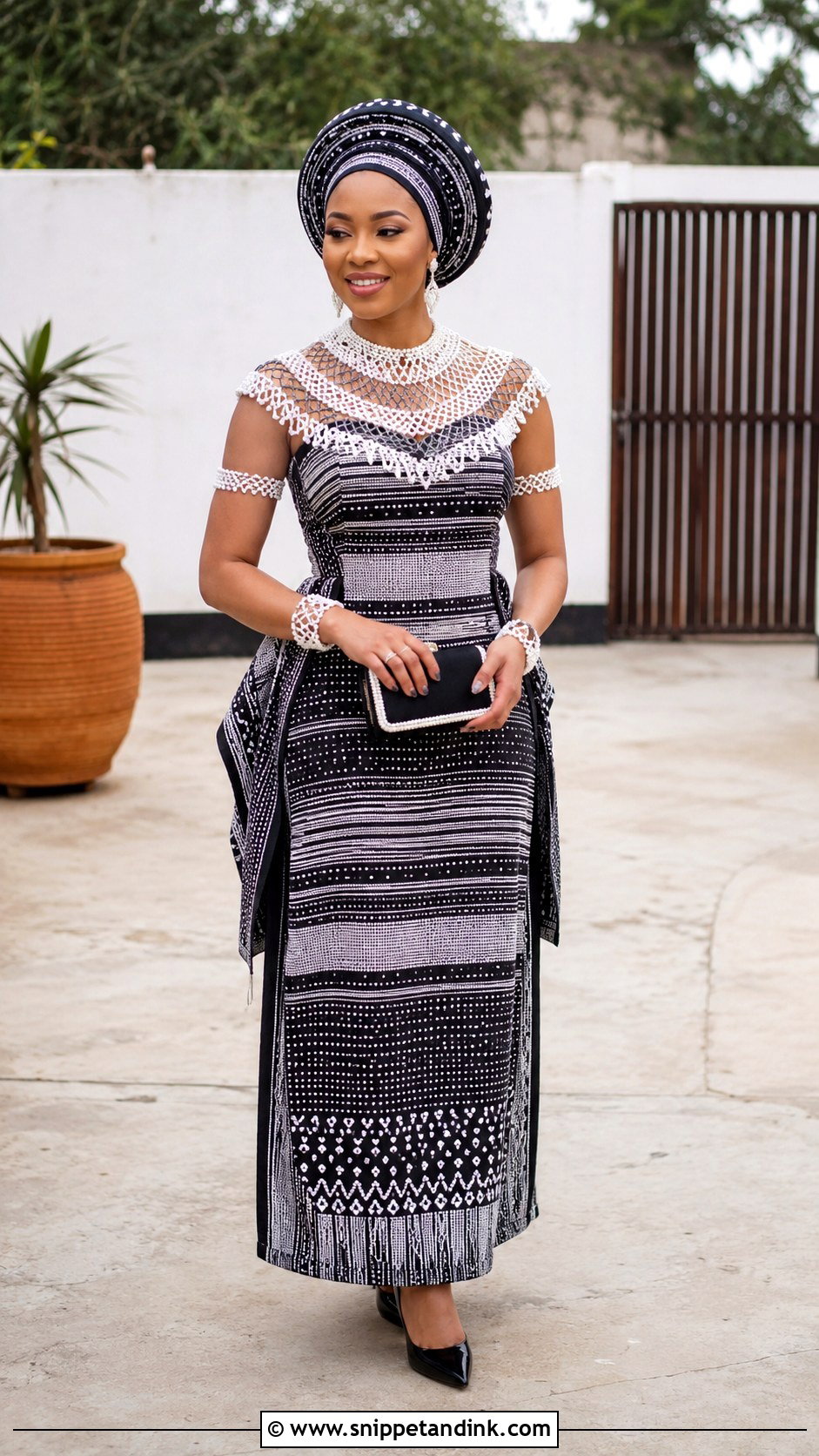
Black-and-white stripes and bold trim are what make this read as Xhosa straight away, so the shape can be whatever you move best in. A-line is the safest. A mermaid hem looks dramatic but makes sitting on a low chair or a mat awkward, and I always ask a bride to sit and stand in it twice at the fitting. Tie the doek in the same fabric or in plain black. Beaded jewellery in white or silver finishes it, with clean sandals underneath.
3. Sepedi Lobola Dress With Pleated Skirt
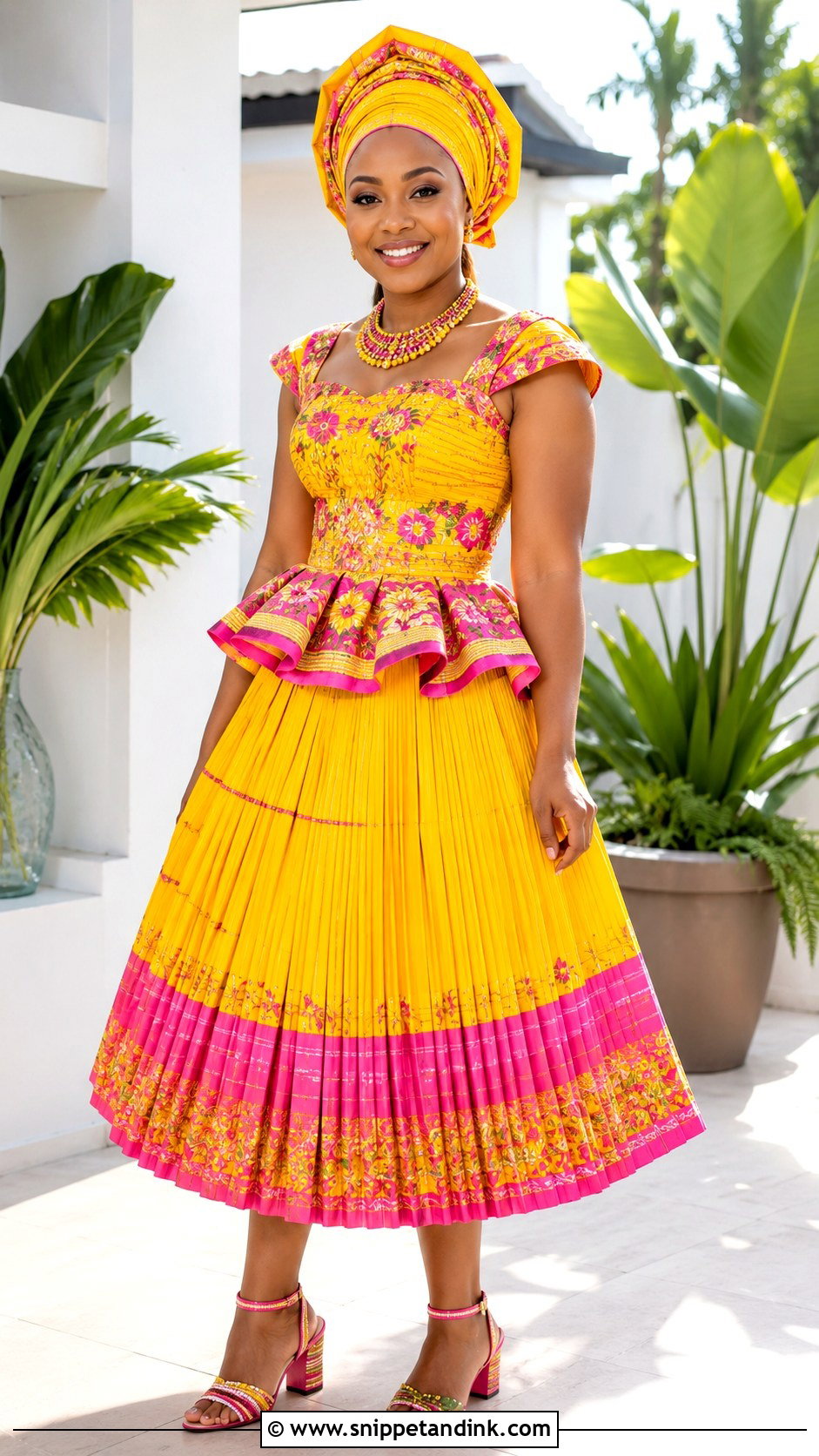
Sepedi colour is loud on purpose: yellow, pink, blue, orange and green all in one look. The pleats are what I watch at fittings. Knife pleats sewn from stiff cotton stand away from the hips if they aren’t stitched down for the first few centimetres below the waistband, so I ask the seamstress to edge-stitch them there. A fitted bodice or peplum balances the volume. Floor length reads more formal; a midi works for a smaller gathering at home.
4. Sotho Lobola Dress With Basotho Blanket
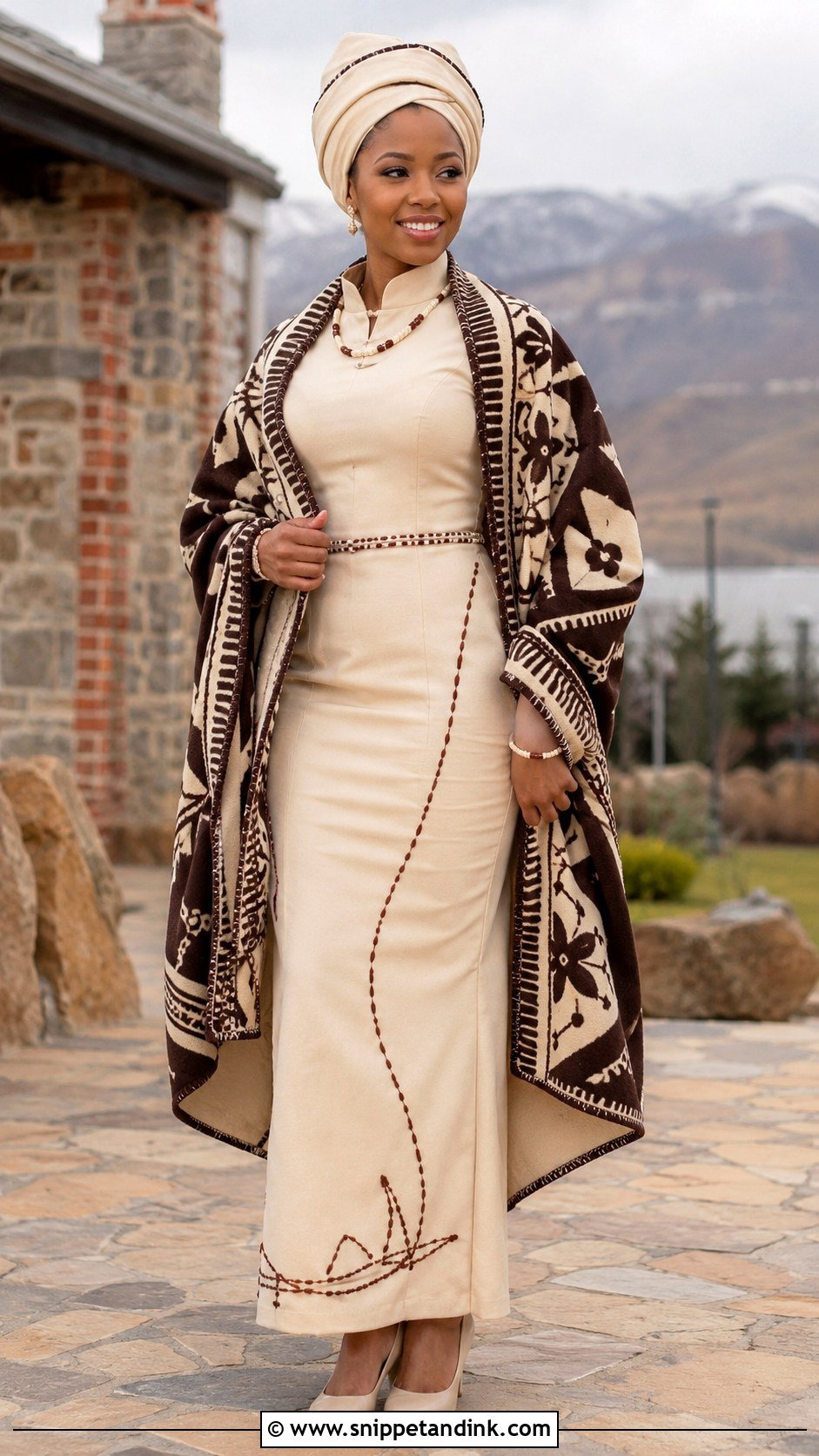
With a Basotho blanket, the blanket is the outfit. Everything underneath, a plain maxi or a long-sleeved fitted dress, should sit quietly in a colour pulled from the blanket’s own pattern. Real wool blankets are heavy and warm, so this is a winter or highland choice; in summer heat I’d steer you towards something lighter. Pin the blanket at the shoulder with a large safety pin hidden under the fold, not a brooch that drags the wool down. Keep the jewellery modest and the heels comfortable.
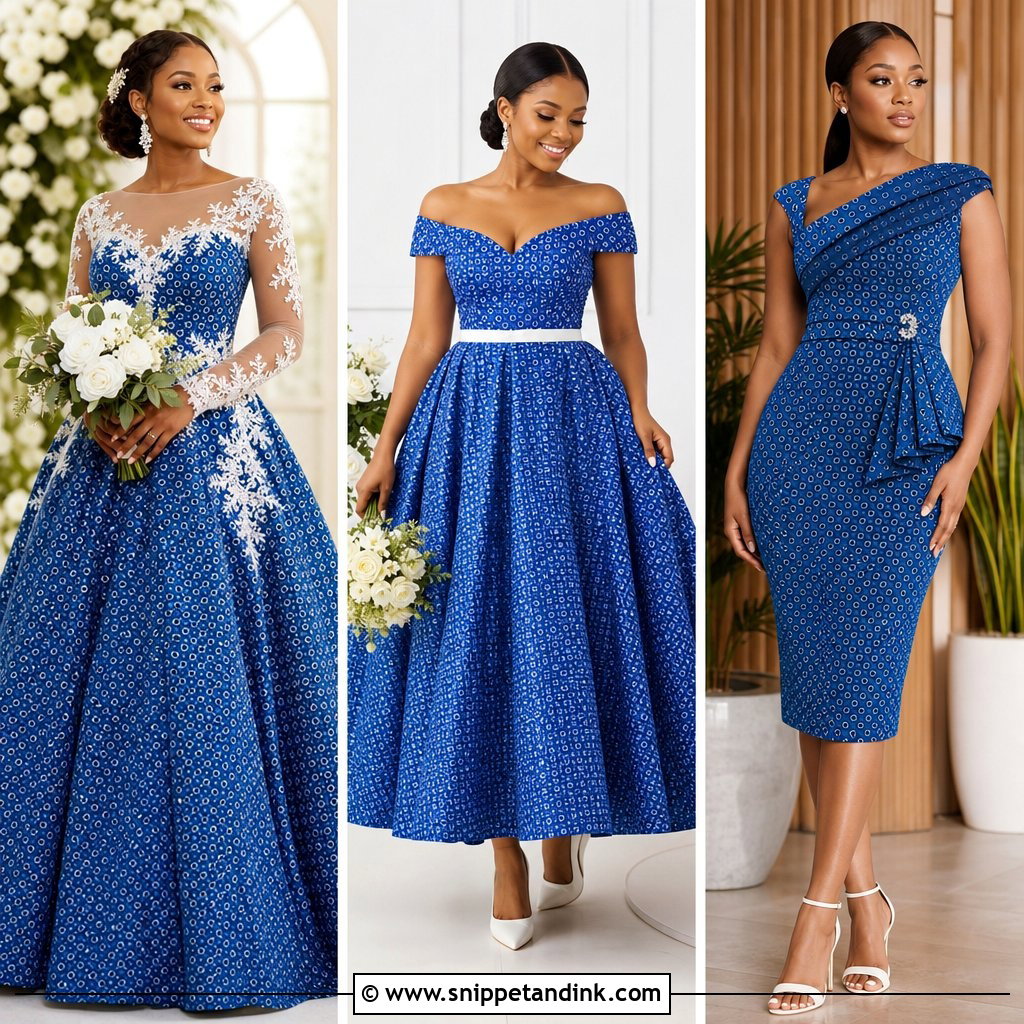
5. Tswana Lobola Dress With Shweshwe Print
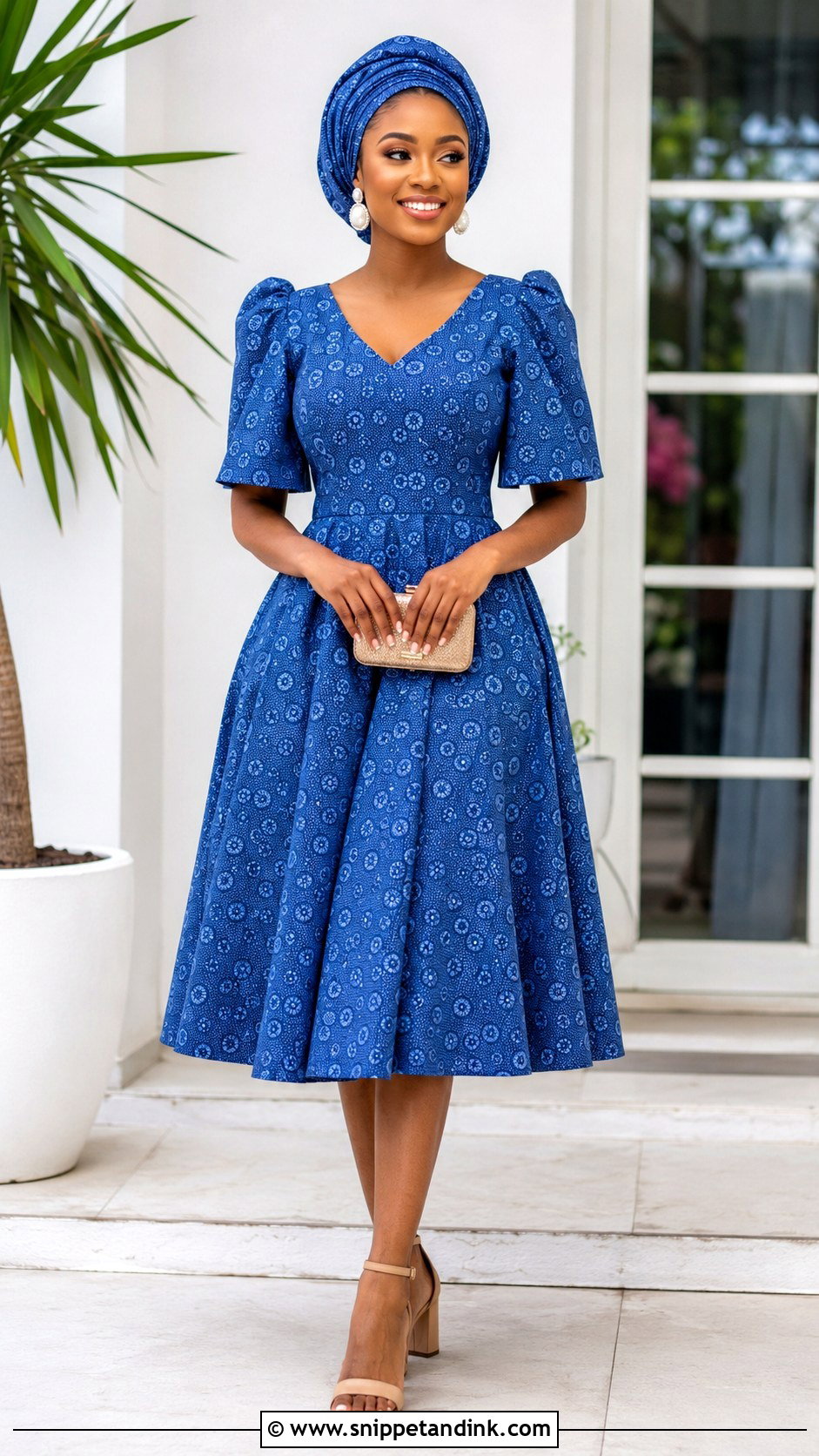
A Tswana lobola dress in Shweshwe is the outfit I suggest most to brides who want something traditional that a local seamstress can make well. Blue, brown, red and green Shweshwe all work, as a fitted gown, a flared midi or a skirt-and-top set. One warning from the cutting table: new Shweshwe is starched and shrinks a little, so the fabric must be washed before it is cut. A full skirt reads classically bridal, while a peplum sharpens the waist. Finish with a matching doek and either pearls or small beaded pieces that don’t fight the print.
6. Tsonga Lobola Dress With Xibelani Skirt
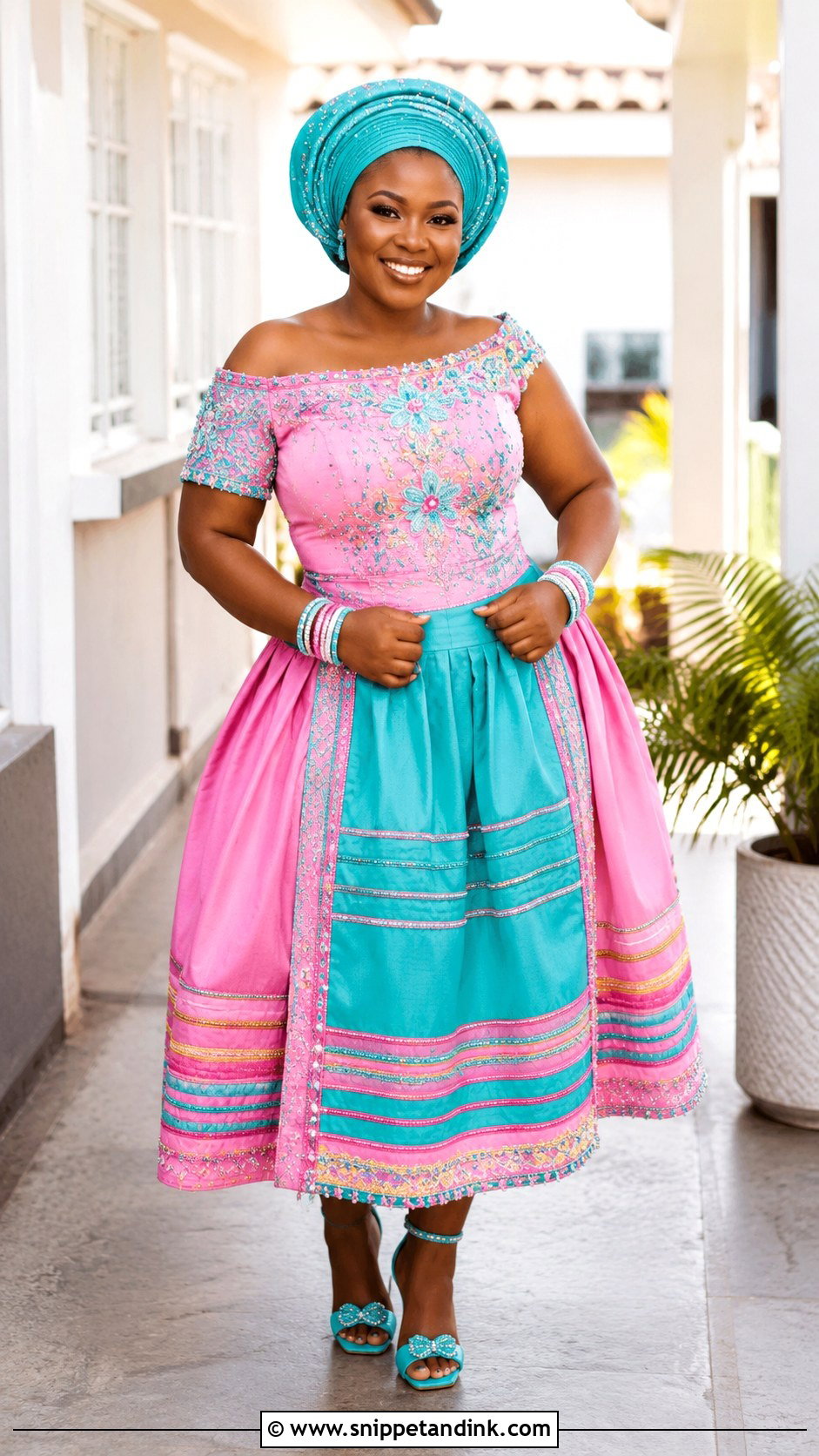
A xibelani is built from many layers of gathered fabric so it swings when the hips move, and it is heavier than most brides expect. I’d only suggest it if you’re happy to dance and comfortable with bulk around the hips; it is not the skirt for a bride who wants to sit still at a long table. Pair it with a fitted blouse or peplum top in matching Tsonga fabric. Pink, turquoise, yellow and orange keep the energy up. Wear flat or very low shoes, plus bangles and a matching headwrap.
7. Venda Lobola Dress With Colorful Stripes
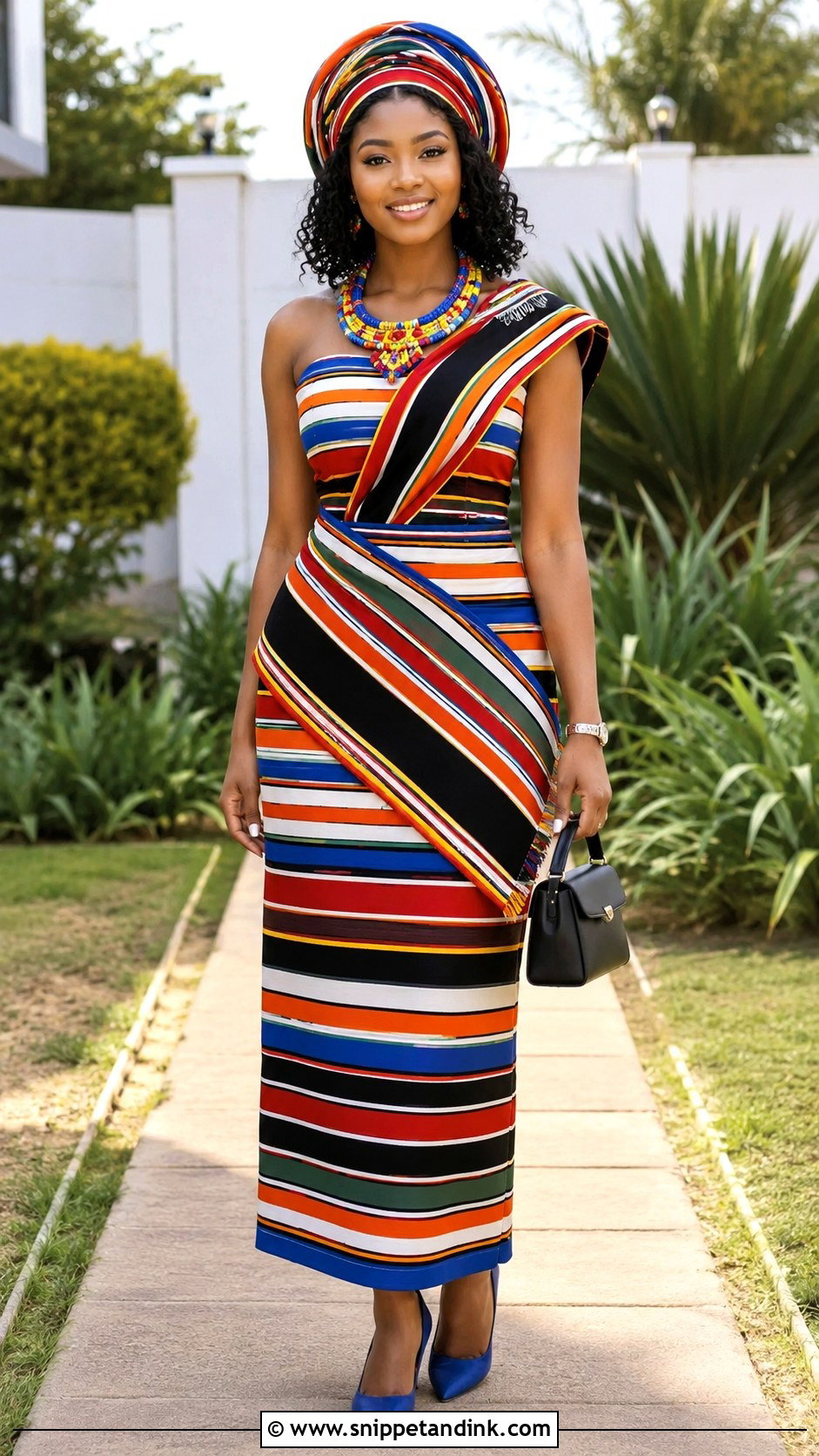
Venda stripes are already doing all the talking. Use them as the main dress, as a wrap, or as a single panel on a modern gown, then pull every accessory back: one beaded necklace, a matching headwrap, shoes in a solid colour. The mistake I see most is adding a printed bag and coloured earrings on top, and the photo stops having a focal point. A fitted maxi with a flared hem is the polished option; a two-piece feels younger.
8. Ndebele Lobola Dress With Beaded Collar
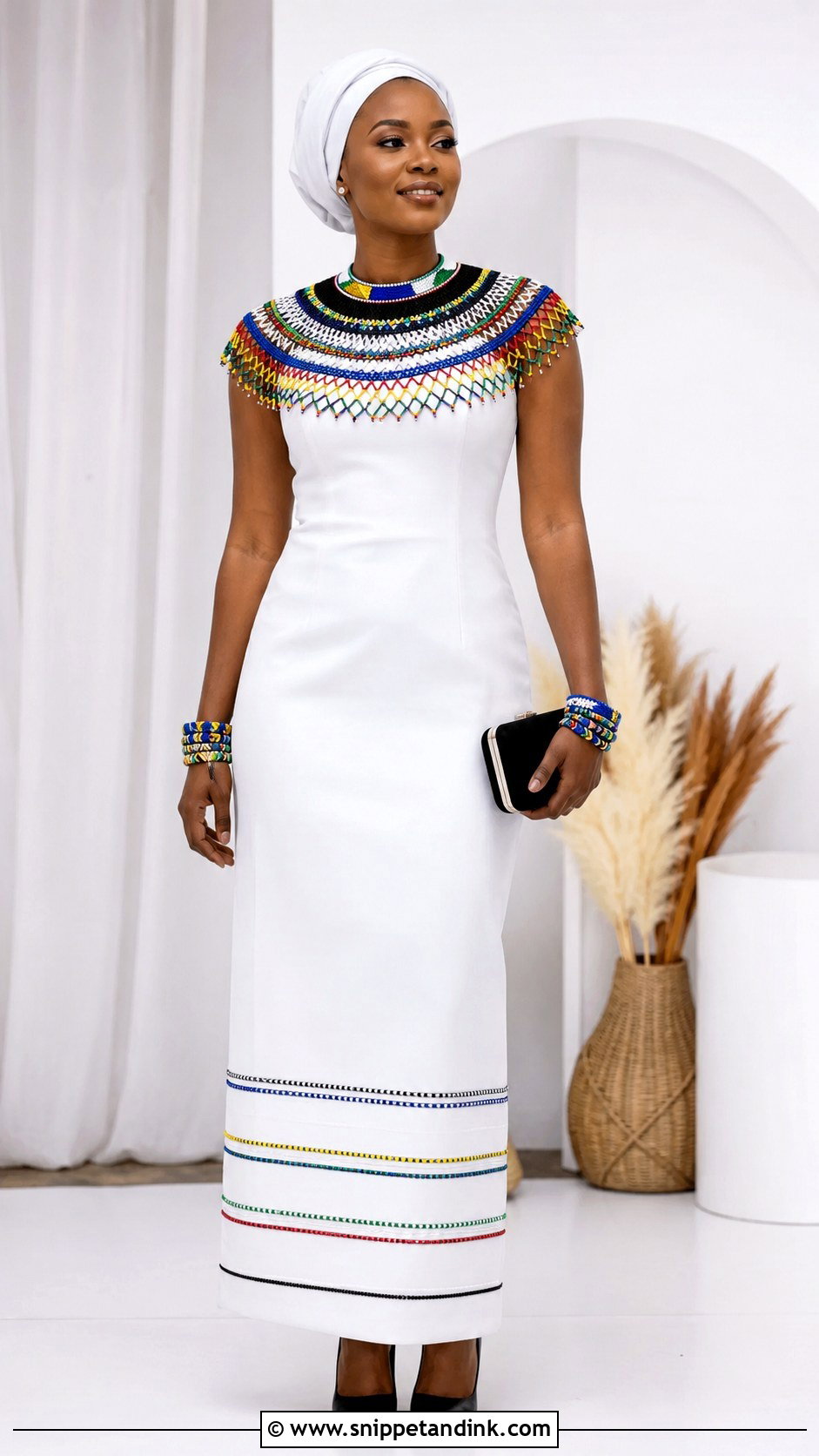
Ndebele beadwork is so graphic that it almost demands a simple base: a column gown, an A-line or a long fitted dress, ideally in white or black so the geometric colours read cleanly. A beaded collar of this kind is heavy and sits wide on the shoulders. I always check that the neckline beneath it is cut high and wide enough that no dress fabric bunches under the beads. Matching bangles, a neat headwrap and plain shoes are all it needs.
9. Swati Lobola Dress With Emahiya Wrap
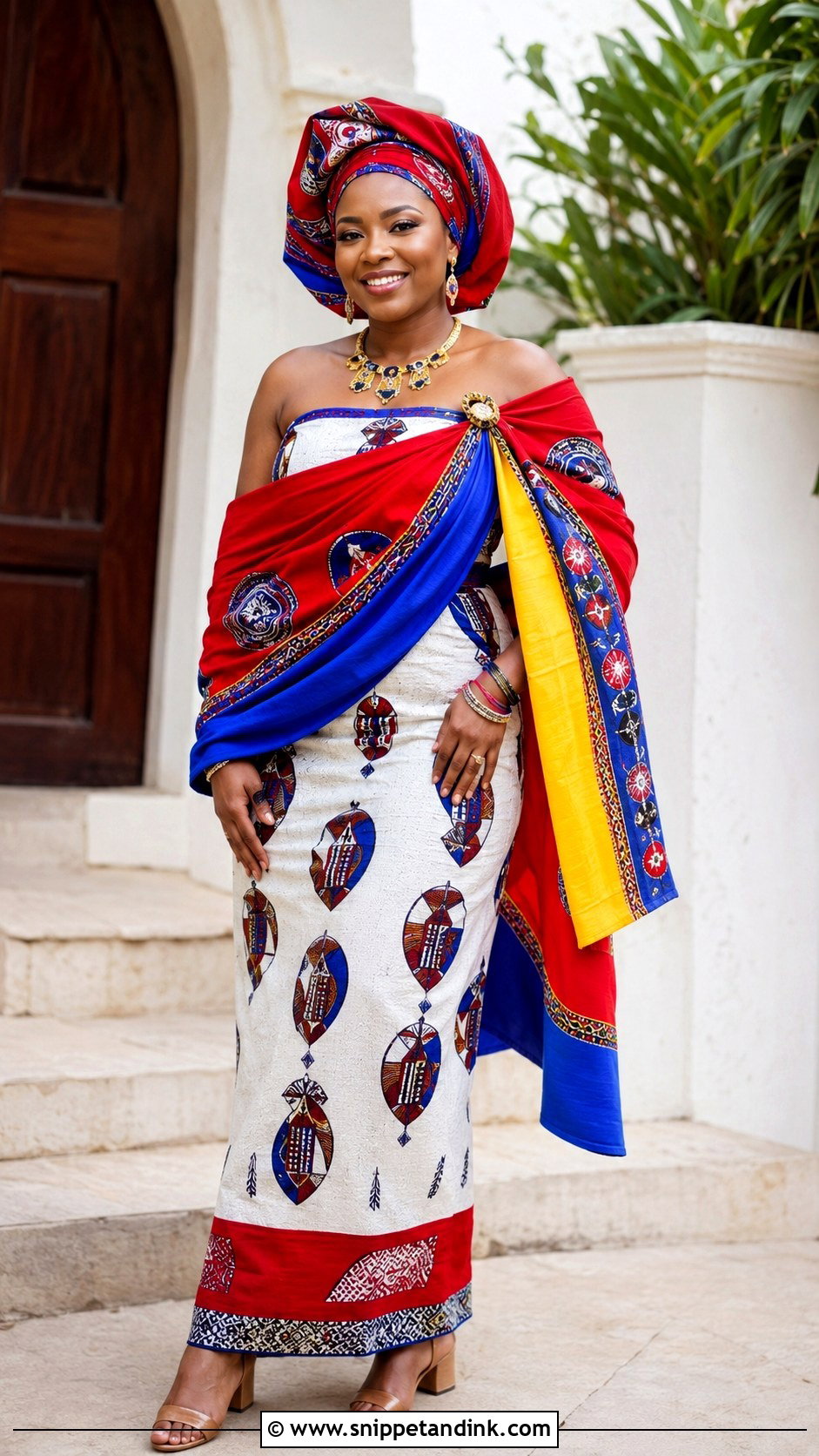
The emahiya is draped and knotted rather than sewn, which is what gives this look its ceremonial feel. Wear a fitted dress or a long skirt with a simple top underneath, then tie the cloth across the body. Red, blue, yellow and black usually dominate. Practise the knot at home twice, because a knot that sits on the collarbone looks deliberate and one that slides to the armpit looks rushed. Choose sandals or block heels, since there may be a lot of standing and walking between family spaces.
10. Shweshwe Lobola Dress With Puff Sleeves
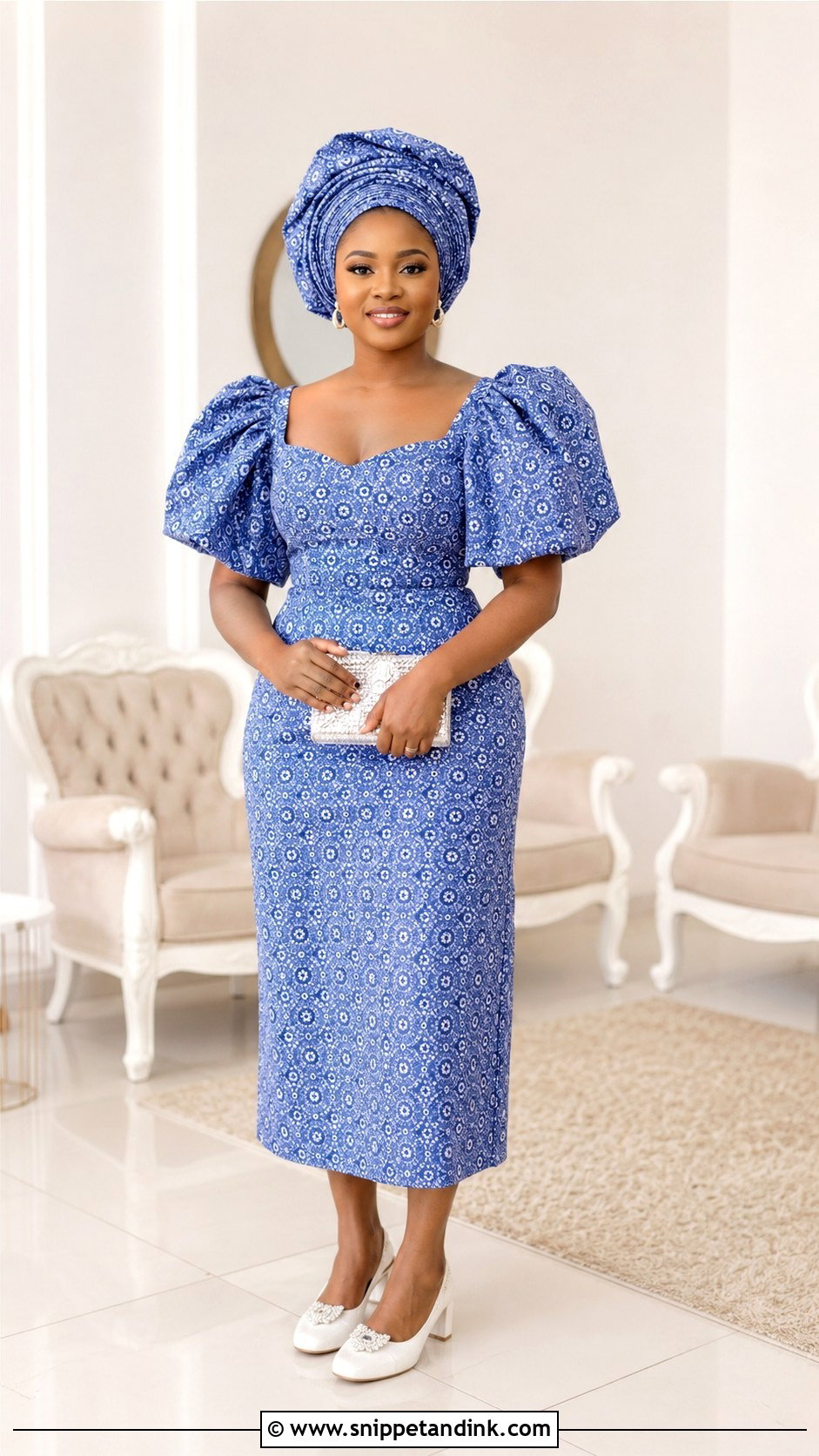
Puff sleeves take a print that reads traditional and make it look current. Midi or maxi depends on how formal the day is. Classic blue-and-white Shweshwe is the obvious pick, though burgundy, brown, green and mustard versions hold their shape just as well because the cloth is crisp. That crispness matters: sleeves cut from Shweshwe stay puffed, while sleeves in a soft rayon print collapse by lunch. With dramatic sleeves I keep the jewellery small and the shoes low.
11. White Lobola Dress With African Print Trim
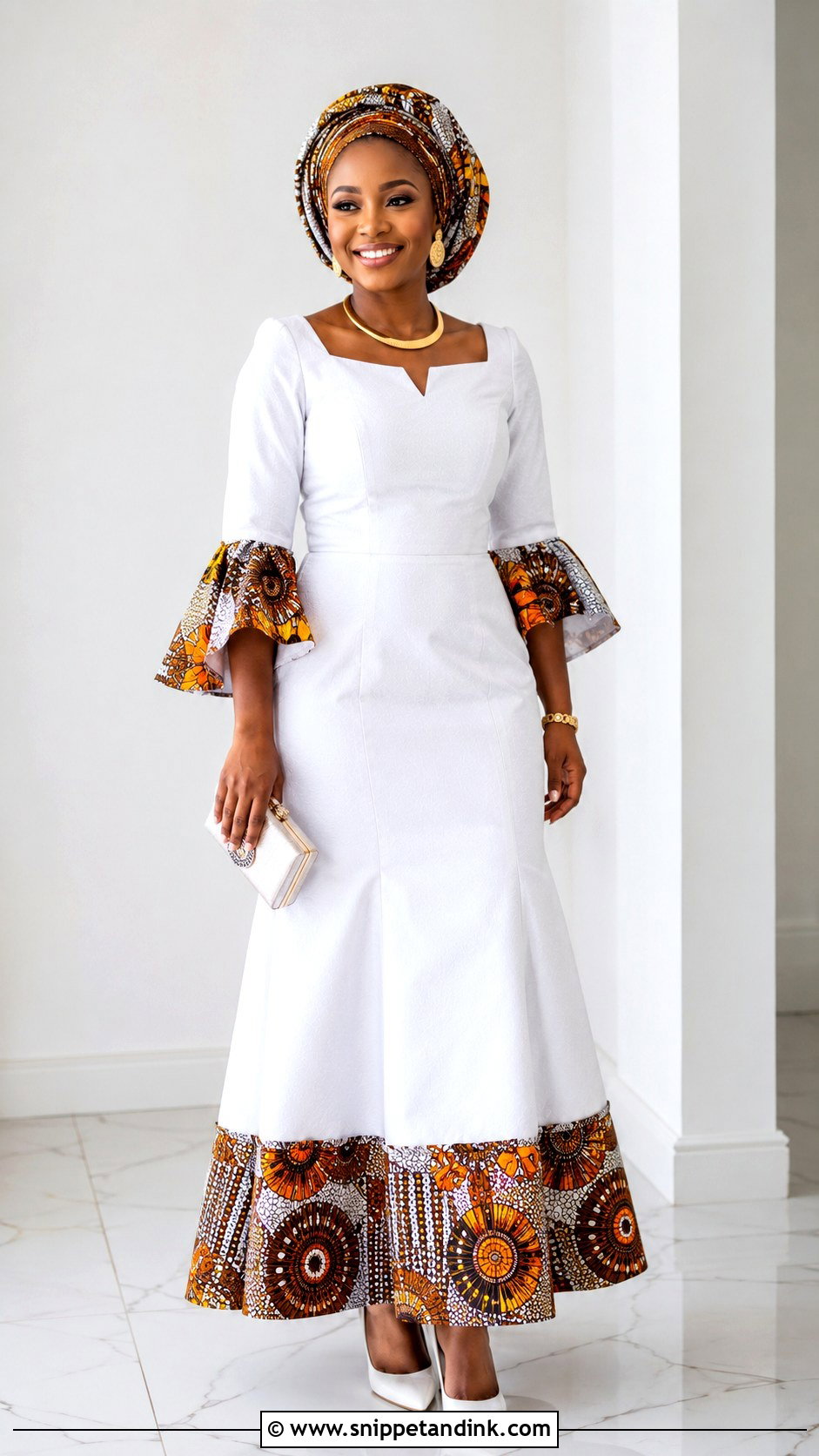
If you love a clean bridal colour, a white dress with African print trim lets you have it without losing the cultural thread. The trim can sit on the sleeves, hem, waist or neckline, or move up into the doek. White does show every mark, so I tell brides to plan who holds the plate when food arrives and to keep a stain pen in the clutch. Gold or beaded jewellery ties it together, and nude, white or metallic shoes keep the line clean.
12. Red Lobola Dress With Gold Jewelry
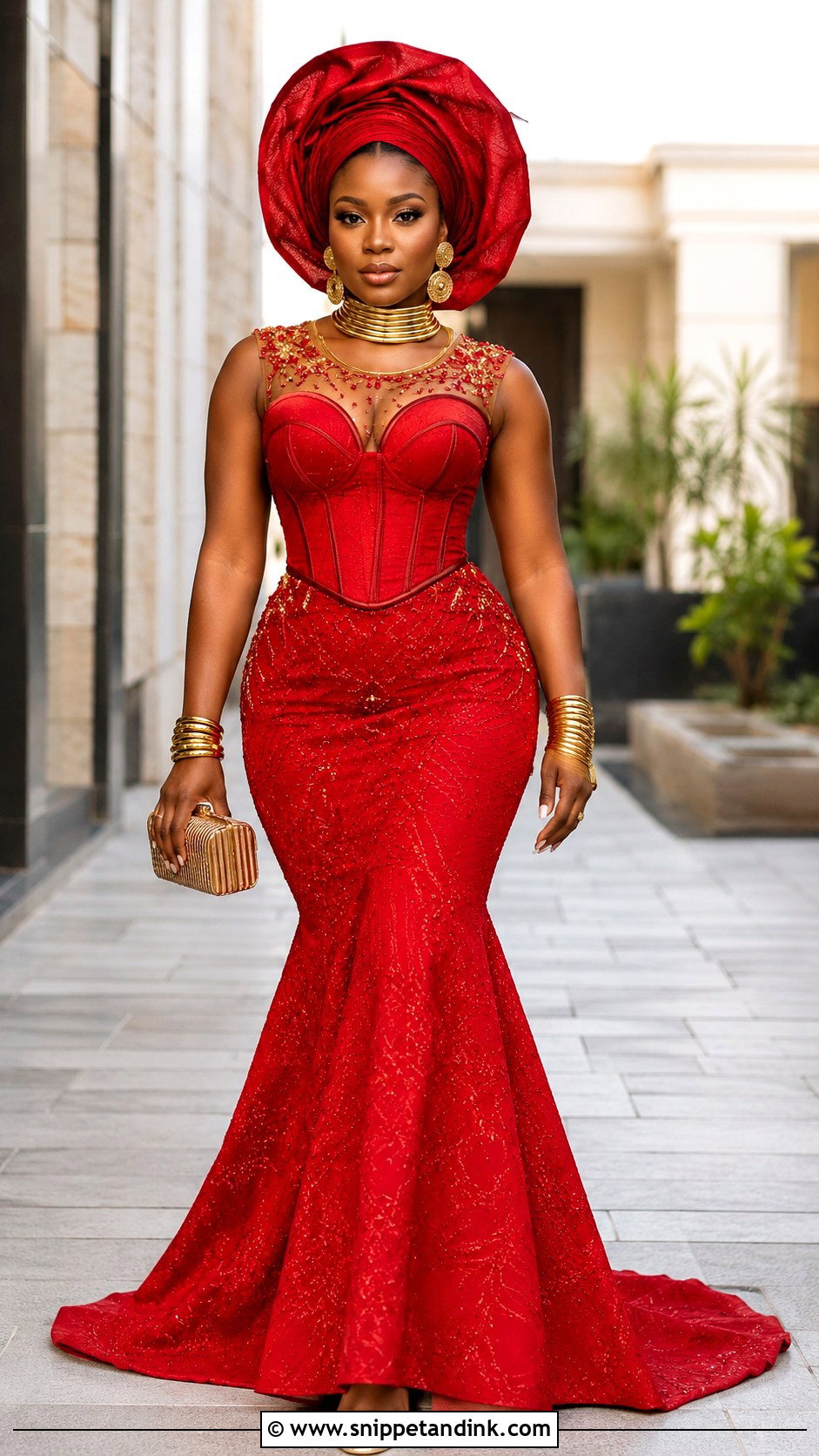
Red carries celebration in a way few colours do, and it reads well against almost every skin tone in daylight. A fitted mermaid, a flared gown or a wrap maxi all suit it. I check one thing first: some red dyes bleed onto skin and light fabric when they get damp with sweat, so a red dress with a white lining needs a hand-wash test before the day. Gold earrings and bangles do the rest. Keep the makeup balanced so the dress stays the focus.
13. Blue Lobola Dress With Matching Doek
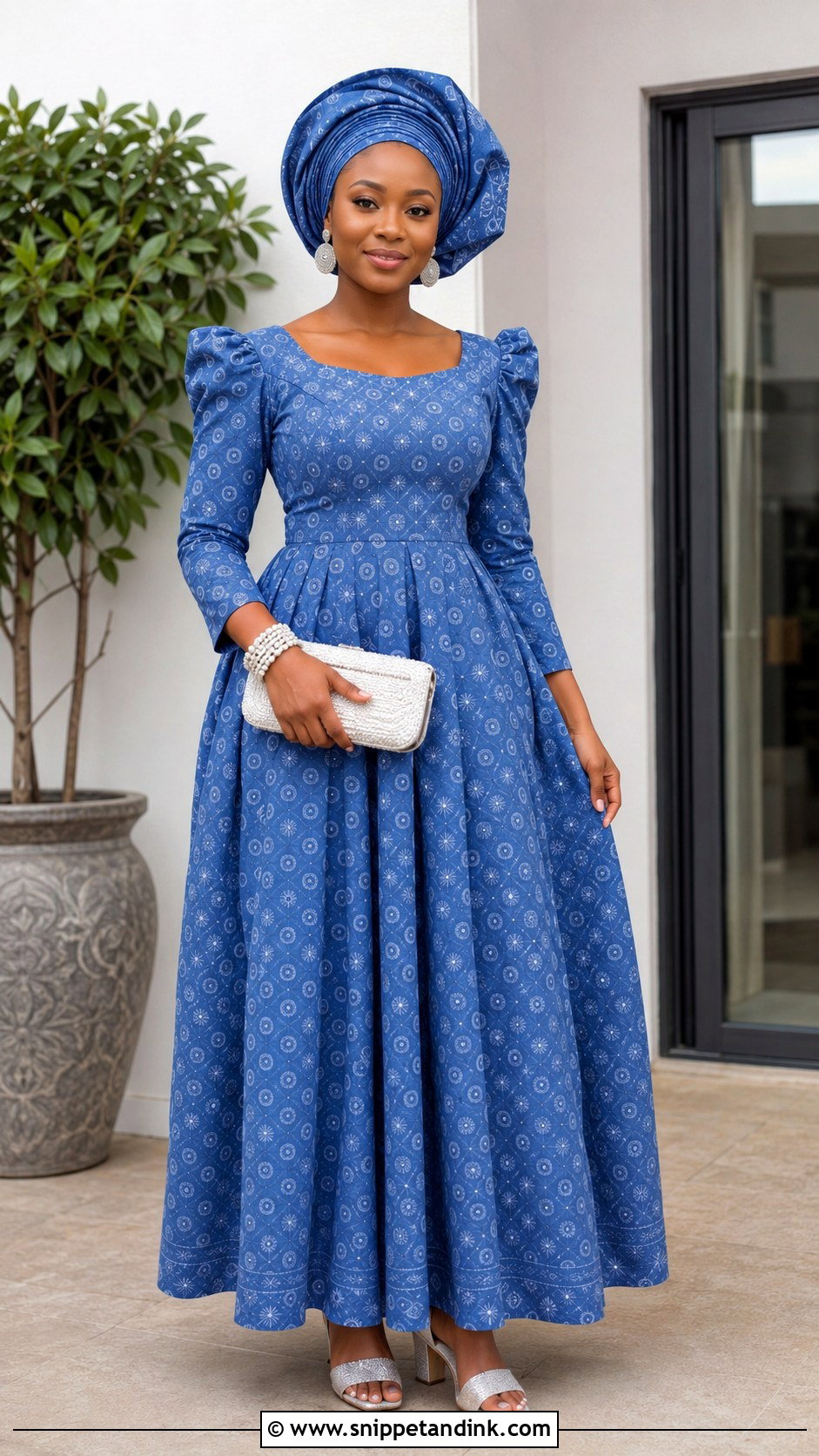
Blue is the calm option, and it is forgiving in photos because it rarely clashes with the colours other guests are wearing. It works in Shweshwe, satin, lace overlay or cotton blends. A defined waist gives the bridal shape without tipping into evening wear. The matching doek frames the face, so I spend time on how high it sits: tied too low on the forehead, it shadows the eyes in outdoor light. Silver or pearl earrings suit the blue.
14. Yellow Lobola Dress With Beaded Sandals
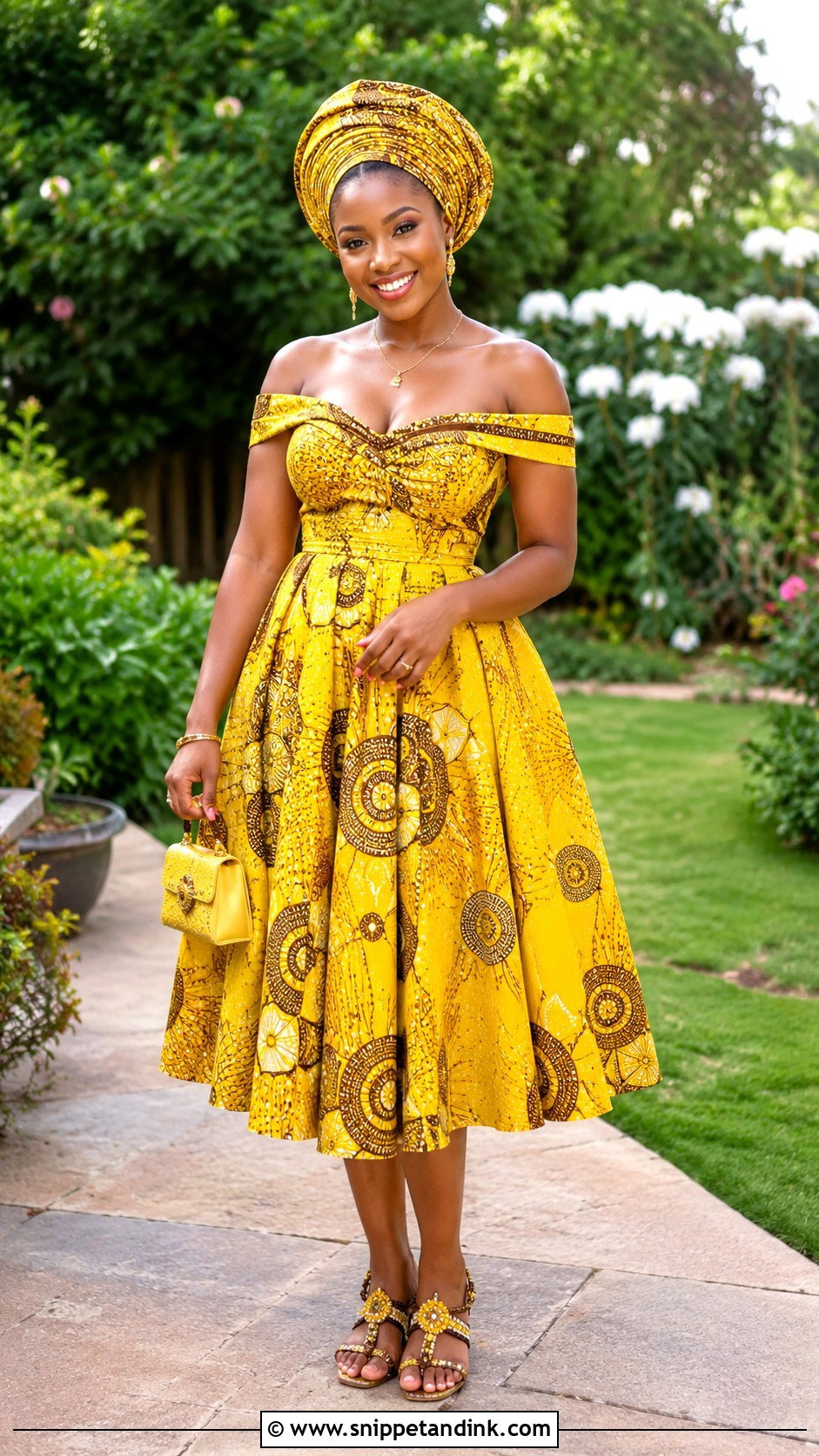
Yellow is cheerful and very visible, which is why I keep the bag and shoes plain alongside it. It looks right in solid fabric, African print or mixed cloth, cut as a flared midi, a pleated maxi or a fitted gown. Beaded sandals suit a home or garden ceremony far better than heels sinking into grass. Pale butter yellow can wash out deeper skin in direct sun, so for many brides I’d suggest a warmer, richer mustard or marigold instead.
15. Green Lobola Dress With Headwrap
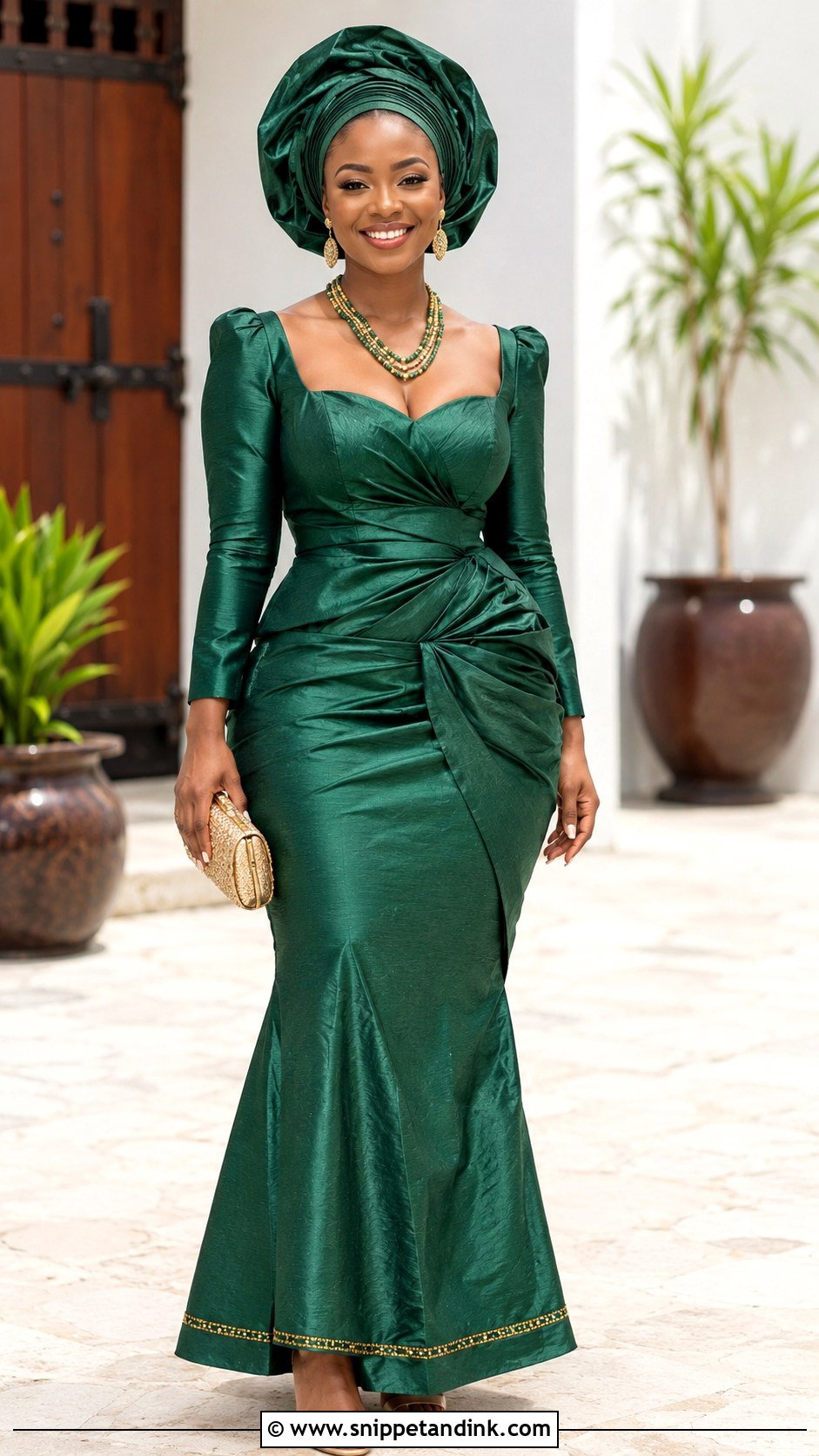
Green changes mood with its shade. Emerald looks formal, olive feels earthy, and bright print green feels festive. A fitted top with a long skirt reads neat and traditional; a full gown reads more formal. Gold jewellery warms green up, while white beads cool it down, so decide which way you want the photos to lean. Shoes in nude, gold or a matching green. A tall headwrap adds height and finishes the silhouette.
16. Black And White Lobola Dress With Beads
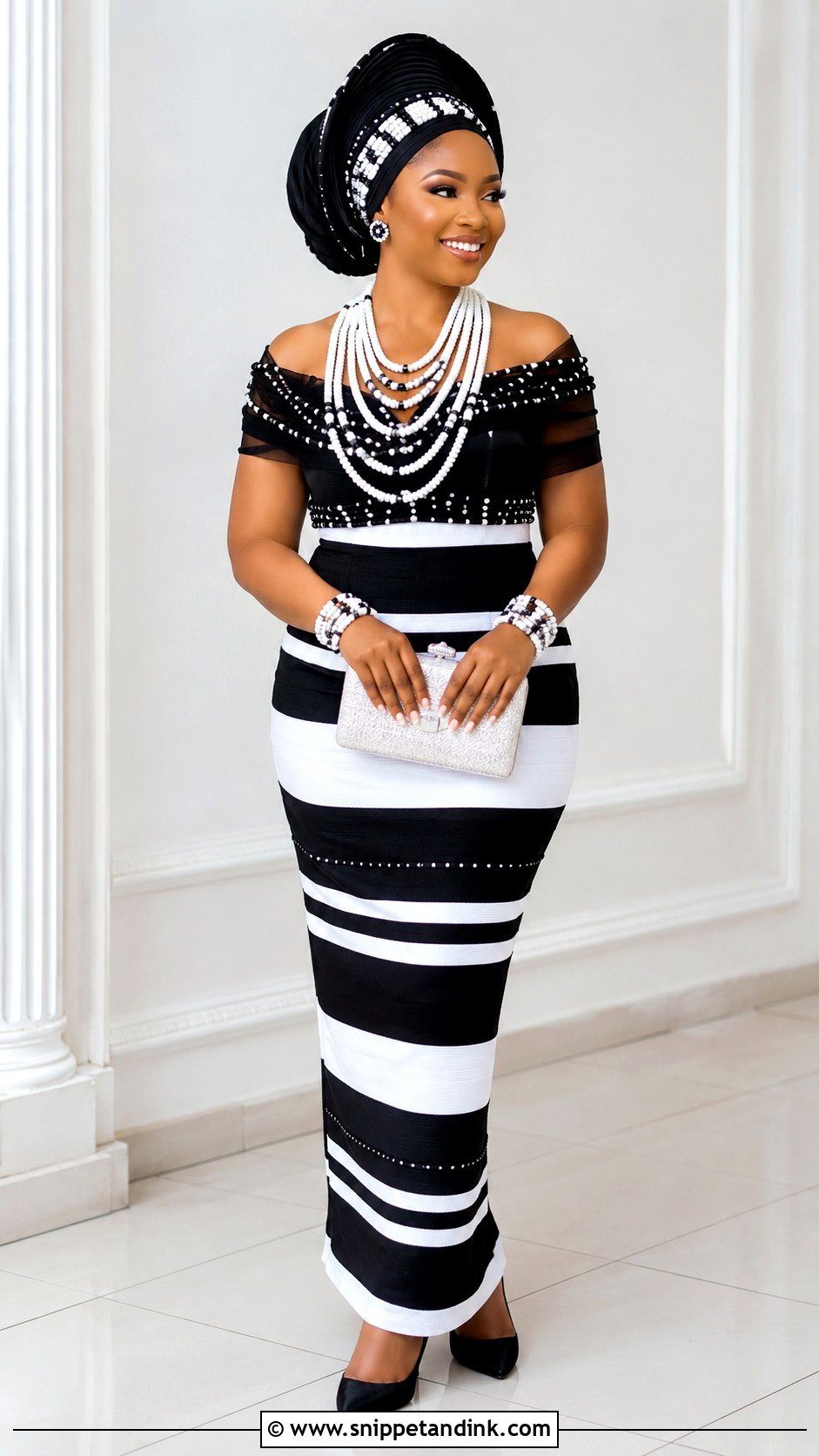
Black and white has very clear Xhosa associations, and it also suits a modern makoti look. Because the contrast is so sharp, tailoring shows everything: a wrinkle at the waist or a seam that doesn’t meet looks obvious in photos. I’d rather see a simple column or A-line cut precisely than a complicated pattern with uneven stripes. The stripes, panels or embroidery carry the detail. Add beaded necklaces, a matching headwrap and black, white or beaded shoes.
17. Pink Lobola Dress With Peplum Top
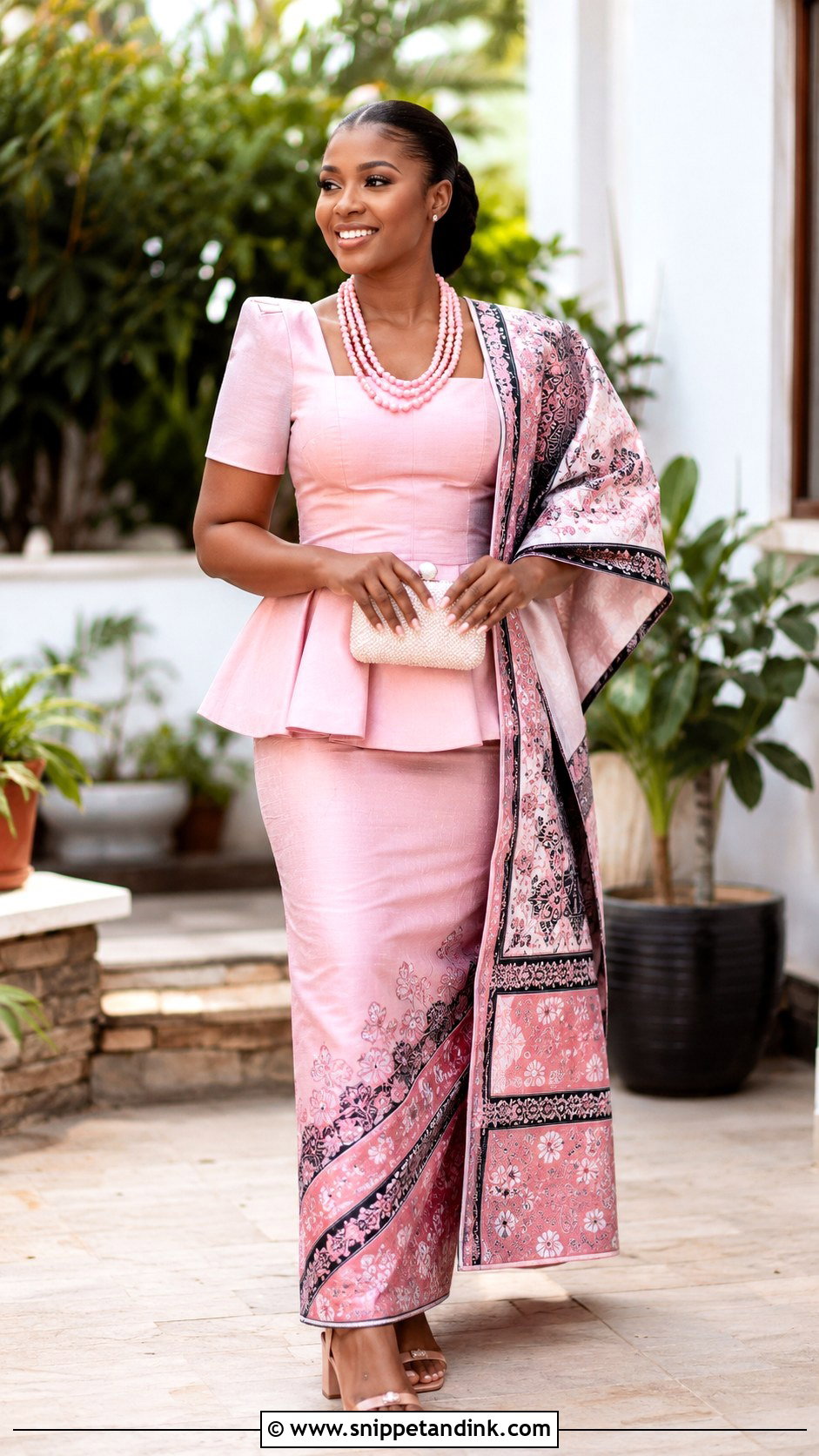
A peplum defines the waist and suits most figures, which is why it shows up so often at lobola celebrations. Pale pink reads gentle, while hot pink or fuchsia reads festive. Tsonga print, Ankara, lace and satin all work. Where I’d be careful is the peplum length: one that ends at the widest point of the hip adds volume there, so I have it sit a few centimetres above. Nude or metallic block heels keep it neat.
18. Orange Lobola Dress With Printed Wrap
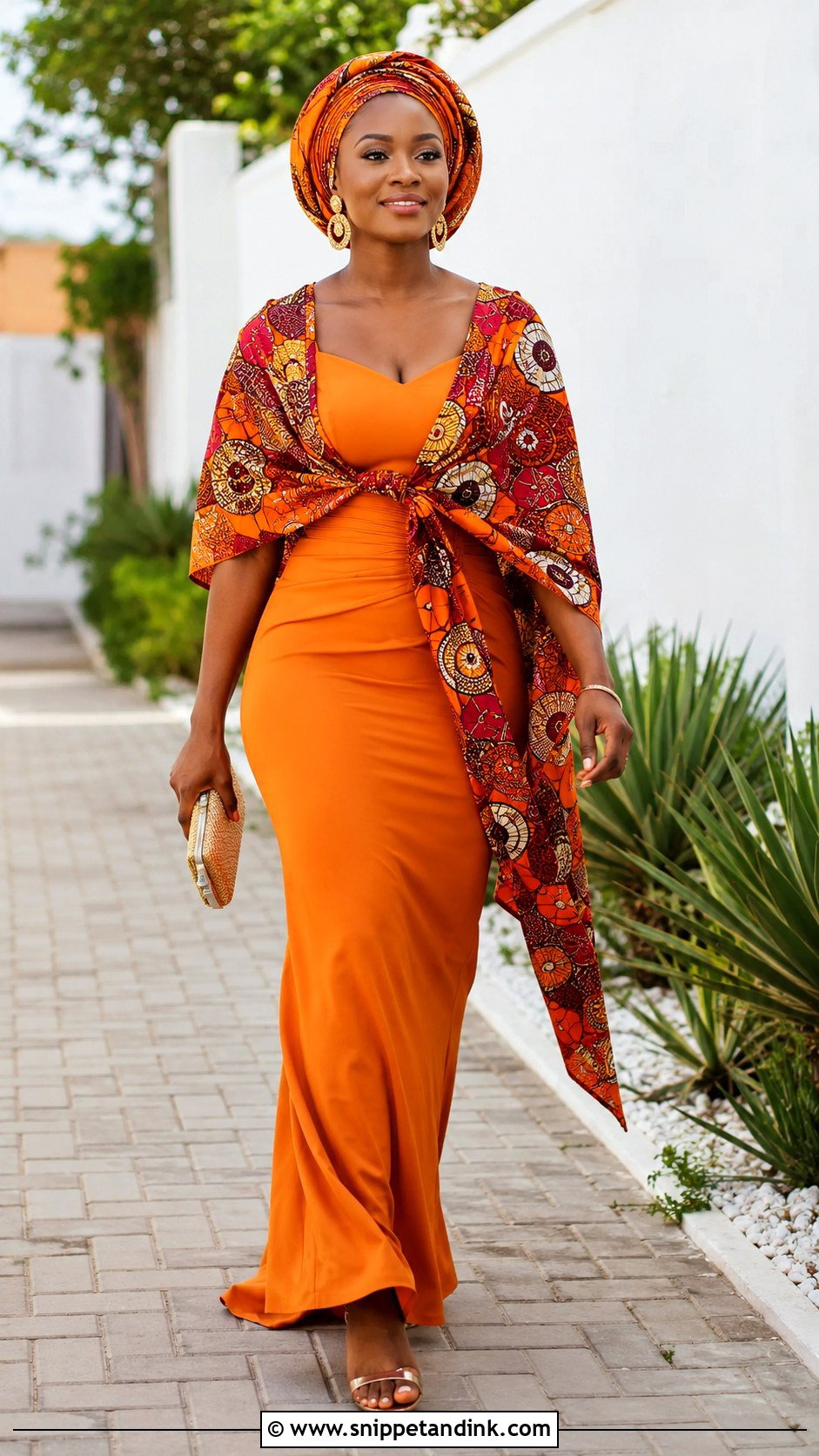
Orange is warm and welcoming, and it pairs easily with brown, yellow, green or blue print. The printed wrap is what turns a plain maxi into an occasion outfit, worn either over one shoulder or around the waist. A shoulder wrap needs pinning in two places or it drifts every time you hug someone, and at lobola you will hug a lot of people. Add a matching doek and gold earrings. Keep everything else plain so the print can lead.
19. Purple Lobola Dress With Lace Details
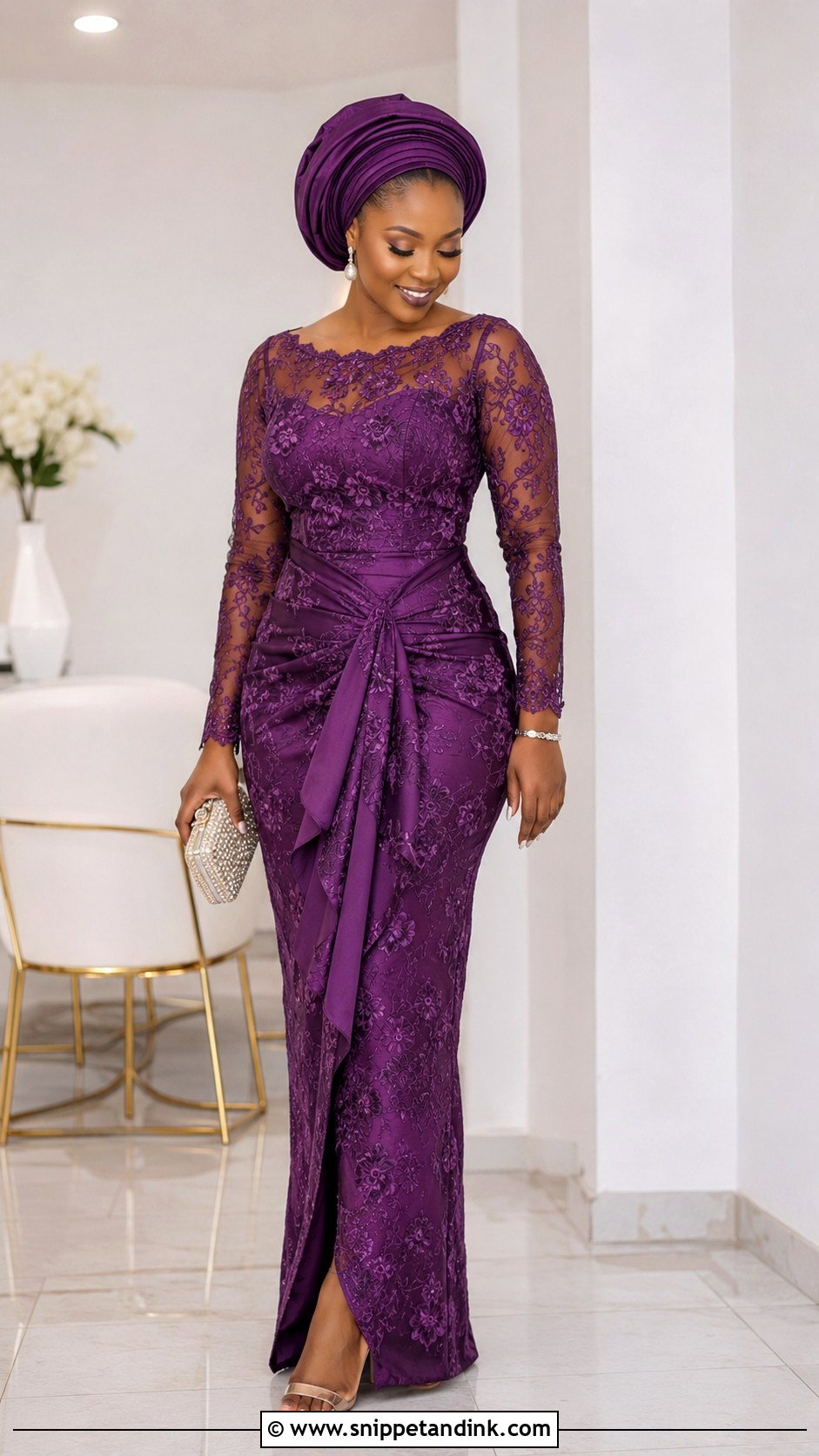
Purple with lace feels mature and formal without going plain. Plum and deep purple look richer in photos than pale lilac, which can turn greyish in shade. Lace sleeves, a lace bodice or a full overlay all work, though I check the lace edges at the wrist, where scalloped lace catches on beaded bracelets. A long fitted cut or an A-line flatters most brides. Finish with a matching doek and silver or pearl jewellery.

20. Burgundy Lobola Dress With Satin Skirt
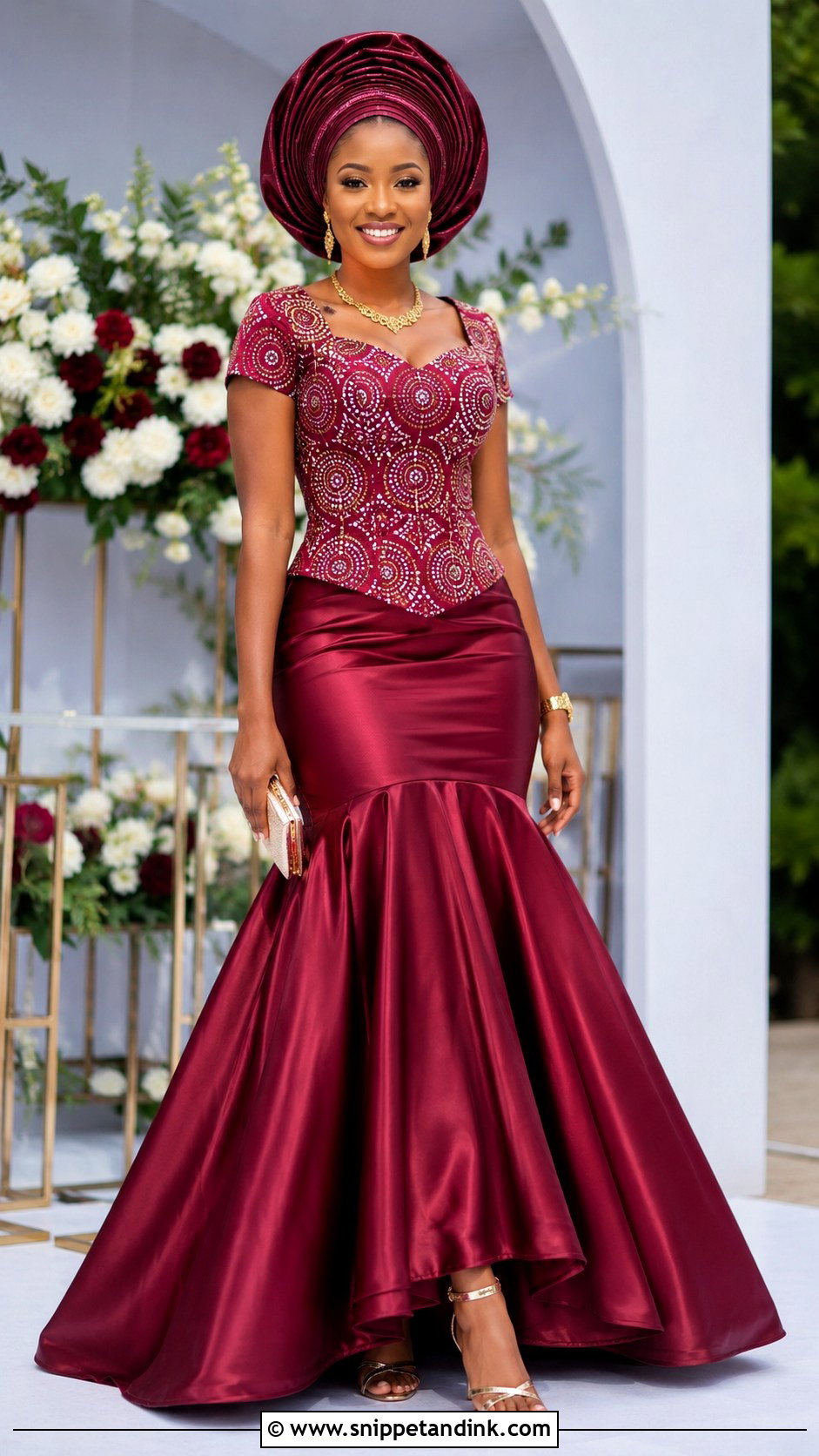
Burgundy gives you the warmth of red with less glare, and it holds its depth in photos. The satin skirt is the part to think about. Satin creases sharply wherever you sit, and those lines show in afternoon light, so I prefer a heavier duchess satin or a satin-backed crepe that relaxes faster. A printed bodice, a lace top or a beaded blouse above it balances the shine. Gold jewellery and a small clutch finish it.
21. Ankara Lobola Dress With Statement Sleeves
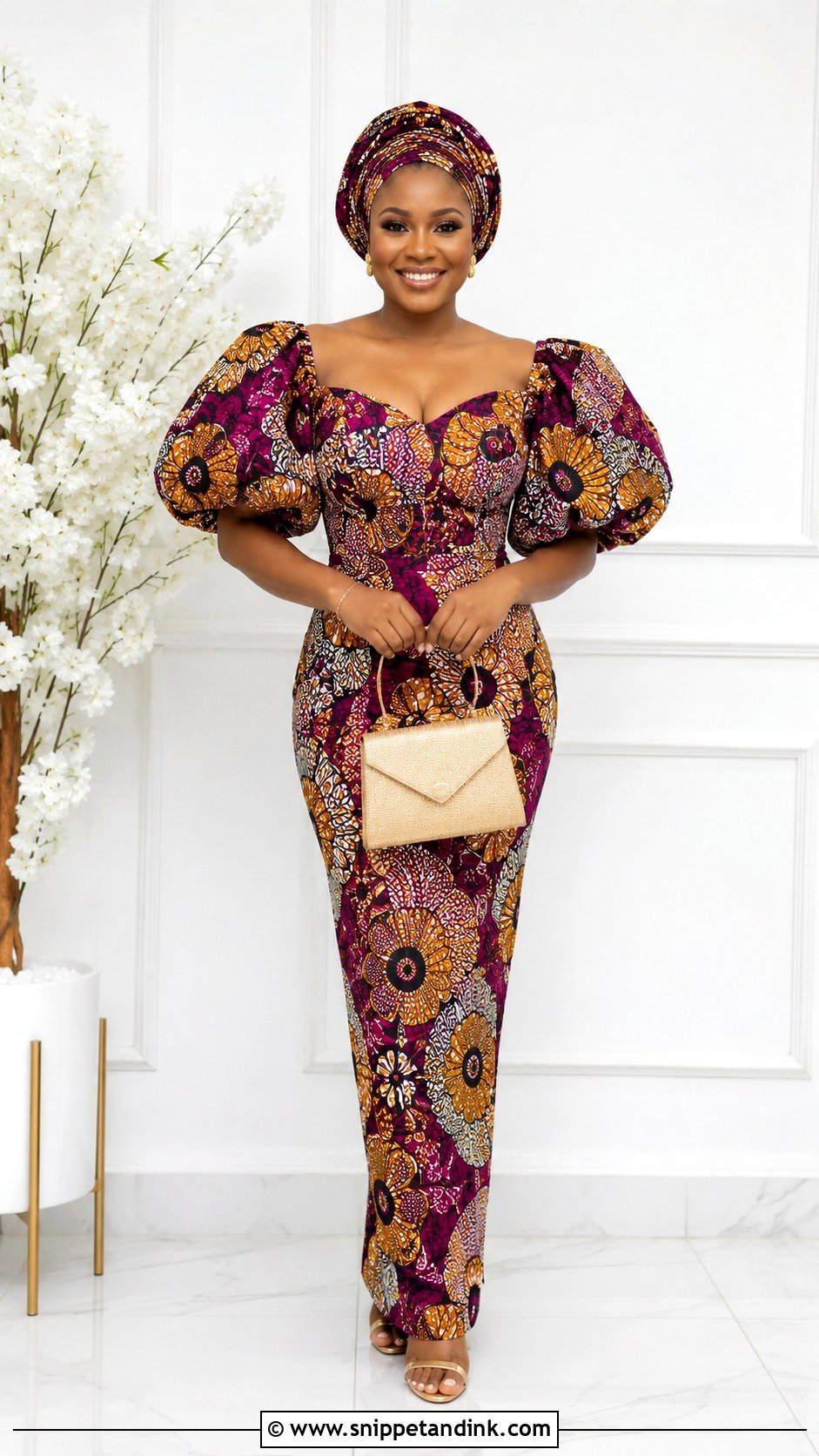
An Ankara lobola dress with big sleeves gives you colour and structure at once. Puffed, flared or layered, the sleeves need interfacing or they droop by mid-afternoon, so ask the seamstress what she is using inside them. Hold the print against your face in daylight before you buy; some palettes flatter, some fight your skin. A matching headwrap pulls it together. Keep shoes and bag simple, with small gold earrings.
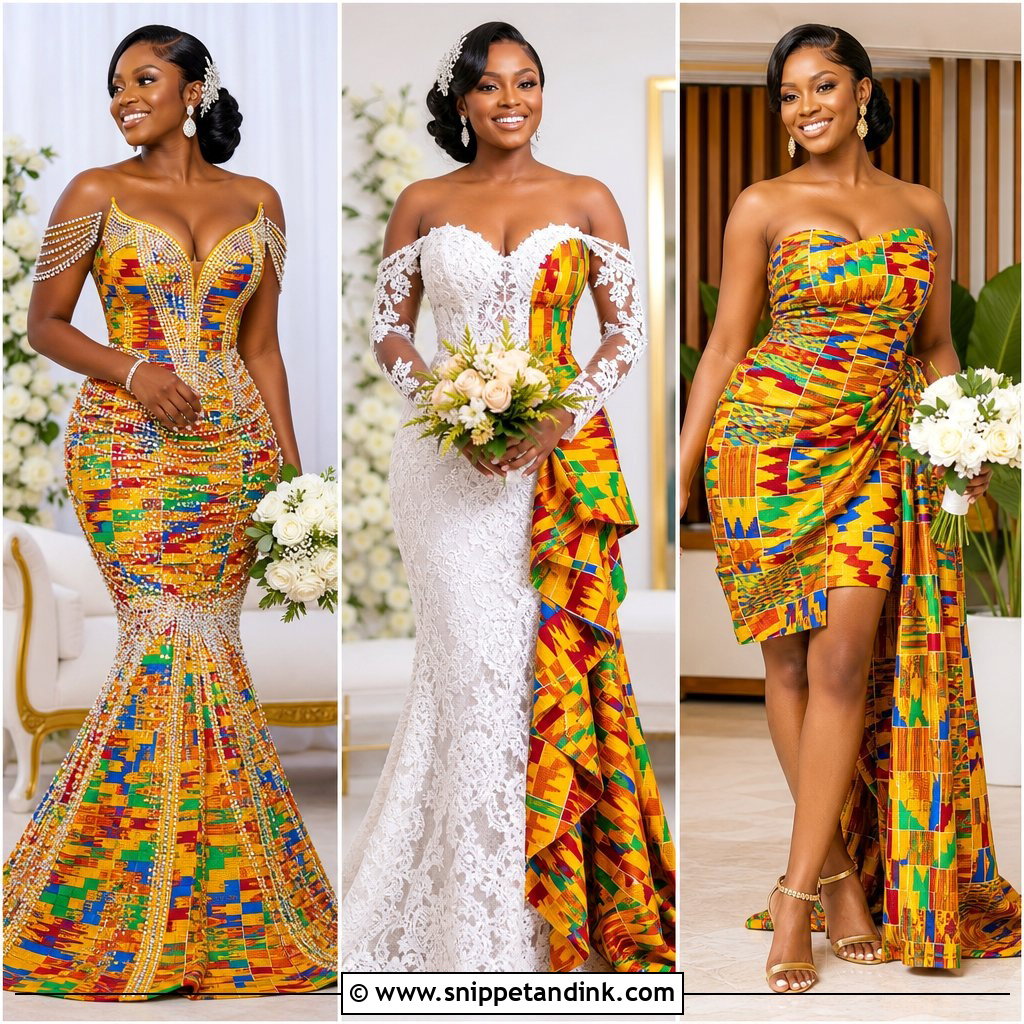
22. Kente Lobola Dress With Fitted Bodice
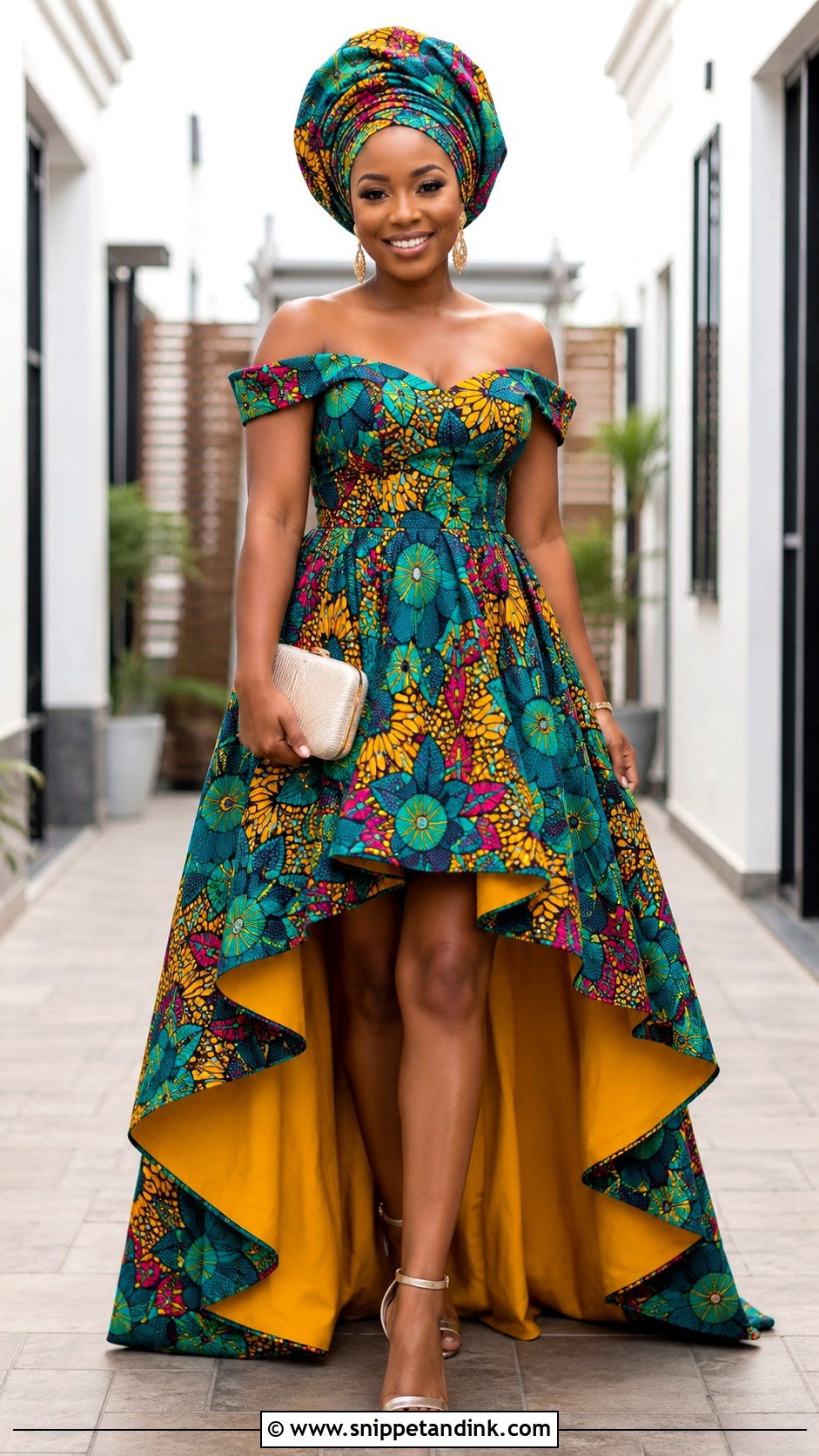
A Kente lobola dress borrows a cloth with deep Ghanaian roots, so I talk it through with brides first: some South African families love the pan-African feel, and others would rather see a local cloth on the day. If your family is happy with it, a fitted bodice with a flared or mermaid hem gives the bridal shape. Woven Kente is stiffer than printed versions and needs a more generous seam allowance. A plain headwrap balances the busy pattern, and the neckline should stay comfortable for family moments.
23. Lace Lobola Dress With Traditional Fabric Belt
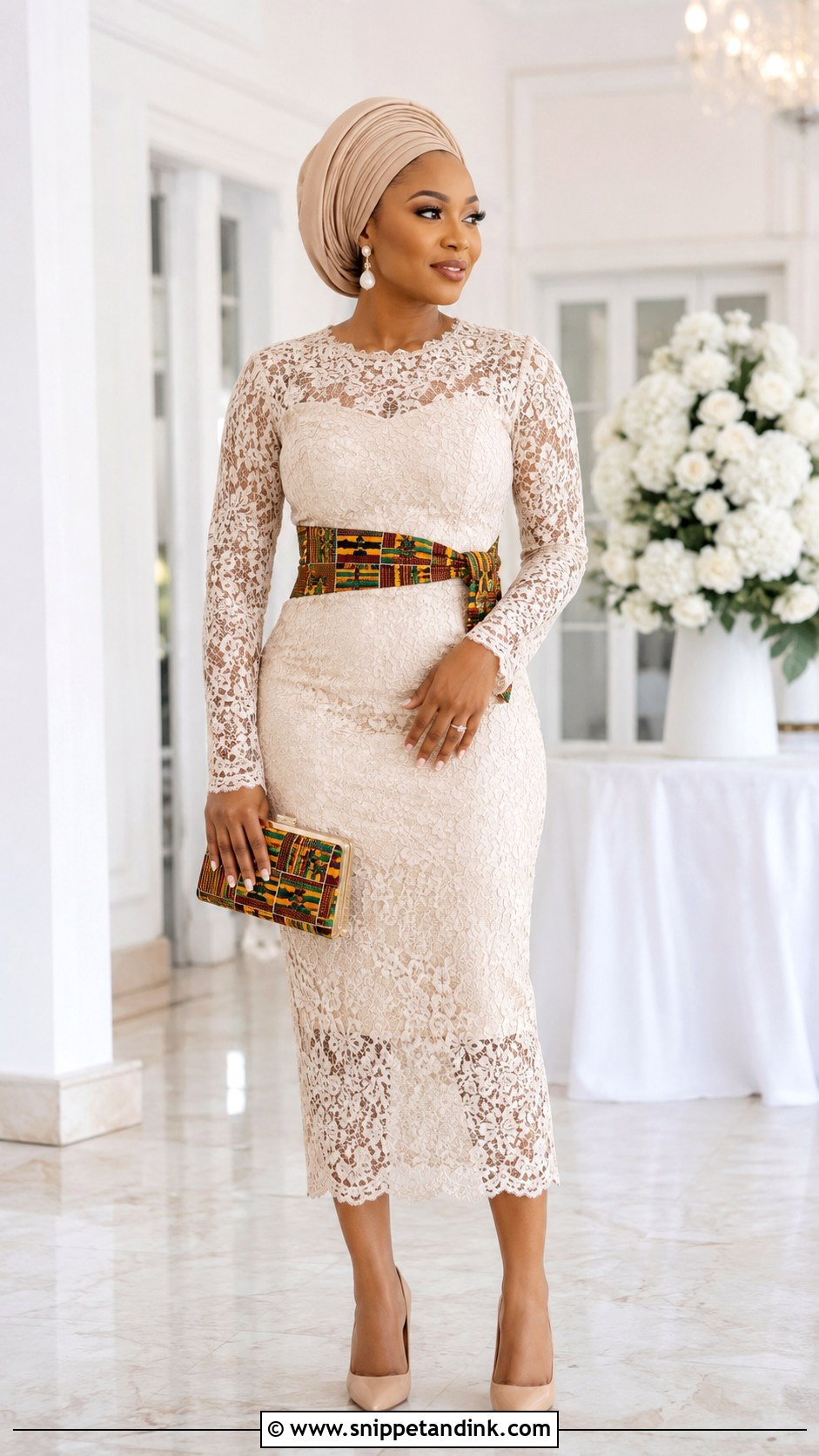
This is a softer route into tradition: a lace dress in white, cream, blush, navy or burgundy with a belt cut from traditional fabric. The belt does the cultural work, so I make it wide enough to read in a group photo, roughly a hand’s width rather than a thin strip. A matching doek or fabric-covered clutch repeats the print. Pearls, small beads or gold keep the rest gentle, with neutral heels.
24. Mermaid Lobola Dress With Doek
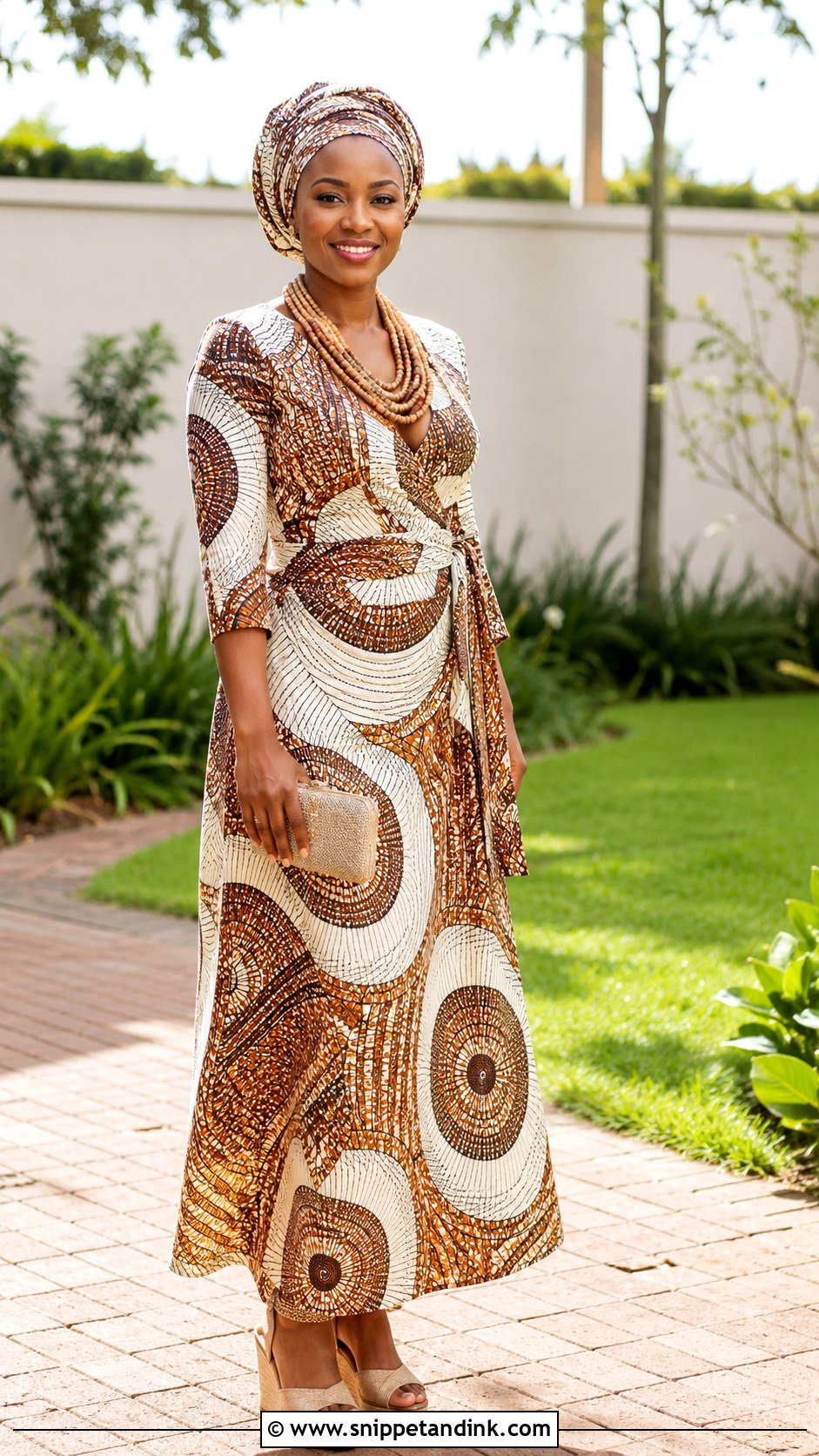
The mermaid shape hugs through the waist and hips and flares near the hem, and it suits African print, Shweshwe, lace or satin. Fitted dresses are where I’m strictest at fittings: you need to sit on a low chair, walk on uneven ground and bend to greet, and if any of those pulls the seams, the flare starts higher. A matching doek softens the formality and makes it feel traditional. Simple earrings and a bracelet are plenty.
25. A Line Lobola Dress With Matching Shawl
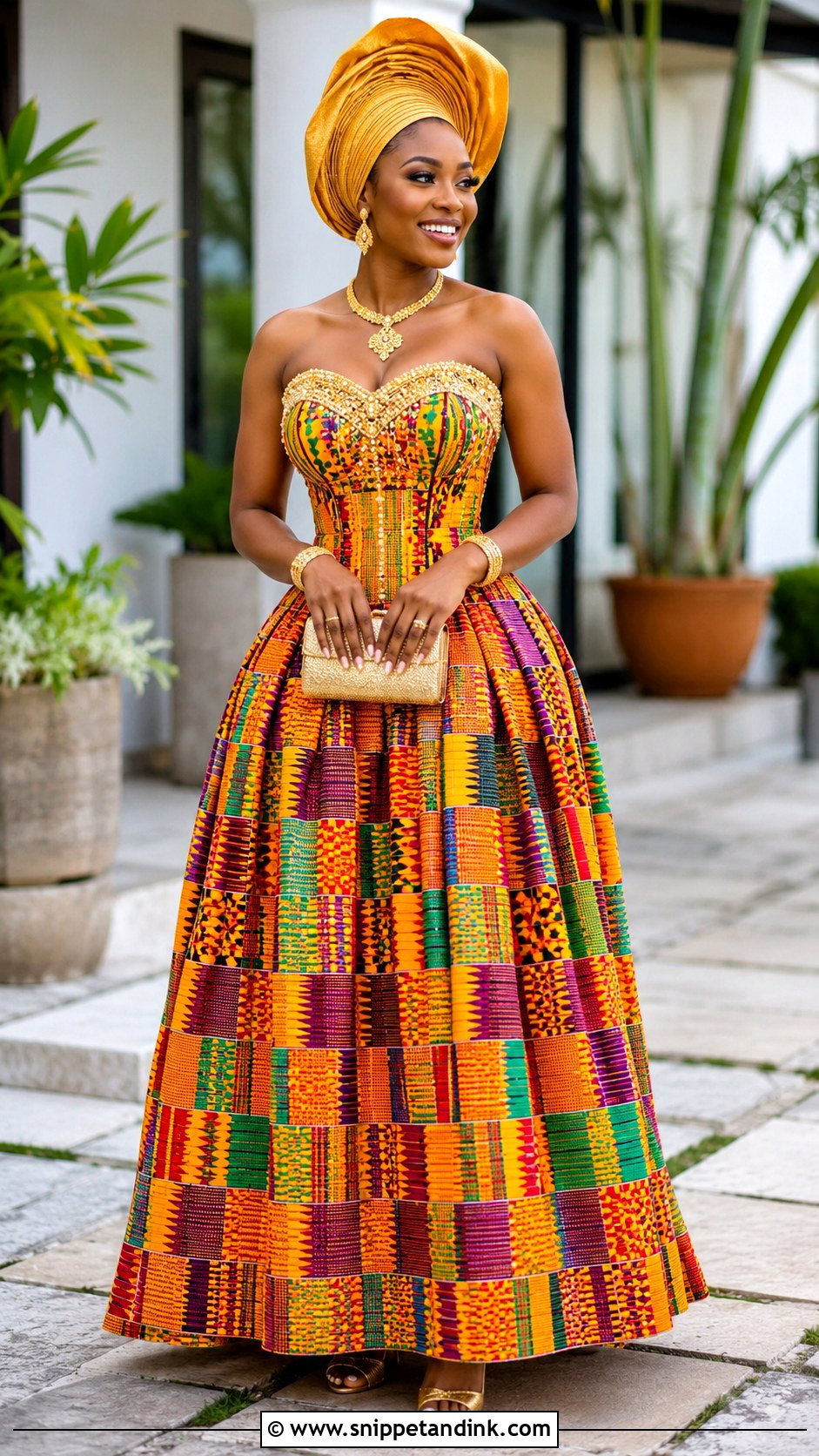
A-line is the shape I reach for when a bride hasn’t decided, because it defines the waist and skims the hips on most body types. The matching shawl adds modesty and warmth for a cool morning. Use bold African print, or a solid fabric with printed trim if you’d like a quieter look. Add a headwrap if you want a more complete makoti look. Low heels or beaded sandals keep it practical for a long day.
26. Two Piece Lobola Dress With Long Skirt
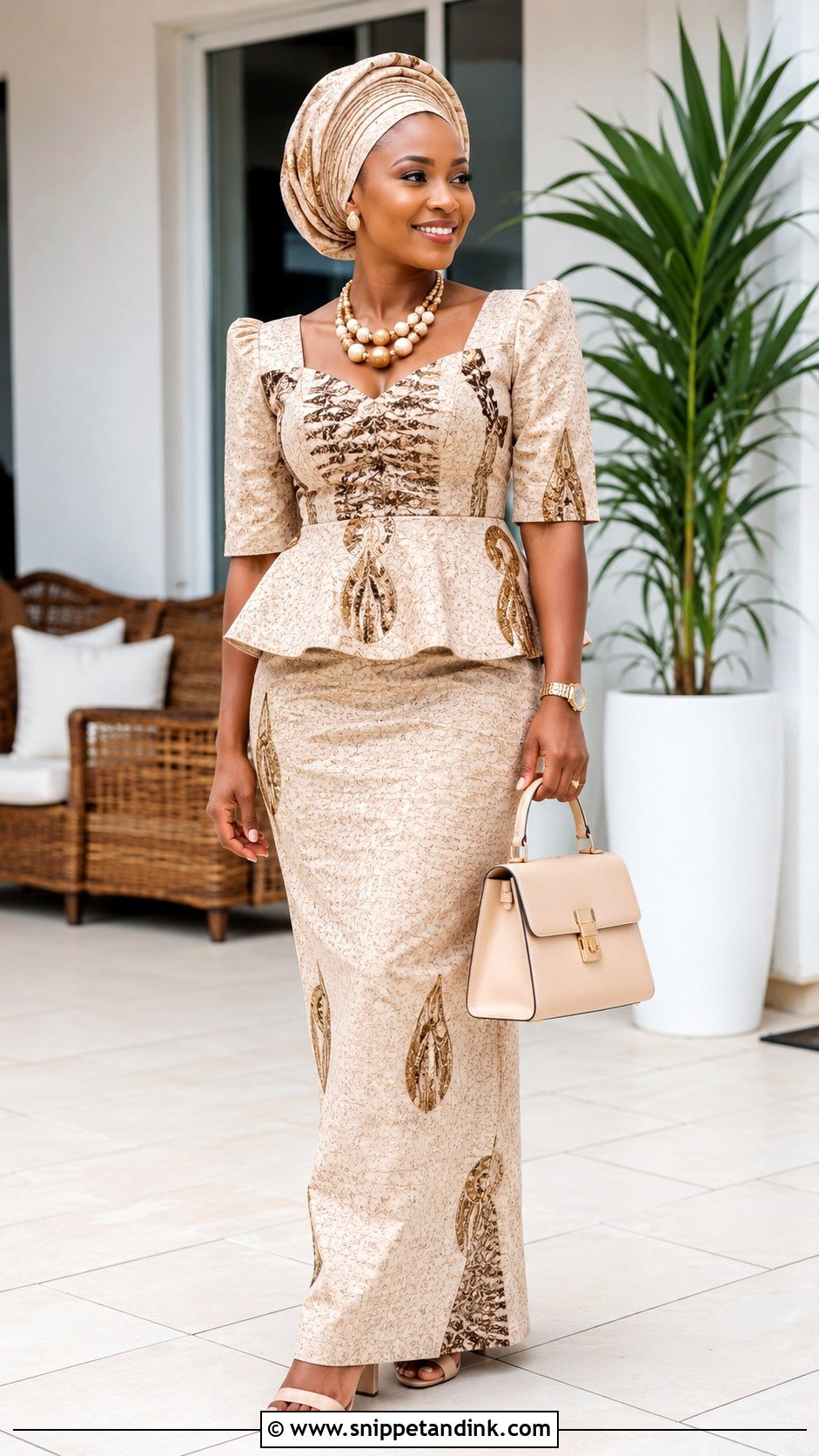
Two pieces are the practical option, and I recommend them to brides whose top and bottom halves are different sizes, since each piece can be altered separately. The top can be a peplum, a fitted bodice, a wrap blouse or a modest cropped style with full coverage. The long skirt keeps it bridal and moves easily. Matching fabric looks cleaner; mixed fabrics look more fashion-forward. A doek, beaded jewellery and a structured bag complete it.
27. High Low Lobola Dress With Heels
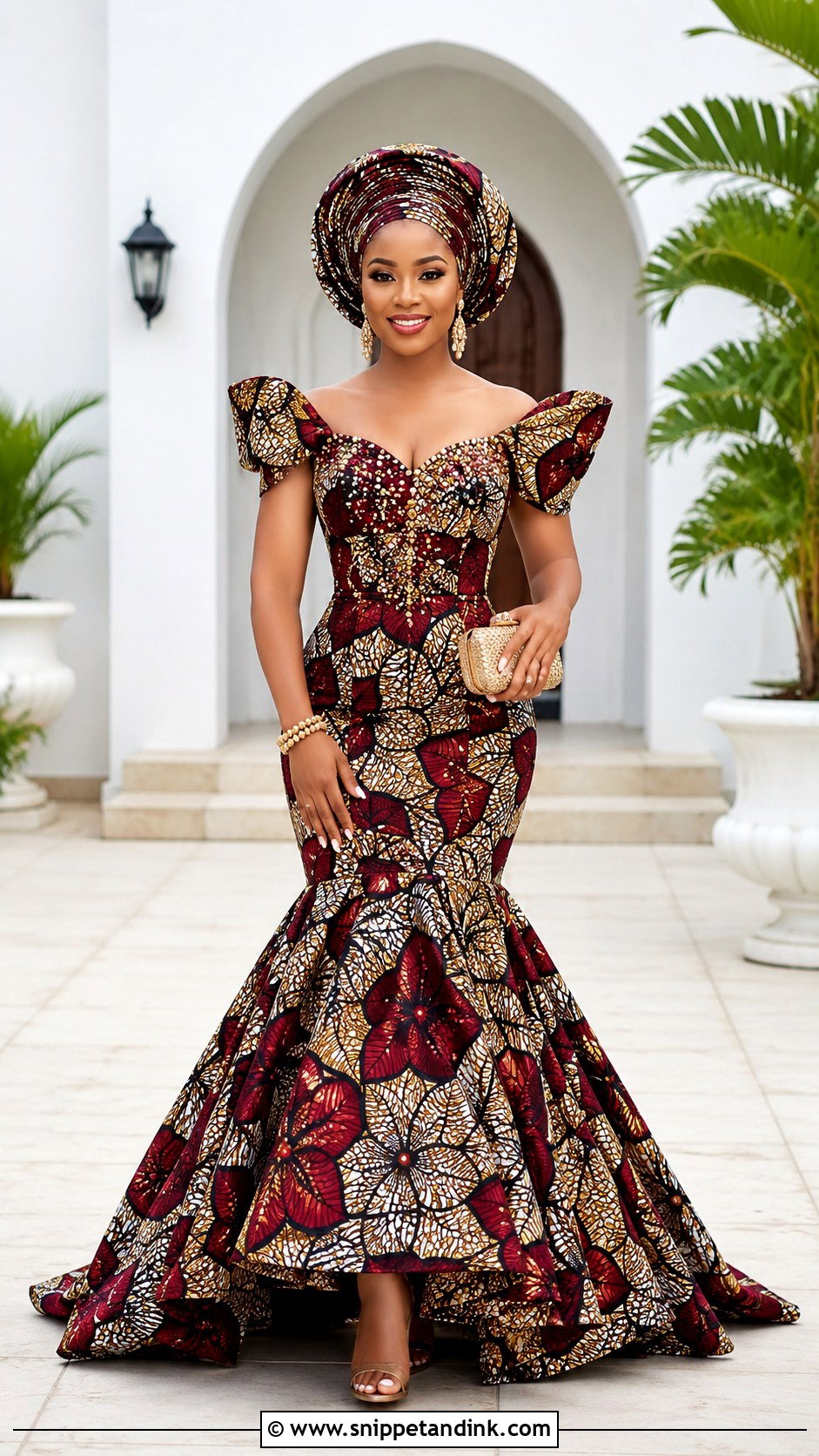
The short front shows off your shoes and the long back keeps the drama, so this cut is only as good as the heels underneath. Pick a stable block or a low heel if the ceremony is at a family home or outdoors, because a stiletto on grass or gravel will undo the whole look. African print, lace overlay or solid fabric with a printed border all suit it. It reads younger and less formal than a full gown, which some families prefer and some don’t.
28. Maxi Lobola Dress With Beaded Necklace
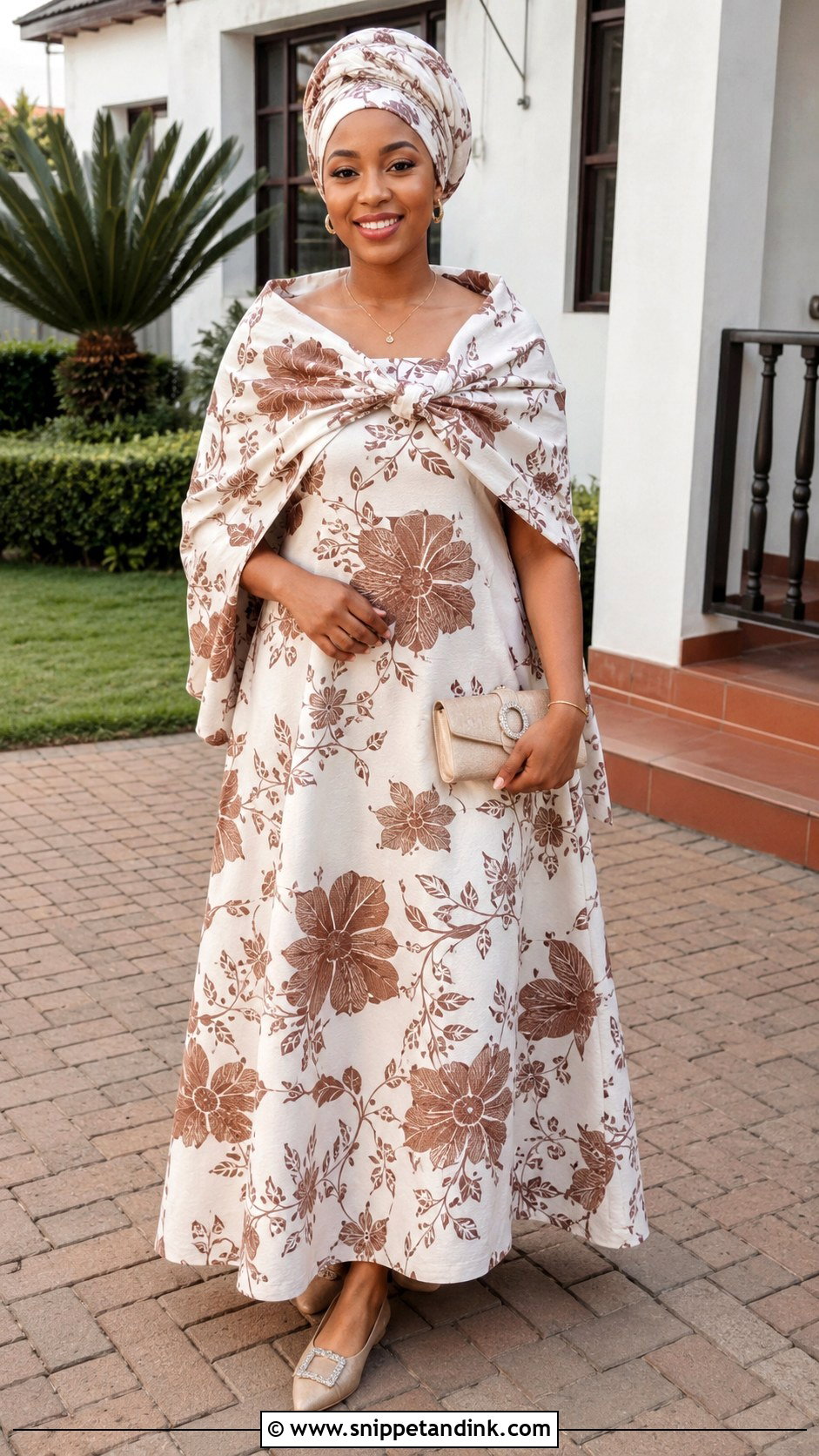
A plain maxi with a beaded necklace is the dependable outfit, the one I suggest to brides who don’t want to think about their clothes once the day starts. Shweshwe, Ankara, satin, cotton, lace or a mixed print all work. A wrap maxi adjusts if you’ve eaten, which matters at a celebration built around food. A straight maxi looks neater but is less forgiving. Add a doek for a fuller makoti finish, with sandals, wedges or block heels.
29. Modern Lobola Dress With Cape
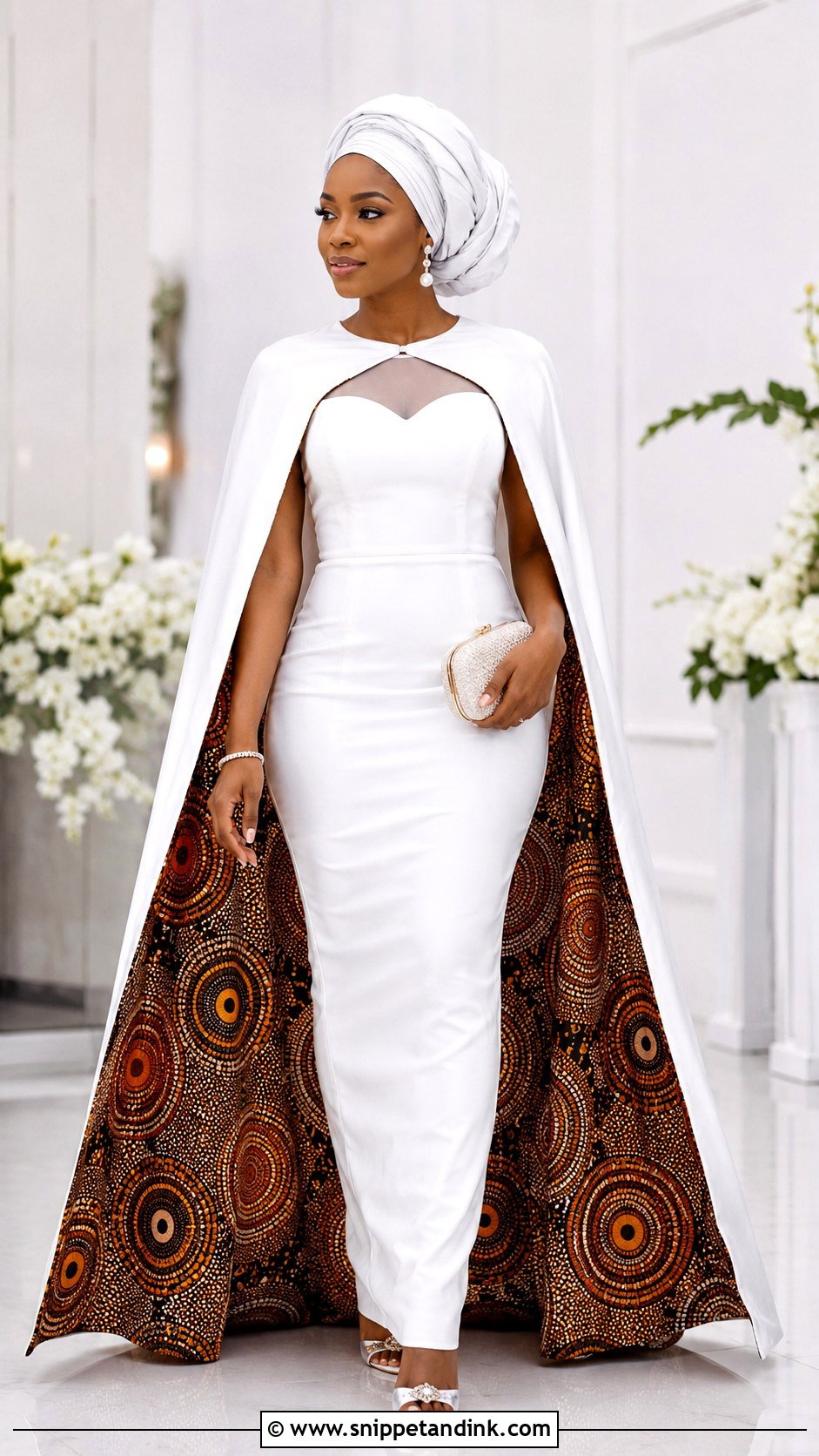
A cape adds drama without stacking accessories. It can attach at the shoulders, fall from the neckline or detach completely. I always push for a detachable cape, because you’ll want it for the entrance and photos and you won’t want it while serving tea or kneeling. A fitted gown underneath keeps the line sleek, and African print lining or trim ties the cape to tradition. Neat headwrap, simple earrings, elegant heels.
30. Simple Lobola Dress With Printed Headwrap
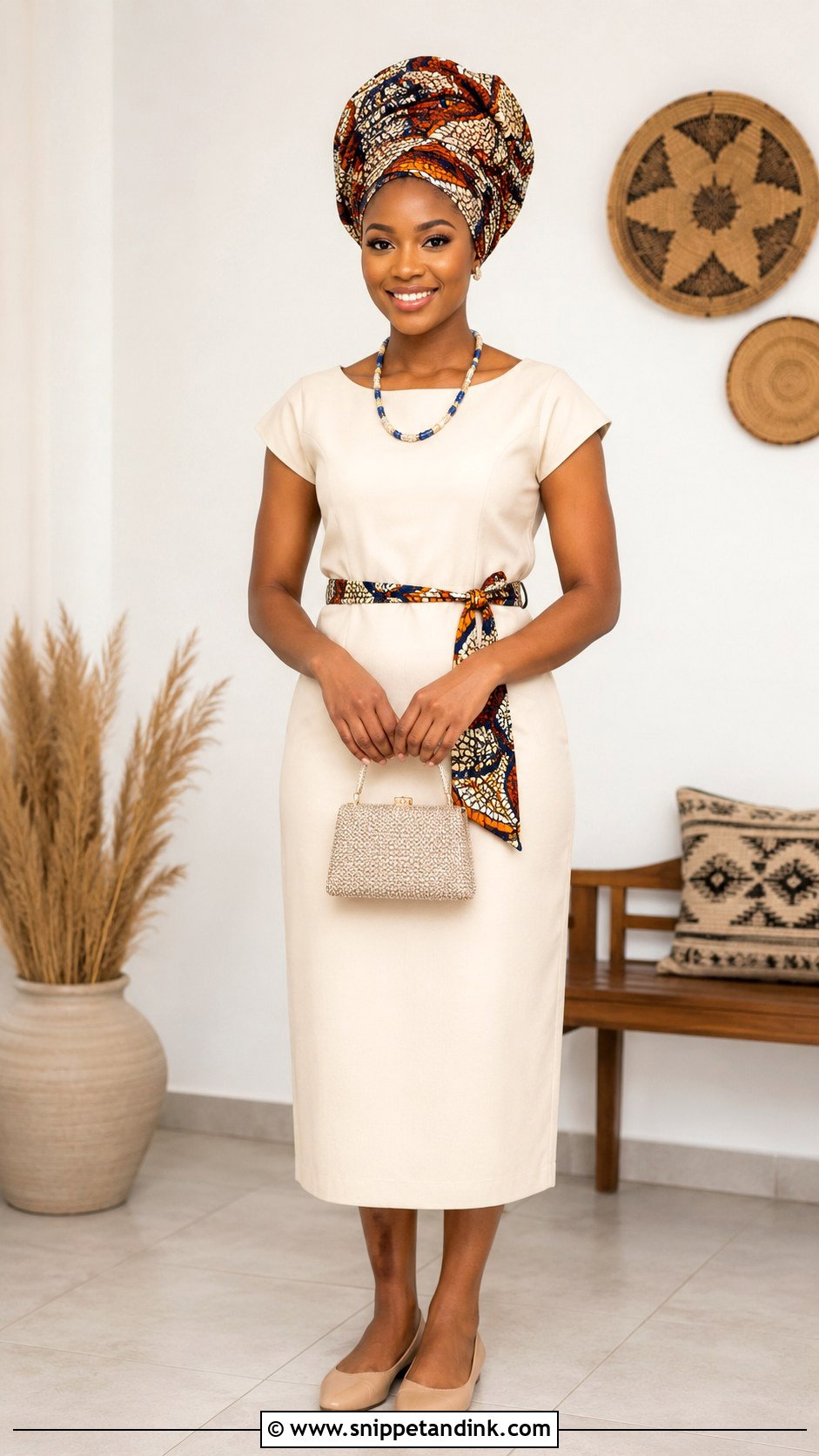
Sometimes the most respectful outfit is the simplest one: a plain dress in white, cream, navy, black, green or burgundy, with the traditional print carried entirely by the headwrap. It suits small family ceremonies where you’ll be moving around, serving and greeting more than posing. If you want a little more, add a matching belt or a printed clutch. Comfortable shoes matter more here than anywhere, and you don’t need extra layers to look like the bride.
Shweshwe, Wool and Beadwork Over a Long Family Day
Each traditional material behaves differently once the celebration has been going for six or seven hours, and knowing that in advance saves a lot of panic in the bathroom mirror.
Starched cotton prints
Shweshwe arrives stiff with starch and softens with every wash. Pre-wash it before cutting, or the finished garment can shrink after its first clean. Once washed, it still holds a crisp pleat and a puffed sleeve well, which is why I like it for structured shapes. It does crease at the lap, so a quick steam before the photos is worth it.
Blankets and heavy wraps
Wool blankets and thick wraps add warmth and weight. In summer, plan a moment to take the blanket off indoors, and wear a dress underneath that looks finished on its own. Use two hidden pins rather than one so the weight doesn’t drag the neckline sideways.
Beaded collars, belts and bracelets
Beadwork is heavier than it looks and the thread is its weak point. I check every piece the week before for loose strands, and I put a small sewing kit with matching thread and a few spare beads in the bridesmaid’s bag. Beads also snag lace and fine knits, so keep the heaviest bracelets on the arm that isn’t brushing against a lace skirt.
Giving Your Seamstress Enough Weeks
Most lobola outfits are made to measure, and good seamstresses get busy around the wedding months and the festive season. I’d book eight to ten weeks out for anything with beadwork or a fitted bodice, and leave room for at least two fittings. Bring the shoes you’ll wear and the doek to the second fitting, because hem length and neckline both look different once they’re on. If the in-laws are supplying fabric, ask for it as early as they’re able, since you can’t start cutting without it.
An Outfit Your In-Laws Remember for the Right Reasons
A good lobola outfit respects the family, fits the culture you’re honouring and lets you get through a long day without tugging at anything. Some brides want bold colour and heavy beadwork; others want a plain dress and a well-tied doek. Zulu, Xhosa, Sepedi, Sotho, Venda, Ndebele, Tsonga and modern pan-African looks all have a place. Get the fit, fabric and movement right, ask the elders before you finalise, and the photos will take care of themselves.
You'll Like These Ideas:




Leave a Reply