
I don’t dress brides over 40 by a different rulebook. What changes is usually the brief: more of them know exactly what they hate, fewer want a big church gown, and almost all of them care about support and comfort far more than they did at 25. That makes my job easier. The gowns below range from classic sleeves and lace to short courthouse lengths and relaxed beach dresses, and for each one I’ve noted what I check in the fitting room: where the waist sits, how the fabric handles a long day, and which shoes and veil keep it from looking like someone else’s wedding. Lace, satin, chiffon or plain crepe, nothing here is off limits because of a birthday.
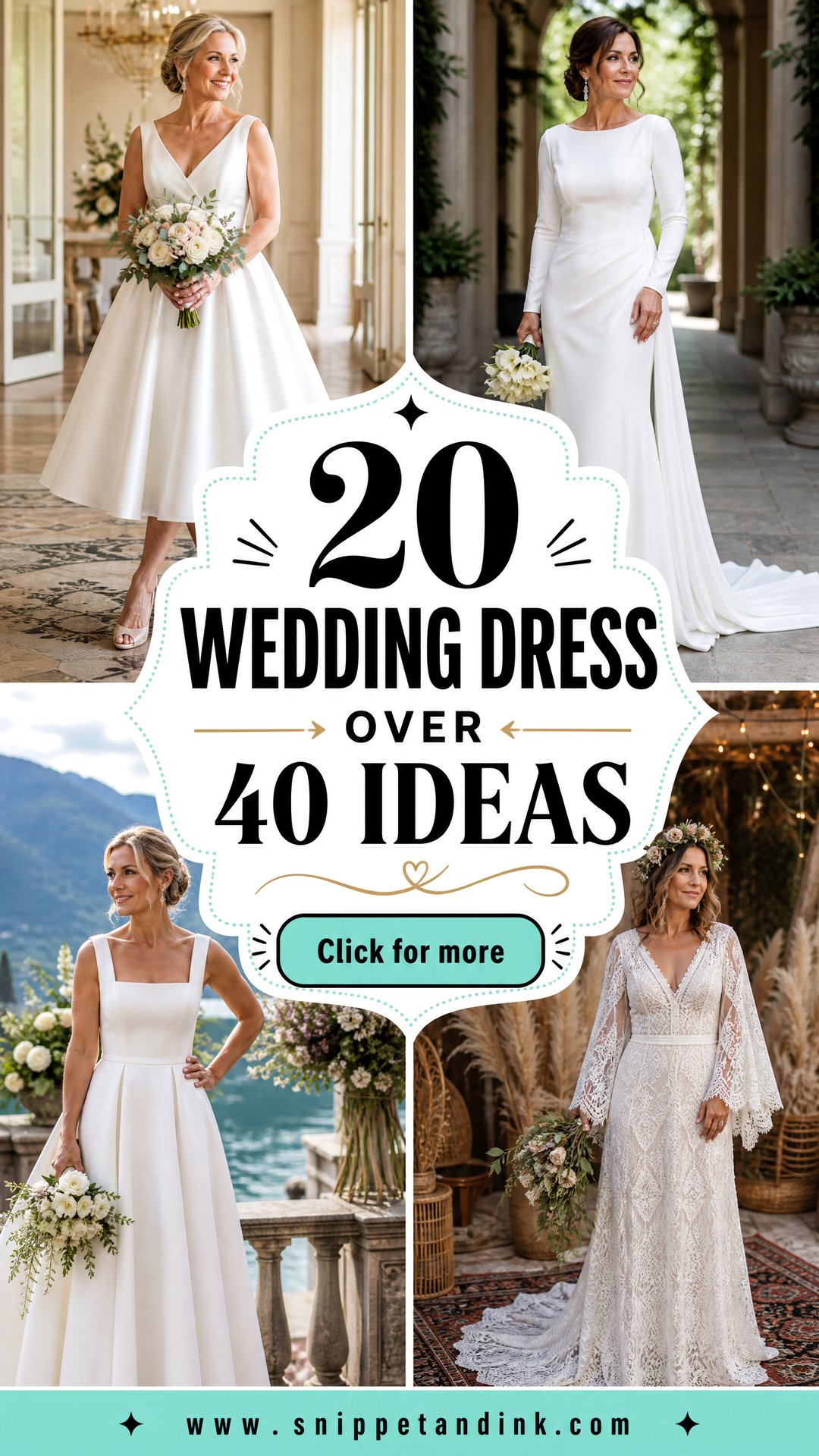
Support Is Built Into the Dress, Not Only Worn Under It
The most common thing I hear in the fitting room is “I just want to feel held in.” Shapewear can help, but the better answer usually lives inside the gown. When you try a dress on, turn it inside out on the hanger first and look at what’s there.
- Boning: flexible boning in the bodice keeps it from wrinkling at the waist when you sit. Too much rigid boning digs in by the evening.
- Built-in cups: many bodices can have cups sewn in during alterations, which often beats a strapless bra that slides.
- Waist stay: an inner grosgrain band that hooks at the waist takes the weight of the skirt off your shoulders. On heavy gowns it makes a real difference.
- Lining weight: a decent lining stops lace and chiffon from clinging and showing every line.
Then test it like you’ll wear it. Sit on a chair, raise both arms, hug someone, bend to pick up a dropped shoe. If the neckline gapes or the waist cuts in, that’s information for the seamstress, not something to put up with.
1. A-Line Wedding Dress With Sleeves
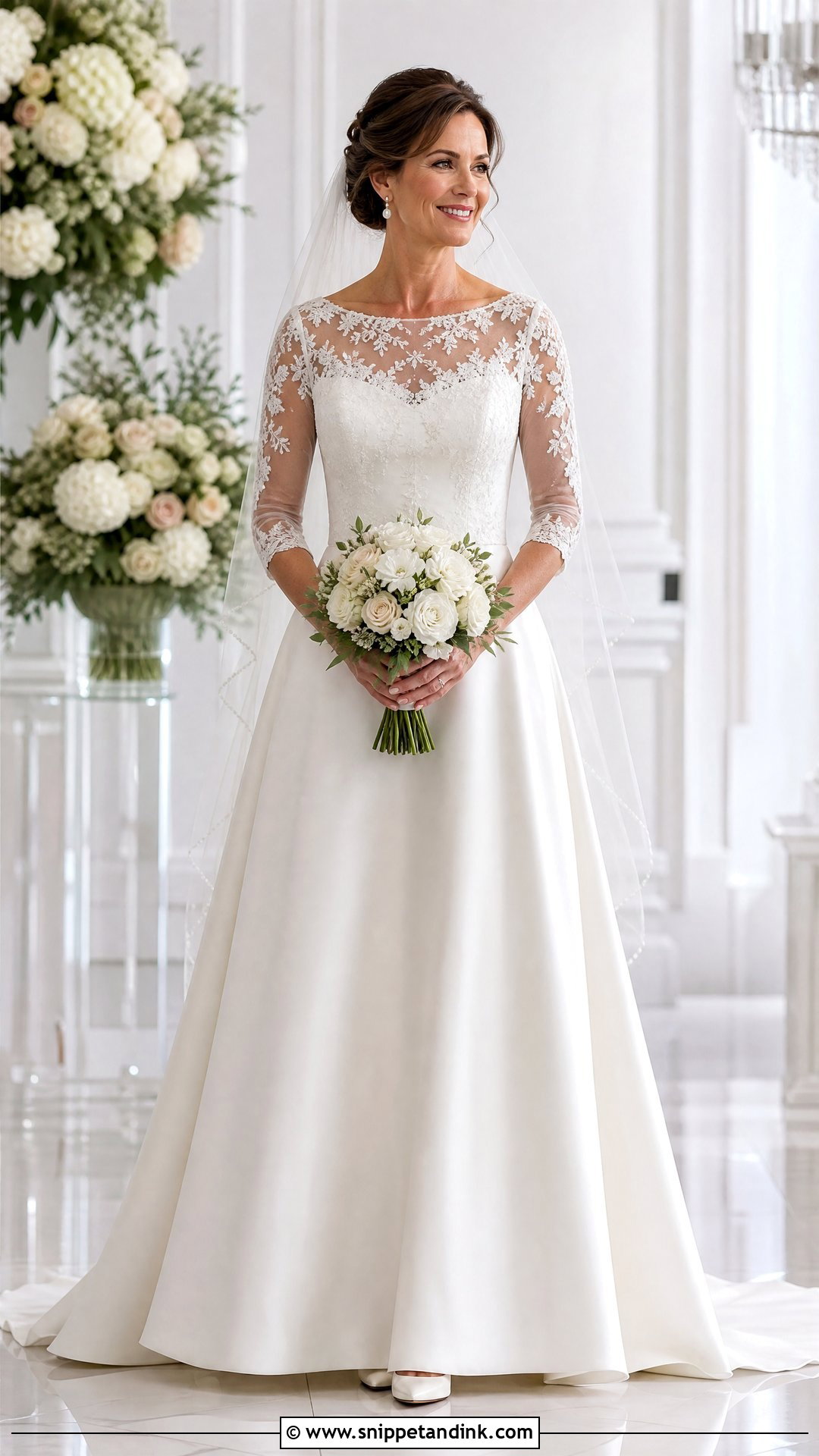
Sleeves on an A-line are the most requested detail I get from this age group, and the fitting question is always the shoulder. If the shoulder seam sits even a little wide, the sleeve hangs and the whole bodice looks borrowed. Three-quarter illusion sleeves feel light; opaque crepe sleeves read cleaner and more modern. Pointed ivory pumps, pearl drops and a fingertip veil suit the shape. On petite brides I’ll often raise the waistline slightly to lengthen the leg, while taller brides can carry a fuller skirt. Ask your seamstress to test the sleeve with your arms raised, since tight armholes are what make people uncomfortable by the first dance.
2. Lace Sheath Wedding Dress
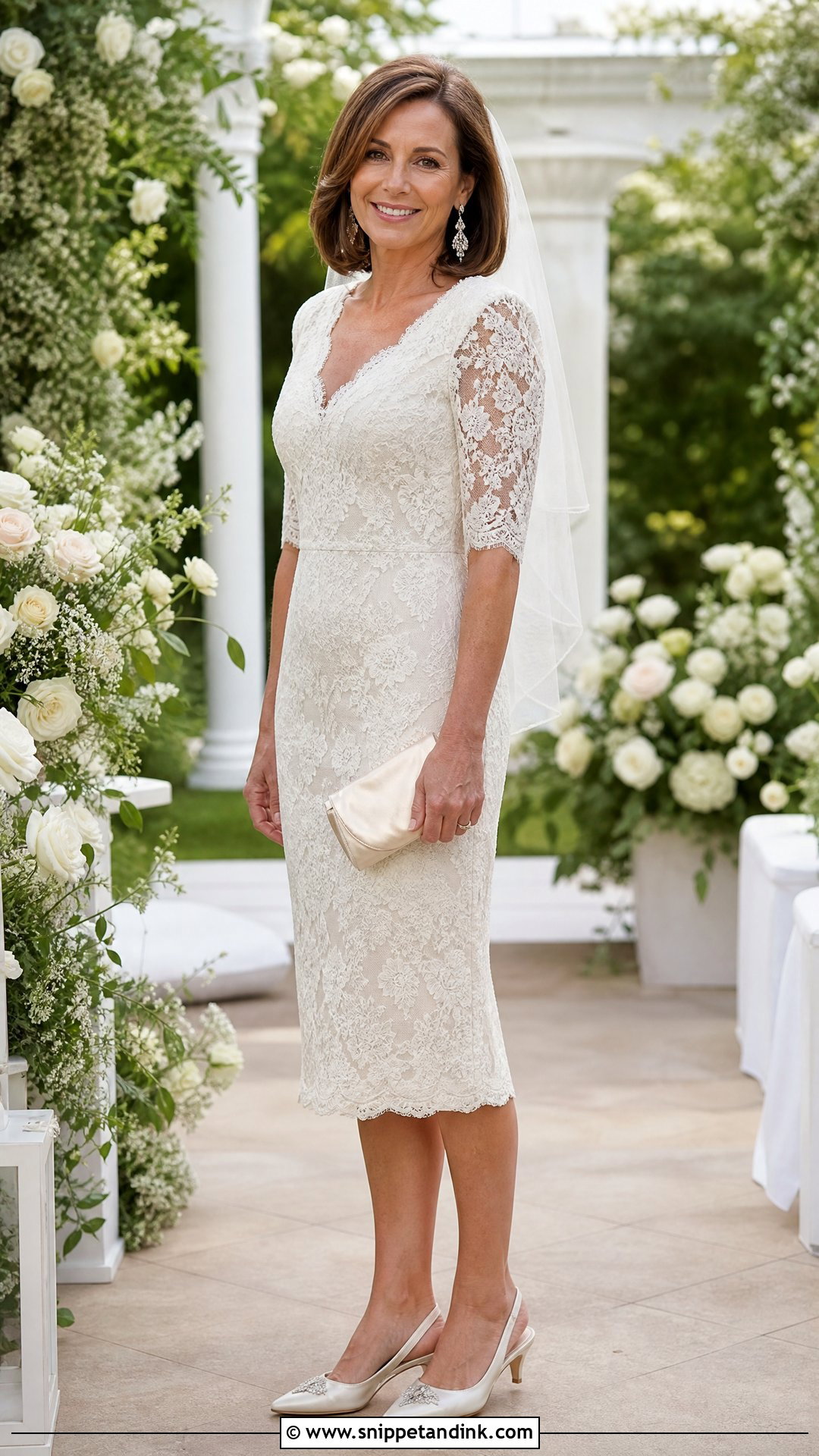
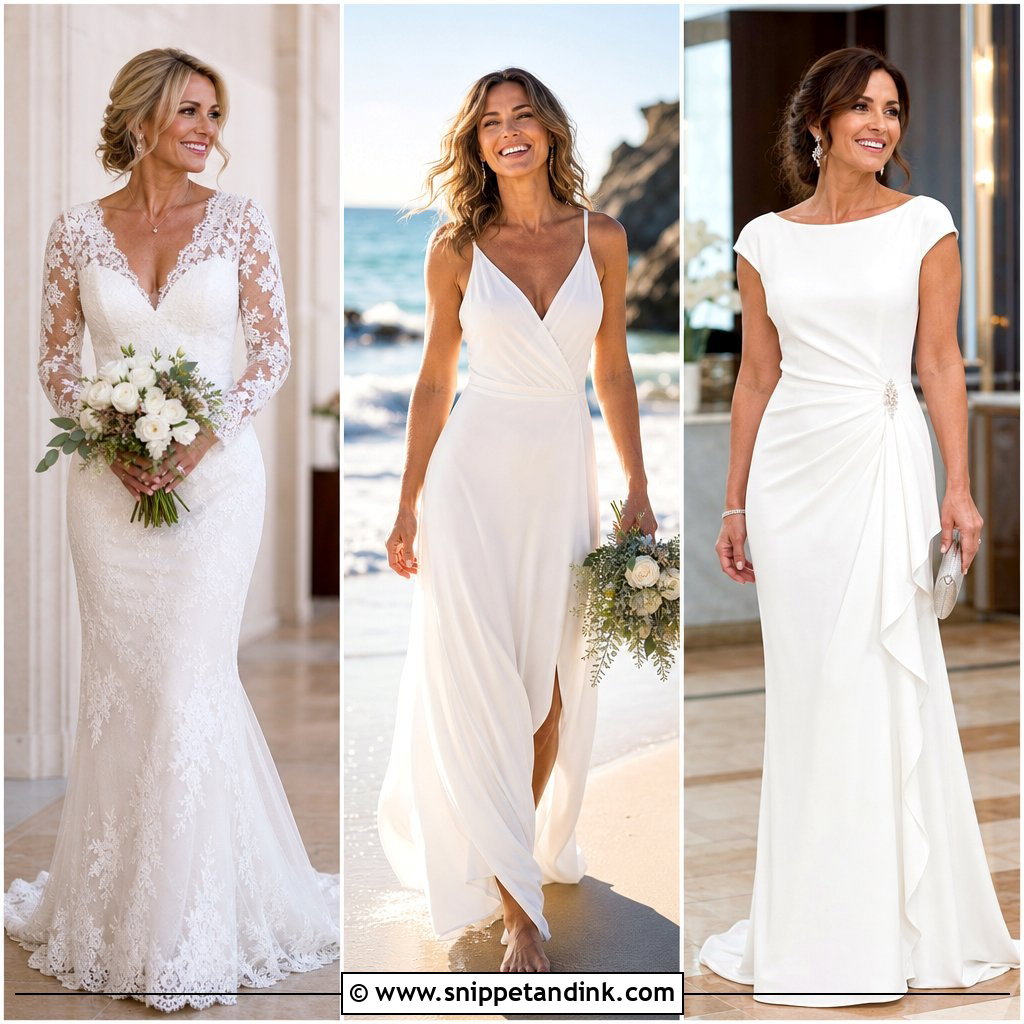
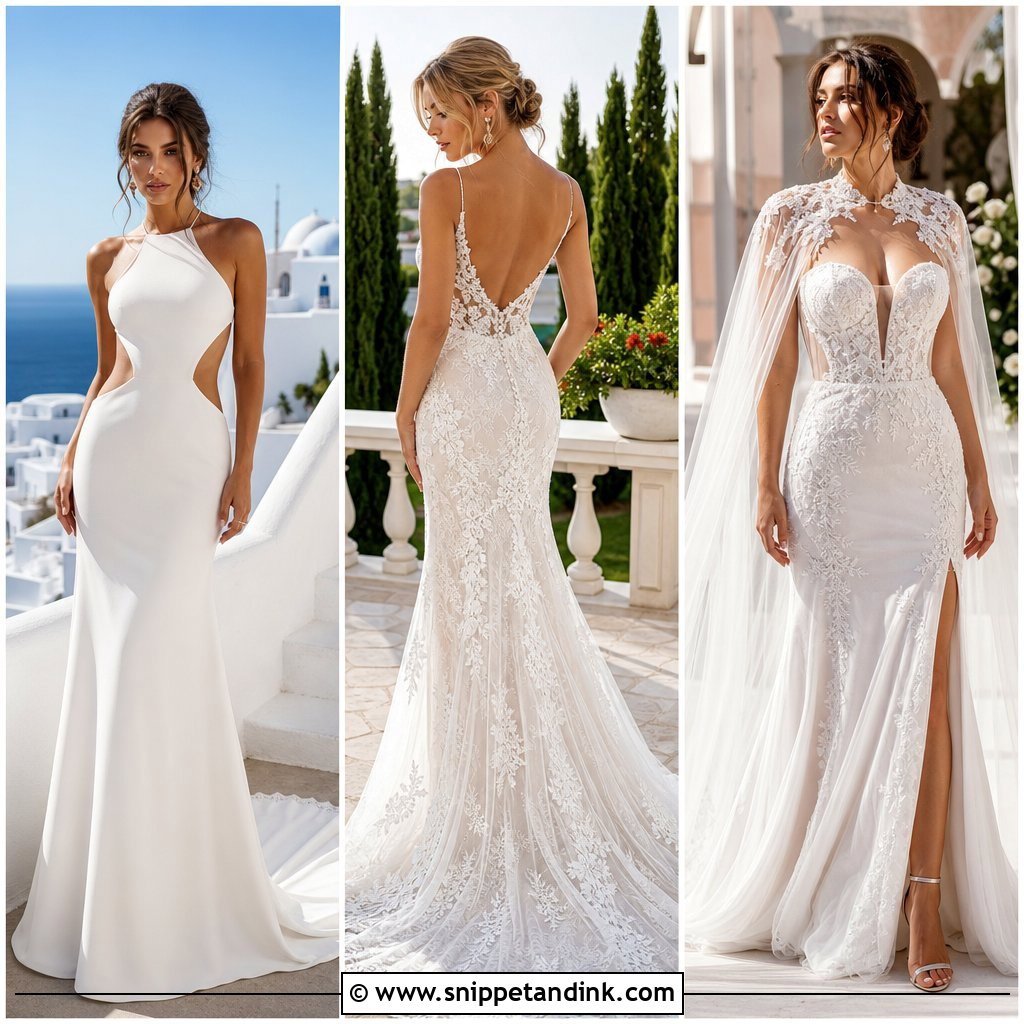
A lace sheath wedding dress has no volume to hide behind, so the weight of the lace matters more than its pattern. Thin, flimsy lace clings and shows every line underneath; a substantial lace over a smooth lining sits away from the body and lets the motif show. It suits intimate rooms, gardens and hotel receptions. Low slingbacks, a small satin clutch and plain crystal earrings are enough, with a shoulder-length veil or a comb. A slim satin belt adds waist definition if you want it. The detail I always ask about is a back vent or a walking slit, because a narrow sheath without one turns stairs into a negotiation.
3. Satin Wrap Wedding Dress
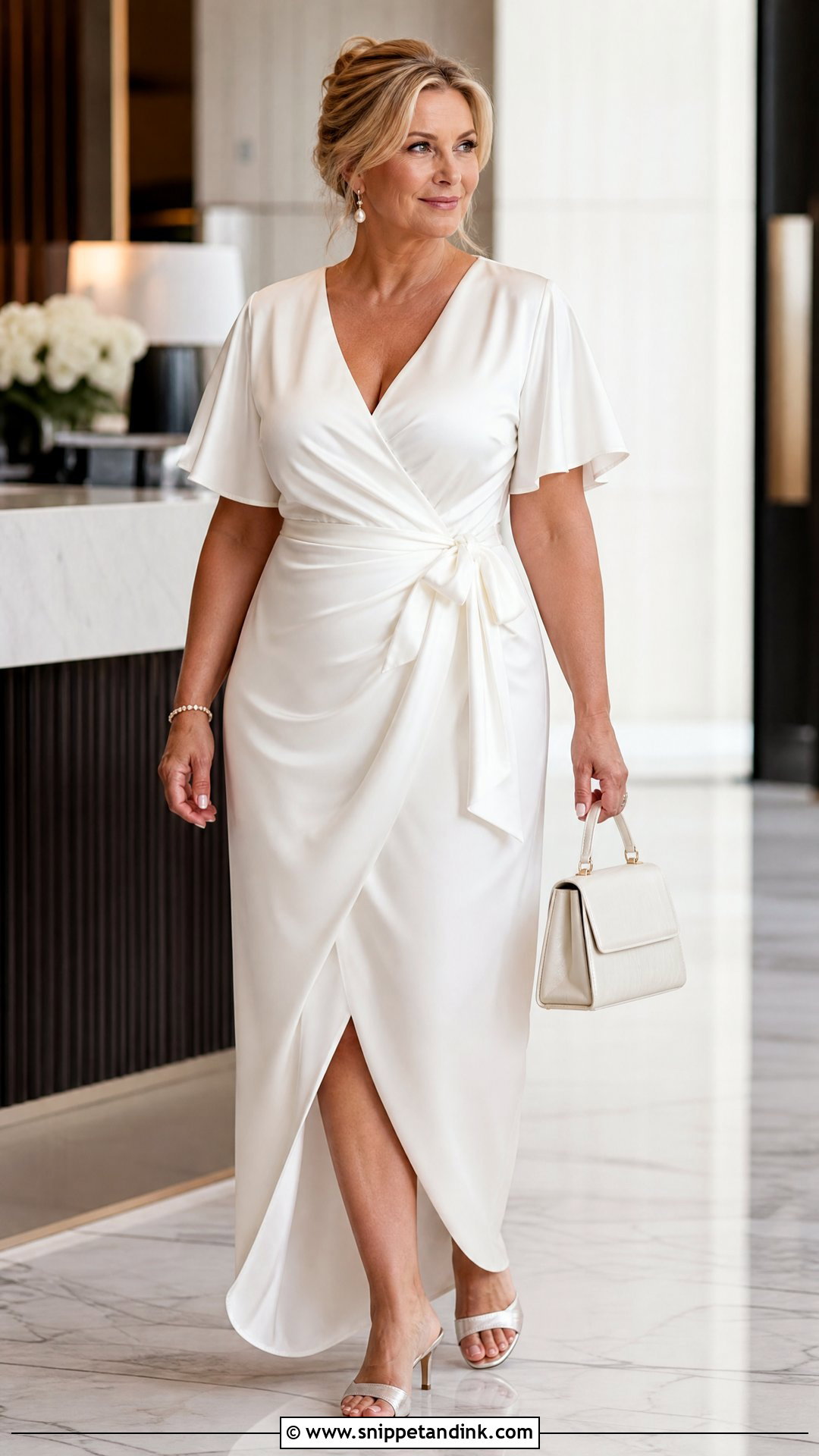
Wraps are adjustable, which is exactly why I like them for brides whose weight fluctuates in the months before a wedding. The catch is fabric: lightweight satin shows every seam of your underwear, so choose a heavier satin or a satin-backed crepe that drapes rather than clings. The V frames the face, and flutter sleeves or three-quarter sleeves give coverage. Add metallic low heels, a structured ivory bag and pearl earrings, with a sleek low bun to keep the neckline clear. Fashion tape or a small modesty panel stops the wrap gaping when you lean forward, and the tie should be tacked flat so it doesn’t twist in photos.
4. Tea-Length Wedding Dress
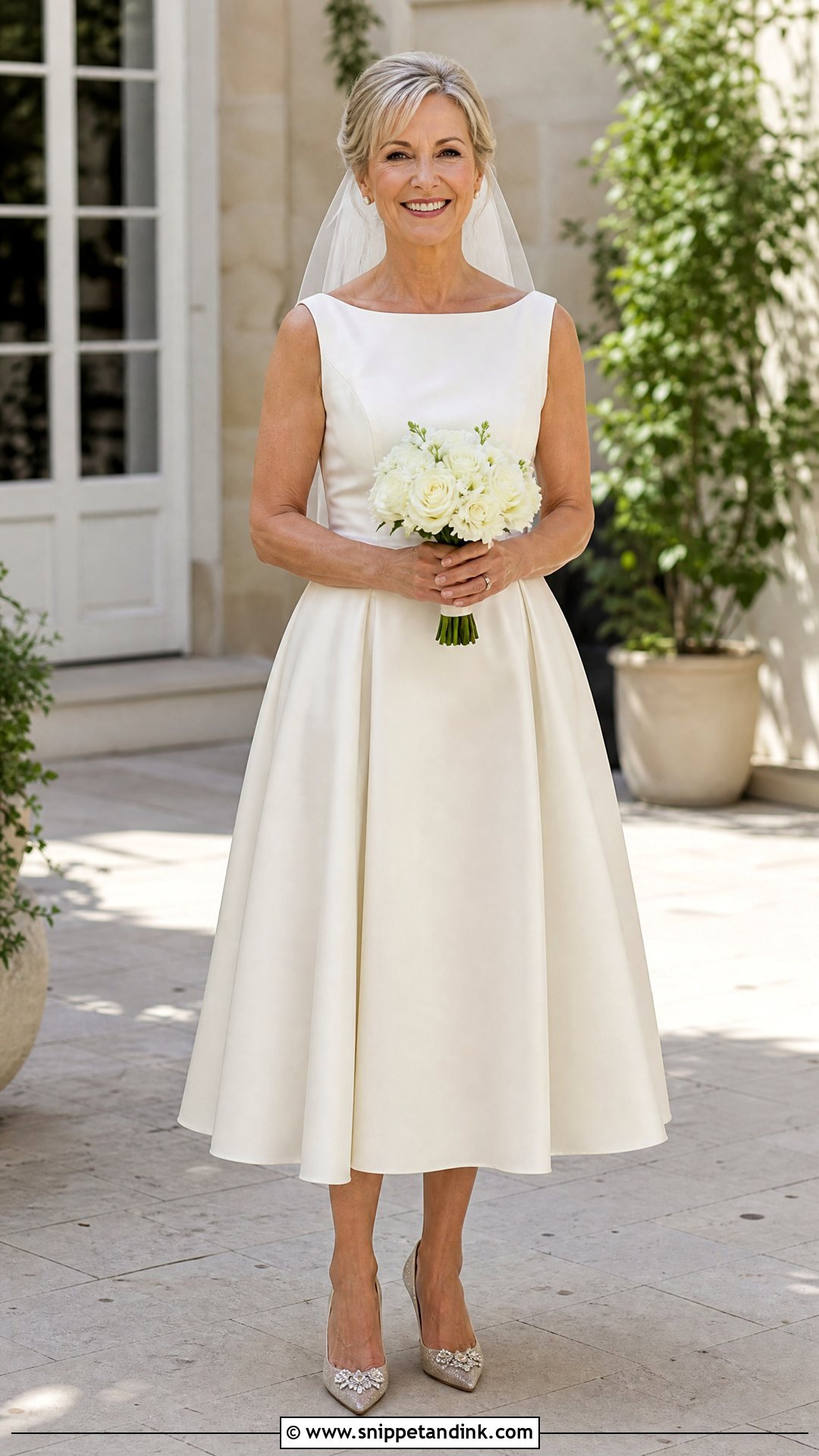
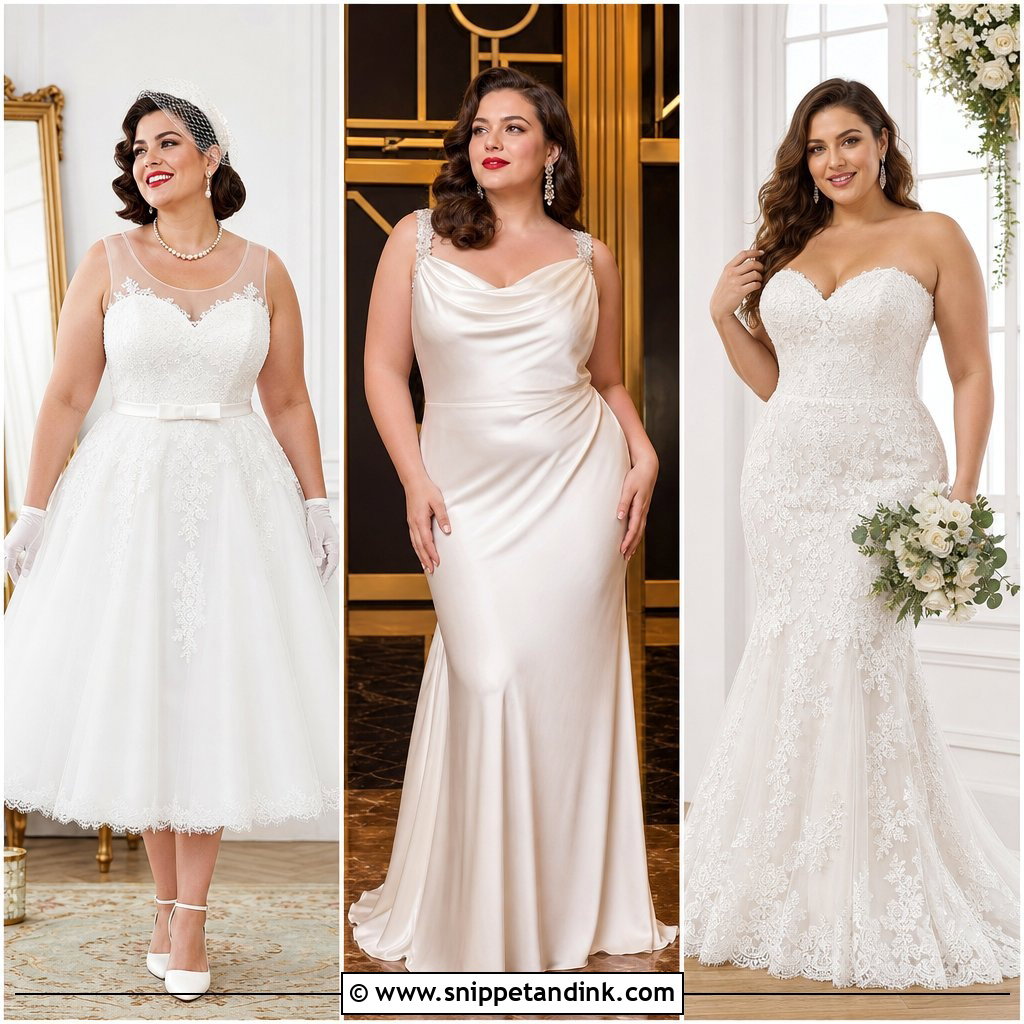
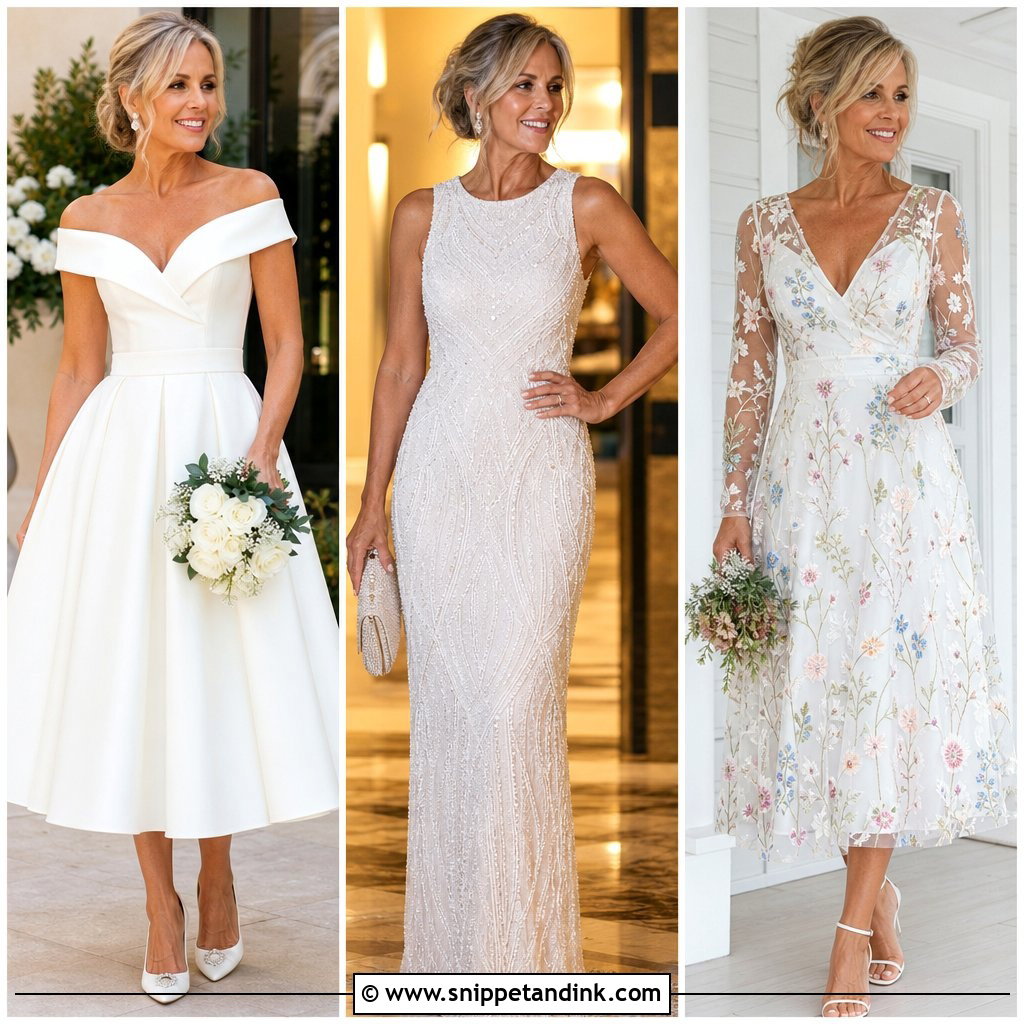
Tea length is my quiet favorite for daytime ceremonies and smaller receptions, because nobody is stepping on a hem. It lands between the knee and ankle, and that exact point decides whether it looks deliberate or accidental. On shorter brides I usually stop it just below the knee; taller brides can take a longer midi. A bateau, V or soft sweetheart bodice with a gently flared skirt keeps it bridal. Shoes are on show, so pointed pumps, block-heel sandals or embellished flats should be chosen for the venue floor as much as for looks. Finish with a short veil, pearl studs and a compact bouquet.
5. Off-the-Shoulder Wedding Dress
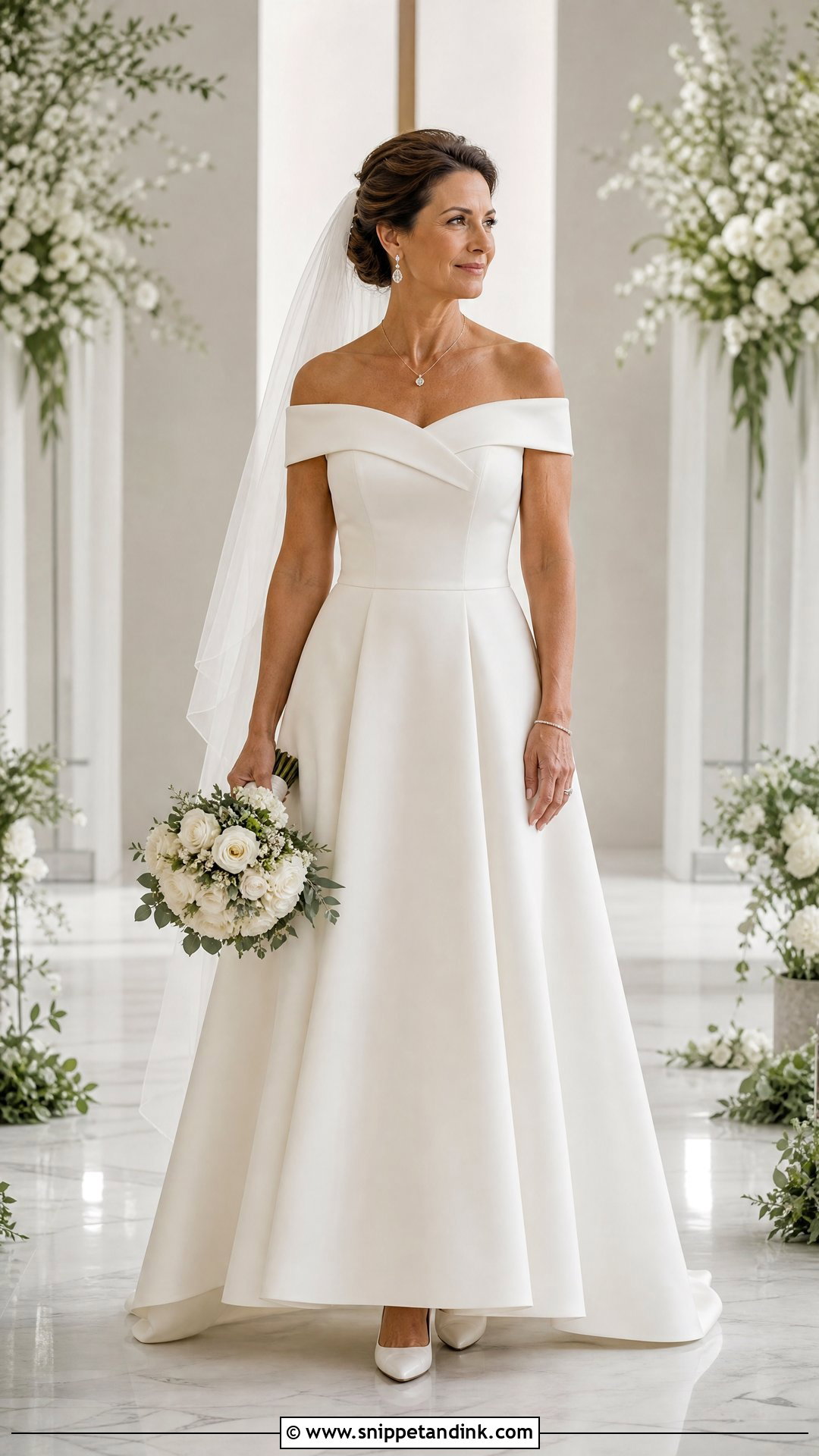
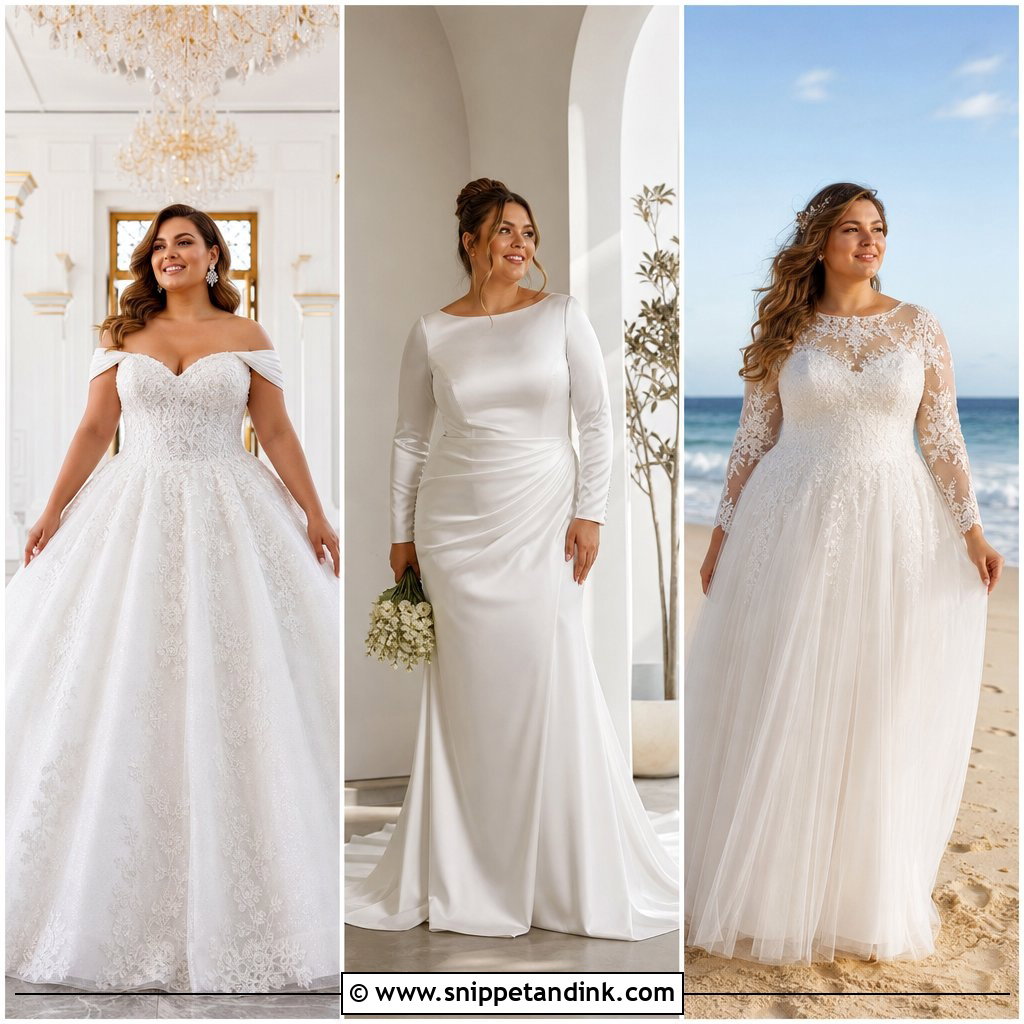
The worry I hear about off-the-shoulder is that it reads young. It doesn’t, as long as the skirt is clean (an A-line, column or soft drape) and the neckline is genuinely built to stay up. I check for an inner structure, often a band of elastic or boning at the top edge, because without it the sleeves creep up and you spend the evening pushing them down. Detachable sleeves are a good compromise; take them off for the reception. A delicate pendant, drop earrings and closed-toe heels suit it, with hair swept back. In alterations, raise your arms and sit down. If either movement pulls, it needs adjusting.
6. Long-Sleeve Crepe Wedding Dress
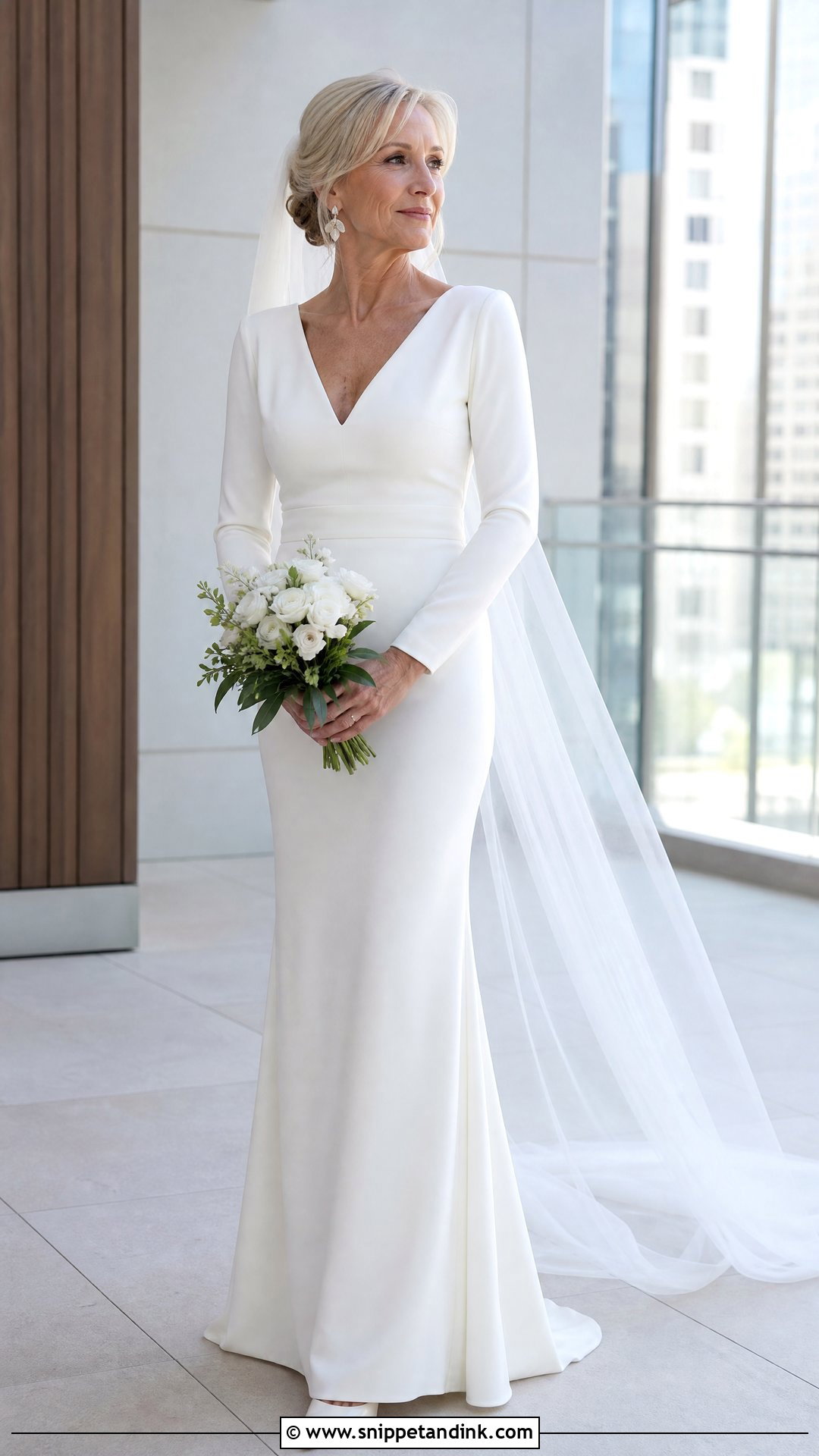
Crepe is the fabric I reach for when someone says she wants to look polished but not decorated. It’s heavy enough to give a smooth line and still moves with you. On a long-sleeve gown, the detail comes from construction: a fitted waist, a gently shaped skirt, covered buttons. A V-neck opens it; a boat neck keeps it understated. Pointed heels, sculptural earrings and a sleek clutch finish it. One trade-off to know: crepe is honest about what’s underneath, so ask about a built-in bra or a structured lining early, not at the final fitting. City venues and cooler months suit it best.
7. V-Neck Chiffon Wedding Dress
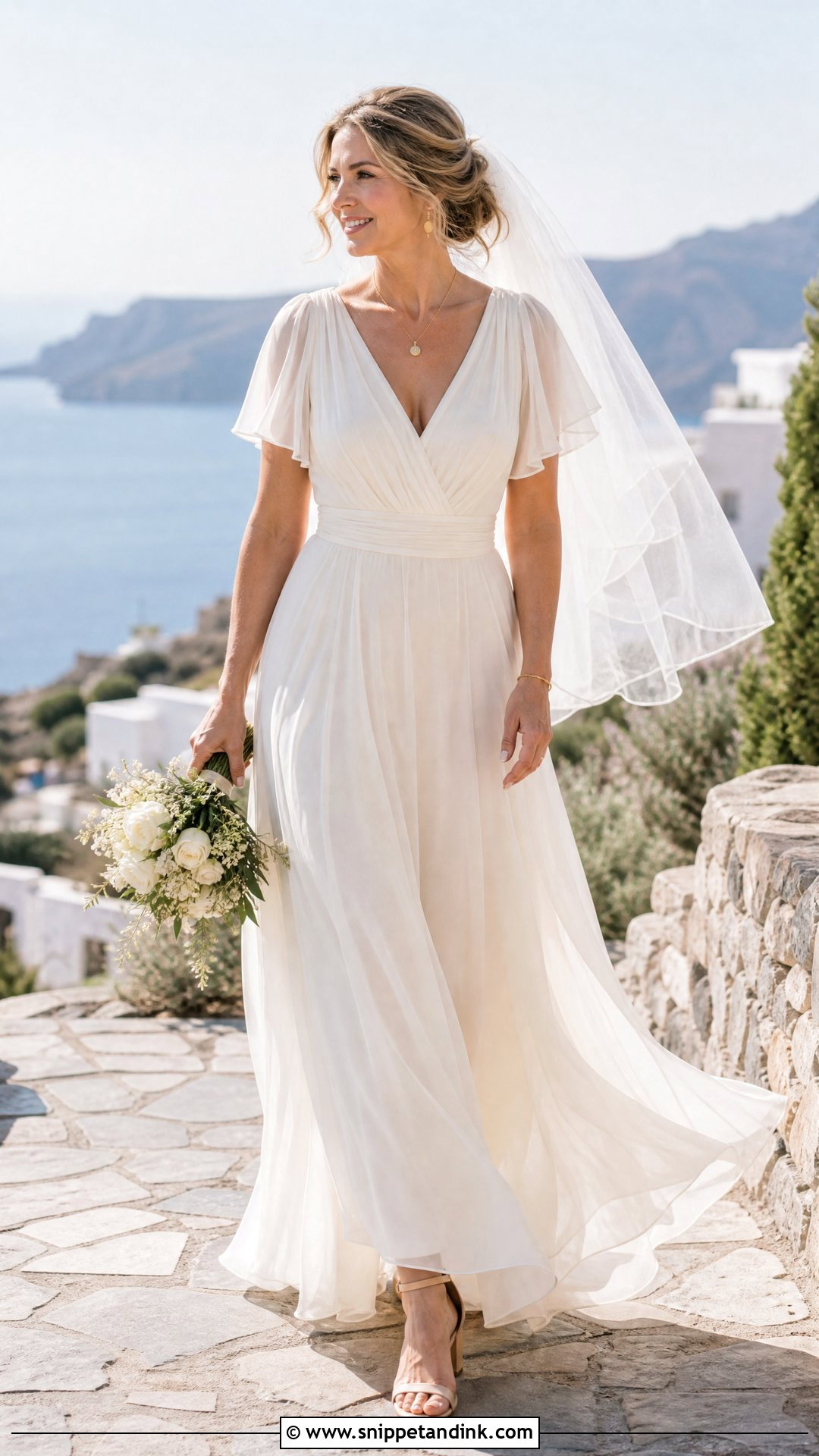
Chiffon floats instead of clinging, but it needs a defined waistband or the dress goes shapeless in photos. I choose the sleeve by how much coverage the bride wants: flutter sleeves, sheer long sleeves or a draped cape detail. The V should sit flat without constant tugging, which usually means a small adjustment at the shoulder. Block heels, fine gold jewelry and a light veil suit outdoor and destination ceremonies, with a hem that just clears the ground. Chiffon can be more see-through than it looks in the shop, so check the lining in daylight before you commit.
8. High-Neck Wedding Dress
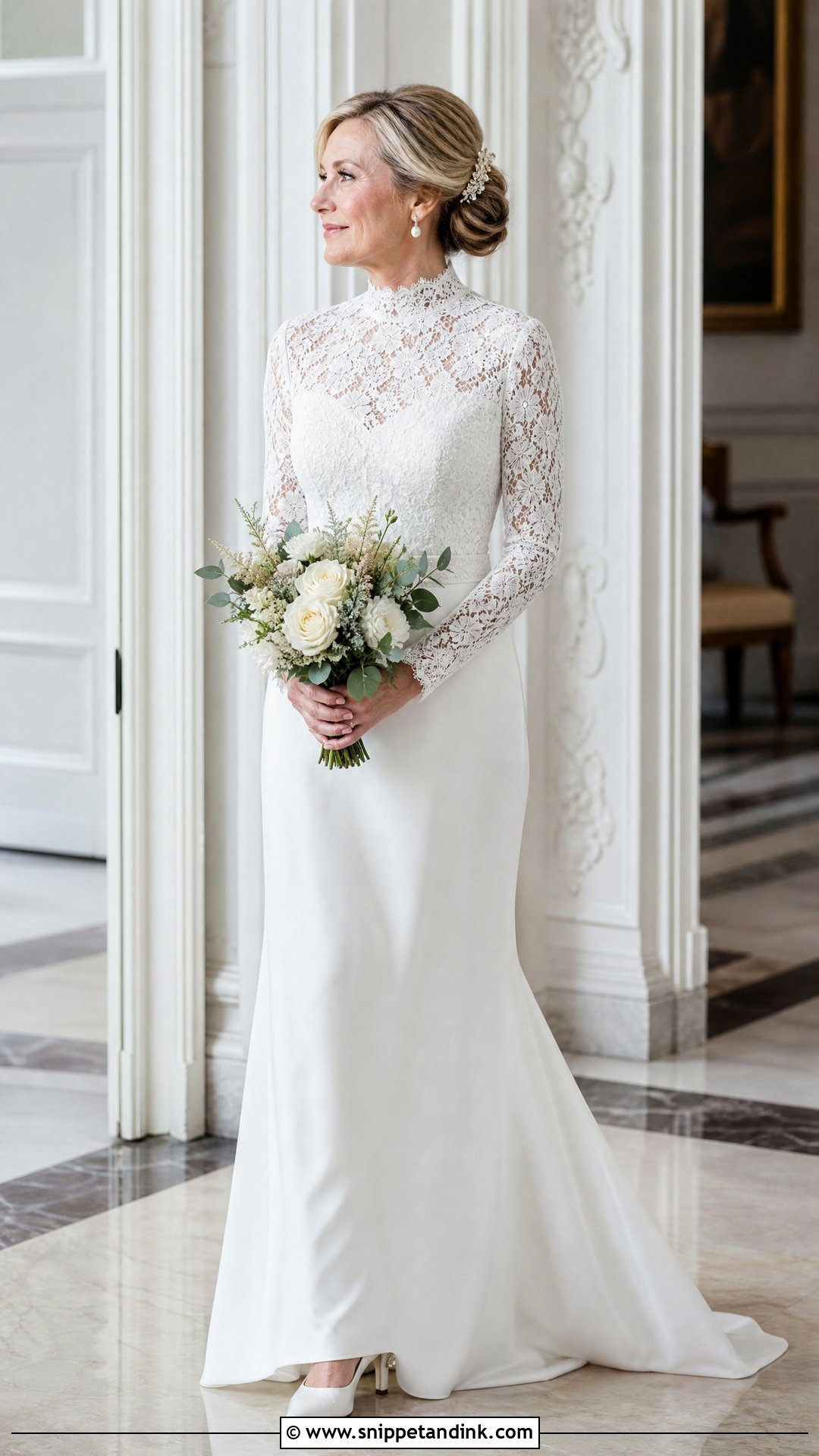
A high neck gives structure and keeps the neckline secure, which is why brides who don’t want to think about their dress all day often end up here. It works in lace, satin or matte crepe. Balance is everything: a detailed lace bodice wants a plain skirt. Sleeveless reads modern, fitted sleeves more traditional. Leave the necklace off and use small earrings, a low bun and a decorative comb. If you have a fuller bust, a high neck can flatten or pull across the chest, so look for supportive construction and enough room in the upper bodice. A keyhole back or covered buttons add interest from behind.
9. Empire Waist Wedding Dress
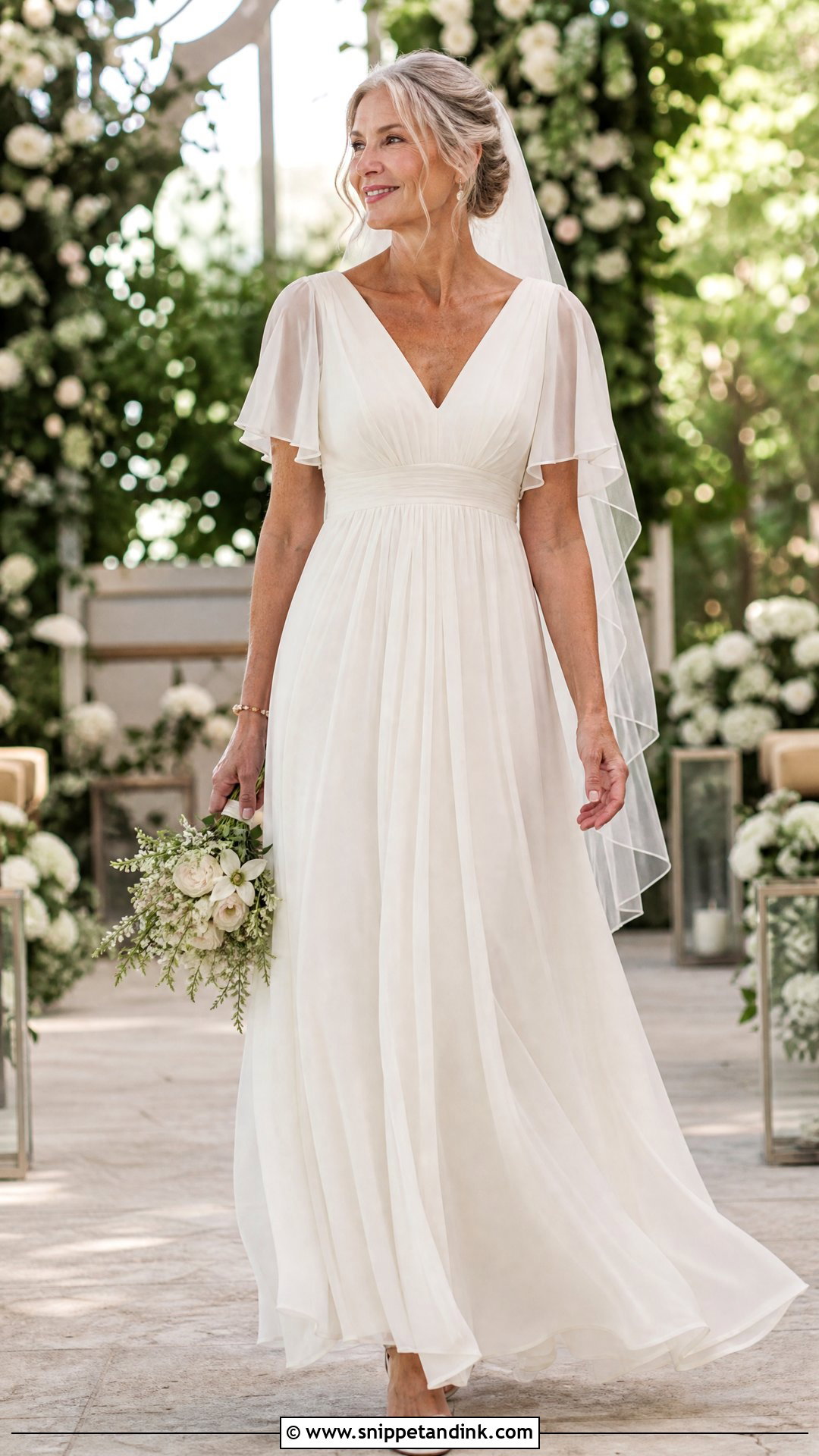
An empire waist sits just under the bust and falls loose over the waist and hips, so it’s the most forgiving shape on this list for anyone who doesn’t want a tight middle. The fitting detail I watch is the gathering under the bust. Too much fabric there adds bulk; controlled pleats give a cleaner line. A structured upper bodice with a chiffon, georgette or light crepe skirt works well, and a V neckline lengthens the torso. Short or draped sleeves add gentle coverage. Low heels, a narrow bracelet and a fingertip veil keep it light enough for indoors or outside.
10. Column Wedding Dress With Cape
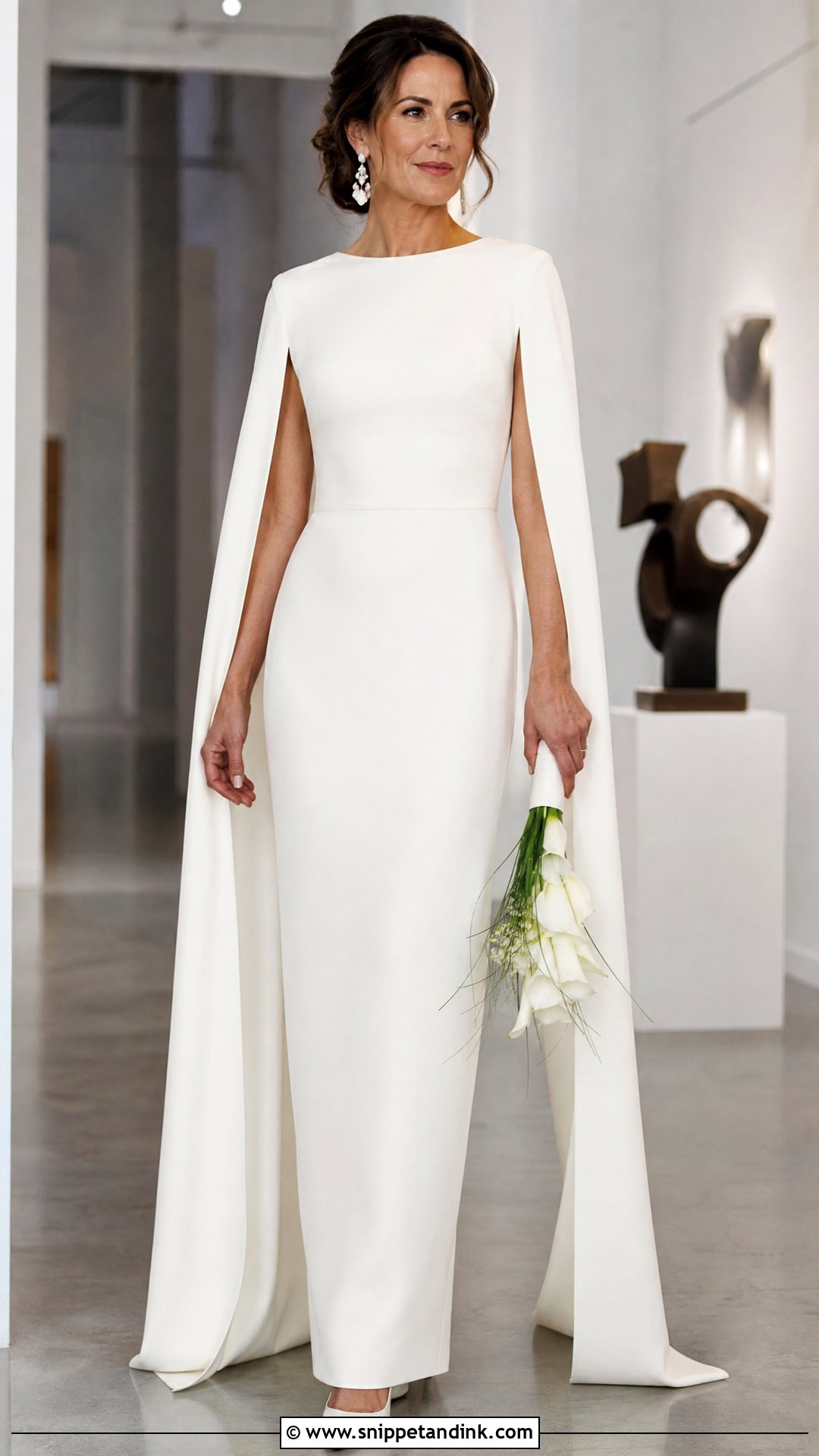
If sleeves feel fussy and a veil feels like too much, a cape on a column gown does both jobs at once. The straight skirt gives a long line, and the cape adds the movement for the aisle. Choose a floor-length cape from the shoulders or a shorter capelet for lighter coverage. Matte crepe holds the column without looking stiff. Sleek pumps, statement earrings and a minimal bouquet suit it, with smooth hair so the cape’s neckline shows. I always suggest a detachable cape, removed after photos. The column itself should skim rather than grip, or sitting at dinner becomes uncomfortable.
11. Floral Applique Wedding Dress
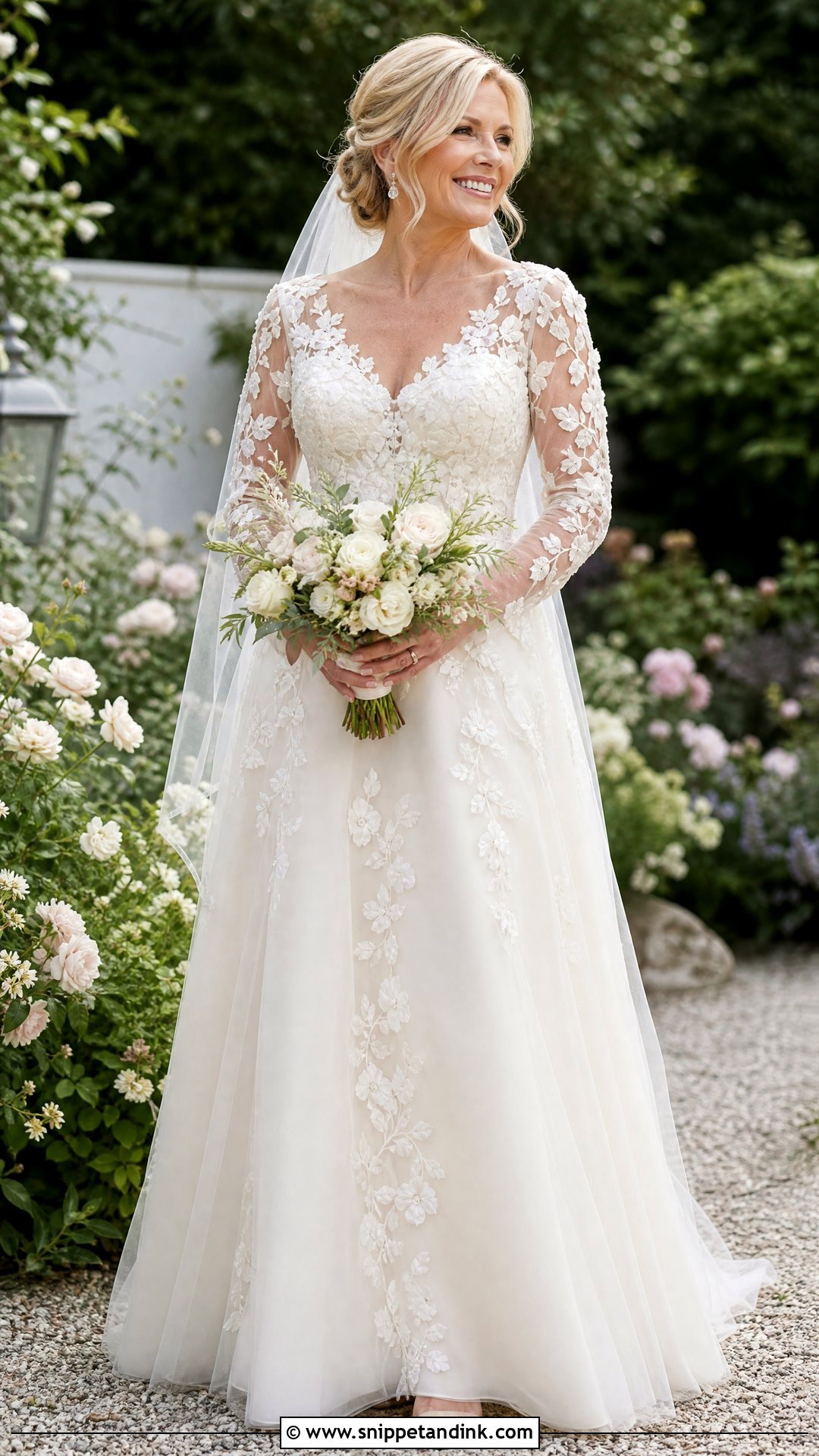
Appliqué placement does the work a belt or seam would otherwise do. Larger flowers at the waist can define it; a scatter down an A-line skirt draws the eye down and lengthens. I always stand a bride in front of the mirror and look at where the biggest flowers land on her body, because a cluster in the wrong place adds width. Ivory on ivory is subtle; blush or pale blue flowers give more contrast. Keep the rest plain: neutral heels, delicate earrings, a plain veil, and a loose updo or soft bob. Gardens, spring ceremonies and green-heavy venues suit it.
12. Square-Neck Wedding Dress
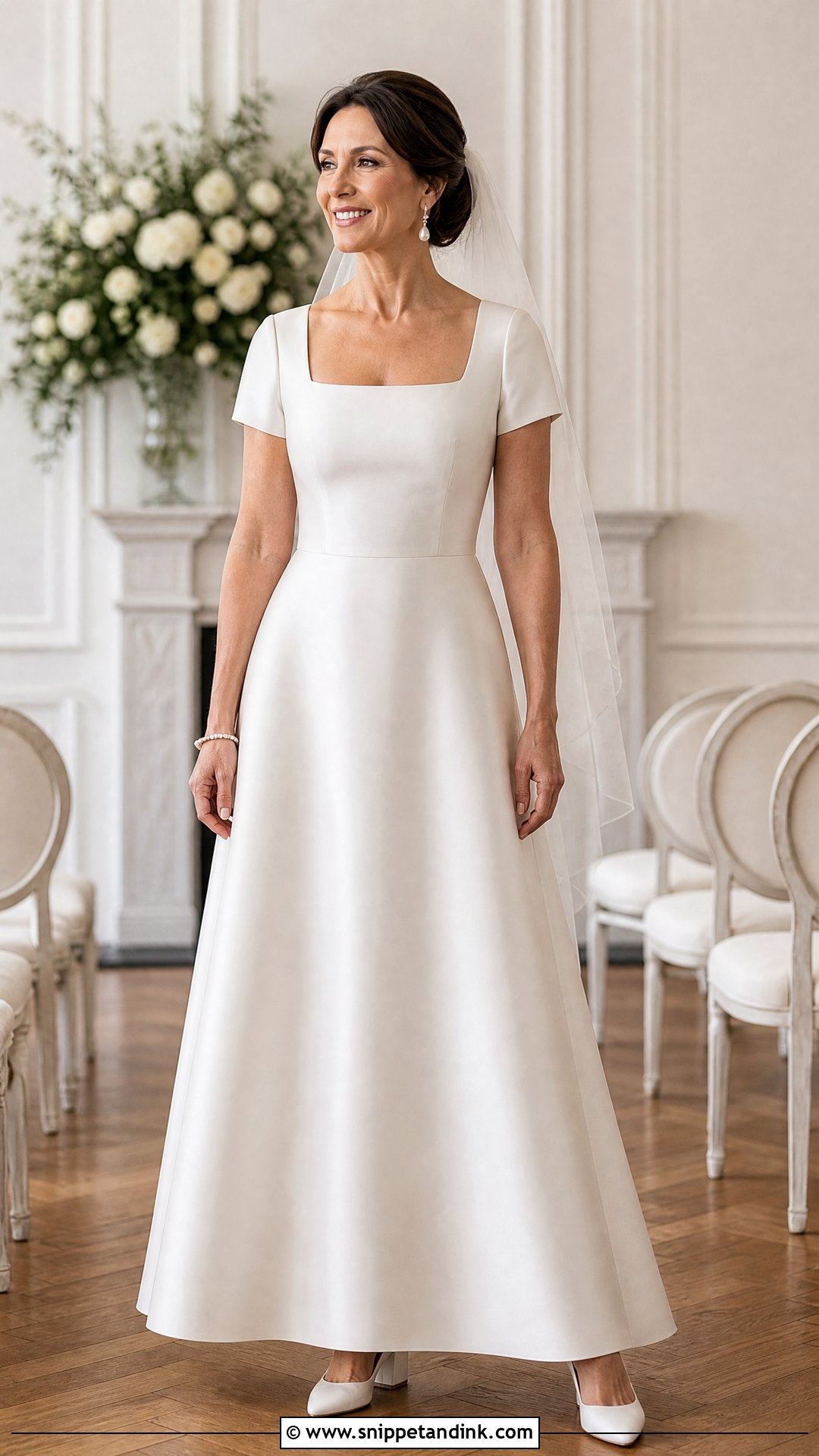
A square neck frames the collarbones and adds structure, and it pairs with wide straps, short sleeves or fitted long sleeves. Satin makes it formal; crepe keeps it understated. An A-line skirt gives soft volume, a straight skirt a more current look. The fitting problem with this neckline is the corners: if the bodice is even slightly loose, they pull and gape when you move. That needs careful alteration. Pearl earrings, a simple bracelet and block-heel pumps suit it, with a medium veil under a low bun. It balances fuller hips well and leaves room for a necklace if you want one.
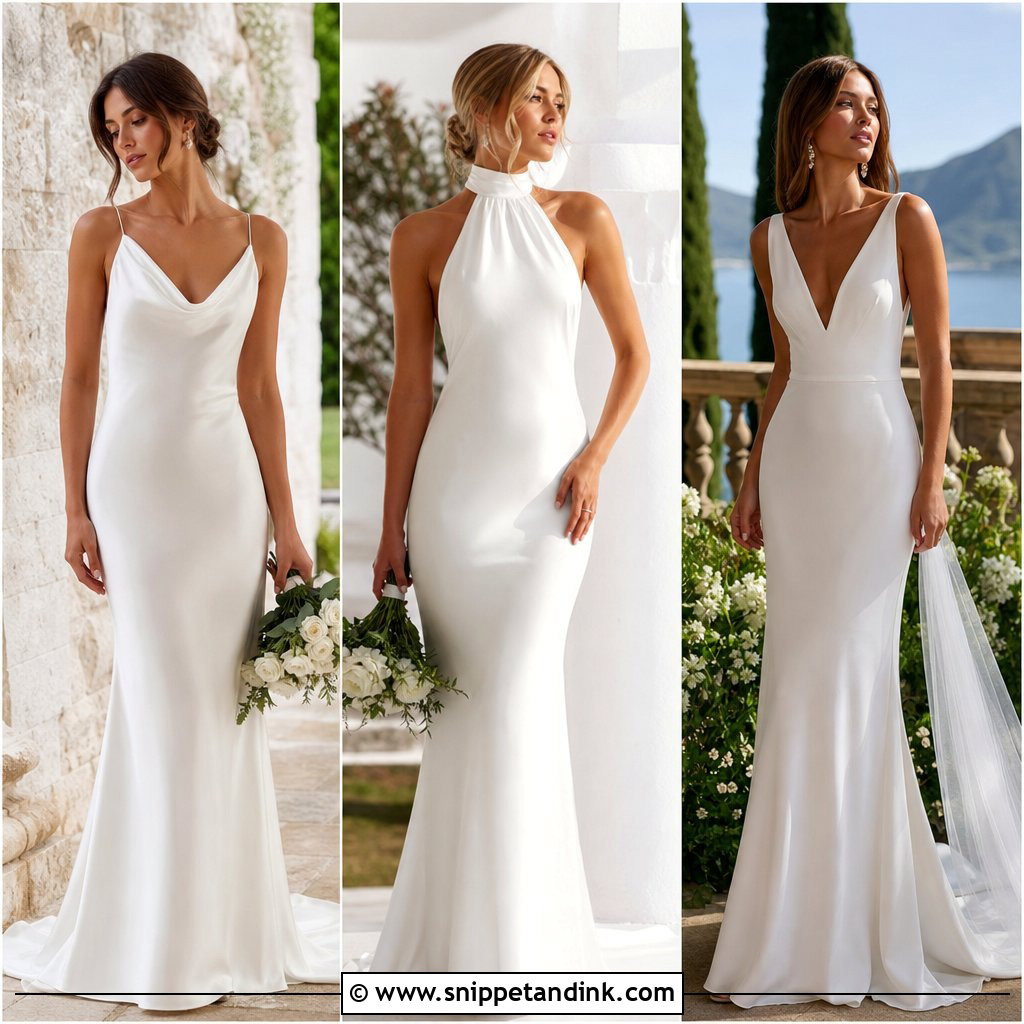
13. Minimalist Slip Wedding Dress
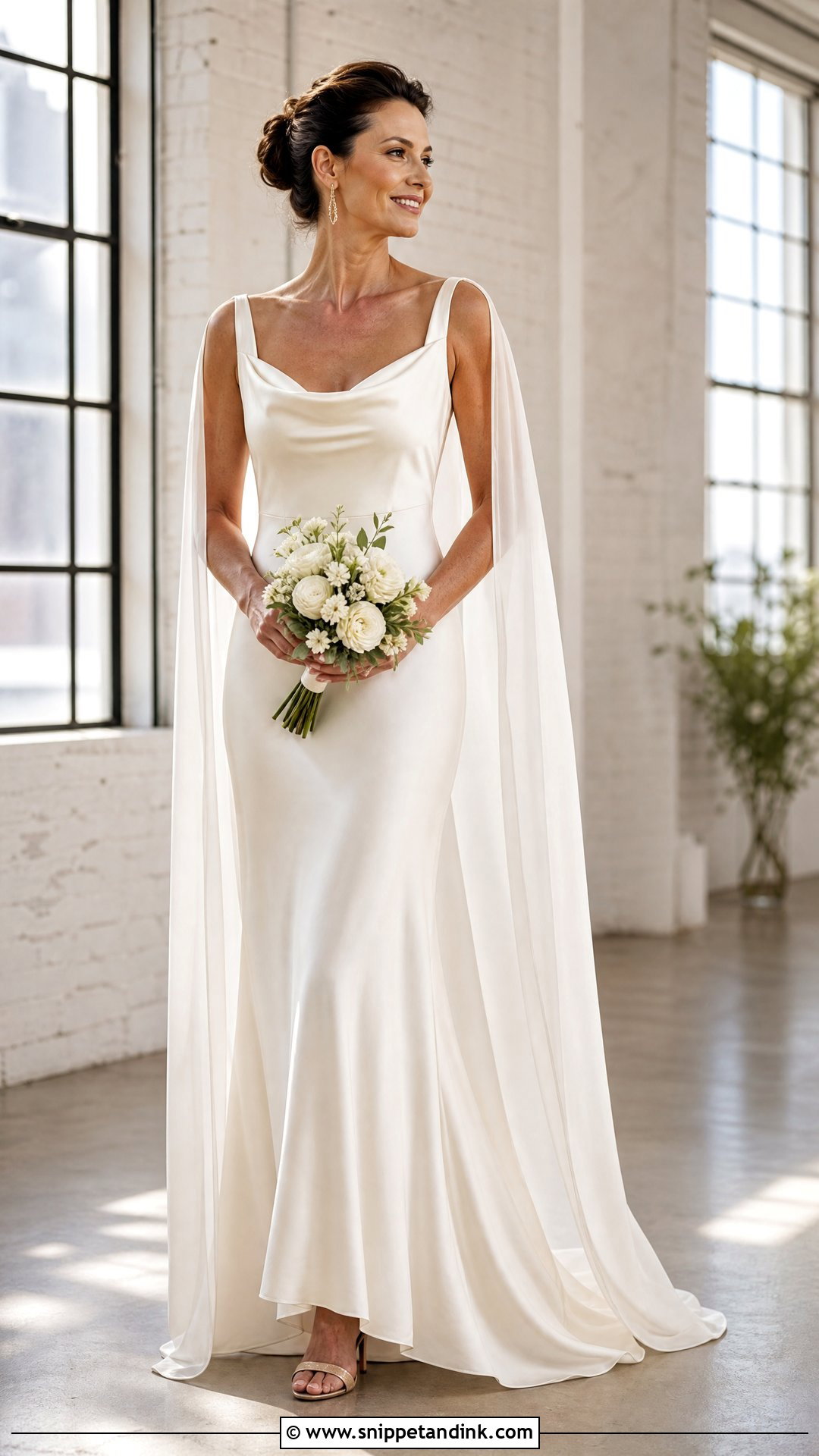
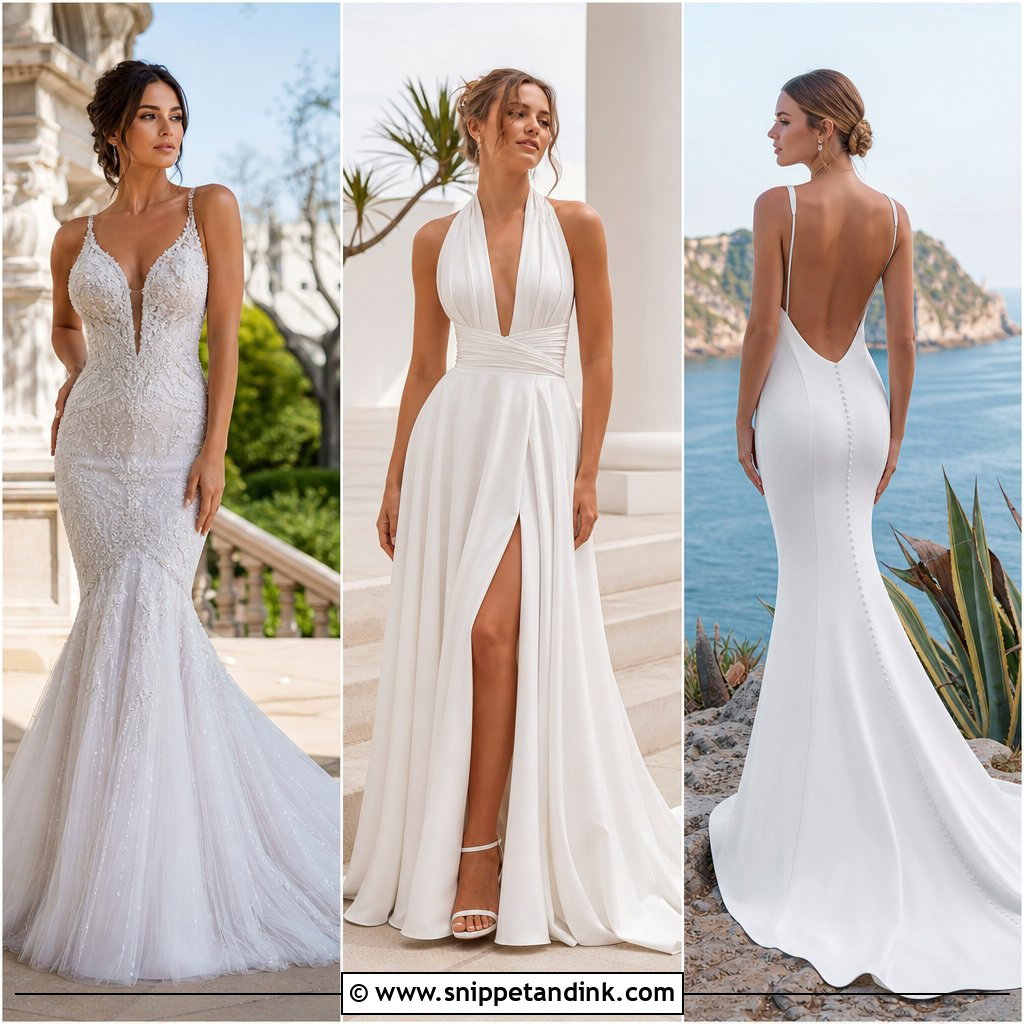
Slip dresses get written off for this age group, and I think that’s a mistake. A bias-cut satin that skims rather than fits closely, with wider straps and a supportive lining, is one of the most comfortable things a bride can wear for a long day. Bias satin does show what’s underneath, so smooth, close-fitting underwear matters, and the hem must be set precisely or it drags. For coverage, add a light chiffon cape, a sheer topper or a tailored ivory jacket. Strappy low heels, modern earrings and a compact bouquet keep it intentional. Destination weddings, restaurants, lofts and evening ceremonies all suit it.
14. Pleated Midi Wedding Dress
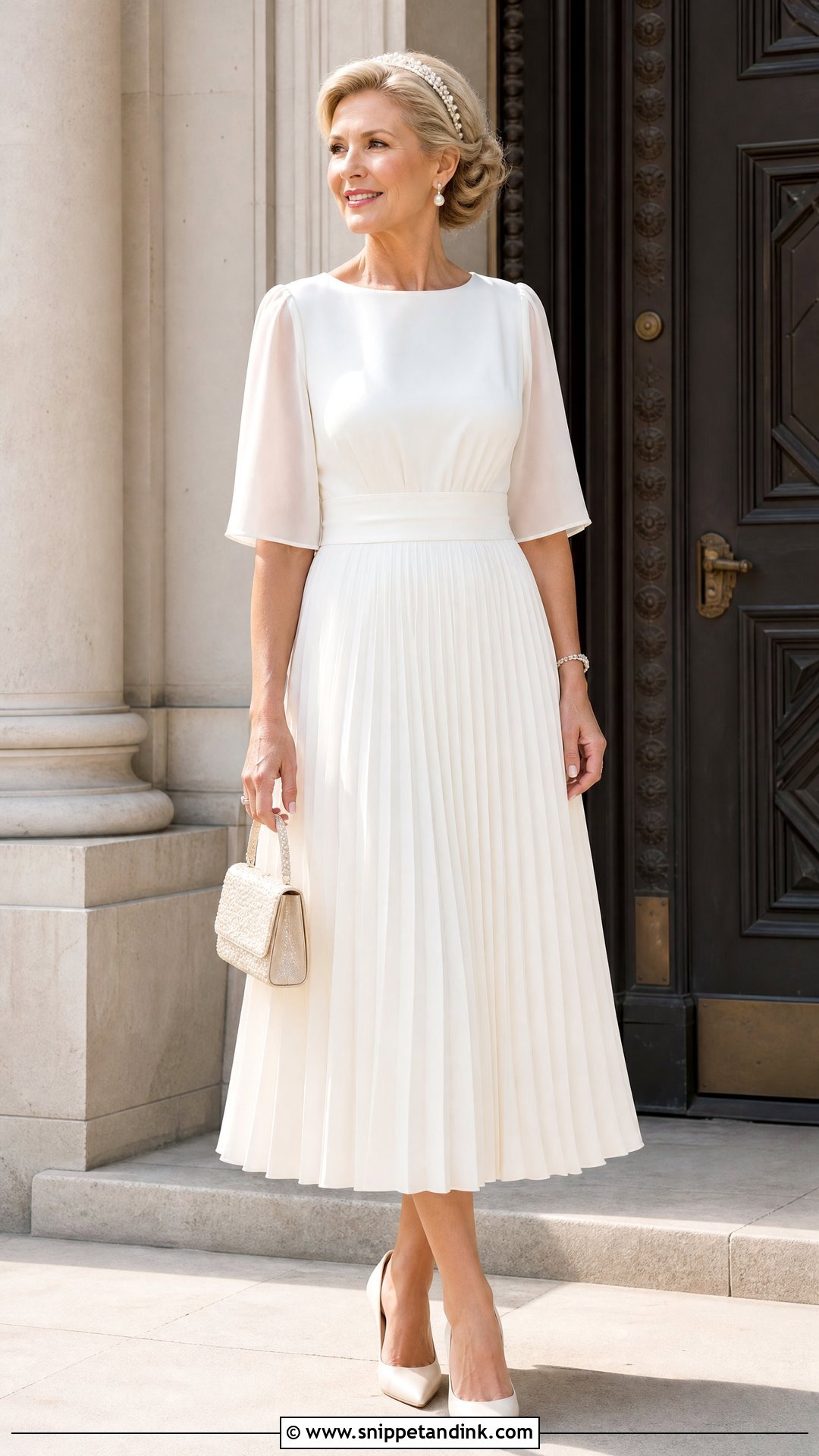
Fine pleats give movement without bulk, and a midi length works for courthouse ceremonies, daytime parties and anyone who wants her shoes seen. A defined waist and softly fitted bodice balance the flowing skirt; flutter or elbow sleeves, or a draped neckline, personalize it. Pointed pumps, a small top-handle bag and pearl or crystal earrings suit it, with a birdcage veil for vintage or a headband for modern. Tell your seamstress the pleats must not be pressed flat during hemming. It’s an easy dress to wear again afterwards.
15. Wedding Dress With Tailored Blazer
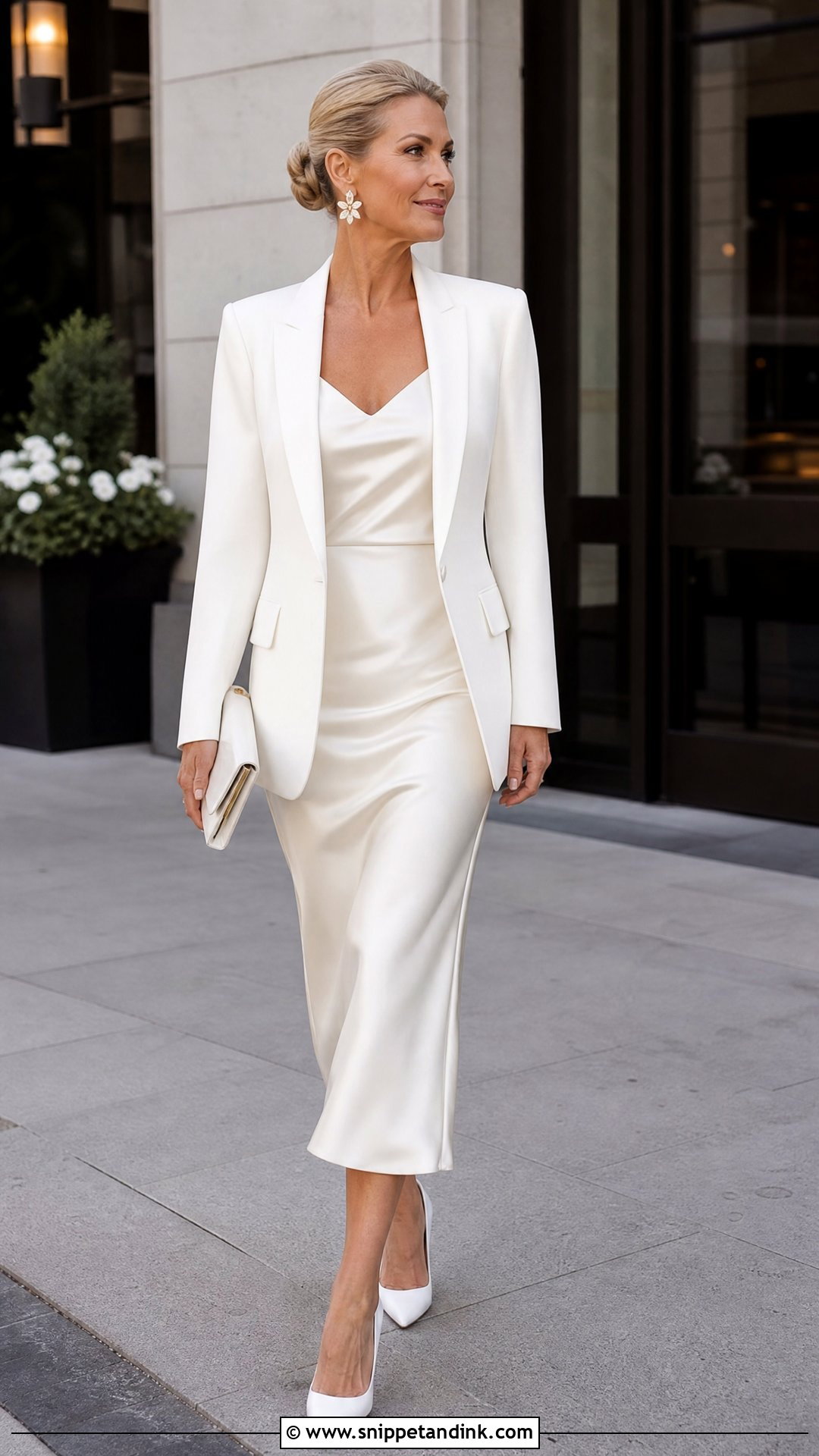
A tailored ivory blazer over a dress gives structure and coverage, and it’s the option I suggest most to brides who feel overdressed in a traditional gown. Start with a satin midi, a crepe column or a simple A-line, and choose a jacket shaped at the waist and long enough to sit smoothly over the dress. Take it off later and you have a second reception look. Keep cuffs clean rather than rolled, which reads casual. Pointed pumps, sculptural earrings and a structured clutch suit it, with a sleek bun or polished shoulder-length hair. City venues, courthouses, rooftops and cool spring or autumn days are where it shines.
16. Boho Lace Wedding Dress
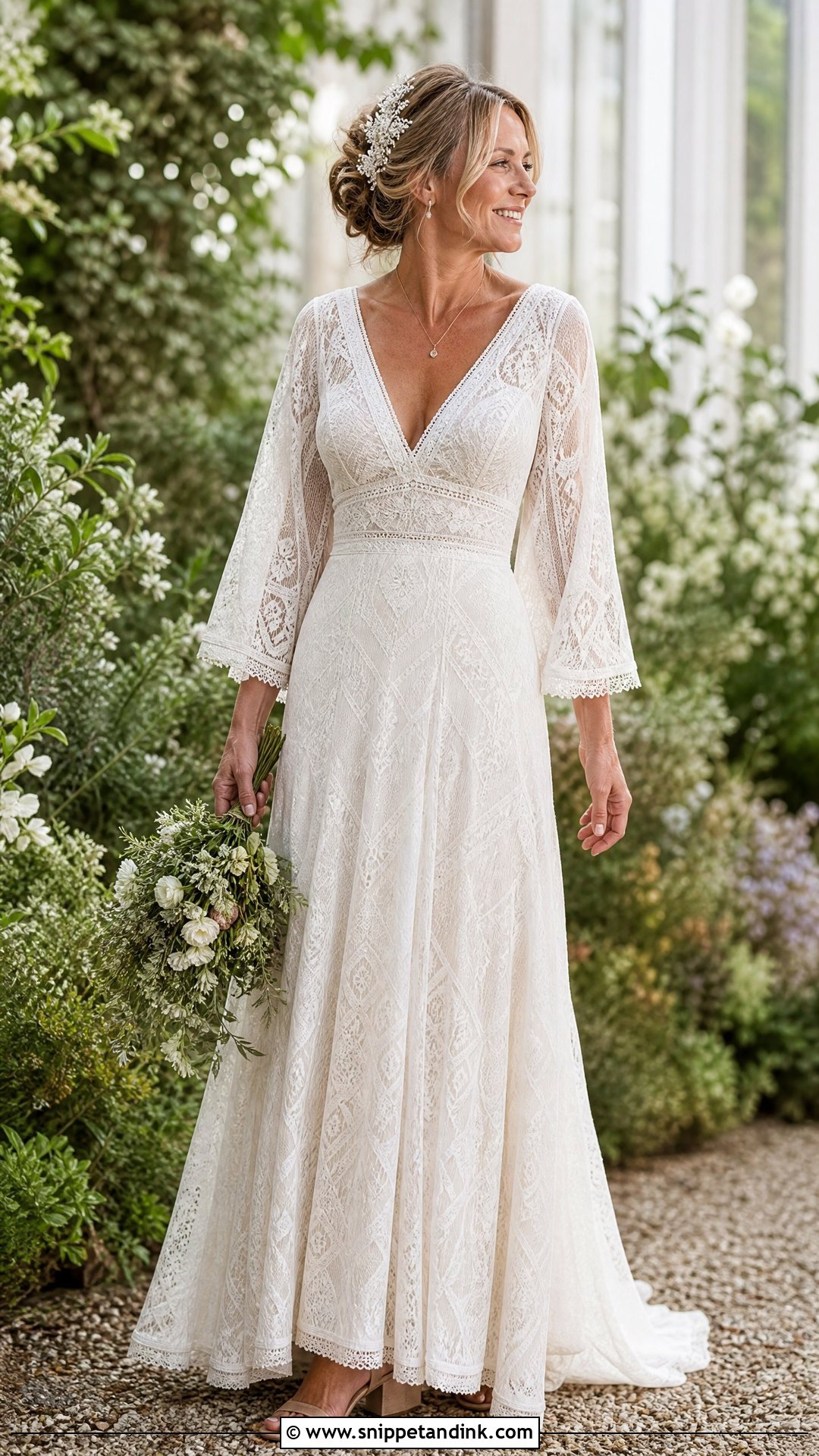
Boho lace slips into casual quickly if the dress is unlined, so I always look for a lined bodice and skirt. Soft geometric lace, a defined waist and a skirt that moves are the starting point. Bell sleeves feel free-spirited; fitted sheer sleeves are more streamlined. Low block-heel sandals, a delicate floral hairpiece and a loose bouquet are enough, because the lace already carries plenty of detail. Outdoors, keep the train short or ask for a bustle. Gardens, coasts, rustic venues and destination weddings suit it.
17. Plus-Size Ball Gown Wedding Dress
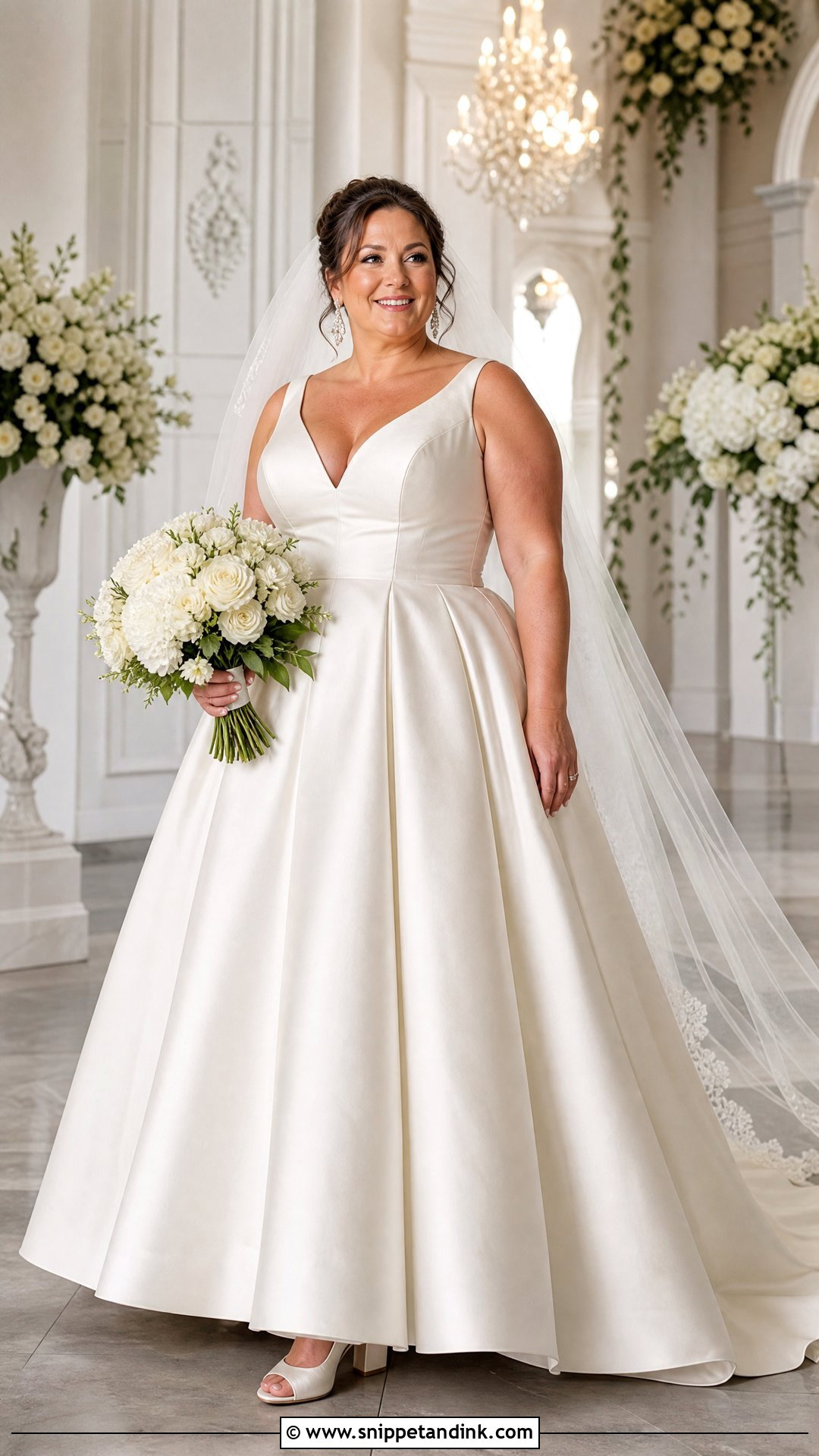
In a plus-size ball gown wedding dress, support should come from the gown itself: internal boning, wider straps and a properly built bodice, not thin straps and hope. A scoop, sweetheart or V neckline opens the upper body. I keep the skirt volume controlled so it stays easy to move in. Stable block heels, statement earrings and a veil a little longer than the train suit it. Bring your intended underwear to every fitting, or the alterations won’t match on the day. And shop for the body you have now; a gown that fits now can be tailored, and waiting for a future size usually ends with rushed alterations.
18. Courthouse Wedding Dress With Coat
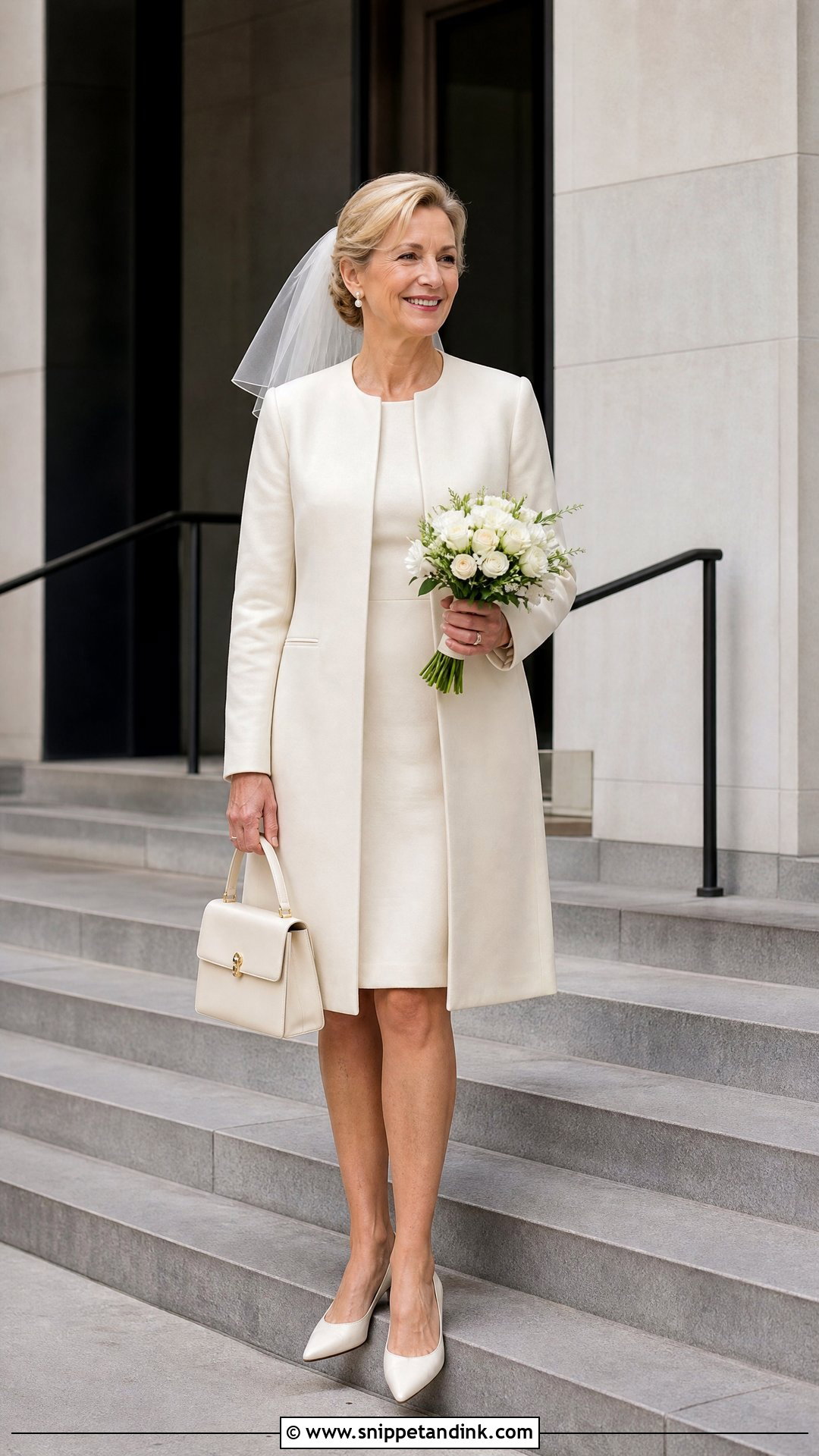
For a courthouse wedding dress, a matching coat is practical as much as pretty: you’re often outside, on steps or moving between locations. Choose a fitted midi, simple sheath or column in ivory or soft white, and a knee-length coat with clean lapels or no collar. The coat needs to be close in tone and fabric weight to the dress, otherwise the dress looks underneath rather than paired. Pointed heels, a structured bag, pearl earrings and a small bouquet complete it, with a short veil or hair bow to make it unmistakably bridal. Both pieces can be worn separately later.
19. Beach Wedding Dress With Sleeves
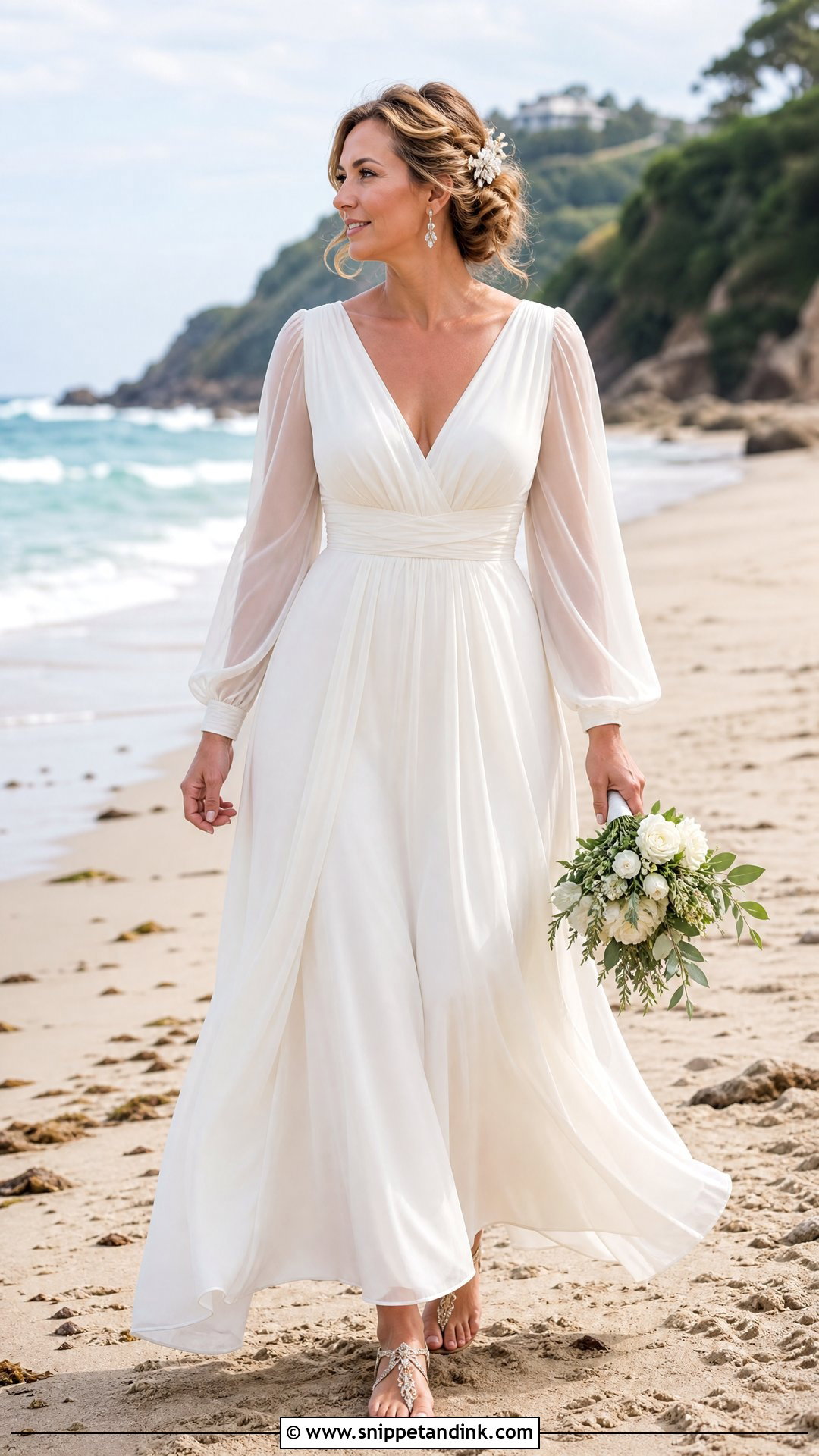
On a beach, the problems are wind, heat and sand, in that order. Chiffon, soft lace and light crepe breathe and move; heavy structured fabric doesn’t. Flutter, sheer fitted or loose bishop sleeves give coverage without trapping heat. An ankle-length or floor-skimming hem keeps the skirt out of the sand. Flat embellished sandals, delicate earrings and a small bouquet are easy to carry, and a flower comb or hairpin stays put better than a long veil in wind. Skip a complicated train unless it bustles quickly.
20. Blush Wedding Dress
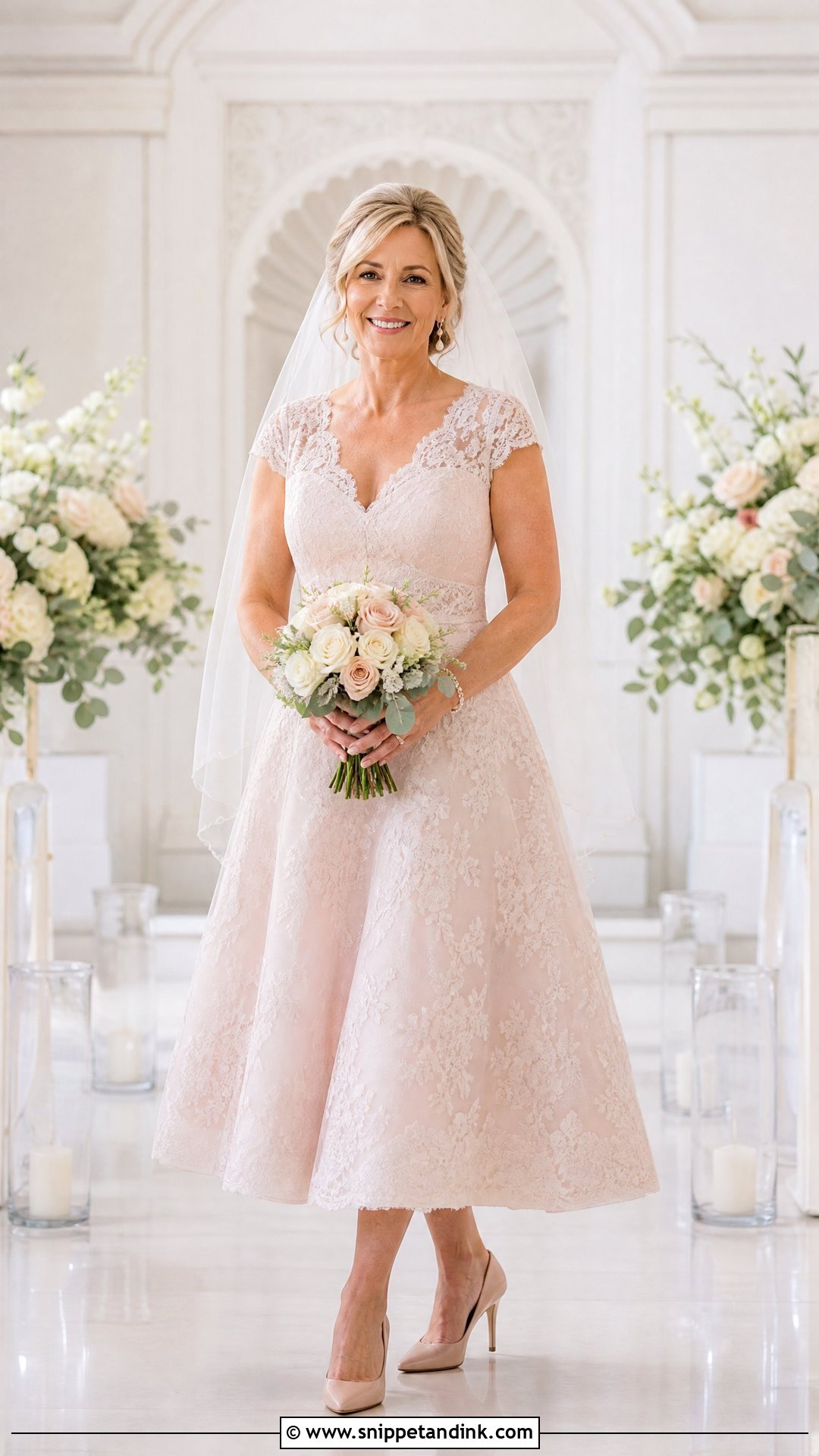
Blush is one of the trickiest colors to buy from a photo, because shop lighting is usually warm and makes every pink look flattering. I take brides to a window and hold the fabric near the face in daylight. Pale rose, champagne blush and nude-pink can all work; it depends on whether your skin leans warm or cool. Lace over blush lining gives a soft contrast; satin looks smoother and more modern. Neutral pumps, rose-gold or pearl jewelry and an ivory and muted pink bouquet suit it. Match the veil closely to the dress tone so they blend. A-line, sheath or tea length, precise tailoring is what makes the color look chosen.
Bridal Salon or Not, Give the Dress Time
Plenty of the looks above don’t need a traditional bridal shop at all. Crepe columns, slip dresses, pleated midis and a dress with a blazer are often found in eveningwear or occasionwear, and many designers now sell bridal-adjacent pieces ready to wear. That route is quicker and usually cheaper, though you’ll still want alterations.
If you do order a bridal gown
Made-to-order gowns commonly take several months to arrive, often four to six or more depending on the designer, so start looking around nine months to a year out if you can. Alterations then usually need two or three fittings over the final couple of months. Bring your shoes and underwear to every one.
If the date is close
Buy off the rack or from a sample sale, where the dress is already made. Samples come in limited sizes, so check what can be taken in or let out before you fall for one. A good seamstress can tell you in one look whether there’s enough seam allowance to work with.
Age Was Never the Fitting Note That Mattered
Age doesn’t decide the dress. Your body, the room you’re marrying in and how you want to feel walking in do. Start with the shapes and fabrics that already feel good on you, then think about movement, support, weather, shoes and alterations before you sign anything. Try one style you’d never have picked, and ask someone to photograph you from the side and back as well as the front. Lace, crepe, chiffon, satin or a shorter length, a gown that’s tailored properly will look like yours.
You'll Like These Ideas:




Leave a Reply