
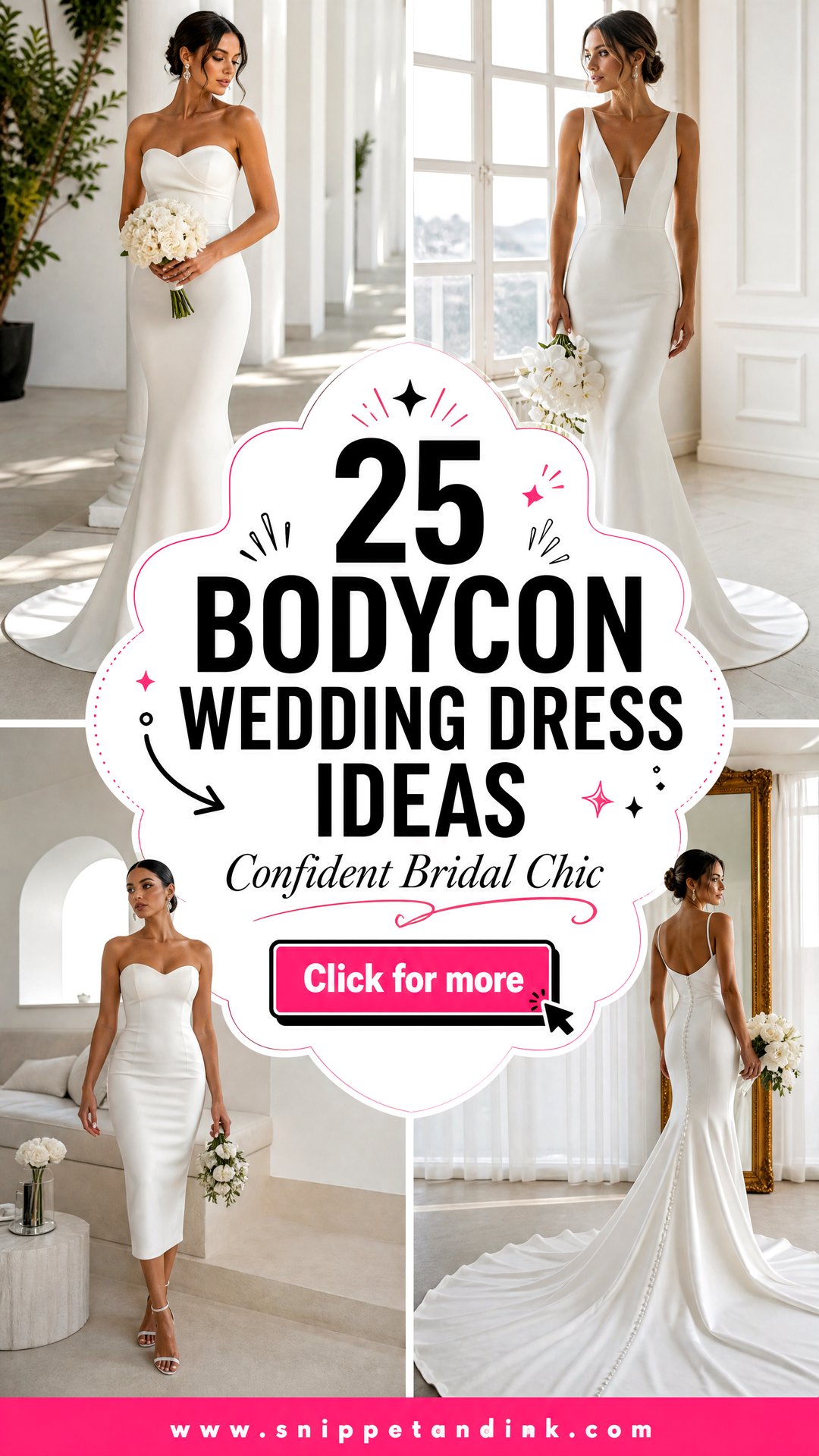
A fitted wedding dress hides nothing, and that’s exactly why the brides who choose one love it. When the silhouette follows your body, the details that a ball gown would cover become the whole story: the weight of the fabric, the lining, the seams, the neckline and the hem. Today there’s far more choice than the plain stretch sheath of a decade ago. Stretch crepe, satin, lace, pearl work, detachable overskirts and short civil-ceremony styles are all easy to find. In the fitting room I watch three things above all: whether you can move, what’s under the dress, and how it looks from behind. The ideas below are chosen with those in mind.
What Goes Under a Dress That Shows Everything
With a fitted dress, the underwear is part of the outfit. I ask brides to bring their planned undergarments to the very first fitting, because changing them later changes the fit and the tailor has to start again.
- Match your skin tone, not the dress. White underwear shows through ivory crepe and lace; a nude close to your skin disappears.
- Look for laser-cut or bonded edges. Stitched edges leave a ridge across the hips in stretch fabric.
- Choose shapewear that smooths rather than squeezes. Very firm shapewear can roll at the waist or thigh once you start sitting and moving.
- Sort out the bra early. Built-in cups, a low-back longline or adhesive cups each suit different backs and necklines.
1. Long Sleeve Bodycon Wedding Dress
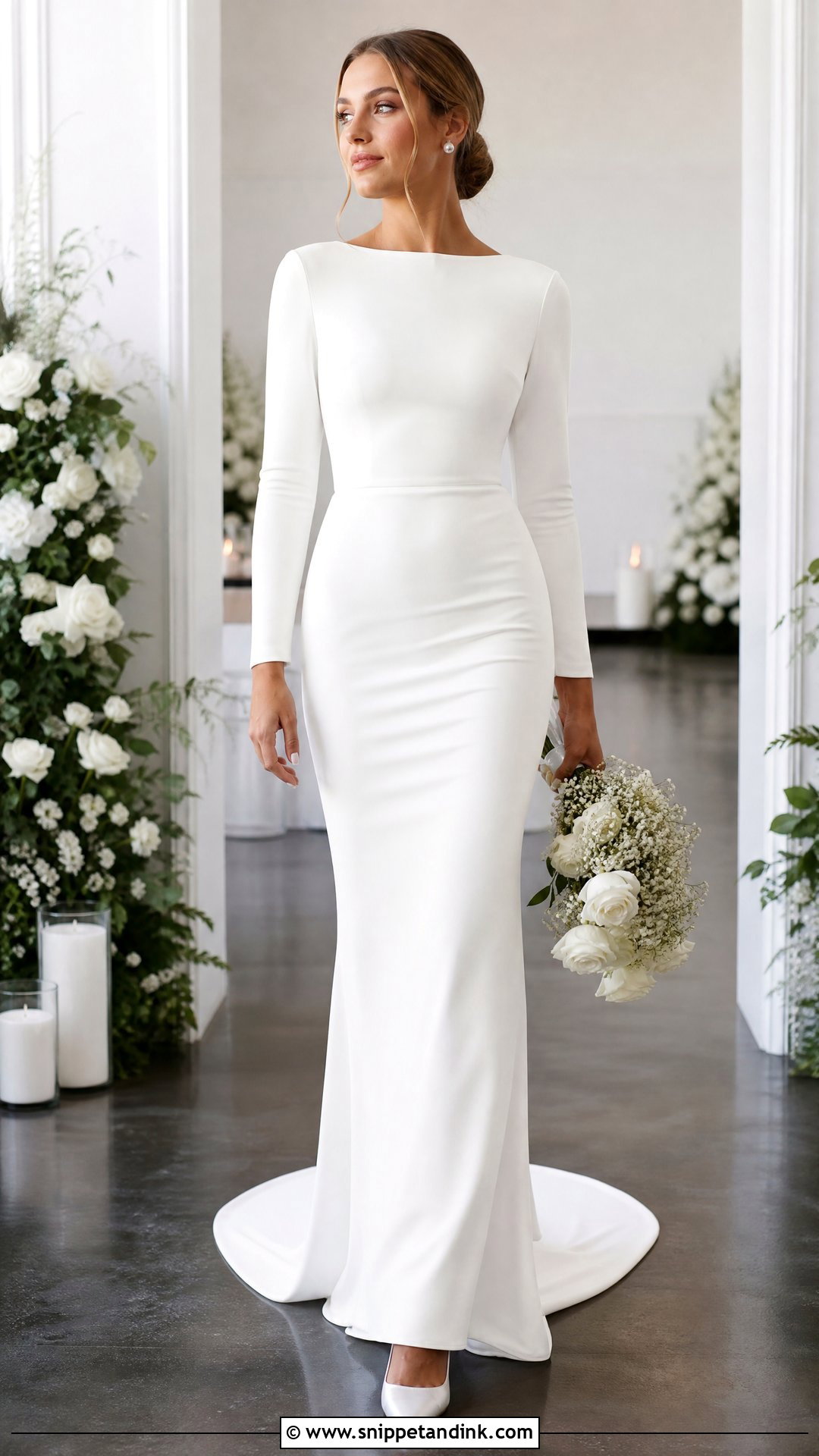
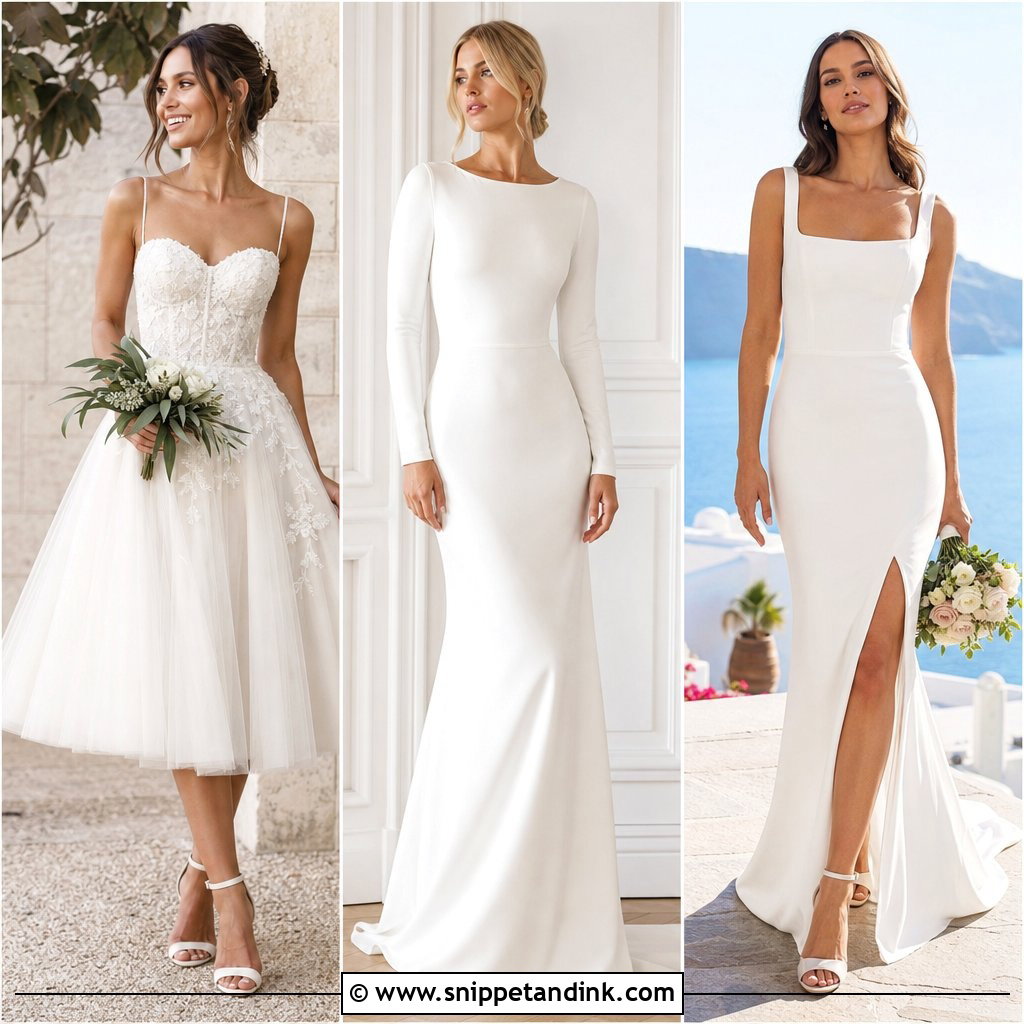
Sleeves balance a close fit, so a long sleeve version reads covered and calm even though it hugs the body. Stretch crepe, smooth satin and lined lace all work; unlined stretch lace can show every line underneath. The sleeve is where I look first, because a tight sleeve set into a low armhole pulls the whole bodice up when you raise your arms. A high neck looks sleek; a square or V-neck softens it. Pointed ivory heels, pearl studs and a low bun finish it. Cooler seasons and city venues suit it best.
2. Off Shoulder Bodycon Wedding Dress
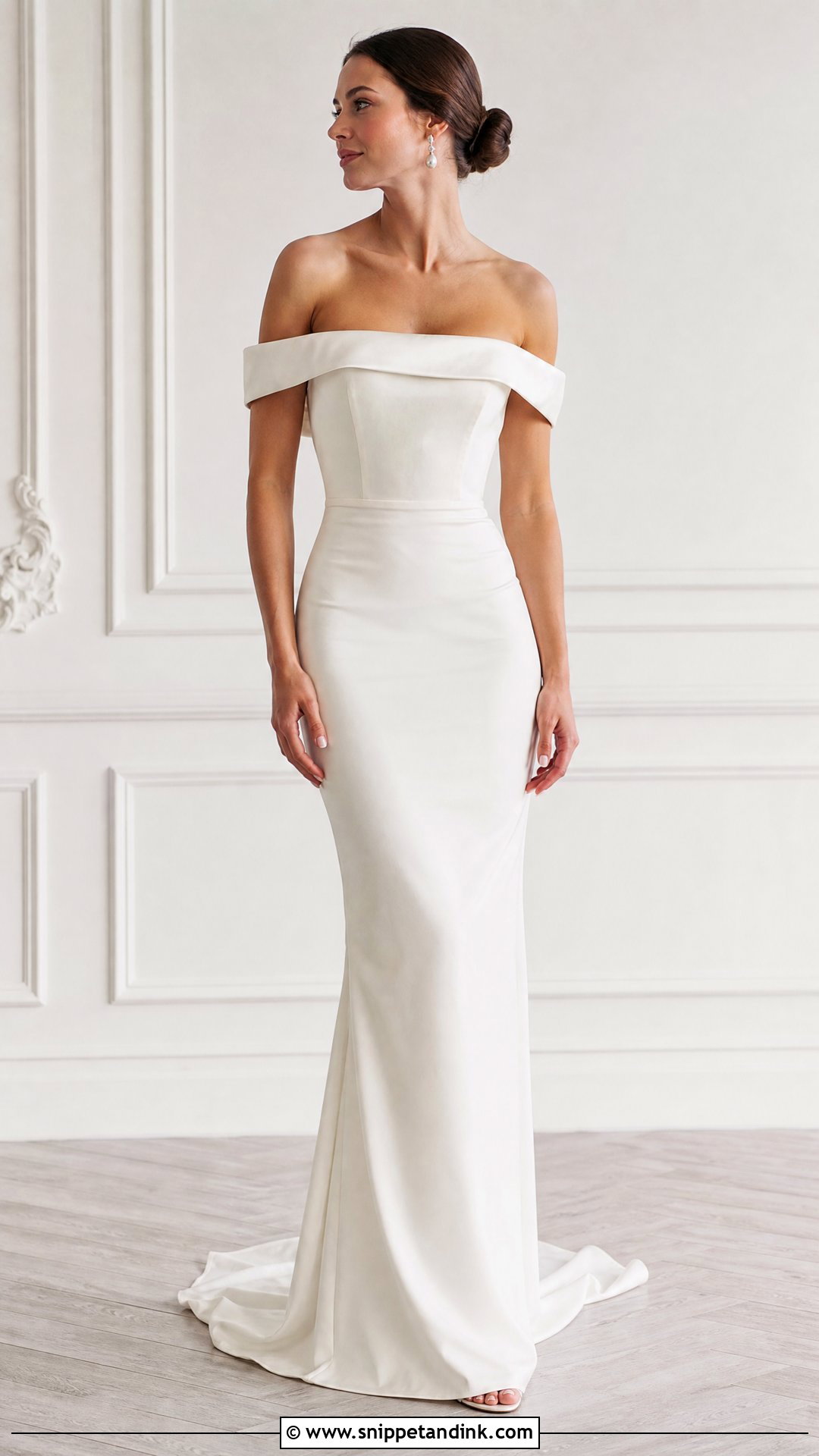
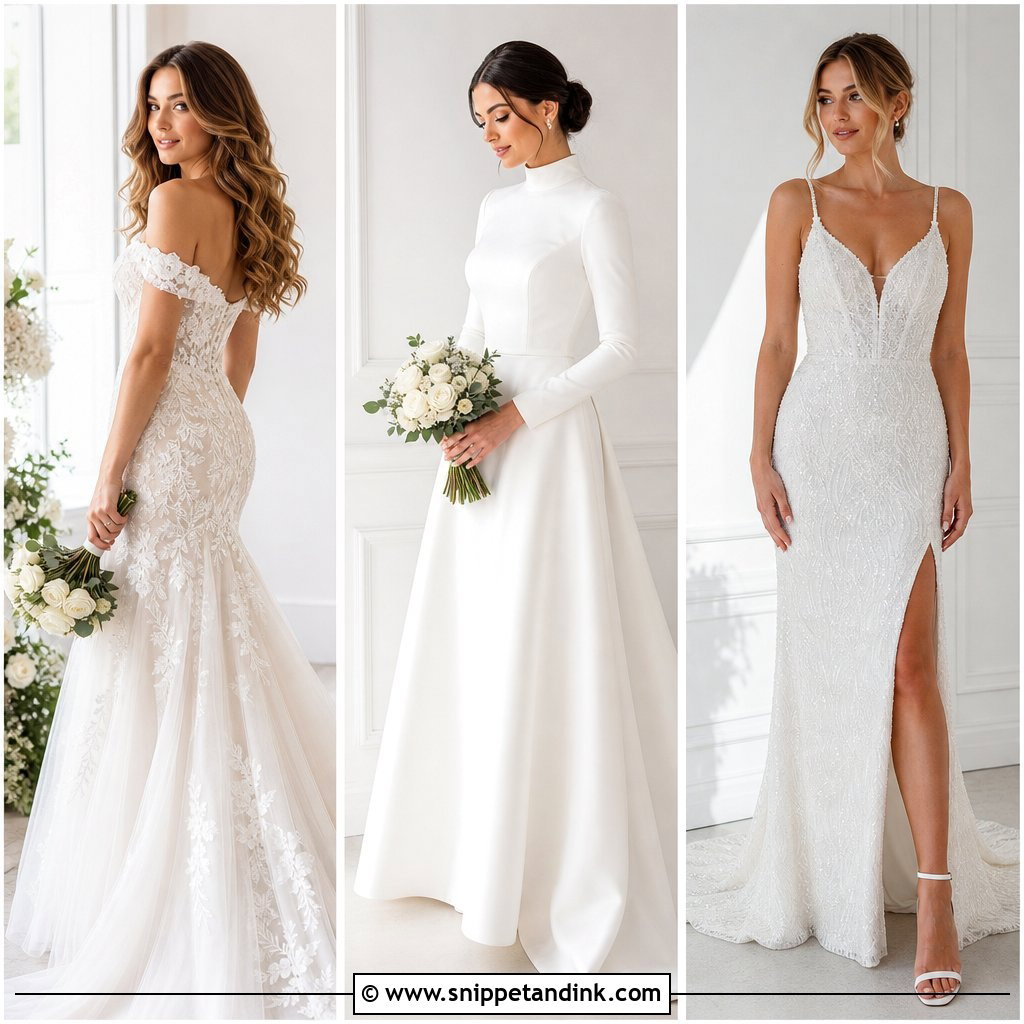
An off shoulder neckline softens a fitted dress by showing the collarbones and the top of the arms. The challenge is keeping it up without straps, so I check for hidden boning or a fold-over neckline with silicone grip on the inside. Satin, crepe, lace and stretch mikado all hold the shape. Floor length reads formal; a midi suits a civil ceremony or a reception change. A smooth updo, drop earrings and slim heels keep the shoulders clear.
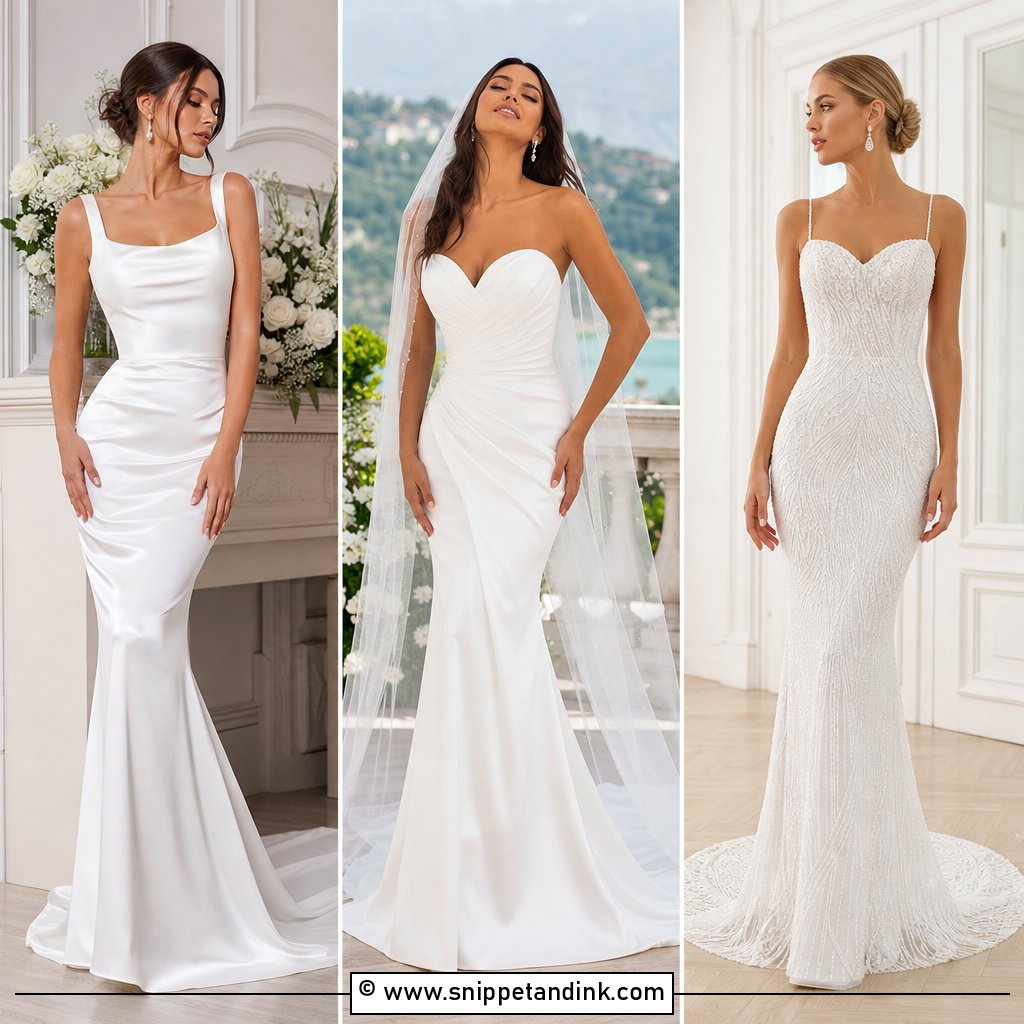
3. Strapless Bodycon Wedding Dress
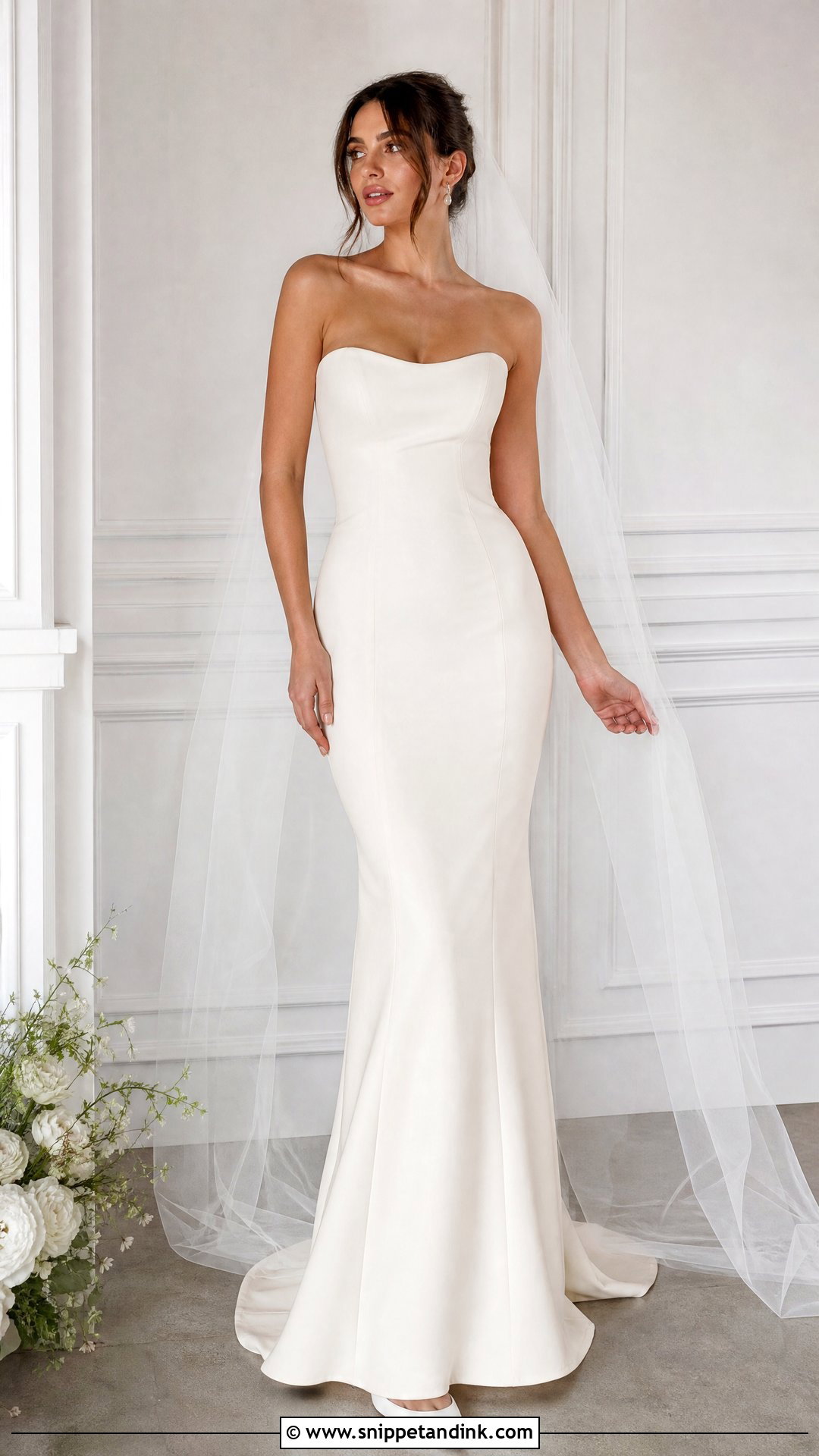
Strapless bodycon dresses depend on the bodice staying put, so ask for a structured bodice and grip tape inside the top edge. The hips need enough stretch to sit and walk; tight, non-stretch fabric over the hips will ride up every time you stand. A straight neckline looks minimal, a sweetheart softer. The open neckline leaves room for a veil, gloves or a statement earring. A long veil makes it feel ceremonial; no veil keeps it modern.
4. Lace Bodycon Wedding Dress
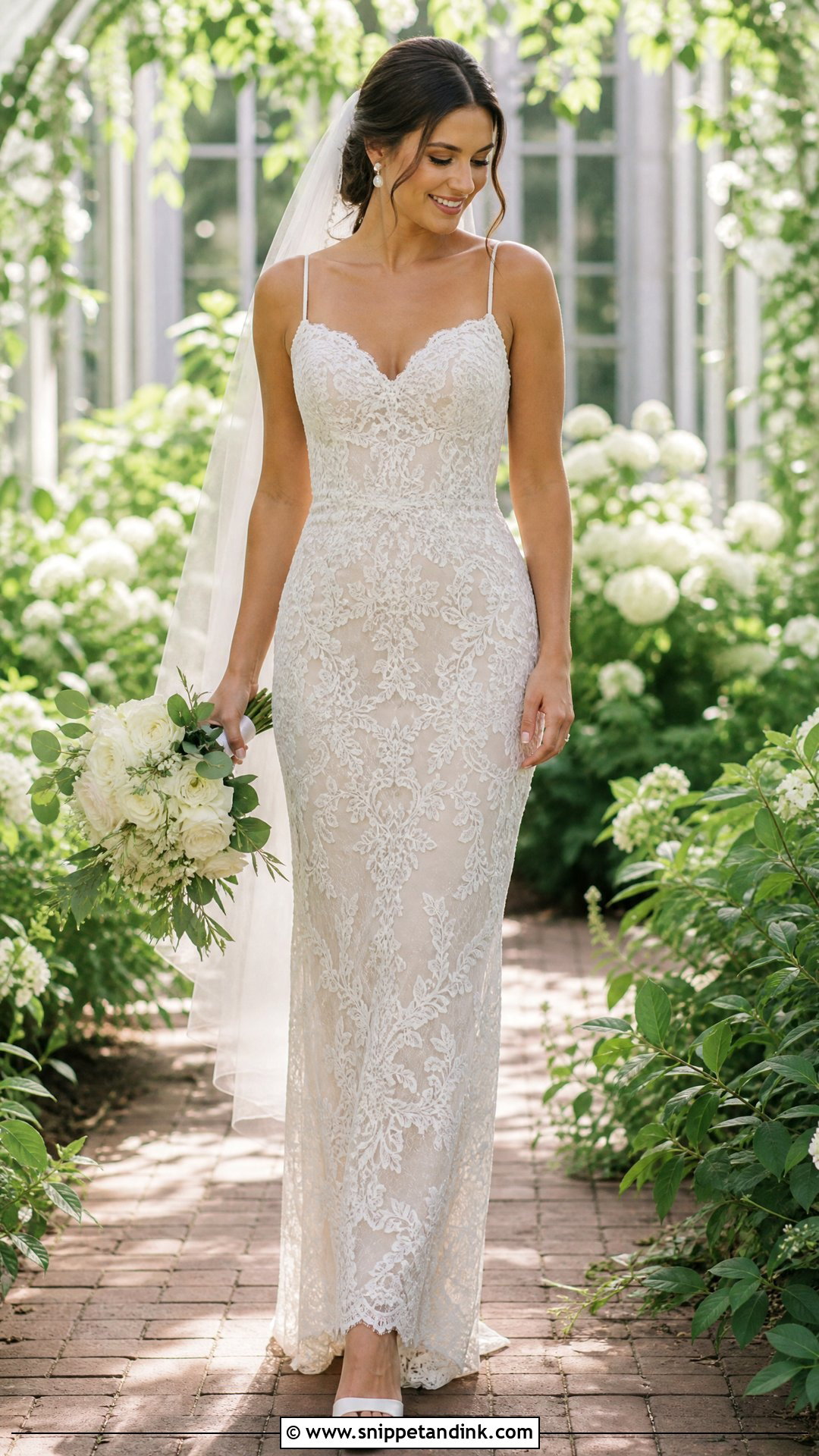
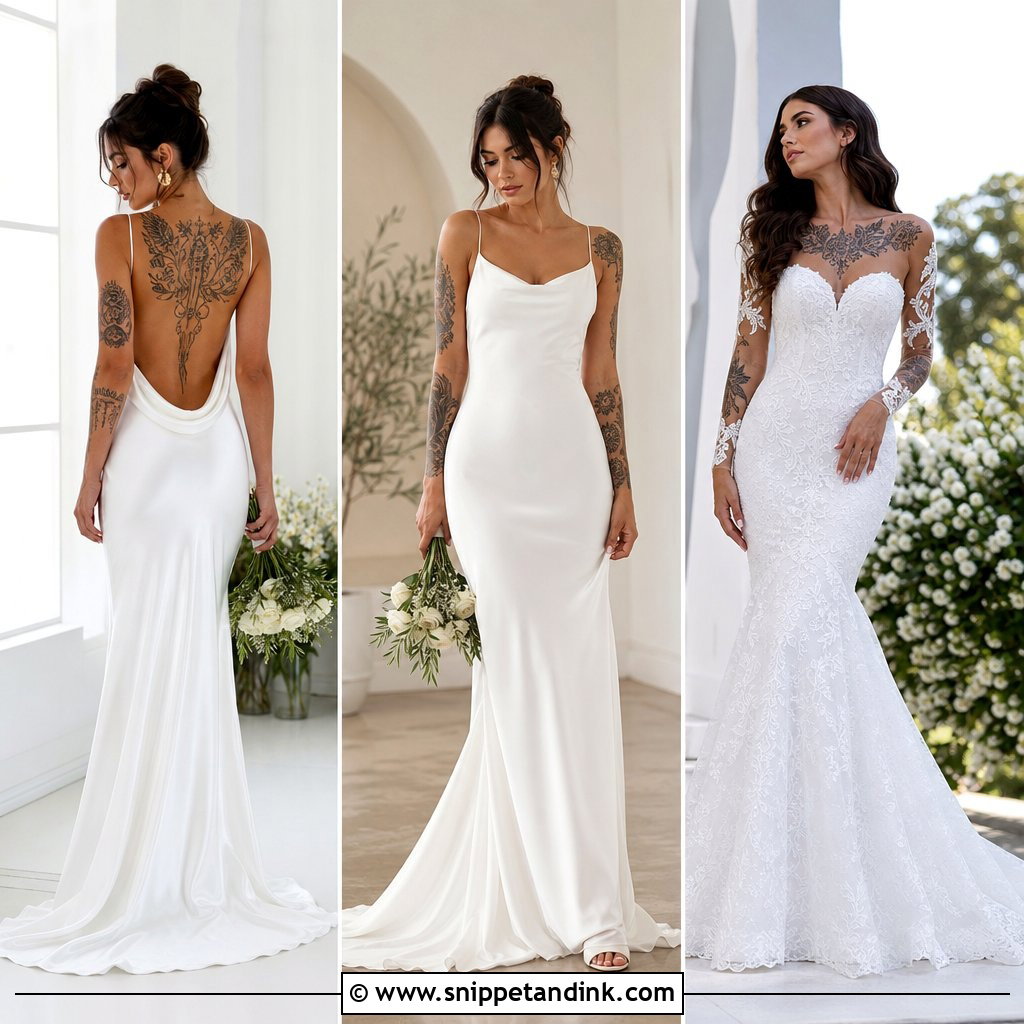
Lace on a fitted dress needs a smooth lining underneath, or every seam and stitch of your underwear will show through the pattern. Floral, corded or embroidered lace looks bridal; flat, cheap lace can look casual in a close cut. A nude, ivory or soft champagne underlay changes how much the pattern stands out, so compare a couple in the fitting room. Long sleeves feel classic. Ivory heels, pearl earrings and a plain veil keep the lace the focus.
5. Satin Bodycon Wedding Dress
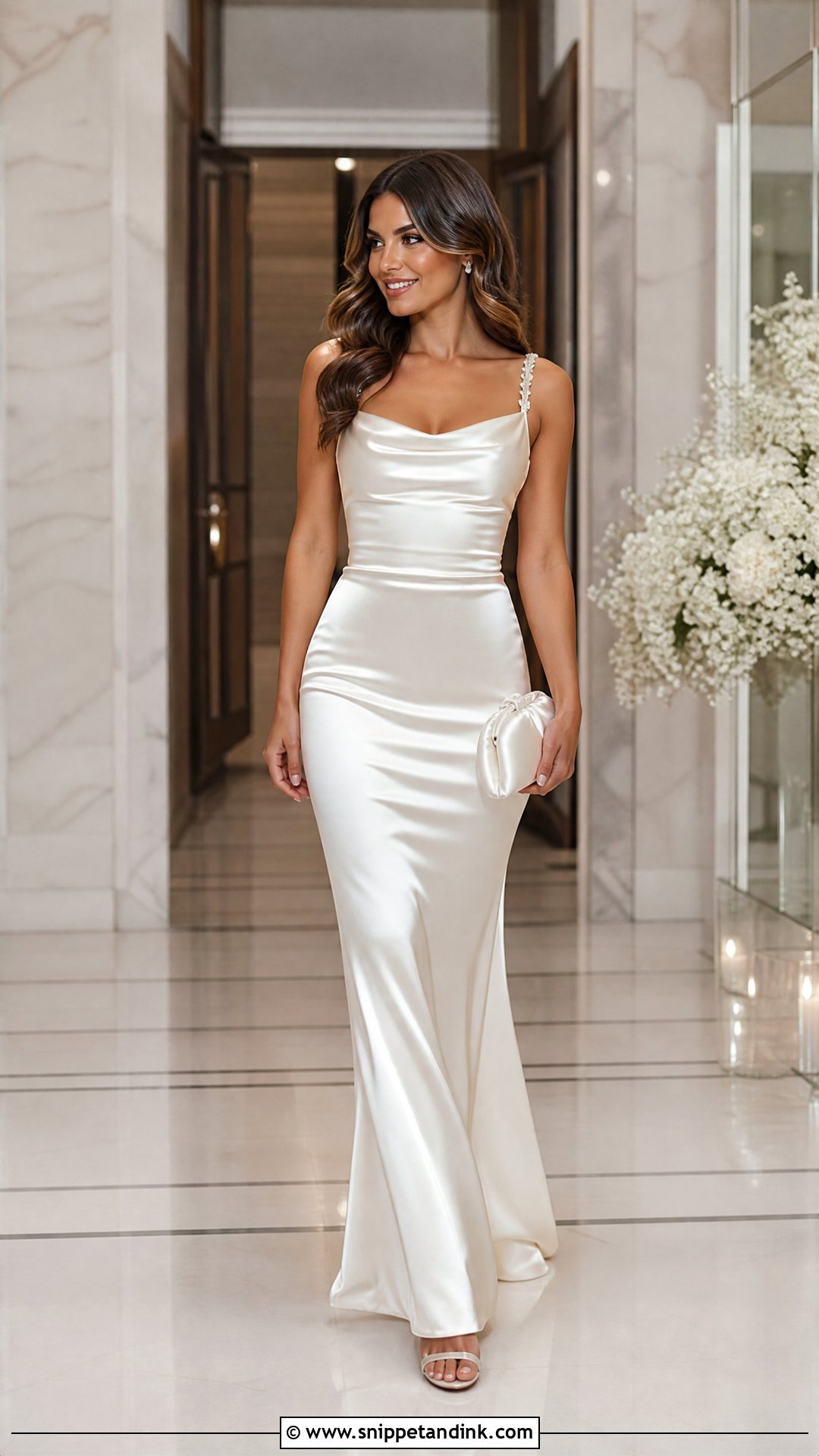
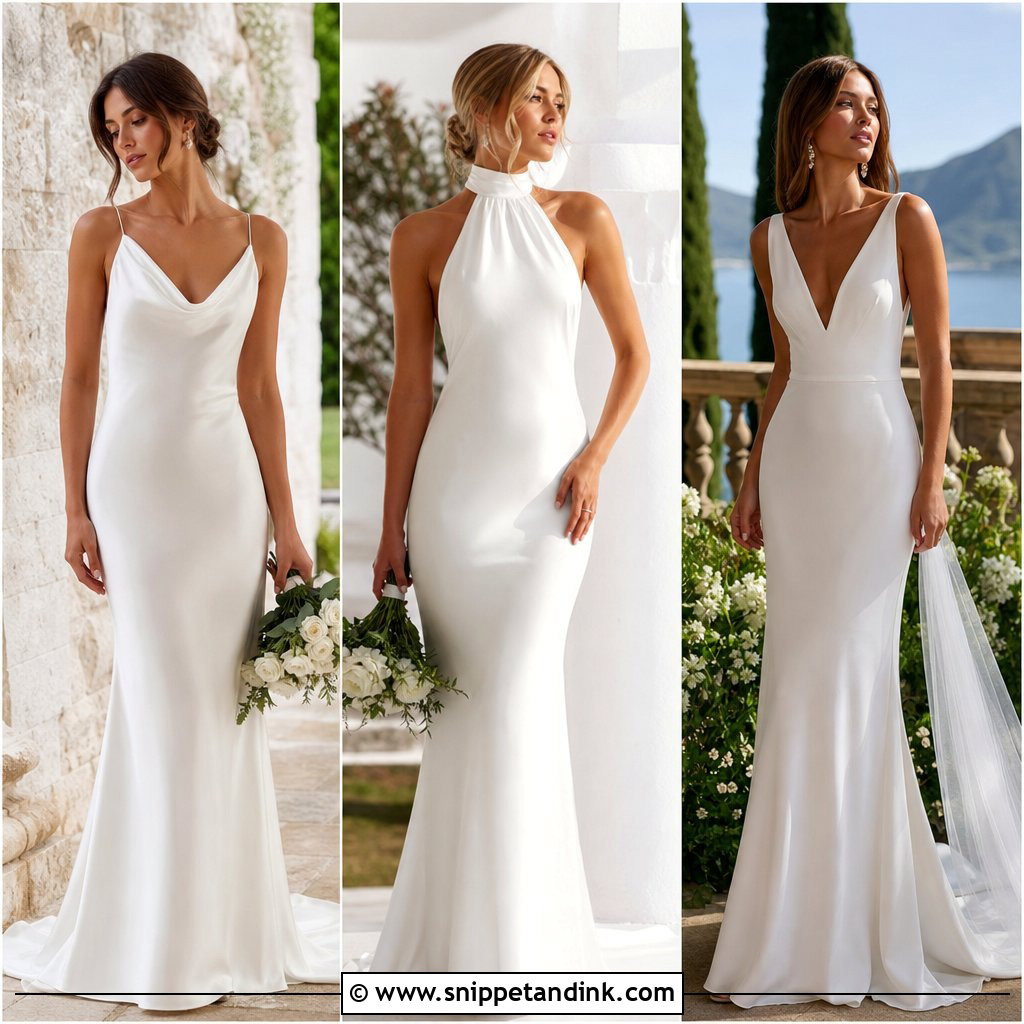
Satin shows every seam, crease and bump, which is why a satin bodycon dress is the hardest to fit. It should skim the body, not pull across it. Bias-cut satin flows; stretch satin is kinder for a truly close fit. A cowl neckline adds softness. Pair it with delicate heels, a satin clutch and polished waves. Plan your underwear around it, and keep the dress hung up until the last minute, because satin creases quickly.
6. Crepe Bodycon Wedding Dress
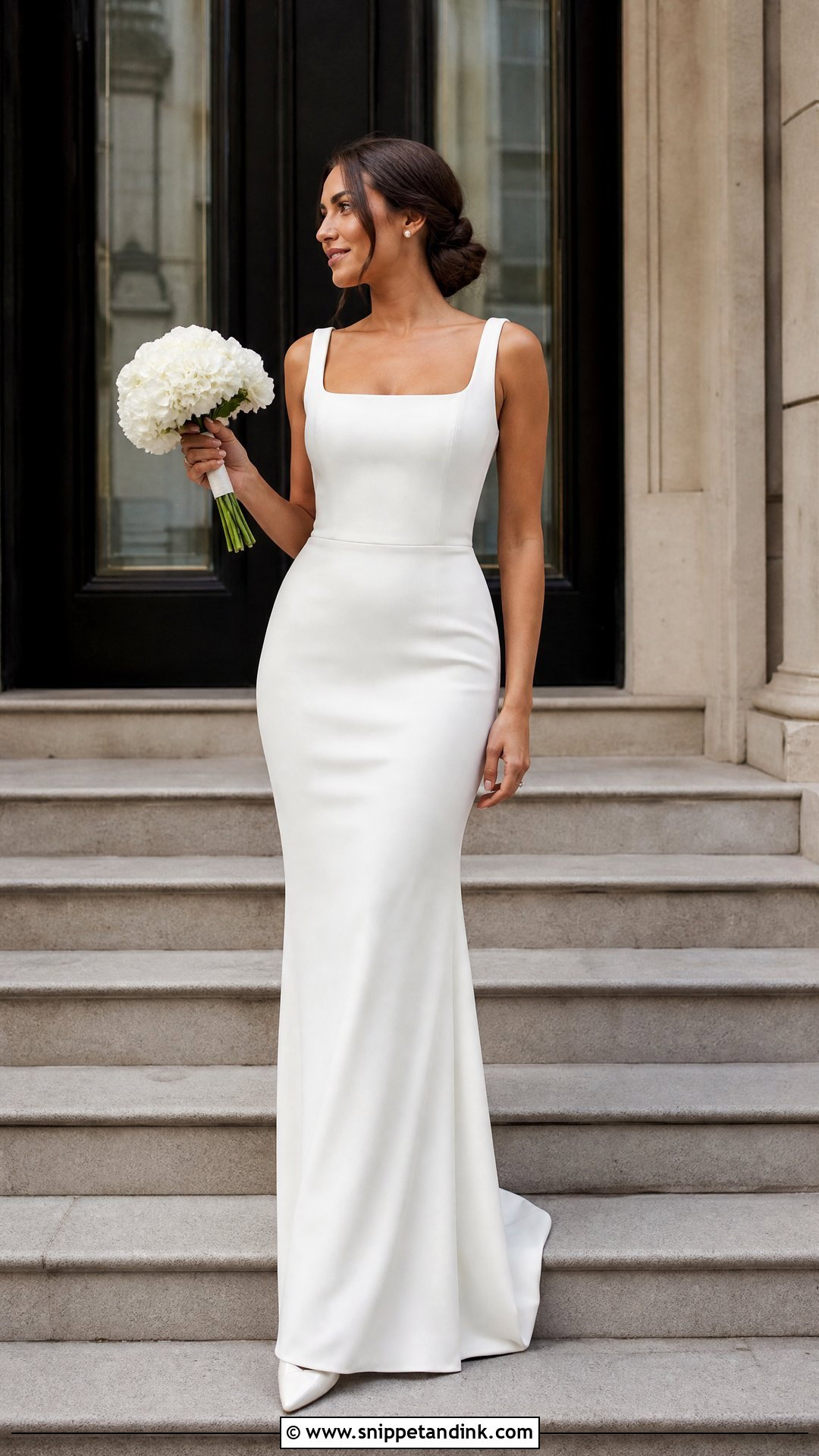
Crepe has a matte, slightly textured surface, and it’s what I recommend most for a fitted dress, because it hides small lines that satin would show. Look for a thick, lined stretch crepe. A thin crepe will cling in all the wrong places. It suits simple sheaths, long sleeves, square necks and minimal mermaid shapes. Add pointed heels, a low chignon and pearl studs. A long veil or detachable train adds ceremony without changing the clean look.
7. Mermaid Bodycon Wedding Dress
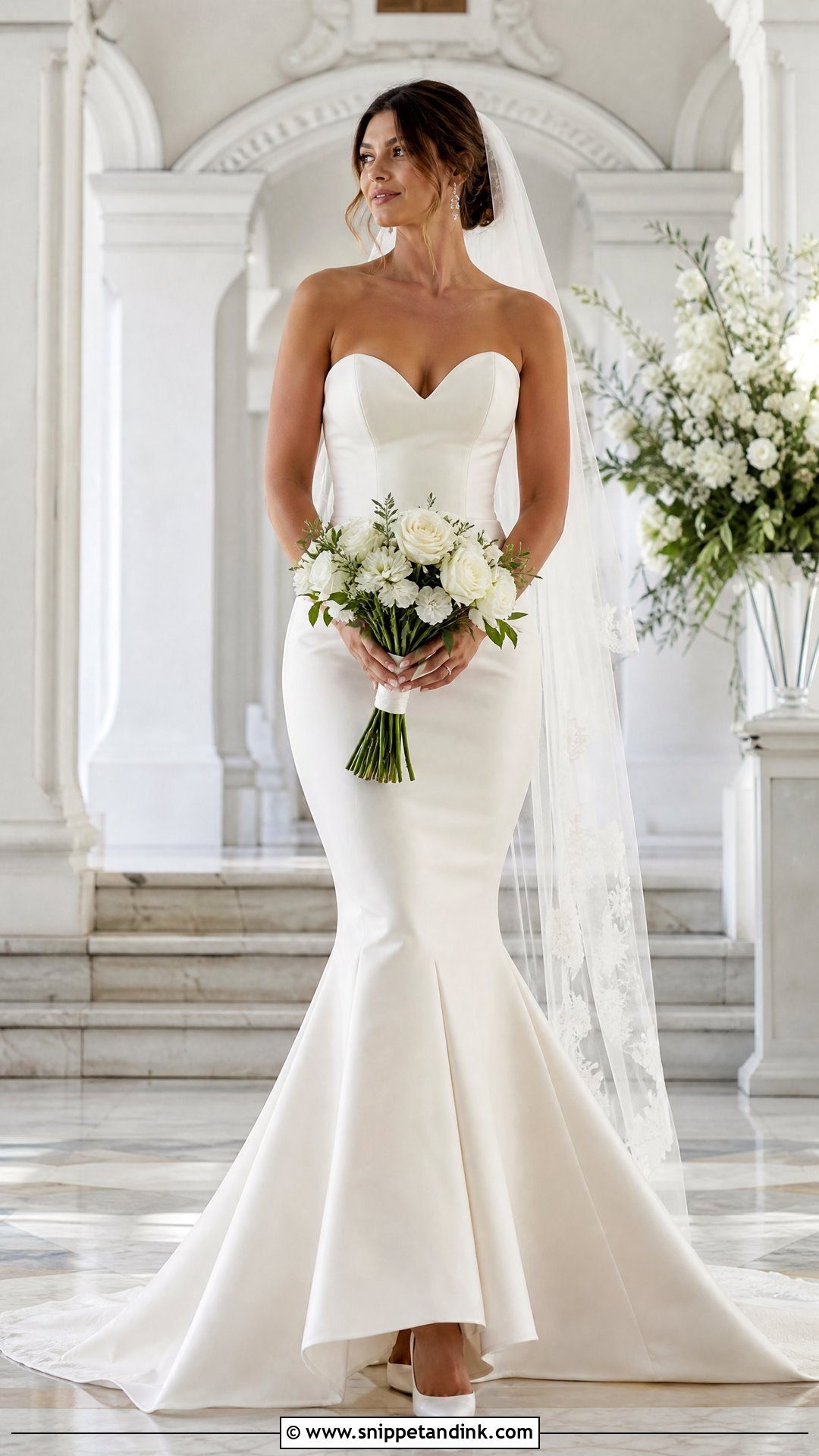
Mermaid bodycon dresses are fitted through the waist and hips, then open near the knee or lower thigh. Where that flare starts controls how you move. It works best when the flare is balanced and sits low enough to look dramatic but high enough to let you walk up a step. Crepe, lace, satin and mikado each give different levels of structure. High heels and a long veil keep the proportions right. Practise walking in it before the day.
8. Square Neck Bodycon Wedding Dress
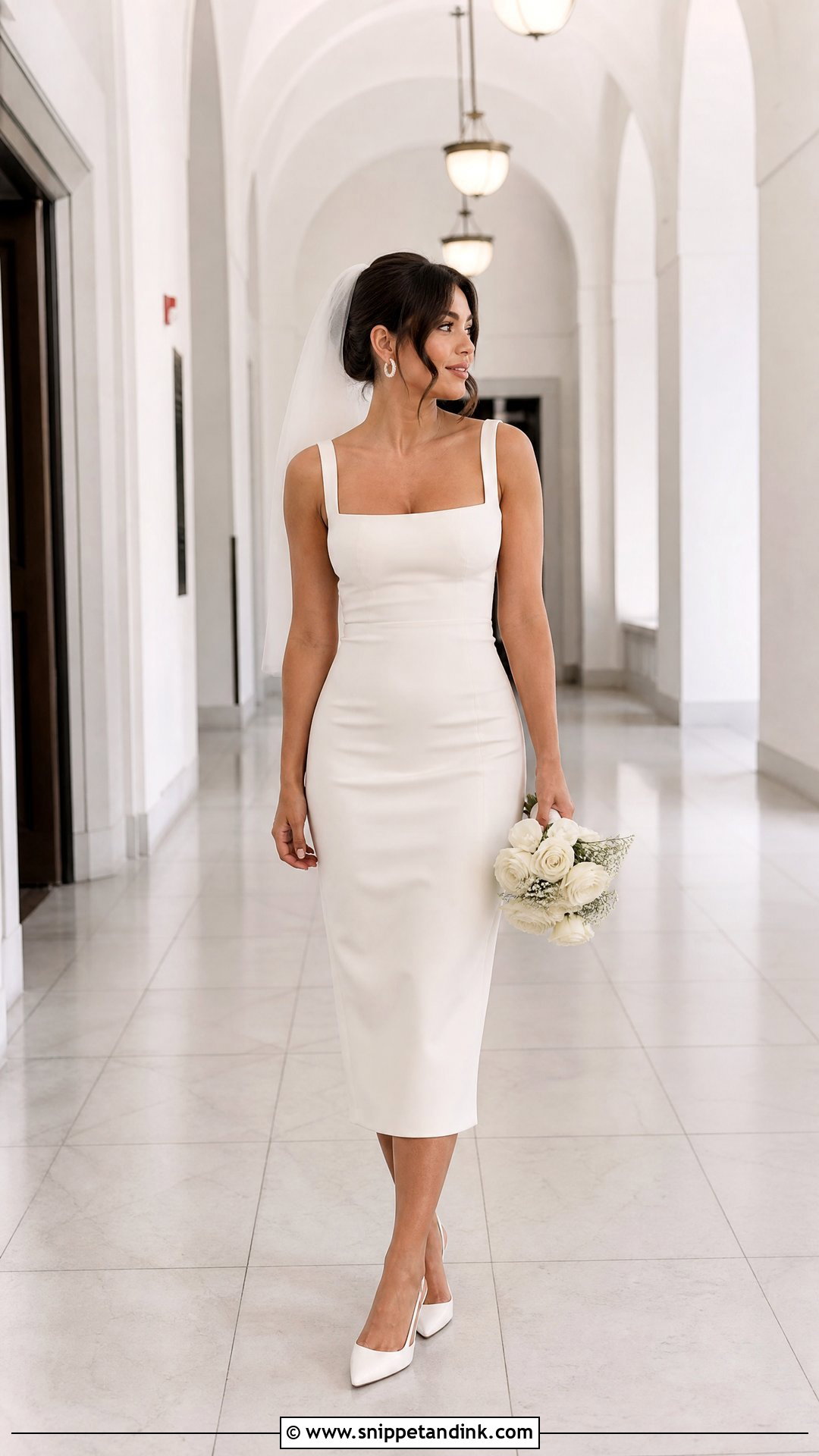
A square neckline frames the chest and shoulders with straight lines, so it gives a fitted dress structure without any embellishment. Thick straps support more; thin straps look lighter but carry less. Fitted crepe, satin and stretch lace all suit it. Floor length looks formal; midi suits a small ceremony. Pearl hoops, a short veil and pointed slingbacks keep it balanced. It looks clean without being plain.
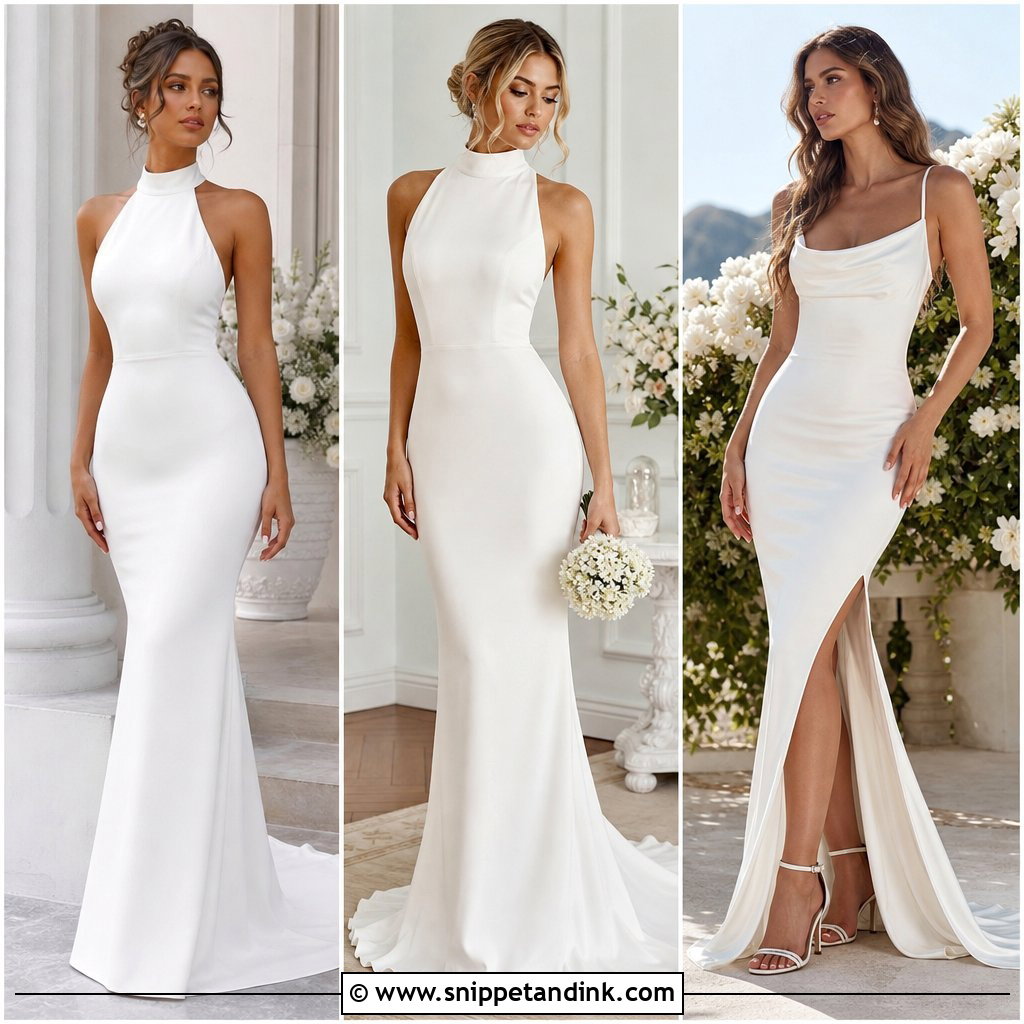
9. High Neck Bodycon Wedding Dress
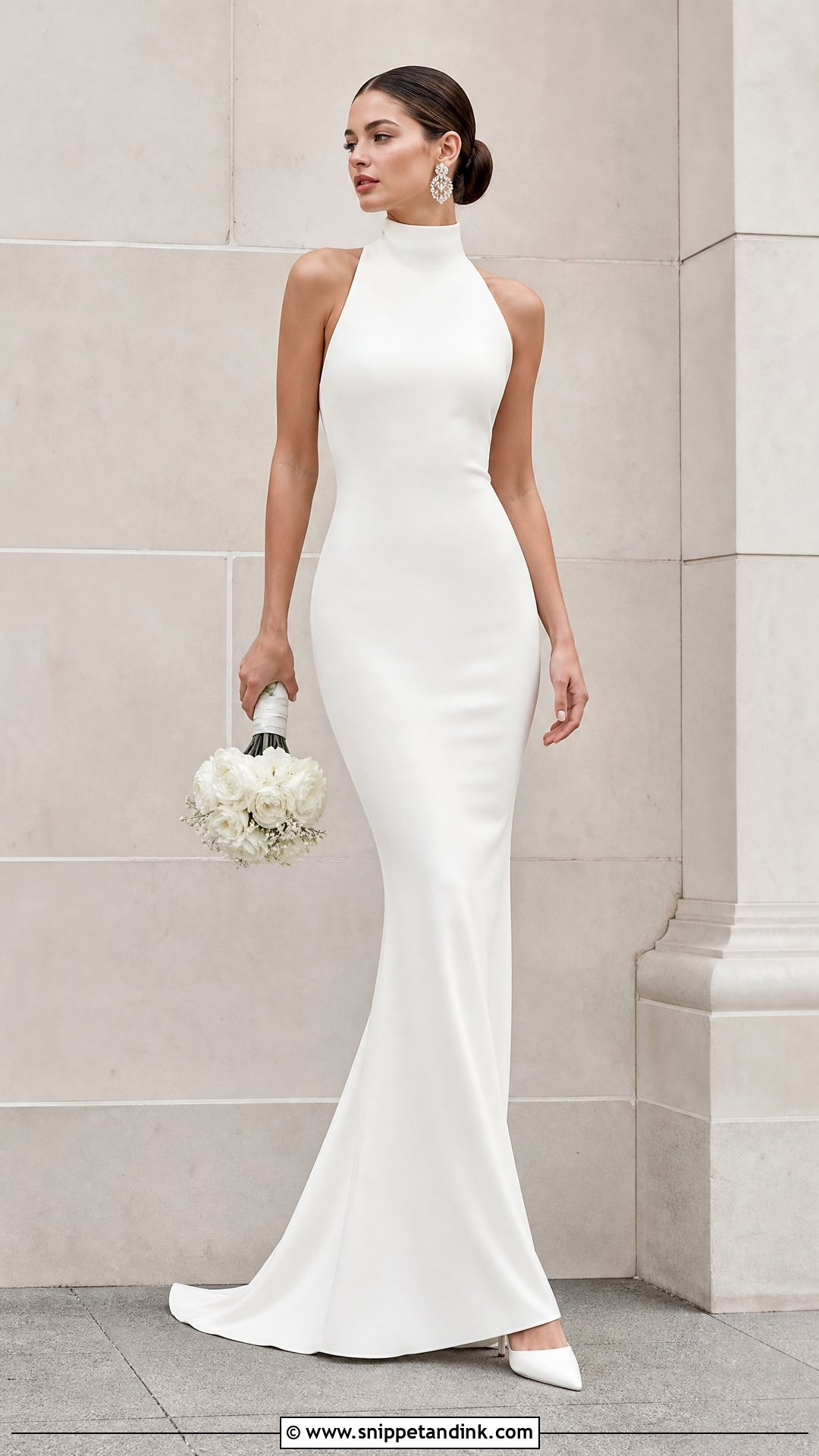
High necklines cover the chest and let the fitted shape do the rest, so the effect is sophisticated rather than revealing. A high neck sits close to the throat, which means the fabric has to be comfortable there. Stretch crepe and jersey feel better than stiff satin. Sleeveless versions look modern; long sleeves look more covered. Keep the neckline clear with a sleek bun and statement earrings. A low open back gives a nice contrast.
10. Halter Bodycon Wedding Dress
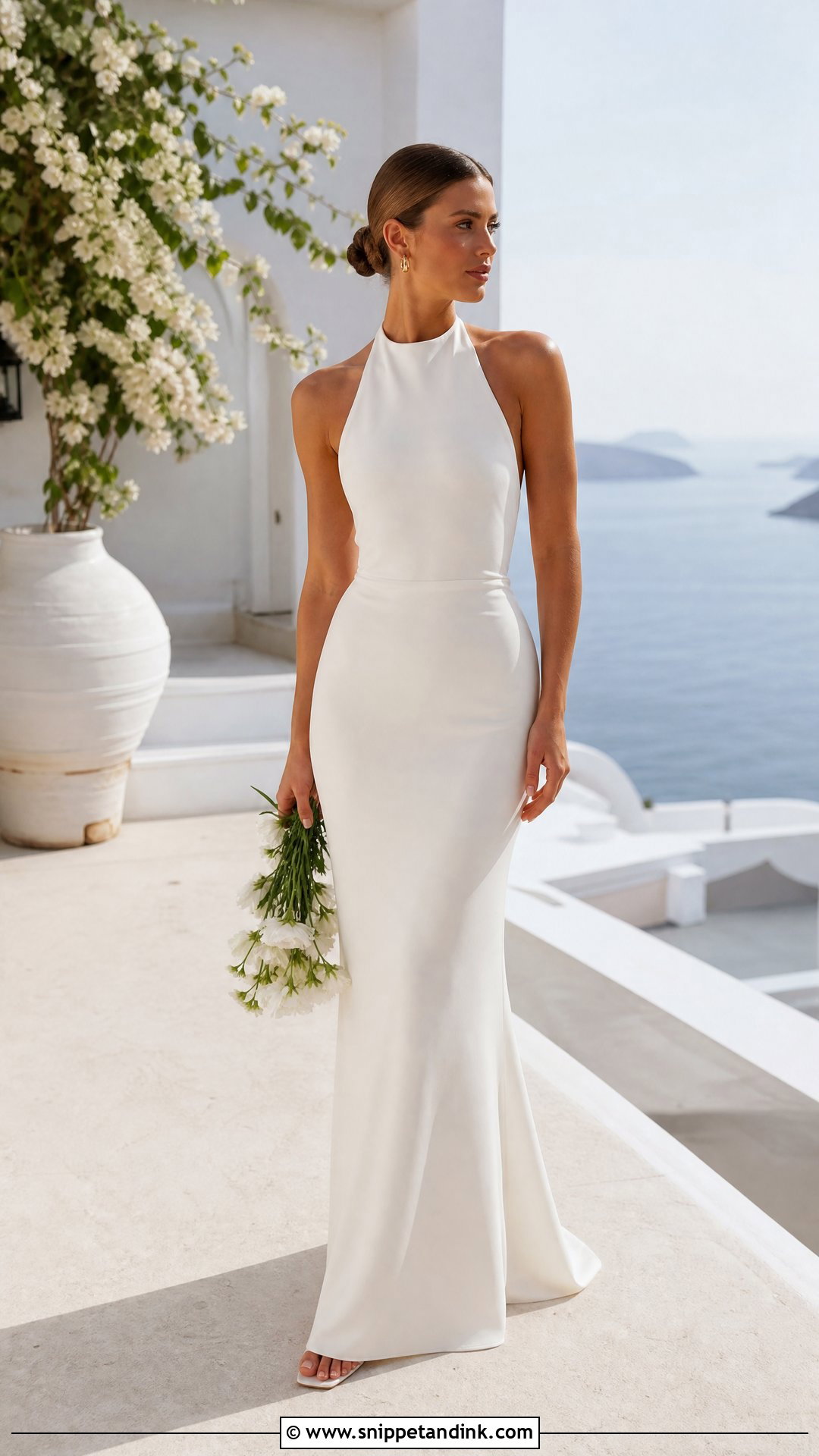
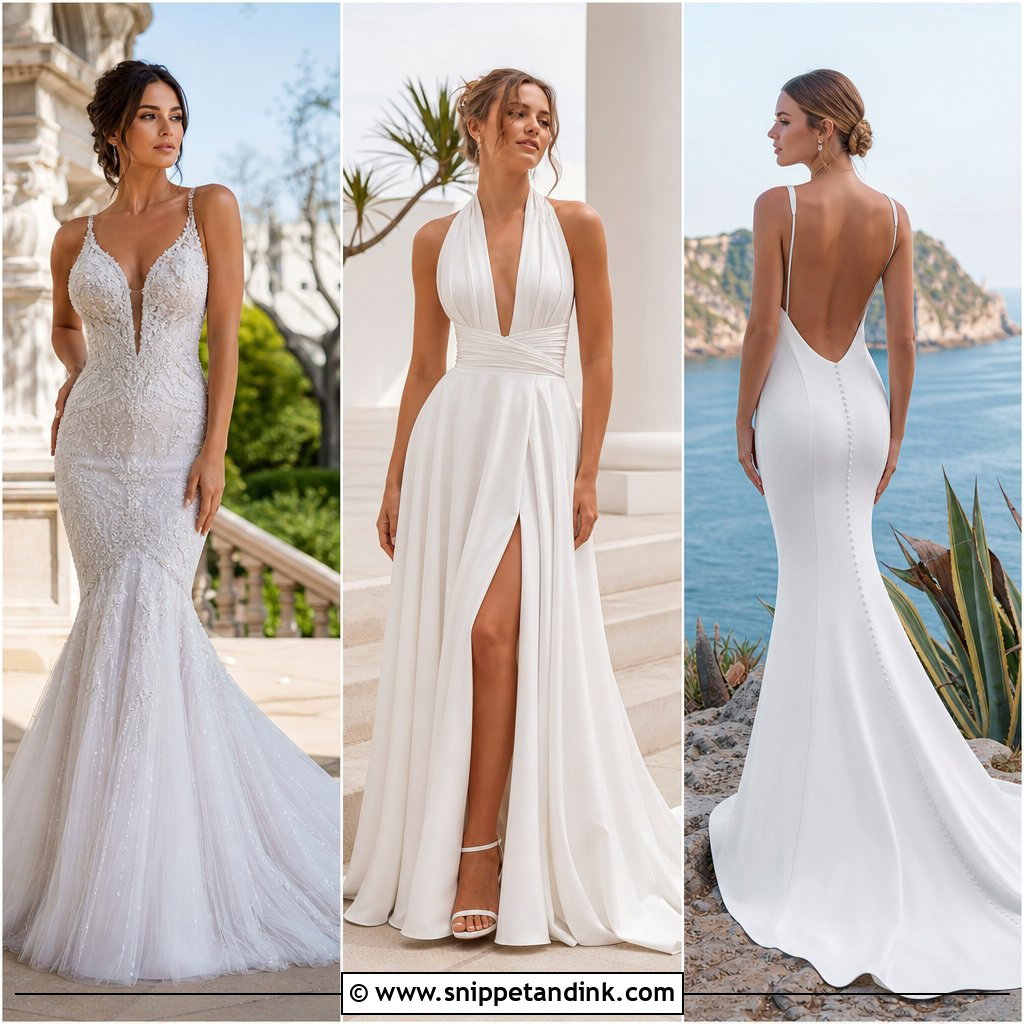
Halter necks lift the bust and show the shoulders, and the support comes from the neck strap rather than the bodice. A plunging halter is more dramatic; a high halter is minimal. Stretch crepe, satin and smooth jersey all fit well. If the back is open, sort out adhesive cups or built-in support early; trying them for the first time on the morning of the wedding rarely goes well. A low bun and small hoops keep the neck clear. Warm-weather and destination weddings suit it.
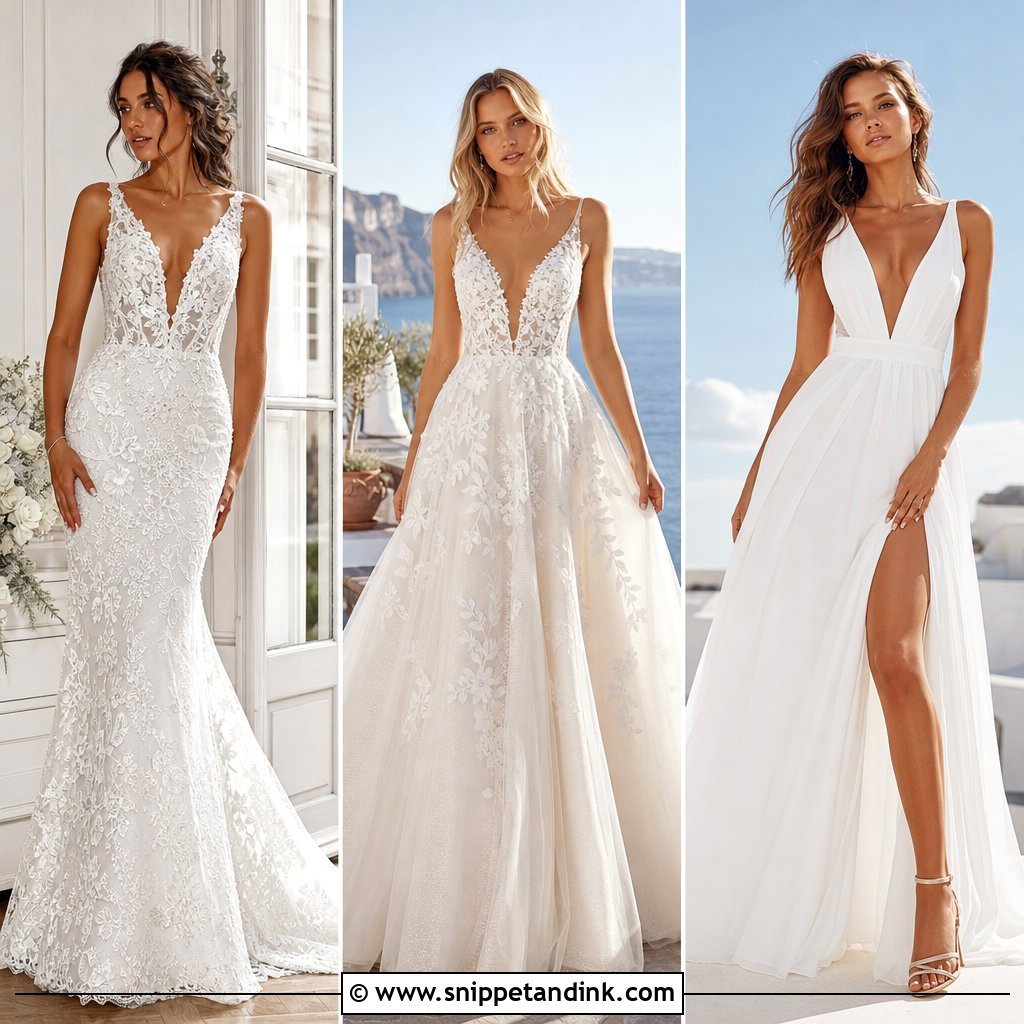
11. V Neck Bodycon Wedding Dress
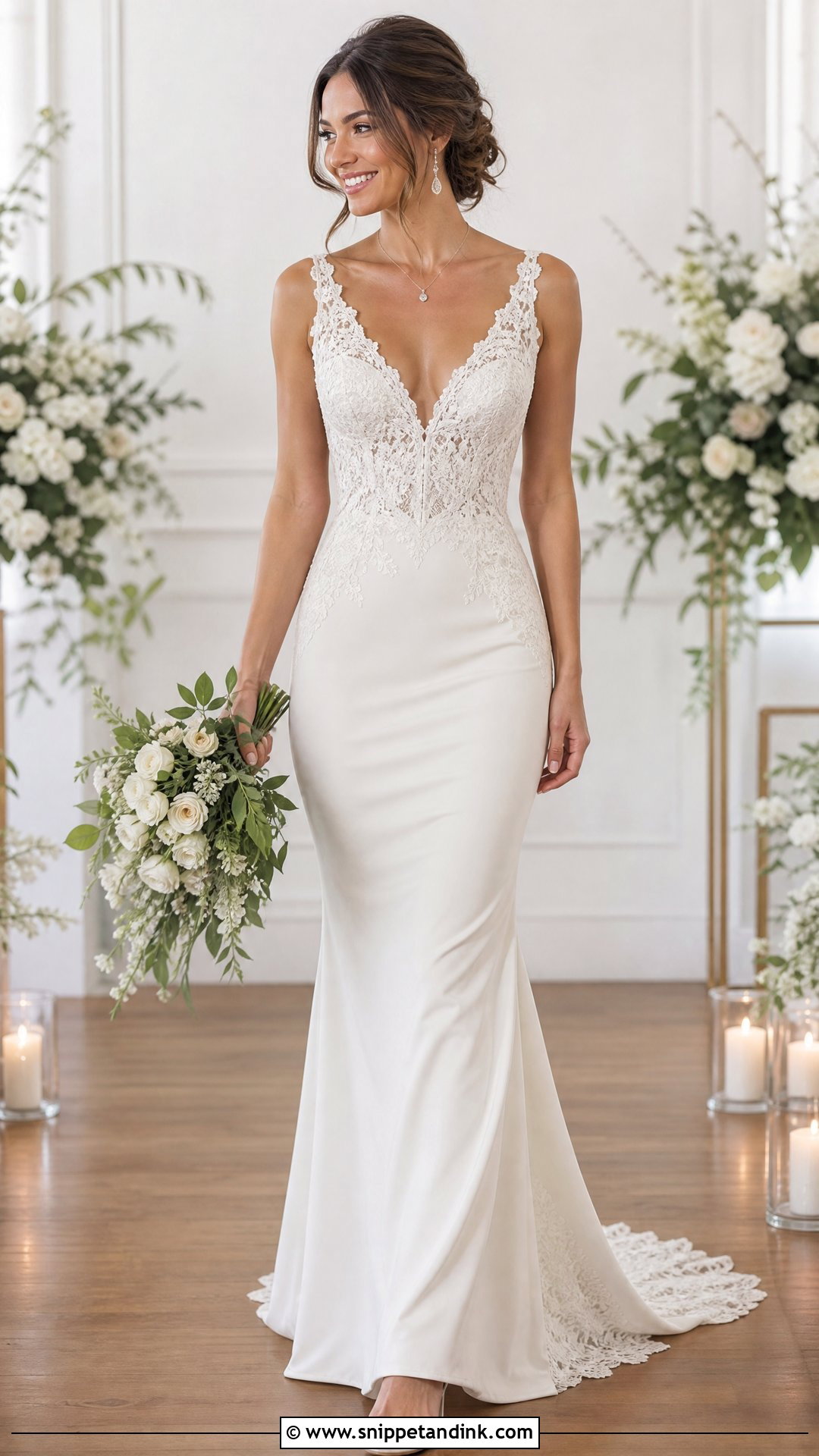
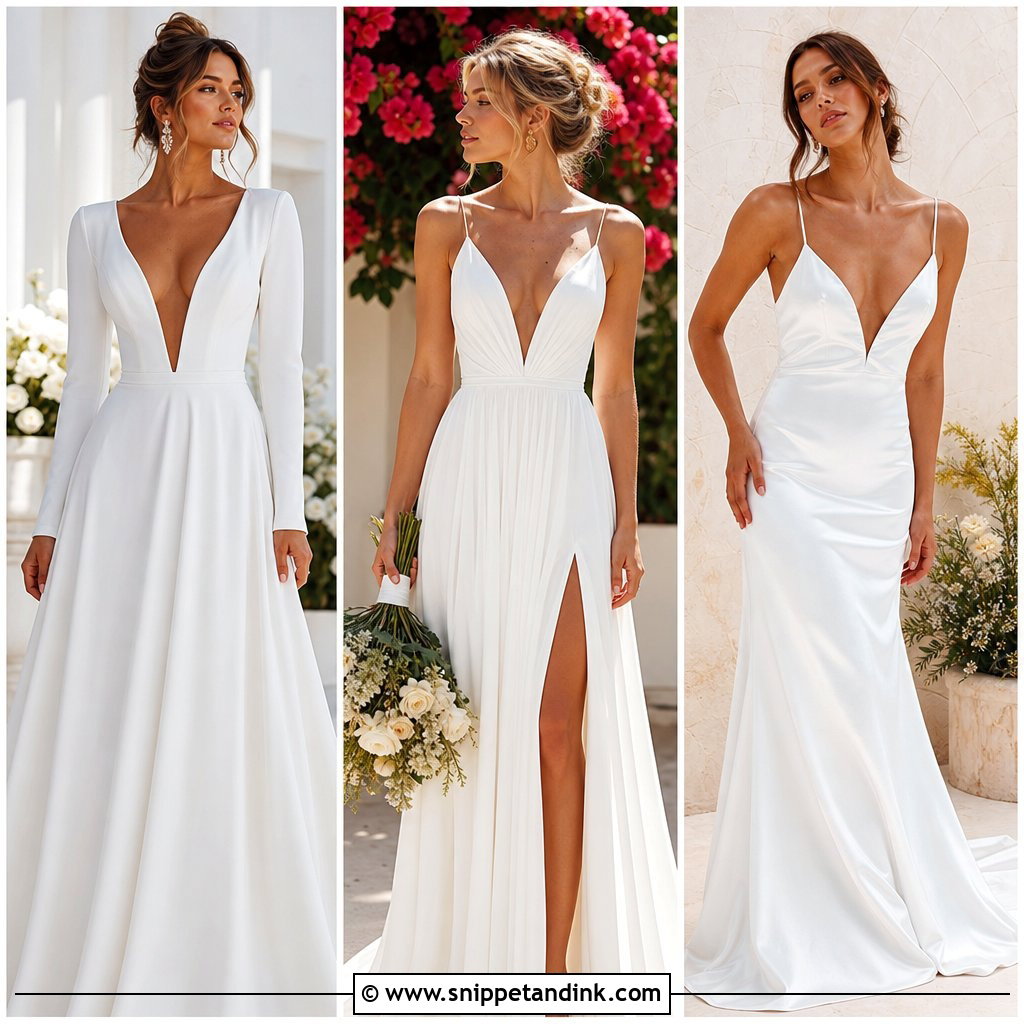
A V-neck lengthens the upper body and softens a close fit. The depth sets the mood: a modest V is classic, and a deep V usually needs a sheer mesh panel to keep it secure. Lace, satin, crepe and beaded fabrics all work. Add a fine pendant, drop earrings or nothing at all, depending on the detail on the dress. Sit down in it at the fitting. A deep V can gape when you lean forward, and a tailor can tack it in.
12. One Shoulder Bodycon Wedding Dress
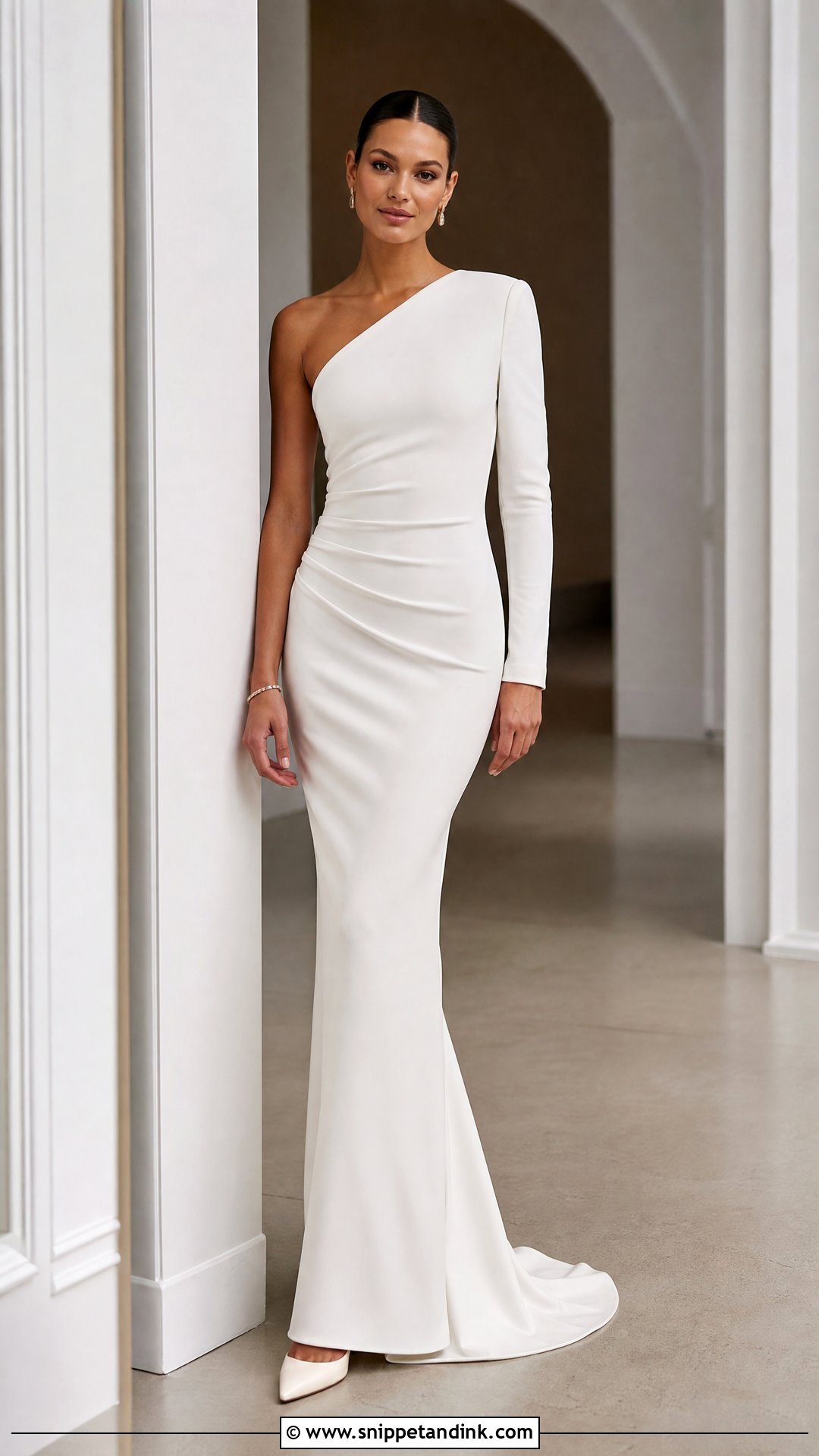
Asymmetry makes a one shoulder bodycon wedding dress interesting with no lace or beads at all, because the shape becomes the detail. Clean fabrics like crepe, satin and stretch mikado suit it best. The single strap holds the whole bodice, so it must be fitted closely; a loose strap lets the dress slide toward the bare side. A long gown with one sleeve feels formal; a sleeveless midi looks fresh. Skip the necklace and keep earrings simple.
13. Backless Bodycon Wedding Dress
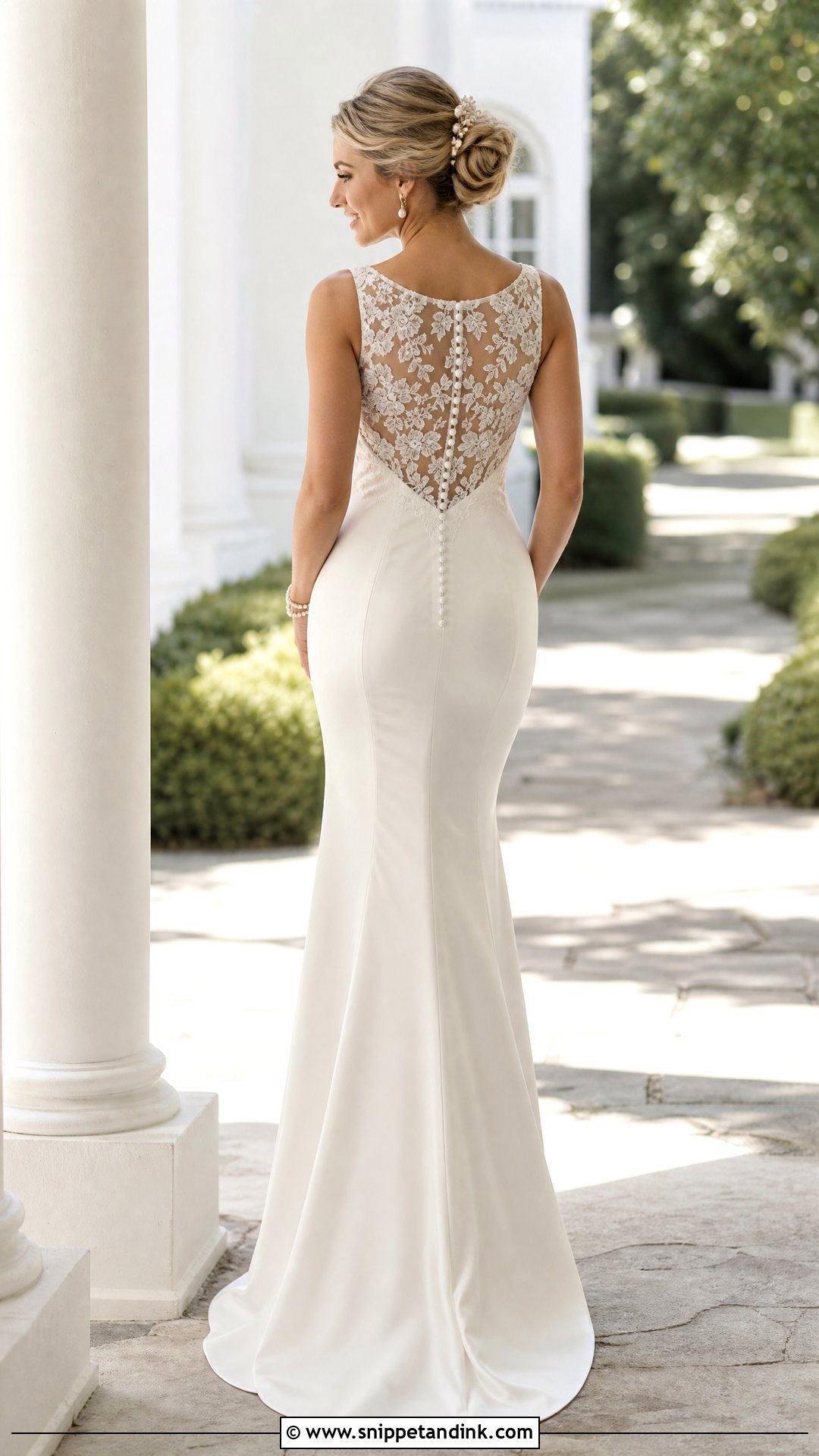
Backless dresses are all about the view from behind, so they’re a good pick when guests will mostly see you during the ceremony. The back can be low, open, keyhole or framed with fine straps. Support has to come from somewhere else: built-in cups, a firm waist seam or strong stretch fabric. I always check how low the back sits against the bra options before anything else. An updo, a back necklace or pearl pins highlight it. Keep shoes and jewellery plain.
14. Short Bodycon Wedding Dress
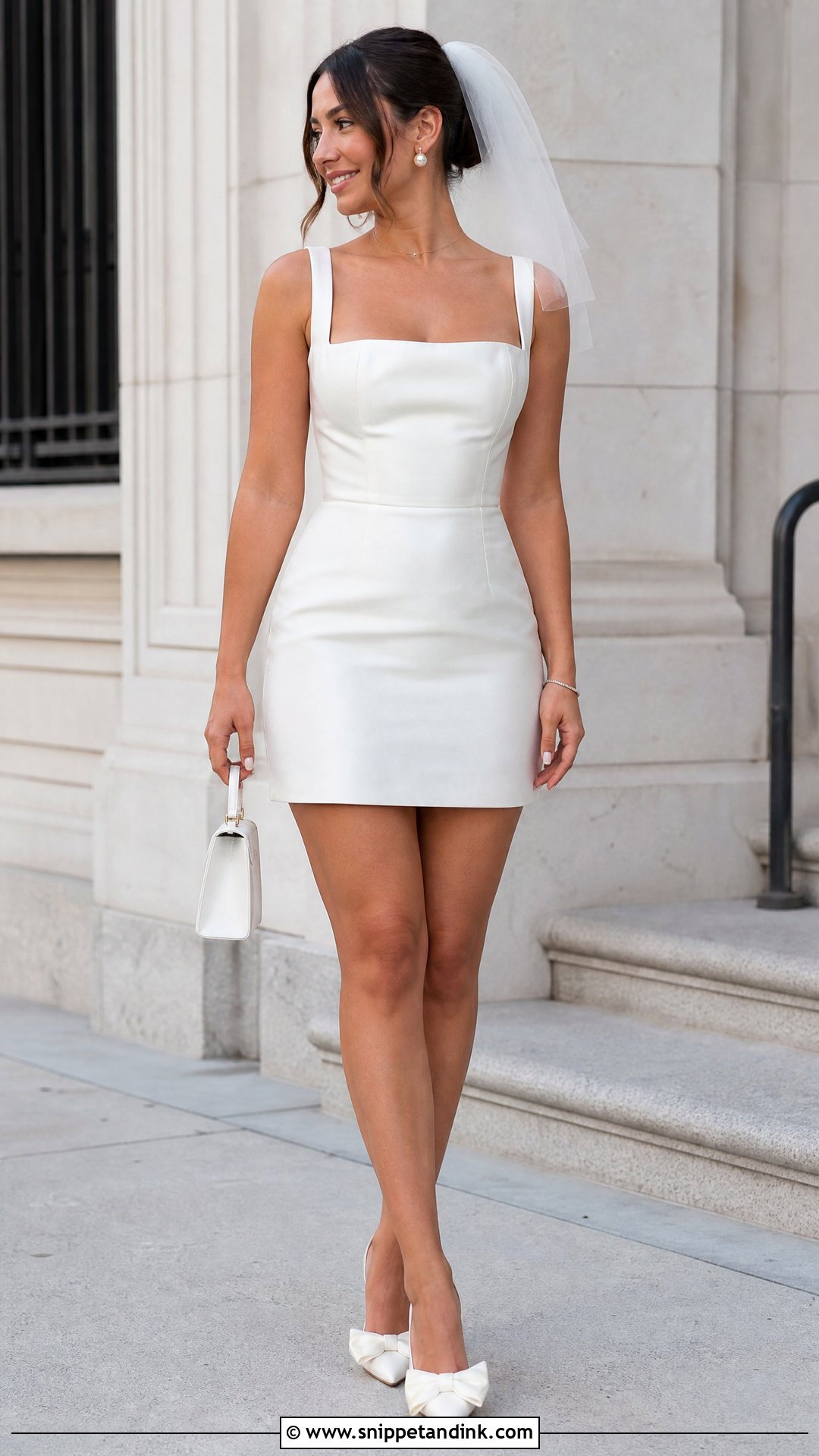
A short dress shows your shoes, so pick something special: pointed pumps, slingbacks or bow heels. It suits courthouse ceremonies, elopements, rehearsal dinners and second looks. A mini or above-the-knee dress still looks bridal when the fabric is structured and lined, with details like pearls, feathers at the hem or a strapless neckline. Short fitted dresses ride up when you sit, so try sitting in it before you commit. Add a short veil and a small white bag.
15. Midi Bodycon Wedding Dress
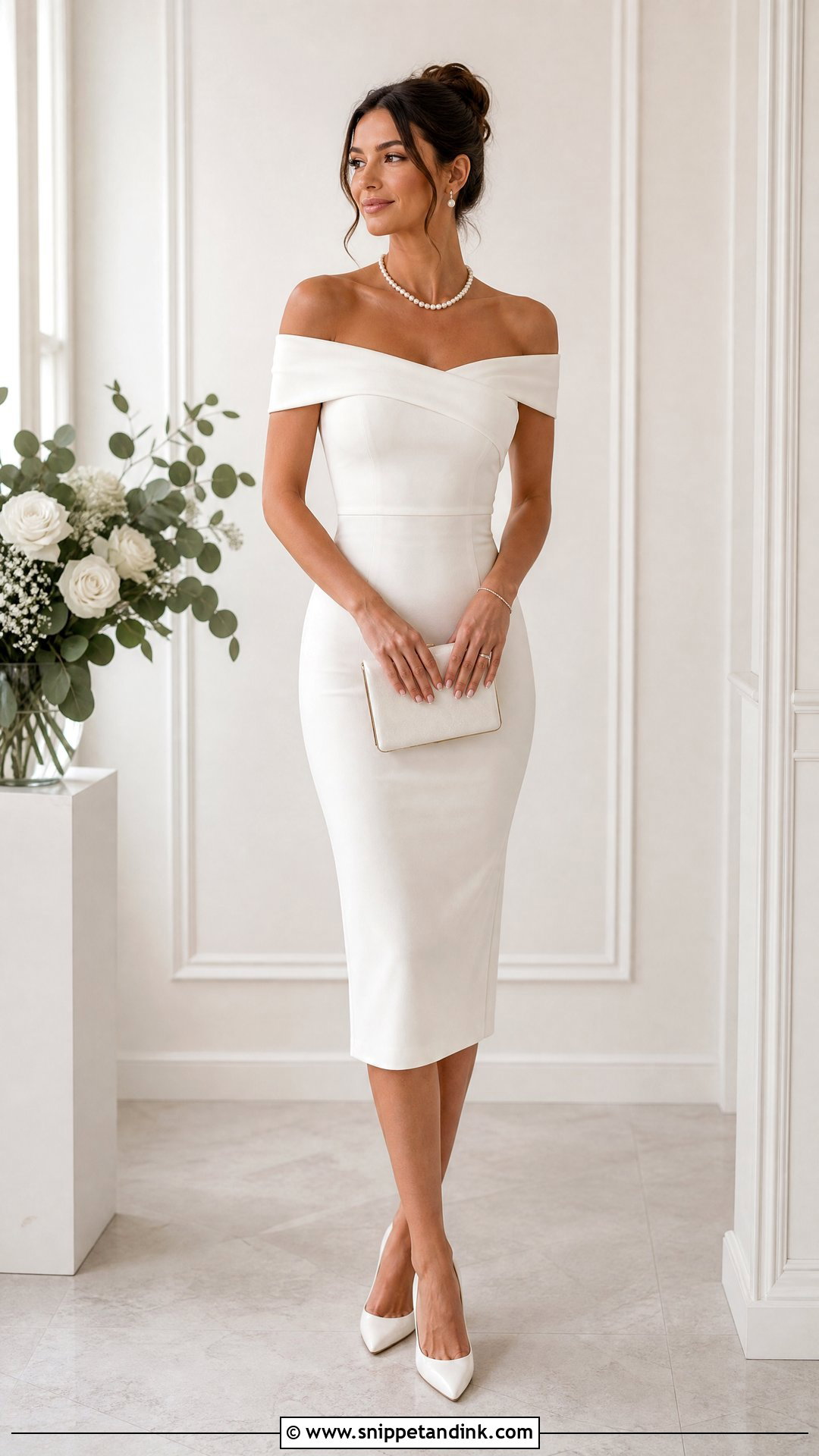
A midi bodycon wedding dress falls below the knee, which keeps the fitted shape while making walking, dancing and greeting guests much easier. Where it ends matters: just below the knee is easiest to walk in, while mid-calf looks more formal but needs a back slit. Square neck, off shoulder and strapless styles look bridal in ivory crepe, satin or lace. Pointed heels or sleek sandals and pearl jewellery finish it.
16. Bodycon Wedding Dress With Train
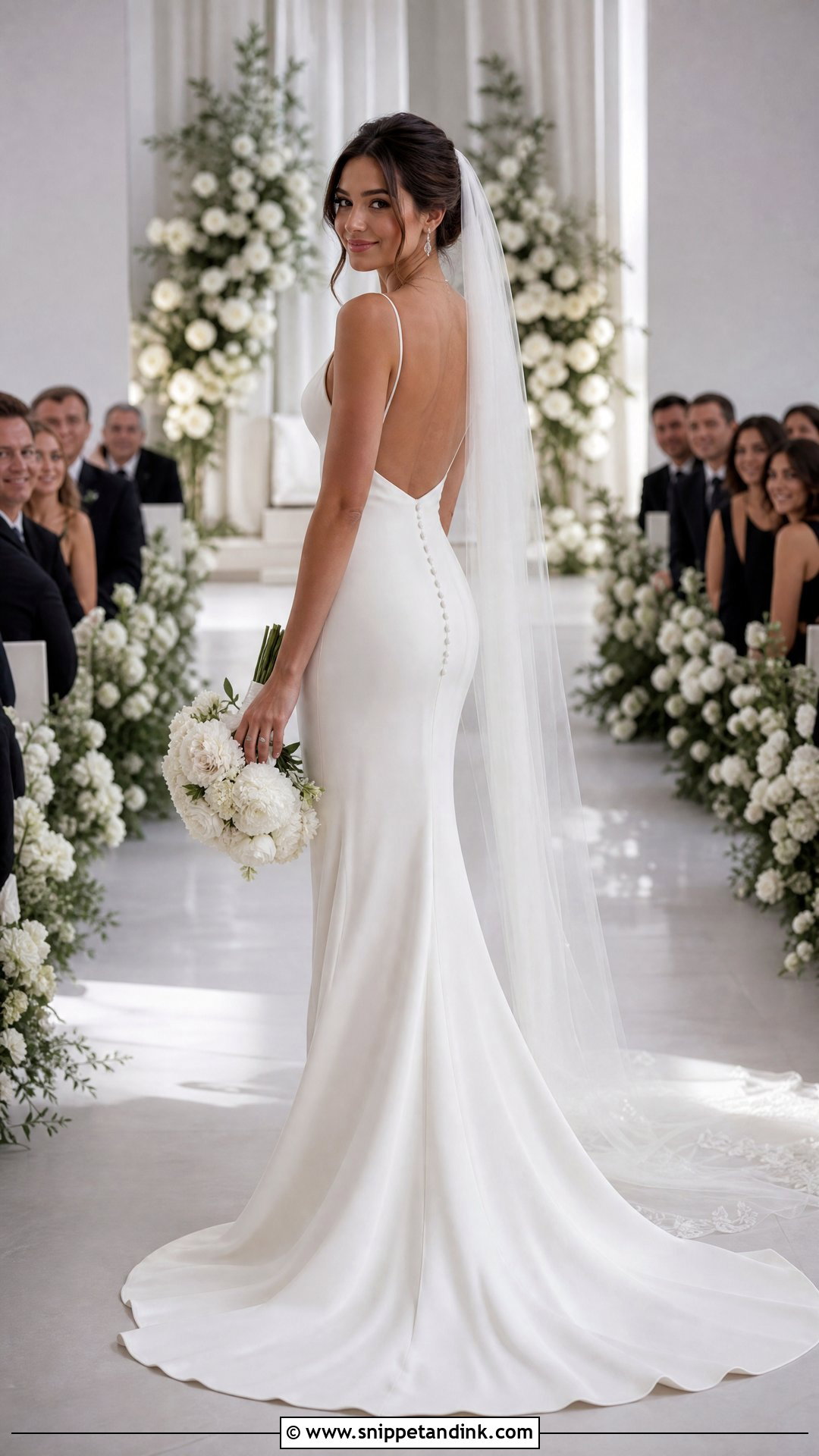
A train adds ceremony to a fitted dress, and a bodycon wedding dress with a train gets the drama of a gown with a sculpted shape. Chapel length or detachable trains are easiest to manage. A lace train adds romance; beading adds sparkle. If you’re keeping the train on for the reception, ask your seamstress to add a bustle, and get a bridesmaid to practise fastening it. High heels and a long veil keep the line balanced.
17. Bodycon Wedding Dress With Overskirt
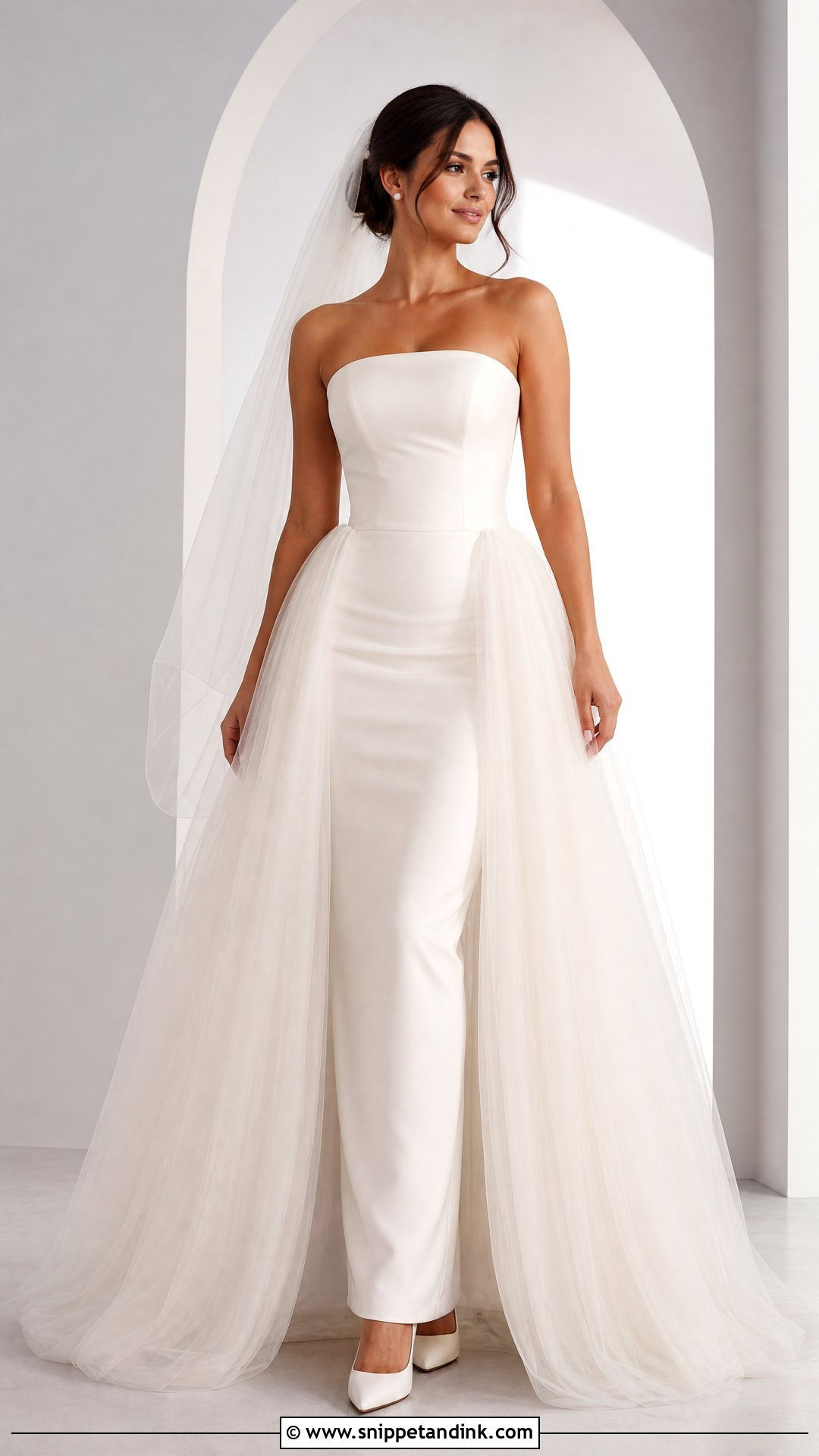
An overskirt gives you two looks: the full skirt for the ceremony and portraits, then the fitted dress underneath for the party. It can be tulle, satin, organza or lace, attached with buttons, snaps or a hidden belt. Keep the base simple, like a strapless crepe bodycon gown or plain lace dress, so the layers work together. Practise taking the overskirt off before the day. Snaps are much faster than tiny buttons when you’re changing in a hurry.
18. Beaded Bodycon Wedding Dress
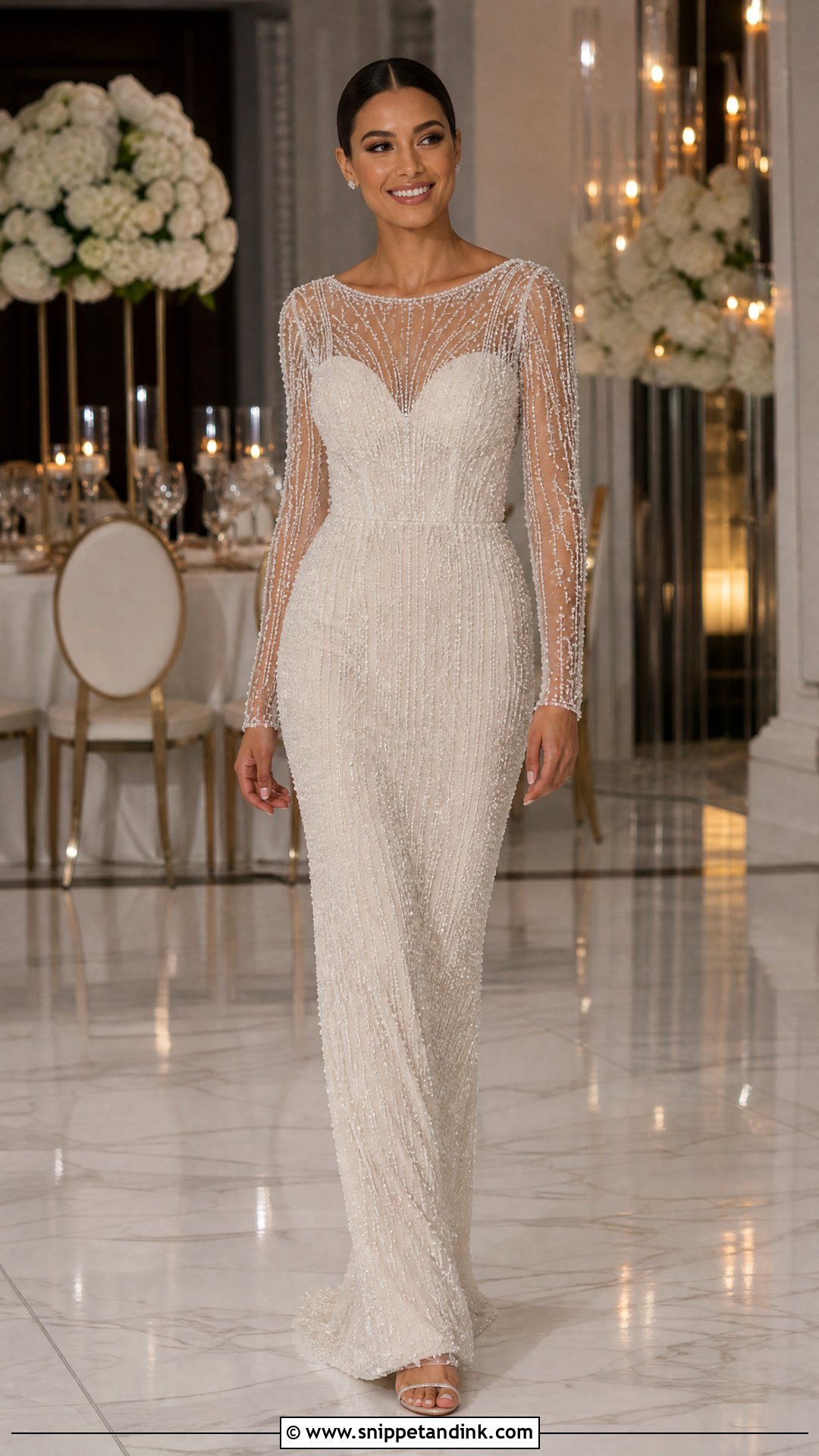
Beading brings sparkle and texture to a fitted dress, but it also adds weight, and on a close cut that weight pulls the fabric down. Look for lined mesh, stretch tulle or crepe with fine pearl, crystal or sequin work. A simple neckline keeps it from looking busy. Barely-there heels and small earrings let the dress lead. Sit, walk and dance in it before committing, since beads on the back of the hips can dig in during a long dinner.
19. Pearl Bodycon Wedding Dress
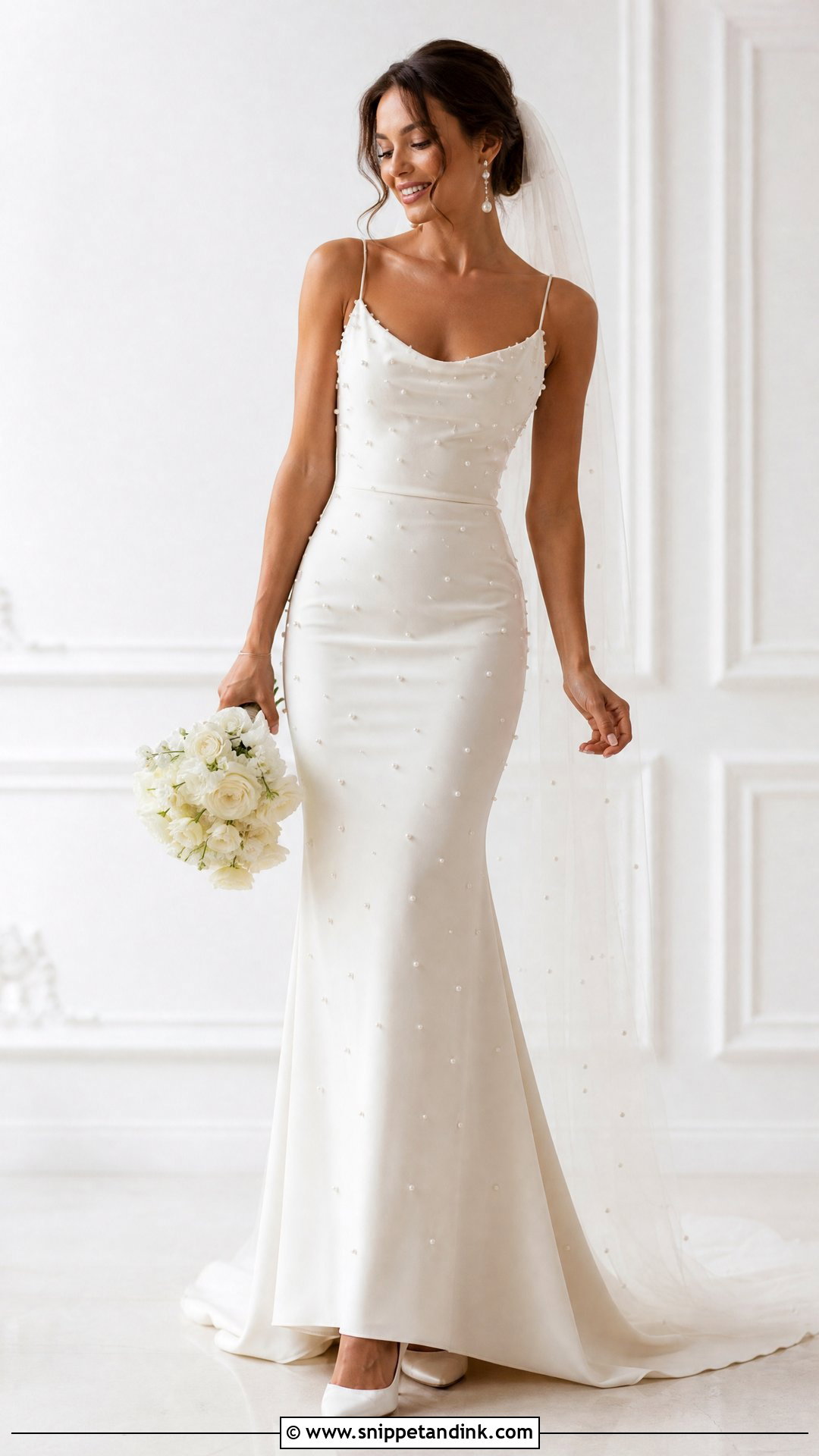
Pearls look softer than crystals, so a pearl dress feels romantic without being flashy. They can be scattered, used on straps or sleeves, or cover mesh or crepe completely. The lining should be smooth so the pearls lie flat. Since pearls on the dress already do the work, I keep accessories to one pair of pearl earrings. A low bun or soft waves both suit it. Check the pearls are stitched individually, since a loose strand can come undone.
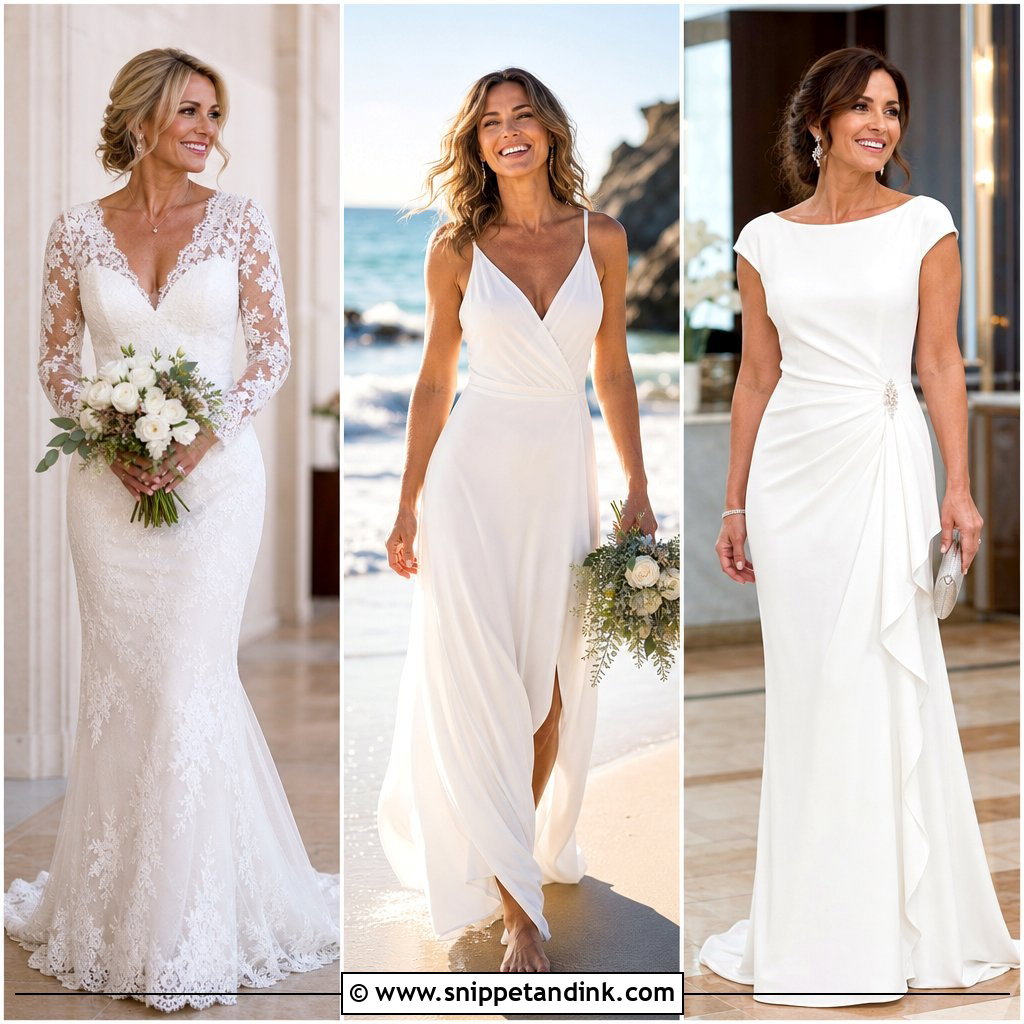

20. Simple Bodycon Wedding Dress
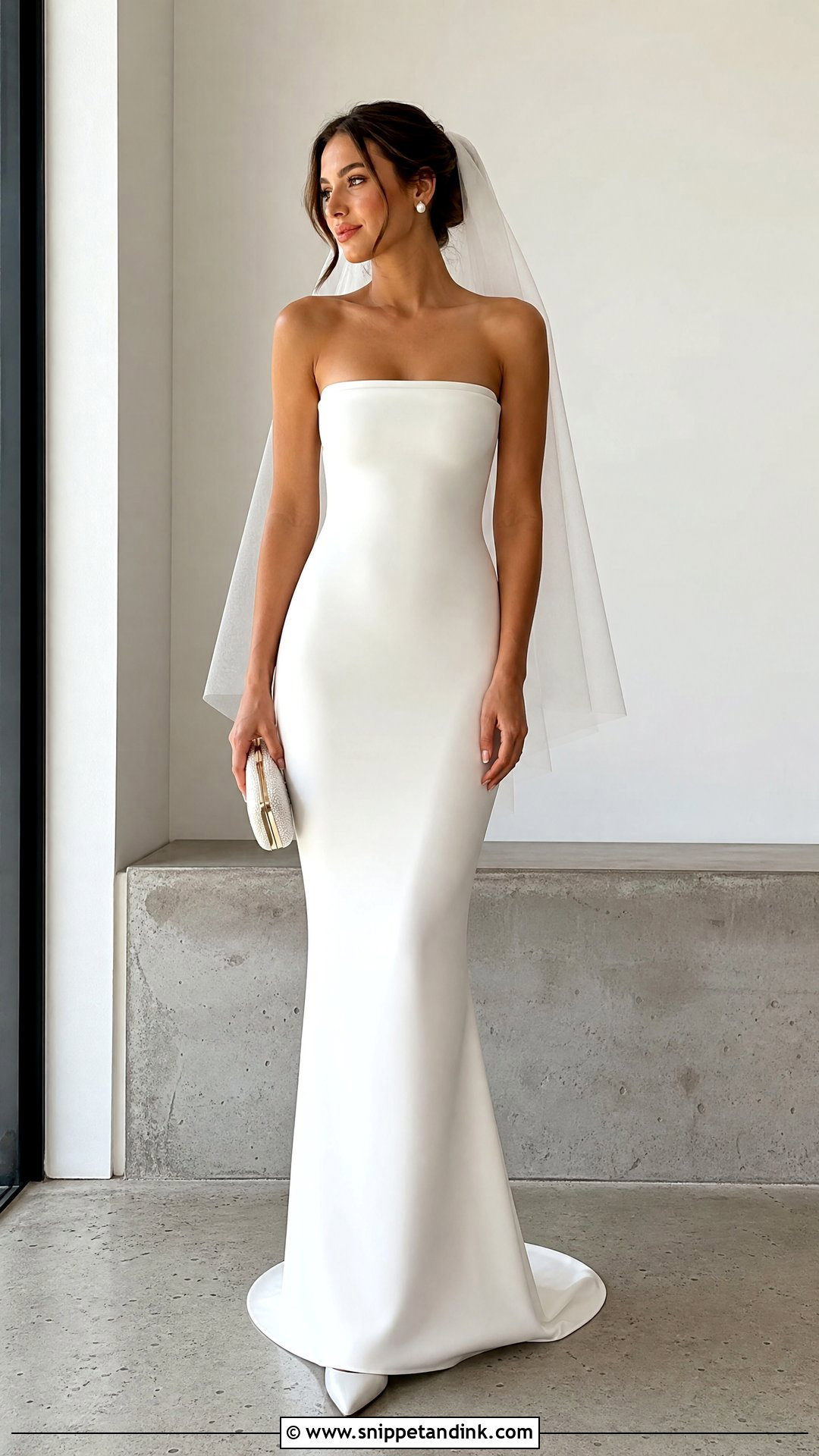
With no lace, sparkle or layers, a simple bodycon dress depends entirely on fit and fabric. Thick crepe, stretch satin or smooth jersey with good lining look sculpted; thin fabric looks cheap. Every seam is on show, so tailoring is everything. A square neck, strapless cut or long sleeves all work. Pearl studs, pointed pumps and a sheer veil are enough. It suits almost any venue.
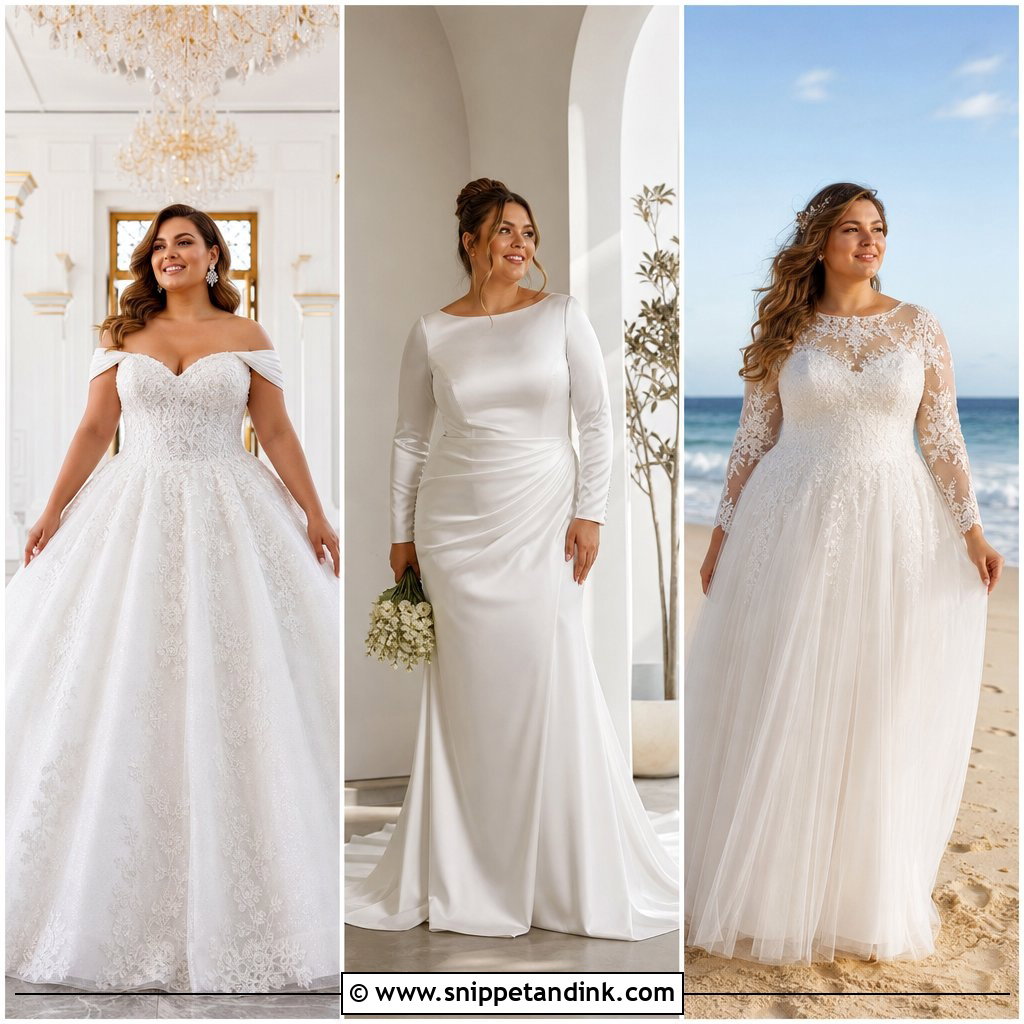
21. Plus Size Bodycon Wedding Dress
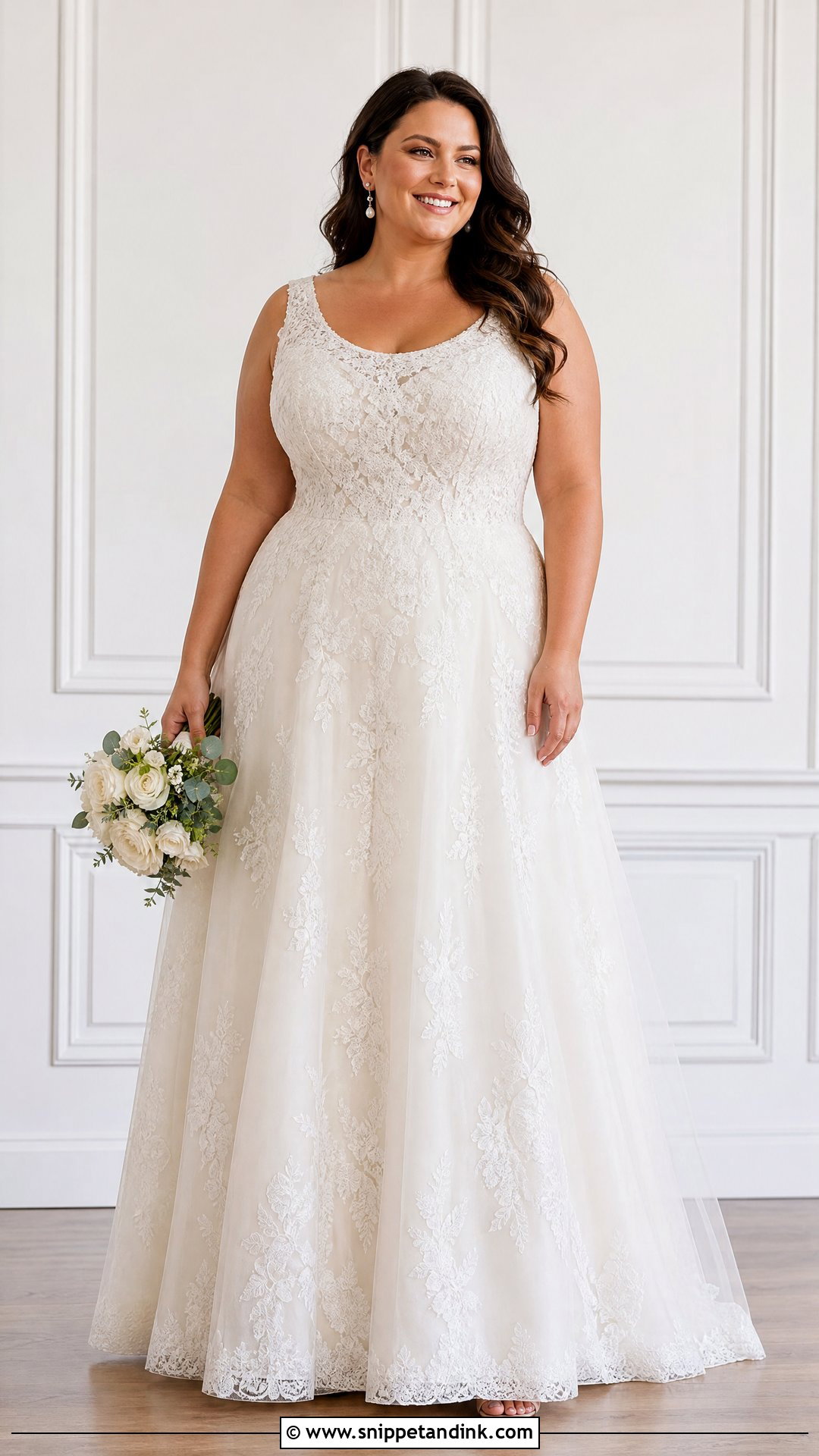
Support should come from the construction of a plus size bodycon dress, not from squeezing. Strong stretch fabric, built-in structure, thick lining and seams placed to shape the body make the difference. Crepe, lace and stretch satin all work when designed for it. A V-neck, square neck, off shoulder or wrap-style bodice balances the close fit. Stable heels help. Walk, sit, turn and hug in it at the fitting; the right one won’t need adjusting all night.
22. Petite Bodycon Wedding Dress
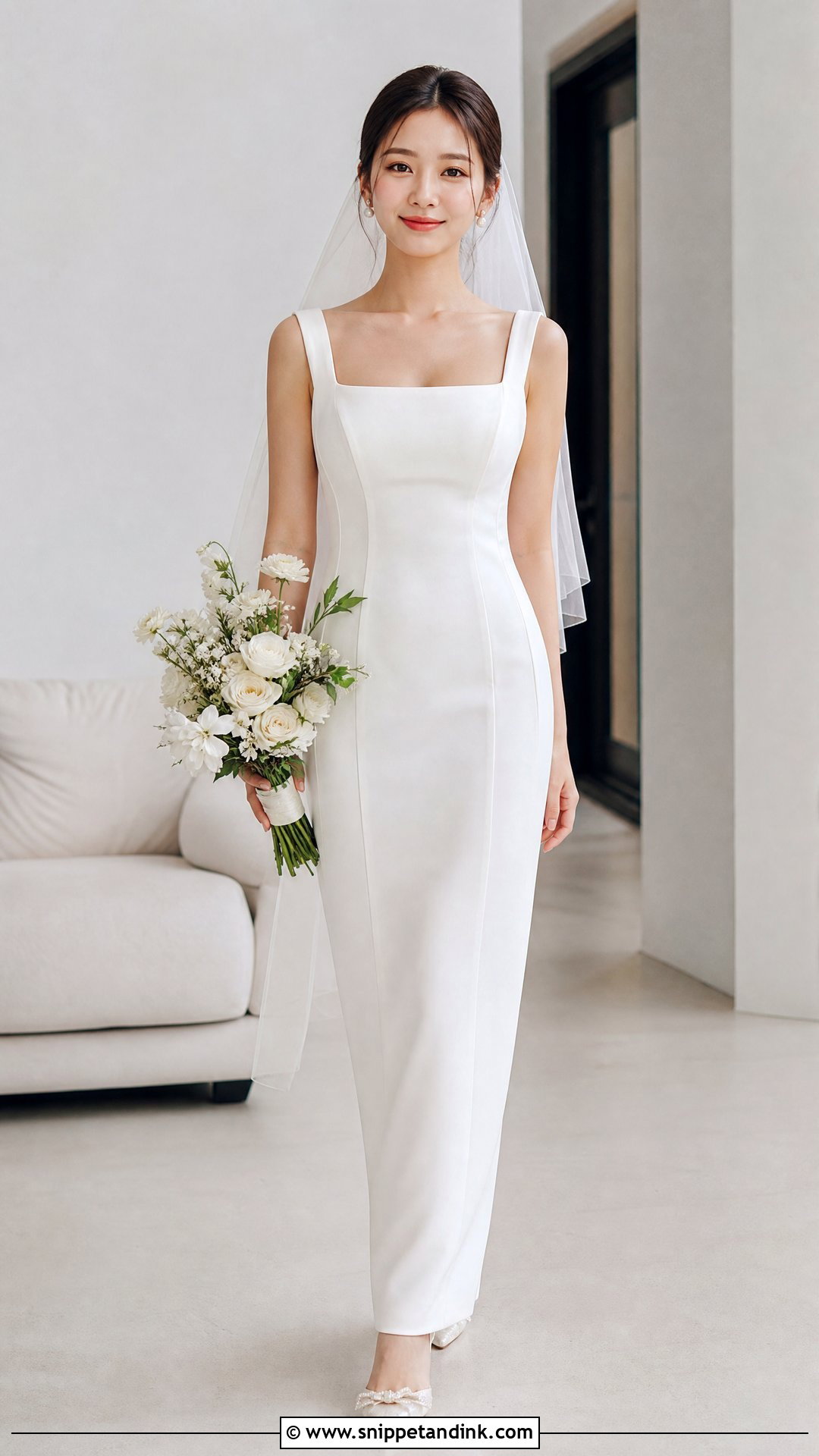
Petite frames get lost in heavy trains and very wide sleeves, so in a fitted dress I keep the proportions clean and vertical. A midi, slim column, square neckline or high slit all lengthen the look. Vertical seams help, as do heels close to your skin tone or dress colour. Tailoring is key at the straps, waist, hips and hem, since most dresses are cut for a taller frame. A simple veil or fine hair accessory keeps everything in scale.
23. Maternity Bodycon Wedding Dress
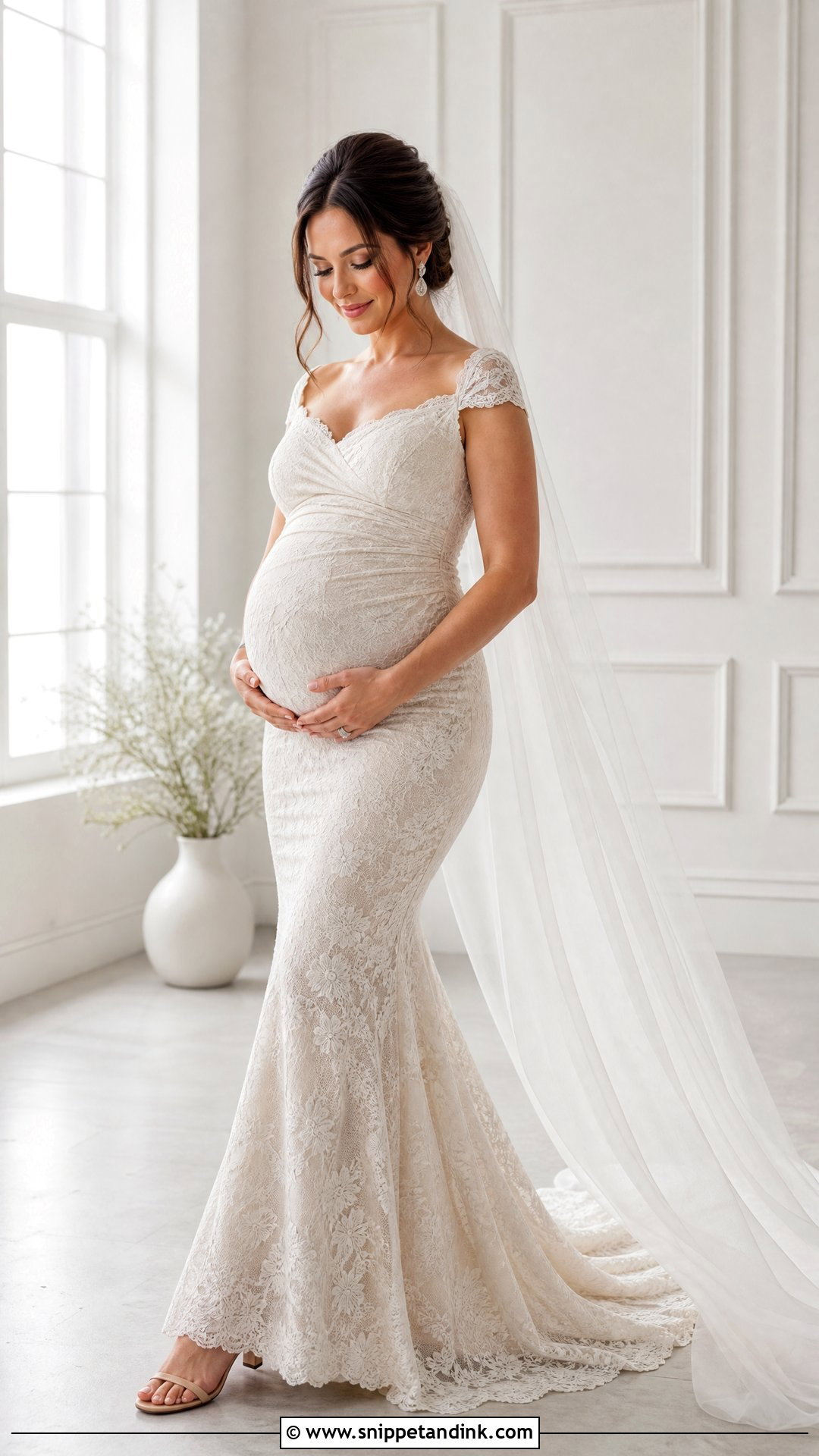
A maternity bodycon dress needs real stretch to work. Ruching, soft jersey, stretch lace and flexible crepe adjust around the bump without digging in. An empire seam, wrap neckline or off shoulder shape adds balance. Low block heels or flats help as the day gets long. Book the final fitting as close to the date as you can, because the fit can change within a couple of weeks. Keep the jewellery light and the veil soft.
24. Courthouse Bodycon Wedding Dress
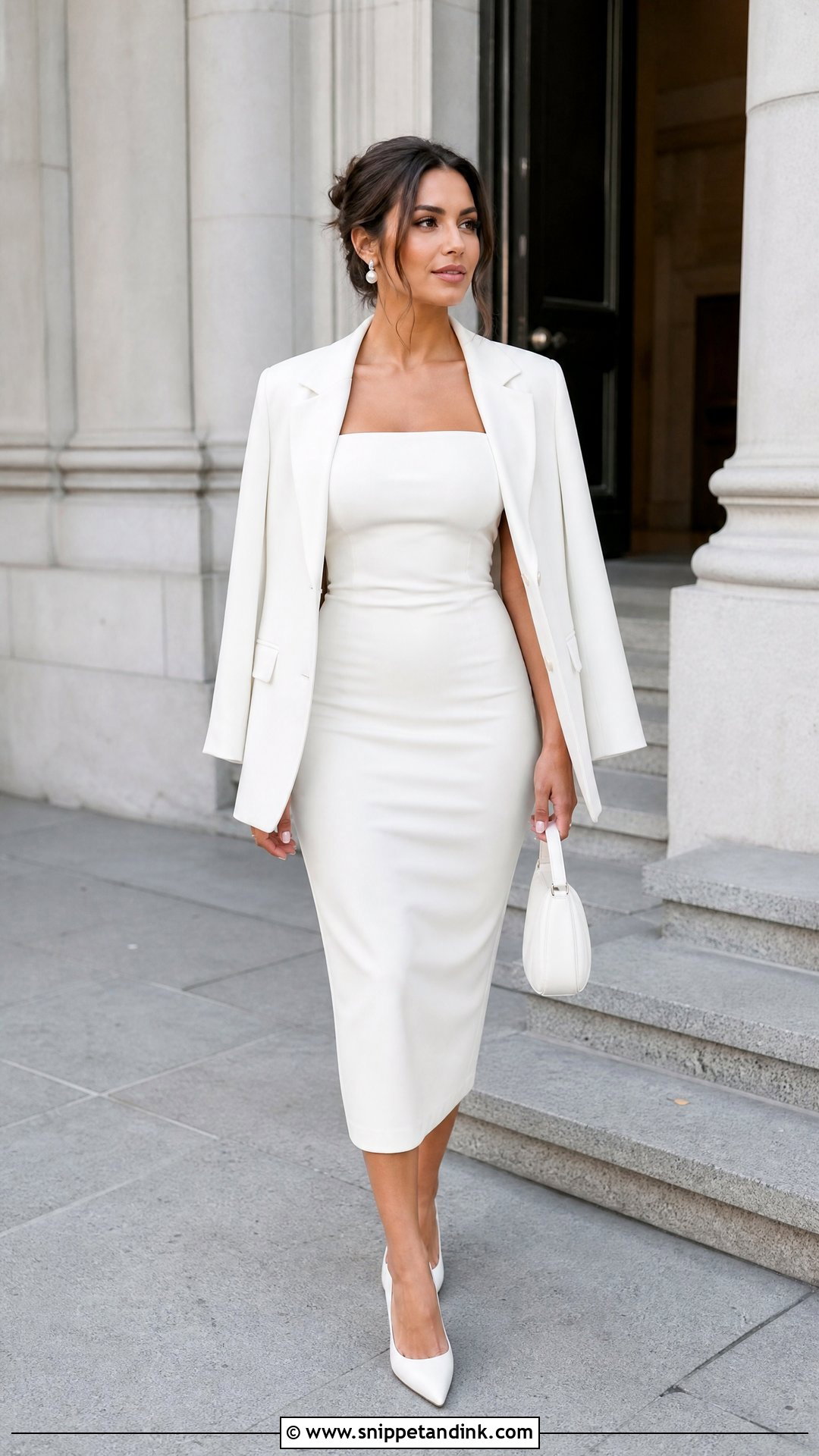
Courthouse ceremonies are short and often include a walk outside, so the dress needs to look polished and be easy to move in. Midi and short lengths suit it. A white crepe midi, a satin strapless mini or a long sleeve fitted dress all work. Add pointed heels, a small handbag, pearl earrings and a short veil or bow. A tailored blazer gives you warmth on the steps and looks sharp in photos.

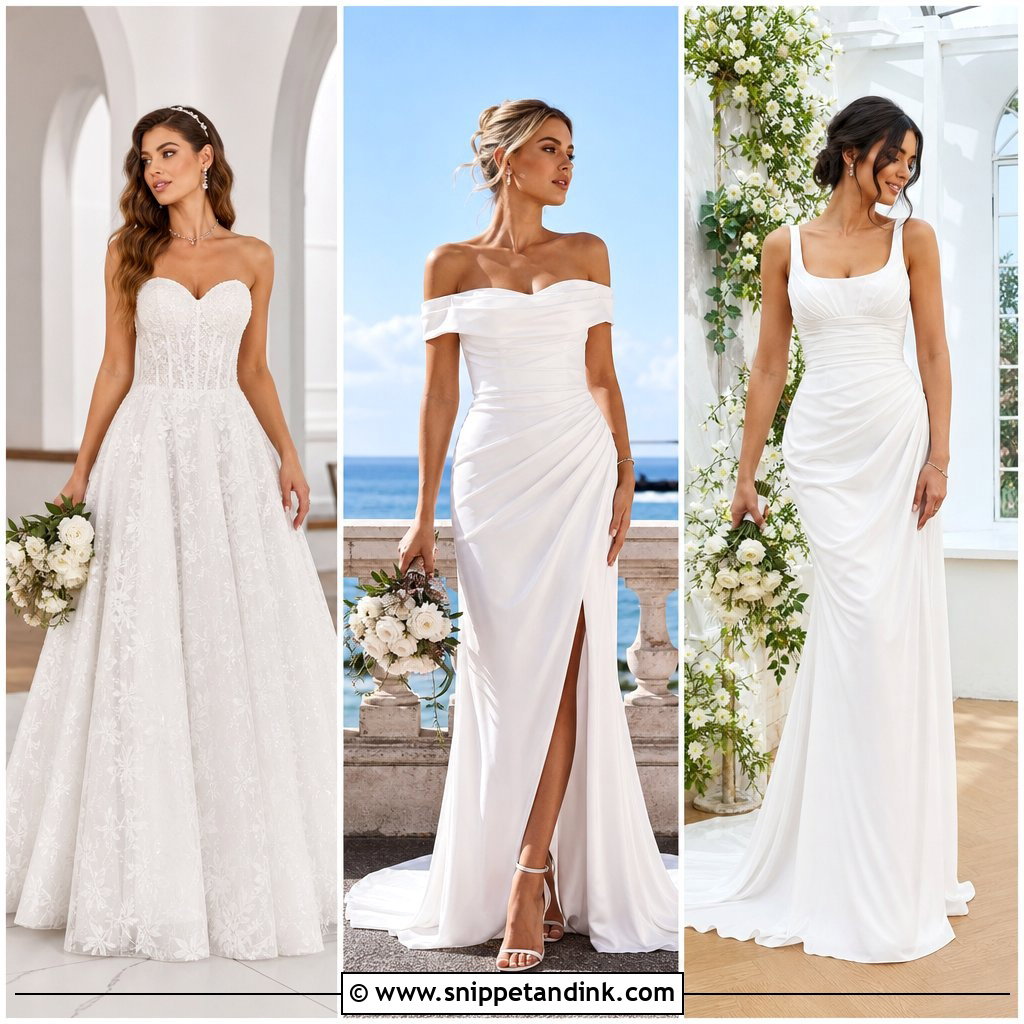
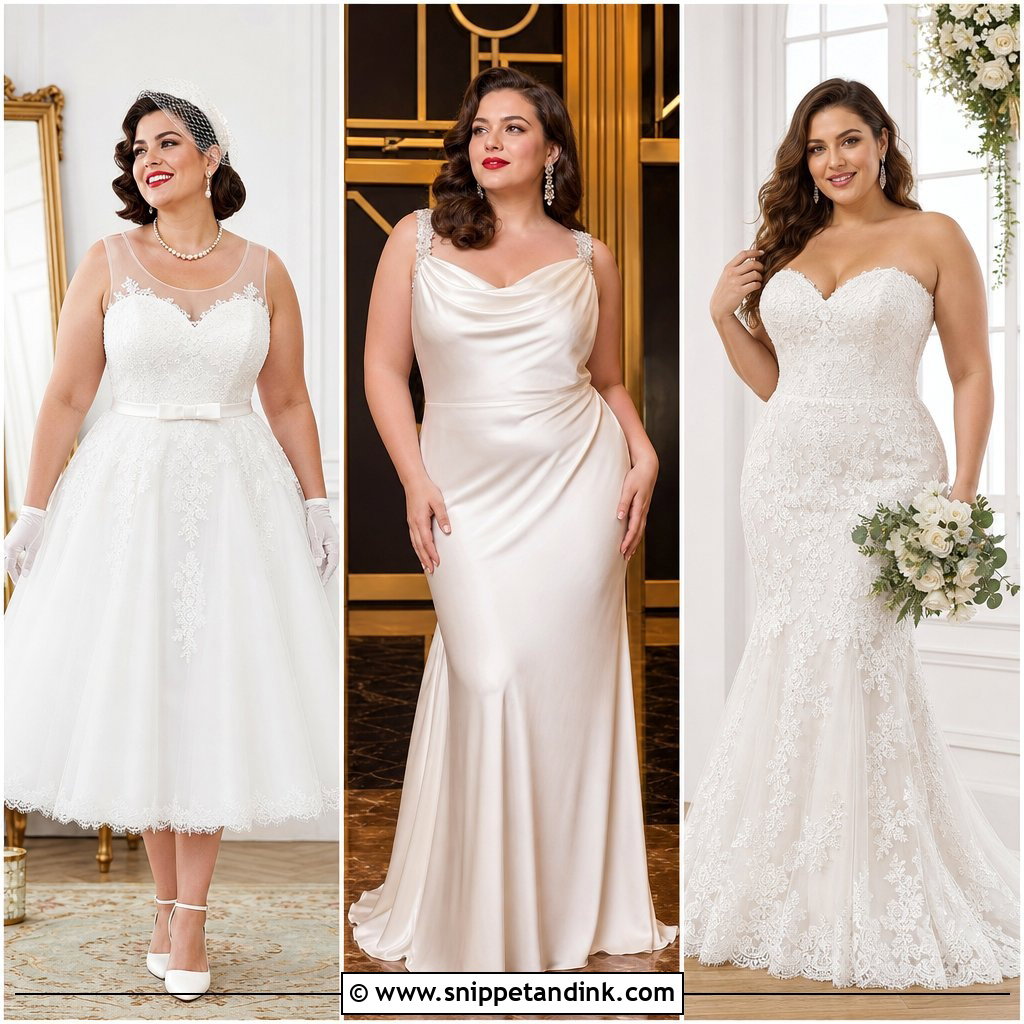
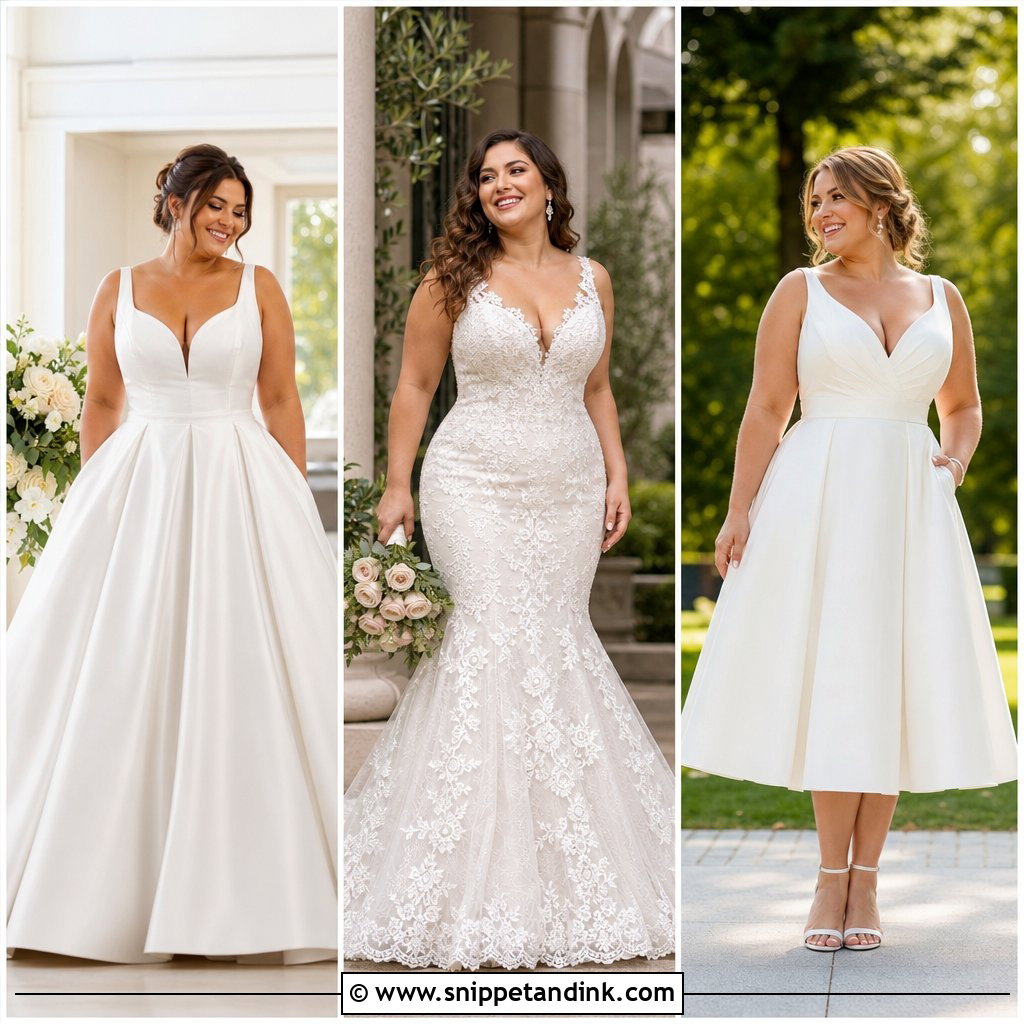
25. Reception Bodycon Wedding Dress
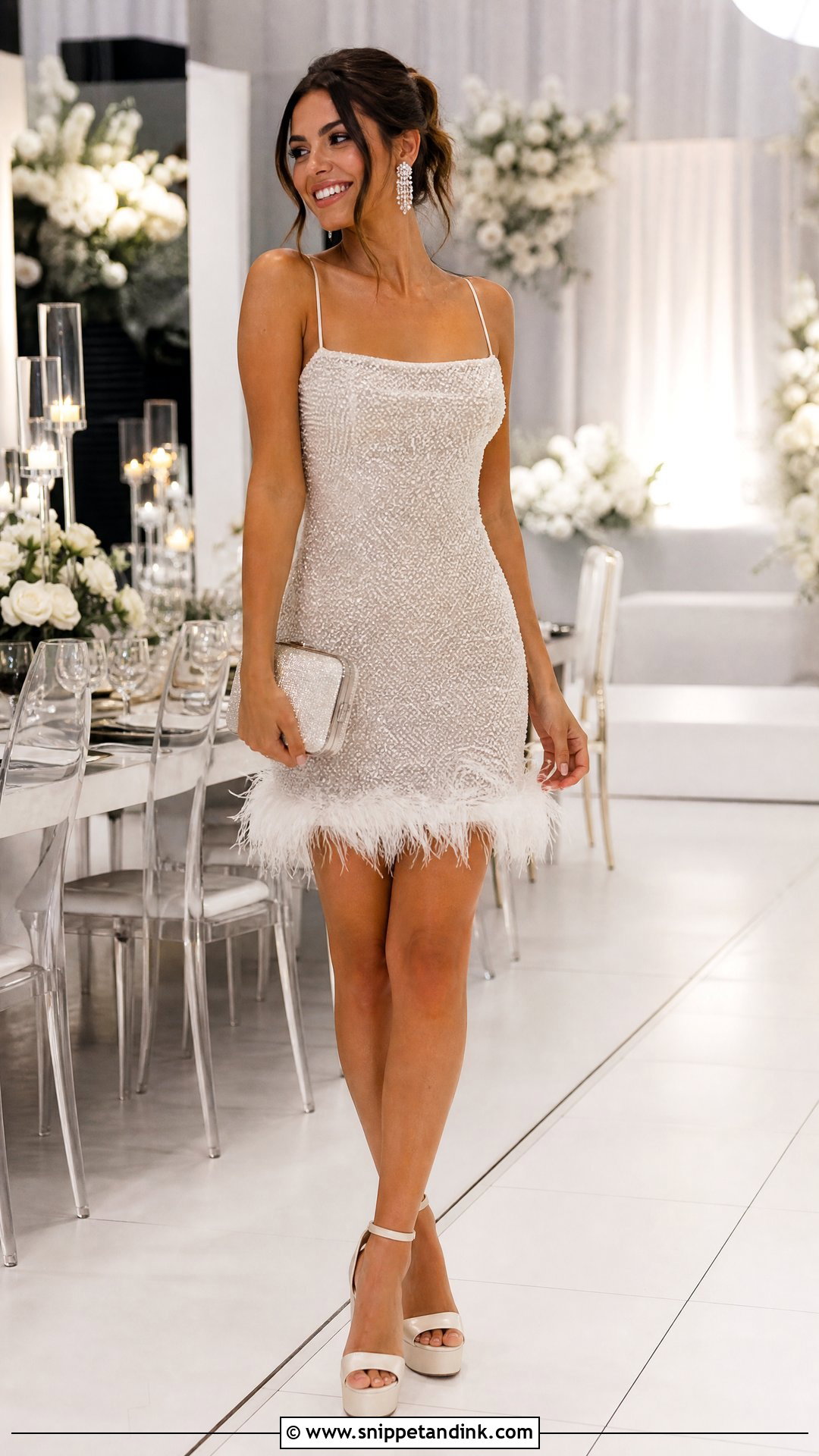
A reception dress can be shorter, lighter and sparklier than the ceremony gown, because its job is dancing. Beaded minis, satin midis, feather-trimmed hems, pearl straps and stretch crepe with a slit all work. Choose shoes you can wear for hours: block heels, platforms or comfortable sandals. A hairstyle that lasts matters more now than an elaborate one. It should still look bridal, just more playful.
Stretch Fabric Relaxes as the Day Goes On
Stretch crepe and jersey loosen a little with body heat and movement, so a dress that’s perfect at 10am can feel slightly looser by the evening. For that reason, I fit stretch fabrics just snug at the final fitting, without making them tight. Non-stretch fabrics like satin and mikado don’t relax, so they need a little ease from the start or they’ll pull every time you sit.
Sit, Kneel, Hug: My Fitting-Room Routine
A fitted dress can look perfect while you stand still and fail the moment you move. Before I sign off on one, the bride goes through the real movements of her wedding day:
- Sit on a hard chair for a minute, then stand. Check whether the skirt rides up or creases across the lap.
- Kneel or bend as if picking up a dropped ring, especially for religious ceremonies with kneeling.
- Raise both arms for a hug and look at the neckline and armholes.
- Walk up and down a few stairs, and take a long step as if getting out of a car.
- Turn around and check the back view in a second mirror.
If any step makes you tug at the dress, tell the tailor. Small changes such as letting out a seam or adding a back slit are much easier before the final fitting than the week of the wedding.
A Close Fit Is Won at the Final Fitting
Fitted wedding dresses suit brides who want a modern, confident look, but they reward planning more than any other shape. Your venue, season and comfort decide the length and fabric. A plain crepe gown is the most versatile; lace, pearls, beading, trains and overskirts add detail. Short and midi styles suit courthouse weddings, and long fitted gowns suit formal ceremonies. Invest in good fabric, solid construction and a skilled tailor, and you’ll move easily all day.
You'll Like These Ideas:




Leave a Reply