
Ankara gives a bride something a plain white gown can’t: color and pattern that carry family and culture straight into the silhouette. The catch is that wax print is a bold, crisp cotton, and it behaves very differently from bridal satin or tulle. When I style an Ankara bride, most of the work happens before the fabric is cut, deciding which motifs land on the bodice, how much structure the cotton needs, and which plain fabrics should calm it down. Ball gowns, mermaid shapes, modest long sleeves and two-piece sets all work, and so do newer touches like detachable sleeves, overskirts and big bows. The rule I hold to is simple: let the print lead and make shoes, jewelry, headwear and flowers follow it.
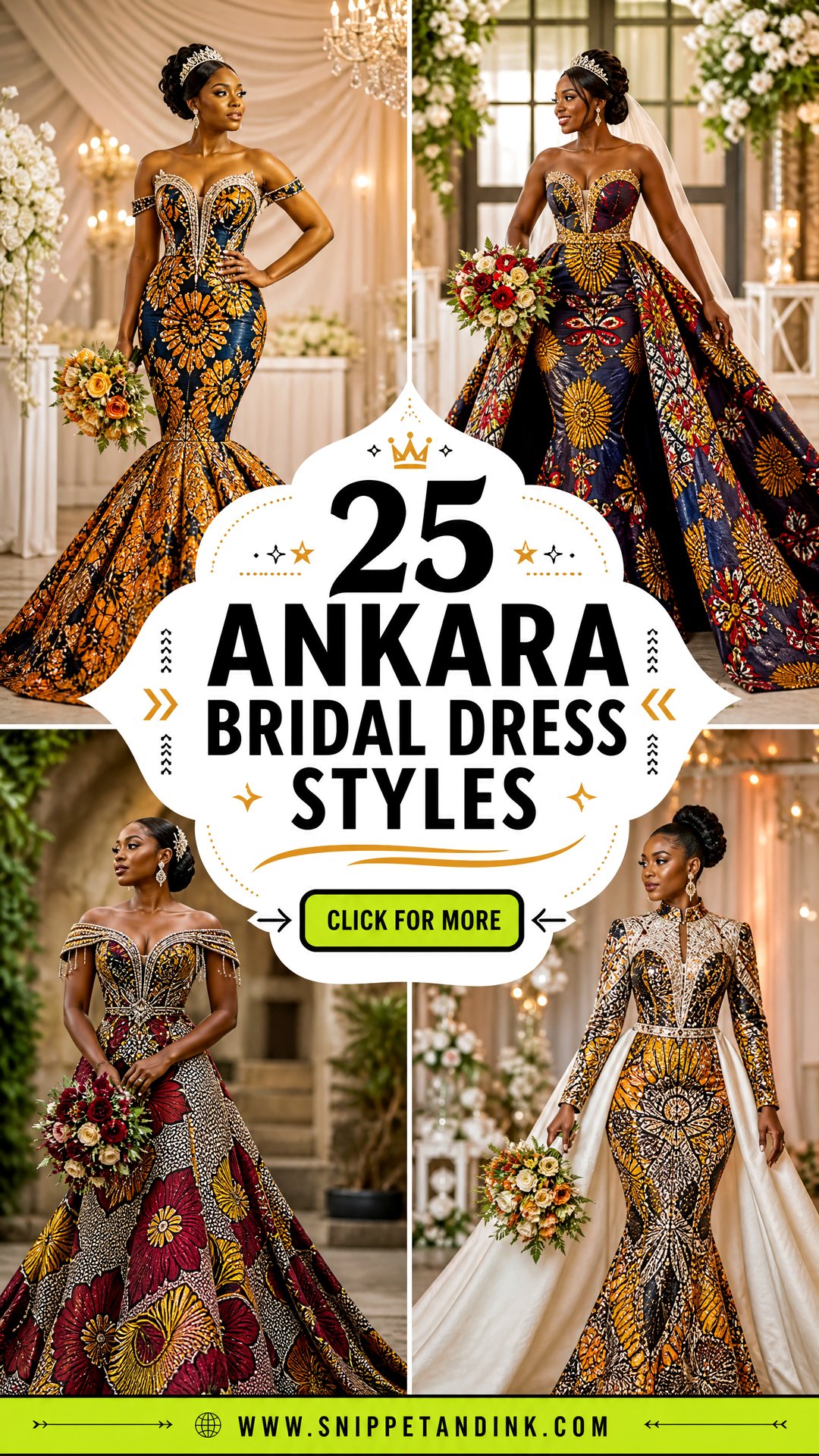
How Much Ankara Does a Bridal Gown Need, and Which Cloth Is Worth It?
Brides often buy one piece of their favorite print and discover at the first fitting that it won’t stretch to a full skirt. Ankara is usually sold in set pieces rather than by the meter, and a bridal gown eats fabric, especially once the tailor starts matching motifs at the seams.
- Fitted or short styles can often be cut from a single standard piece.
- A-line, mermaid and jumpsuit shapes usually need more than one piece once pattern matching is allowed for.
- Full ball gowns, long trains and capes can need several pieces. Buy them all from the same batch so the color is identical.
- Always buy extra for pattern matching; large motifs waste more fabric than small ones.
To judge quality, I look at the back of the cloth. A good wax print shows the design almost as strongly on the reverse as on the front, while a cheap imitation print is bright on one side and faded on the other. Feel matters too: real wax print starts out crisp and softens with washing. Ask your tailor to pre-wash or pre-shrink the cotton in cold water before cutting, both to stop shrinkage later and to check that no dye runs into a white lining.
1. Ankara Bridal Ball Gown
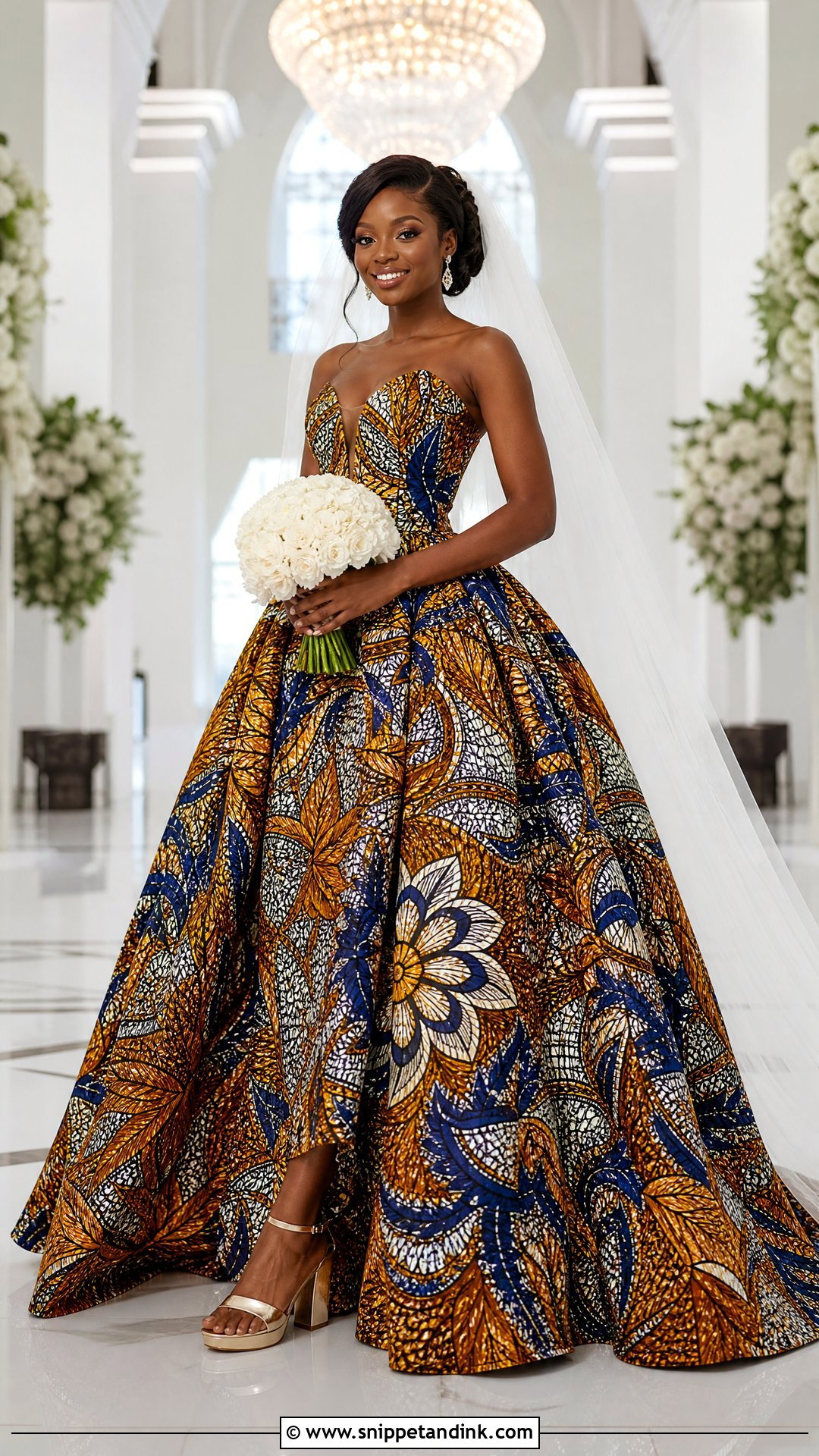
An Ankara bridal ball gown is where large motifs finally get room to breathe, because a full skirt shows a big repeat instead of chopping it into fragments. Wax cotton is light for its volume, but a skirt this full still needs petticoat layers or a hoop to keep its shape all evening. Pair it with a structured bodice, wide straps, off-the-shoulder or sweetheart, and a defined waist. Metallic block heels, a plain cathedral veil and small drop earrings keep it from going busy. I’d carry a compact bouquet in white, cream or one shade lifted straight from the print.
2. Ankara Mermaid Bridal Dress
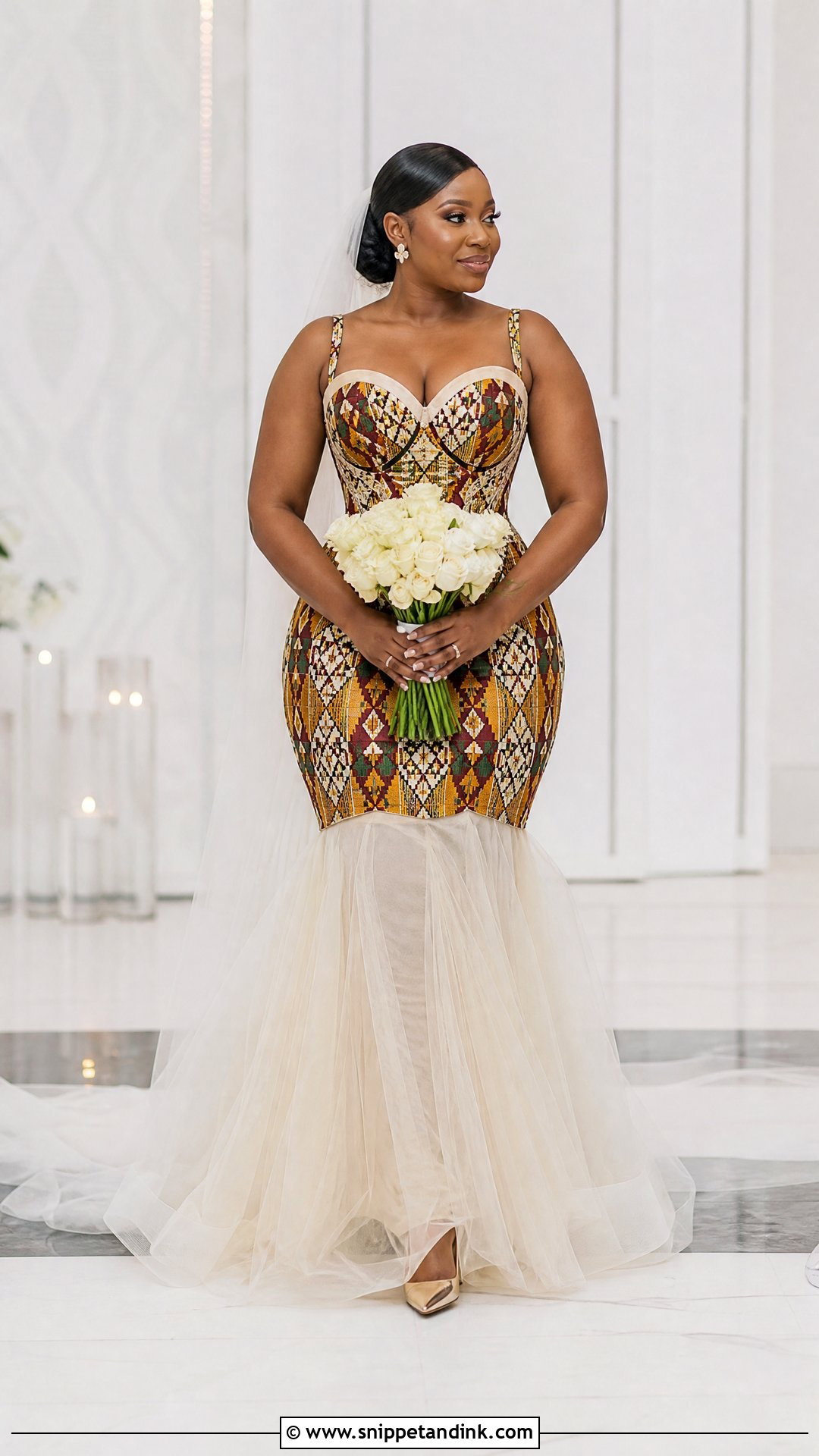
The mermaid is the hardest Ankara shape to cut well. The fabric follows the body down to the knee, so curved seams break the print in many places, and medium-sized motifs hide those joins far better than big ones. Choose a corset-style bodice, supportive straps or a modest square neckline, and decide whether the flare stays in Ankara or softens into plain tulle. The fitting test I insist on is walking up a step and sitting on a chair: if the flare starts too low, you’ll shuffle all night. Pointed metallic pumps, a fine bracelet and a low bun with a simple veil finish it, with a narrow bouquet.
3. Ankara A-Line Bridal Dress
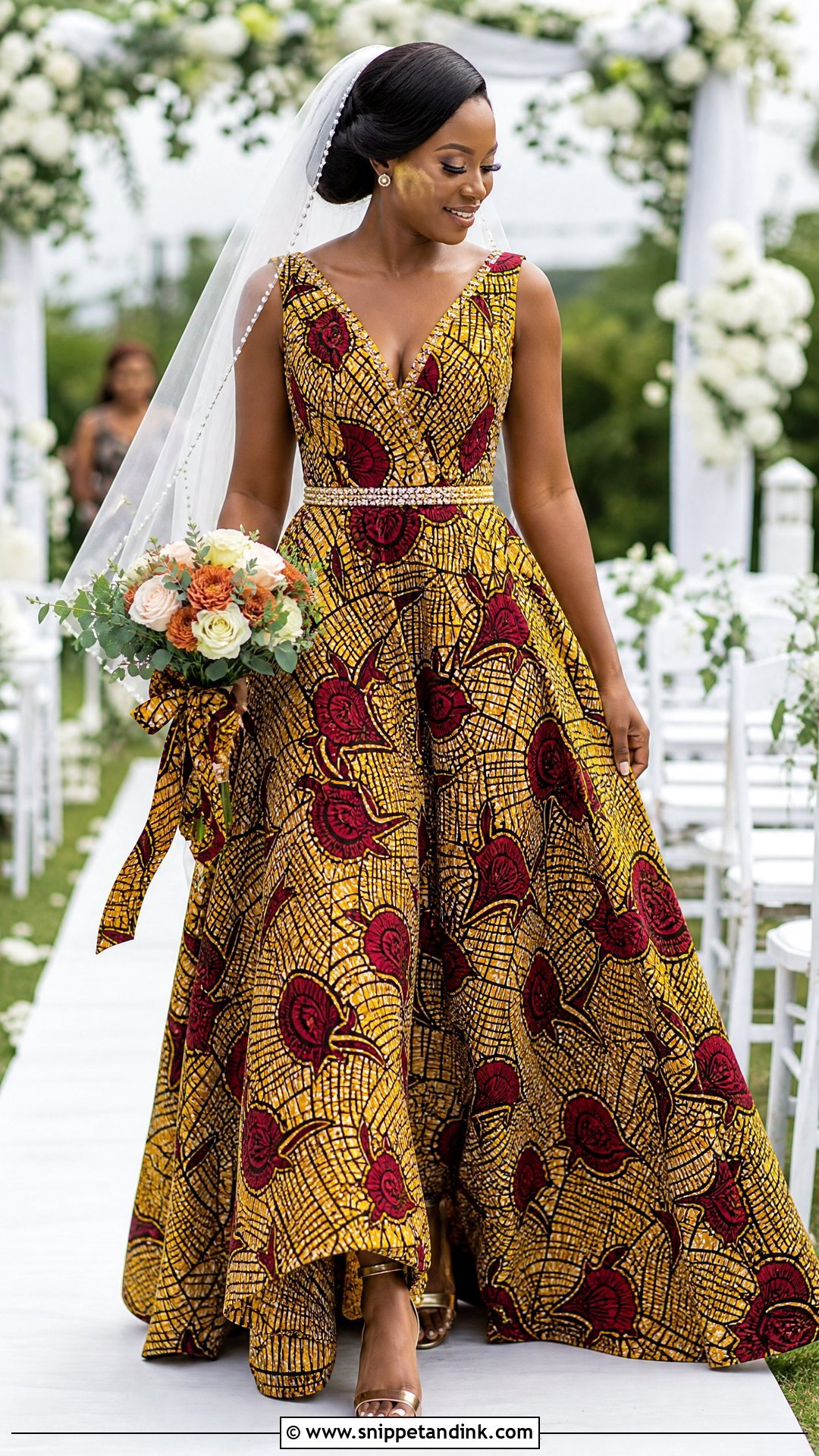
A-line is the Ankara shape I suggest when a bride wants comfort first. Fitted through the bodice and opening from the waist, it suits formal halls, gardens and small ceremonies equally. A V-neck lengthens the neck; bateau or square gives more coverage. Choose a print with a clear color story and repeat one shade in shoes, earrings or the bouquet ribbon. The detail I ask the tailor for is a centered main motif at the front bodice, since an off-center flower at the bust is what people notice first. A fingertip veil, pearl studs, low heels and an optional beaded waistband complete it.
4. Ankara Bridal Dress With Detachable Train
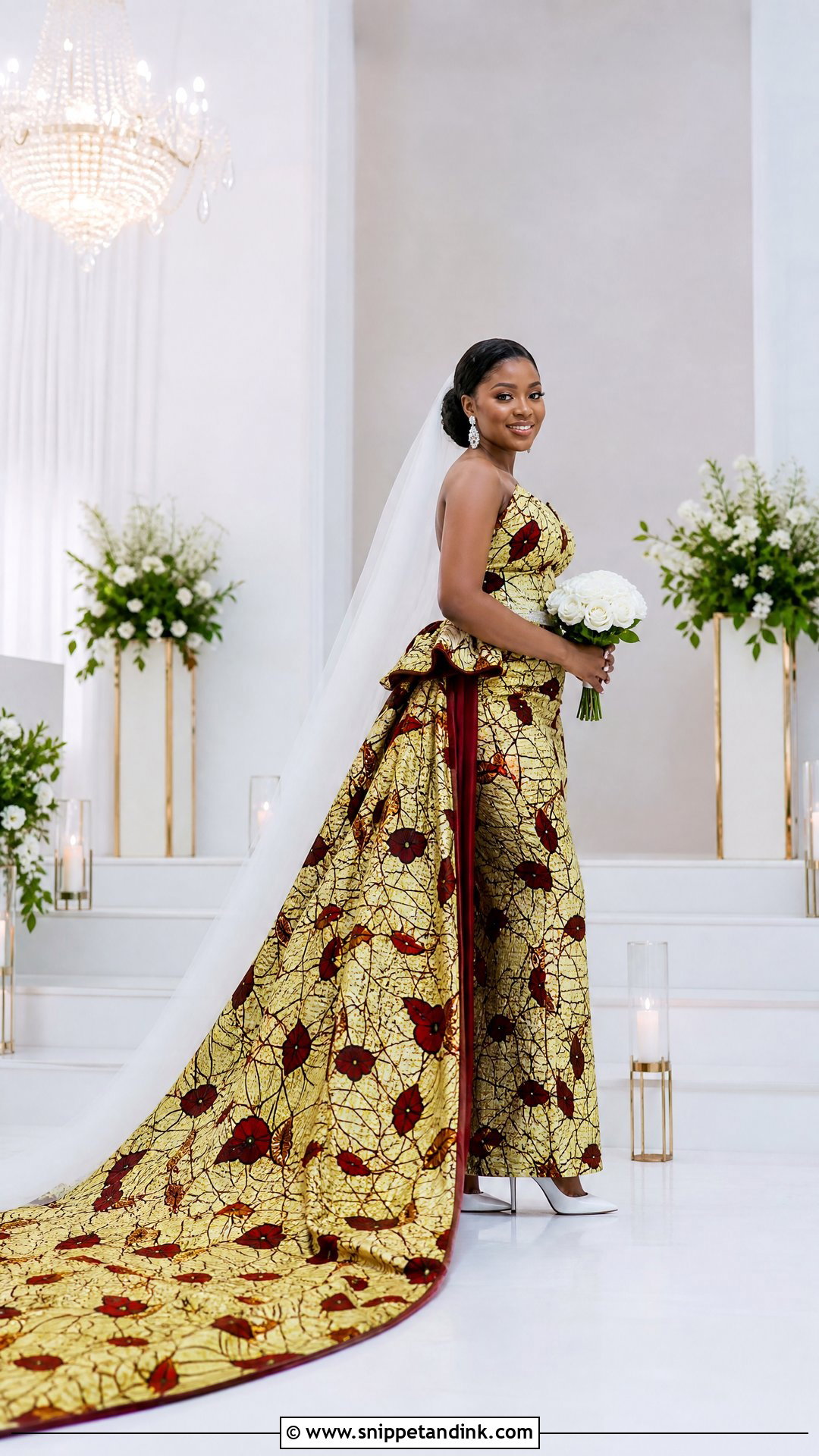
A detachable train gives you two silhouettes for the price of one dress. Attach a sweeping train at the waist for the ceremony, then unhook it before the reception to reveal a streamlined gown underneath. Matching Ankara, plain organza or tulle edged in print all work. What I check is the attachment point: hooks and loops hidden under a waistband sit flatter than snaps and won’t add bulk at the waist. Style the ceremony with a long veil, crystal earrings and pumps, then switch to statement earrings or a hairpiece later. Have someone practise unhooking it before the day; under pressure, fiddly fastenings take ages.
5. Ankara Bridal Dress With Lace
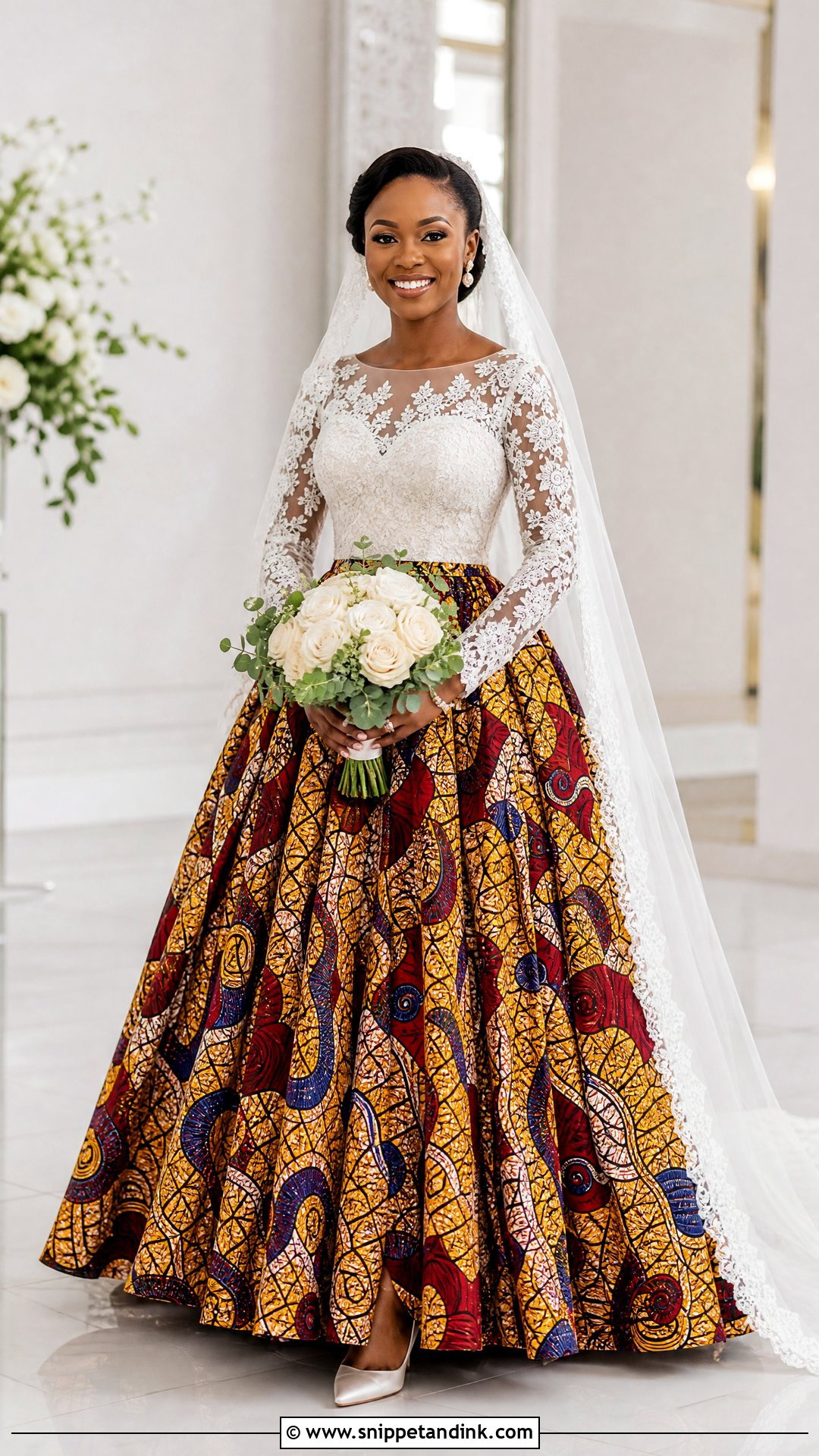
Lace and Ankara can fight each other, because both are busy surfaces. The safest pairing I know is a lace bodice with a full Ankara skirt, so each fabric owns its own area. Lace sleeves, appliques or panels over the print can work too, but always lay a sample over the fabric first, since lace on top of a strong pattern often looks muddy. Ivory lace reads classic; lace dyed to match a background shade of the print blends better. Pearl earrings, satin heels and a lace-edged veil echo the dress, and a simple green-and-white bouquet keeps it fresh.
6. Ankara Bridal Dress With Tulle Skirt
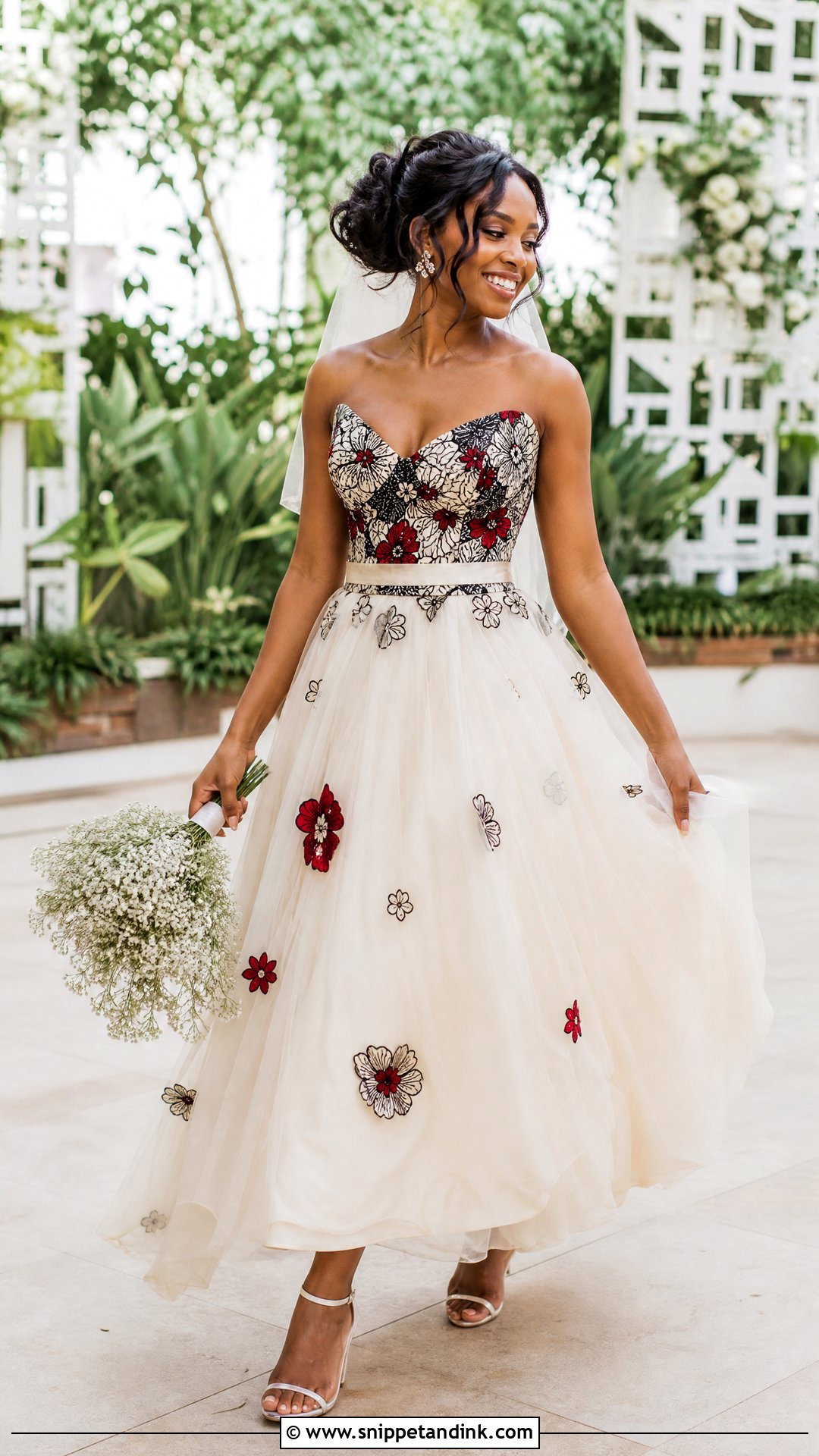
Tulle softens Ankara more than any other fabric. I’d keep the print on a fitted bodice and waistband and let a plain tulle skirt fall in white, ivory, blush or a pale shade taken from the pattern, with a few Ankara appliques scattered over the tulle if you want to connect them. Hold several layer counts up to daylight before choosing: too many layers feel heavy and hot, too few look thin and see-through. Ankle-strap heels, delicate earrings and a light fingertip veil suit it, with a loose updo that keeps the neckline visible.
7. Ankara Off-Shoulder Bridal Dress
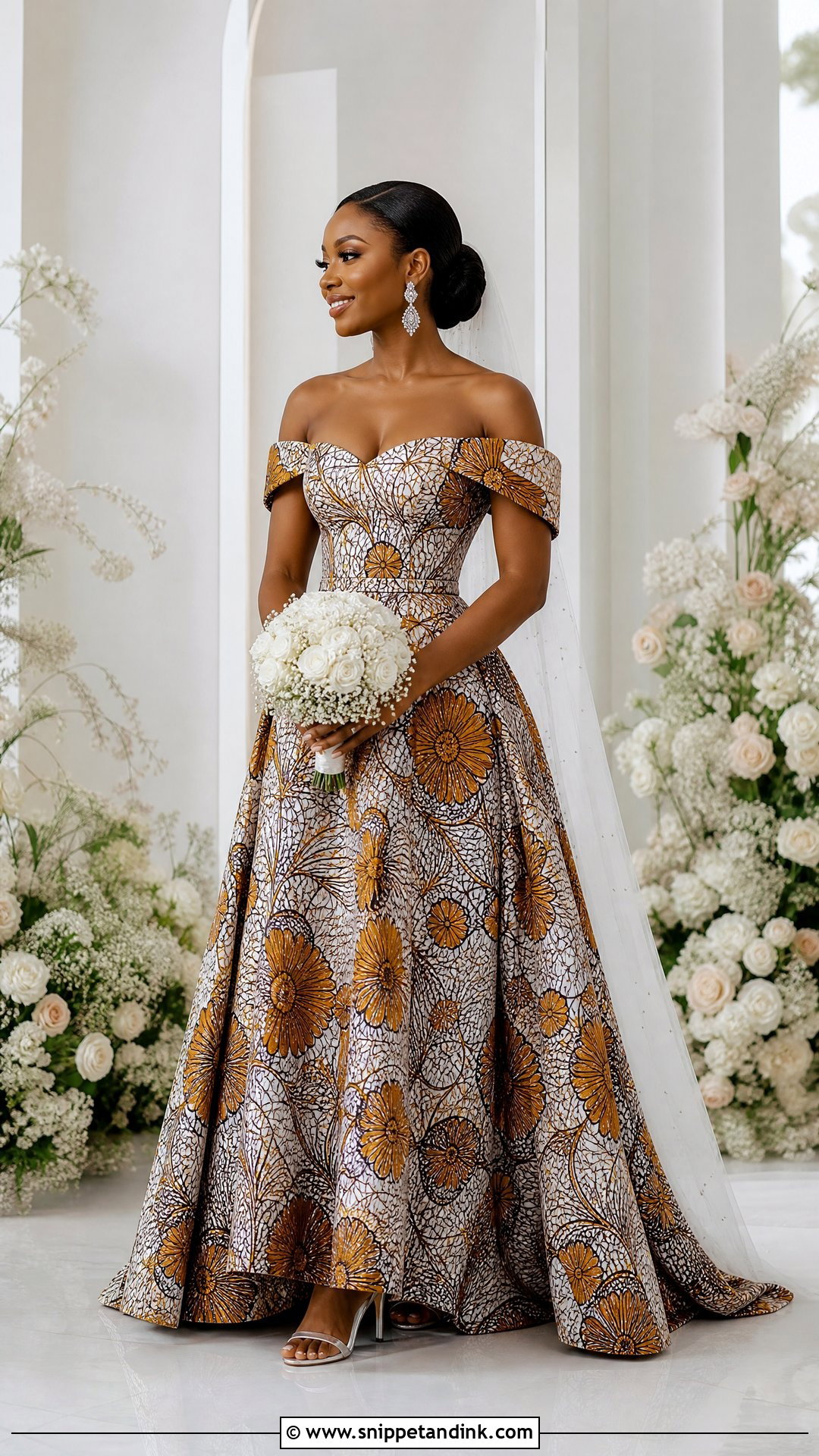
An off-shoulder neckline frames the collarbone, and in wax cotton the shoulder band can be draped, pleated or shaped into structured cuffs. Ankara’s crispness helps here, as it holds a cuff better than chiffon would. The bodice needs hidden boning or a silicone grip at the top edge so it doesn’t slide down. During fittings, raise both arms and sit down; an off-shoulder band can lock your arms if it’s cut too tight. Skip the necklace or keep it short, and wear drop earrings, a low bun and metallic or neutral heels, with the veil tucked under the bun.
8. Ankara Long-Sleeve Bridal Dress
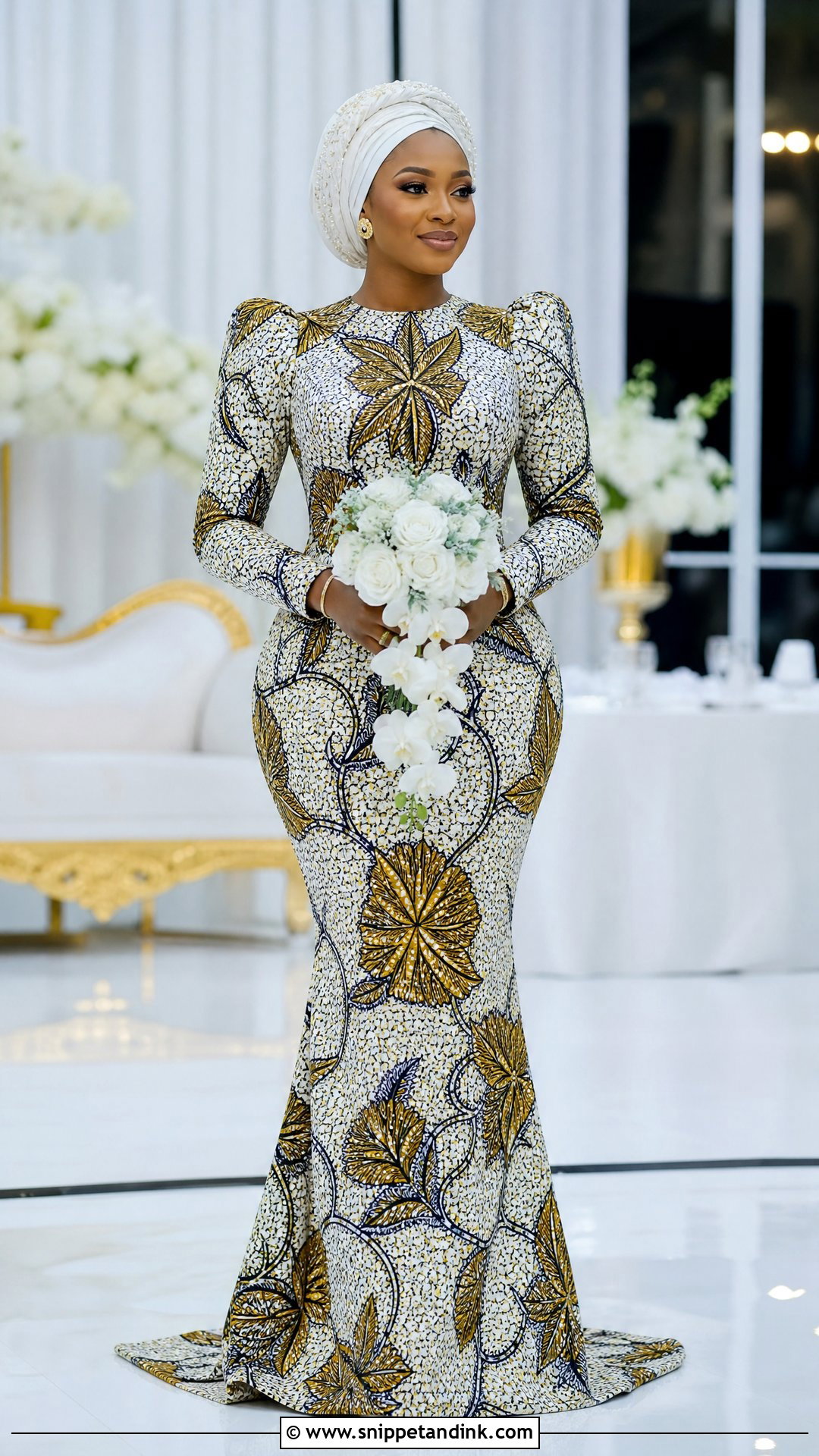
Long sleeves give coverage without losing color, which makes this shape a favorite for church ceremonies and modest families. Fitted sleeves look formal, lightly puffed shoulders add structure, and sheer lace sleeves with printed cuffs keep it lighter. A defined waist with an A-line or trumpet skirt keeps the extra fabric from looking heavy. Ankara is a woven cotton without stretch, so I always ask for enough ease at the elbow and armhole to hug guests and lift a glass. Closed-toe pumps, a streamlined veil and small gold or pearl earrings suit it, and a breathable lining helps on warm days.
9. Ankara High-Neck Bridal Dress
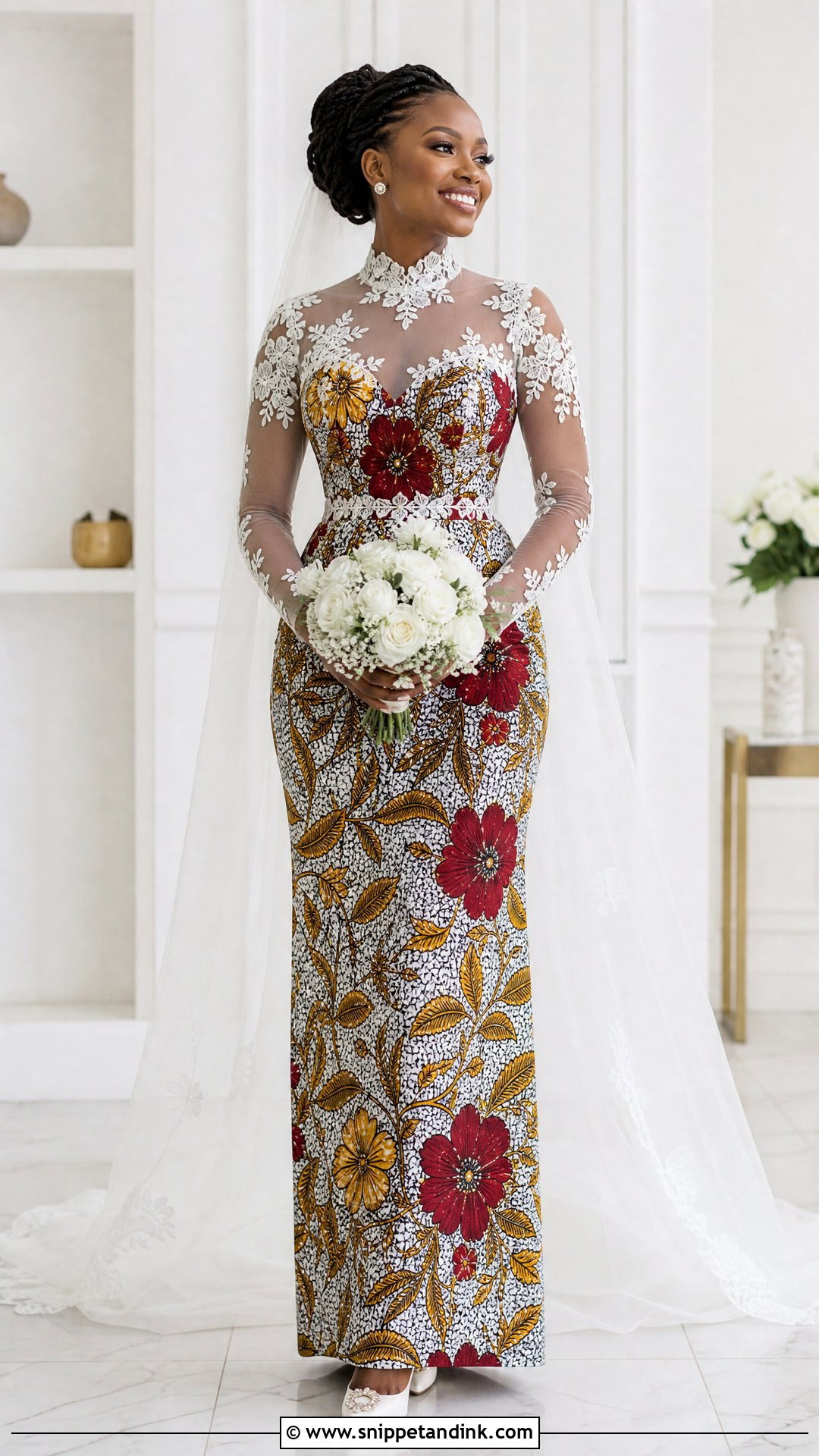
A high neck gives a polished, modest finish. The collar can be matching print, plain satin, lace or sheer mesh with appliques. Because the top is covered, I balance it with a defined waist and a clean skirt, either a classic A-line or a slimmer column. Check the collar while turning your head and talking; a stiff wax-print collar can rub the neck raw by the end of the reception, and a soft facing inside solves it. Stud earrings, a bracelet and pointed pumps go with it. Wear a bun, braided updo or sleek ponytail, and attach the veil behind the hair.
10. Ankara Peplum Bridal Dress
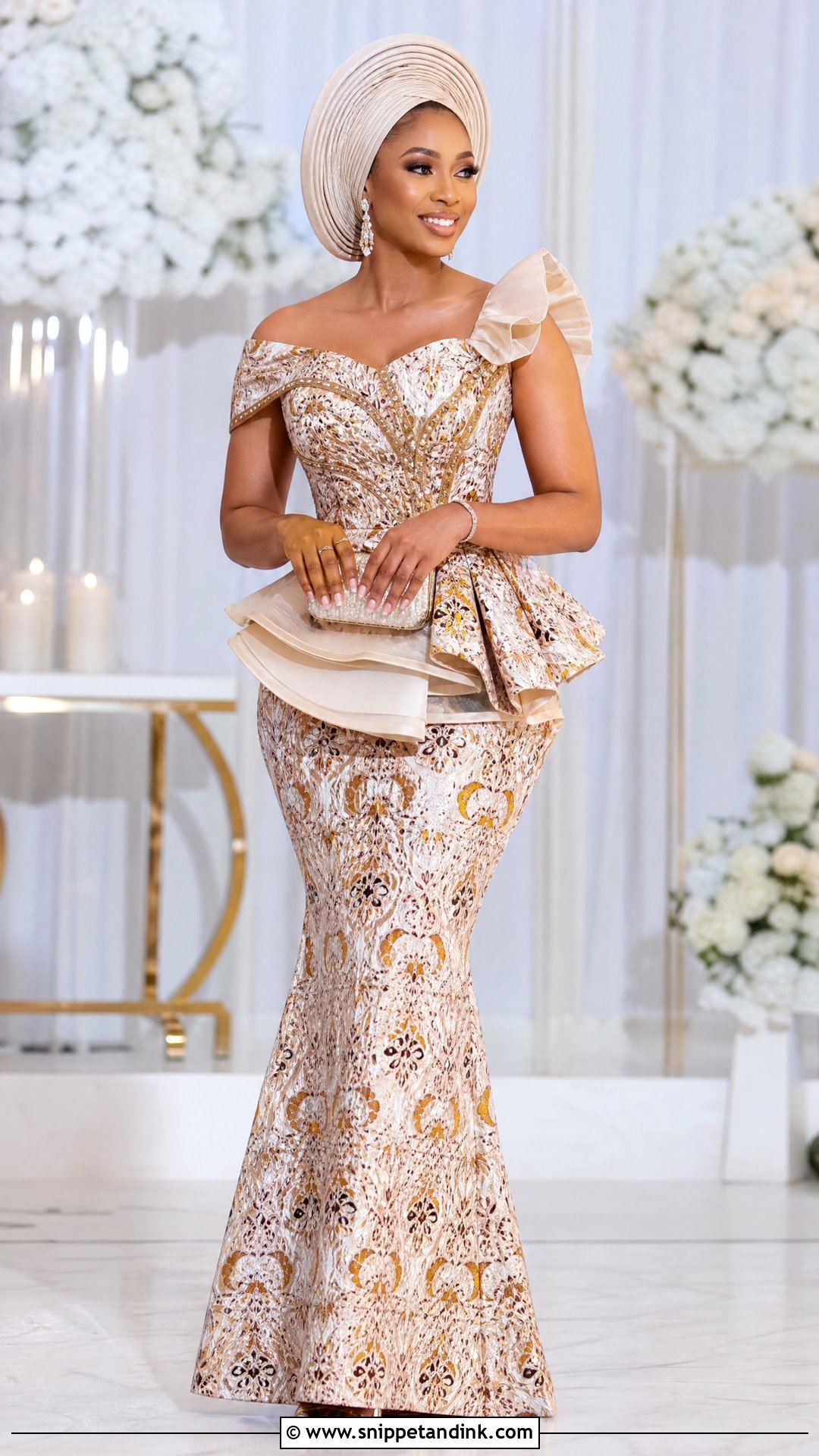
A peplum adds waist definition, and Ankara is crisp enough to hold the flare without much help. Keep it short and subtle, or extend it into an asymmetric overskirt, and pair it with a fitted trumpet or straight floor-length skirt. Placement is what makes it look tailored: a motif centered on the peplum looks planned, a chopped one looks added on. I’d ask for light interfacing so it stays flat when you sit rather than stiffening the waist. Sleek heels, refined drop earrings and a smooth updo or neat gele suit it.
11. Ankara Corset Bridal Dress
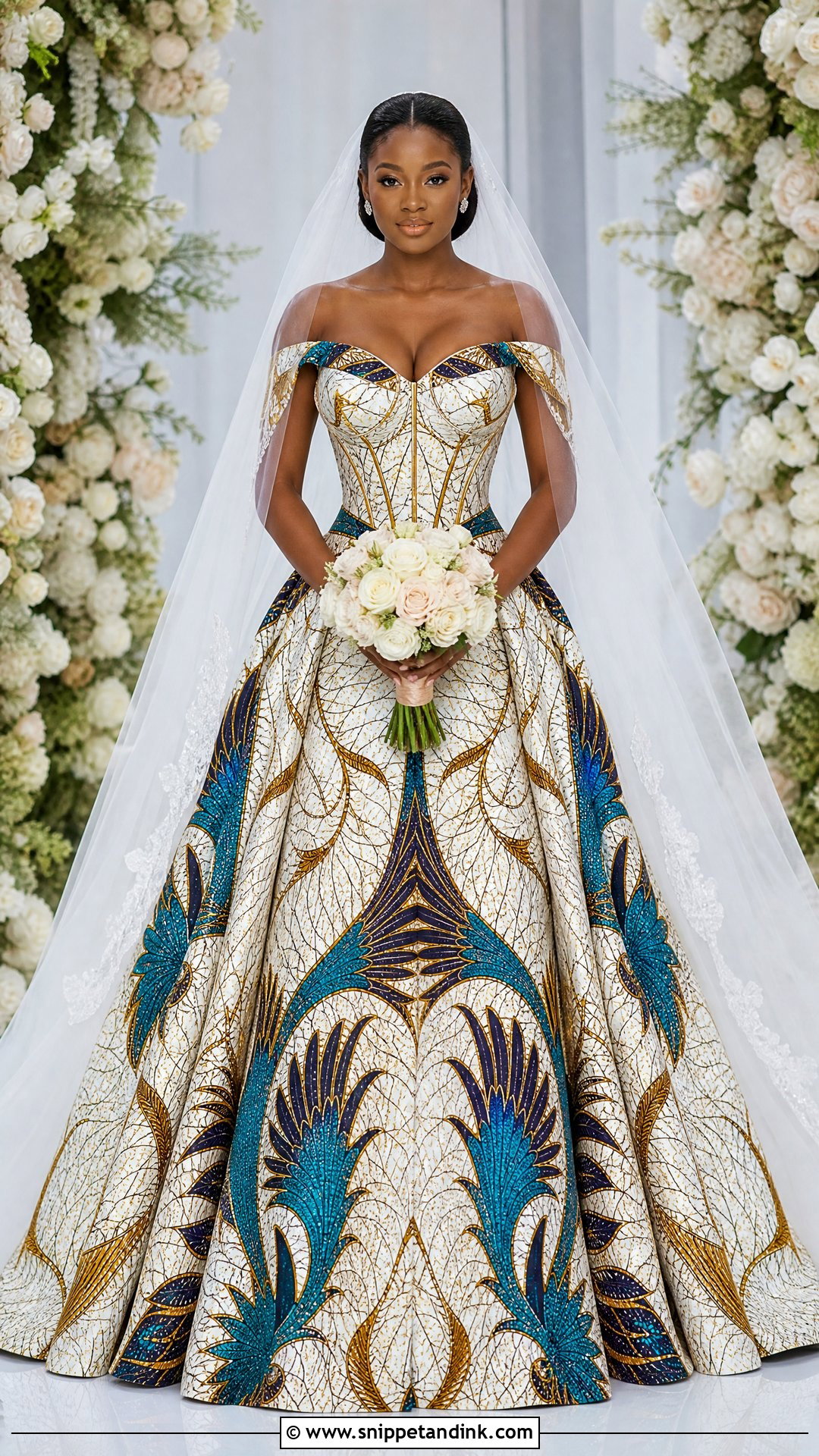
A corset bodice gives Ankara the firmest structure of any shape here, and it pays to know how it should feel. Visible boning channels look modern, a covered corset smoother and more traditional. The print must sit symmetrically across the front. Pair it with a ball gown skirt, a lighter A-line or a detachable overskirt. My fitting rule: you should breathe deeply, sit and eat without pain, and lift your arms without the top edge digging in. Platform heels hidden under the hem, a sheer veil and sparkling studs finish it.
12. Ankara Sweetheart Neck Bridal Dress
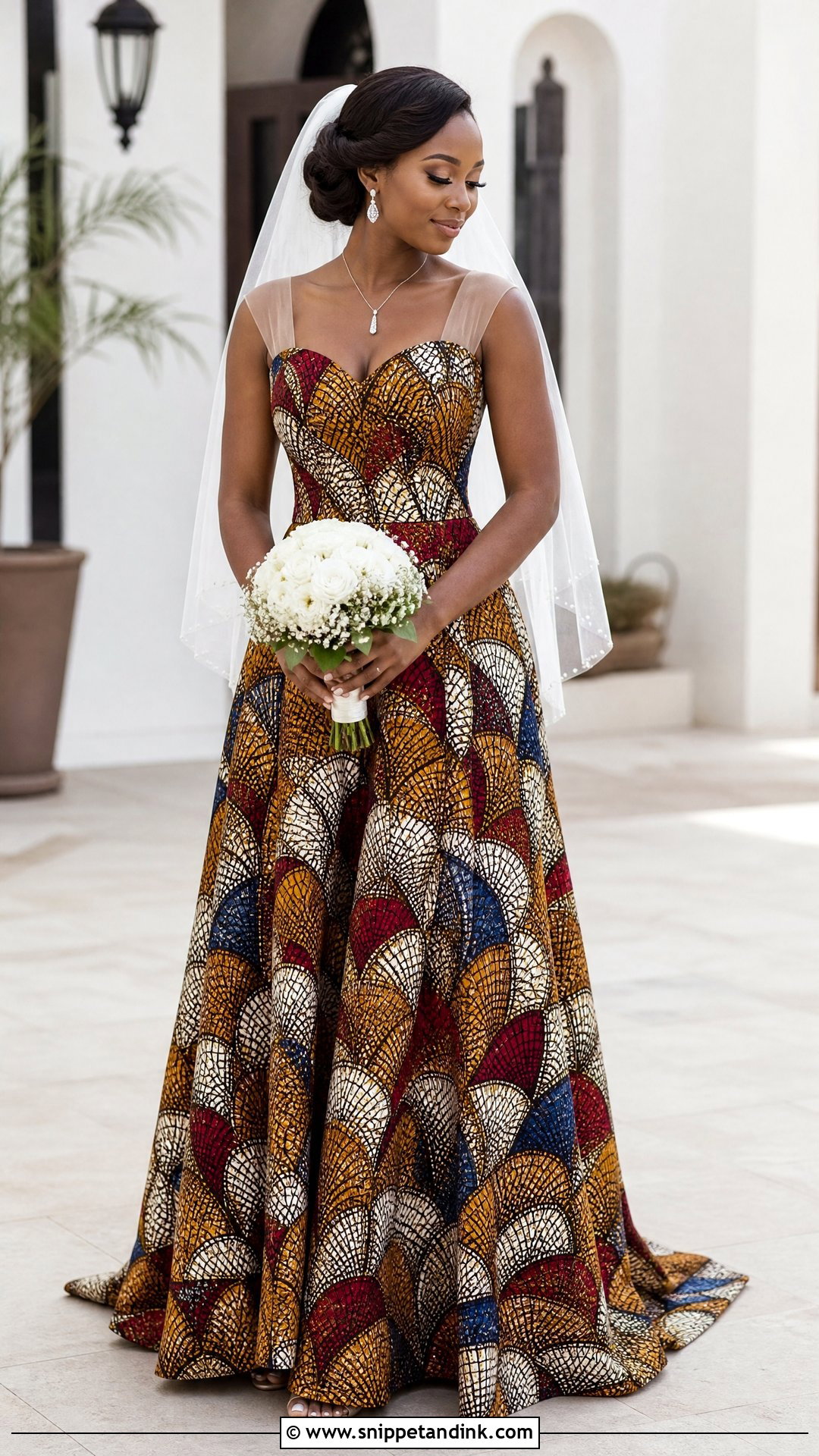
A sweetheart neckline softens Ankara’s structure and draws attention to the face. It works strapless, with sheer shoulder panels or with removable sleeves. The curve needs a mirrored print arrangement across the bust, otherwise the two halves look mismatched. Concealed mesh across the neckline adds security if you’re worried about movement. A full skirt makes it classic; a fitted one more streamlined. Add a delicate pendant, small crystal earrings, neutral or metallic heels and a mid-length veil. I schedule the final bodice fitting close to the wedding, when measurements are settled.
13. Ankara One-Shoulder Bridal Dress
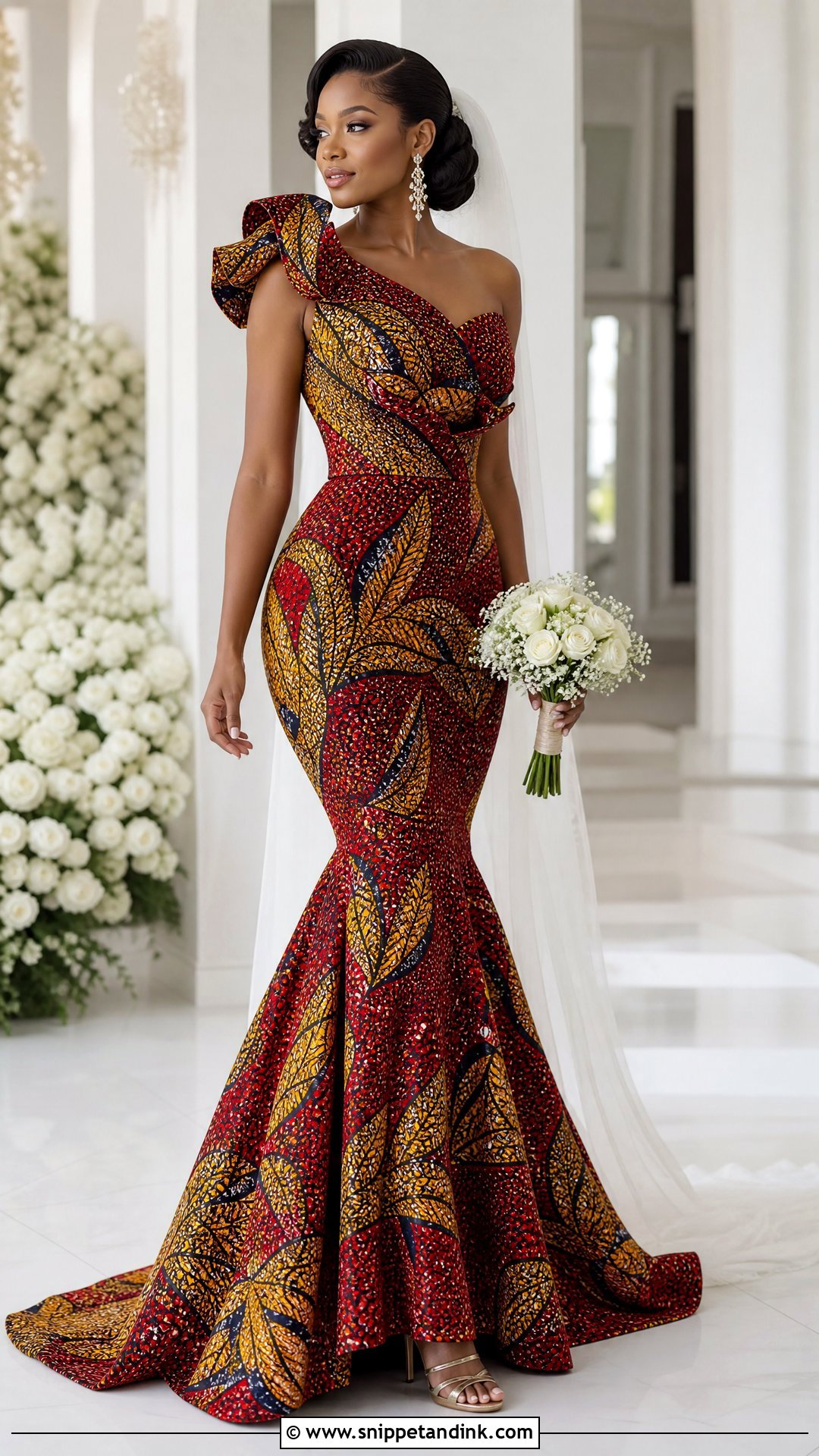
One shoulder puts all the asymmetry in the bodice. The strap can be narrow, softly draped or finished with a structured bow, balanced by a fitted waist and a simple A-line or mermaid skirt. Directional prints need particular care, because a diagonal neckline can make stripes or arrows run uphill. I always ask for internal support so the dress doesn’t hang from that single strap. One statement earring or refined drops, no necklace, a side-swept hairstyle, an understated veil and metallic heels finish it. Carry the bouquet on the bare-shoulder side for balance.
14. Ankara Bridal Dress With Puff Sleeves
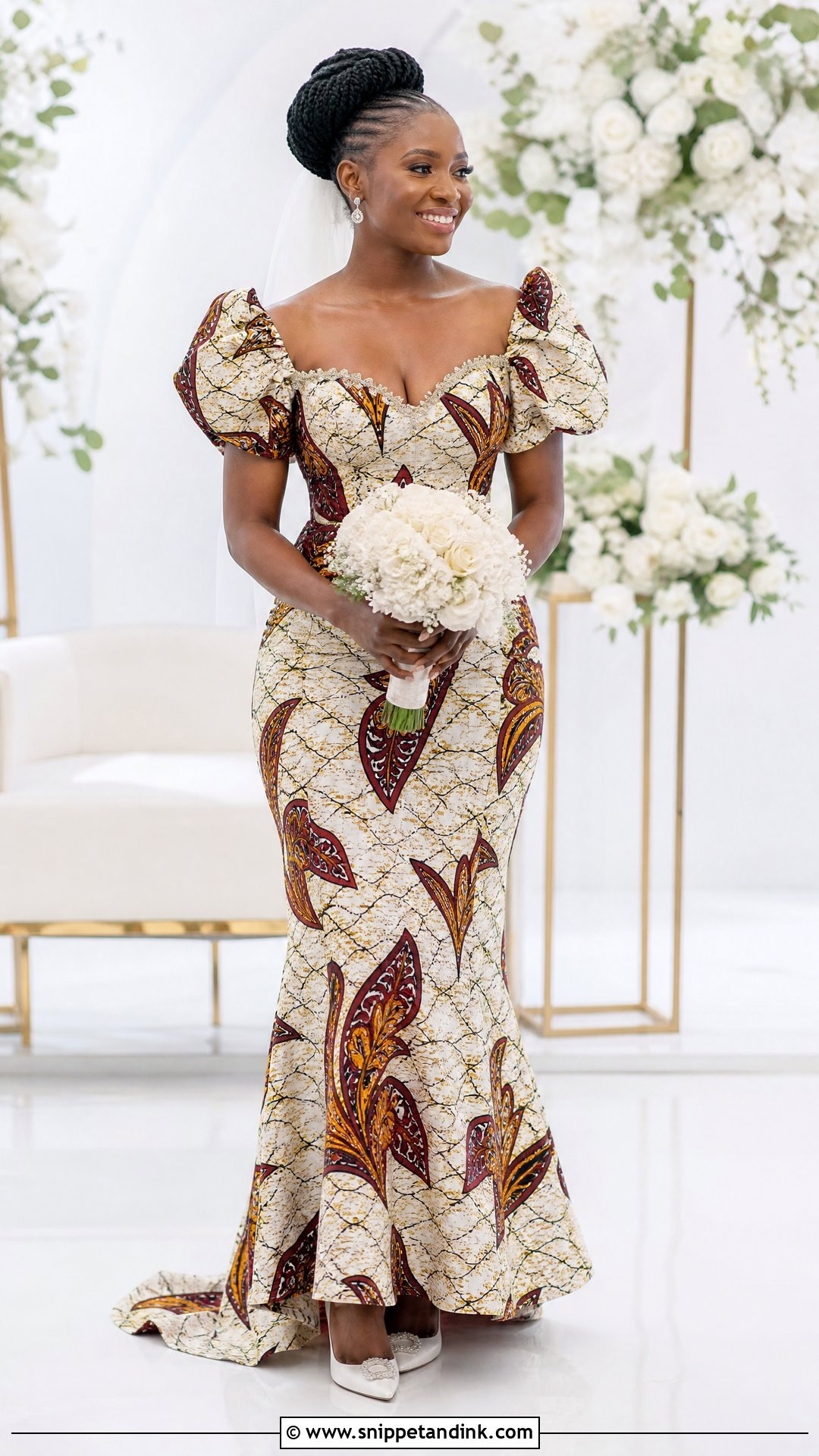
Puff sleeves suit Ankara because wax cotton holds volume naturally. Short rounded puffs feel playful, long gathered sleeves feel dramatic. Keep the bodice fitted and the waist clear so the sleeves don’t swamp the dress, and choose a straight, trumpet or softly flared skirt. If the cloth is very stiff, I’d use it only on the outer sleeve layer or the cuff and line it with something soft, otherwise the puff turns rigid and scratchy. Sleek pumps, simple earrings, a neat bun or braided updo and a small veil at the back of the head finish it.

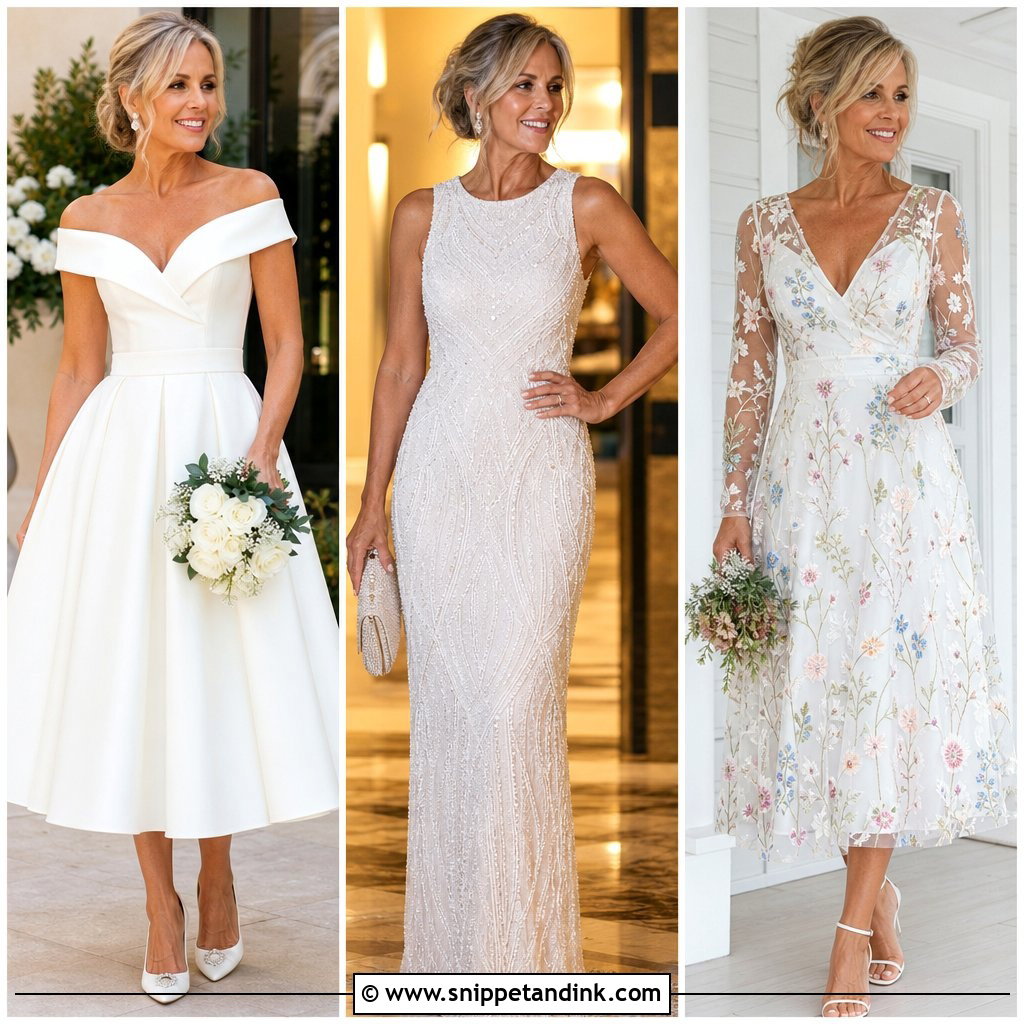

15. Ankara Bridal Dress With Bow
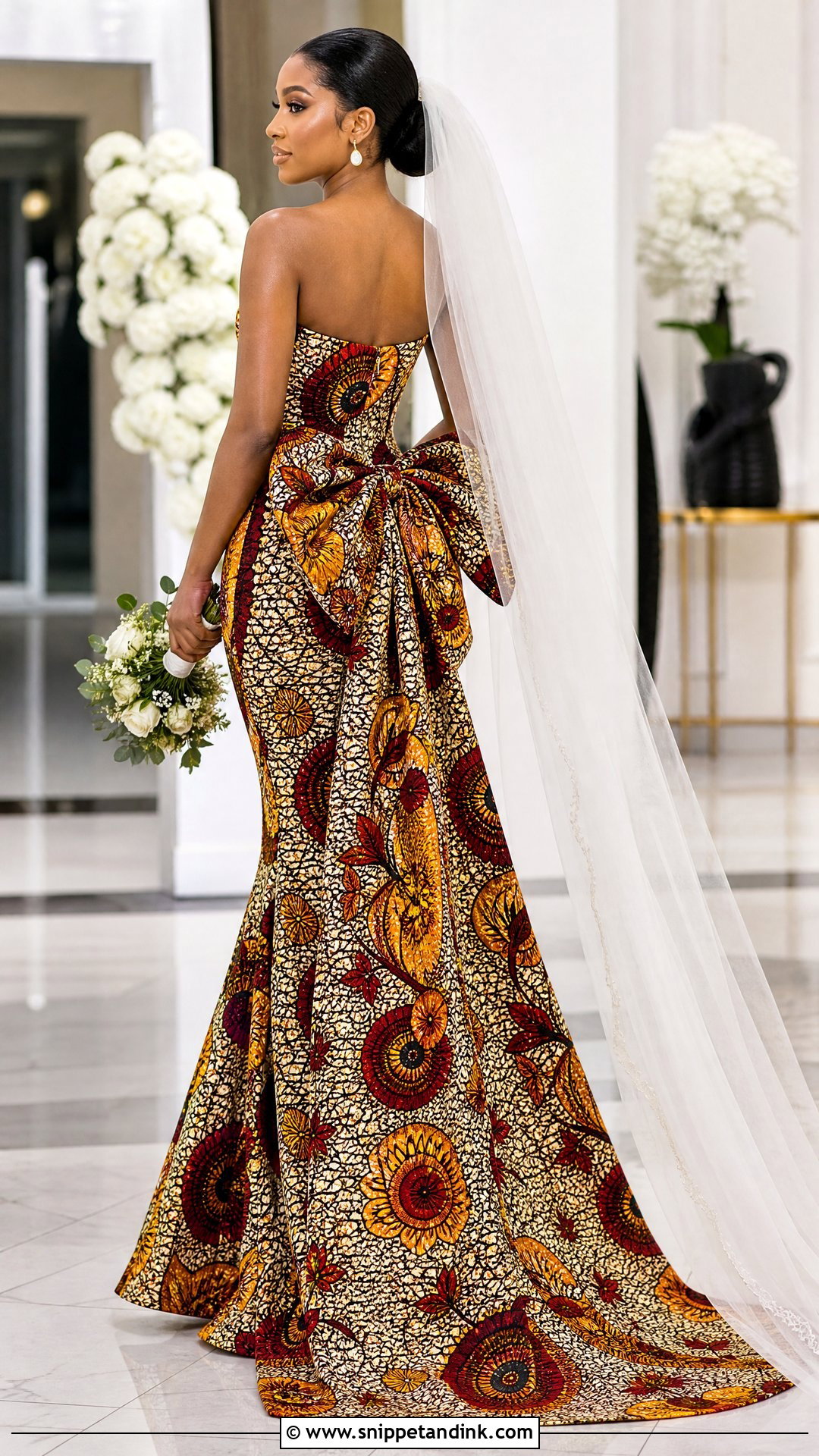
A big bow brings drama to an Ankara gown, but where it sits changes everything. At the back waist it’s classic, on one shoulder asymmetric, at the hip it emphasizes a fitted line. A detachable bow comes off after the formal photos. Keep the rest clean so the bow and print don’t compete. Plan the veil around it: end above the bow or well beyond it, never right across it. I’d have the loops lightly interfaced and the bow stitched on securely rather than pinned. Minimal earrings, a smooth hairstyle and satin or metallic heels complete it.
16. Ankara Bridal Dress With Cape
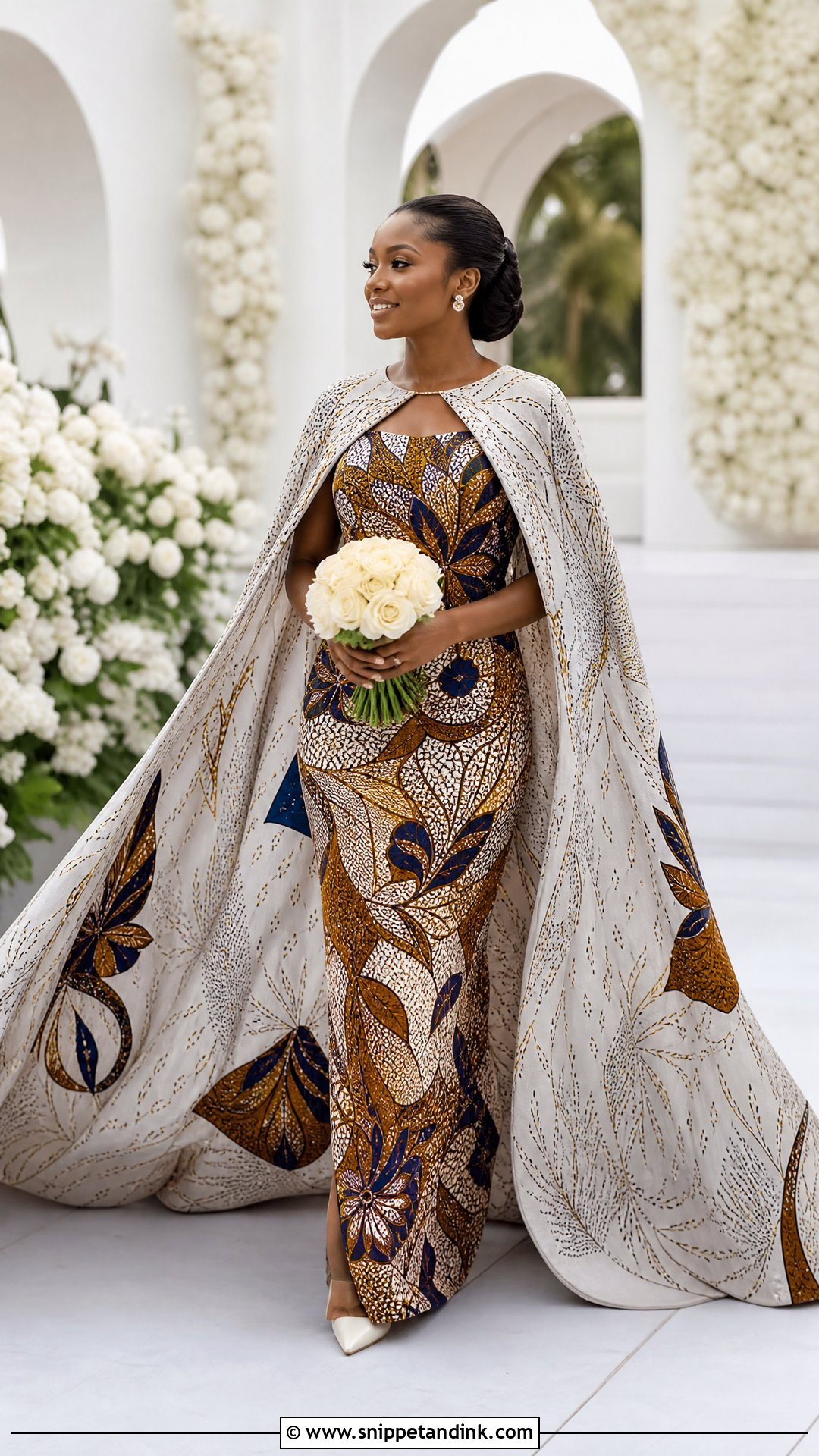
A cape adds presence and coverage. Choose a floor-length cape for drama, a shorter capelet for shoulder coverage, or a sheer one edged in print. Keep the dress underneath streamlined, a fitted column, trumpet or simple A-line, so the layers don’t get bulky. A cape often replaces the veil; if you want both, choose a light veil without heavy edging. I ask for discreet hooks at the shoulders or neckline so it comes off in seconds before the reception, revealing a lighter version of the same look. Pointed heels, studs and a clean updo suit it.
17. Ankara Two-Piece Bridal Set
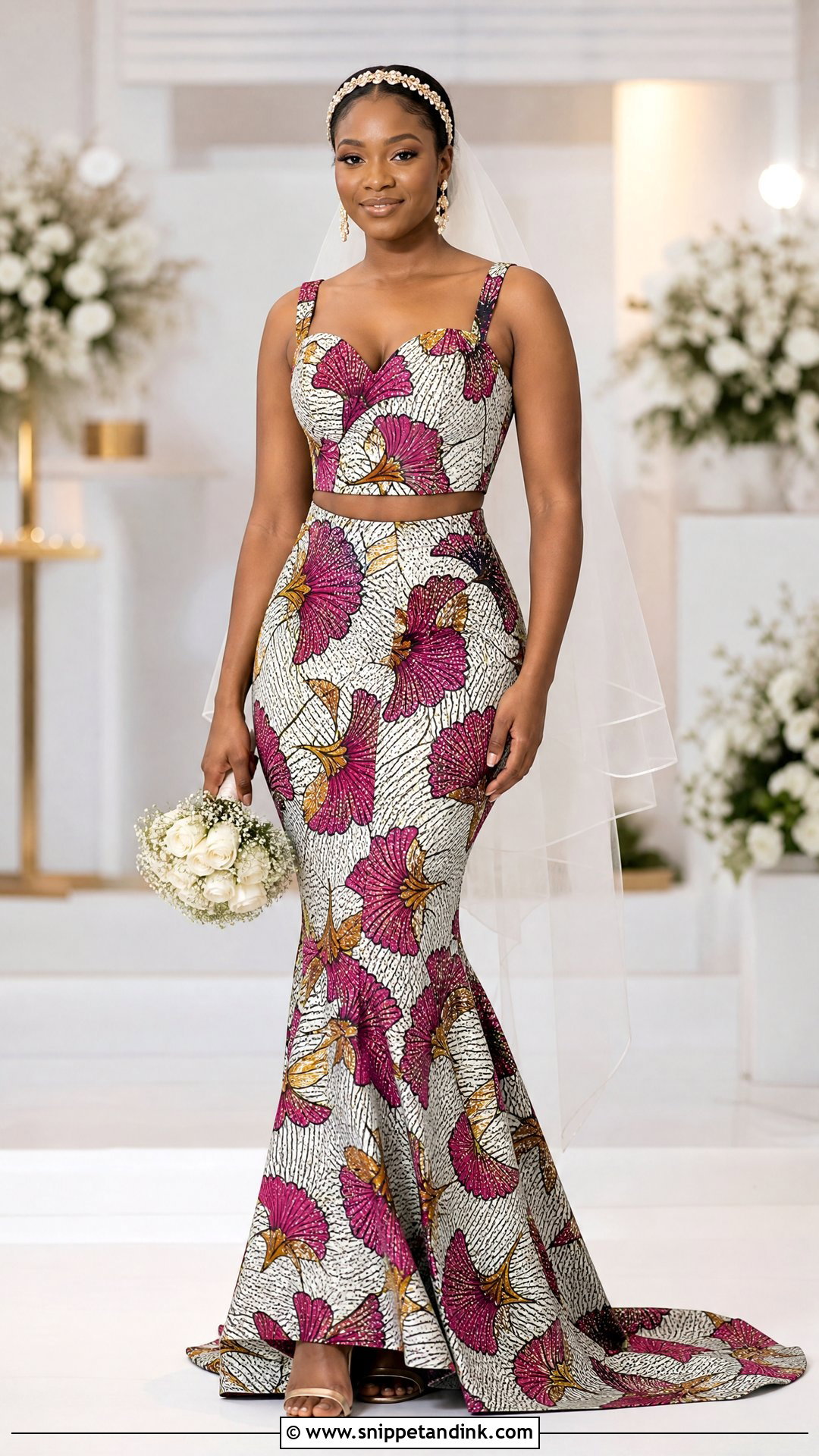
A two-piece set gives you more options than any gown. Pair a fitted corset top, modest blouse or structured peplum top with a floor-length skirt, which can be straight, mermaid, pleated or full like a ball gown. Matching motifs across the waist make it look continuous; a narrow plain band makes the split deliberate. I always build in a small overlap between top and skirt so nothing shows when you raise your arms or dance. For the reception, the top can be worn with a lighter skirt or tailored trousers. Elegant heels, drop earrings and a veil or embellished headband finish it.
18. Ankara Bridal Jumpsuit
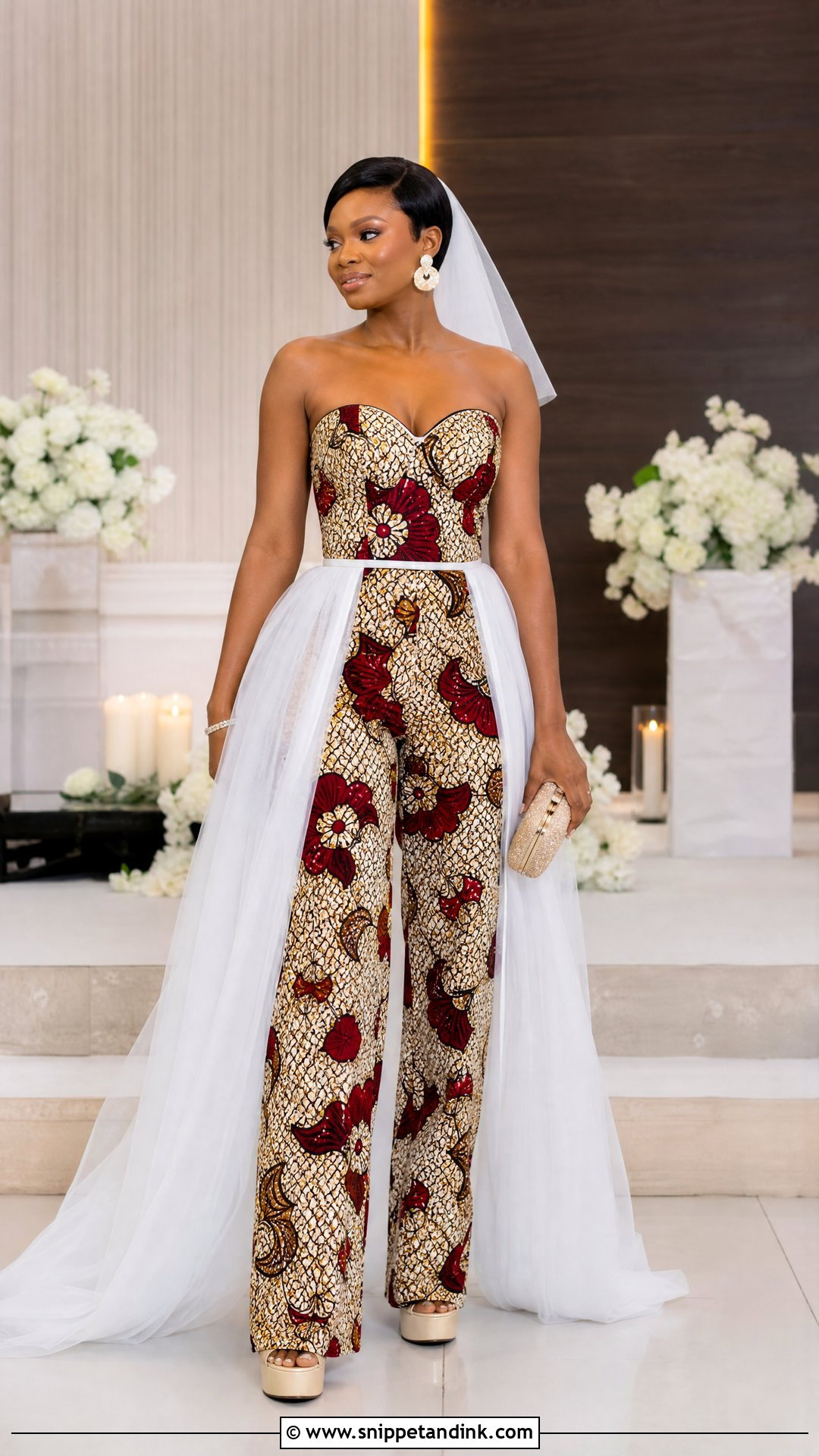
An Ankara bridal jumpsuit gives structure and freedom of movement in one piece. Wide-leg trousers flow like a skirt, and a fitted bodice keeps it formal, with a sweetheart neckline, tailored sleeves or a wrap front. A detachable train or overskirt adds ceremony drama and comes off for dancing. Platform heels lengthen the leg, and the hem should nearly cover the shoes without touching the floor. Ask for flat, functional pockets. Sculptural earrings, a sleek clutch and a birdcage veil, short tulle veil or headwrap complete it.
19. Ankara Bridal Dress With Gele
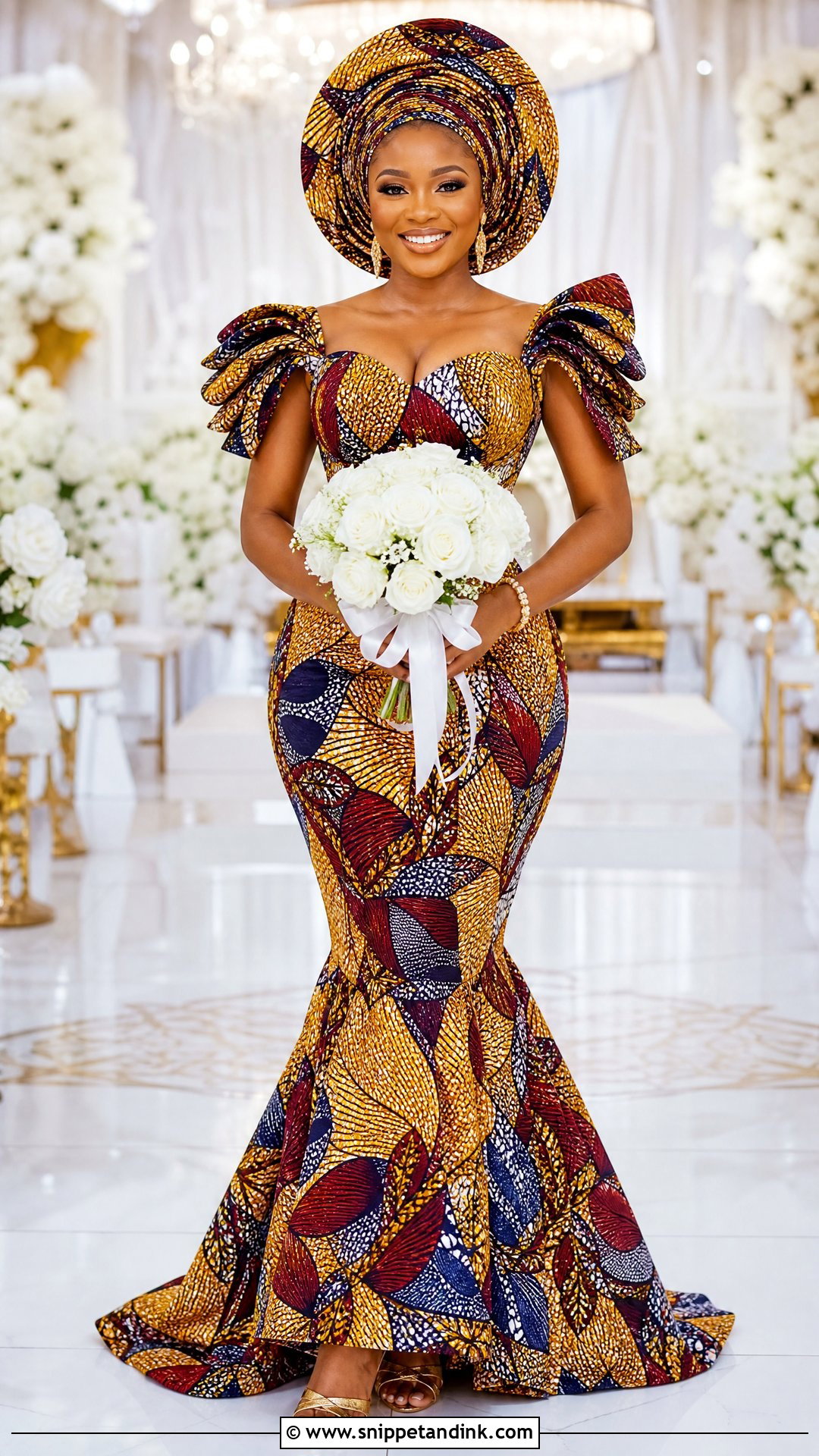
A gele brings color right up to the face and changes the whole balance of the outfit. It can match the dress exactly or use a solid metallic fabric that picks up gold, silver or bronze in the print. Pair it with a structured gown, a fitted peplum dress, or elegant mermaid silhouette. Because the headwrap adds height and volume, medium drop earrings are plenty and a heavy necklace is too much. Book an experienced gele tier and have the wrap done after makeup; a good one frames the face without covering the brows or pressing on the ears. Keep the bouquet to a short palette.
20. White And Ankara Bridal Dress
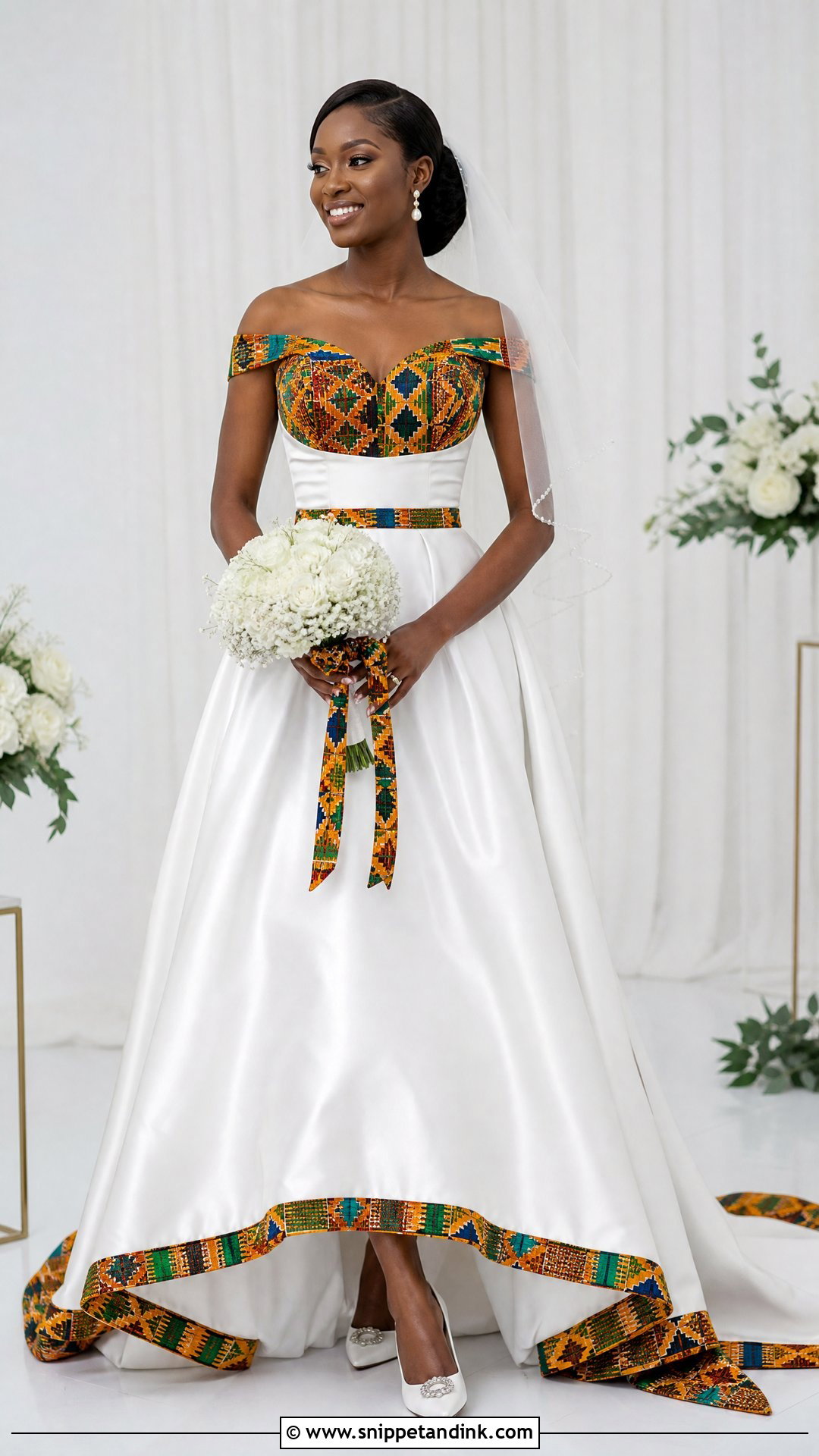
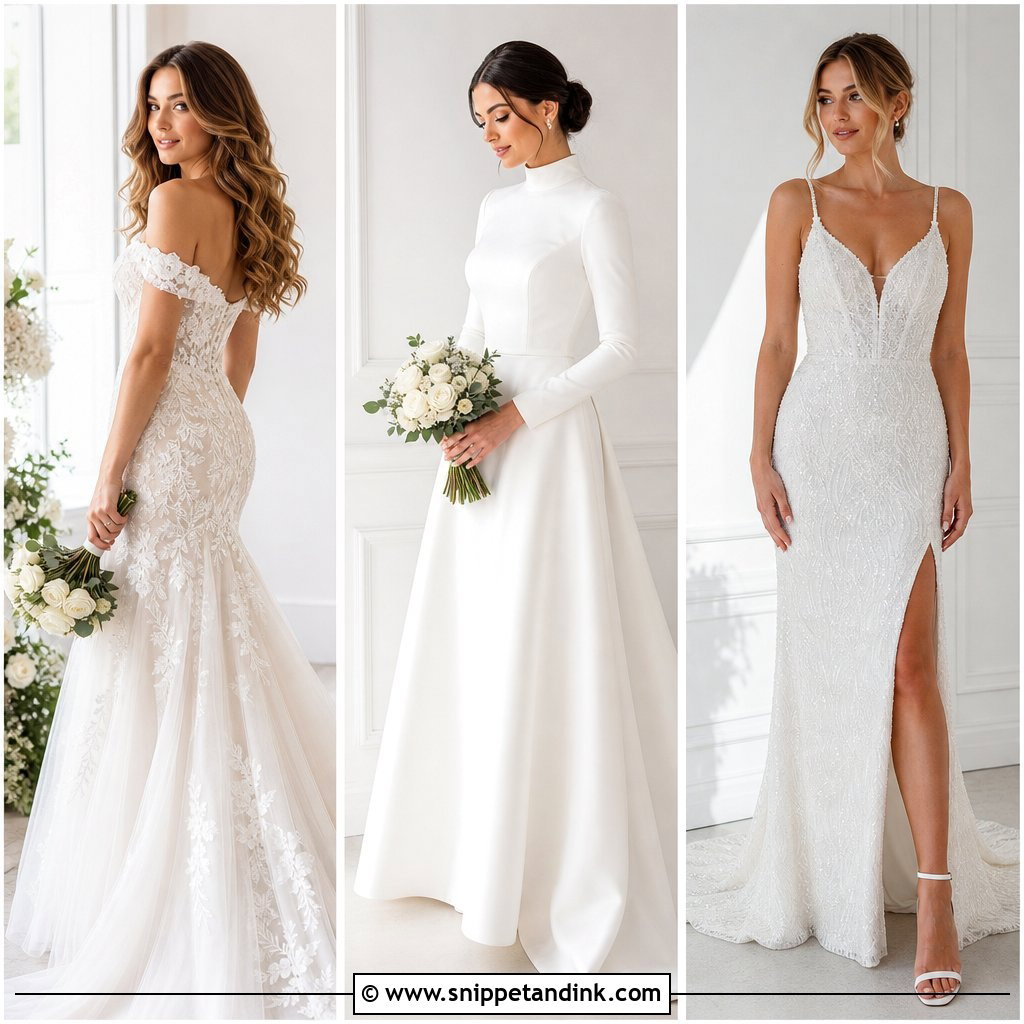
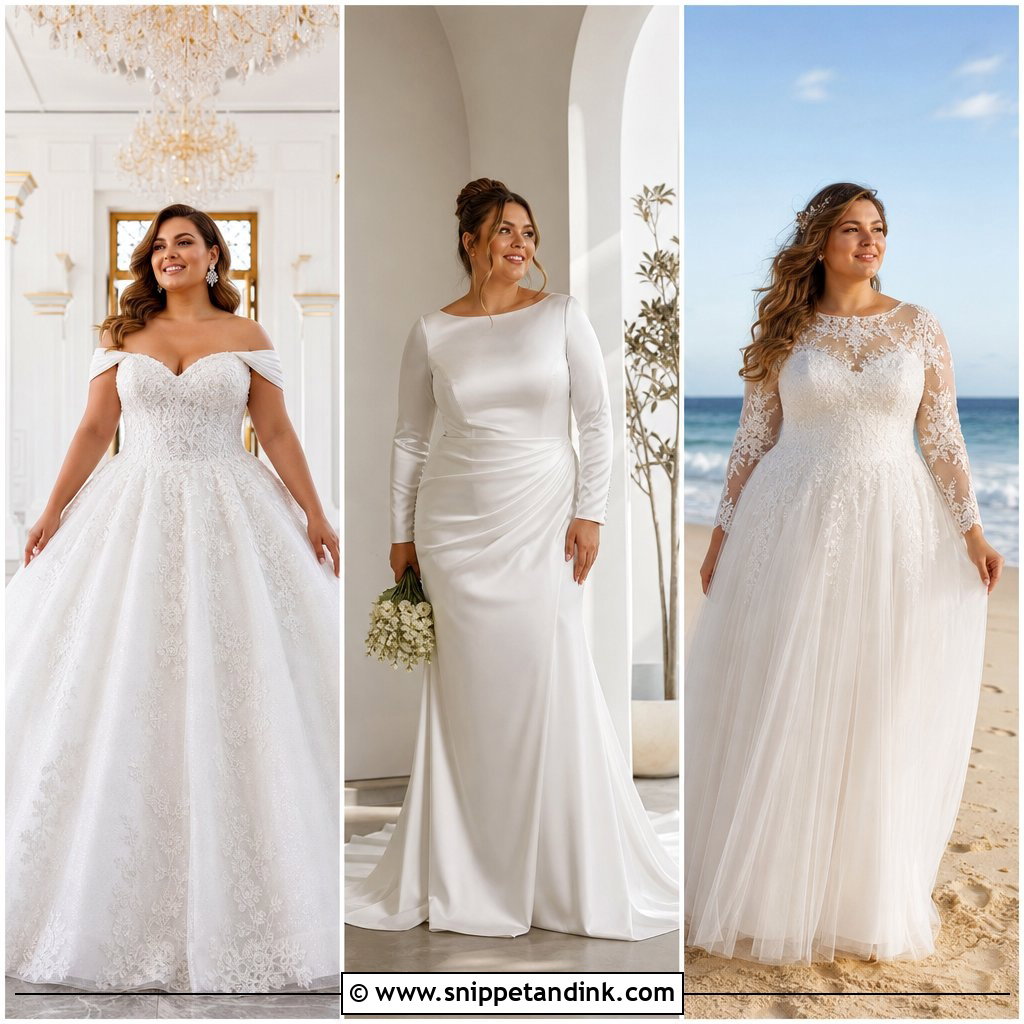
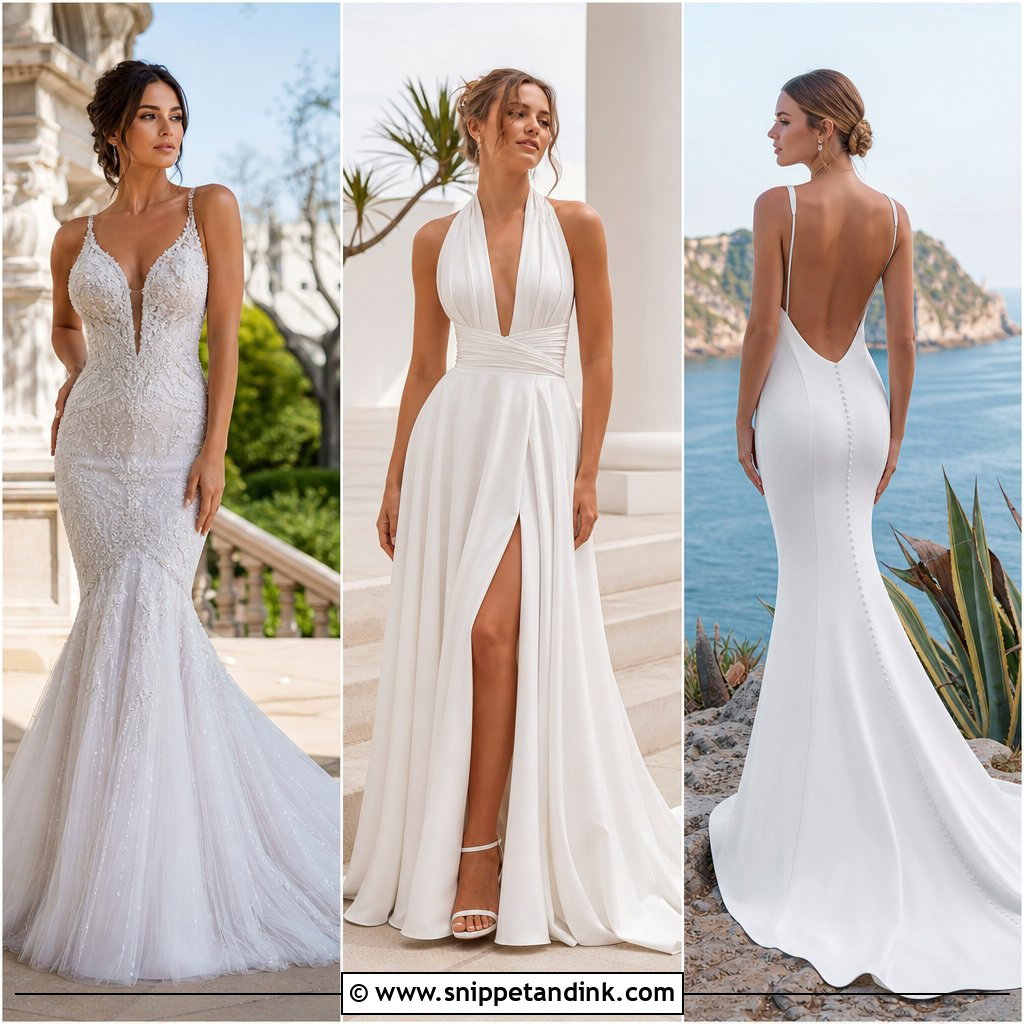
A white and Ankara bridal dress gives you the familiar wedding-gown base with print where it counts. Start with white satin, crepe, lace or tulle, then bring Ankara into the bodice, waistband, sleeves, side panels or train. An Ankara corset over a white A-line or ball gown skirt is the easiest balance to get right. My first step is always to compare pure white, soft white and ivory against the print, because the wrong undertone makes the Ankara colors look dull. White or metallic shoes, pearl earrings and a simple veil finish it, with one print color in the bouquet ribbon.
21. Gold Ankara Bridal Dress
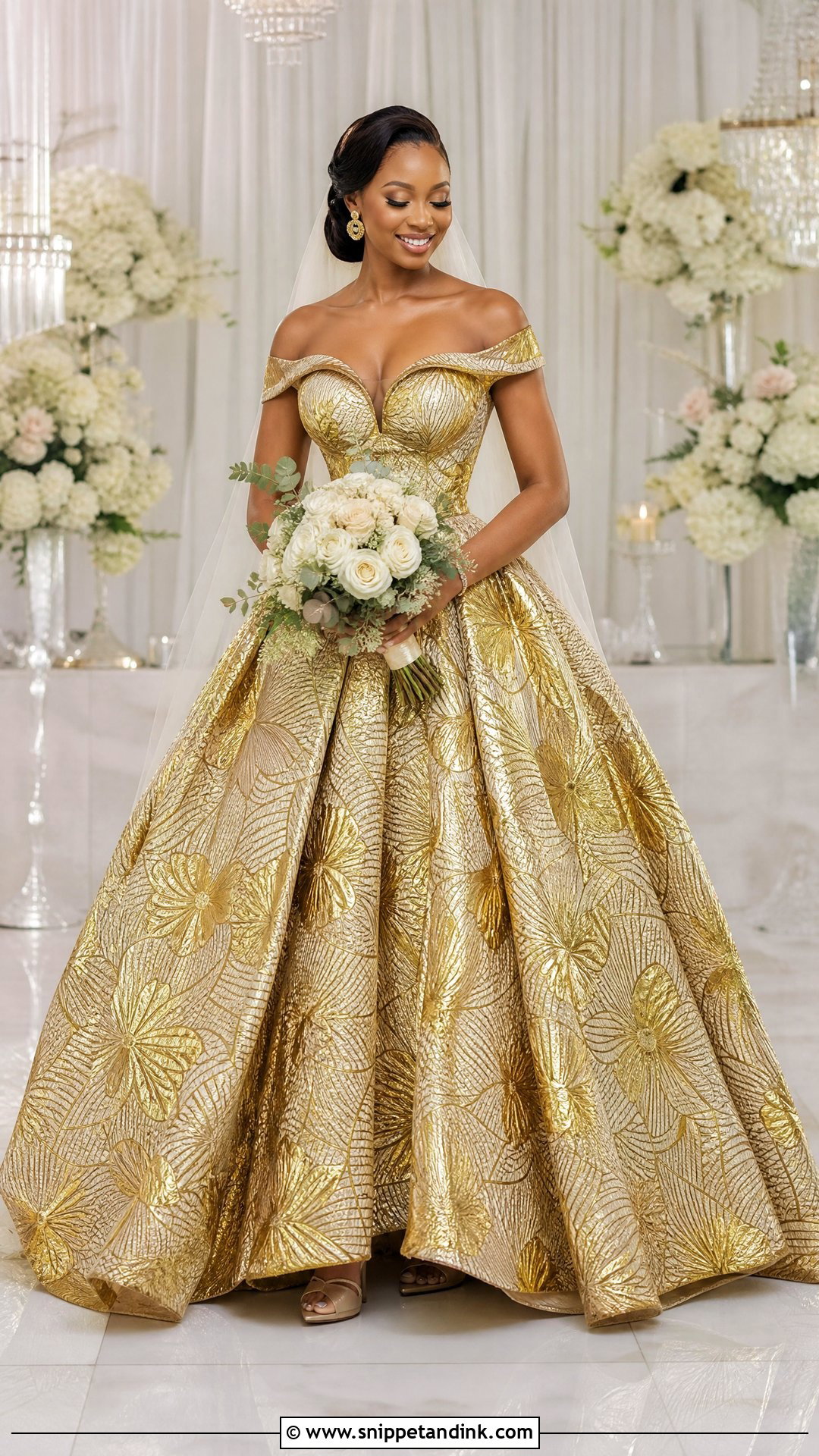
Gold Ankara looks regal in warm indoor light, but metallic thread and foil prints change a lot between lighting conditions. I check gold fabric under daylight and under warm bulbs before cutting. Choose one kind of gold, whether motifs, background or subtle accents, not several competing finishes. A fitted bodice with a full skirt reads royal; a sleek mermaid reads modern. Champagne heels, refined gold earrings and a neutral veil or coordinated gele suit it. Wear one bracelet and an understated clutch, and let cream, white or soft green flowers brighten the palette.
22. Blue Ankara Bridal Dress
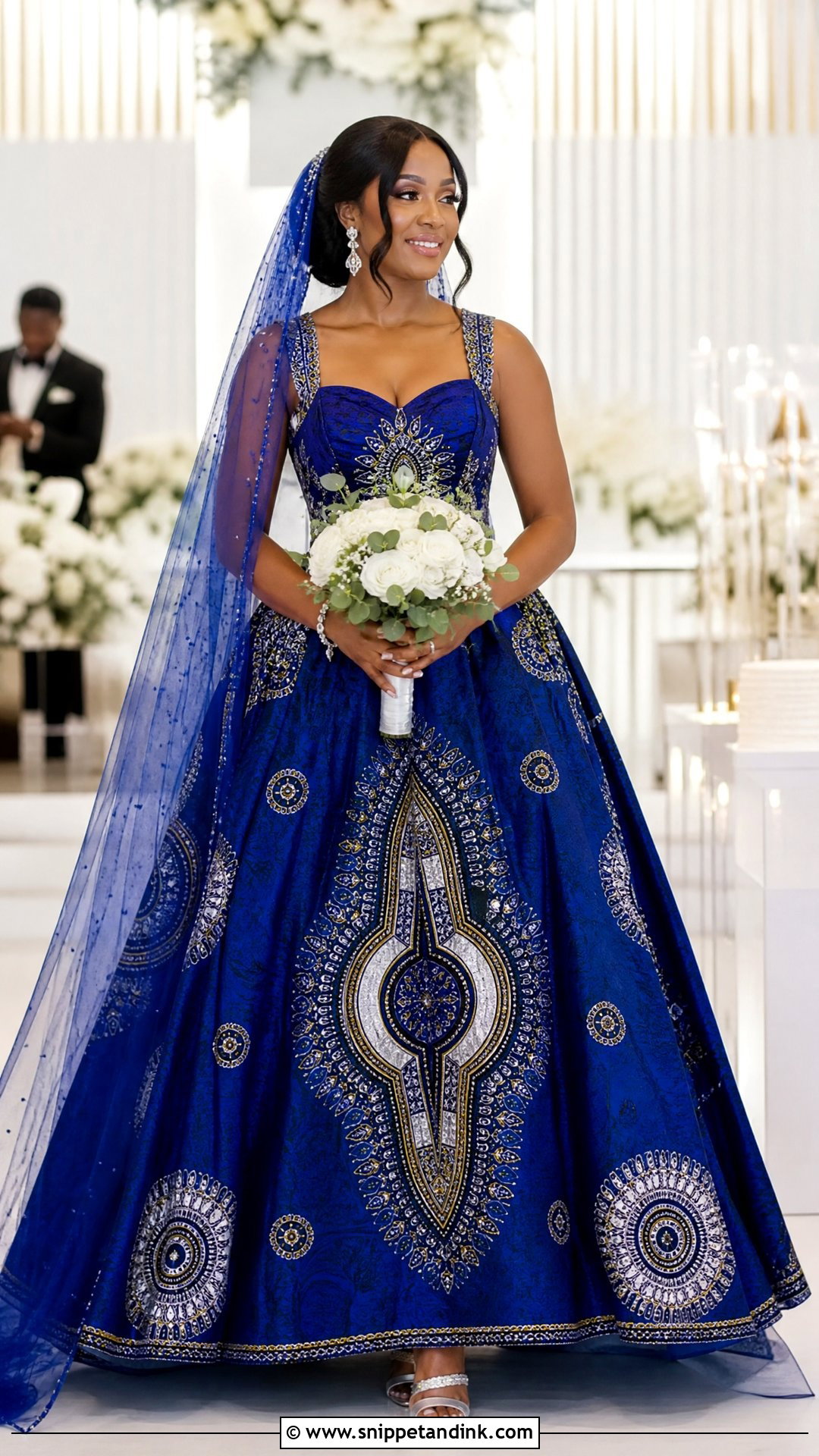
Blue Ankara ranges from royal blue’s formality to powder blue’s softness, with teal and navy in between. Pick a silhouette with enough structure to carry a strong color: an A-line gown, fitted mermaid or ball gown with a firm bodice. Silver and crystal suit cool blues; gold warms prints with yellow or bronze in them. A white, silver or matching blue veil sets how colorful the whole look feels, and white flowers with light greenery give clean contrast. Before cutting, I mark which motifs should sit at the neckline, waist and center front, and blue prints with white detail show any misplacement clearly.
23. Red Ankara Bridal Dress
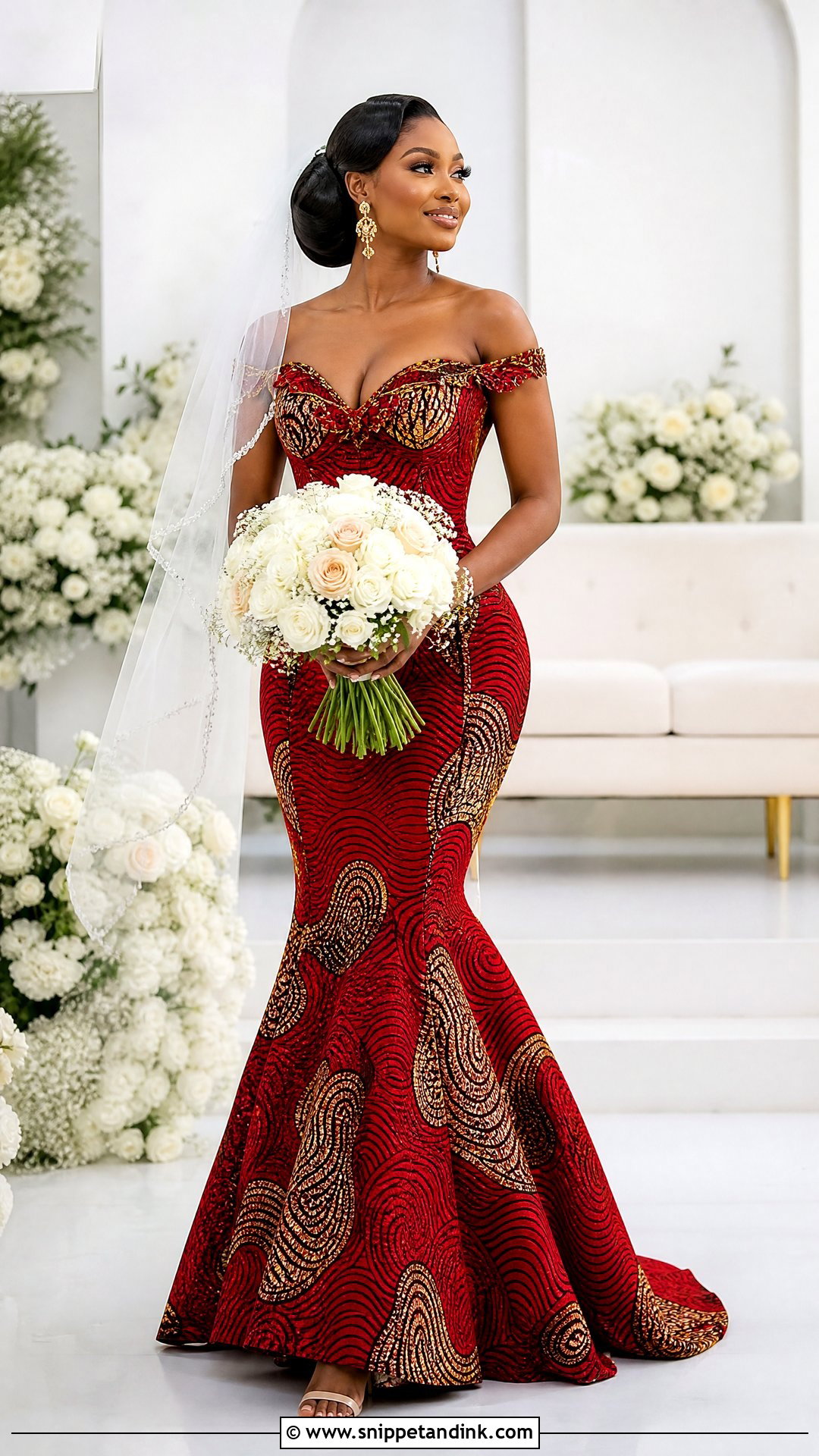
Red Ankara is the most festive color here and the least forgiving to sew. Deep crimson and burgundy feel formal; bright red feels energetic. Keep the silhouette clear, such as a fitted trumpet, full A-line or structured ball gown, and don’t pile extra colors into the accessories. Gold or neutral heels, matching earrings and a simple veil or gele are enough, with white, blush or greenery in the bouquet to soften it. Red motifs that don’t line up at the seams are glaringly visible, so I ask the tailor to center the strongest pattern and match the side seams with extra care.
24. Green Ankara Bridal Dress
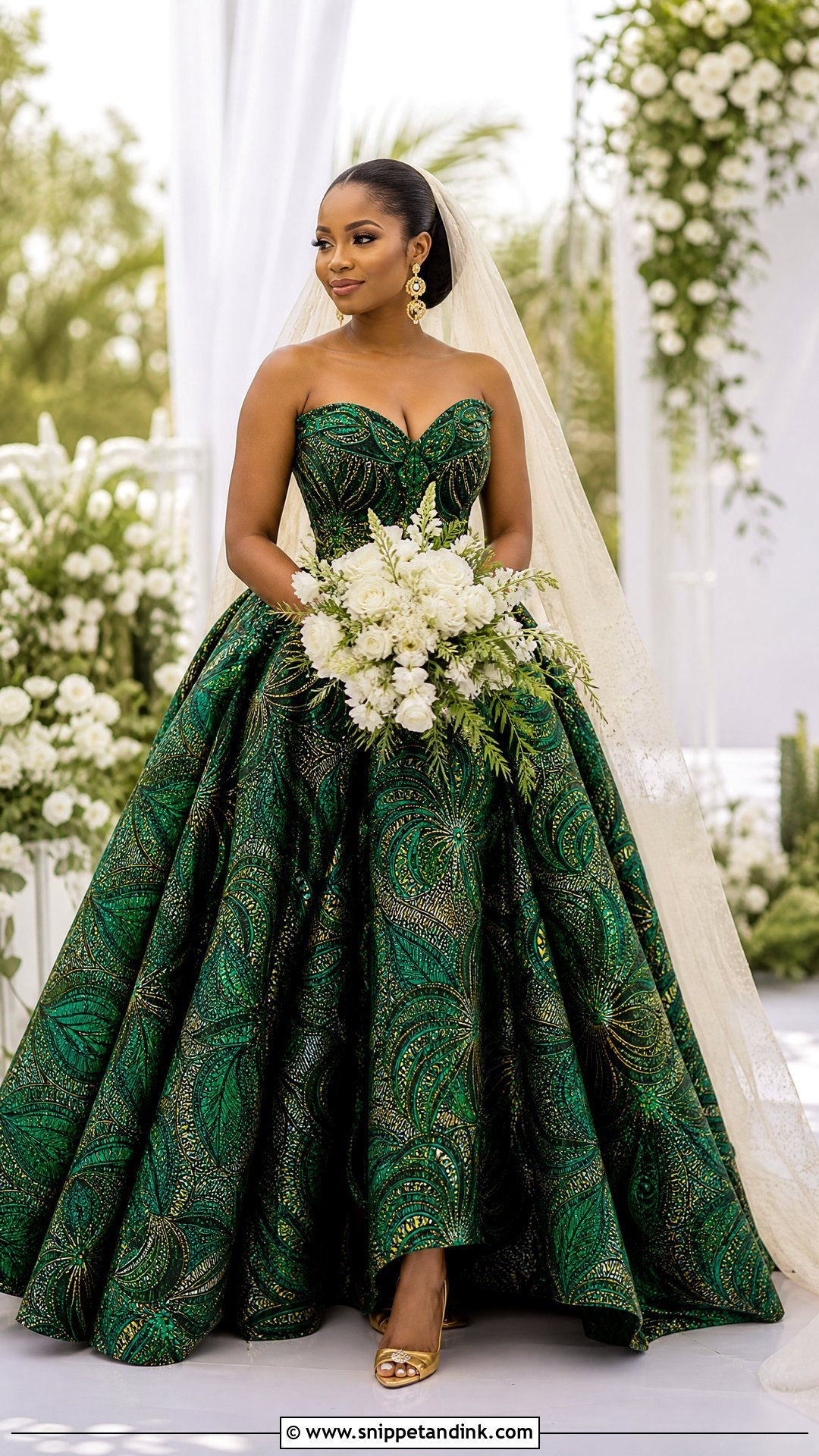
Green Ankara feels at home in gardens and halls alike. Emerald reads rich and formal, sage soft, bright green lively. I’d choose a print with two or three main shades, which makes accessorizing much easier, and match shoes and jewelry to one specific green rather than several. A floor-length A-line or ball gown gives big motifs space; a mermaid gives a sleek finish. Gold heels, refined earrings and a cream veil or coordinated headwrap suit it. A bouquet of white flowers and greenery connects with the palette without disappearing into the gown.


25. Short Ankara Bridal Dress
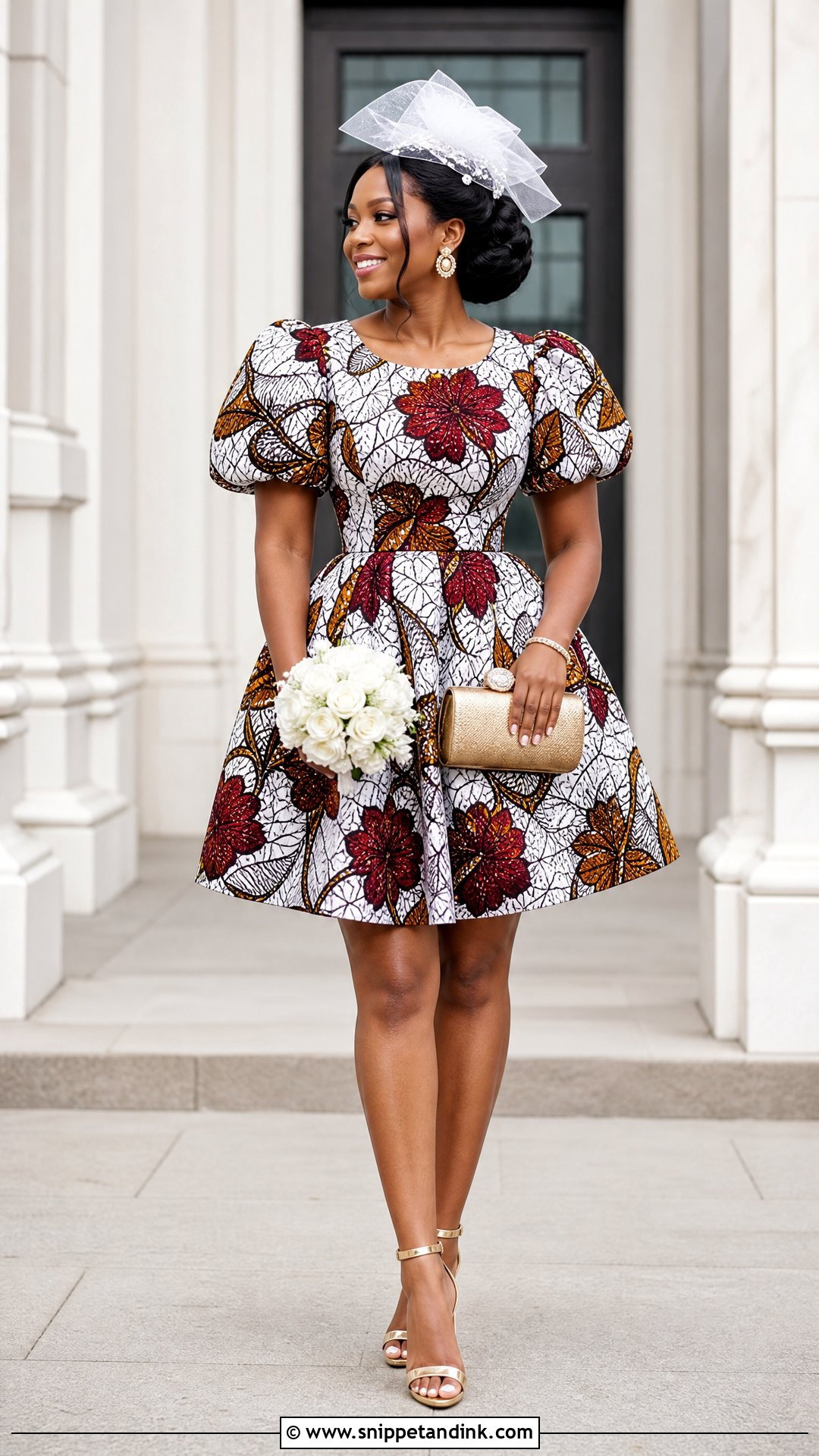
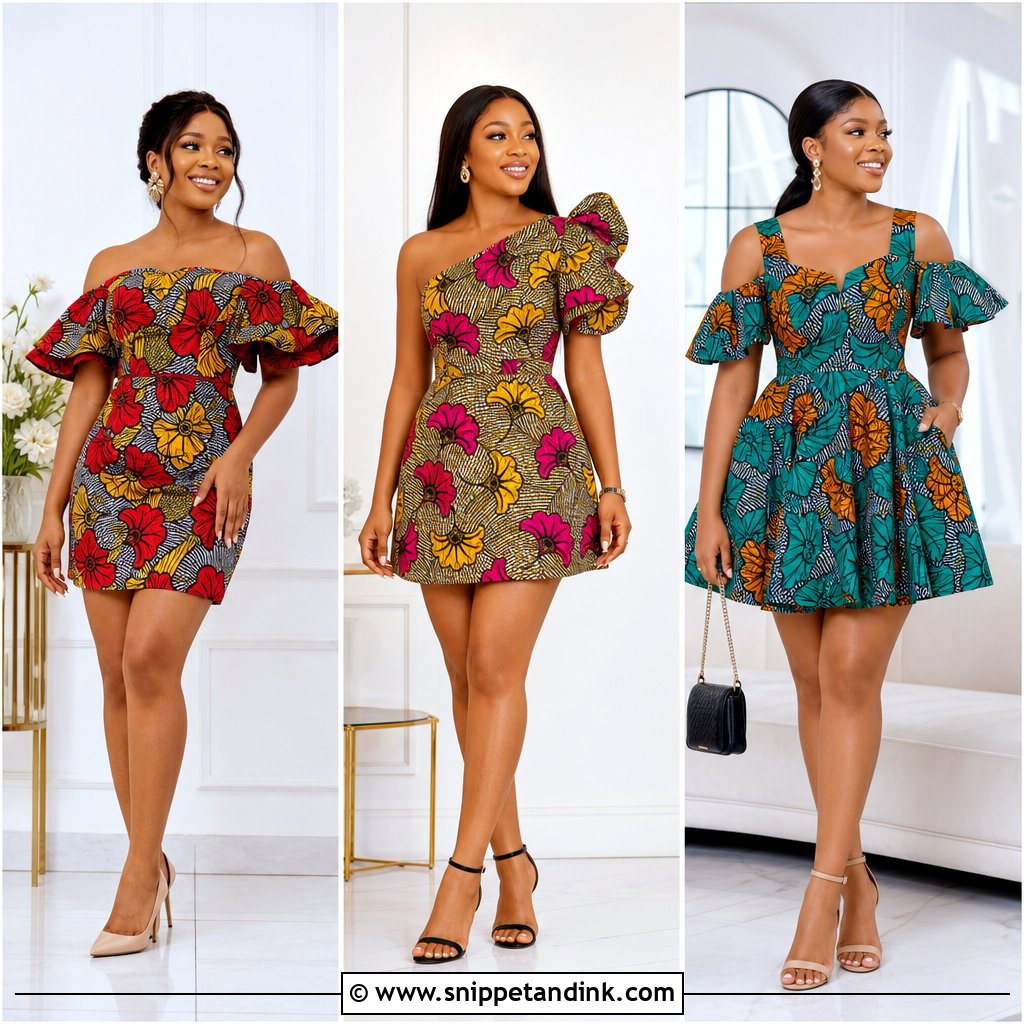
Short Ankara dresses earn their place at courthouse ceremonies, traditional introductions, reception changes and small celebrations. A knee-length fit-and-flare is classic, a structured mini more fashion-led, and a midi adds coverage with fitted bodices, puff sleeves or a high neck. Your shoes are on show, so they have to match the formality of the dress; this is where I’d spend on good statement heels. Add polished earrings, a small veil, bow headpiece or matching gele, a compact clutch and a neat bouquet. A smooth lining or built-in shorts let you sit and move without worrying about the hem.
Pattern Placement Is Settled Before the First Cut
With a plain bridal fabric, mistakes can be hidden in the seams. With Ankara, every misplaced motif shows. I spend the first fitting appointment with the fabric laid out on a table and the tailor’s paper pattern on top, marking exactly where the strongest motif lands.
- Choose the one motif you love most and decide where it should sit: center bodice, center back or across the skirt front.
- Check that nothing lands awkwardly on the bust point, so circles and flowers sit beside it, not on it.
- Ask the tailor to match side seams and the center back zip so the print runs on unbroken.
- Agree on which direction the print runs, especially for birds, leaves and arrows that should point upward.
- Photograph the marked layout so everyone works from the same plan.
When the guests are wearing aso ebi too
At many Nigerian and West African weddings the family and friends wear a chosen aso ebi fabric. If the guests’ print is close to yours, the bride can disappear into the crowd in group photos. I’d pick a bridal print from a different color family to the aso ebi, or add a plain white or metallic element, such as a veil, cape or gele, that nobody else is wearing.
Wax Print Rewards the Bride Who Plans the Cut
Ankara offers much more than strong color. It lets a bride combine cultural expression, modern tailoring and comfort in one outfit. Start with a silhouette that suits your body and the venue, then think through print scale, motif placement, neckline, fabric weight and movement. Accessories should repeat a few colors from the print without competing with it. A skilled tailor can add the practical things, such as boning, pockets, detachable trains and adjustable closures. Ball gown, long sleeves, jumpsuit or short reception dress, the outfits that work are the ones planned around the fabric from the start.
You'll Like These Ideas:


Leave a Reply