
Most curvy brides I dress arrive expecting to be told what to hide. I’d rather start with what to show. A good wedding gown for a fuller figure isn’t about camouflage; it’s about construction: a bodice that holds you without squeezing, straps placed where they actually carry weight, seams that follow your curves instead of cutting across them. The twenty styles below cover lace, satin, chiffon, crepe and tulle, from soft A-lines to a proper ball gown. For each, I’ve noted what I’d check in the fitting room and how I’d finish the look, so you can walk into appointments knowing what to ask for.
Bridal Size Charts Run Small, So Order by Tape Measure
Almost every bride I fit is surprised by her bridal size. Most designers use their own charts, which typically run smaller than high-street sizing, so a bride who wears an 18 in everyday clothes may be ordering a 20 or 22. It means nothing about your body. It’s just a different chart.
- Get measured by the shop in the bra you plan to wear: bust, waist and hips at the fullest points.
- The dress is ordered to your largest measurement. It is far easier for a seamstress to take a gown in than to let it out, and some styles have almost no seam allowance.
- Ask whether the designer offers made-to-measure or extended sizing in the style you like. Many do now, sometimes for an extra charge.
- Don’t order a size down for planned weight loss. If your body changes, the alterations will catch it.
Also ask to see the sample in a size close to yours. Many shops now carry curvy samples, and trying a dress that actually closes tells you far more than one clipped open at the back.
1. Plus Size A-Line Lace Wedding Dress
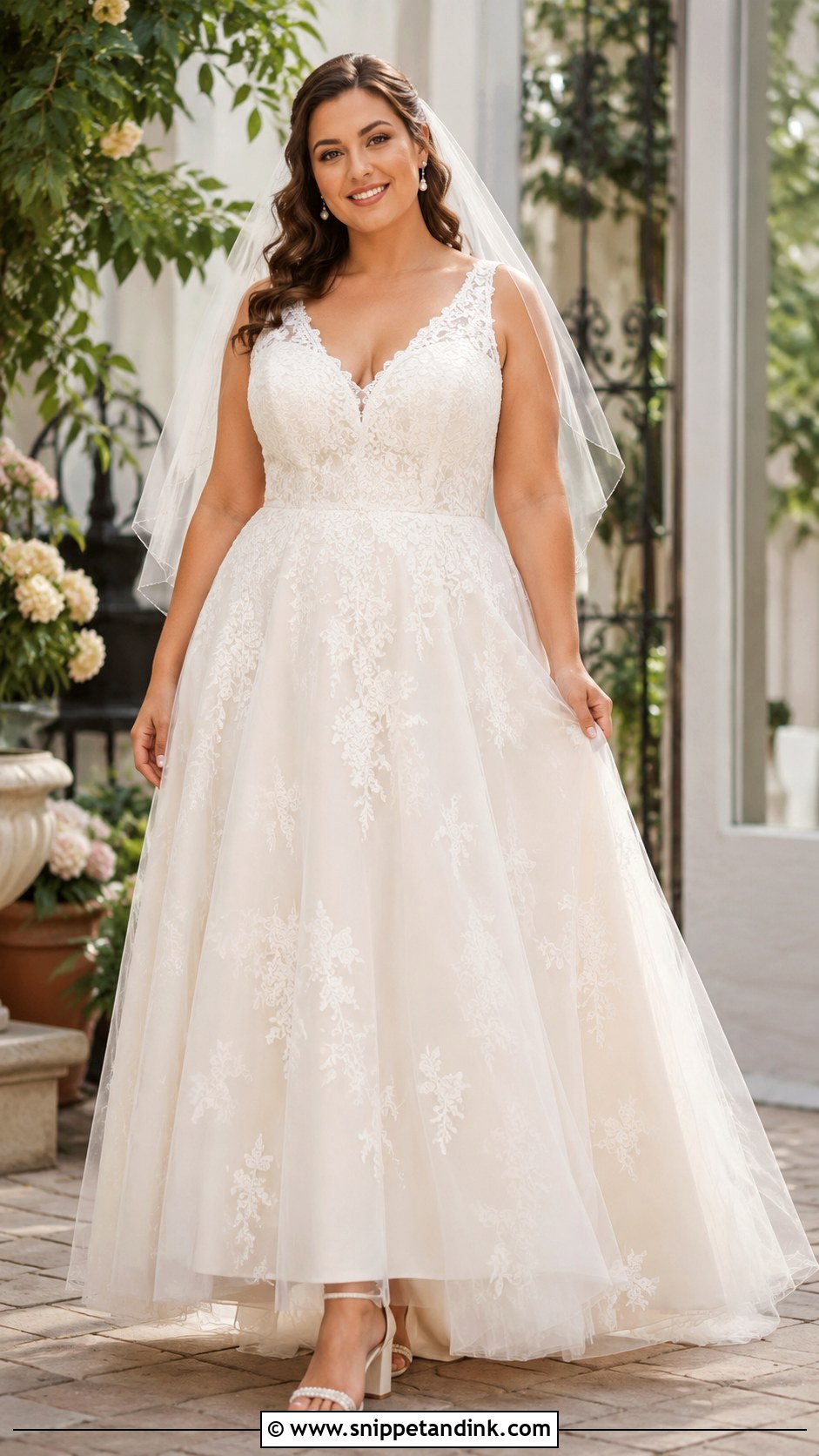
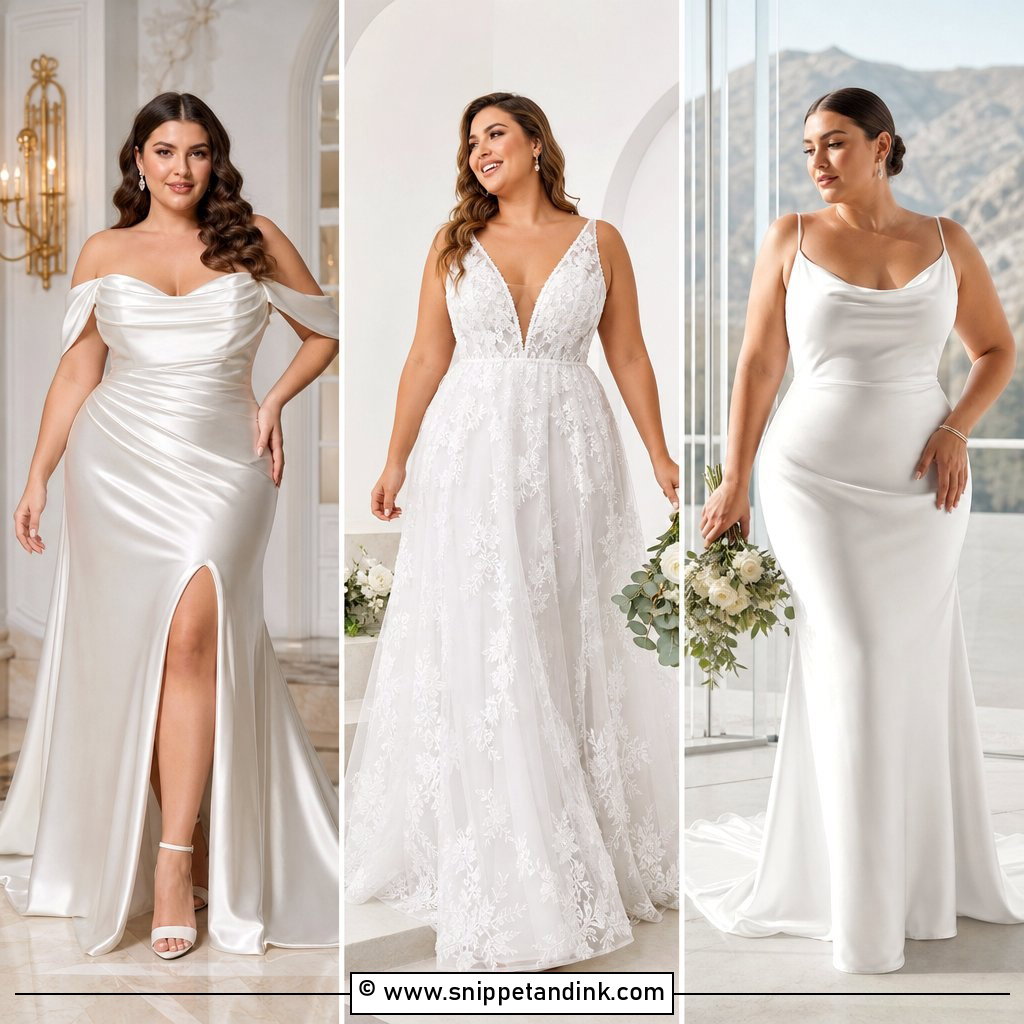
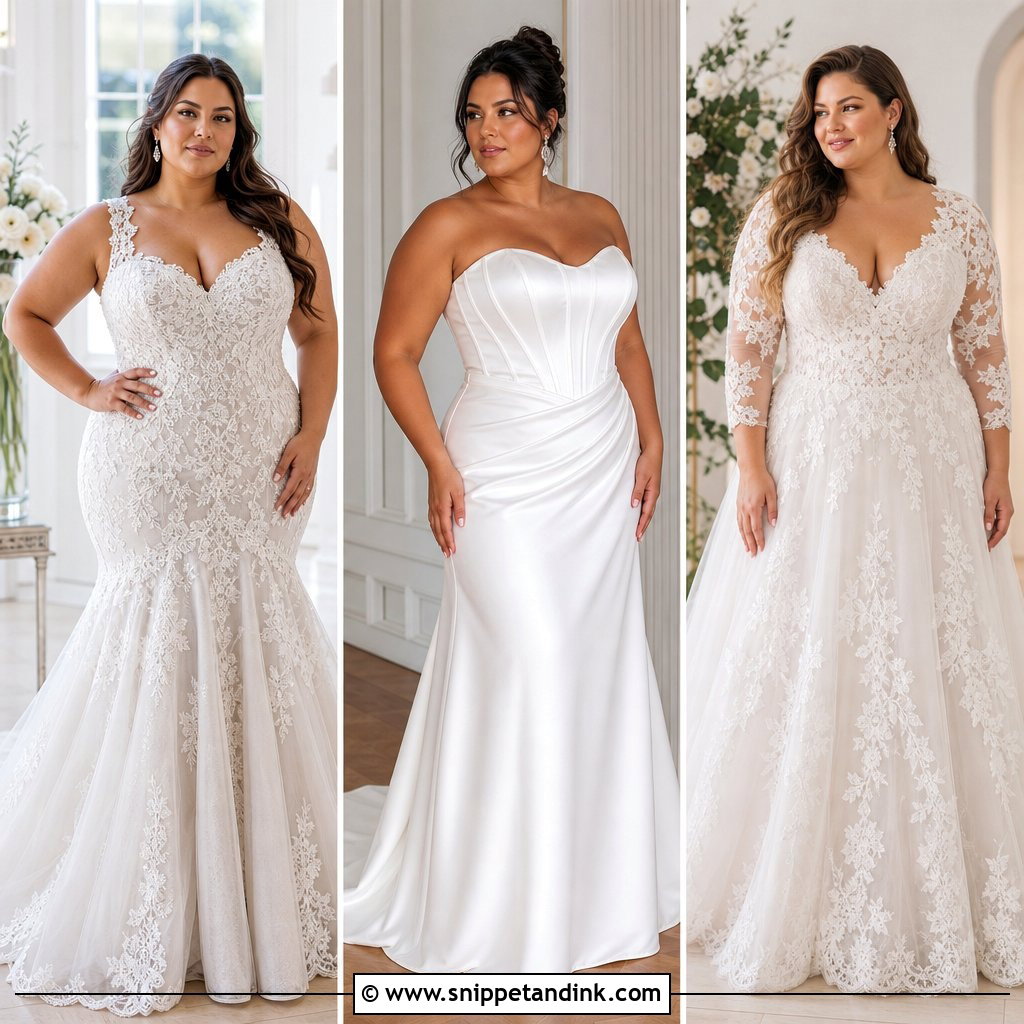
If a bride isn’t sure where to start, I hand her an A-line in lace. The skirt eases away from the waist without piling volume on the hips, and lace over a smooth lining gives texture that moves with you. The bodice does the real work. Look for wider lace straps that sit on the shoulder rather than sliding outward, and a V-neck that opens up the chest without needing tape to stay put. Pearl drops, a fingertip veil and ivory block-heel sandals. I always have the straps and waist adjusted while the bride is seated as well as standing, because lace stretches a little once it’s worn.
2. Plus Size Off-Shoulder Ball Gown Wedding Dress
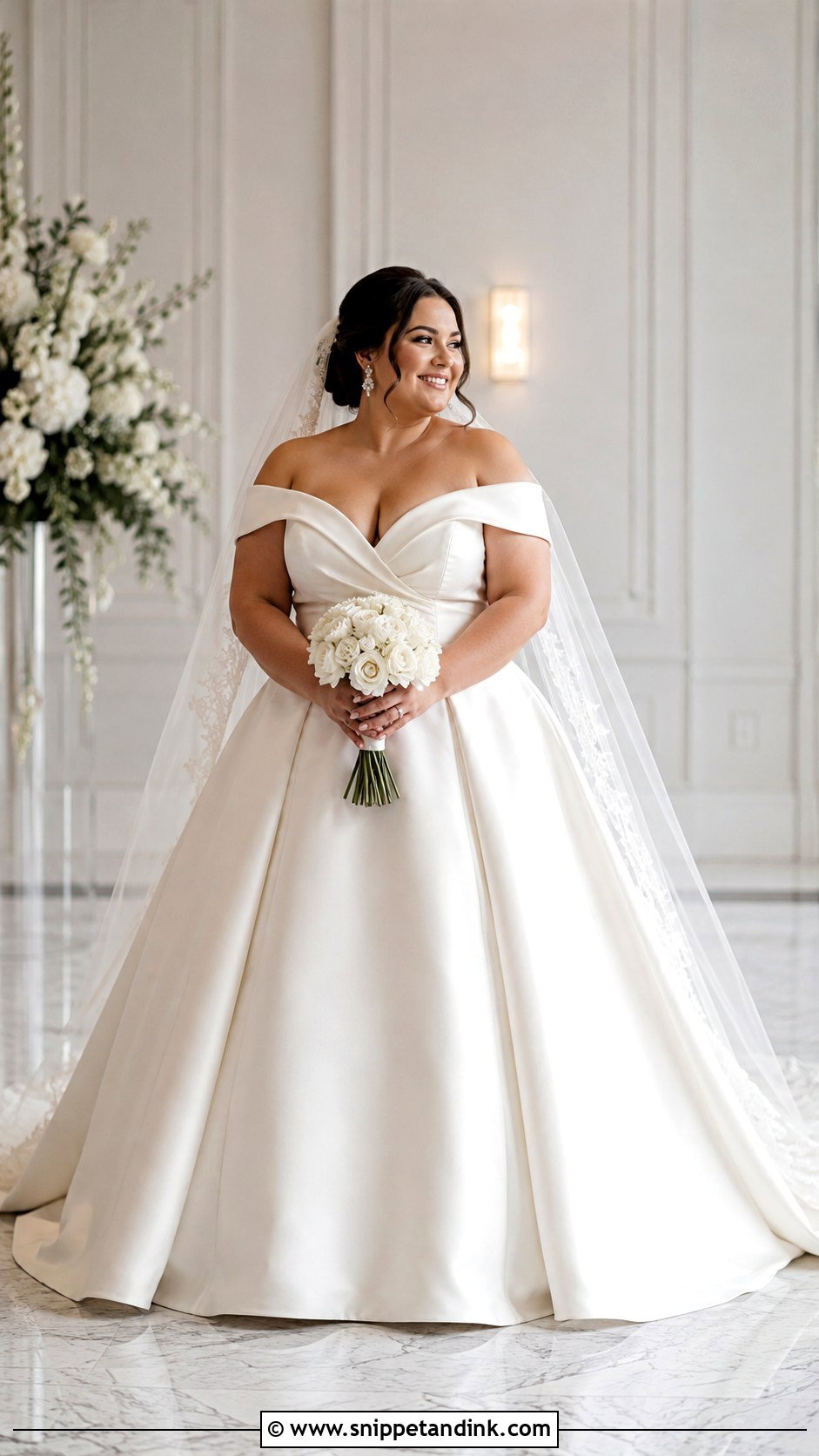
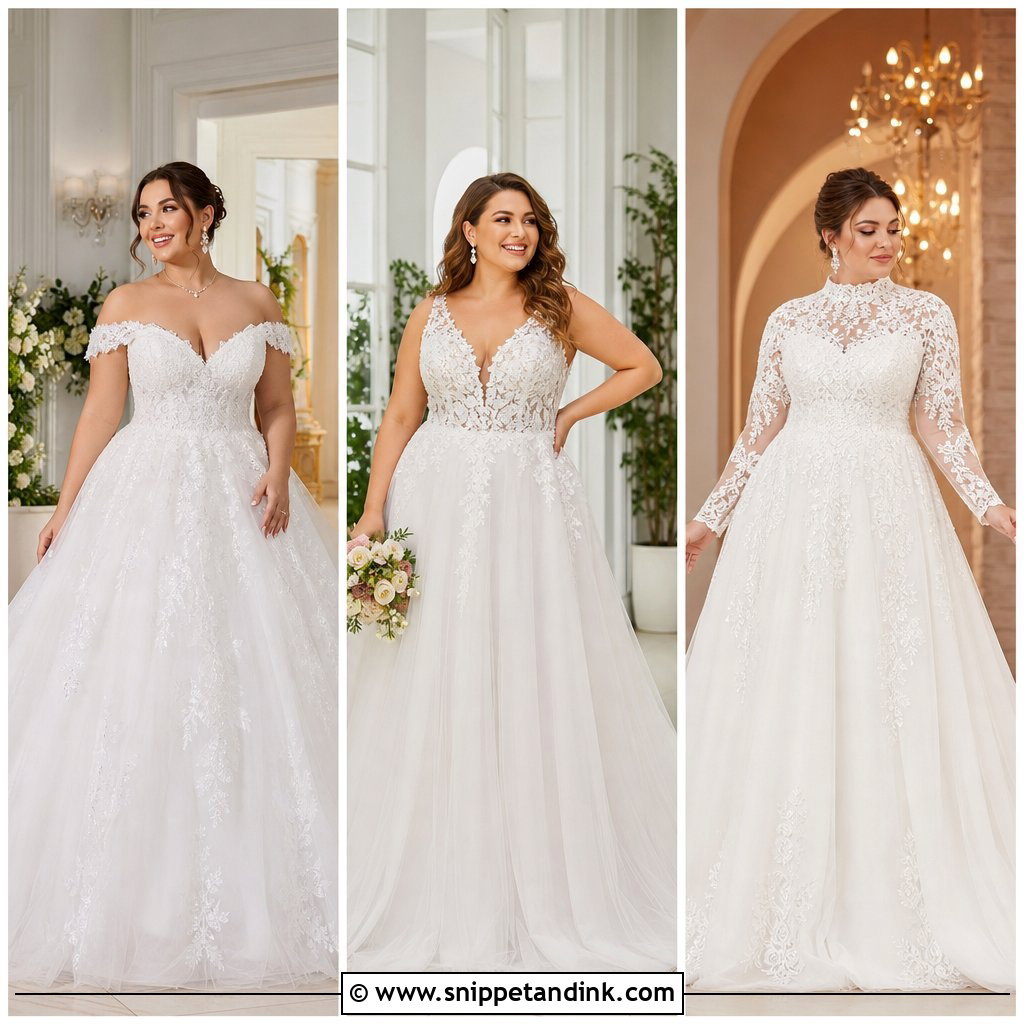
A full ball gown is absolutely available to curvy brides, and the good ones are built for it. Look for a structured bodice with flexible boning, an internal waist stay that takes the weight of the skirt off your shoulders, and off-shoulder sleeves cut with enough room to raise your arms. That last point is the one I see fail most often; tight off-shoulder bands rise and dig in when you hug. Mikado or satin holds shape without decoration. A low bun, crystal earrings, and a cathedral veil pinned beneath it. Flats or low heels are fine; nobody will see them.
3. Plus Size Long Sleeve Satin Wedding Dress
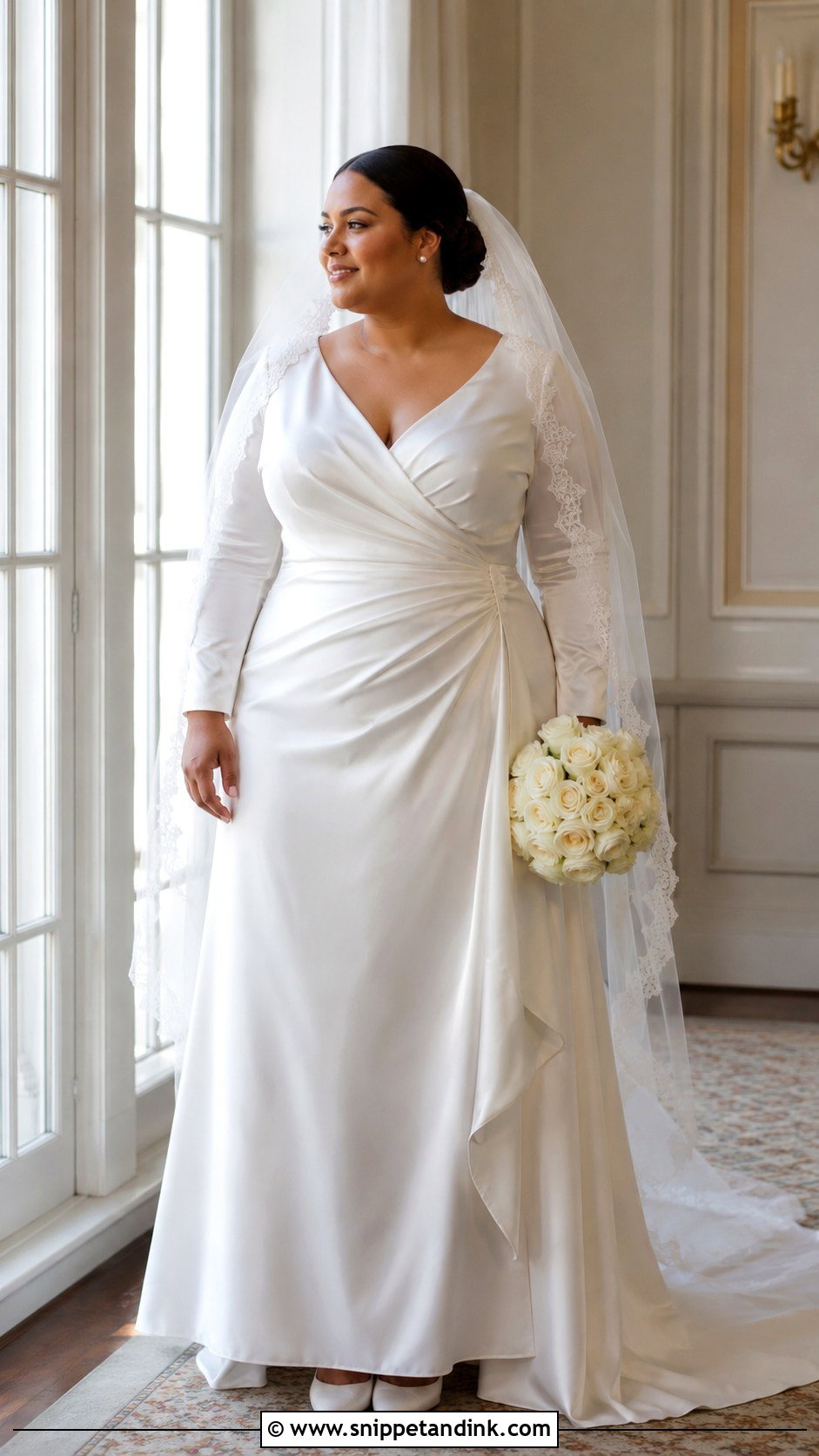
Satin is honest fabric. It reflects light, so it shows every seam, every pull and the outline of anything underneath. That’s why I only recommend a long-sleeve satin gown when the bride is willing to do the fittings properly and choose smooth, no-show underwear first. A wrap-style bodice or soft gathering at the waist shapes it without stiffness. Make sure the sleeves have a little stretch at the elbow, or you’ll feel it every time you lift a glass. A shallow V or portrait neckline keeps the top half from looking heavy. Satin pumps, pearl studs, a sleek chignon and a lace-trimmed veil.
4. Plus Size V-Neck Chiffon Wedding Dress
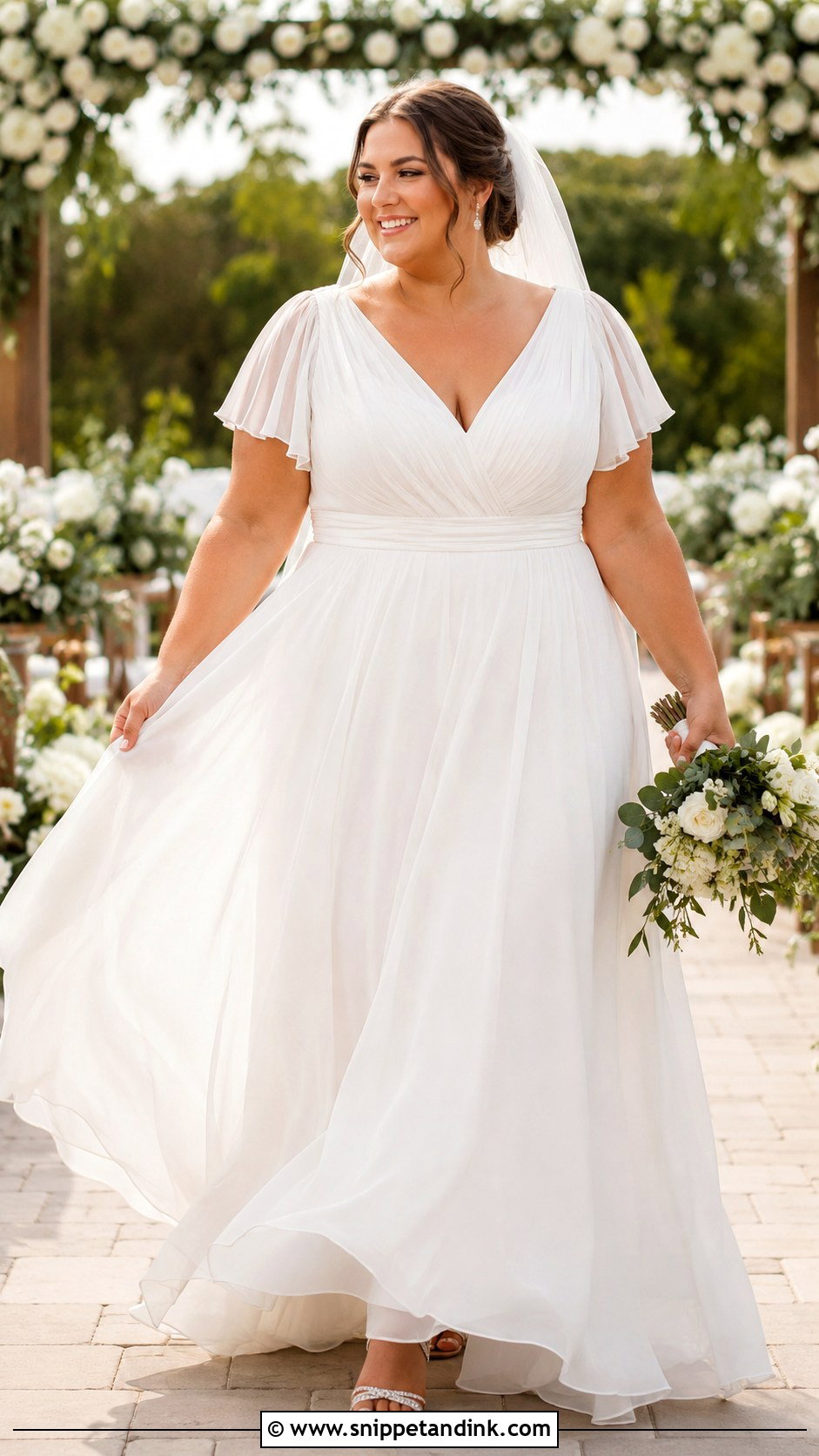
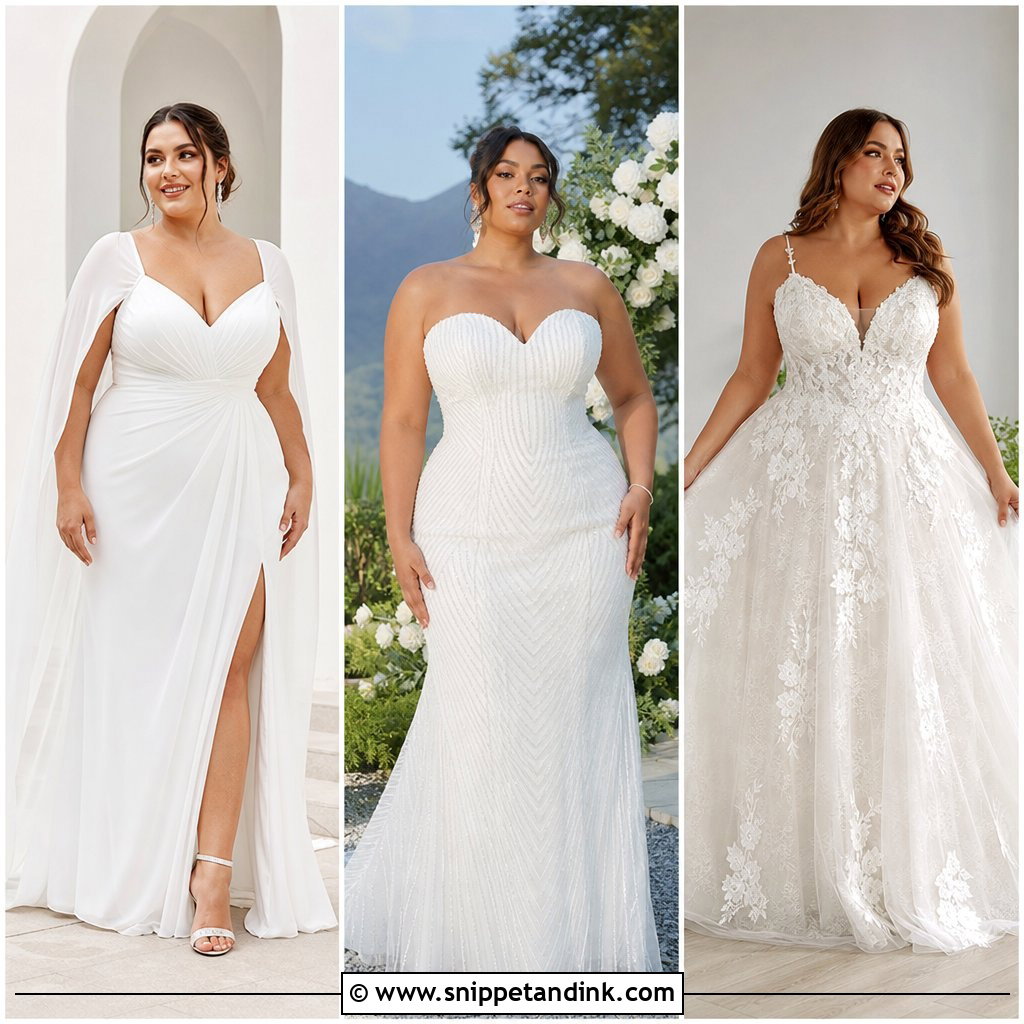
Chiffon floats, which is why curvy brides marrying outdoors so often end up in it. A lined V-neck bodice gives support while the skirt falls loose over the hips. Flutter sleeves or wide straps add coverage without the tightness of a fitted sleeve. A little pleating under the bust shapes the waist without adding bulk. One honest warning: thin, cheap chiffon clings in humidity and shows the lining’s edges, so look for a gown with two layers of chiffon over a proper slip. Delicate earrings, low embellished sandals and loose waves suit its movement.
5. Plus Size Lace Mermaid Wedding Dress
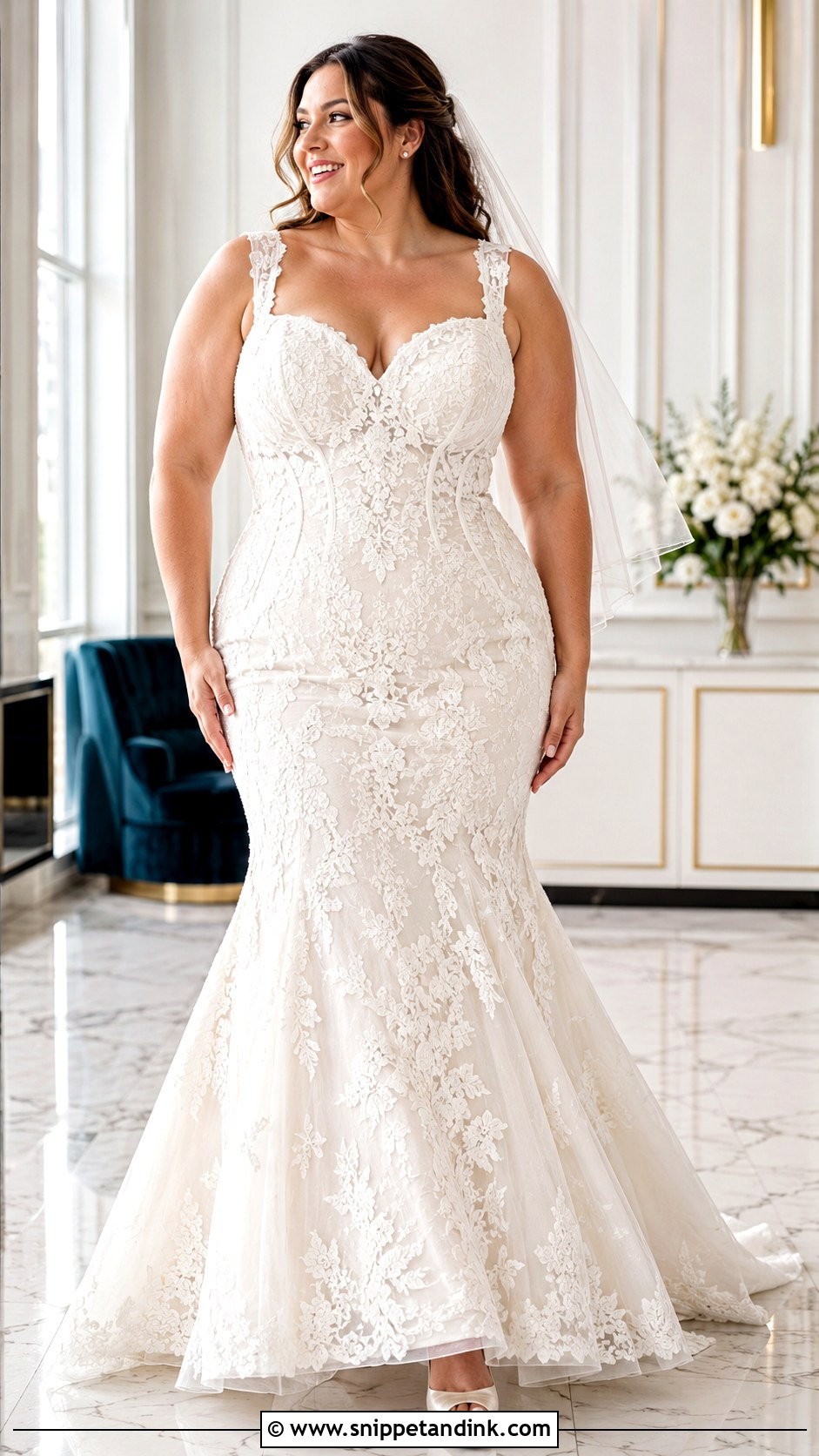
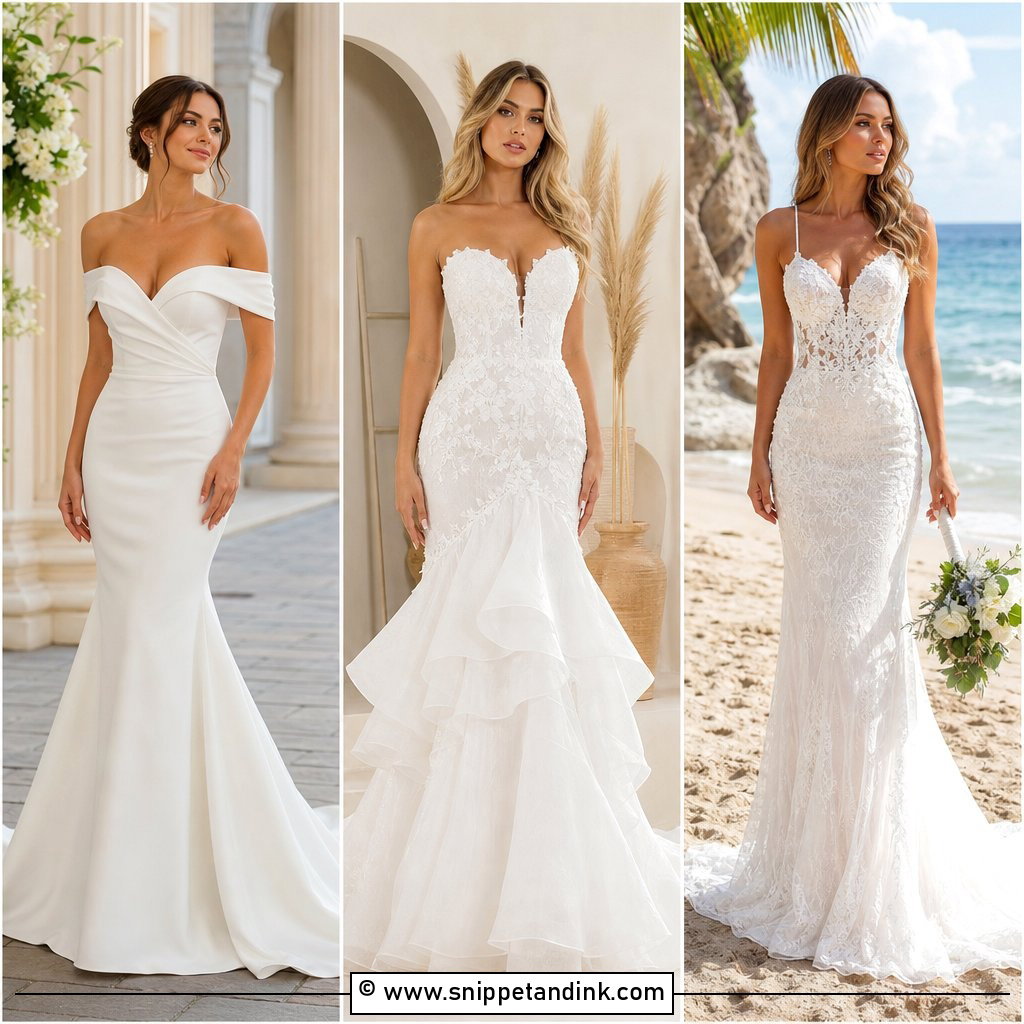
The mermaid is the silhouette curvy brides are most often told to avoid, and I think that’s nonsense if the construction is right. It needs strong internal structure, supportive cups, curved seams that follow your hips, and a lace with some stretch so you can sit. The flare point matters most. Set too low and you’ll shuffle; set just at or slightly above the knee and you can walk normally. Have your stylist mark it with you moving. Sparkling studs, a simple veil and platform heels for balance. Plan a bustle for the reception to keep the lace train off the floor.
6. Plus Size Empire Waist Wedding Dress
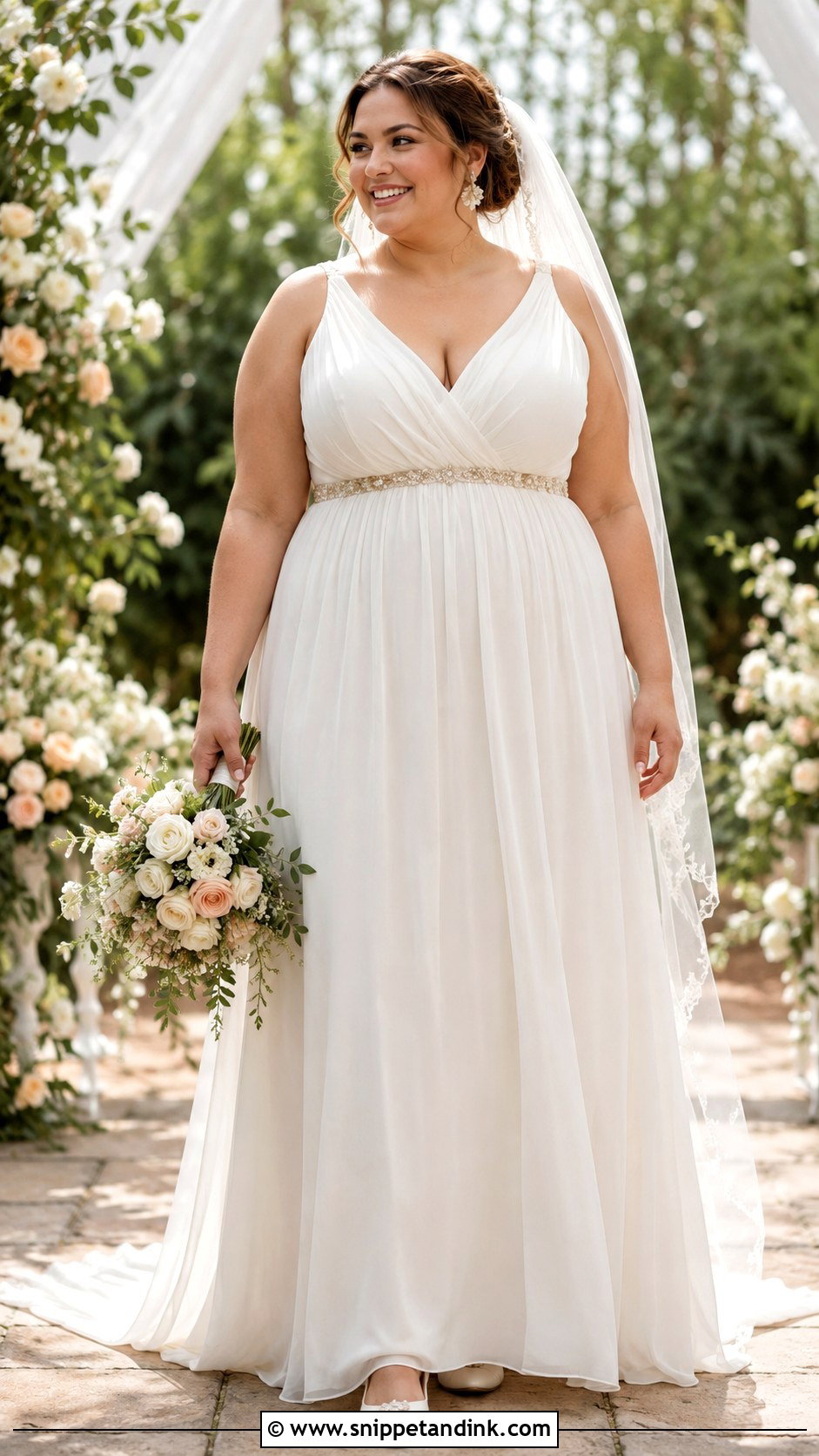
Empire waists put the seam just under the bust and let the skirt fall straight from there, which feels wonderfully light in chiffon or georgette. The risk is looking shapeless or, with a fuller bust, having the top pull forward. So I insist on a structured bodice with real support, not a loose drape. A narrow beaded band under the bust defines the line without cutting across you. The gathers should fall evenly round the skirt, not bunch at the front. Chapel veil, delicate floral earrings and ivory flats. It’s a natural fit for gardens, destinations and relaxed ceremonies.
7. Plus Size Square Neck Mikado Wedding Dress
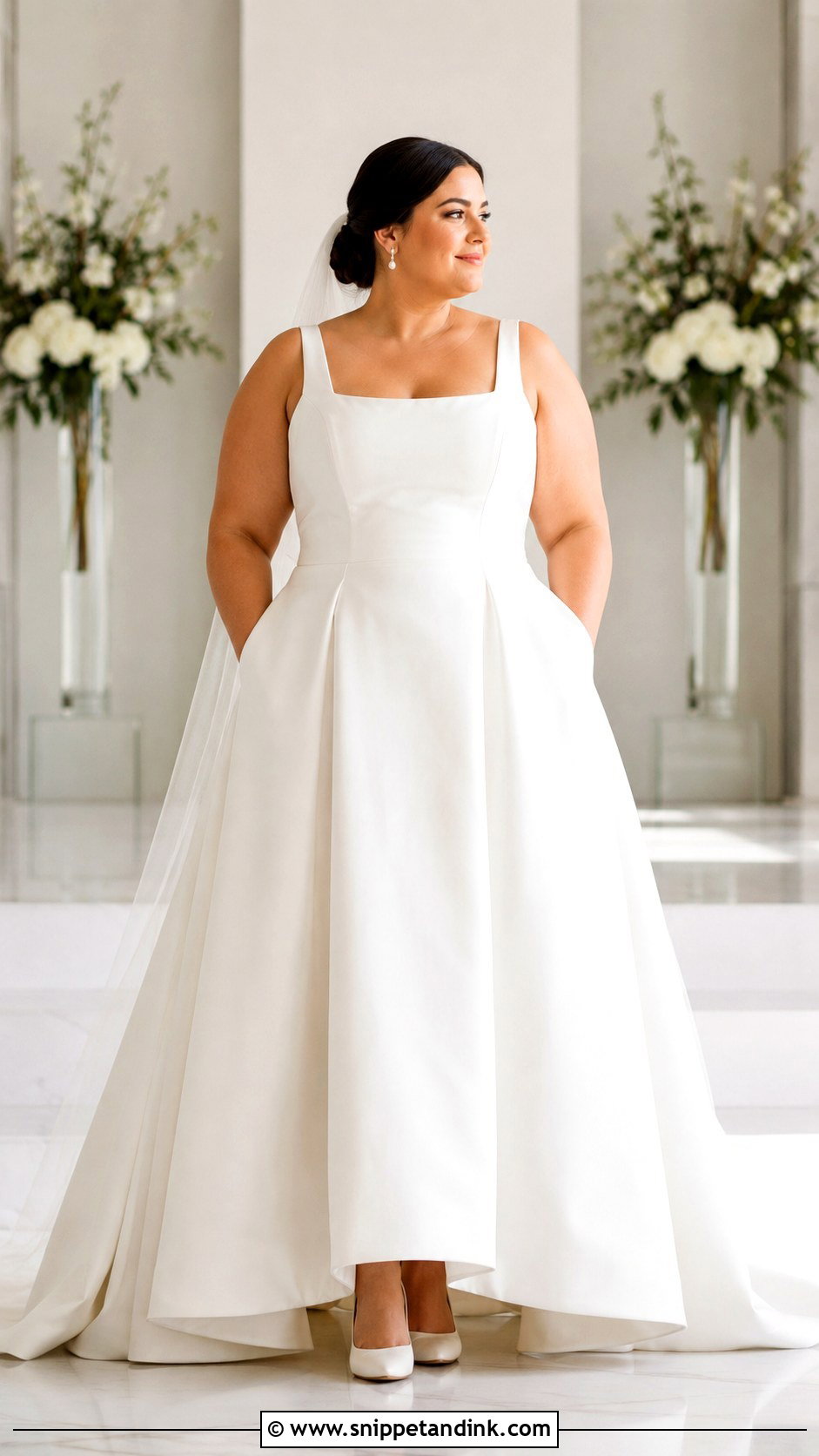
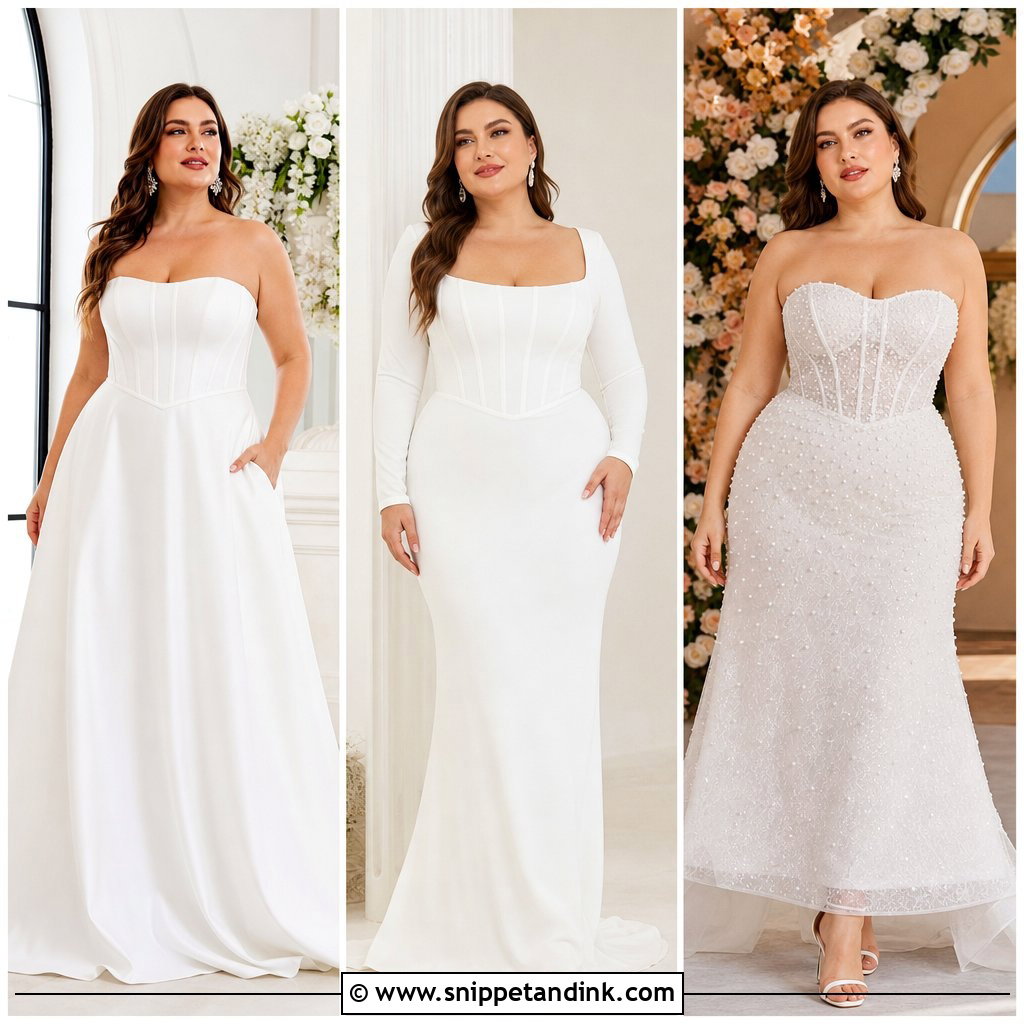
Square neck plus Mikado is one of my favourite combinations for curvy brides who like clean lines. The neckline frames the collarbones; wider straps hide a supportive bra. Princess seams running from the bodice through the waist give the shape without needing a single bead. Ask about pockets; Mikado holds them invisibly. At fittings, lift your arms and reach forward. The armholes should feel smooth, not tight against the underarm, and the neckline must lie flat without gaping. Pearl earrings, a low bun, block heels and a veil with a clean edge.
8. Plus Size Strapless Corset Ball Gown Wedding Dress
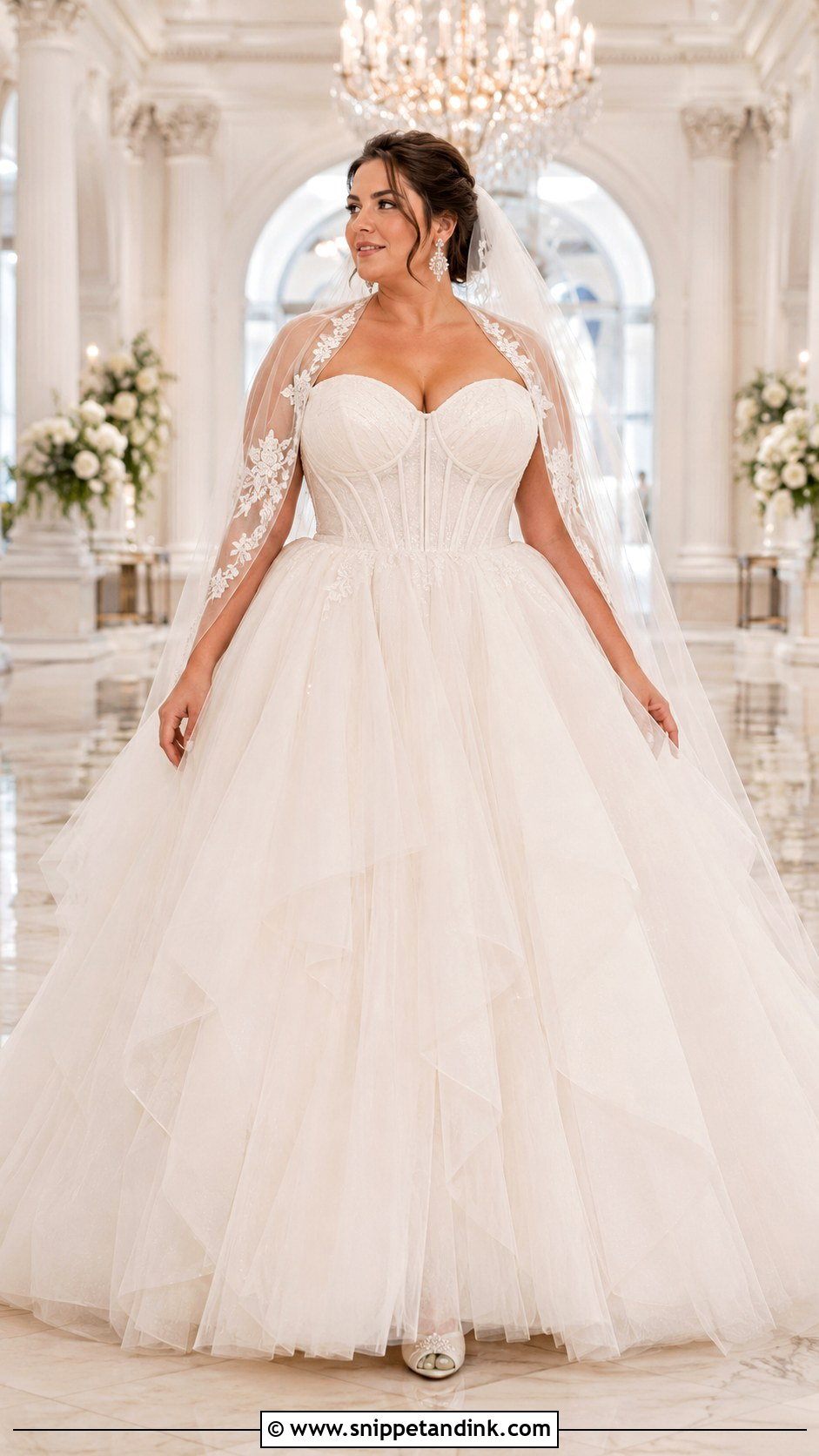
Strapless corset ball gowns can be very secure on a fuller bust. The key is that the support comes from structure, not tightness. A firm back closure (lacing is the most adjustable), supportive cups, flexible boning and a waist stay all share the load. If the neckline slips when you hug someone or you can’t breathe sitting down, the fit is wrong, not your body. A sheer detachable bolero gives ceremony coverage. Cathedral veil, statement earrings and cushioned low heels. I’d book fittings where you sit, reach and dance in it every time.
9. Plus Size Tea-Length Wedding Dress
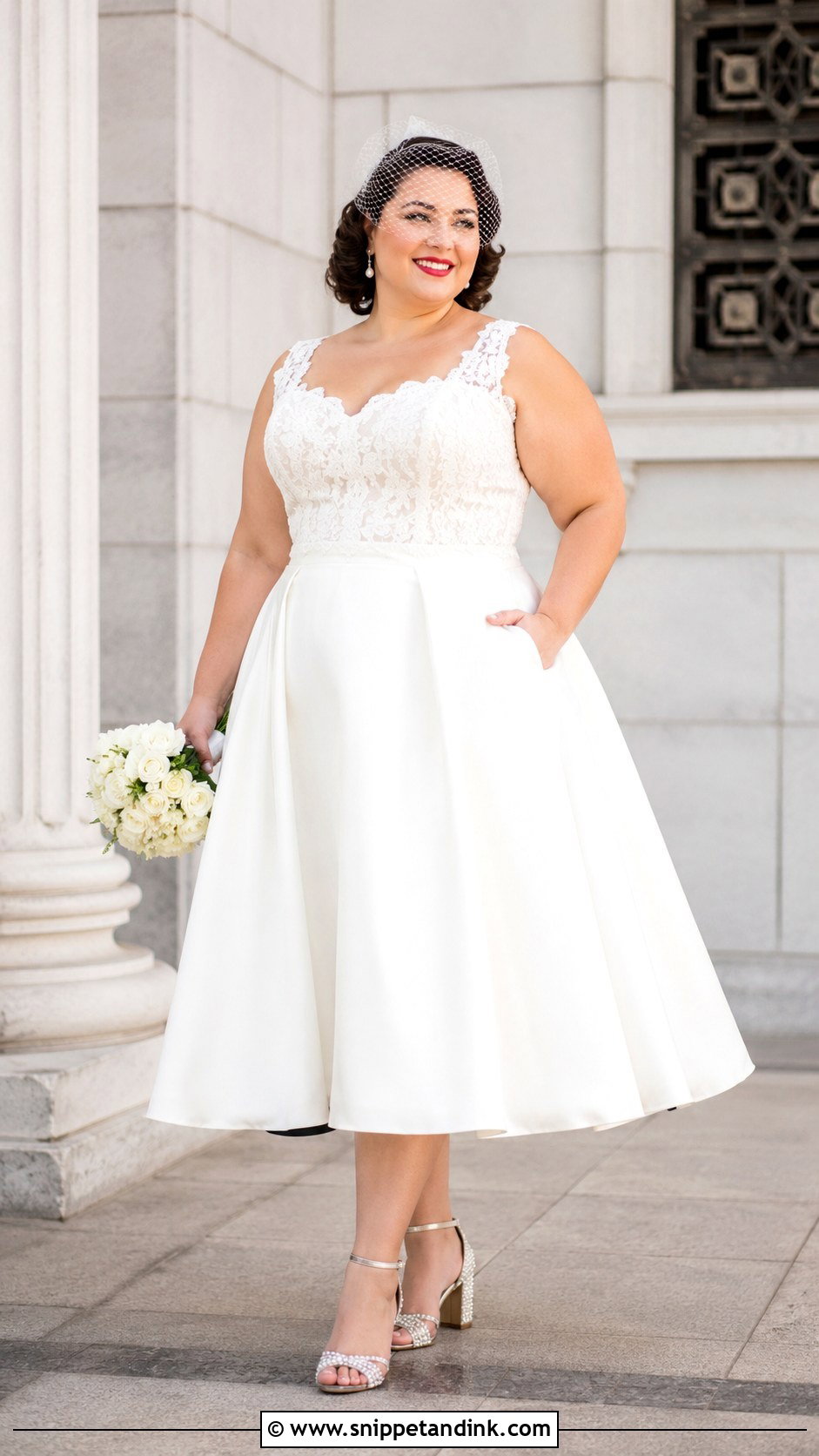
Tea length shows off your shoes, which is reason enough for plenty of brides. The hem sits between knee and ankle, so the shoes need to be special and wearable for hours. Try them in the shop with the dress before committing. A structured bodice, a defined natural waist and short sleeves or wide straps balance the fuller skirt. Lace, satin and tulle each change the mood completely. A birdcage or short tulle veil keeps everything in proportion. Courthouse weddings and daytime receptions suit it, and you’ll never trip over a train.
10. Plus Size Boho Wedding Dress With Sleeves
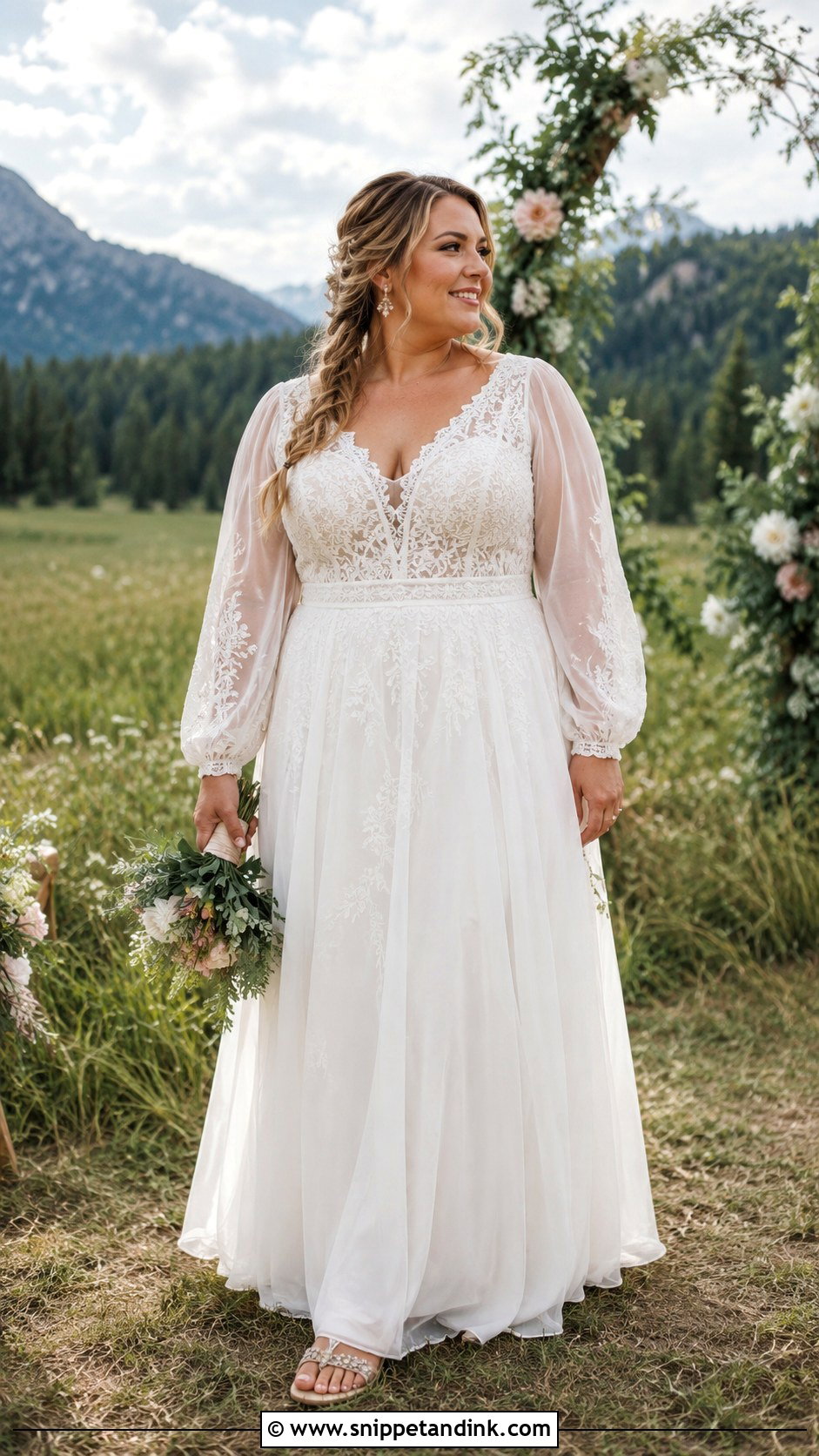
Boho on a curvy figure works best when the relaxed details sit on top of a properly fitted base. Soft lace, dotted tulle or embroidery over a breathable lining, a gently fitted bodice and a flowing A-line skirt. Sheer bishop sleeves look romantic, but I check the armholes carefully; a cut-high armhole under a full sleeve restricts you and pulls the bodice up. A loose braid, floral earrings and flat sandals finish the look. On grass or gravel, keep the train short and the hem sturdy.
11. Plus Size Minimalist Crepe Wedding Dress
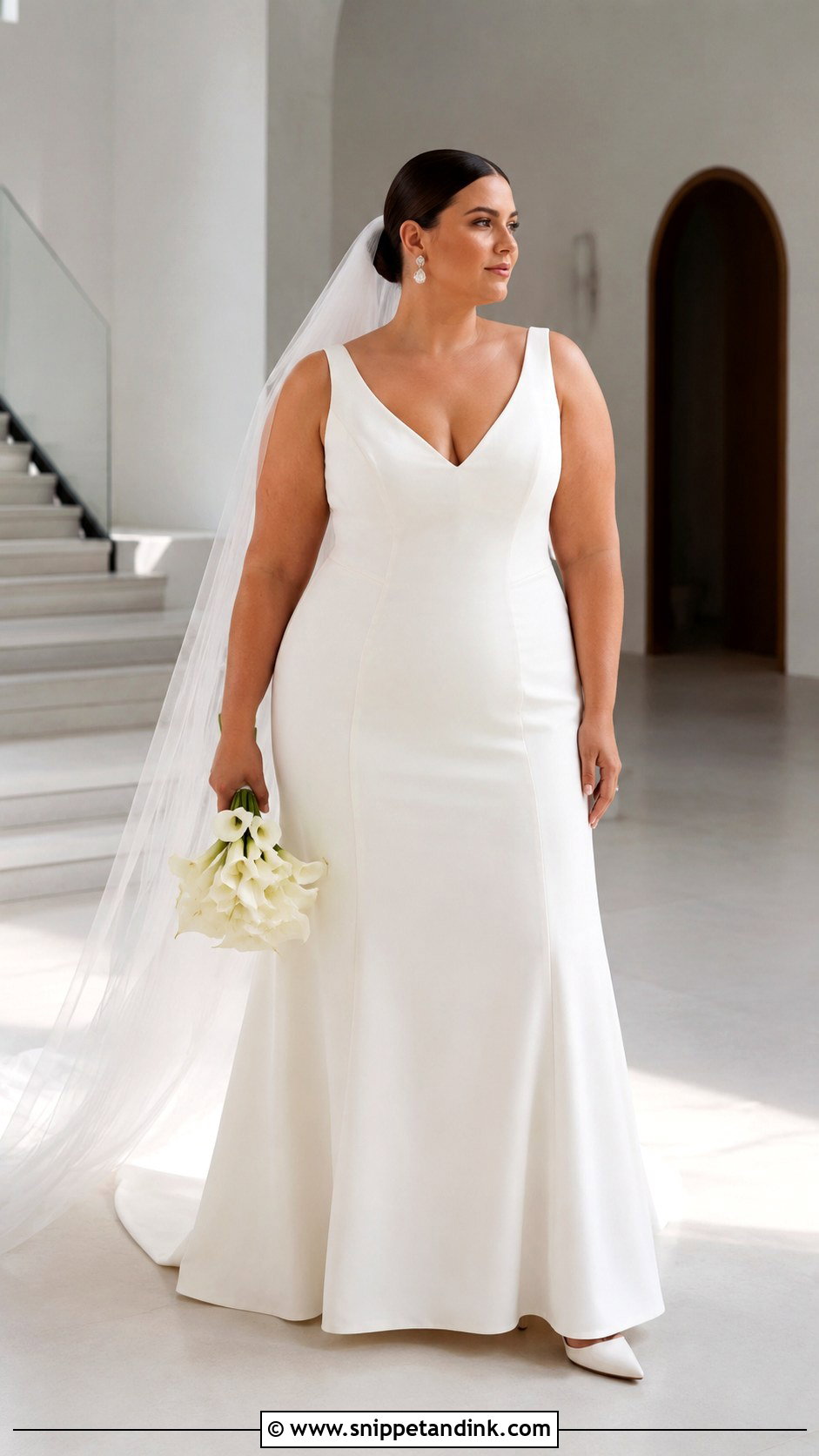
Minimalist crepe has nowhere to hide flaws, and that’s precisely why I trust it to show good tailoring. Choose a substantial stretch crepe, never a thin one, because thin crepe shows every line underneath. Princess seams shape it, and a V, square or bateau neckline keeps it simple. Long sleeves, wide straps or a sleeveless cut all work depending on season. The skirt should skim, not cling. Sculptural earrings, pointed shoes, a sleek bun and a plain cathedral veil. Check shoulders, waist placement, hem and the back closure at every fitting.
12. Plus Size Basque Waist Wedding Dress
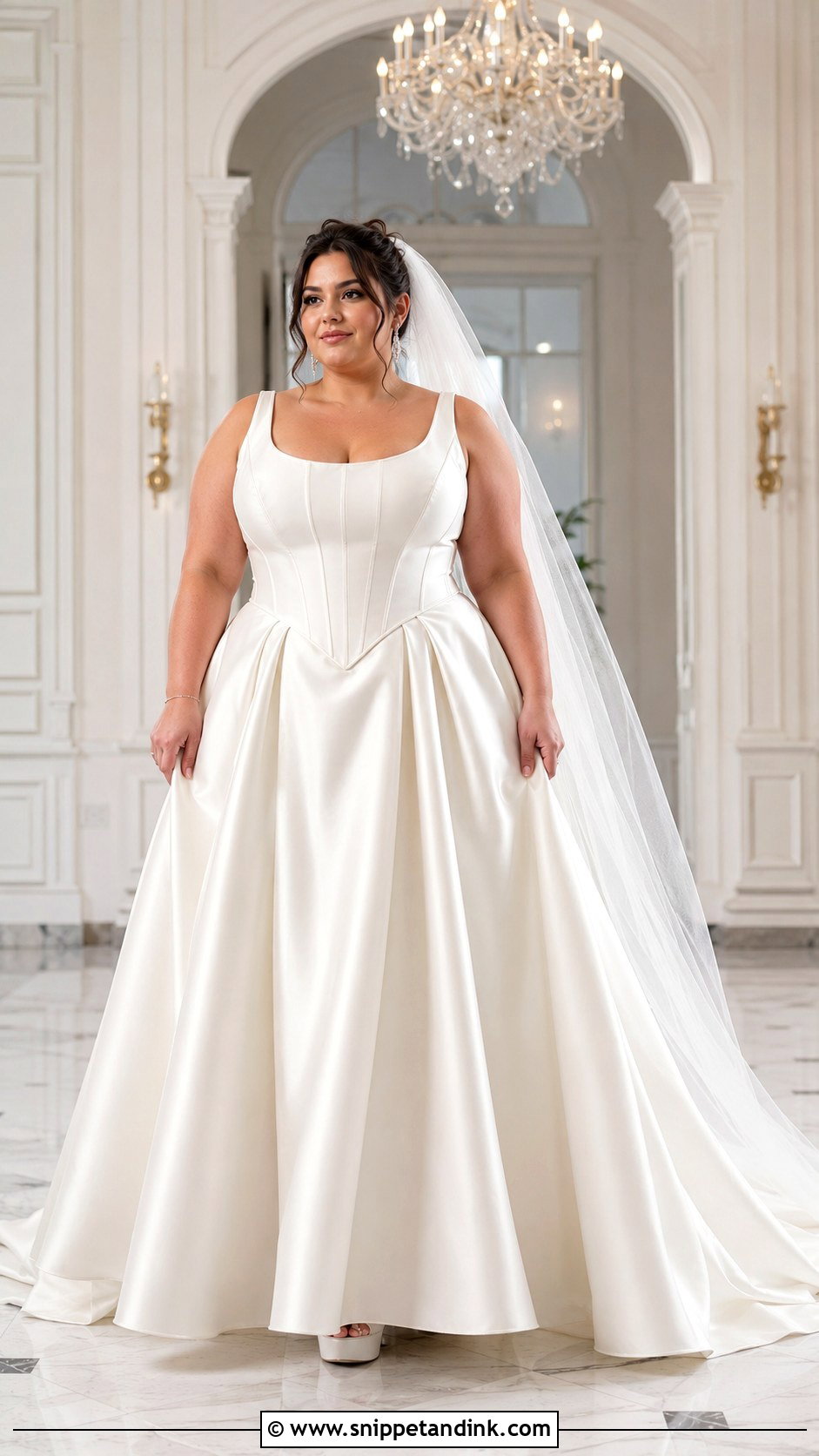
A basque waist wedding dress dips into a V below your natural waist and gives a corseted shape. It pairs well with a full satin, Mikado or tulle skirt. The point must be fitted to your torso length. If it’s too long, it presses into the lower stomach when you sit, which is the most common complaint I hear about this style. Ask for a bodice drafted for fuller proportions, not a straight-size pattern graded up. A scoop or off-shoulder neckline softens it. Cathedral veil, drop earrings and stable platforms.
13. Plus Size High Neck Lace Wedding Dress
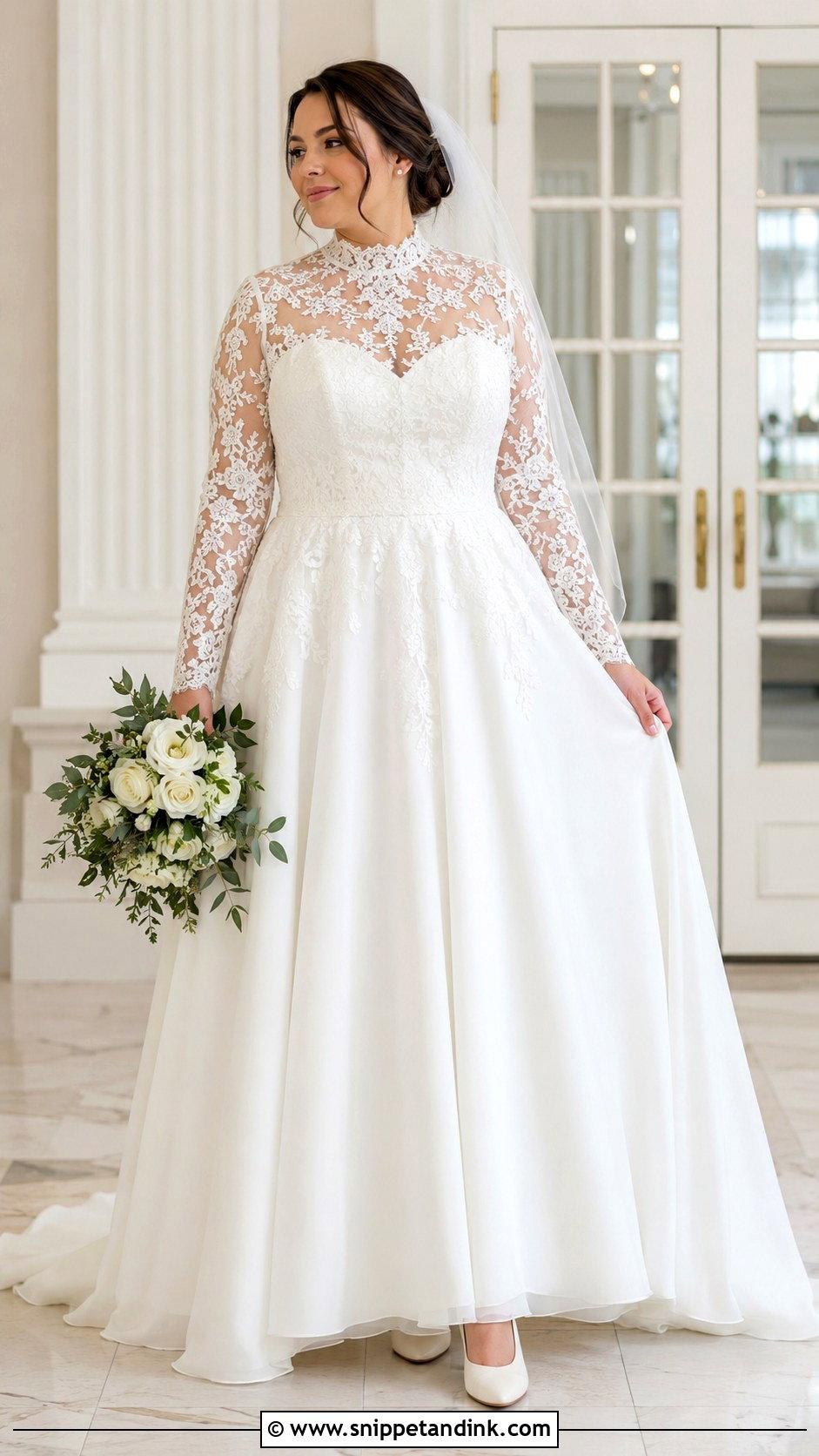
High-neck lace gives coverage while still looking light, provided the lace sits over a supportive sweetheart or scoop lining. That inner structure carries your bust; the lace is just decoration. An A-line skirt keeps it balanced, and cap sleeves or long lace sleeves extend the covered look. Skip the necklace. Pearl studs, a low chignon and a veil pinned under it. Run a finger around the inside of the collar before you buy; stiff lace rubs over a long day. The lace across the back should also have enough give for you to reach forward.
14. Plus Size Cape Sleeve Wedding Dress
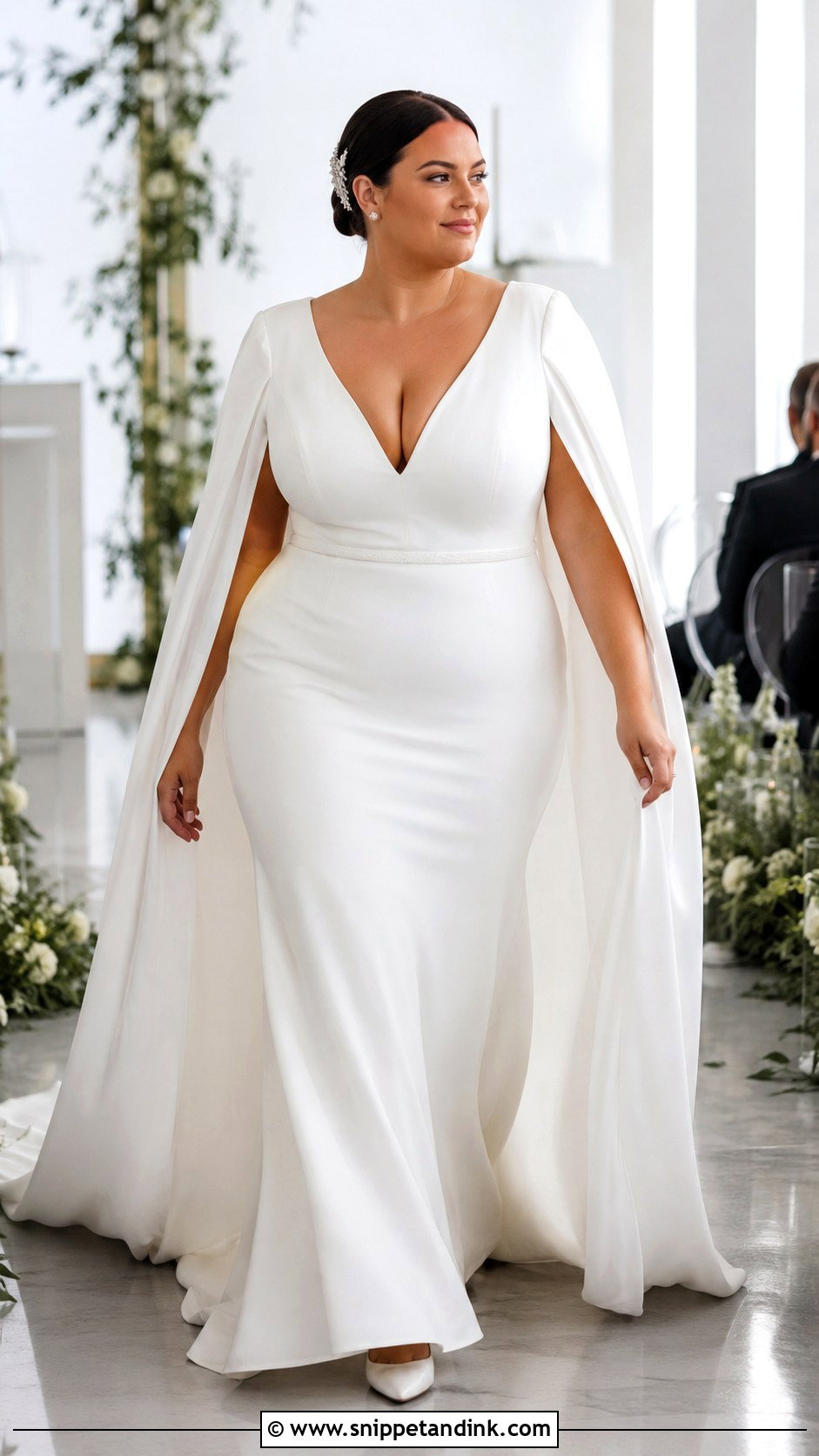
Capes give drama without the cling of a fitted sleeve, and that’s exactly why curvy brides who dislike tight sleeves love them. Panels fall from the shoulder to the elbow, wrist or floor over a clean crepe or satin gown, while a V-neck and defined waist stay visible underneath. If the cape reaches the floor, skip the long veil; two trailing layers tangle and fight for attention. A small comb gives sparkle instead. Walk in it at fittings, and turn. The cape should flow behind you, not wrap round your legs or catch on your heels.

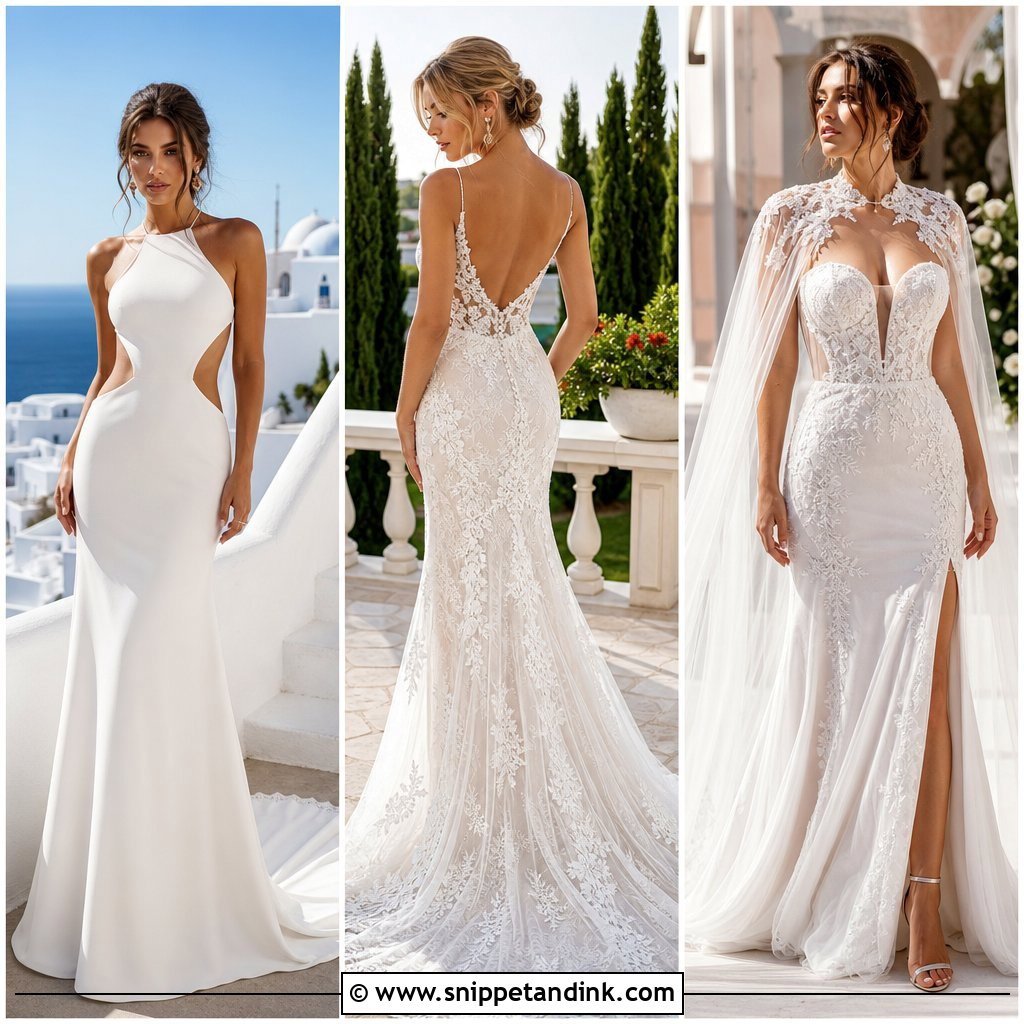
15. Plus Size Floral Appliqué Wedding Dress
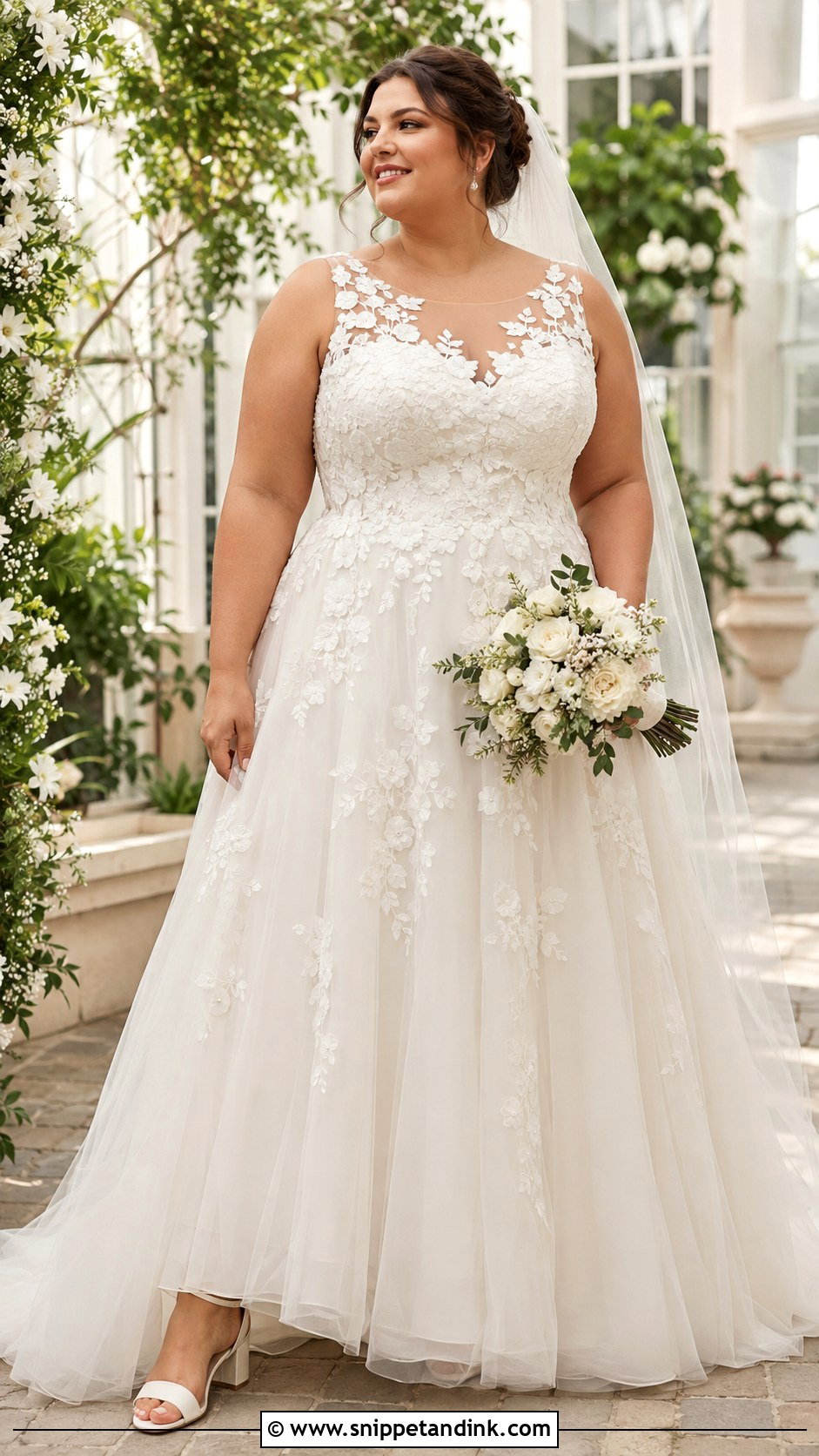
Raised floral appliqués add romance and texture, and placed well they guide the eye exactly where you want it. I like them dense at the bodice and lighter down the skirt of an A-line or fit-and-flare. Wide straps or an illusion neckline hold the bodice securely without hiding the flowers. Check the appliqués near your underarms; stiff edges can scratch and redden skin by the evening. Ask the shop to reinforce any loose petals or beads before handover. Simple earrings, a plain veil, satin block heels and a restrained bouquet.
16. Plus Size Draped One-Shoulder Wedding Dress
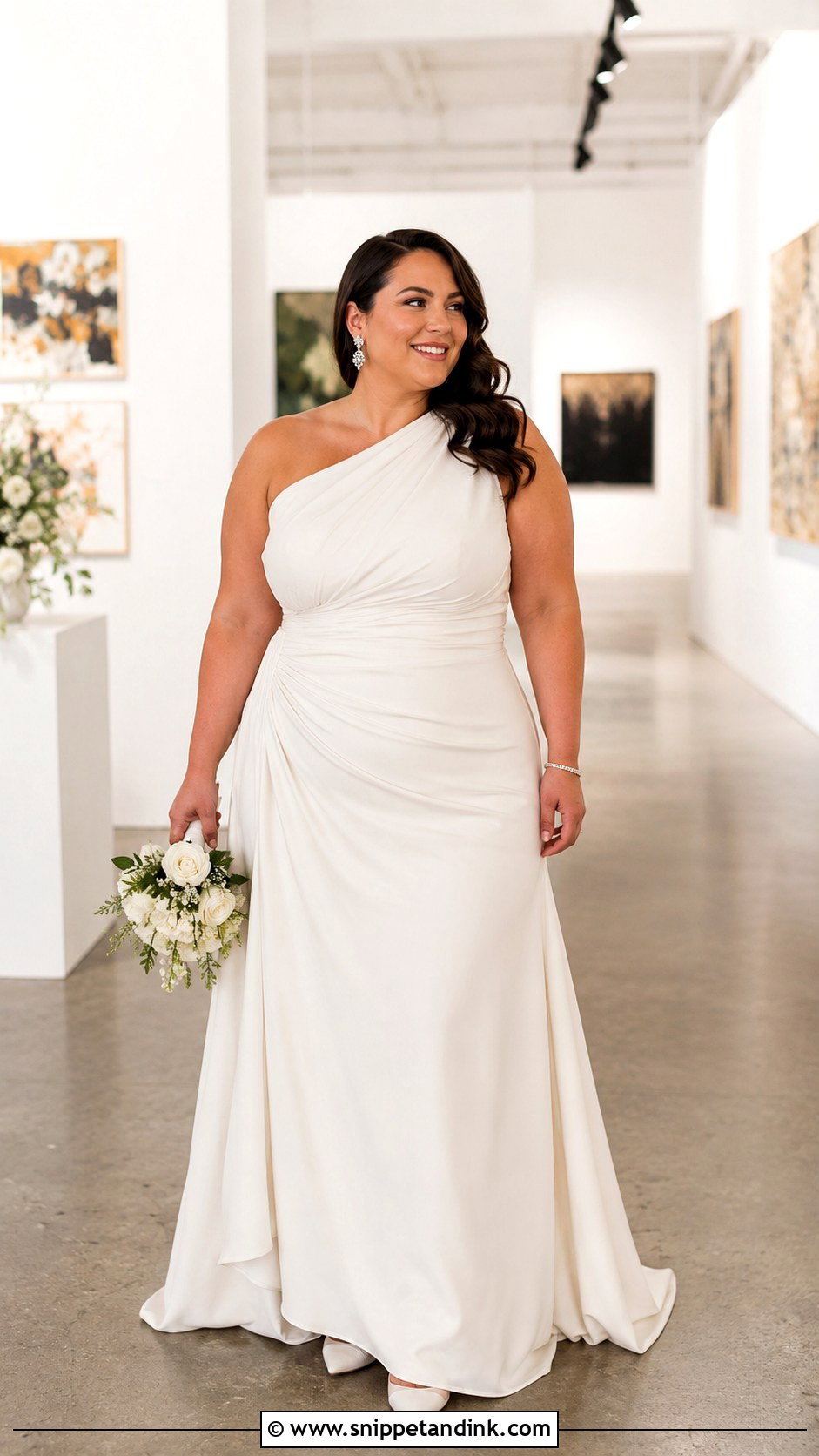
Asymmetry is flattering on curves because it draws a diagonal line across the body. A draped one-shoulder wedding dress in crepe or jersey creates soft folds across the bodice, with a structured lining doing the supporting underneath. A wide shoulder panel is more secure and more comfortable than a thin strap. Ruching at the waist blends into a straight or A-line skirt. Raise both arms and sit down at fittings; asymmetric bodices like to shift toward the open side. Hair up or swept away from the covered shoulder, statement earrings and a short, plain veil.
17. Plus Size Modest Tulle Wedding Dress
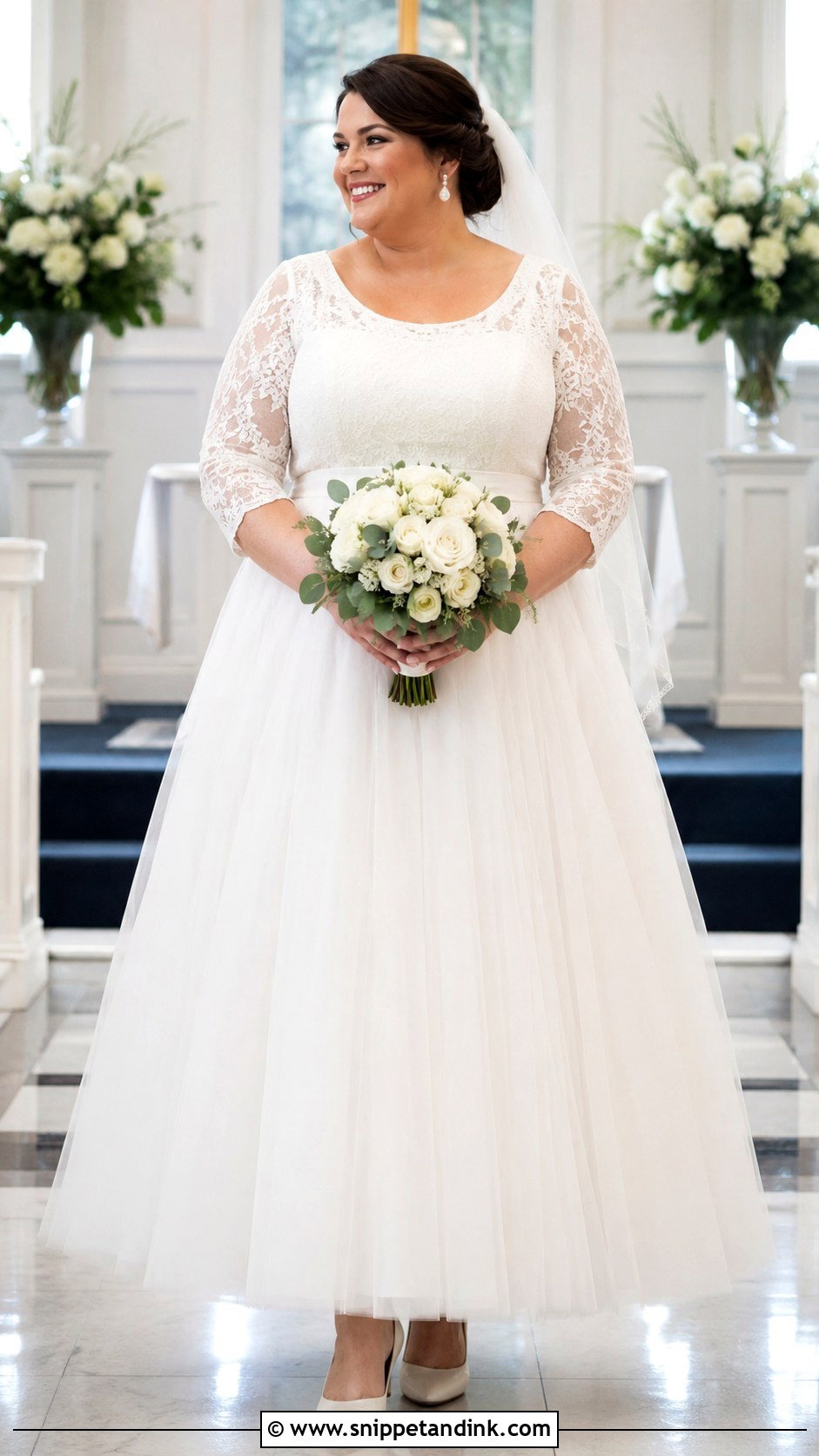
Modest doesn’t need to mean heavy. A lined bodice, a higher scoop neckline and long or three-quarter sleeves in soft lace or illusion tulle give coverage that still breathes. Go easy on skirt layers if you want to move freely; three or four light tulle layers usually give enough shape. Ask for soft finishing around the neckline, cuffs and underarms, and sleeve linings with stretch. Pearl earrings, closed-toe pumps, a chapel veil and a low bun or soft waves. The bodice should support you, not a tight collar.
18. Plus Size Beach Chiffon Wedding Dress
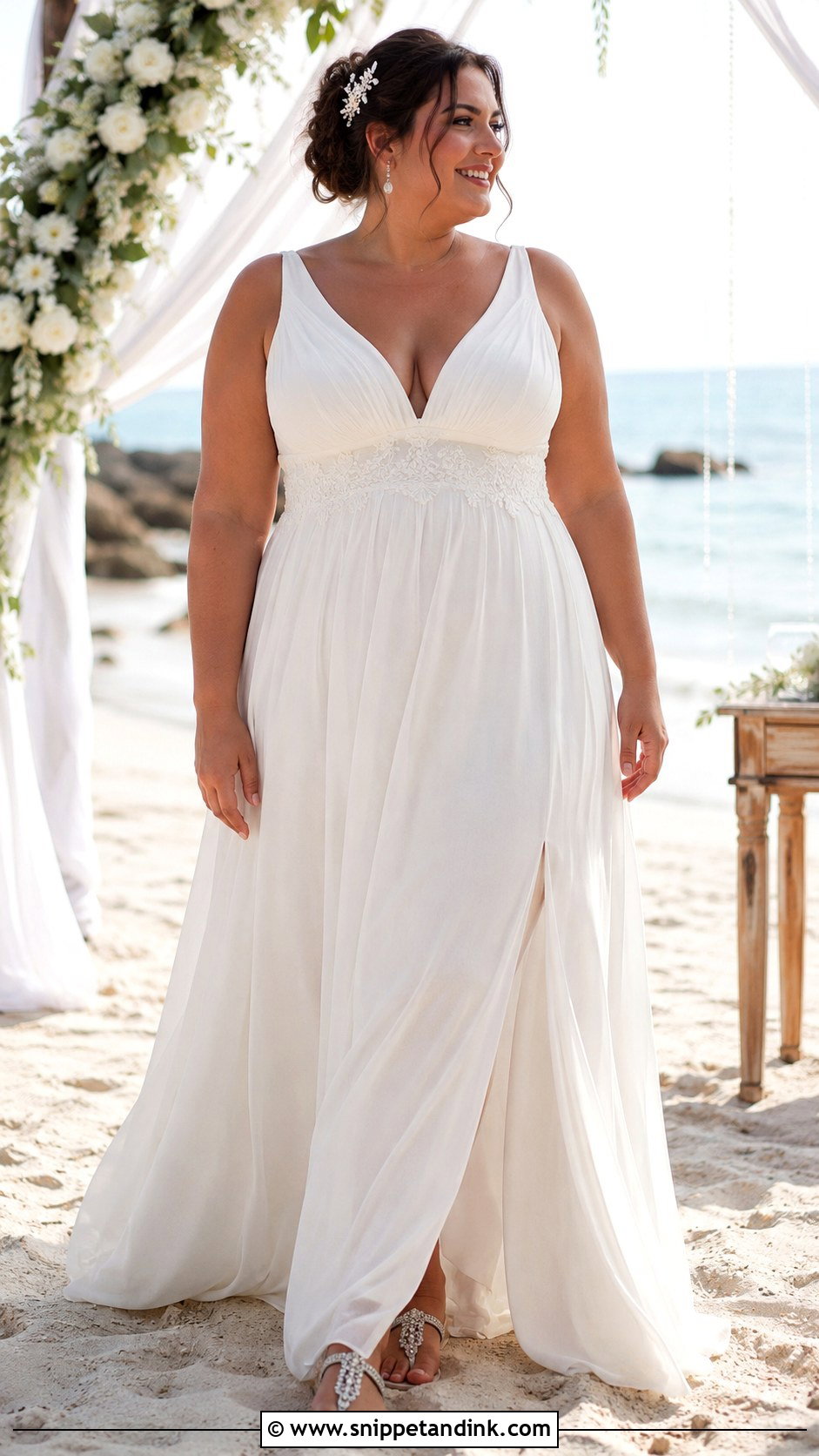
Beach weddings are hard on dresses. Sand drags, wind lifts, sun reveals. A chiffon A-line with a supportive V-neck bodice and wide straps handles all three best, provided the train is short. A softly raised waist stops the fabric clinging in humidity. Hold the lining up to sunlight in the shop; some are close to see-through outdoors. Flat embellished sandals, small pearls and a floral comb instead of a long veil, which will blow across your face. Pack a light wrap for the evening and add a wrist loop so you can lift the hem on sand.
19. Plus Size Blush Tulle Wedding Dress
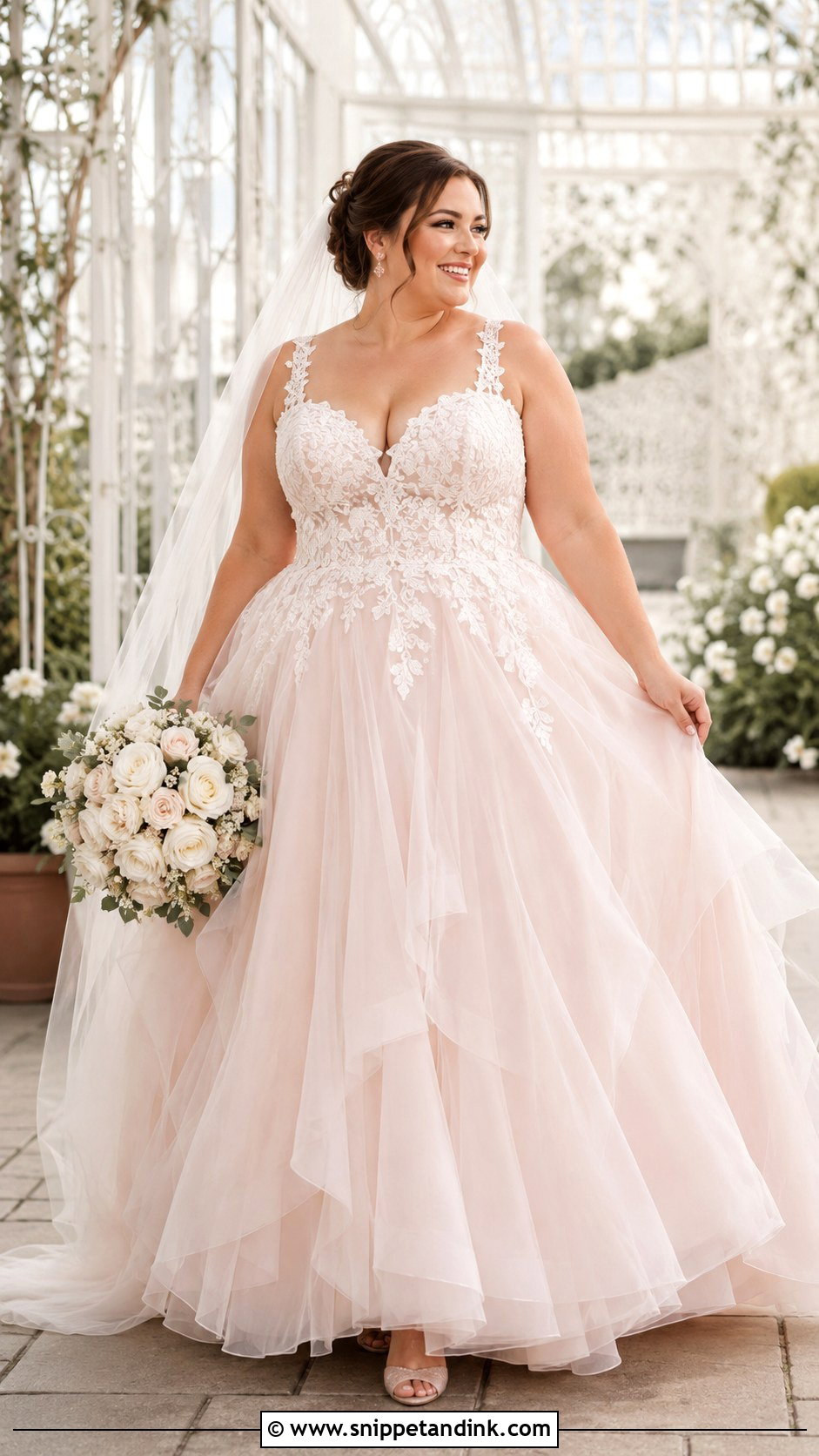
Blush tulle looks unmistakably bridal while softening the starkness of white. The colour usually comes from a blush or nude lining under ivory tulle or lace, which also makes surface embroidery stand out. A fitted bodice with supportive straps gives the delicate layers structure, in either an A-line or ball gown skirt. Look at the fabric indoors and outdoors before choosing; different linings read pink, peach, beige or even lavender in photos. Rose-gold earrings, ivory heels and a veil matched to the outer tulle. Keep makeup fresh rather than matching the dress.
20. Plus Size Wedding Dress With Detachable Overskirt
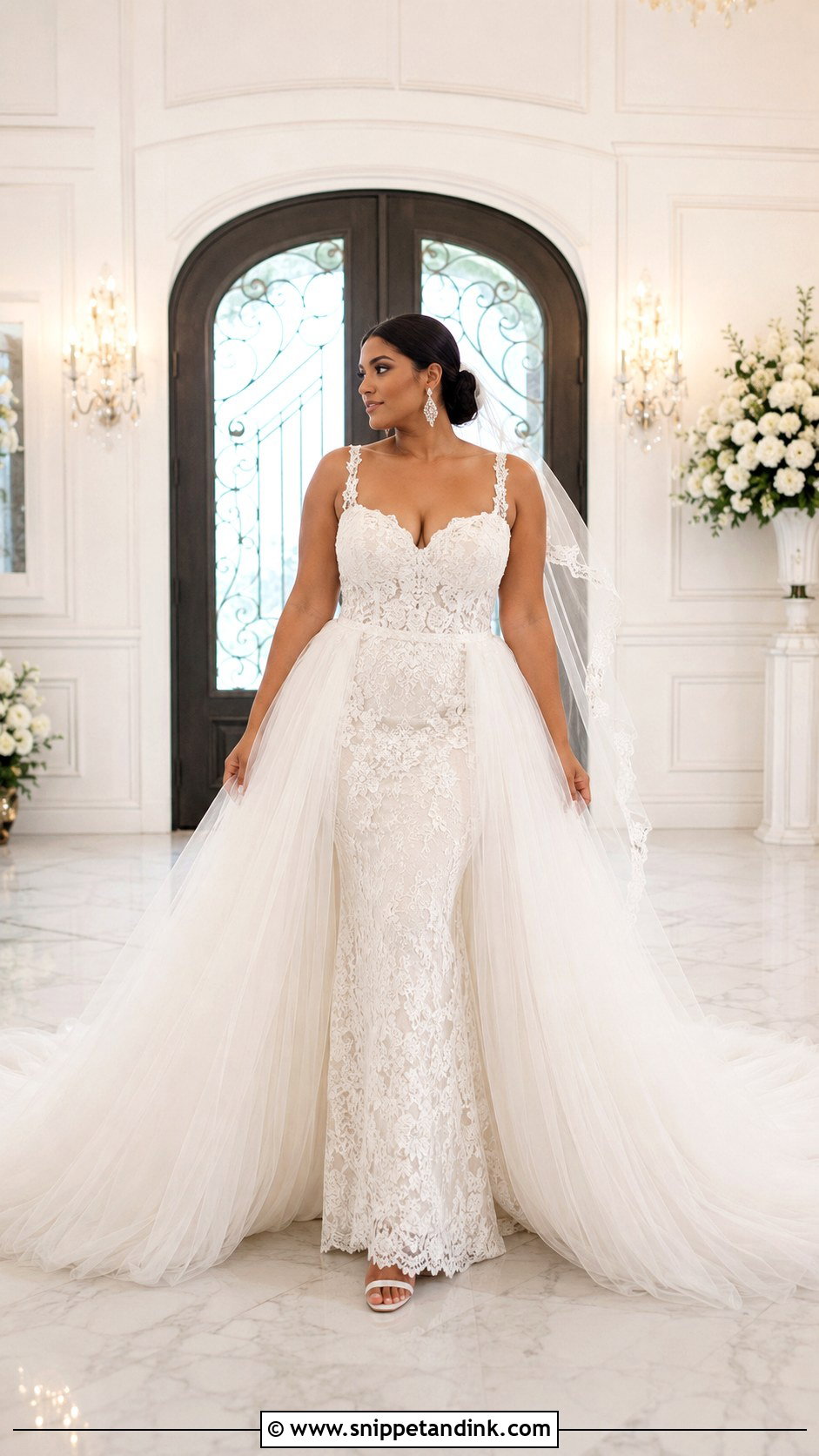
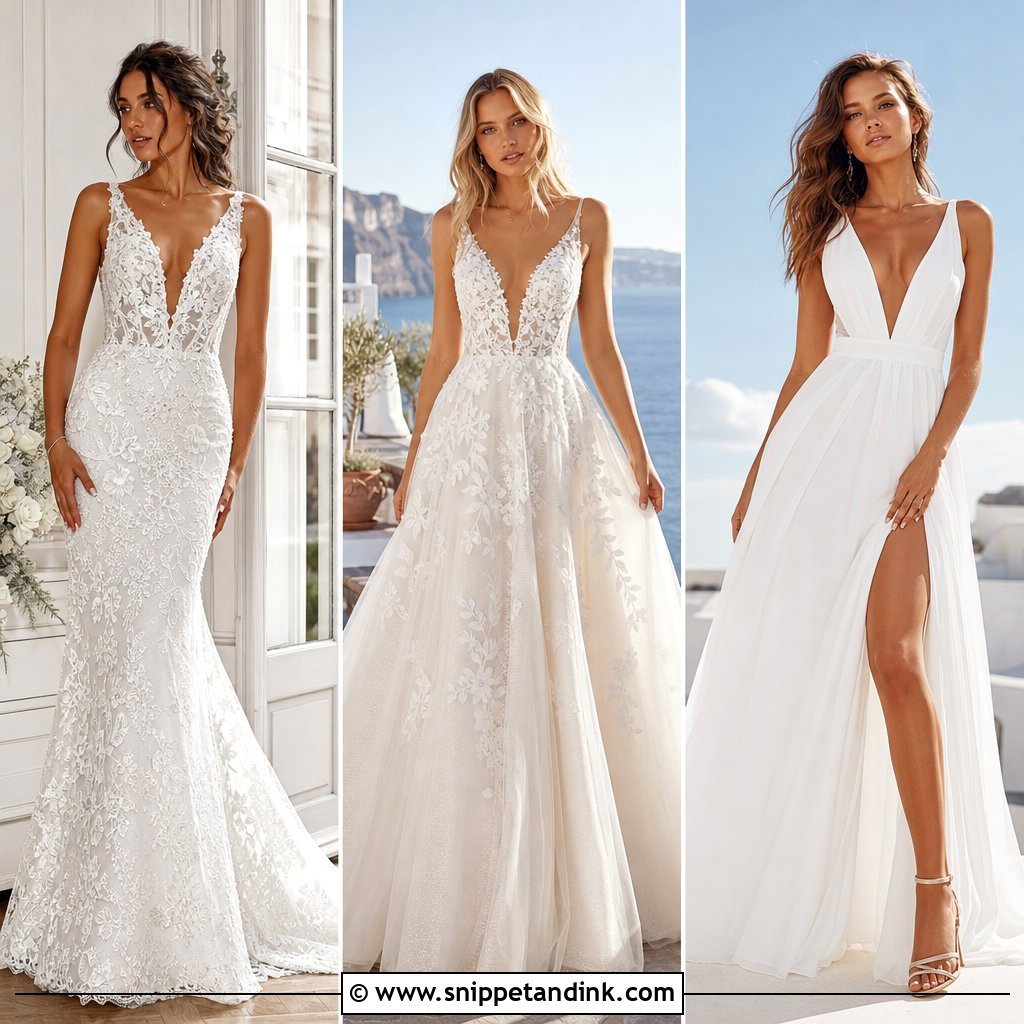
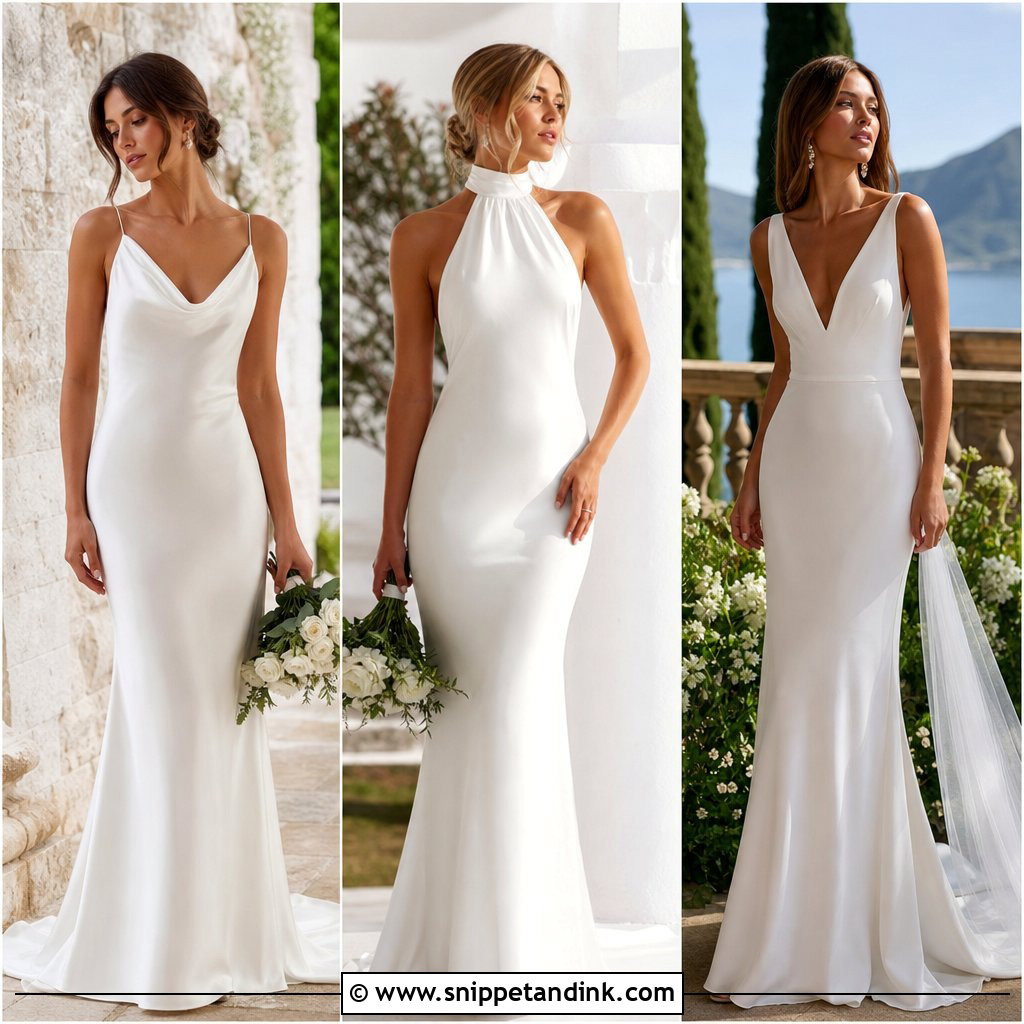
Two looks, one dress, no full outfit change. Start with a fitted crepe, lace or satin gown you’ll be comfortable in all night, then add a tulle or Mikado overskirt for ceremony volume and a train. After photos, it comes off for dinner and dancing. I always have the bride try the base dress alone at alterations, because the overskirt can hide fit problems that show the moment it’s removed. The attachment should lie flat and stay hidden. Teach a bridesmaid how to unfasten and reattach it. Sparkling earrings, block heels and a veil that suits both versions.
Shapewear, Bras and Anti-Chafe Shorts to Test Early
What you wear under the gown changes how it fits, so decide on it before your first fitting and wear the same pieces every time.
Support for the bust
Many gowns have built-in cups and boning, and for those you may need nothing extra. For lighter dresses, a longline strapless bra or a bodysuit gives smoother support than a standard strapless. Your seamstress can also sew cups straight into the bodice, which I often prefer because nothing shifts.
Thigh chafing over a long day
Under a long skirt, thighs rub, especially when you’re walking, dancing and warm. Light anti-chafe shorts or a slip short in a breathable fabric solve it, and an anti-chafe balm is worth having in the emergency kit. Choose a pair without a heavy waistband that rolls down under the dress.
Shapewear only if it’s comfortable
Shapewear can smooth lines under satin or crepe, but very firm pieces become miserable by dinner. Try sitting in it for half an hour at home. If it digs in, choose a lighter grade; a well-fitted gown does most of the smoothing anyway.
A Dress Should Adjust to You, Not the Reverse
The gown that’s right for you fits the body you have today, moves when you move and makes you feel like the best version of yourself. These twenty styles range from minimalist crepe to a full ball gown, and none of them are off-limits because of your size. Prioritise construction, comfortable fabric and an experienced seamstress. Try at least one silhouette you’d have ruled out; dresses behave very differently on a body than on a hanger. Shop for your current measurements, and let the dress do the adjusting.
You'll Like These Ideas:



Leave a Reply