
Fitted bridal gowns divide brides fast. Some love the idea and dread the reality; others assume they can’t wear one at all. In my fittings, the difference between a close-fitting dress that feels great and one that feels like a wetsuit comes down to fabric, structure and what’s underneath, far more than body shape. The gowns below run from minimalist satin to lace mermaids, modern midis and short reception looks, with body-hugging lace, strapless and halter necklines, corsetry, draping and removable layers all represented. A fitted dress should support you, not squeeze you. Before you fall for a photo, think about stretch, lining, seam placement, undergarments, train length and whether you can sit and walk in it, then choose shoes, jewelry and a veil that suit the setting.

Stretch, Recovery and Why Some Fitted Gowns Bag at the Seat
A close-fitting dress lives or dies on how its fabric stretches and, just as important, how it springs back. I check both before a bride even steps into the sample.
Two-way versus four-way stretch
Two-way stretch gives across the body only, which suits structured crepe and stretch satin that need to hold a sculpted shape. Four-way stretch gives lengthwise as well, so jersey and similar knits move with you more freely but show more of what’s underneath. Neither is better; they suit different gowns on this list.
Recovery
Recovery is the fabric’s ability to return to its shape after stretching. Poor recovery is why some fitted dresses look perfect at noon and baggy across the seat and knees by the reception. Pull a section of the hem gently for a few seconds and let go. It should snap back flat almost at once, with no ripple left behind.
Lining and weight
- A heavier fabric skims over the body; a thin one clings to every line, including seams in your underwear.
- A stretch lining should move with the outer fabric. A rigid lining under a stretchy shell makes the dress pucker when you sit.
- Ask what percentage of the fabric is elastane or spandex. A little gives comfort; a lot behaves like activewear and can look shiny under flash.
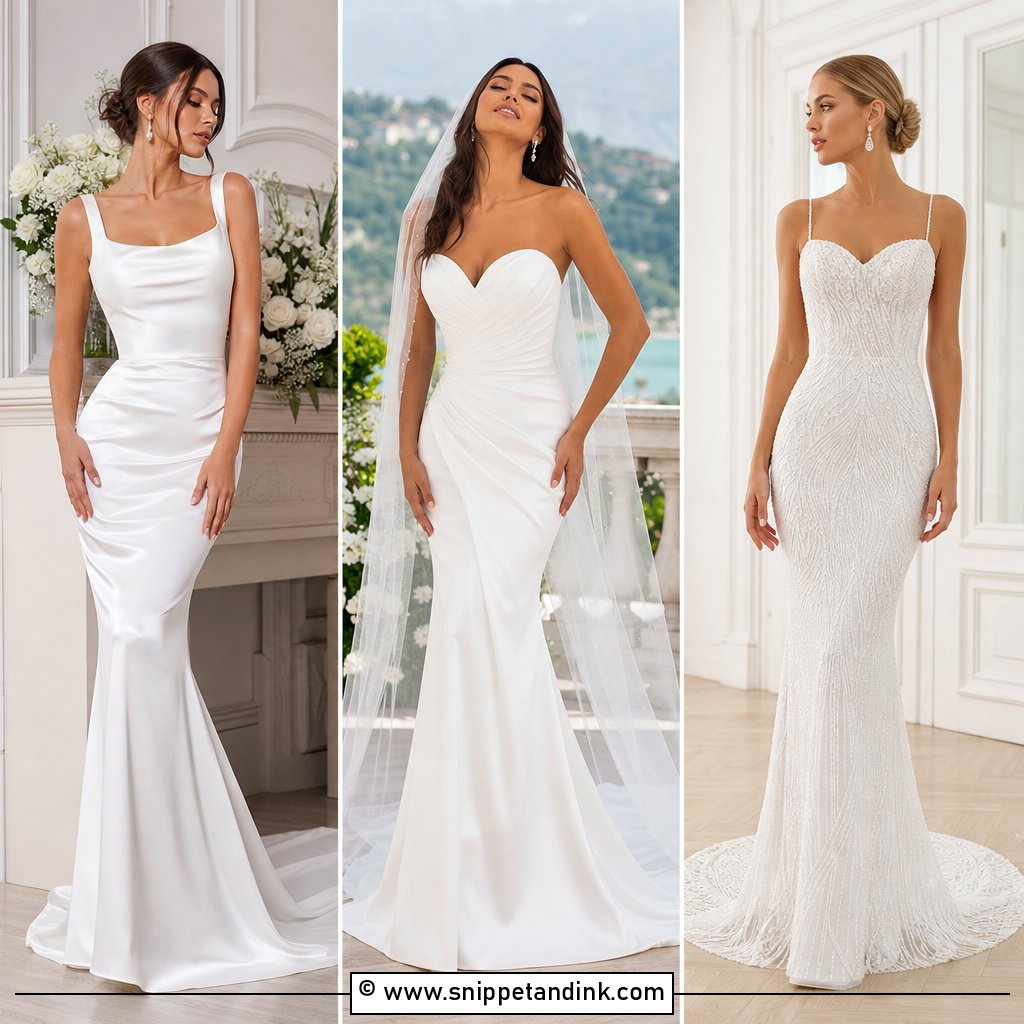
1. Strapless Satin Bodycon Wedding Dress
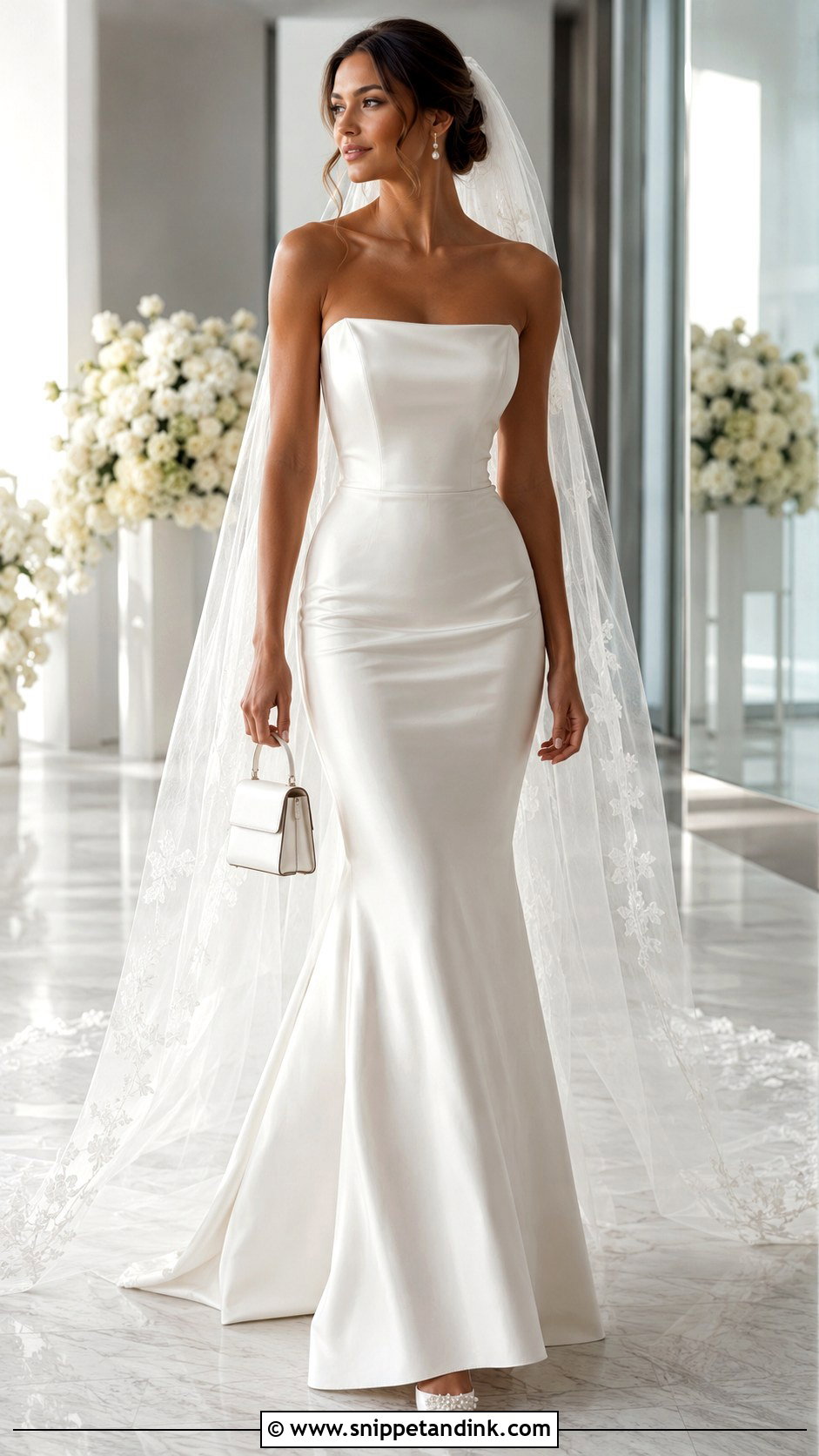
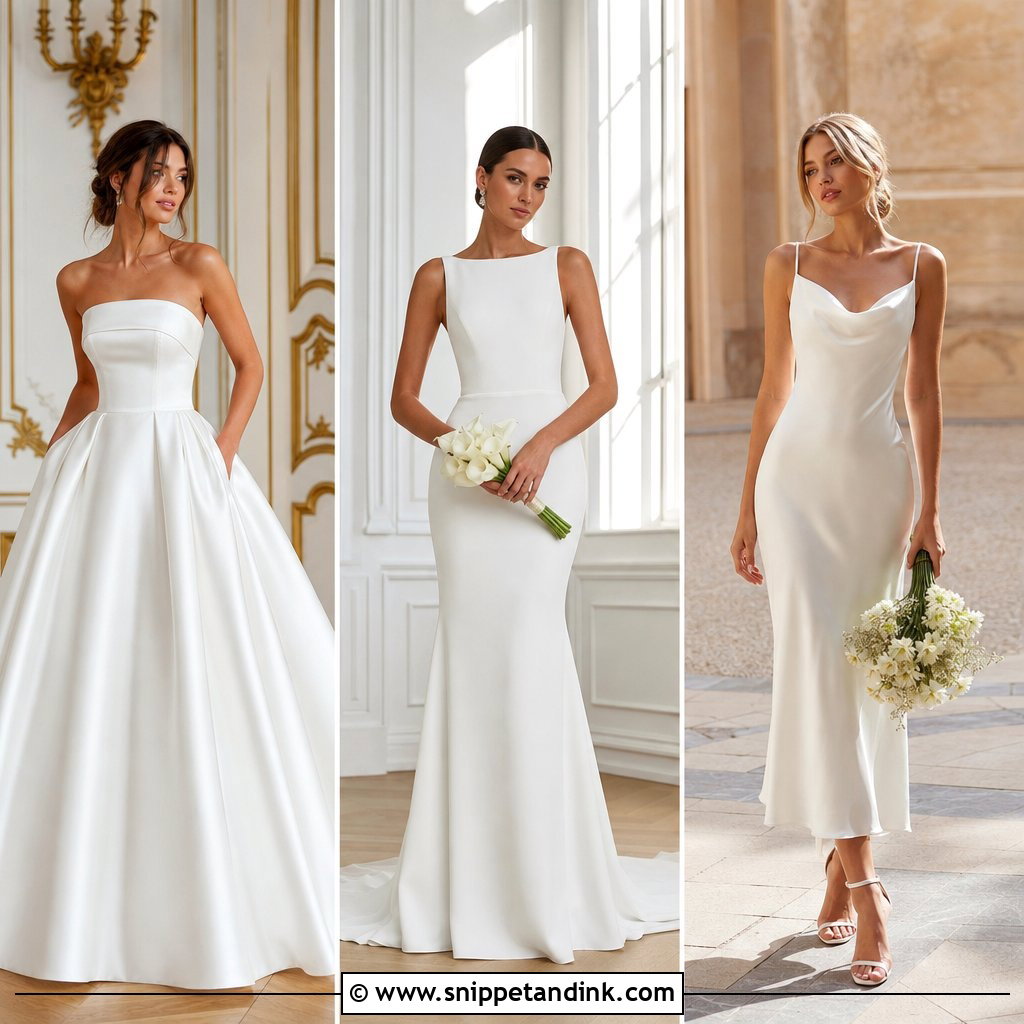
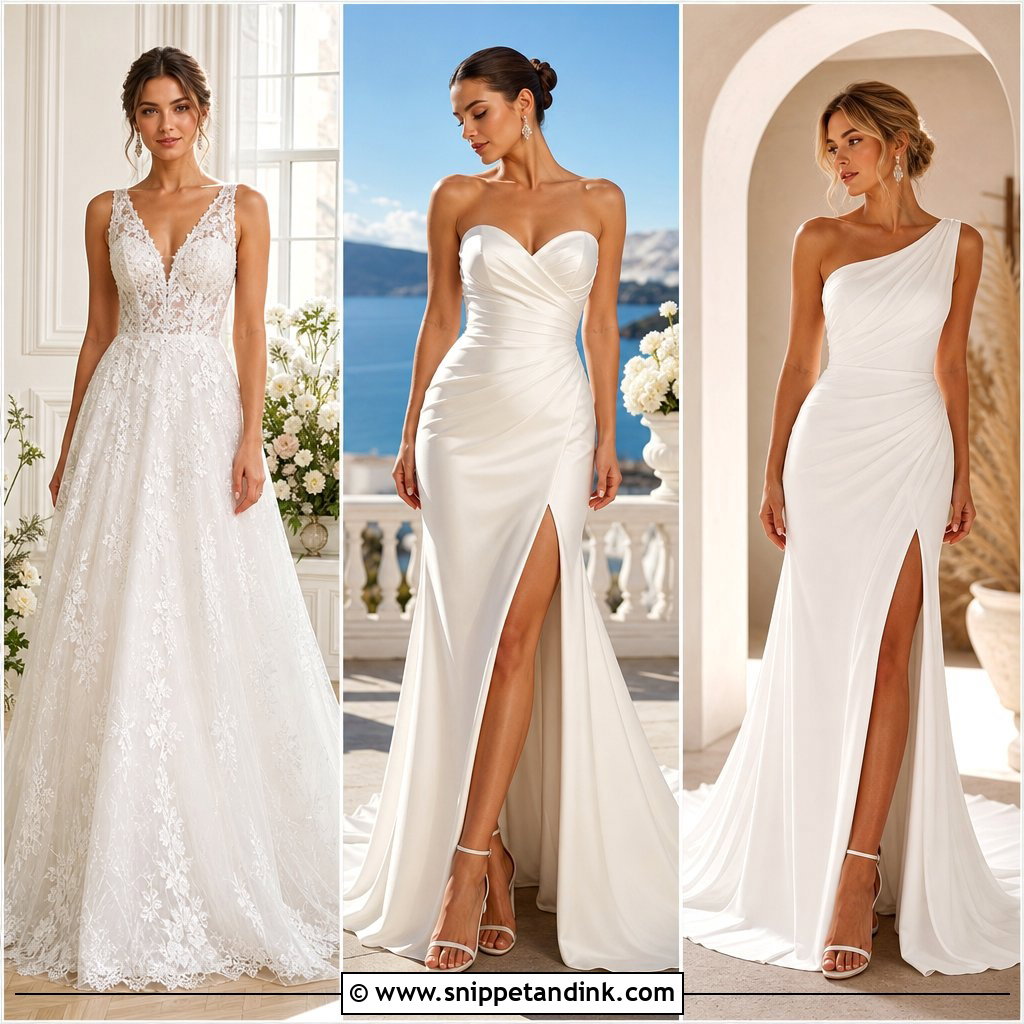
Strapless satin is the cleanest fitted look there is, and the least forgiving. Internal boning, a secure neckline and smooth lining are what keep the bodice where it belongs. A softly scooped or sculpted neckline frames the shoulders without needing decoration. Pointed ivory pumps, pearl drops and a structured mini bag finish it; a cathedral veil adds ceremony drama, while a fingertip veil suits a courthouse or modern venue. Satin shows every pull and crease, so alterations matter more here than almost anywhere. I have brides sit, walk and raise their arms before I approve a single pin, because a strapless satin bodice that’s fine standing can ripple across the stomach the moment you sit.
2. Long Sleeve Lace Bodycon Wedding Dress
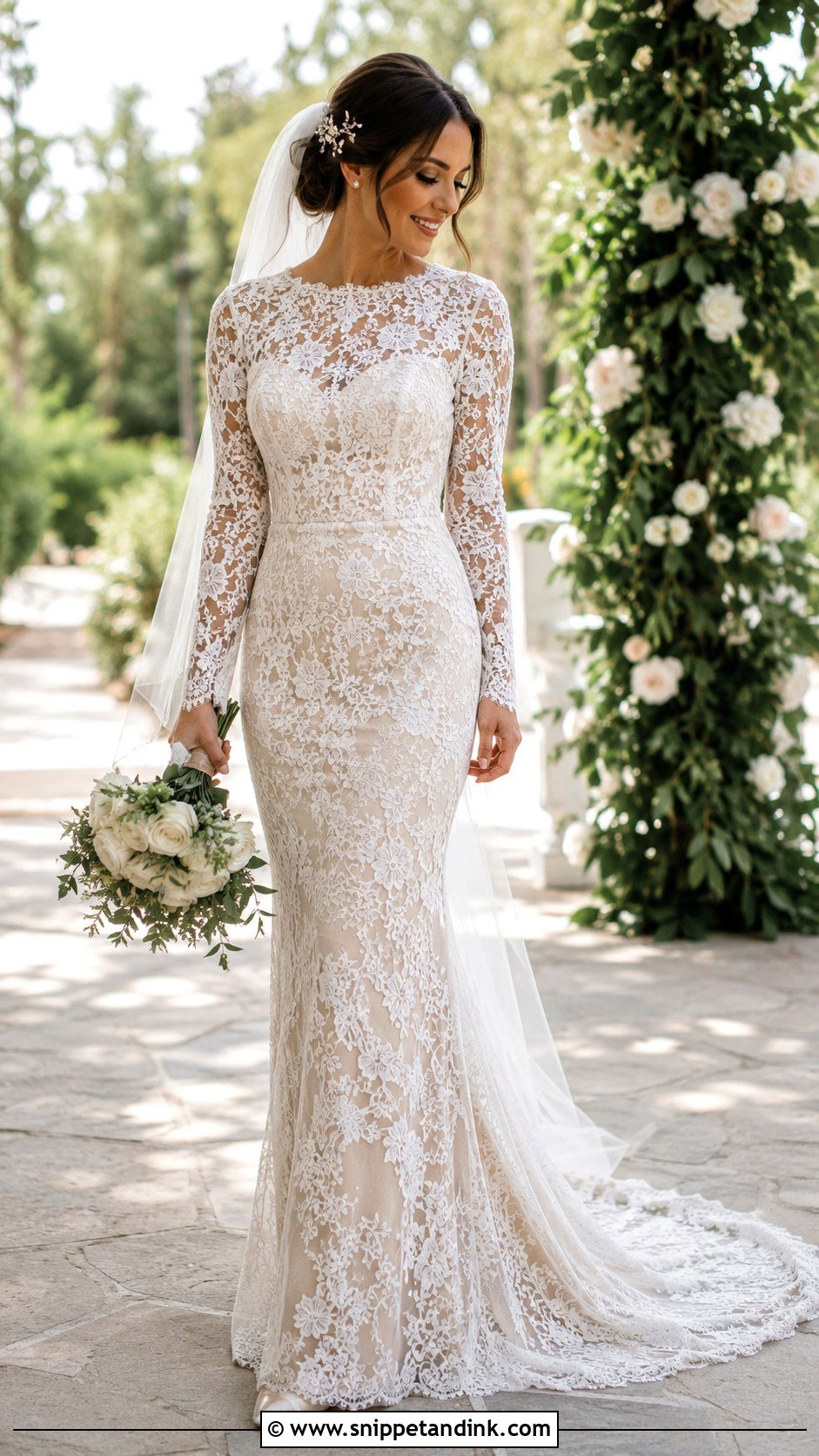
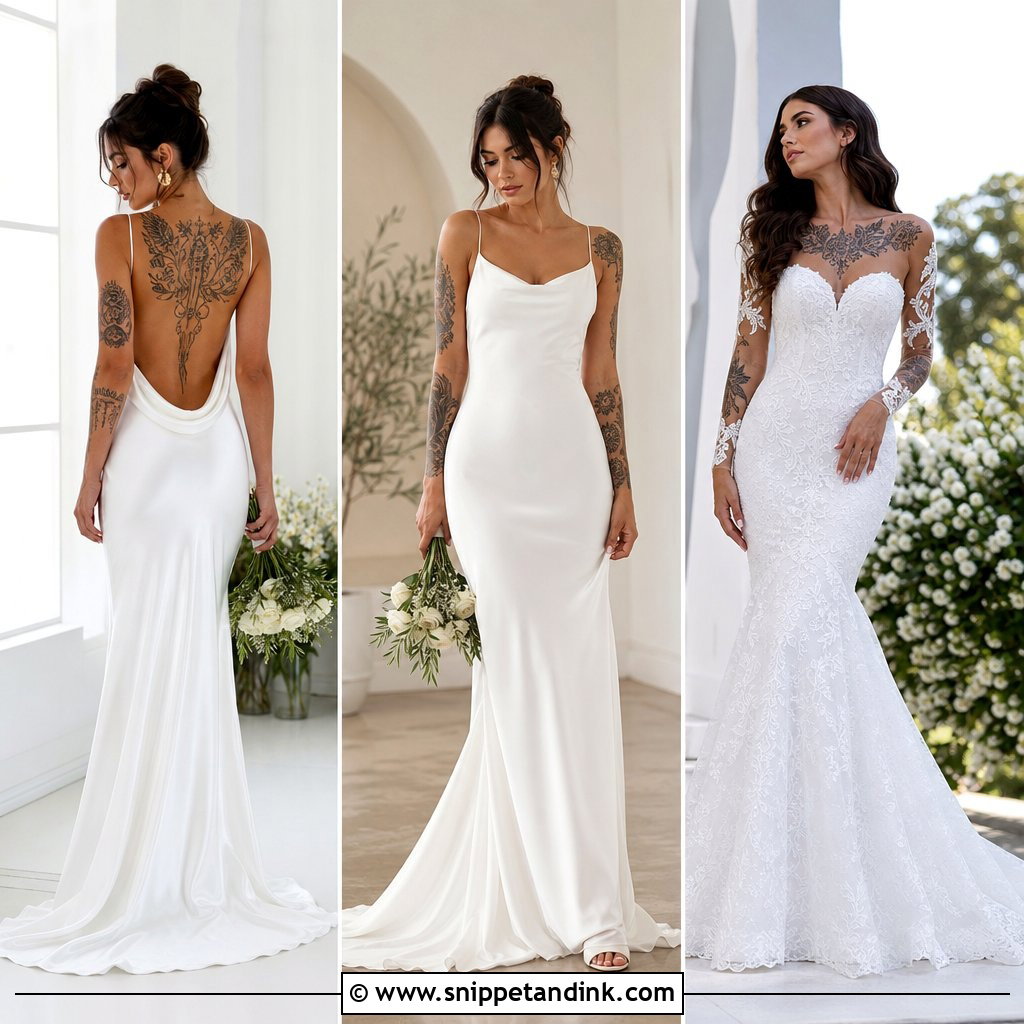
Lace on a close-fitting shape is romantic without needing a big skirt. Look for soft stretch lining and carefully placed appliqués, since the placement shapes the body as much as the seams do. Nude and ivory linings change the effect completely: nude makes the lace look as if it’s on skin, ivory makes it read as a solid dress. Compare both in daylight before you decide. Closed-toe heels, a slim crystal comb and small studs are enough, and a plain veil stops intricate lace looking busy. Outdoors, keep the train short enough that it won’t snag on grass. Bend your elbows and lift your arms in the sleeves; lace sleeves have less give than the body and are usually the first thing to feel tight on the dance floor.
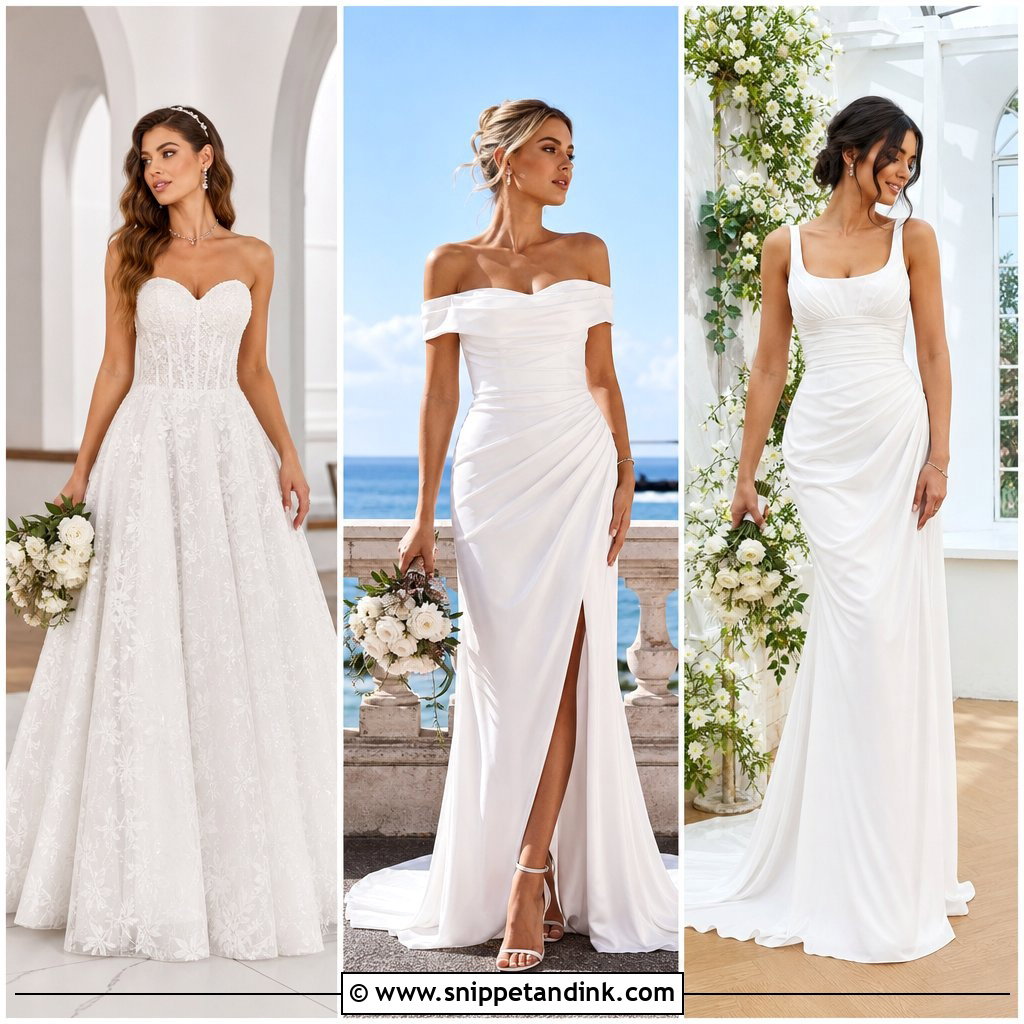
3. Off The Shoulder Crepe Bodycon Wedding Dress
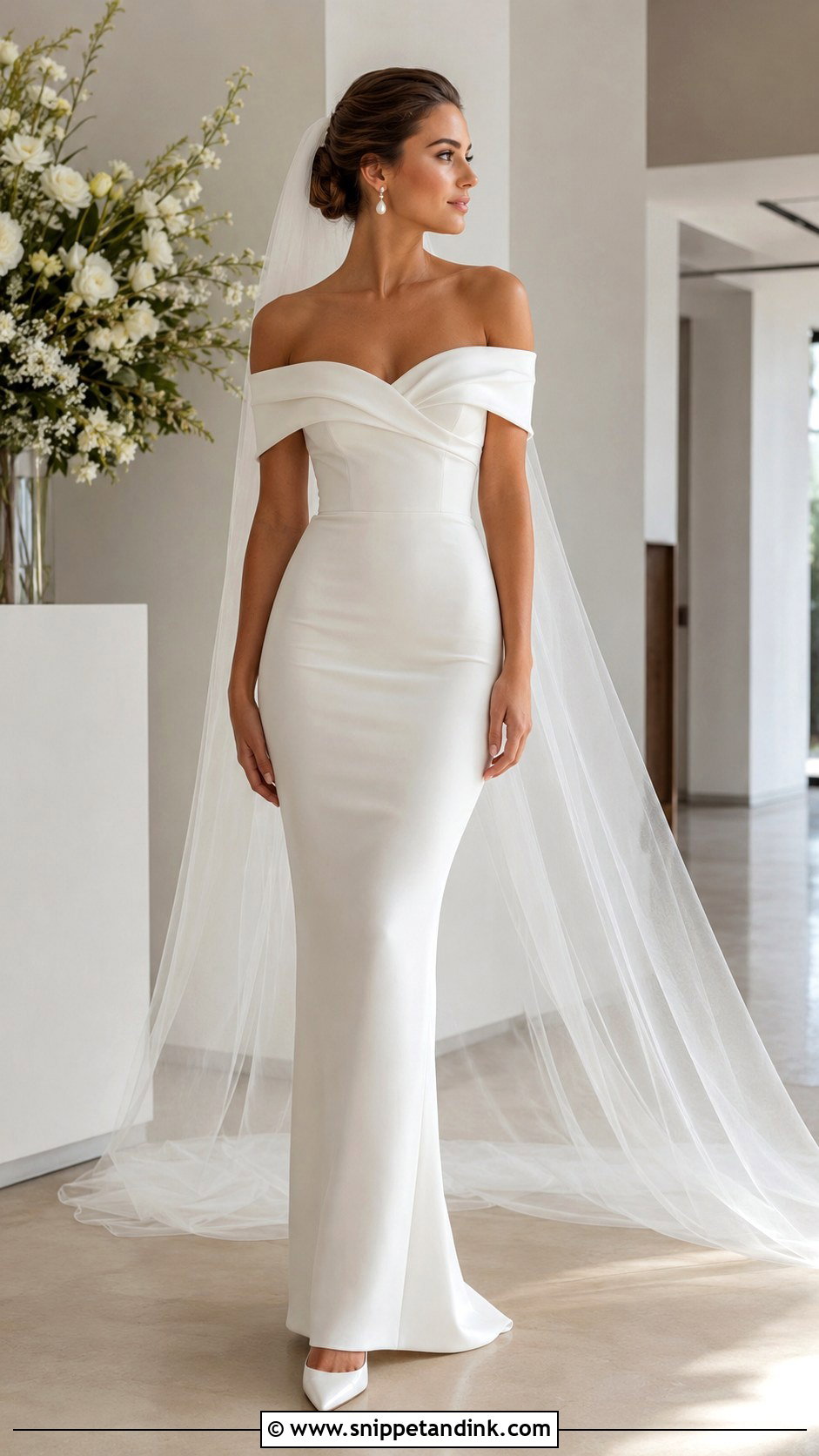
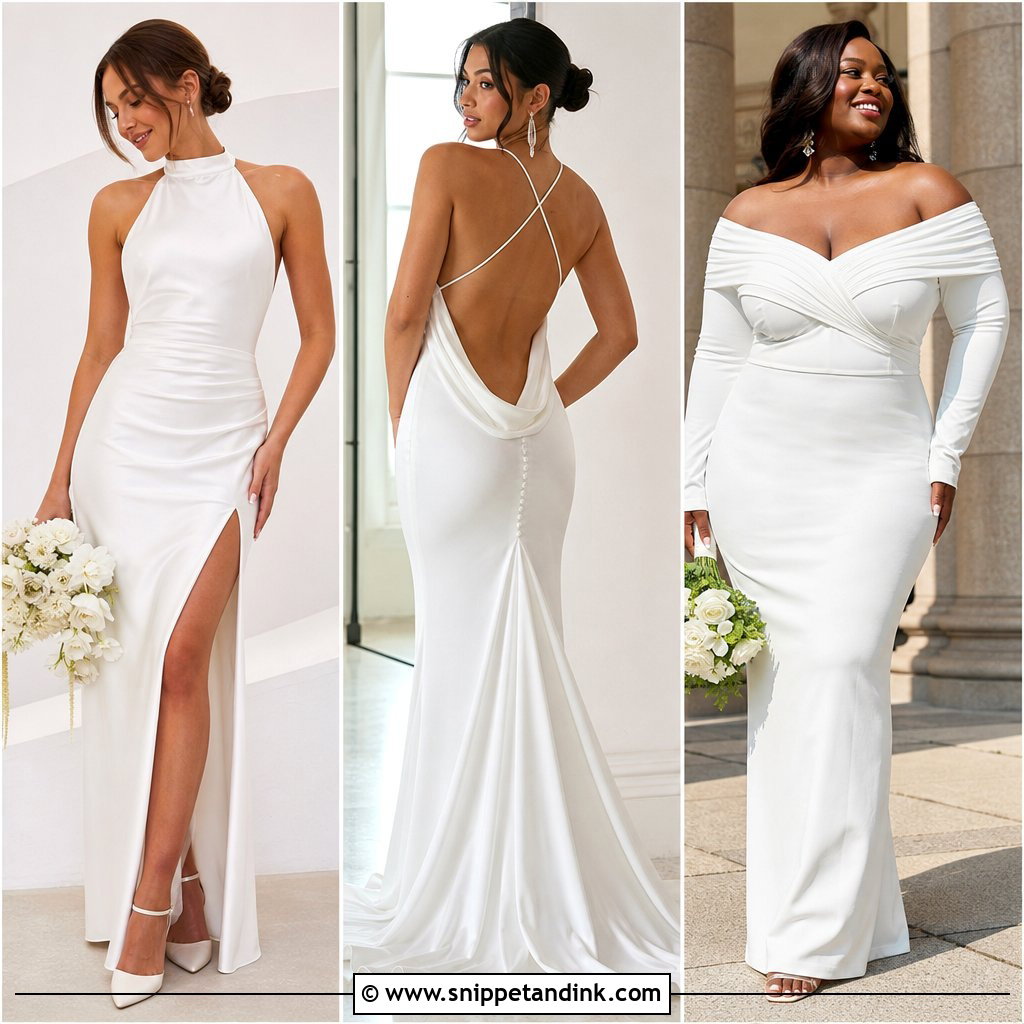
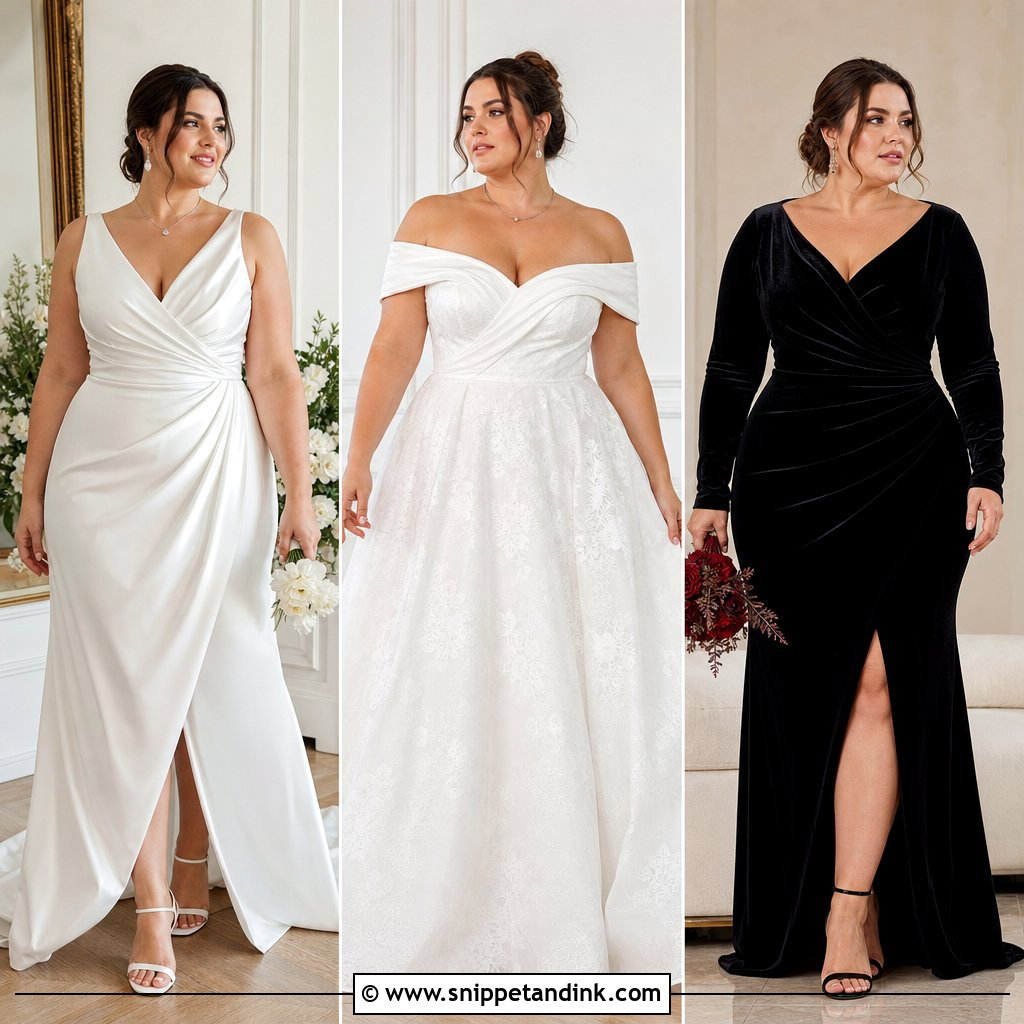
Crepe and an off-the-shoulder neckline give a smooth, understated version of the fitted look. The neckline draws the eye to the collarbones and the skirt runs in one unbroken line to the hem. What makes it wearable is hidden support beneath the fold-over neckline, so you aren’t hitching it up between photos. Pearl or crystal earrings, a low chignon and pointed pumps finish it, with a long plain veil for movement. Crepe shows undergarment lines readily, so seamless bridal shapewear or a built-in bodysuit gives a cleaner finish. At alterations, hug your seamstress. The neckline shouldn’t pinch the upper arms or slide down when you reach around someone.
4. Halter Neck Bodycon Wedding Dress
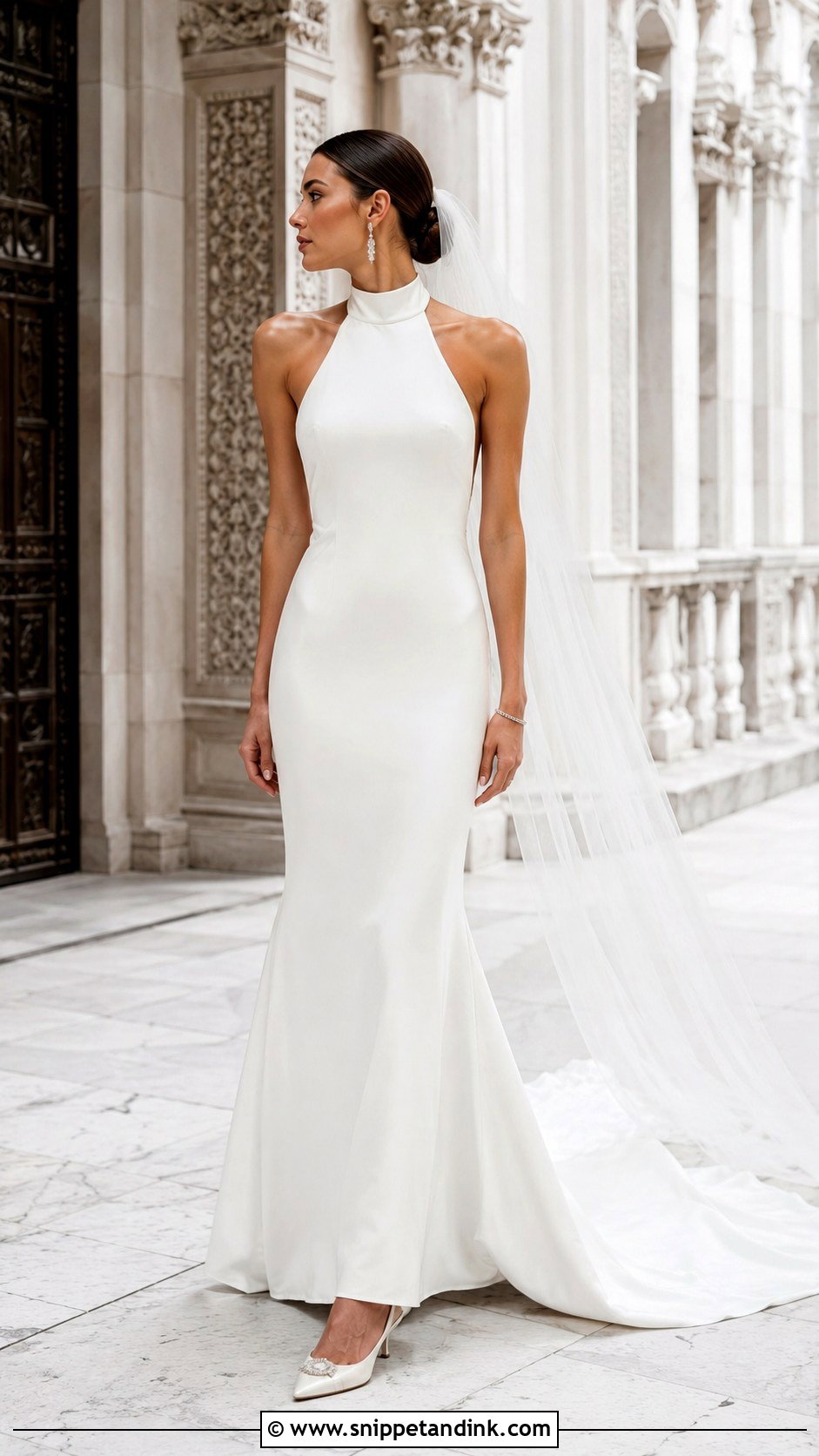
A halter balances bare shoulders with a covered front, and it suits fabrics that follow the body without bulk: sleek crepe, stretch satin or a good smooth jersey. The neck strap should rest comfortably and not pull when you turn your head. Skip the necklace and let an elegant bun, statement earrings and a simple bracelet do the work, with pointed slingbacks to lengthen the line. With an open back, adhesive cups or support built into the bodice replace a bra. A narrow chapel train makes it feel ceremonial while keeping the fit. Attach a sheer veil below the bun so the neckline stays in view. Watch the strap length closely at fittings; even a slightly short halter drags the bodice up and digs into the back of the neck by evening.
5. Square Neck Bodycon Wedding Dress
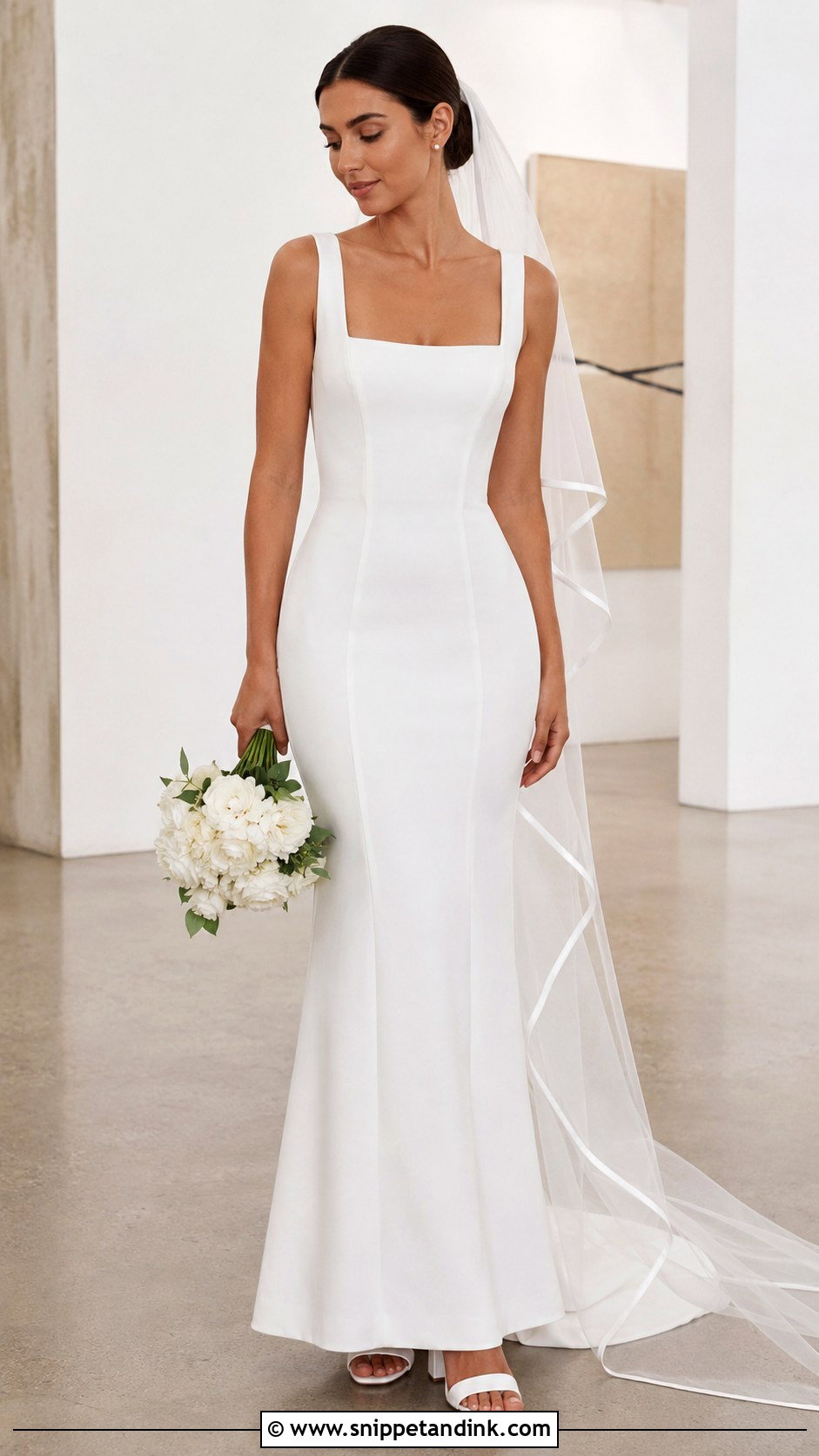
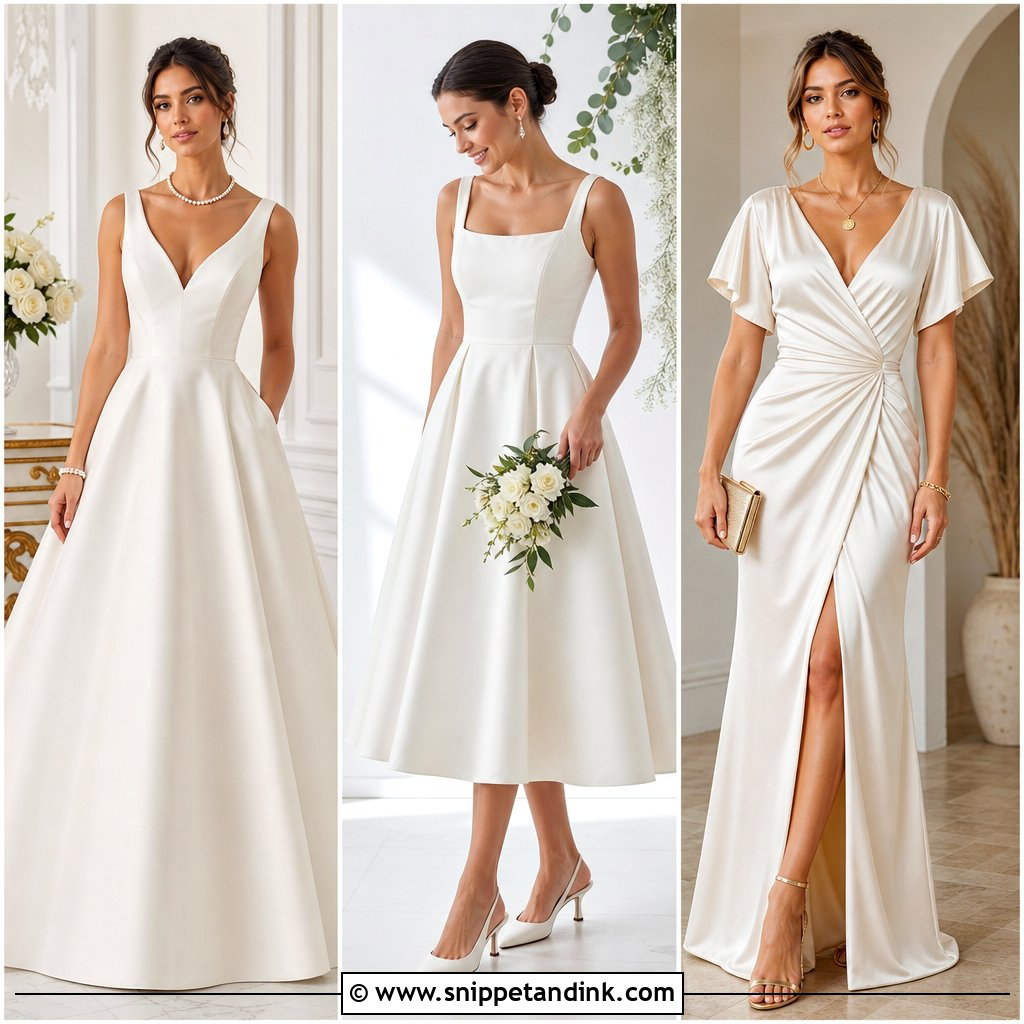
Square necklines suit a fitted dress because the straight edge gives structure that the rest of the silhouette doesn’t need to supply. Wide straps, cap sleeves or fitted long sleeves all pair with it. Substantial crepe or lined satin keeps the shape crisp, while stretch fabric moves more easily. Pearl studs, a smooth low bun, block-heel sandals and a narrow ribbon-edged veil complete it. At the fitting, look at the straps: they should sit flat and straight, not slide inward toward the neck. A slightly higher back gives more support, and princess seams shape the body far better than simply making the dress tighter.
6. High Neck Bodycon Wedding Dress
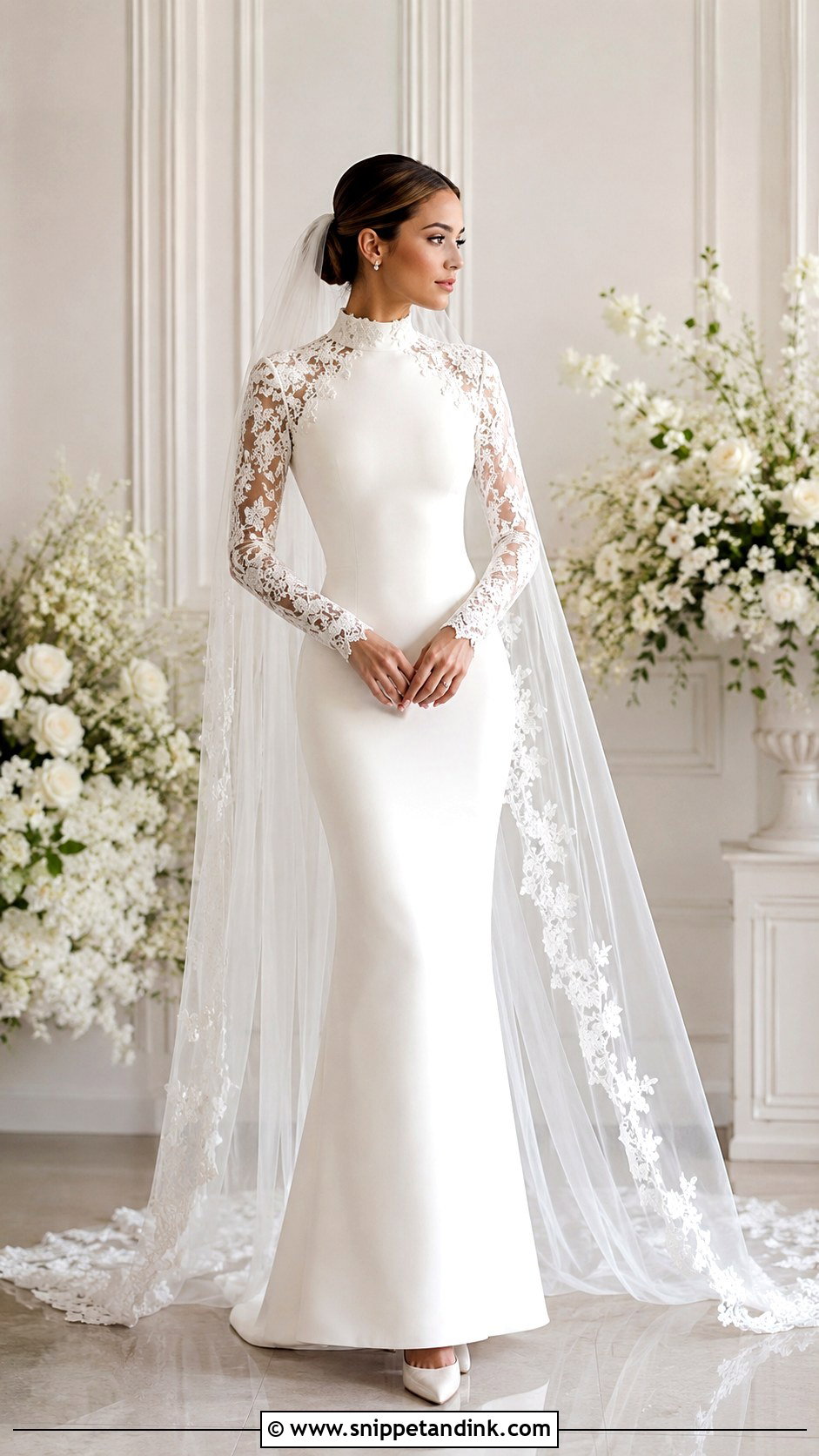
A high neck with a fitted column or mermaid skirt is covered, sophisticated and surprisingly sleek. Smooth crepe keeps it minimalist; lace sleeves and an illusion neckline soften it. The neckline already holds the focus, so crystal studs, a polished bun, pointed pumps and a long veil are plenty, and a necklace would only crowd it. Sit down and turn your head at every fitting. The collar should lie smoothly without pressing on the throat. For summer, a sleeveless high-neck bodice with light lining keeps the coverage without the heat. A covered-button back is worth having, since guests spend the whole ceremony looking at it.
7. Sweetheart Corset Bodycon Wedding Dress
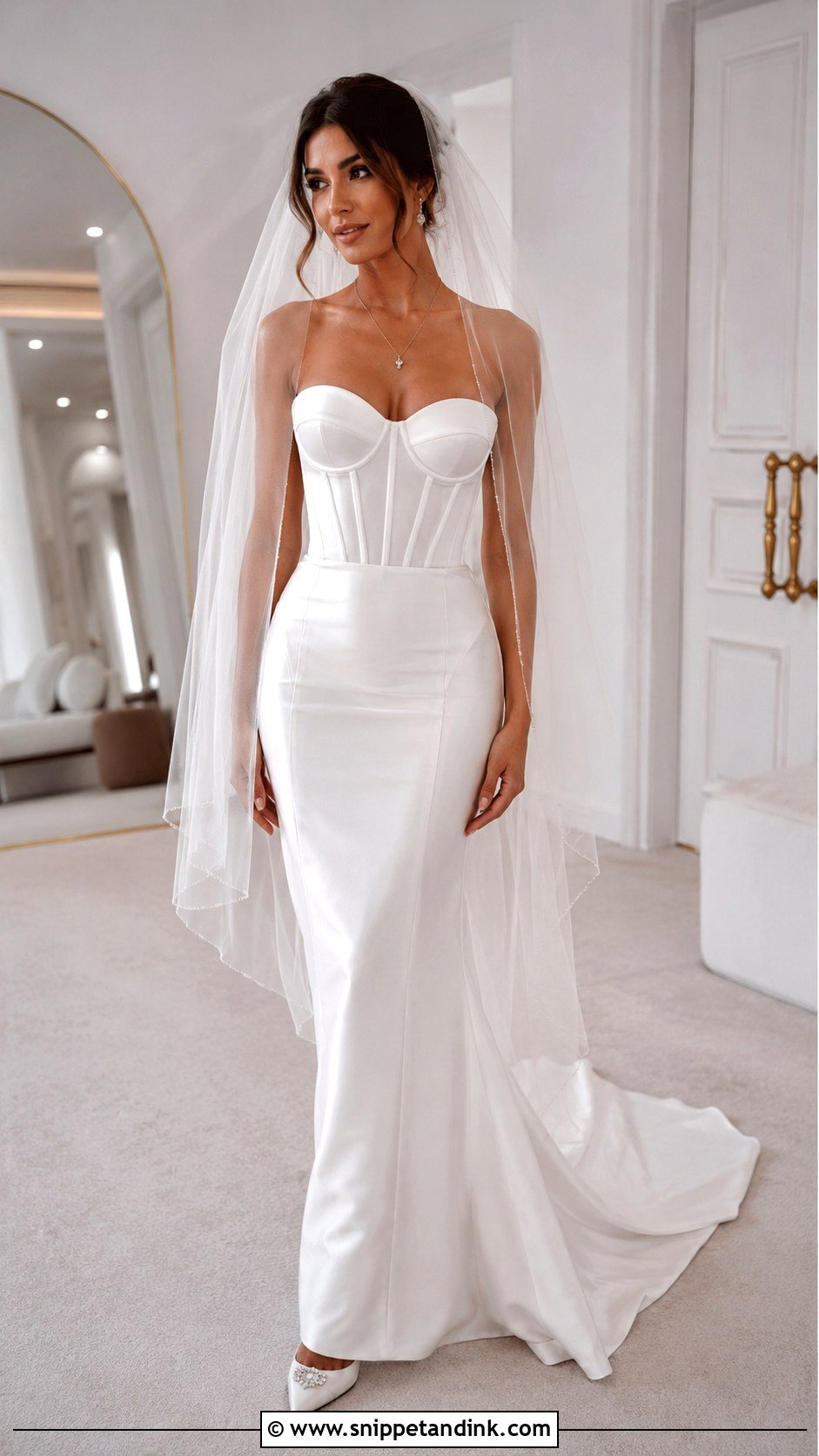
A sweetheart corset bodycon wedding dress pairs visible structure with a curved neckline. The support should come from boning, lined cups and a secure back closure, not from the dress simply being very tight. Satin looks sculpted; lace or tulle overlays add texture. A fine pendant, teardrop earrings, pointed heels and a sheer fingertip veil suit it, and if the boning is on show, keep everything else simple. The top edge should sit flat against the body. If it gapes when you lean forward, ask your seamstress about shaping the cups or adding grip tape inside the edge, and consider a soft train for some movement below all that structure.
8. Cowl Neck Bodycon Slip Wedding Dress
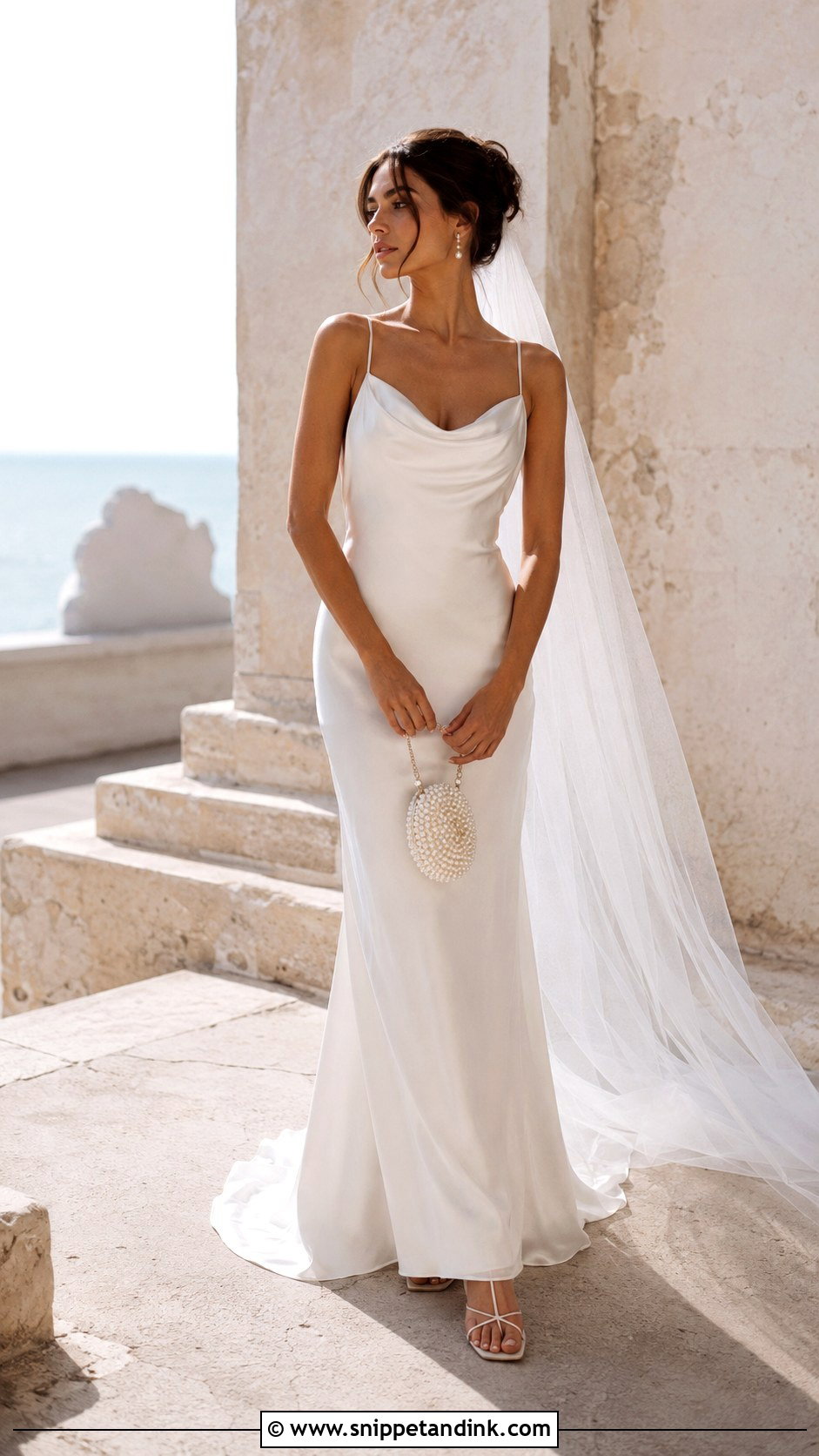
Fluid fabric and a draped cowl make a fitted slip dress feel relaxed but still polished, which is why I suggest it for city ceremonies, destination weddings and reception changes. Silk, satin or a well-lined alternative should fall smoothly rather than cling in patches. Bias-cut slips in particular show every ridge underneath, so try it on with the exact underwear you’ll wear. Strappy heels, drop earrings and a small pearl or satin bag finish it, with a loose updo and a plain chapel veil for the ceremony. Narrow straps and low backs leave nowhere for a bra, so sort out support at the first appointment: smooth no-show undergarments, adhesive cups or a foundation built into the dress.
9. One Shoulder Ruched Bodycon Wedding Dress
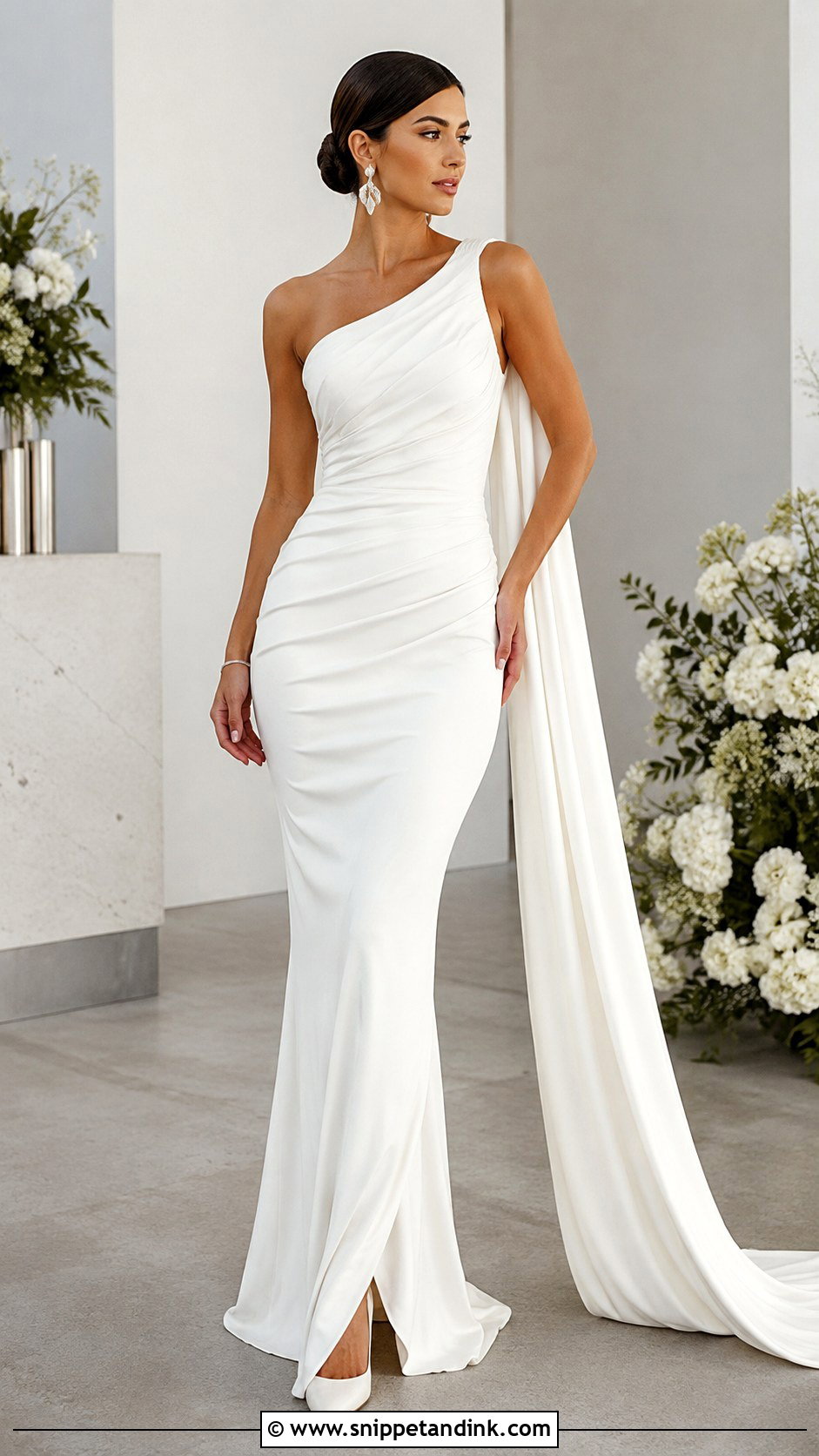
Asymmetry makes a one shoulder ruched bodycon wedding dress feel fashion-forward. Gathering through the waist and hips adds texture and, usefully, a little give, because ruched fabric moves with you. Soft stretch crepe or jersey with secure lining keeps the folds even. A sleek ponytail or side-parted bun shows the neckline, with sculptural earrings, a slim bracelet, pointed heels and a simple clutch; a necklace would cut across the diagonal. A detachable shoulder drape adds movement for the ceremony and comes off later. Check the underarm on the bare side carefully. One-shoulder dresses tend to cut in there, and a raw red line shows in every arm-raised dance photo.
10. Deep V Neck Bodycon Wedding Dress
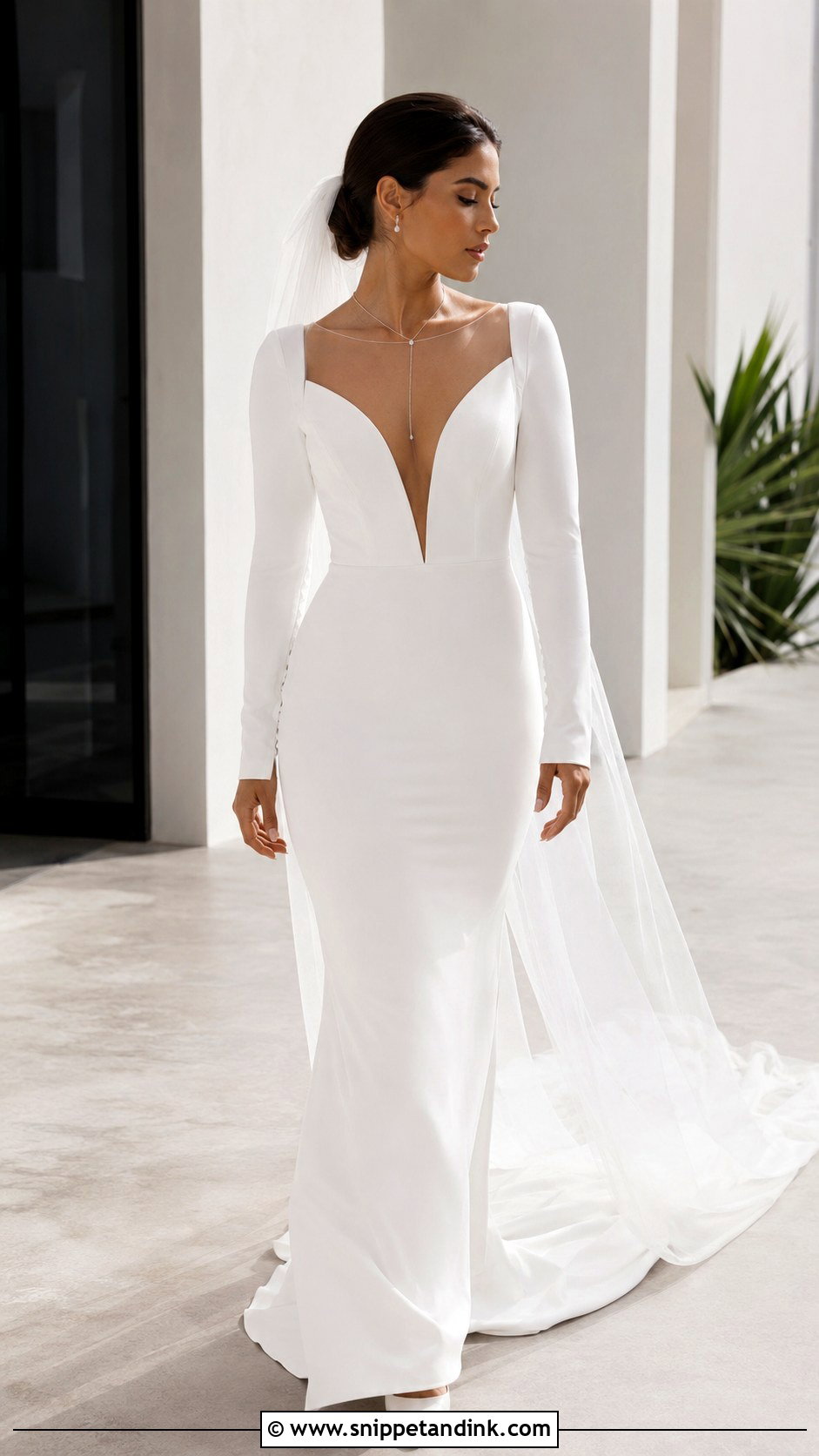
A deep V lengthens the whole fitted silhouette. For coverage that stays put, look for an illusion panel, built-in cups or fabric anchored firmly at the sides. Long sleeves balance a plunge; wide straps keep it contemporary. A fine lariat necklace sits nicely in the V, with small earrings, pointed pumps and a low bun, and a plain veil lets the front hold the attention. If the back is low too, raise support at the salon before alterations start, because it shapes everything the seamstress does next. Sit, bend and walk in the finished bodice. The neckline should stay flat without drifting apart at the centre.
11. Lace Mermaid Bodycon Wedding Dress
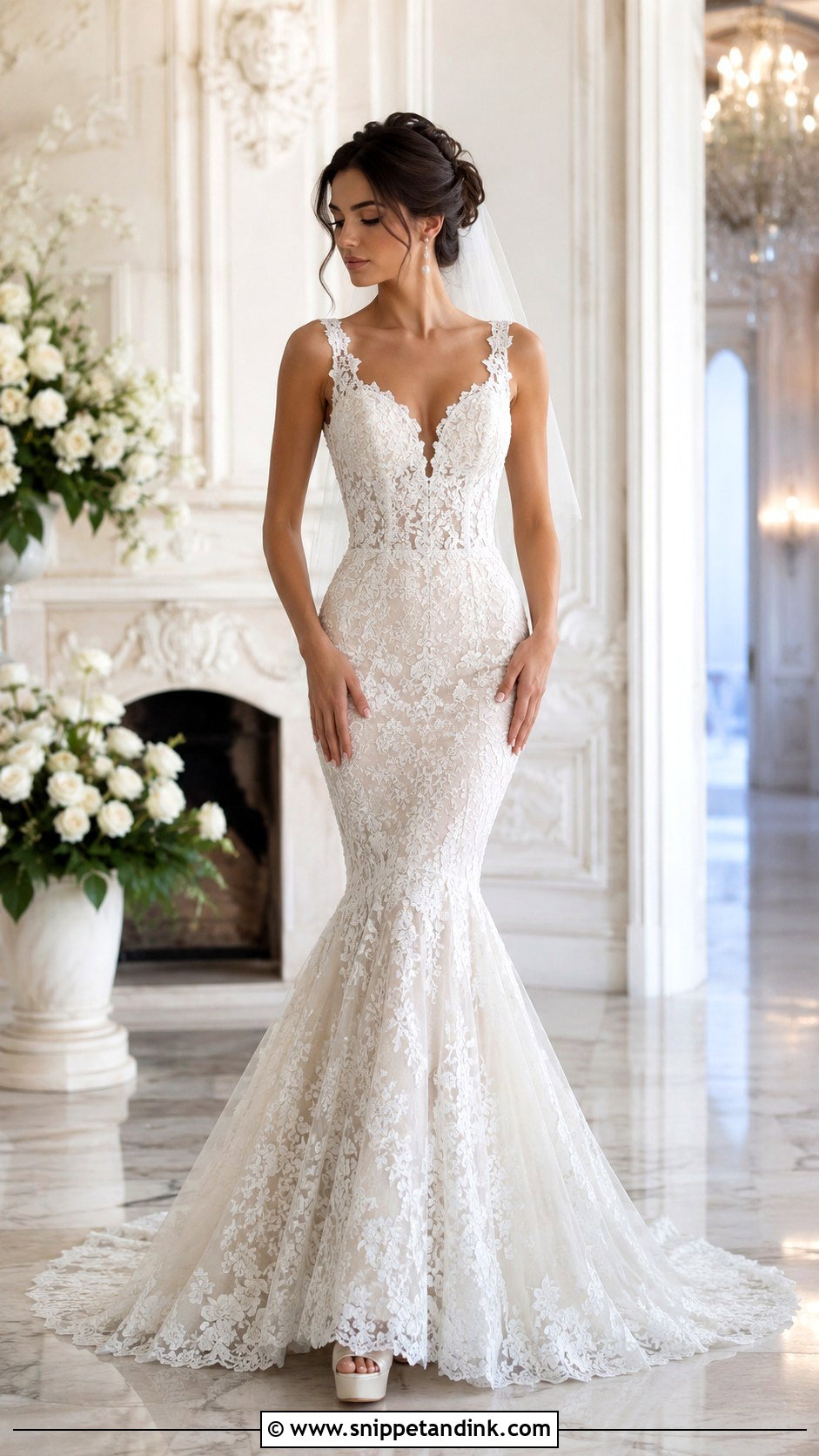
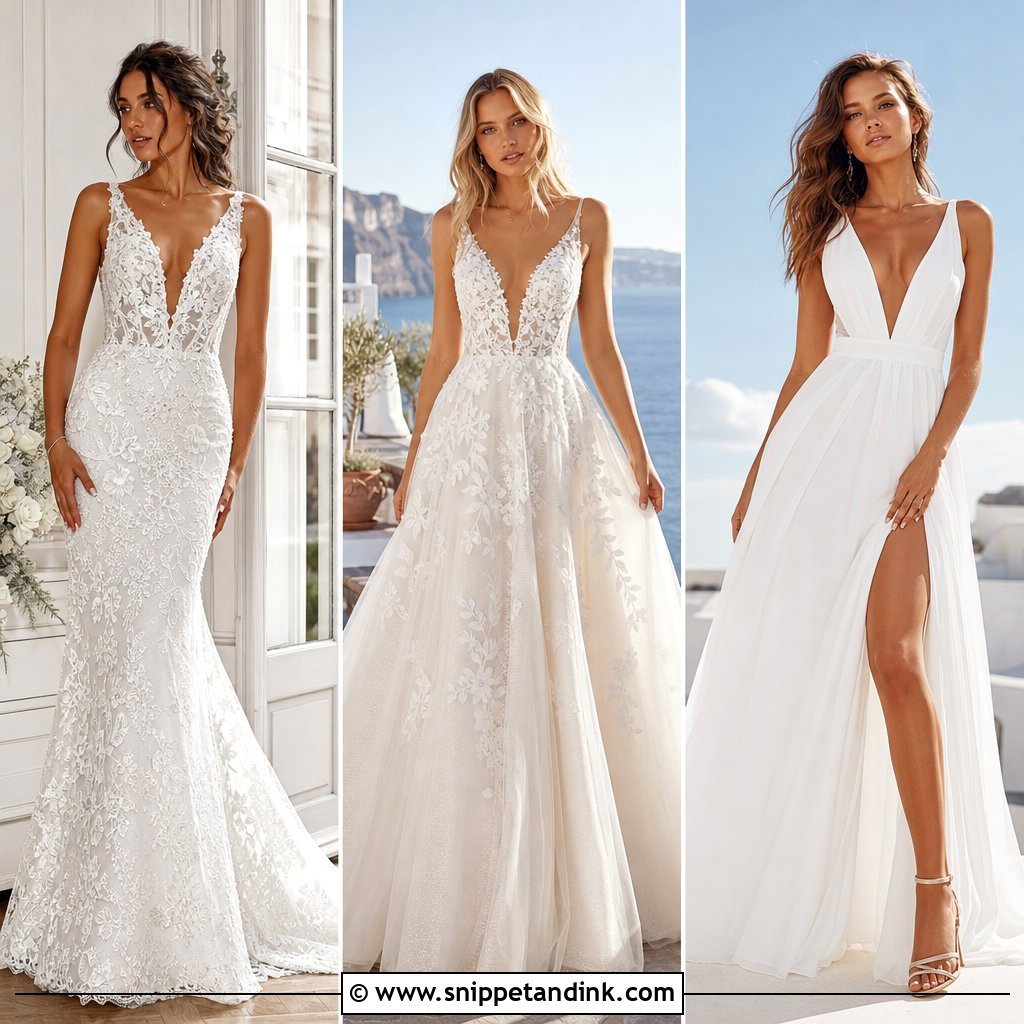
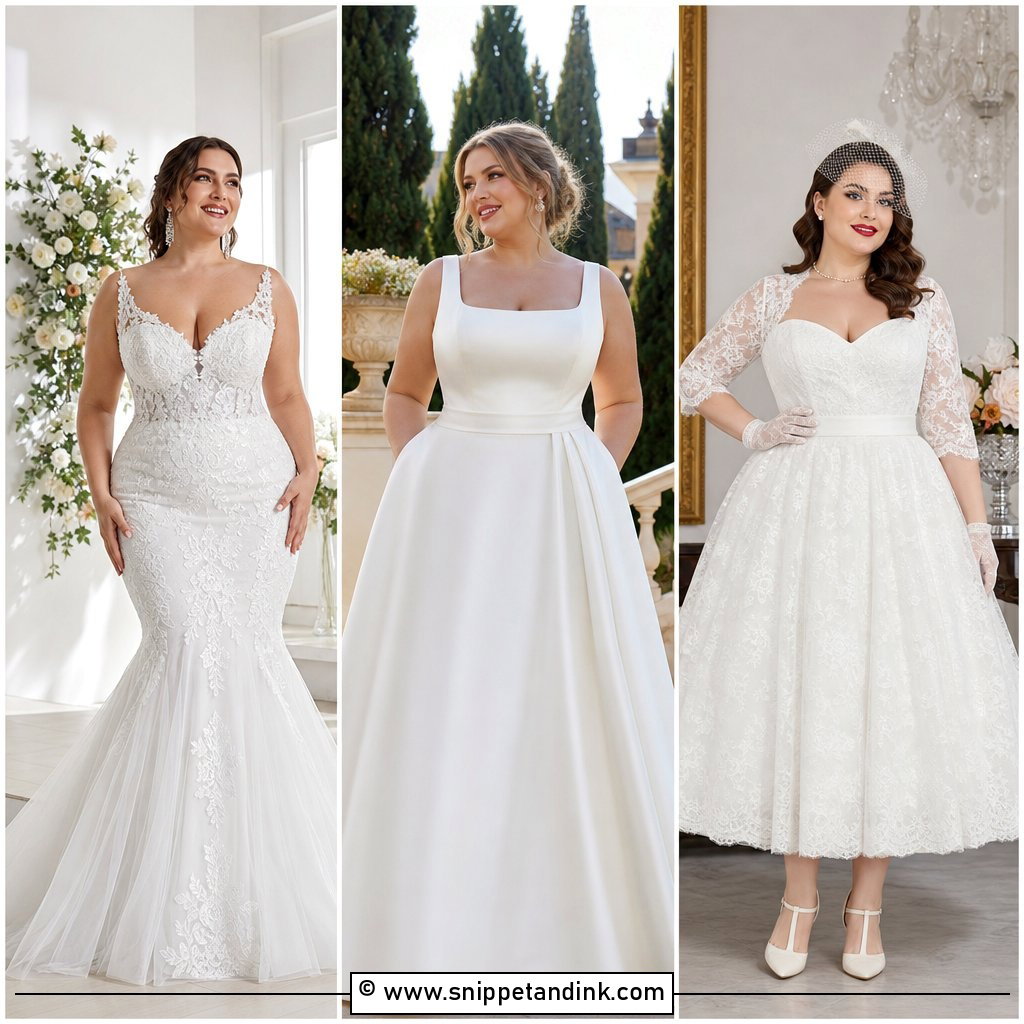
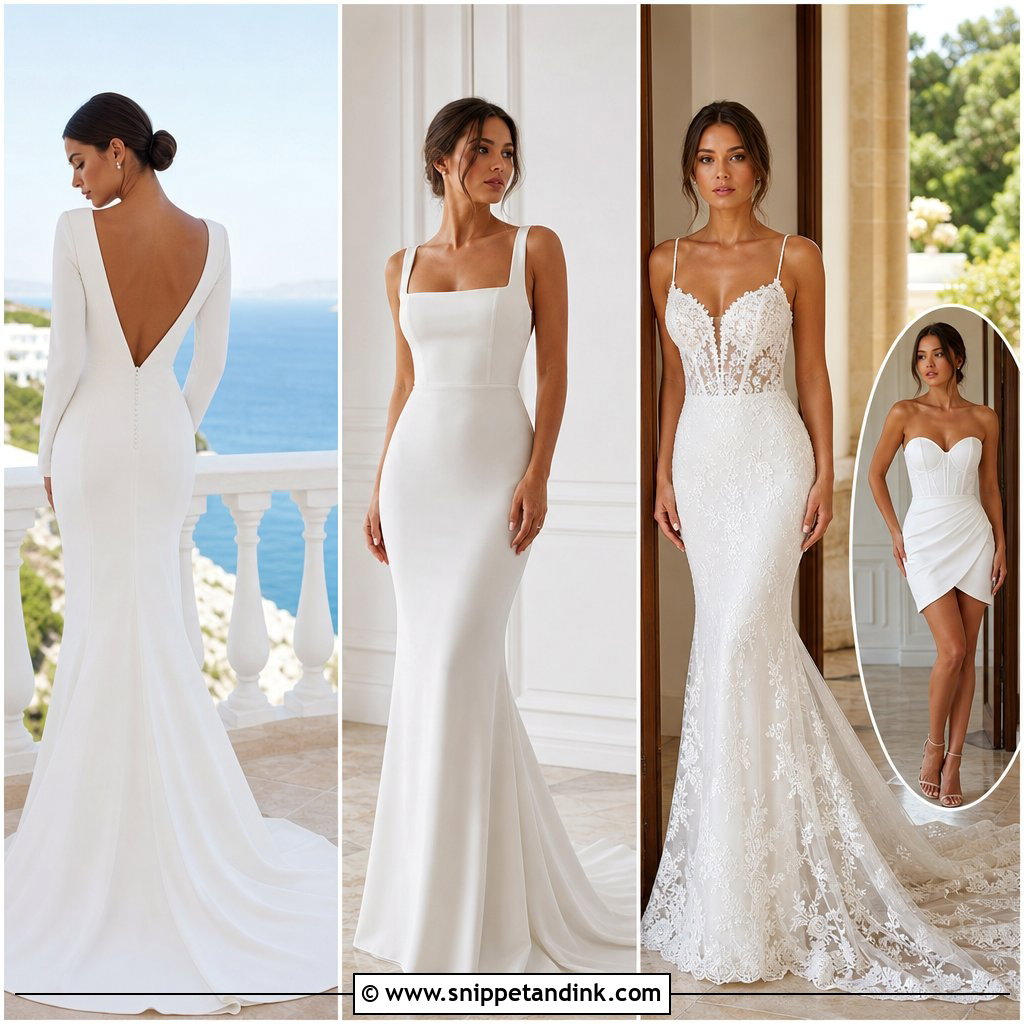
Lace mermaids are the most dramatic of the fitted shapes. The dress follows bodice, waist and hips, then opens into a full skirt near the knee. Floral lace, subtle sequins or beaded appliqués outline that construction. Pair it with a simple veil, pearl earrings and platform or block heels that stay steady beneath the flare, and keep the hair polished but not elaborate if the lace is busy. Where the flare begins decides how you’ll walk. Too low and too tight at the knee, and you’ll shuffle and struggle on steps, so try both at every fitting. A bustle makes the train manageable for the reception.
12. Satin Trumpet Bodycon Wedding Dress
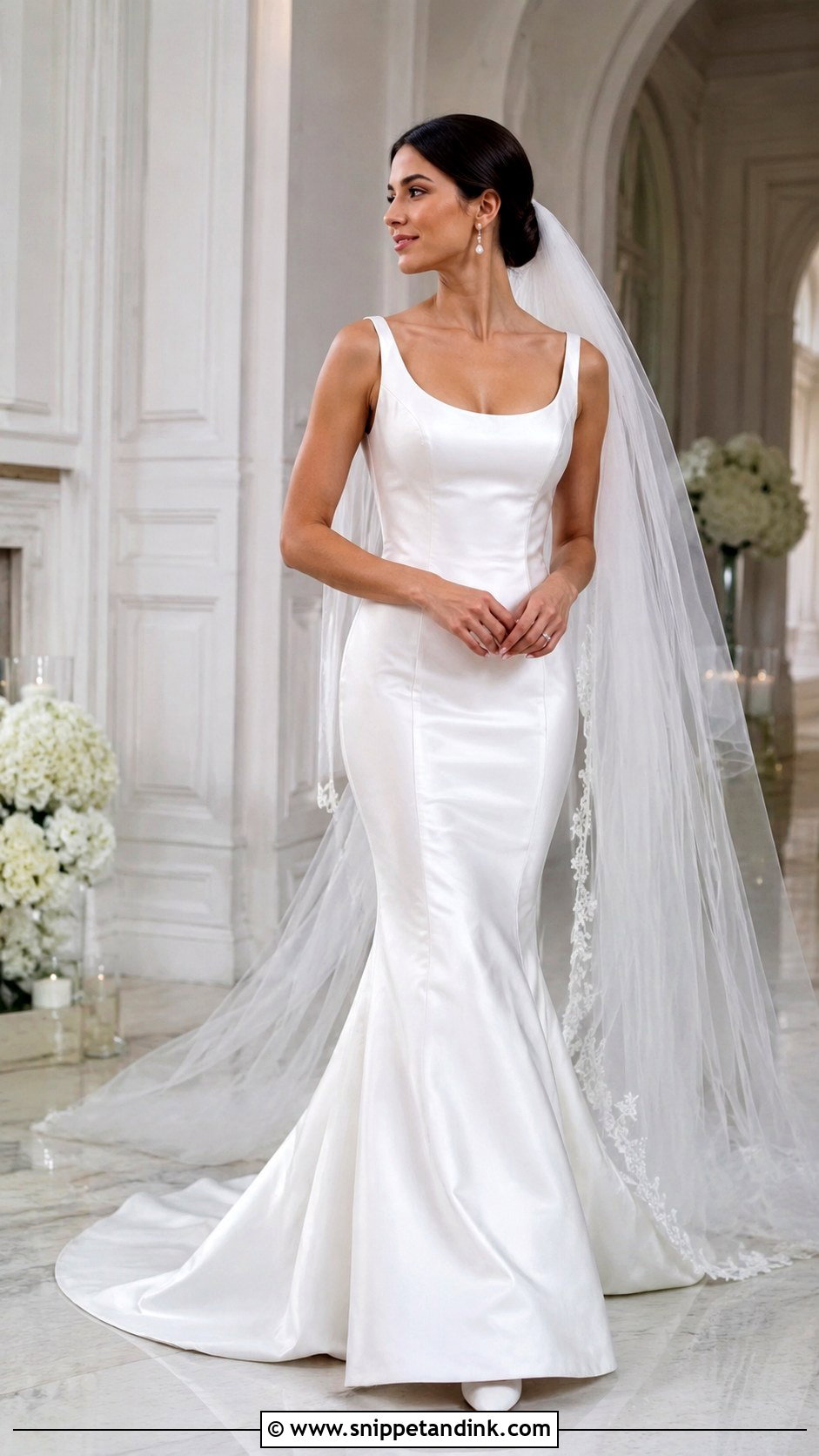
A trumpet is the gentler cousin of the mermaid. It stays fitted through bodice and hips, then widens gradually from mid-thigh, so it’s easier to walk and sit in. Structured satin holds the shape without turning stiff. Pearl drops, a smooth bun, pointed pumps and a cathedral veil suit a formal room, and a small bow or row of covered buttons adds interest at the back. Glossy satin reflects light onto every seam and wrinkle, so look at the dress from several angles under the salon lights before you sign off. Accurate seam placement and smooth lining are what make it photograph cleanly while you stand, sit and dance.
13. Midi Bodycon Wedding Dress
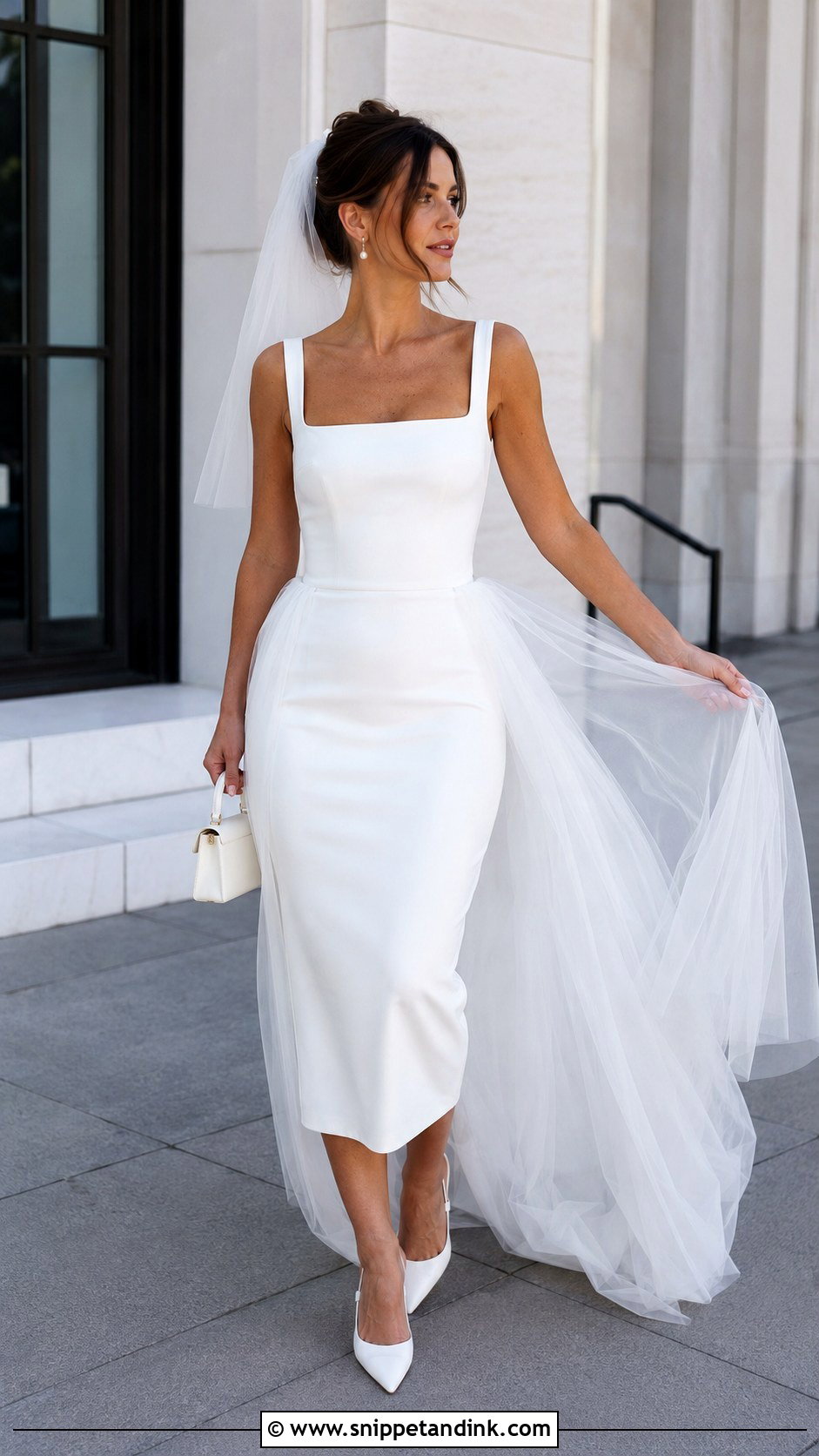
A midi works for a courthouse ceremony, a small wedding or a second bridal outfit. The shorter hem puts your shoes on show, so pick them with care: pointed slingbacks look refined, crystal sandals add shine. A square, scoop or off-the-shoulder neckline keeps a fitted midi looking bridal rather than like office wear. Add a short veil, pearl earrings and a structured mini bag. Substantial lining matters most on this length, since a thin stretch midi creeps upward with every step. The hem should land at a flattering point between knee and ankle and still allow a normal stride. A removable tulle overskirt adds ceremony volume and reveals the sleek dress afterwards.
14. Mini Bodycon Reception Wedding Dress
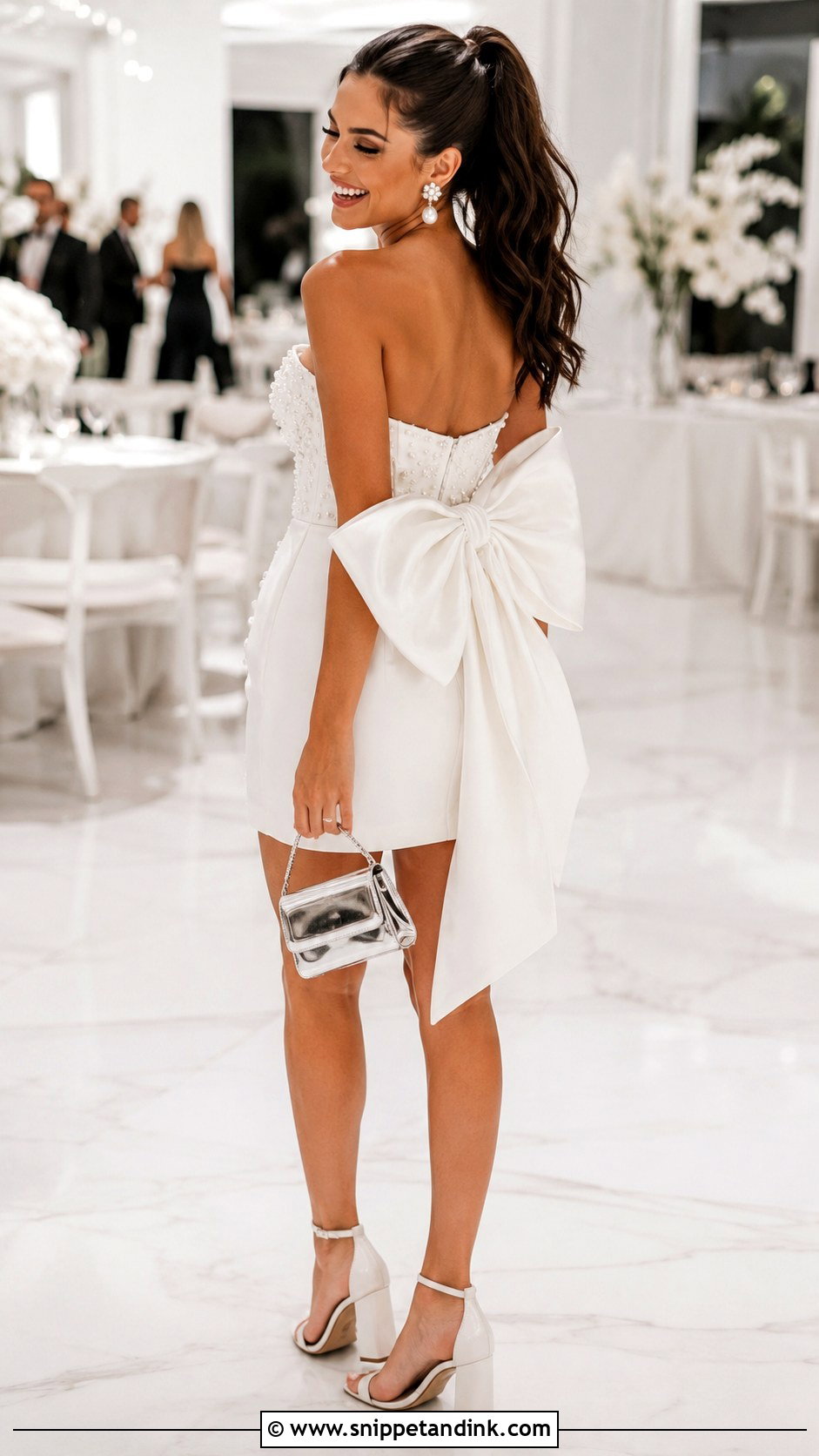
After the formal part, a fitted mini makes a playful reception change. Bridal details keep it from looking like any party dress: pearl beading, a dramatic bow, feather-free fringe, floral appliqués or a structured satin neckline. Balance the short hem with a secure bodice and comfortable lining. Block-heel sandals, statement earrings and a small metallic or pearl bag finish it, with a high ponytail or soft waves. If you’ll dance, sit down and raise your arms in it first. Fitted minis ride up faster than any other dress, and built-in shorts or a smooth bodysuit underneath save a lot of tugging. Keep the veil on for photos, then take it off when the dancing starts.
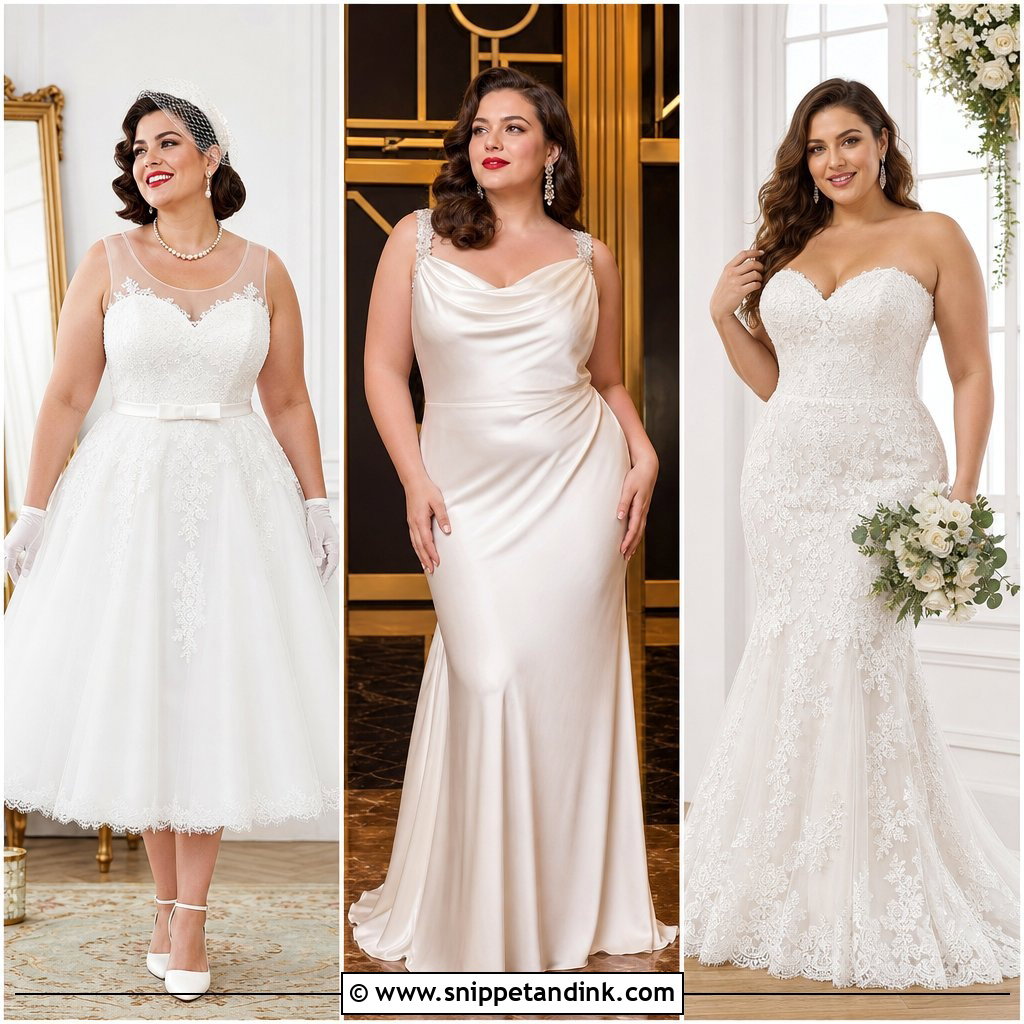
15. Plus Size Ruched Bodycon Wedding Dress
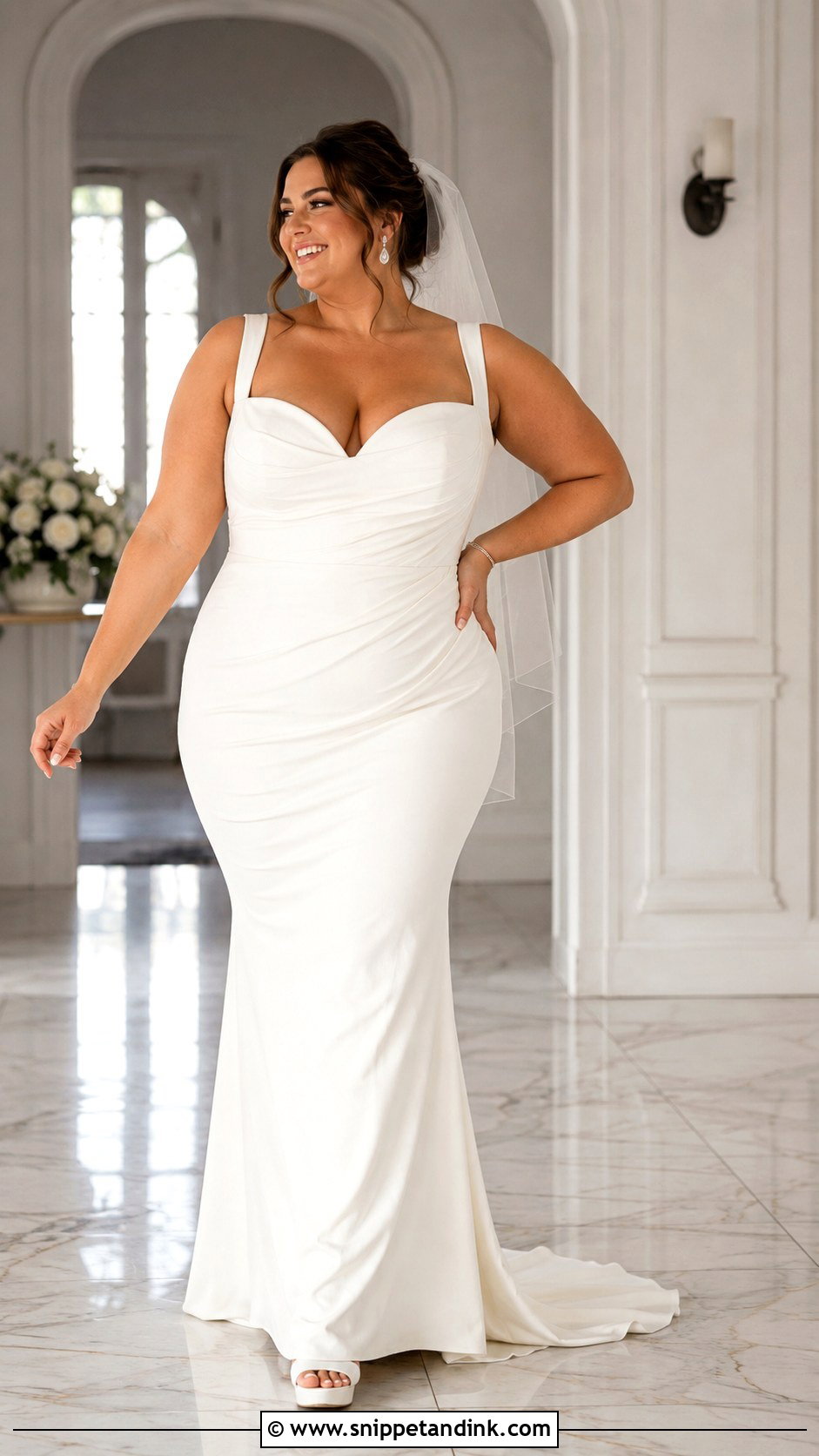
A plus-size ruched gown should celebrate shape and still let you move freely. Stretch crepe, layered mesh or lined jersey with gathering through the waist and hips gives both. A wide-strap sweetheart or off-the-shoulder neckline suits the fitted skirt and leaves room for internal boning and proper cups. Cushioned block heels, drop earrings, a soft updo and a lightweight veil complete it. The right fit follows your body without painful pressure or constant pulling. Have every alteration done in the exact undergarments and shoes you’ll wear, because shapewear alone can change the fit noticeably. A custom bustle controls the train, and reinforced seams help the gown keep its shape through a long night.
16. Modest Long Sleeve Bodycon Wedding Dress
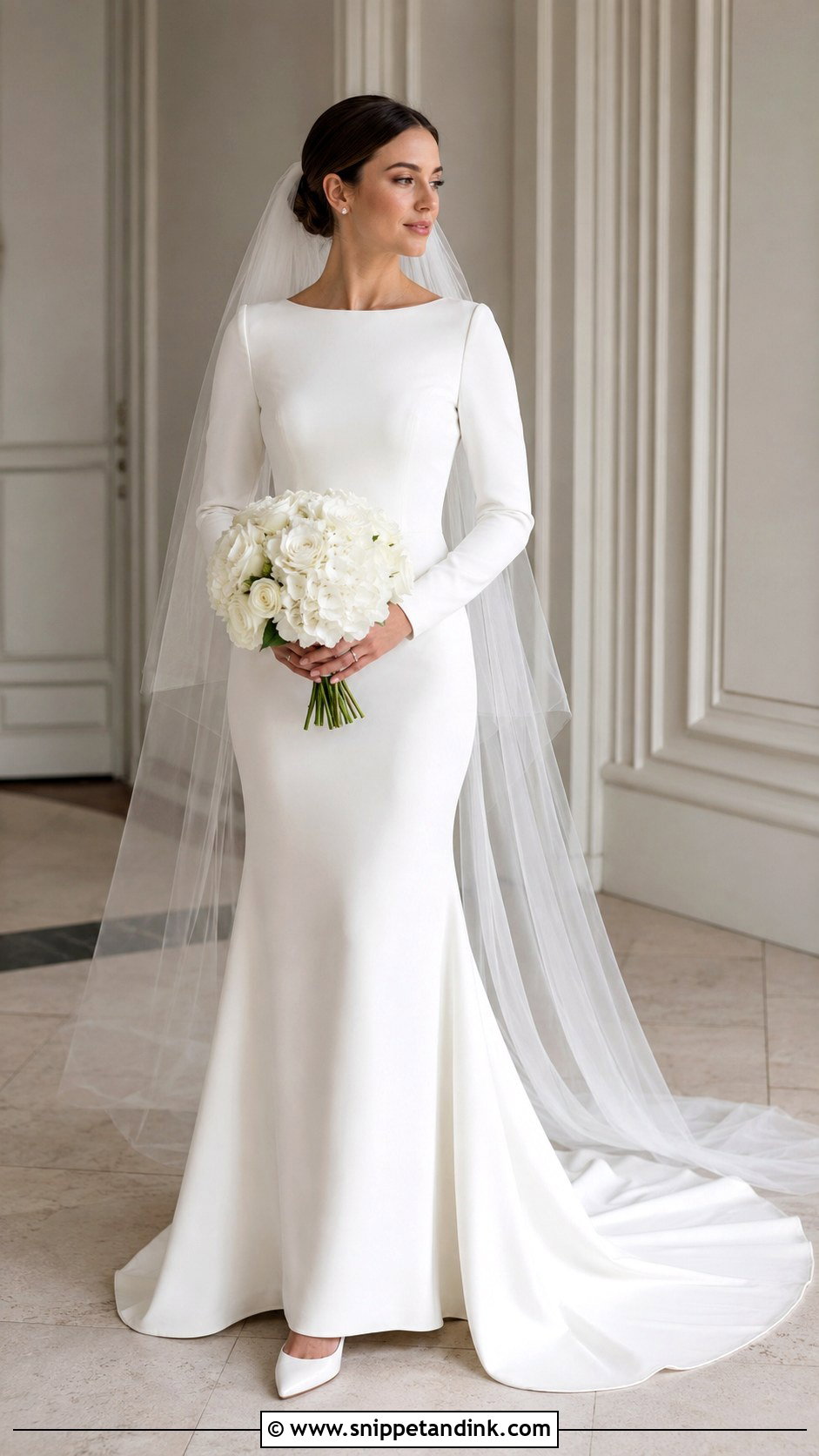
Coverage and a fitted silhouette are a better match than many brides expect. An opaque crepe gown with a bateau, jewel, or high neckline and a fully lined bodice is my starting point. Princess seams give definition without sheer panels or a plunge. Closed-toe pumps, pearl studs, a smooth low bun and a long plain veil finish it, and covered buttons down the back and sleeves add detail. The fabric needs real stretch across the elbows, shoulders and hips, since fully covered and fitted leaves no slack anywhere. A wrist loop or bustle manages the train. In warm weather, lightweight crepe and breathable lining beat heavy satin or dense lace.
17. Backless Bodycon Wedding Dress
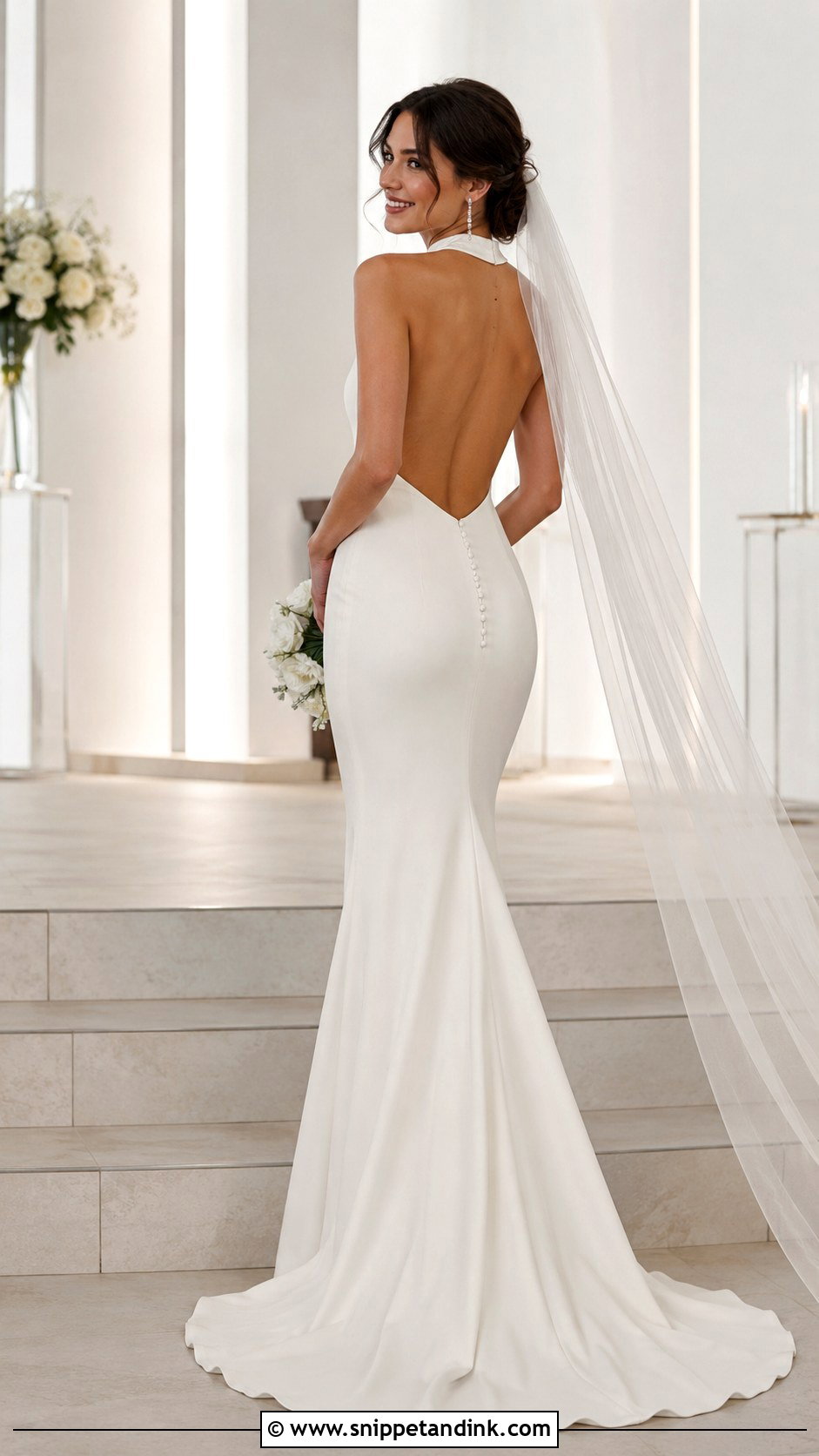
The backless version makes its biggest impression as you walk away from the guests. Balance the open back with a simple front, such as a high neck, scoop or soft cowl. Smooth satin and crepe keep the shape clean, and lace edging can outline the opening. Wear your hair up or swept aside, with drop earrings, delicate heels and a low-set veil that doesn’t hide the back. Support takes planning when a standard bra is out. Built-in cups, internal boning or a bodysuit constructed into the dress are the reliable options. Test the back edge sitting, walking, hugging and dancing; on a fitted dress it should stay flat against the skin, never bow away from the spine.
18. Pearl Embellished Bodycon Wedding Dress
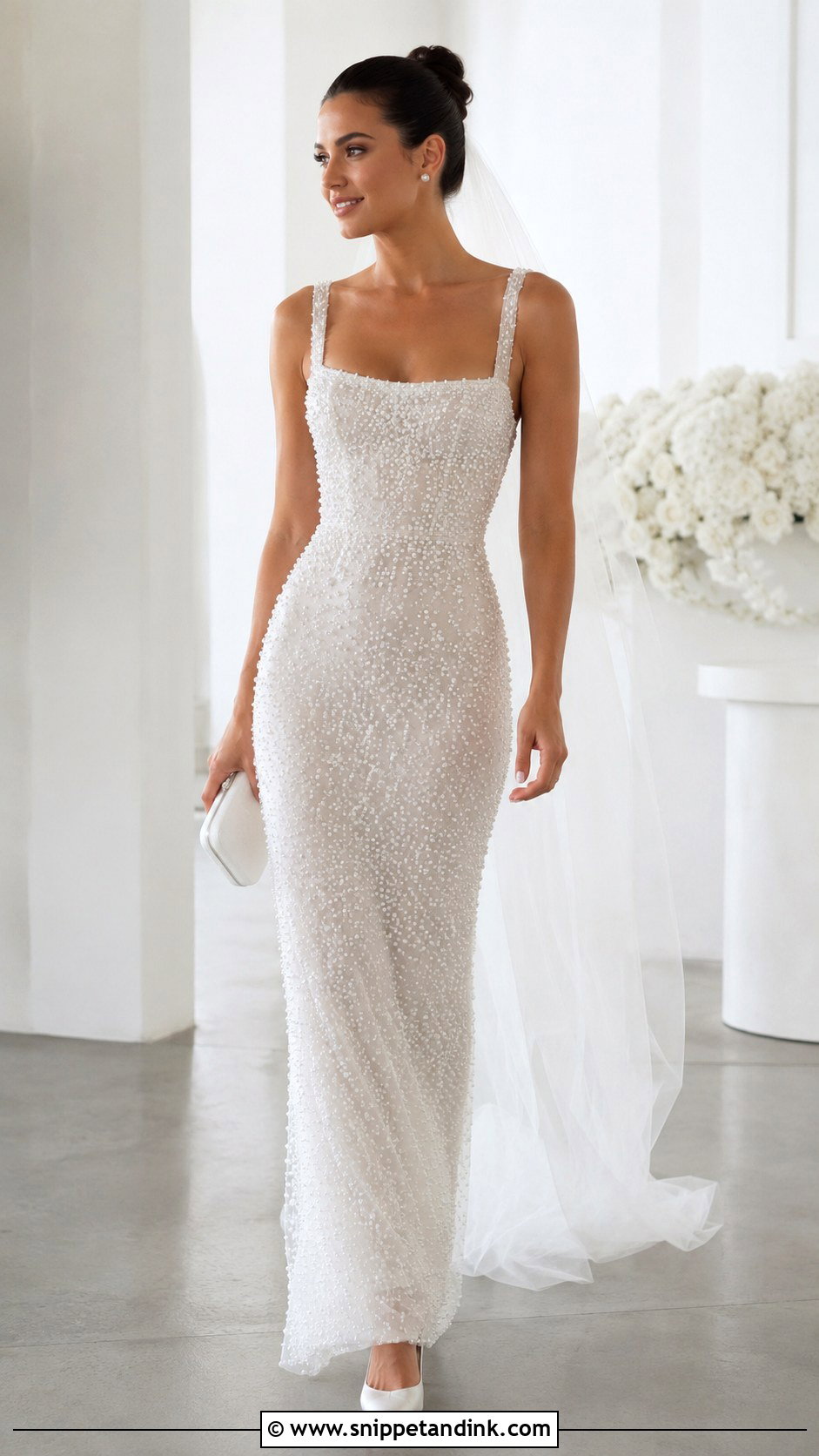
Pearls give a fitted gown dimension without colour. They might be scattered over tulle, form defined straps or concentrate along the neckline and back. Keep the rest coordinated but quiet: pearl studs, ivory pumps, a smooth clutch and a plain veil. Pick a hairstyle that keeps loose strands away from the beadwork, since hair wraps around pearls surprisingly easily. Beading adds weight, so the bodice needs enough internal structure to stay up under it. Check the gown for loose beads the week before and tuck a needle and matching thread into the emergency kit. Soft lining matters too, because the reverse side of embroidery can feel scratchy over a long day.
19. Detachable Overskirt Bodycon Wedding Dress
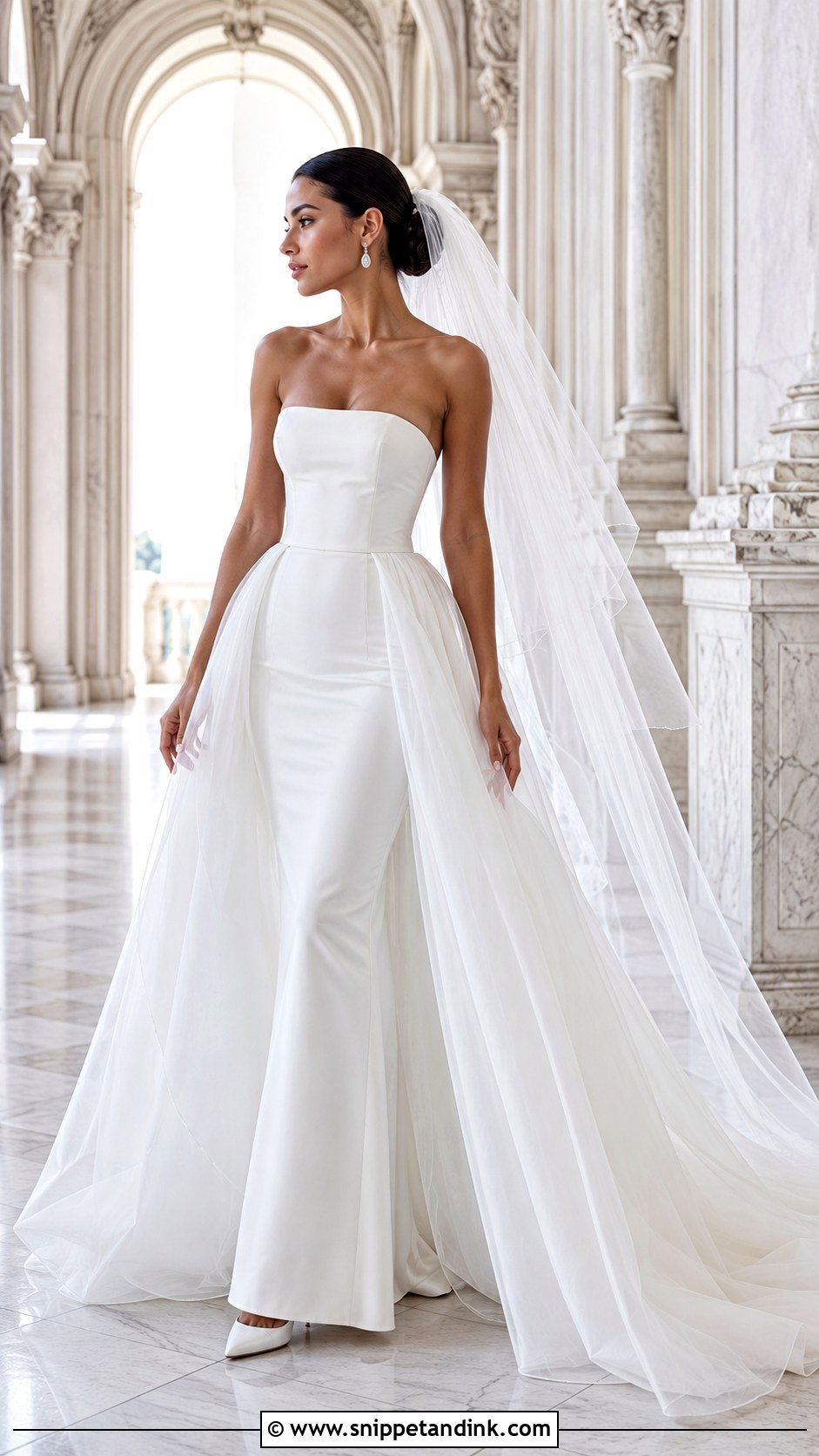
Want ceremony drama and a sleek reception look from one dress? A bodycon wedding dress with a detachable overskirt does both. Start with a fitted crepe, lace or satin gown, then add an organza, tulle or matching satin skirt for the aisle. Elegant pumps, drop earrings and a long veil complete the formal version; after photos, the skirt and veil come off. The attachment should sit smoothly at the waist without a bulky ridge, which is harder than it sounds on a close-fitting base. Practice removing it beforehand and assign someone to store it. I also check the base gown alone, making sure it has its own finished hem or train and looks complete once the extra layer is gone.

20. Floral Appliqué Bodycon Wedding Dress
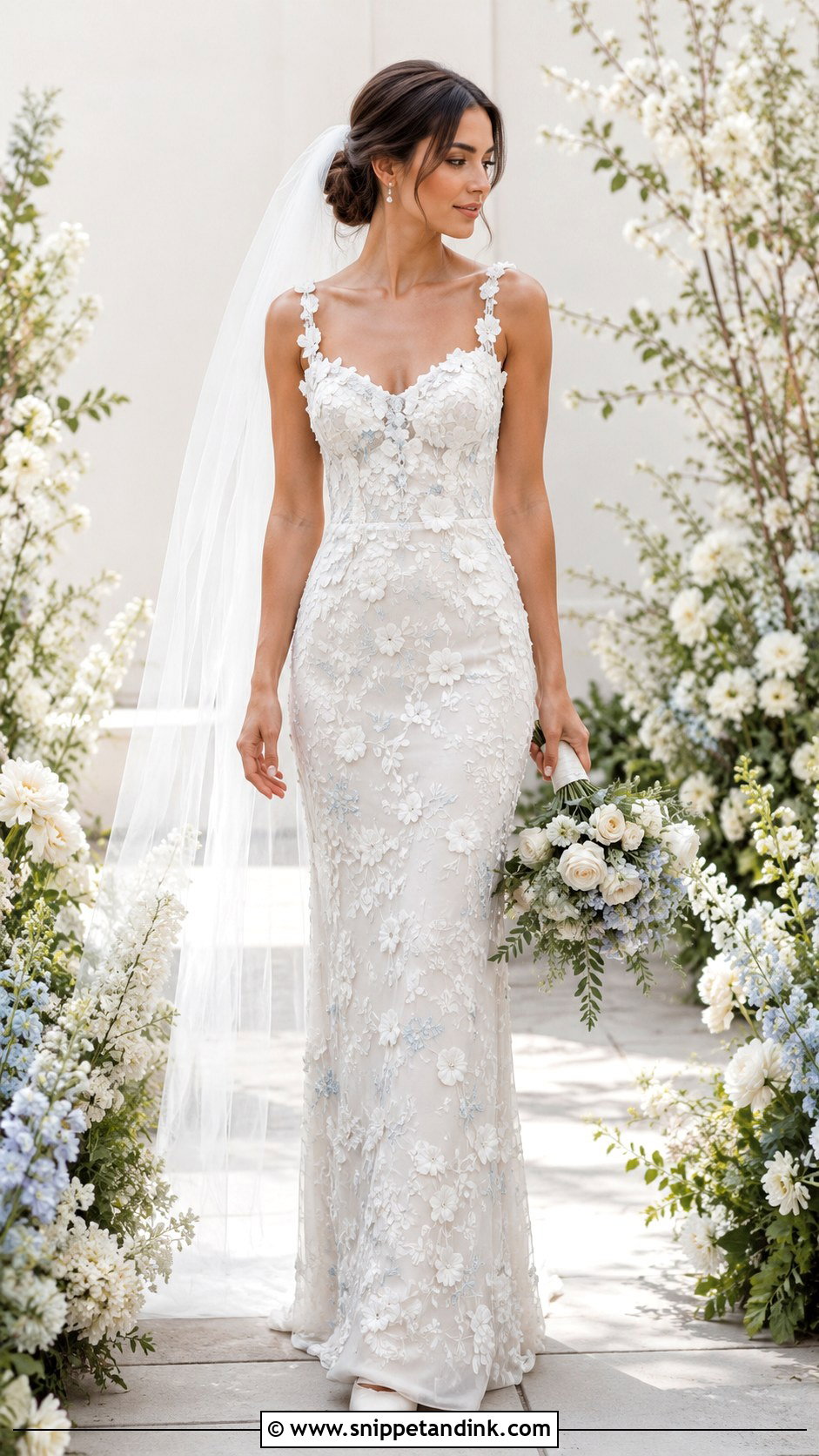
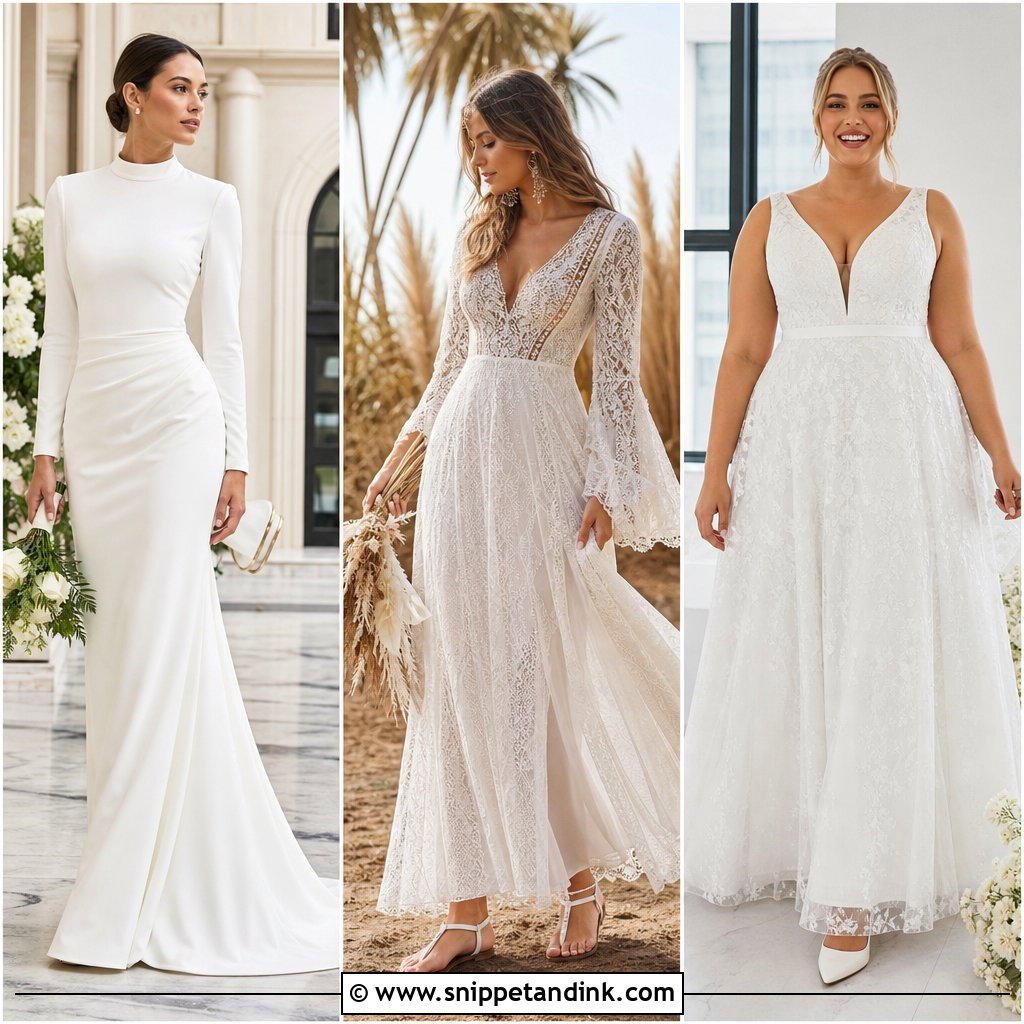
Floral appliqués soften a close-fitting silhouette with dimension. Scattered blossoms read delicate; larger flowers placed around the bodice, waist and train make more impact. Ivory on ivory feels traditional, while a hint of blush or pale blue adds gentle colour. Simple pumps, small earrings, a sheer veil and a relaxed low bun keep the accessories from competing. On stretch fabric, appliqué placement matters more than usual. Flowers stitched across a seam or the waist can pucker as the fabric stretches over your body, so review them from the front, side and back during alterations. Light appliqués are a good route to detail without the weight of heavy beading.
A Full Day in a Close-Fitting Dress, Car Seat to Dance Floor
Fitted gowns show the day’s wear in places a full skirt hides. Most of it is easy to plan around once you know where it happens.
Sitting and creasing
Every fitted dress creases across the lap when you sit, satin worst of all. For the car, sit on the edge of the seat and lift the skirt slightly behind you so you’re not sitting on the back of it. A handheld steamer at the venue and five minutes before portraits takes care of the rest.
Cling and shapewear
Synthetic linings can cling to tights or shapewear in dry, heated rooms. A light mist of anti-static spray on the inside of the lining, tested on a hidden seam first, usually stops it. Choose shapewear with flat, bonded edges rather than elastic bands, and wear it to the final fitting so the hem and seat are fitted over it.
Bathroom breaks
A fitted dress has to be pulled up rather than gathered, which is harder than it sounds in a lined, stretchy gown. A bodysuit-style undergarment with a snap closure, or a slip that comes off separately, makes this far easier. Practise once at home in the actual dress so it isn’t a surprise on the day.
Size Labels Mean Little in a Dress This Close
A fitted gown should leave you feeling supported and comfortable, not merely held in. The range is wide, from sleek satin and quiet crepe to romantic lace, pearls and removable overskirts. Decide first how much structure, coverage and movement you need, then think about venue, weather, train length, shoes and accessories. Small alteration changes make an outsized difference on a close-fitting dress. Ignore the size on the label, and walk, sit, bend and dance at every fitting. When the whole outfit works with your body and your day, it looks polished from every angle.
You'll Like These Ideas:




Leave a Reply