
Ao Dai wedding dresses carry Vietnamese heritage in a cut that sits closer to the body than almost any other bridal garment. The classic version is a long fitted tunic with front and back panels split at the sides, worn over wide pants, and modern bridal versions add lace, pearls, bigger sleeves, softer necklines or detachable trains. Red and gold remain the colours for a formal family ceremony, white suits a contemporary celebration, and pastels soften the mood. Fabric changes everything: silk and chiffon float, while brocade and velvet hold their shape. As a stylist, I choose the khăn đóng, jewellery and shoes last, so they frame the tunic instead of competing with it.
Below are twenty complete outfits, each with the pants, headpiece and shoes worked out, so you can see how one silhouette shifts from a family tea ceremony to an evening reception.
How Close an Ao Dai Should Fit, and Where It Needs Room
Because the tunic follows the body so closely, I never suggest buying a wedding ao dai off the rack. A tailor takes far more measurements than for a Western gown, and small errors show at once in that long, uninterrupted line. These are the points I check on the bride.
- Close but comfortable through bust and waist. You should be able to sit and breathe deeply without the fabric pulling into creases across the front.
- Room at the shoulders and underarm. Most modern ao dai use a raglan sleeve; you should be able to raise both arms and pour tea without the side seam lifting.
- Side slits that open just above the waist. Cut too low, the panels pull when you walk; too high, and the pants waistband shows.
- Pants cut for your wedding shoes. They should nearly brush the floor in the heels you’ll actually wear, so bring those shoes, and the bra you’ll wear, to every fitting.
Plan for at least two fittings. Embroidered and beaded tunics take longer to make, and the fit has to be checked again once the decoration is on, because the added weight changes how the panels hang.
1. Traditional Red Silk Ao Dai Wedding Dress
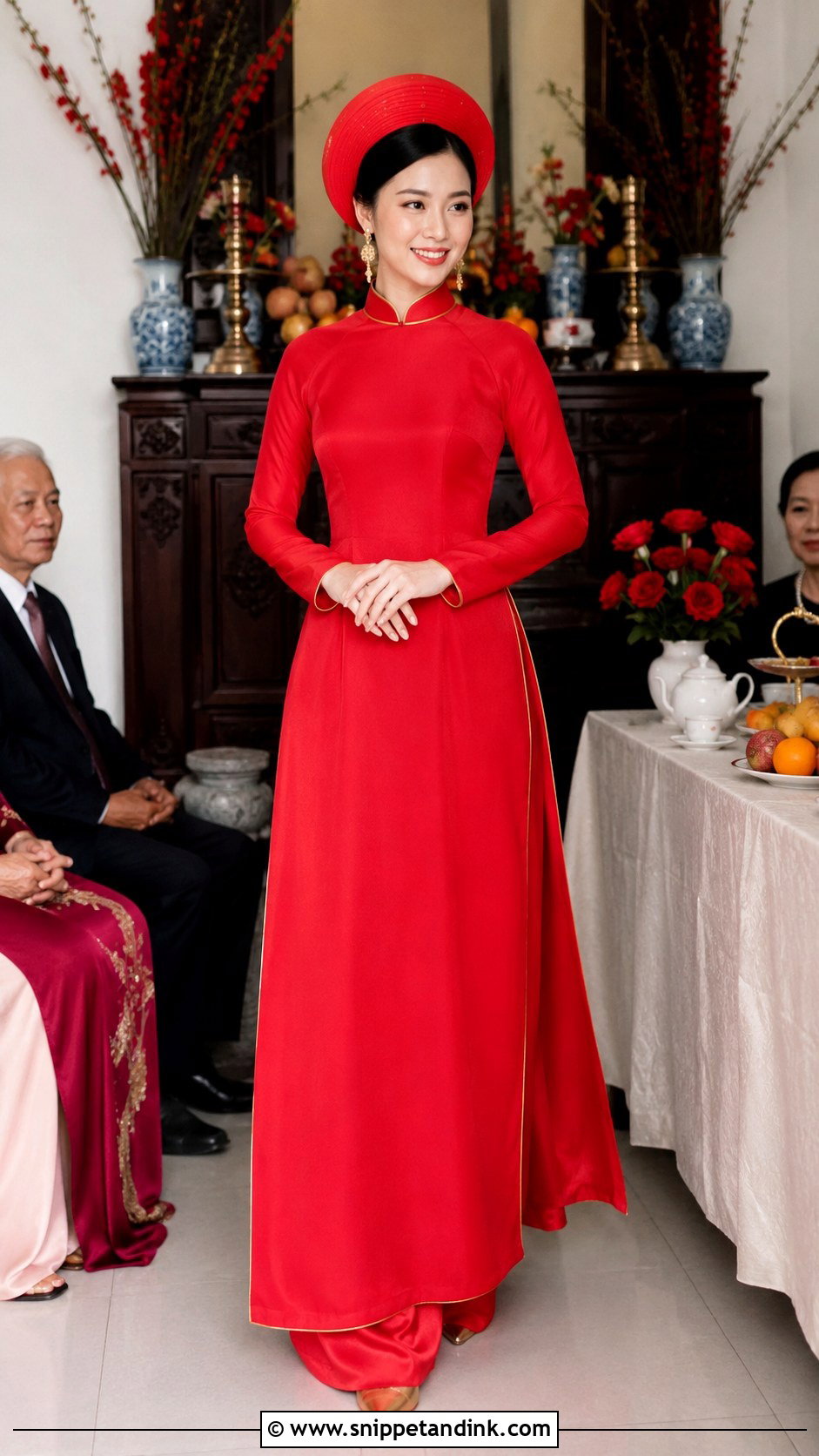
Red silk is where most Vietnamese brides start, and for a family ceremony it’s still the colour I’d suggest first. Choose a fitted high-collar tunic with long sleeves, ankle-length panels and matching red silk pants, with fine gold piping around the collar and cuffs. A red khăn đóng, small gold earrings and pointed gold or nude heels finish it. The fitting point I never skip is the shoulders: you’ll bow, pour tea and hug relatives all morning, so ask for a breathable lining and enough room to lift your arms without the side seams straining. A low bun keeps the collar visible beneath the headpiece.
2. Red Brocade Ao Dai With Gold Embroidery
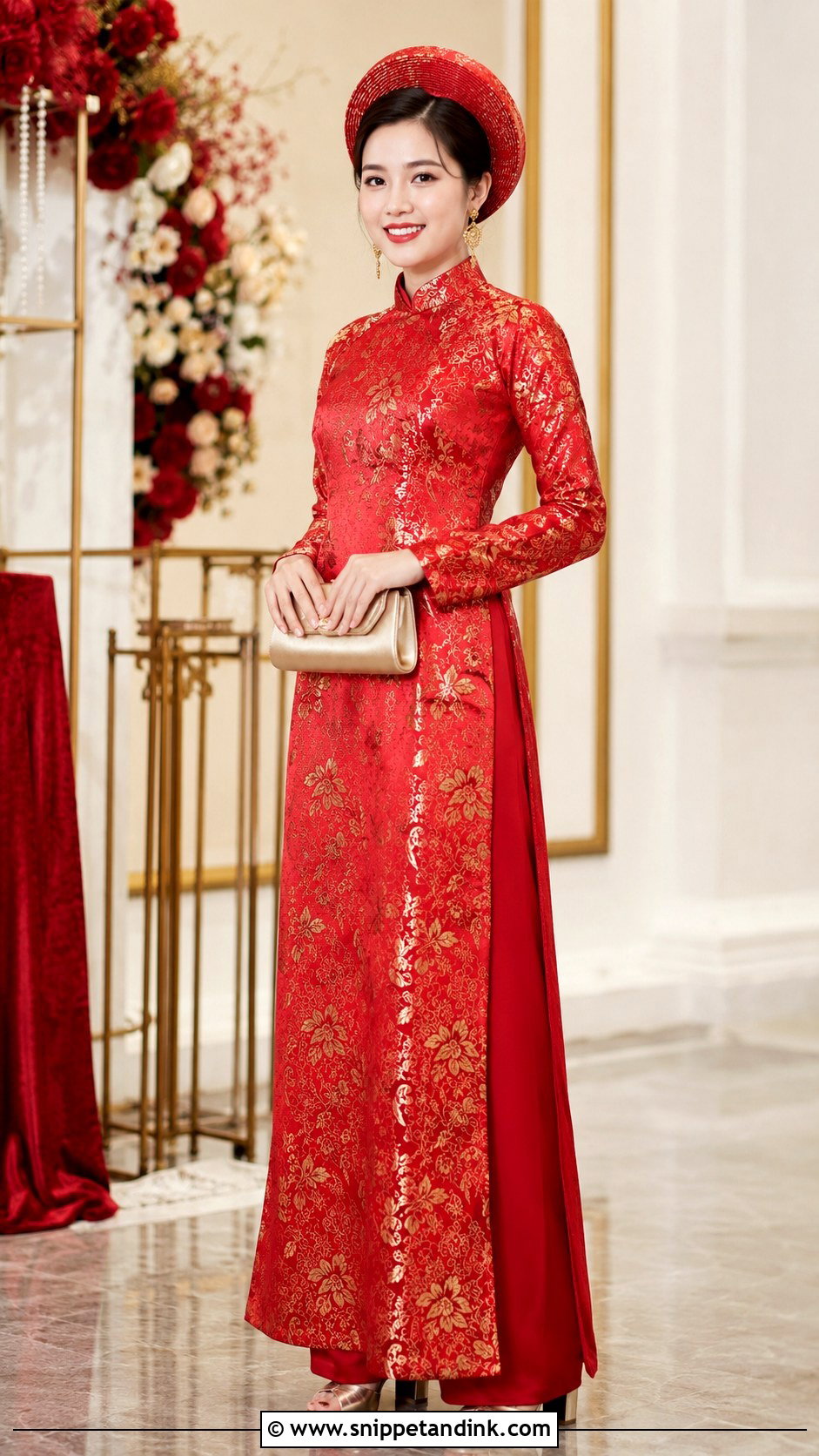
Brocade gives a red bridal Ao Dai body, and gold embroidery sits up off its surface instead of sinking in as it does on soft silk. Floral, cloud or heritage motifs work best along the bodice and front panel. Keep the pants in plain red silk, since brocade on both halves turns heavy fast. A brocade khăn đóng with one small gold detail, gold drop earrings, a slim bracelet and metallic block heels complete it, with a centred low bun. Brocade has very little give, so I check the armholes and the top of each side slit while the bride reaches forward, the movement she’ll repeat all morning serving tea.
3. White Lace Ao Dai Wedding Dress
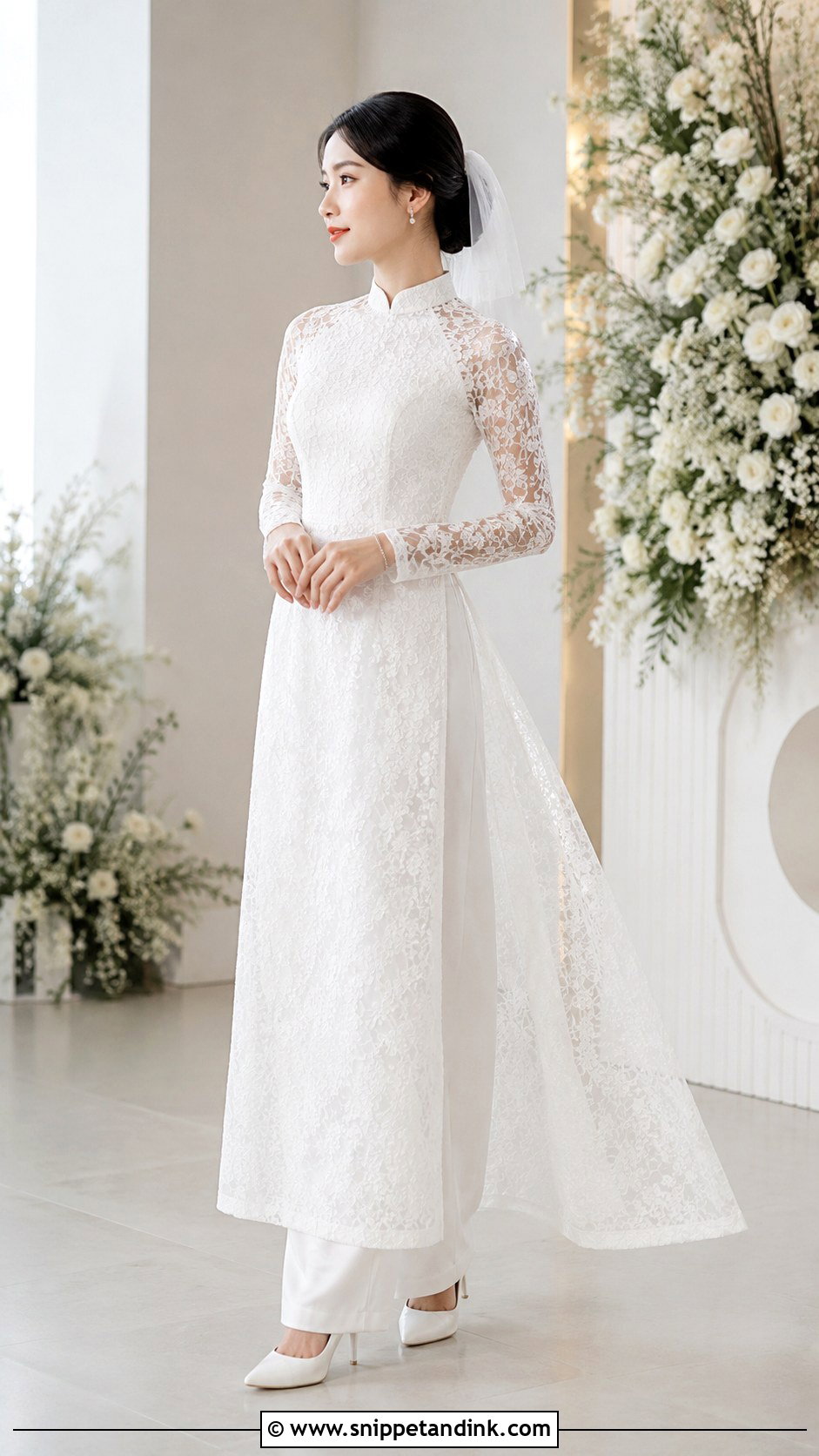
White lace brings a Western bridal colour into the long-panel shape, which is why so many brides change into it for the reception after a red ceremony outfit. The lace needs an opaque white lining; unlined lace lets the pants waistband show through at the slits. A high collar and fitted sleeves give structure, and straight white silk pants keep the lower half clean. Pearl earrings, white pointed pumps and a small satin clutch are enough. I like a short veil pinned beneath a low chignon here. Lined sleeves give more coverage, while illusion sleeves feel cooler in a warm room.
4. Ivory Pearl Beaded Ao Dai Wedding Dress
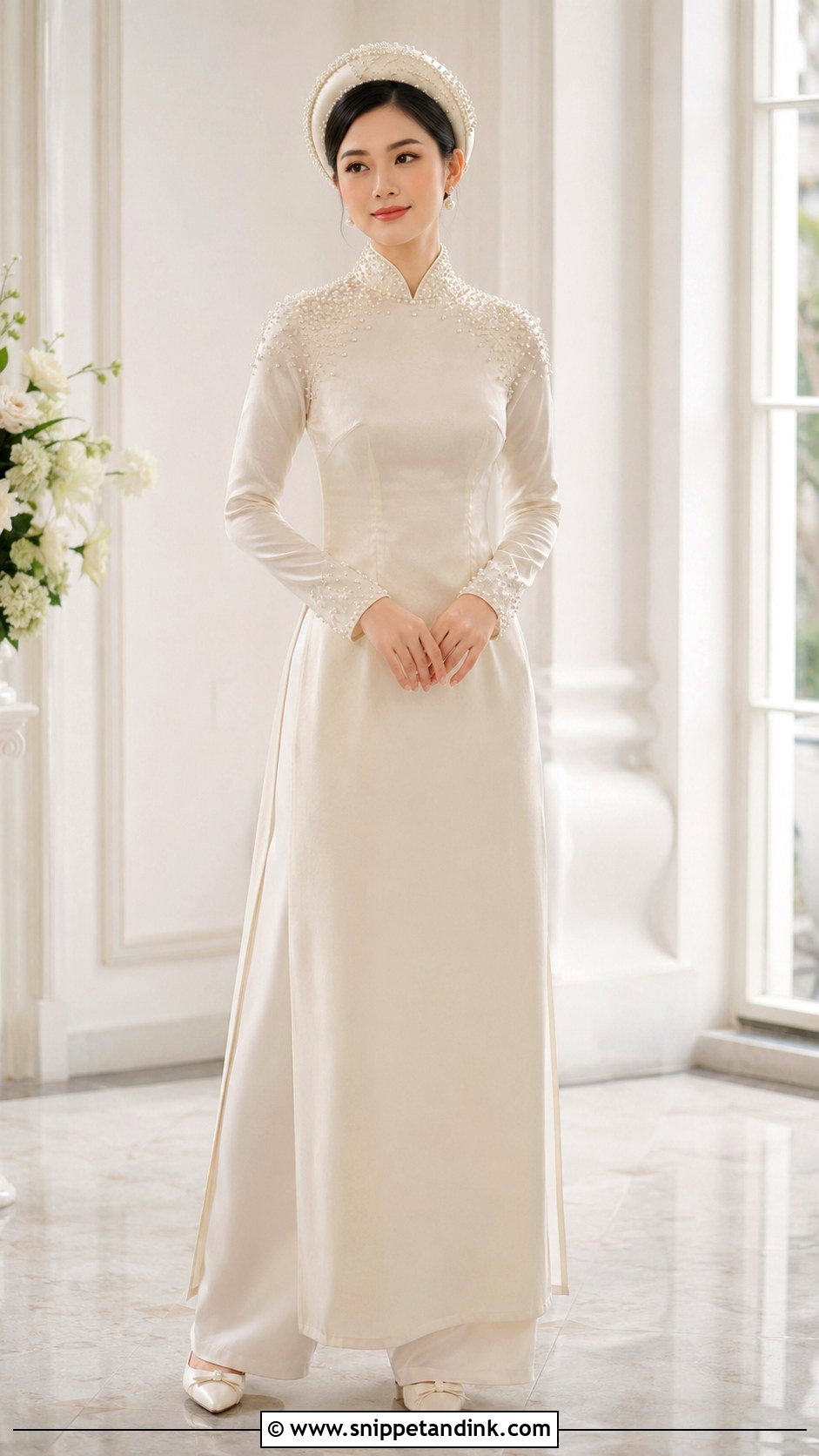
Ivory sits warmer against the skin than bright white, and pearls pick up that warmth. I’d concentrate the beading at the collar, shoulders, cuffs and upper bodice and leave the panels plain so the long line survives. Pearls also add weight to fine silk, so ask the tailor to secure them in short, knotted sections rather than one long running thread; if a long thread snaps, a whole row comes away. Pair the tunic with fluid ivory pants, closed-toe satin heels and pearl studs. A pearl-edged khăn đóng keeps it traditional, and a fingertip veil makes it read more contemporary.
5. Blush Pink Floral Ao Dai Wedding Dress
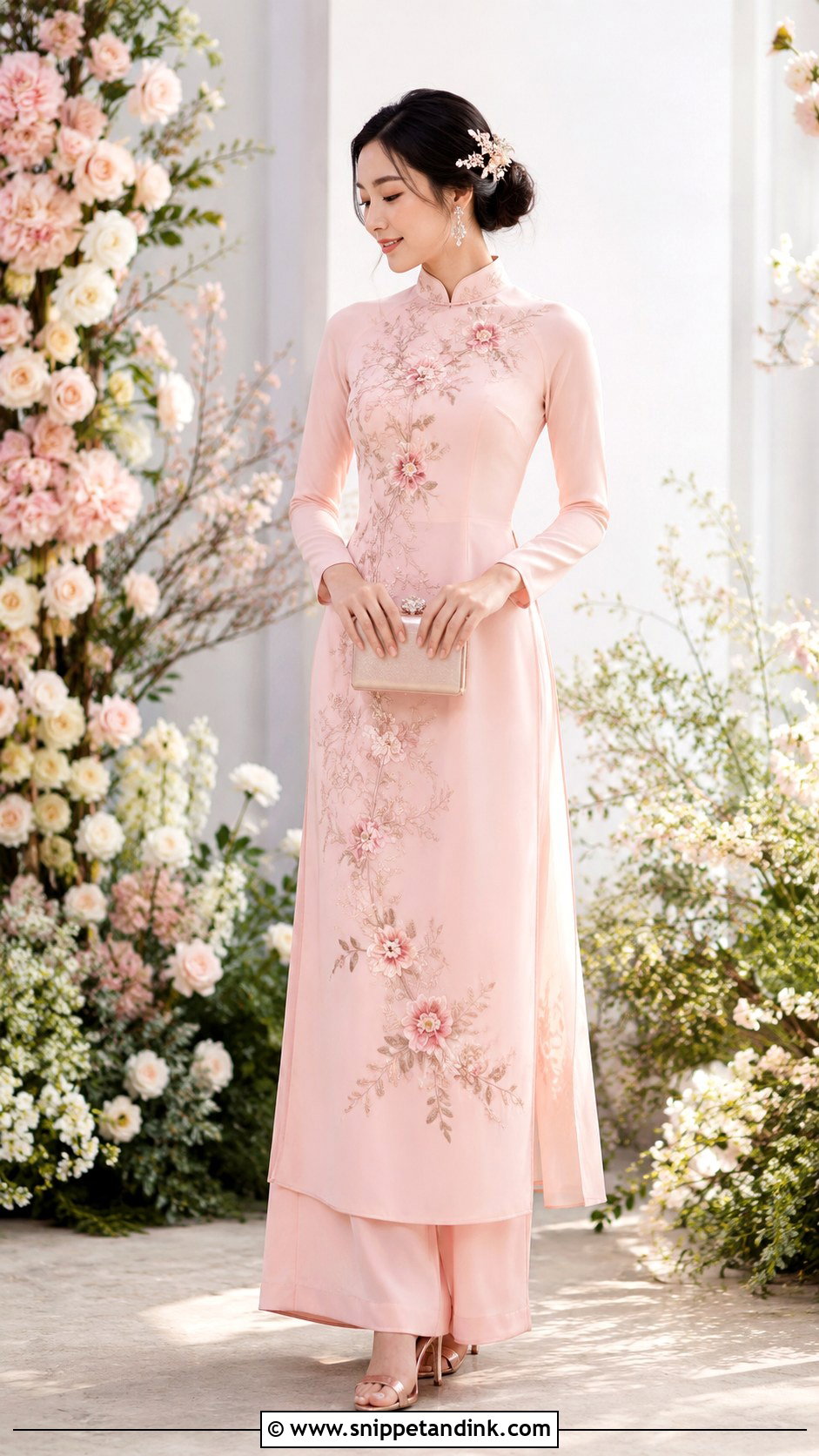
Blush gives you colour without the intensity of red, but pale pink can wash out fair skin, so I hold the fabric against your face in daylight before anything is ordered. Start with a pale pink silk tunic with tonal floral embroidery running along one shoulder and down the opposite panel. Embroidery that follows the length of the body makes you look taller; a heavy band at the waist does the opposite. Matching wide-leg pants, rose-gold heels, crystal earrings and either a blush khăn đóng or a floral comb finish it. Keep makeup soft, with rosy cheeks and a neutral lip.
6. Champagne Silk Ao Dai Wedding Dress
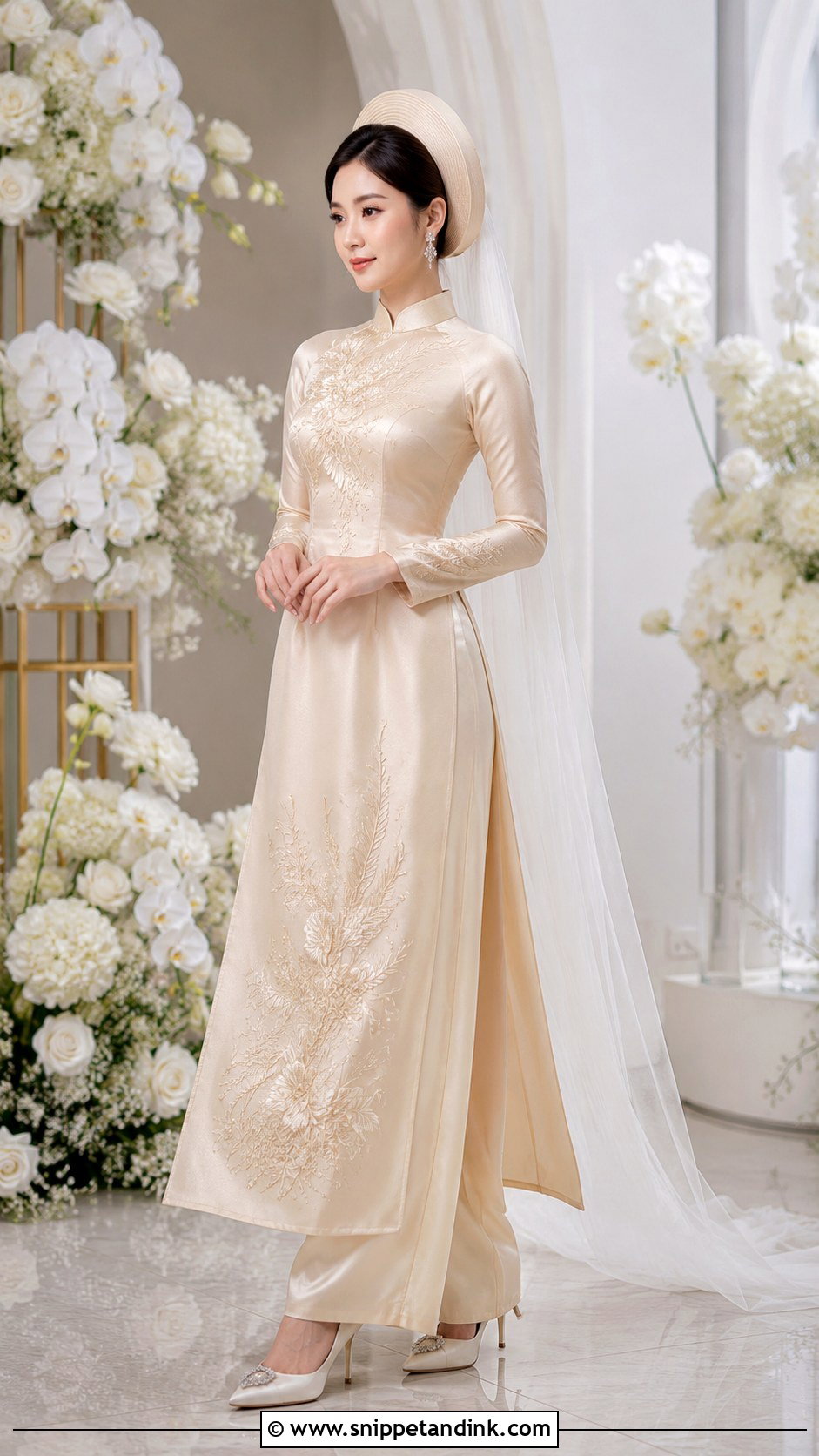
Champagne silk glows under bright light and reads almost gold in late-afternoon sun. A streamlined tunic with a fitted bodice, high collar, long sleeves and lightly flared panels suits it, with tonal embroidery or a few clear crystals. Lightweight silk needs full lining through the bodice and upper panels, otherwise it clings and wrinkles at the waist. Matching champagne pants keep the line long, while ivory satin heels and an ivory clutch add quiet contrast. Crystal drop earrings and a sleek low bun suit it. A narrow khăn đóng in the same fabric works for the ceremony, and a sheer cathedral veil changes the look completely for portraits.
7. Gold Brocade Ao Dai Wedding Dress
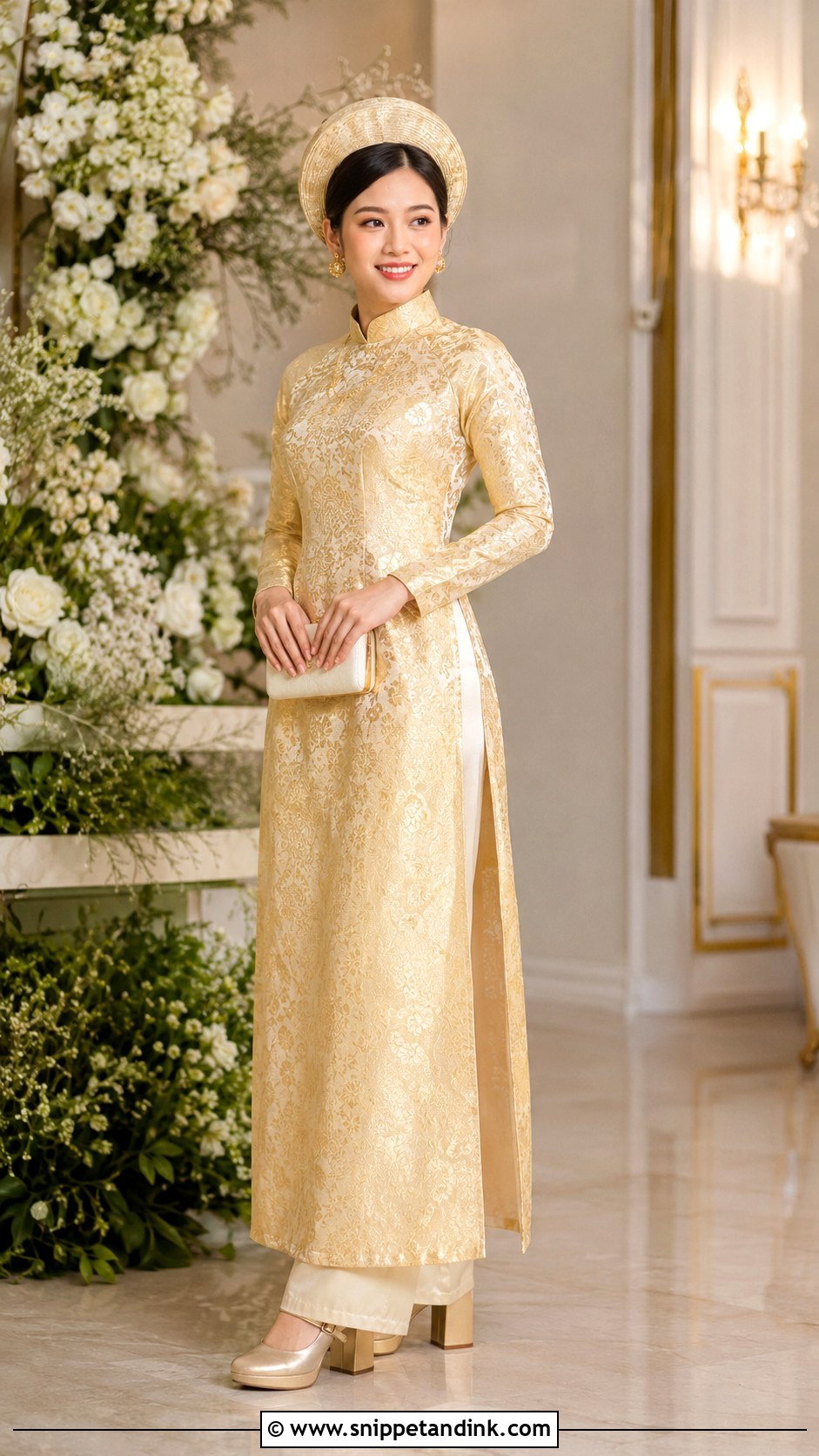
Gold brocade can look costume-like if the metallic thread is too bright, so I steer brides toward a soft gold base woven with tonal florals rather than mirror shine. Plain cream or pale gold silk pants give movement under the stiffer panels. A matching brocade khăn đóng, simple gold studs and champagne block heels are all it needs, with a neat low bun. Leave the beaded bag at home; a small cream satin clutch does the job. Since the fabric already has depth, limit embroidery to the collar or cuffs. Handled with that restraint, it becomes an opulent yet balanced bridal outfit for a formal indoor celebration.
8. Burgundy Velvet Ao Dai Wedding Dress
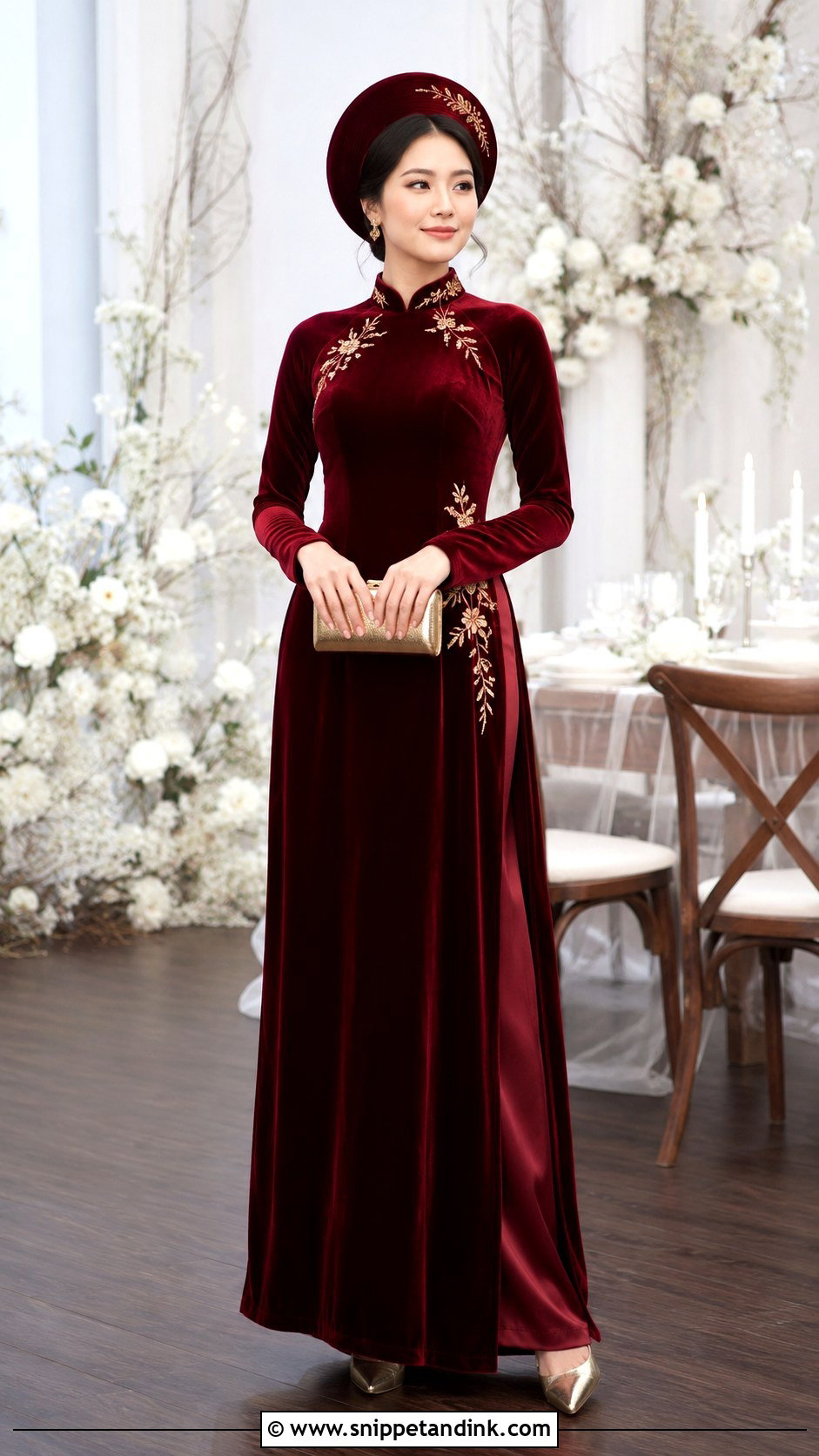
Velvet is a cool-season fabric, and in a packed reception hall it heats up quickly. I only suggest it for winter weddings, in a lightweight stretch velvet so the fitted bodice moves with you. Gold embroidery at the neckline, shoulders and cuffs contrasts with deep burgundy without covering the pile. Pair it with burgundy satin pants, gold closed-toe heels and a structured metallic clutch, plus a matching khăn đóng and gold earrings. Keep your hair in a smooth bun, because loose strands cling to velvet. And ask for even lighting at the ceremony, since velvet turns almost black in dim corners.
9. Pastel Blue Embroidered Ao Dai Wedding Dress
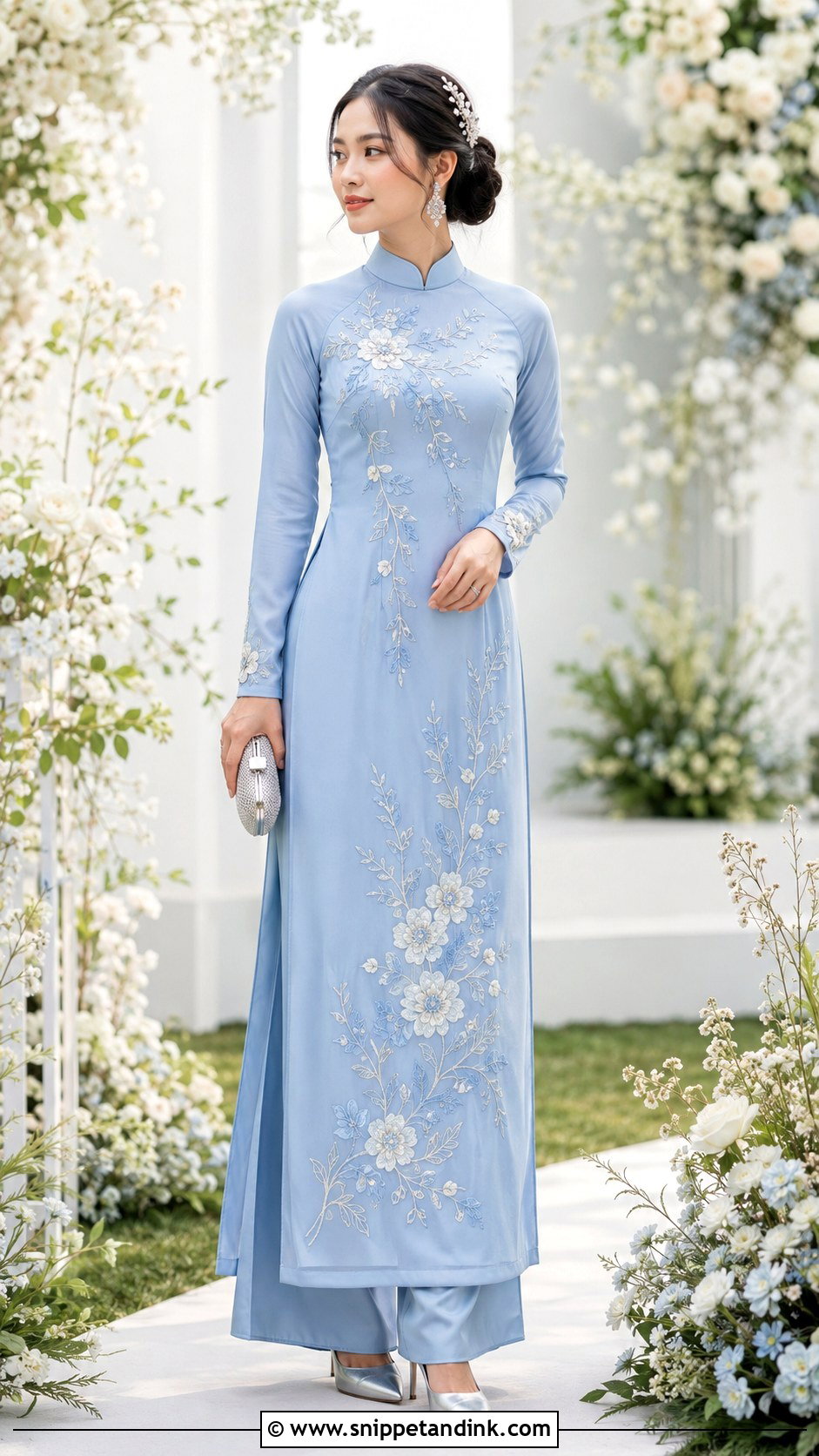
Powder blue is calm and cool, and it suits a summer daytime ceremony far better than a dim evening one. Choose blue silk or chiffon over an opaque lining, with silver or white floral embroidery on the upper bodice and side panels. Chiffon over silk is lovely in a breeze but snags on rough chair backs, so look at the venue seating before you commit. Matching blue pants and silver pointed heels keep it fresh. Crystal studs, a small silver clutch and a pearl comb above a low bun finish it, and a slim blue khăn đóng with minimal beading adds the traditional note.
10. Emerald Green Brocade Ao Dai Wedding Dress
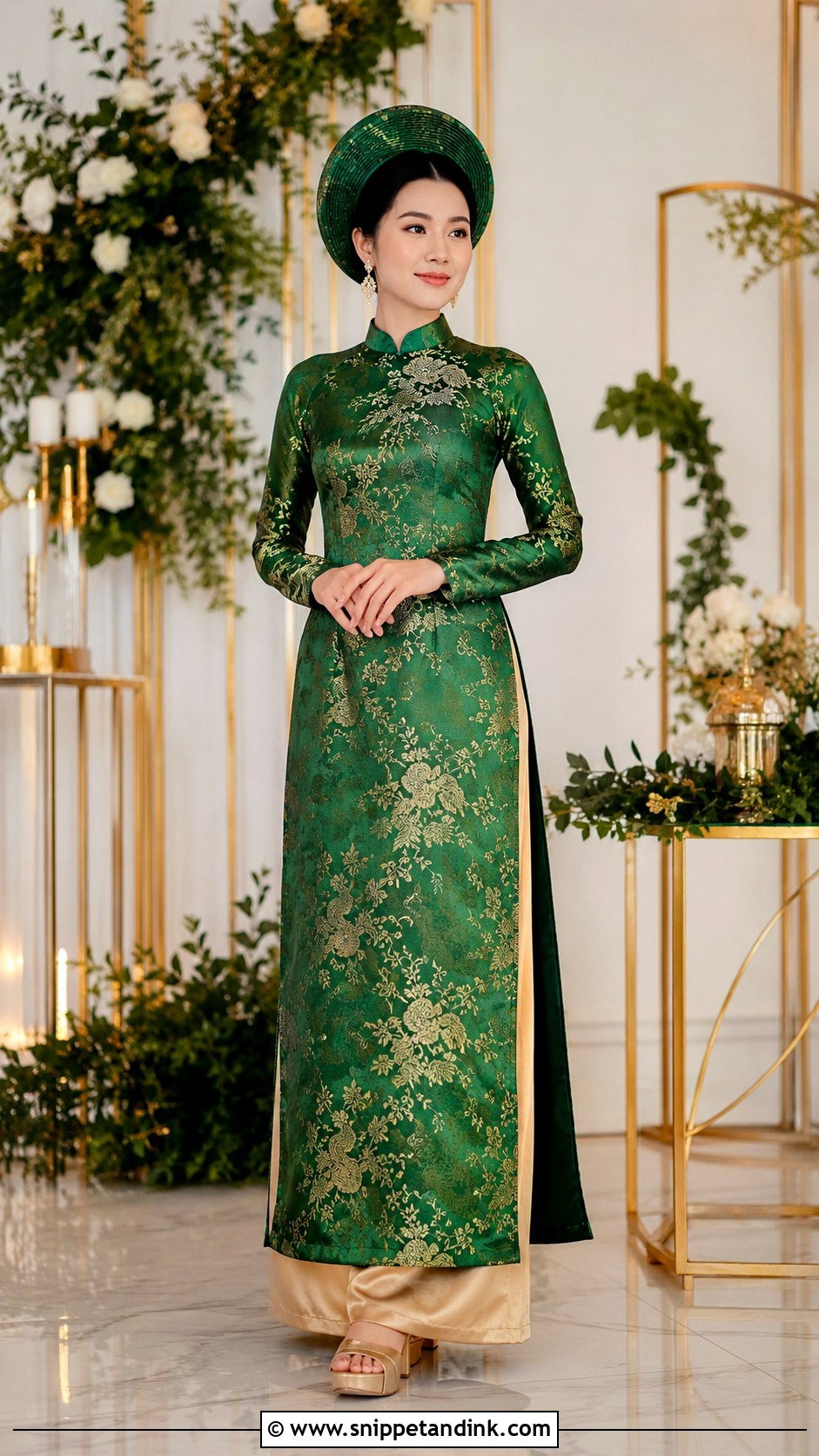
Emerald is a confident choice, and brocade suits it because the woven gold softens such a strong green. Look for a structured collar and long flowing panels, and run any embroidery vertically down one side rather than across the bodice; vertical placement protects the length that makes an ao dai graceful. Gold or cream silk pants lighten the outfit. Add gold block heels, small chandelier earrings and an emerald khăn đóng with a narrow metallic border. Keep the bun simple and the makeup softly defined so the colour leads. Greenery or gold accents in the room sit well beside it.
11. Purple Jacquard Ao Dai Wedding Dress
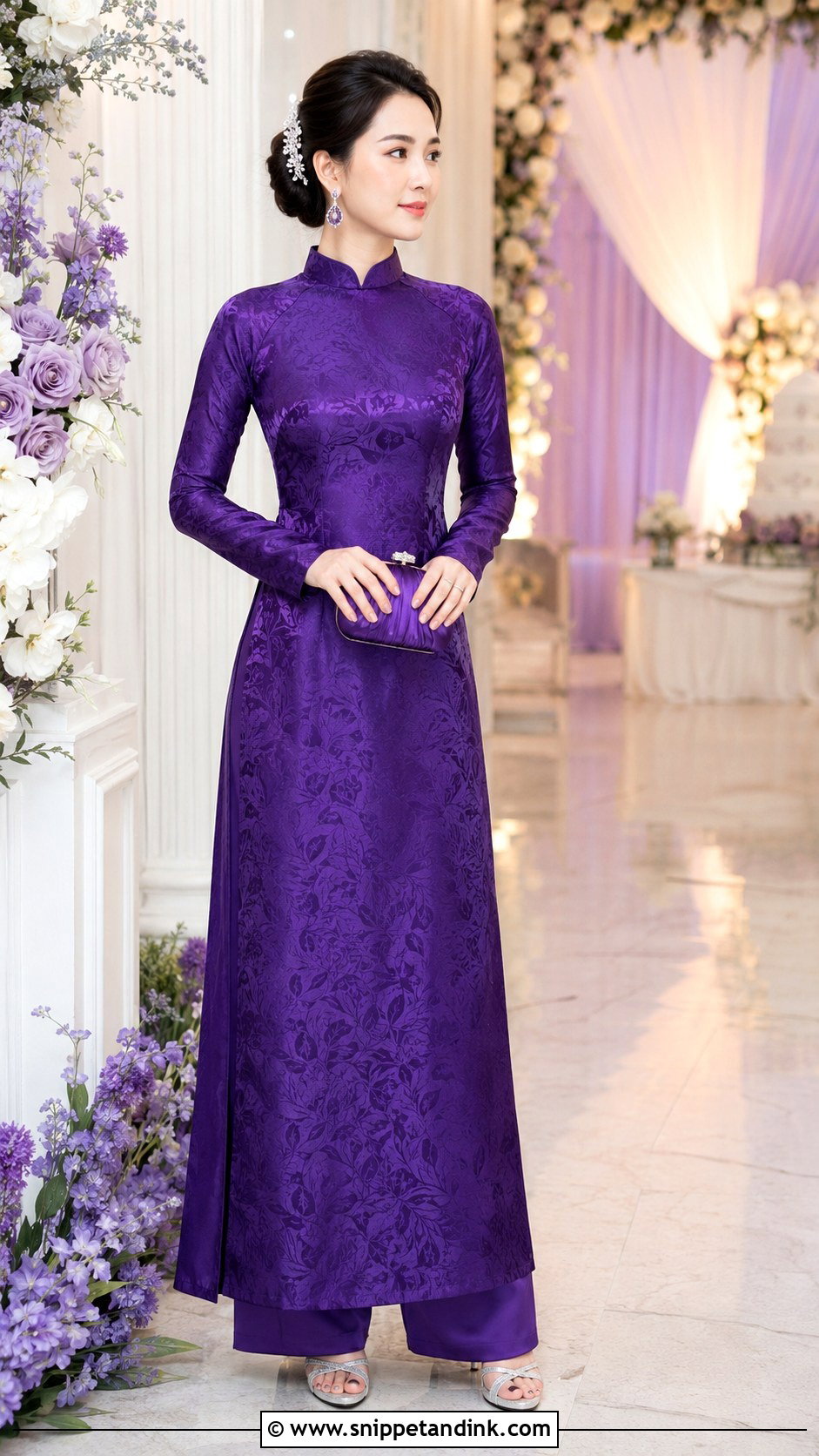
Purple jacquard changes as you move, because the woven botanical pattern catches the light at different angles. Plum, orchid and royal purple all work; choose the shade against your skin in daylight. Matching silk pants give a coordinated look, and pale lavender pants add gentle contrast. I fit jacquard close but never tight through the waist and hips, since the weave puckers along the side seams when pulled. Silver piping at collar and cuffs sharpens the outline. Silver heels, amethyst-toned earrings and a compact satin clutch finish it, with a matching khăn đóng for the ceremony and a crystal comb for the reception.
12. Lotus Embroidered Ao Dai Wedding Dress
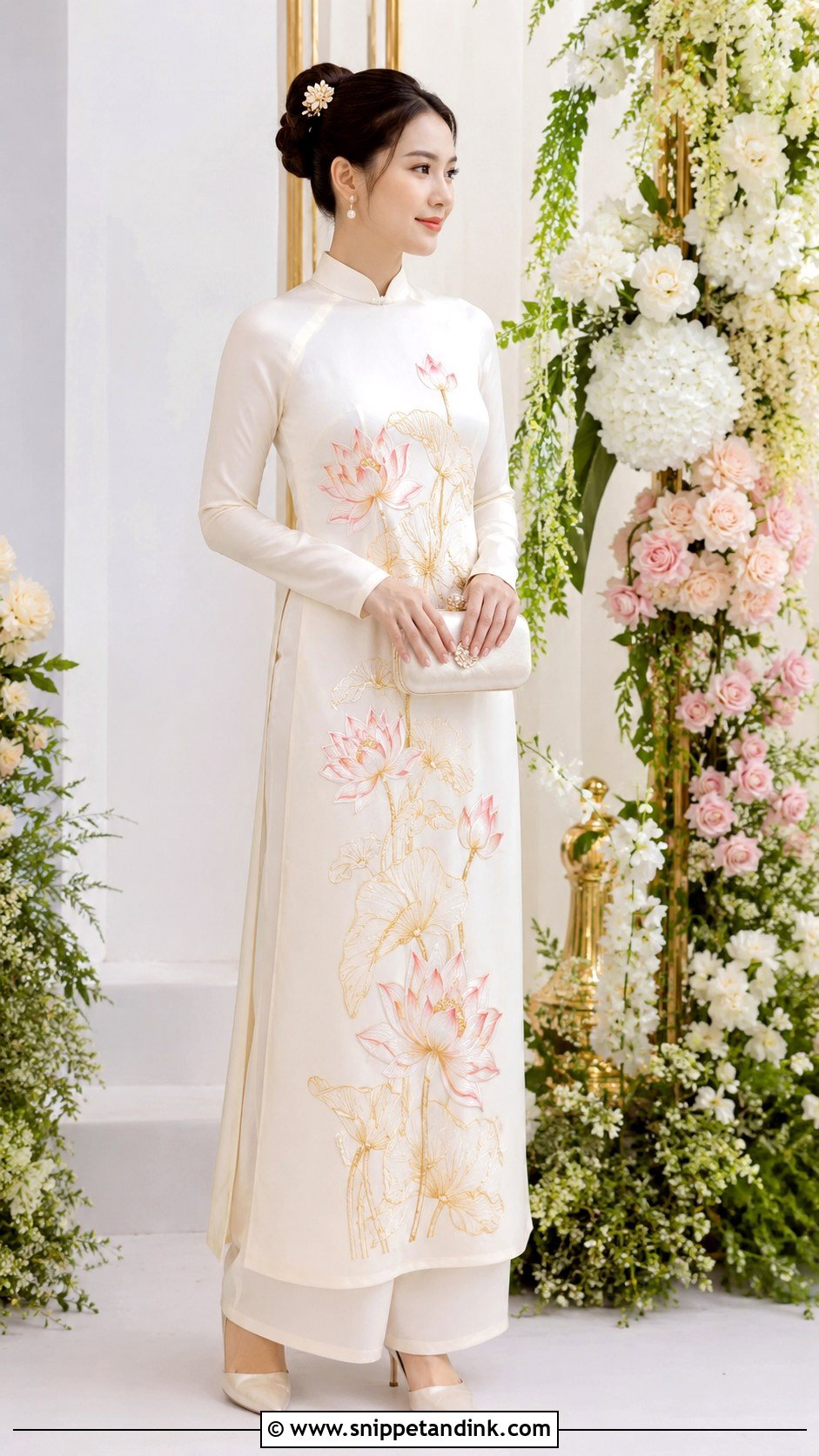
The lotus carries real meaning in Vietnam, so I treat it as the single focus rather than one motif among many. A white, ivory, blush or red silk base takes it well, with the flower placed on a lower panel, a shoulder or one side of the bodice in soft pink, gold or tonal thread. Plain silk pants keep the embroidery in charge. Pearl earrings, satin heels, a small bag and one lotus-inspired pin in a low bun tie it together. Ask the tailor to mark the motif’s position at a fitting, after the tunic has been cut to your body, so it doesn’t land on a curve or disappear into the side slit.
13. Phoenix Embroidered Ao Dai Wedding Dress
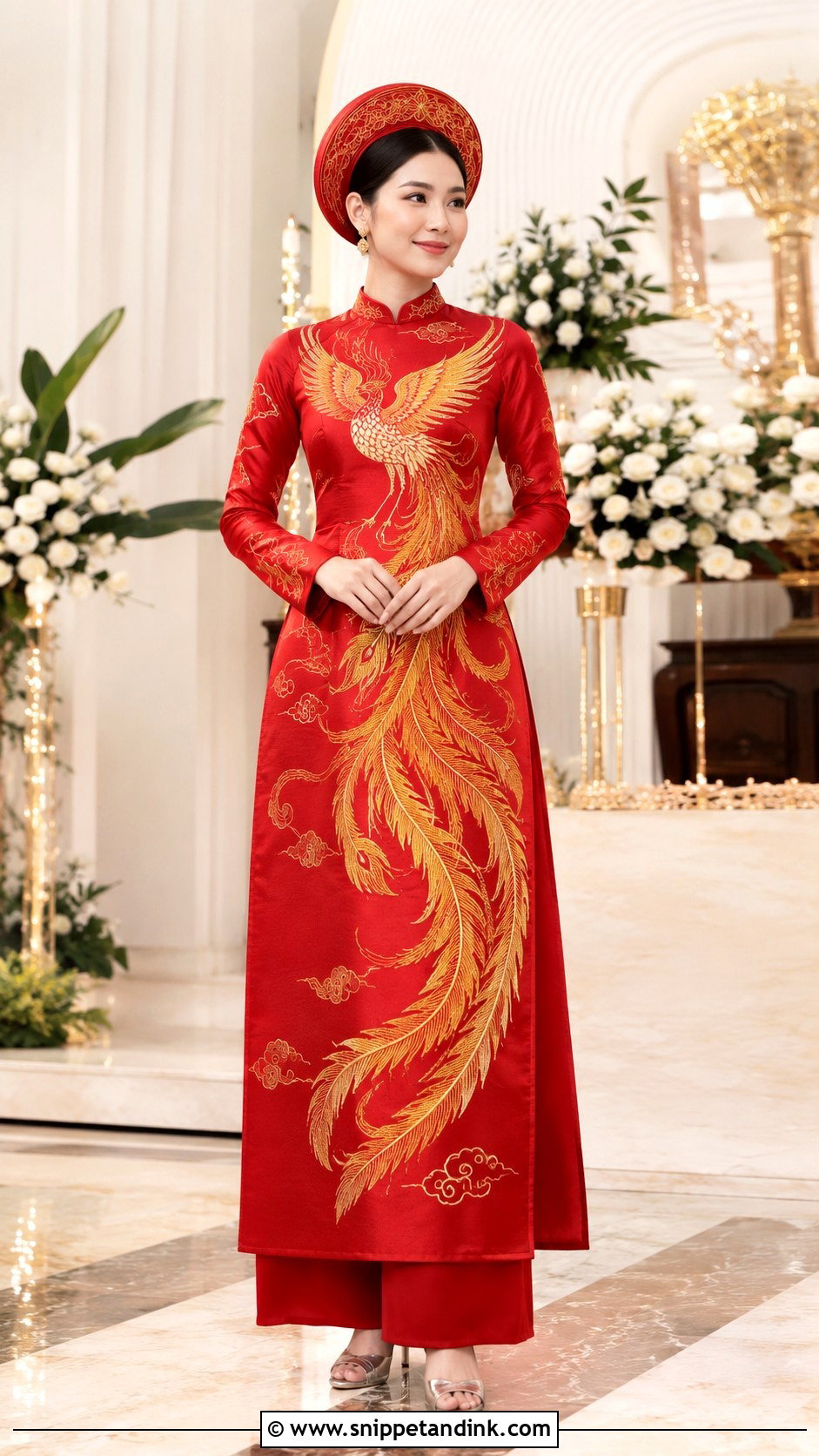
A phoenix embroidered Ao Dai is all about the bird’s line. On a red silk or brocade tunic, I like it running diagonally from the shoulder down across one long panel, with gold thread, beads and small crystals for the feathers and plain fabric around it. Plain red or gold pants, metallic heels and a matching khăn đóng finish it. Keep earrings simple, as the embroidery already does the work of jewellery. A long veil can hide a back design, so decide on the veil before the embroidery is placed. Check the motif seated as well; panels fold when you sit, and a wing can vanish into the fold.
14. Dragon And Phoenix Ao Dai Wedding Dress
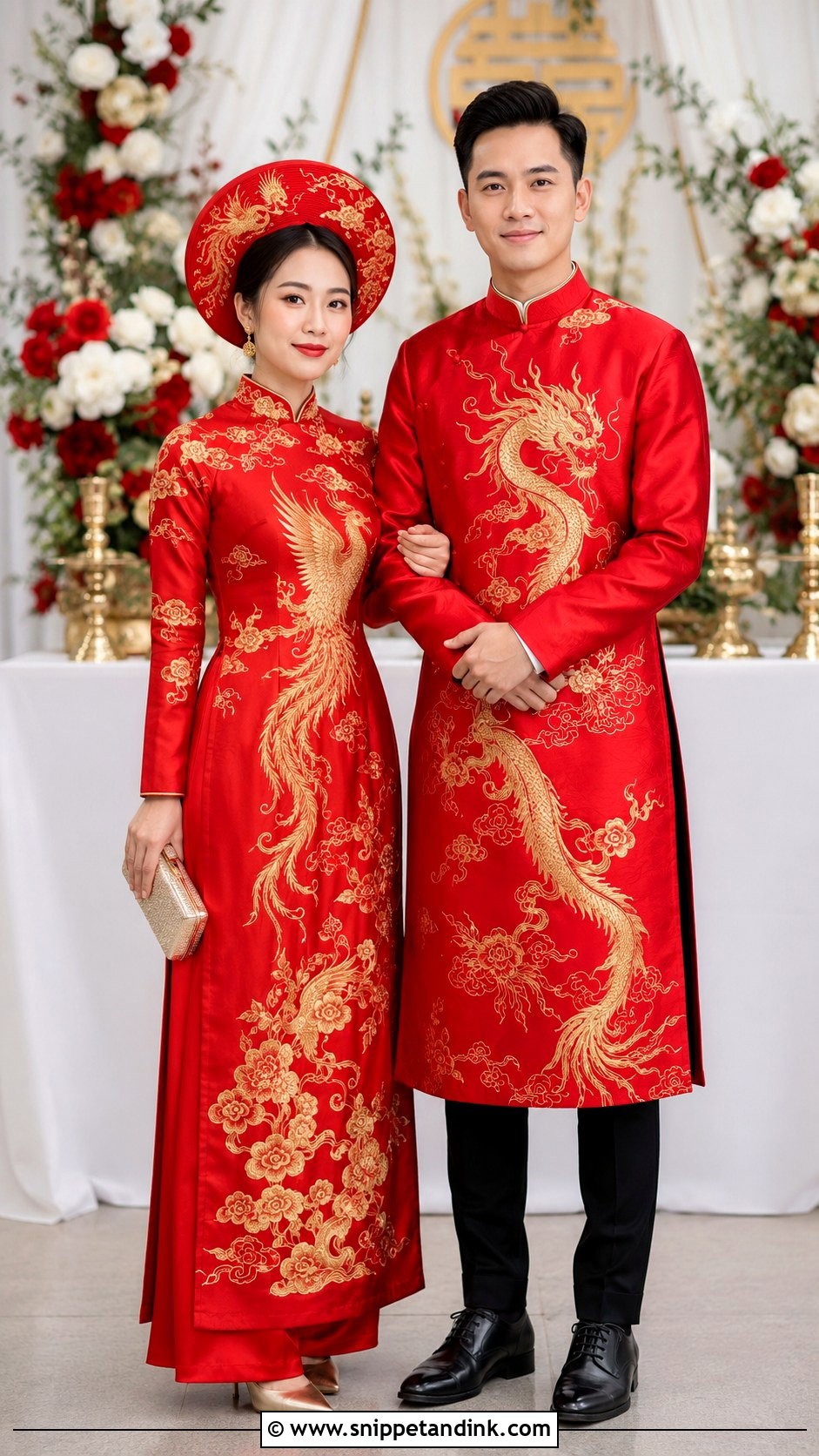
Dragon and phoenix together stand for husband and wife, which is why the pairing is so loved at weddings. On a red or deep burgundy tunic, place them on opposite sides so they frame the body rather than colliding in the centre. Plain silk pants in the same shade, gold heels, a matching khăn đóng and compact gold earrings complete it. If the groom wears an ao dai too, repeat one colour or a small motif on his outfit instead of matching outright. Large embroidery has to line up across the bodice, side seams and panels, so I’d only trust this design to a tailor who plans the stitching around your actual pattern pieces.

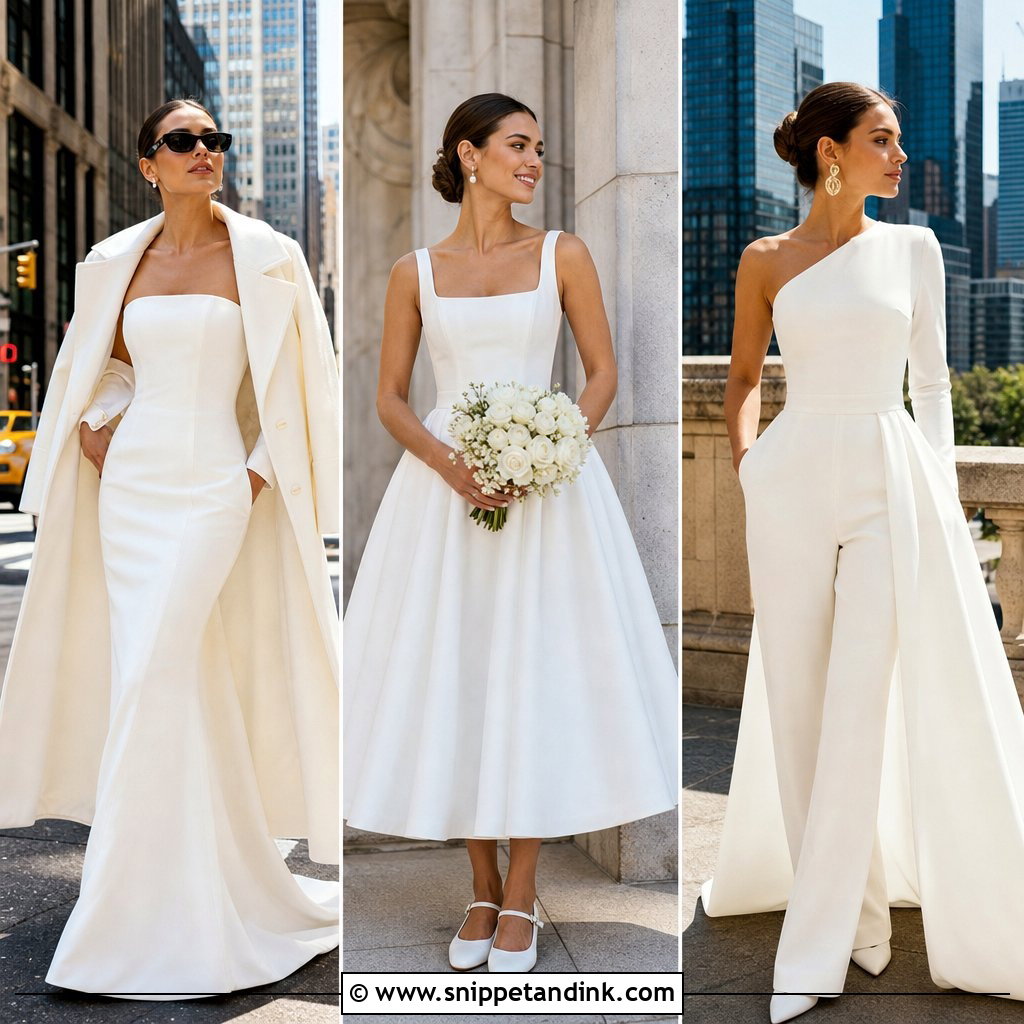
15. Cape Sleeve Ao Dai Wedding Dress
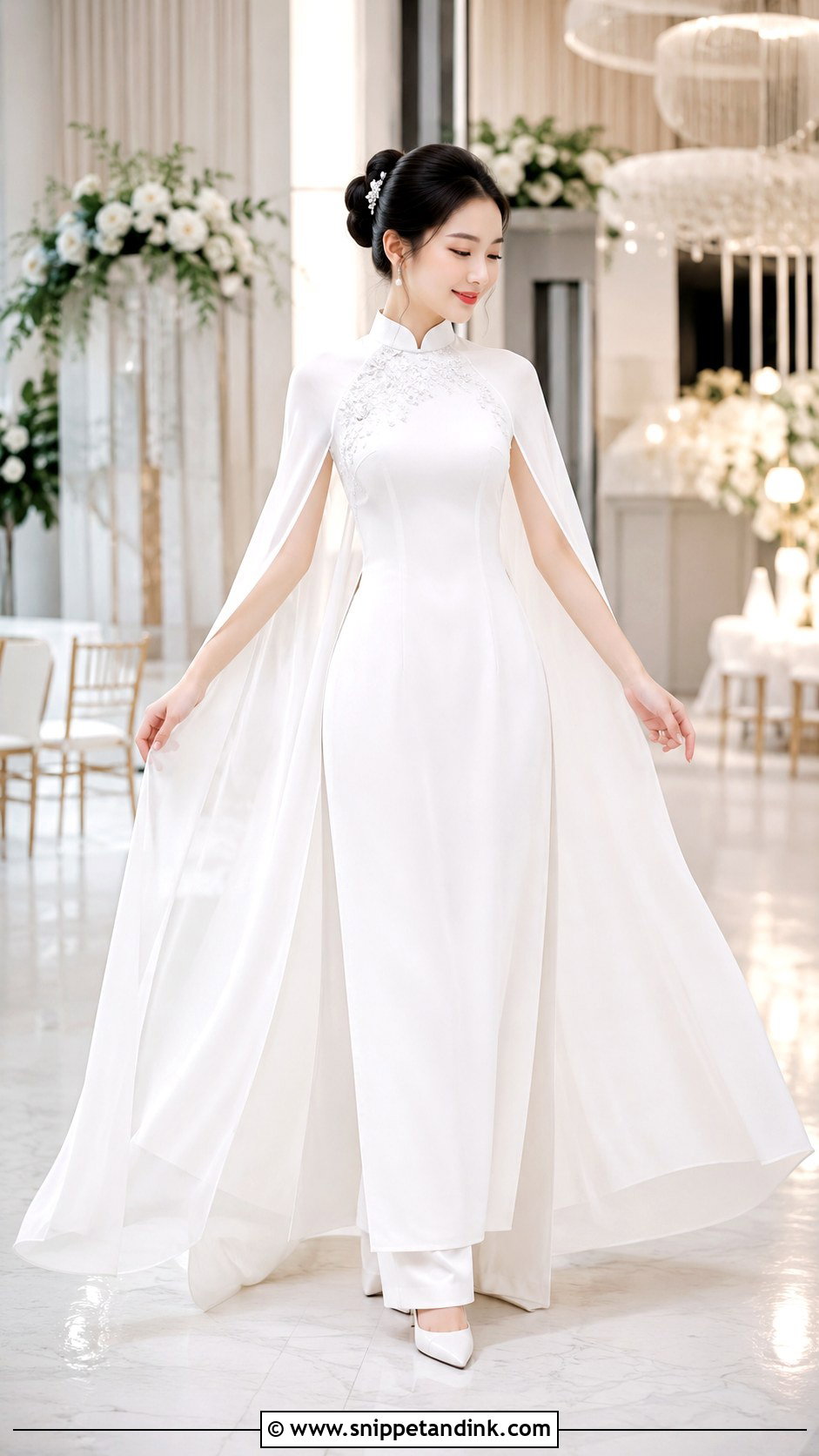
A chiffon cape attached at the shoulders adds movement without hiding the tunic, as long as it falls behind the arms. Choose an ivory or white fitted tunic with a structured collar, straight silk pants, pointed satin heels, pearl earrings and a compact clutch. Hair goes up in a sleek bun or polished ponytail to keep the shoulders clear. Skip the long veil; a short one or a crystal hair piece sits more cleanly next to a cape. I test every cape by having the bride walk, sit and lean in for a hug. If the chiffon drapes over her hands or twists, it gets shortened.
16. Ao Dai Wedding Dress With Detachable Train
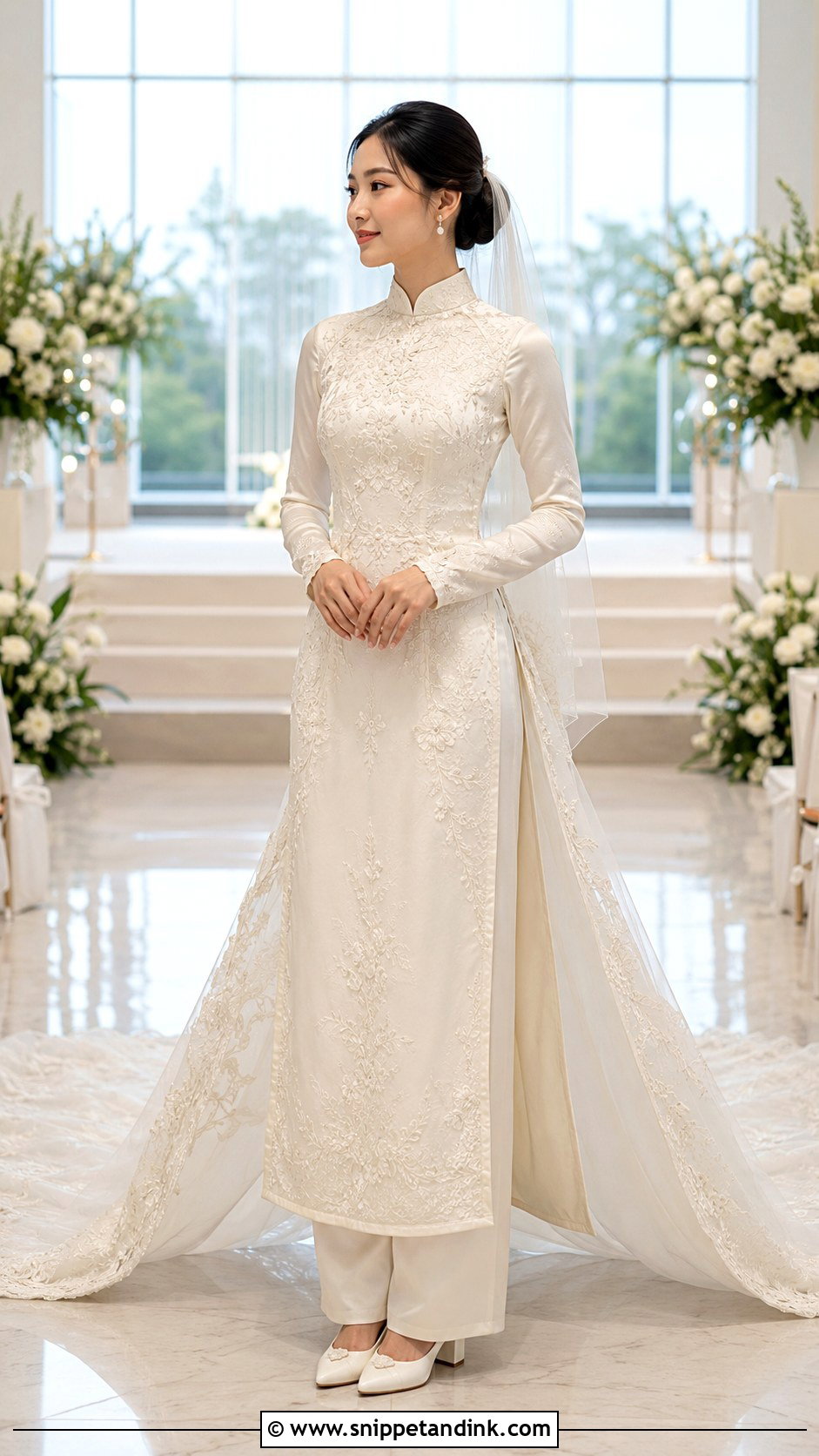
A detachable train gives you an entrance and then gets out of the way. Start with a fitted white, ivory or red tunic over straight-leg pants, and attach a light embroidered or lace train at the back waist with the fastening hidden under the panels. I prefer small hooks to snaps here, since a snap can pop open when a guest steps on the train. Block heels give better balance with that extra weight behind you, and earrings that echo the train’s beading tie it together. A low bun with a veil or khăn đóng completes it. Keep the length in proportion to your height and the room, and unhook it after portraits.
17. Sheer Sleeve Ao Dai Wedding Dress
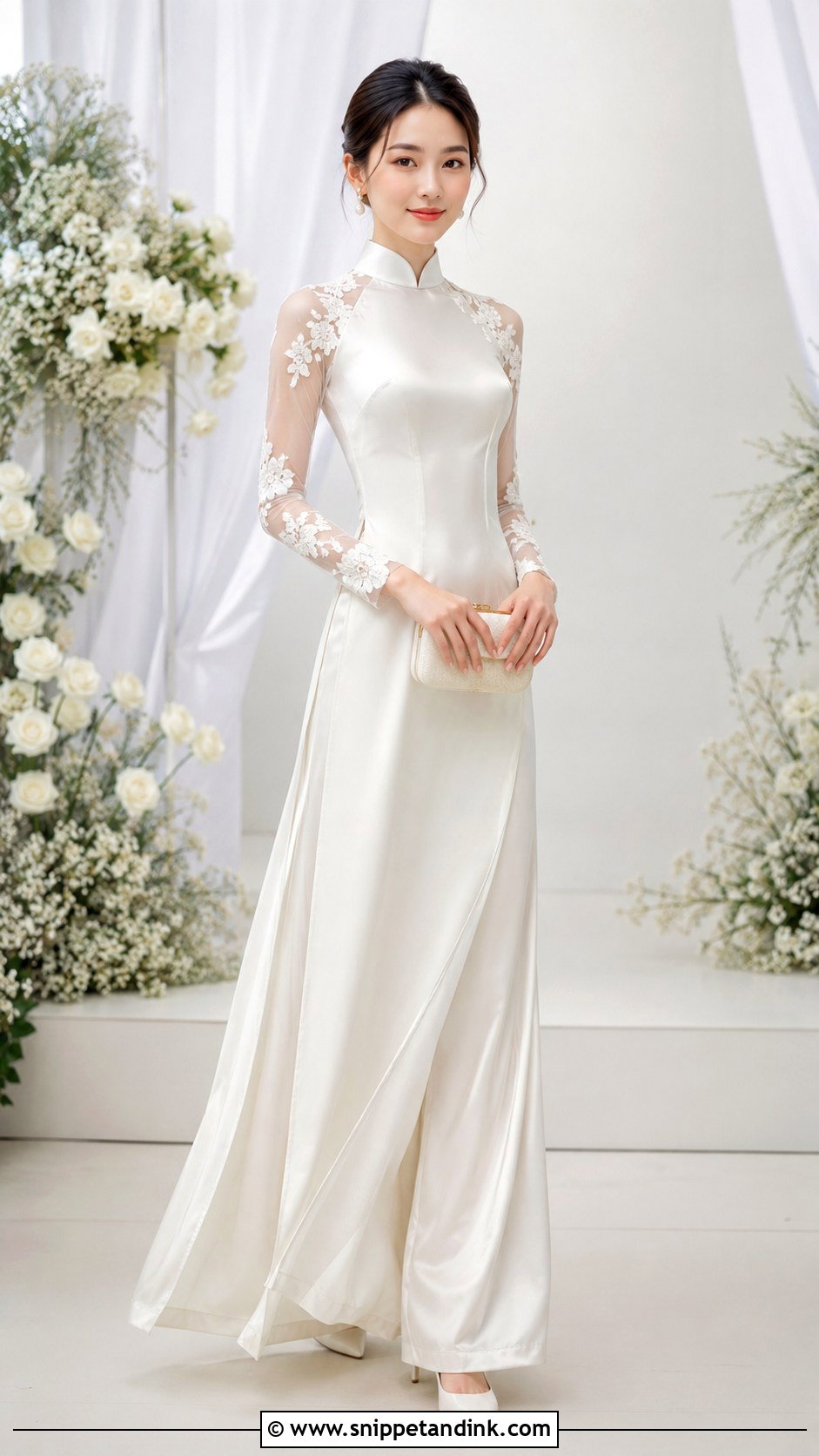
Illusion sleeves keep the arms covered while looking light. Choose an opaque satin, crepe or silk bodice with fitted sheer sleeves scattered with lace appliqués or small beads, and carry a little of that detail onto the collar and cuffs. The mesh should match either your skin tone or the lining, never somewhere in between, or it looks grey in photographs. Stretch mesh is kinder around the elbows and shoulders than rigid tulle. Matching wide-leg pants, closed-toe satin pumps, pearl drop earrings, a simple clutch and a low textured bun finish the outfit.
18. Modern Collarless Ao Dai Wedding Dress
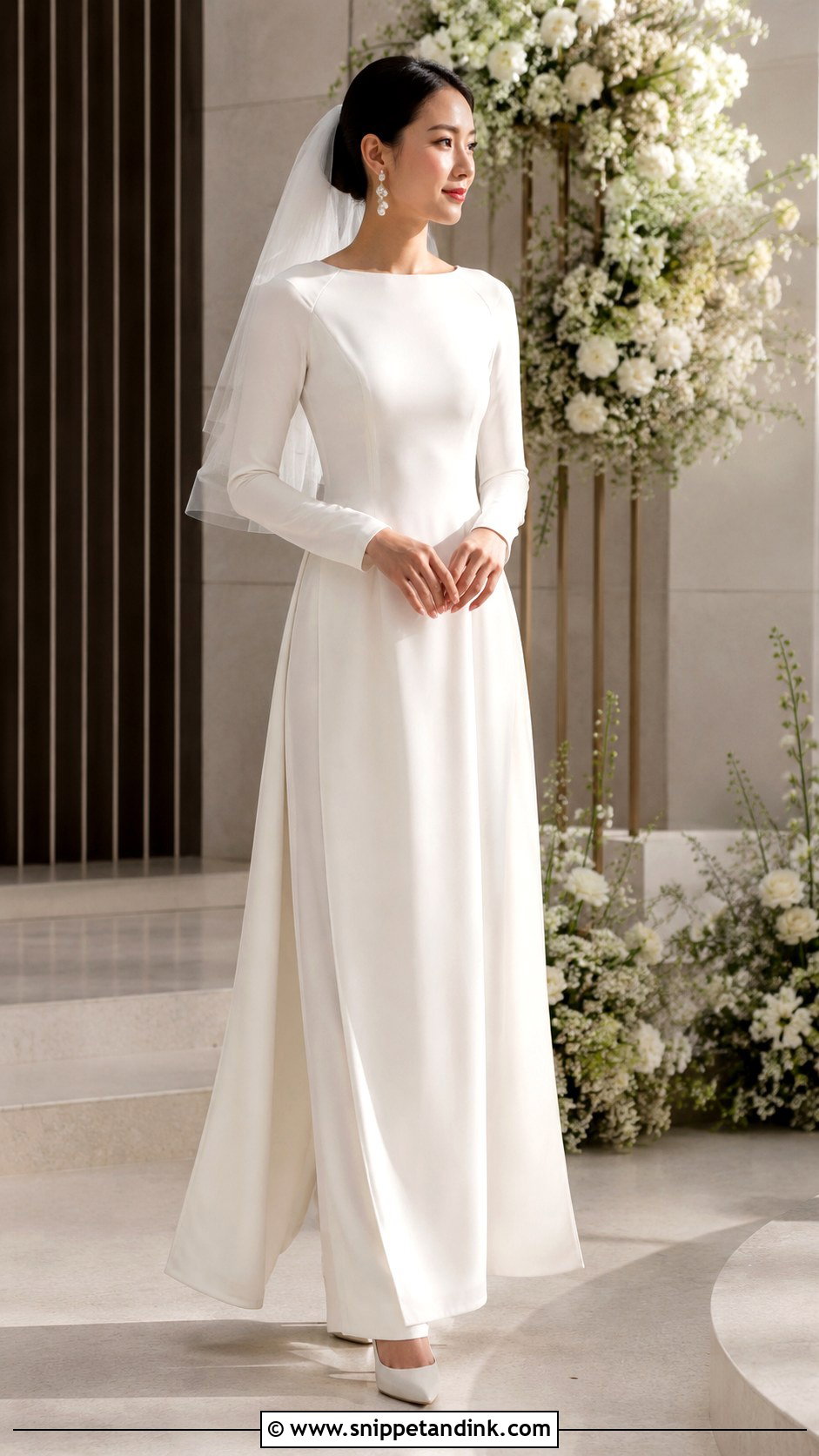
The mandarin collar is the part many brides find hardest to wear for a whole day, especially in summer heat. A collarless version uses a shallow boat neck, soft round neck or modest V-neck, balanced by long sleeves and the traditional panels. Ivory crepe with fine pearl piping at the neckline keeps it minimal. Matching crepe pants, pointed white heels and sculptural pearl earrings suit it, with a sleek bun and a short veil. Without a collar to anchor it, the neckline can gape when you bow, so I check it with the bride bending forward exactly as she would to greet elders.
19. Puff Sleeve Ao Dai Wedding Dress
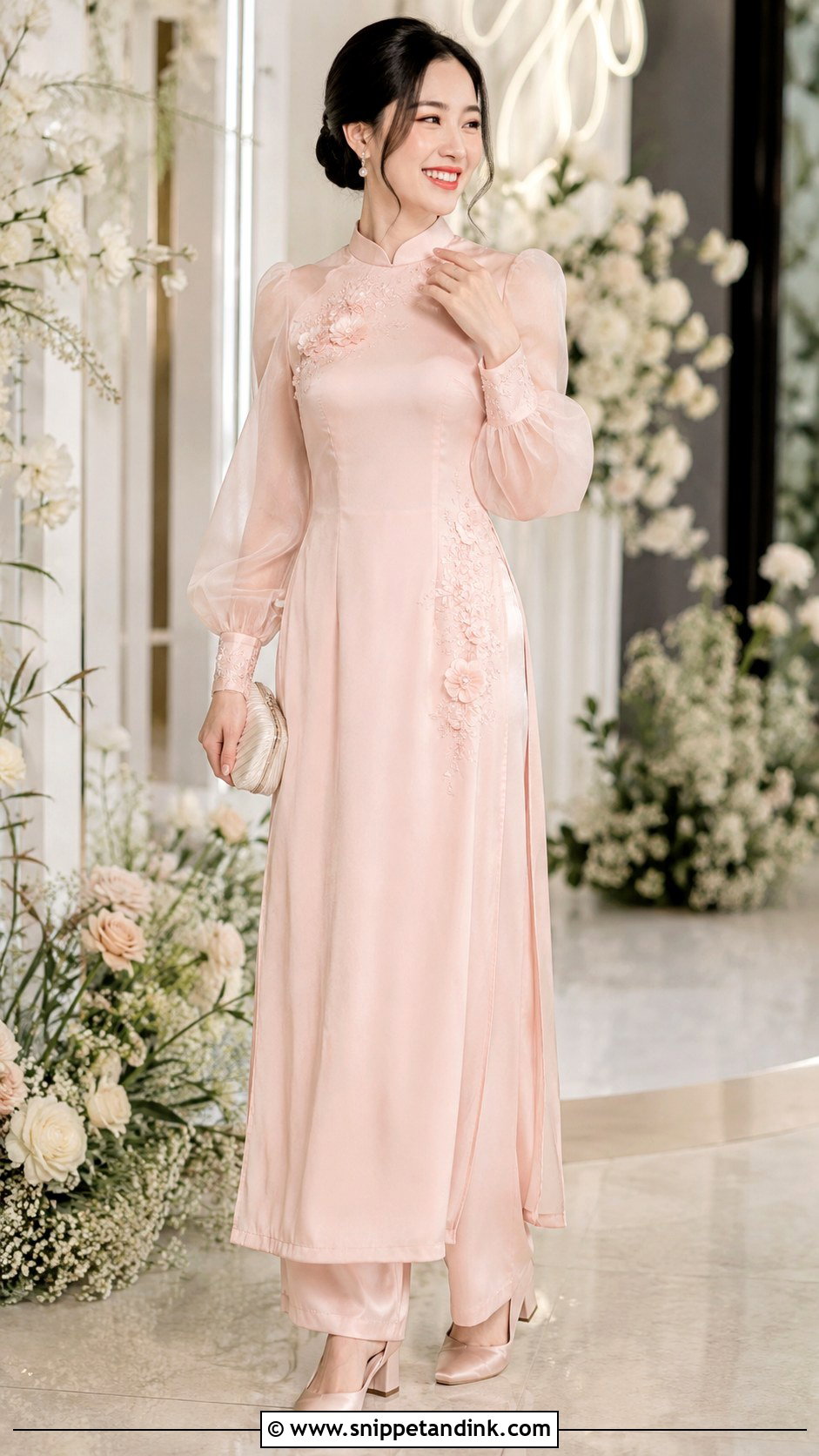
Puffs on an ao dai need restraint. The garment depends on a narrow, sloping shoulder line, and an oversized puff breaks it, so I keep the fullness gentle with sheer organza and finish it in a narrow fitted cuff. A white or blush silk tunic makes a smooth base, with small floral appliqués linking sleeve and bodice. Wear matching pants, satin block heels, pearl earrings and a simple clutch, plus a centre-parted bun so the sleeves stay the one modern feature. It reads current without walking away from the classic cut.
20. Custom Heritage Motif Ao Dai Wedding Dress
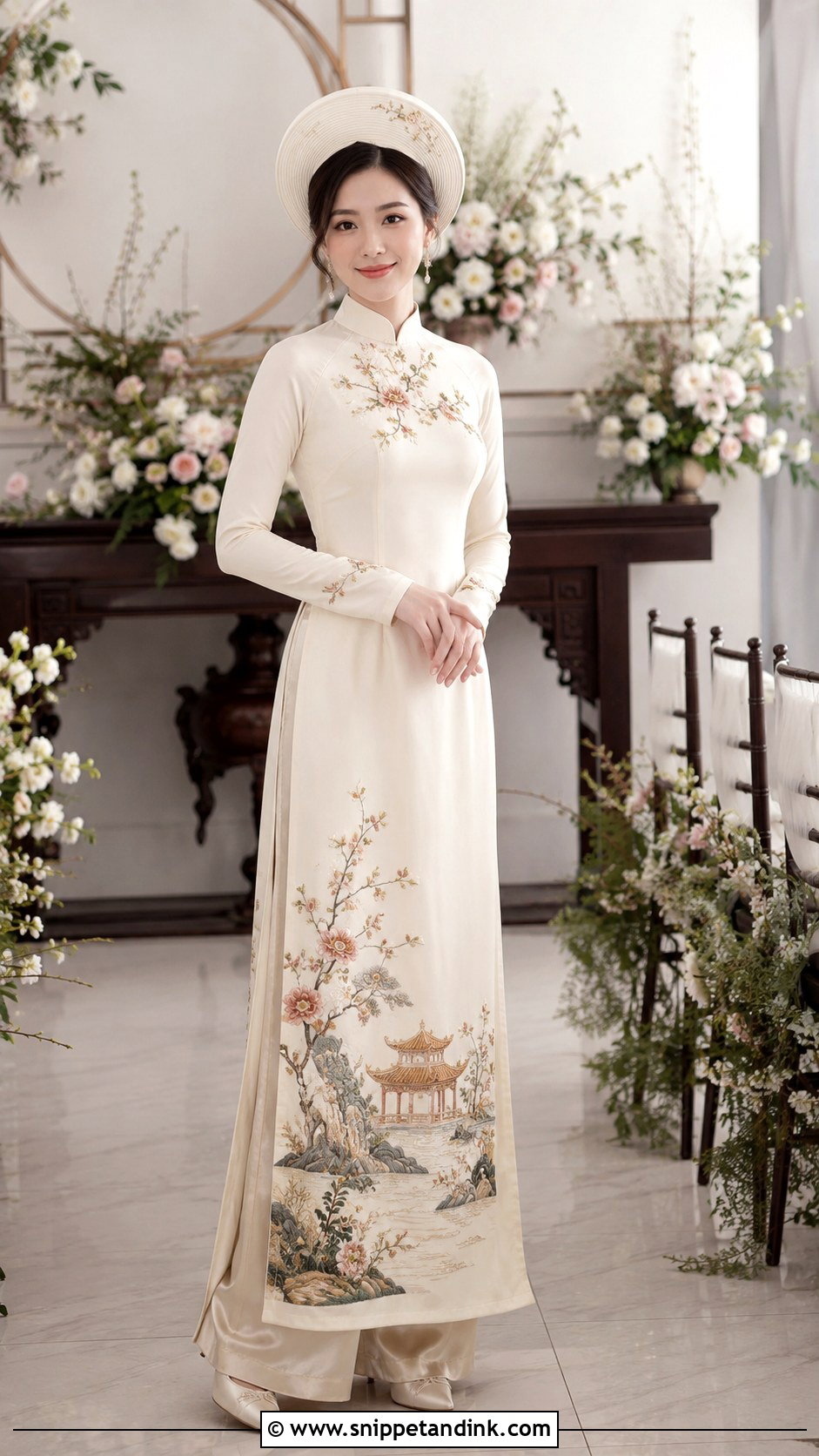
A custom motif lets the dress tell your family’s story. Start with a traditional red, white or ivory silhouette, then plan embroidery with a designer around flowers, landscapes, emblems or regional patterns that mean something to you. One shoulder, the cuffs or the lower panels are the best places, so the artwork follows the cut instead of covering it. Plain matching pants, comfortable heels and understated jewellery leave room for it, and a matching khăn đóng can repeat one small element. For a tradition-led ceremony, show the design to the elders first; their blessing matters more than the stitch count. Hand embroidery takes time, so start early.
Wearing Red for the Tea Ceremony and White for the Reception
A Vietnamese wedding is often several events: the betrothal ceremony, the procession to collect the bride, the tea ceremony with both families and the reception. Plenty of brides wear two or three outfits across them, often a red ao dai for the family rituals and a white ao dai or Western gown for the party. When I plan those changes with a bride, this is what we weigh up.
- Who is watching. Elders at the tea ceremony usually expect a traditional colour and a modest cut; the reception is where a cape, sheer sleeves or a train fits more naturally.
- How long the change takes. There is rarely much slack between ceremony and reception, so pick a second outfit with simple closures and a hairstyle that won’t need redoing. A low bun that takes both a khăn đóng and a veil saves real time.
- What you’ll do at floor level. The tea ceremony often involves bowing to parents and serving tea to elders, so the first outfit must move well when you bend and kneel. Rehearse that at the fitting.
Ask your family which customs they intend to keep before you design anything. Traditions differ between regions and between families, and the answer decides how many outfits you actually need.
Pressing Silk Panels the Night Before
Long panels crease wherever they were folded in a bag, and those creases show from across a room. Hang the tunic a full day before the wedding. If it still needs pressing, turn it inside out, set the iron to its silk setting and lay a cotton cloth between iron and fabric. Embroidered areas go face down on a folded towel so the stitches keep their height. A handheld steamer suits chiffon, but keep it moving, and never press velvet flat, because the pile marks. Afterwards, have the outfit cleaned by someone used to silk and embroidery, then fold it with tissue between the panels and keep it somewhere dry.
Silk, Thread and a Very Good Tailor
Traditional tailoring adapts to almost any colour, fabric or embellishment. Red silk and gold brocade set a formal ceremonial tone, white lace and champagne satin feel more contemporary, and sheer sleeves, capes, detachable trains or custom embroidery make the outfit personal. What makes any of them work is the tailoring. Do a full rehearsal before the wedding with the pants, shoes, jewellery, headpiece and veil together, then bow, sit and raise your arms in it. A well-fitted ao dai lets you stop thinking about the dress and pay attention to your family.
You'll Like These Ideas:




Leave a Reply