
A good gown description lets a bride picture herself in the dress before she’s touched it. That matters for a boutique listing, a pin, a blog post or a caption under a portrait. When I write one, naming the silhouette is the easy part. The useful part is what the fabric does when she walks, how the bodice supports her, where the train ends and what kind of day the dress belongs to. Below are 25 dress types, each with the details I’d lead with and the styling I’d describe around it, so you can adapt them to the gown in front of you.
The Order I Describe a Gown In, Top to Hem
Most weak descriptions jump around: a sentence on lace, then the venue, then the neckline. When I write up a gown I follow the same order a bride’s eye travels when she sees it on a hanger, then on a body.
- Silhouette in plain words: A-line, ball gown, sheath, mermaid, trumpet, column.
- Neckline and back: the exact shape, and how low the back goes.
- Fabric and how it behaves: does it drape, hold a shape, cling or float?
- Support: boning, cups, corset back, stretch lining. Brides ask about this first in person, so answer it in writing.
- Details: lace type, beading, buttons, appliqué and where each one sits.
- Length and train: floor, tea, mini; sweep, chapel or cathedral train; whether it bustles.
- Color: the real shade name and what lining sits underneath.
- Styling and setting: one or two accessories and the kind of wedding it suits.
Here’s a short example in that order: A soft A-line in matte crepe with a square neckline and a low scoop back. Built-in cups and light boning give support without a corset feel. The skirt falls straight from the waist into a chapel train that bustles in three points. Ivory over an ivory lining; lovely with pearl drops and a fingertip veil for a city or garden ceremony. Eight facts, no filler.
1. A Line Wedding Dress Description
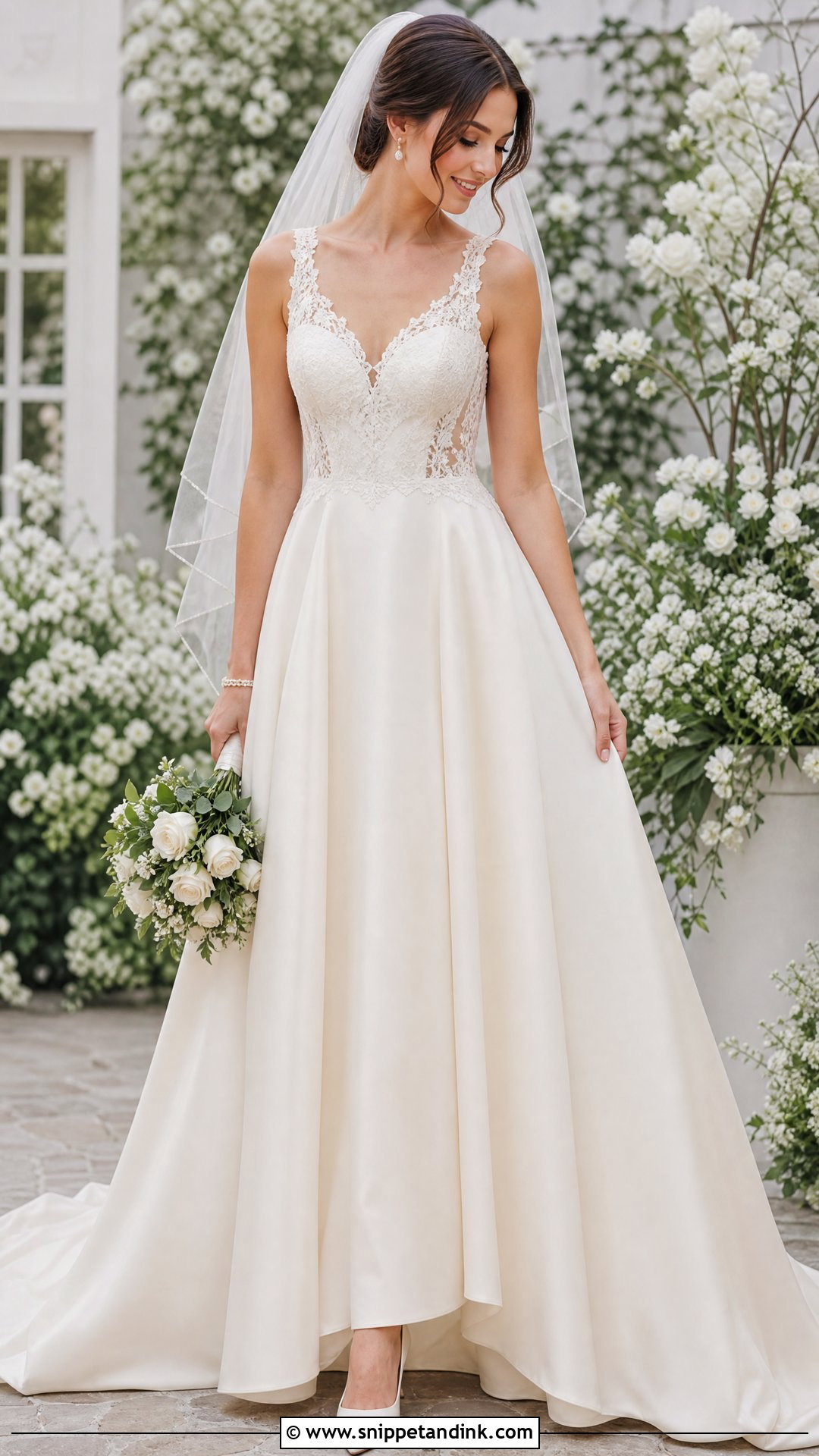
Fitted through the bodice and opening gently from the natural waist: that’s the line to describe first, because brides searching for an A-line usually want shape without bulk. Then name the neckline exactly, sweetheart, scoop or square, and the fabric. I’d also say how full the skirt is, since A-lines range from barely flared to nearly ball gown, and shoppers get frustrated when the photo and the words disagree. Round it out with a fingertip veil, pearl earrings and pointed ivory heels, and suggest a garden or ballroom setting.
2. Ball Gown Wedding Dress Description
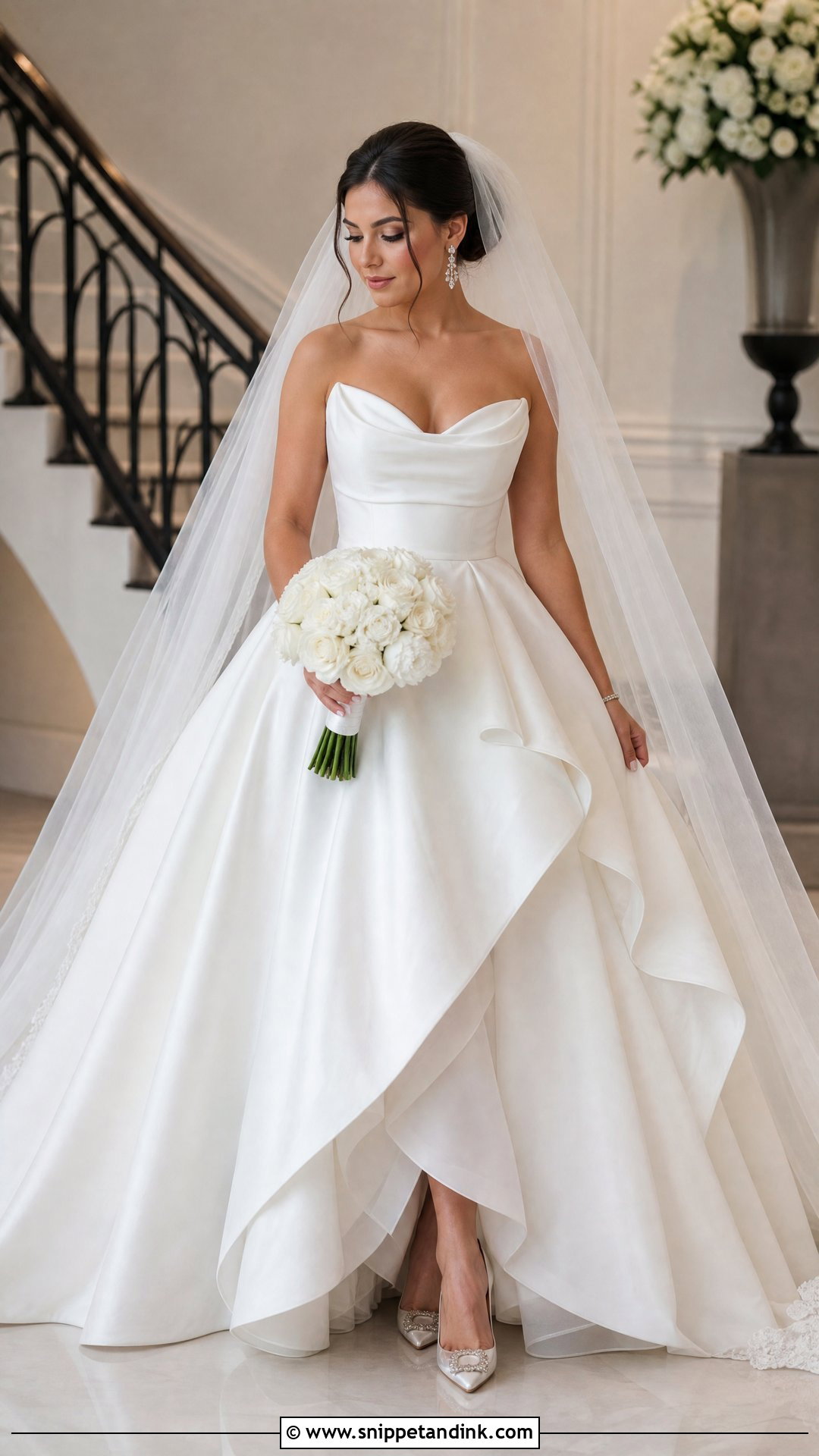
Volume is what a ball gown sells, so your words need to explain where it comes from. Layers of tulle give a soft, cloudy fullness; organza holds a crisper shape; satin over a crinoline gives a smooth dome. Describe the bodice and the defined waist, then the skirt’s movement as she walks. I always mention weight honestly in a listing. A heavy satin ball gown is a different day from a tulle one, and the bride deserves to know. Cathedral veil, crystal earrings, a structured bouquet.
3. Mermaid Wedding Dress Description
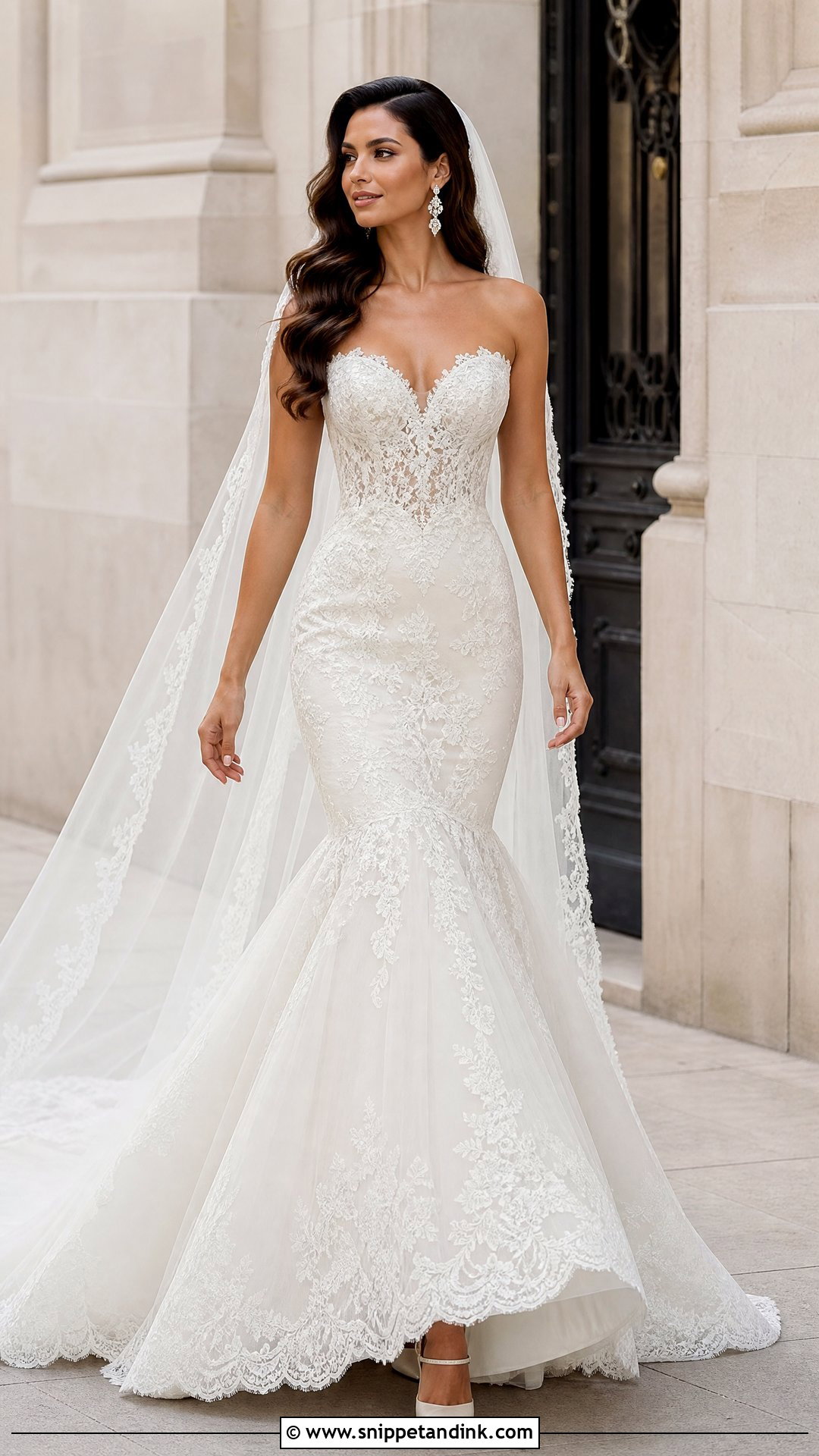
Where the flare begins is the single most useful detail for a mermaid, and many listings skip it. A true mermaid flares at or below the knee; a trumpet flares mid-thigh and is easier to sit and dance in. Say which one it is. Then describe the fabric’s grip, stretch crepe versus structured lace, because that tells a bride how much it will move with her. Long veil, sleek waves and drop earrings suit the sculpted line. Avoid calling every fitted gown a mermaid; it sets the wrong expectation.
4. Strapless Wedding Dress Description
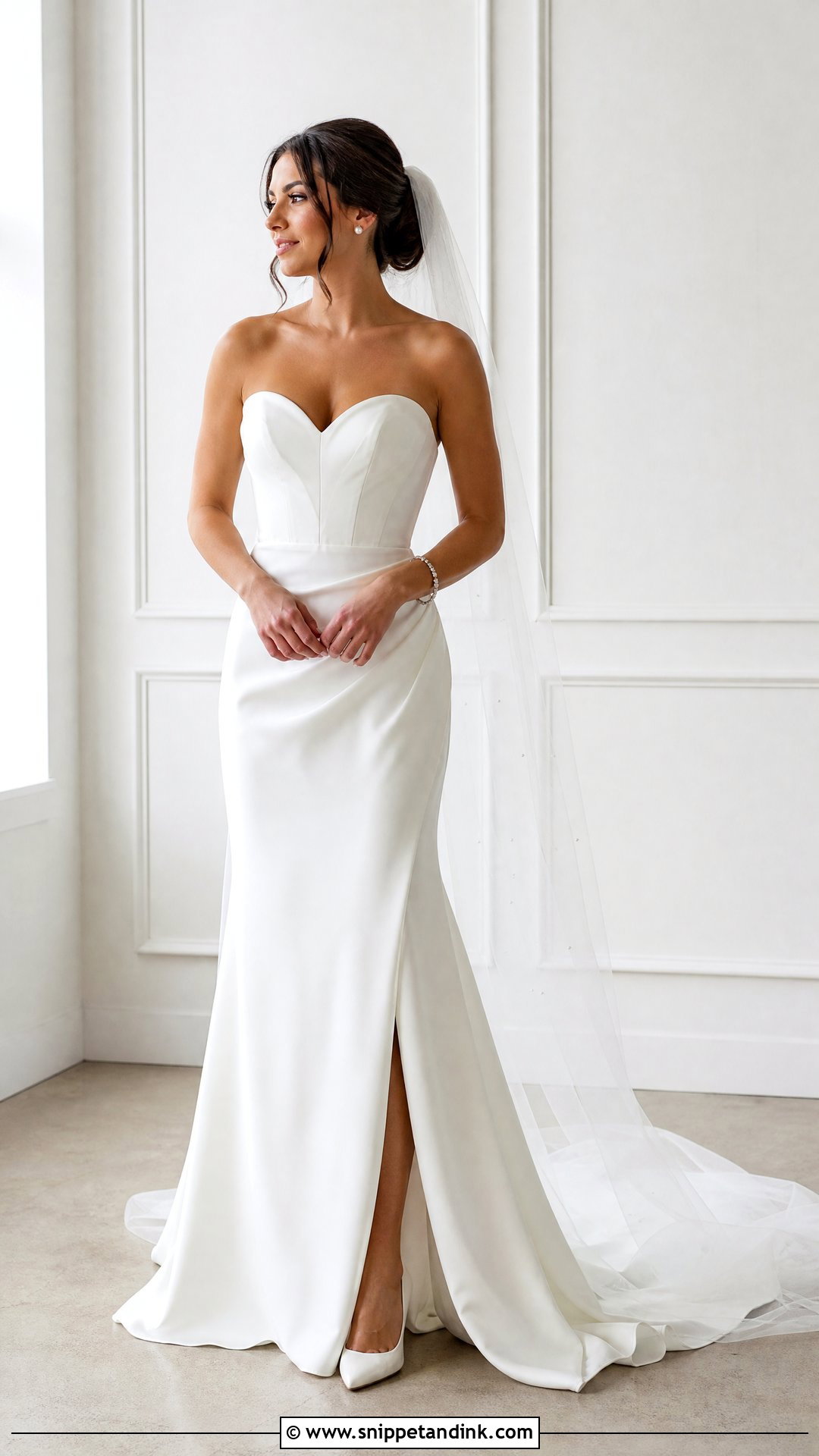
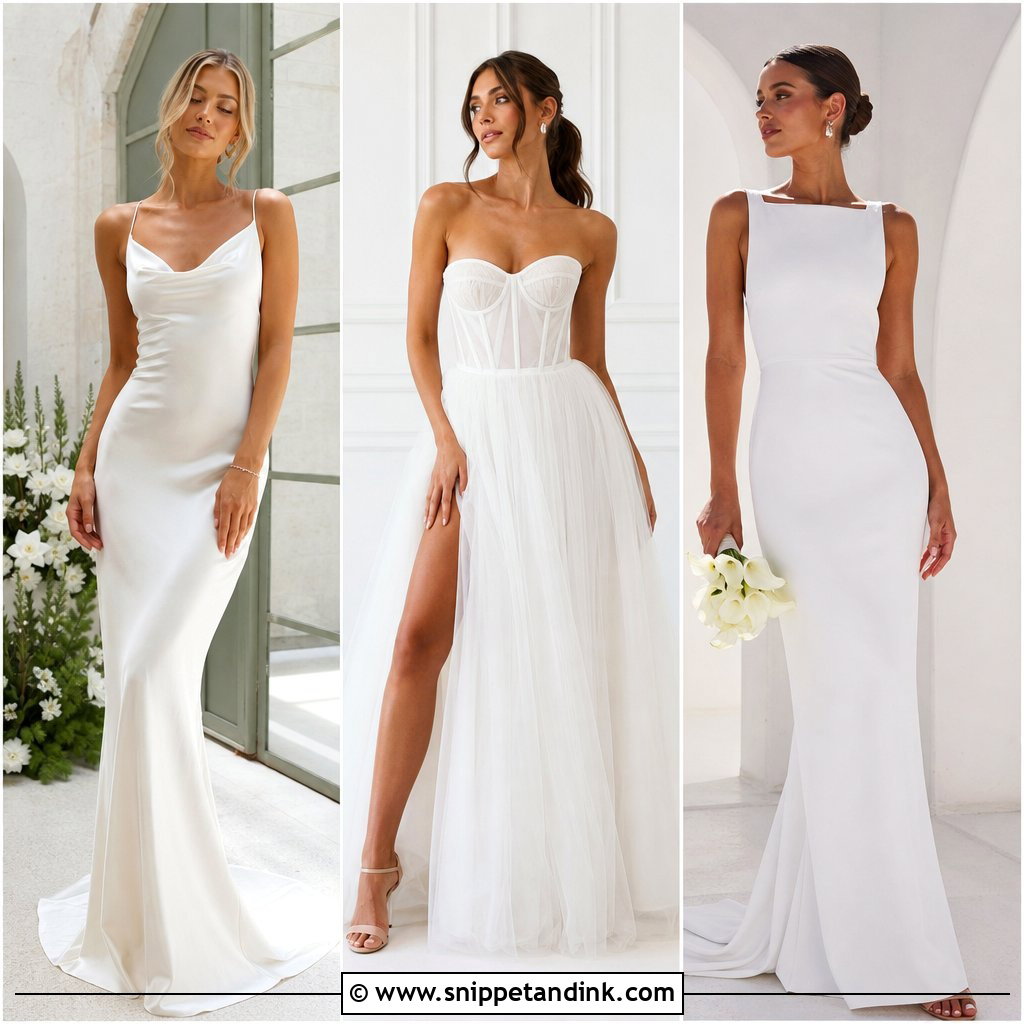
Strapless sounds simple, but brides want to know two things you have to spell out: the exact neckline and how the bodice stays up. Straight-across, sweetheart or pointed? Is there boning, a grip strip at the top edge, built-in cups? I describe both, because fear of slipping is the first question every bride asks me about a strapless gown. Then say how the dress changes with styling: minimal in satin, softer in lace and tulle. A sheer veil and pearl studs keep the neck open.
5. Long Sleeve Wedding Dress Description
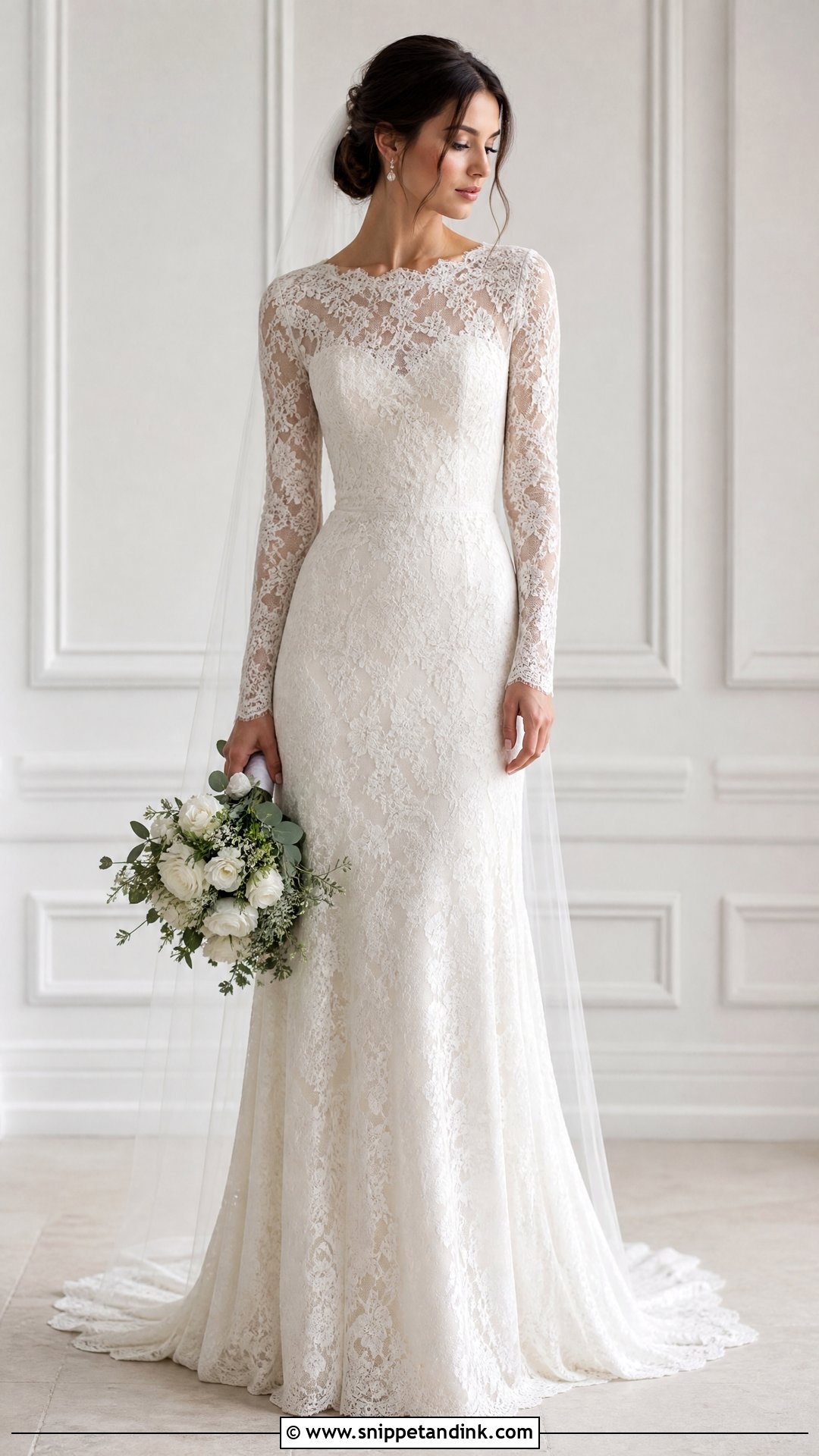
Sleeves are usually the reason a bride clicks on this gown, so they go first. Say what they’re made of, illusion lace, sheer tulle, fitted crepe or a full bishop sleeve, and where they end. Mention if there’s a cuff with buttons or a loop over the finger. Then explain how bodice and skirt work together. I’d add a line on movement: tightly fitted lace sleeves can limit how high she can raise her arms, and that’s honest to say. Low bun, small earrings and a veil that doesn’t fight the sleeve.
6. Lace Wedding Dress Description
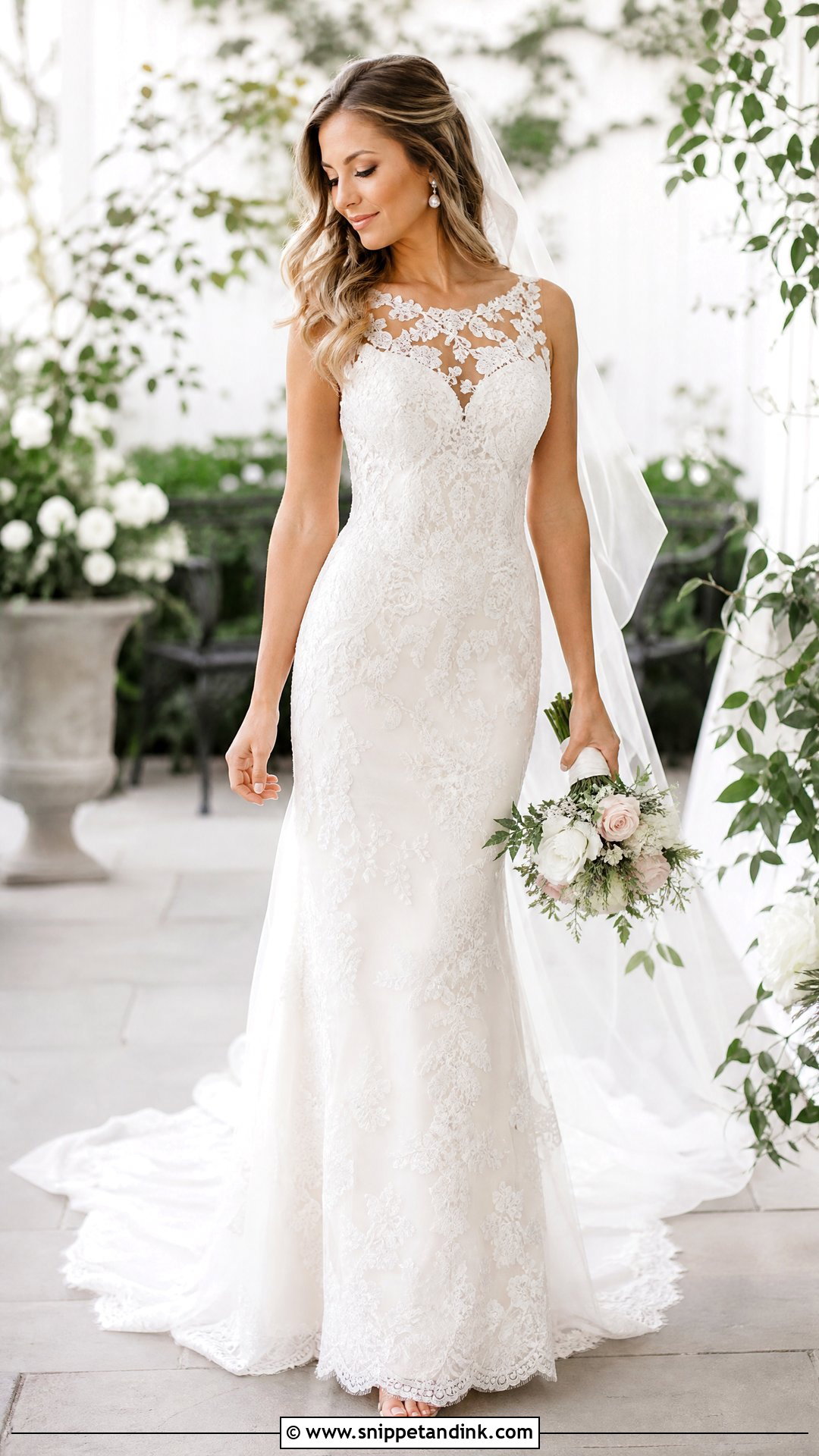
Not all lace is the same, and naming the type lifts a description straight away. Chantilly is fine and airy, Alençon has a corded outline that gives the pattern definition, guipure is heavy and almost sculptural. Then say where the lace sits: bodice only, sleeves, train or the whole gown. A vague ‘lace detail’ tells a bride nothing. Pair it with pearl earrings and a sheer veil, and describe whether the lining underneath is ivory, nude or blush, because that changes how the lace reads.
7. Satin Wedding Dress Description
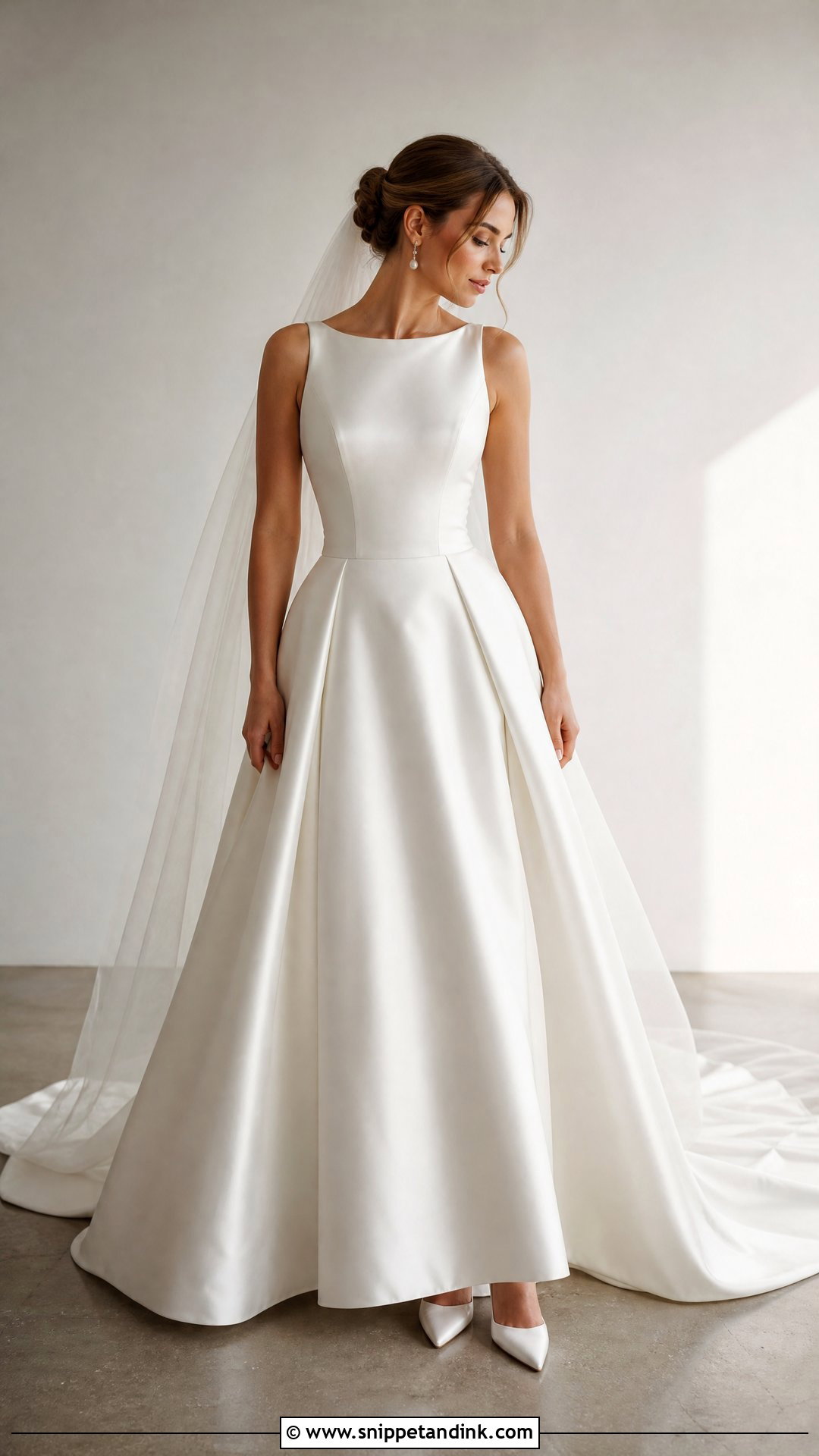
Keep satin language simple; the fabric does the talking. I’d describe its sheen honestly, high-shine or matte, and its weight, because a heavy duchess satin holds a structured skirt while a fluid silk satin drapes over the body. Mention that satin shows creases and every seam, which tells a bride the fit must be precise. A clean veil, pearl drops and pointed satin heels finish it. Satin suits ball gowns, slip dresses and minimal silhouettes.
8. Tulle Wedding Dress Description
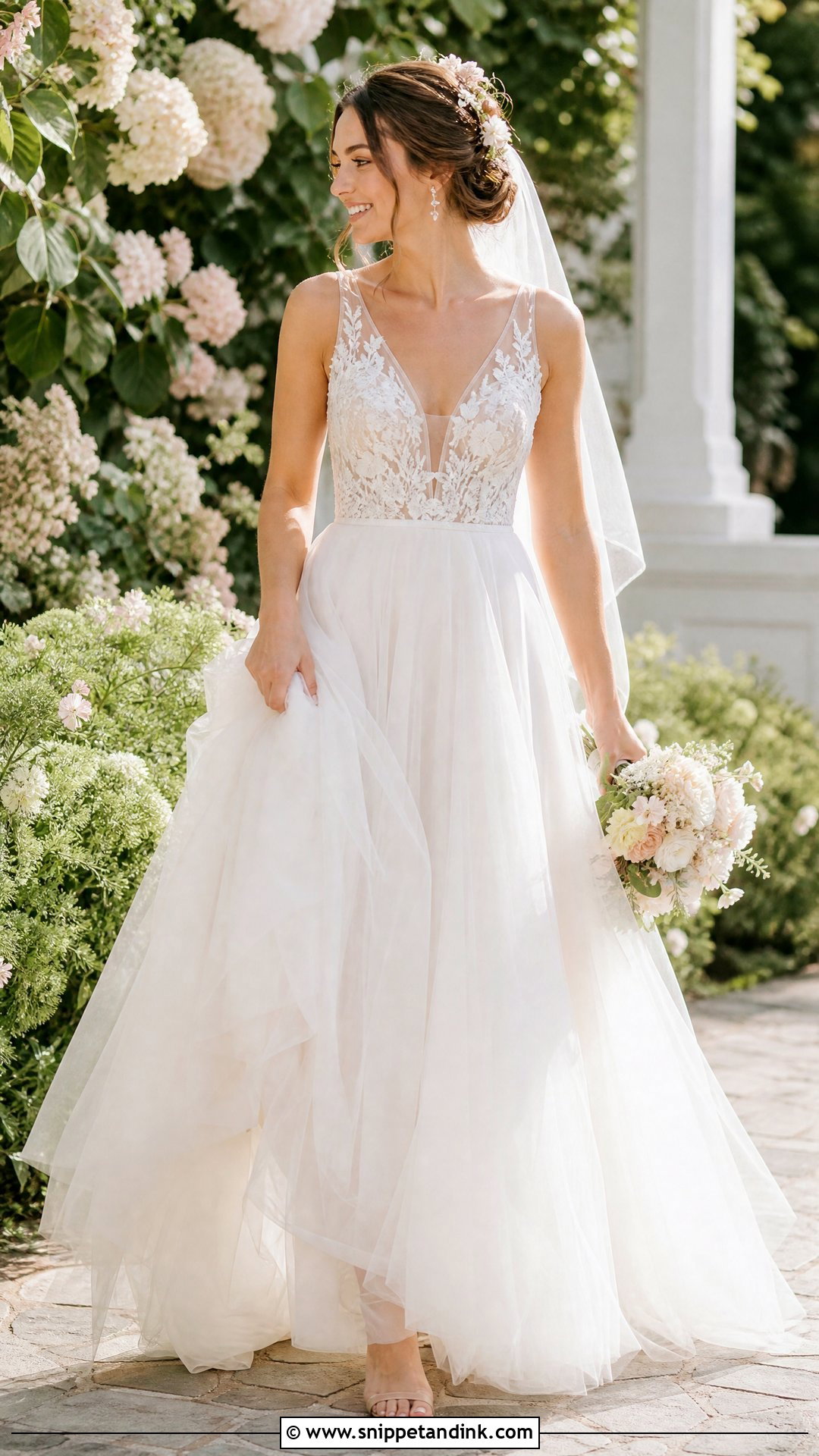
Movement is the point of tulle, so write about the skirt as it walks, not as it hangs. Say whether the tulle is plain, glittered, embroidered or layered under lace appliqué, and roughly how many layers give the volume. Glitter tulle sheds a little sparkle on everything nearby; it’s worth a gentle note. A soft veil, a floral hair pin and barely-there heels suit it. Outdoor and garden settings are where tulle shows best.
9. Simple Wedding Dress Description
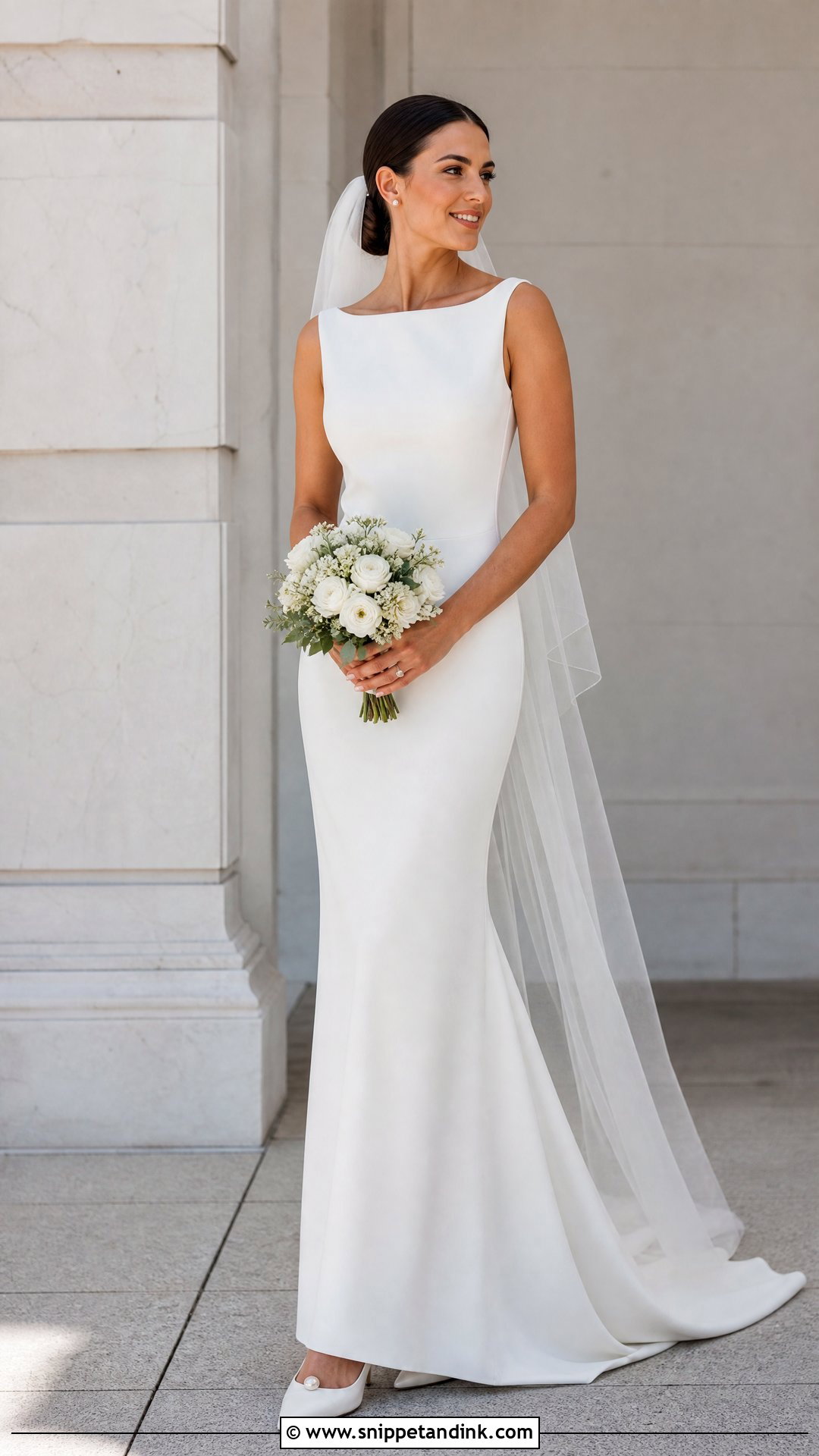
Restraint is hard to describe without sounding dull. The trick I use is to name the precise detail that replaces decoration: a clean bateau neckline, an exact seam placement, a train that pools rather than trails. A simple crepe sheath, satin A-line or clean column can look expensive when the words point at the tailoring. Pearl studs, sleek heels and a small bouquet suit city weddings.
10. Boho Wedding Dress Description
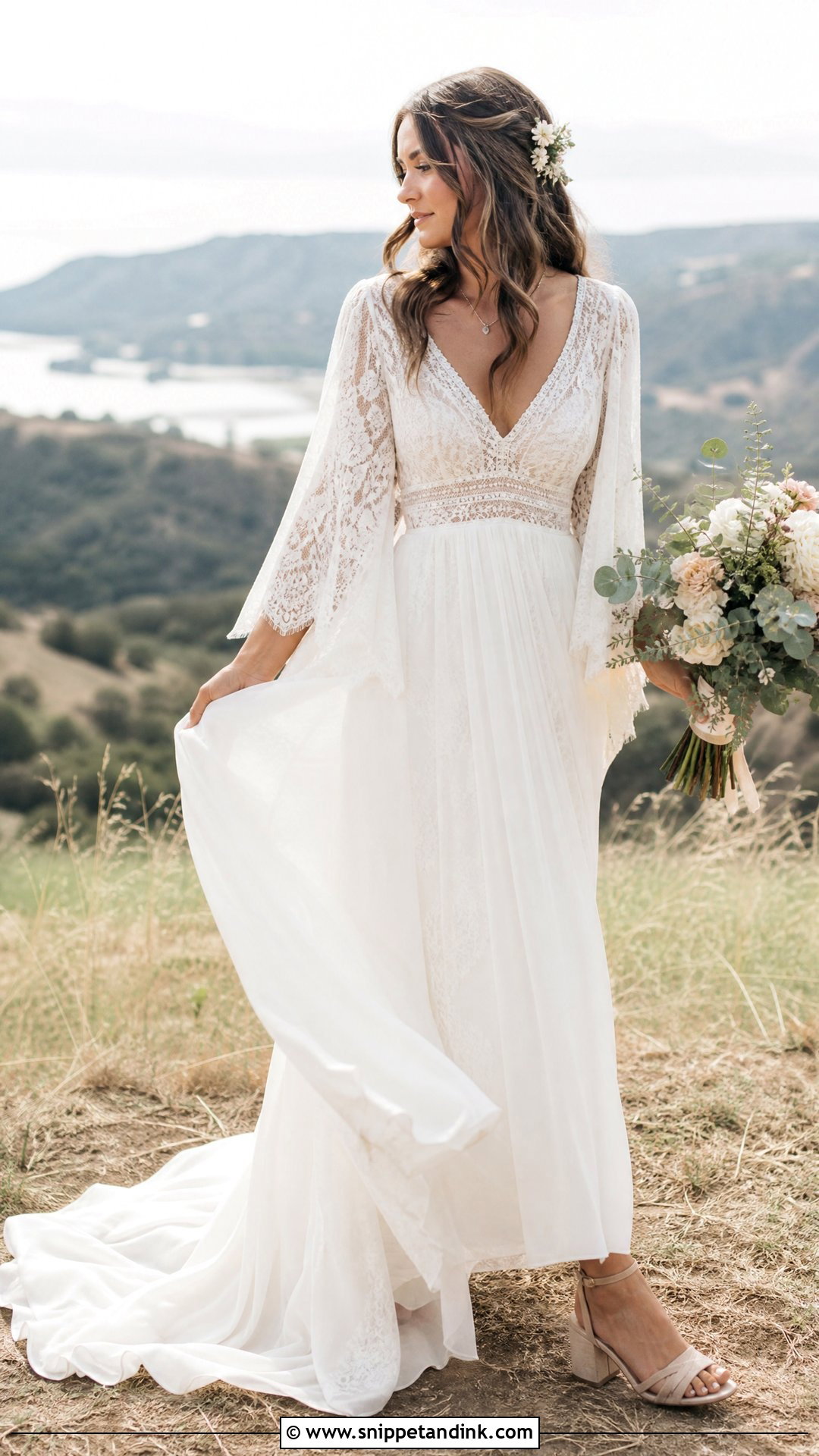
Boho gowns sell on ease, so the description should feel relaxed without turning sloppy. Describe soft lace, flowing sleeves, light chiffon or crochet-like texture, and a skirt that moves freely. Be specific about the lining: many boho gowns are lightly lined or sheer at the legs, and brides want to know before they order. Loose waves, a floral comb and sandals or block heels finish it for a beach, desert or garden ceremony.
11. Vintage Wedding Dress Description
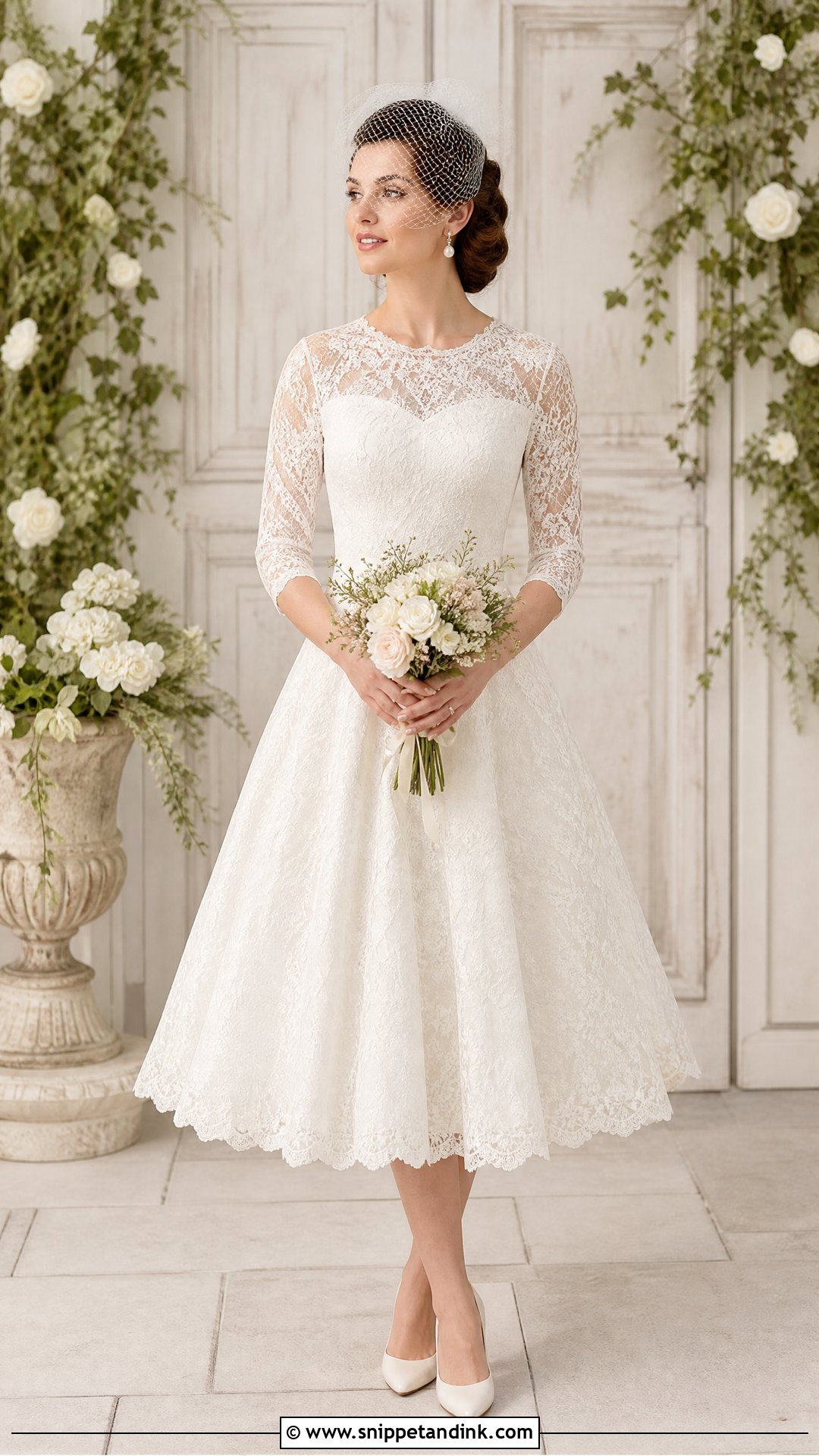
Nostalgic is good; old-fashioned is not. List the details that create the era: lace sleeves, covered buttons down the back, a high neck, a tea-length hem, satin bows. Naming the decade the look borrows from, such as a 1950s full skirt or a 1930s bias cut, gives a bride something concrete to picture. A birdcage veil, pearl earrings and soft waves suit it. Courthouse, garden and formal celebrations with an older-world mood all fit.
12. Modern Wedding Dress Description
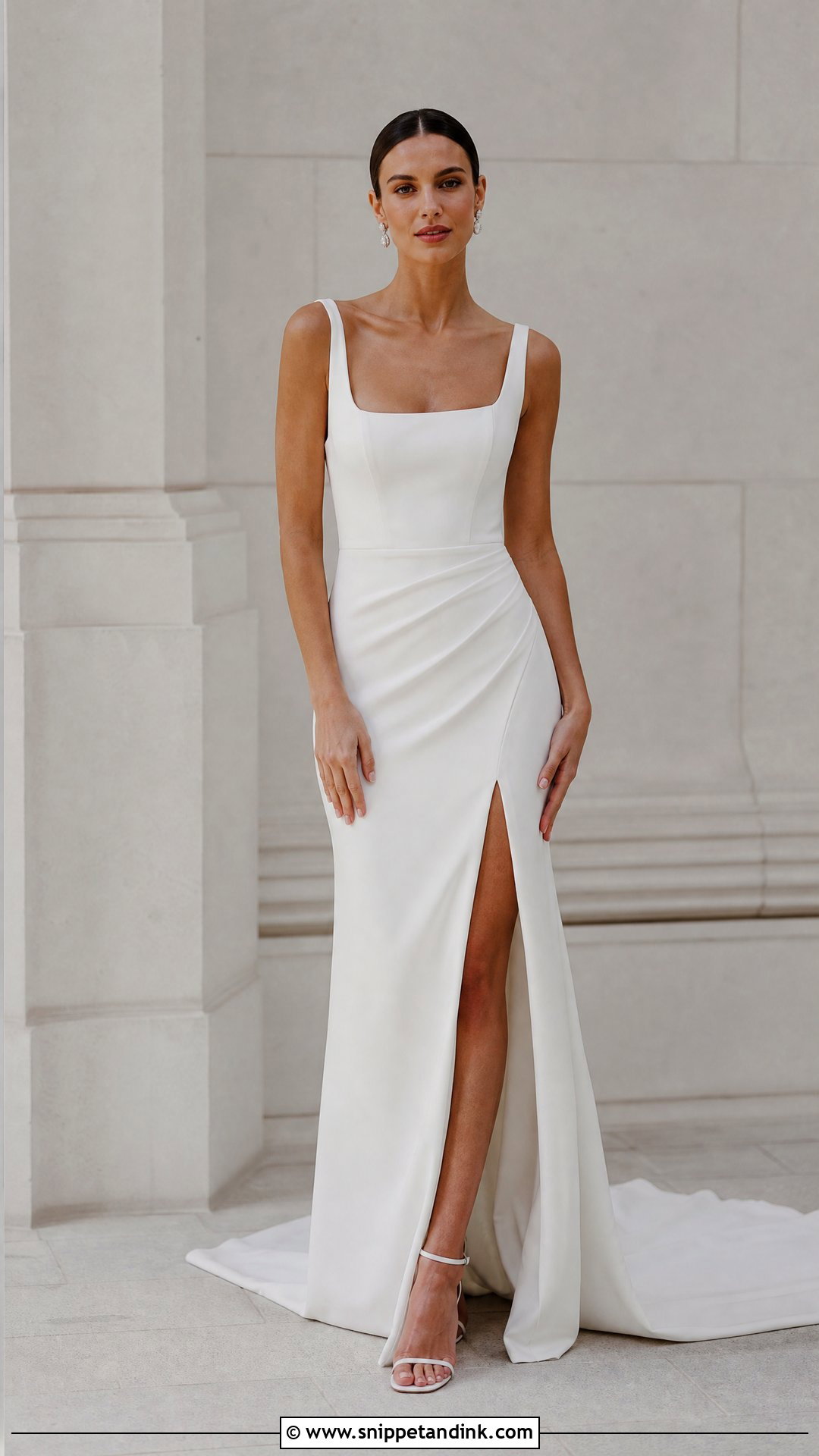
Modern gowns are about shape, so cut the soft romantic vocabulary. Describe clean construction, sculptural lines, square necklines, asymmetric details, sleek crepe or a slit, and say exactly how high the slit goes. Slick hair, simple earrings and strappy heels keep the outfit sharp, and ‘no veil’ is a perfectly valid styling note here. Rooftops, galleries and contemporary hotels suit it.
13. Plus Size Wedding Dress Description
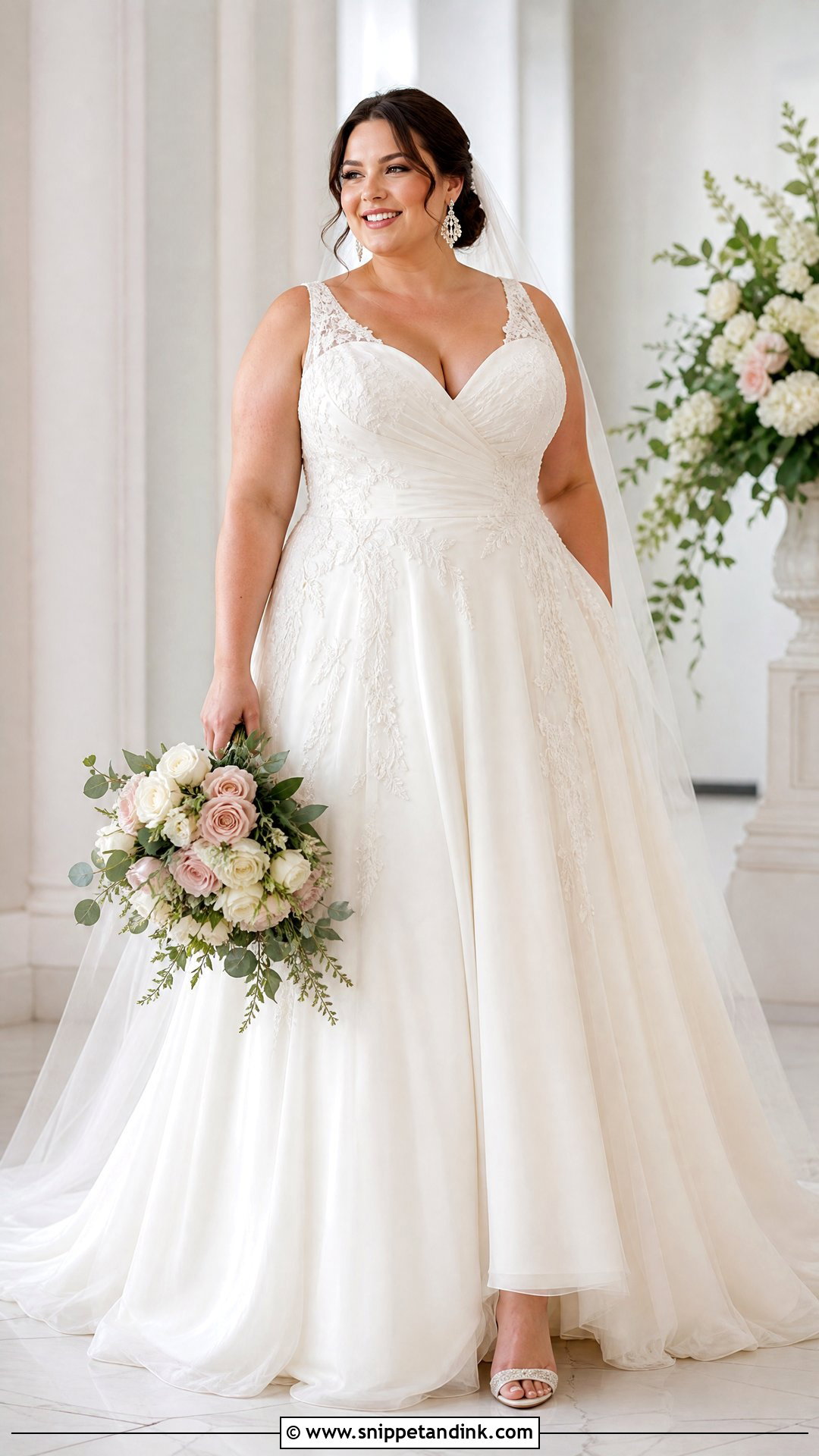
Language matters most here. I describe what a plus size gown does, not what it hides: a supportive bodice, a defined waist, a stretch lining, an adjustable corset back. Avoid words like ‘slimming’ or ‘forgiving’. Mention the size range the style comes in and whether the sample in the photo is the same size, because brides notice when every image shows a smaller model. A-line, ball gown, fit-and-flare and empire shapes all deserve the same descriptive care as any other gown.
14. Beach Wedding Dress Description
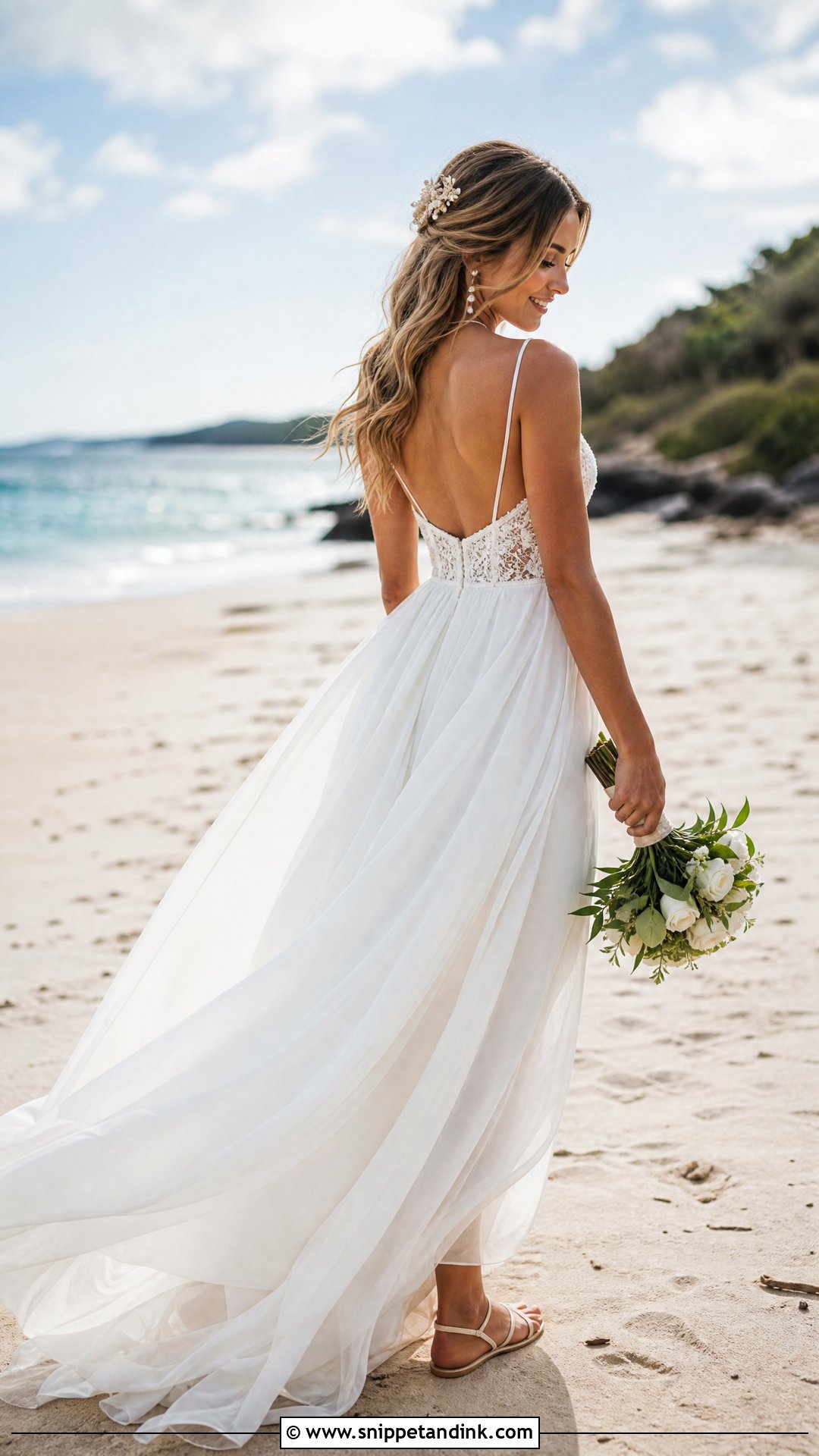
Practicality belongs in a beach description. Say how light the gown is, whether the hem is short enough to stay out of wet sand, and whether the train is detachable. Chiffon, crepe, soft tulle or light lace catch the breeze; heavy satin traps heat. An open back or simple straps keep the shape relaxed. Flat sandals, pearl earrings and loose waves complete the coastal look.
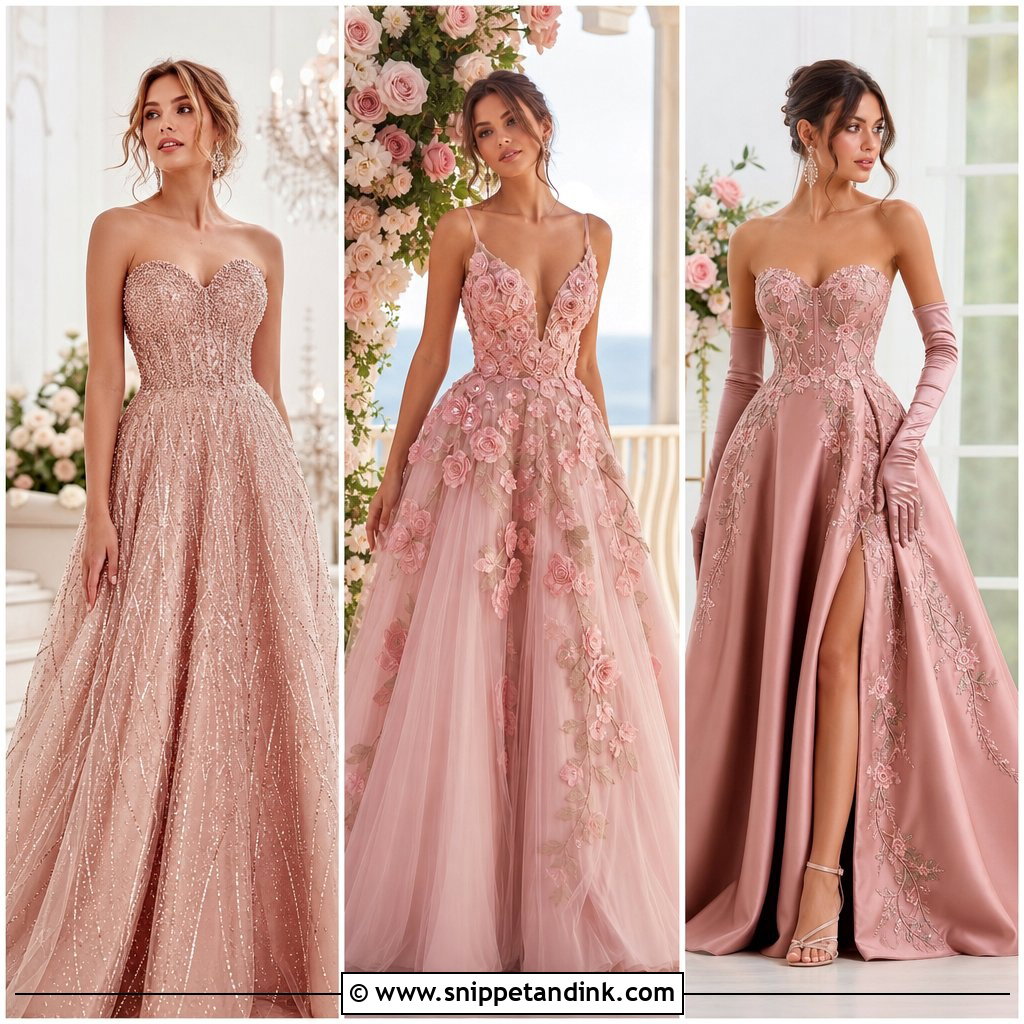

15. Garden Wedding Dress Description
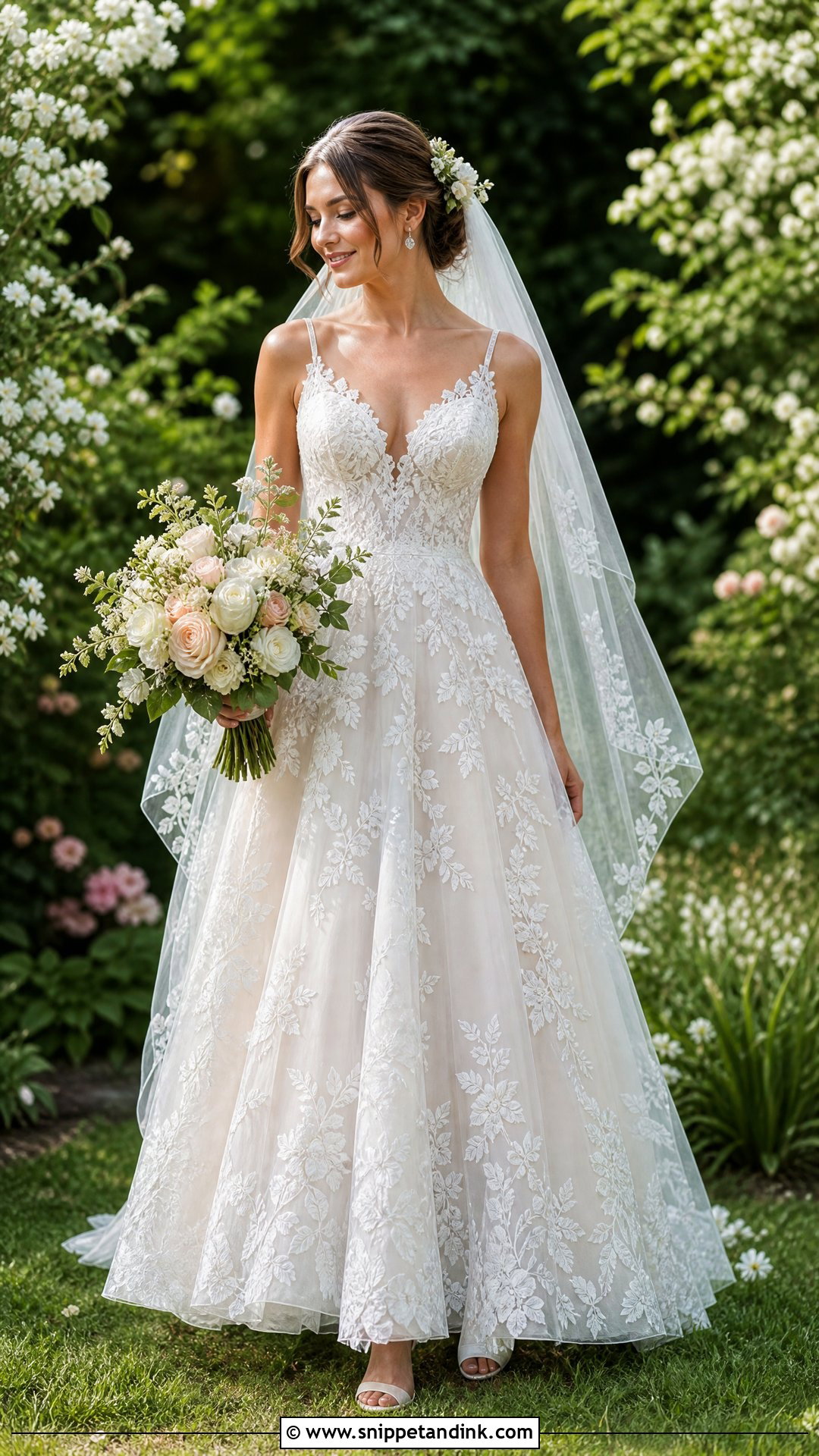
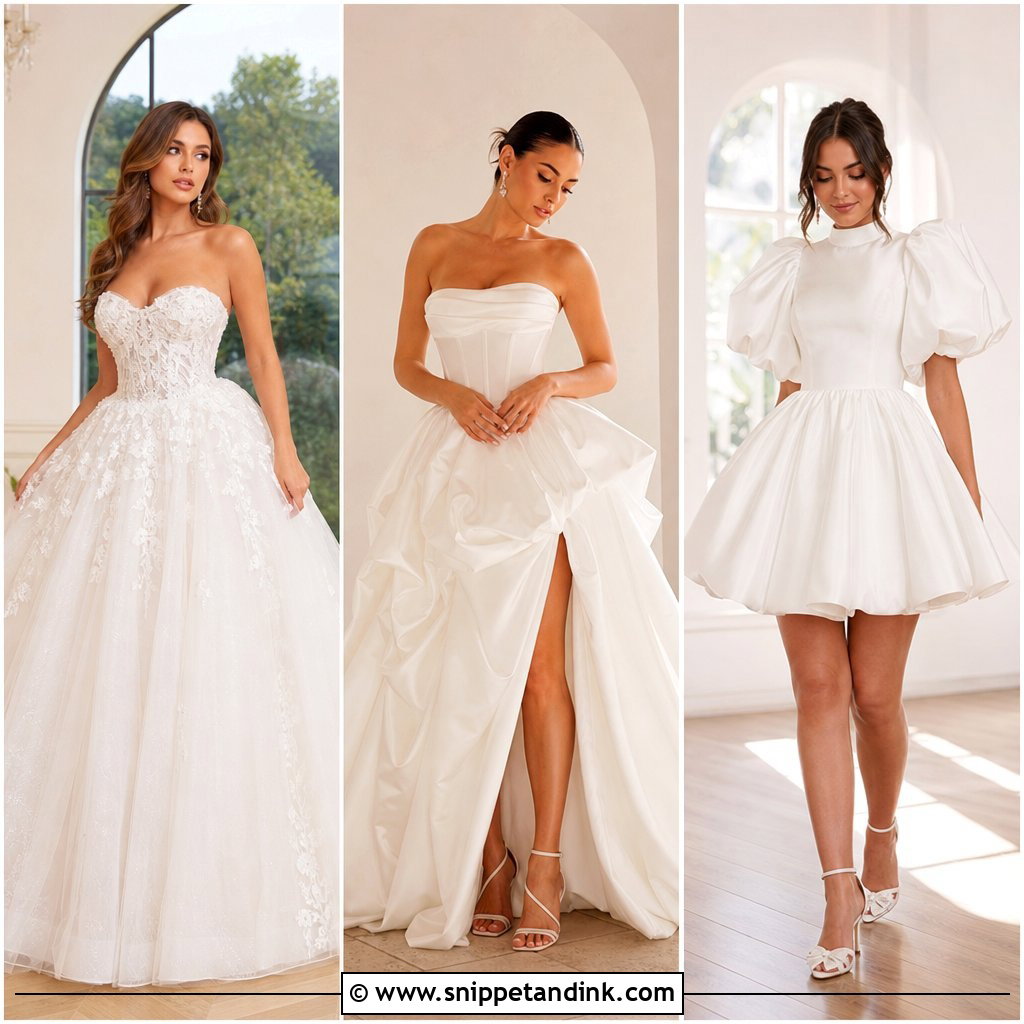
Tie the gown to the setting without leaning on clichés about flowers. Describe floral lace, embroidered tulle, flowing chiffon or delicate appliqué, then say how the skirt handles grass and gravel paths. A sweeping train collects grass stains, and a note suggesting a bustle is genuinely helpful. Fingertip veil, floral pins and block heels for soft ground. Formality decides the silhouette: A-line, sheath or ball gown.
16. Courthouse Wedding Dress Description
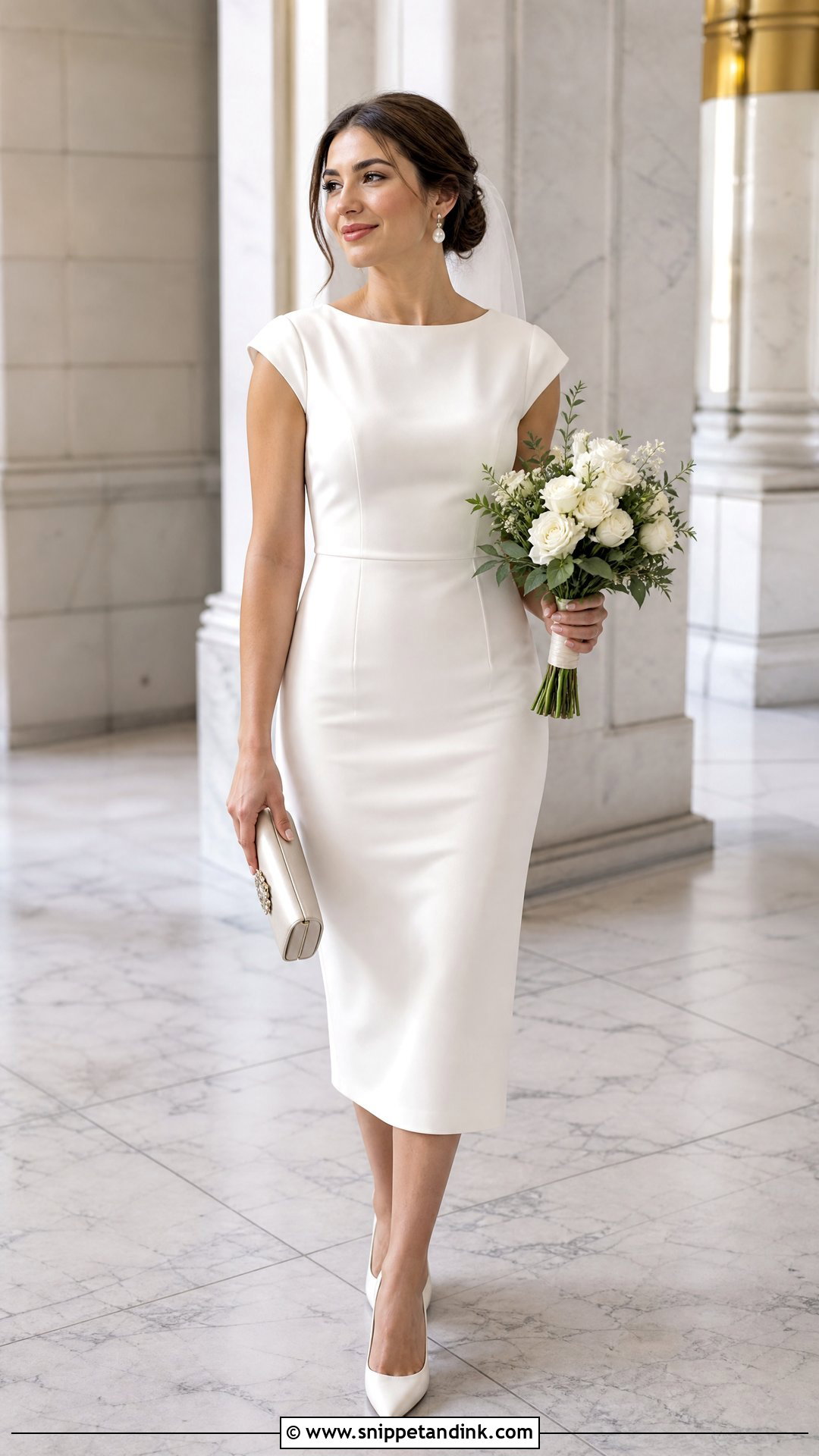
Courthouse outfits are judged up close, often in daylight, so fabric quality and finishing are what I’d describe. A tailored midi, a sleek mini, a crepe sheath or a structured satin dress with clean lines all work. Mention a square neckline, long sleeves, button accents or a modest slit if the design has them. Pointed heels, a short veil or bow and a small clutch keep it neat. No train needed, and the words should make that sound like freedom.
17. Civil Wedding Dress Description
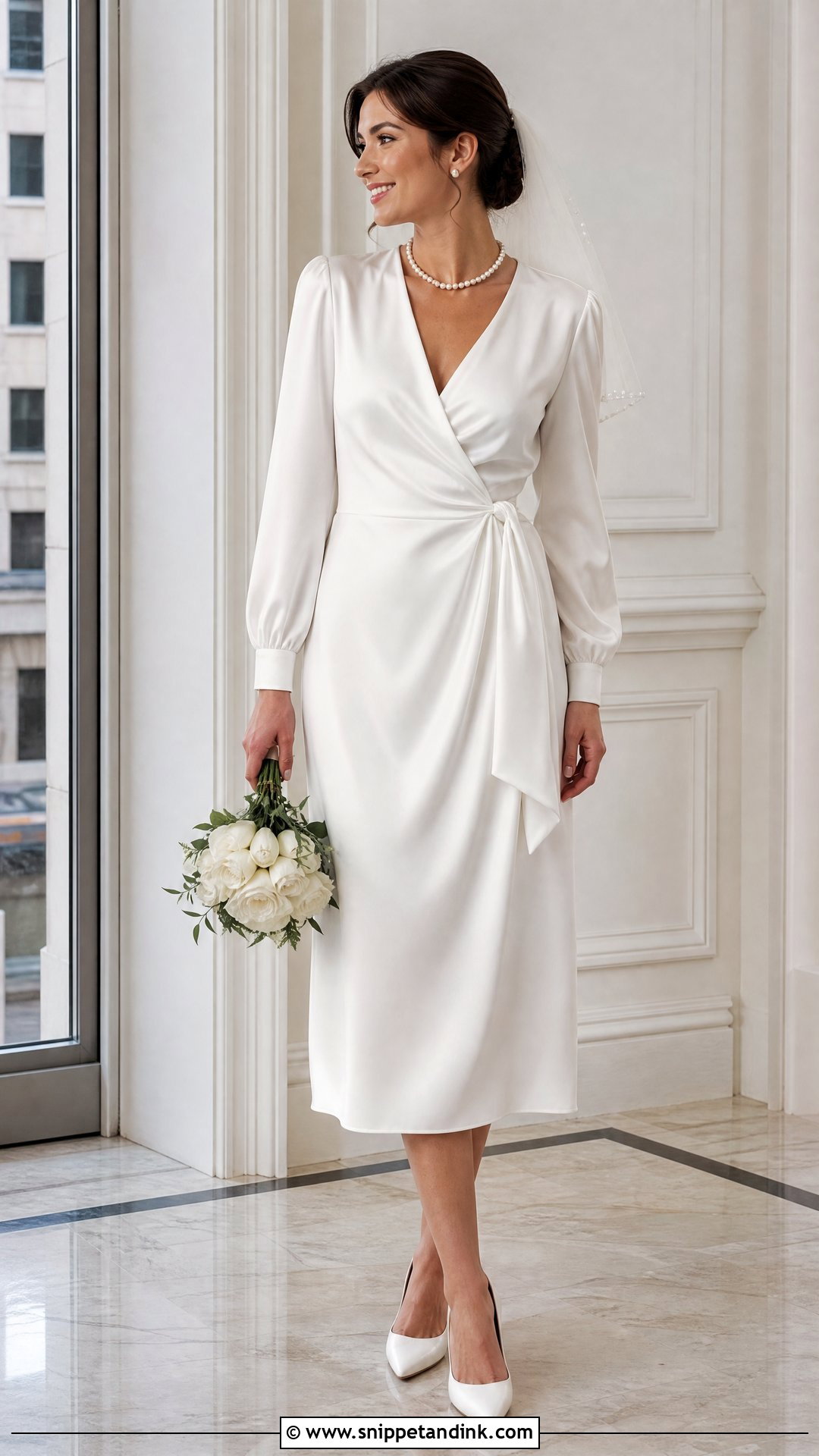
Official but not stiff is the mood to aim for. A civil wedding dress often mixes simplicity with personal style, so describe it as refined and easy to move in: a white midi, a tailored sheath, a satin wrap dress or a minimal column. Many civil ceremonies involve standing for signing and a short walk outside, so comfort is a real selling point. Pumps, a short veil and gold or pearl jewelry suit city hall and small private ceremonies.
18. Reception Wedding Dress Description
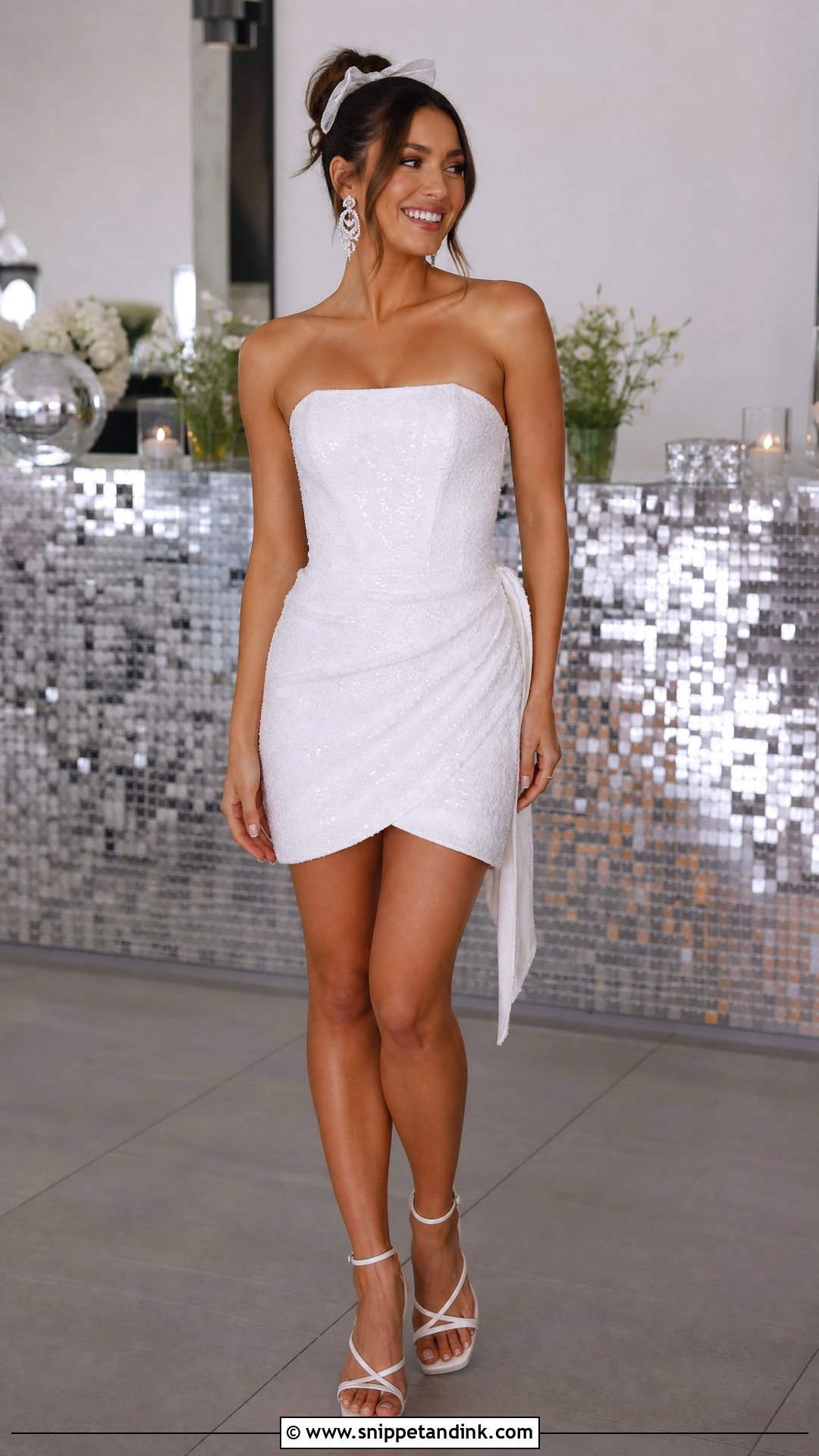
A second look has one job: freedom to dance. Lead with how it moves, then the fun details: sequins, feathers, bows, satin shine or a playful hem. Say whether it can be worn with a regular bra, since brides changing into a reception dress often don’t want to repeat the full fitting routine. Comfortable heels, statement earrings and a small hair accessory finish it.
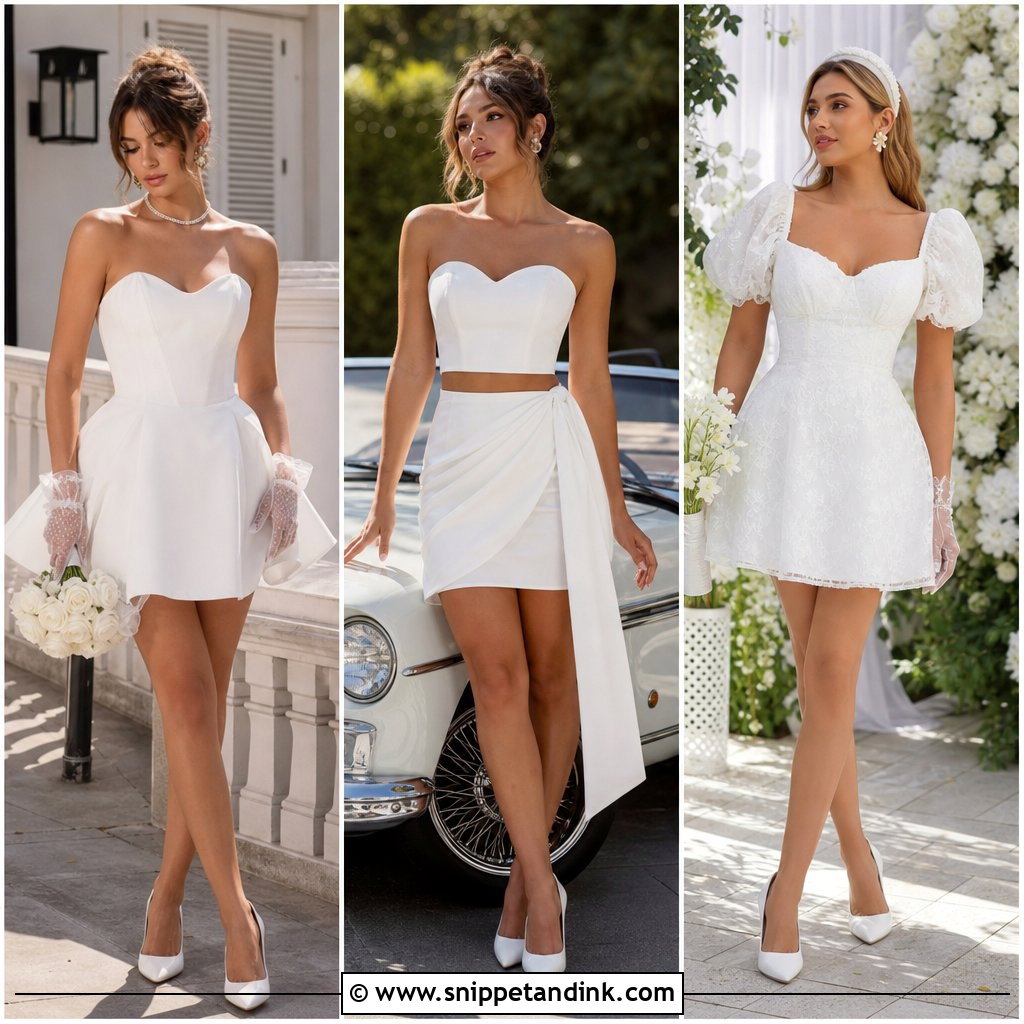
19. Short Wedding Dress Description
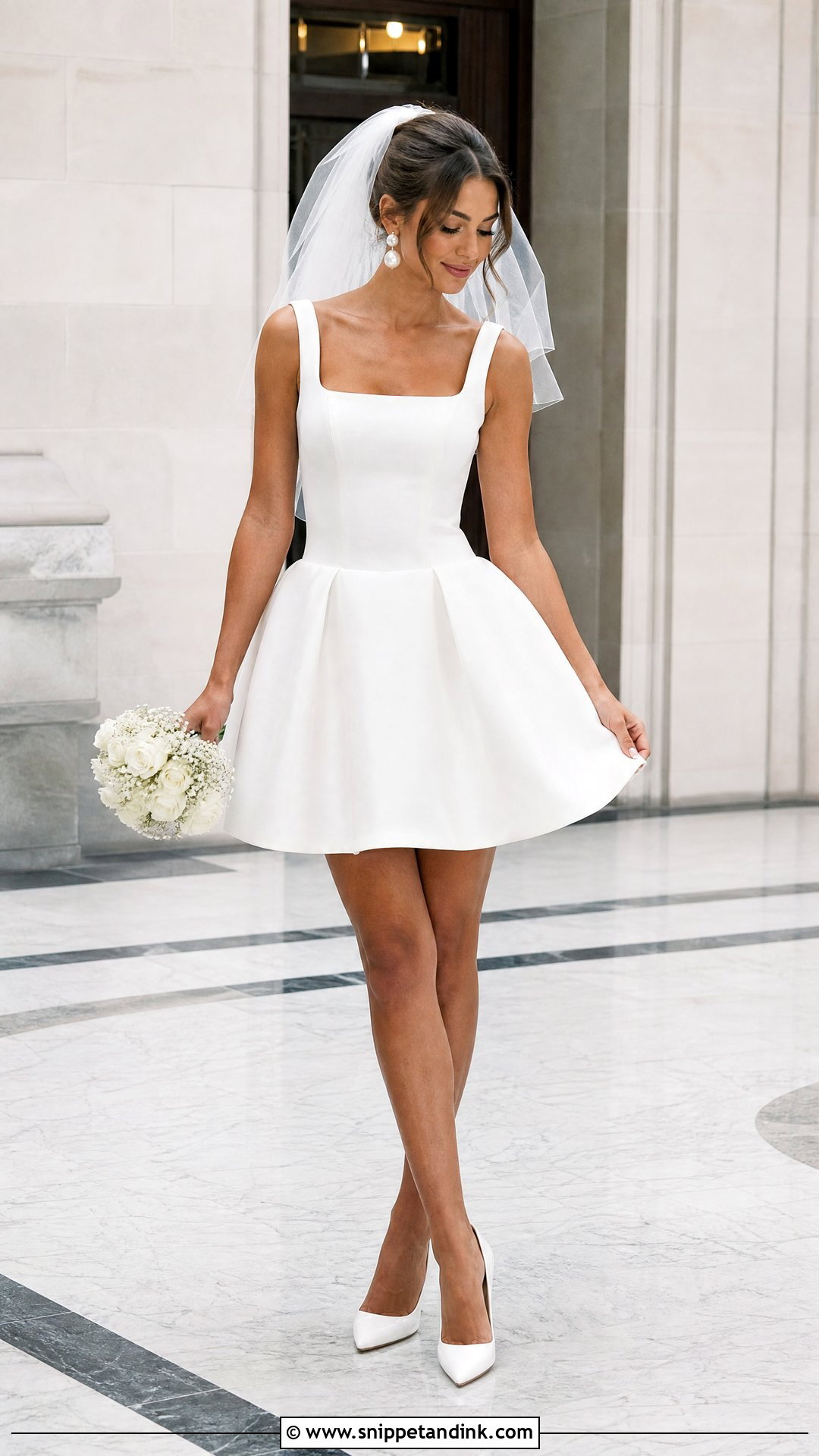
Hem length is the headline. Say clearly whether it’s mini, above the knee, at the knee or tea length; ‘short’ alone covers too much. Then the fabric and shape: structured satin, lace sleeves, a flared skirt or a tailored shift. Pointed heels and a short veil suit courthouse ceremonies, receptions and exits. I’d also note how the hem behaves when seated, because a mini that rides up is a common complaint.

20. Tea Length Wedding Dress Description
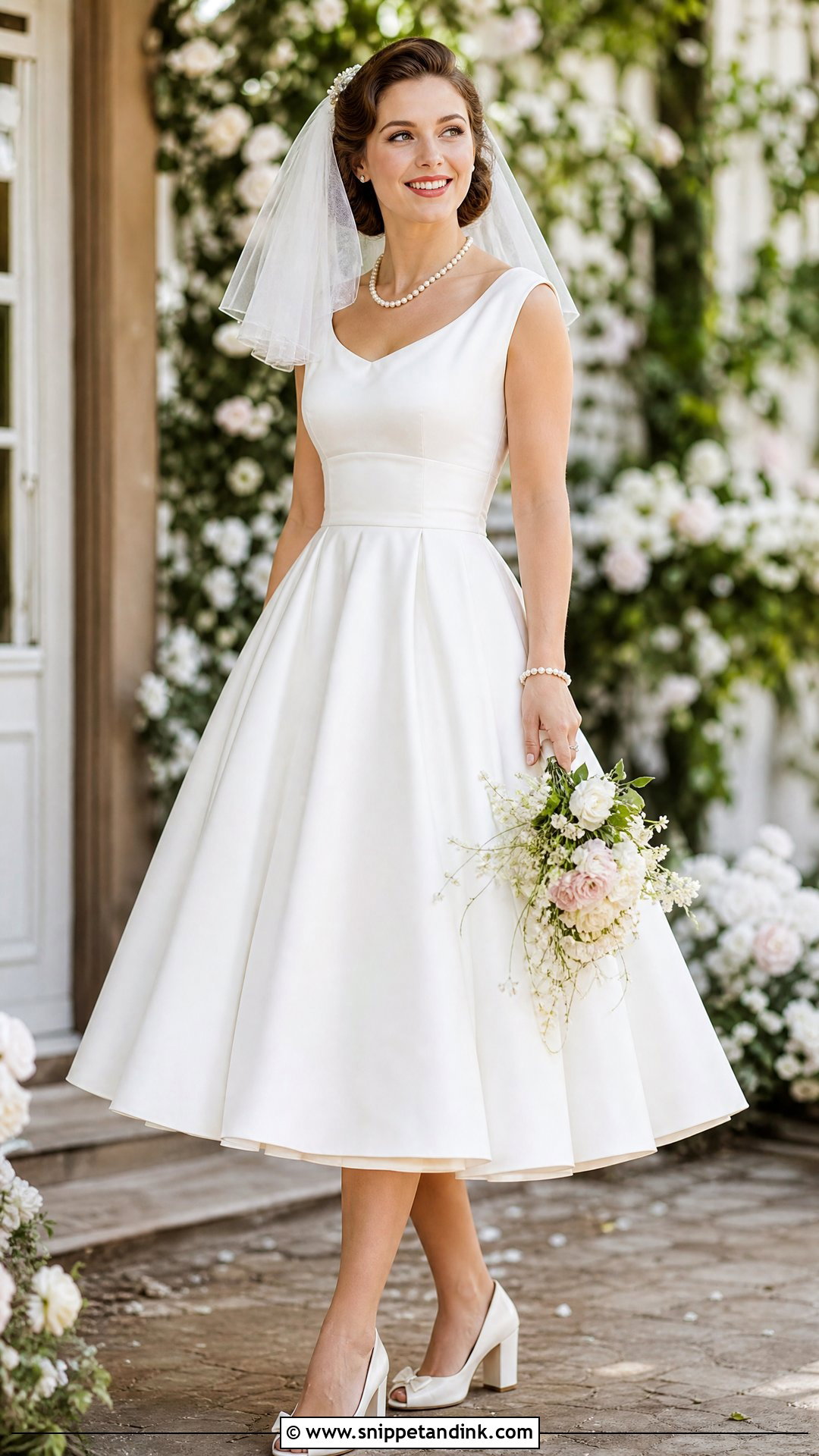
Between knee and ankle, a tea-length hem puts the shoes on show. Describe that as part of the outfit, and suggest shoes worth seeing. Name the bodice and skirt: fitted top, full skirt, a lace overlay or a satin bow. I find describing petticoat volume helps here, since a tea-length skirt with a crinoline reads very differently from a soft, flat one. Pearl jewelry and a short veil suit vintage-inspired and daytime weddings.
21. Off Shoulder Wedding Dress Description
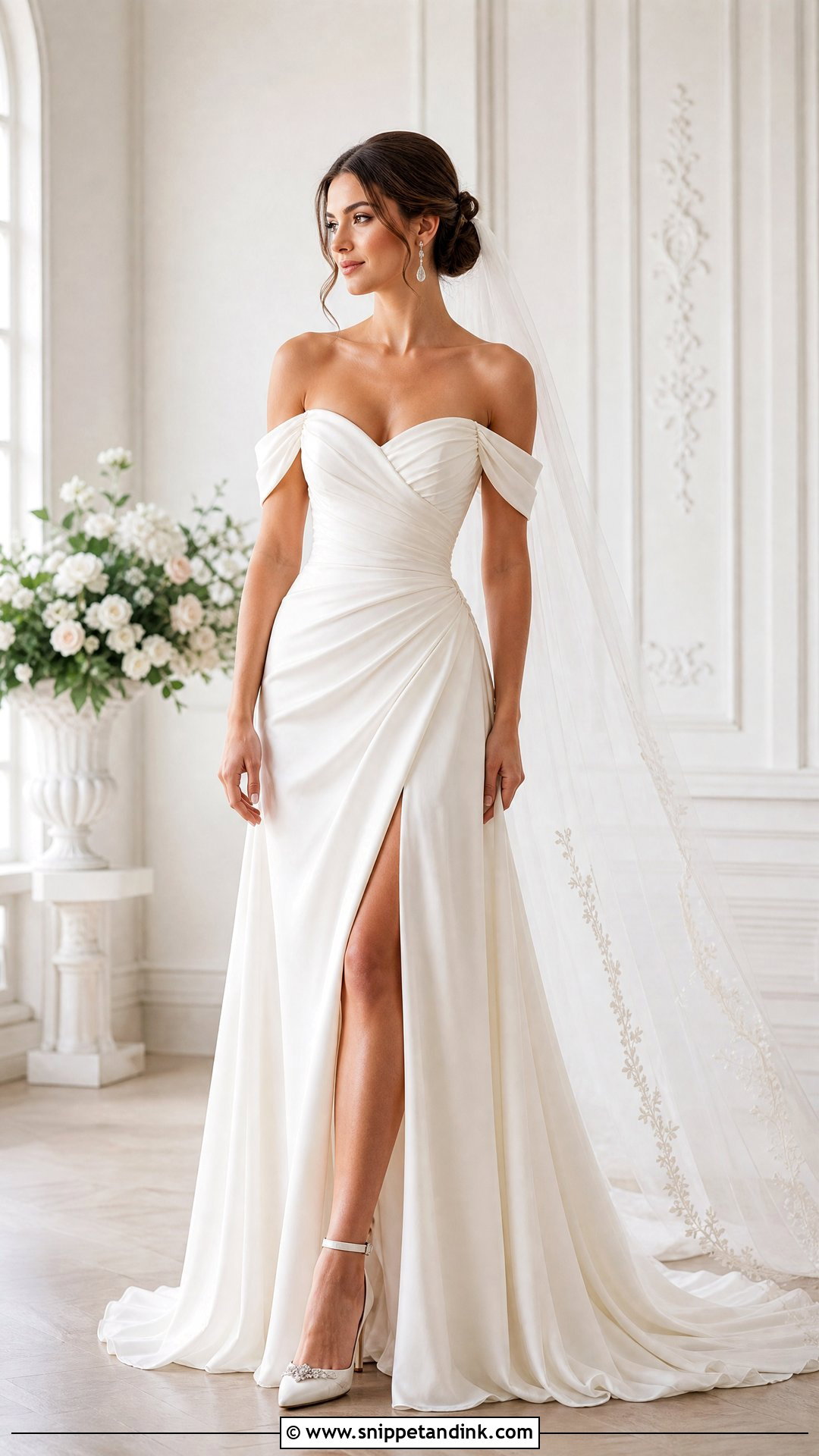
Say exactly how the off-shoulder sleeves are built: fitted bands, draped fabric, lace, satin or detachable. Then the rest of the gown, A-line, fitted mermaid or ball gown. I’d note whether the bands are structural or decorative, because decorative ones slip down the arm and a bride wants to know if she can lift her arms. Skip the necklace in the styling and suggest drop earrings and an updo. It suits formal and garden weddings.
22. Corset Wedding Dress Description
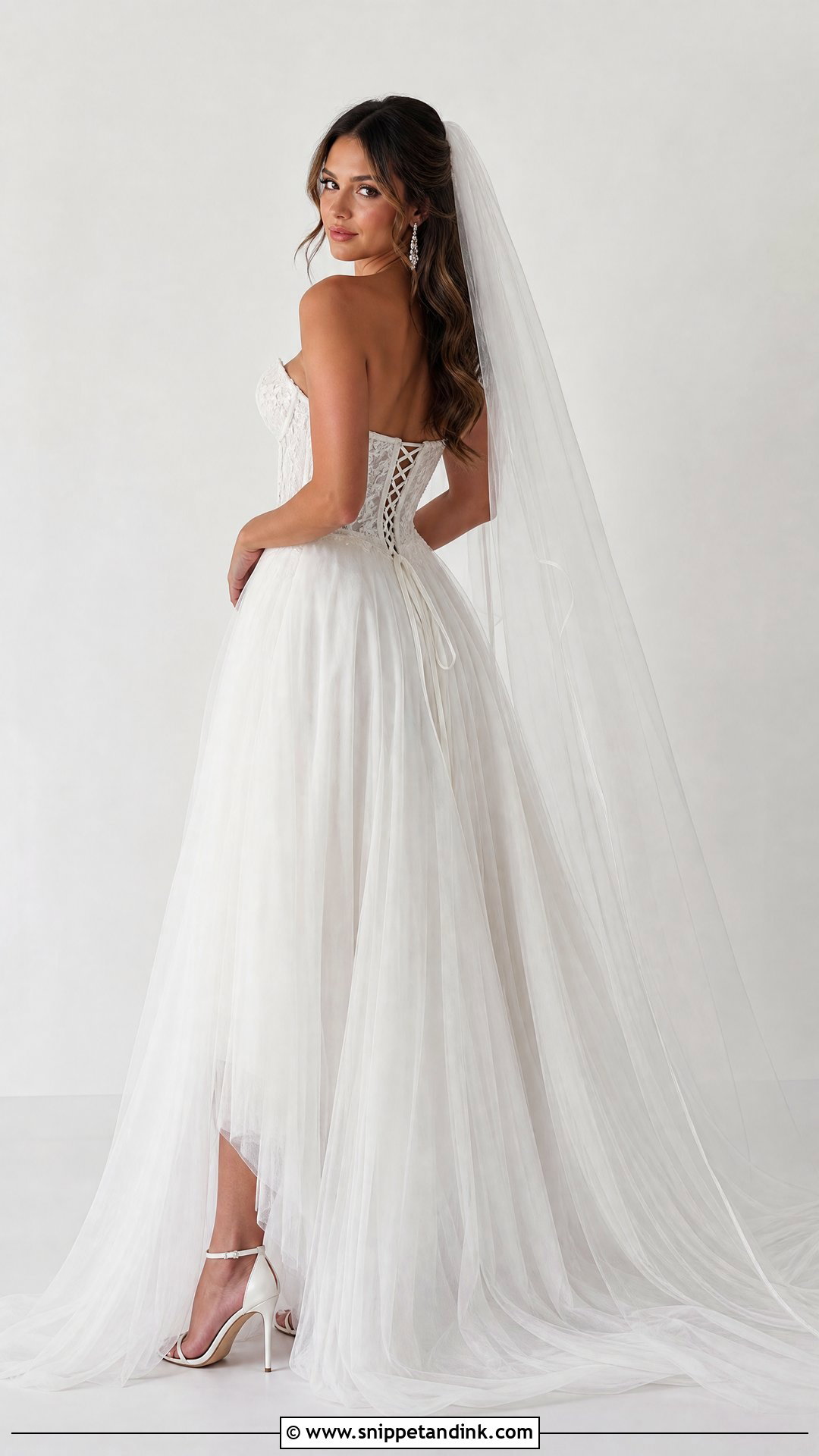
Elegant rather than costume-like is the balance to strike with a corset. Describe the visible boning, the shaped bodice, the lace-up back or sculpted waist, and the skirt it’s paired with: tulle A-line, satin ball gown or fitted lace. Say whether the boning is flexible or rigid, since that tells a bride how it will feel after dinner. A long veil and soft curls keep it romantic.
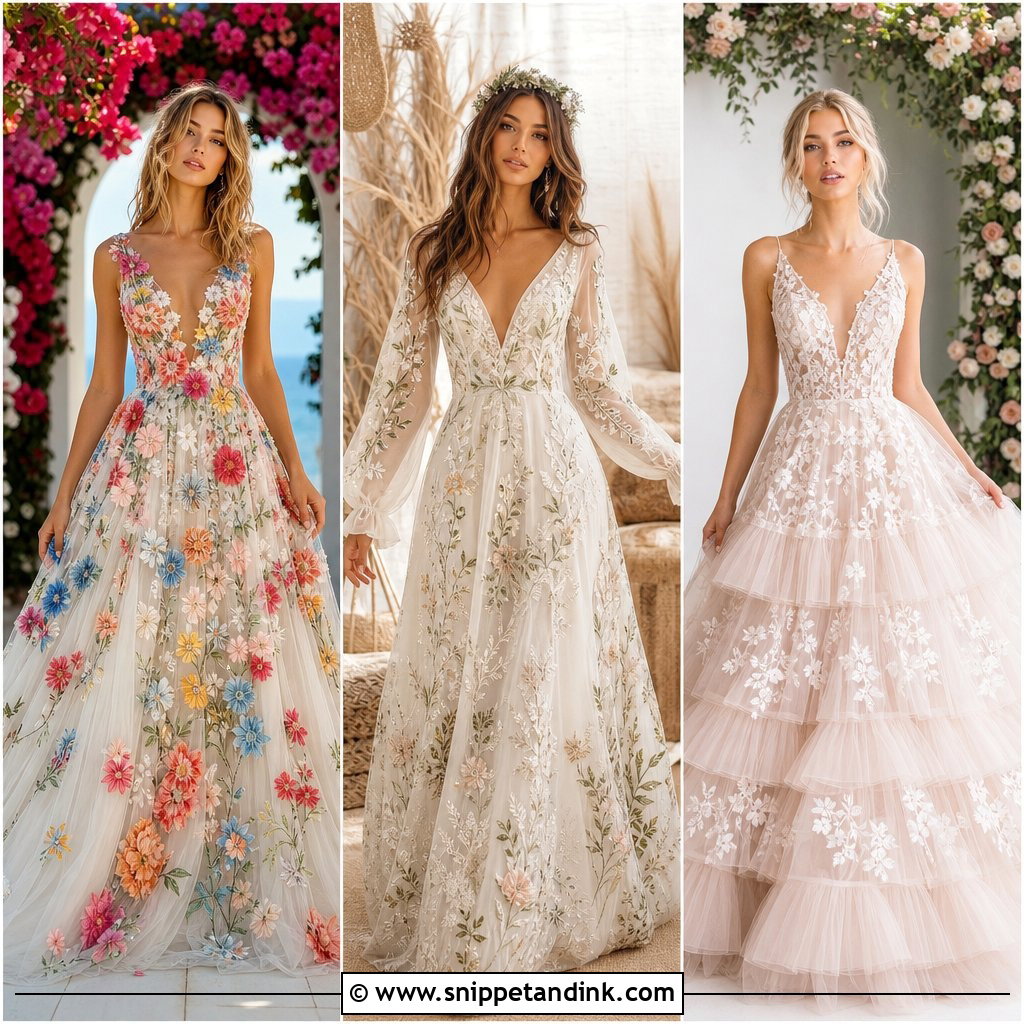
23. Floral Wedding Dress Description
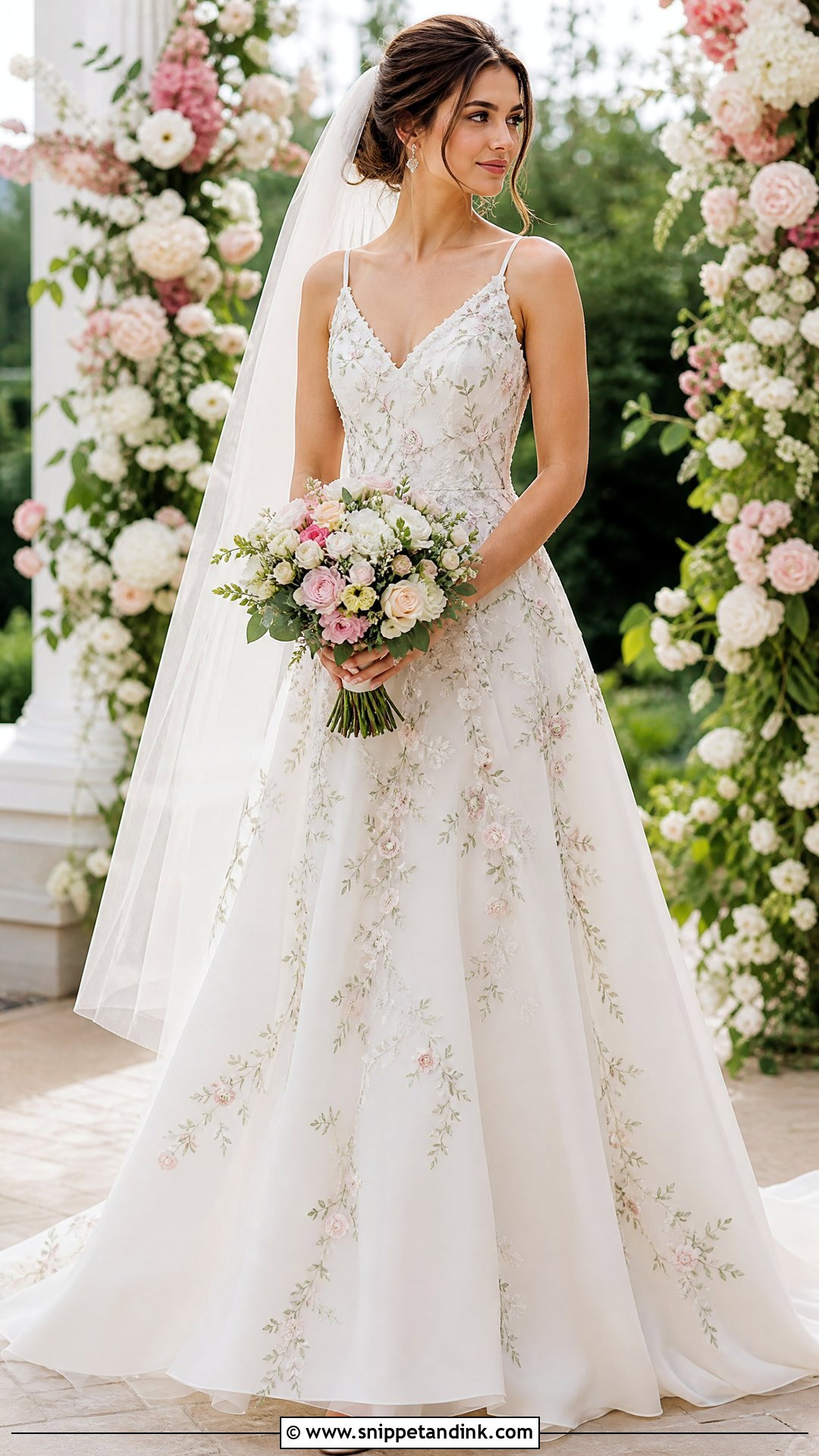
Explain how the flowers are made first: lace appliqué, embroidery, printed fabric, 3D petals or soft pastel detail. Then say where they sit on the silhouette, over an A-line skirt, across a fitted bodice or under a sheer overlay. If the flowers are colored, give the real shade, because color names like ‘dusty rose’ mean different things to everyone. A light veil and quiet heels let the florals lead in spring and garden settings.
24. Minimalist Wedding Dress Description
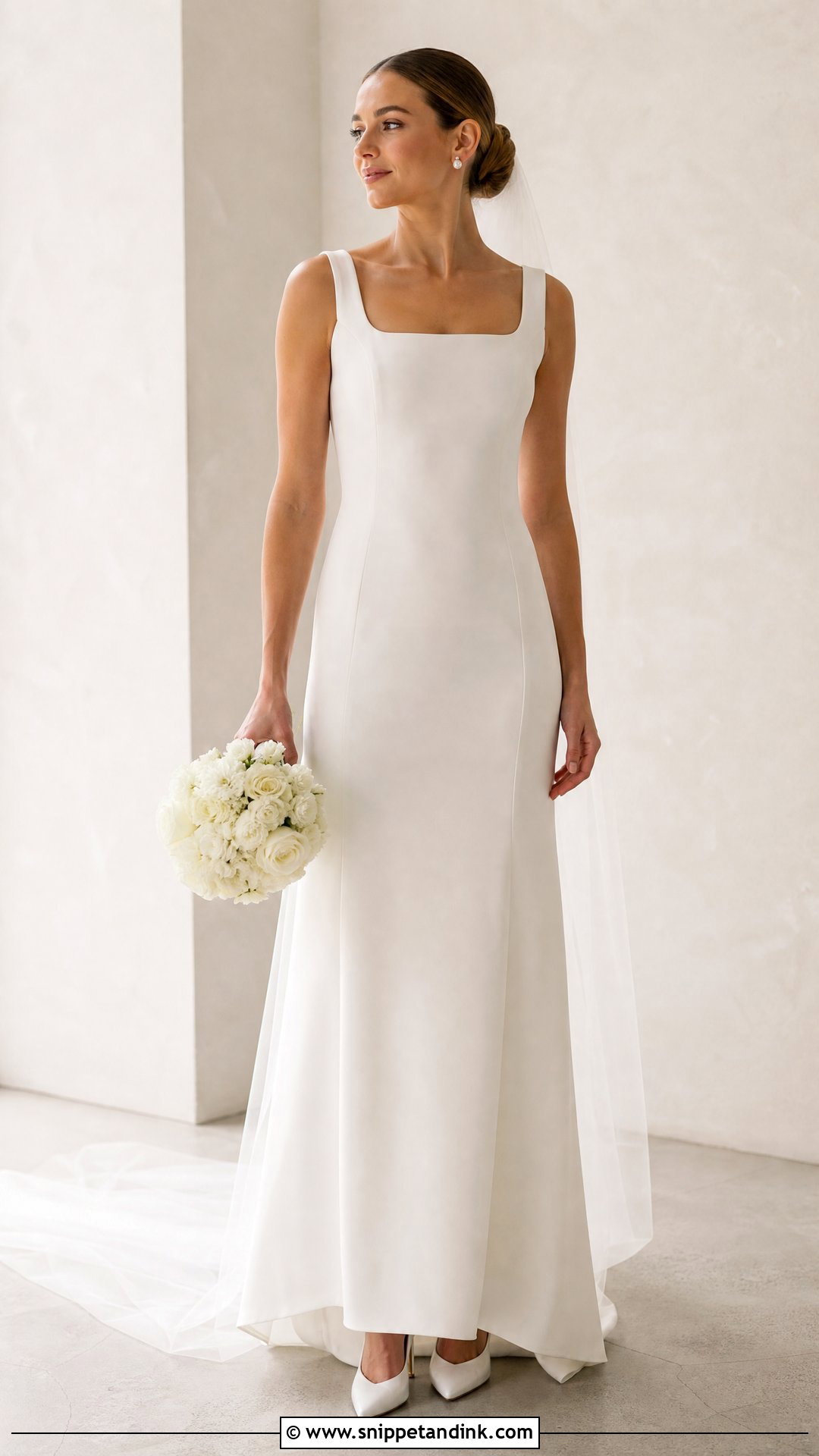
Simple details have to sound deliberate, not plain. I write about the cut: smooth crepe, matte satin, clean seams, a square neckline or a narrow column, and how it falls. Proportion and movement carry the description. Sleek heels, pearl studs and a low bun, with a plain veil or none. City weddings, formal venues and courthouse ceremonies suit it.

25. Black Wedding Dress Description
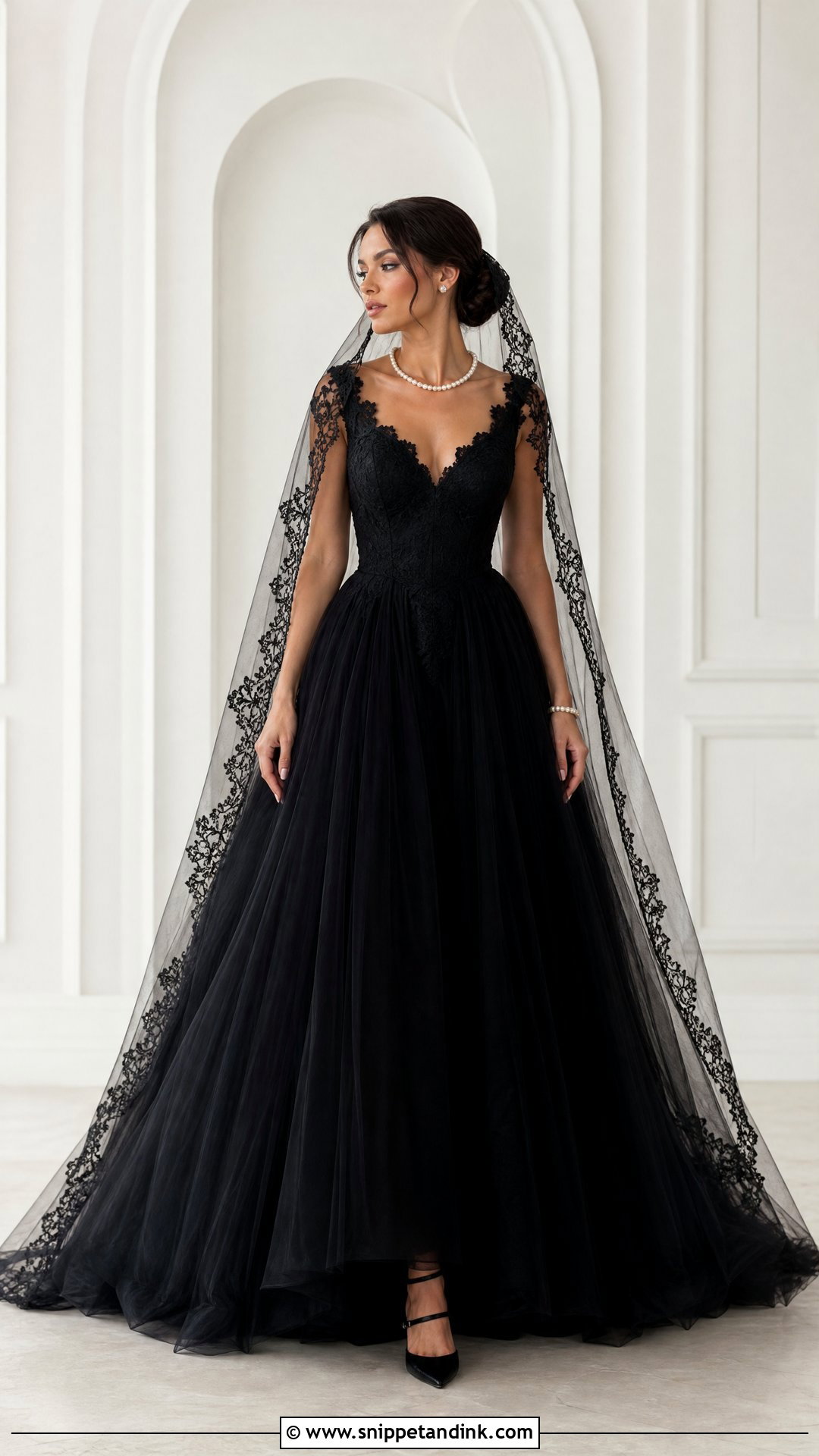
Bold choices need calm writing. Describe the fabric and shape carefully, black tulle, satin, lace or crepe in a ball gown, A-line or fitted silhouette, and keep the tone elegant rather than gothic. Black fabrics fade differently, so I note whether it’s a true deep black or leans charcoal in daylight. Silver or pearl jewelry and a black or ivory veil. Evening receptions and art venues suit it.
Bridal Terms That Mean Something Exact, and Words to Cut
Bridal shoppers learn the vocabulary quickly, and they notice when a listing uses it loosely. These are the terms I see misused most.
- Illusion: sheer mesh that sits on skin, usually at the neckline, back or sleeves. Not the same as an unlined lace sleeve.
- Mikado: a heavy, slightly stiff silk or silk-blend with a soft sheen. It holds architectural shapes. Don’t call it satin.
- Crepe: a matte fabric with a slight grain. Stretch crepe moves with the body; heavy crepe gives a sharp line.
- Sweep, chapel and cathedral trains: roughly in order of length, from barely touching the floor to well past a metre behind. Say which.
- Basque waist: a bodice that dips into a V or U below the natural waist. A dropped waist is horizontal.
- Ivory, diamond white, champagne: they differ by maker. Pair the name with a swatch photo in daylight.
Words I cut from almost every draft: dreamy, flattering, perfect, timeless, show-stopping. They describe a feeling the reader has to supply herself. Replace each one with the detail that causes the feeling, such as a train that pools, a neckline that frames the collarbone, a skirt that sways. And never promise fit you can’t see: ‘flattering on every body’ isn’t a description, but ‘stretch lining and an adjustable lace-up back’ is.
Write the Gown So a Bride Can Picture Walking in It
The descriptions that work combine clear fashion language with the setting and the full outfit. Instead of calling a gown pretty, describe the silhouette, fabric, neckline, train and the kind of wedding it suits. That helps shoppers and readers imagine it in real life and makes boutique listings, captions and blog posts genuinely useful. Simple satin, romantic lace, dramatic tulle or a short modern dress: each one deserves words that are visual, specific and true to the dress.
You'll Like These Ideas:






Leave a Reply