
A bow is one of the few dress details that changes the whole silhouette rather than sitting on top of it. Placed at the waist it draws the eye in; on an open back it frames skin; trailing into a train it adds movement as you walk. Designers now cut bows in many forms, from a small knot on one strap to a sculpted loop wider than your shoulders, and plenty are detachable. In fittings, the bow is usually the part brides fuss over least and regret most, because its fabric and scale decide how the whole dress reads from the aisle. Below are twenty ways to wear one, with notes on veils, shoes and hair for each, plus what I check before a bride commits.
How Big Your Bow Should Be for Your Height and Train
Scale is what I adjust most at fittings. A bow that looks right on a hanger can swallow a petite bride or vanish on a tall one, so I judge it against the body, never the dress alone.
- Petite frames: keep the finished bow narrower than your shoulders and the tails no longer than the skirt hem. A huge loop at the back waist shortens the torso.
- Tall brides: you can carry a wide bow and tails that run well into a chapel train, which helps a long line look intentional rather than empty.
- Curvy figures: place the bow at the narrowest point of your waist, or high on the back. A bow sitting on the hip adds width there.
- Long trains: let the tails stop a hand’s width short of the train’s end, so they do not tangle with it when you turn.
Fabric changes the answer too. Satin and Mikado hold a big bow upright; chiffon and crepe bows look best smaller, because a large soft bow droops by evening. If you are buying off the rack, ask your seamstress whether the bow can be rebuilt smaller. Most can be, since the loops are usually separate pieces stitched to the dress.
1. Satin Wedding Dress with an Oversized Back Bow
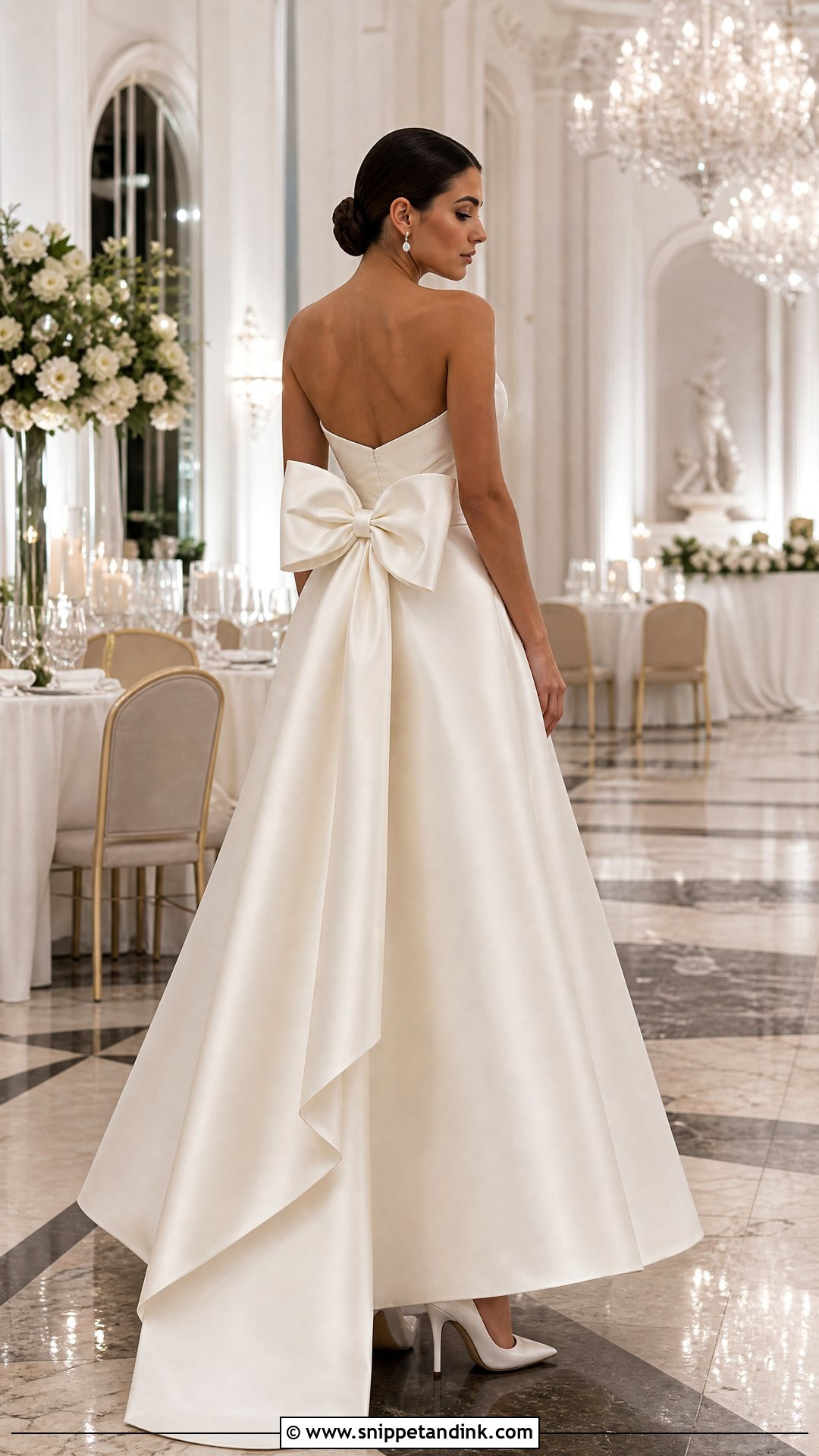
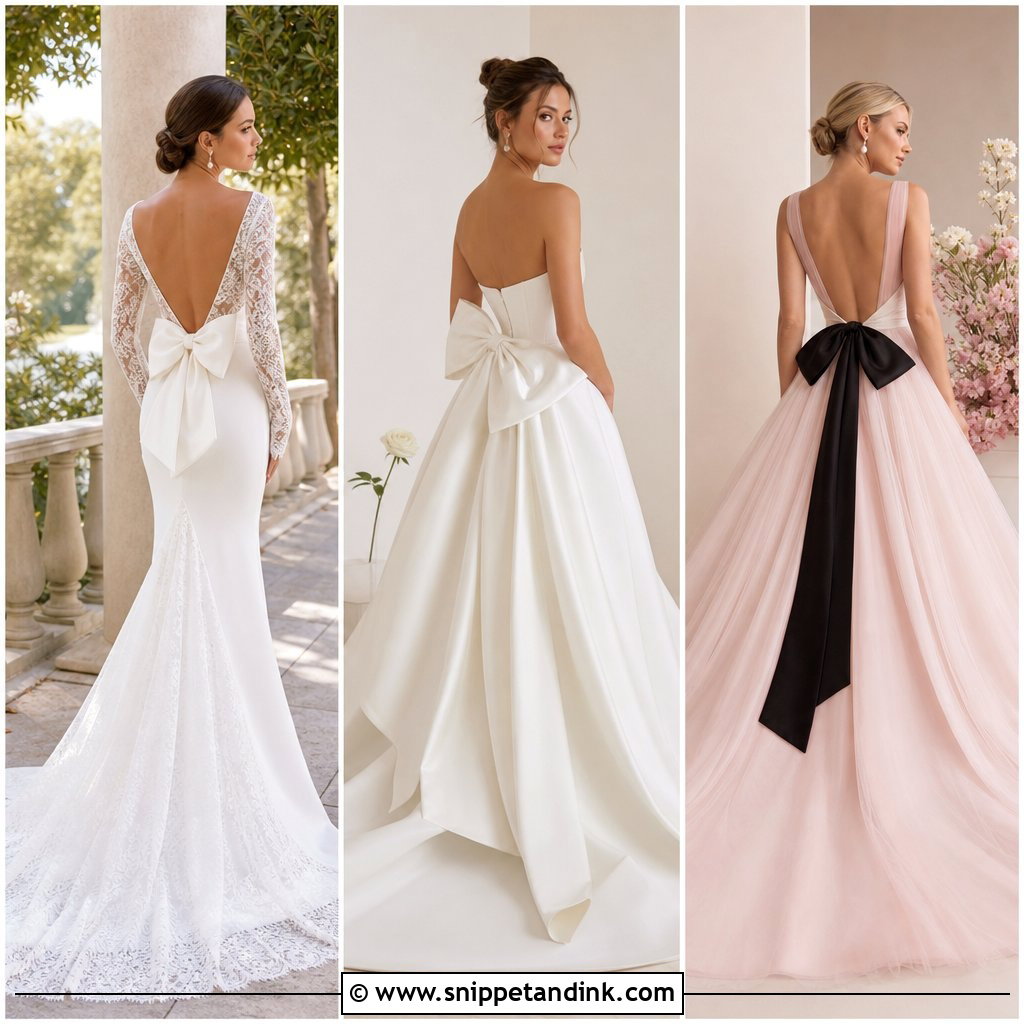
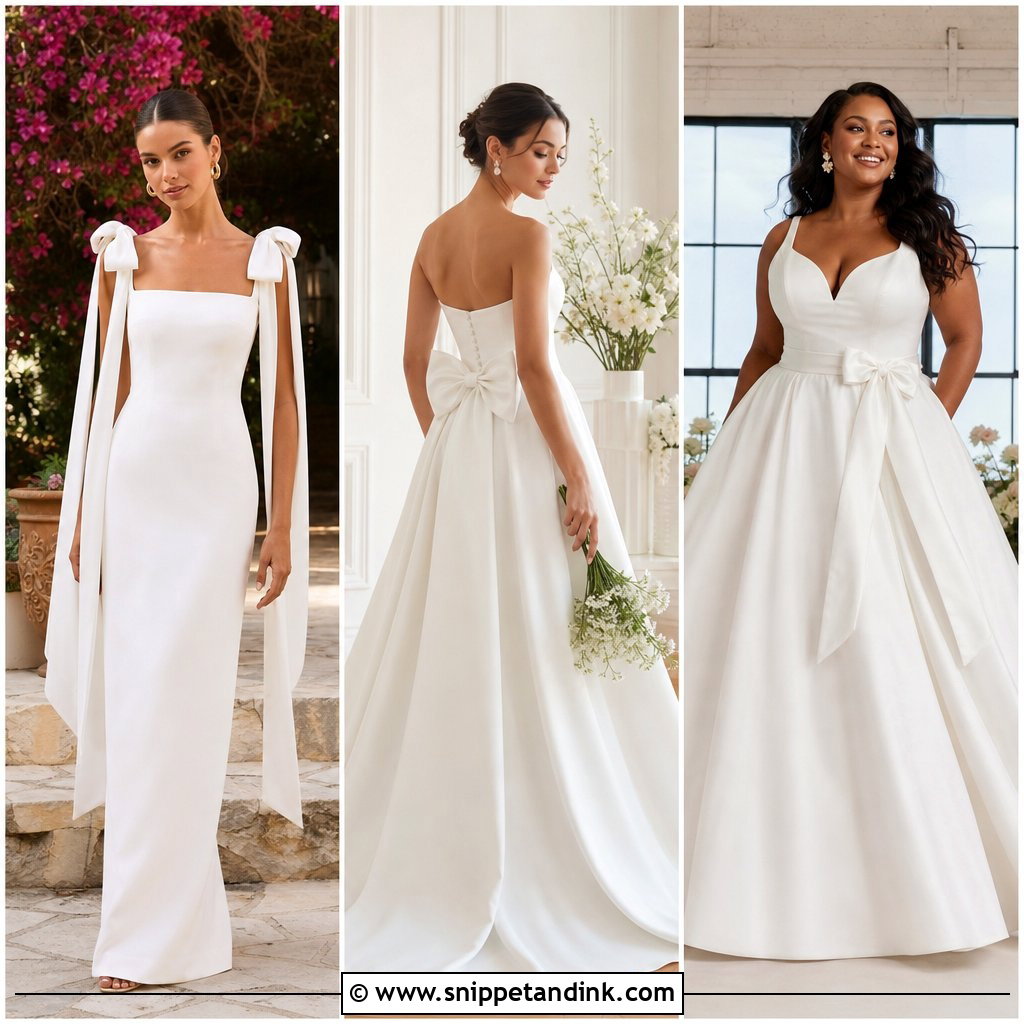
An oversized bow on a satin back gives guests something to look at for the entire ceremony, since that is the view they get while you stand at the front. It needs a quiet front to work: a clean strapless or square neckline, and an A-line or ball skirt with enough width that the bow does not crowd the hips. Long ribbon tails can run down into the train. The thing I check first is weight. A big satin bow pulls the back neckline downward over a long day, so I ask the seamstress to anchor it to the bodice boning, not just the outer fabric. Pearl studs, ivory pumps and a sleek low bun keep the rest calm. If the bow sits high on the back, skip the veil; a fingertip veil only suits it when the bow sits at the waist.
2. Mikado Ball Gown Wedding Dress with a Bow
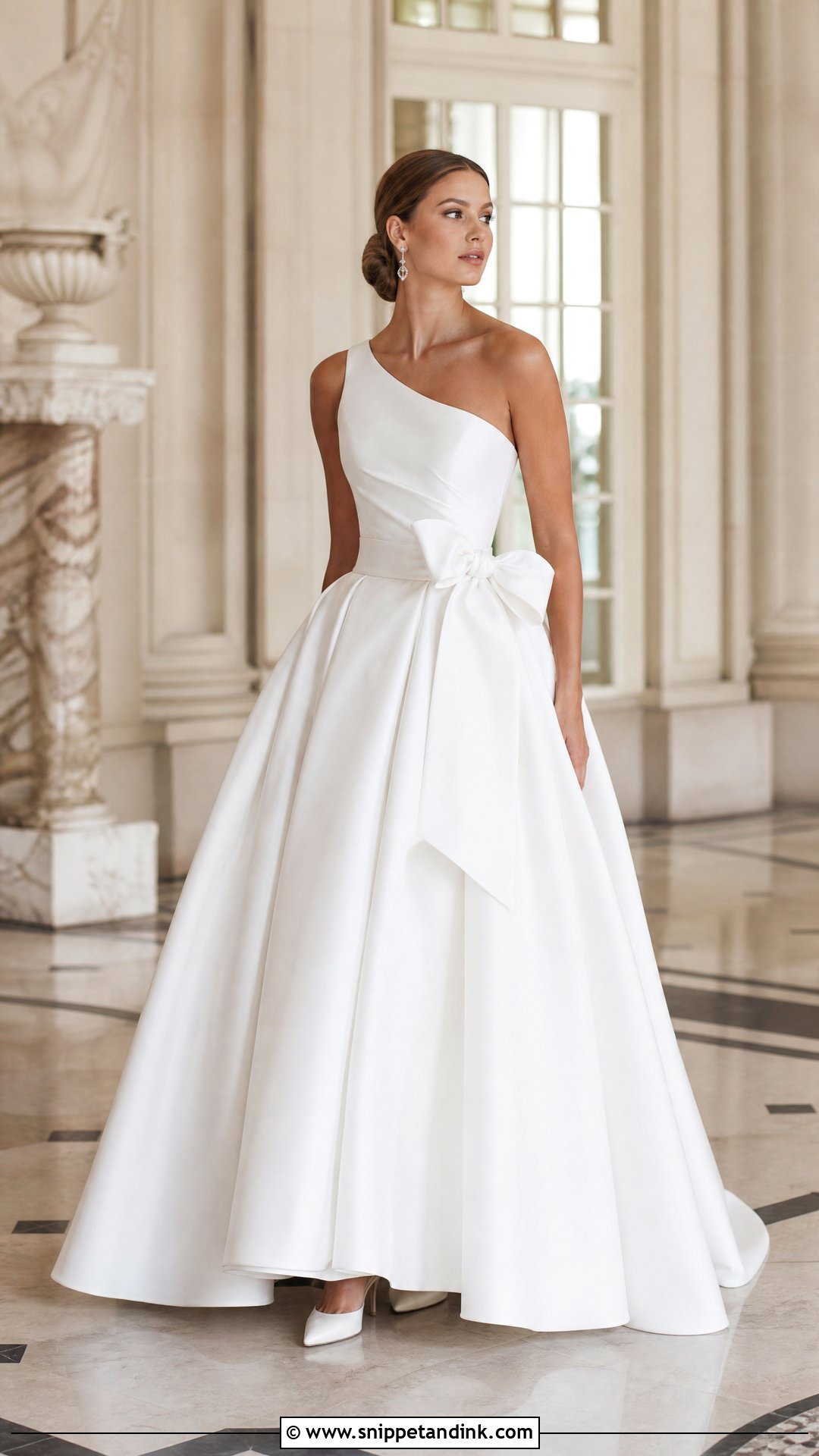
Mikado is the fabric I reach for when a bow has to keep its shape for twelve hours. It has a stiff, slightly ribbed body, so the loops stay open instead of collapsing the way thin satin does by the reception. Put a wide bow at the natural waist or upper back over a fitted bodice and a full skirt. A single-shoulder neckline adds interest, but a plain strapless bodice lets the bow carry the design on its own. Because Mikado is heavy, it can feel warm in summer, so I steer brides with outdoor July dates toward something lighter. Crystal drops, satin pumps and a smooth chignon are enough; leave the necklace off. Choose a cathedral veil with a plain edge, and the gown will hold a large indoor room.
3. A-Line Wedding Dress with a Detachable Bow
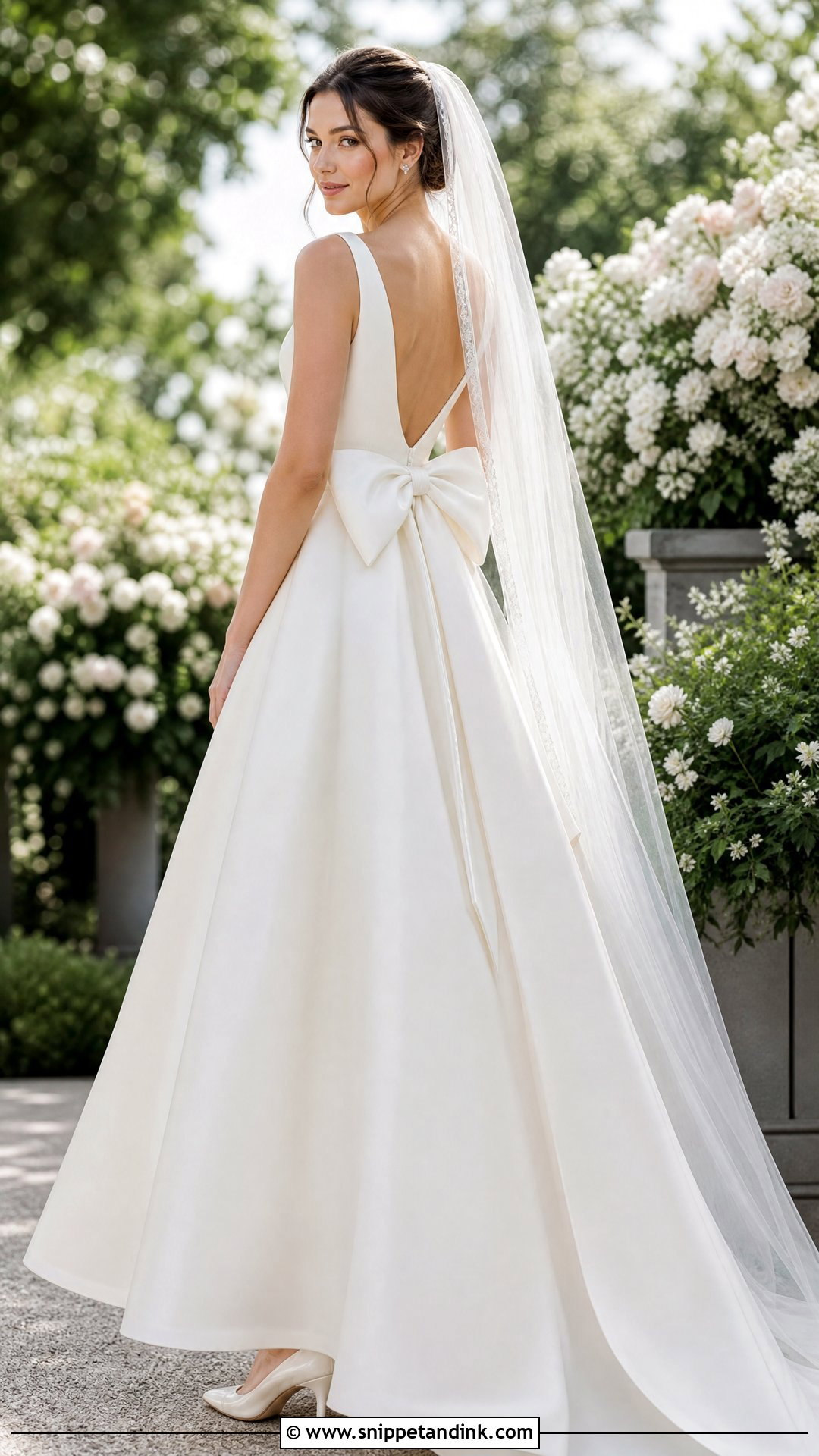
Two looks from one dress is the whole appeal here. A large satin bow clips onto the back waist of an A-line gown for the aisle and comes off before dinner, leaving something lighter for dancing. The dress underneath has to stand on its own, so look for a supportive bodice and a softly flared skirt with little decoration. Wear a chapel veil, small diamond studs and closed heels for the ceremony, then swap the veil for pearl pins or a comb. Check the attachment at your fitting: hooks or snaps should sit flat under the bow, and once it is removed they should not leave a visible gap or puckered seam. Ask your maid of honor to practise the swap once so it takes minutes, not half the cocktail hour.
4. Strapless Wedding Dress with a Bow Back
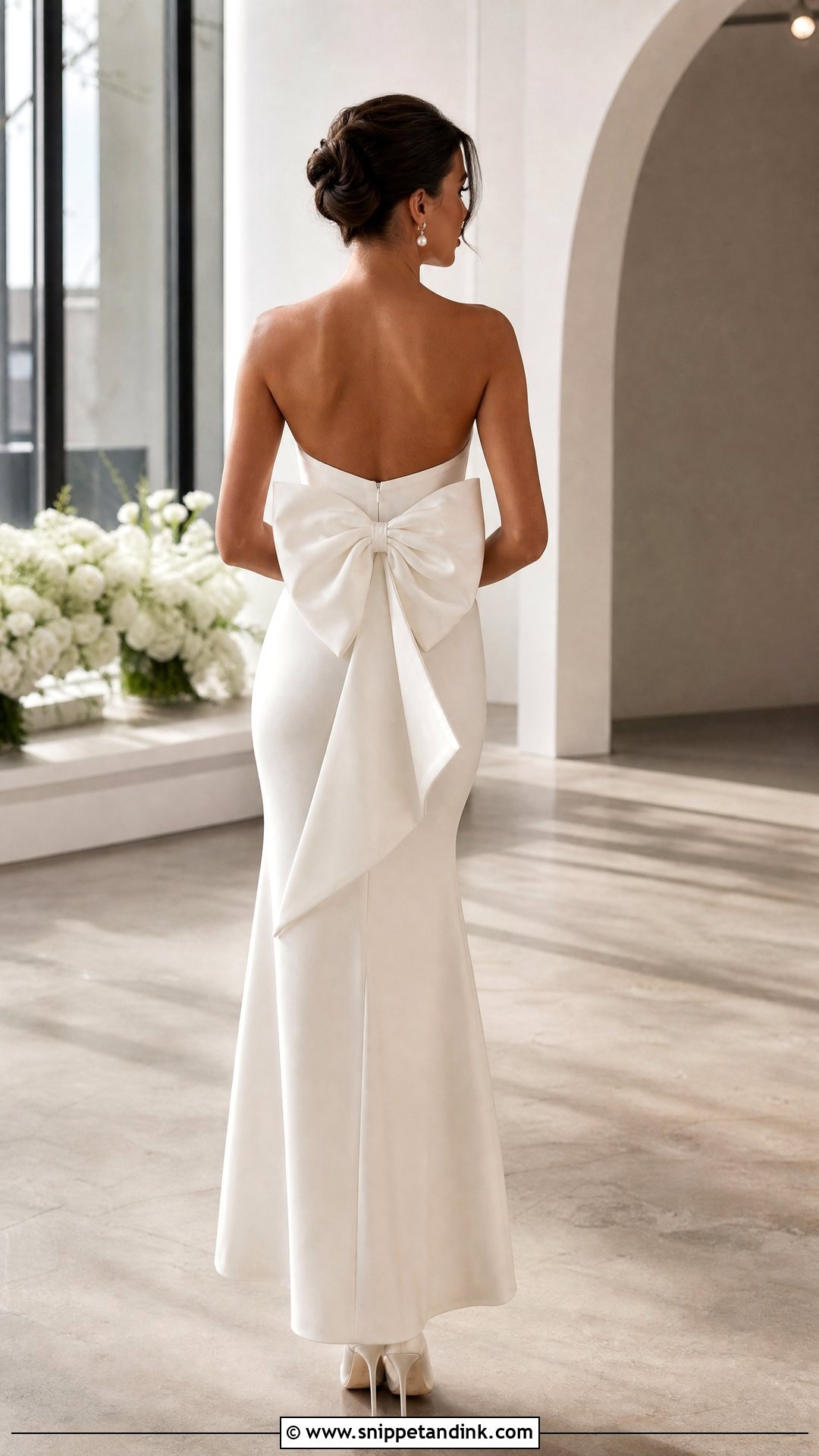
With no straps in the way, a strapless gown leaves the whole back free for one bow sitting just above the waistline. Everything depends on internal structure. If the bodice does not have proper boning and a grip waistband, the weight of the bow will drag the top edge down and you will spend the night hitching it up. A fit-and-flare or column skirt keeps the front streamlined. Choose small chandelier earrings or a fine pendant, not both. An updo shows the shoulders and the bow in back photos, and a lightweight chapel veil pinned under the hair can come off after the ceremony so the bow is fully visible for the first dance.
5. Off-the-Shoulder Wedding Dress with a Back Bow
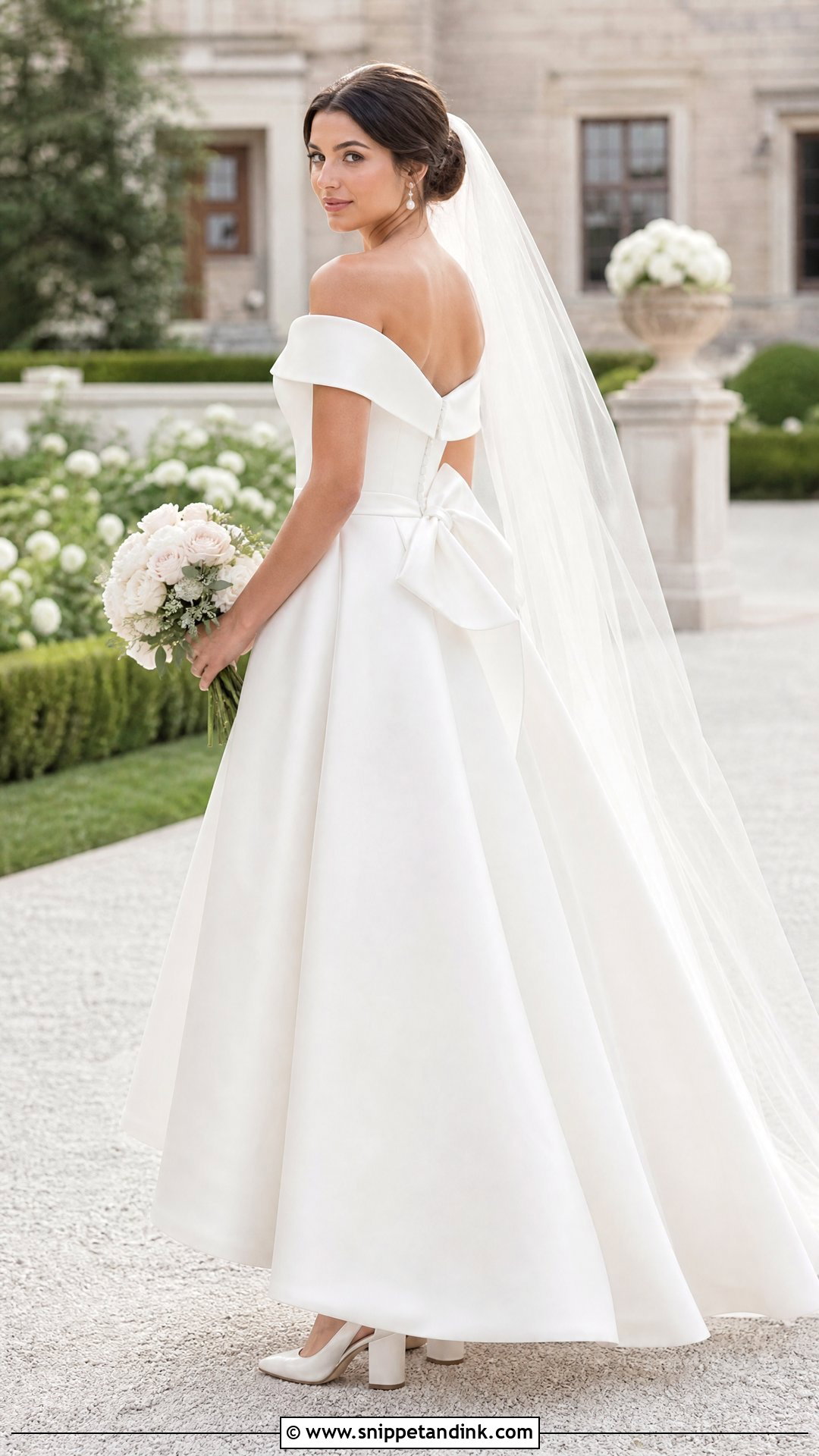
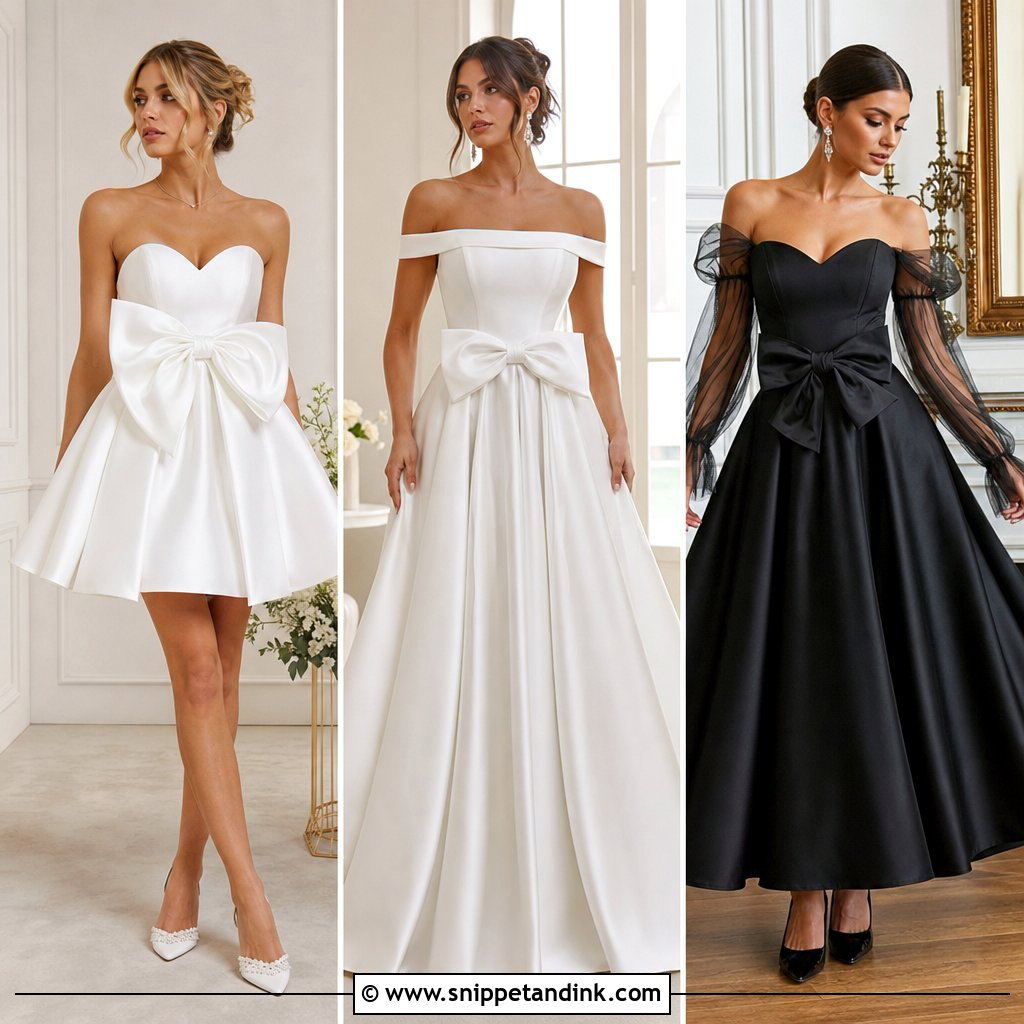
Off-the-shoulder sleeves and a back bow give you romance without lace or beading. The folded neckline needs to be cut with grip elastic or a hidden band, otherwise the sleeves creep up your arms each time you hug someone. Satin or Mikado gives a crisp result; crepe falls softer and suits a medium bow better than an oversized one, which can sag on a fluid fabric. Wear a low bun or side-swept waves so the neckline stays visible. A plain cathedral veil is lovely here because sheer tulle lets the bow show through it. Pearl earrings and block-heel pumps finish it, and the look sits naturally in estates, museums and formal gardens.
6. One-Shoulder Wedding Dress with a Shoulder Bow
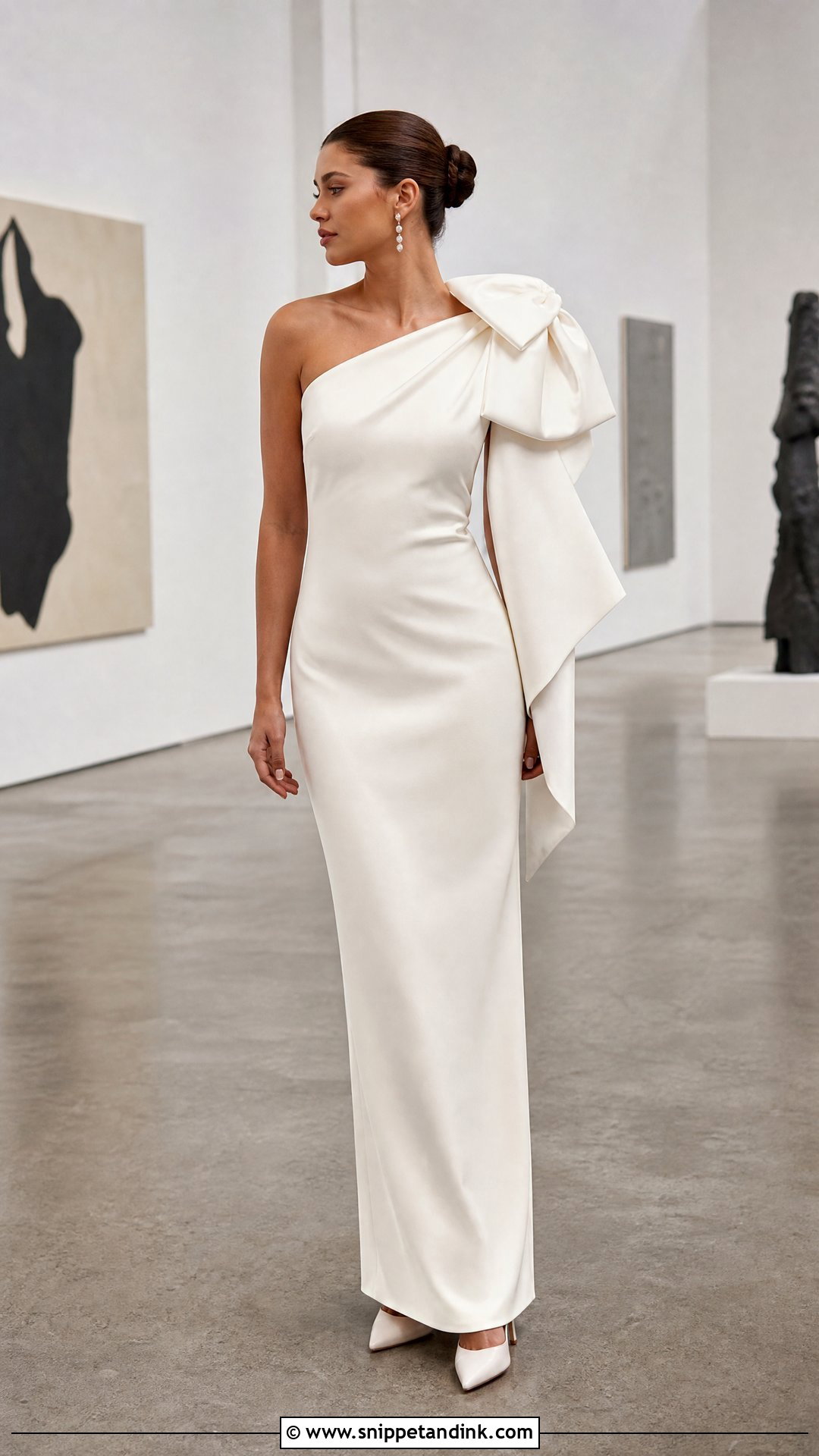
A bow on one shoulder pulls attention up toward your face, which is why it reads modern rather than sweet. The bow can sit right on the shoulder or slightly above the bodice line. Balance that weight below with a straight column, a trumpet or a structured A-line. Leave the other shoulder bare and skip the necklace, which would fight the diagonal line. Sleek drop earrings, a polished bun and pointed heels are plenty. In fittings I have brides raise both arms as if hugging: a bow that is too heavy or stitched too tight will restrict the movement and twist forward. A short veil behind the bun can work, though most of these gowns photograph better without one.
7. Wedding Dress with Bow Shoulder Straps
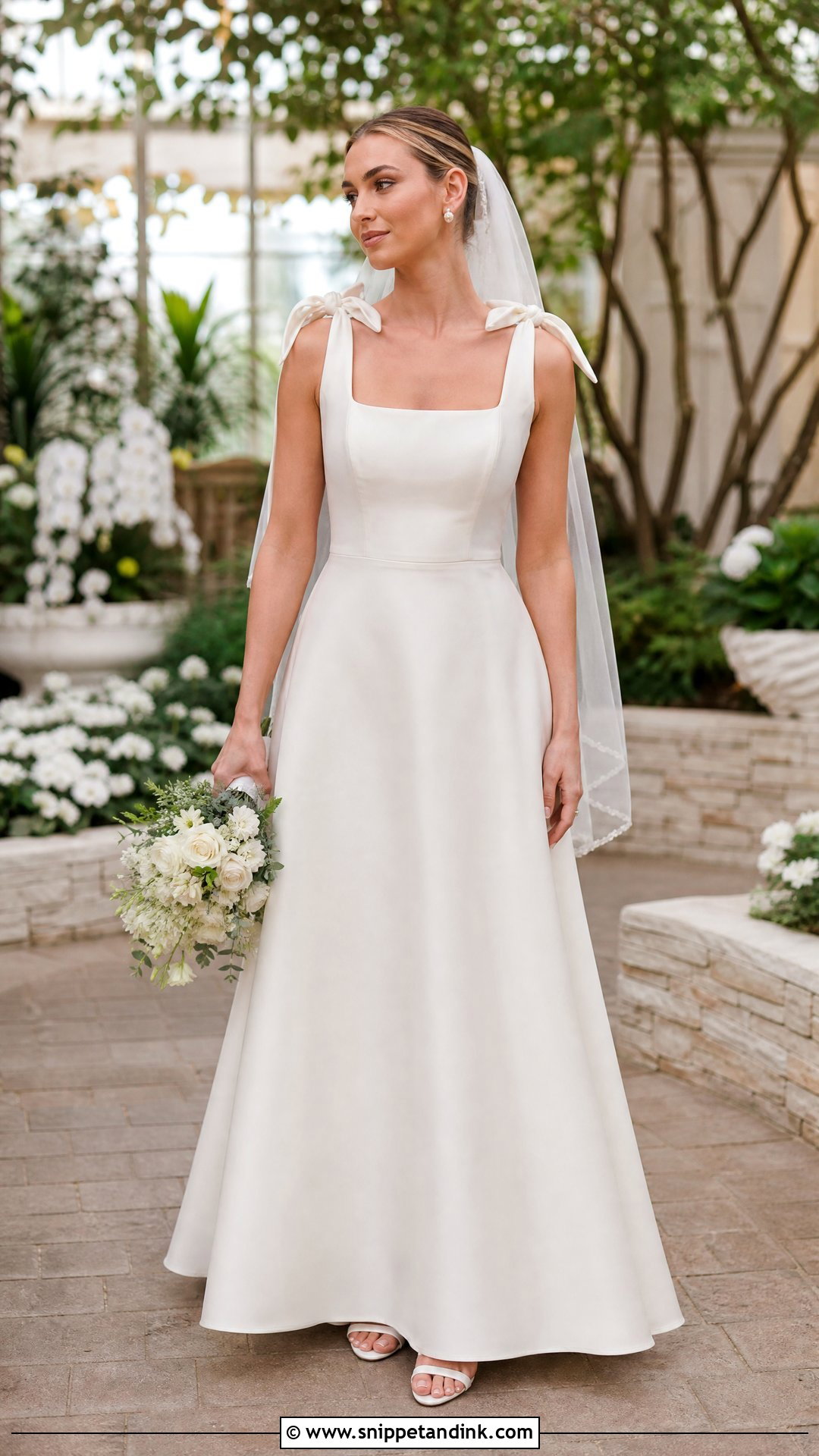
Bow shoulder straps read younger and softer than a single statement bow, and they suit a square-neck A-line, a corset bodice or a floaty chiffon skirt. Short-tailed bows keep it subtle; bigger structured loops make the shoulders the focus. The catch is symmetry. Two bows need to sit at exactly the same height and angle, and soft fabric bows slip after a few hours of hugging, so I have them tacked in place underneath. Because the straps already frame your neckline, keep jewelry to pearl studs. Loose waves or a half-up style let the bows show, and a fingertip veil fixed at the back of the head stays clear of them.
8. Lace Wedding Dress with a Satin Bow
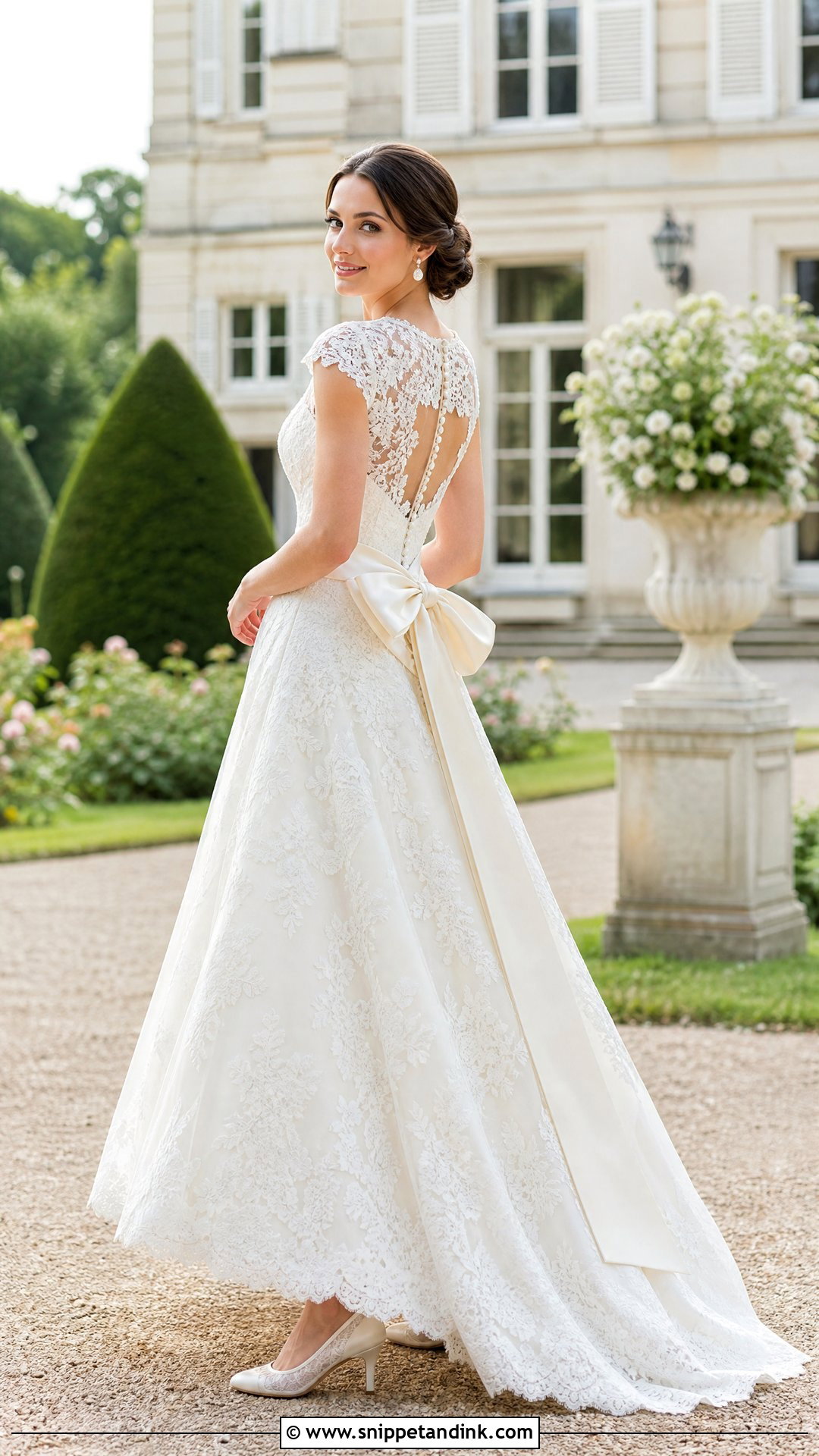
Lace and satin side by side give the dress depth, and the smooth bow stands out clearly against the texture. Put a lace bodice over an A-line or fit-and-flare skirt, then add a satin bow at the waist or back, narrow for a classic finish or wide for impact. Colour matching is where this goes wrong. Ivory satin and ivory lace are rarely the same ivory, and under flash photography a mismatch shows up as a yellow or grey bow, so I compare swatches in daylight against the lace lining before anything is cut. Pearl earrings, lace-trimmed pumps and a low chignon suit it, and a tulle veil with a narrow satin edge ties the two textures together.
9. Mermaid Wedding Dress with a Bow Train
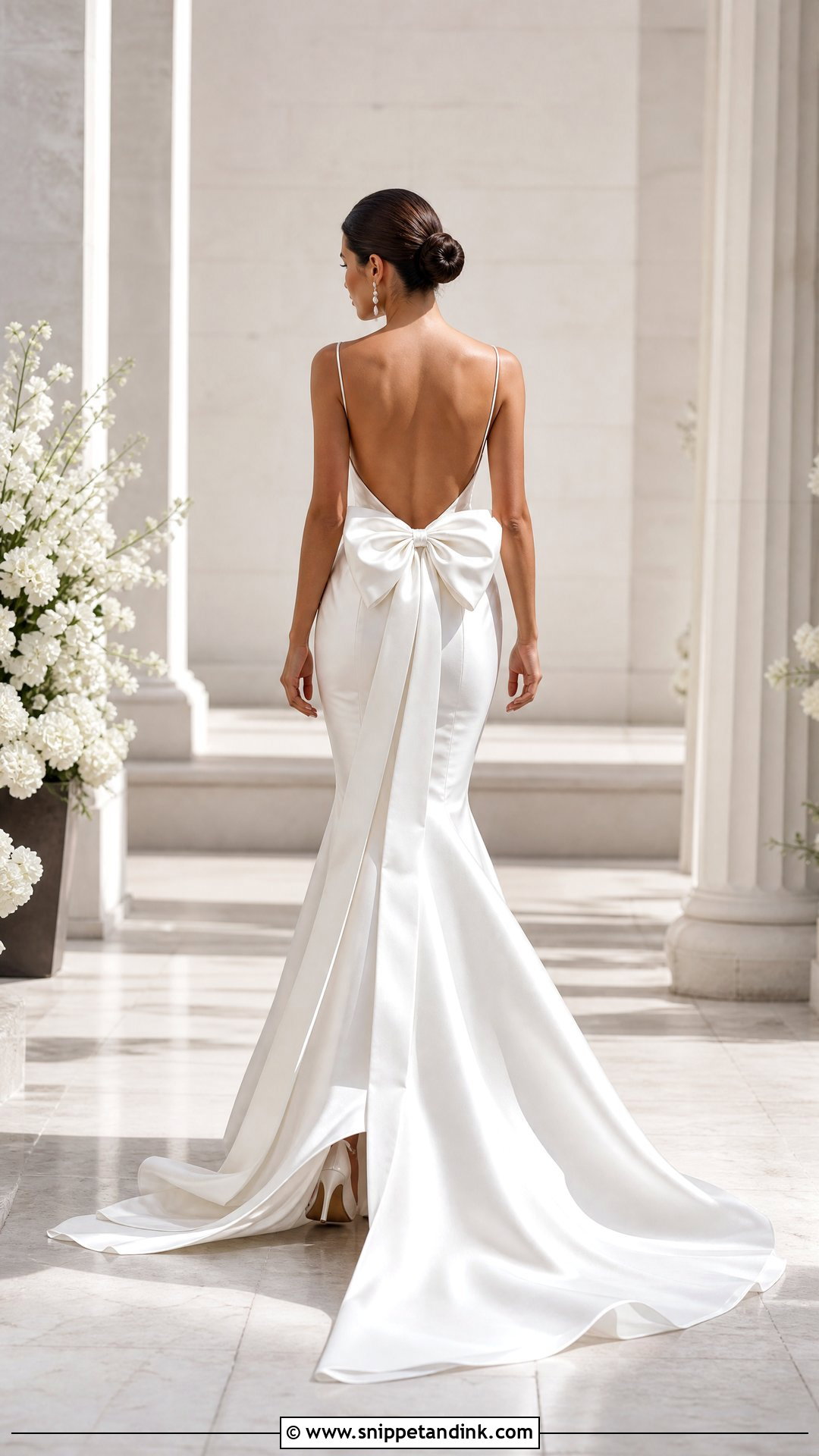
On a mermaid gown, a bow at the lower back lets its tails run with the skirt into the train, which stretches the whole line of your body. Stretch crepe, satin or a clean Mikado keeps the fit smooth through the hips. Pick a simple neckline so the back stays the focus. My first question at the fitting is how you will dance, because a mermaid with a long bow train needs a bustle that hides under the bow itself. A good seamstress will build the bustle points into the bow so nothing shows once the train is lifted. A sleek bun, long drop earrings and a light veil you can remove after the ceremony keep it modern.
10. Column Wedding Dress with a Small Back Bow
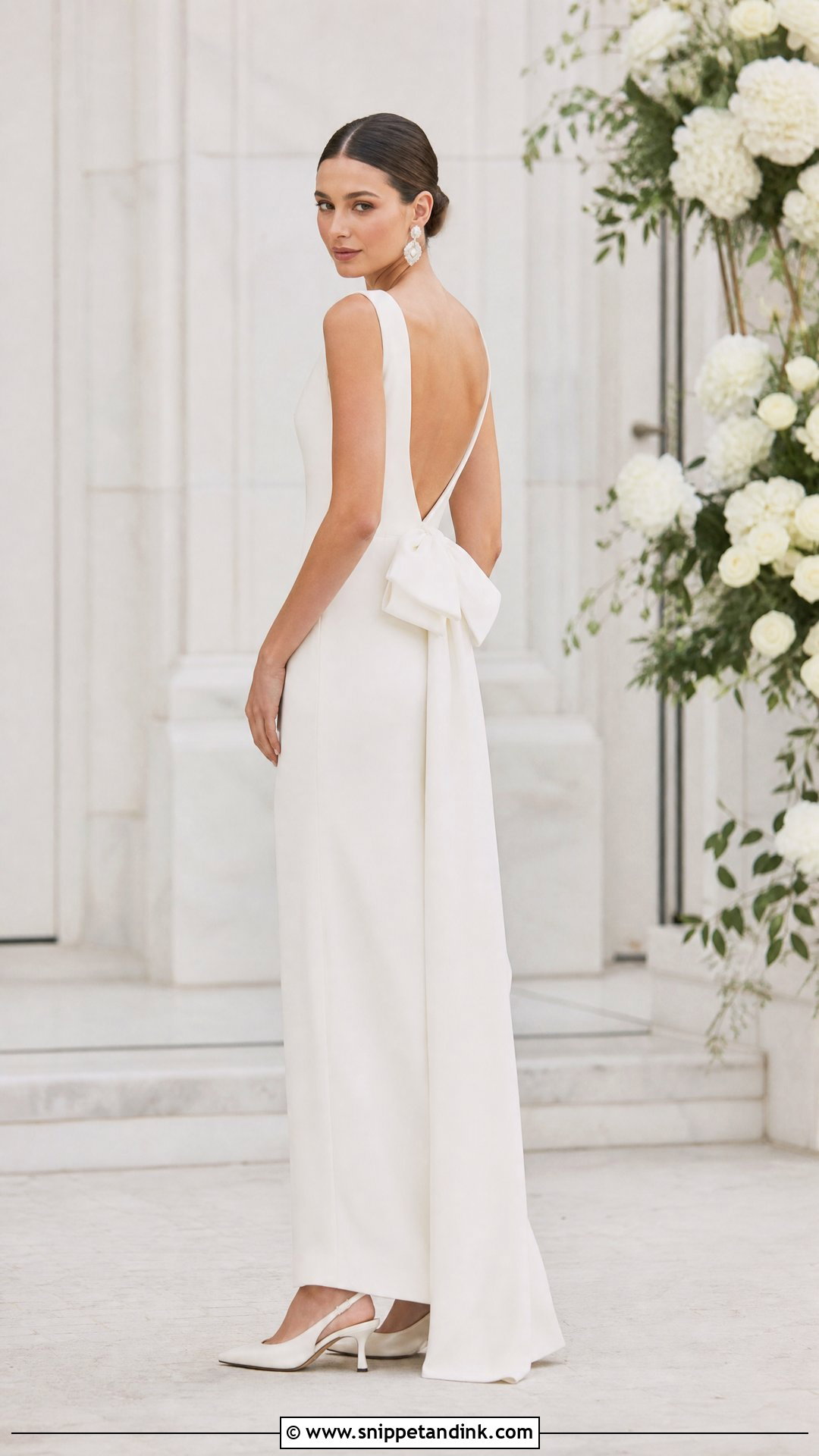
One small bow on a narrow column is the version I suggest to brides who usually dislike bows. It adds personality without changing the dress’s clean character. Look at a high neck, bateau or straight strapless bodice in matte crepe or fluid silk, and place the bow at the upper back, the waist or the top of a slit. A short veil or modern blusher keeps the line long, where a decorated cathedral veil would swamp it. Tailoring matters more than with any other shape here: a column should skim, and if it pulls across the hips a small bow only draws attention to the strain. Sculptural earrings and slim slingbacks finish it for a city ceremony or a restaurant reception.
11. Drop-Waist Wedding Dress with a Back Bow
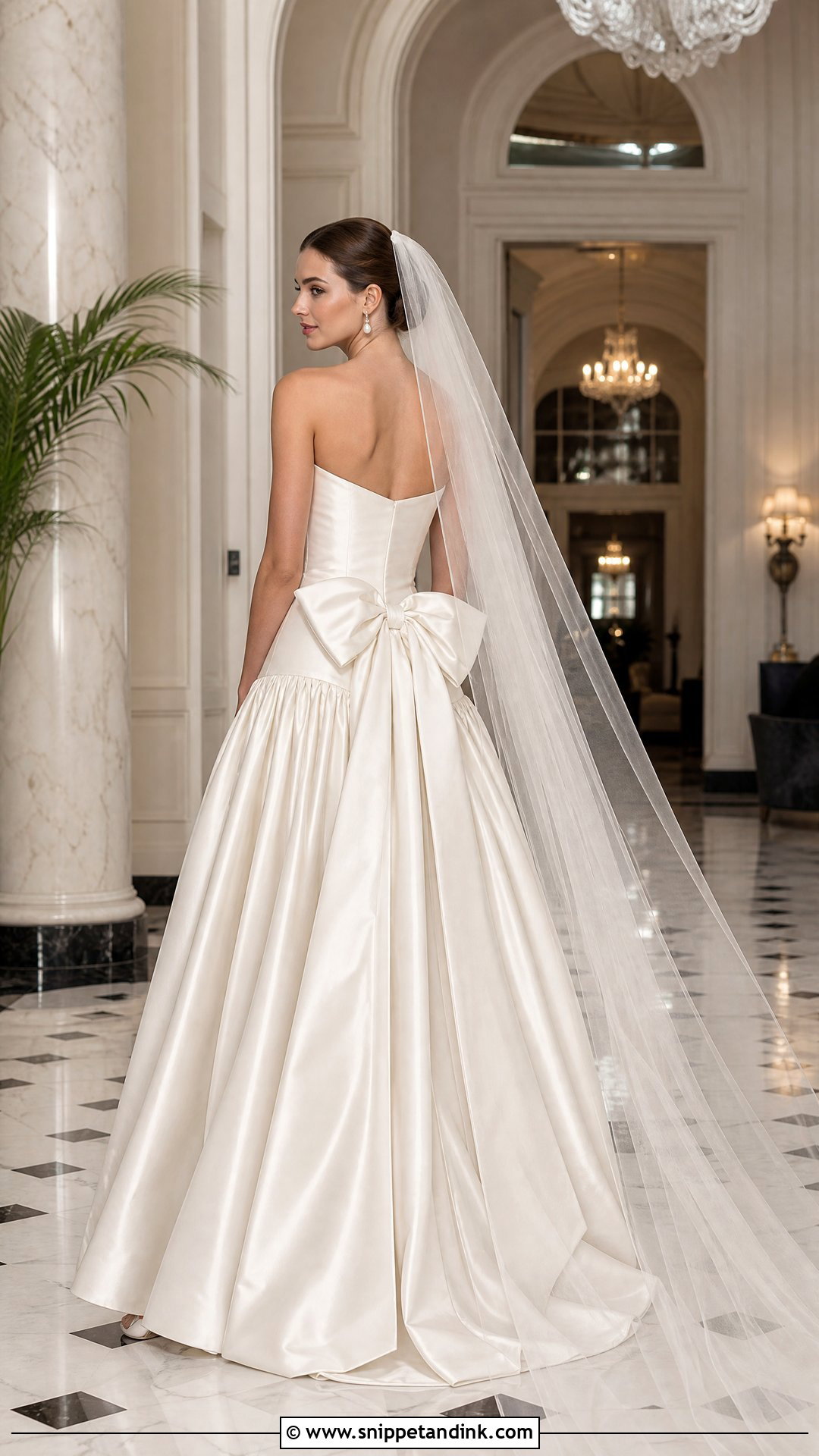
A drop waist lengthens the bodice before the skirt opens, and a bow at that low seam marks the transition clearly. Choose structured satin or Mikado with a basque-inspired bodice and keep the bow roughly in proportion to the skirt’s width. This silhouette is less forgiving on shorter brides, since the long bodice can make the legs look short, so I always have a petite bride try it with her actual wedding shoes. Pearl drops, a sleek bun and classic pumps keep things balanced, and a sheer cathedral veil adds length without hiding the waist. At alterations, check the bow from the side and back as well as in the mirror.
12. Basque Waist Wedding Dress with a Bow
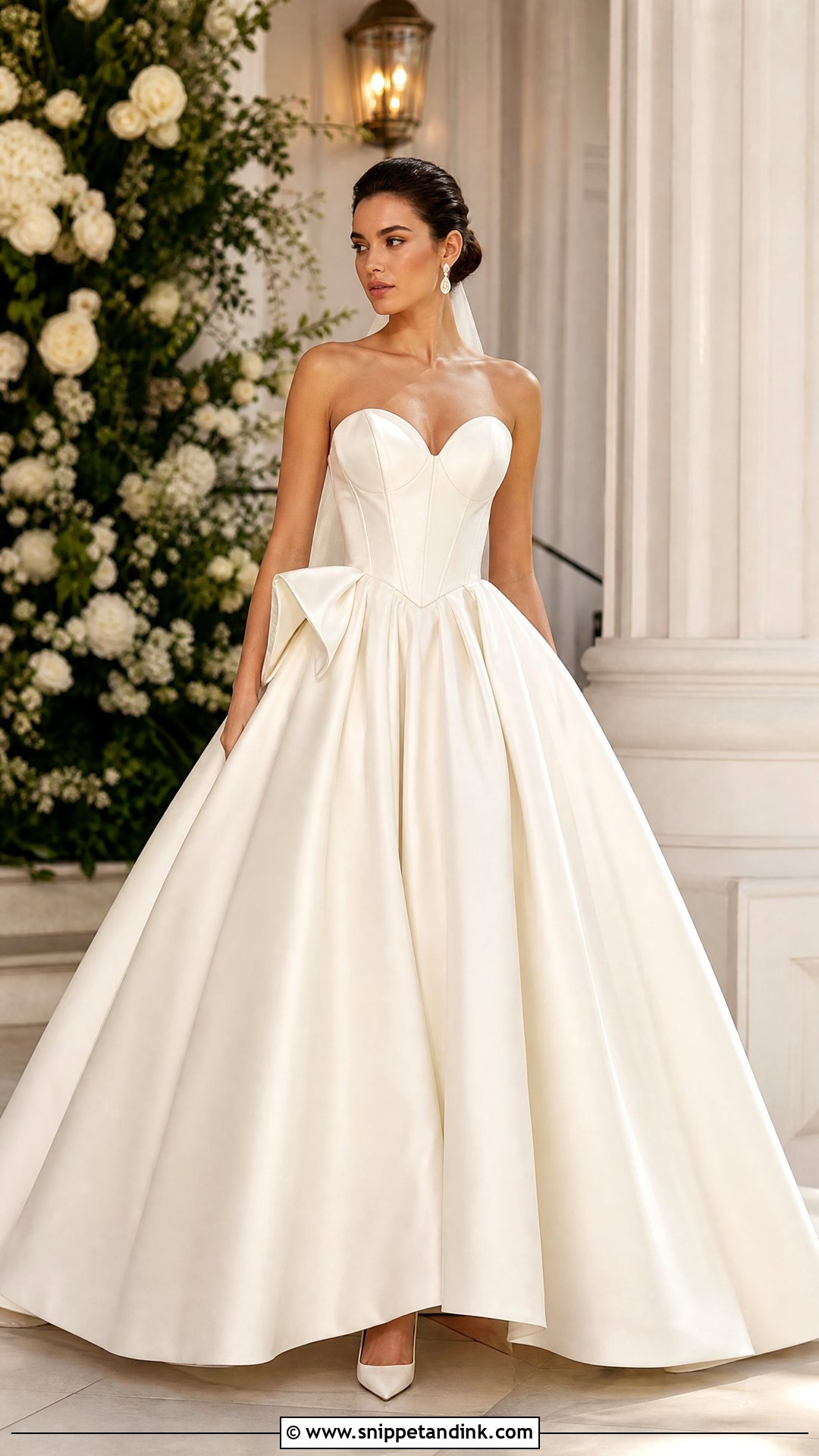
A basque waist dips to a point at the front, defining the torso before a full skirt. A medium bow at the center back softens all that structure and highlights the waist without covering the seams. Pair a strapless satin bodice with light boning and a pleated A-line or ball skirt. Defined waists, corsetry and bows have been showing up together in recent bridal collections, and it works best in tailored, smooth fabrics. Leave off a jeweled belt, because it breaks the point of the waist. A polished updo, pear-shaped earrings, ivory pumps and a long plain veil complete it. The boning gives real support, so you get shape all night without feeling squeezed.
13. High-Neck Wedding Dress with a Bow Back
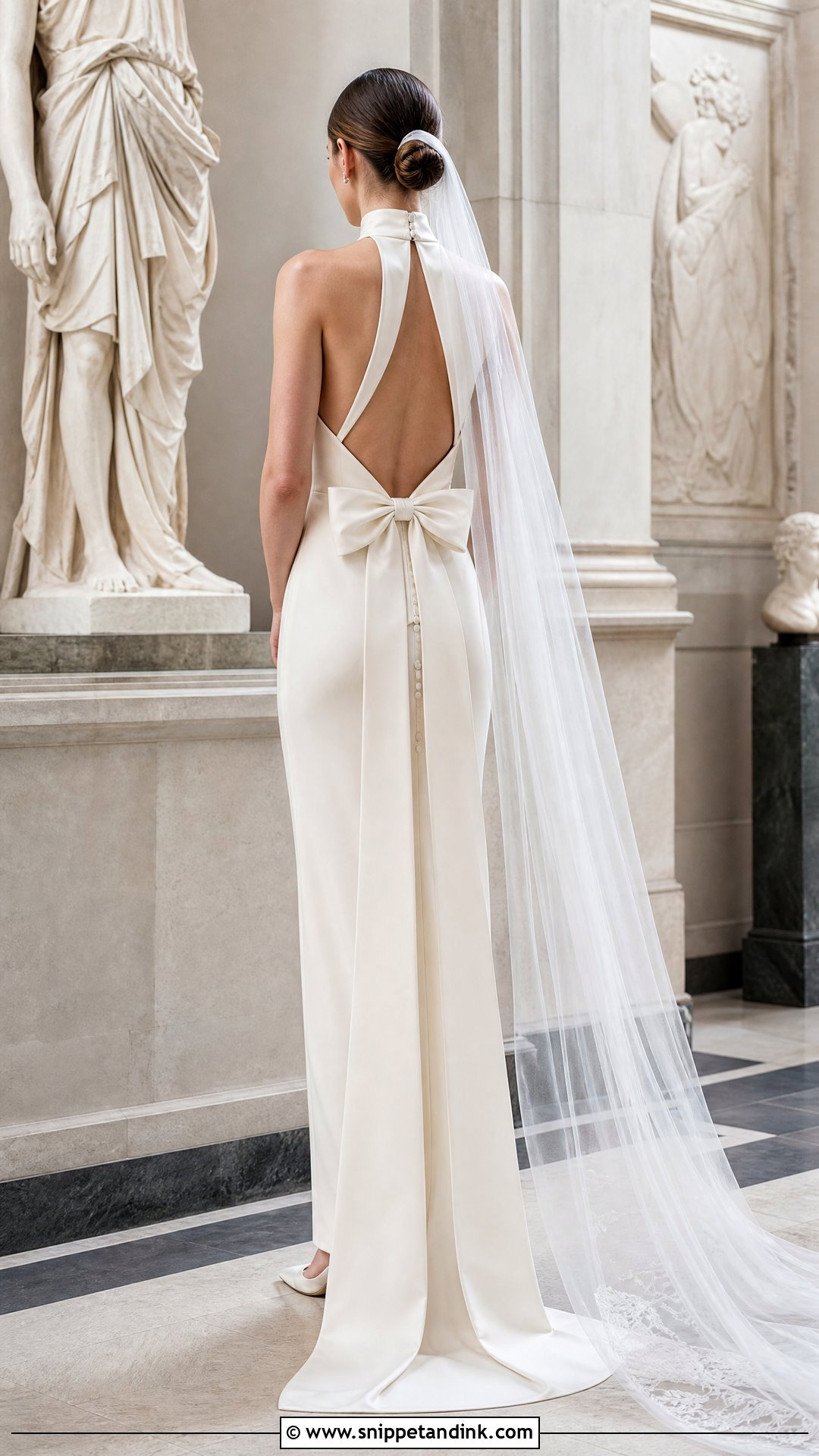
From the front this gown looks modest; turn around and the bow does the talking. Look for a sleeveless column or A-line with a high bateau, mock-neck, or halter-inspired neckline. A low open back under the bow gives the most contrast. A fully covered back is quieter and warmer for a winter date. High necks need the hair off the neck, so a smooth bun is the safe call, and the necklace stays in the box. Add small diamond studs and pointed satin shoes. Attach a narrow chapel veil below the bun rather than on top, so it falls between the shoulder blades and does not flatten the bow.
14. Long-Sleeve Wedding Dress with a Waist Bow
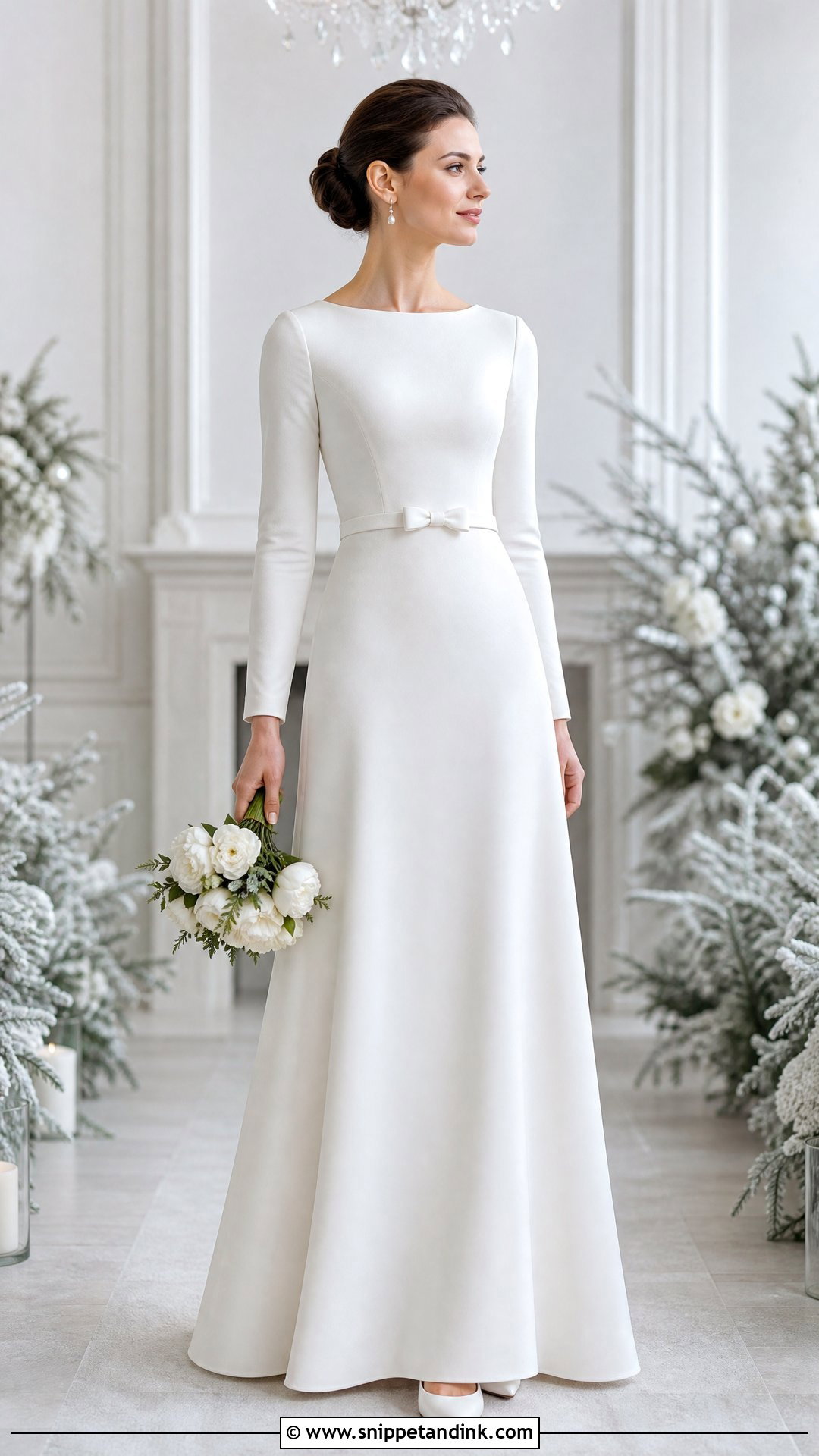
Sleeves and a waist bow give coverage with shape. Fitted lace sleeves lean romantic, while smooth crepe sleeves look more modern. A narrow bow belt defines the waist without bulk; a larger back bow gives a plain gown more presence for the ceremony. The detail I watch in fittings is the bow belt twisting. Belts that are not tacked to the dress roll over as soon as you sit, so I ask for a few hidden stitches at the side seams. If the sleeves are lace, choose a plain veil. A crepe gown can take a veil with a subtle pearl edge. Pearl earrings, closed pumps and a low bun suit fall and winter weddings in historic rooms.
15. Square-Neck Wedding Dress with a Waist Bow
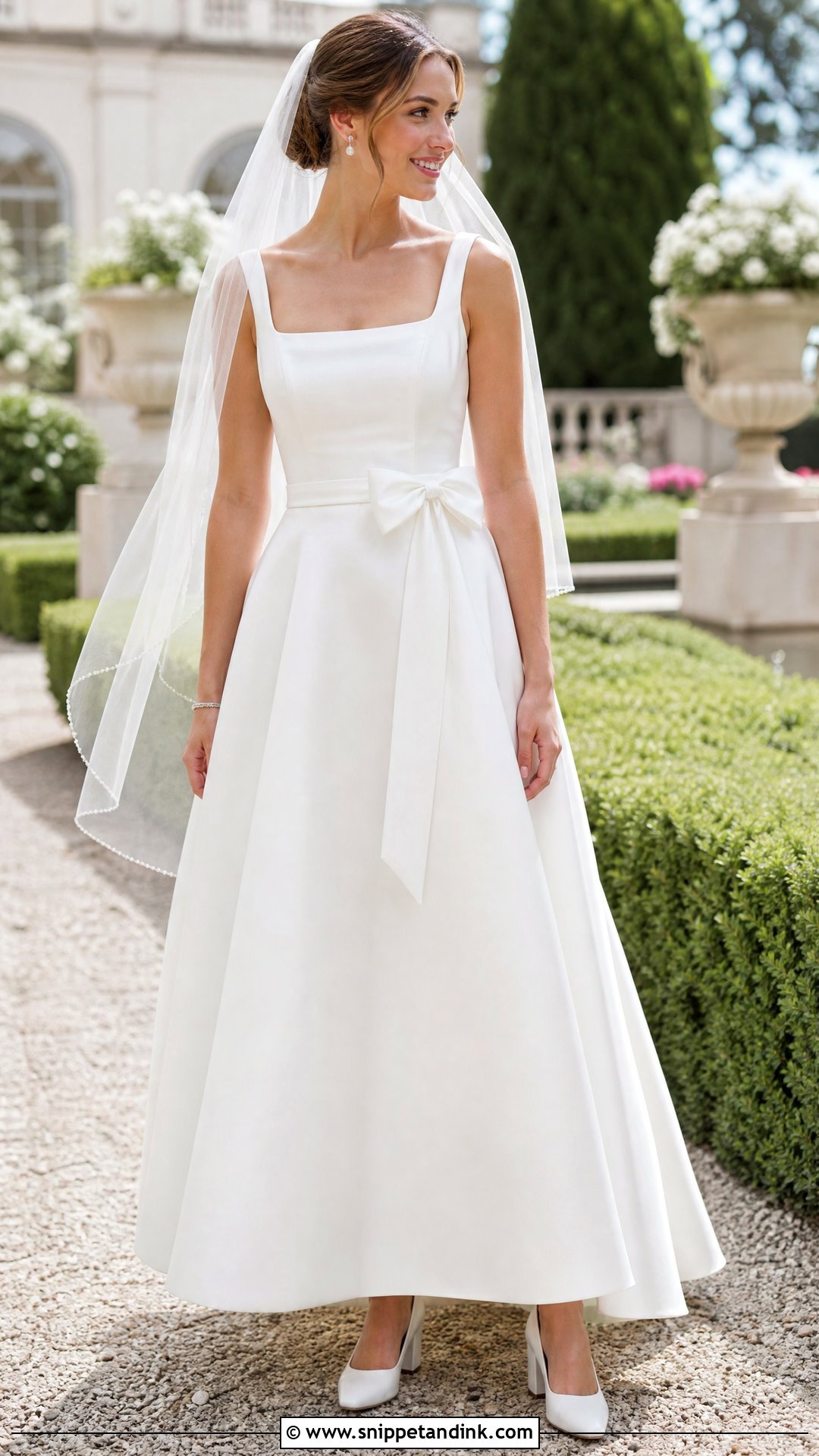
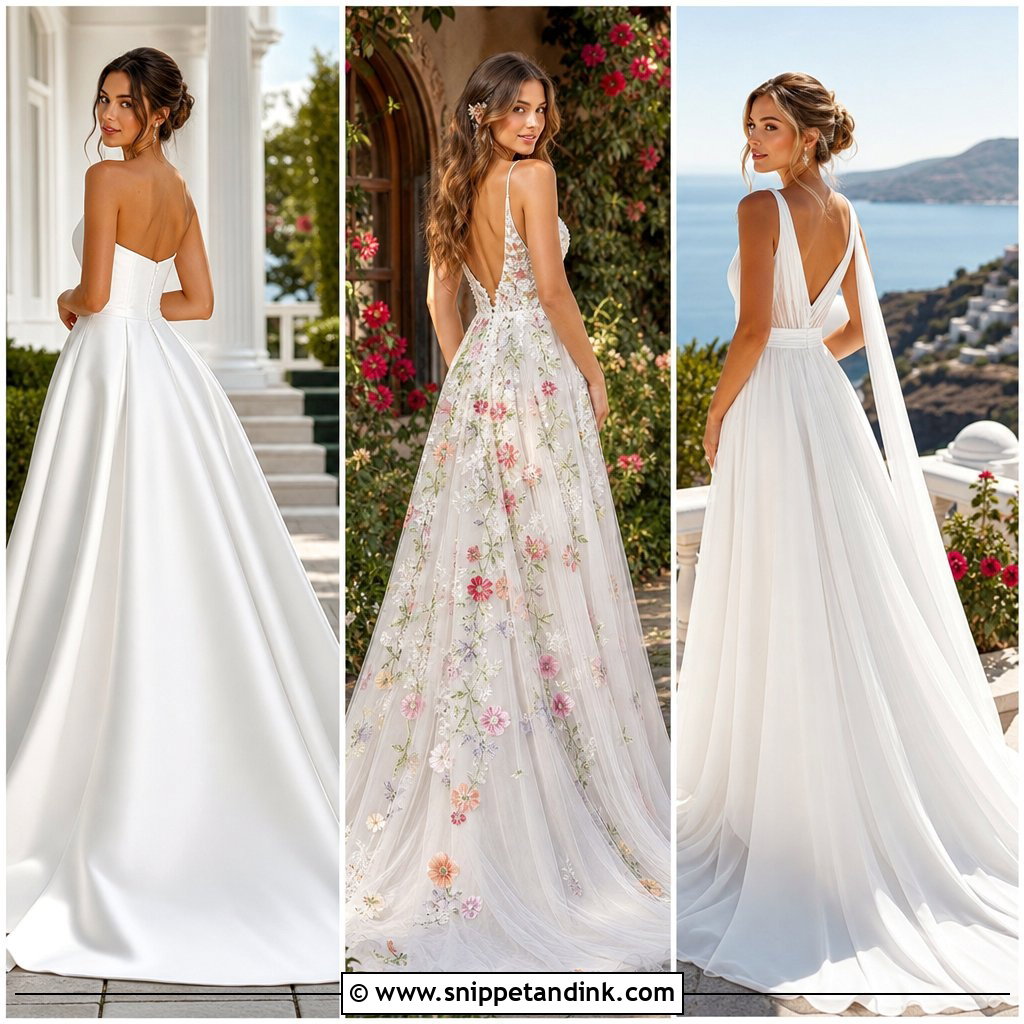
A square neckline frames the collarbone crisply, and a bow at the waist echoes those straight lines. Satin, faille or Mikado keep the A-line structured; soft crepe gives a simpler result. Use a slim bow belt for a classic look or a wide back bow for more drama. Wear a pendant only if it sits fully inside the neckline. If it lands on the edge, it will flip around during the day and look messy in candid photos. Pearl earrings, block-heel pumps and a fingertip veil keep it balanced. Short sleeves or wide straps can be added for coverage without losing the square shape.
16. Tea-Length Wedding Dress with a Back Bow
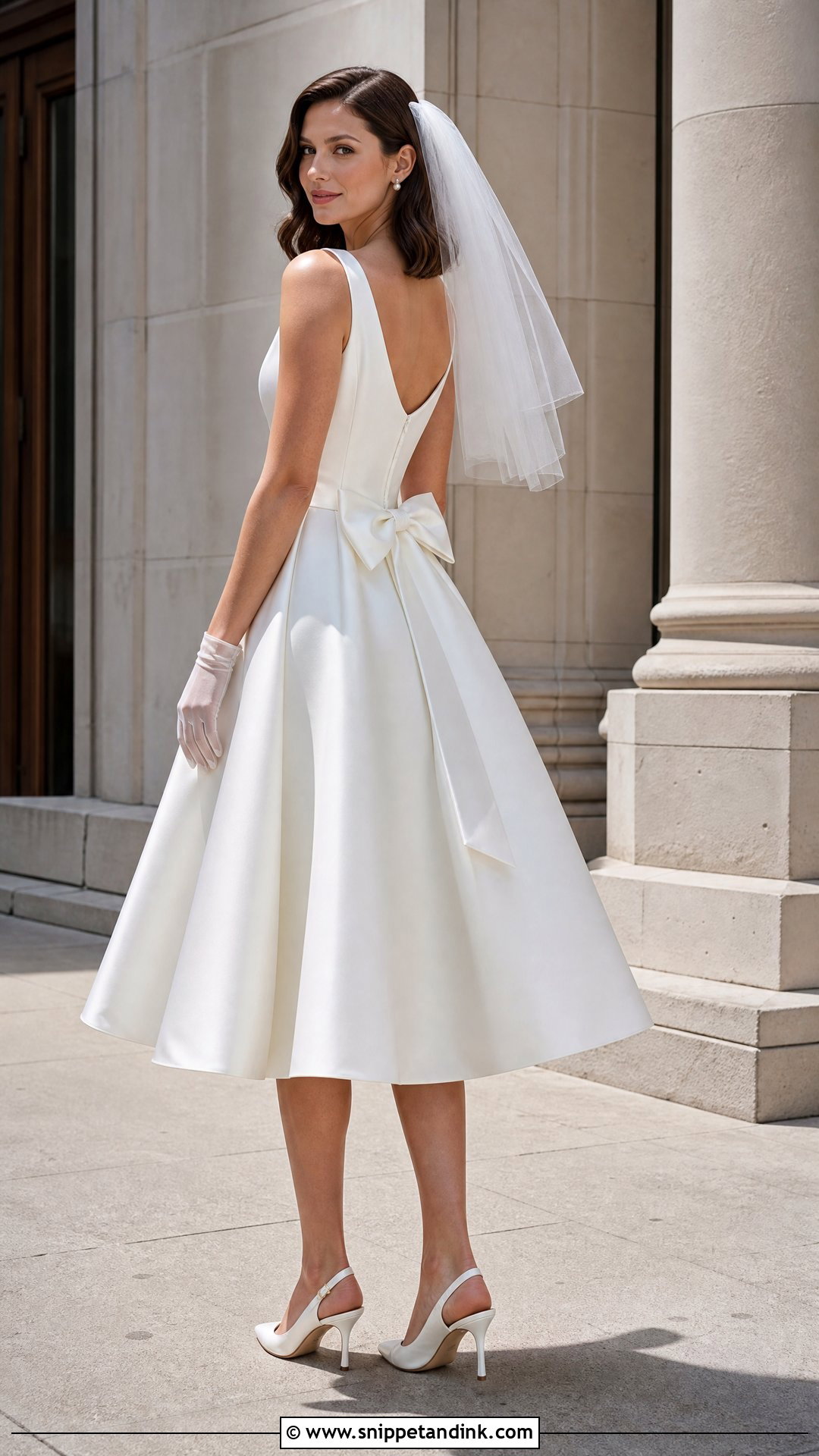
At tea length your shoes become part of the dress, so the bow, skirt and footwear all have to agree. Choose a fitted bodice with a skirt landing between knee and ankle, and keep the back bow medium sized; an oversized bow on a short skirt looks top heavy. Pointed pumps, slingbacks or a refined block heel will be on show all day, so break them in. Pearl studs, short gloves and a birdcage or shoulder-length veil push it toward vintage. A smooth bun or a curled bob suits the proportions. It moves far more easily than a gown with a train, which brides marrying at city hall or hosting a daytime lunch tend to appreciate by the afternoon.
17. Mini Wedding Dress with an Oversized Bow
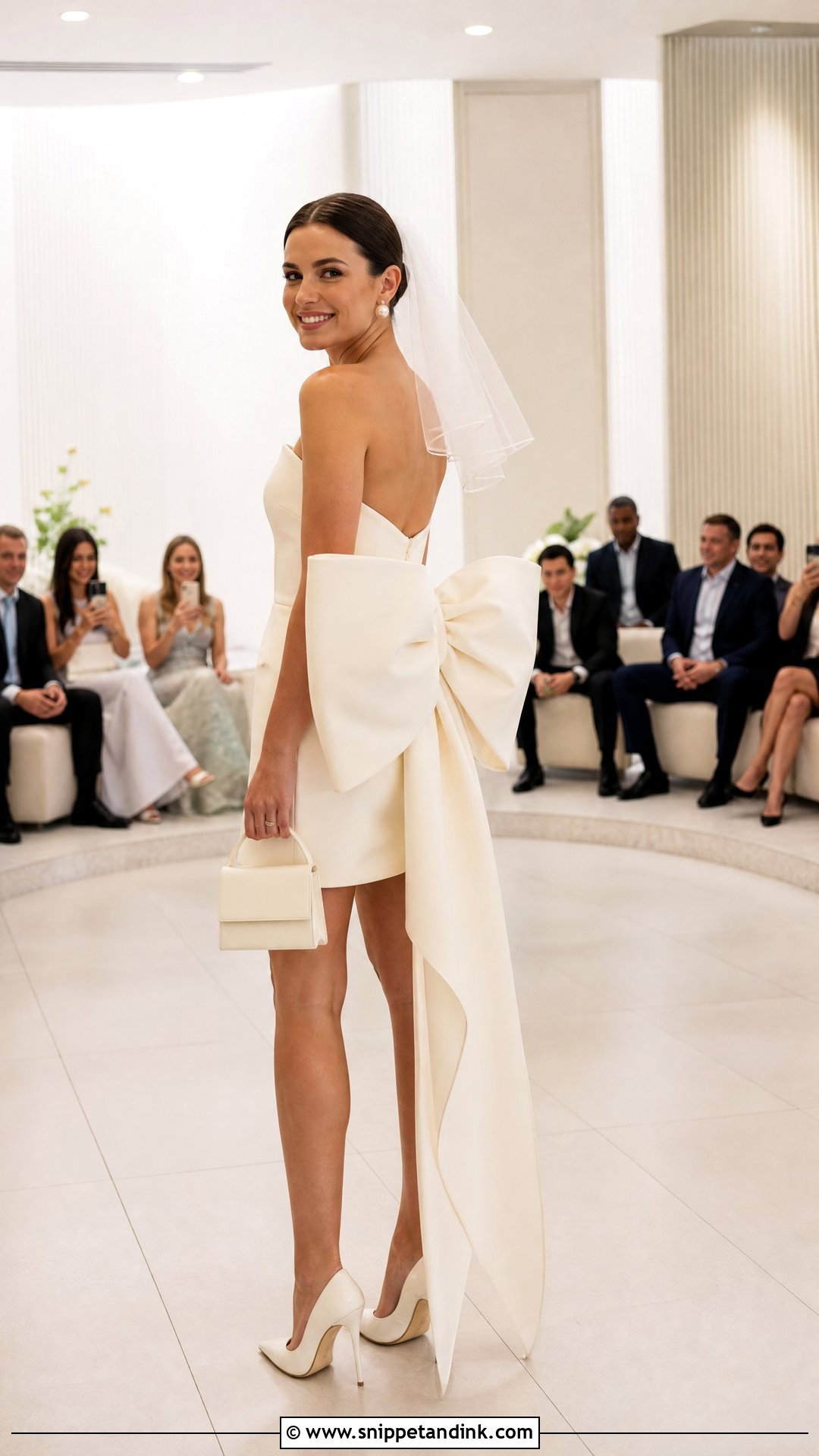
A mini with an oversized bow is fun, and I mostly see it as a reception change or a civil ceremony look. Go for a structured shift, a fitted strapless mini or a short A-line, with the bow at the back or across one shoulder. Mikado or satin will hold the bow’s shape. My honest warning: sit down in it at the fitting, then bend as if picking up your bouquet. Short hems ride up and big bows tip forward when you sit, so check coverage before you fall for it. Pointed pumps, pearl earrings and a small top-handle bag keep it grown-up, and a short veil can come off after the vows.
18. Blue Bow Wedding Dress
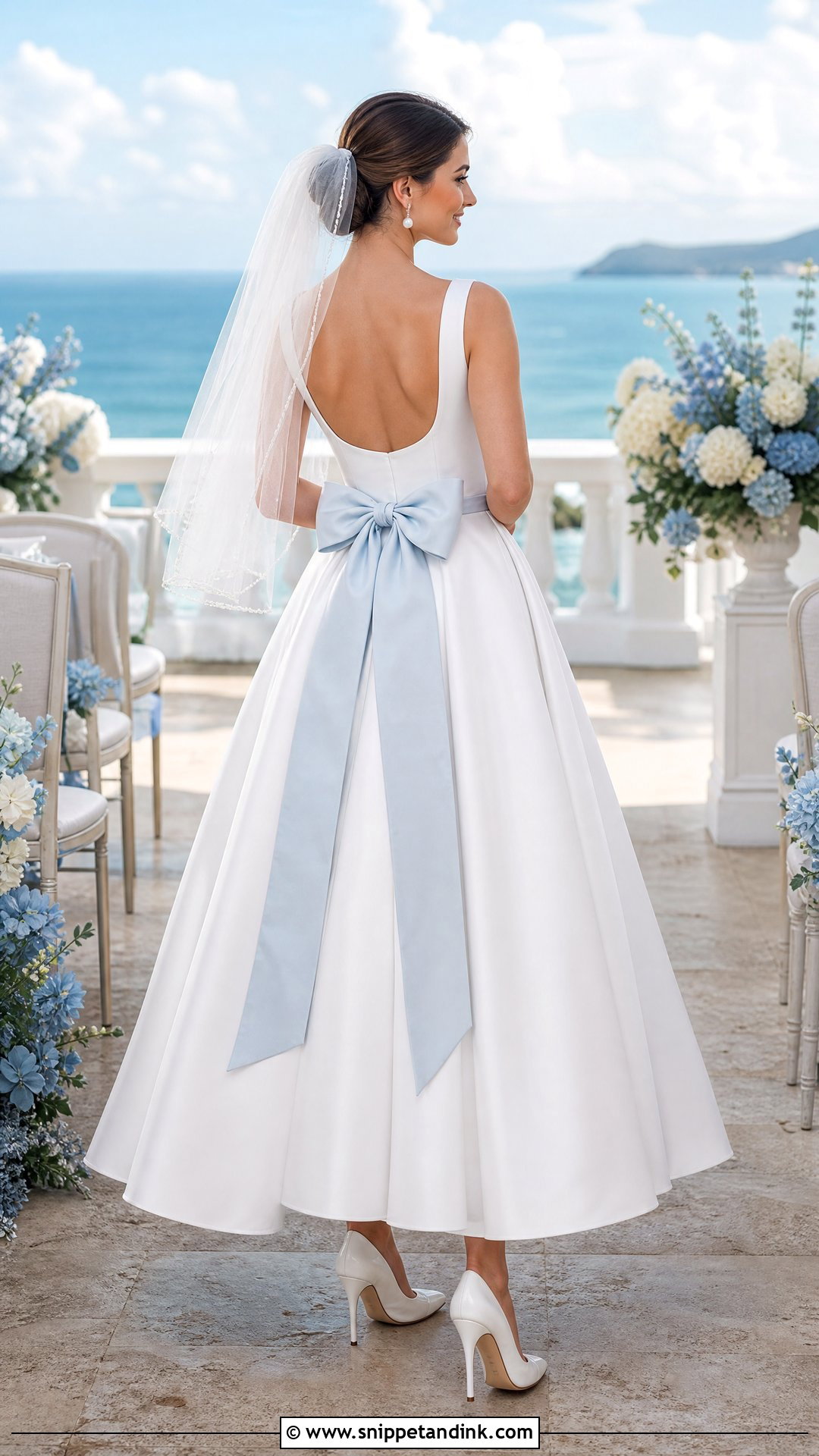
A blue bow adds colour while the gown stays traditionally white, and it doubles as the something blue. Pale blue is subtle, dusty blue reads softer in photos, and navy gives real contrast. Put it at the back waist of a clean satin A-line, or go smaller on one shoulder. Keep everything else neutral so the blue looks chosen. A tiny blue hairpin or bouquet ribbon can repeat it, but matching every accessory turns it into a theme. Dyed satin can bleed if it gets wet, so I have the bow made detachable for brides marrying outdoors where rain or a beach is a risk. Pearl earrings, ivory pumps and a white veil finish it.
19. Front Bow Wedding Dress
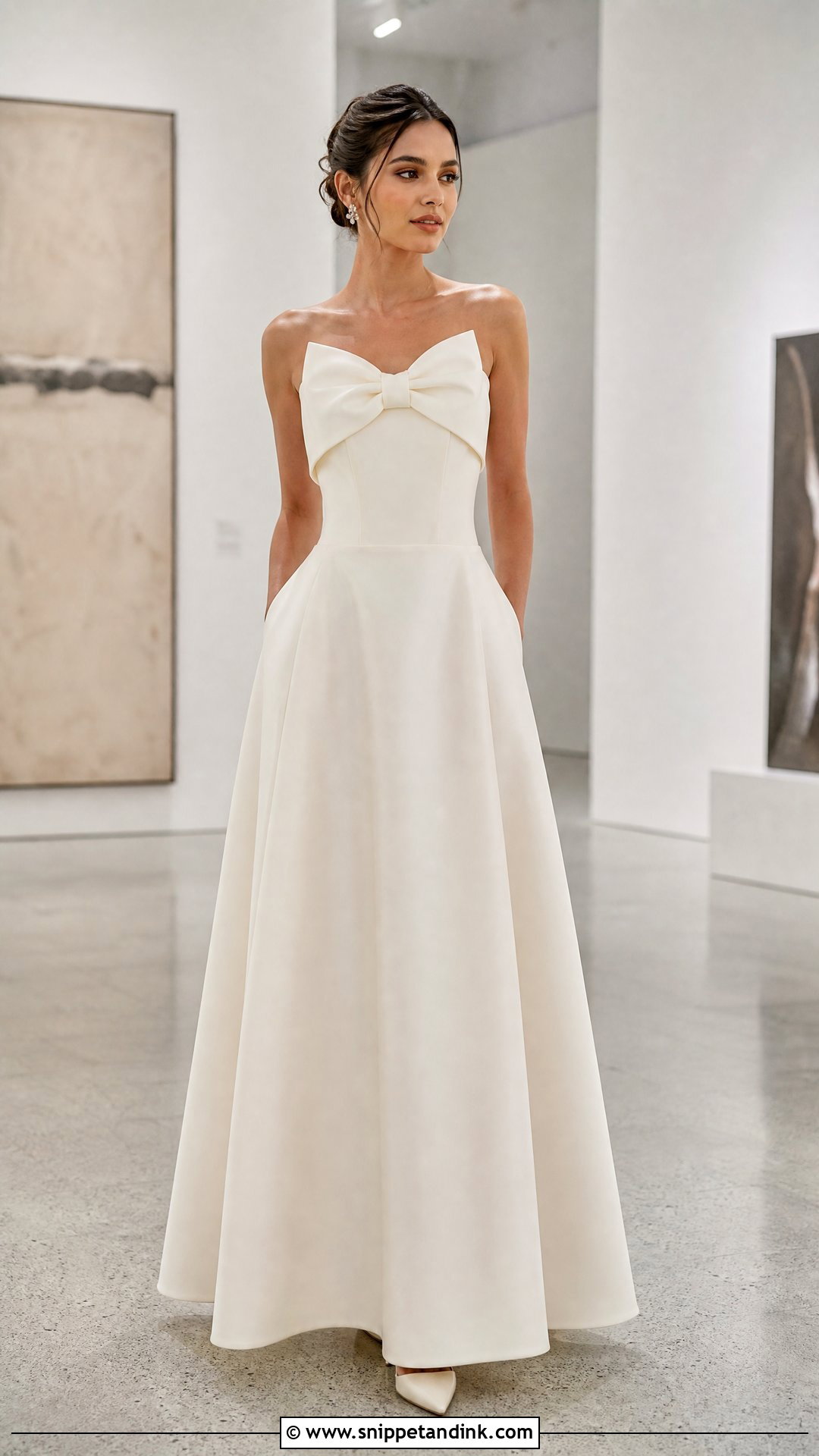
Moving the bow to the front changes everything, because it becomes the first thing anyone sees as you walk in. It can sit at the neckline, the center waist or slightly off to one side. Choose a clean column or A-line with no lace or beading to compete. A soft bow gives gentle movement and a structured one looks sharper and more editorial. I’d steer you away from a large front bow at the bust if you’re large-chested, since it adds volume exactly where you may not want it; a waist placement is kinder. Skip the necklace with a neckline bow, though a fine pendant works with a waist bow. A sleek updo, small earrings and a plain veil keep the attention on the front.

20. Wedding Dress with Multiple Small Bows
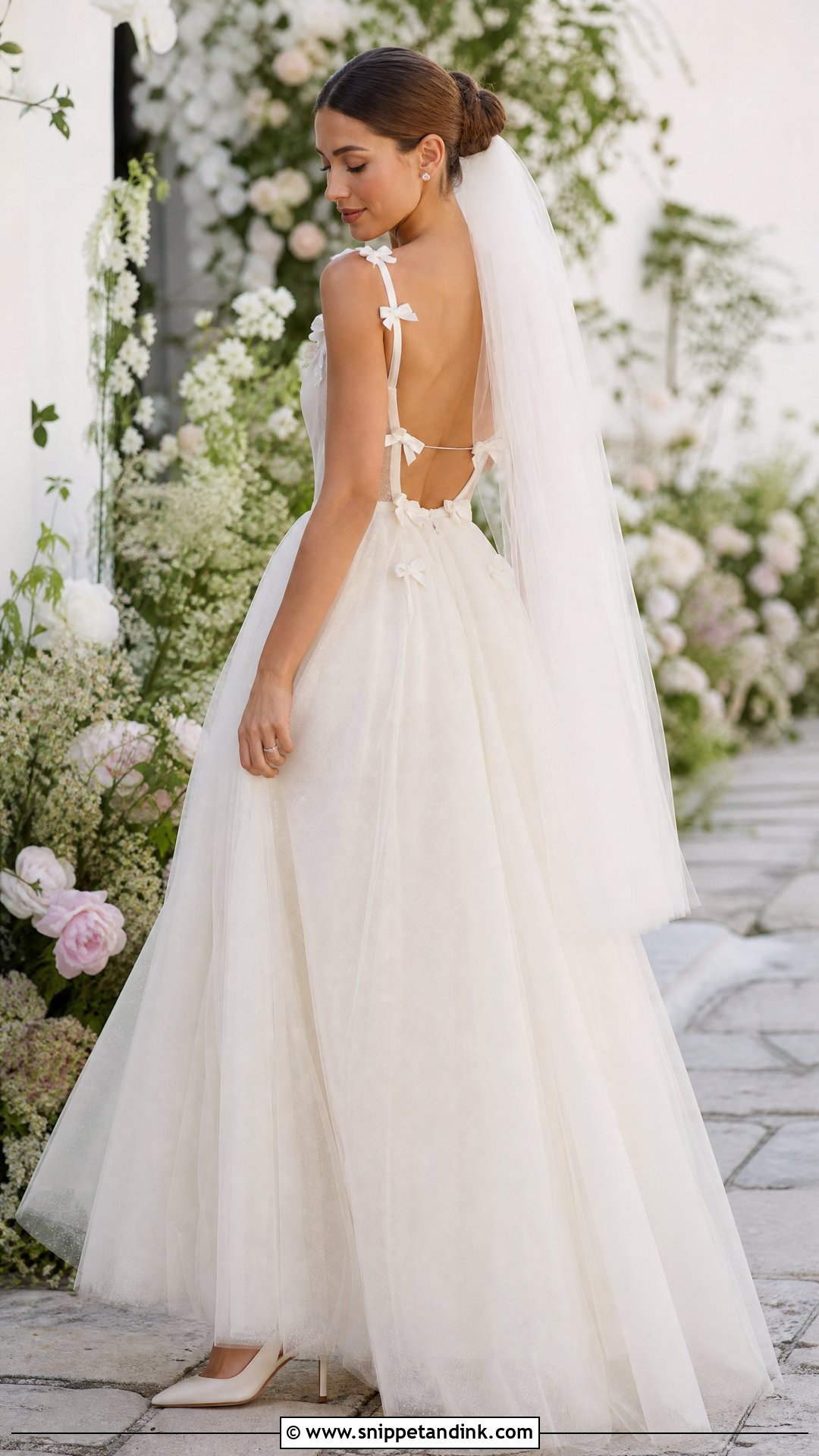
Several small bows feel playful, and the trick is restraint in where they go. Line them along the straps, down an open back, around the neckline or across a hem, but pick one area only. Scattered all over, they look like decorations rather than design. A plain tulle A-line, a fitted crepe dress or a satin mini makes the best background. Small bows are usually hand-tied and hand-sewn, so ask how they are attached; glued bows come loose in a long day of hugging. Understated studs, a soft bun and ivory shoes are all you need. A plain veil suits a full-length gown, and a headband suits a short one better.
Crushed Loops, Drooping Tails and Other Bow Problems on the Day
Back bows take the most abuse of any part of a gown. You lean against chairs, people hug you and the car seat presses into it on the drive. A little preparation saves the photos.
Ask for hidden support at alterations
Large loops can be lined with horsehair braid or a light interfacing so they spring back after being squashed. Ask for it at your first alteration appointment, since it means opening the bow and adds time. Tails can get a small weight or a narrow hem tape so they hang straight instead of curling.
Pack a small bow kit
- A handheld steamer, used from behind the loop and never pressed against satin, which can leave a shine mark.
- Safety pins in ivory and a few clear snaps for a bow that comes loose.
- A clean white cloth to fluff the loops before the ceremony and again before portraits.
Give one bridesmaid the job of checking the bow each time you stand up from the table. Ten seconds of reshaping keeps it looking the way it did in the fitting room.
Storing a Bow Gown So the Loops Survive
After the wedding, have the dress cleaned before any stains set, and tell the cleaner which parts are detachable. At home, stuff the bow loops lightly with acid-free tissue so they keep their curve, and store the gown flat in a breathable box rather than hanging, because a heavy bow stretches the back seams on a hanger over months.
What I Tell Brides Before Their Final Bow Fitting
A bow should strengthen your silhouette, not hide it. Oversized back bows give satin ball gowns their drama, while small shoulder or waist bows keep things gentle, and a detachable one gets you two looks from one dress. Before you decide, look at four things together: the fabric, the scale against your frame, where it sits and how your veil falls over it. Then test it the way you will actually wear it, sitting, walking and dancing. If it still sits straight after that, you have found your bow.
You'll Like These Ideas:





Leave a Reply