
A traditional gown is mostly a question of shape and cloth. The A-line and the ball gown have stayed at the center of bridal fashion for decades, and satin, lace, tulle and Mikado each give that shape a different temperament. When I style a bride who wants a classic look, I build from the gown outward: the veil, shoes, jewelry and hair are chosen to support one silhouette rather than add a second story. The twenty looks below are complete outfits, head to toe, with the fitting notes I would give you for each. Read them with your venue and season in mind, because a gown that suits a ballroom can be miserable on a lawn in July.
Matching a Classic Silhouette to the Aisle and the Altar
Before I pull a single gown for a traditional bride, I ask where she will stand. The ceremony space decides more about the dress than any trend does, and it is the question most brides skip.
- Houses of worship: many ask for covered shoulders during the service. A long sleeve, bateau or high neck gown solves it outright, and a lace bolero or cathedral veil worn over the shoulders lets you keep a strapless gown for the reception.
- Kneeling: if your ceremony includes kneeling, a fitted drop waist or corset gown can make it awkward. Practice kneeling in the sample, and check that the soles of your shoes look clean, because guests see them.
- Aisle width: a full ball gown needs room. In a narrow chapel or between packed rows, an A-line moves past the pews without brushing every guest.
- Outdoor ground: grass, gravel and sand catch heels and drag trains. Choose block heels, a shorter train or plan to bustle right after the ceremony.
Season matters next. I reserve heavy satin and Mikado for cooler months or air-conditioned rooms, and point summer brides toward chiffon, tulle or lightweight lace.
1. Satin Ball Gown With Cathedral Veil
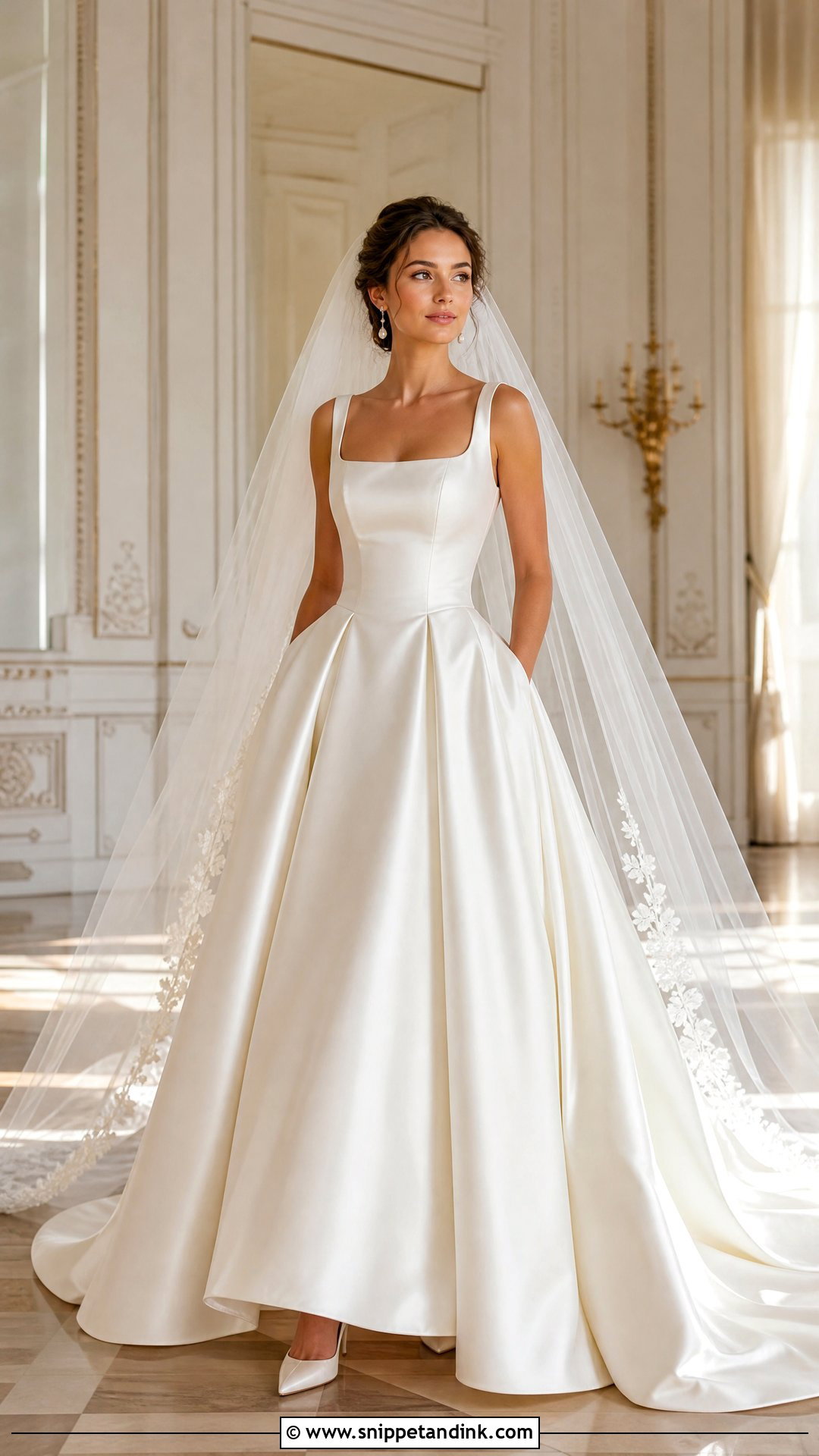
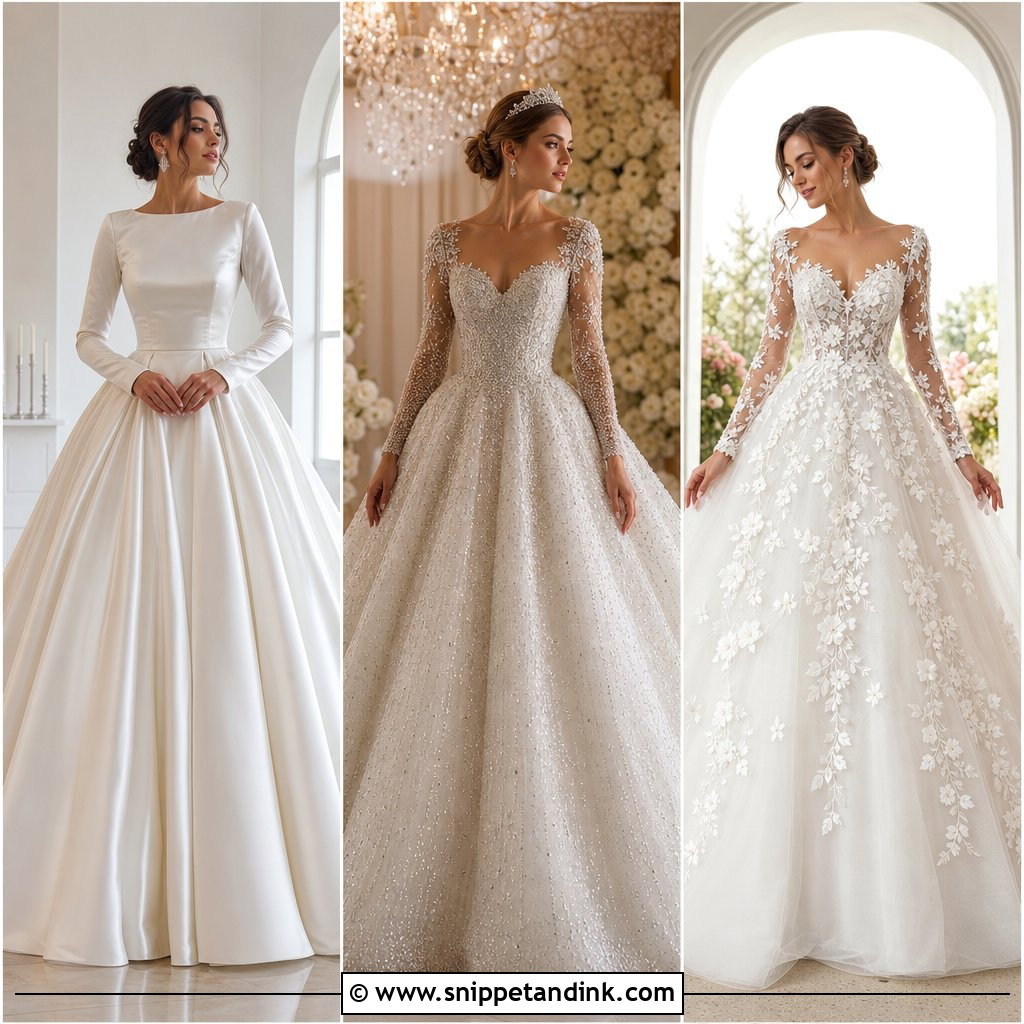
Satin over a full skirt reads as formal the second you walk in. I look for a structured bodice, a waist that sits on your natural waistline and a skirt in luminous satin or a silk-blend Mikado. Keep the neckline plain, strapless, square or a soft scoop, and let a cathedral veil with a narrow satin ribbon edge carry the drama. Pearl drops, one bracelet, ivory pointed pumps and a smooth low bun are all it needs; the bun also gives the veil comb something solid to grip. Ballrooms and grand hotels suit it best. Two requests for your seamstress: pockets hidden in the side seams, and a bustle tested with the actual weight of the skirt, because satin is heavier than it looks.
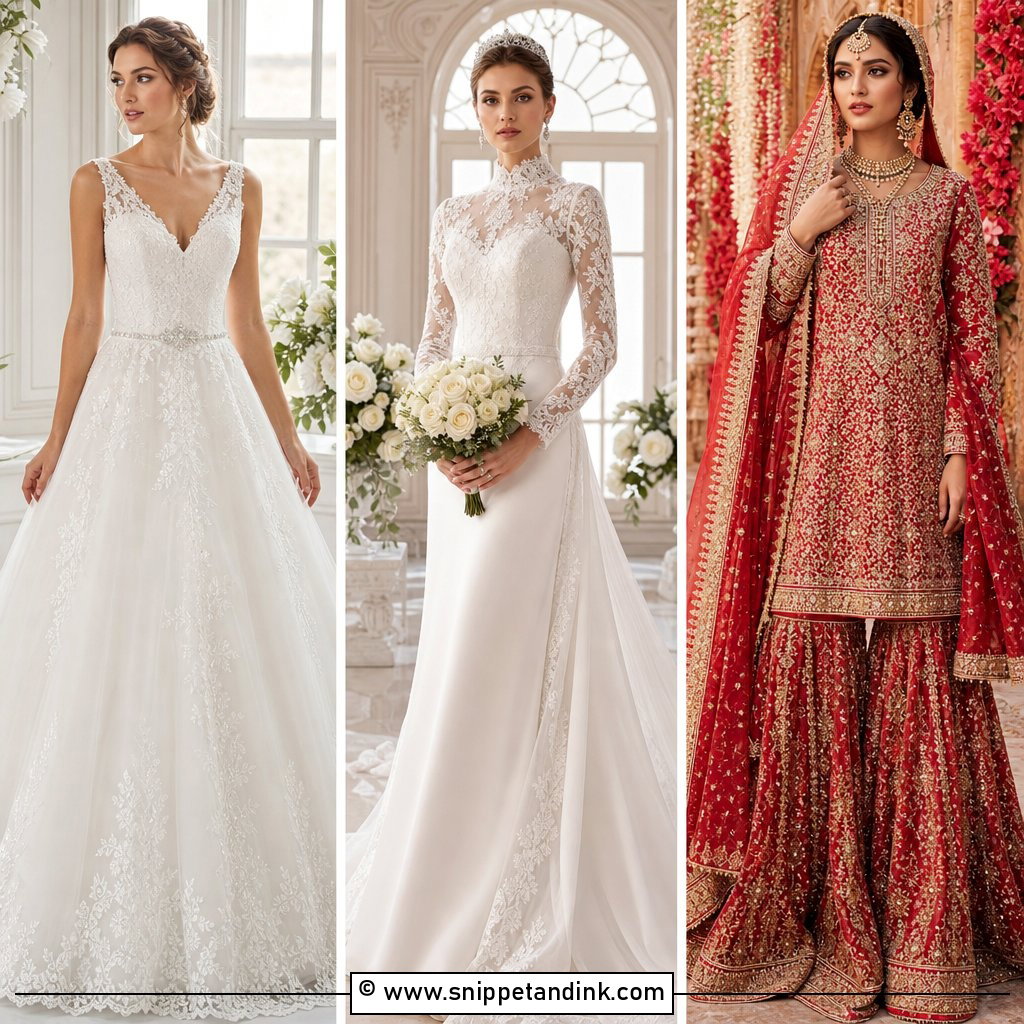
2. Lace A-Line Wedding Gown With Long Veil
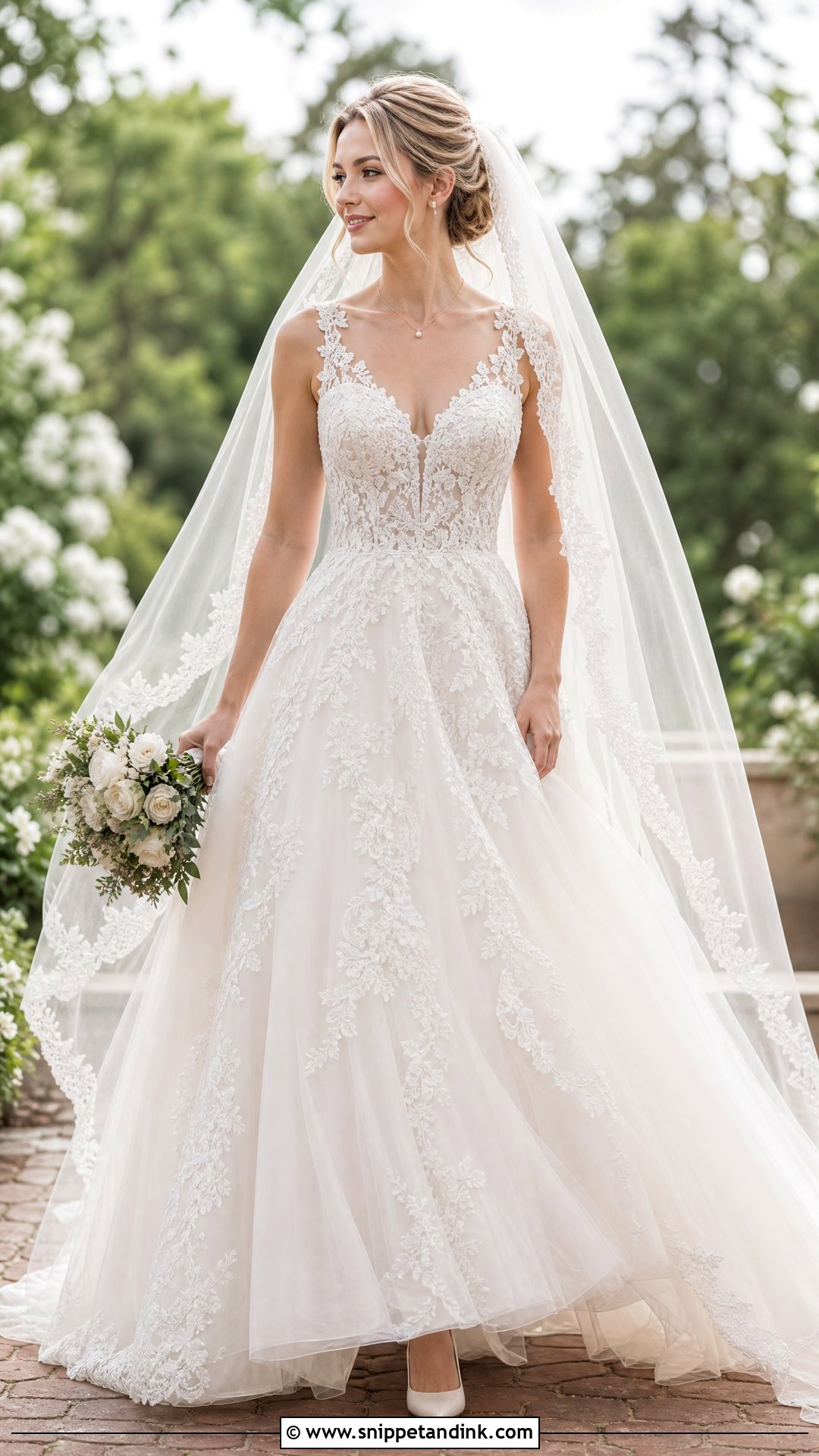
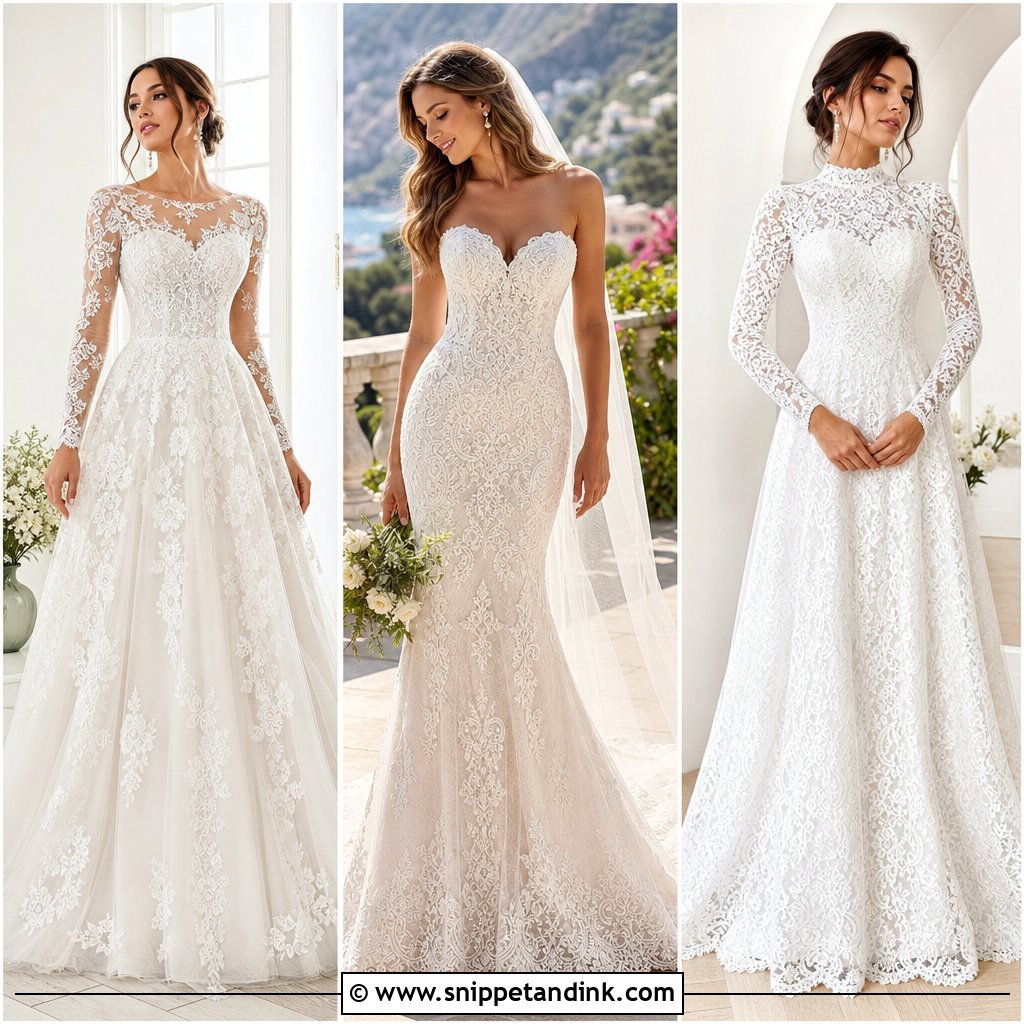
Lace on an A-line gives you detail without the bulk of a ball gown. I prefer a fitted lace bodice that widens gradually rather than flaring hard at the hip, with floral appliqués trailing off the waist onto the tulle so the two fabrics meet without a visible line. A chapel or cathedral veil with matching lace on the edge ties it together. Closed-toe pumps, pearl studs and a fine pendant are enough; more than that and the lace starts to look busy. Wear loose waves or a half-up style. At fittings, run your hands along the neckline and armholes: the cut edges of corded lace can scratch after a few hours, and a soft binding fixes it.
3. Long Sleeve Wedding Gown With Lace Bodice
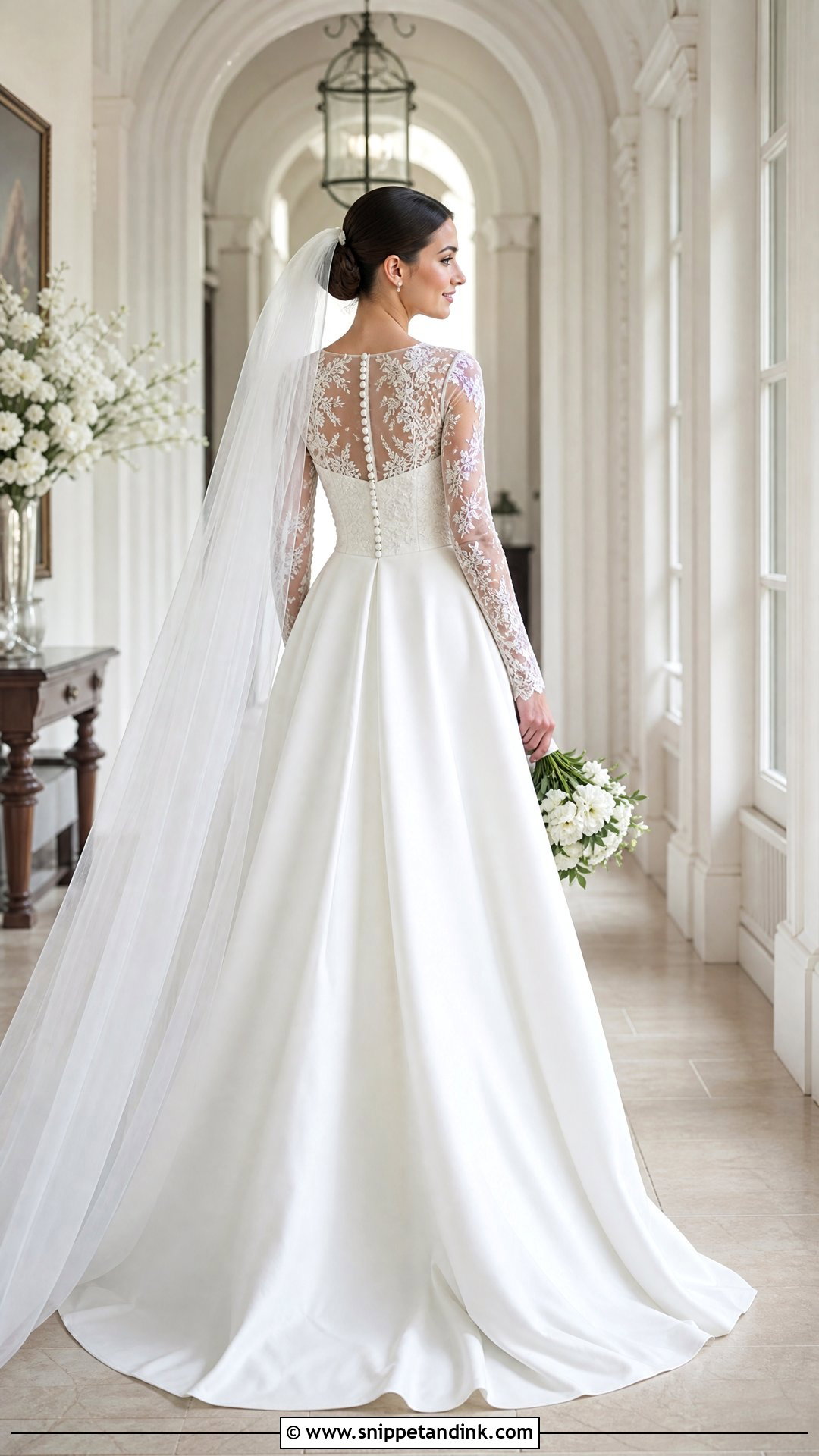
Long sleeves are the most requested modest option I see, and sheer lace keeps them from feeling heavy. Ask for appliqués placed so they follow the arm rather than sitting as random patches. A fitted bodice into an A-line skirt keeps the proportion classic, and covered buttons down the back give it that heritage finish. Because the sleeves already carry the detail, I pair this gown with a plain fingertip veil, pearl earrings, a slim band and satin block heels. A chignon or pinned curls keeps the shoulder line clear. Autumn and winter suit it best, though fine lace is comfortable in summer too. Before the final alteration, hug someone and lift your arms over your head; tight sleeves are the first thing brides complain about on the dance floor.
4. Off Shoulder Ball Gown With Pearl Jewelry
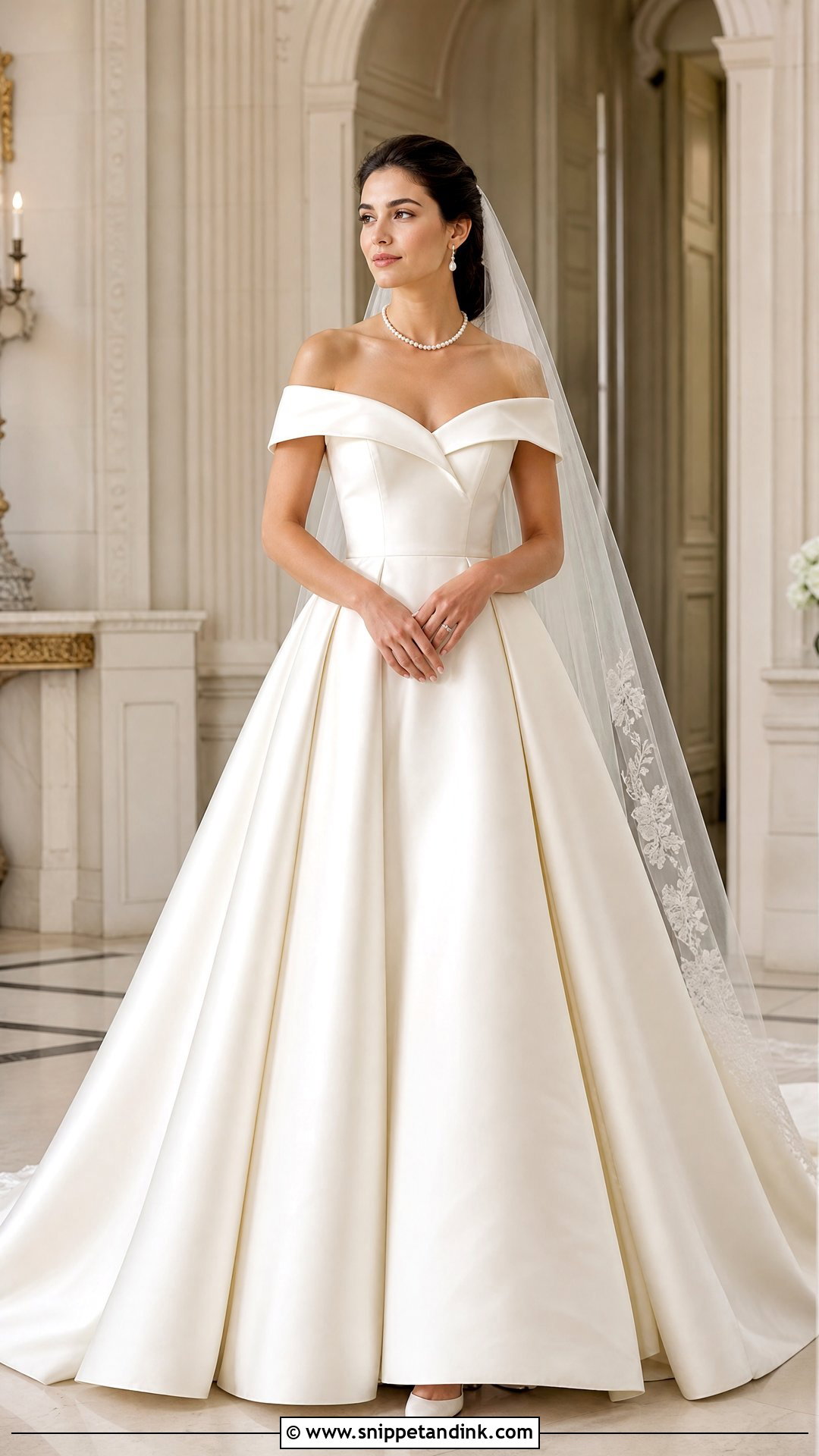
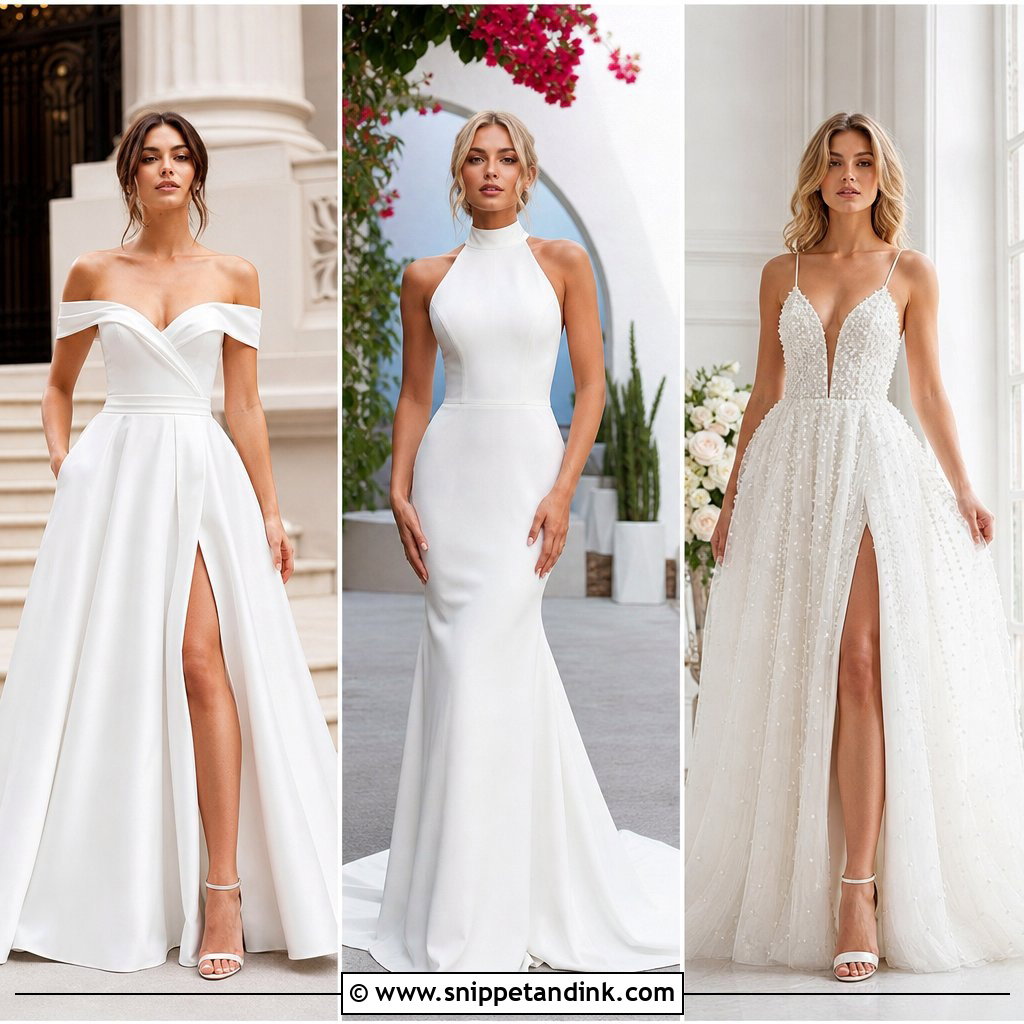
An off-the-shoulder ball gown frames the collarbone and face while staying formal. The shoulder bands do the hard work here, so I check that the bodice underneath is supportive enough to hold the dress up on its own. Folded satin or a lace trim across the arms suits the shape. The full skirt balances the open neckline into an hourglass. I keep jewelry to pearl drops and a short strand, add a plain cathedral veil and finish with closed-toe satin heels and a low bun or side-swept waves. Grand indoor rooms flatter it most. Test it properly: raise your arms, sit and reach for a glass. If the bands creep up or cut into your arms, they need repositioning, not tightening.
5. High Neck Lace Wedding Gown With Sleeves
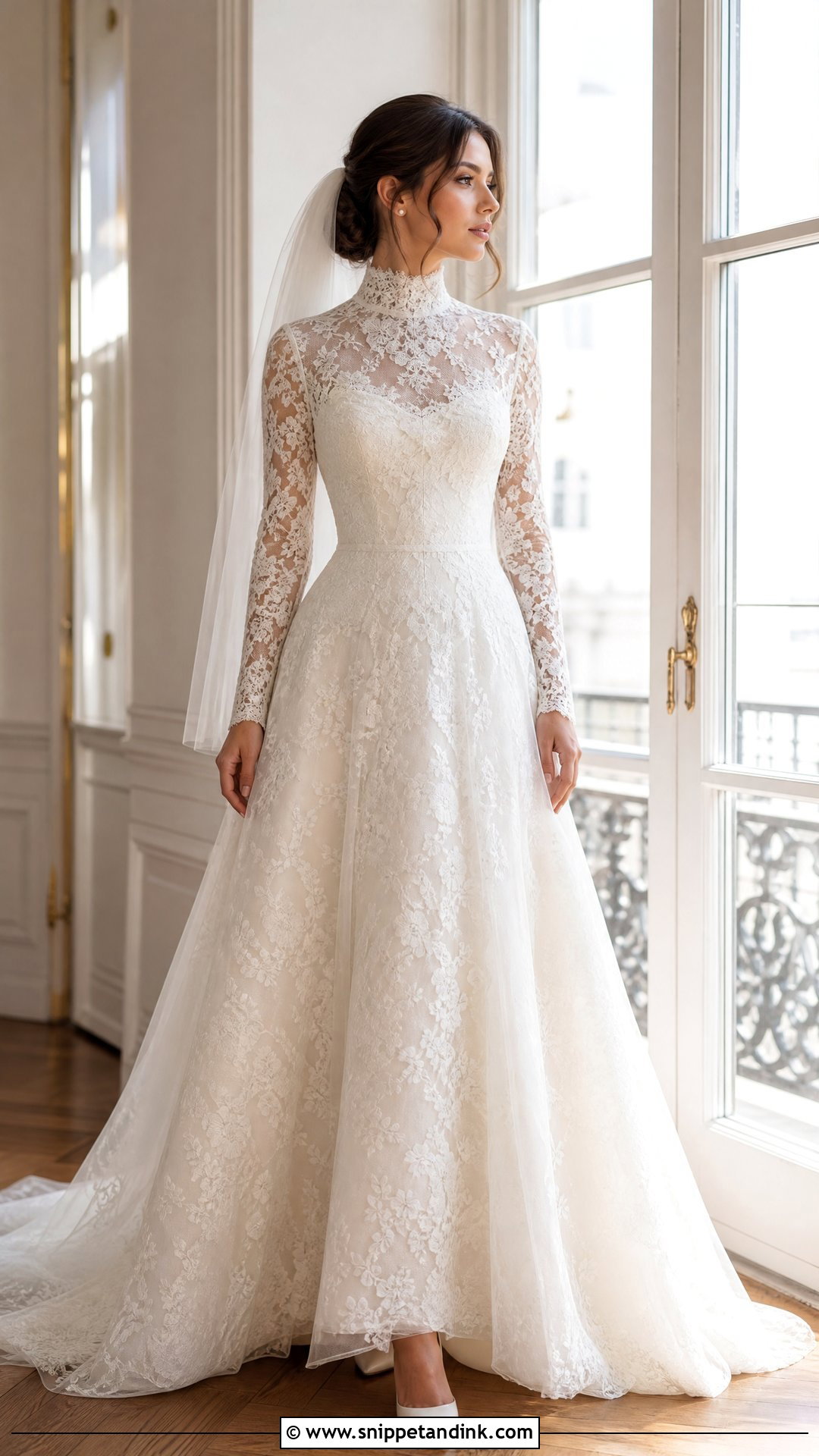
A high lace neck gives real coverage with a lot of character. I steer brides toward a softly shaped neckline rather than a stiff collar, and toward illusion mesh dyed as close to their skin tone as possible, because a mismatched mesh shows in every close-up. Long lace sleeves sit well over an A-line or a slim ball gown skirt. Skip the necklace entirely; pearl studs, a narrow bracelet and ivory pumps with a steady heel are plenty. Pin a simple tulle veil below a smooth bun so it does not crowd the collar. Covered buttons can run from the nape into the train. Turn your head side to side at every fitting, since a high neck that rubs at 2pm is unbearable by 10pm.
6. Sweetheart Wedding Gown With Full Tulle Skirt
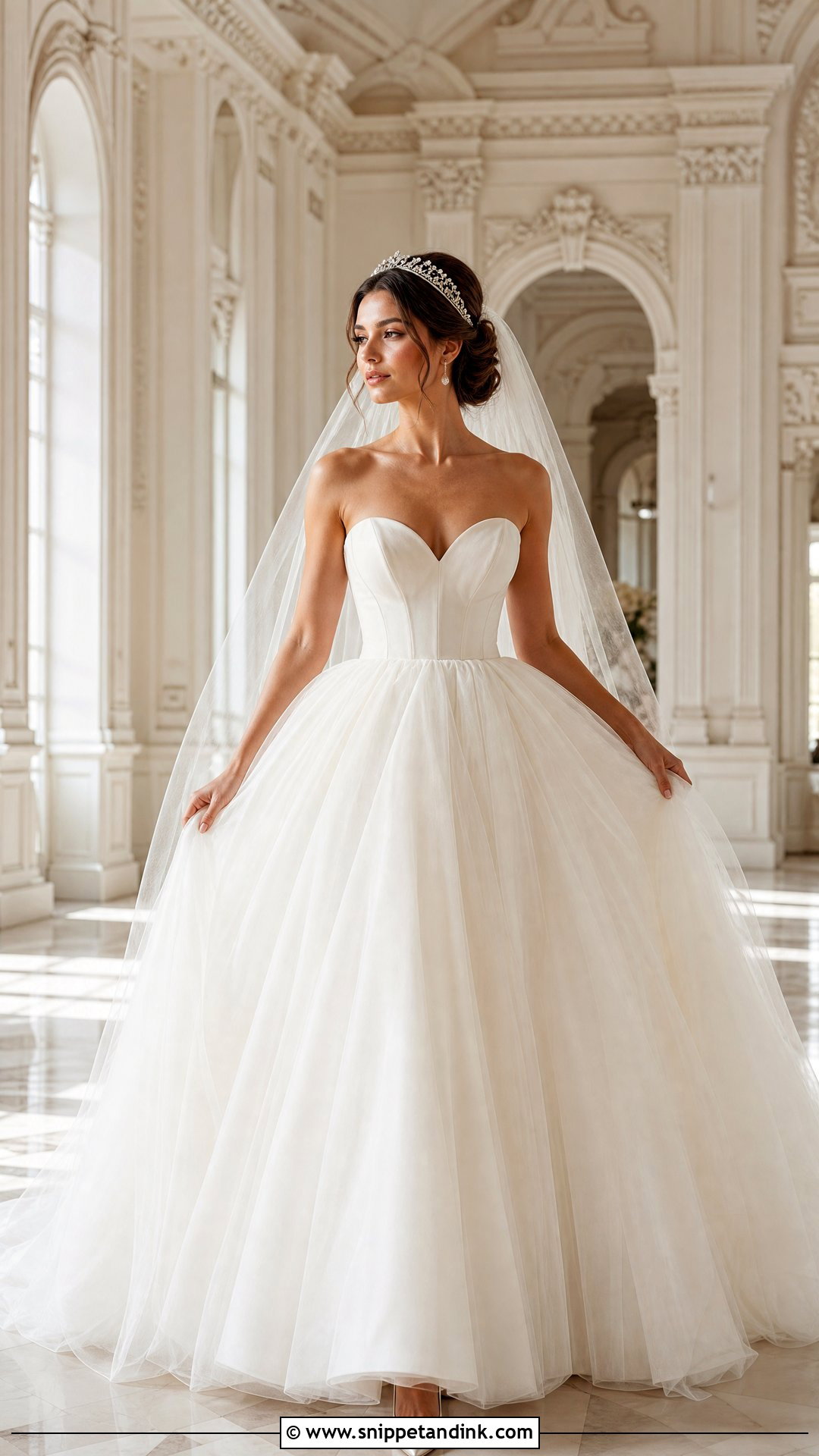
The sweetheart neckline softens a structured bodice, and layered tulle gives volume without the weight of satin. What matters most is inside: boning and a built-in support that hold the curve, plus clean seaming at the waist. For a traditional result I choose ivory or soft white tulle with little or no glitter. Finish with a fingertip veil, pearl or crystal earrings, pointed satin pumps and, with an updo, a slim comb or small tiara. One warning about tulle: it snags on bracelet clasps and rough heels, so check your accessories against the skirt. Sit down in front of the mirror at your try-on. A sweetheart bodice should stay put when you sit without being hitched up.
7. Square Neck Wedding Gown With Chapel Train
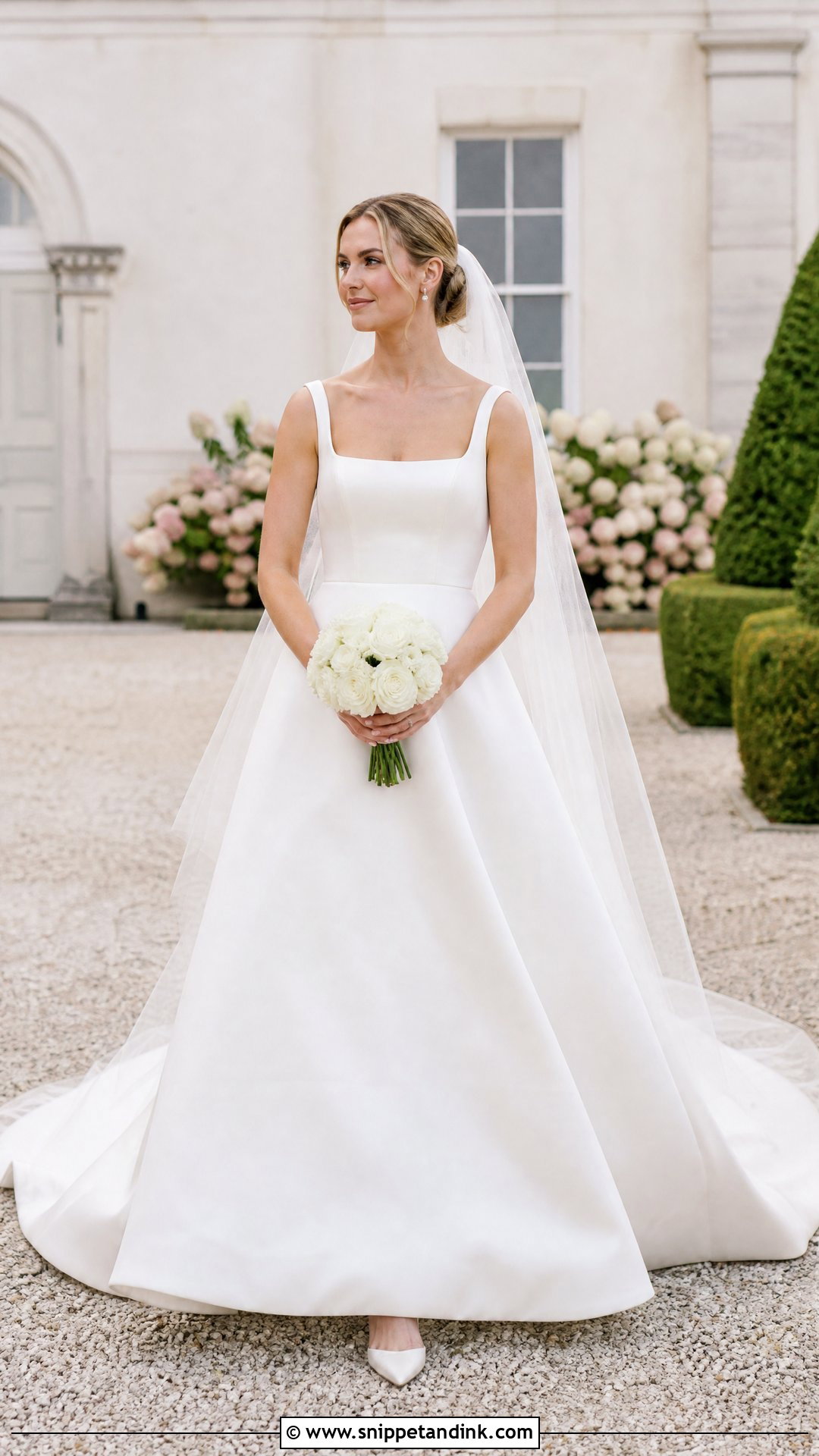
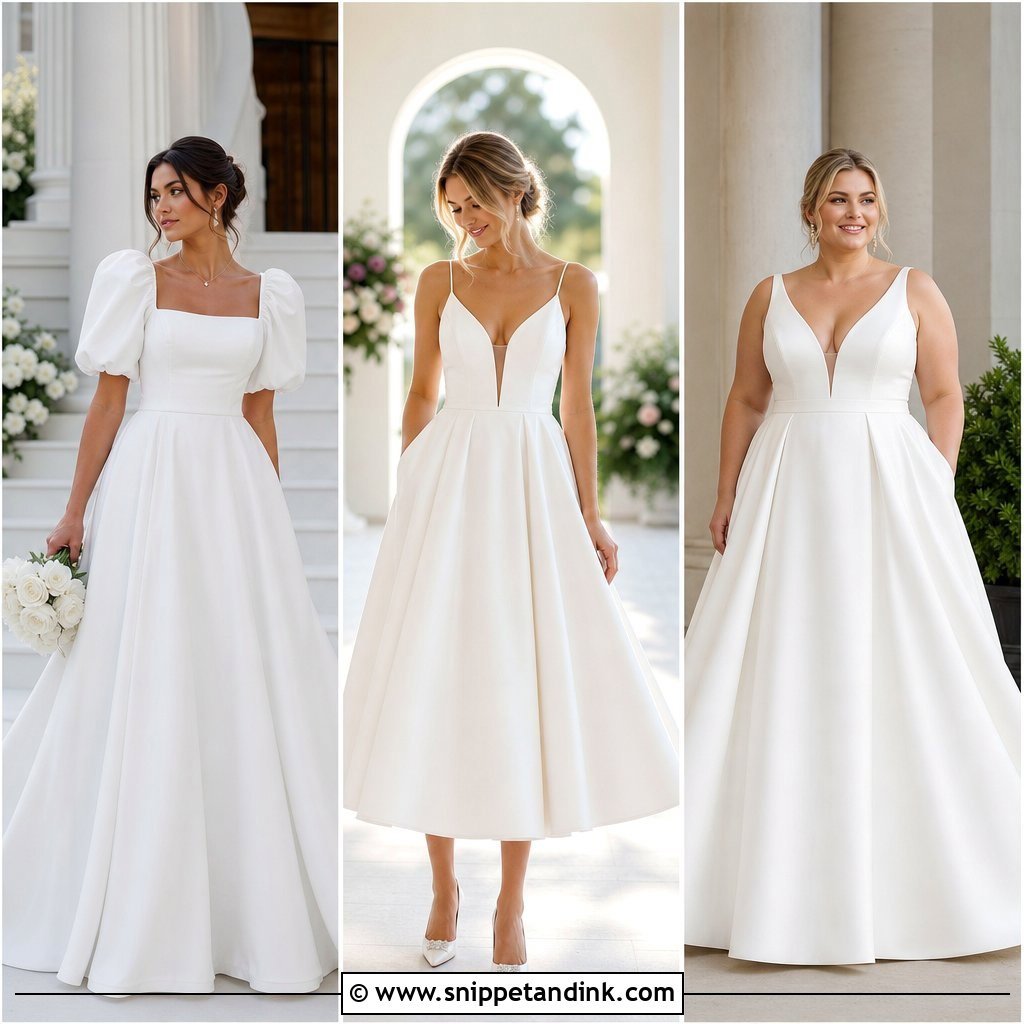
Clean lines give a square neck wedding gown a composed, timeless look. Wide straps or short sleeves frame the neckline, and an A-line skirt with a modest chapel train keeps it balanced. Crepe moves fluidly, while satin and Mikado give the square more structure; I decide between them by how sharp the bride wants the corners to look. A sheer chapel veil, small pearl-and-diamond studs, ivory pumps and a low twisted bun finish it, and a compact white bouquet keeps the proportions clean. Strap placement is the fitting detail I care about most here. A square neck shows bra straps from every angle, so bring your exact undergarments to each appointment.
8. Bateau Neck Wedding Gown With Button Back
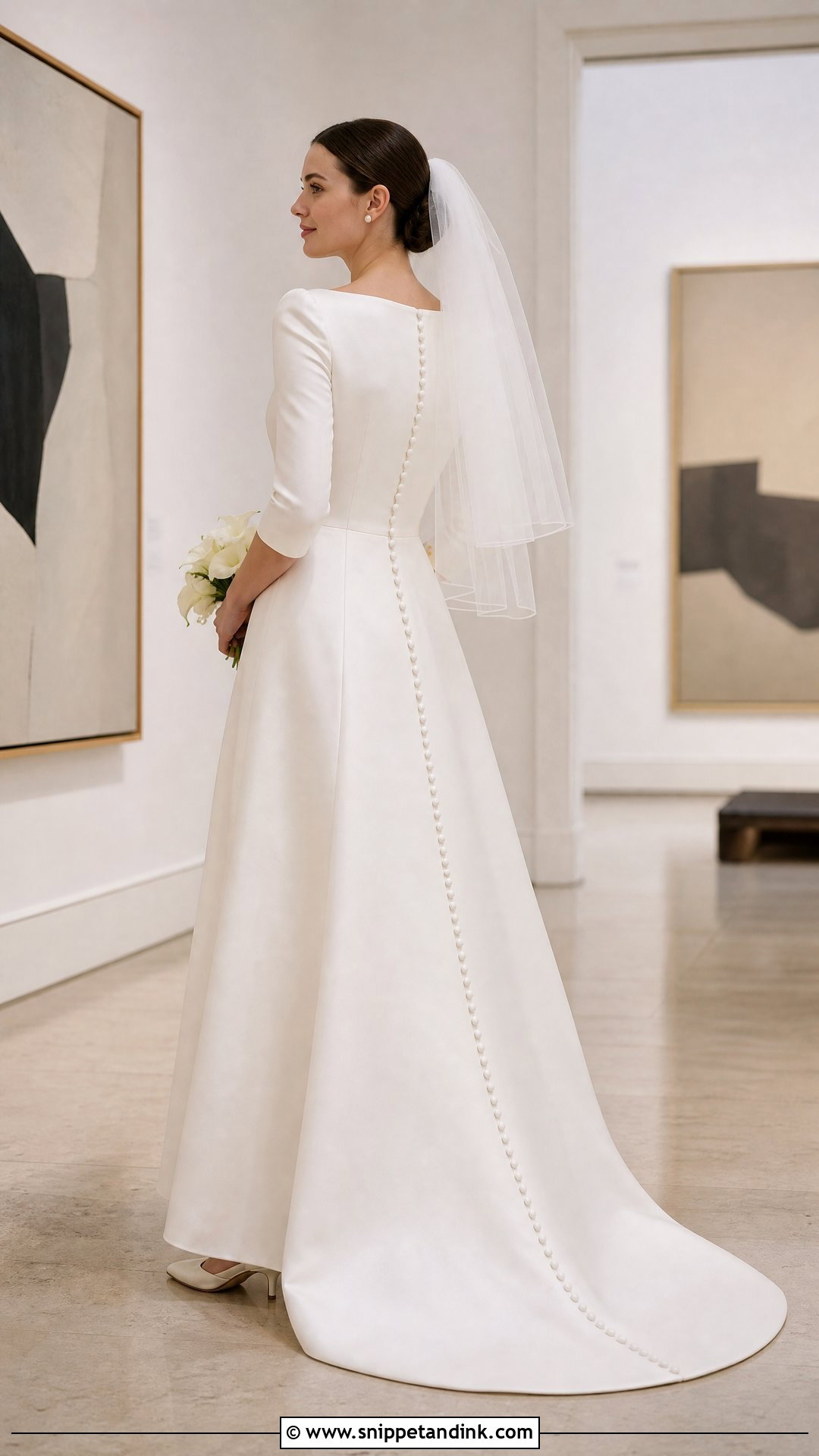
A bateau neckline traces the collarbone from shoulder to shoulder, which shows very little skin and still looks graceful. Three-quarter sleeves suit cooler months, a sleeveless bodice suits summer, and a soft A-line skirt keeps everything classic. The real payoff is the back: covered buttons from the upper back to the end of the train are what guests see during the vows. I keep the rest simple with pearl studs, low ivory heels, an optional narrow satin belt, an elbow-length veil and a classic chignon. Because a bateau sits close to the shoulder joint, it can restrict your reach. Ask your seamstress to open the armholes slightly if hugging feels tight.
9. Basque Waist Ball Gown With Lace Veil
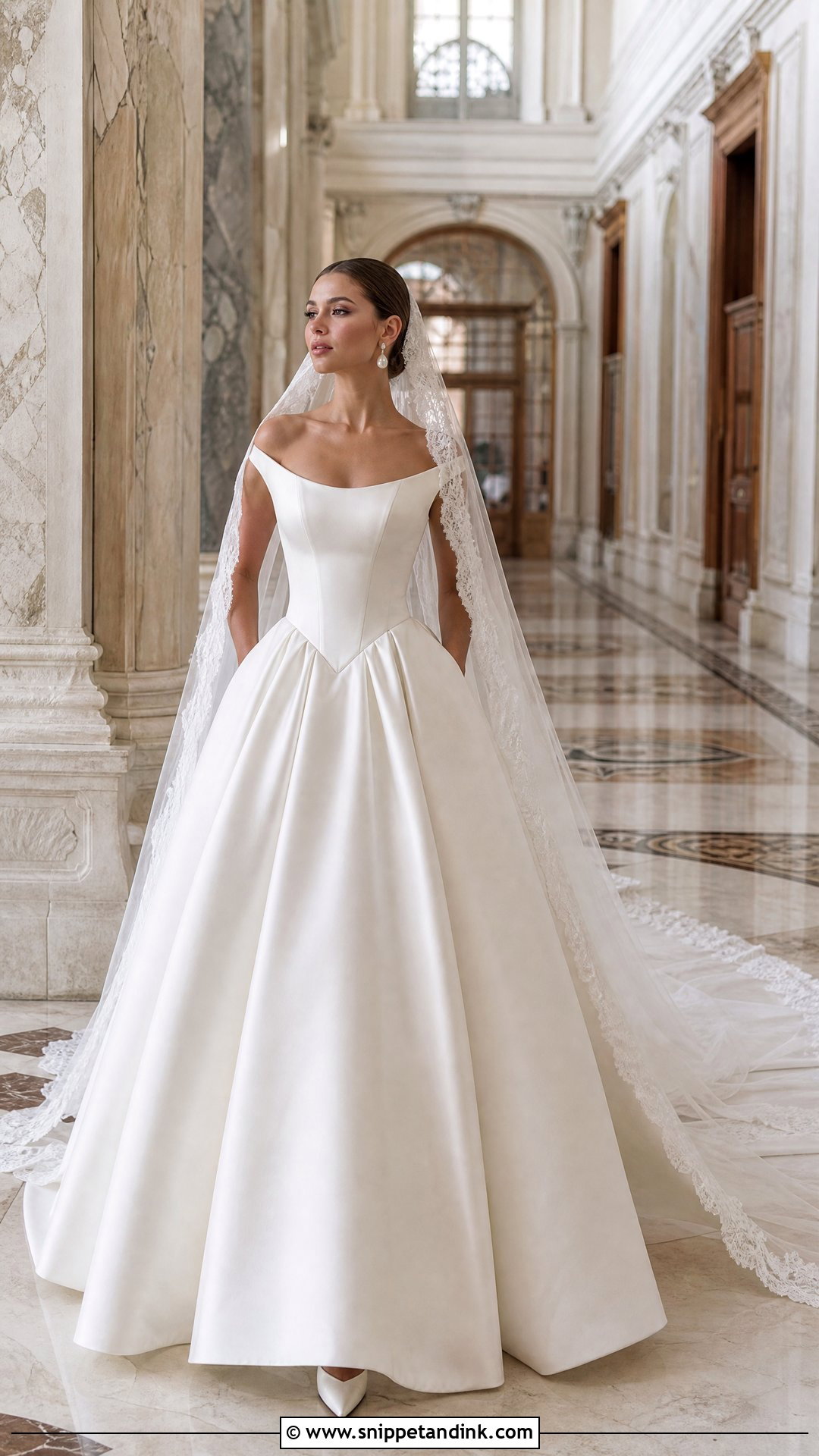
A basque waist ball gown gets its shape from a pointed waistline that dips below the natural waist. That point needs structure, so I only recommend it in satin or Mikado with proper boning, gathered evenly into a full skirt. The silhouette carries the look on its own, which is why I usually leave the surface plain. A lace-edged cathedral veil, pearl earrings and satin pumps with a manageable heel complete it, and a polished updo holds the veil comb firmly. A family brooch is a better addition than more sparkle. Give it room: a narrow aisle squashes the skirt. If the point folds or digs in when you sit, the boning or the length of the bodice needs adjusting.
10. Empire Waist Wedding Gown With Flowing Skirt
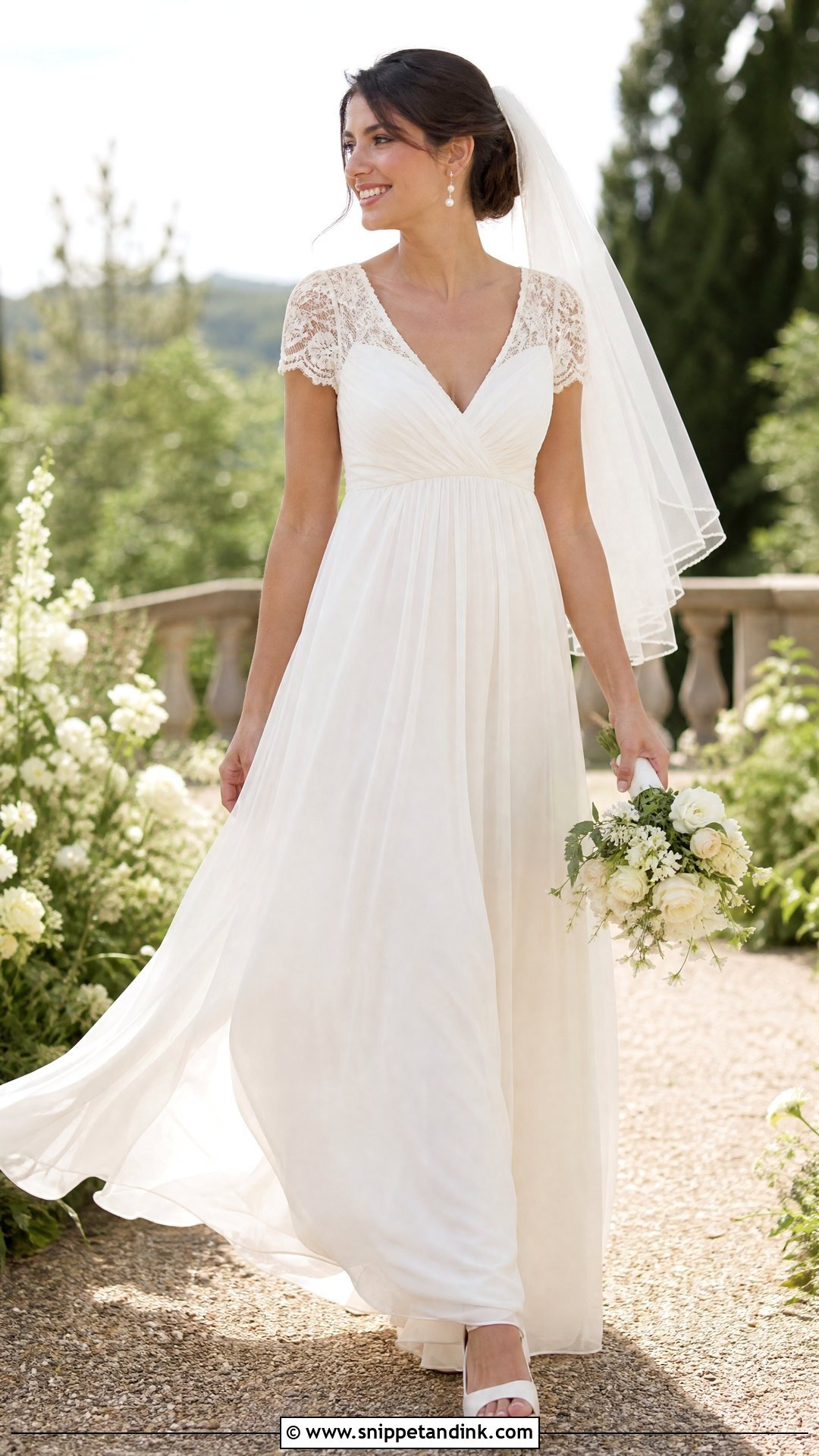
An empire waist gown is fitted beneath the bust and falls straight into a long skirt, so nothing presses on your natural waist. Chiffon, silk or soft layered tulle keep it airy, and a modest V or a gathered scoop neckline suits the shape. Short lace sleeves add coverage without slowing the movement. I add an elbow-length veil, fine drop earrings and low block heels or flats; this is the gown I suggest to brides who plan to dance for hours. Loose waves or a soft pinned style match its ease. Because there is no heavy underskirt, it is my first pick for hot outdoor weddings. Check the lining in daylight, since thin chiffon goes see-through against bright sun.
11. Mikado Wedding Gown With Bow Back
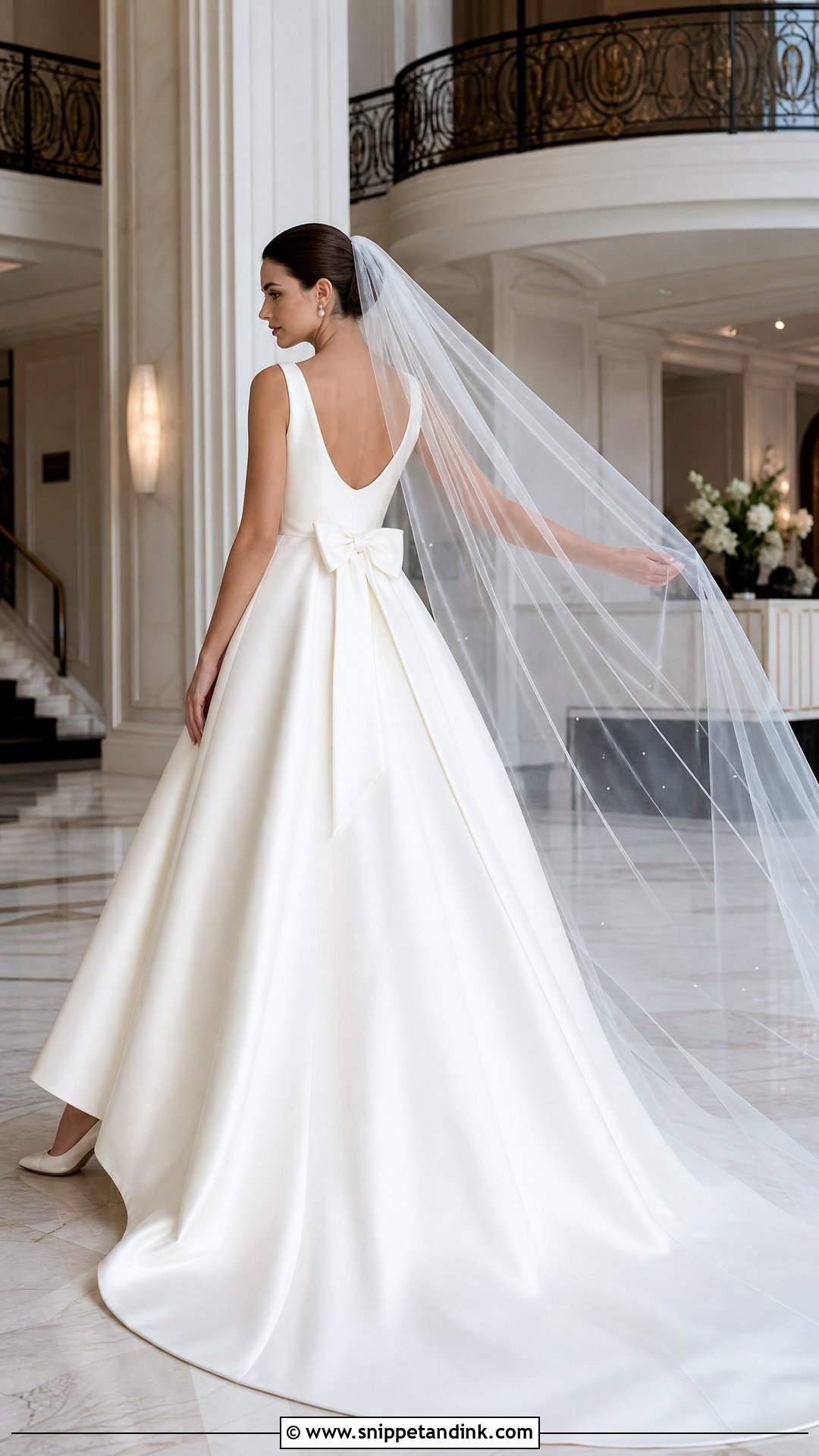
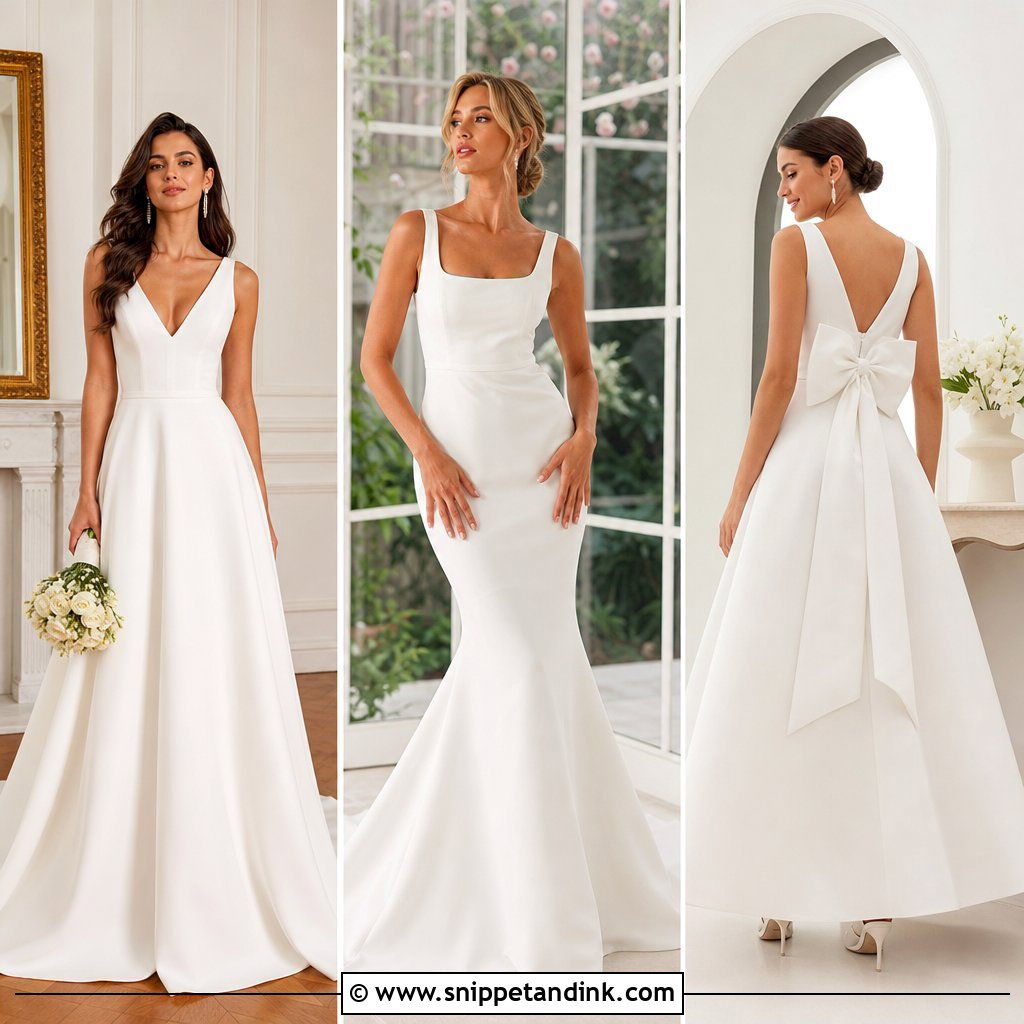
Mikado has a dense, slightly crisp hand that holds an architectural line, and that is what makes this gown. An A-line or ball gown skirt with a structured bodice and a clean waist suits it, along with a strapless, square or scooped neckline kept plain. The medium bow at the back is the focal point, so I pair it with a plain cathedral veil you can take off after the ceremony to show the bow. Pearl studs, a structured ivory clutch, satin pumps and a sleek bun finish the look. Be honest with yourself about weight. Mikado is noticeably heavier than tulle, so practice walking, sitting and hooking the bustle before the day.
12. V Neck Lace Wedding Gown With Tulle Skirt
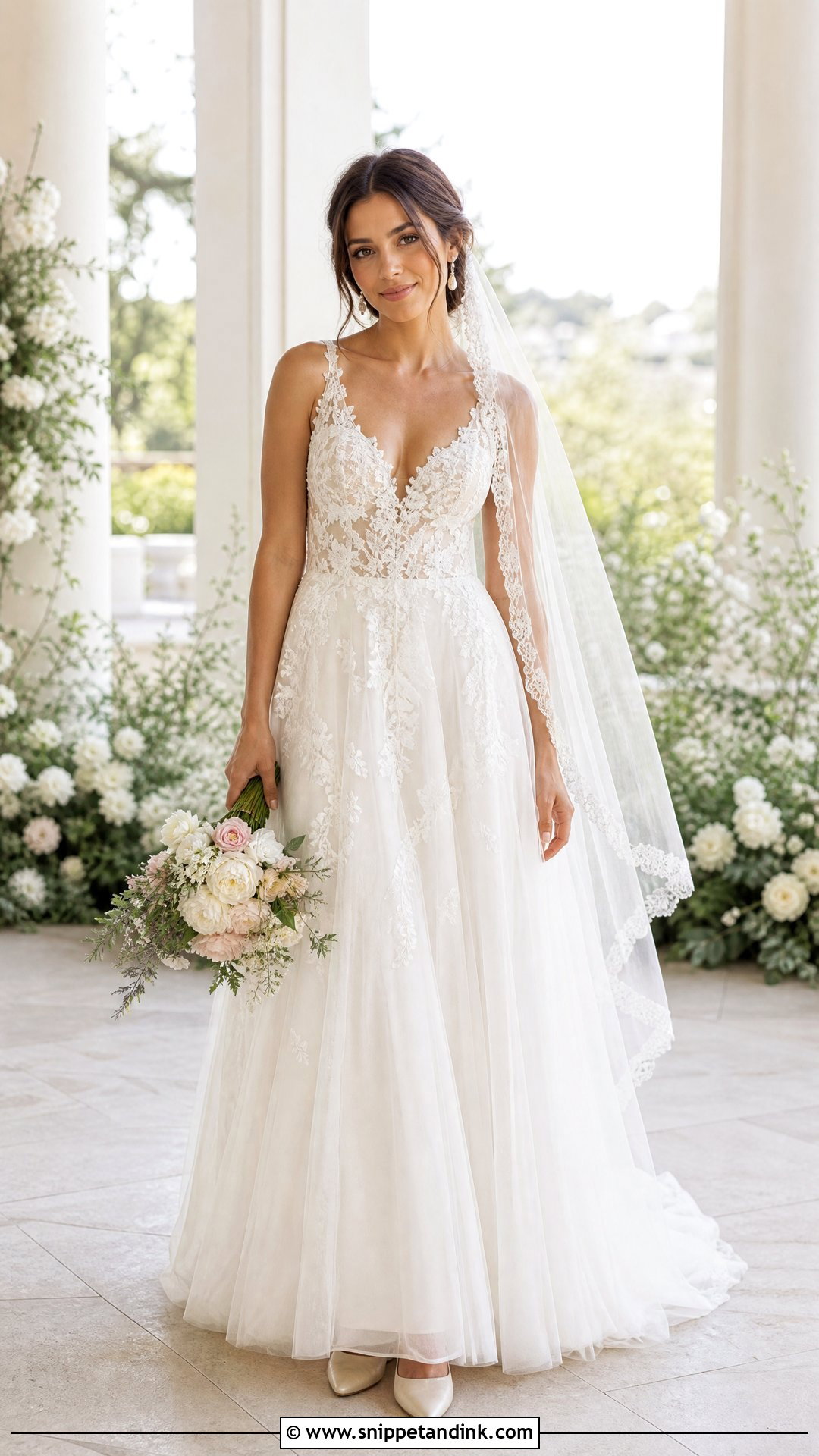
A V-neck lengthens the upper body, and in lace it still reads as traditional. If you want more security, ask for supportive illusion mesh or a modest inset in the V; I usually suggest this for anyone who plans to dance. A fitted lace bodice over an A-line tulle skirt keeps the look soft, and a few small appliqués scattered below the waist bridge the two fabrics. A fingertip veil, pearl drops and closed-toe ivory heels are all I would add. Half-up curls keep the neckline visible. Check the mesh in the mirror from the side as well as the front, and bend forward as if picking up a bouquet. The mesh should stay flat against your skin.
13. Tea Length Wedding Gown With Classic Pumps
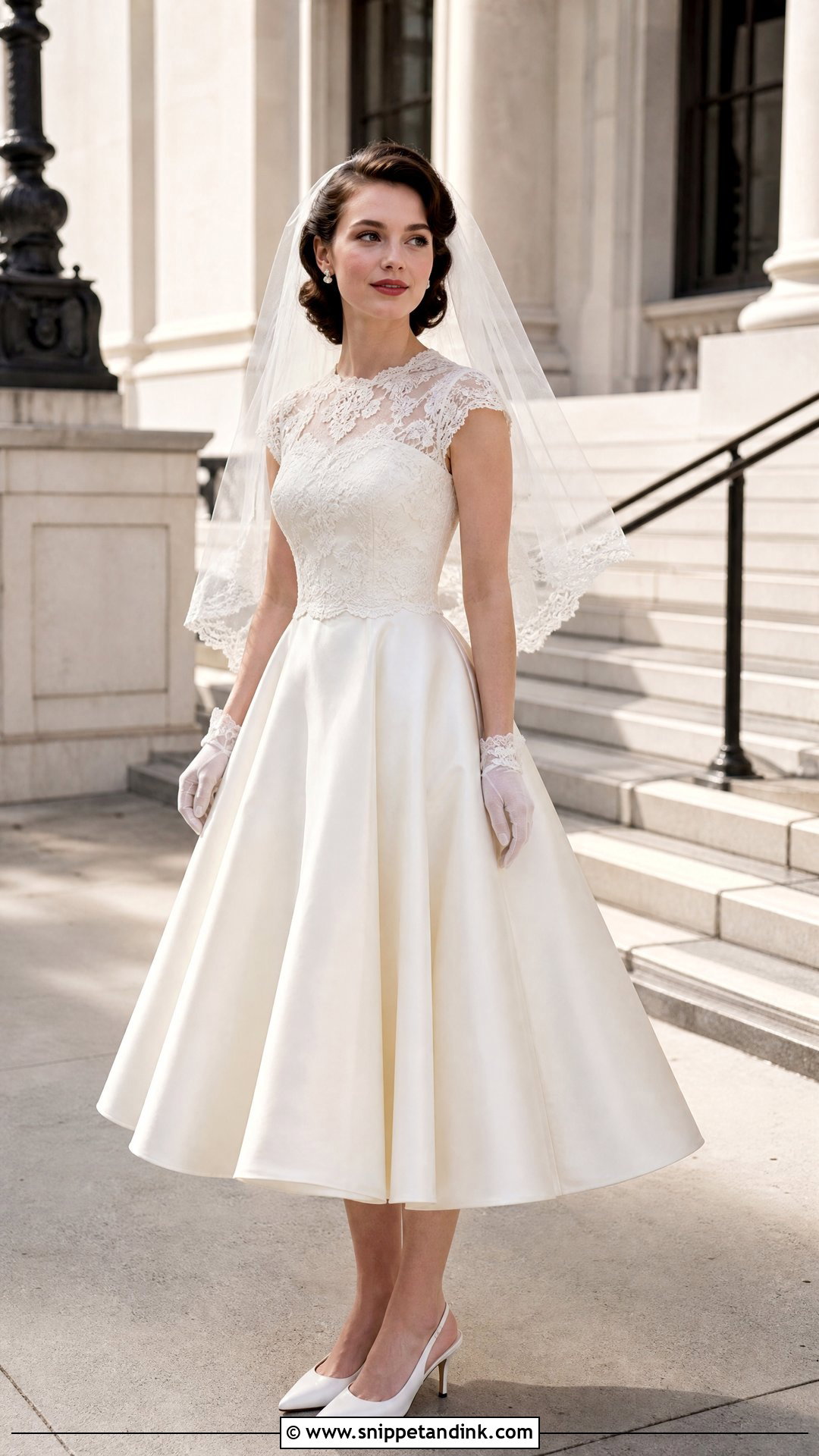
Tea length is the vintage traditional option, with the hem landing between knee and ankle. That puts your shoes on show, so I treat them as part of the gown rather than an afterthought: ivory pointed pumps or low slingbacks. A fitted lace or satin bodice with a full structured skirt and a defined waist gives the classic shape. Pearl studs and short gloves add period character. Keep the veil short, a birdcage, shoulder-length or elbow-length, because a cathedral veil swamps a short skirt. A smooth bun or curled bob suits the proportions. It is a natural fit for courthouse and daytime weddings. The hem must be precise, since an inch too long or short throws off the whole line.
14. Cap Sleeve Wedding Gown With Satin Skirt
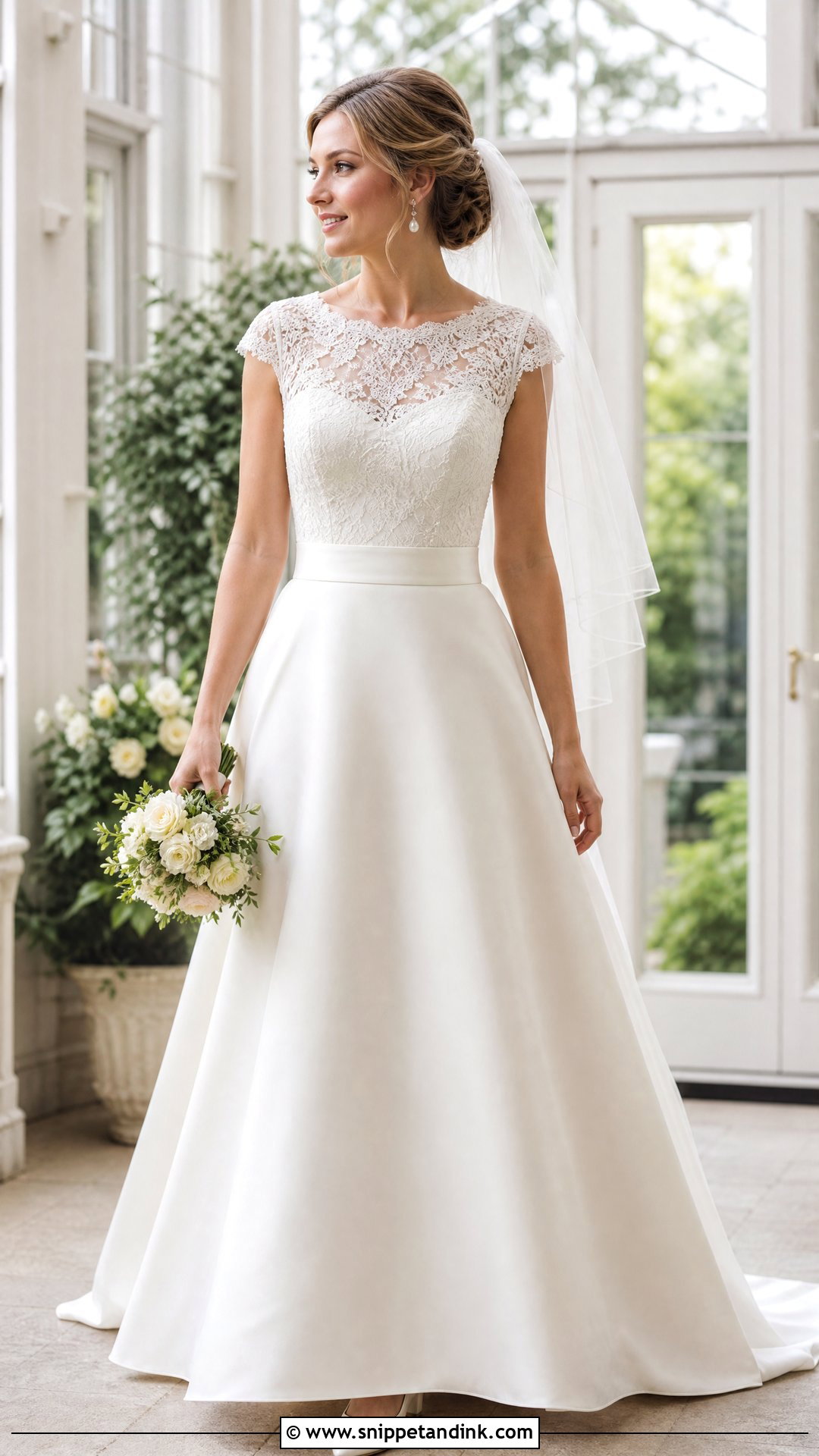
Cap sleeves give the shoulders a little coverage and flow straight into the bodice. I like them in lace, matched to a lace top over a smooth satin A-line skirt; the contrast of texture and plain cloth keeps it traditional and interesting. A defined waist seam or narrow satin band is what makes the two halves look like one dress. Add an elbow-length veil, pearl earrings, low satin pumps and a textured updo that shows the sleeves. Spring, summer and indoor ceremonies suit it. Cap sleeves have a habit of cutting into the upper arm when you reach forward, so test that at fittings. A soft lining along the lace edge also stops it irritating sensitive skin.
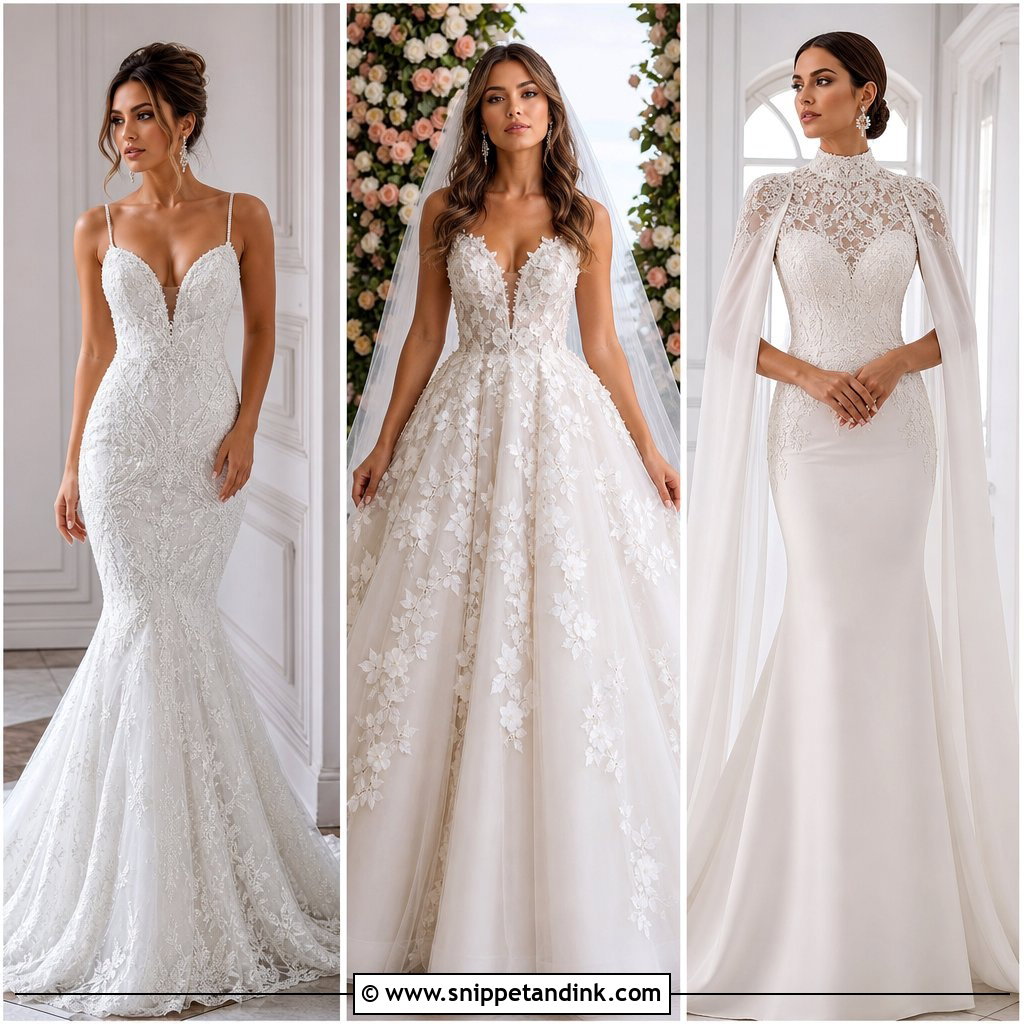

15. Portrait Neckline Wedding Gown With Full Skirt
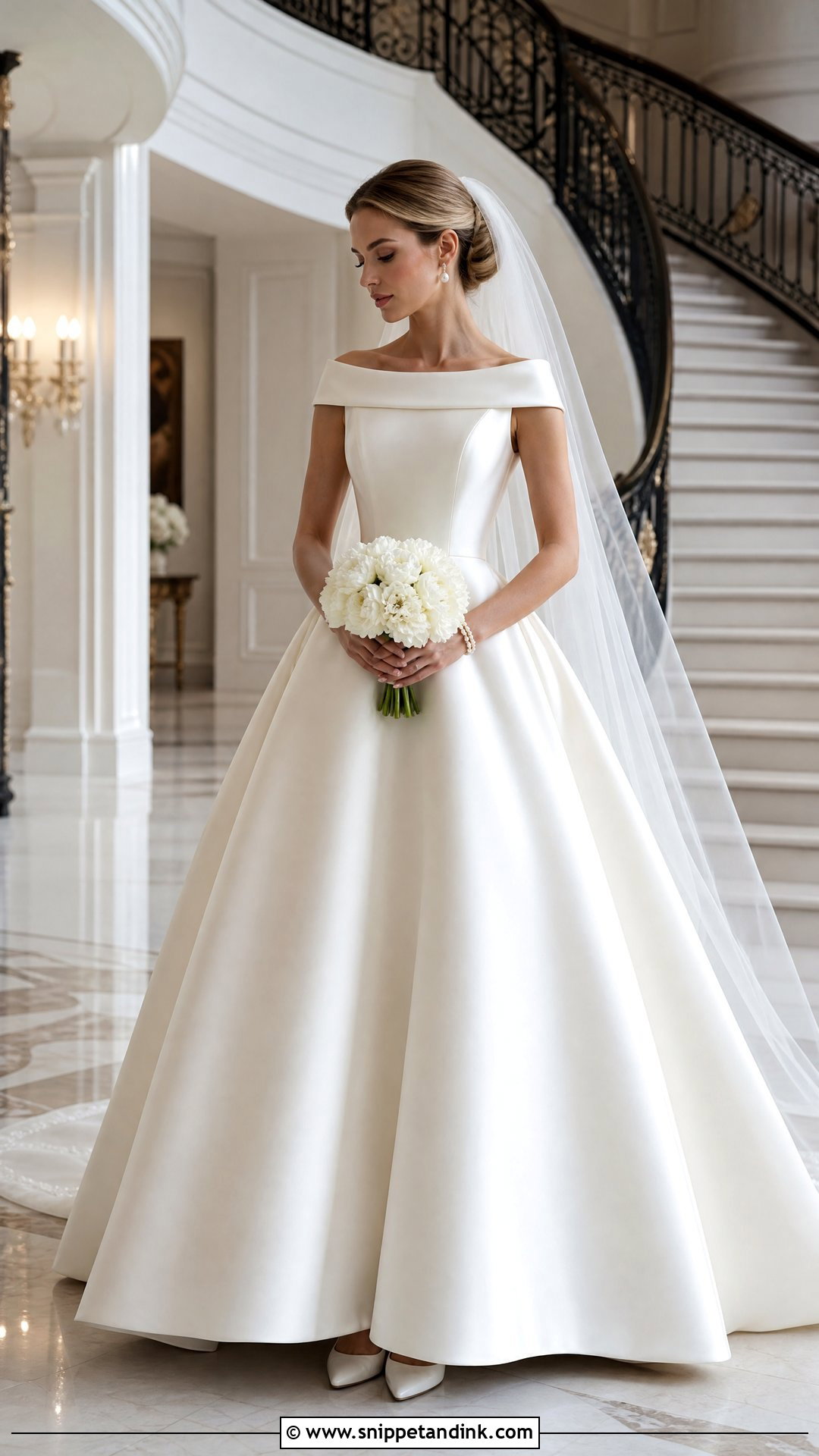
A portrait neckline opens wide across the shoulders and frames the face like a picture mat, which is where the name comes from. I build it in folded satin, attached to a fitted bodice and a full ball gown skirt, with a little lace along the fold only if the bride wants softness. It needs a clearly defined waist to look balanced. Pearl earrings, a single bracelet and a long tulle veil set beneath a structured bun complete it, with closed-toe pumps and a compact bouquet so the skirt does not look crowded. The shoulder fold is the tricky fit. It has to be secure without biting, so you can turn, sit and lift your arms while it stays smooth.
16. Three Quarter Sleeve Wedding Gown With Lace Train
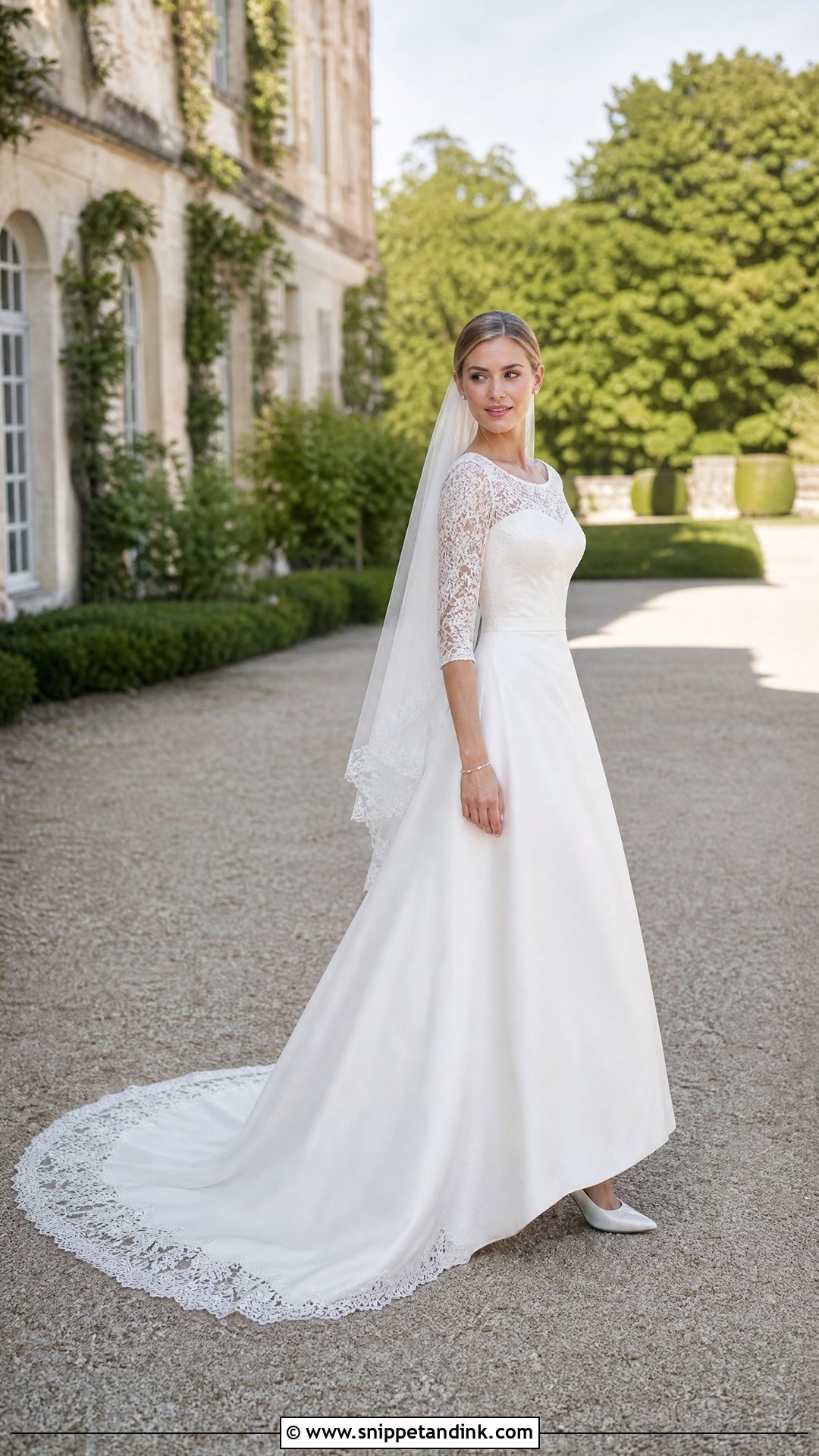
Three-quarter sleeves stop just above the wrist, which leaves room for a bracelet and gives classic coverage. Choose fitted lace sleeves, a supportive bodice and an A-line skirt that runs into a lace-trimmed chapel train. I want satin or crepe under the lace so it lies smoothly instead of looking layered and lumpy. Pearl studs, a narrow bracelet and ivory pumps are enough, along with a plain fingertip veil so the lace on the train shows from behind. A low chignon or polished half-up style suits it. It is my go-to for spring and autumn weddings. Try your bracelet on at the fitting, as lace sleeve edges catch on clasps.
17. Corset Wedding Gown With A-Line Skirt
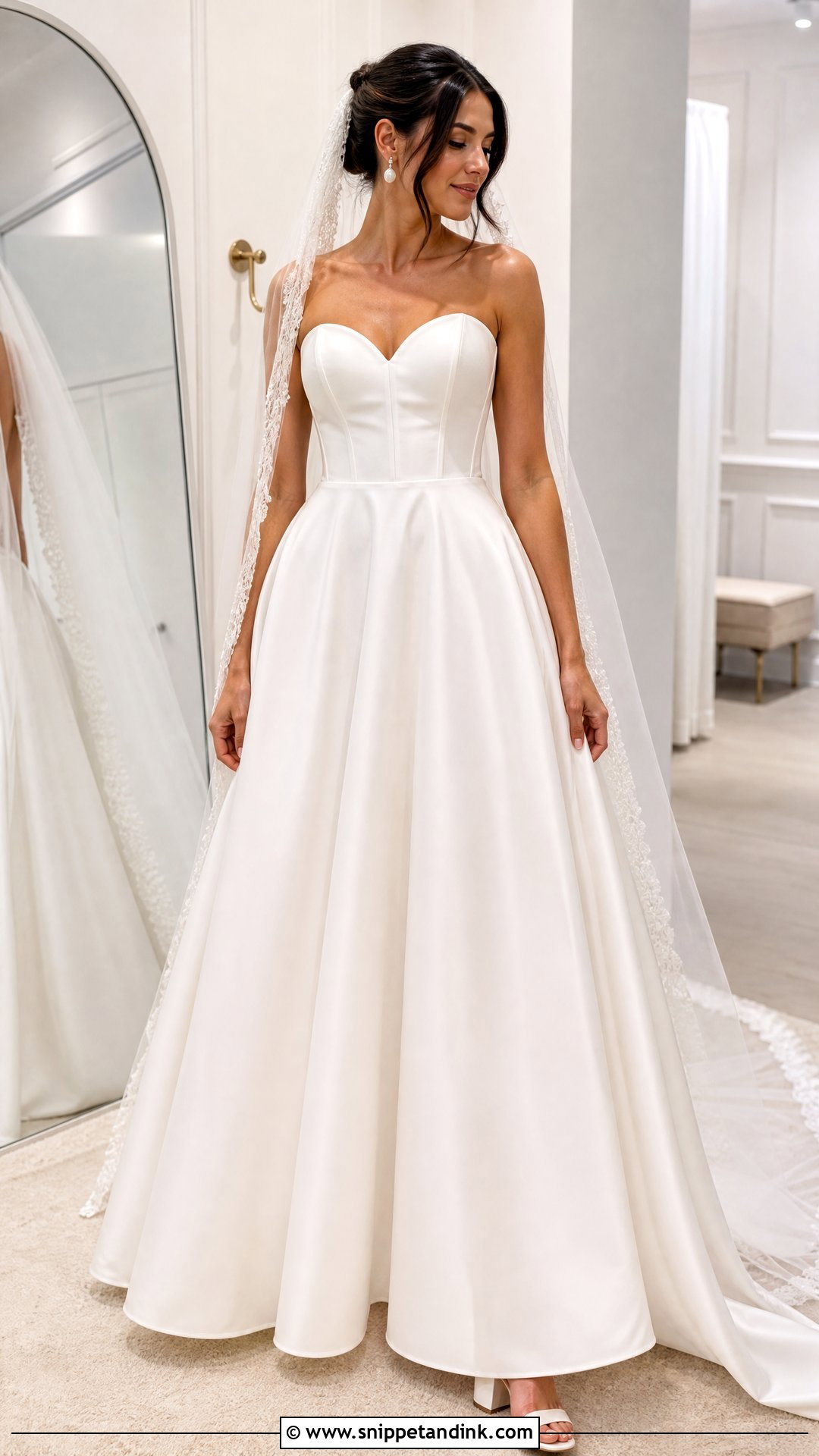
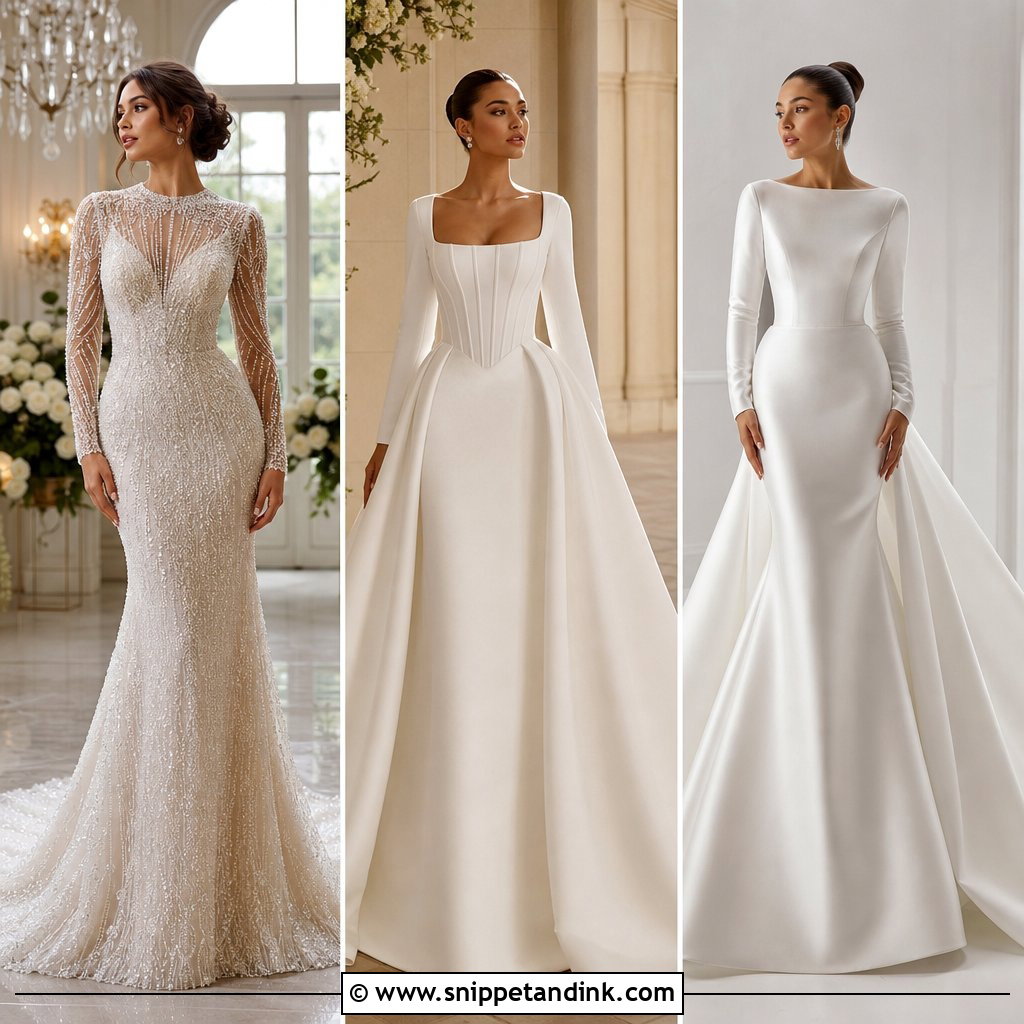
A corset bodice looks traditional when the structure is smooth and covered, not on display. I look for internal boning, a modest sweetheart or straight neckline and opaque satin or lace over the corsetry. A flowing A-line skirt balances the fitted top and lets you move. Lace-up backs adjust more easily if your weight shifts before the wedding, while covered buttons look more formal. Finish with a chapel veil, pearl earrings, satin block heels and a low bun. A corset should support, never squeeze. Book every fitting with the exact undergarments you will wear, then sit, breathe deeply and move your arms. If you cannot eat comfortably in it, it is too tight.
18. Drop Waist Wedding Gown With Cathedral Train
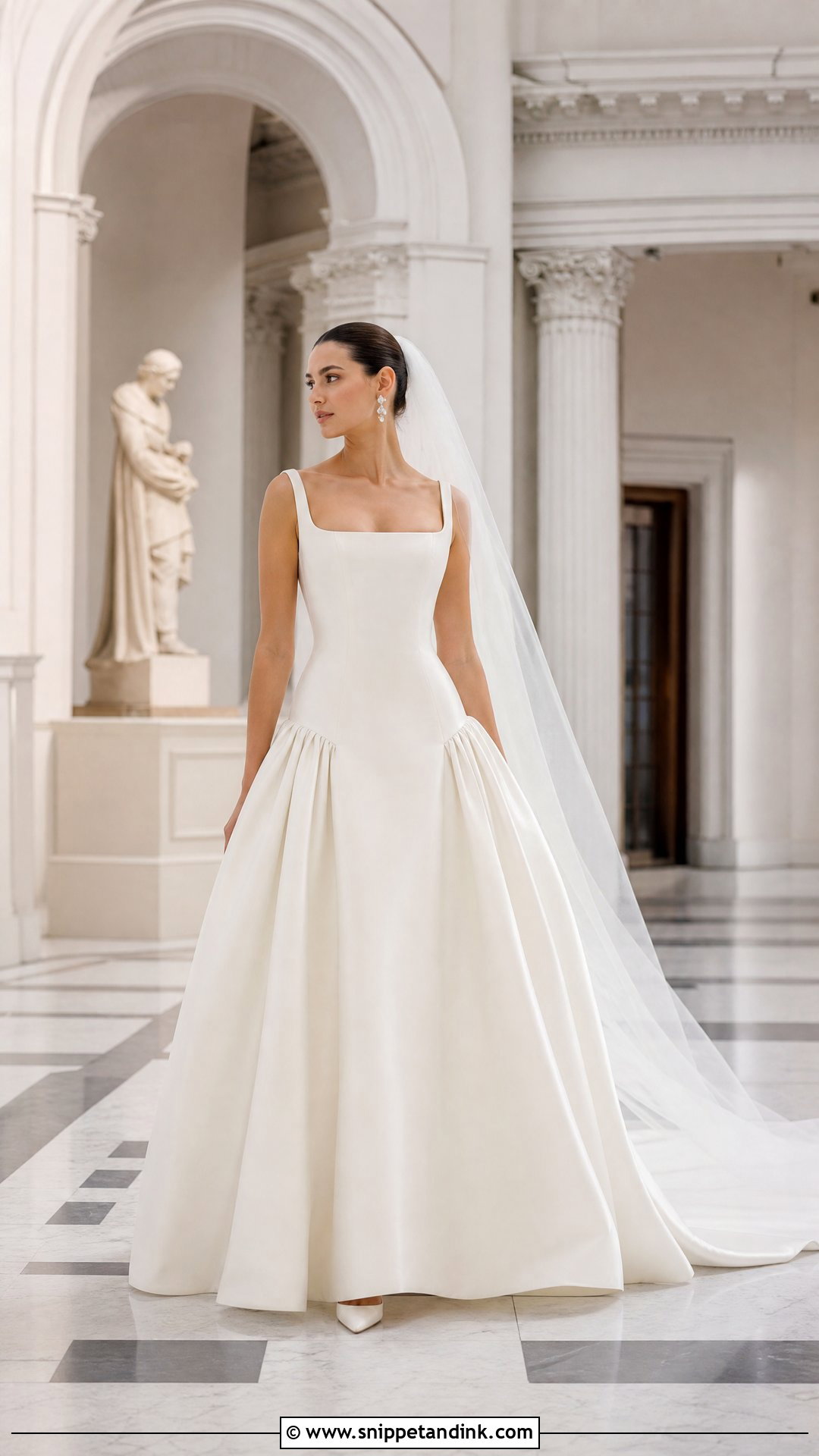
A drop waist carries the fitted bodice past the natural waist and over the hips before the skirt opens. In satin or structured Mikado it looks dramatic and old-world. A softly curved or V-shaped seam makes the transition into the skirt smoother than a straight one. Add a cathedral train and a plain long veil that follows its length, plus pearl-and-crystal earrings, closed-toe pumps and a sleek bun. This shape is not for everyone. With fitting through the hips, sitting and walking can feel restricted, so I make brides sit and climb a step at every fitting. The seam should match your proportions and not fold when you sit.
19. Embroidered Wedding Gown With Matching Veil
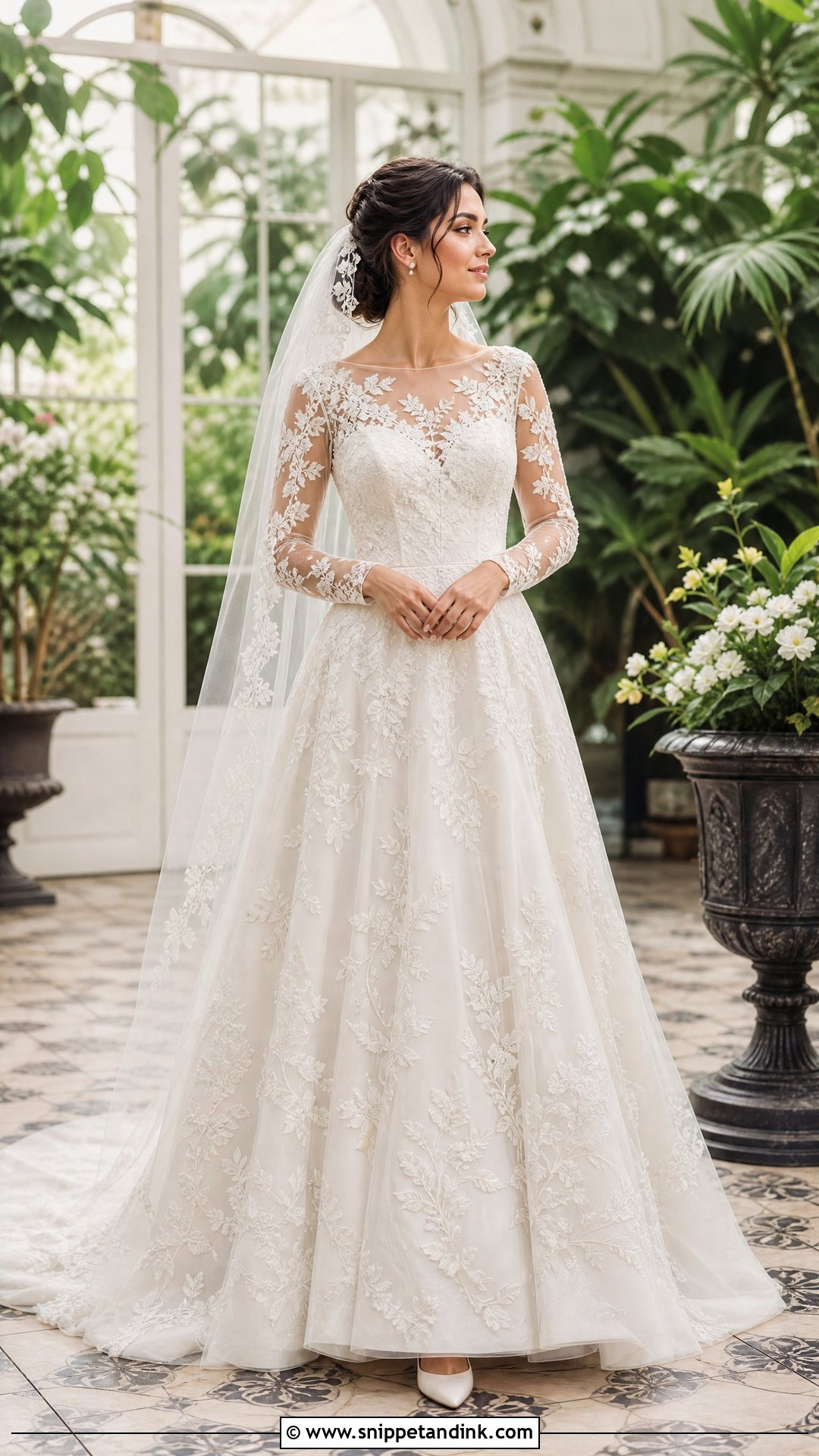
Fine embroidery adds depth without relying on sparkle. Choose an A-line with floral, vine, or scroll embroidery across the bodice, scattered lightly onto the skirt, and a sheer embroidered sleeve or illusion neckline if you want the motif to continue. I only repeat part of the motif on the veil; a fully matched veil competes with the dress. Pearl studs, ivory pumps and a softly pinned updo complete it. Embroidery already does the decorating, so keep the rest minimal. Before you order, look at the motifs from the back and sides. Good placement around seams, the waist and the neckline is what separates a refined gown from one where the pattern is cut off awkwardly.
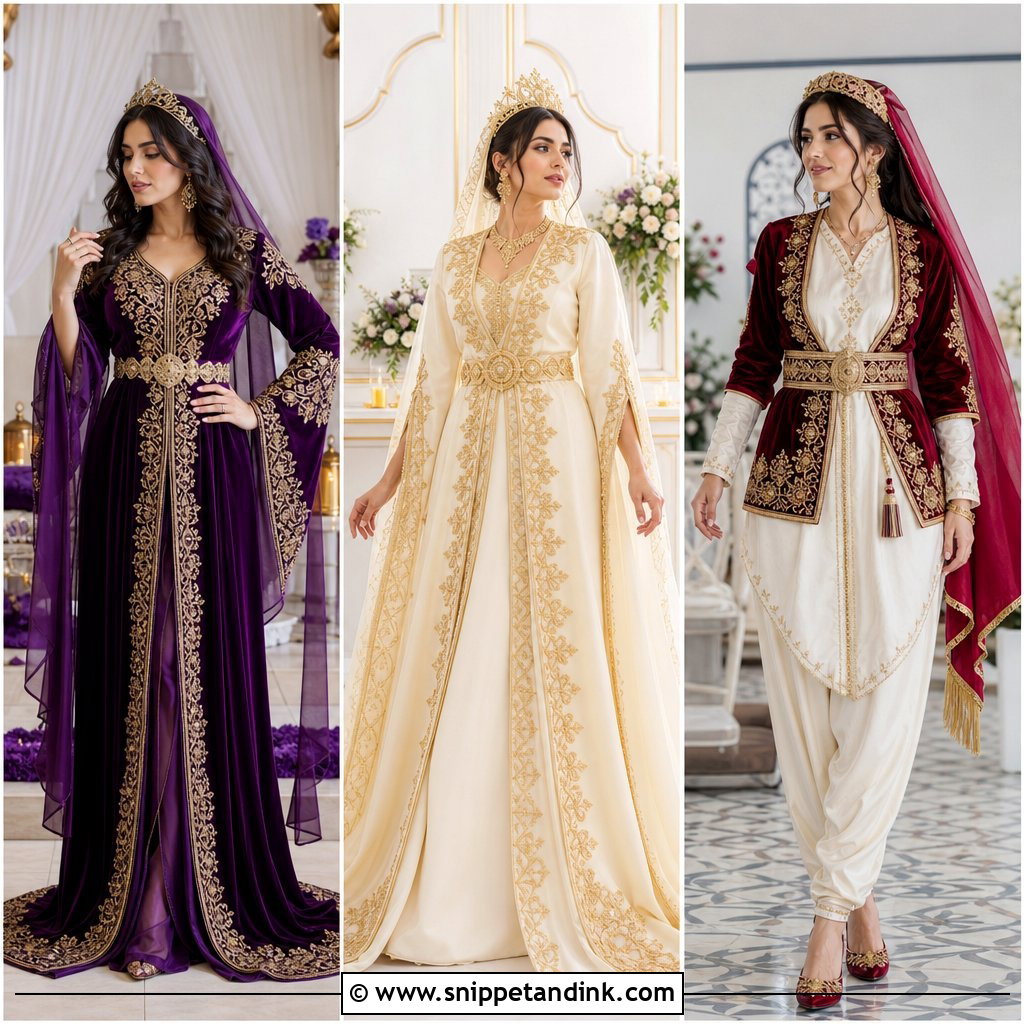
20. Simple Satin Wedding Gown With Pearl Veil
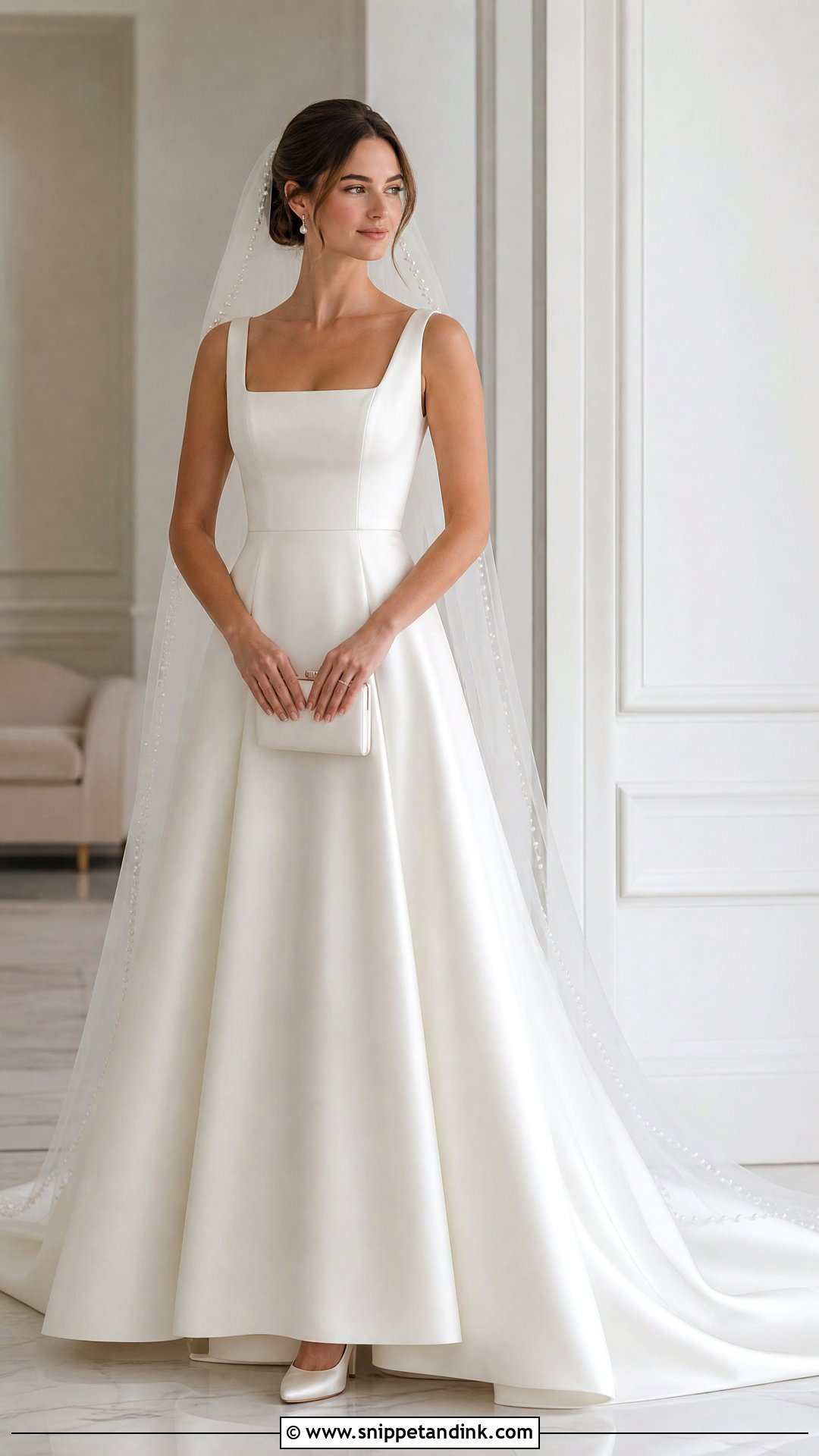
The simplest traditional gown is often the one guests remember. A smooth satin A-line with a fitted bodice, a clean waist seam and a gentle sweep train is all you need, with a square, scoop or softly draped neckline for shape. Bring texture in through a pearl-trimmed veil with small, evenly spaced pearls. Pearl earrings, satin pumps and a compact clutch are enough, with a sleek low bun or polished waves. Here is the catch: plain satin shows everything. Pulling at the seams, puckering and visible underwear lines that lace would hide are on full display, so the tailoring has to be excellent. Choose smooth-edged undergarments and have the gown professionally steamed the day before.
How Satin, Lace, Mikado and Tulle Behave Once You Sit Down
Every fabric in this list looks perfect on a hanger. What I care about is how it looks after the car, the ceremony and the dinner. Here is what I tell brides to expect.
Satin
Satin creases at the lap and the back of the skirt as soon as you sit. Plan for a few wrinkles in the reception photos, and ask someone to smooth the skirt as you stand. A handheld steamer at the venue is worth having.
Mikado
Mikado holds its shape far better than thin satin and resists light crushing, but it is heavy. The skirt weight pulls on the waist over a long day, so the bodice support and the bustle points need to be strong.
Lace and Tulle
These forgive creases almost completely, which is why I like them for long days. Their weakness is snagging. Jewelry clasps, rough heels and the hook-and-loop on a flower girl’s shoes all catch them, so do a quick accessory check before you get dressed.
A Fitting Calendar With Room for Bustles and Hems
Most traditional gowns are made to order, and I would place the order around six to nine months before the wedding, sooner for heavy embroidery or custom sleeves. Alterations typically start about two to three months out and take two or three appointments.
- First fitting: bring the shoes and undergarments you will actually wear. The hem is measured from your heel height, so new shoes later mean a new hem.
- Second fitting: check the bodice, neckline and sleeves while sitting, raising your arms and walking. This is also when the bustle is planned.
- Final fitting, about two weeks before: practise the bustle with whoever will fasten it on the day, and leave with the gown pressed and bagged.
Keep your weight steady in the final weeks if you can. Small changes are easy to fix, but a structured bodice taken in too early can need a second round of alterations.
The Gown Leads, and Everything Else Follows It
A traditional bridal outfit works when it is comfortable enough to forget about and personal enough to feel like you. I always start with the silhouette that suits your body and your venue, then decide fabric, neckline, sleeves and train, and only then add the veil, shoes, jewelry and hair. Each of those should support the gown. Test the complete outfit at fittings, with undergarments and the heel height you will wear, so the alterations match how you will move on the day. Lace, satin, tulle or Mikado, any of the gowns above can carry that classic feeling long after the photographs are printed.
You'll Like These Ideas:




Leave a Reply