
Every gown on a salon rail looks good on its hanger, which is exactly why the hanger is the wrong place to start. I ask brides a different question first: how do you want to feel walking, sitting, dancing and looking back at the photos years from now? Today’s options are wide, from ball gowns and sleek satin to lace sleeves, pearl details, sculptural necklines, tea-length hems, suits and party dresses. Classic romance, quiet minimalism, drama and plain comfort all have room. Your venue, the season, your proportions and how much you want to move will narrow the field fast, and the 30 designs below show where each one fits.
How Each Bridal Fabric Wears Over a Long Day
Silhouette gets all the attention, but fabric decides how a dress feels at hour eight, how it handles the weather and how it photographs. This is how the main bridal fabrics behave in practice.
- Satin: smooth and luminous, but it shows every wrinkle and water mark. Heavier satins recover from sitting much better than thin, shiny ones.
- Mikado: stiff, structured and slightly ribbed. It holds dramatic shapes and resists clinging, but it is warm and creases sharply.
- Crepe: matte, with a little stretch. It barely creases and is comfortable, though it shows undergarment lines.
- Tulle: light and airy, and very easy to snag. Layers add up, so a full tulle skirt can be heavier than it looks.
- Chiffon: floaty and cool, the natural choice for heat and beaches. It frays and catches on rough ground.
- Lace: forgiving, since its texture hides small creases. Stiff corded lace scratches at the edges, while softer Chantilly sits gently on skin.
For a summer ceremony outdoors, I steer brides toward crepe, chiffon or soft lace. For a winter ballroom, satin and mikado come into their own.
1. Lace Ball Gown Bridal Dress
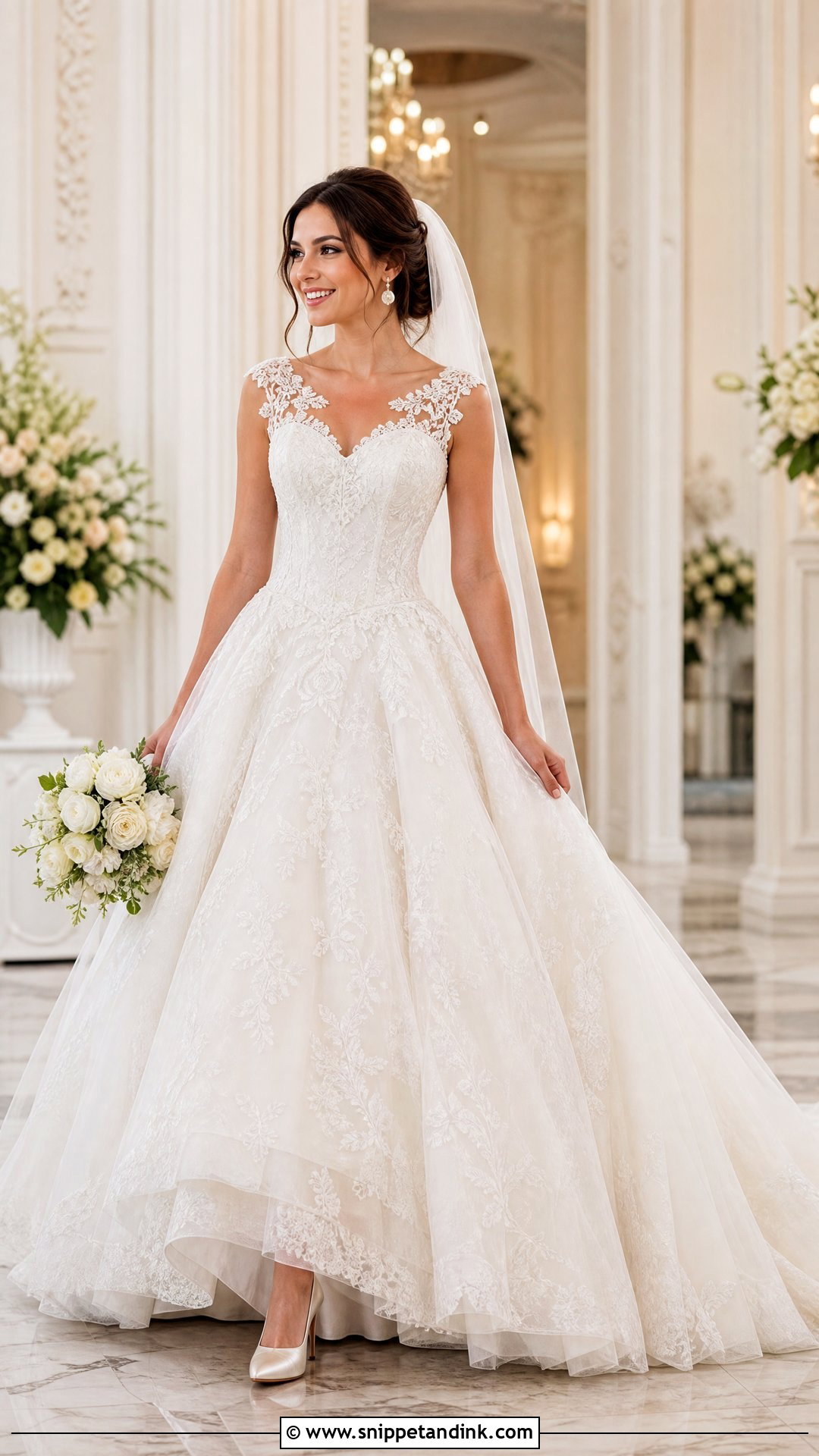
Lace on a full skirt is the classic wedding silhouette, and it only looks dated when the lace is stiff or the bodice is shapeless. Floral lace suits a garden; fine Chantilly reads lighter and more delicate. The waist is where I spend most of a fitting on this gown, because a defined waist is what balances all that volume. Ask about the skirt lining as well. Lightweight tulle layers are far kinder over a long day than heavy crinoline. Pearl earrings, a soft veil and pointed satin heels are all it needs for a formal ballroom.
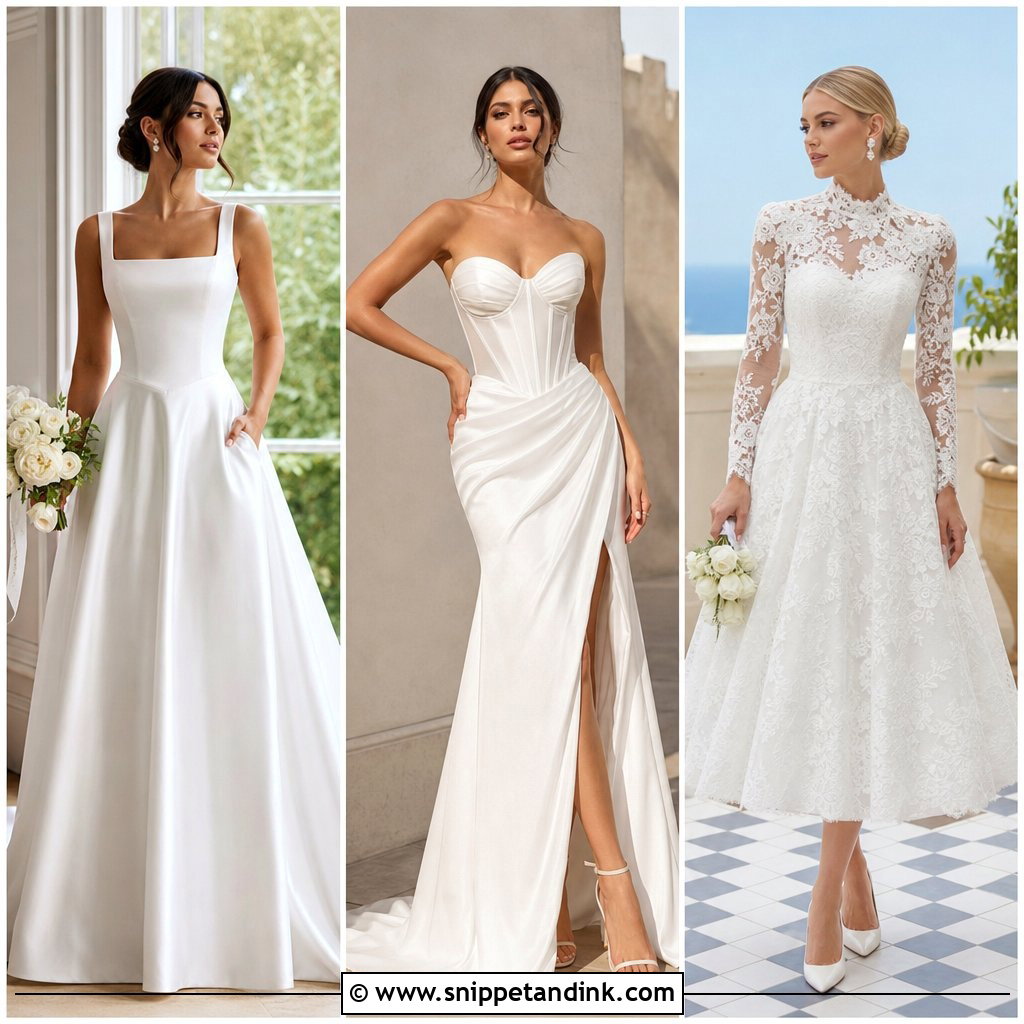
2. Satin A Line Bridal Dress
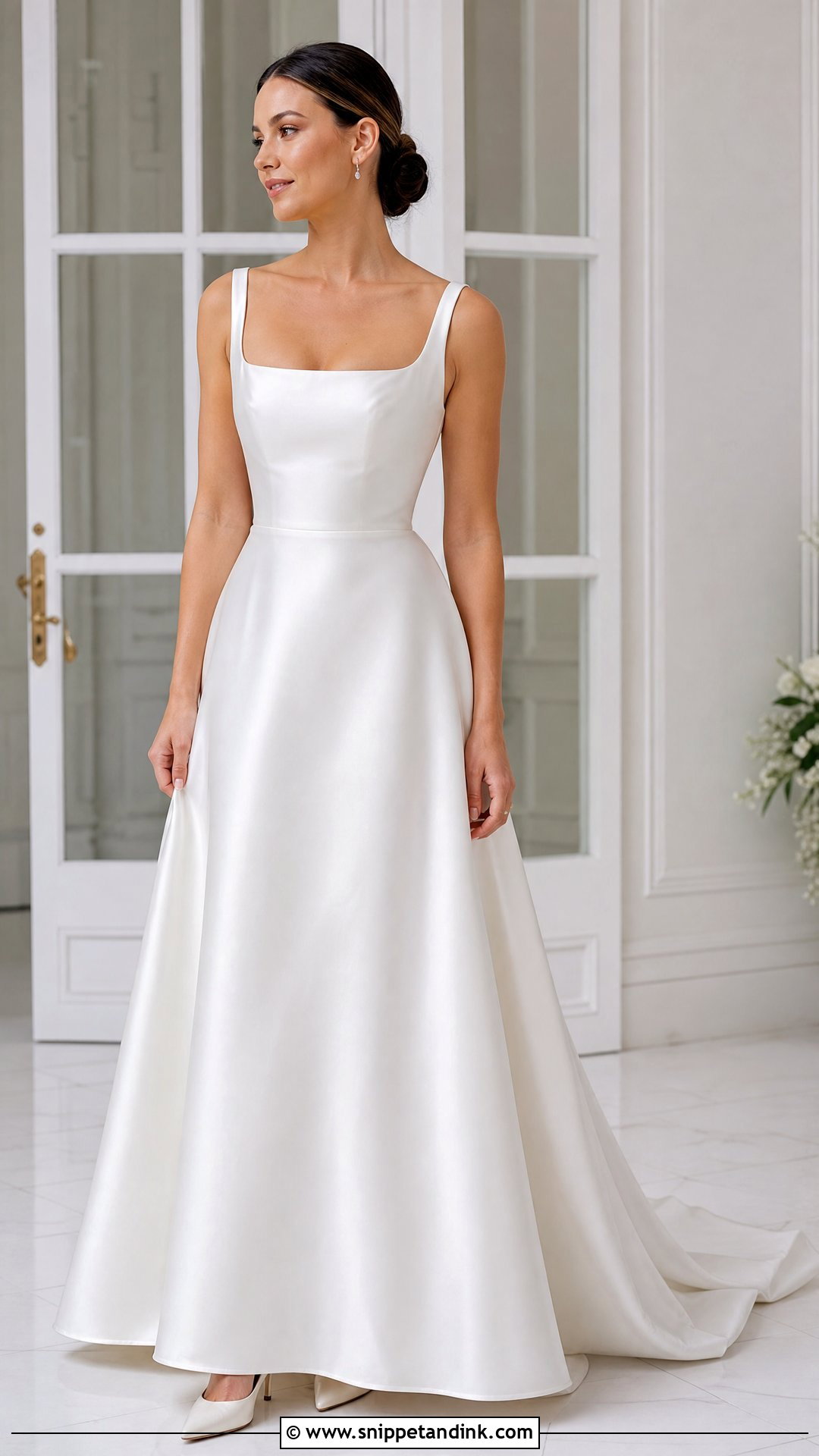
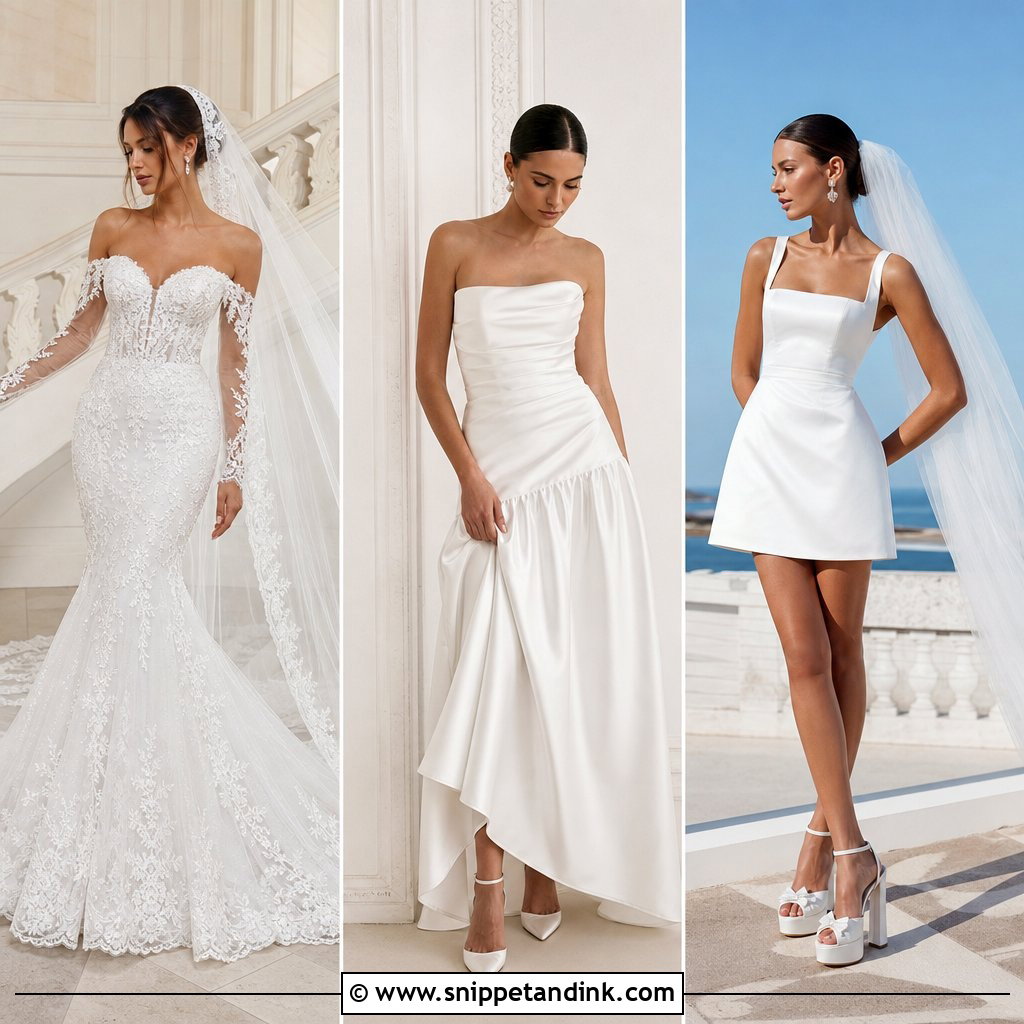
Fitted at the bodice and opening gently from the hip, a satin A-line flatters more figures than any other shape I pin. Satin reflects light, so even a plain design looks finished in photos, but it also shows any wrinkle at the waist seam, which is why the fit there has to be precise. A square neck, a strapless bodice or an off-shoulder sleeve changes the mood completely. Style it with a low bun, small drop earrings and a simple veil. Minimalists who still want a bridal outline usually end up here.
3. Mermaid Bridal Dress With Train
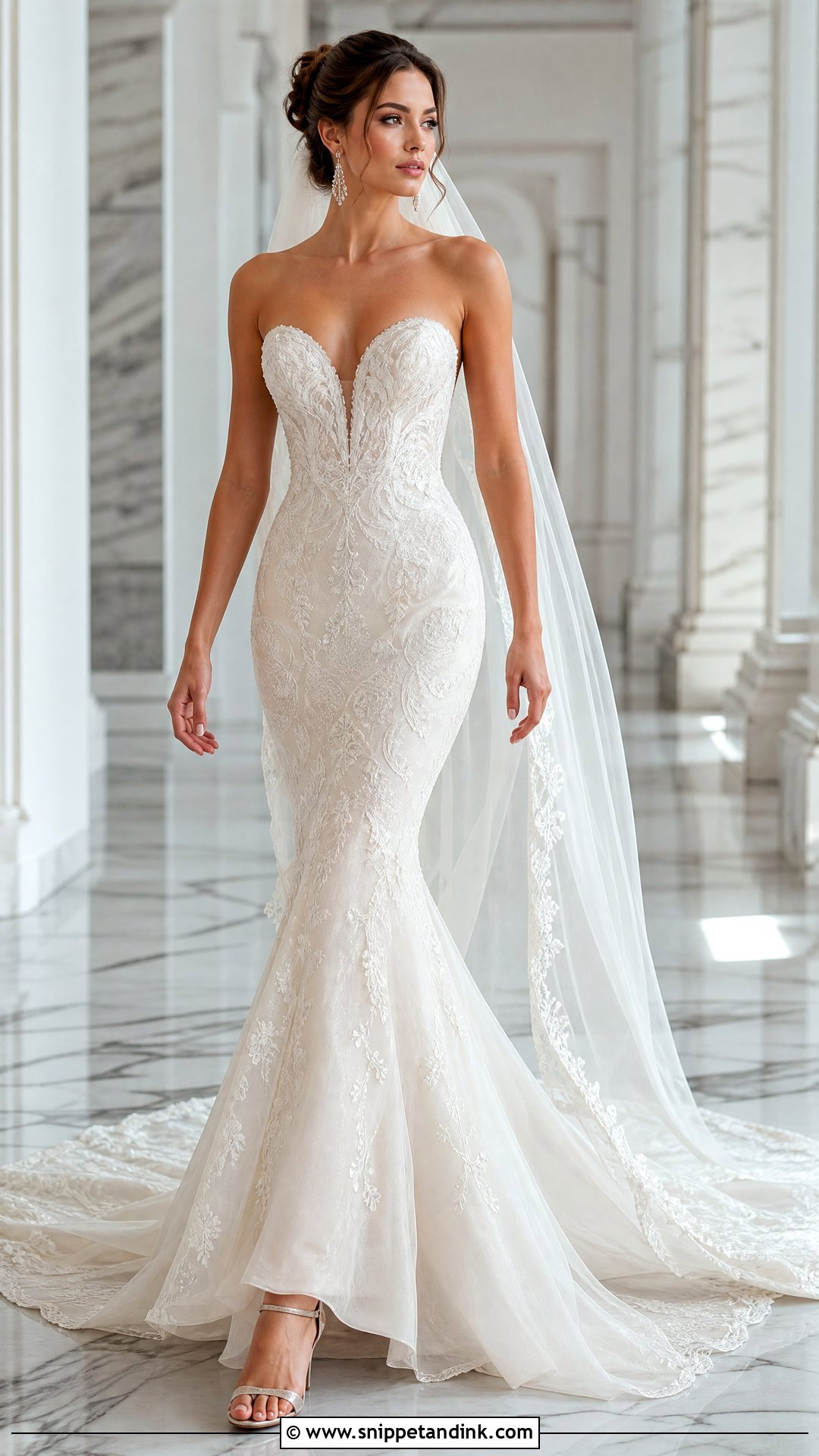
Do you want the gown to follow your curves? A mermaid shapes the body through bodice, waist, hips and thighs before flaring near the knee, and a chapel train adds drama without becoming hard to manage. Stretch crepe shapes cleanly, lace adds romance and satin feels red-carpet sleek. Stretch crepe is also the most comfortable of the three, because it gives a little when you sit. Pair it with sculptural earrings, a long veil and elegant heels. At every fitting, walk up a step and sit down. If you can’t do both, the flare needs moving.
4. Off Shoulder Bridal Dress
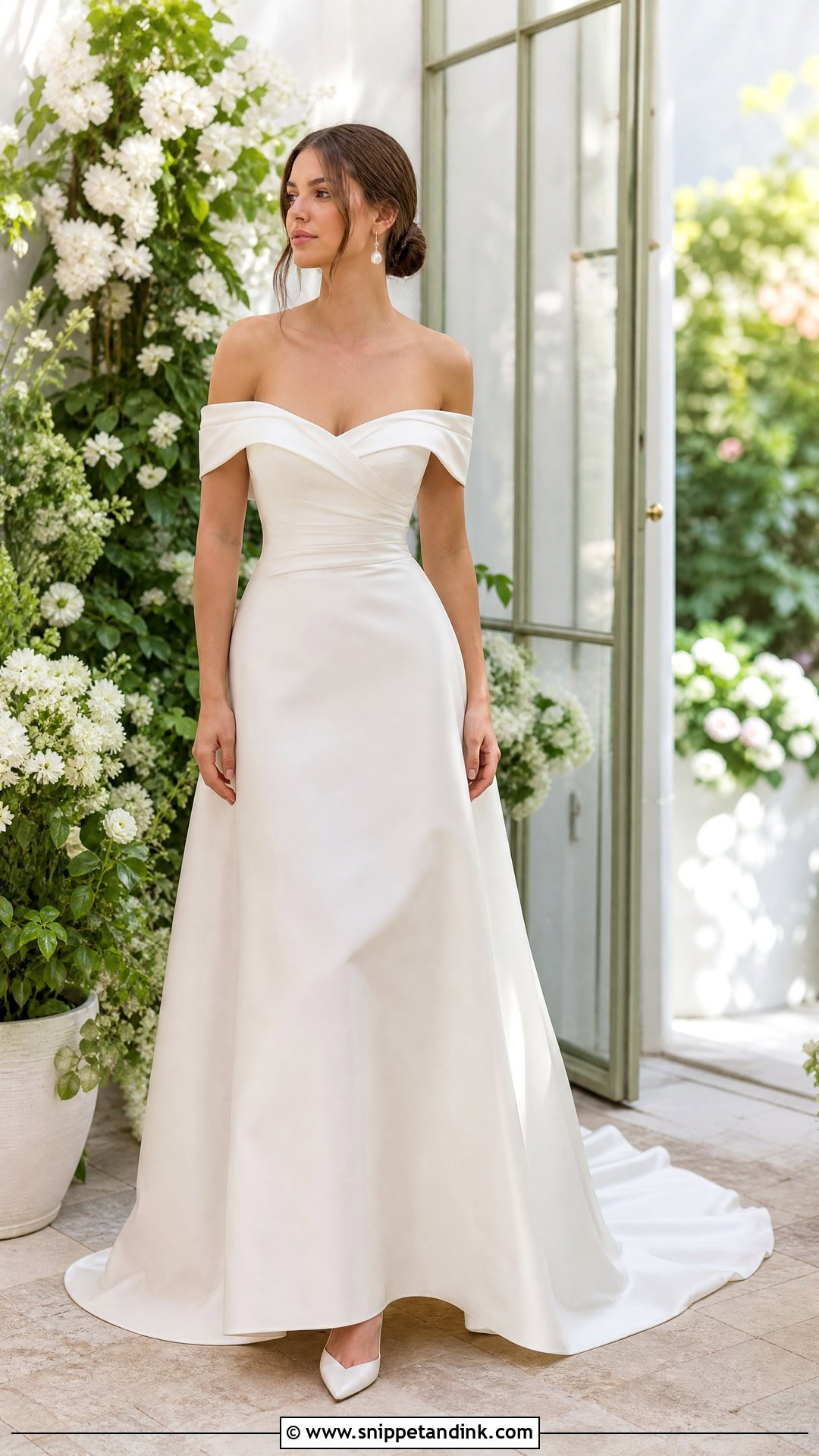
Collarbones and shoulders are what an off-shoulder neckline frames, and it suits fitted gowns, A-lines and ball gowns alike. In satin it looks regal, in tulle dreamy, in lace a little vintage. Brides who want some arm coverage without a high neck often settle on it. The trade-off is reach: the band across the upper arms limits how high you can lift them, so try hugging someone in it. Earrings are usually enough, though a fine necklace works on a very plain neckline. A low chignon keeps the shoulders clear.
5. Long Sleeve Bridal Dress
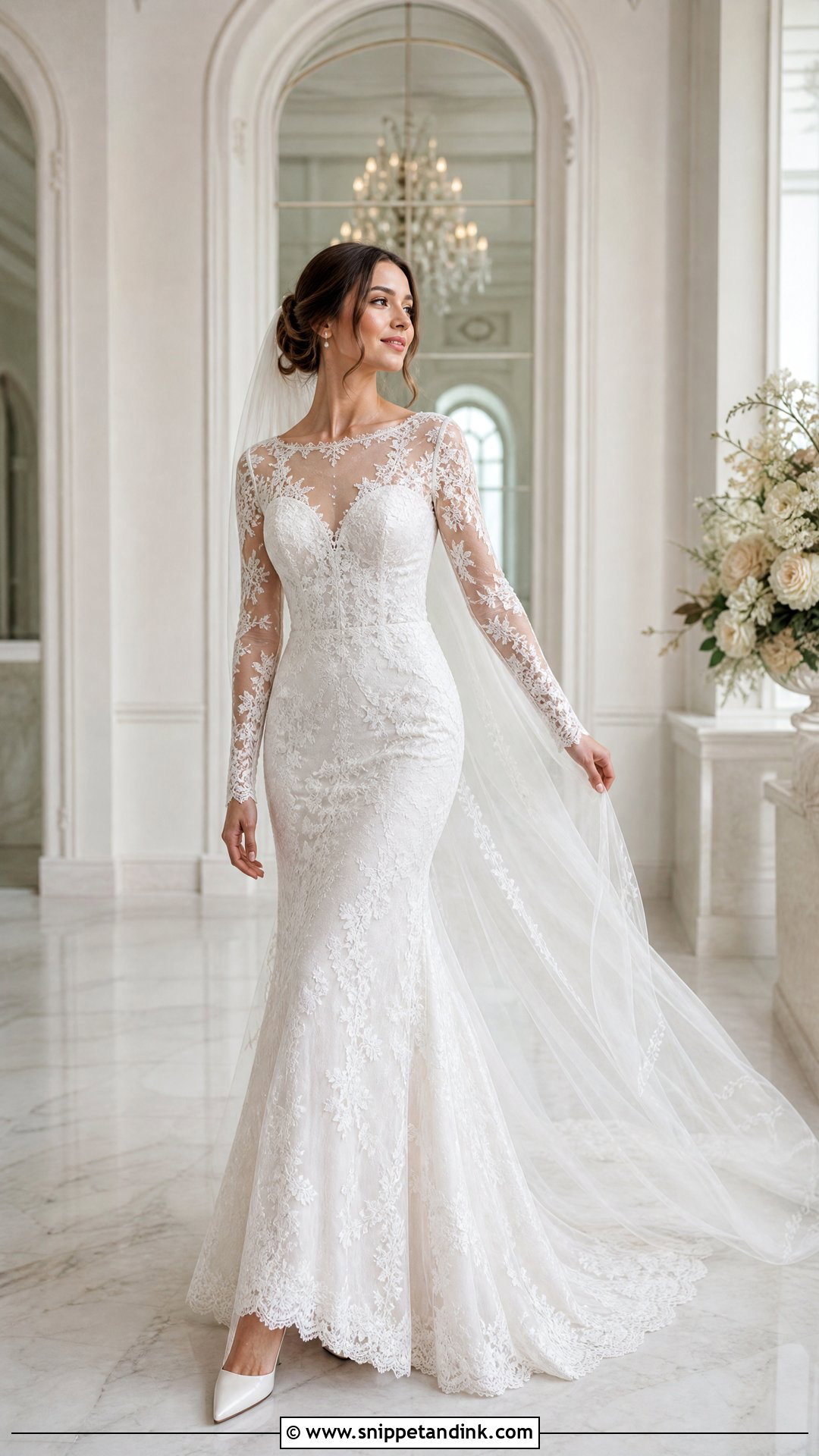
Sleeves change the whole character of a gown: sheer lace feels romantic and fitted crepe modern. Puff sleeves lean fashion-forward, and detachable sleeves give you two looks in one day. Choose the neckline to suit your frame, a V, bateau or square. The detail that decides comfort is the armhole. A high, close armhole actually gives you more movement in a fitted sleeve than a low one, which surprises most brides. Keep bracelets minimal so the sleeves lead at a cool-season or formal ceremony.
6. Simple Crepe Bridal Dress
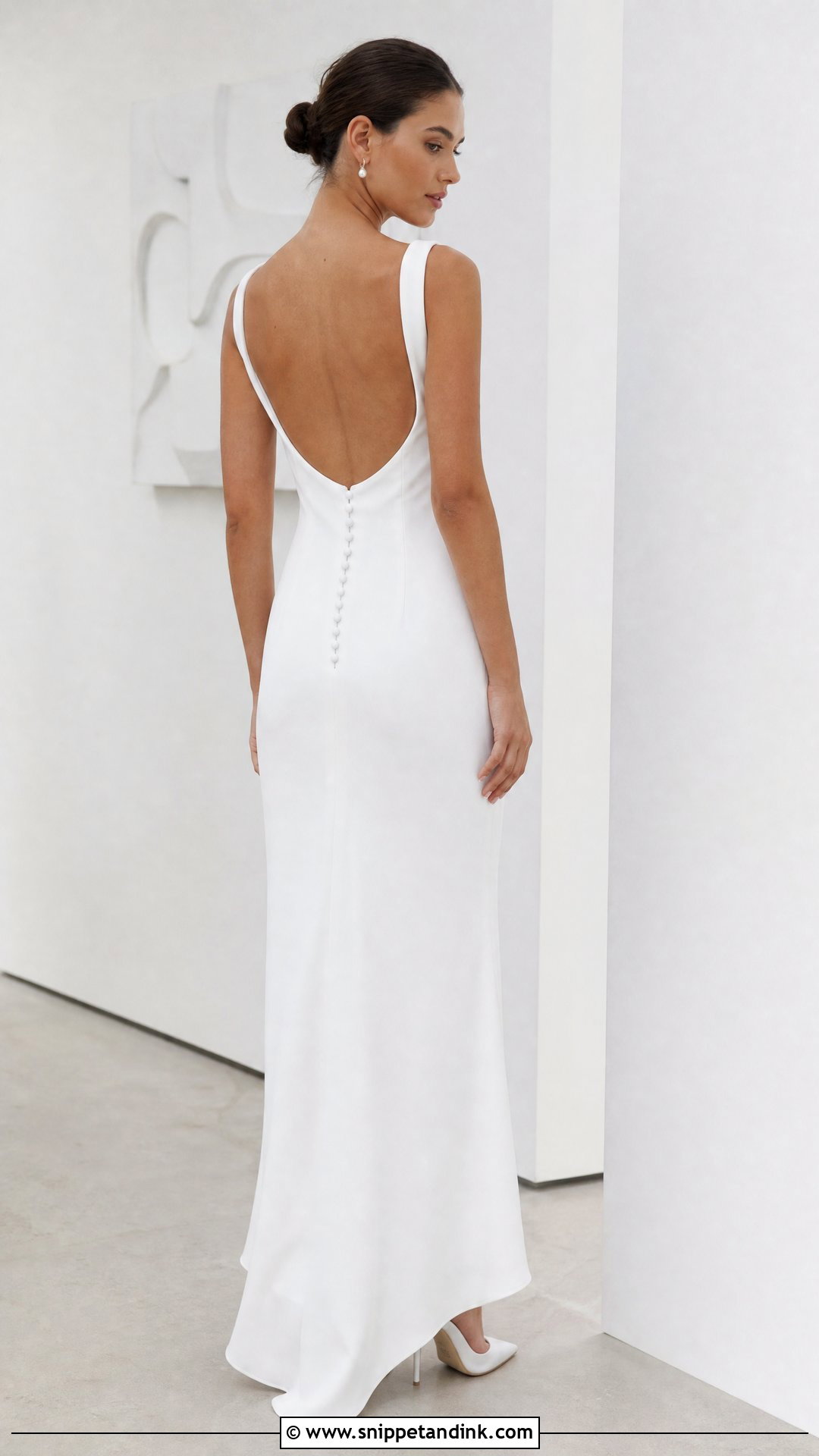
Crepe needs no embellishment to feel special. It has a smooth, slightly structured finish that skims the body and makes clean lines, and it hardly creases, which matters if you’ll sit through a long ceremony. A fitted sheath feels sleek; a crepe A-line gives more ease. Covered buttons, a low back or a crisp neckline make it look custom. It is honest fabric, though, and shows every undergarment line, so plan smooth shapewear early. A sleek bun, pearl studs and a long veil add contrast.
7. Pearl Bridal Dress
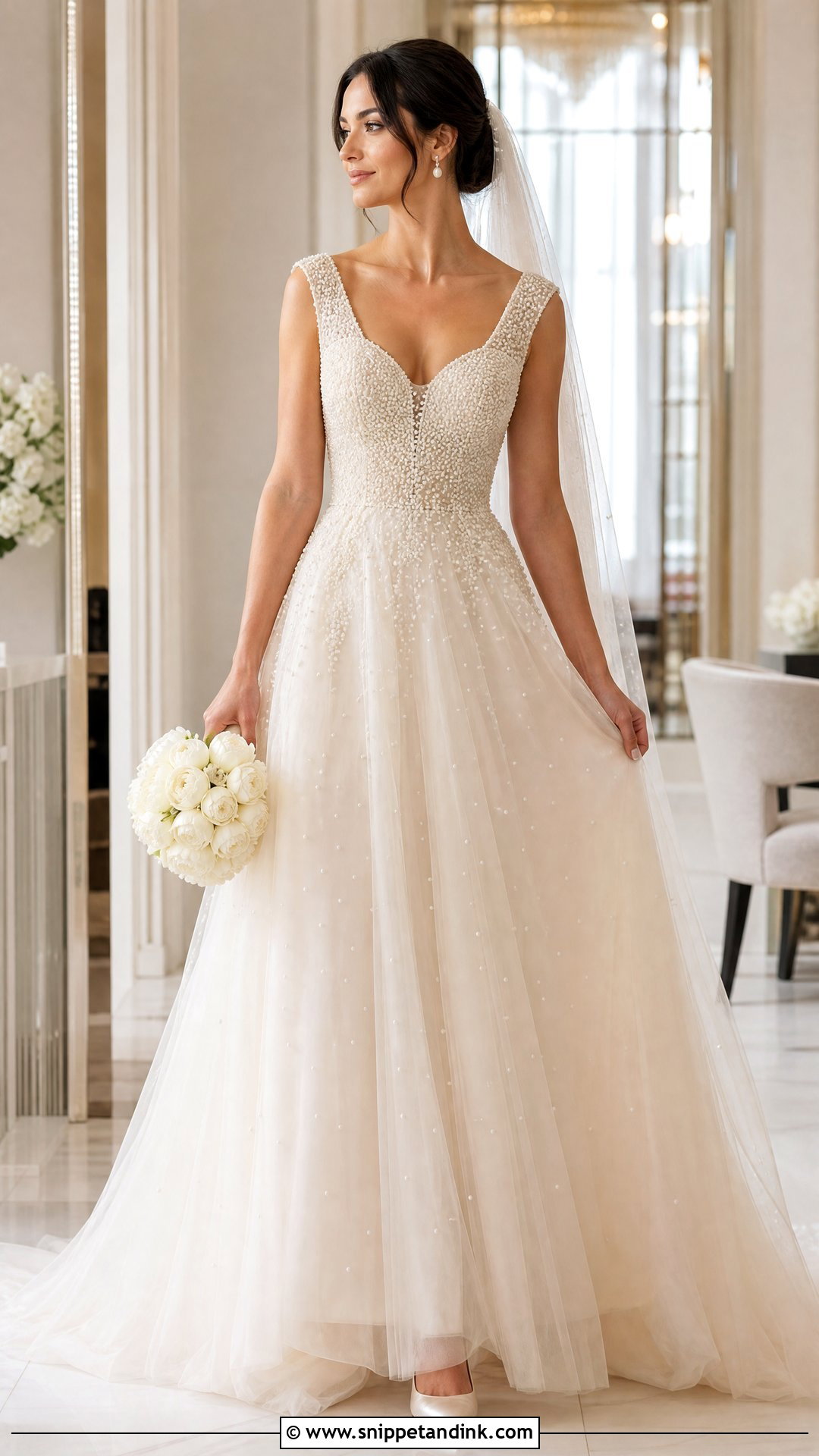
Pearls give glow without the flash of crystals. They can run across the bodice, down the sleeves, scattered over tulle or around the neckline. Small pearls feel classic; larger accents feel modern. Ask whether they’re sewn through or glued, since glued pearls drop off when the fabric flexes. The dress already carries its jewelry, so pearl earrings, satin heels and a clean veil are enough, whether the venue is a rooftop, the coast or an indoor reception.
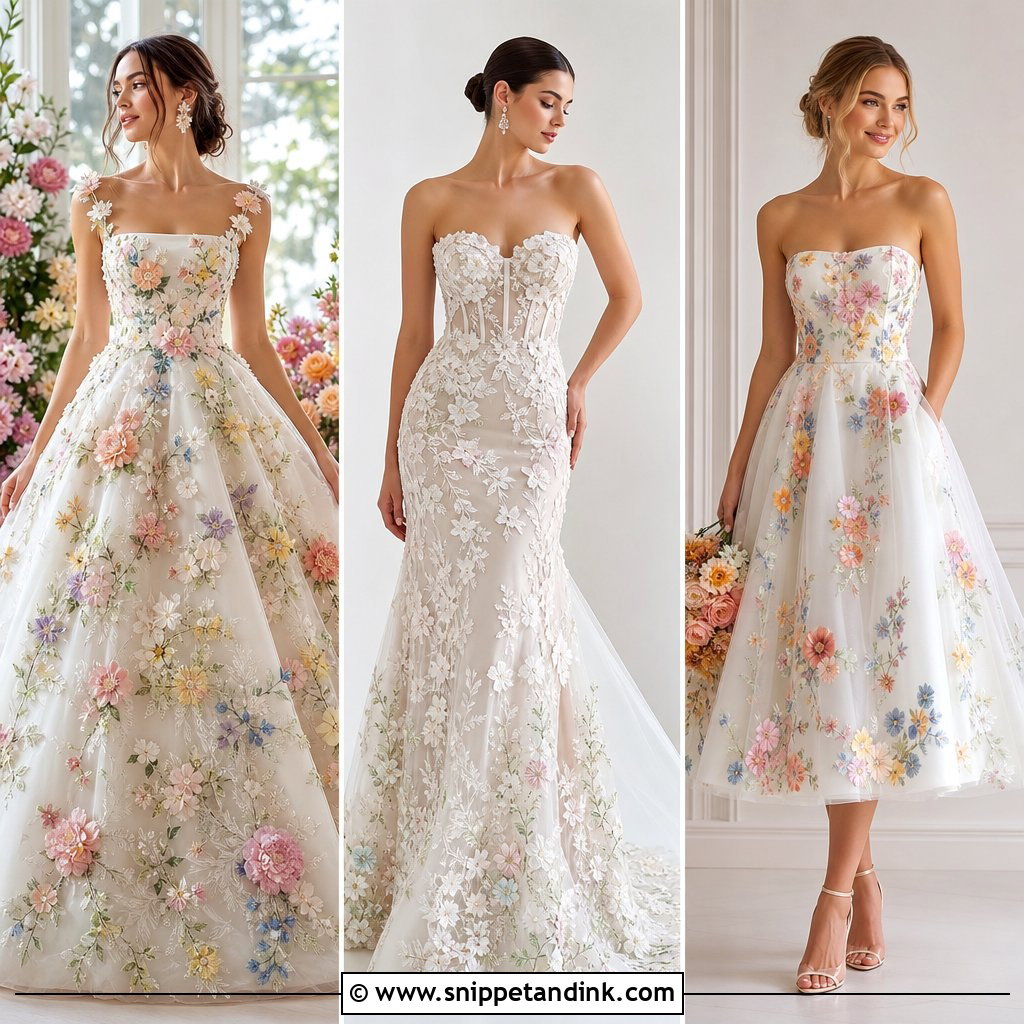
8. Floral Applique Bridal Dress
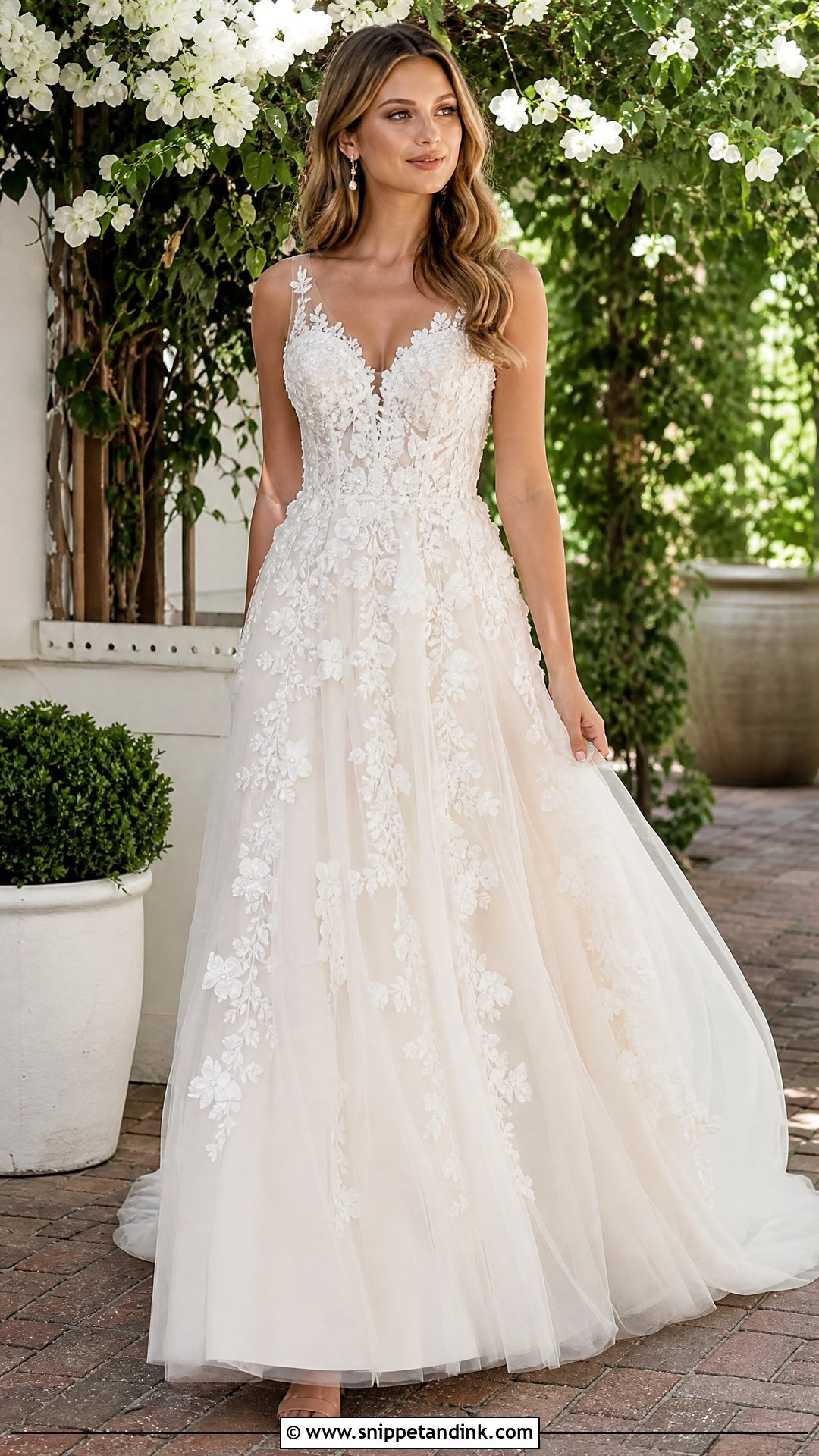
Appliqué flowers sit on top of the fabric rather than being stitched flat into it, which gives the gown a soft sculptural depth. They suit tulle, organza, lace and sheer sleeves. Tiny scattered flowers stay subtle, while oversized blossoms become the statement. Placement matters for comfort. Raised flowers on the inner arm or front waist get crushed by your bouquet and rub when you walk, so I prefer them on the skirt and shoulders. Keep the bouquet simple, the makeup natural and the shoes delicate for a spring garden.
9. Square Neck Bridal Dress
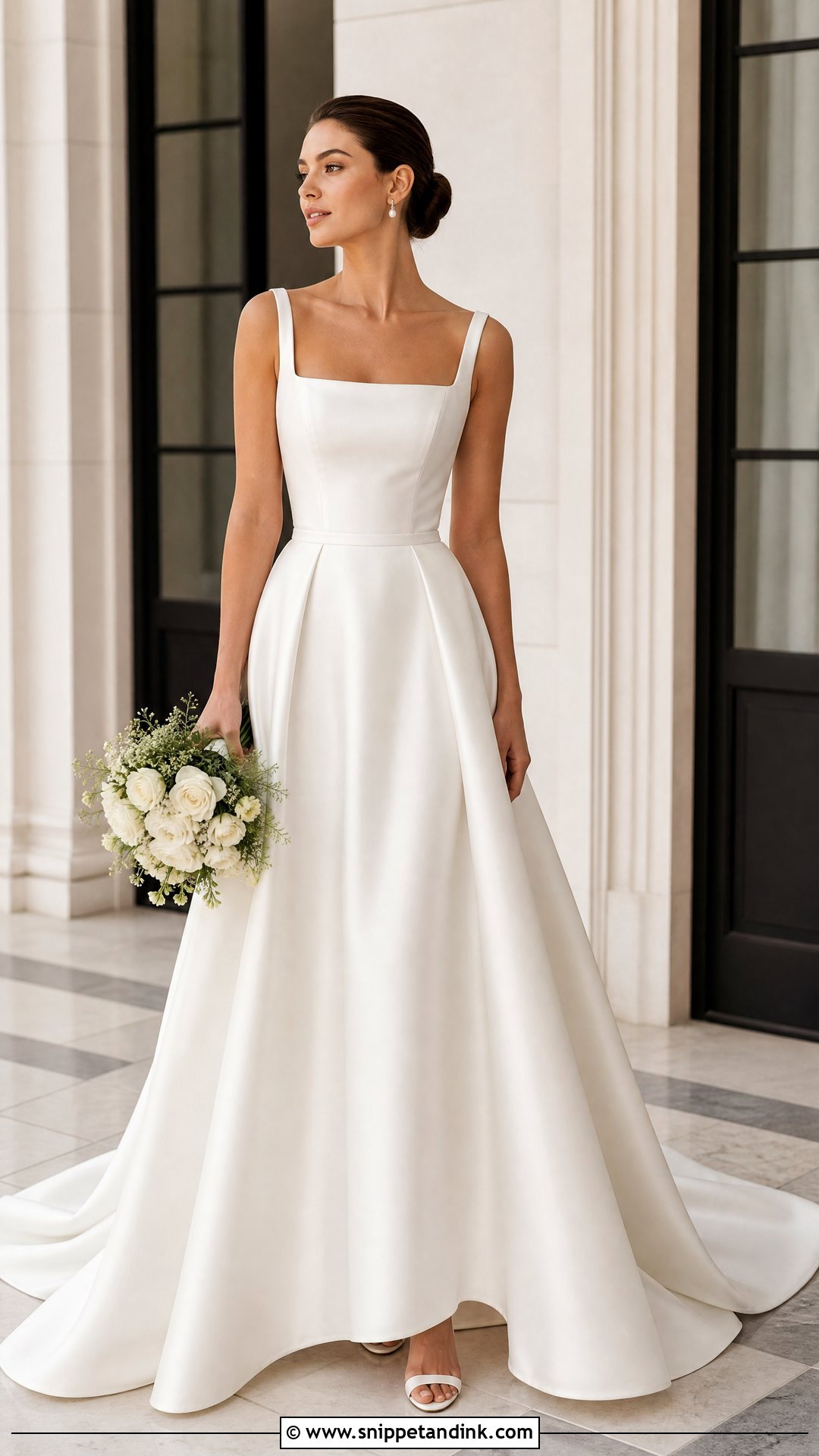
A straight neckline frames the collarbones and gives the bodice structure in satin, crepe, lace or mikado. Fuller busts often like the support a square neck offers, while smaller busts get some shaping from the straight edge. Slim straps look simple, long sleeves more refined. The width between the straps is what I adjust most; set too wide, the straps slip off the shoulder. A pendant can work on a plain neckline, but earrings are usually enough.
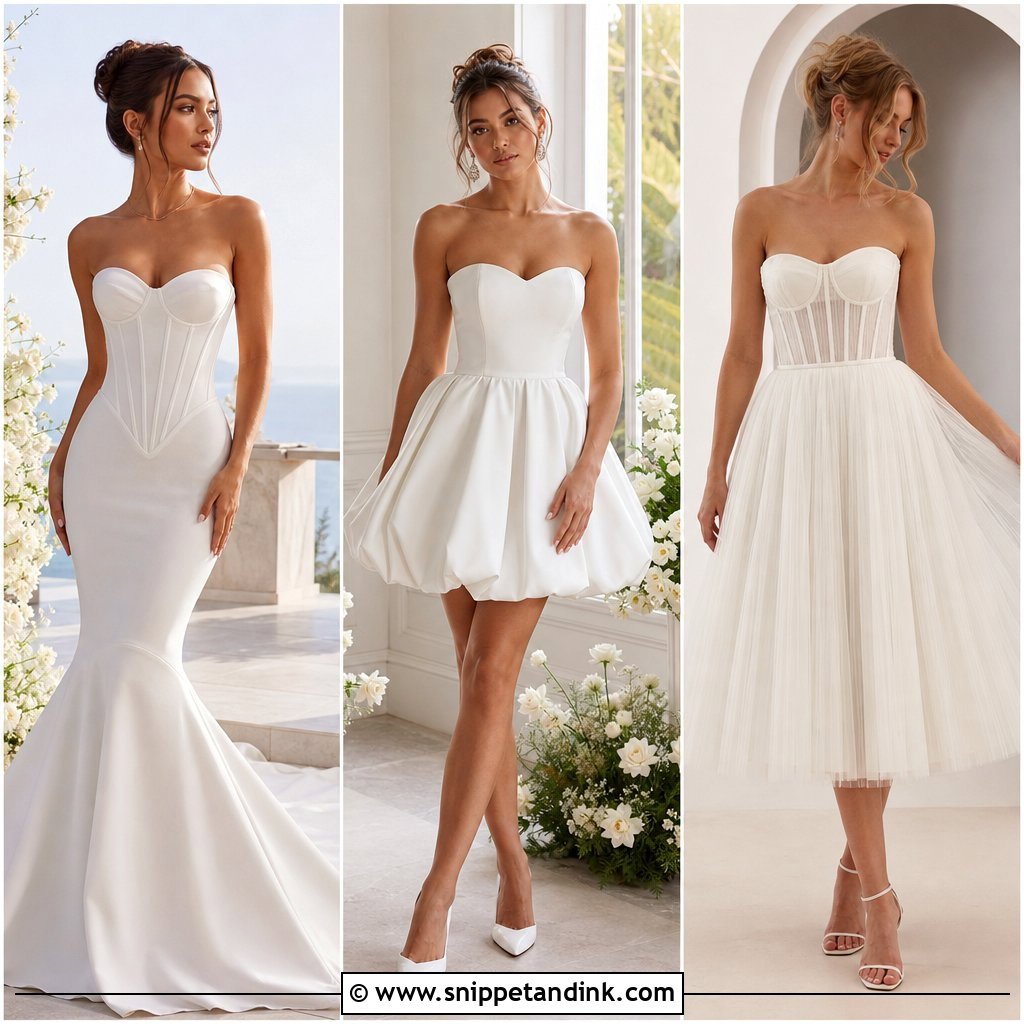
10. Strapless Bridal Dress
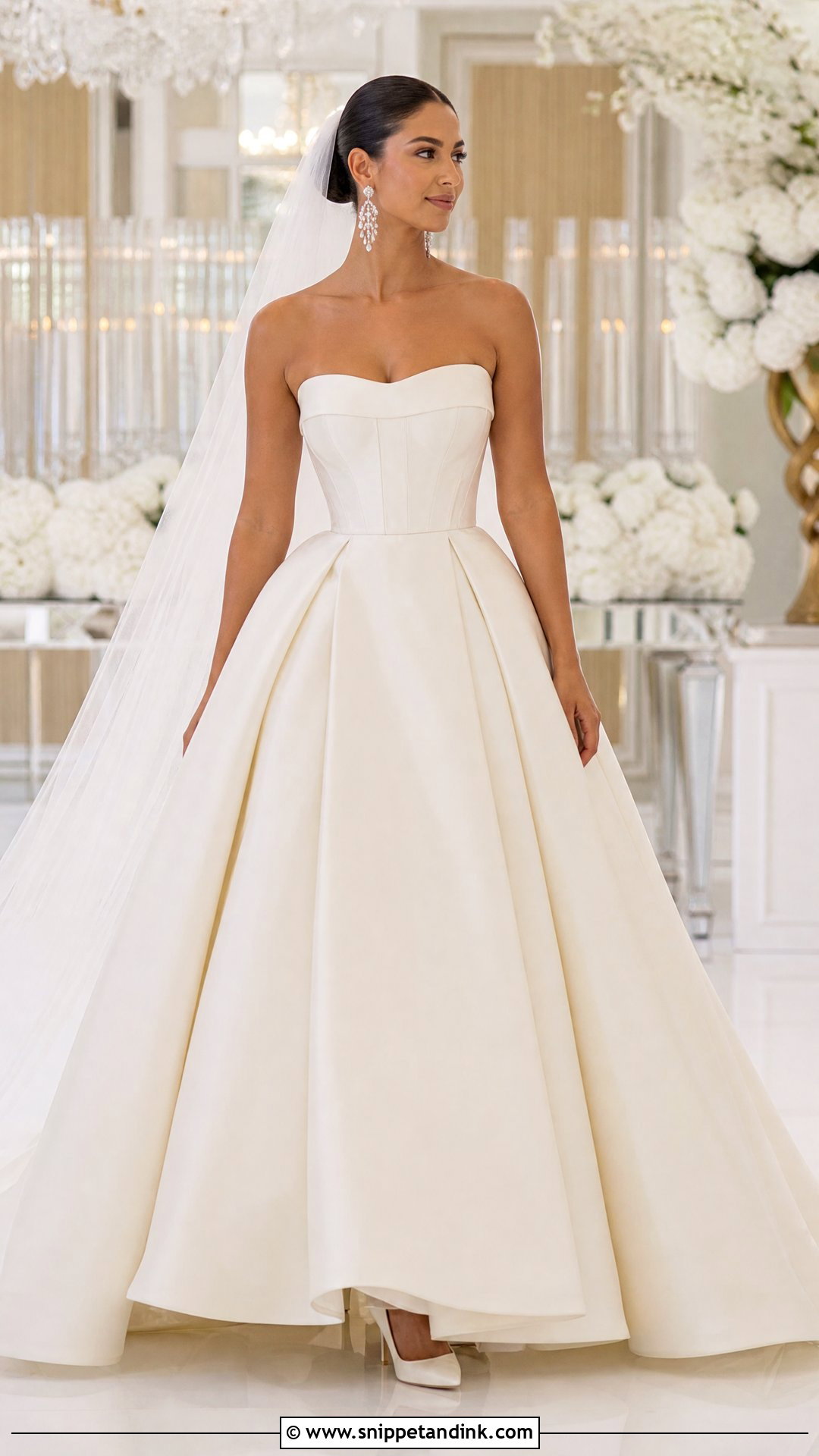
Strapless stays popular because it can go princess with tulle, sleek with satin or dramatic as a mermaid. Structure is everything. A good strapless gown supports the bust from internal boning and a waist stay, so it stays put without you hitching it up. During fittings, sit, walk and raise your arms. Add a veil, gloves, bolero or statement earrings to suit your style, and it’s the best canvas if you want to show off a necklace or a dramatic hairstyle.
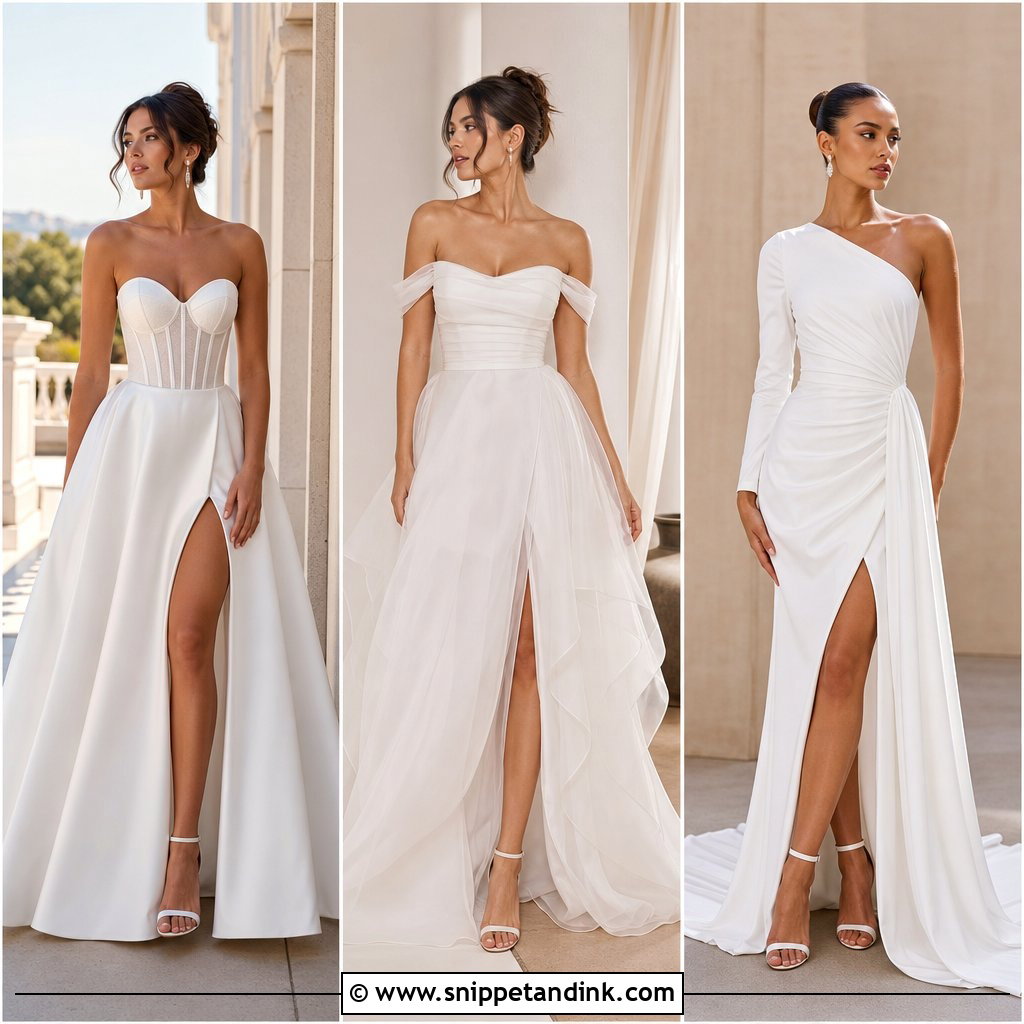
11. Corset Bodice Bridal Dress
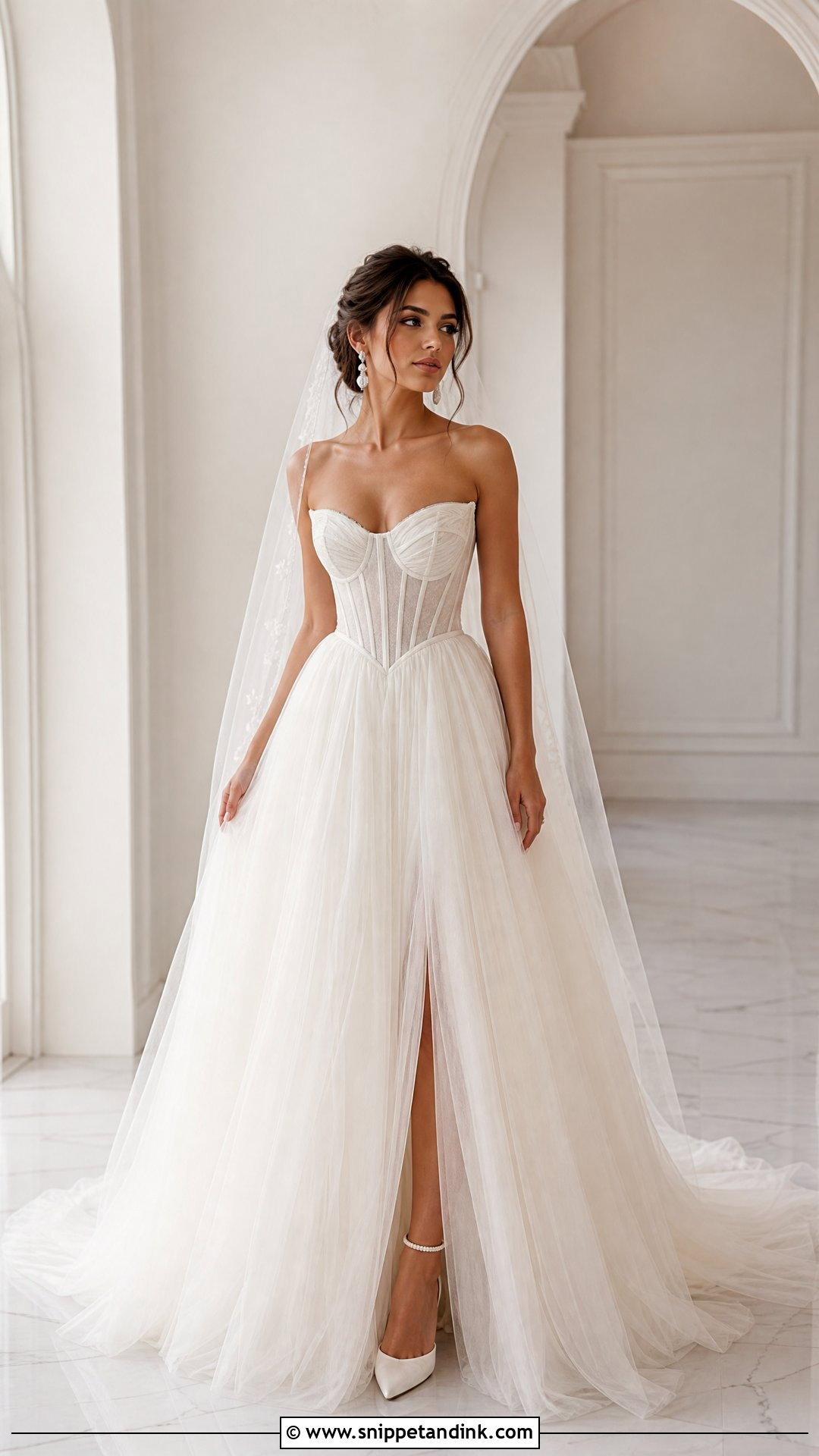
A corset bodice gives shape and support and defines the waist. Exposed boning looks fashion-forward; hidden structure keeps it classic. Tulle softens it, satin sculpts it. Brides love how secure it feels, and that security comes from a proper fit, so wear your exact undergarments to every appointment. A corset that’s too tight shows as a ridge at the top edge in photos. Choose a veil that matches the mood and keep heavy accessories away.
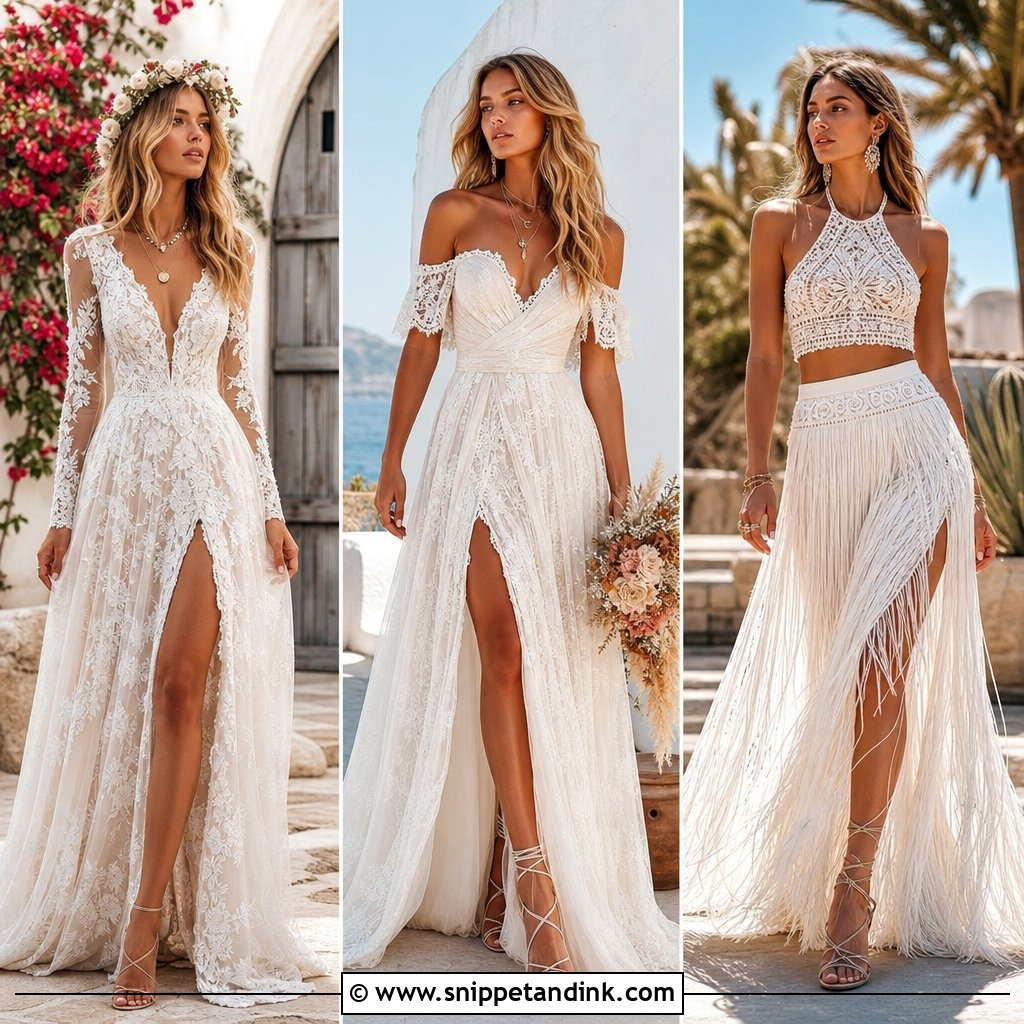
12. Boho Lace Bridal Dress
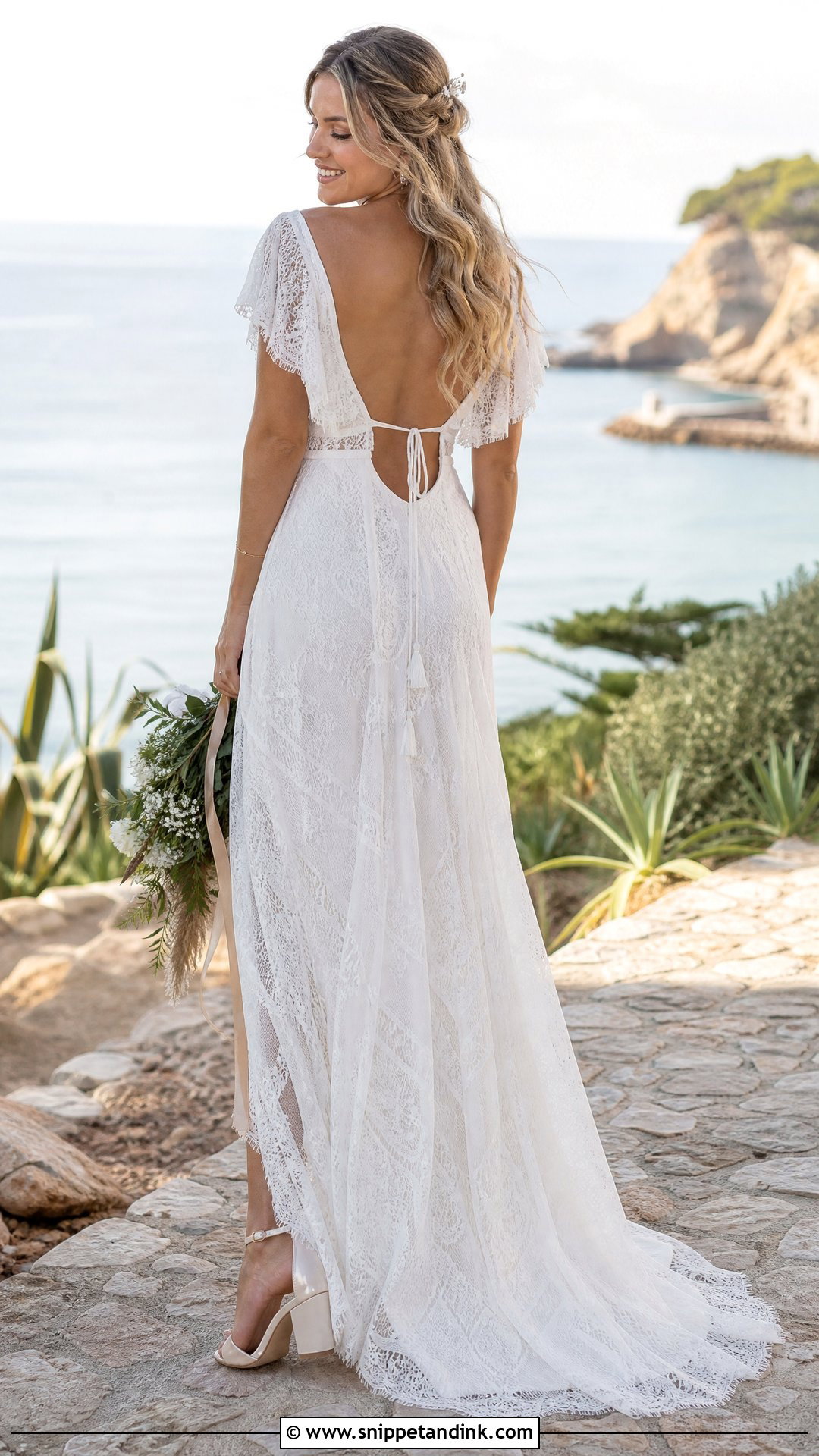
Soft lace patterns, flowing skirts, flutter sleeves and open backs give a boho dress its easy movement. Outdoor ceremonies, beaches, desert venues and casual gardens suit it. These gowns are often unlined or lightly lined, which keeps them cool but makes them see-through in strong sun, so check it outside before you buy. Loose waves, soft makeup, flat sandals or block heels and delicate jewelry fit the mood, finished with a simple veil or a floral hair pin.
13. Tea Length Bridal Dress
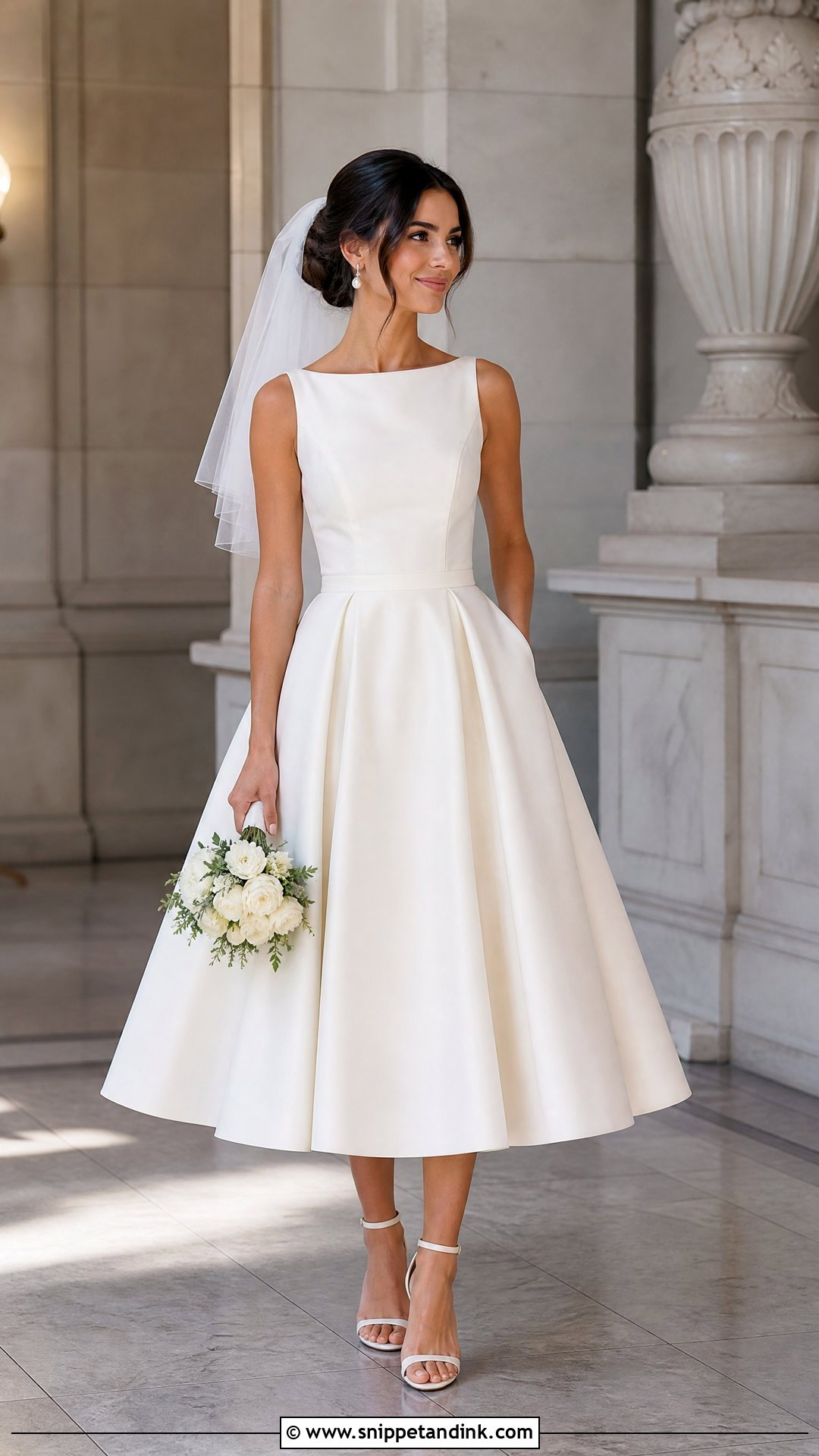
Somewhere between knee and ankle, a tea-length hem makes shoes half the outfit. Pointed pumps, embellished heels or ankle-strap sandals all work. A structured bodice keeps it bridal rather than casual, and short gloves, a birdcage veil or pearl earrings bring the vintage charm. I mark the hem with the bride in her actual shoes, because an inch either way changes how the leg looks. Courthouse weddings, brunch receptions and retro celebrations suit it, and it’s one of the easiest lengths to dance in.
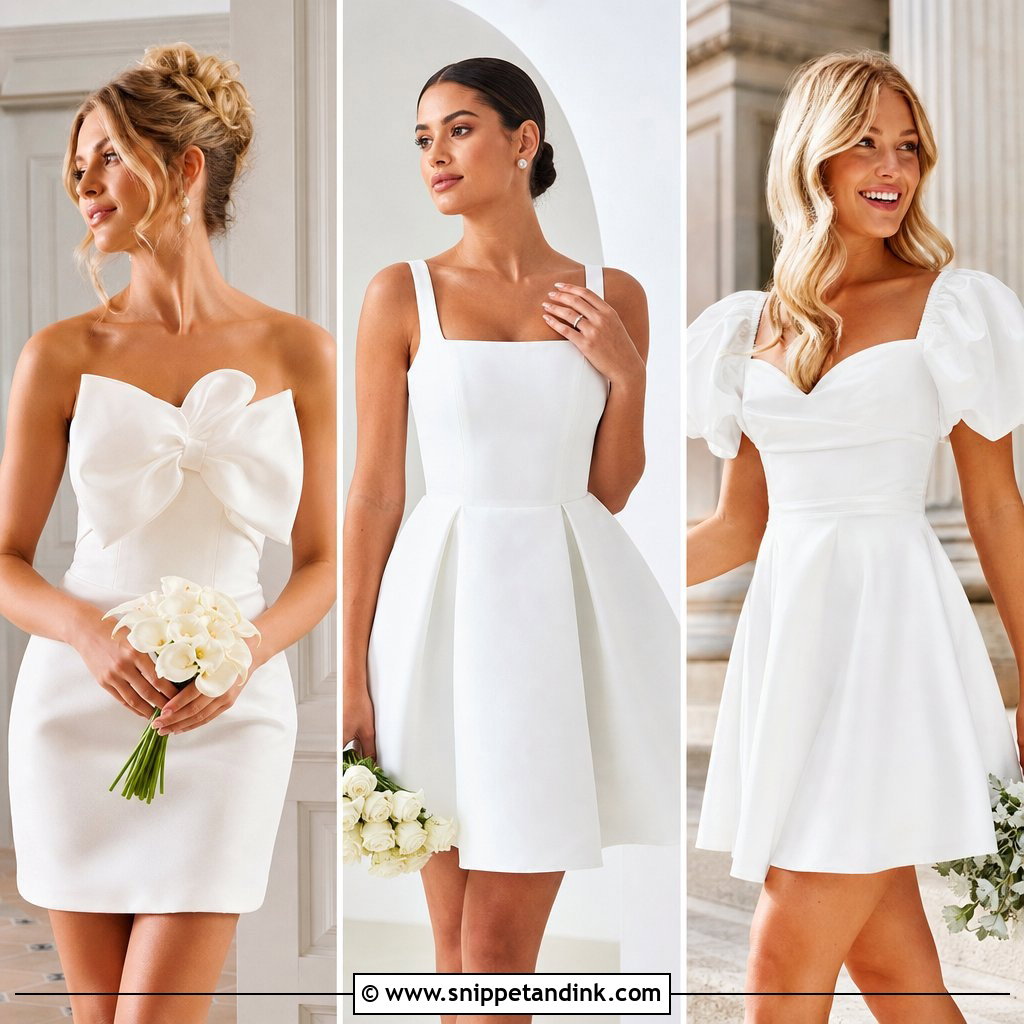
14. Bridal Mini Dress
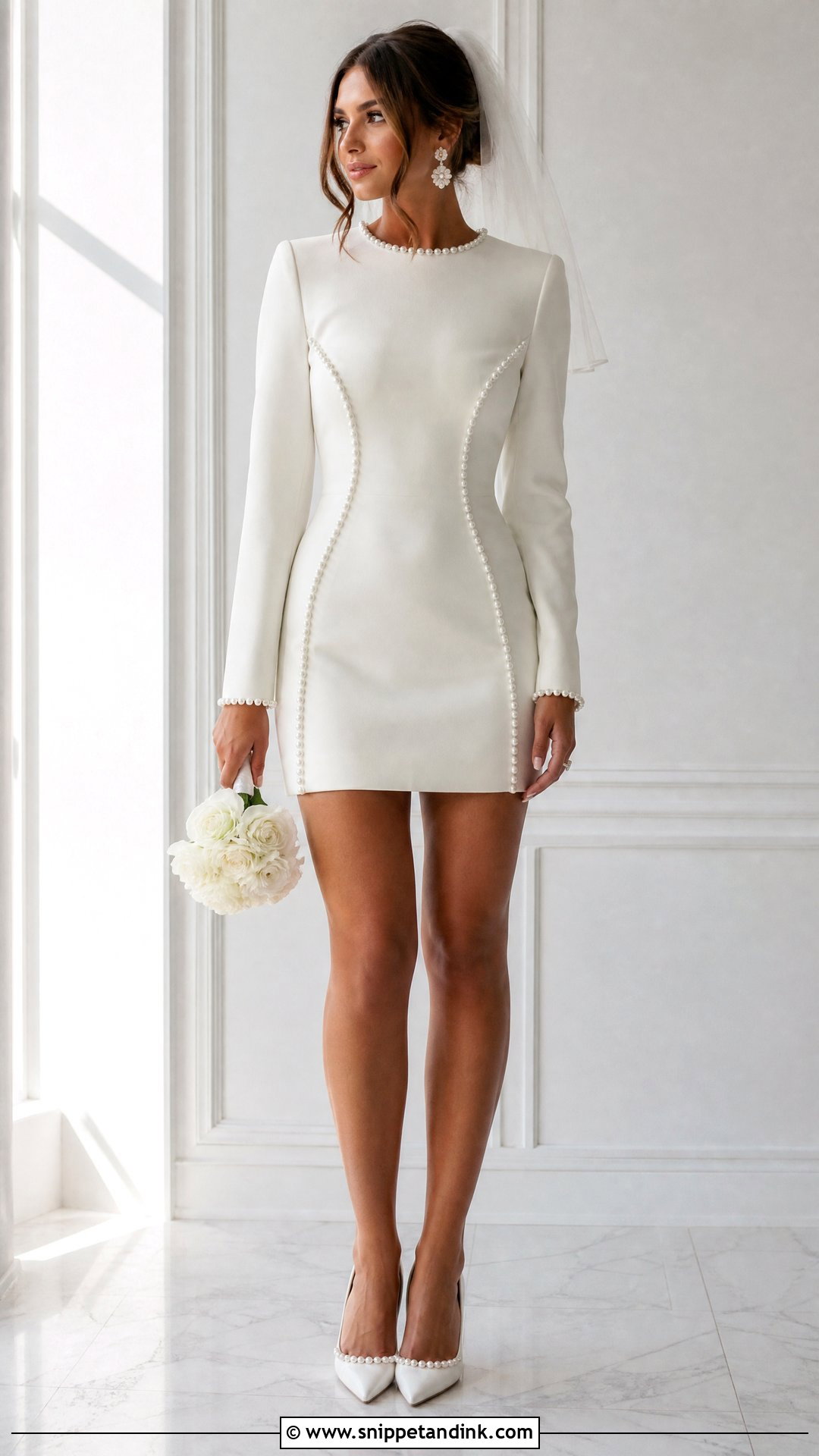
A mini can be the main dress or the second look, at a courthouse, reception or after-party. It reads bridal when the details are considered: structured satin, pearl trim, feather edging, lace sleeves or a sculpted bow. A short hem balances well with a higher neckline or long sleeves. Statement heels, a small veil and polished hair finish it. The fit test is sitting down. Minis ride up more than you expect, so check the length seated before the hem is finalised.

15. High Neck Bridal Dress
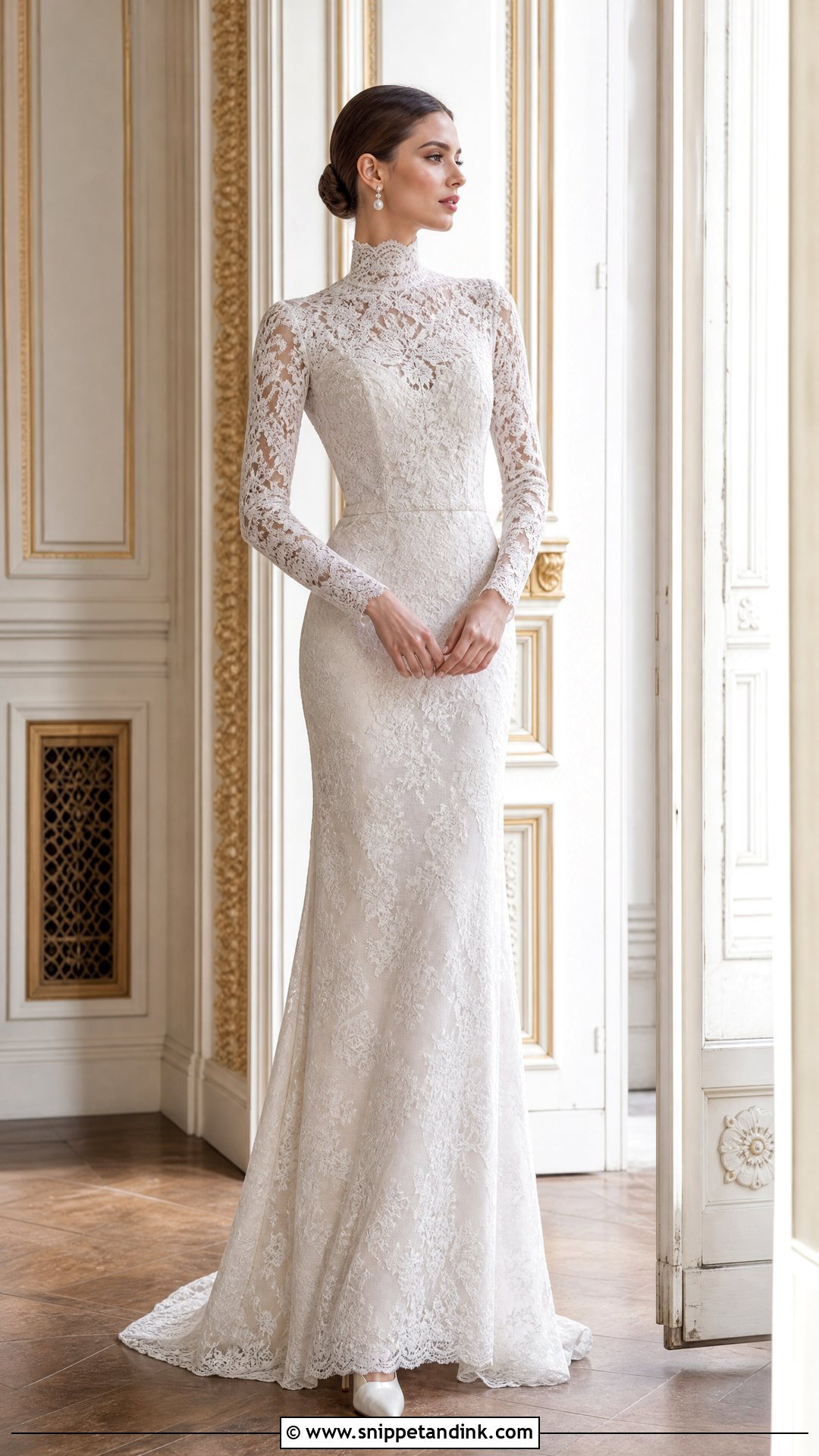
Covering the neck puts the attention on your face and posture. Lace, satin, crepe and sheer embroidered fabrics all suit a high neck. With long sleeves it feels classic; sleeveless, clean and modern. Skip necklaces and choose earrings. A sleek updo stops hair from crowding the collar, and I ask for a little ease at the throat, since a collar that’s snug in the morning feels tight by the toasts.
16. V Neck Bridal Dress
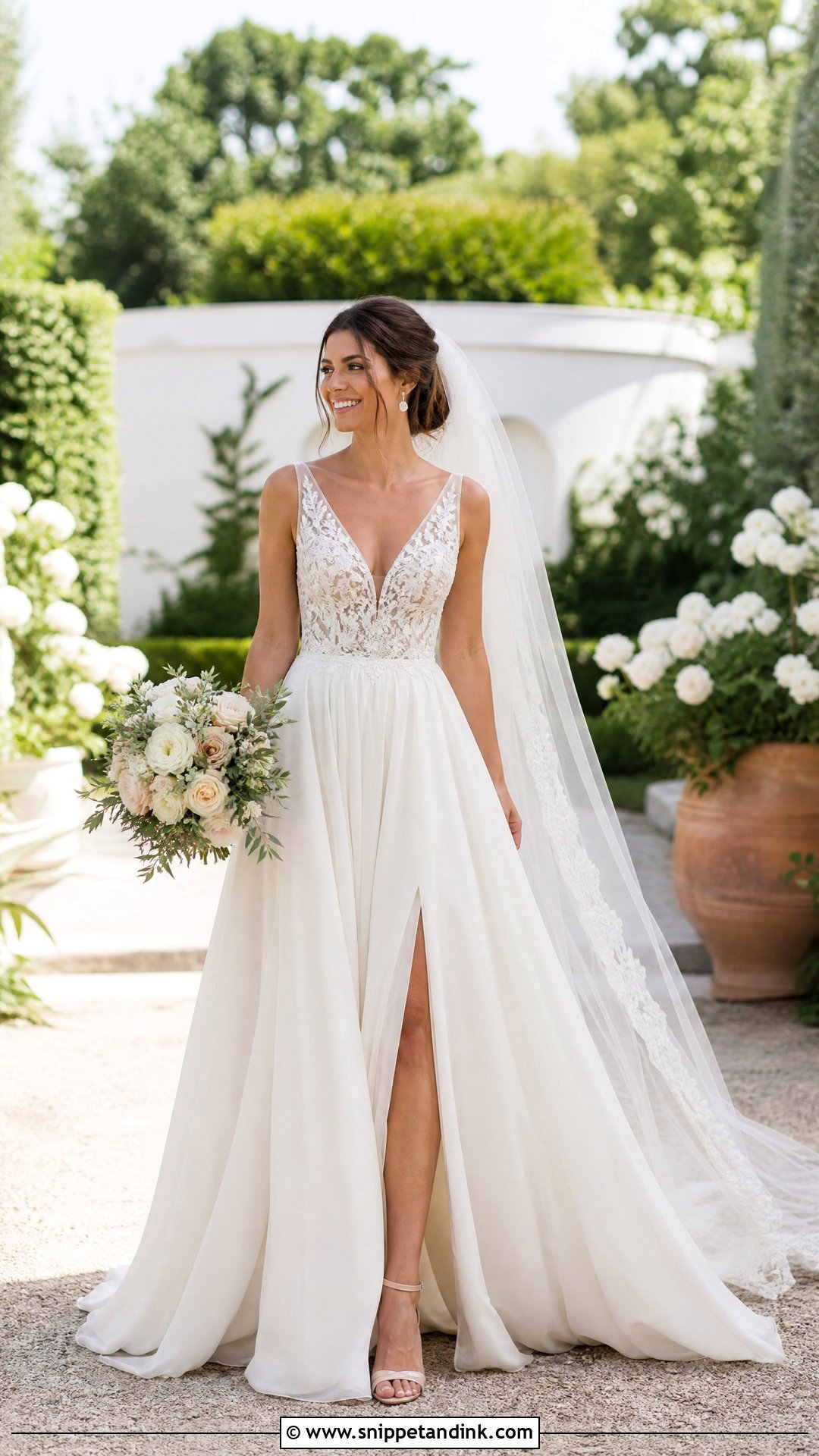
The depth of a V can be modest, medium or dramatic. A gentle one lengthens the upper body and works with almost any sleeve. Lace reads romantic; satin or crepe looks modern. For a deeper V, look for built-in structure or illusion mesh, and test it by leaning forward, since that’s when gaps show. A pendant may work on a simple gown, but detailed lace usually wants earrings only. Few necklines adapt to as many settings, from beach to formal venue.
17. Backless Bridal Dress
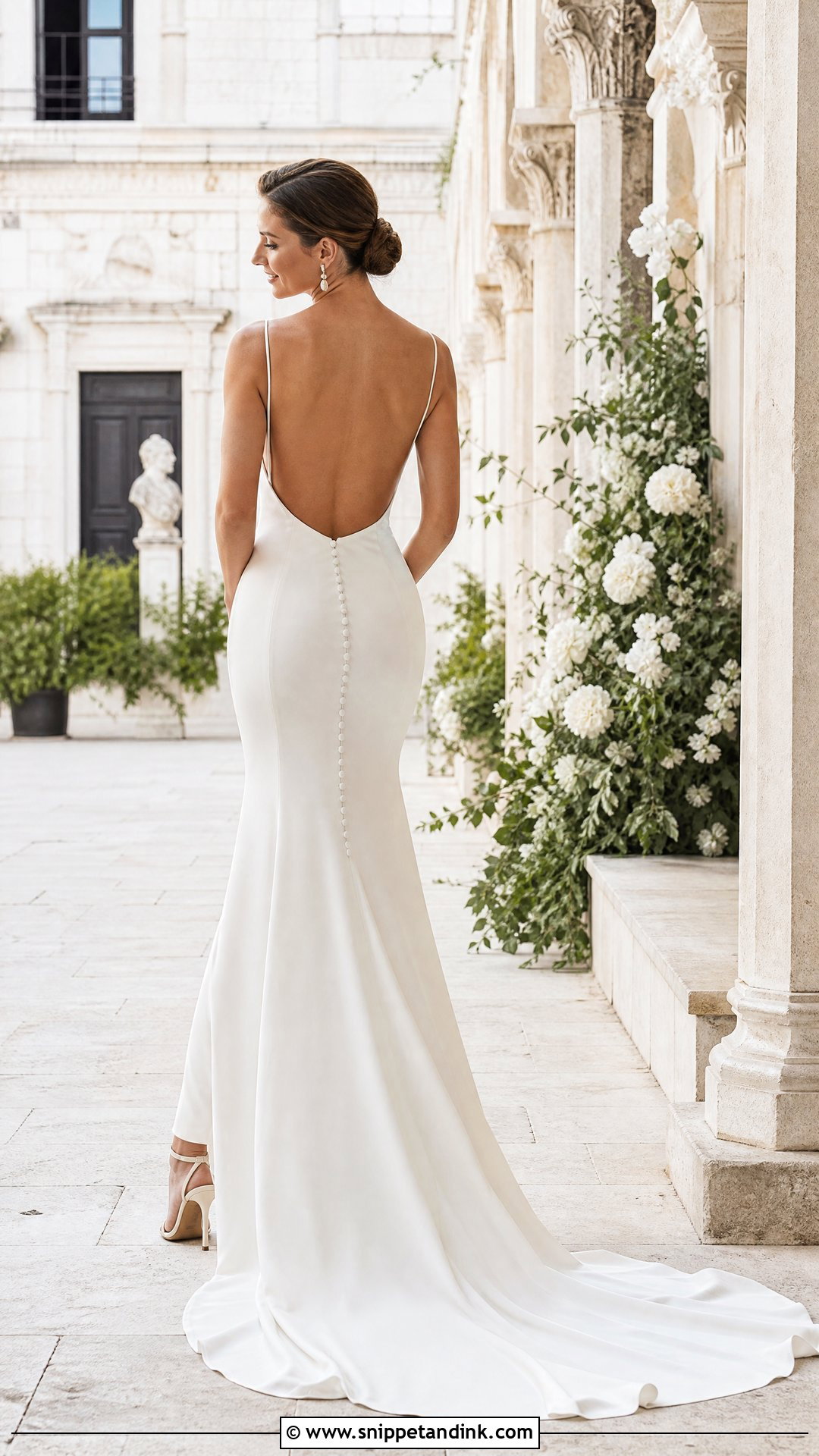
The front can stay covered and simple while the back does the talking through the ceremony and portraits. Low scoops, open V backs and lace-framed backs each look different. Sort out undergarments and alterations early, because a backless gown is fitted around what you wear underneath. Built-in cups, boning or illusion panels give support. A long veil softens it, and a low bun keeps the back visible.
18. Bridal Dress With Bow
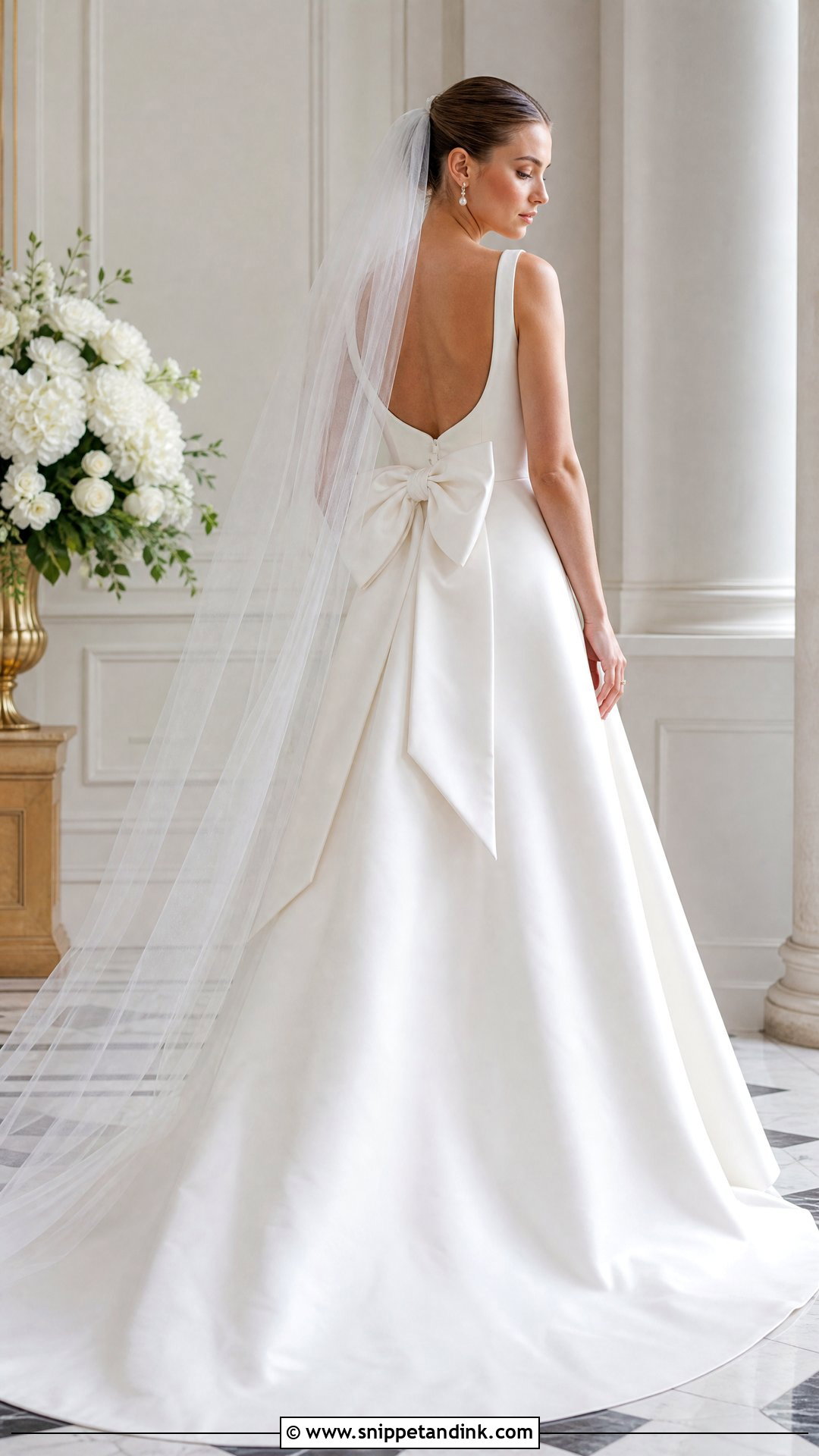
One bow can carry a plain gown. At the back waist, shoulder, neckline or train, it becomes the focal point. A large satin bow feels editorial, a small one delicate. Big bows need interfacing inside or they collapse after an hour of sitting, so ask how it’s constructed. Keep everything else minimal, with pearl earrings, clean heels and a soft veil. It’s a good fit if you love feminine detail without heavy sparkle.
19. Tulle Princess Bridal Dress
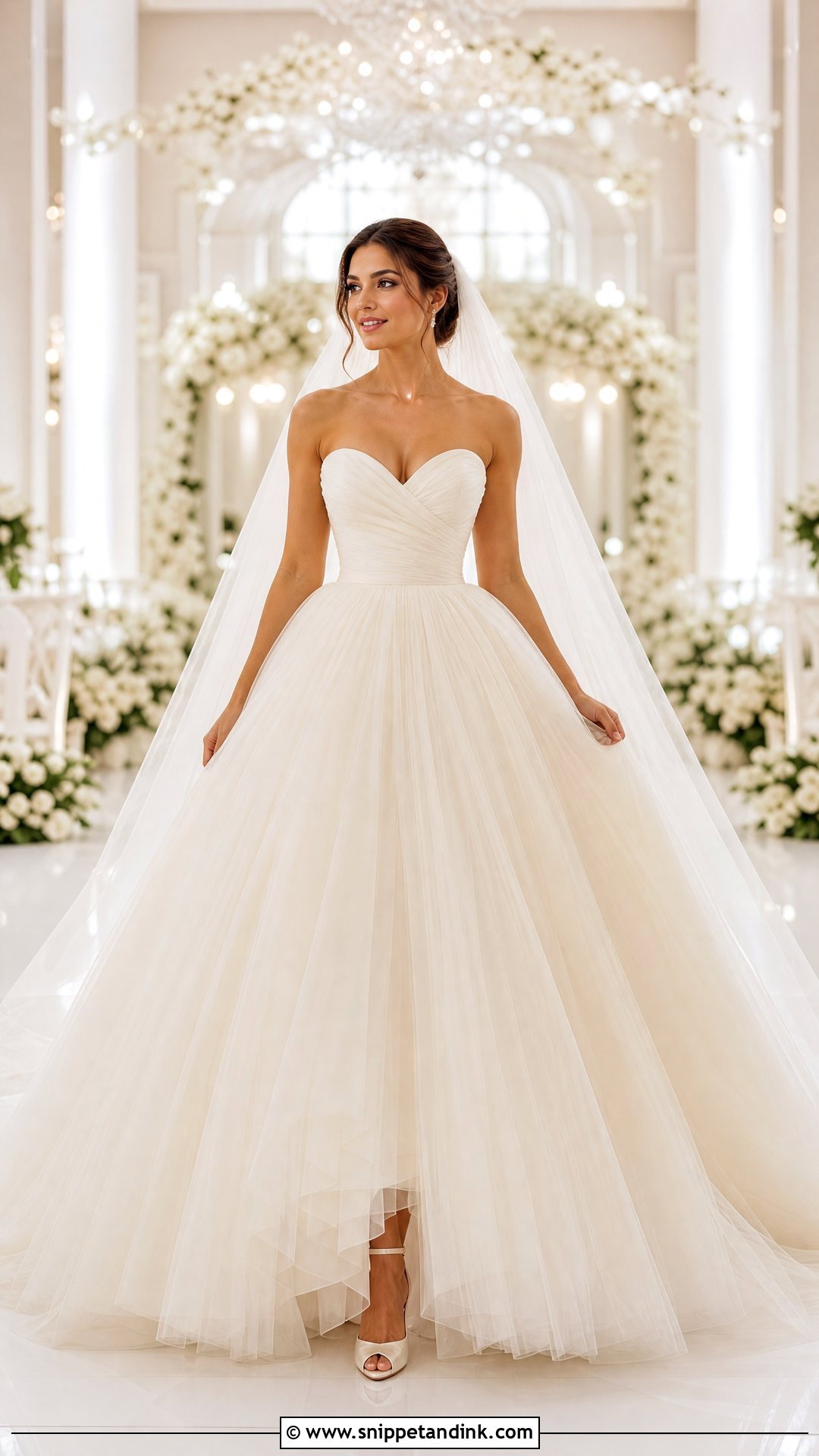
Layered tulle makes a cloud-like skirt that moves as you walk. A fitted bodice stops it looking oversized, and lace, pearls or a touch of sparkle add depth. Choose lightweight tulle for easier movement, because many layers of stiff tulle get heavy and hot. Tulle also snags on rough floors and other people’s jewelry, so keep a needle and thread in your emergency kit. A cathedral veil adds drama; a simple one keeps the focus on the skirt for a grand entrance.

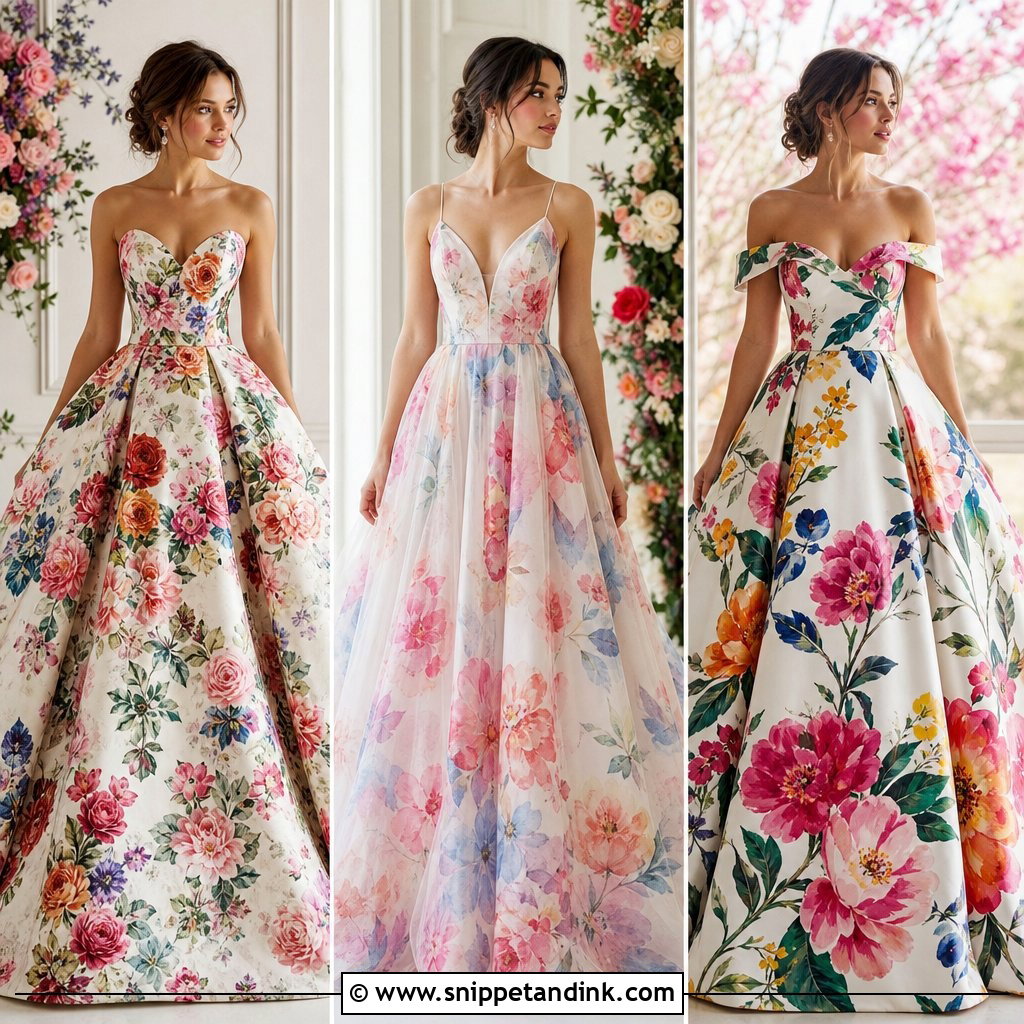
20. Mikado Bridal Dress
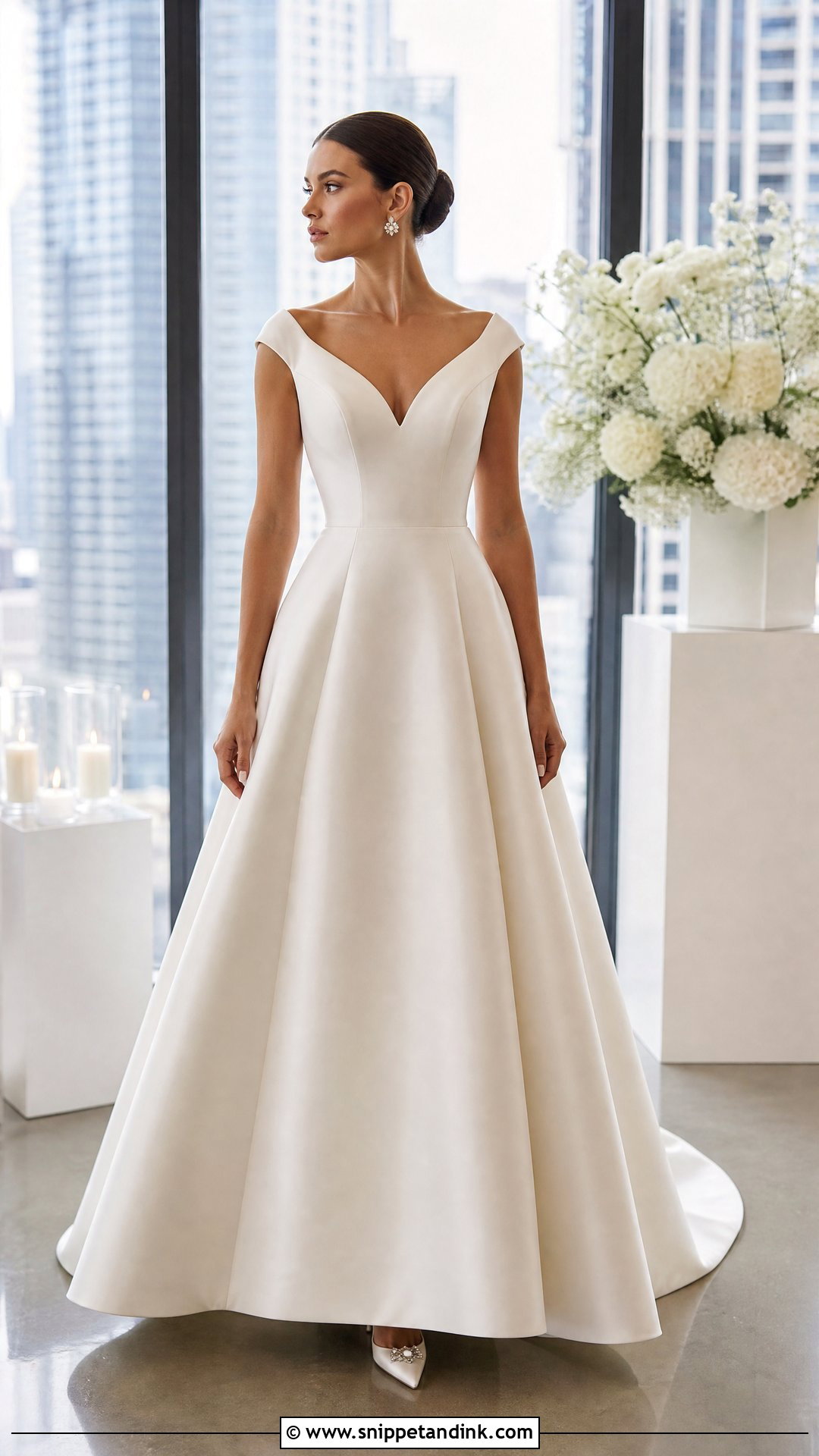
Mikado is heavier than most satins and holds its shape, so it’s the fabric for architectural bodices, clean A-line skirts, dramatic folds and modern ball gowns. Its slight sheen looks crisp in photos and doesn’t cling. Because it’s stiff, it doesn’t drape softly, and it can crease sharply where you sit, so ask to see a sample that’s been folded. With so much presence, smooth hair, refined earrings and elegant heels are plenty for a formal or city wedding.
21. Sheath Bridal Dress
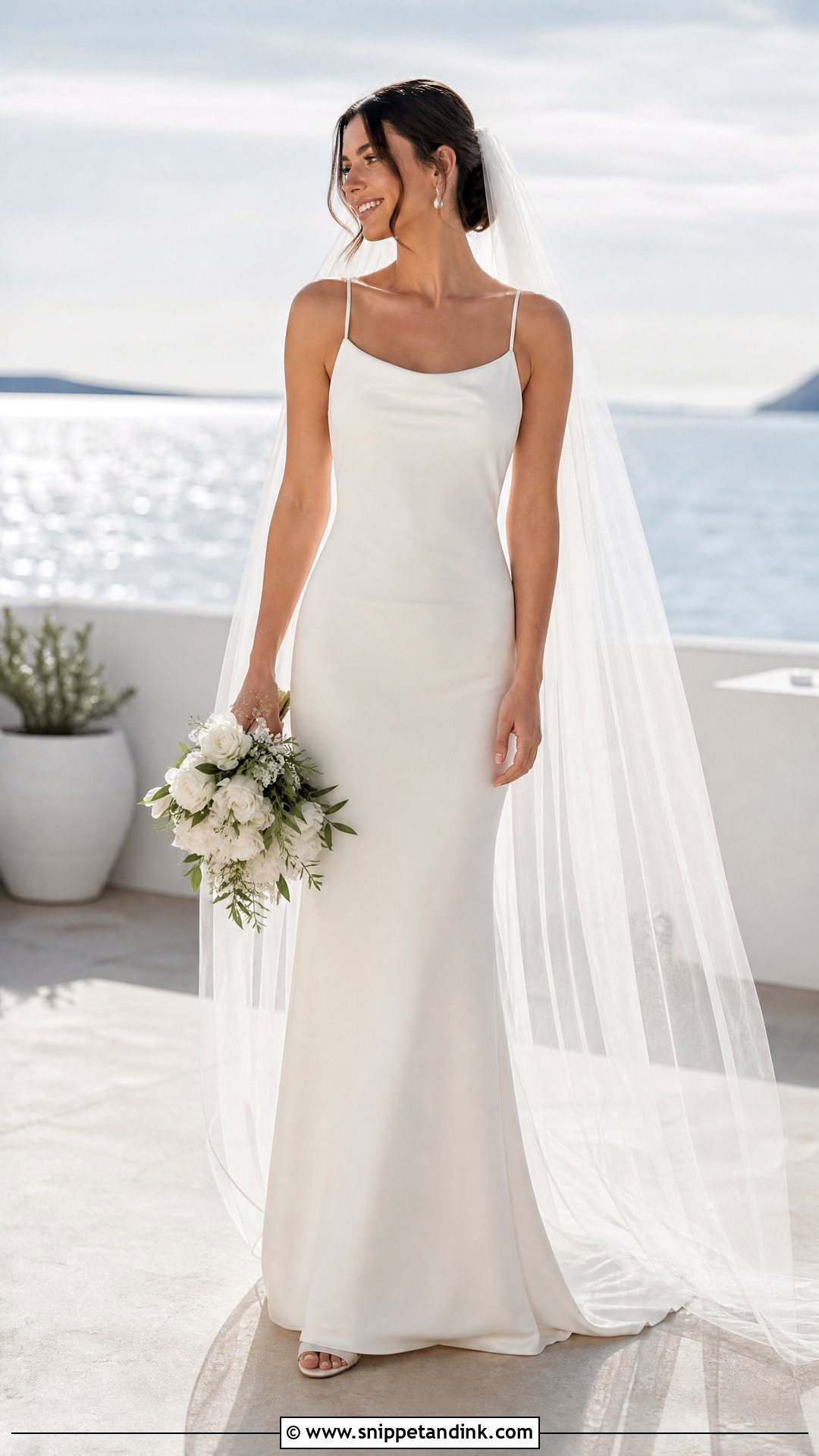
A sheath follows the body’s natural line without a mermaid’s flare or an A-line’s volume. It suits beach weddings, intimate ceremonies, modern venues and anyone who wants a light dress. Crepe, satin, lace and silk all work. A low back, side slit or delicate straps add personality. Check your stride: a sheath with no slit or vent can shorten your step to a shuffle. A long veil, pearl earrings or embellished heels can lift the look while keeping its clean lines.
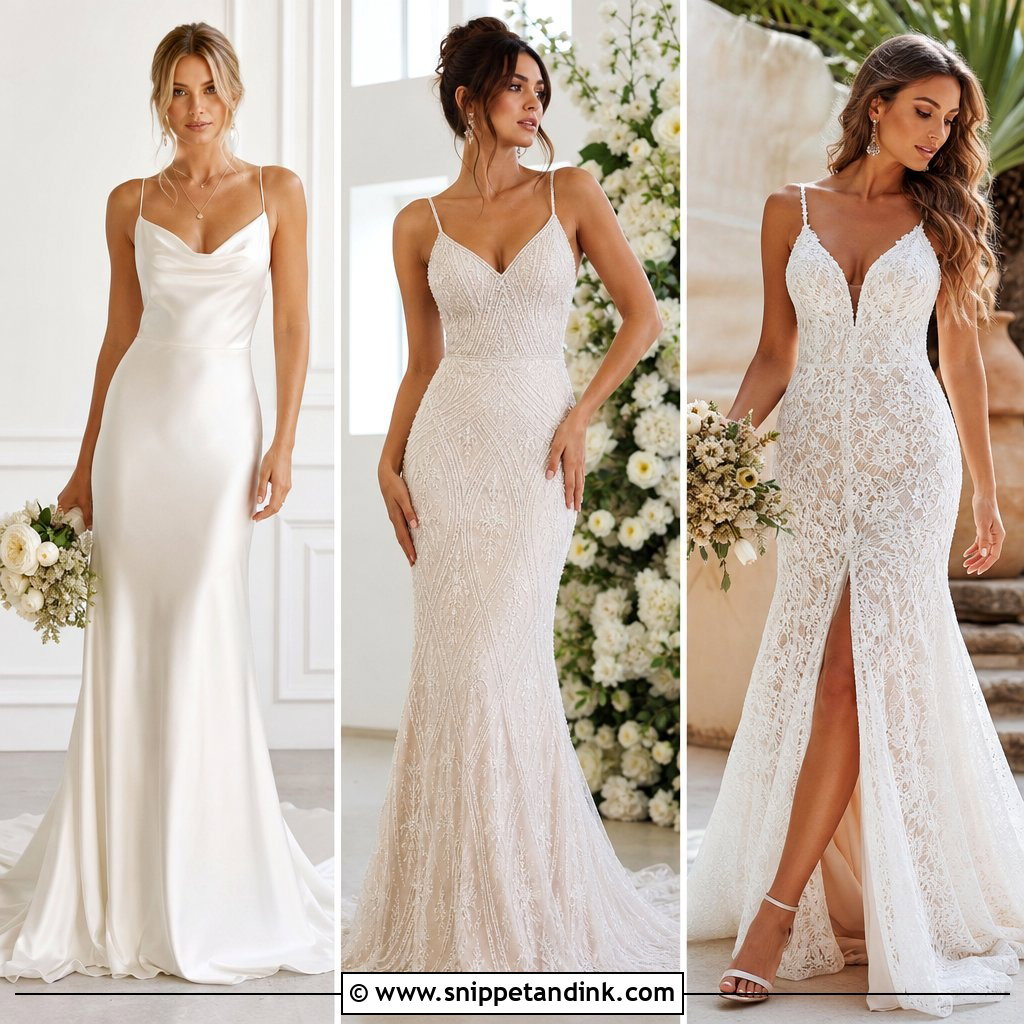
22. Slip Bridal Dress
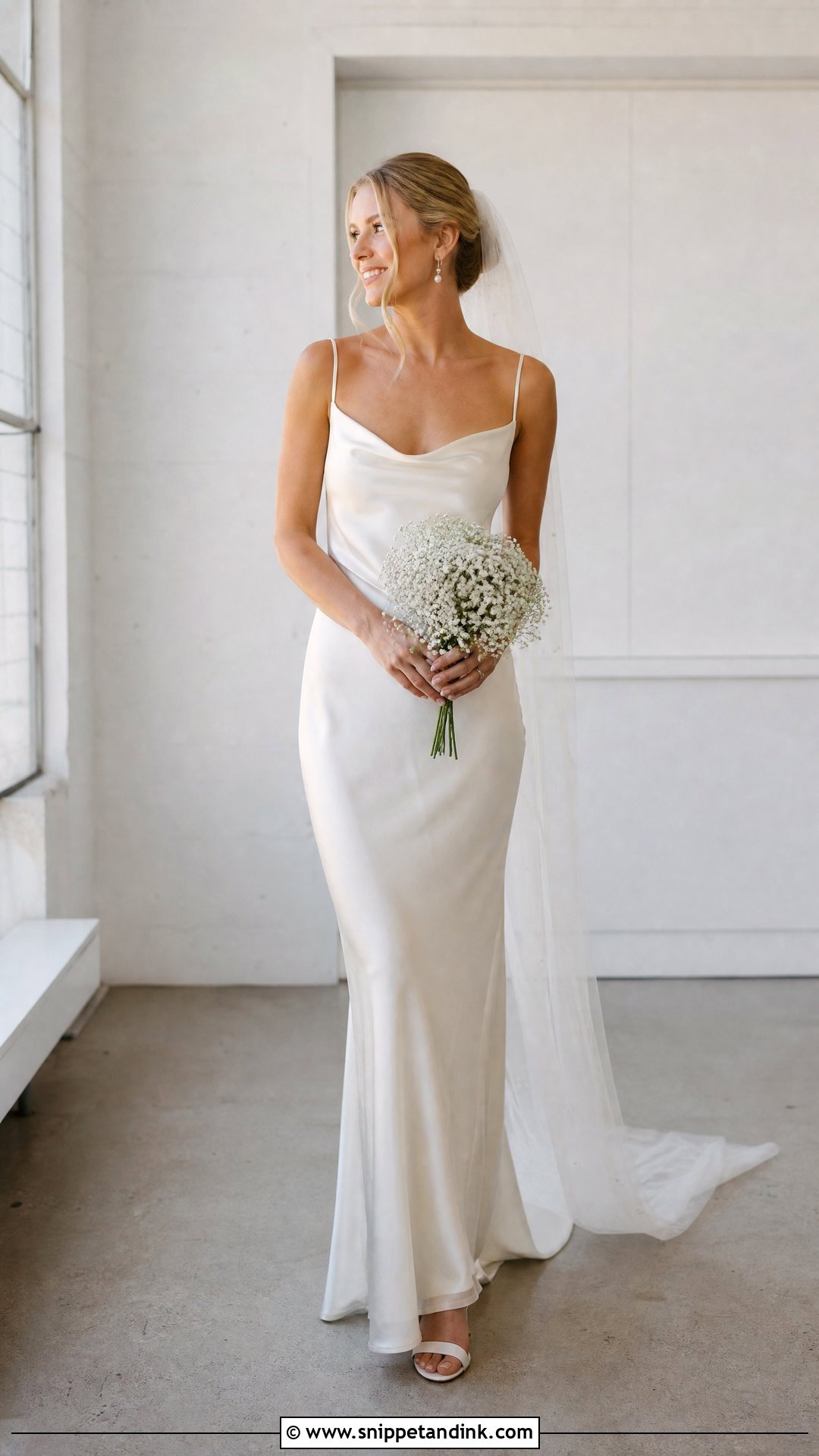
Thin straps, a soft neckline and fabric that drapes close to the body: the slip dress relies entirely on restraint. Silk, satin and charmeuse move best. It hides nothing, so I always fit a slip gown over the exact underwear the bride will wear, and silk charmeuse shows sweat marks in heat, which is worth knowing for a summer ceremony. Soft waves or a sleek bun, a sheer veil and delicate sandals or pointed heels suit city weddings and destination ceremonies.
23. Vintage Inspired Bridal Dress
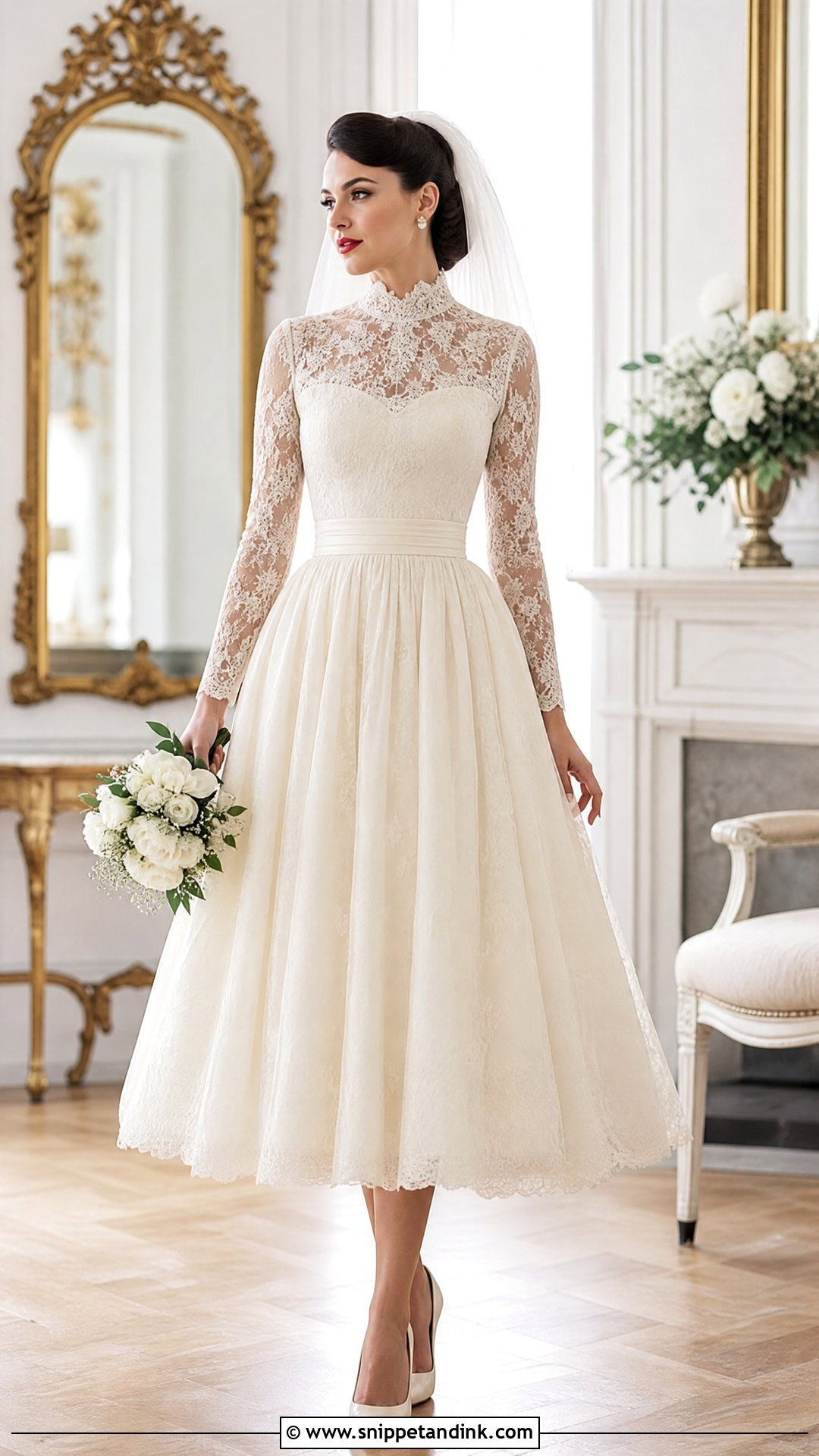
Borrowing from another era works when you reference the past without dressing up as it. A 1950s tea-length silhouette, a 1930s bias-cut satin gown or a Victorian-inspired lace dress with a high neck all have their own character. Modern tailoring, fresh makeup and clean accessories keep it current. If you’re wearing real vintage, have a seamstress check the seams and fabric strength early, because older lace and silk can be fragile. Antique-style earrings, satin pumps or a soft veil finish it.
24. Champagne Bridal Dress
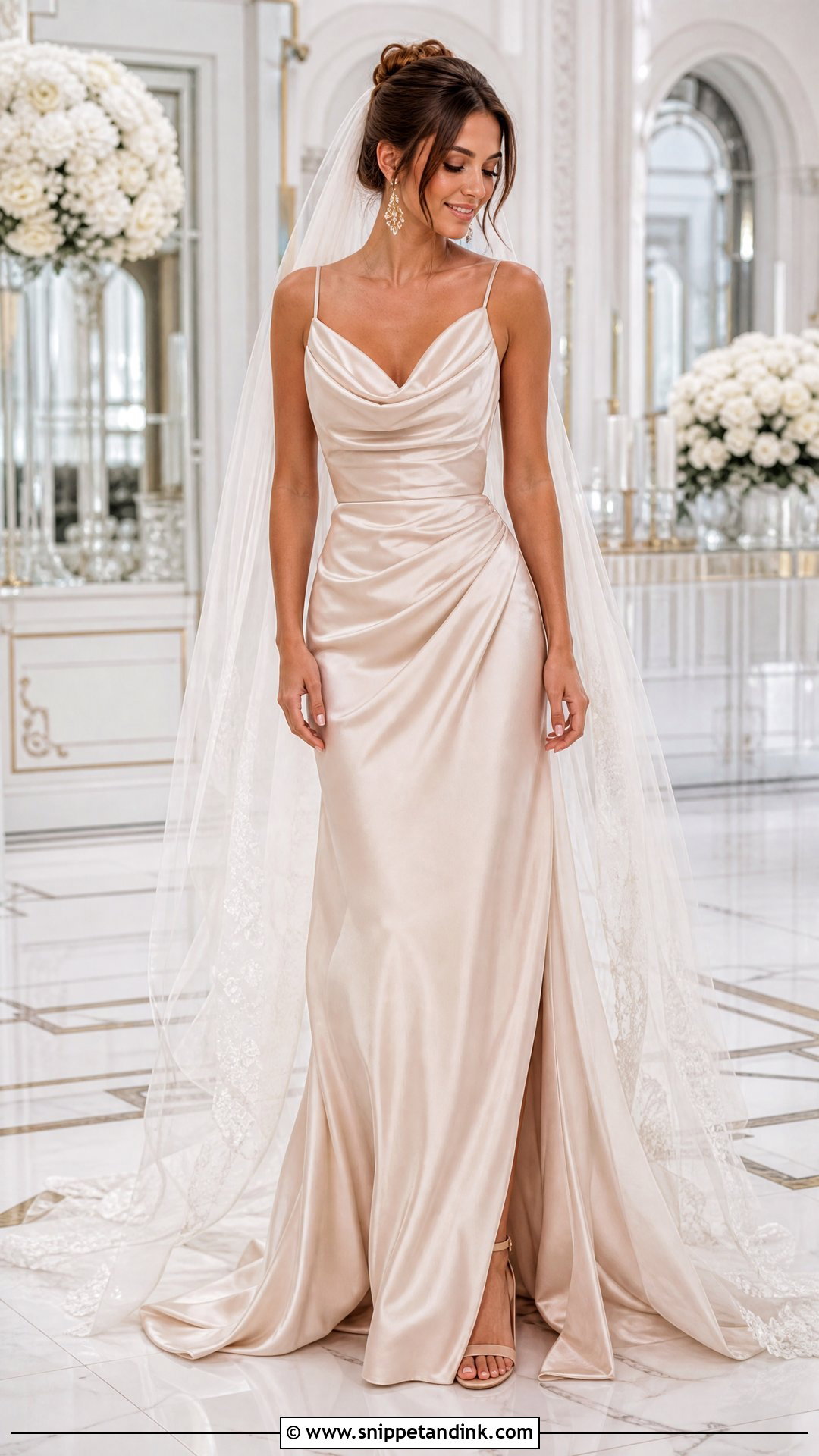
Champagne is a soft golden neutral that warms bridal photos and suits many skin tones better than bright white. It works in satin, tulle, lace and beaded fabrics. In natural light it looks subtle; indoors, under warm bulbs, it glows. Hold the fabric against your face in daylight before you decide, since some champagnes lean pink and others lean grey. Ivory accessories blend softly, gold jewelry adds warmth, and a nude or champagne shoe keeps the line unbroken.
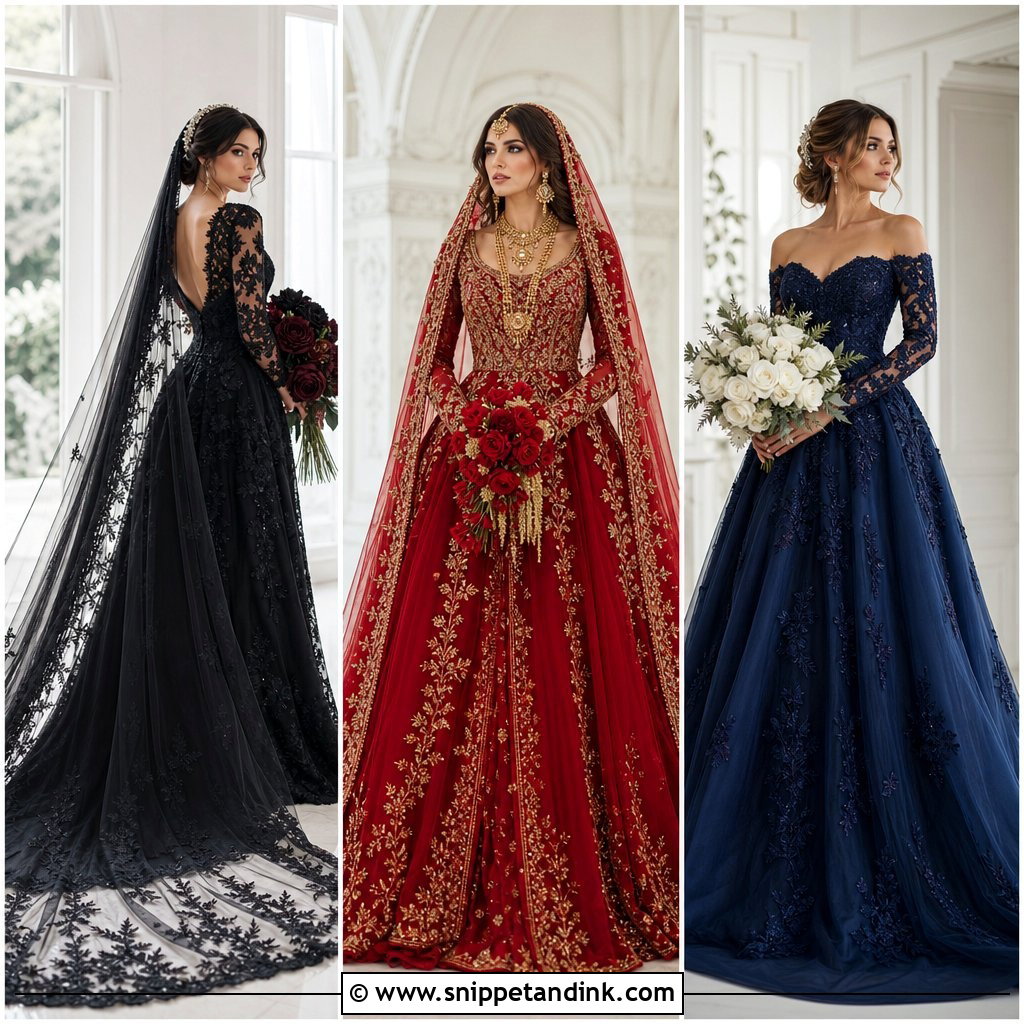


25. Blush Bridal Dress
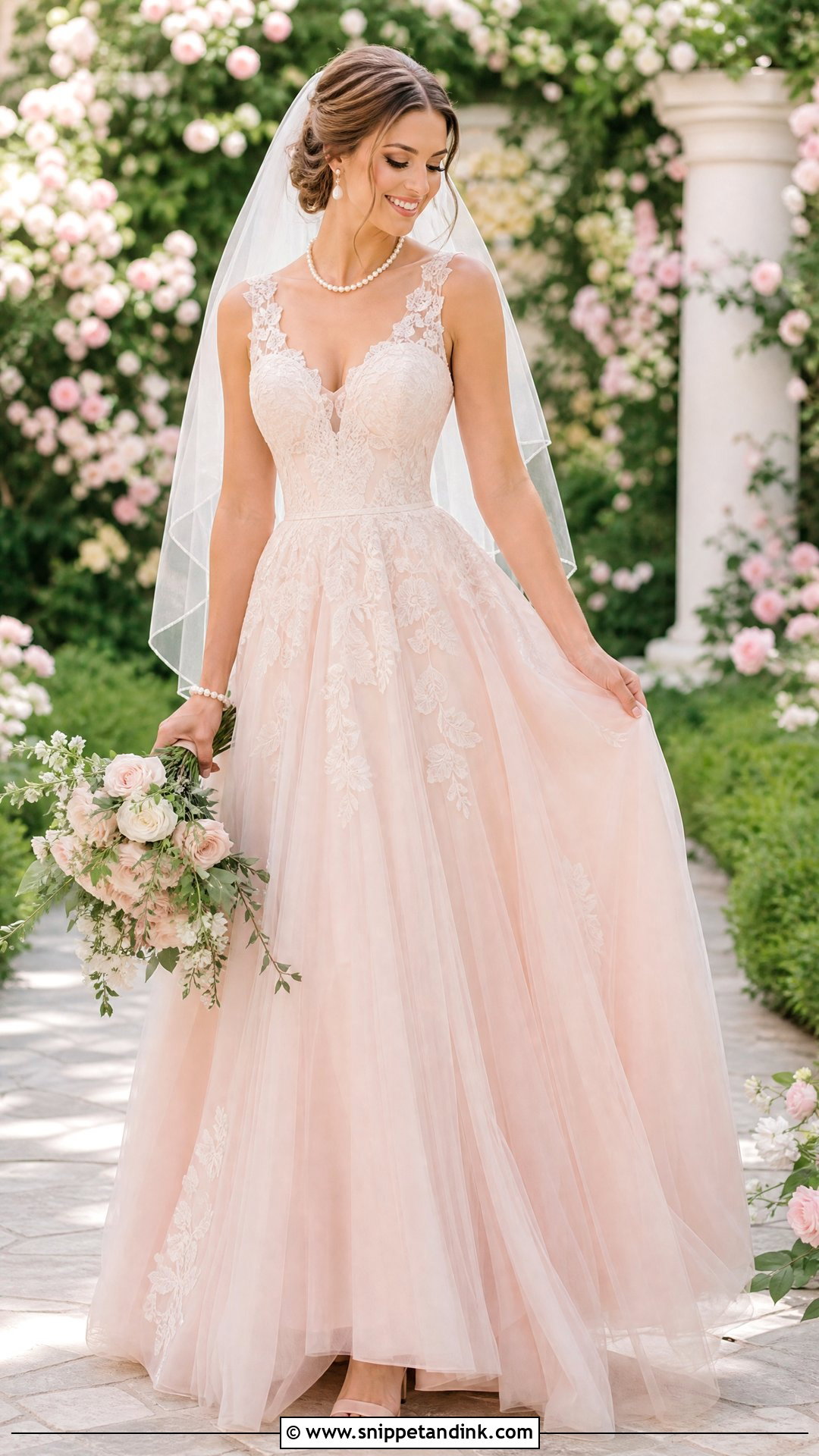
Blush can range from barely pink to a deeper rose, so try several shades against your skin. Blush tulle looks dreamy; blush satin feels smooth and modern. A lace overlay in ivory over a blush lining makes the colour look more dimensional, and it softens it if you’re unsure. Keep accessories ivory, pearl or soft metallic, and choose a neutral bouquet so the dress stays the focus. Spring gardens suit it well.
26. Two Piece Bridal Dress
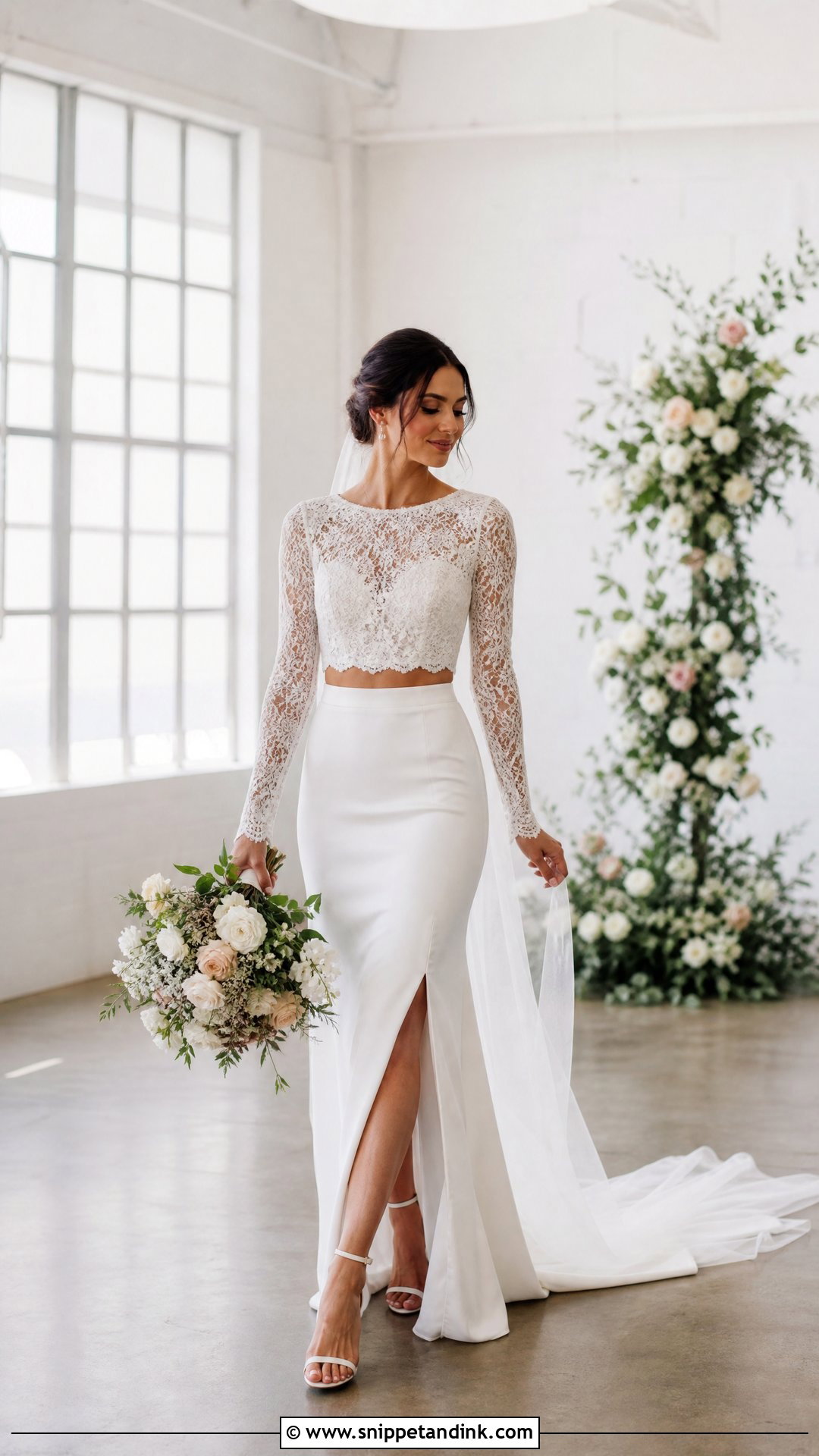
A crop top with a full skirt, lace over satin or a structured bodice with an overskirt: separates bring flexibility. The waist decides whether they look planned. The top and skirt should meet cleanly, ideally with a hidden hook between them so the top doesn’t ride up. It’s also the easiest way to change one piece for the reception. Sleek heels, simple jewelry and a veil to match the mood finish it.
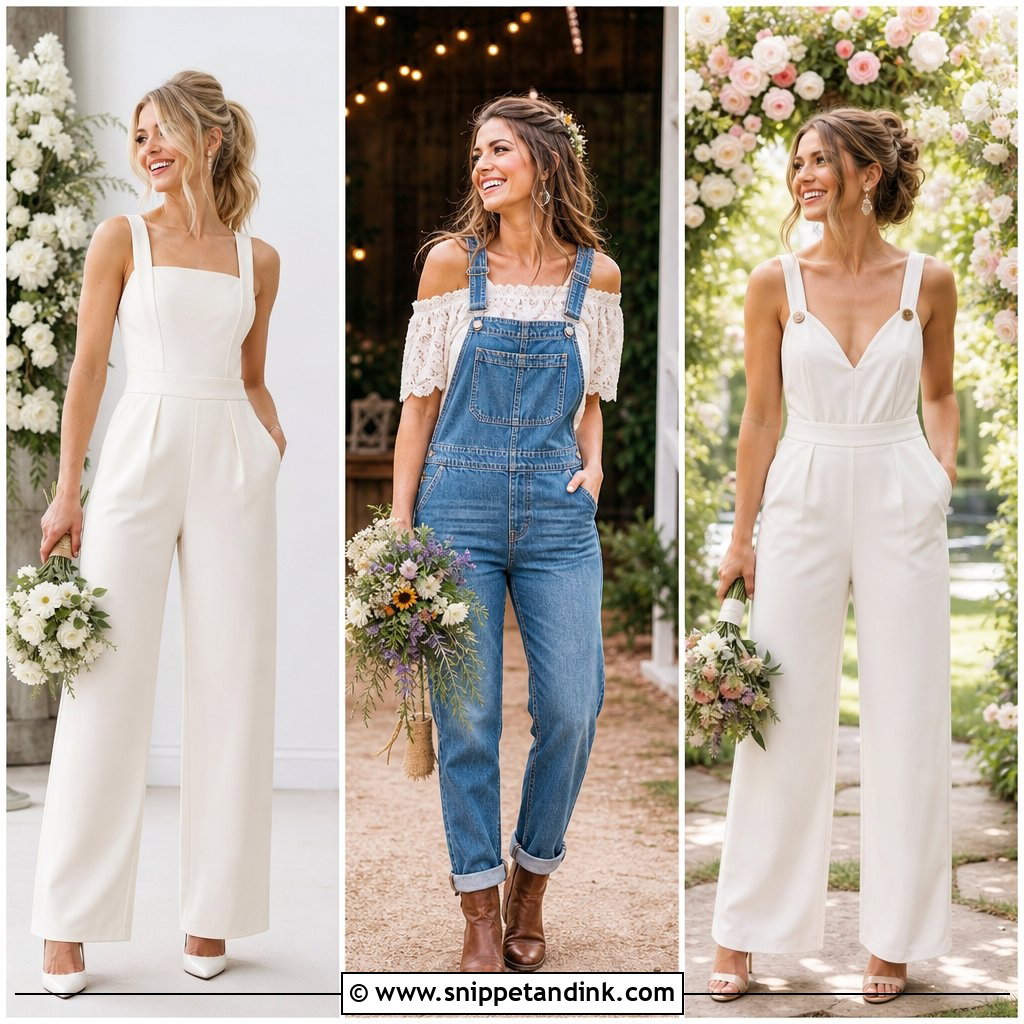
27. Bridal Jumpsuit
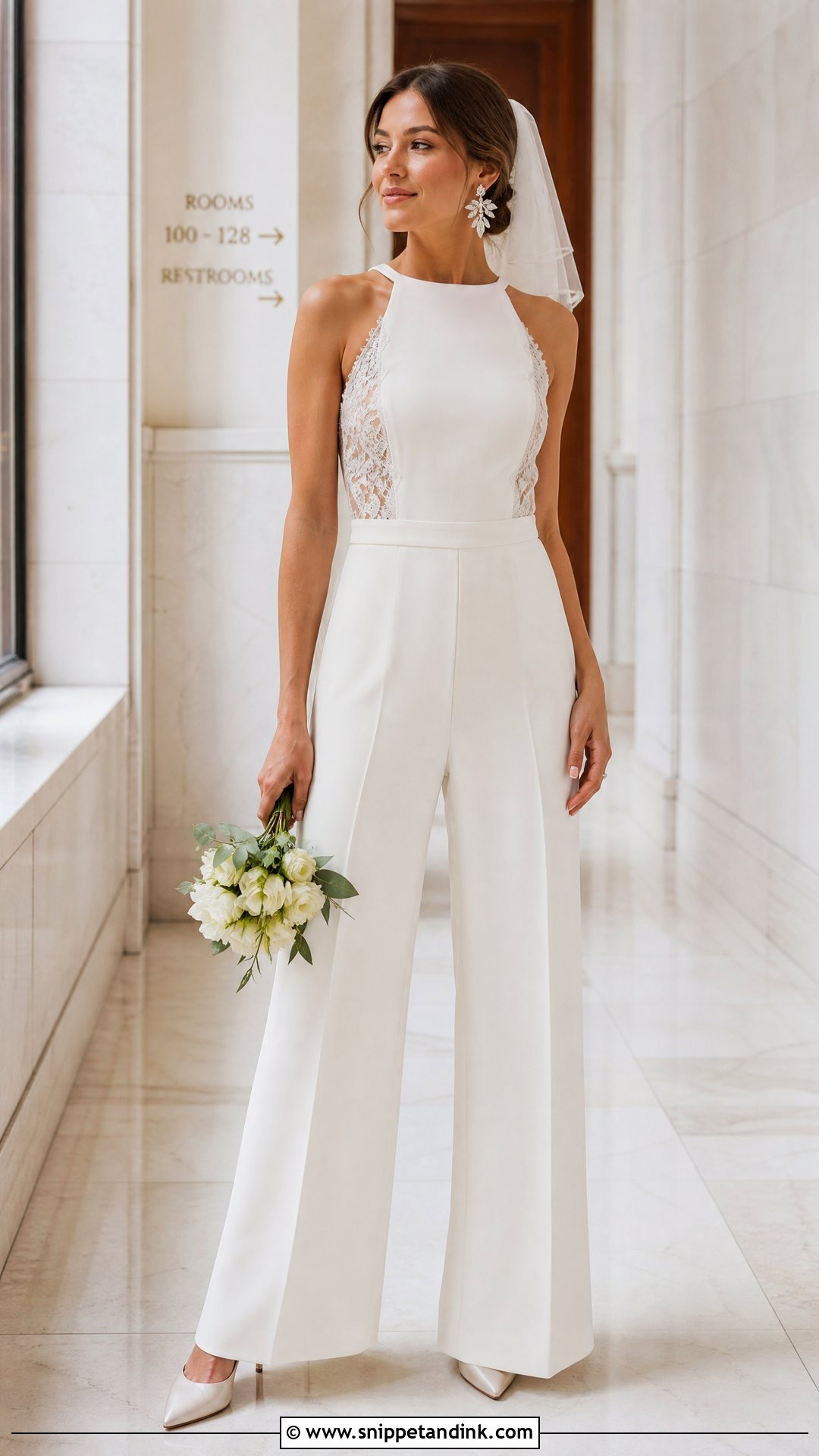
A bridal jumpsuit gives style and movement for a courthouse, reception, rehearsal or modern ceremony. The bridal details are what matter: crepe tailoring, lace panels, pearl buttons, cape sleeves or a dramatic overskirt. A wide-leg cut can look as elegant as a gown and is easier to walk in. Get the rise right. If the crotch is too short it pulls when you sit, so sit and climb a stair at the fitting. Pointed heels, sculptural earrings and a veil make it unmistakably bridal.
28. Bridal Suit
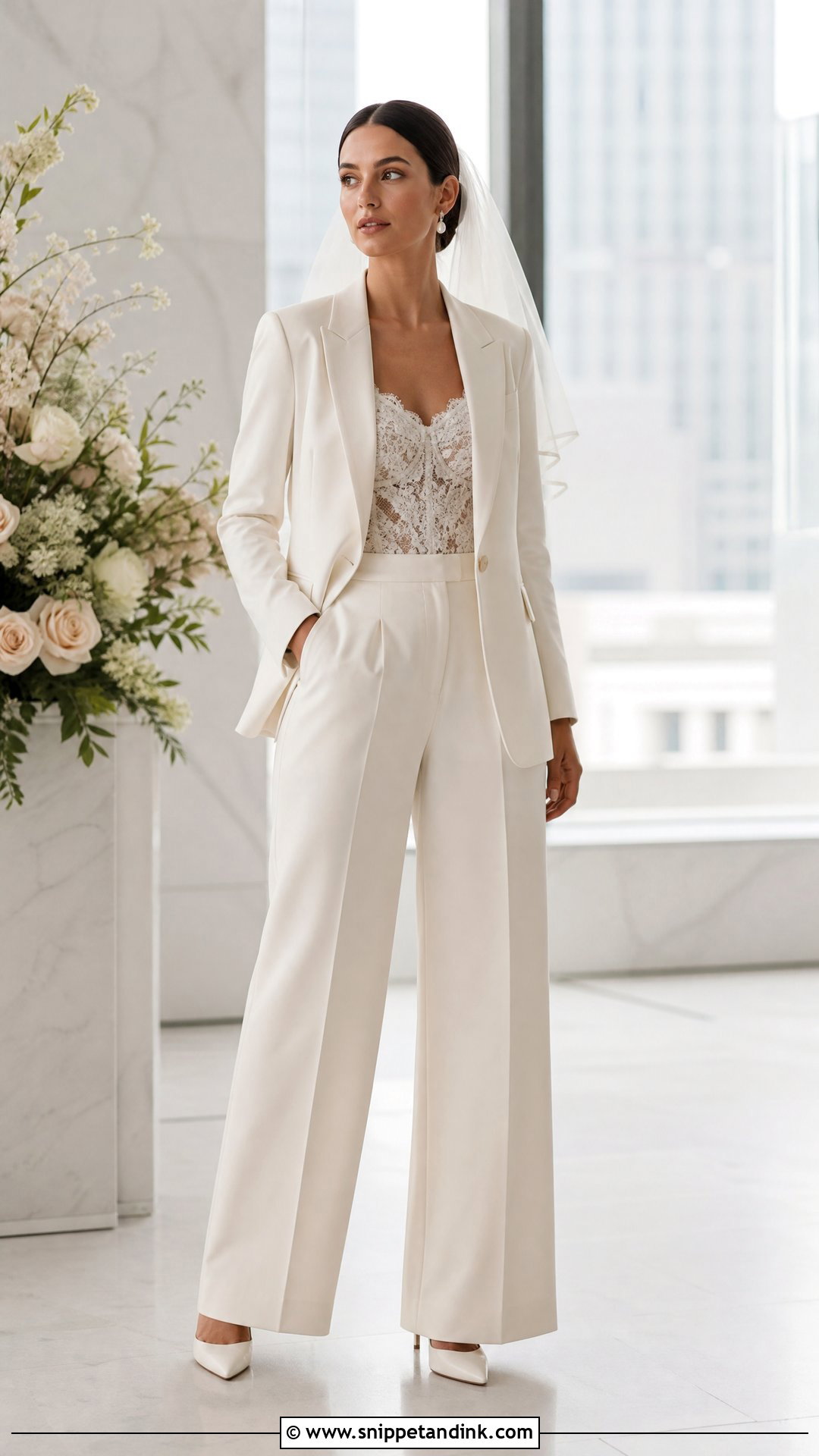
Sharp and confident, a bridal suit works for a courthouse, elopement, reception or the whole day. White or ivory tailoring with a fitted blazer, wide-leg trousers or a sleek vest is the base. Satin lapels, pearl buttons, a lace camisole and pointed heels soften it. Tailoring makes or breaks it: shoulders, waist and hem need to be exact, and trousers should be hemmed in the wedding shoes. A short veil or statement earrings add a ceremony touch.
29. Detachable Overskirt Bridal Dress
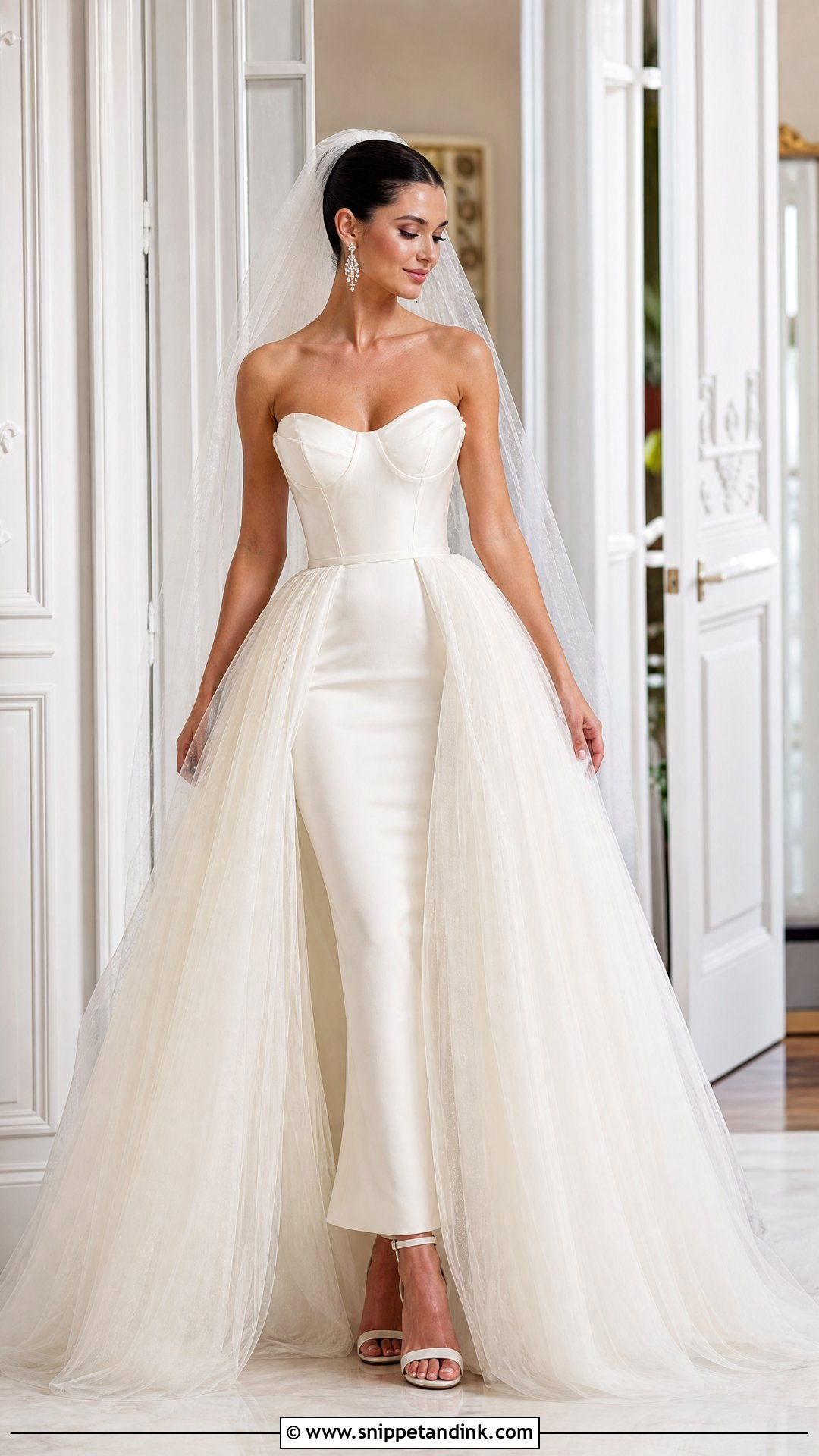
Two looks without two full gowns: the overskirt brings volume for the ceremony, then comes off to reveal a slimmer gown for dancing. Tulle overskirts feel soft; satin or mikado ones look structured. The attachment should sit flat at the waist and not twist as you walk, which you’ll only know by wearing it around the fitting room for a few minutes. Practise the removal with your helper. A veil for the ceremony, statement earrings for the party.
30. Reception Bridal Dress
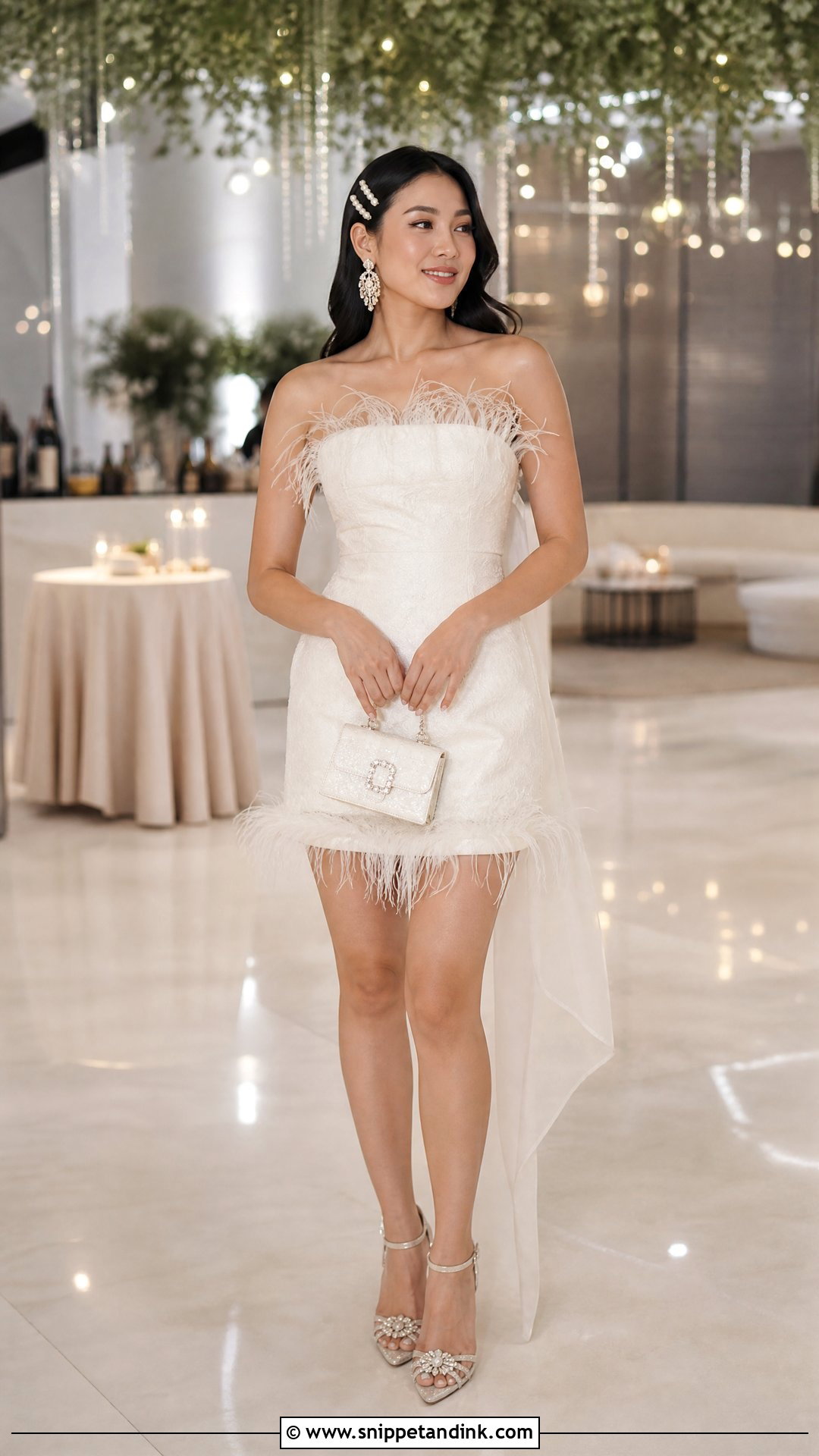
Movement and celebration come first after the ceremony. A mini, slip, feather-trimmed dress, fitted crepe gown or tea-length design all work, ideally still connected to your main bridal style. Lighter fabric, a shorter hem or fewer layers let you move freely. Embellished heels, pearl hair clips or a small structured bag are the fun part. Pack it steamed and hanging, with the right underwear for its neckline, so the change takes minutes.
Three Bridal Appointments Usually Beat Ten
Brides who visit shop after shop often end up more confused, not less. Most find their shape within the first two or three appointments, and the rest is second-guessing.
Planning the timeline
Many bridal salons suggest ordering around eight to ten months ahead. Made-to-order gowns often take several months to arrive, and alterations need another couple of months on top. Ready-to-wear and sample gowns shorten that, which helps if your date is close.
What to bring to a fitting room
- Smooth, nude underwear and a strapless bra, so you can try any neckline.
- Shoes close to your wedding heel height.
- One or two people whose taste you trust, not a crowd with five different opinions.
- Photos of your venue, because a gown that looks right in a ballroom can look out of place on a beach.
When you’ve found the one, sit, walk and lift your arms in it before you say yes. A dress you love standing still but can’t move in will cost you more in alterations than it’s worth.
Fabric, Fit and How You Want to Feel
Some brides feel most themselves in a lace ball gown, others in a slip dress, a suit or a mini. Your venue, the weather, how you’ll move and how the photos will look all matter, and so does fabric: satin, crepe, tulle, lace and mikado each create a different mood and wear differently over a long day. Try on the shapes you love, and one you’d never pick, because brides surprise themselves more often than not. The right dress looks good, but it also lets you forget you’re wearing it.
You'll Like These Ideas:





Leave a Reply