
I spend most of my working days fitting gowns on real brides, and the drawings I trust most are the ones that understand how a dress behaves on a body. A sketch for a mood board, a framed keepsake or a boutique window card works best as a whole look: silhouette, fabric, veil, shoes, bouquet, jewelry, hair and the room she is standing in. Right now I see brides pinning sculptural shapes, soft color, bows, hand-painted skirts and very pared-back satin. The 25 looks below are dressed the way I would dress them in a fitting room, so you can paint, sketch or brief an illustrator with the full outfit already worked out.
How Bridal Fabrics Really Fall, and How to Draw Each One
Most wedding dress drawings look off for one reason: every fabric has been drawn the same way. In a fitting room I can tell satin from crepe from across the shop, because each one creases, folds and catches light differently. Getting that right is what makes an illustration feel observed rather than invented.
- Satin is heavy and folds in a few deep, soft pleats. Highlights run in long streaks down the fold ridges, and it creases across the lap when the bride sits.
- Crepe has a matte, slightly grainy surface. It hangs close to the body with very little shine, so shade it with gentle tone changes rather than bright highlights.
- Tulle is see-through when it is a single layer and almost solid when it is stacked. Draw the hem lighter than the waist, where layers gather.
- Chiffon floats. It lifts in the smallest breeze and makes many fine, shallow folds, which is why it suits beach and garden pieces.
- Lace sits on top of a base fabric. Draw the base first, then the motifs, and leave gaps of skin or lining showing through on sleeves and backs.
One more thing I watch for: a real skirt never ends in a perfect circle at the floor. It breaks where the shoe pushes it forward and trails behind. Put that small irregular curve at the hem and the whole gown suddenly has weight.
1. Watercolor Floral Wedding Dress Art
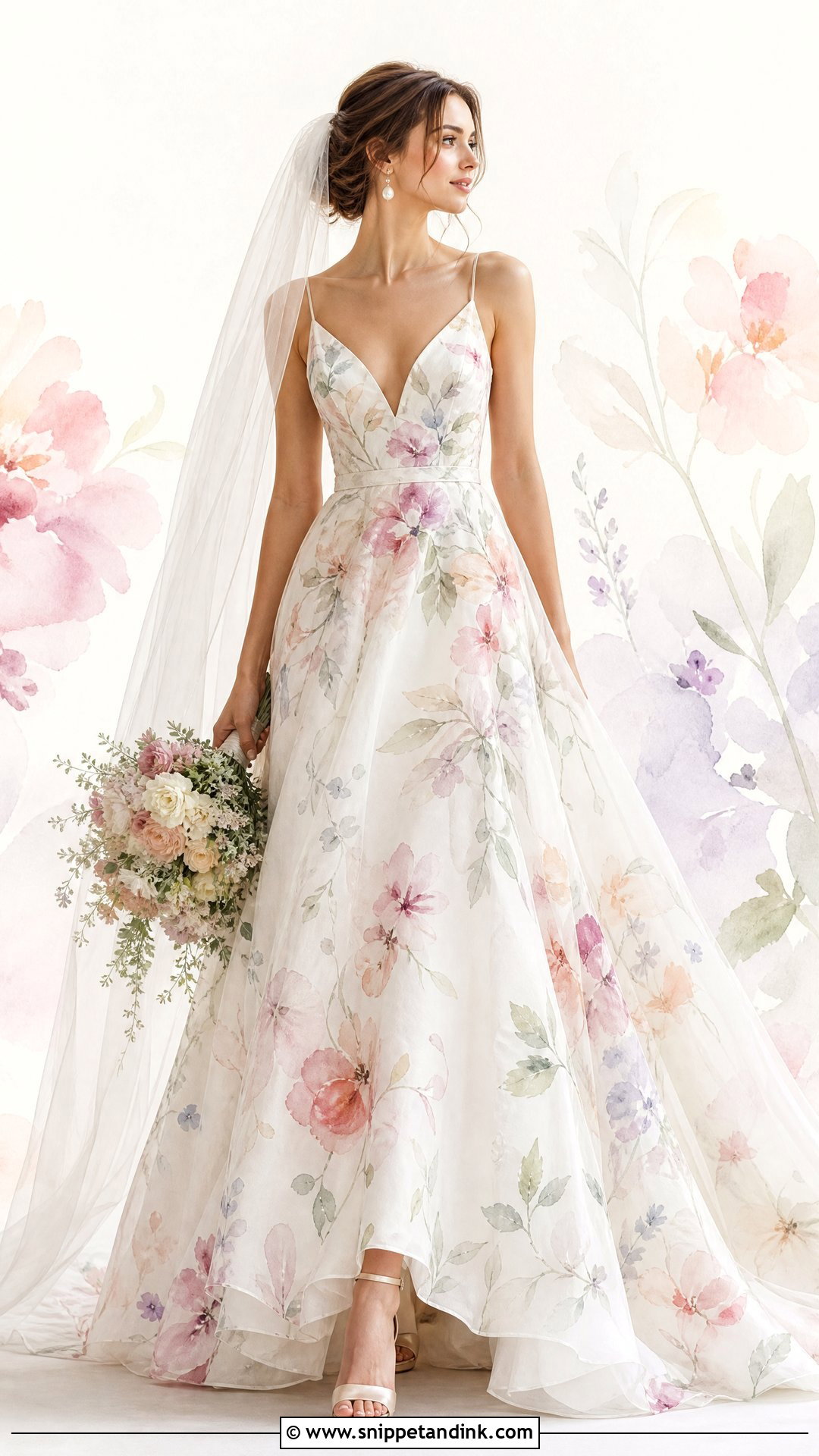
A watercolor floral wedding dress art concept starts with an A-line skirt carrying pale blush, lavender and sage flowers like a garden in motion. Dress it with a sheer veil, pearl earrings, satin heels and a loose pastel bouquet. Keep the bodice plain; on a real painted gown, color placed near the face competes with skin tone, and the same thing happens on paper. Let the pigment bleed softly at the hem, where a real skirt would catch grass and light anyway. It suits spring stationery or a framed gift.
2. Minimal Satin Wedding Dress Art
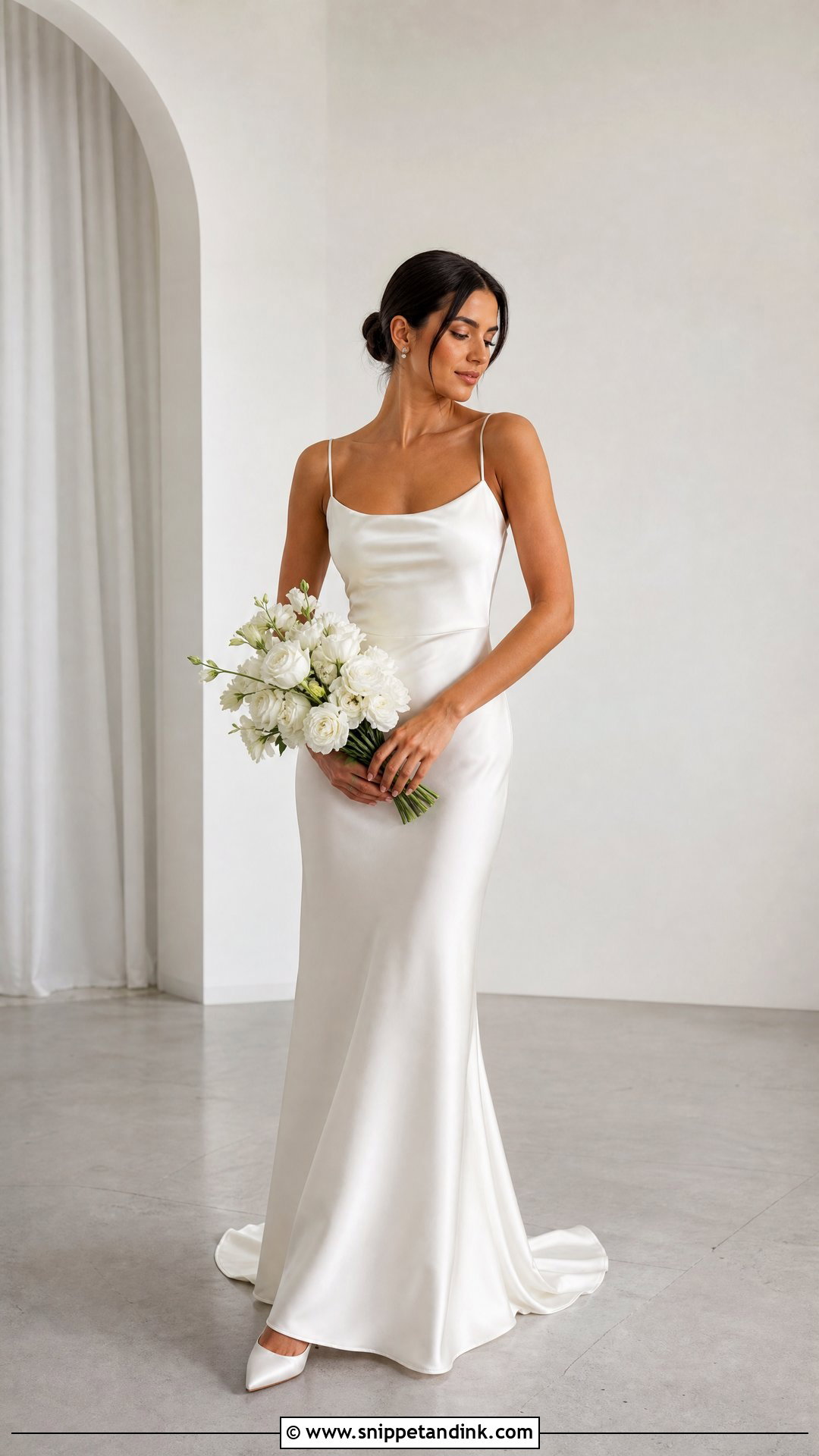
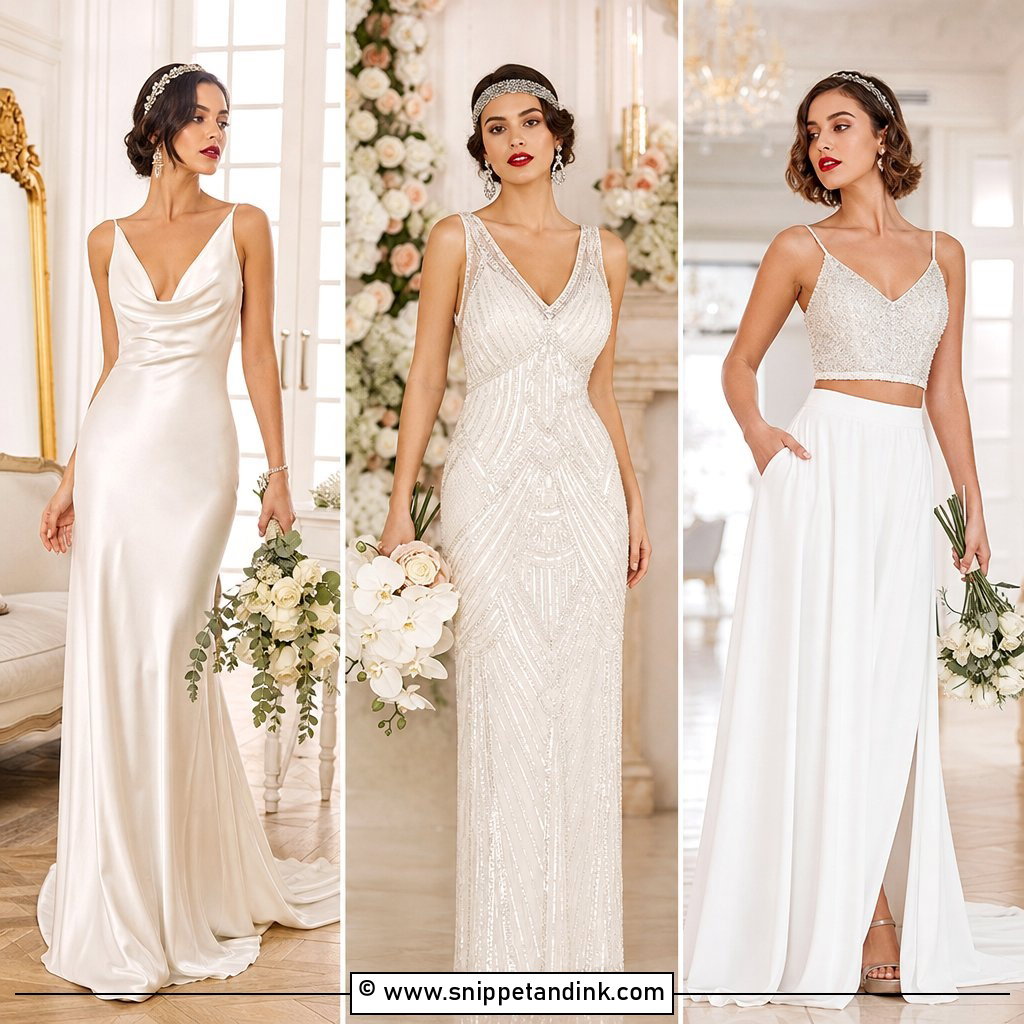
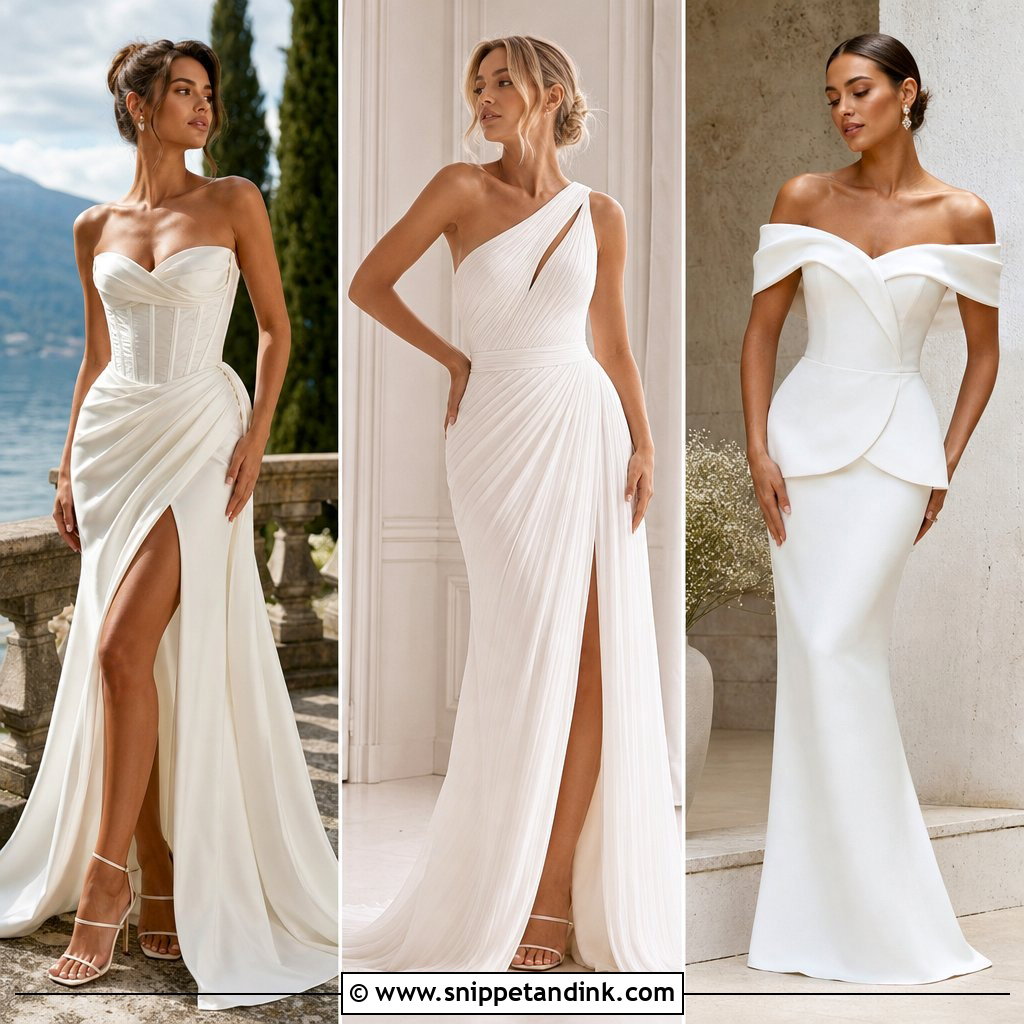
Satin bias cuts are unforgiving in a fitting room and on the page for the same reason: every line of the body shows. Draw a sleek bias-cut gown with a soft cowl, slim straps and a skirt that pools slightly at the floor. Add pointed satin heels, a low bun, small diamond studs and an all-white bouquet. Shade the drape in long, unbroken highlights, because bias satin shines in streaks, not patches. A white wall or marble floor keeps the mood calm.
3. Ball Gown Wedding Dress Art
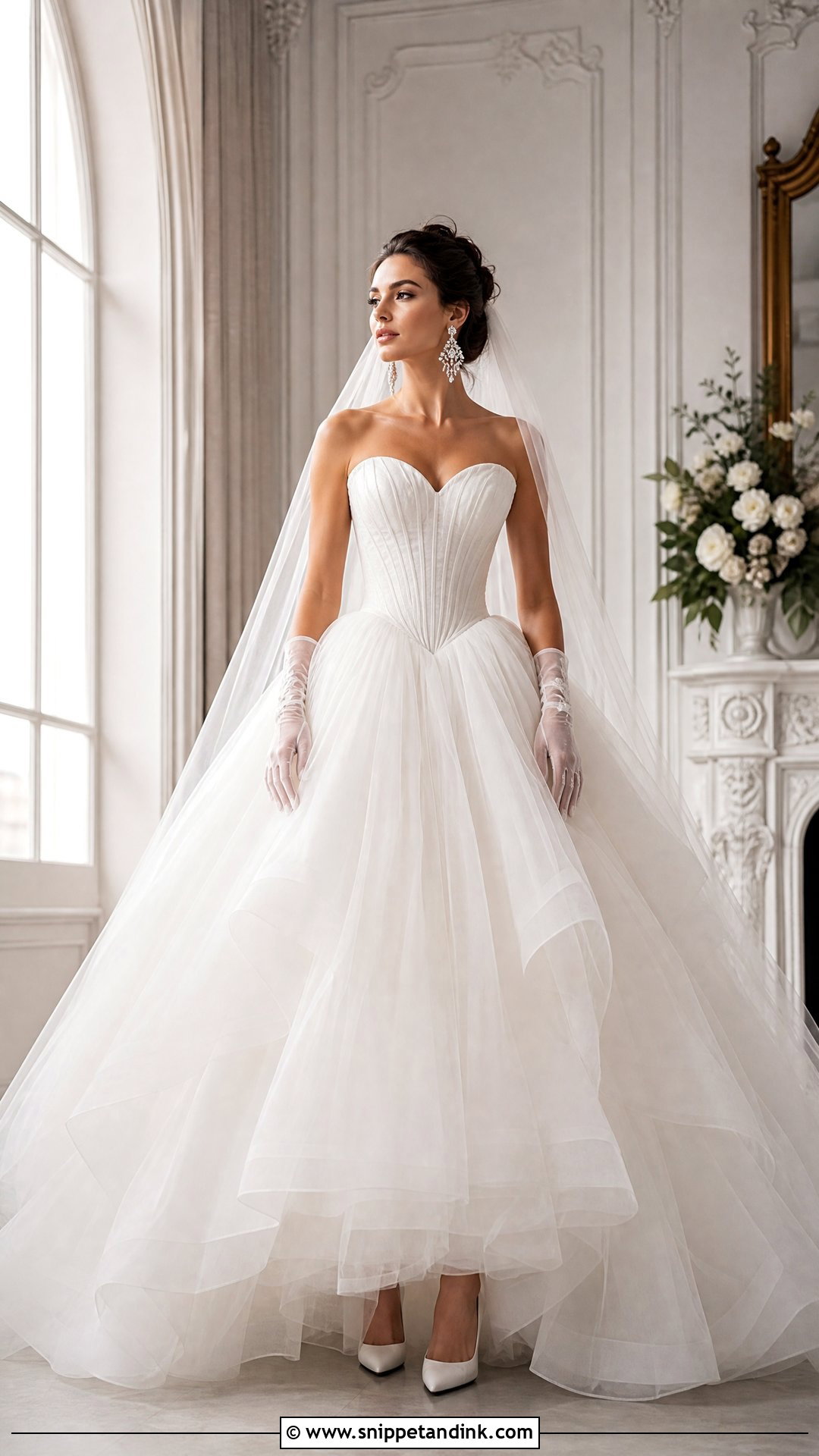
Start with a structured bodice, a defined waist and a skirt that spreads wide around the bride. I always remind people that a real ball gown carries several layers of tulle or a stiff petticoat, so the skirt should sit out from the hips rather than hang. Add a long veil, crystal earrings, short gloves and closed-toe heels. Keep the neckline clean if you want it to read modern. Put the shadow where the skirt folds onto the floor; that one detail sells the weight.
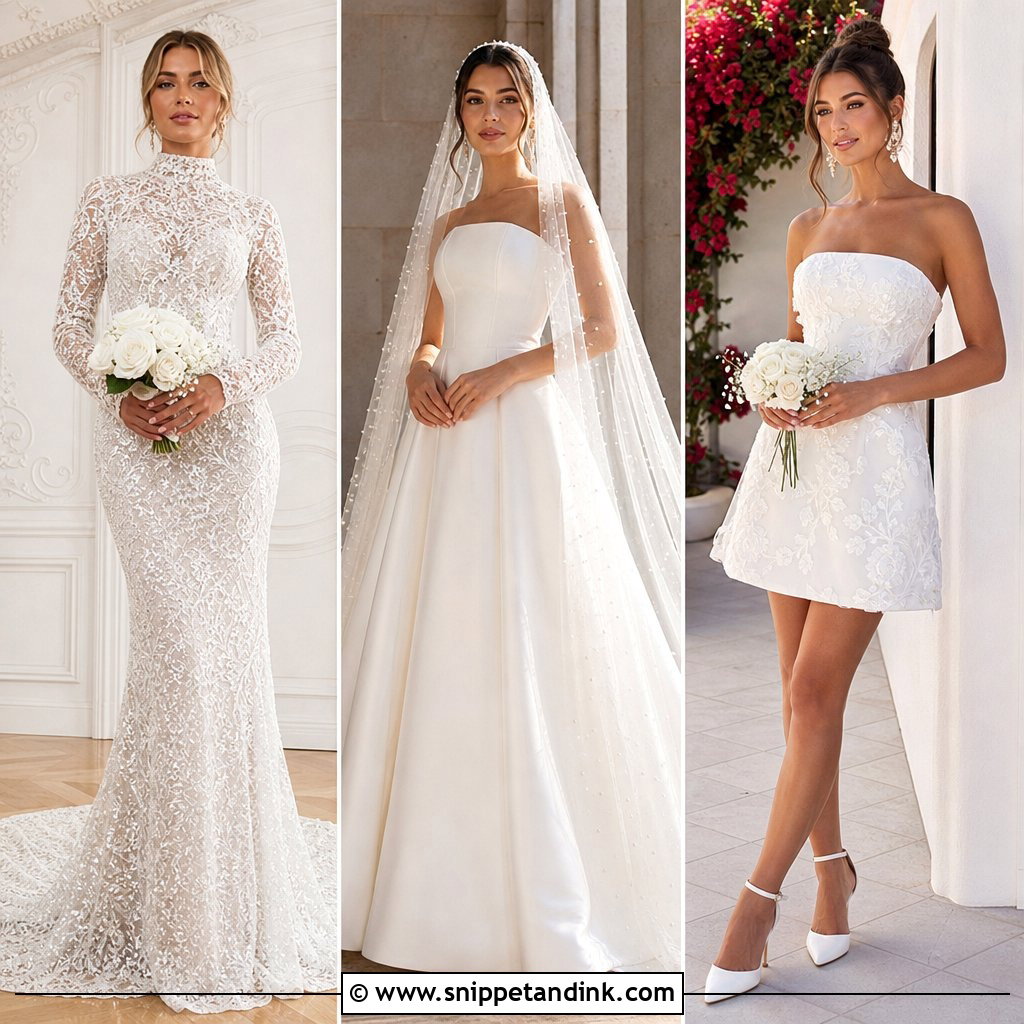
4. Lace Sleeve Wedding Dress Art
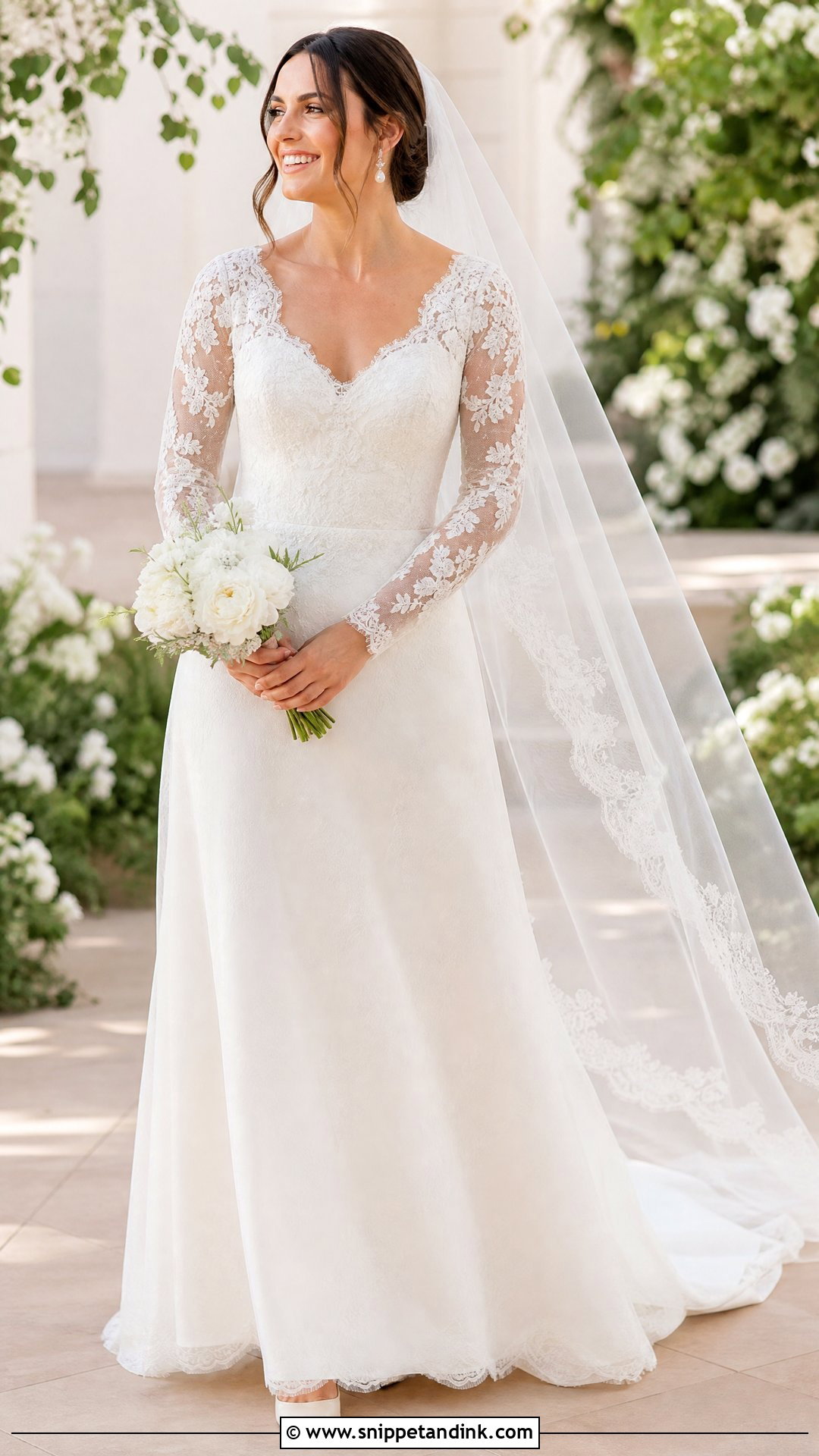
Sheer lace sleeves are where most drawings go wrong. On a real gown the lace motifs are cut out and placed by hand, so they sit thicker at the shoulder and thin out toward the wrist; draw them that way and the sleeve looks believable. Pair the fitted bodice with a soft mermaid or A-line skirt, pearl drops, ivory heels, a lace-edged veil and a small white bouquet. Fine linework for the tulle, solid tone for the satin underneath. I’d skip this look for anyone who wants loud color elsewhere in the piece.
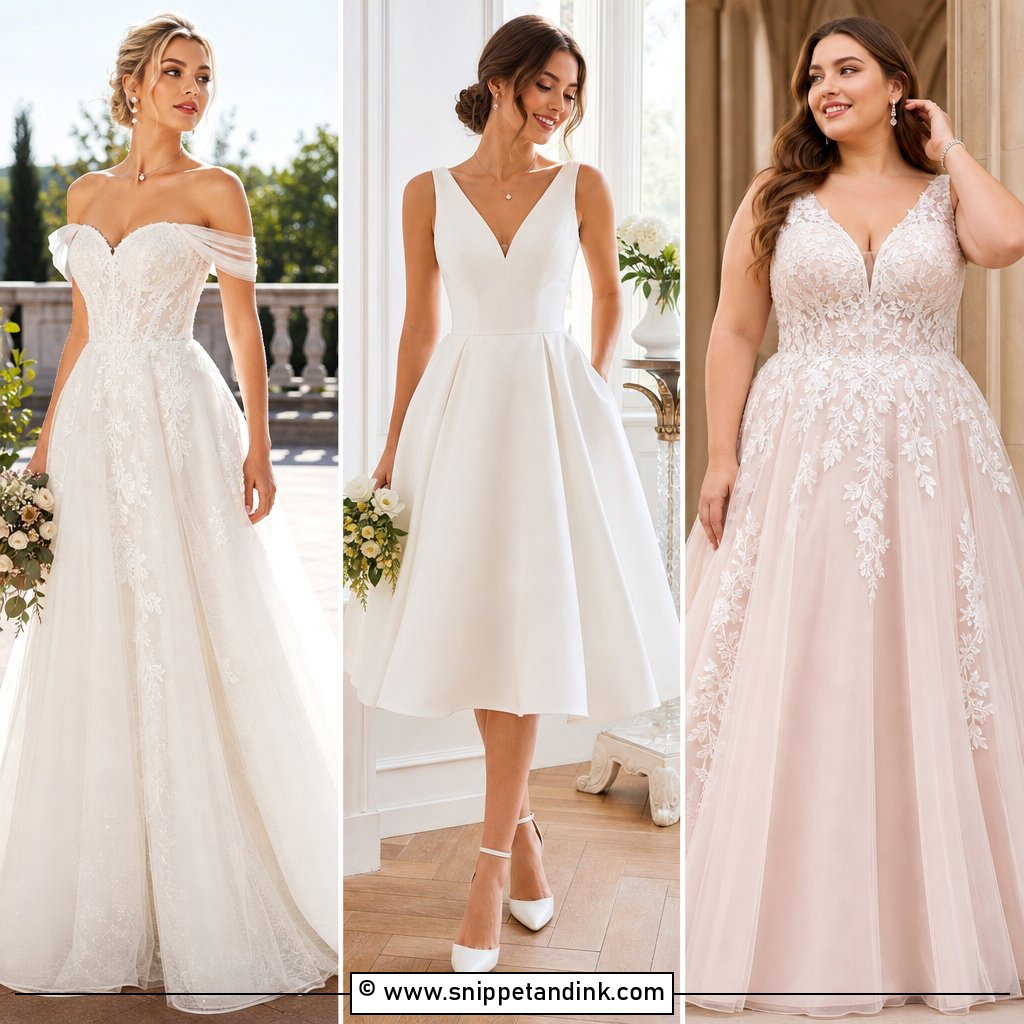
5. Off Shoulder Wedding Dress Art
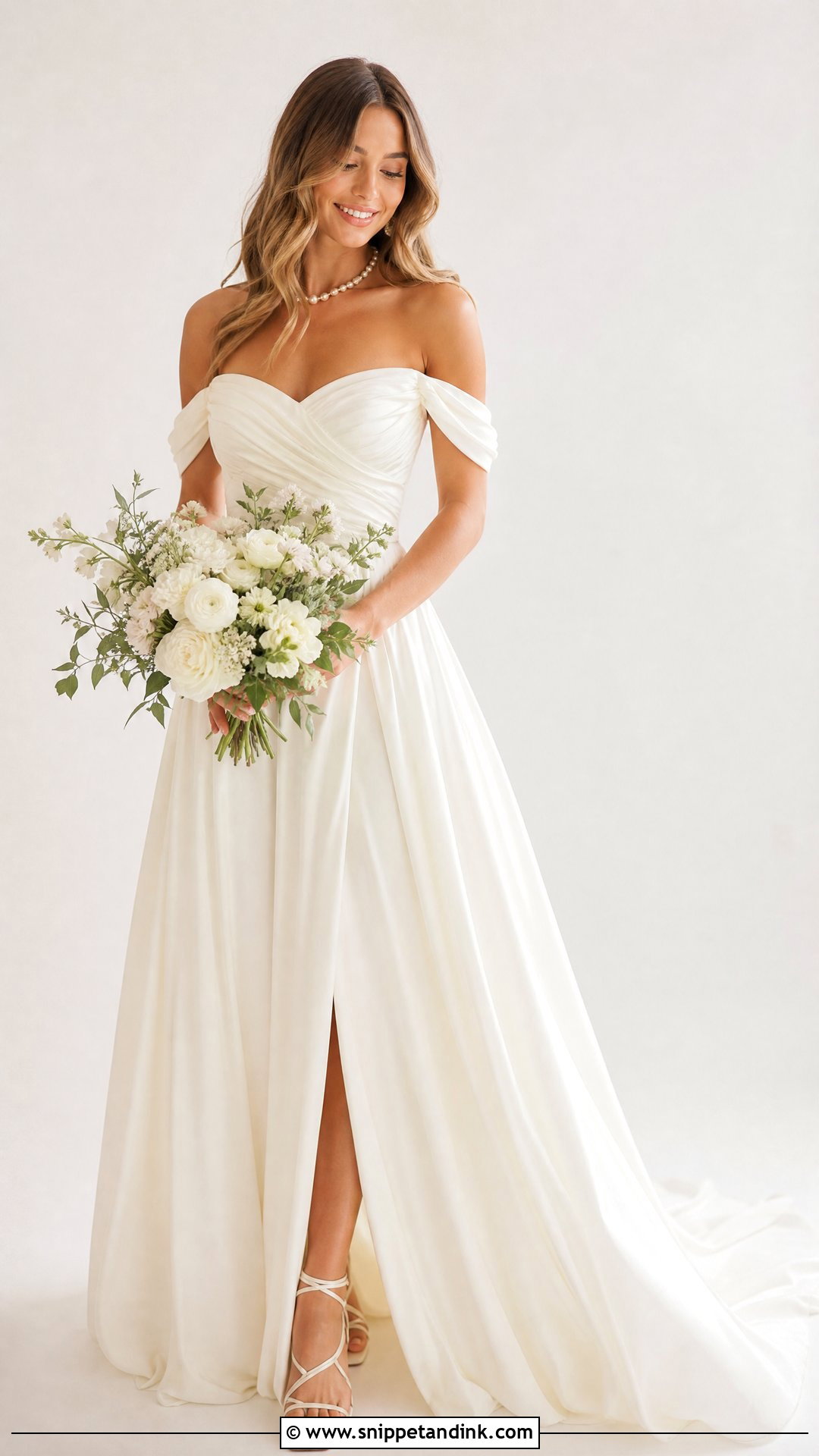
The off shoulder line frames the collarbone, which is why it works in both realistic painting and fashion sketching. Sit the sleeves just below the shoulder point, not halfway down the arm; in fittings, a sleeve that drops too low pins the arms to the sides and the drawing will look stiff if you copy that. Add a flowing skirt with light folds, a pearl necklace, soft waves, strappy ivory heels and a hand-tied bouquet. Crepe reads modern. Lace or floral appliqué reads romantic.
6. Corset Wedding Dress Art
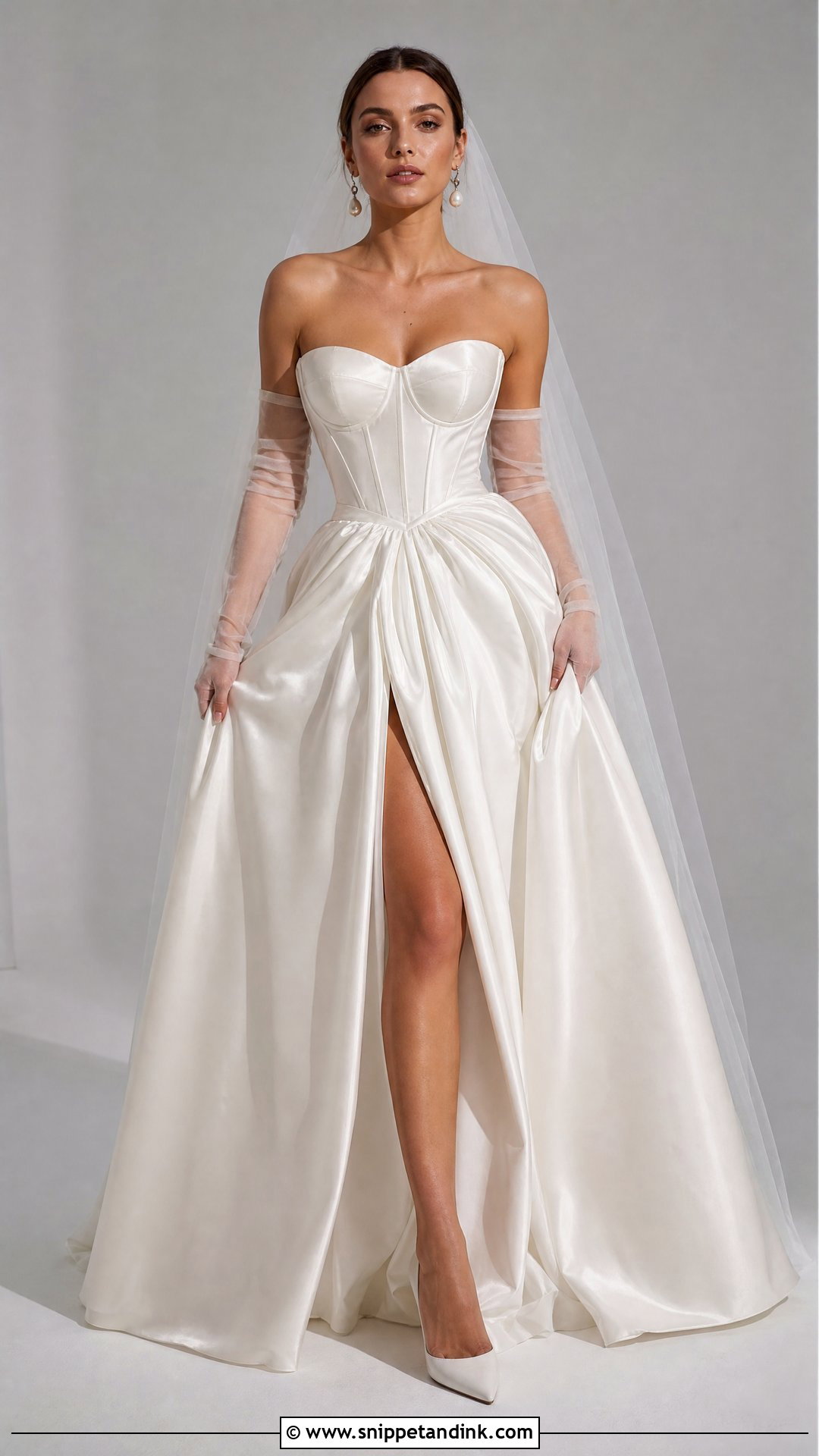
Draw the boning first and the fabric second. A visible corset bodice has vertical channels that curve with the ribs, and the shading around those seams is what makes it look supportive instead of rigid. Pair it with a full skirt, a column, or a soft draped train, then add sheer gloves, pearl earrings, pointed heels and a plain veil. Ivory satin keeps it classic; embroidered flowers over the bodice push it toward artwork. Keep the jewelry small so the construction stays the story.
7. Basque Waist Wedding Dress Art
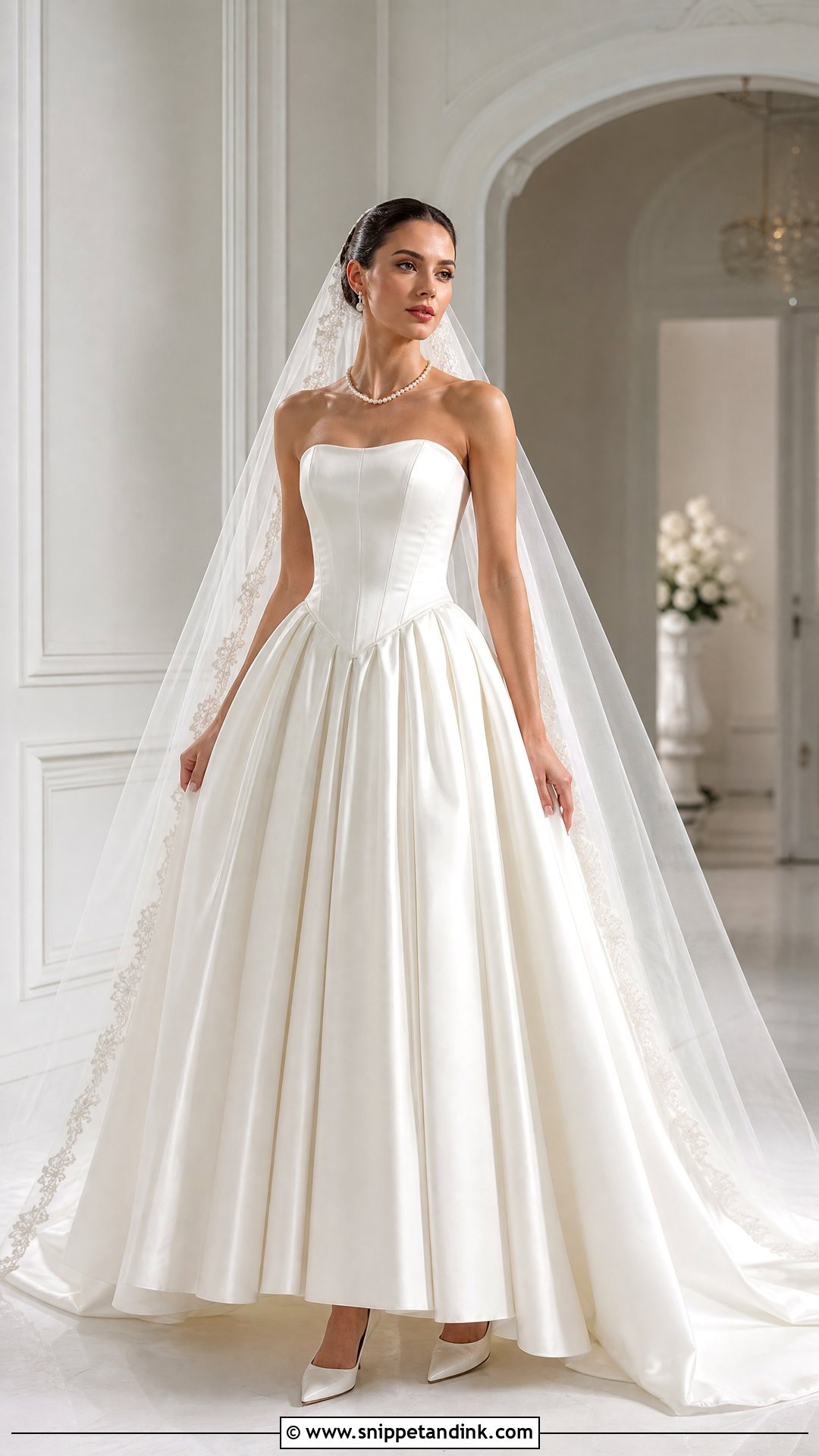
A basque waist dips into a soft V below the natural waistline, which lengthens the torso. In fittings I find it flatters a short waist more than almost any other seam, and on paper it gives the eye a clear focal point. Pair it with a full pleated or tulle skirt, pointed satin heels, a cathedral veil and pearls. Strapless or a gentle scoop at the top keeps the proportions balanced. Push the V too low and it tips into costume.
8. Bow Back Wedding Dress Art
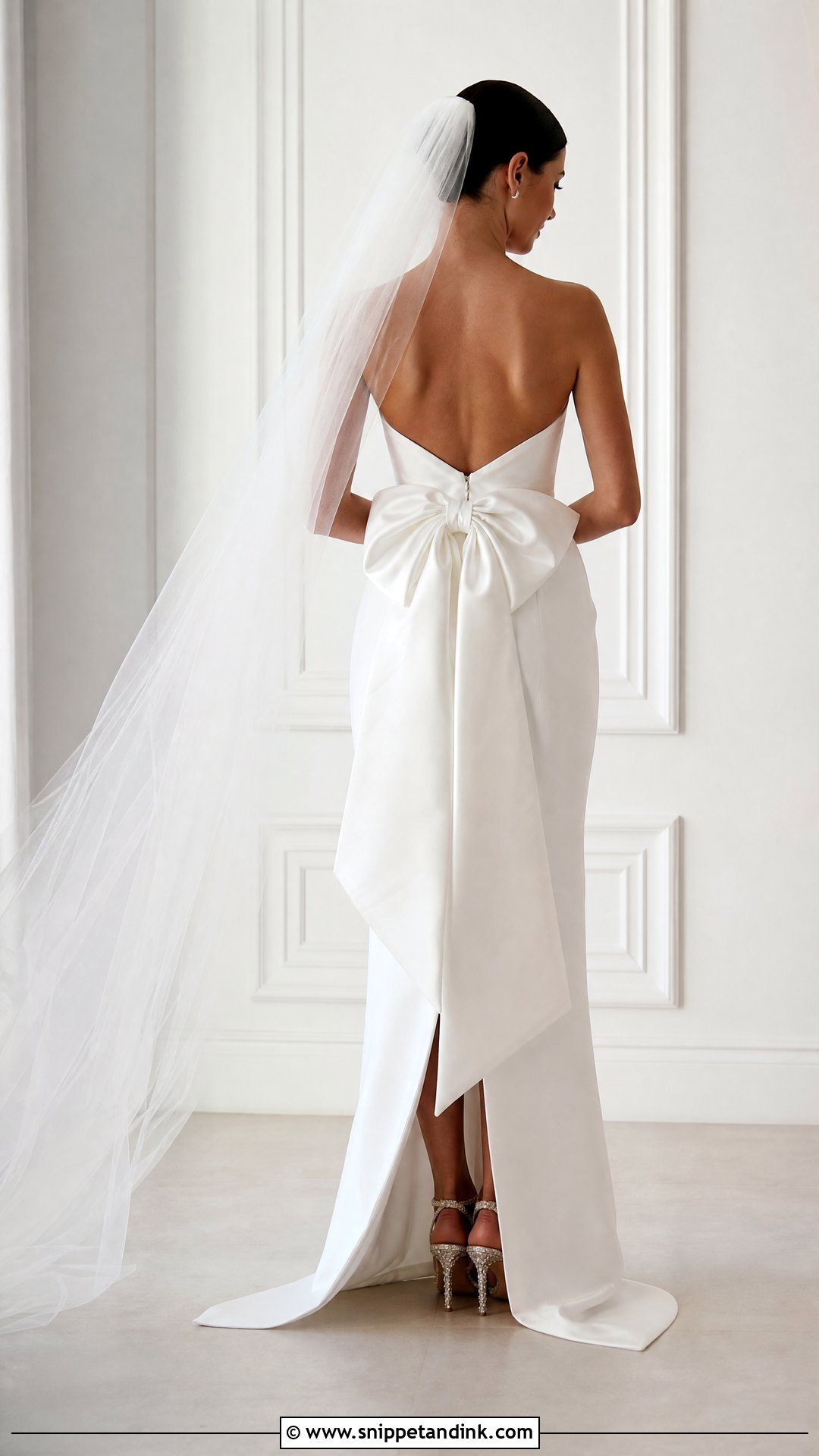
Turn the bride slightly away so the back carries the drawing. A large satin bow can sit at the waist, the shoulder blade or the upper back, and the ribbon tails should fall with the train rather than stick out; real satin tails are heavy and drop straight. Pair it with a column dress or full skirt, a long veil, crystal heels and small earrings. Keep the front plain. Two focal points front and back cancel each other out, in a gown and in a sketch.
9. Cape Veil Wedding Dress Art
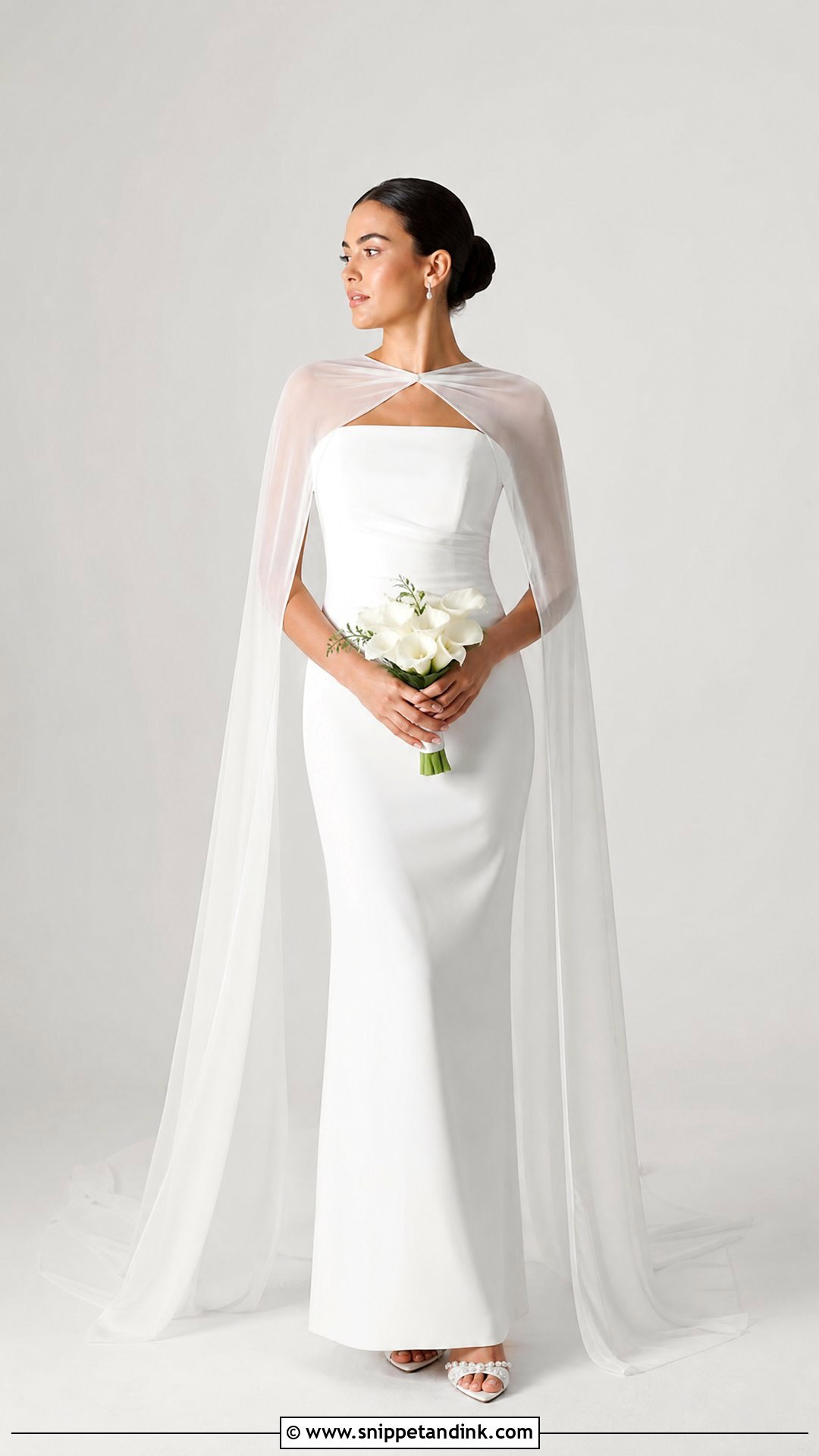
Cape veils fasten at the shoulders instead of the hair, so the fabric falls from the shoulder line and skims the back of the dress. Draw it sheer enough that the gown shows through, with the slight transparency doubling where the folds overlap. Pair it with a simple sheath, pearl heels, a sleek bun and minimal jewelry. A plain edge, a lace trim or a scatter of tiny pearls all work. It moves well outdoors, so give the hem a little lift.
10. 3D Floral Wedding Dress Art
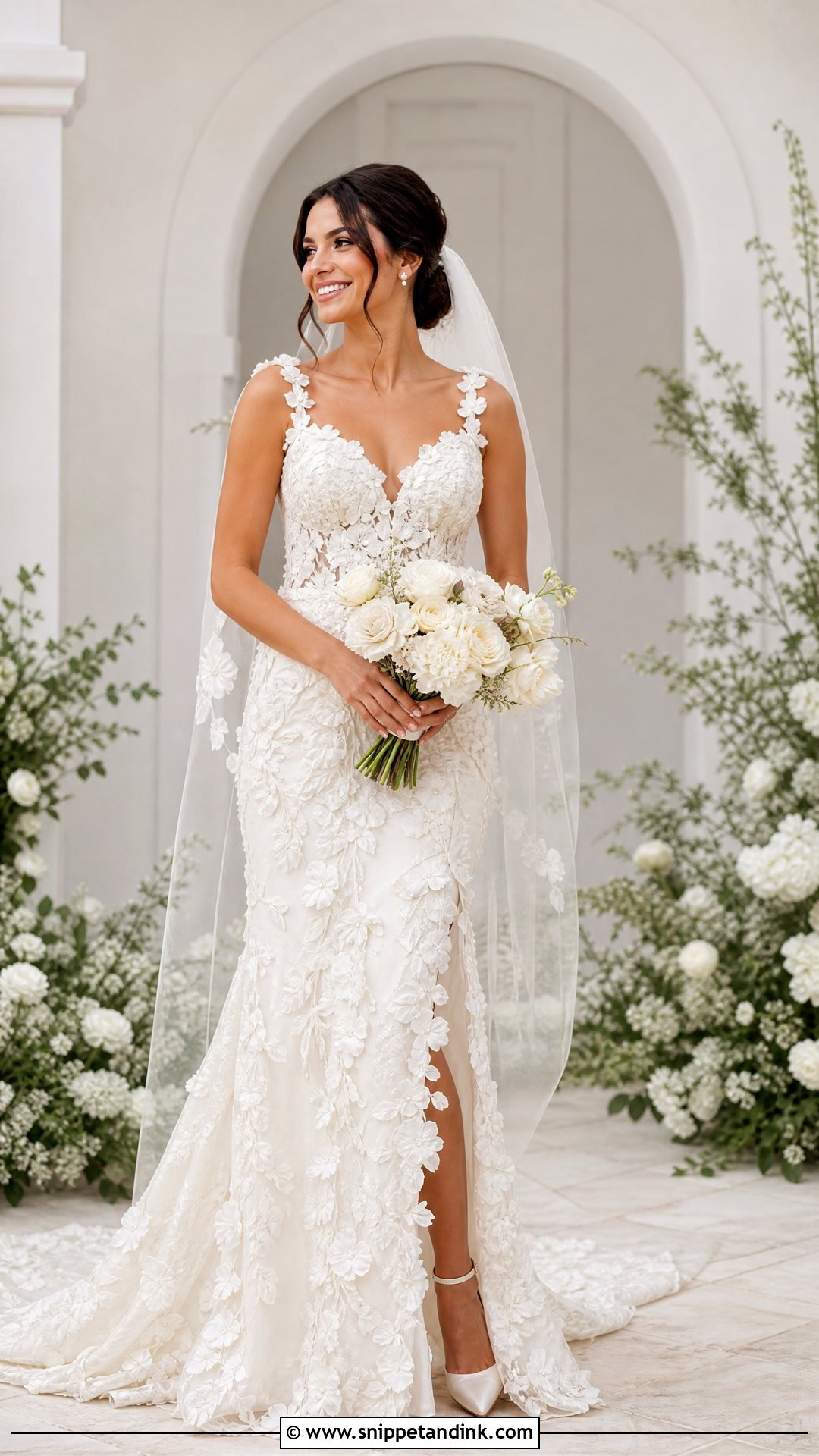
Raised fabric flowers only look three-dimensional if every petal casts a small shadow onto the dress below it. That is the whole trick. Draw them across the bodice, sleeves or skirt of a fitted or A-line gown, then pair with plain satin heels, a sheer veil, pearl studs and a bouquet quiet enough not to fight the dress. Close crops show the texture; a full-length view shows the design. I’d keep the palette to ivory, blush or soft champagne.
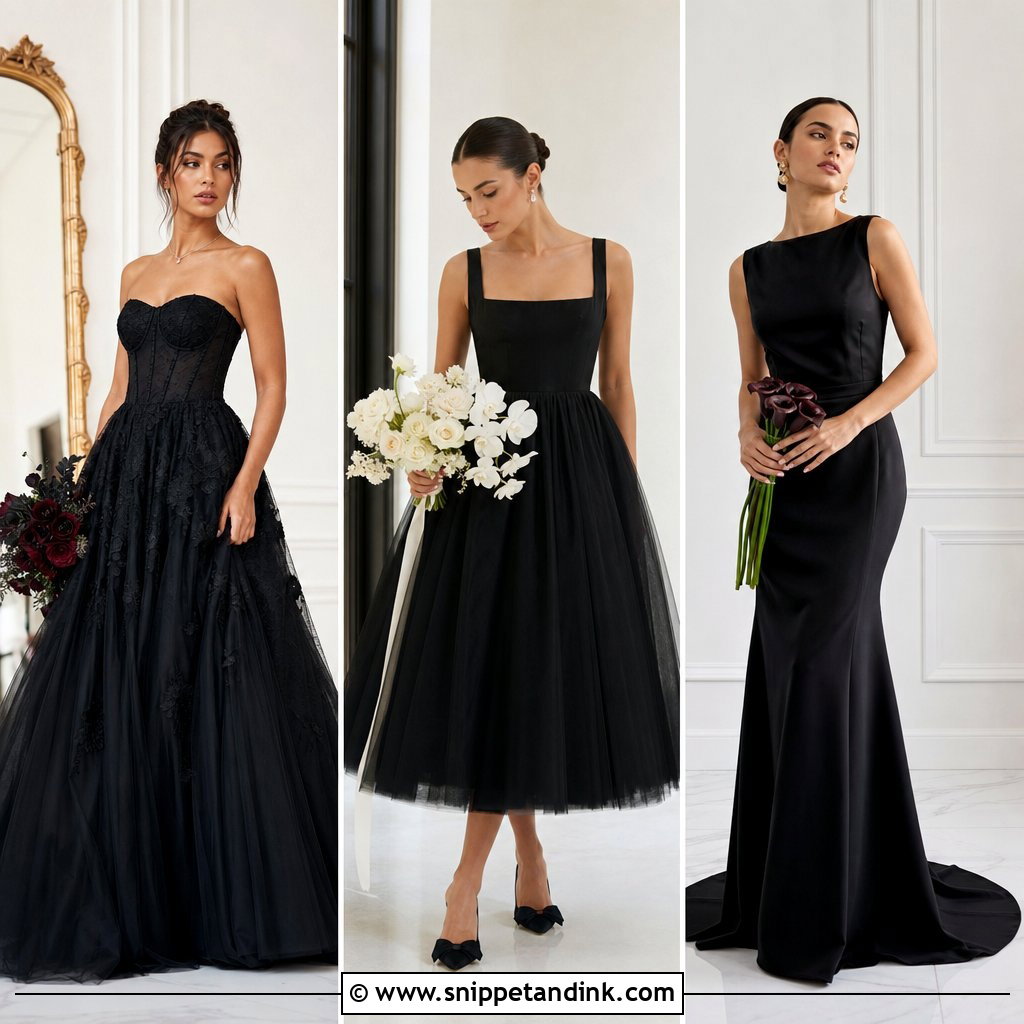
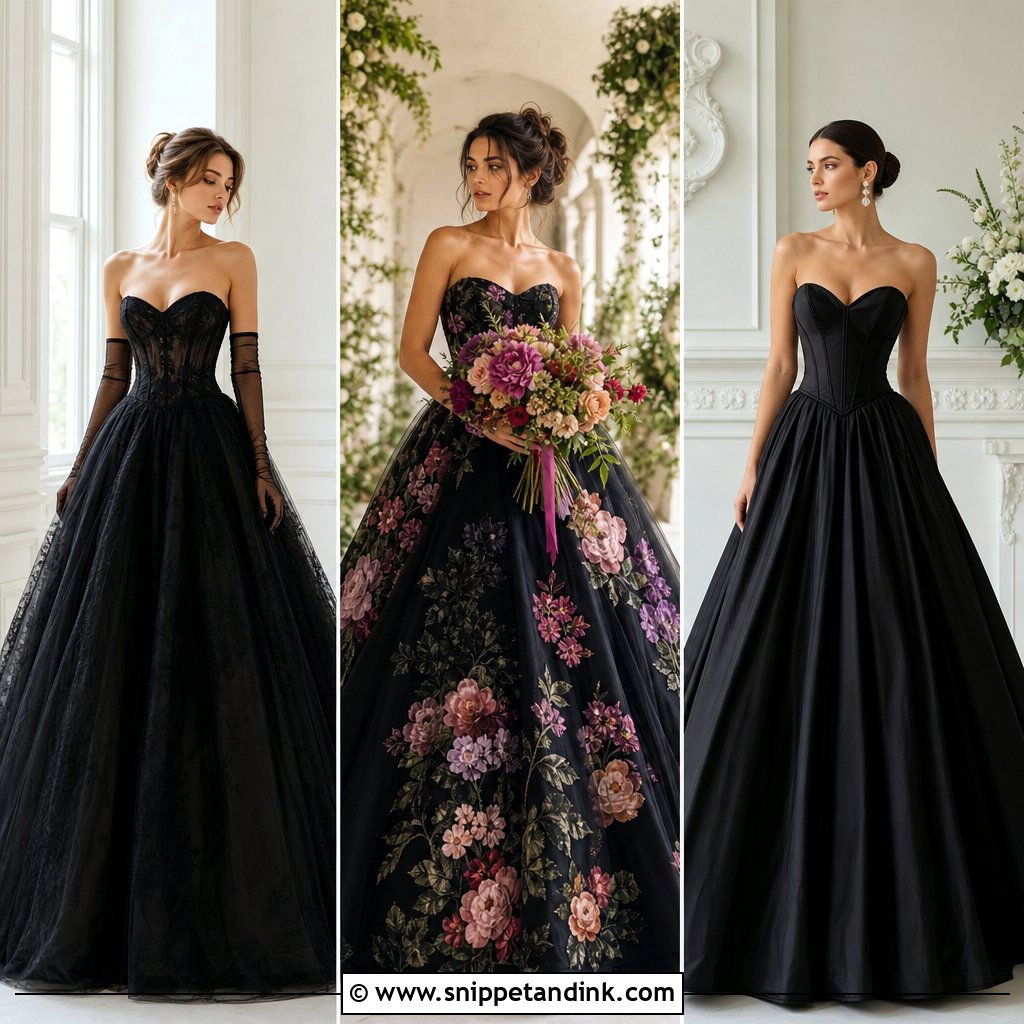
11. Black Wedding Dress Art
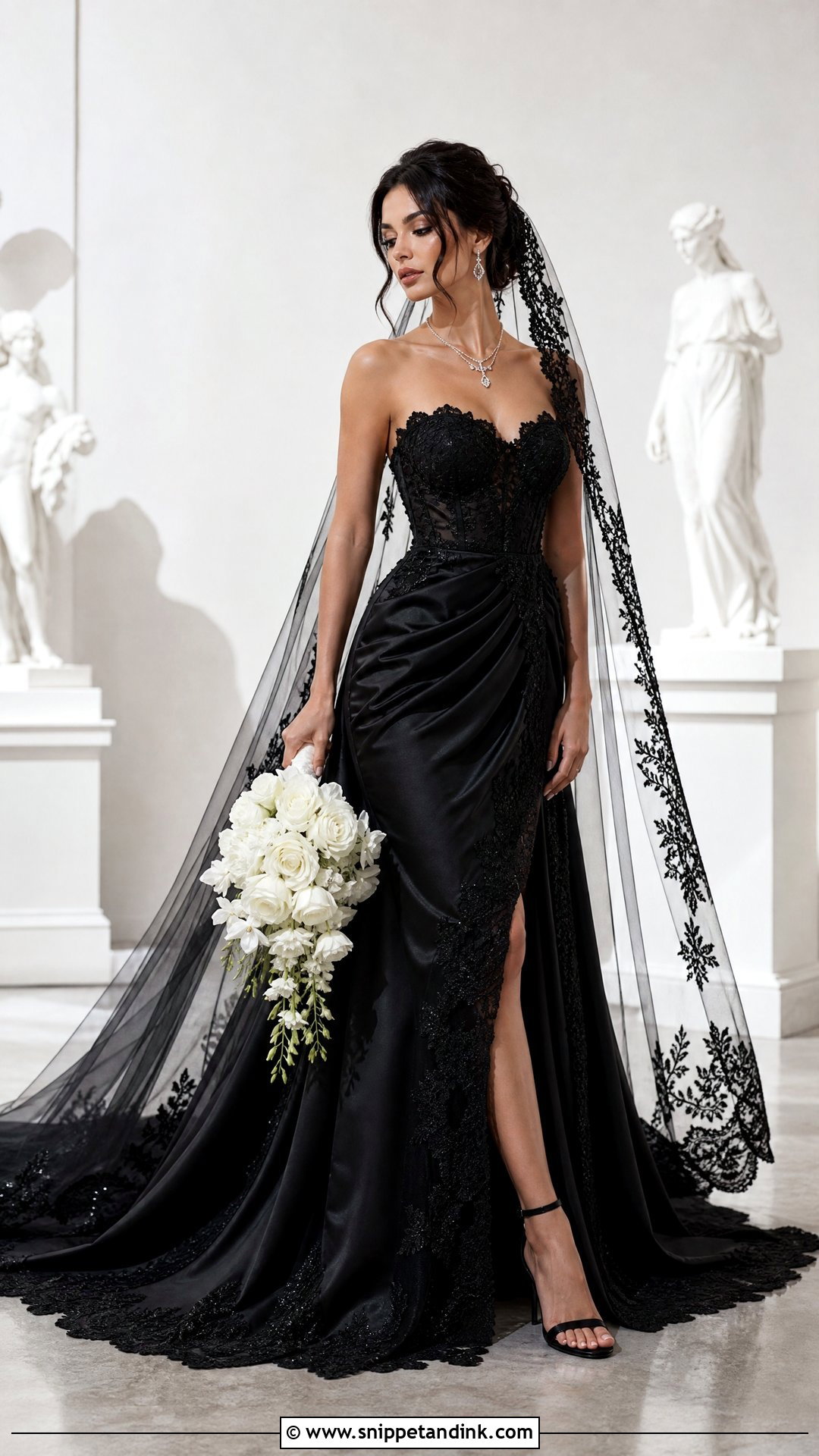
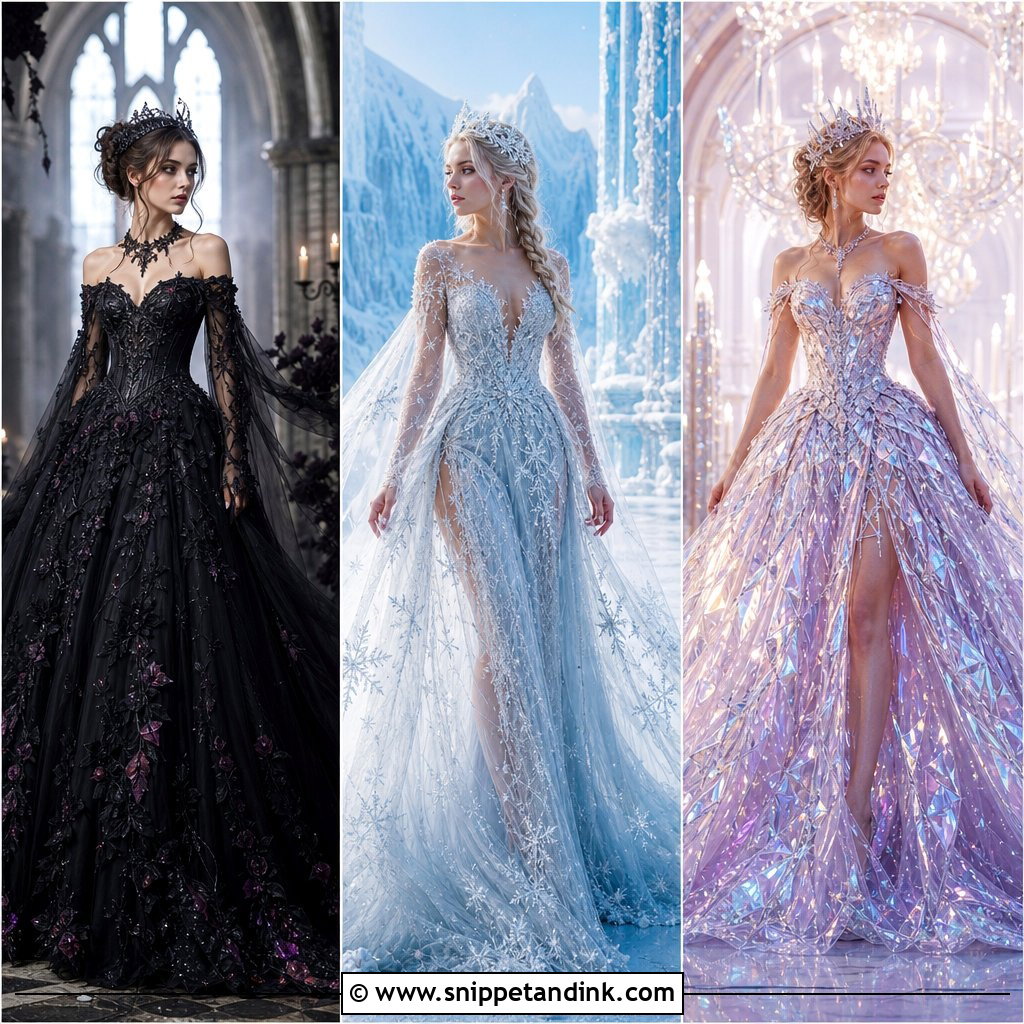
A black gown lives or dies on its silhouette, because detail disappears in dark fabric. Choose a strong shape, such as a mermaid, a corset bodice or a soft ball skirt, then style it with black heels, silver jewelry and a dramatic veil. White or deep red flowers give contrast. When painting, keep your highlights cool and narrow so the satin, tulle or lace still reads as texture. A bright, gallery-style backdrop stops the whole piece going heavy.
12. Blue Wedding Dress Art
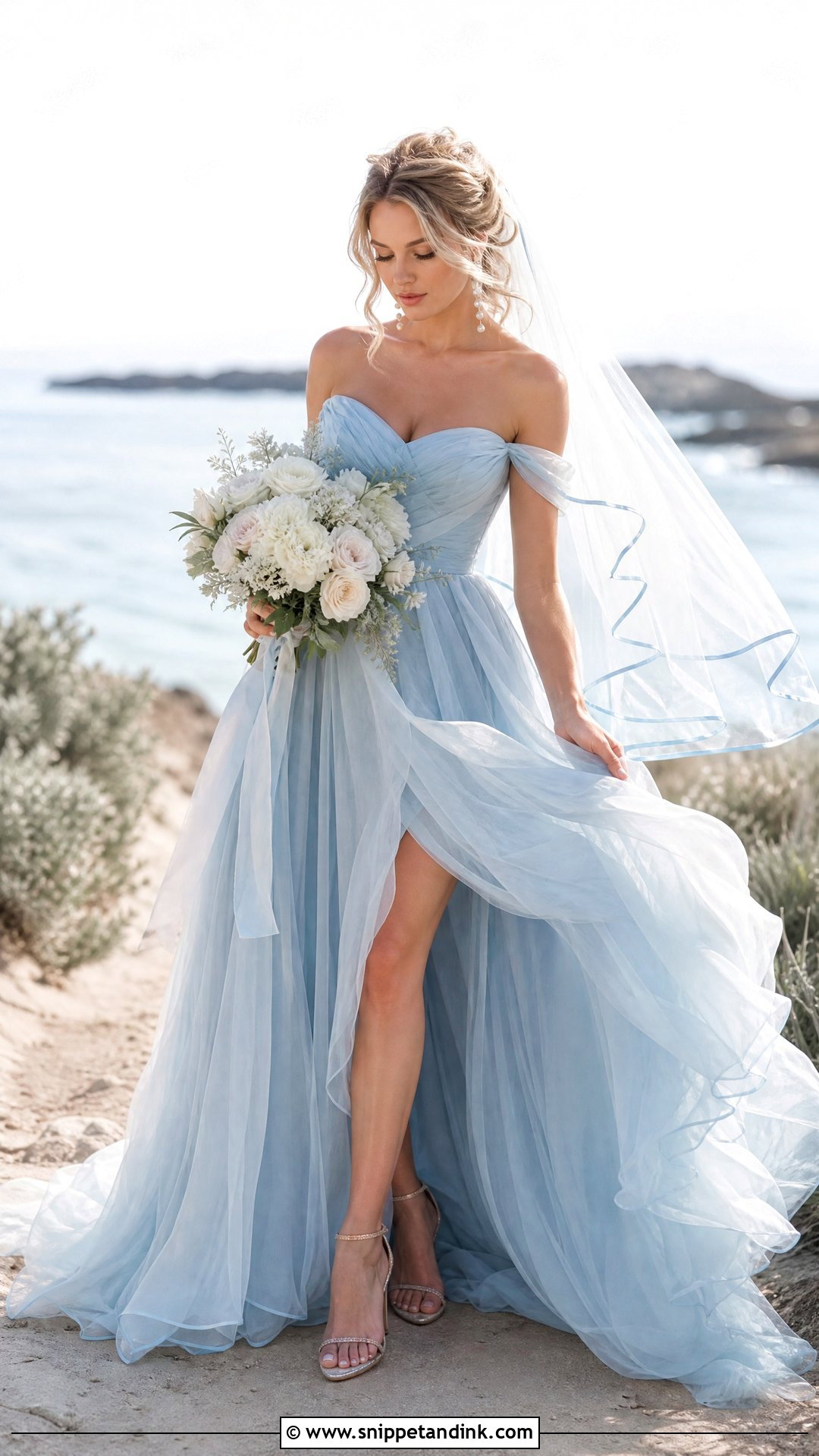
Powder blue and misty grey-blue are the shades I see brides actually wear; a saturated blue reads as a ball gown, not a wedding dress. Give the gown a flowing skirt and delicate bodice, then add silver heels, pearl earrings, a pale bouquet and a veil with a thin blue edge. Watercolor and gouache handle the airy color well. It suits a bride making her “something blue” the center of the look. A beach, garden or bright studio keeps it calm.
13. Champagne Wedding Dress Art
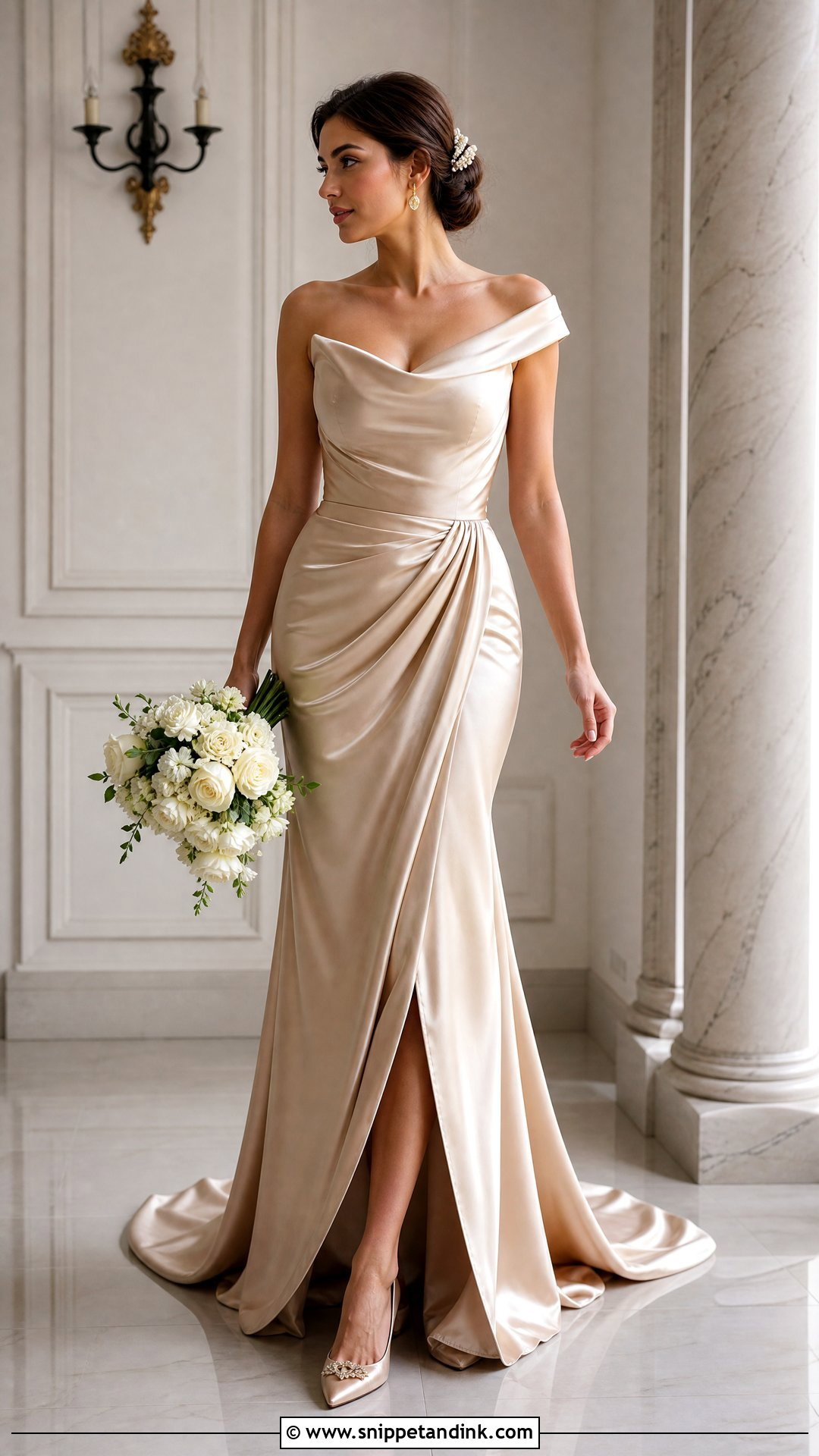
Champagne is the color I reach for most when ivory washes a bride out, and it does the same favor for artwork, giving the skin a warm glow. Paint the gown in soft beige, pale gold or creamy satin with a little shimmer. Nude heels, gold earrings, a pearl comb and an ivory bouquet sit naturally with it. The silhouette can be slim, draped or full. Watch the highlights: too bright and the satin turns metallic.
14. Vintage Tea Length Wedding Dress Art
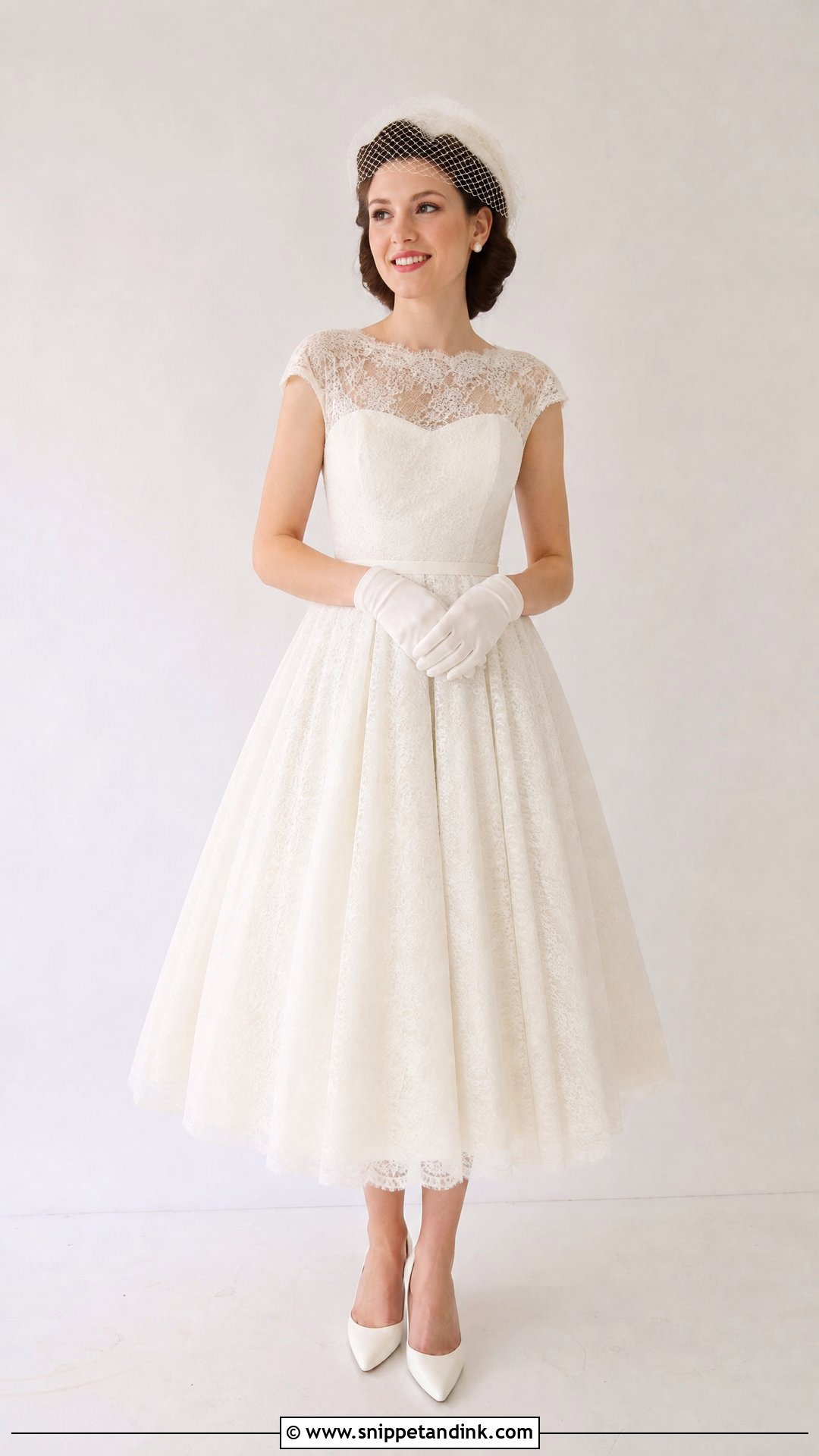
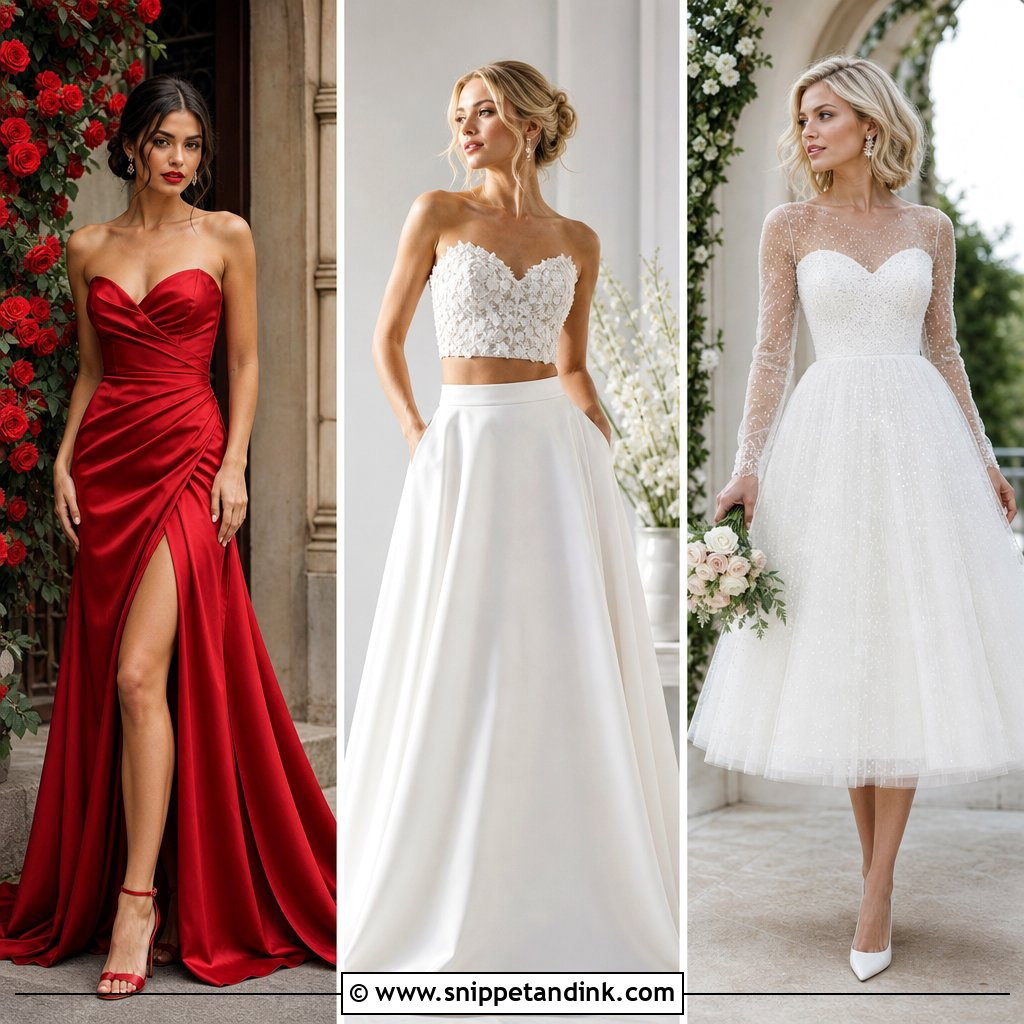
Tea length falls between the knee and the ankle, which means the shoes are on show all day and should be in the drawing. Sketch a fitted bodice and full skirt with a petticoat bounce, then add pointed pumps, short gloves, pearl earrings and a small veil or bow headband. It fits retro artwork, courthouse-inspired designs and playful mood boards. Ivory or cream on a plain background lets the 1950s shape speak.
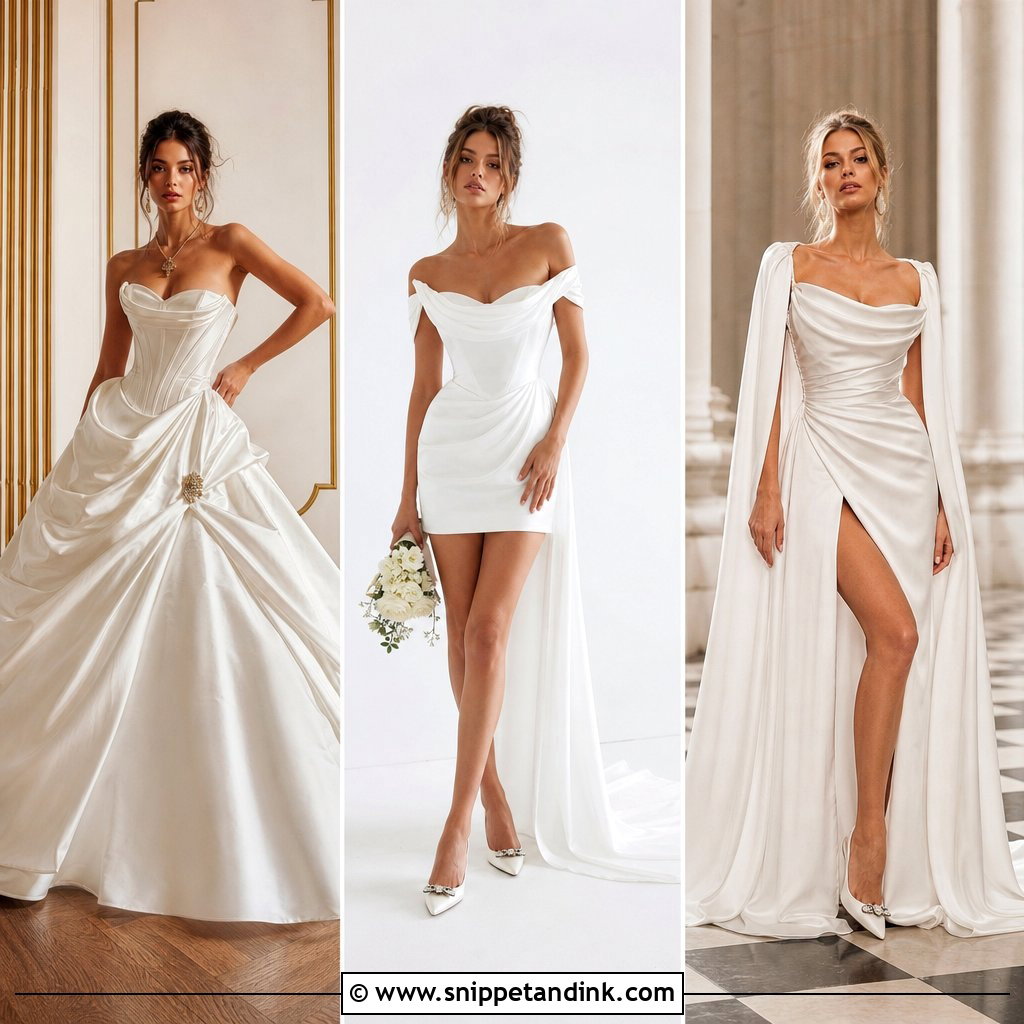
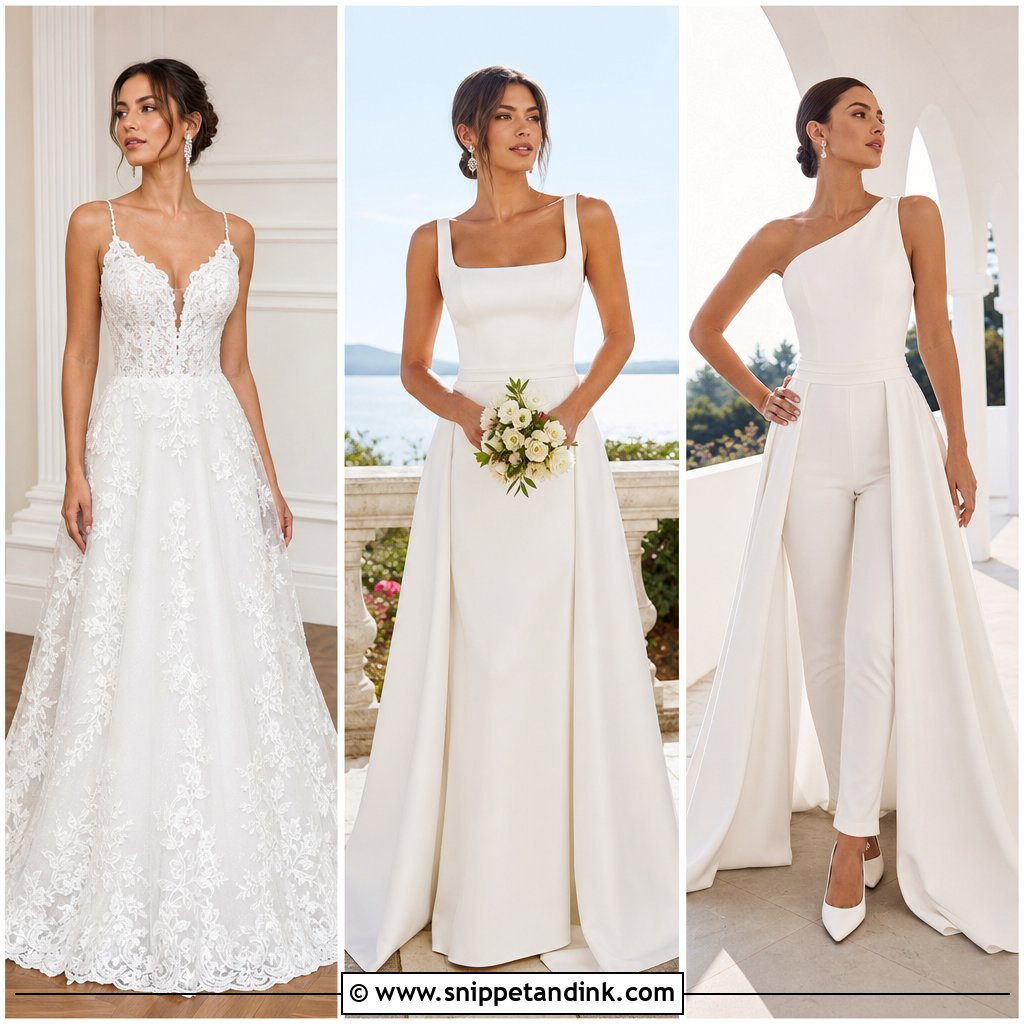
15. Wedding Dress Suit Art
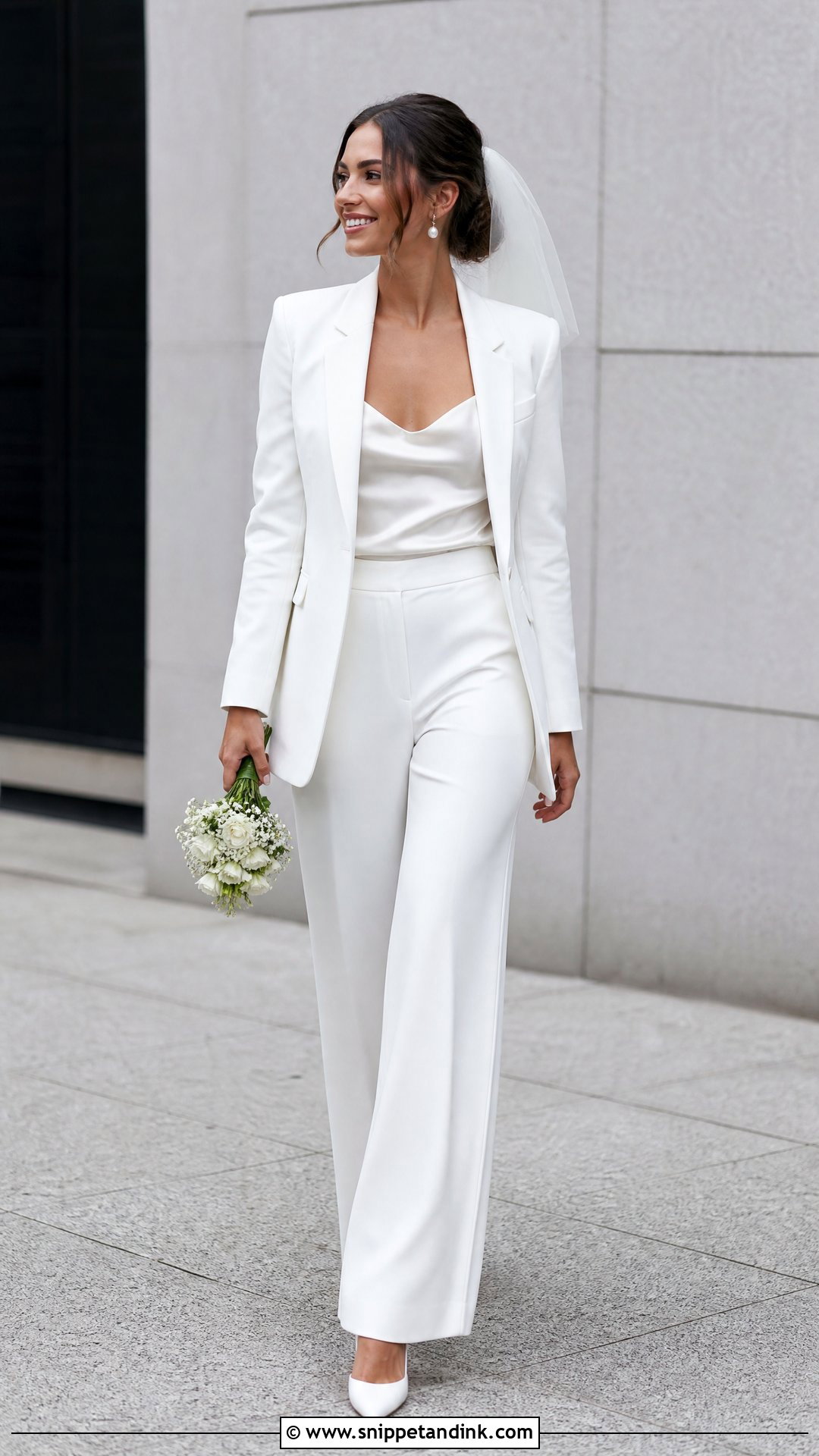
With a suit, the fit is everything. When I style a bridal suit, I check the shoulder seam first, because a blazer that is too big there looks borrowed no matter how good the fabric is. Draw a tailored white blazer with wide-leg trousers, a silk camisole or structured vest, pointed heels and a small bouquet. Pearl earrings, a sleek clutch and a short veil or hair bow make it bridal. Crepe and wool blends give crisp lines that illustrate well.
16. Bridal Jumpsuit Wedding Dress Art
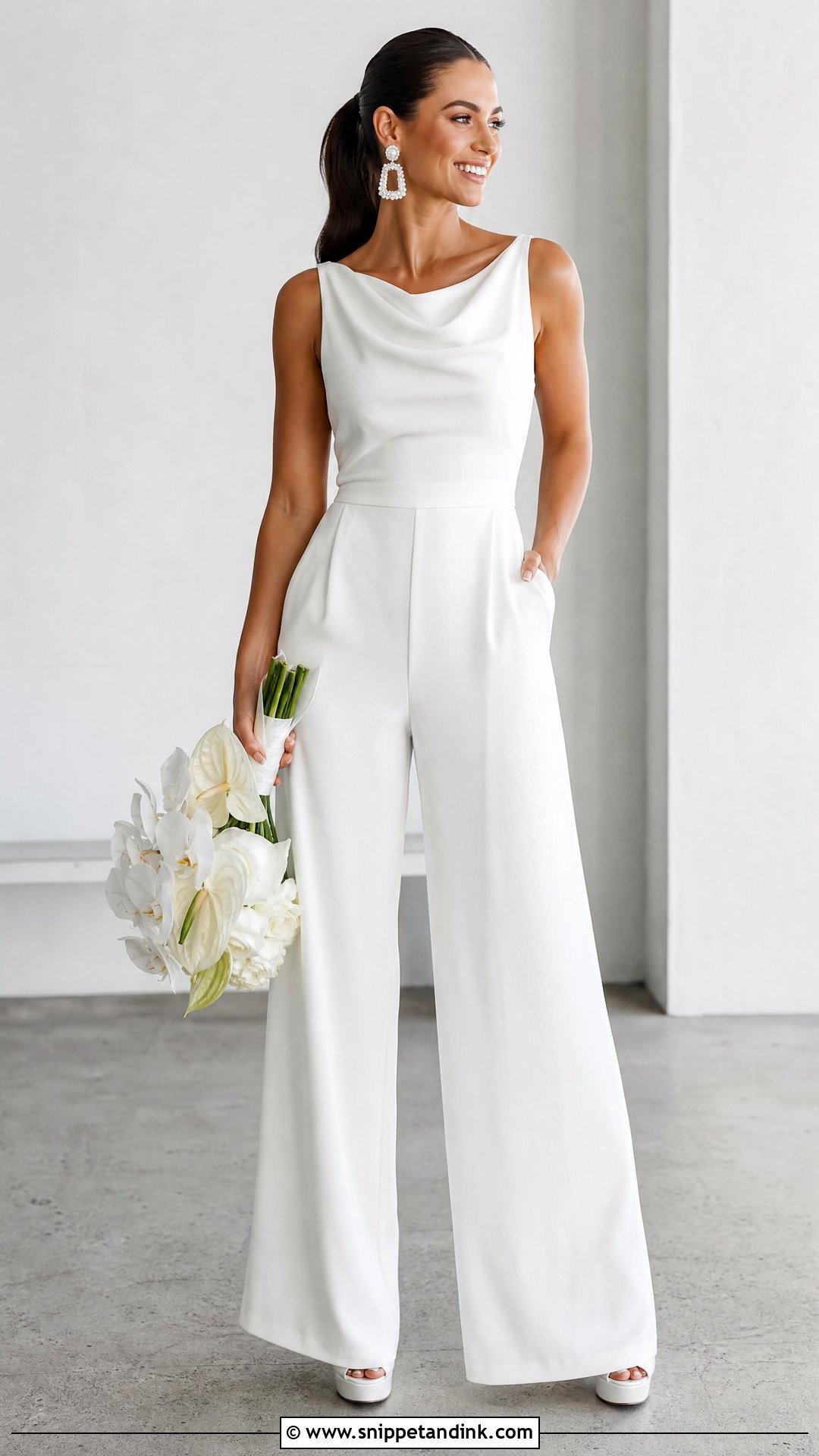
Jumpsuits look casual the moment the trouser leg is drawn too short or too narrow. Make the leg long and wide so it skims the top of the shoe, and give the bodice a fitted line, a draped neckline or cape sleeves. Platform heels, statement earrings, a sleek ponytail and a structured posy finish it. A detachable overskirt or cape adds drama for the reception. It suits civil ceremonies and modern mood boards.
17. Beach Wedding Dress Art
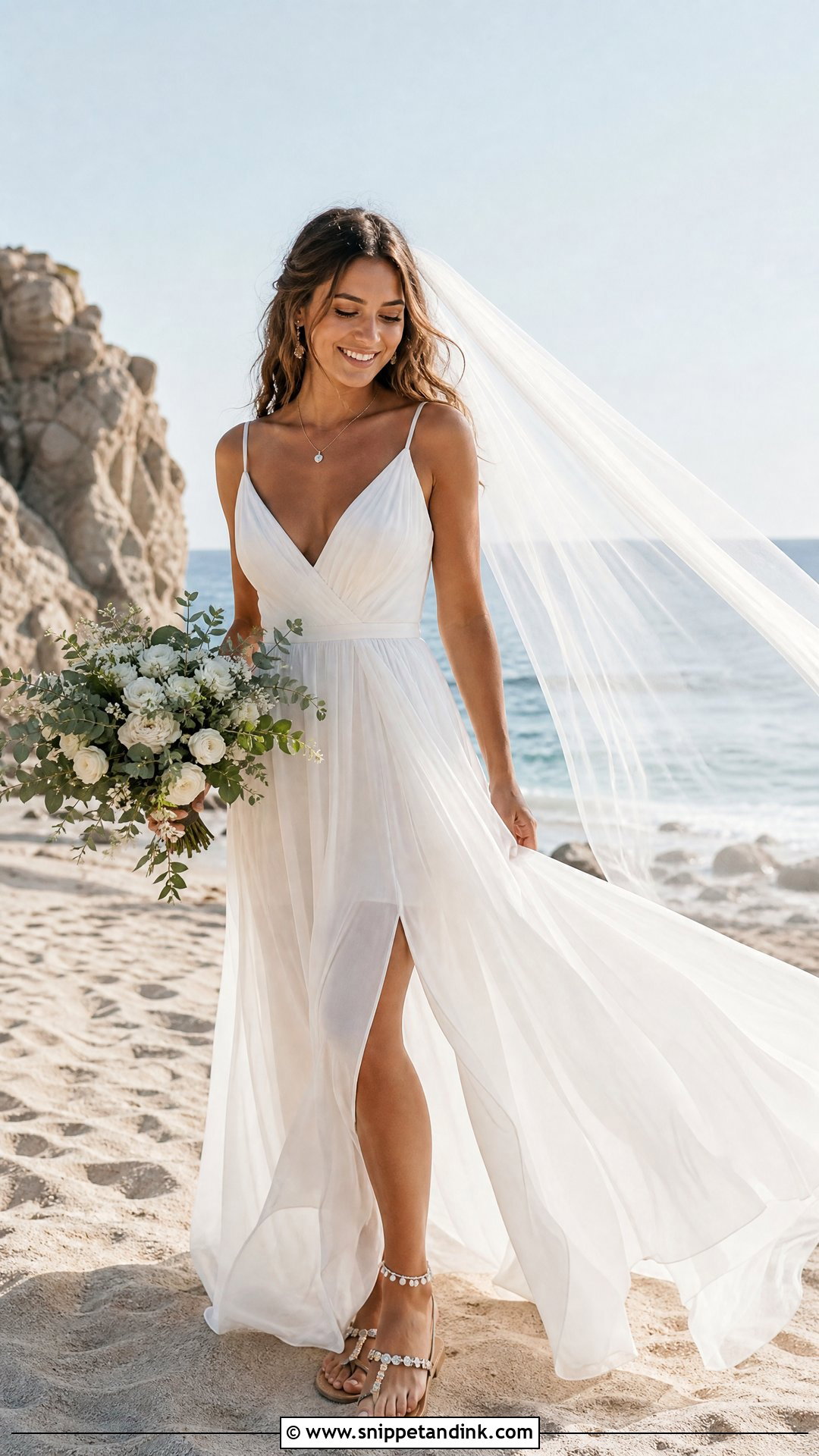
Real beach brides fight wind and sand, so a believable beach drawing shows that: veil and hem lifting, hair moving, no stiff train. Draw a chiffon or silk gown with slim straps, an open back and a light skirt. Flat sandals, pearl anklets, loose waves and a small white-and-green bouquet keep it honest. Heavy satin or a cathedral train would sink into sand in real life, so I leave them out here too. Pale sky and soft sea tones support the outfit.
18. Garden Wedding Dress Art
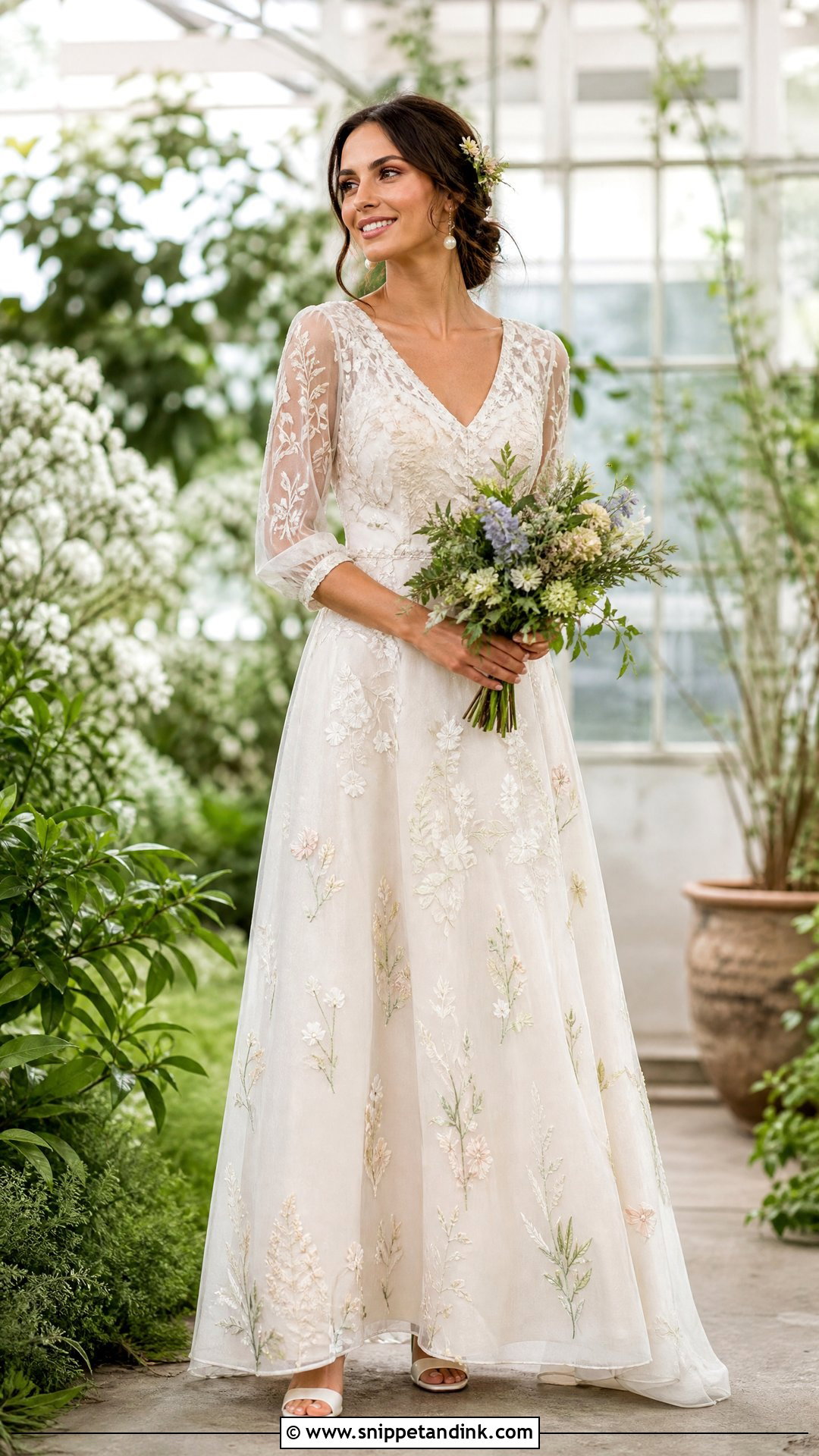
Garden gowns usually carry fine embroidery, sheer sleeves or tiny appliqué flowers, and the risk on paper is that the dress melts into the planting behind it. Keep the outline of the skirt crisp against the greenery. Pair the A-line gown with block heels (they don’t sink into lawns the way stilettos do), a floral hairpiece, pearl earrings and a loosely gathered bouquet. Soft greens and white flowers set the outdoor mood without going formal.
19. Modern Mini Wedding Dress Art
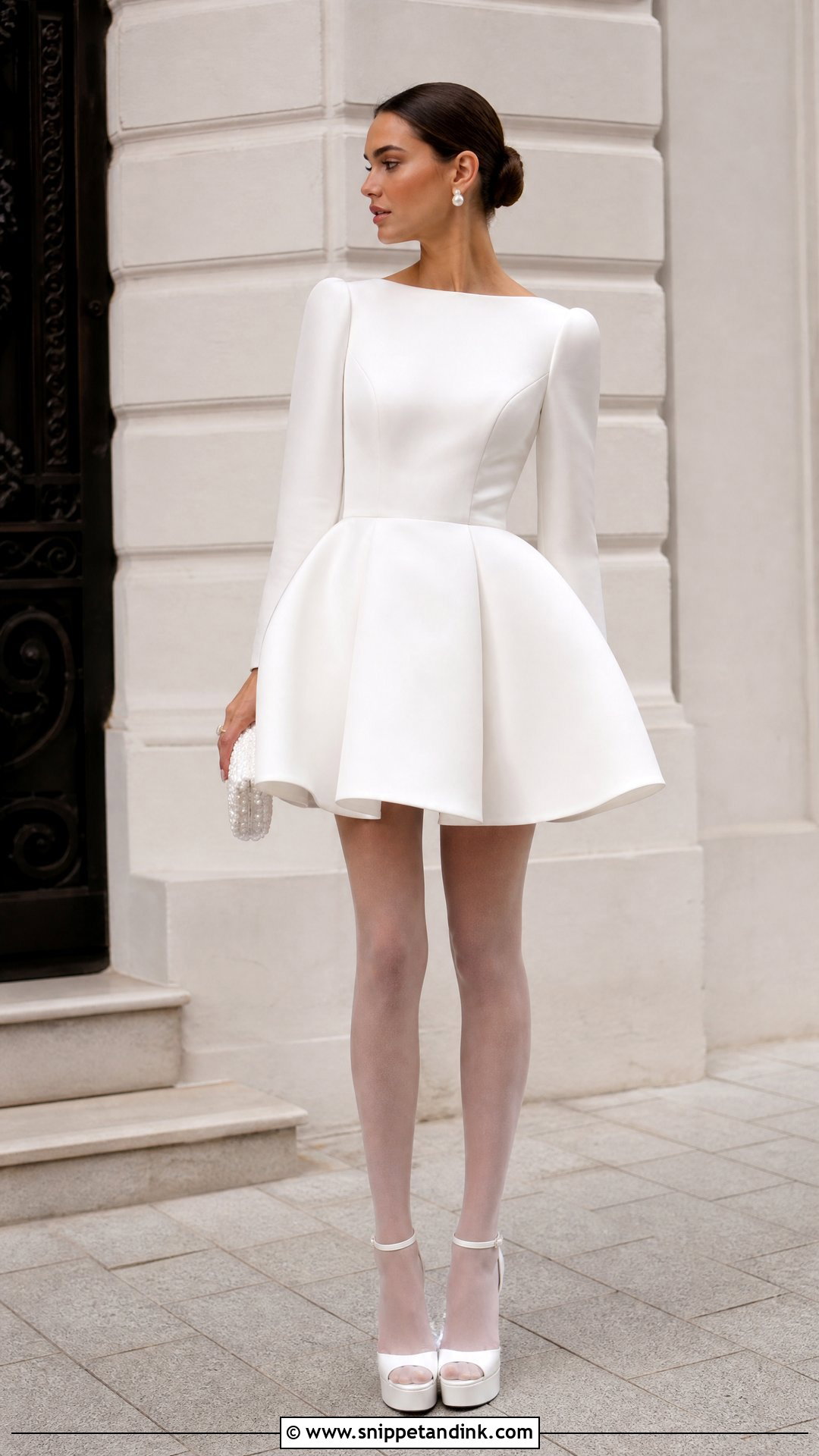
A short dress puts the legs and shoes into the composition, so treat them as part of the outfit, not an afterthought. Draw a structured white mini with long sleeves, a square neckline or a small bow. Sheer tights, pointed heels or platform sandals, pearl earrings and a small clutch finish it. Reception looks and city weddings suit it best. Keep the hem crisp; a wobbly hemline makes a mini look unfinished faster than any other length.
20. Overskirt Wedding Dress Art
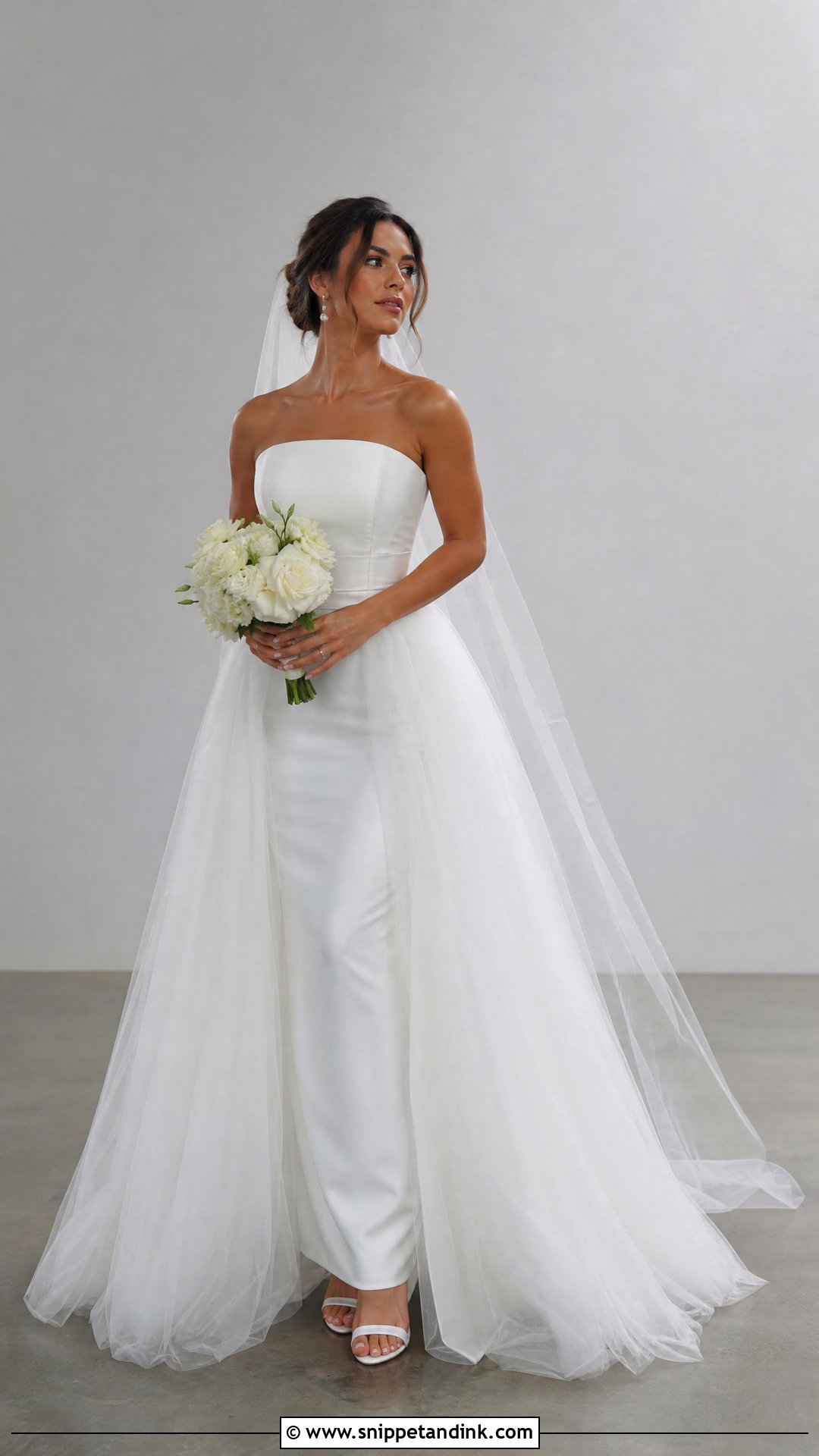
An overskirt gives two looks in one design, and that is exactly how I talk brides through them: ceremony volume, then a lighter dress for dancing. Start with a fitted column or slim lace dress, then add a removable full overskirt tied at the waist. Draw it slightly open at the front to show the slimmer layer beneath. Contrast the textures, crepe under tulle for example, so the layers stay readable. Satin heels, drop earrings, a veil and a polished bouquet complete it.
21. Pearl Wedding Dress Art
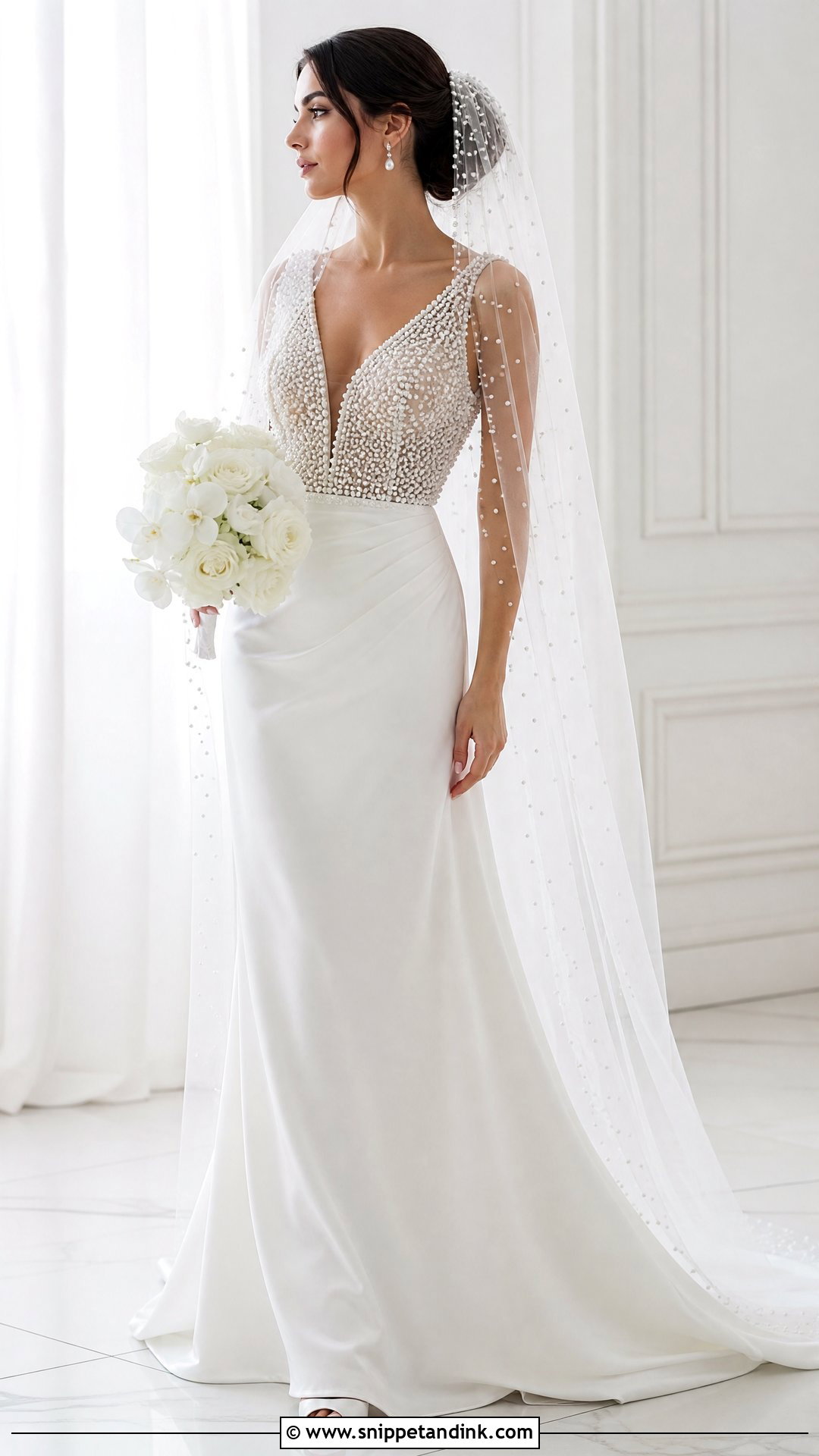
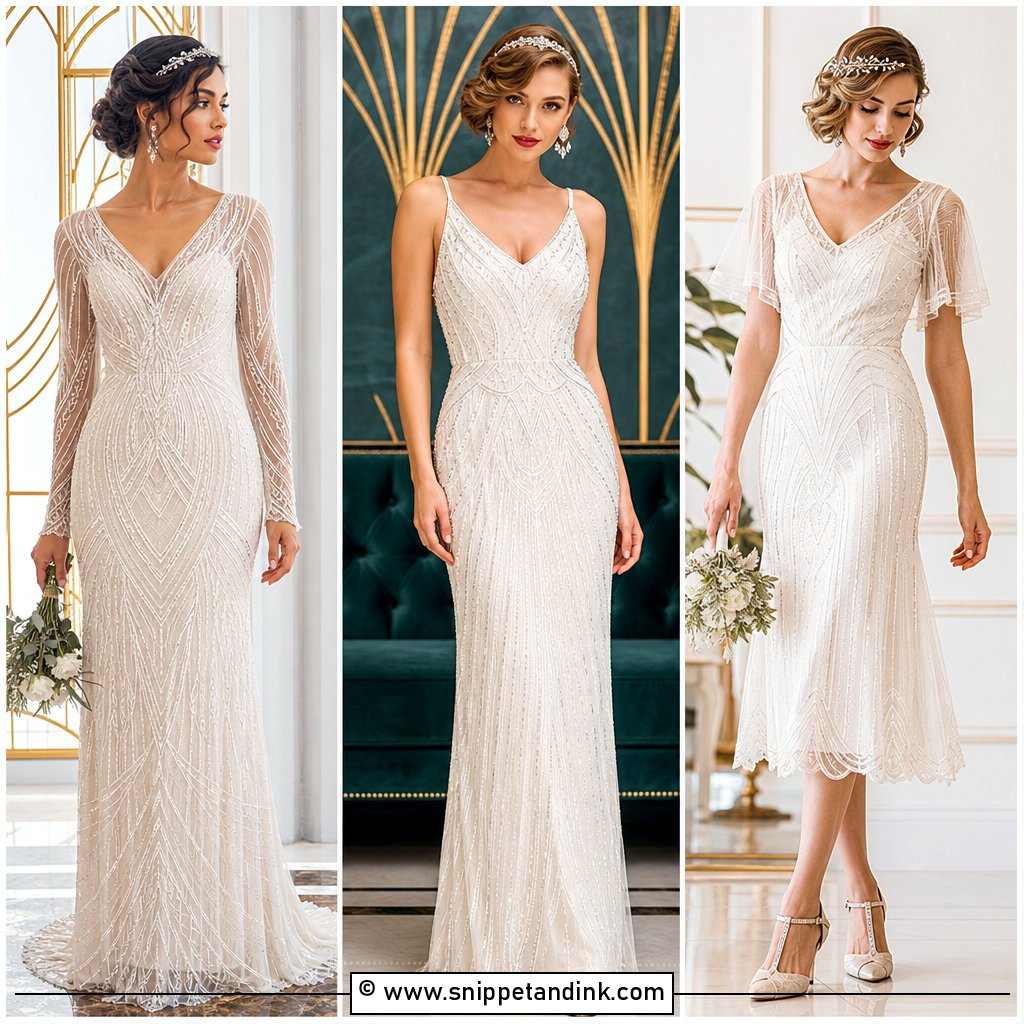
Restraint matters more with pearls than with any other trim. On real gowns, pearls are scattered and spaced so they catch light individually, and that is how they should be painted, each with its own tiny highlight. Place them on the bodice, sleeves, veil or skirt of a white gown, and pair with pearl earrings, satin heels, a soft bun and a clean bouquet. Sheer fabric is the best base because the pearls appear to float. Overload the dress and it reads as sequins.
22. Feather Trim Wedding Dress Art
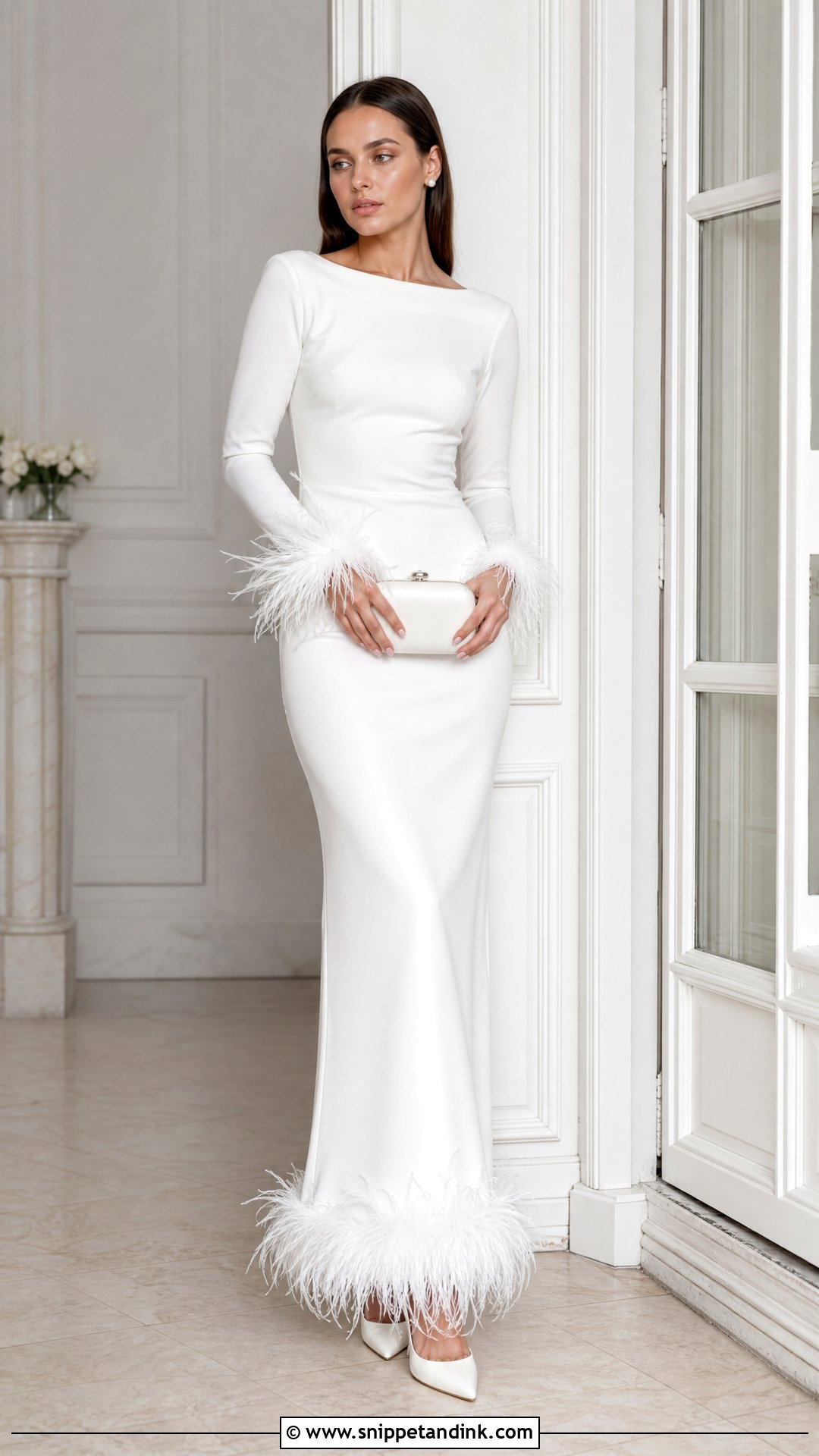
Feather trim moves every time the bride does, so draw it with fine directional strokes rather than a solid fluffy outline. Put it at the cuffs, hem or neckline of a sleek column or short reception dress, then add pointed heels, pearl studs, a neat clutch and smooth hair. It fits editorial bridal sketches and reception outfit art especially well. A white or pale grey background lets the trim stand out. Keep the feathers airy; bulky trim looks like a costume boa.
23. Ruffle Wedding Dress Art
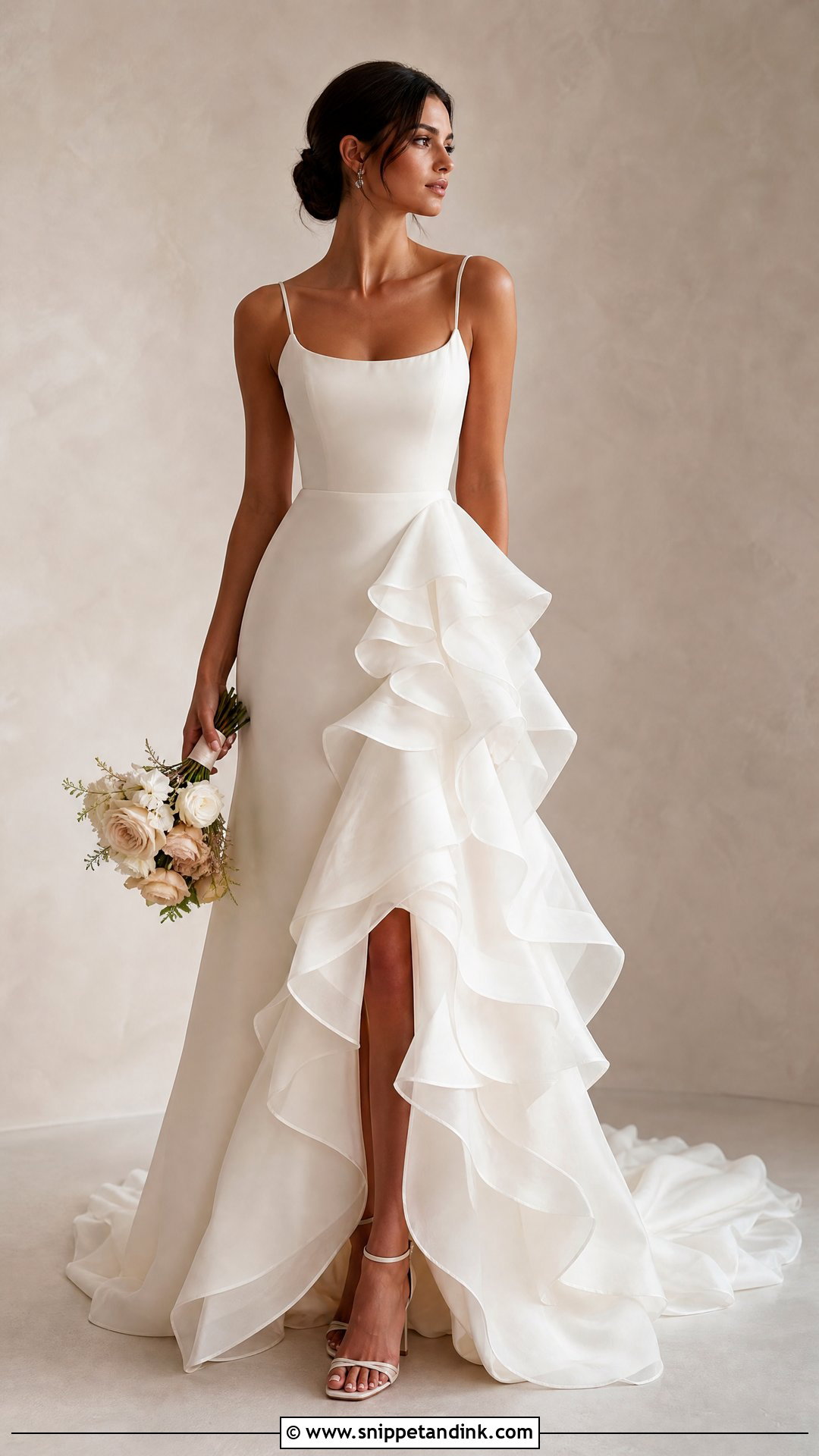
Ruffles can turn busy quickly. I always tell brides to pick one direction for them, and the same rule makes a drawing work: cascades down the skirt, along one shoulder or across the train, not all three. Balance them with a simple bodice, strappy heels, small earrings, a smooth updo and a minimal bouquet. Shadow sits between each layer to show depth. A full-body view lets the skirt flow across the page in ivory, blush or soft cream.
24. Hand Painted Wedding Dress Art
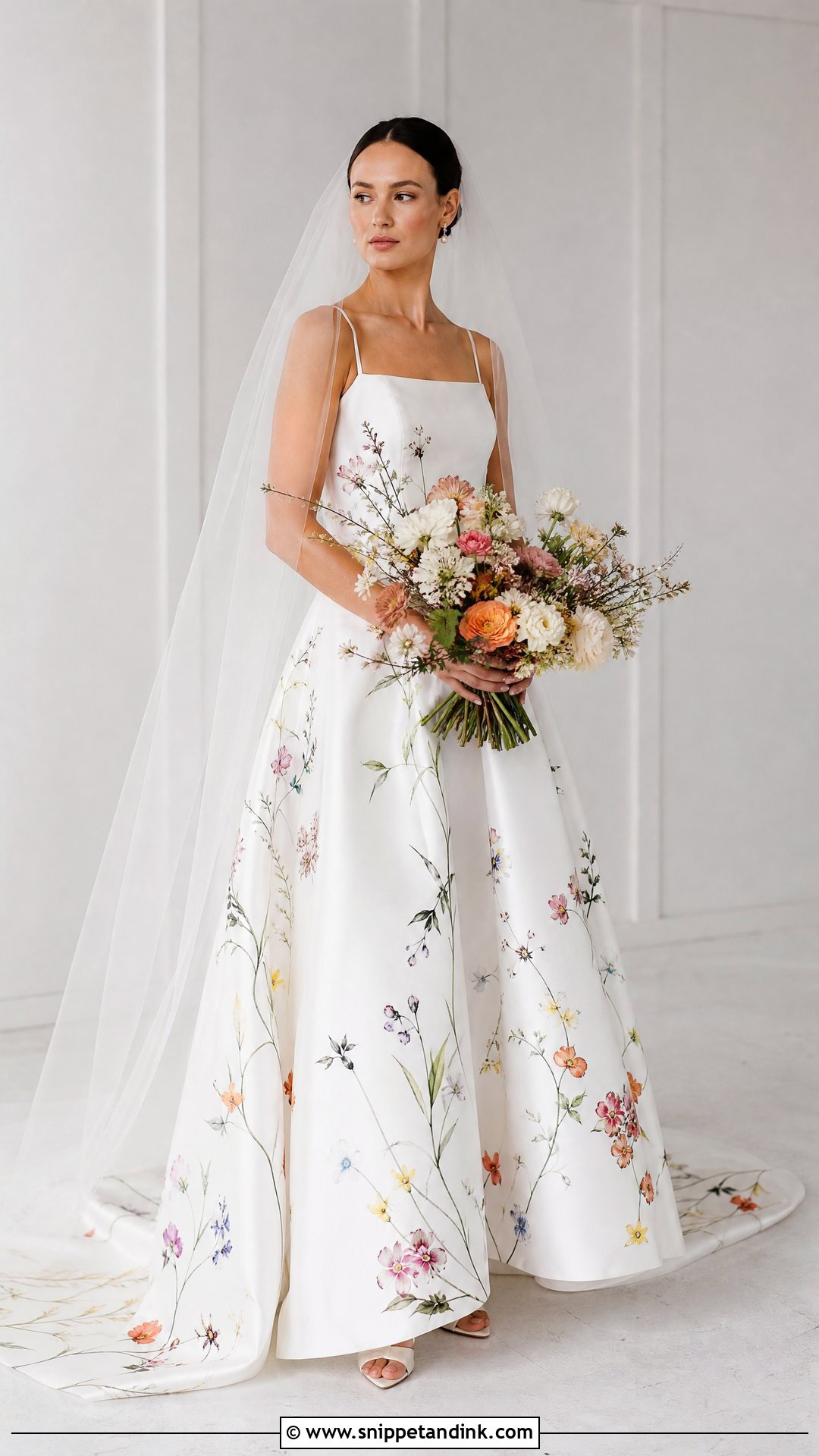
Hand painting turns a plain white gown into something personal: flowers, vines, stars or symbols that mean something to the couple. Paint the base gown simply, then let the design travel across the skirt and train, and show a turned angle so the train is visible. Match the bouquet to the painted colors and keep heels, veil and earrings quiet. On real gowns, the painting is usually concentrated low on the skirt where it photographs in full-length shots, and placing it there keeps the artwork from feeling crowded.
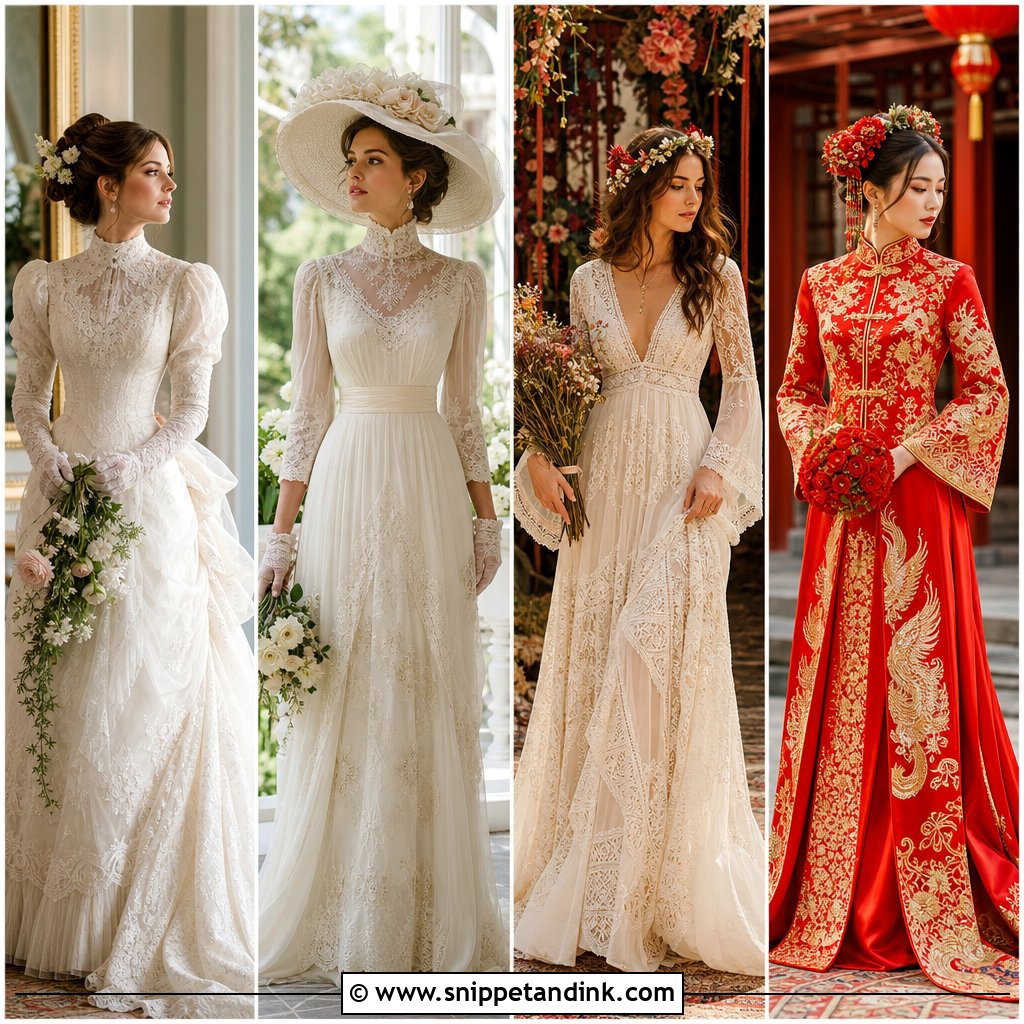
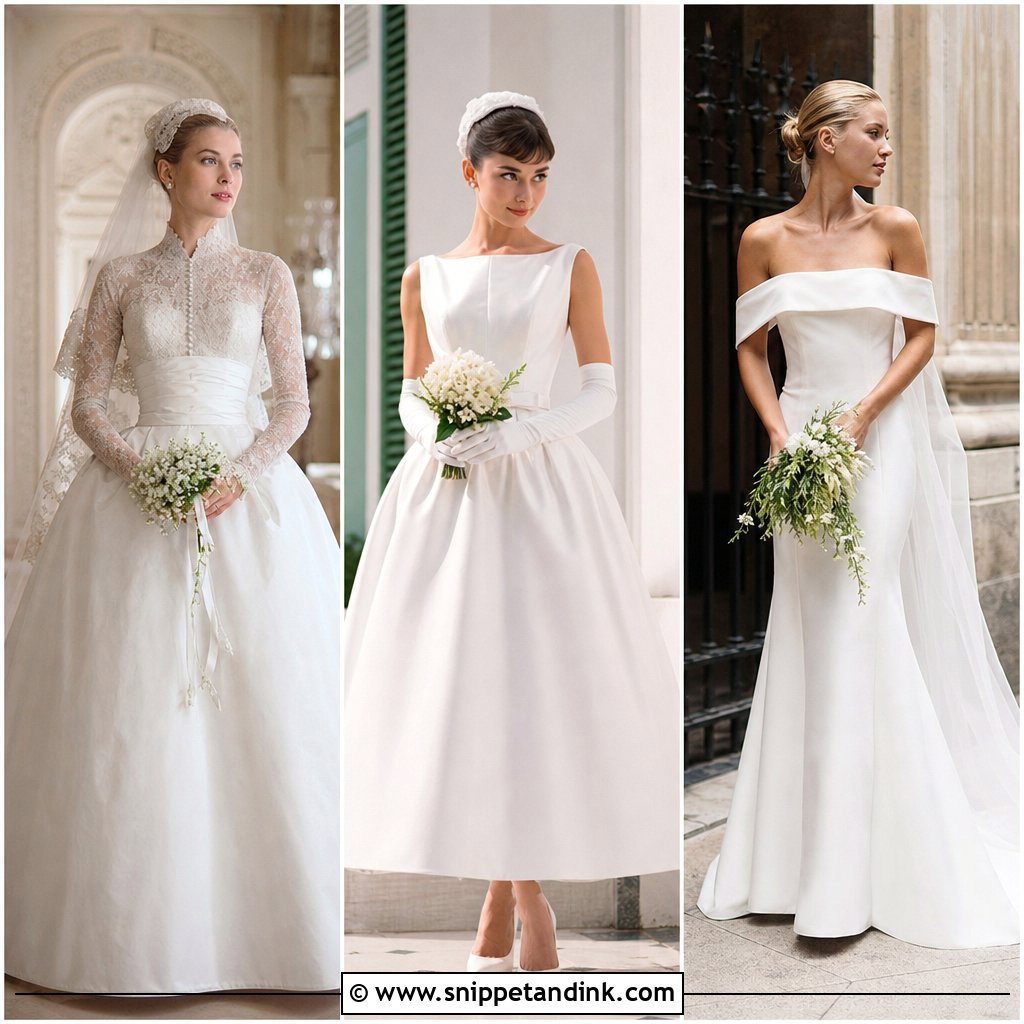
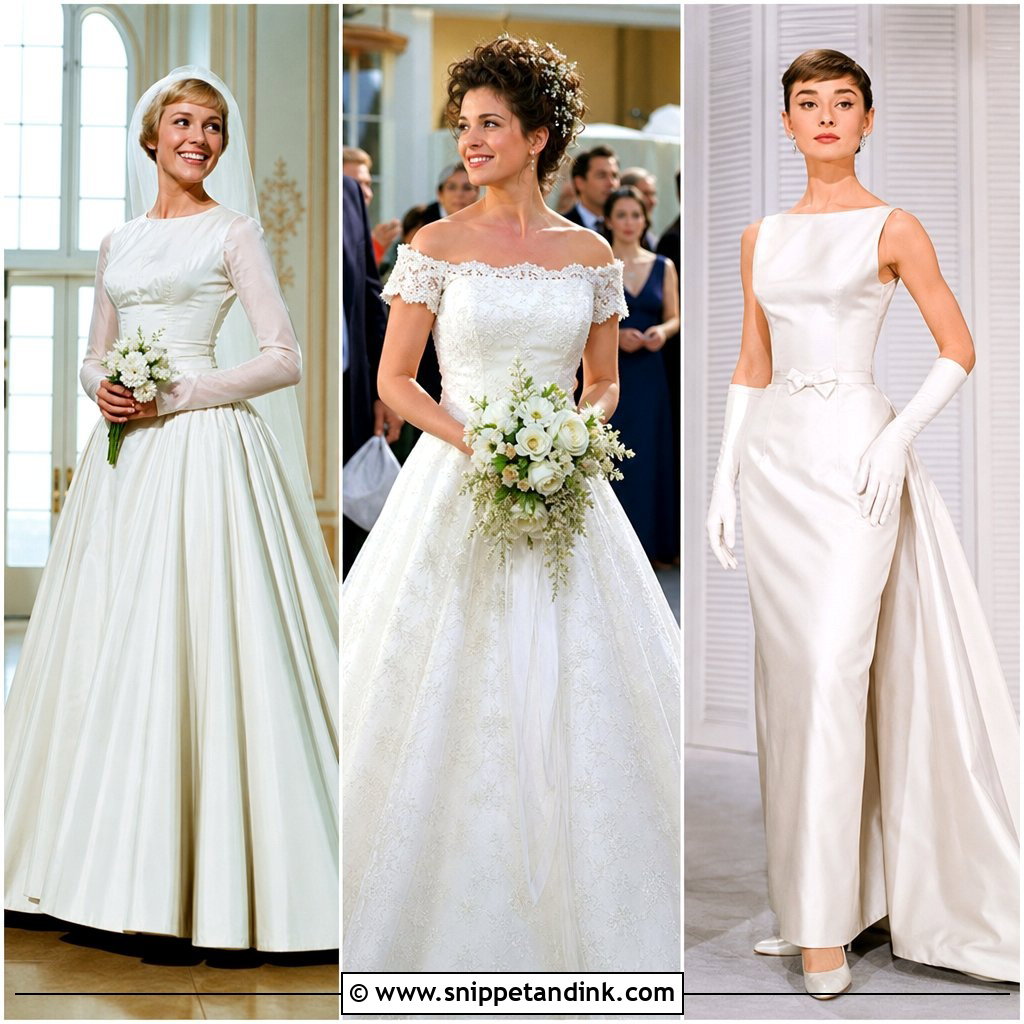
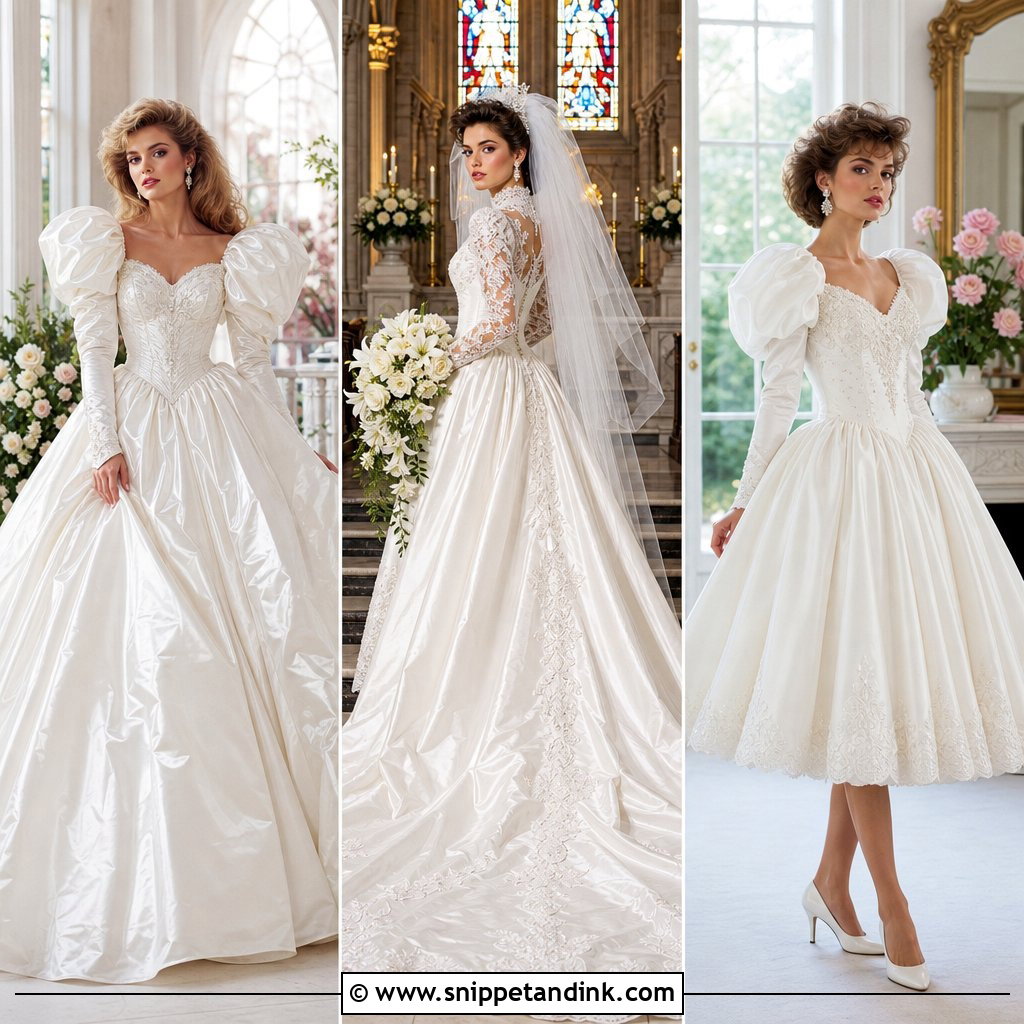
25. Celestial Wedding Dress Art
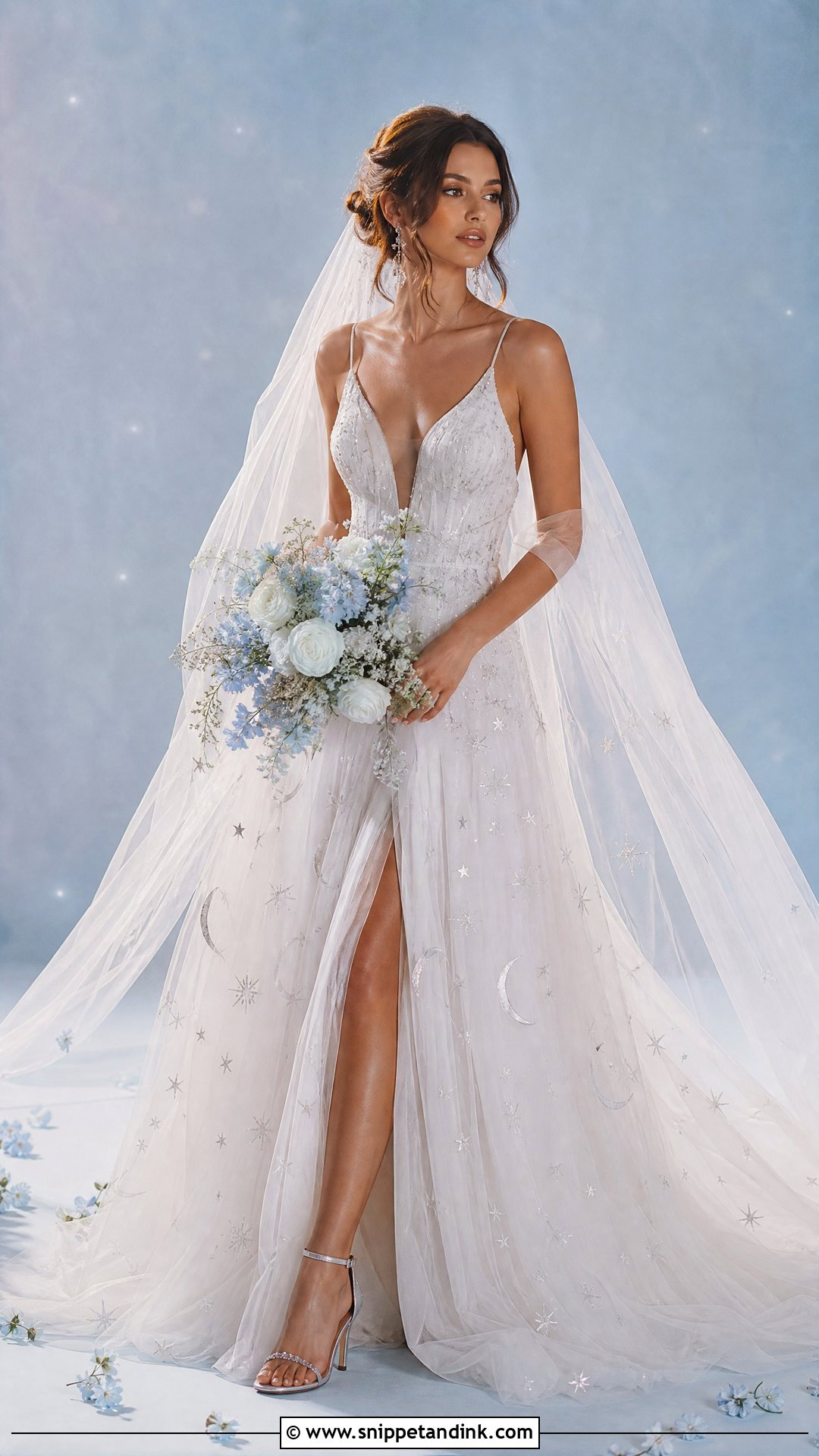
Celestial embroidery uses tiny stars, moons and metallic thread scattered over the bodice and skirt, and the challenge is keeping it refined. Silver heels, crystal earrings, a sheer veil and a white and pale blue bouquet support it. I’d keep the shimmer to small points of light rather than a glittery wash. A soft blue or bright studio background brings the details forward. It fits fantasy-inspired bridal art, book character designs and dreamy mood boards.
Commissioning a Portrait of Your Own Gown
Many brides want their actual dress painted, for a keepsake after the wedding or a gift on the morning itself. The artist can only draw what they can see, so the brief matters more than people expect.
What to send the artist
- Full-length photos from the front, side and back, taken in daylight. Fitting-room lighting is often warm and turns ivory yellow.
- Close-ups of the lace, beading or embroidery, so the pattern is copied rather than guessed.
- The true color name from your bridal shop (ivory, champagne, nude lining), since photos rarely show it accurately.
- Photos of the veil, shoes and jewelry you’ll actually wear, plus your bouquet flowers if they are decided.
Timing it around alterations
If the painting is meant as a gift before the wedding, ask for photos at your final fitting rather than the first. The hem, bustle and bodice usually change through alterations, and I’ve seen a dress look quite different between first and last appointments. Most illustrators need several weeks for a detailed commission, so check their turnaround before you book the slot.
After the wedding, a professional photo of you in the gown is the best reference of all, because it shows how the dress sat on you once it was fully fitted.
Start the Sketch With the Silhouette, Then Dress Her
Every look above is really a styling decision made before the first line goes down: gown shape, then veil, shoes, jewelry, bouquet, hair and setting. Minimal satin, watercolor florals, corset structure, a tea-length skirt or star embroidery can all anchor a strong board. Treat these as starting points, then change the color, fabric and details until the drawing looks like one particular bride rather than any bride.
You'll Like These Ideas:





Leave a Reply