
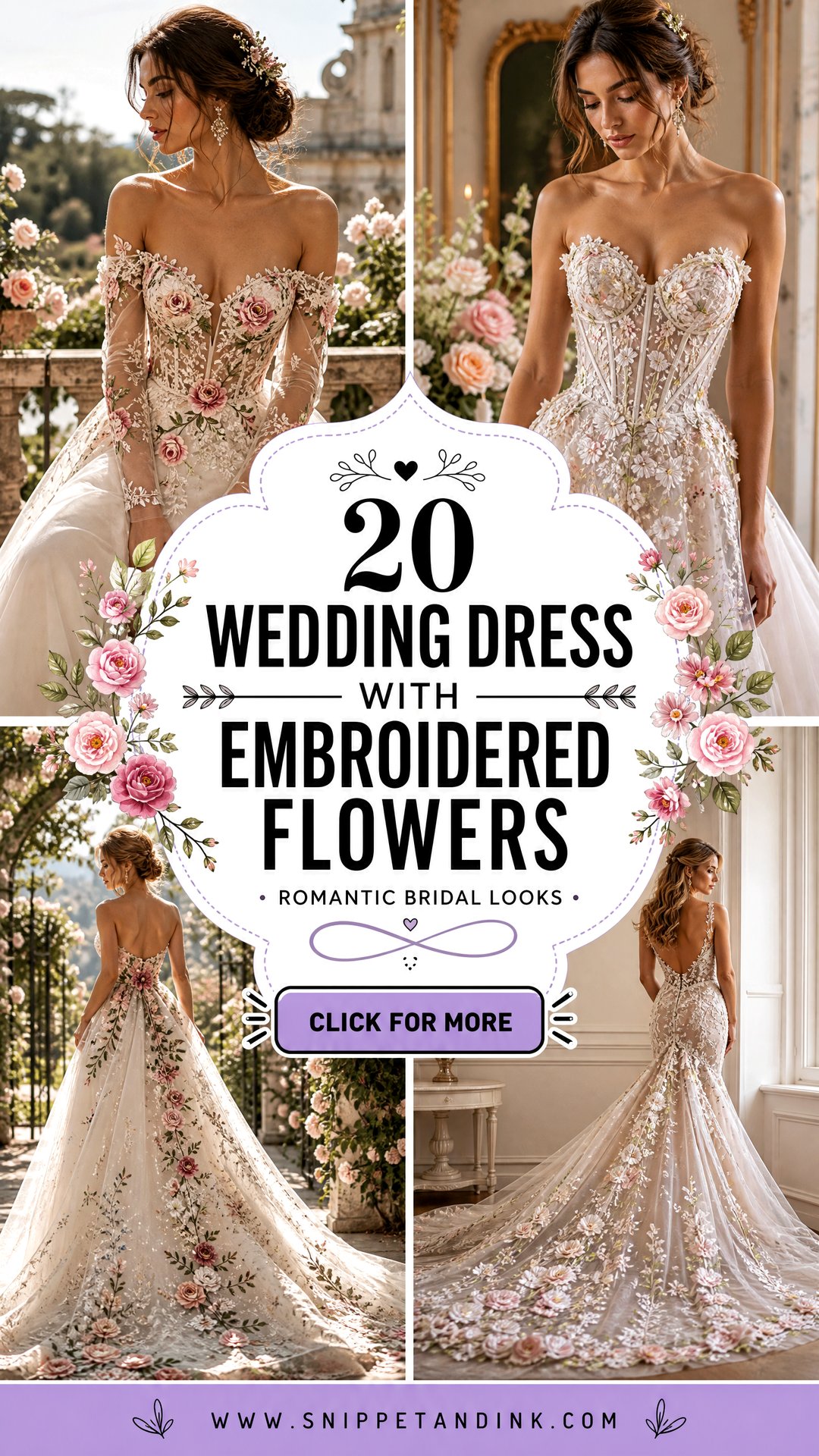
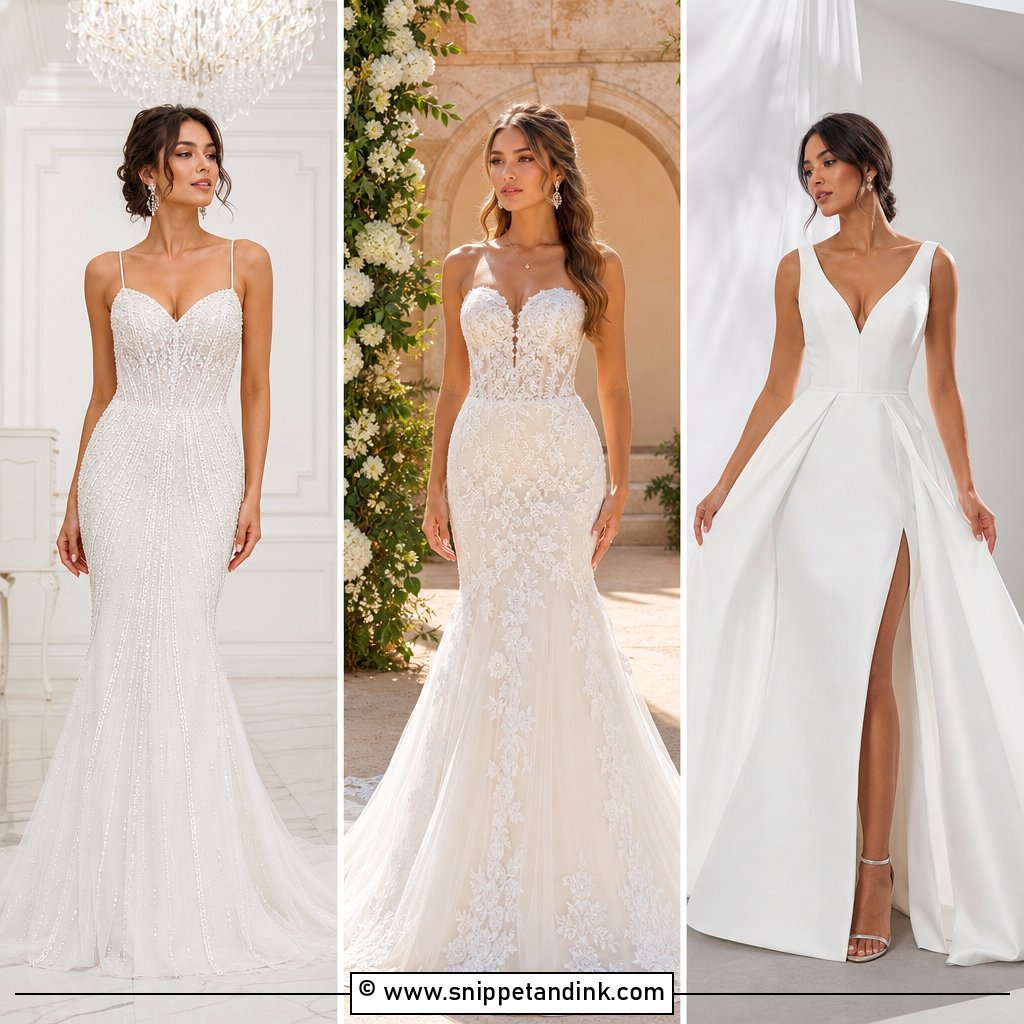
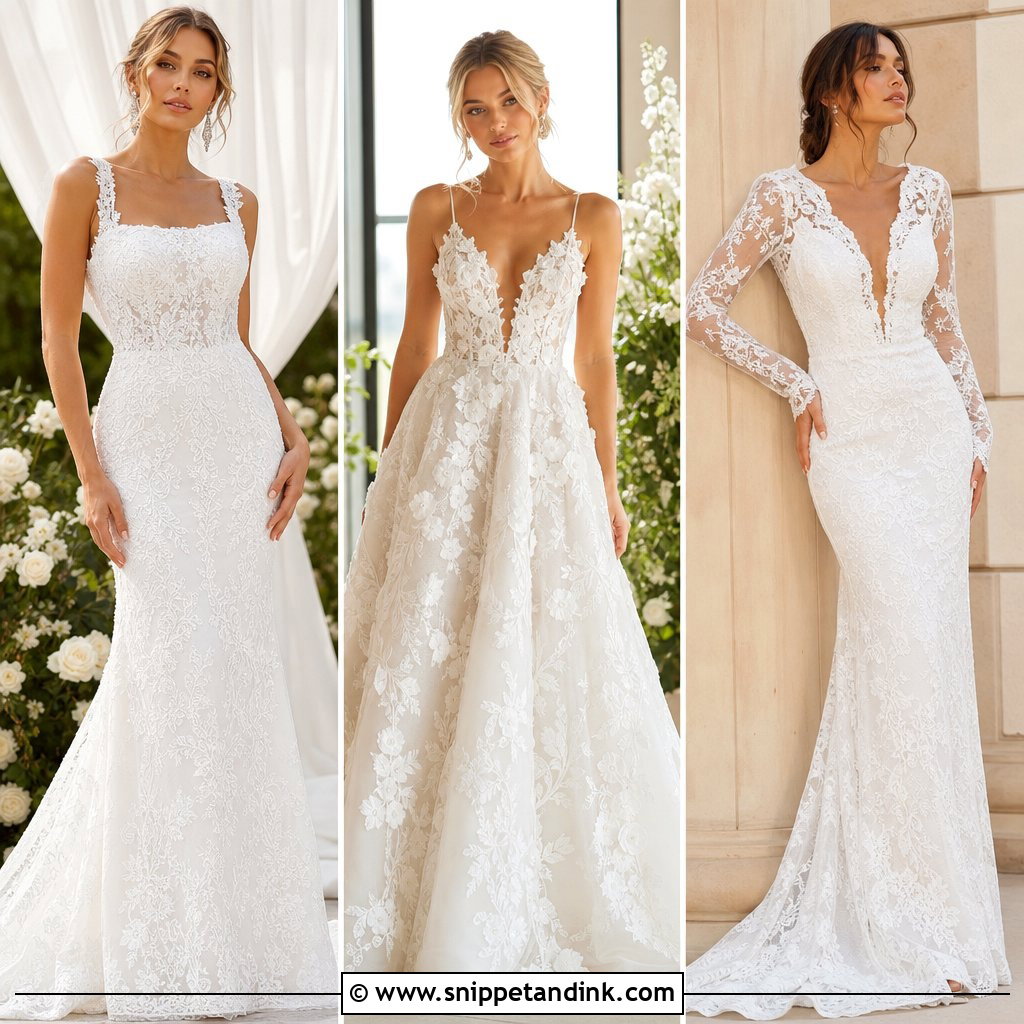
Embroidered flowers give a wedding dress something plain fabric can’t: texture you notice up close and a story in the choice of bloom. The range is wide, from fine white vines and scattered wildflowers to raised petals and bold blooms over the entire skirt. In fittings I spend more time on where the flowers sit than on the flowers themselves, because placement is what pulls the eye to the waist, the neckline or the train. Shoes, jewellery, veil and bouquet then need to give the stitching room. Below are twenty dresses, from ball gowns to slim columns, with the pairings and fit checks I’d use for each.
Turn the Hem Over: What the Back of the Embroidery Tells You
When a bride is torn between two embroidered dresses, I ask the consultant if we can look at the inside. The reverse of the work tells you more than the front.
Embroidery stitched straight into the dress fabric shows thread on the back and can’t be moved. Appliqué is embroidered separately and then sewn on, so you’ll see small tacking stitches around each motif. That difference matters later: appliqués can be lifted and repositioned during alterations, while direct embroidery has to be worked around. Loose threads and long floating stitches on the back are a warning sign, because they catch on jewellery and pull. Machine embroidery is even and dense; hand work is slightly irregular, which is part of its charm. Both can be lovely. Just know which one you’re paying for.
Also feel the weight. Heavy embroidery on a light base fabric puckers around the motifs over time, and you can often spot early puckering on a sample that’s been tried on many times.
1. A-Line Wedding Dress With Wildflower Embroidery
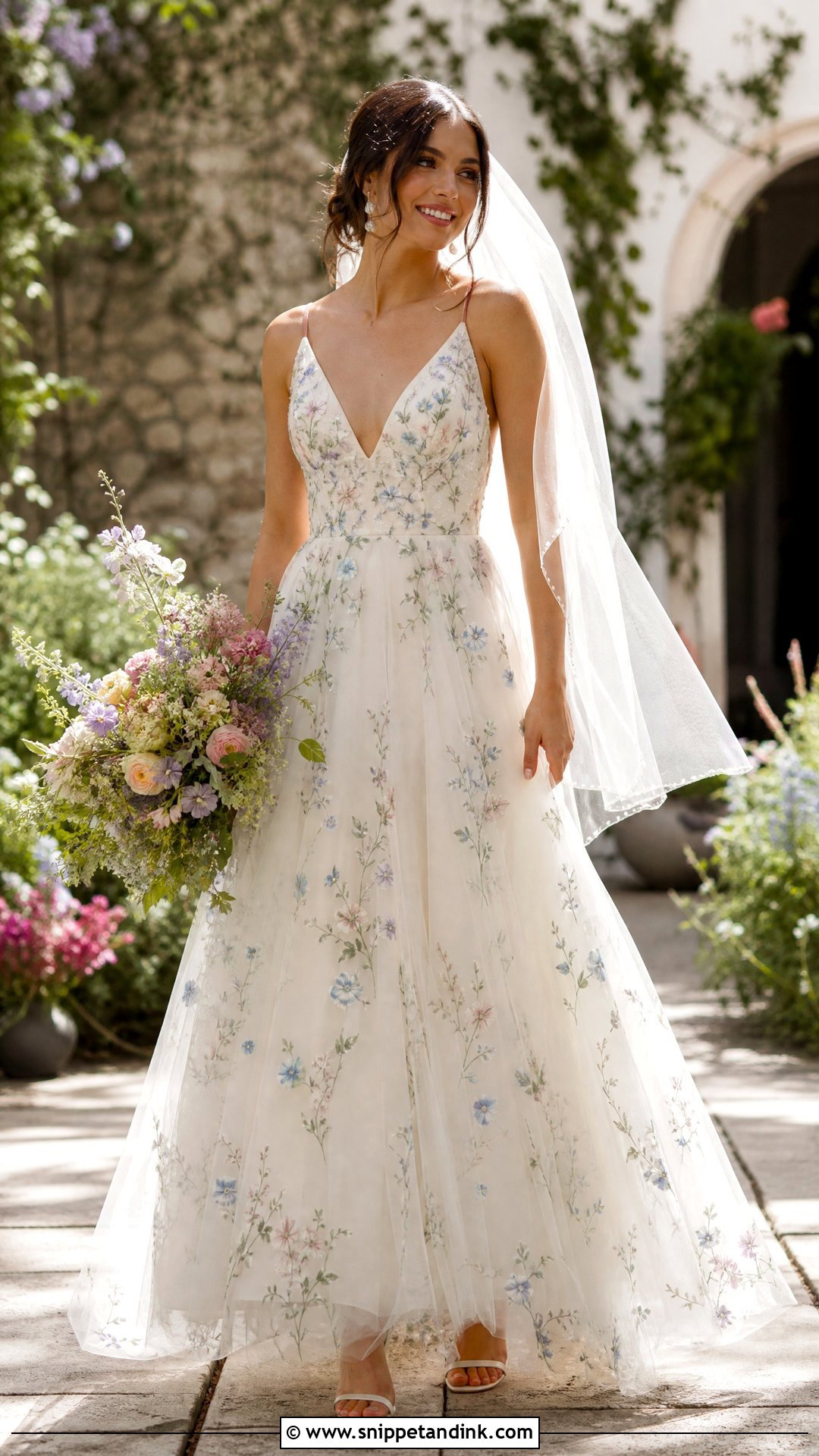
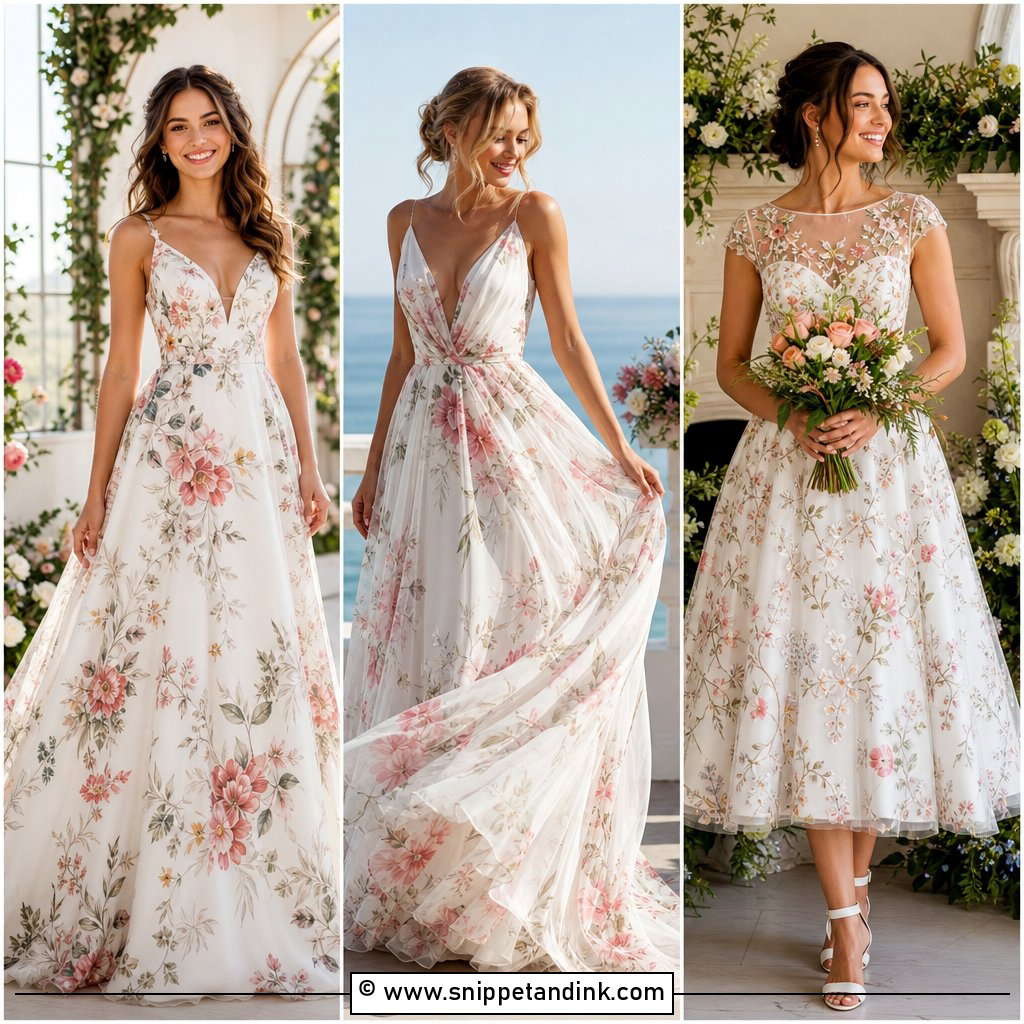
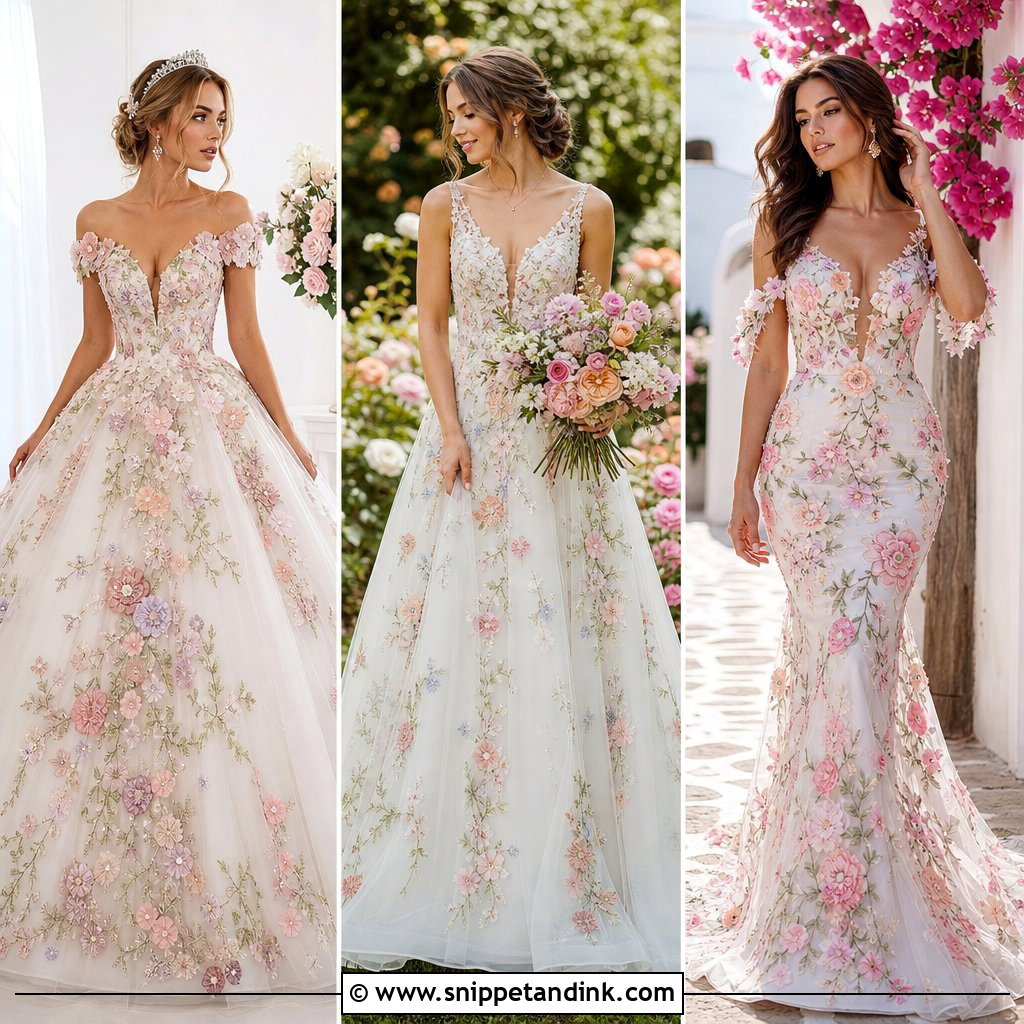
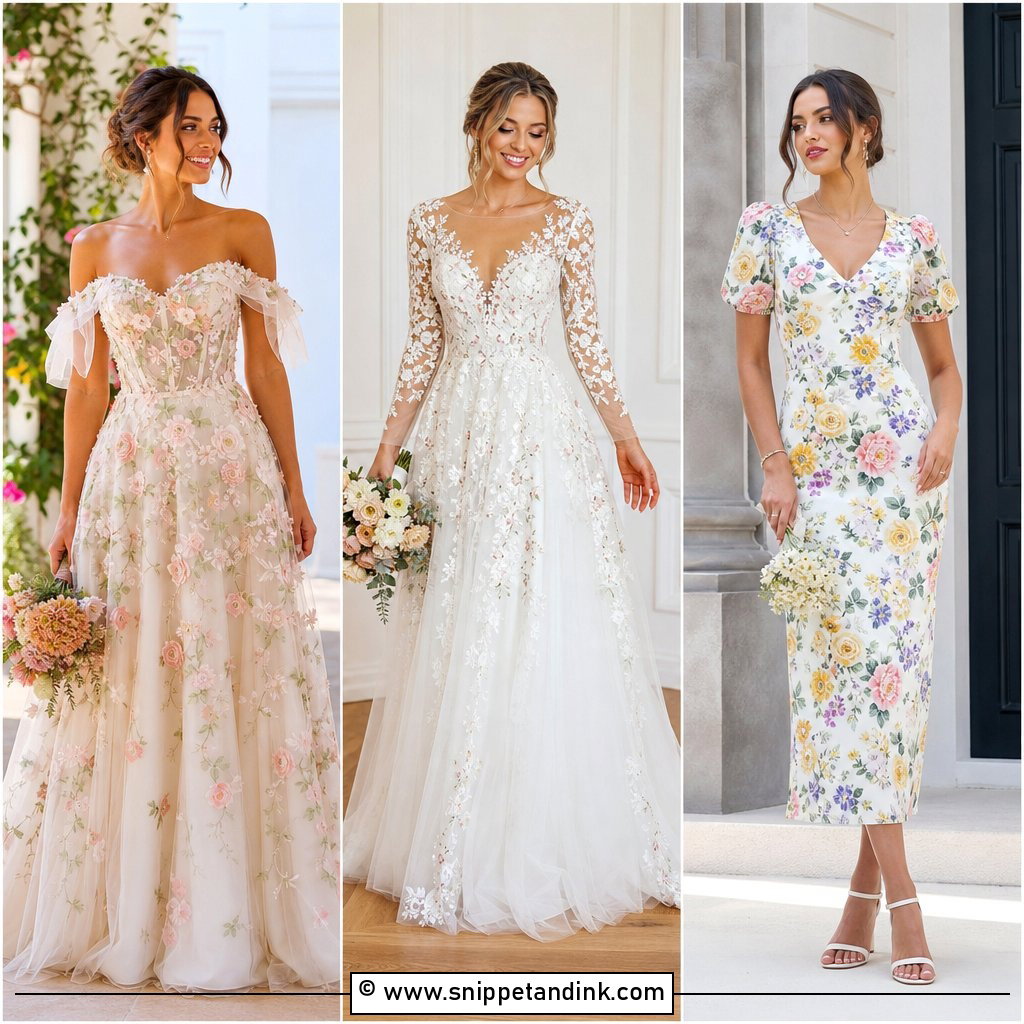
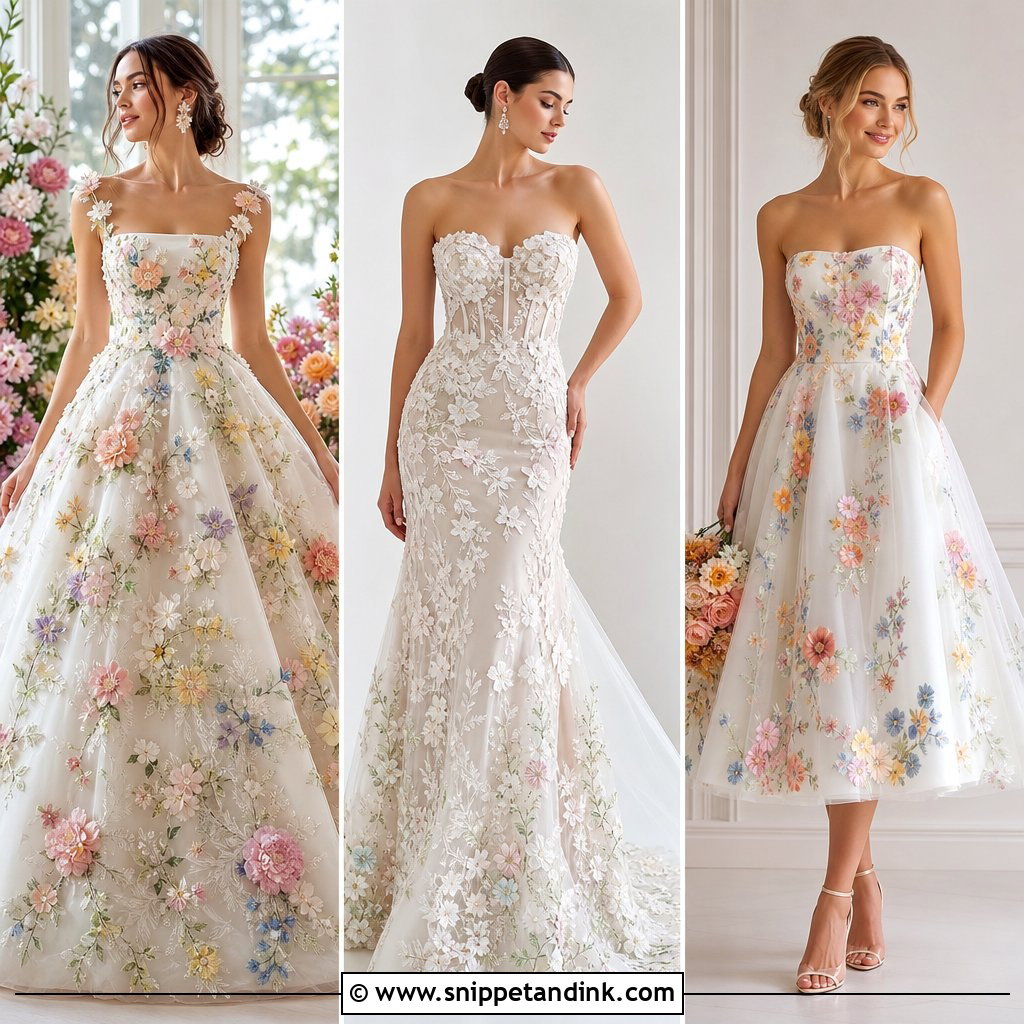
An A-line with scattered wildflower embroidery is relaxed rather than formal, and the shape helps: a fitted bodice for the waist, a skirt that falls loosely past the hips. Soft blue, blush, lavender and green thread suit an outdoor wedding. On tulle or organza the flowers look like they’re floating, which they don’t quite manage on satin. Ivory block-heel sandals, pearl drops and a plain fingertip veil let the colour lead. A loose seasonal bouquet and soft waves or a low textured bun finish it. Take a thread sample to your florist so the bouquet echoes the stitching instead of clashing with it.
2. Ball Gown Wedding Dress With 3D Embroidered Flowers
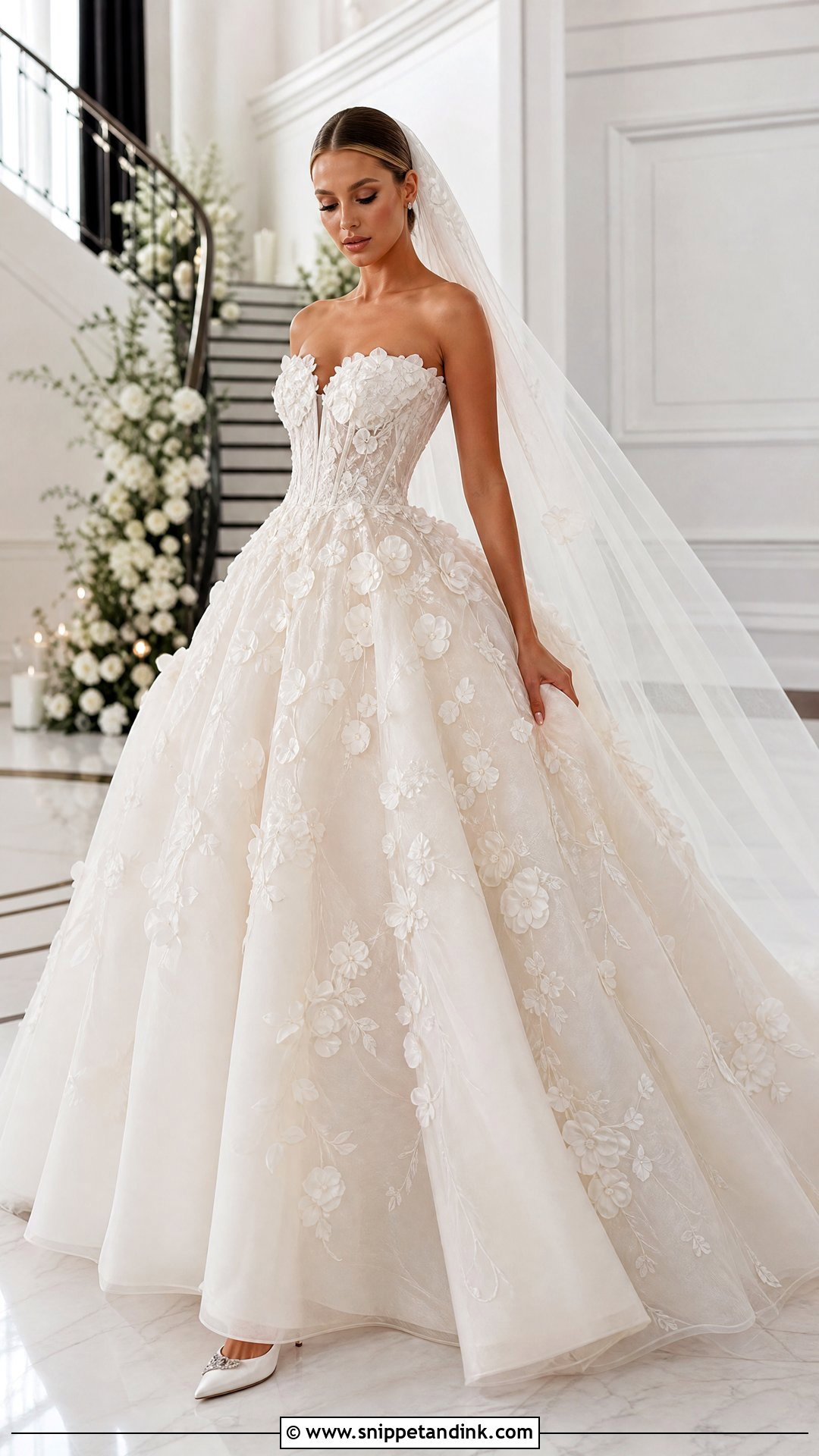
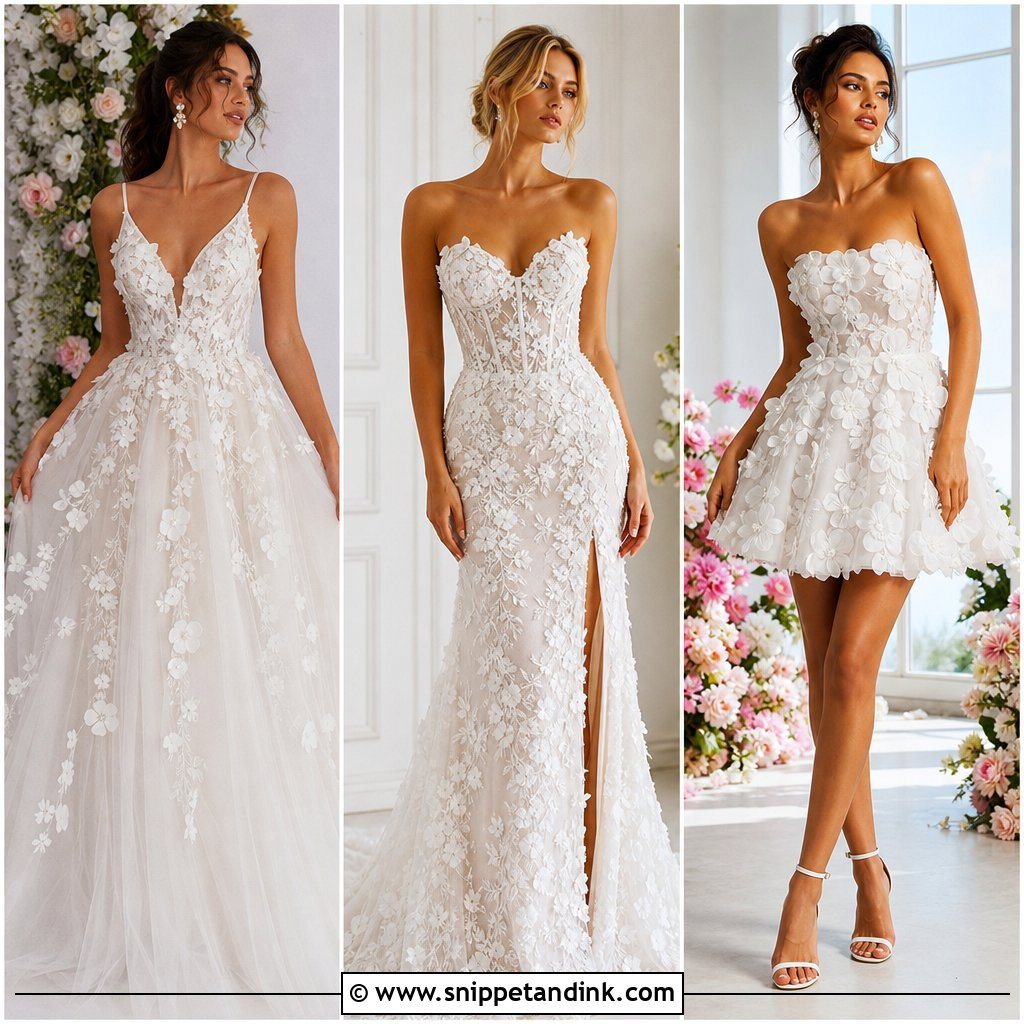
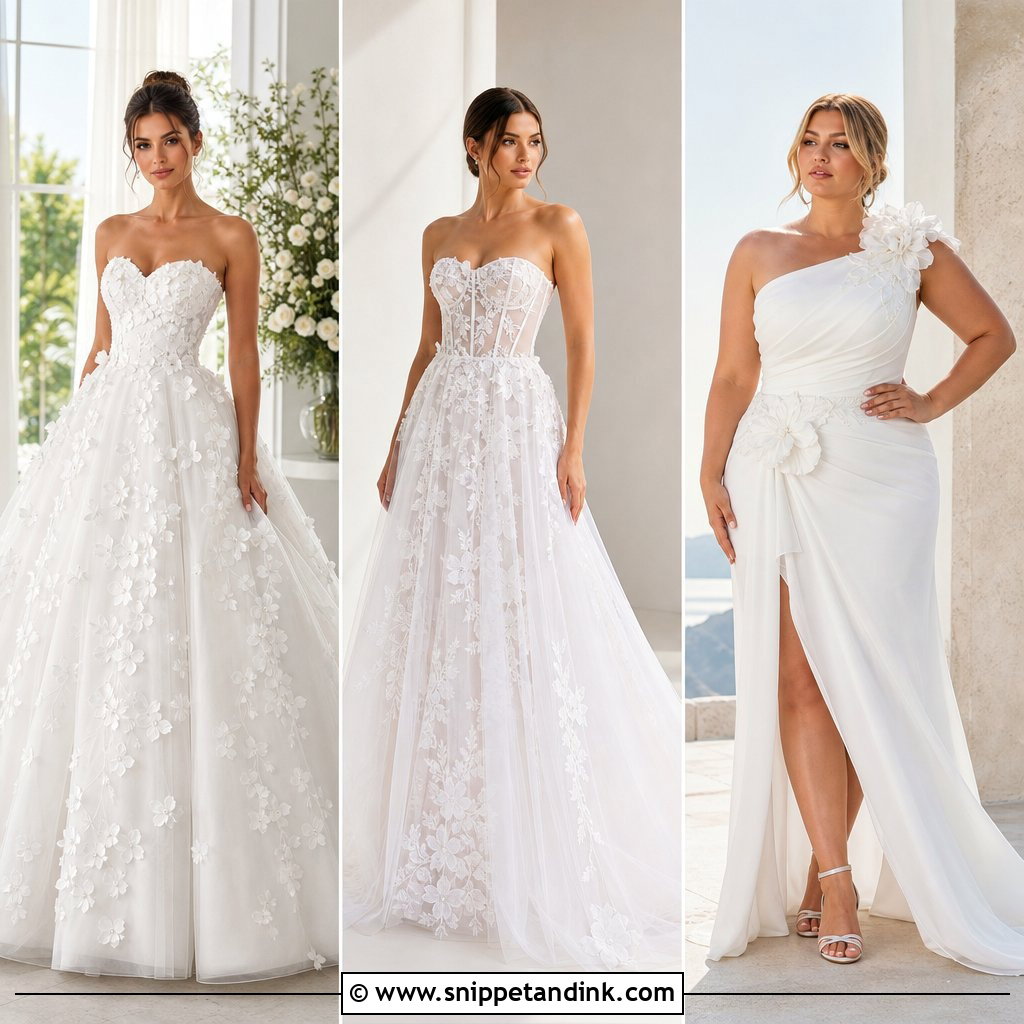
Raised organza petals give a ball gown real depth. They sit best clustered at the neckline and then spread more sparsely down the skirt, with a structured bodice holding the full shape. White on white keeps it classic, however bold the flowers. Pointed satin pumps, crystal studs and a smooth cathedral veil that falls behind the petals are all it needs, with a sleek bun. Keep the bouquet compact and light on greenery. One practical point: 3D petals crush when you sit, so ask how they’ve been stiffened and whether the maker can steam them back into shape.
3. Long Sleeve Wedding Dress With Vine Embroidery
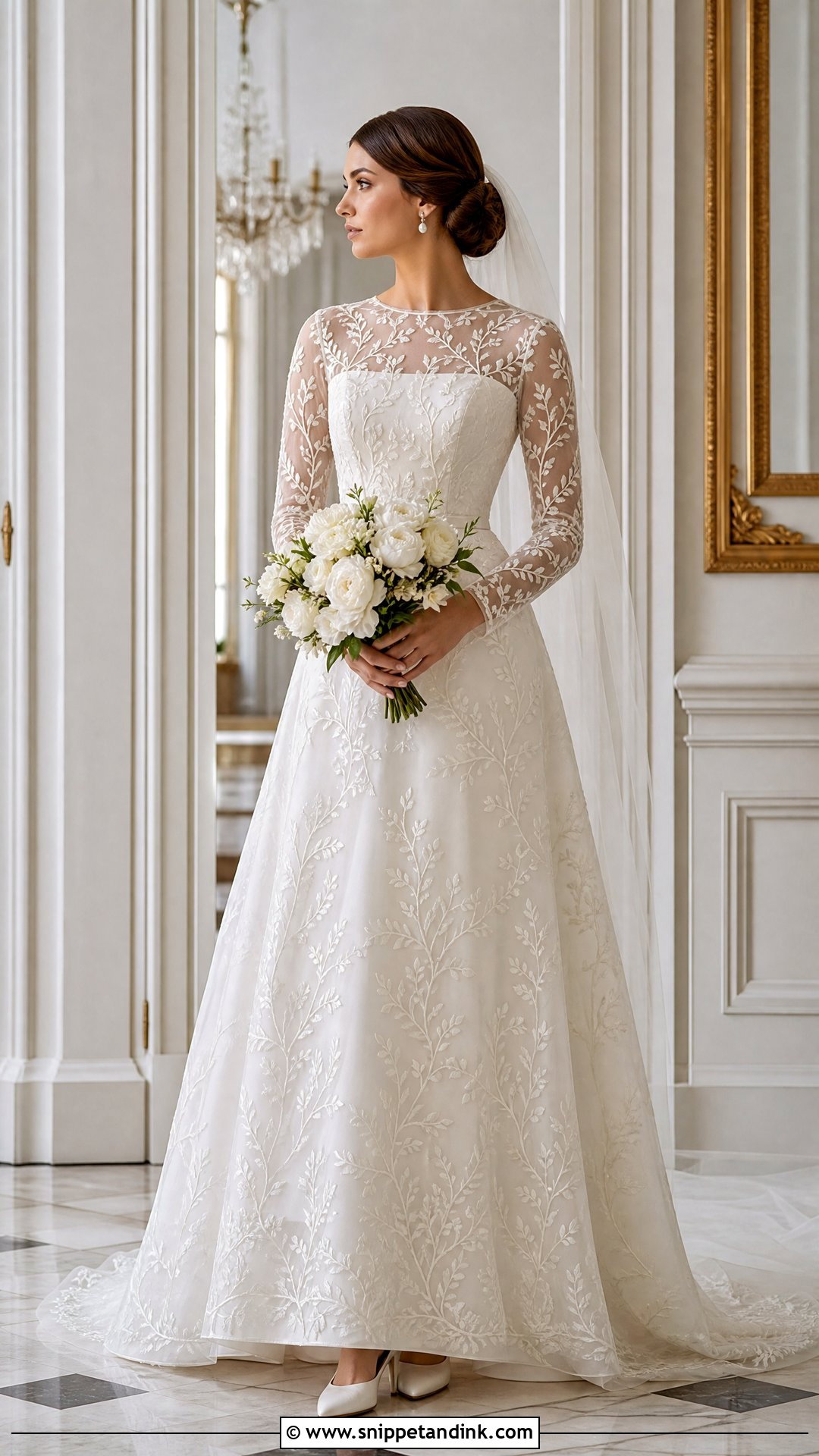
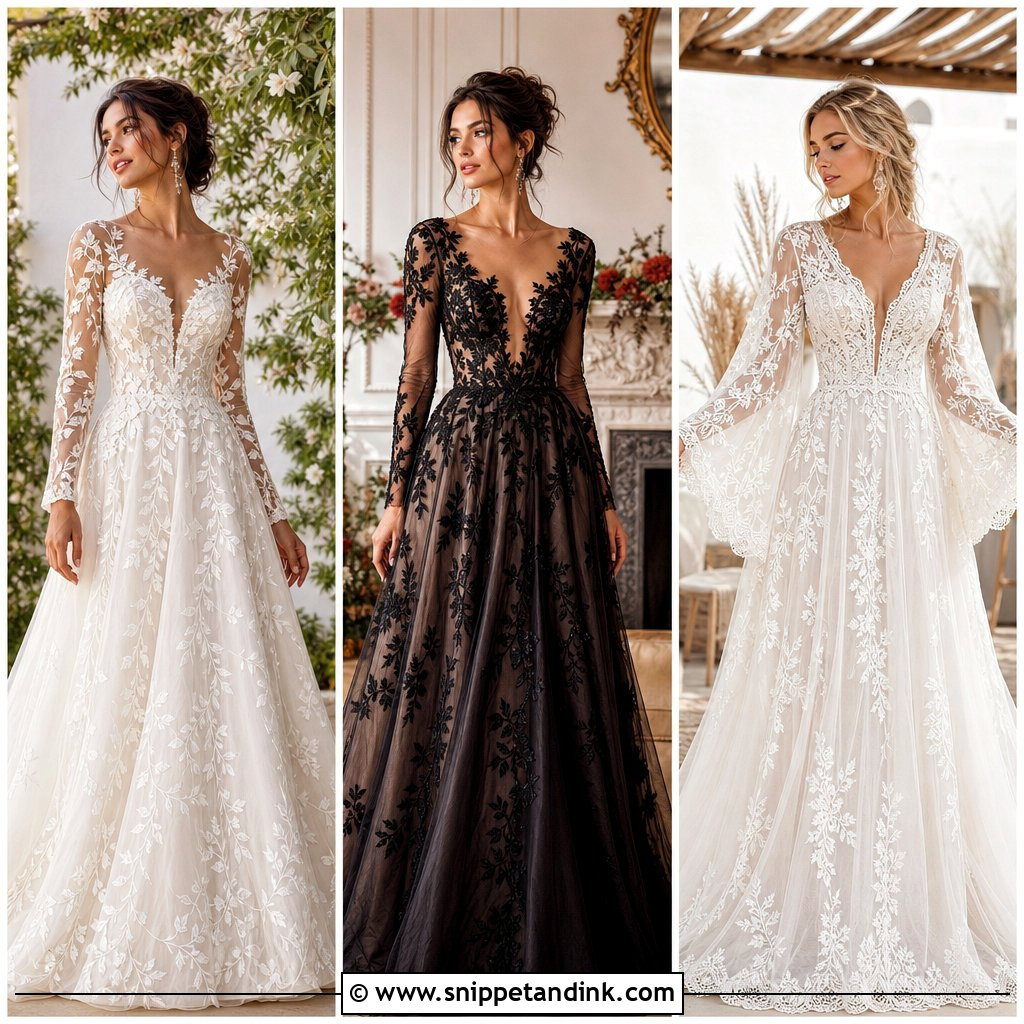
Fine vine embroidery climbing up sheer sleeves gives you coverage that still looks weightless. I like the pattern to continue across the bodice and fade into a soft A-line skirt so the sleeves don’t look added on. Ivory thread over a light nude lining shows up well in photographs without harsh contrast. Closed-toe pumps, a narrow floral comb and small pearls suit it, and a low chignon keeps the sleeves clear. Choose a plain chapel veil with a narrow edge. Bend your elbows at the fitting; vines stitched across the elbow can pull the sheer fabric when the arm flexes.
4. Strapless Wedding Dress With Pastel Floral Embroidery
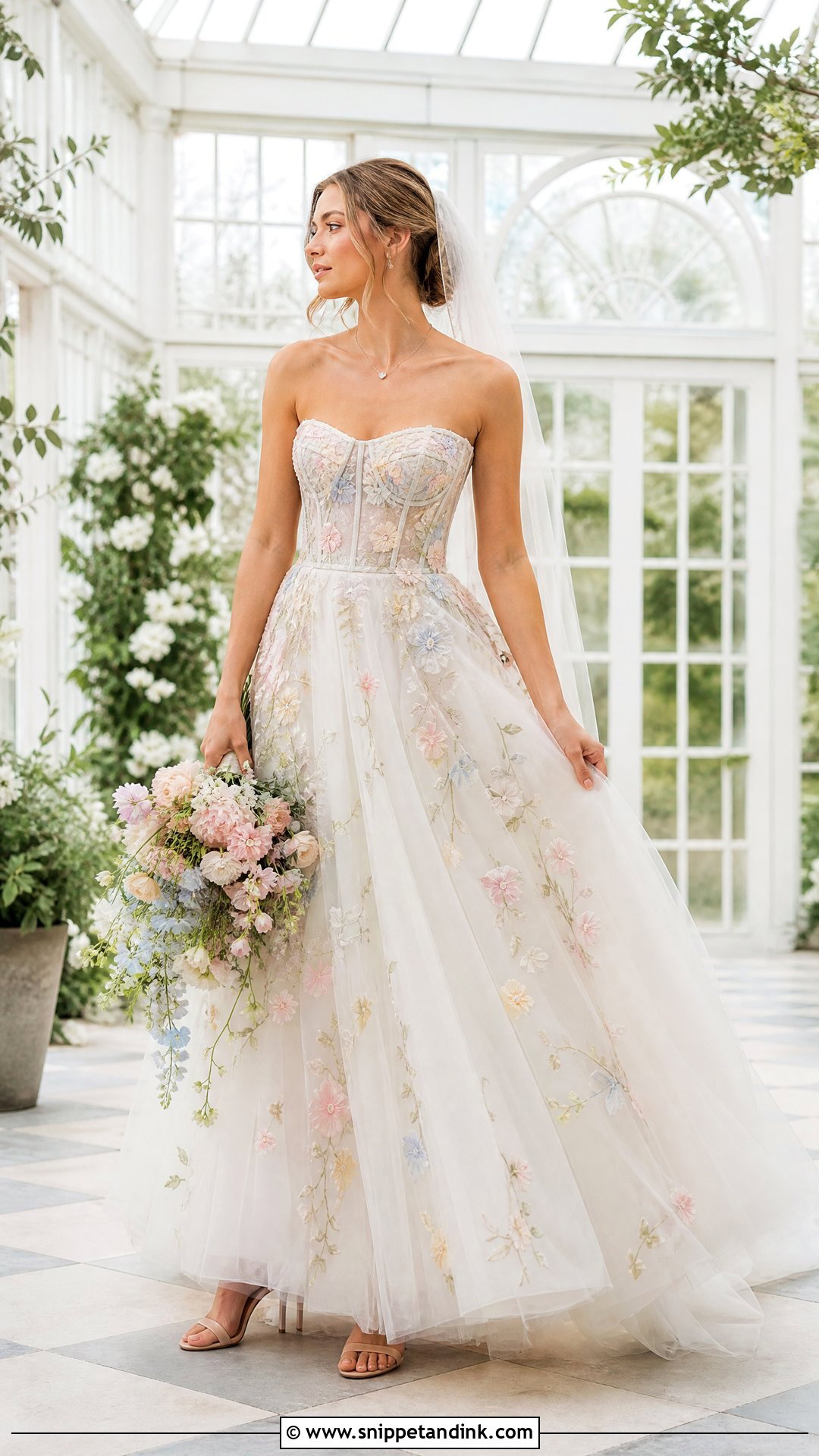
Pale pink, powder blue, soft yellow and muted green on ivory tulle add colour without losing the bridal feel. A corset-style bodice gives shape and a gently flared skirt keeps it light. With the neckline open, a delicate pendant or short pearl strand works, just one. Blush heels and a small pastel bouquet carry the colours through, and a sheer ivory veil softens everything. Polished waves or half-up hair suit it. Pastels are the colours most likely to wash out in bright sun, so look at the dress outdoors before deciding the thread is strong enough.
5. Square Neck Wedding Dress With Floral Embroidery
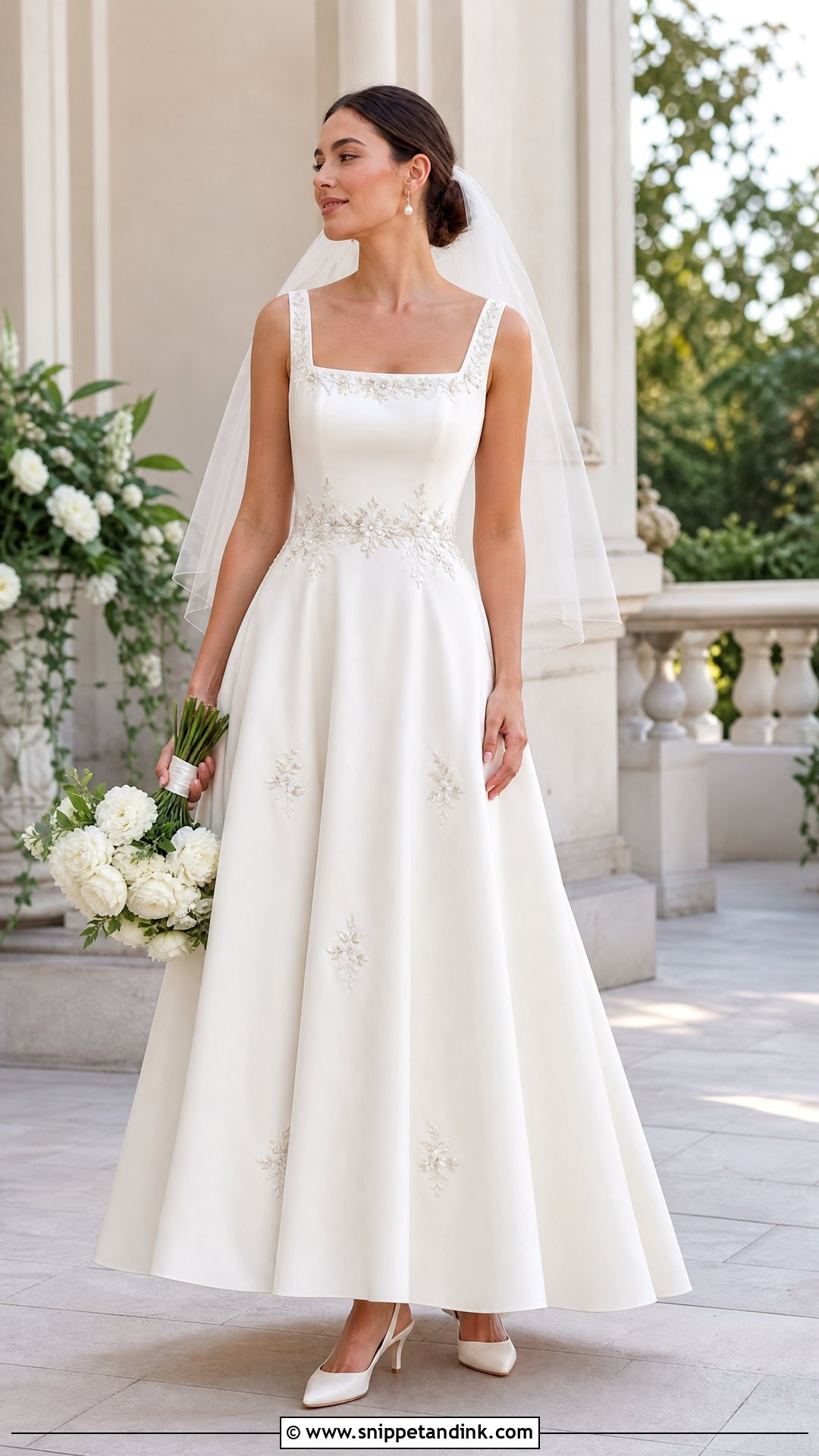
A square neck gives the flowers a clean frame and shows the collarbones well. I’d choose an A-line with small motifs around the neckline, the waist and the lower skirt, with plenty of bare fabric between them so it doesn’t look busy. Pearl button earrings, ivory slingbacks and a shoulder-length veil keep the lines tidy, and a smooth low bun repeats the square shape. Carry a bouquet built on one main flower. Mixing several varieties next to small embroidered motifs makes both look muddled.
6. Off-Shoulder Wedding Dress With Rose Embroidery
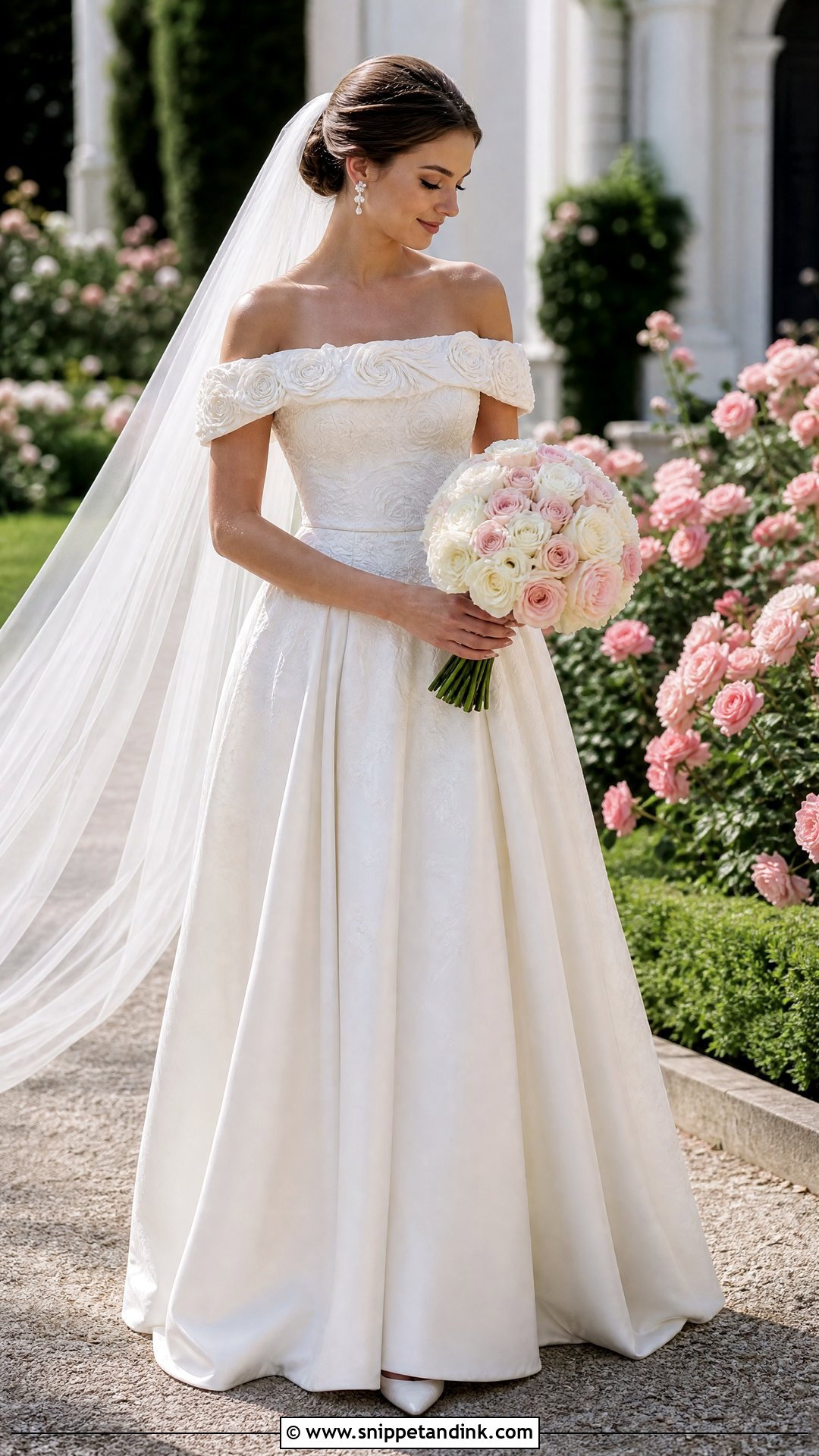
Roses stitched along a folded off-shoulder neckline lead the eye straight to your face. A fitted waist and a softly structured satin or tulle skirt let the roses stand out, and vines can trail down the bodice, spacing out toward the hem. Pearl-and-crystal earrings, closed-toe ivory heels and a long plain veil fit, with a neat updo so hair doesn’t cover the neckline. A round bouquet of roses in the thread’s tones ties it together. Off-shoulder bands stretch with wear, so ask your seamstress to add a hidden elastic or a light stay inside the fold.
7. Mermaid Wedding Dress With Embroidered Flowers
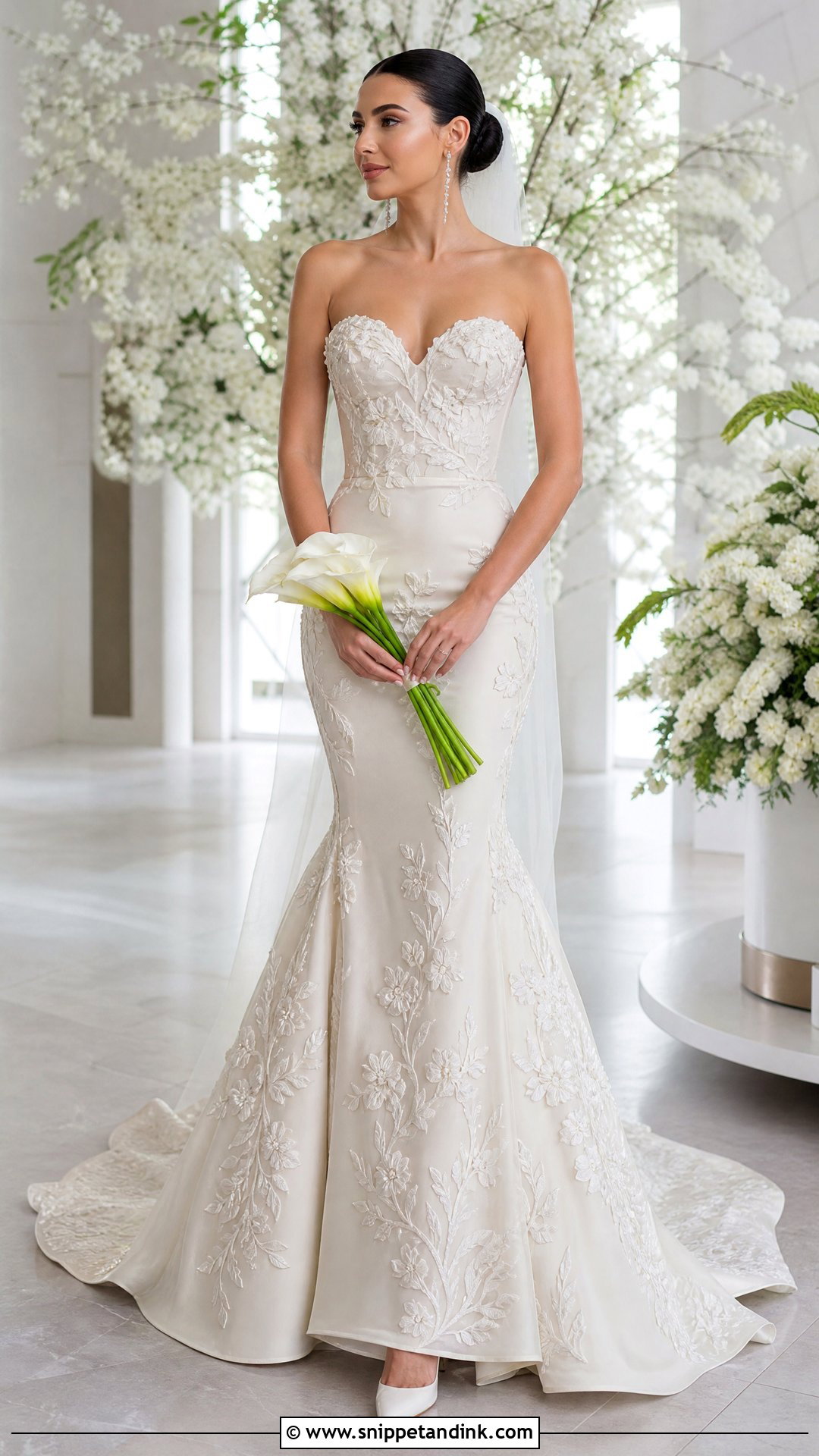
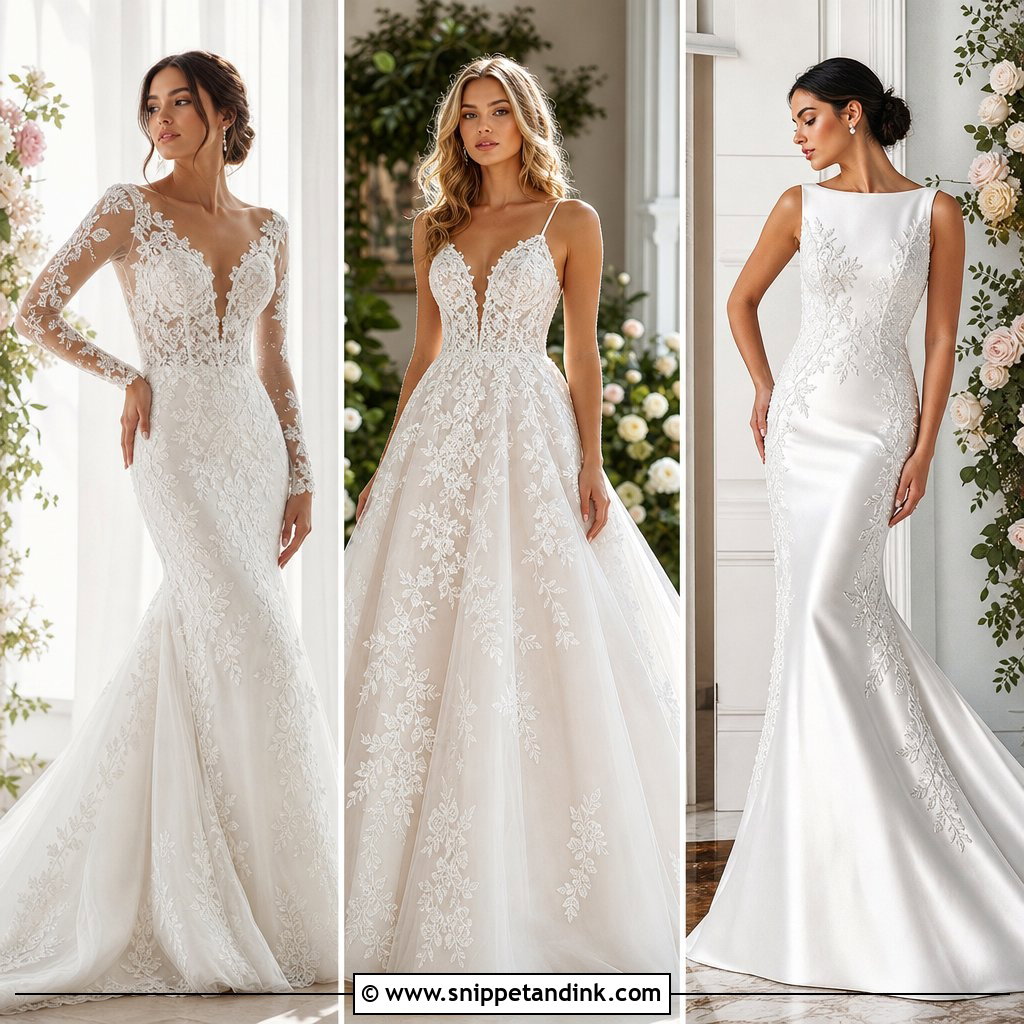
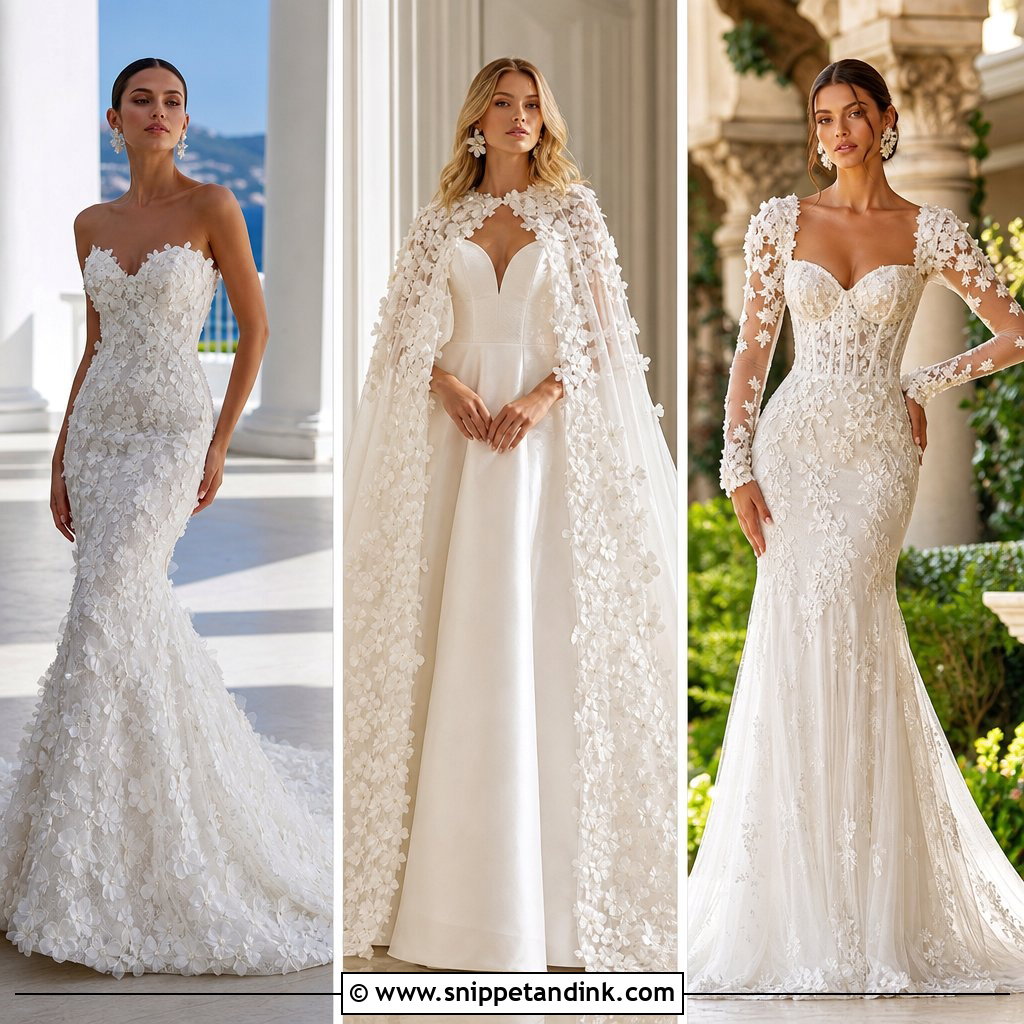
On a mermaid, flowers should follow the curve: concentrated on bodice and hips, then spreading over the flare. That emphasises the shape and gives movement as you walk. A soft ivory lining under sheer embroidered panels adds depth without showing too much. Pointed pumps, slim drops and a plain veil set beneath a polished bun keep it sleek, and a narrow bouquet with long stems repeats the vertical line. Skip big accessories. The common fitting issue here is motifs stretching over the hips when the fit is taken in, so ask whether they’ll be lifted and re-placed rather than sewn over.
8. Boho Wedding Dress With Embroidered Bell Sleeves
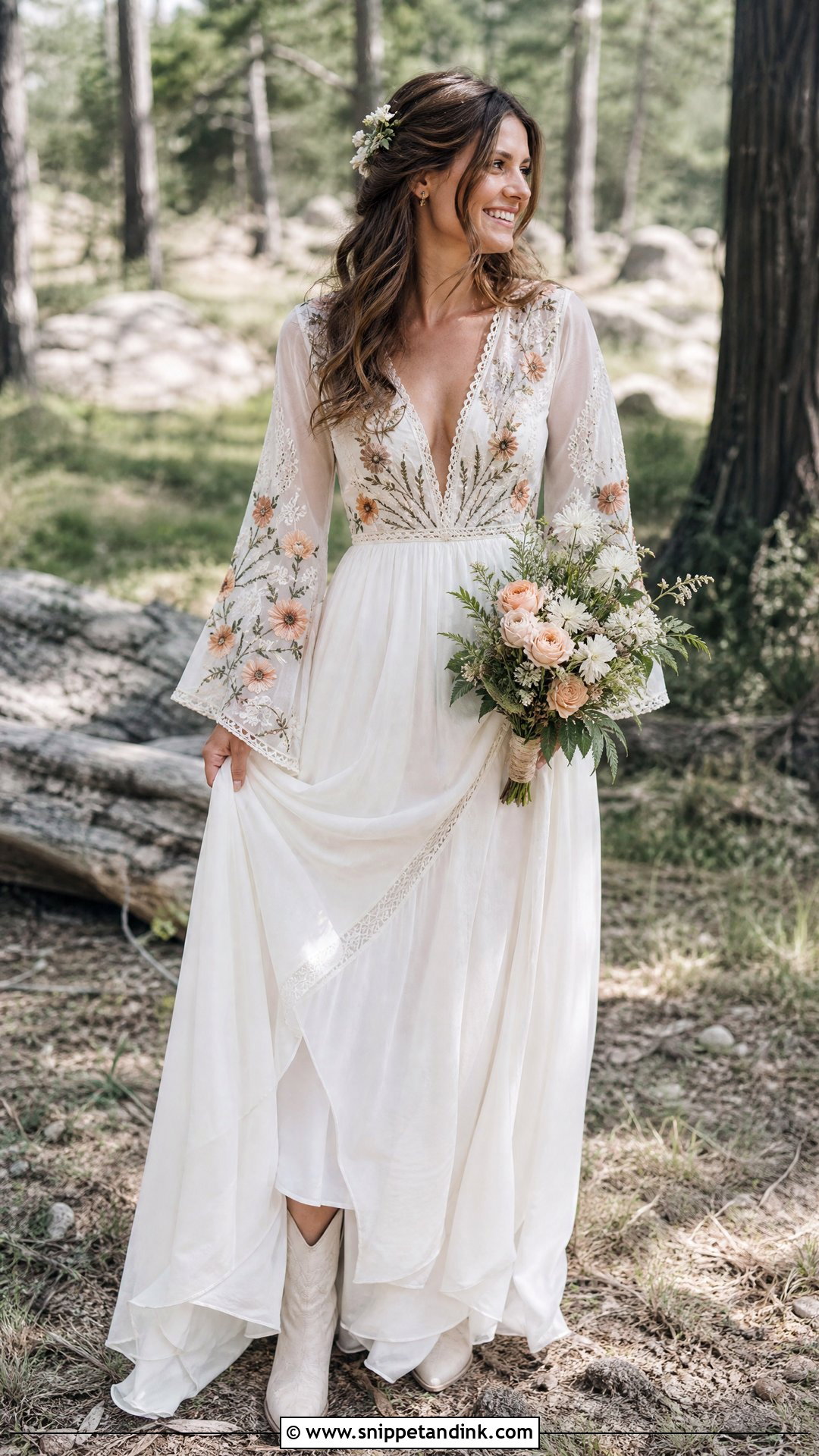
Bell sleeves and botanical embroidery are a natural pair for a boho wedding. A light chiffon or soft tulle gown with a fitted waist and an easy floor-length skirt can carry daisies, leaves and small woodland flowers on the sleeves, bodice and hem without getting heavy. Choose low block heels or bridal boots based on the ground. A flower comb, loose waves and small gold earrings suit it; an embroidered-edge veil or a light cape both work. Bell sleeves swing into everything, including candles and food, so pin them back at dinner or ask for a discreet loop at the wrist.
9. Tea-Length Wedding Dress With Daisy Embroidery
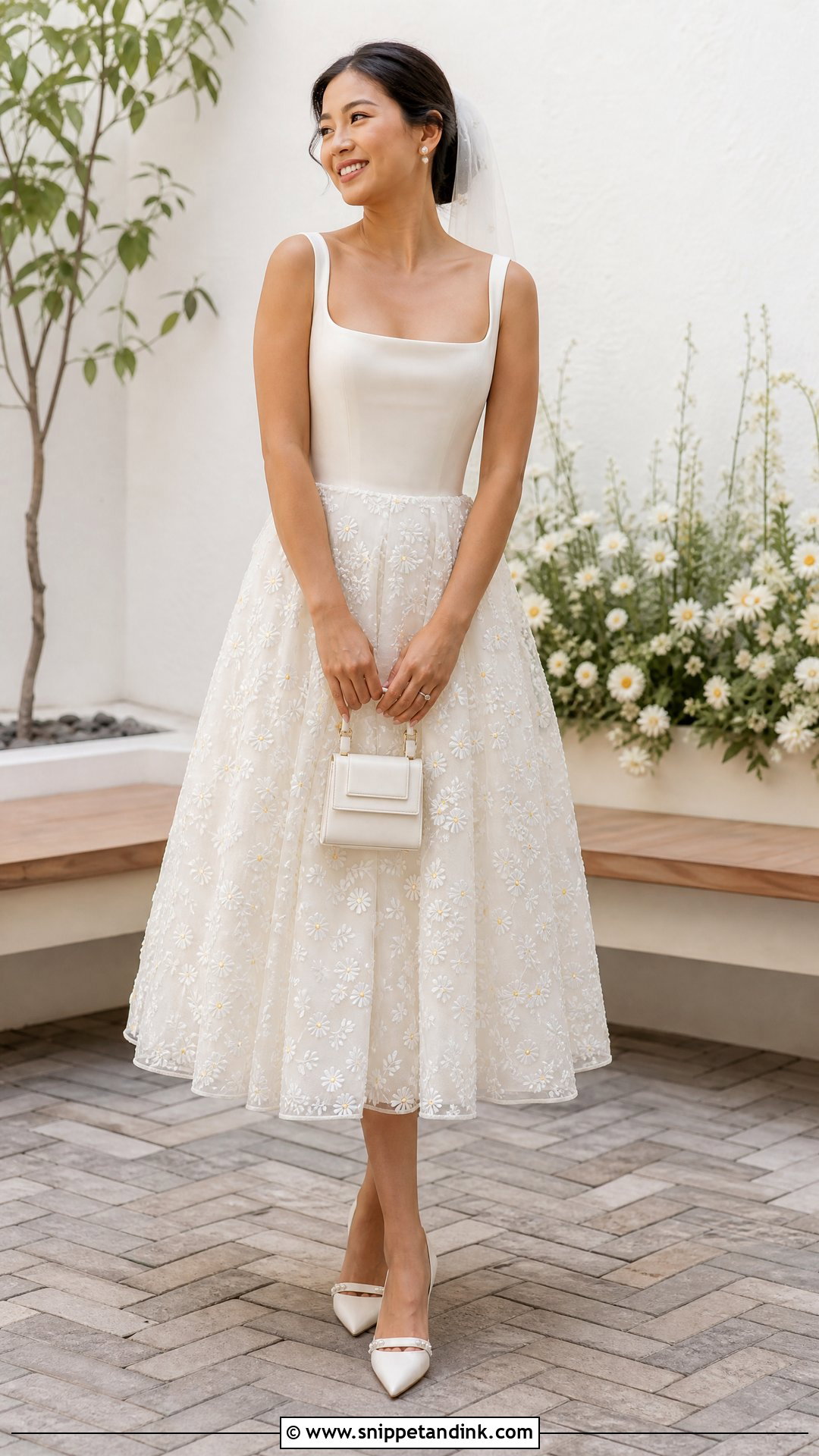
Tea length with daisy embroidery is cheerful and very easy to wear. Your shoes are on show, so pick good ones: ivory slingbacks, low heels or neat flats. A fitted bodice with a softly full skirt reads vintage without becoming costume. White daisies with yellow centres can cover the tulle overlay or sit in clusters at the waist and hem. Pearl studs, a short veil and a small structured bag finish it, with a neat ponytail, bob or low bun. Check the hem length with your actual shoes on. Tea length looks wrong if it lands at the widest part of the calf.
10. Colorful Wedding Dress With Embroidered Flowers
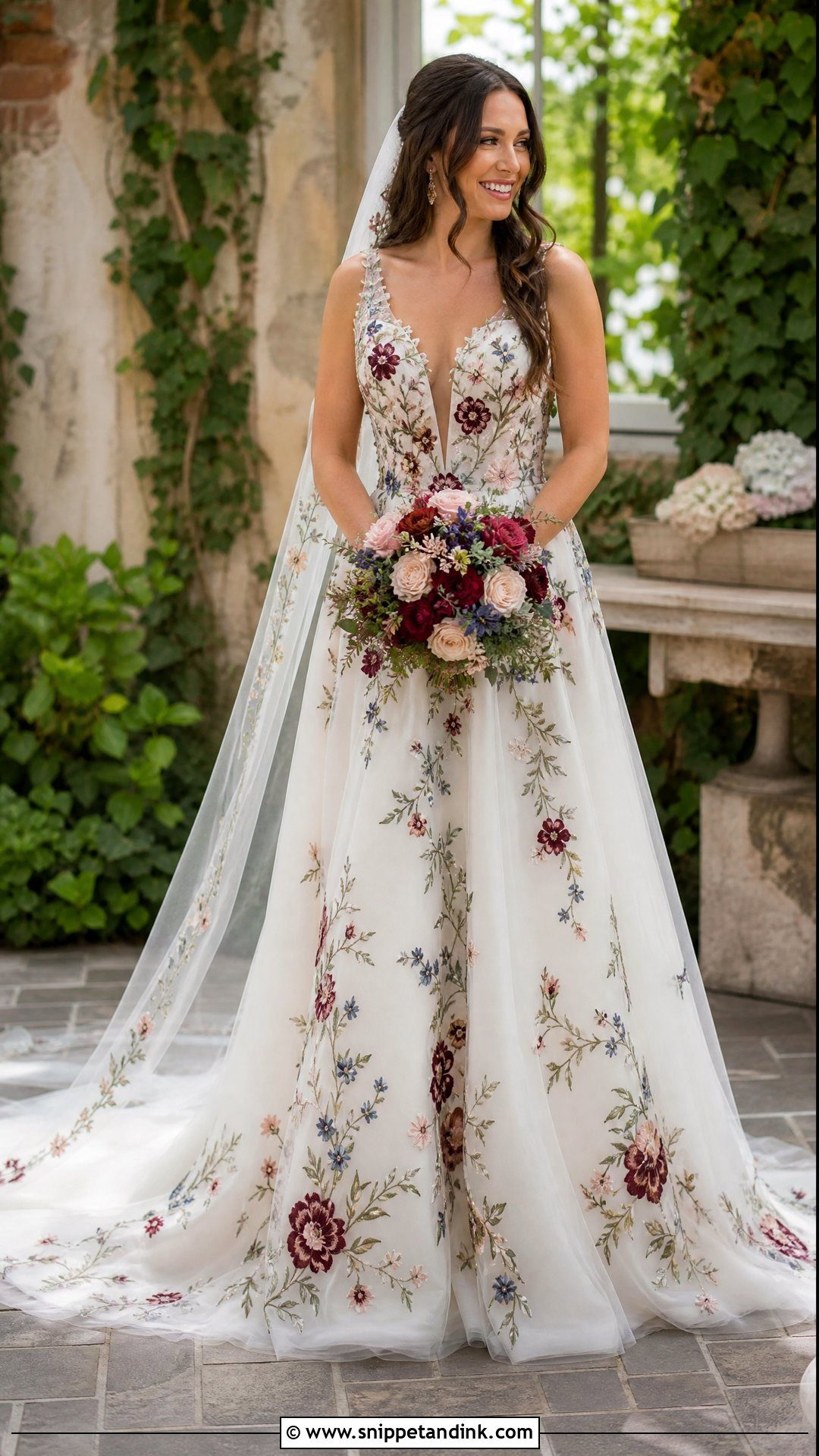
Coloured embroidery lets you include flowers that mean something while keeping an ivory base. Pick a coordinated set of colours rather than a rainbow. Burgundy, blush and green feel rich; blue, lavender, and soft yellow feel lighter. An A-line gives the embroidery enough fabric to be seen from all sides. Neutral ivory heels, simple earrings and a sheer veil with only a few matching flowers at the edge stop it getting crowded, and the bouquet should repeat two or three of the thread colours. Keep hair and makeup quiet. Before ordering, ask whether coloured thread is colourfast. Some reds and deep pinks can bleed in cleaning if the dress gets wet.
11. Minimal Wedding Dress With Embroidered Floral Bodice
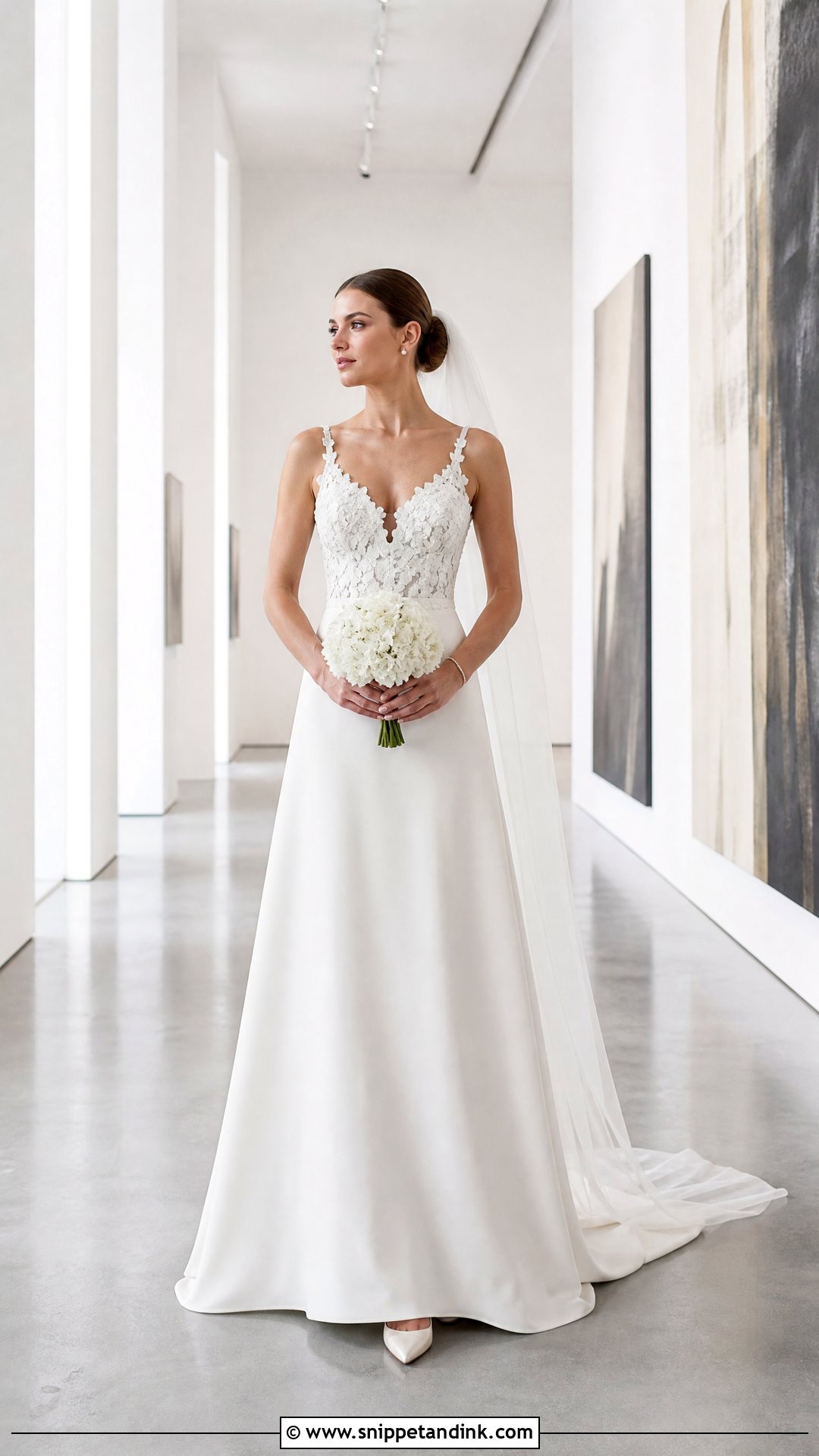
Not every floral gown needs flowers from neck to hem. An embroidered bodice over a plain crepe or satin skirt reads modern, and the contrast between the textured top and smooth skirt marks the waist clearly. Pointed ivory pumps, pearl studs and a thin bracelet suit it; a long plain veil adds drama without more pattern. A sleek bun or smooth waves, depending on formality, and a small white bouquet with little greenery. This is also the easiest embroidered style to alter, since the skirt can be taken in or hemmed without touching the stitching.
12. Illusion Neck Wedding Dress With Floral Embroidery
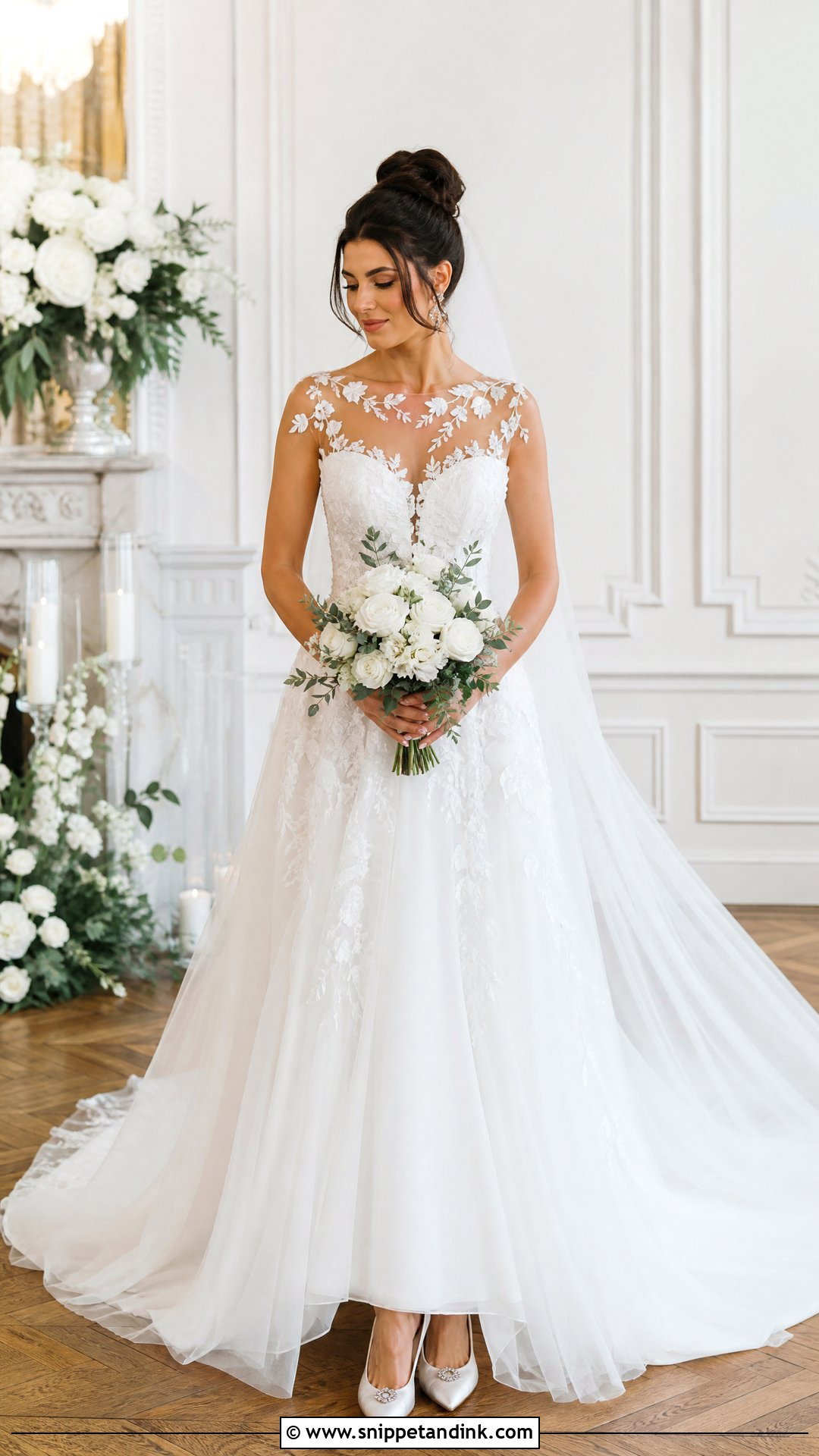
Illusion mesh lets the flowers look as if they rest on your skin. Motifs placed around the collarbone, shoulders and upper back give the floating effect, with a soft A-line or fit-and-flare skirt below. The mesh has to match your skin tone closely; I take brides to a window to check, since shop lights flatter mesh that later shows up as a pale band in photos. Small crystal earrings, satin heels and a plain veil under an updo are enough, with no necklace. A simple bouquet of white flowers and greenery keeps it fresh.
13. Corset Wedding Dress With Embroidered Flowers
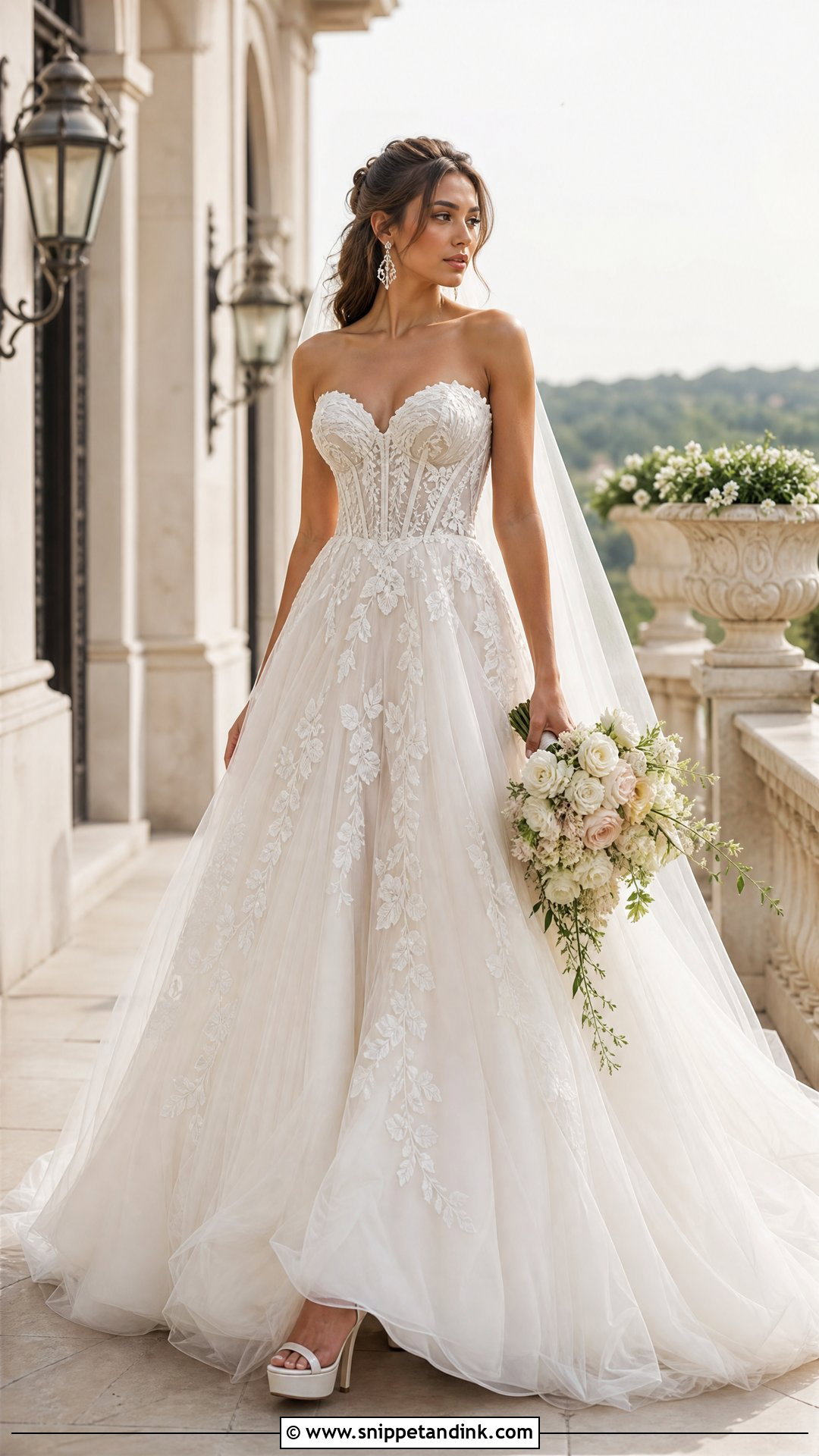
A corset shows its structure, and embroidered vines and petals along the seams soften it. Pair it with a flowing tulle skirt so the sculpted top and airy skirt play against each other. Tonal ivory is classic; subtle blush adds depth. Drop earrings, comfortable platform heels and a light veil that doesn’t hide the bodice suit it, with half-up hair. Carry a medium bouquet with gently curved stems. Embroidery over boning channels can pucker if the corset is laced too tight, so the fit should be snug rather than squeezed.
14. Cape Sleeve Wedding Dress With Floral Embroidery
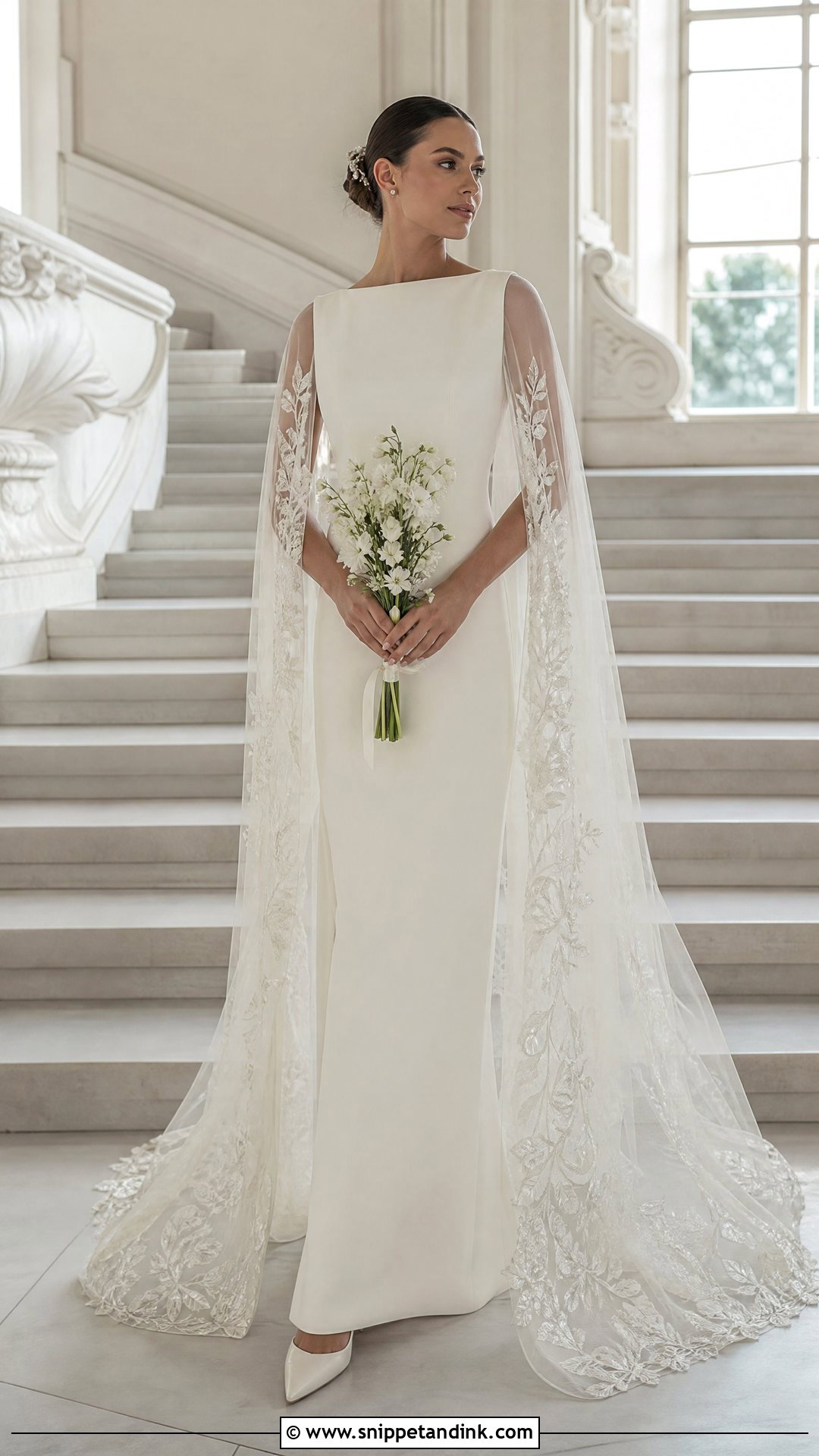
Cape sleeves move as you walk and can stand in for a veil. A column or soft flare with sheer cape panels at the shoulders works best, with flowers starting near the neckline and trailing down the cape’s edges. Keep the dress underneath simple. Pointed heels, small studs, a polished low bun and a narrow metallic or pearl hair piece are plenty, plus a clean white bouquet. Practise the aisle walk at your fitting. Capes need a steady pace to float, and rushing makes them bunch at the elbows.
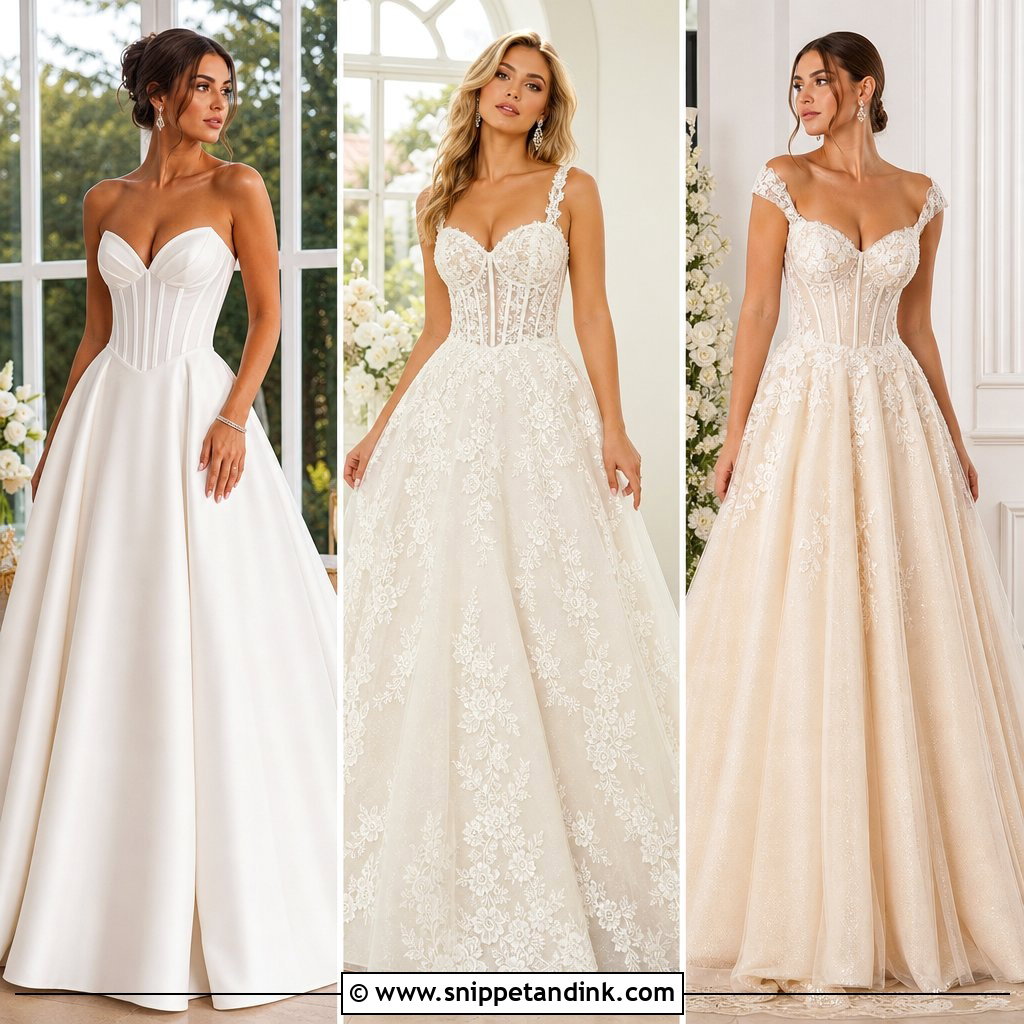
15. High Neck Wedding Dress With Vintage Floral Embroidery
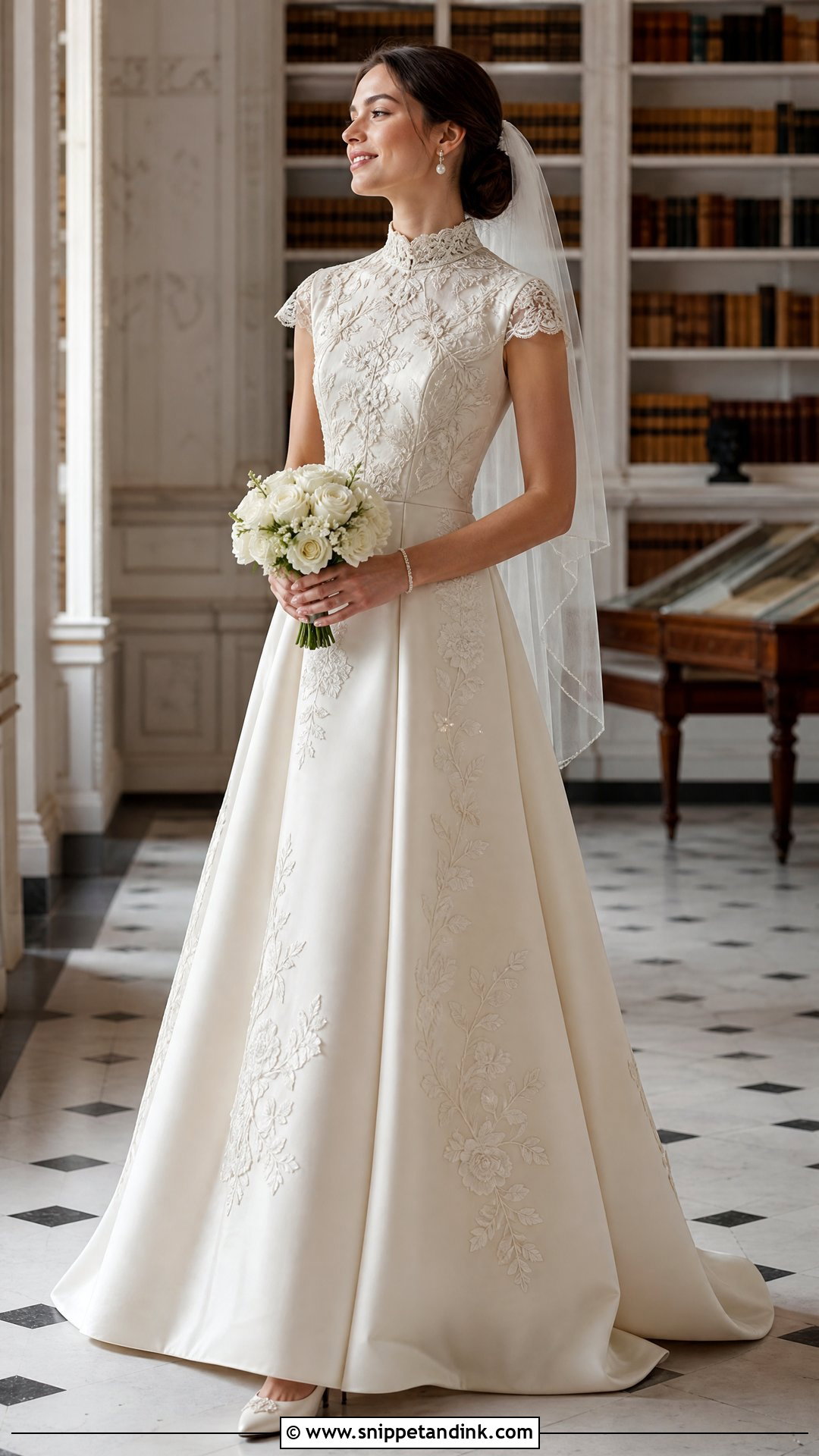
A high neck with vintage florals gives modest coverage and a lot of character. Look for a fitted lace or tulle bodice with flowers across the collar and shoulders and onto long or cap sleeves, over a plain A-line skirt so it doesn’t get fussy. Covered buttons down the back add to the period feel. Low ivory heels, pearl earrings, a simple veil beneath a tidy bun and a delicate bracelet instead of a necklace suit it. A compact white and green bouquet keeps the mood. Allow extra time to dress; a long row of covered buttons is slow even for a practised helper.
16. Plus Size A-Line Wedding Dress With Floral Embroidery
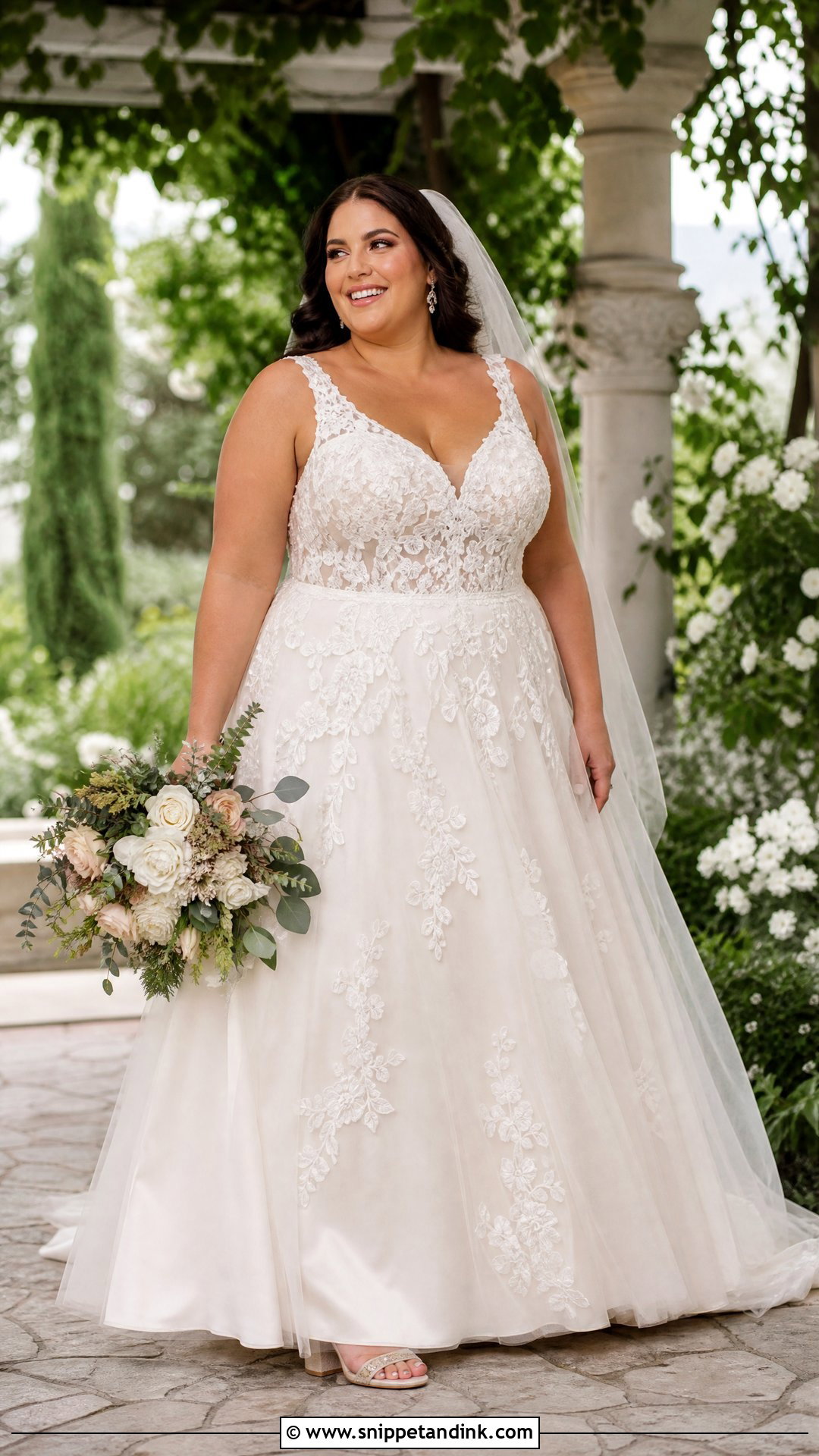
On a fuller figure, the embroidery placement matters more than the amount. Flowers concentrated at the neckline and waist draw the eye up, and a light scatter through the skirt keeps the dress connected. I look for a structured bodice with wide straps, a defined waist and a skirt that moves without clinging, and I often suggest a lined bodice rather than sheer mesh if you want more coverage with the same effect. Cushioned block heels, medium-length earrings and a soft veil that starts below the hairstyle balance it. Scale the bouquet to the dress. Most of all, the construction must let you sit, walk and dance without adjusting anything.
17. Petite Column Wedding Dress With Embroidered Flowers
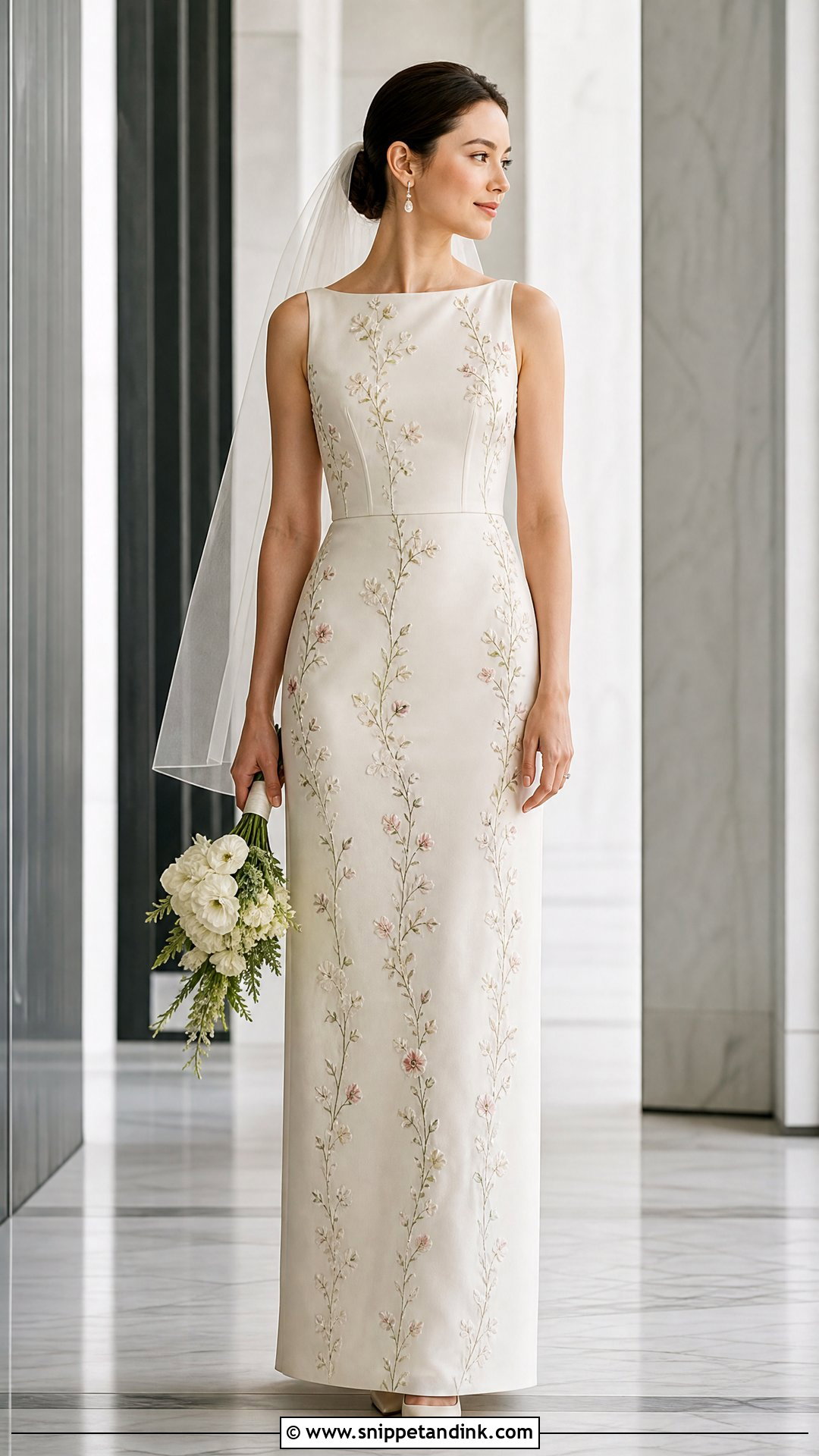
For a petite bride, a column with narrow vertical vines adds length, while big motifs swamp the frame. Keep a defined natural waist, a clean neckline and a lightly fitted skirt so nothing adds volume, and let the embroidery run from bodice toward hem to pull the eye downward. Pointed ivory heels, petite drops and a narrow bouquet suit the scale. A fingertip veil adds softness without burying you, and hair lifted at the crown or set in a compact bun gives a little height. When hemming, ask the seamstress to shorten from the waist if the motifs run into the hem.
18. Beaded Wedding Dress With Floral Embroidery
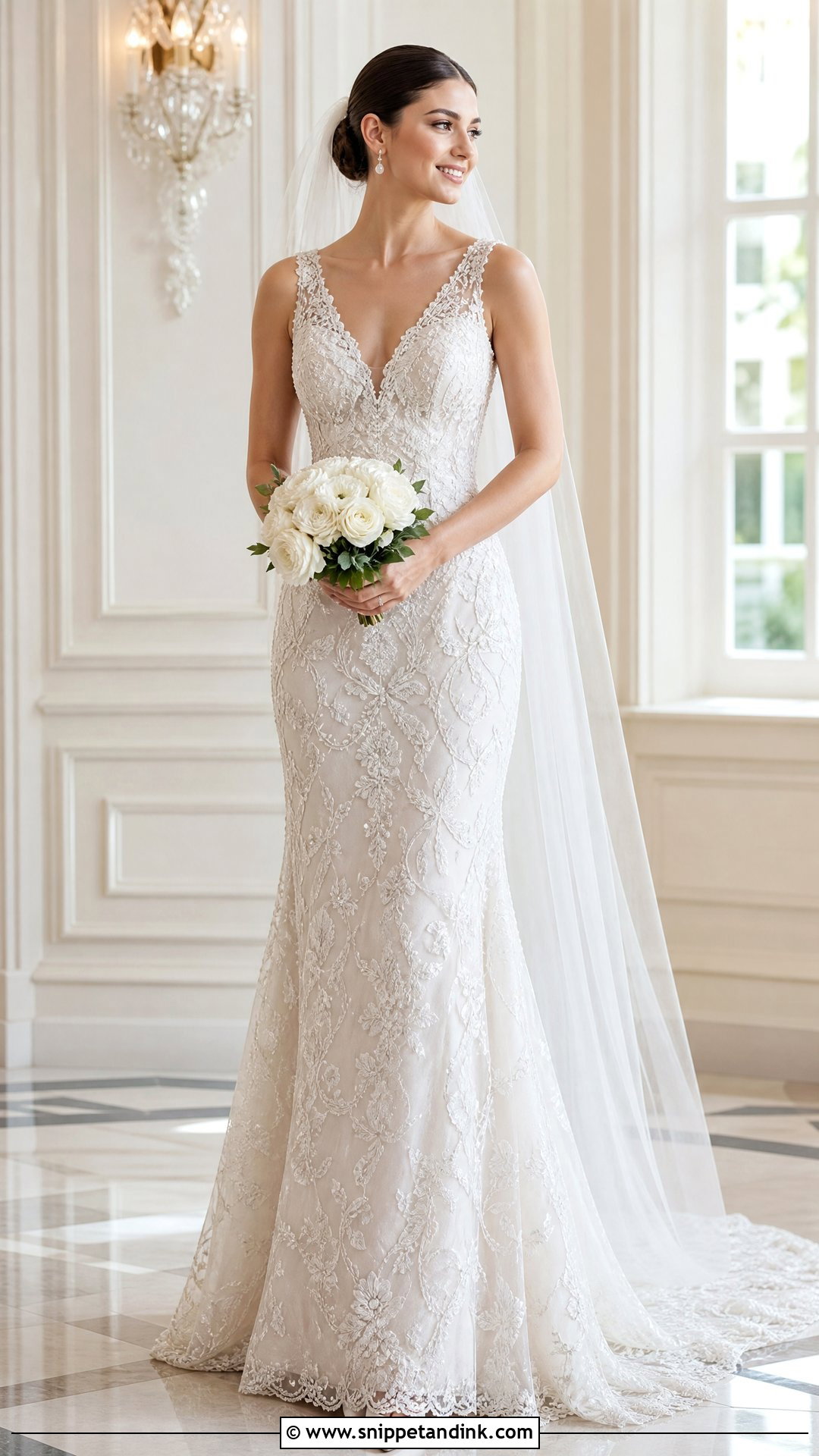
Beads placed at the centre of embroidered flowers add light where your eye already goes, which is far more effective than beading across the whole fabric. A fit-and-flare or soft A-line carries the extra weight well. Satin shoes, understated crystal earrings and a plain veil that won’t snag on raised beads work best. Wear your hair in a smooth updo. Loose curls catch on beaded shoulders surprisingly often. Keep the bouquet simple in shape with minimal wrapping.
19. Wedding Dress With Floral Embroidered Overskirt
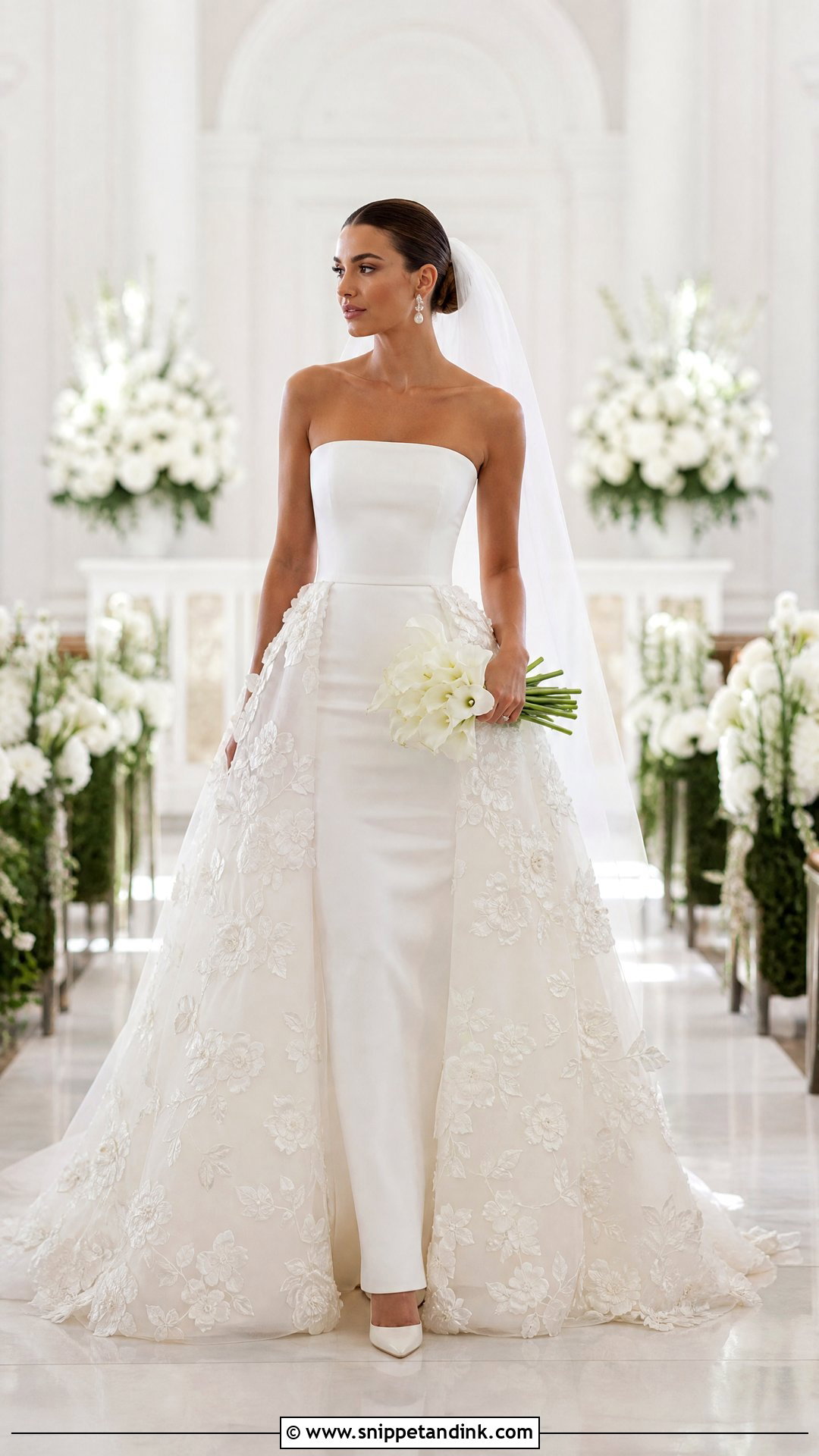
A detachable embroidered overskirt gives you two dresses. Start with a clean fitted column, sheath, or mermaid gown and add a full tulle overskirt covered in flowers for the ceremony; the bodice of the simple dress stays visible above it. Take the overskirt off for the reception. Pointed heels, refined drops and a sleek hairstyle work for both versions, and a long plain veil can come off with the overskirt. Keep the bouquet narrow so the waist detail shows. Plan where the overskirt goes once removed, because embroidered tulle crushes badly if it’s bundled onto a chair.
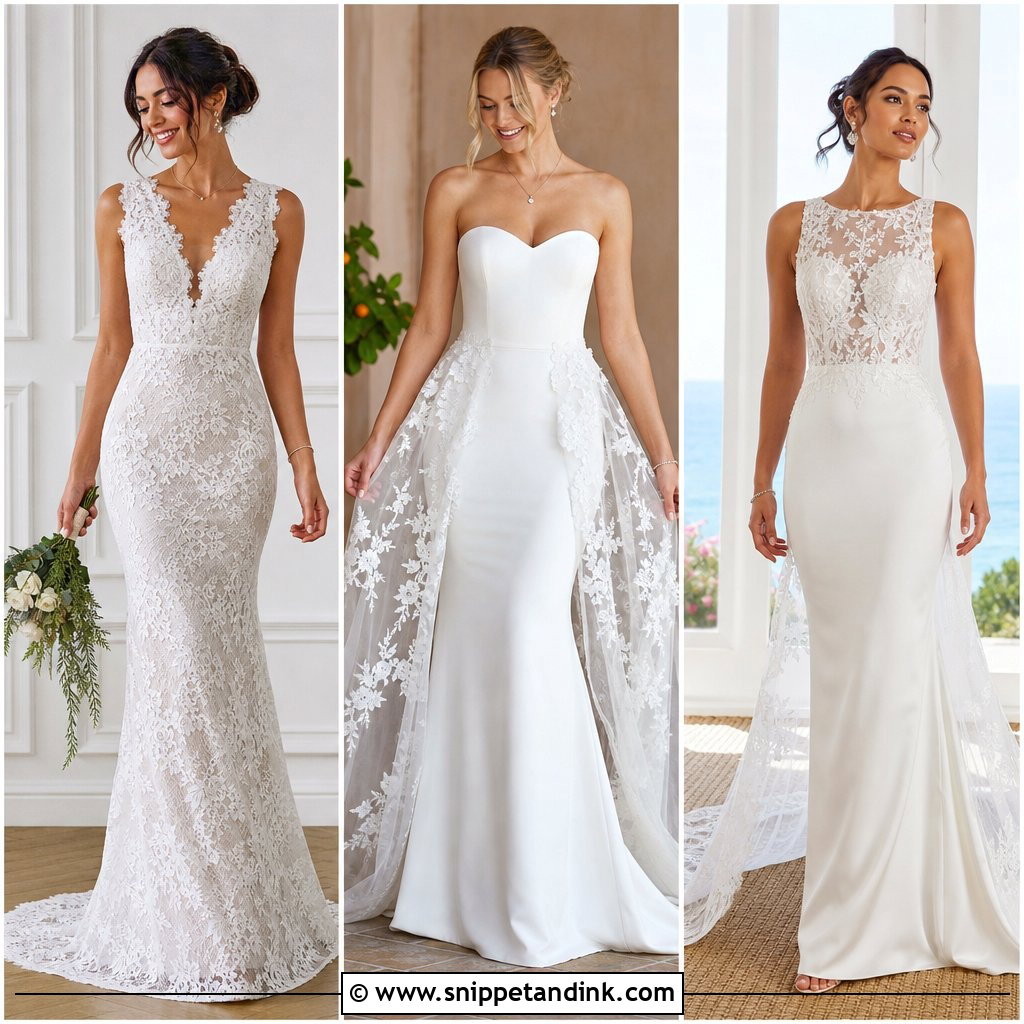
20. Wedding Dress With Embroidered Floral Train
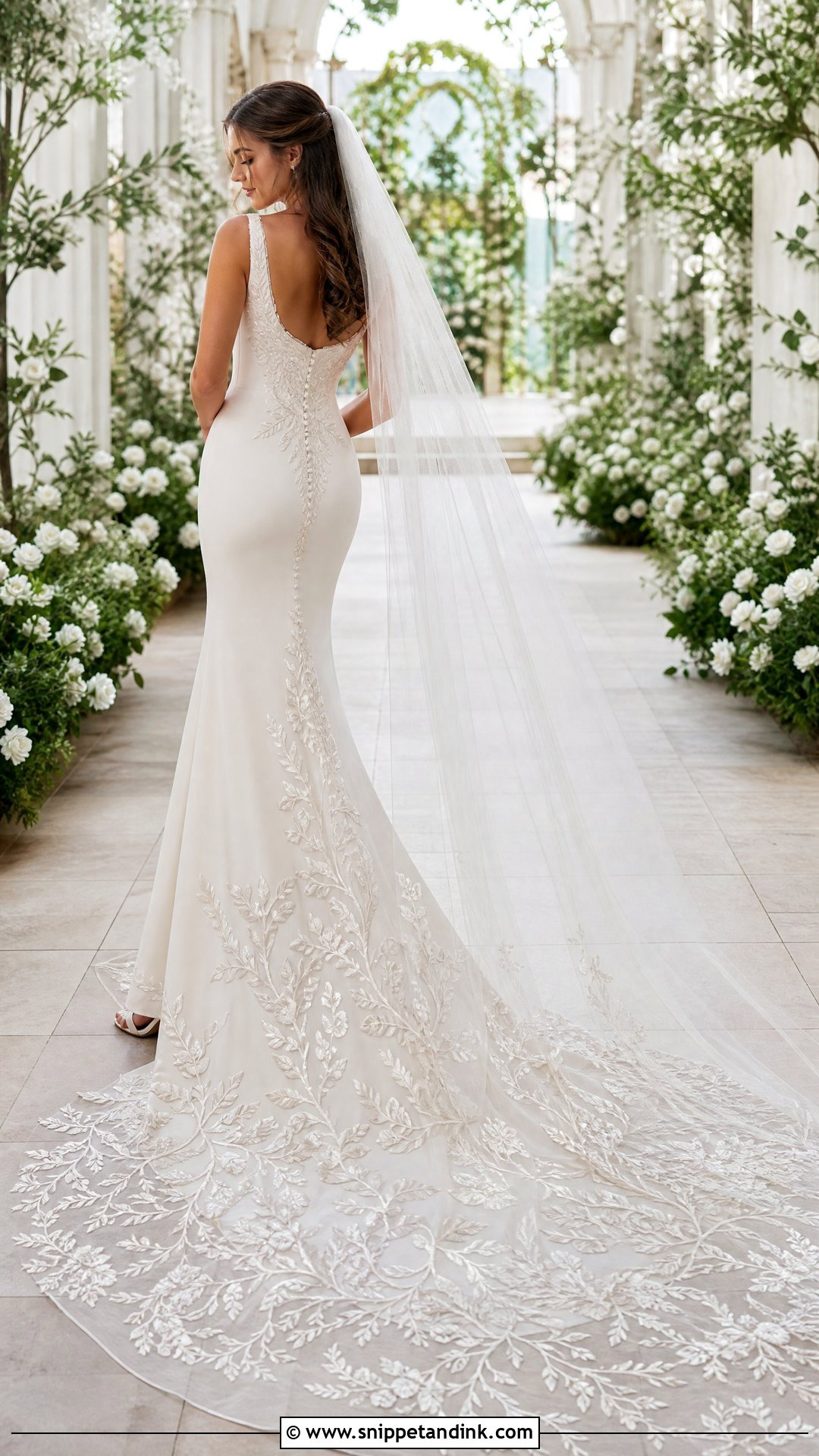
An embroidered train puts the impact behind you and leaves the dress itself calm. The embroidery starts low on the skirt and builds toward the train, often with large flowers mixed among fine vines. Comfortable heels, small earrings and a neat bun or half-up style suit it. Get the veil length right: it should end clearly short of the embroidery or well beyond it, never lying across the flowers. You’ll need a bustle after the ceremony, and on an embroidered train the bustle points should be placed so the lifted fabric shows the flowers instead of folding them under.
Why an Embroidered Gown Needs More Time at the Seamstress
Taking in a plain seam is quick. Taking in a seam that runs through embroidered flowers means removing motifs, altering the seam and stitching the flowers back so the pattern still lines up. Hemming a skirt edged with embroidery works the same way, since the border usually has to be lifted and re-attached at the new length.
In practice that means more fittings and a longer lead time, so start alterations earlier than you would for a plain gown and expect the bill to reflect the hand work. Ask at your first fitting which changes will touch the embroidery. If an alteration can be done from a plain seam instead, it’s often the cheaper and cleaner route.
Should Your Bouquet Copy the Stitched Flowers?
Not exactly. A bouquet that copies every embroidered bloom tends to blend into the dress in photographs, so the flowers in your hands disappear against the ones on your skirt. I’d rather the bouquet repeat one or two colours from the thread and use a different flower shape. Roses on the dress pair well with looser garden flowers in hand; tiny daisies on the dress suit a bouquet with a few larger blooms. Show your florist a close-up photo of the embroidery, not just a full-length shot, so they can match the thread tones.
Where the Flowers Fall Matters More Than How Many There Are
Silhouette, scale of embroidery, comfort and venue decide most of this. Small tonal flowers give quiet texture; coloured thread and raised petals say more. Look at where the flowers fall and whether that flatters your neckline, waist, sleeves or train. Keep shoes simple and jewellery restrained, and pick the veil with the embroidery in mind. At fittings, walk, sit, lift your arms and test the bustle. The dress you end up loving will be the one whose flowers still sit right after a full day of moving in it.
You'll Like These Ideas:



Leave a Reply