
Lebanese bridal design has a recognizable signature: sculpted bodices, dense hand embroidery, long trains and veils finished with pearls or lace. It pairs tradition with couture-level glamour, and that’s exactly why I spend so much fitting time on these gowns. A Lebanese wedding asks a lot of a dress. There’s usually a zaffe entrance, hours of dancing and a very late night, so the gown has to move as well as it photographs. Below are the silhouettes and finishes brides are drawn to, with the practical notes I’d give at a fitting.
A Gown That Survives the Zaffe and the Dabke
A Lebanese wedding is rarely a quiet walk down an aisle. The zaffe brings you in with drums, dancers and a crowd pressing close, and later the dabke pulls everyone into a line of stamping, kicking steps. Some brides are lifted onto shoulders or chairs. Any gown looks good standing still; what matters is how it behaves in that crowd.
Hem clearance for dabke steps
Dabke is full of stamps and small kicks, and a hem that brushes the floor in front will end up under your foot. I set the front hem to just clear the shoe and keep the extra length for the back.
If you’ll be lifted
Tell your seamstress if family plan to lift you. A well-fitted corset spreads the pressure of hands at the waist, and a strapless bodice needs a firm grip so it doesn’t slide. A huge skirt makes lifting awkward for everyone, which is another argument for a detachable overskirt.
Heat in a full ballroom
Packed rooms get hot, and heavy embroidery and multiple layers hold heat. A breathable lining and a lighter second outfit for late dancing spare you a lot of discomfort.
1. Lebanese Ball Gown Wedding Dress
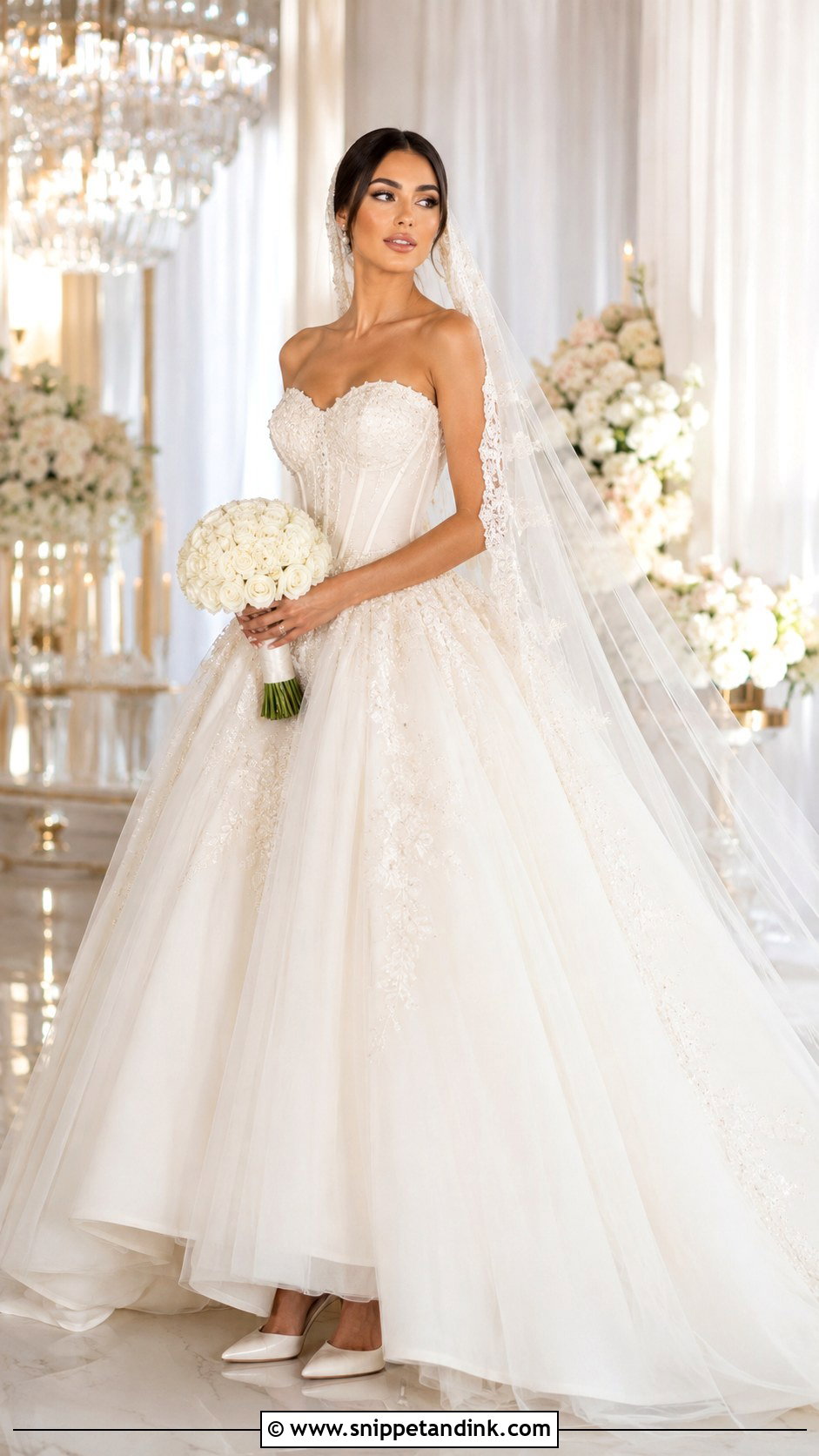
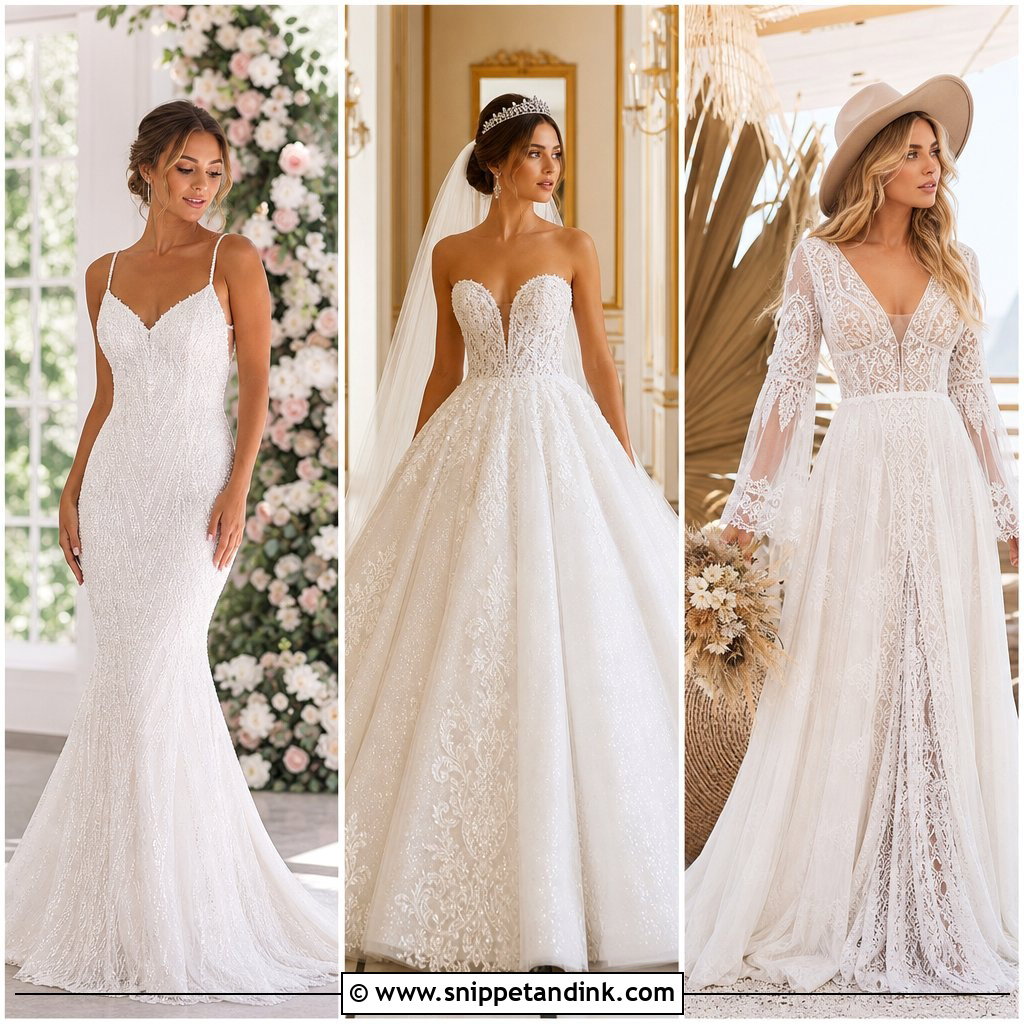
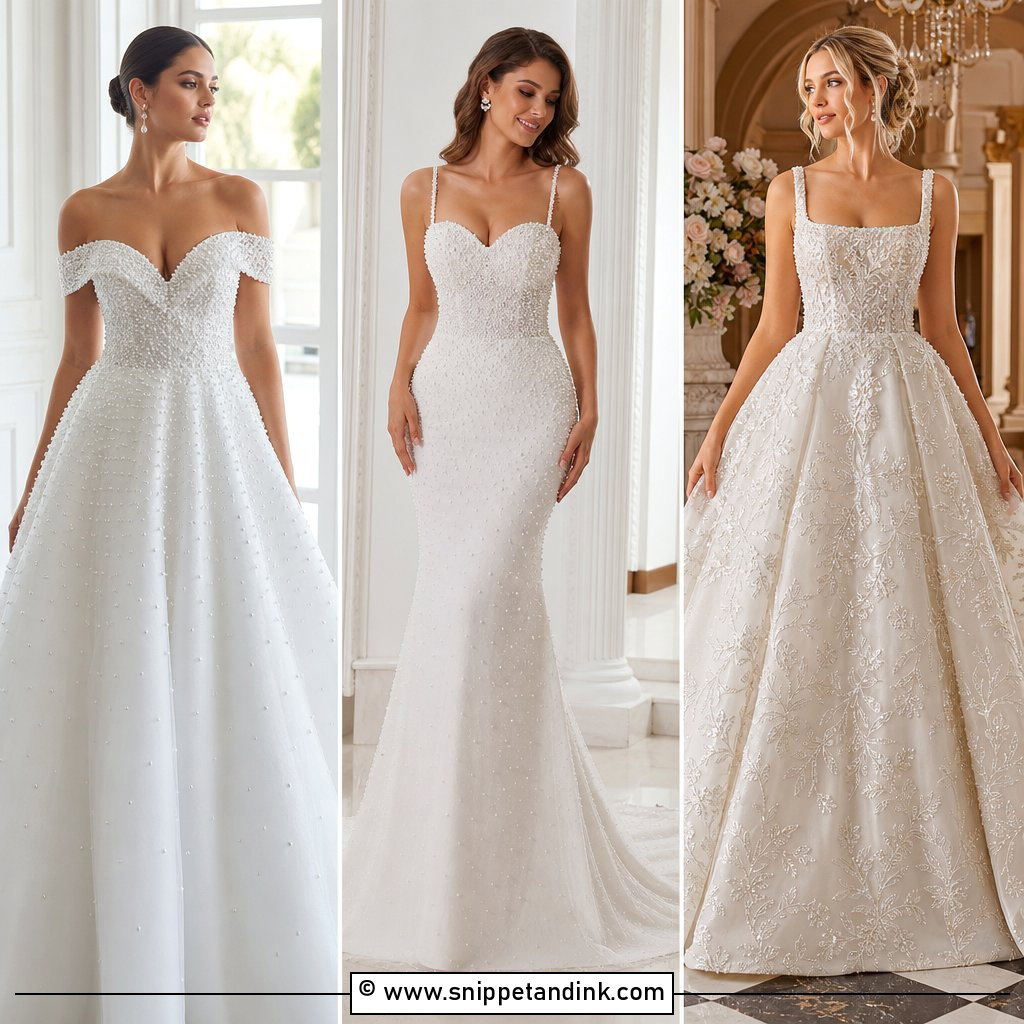
A ball gown is the shape for a grand, royal entrance, and in Lebanese bridal it usually means a structured corset over a full satin, tulle or organza skirt. Embroidery and crystal on a skirt that size add real weight, so I always ask where the beading sits. Concentrated on the bodice, it’s manageable. Scattered over the whole skirt, you’ll feel it by the second hour. A cathedral veil and a neat low bun keep the neckline clean.
2. Lebanese Mermaid Wedding Dress
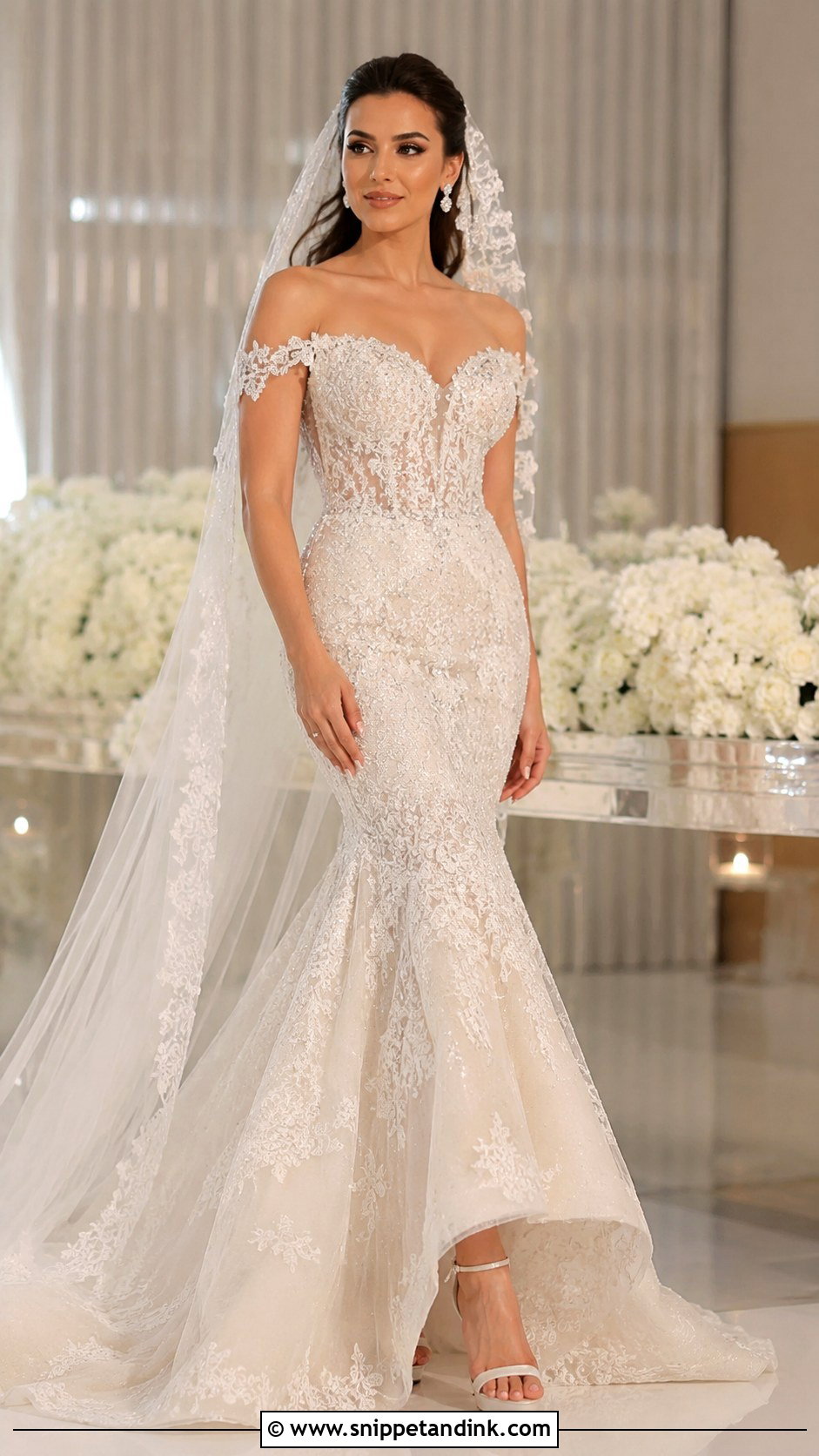
Mermaid gowns live or die on tailoring. The fit has to be close through the hips without pulling, and the flare should start where your knees can still move, because a Lebanese reception means dancing. If you can’t take a full stride in the fitting room, the flare is set too low. Lace and illusion panels can trace the shape, but I’d rather see a perfect fit with less decoration than the reverse. Ankle-strap heels keep you steady once the floor gets crowded.
3. Lebanese Long Sleeve Wedding Dress
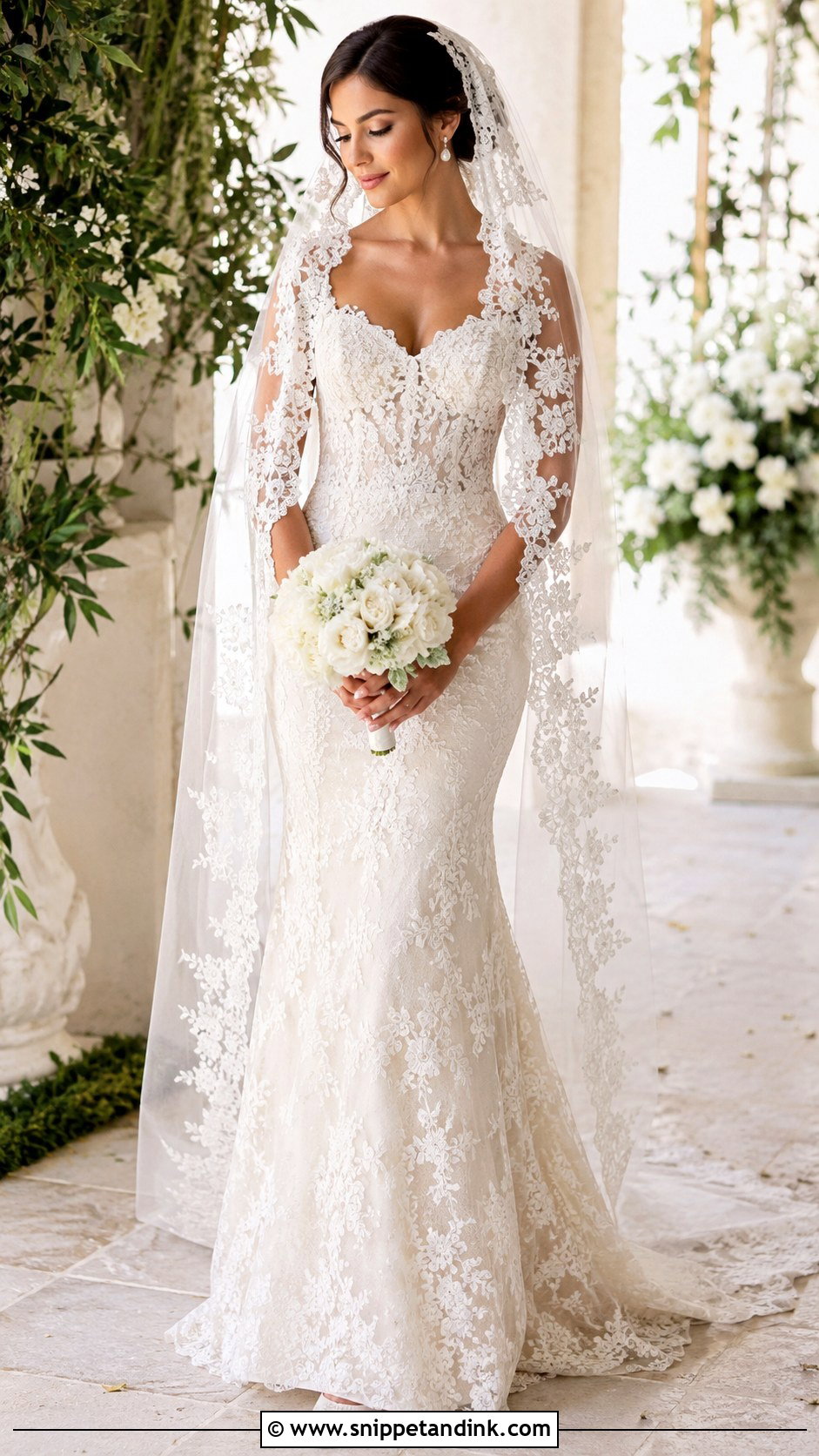
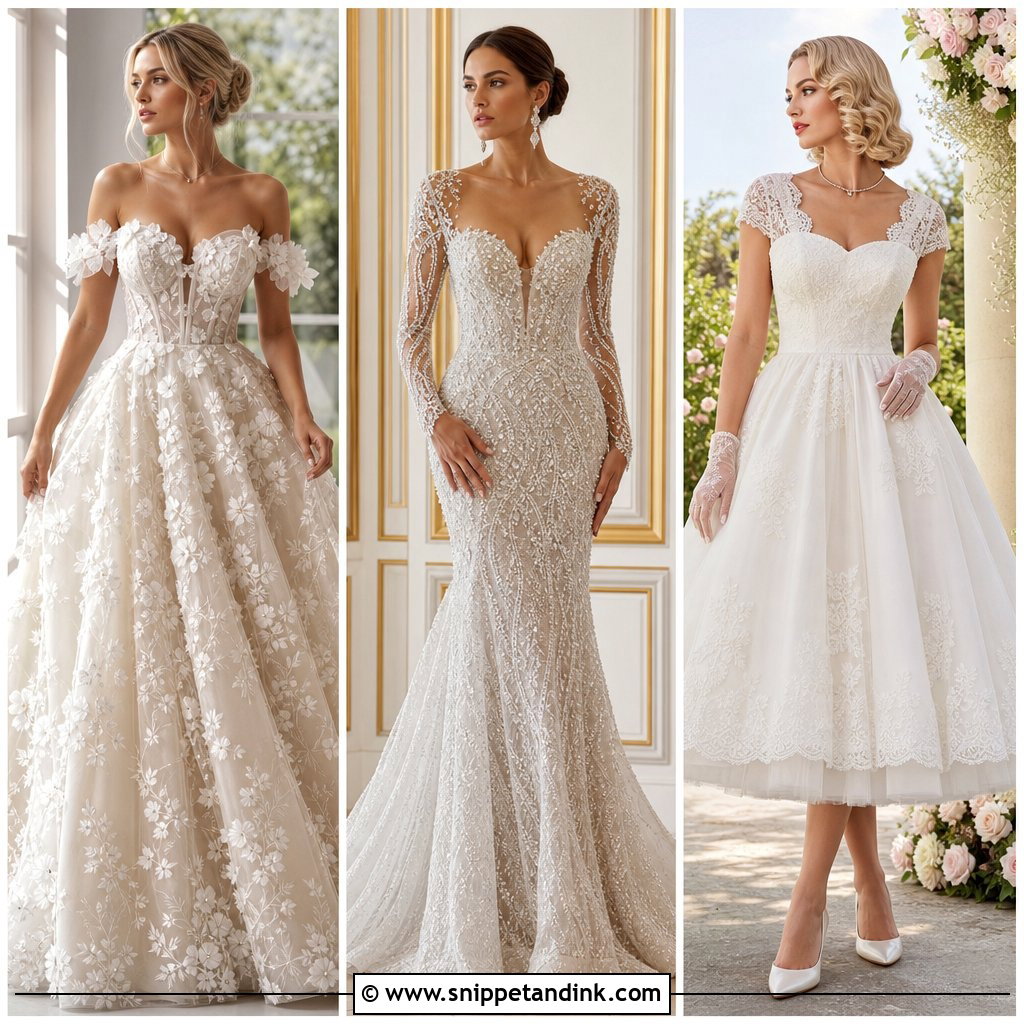
In Lebanese bridal the sleeves are often the showpiece, sheer lace with hand embroidery running from shoulder to wrist. Check that the motifs mirror each other on both arms and finish neatly at the cuff rather than being cut through. Lined crepe sleeves give a cleaner, modern finish. Raise your arms above your head at the fitting, since tight sleeves stop you clapping along to the drummers. A smooth chignon and pearl studs keep the sleeves in focus, and they make sense in cooler months, giving coverage without losing any drama.
4. Lebanese Off Shoulder Wedding Dress
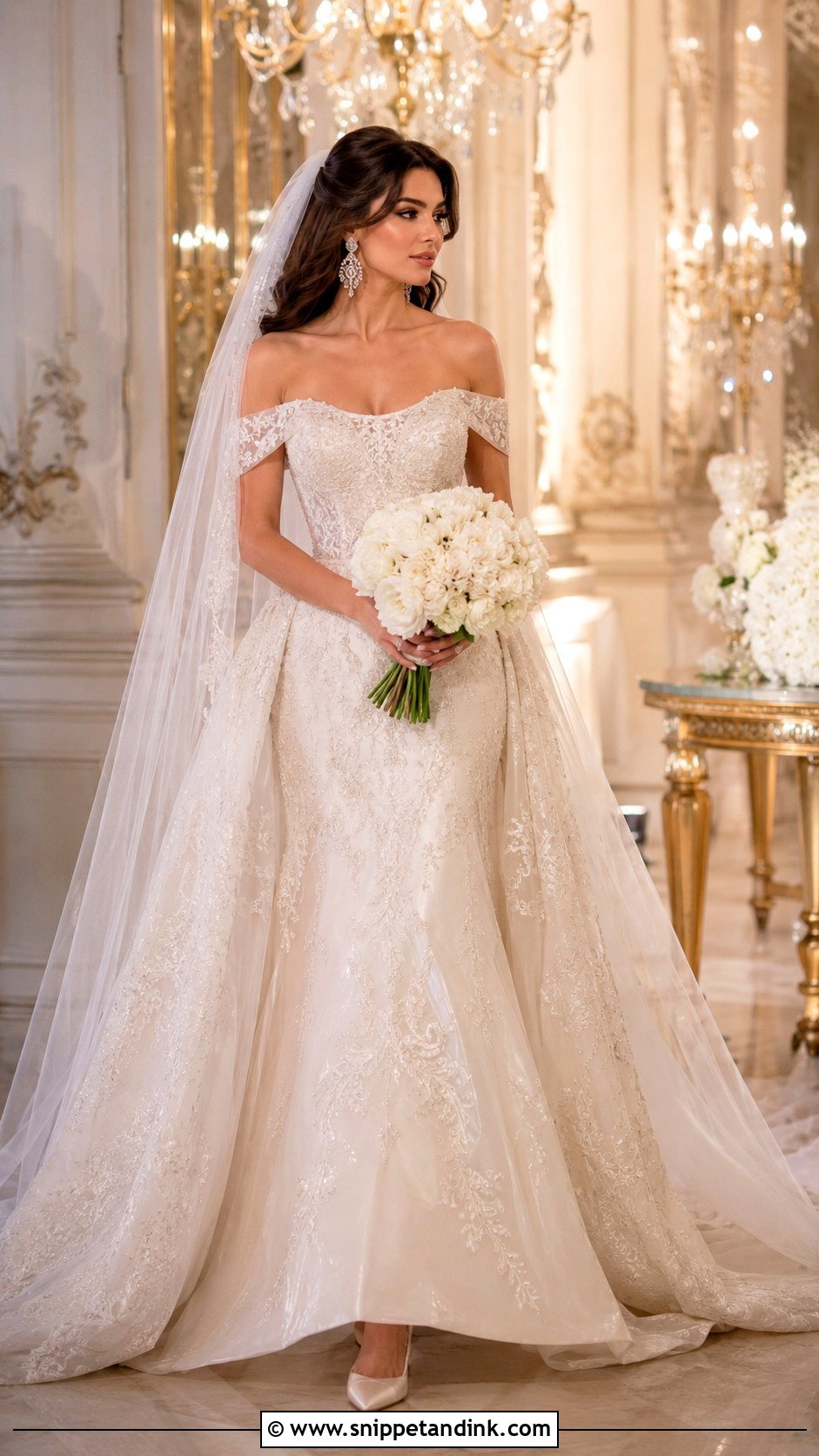
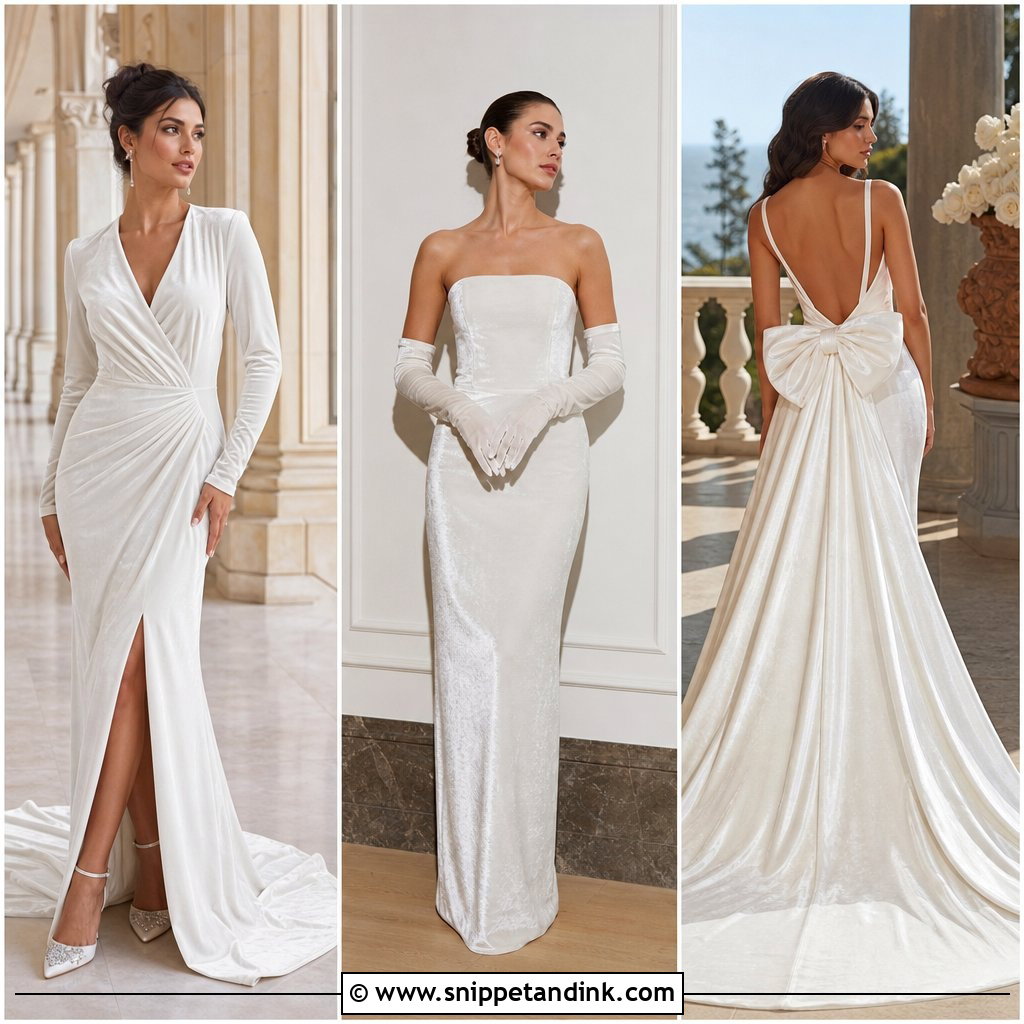
An off shoulder neckline frames the collarbone and leaves room for embroidery across the bodice. Its weakness at a dancing wedding is that it pins the arms down, so ask for a band with light boning or a silicone grip that holds without digging in. A structured version over a full skirt reads regal, a fitted one reads sleek. Skip the necklace in favor of statement earrings, and let candlelight do the rest.
5. Lebanese Lace Wedding Dress
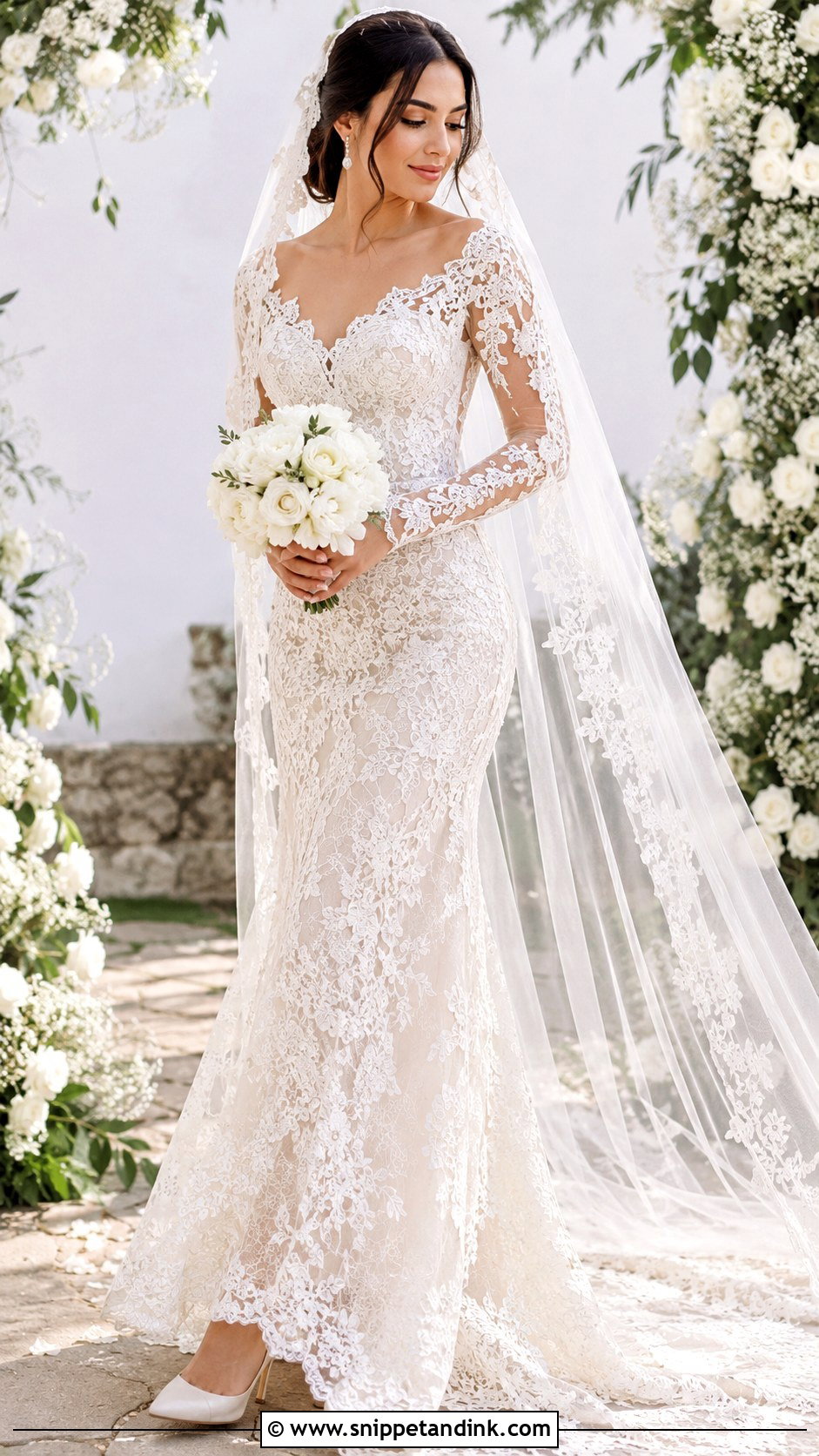
Lace sets the tone before anything else does. Floral lace over tulle is soft and airy. Corded lace, where each motif is outlined with a raised cord, is richer and holds up better in close-up photography. Keep the bouquet simple, because a busy arrangement against busy lace turns into noise in photos. Corded lace is also heavier, so it suits a winter ballroom more than a hot summer terrace.
6. Lebanese Beaded Wedding Dress
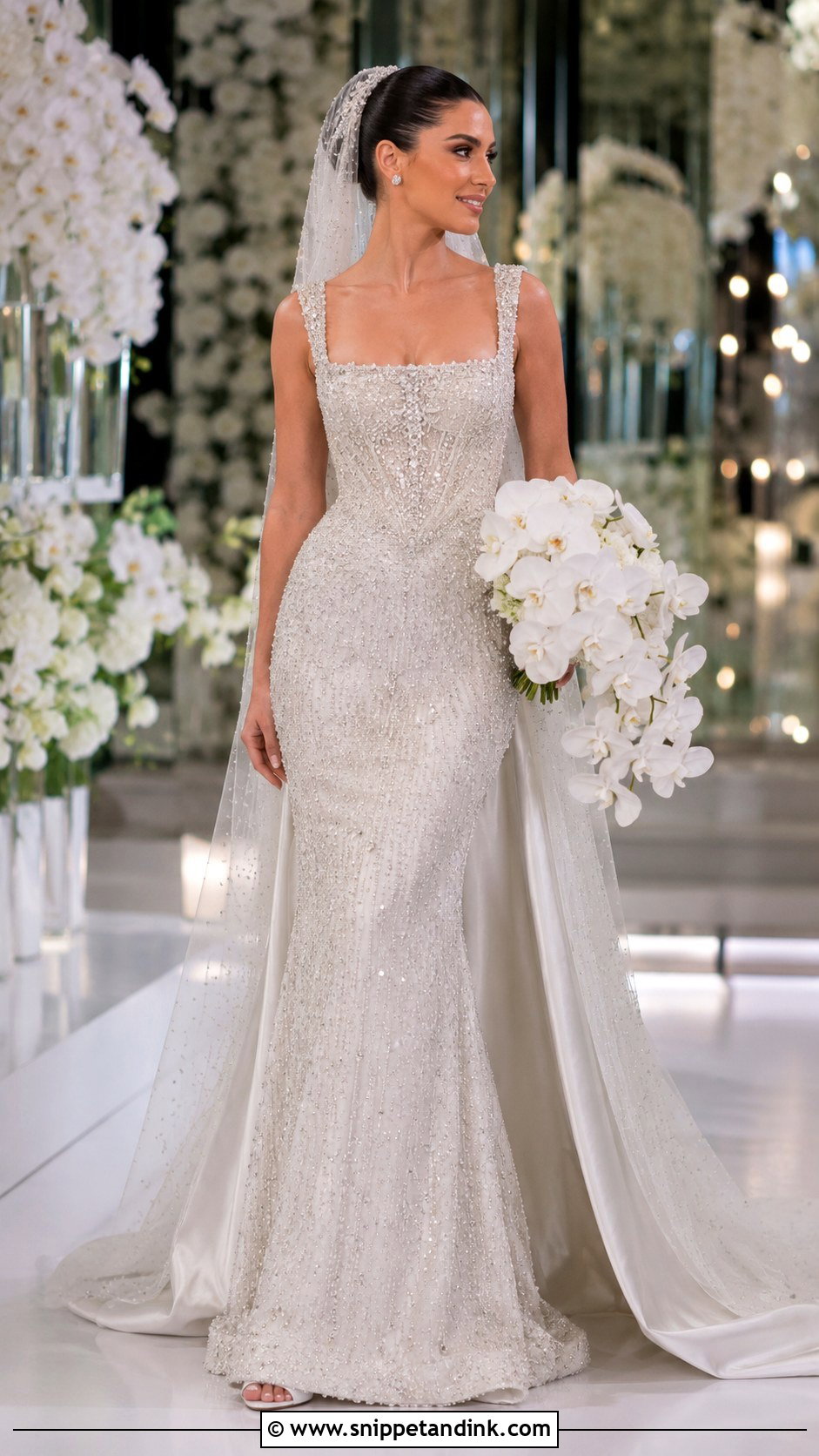
Hand beading is what makes a beaded Lebanese wedding dress catch reception lights, but placement matters more than quantity. Beads on the bodice and outer sleeves sparkle where the camera looks; beads on the inside of the arms scratch with every hug, so I ask for them to stop short there. Silver and crystal on ivory look classic, and a champagne layer beneath adds warmth. A sleek updo lets the work show, and the veil should stay plain.
7. Lebanese Princess Wedding Dress
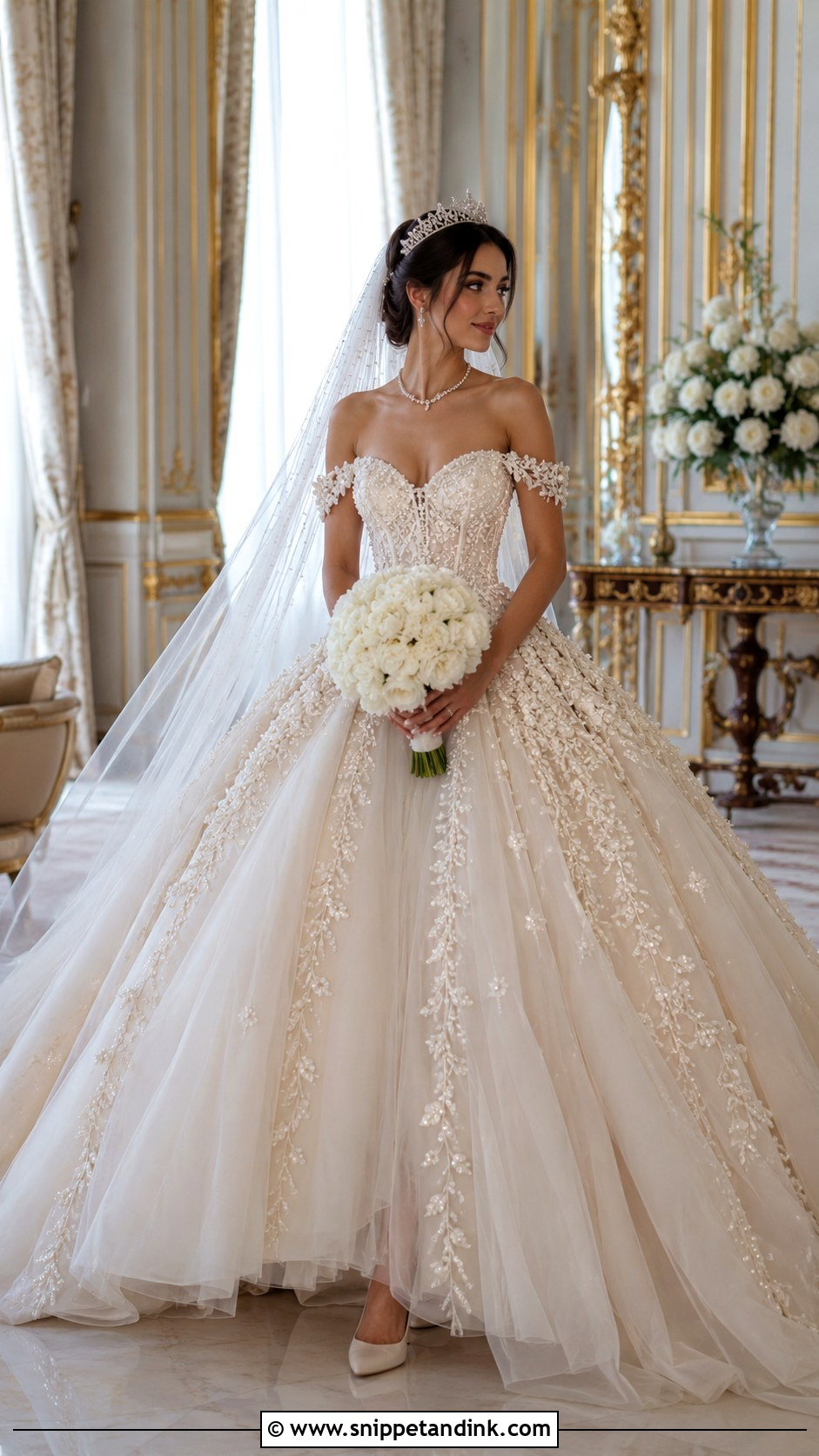
A Lebanese princess wedding dress is all about volume: a fitted corset, a defined waist and layer after layer of tulle or organza, often with embroidered florals and a long train. Volume like this needs planning. How will you get into the car? How will you sit at the head table? Who manages the train during the zaffe? Answer those before the final fitting. A crystal comb and cathedral veil finish it, and I’d keep the jewelry small.
8. Lebanese Satin Wedding Dress
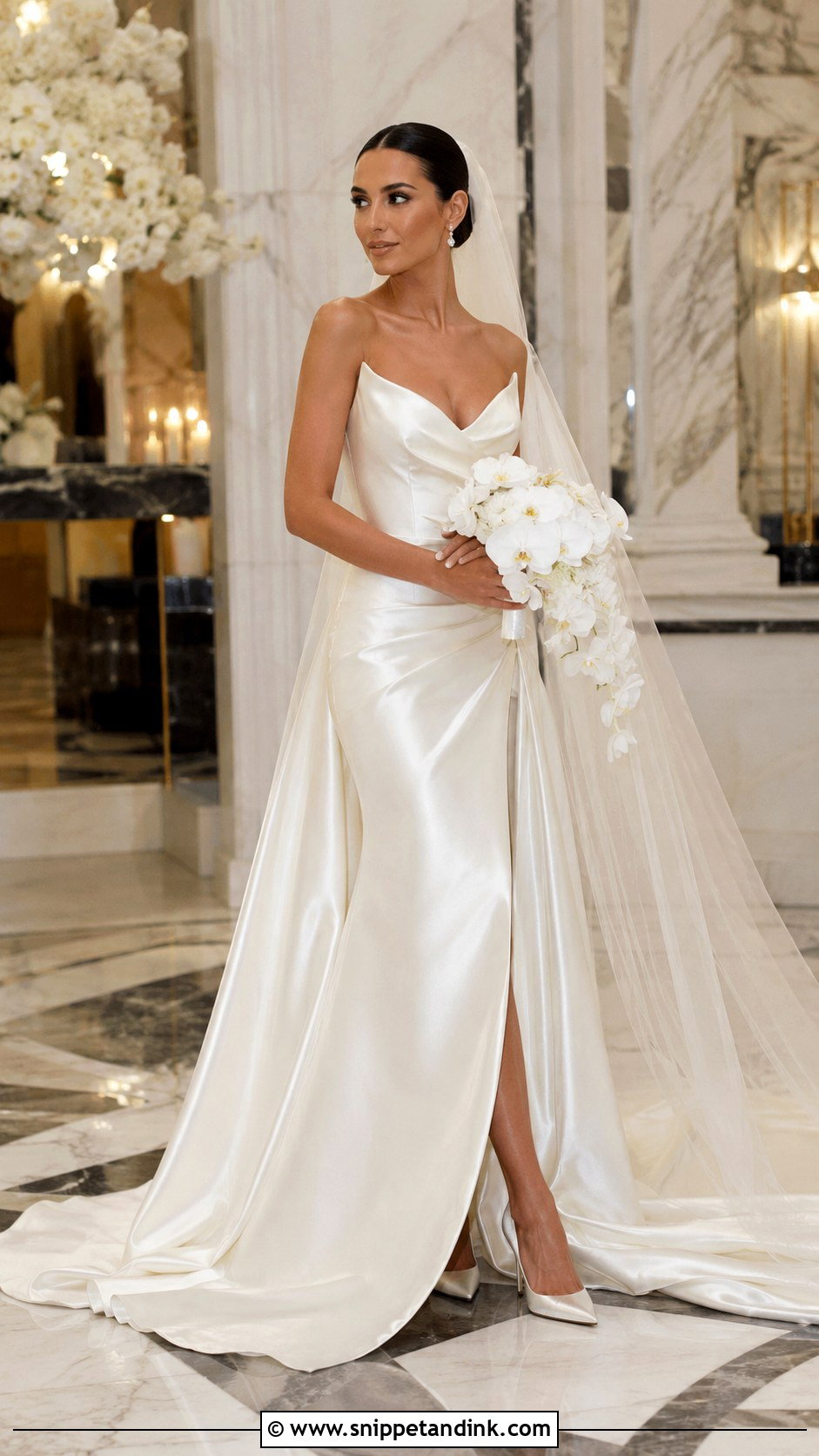
Satin has its own shine, so it doesn’t need beading to look expensive. That also means it hides nothing; a pull at the side seam or a wrinkle at the waist shows under ballroom lights. A structured bodice, a clean neckline and a long train make it modern and regal at once. Satin creases when you sit for a long dinner, so plan a quick steam before the evening portraits.
9. Lebanese Tulle Wedding Dress
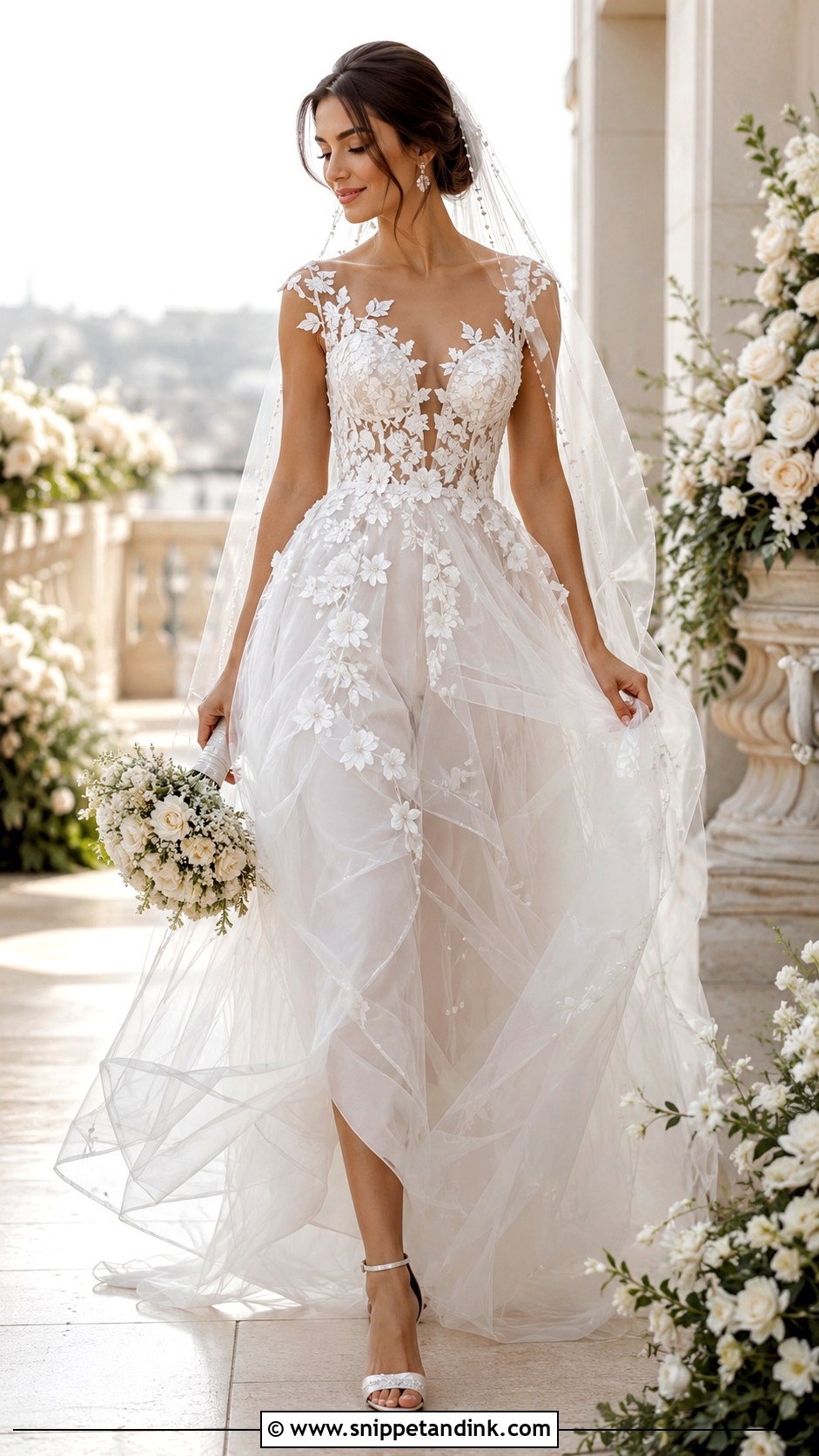
Tulle gives volume without stiffness, and it moves well in walking shots and on the dance floor. The trade-off is snagging. A bracelet clasp or the groom’s cufflink can pull a thread across the skirt in a second. Choose a corset top with floral appliqué for romance, or a plain bodice over a full skirt for something lighter. A veil scattered with pearls echoes the softness of the skirt on a garden terrace.
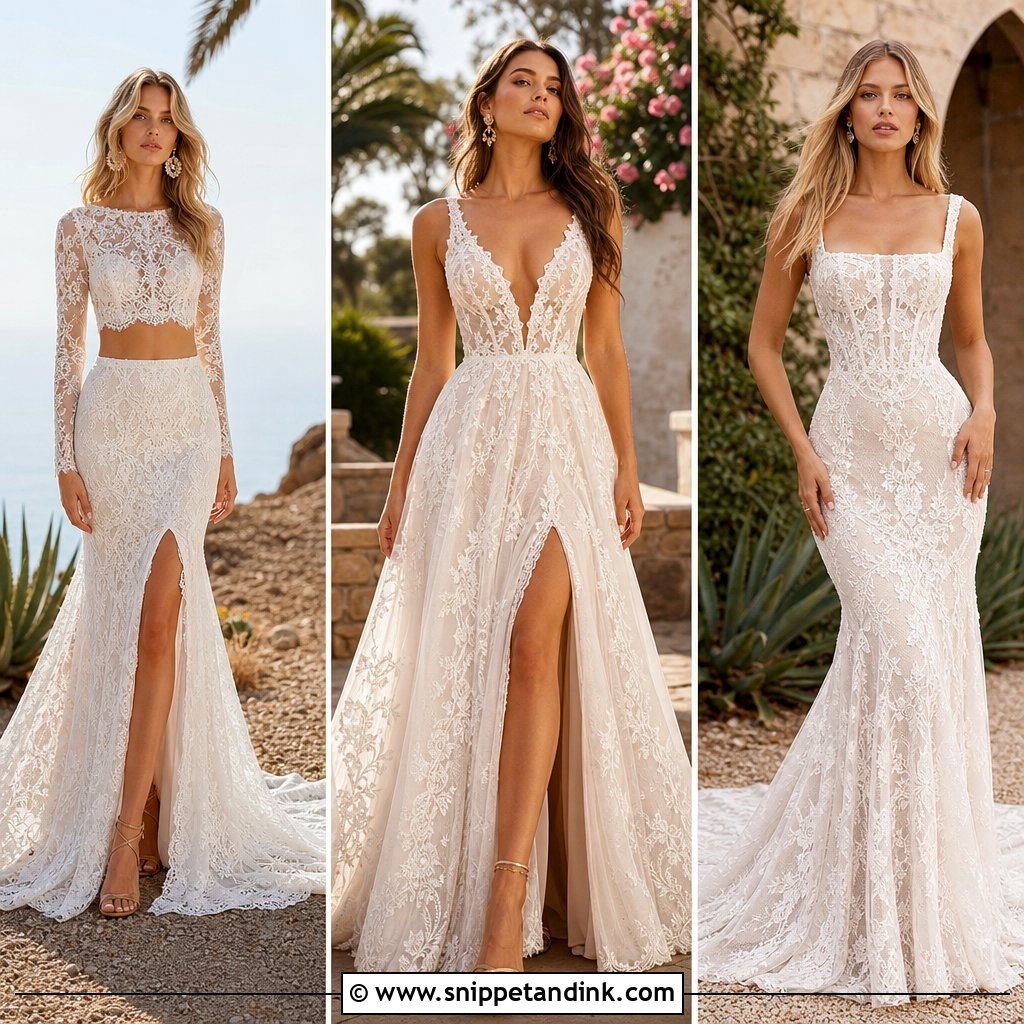
10. Lebanese A Line Wedding Dress
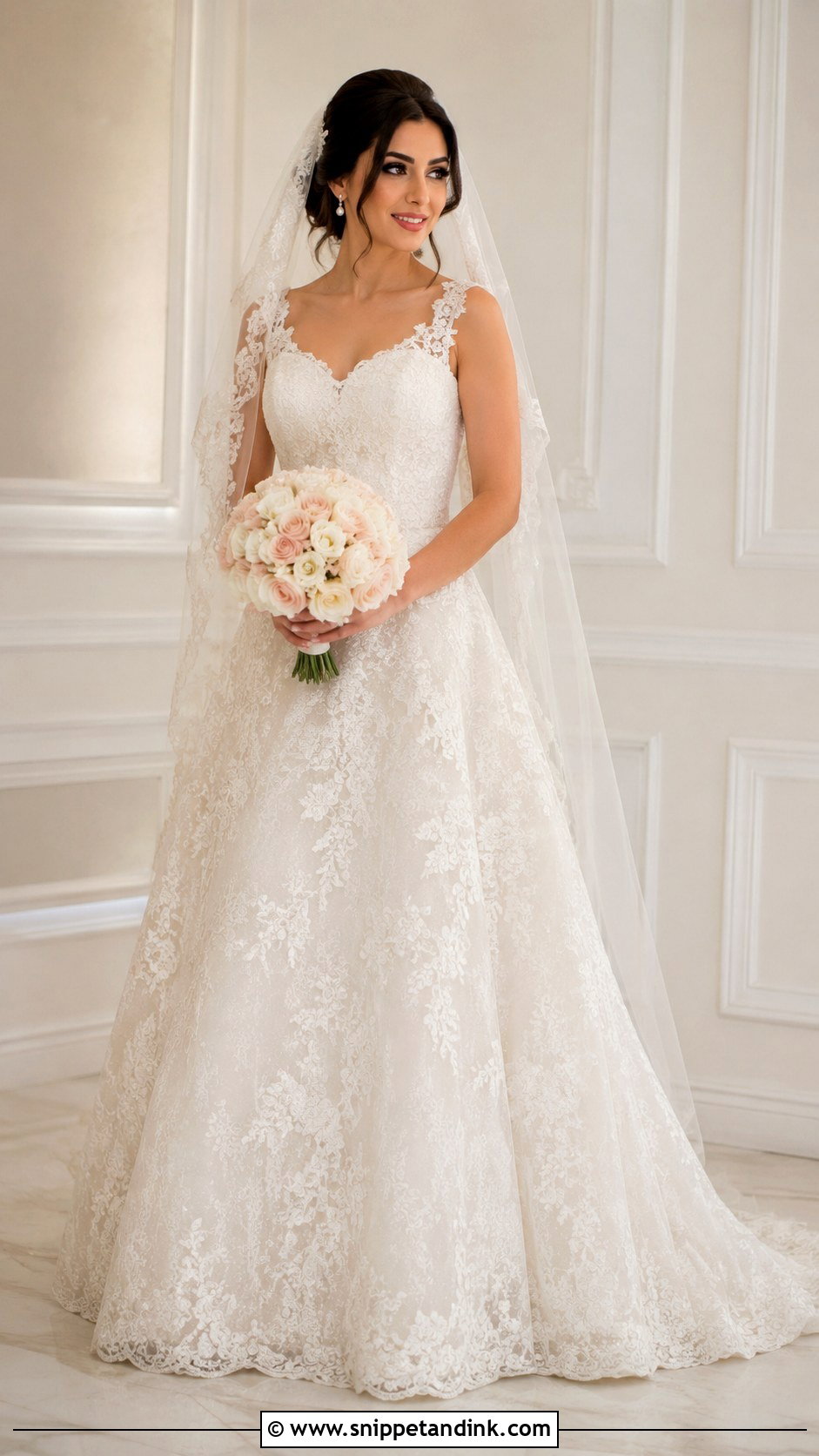
An A line gives shape without the weight of a ball gown, and it’s the silhouette I recommend most to brides worried about a long night of dancing. Lace, beading and satin all suit it. Wear block or kitten heels if the party runs late; you’ll be on your feet through the zaffe, the first dance and the dabke. A medium veil and a white and blush bouquet keep it romantic.
11. Lebanese Corset Wedding Dress
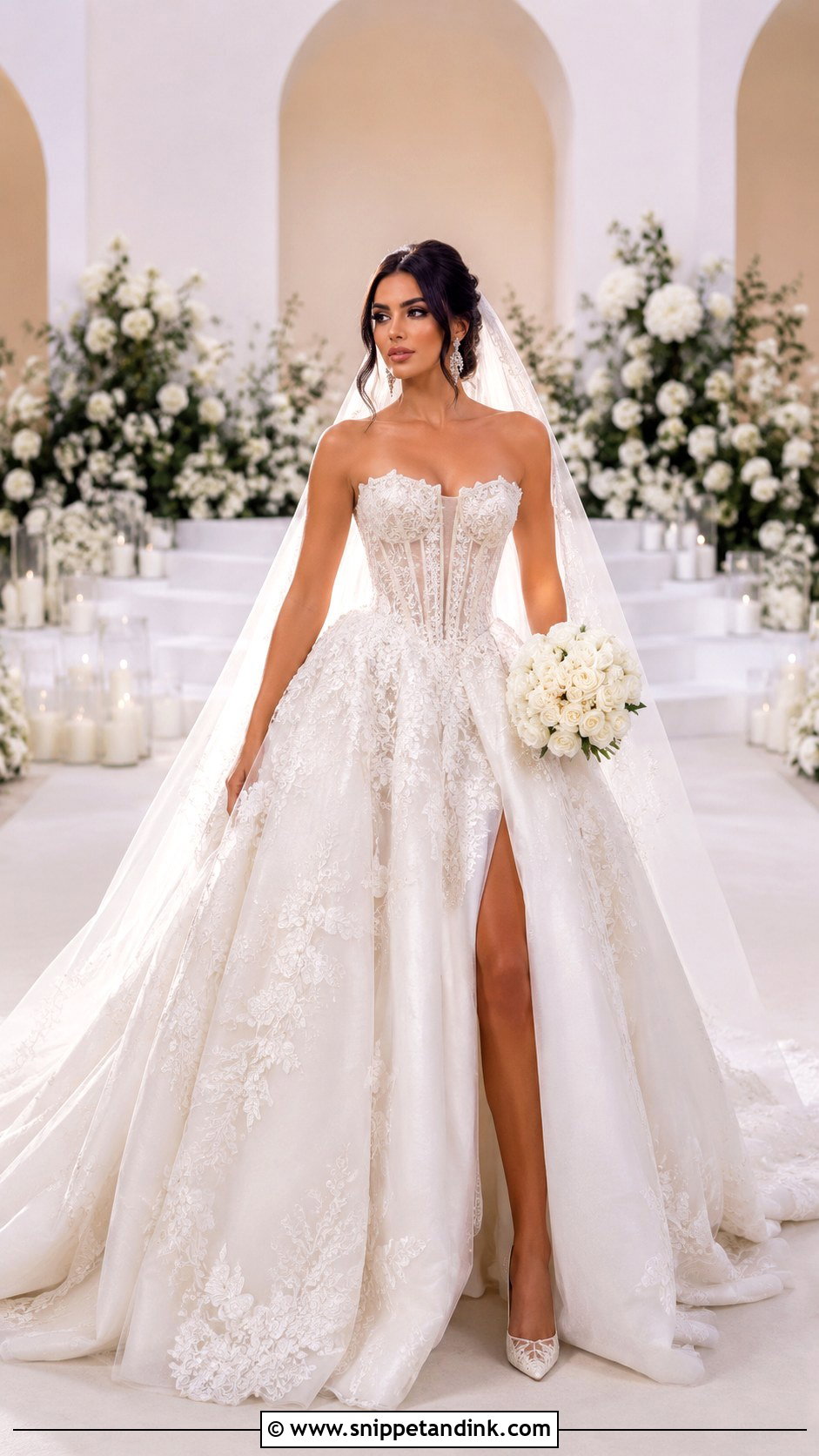
A corset bodice supports the waist and gives the whole gown its shape, which is why it sits under so many ball gowns and mermaid styles. Choose refined boning, lace appliqué or subtle pearls for a couture-inspired finish. Good corsetry spreads pressure evenly. If any single bone presses into your ribs when you sit or breathe in, it needs adjusting before the next fitting. With a detailed bodice, skip the necklace.
12. Lebanese Cape Wedding Dress
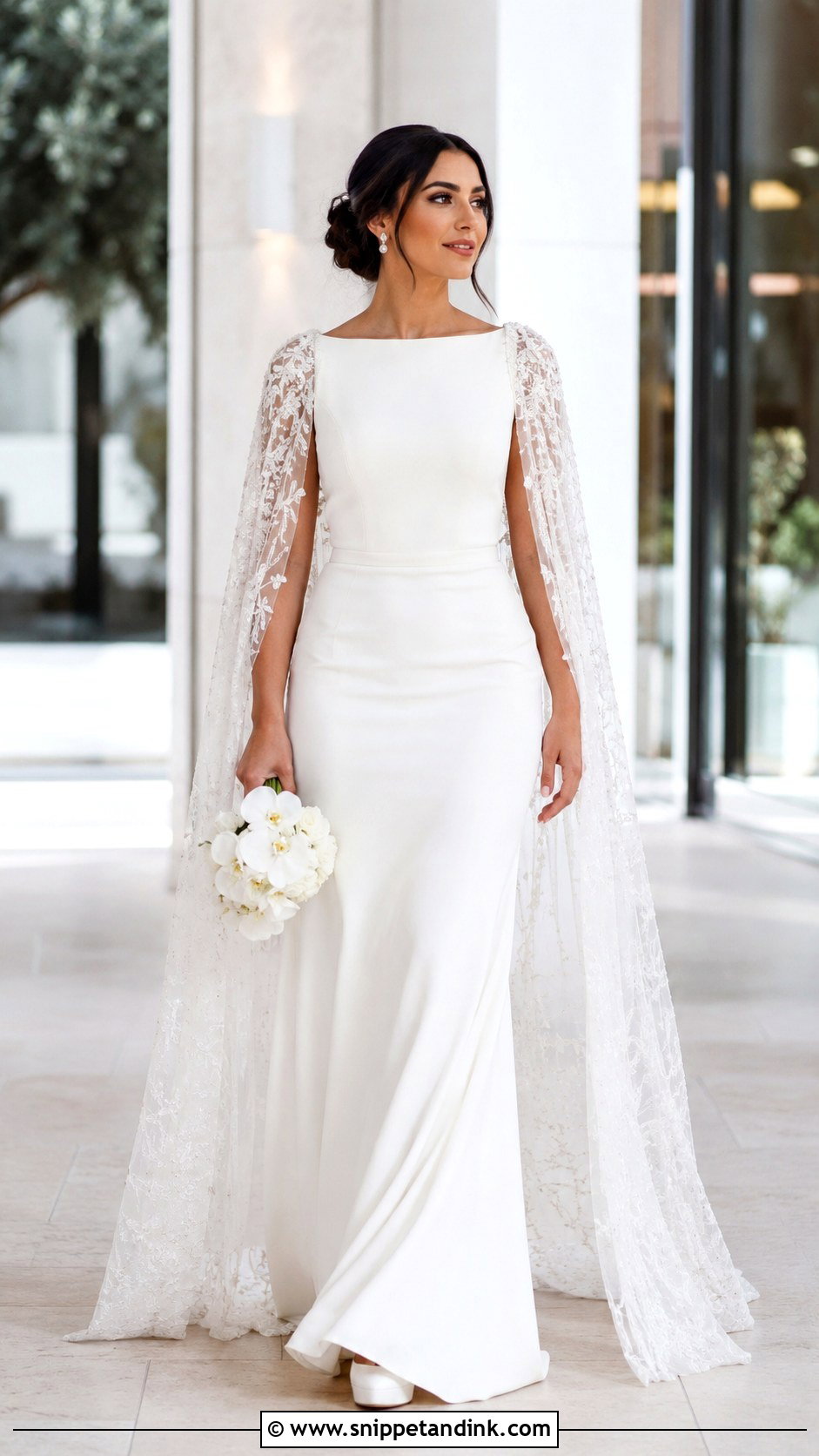
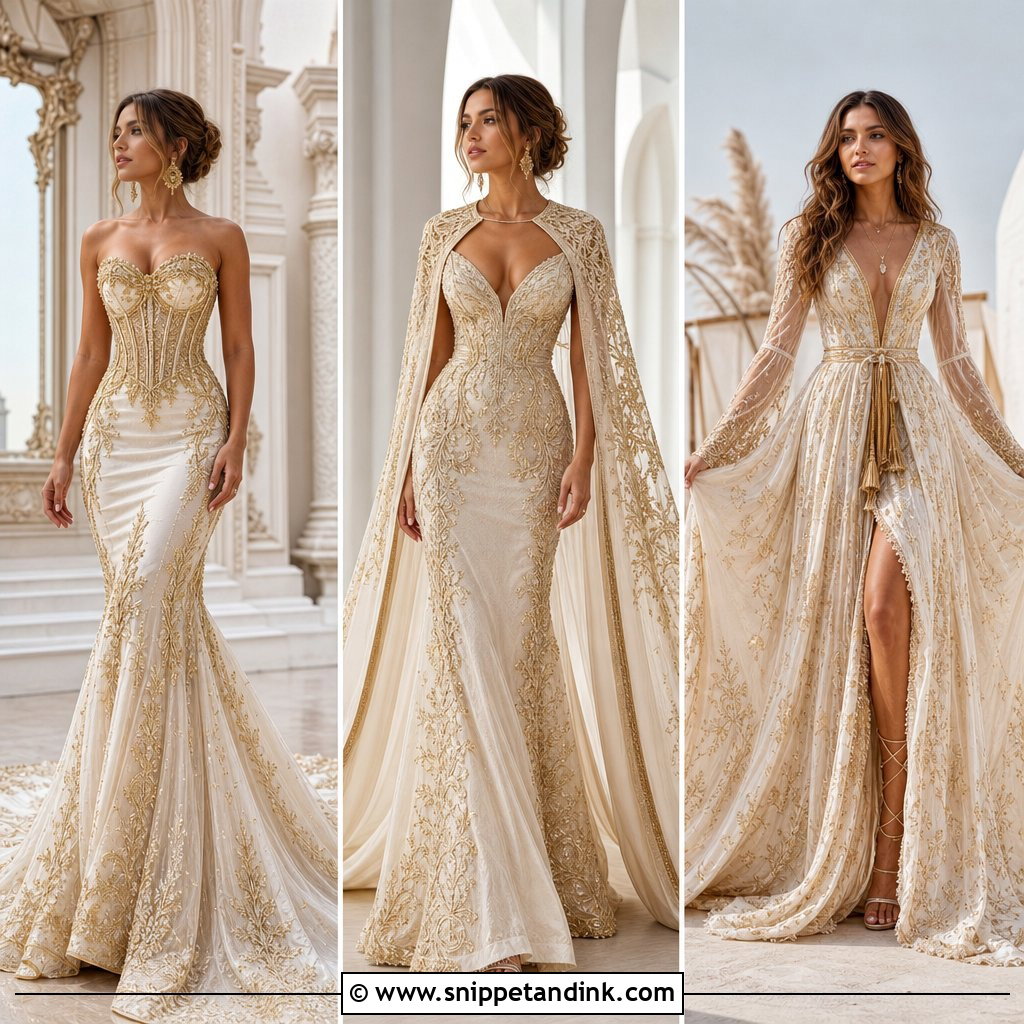
A cape replaces the veil and gives you a dramatic entrance without weight on your head. A sheer cape with embroidery, pearls or lace flows from the shoulders as you walk, which looks especially good during a slow zaffe procession. It works over a fitted crepe dress, a satin gown or a simple A line. Check how it fastens. Capes held only at the neckline pull backward when you move, so I prefer one stitched into the shoulder seams.
13. Lebanese High Neck Wedding Dress
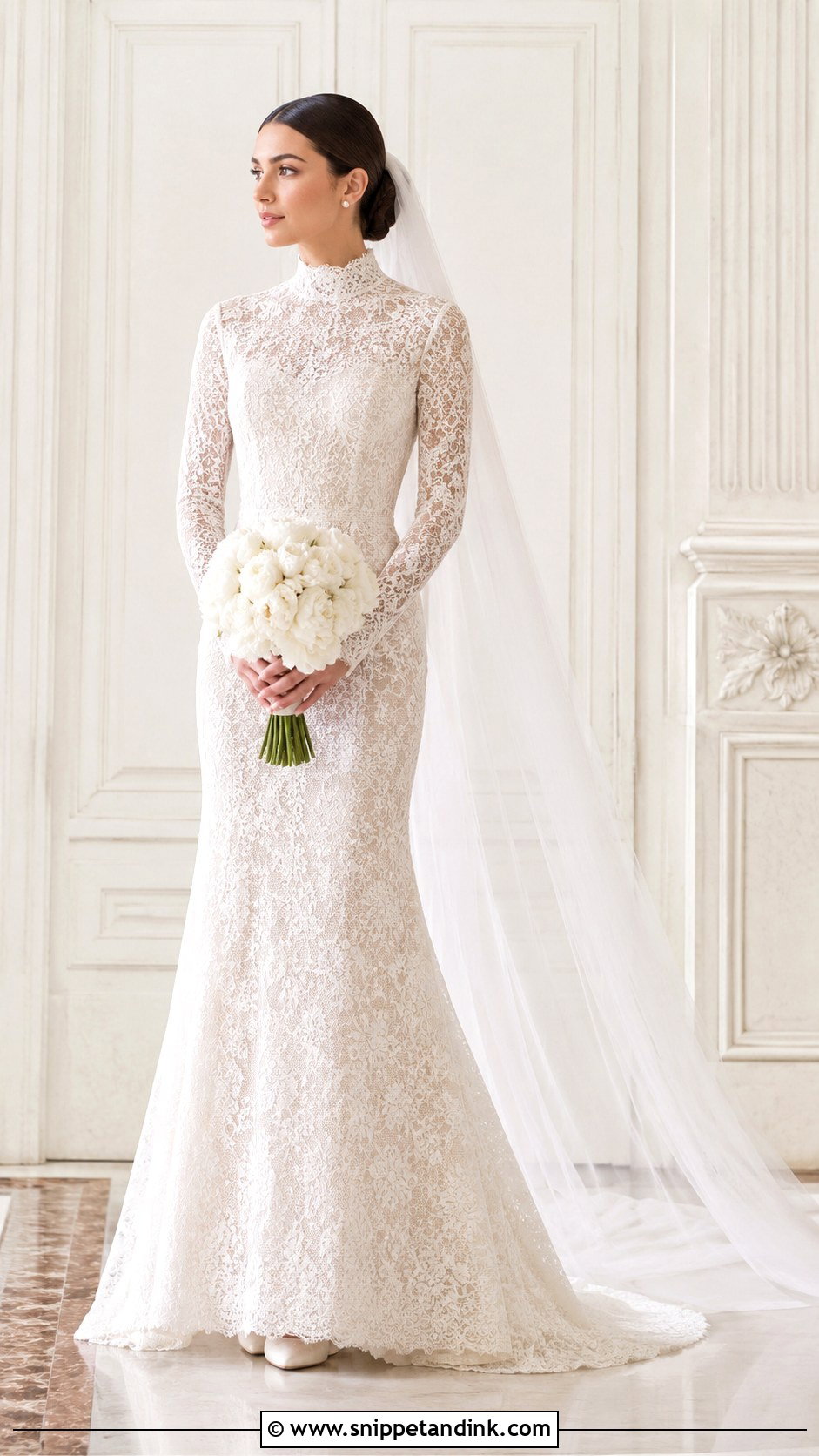
A high neck feels refined and regal. Sheer lace at the throat softens it, while a fully structured collar is more formal. Have the neck measured with you seated as well as standing, because a stiff collar can press into the chin when you look down at your vows or your plate. Wear your hair low and keep earrings small. A long plain veil adds elegance without crowding the neckline.
14. Lebanese Pearl Wedding Dress
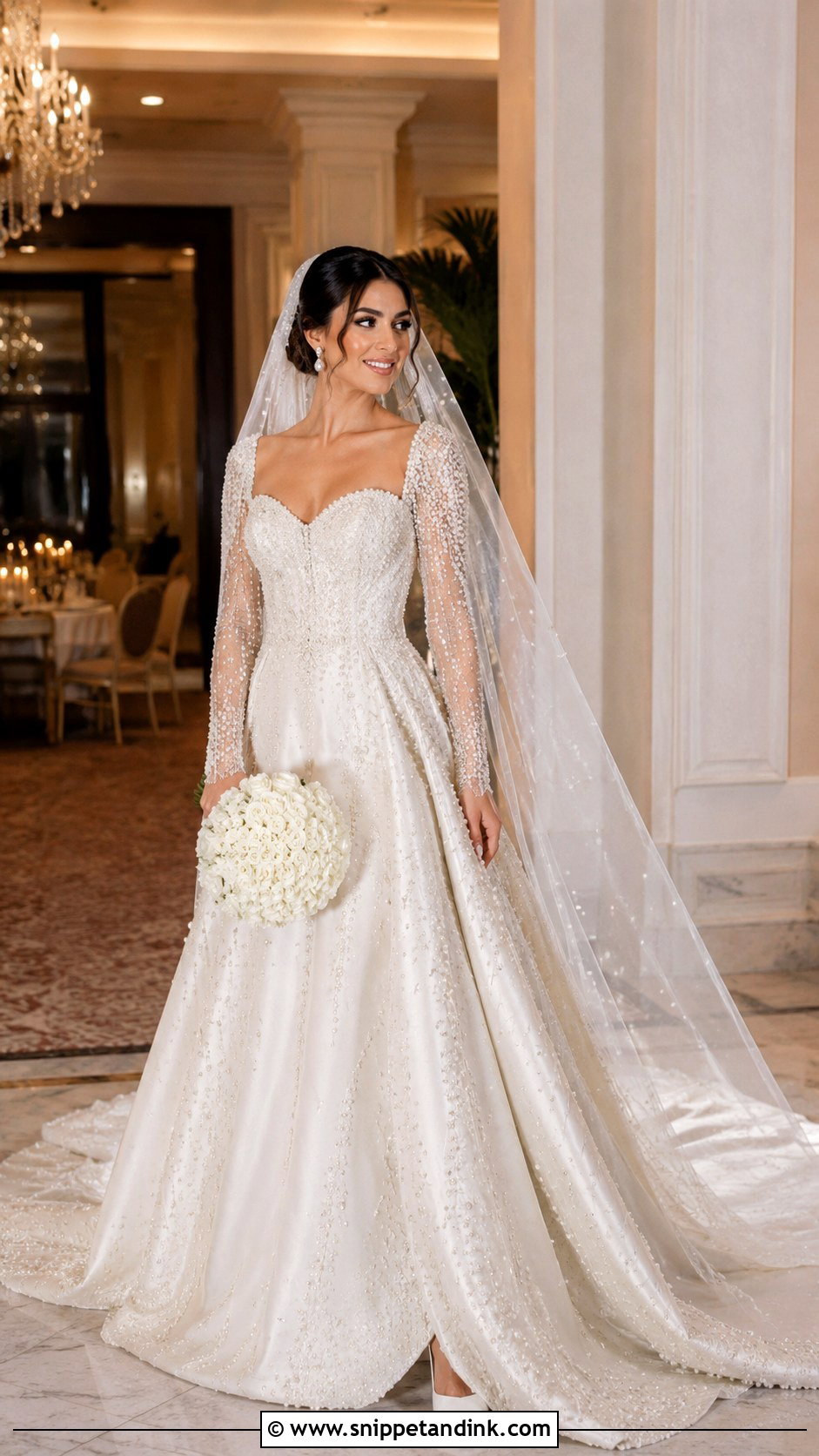
Pearls give a soft glow where crystals give sparkle. They can decorate the bodice, sleeves, veil or skirt. Pearls are heavier than they look, and a pearl-covered veil can drag on its comb, so ask for a sturdy comb sewn on securely. Ivory or soft white fabric lets the pearls blend into the gown. Close-up portraits are where this texture really shows.
15. Lebanese Floral Wedding Dress
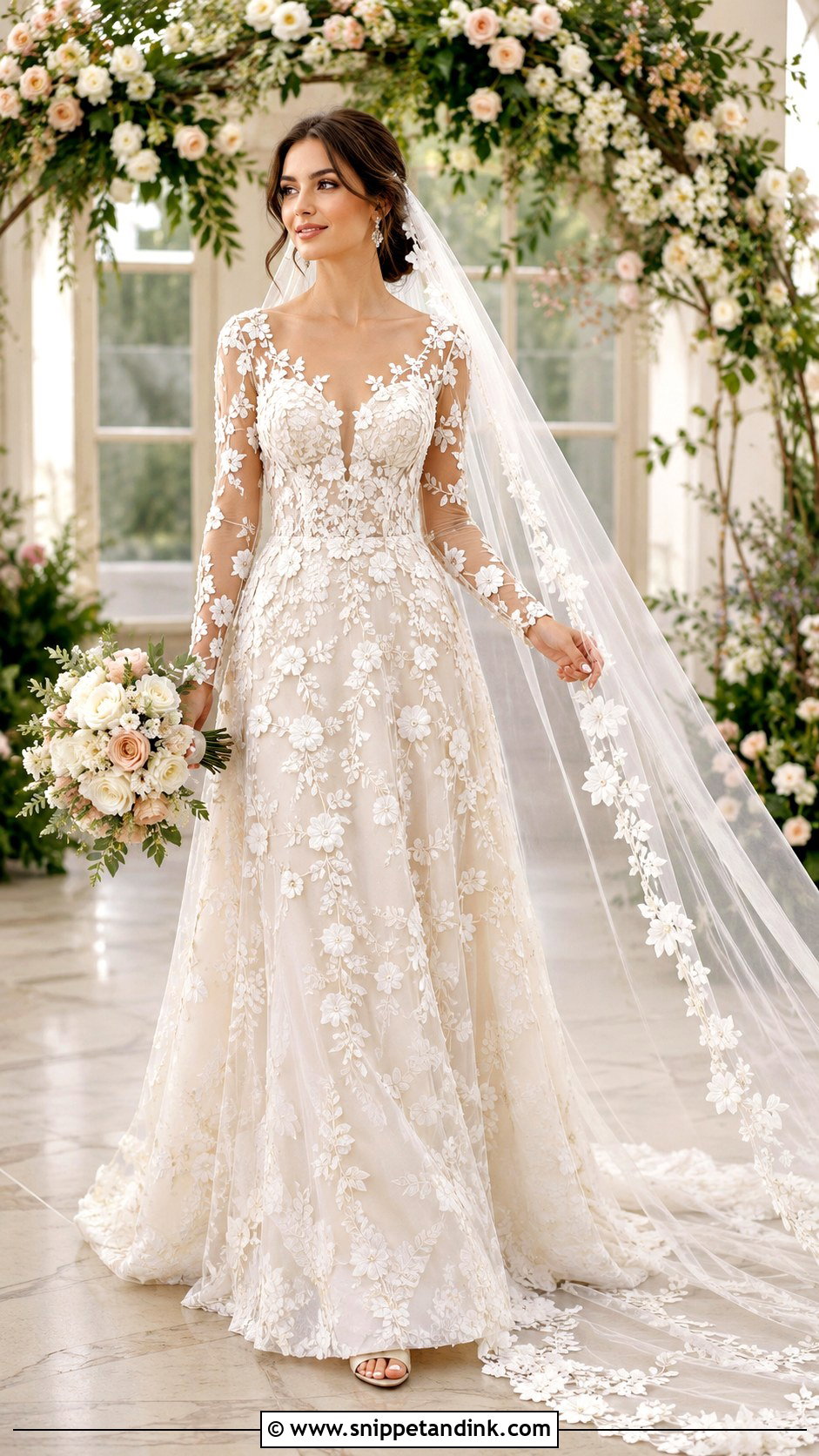
Floral appliqué can sit across the bodice, trail down the skirt or climb sheer sleeves. Oversized 3D flowers in matching ivory look modern; fine embroidered florals on tulle look delicate. With 3D flowers, think about how they’ll sit under a veil and against a bouquet, since big blooms crush easily. A floral-edged veil and a bouquet with jasmine or white roses carry the theme into a spring garden.
16. Lebanese Sheath Wedding Dress
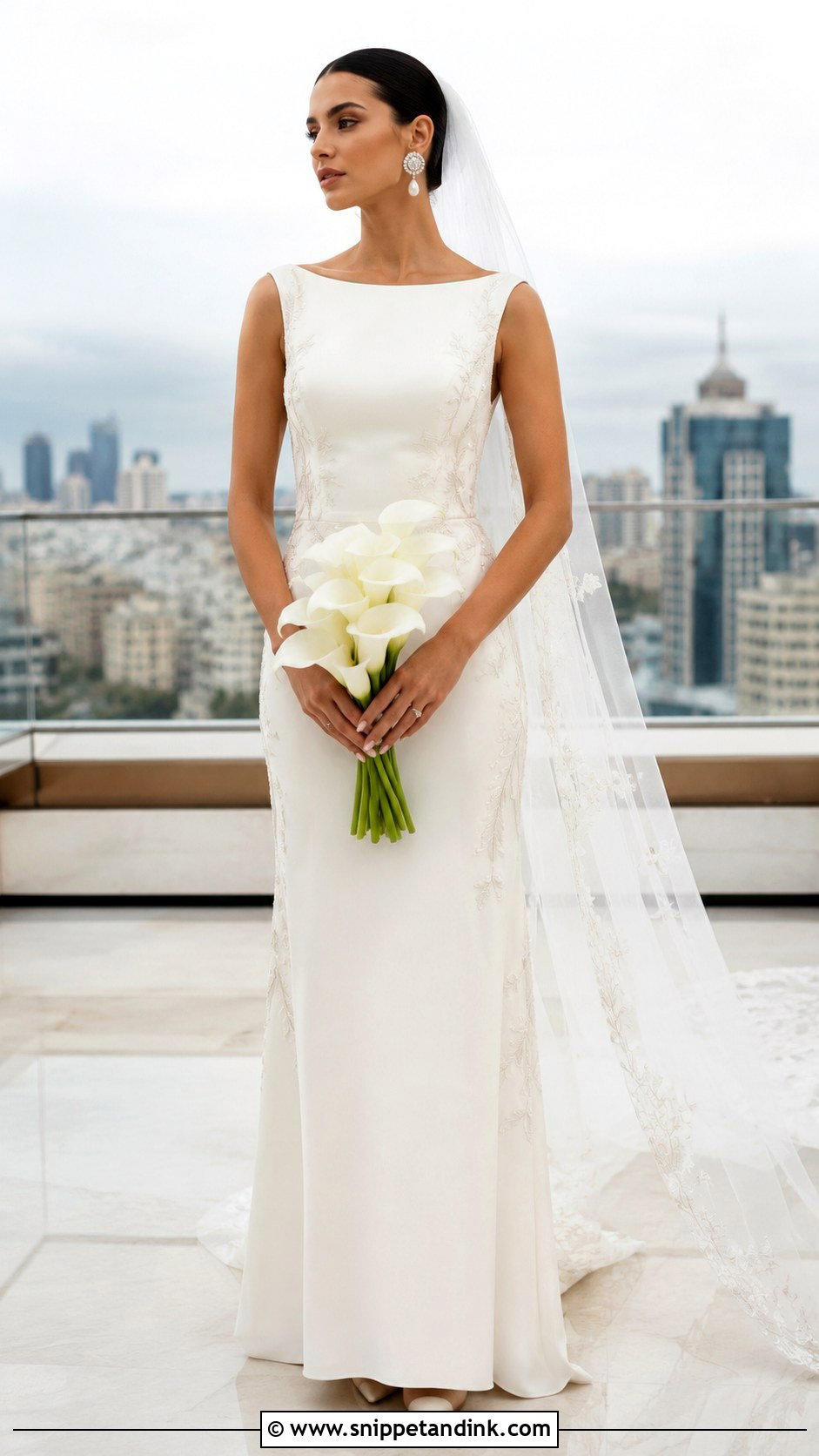
A sheath follows the body without flaring, so it moves easily and looks polished. It’s also unforgiving of anything underneath, so plan your undergarments at the first fitting, not the last. Crepe, satin or embroidered lace suit it. A long veil and pointed heels add height. On a rooftop or in an intimate venue, where a big skirt would crowd the room, it makes a lot of sense.
17. Lebanese Detachable Skirt Wedding Dress
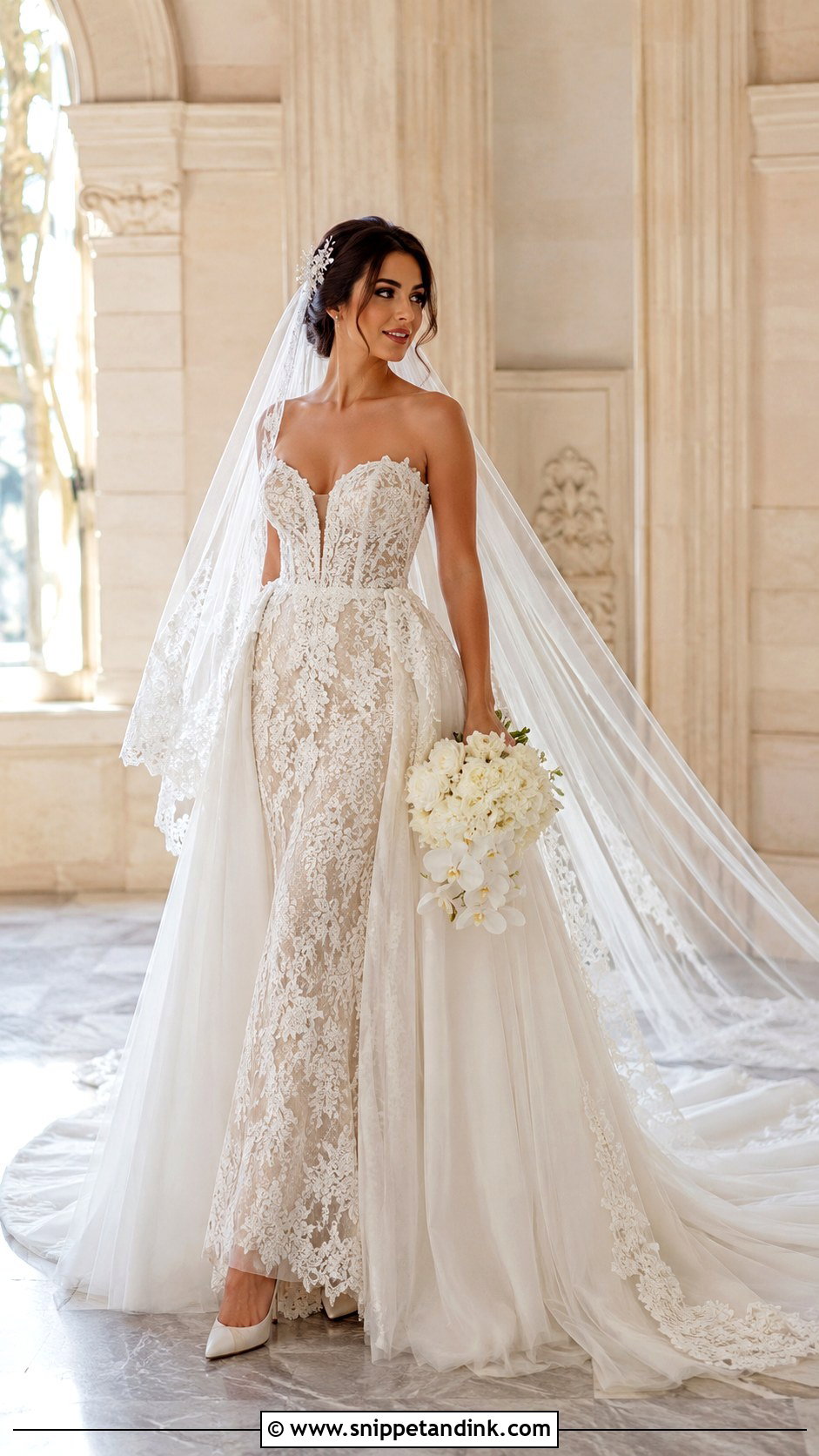
A detachable skirt gives you the grand entrance and a lighter dress for the dabke. Lebanese receptions run long and lively, so this is often the most practical luxury on the list. The fastening is everything. Ask how it attaches, whether hooks, buttons or a hidden zip, and rehearse taking it off with whoever will help you. Choose heels that look right with both lengths, then swap the cathedral veil for a comb or pearl clips once the skirt is off.
18. Lebanese Reception Wedding Dress
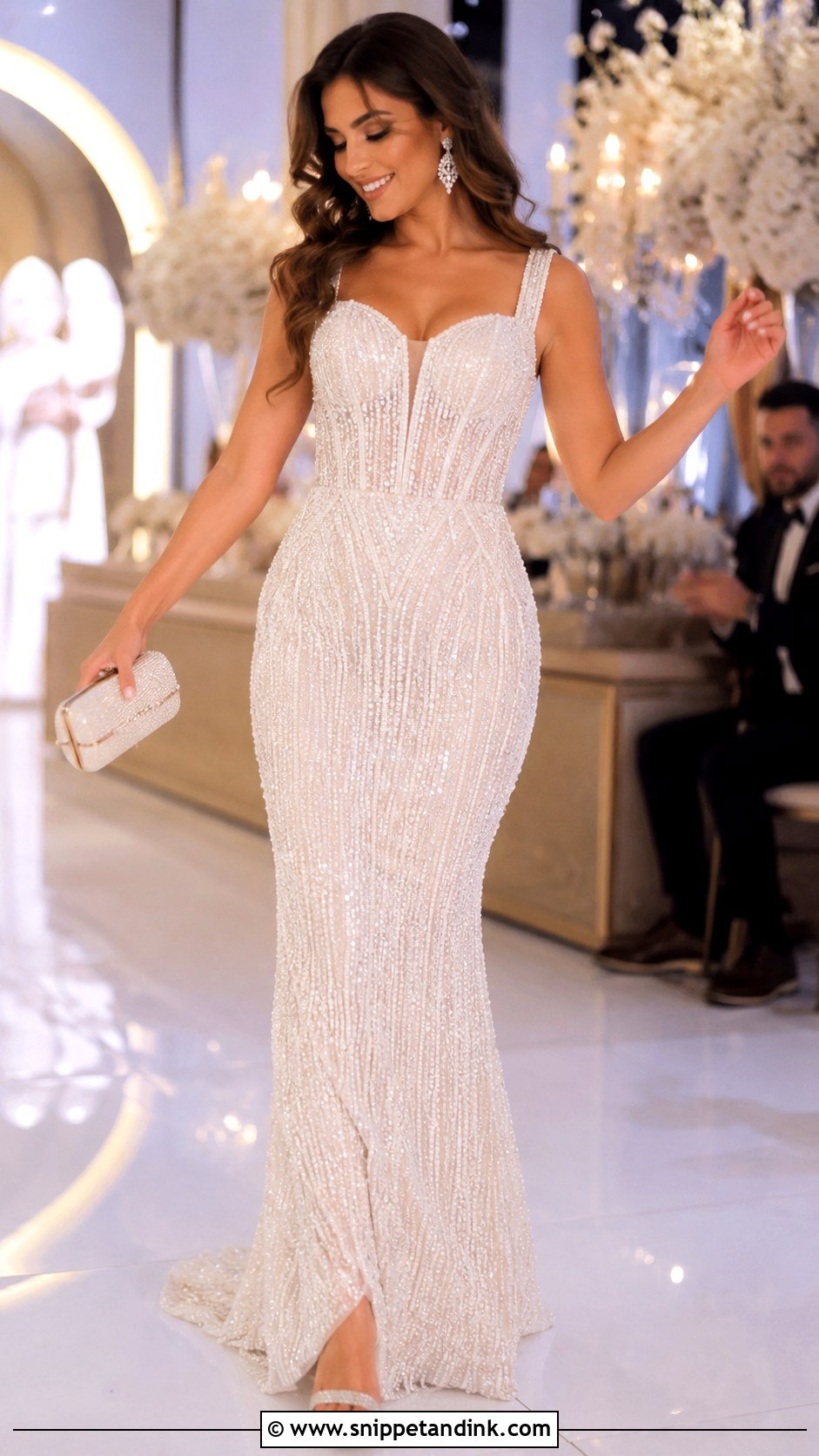
A reception dress should be lighter and easier to move in while still reading as bridal in photos. A fitted beaded gown, a short overskirt style, sleek satin or a feather-trimmed look all work. Feathers shed, so keep them away from the face and the cake table. A high ponytail or a refreshed bun signals the change. This is the outfit you’ll dance in, so do a full round of dabke steps in it at the final fitting.
19. Lebanese Modest Wedding Dress
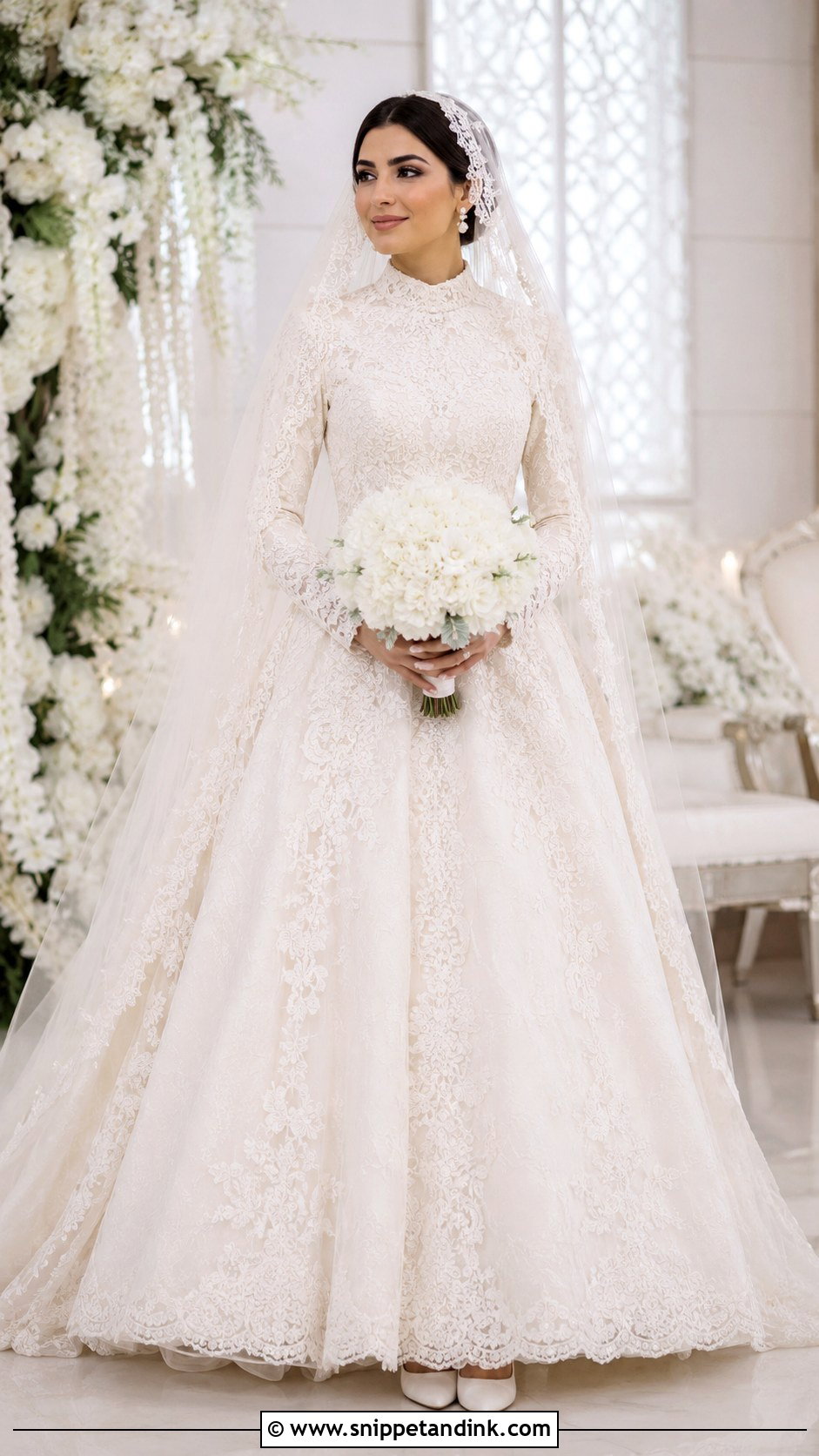
A modest Lebanese gown can carry all the detail of a more revealing one. Long sleeves, a higher neckline and full lining don’t stop the embroidery or the train. The lining is what I check most closely, because sheer lace over a skin-tone lining reads very differently under flash from lace over ivory, so ask to see photos taken at the fitting. A defined corset waist gives structure; a flowing A line is softer.

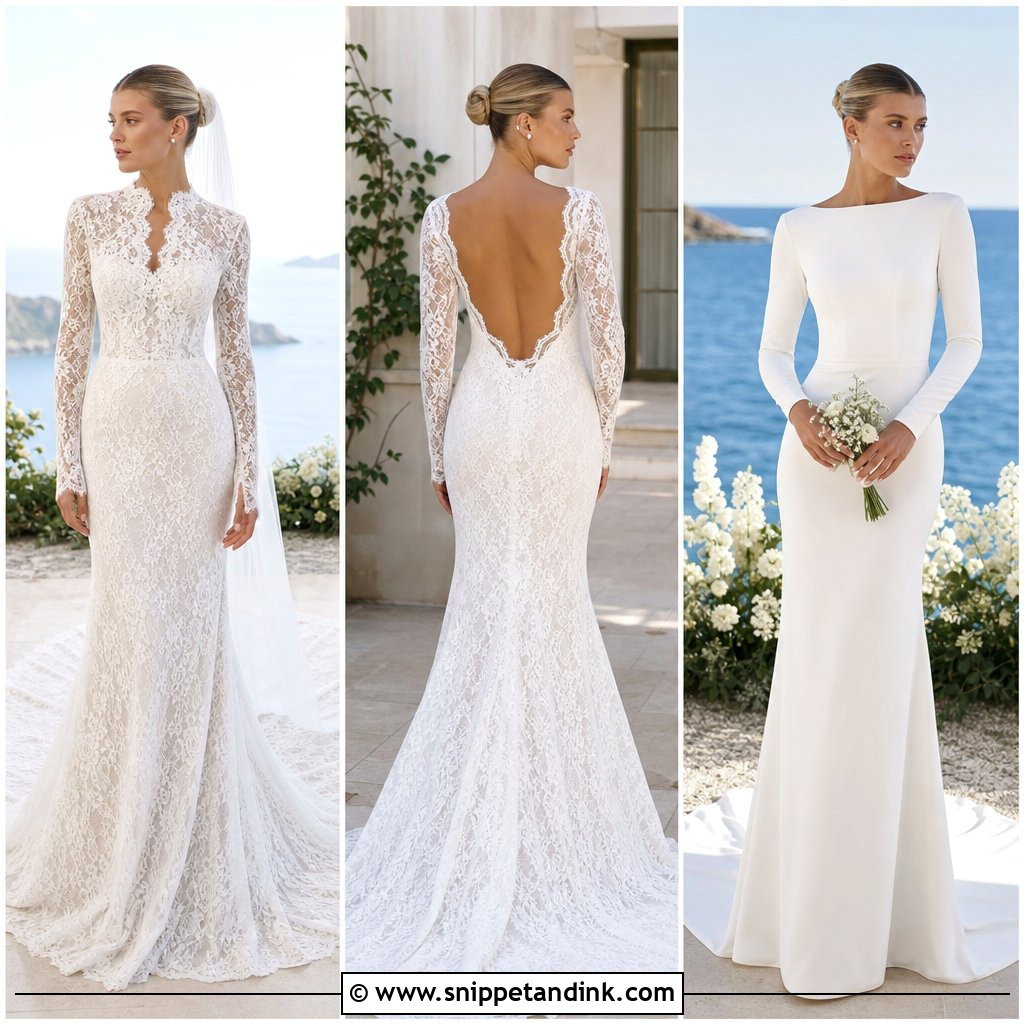
20. Lebanese Minimal Wedding Dress
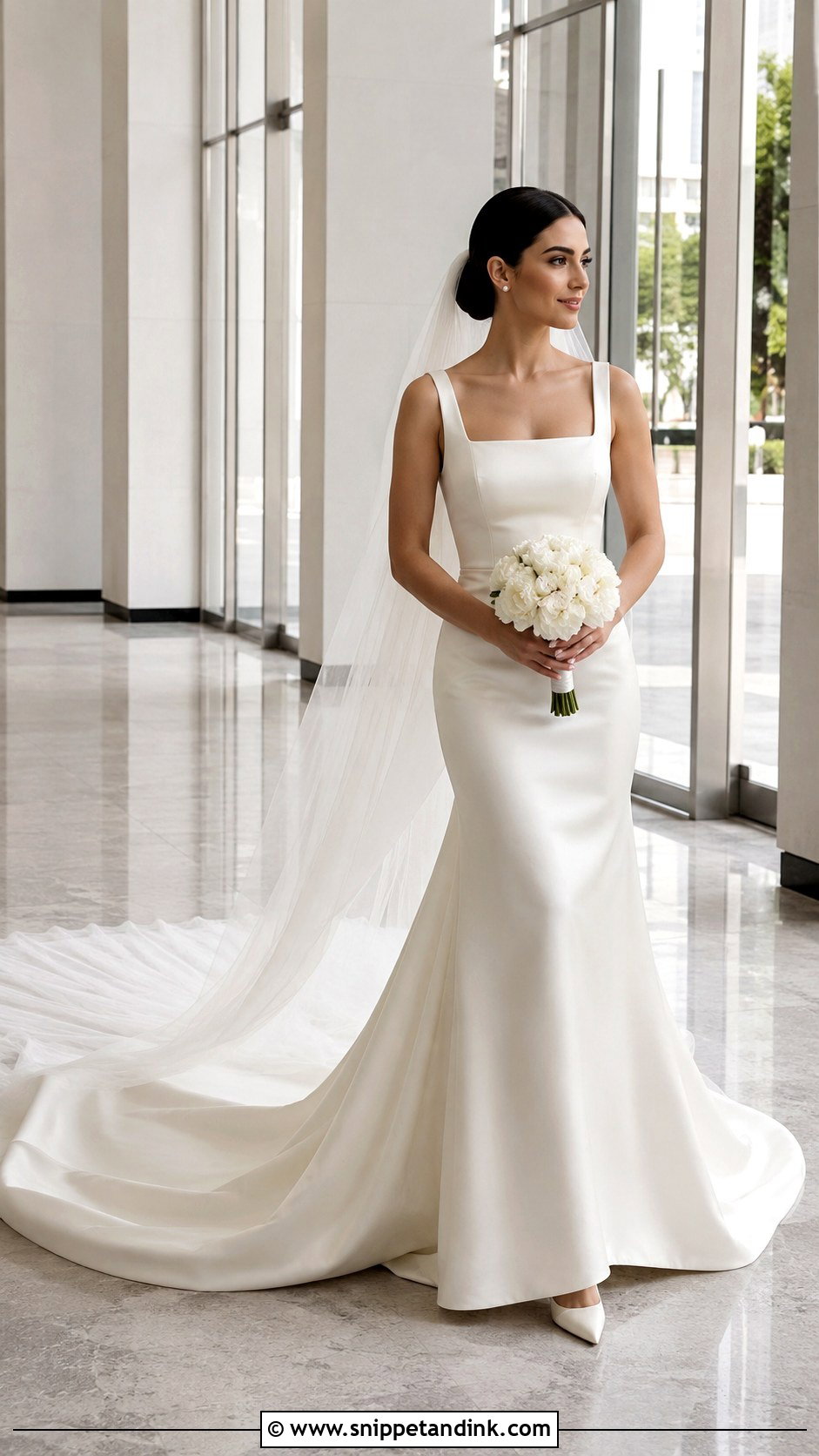
Simplicity in Lebanese bridal is about cut. A clean satin, mikado or crepe gown relies on silhouette and tailoring, so there’s nowhere for poor fit to hide. Mikado is a heavier silk blend with enough body to hold sharp lines, which is why it suits minimal designs so well. A square neckline, a long train or a structured bodice adds interest. A sleek bun and a plain veil keep it polished.
21. Lebanese Gold Detail Wedding Dress
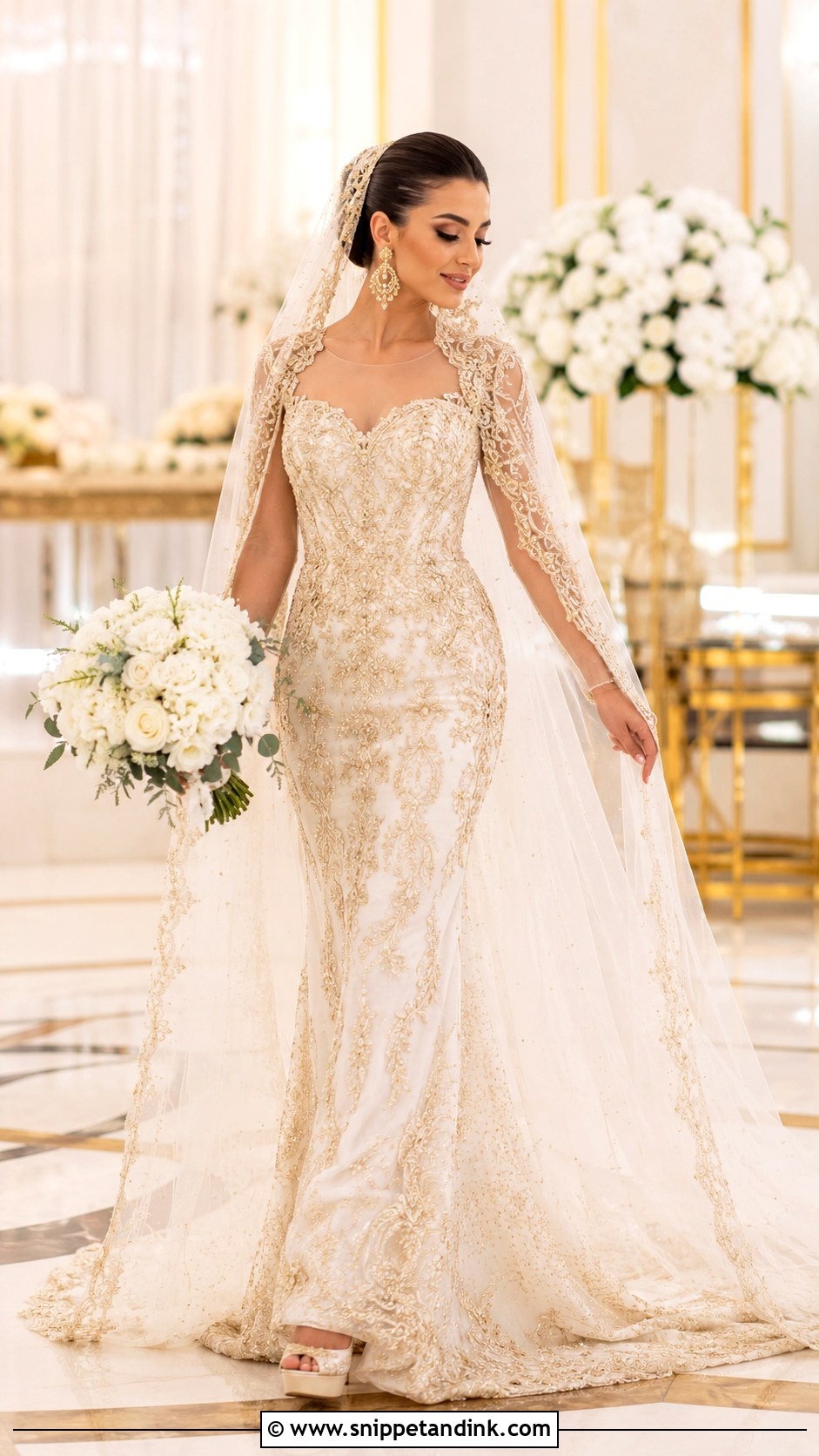
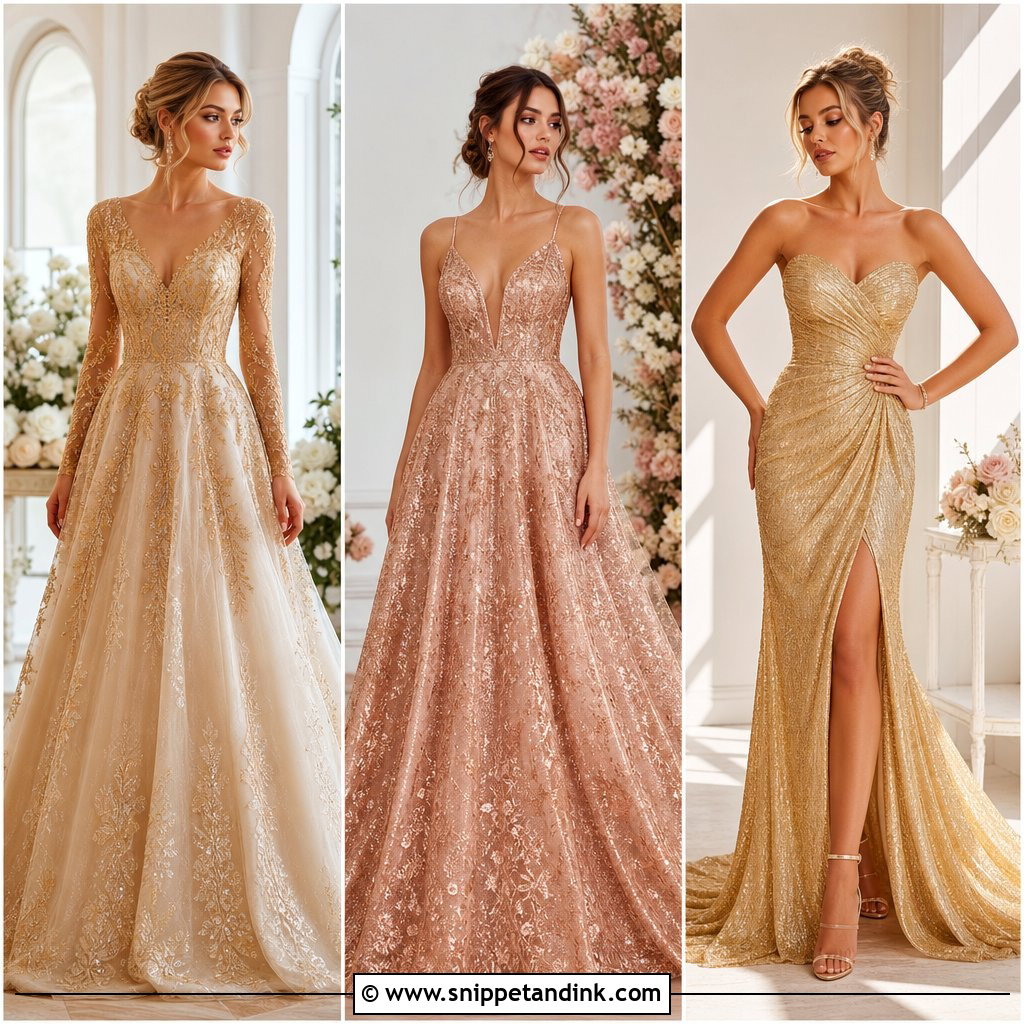
A Lebanese gold detail wedding dress adds warmth to an ivory gown through champagne embroidery, gold thread or soft metallic beading. Keep the base bridal and let gold trace the bodice or sleeves. Some metallic thread feels scratchy against the skin, so turn the bodice inside out and check what touches you. Gold earrings and a veil with fine metallic trim tie it together, and white flowers with greenery balance the shine.
22. Lebanese Illusion Wedding Dress
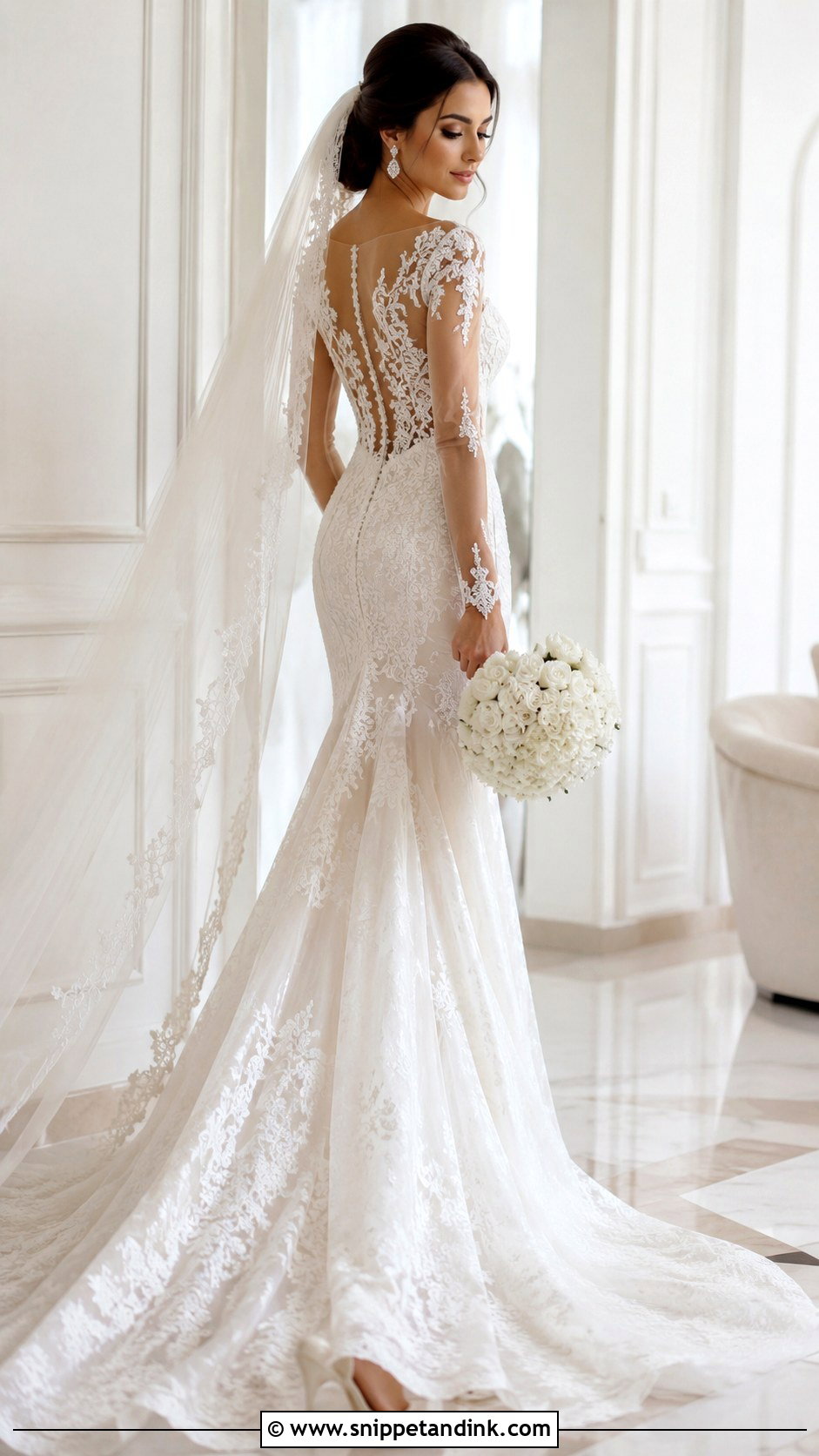
Illusion fabric is a fine mesh dyed to match the skin, so embroidery seems to float. It only works when the mesh matches your skin closely; a mismatch shows as a visible band in photos. Lace, pearls or crystals scattered across illusion sleeves or backs create the effect. Good lining under the bodice keeps everything smooth. If the back carries the detail, wear your hair up.
23. Lebanese Embroidered Wedding Dress
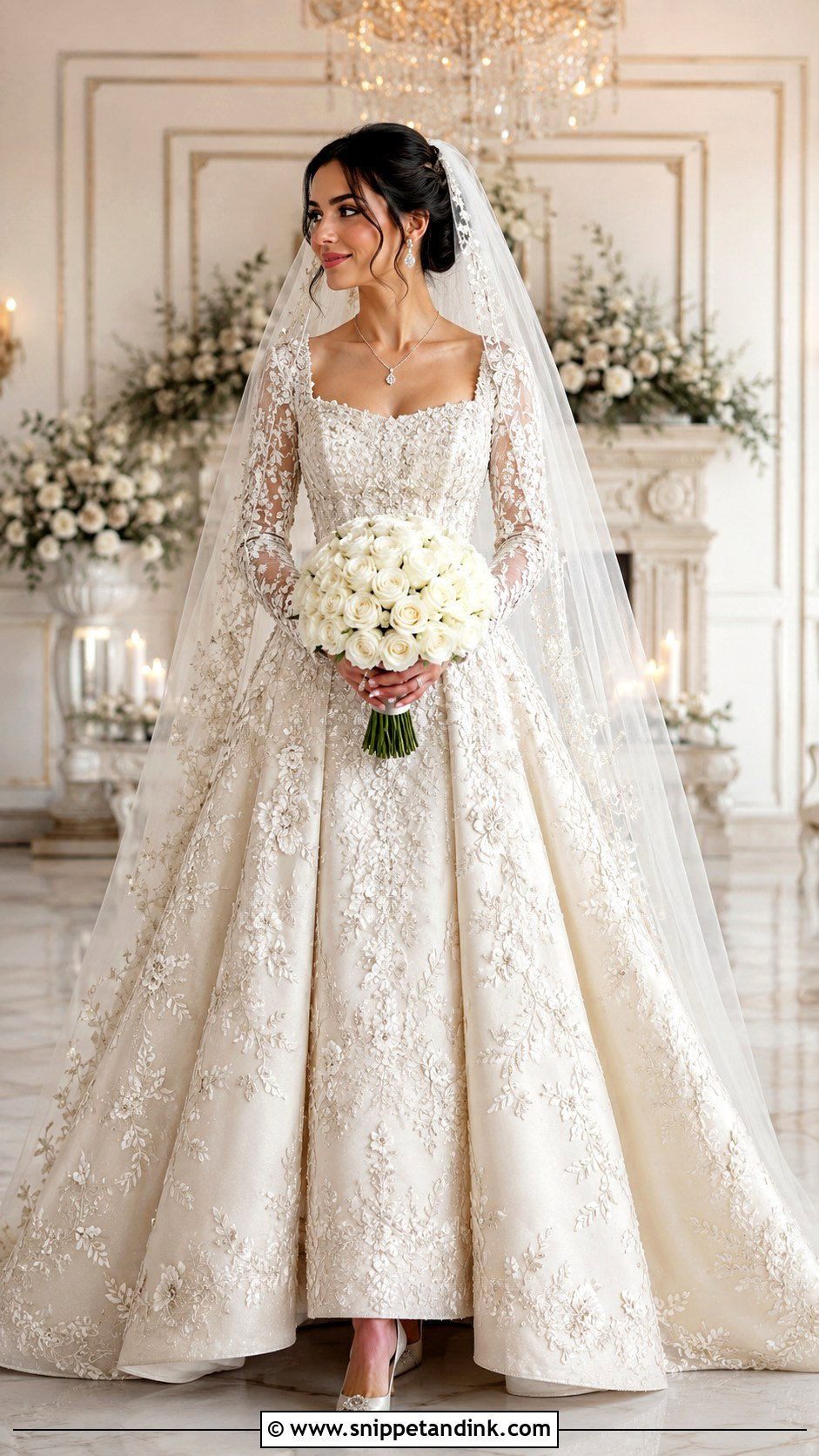
Embroidery is where Lebanese couture shows its craft, in floral, geometric or vine motifs worked by hand. The best gowns let it follow the body, dense on the bodice and thinning into the skirt. Hand embroidery takes a long time, which is why heavily worked gowns need ordering early. A simple veil and clean jewelry keep the handiwork in focus, and close-up portraits are where it pays off.
24. Lebanese Short Train Wedding Dress
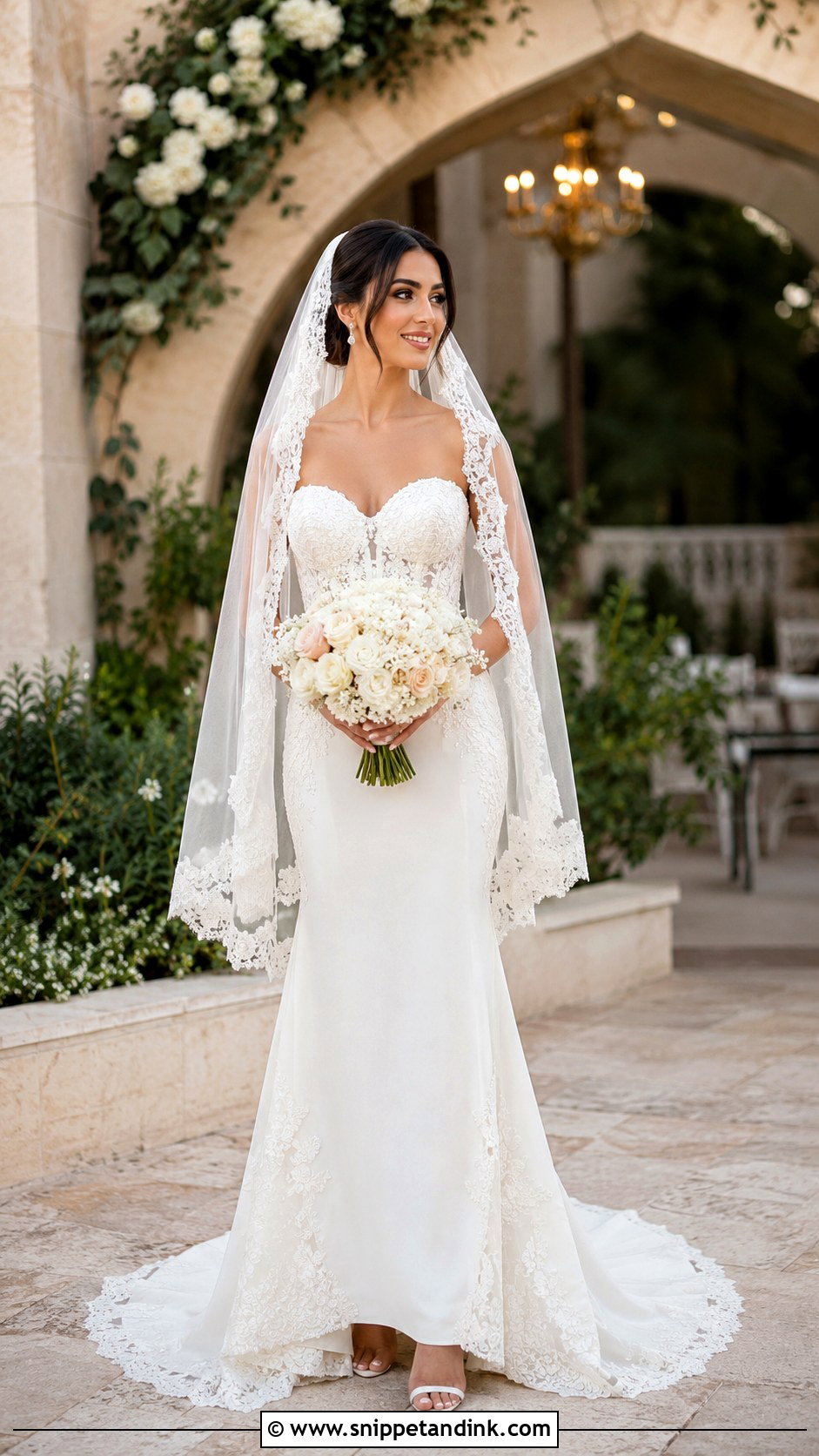
A short train gives a finished bridal look without a lot of fabric behind you. It’s practical for smaller venues and for dancing, since it needs a minimal bustle or none at all. Satin, lace or crepe over a structured bodice suits it, with a fingertip veil and comfortable heels. Outdoors it handles grass and gravel far better than a cathedral train dragging behind.
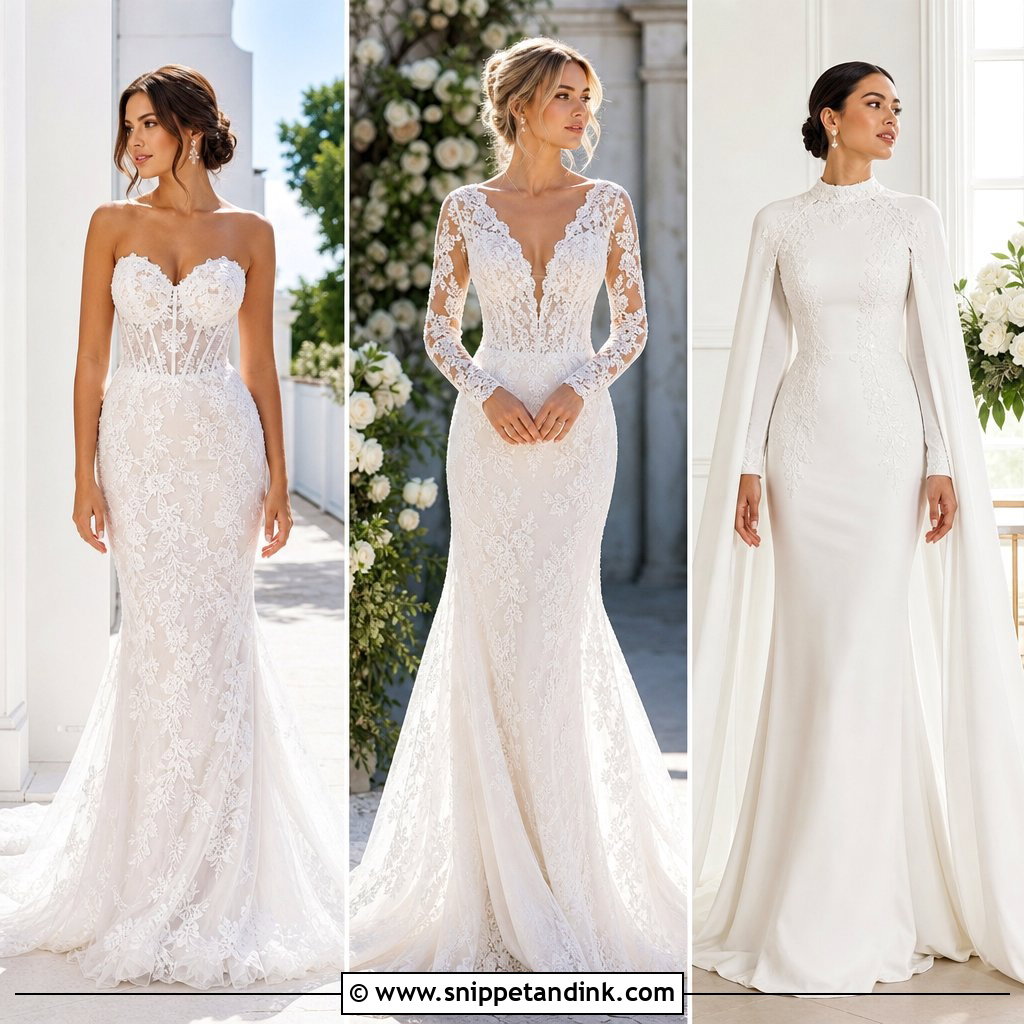
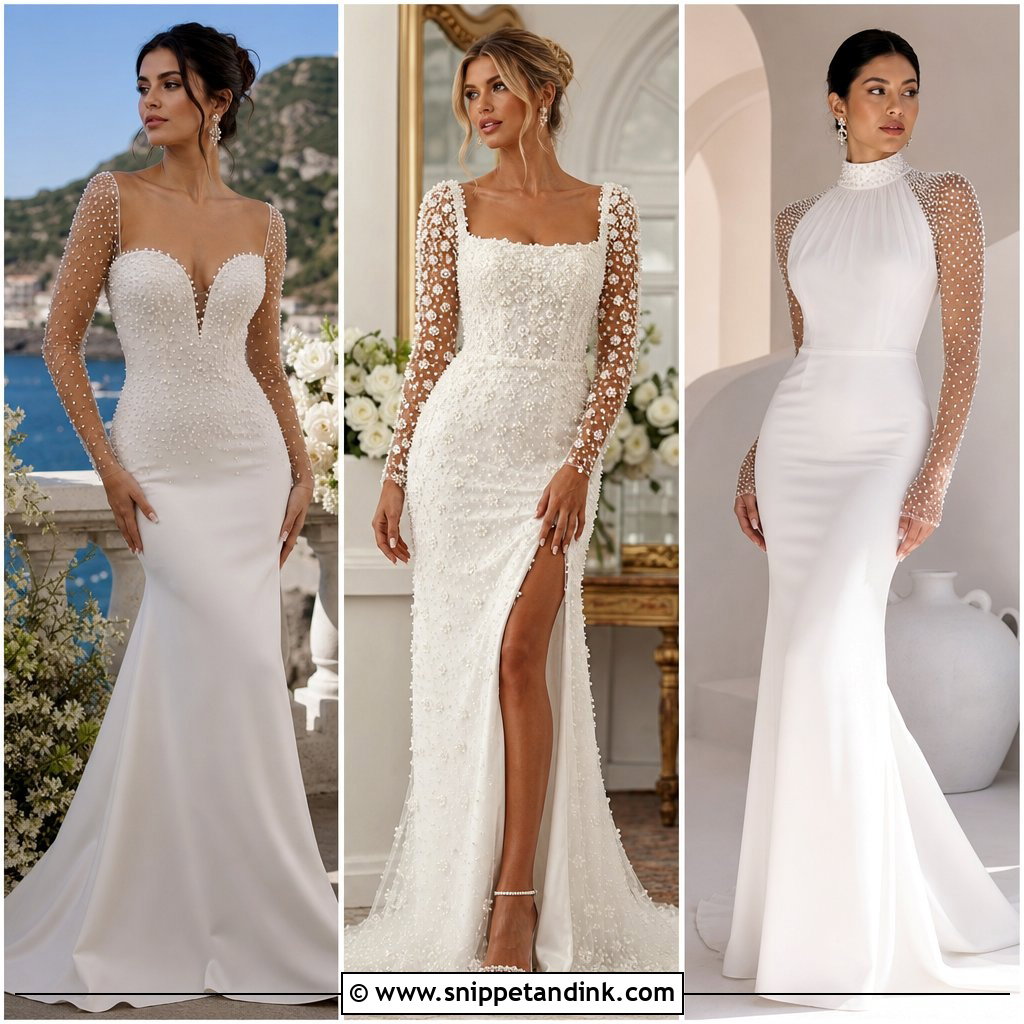
25. Lebanese Couture Wedding Dress
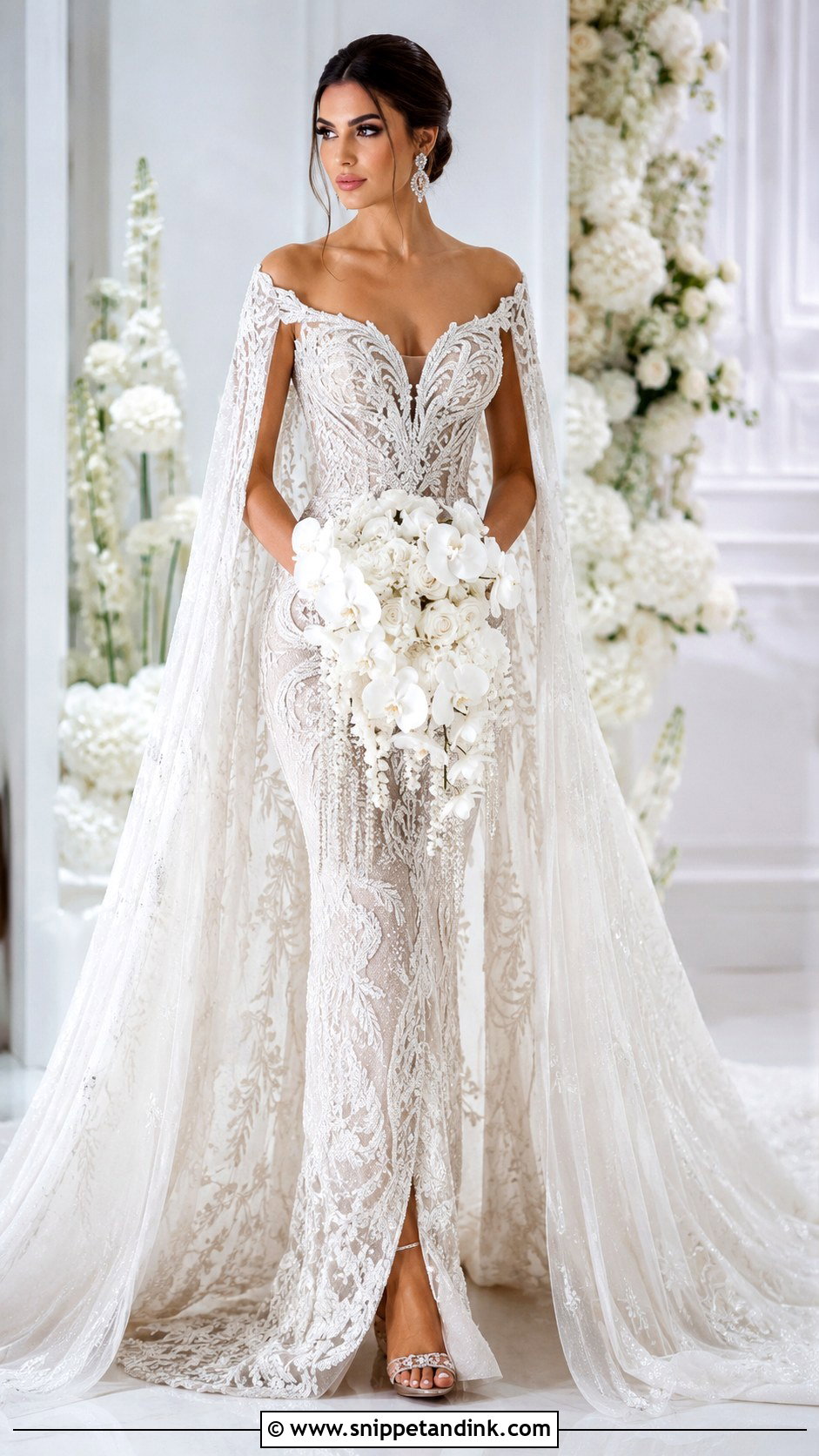
A couture gown is built around you, with a sculpted bodice, handmade embroidery and perhaps a detachable cape, designed for your venue. That process takes months and several fittings, and heavy structure or handwork adds more. Keep accessories in a supporting role. Bring the actual shoes and undergarments to every fitting so the hem and bodice are set for what you’ll really wear. This is the full Lebanese bridal experience, and it rewards planning.
Ordering a Couture Gown From an Atelier Abroad
Many brides order Lebanese gowns from ateliers overseas or through trunk shows. Heavily embroidered couture often needs six months or more from order to delivery, and handwork can run longer in busy seasons. Timelines vary between ateliers, so ask for yours in writing.
- Have measurements taken by an experienced local seamstress rather than at home with a tape. Small errors at the bust or waist are hard to correct on a boned bodice.
- Ask whether the atelier leaves extra seam allowance so a local seamstress can make final adjustments.
- Book a final fitting for two to four weeks before the wedding, after the gown arrives, and bring your shoes and undergarments.
- Check shipping costs and any import duties before you pay, and ask for the gown to travel in a garment bag with tissue between beaded sections.
Storing it afterward
A heavily beaded gown shouldn’t hang for months, because the weight of the beads stretches the fabric at the shoulders. Have it cleaned by someone experienced with beadwork, then store it folded with acid-free tissue in a breathable box, away from light.
From the Zaffe to the Last Song
Lebanese bridal can mean a ball gown under a cathedral veil, a sleek satin column, a modest lace dress or a sparkling reception change. Whichever you choose, judge it by how it fits, how it moves and how the fabric holds up from the entrance to the last song. Let accessories support the gown rather than compete. If you can walk, sit and dance the dabke in it and still love it in the photos, you’ve found it.
You'll Like These Ideas:





Leave a Reply