
Satin looks finished on its own, which is why I suggest it so often for brides who don’t want sparkle doing the talking. It suits a courthouse as easily as a ballroom, and it’s just as good for a garden, a beach or a second look at the reception. The shapes I’m dressing brides in lately are simple: bias cuts, sculpted bodices, square necklines, pearl details, midi lengths and dresses you could wear again. But a satin dress is only half an outfit. Veil, jewelry, shoes, bag, a wrap and the hair finish it, so each of the 25 looks below comes with the pieces I’d put around it and what to watch for when you try it on.
Satin in Heat, Rain and Sea Wind
So many of these dresses suit outdoor and destination weddings that it’s worth knowing how satin handles weather. It’s less forgiving than crepe or chiffon in a few specific ways.
Heat
Satin shows sweat as darker patches, especially under the arms and at the lower back on fitted cuts. Sew-in dress shields help, and silk satin breathes better than polyester. Humidity also makes bias-cut satin cling, so a slip that skimmed you in an air-conditioned shop can hug more in July.
For a hot outdoor ceremony I also think about colour. Bright white satin bounces strong sun straight back into the face and squints show in photos, while ivory and soft champagne sit more gently in midday light. If you can, check the ceremony spot at the same hour a week or two before.
Rain
Water drops can leave rings on silk satin. If you’re caught, blot gently with a clean white cloth rather than rubbing, and let it dry before anyone tries to treat it. Keep a clear umbrella in the car for portraits.
Wind
Light satin lifts and wraps around the legs on a beach or cliff. A heavier satin, a slightly longer hem or a few small weights sewn into the hem keep it under control, and a veil anchored with combs rather than a single clip stays put.
1. Satin Slip Bride Dress
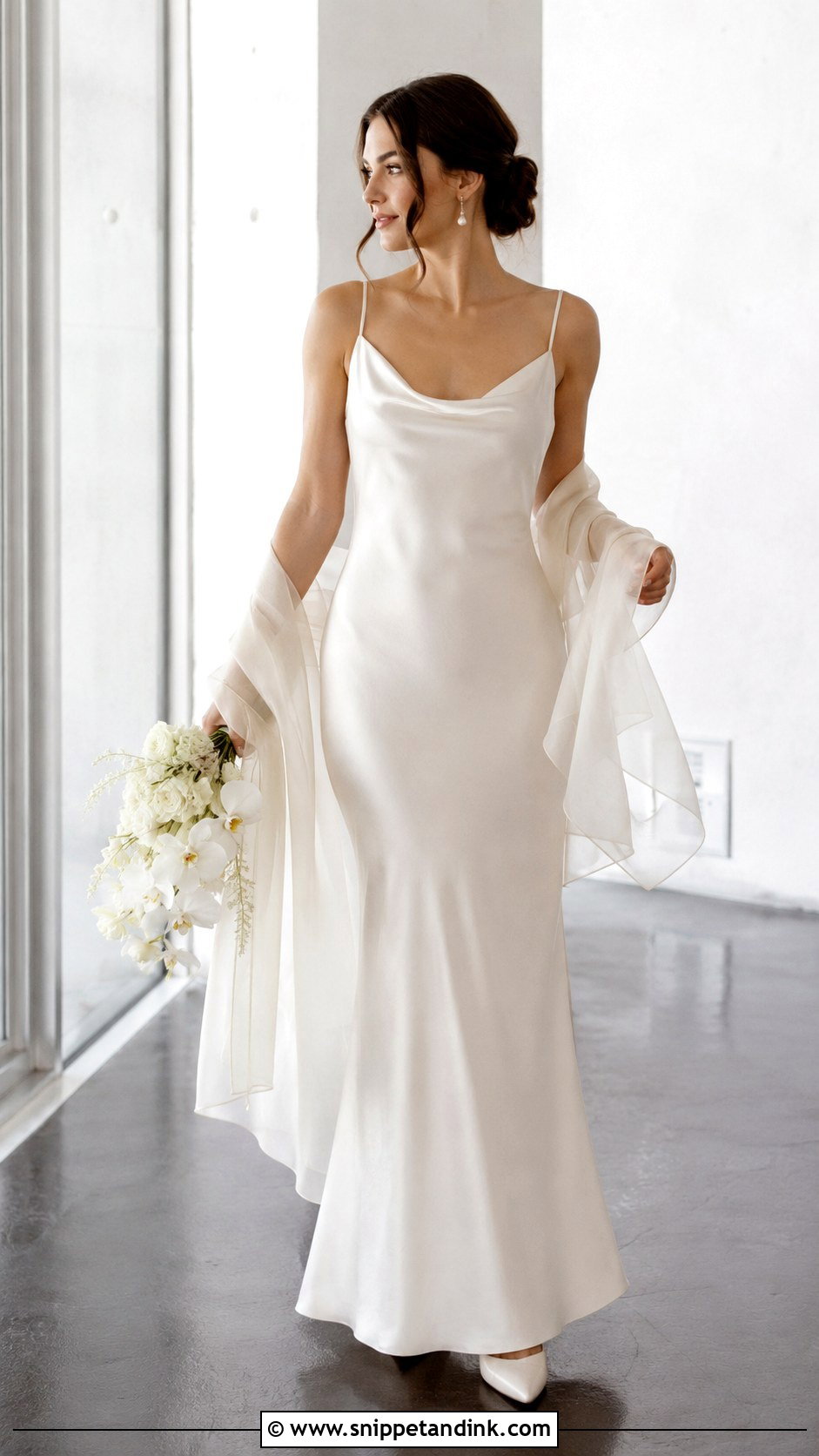
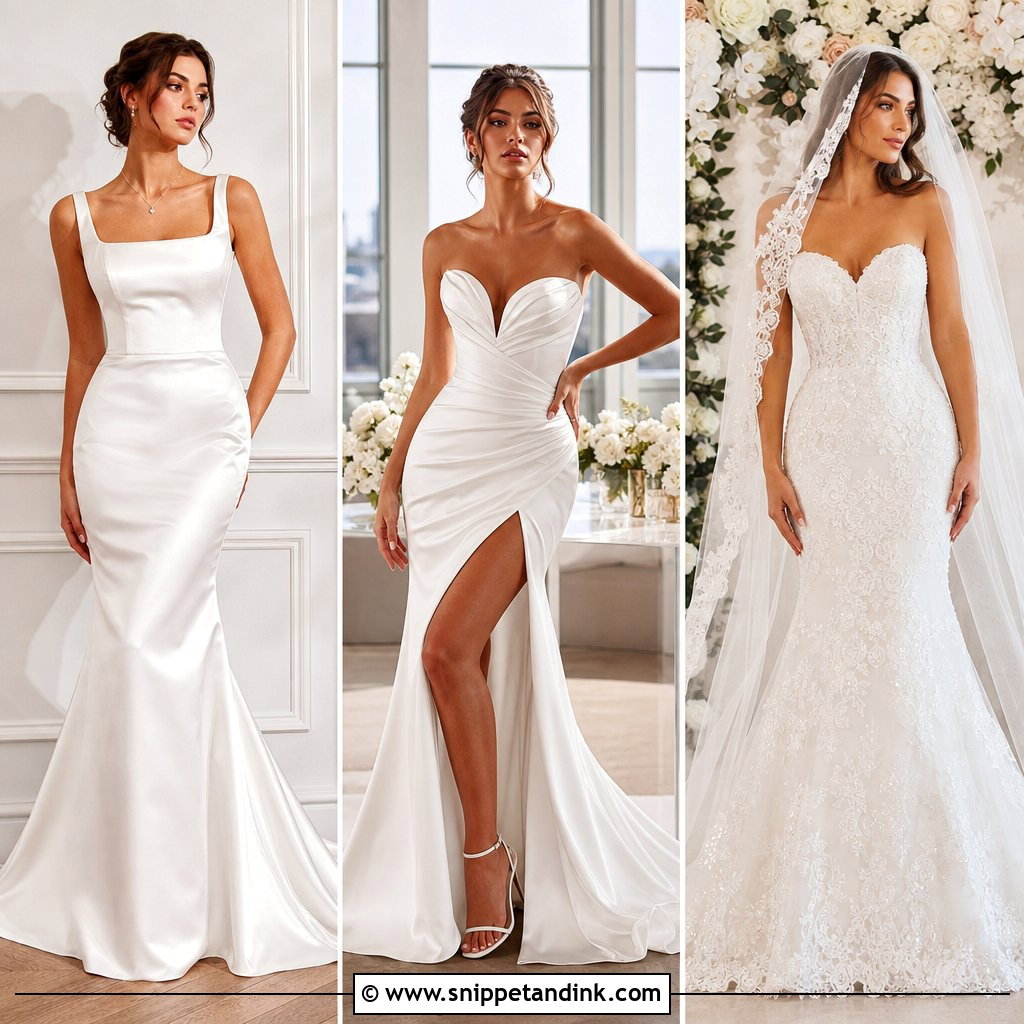
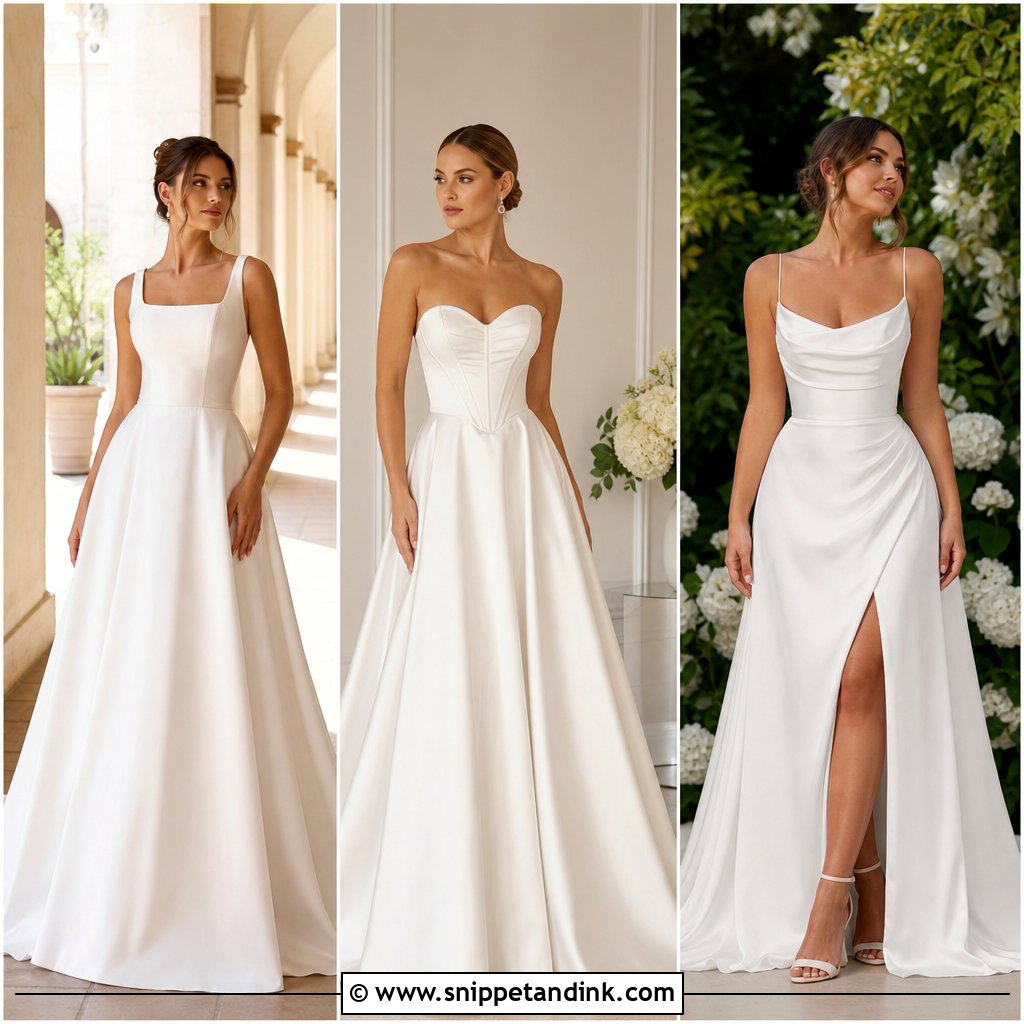
A slip in ivory or pearl white is the quietest way to wear satin. An ivory bias-cut slip dress with fine straps, a soft cowl and a clean hem moves with you rather than holding a shape. Bias-cut satin stretches slightly as you wear it, so have the hem set after you’ve had the dress on for a while, not the moment you step into it. Pointed satin pumps, pearl drops and a fingertip veil suit it, with a sleek low bun or soft waves. For coverage, add a sheer chiffon wrap or a cropped satin jacket.
2. Satin Ball Gown Bride Dress
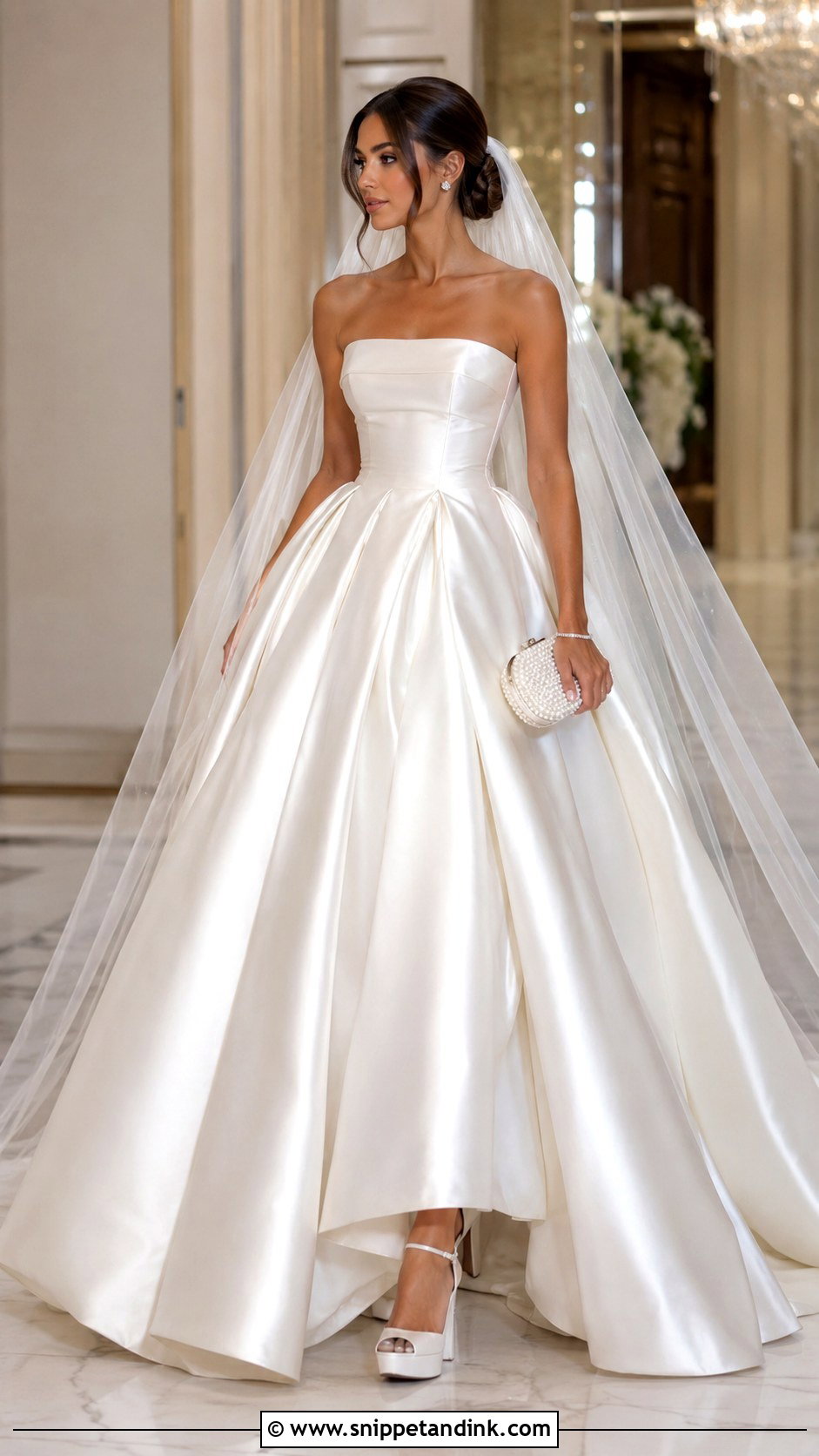
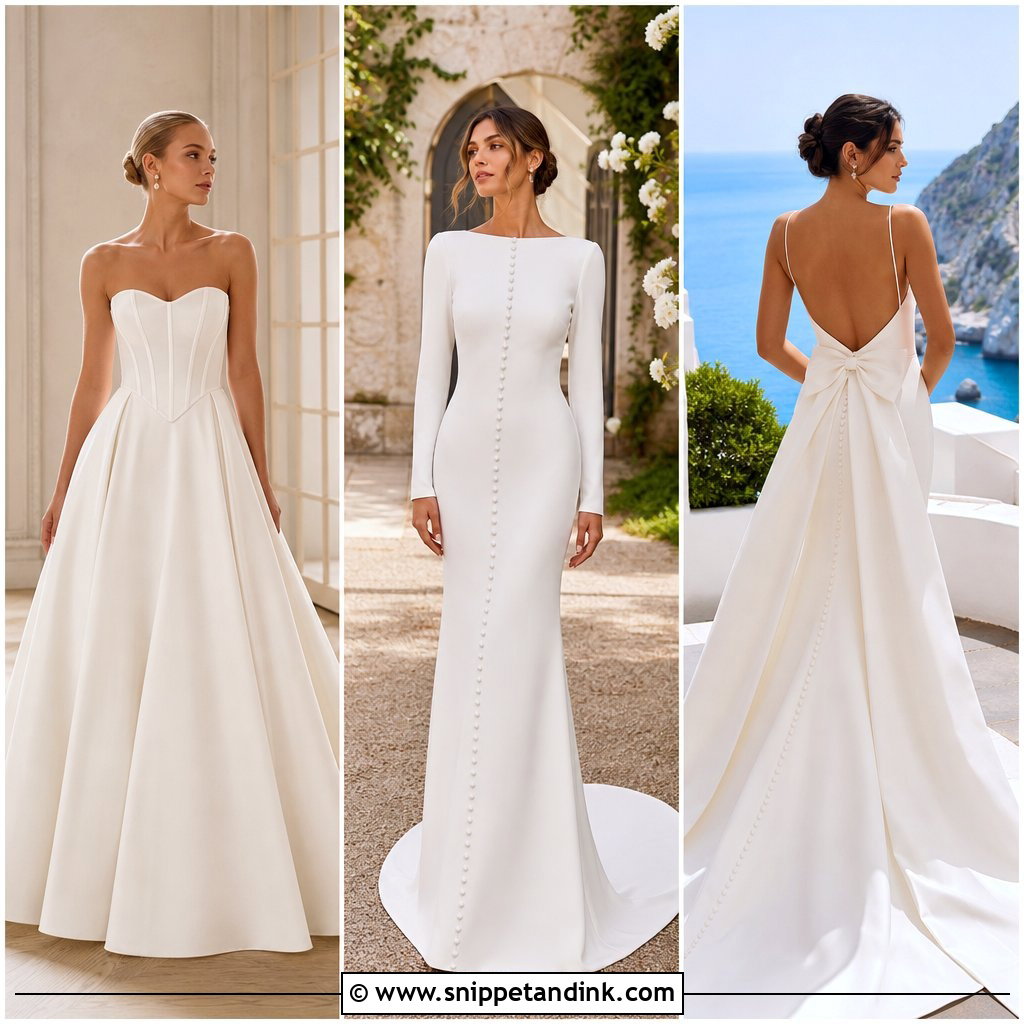
Here the satin itself is the decoration, so I’d keep the bodice structured, the skirt full and the neckline clean. Strapless or square-neck both work. Crystal studs, a cathedral veil and satin platforms hidden under the skirt add height without anyone seeing the shoes, which matters if you’re petite under all that volume. A small pearl clutch gives a detail for photos. Ballrooms, grand hotels and evening ceremonies suit it. Lift the hair into a soft bun or half-up style so the top balances the skirt.
3. Satin A Line Bride Dress
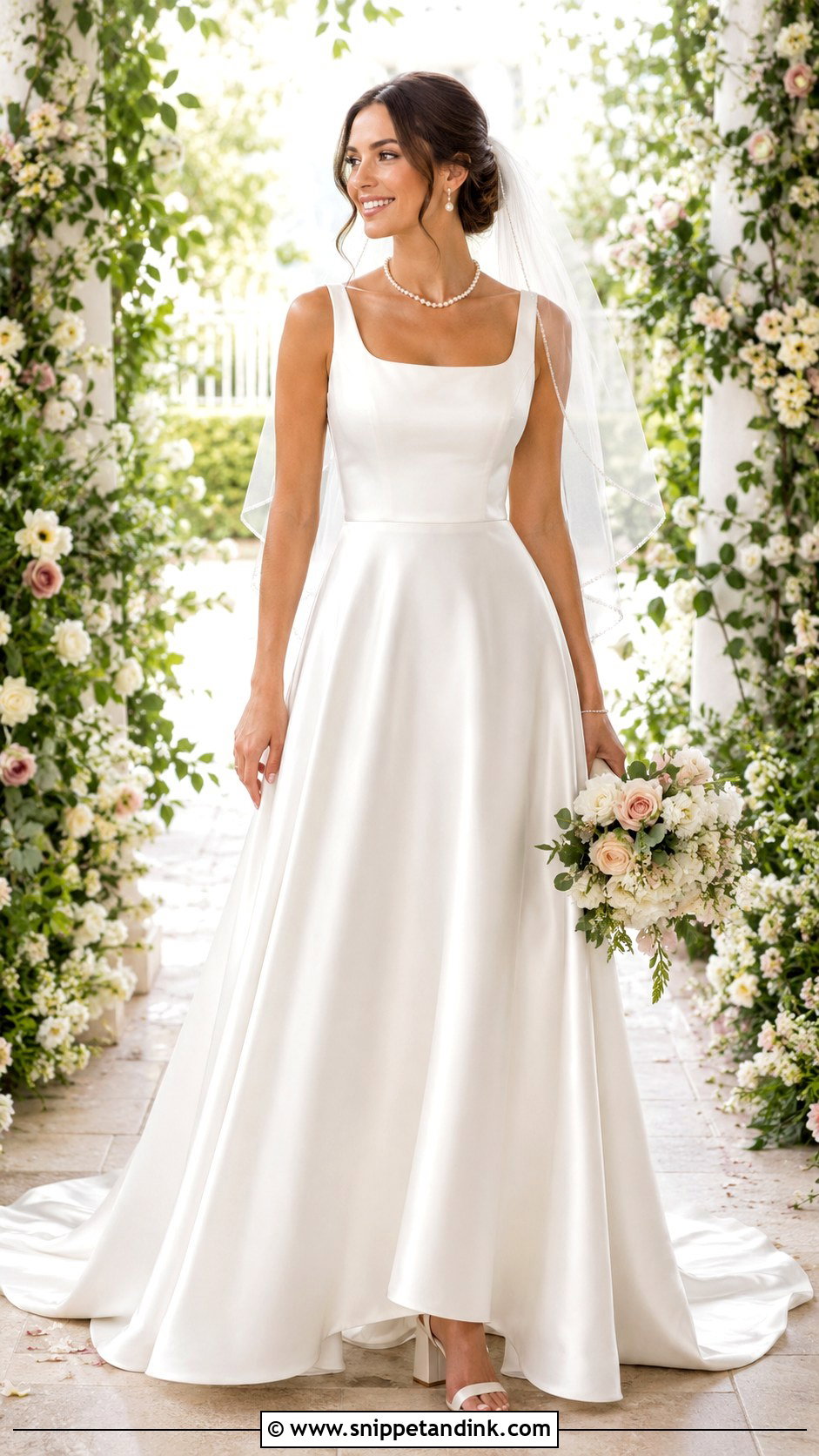
With its fitted bodice and a skirt that floats off the hips, the A-line is the shape I suggest when a bride wants comfort for a long day. Ivory satin or mikado both hold the line; mikado is crisper and hides creases better if you’ll be sitting a lot. Block-heel sandals, a medium veil and fine pearl jewelry keep it classic, and a structured mini bag or pouch works in reception photos. Garden weddings, estates and country clubs all suit it. It gives you movement without a full princess skirt.
4. Satin Corset Bride Dress
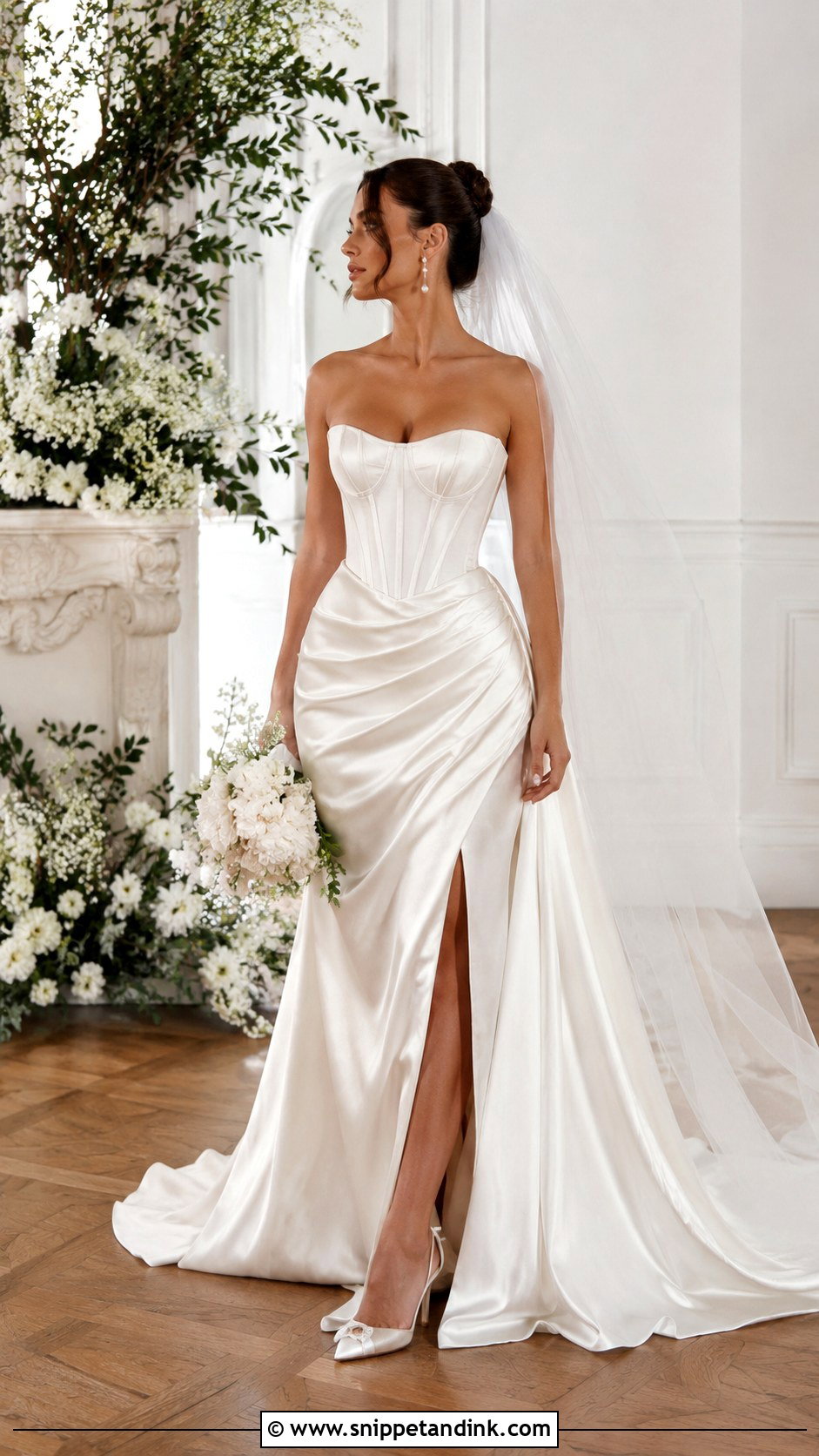
Corset bodices support the bust and define the waist without lace or beading. You’ll see visible boning, a draped waist or a lace-up back. I lean toward a lace-up back, because it allows a little adjustment on the day if your size has shifted since the final fitting. Slingback heels, a sheer veil and small pearl or diamond-style earrings finish it, and a smooth updo shows the bodice and neckline. Satin keeps the seams reading as clean lines from every angle.
5. Satin Square Neck Bride Dress
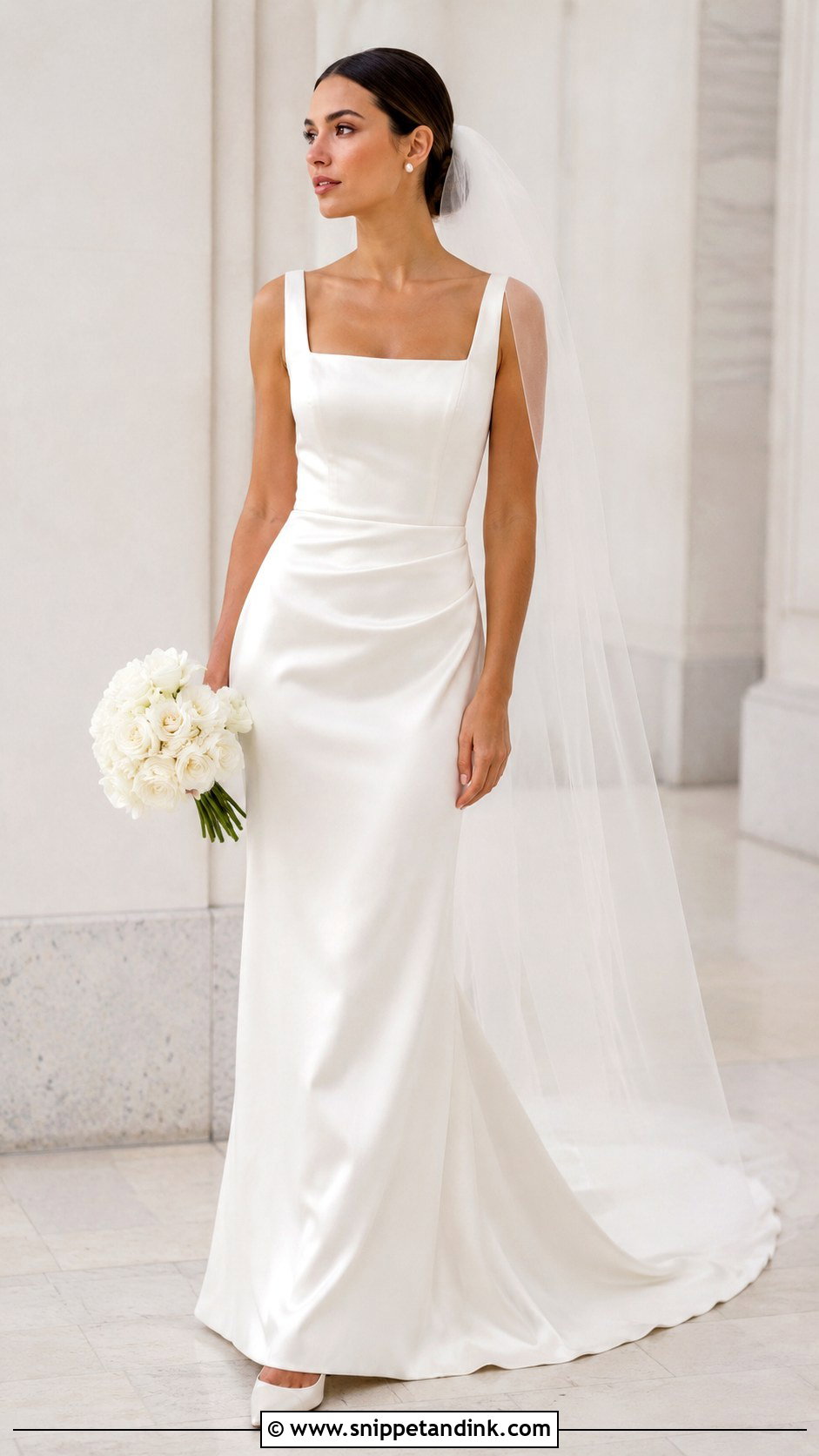
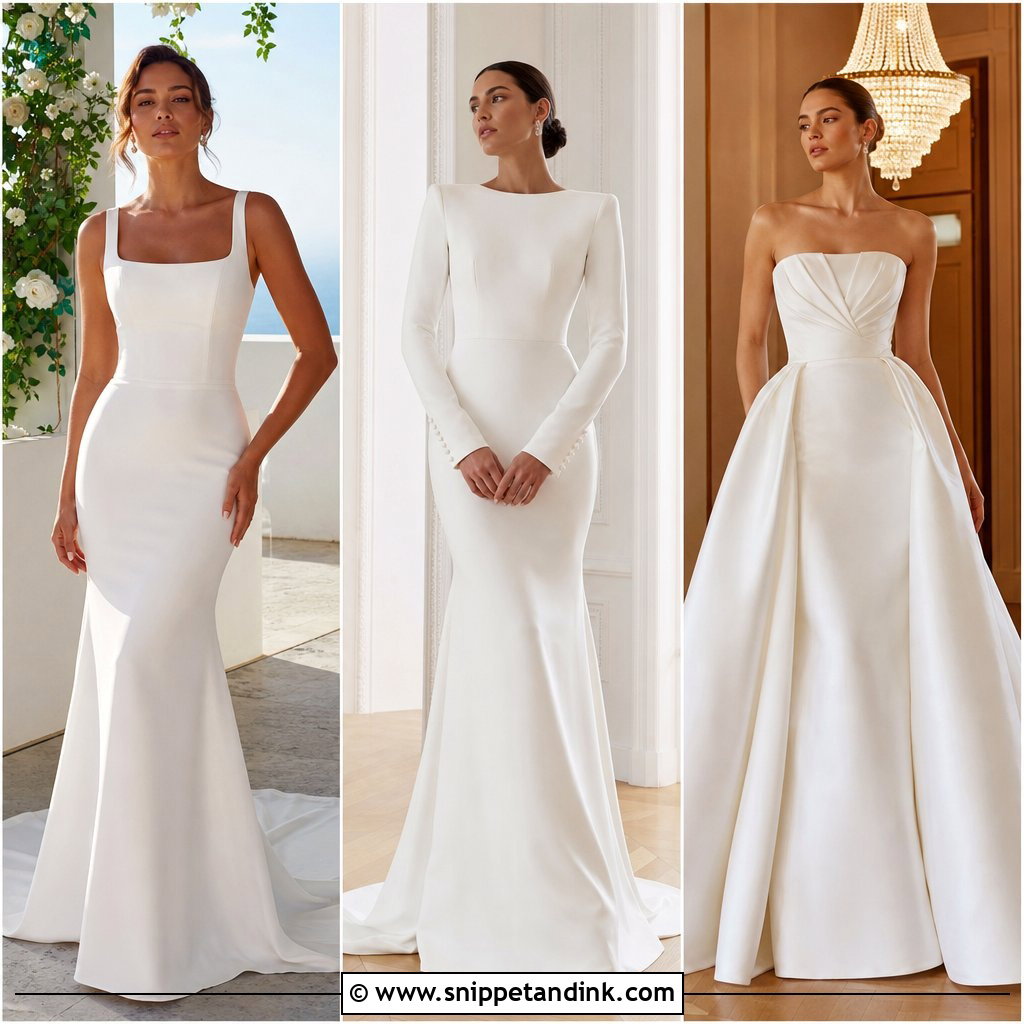
A square neck frames the collarbone with a slightly vintage line, and it suits fitted, A-line or column cuts. Wide straps or cap sleeves add support and stop the corners from gaping when you move. Pearl studs, a low chignon and pointed ivory heels keep it simple, and a soft tulle veil adds romance without hiding the neckline. It sits well at a courthouse, a museum or a garden ceremony. Go minimal on accessories so the neckline stays the feature.
6. Satin Off Shoulder Bride Dress
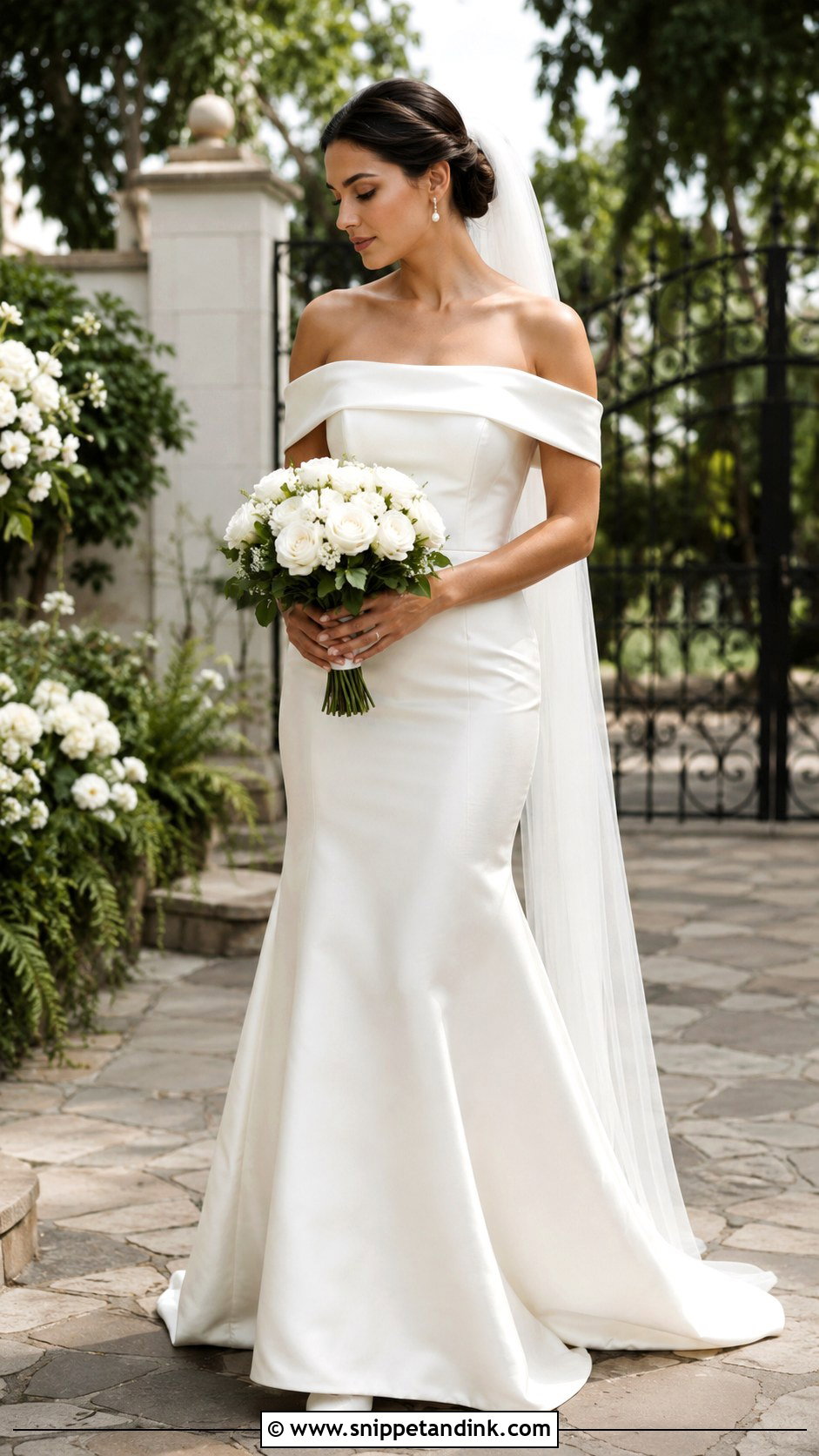
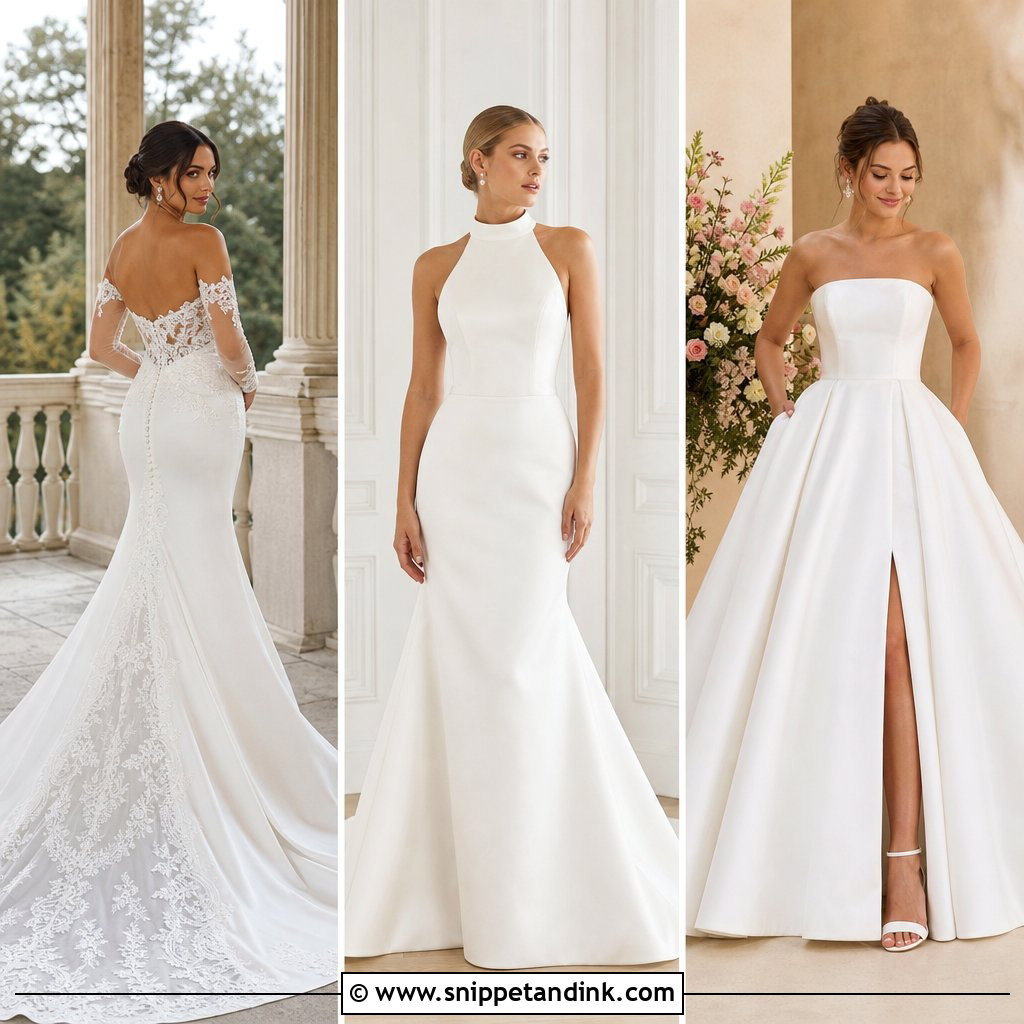
Folded satin sleeves or a draped band frame the collarbone while covering more than strapless does. The fit of that band is everything. Too tight and it pins your arms; too loose and it slides, so test it by reaching up and hugging. Pearl drops, closed-toe pumps and a simple veil tucked under a low bun suit it. If the gown has a slit, ankle-strap heels lighten the look. Formal ceremonies, garden venues and evening weddings all work, with a soft, simple bouquet.
7. Satin Strapless Bride Dress
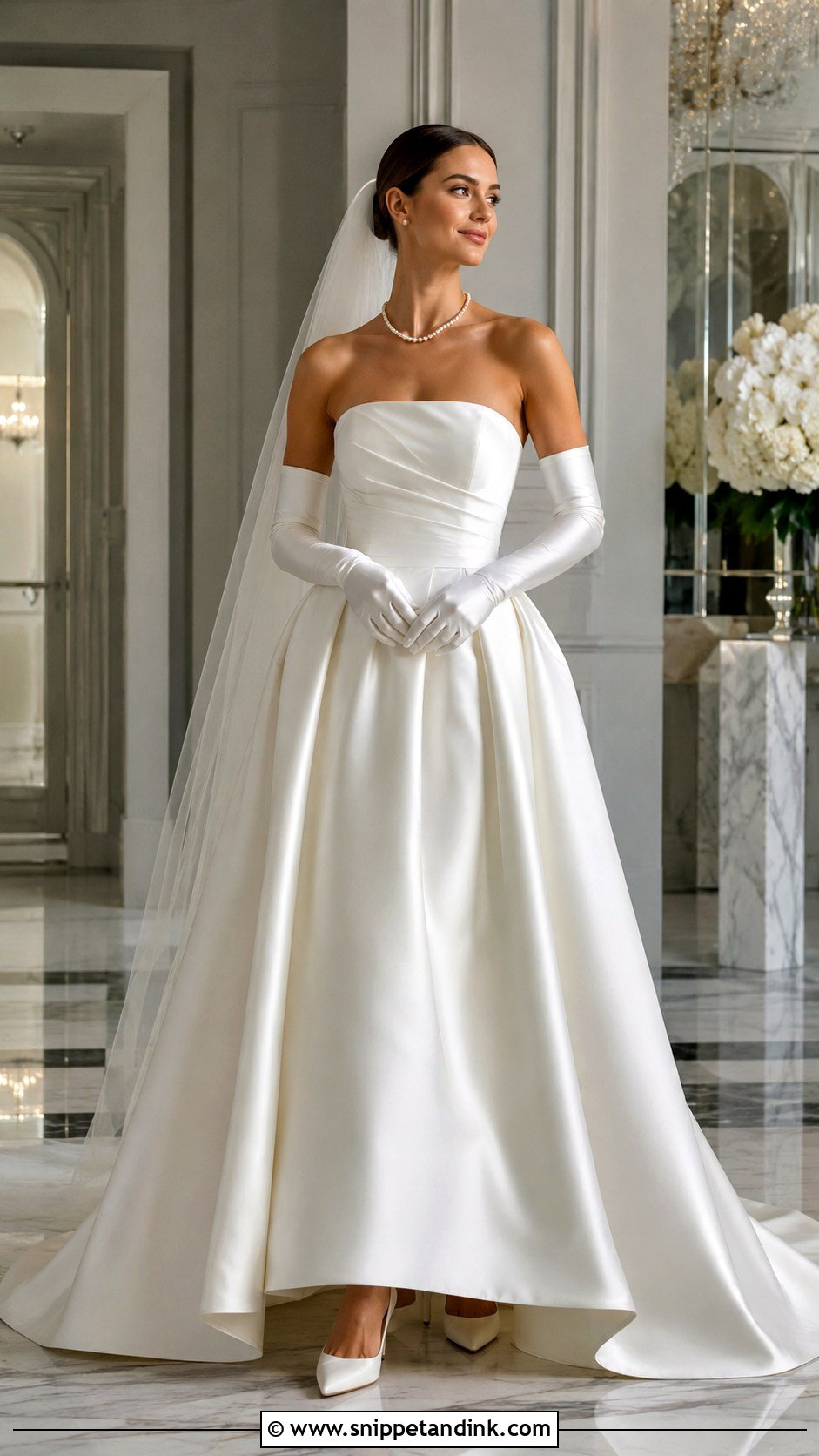
Strapless satin is a classic because it works on so many shapes, from ball gown to sheath. A secure structured bodice matters most if you plan to dance; I ask brides to jump lightly in the fitting room, and if anything slips, it goes back to the seamstress. Long satin gloves make it fashion-led, while a pearl necklace and studs keep it traditional. Pointed pumps, a clean veil and a small clutch finish it, with a polished bun or soft Hollywood waves. It suits black-tie rooms and modern hotels.
8. Satin Long Sleeve Bride Dress
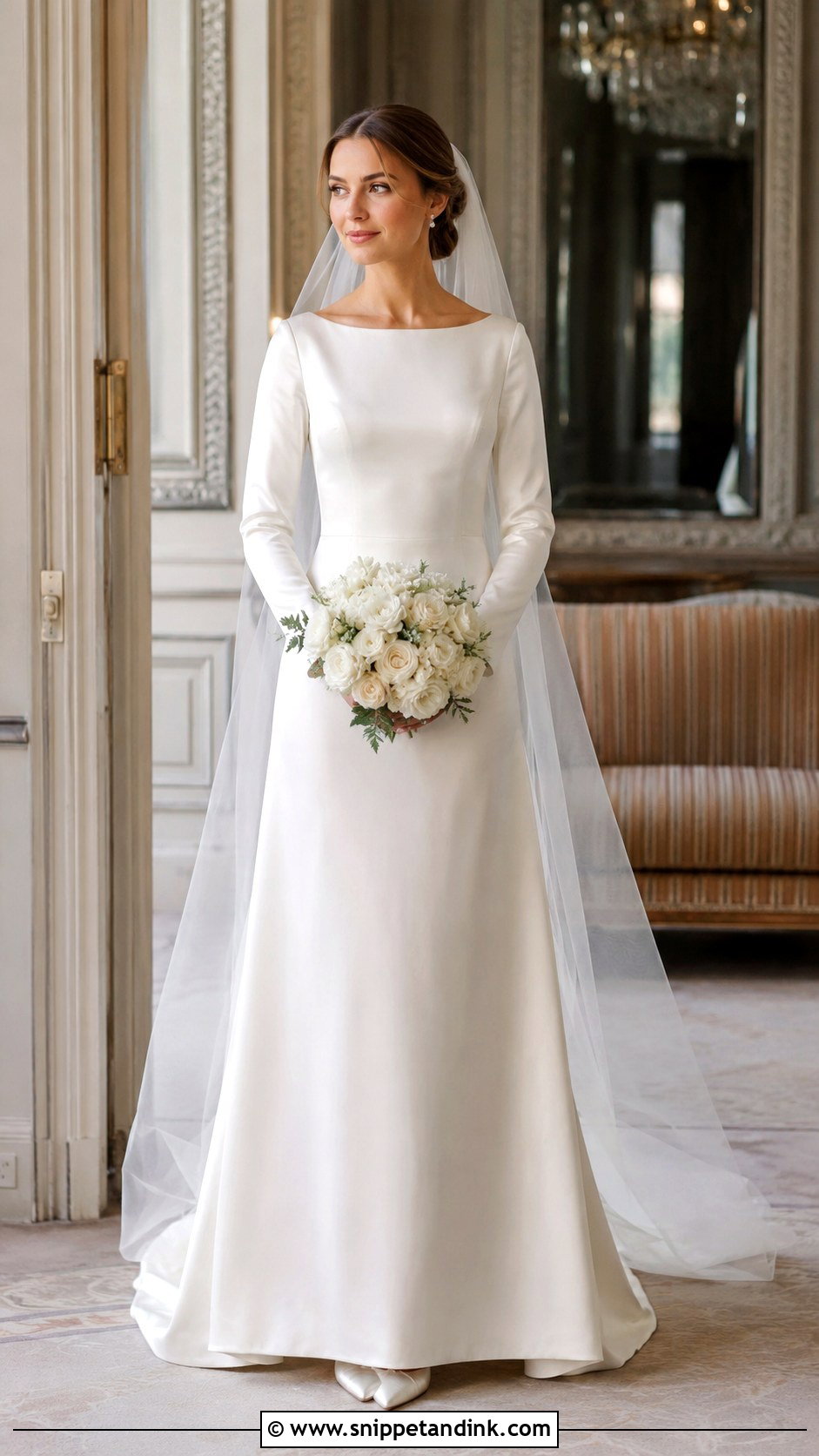
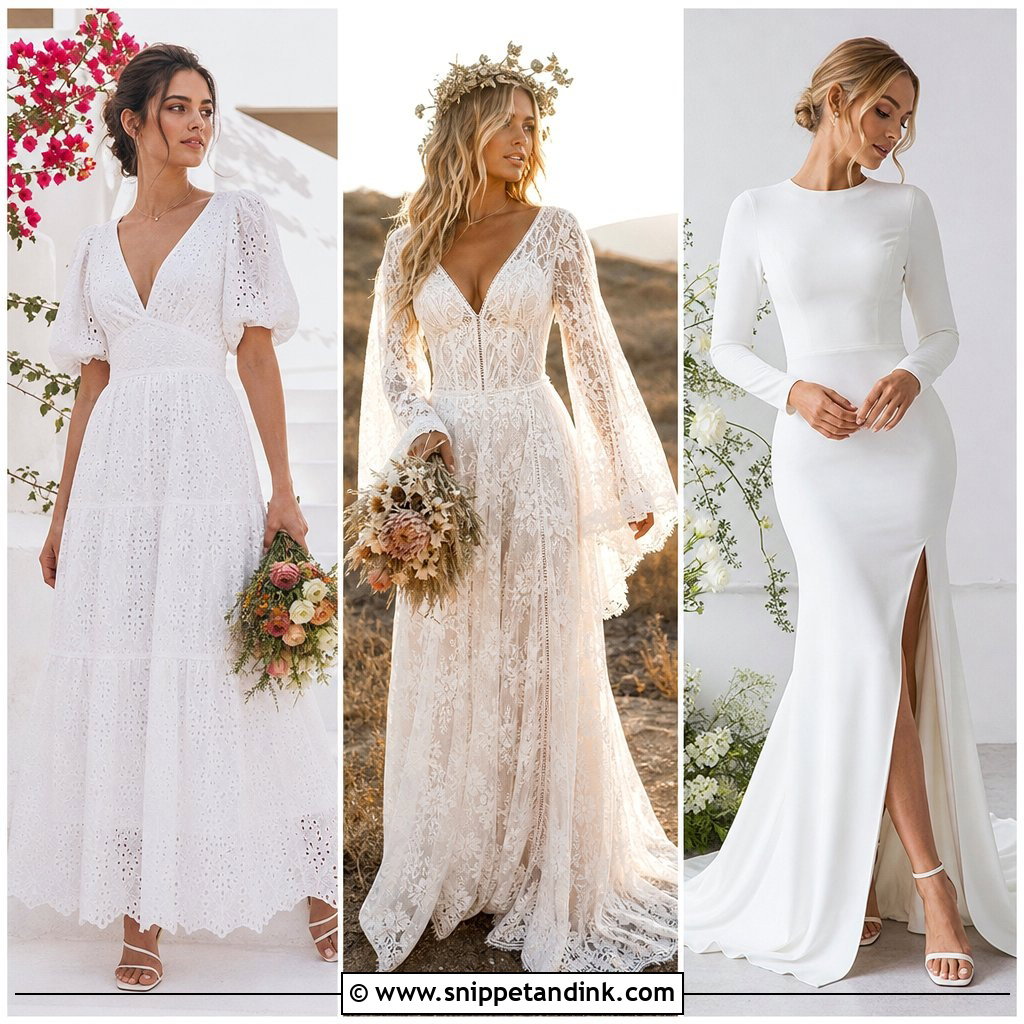
Slim satin sleeves give coverage without weight, since the shine keeps them from looking heavy. Pair them with a high neckline or balance them with a deep V and a simple skirt. Look for sleeves cut with enough room at the elbow to bend your arm fully. Pearl earrings, closed-toe heels and a soft veil falling behind the shoulders suit it, with a sleek bun or tucked waves. Fall and winter weddings and city venues are its natural home. On a very plain dress, a small hair comb or pearl pins add the last detail.
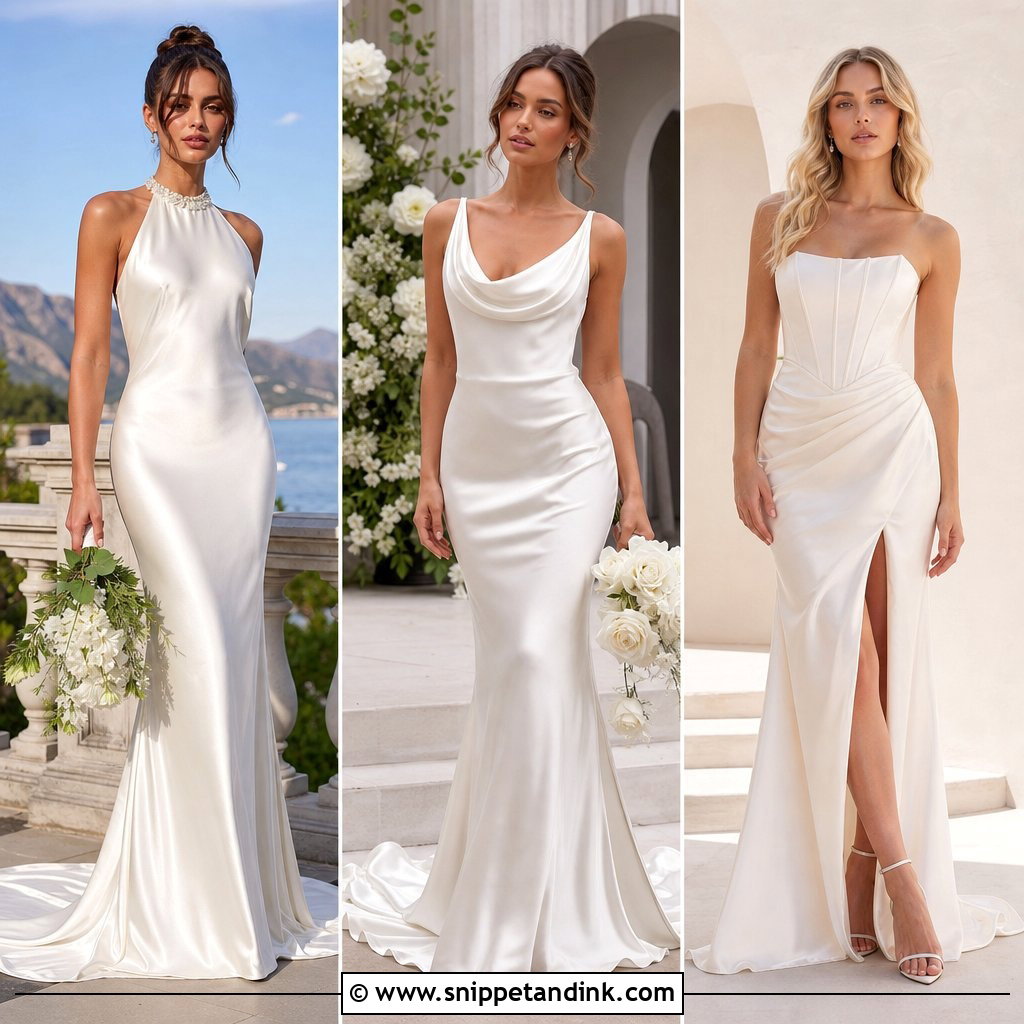
9. Satin Halter Bride Dress
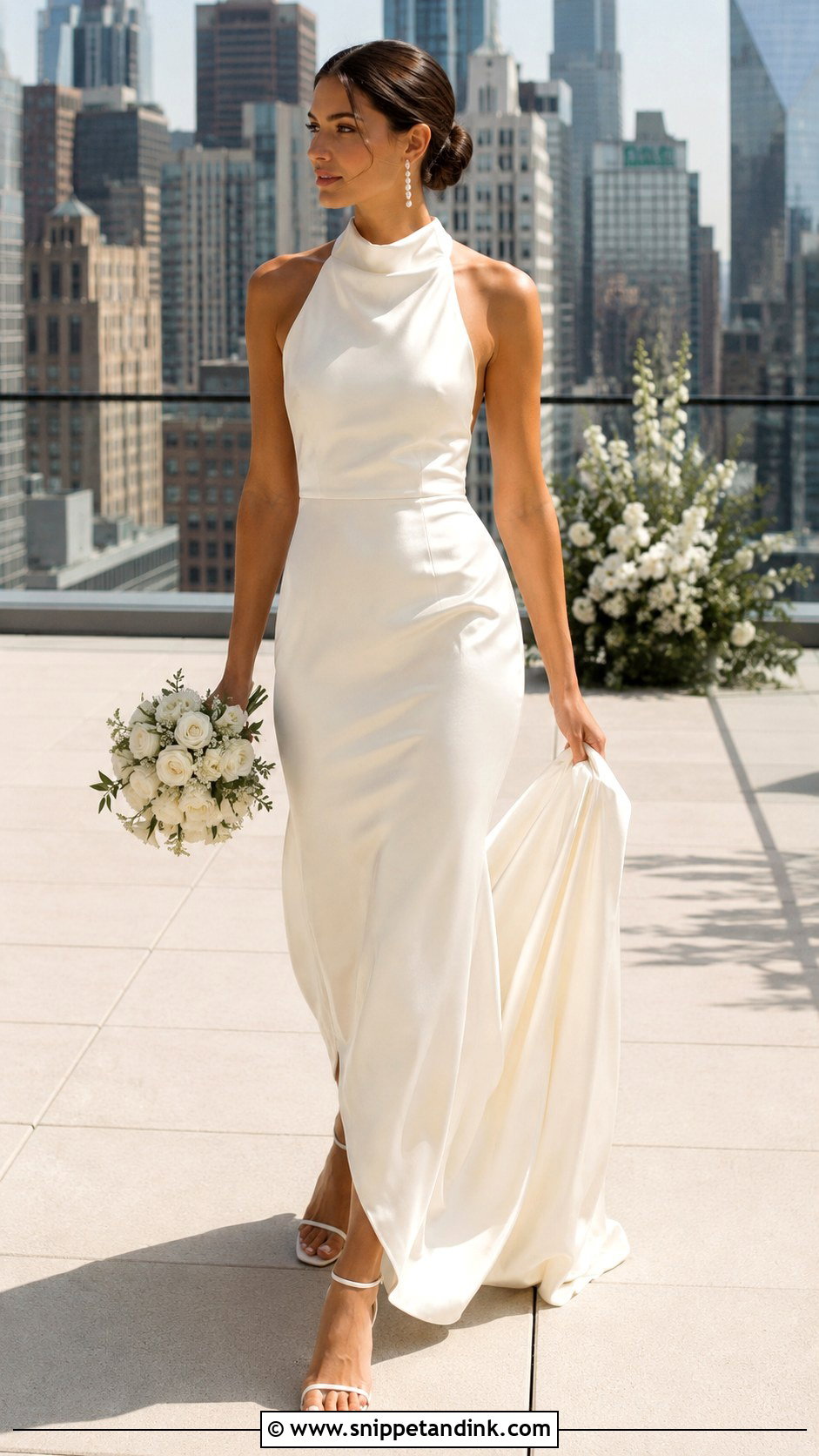
A halter draws the eye to the shoulders and pairs well with column, mermaid or slip cuts. I like an ivory satin halter with a clean front and a low back for contrast. Because the strap goes around the neck, check that it isn’t pulling after you’ve worn it for half an hour; a wider strap often fixes that. Drop earrings, strappy heels and a smooth updo keep the neckline clear. A narrow veil, or none, keeps it contemporary for rooftops, destinations and modern venues.
10. Satin One Shoulder Bride Dress
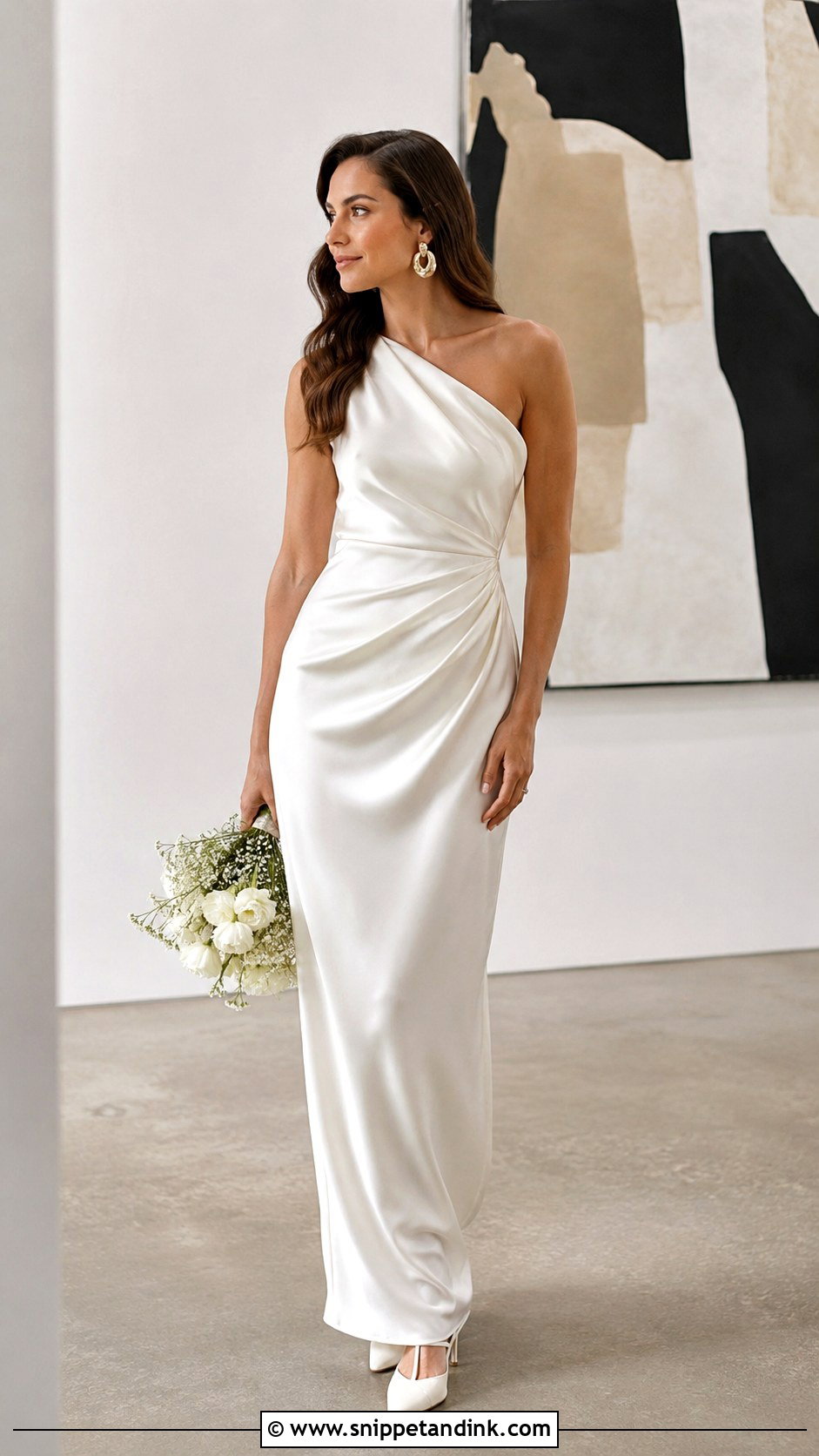
One bare shoulder adds interest without embellishment. It comes as a fitted column, a draped gown or an A-line with one wide strap. The single strap has to grip; in fittings I have brides turn and wave, because one-shoulder bodices tend to creep toward the bare side. Sleek heels, sculptural earrings and a smooth bun or side-parted waves suit it, and a short veil or pearl clip balances the asymmetry. Skip the necklace and let earrings and shoes carry it at a gallery, restaurant or courthouse.
11. Satin Mermaid Bride Dress
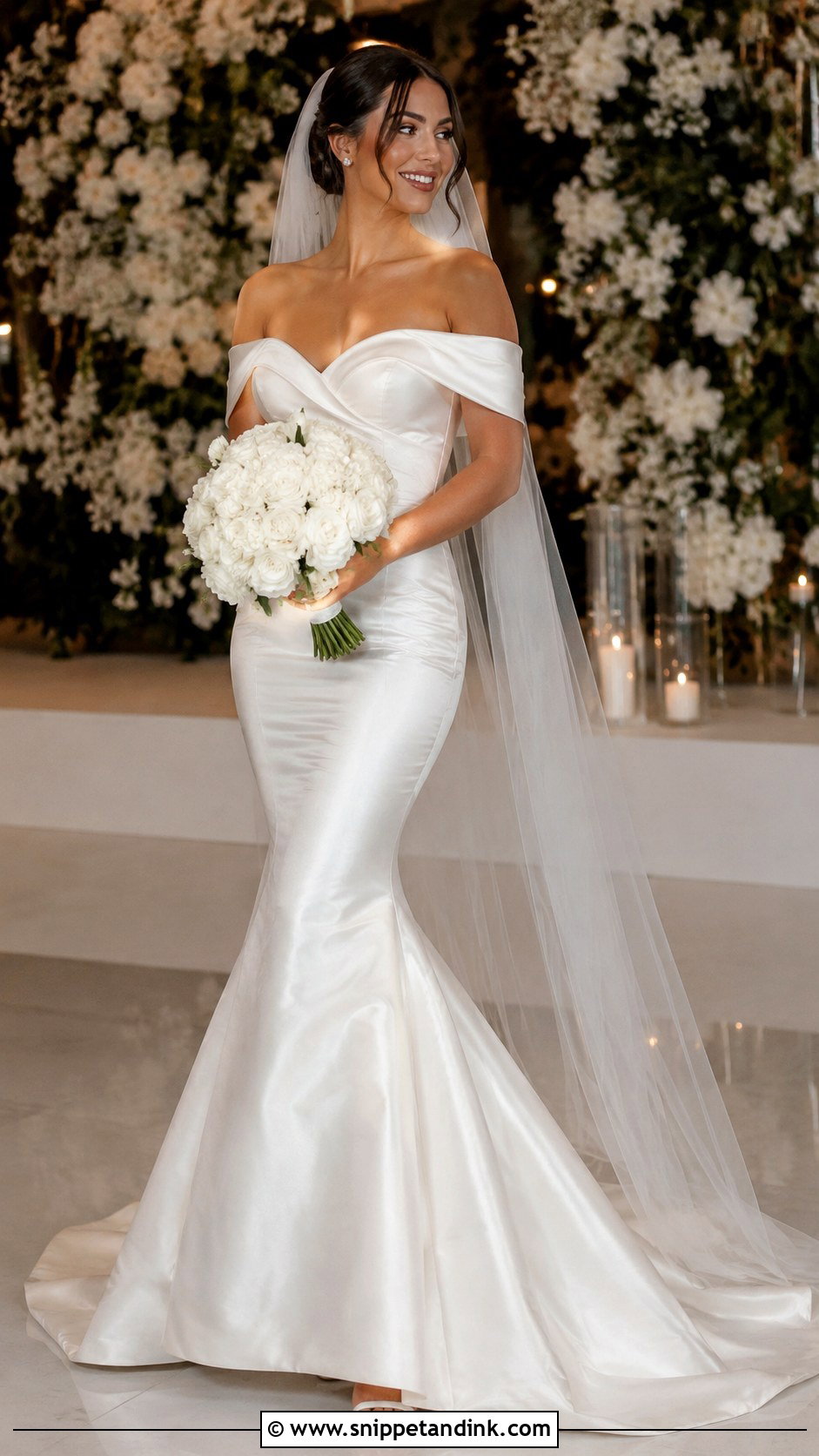
Mermaids fit through the bodice and hips before flaring near the knee or lower thigh. Satin needs careful seaming here, because any pull across the hips shows on the smooth surface. Where the flare starts decides how freely you walk, and I always test it on stairs before a bride commits. High heels, a long veil and sparkling studs or small drops suit it, with a structured bouquet and sleek hair. For a softer version, try a fit-and-flare with a higher, gentler flare.
12. Satin Column Bride Dress
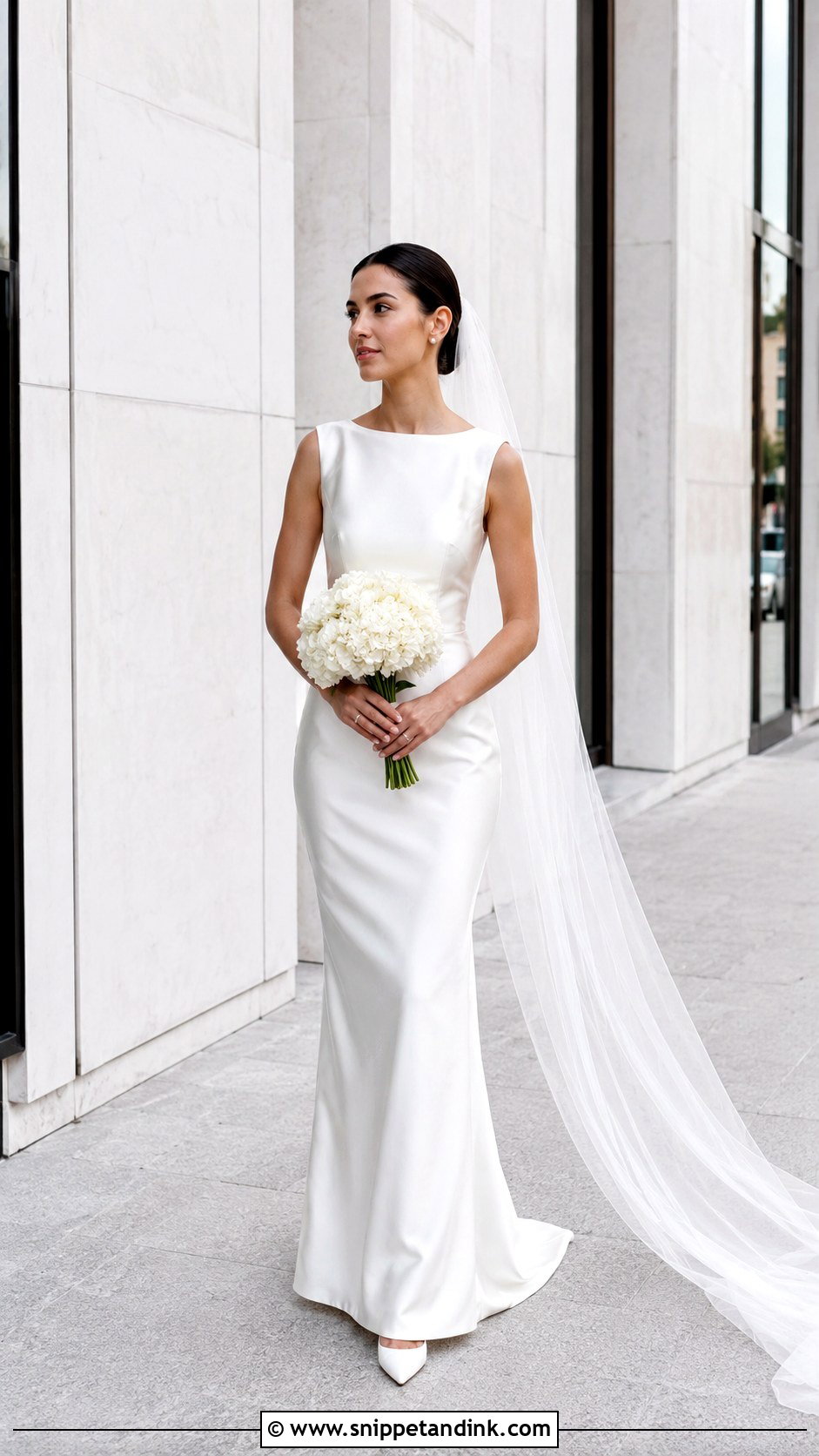
A column has no full skirt to hide behind, so tailoring decides everything. A boat neck, square neck or strapless bodice in smooth ivory satin keeps it sharp. The hem should just brush the shoe, set with the exact pair you’ll wear. Pointed heels, pearl studs and a veil falling straight behind you suit it, with a sleek bun or straight polished hair. Courthouses, rooftops, galleries and small celebrations all fit. Get the fit right and a simple column looks far more expensive than it is.
13. Satin High Neck Bride Dress
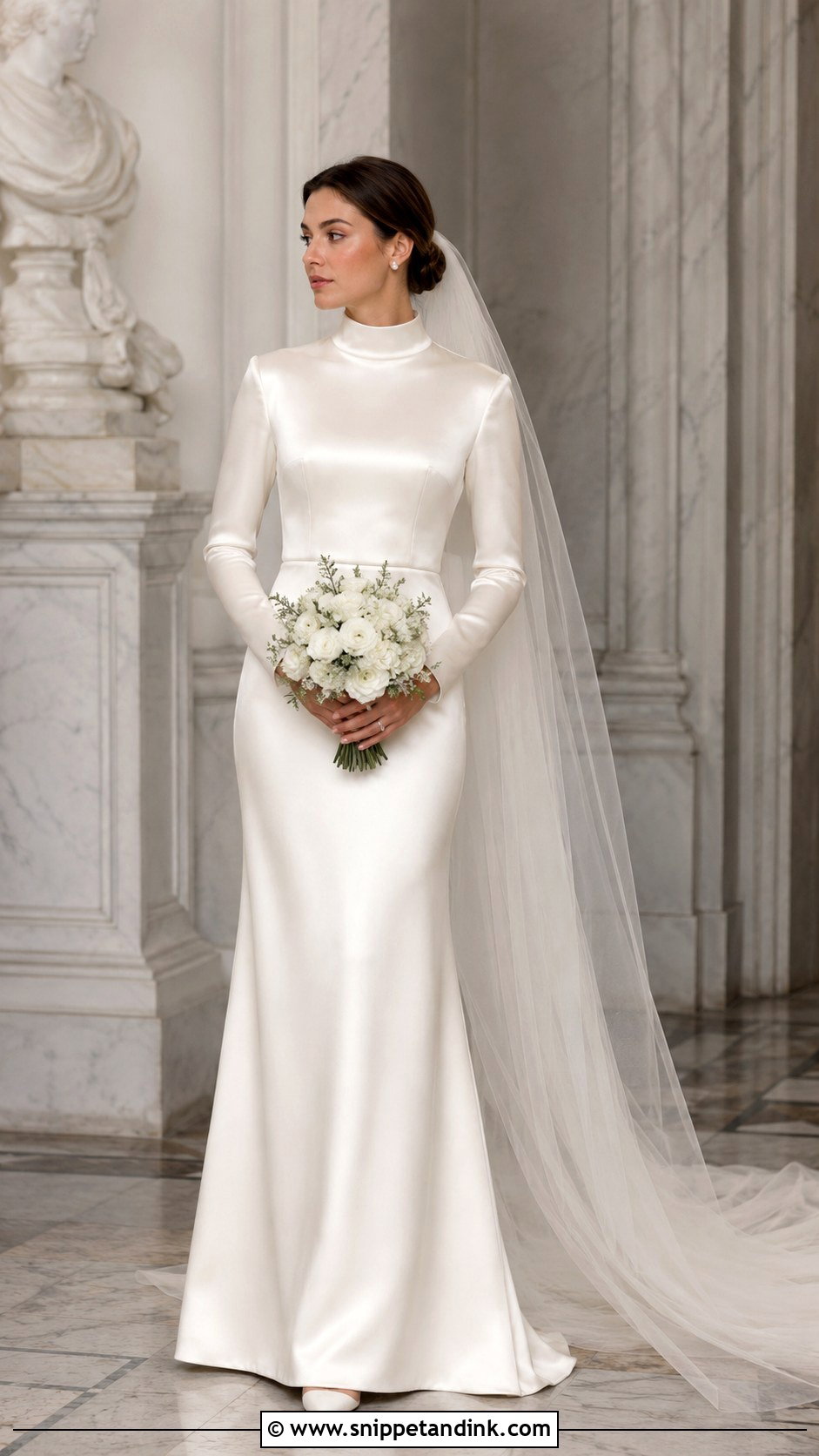
A high neck gives coverage and a refined line, especially in column, A-line or long-sleeve cuts. Soft ivory satin with a clean collar and a little back interest, like a small keyhole opening, keeps it from feeling too closed. Pearl studs, closed-toe heels and a low bun keep the neckline neat, and a long veil adds romance behind. Turn your head both ways in the fitting; a snug collar rubs over a long day. Fresh, glowing makeup keeps the high neck feeling light.
14. Satin V Neck Bride Dress
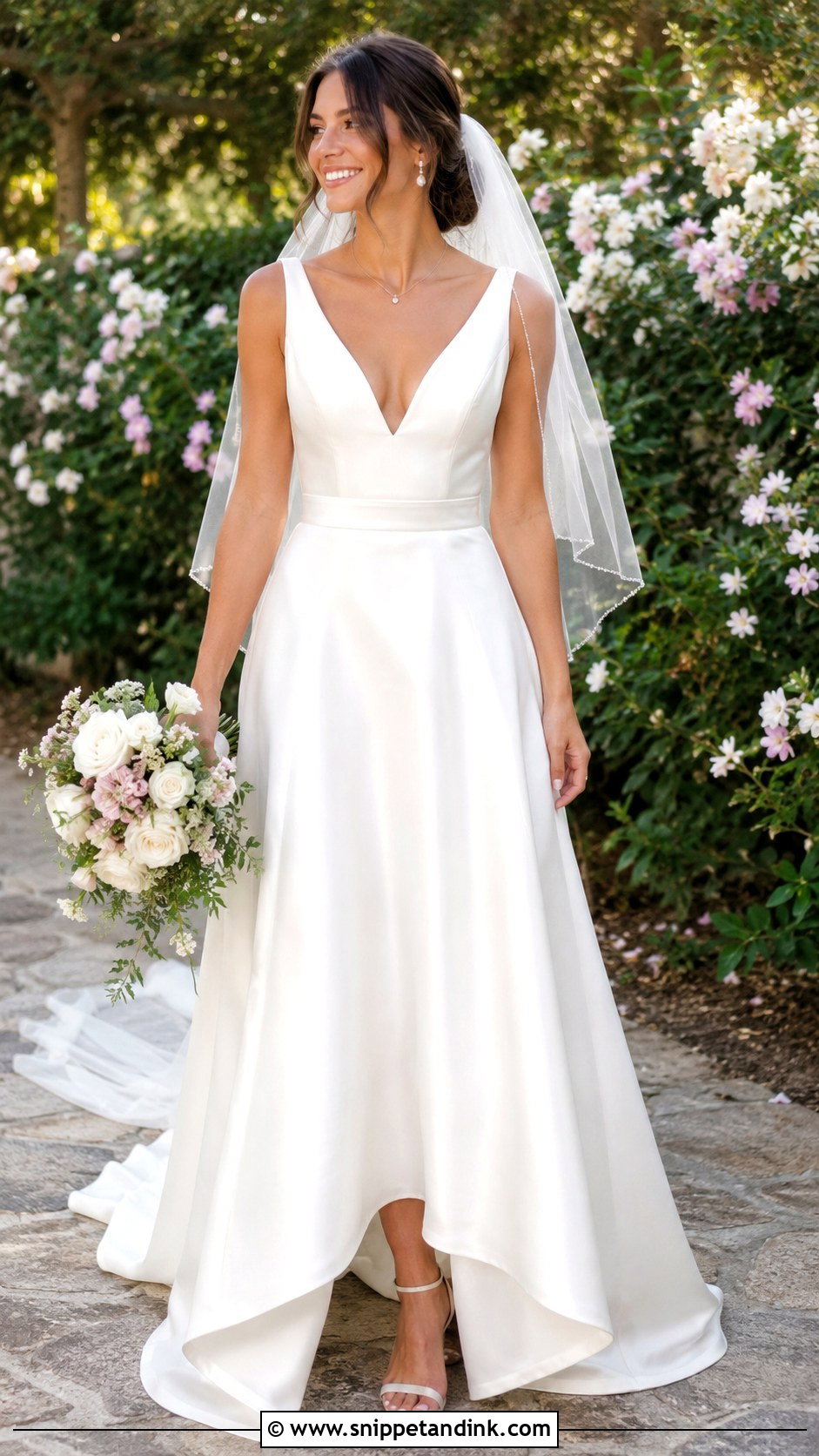
A V lengthens the neck and torso, and its depth is up to you, from shallow and soft to deep with internal support. Satin A-line, slip and fitted cuts all carry it. Deeper Vs need fashion tape or a fitted inner panel so they stay put when you lean forward. A fine pendant, pearl earrings and ankle-strap heels suit it, with a fingertip veil or soft hair ribbon. Outdoor ceremonies, barns and garden venues work well. For more coverage, choose wider straps or a sheer wrap you can take off after the vows.

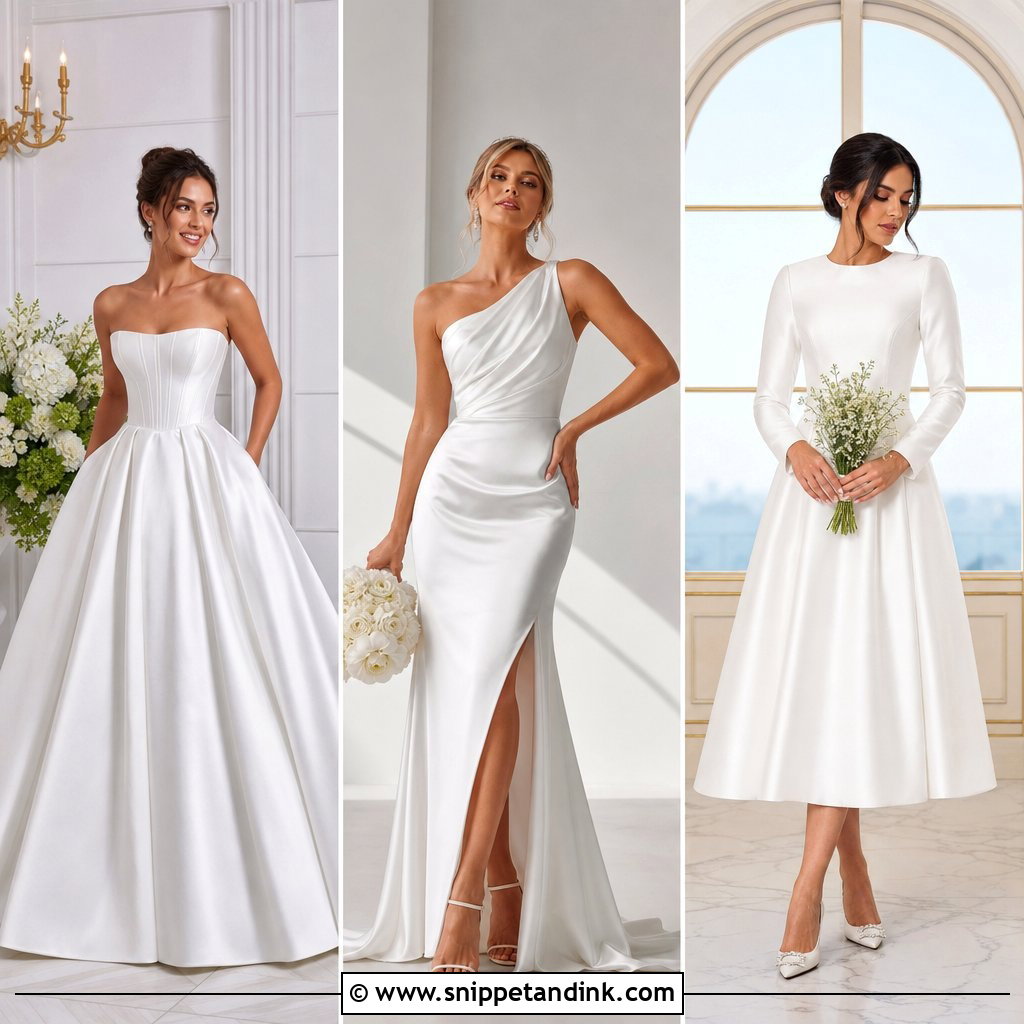
15. Satin Midi Bride Dress
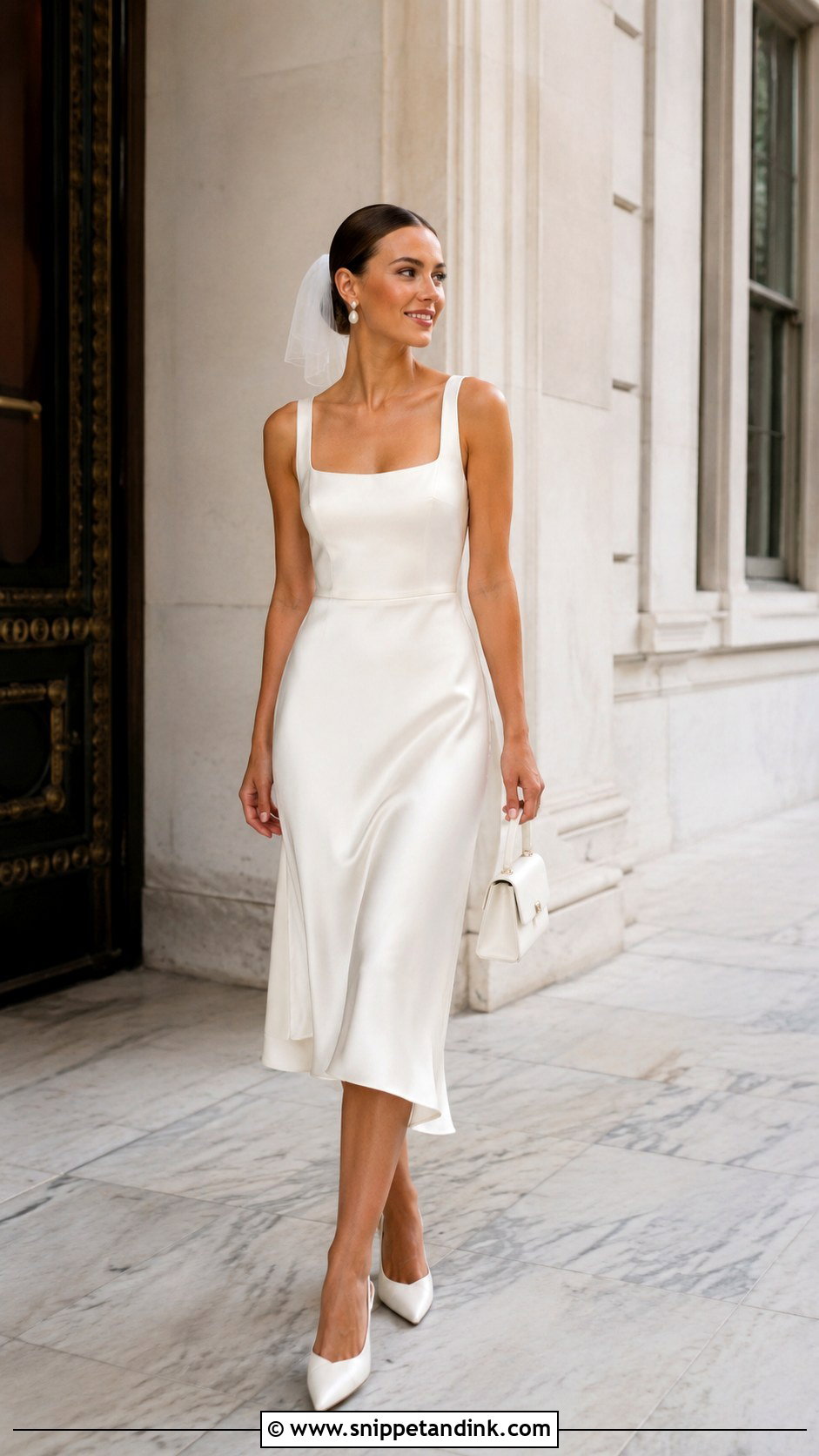
Midi length suits courthouse weddings, bridal brunches, elopements and reception changes, and it’s far easier to walk in than a floor-length gown. White or ivory satin with a square neck, strapless bodice or fitted waist keeps it bridal. Shoes are fully visible, so buy them alongside the dress and hem it wearing them. Slingback heels, a short veil or bow, pearl earrings and a small top-handle bag complete it. Satin is what stops this shorter length from looking casual, and soft waves or a low bun keep it bridal.
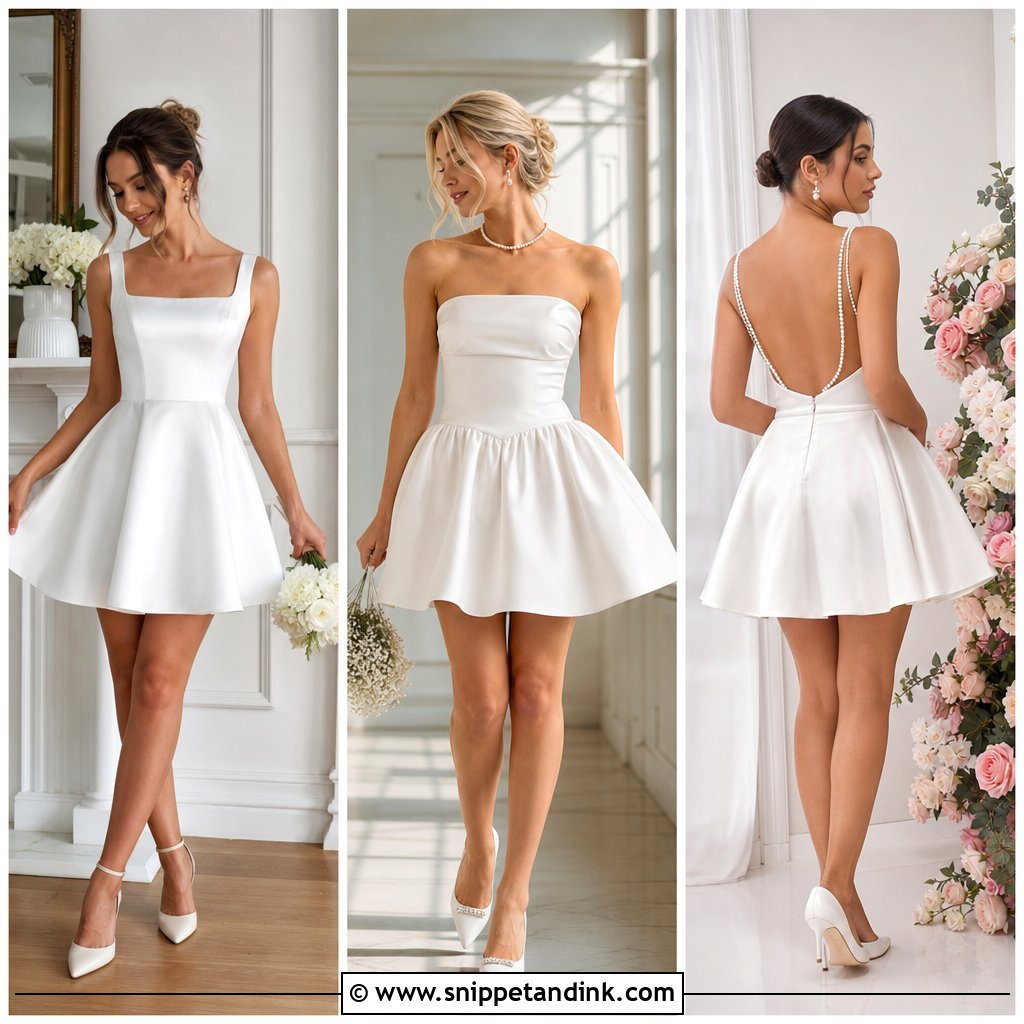
16. Satin Mini Bride Dress
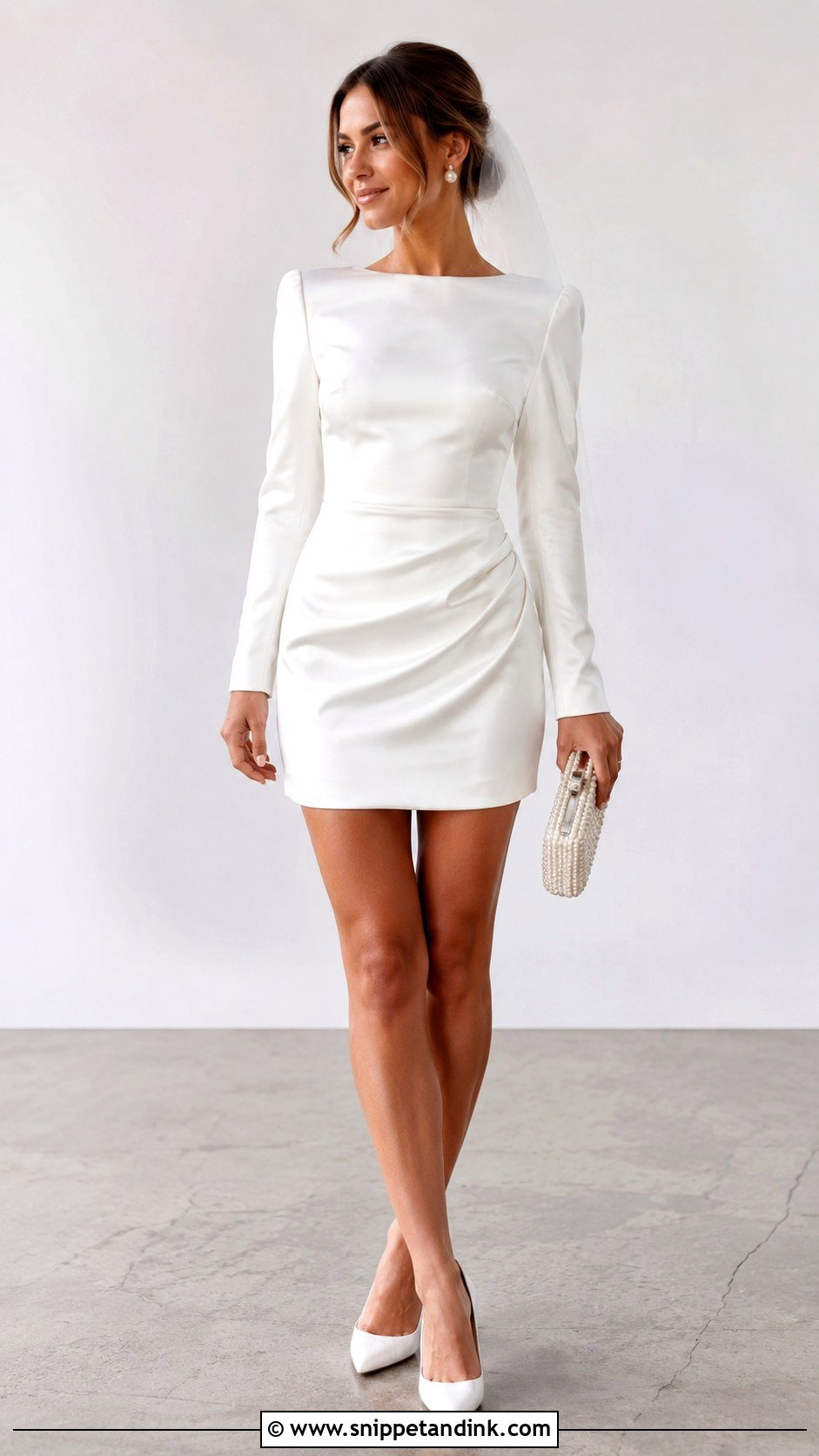
A satin mini works for a reception, a civil ceremony, an after-party or a second bridal look. Choose a structured one with a clean neckline, long sleeves or a bow so it reads special. Short satin creases across the lap when you sit, so a heavier weight holds up better than a thin slip satin. Pointed pumps, sheer tights in cold weather and pearl or crystal earrings suit it, with a short veil, headband or satin bow. You can dance in it without a second thought.
17. Satin Wrap Bride Dress
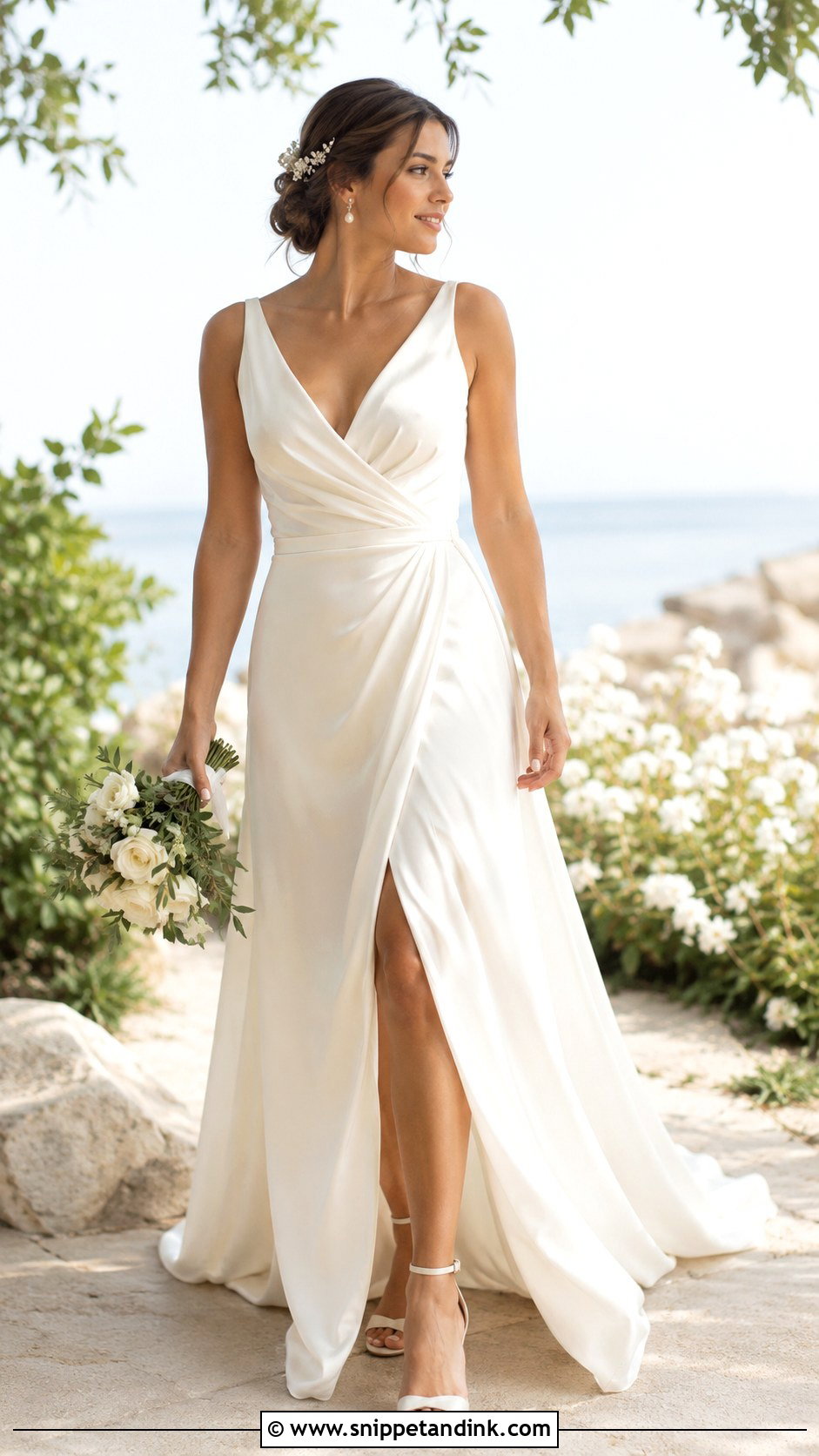
The wrap is the most adjustable satin dress there is; you tie the waist where it suits you, which is kind if your size shifts. An ivory satin wrap gown or midi with a V neck and flowing skirt is soft and easy. Satin ties can loosen as the day goes on, so ask for an inner snap at the crossover point. Block-heel sandals, pearl earrings and a simple veil or comb suit beaches, gardens, city halls and small receptions. Add a fine pendant if the neckline feels too open.
18. Satin Draped Bride Dress
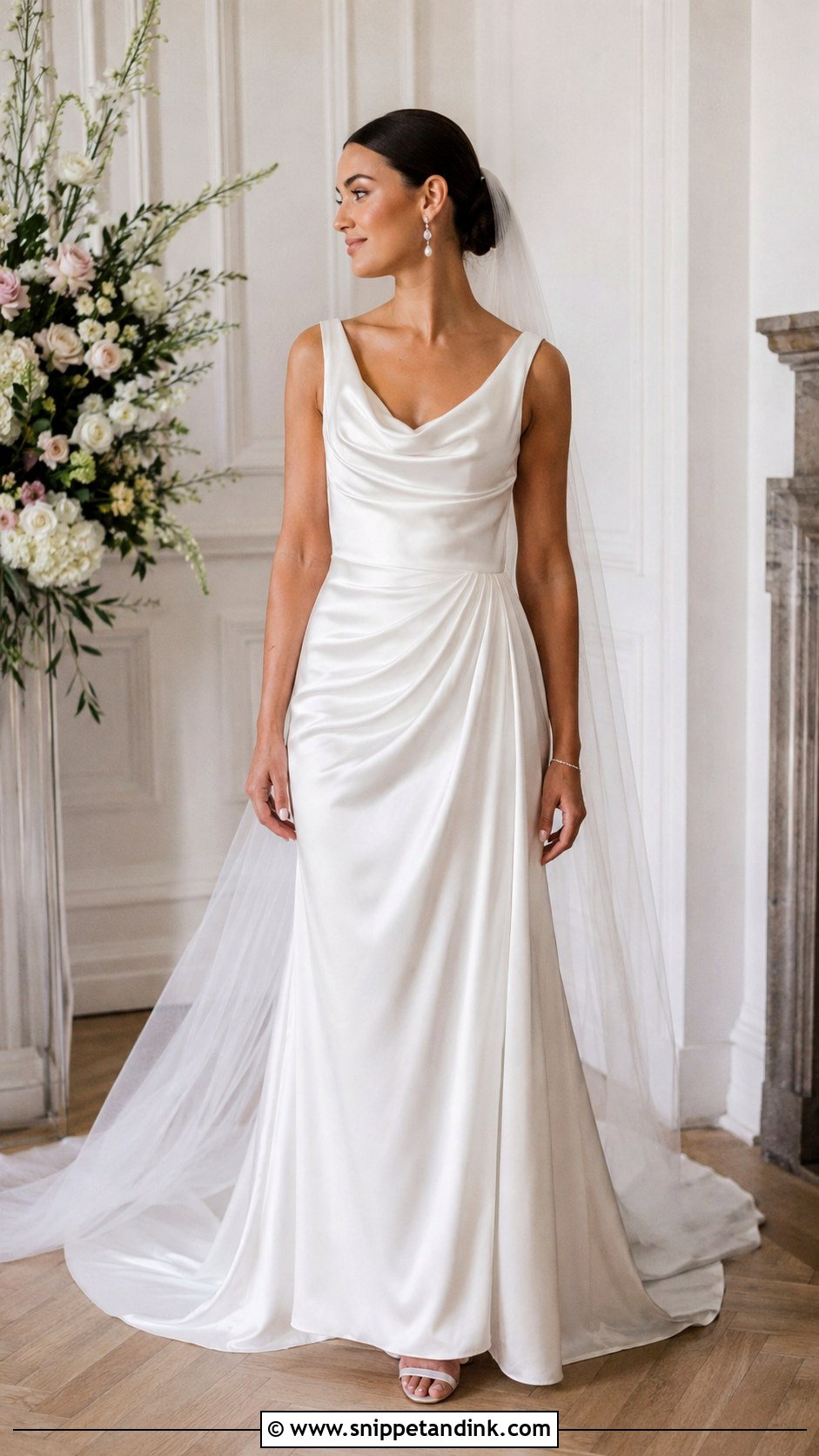
Draping flatters the waist, hips or neckline and gives shape without tight structure, through a draped bodice, gathered waist or soft side detail. Satin shows each fold, so the drape has to be stitched down at a few points inside or it slides and flattens by evening. Minimal heels, drop earrings and a smooth veil suit it, with a low bun or brushed-out waves. Keep accessories simple since the folds already add dimension. It’s sculptural but still easy to wear.
19. Satin Backless Bride Dress
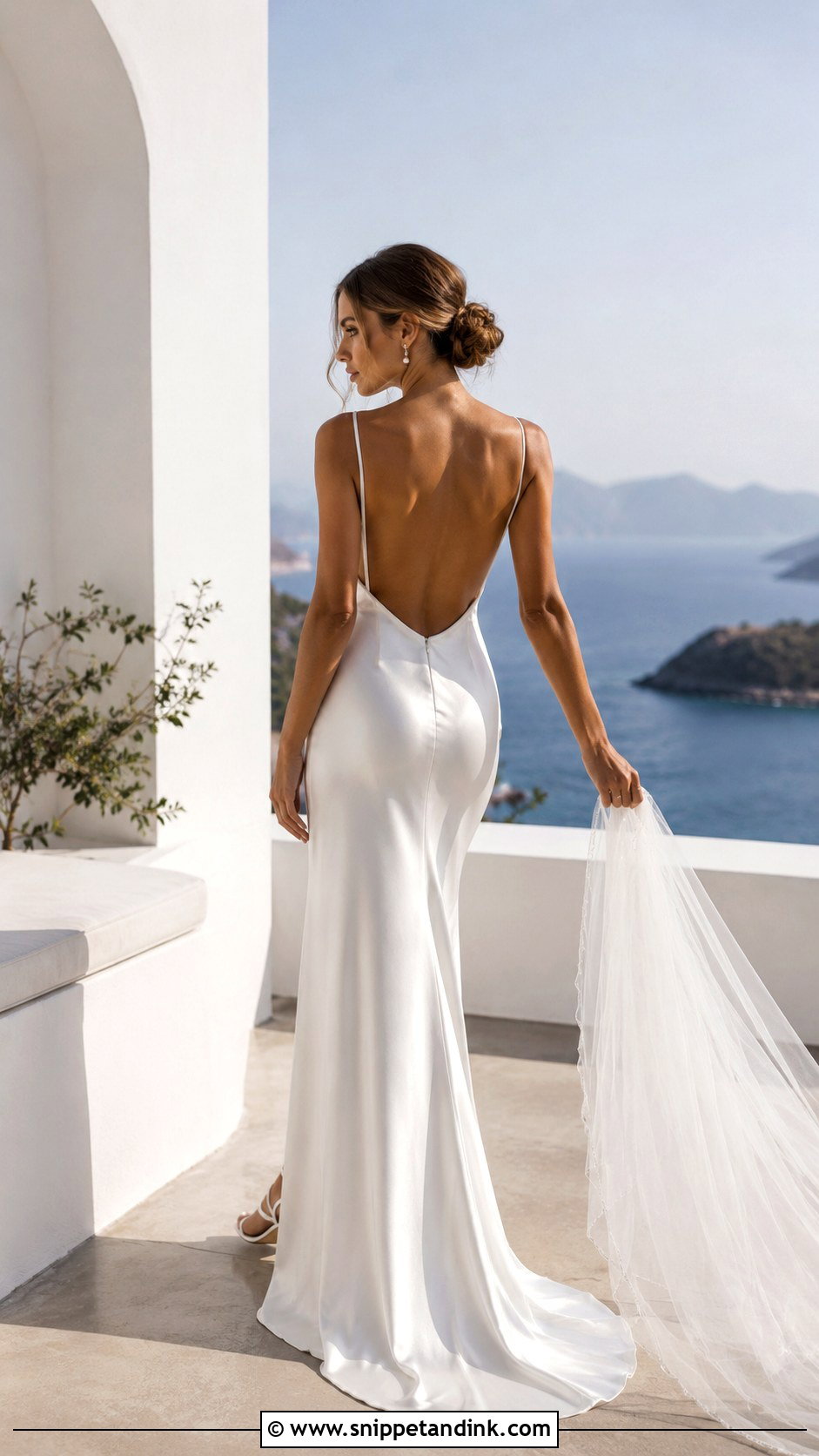
With a satin backless bride dress, the front stays simple and the open back makes the exit as memorable as the entrance. A bias-cut slip, halter gown or long-sleeve dress with a low back all work. Delicate back jewelry, simple earrings and low-profile heels suit it, and a removable veil lets the back show at the reception. Plan support early, because there’s nowhere to hide a strap; sewn-in cups or adhesive options need testing in warm conditions well before the day. It suits destinations and evening ceremonies.
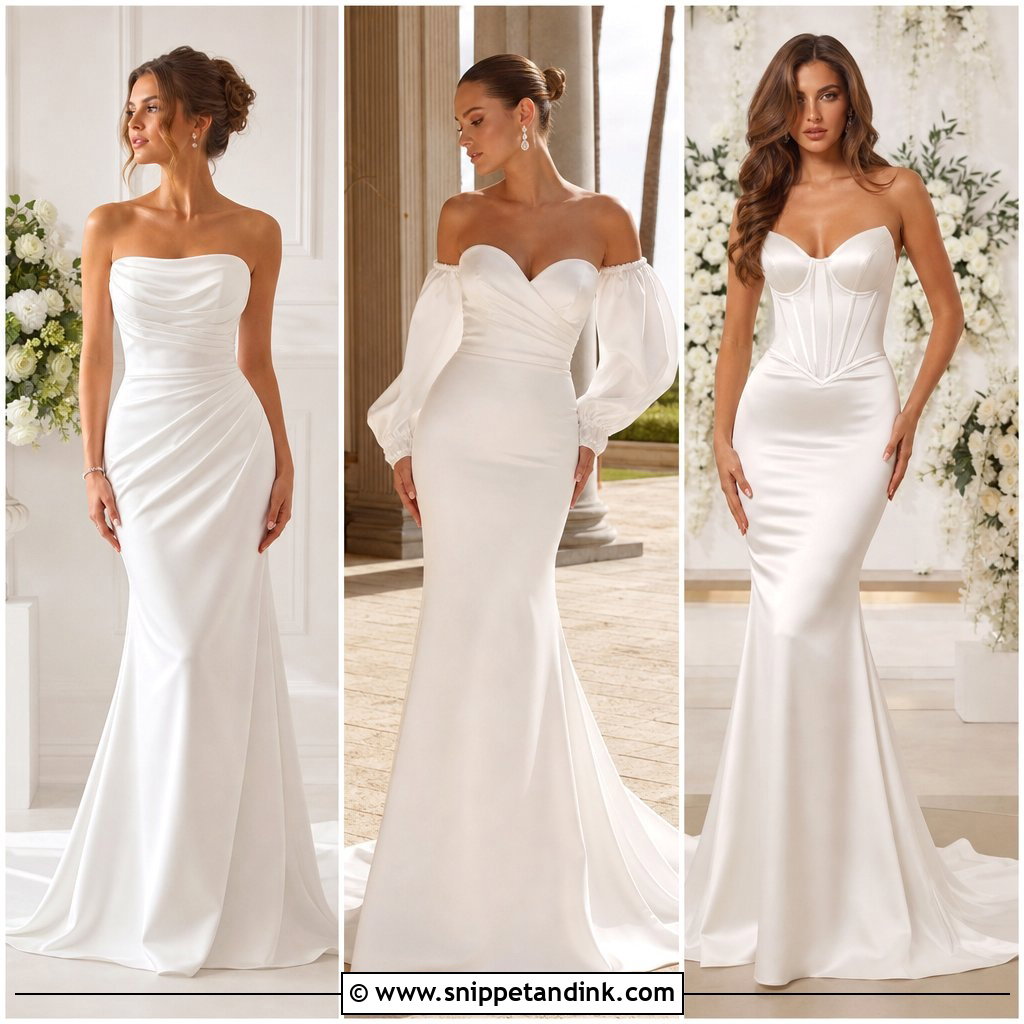
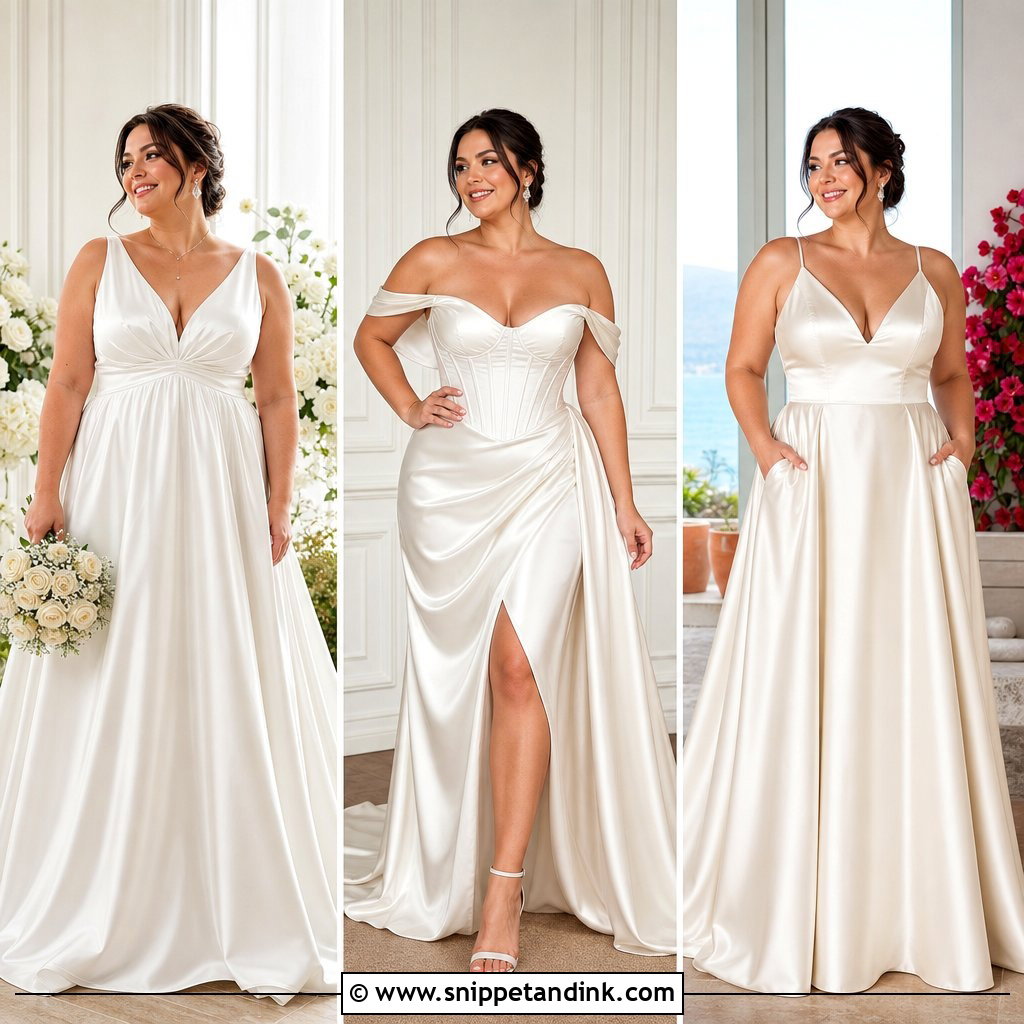
20. Satin Pearl Bride Dress
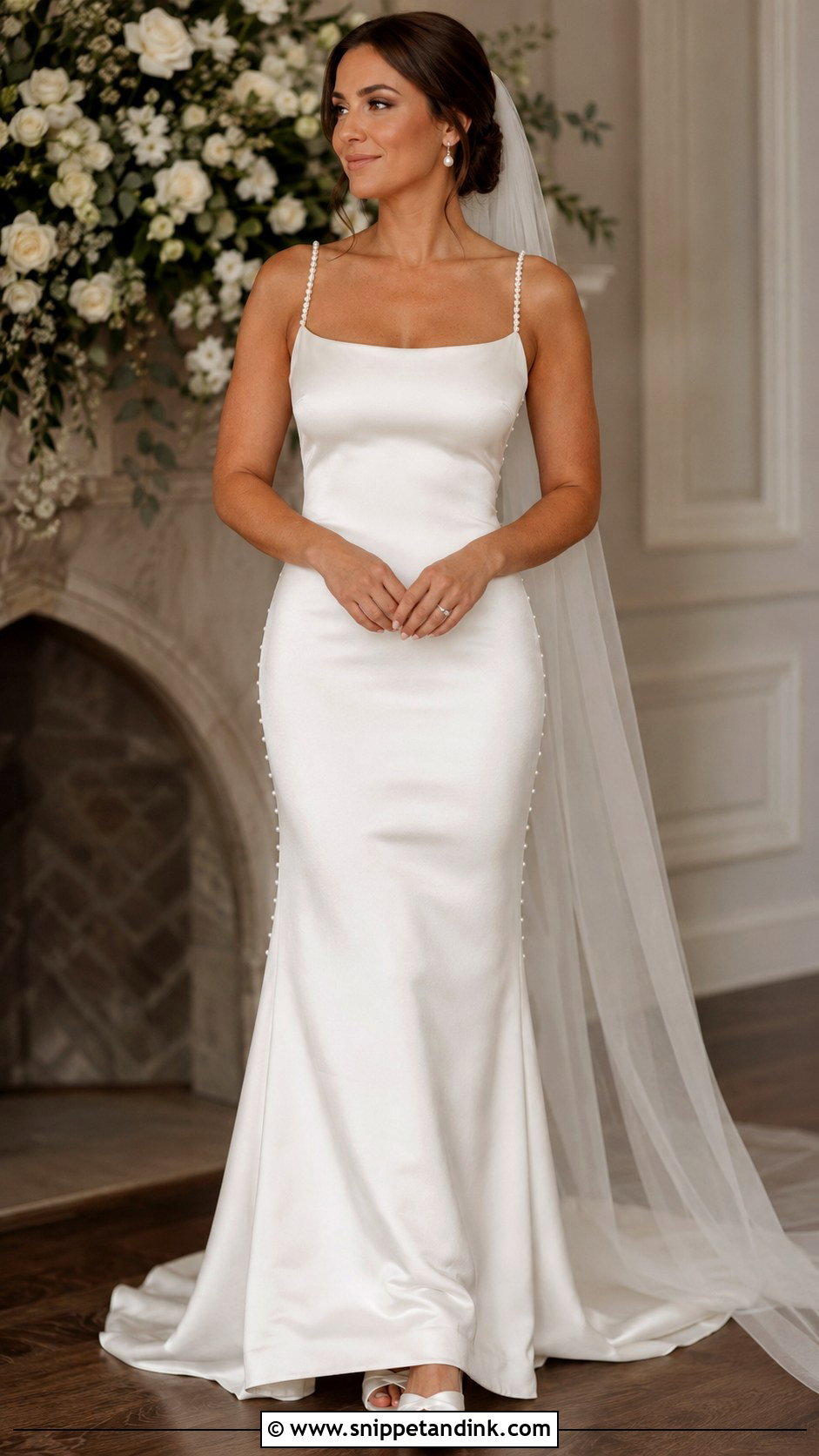
Rather than heavy beading, look for scattered pearls on the bodice, pearl straps, pearl buttons or a pearl-trimmed neckline on a simple satin cut. I keep one rule: pearls on the dress mean fewer pearls everywhere else. Pearl earrings, satin heels and a clean veil are enough, and a pearl headband only if the dress itself has very little. Check that pearl buttons actually fasten, or that a zip sits behind them. Classic weddings, gardens and formal rooms suit it, with soft, coordinated accessories.
21. Satin Bow Bride Dress
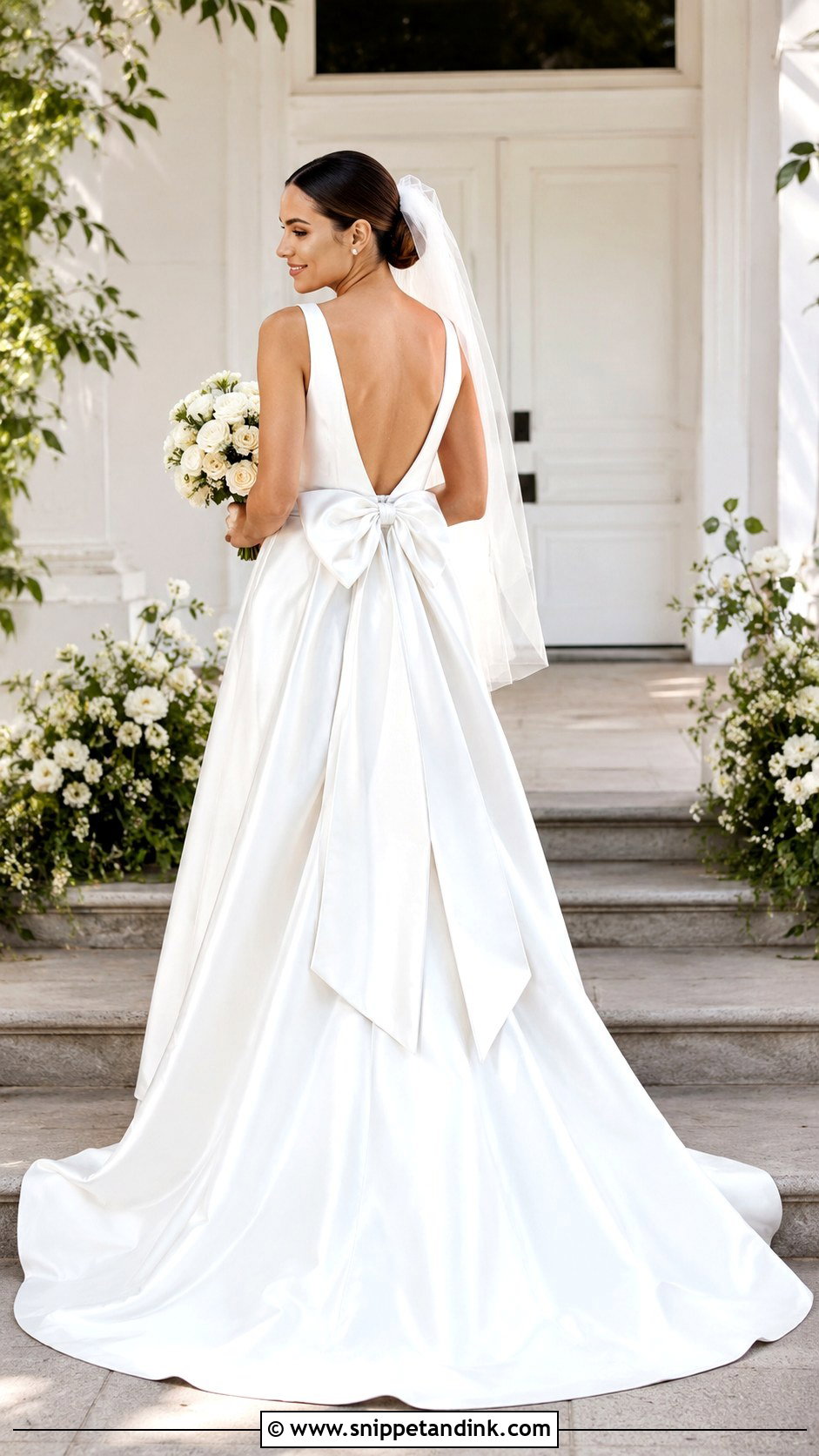
One strong bow is enough, at the back waist, shoulder, neckline or hip, on a mini, midi, A-line or strapless dress. Large satin bows need interfacing or a few hidden stitches to stay crisp, so ask how it’s built. If the bow is big, skip statement jewelry. Simple heels, pearl studs and a smooth veil or bow hair accessory finish it. Courthouses, gardens, bridal lunches and receptions all suit it, and a back bow shows nicely as you walk the aisle.
22. Satin Lace Trim Bride Dress
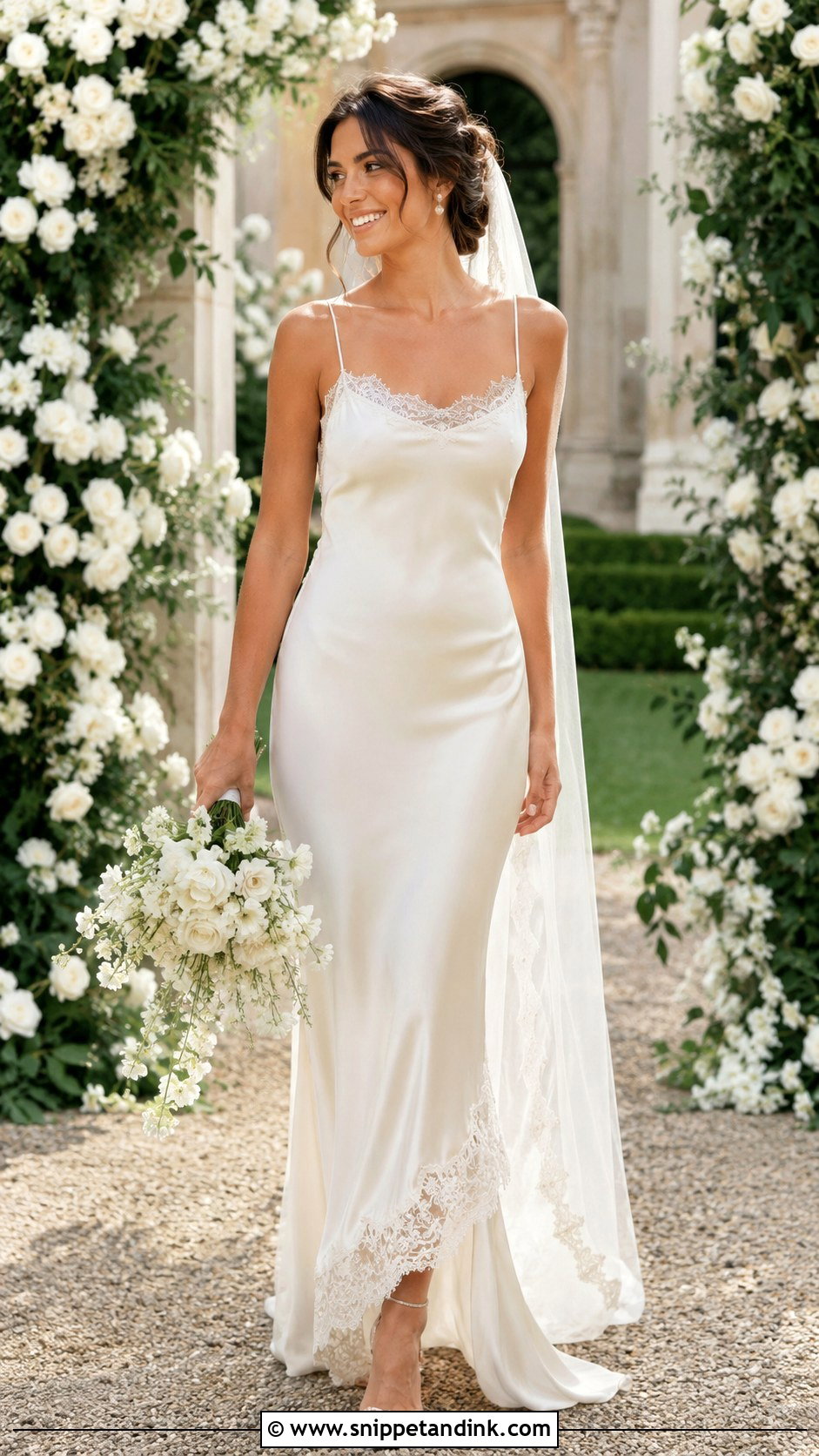
Lace trim gives softness without committing to a full lace gown. It can edge the neckline, hem, sleeves or back. On a slip it reads vintage; on an A-line, more classic. Keep the trim narrow, since wide lace bands start to fight the satin. Match the veil to the lace rather than the satin, because they’re rarely the same shade. Delicate heels, pearl earrings, a soft veil and a loose bun or gentle waves suit gardens, estates and smaller weddings.
23. Satin Cape Bride Dress
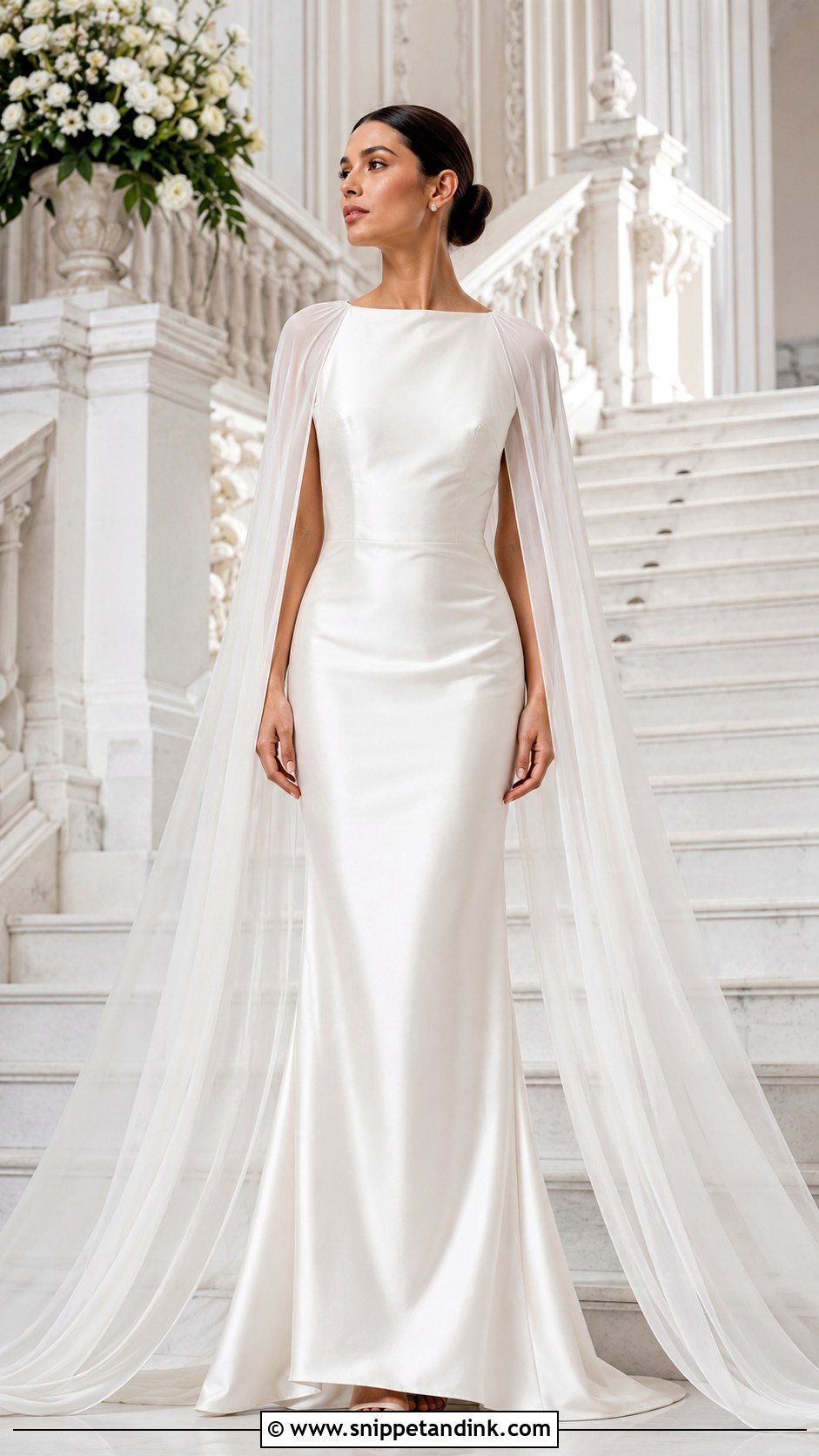
A cape gives drama without a heavy veil, whether it’s detachable, built into the sleeves or a sheer layer over the shoulders. It adds movement in ceremony photos and usually comes off for the reception. Check how it attaches. Hooks at the shoulder seam hold better than buttons, and someone should practise removing it. Simple heels, stud earrings and a clean hairstyle let it flow. A satin column or A-line is the best base, with a neat compact bouquet for formal venues, winter weddings and grand staircases.
24. Satin Courthouse Bride Dress
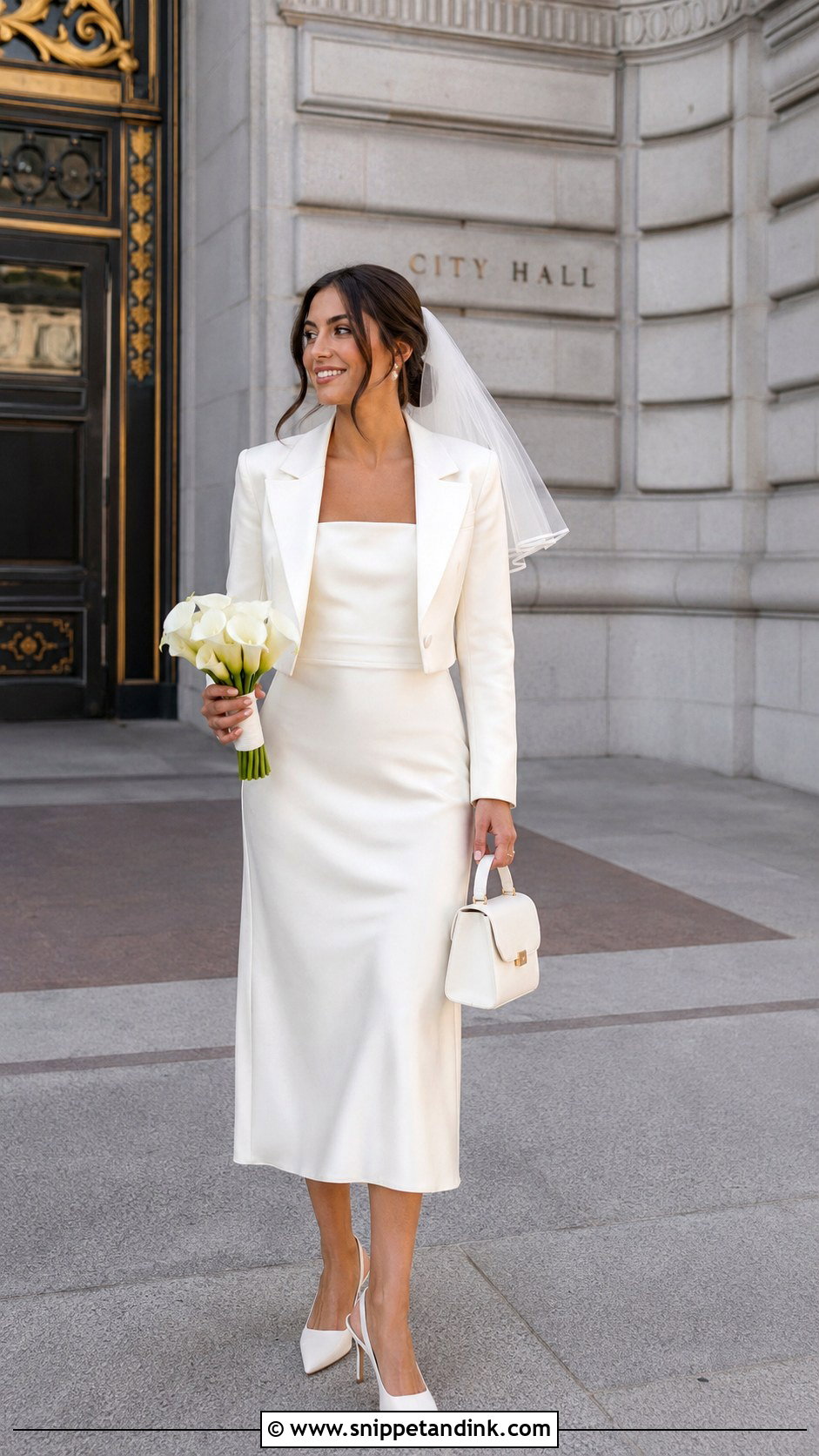
Courthouse satin has to be comfortable and easy to move in. A satin midi, slip, mini or clean column all work. Slingback heels, a structured blazer or cropped jacket, pearl earrings and a small top-handle bag suit the setting, with a short veil, birdcage veil or satin bow. You’ll sit in waiting areas, walk city streets and take photos on steps, so choose a heavier, crease-resistant satin over a thin one. It keeps its shape all the way to lunch afterward.
25. Satin Reception Bride Dress
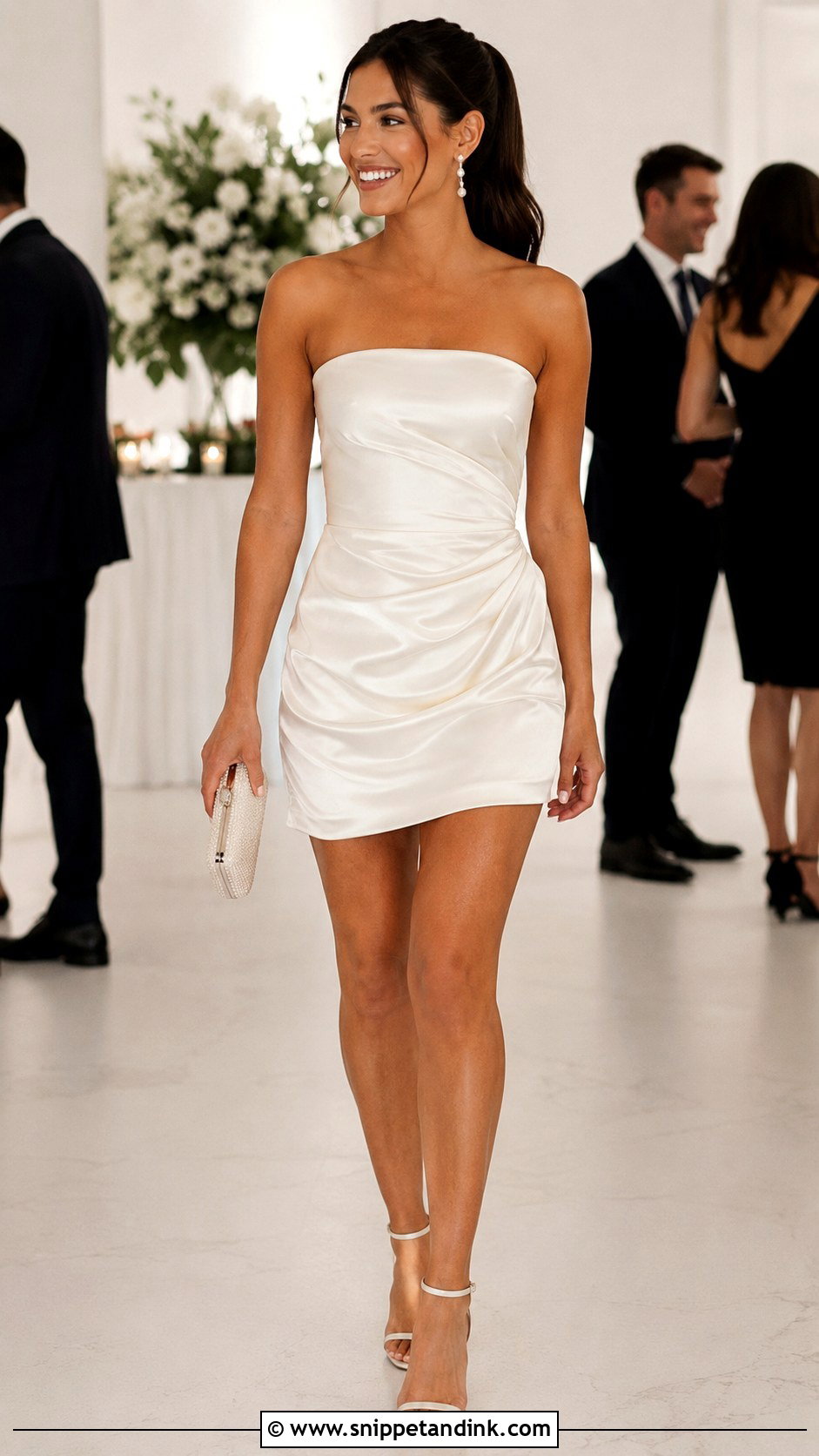
Your reception dress should let you dance and eat without thinking about it, while still reading bridal. A satin mini, midi, slip or simple fitted gown with a slit gives that freedom. Comfortable heels, pearl earrings and a small clutch suit it, and a bow, clean trim or soft draping makes it feel special. If the ceremony gown is formal, this one can be lighter and more playful. Stay with ivory, white or soft champagne so it still connects to the day. A sleek ponytail or loose waves refresh the hair.
Switching Into a Second Satin Look Mid-Reception
Several of the shorter dresses here make good reception changes. The change itself takes longer than most couples expect, so I plan it like any other part of the day.
- Pick the moment: after the meal or straight after the first dance, so you don’t miss speeches.
- Allow around half an hour, including undoing buttons or a corset and redoing the hair or veil.
- Book a room close to the reception space and have the second dress already steamed and hanging there with its shoes and jewelry.
- Choose one helper who has practised the fastenings on both dresses.
- Decide where the ceremony gown goes afterward. Satin creases badly if it’s left in a heap, so bring a padded hanger and a breathable garment bag.
A quick hair change, a sleek ponytail or a bow in place of the veil, makes the second look feel deliberate rather than like you’ve simply taken things off.
Shoes, Veil and Outer Layers Finish What Satin Starts
Satin adapts to almost any silhouette, from slips and midis to ball gowns, corsets, pearls and reception minis, which is why it suits so many venues. Fit comes first. Then think about where you’re marrying and how you’ll move through the day, and let the accessories follow. Shoes, veil, jewelry, hair and any jacket or wrap all shape the final outfit as much as the dress does. Try the whole look on together at least once before the wedding, so nothing surprises you on the morning.
You'll Like These Ideas:







Leave a Reply