
A plain gown is the hardest kind of dress to get right, and the one I enjoy styling most. With no lace or beading to pull the eye, the fabric, the cut and the fit carry everything. A clean satin can read just as bridal as a lace bodice, and a chiffon skirt gives movement without adding bulk. The ideas below are the simple silhouettes I reach for most often, each with the veil, shoes, jewelry and flowers I’d pair with it, and a note on what to watch for at your fittings.
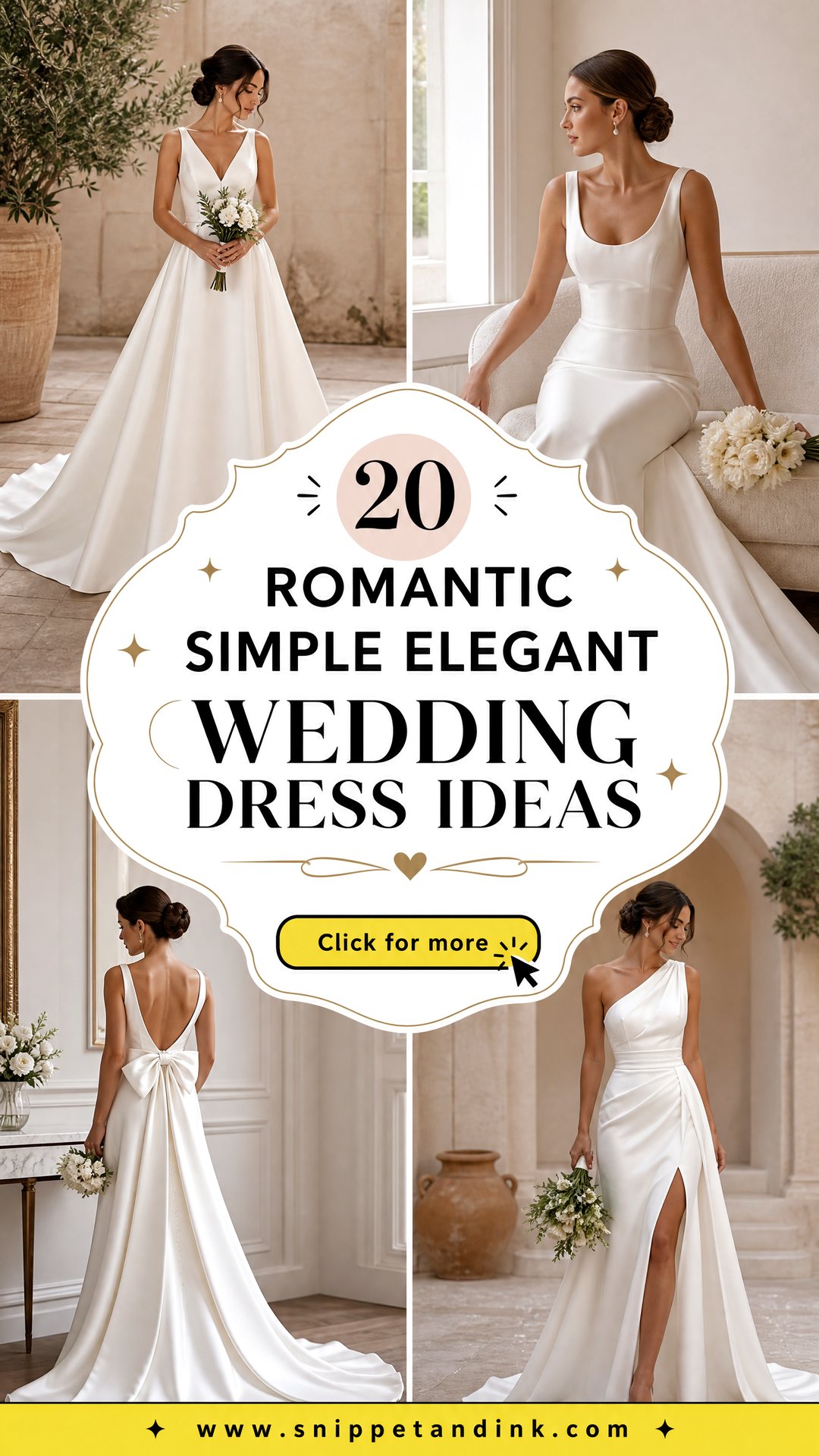
Why a Plain Gown Needs Better Fabric and Fitting Than a Lace One
When a dress has no embellishment, there is nothing to distract from a wrinkle, a pulled seam or a thin fabric. That is why I tell brides that a simple gown is not the cheaper route by default. The money moves from beading into fabric weight and alterations.
At a sample appointment, I check three things before anything else:
- Weight. Hold the skirt hem and let it drop. A good satin or crepe falls straight and settles; a thin one swings and ripples.
- Light. Stand near a window. Cheap satin shows a plastic glare and every crease; heavier duchess or a matte crepe looks calmer in daylight.
- Creasing. Sit for two minutes, then stand up. The lines that stay are the lines you will have in every seated photo.
Expect two or three fittings for a plain gown, often starting around eight to ten weeks before the date, and bring your wedding shoes and the exact underwear to every one. On a dress this clean, a quarter inch at the hem or the waist is visible.
1. Satin A-Line Wedding Dress
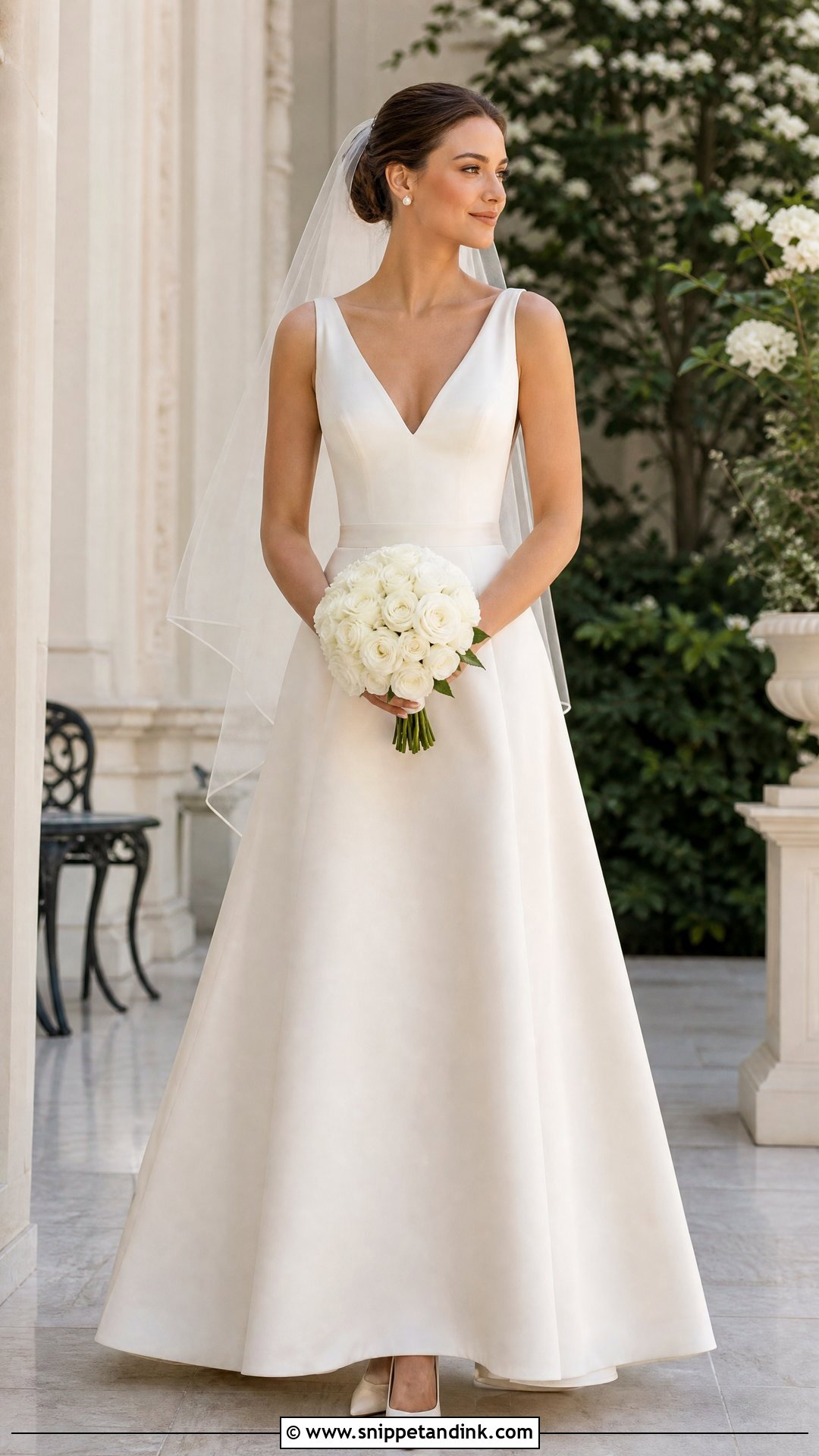
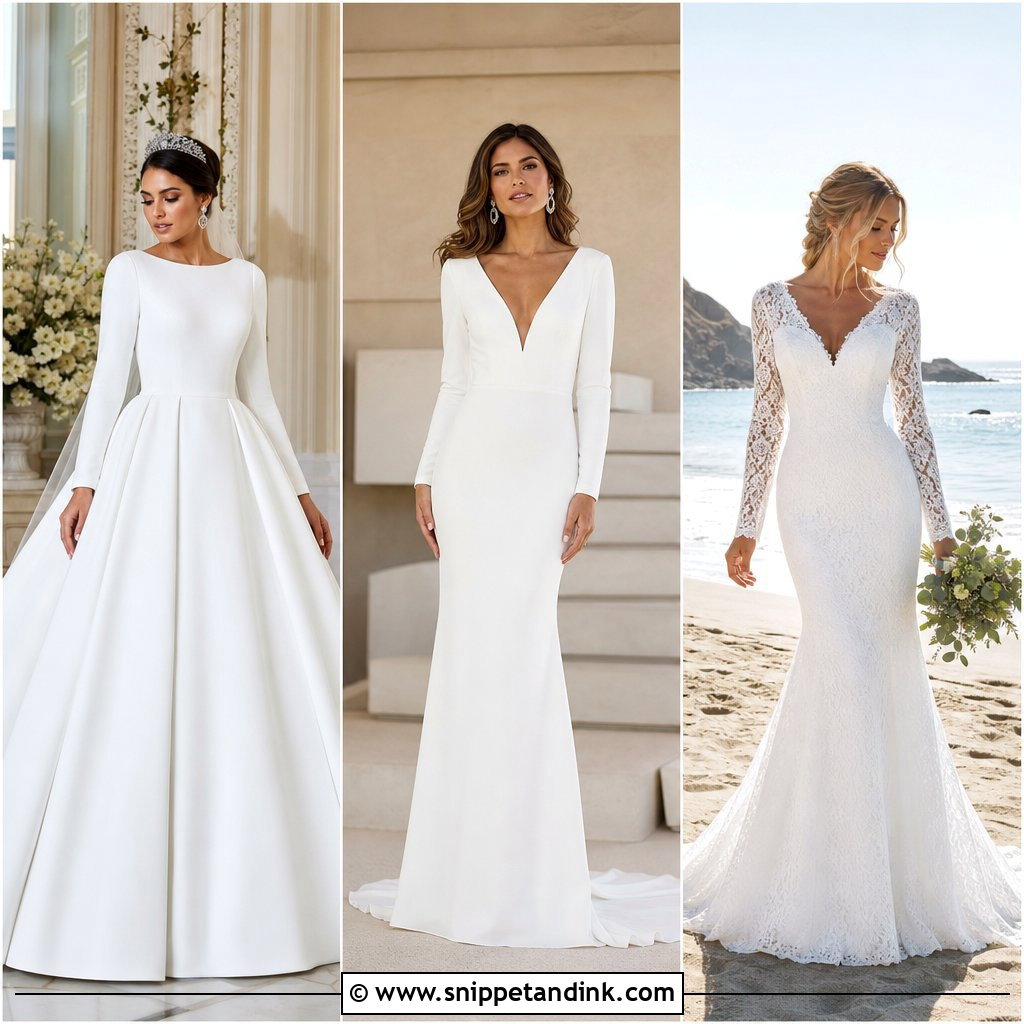
Satin A-lines are where I start with most brides who say they want simple, because the shape flatters almost everyone. Look for a fitted bodice, a natural waist and a skirt that skims the hips rather than ballooning out from them. Satin catches light, so it holds up in a dim church and in full sun. A soft V or rounded neckline keeps it balanced. I’d add pointed ivory pumps, pearl studs, a raw-edge fingertip veil and a compact bouquet of white roses. The catch is that satin shows every seam, so a slightly twisted side seam or a waist sitting half an inch too low will be visible. Budget for proper alterations.
2. Square Neck Wedding Dress
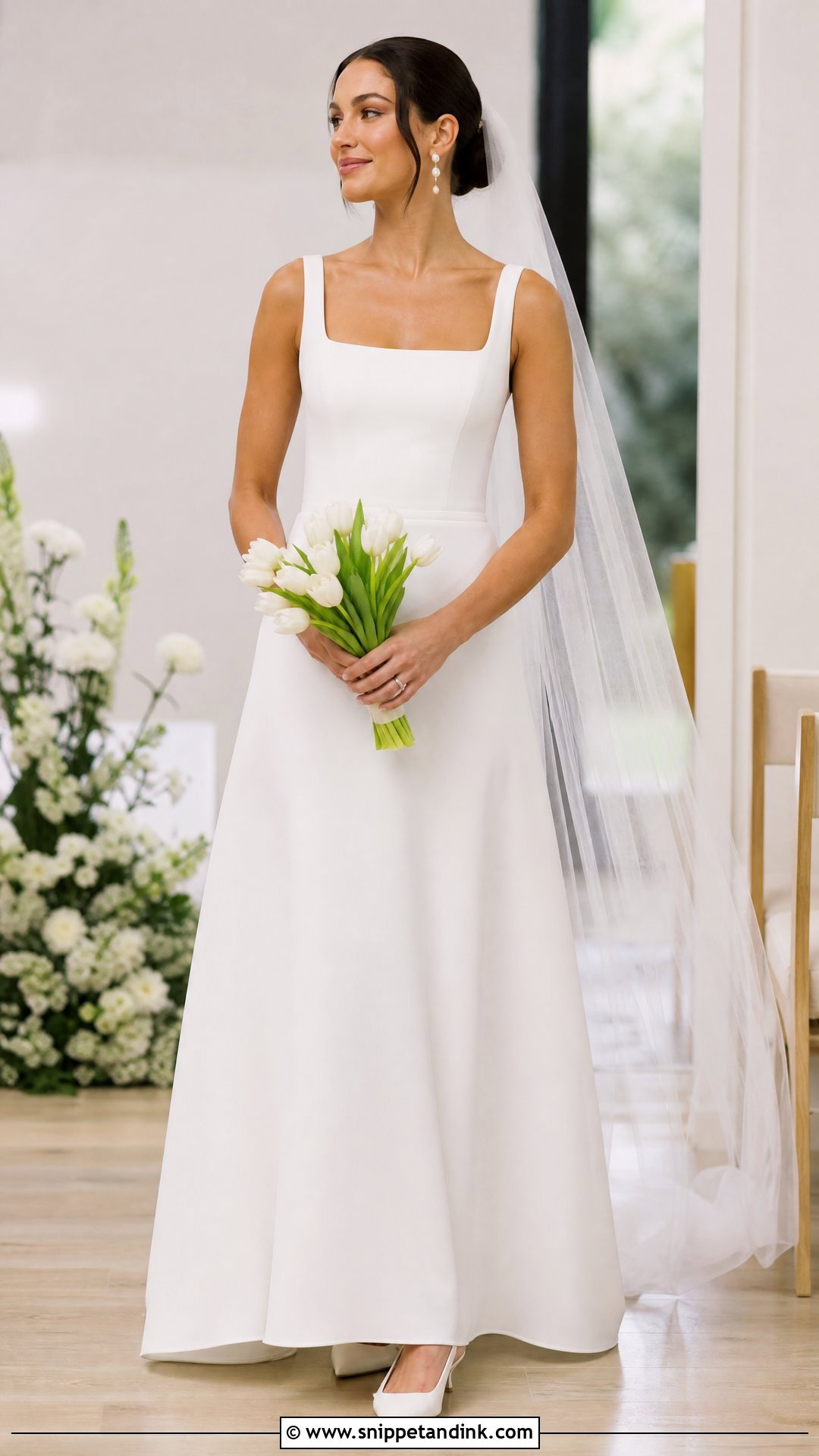
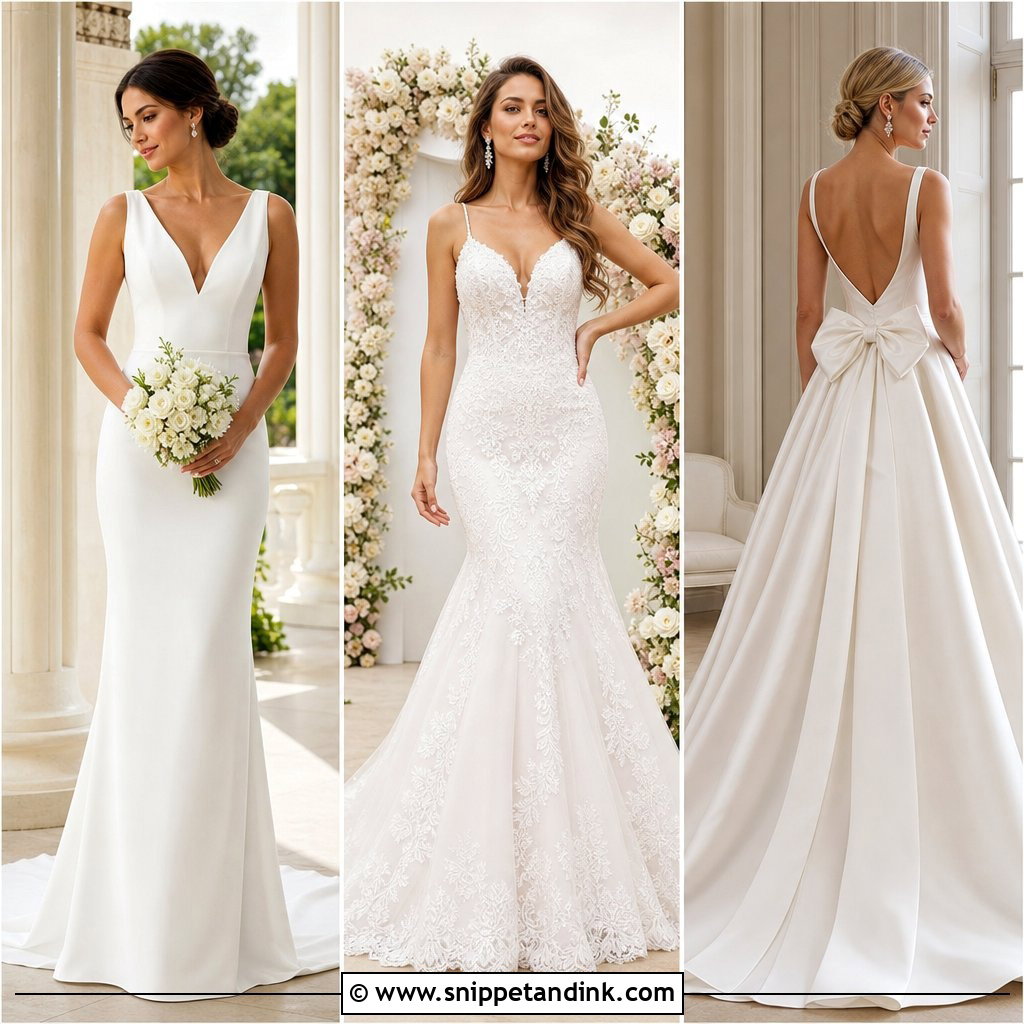
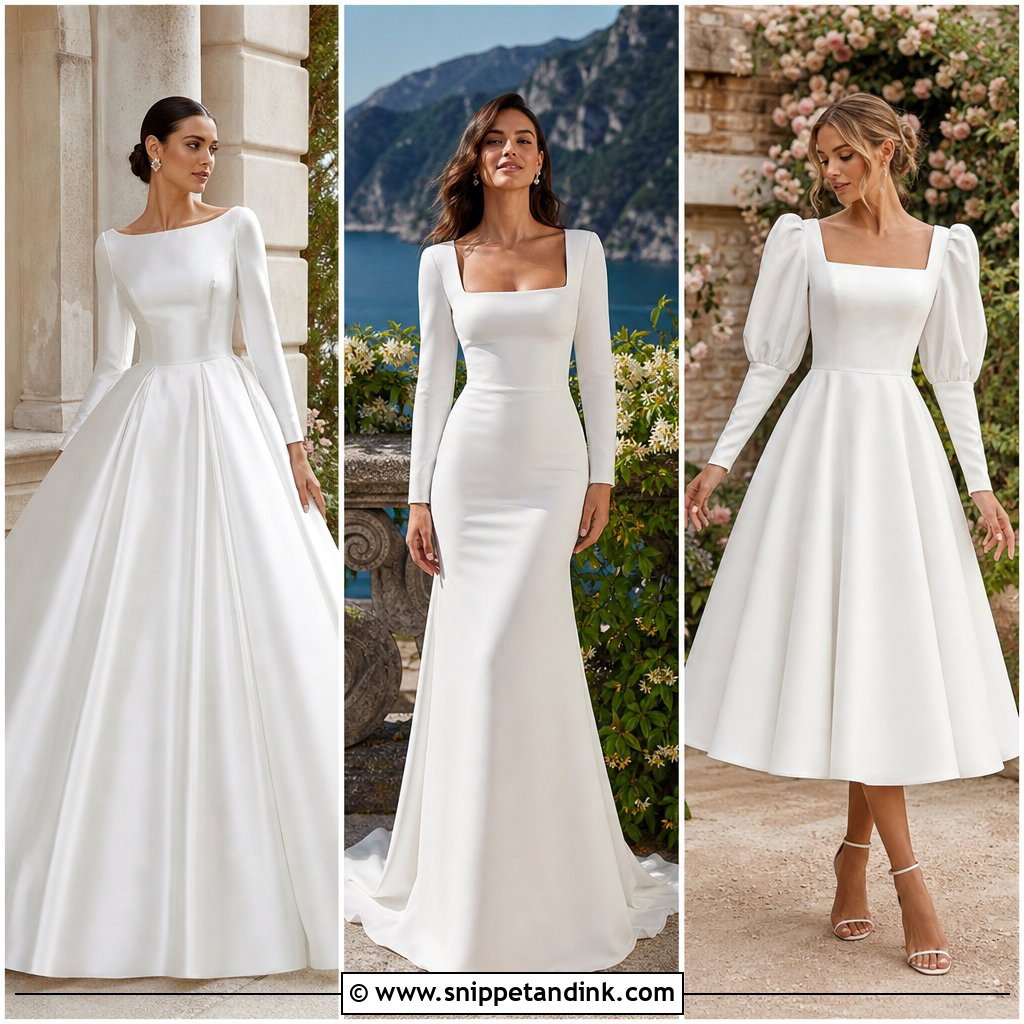
The straight line of a square neckline frames the collarbone and gives you a neat base for drop earrings. I like it with wide straps and either an A-line or a slim column skirt; matte crepe makes it modern, satin makes it formal. A low bun, pointed slingbacks and a narrow cathedral veil finish it, with white tulips or callas in hand. One fitting detail matters here: the corners of the neckline have to sit flat against the chest. If they gape when you lean forward to sign the register, ask your seamstress to take in the top edge rather than the straps. It gives modest coverage at the front while still showing the neck and shoulders.
3. Off Shoulder Satin Wedding Dress
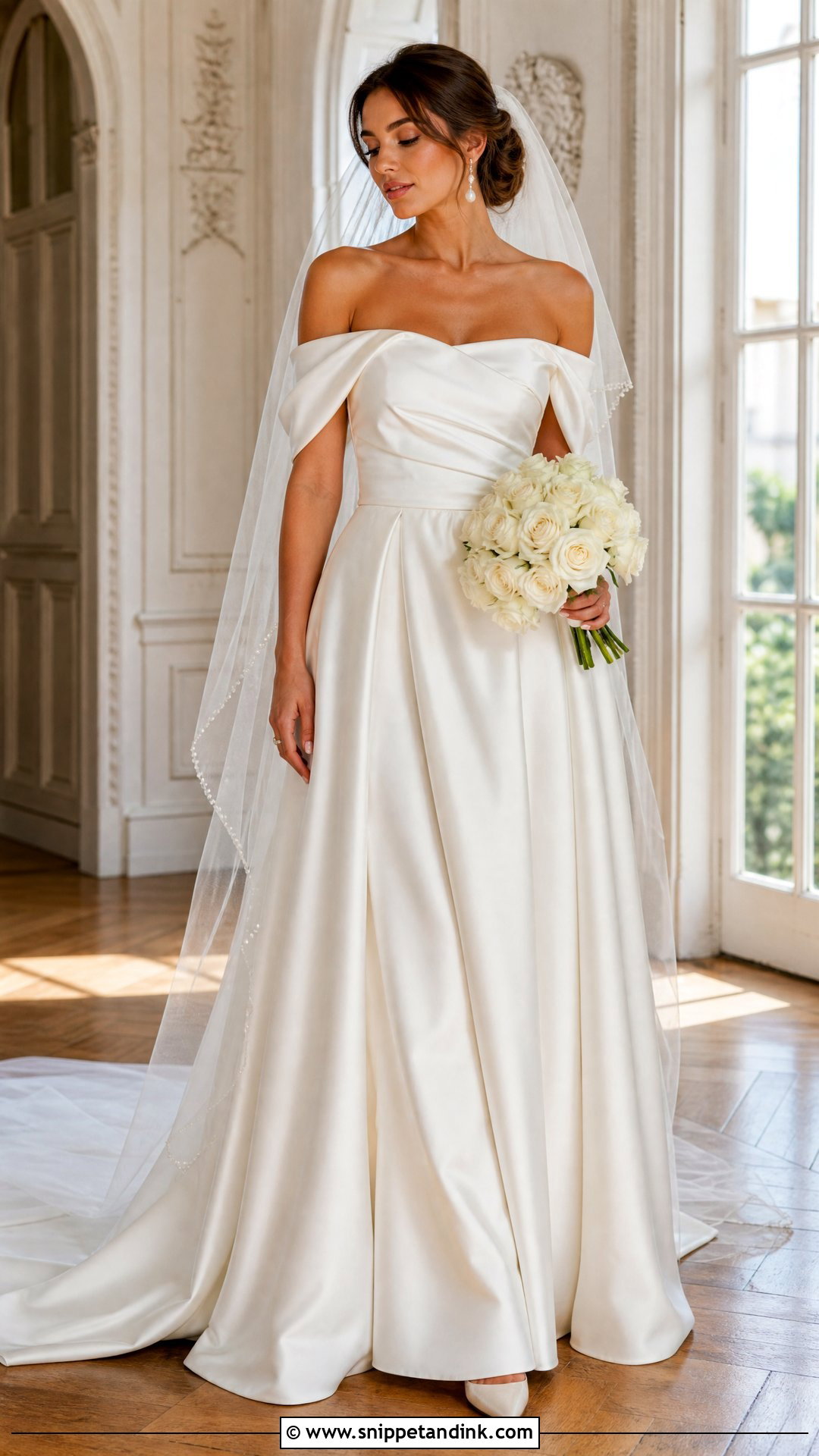
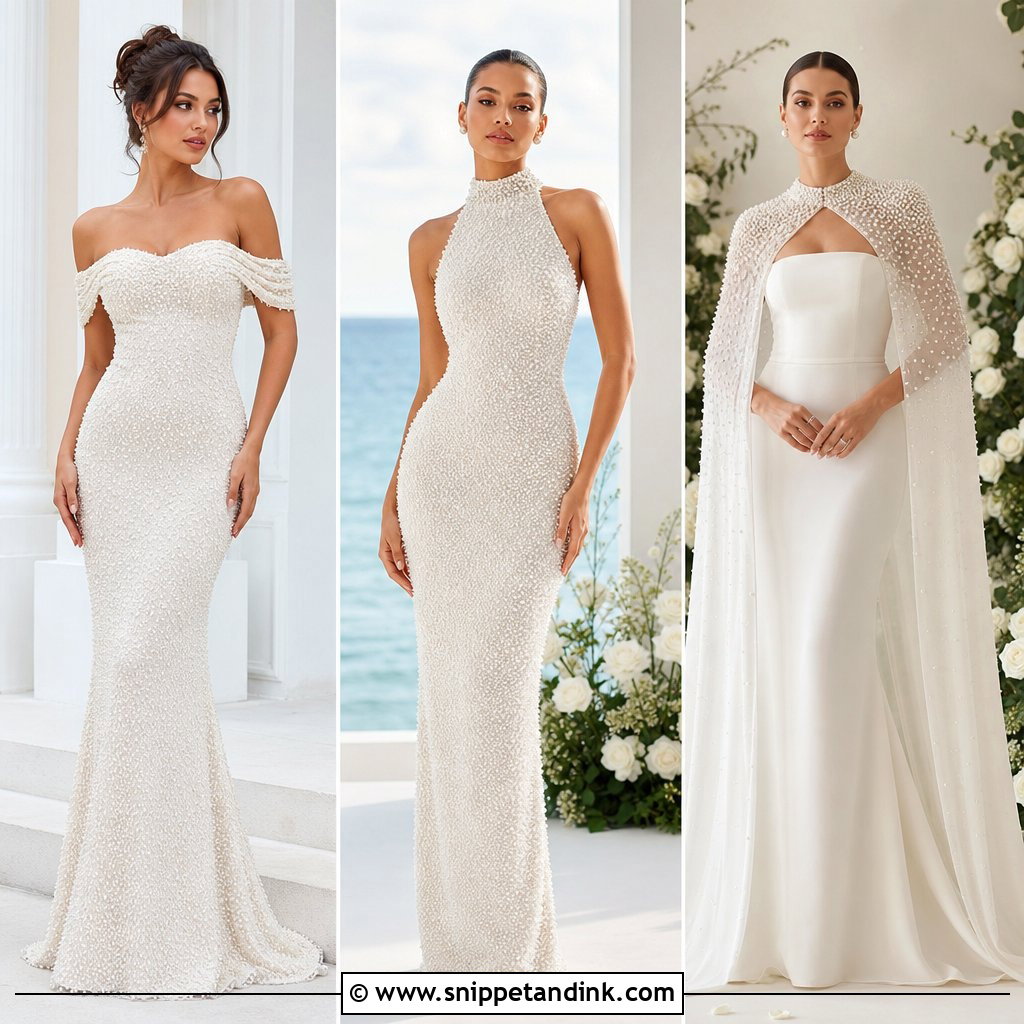
Off-the-shoulder satin is romantic because of the soft fold sitting across the upper arm. Keep the bodice streamlined, with light draping rather than heavy ruching, and let the waist and skirt do quiet work. Skip the necklace entirely. Pearl drops, ivory heels and a low chignon with a few loose strands at the face are enough, with a sheer chapel veil and a round bouquet of cream roses and ranunculus. The honest drawback: this neckline limits how high you can lift your arms, so hugging and dancing feel different. Try a full arm raise in the shop before you commit.
4. Long Sleeve Crepe Wedding Dress
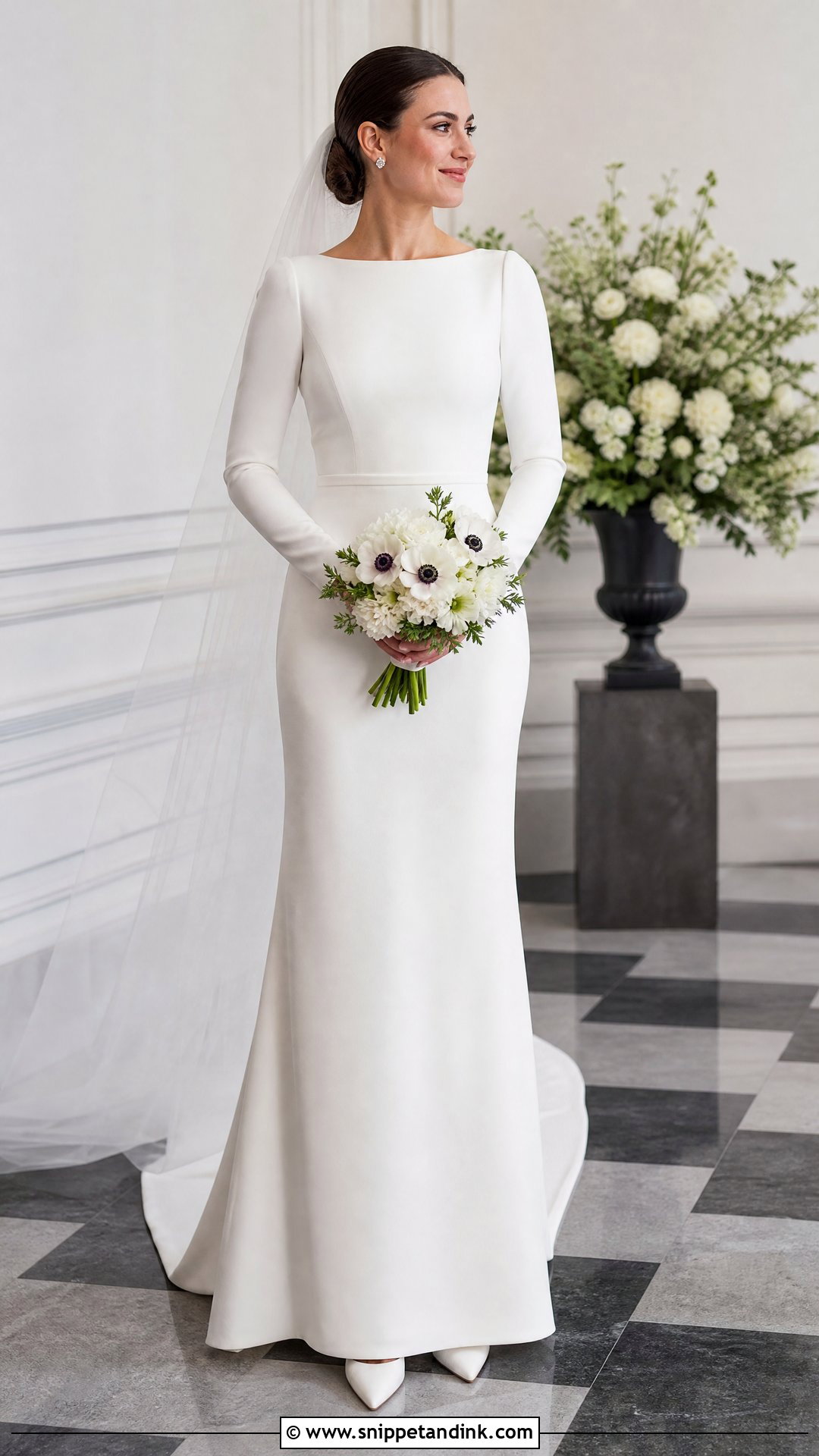
For coverage without heaviness I suggest crepe sleeves. Crepe falls close to the body and has no shine, which makes it read cleaner than satin under flash. Keep the sleeves slim, the waist defined and the skirt straight or softly flared. A bateau neckline gives classic balance; a modest V lengthens the neck. Pair it with closed-toe ivory pumps, small studs and a sleek low bun with the veil anchored underneath it, so the front stays uncluttered. White anemones or seasonal greenery suit it, and it comes into its own at fall, winter and city weddings. Do check the sleeve head when you bend your elbow: a tight sleeve pulls the whole shoulder seam forward.
5. Lace Bodice A-Line Wedding Dress
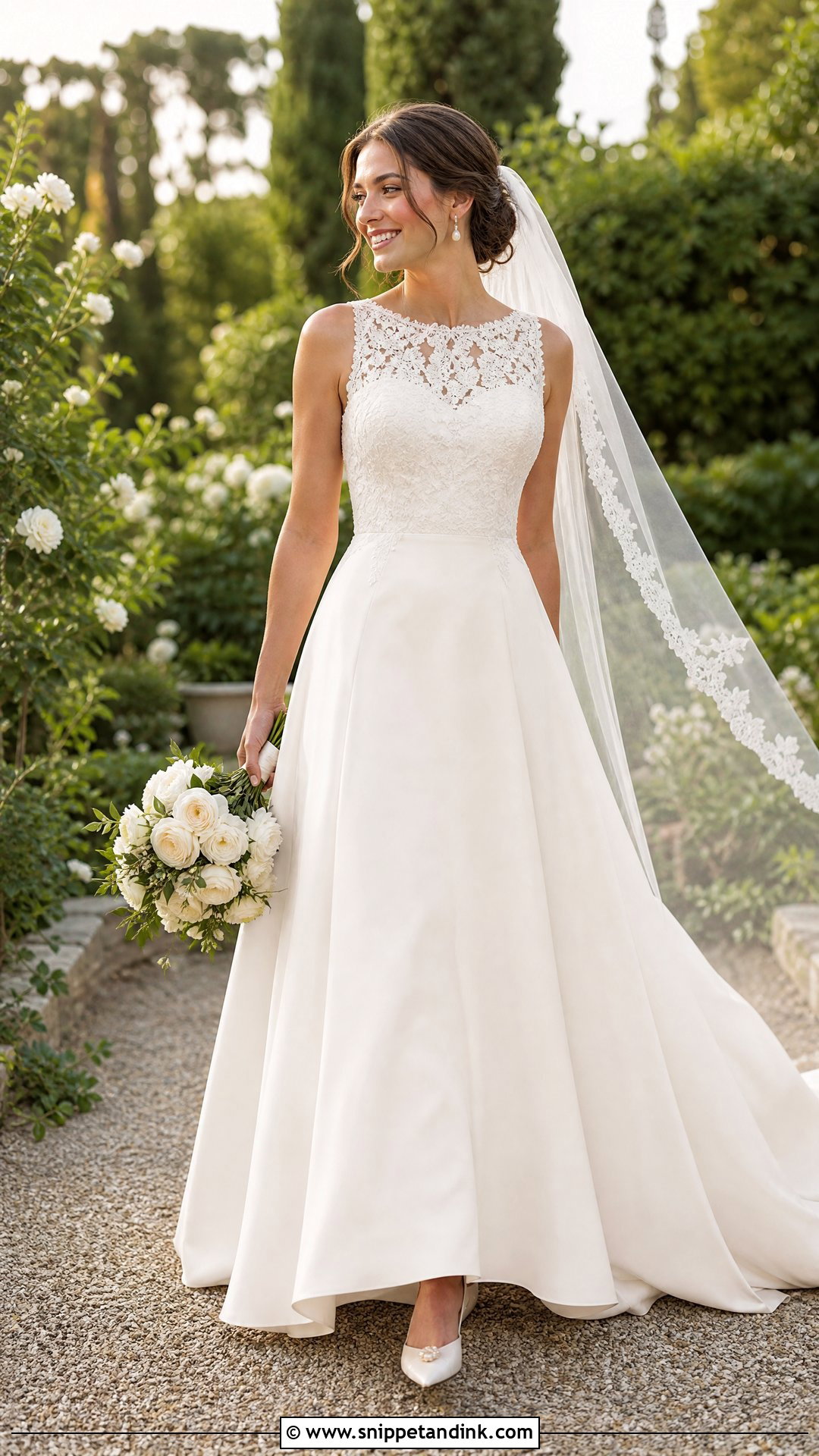
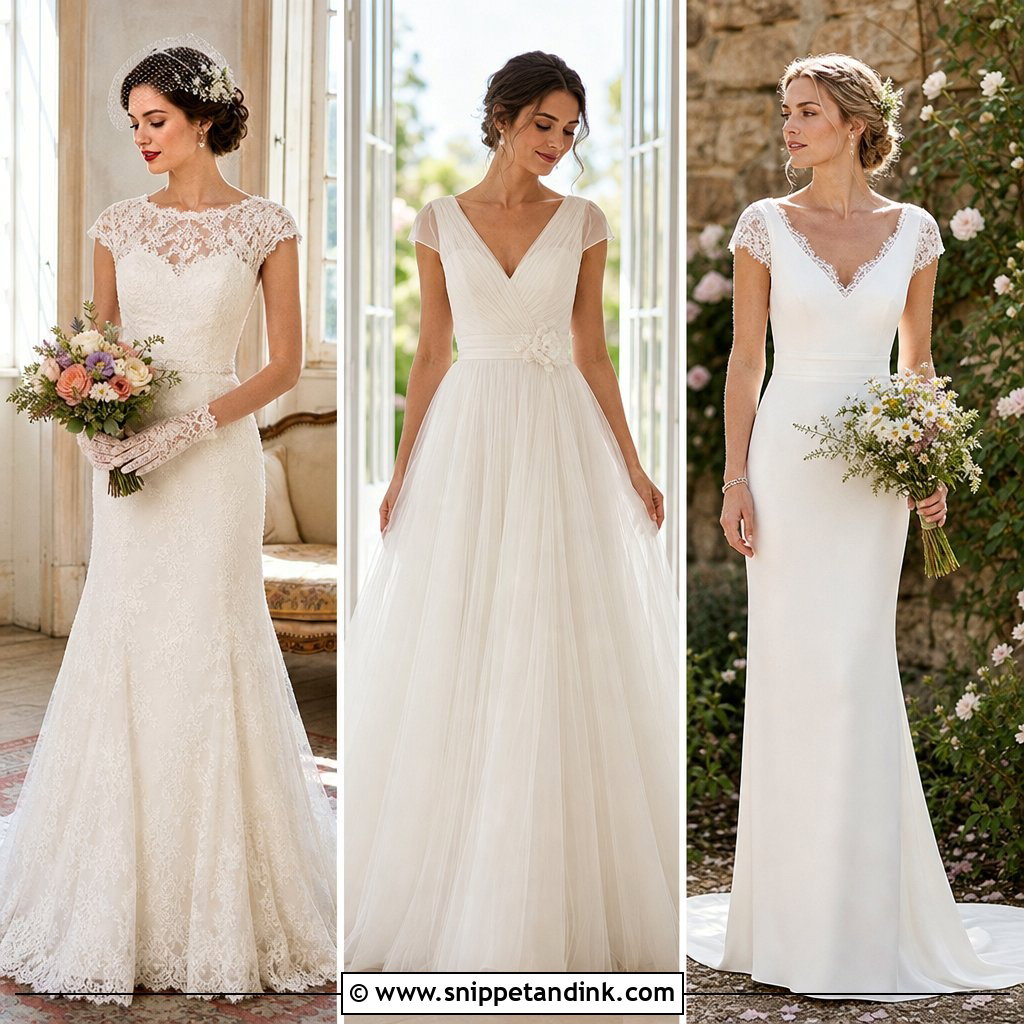
Lace stays simple when you keep it to one zone. A lace bodice over a clean chiffon, crepe or satin skirt gives texture up top and calm below. I look for an open floral pattern with little or no beading, backed by a lining so the motif shows clearly against your skin tone. Pearl earrings, almond-toe heels and a sheer veil with a narrow lace edge echo the bodice without repeating it. Sweet peas and garden roses suit the mood, as does a low textured bun. It fits garden settings, vineyard venues and classic ceremonies. Ask whether the veil lace can be matched to the bodice lace; mismatched whites are more obvious in photos than people expect.
6. Cowl Neck Slip Wedding Dress
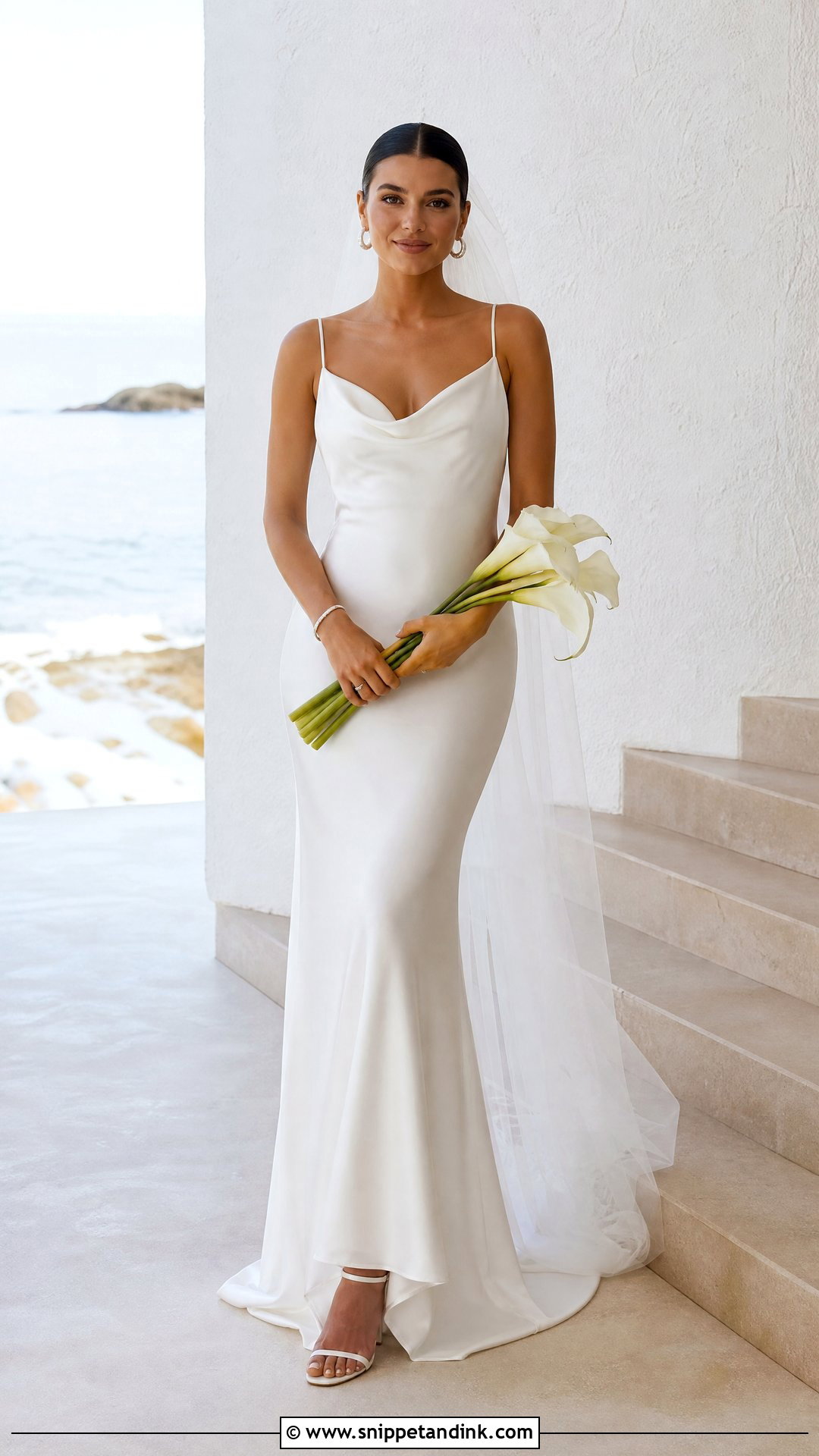
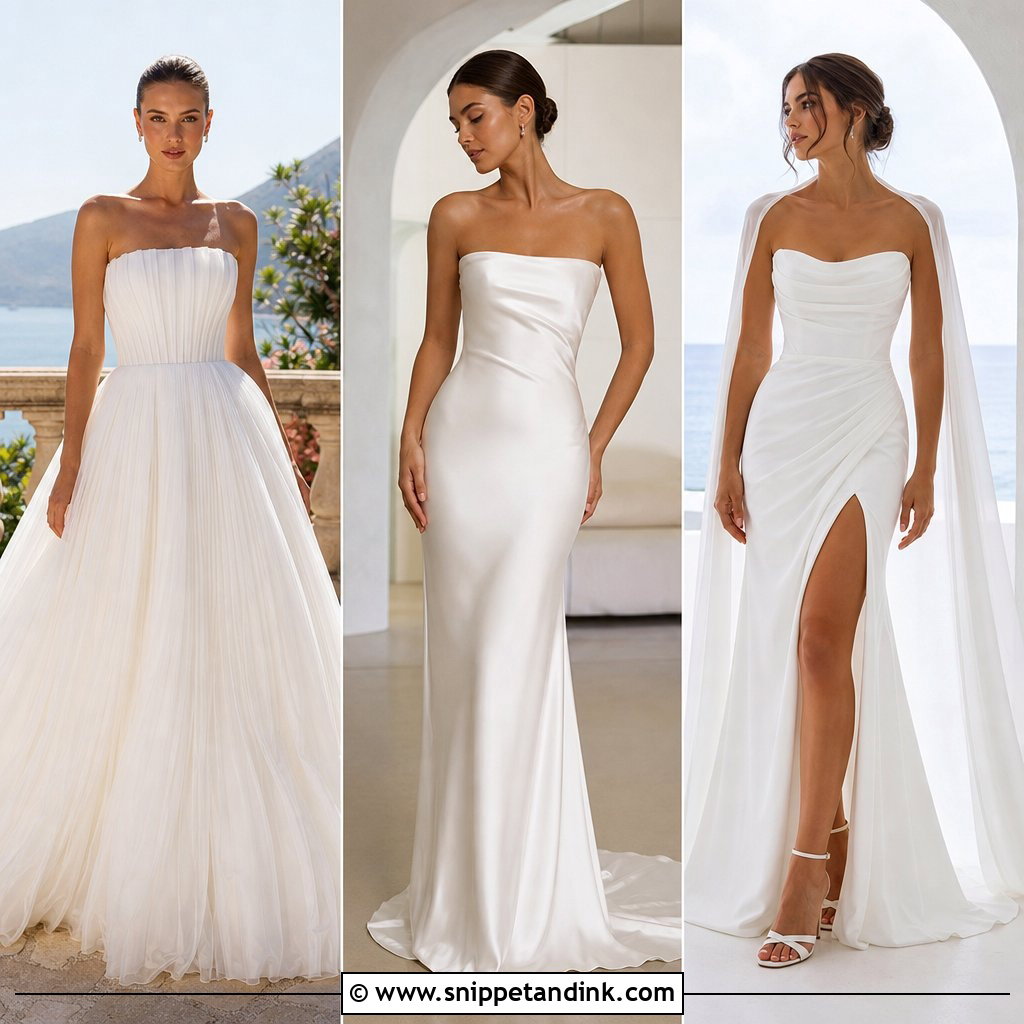
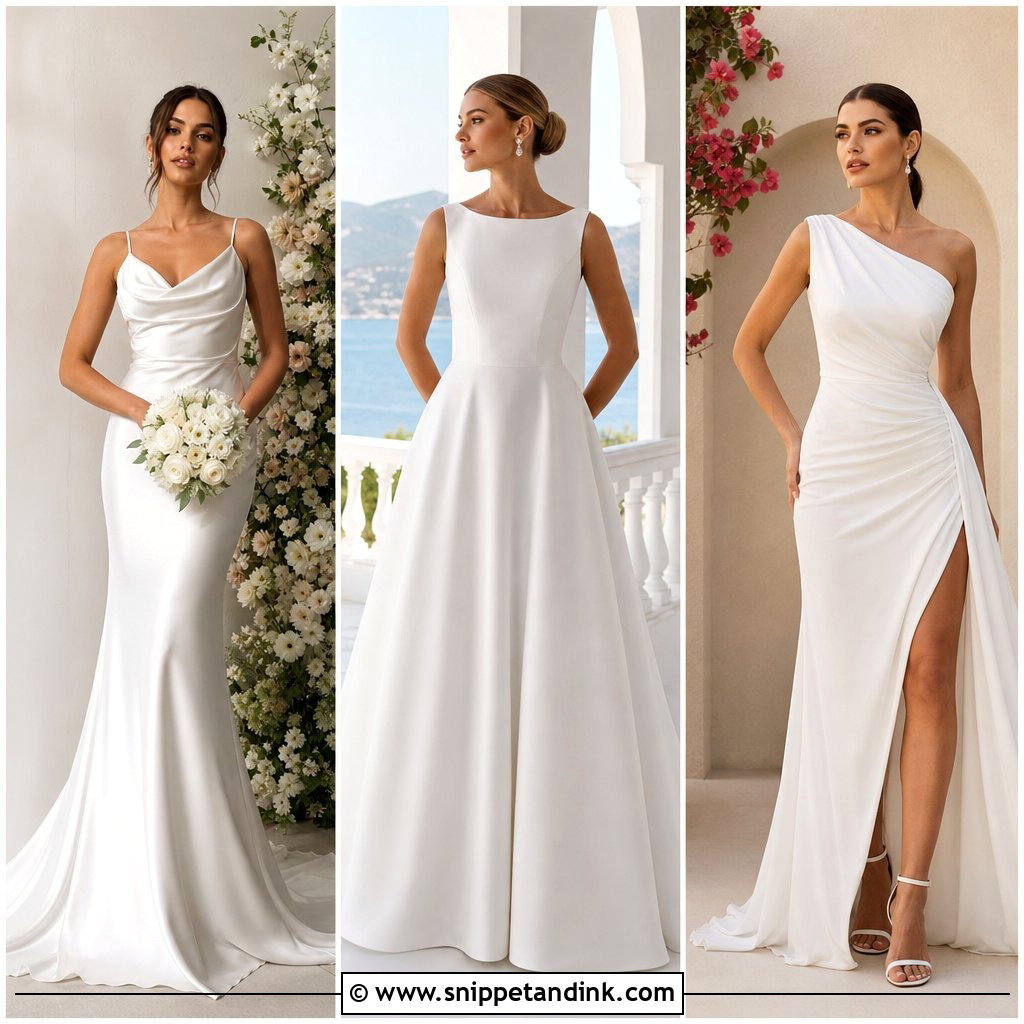
A cowl neck slip wedding dress relies on the bias cut, which lets the fabric follow your body with very few seams. That same cut is unforgiving, so I always ask for a heavier silk or satin: thin slip fabric goes nearly transparent under bright light and clings at the hip. Ankle-strap sandals, small pearl hoops and a fine bracelet keep it relaxed, with a sleek bun or brushed waves. Wear a chapel veil for the ceremony and take it off for dinner. White orchids or callas give a sculptural contrast. It suits beach venues, restaurants and destination weddings, and it packs into a suitcase better than most gowns.
7. Basque Waist Satin Wedding Dress
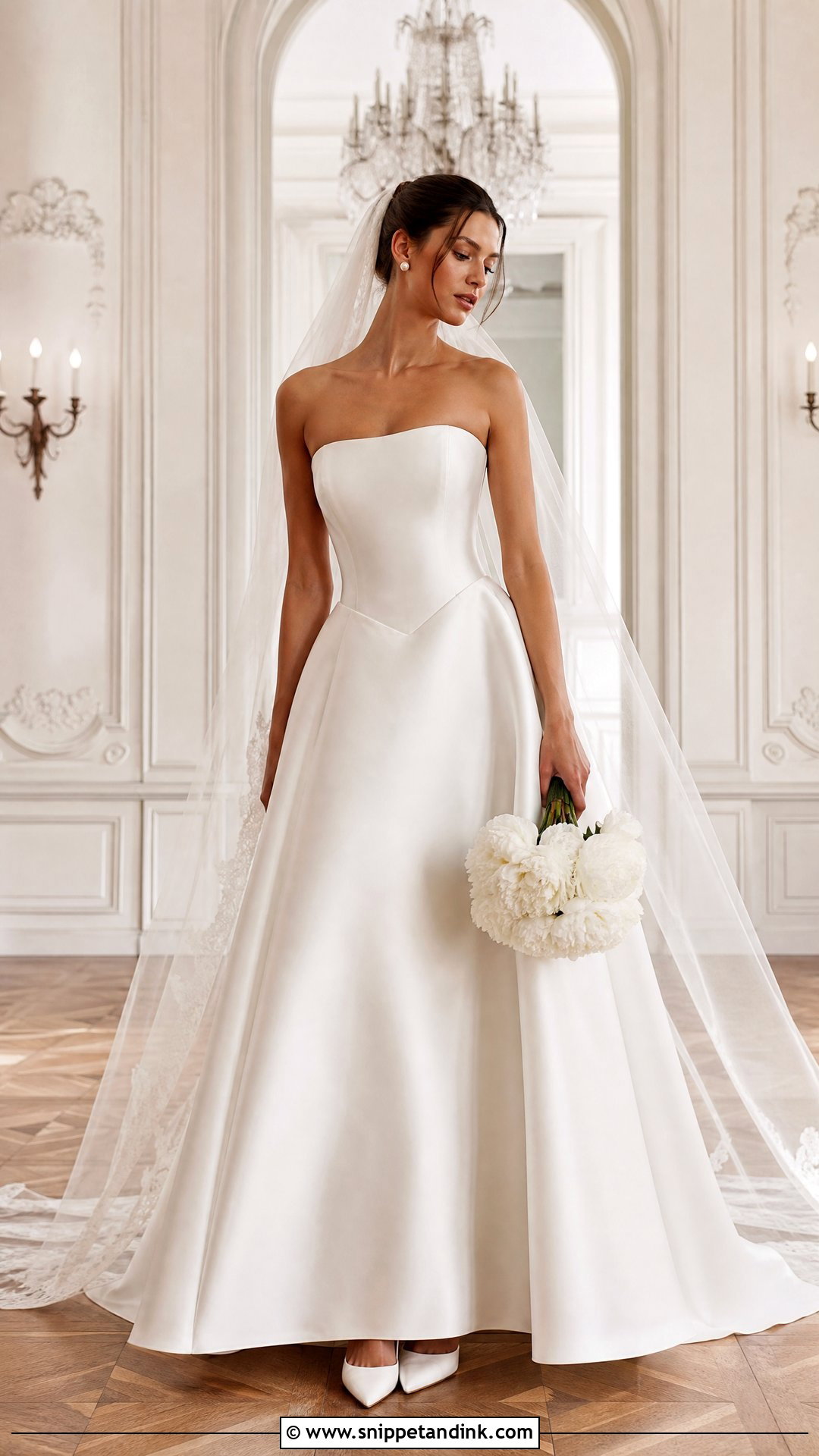
The Basque waist dips into a soft V below the natural waistline, which lengthens the torso and gives structure without decoration. A Basque waist satin wedding dress needs real inner construction, though. I check that the point of the V sits centered after you sit down, since a weak bodice will twist sideways. Strapless or wide straps both work, with a full skirt that holds its shape without layer upon layer of net. Pearl button earrings, pointed satin heels, a veil slightly longer than the train and a neat bun keep attention on the waist. Small white peonies finish it for ballrooms, estates and evening ceremonies.
8. Strapless Column Wedding Dress
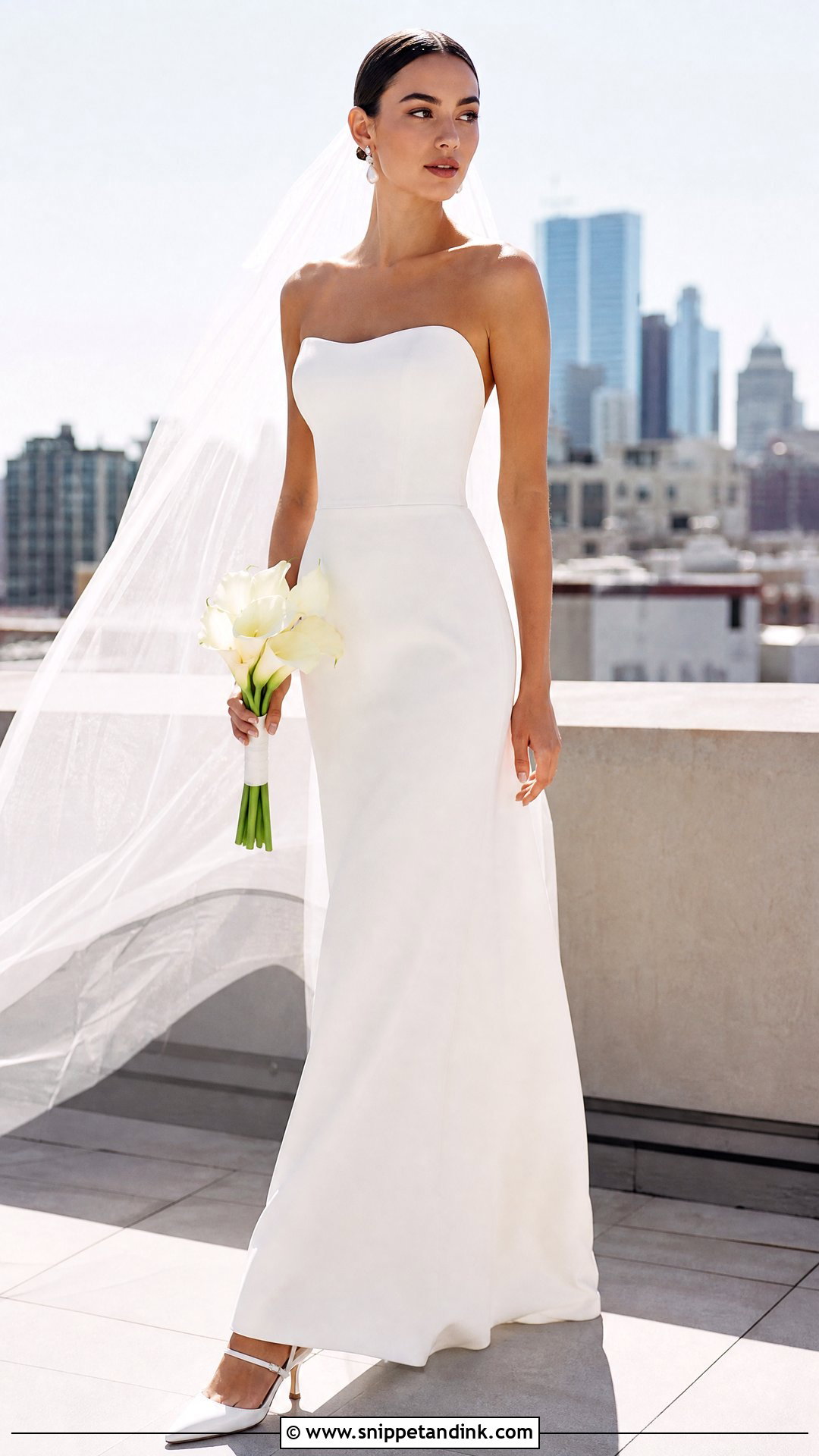
Strapless columns look modern because nothing interrupts the line from bust to hem. That only works if the inner structure holds the bust without visible boning channels, so press the bodice gently at the side seam during fittings to check nothing shows through. The skirt should follow the body and release a little near the hem. Pointed slingbacks, a slim tennis bracelet and drop earrings suit it, and a long veil adds ceremony drama. Keep the bouquet narrow, with callas or long-stem roses. My rule for columns: do a sit, a stair and a slow dance at every fitting, because a straight skirt is where brides most often find out too late that they can’t step up onto a stage.
9. Cap Sleeve Chiffon Wedding Dress
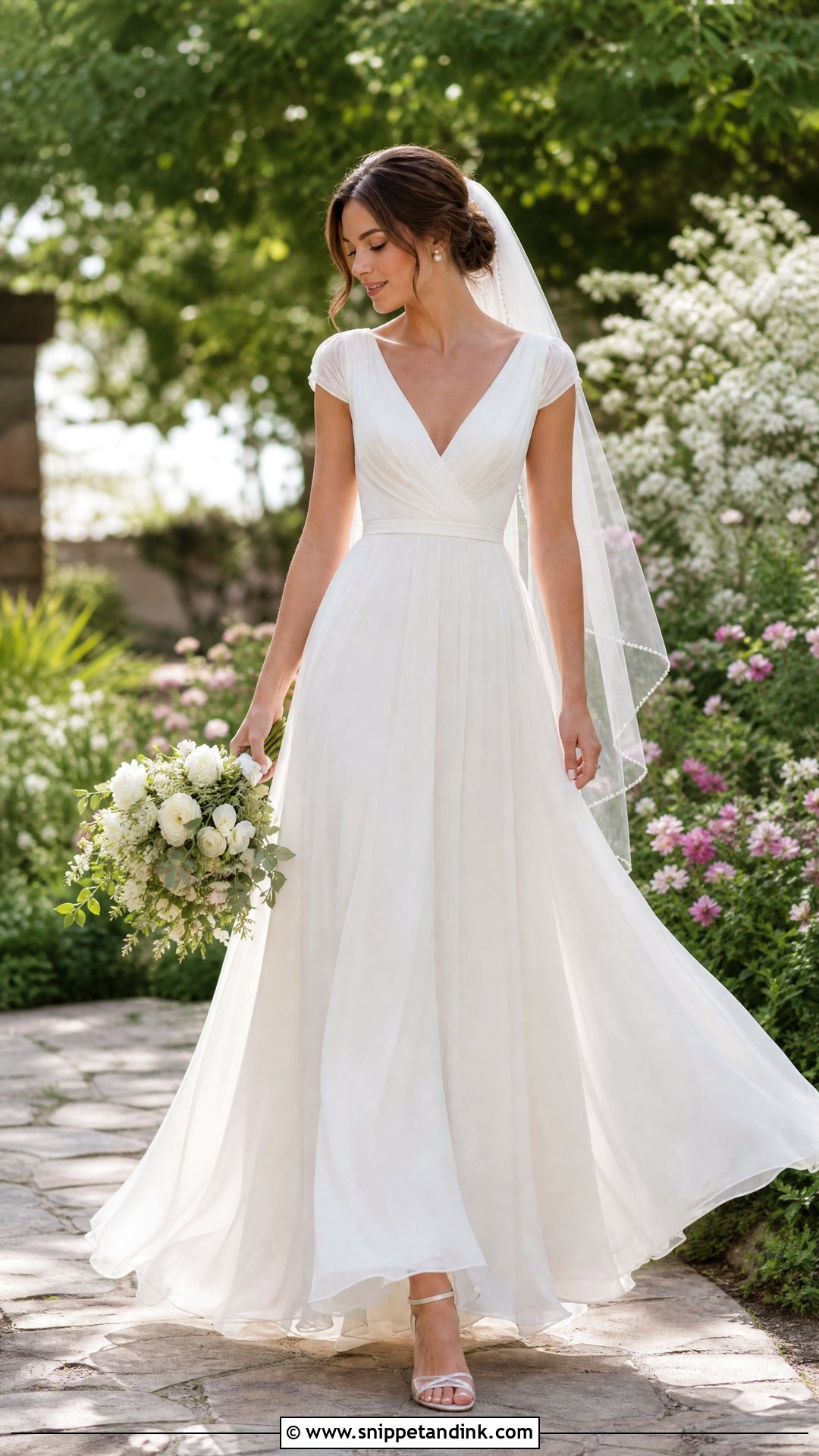
Cap sleeves give a little shoulder coverage while leaving the neckline open, and chiffon keeps the whole thing light enough to move in a breeze. I pair a soft V-neck and defined waist with a flowing skirt, and allow only a fine lace edge at the neckline if any. Low block-heel sandals, pearl studs and a loose braided bun suit it, with a fingertip veil and a bouquet of white cosmos and roses. It’s one of the most practical options for spring gardens and summer lawns. One warning: chiffon snags on rough stone and rose thorns, so keep the hem lifted on gravel paths.
10. High Neck Crepe Wedding Dress
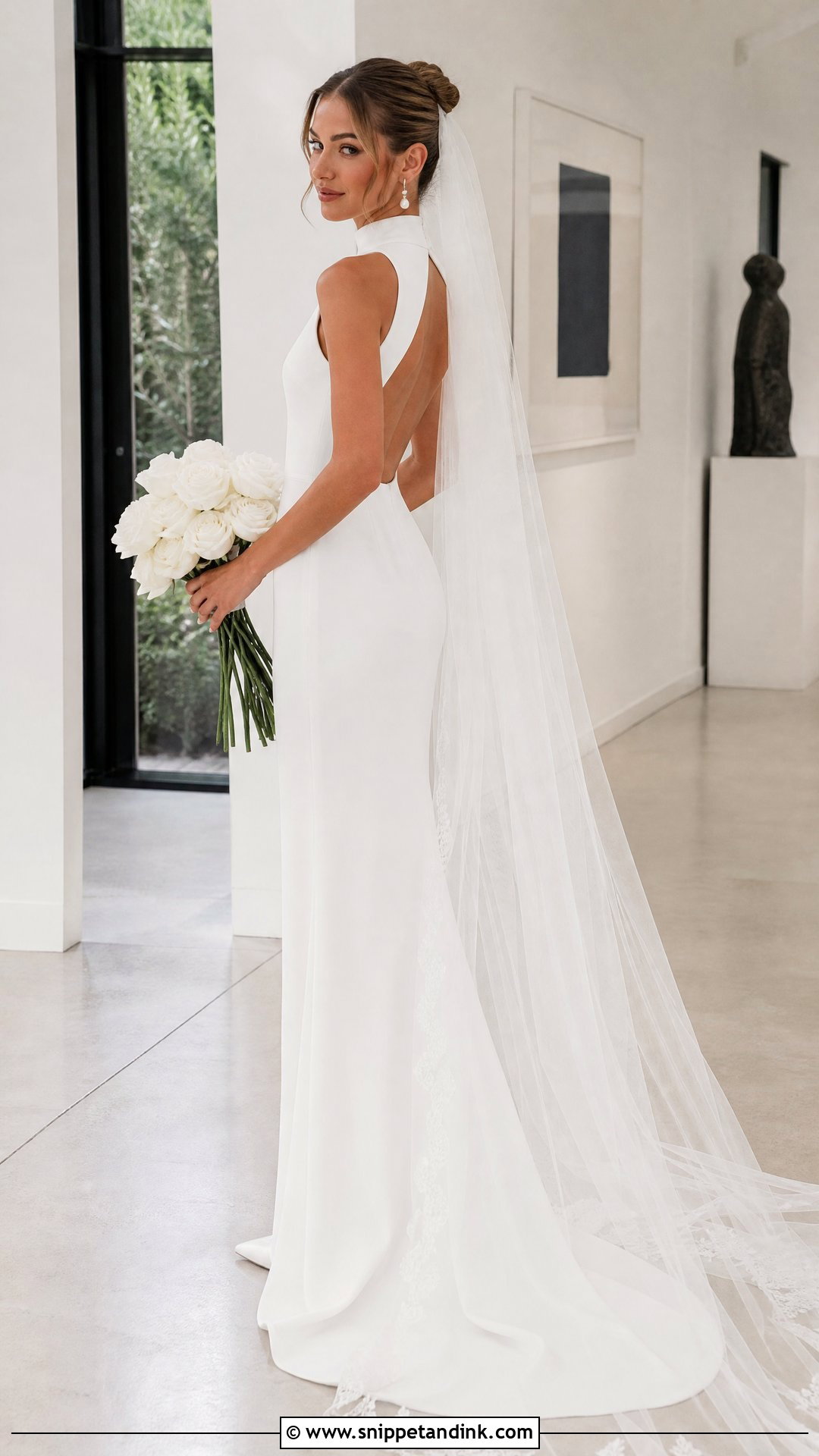
A covered neckline turns your earrings into the main jewelry, which simplifies the rest of the styling. Choose a sleeveless or long-sleeve high-neck crepe with clean seams and a lightly shaped waist, then wear pearl drops or polished metal earrings instead of a necklace. A smooth low bun sits nicely beneath a sheer cathedral veil, with pointed pumps and long-stemmed white roses. If the front feels too closed, a keyhole or open back gives contrast. I’d only steer you away from this one for a hot outdoor July ceremony, since crepe up to the chin gets warm quickly. It suits courthouse, city and cooler-season weddings.
11. Scoop Neck Satin Wedding Dress
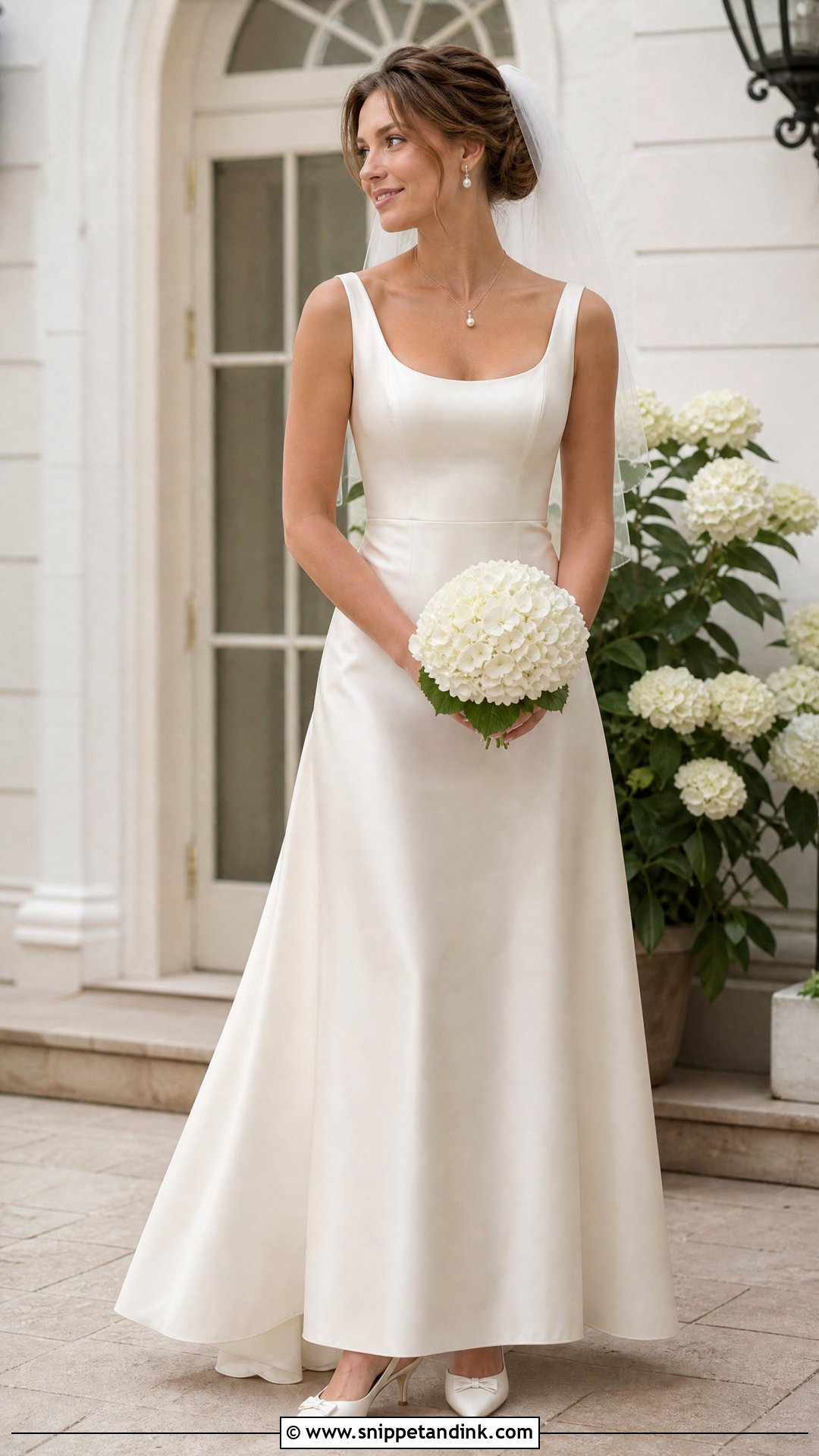
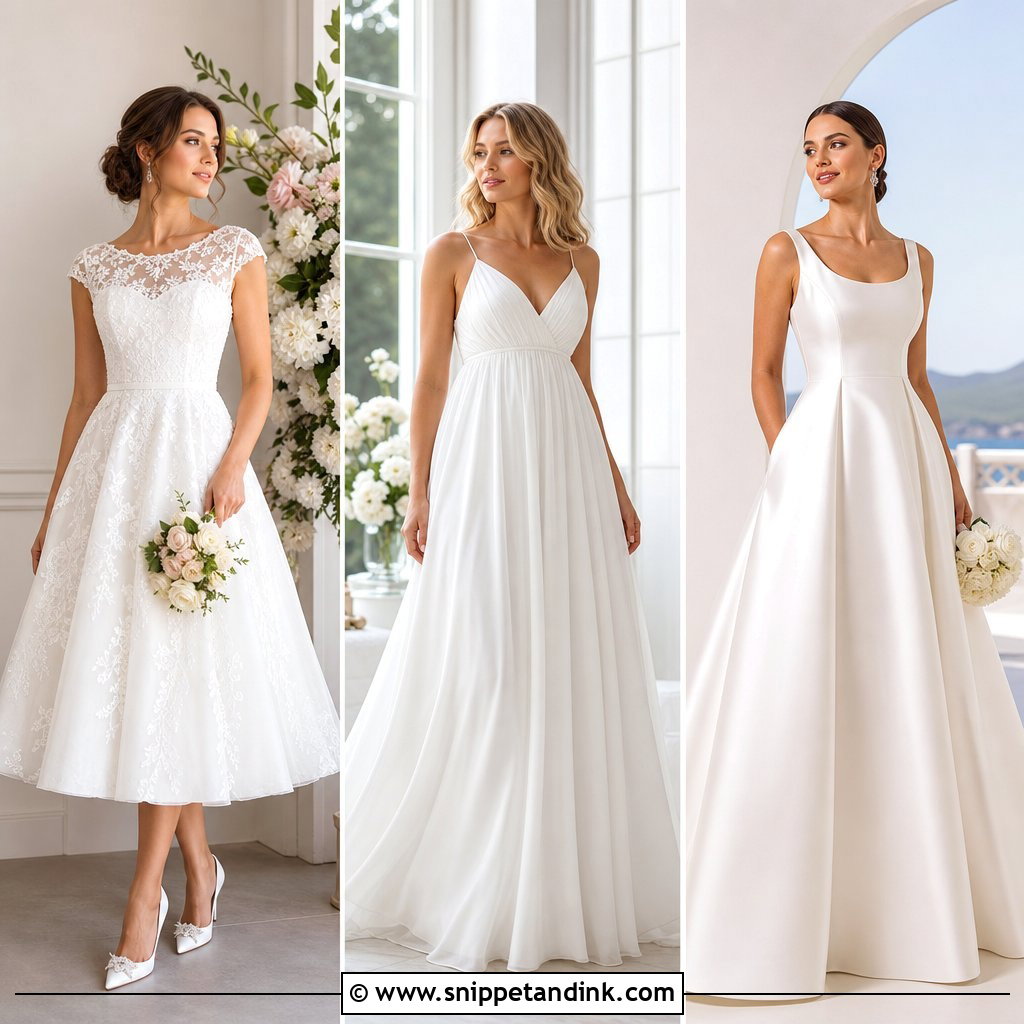
Scoop necks are the neckline I suggest when a bride feels exposed in a sweetheart but doesn’t want a high neck. The curve shows the collarbone and the depth can be adjusted. Wide straps, a fitted waist and a softly flared satin skirt make a secure classic shape. A small pendant, pearl earrings and ivory kitten heels keep you comfortable through a long reception, and a plain mid-length veil keeps the styling traditional. Hydrangeas and roses in a round shape echo the neckline. Ask your tailor to set the depth with you standing and seated; it can drop noticeably when you sit.
12. V-Neck Tulle Wedding Dress
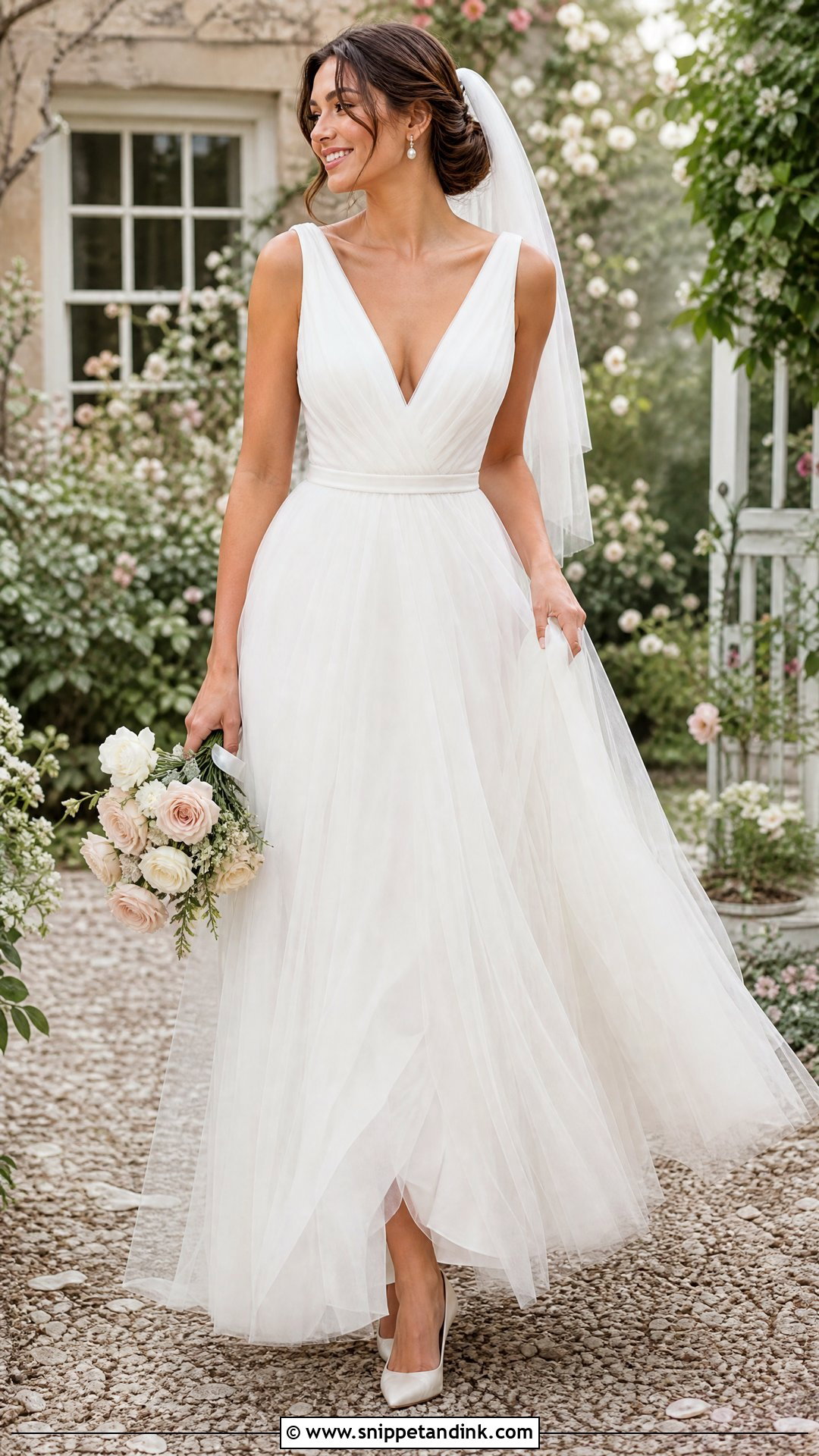
Tulle should fall from the waist, not stand out from it. Soft bridal tulle drifts as you walk, while stiffer net builds volume you may not want in a simple dress. I pair it with a lined V-neck bodice on wide straps for support, maybe a little pleating at the waist, and no sparkle. Ivory pumps, pearl drops and a loose low bun suit it. A single-layer veil floats beside the skirt, and pale roses with small white flowers complete the ethereal effect. It’s made for gardens and spring weddings. Wear nude, smooth underwear at fittings, because an unlined tulle skirt will show any line underneath.
13. Pearl Detail Wedding Dress
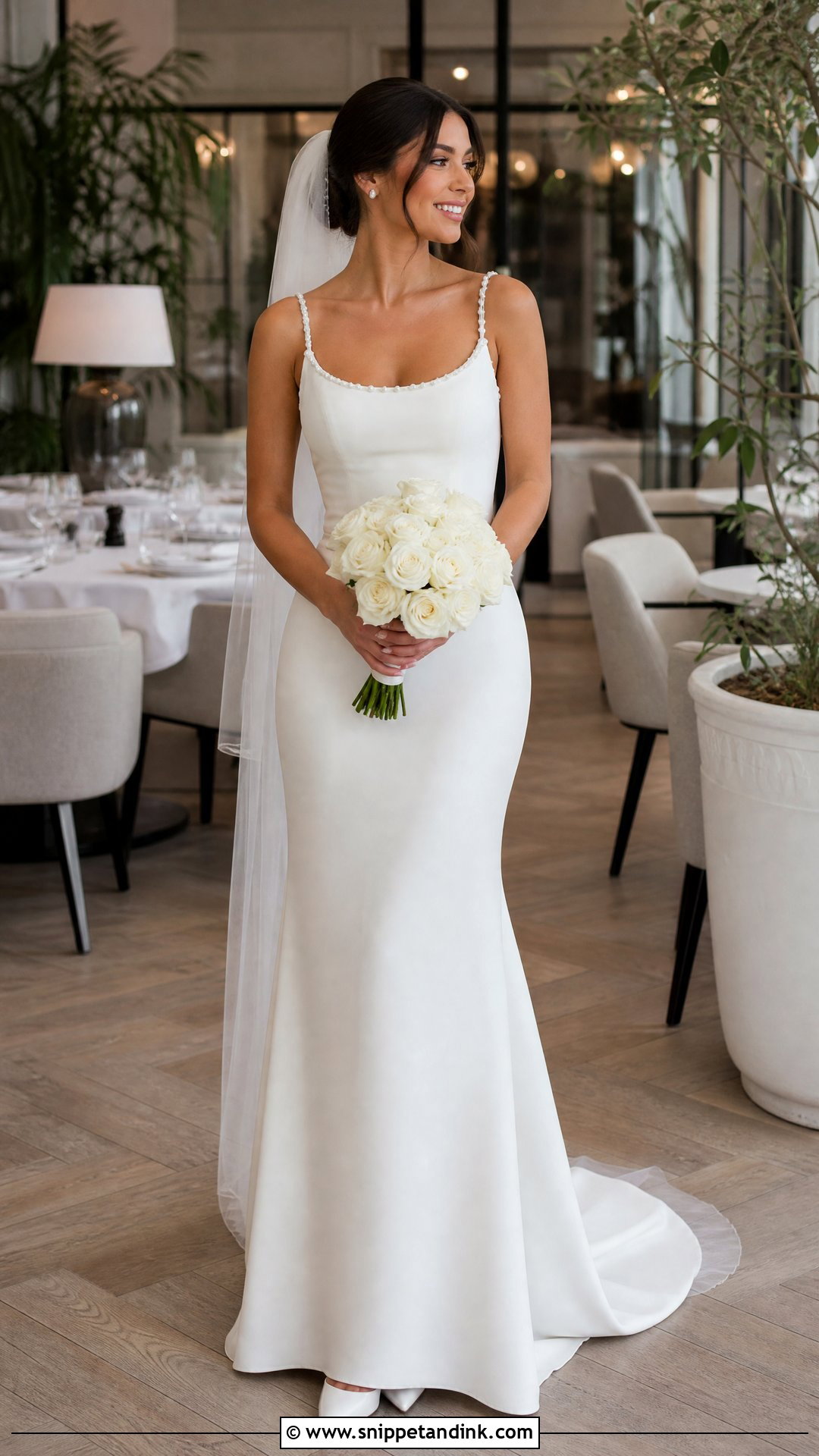
Pearls look intentional when they’re placed rather than scattered. On a gown I like them only along the neckline, the straps, the cuffs or the edge of an open back, set against plain crepe or satin. Keep the silhouette streamlined. Then be careful with accessories: pearl studs are fine, but pearl earrings, a pearl veil, pearl shoes and a pearl bracelet together look busy, so stop at two coordinated touches. Roses and lisianthus soften it without competing. Check that the pearls are sewn individually rather than glued; glued pearls pop off on the dance floor. This one suits intimate dinners and restaurants where guests see you up close.
14. Bow Back Wedding Dress
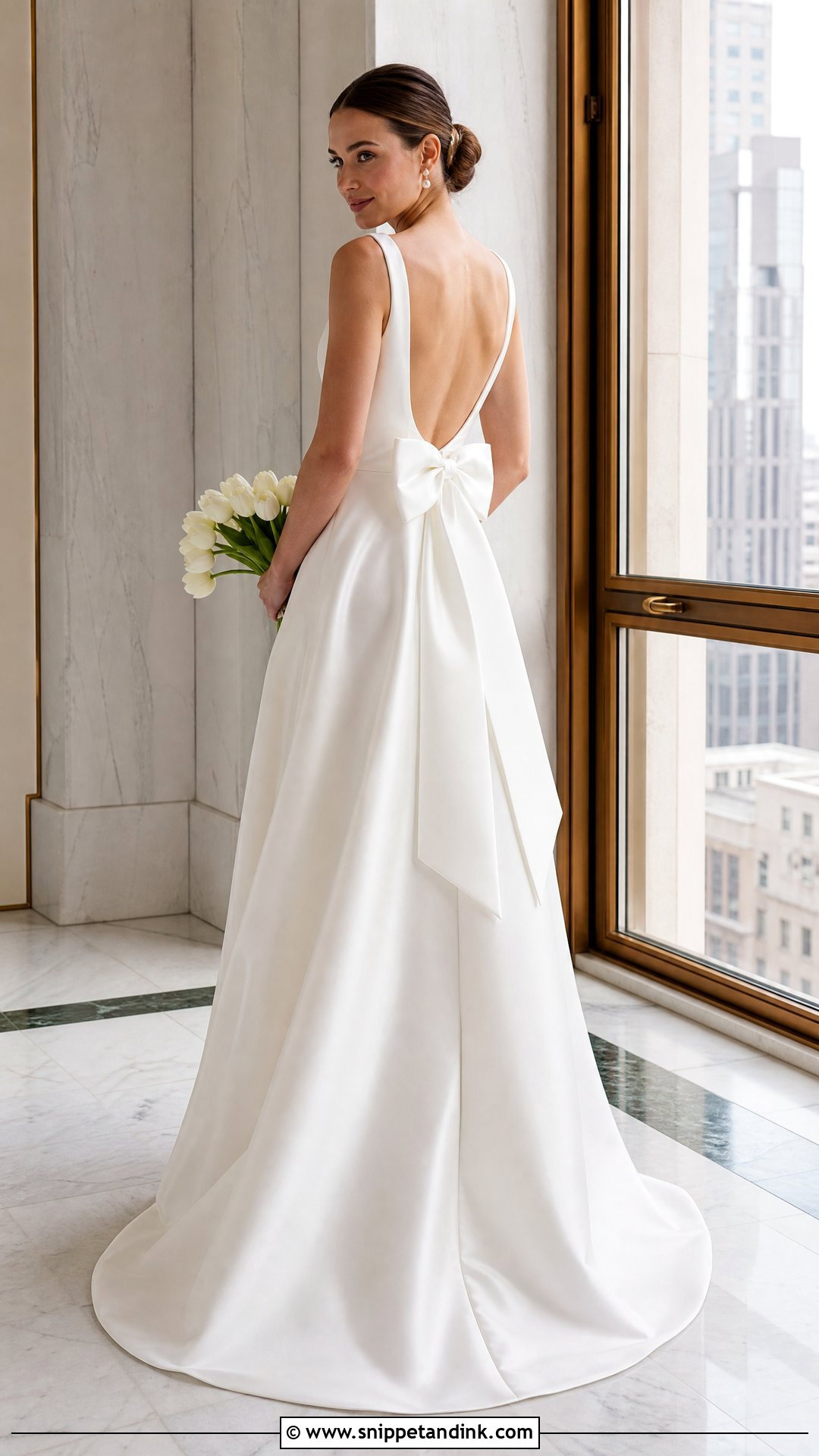
A bow at the back gives you one strong detail and keeps the front completely quiet. Put it on a plain square-neck, bateau or strapless gown, at the waist or upper back. Satin and mikado hold the loops crisp; chiffon droops into something softer and more relaxed. Pearl earrings, pointed ivory heels and a low bun that clears the back all suit it. Since a cathedral veil hides the bow, I usually suggest wearing the veil for the ceremony only and removing it for the walk back down the aisle or the reception. A compact bouquet of tulips or roses keeps proportions neat for city and classic venues.



15. Tea Length Wedding Dress
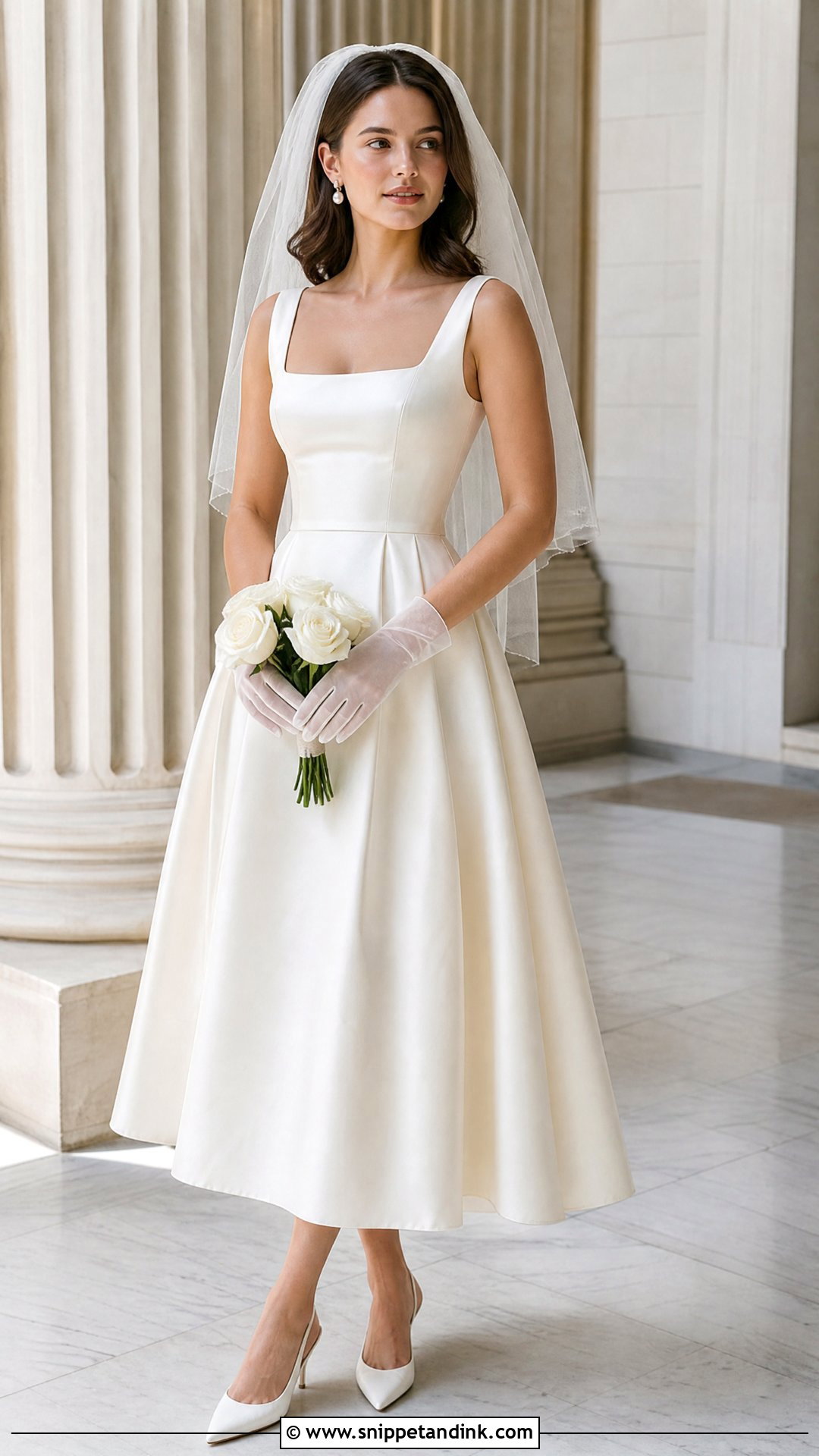
Tea length has a vintage feel and shows off your shoes, so treat them as part of the dress. The hem should land between knee and ankle, and I’d have it marked while you’re wearing the exact shoes, because an inch of heel changes where it falls. A fitted bodice and a softly structured A-line in satin, mikado or light organza work best. Pointed pumps or slingbacks, pearl earrings and short gloves give a classic finish. A birdcage or shoulder-length veil suits the proportions better than a long cathedral one. Carry a small bouquet of roses, tulips or peonies. Courthouse ceremonies and daytime receptions suit it, and the short hem makes dancing easy.
16. Simple Mermaid Wedding Dress
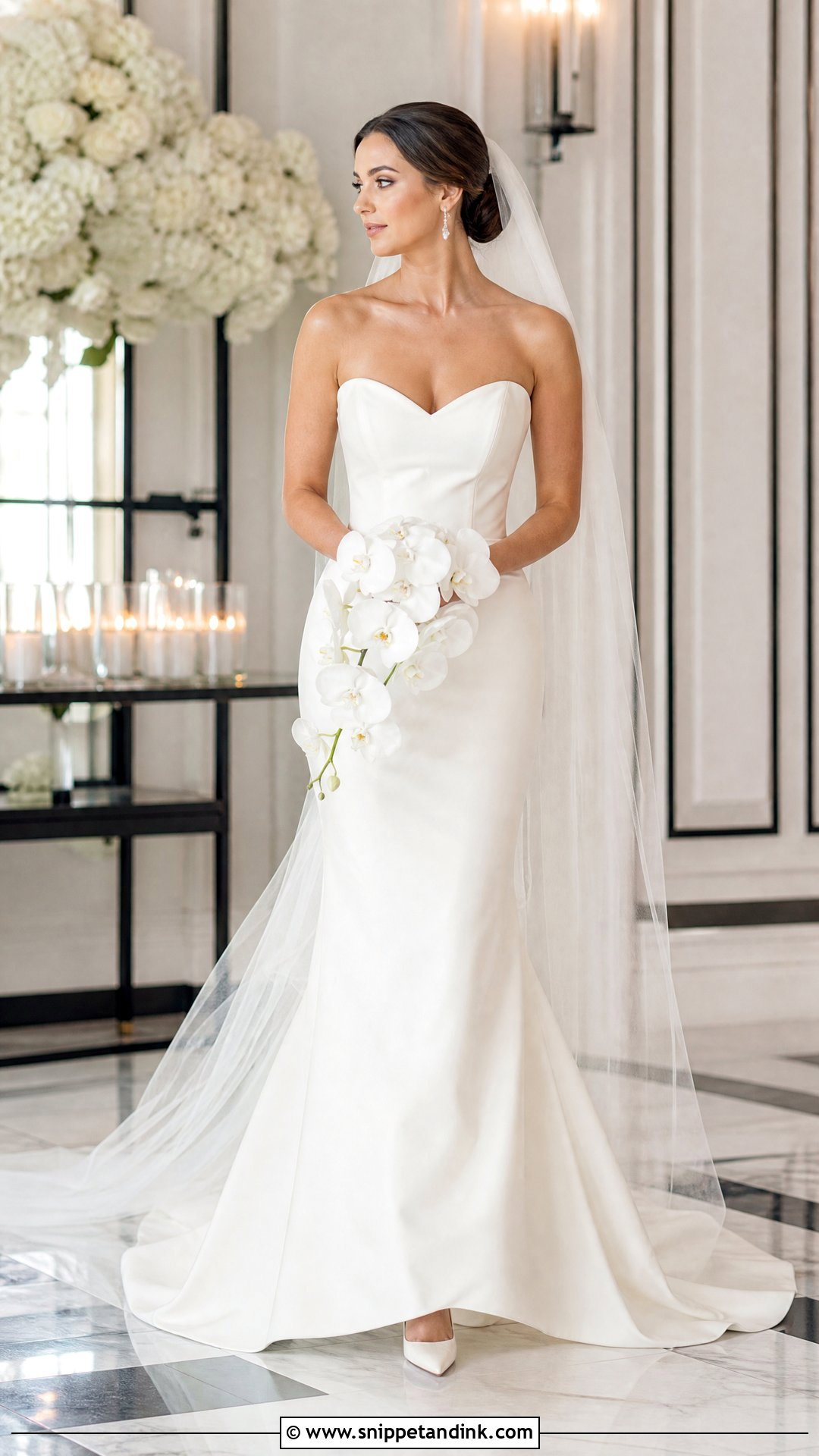
Mermaids fit close through the bodice, waist and hips before flaring near the knee, so crepe or plain satin keeps a simple mermaid wedding dress from looking costume-like. Skip heavy appliqué and let the cut work. A modest sweetheart or square neckline softens the fitted shape. Pointed pumps, drop earrings and a sleek bun suit it, with a long plain veil trailing behind the narrow skirt and a structured bouquet of orchids or roses. Where the flare starts matters most: set too low, it shortens your stride to small steps. Sit, climb a step and walk quickly at each fitting before you sign off.
17. One Shoulder Wedding Dress
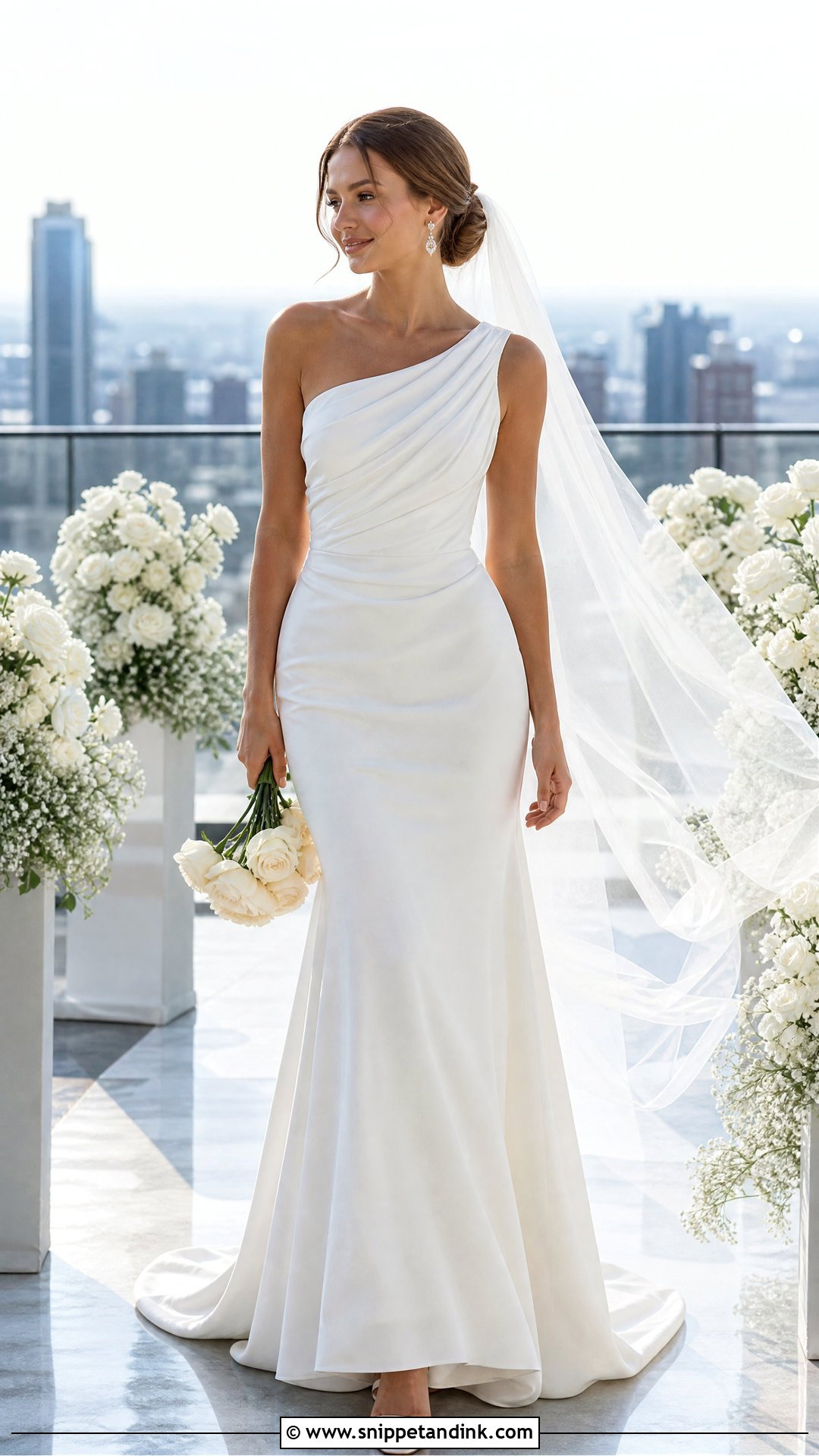
A one-shoulder neckline is modern without being fussy. Look for gentle draping across the bodice and a straight or softly flared skirt; crepe looks cleaner, satin glows more. Skip the necklace and put one drop earring or stud on the bare side. A low side bun can echo the line, though I’d keep it on the opposite side from the strap so the look doesn’t feel too matched. Slim ivory heels and loosely arranged white roses finish it. A detachable shoulder veil or a light cape adds ceremony drama. Check that the single strap stays put when you raise your opposite arm; a silicone strip inside the strap edge usually solves any slipping.
18. Flutter Sleeve Wedding Dress
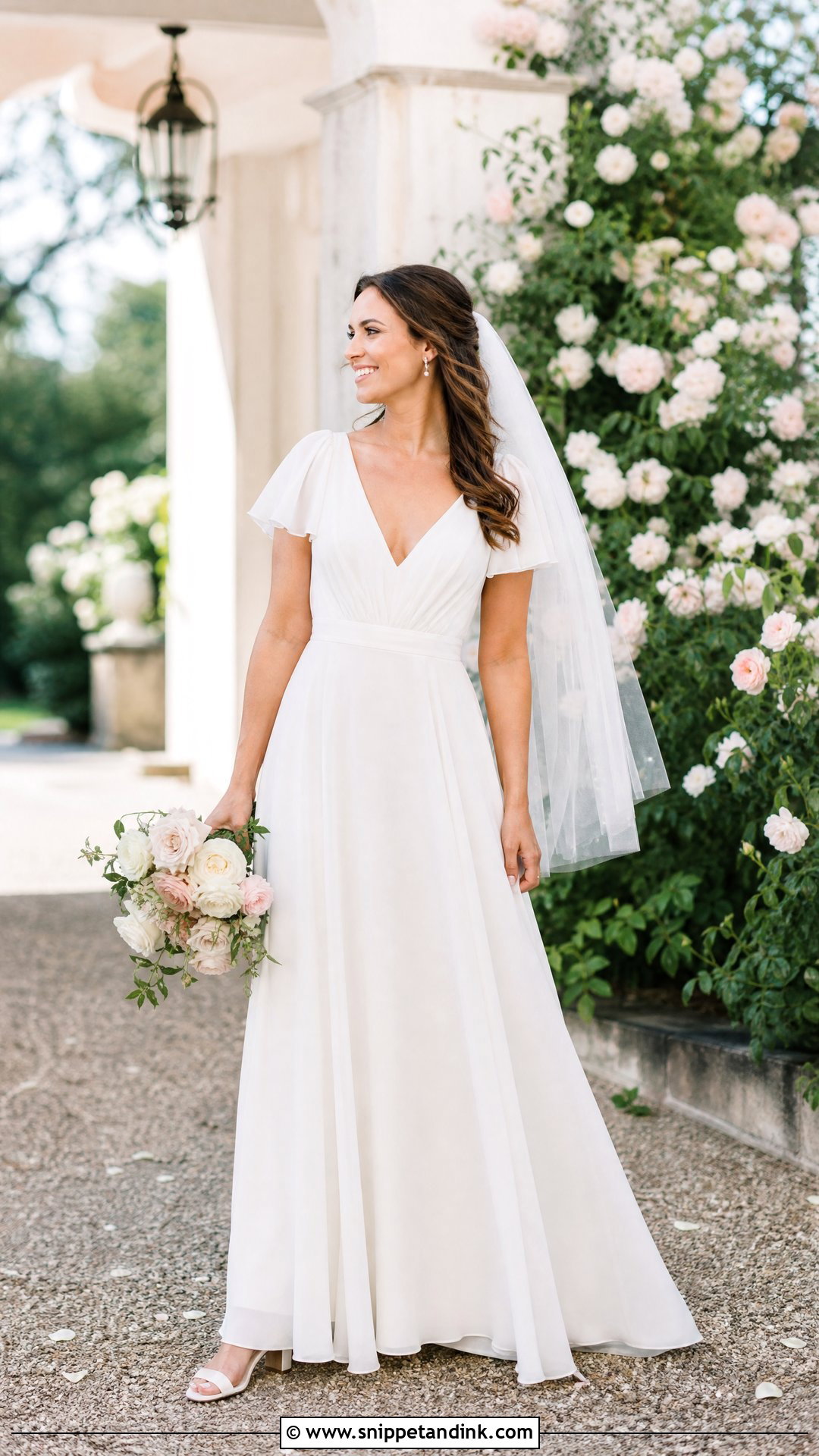
Flutter sleeves add movement without weight, which is why I like them for warm outdoor ceremonies. Choose short chiffon or tulle sleeves that fall loosely over the shoulder, with a fitted bodice and flowing A-line skirt, plus a modest V or rounded neckline. Low block heels, pearl earrings and a relaxed half-up style suit it, and a light fingertip veil moves with the sleeves. A loose bouquet of garden roses and sweet peas finishes the look for spring gardens. Feel the inner edge of the sleeve against your arm before buying: some flutter sleeves are finished with a scratchy rolled hem that irritates by the evening.
19. Open Back Wedding Dress
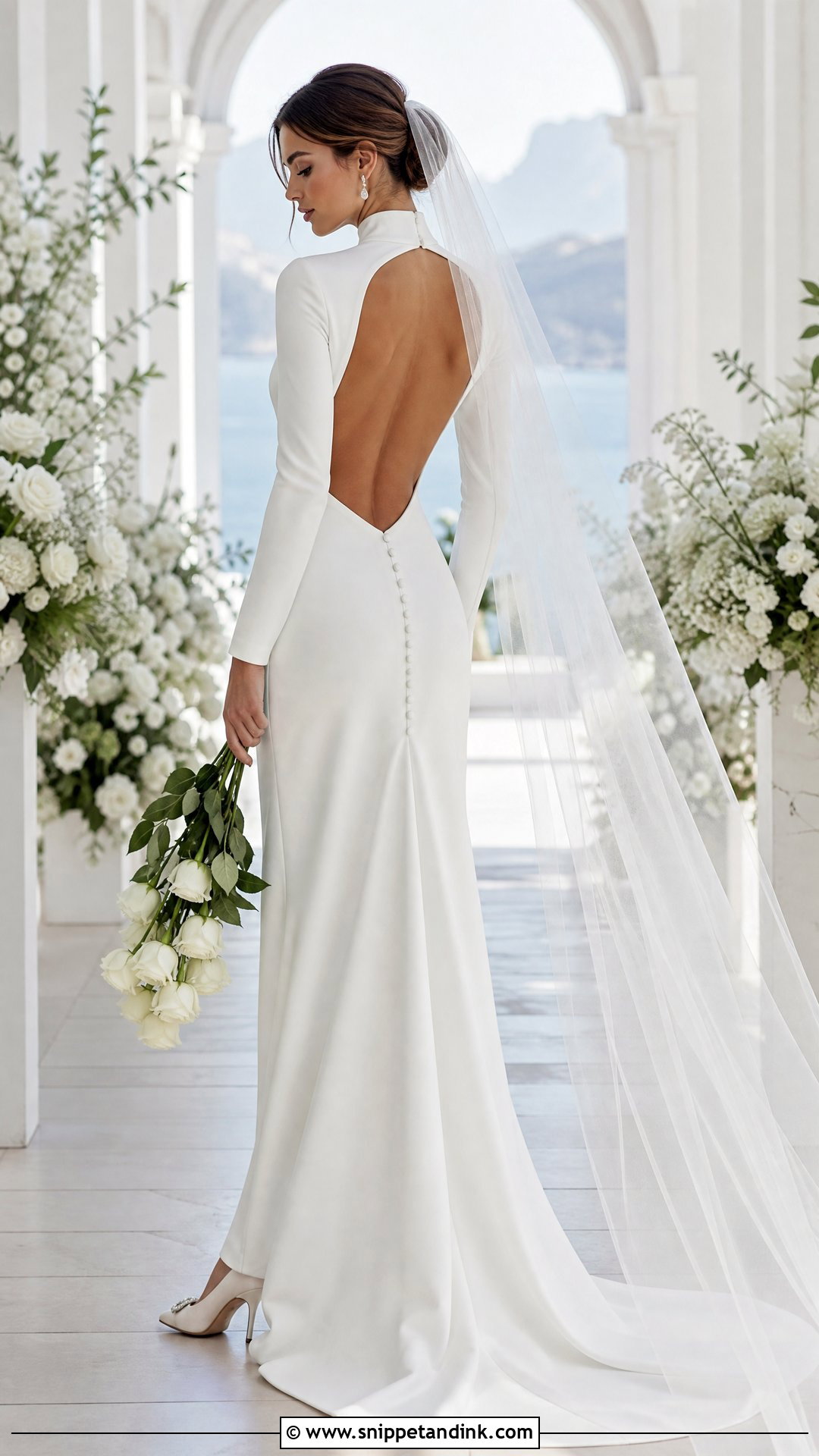
The appeal of an open back is the contrast: a quiet front and a striking rear view. Pair a high, scoop or long-sleeve front with a back opening that ends somewhere you feel secure. Covered buttons or a narrow satin edge frame it. Support is the real question, and sewn-in cups are more reliable over a long day than adhesive bras, which loosen as you warm up. A low bun or upswept hair shows off the back, with delicate earrings, pointed heels and a plain cathedral veil for the ceremony. Long-stem white roses keep it streamlined for formal rooms, scenic outdoor ceremonies and modern settings.


20. Simple Satin Ball Gown Wedding Dress
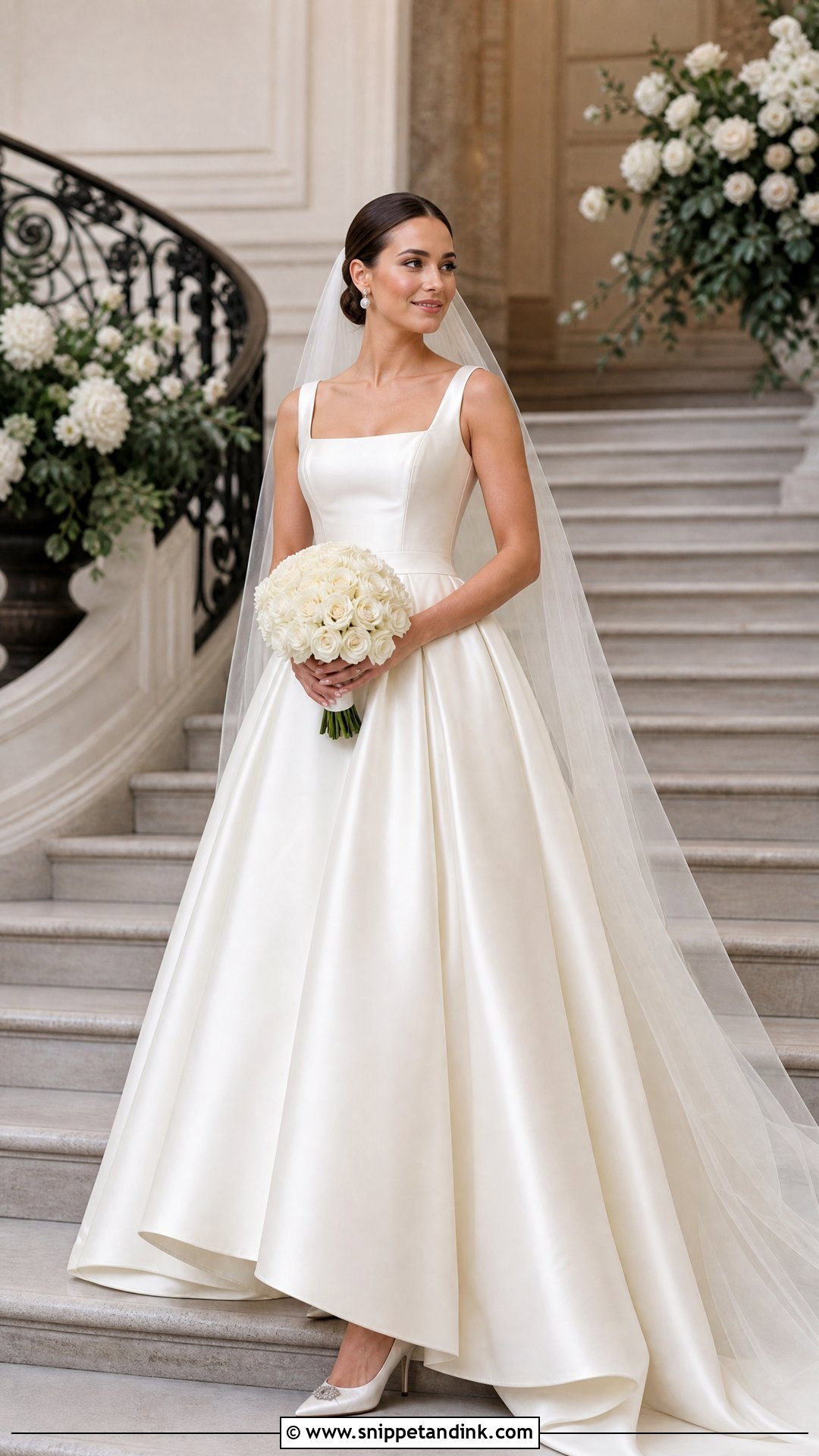
A ball gown can still be simple if you strip away the lace, crystals and appliqué and let a full satin or mikado skirt carry the drama. Keep the bodice fitted and the neckline clean, square, scoop or softly curved strapless. Classic pearl earrings, pointed pumps and a polished low bun suit it, and a long sheer veil matches the skirt’s scale without weighing it down. A rounded bouquet of white roses balances the fuller shape. The practical side matters: ask about a lightweight petticoat and a well-made bustle, because a full skirt that you can’t lift is exhausting by the first dance. It belongs in ballrooms, on grand staircases and at evening ceremonies.
What Sits Underneath: Support, Slips and the Bustle
Most of the minimalist gowns above are unforgiving about what you wear under them. Satin and bias-cut silk show bra lines and seams, and tulle and chiffon can turn sheer in flash photography. I sort this out at the first fitting, not the last.
- Sewn-in cups suit open backs, plunging fronts and strapless bodices, and they don’t lose grip as you warm up the way adhesive cups can.
- A smooth, unseamed slip or a light shaping layer stops slinky fabrics clinging at the hip and stomach. Choose one close to your skin tone, not white.
- Ask your seamstress which bustle suits the skirt. An over-bustle with hooks lifts the train onto the back; an under-bustle with ribbons tucks it under. Satin and mikado usually hide either well, while chiffon sometimes looks better with a simple wrist loop.
Steaming the Dress on the Morning, Without Damaging It
Simple fabrics show travel creases more than lace, so plan for the gown to be steamed after it arrives at the venue. Hang it high, on its own loops, the day before so gravity drops most of the folds. On the morning, steam from inside the skirt where possible and keep the head a few inches off satin; pressing it directly can leave water spots or a shine. Crepe takes steam well, while silk charmeuse can water-mark, so test a hidden seam allowance first.
Put the gown on last, after hair and makeup, stepping into it rather than pulling it over your head. Then sit only when you need to, and smooth the back of the skirt under you as you do.
Spend on the Fit, Not the Trim
The simple dress that works is usually the one you forget you’re wearing by mid-afternoon. Clean silhouettes still carry plenty of romance through satin, crepe, chiffon, a little lace or a line of pearls. Once you’ve chosen the gown, style the veil, shoes, jewelry, hair and flowers to its proportions as one outfit rather than as separate purchases. Then spend your effort on the parts nobody photographs: alterations, the right foundation garments and enough room to move, sit and dance.
You'll Like These Ideas:








Leave a Reply