
Lace laid over a plain base is one of the oldest tricks in bridal construction, and it is still the one I reach for most when a bride wants texture without a heavier silhouette. The overlay can be anything from soft Chantilly lace floating over satin to bold floral appliqués stitched across tulle, crepe or organza. Underneath, the shape can be a fitted mermaid, a classic A-line, a full ball gown, a modern column or a short reception dress. The twenty gowns below cover traditional, modern, vintage, bohemian, petite and curvy brides, and for each one I’ve noted what I check on the fitting-room floor, not just how it looks on the hanger.
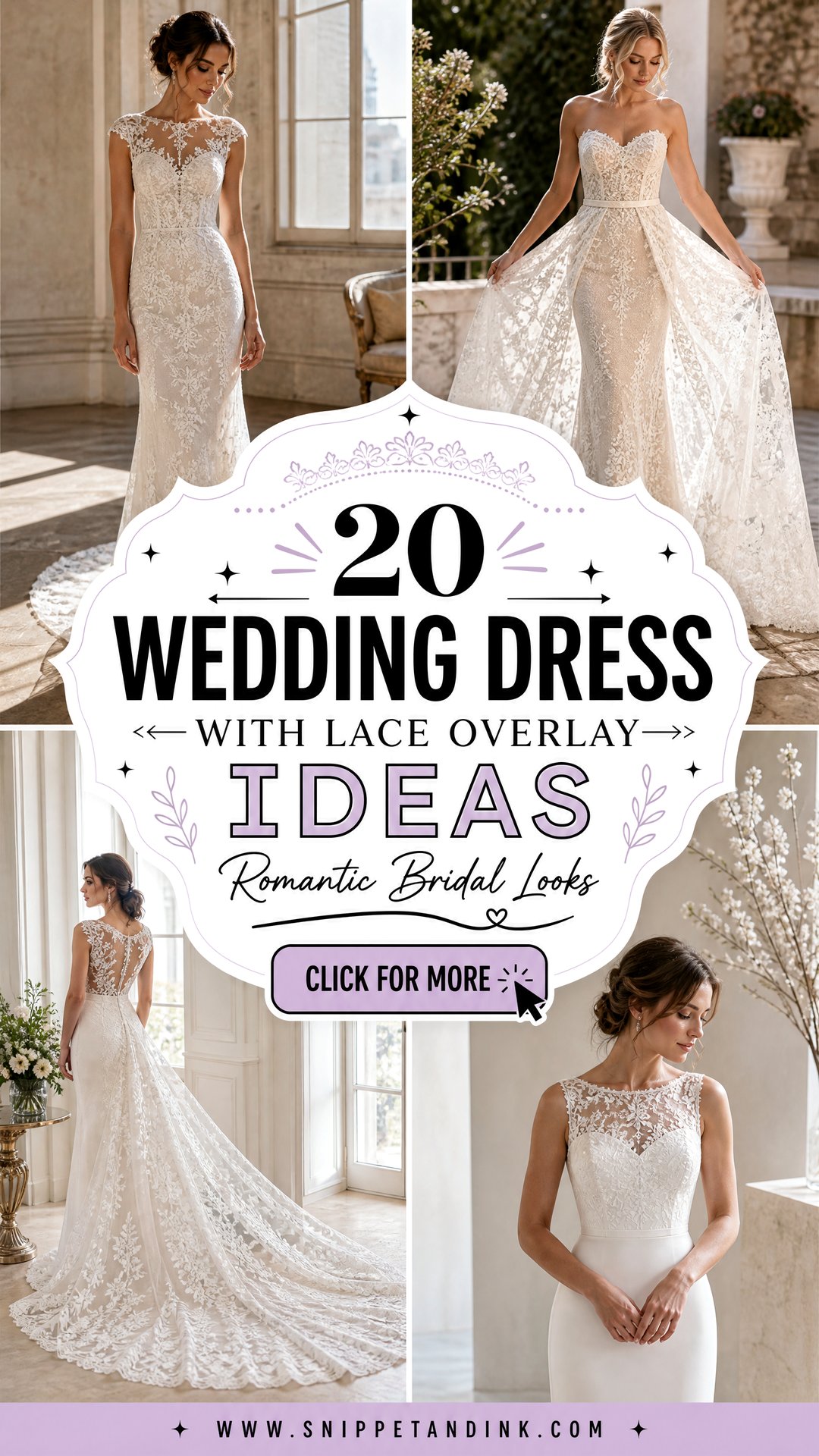
Chantilly, Alençon or Guipure? Feel the Lace Before You Fall for the Gown
Most bridal lace falls into a few families, and each behaves differently once it’s on a body. I always hand brides a swatch to hold, because a photo never tells you weight or stiffness.
- Chantilly: very fine, made on a light net with thin outlined motifs. It drapes softly and suits sleeves and illusion necklines, but it snags easily on rings and bracelet clasps.
- Alençon: each motif is outlined with a raised cord, so it has more relief and holds its shape. Good for structured bodices and scalloped hems.
- Guipure: there’s no net ground at all; the motifs are joined to each other by little bars. It’s heavier and more graphic, so it pairs best with a simple silhouette.
- Embroidered tulle: thread stitched straight onto tulle, often with sequins or beads. It’s light and easier to alter, though the tulle can stretch on a fitted skirt.
Then look at what sits under it. The lining color decides how much of the pattern shows. Nude, champagne or a skin-tone mesh behind the lace makes every motif readable, while white on white only really shows up in close detail shots. Hold the dress up near a window, not under the boutique’s warm spotlights, and you’ll see roughly what the camera will see.
1. A-Line Wedding Dress With Floral Lace Overlay
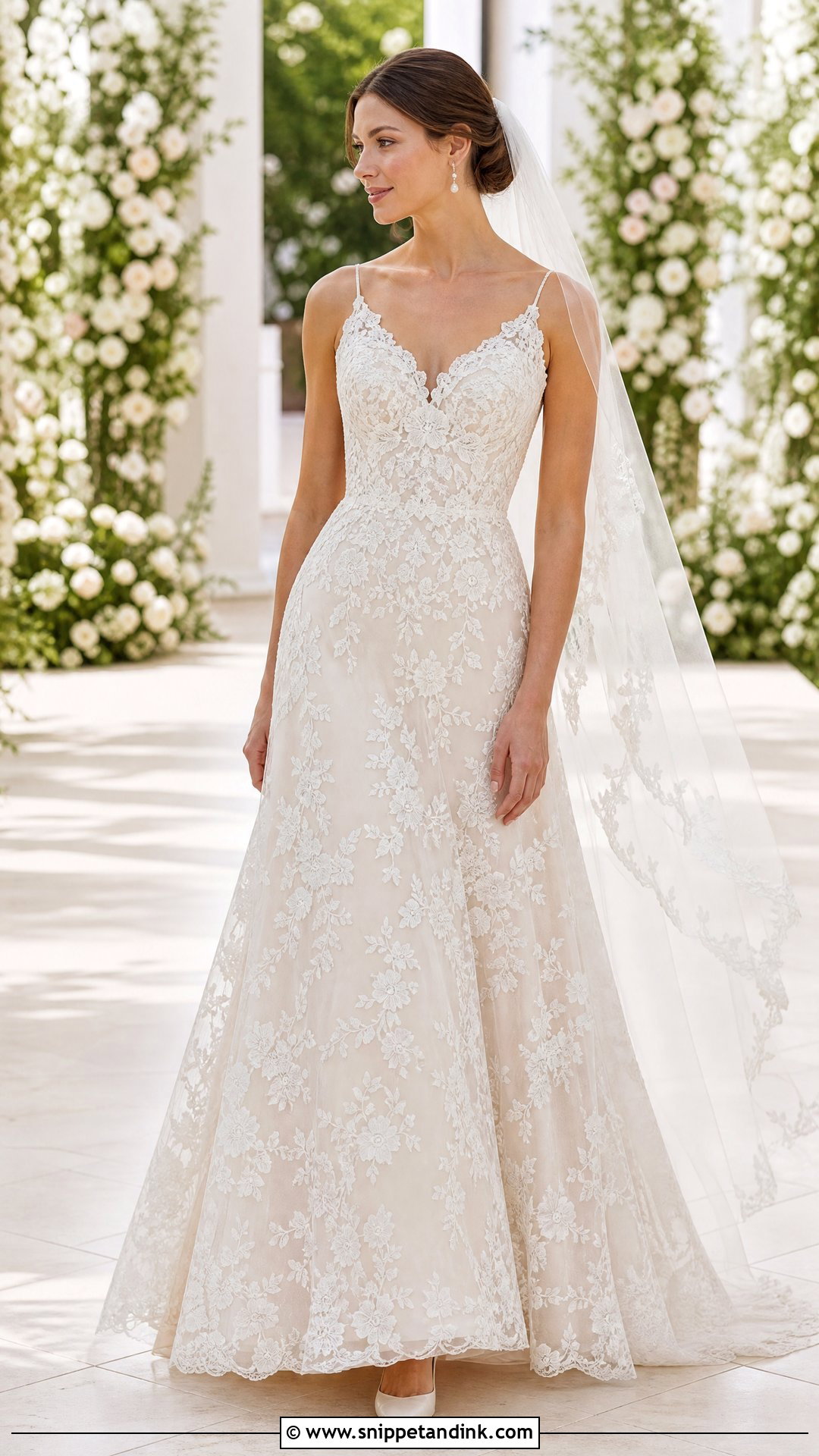
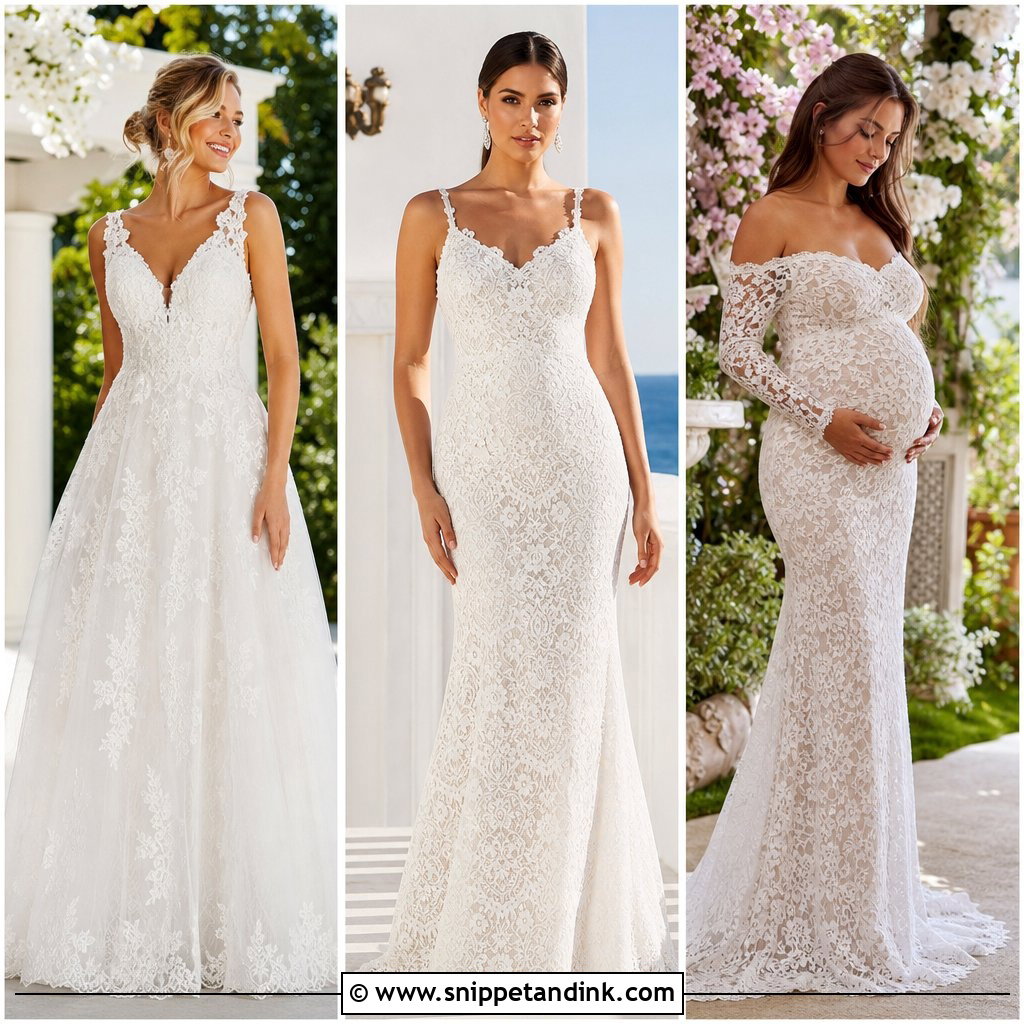
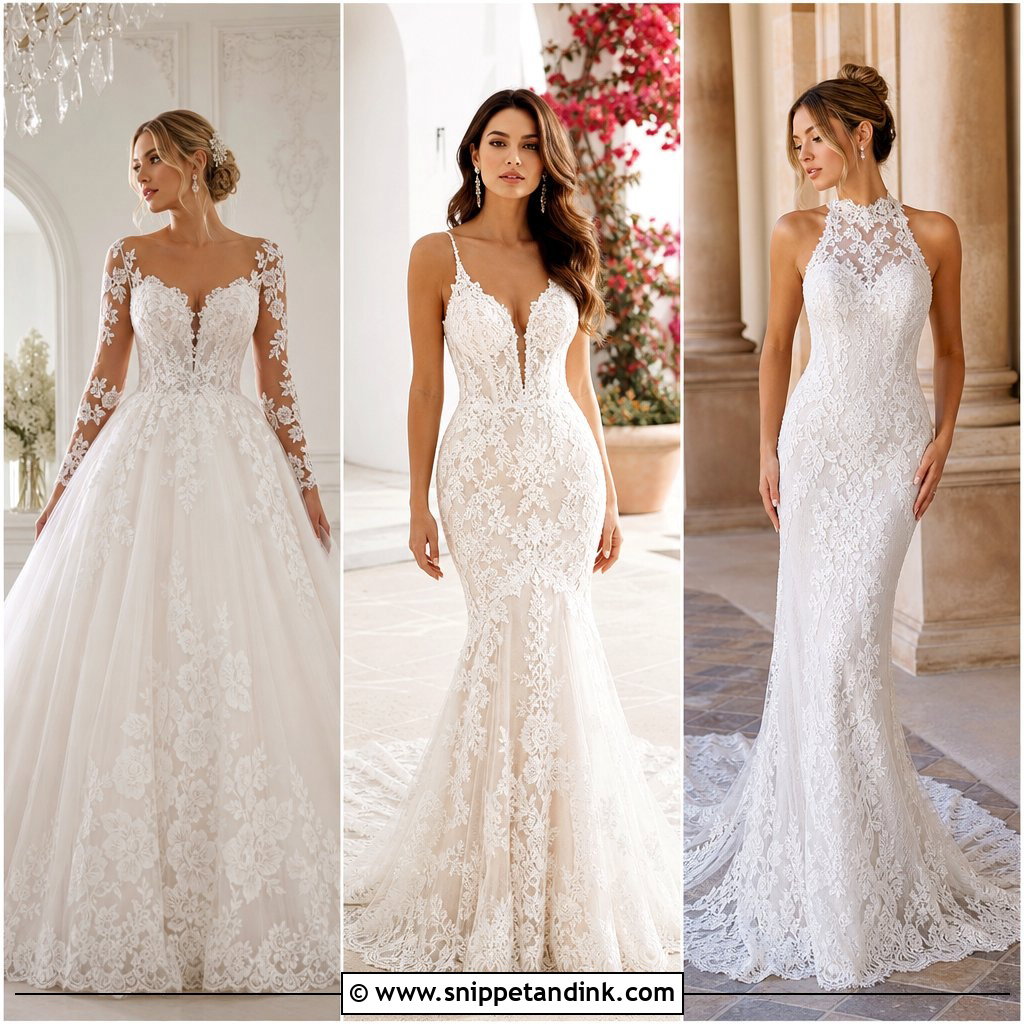
An A-line with a floral lace overlay is the gown I pull first for a bride who doesn’t know where to start, because the fitted bodice and widening skirt suit almost everyone. The thing I watch is lining color. Ivory lace over an ivory lining can flatten into one pale sheet in photos, while a nude or champagne lining underneath keeps each flower readable. Keep the neckline open with a sweetheart or shallow V, then add pearl drops, pointed ivory pumps and a fingertip veil with only a narrow lace edge. A low chignon leaves the bodice motifs uncovered. It sits comfortably in a garden, an estate or a hotel ballroom without tipping into full formalwear.
2. Long Sleeve Wedding Dress With Chantilly Lace Overlay
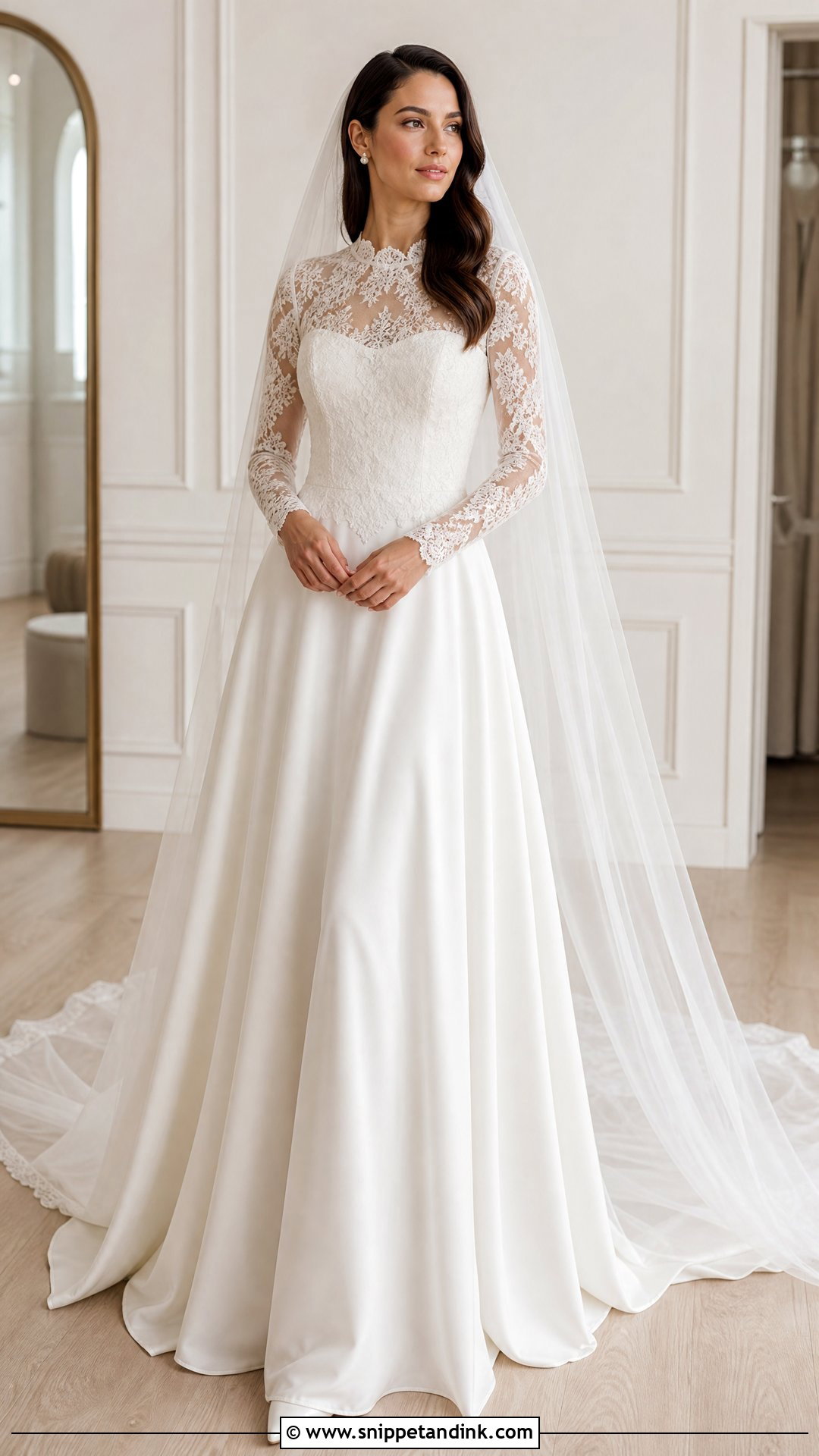
Chantilly is the finest lace most bridal houses use, made on a net ground with thin outlined motifs, so on long sleeves it reads almost like a pattern drawn on the arm. The first thing I check is where the motifs land on the shoulder and cuff. A careful maker cuts the sleeve so a flower finishes at the wrist instead of being chopped off by the seam. Sheer sleeves add visual weight up top, so balance them with a soft A-line or slim fit-and-flare skirt. An ivory lining is classic; pale beige makes the pattern stand out more. Pearl studs, closed satin pumps and a plain cathedral veil are all this dress needs, and I’d keep the bouquet small too.
3. Strapless Ball Gown With Lace Overlay
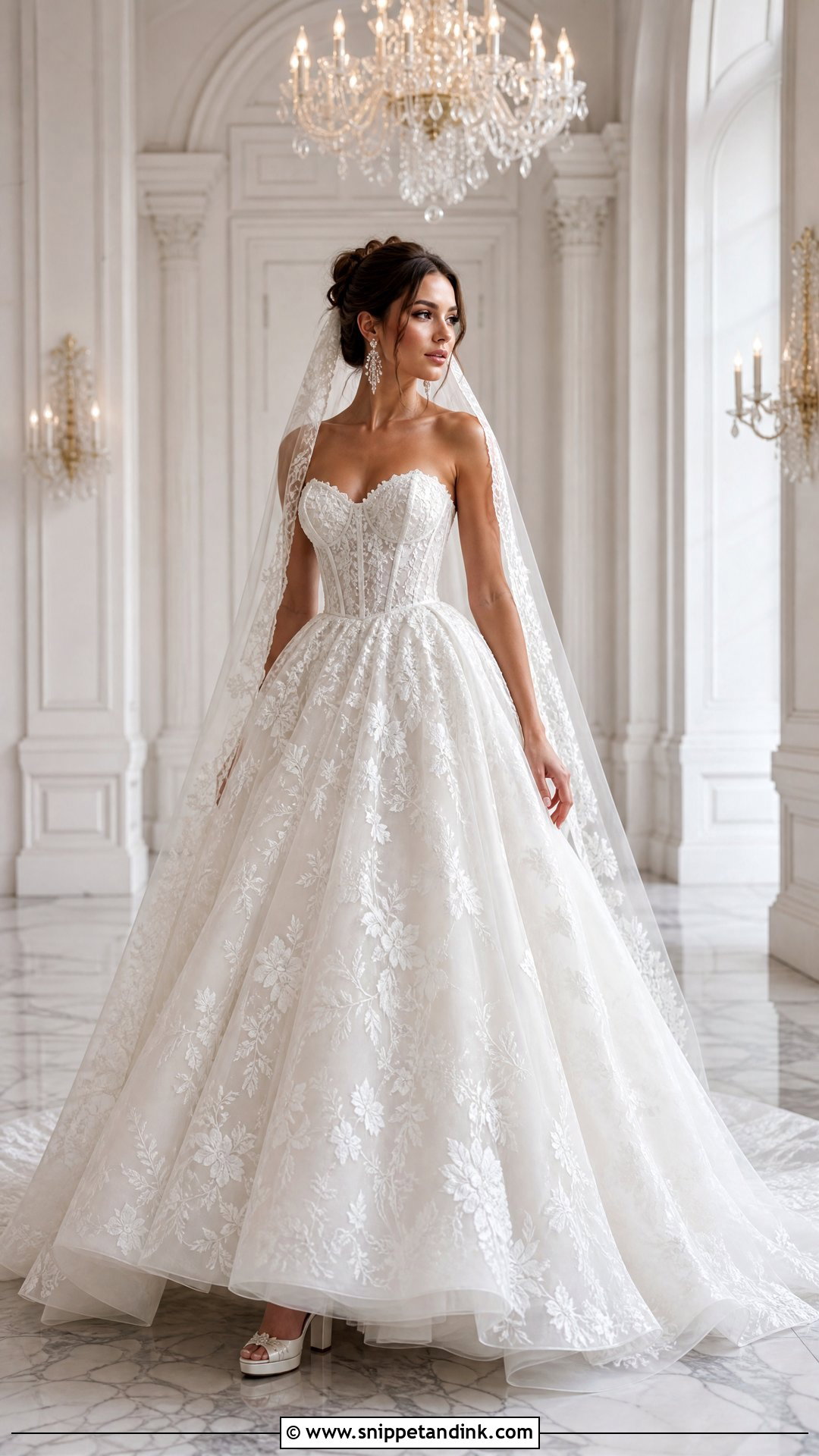
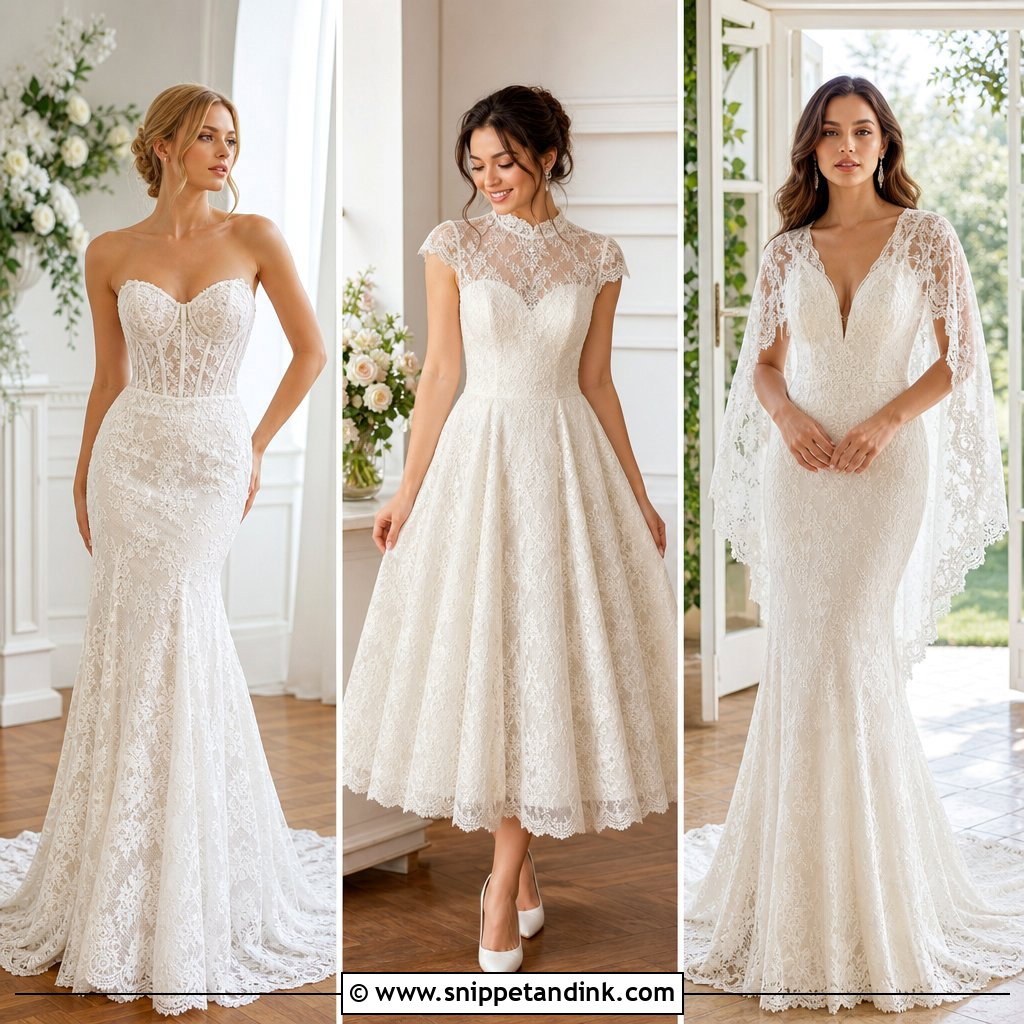
A strapless ball gown under an airy overlay depends almost entirely on the corset inside it. If the boning and waist stay are cut well, the bodice holds without you hitching it up all night. If not, no lace will save it. Look for motifs packed densely at the bodice that open out toward the hem, so the volume of tulle or organza doesn’t turn busy. I’d hide block heels under the skirt, because you’ll be standing in a lot of fabric for hours. A cathedral veil, crystal studs and a sleek updo suit ballrooms and historic houses, with room for a thin tennis necklace if the neckline feels bare.
4. Off-the-Shoulder Wedding Dress With Lace Overlay
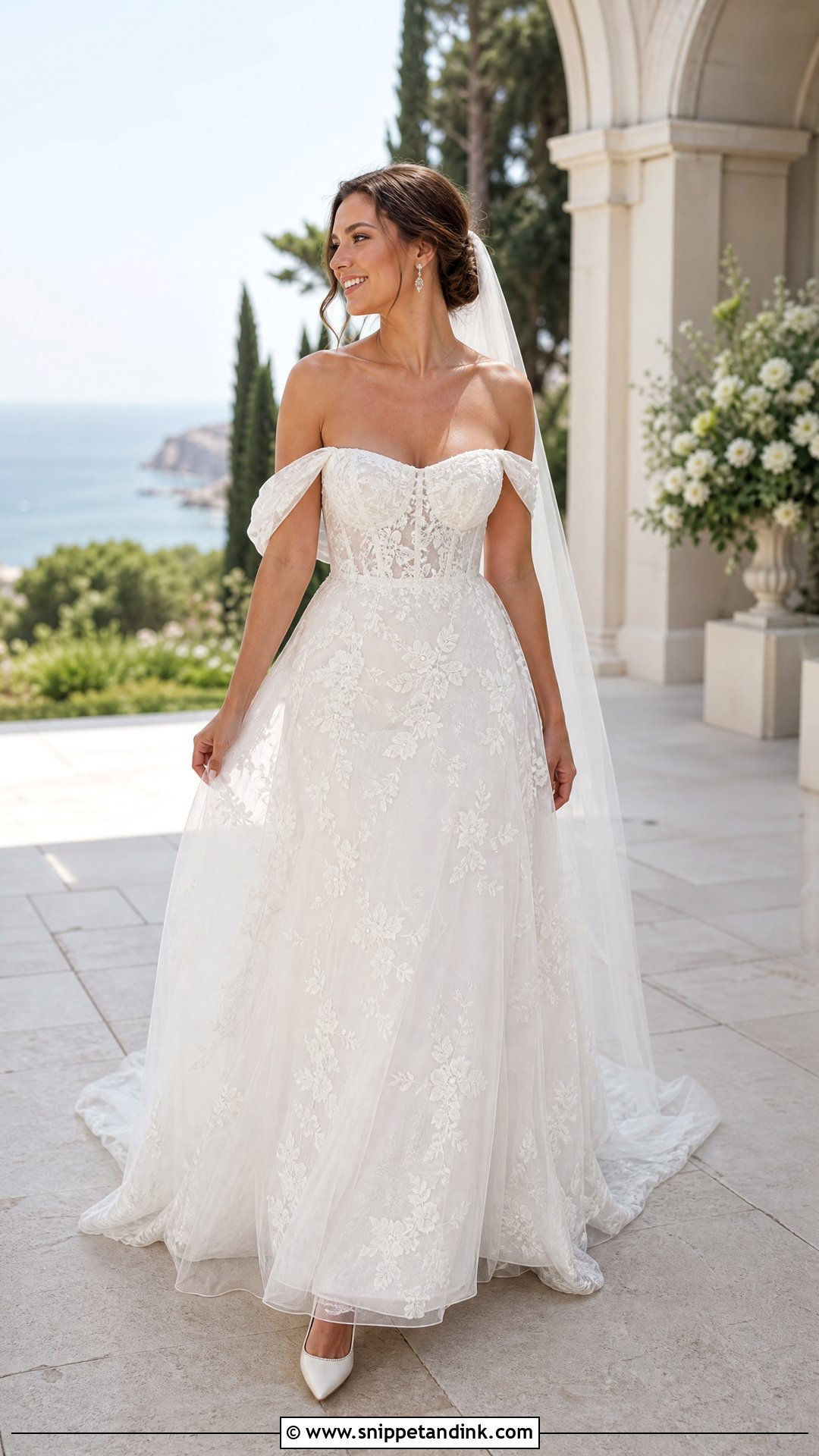
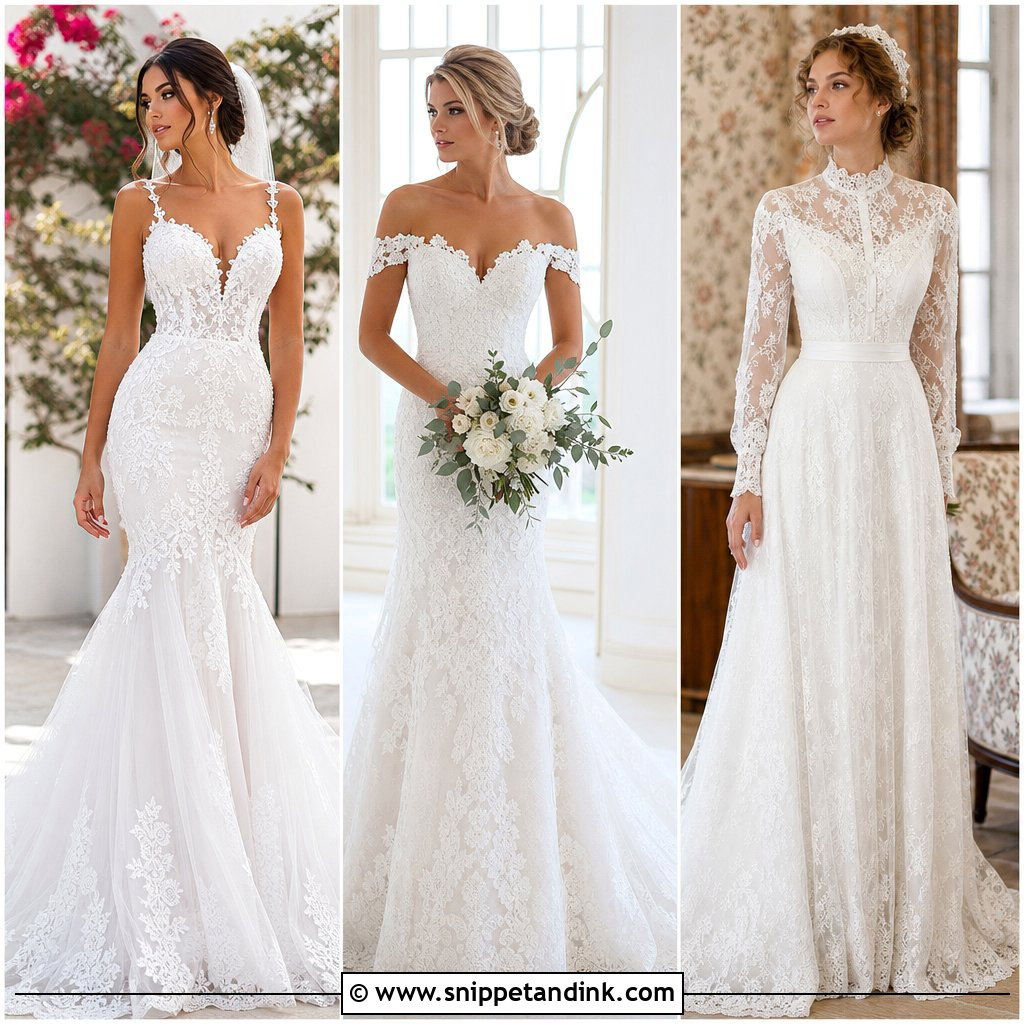
Off-the-shoulder lace has one practical weakness: the sleeve band sits on the upper arm, so every hug tries to slide it down. Before I’d sign off on this neckline, I ask for internal boning and a snug grip inside the band. Once it’s secure, the collarbone is framed and the lace runs across the bodice into either an A-line skirt or a sharper fit-and-flare. Add a small pendant, crystal earrings and pointed satin heels, with a loose low bun and a few face-framing strands. For the veil, plain tulle or lace on the bottom edge only. It holds up for a formal ceremony and still relaxes into a garden or coastal setting.
5. Mermaid Wedding Dress With Lace Overlay
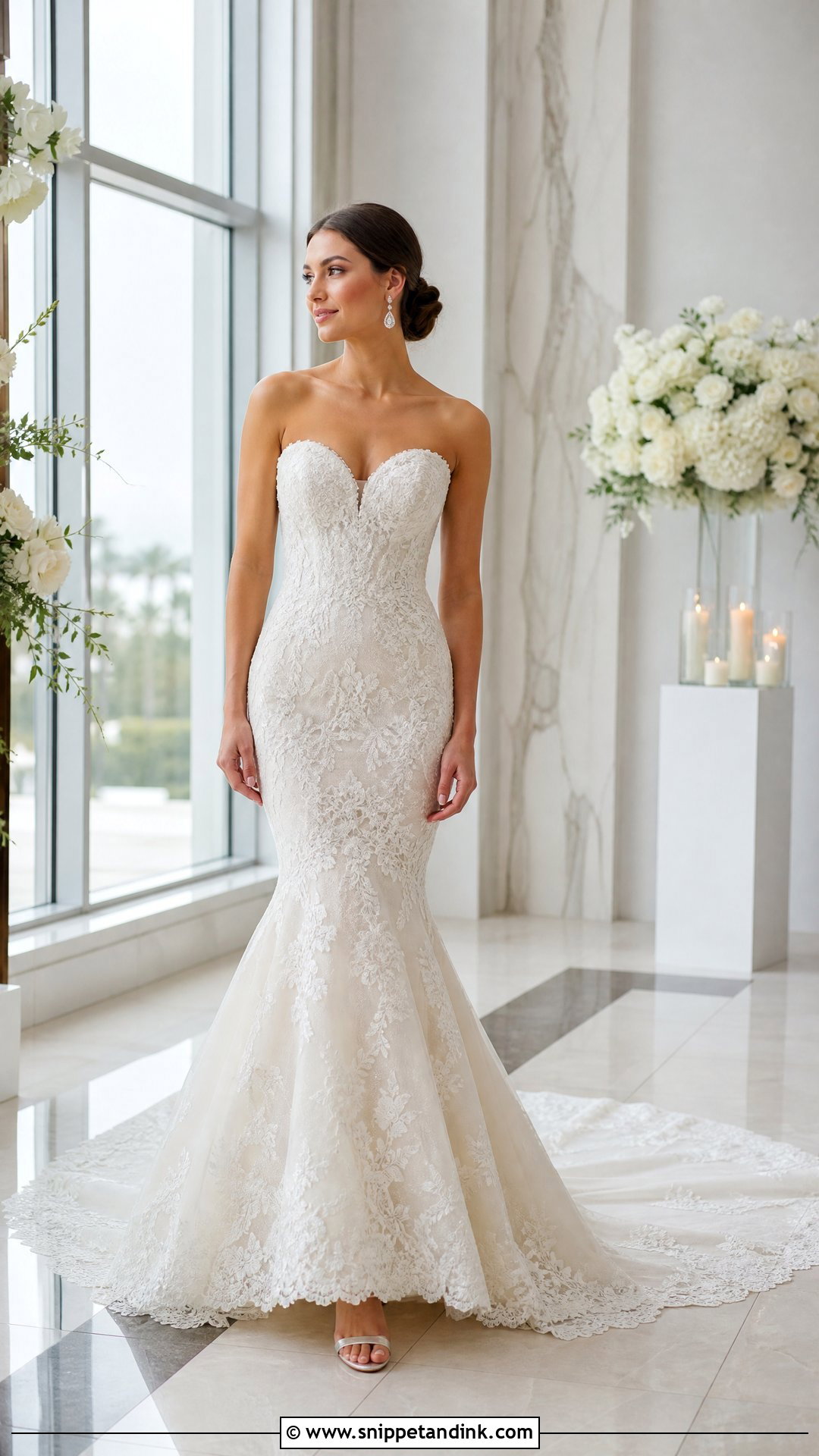
Mermaid gowns are where the choice of lace matters most, because the dress is fitted from bust to knee and still has to let you walk, sit and climb a step. Stretch lace, or lace laid over flexible tulle, gives far more movement than a stiff layered fabric. Sit down in the sample before anything else. If the lace pulls into ridges across the hips, either the fit or the fabric is wrong. A sweetheart or soft scoop neckline balances the flare, and drop earrings, a smooth chapel veil and heels tested with the altered hem finish it. Keep everything else quiet; a center-parted low bun or polished waves will do.
6. Square Neck Wedding Dress With Lace Overlay
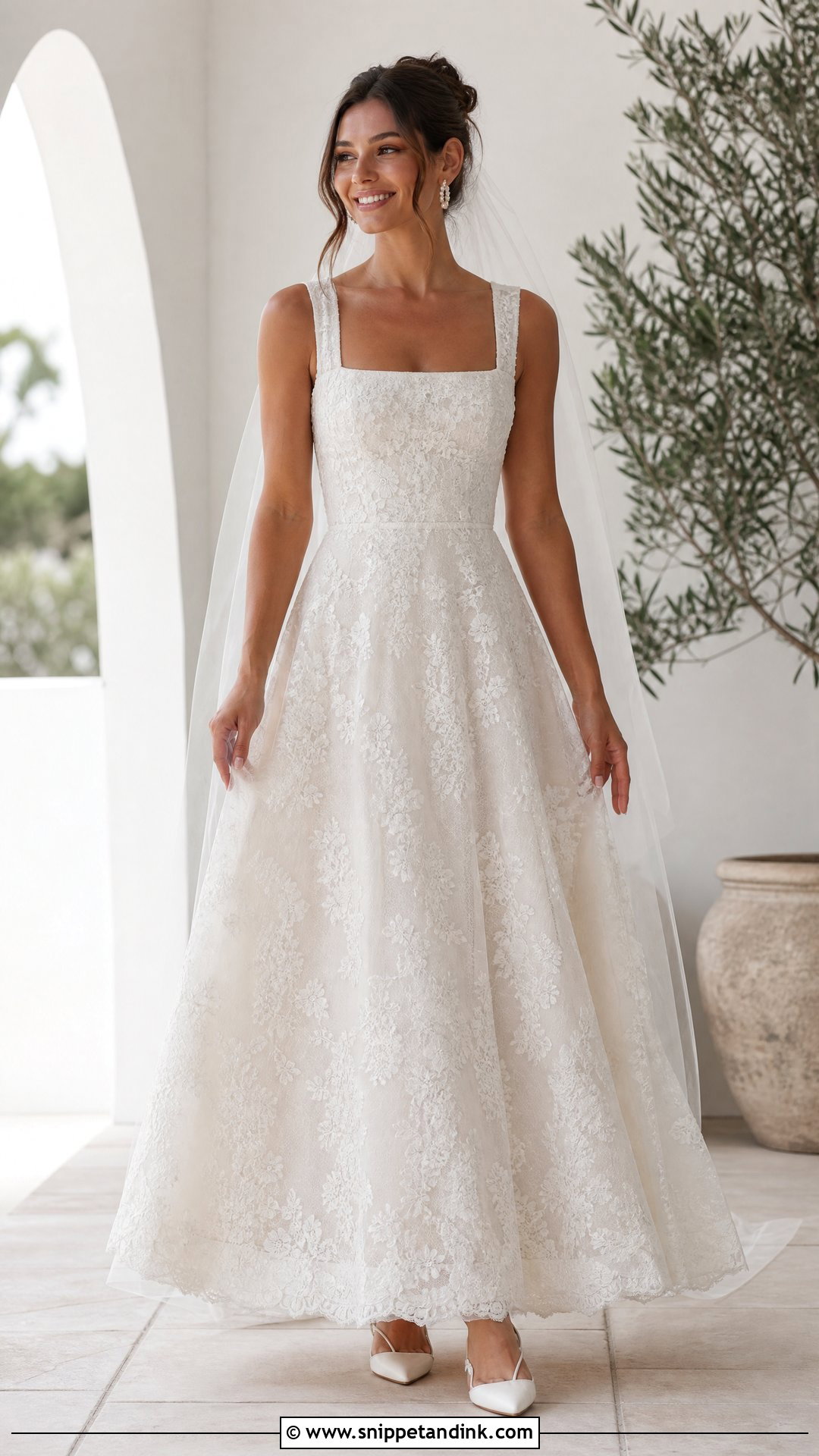
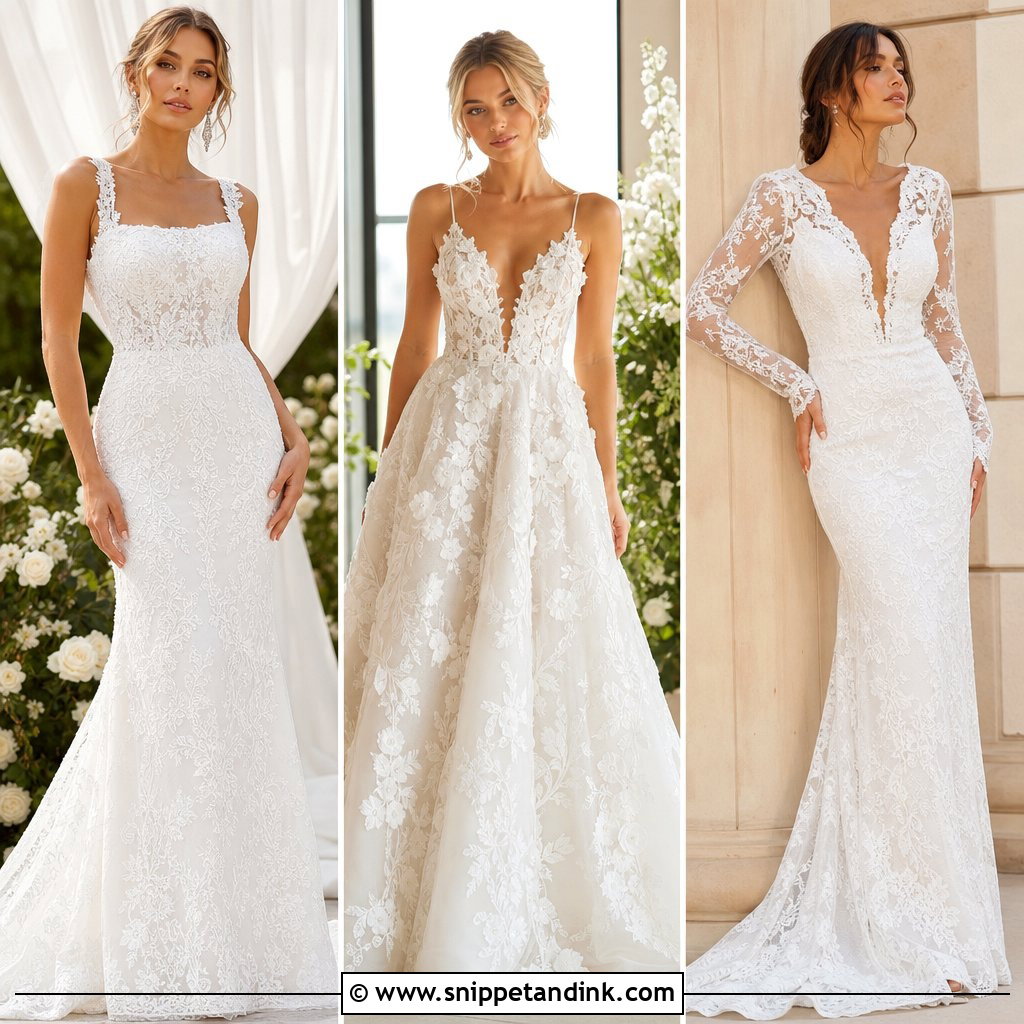
Square necklines look crisp only if the corners sit flat, and lace edges sometimes ripple there once the dress is on. At fittings I press the corners down and check whether the seamstress needs to add a narrow stay. Wide straps, short sleeves or fitted long sleeves all repeat that straight line. Pair it with an A-line or column skirt at the natural waist, and fine floral lace softens what is quite a modern cut. Small pearl hoops, a low twisted bun, ivory slingbacks and a plain tulle veil keep the neckline on show. I like a small structured bag for portraits too, since there’s nowhere else to put a lipstick.
7. V-Neck Wedding Dress With Boho Lace Overlay
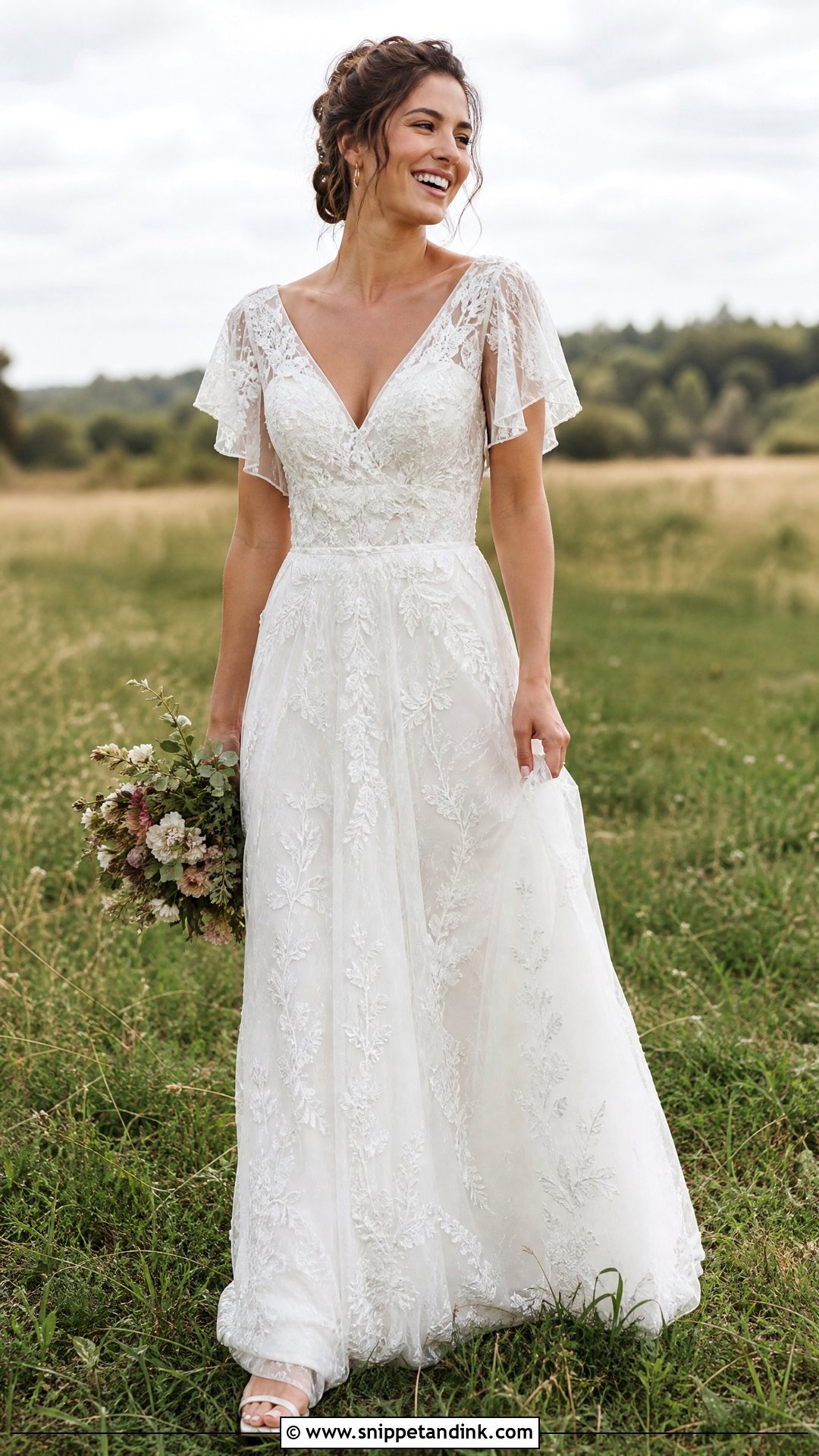
Imagine walking through an outdoor ceremony in a flowing V-neck gown with light bohemian lace. That openness is exactly why the bodice needs proper lining; unlined boho lace can show more than you planned in direct sun. Botanical or geometric patterns look more natural here than heavy beaded motifs. Pick the sleeve by season: flutter sleeves or thin straps in summer, sheer fitted sleeves when it’s cooler. Low block-heel sandals stop you sinking into lawn, and small gold earrings, a loose braided updo and a soft tulle veil or floral comb are plenty. One woven or botanical accent is enough for woodland, desert, barn and open garden sites.
8. High Neck Wedding Dress With Vintage Lace Overlay
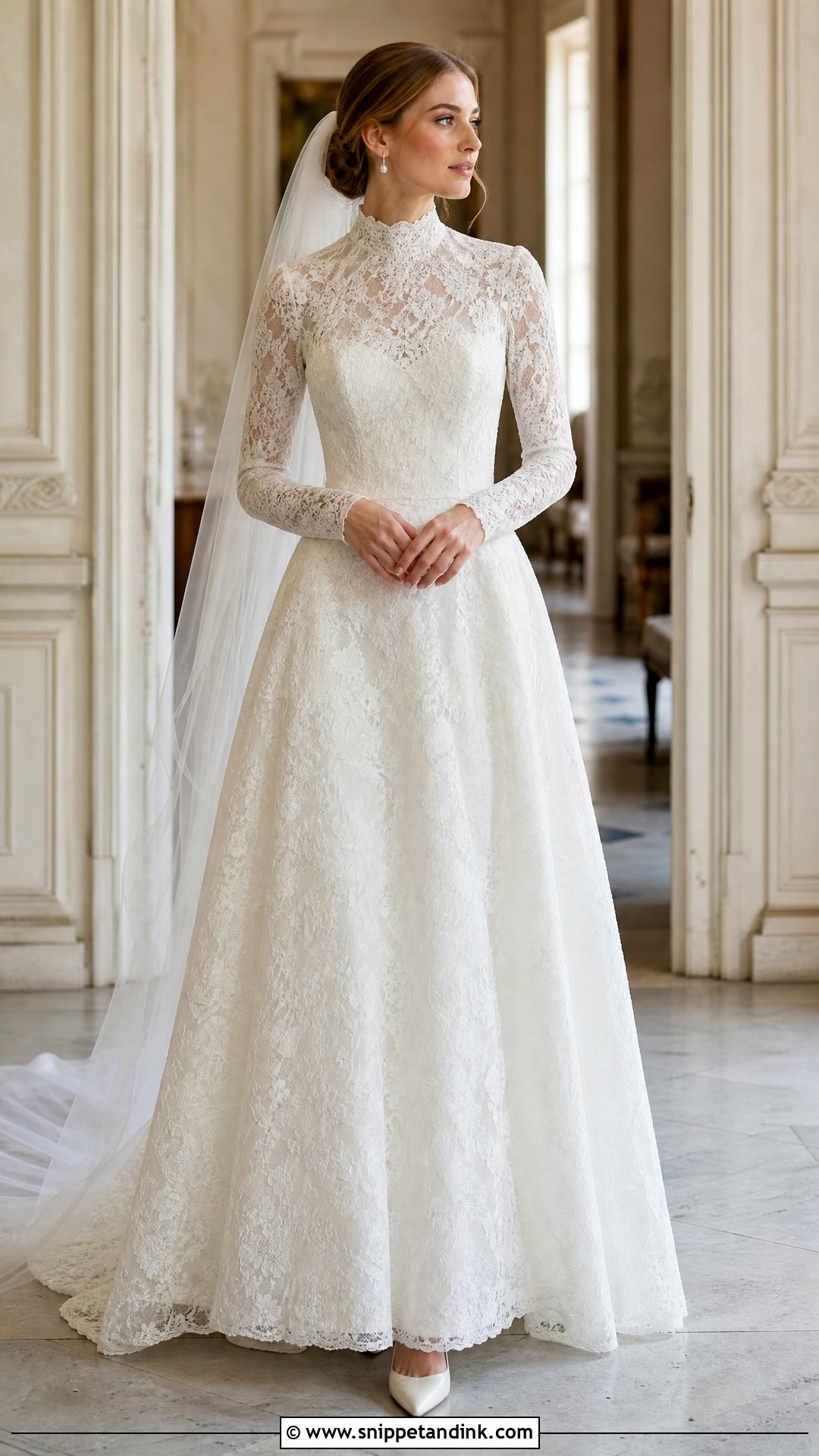
A high neck with vintage-style lace photographs well and is unforgiving in a hot room, so I always ask about the venue’s air conditioning before recommending it. Look for an illusion neckline that’s lined through the bodice, fitted sleeves and covered buttons down the back or at the cuffs. Small repeating motifs read softer than oversized appliqués, and a gently defined waist with a fluid A-line skirt stops the coverage feeling restrictive. Skip the necklace altogether. Pearl earrings, ivory pumps, a low bun held with a simple comb and a plain fingertip or chapel veil leave the neckline to do the talking.
9. Cap Sleeve Wedding Dress With Lace Overlay
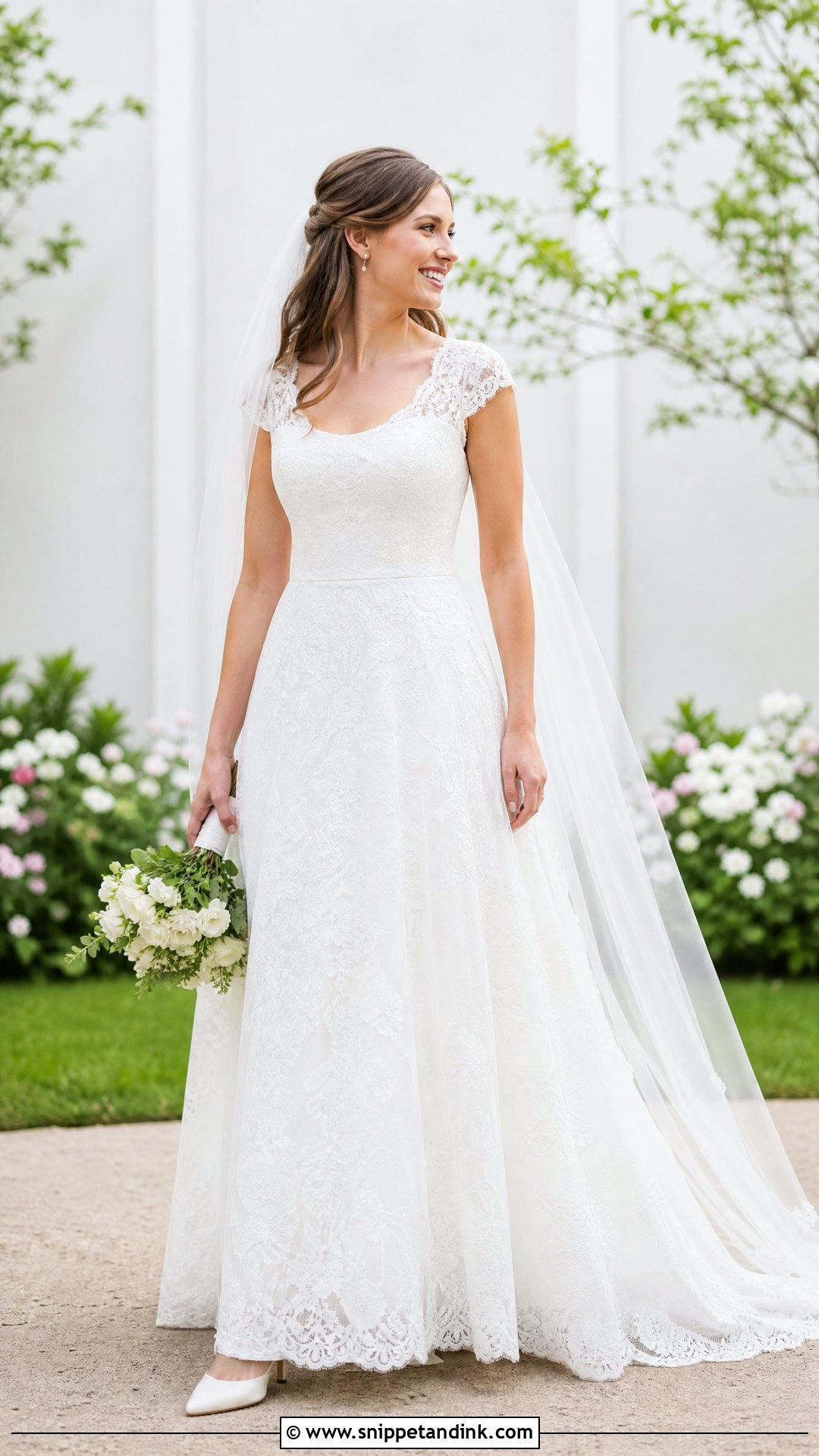
Cap sleeves give a little coverage at the shoulder without the commitment of a full sleeve. On lace, a good maker cuts them so the bodice pattern carries straight over the shoulder, and you can test that at a try-on by running a finger along the top: you shouldn’t feel a ridge. A soft scoop, bateau or shallow V suits short sleeves. Go A-line for a classic finish or a slim sheath for something plainer. A half-up style keeps hair from catching in the shoulder lace, and stud earrings, pointed flats or low heels and a waist-length veil round it out. It’s airy for spring and summer and moves indoors for an evening reception without any change.
10. Sheath Wedding Dress With Lace Overlay
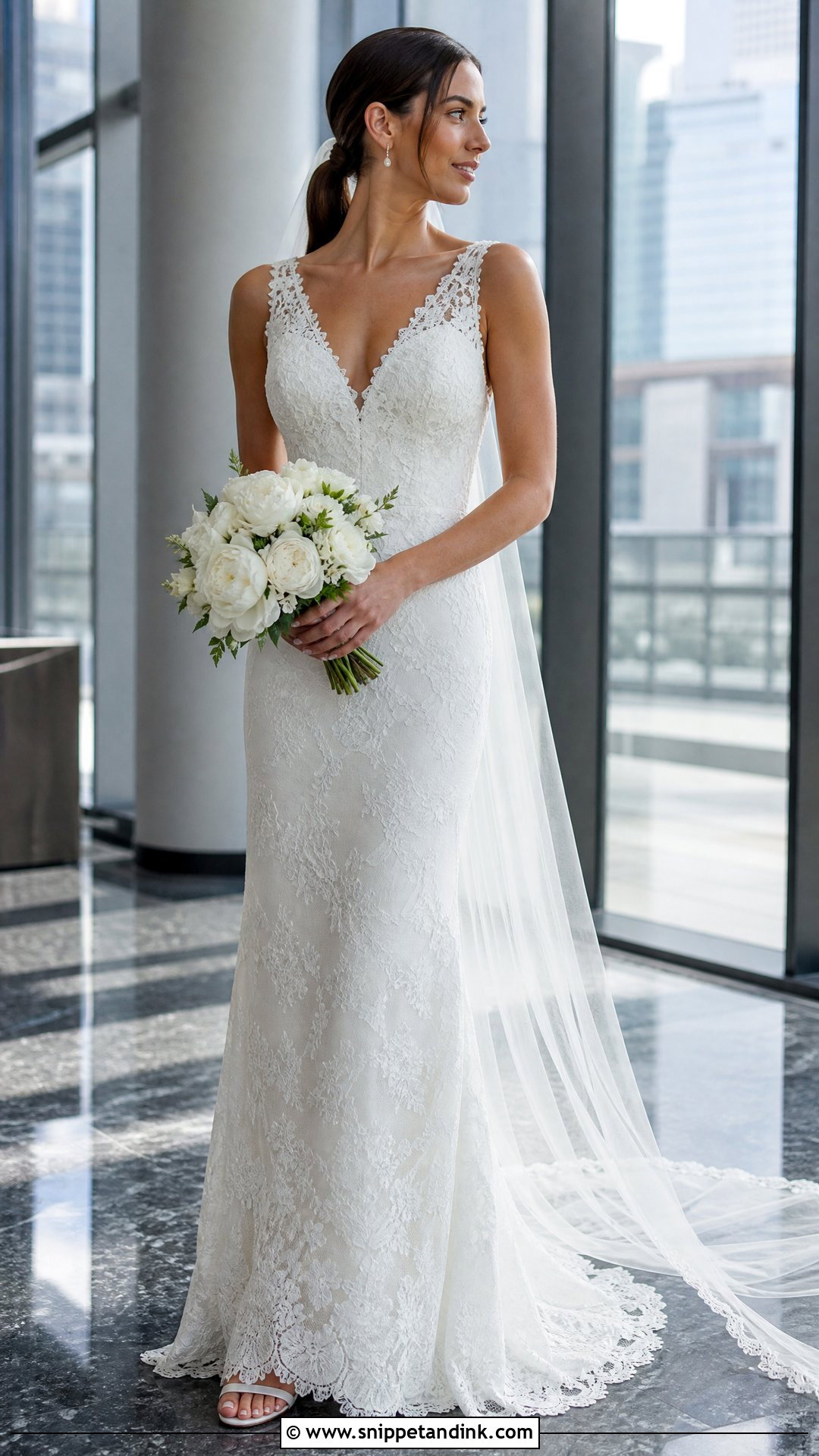
A sheath is the most honest silhouette for lace. There’s no volume to hide behind, so the pattern carries the whole dress, and the base fabric has to be right: soft lace over stretch crepe, light jersey or smooth satin moves with you, while a stiff base creases across the thighs by the first dance. Narrow straps, a V-neck or short sleeves keep the line long. Wear minimal earrings, sleek sandals and a narrow chapel veil, with a low ponytail or polished waves. Do a walking test in your shoes before the hem is cut. A slim skirt shortens your stride, and one that’s too narrow at the knee will have you shuffling down the aisle.
11. Tea-Length Wedding Dress With Lace Overlay
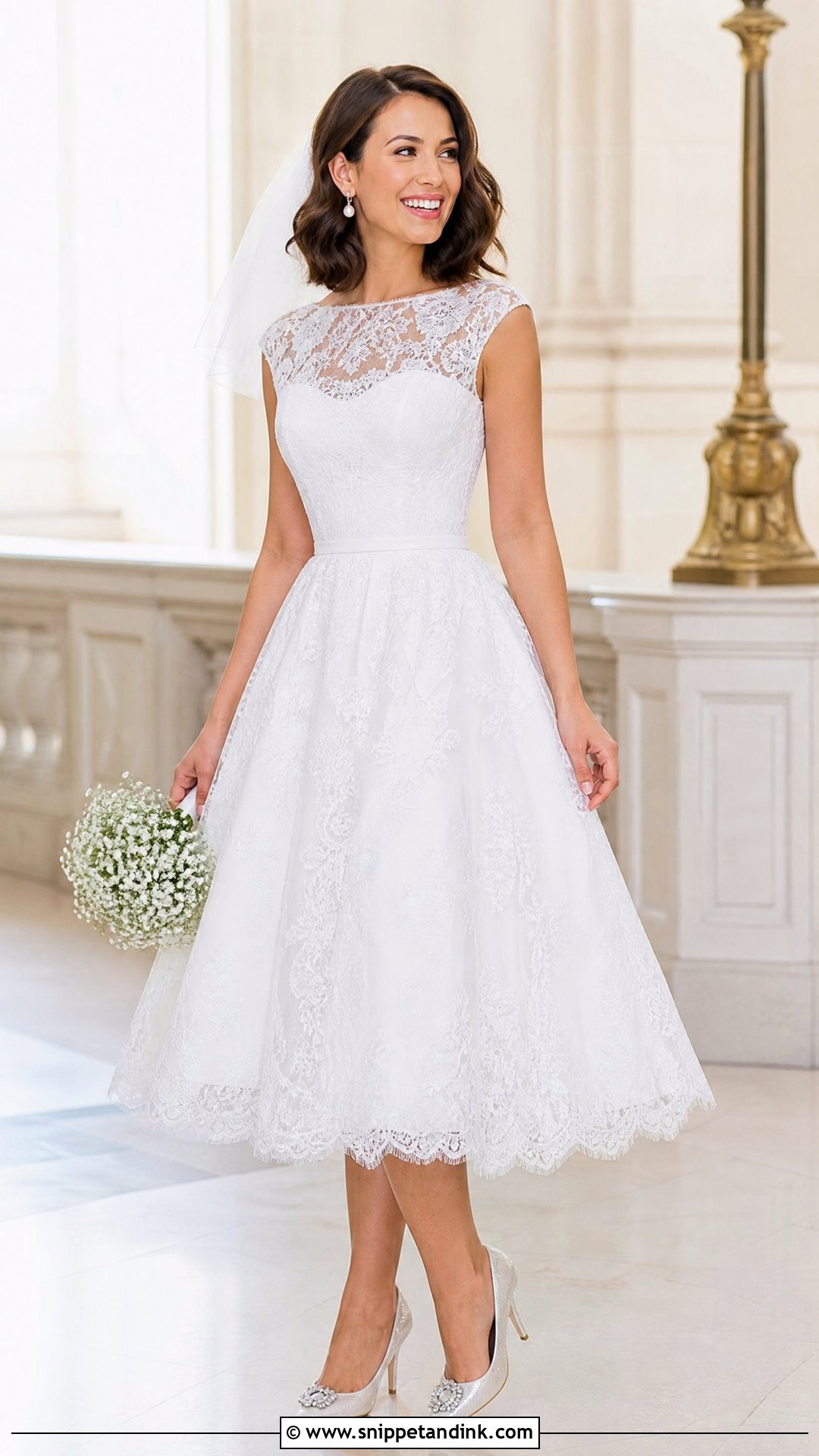
Tea length ends somewhere between knee and ankle, which means the shoes become half the outfit, and I usually spend as long on them as on the dress. Pointed slingbacks, embellished pumps or classic ankle straps all work with a fitted waist and a full or gently flared skirt. The shorter length also shows off the hem finish, so check that the scalloped lace edge was kept rather than cut straight. Pearl earrings and a short veil keep it bridal. In cool weather, a fitted lace jacket cut from the same pattern looks deliberate rather than added on. A smooth updo or softly curled bob leans into the retro influence, and the whole outfit suits courthouse ceremonies, daytime parties and second outfits.
12. Corset Wedding Dress With Lace Overlay
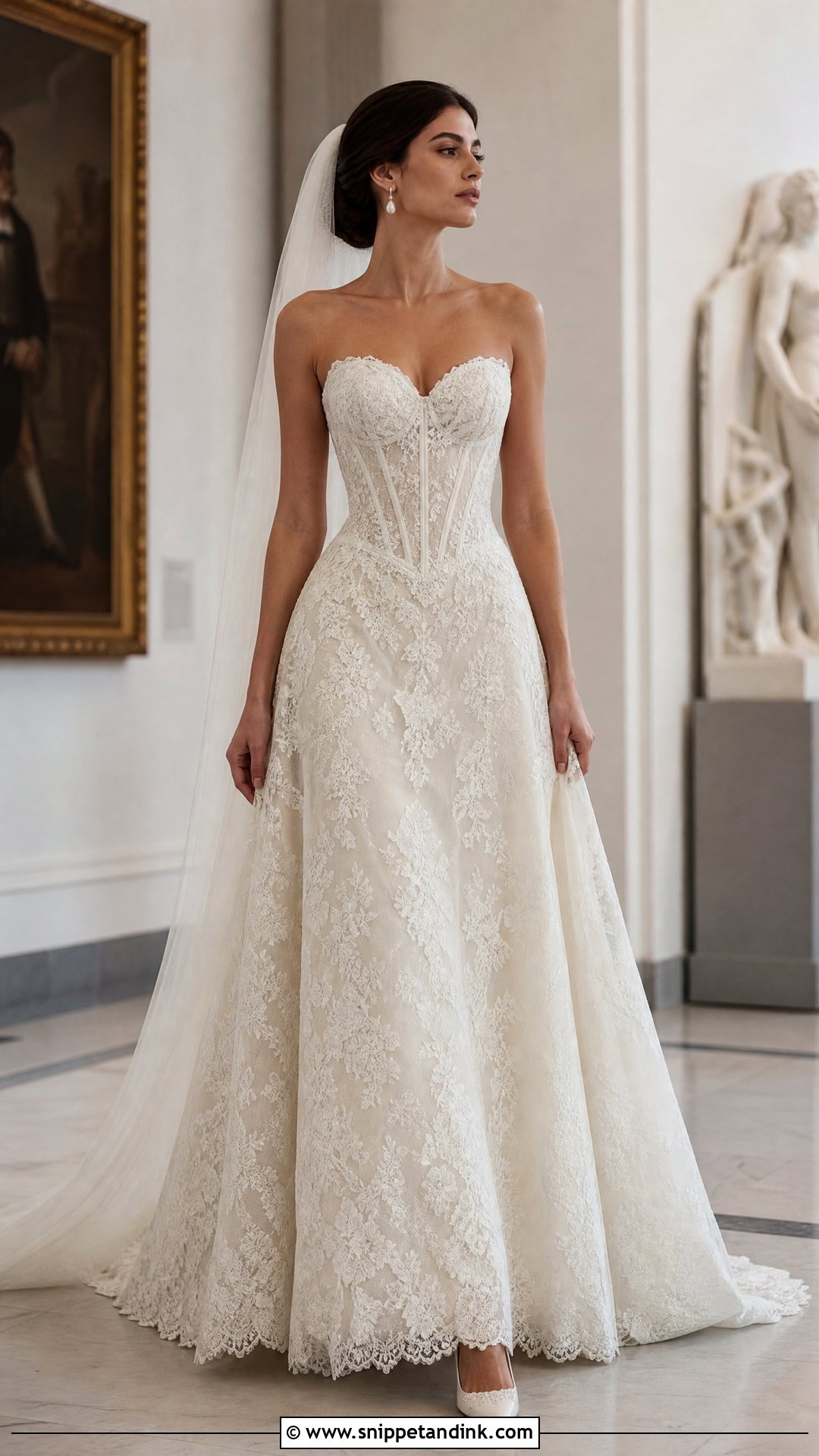
Corset bodices under lace come in two moods: visible boning reads modern, covered boning reads traditional. Either way, the fit decides everything, and a corset laced tight at a fitting feels very different after a three-course dinner. I ask brides to breathe deeply and sit down while laced in. Pair the bodice with a basque or natural waist and a flowing A-line skirt, or go to a full ball skirt with lace running toward the train. A fine chain necklace, pearl drops, closed heels and a long plain veil keep the bodice visible. Wear your hair up or behind the shoulders so it doesn’t hide the lace.
13. Satin Wedding Dress With Lace Overlay
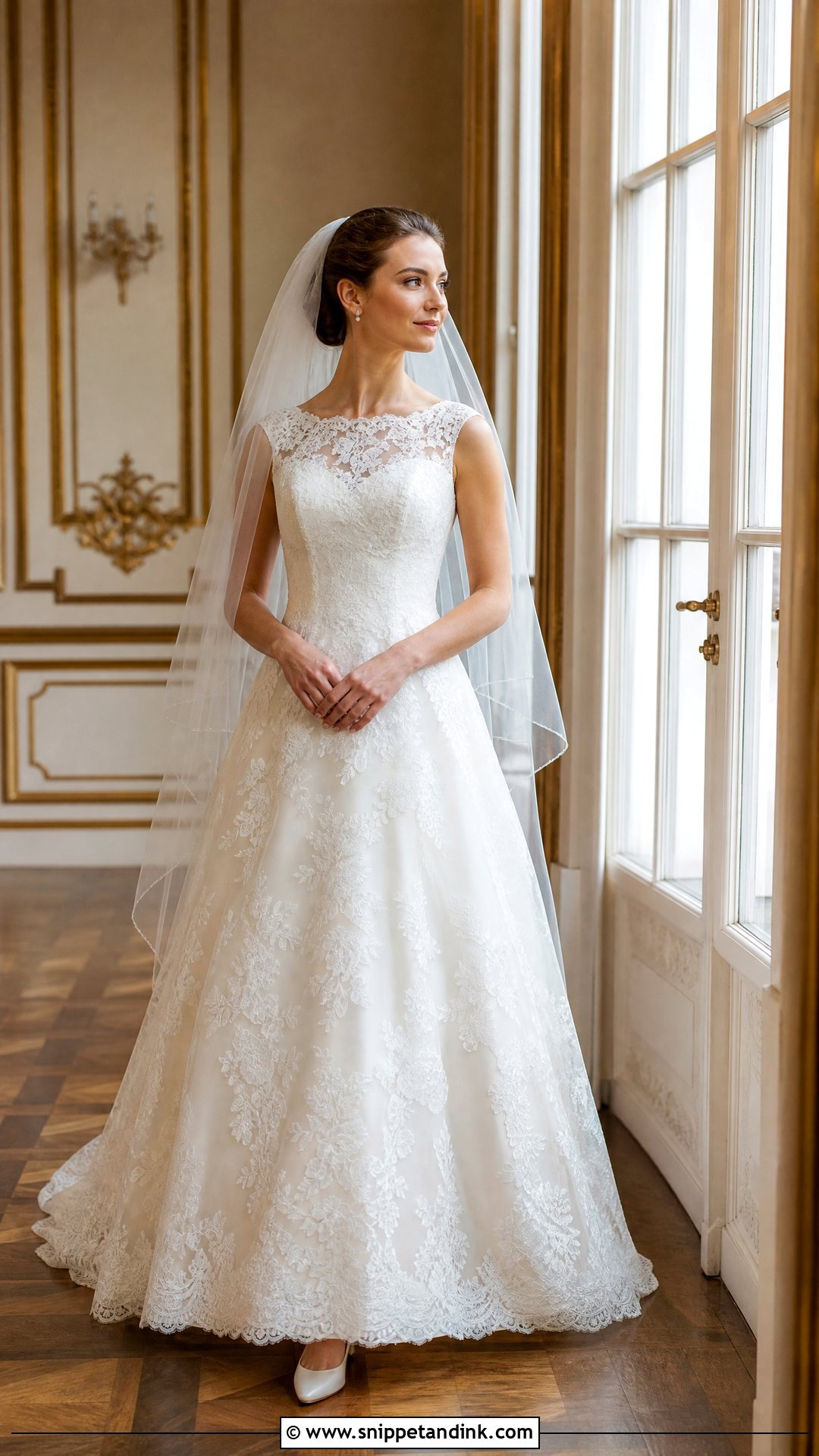
Lace over satin glows in a way lace over tulle doesn’t, because the satin reflects light through the open parts of the pattern. Ivory on ivory is the quiet version; ivory lace over champagne satin adds a little contrast. A-line, fit-and-flare and ball gown shapes can all work, depending on how heavy the satin is. The catch is creasing. Satin marks wherever you sit and wherever a seat belt crosses, so I schedule steaming at the venue and transport the dress hanging, never folded into a bag. Satin pumps, pearl earrings, an undecorated tulle veil and a polished chignon keep it formal with no crystals or sequins needed.
14. Blush Wedding Dress With Ivory Lace Overlay
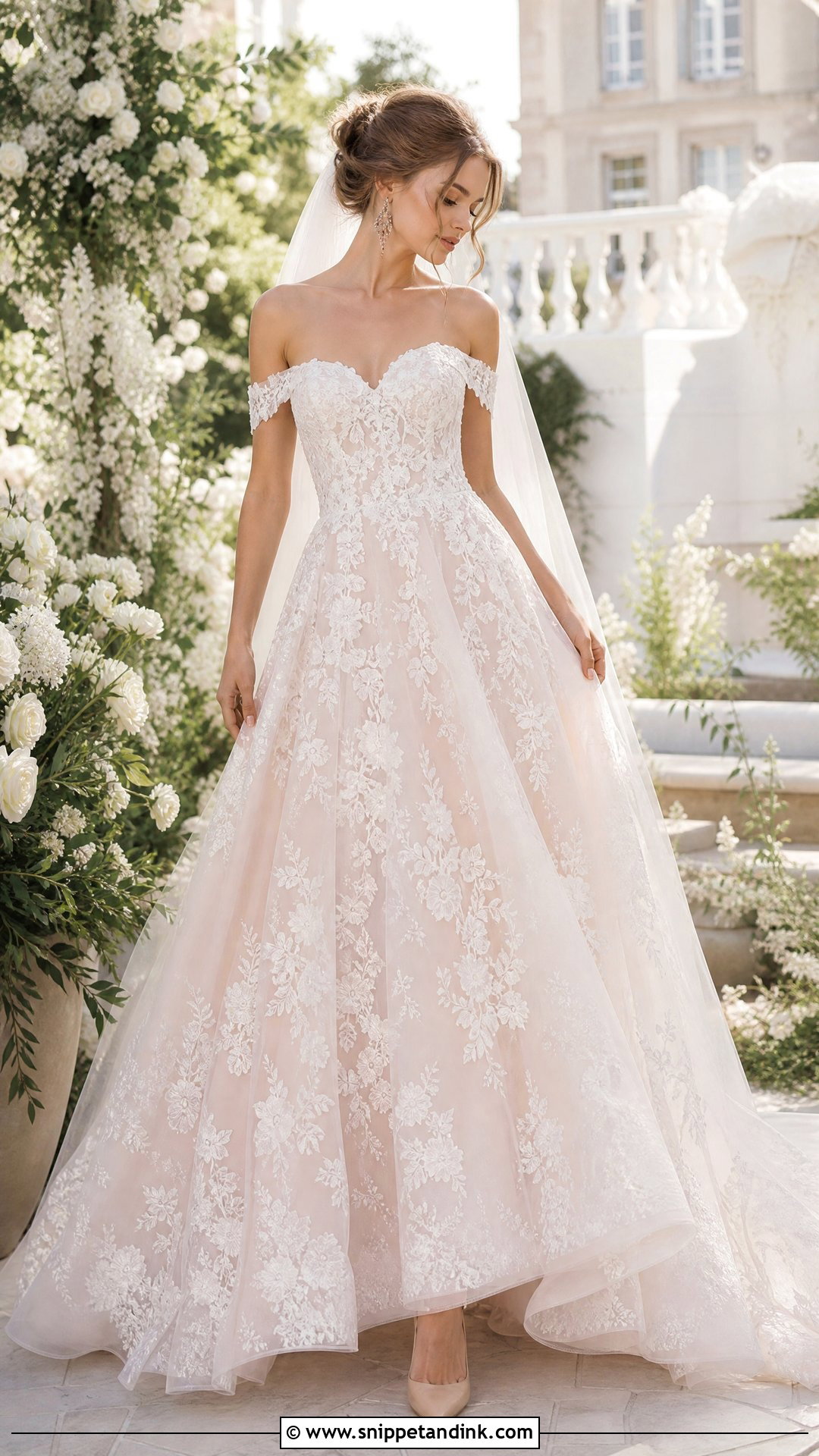
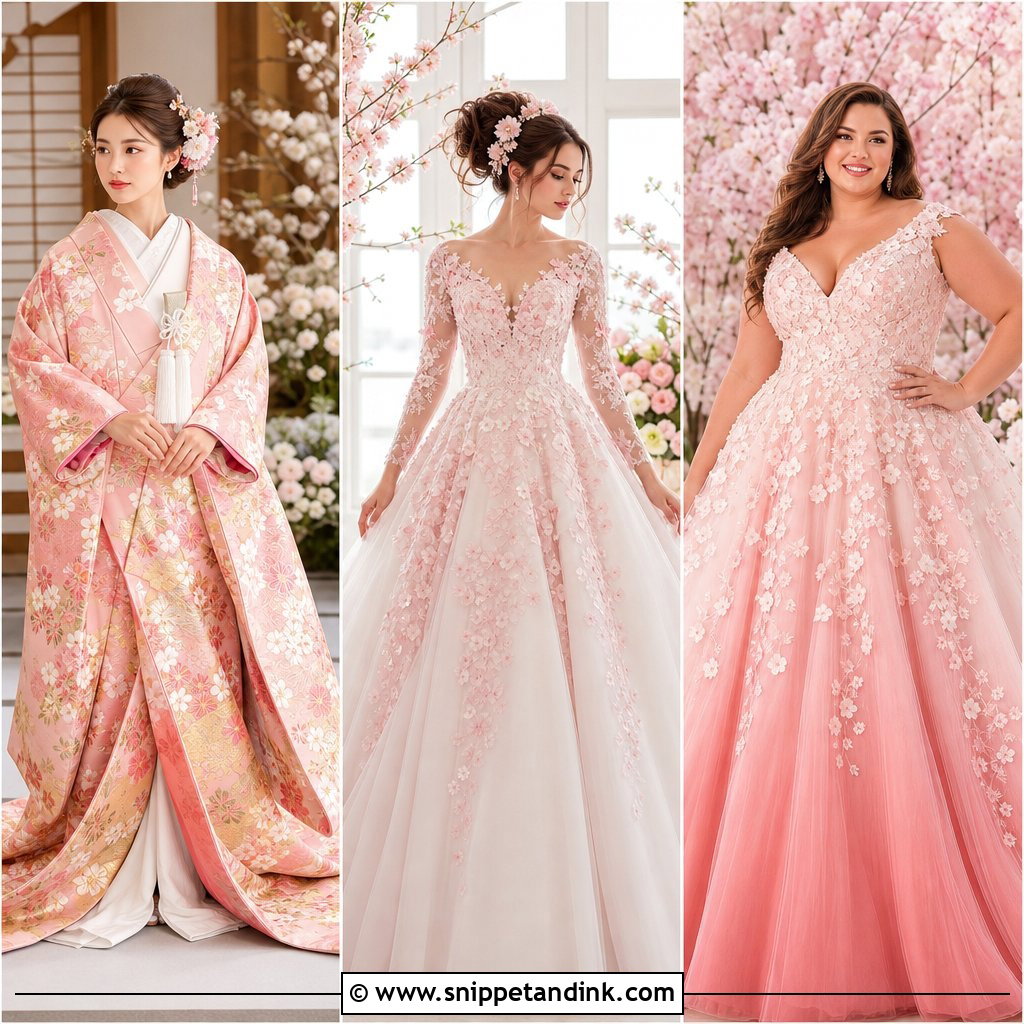
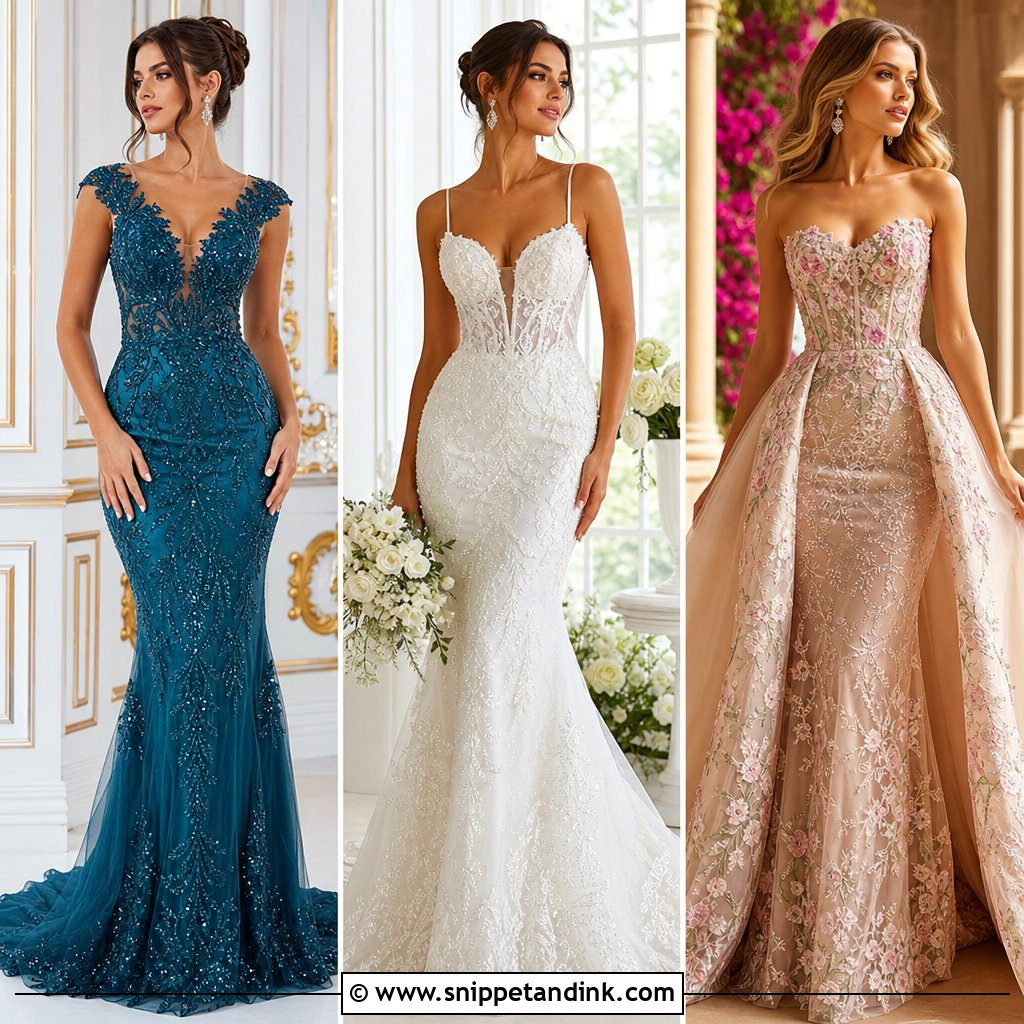
A blush lining under ivory lace is the gentlest way to add color, and it does something useful too: the contrast makes each motif easier to see, especially outdoors. I’d stay with a very pale blush, though. A saturated pink can turn the lace slightly peach in warm evening light, and some skin tones look washed out next to it, so hold the fabric up to your face in daylight before deciding. Sweetheart A-lines, off-the-shoulder ball gowns and fitted mermaids all carry the layering. Nude or ivory heels, rose-gold earrings, a plain ivory veil and a bouquet kept to white, blush and green tie it together.
15. Plus Size A-Line Wedding Dress With Lace Overlay
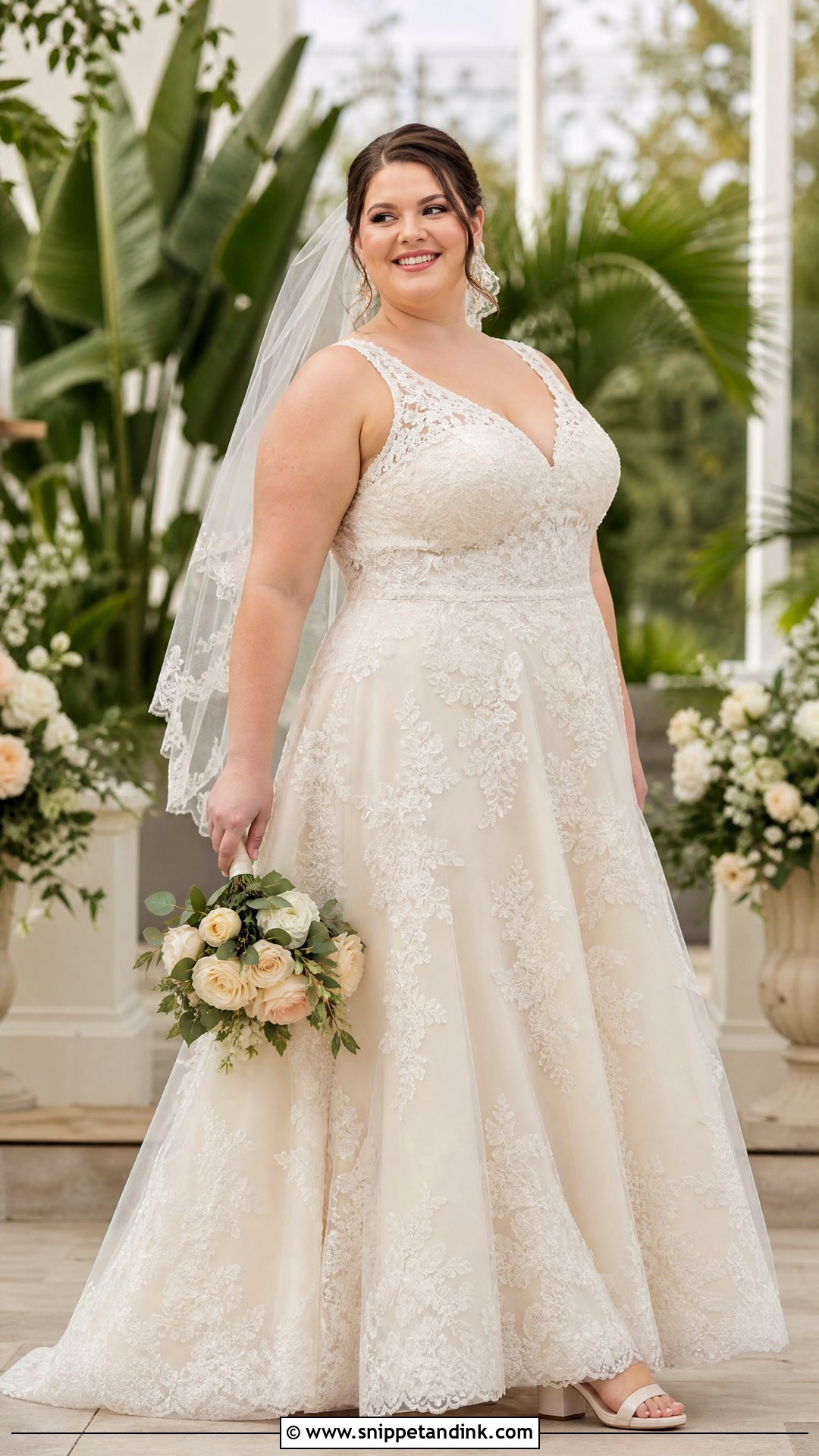
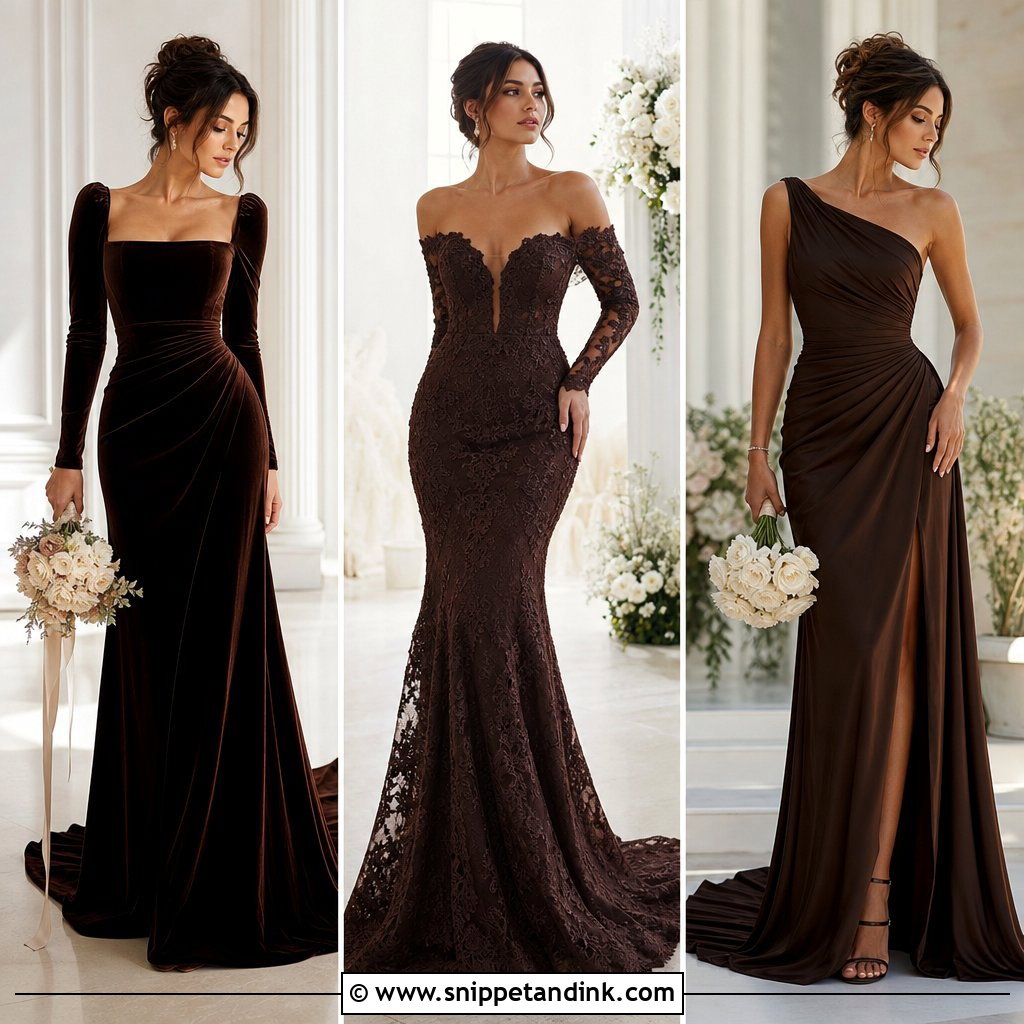
For a plus-size A-line, I care more about the inside of the dress than the lace on top. Secure straps or sleeves, built-in cups and enough structure that the lace lies flat instead of stretching across the bust are what make it comfortable at hour eight. Pick whichever neckline feels right to you rather than following a body-shape chart. Appliqués that run vertically or on a diagonal pull the eye along the gown. Stable block heels and medium earrings are practical, and the veil should be anchored under the updo so it doesn’t drag. Put the alterations budget into the bust, waist and hem; when the foundation fits, the lace settles on its own.
16. Petite Column Wedding Dress With Lace Overlay
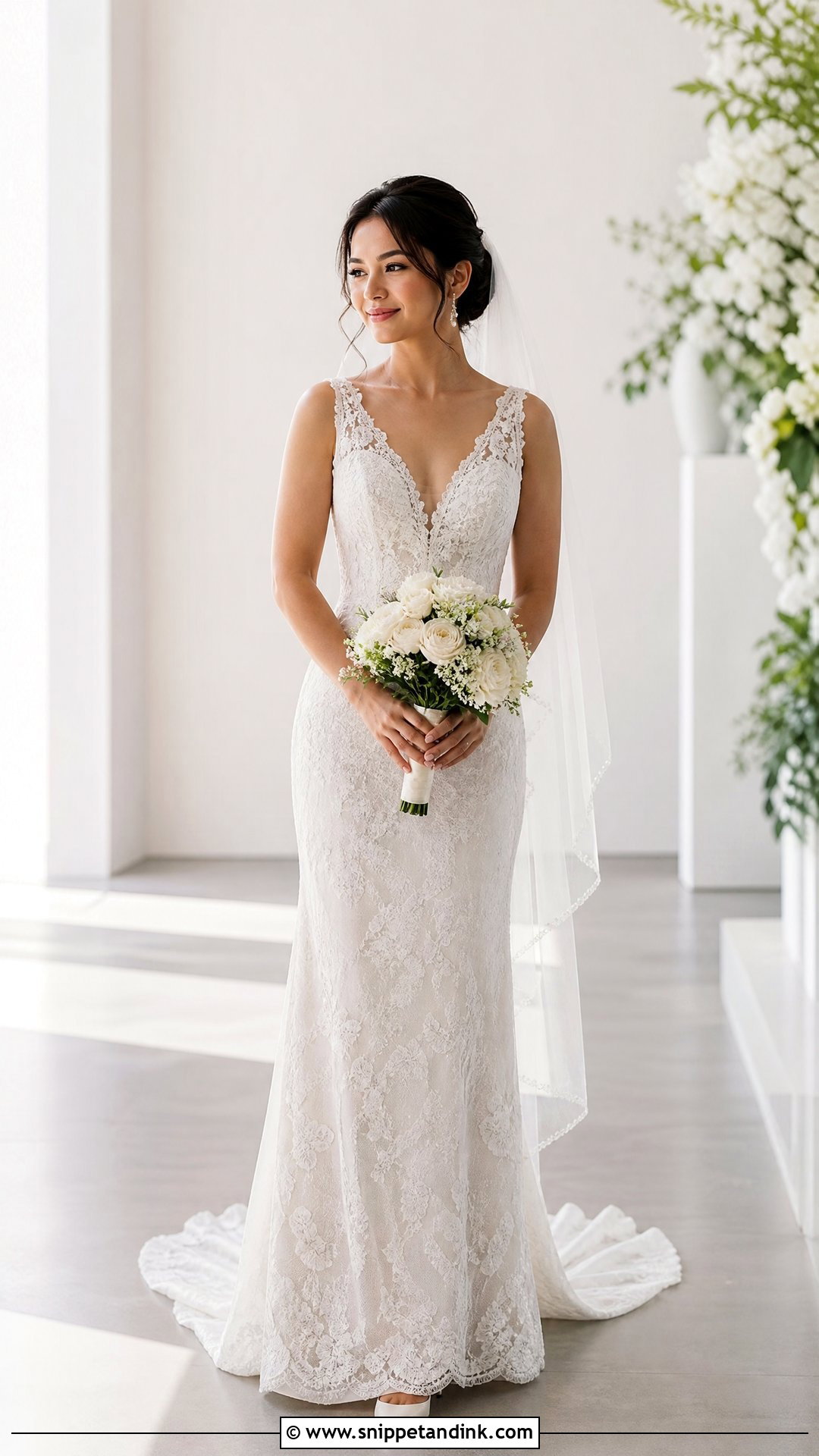
On a petite frame, a column gown gives one unbroken line from shoulder to hem, and the scale of the lace makes or breaks it. Large motifs can swallow a small body, so I look for smaller, closer flowers. Placing the waist at your real waist matters more than keeping the sample’s seam, which was cut for a taller model. A V-neck or narrow square neck opens the upper body, and a modest train adds drama without burying you. Wear the hair up, keep accessories small, and choose pointed heels with petite drops. Where the construction allows, ask whether the length can be taken up at the waist instead of the hem, so the lace border stays intact.
17. Detachable Lace Overlay Wedding Dress
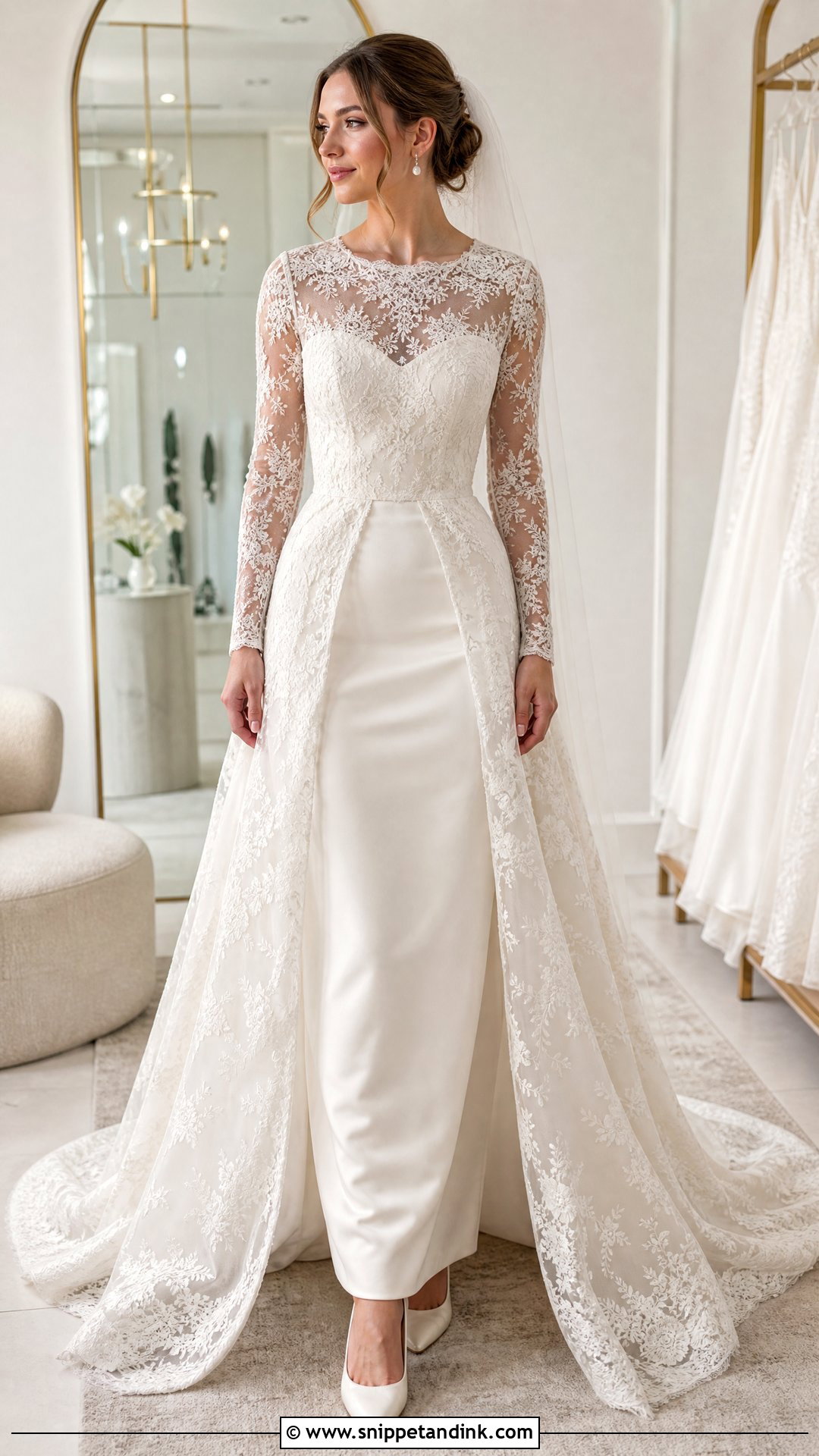
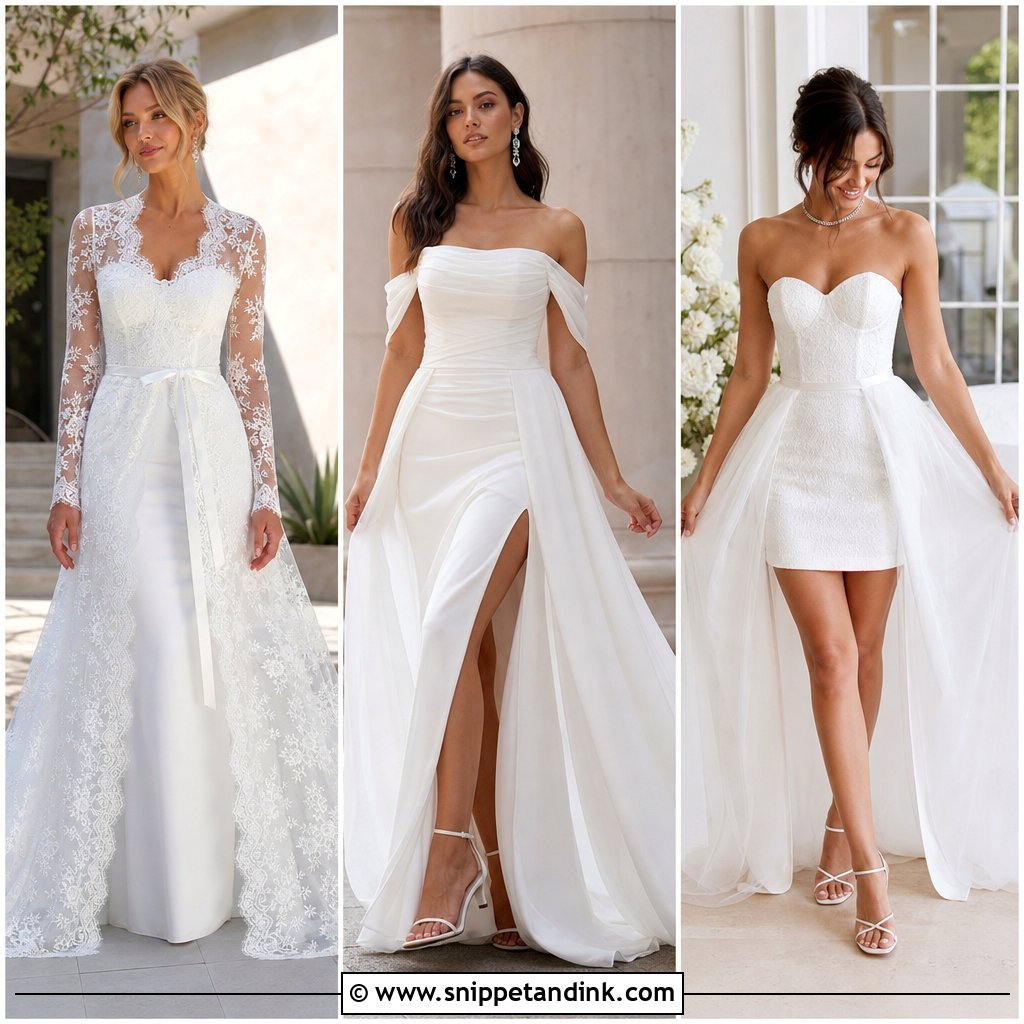
Would you like two looks without buying two gowns? A detachable overlay goes over a simple strapless, sleeveless or satin base for the ceremony and comes off for the reception. Lace tops, boleros, long-sleeve jackets, overskirts and full capes are all made this way. What I test is the closure: hooks or snaps have to hold through hugs and stay hidden from every angle, including the back in photos. Match the lace to the base gown’s undertone, because ivory next to bright white looks like a mistake. Pick pearl earrings, versatile pumps and a veil that suits both versions, then swap the veil for a comb later. Rehearse the change with whoever will help you on the day.
18. Wedding Dress With Lace Overlay Train
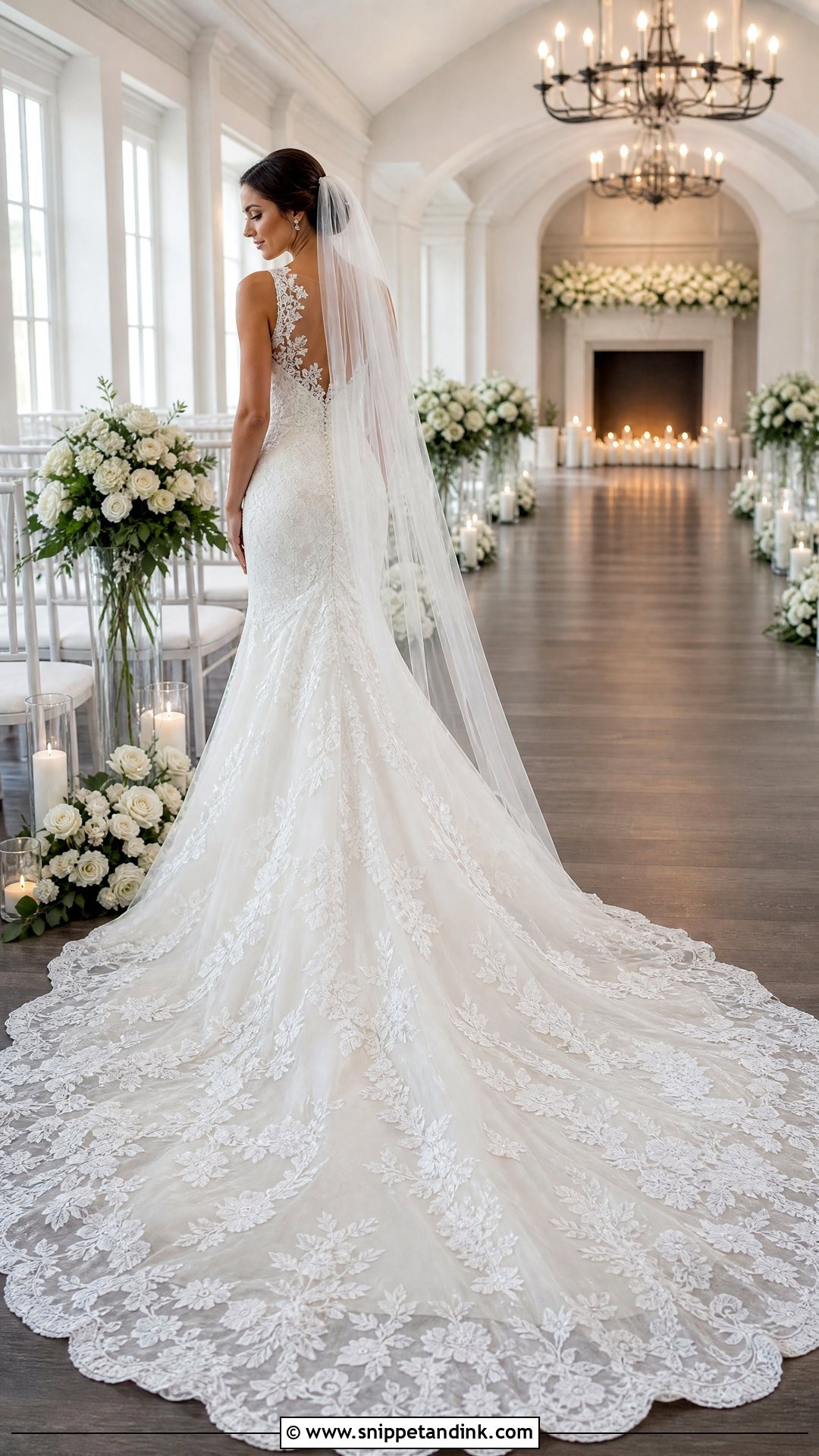
A lace overlay train puts the drama at the back, so the front can stay simple. Chapel length is manageable; cathedral length belongs in long aisles and big rooms. Appliqués can cascade from the bodice or gather near the hem. The part I never skip is the bustle. Lace trains are heavy and catch on chair legs, so ask the seamstress to fit a secure bustle and show a bridesmaid how to fasten it at the final fitting, not on the morning itself. A plain long veil keeps the pattern readable. Pair it with understated earrings, closed heels and an updo that shows any covered buttons, and spread the train out fully for portraits.
19. Beaded Wedding Dress With Lace Overlay
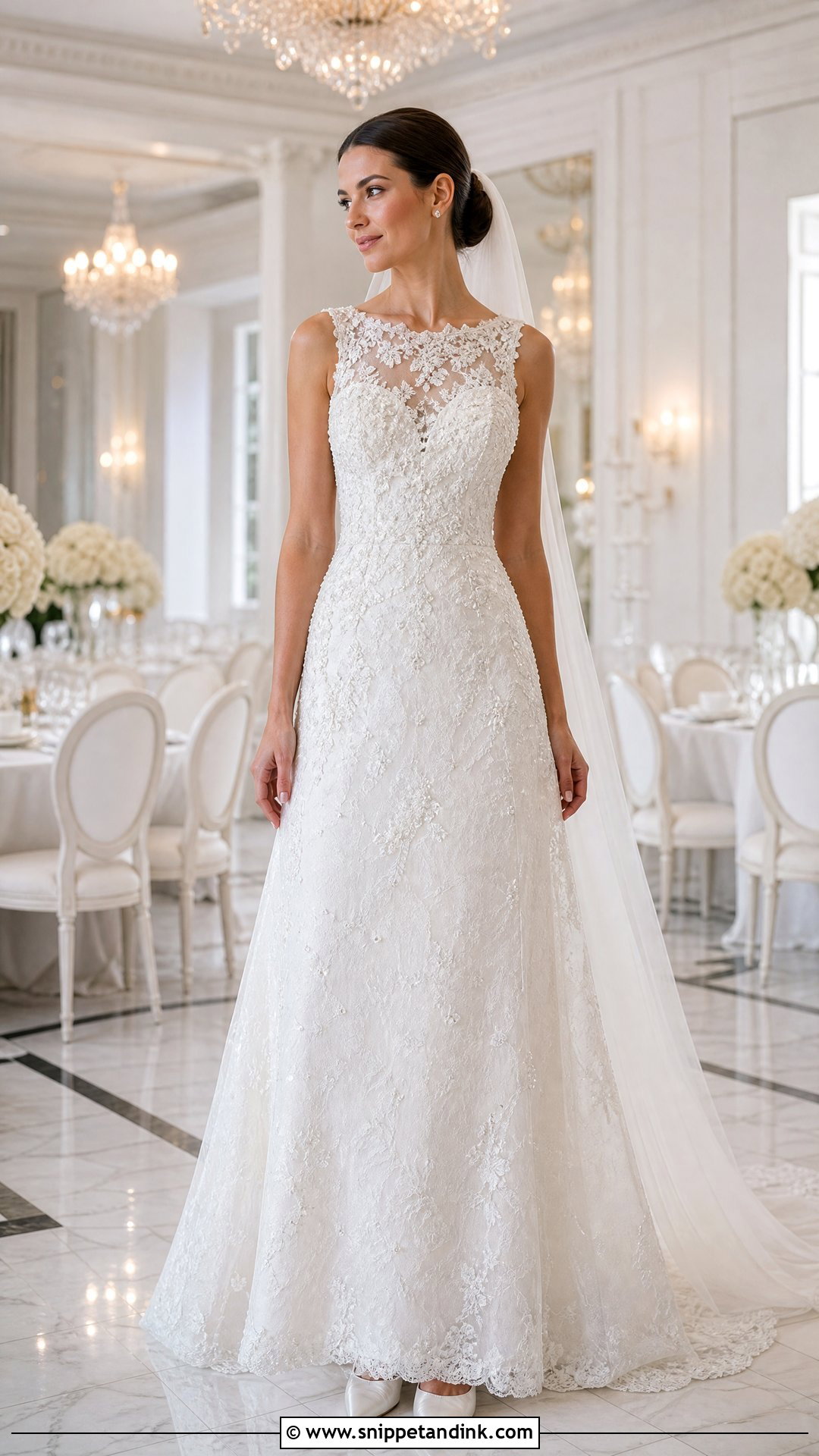
Pearls, crystals and seed beads on lace catch candlelight, and they also add real weight. I’d choose a gown with the beadwork concentrated on the bodice and thinning down the skirt, which keeps it comfortable and stops the skirt dragging. A fitted A-line or slim ball gown gives the detail room. Beads tangle in hair, so a sleek bun is safer than loose waves, and they snag on bracelets, which is why I keep jewelry to studs. Neutral satin shoes and a plain veil finish it. Before buying, sit, walk and lift your arms. Heavy beading at the underarm rubs over a long day.

20. Minimal Wedding Dress With Lace Overlay Bodice
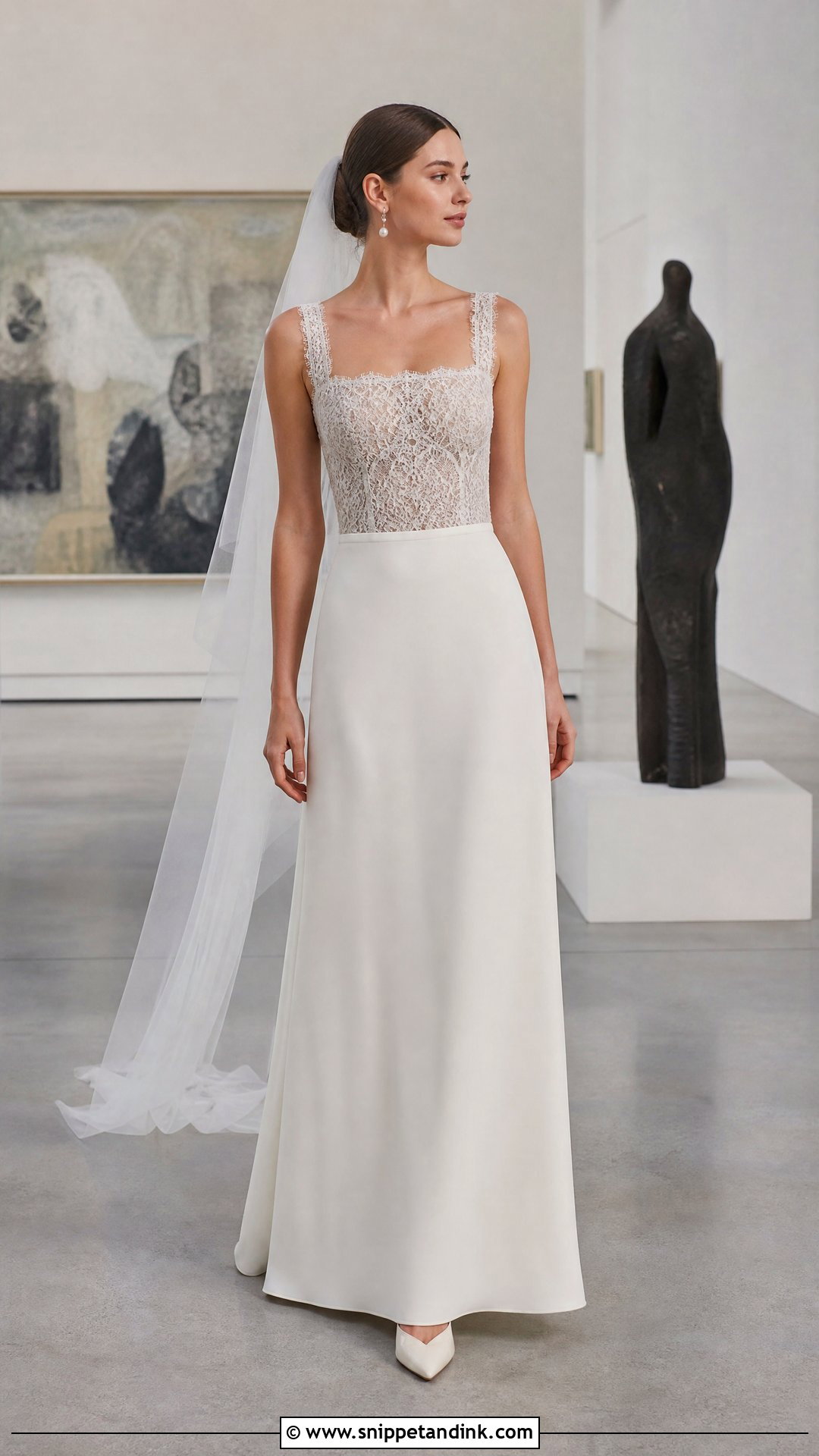
Lace only on the bodice, with a clean crepe, satin, or mikado skirt below, gives one clear focal point and lets the skirt fabric show its own drape. Mikado holds a crisp shape, while crepe falls closer to the body. Keep the lace delicate and the neckline simple. The seam where lace meets plain fabric should sit exactly at your natural waist, so I check it standing and again sitting. Modern pearl earrings, pointed pumps, a simple chapel veil and a center-parted bun or sleek low ponytail suit it. Skip beaded belts and big floral pieces, which chop the line in half. City ceremonies and gallery venues are its natural home.
Why a Lace Gown Needs More Fitting Time Than a Plain One
Plain satin can be taken in along a seam fairly quickly. Lace can’t. When a seamstress shortens a lace hem with a scalloped edge, she unpicks the border, trims the skirt and stitches the scallop back on by hand. Taking in a lace bodice often means lifting the appliqués that cross the seam and setting them back so the pattern meets cleanly. It’s slow work, and it’s the reason lace alterations usually cost more than you’d expect.
Plan for two or three fittings, starting roughly two to three months before the date, and bring your actual shoes and underwear to the first one. Hem length depends on the heel, and a different bra can change how the bodice sits by more than you’d think. If you’re buying off the rack or secondhand, have a seamstress look at the lace before you pay, since some heavily beaded pieces are close to impossible to resize.
Questions worth raising at the first fitting
- Will the hem keep its original scallop, or be cut straight?
- Which appliqués need to move, and will they still line up at the zip?
- How will the train be bustled, and how many points will it need?
- Can the lining color be changed if it doesn’t suit my skin?
Snags, Grass Stains and the Morning After
Lace gets through a wedding well if you know what catches it. The usual culprits are bracelet clasps, wired bouquet stems, the hook side of a guest’s Velcro bag, rough stone steps and cufflinks during the first dance. If a thread pulls, don’t cut it. Ease the fabric gently on either side so the loop slides back in, and leave any real repair for later.
Afterward, get the dress to a specialist cleaner within a few weeks. Sugar from cake and champagne is invisible at first and turns brown with time. Store it in a breathable cotton bag or an acid-free box with tissue folded into the creases, away from daylight. Never leave a heavy lace gown hanging by its straps for months, because the weight stretches the shoulders; lay it flat or use the hanging loops sewn into the waist.
Lining Color Decides How Much Lace You Actually See
The right lace overlay is the one that stays put, lets you breathe and still shows its pattern from the back row. Before saying yes, check three things in natural light: the weight of the lace, the color of the lining under it and where the motifs land on your body. Let the shoes, veil, jewelry and hair support the texture instead of fighting it, and leave time for alterations, since lace is realigned by hand. From soft A-lines to fitted mermaids and clean lace bodices, there’s a version here for every size, venue and season.
You'll Like These Ideas:





Leave a Reply