
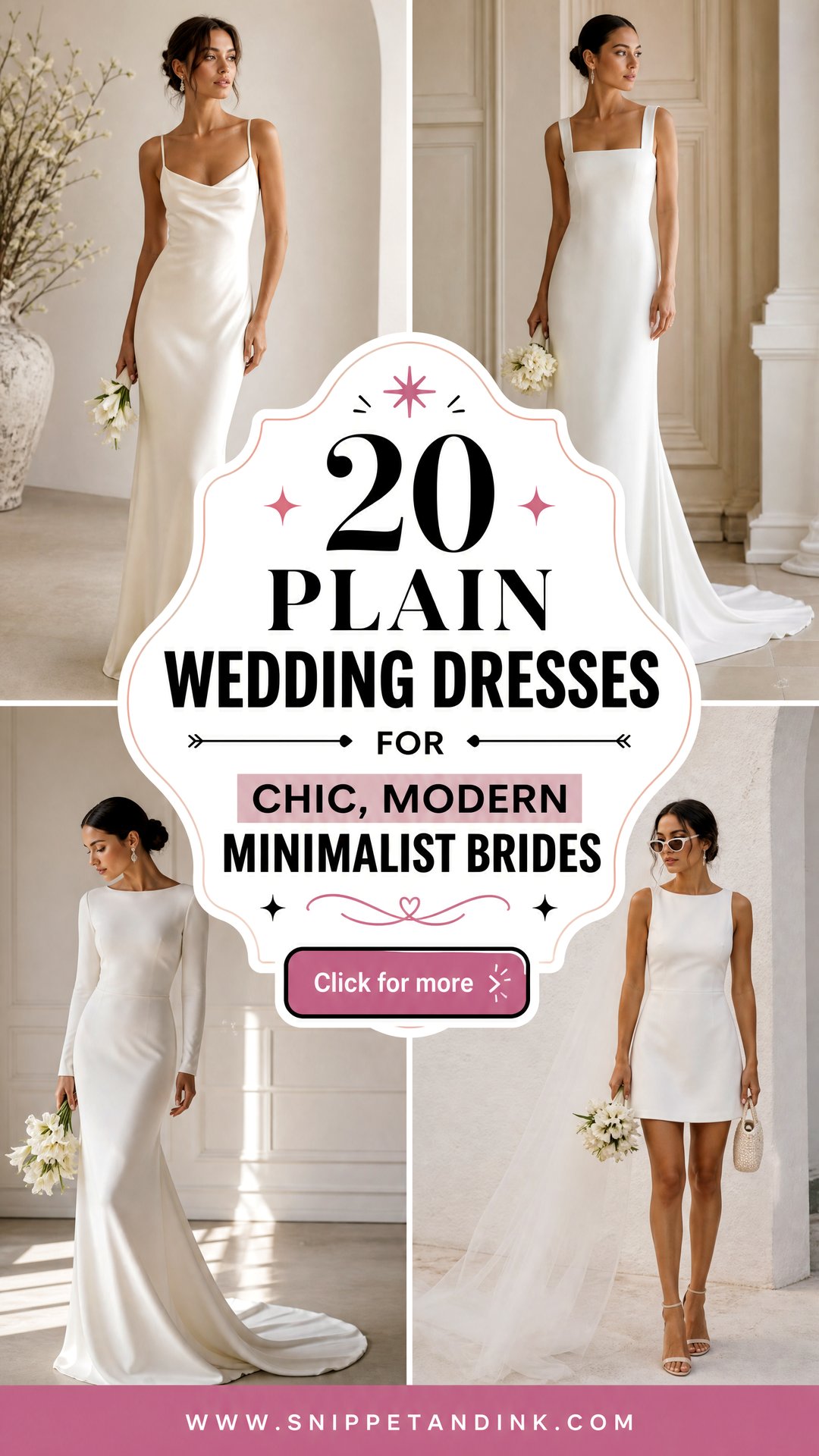
A gown without lace or beading isn’t a lesser choice. It’s a harder one to get right, because with nothing on the surface, the fabric, the cut and the fit are all anyone sees. I like dressing minimalist brides for exactly that reason: the dress has to be good. Simple collections now run from sleek crepe sheaths and fluid slip gowns to structured satin with basque or dropped waists, so there’s a clean shape for a ballroom, a garden, a beach or a courthouse. A plain gown is also the easiest base for a veil, gloves or a piece of family jewelry that means something. Here are twenty of them, with what I’d look at in the mirror before saying yes to each.
Turning a Plain Gown Inside Out at the Shop
An embellished dress can hide average sewing. A plain one can’t. Before I let a bride fall in love with a simple gown, I turn the skirt over and look at how it’s made, because the inside predicts how the outside will look after hours of wear.
- Seams should be pressed flat and finished, with no puckering along long skirt seams. Puckers on the inside show as ripples on the outside under light.
- The hem should hang evenly all the way round. Many structured skirts have horsehair braid in the hem to hold the shape; check it isn’t poking through.
- The zip should be invisible from the outside and lie flat when you’re seated.
- Boning channels shouldn’t show as ridges through the bodice fabric.
- The lining should be attached cleanly at the waist and not peek out at the hem or armholes.
Sample dresses in shops are worn by many people and won’t be perfect, so judge the construction, not the wear. If something worries you, ask whether your ordered gown will be made the same way.
Then hold the fabric up to a window. Good crepe and satin look even and dense against the light; thin, cheap fabric shows a faint grid or bright patches, and that is exactly how it will look under a photographer’s flash.
1. Plain Satin A-Line Wedding Dress
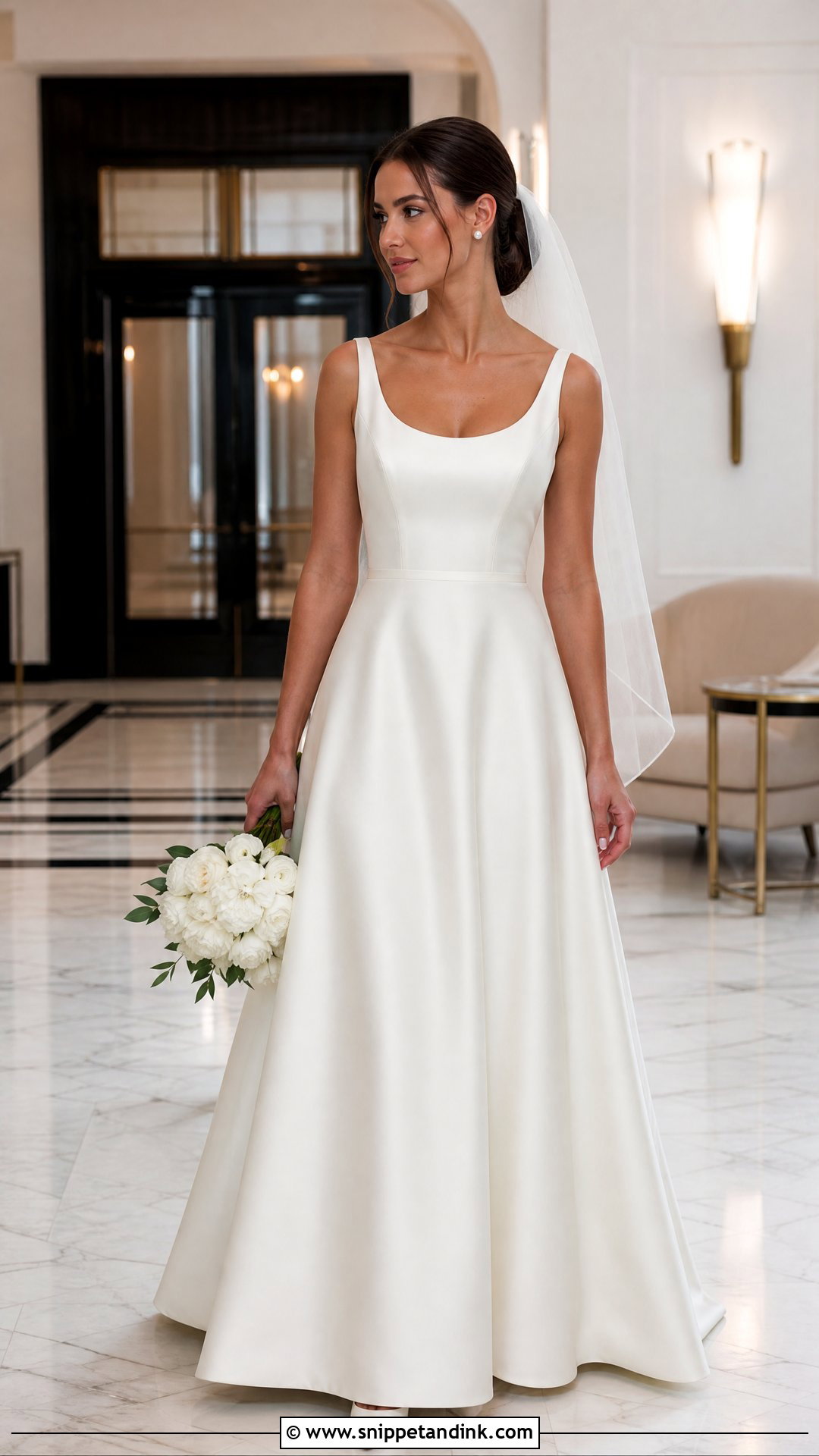
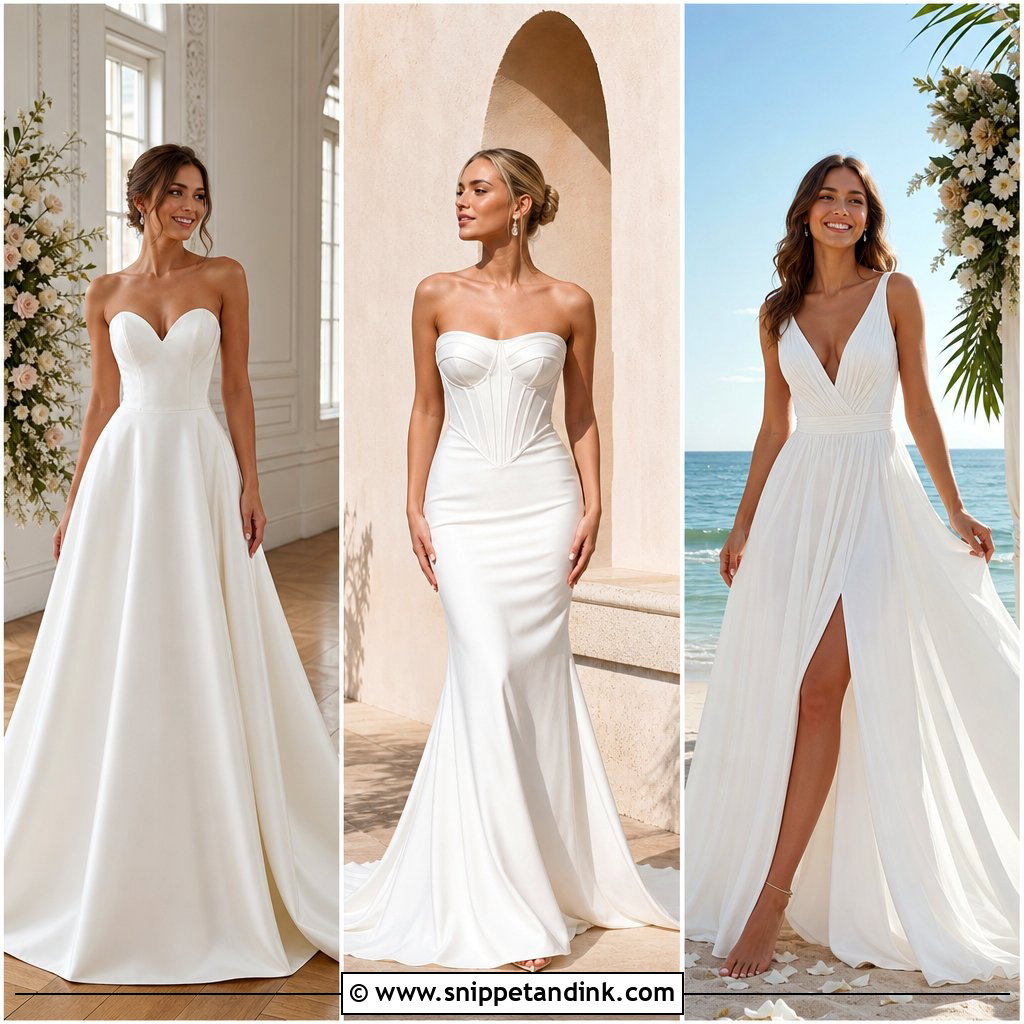
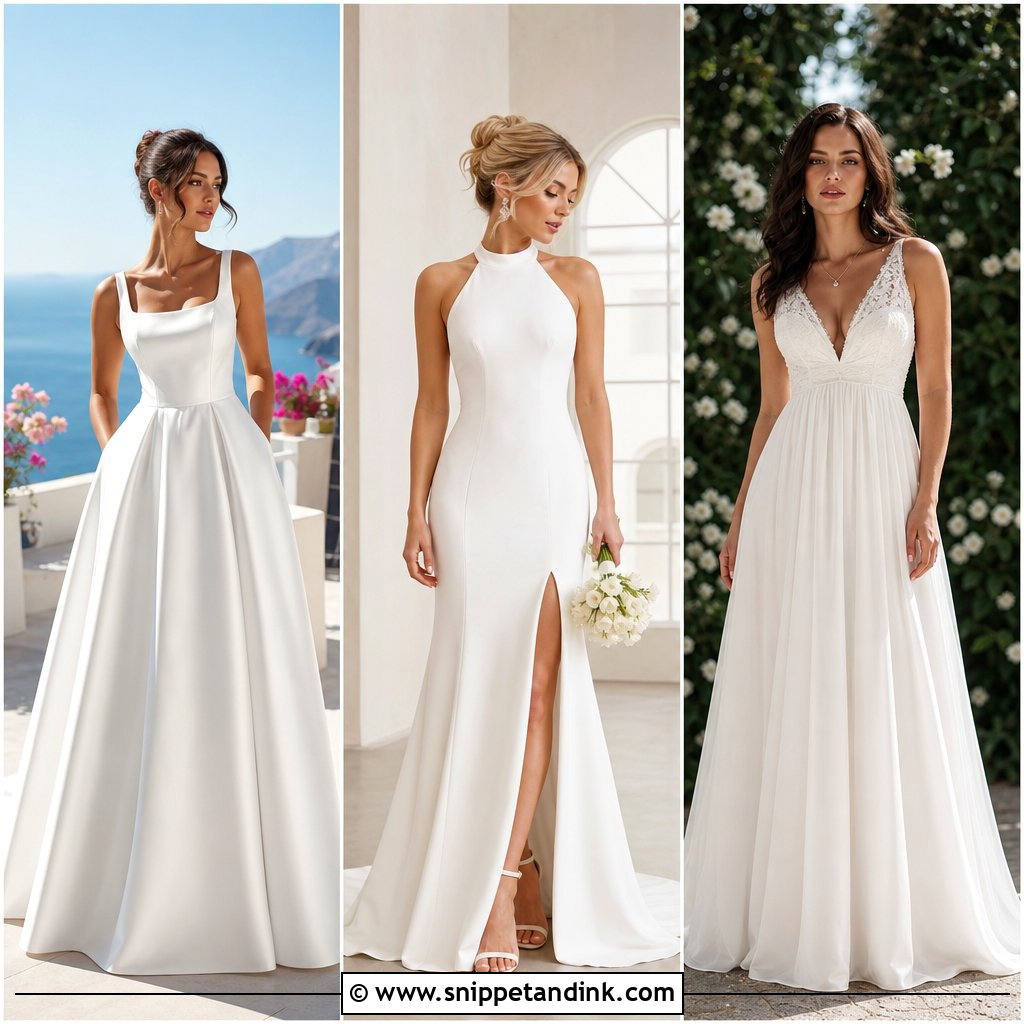
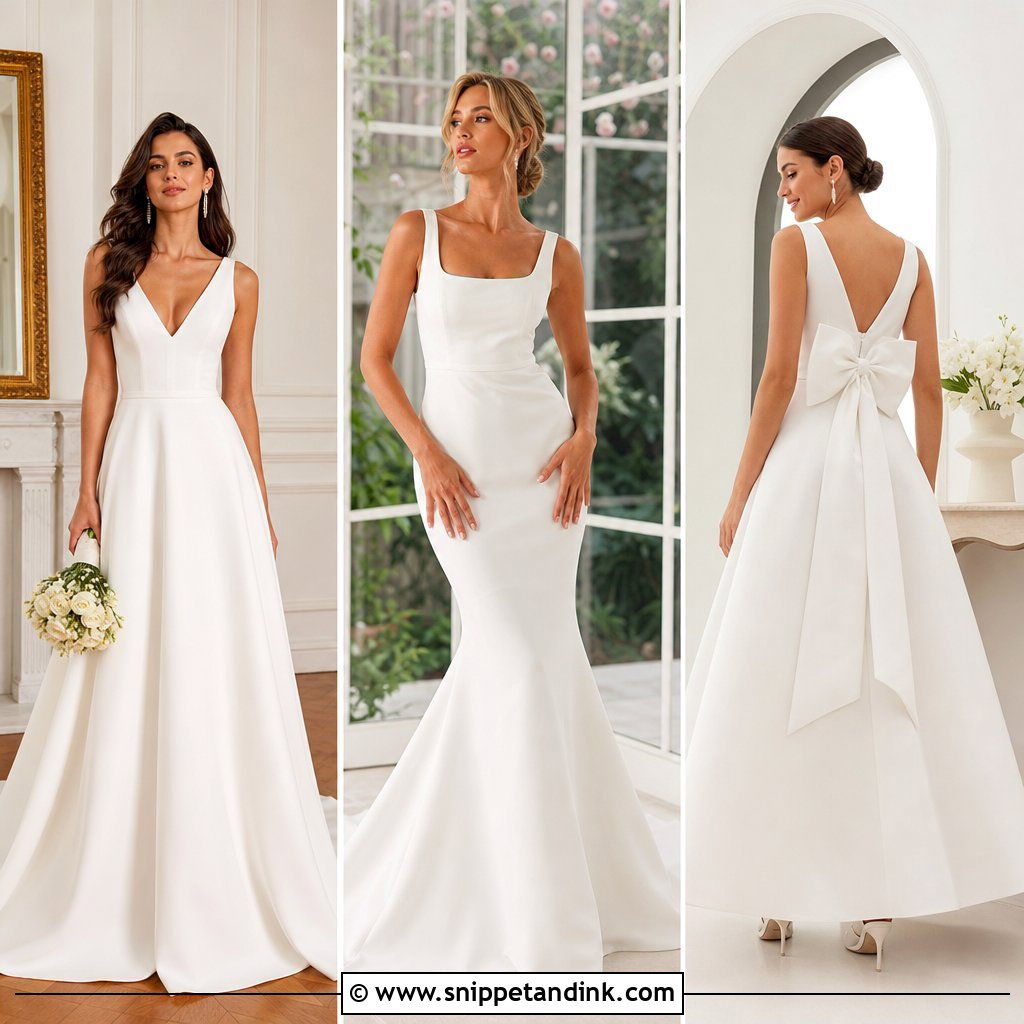
The satin A-line is the shape I pull first for a bride who hasn’t decided yet, because it tells us quickly whether she likes structure. A fitted bodice defines the upper body, and the skirt widens from the waist so walking is easy. Matte satin looks softer; a brighter satin feels more formal. A V-neck or scoop neck keeps it classic. Pointed ivory pumps, pearl studs and a structured mini bag are enough, with a fingertip veil or simply a smooth low bun. It’s at home in a ballroom, a hotel, a garden or a historic venue. Plain satin shows a hem that’s a fraction uneven, so the waist and hem alterations deserve real care.
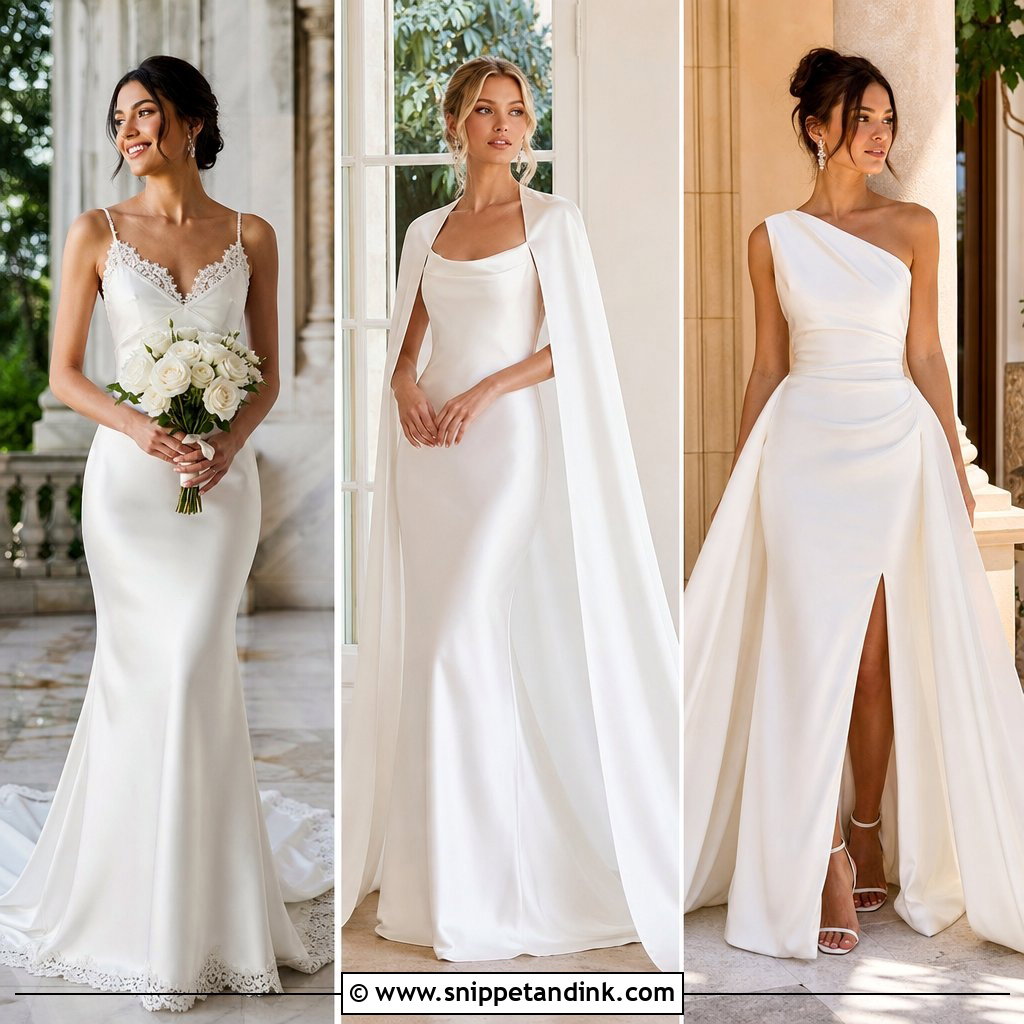
2. Plain Crepe Sheath Wedding Dress
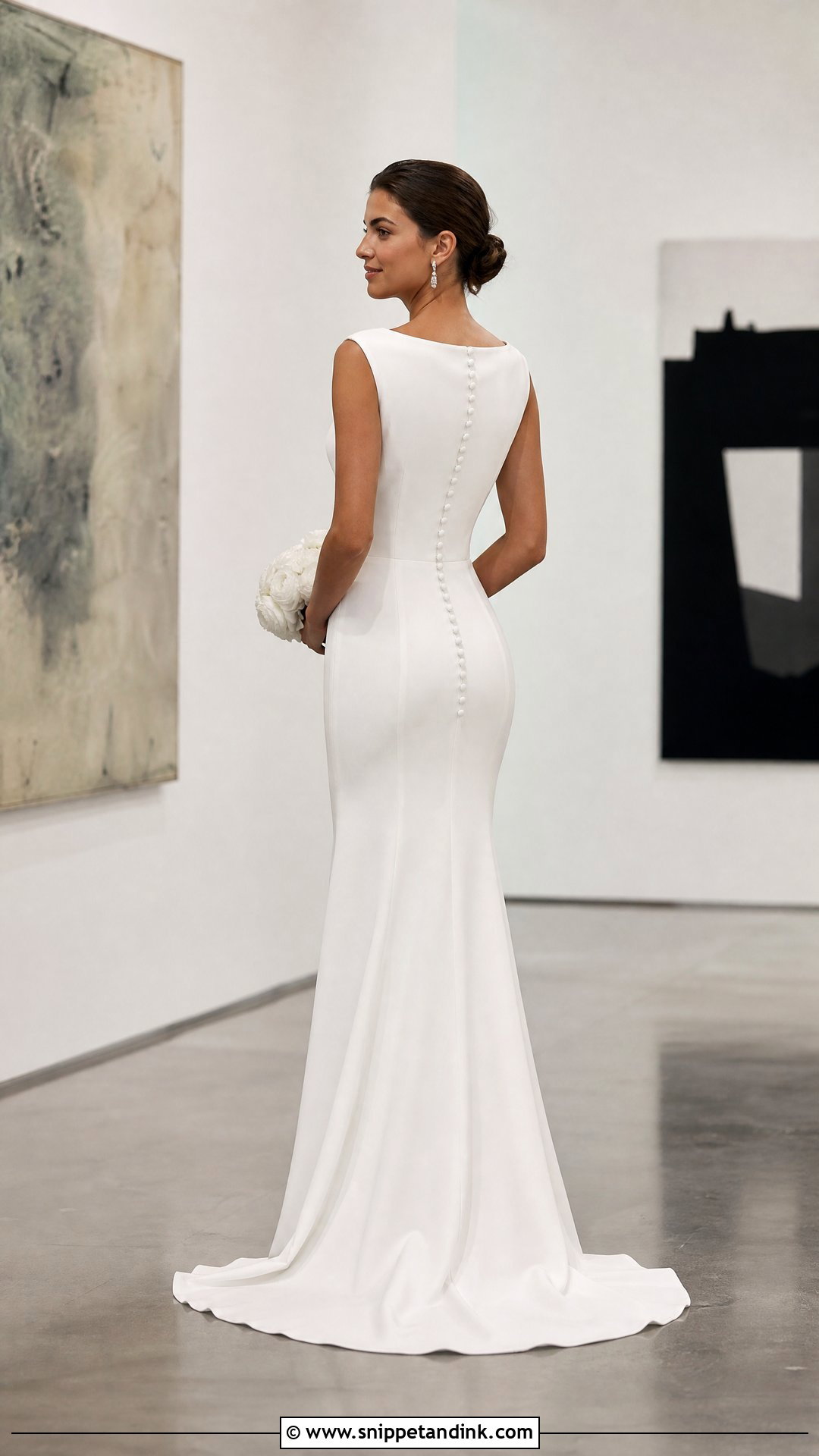
Crepe looks sculpted without shine. A plain crepe sheath wedding dress follows the body without a ball gown’s volume, which suits an intimate ceremony or a city venue. Thin crepe is the trap here. It shows every seam of your underwear and every dimple, so I always pinch the fabric between my fingers; you want a thick, lined crepe that hangs with some weight. A low back, covered buttons or a short train add quiet interest. Slim ankle-strap heels, small diamond or crystal earrings and a compact bouquet finish it, over smooth, invisible underwear. For more presence at the ceremony, add a long sheer veil you can take off for the reception.
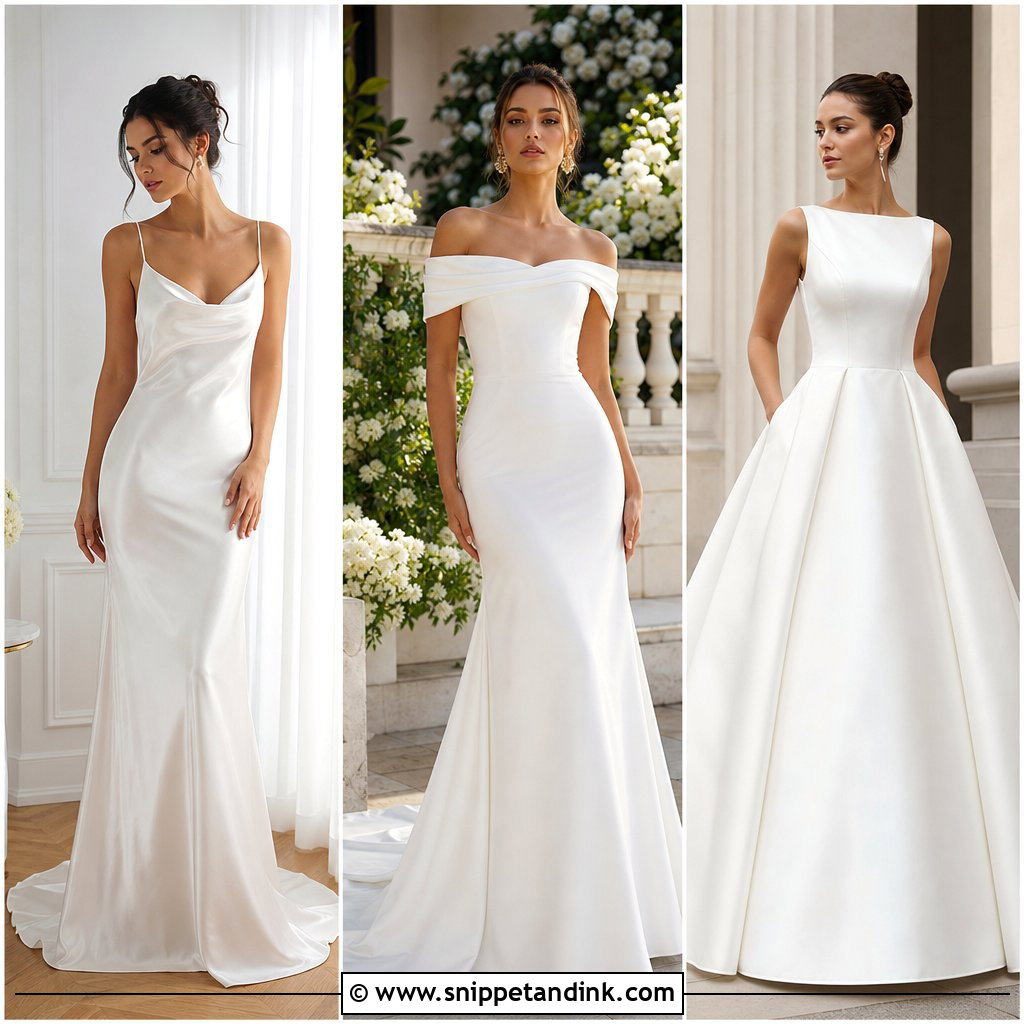
3. Plain Silk Slip Wedding Dress
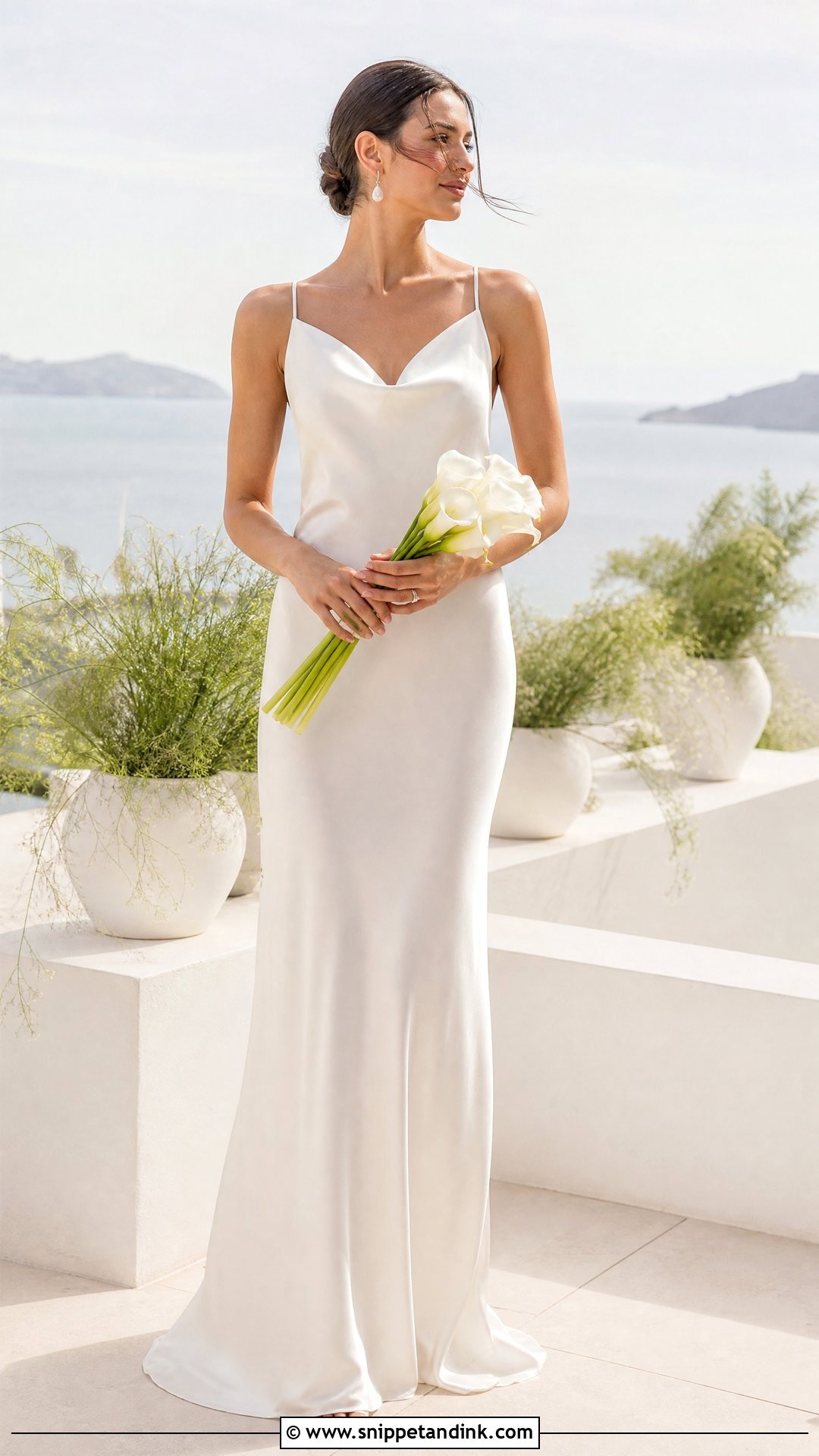
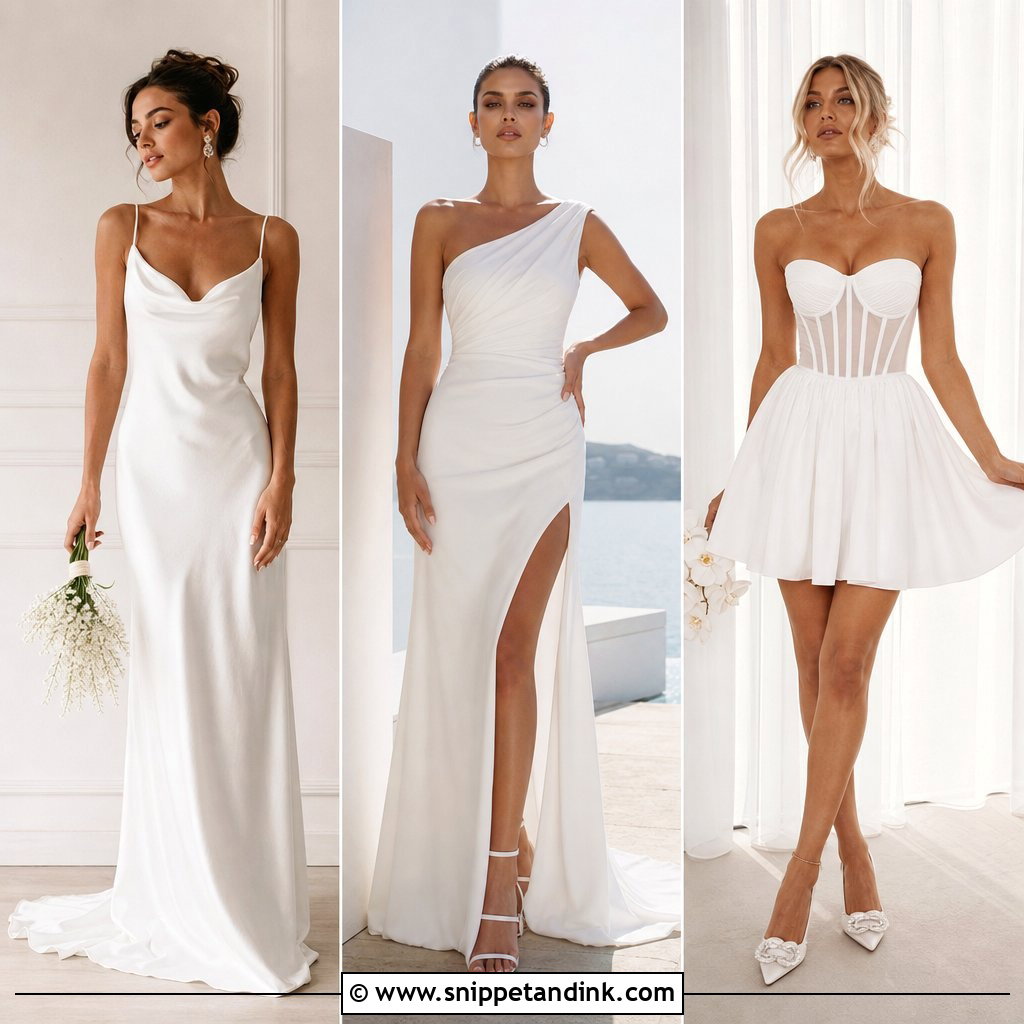
Bias-cut silk is the 1990s slip, and it’s the most revealing plain gown in this list. The skirt moves across the body with every step, slender straps keep the neckline delicate, and silk charmeuse has a glow nothing else quite matches. Satin versions give a similar look for less money and crease less, which is worth considering. Minimalist sandals, fine drops and a small bouquet of calla lilies suit it, with a neat bun or polished waves. Lightweight silk shows every line beneath it, so plan on professional alterations and carefully chosen foundations. I’d also warn that silk marks with water, so keep drinks and damp hands well away. It fits lofts, coastal venues, destination ceremonies and stylish courthouse weddings.
4. Plain Square Neck Column Wedding Dress
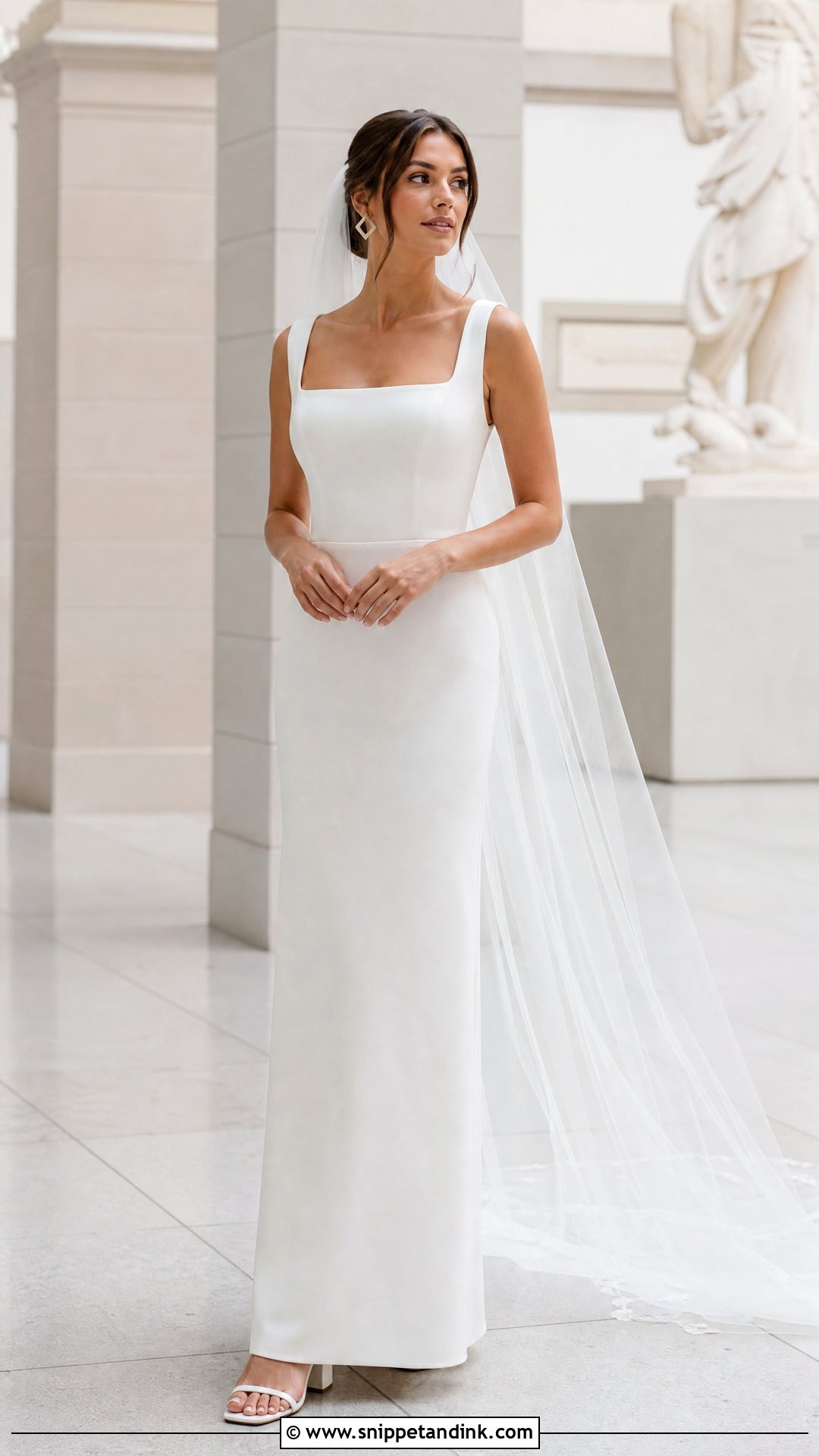
Architecture is the appeal of a square-neck column. The neckline frames the collarbone, and the straight skirt draws one long, clean line. Wide straps give far more support than spaghetti straps and stay comfortable for a long day. A version with princess seams or internal boning gives extra definition. Block-heel sandals, geometric earrings and a sleek envelope clutch for the reception keep it modern; a center-parted bun shows off the neckline and a chapel veil softens the ceremony look. Columns are narrow at the hem, so check you can climb a step without hitching the skirt. Museums, rooftops, modern hotels and minimalist rooms suit it best.
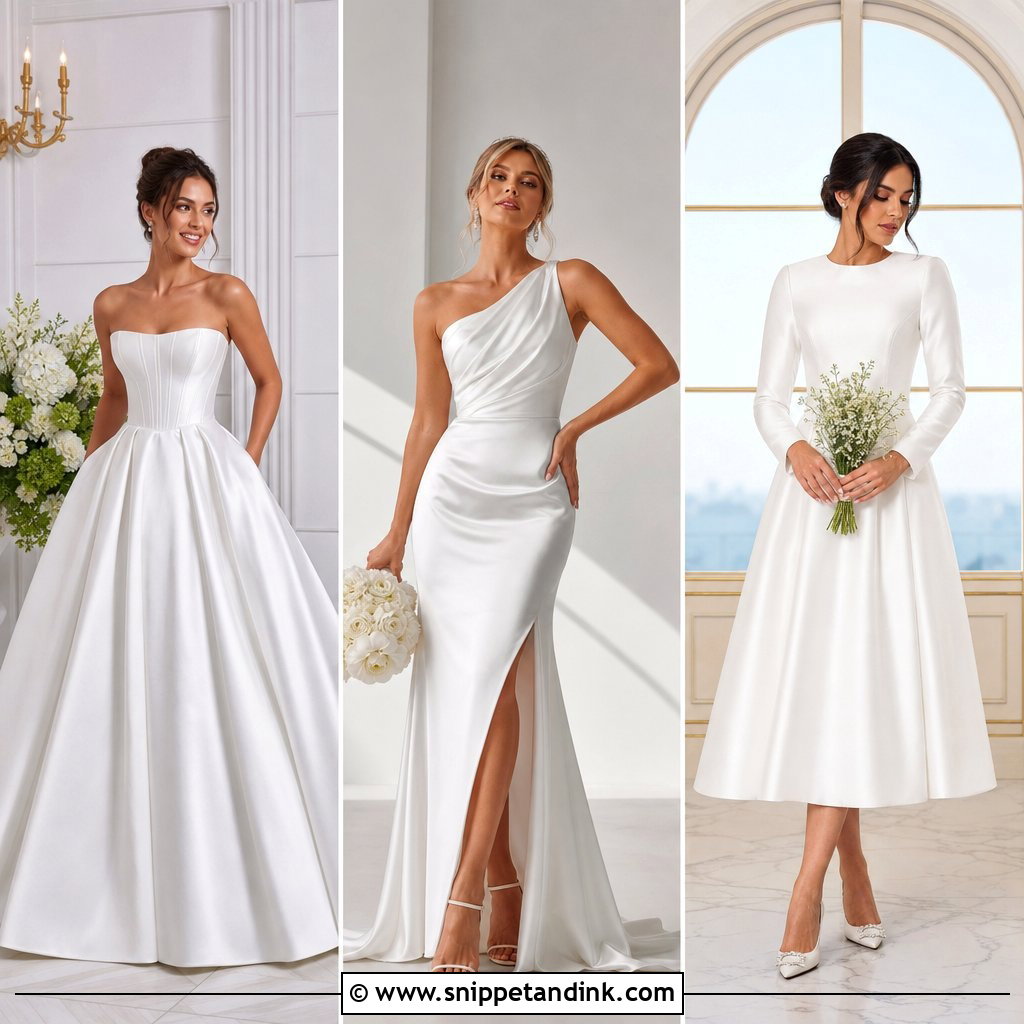
5. Plain Strapless Ball Gown Wedding Dress
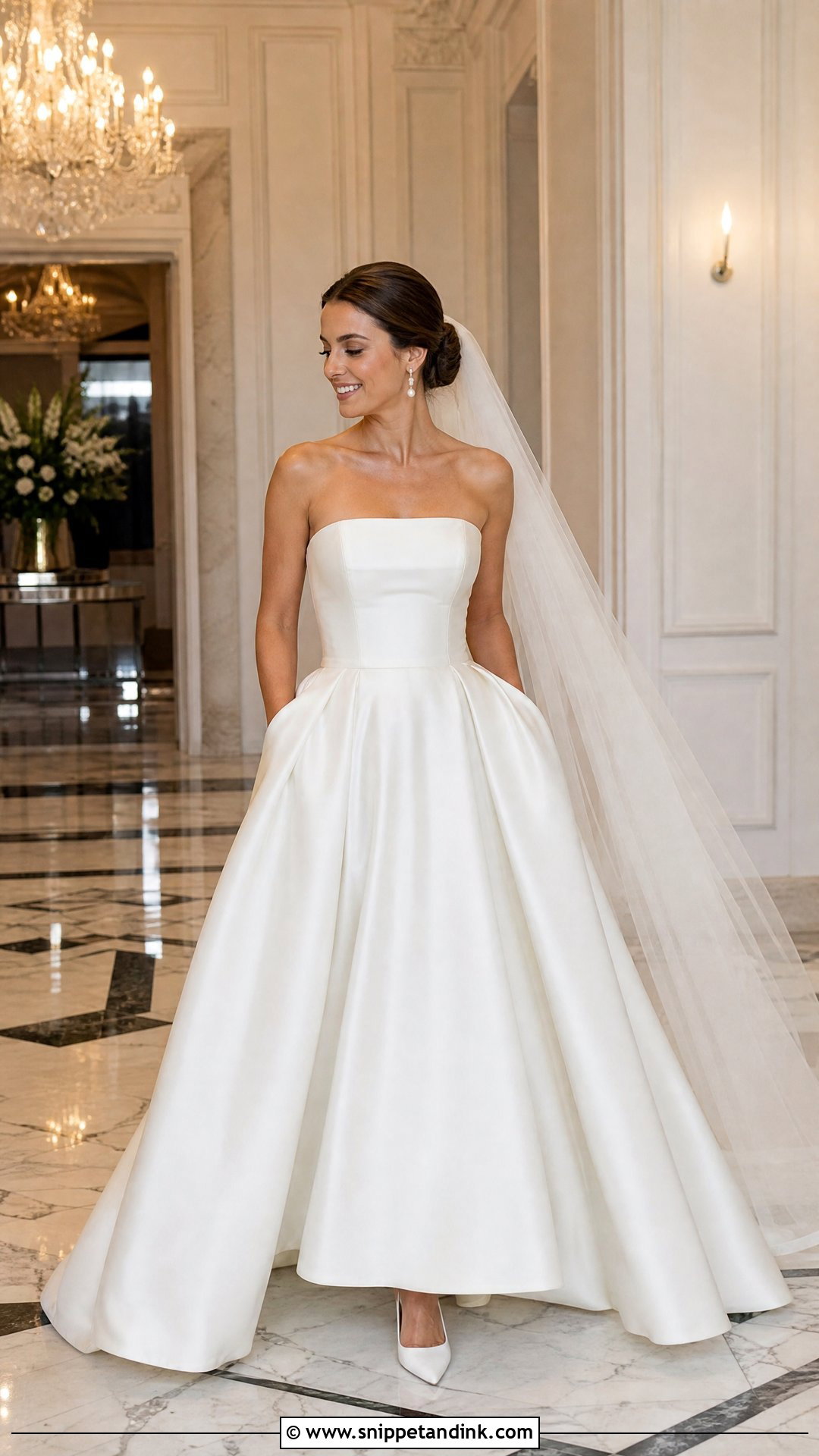
Can a gown with no decoration at all make an entrance? A strapless ball gown can, through volume and construction alone. The structured bodice supports the bust and shapes the waist, and a full satin or mikado skirt gives the formal silhouette. Pockets are worth asking for, since they don’t interrupt the design and you’ll use them all day. Pearl drops, pointed pumps and a long veil with a cut edge complete it, with a polished updo to show the shoulders. A strapless bodice holding up a heavy skirt has to be fitted precisely, so move, sit and raise your arms at every fitting. If it slips even slightly, keep altering. Grand hotels, estates, formal halls and evening celebrations suit it.
6. Plain Off-the-Shoulder Wedding Dress
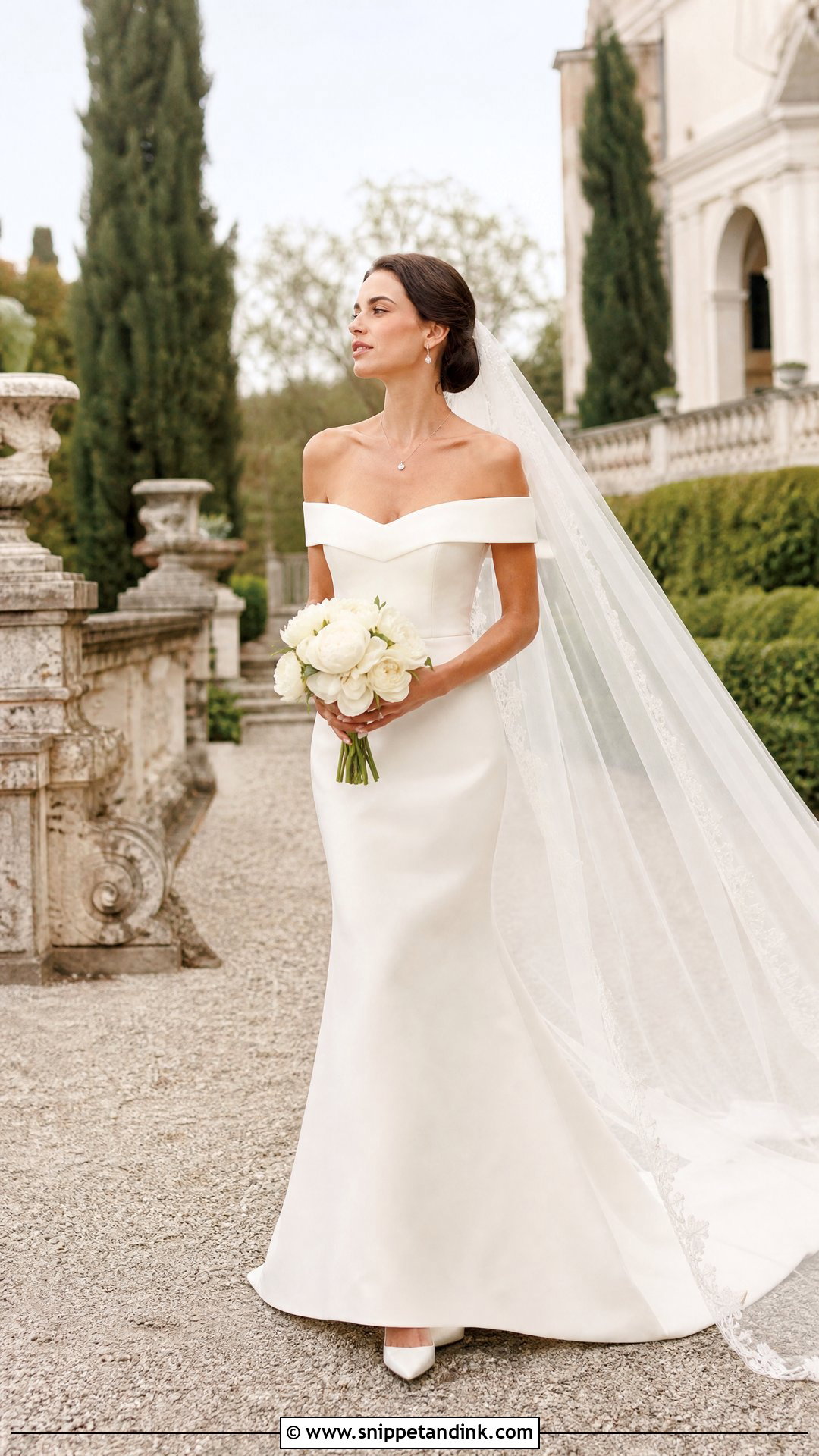
Romance without lace comes from the neckline here. An off-the-shoulder plain gown can be a fitted crepe for a streamlined look or a satin A-line for something more traditional. The neckline has to stay up while letting your arms move, which takes an internal band or light boning; I test it by having the bride hug me in the fitting room. A delicate pendant, pearl earrings and closed-toe heels suit it. A low chignon keeps the shoulder line visible, and a simple cathedral veil adds movement. Bring a clean ivory wrap for cool outdoor photos. It suits estate weddings, garden ceremonies and formal indoor venues.
7. Plain Long Sleeve Crepe Wedding Dress
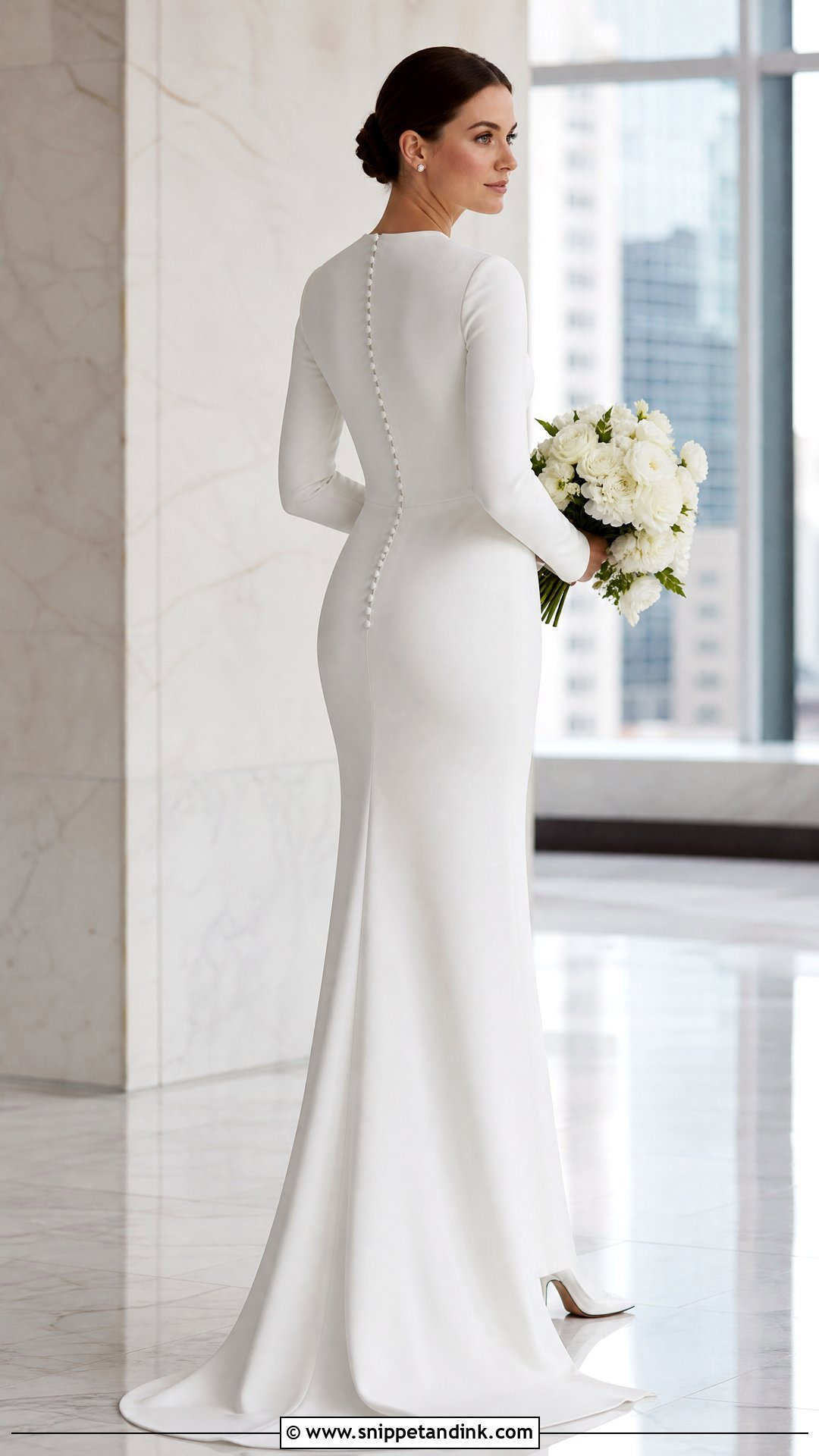
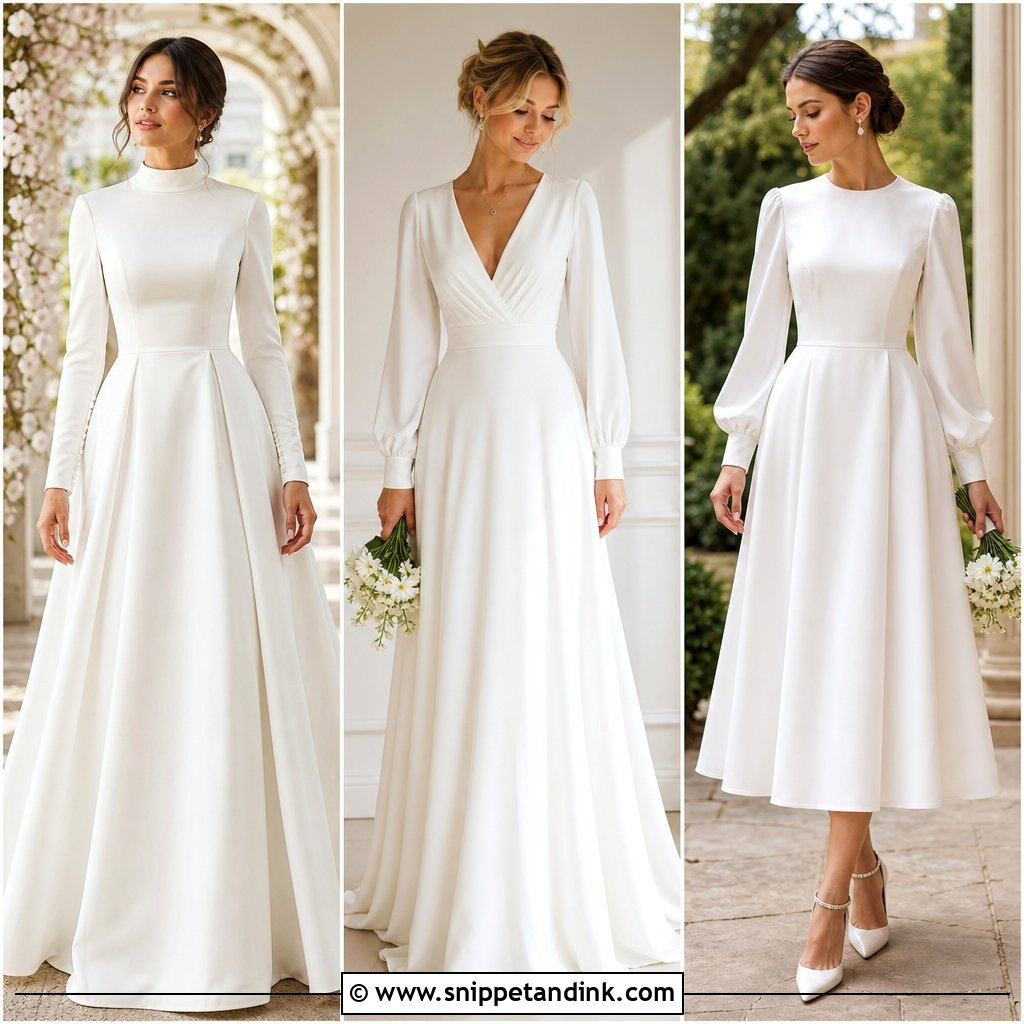
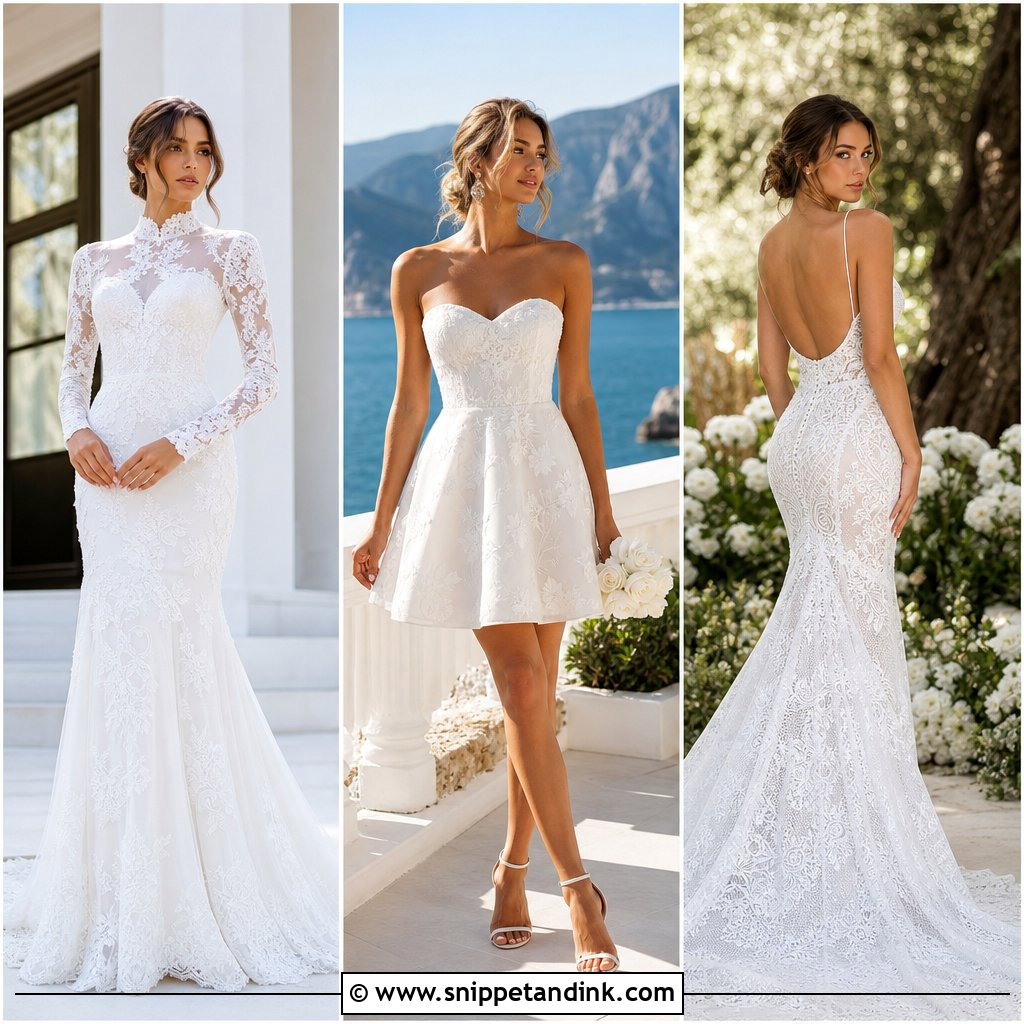
Crepe is the most comfortable fabric for long sleeves because it has a little give. With no decoration, the sleeves, neckline and seams become the design, and a fitted bodice over a softly flared skirt gives it shape. A high back with covered buttons is classic; a low open back adds contrast. Pointed ivory pumps, small studs and a structured bouquet finish it, with a neat ponytail or low bun. Bend your elbows and lift your arms at the try-on. If the sleeve drags the bodice up as you reach, the armhole needs work. It suits fall and winter weddings, city venues and over-air-conditioned ceremony rooms.
8. Plain High Neck Column Wedding Dress
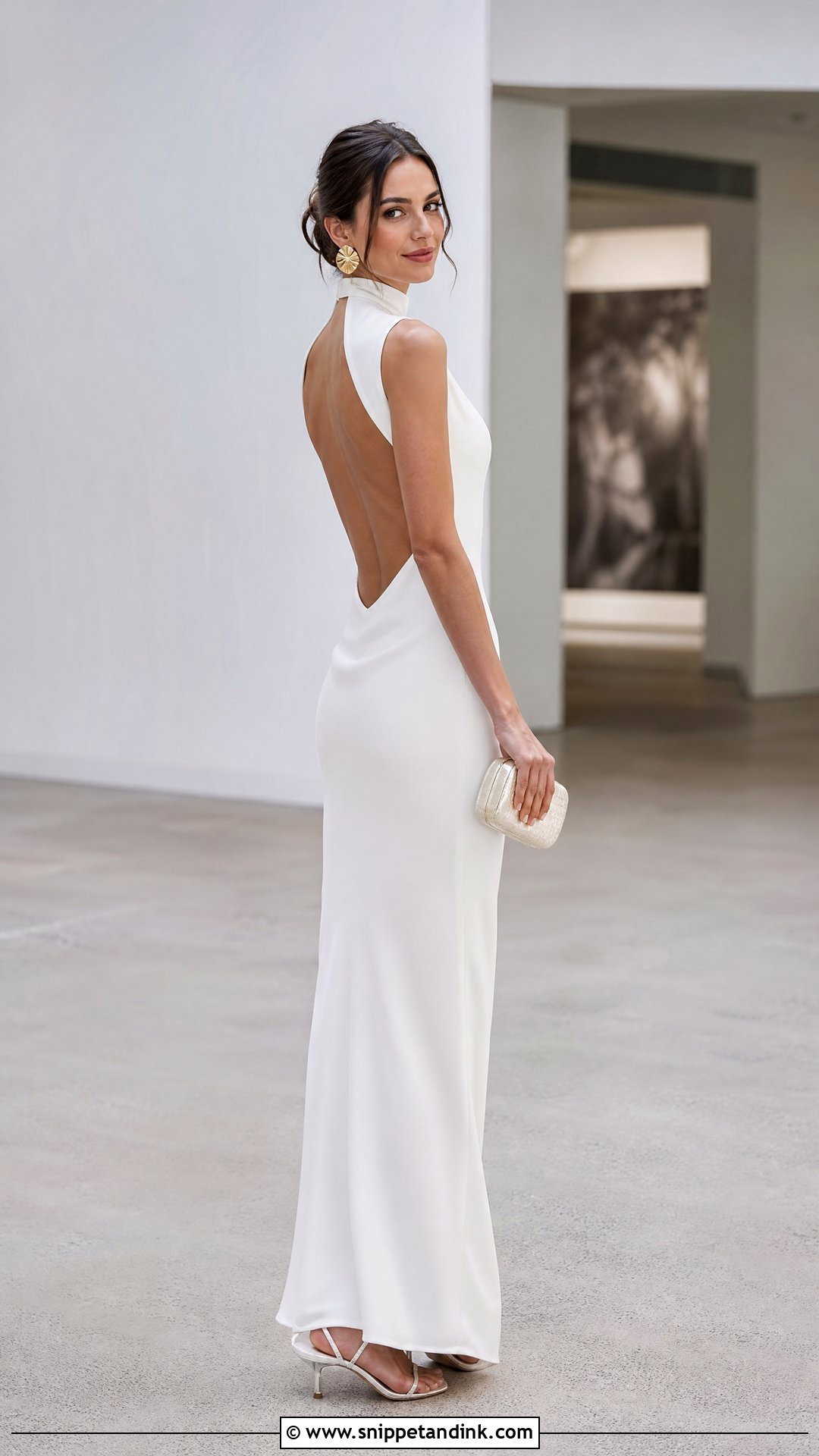
A high-neck column is the confident alternative to strapless and plunging gowns. The covered neckline points every eye to your face, and the narrow skirt keeps the shape sleek. Lightweight crepe, satin or a fabric with some stretch stops it feeling rigid, and an open back balances the coverage at the front. Sculptural earrings, low-heeled sandals and a compact clutch are enough; skip the necklace entirely. A smooth bun or high ponytail shows off the neckline. High necks get warm, and a closure at the back of the neck that’s too snug will bother you by dinner, so wear it for a full twenty minutes before deciding. Galleries, urban ceremonies, modern restaurants and architectural venues suit it.
9. Plain Scoop Neck Fit-and-Flare Wedding Dress
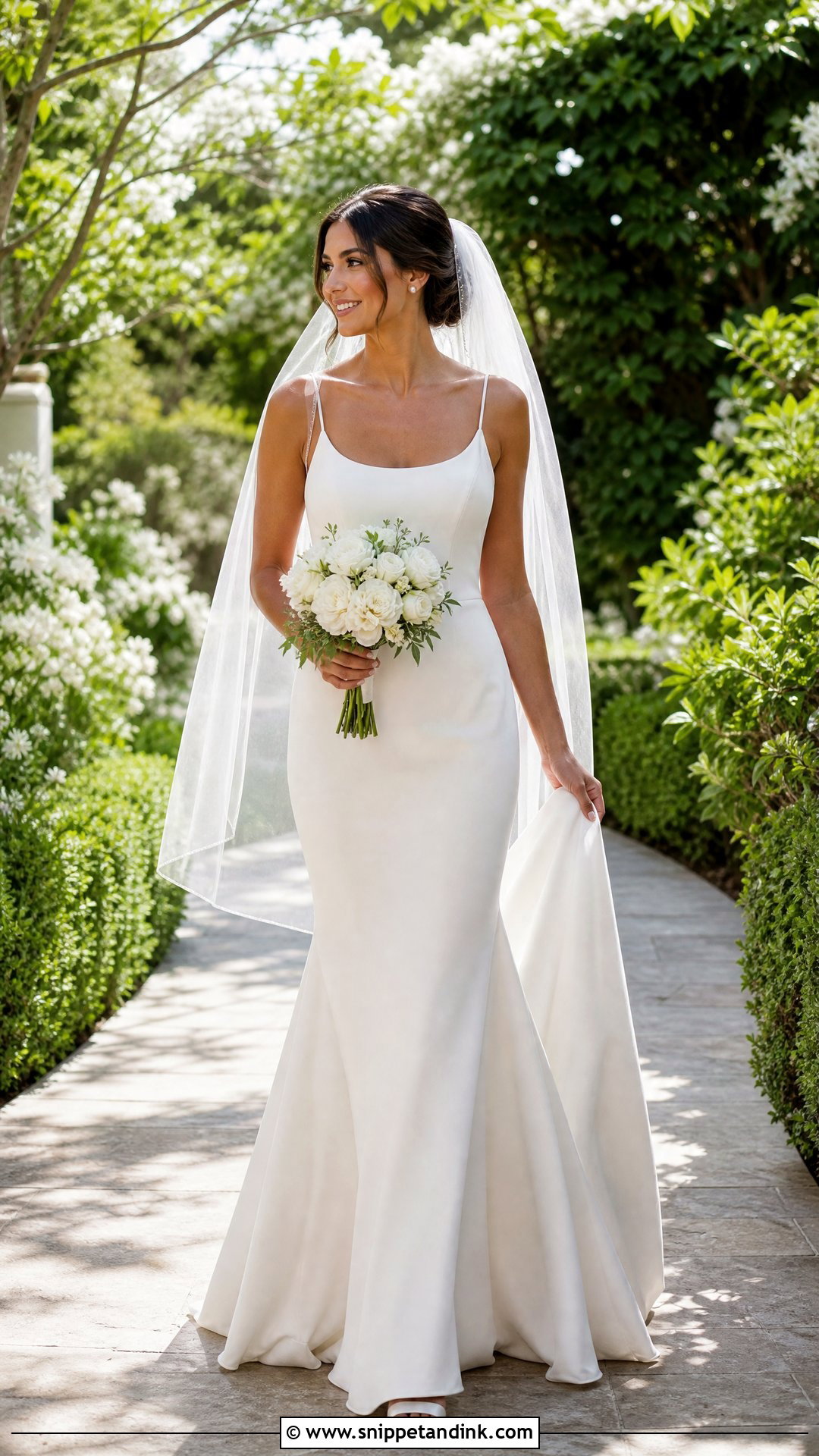
Fit-and-flare is fitted through the bodice and hips, then opens out around the thighs or knees, and the scoop neck softens it. Choose substantial crepe or matte satin for a smooth finish and real support. Delicate straps feel light; wider ones are more comfortable over a long day. Ivory heels, a narrow bracelet and pearl or diamond studs suit it. A short veil keeps a relaxed ceremony casual, while a long one raises the formality. Where the flare begins is the fitting decision that matters. Too high and it looks like an A-line that lost its nerve, too low and you’ll walk in small steps, so I have the tailor pin it at a few heights before we choose. It moves easily between gardens, coastal venues, barns and traditional reception halls.
10. Plain Bateau Neck Sheath Wedding Dress
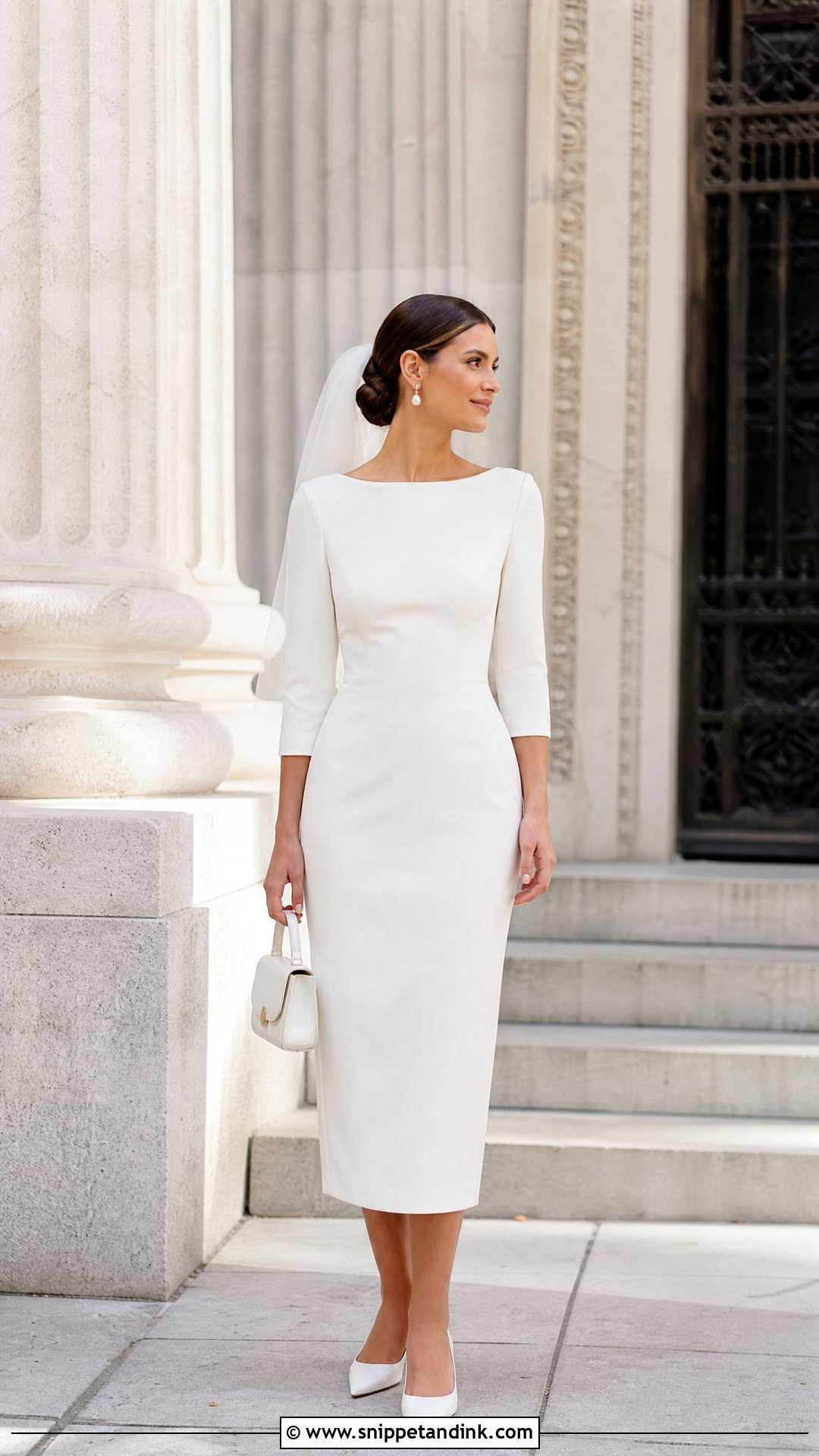
Bateau necklines run straight across near the collarbone, framing the shoulders while keeping coverage. A plain bateau neck sheath wedding dress with a slim crepe skirt, three-quarter sleeves and a clean back gives a modest, simple look with a hint of classic formalwear. Wear it with pointed kitten heels, pearl earrings and a small top-handle bag after the ceremony. A low French twist nods to its vintage roots without making it costume. A waist-length or fingertip veil suits it better than anything ornate. A bateau neck slides toward one shoulder if it’s cut even slightly wide, so check it in the mirror after moving your arms. Courthouse ceremonies, daytime weddings and small celebrations followed by lunch or dinner are where it shines.
11. Plain Cowl Neck Slip Wedding Dress
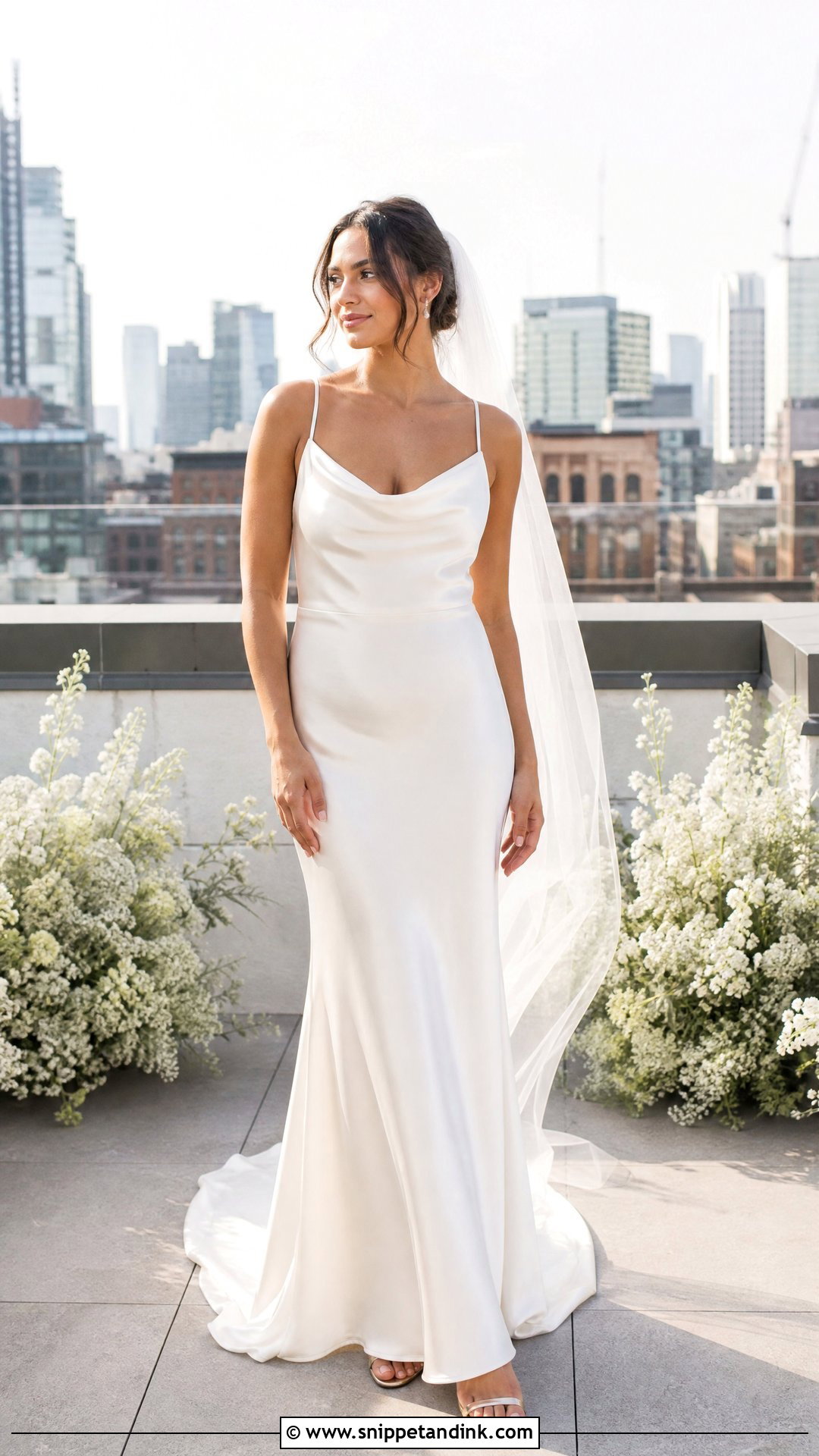
A cowl neckline gets its dimension from the drape alone. Satin and silk fall into the folds best because they’re fluid; stiffer fabrics stick out instead of hanging. A bias-cut skirt moves gracefully, and adjustable straps let the cowl sit exactly where you want. Metallic sandals, fine earrings and a petite bouquet complete it, with hair pulled back so it doesn’t hide the neckline. For extra coverage, add a sheer veil or a clean satin wrap rather than anything heavily decorated. Glossy fabric can look more revealing under flash, and a cowl can open when you lean forward, so bend toward the mirror and take a flash photo at the try-on. It suits destination weddings, coastal celebrations, rooftop ceremonies and candlelit receptions.
12. Plain Basque Waist Satin Wedding Dress
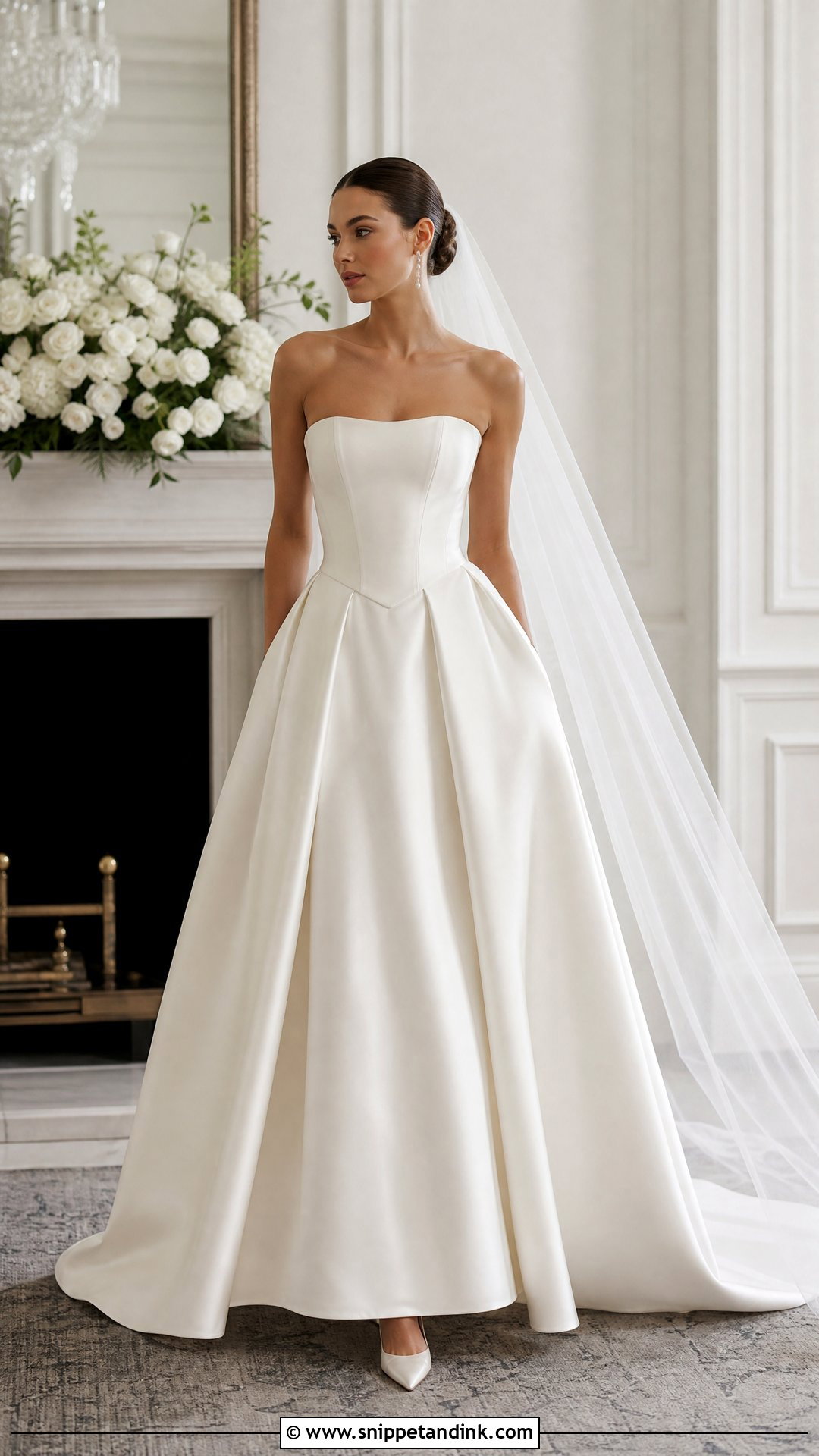
The construction is the decoration on a plain basque waist satin wedding dress. The bodice runs down into a V-shaped point below the natural waist, lengthening the torso before the full skirt begins. A strapless, scoop or wide-strap bodice sets the level of support. Pearl drops, pointed satin pumps and a long cut-edge veil complete it, and a smooth bun keeps the waistline in focus. The point is where comfort is won or lost. If it’s even slightly long for your torso, it presses into your lap when you sit, so sit down at every fitting. Grand indoor venues, estates, hotels and formal evening weddings suit it.
13. Plain Drop Waist Mikado Wedding Dress
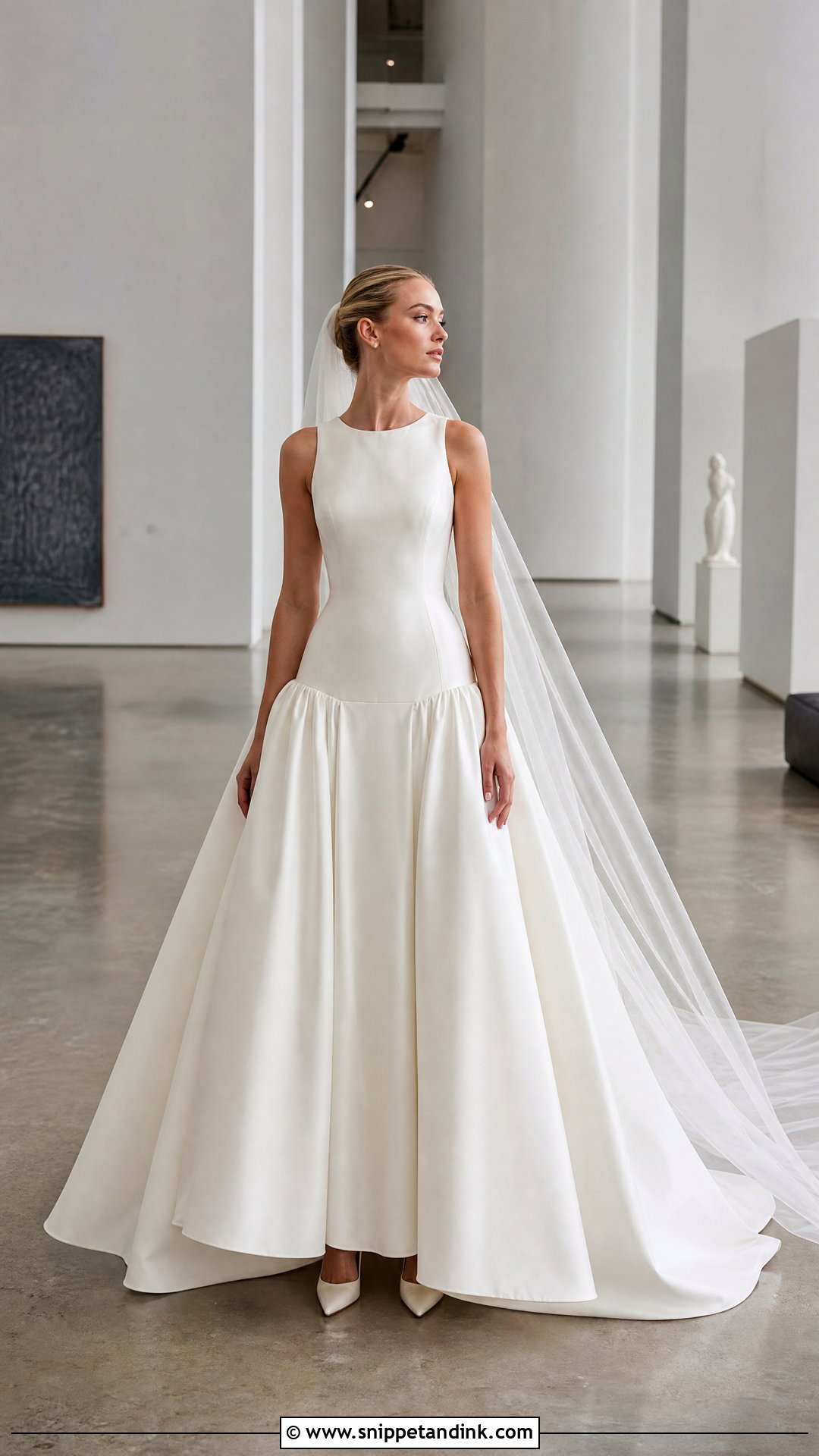
Drop waists move the seam below the natural waist, creating a longer torso before the skirt widens. In mikado, which holds its shape and takes crisp pleats, the result looks modern and dramatic. Simple studs, slingback heels and a smooth cathedral veil keep it refined, and hair worn up shows off the proportions. Don’t choose a drop waist from photos alone. Moving the seam even a couple of inches changes the whole balance of your body, so try a few placements before committing. Fitted well, it suits many body types. It looks strong in formal hotels, art spaces, historic estates and large reception venues.
14. Plain Halter Neck Wedding Dress
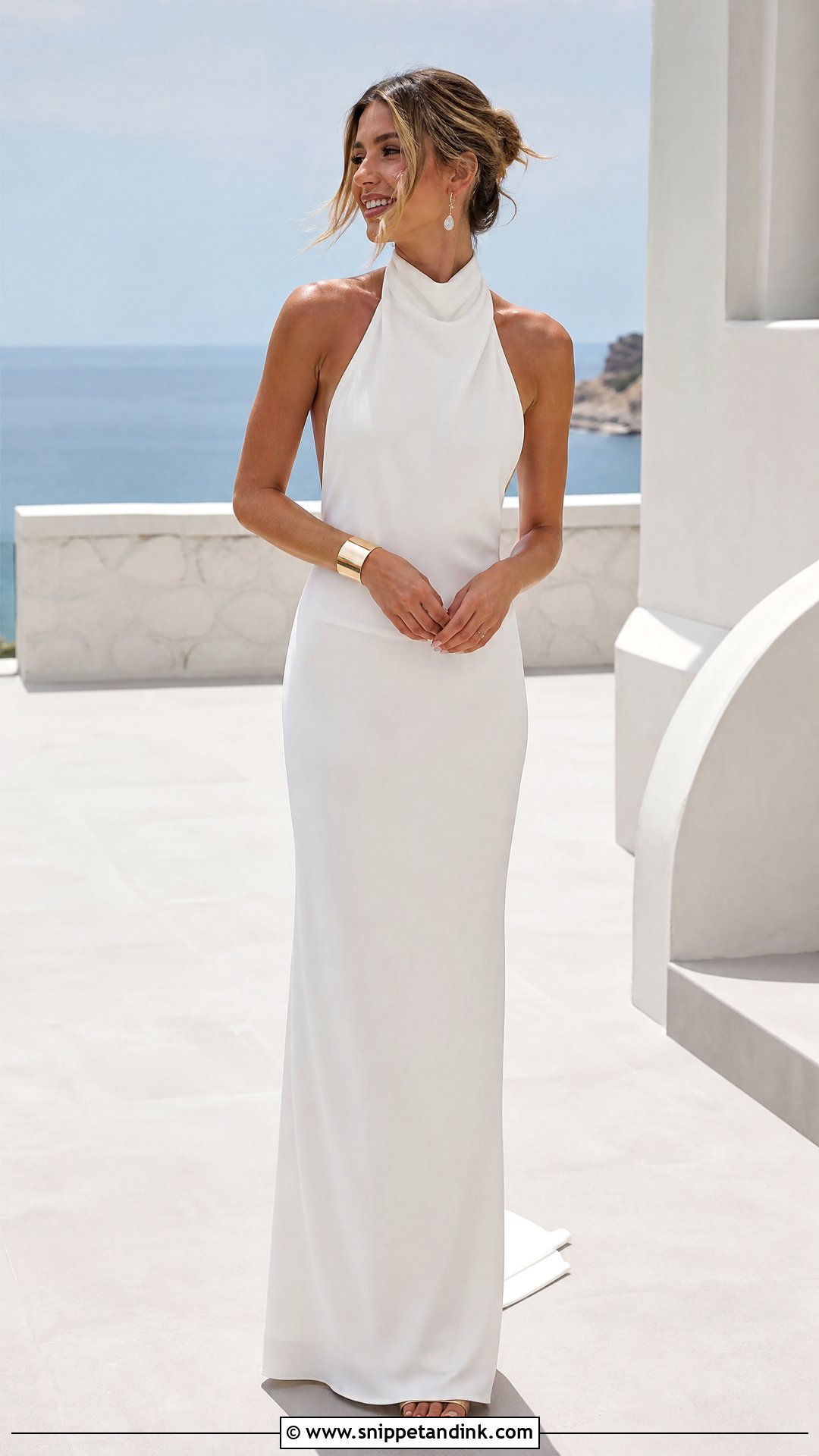
Halter necks open the shoulders and carry a long line through the upper body. The bodice might be softly draped satin, a structured crepe neckline or a high-neck design with an open back, over a column or gently flared skirt. Slim earrings, a polished cuff and low-profile sandals keep it minimal; a necklace only crowds the halter. Wear your hair up or swept to one side. Because a halter hangs from the neck, the closure takes real weight; a tie can loosen as the day goes on, so I prefer a hook or button. It suits beach ceremonies, rooftops, modern resorts and warm-weather celebrations.

15. Plain Cap Sleeve A-Line Wedding Dress
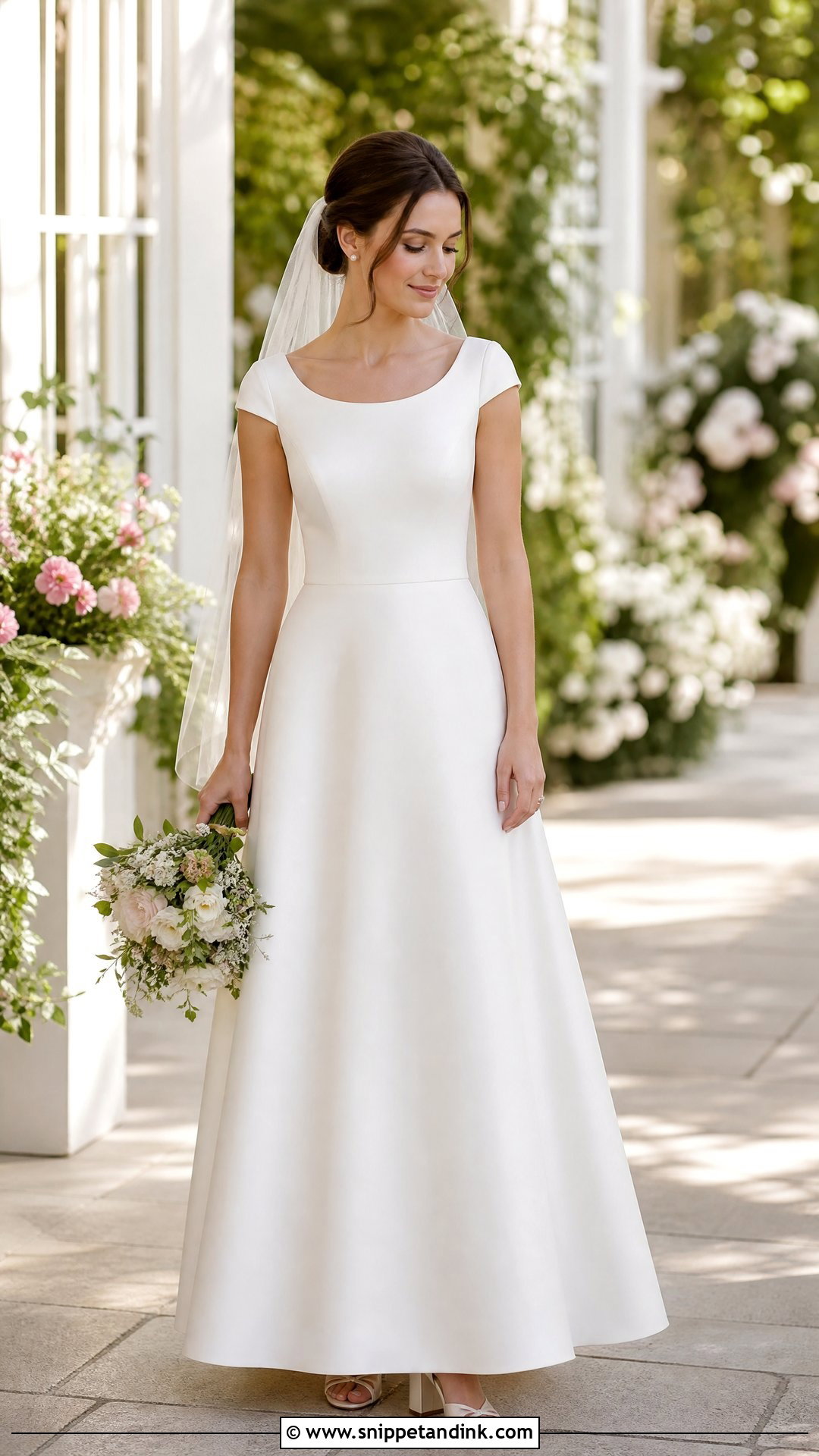
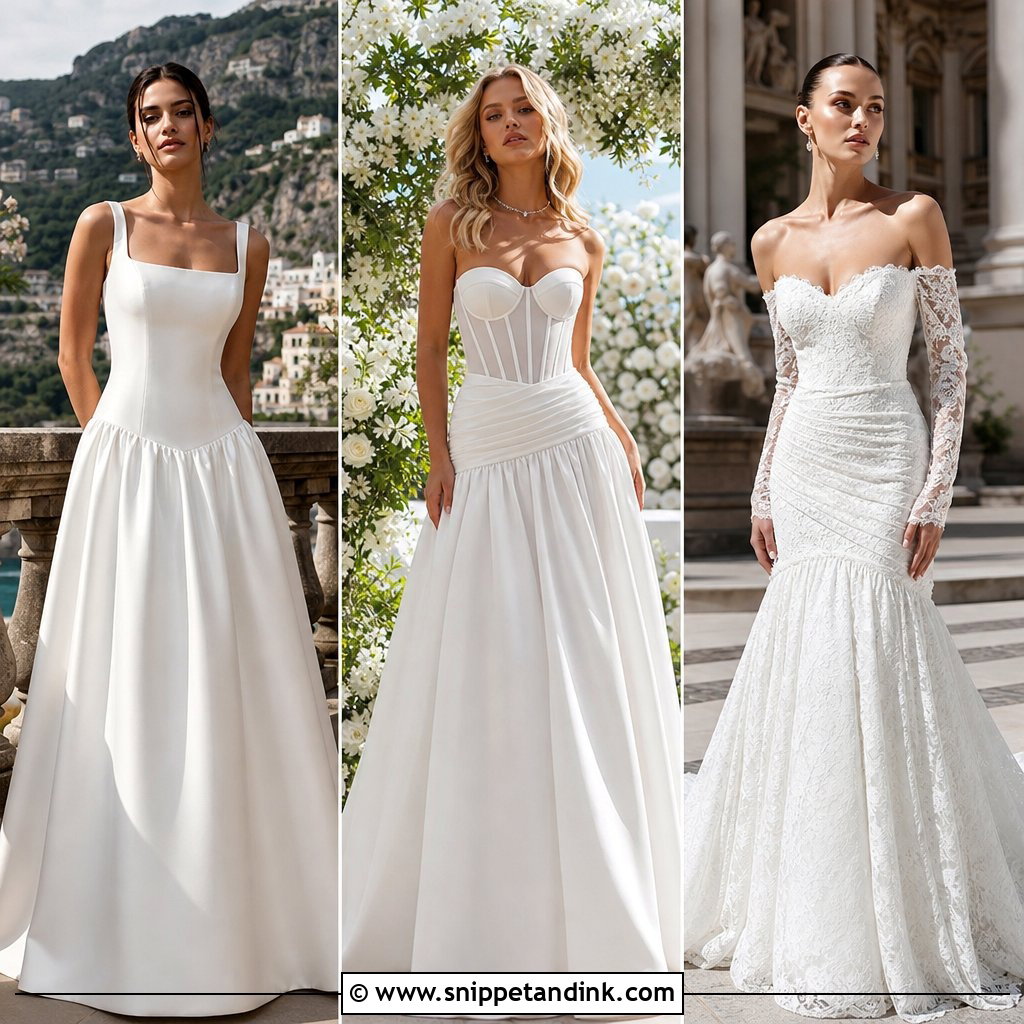
Cap sleeves cover just the top of the shoulder and keep a plain A-line light. A smooth satin or crepe bodice with a scoop, square or bateau neckline, over a gently structured skirt, balances the small sleeve. Comfortable block heels, pearl studs and a medium veil suit it, with soft waves or a low bun. Cap sleeves fail in one specific way: the edge flips outward or digs into the arm. It should lie flat, so bring this up at the first fitting. Internal boning or a higher back adds support if you need it. It suits spring garden weddings, daytime hotel ceremonies, historic venues and formal celebrations where comfort matters as much as tradition.
16. Plain Tea-Length Wedding Dress
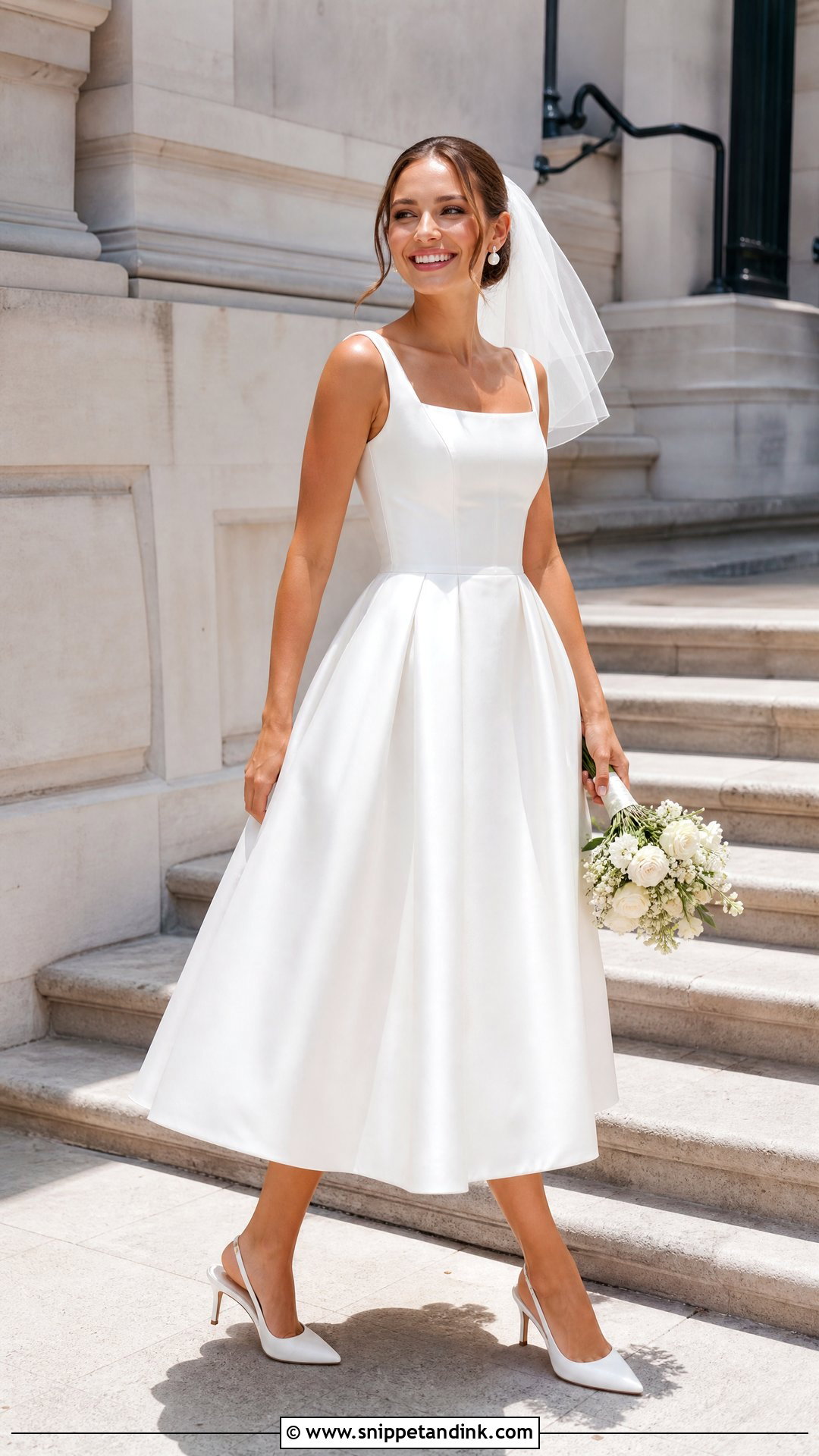
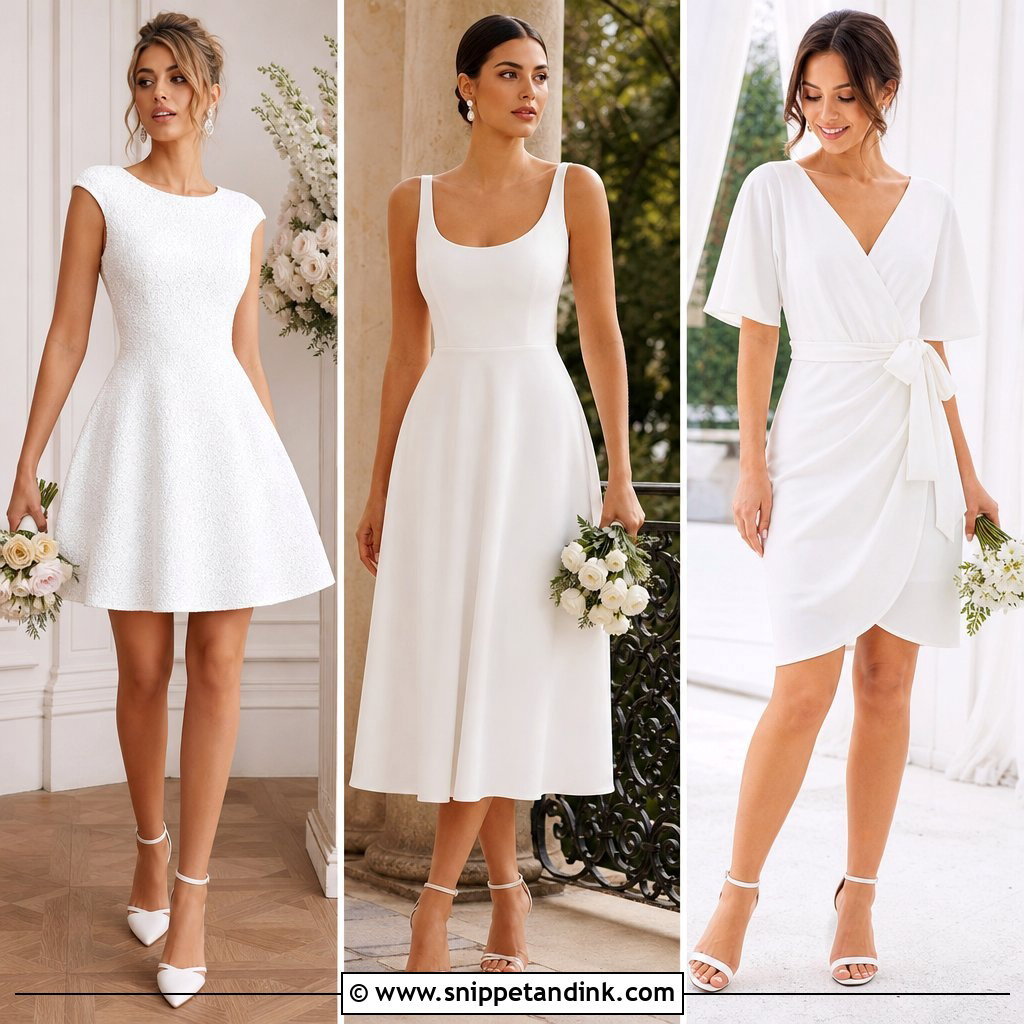
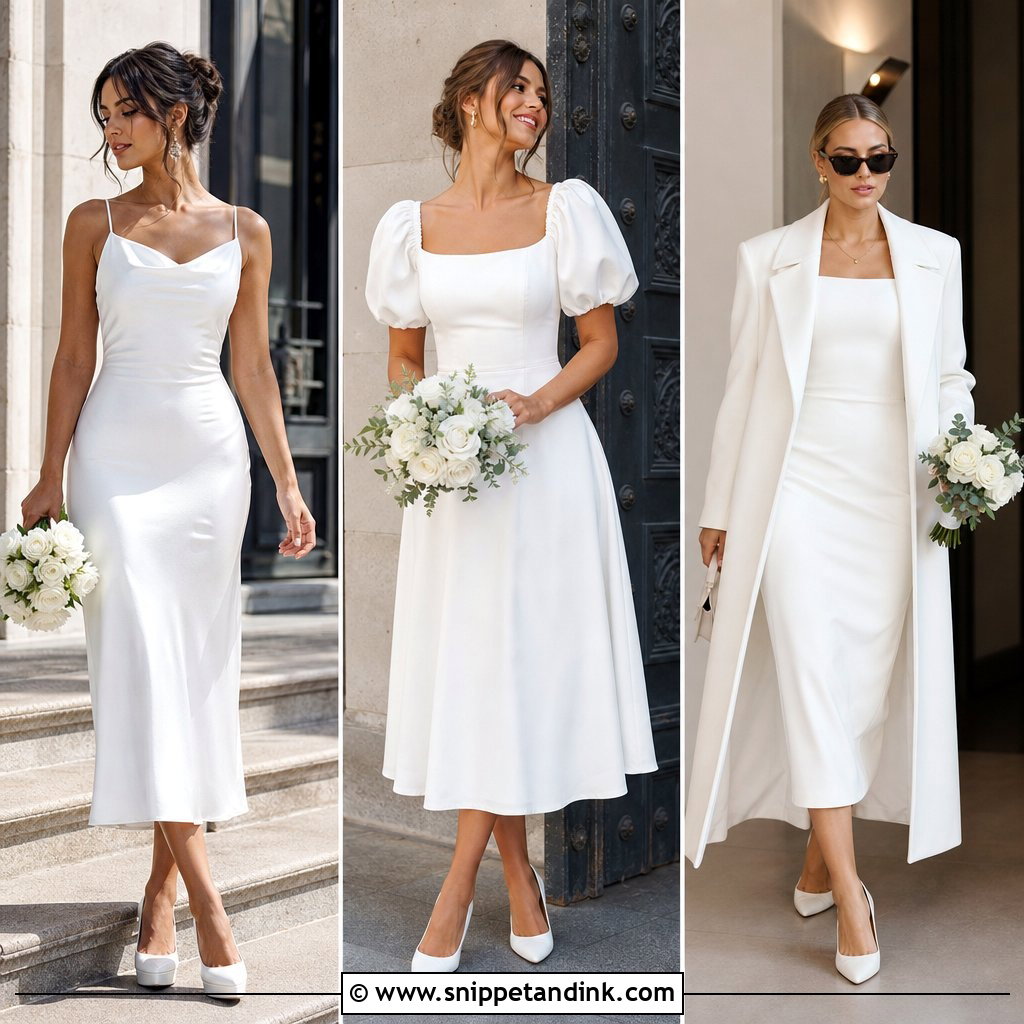
Tea length lands between knee and ankle, so the shoes become part of the dress. A structured satin A-line gives a vintage lean; a sleek crepe version looks current. Pointed pumps, slingbacks or block-heel sandals all work, with pearl earrings, a small bouquet and a short veil or a minimalist hair bow. Hemming makes or breaks this length. A hem that cuts across the widest part of the calf shortens the leg, so I usually suggest bringing it slightly lower or higher to find the slimmest point. It’s easy to walk, dance and mingle in. It suits courthouse ceremonies, daytime receptions, gardens, restaurants and relaxed celebrations.
17. Plain Mini Wedding Dress
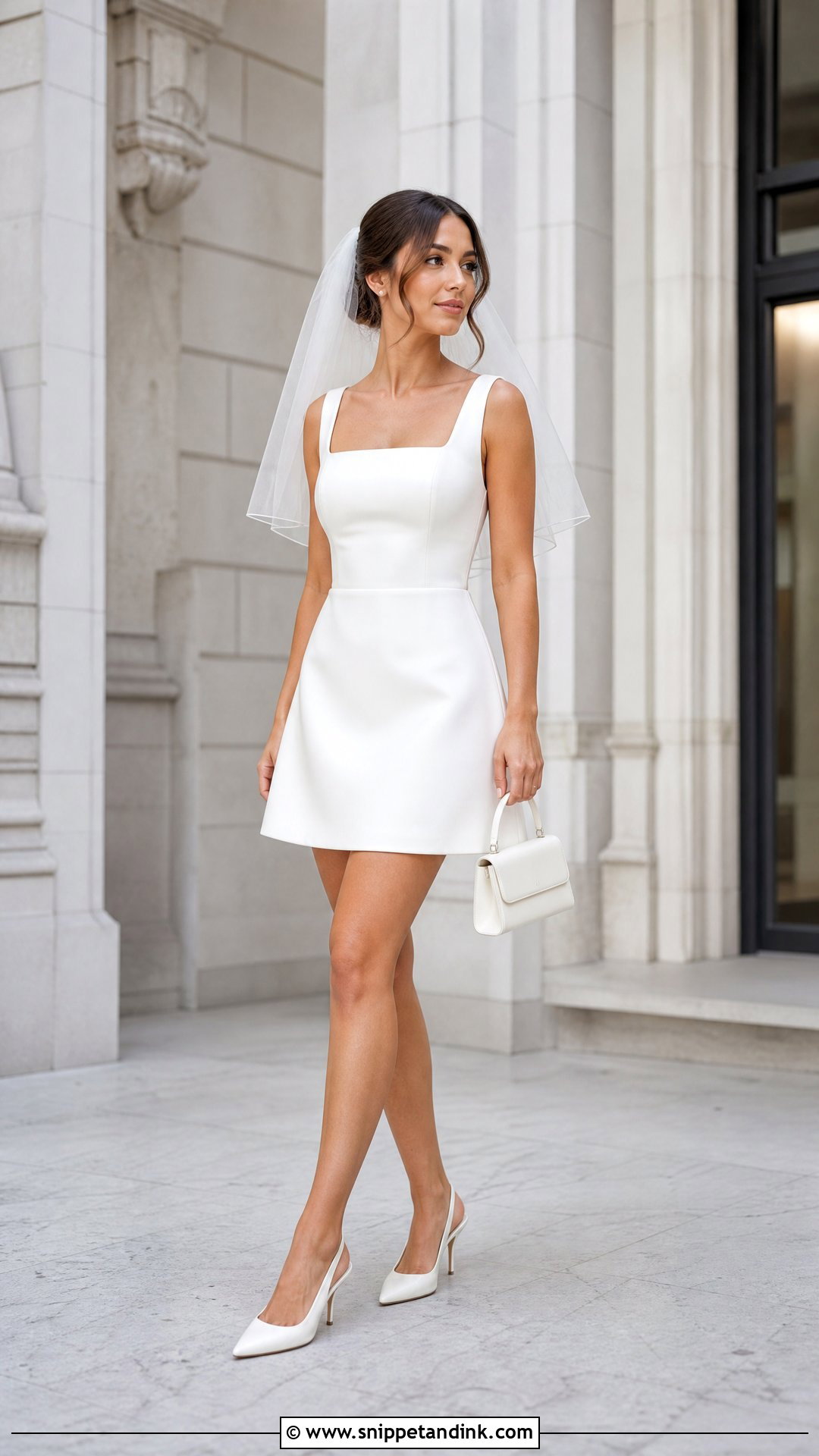
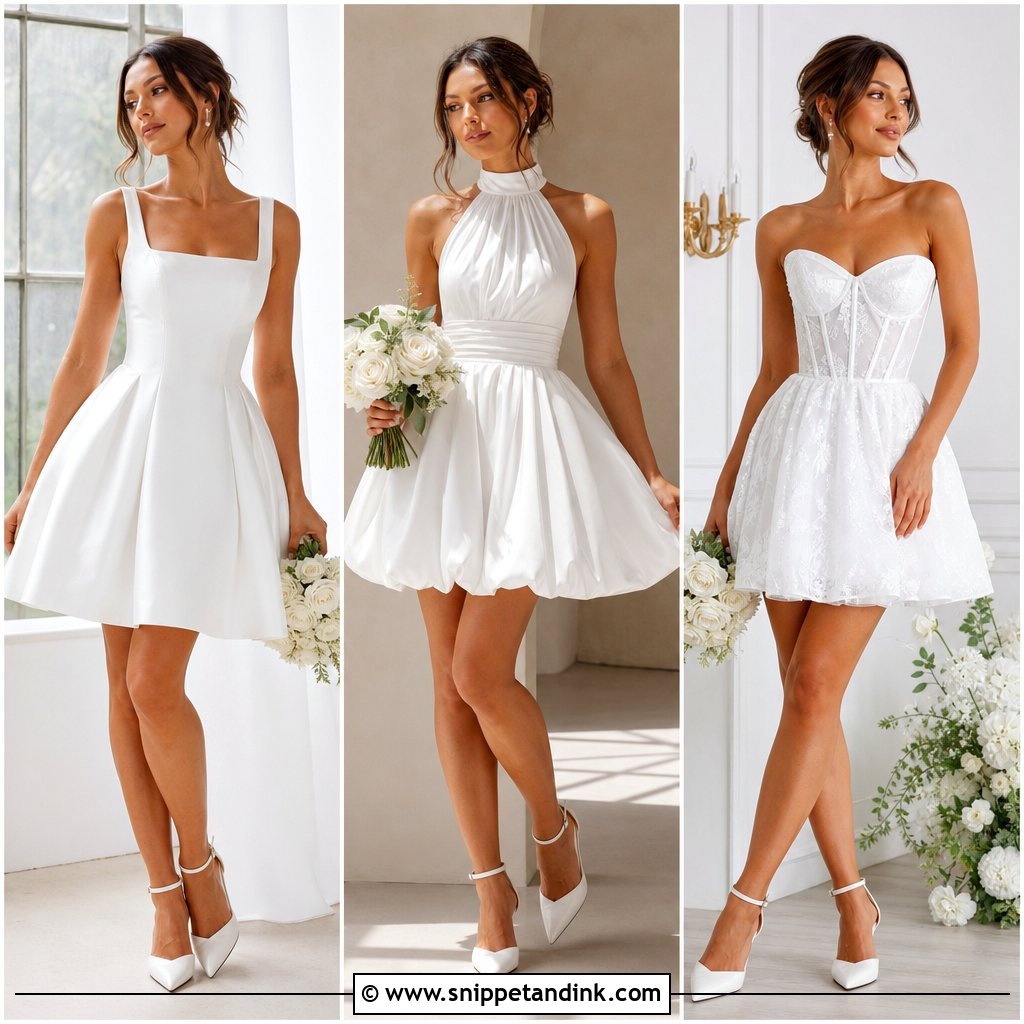
Short and confident, a mini works for a civil ceremony, a reception change or an informal wedding. A structured shift, a fitted square-neck dress or a simple A-line mini looks cleaner than a decorated party dress. Balance the short hem with a tailored neckline and fabric with real weight, which also stops it riding up. Pointed pumps or slingbacks, pearl studs and a small top-handle bag suit it. A short veil makes it unmistakably bridal; a sleek ponytail keeps it contemporary. Check it from every angle and sit down in it before the day. It suits city hall weddings, rooftops, restaurant receptions and second looks.
18. Plain Empire Waist Chiffon Wedding Dress
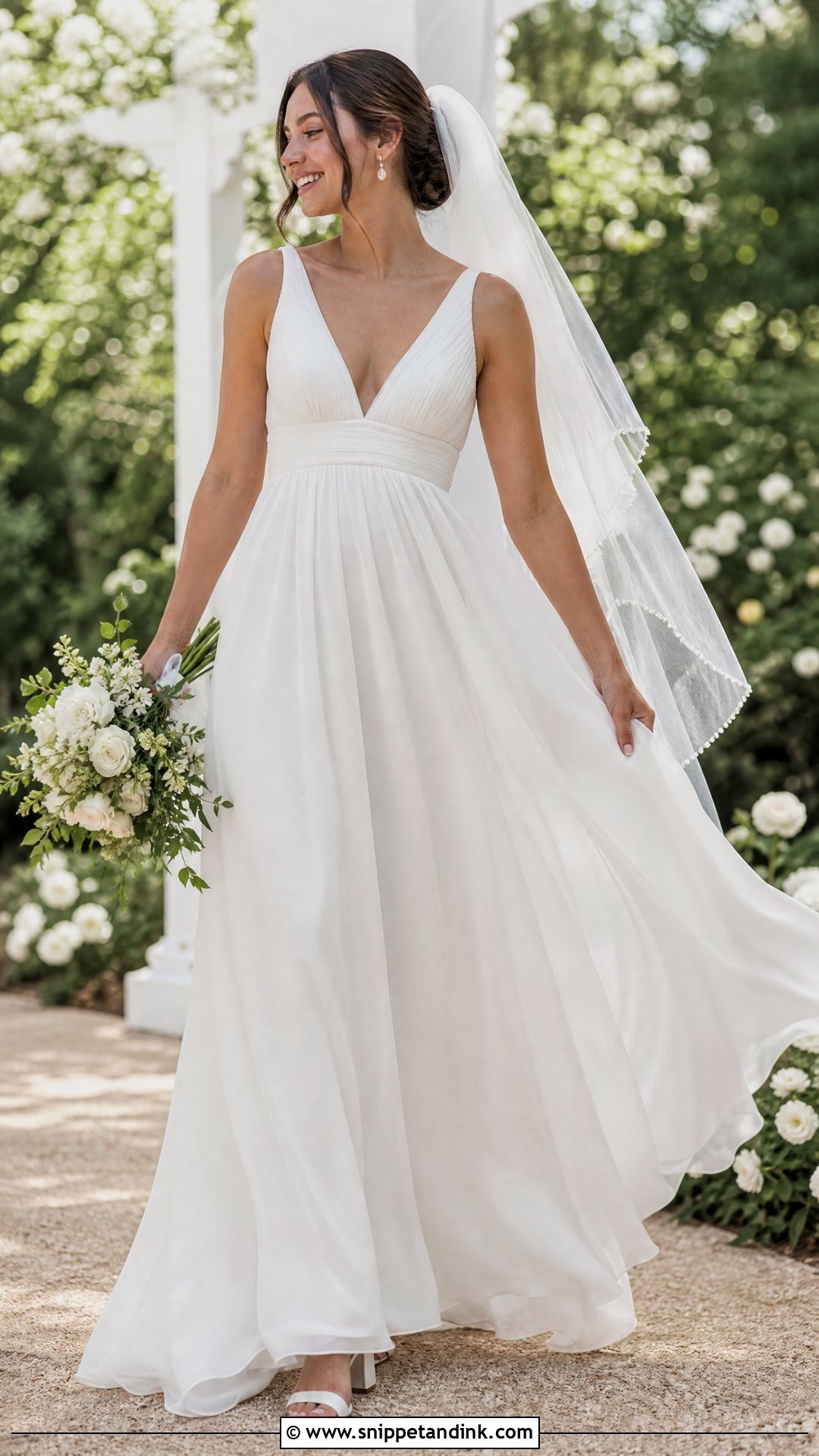
Empire waists start just below the bust, and in light chiffon the skirt floats over the body with nothing pressing at the waist. That’s why pregnant brides and anyone who dislikes a fitted waist tend to love it. A lined design with a simple V-neck, scoop neck or wide straps gives reliable coverage. Block-heel sandals cope with grass or sand, and pearl drops with a loose low bun complete it. A fingertip veil adds movement without weighing down the light fabric. Chiffon is sheer by nature, so check the lining in daylight and under flash. For a bride who is expecting, I’d schedule the final fitting as close to the date as the seamstress allows. It suits beaches, gardens and relaxed outdoor venues.
19. Plain Modest A-Line Wedding Dress
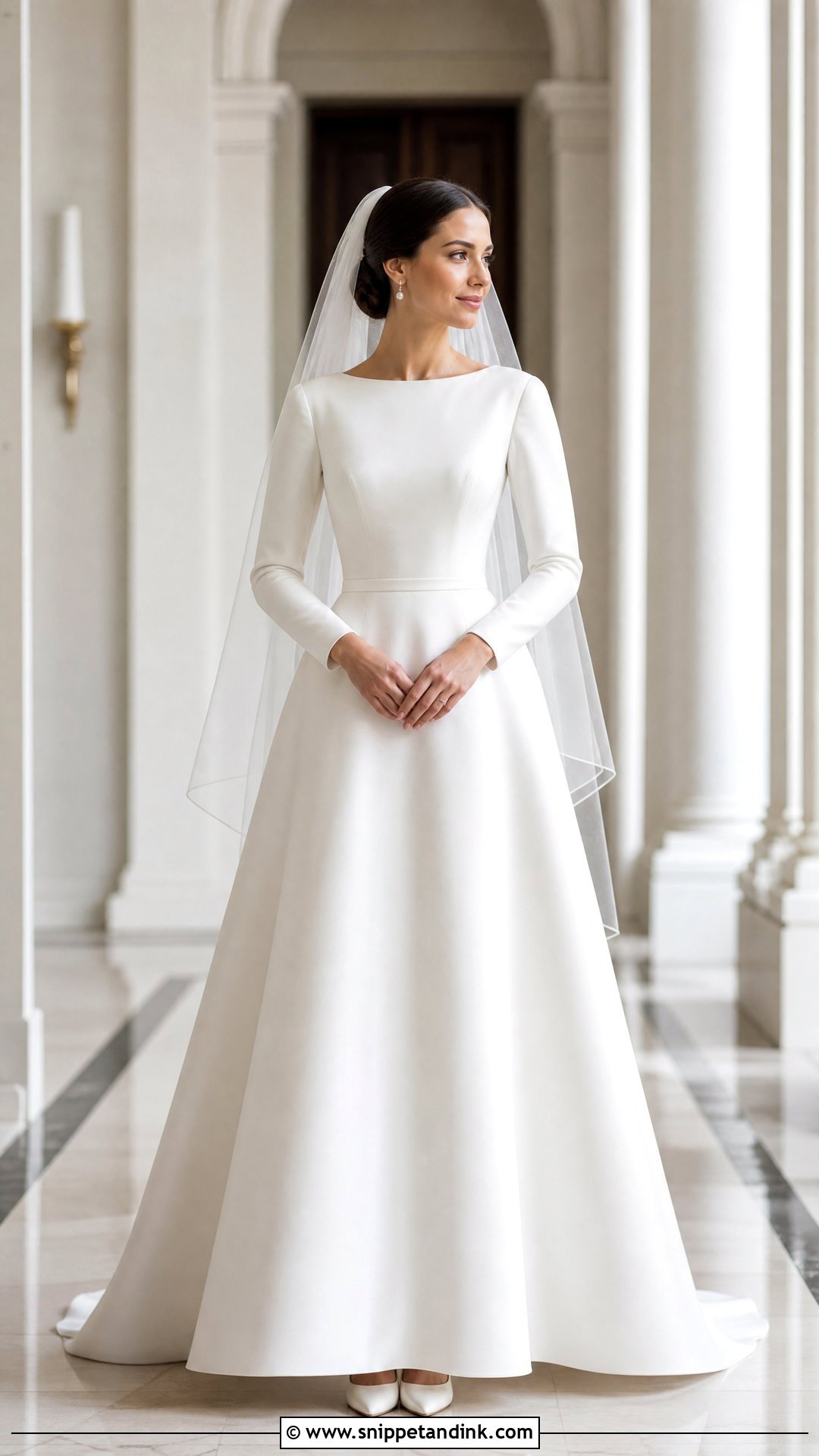
Modest doesn’t mean shapeless. A plain A-line with a bateau or jewel neckline, full-length sleeves and an opaque back in matte crepe or satin gives full coverage, and princess seams with a defined waist keep the shape. Closed-toe pumps, pearl earrings and a clean-edged veil complete it, with a neat bun or soft half-up style. When trying on the gown, check that the neckline stays in place and the sleeves let you move. Ask the tailor to shape the bodice through the princess seams rather than just taking in the side seams; that gives definition without tightness. It works for family celebrations, traditional ceremonies, formal halls, estates and cool-season weddings.
20. Plain Plus Size Crepe Wedding Dress
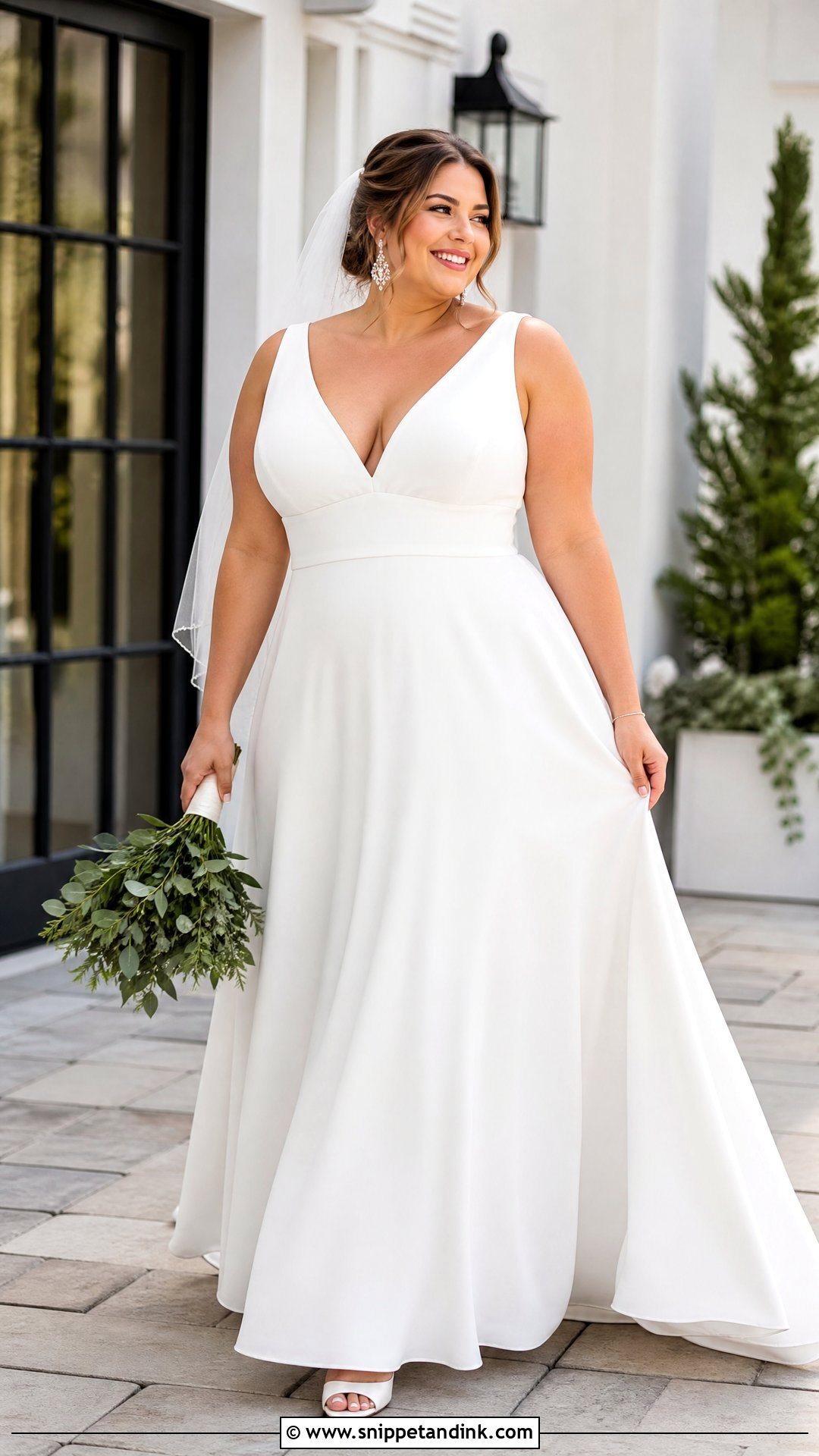
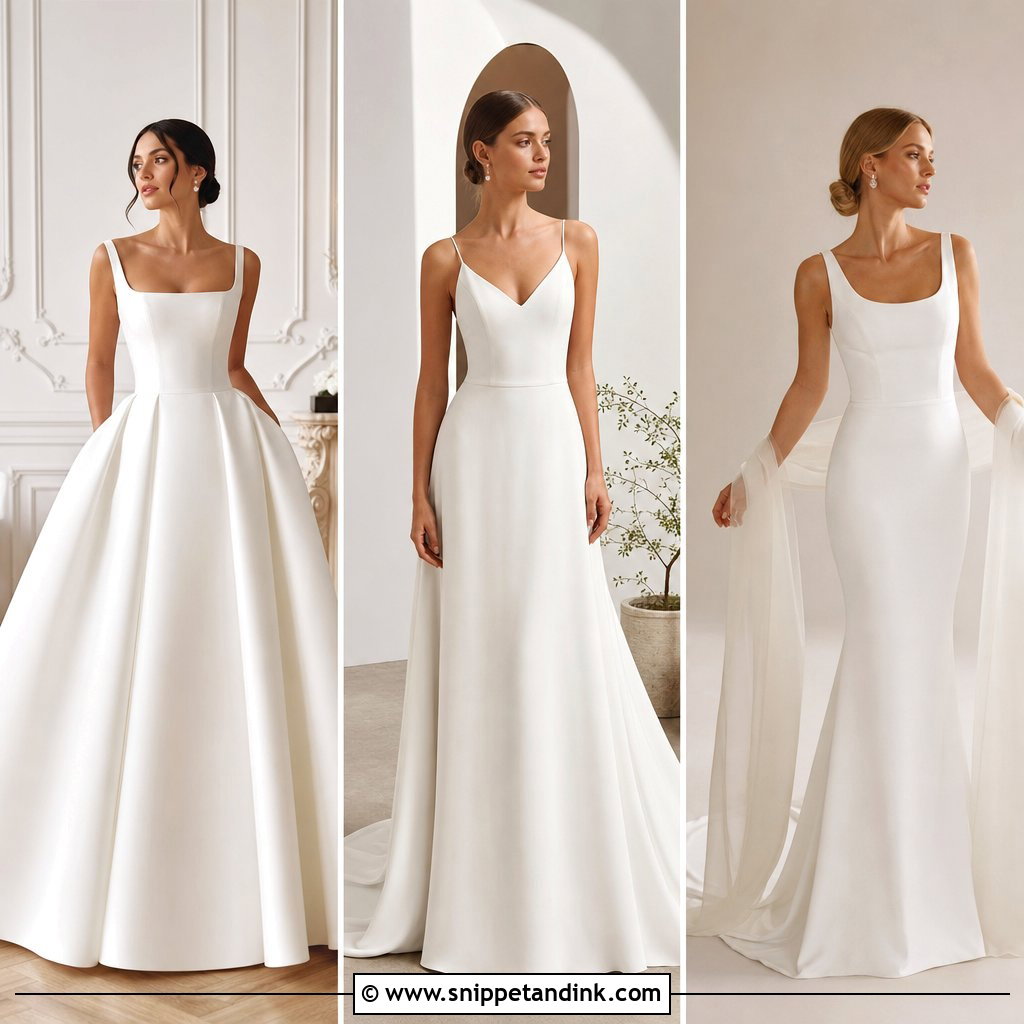
Minimalist bridalwear depends on fit, structure and fabric, not a dress size. A plain plus-size crepe gown with a defined waist, a supportive bodice and a fluid skirt gives a smooth, confident shape. An A-line, fit-and-flare or column can each work, depending on comfort and taste. Wider straps, internal boning and a well-placed neckline give dependable support. Stable block heels, statement earrings and a simple veil finish it. Foundations should be comfortable and invisible under crepe, which is less forgiving than satin. My advice is to ask the tailor to fit the gown to your body rather than hide it under extra volume. It adapts to modern venues, ballrooms, outdoor ceremonies and intimate weddings.
Small Personal Touches Sewn Inside the Dress
A plain gown can carry meaning without changing how it looks from the outside. These are small requests a good seamstress can usually handle during alterations:
- Your initials and the date stitched inside the hem or on a label at the waist.
- A small piece of fabric from a parent’s wedding dress or a grandmother’s handkerchief sewn into the lining.
- A colored thread or tiny embroidered motif somewhere only you know about.
- A hanging loop or inside pocket placed where you’ll actually use it.
Bring any of these up at your first fitting rather than the last, so they can be done while the gown is already open for other work. If an heirloom fabric is fragile, ask for it to be backed with a light lining first so it doesn’t tear when you move.
Spend on Fit Before You Spend on Finish
Simplicity only works when the fabric, construction and fit get proper attention. The range here runs from fluid slips and structured satin ball gowns to crepe sheaths, covered A-lines and short dresses for relaxed celebrations. Start with the silhouette that feels right for you and your venue. Then look at the fabric in daylight, test how you move, and set aside money for alterations, because that’s where a plain gown becomes yours. Keep accessories in support: a clean veil, good shoes, one piece of jewelry that matters and a polished hairstyle are usually enough. The dress should leave room for you to be the focus.
You'll Like These Ideas:





Leave a Reply