
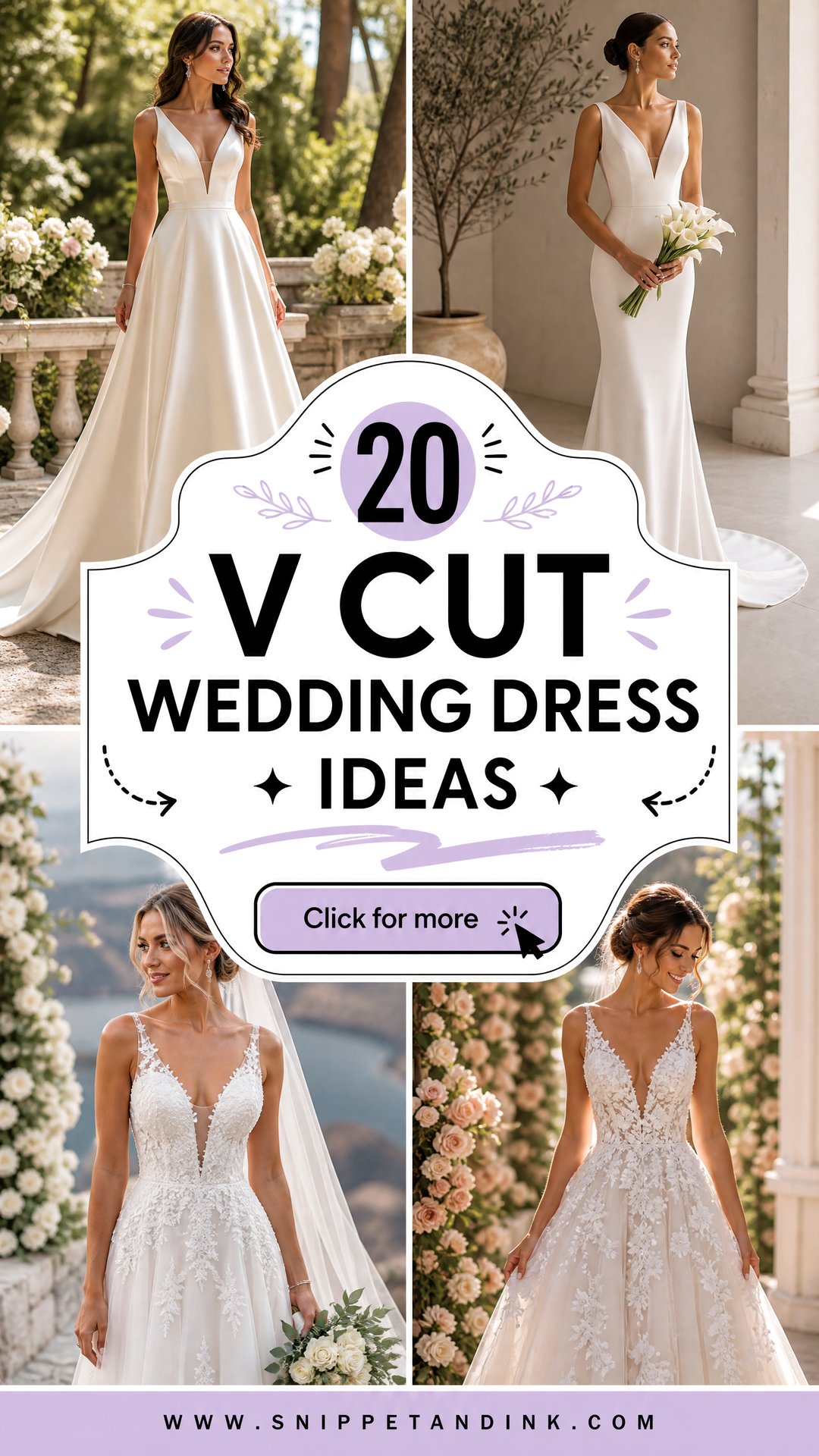
A V neckline draws the eye up toward the face and down toward the waist, which is why I reach for it so often with brides who aren’t sure what suits them. The designs below range from clean satin A-lines and romantic lace to fitted crepe and airy outdoor gowns. Depth makes a bigger difference than most people expect: a soft V feels classic and is easy to support, while a plunge needs real engineering inside. Straps, bodice construction and what you wear underneath decide whether the neckline stays put. Shoes, jewelry and veil should follow the line rather than fight it.
Testing a V Neckline Before You Fall for It
I measure a V from the hollow of the throat to the point of the neckline, yet the same measurement can look modest on one bride and very open on another, depending on bust and torso length. So I trust movement more than numbers. A neckline that looks right standing still can gape or shift the moment you lean, hug or lift a bouquet.
- Stand side-on to a mirror and lean forward slightly. If you can see the edge of a cup or the side of the bust, the V needs mesh or a higher point.
- Hug someone shorter than you, which is the movement that opens a neckline most.
- Raise both arms above your head and check that the point of the V stays centered.
- Sit and look down. What you see is roughly what a photographer standing above you will capture.
Underneath, most deep Vs need cups sewn into the bodice or a low-plunge bra with a U-shaped center; an ordinary bra almost always peeks out. Silicone adhesive cups suit some brides, but they loosen with heat and sweat, so for summer weddings I treat them as a backup rather than the plan.
1. Satin A-Line V Cut Wedding Dress
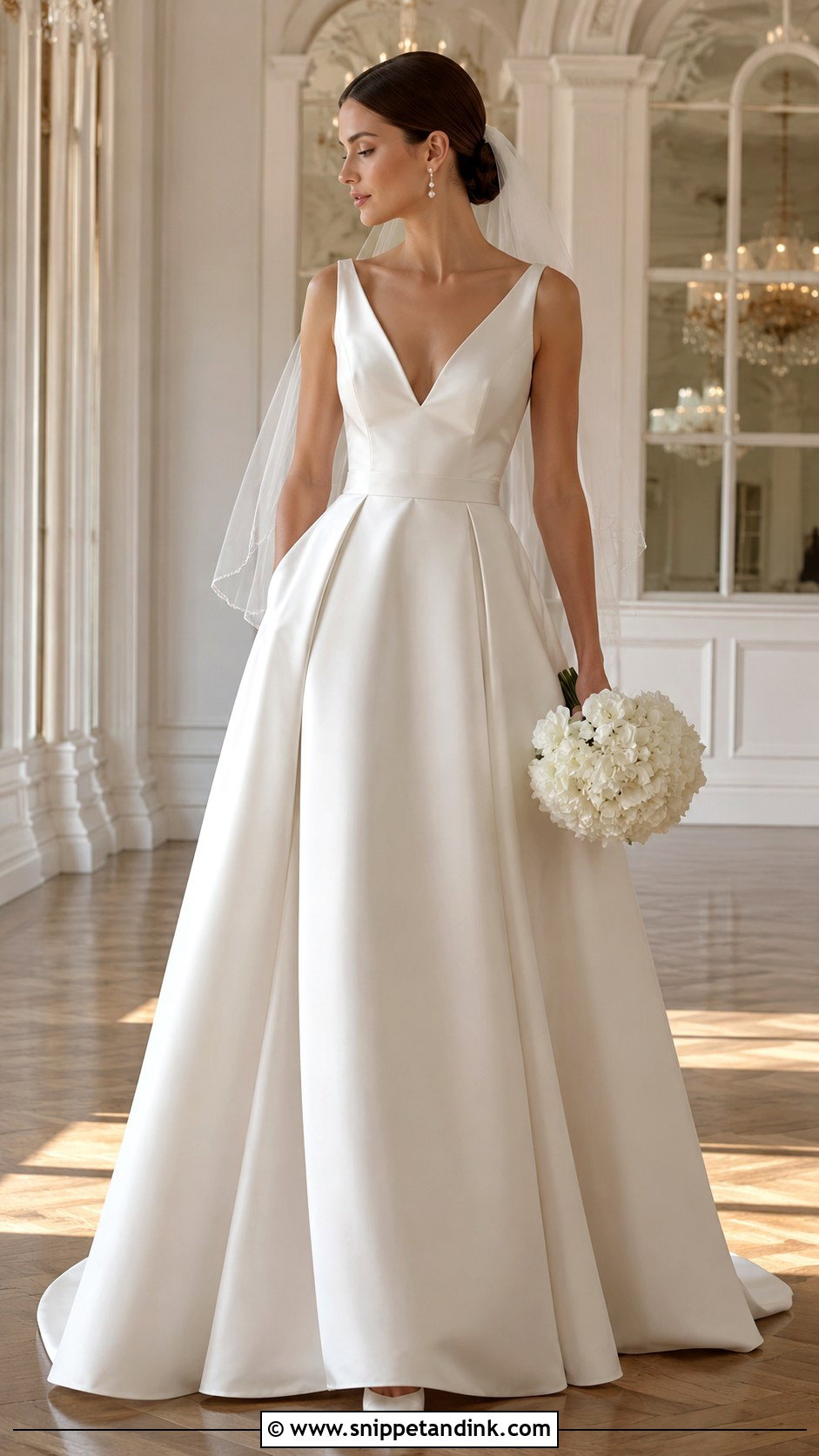
Satin is the strictest fabric for a V, because any gap at the neckline shows as a ripple of light. On an A-line with a structured bodice, wide straps take weight off the neckline and keep both sides lying flat, while a fitted natural waist and gently flared skirt do the rest. My usual adjustment is to have the tailor ease a few millimeters out of the neckline edges and add discreet cups. Pointed ivory pumps, pearl drops, a fingertip veil with a narrow satin edge and a low chignon finish it. If the satin is plain, covered buttons down the back add quiet detail.
2. Lace A-Line V Cut Wedding Dress
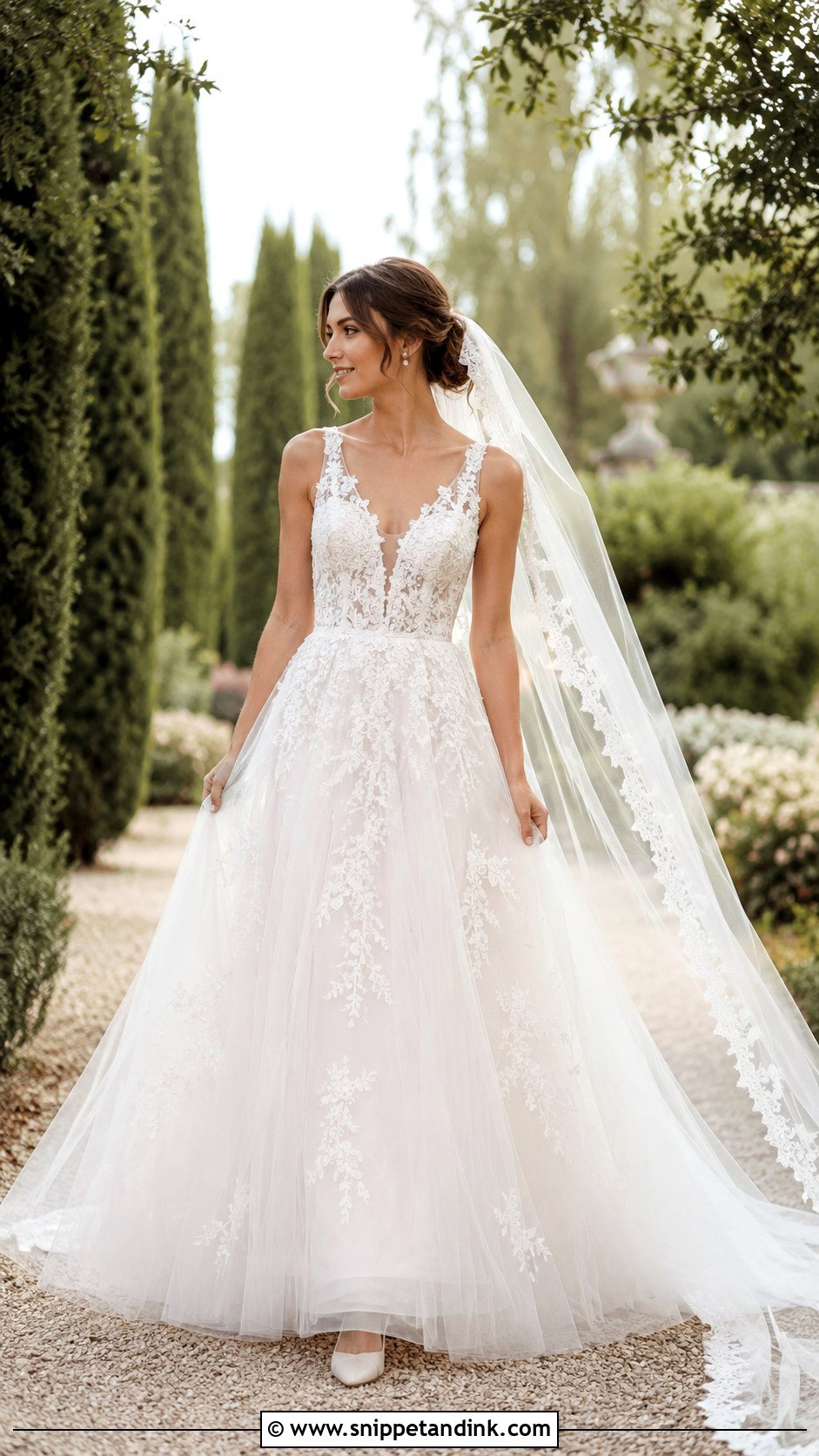
Lace softens a V. A fitted lace bodice flowing into a lightweight tulle or organza skirt, with appliqués continuing below the waist, blurs the point where one fabric ends and the next begins. Before ordering, compare a nude lining against an ivory one in daylight. Nude makes the lace pattern stand out sharply; ivory reads softer and more covered. For extra coverage, a sheer illusion panel can sit inside the V. Pearl studs, low ivory heels and a lace-trimmed cathedral veil suit it, with loose waves or a half-up style for a garden or estate.
3. Long Sleeve V Cut Wedding Dress
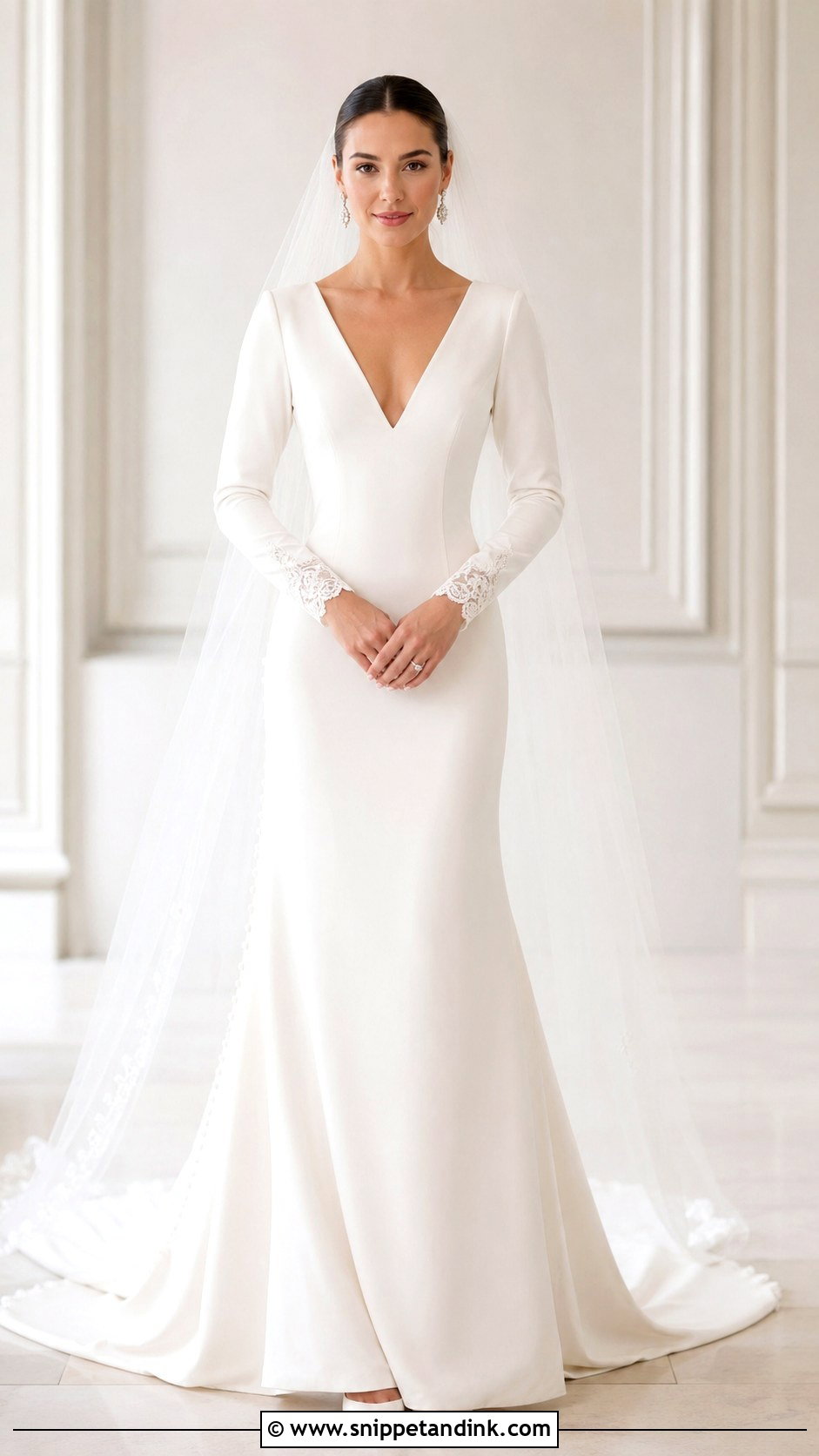
Sleeves and a V balance each other. You’re covered from shoulder to wrist, so an open neckline feels easy rather than exposed. Lace sleeves look traditional and fitted crepe ones look modern. What keeps the front smooth all day is boning inside the bodice, because sleeves tug on the shoulder seams every time you lift your arms, and without structure the V drifts open. Check the cuffs too; you should be able to hold a glass and sign your name. Closed-toe satin pumps, small crystal earrings, a chapel veil and a sleek bun suit it, with a soft wrap for cold weather.
4. Plunging V Cut Wedding Dress
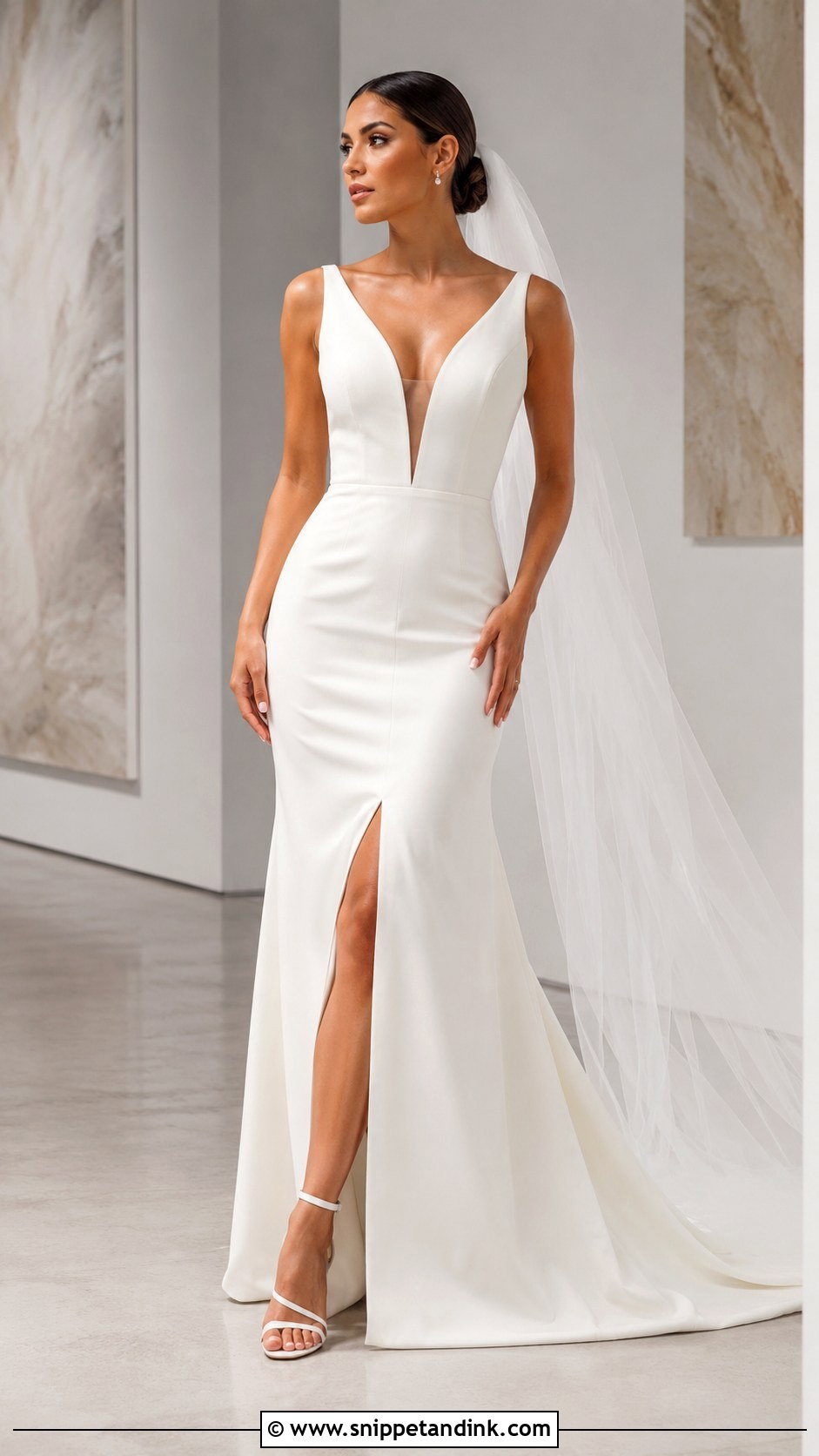
The plunges that actually work are carefully engineered. I look for structured cups, supportive side panels and a fine illusion insert that holds the two sides of the neckline in position. Without that mesh, a deep V relies on tape and luck. Double-sided fashion tape is a useful backup, never a substitute for alterations. Keep everything else spare: minimal earrings, a sleek low bun, strappy ivory heels, a plain veil and no necklace. At every fitting, sit, walk and bend forward as if hugging a shorter relative, watching the neckline in the mirror as you do.
5. V Cut Ball Gown Wedding Dress
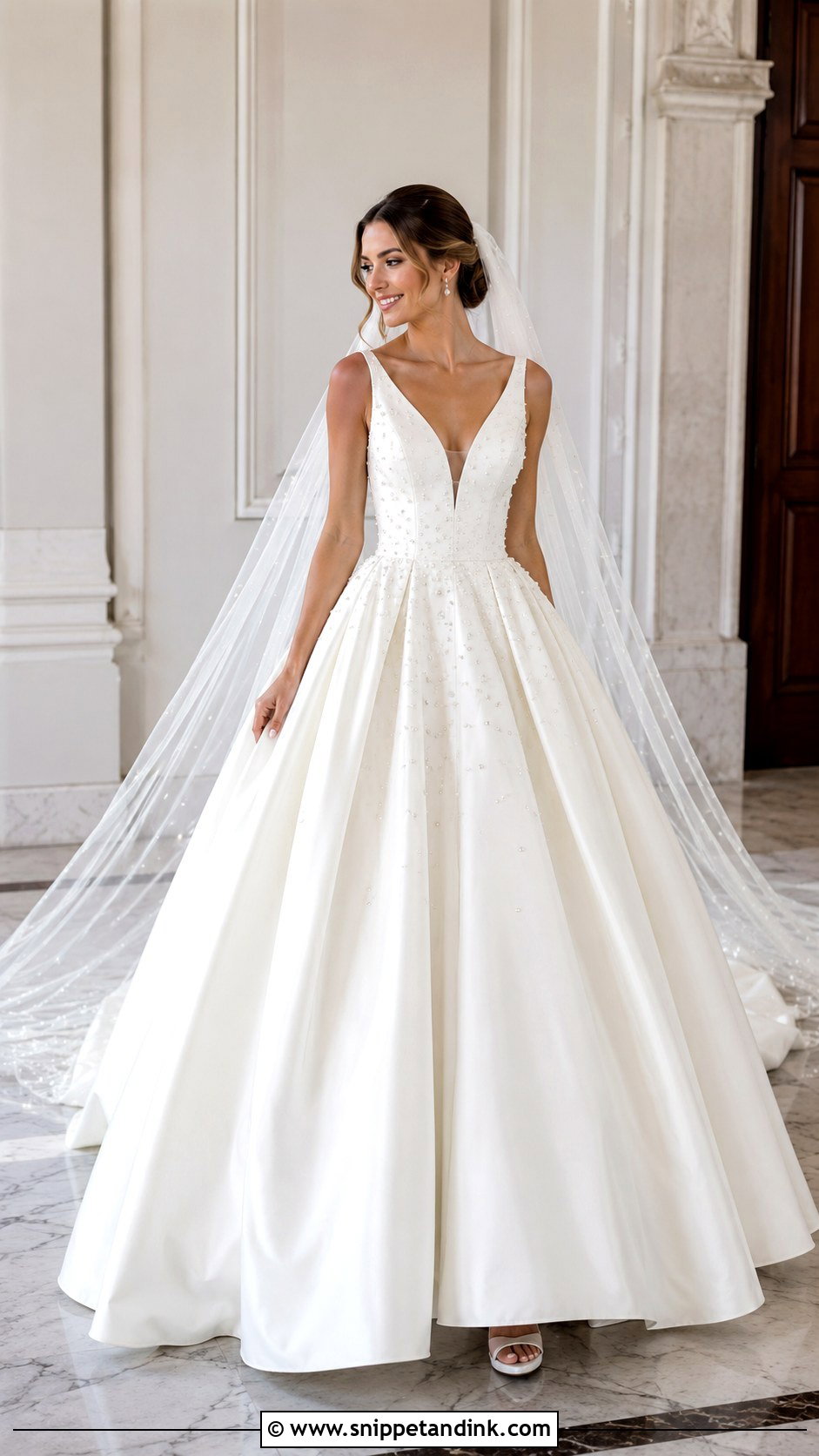
A V neckline is what stops a full ball gown from swallowing a smaller frame, since the open line lengthens the upper body against all that skirt. Wide straps and a structured bodice give reliable support. Satin or mikado holds a crisp shape; layered tulle moves more softly. Ball gowns get heavy, so ask about lightweight petticoats and how the bustle works. I also have brides try both a natural and a slightly dropped waist, because each shifts the proportions noticeably. Block heels hidden under the skirt, sparkling studs, a polished updo and a cathedral veil extending past the train complete it.
6. V Cut Mermaid Wedding Dress
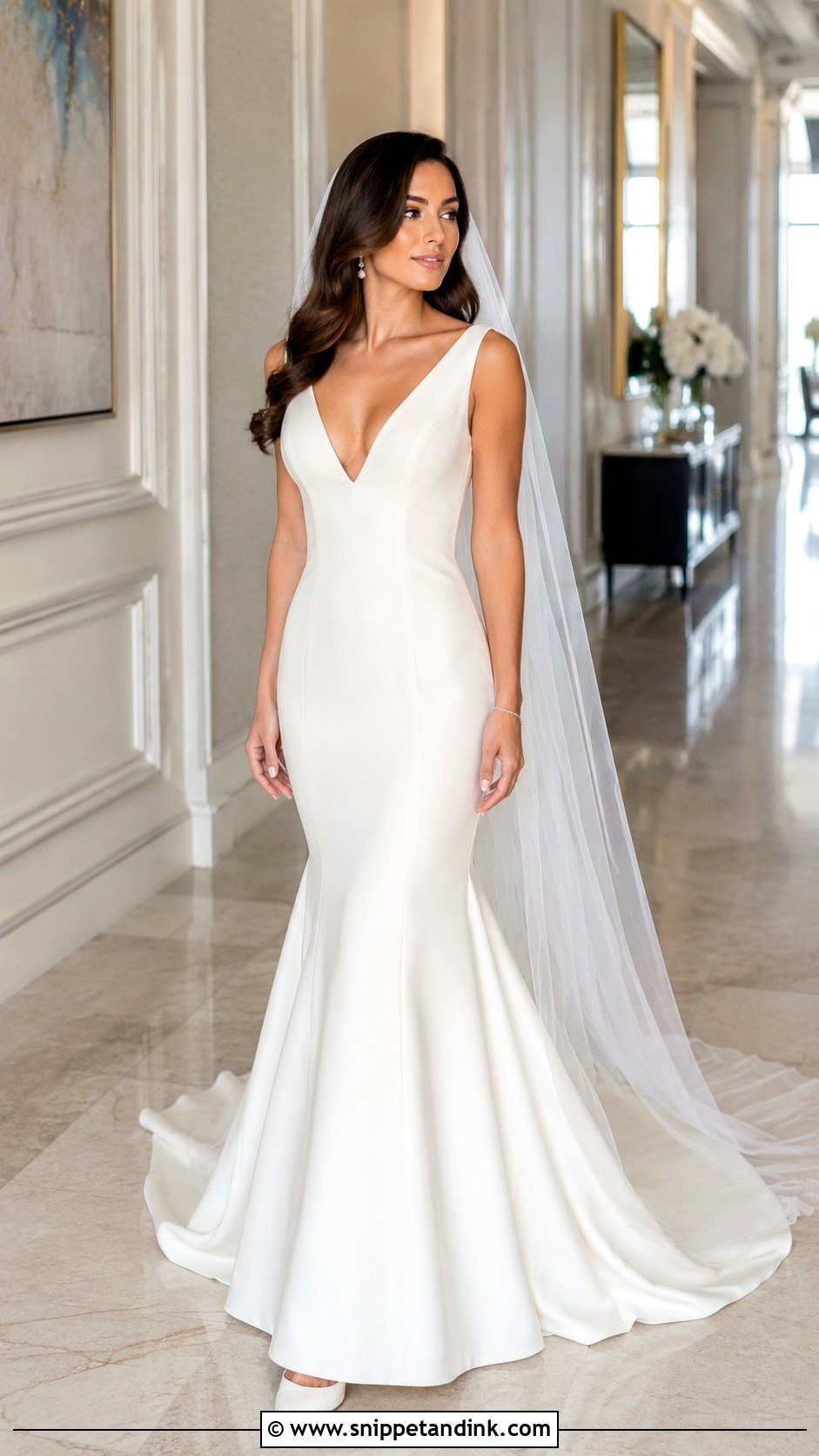
A mermaid in stretch crepe, lace or satin follows the body to the knee before flaring, so the V and the hip line become the two focal points. Where the flare starts is the first thing I ask about: too low and you’ll waddle, too high and the shape loses its drama. Supportive straps and well-placed seams secure the neckline. Pointed pumps, delicate drops, a slim bracelet and a long plain veil suit it, with Hollywood waves or a sleek bun. A detachable overskirt can add ceremony volume. Hold the bouquet low so it doesn’t hide the waist.
7. V Cut Sheath Wedding Dress
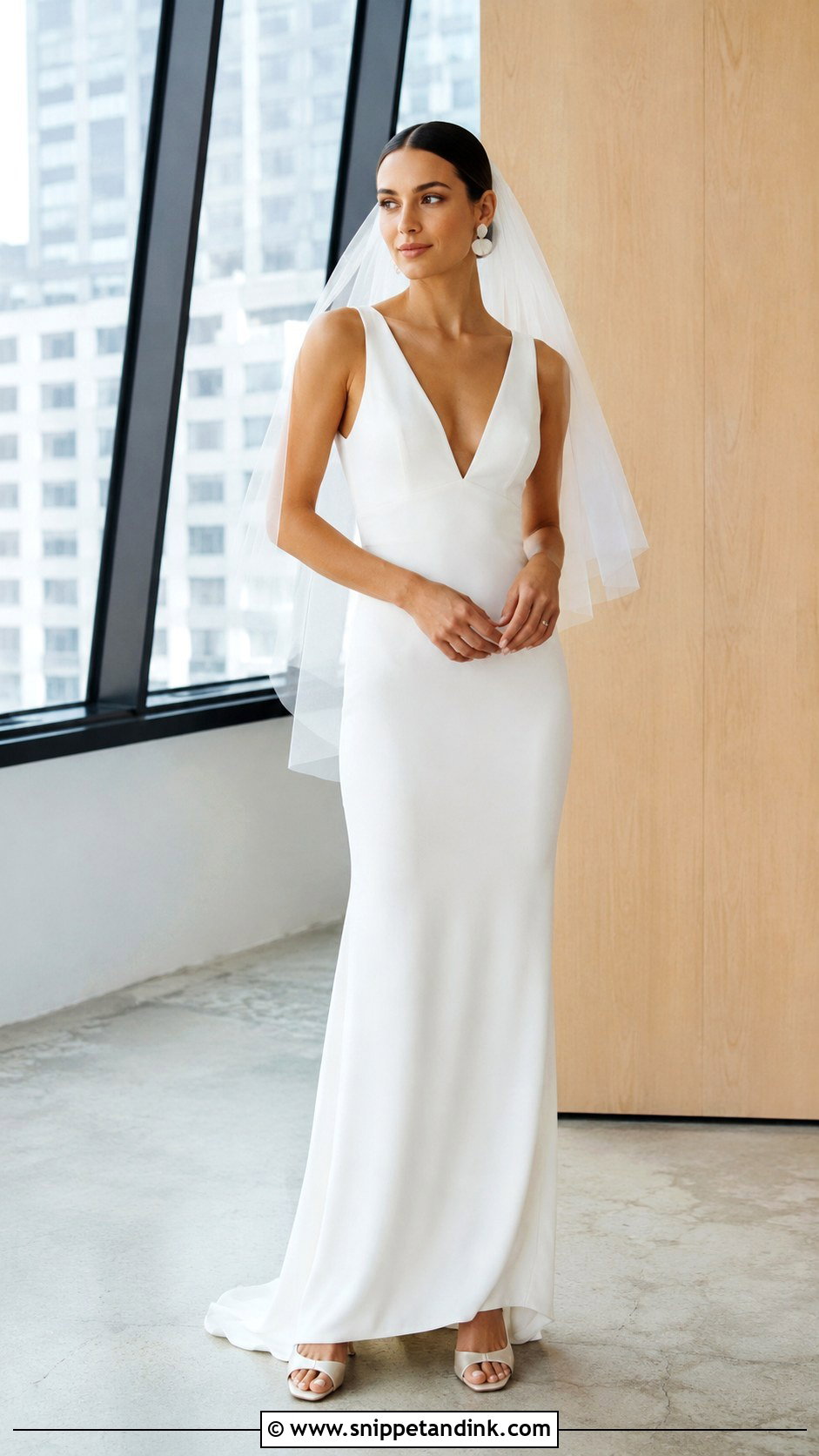
A sheath falls close to the body without a mermaid’s flare, so it suits a modern or intimate wedding. Silk crepe, satin or fluid charmeuse drapes best, and that drape shows exactly what’s underneath. Seamless foundation pieces are worth sorting out before the first fitting, since the tailor fits around them. The waist, hips and hem need precise work. Slingback heels, sculptural earrings, a shoulder-length veil and a smooth low bun keep it minimal. For more ceremony impact, a removable cape or airy overskirt can come off later.
8. Boho Lace V Cut Wedding Dress
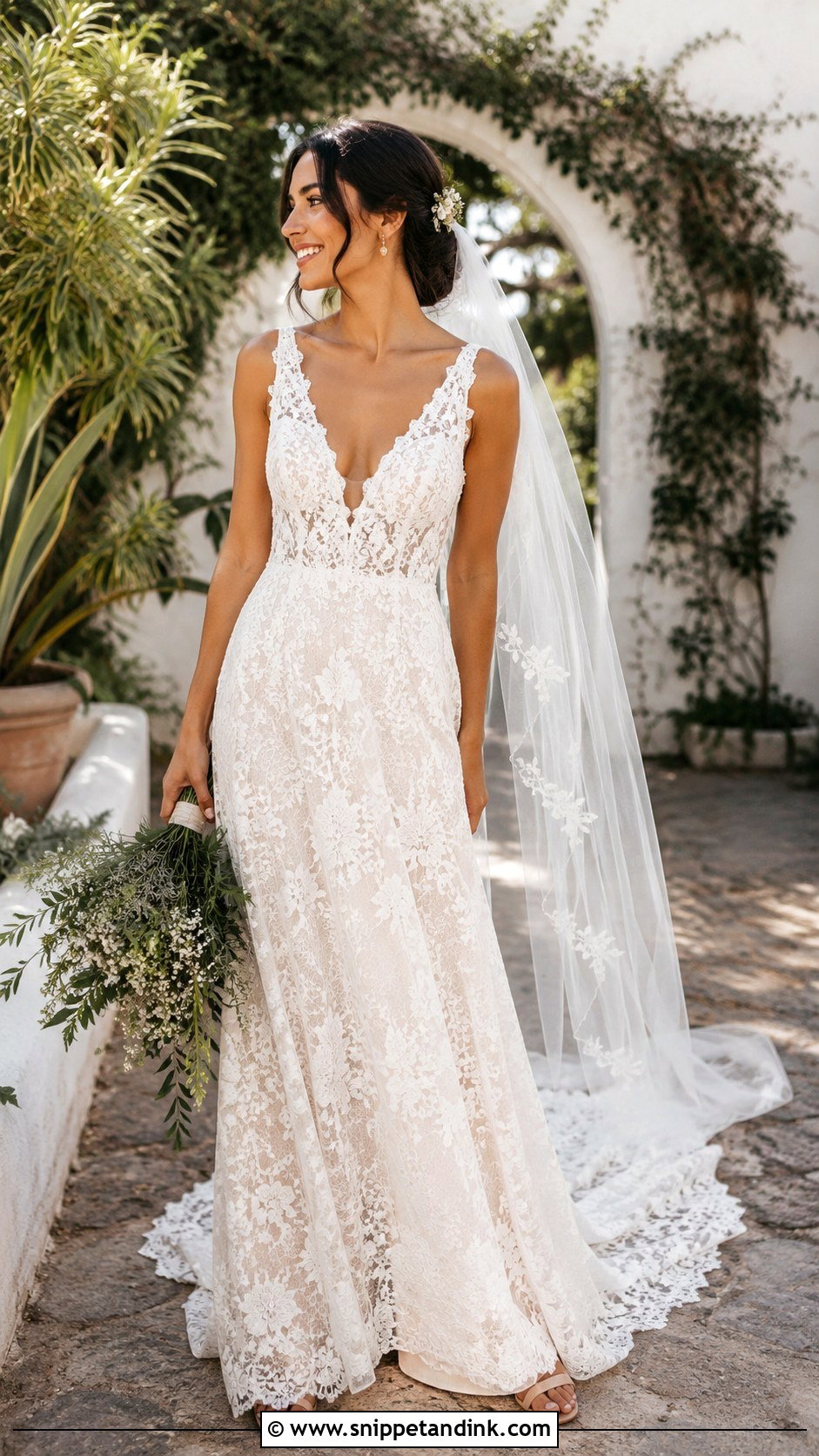
Botanical lace with scalloped edges along the V gives a boho gown its detail without heavy beading. I’d choose comfortable straps, a lightly fitted waist and a flowing chiffon or lace skirt, and check that the scallops lie flat at the neckline, since a curling scallop is one of the most common small fixes at alterations. Low block-heel sandals stay steady on grass, and small gold earrings and a floral comb above loose waves suit the mood. A light veil with scattered appliqués adds movement. A nude lining shows the lace clearly, while ivory reads softer and covers a little more.
9. Minimalist Crepe V Cut Wedding Dress
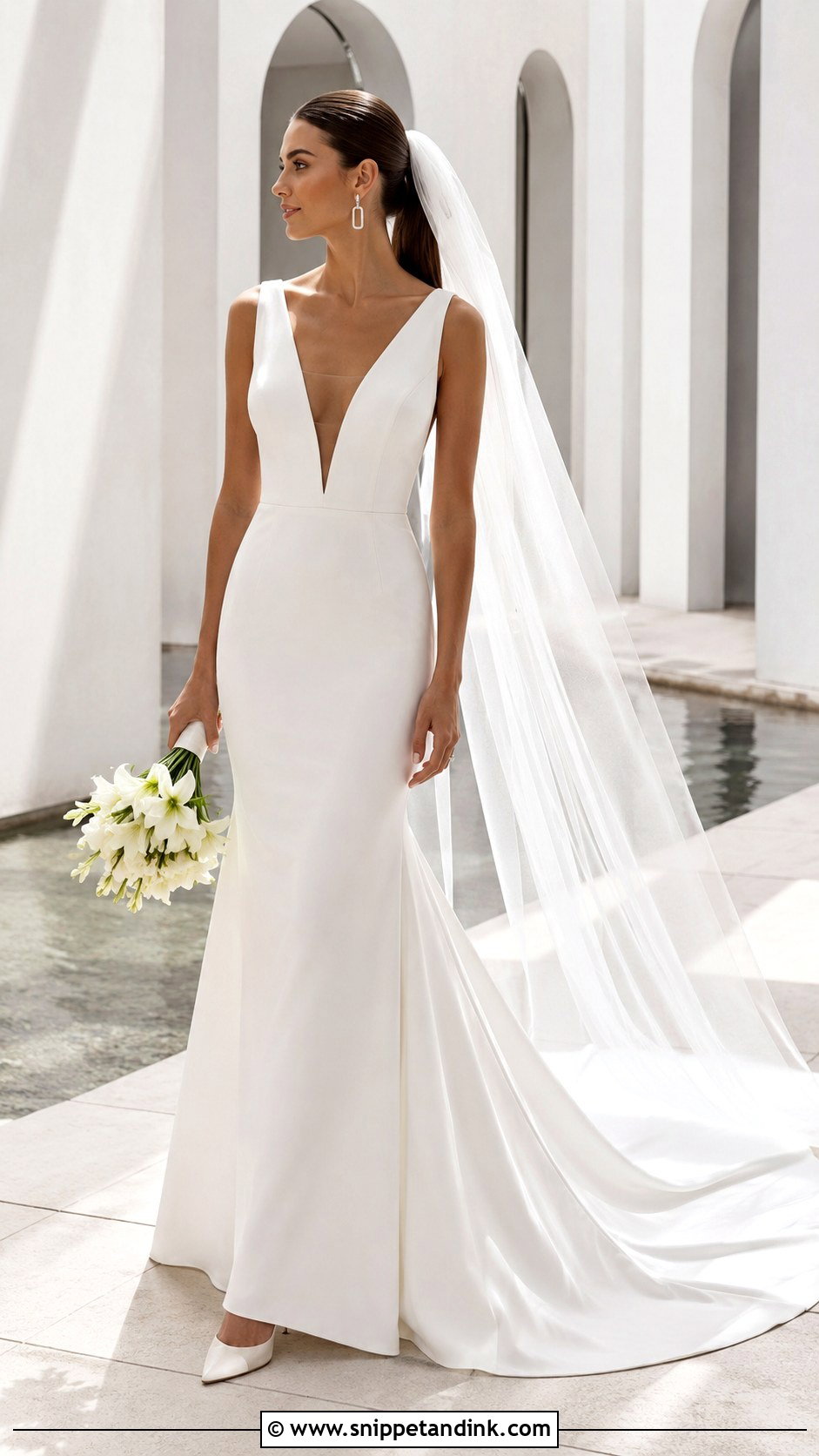
What makes a plain gown memorable? Tailoring. A minimalist crepe V-cut has nothing to hide behind, so the bodice, waist seam and skirt have to be exact. Crepe also shows foundation garments and seam lines, which is why I ask brides to bring their actual underwear to the first fitting rather than the last. If the neckline feels too open, a narrow illusion insert adds security without changing the shape. Covered back buttons, a square train or a detachable bow give restrained detail. Pointed ivory heels, pearl or geometric earrings, a long plain veil and a sleek ponytail suit a contemporary venue.
10. Beaded V Cut Wedding Dress
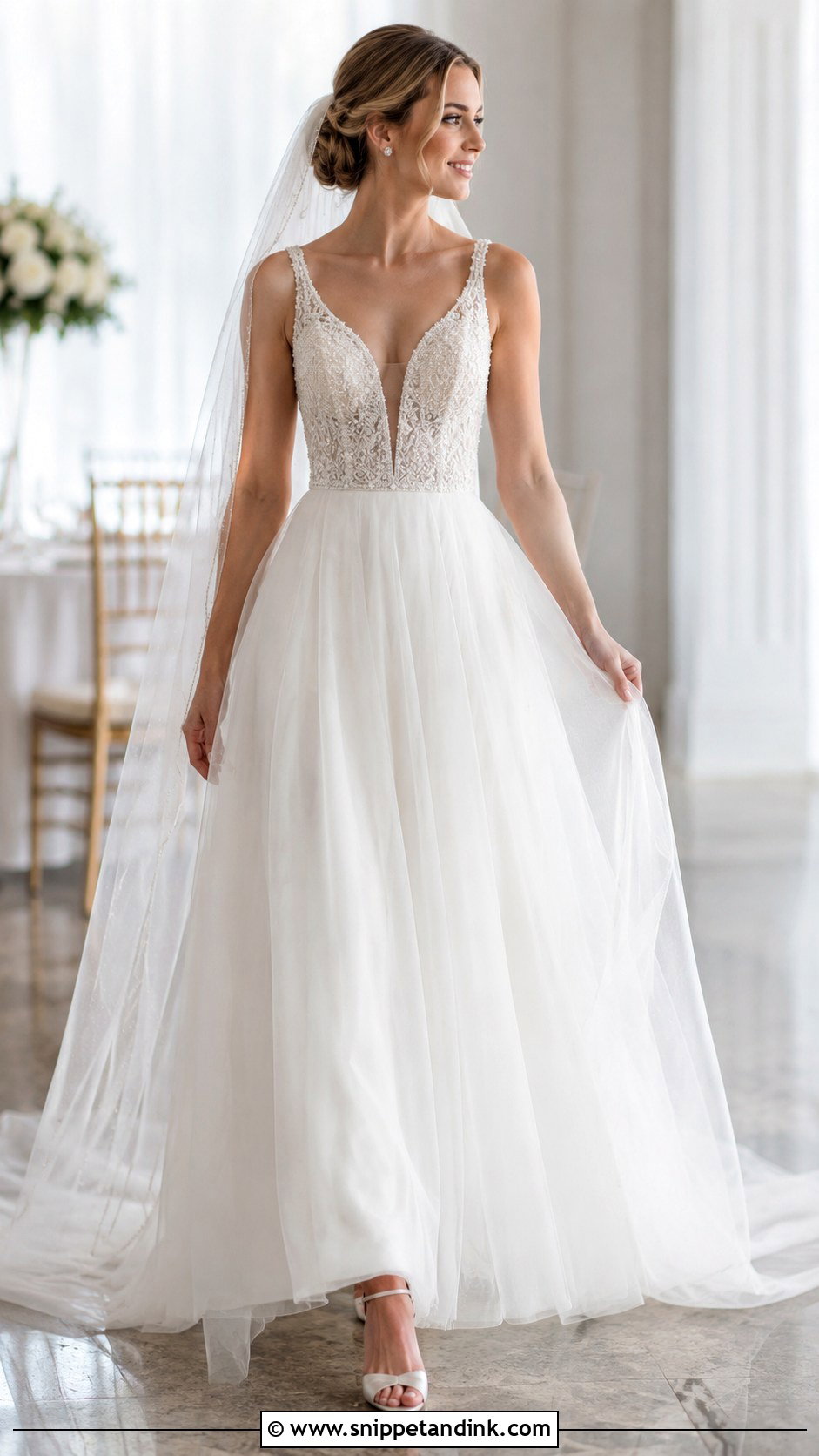
Beading looks best when it traces the V and the waist instead of covering everything. Pick one main area of sparkle; a beaded bodice over a plain chiffon or tulle skirt is a good balance. Then check the inside of the armholes. Rough beading or exposed thread ends there can rub skin raw by evening, and a soft lining fixes it. A low textured bun keeps hair away from the beads, which protects both. Simple satin heels, small crystal studs and a veil with only a light scattered shimmer let the gown supply the brightness.
11. V Cut Wedding Dress With Cap Sleeves
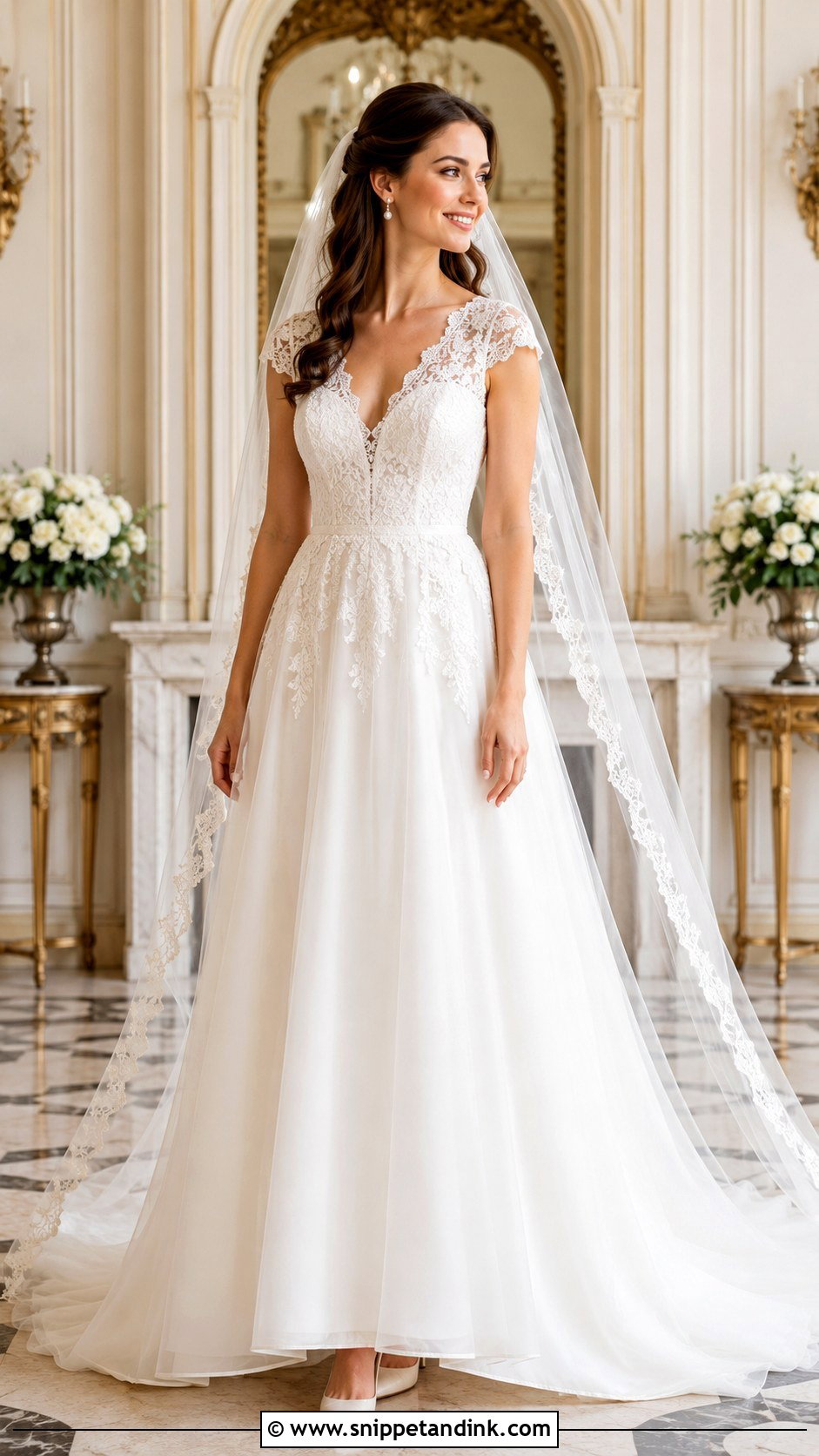
Cap sleeves give a little shoulder coverage without the weight of full sleeves. Lace caps feel soft and satin caps look structured. What I watch is how the cap meets the V: a tight shoulder seam can pull the neckline upward and open small gaps near the bust, easy to miss standing still and obvious once you move. Raise your arms at the fitting. Pearl drops, closed-toe ivory pumps, a chapel veil with a narrow lace border and a half-up style suit it. If the lace is intricate, skip the necklace and wear a fine bracelet. A-line, sheath and fit-and-flare skirts all work.
12. V Cut Wedding Dress With Spaghetti Straps
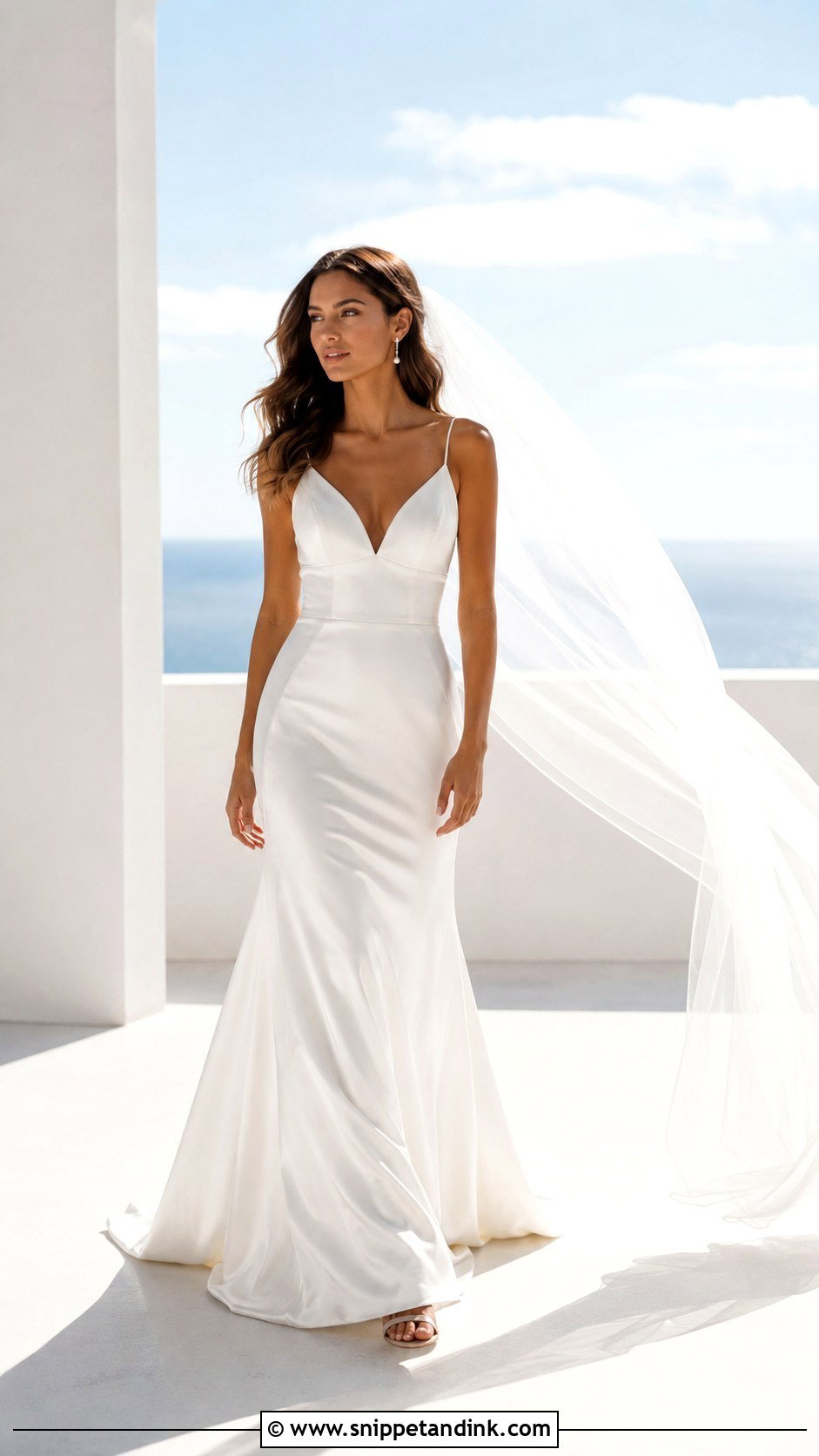
Thin straps make a V feel light and modern on a satin slip, a fitted crepe dress or a chiffon gown. They also carry less weight, so the bodice has to do more of the supporting. Adjustable or professionally set straps keep it secure without digging into your shoulders. With this much skin on show, body makeup and sunscreen need care; apply them well before dressing so nothing transfers onto the straps. Drop earrings, slim heeled sandals and an airy cathedral veil suit it, and removable tulle sleeves or a sheer cape add a layer for the ceremony.
13. V Cut Wedding Dress With Illusion Panel
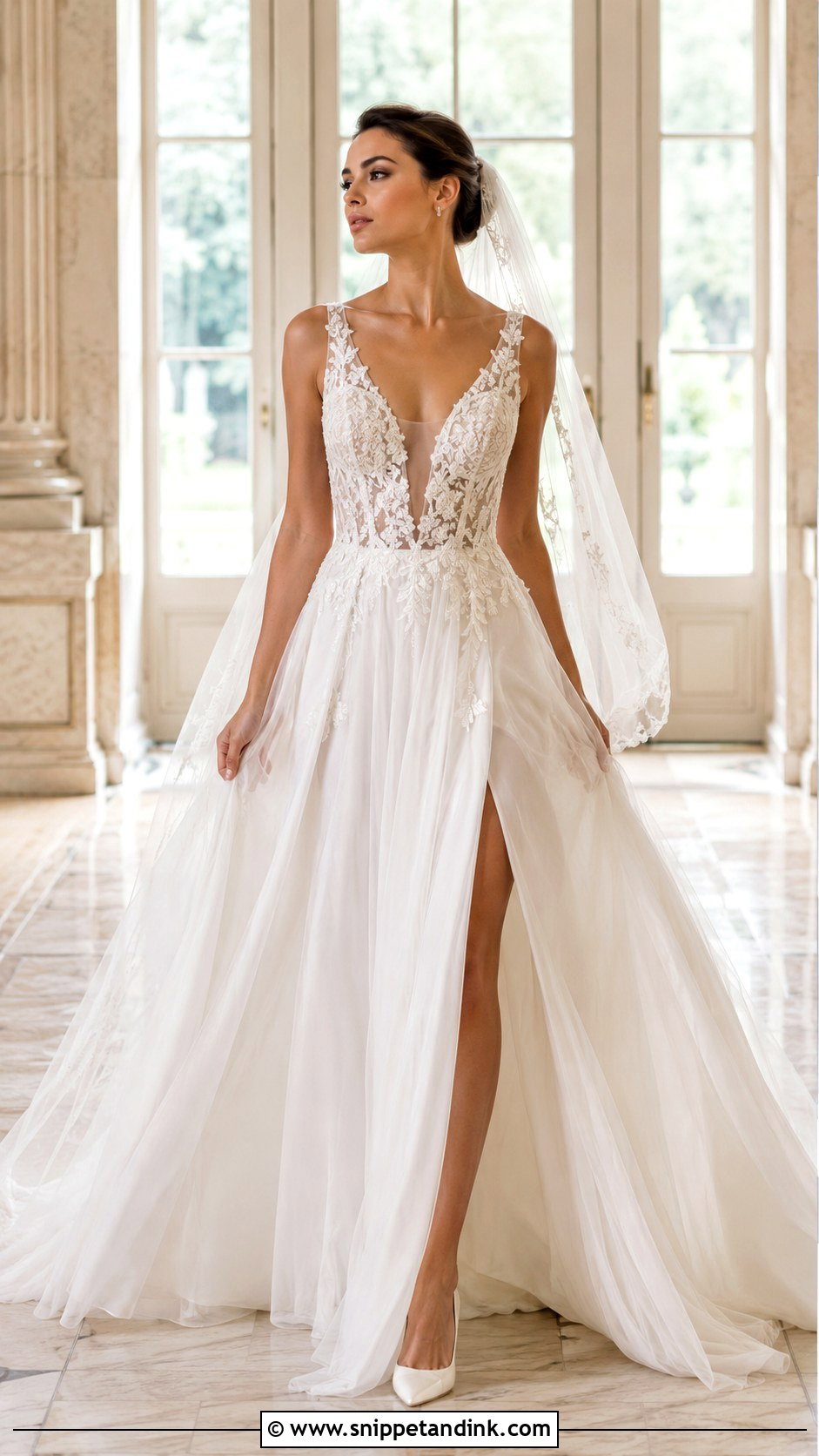
An illusion panel lets you wear a deep V-cut wedding dress with confidence. Fine mesh stabilizes the neckline while keeping the look of an open plunge. Matching that mesh to your skin is the hard part. I check it in indoor light, daylight and camera flash, because a shade that disappears in one can look gray in another. Ivory mesh is an option if you’d like a softer, more modest effect. A few lace motifs placed over the mesh hide its edge, and the panel should lie flat without wrinkling near the bust. Elegant pumps, understated earrings and swept-back hair finish it.
14. V Cut Wedding Dress With Floral Appliqués
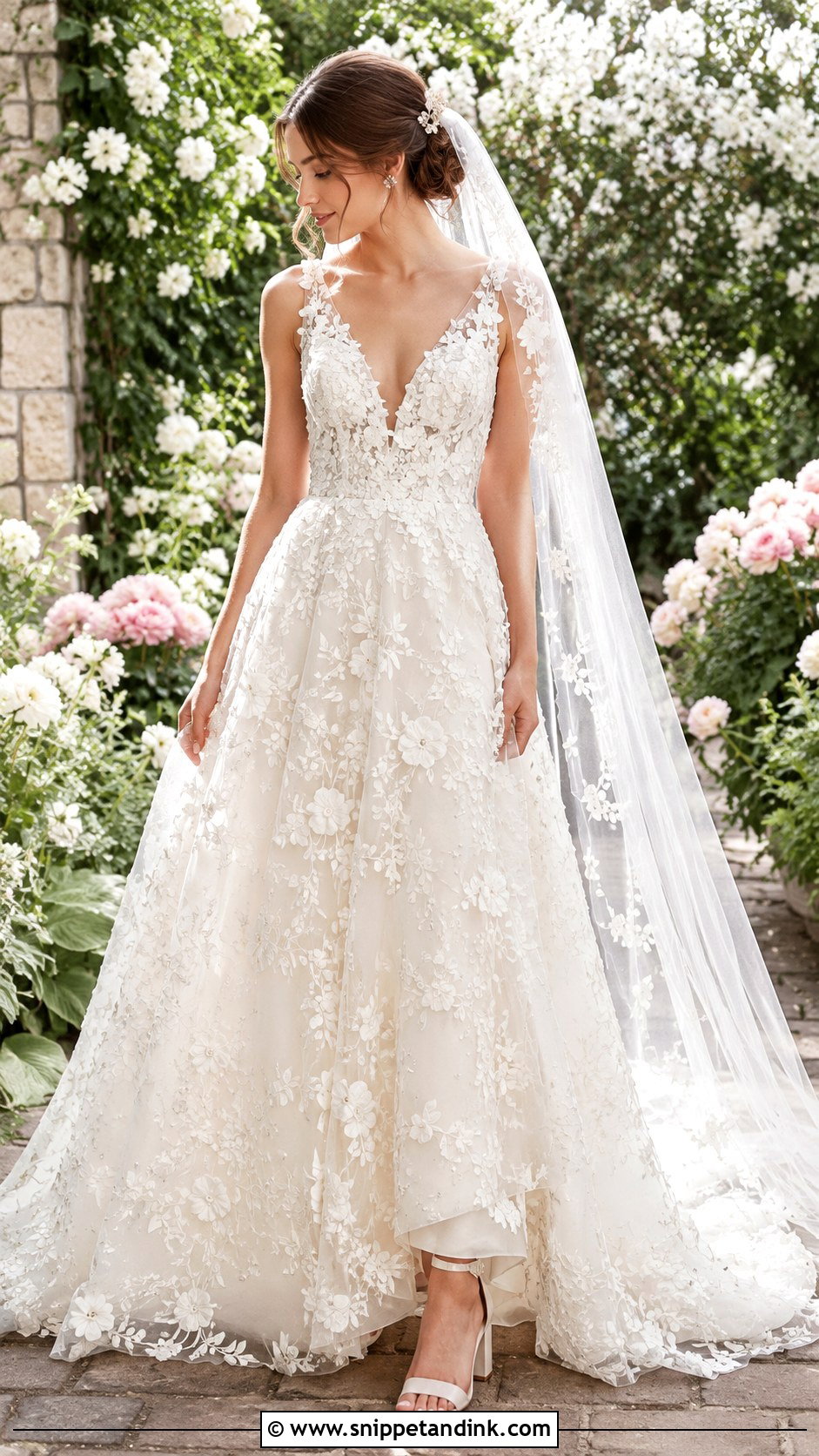
Raised flowers along the neckline, waist and upper skirt guide the eye down the V; scattered at random, they just look busy. A sheer tulle bodice feels light, and a lined one gives more coverage. I check appliqués near the arms for stiff edges and for catching on the veil, since tulle snags easily on raised petals. Satin block heels, floral studs and a veil with a few matching appliqués near the hem tie it together, along with a loose low bun and a small botanical comb. A-line and fit-and-flare skirts suit it best, especially in a garden.
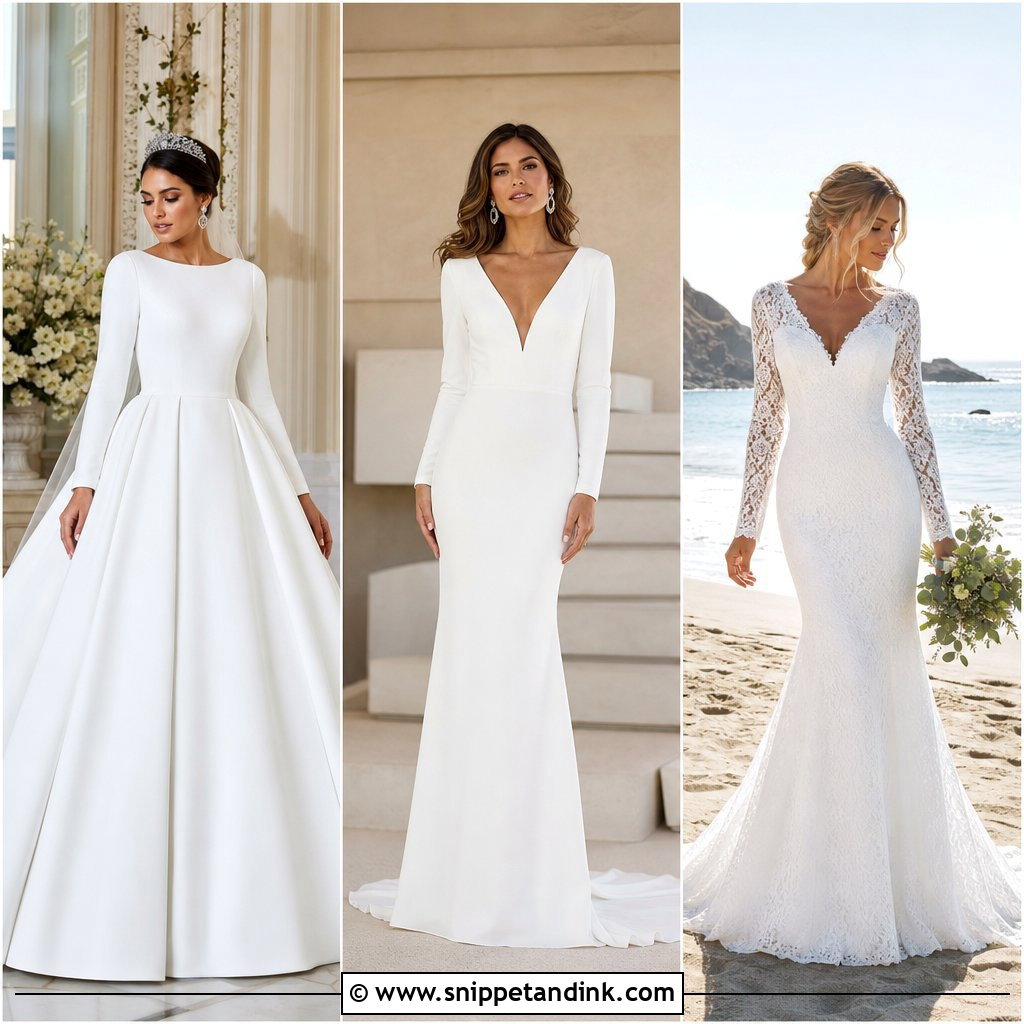
15. V Cut Wedding Dress With Detachable Sleeves
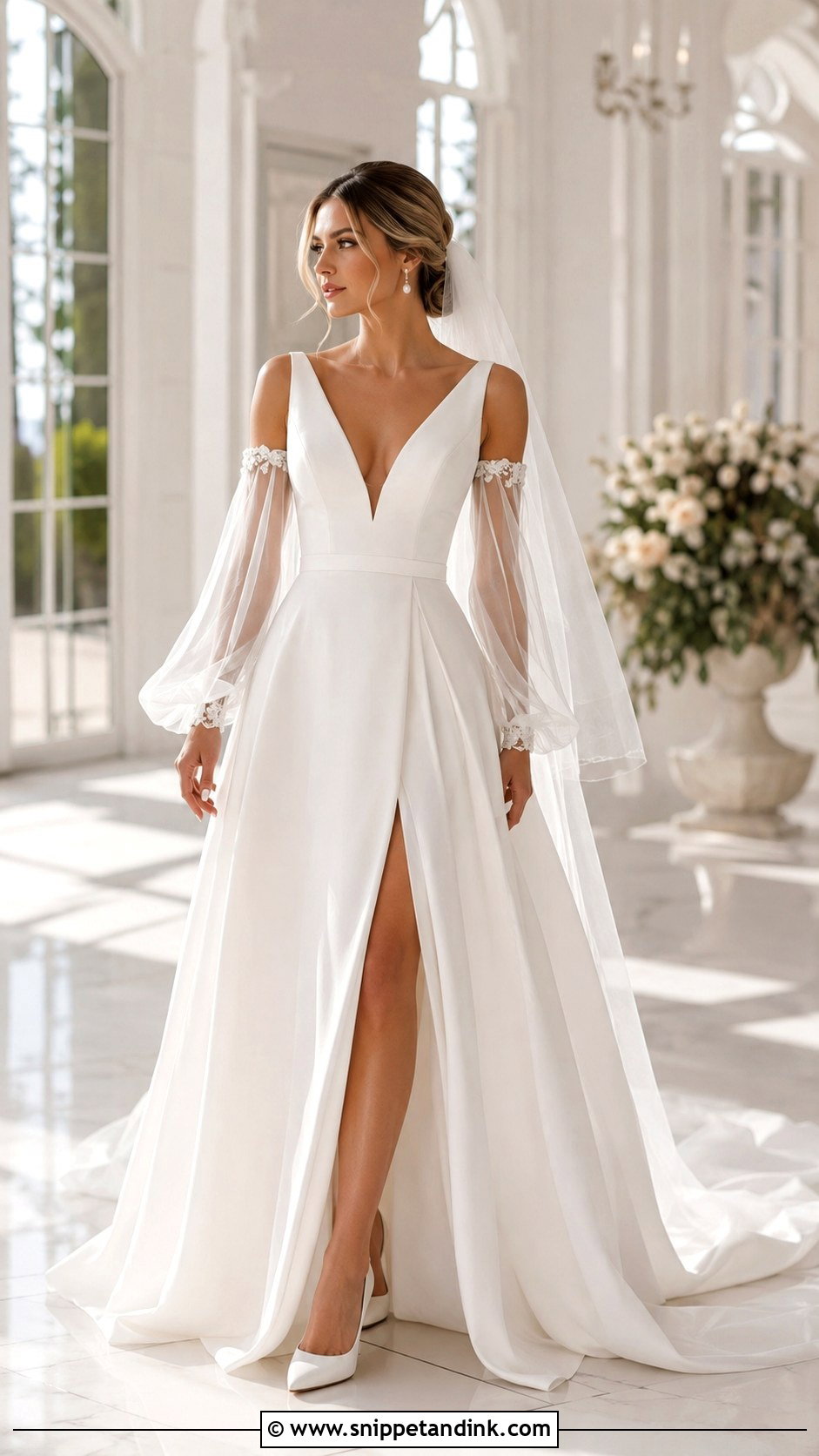
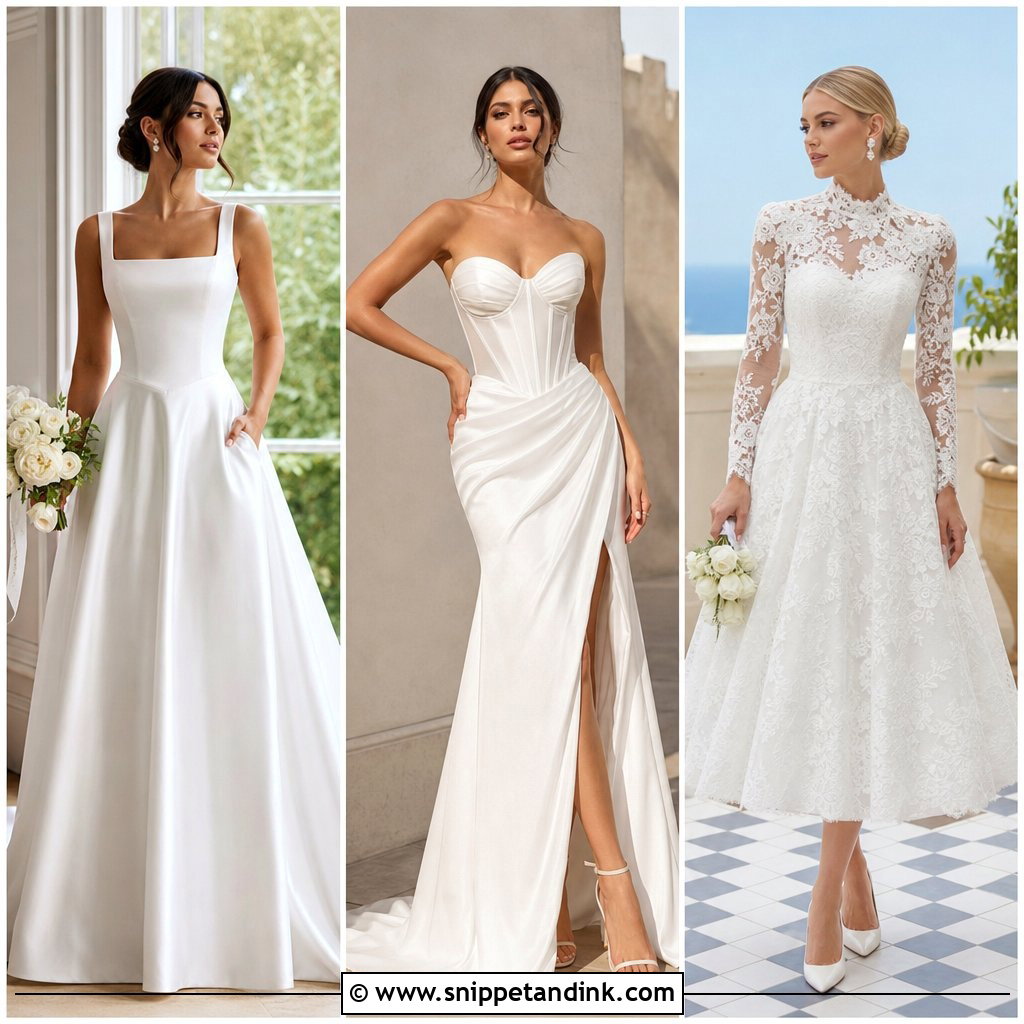
Detachable sleeves give one gown two moods. Start the ceremony in fitted lace, airy tulle or structured satin sleeves, then remove them to reveal a clean sleeveless V. Ask how they attach before buying. Hidden snaps or loops should stay secure and invisible, and the sleeve fabric should look like part of the dress, not an add-on. Practice taking them off at the final fitting with whoever will help you. Pointed pumps, small pearl earrings, a medium-length veil and a neat chignon work in both versions.
16. V Cut Wedding Dress With Open Back
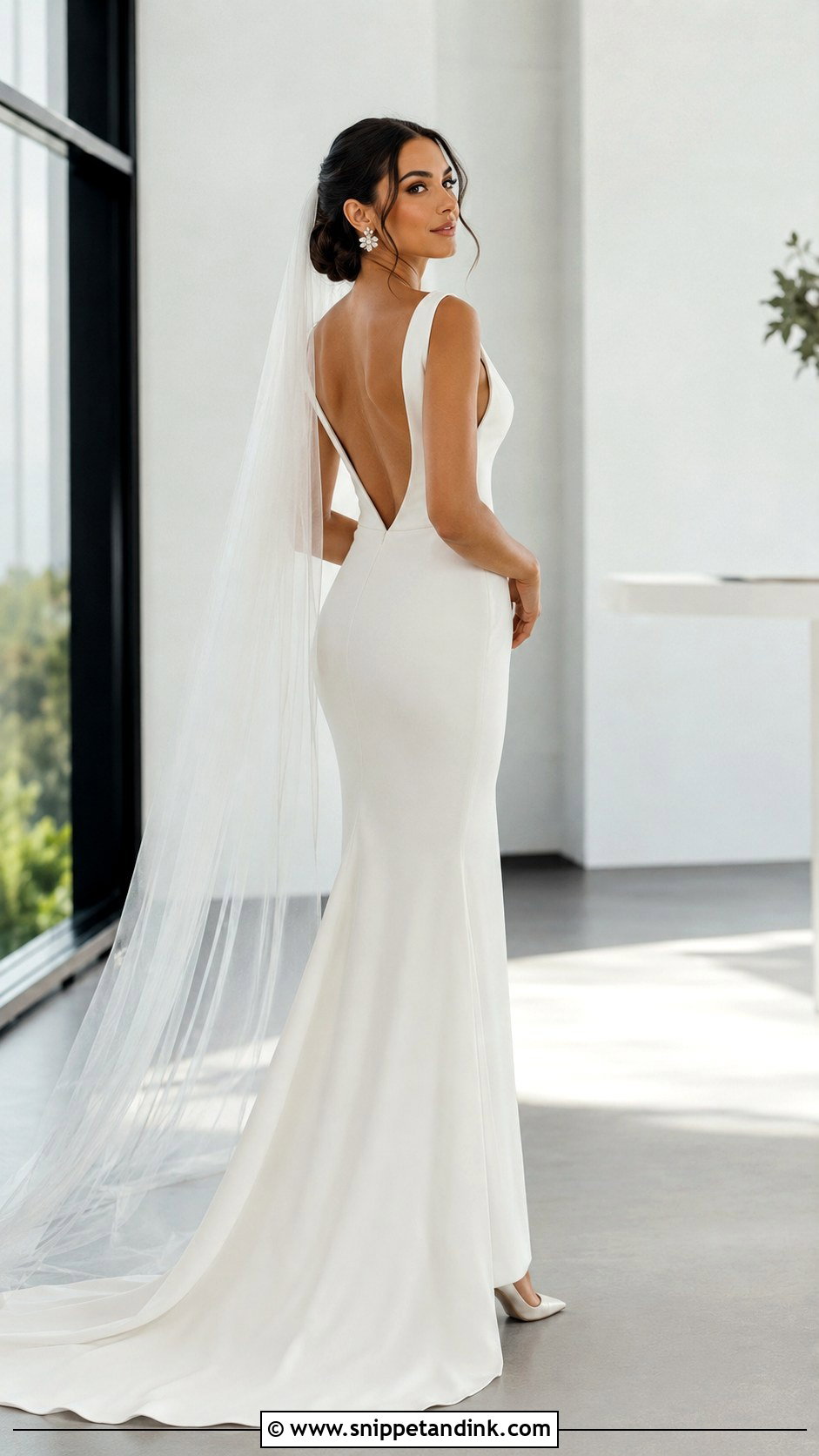
A V front and a V back balance each other, so the gown looks finished from every angle. The straps do double duty here: they control both front and back, so a strap shortened to tighten the front also lifts the back. Fitting them is most of the job. Check that the fabric lies flat at the waist without gaping, and if you need more hold, ask about low-back foundation support, built-in cups or concealed elastic. Crepe, satin and lace all suit the design. Statement earrings, pointed heels, a sheer veil and an updo or side-swept waves keep the back visible. Skip the necklace.
17. Chiffon V Cut Wedding Dress
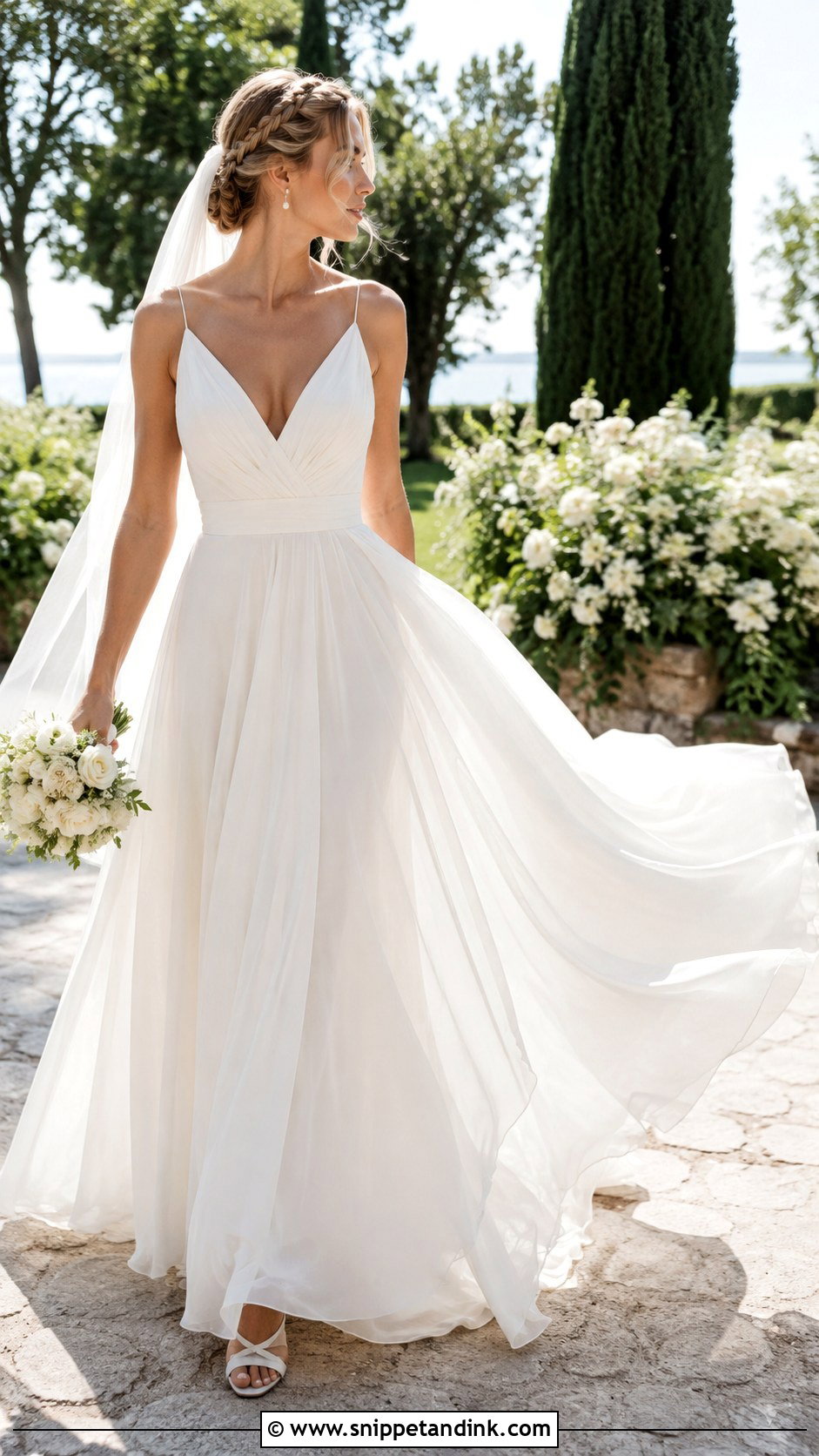
Chiffon is the most comfortable fabric here for warm weather. A lightly structured bodice over a layered skirt keeps the V secure while the skirt floats. It can be slightly sheer, so stand in bright daylight before alterations and check the skirt lining in a phone photo. A defined waistband adds shape, and gathers make the waist softer. Heavy beading pulls and puckers chiffon, so keep embellishment light. Low heeled sandals, pearl earrings, a light veil and loose waves or a braided bun suit an outdoor ceremony.
18. Plus Size V Cut Wedding Dress
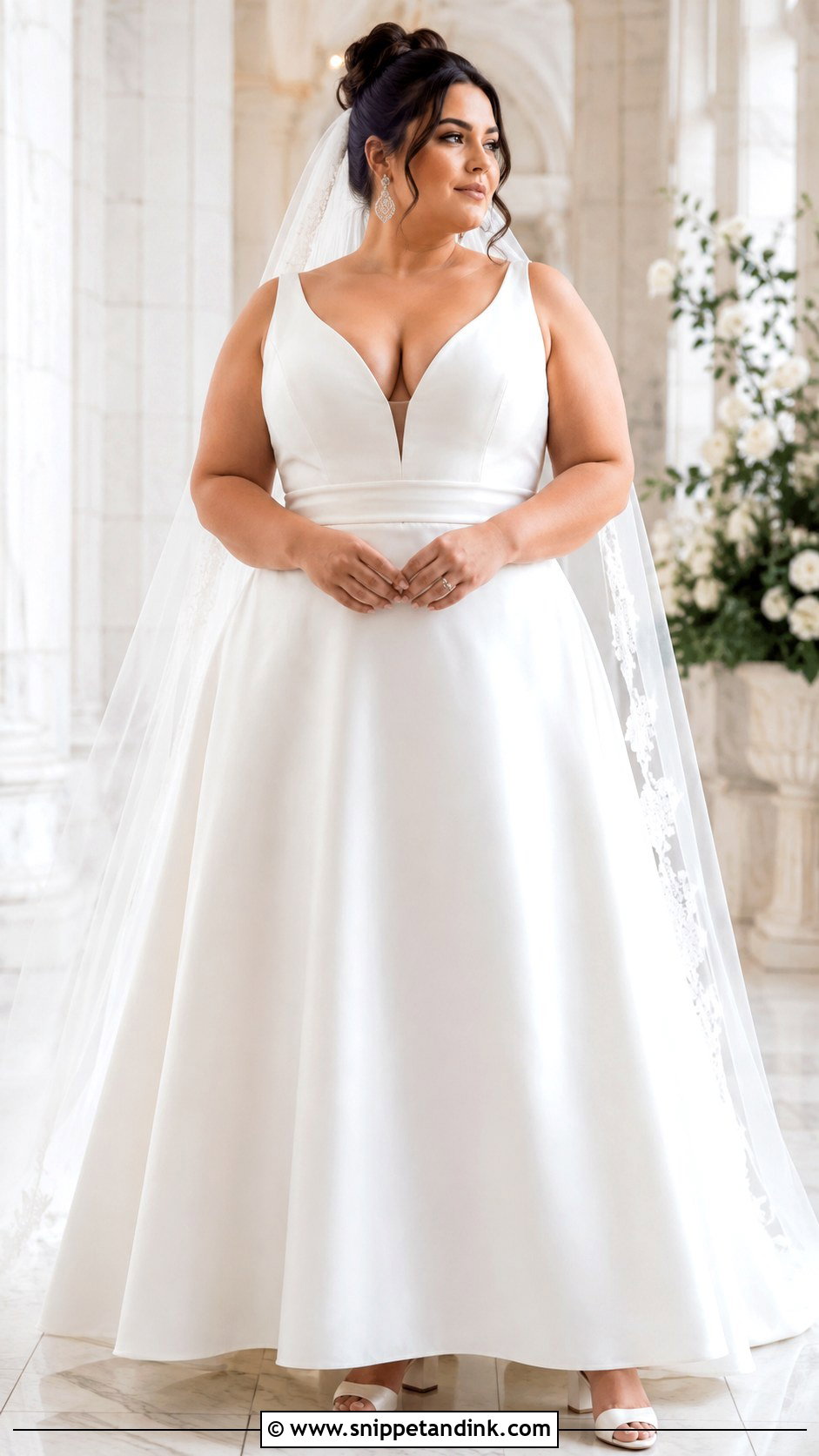
Support decides how a V looks on a fuller bust. Wide straps, built-in cups, a firm lining and boning that follows the body without pinching keep the neckline flat and secure. Choose the depth by how much coverage you want, not by old body-shape rules. An A-line or softly fitted skirt gives movement, and a defined waistband or Basque waist emphasizes the structure. Block heels, statement earrings and a veil anchored firmly into a polished updo complete it. At fittings, sit, raise your arms and walk. A shop experienced with inclusive sizing will fit you far better than one that simply orders a larger sample.
19. Modest V Cut Wedding Dress
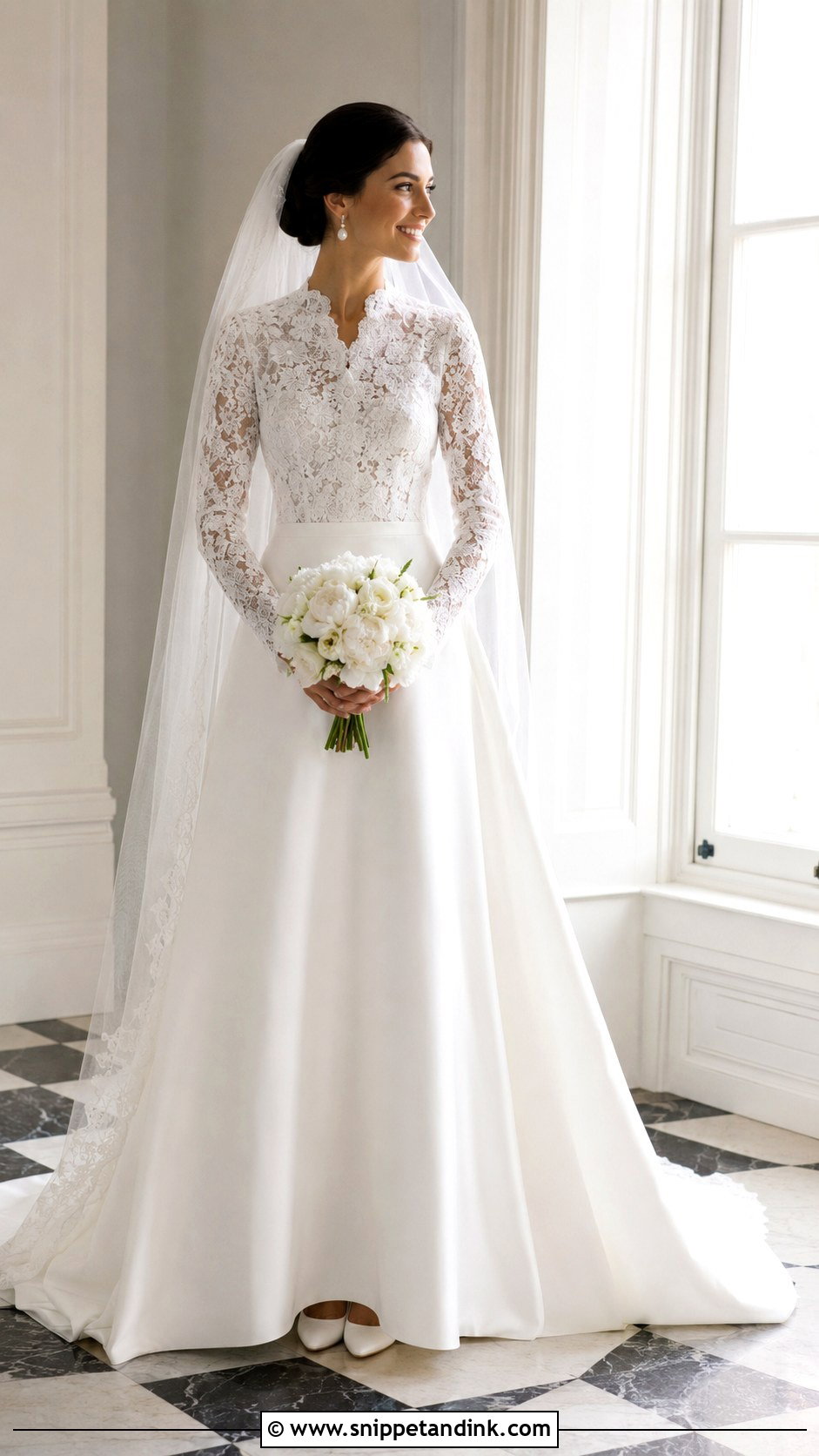
A modest V keeps the shape while ending above the bust line. Pair it with long or three-quarter sleeves in matte crepe, lined lace or structured satin. If you love a gown with a deeper original cut, a good seamstress can raise the neckline with matching fabric or lace. I ask that the addition follow existing seams so it looks intentional, and since the shop may need to order extra fabric, bring it up early. Check the back and sleeves for the coverage you want. Closed-toe pumps, pearl earrings, a chapel veil and a low bun finish it.
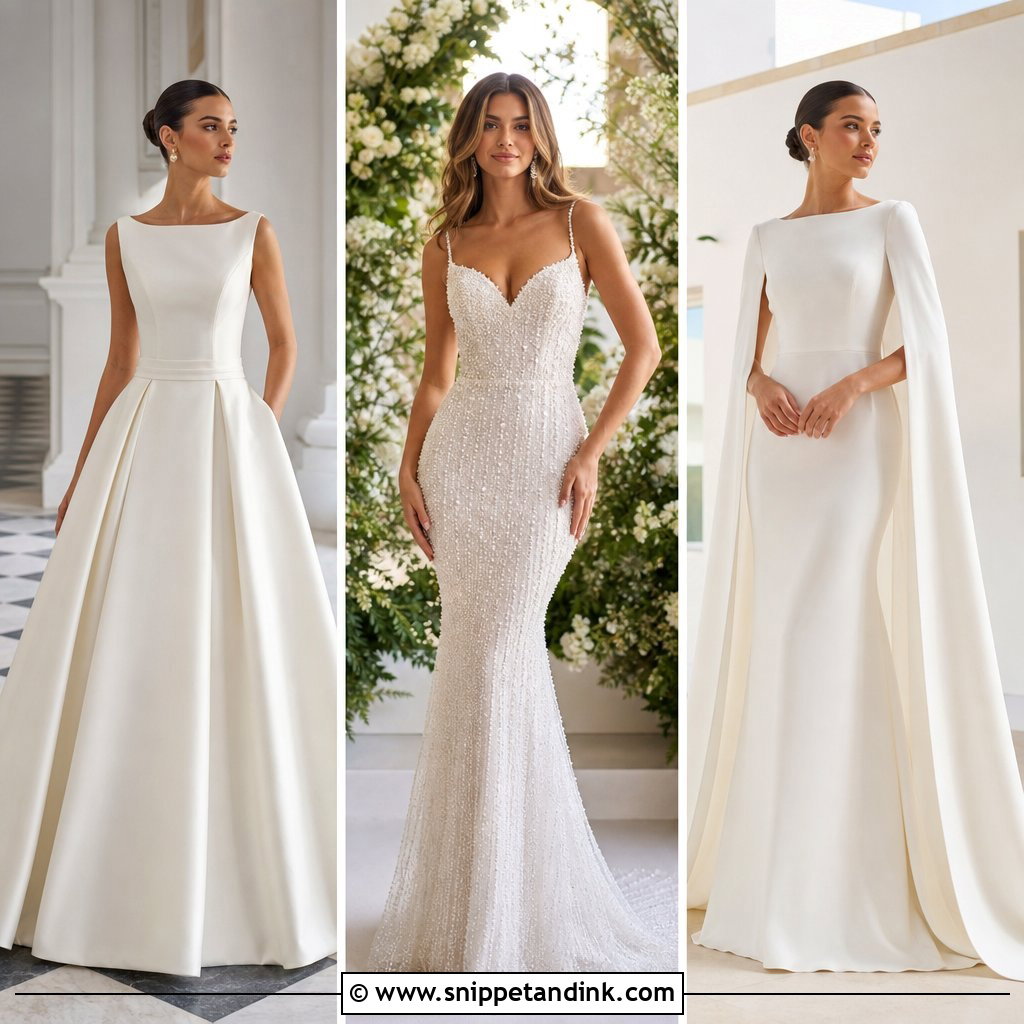
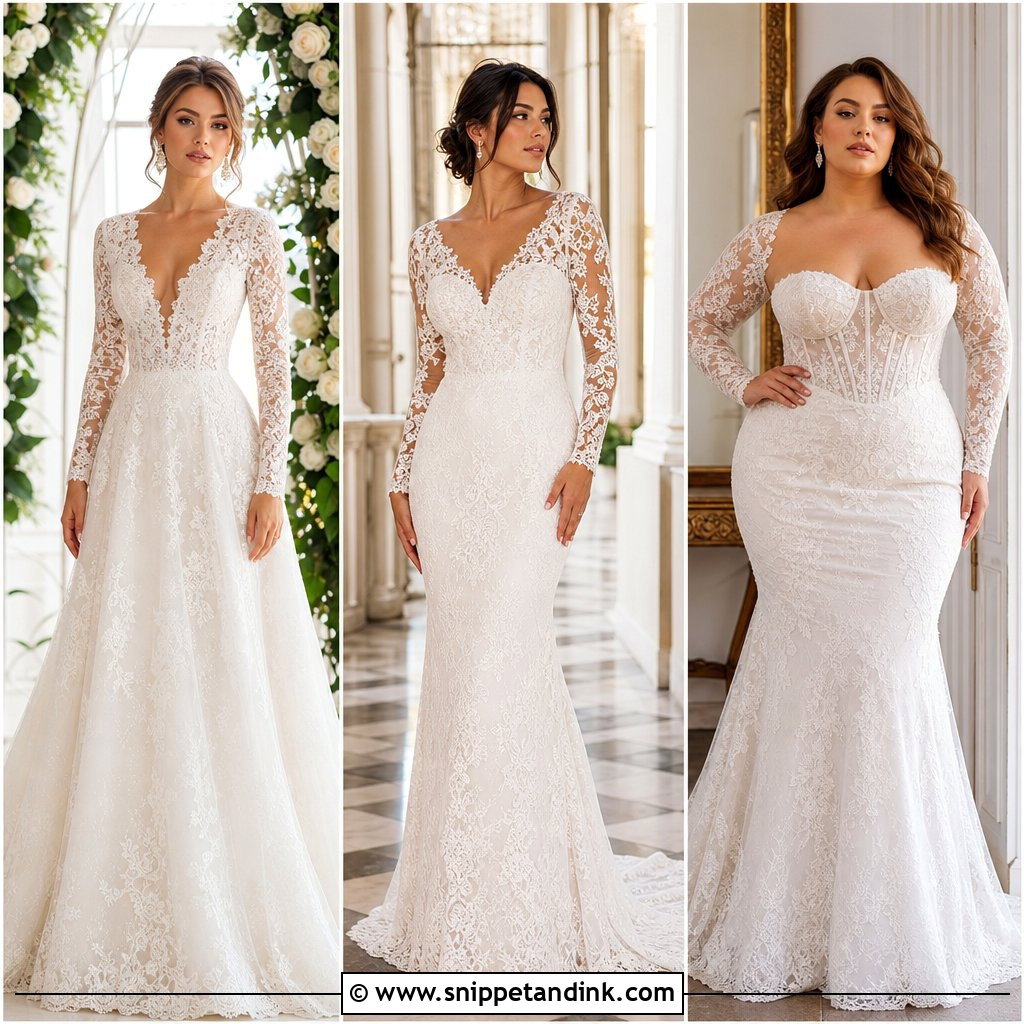

20. Short V Cut Wedding Dress
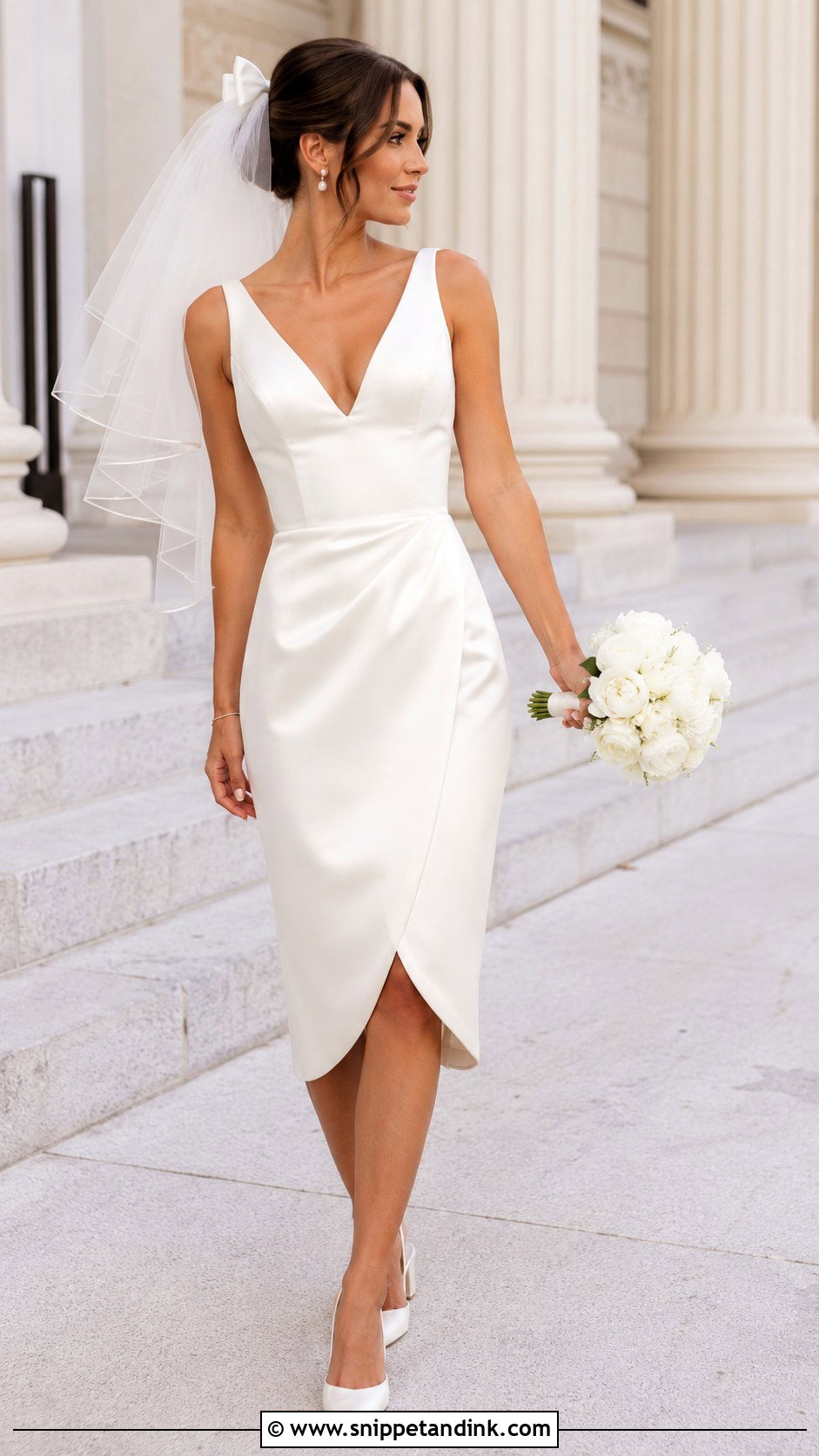
A short V-cut suits a courthouse ceremony, a relaxed celebration or a second bridal look. A tailored midi feels sophisticated, and a knee-length A-line is more playful. Structured satin, crepe or lace keeps the shorter hem looking bridal. Your shoes are fully visible, so choose a pair that’s special and that you can stand in for hours, then bring them to every hemming appointment. Pointed slingbacks, pearl earrings and a small bow veil or polished hairband finish it, with a removable blazer, cape or sheer sleeves for coverage.
Necklaces, Earrings and Hair Along the Line of a V
A V neckline creates a frame, and accessories either sit neatly inside it or crowd it.
If you want a necklace
Choose a pendant or a Y-shaped chain that ends comfortably above the point of the V, so it echoes the shape. A collar or choker cuts straight across the throat and usually fights the line. With a plunge or heavy lace at the neckline, I’d leave the necklace off altogether.
Earrings carry more weight here
Without a necklace, earrings do the work. Linear drops repeat the vertical line and lengthen the neck, while large round studs read wider. If yours are heavy, wear them for a full afternoon at home first, because sore earlobes by the speeches are a common complaint.
Hair that keeps the frame clear
Updos and low buns leave the neckline open. If you’d like your hair down, sweep it behind one shoulder or pin the sides back so it doesn’t cover the edges of the V, especially on lace, where loose strands catch and pull.
How Low the V Goes Is Your Call
A V neckline can read classic, romantic, modern or dramatic depending on its depth and the fabric around it. When comparing dresses, look past the front view: check the straps, back, lining, skirt movement and internal support from every angle, and bring your shoes and foundation garments to fittings so the alterations are accurate. Pick the depth and silhouette that feel comfortable rather than the one a rule says you should wear. Then keep the jewelry and veil working with the line, and let a skilled tailor finish the rest.
You'll Like These Ideas:







Leave a Reply