
There’s no rule book for a bridal gown with visible body art. The real decision is whether each piece should be on show, softened, or revealed only when you turn around. Sculpted corsets, Basque and drop waists, open lace, clean satin, illusion panels and convertible sleeves all give you that control. When a tattooed bride sits down with me, the first thing I ask is where her favourite pieces are, because the neckline, sleeve and back of the dress should be chosen around them. The twenty outfits below are organised with that in mind, with accessories kept simple enough that the art and the gown don’t fight.
Where Is Your Ink? Sorting Necklines and Backs by Placement
Before trying anything on, I ask tattooed brides to send me three photos of themselves in a vest top: front, side and back. It takes two minutes and saves an afternoon of pulling dresses that cover exactly the wrong spot. From there, the shortlist almost writes itself.
- Collarbone, chest or sternum: sweetheart, deep V, square neck or strapless. Avoid high necks and heavy neckline beading.
- Shoulders and upper arms: strapless, off the shoulder, one shoulder or halter. Sheer sleeves soften rather than hide.
- Back and spine: open back, keyhole, backless slip or a high front with a low back. Watch where the veil falls.
- Forearms and hands: short or cap sleeves, or a long sheer sleeve that lets the design read through.
- Legs and ankles: tea length, a short reception dress, or a front slit on a column gown.
Then decide which pieces you want people to see. Many brides have one tattoo they treasure and a couple they’re less attached to, and the dress can be chosen to show off one while quietly covering the others.
1. Strapless Satin A-Line Wedding Dress
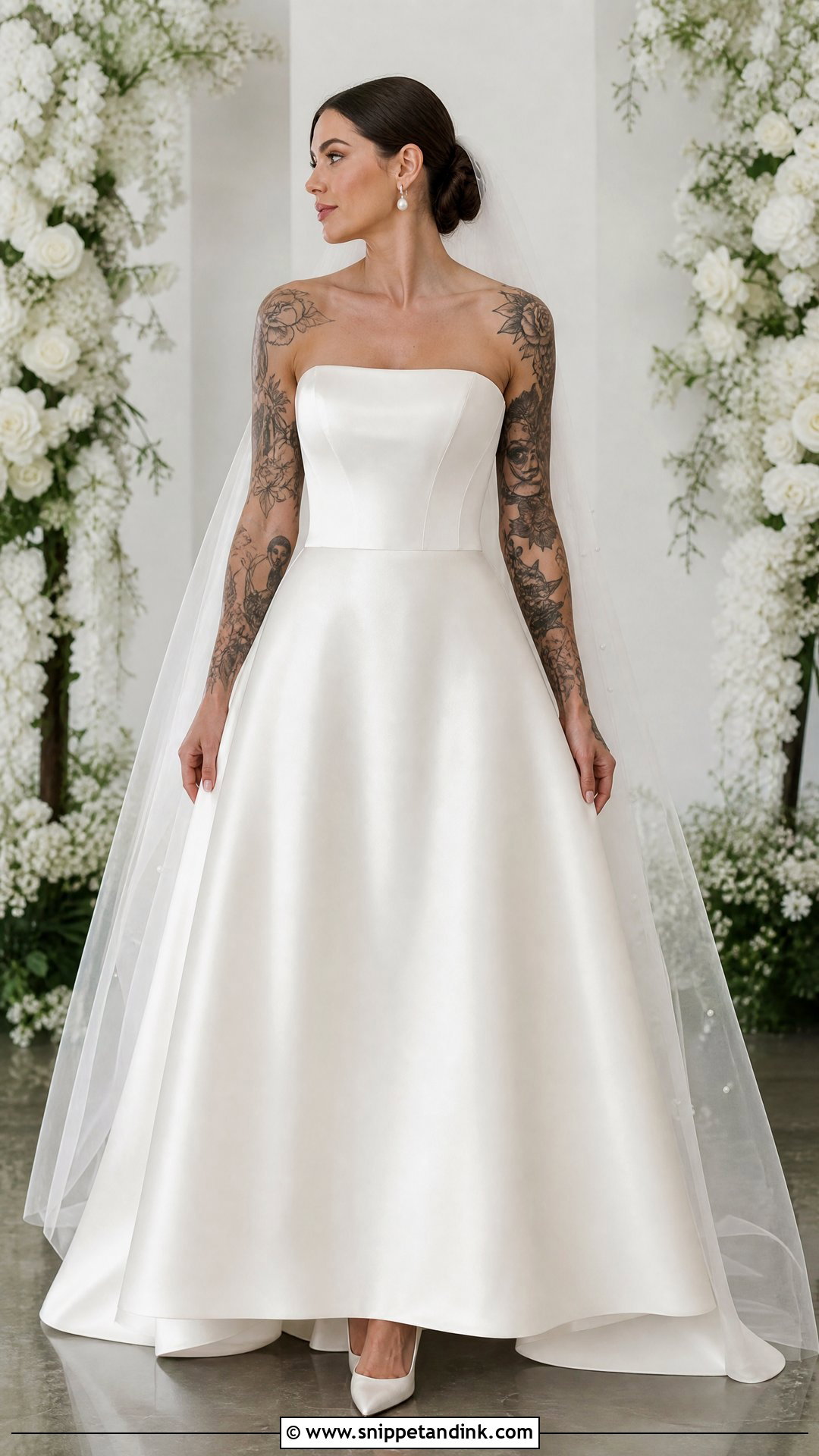
Strapless satin is the cleanest canvas there is: shoulders, collarbones, arms and upper back stay fully on show. I’d pick a structured bodice with a gently curved neckline and keep beading away from the bust, so nothing sits next to the ink competing for attention. The flared skirt adds movement. Pointed ivory pumps, small pearl or crystal studs, a fingertip veil set behind the shoulders and a low bun or ponytail are all it needs. With colourful tattoos, hold cool ivory and soft white satin against your arm by a window; one usually makes the colours look brighter, the other muddier.
2. Sweetheart Corset Ball Gown Wedding Dress
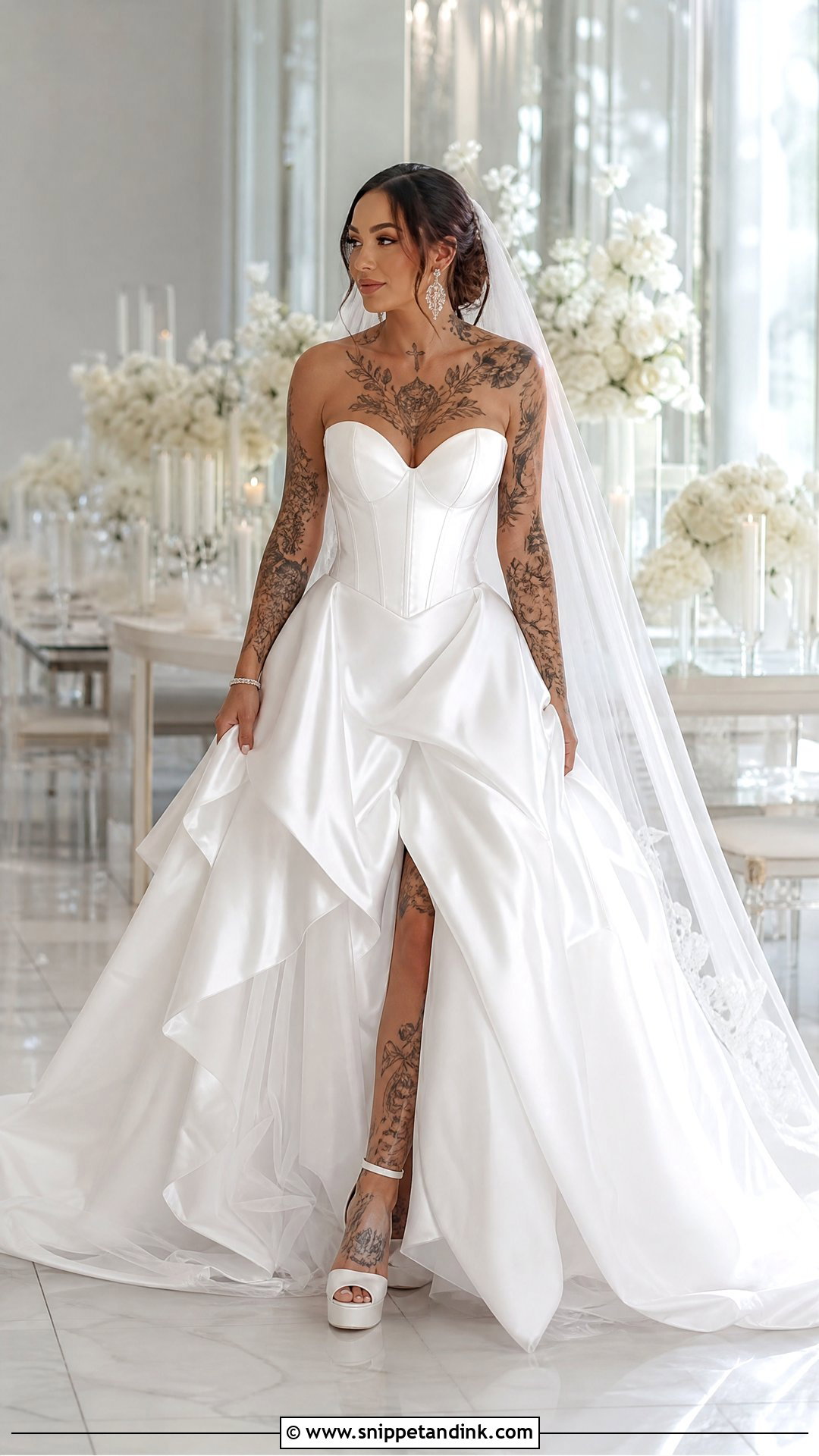
Corset ball gowns frame the chest, shoulders and upper arms, and the sweetheart line points the eye straight at any collarbone or sternum work. Exposed boning covered in satin or fine lace keeps it bridal; bare plastic boning starts to look like a costume. A thin tennis bracelet, small drops and satin platforms under the skirt are enough. If you want a cathedral veil, I’d attach it below the updo so back pieces stay partly visible through the tulle. A plain bouquet of white roses or greenery stops the bodice area from getting crowded.
3. Plunging V-Neck Crepe Wedding Dress
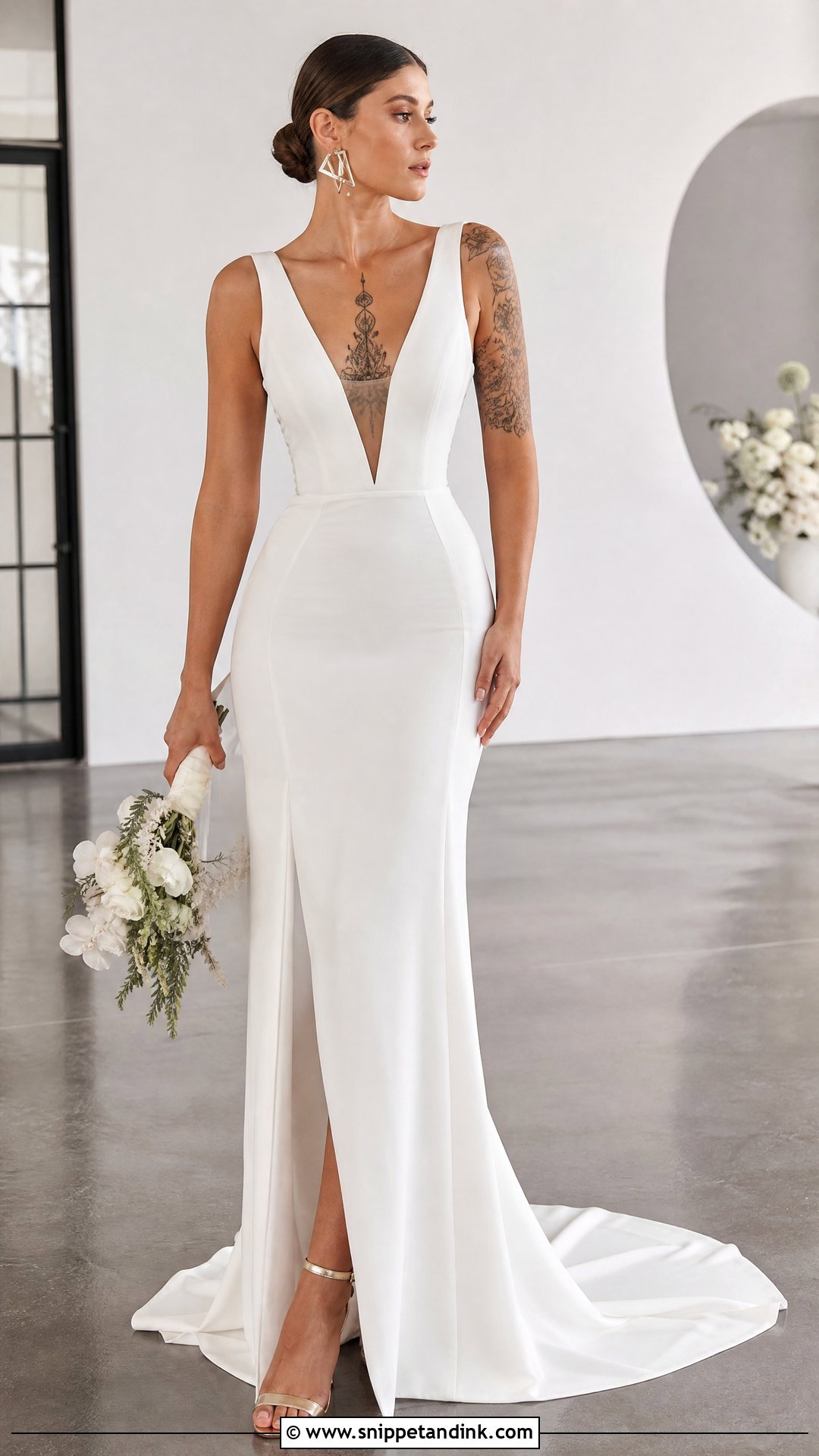
Sternum, rib and upper-torso pieces were made for a plunging V-neck crepe gown. Heavy stretch crepe holds the deep line and supports without visible structure, and a strip of illusion mesh down the centre adds security if you’re nervous about movement. I’d skip the necklace entirely; a pendant sitting over a sternum tattoo just cuts it in half. Metallic ankle straps, geometric earrings and a slim cuff finish it, with waves swept back or a low bun and a plain tulle veil.
4. Off-the-Shoulder Lace Fit-and-Flare Wedding Dress
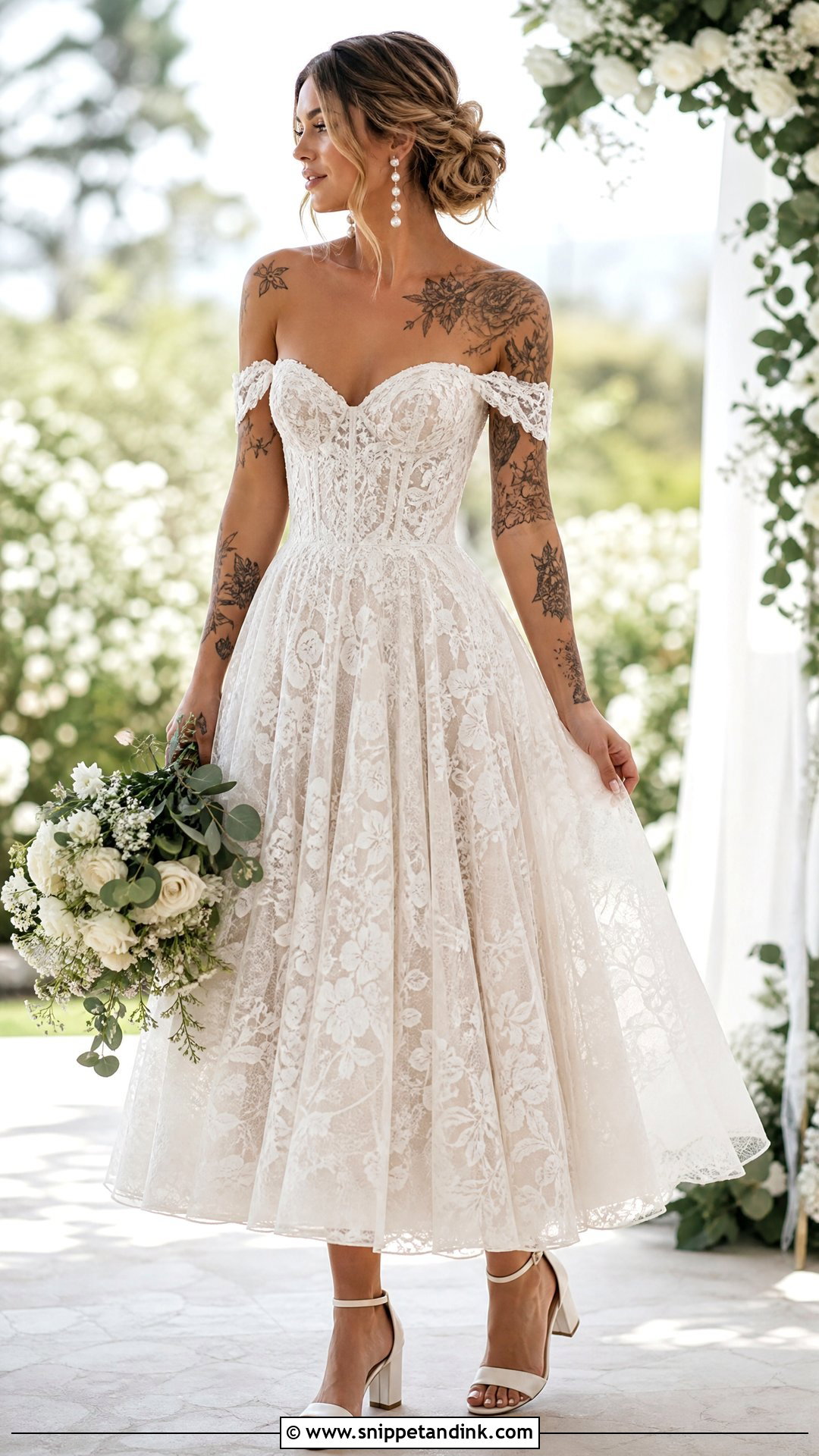
Lace is where tattooed brides most often get disappointed. Dense embroidery laid over fine-line work makes both look messy, so I steer clients to an open, medium-scale pattern that leaves skin visible between motifs. Off the shoulder, a fit-and-flare in that kind of lace frames collarbones and arm pieces nicely and still moves well for dancing. Pearl drops, ivory block heels and a small satin clutch suit it, along with a loose chignon. For delicate tattoos, unlined lace sleeves or detachable off-the-shoulder straps let you decide how much shows.
5. Halter Neck Column Wedding Dress
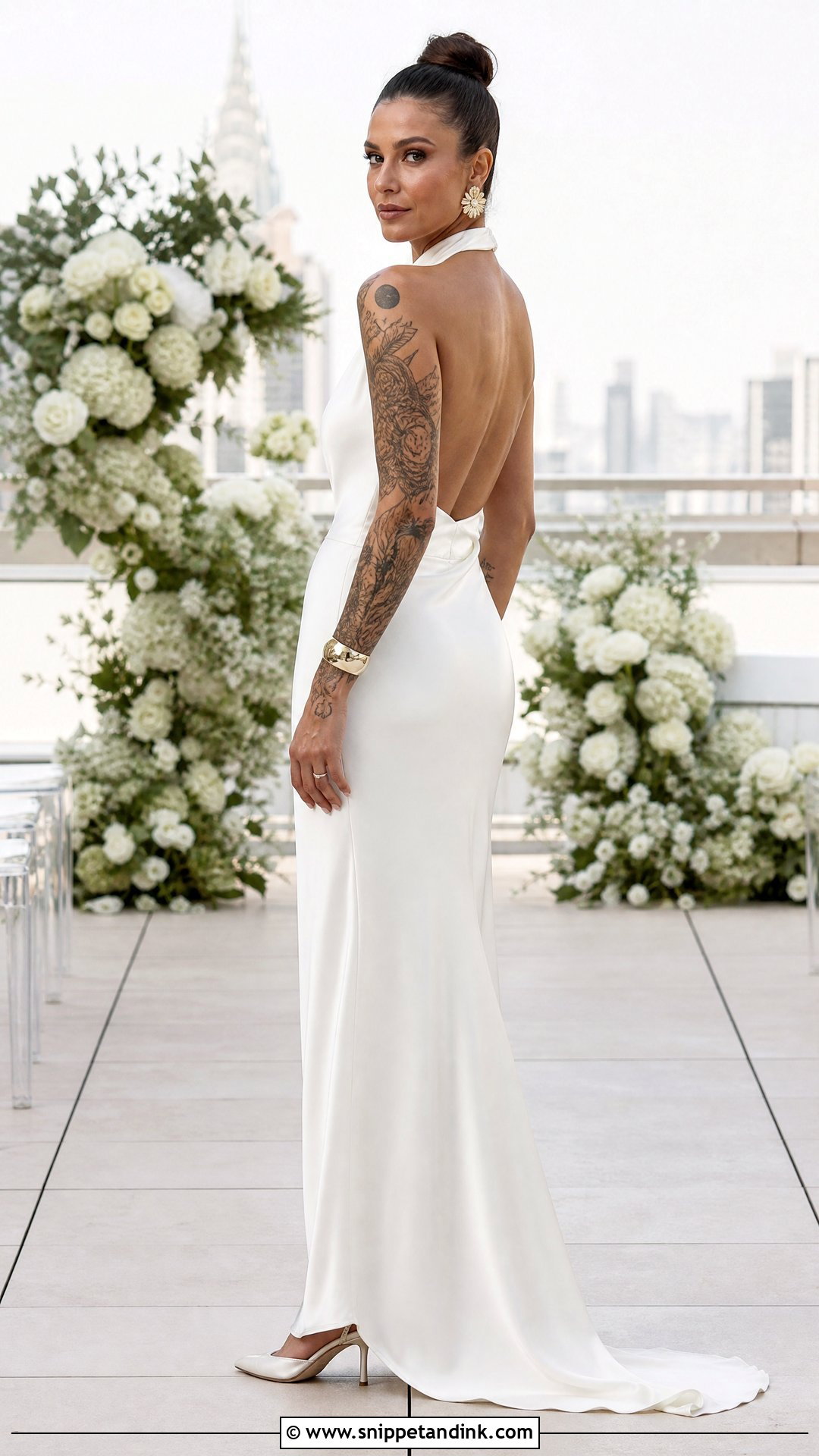
Halter columns show the shoulders and upper back from every side while keeping the front fairly covered. The raised neckline pulls focus to the face, and a low or keyhole back reveals exactly the area you choose. Fluid satin, crepe or silk with no embellishment keeps the line long. Sculptural earrings, a smooth cuff and pointed slingbacks suit it, with a high bun, braided updo or sleek ponytail. I’d set a narrow chapel-length veil under the hair, not on top, so the back piece isn’t hidden for the walk. Rooftops and modern indoor venues suit this outfit.
6. Square Neck Mikado Wedding Dress
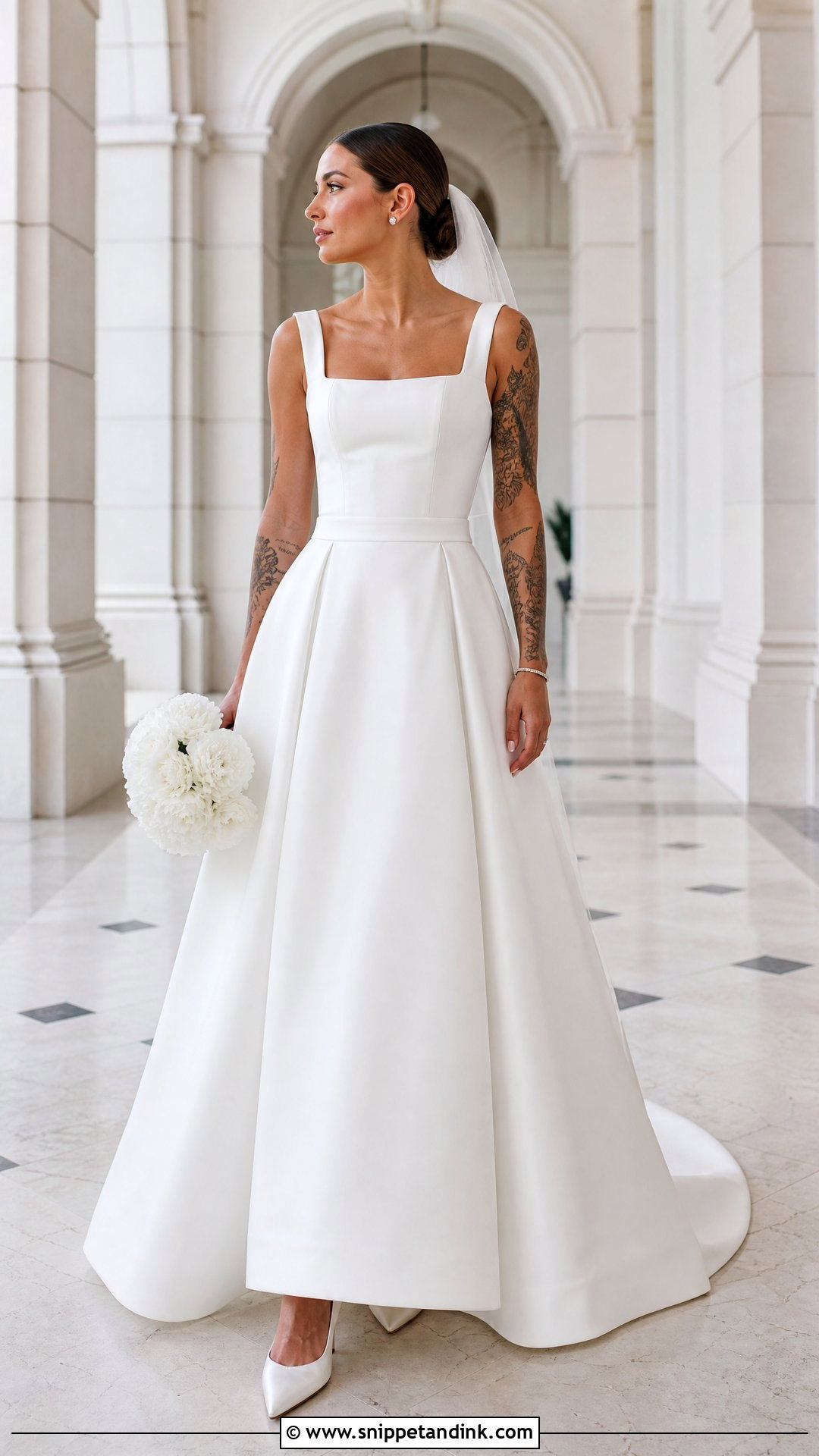
Square necks and Mikado are both architectural, and that straight geometry sets off curved or highly detailed tattoos well. Wide straps give support and frame the chest and shoulders without covering much. Pair it with an A-line or softly pleated skirt so it doesn’t get too stiff. Mikado’s sheen already catches light, so I keep jewelry to studs and a thin bracelet, with pointed satin pumps, a short tulle veil or a structured back bow, and a low bun with a centre part.
7. One-Shoulder Draped Wedding Dress
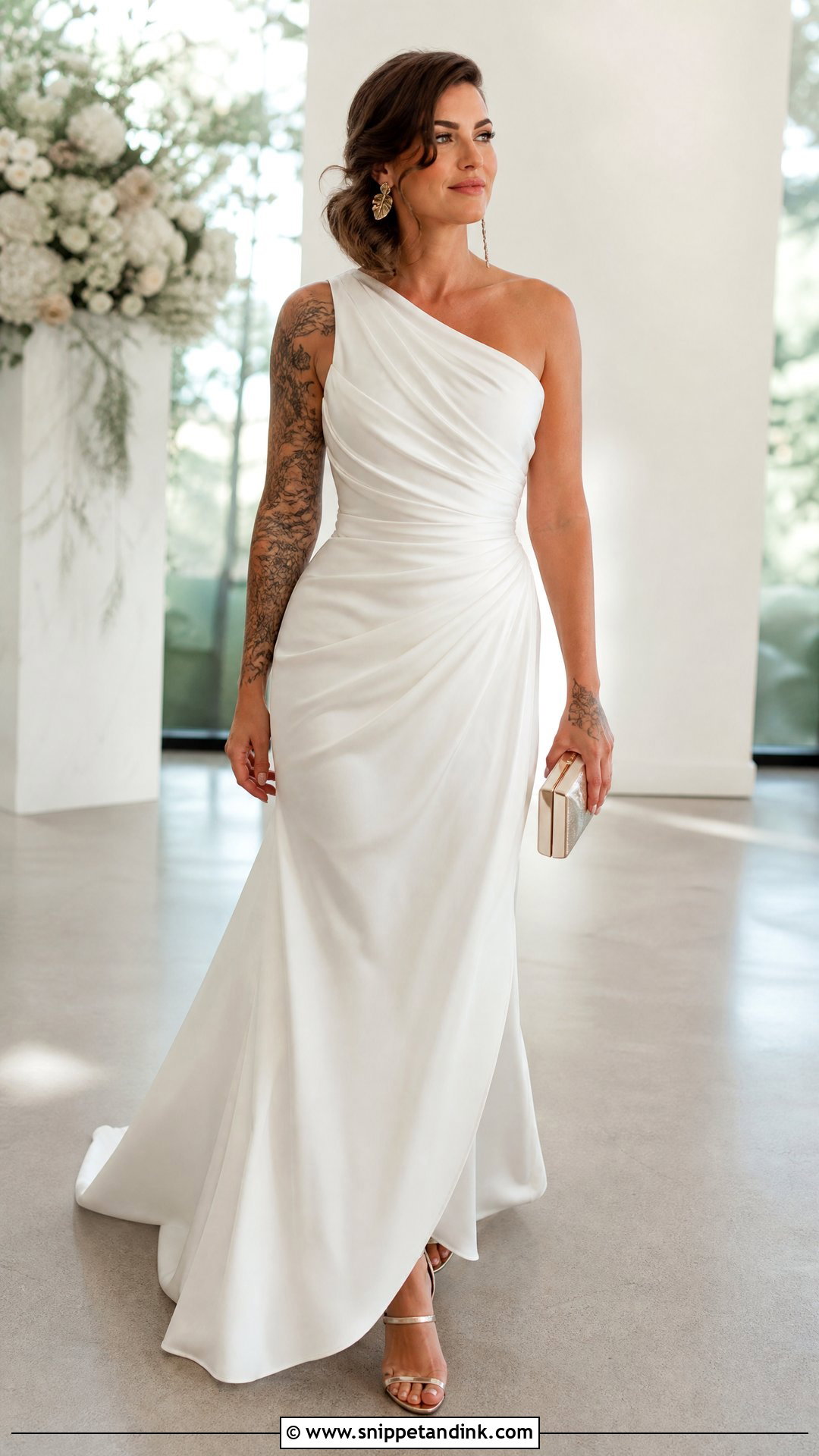
One-shoulder gowns are the answer when most of your ink is on a single arm or shoulder: the bare side shows it, the draped side covers the other. Lightweight crepe or satin with controlled draping and a straight or softly flared skirt keeps the diagonal clean. Mismatched earrings, one stud and one small drop, echo the asymmetry. Metallic sandals and a slim clutch are plenty. Sweep the hair toward the covered shoulder. I’d leave out big necklaces, embroidered veils and heavy bouquets, since all of them crowd the one line this dress is built around.
8. Backless Silk Slip Wedding Dress
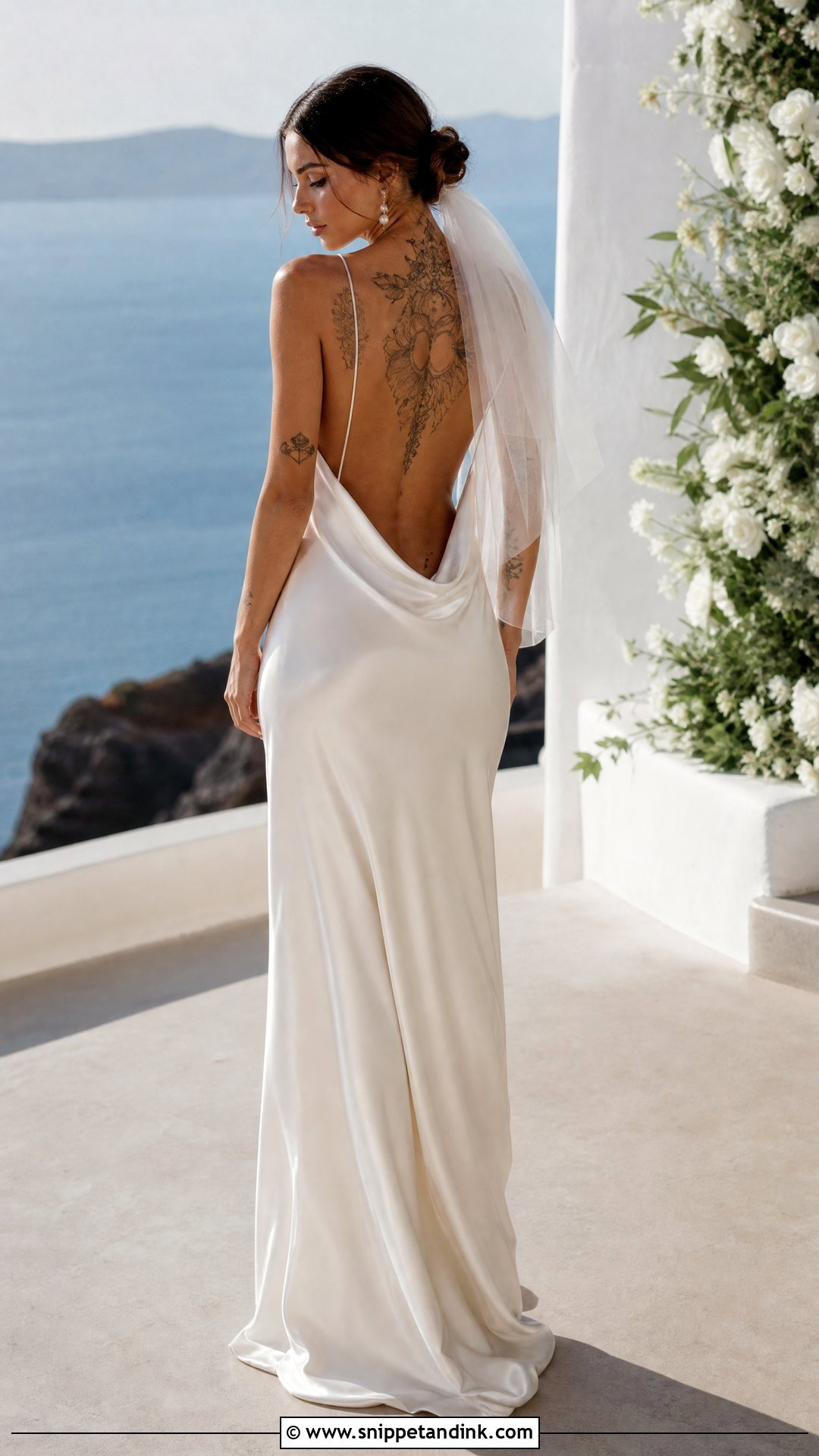
For back, shoulder and arm pieces, a backless silk slip shows the most skin with the least structure, and it stays comfortable in warm weather. Look for adjustable straps, a softly draped neckline and support hidden inside the bodice. Barely there sandals, fine drops, a single hairpin and a low twisted bun keep the back fully visible. Instead of a long veil, I’d suggest a short blusher, a sheer scarf veil or a removable shoulder-length piece. Sort out underwear early; a deep back means sewn-in cups or tape, and that affects how the bodice is altered.
9. Illusion Bodice Tulle Wedding Dress
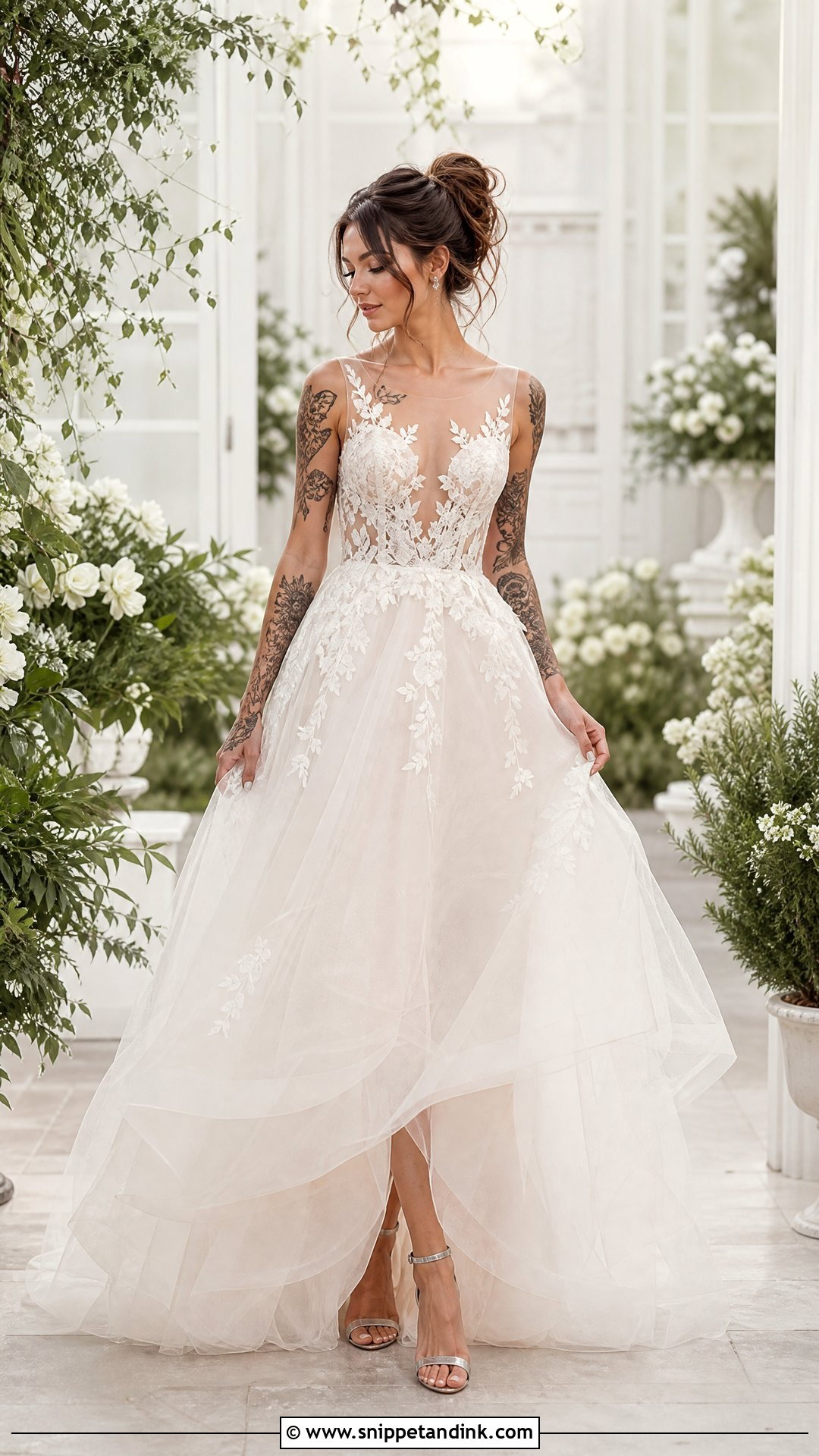
An illusion bodice is the softer option: skin and ink show through fine mesh while the neckline stays secure. Where the appliqués sit matters more than how many there are. I ask the seamstress to keep tonal motifs around the bust and waist and away from the tattoos you want seen, because lace sitting directly over a design blurs it. A layered A-line skirt, crystal studs, silver or ivory heels and a narrow satin belt if the waist needs definition finish the outfit. Pick a plain single-layer veil; embroidered tulle over an illusion bodice is too many layers.
10. Sheer Sleeve Lace Wedding Dress
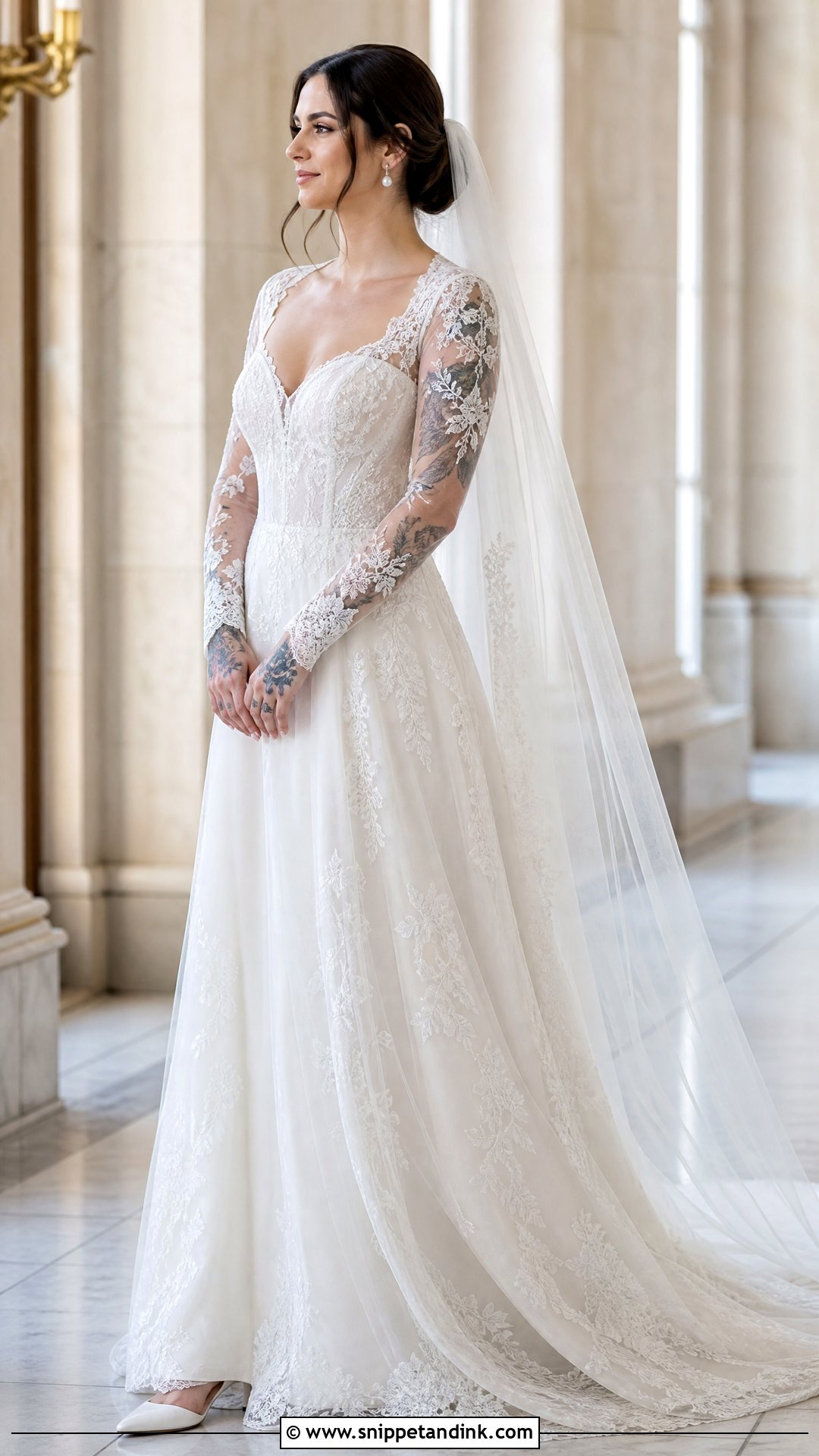
Arm sleeves look different under lace than you expect. Fine Chantilly or sparse appliqués let the designs read through, while heavy guipure hides them almost completely. A fitted bodice and flowing A-line skirt keep the outfit traditional. Closed-toe pumps, pearl earrings and a comb in a low bun suit it, and a waist-length veil avoids stacking sheer layers over the sleeves. I always view this one in daylight and from across the room, since fine lines and bold colour interact with lace differently at a distance. It suits cooler seasons and formal venues.
11. Cap Sleeve Tea-Length Wedding Dress
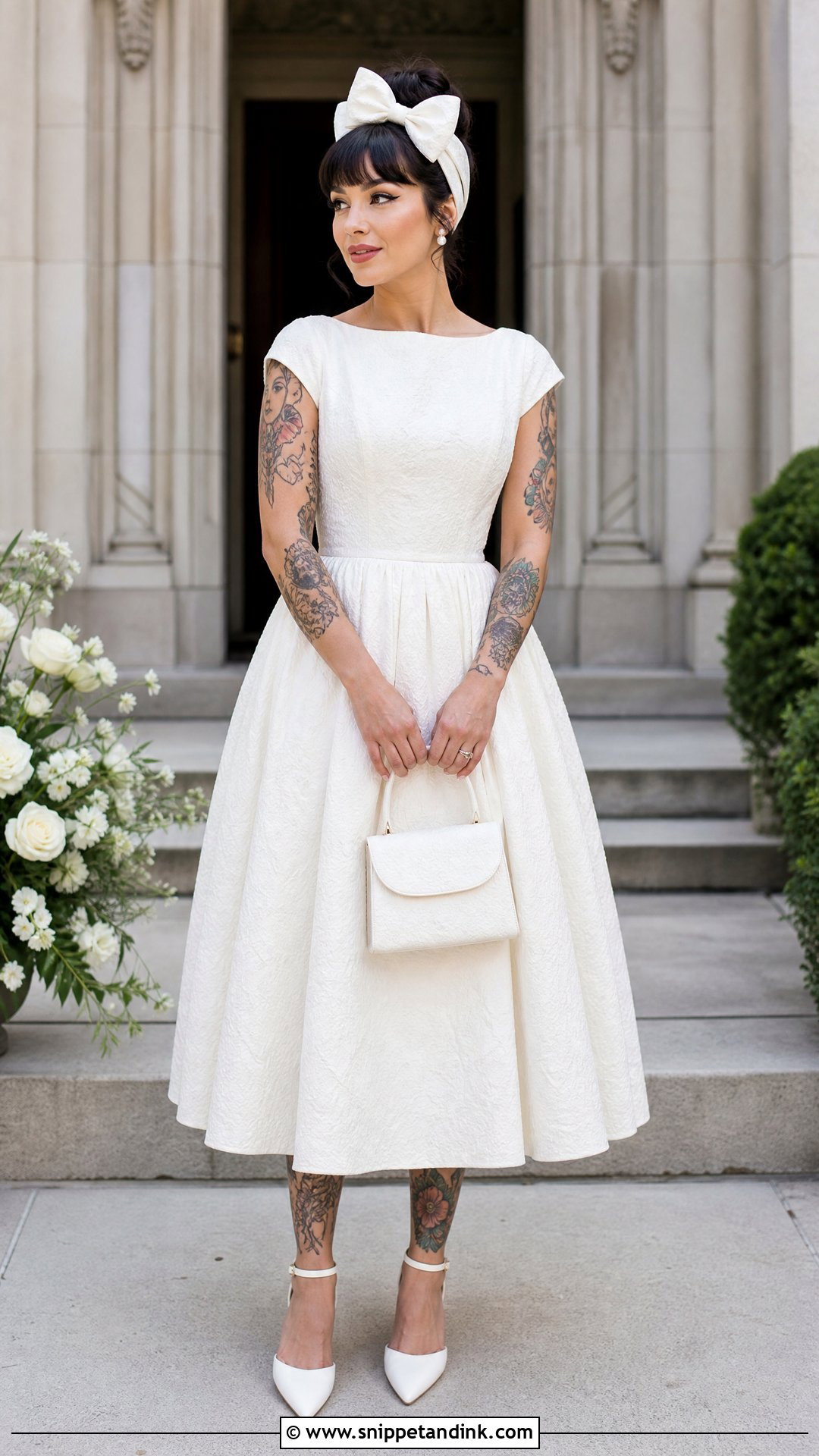
Forearm, calf and ankle pieces all stay on show in a cap sleeve tea-length dress, and the hem gives a reason to choose fun shoes. Look for a defined waist, a softly structured bodice and a skirt ending between knee and ankle; satin, lace or textured jacquard all work, but busy prints clash with colourful tattoos. Pointed pumps, embellished flats or ankle straps, pearl studs, a small structured bag and a birdcage veil or bow headband keep it light. Courthouses and garden parties suit it, and a cropped jacket gives optional cover.
12. High Neck Open Back Wedding Dress
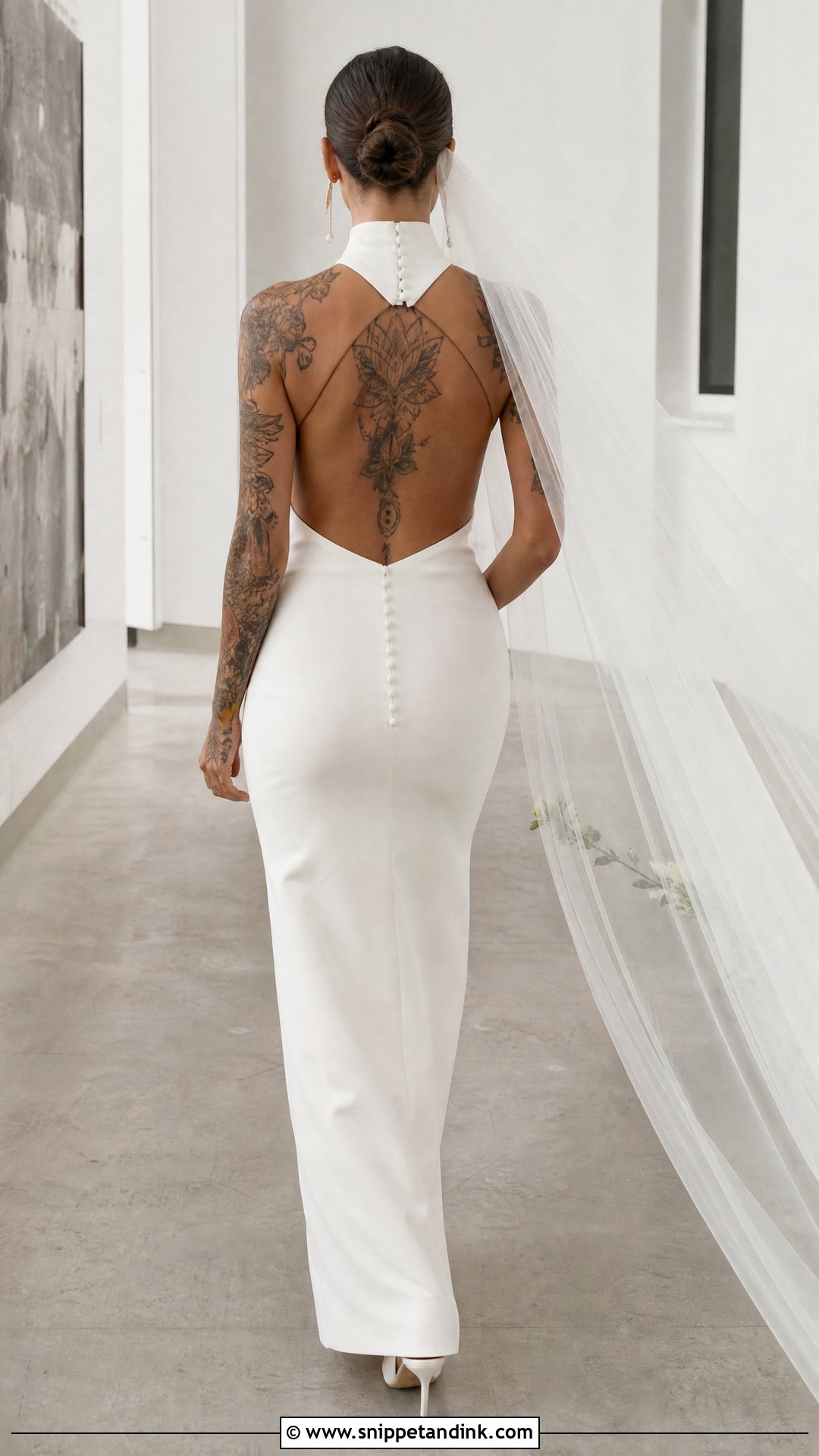
Covered front, open back: this is the dress for spine, shoulder blade and lower-back work, and the reveal when you turn at the altar is half the fun. A smooth crepe column, fitted lace or understated A-line all work, closed with buttons at the neck. Keep the front plain. Long earrings, pointed heels and a sleek low bun or twisted updo are enough; the high neck rules out a necklace. For the ceremony I’d use a transparent veil without a thick lace border, then remove it for portraits. Tailoring is critical here, because a back opening that gaps or pulls will sit right over the tattoo in every photo.
13. Basque Waist Ball Gown Wedding Dress
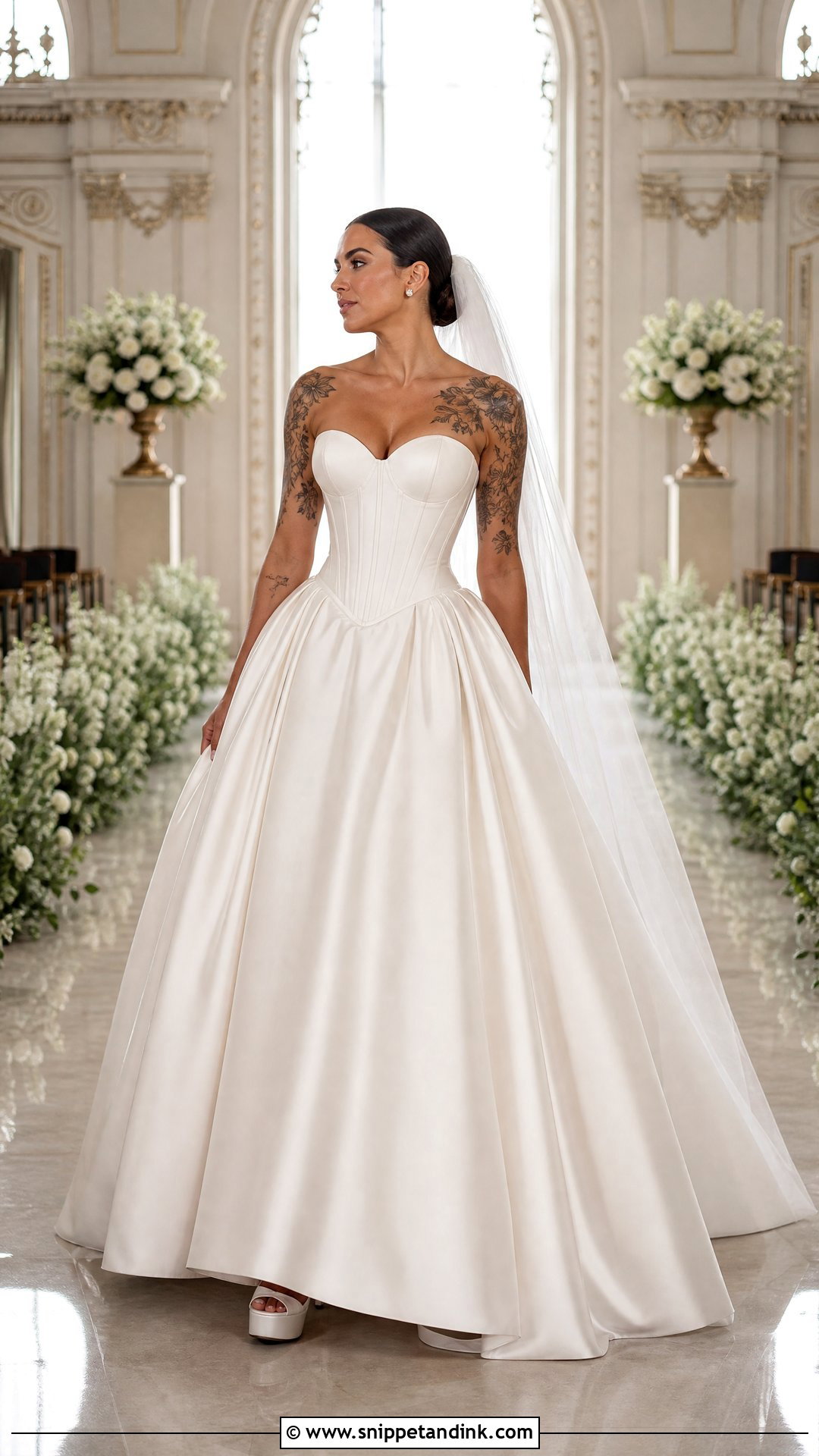
A pointed Basque waist with a structured bodice and full skirt gives a strong, formal silhouette, and it pairs especially well with strapless and corseted necklines. Fabric is the main decision. Intricate or shaded tattoos look sharper against smooth satin; simple, graphic designs can handle lightly textured lace. Studs, a narrow bracelet and hidden platforms keep the styling classic, with a low bun and a plain cathedral veil for the ceremony. The waistline is already the detail, so skip a big belt or heavily embellished necklace. Upper-body pieces sit well above it, framed by the bodice.
14. Drop Waist Satin Wedding Dress
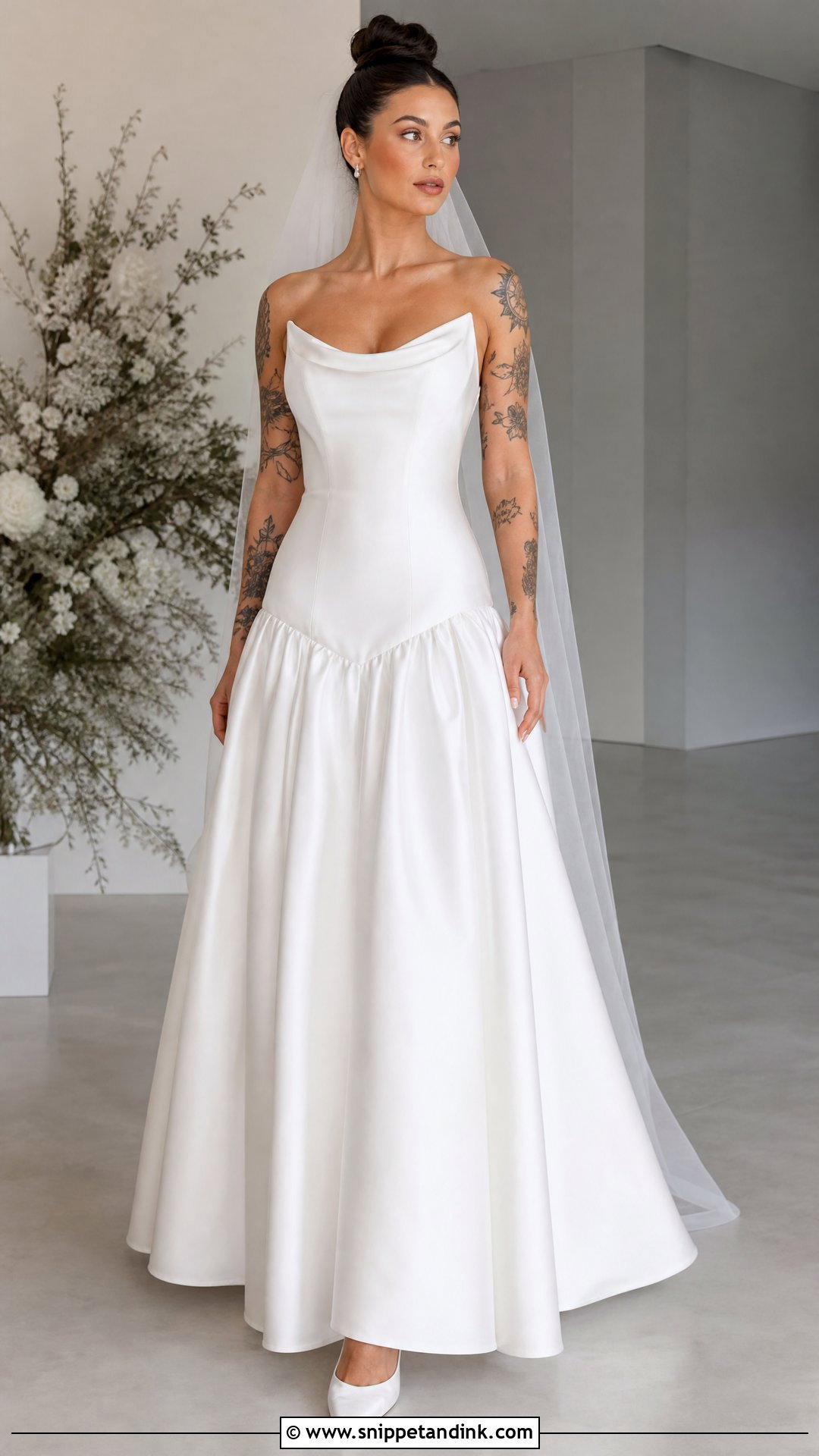
A drop waist runs the fitted bodice down to the hips before the skirt opens, which makes it look fashion-led and keeps the upper body clear for shoulder, arm, chest or back art. The neckline does the choosing: cat-eye, scoop or strapless depending on what you want seen. Sleek pumps, small silver earrings, a veil that falls behind you and a smooth ponytail or high bun suit the long line. Sit and walk in it at every fitting. A low waist seam that feels fine standing can dig in at the hip when you’re seated at dinner.
15. Floral Appliqué A-Line Wedding Dress
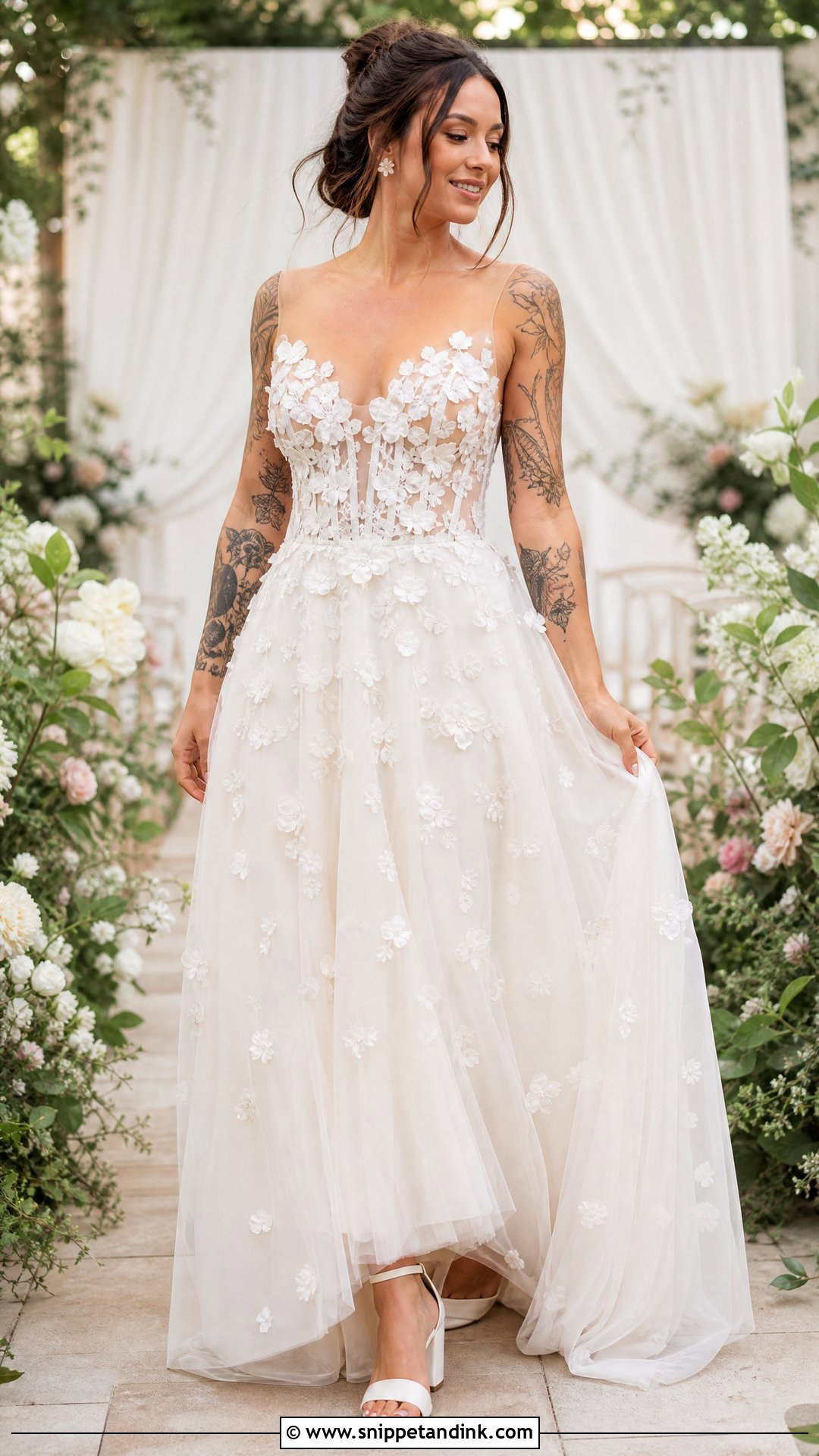
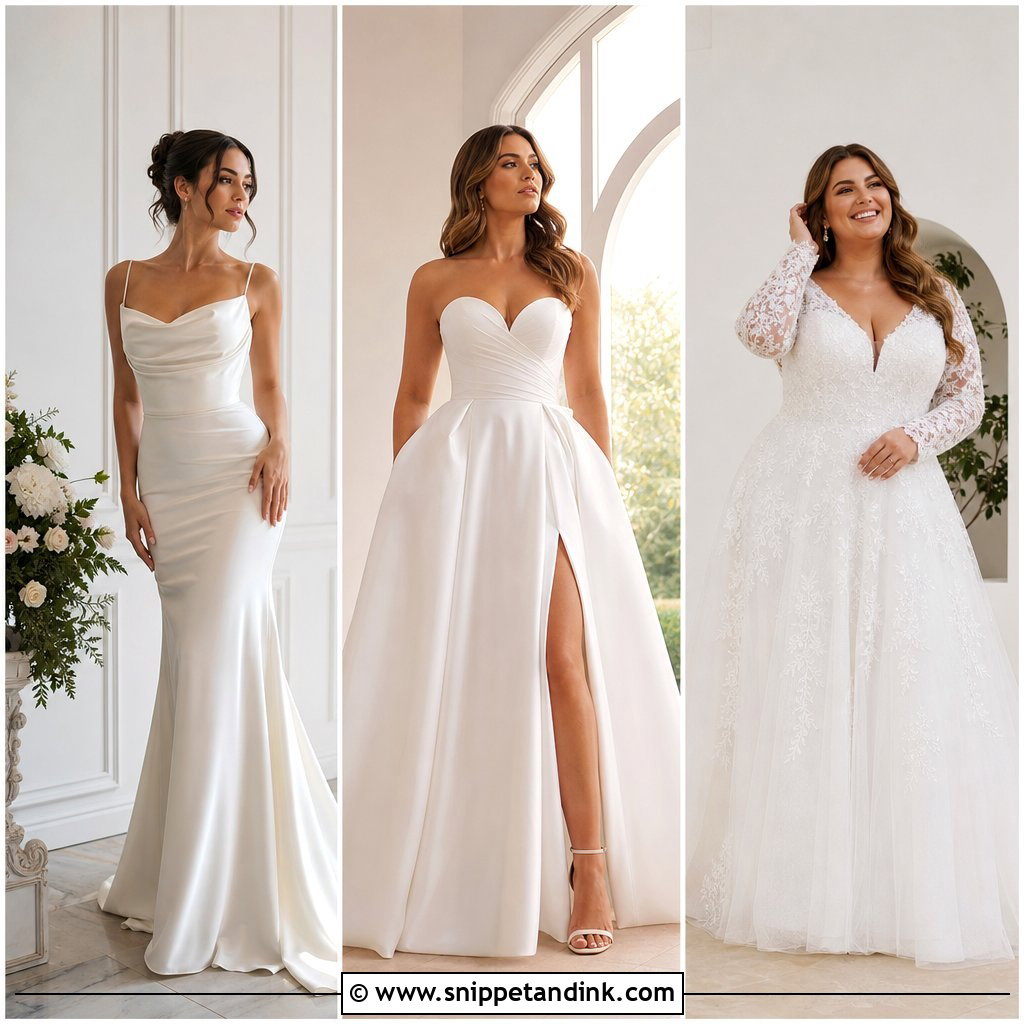
If your tattoos are botanical, three-dimensional floral appliqué can echo them without turning the outfit into a theme. Place the flowers around the bodice, waist or skirt and leave plain tulle between them; covering everything makes skin and dress blur into one pattern. You don’t need to match the shapes of your flowers. What I look at is colour temperature and scale, so a cool-toned rose tattoo next to warm ivory blooms still feels related. Floral studs, ivory block heels, a ribbon or simple comb and a loose updo with a few face-framing pieces finish it.
16. Cape Sleeve Column Wedding Dress
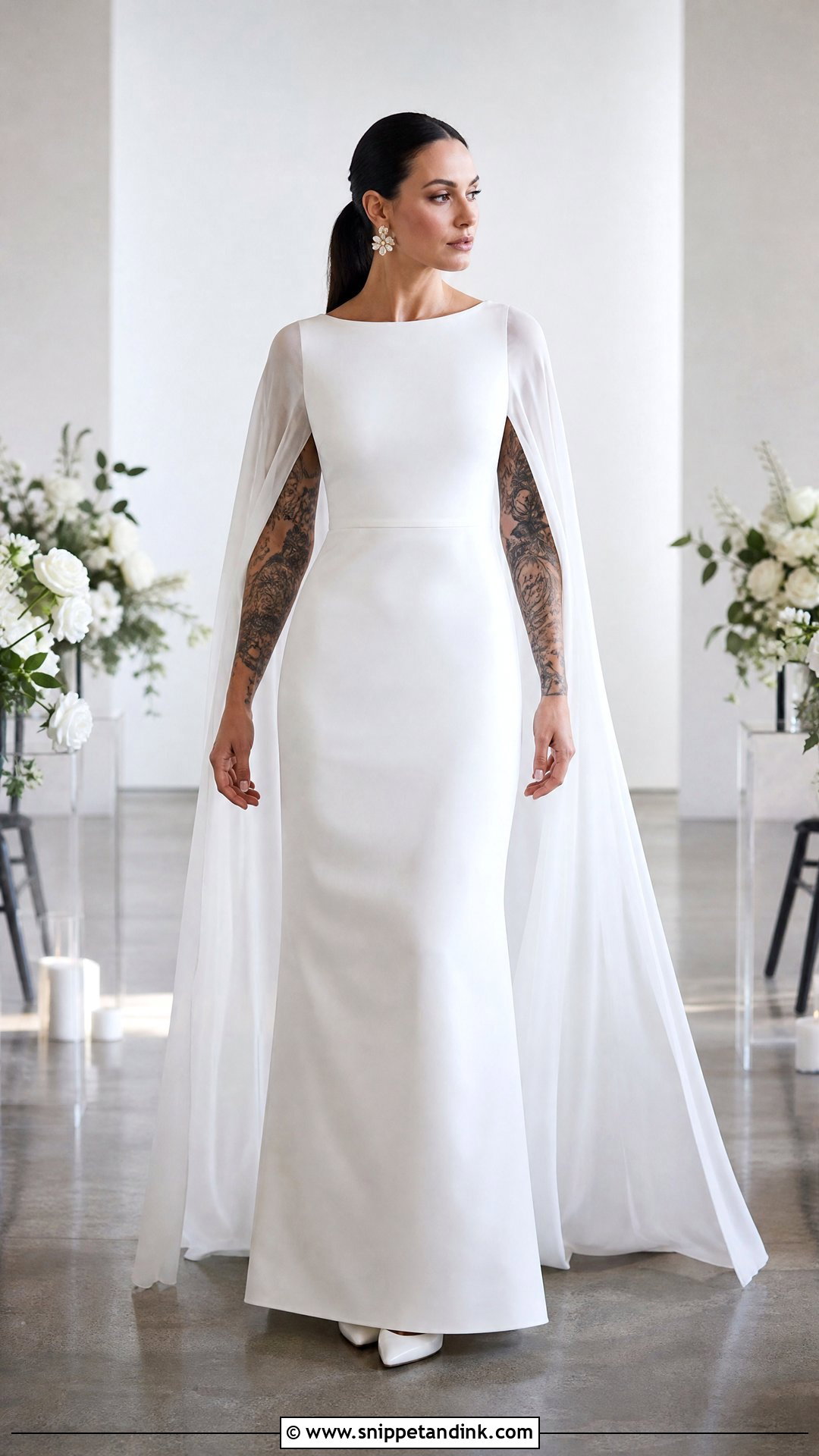
A cape replaces the veil and keeps the outfit moving. It falls from the shoulders or neckline, so arm and back art flashes into view as you walk rather than being on show all the time. Light chiffon over a crepe or satin column is easiest to wear. Pointed pumps, statement earrings and a polished low ponytail are plenty, with no necklace. A removable cape gives you two looks, covered for the ceremony and sleeveless for the party. I always check the cape’s length with the actual shoes; too long and you’ll step on it on stairs.
17. Detachable Sleeve Mermaid Wedding Dress
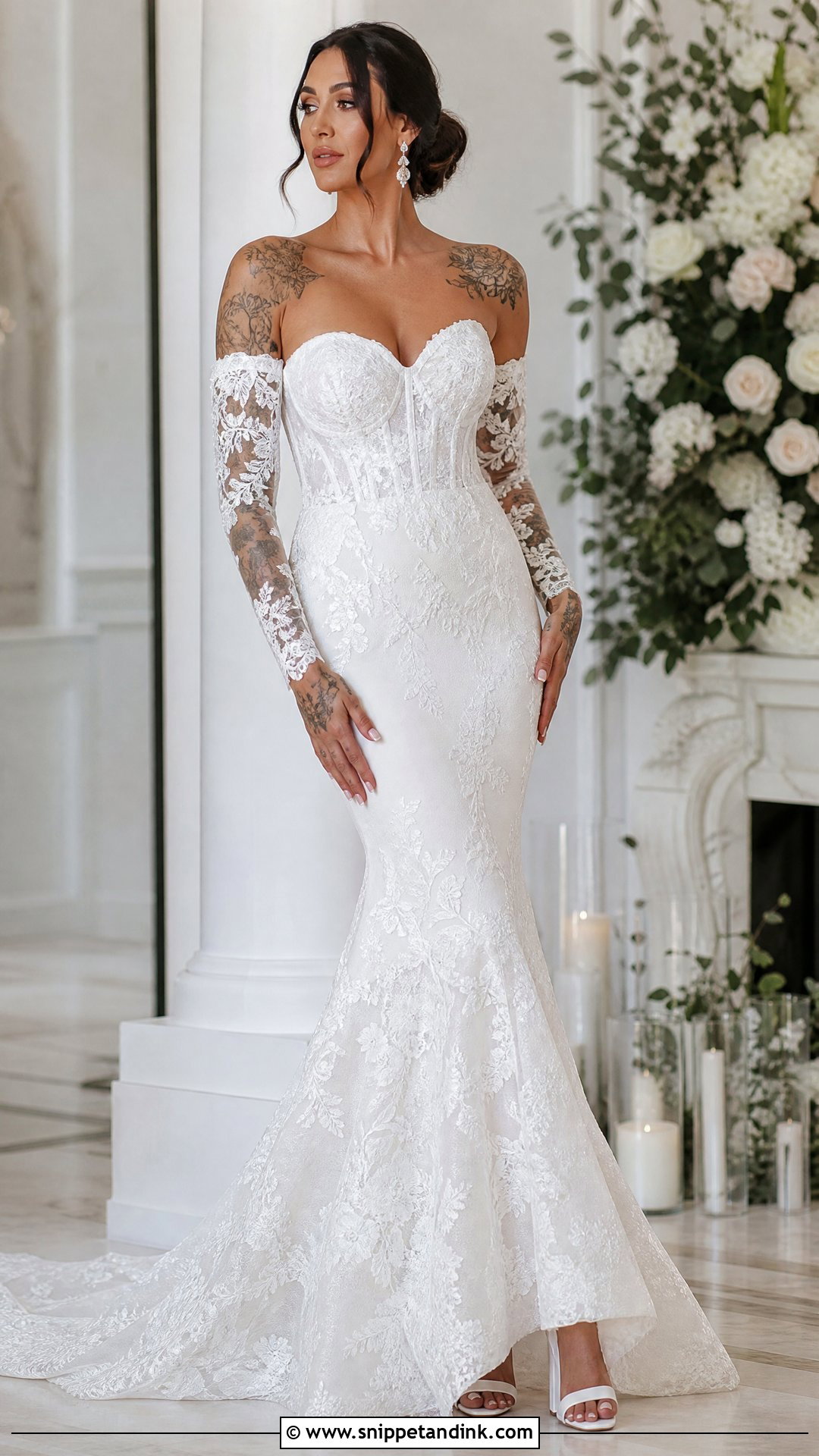
Detachable sleeves let you change how much shows over the course of the day: fitted illusion, lace or satin sleeves for the ceremony, then off for portraits and dancing. Choose a structured bodice and a skirt that flares around the knee so you can walk. Drop earrings, a simple bracelet and supportive block-heel sandals hidden under the train are enough, and a low bun keeps the neckline clear. The attachment points need care. I ask for discreet snaps rather than hooks, since hooks catch on lace when someone is trying to remove the sleeves in a hurry.
18. Minimalist Long Sleeve Crepe Wedding Dress
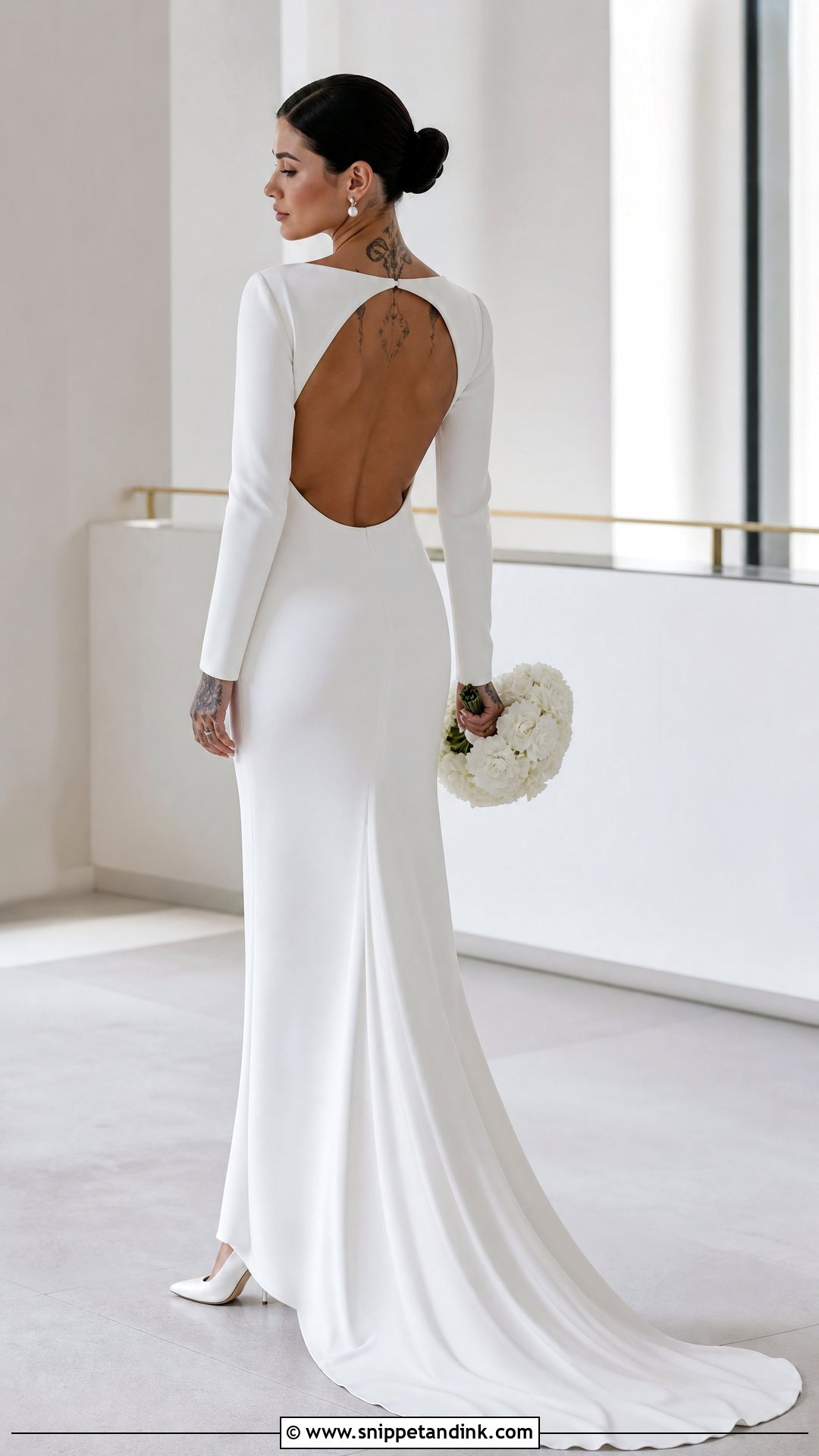
On a plain long-sleeve crepe dress, hand, neck, upper chest or back tattoos become the decoration. A boat neck, shallow V or open back decides where the emphasis lands, and stretch crepe stays comfortable while looking tailored. Pearl earrings, pointed pumps, a sleek bun, a fingertip veil and a compact bouquet keep it quiet. If the sleeves hide a piece you love, consider a slightly sheer crepe or a sleeveless second outfit. Puckered seams are obvious on an unembellished dress, so this one needs the most precise alterations on the list.
19. Short Reception Wedding Dress
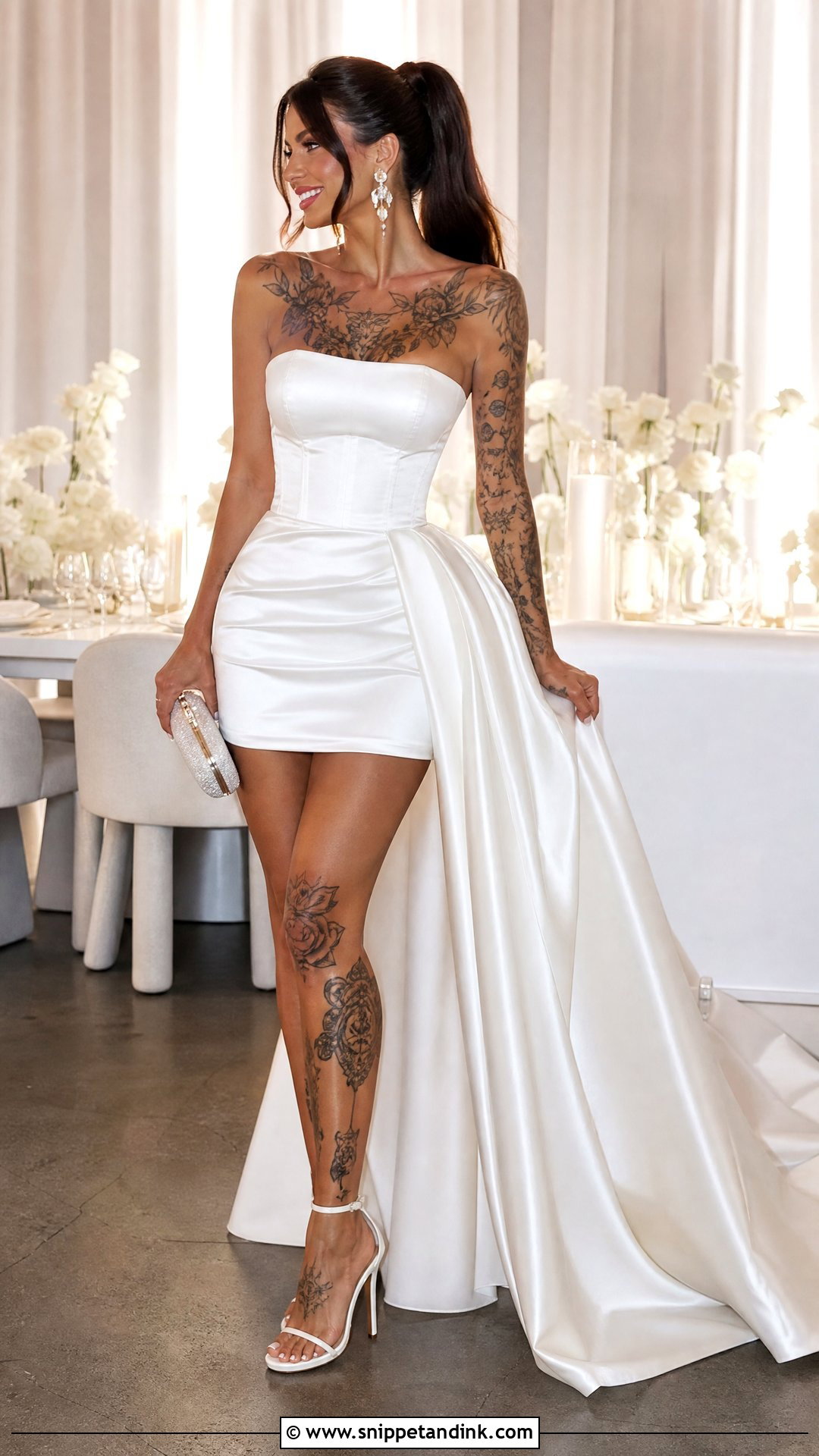
Leg and ankle pieces get their moment in a short reception dress, and it’s far easier to dance in. A structured mini, tailored shift or flared skater shape with a secure neckline and built-in support works; satin and crepe look polished, light beading adds evening sparkle. Ankle-strap heels, statement earrings and a small clutch suit it, with a high ponytail or neat updo. A bow, detachable train or removable overskirt can add drama for the entrance. Sit, walk and raise your arms in it before deciding on length; fashion tape or fitted shorts underneath help.



20. Champagne Lace Wedding Dress
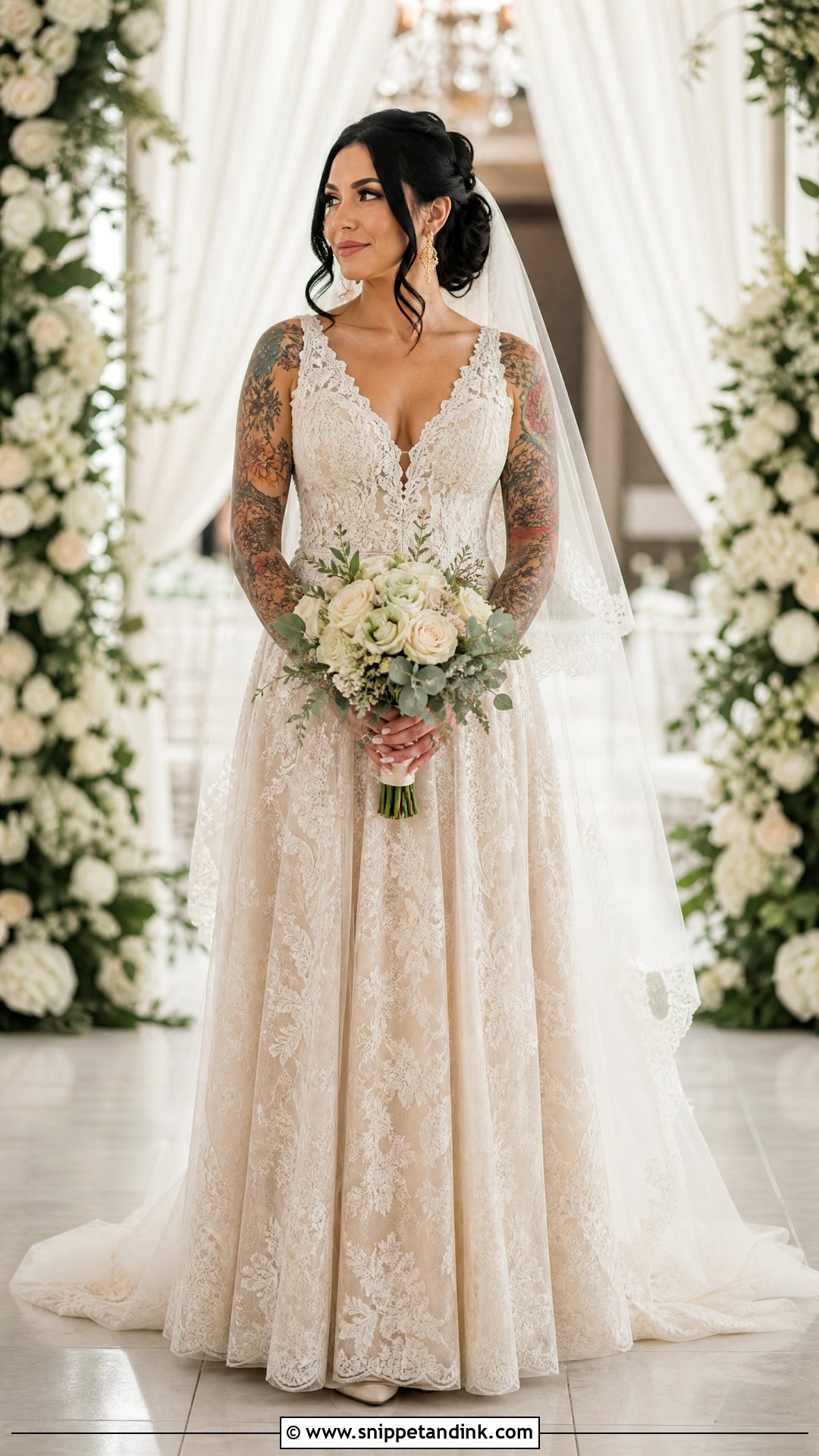
Champagne lace softens the contrast that bright white creates next to dark ink, and it flatters warm, colourful and black-and-grey work. The trick is ivory lace over a nude or champagne lining, so the pattern reads clearly without a harsh edge. A V-neck A-line, fitted sheath or soft ball gown can all carry it. Gold earrings, neutral heels, a cream bouquet and a champagne-edged veil tie the tones together. Wear the hair up to show shoulder and back pieces, or side-swept for partial cover. Check the lining against your skin in daylight; boutique lighting flatters beige far more than a venue will.
Ceremony Coverage, Fresh Tattoos and How Ink Reads on Camera
These are the questions that come up after the dress is chosen, usually a few weeks before the wedding.
When a family or venue expects cover
Some religious ceremonies and some relatives expect arms or shoulders covered. A sheer bolero, a lace shrug or detachable sleeves solve it without changing the dress, and everything comes off for the party. Makeup cover is possible too, but it needs a trial with your makeup artist, plus setting spray, because it can rub onto white fabric.
New ink close to the date
A fresh tattoo goes through redness, scabbing and flaking before it settles, and the skin keeps healing for weeks after it looks fine. I’d leave at least a month between the appointment and the wedding, more for a large piece. A healing tattoo under a fitted bodice or rubbed by lace for twelve hours is uncomfortable, and nobody wants peeling skin in close-ups.
Making the work look crisp in photos
Dry skin makes black ink look grey and faded. Moisturise the tattooed areas well the morning of the wedding and let it soak in before dressing, so nothing marks the fabric. Avoid shimmering body lotion directly over the design. Tell your photographer which pieces matter to you, so a back or arm tattoo gets its own frame instead of being cropped.
Let the Dress Work Around the Art You Already Wear
The dress should make your tattoos look like part of the outfit, not something to explain or hide. Think about how each neckline, sleeve, back and fabric interacts with the pieces you want seen, then keep shoes, jewelry and hair supporting that decision. Bring photos of your tattoos to appointments and look at every gown in daylight from the front, side and back. And pick the shape you feel confident in standing, sitting, walking and dancing, because that confidence is what people actually remember.
You'll Like These Ideas:




Leave a Reply