
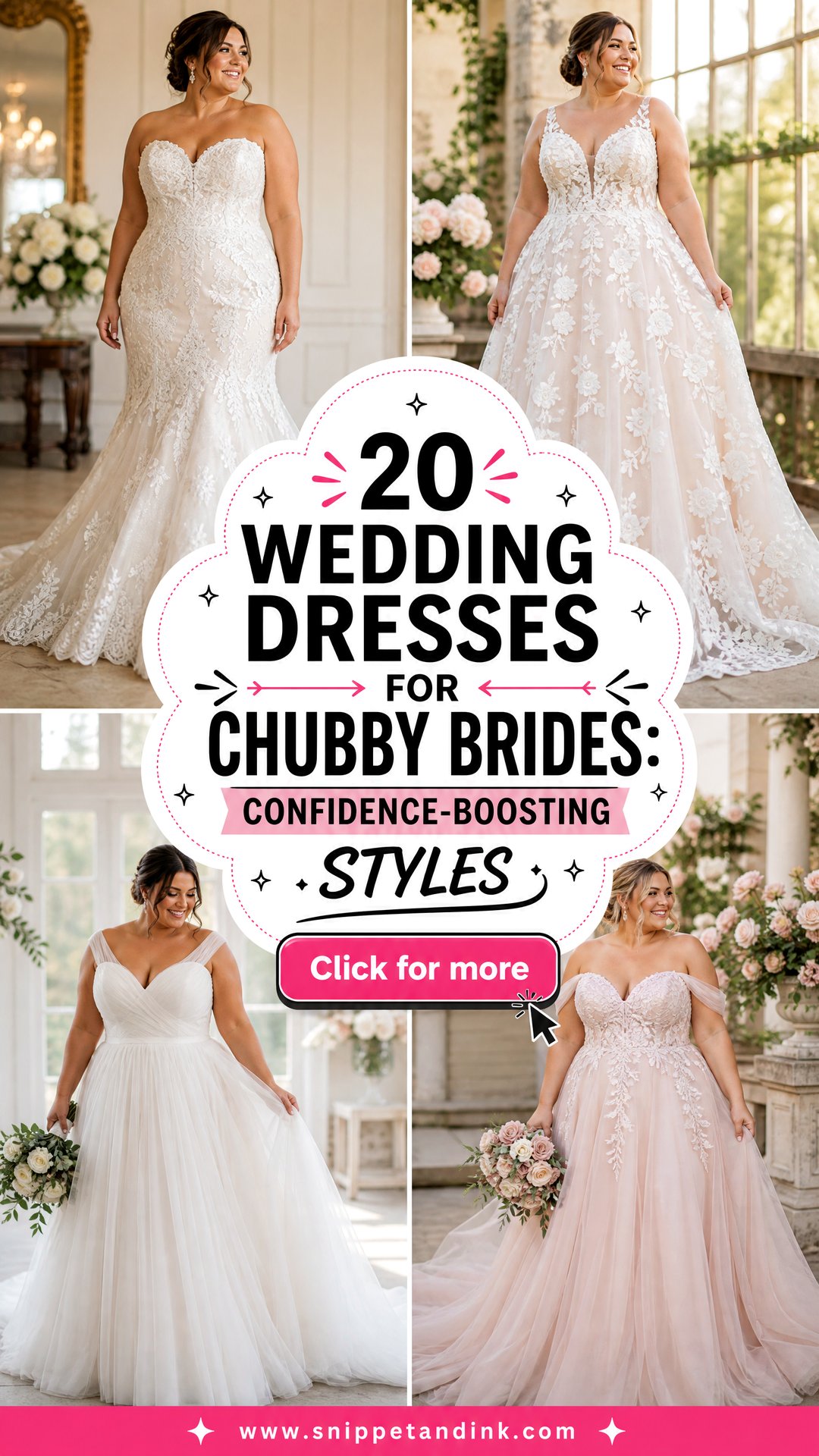
Most of my curvy brides arrive expecting to be steered into one safe shape. I’d rather show them the range. Size alone has never told me which gown will work; fabric weight, the build of the bodice, where the waist seam lands and the quality of the alterations decide far more. So the twenty bridal looks that celebrate curves below run from supportive A-lines and big ball gowns to sleek columns and a black gown, each with the shoes, veil and jewellery I’d pair and the fitting check I’d insist on. Treat it as a shortlist to try on, and keep whichever one makes you stand a little taller.
Sample Sizes Can Make a Good Gown Look Wrong
Many bridal shops stock most of their samples in small sizes, and a consultant clipping an open zip behind you won’t show how a dress really fits. That’s often why a curvy bride leaves an appointment thinking a style doesn’t suit her. It may simply not have been on her body properly.
Call ahead and ask which samples they carry in your size range, and whether they have a dedicated plus-size selection. A shop with even a modest rack of larger samples gives you a far truer picture.
- Wear or bring the bra or shapewear you plan to marry in.
- Ask what size range each gown is made in, since some lines stop earlier than others.
- Find out whether made-to-measure or custom sizing costs extra and how much longer it takes.
- Ask how much seam allowance the maker leaves, in case the bodice needs letting out later.
- Sit down in anything you’re seriously considering before you leave the shop.
1. A-Line Lace Wedding Dress
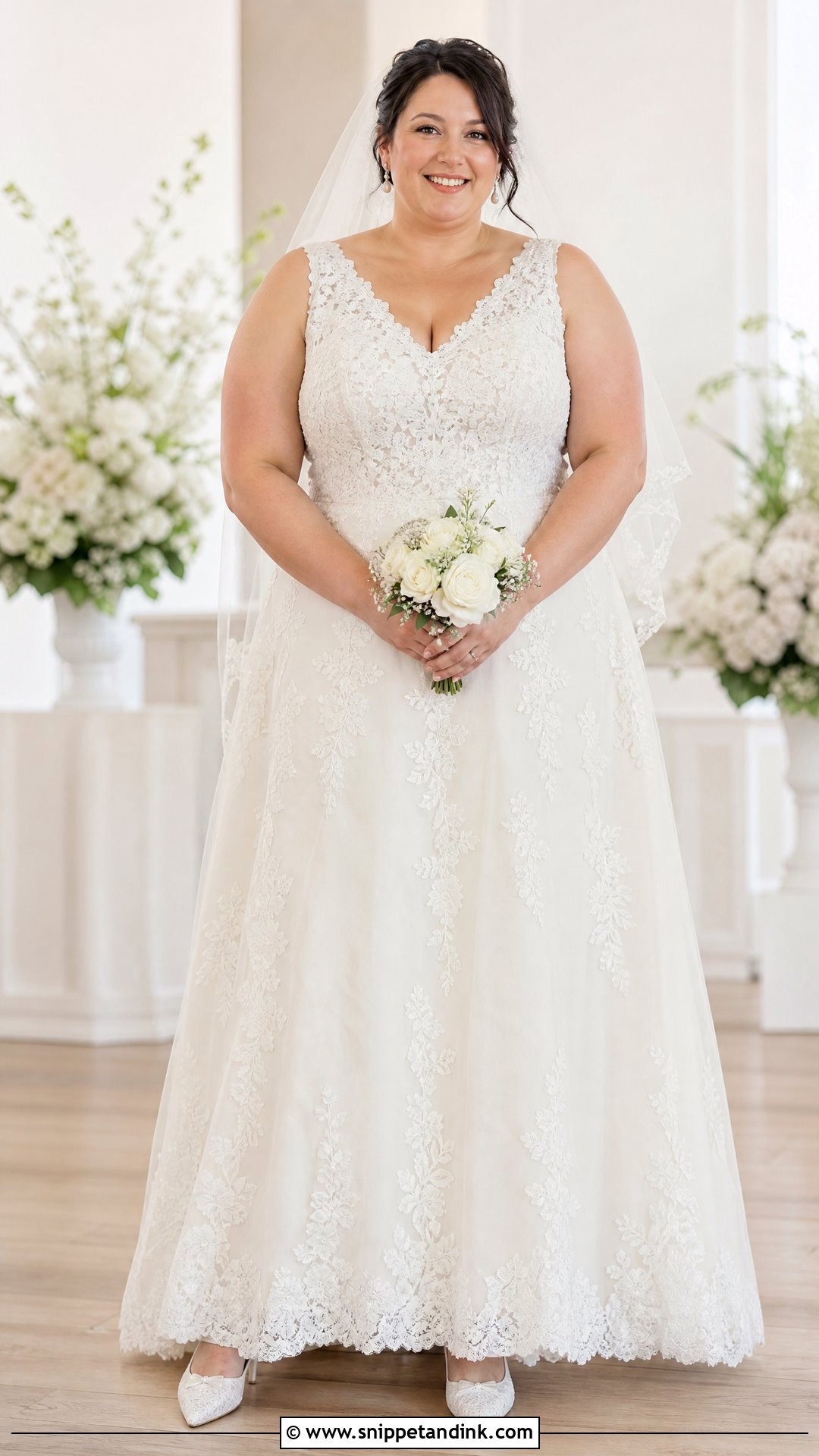
Lace over a smooth lining is my starting point for a lot of curvy brides, because the lining does the shaping and the lace just adds texture on top. Heavy, substantial lace sits better than thin lace, which can cling and show every seam beneath. A V-neck or soft curve frames the face; wide straps let you wear a real bra. The waist seam has to land at your natural waist, not an inch above or below, and I pin that before touching the hem. Pointed ivory flats or low block heels, pearl drops and a fingertip veil keep it classic.
2. Off-the-Shoulder Ball Gown Wedding Dress
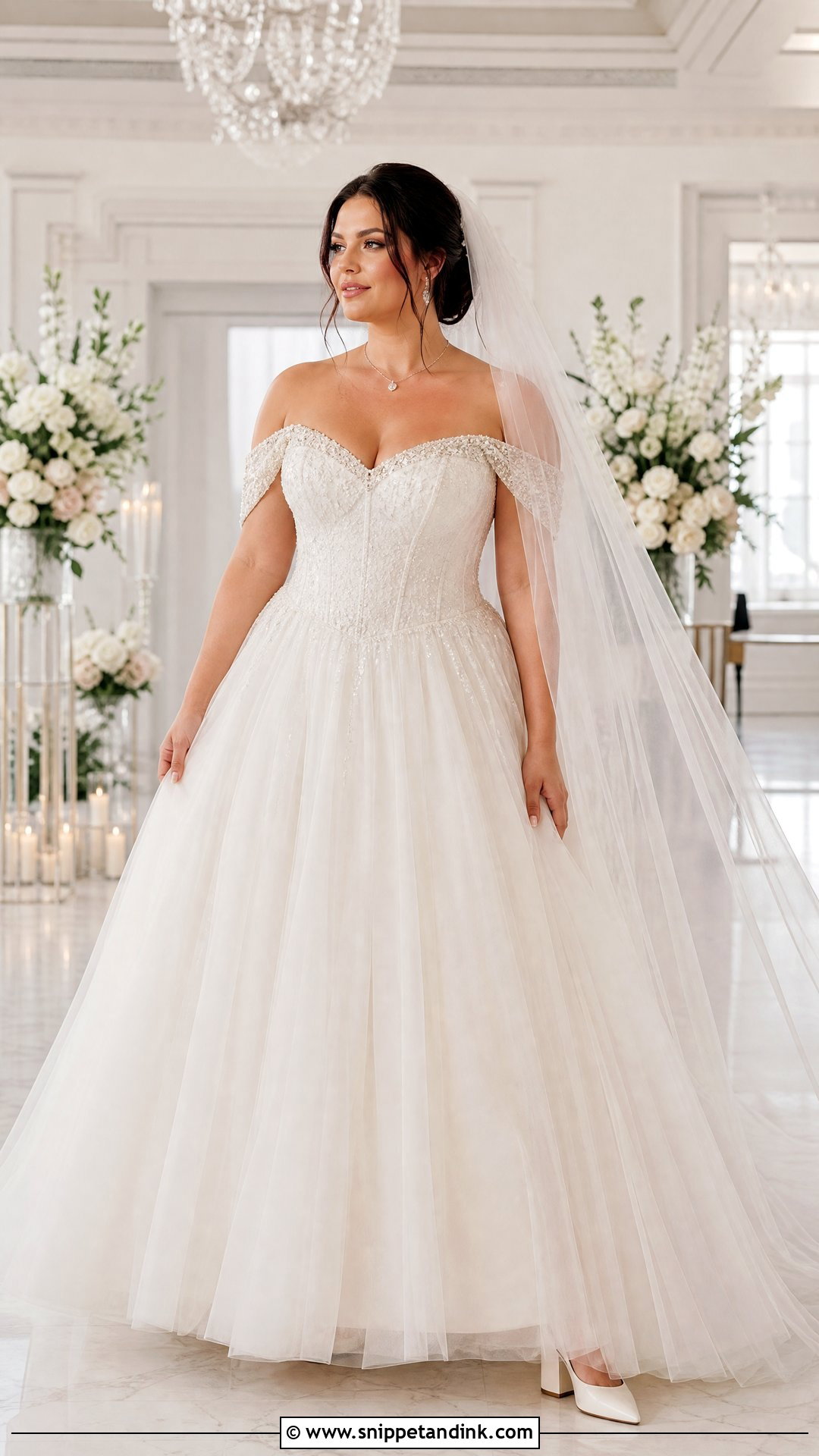
Tulle is the reason a big ball gown can be comfortable. Several layers of soft tulle give volume at a fraction of the weight of stiff satin or organza, which your hips and back will thank you for by the speeches. The off-the-shoulder band needs to stay put when you lift your arms, so internal boning matters more than the band itself. Crystal studs, a small necklace and a cathedral veil under a low bun suit it, and block-heel pumps are fine because no one sees them. Ask about adding a bustle early, and have whoever will fasten it practise once.
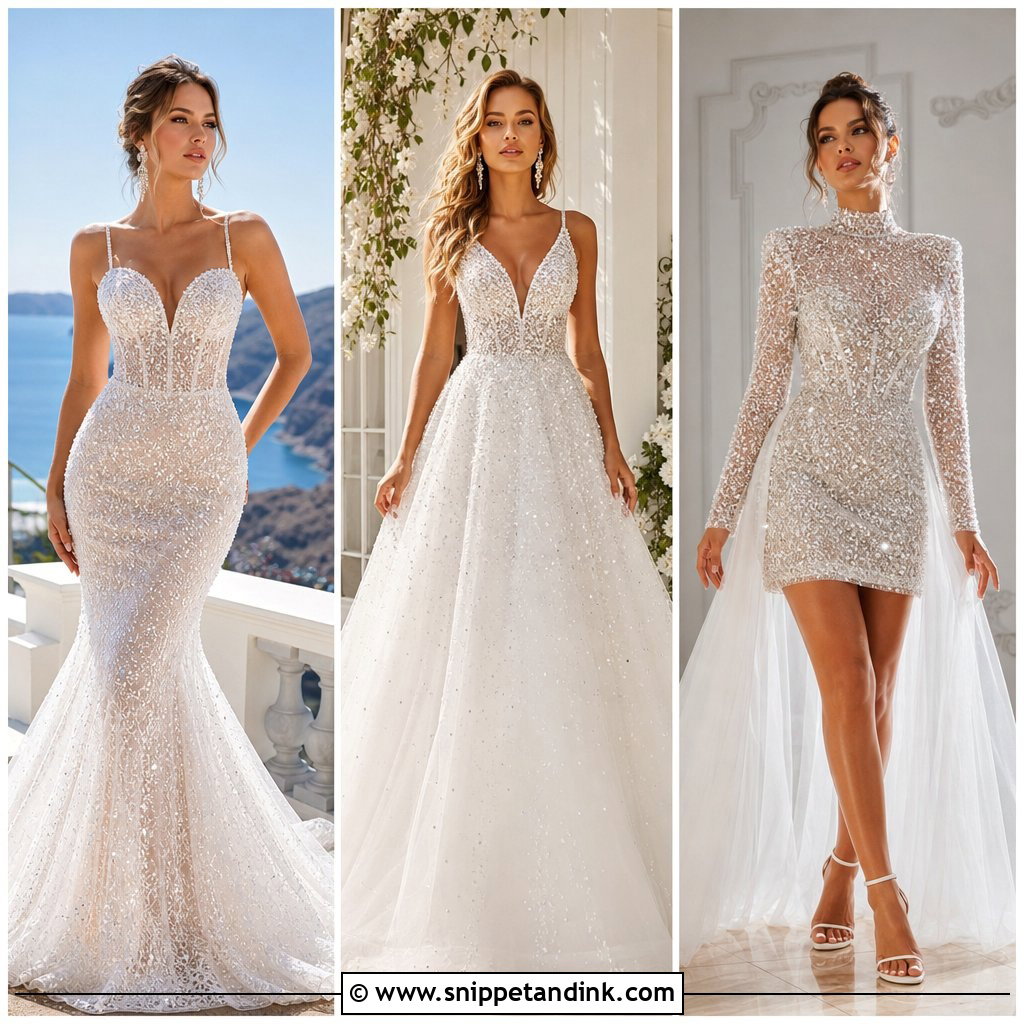
3. V-Neck Chiffon Wedding Dress
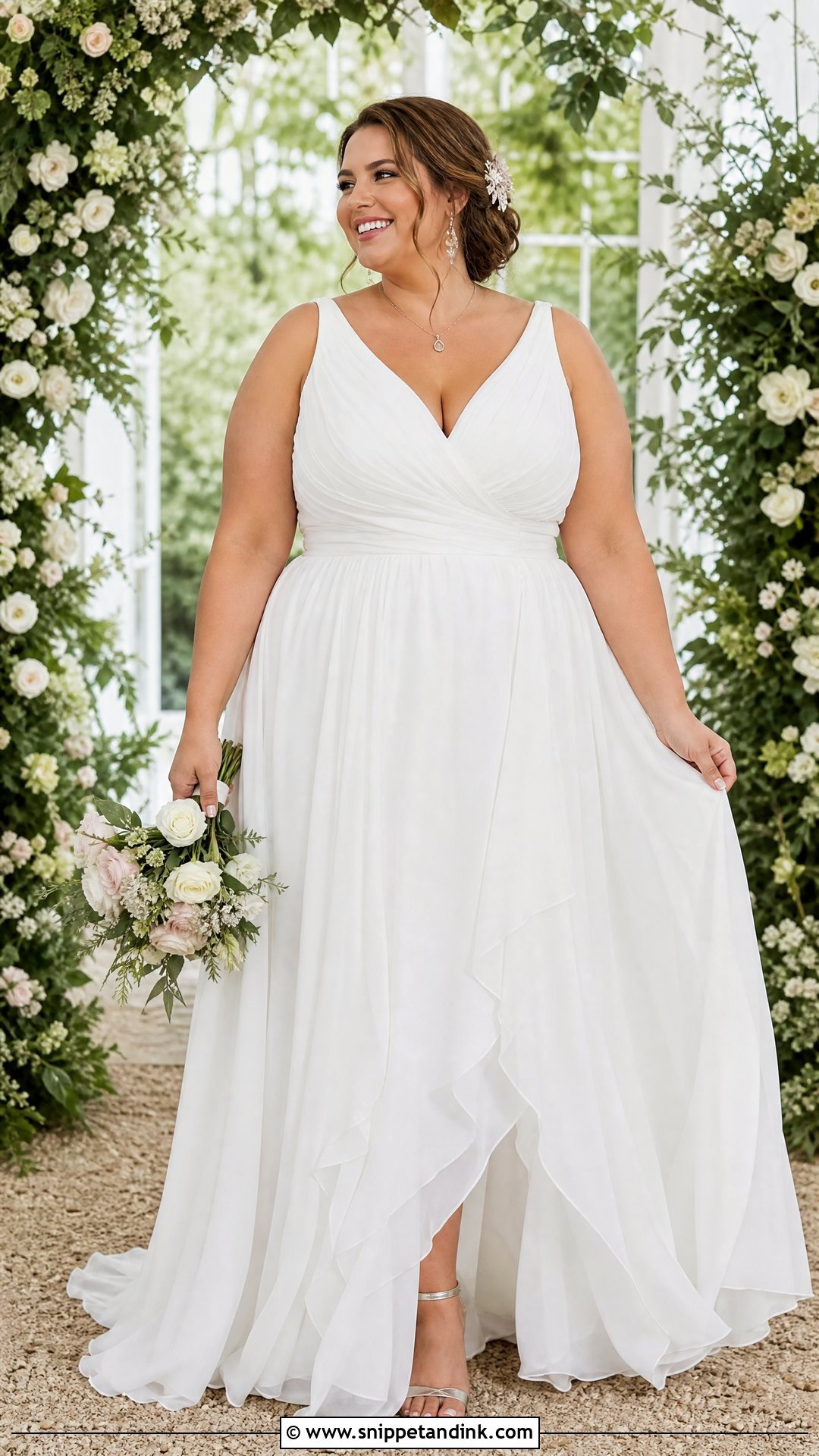
Chiffon moves with every step, which suits a garden or destination wedding, but a single thin layer can cling and show everything underneath. Layered chiffon over a lined, supportive bodice drapes better and gives proper coverage. Wider straps balance the V and hide bra straps. Keep jewellery light, a small pendant and simple earrings, so it doesn’t fight the fabric. A floral comb or chapel veil finishes it. Get the hem measured in the exact shoes you’ll wear outdoors; chiffon that’s a touch long drags through grass and darkens at the edge within an hour.
4. Long-Sleeve Lace Wedding Dress
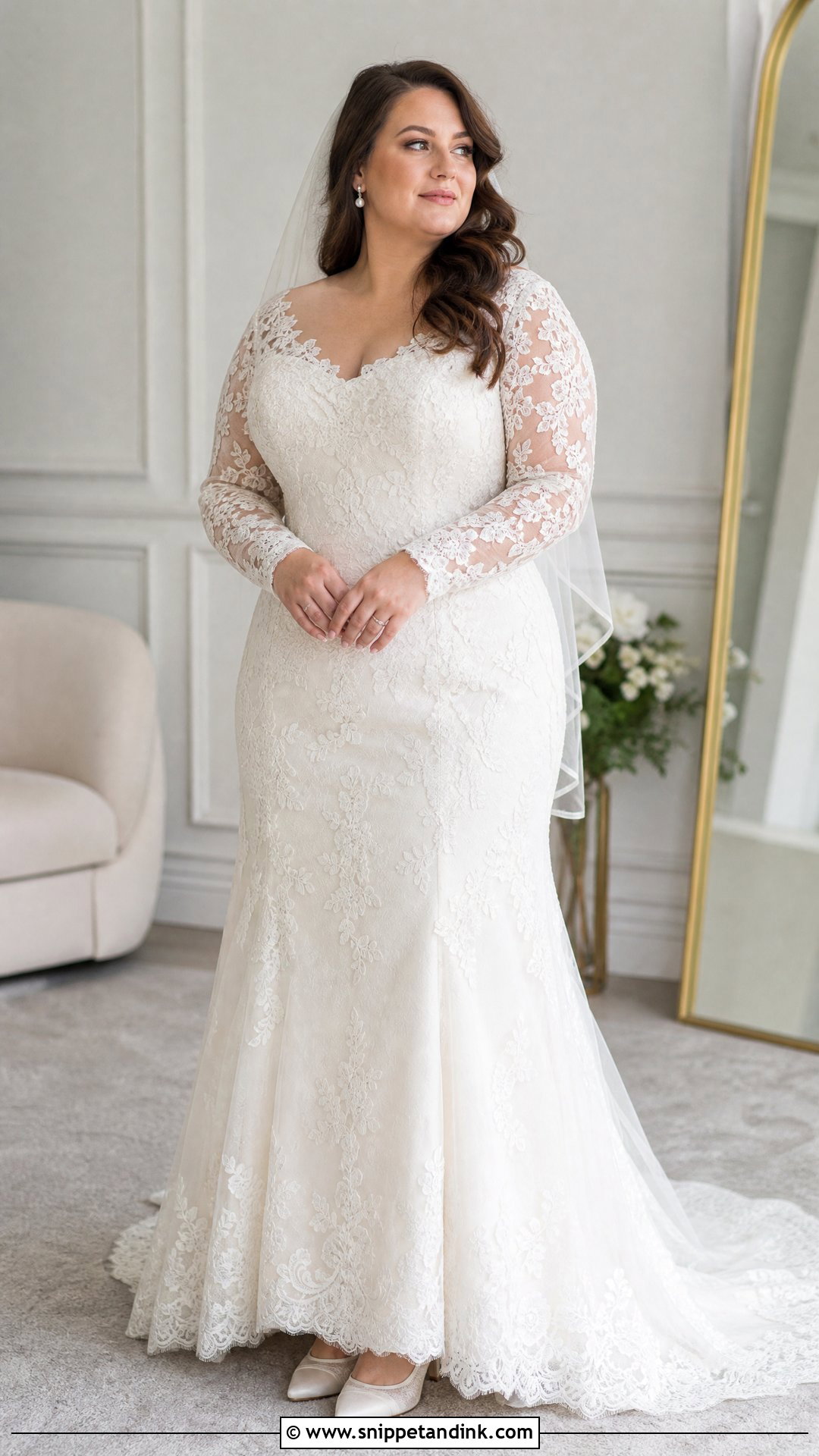
Upper arms are where long-sleeve lace either works or becomes a problem. Rigid lace with no give pulls across the arm when you hug someone, so I look for stretch lace through the upper arm and elbow. Sheer sleeves stay light; lined ones are warmer for autumn and winter. A fitted bodice over an A-line or soft flare keeps the shape tidy. If the lace is heavily patterned, skip the necklace and let the neckline breathe. Closed-toe pumps and pearl earrings suit it. Bend your arms and reach forward at the fitting, and check the armholes don’t cut in.
5. Sweetheart Fit-and-Flare Wedding Dress
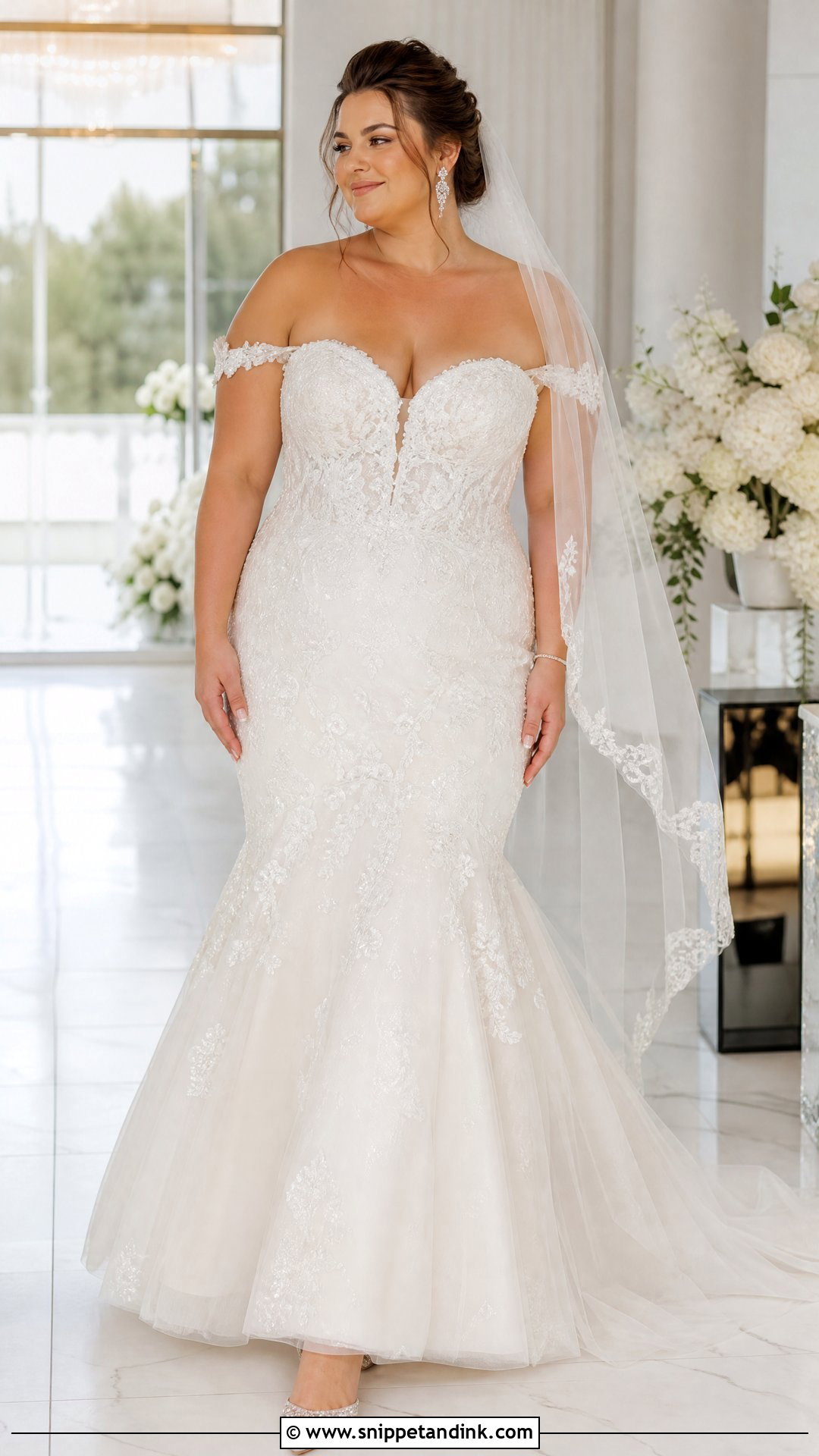
Fit-and-flare follows the waist and hips before opening out, so where that flare begins is the whole decision. Too high and it looks like a skirt sewn onto a shorter dress; too low and walking gets tricky. I’d try two or three versions to find the point that suits your proportions. Strong internal structure and enough stretch to support comfortable movement are non-negotiable. Detachable straps add security under a sweetheart neckline. Pointed heels lengthen the line, though embellished flats work just as well for a long day. A good seamstress can refine the side seams and cups from there.
6. Empire Waist Wedding Dress
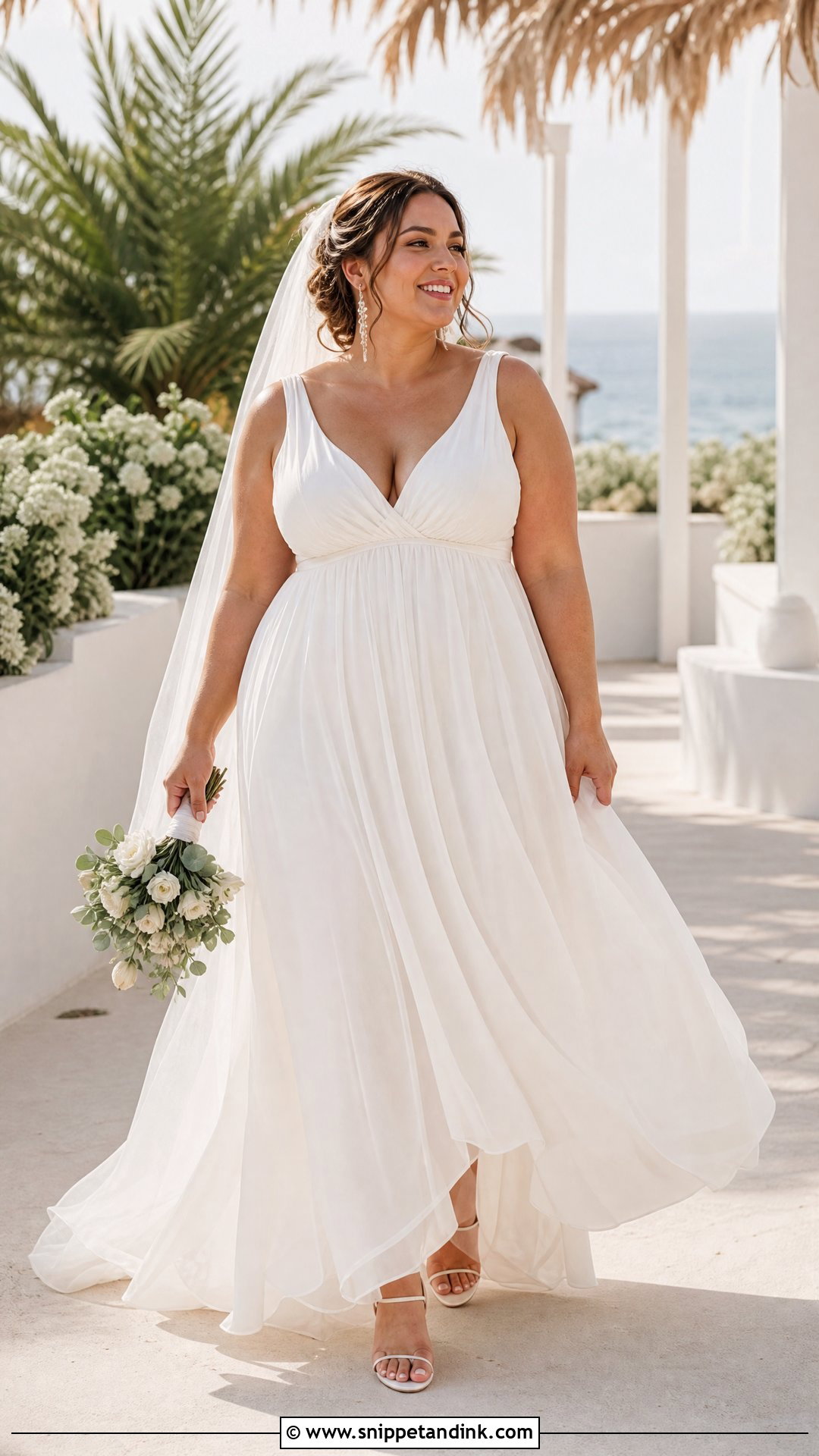
Empire waists get recommended to curvy brides as a default, and sometimes that advice misses. The shape is lovely when the underbust seam sits exactly under the bust with proper cups and support. When it sits too high, it cuts across the bust; with no structure, the skirt falls straight from the chest and hides your waist entirely. So the build matters: supportive straps, fitted cups and a defined underbust band. Chiffon, soft tulle or light crepe flow well from it. Delicate sandals, long earrings and a narrow chapel veil keep it airy.
7. Corset Bodice Wedding Dress
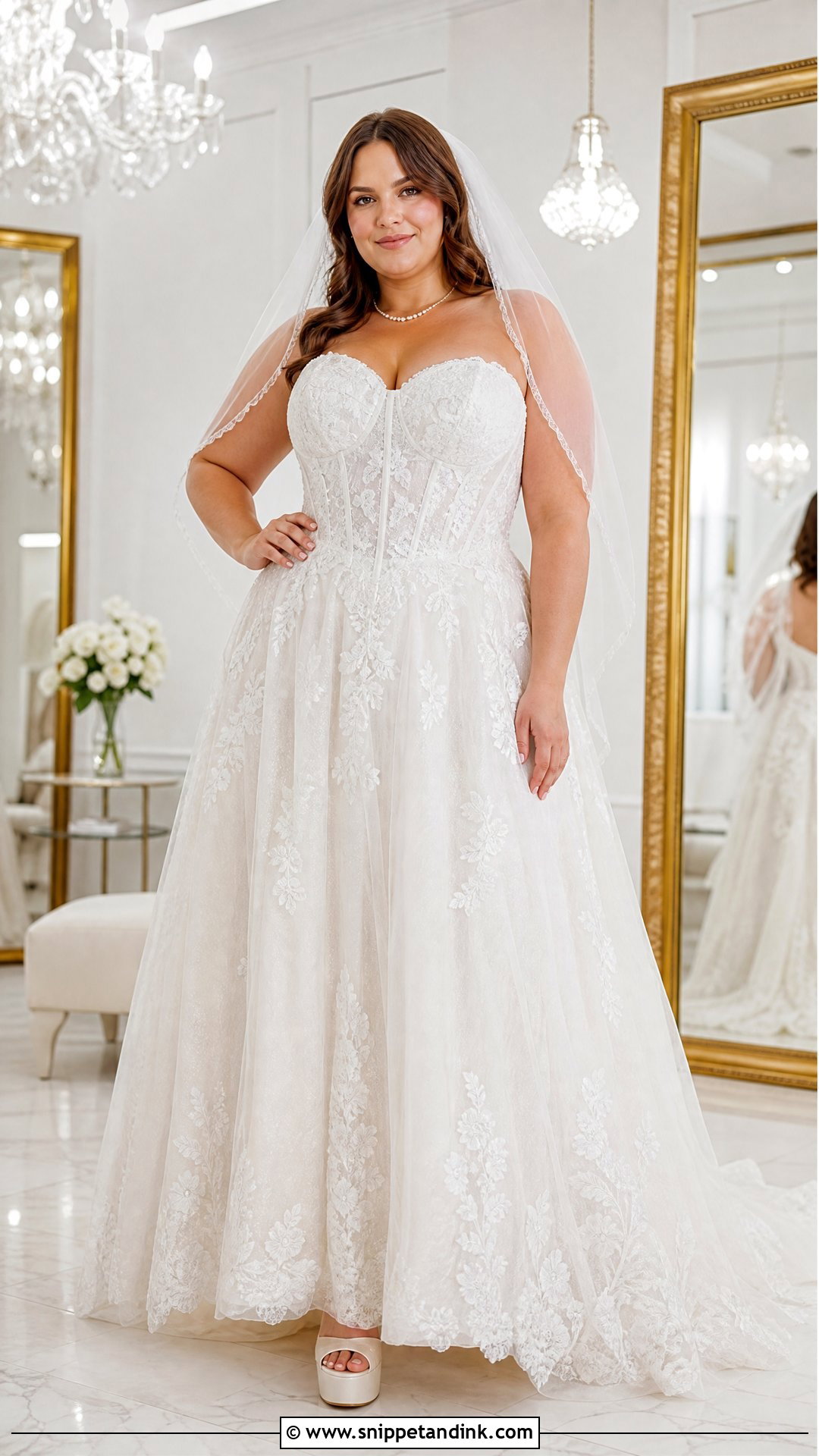
A properly fitted corset bodice is one of the most comfortable things a curvy bride can wear, because it spreads support across the whole torso. A badly fitted one is the opposite. Get the size right and have it altered professionally rather than laced tighter. Lace-up backs allow some adjustment between fittings; a concealed zip looks cleaner. Pair it with an A-line skirt for softness or a full ball gown for drama. In the fitting, sit, take a deep breath and raise your arms. Nothing should roll at the top edge or dig in below the ribs.
8. Ruched Satin Wedding Dress
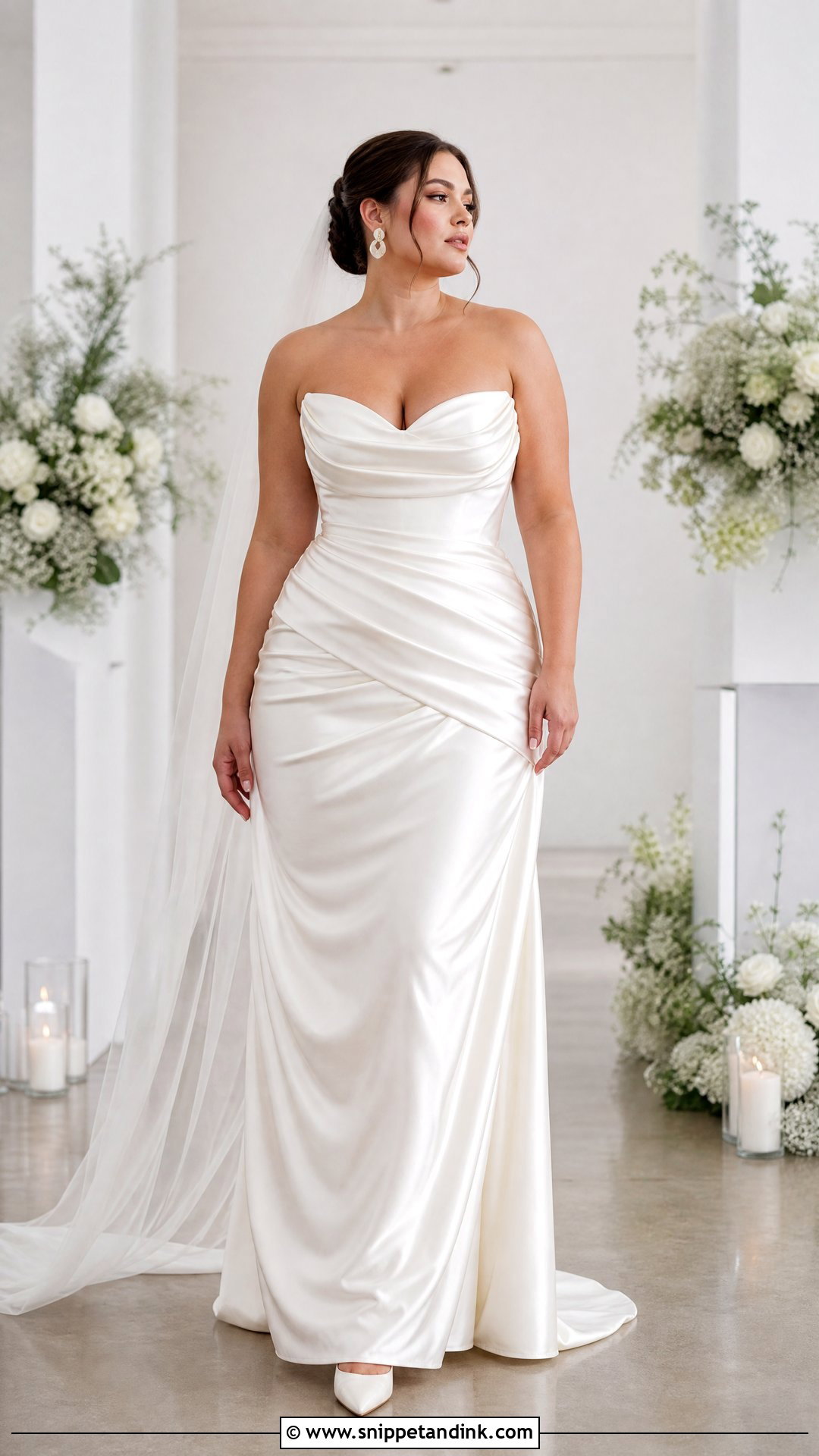
Ruching earns its place on satin because satin shows every lump and line, and diagonal gathers give the eye something deliberate to follow across the bodice. A wrap neckline or draped sweetheart suits the technique. Medium-weight satin holds the drape; very stiff satin creases into hard folds once you sit. Satin also reveals alterations, so seams have to lie completely flat, and that only happens if you wear the planned undergarments to every fitting. A plain tulle veil, sleek pumps and an updo leave the draping in charge. A firm bustle stops the heavier skirt pulling backward later.
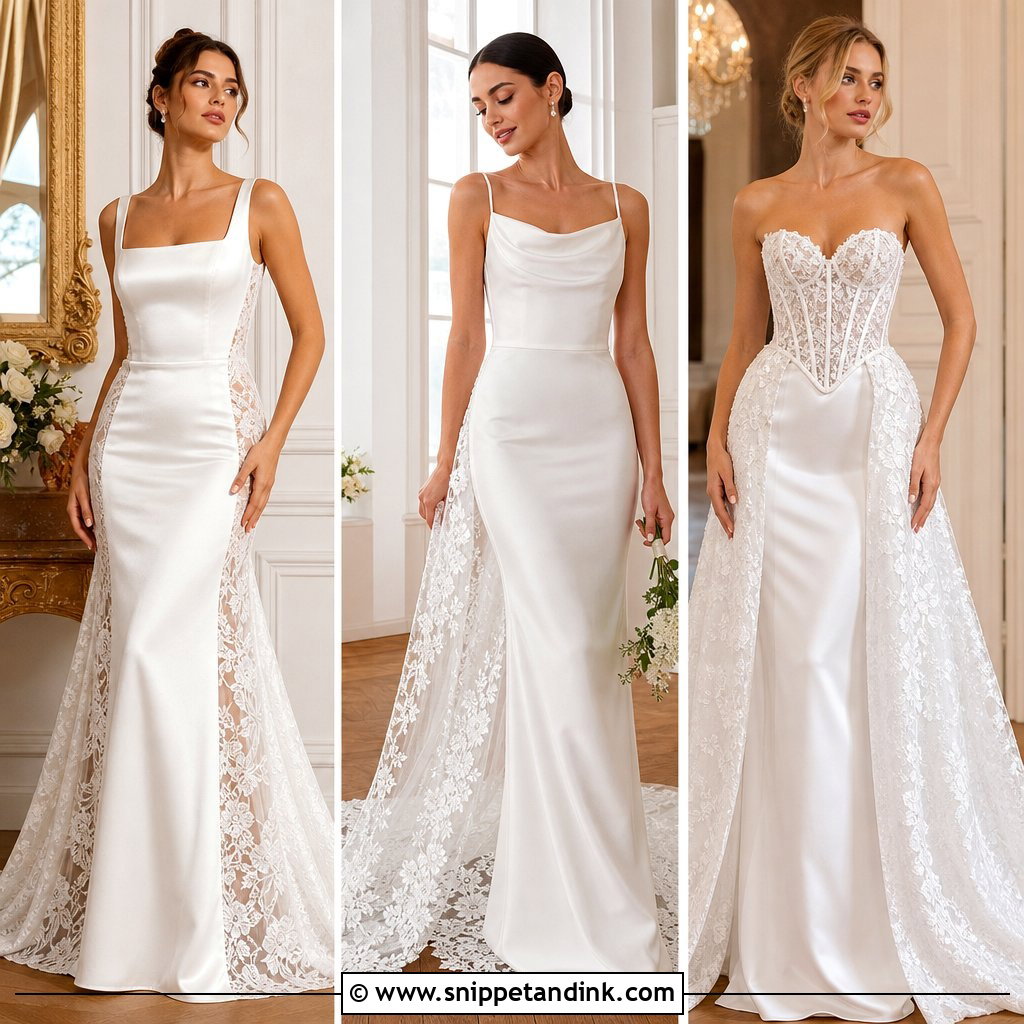
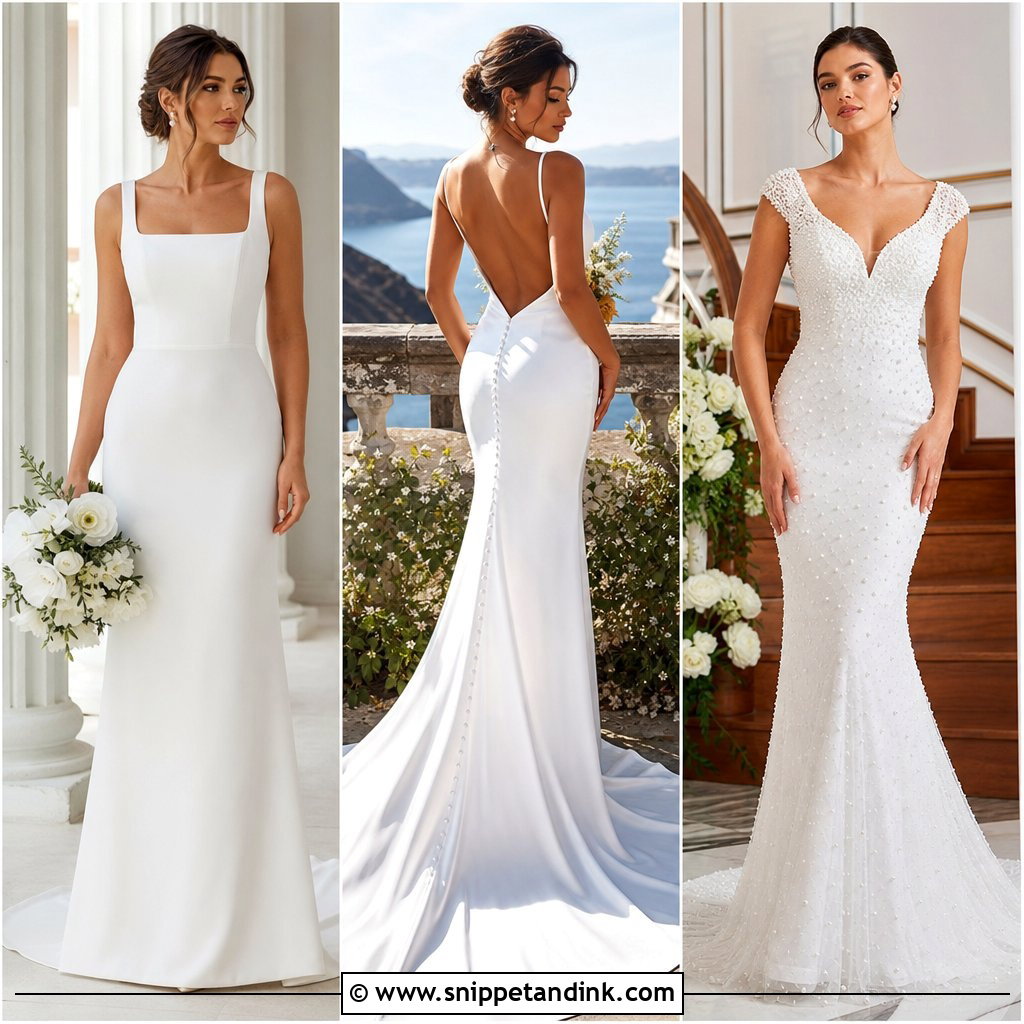
9. Square-Neck Crepe Wedding Dress
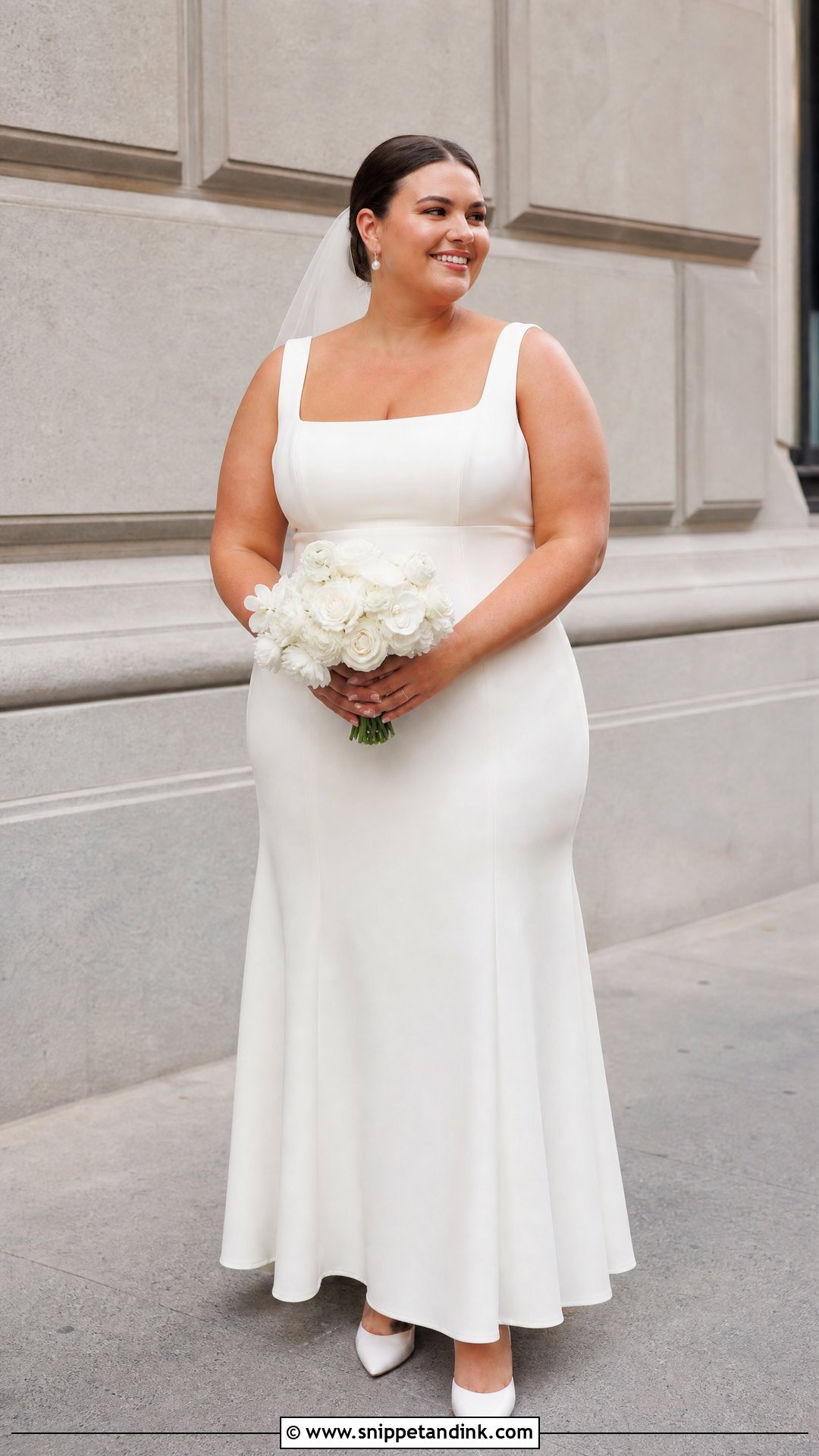
Square-neck crepe is plain enough that tailoring is the design. The neckline has to sit flat at the corners, wide straps need to stay where they’re placed, and the lining can’t bunch at the waist. I’d choose a lined stretch crepe that skims rather than clings, with princess seams and a softly flared skirt for shape. It suits a city or modern venue. Pointed pumps, pearl or gold earrings and a low bun are all it needs. Pick a short veil for a modern edge or a long plain one for the aisle.
10. Tea-Length Wedding Dress
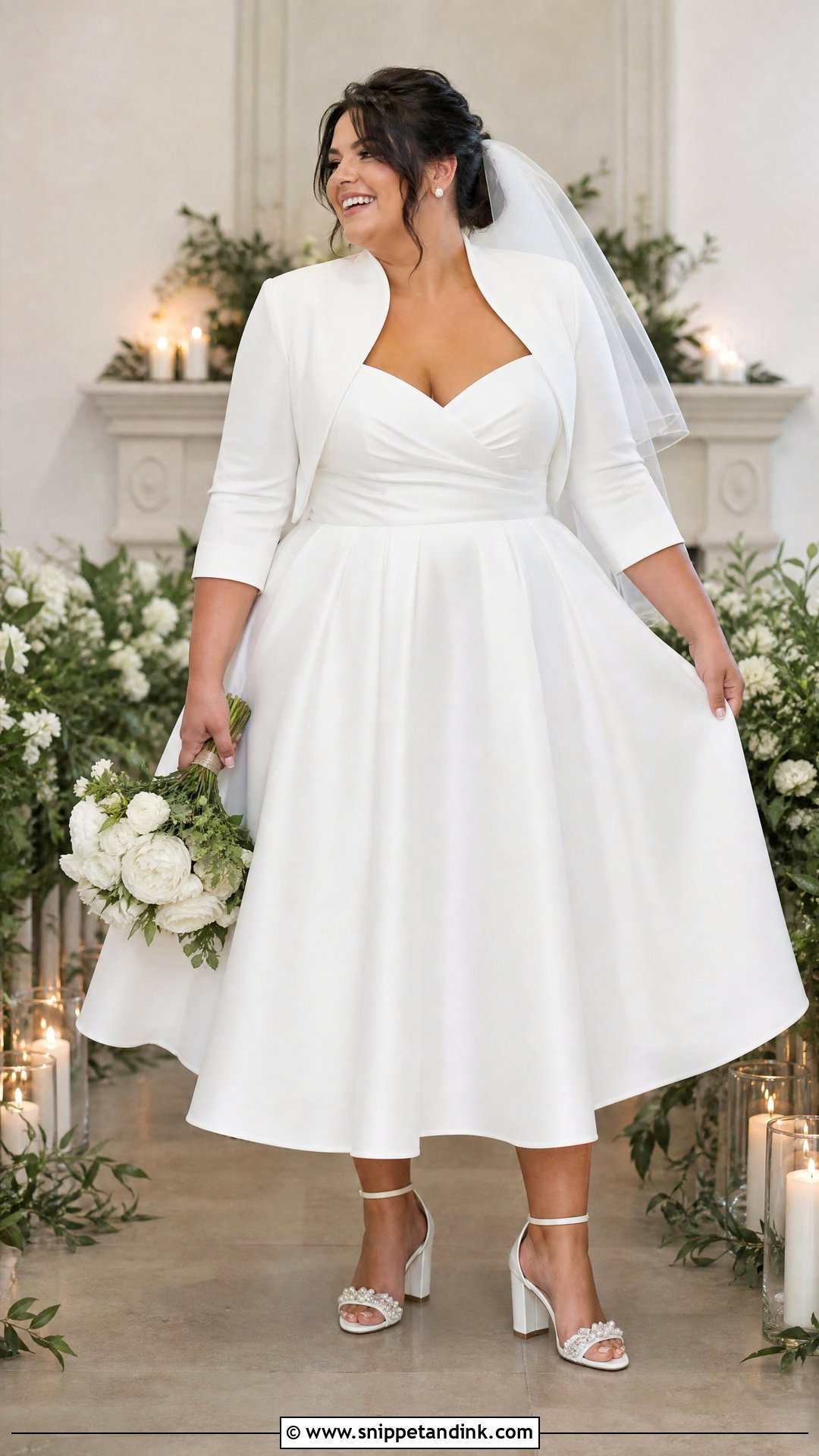
Hem placement on a tea-length dress matters more than the dress itself. I look at where the hem meets the lower leg and move it until it falls at a narrower point, rather than cutting across the widest part of the calf. An inch makes a real difference. A fitted bodice and gently flared skirt in mikado, satin or layered tulle hold the shape without the weight of a full gown. Embellished block heels, pearl studs and a short veil or floral band suit it, with a cropped jacket for cooler days.
11. Boho Bell-Sleeve Wedding Dress
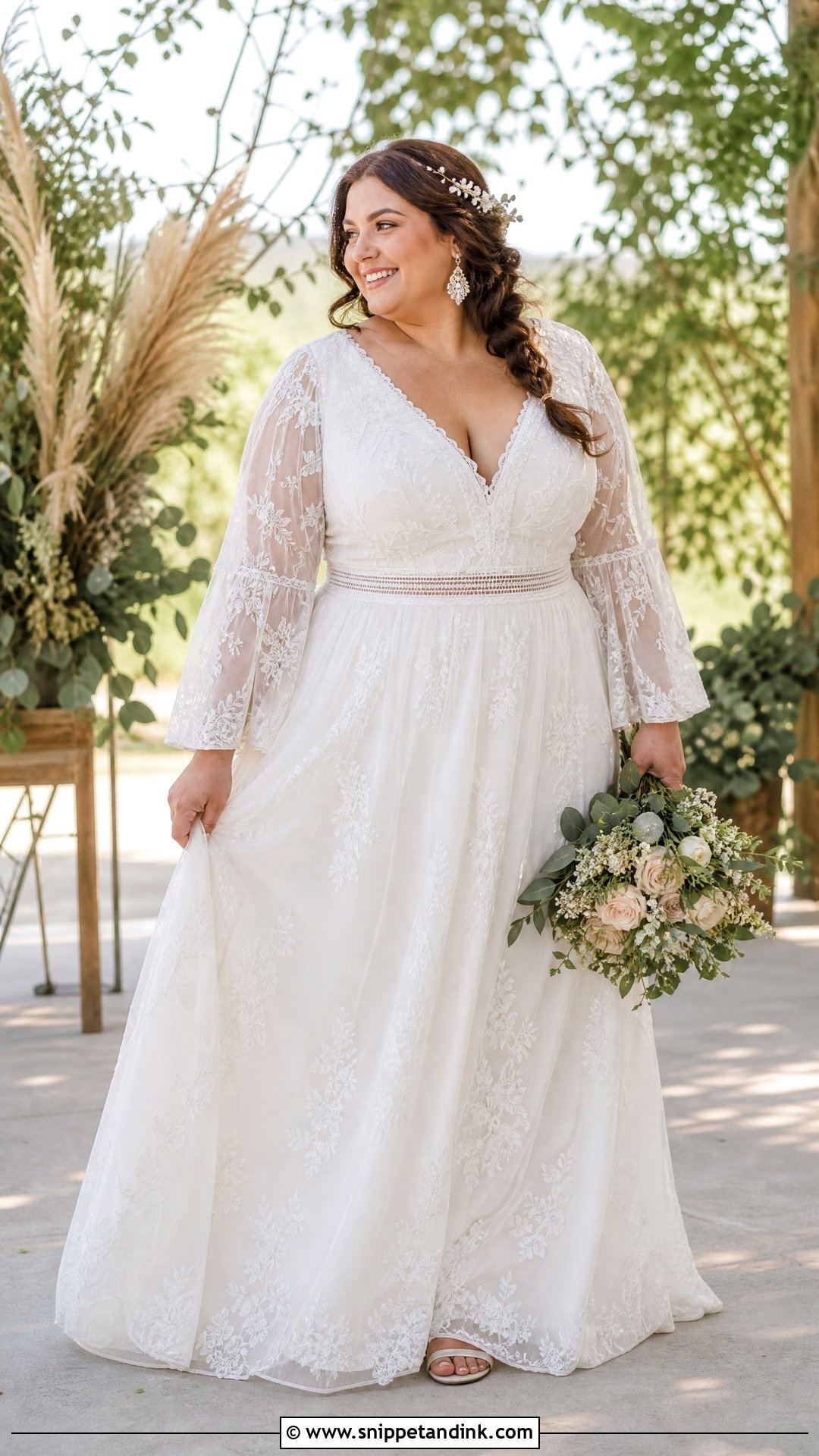
Bell sleeves look easy until dinner, when wide cuffs trail through sauce. I’d check the opening around the elbow and wrist is roomy enough to move but not so wide it gets in the way. A defined waistband, V-neck bodice and light skirt suit rustic and outdoor venues, and a lined bodice gives support under delicate lace. Low sandals, a loose braid and a floral comb keep it informal. For an outdoor ceremony, ask for the front hem to be a fraction shorter to keep it off damp ground, and use a wrist loop or bustle for the train.
12. High-Low Wedding Dress
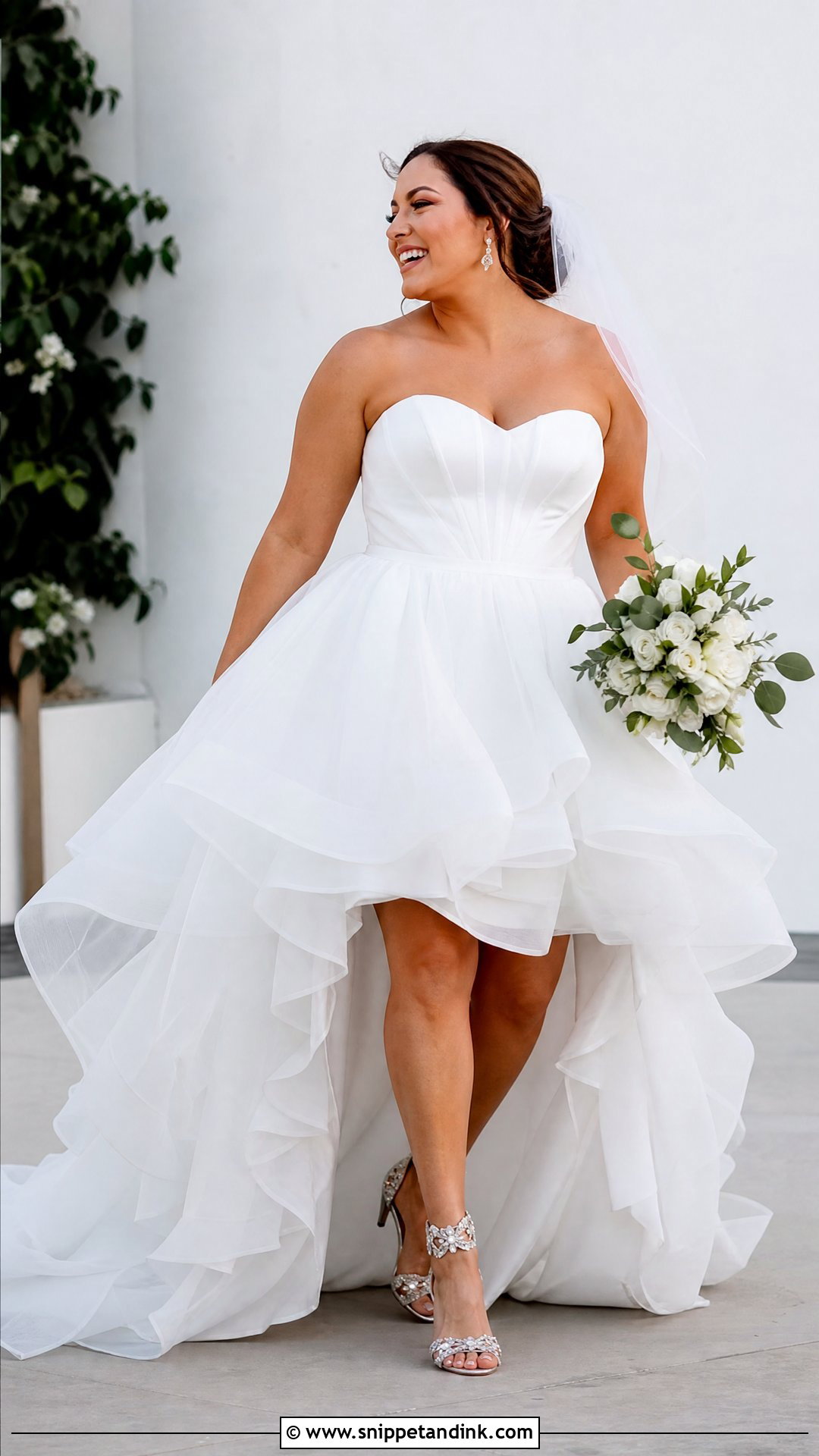
A high-low hem shows off the shoes and moves easily, so it’s a great pick for an informal ceremony or a reception change. The transition from front to back should be gradual. An abrupt angle can look like an accident, especially from the side. A structured bodice keeps it bridal, layered tulle gives bounce and satin a cleaner line. Your shoes are on display all night, so wear statement heels or embellished flats you really like. Keep the back long enough to feel bridal but not so long you trip on steps.
13. Cape Sleeve Wedding Dress
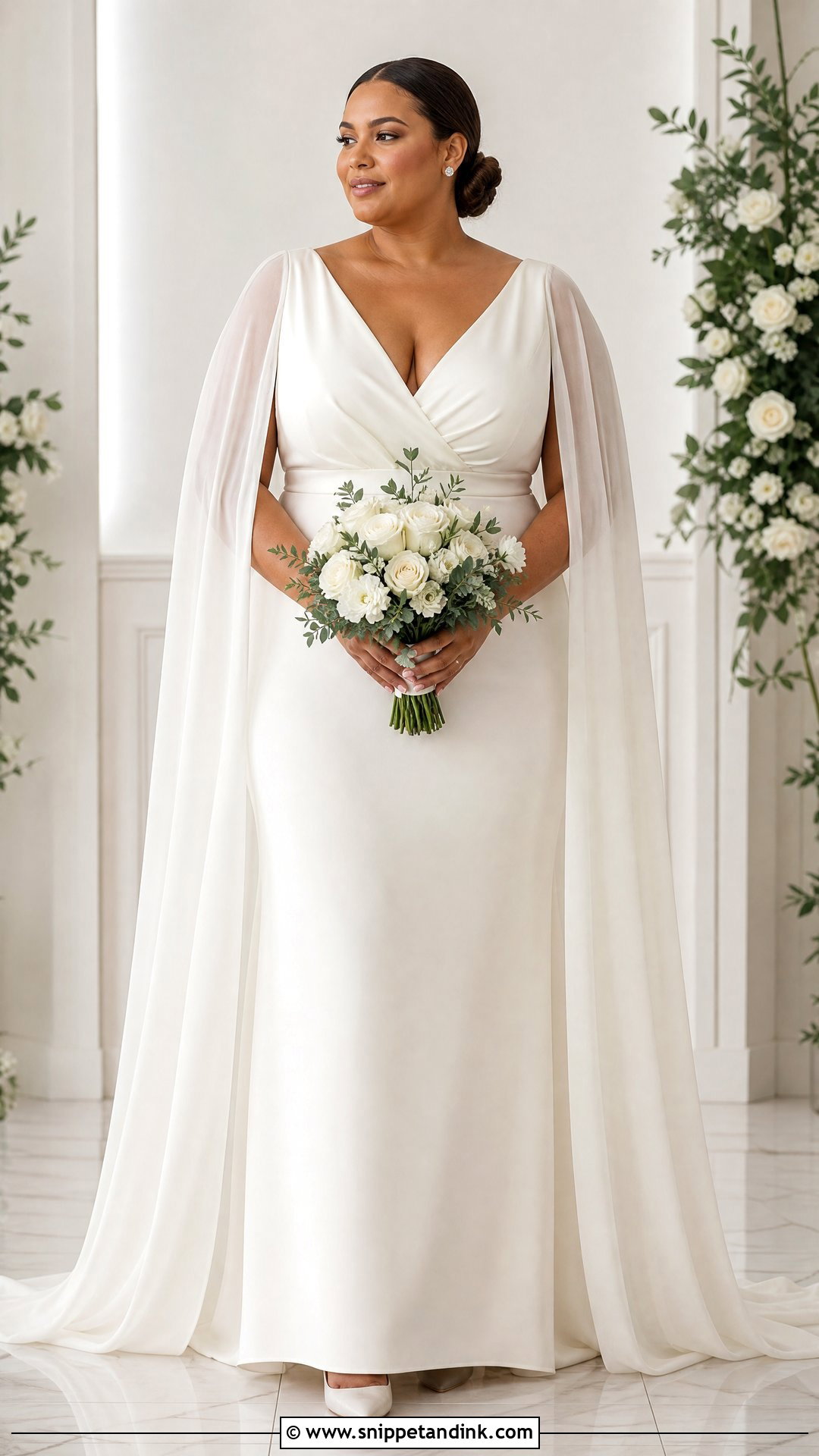
Capes give coverage around the arms without the tight feeling of fitted sleeves, which is why so many curvy brides end up loving them. They can fall from the shoulders, attach at the neckline or run to the floor. Keep the gown underneath simple, an A-line or column with a V-neck, so the cape can move. With a long back cape, skip the veil. The fitting check is symmetry: both sides should hang evenly and not bunch under the arms. A detachable version can come off before dinner, which is handy in a warm room.
14. Floral Appliqué Wedding Dress
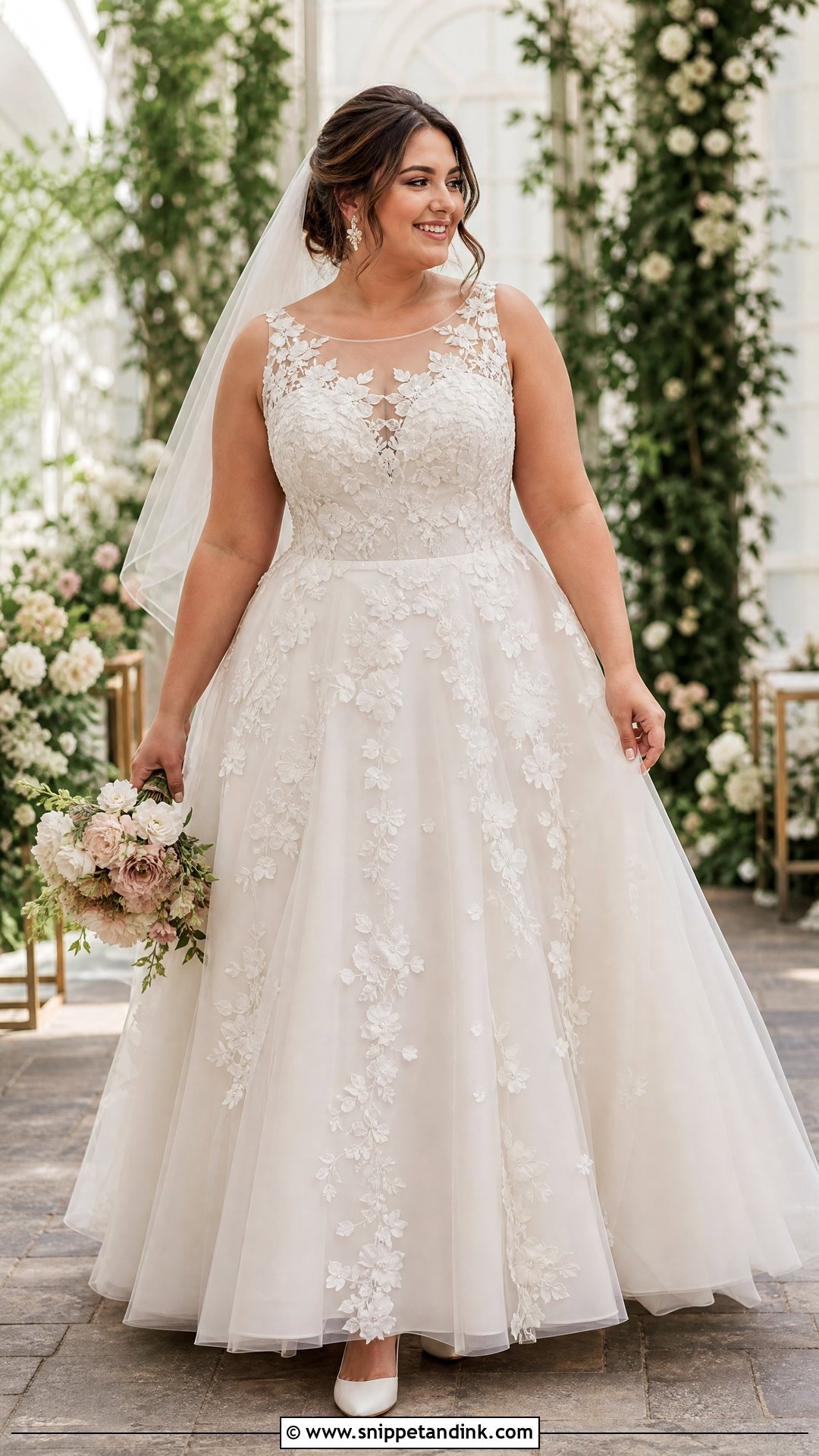
Appliqué flowers scattered from the bodice into the skirt add depth, and an A-line gives them room. Edges are what I feel for first. Stiff embroidery can scratch the inner arm all day and snag a veil, so soft-edged motifs are worth asking for. A lined illusion bodice gives coverage while keeping the floating effect. Alterations often cut through appliqués at the side seams, so ask the seamstress to lift and reposition any affected flowers rather than leaving half a petal at the seam. Plain satin shoes and a simple veil let the pattern lead.
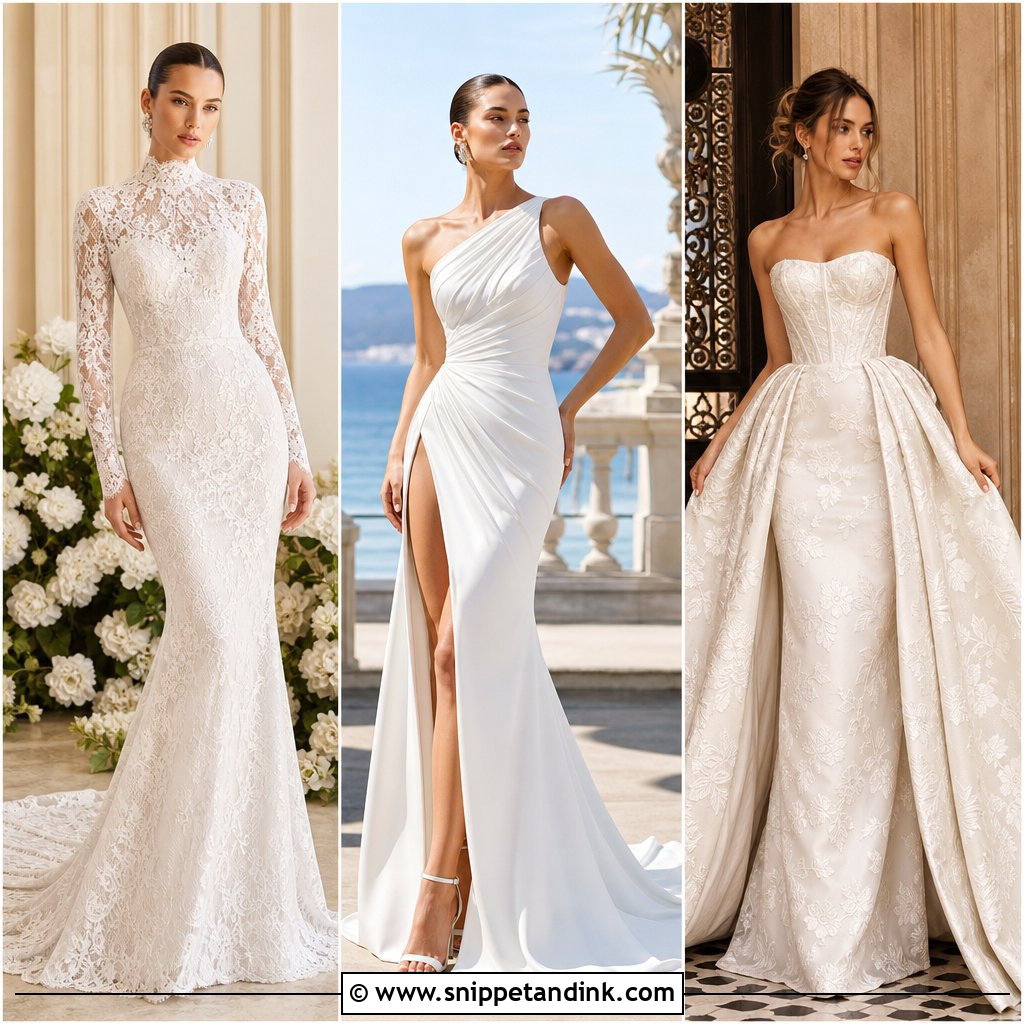
15. One-Shoulder Wedding Dress
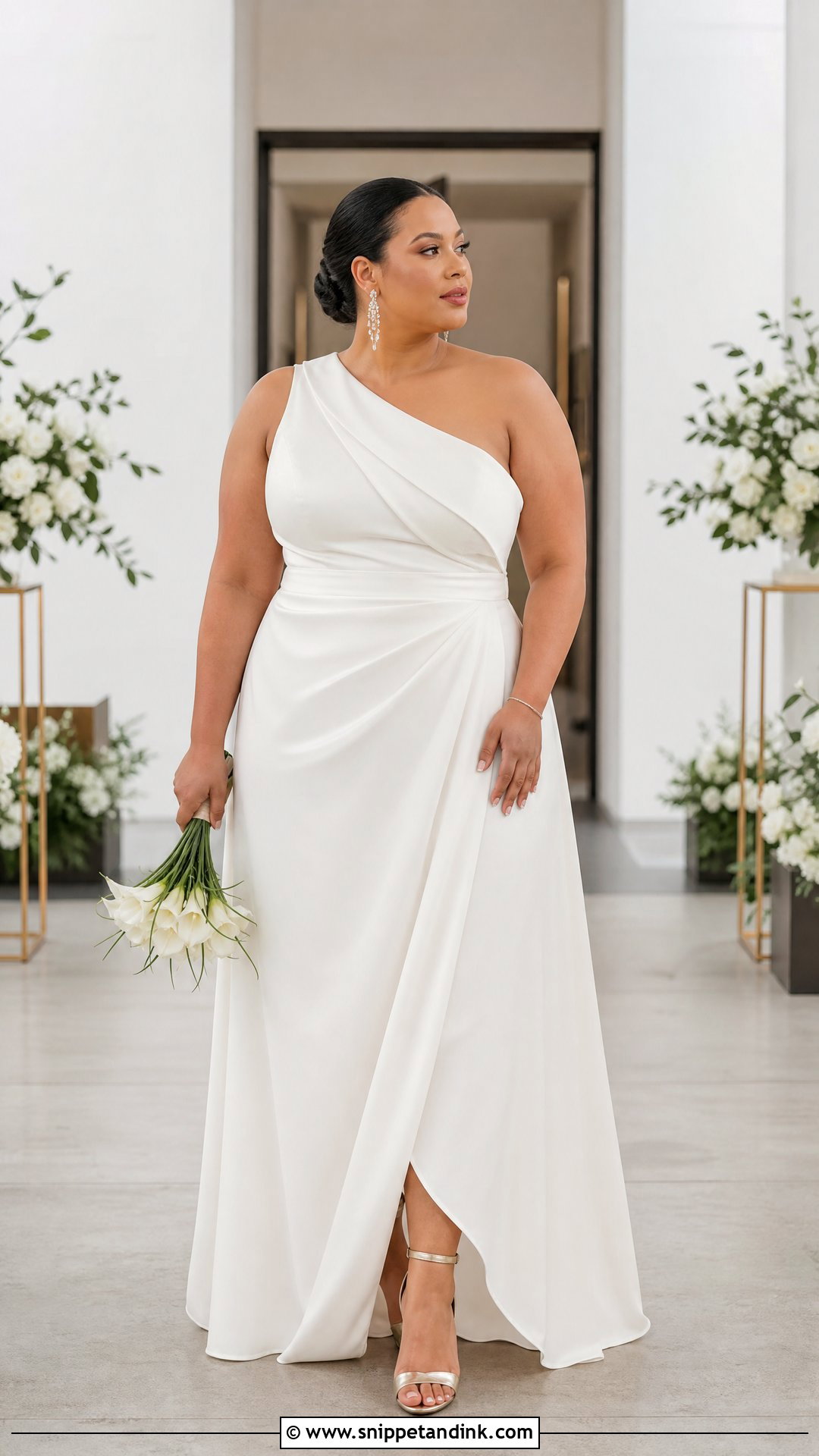
Asymmetry draws the eye up to the face and shoulder, and an A-line or draped skirt balances that diagonal below. The catch on a curvier bust is that one strap can’t hold the dress up alone. A supportive inner foundation, ideally with built-in cups, must do the work, or the strap will dig in and the neckline will slant by evening. Move both arms in every direction at the fitting. A sleek updo, statement earrings and a bracelet on the bare arm suit it; skip the necklace and keep the bouquet simple.
16. Pleated Tulle Wedding Dress
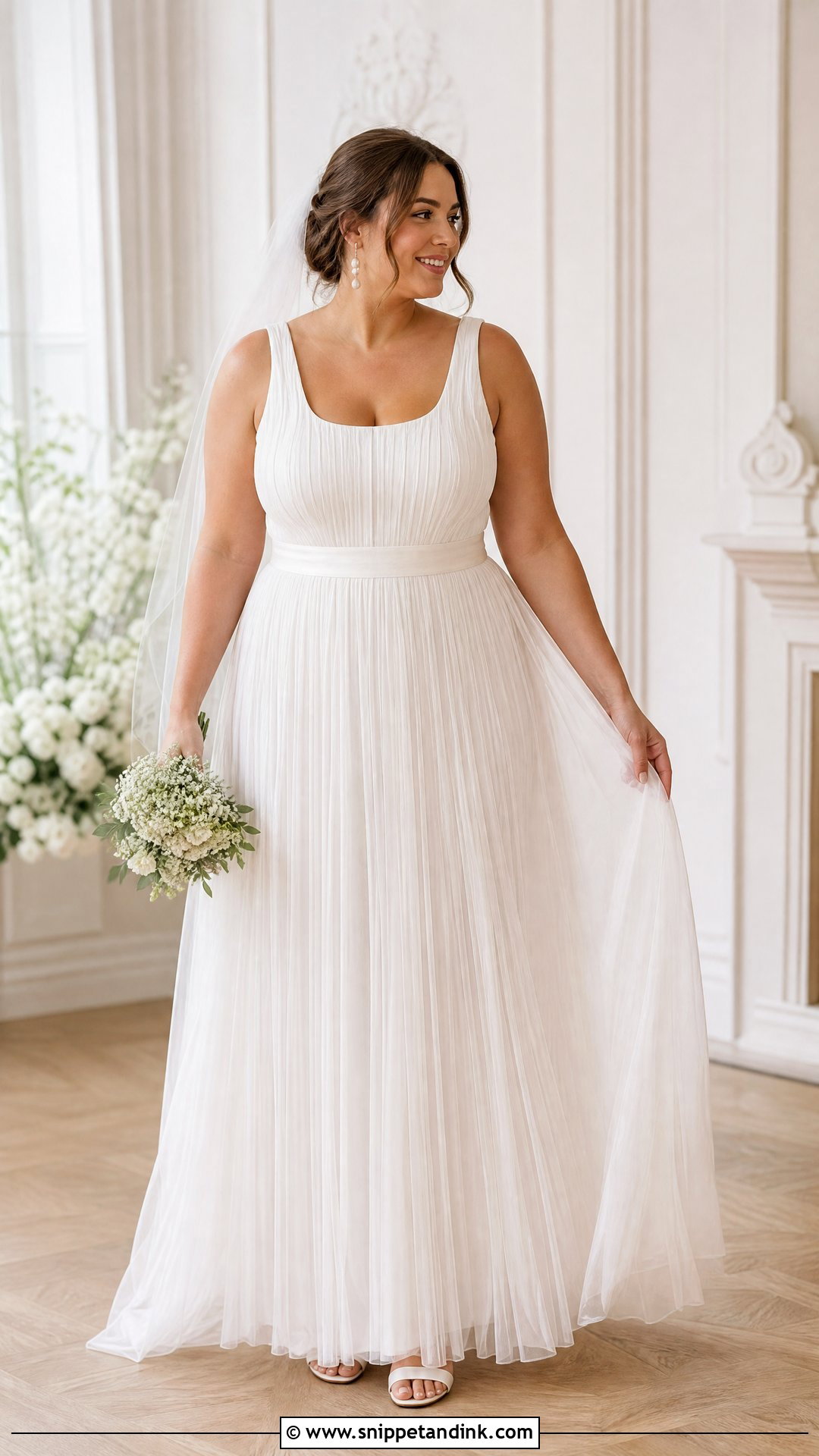
Fine vertical pleats give tulle volume while keeping a clean line from waist to floor, which gathered layers don’t. A supportive V or scoop bodice suits it. If you add a satin waistband, size it to the bodice so it defines rather than slices across you. Pleats need care before the wedding: store the gown hanging with enough space that nothing presses the folds flat, and don’t let anyone crush it into a car. The seamstress should shorten each layer evenly and build a bustle that keeps the pleats falling straight.
17. Minimalist Column Wedding Dress
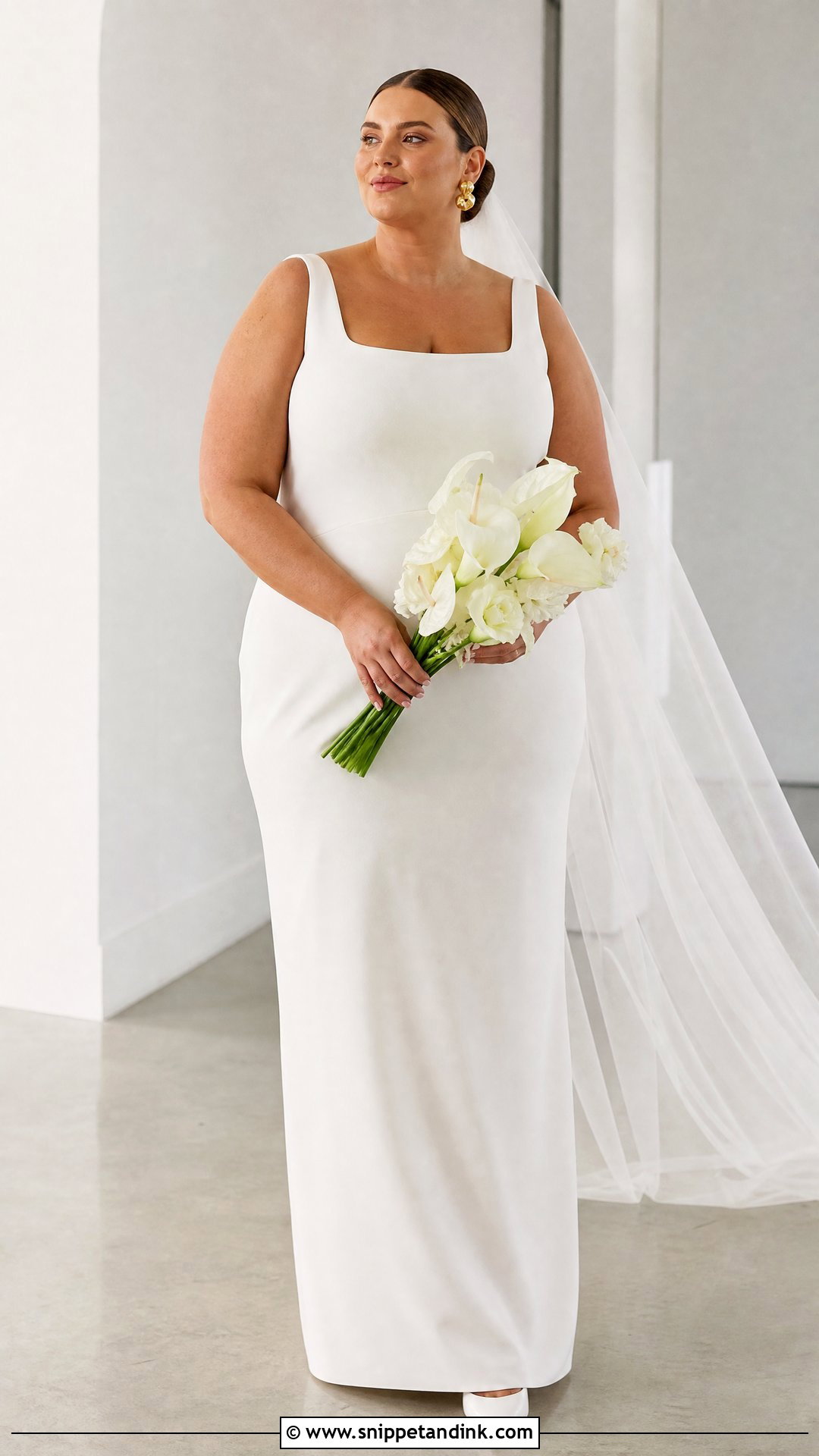
A column gown in crepe or matte satin can look sharp on a curvy figure when it skims the body instead of gripping it. With no lace or beading to distract, construction is everything, so shoulder seams, neckline, waist and hem must sit exactly right. A bateau, square or soft V adds quiet definition. Pointed pumps, sculptural earrings, a long plain veil and a sleek bun reinforce the modern aesthetic. Walking is the usual issue in a narrow skirt. Ask about a hidden slit or a stretch panel before the hem is finished.
18. Basque Waist Wedding Dress
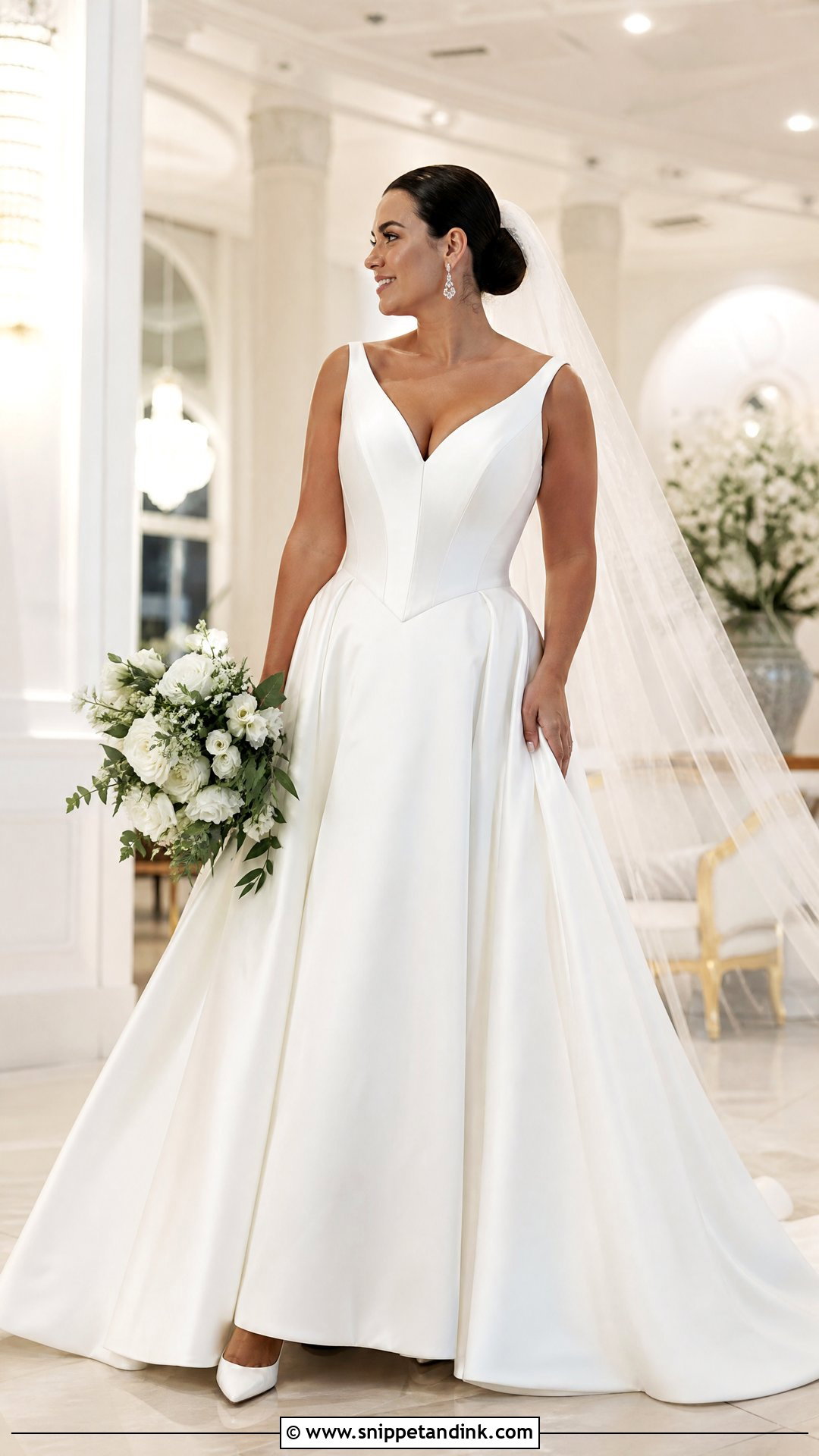
A basque waist wedding dress dips into a V below the natural waist and brings a historical feel to a ball gown or full A-line. The question on a softer stomach is what happens when you sit. A very sharp point can fold or press in, so I often suggest a gently curved basque line instead. Skip any separate belt, since the dropped waist is already the feature. Classic pumps, drop earrings and a long veil under a smooth bun suit the formality. In the fitting, sit for several minutes and check the front point stays flat.
19. Blush Wedding Dress
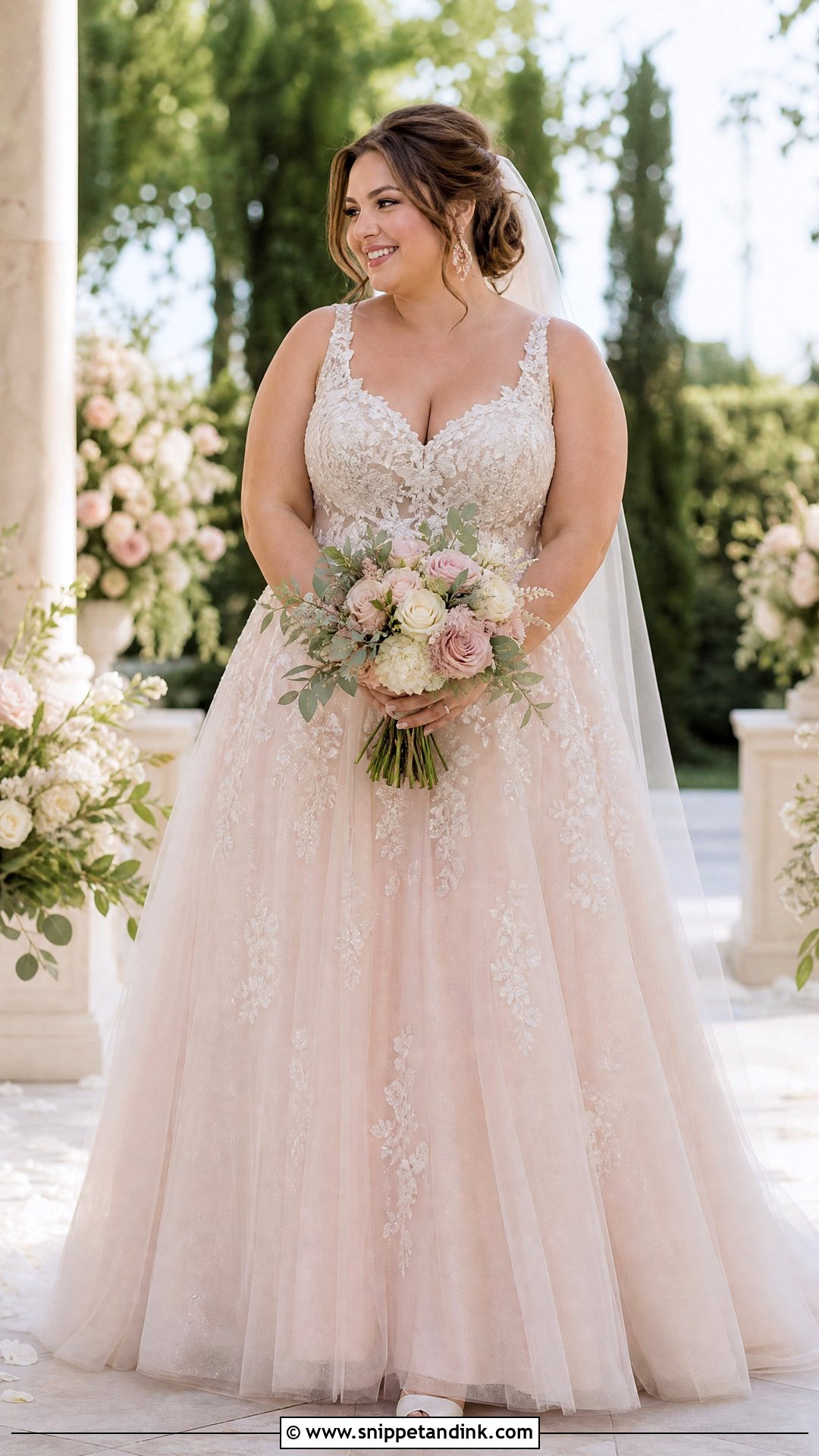
Blush can lean pink, peach or beige depending on the fabric, so I always look at it in daylight and then under lighting like your venue’s. It can come through a coloured lining beneath ivory lace or run through the whole gown in satin, tulle or chiffon. On a supportive A-line it works indoors or out. Ivory shoes, rose-gold earrings and a sheer neutral veil let the colour show. Ask your florist for flowers that complement the undertone rather than copying it, since an exact match tends to merge with the dress in photos.
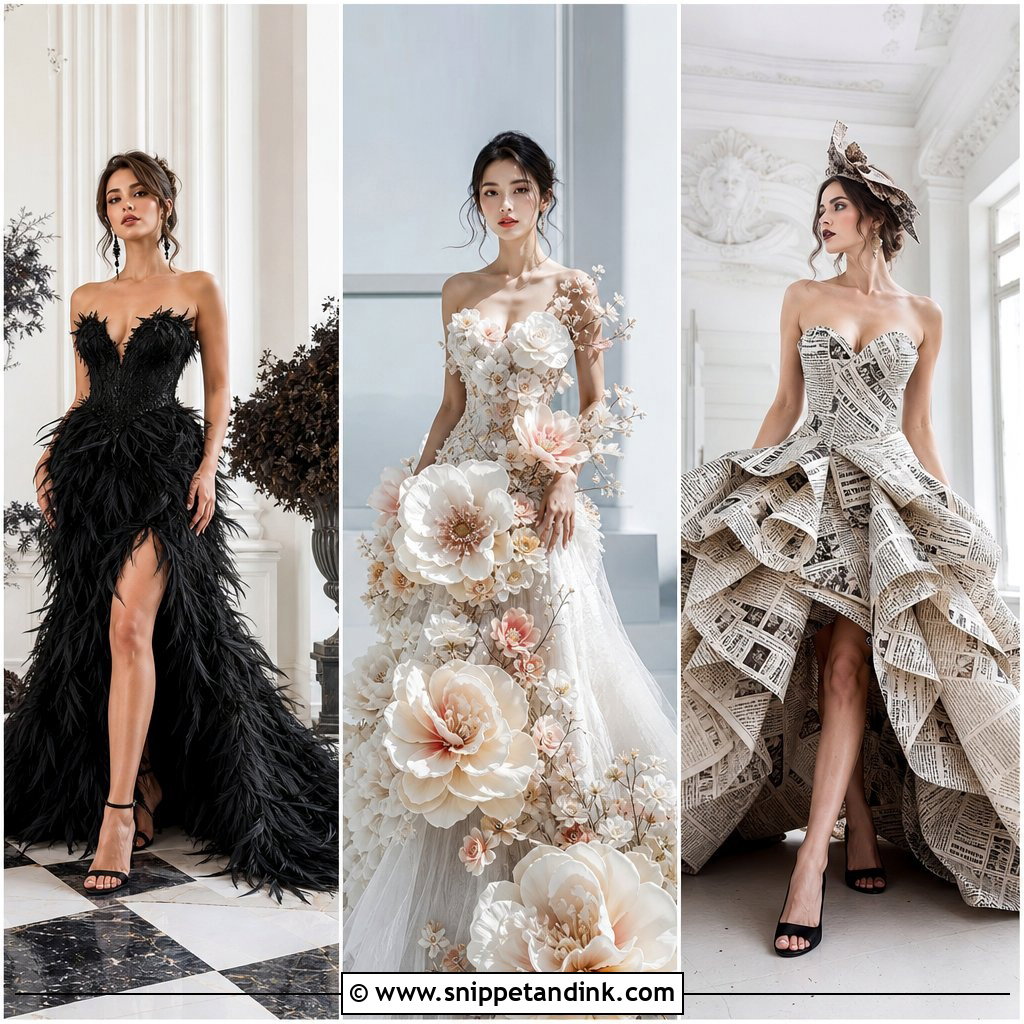
20. Black Wedding Dress
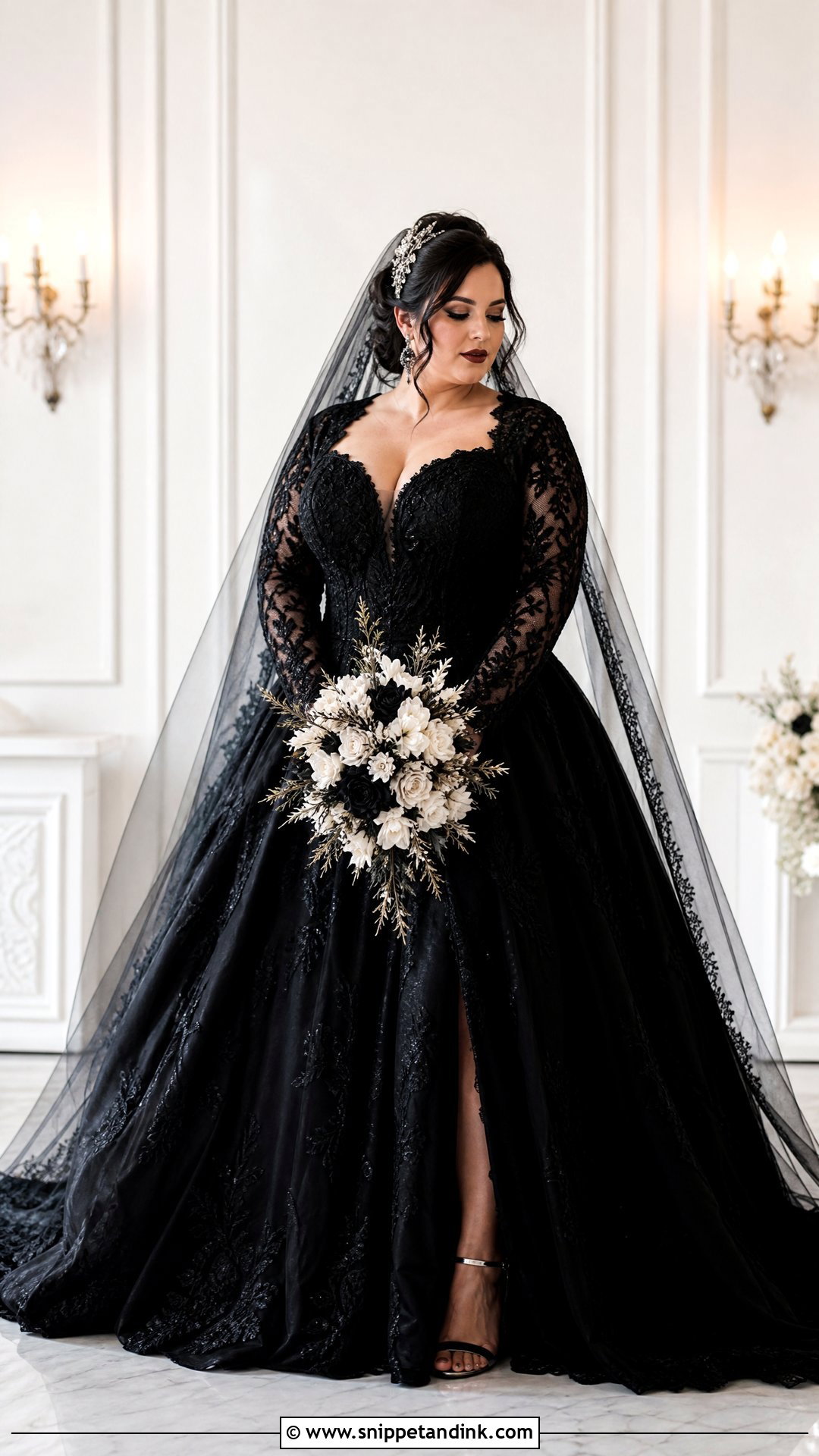
A black gown is a bold choice that can still feel romantic, and it suits a structured A-line, a mermaid or a big ball gown. Black lace over matching lining gives depth; satin looks sharper. Check the fabric under your venue’s lights, because some blacks turn faintly blue or brown and two different blacks side by side look mismatched. A black cathedral veil keeps it unified, while sheer ivory gives contrast. Keep the bouquet lighter so the dress outline stays defined in photos, and treat the tailoring with as much care as any white gown.
Thigh Chafing, Heat and a Long Day in the Gown
The fitting room tells you how a dress looks for ten minutes. A wedding asks for a lot longer, often in a warm room with photos, a meal and dancing. A few small decisions make that much easier.
Under the skirt
Thin anti-chafe shorts or bands under a long skirt stop thighs rubbing, and nobody sees them. They also make shapewear less necessary. Pick a light, breathable pair and wear them to the second fitting so the hem is set over them.
Heat and lining
Polyester linings trap warmth; cotton or other breathable linings are worth asking about for a summer wedding. Several layers of tulle hold heat too, so a fan and a cool spot for photos between events help.
Shoes and seating
Break in your shoes at home well before the day, and keep a flat pair hidden for the reception. When you sit, lift the skirt at the back slightly so you aren’t sitting on a stiff bustle or corset point. It saves the fabric and your back.
Try the Shape You Were Told to Skip
Romantic, minimal, dramatic, traditional or unconventional, every shape here can work on a fuller figure. Try silhouettes you’ve ruled out, move around in each, and look at the gown from the back and side as well as the front. Supportive construction and good alterations count for more than the size on the tag. Leave shoes, veil, jewellery and hair until the gown is chosen, then build them around it.
You'll Like These Ideas:






Leave a Reply