
A slim gown is the least forgiving thing I put on a bride, and also the one that rewards good fit the most. The streamlined silhouettes below skim the body rather than hide it, and none of them demands one body type. Sheath, column, mermaid, trumpet and slim A-line gowns all draw a long vertical line; the difference is where the skirt releases. A sheath follows you from neckline to hem, while a mermaid or trumpet holds close through the hips and then opens. In fittings I care far more about where seams land and how the fabric hangs than about the size on the label, because a well-placed alteration changes a slim dress more than any other shape.
A Slim Gown Shows What’s Underneath, So Start There
With a full ball gown, the foundation layer barely matters. With a sheath or column, it decides half the result. Satin and crepe sit close enough to show a bra band, a knicker line or the edge of shapewear, especially under the flat light of a registry office or a flash on the dance floor.
I ask brides to buy their underwear before the first fitting, not after. The seamstress fits the dress to whatever is underneath, so changing it later means refitting the bodice and the hips. What tends to work:
- Laser-cut briefs or a light high-waist short in a shade close to your skin, not white. White shows through ivory satin.
- Sewn-in cups for backless, halter and deep V styles instead of stick-on bras, which lose grip as you warm up.
- Light shaping only. Heavy shapewear rolls at the top edge when you sit, and that ridge shows through crepe.
- A fitting slip in the same colour as the lining if the dress fabric is thin.
Stand side-on to a mirror under bright light at your first fitting. If you can see an edge there, the camera will see it too.
1. Slim A-Line Wedding Dress
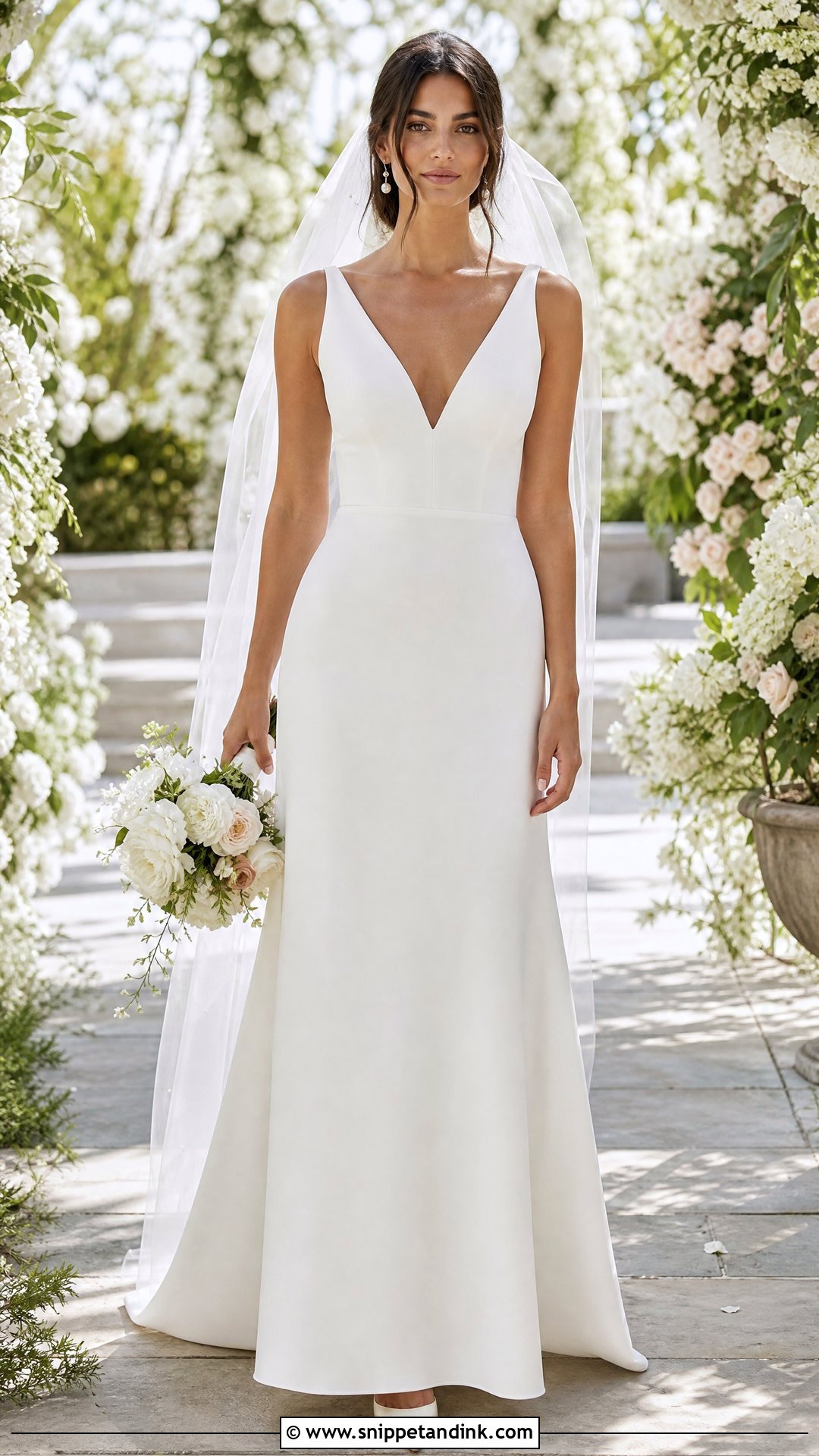
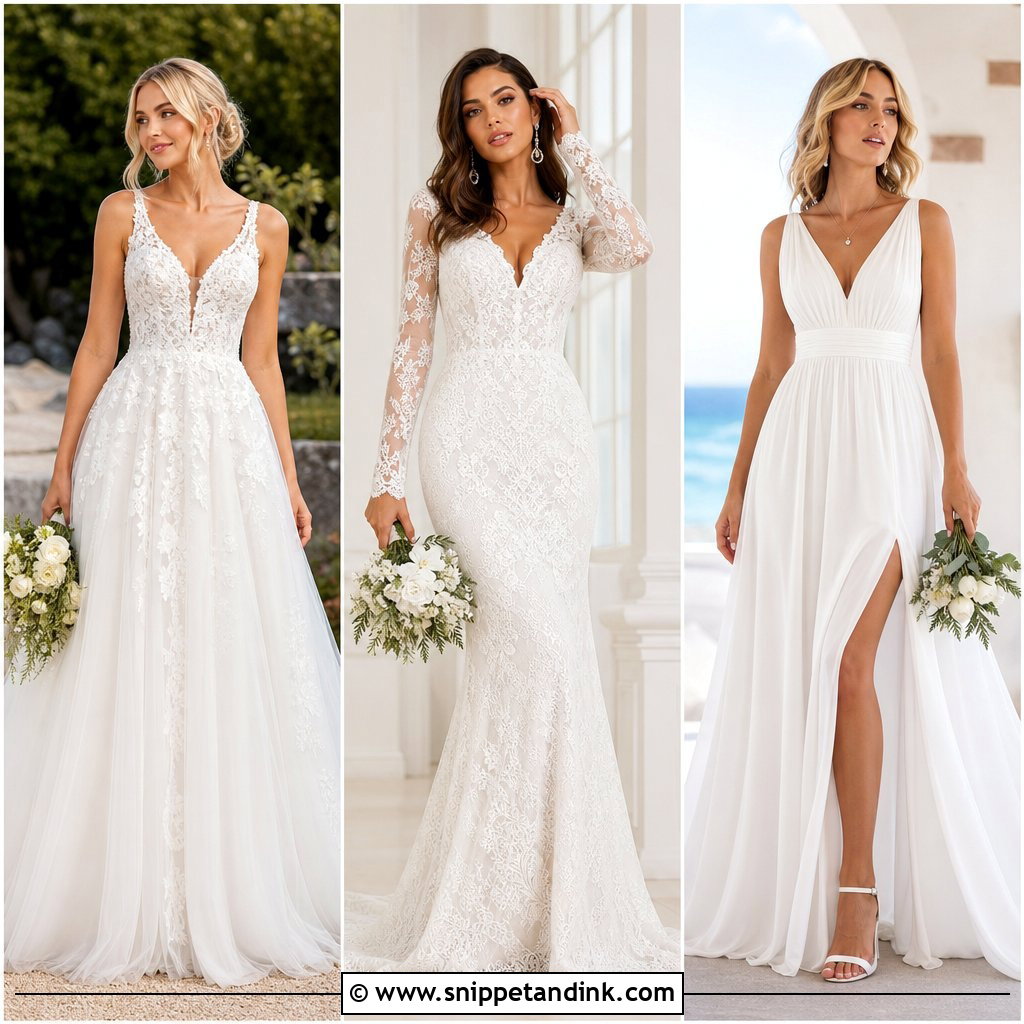
This is the shape I pull first for a bride who says she wants something sleek but is nervous about cling. The bodice fits to a natural waist, then the skirt clears the hips before it widens a little toward the hem, so there is room to walk without the full-skirt volume. Crepe and heavier satin give the cleanest line; chiffon floats more but shows every seam allowance if the lining is cheap. A V-neck with narrow straps keeps the line going upward. I’d style it with pointed pumps, pearl drops, a fingertip veil with a plain edge and a low chignon so the neckline stays visible. It sits comfortably in a garden, a hotel ballroom or a church.
2. Crepe Sheath Wedding Dress
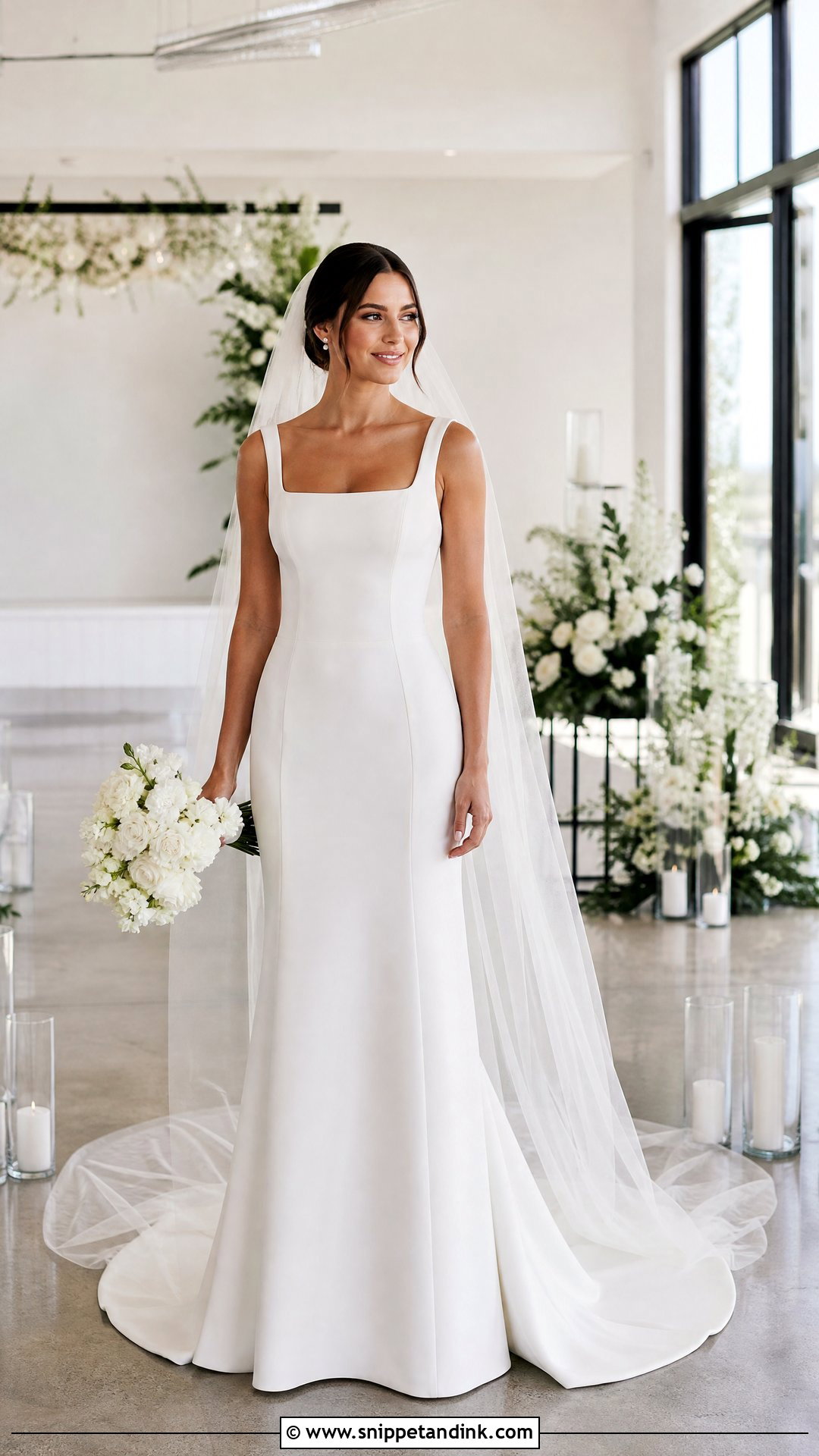
Crepe is my favourite fabric for a sheath wedding dress because it has enough weight to fall straight and enough give to let you sit. Look for princess seams and a little internal structure rather than a cut that is simply tight; tightness shows as horizontal pulling across the hips the moment you stand still. A square neckline with wide straps makes a supportive bra far easier to hide. Pearl studs, ivory slingbacks and a small structured bag for the reception keep it crisp, and a chapel-length veil adds ceremony without covering the narrow column shape.
3. Satin Column Wedding Dress
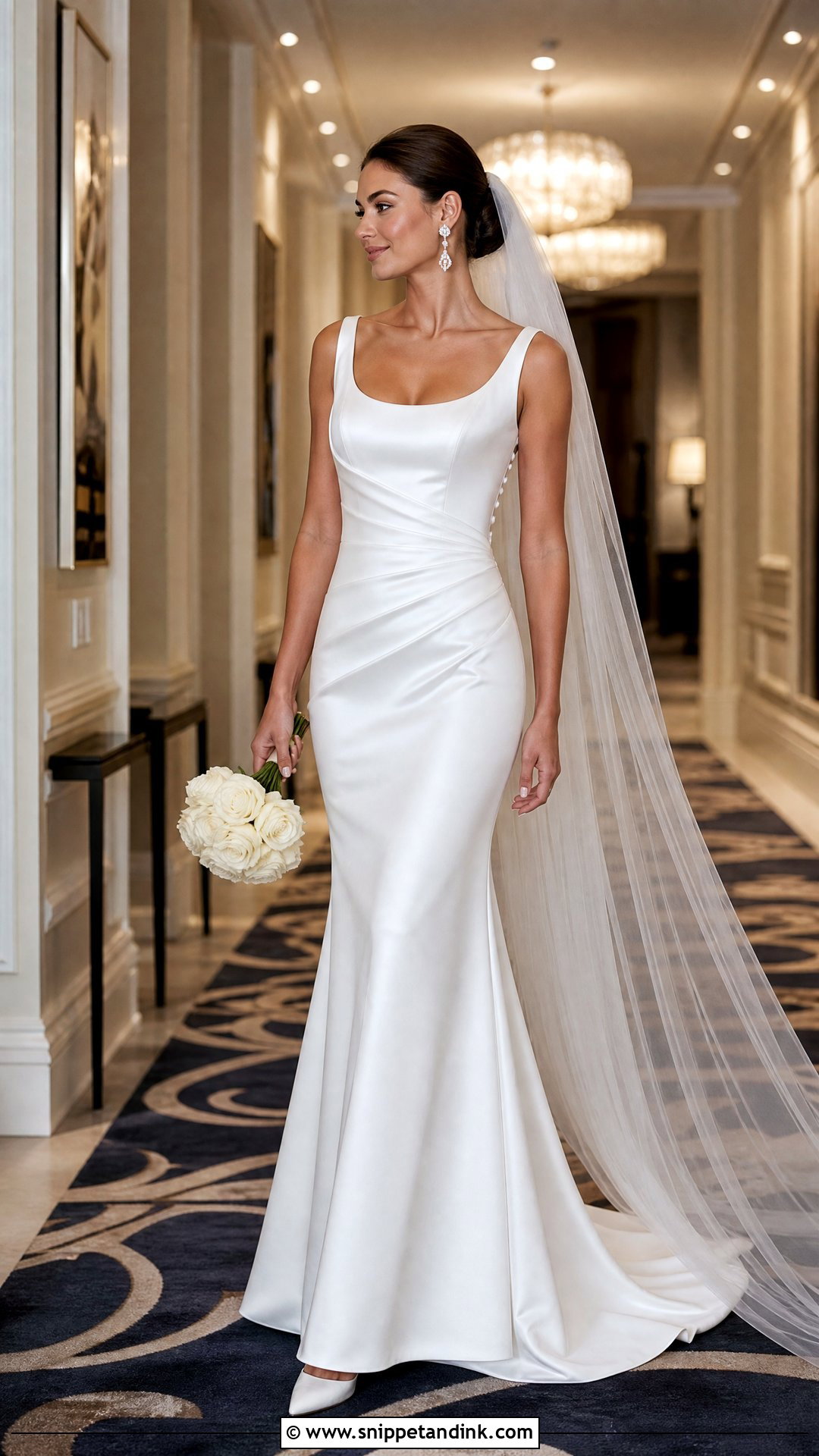
Satin is unforgiving on a column cut. It reflects light, so any ripple at the seat or puckering along a seam shows up in every flash photo. I steer brides toward a heavier duchess or mikado satin that drapes instead of clinging, then add soft diagonal pleats at the waist for definition. Covered buttons down the back keep the line clean. A sheer cathedral veil, crystal earrings and a smooth bun suit a formal ceremony, and a detachable satin cape gives coverage if the church asks for it. Bring the exact shoes and undergarments to every fitting; with satin, a half-inch change in heel height shifts the hem enough to notice.
4. Lace Fit-And-Flare Wedding Dress
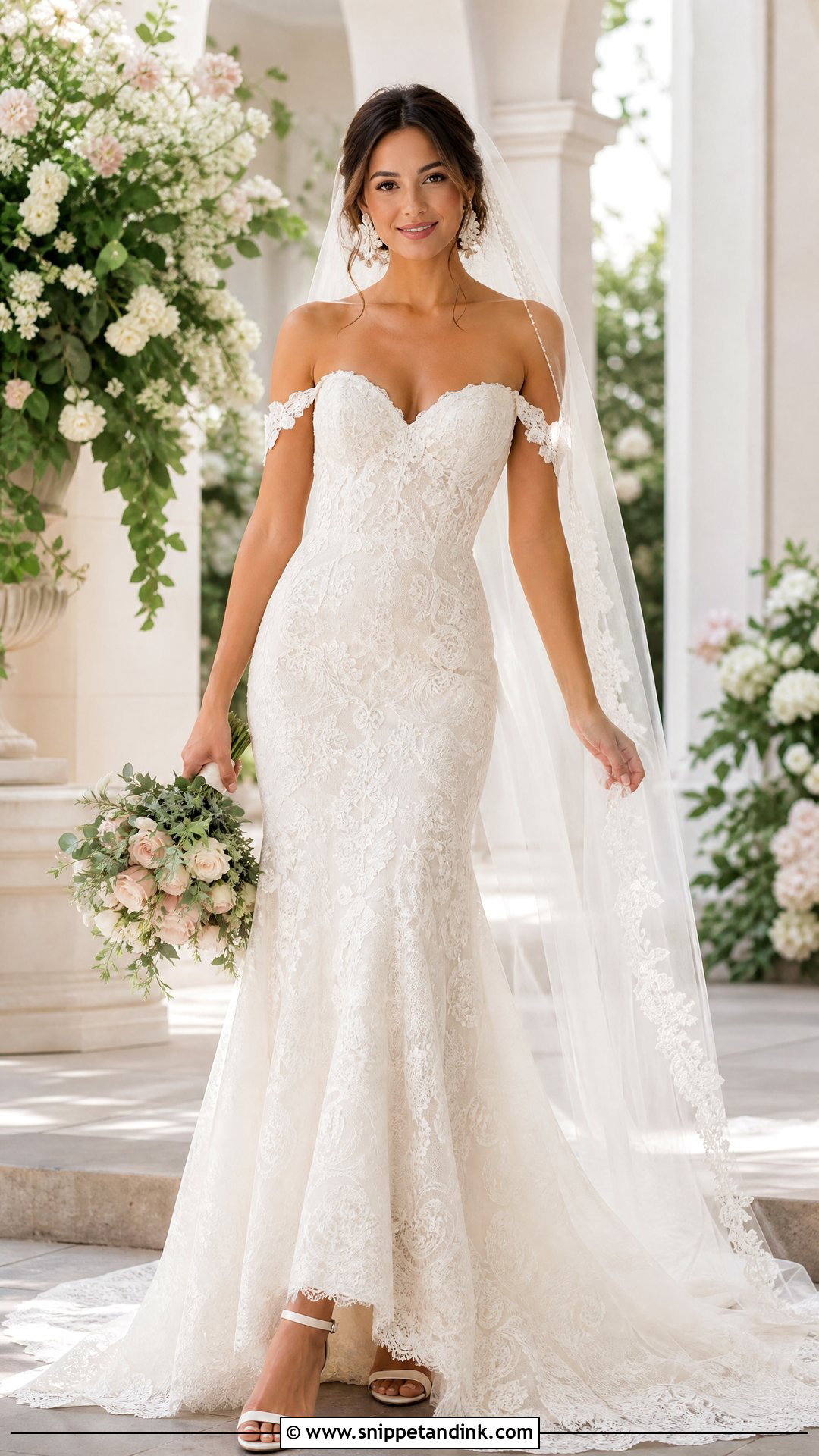
Fit-and-flare is the softer cousin of the mermaid. It follows the torso and hips, then opens around mid-thigh instead of at the knee, which makes walking and stairs much easier. Choose lace with motifs that run vertically; horizontal lace bands cut the body into sections. A sweetheart bodice with detachable off-the-shoulder straps gives you two necklines from one dress. I keep accessories quiet here: ankle-strap heels, small floral earrings and a lace-edged veil whose lace matches the gown rather than competing with it. At the fitting, climb a few stairs. If the flare starts too low you will feel it immediately.
5. Long-Sleeve Slim Wedding Dress
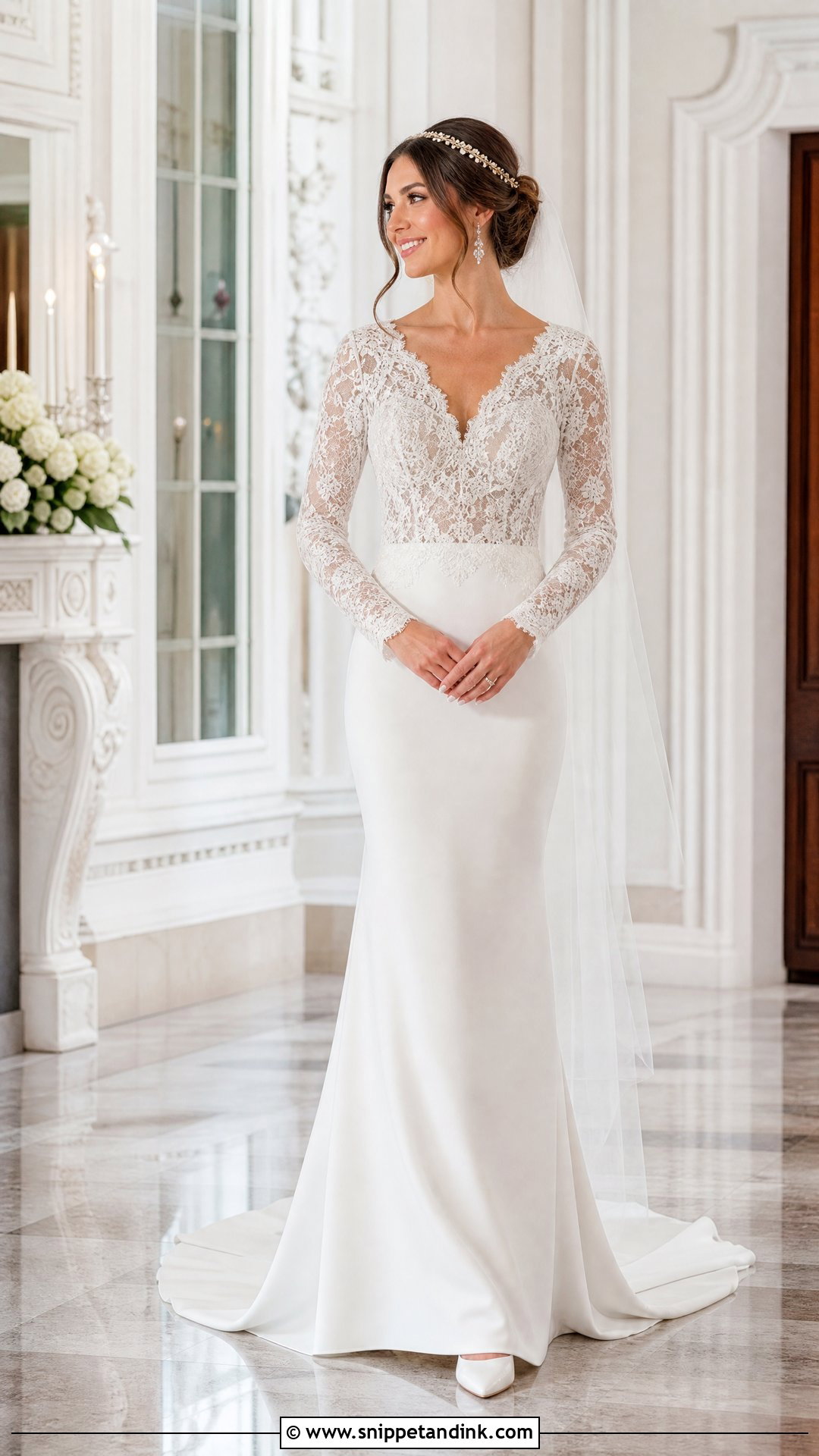
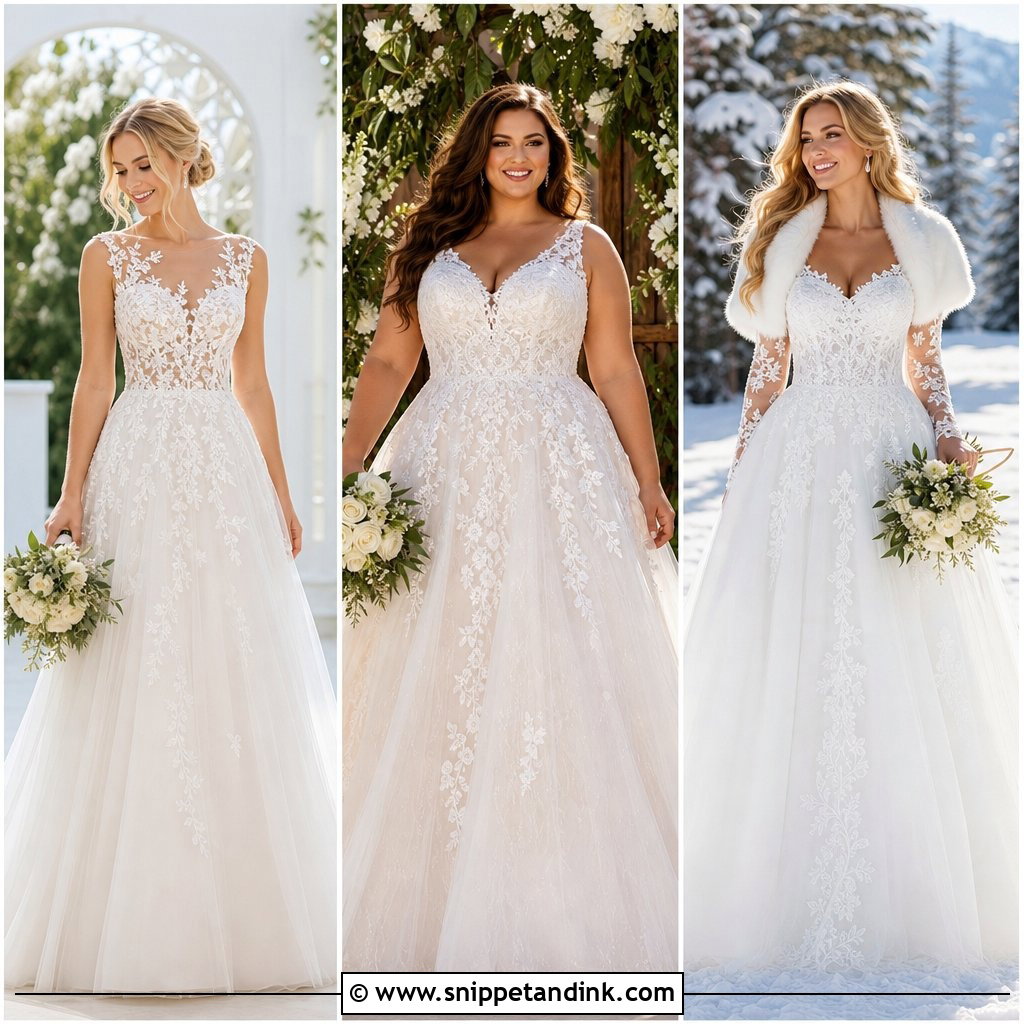
Sleeves on a slim dress are where I see the most fitting regret. Illusion mesh or fine lace keeps them airy, and a modest V-neck with a clean waist seam stops the bodice looking heavy. The trouble is mobility: a sleeve fitted while your arms hang straight can bind the moment you hug someone or lift a glass. At the fitting, raise both arms, reach forward and bend at the elbow while the seamstress watches the underarm. Closed-toe pumps, a slim crystal headband and small drop earrings are enough; skip the necklace if the lace bodice is busy, and pair it with a plain tulle veil.
6. Off-The-Shoulder Slim Wedding Dress
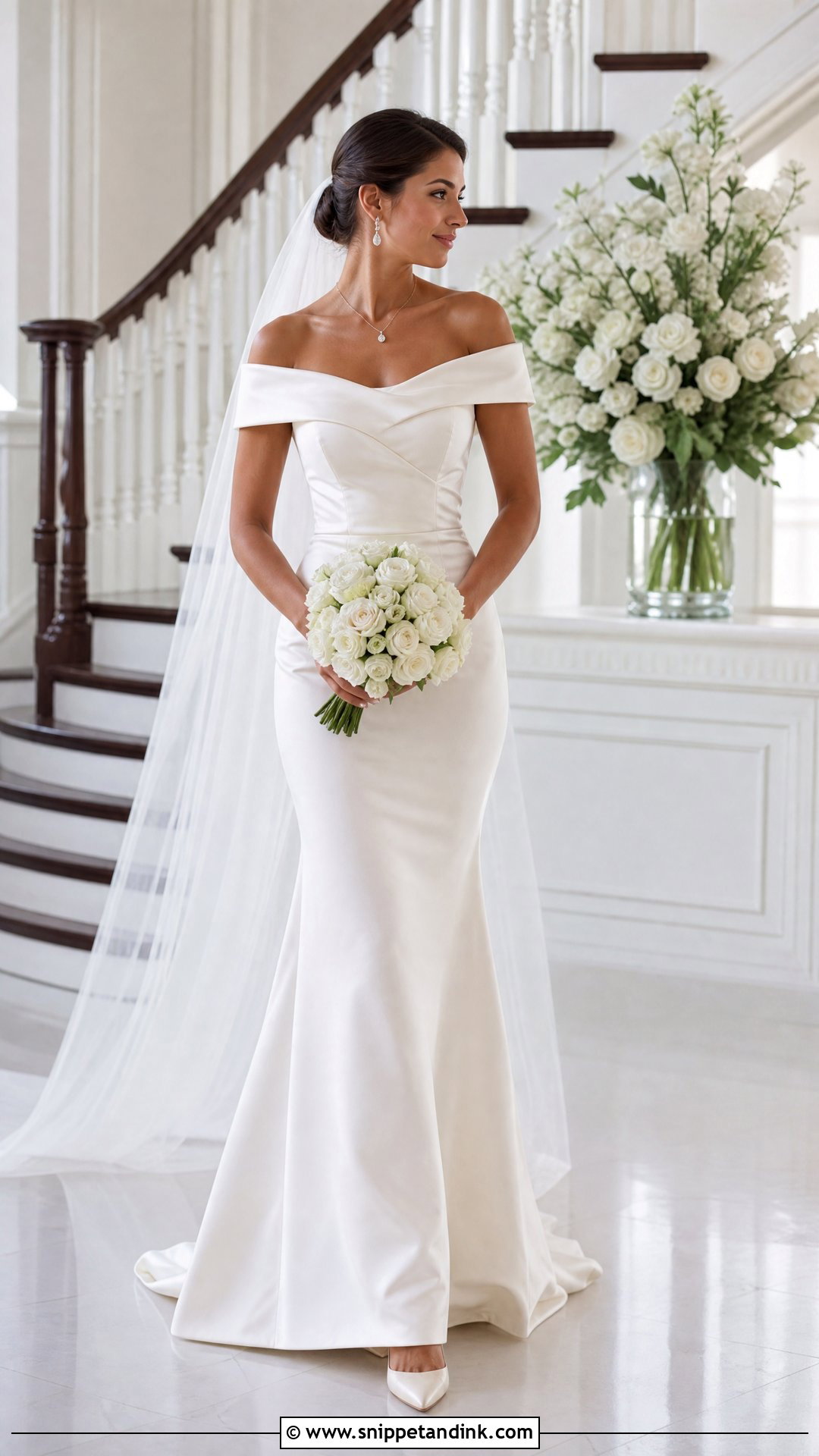
An off-the-shoulder neckline frames the collarbones and keeps the body line long. A fold-over satin band or softly draped crepe sleeves both work, but only if a structured bodice underneath is doing the holding. If the sleeves are carrying the dress, they slide down every time you move your arms. A subtle fit-and-flare skirt gives movement without bulk. I like a short pendant, teardrop earrings and a chapel veil tucked under a polished bun, though loose side-parted waves suit it too. Test it by hugging someone during the fitting: you should not need to hitch it back up afterwards.
7. V-Neck Slim Wedding Dress
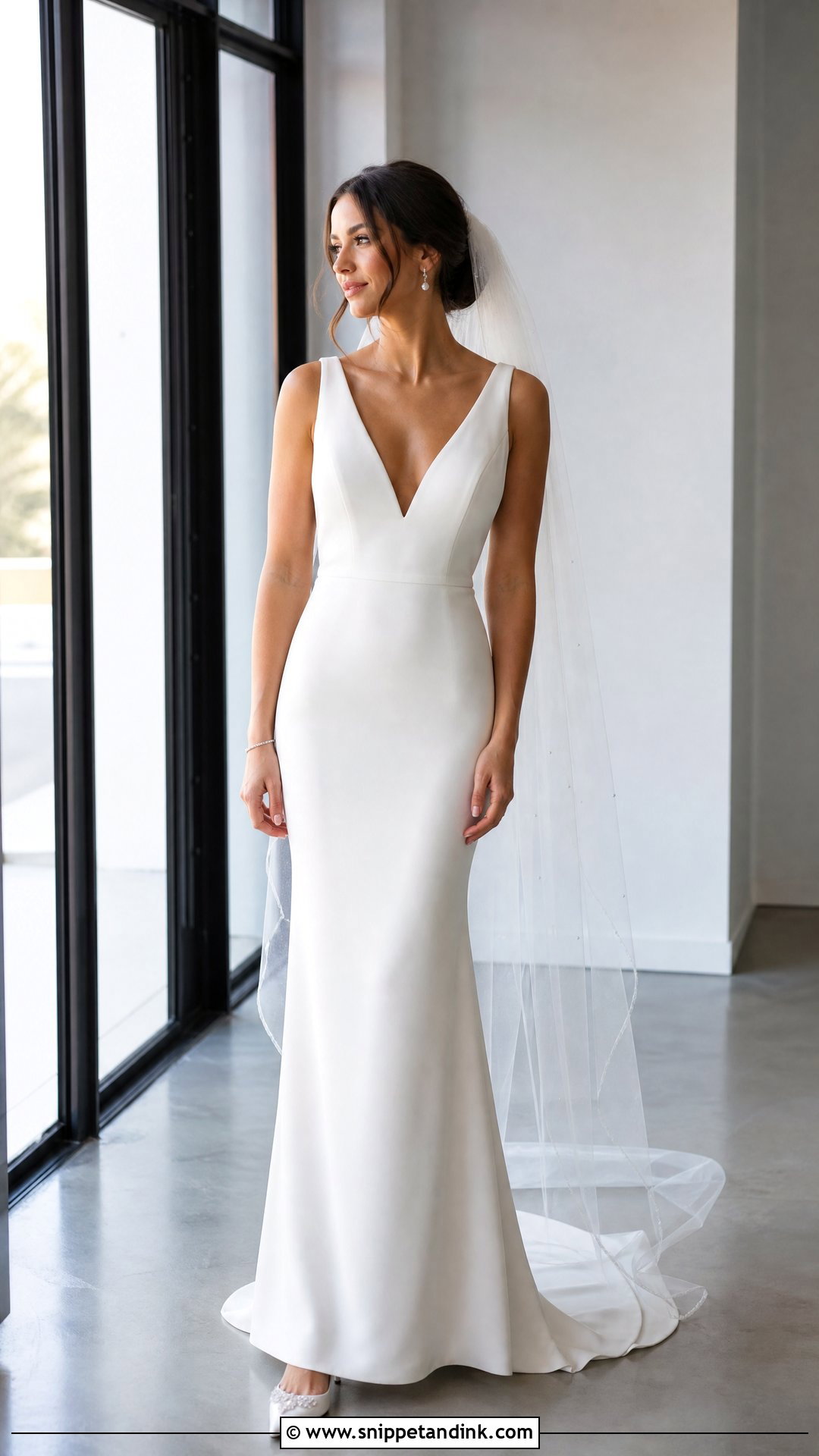
A V-neck pulls the eye to the centre and draws one continuous line from neckline to skirt, which is why it suits almost every frame on a slim gown. How deep is a personal call; what matters is that the bodice lies flat against the sternum and doesn’t gape when you lean forward to sign the register. A crepe sheath with wide straps, a defined waistband and a low V-back is the version I reach for most. Pointed heels, fine earrings and a narrow bracelet finish it. If you’re unsure about security, ask for discreet mesh or sewn-in cups; both are routine alterations.
8. Square-Neck Slim Wedding Dress
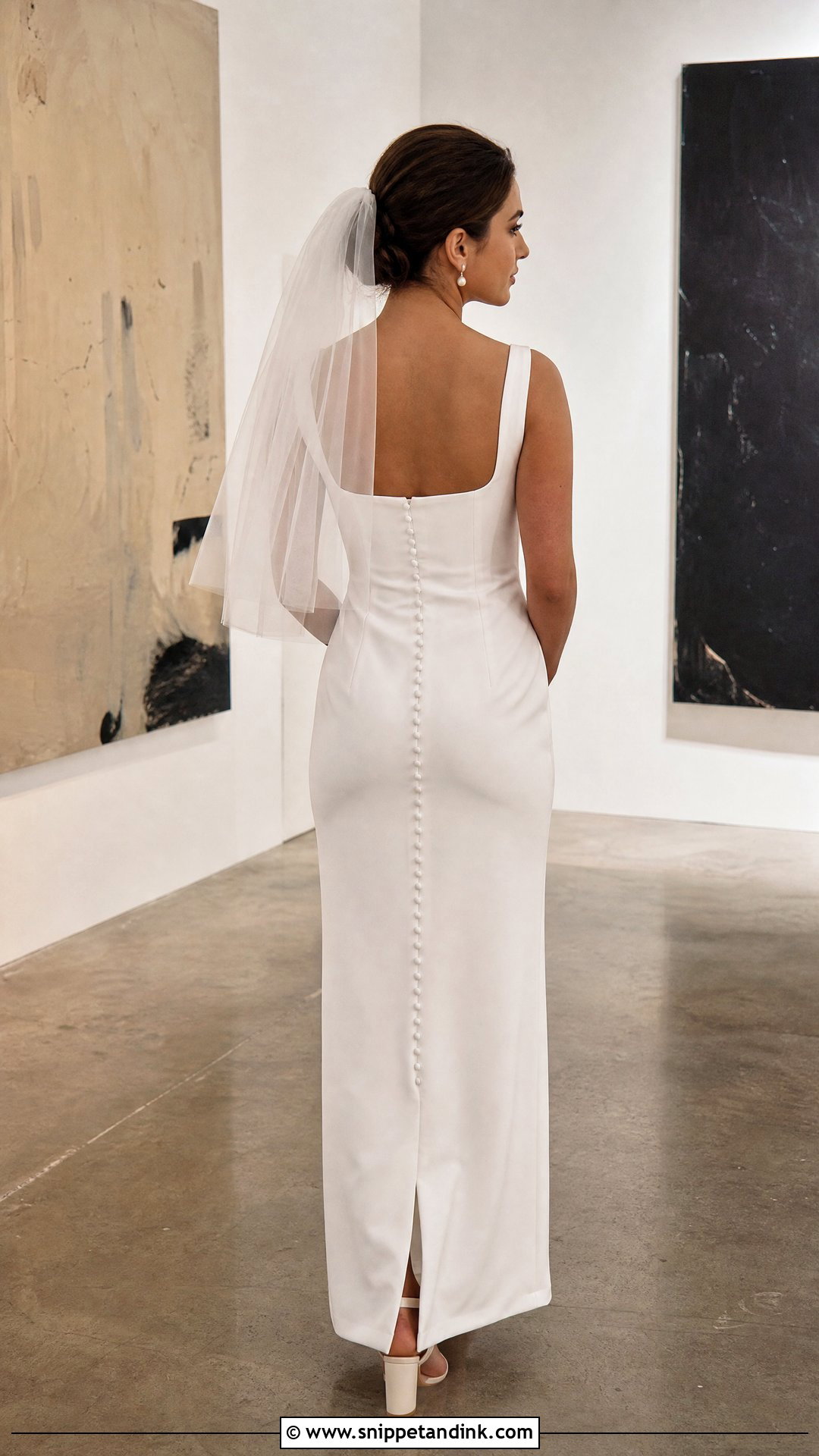
A square neck is all about proportion. The straight edge frames the collarbones and broad straps steady the bodice, but if the corners sit even slightly uneven, the camera picks it up instantly. I’d have the straps and bust adjusted by a professional, not just taken in at the side seams. Tailored satin or crepe with vertical seams and a skirt that opens a little near the hem keeps it modern. Pearl earrings, ivory block heels, an elbow-length veil and a low twisted bun suit the structure. Buttons running from the neckline to the train are a nice extra detail. Breathe deeply at the fitting and check the neckline stays level.
9. Halter Slim Wedding Dress
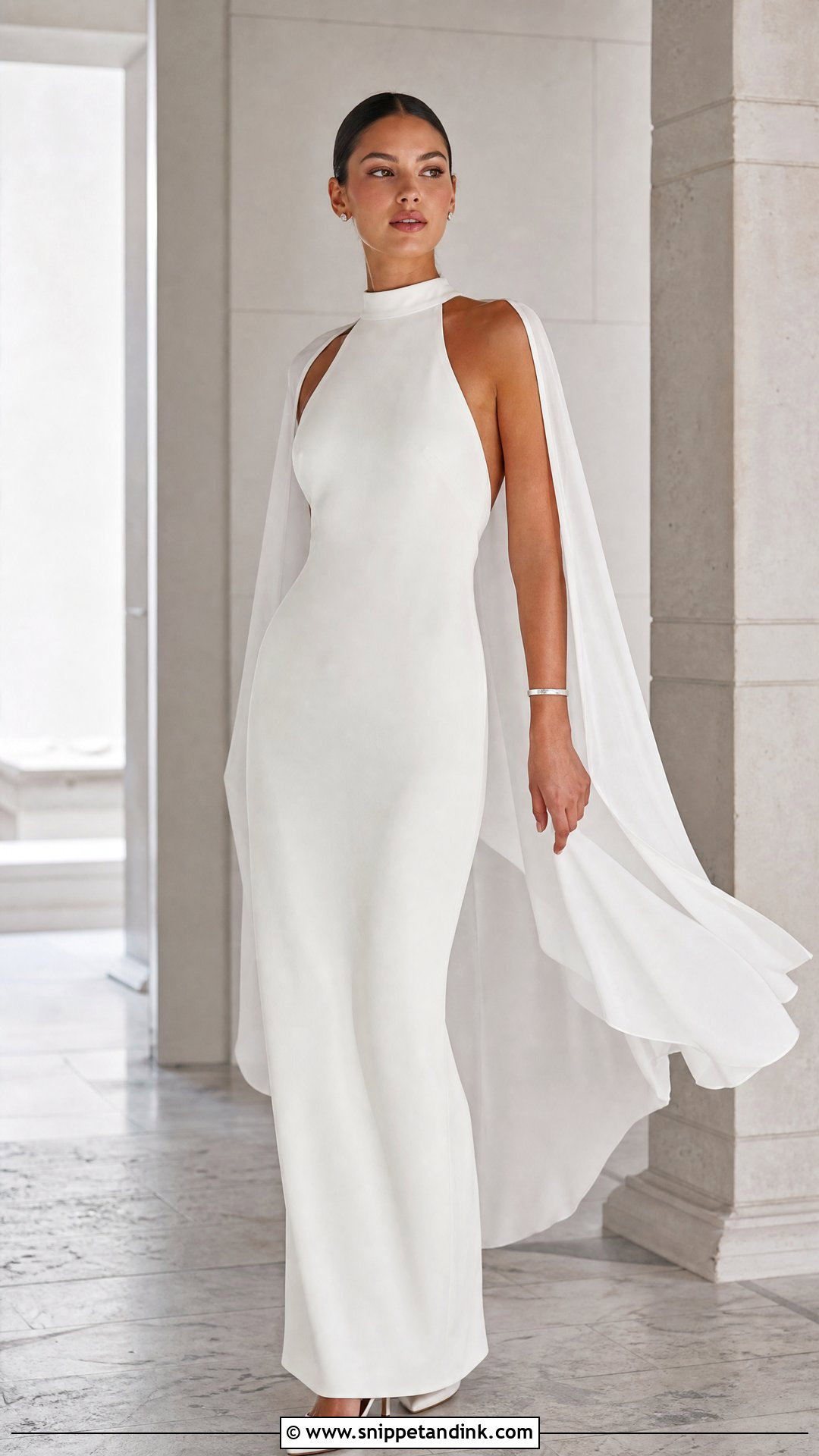
The halter is the one I suggest for brides with strong shoulders they want to show. A high halter in matte crepe with an open back and a softly fitted column skirt gives a long, unbroken line. Because the weight hangs from the neck, the strap has to be fitted so the bodice is supported from below; otherwise the neck takes the strain and you’ll feel it by the speeches. Small crystal studs, a narrow cuff and metallic or ivory pointed heels are plenty. A high bun or sleek ponytail shows off the back, and a light cape attached at the shoulders can stand in for a veil.
10. Strapless Slim Wedding Dress
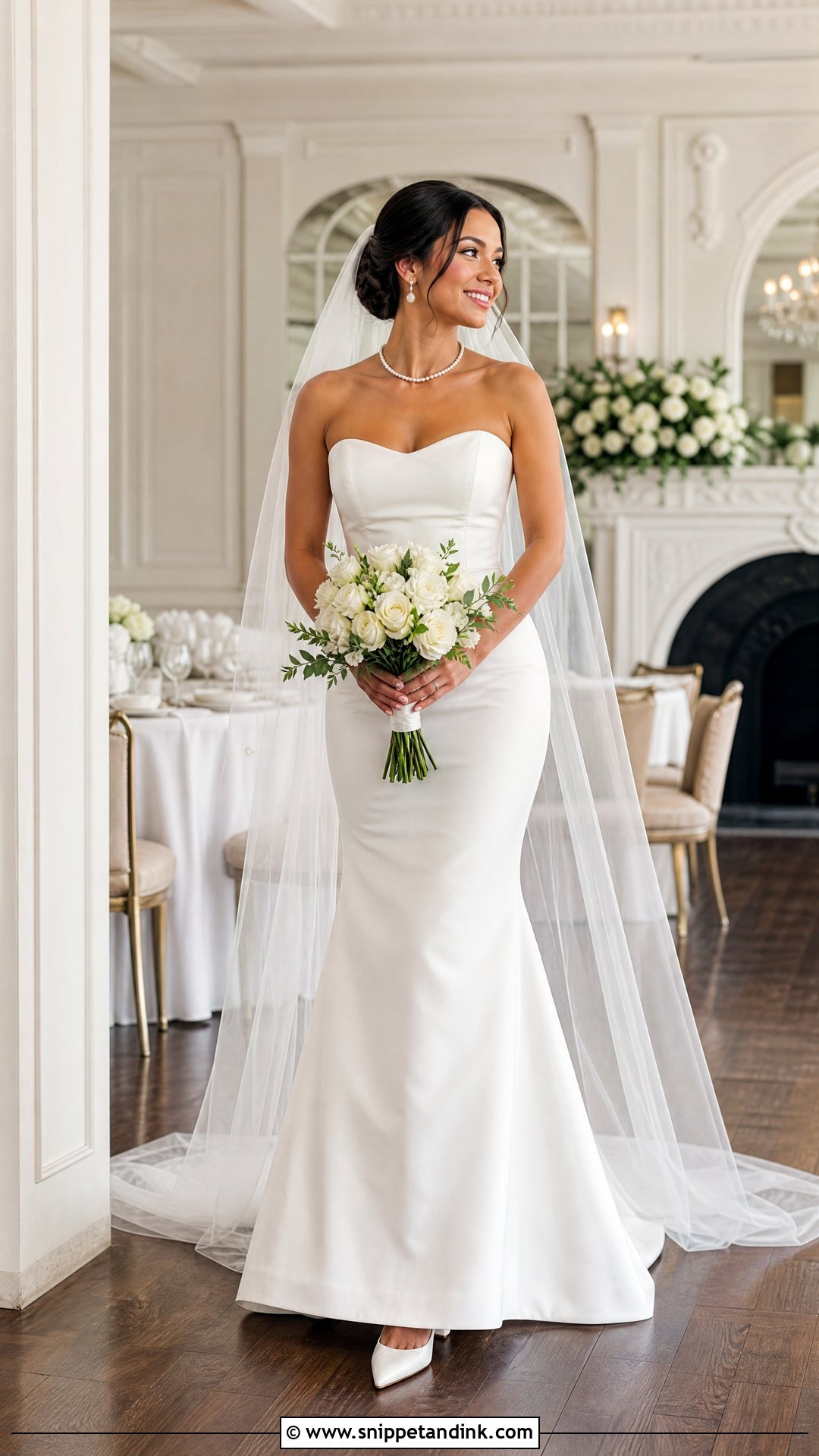
Strapless gowns stay up because of internal boning and a waist that is properly fitted, not because the top edge is pulled tight. When a strapless bodice slips, the cause is almost always that the waist was left loose and the neckline overtightened to compensate. Ask your seamstress to fit it to your real measurements and add a waist stay if it has none. Satin gives formal structure; crepe reads softer. A short pearl necklace, matching earrings, pointed pumps and a lightly edged veil keep it clean, with a tailored jacket for a cold-weather ceremony. Sit, lift your arms and twist before you sign off on the fit.
11. Ruched Slim Wedding Dress
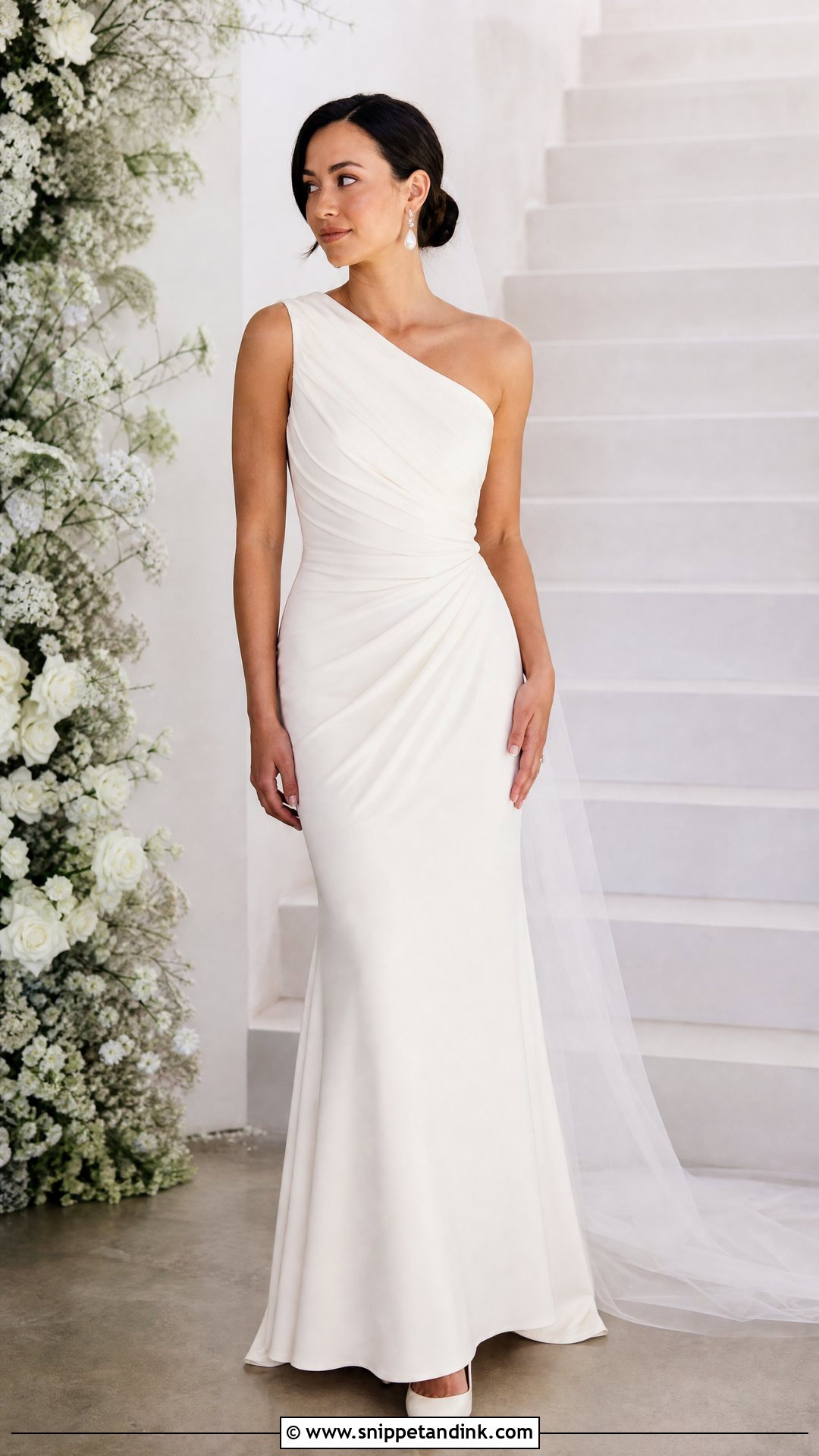
Diagonal ruching across the waist moves the eye through the dress instead of chopping it into blocks, which is why it flatters such a wide range of figures. It needs stretch crepe or matte satin; stiffer fabrics bunch rather than gather. The gathers should look planned, falling in even folds, and the place I watch hardest is the hip when you sit, because that’s where loose ruching collapses into creases. A side-gathered bodice and a gently flared hem, simple drops, slingbacks, a plain tulle veil and a side-parted low bun echo the asymmetry without crowding it.
12. Corset Slim Wedding Dress
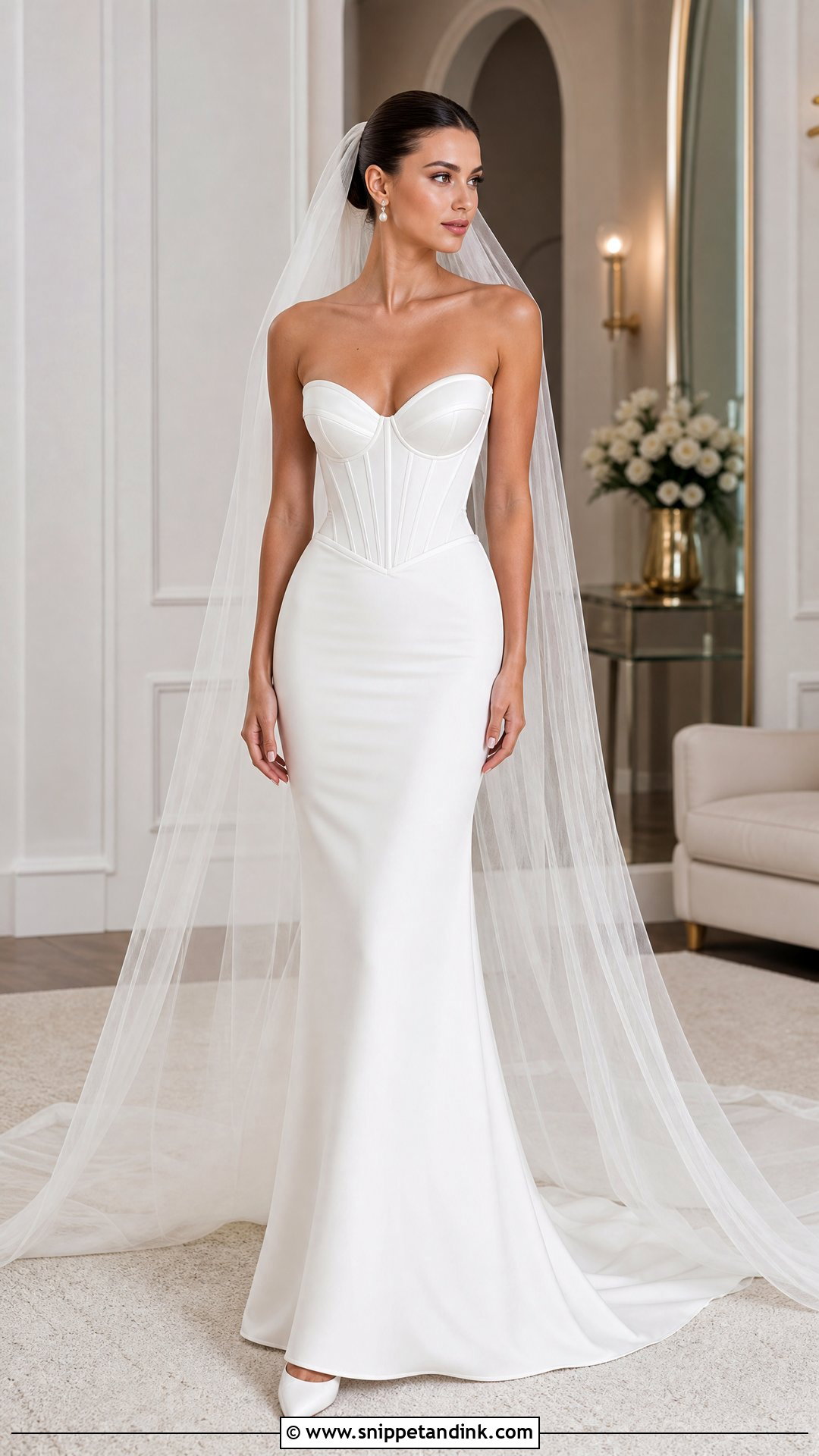
A corset bodice gives visible structure above a narrow skirt. Good ones have boning placed along the body’s curves, proper cups and a softly pointed waist that runs into a crepe or satin fit-and-flare. Sheer panels feel contemporary; fully lined bodices give more coverage. My rule is simple: a corset should support you, not squeeze you. At the fitting, sit for five minutes, take full breaths and laugh. If the bone tips dig in under the arms or the waist pinches when seated, say so before the alterations are finished. Pearl drops, satin pointed shoes, a plain cathedral veil and a smooth updo keep the bodice on show.
13. High-Neck Slim Wedding Dress
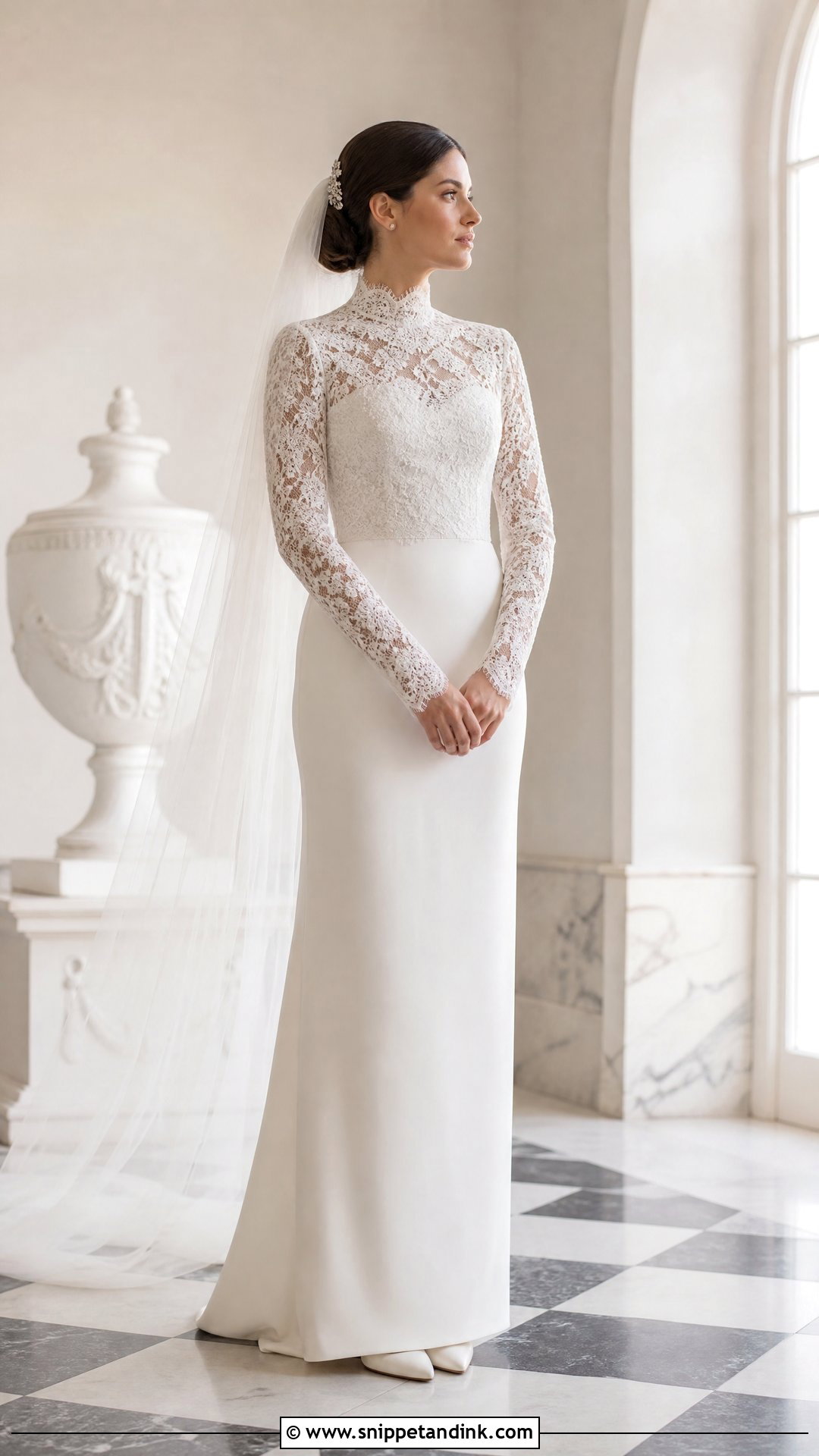
High necklines bring coverage and a strong fashion edge, especially in a fitted lace bodice over a straight crepe skirt. Long sleeves make it formal; sleeveless is cooler for summer. The thing I check first is the collar itself: turn your head side to side and look down. If the lace folds or the edge rubs your jaw, it needs a softer lining or a small lift at the shoulder. Pair it with pearl studs, closed-toe heels and a low bun with a comb, and set the veil under the bun so the neckline stays visible. Leave off the necklace; the lace already frames your face.
14. Open-Back Slim Wedding Dress
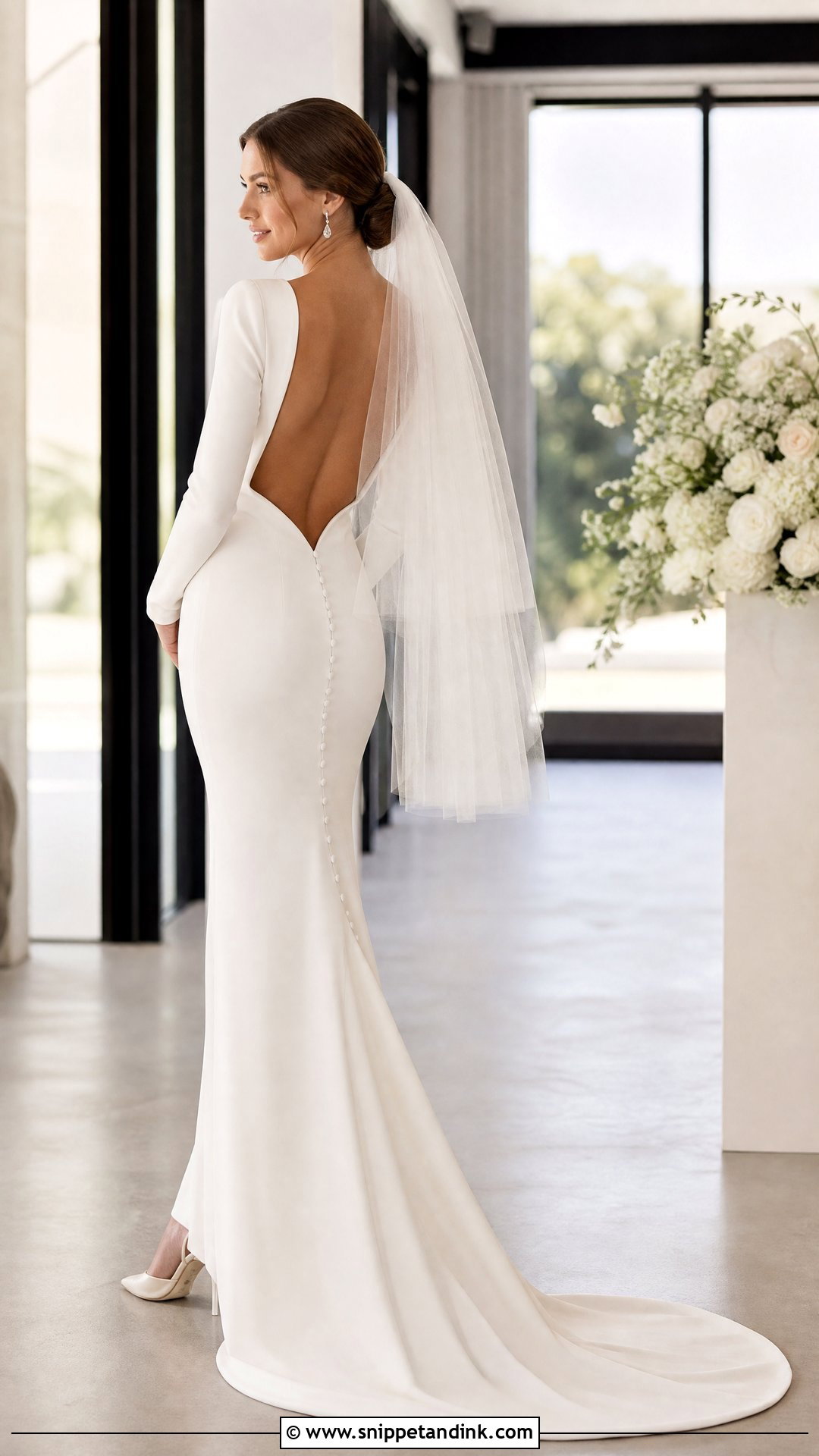
An open back keeps the front quiet and saves the drama for the processional, when most guests are looking at you from behind. A long-sleeve crepe sheath or fitted satin gown with an opening that ends securely above the waist is the version I trust most; drop it lower and support becomes much harder. Covered buttons, lace edging or a small bow finish the edge. Set the veil below a low chignon so the back reads clearly in photos. Raise the bra question at the salon before buying, because built-in cups, internal structure or added mesh are often needed when a standard bra is not an option.


15. Cowl-Neck Slim Wedding Dress
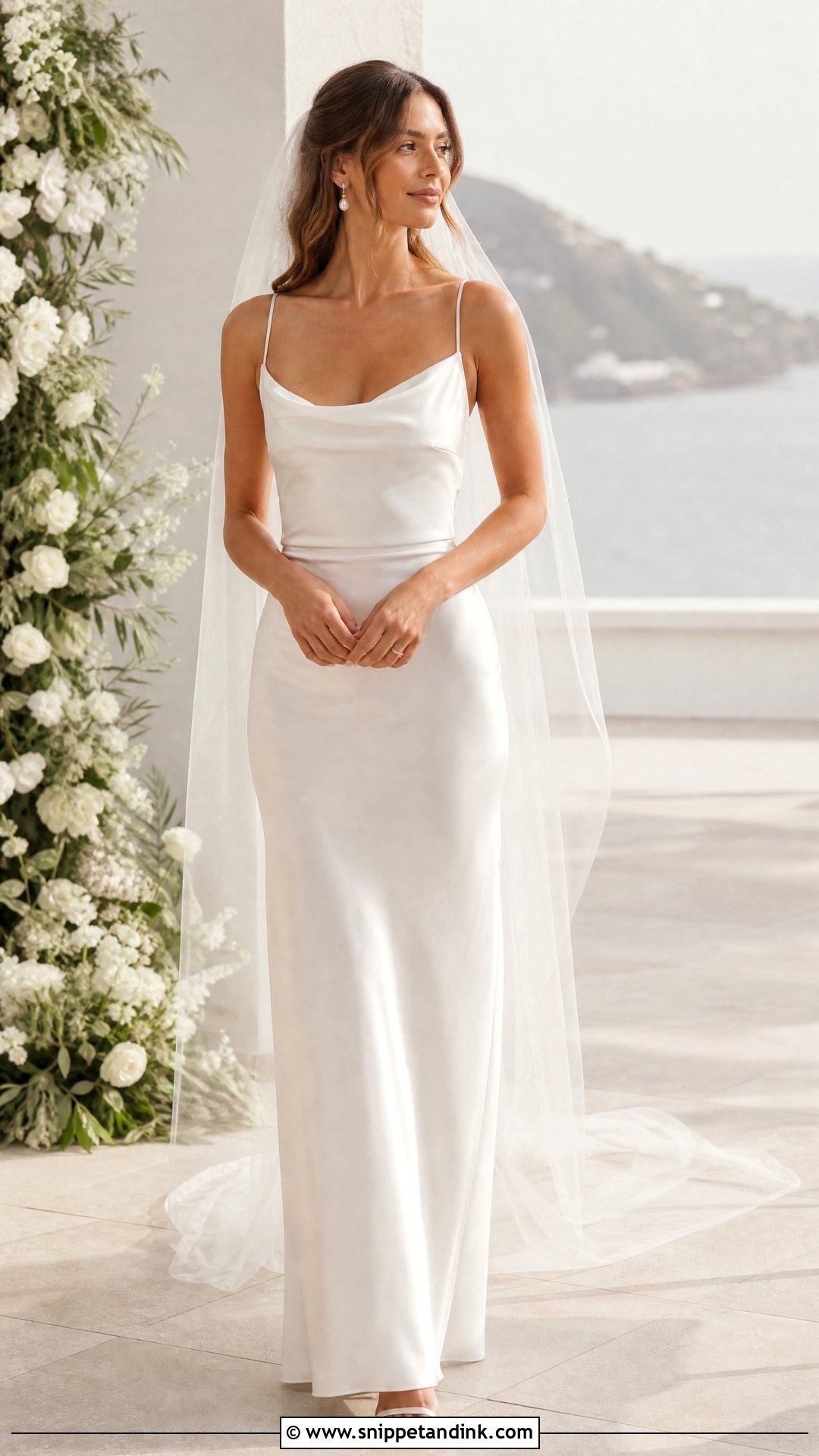
Bias-cut satin is what makes a cowl neck drape and move the way it does, and it is also why I treat this dress with caution. Fabric cut on the bias stretches and responds to every curve, so it can’t be fitted tight; when it is, it pulls across the hips and shows every line underneath. Let it skim. A narrow column with slim straps and a low cowl back, small pearl earrings, delicate sandals and a sheer fingertip veil suit the fluid texture, with loose waves or a softly pinned bun. Choose smooth, no-seam underwear and ask whether a light lining can be added; it changes how the satin falls.
16. One-Shoulder Slim Wedding Dress
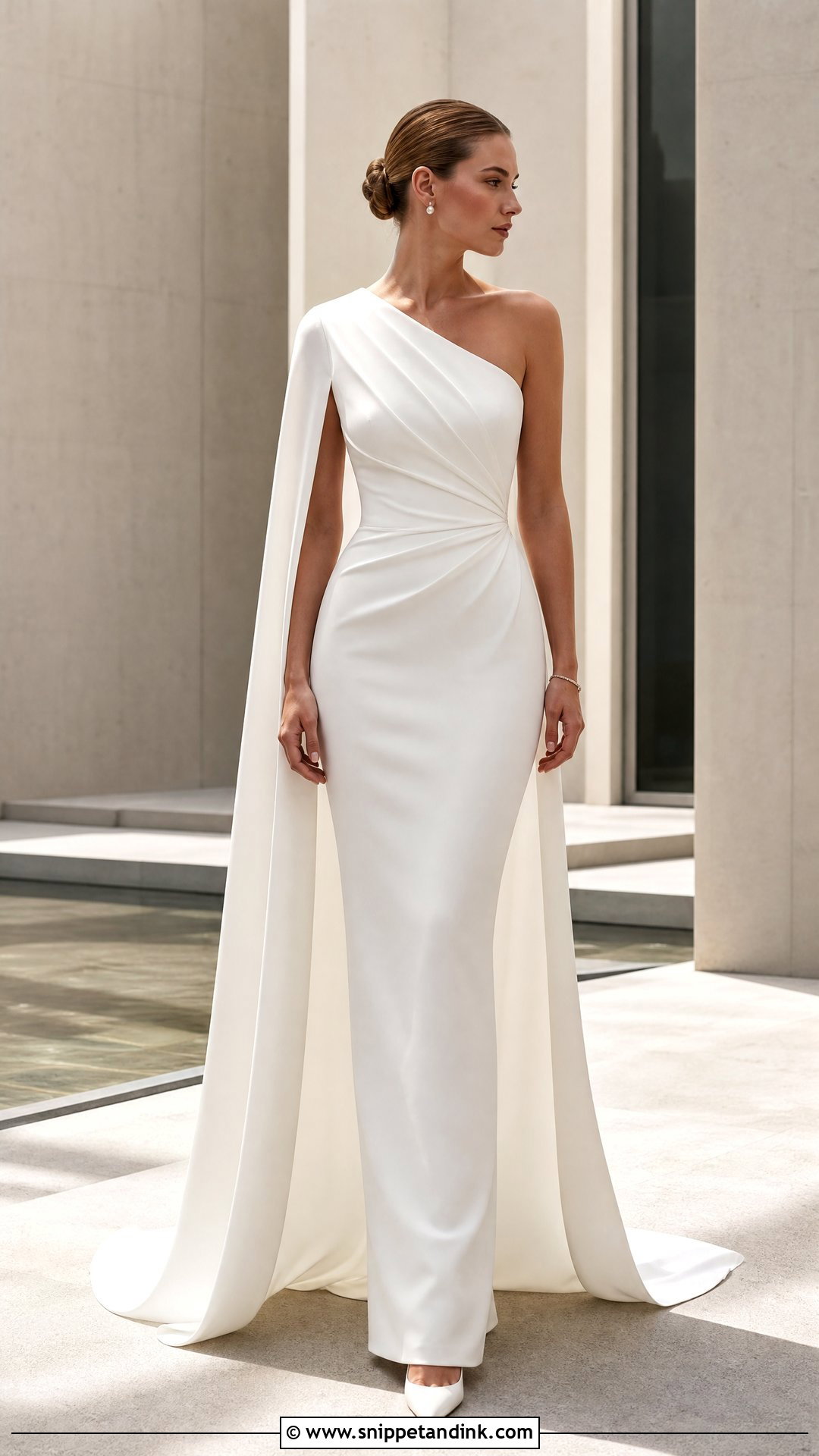
One shoulder gives asymmetry without breaking the clean column. I prefer a structured crepe gown with a wide strap, diagonal draping across the bodice and a skirt that widens only slightly near the floor. The fitting issue to watch is twist: an uneven neckline can pull the whole dress toward the supported side, so the seamstress may need to balance the waist and hips to keep it centred while you walk. Wear one statement earring or small studs, never a necklace. Pointed pumps, a slim bracelet, a cathedral veil on a sleek bun, or a detachable shoulder cape if you want movement behind you.
17. Beaded Slim Wedding Dress
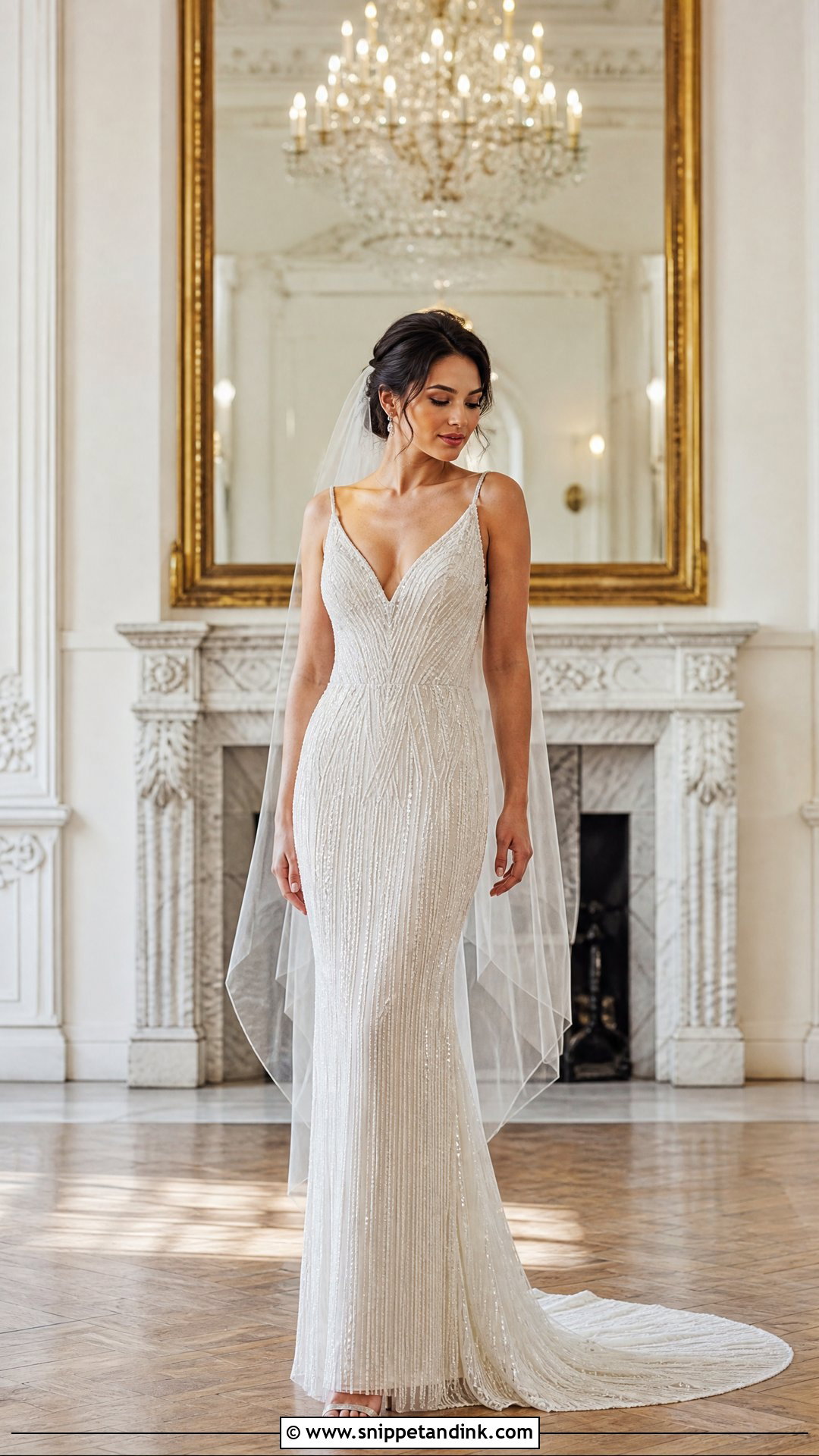
Beading gives a slim dress sparkle without needing a big skirt. A fitted sheath with vertical beadwork, Art Deco-inspired patterns or a light scatter of crystals keeps the line long, especially with a soft V-neck, narrow straps and a small sweep train. Beaded gowns are heavier than they look, and that weight drags on the shoulders and stretches the lining over a long day, so try one on for a good twenty minutes, not two. Check where beads sit under the arms and at the waist, as they catch and scratch there. Ask if spare beads come with the gown for repairs. Keep the veil and earrings plain.
18. Petite Slim Wedding Dress
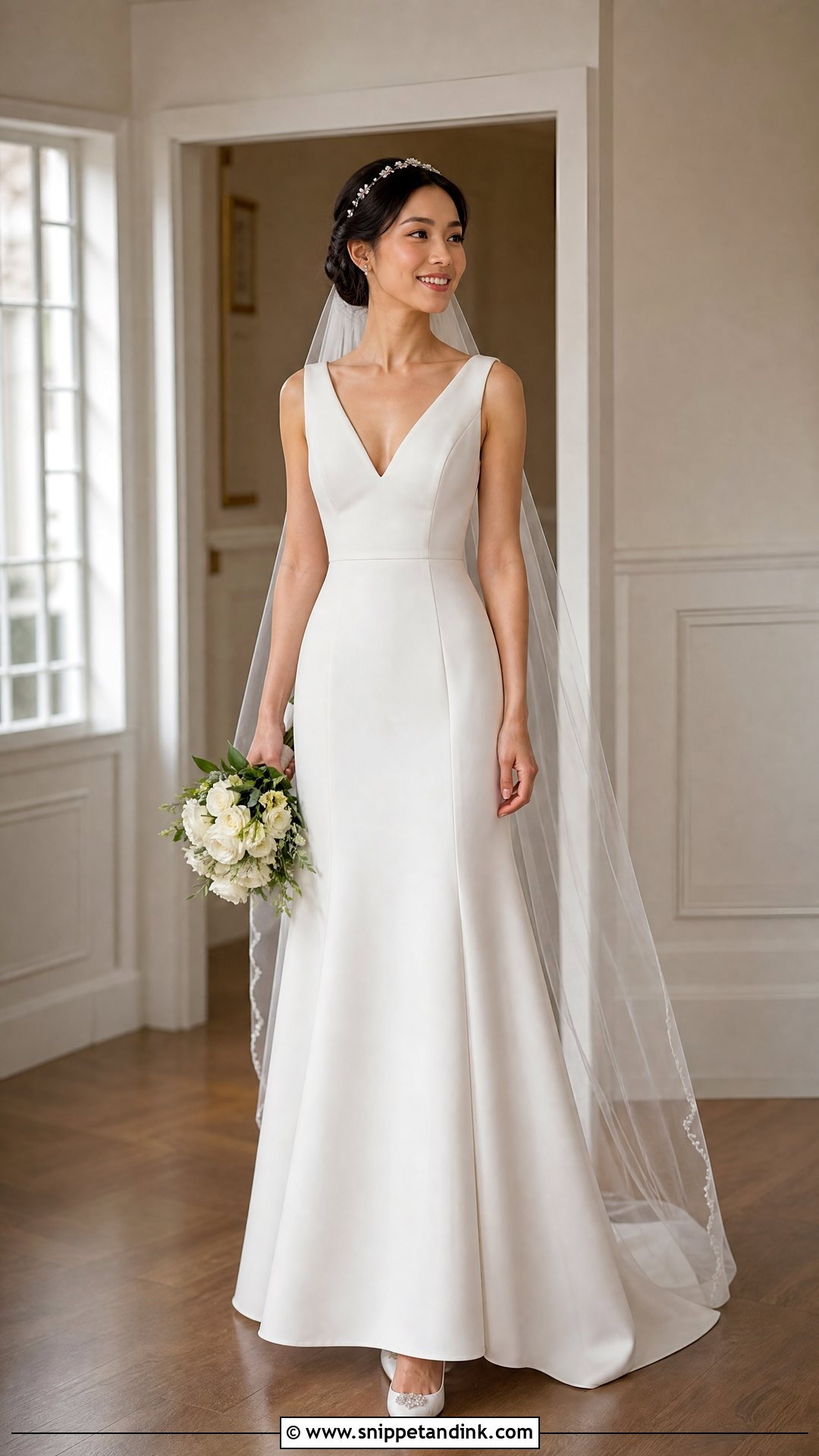
A petite slim wedding dress has to be proportioned through the bodice, waist and skirt, not just shortened at the hem. On shorter brides I raise the waist slightly, avoid horizontal detail, and keep embellishment in one zone, either the neckline or the back. A slim A-line, sheath or gentle fit-and-flare with a V-neck and vertical seams all work. Petite sizing reduces the alterations, but strap length, waist placement and train length still need checking. Pointed heels, a narrow comb, small earrings and a fingertip veil keep the frame from being swallowed by fabric.
19. Plus-Size Slim Wedding Dress
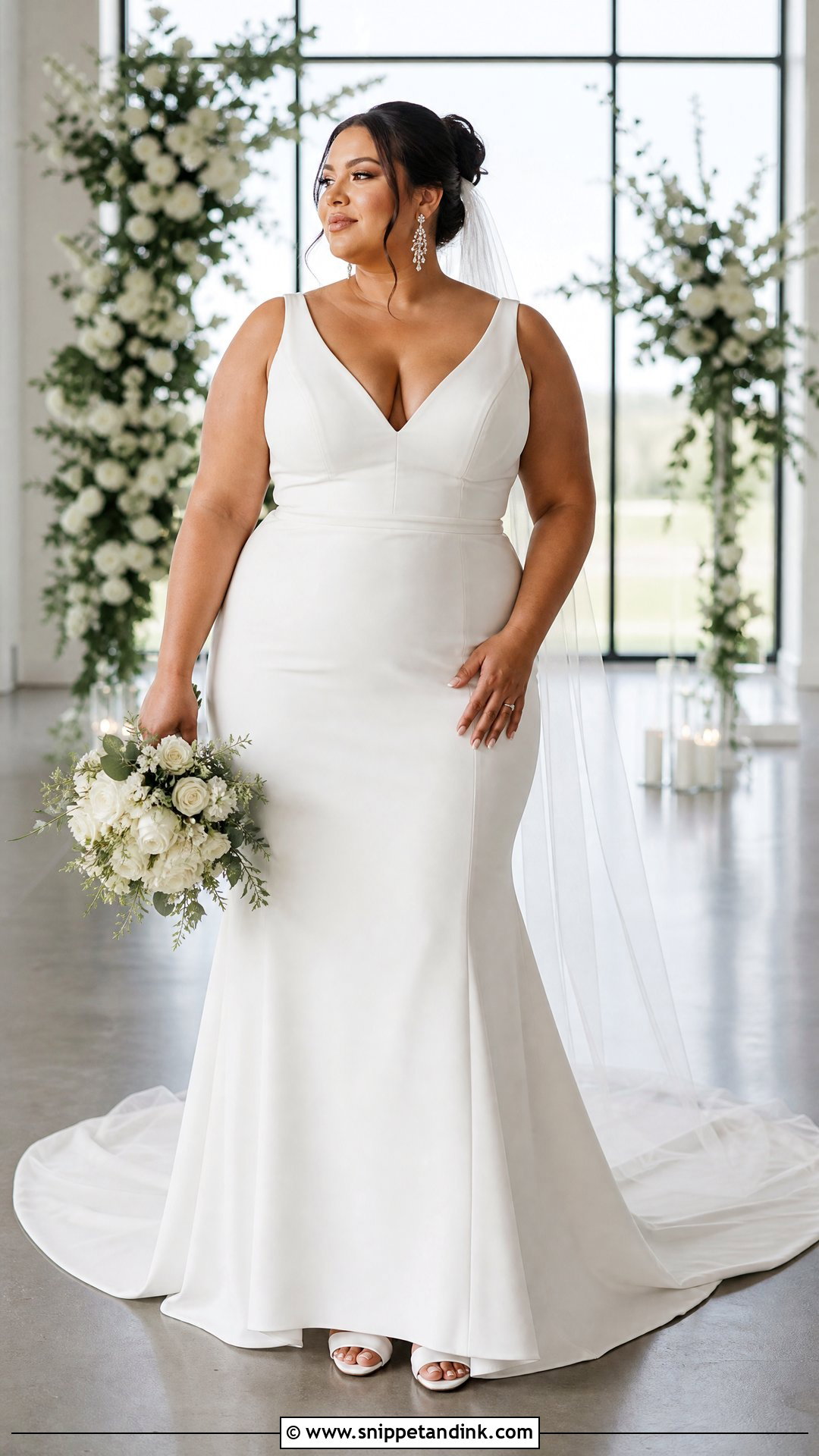
A plus-size slim dress can be a sheath, trumpet, mermaid or fitted A-line; the right one is the one you move comfortably in. What I look for is construction designed for a fuller body from the start: supportive bodice structure, seams placed for balance, and enough ease to walk and sit. Stretch-crepe fit-and-flare with a V-neck and wide straps is the combination I reach for most often. Order to your current measurements. Sizing down on a hope of shrinking leaves you with expensive, rushed alterations. Block heels, crystal earrings and a long sheer veil carry the vertical line, with detachable sleeves or a cape for flexible coverage.


20. Minimalist Slim Wedding Dress
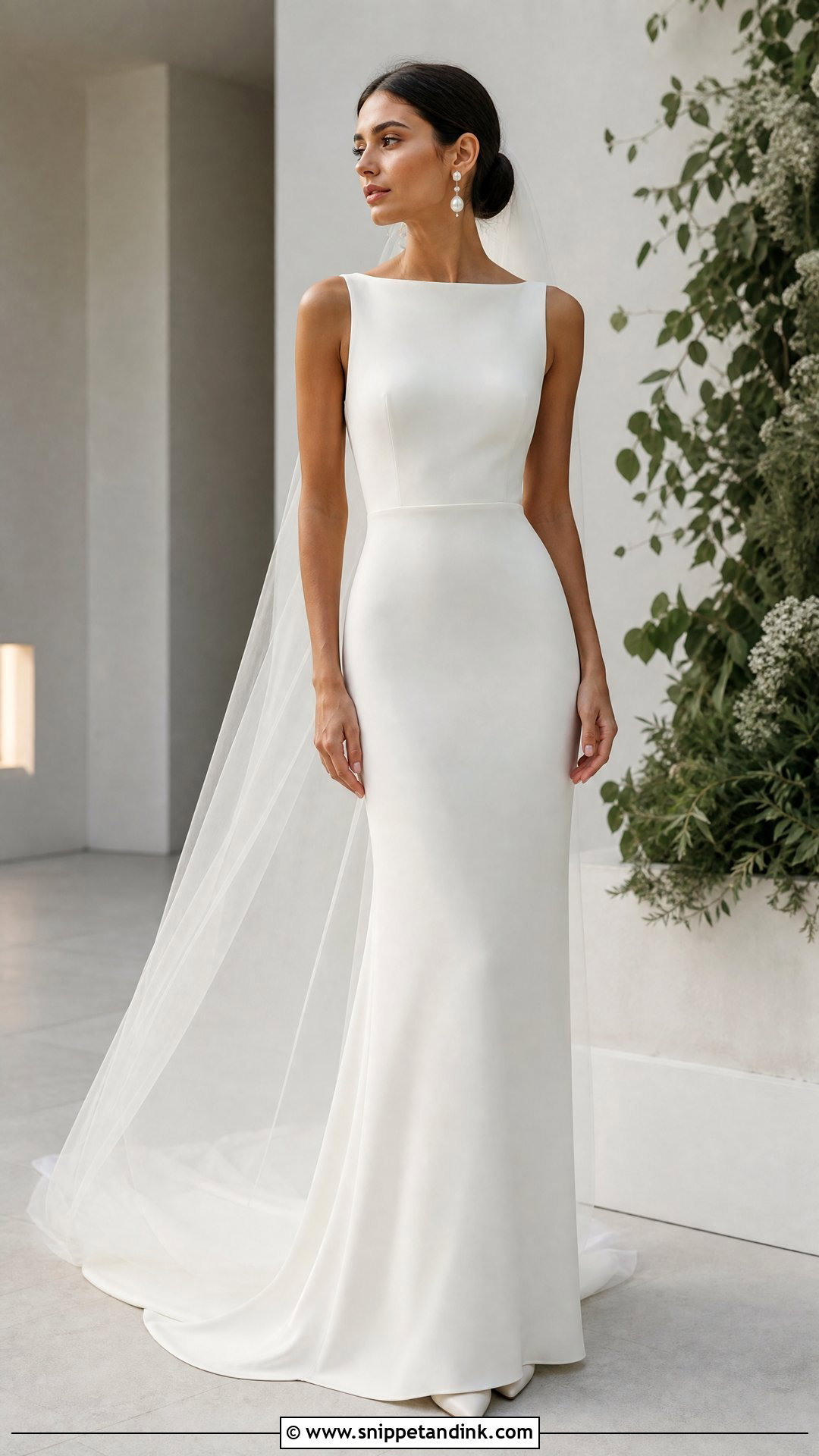
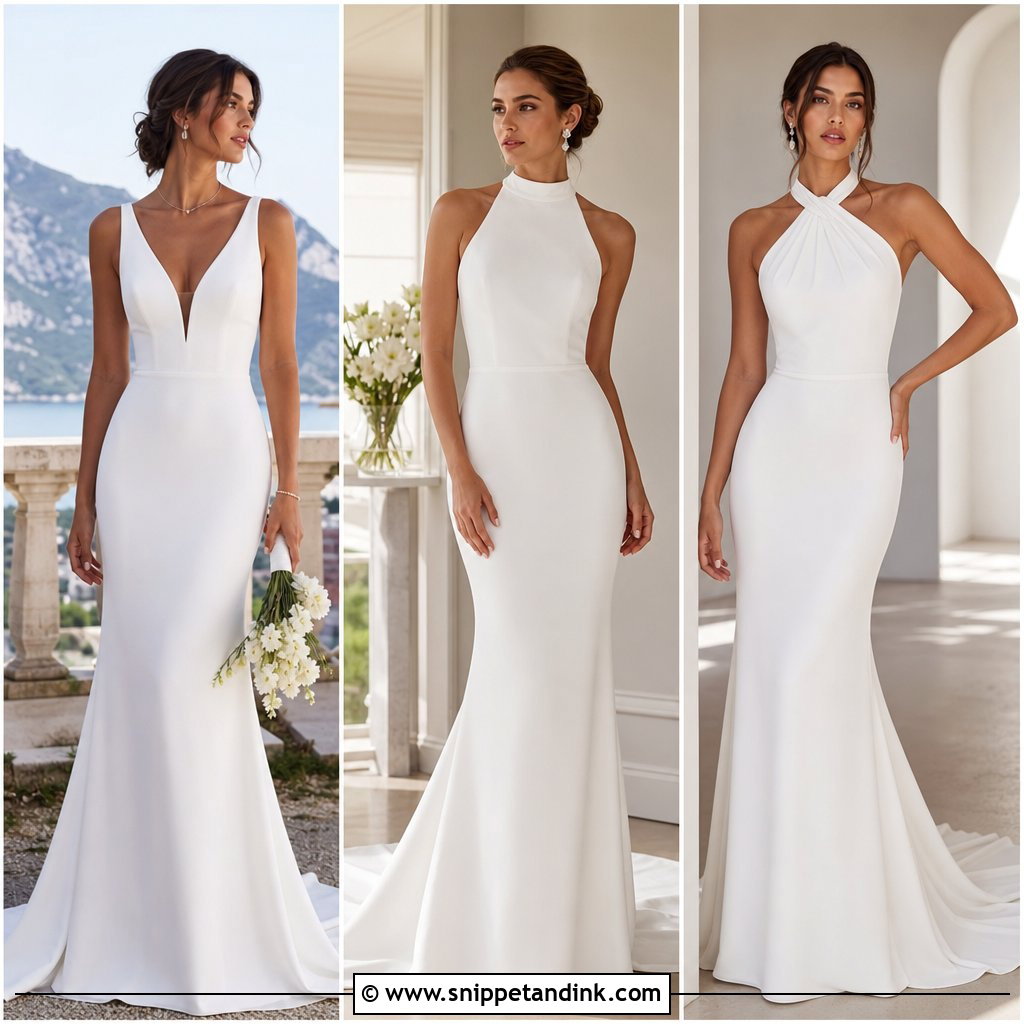
Minimal dresses are harder to make than embellished ones because there is nothing to hide a crooked seam. That’s why I only recommend a plain matte crepe column, with a bateau neckline, fitted waist, low back and small train, to brides who are willing to invest in proper tailoring. Every proportion shows. Sculptural earrings, pointed ivory heels and a plain cathedral veil add quiet drama, and a compact bouquet of clean greenery suits the restraint. A sleek bun or smooth shoulder-length waves both work. It’s equally at home at a courthouse, a modern venue or a formal evening reception.
How a Narrow Skirt Copes With Stairs, Car Doors and the First Dance
The most common complaint I hear from brides in slim dresses has nothing to do with looks. It’s that they couldn’t move properly. A fitted skirt limits your stride, and the narrower it is below the knee, the shorter your steps get. Here is what I check before the final fitting is signed off.
Stride and stairs
Walk the length of the salon at a normal pace, then climb a step. If the hem tightens across your calves, ask about a discreet back vent, a kick pleat hidden in a seam or a slightly lower flare point. On mermaid shapes, a release of even an inch at the knee makes a real difference.
Sitting and getting into the car
Sit on a firm chair for a few minutes. Watch the hips for horizontal creasing and the waist for pinching. Then practise the car: sit sideways first, swing both legs in together, and gather the train onto your lap. Slim satin creases where you sit, so lay a clean sheet on the seat and stand up for photos as soon as you arrive.
Bustling the train for dancing
Even a small sweep train will be stepped on once the dancing starts. A slim dress usually takes an over bustle with one to three hook points, which keeps the skirt narrow. Have your seamstress show your maid of honour how to fasten it at the last fitting, and ask her to practise once. Ribbon loops are colour-coded for a reason; nobody finds the right ones by candlelight.
Let the Fitting Room Settle Sheath Versus Column Versus Flare
A slim silhouette is not one shape. The slim A-line gives soft structure, sheath and column gowns give the cleanest vertical line, and Mermaid, trumpet, ruched, and corset designs add definition where you want it. Let your shoes, veil and jewellery support the neckline rather than fight it. Above all, buy for the body you have now, bring your real shoes and underwear to every fitting, and test the dress by walking, sitting and dancing in it. That’s the part of my job that actually decides whether a slim gown works.
You'll Like These Ideas:







Leave a Reply