
Couture is less about a label and more about how a dress is made: a pattern drafted for one body, seams finished by hand, fabric chosen for how it moves. The twenty gowns below range from Basque-waist ball gowns and sculpted corsets to clean columns, three-dimensional florals and dresses with removable layers. Across current bridal collections the recurring ideas are defined waists, rich texture, fluid draping and structured pieces set against soft ones. When I help a bride narrow down a gown like this, I start with practical questions. How far will she walk? How long will she stand? How much support does she want built in? The veil, jewelry, shoes and hair get planned alongside the dress, never after it.
Couture, Made-to-Measure or Altered From a Sample?
The word couture gets used loosely in bridal. Strictly, it means a gown made from scratch for one person, with a pattern drafted to her measurements, a trial version in plain cotton and several fittings in the real fabric. Made-to-measure starts from an existing design and adjusts it to your body. Most brides buy a sample size and have it altered. All three can look exceptional; the difference is how much of the dress is built around you and how long it takes.
How the Fittings Usually Run for a Gown Made on You
- Consultation, sketch and fabric swatches. Leave as much lead time as you can; nine months to a year is common for a fully custom gown, though every atelier keeps its own schedule.
- The toile, a mock-up in muslin that is pinned and marked on you to settle the shape before any expensive fabric is cut.
- A first fitting in the real fabric, where bodice structure and skirt volume are set.
- A second fitting for the details: lace placement, beading, sleeves and the train.
- A final fitting a few weeks out, with your shoes, your underwear and the person who will bustle you on the day.
Wear the same shoes and undergarments to every fitting from the toile onward. A late change in heel height means rehemming a gown that may have hand-finished lace along its edge, and that’s slow, delicate work.
1. Basque Waist Couture Wedding Dress
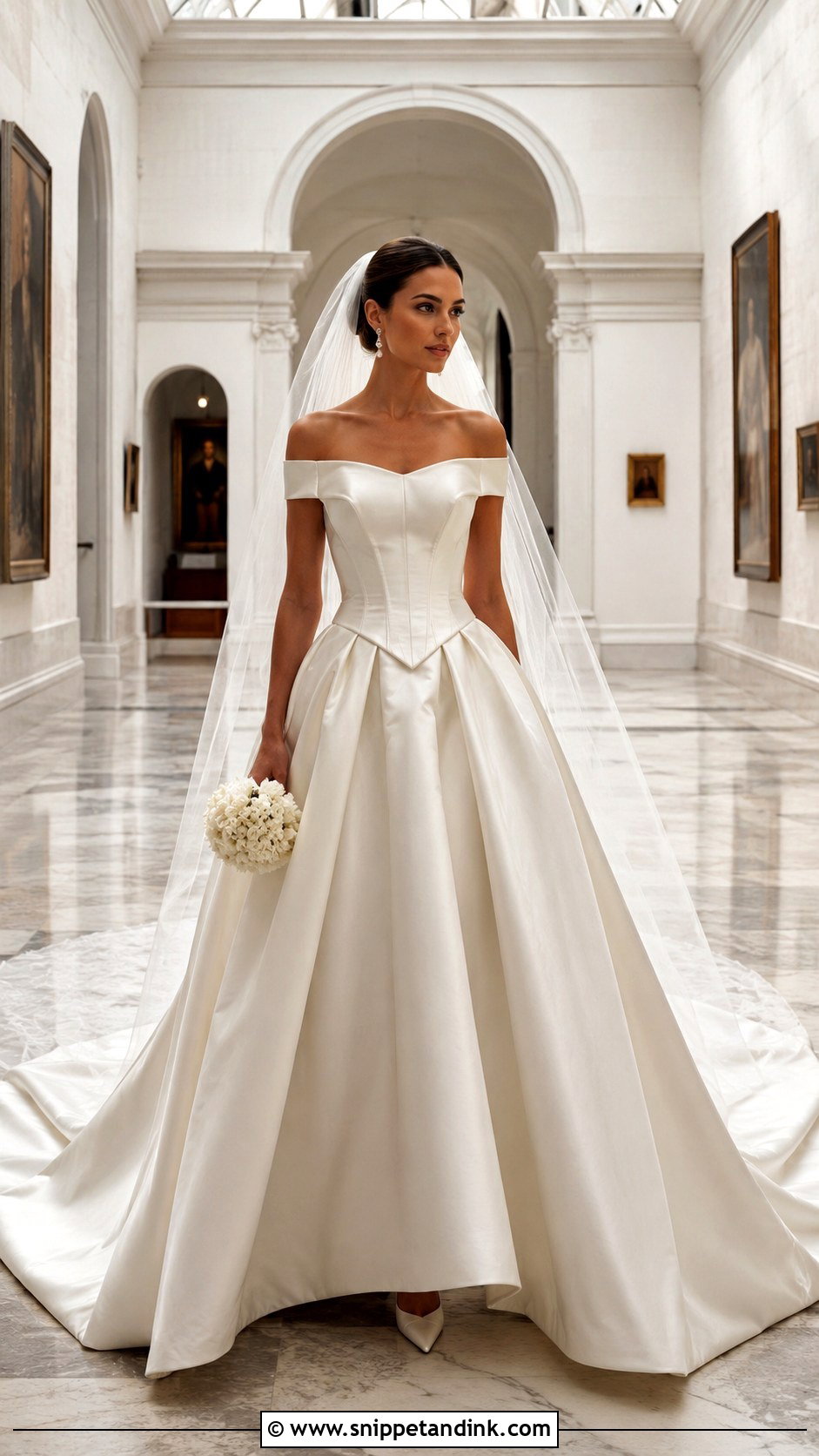
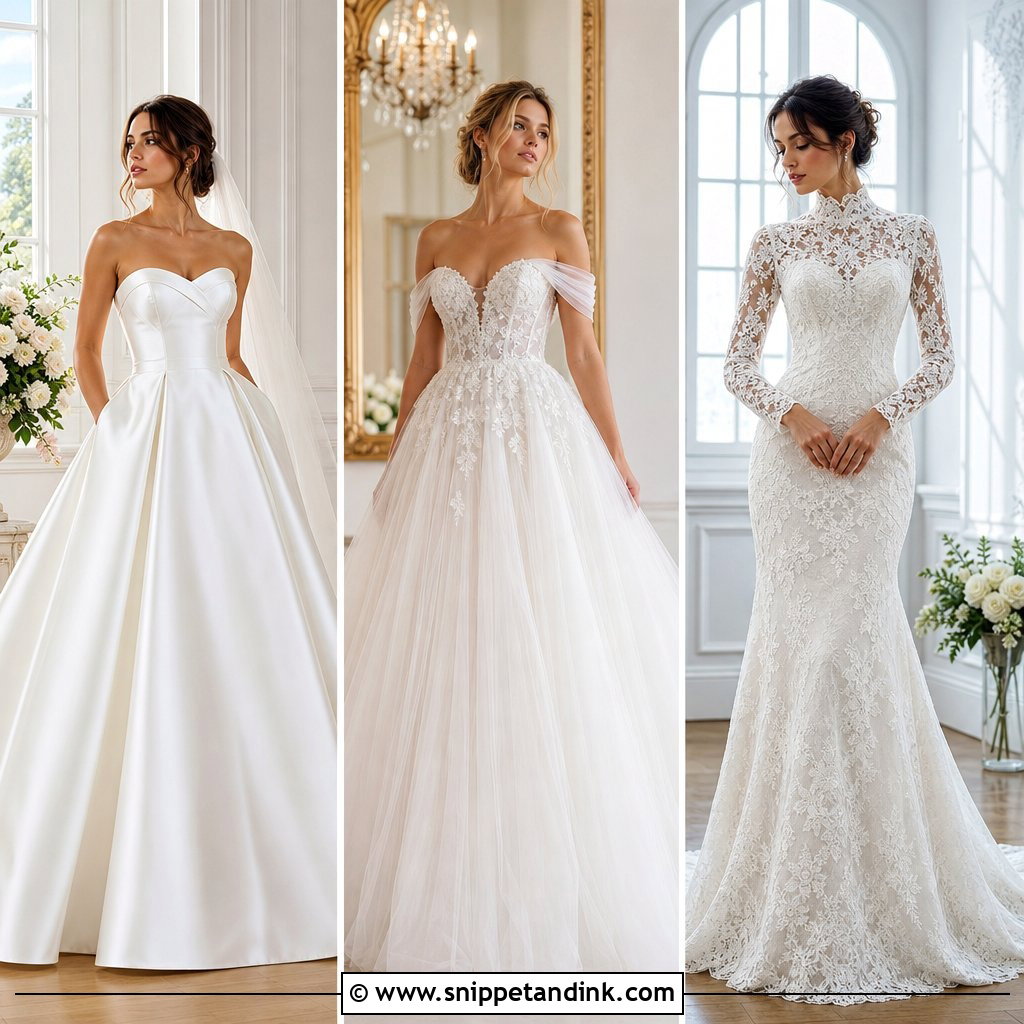
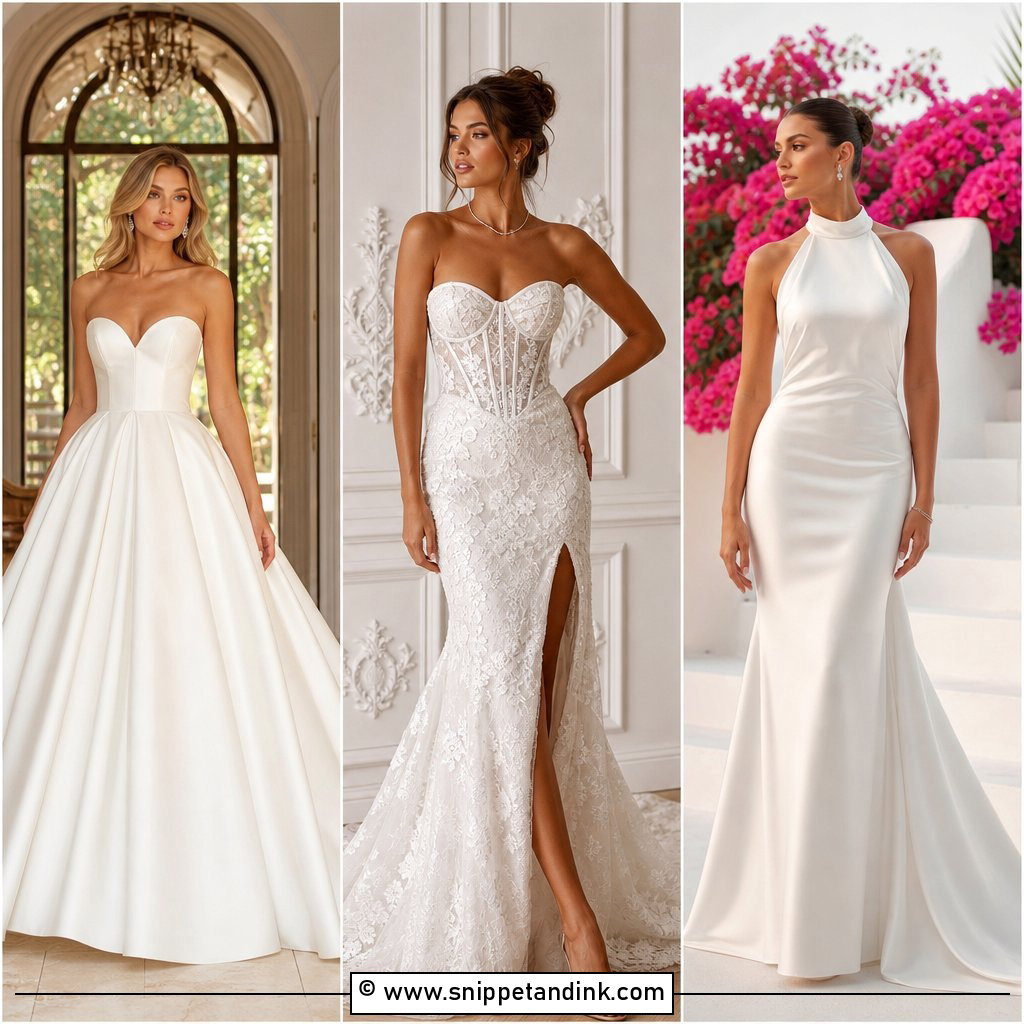
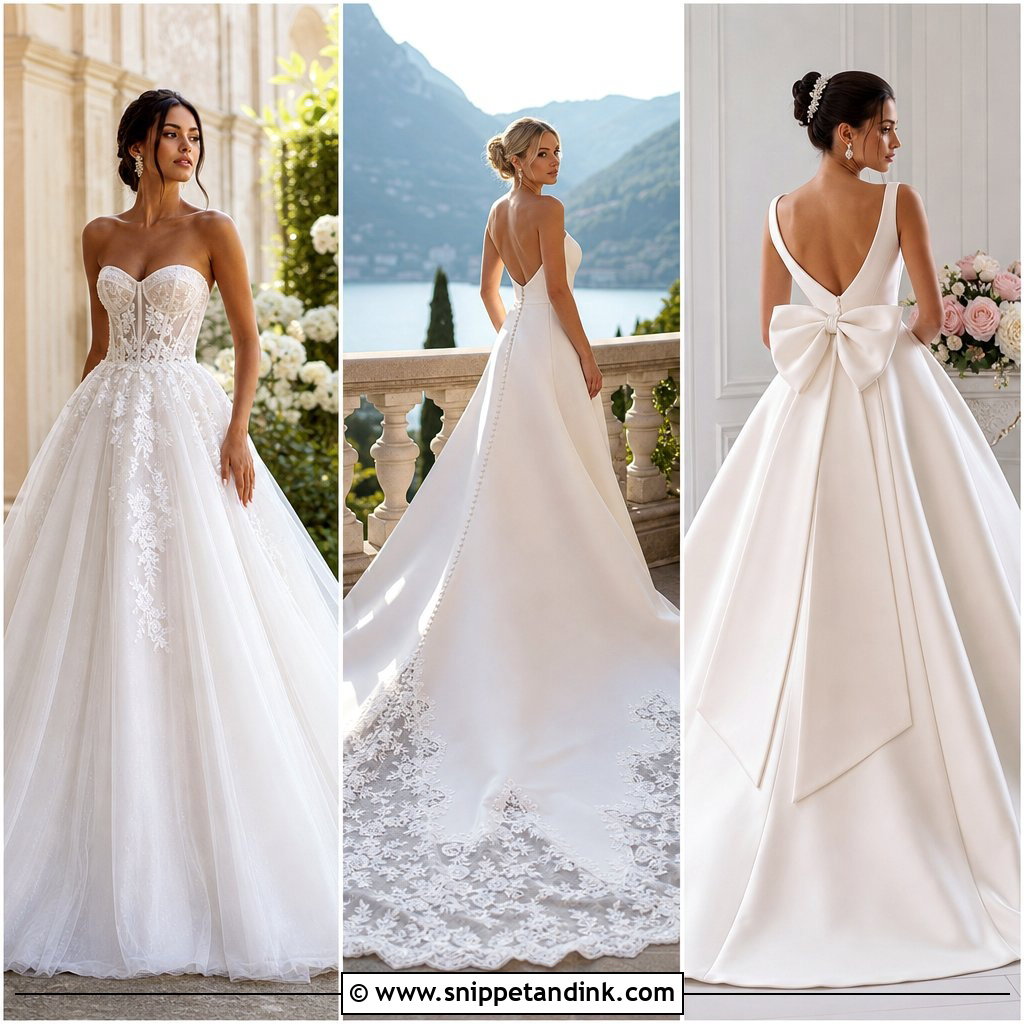
The V or U dip of a Basque waist sits below the natural waistline and makes the torso look longer, which is why it works on so many figures. On a Basque waist couture wedding dress, the point of that V has to be cut for your hip bones; set too low, it digs in every time you sit. Silk satin or mikado gives the bodice a smooth, architectural surface, and a full pleated skirt balances it. Covered buttons down the back are worth the extra minutes of dressing. I’d hang a cathedral veil below a sleek bun so the bodice line stays clear, then add pearl drops, pointed ivory pumps and a compact bouquet.
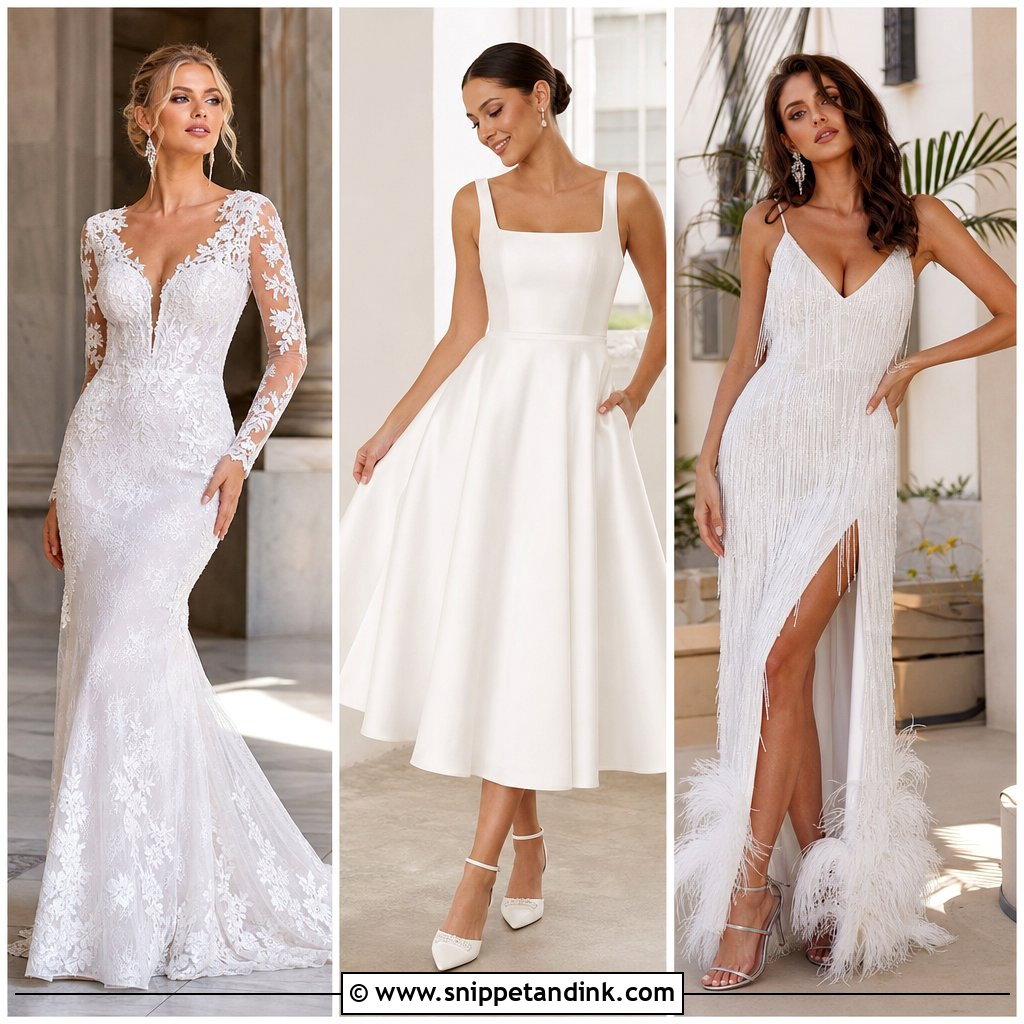
2. Long Sleeve Lace Couture Wedding Dress
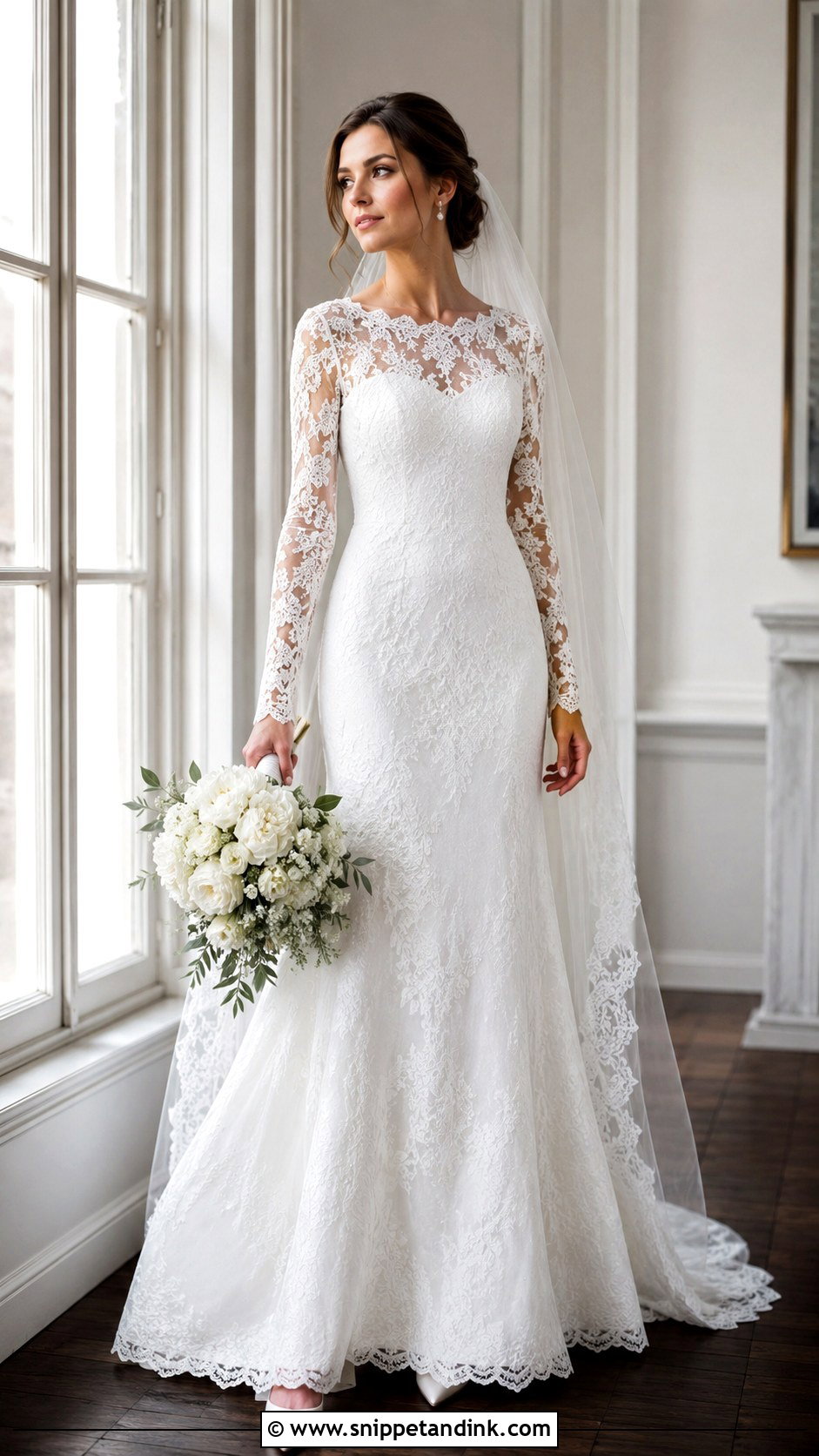
Lace sleeves are where couture workmanship shows most. On a well-made gown the pattern runs continuously from bodice to cuffs to train, with motifs cut out and hand-stitched over the seams so you can’t see where one piece ends and the next begins. Ask whether the motifs can be repositioned during alterations to frame the waist symmetrically. Beneath the lace, a supportive inner corset under a soft lining lets the outside stay light. Keep the veil to a narrow lace edge so two patterns don’t fight. Small diamond or crystal studs, satin pumps and a low chignon leave the sleeves and neckline on show.
3. Drop Waist Corset Couture Wedding Dress
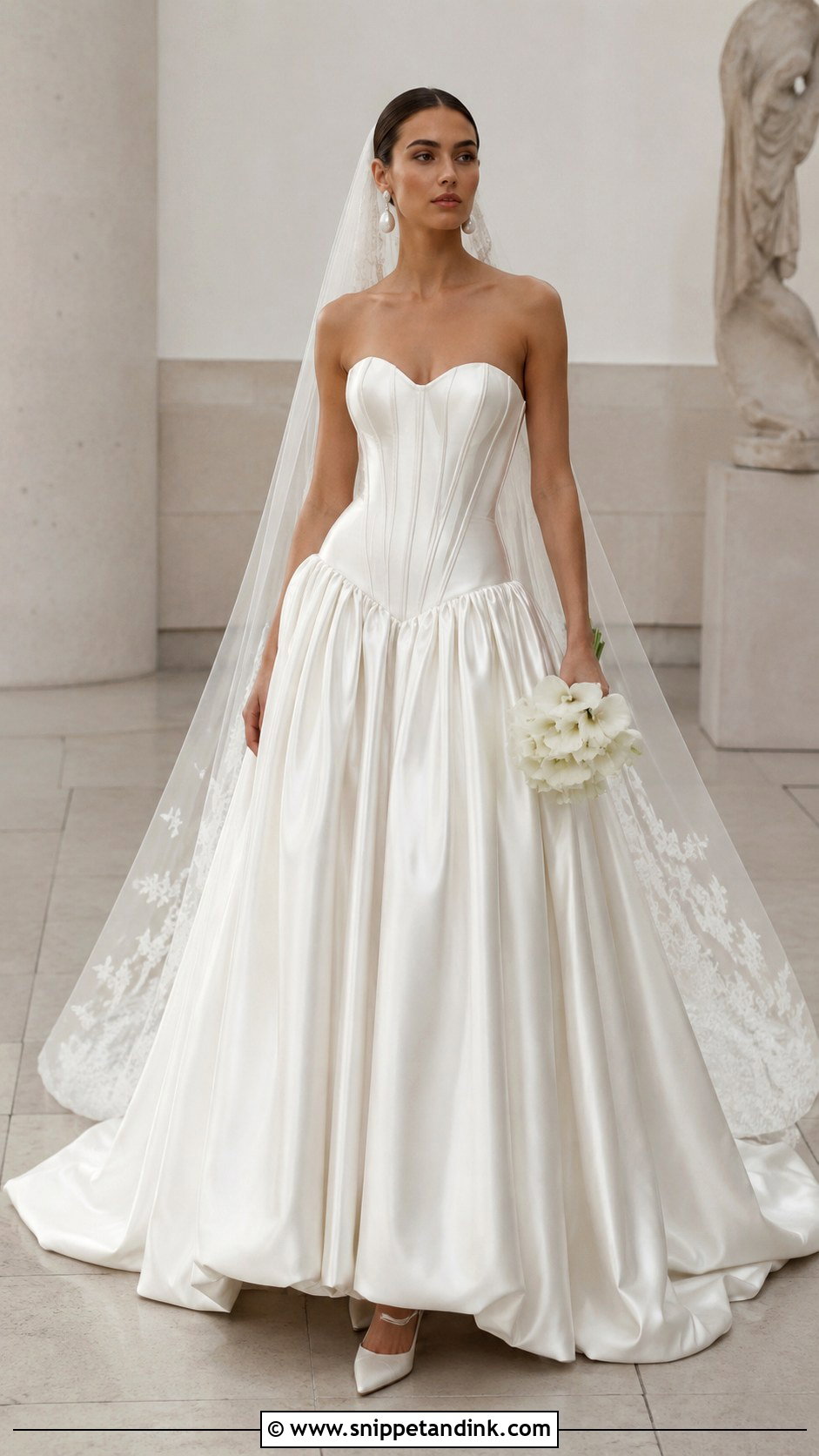
A drop waist is the boldest proportion here, a modern silhouette with runway character where the bodice runs down toward the hips before meeting a gathered or draped skirt. It’s unforgiving on a short torso, where it can make the legs look shorter, so try one on before you fall for the photos. Duchesse satin gives the skirt weight, and hidden boning stops the long bodice wrinkling when you bend. Because the seam sits where your body flexes most, it has to be fitted while you walk and sit, not only while you stand. A chapel veil, sculptural pearl earrings, pointed slingbacks and a smooth bun keep the focus on the shape.
4. 3D Floral Couture Wedding Dress
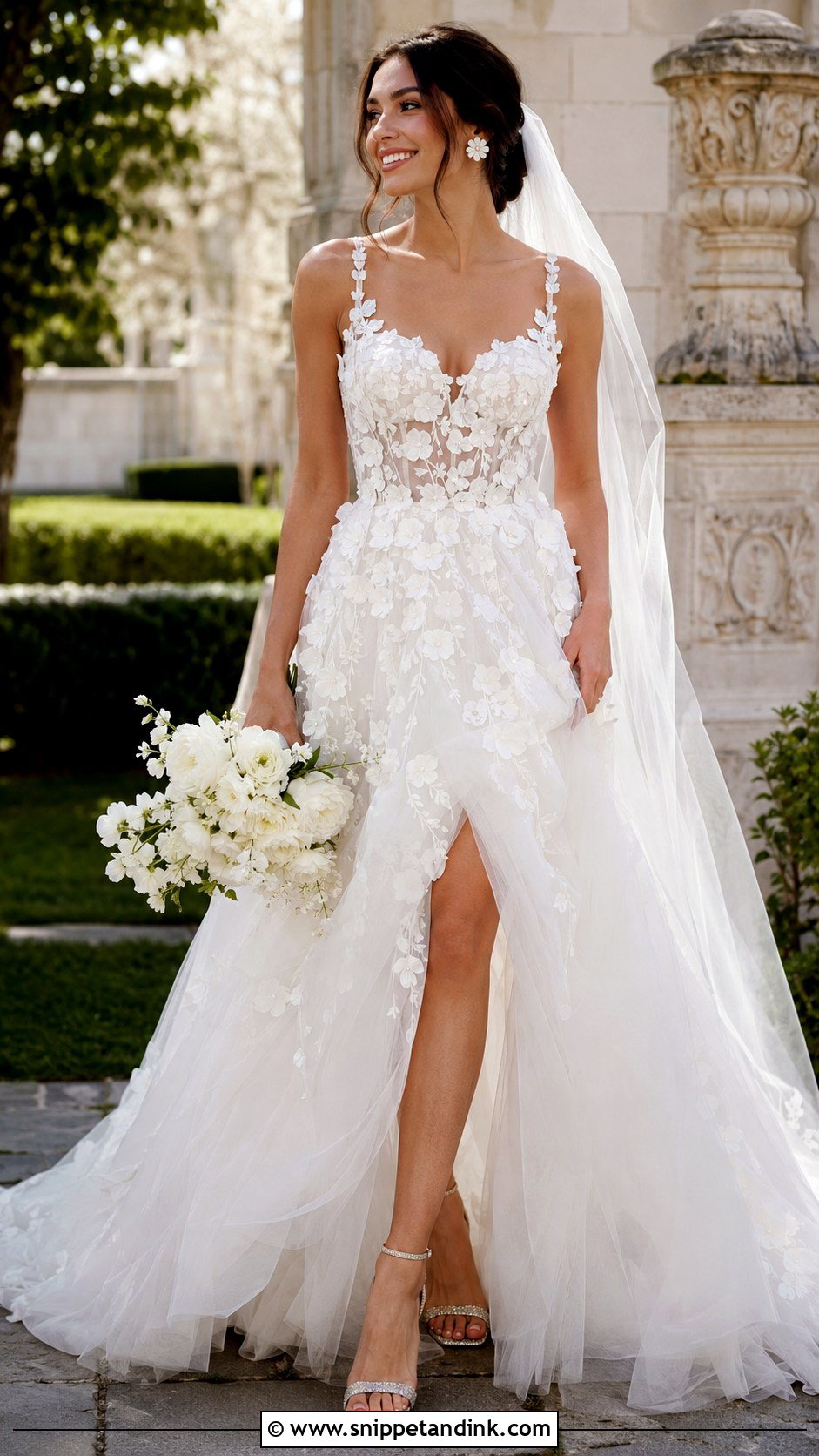
Three-dimensional florals are built from hand-cut petals and embroidered leaves, and the best placements cluster thickly on the bodice and thin out down an airy tulle skirt. That fade keeps the gown from looking top-heavy and leaves the skirt light enough to walk in. Look underneath the flowers when you shop. Couture-quality appliqués are stitched through at several points, not tacked only at the center. I’d also have your seamstress reinforce any petals near the hem, since they brush the floor all night and come loose first. A plain veil, crystal-strap heels and a bouquet of one or two white varieties suit it, and a garden venue shows it at its best.
5. Pearl Beaded Couture Wedding Dress
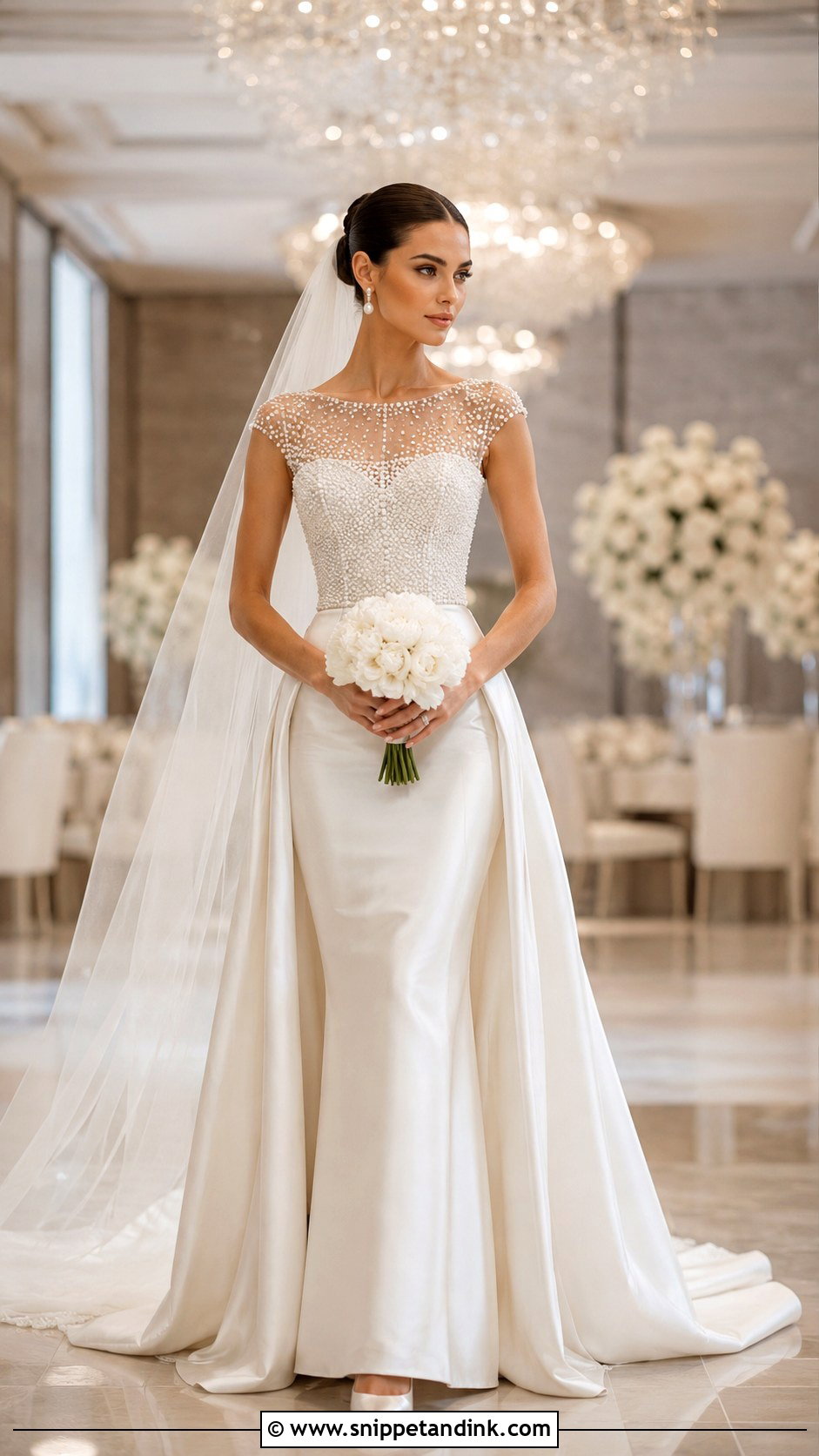
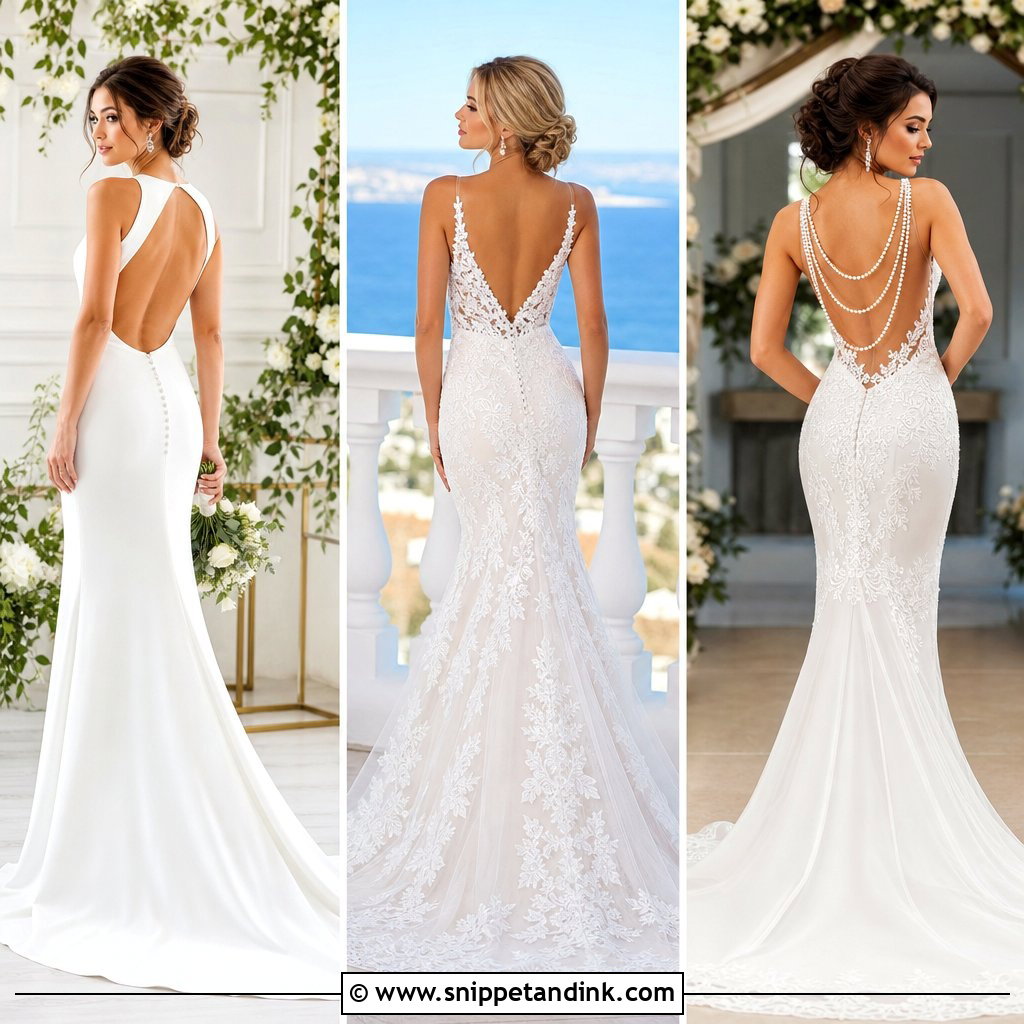
Pearls are heavier than they look. A bodice densely beaded with them weighs noticeably more than plain satin, so the inside of the gown matters as much as the surface: a firm lining, a waist stay that carries the weight at your waist instead of your shoulders, and seams finished so nothing scratches. Graduated patterns, dense at the neckline and thinning toward the waist, look more deliberate than scattered beads. A sheer bateau neck or short illusion sleeves let the pearls appear to float on the skin. Pair the beaded bodice with a clean satin skirt, pearl earrings, ivory satin pumps and a plain tulle veil a touch longer than the train. Wear your hair up so it can’t snag.
6. Off Shoulder Draped Couture Wedding Dress
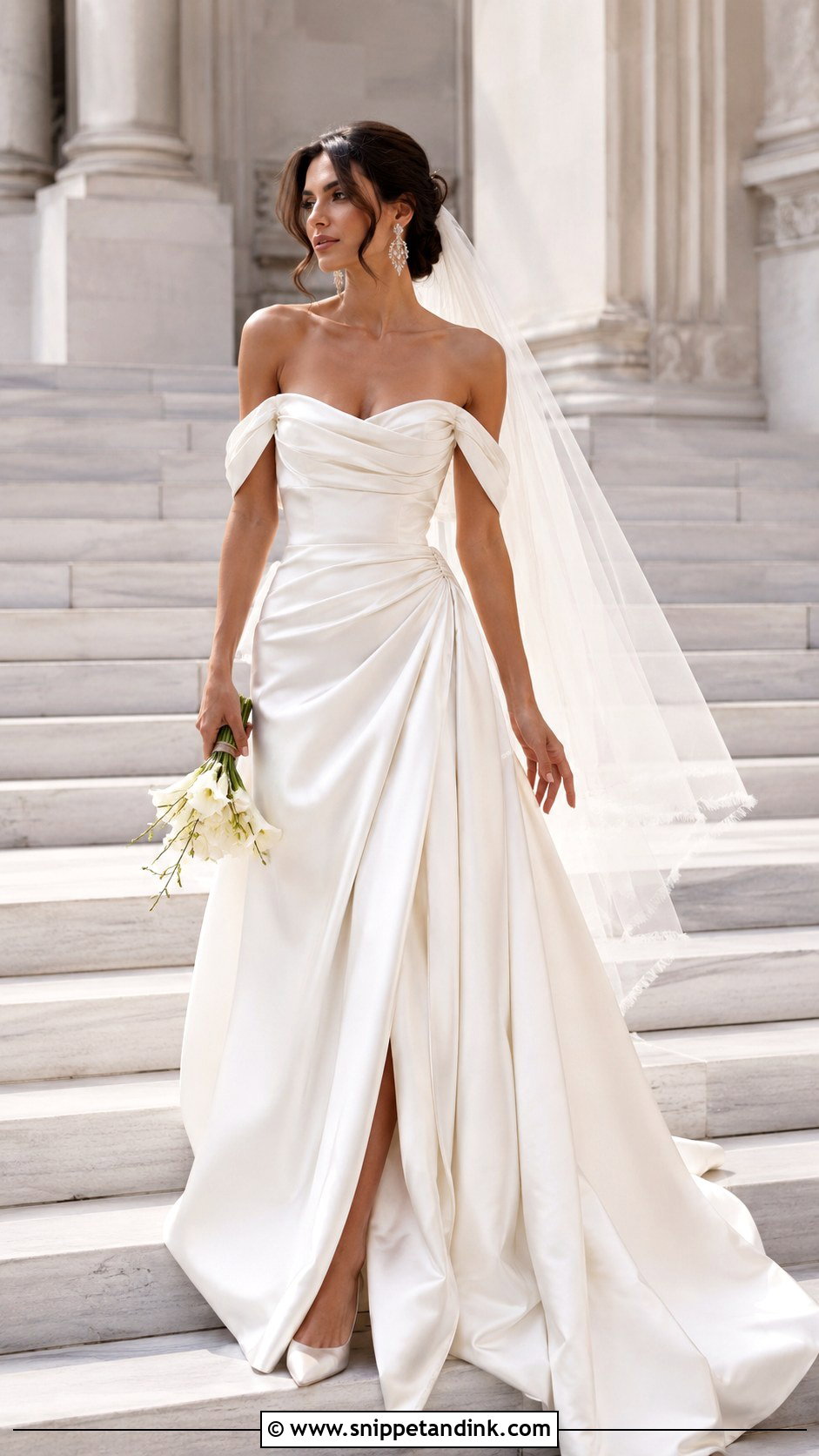
Draped satin falling off the shoulders looks romantic, but the drape is decoration, not support. The corset inside does all the holding, and the sleeves should rest on your arms without carrying any weight. If they’re doing the work, you’ll feel them pull every time you lift your hands. Ruching should follow the waist rather than pile fabric onto it. A flowing A-line skirt, perhaps with a side drape or a modest split, keeps it easy to move in. Skip the necklace, wear statement earrings and a neat bun, and add a long raw-edge veil. In fittings, practice hugging, holding the bouquet and dancing.
7. Square Neck Mikado Couture Wedding Dress
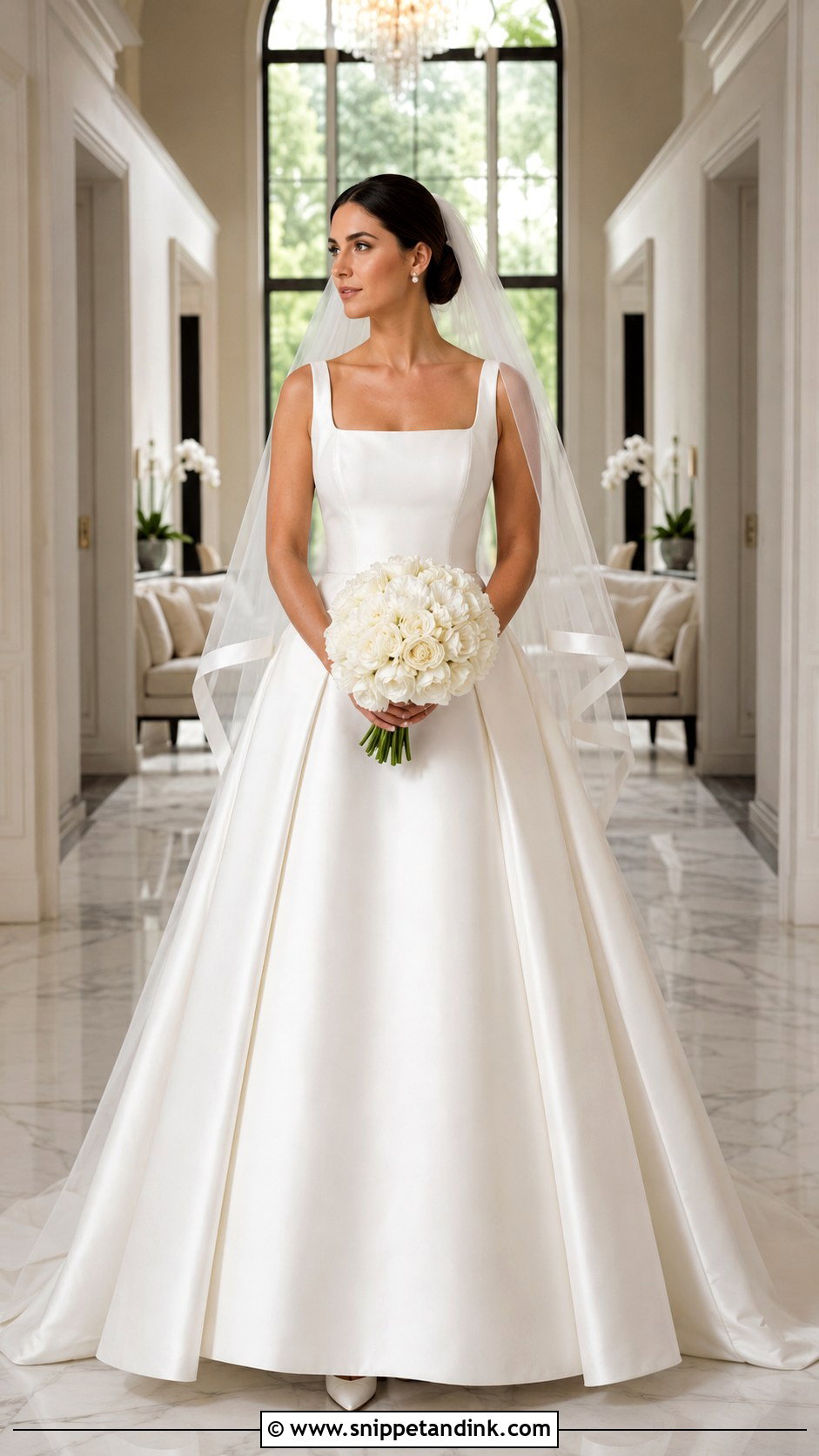
Mikado is a heavy silk blend with a soft sheen, stiff enough to hold a skirt out on its own, which is why designers reach for it on sculptural shapes. A square neck mikado couture wedding dress uses wide straps to anchor its internal support, and the neckline must be tailored closely or it gapes when you lean forward. Pair the fitted bodice with a box-pleated skirt and ask for hidden pockets; I’ve never heard a bride regret them. Mikado weights vary, so walk up a few steps and sit before the fabric is cut. A long veil with a narrow satin edge, pearl studs and closed-toe pumps keep it formal.
8. Illusion Bodice Couture Wedding Dress
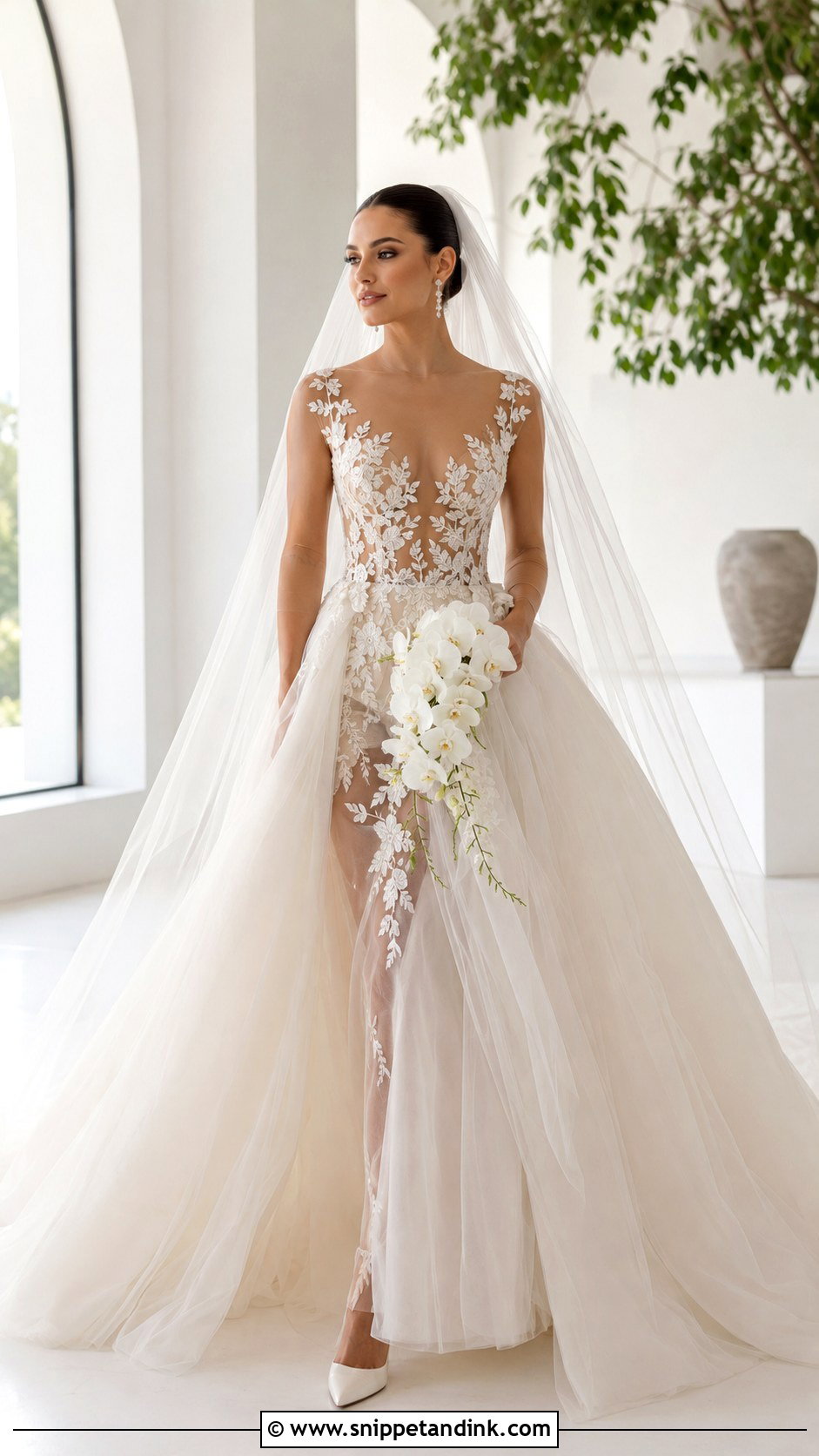
An illusion bodice depends on one thing more than anything else: tulle that matches your skin. Too pale and it reads as a grey film across the chest in photos; too dark and it looks muddy. I hold swatches against the bride’s skin in daylight and again under warm indoor light before choosing. Lace, embroidery or crystals placed over the tulle provide the coverage, and your seamstress can move appliqués or add discreet cups and lining to suit your comfort. A layered tulle skirt keeps the whole gown light. Add a plain cathedral veil, crystal earrings, ivory heels and a soft updo that won’t catch on the embroidery.
9. High Neck Lace Couture Wedding Dress
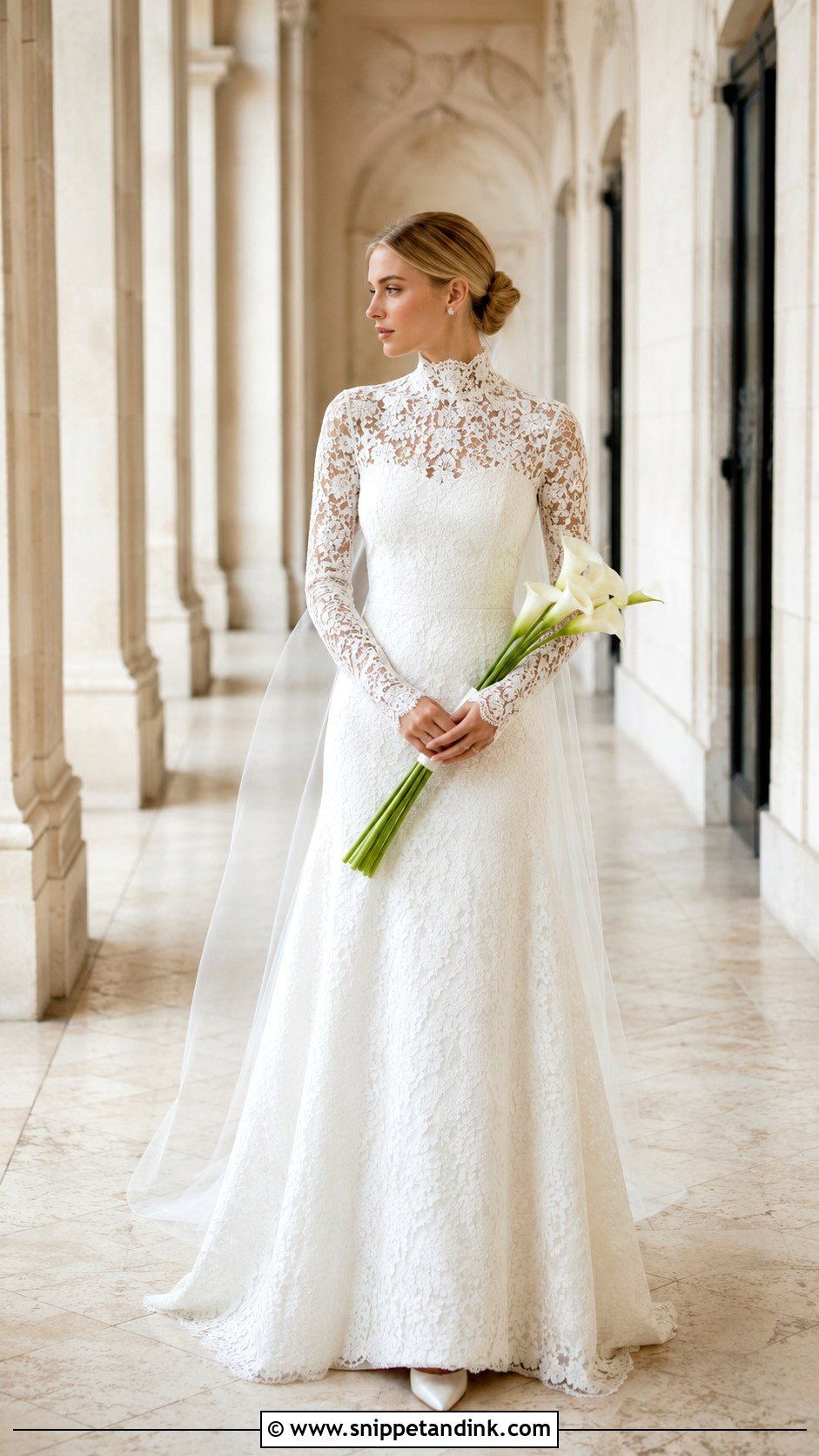
High necklines give coverage without heaviness when the lace is fine and has open areas around the throat. The collar is the part I watch at fittings. It should follow the neck without folding, rubbing or tightening when you turn your head, and the hook at the back needs to sit flat under your hair. A smooth silk or crepe lining under the bodice sets off the lace, and a gently flared skirt keeps the volume modest. No necklace needed. A low bun, small earrings, pointed pumps, a veil attached below the hair and a long-stemmed bouquet complete the line.
10. One Shoulder Couture Wedding Dress
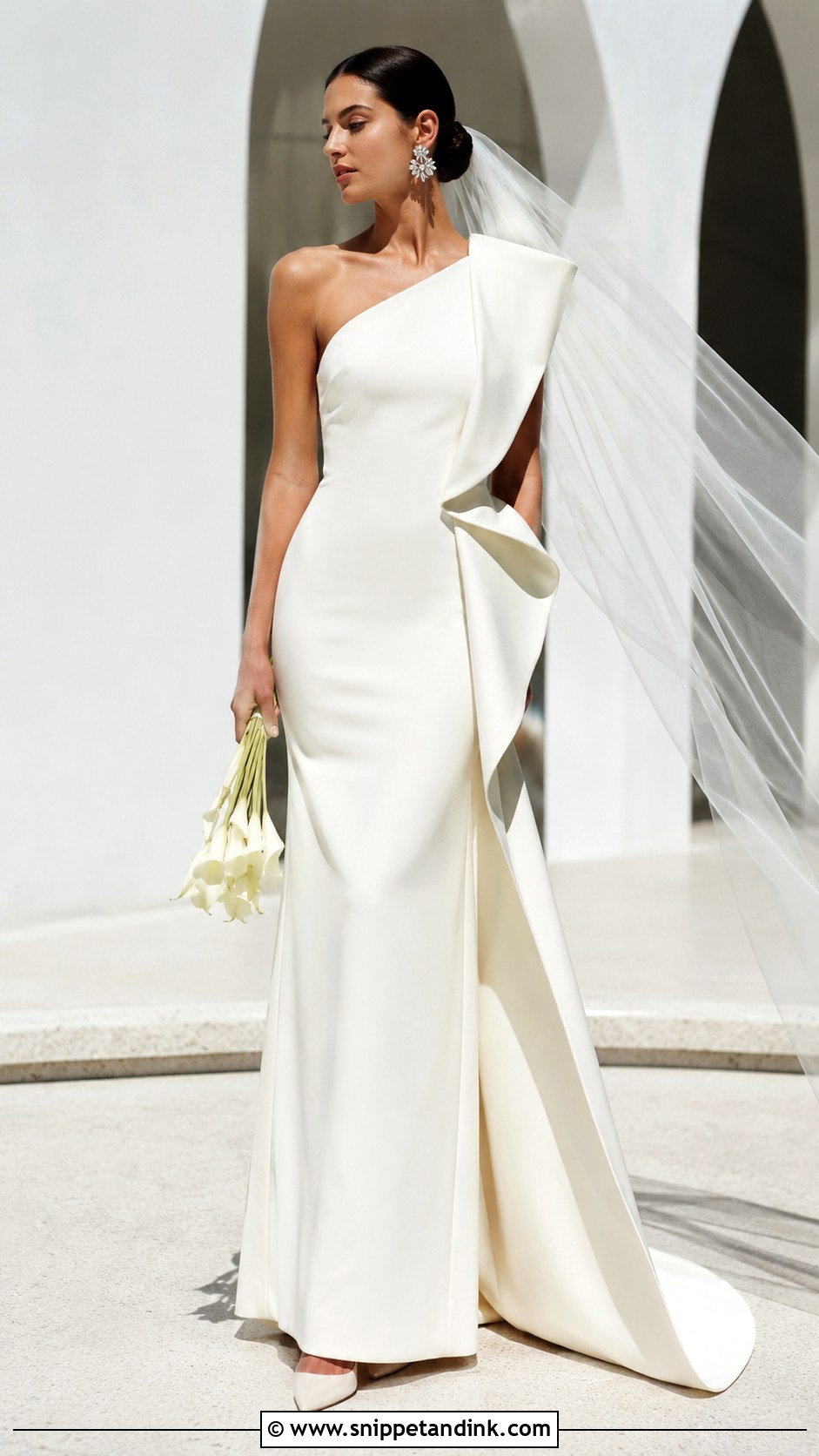
One-shoulder couture gowns are close to sculpture: a fitted silk crepe base, then a folded satin panel running from the shoulder across the bodice and sometimes into a side train. Without serious understructure, the neckline slides toward the bare side, so ask how it’s anchored before you commit. Check the back in a mirror too. The folds should look intentional from behind, not twisted. Everything else stays restrained, with one statement earring, a sleek low bun, pointed heels and a simple tulle veil beneath the hair. At fittings, swing both arms and hold the bouquet to see whether anything pulls.
11. Cape Sleeve Couture Wedding Dress
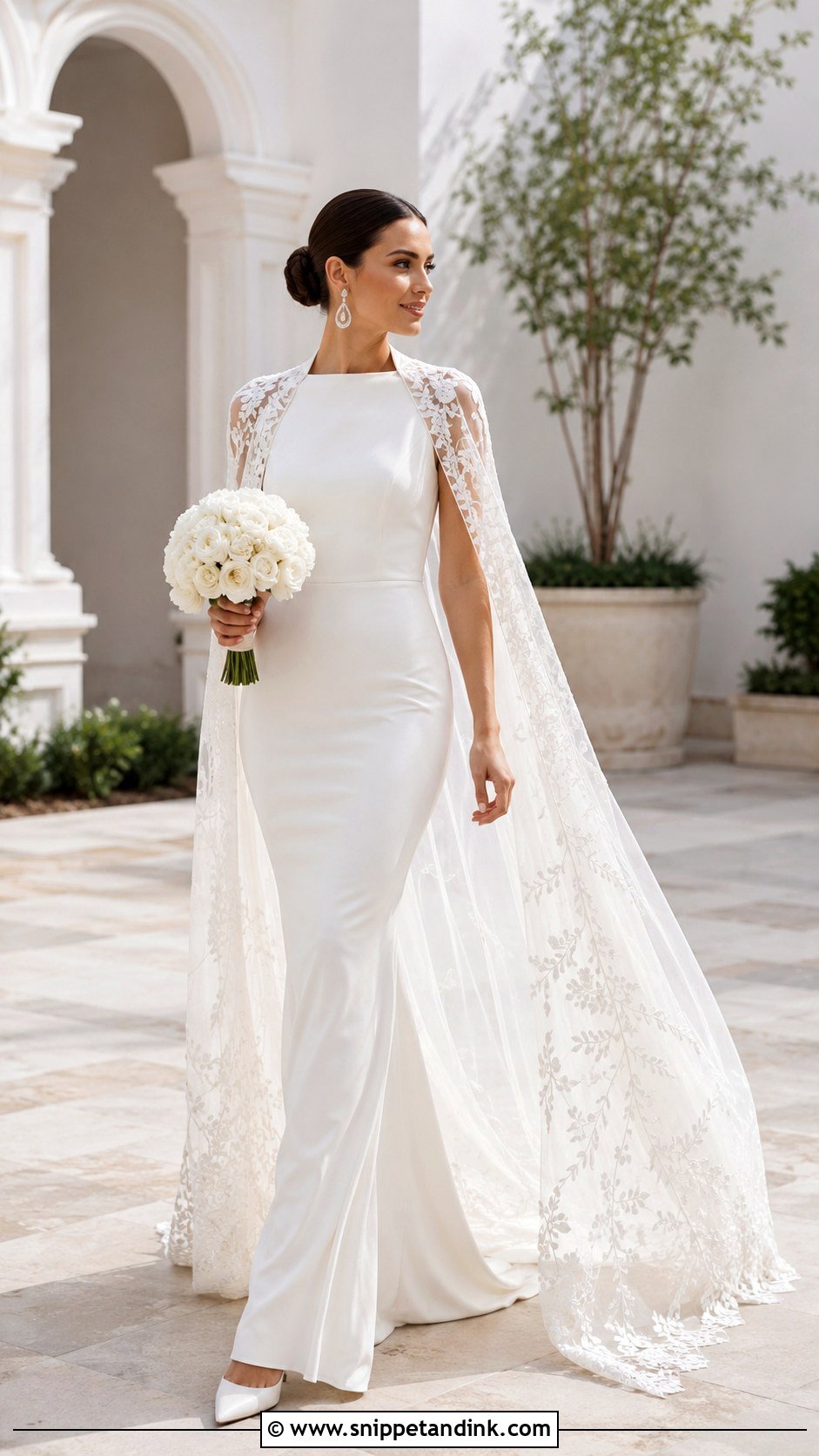
Cape sleeves create drama through movement, so the dress beneath can stay plain, a fitted column or a gentle A-line. Sheer chiffon or embroidered tulle panels fall from the shoulders to the floor, and they can stand in for a veil or detach for a second look. The fastening is the question I always put to the designer. Long panels weigh more than they appear to, and if the attachment points can’t carry them, the neckline gets dragged backward all evening. They also mustn’t catch under your heels. A polished bun, drop earrings, pointed pumps and a compact bouquet keep the arms clear, and bracelets are best left off.
12. Detachable Overskirt Couture Wedding Dress
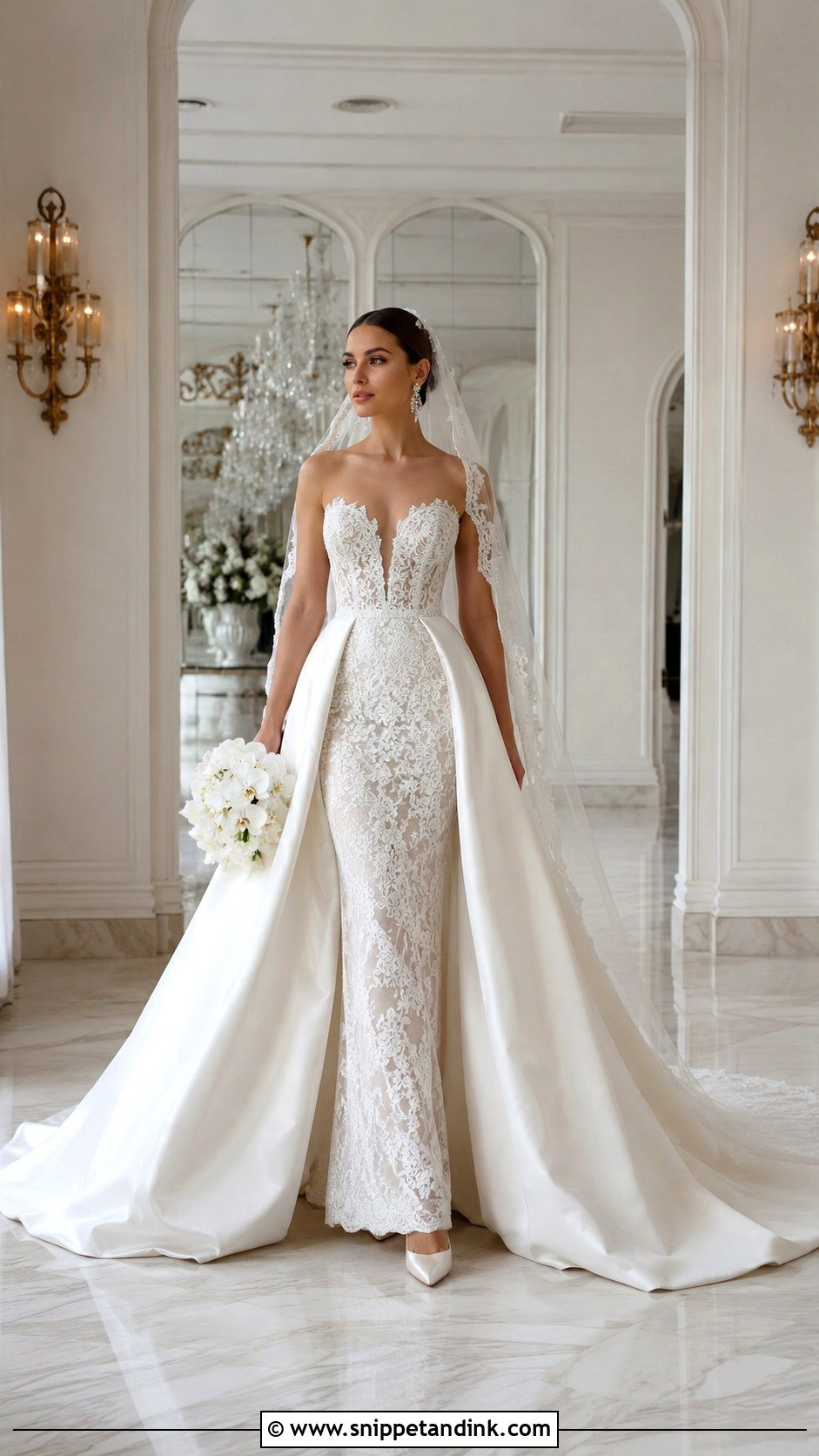
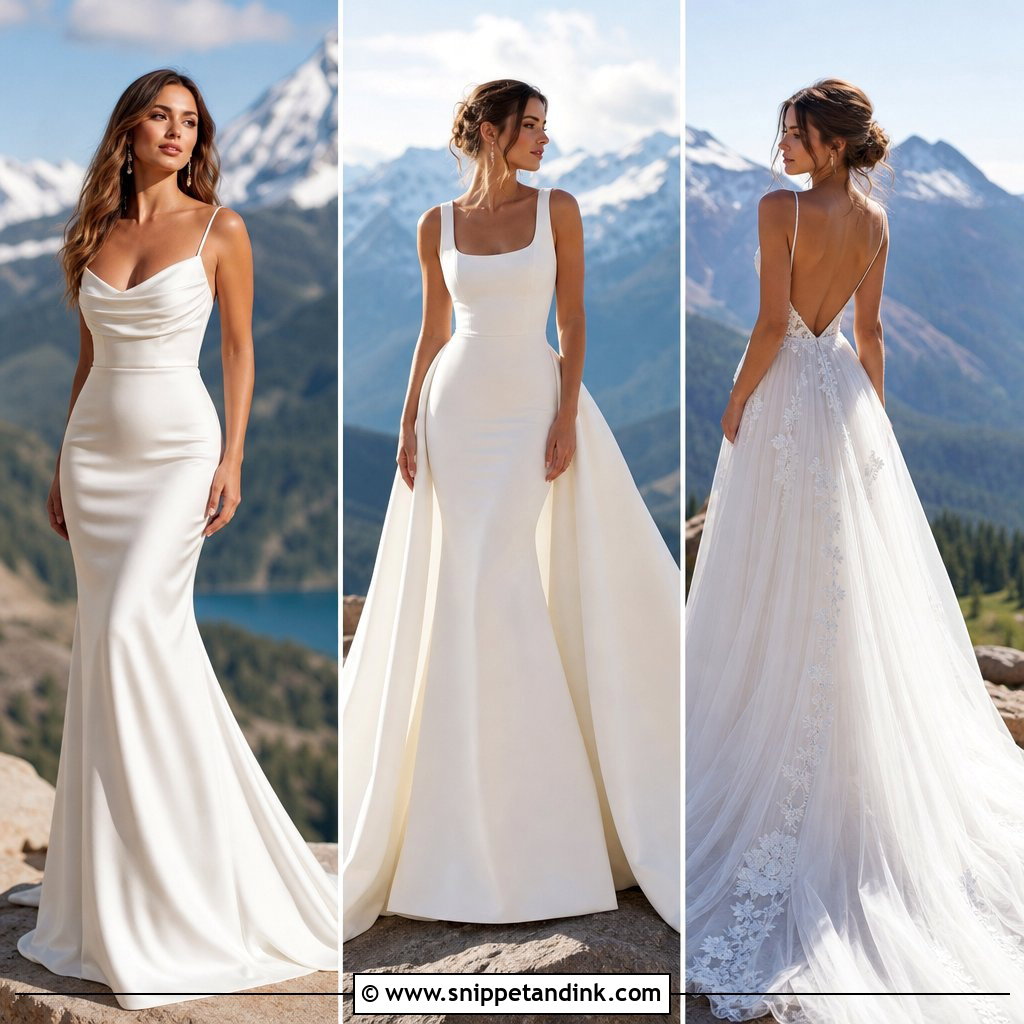
A detachable overskirt couture wedding dress gives you two silhouettes without a full change. A fitted lace, beaded or silk crepe gown sits under a full satin or tulle overskirt for the ceremony; take the overskirt off and you can walk and dance freely. The join at the waist must be invisible from every angle, usually hooks or snaps hidden beneath a band. Practice removing it well before the day, and give the job to one person who has done it with you. Wear a cathedral veil and crystal earrings for the ceremony, then switch to statement earrings or a shorter veil. If the base gown has its own train, it needs its own bustle.
13. Minimalist Column Couture Wedding Dress
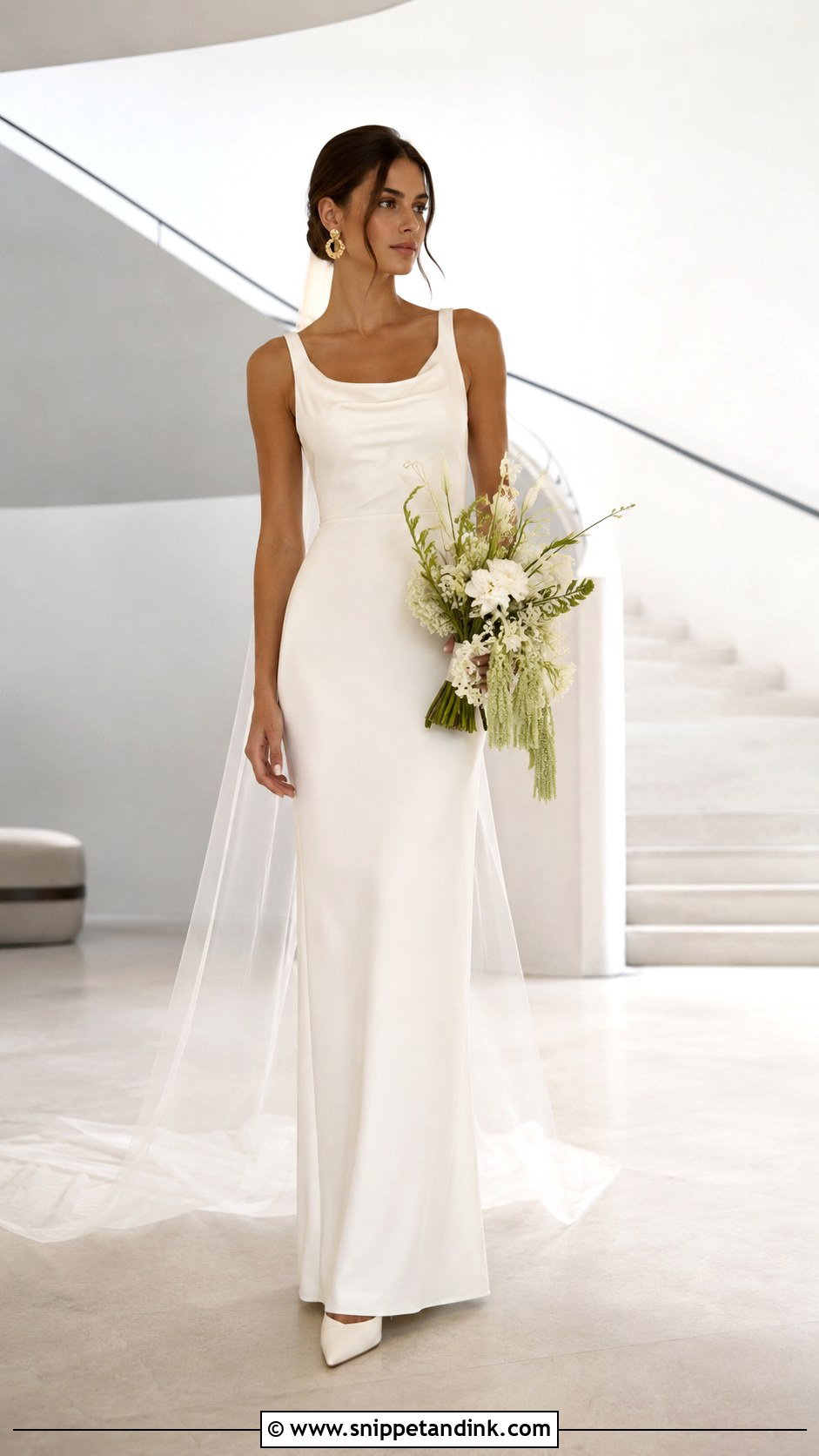
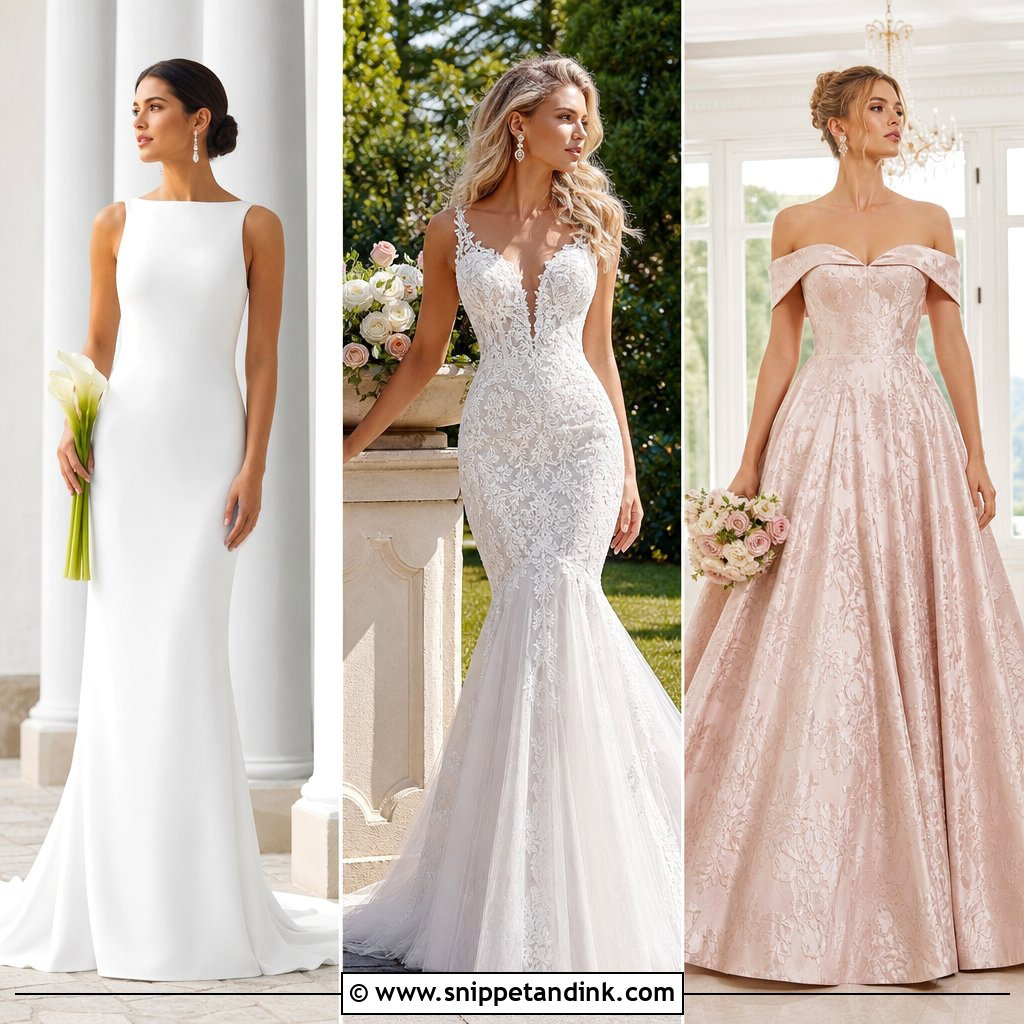
Minimal gowns hide nothing. Every seam, dart and fitting decision shows on plain silk crepe, satin or double-faced fabric, so alterations must be precise and the cloth heavy enough not to cling. One detail is plenty: a curved neckline, long sleeves or a low back. Ask about supportive lining, smoothing panels and how the bustle will look on such a clean back. Then stand under a strong light, because thin silk can turn see-through. Sculptural earrings, pointed pumps, a long sheer veil and a neat bouquet of straight stems match the restraint, finished with a low bun or glossy waves.
14. Fit And Flare Couture Wedding Dress
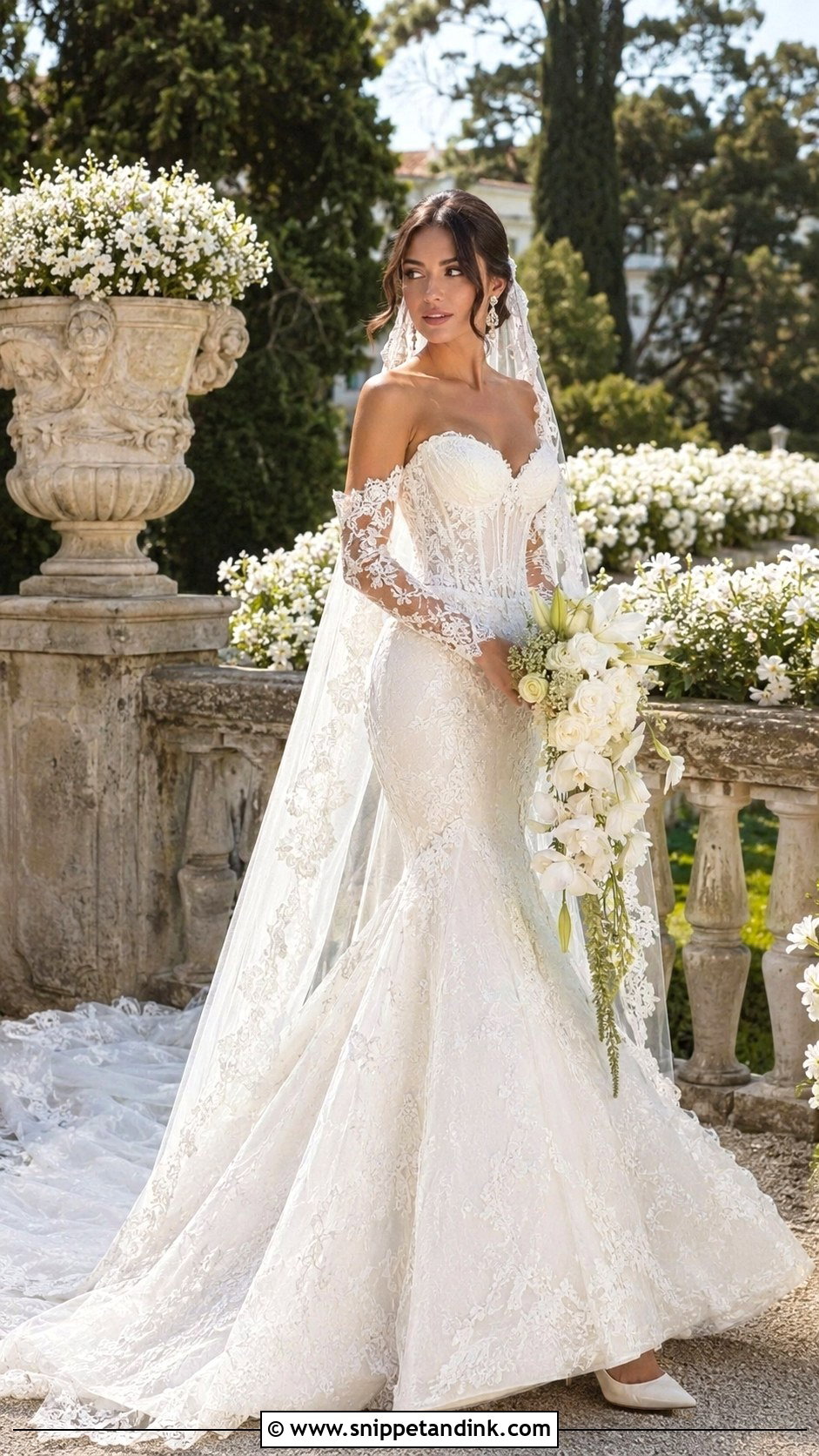
Fit and flare follows the body through the waist and hips, then opens out, and where the flare begins changes everything. A higher flare around mid-thigh is easier to walk in. A lower, mermaid-style flare at the knee looks more dramatic and shortens your stride. Embroidered lace over structured tulle shows off the shape, and a cathedral train gives the back its finish. Walk, sit and climb steps at fittings, and plan for a multipoint bustle to lift that train evenly for the reception. Repeat one motif from the dress on a lace-trimmed veil, and add drop earrings, pointed heels, a low updo and a long bouquet.
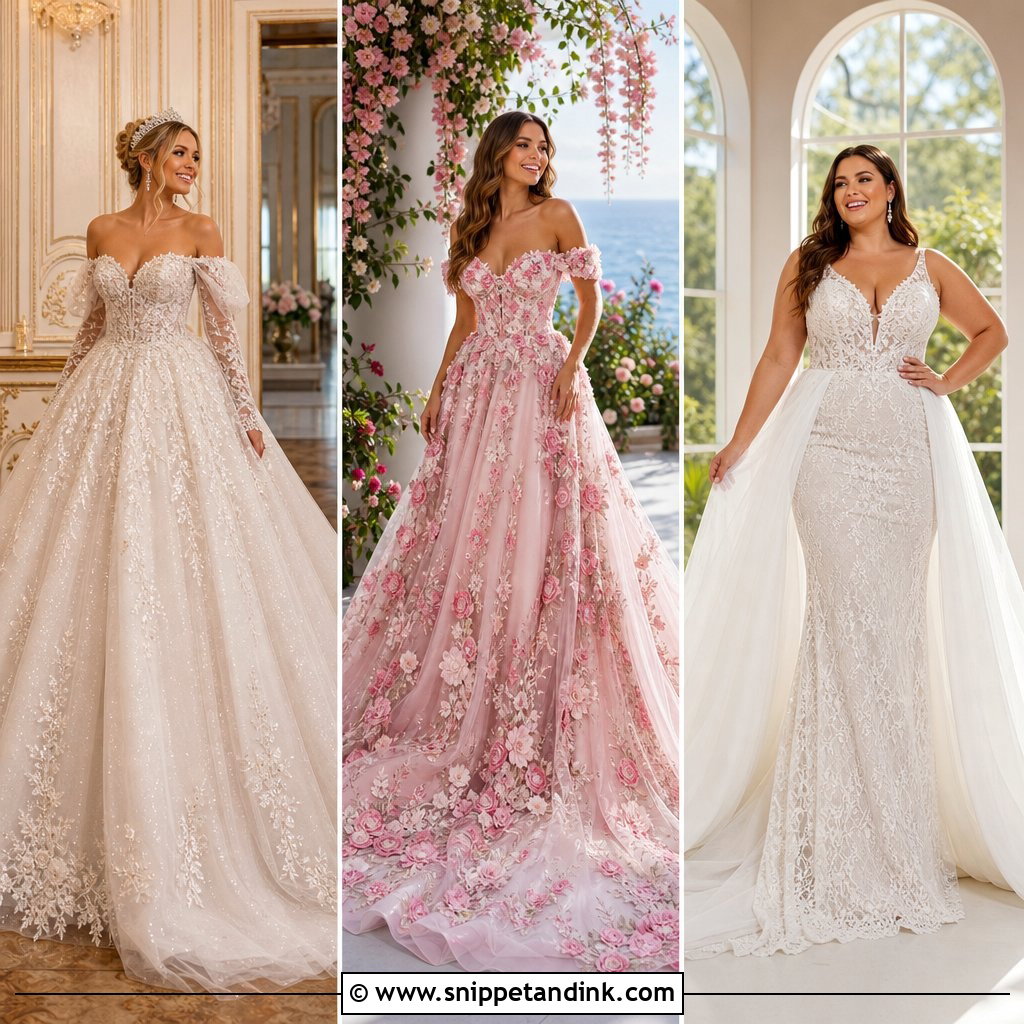

15. Blush Embroidered Couture Wedding Dress
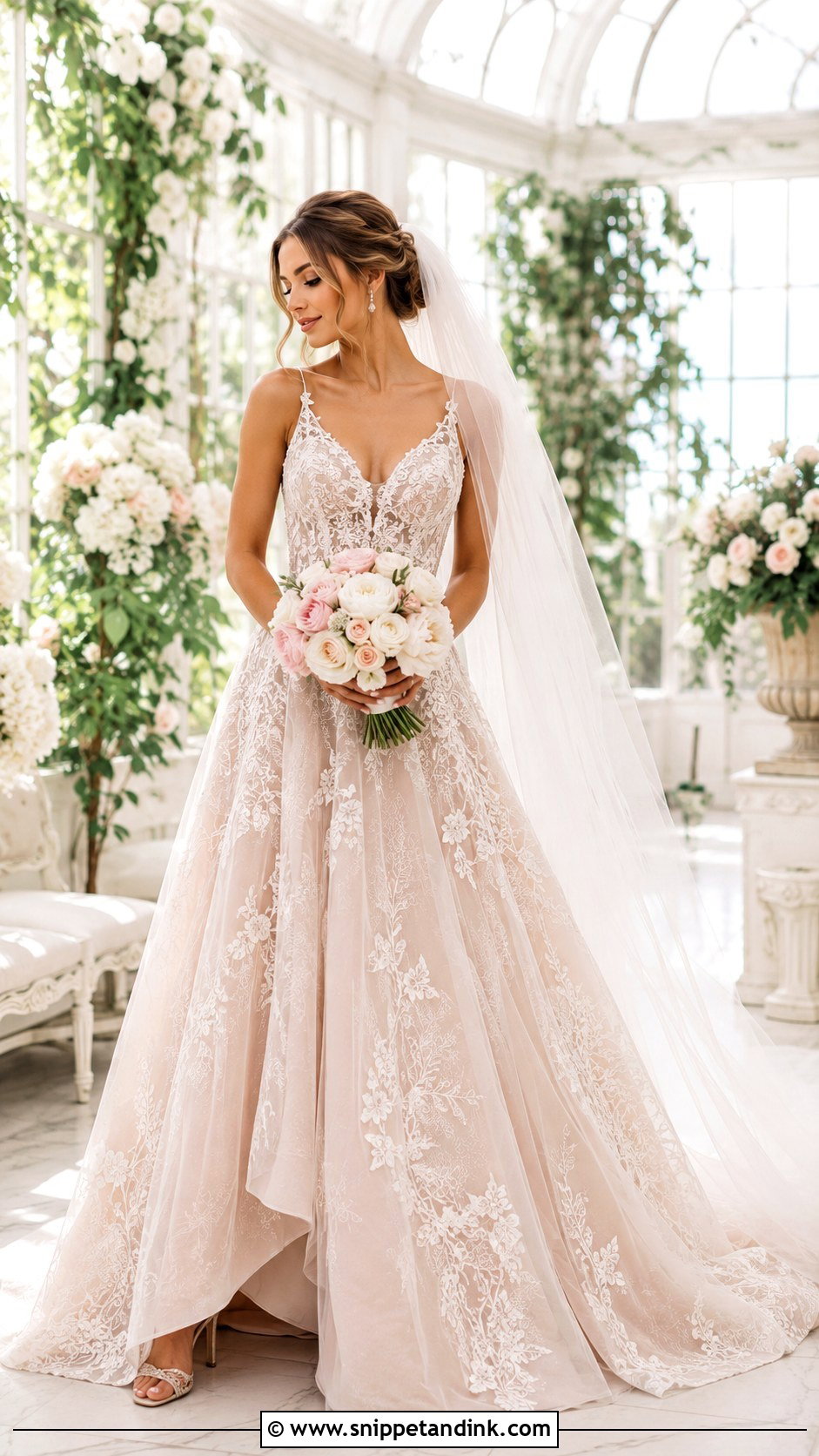
Blush gowns are usually a pale pink lining under ivory tulle, so the color is a glow rather than a solid. That’s also why the shade shifts so much. Warm candlelight pushes it toward peach, while cool daylight shows a cleaner pink. See it in both before deciding, and if you’re customizing, compare several lining swatches against your skin and the colors of your venue. Floral embroidery, fine beads or metallic thread can trail from the bodice down into the skirt. Champagne heels, delicate earrings, a plain ivory veil and a bouquet of white and muted pink flowers suit it, with a loose low bun.
16. Short Couture Wedding Dress
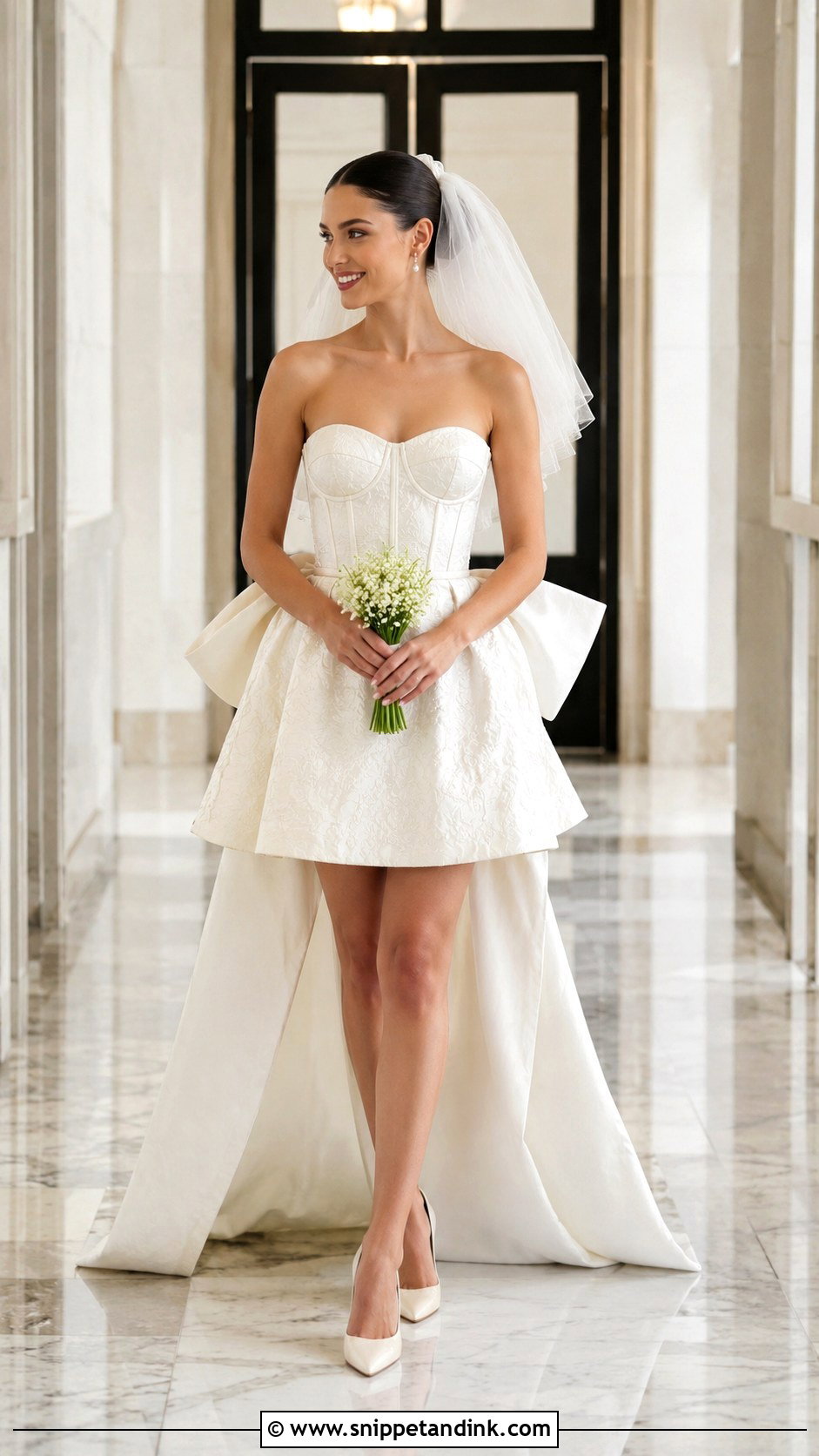
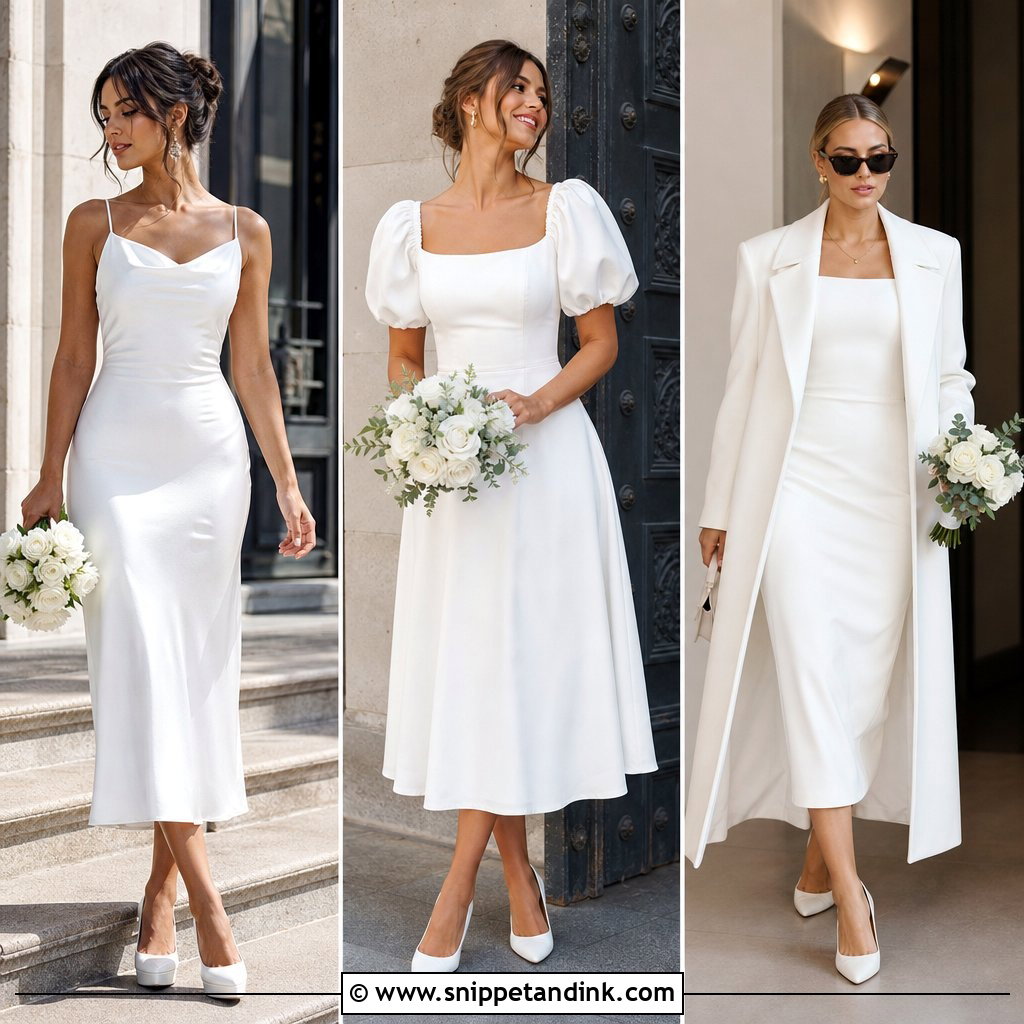
Short couture is still couture: corseted, structured and fitted precisely. A mini or knee-length silhouette in silk jacquard with a sculpted neckline works for a civil ceremony or as a reception change. Short hems show every imbalance, so stand on a level floor at the fitting and check the hem from front, back and both sides; a structured skirt tilts if the waist sits unevenly. Built-in shorts or a smooth lining add comfort. For the ceremony, a removable overskirt or big back bow adds volume. A birdcage or shoulder-length veil, pearl earrings, pointed pumps and a sleek bun suit the proportions.
17. Pleated Chiffon Couture Wedding Dress
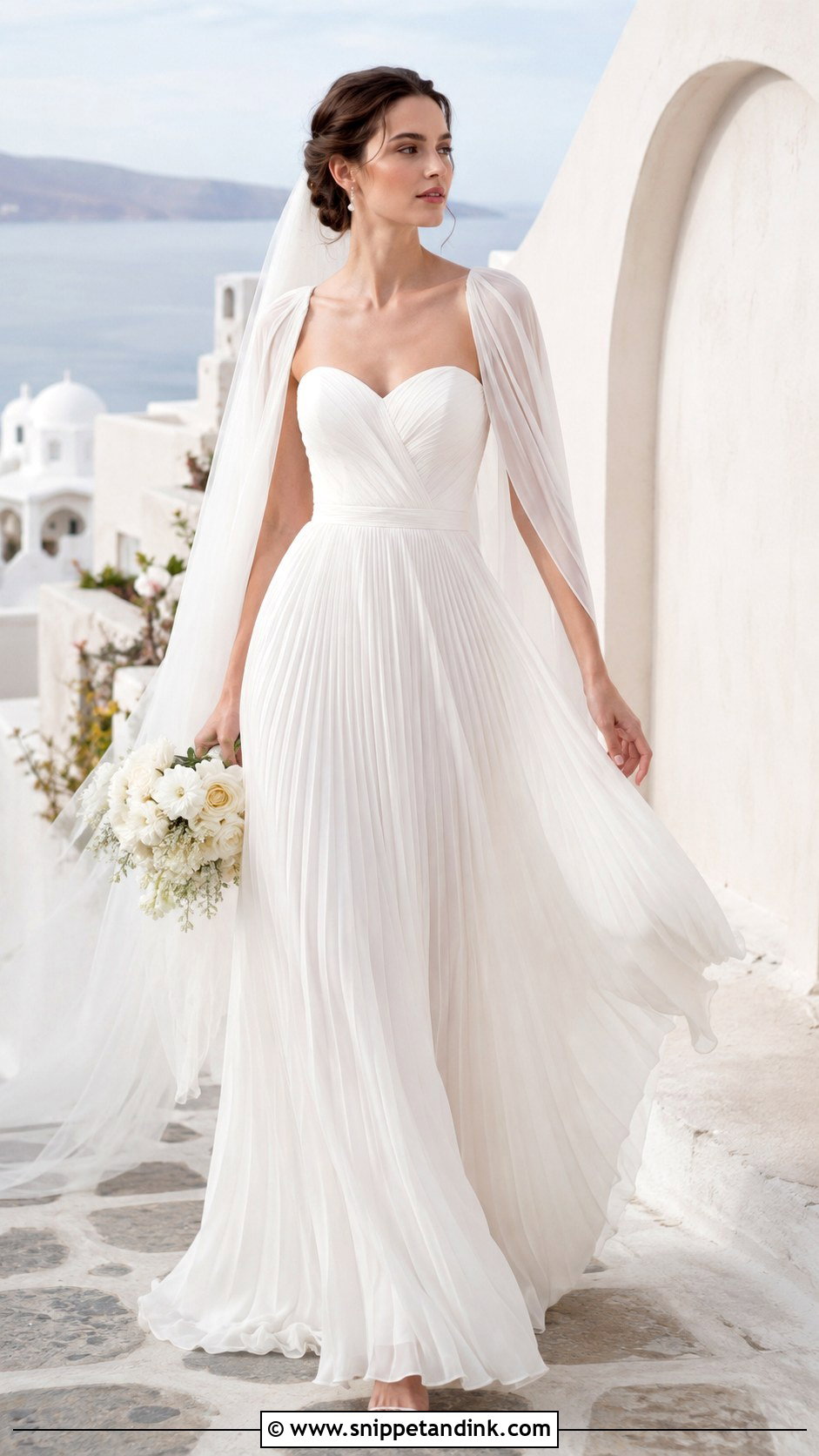
Pleated chiffon is the lightest gown in this list and the one I’d pack for a beach or a hot destination. A chiffon couture wedding dress with a softly structured bodice and fine pleats moves with every breeze. The drawback is that chiffon is sheer and shows seams and underlayers, so examine it in daylight and ask for a smooth, breathable lining. On grass or sand the front hem should only just clear the ground. Sheer cape sleeves or a gathered shoulder add interest without weight. Low-heeled sandals, drop earrings, a simple veil and soft waves suit it.
18. Bow Back Couture Wedding Dress
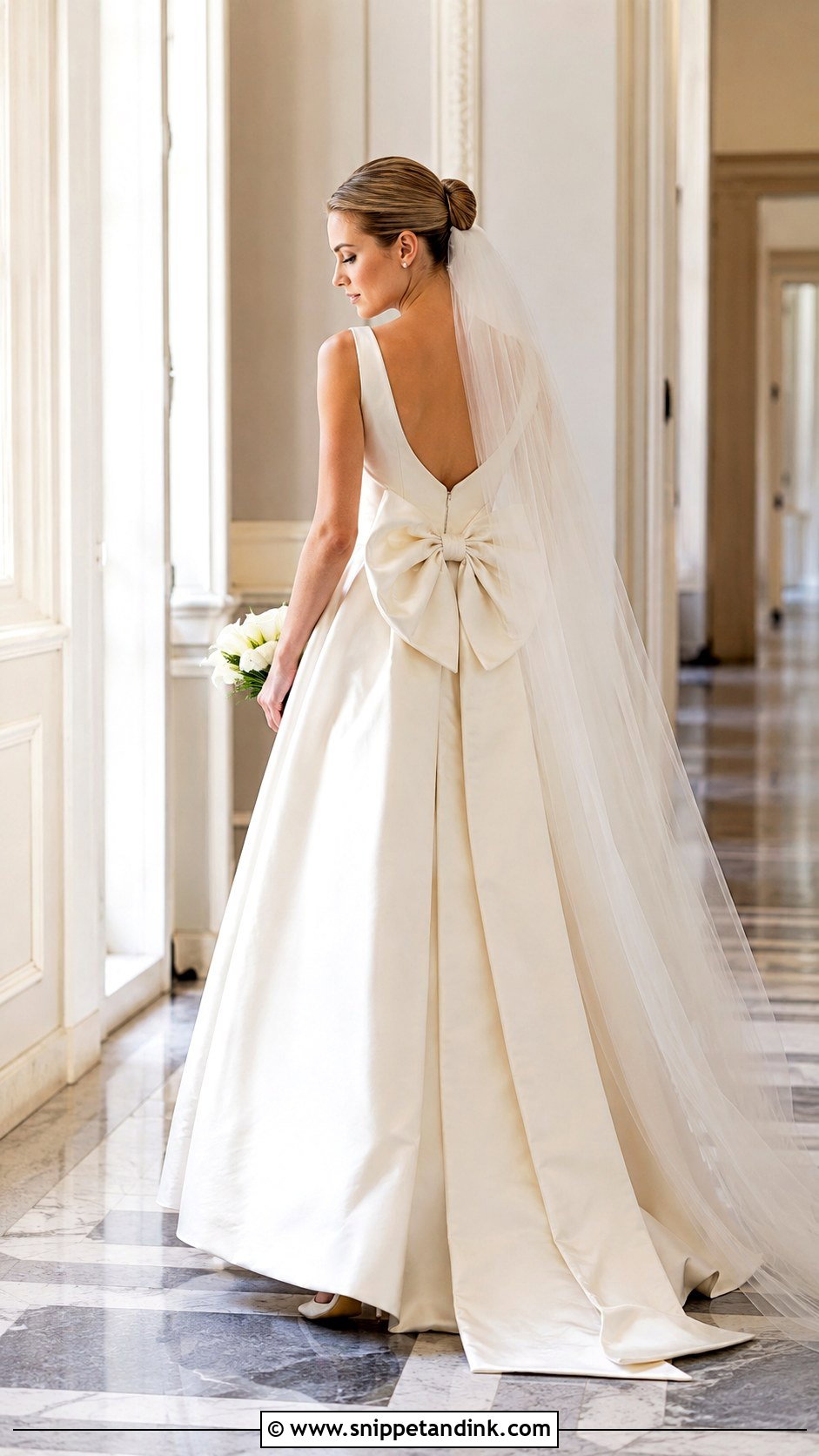
Guests look at the back of your dress for the whole ceremony, which is the best argument for a bow. Choose a clean silk faille or mikado gown so the bow is the only real detail, whether it sits at the waist, spans the shoulders or trails long tails over the train. Ask whether it’s removable, whether it crushes, and whether it can be reshaped after travelling. A large faille bow flattened in a garment bag needs steaming and stuffing with tissue to recover. Scale it to your frame, and have small loops sewn in to keep long tails straight. Small earrings, sleek hair and a plain veil below the bun keep the attention behind you.
19. Feather Trim Couture Wedding Dress
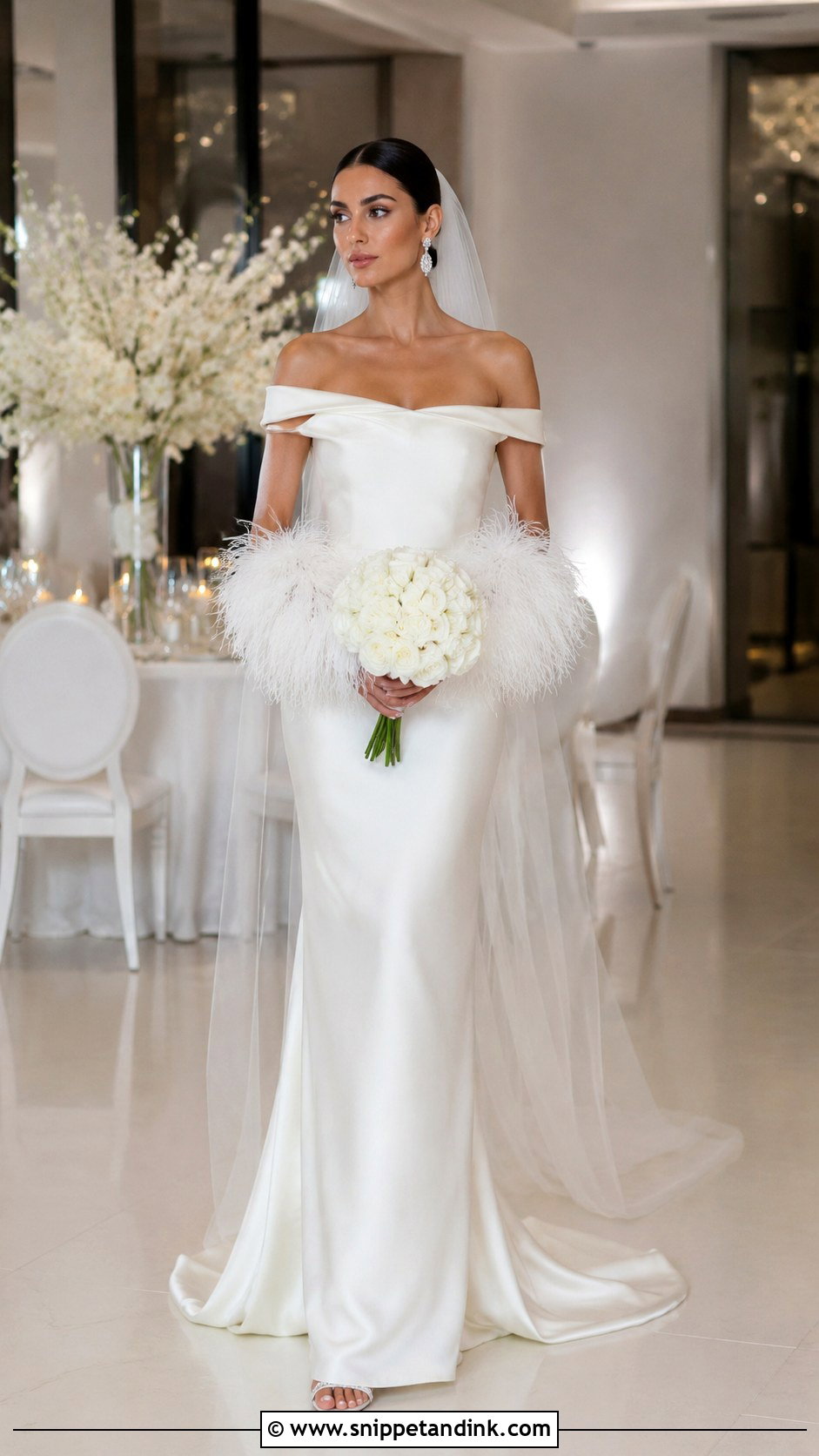
Feathers need restraint. Used as a border they read as couture; used everywhere they tip into costume. A fitted silk gown with feathered cuffs, an off-shoulder edge or a narrow trim on a removable overskirt are the safest placements. Keep feathers away from a floor-length hem, where they collect dust and petals. Ask whether they’re sewn on securely and whether the atelier will supply spares, because a few always work loose over a long night. Clean crystal earrings, satin heels, a smooth bun and a structured white bouquet set off the softness.



20. Floral Jacquard Couture Wedding Dress
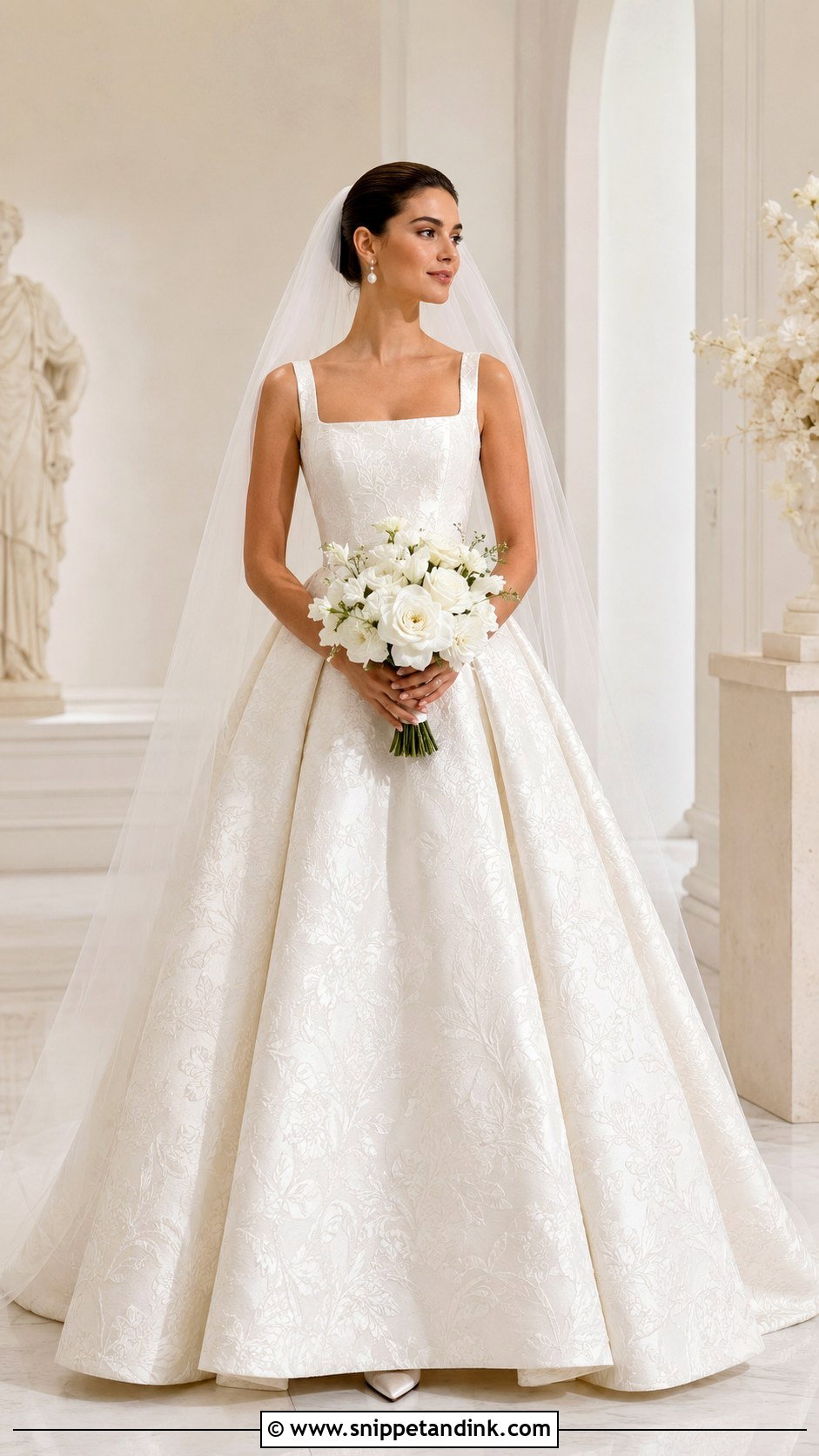
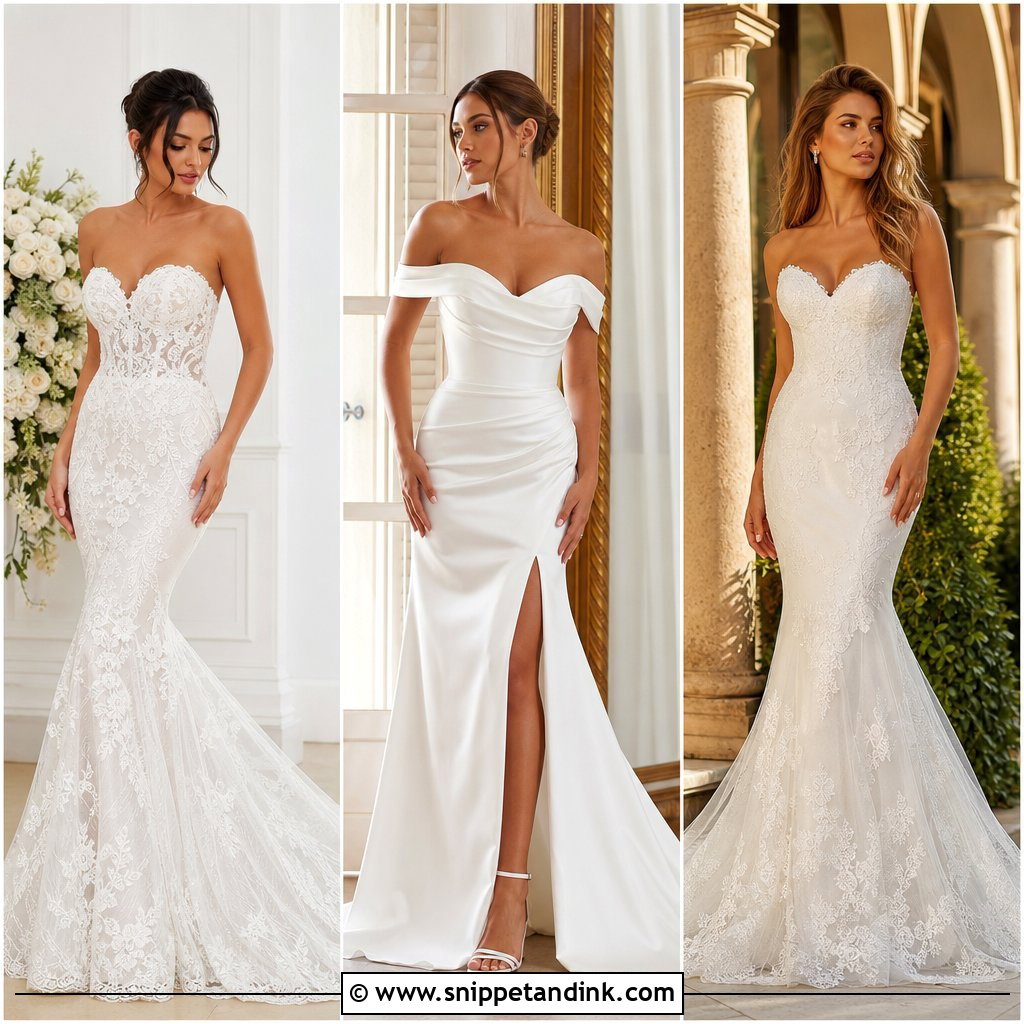
Jacquard has its pattern woven into the cloth, so it carries texture without lace, beading or appliqué. It’s substantial fabric, best on a structured ball gown or sculpted A-line, and it can feel warm, so check how breathable the bodice is for a summer date. Watch how the skirt is pleated. Deep folds can bury the best part of the motif, and a good cutter places the pattern where it shows. Ivory on ivory is classic, while a pale pastel motif brings in color. A plain tulle veil, pearl earrings, closed-toe pumps and a polished bun suit it, with a bouquet that repeats one shade from the weave.
After the Last Dance: Cleaning and Storing a Handmade Gown
A couture gown may be the most valuable garment you ever own, and the first weeks after the wedding decide how it ages. Champagne and sugary drinks dry clear, then slowly oxidize into brown marks, so take the dress to a cleaner who specializes in bridal wear soon after the wedding and point out every spill, including the ones you can’t see.
- Hand-sewn beads, feathers and dimensional flowers often can’t survive standard dry cleaning. Ask how each embellishment will be treated before you hand the gown over.
- Store it folded in acid-free tissue inside an acid-free box. Plastic covers trap moisture and can yellow the fabric.
- Don’t leave a heavy beaded or mikado gown on a hanger for months; the weight stretches the shoulders and straps.
- Keep the box somewhere cool, dark and dry, away from attics and basements, and refold the gown along fresh lines every year or so to avoid permanent creases.
Good Construction Feels Like Wearing Nothing
A couture gown should give you craftsmanship you can see and support you can’t feel. From Basque waists and three-dimensional flowers to plain columns and convertible overskirts, start with the silhouettes, fabrics and necklines that make you feel most like yourself. Then weigh the venue, the climate, your shoes and how much coverage you want. Bring all of that to your fittings, and listen when an experienced bridal tailor suggests a change, because they know how fabric behaves after twelve hours of wear. The dress you end up in should feel like yours, not like a passing trend.
You'll Like These Ideas:




Leave a Reply