
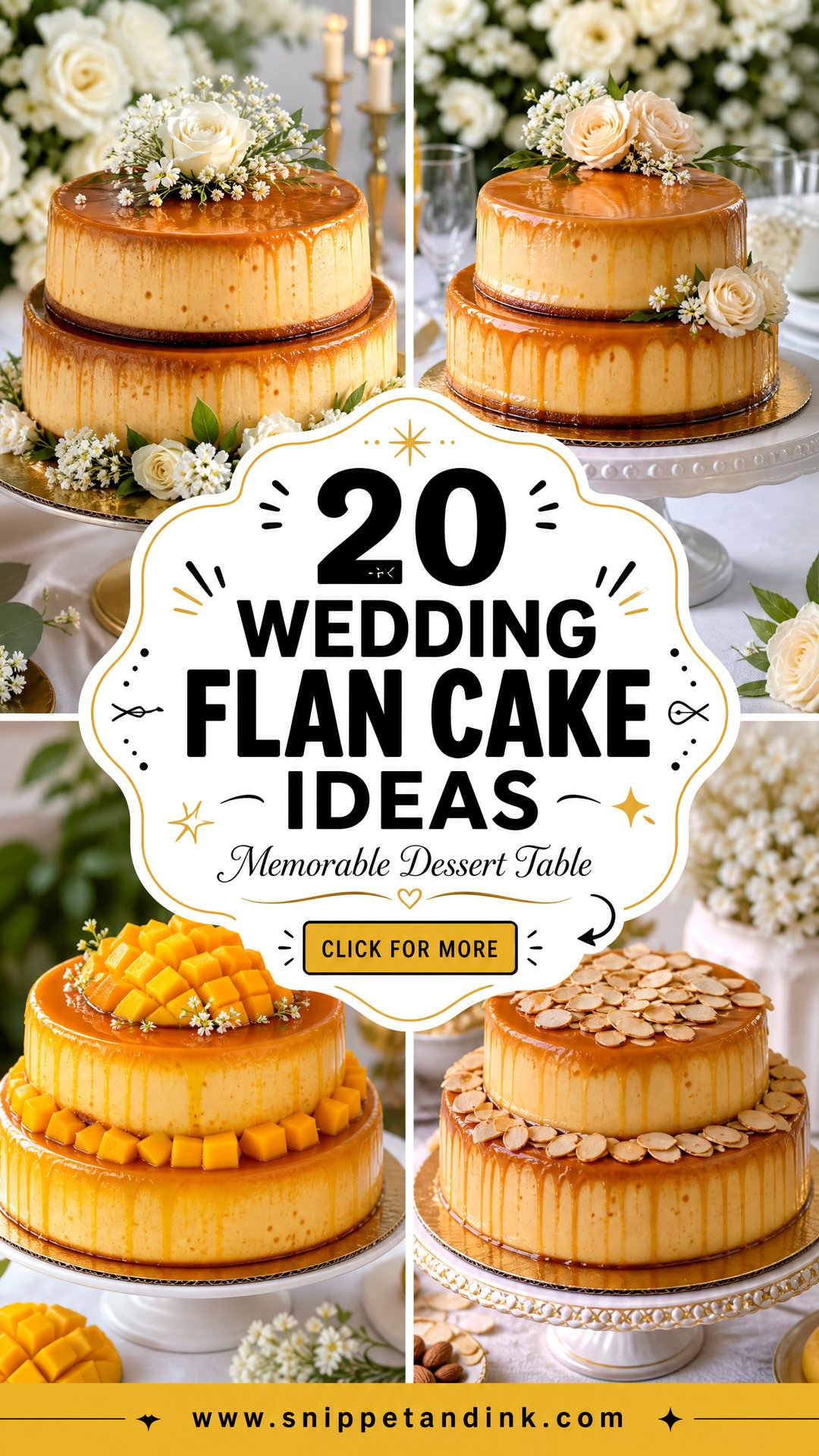
Flan cake is the dessert couples ask me about when they grew up with it at every family party and want it at their wedding too. It’s a sponge layer baked together with a silky custard and finished with caramel that runs down the sides on its own. Some couples keep it plain with that amber glaze and a few fresh flowers. Others want height, fruit, or dessert table styling that builds a whole spread around it. The catch nobody mentions until the tasting is that custard is wet, heavy and needs the fridge, so the design has to respect that. Below are the versions I’d happily put in front of guests, with notes on how each one holds up.
How a Flan Cake Is Built, and Why That Shapes Your Order
Most flan cakes are baked in one pan: caramel on the bottom, custard poured over it, cake batter on top, all cooked slowly in a water bath. Once the cake is chilled and flipped, the caramel ends up on top as a loose sauce. That method decides a lot about what you can and can’t ask for.
- It has to be refrigerated. Flan is an egg and milk custard, so it stays in the fridge until shortly before serving and can’t sit out all evening the way a fondant cake can.
- It’s heavy and wet. Frosting slides off custard, sugar decorations dissolve into caramel, and any stacked tier needs boards and supports.
- It’s made a day ahead. The custard needs several hours, ideally overnight, to set firmly enough to unmold cleanly.
- The pan limits the size. Very large flans are hard to bake evenly, so a big guest list is better served by several cakes or extra kitchen flans than by one giant one.
What I settle with couples at the tasting
Ask when the cake will be unmolded and who will do it. I prefer turning it out at the venue, because a flan flipped hours early and then driven across town can crack or slide off its base. Confirm the venue has fridge space for the cake and any minis, and agree who brings the stand. If your baker has mostly made flan for family tables, ask to taste a slice cut from a full-size cake rather than a sample cup, so you can see how the custard holds its shape.
1. Classic Wedding Flan Cake
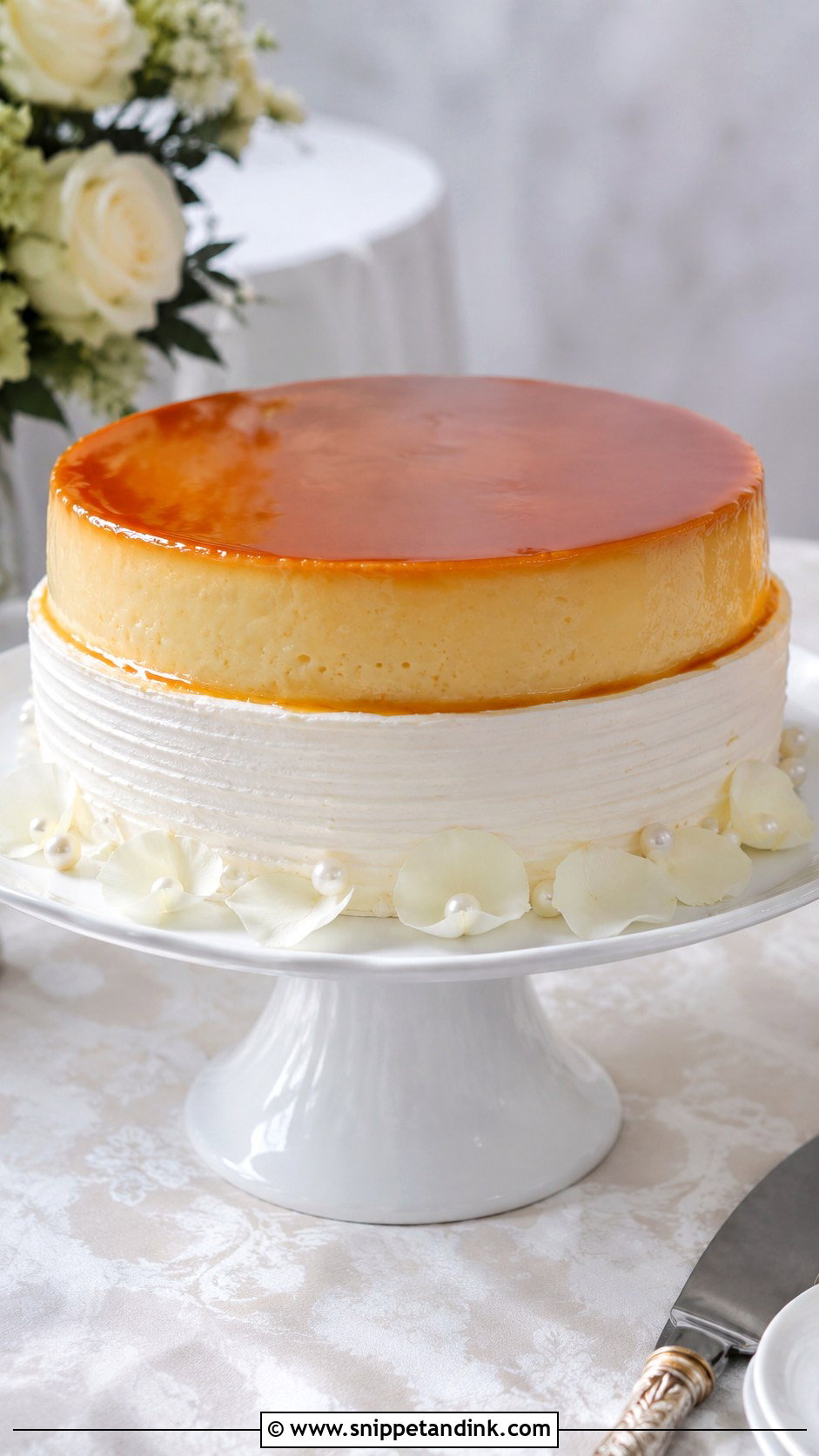
This is the version I’d recommend to anyone serving flan to a mixed crowd for the first time. A soft vanilla sponge sits under the custard, and the caramel does the decorating as it slides down the sides after unmolding. I keep the styling to an ivory stand and a few small white flowers, because anything placed on the caramel itself slowly sinks or bleeds. The custard should wobble slightly in the center when the plate is nudged. A firm, rubbery set usually means it was overbaked, and it will weep liquid onto the stand.
2. Chocoflan Wedding Cake
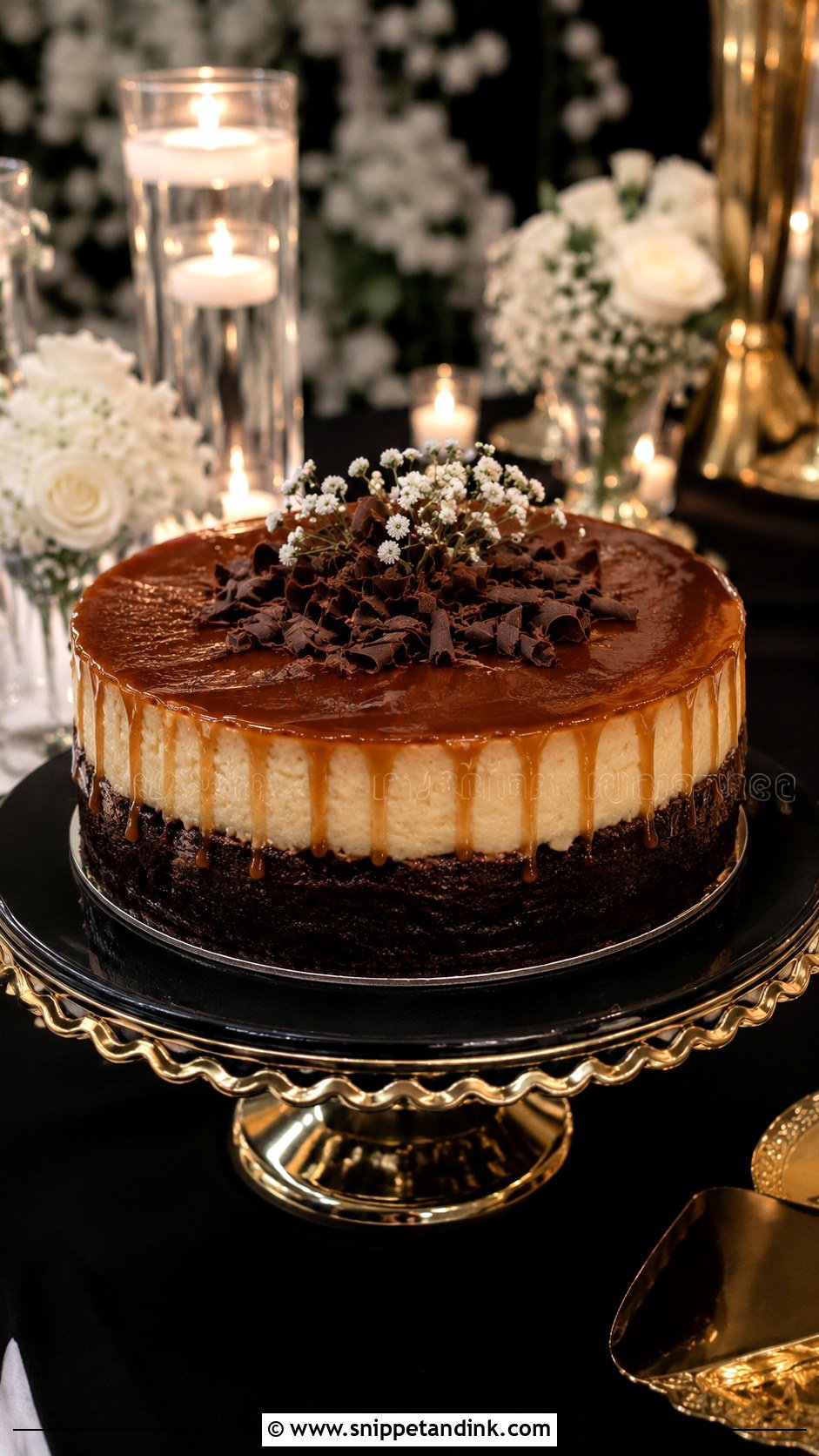
Chocoflan is the one guests remember, mostly because they can’t work out how it was made. The chocolate batter goes into the pan first and the flan mixture is poured over it, then the layers trade places in the water bath as the cake rises through the custard. That swap is why I never promise a ruler-straight line between layers; the seam looks handmade, and I think that’s part of the charm. Chocolate curls and a few ivory flowers dress it up. It reads richer under evening light, though the dark sides can look flat in photos unless there’s warm light nearby.
3. Leche Flan Wedding Cake
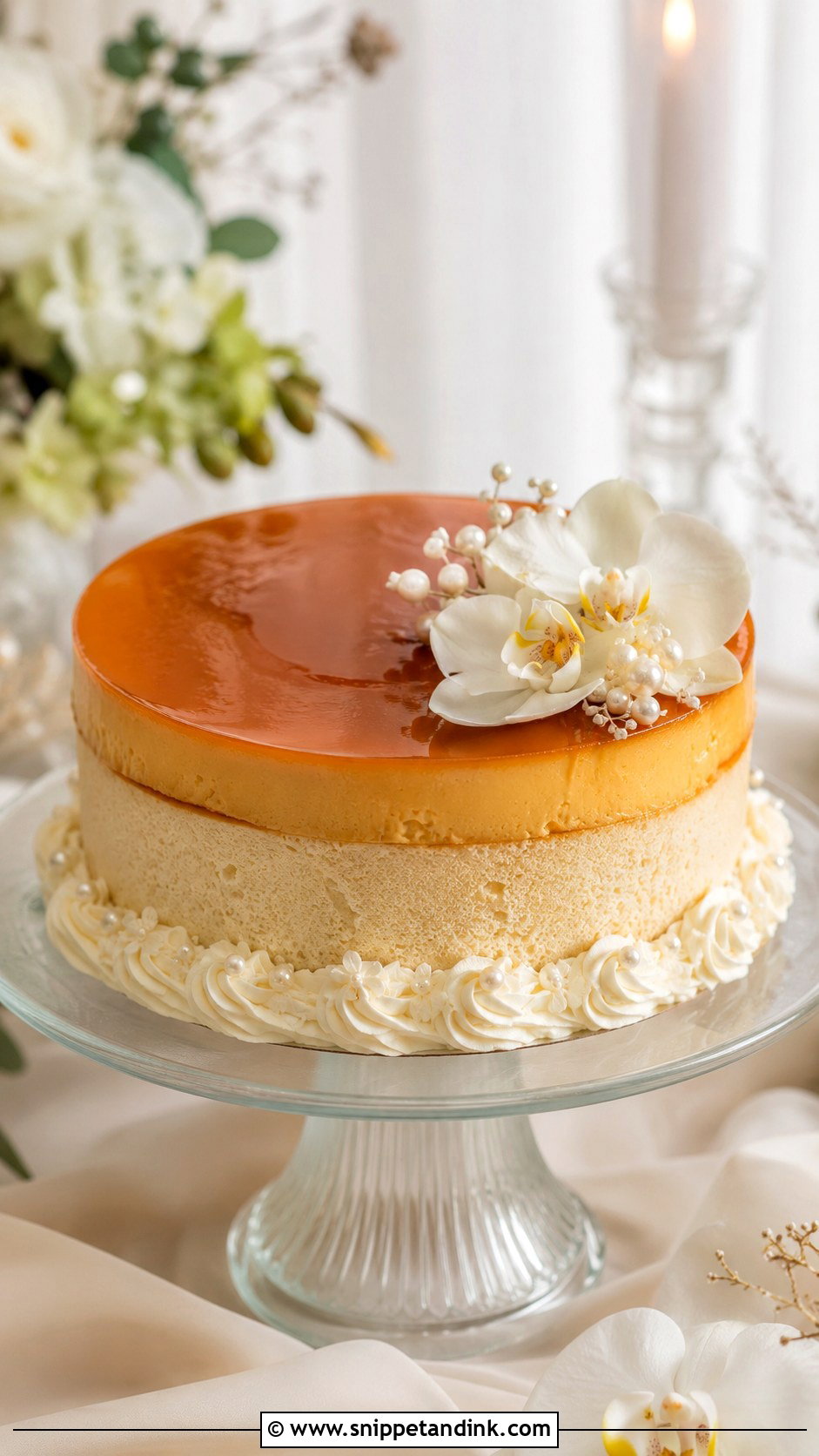
Leche flan made with condensed milk and plenty of yolks is denser and sweeter than a Spanish-style flan, so I pair it with a light vanilla chiffon that can take the weight without collapsing. For many Filipino families this dessert carries real memory, and I’d rather leave the deep caramel edges alone than bury them. A ring of sugar pearls or white orchids at the base is enough. Made this way it tastes homemade in the best way, yet it sits comfortably on a formal reception table. Ask your baker how they cook the flan layer, since low, gentle heat is what gives that smooth surface without bubbles.
4. Two Tier Flan Wedding Cake
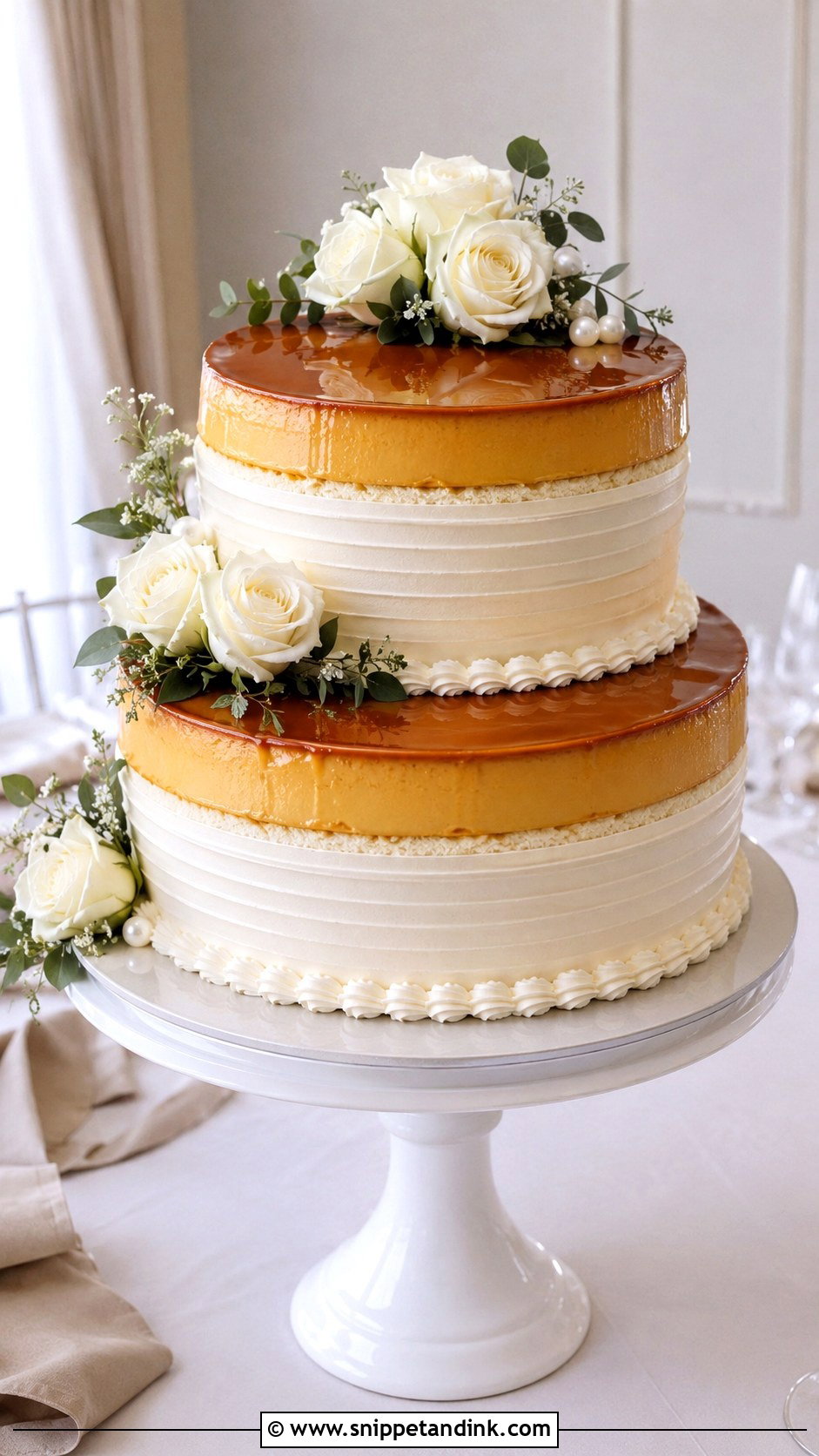
Height is possible, but flan is too soft and heavy to stack directly. When I build two tiers, each one sits on its own cake board, with dowels in the lower tier carrying the top, the same as a regular tiered cake but with more support because the custard can’t hold any load. The caramel goes on after assembly; poured earlier, it pools between the boards. Lightly frosted sides keep the layers visible. For a medium guest count it gives you a proper centerpiece, and above that I’d add a kitchen-cut sheet flan rather than a third tier.
5. Mini Flan Wedding Cakes
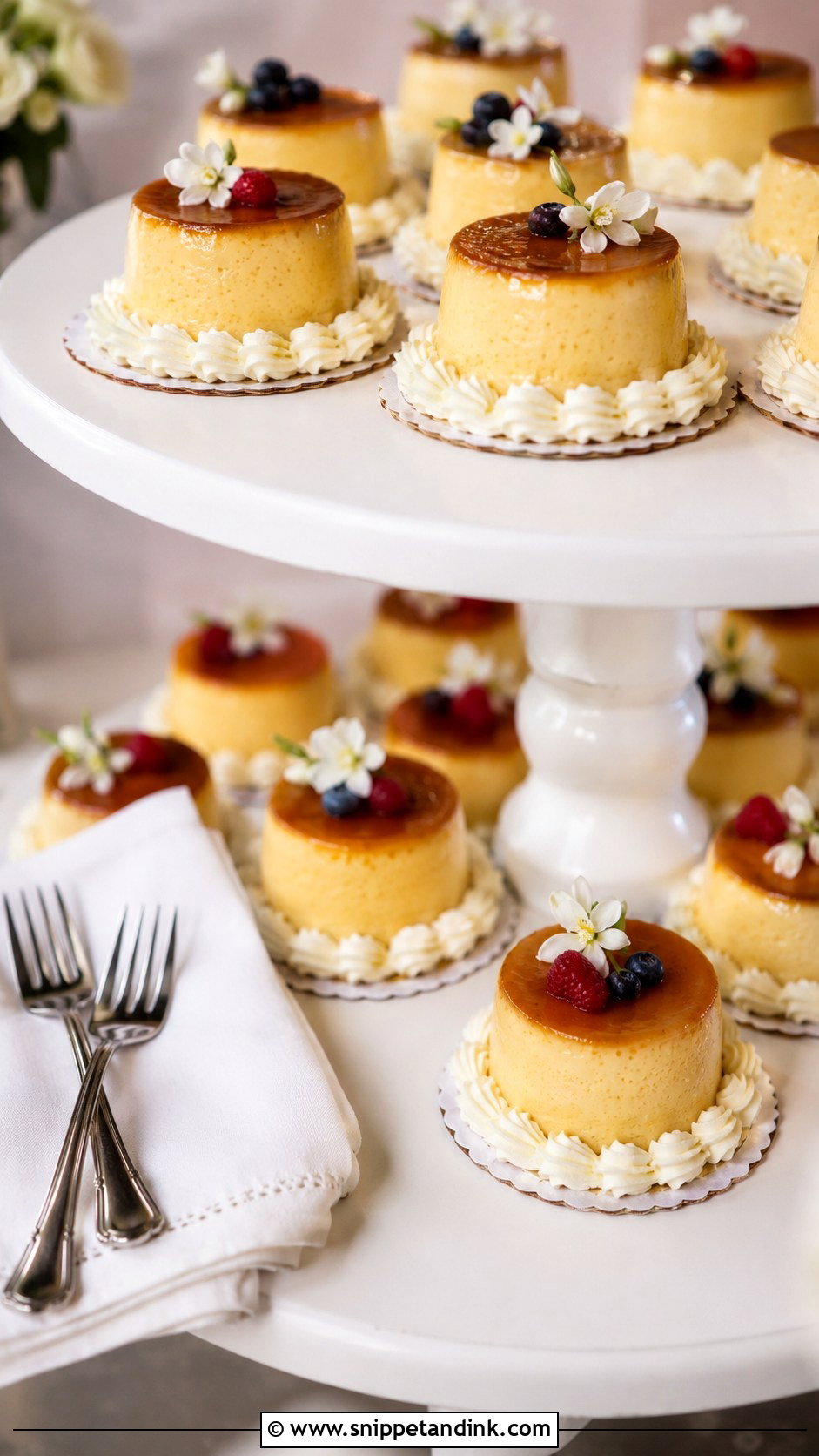
Individual portions solve the biggest headache with flan, which is cutting it cleanly. Mini flan wedding cakes baked in small molds each get their own sponge base and caramel top, and guests take one without waiting at a slicing station. They need to stay chilled until close to serving, so I suggest bringing out one level of the tiered stand at a time and refilling from the fridge. A single berry or a fleck of gold leaf is plenty; tiny edible flowers wilt quickly on damp custard. Brunch weddings and buffet receptions suit them best.
6. Bundt Flan Wedding Cake
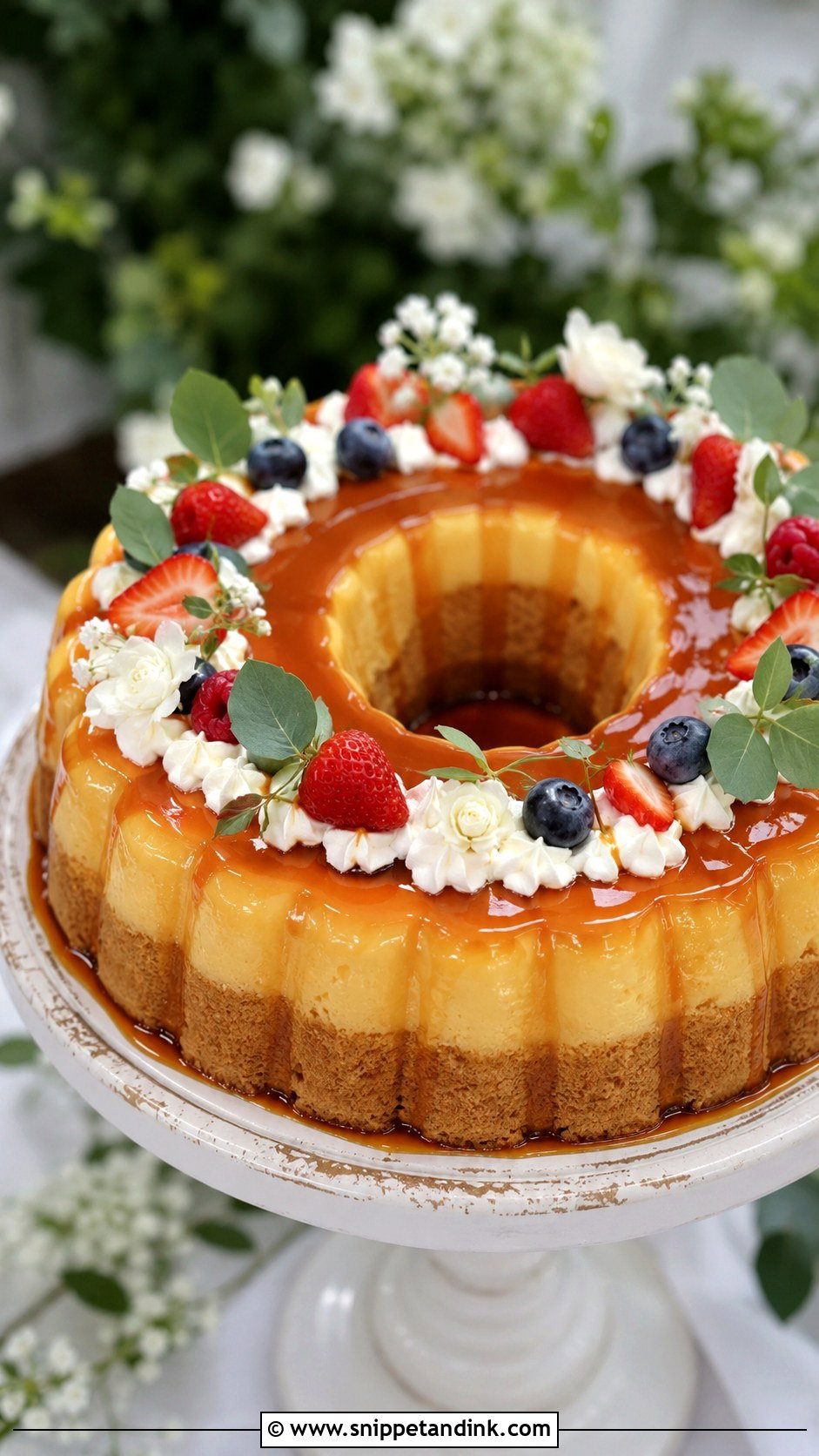
A bundt pan does most of the decorating for you. When it’s flipped, the caramel runs down the ridges and collects in the center well, which I fill with berries or a little piped cream just before serving. The ring cuts into even wedges, so every guest gets cake, custard and caramel in the same proportion. One warning: a flan bundt needs a well-greased pan and a full chill before turning out, or the custard tears along the fluted edges. Garden weddings and family-style receptions are where this one feels at home.
7. Vanilla Flan Wedding Cake
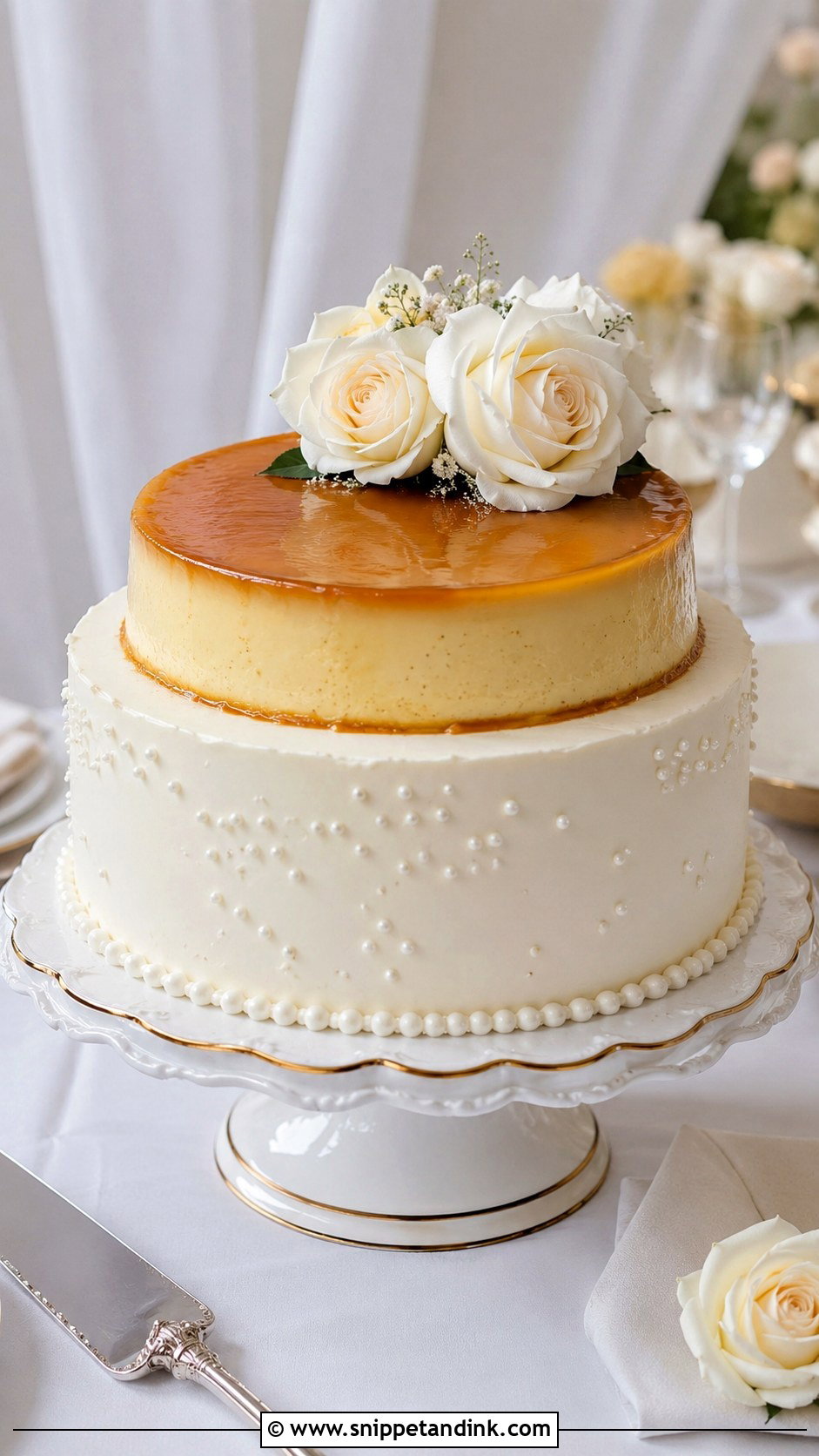
Vanilla is the flavor I suggest when a couple can’t agree on anything else. I use real vanilla bean in the custard, because the specks show through the top and tell guests it didn’t come from a box. For a bridal finish, frost the sponge sides in smooth white buttercream and leave the flan top bare. Buttercream won’t grip wet custard, and trying to frost over it ends in sliding. Pearl accents and a couple of white roses at the base complete it, and it sits happily beside any flower palette, which matters more than people expect once the cake appears in every reception photo.
8. Coconut Flan Wedding Cake
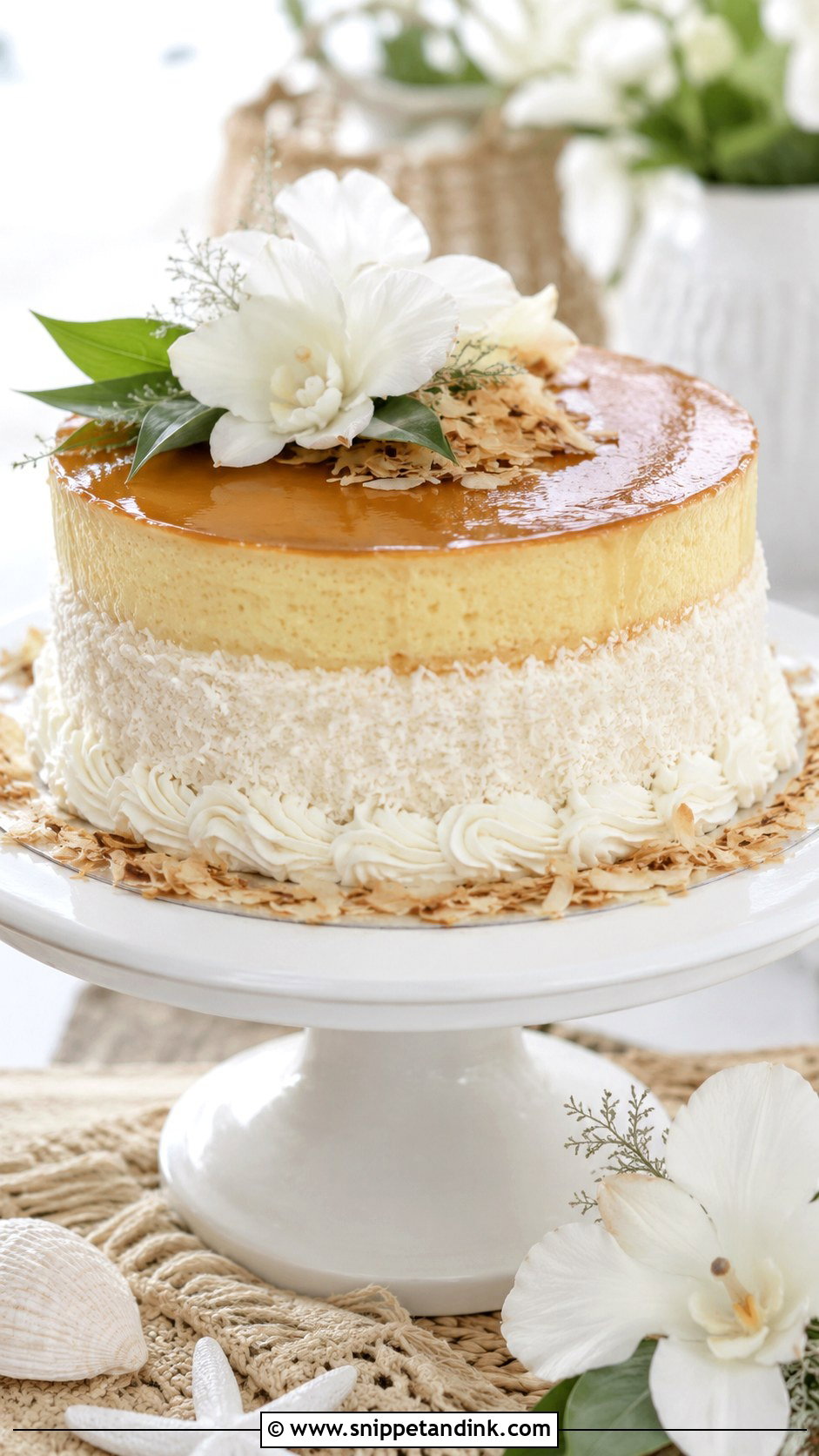
Coconut gives the cake a soft tropical note without dragging it into luau territory. I make the custard with coconut milk in place of some of the dairy, and because it sets a touch softer, this one gets a longer chill before unmolding. Toasted coconut flakes on the sides add texture, but I keep them off the caramel, where they go soggy within the hour. A few pale green leaves and white flowers finish it. At a beach wedding, sun and warm air soften a custard fast, so the cake belongs in the shade and out of the fridge only briefly.
9. Strawberry Flan Wedding Cake
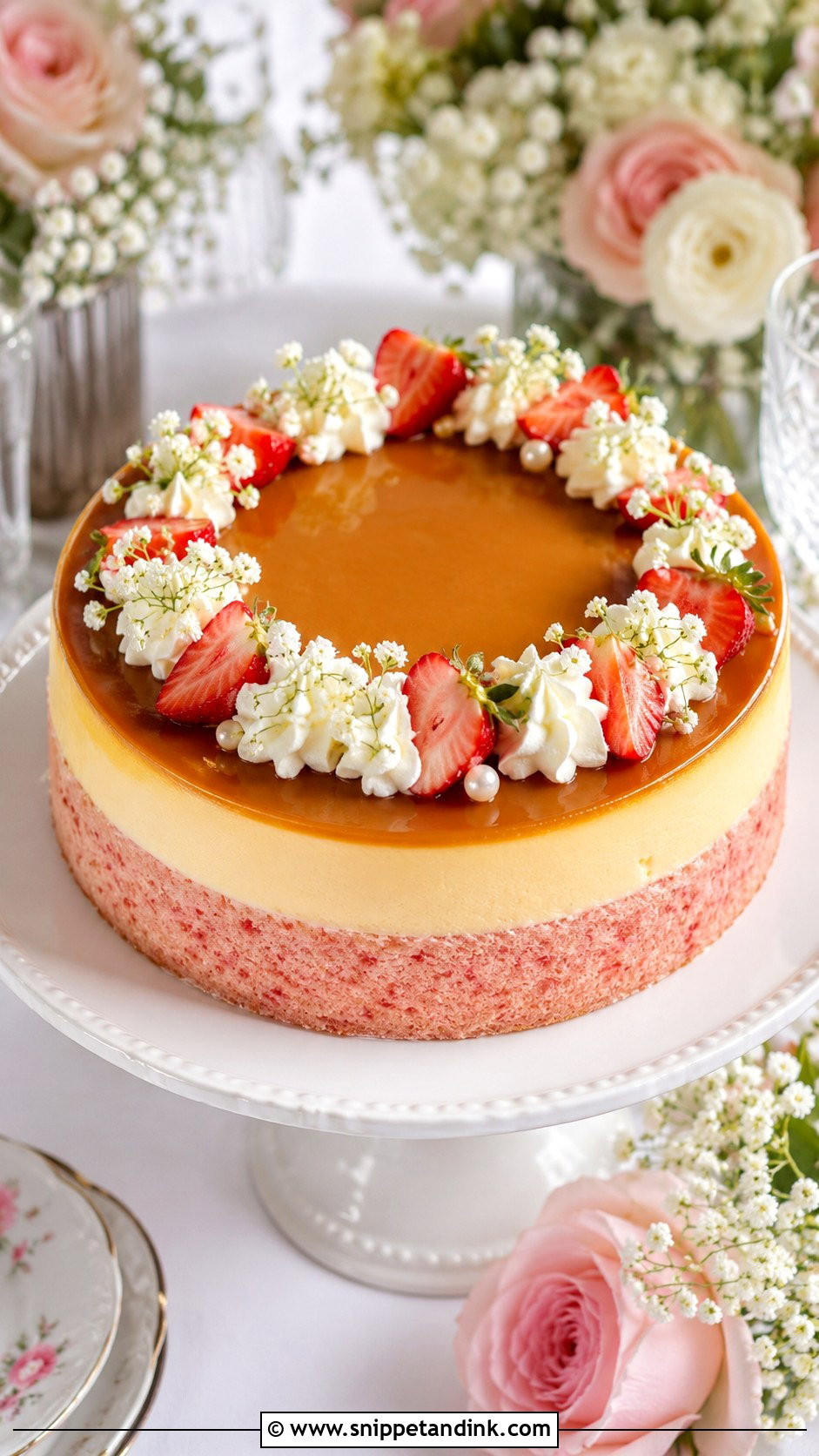
Strawberries add the color a flan table often lacks. Cut berries release juice the moment they touch caramel, so I place them around the base rather than on the custard, or add them at the venue right before the cake goes out. Whipped cream rosettes need stabilizing, with a little mascarpone or gelatin, if the cake will sit for any length of time; otherwise they slump before the first dance. A strawberry sponge can taste artificial depending on how it’s flavored, so I usually steer couples toward vanilla sponge with fresh fruit. Spring and early summer berries taste best.
10. Mango Flan Wedding Cake
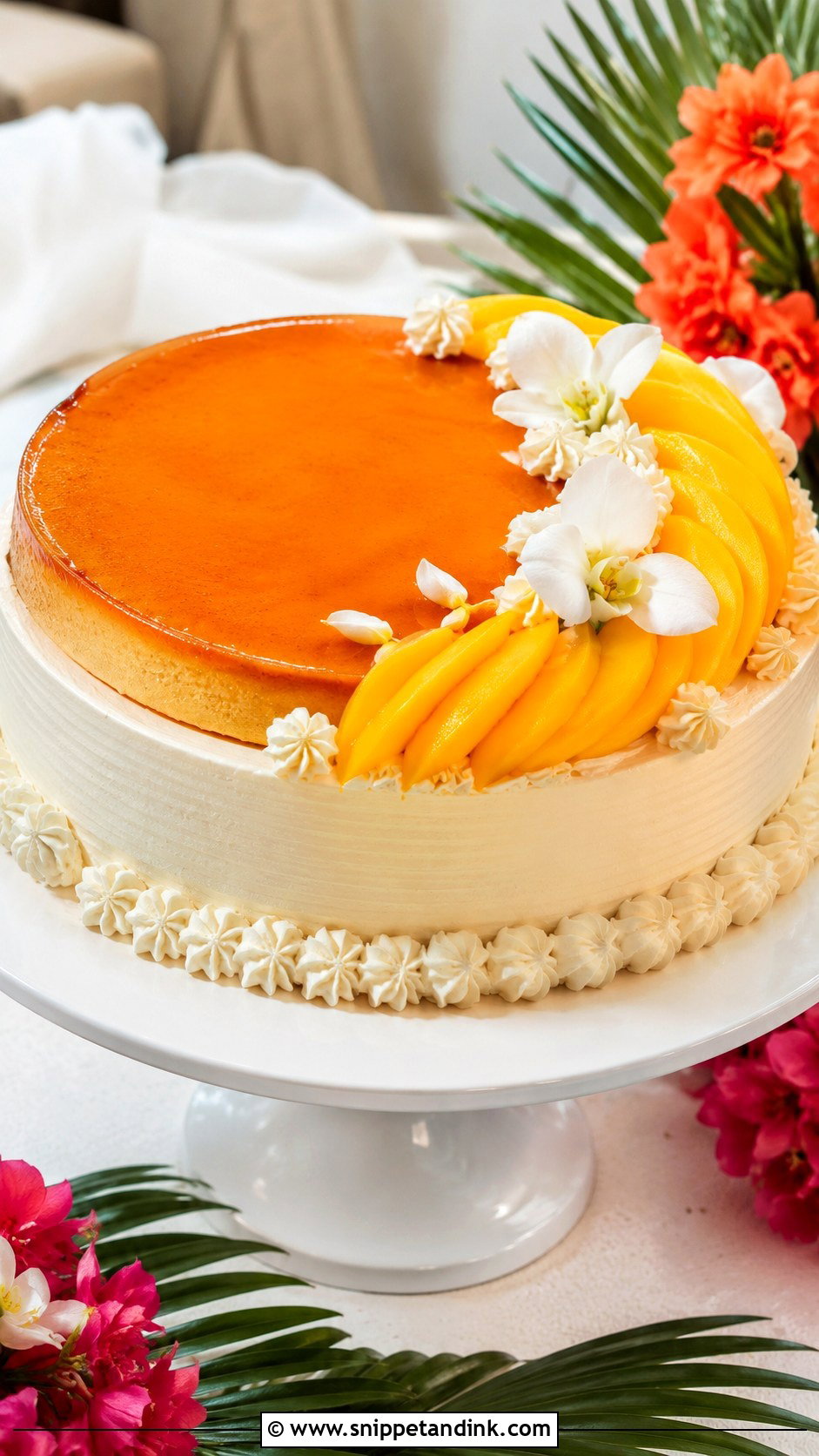
Mango and custard are an easy match, and the golden flan picks up the fruit’s color. I fan thin slices over the top like petals, but only on the day, because cut mango weeps and darkens at the edges overnight. The caramel stays thin here so it doesn’t hide the fruit. In a room full of bright flowers it fits right in; for a more formal setting, a cream piped border and a couple of white orchids calm it down. Very ripe mango is too soft to slice neatly, so I ask for fruit that’s ripe but still firm.
11. Ube Flan Wedding Cake
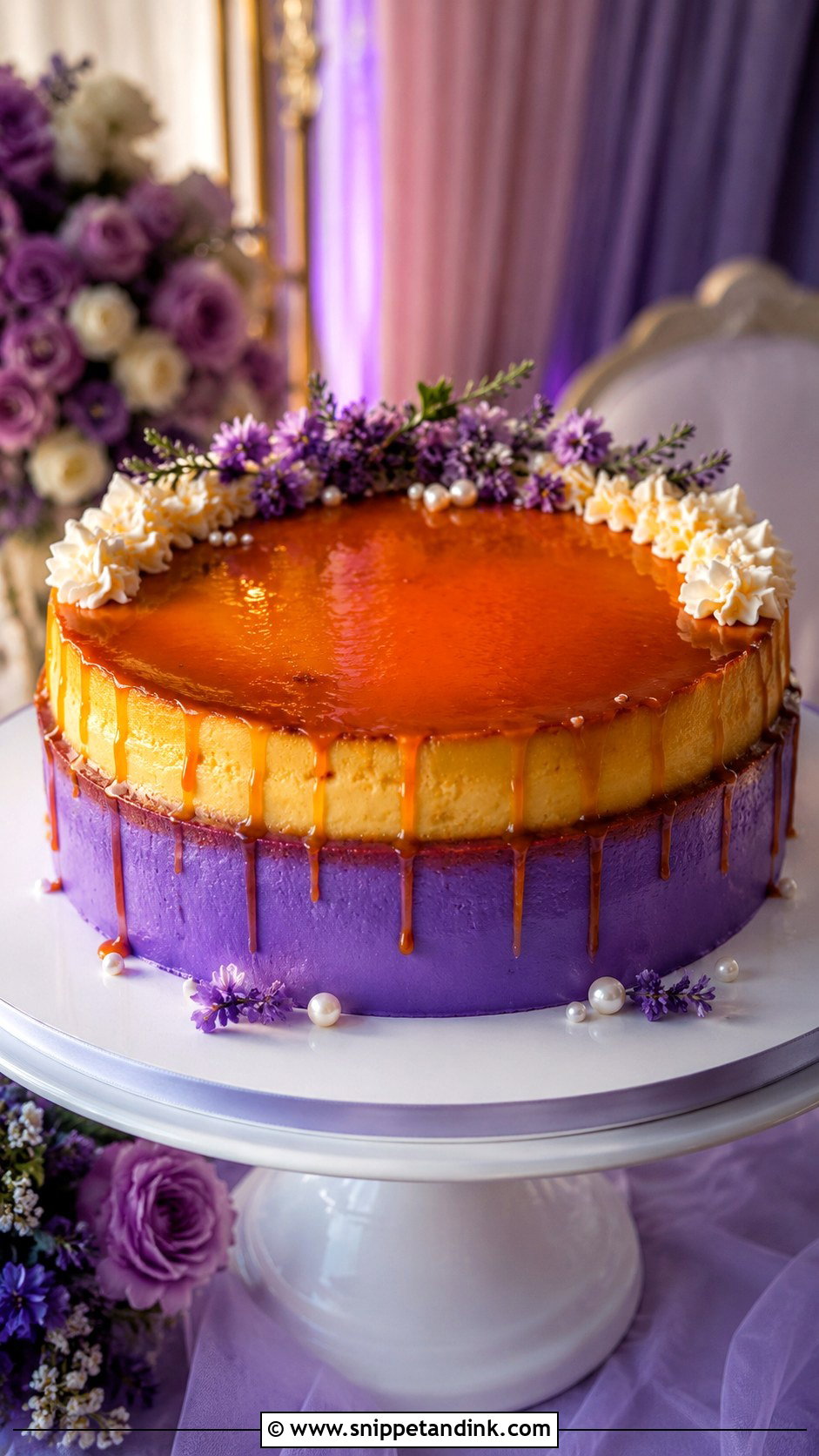
Ube is the flavor couples get most excited about, and the purple layer against pale custard and amber caramel makes a striking cut slice. It’s a Filipino favorite, which gives it real meaning for many families. The color can come from ube yam or from extract, and I’d ask your baker which they use: extract gives a bolder purple, while yam alone can bake to a more muted violet. White buttercream on the sides, a few edible pearls and small purple flowers echo the color without competing. Keep the top glossy and bare so the flan stays the focus.
12. Coffee Flan Wedding Cake
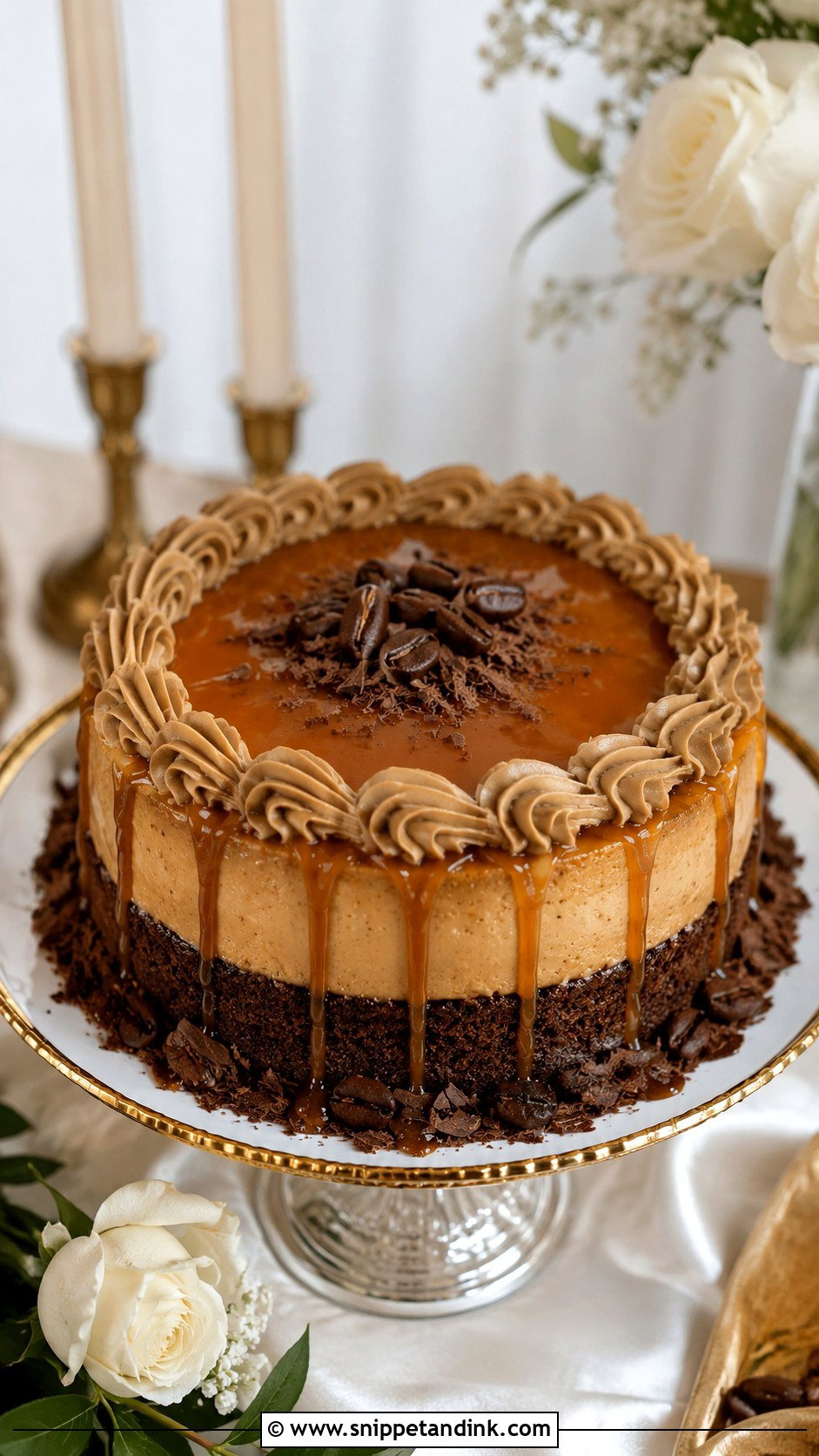
Coffee and caramel taste like they were meant to share a plate. A mocha or espresso sponge under the custard gives depth, and I add a splash of coffee to the caramel too, which cuts the sweetness that can tire guests by the end of dinner. Coffee buttercream works on the sides. Chocolate-covered espresso beans should be used sparingly, since a mouthful of them is gritty. I cut this one thinner than usual because it’s rich, and its brown tones sit warmly next to ivory flowers and gold serving pieces at an evening or autumn reception.
13. Caramel Flan Wedding Cake
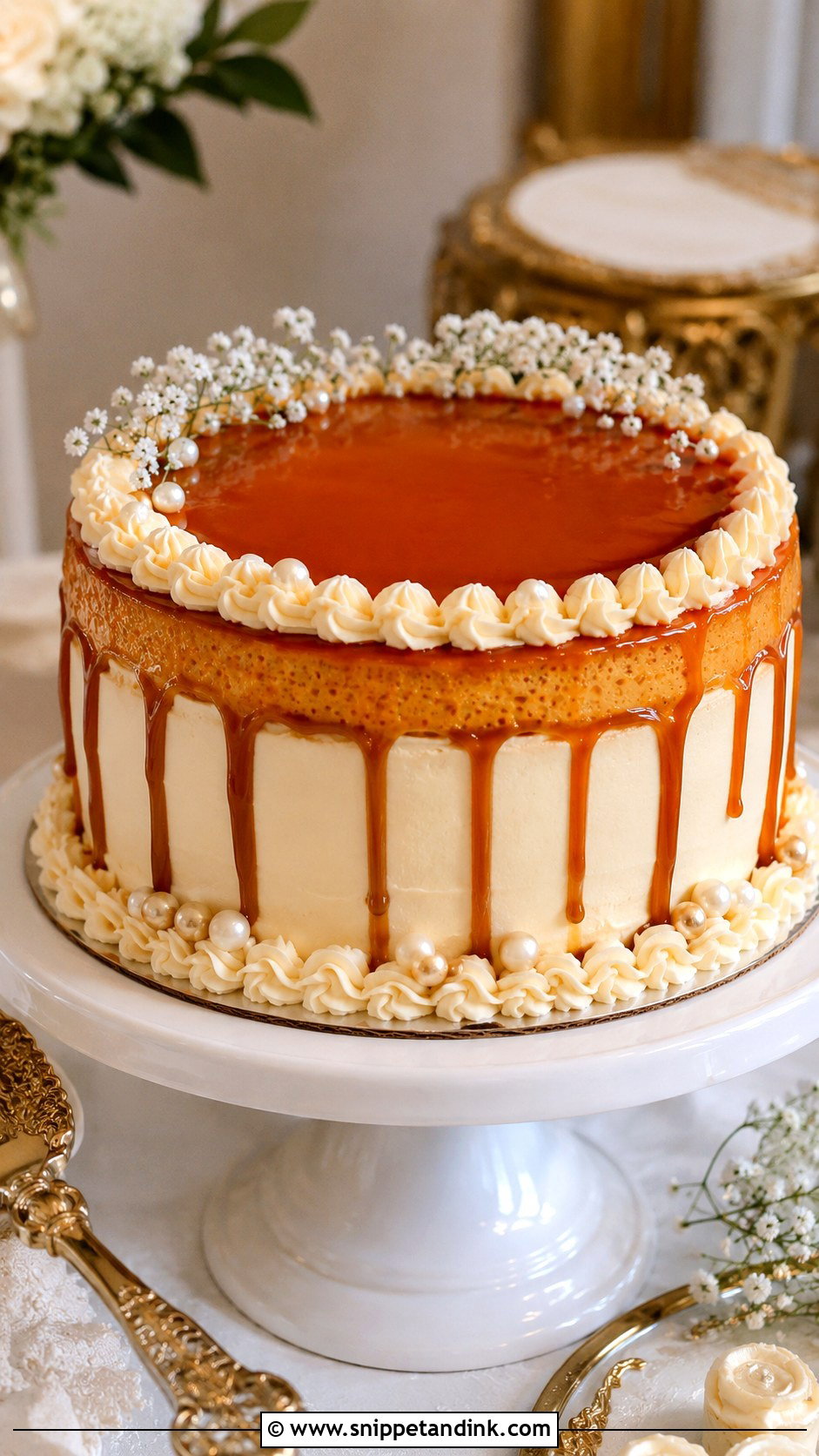
Here the caramel is the decoration. I take the sugar a shade darker than for a classic flan, to a deep amber that tastes less sugary and sets a mirror-like top. Go a few seconds too far and it turns bitter, which is where an experienced baker earns their fee. A plain vanilla or butter cake underneath is all it needs, with piped ivory borders, some sugar pearls and fresh blooms at the bottom. Couples who find frosted wedding cakes too sweet tend to love this version.
14. Cream Cheese Flan Wedding Cake
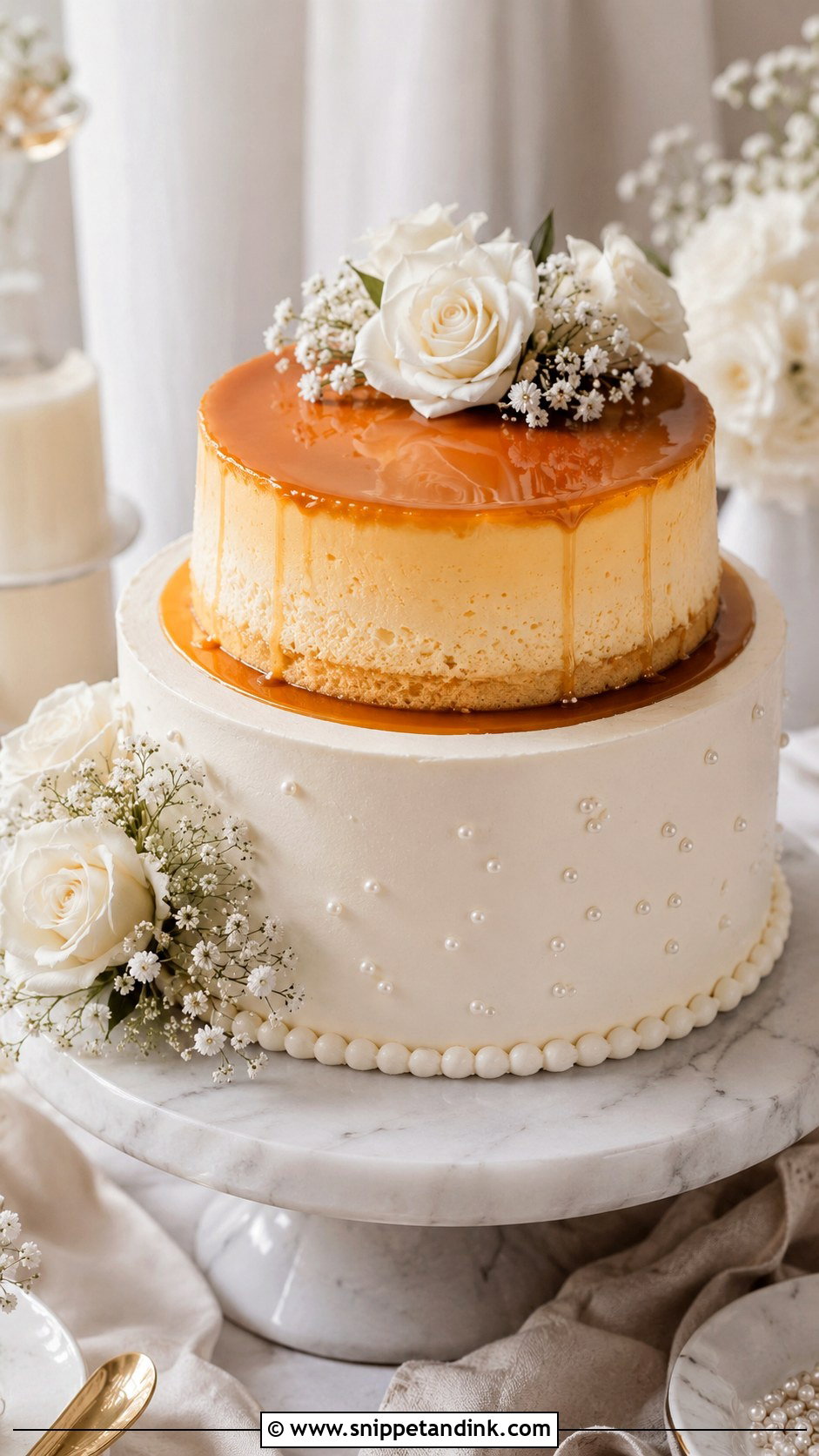
Adding cream cheese makes the custard denser, with a slight tang that sits closer to cheesecake. Flancocho, the Caribbean cake that bakes flan and soft sponge together, is the inspiration here, and a vanilla, almond or lightly spiced base all work. Because the custard is heavier, the cake underneath needs a sturdy crumb rather than a delicate chiffon, or it compresses under the weight. Smooth ivory sides, caramel glaze and white flowers finish it without hiding the flan’s surface. Guests who love cheesecake tend to reach for this one first.

15. Almond Flan Wedding Cake
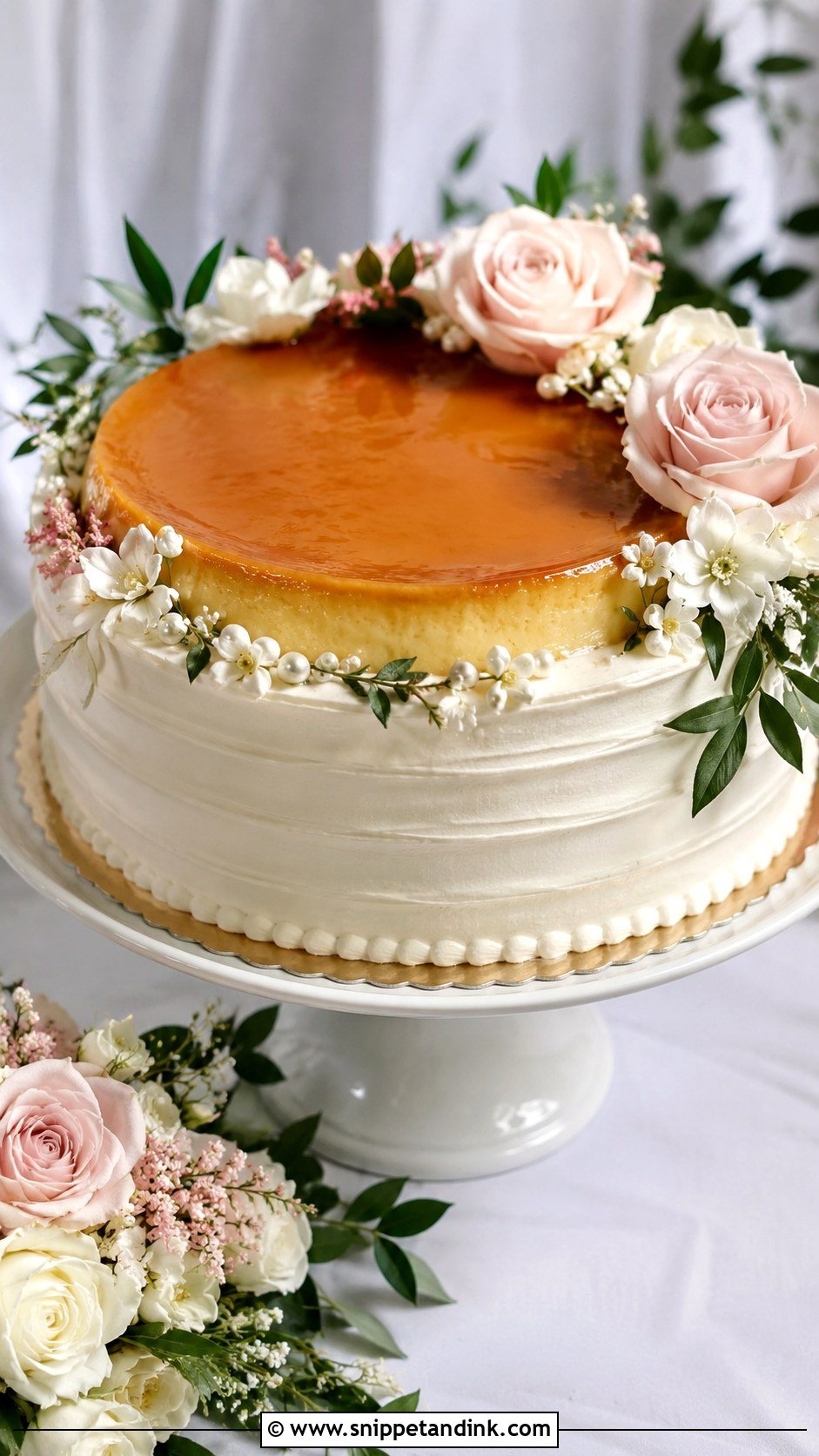
Almond is subtle until you taste it, and then it’s the flavor guests ask about. I use almond sponge or a white cake with a small amount of extract, because too much tastes medicinal. Toasted sliced almonds pressed into the base frosting add texture and give the cake a clean edge, with a few cream flowers above. It suits ballrooms and classic venues. Before you settle on it, check your guest list for nut allergies; I’d label the cake clearly at the table and keep a nut-free dessert close by if anyone is at risk.
16. Lemon Flan Wedding Cake
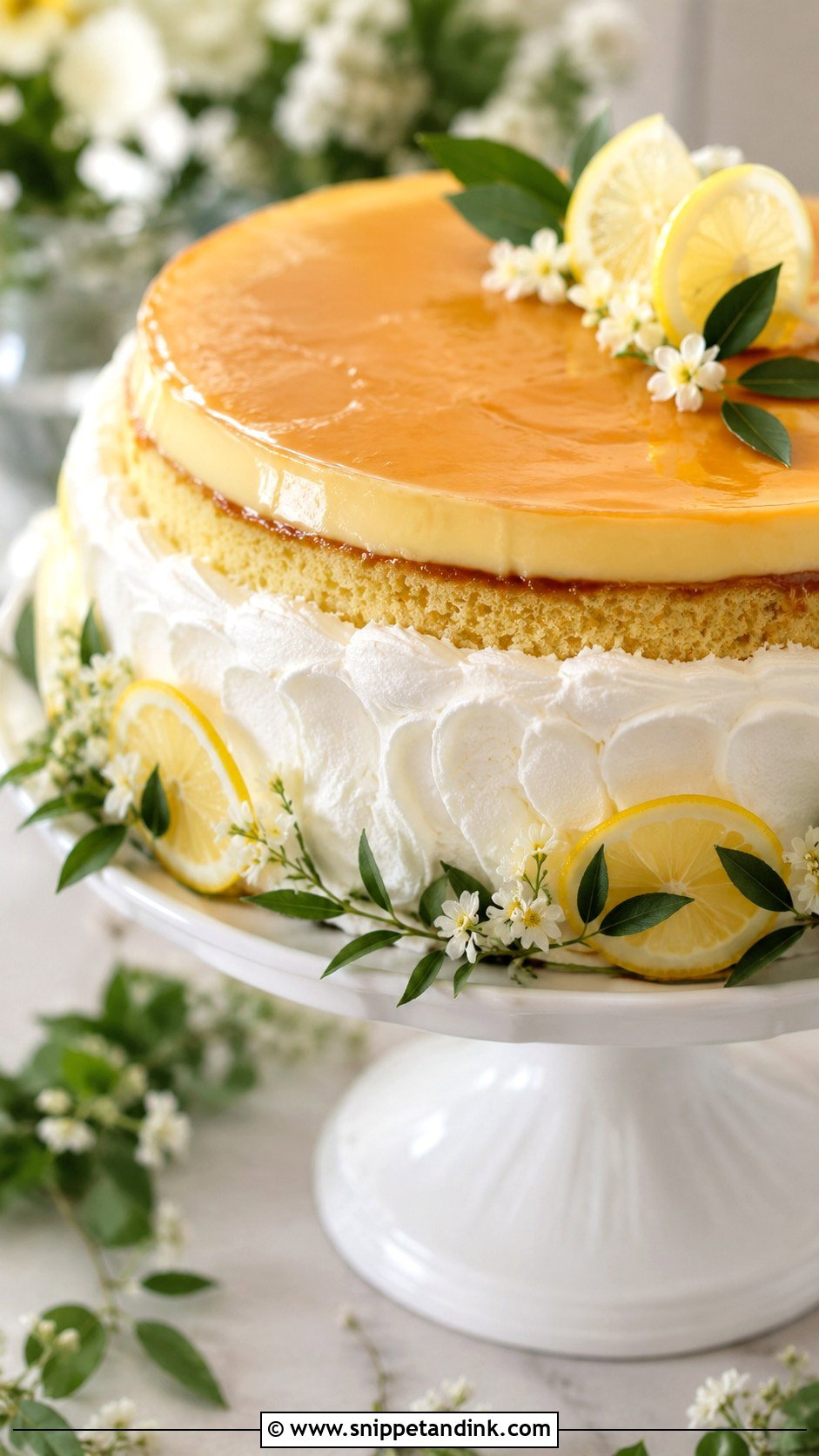
Lemon is my answer when the dinner is heavy and the couple wants something that feels light afterward. A lemon sponge and a little zest in the custard brighten it, but I keep juice out of the flan itself, since acid can make an egg and milk custard set unevenly or curdle. The caramel stays pale and thin so it doesn’t fight the citrus. Thin lemon slices and tiny white flowers go on top, with whipped frosting around the base. Serve it properly chilled; it tastes noticeably fresher cold, especially at a daytime garden reception.
17. Tres Leches Flan Wedding Cake
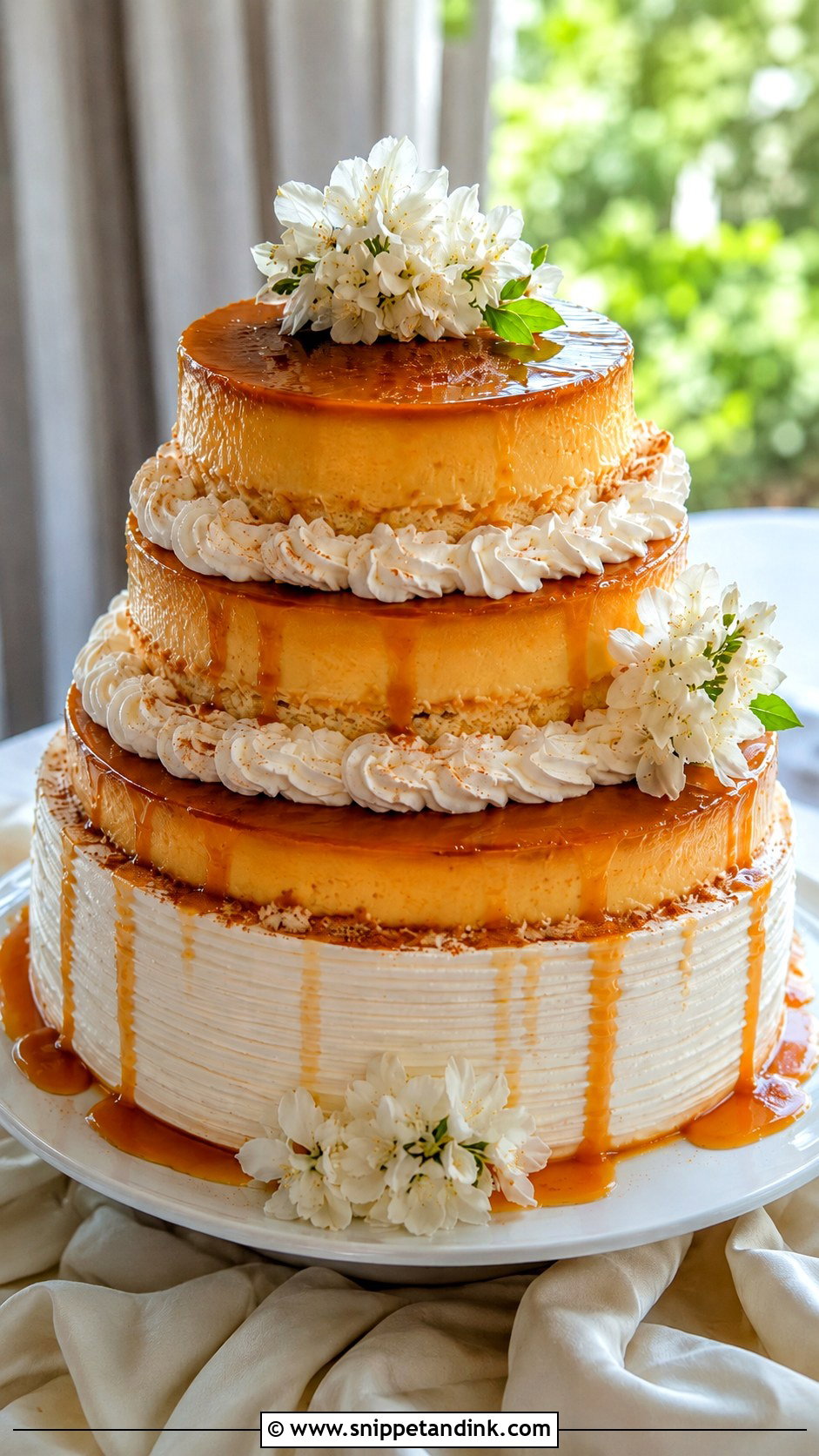
This one is soaked twice over. Tres leches flan wedding cake starts with a sponge that drinks up a mixture of three milks, then gets a custard top and caramel. Because the crumb is saturated, it can’t carry any weight, so I only make it as a single tier or as part of a dessert table, never stacked. Whipped cream, a dusting of cinnamon and a few small white flowers are all it needs. Serve it straight from the fridge and slide a server fully under each piece, since the slices are too soft to lift on a knife.
18. Naked Flan Wedding Cake
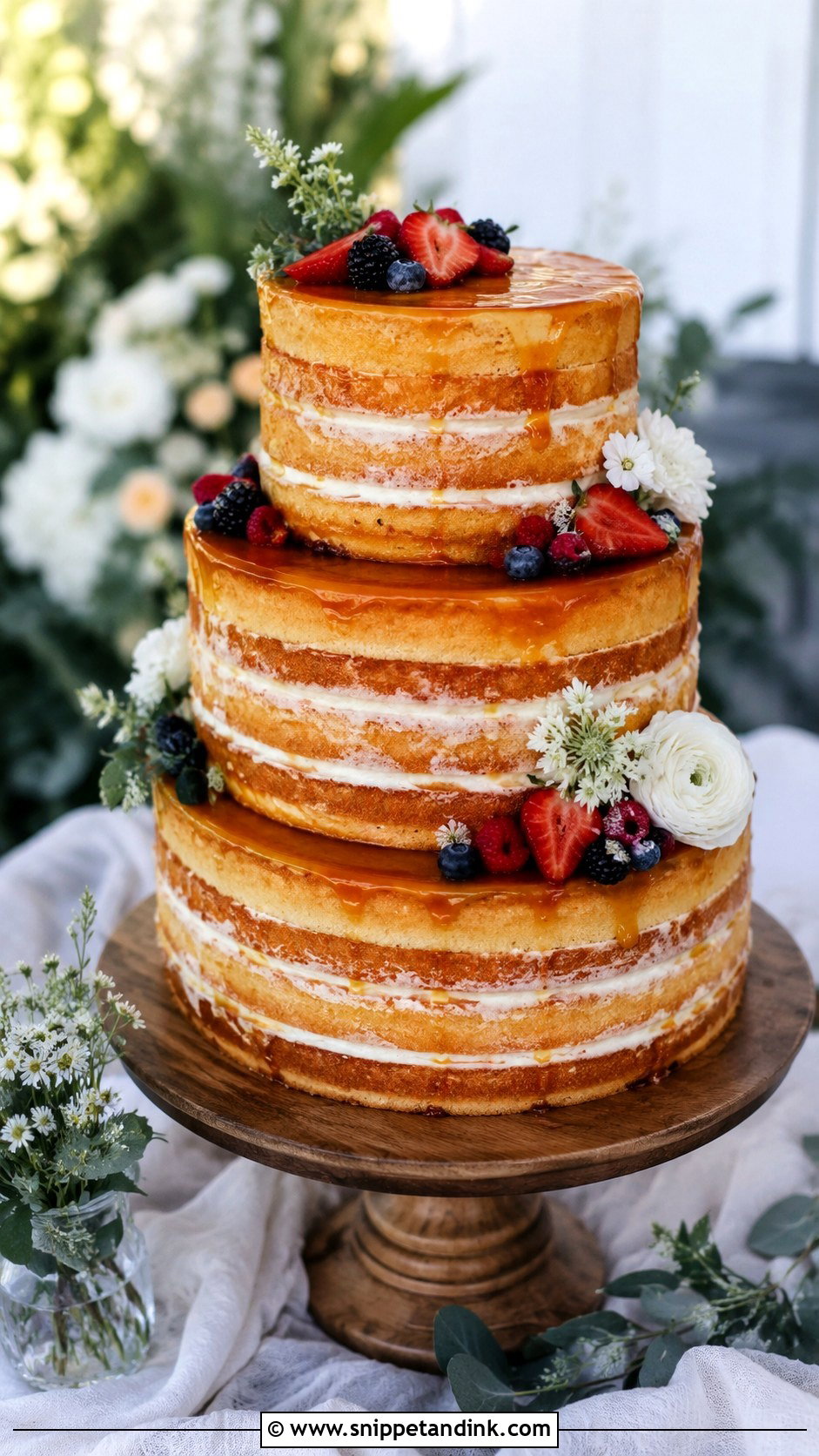
With a naked finish, the cross-section is the decoration: guests see sponge, custard and caramel in every slice. I scrape the sides almost bare, which means the cake has to be very fresh, because exposed sponge dries faster than frosted cake. Berries and a few small flowers on a simple stand make it reception-ready. It’s less sweet than a fully frosted cake, which many guests prefer after a long meal. If it will be on display for a while before cutting, ask for a thin crumb coat; it still reads as naked but holds its moisture.
19. Floral Flan Wedding Cake
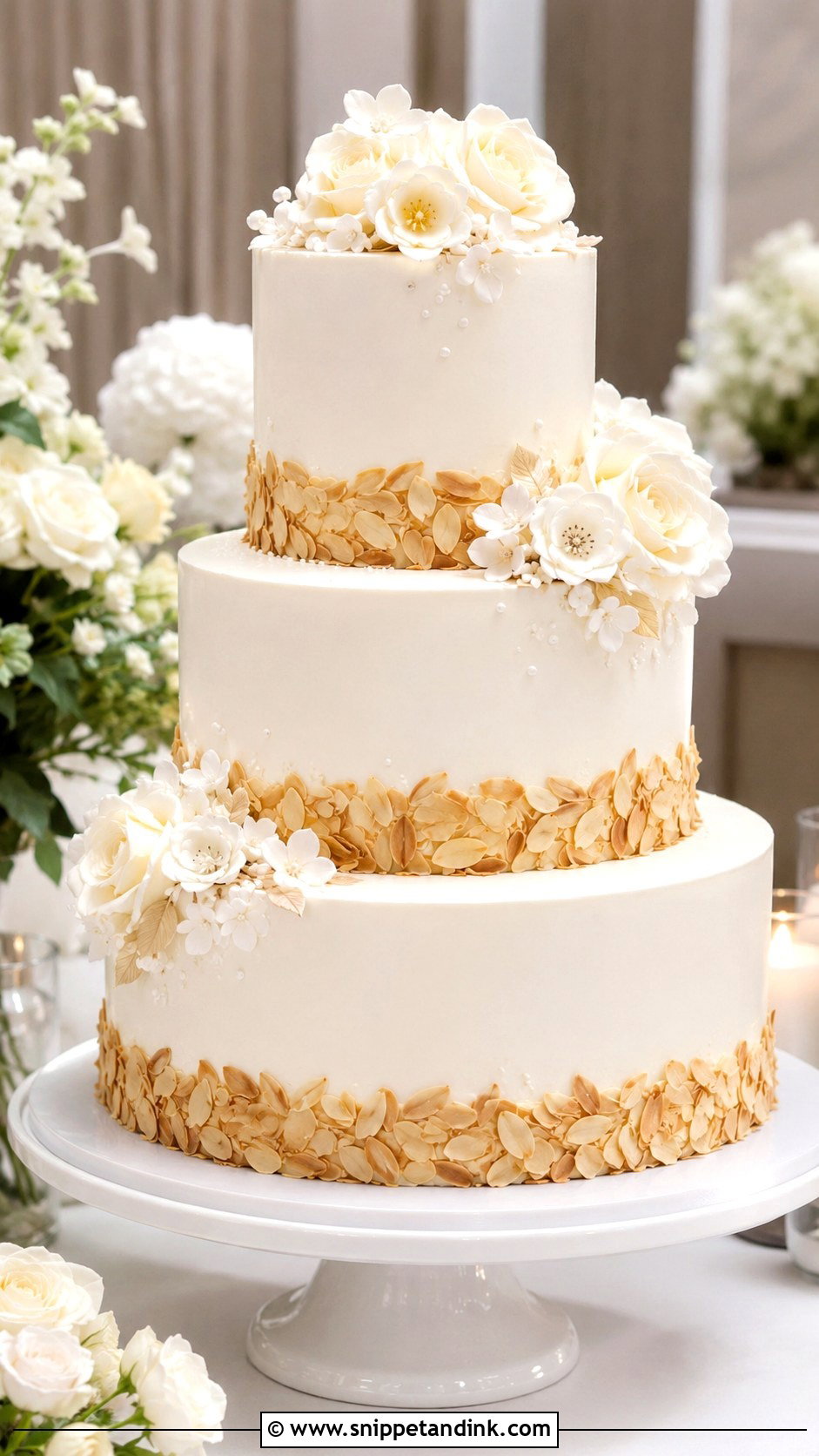
Flowers should frame a flan cake, not cover it. I place blooms around the base and perhaps a small cluster at one edge, leaving the glossy top visible, because petals resting on caramel go limp and stain. Any fresh flower near the cake needs to be food-safe and unsprayed, with stems wrapped so they never touch the custard; sugar flowers avoid the problem entirely. A vanilla or almond sponge keeps the base neutral. Ask your florist to pull a few stems from the bouquet recipe so the cake matches the table arrangements.
20. Dessert Table Flan Wedding Cake
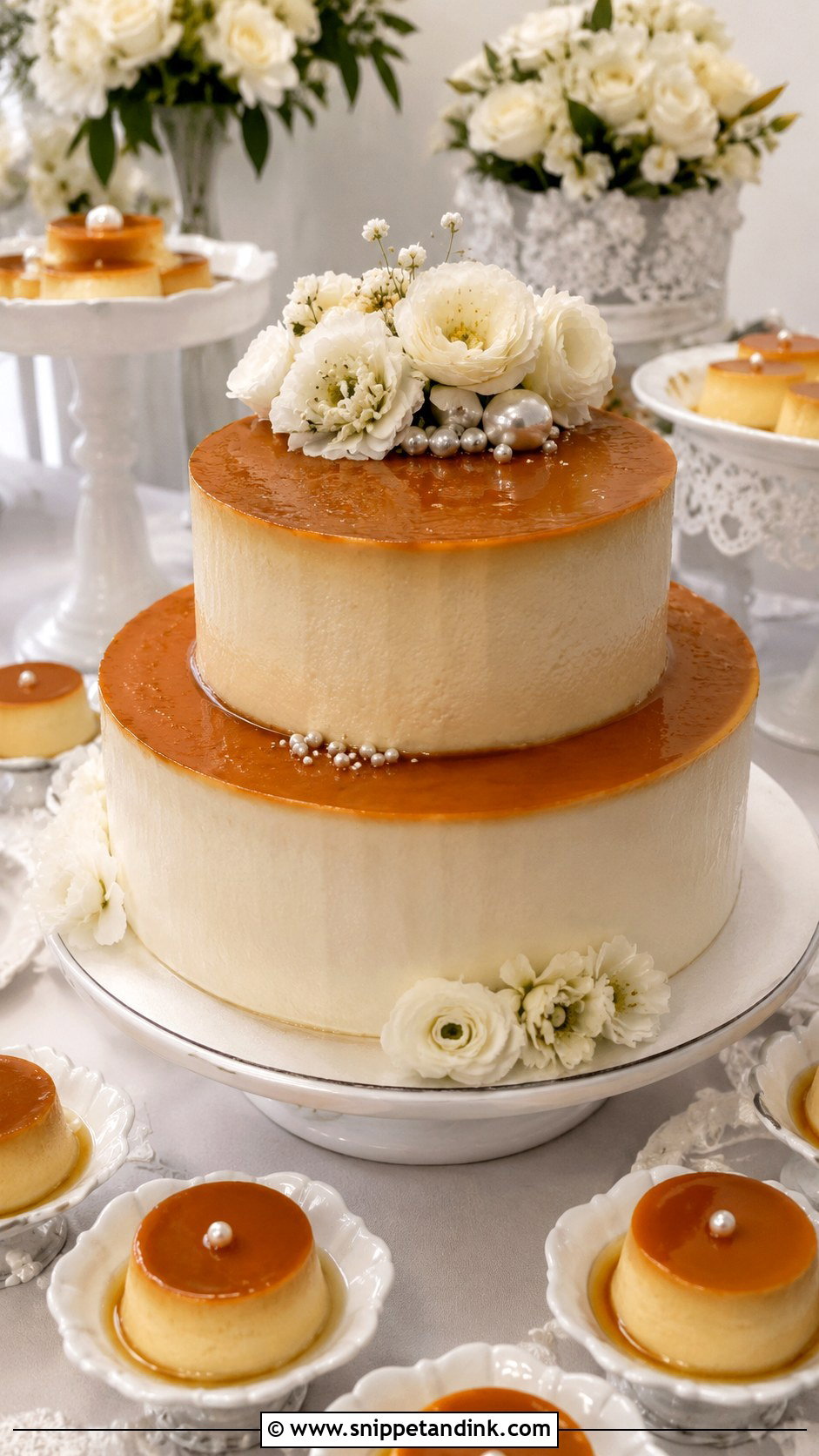
On a full dessert table, the flan cake should be the tallest and glossiest thing there. I’d go single or two tier, then build out with mini flans, cupcakes, cookies and fruit cups in matching colors. Stands of different heights keep the eye moving across the spread. The practical issue is temperature. Cookies don’t care, but the flan and any custard minis do, so I put the chilled pieces at the shaded end of the table and plan for them to be eaten first.
From the Fridge to the Plate on the Wedding Night
Timing is where flan cakes succeed or fail. The usual food-safety rule for egg custards is no more than about two hours out of the fridge, and less in a hot room or outdoors. I work backward from the cutting: the cake comes out around half an hour beforehand for photos, gets cut, and goes straight back to cold storage between servings.
Cutting it cleanly
Use a long, thin knife dipped in hot water and wiped between every cut, and slide a server fully under each slice before lifting. Custard tears if you drag the blade. Spoon some of the pooled caramel over each plate, because guests who miss it are missing half the dessert.
Transport and leftovers
Flan travels best cold and still in the pan it was baked in, sitting flat in a cooler or on the car floor with the air conditioning running. If some caramel has turned to liquid by the time it arrives, that’s normal; it’s meant to. Covered leftovers keep for a few days in the fridge, so ask the venue to box them for you rather than leaving them on the table.
Custard, Caramel and a Cold Room
Flan cake rewards couples who plan around its quirks. Settle the structure for your guest count first: minis for easy serving, a bundt or single tier for a warm family feel, two tiers or a floral version when you want a centerpiece. Then pick the flavor and let the caramel do most of the decorating. Kept cold and served on time, it’s the slice people go back for.
You'll Like These Ideas:




Leave a Reply